



Finding sleek bangs for wavy hair and square faces is mostly a game of length, line, and restraint. Get those three things wrong, and the fringe puffs out at the temples, splits down the middle, or lands so bluntly that it makes the jaw look wider than it is. Get them right, and the front of the haircut does something useful: it softens the angles, keeps the wave pattern looking intentional, and leaves enough movement that the whole style still feels like hair, not a stitched-on panel.
Square faces have strong lines. Wavy hair has opinions. Put them together and you need a bang shape that doesn’t fight either one. The best versions usually start a little longer than you expect, bend around the cheekbone or brow, and stay light enough to move when humidity sneaks in. Heavy, eye-level fringe can work for some people, but it’s a sharp tool. It needs a steady hand.
The good news is that sleek doesn’t have to mean stiff. A good fringe on wavy hair can be smooth at the root and still have a soft edge at the ends — the kind of edge that makes the face look framed rather than boxed in. The cuts below lean into that balance, with styles that flatter square jawlines and survive real-life hair, which is to say: hair that air-dries, bends, frizzes, and occasionally refuses to cooperate.
Why These Fringe Shapes Work on Wavy Hair and Square Faces
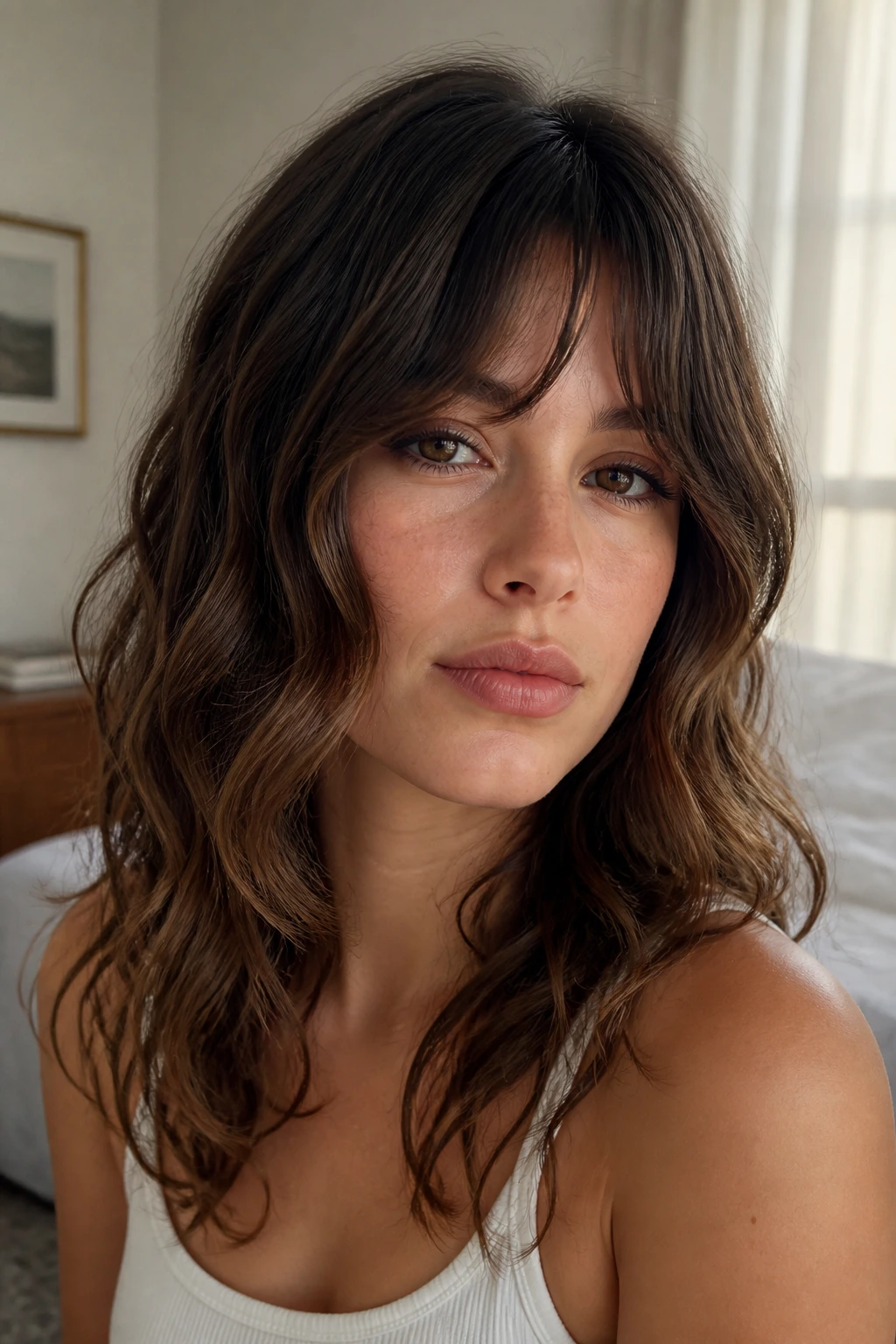
Wave-friendly length: Most of these bangs leave a little extra room for shrinkage, because wavy hair can spring up a half inch or more once it dries. That buffer is the difference between a fringe that kisses the brow and one that floats awkwardly above it.
Square-face softness: The better shapes don’t end in a hard horizontal line right at the widest point of the face. They break up that line with curves, diagonals, or longer outer corners.
Low-drama styling: These cuts can usually be finished with a round brush, a small flat iron, or a quick bend at the front pieces. You do not need a full salon blowout every morning.
Grow-out grace: The styles that win here still look deliberate when they get a little long. That matters more than people admit.
Salon clarity: Each option below gives you a clean way to talk to your stylist — center length, side length, density, and shape — instead of waving at a photo and hoping for the best.
1. Soft Curtain Sweep
The soft curtain sweep is the safest bet in the bunch, and I mean that in the best way. It opens from a center or near-center part, stays longer through the middle, and falls toward the cheekbones instead of stopping at the brow line. On wavy hair, that extra length keeps the front from bouncing into a little shelf.
Why it flatters square faces
The outer corners of the fringe act like a soft diagonal across the face. That breaks up the jaw’s straight edges without hiding the structure altogether.
- Keep the shortest point around the nose-to-lip zone, not the eyebrow.
- Let the side pieces skim the cheekbone.
- Ask for a soft bevel at the ends so they curl under instead of flipping wide.
Best tip: Dry the fringe first, and direct it slightly outward at the corners. Flat, center-dried curtain bangs can look too symmetrical on a square face.
2. Bottleneck Frame
This one gets narrower at the center and opens out near the temples, which is why it works so well on wavy hair that wants to puff. The bottleneck frame has a little more shape than a classic curtain bang, but it still keeps the line soft.
The middle sits close to the brow, while the outer lengths drop toward the cheekbone. That shift in width is useful on square faces because it draws the eye upward and then outward, not straight across the widest part of the jaw.
I like this one for hair that has a visible wave but not a heavy curl. It gives you structure without asking for pin-straight discipline. A quick blow-dry with a 1.5-inch brush is usually enough.
3. Diagonal Side Sweep

Why does a side sweep work so well here? Because square faces don’t need more horizontal lines. They need movement that cuts across the face at an angle, and a diagonal fringe does exactly that.
This style is especially useful if your wave pattern starts strong at one temple. Instead of fighting the bend, the cut lets it travel across the forehead and into the side length. The result looks smoother than a blunt bang that keeps breaking apart during the day.
How to style it
Brush the fringe in the opposite direction while drying, then swing it over once the roots are about 80% dry. That little bit of cross-direction drying gives the front some memory without making it puffy.
4. Brow-Grazing Arc

The brow-grazing arc is one of those cuts that sounds tiny on paper and looks surprisingly polished in person. It follows a shallow curve, so the center lands near the brows and the sides drift a touch longer.
That arc matters. Square faces often look best with a line that curves instead of cuts straight across, and this one does the job without turning into a curtain. On wavy hair, the trick is to keep the density light enough that the bend at the ends doesn’t bunch up.
If your hairline has a cowlick, this is easier to live with than a hard blunt fringe. The curve gives the cowlick a place to go.
5. Airy Veil Fringe

The airy veil fringe is for people who like the idea of bangs but don’t want a heavy wall of hair on the forehead. The density stays soft, almost see-through, so the wave can move without turning the front into a helmet.
Square faces benefit because the forehead stays partially visible. That little bit of skin breaks the frame and keeps the front from feeling boxed in. Wavy hair benefits because there’s less bulk for the wave to push around.
I’d choose this if your hair is medium to fine and you hate over-styling. A light mousse at the roots and a quick pass with a round brush is usually enough. Heavy cream is too much here.
6. Long Cheekbone Frame
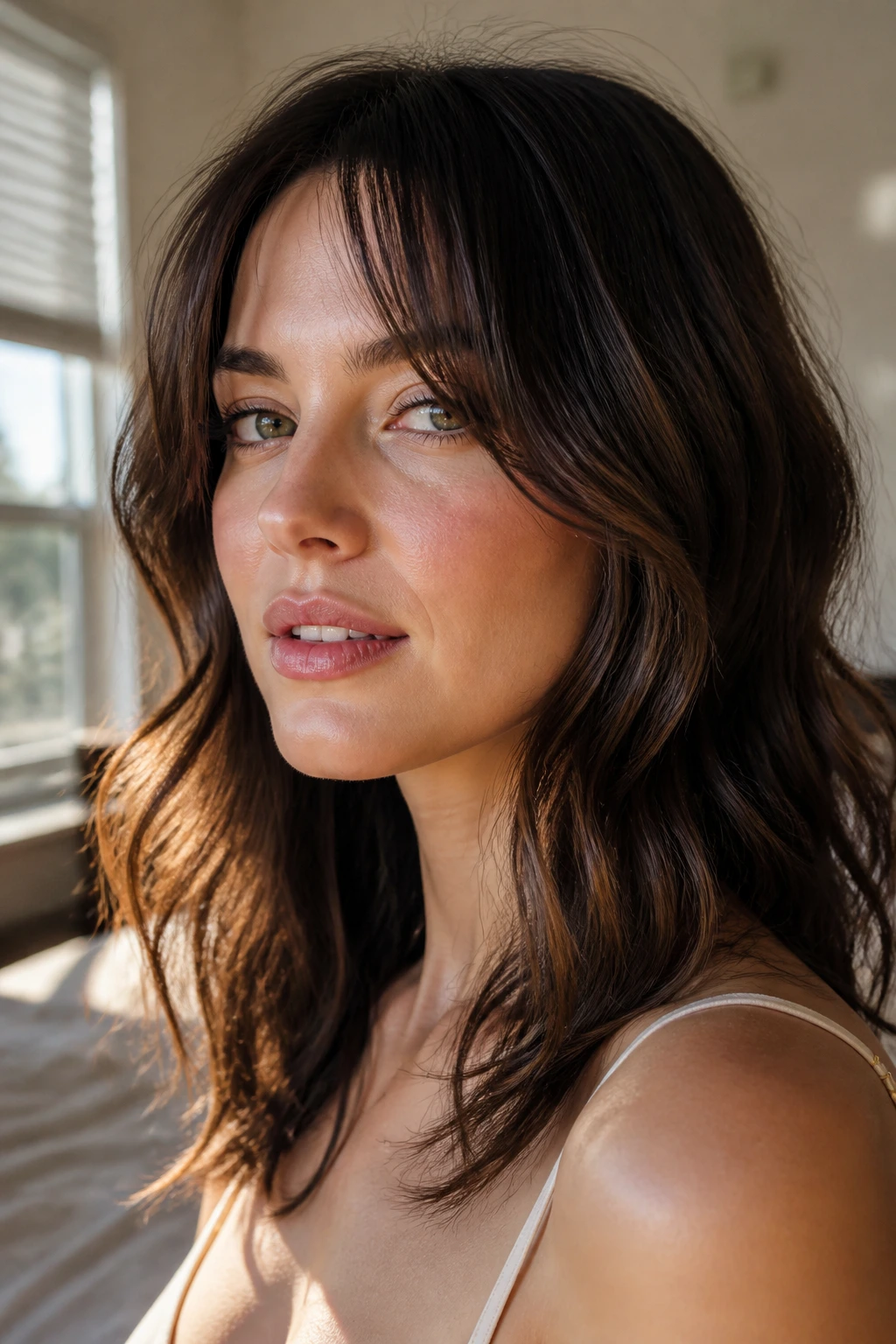
This one doesn’t behave like a traditional bang. It behaves like a front layer that just happens to land in fringe territory.
The long cheekbone frame starts near the brow and drifts all the way down to the cheekbone, which makes it useful for square faces that want softness around the upper half of the face. The long side pieces are doing a lot of the work. They interrupt the line from forehead to jaw and make the whole cut look intentional even when the hair has a little wave and bounce.
I like this shape on longer bobs and collarbone cuts. It’s easy to tuck behind one ear, easy to refresh, and hard to ruin.
7. Feathered French Cut

This is the more relaxed cousin of a sleek fringe. The center pieces sit a little shorter, but the edges are feathered instead of chopped flat, so the front keeps moving.
That feathering helps on wavy hair because the front doesn’t bunch into thick clumps. It also keeps a square face from looking too severe, which can happen when bangs are dense and too neatly lined up. If you want a little Paris-on-a-good-hair-day energy without the maintenance headache, this is the lane.
A quick blow-dry with a nozzle and a small round brush is enough. Don’t overthink the finish. The point is controlled softness, not a lacquered cap of hair.
8. Deep Part Curve

A deep part can save a fringe that otherwise wants to sit straight and stubborn. Push the part over, let the front sweep in one direction, then curve the ends inward toward the cheek.
That off-center motion is useful for square faces because it keeps the eye from landing on one hard line across the forehead. It also gives wavy hair something to do. Waves tend to look better when they’re given direction.
What to ask for
Ask for longer front pieces that can fold into the side part, not a closed-off bang that stops dead at the eyebrow. If the bang line is too short, the deep part loses the whole point.
9. Sleek Shag Fringe
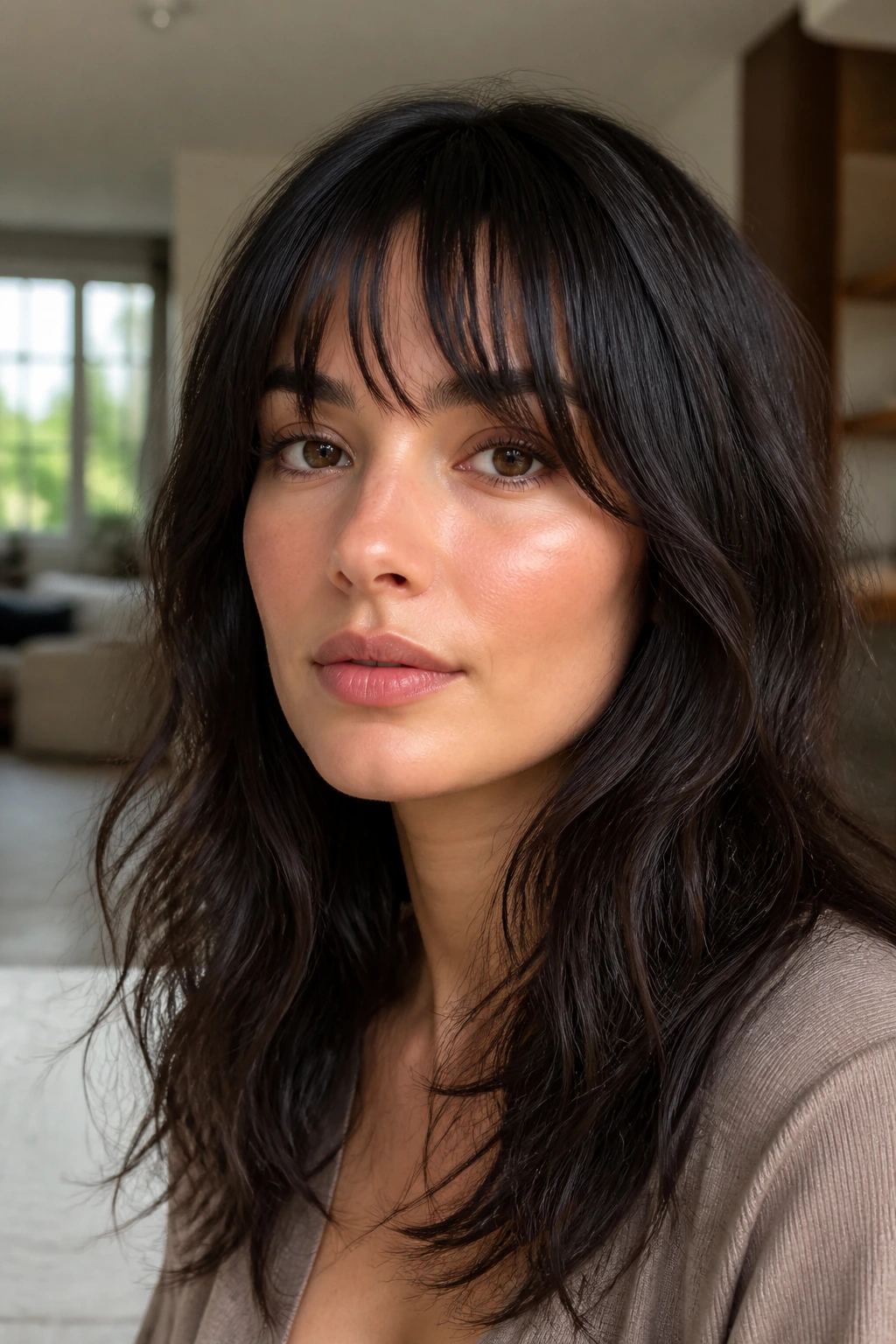
Can a shag still look sleek? Absolutely — if the fringe is kept tidy and the layers around it are controlled.
The sleek shag fringe suits square faces because the side layers and front pieces break up the outline of the face from several angles at once. Wavy hair loves this because the texture works with the cut instead of against it. The danger with a shag is going too choppy near the front. That’s when the bang starts looking frayed instead of soft.
A cleaner edge at the fringe, plus looser layers behind it, is the smarter version. Keep the front a little longer than the shortest face-framing layer. That gives you a fringe that survives air-drying without exploding.
10. Birkin Update

The Birkin-style fringe has that lived-in, slightly undone look, but for square faces and wavy hair, the updated version needs restraint. Think longer, softer, and less dense than the retro photo references people love to copy.
The best version sits low on the brow, then separates into a few gentle pieces instead of one heavy block. That separation matters. It stops the fringe from feeling like a dark band across the face, which is exactly what a square jawline does not need.
I’m partial to this style on hair that’s thick enough to hold shape but not so thick that it turns puffy at noon. It looks good with a blowout brush and even better with a second-day bend.
11. Center-Soft Split

Not every bang has to commit to the forehead in a big way. A center-soft split opens right down the middle, then lets the two sides fall forward and away.
This is one of the easiest shapes for wavy hair because the wave pattern is allowed to move where it wants. Square faces get the benefit of softness around the temples without the bluntness of a full fringe. The middle stays light, which keeps the face from looking crowded.
It’s also one of the best options if you’re nervous about the grow-out phase. The split can slide wider over time and still look like part of the haircut. That’s worth a lot.
12. Arched Edge

The arched edge is a neat little trick. Instead of cutting the bang straight across, the stylist builds a subtle arch that rises a touch in the middle and drops softly at the corners.
That shape echoes the brow line and gently rounds off the upper half of the face. On square faces, rounding is the point. On wavy hair, it helps the fringe settle instead of flaring out at the sides. If the arch is too dramatic, it can read old-fashioned. Keep it shallow.
I’d pair this with a smooth blow-dry and a bit of bend at the ends, not a pin-straight finish. The curve looks better with a little movement.
13. Blended Blunt
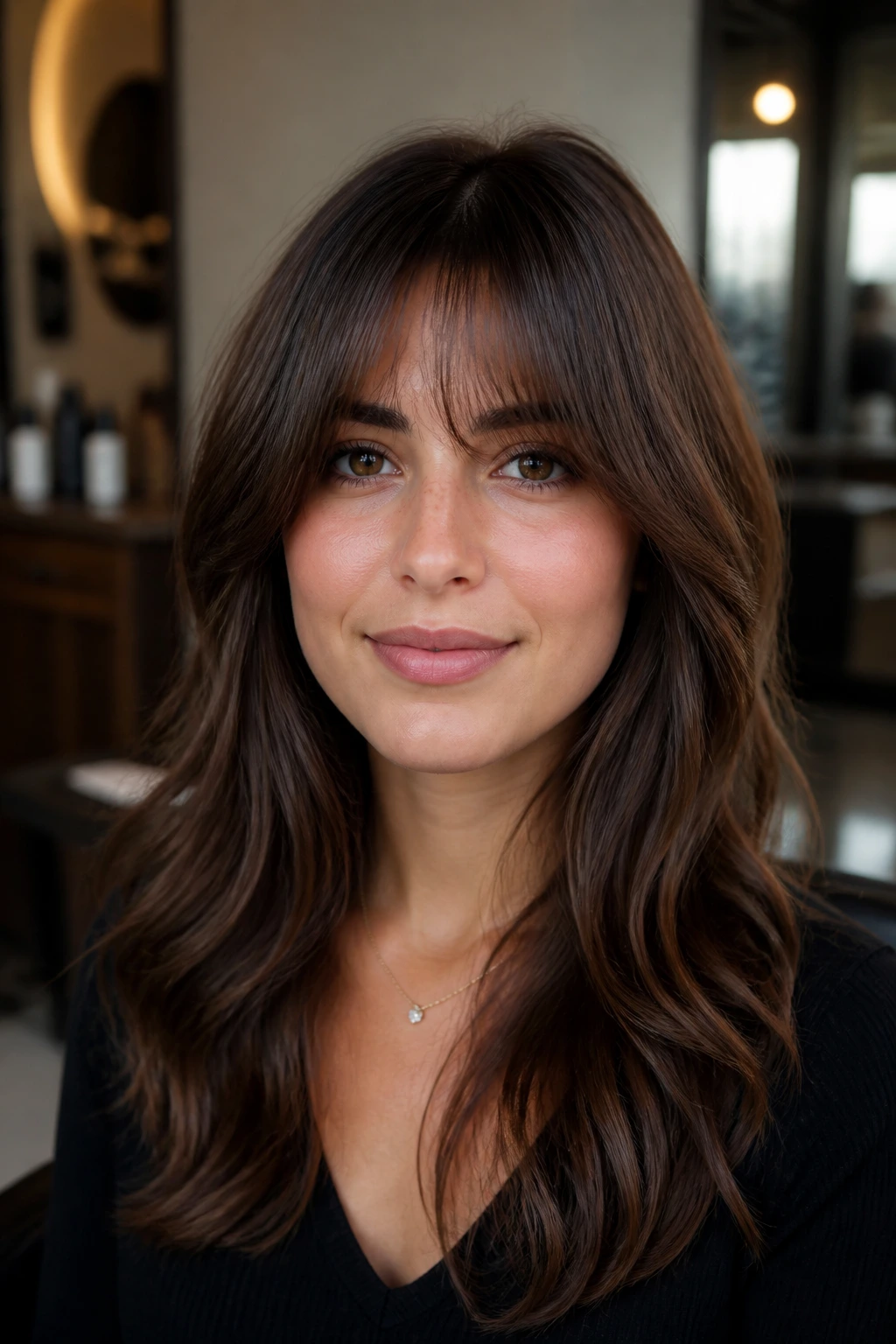
A blunt bang can work here, but only if it’s softened at the edges and kept long enough to avoid the helmet effect. That’s the whole game.
The blended blunt has weight in the center, then a soft release near the temples. It can make a square face look chic rather than boxy when the line lands just above the brows and the sides are beveled. The trick is not to over-thicken the front. If the fringe is too dense, it will sit like a shelf.
Wavy hair needs this cut to be handled with care at the styling stage. Blow it smooth, then use a flat iron only on the last inch near the ends. That keeps the front polished without killing all movement.
14. Piecey Half-Moon

Why does the piecey half-moon work? Because it breaks the forehead line into smaller sections, and smaller sections feel softer on a square face.
The shape curves gently from the center out to the sides, but it never turns into one heavy panel. Instead, the front is separated into slim pieces that still look controlled. That makes it a good match for waves, which naturally want to divide and move.
Styling note
Use a tiny amount of styling cream on the ends only — not the roots — or the pieces will clump too fast. You want separation, not greasy strands.
15. Hidden Under-Fringe

This one is sneaky in a good way. The fringe lives a little under the top layer, so it peeks out instead of announcing itself.
That hidden quality makes it useful for square faces because it softens the front without adding width. Wavy hair likes it because the layers above the fringe help keep it in place. The result is smoother and less fussy than a bang that sits fully exposed across the brow.
I’d use this shape if you wear your hair half up often. It still has enough presence when the rest of the hair is pulled back, which is where many bangs fall apart.
16. Angular Sweep

The angular sweep is one of the more assertive looks here, but it earns its keep. The bang starts fuller near one side, then cuts diagonally across the forehead.
That diagonal line is useful because it interrupts the squared outline of the face. It also gives wavy hair a path to follow. A strong sweep can tame a cowlick better than a straight bang because the hair is allowed to fall into the direction it already wants.
This is a smart pick if your hair has enough density to hold the shape. Thin hair can do it, but it needs a lighter hand at the ends or the diagonal turns stringy.
17. Soft Box-Breaker

The name says it all. This fringe is made to break up the boxiness some square faces get from a flat front line.
The cut is slightly asymmetrical, with one side a touch longer or more curved than the other. That tiny imbalance keeps the look from feeling rigid. Wavy hair helps here, because the bend naturally softens the asymmetry instead of making it look accidental.
I prefer this one on hair that doesn’t love perfect symmetry anyway. If your wave pattern is stronger on one side, this style makes that a feature instead of a problem.
18. Long Skim

The long skim lives close to the brow but doesn’t sit on it. It skims past with a clean, polished line that still leaves room for the waves to show up.
Square faces need that extra length because it avoids the harsh cut-off that a short fringe can create. Long skims are also easier to blow-dry straight without fighting every strand. If you want a sleek finish that still reads modern, this is one of the easiest options to wear.
The only thing to watch is bulk at the root. Keep the area around the part lifted while the ends stay smooth. Flat roots plus fluffy ends is not the look.
19. Razor-Soft Fringe
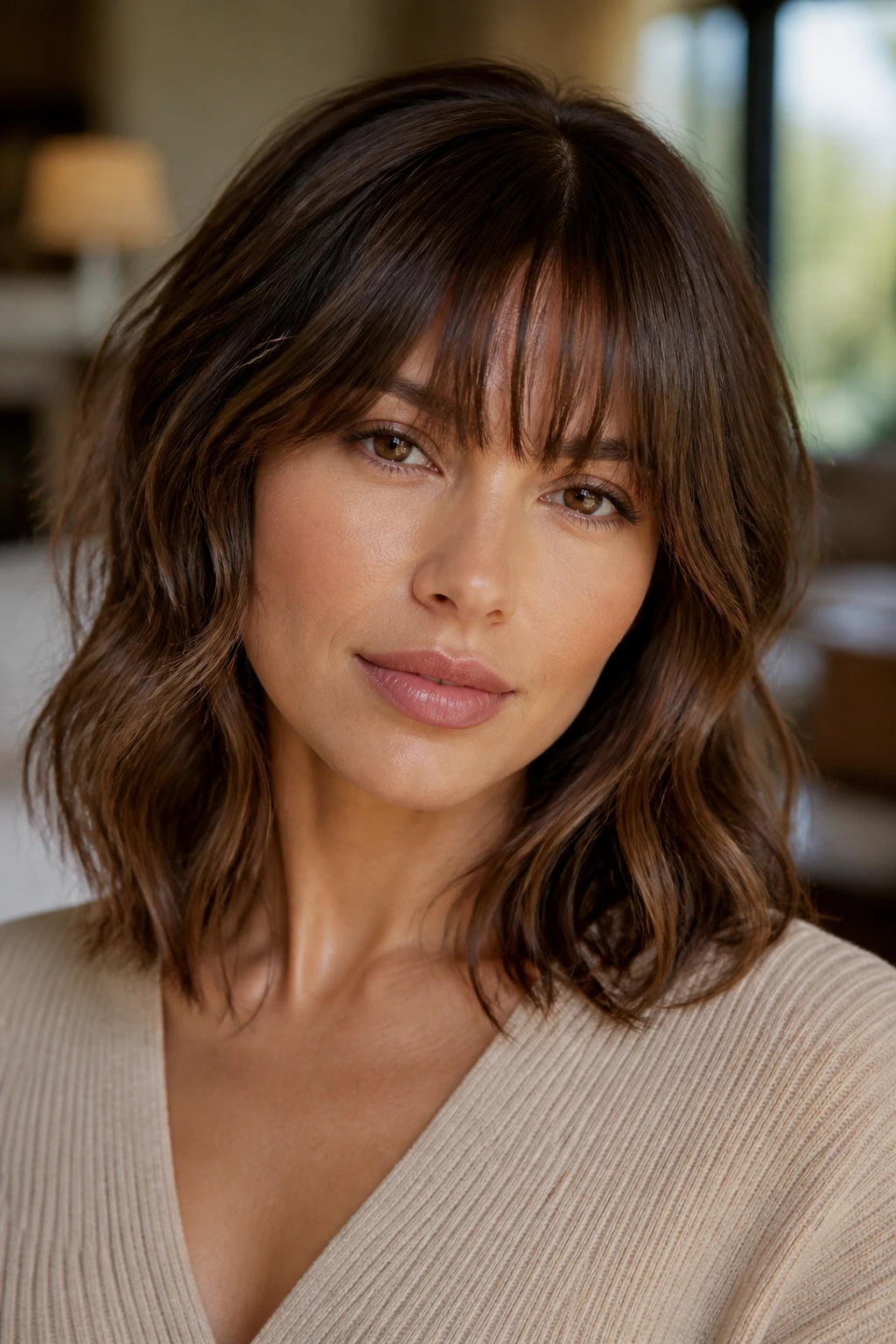
Can a razor cut be sleek on wavy hair? Yes, if the softness is kept at the ends and the interior isn’t shredded into wisps.
This fringe has movement built in. The razor work helps the bang bend instead of sticking out like a rigid strip. For square faces, that softness is a gift, because it keeps the front from becoming a straight bar across the widest area of the face.
I’d ask for this only from someone who understands wavy hair. A heavy-handed razor job can go frayed fast. Done right, though, it gives you a fringe that looks airy and controlled at the same time.
20. Blowout Fringe
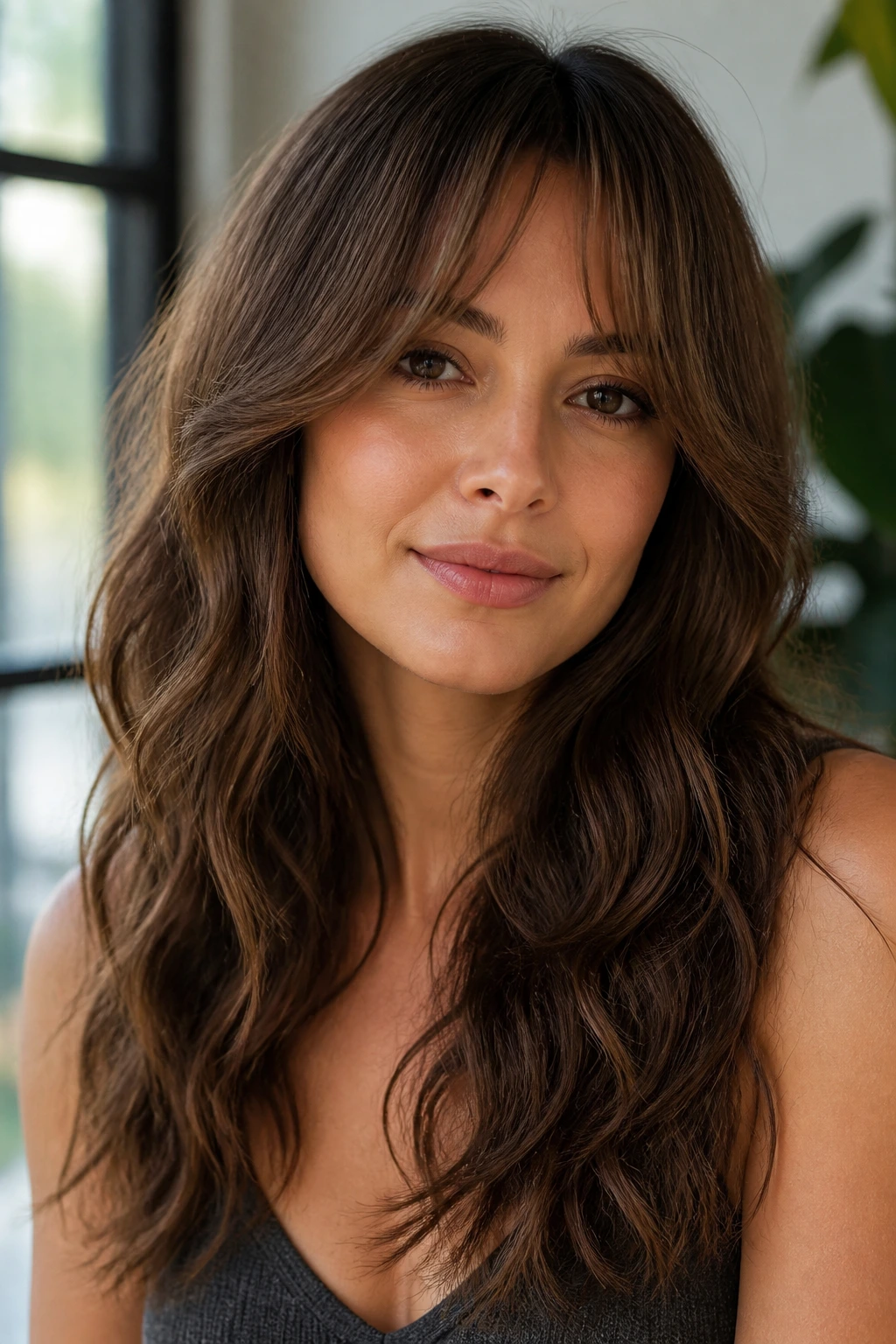
The blowout fringe is designed to be styled, and I respect a fringe that knows what it is. It wants a round brush, a nozzle, and a little patience.
That’s because the shape is built around lift at the roots and a smooth bend through the ends. Square faces benefit from that lift — it opens the eye area — while the bend softens the front edge. Wavy hair can wear this beautifully, but you do have to set it while it’s still warm.
What to watch for
If you let it dry on its own without shaping, the fringe can split in the middle and widen too much at the sides. Clip it in place while cooling if your wave pattern is stubborn.
21. Rounded Corner Bang
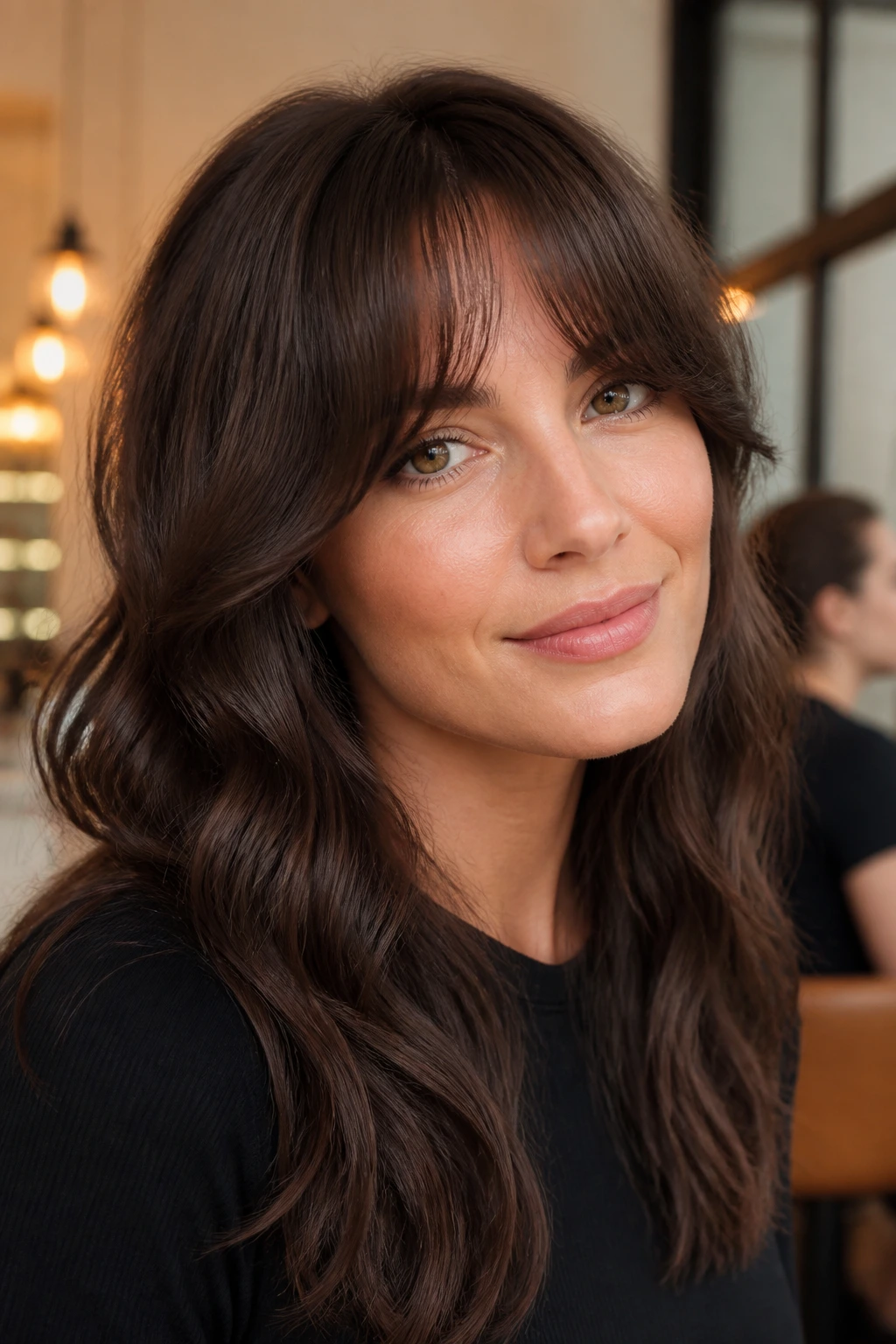
Most bad bangs on square faces fail at the corners. They end too sharply, which is where the face starts to read boxy. The rounded corner bang fixes that.
The middle stays present, but the sides turn softly rather than stopping in a blunt corner. That small adjustment changes everything. Wavy hair holds the roundness well if the bang is cut with enough length to move.
This is one of the best picks if you like a polished front but don’t want the whole haircut to look rigid. It’s neat, not severe.
22. Side-Release Fringe
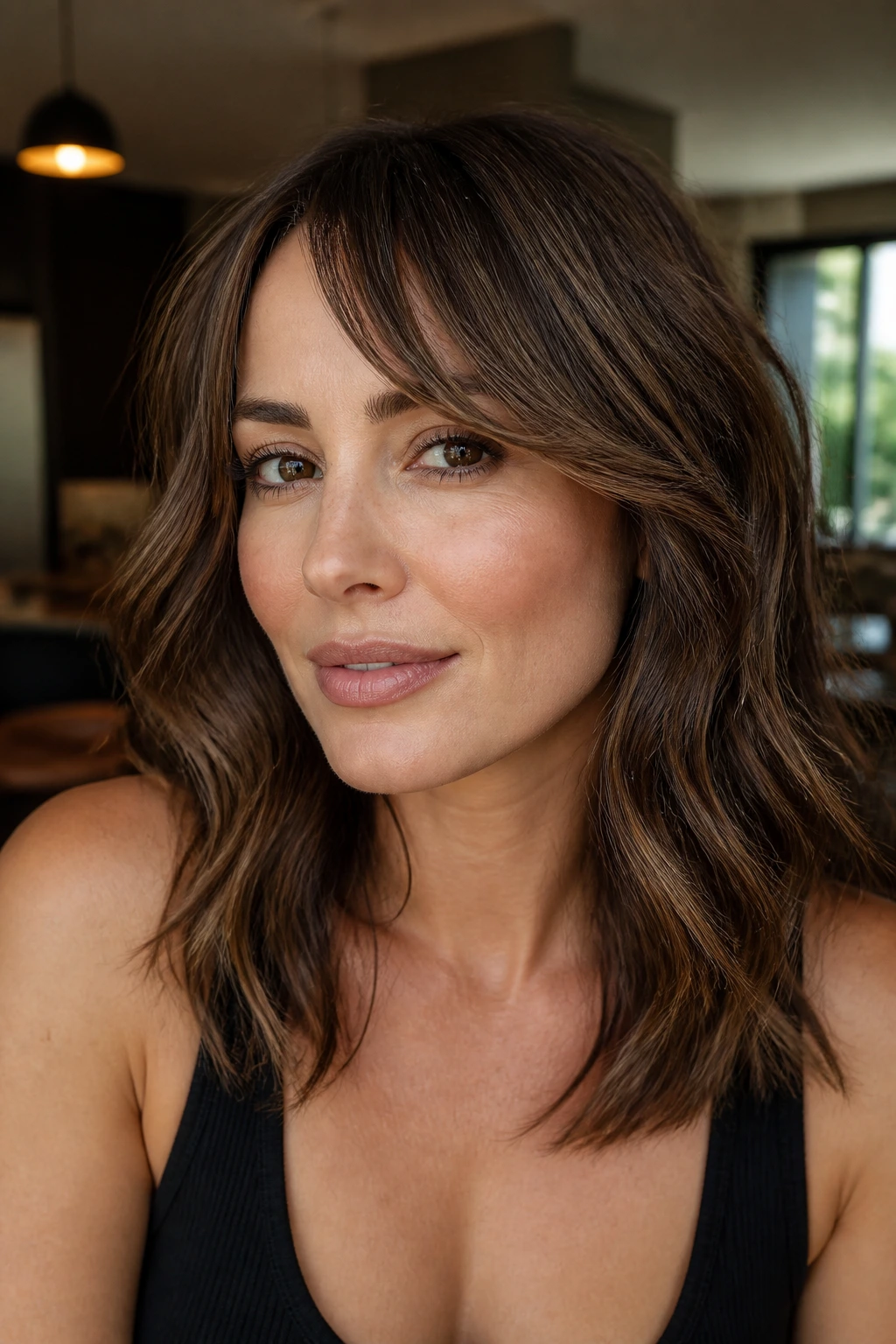
The side-release fringe begins like a side sweep, then opens outward as it reaches the temple. It’s a little looser than a strict diagonal, and that looseness is the point.
Square faces get a break in the face’s straight line, while the wavy texture keeps the finish from looking too engineered. The release at the side also helps if you wear glasses or tuck hair behind one ear often. The fringe still reads on purpose when the rest of the hair is moving.
If your part keeps shifting during the day, this is forgiving. It doesn’t depend on perfect placement to look good.
23. Tapered Temple Frame
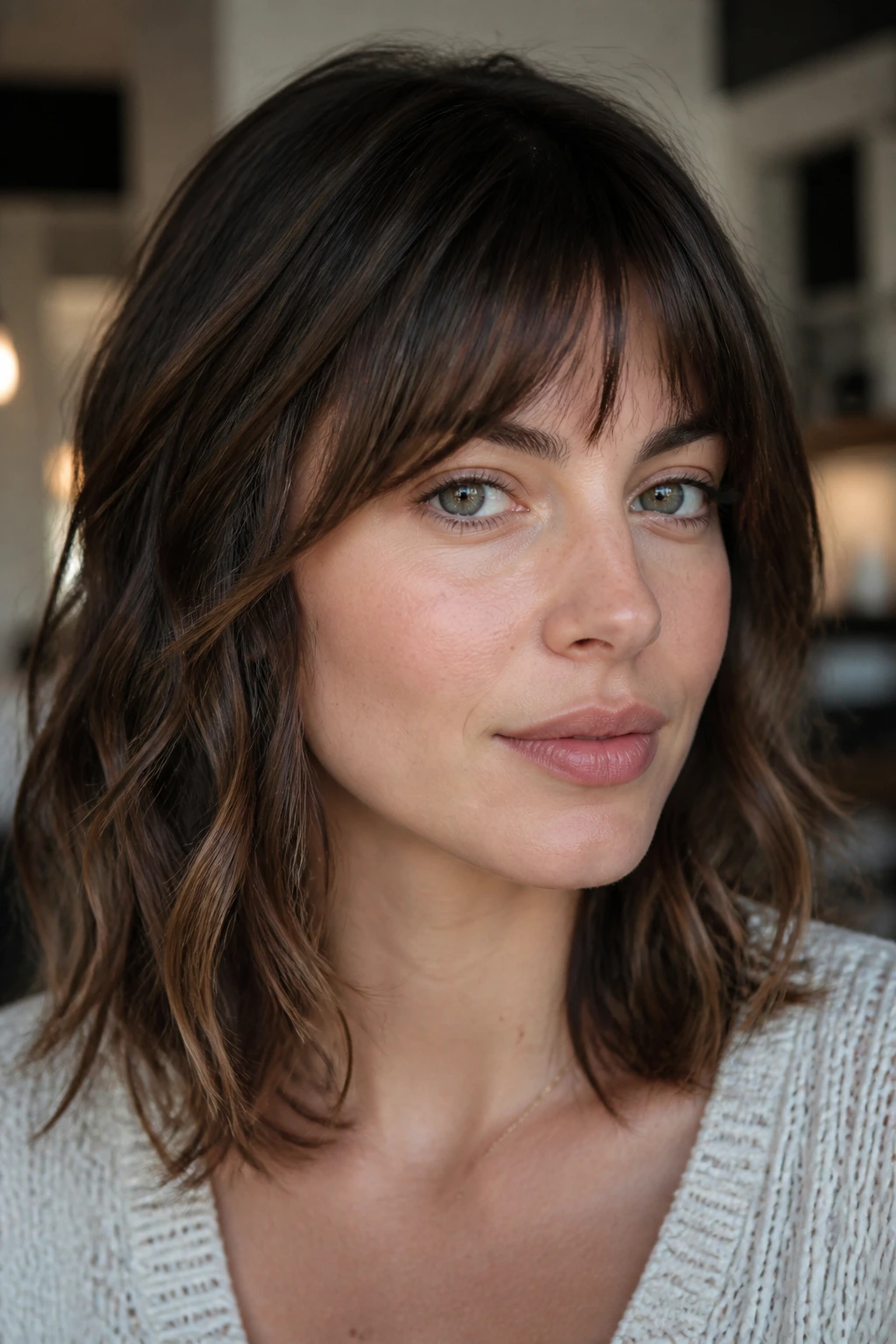
This one is all about the transition. The shortest pieces sit near the temple, and the lengths taper down toward the cheekbone.
That taper matters because square faces are widest through the corners of the forehead and jaw. A fringe that narrows and releases at the sides softens both zones at once. Wavy hair can make the taper look richer, as long as the stylist avoids over-thinning the front.
I like this style on shoulder-length cuts. It has enough structure to read polished, but the taper keeps it from feeling heavy.
24. Collarbone-Length Lift

This fringe is basically a front layer with a little more attitude. It sits long enough to blend with the rest of the haircut, but short enough to lift the face.
Square faces benefit because the front doesn’t cut the face into a wide horizontal shape. Instead, it slides into the cheek and collarbone area, which draws the eye downward in a softer way. Wavy hair loves this because the bend at the front can disappear into the side layers.
This is a smart choice if you’re growing out older bangs and don’t want to reset everything. It’s one of the least dramatic transitions on the list.
25. Polished Curtain Reset
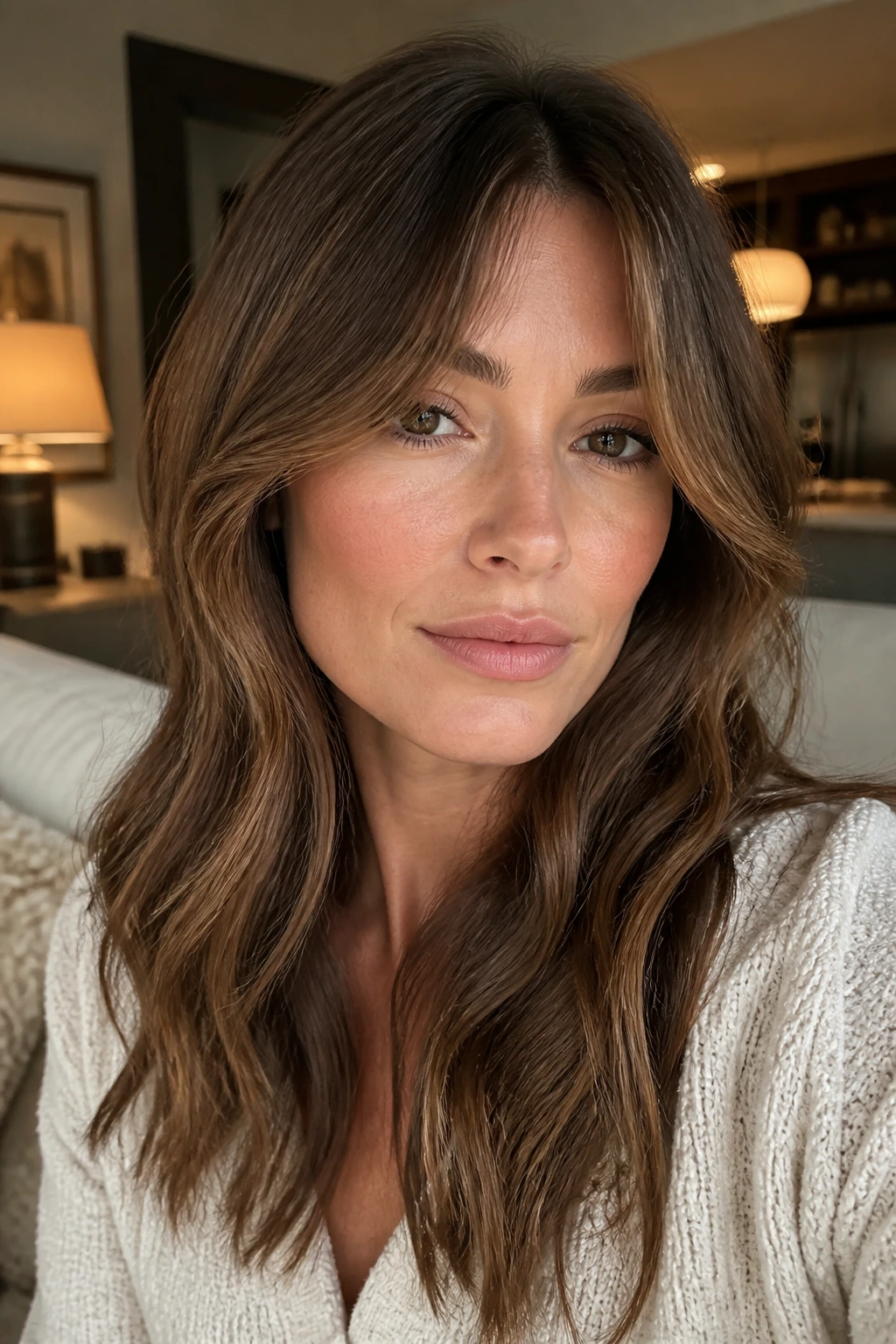
The polished curtain reset is the fringe for people who want clean lines without a hard commitment. It starts as a curtain bang, but the finish is smoother, longer, and more controlled than the shaggy versions that are floating around everywhere.
The center stays a touch shorter, while the sides taper and blend into the front layers. That keeps square faces soft without making the jaw look overly exposed. Wavy hair gets the best of both worlds: a front that can be blown smooth, and ends that still bend naturally.
This is my closing favorite because it behaves. A good fringe should be able to survive a bad wind gust, a humid afternoon, and a rushed morning. This one can.
What Makes the Shape Work Instead of Fighting It

A sleek bang on wavy hair is not about flattening the wave out of existence. That ends badly. The hair rebounds, the front gets wide, and you spend the day touching it.
The smarter move is to control the root and leave the ends with a little bend. That’s especially true for square faces, where a straight, compact fringe can look sharper than intended. A soft angle, a bit of bevel, and enough length to account for shrinkage usually do more for the face than aggressive straightening ever will.
I also think people underestimate how much the side lengths matter. The fringe itself can be lovely, but if the pieces near the temples stop too abruptly, the face feels boxed in again. The best versions of sleek bangs blur into face-framing layers. That’s where the softness comes from.
Essential Tools for a Sleek Finish
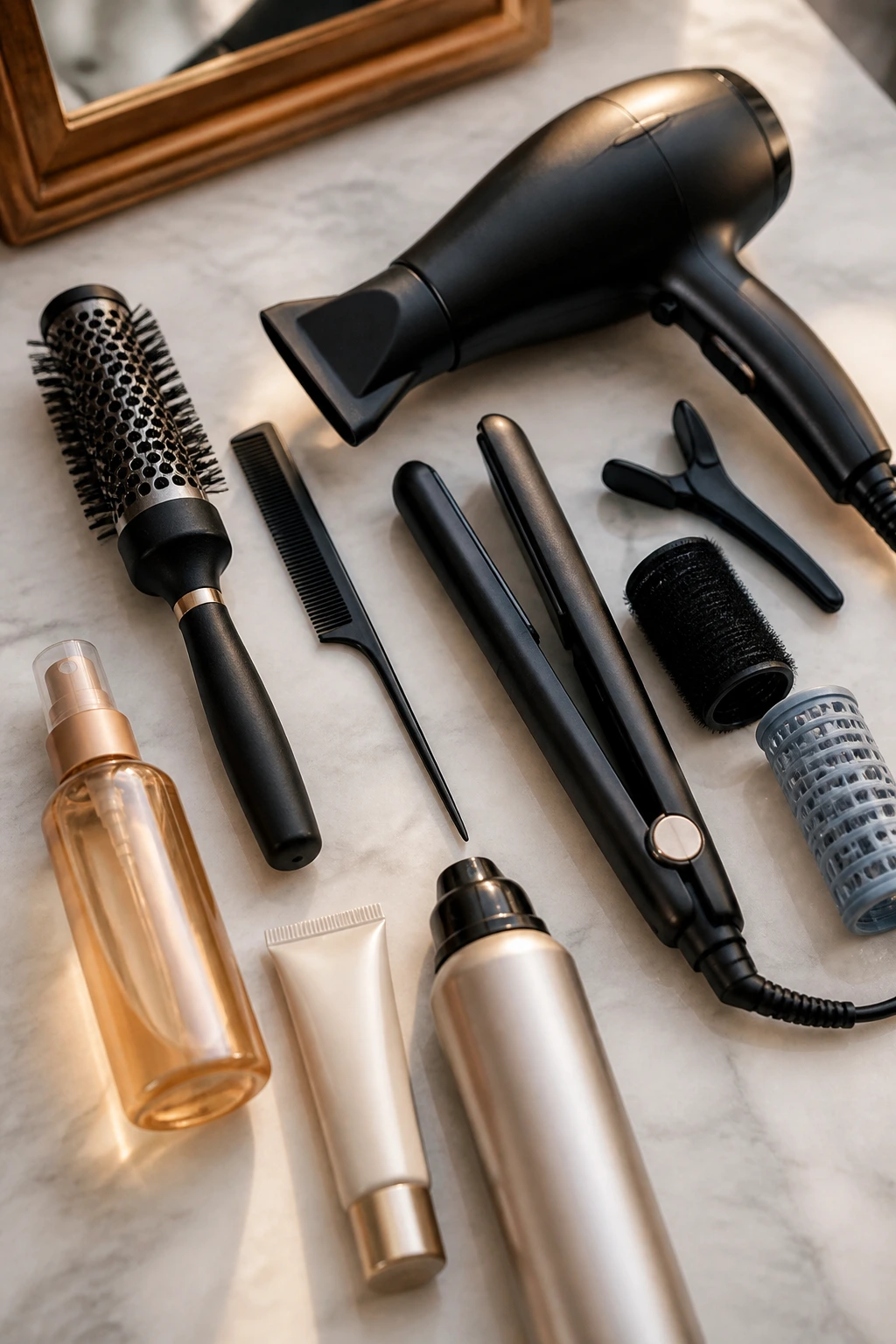
- Small round brush, 1 to 1.5 inches: Best for directing the bang smooth without over-curving the ends.
- Fine-tooth tail comb: Useful for setting a clean part and controlling the front section before drying.
- Blow dryer with a concentrator nozzle: Keeps the air focused so the bang doesn’t scatter while you style it.
- Heat protectant spray: A light mist keeps the front from feeling crispy after flat ironing or round-brushing.
- Mini flat iron with rounded edges: Ideal for one gentle pass at the ends if the wave keeps flipping out.
- Sectioning clips: They help isolate the fringe so the rest of the hair doesn’t steal the moisture and heat.
- Light styling cream or mousse: Pick one, not both in heavy amounts; the front gets greasy fast if you overload it.
- Dry shampoo: Good for the forehead area between washes, especially if your skin runs a little oily.
- Velcro roller or soft setting roller: Optional, but useful for cooling the fringe into shape while you do your makeup.
What to Tell Your Stylist Before the First Snip
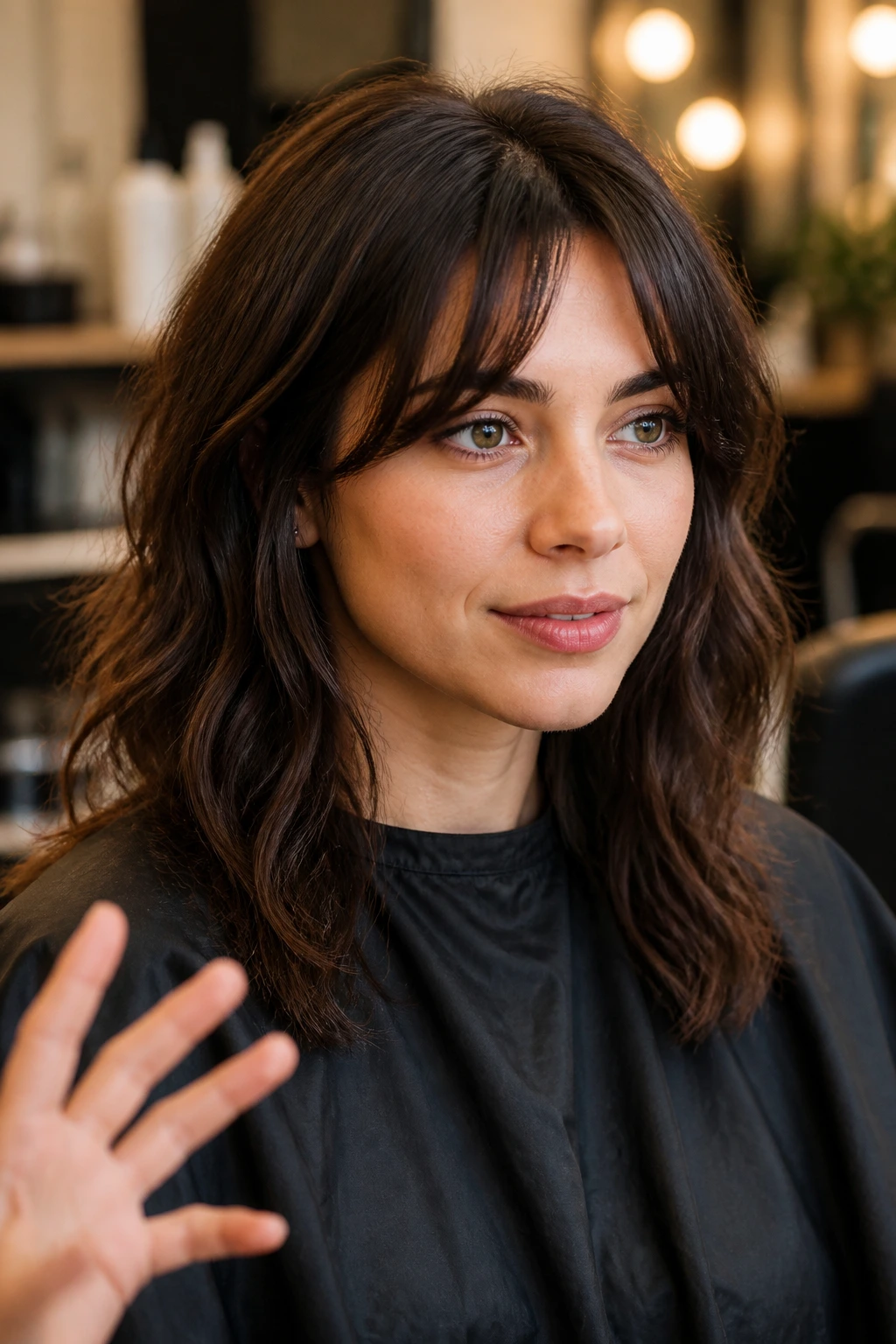
The cleanest salon talk is plain talk. Don’t ask for “bangs that frame my face” and leave it there. That phrase means different things to different stylists, and the result can wander off in a hurry.
Say where you want the shortest point to land. Say whether you want the fringe to part in the middle, off-center, or sweep one way. Say how much forehead you want covered when the hair is dry, not wet. If your hair waves up, mention that. If your cowlick lives on the left side, mention that too. It matters.
A few useful phrases:
- “Keep the center longer so it doesn’t spring up too high.”
- “Soften the corners around the cheekbone.”
- “Don’t make the front too dense.”
- “I want a fringe that still looks good air-dried.”
That last one is the real test. If it only looks good under perfect blow-dry conditions, it’s not a great cut for wavy hair.
The Daily Styling Rhythm for Smooth Bangs
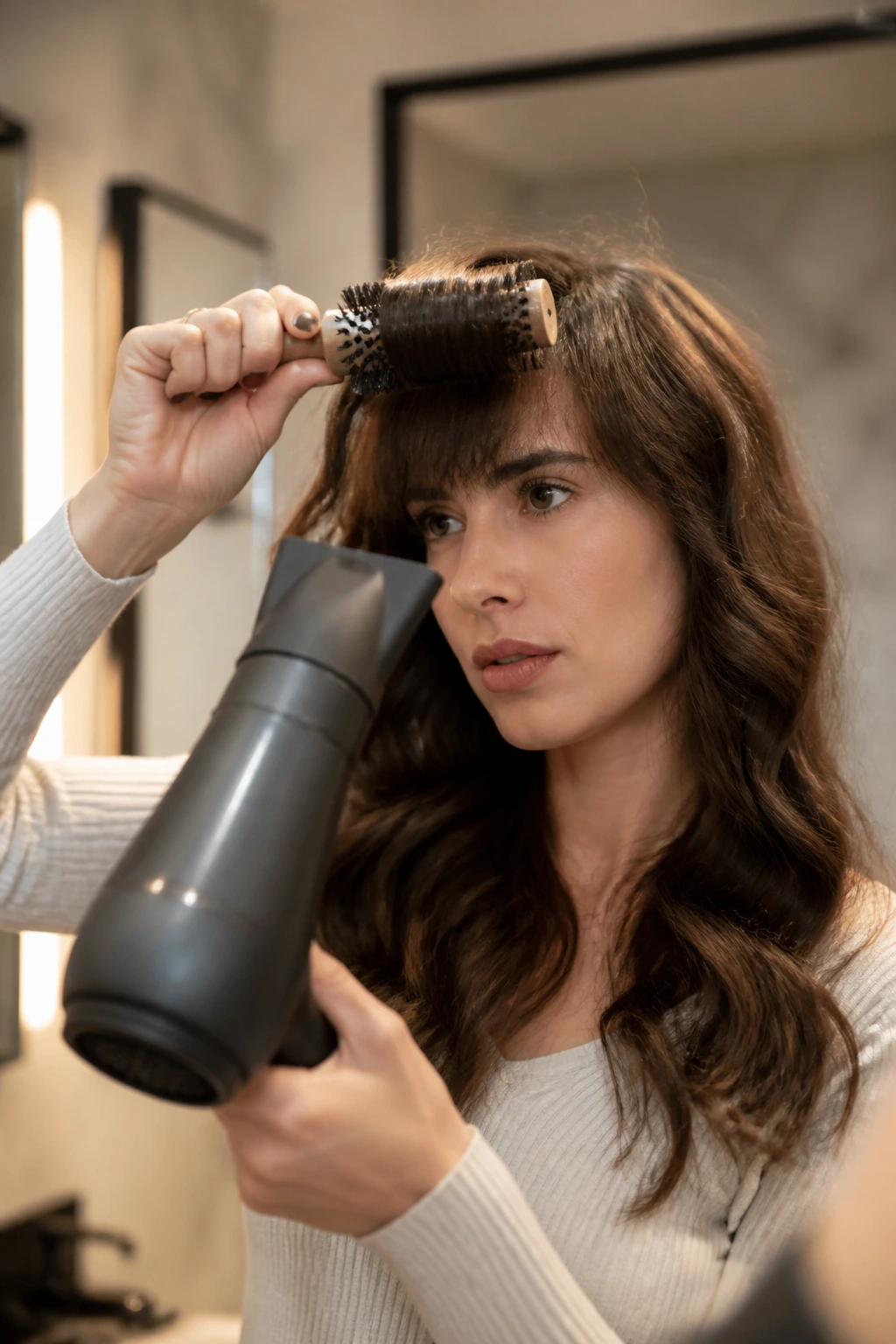
Root prep: Start with a little moisture at the fringe only — not the whole head. A mist of water and a drop of heat protectant are enough. Too much product at the root makes the bang collapse.
Direction: Blow-dry the fringe from side to side for the first few passes, then guide it into the final shape. That back-and-forth motion interrupts cowlicks and keeps the front from drying in one stubborn line.
Finish: Use a round brush for smoothness, then touch only the last inch or so with a flat iron if the ends kick out. One pass is enough. More than that and the bang loses its life.
Refresh: On day two, dry shampoo at the roots and a quick brush-through often beats re-wetting the front. If the wave has bent the ends in a bad direction, a tiny bit of steam or a damp fingertips reset is usually kinder than starting over.
Common Mistakes That Make Bangs Puff or Split
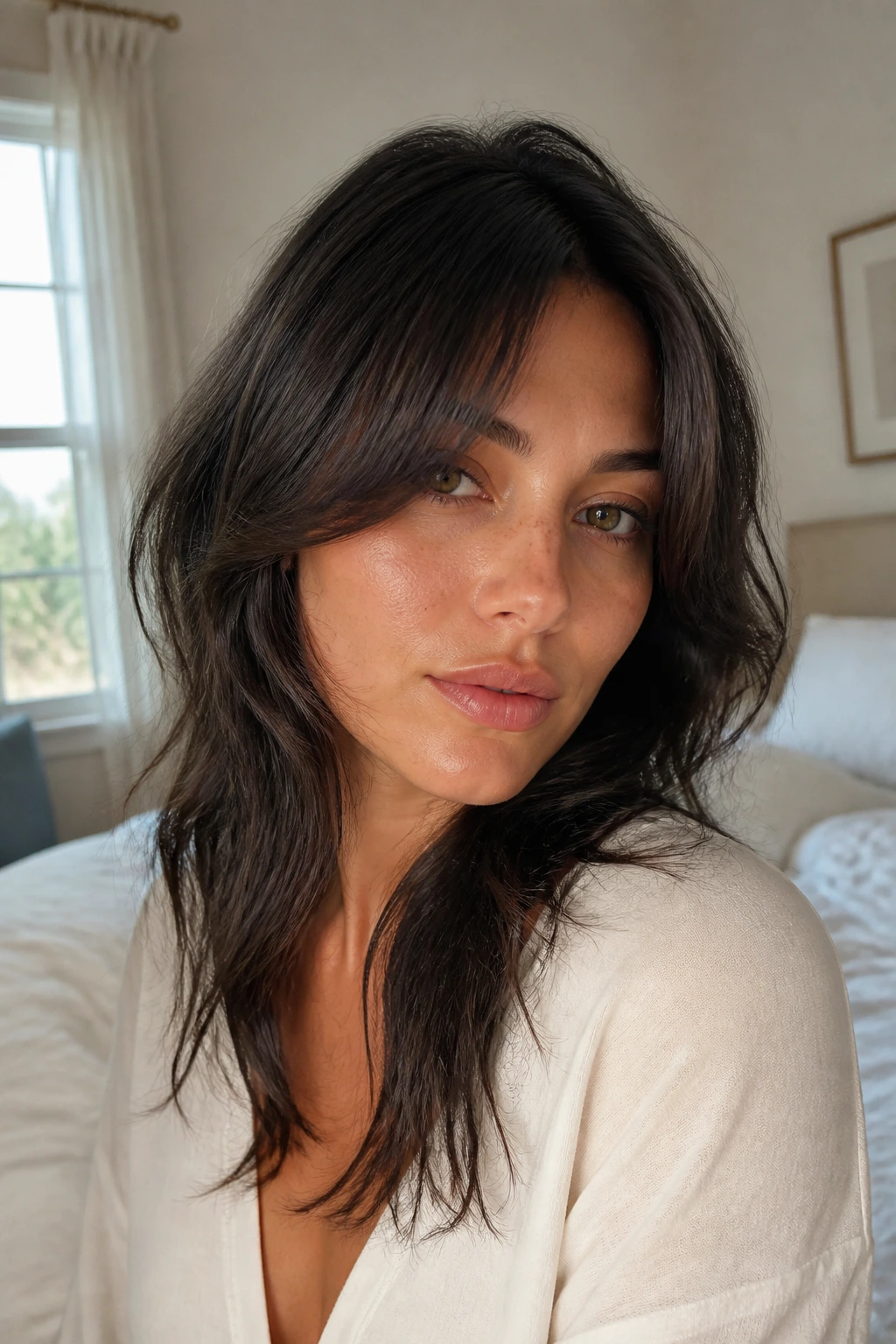
Cutting them too short. Wavy hair shrinks more than people expect, and a fringe that feels safe in the chair can end up a half inch higher at home. The fix is simple: leave more length and trim again later if needed.
Making the front too thick. Dense bangs can look dramatic for ten minutes, then heavy and boxy. If your square face already has strong lines, that density can work against you. Ask for softness inside the fringe, not a wall.
Drying straight down every time. That motion encourages splitting and widens the face visually. Dry slightly off-center or in a diagonal direction instead.
Using too much oil or cream. The front clumps fast. Once it separates into greasy strands, it’s hard to recover. Use the smallest amount possible and keep it off the roots.
Ignoring the cowlick. A stubborn bang that splits in the same place every day is usually a root-direction problem, not a styling failure. Clip, roll, or redirect the area while it cools.
Letting the corners sit blunt at the jawline. That’s where square faces get boxed in again. A soft corner or a little taper makes a bigger difference than most people think.
Fresh Ways to Wear the Same Cut

Humidity-Ready Fringe: Keep the length a touch longer and the density light. This version tolerates puff and still looks neat when the air gets sticky.
Low-Heat Morning Fringe: Use a roller or clip set while you do the rest of your routine, then release it and finger-comb. Good for anyone who hates starting the day with a full blow-dry battle.
Fuller Brow Frame: Add density through the center, but keep the corners soft. This suits thicker hair and gives a more noticeable front line.
Side-Part Softening: Shift the part half an inch farther than usual and let the bang follow it. That tiny change softens the square outline fast.
Grow-Out Fringe: Keep the front long enough to tuck or split as it grows. It looks intentional for longer and saves you from that awkward week where everything hangs wrong.
Keeping the Fringe Polished Between Trims
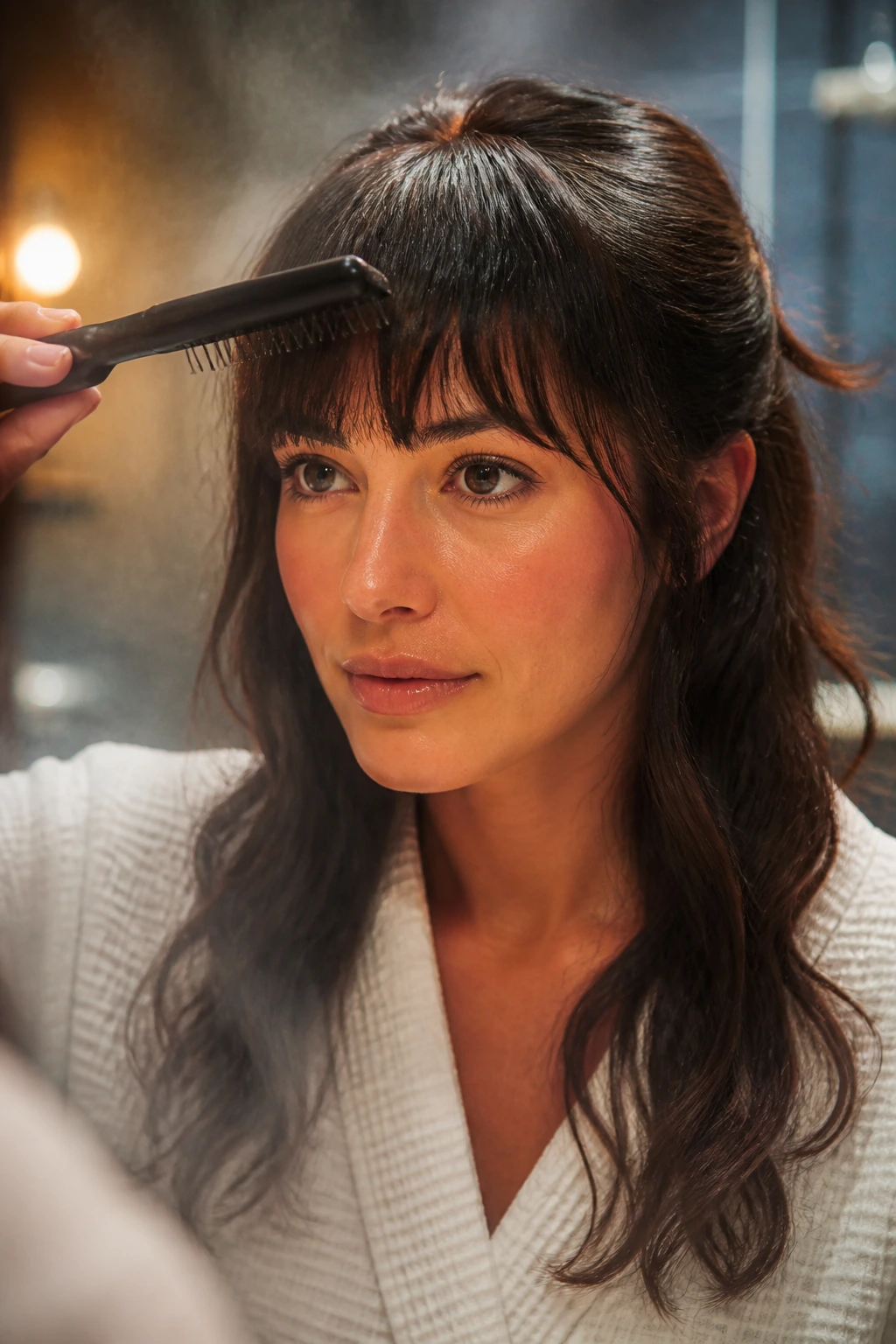
Bangs need more attention than the rest of the haircut. That’s just the deal.
A fringe usually benefits from a trim every 4 to 6 weeks if it sits above the brow, and every 6 to 8 weeks if it’s one of the longer, cheekbone-skimming shapes. If you wear a softer curtain or side sweep, you can sometimes stretch that a little longer, but once the front starts swallowing your eyes, it’s time.
Wash the fringe area more often than the rest of your hair if your scalp runs oily. A quick sink rinse or a targeted shampoo at the front can reset the shape without washing the whole head. At night, clip the bang loosely away from the face or tuck it back with a soft roller if it tends to bend weirdly while you sleep.
Silk pillowcases help, but they’re not magic. They just reduce the friction that makes the front kick out in the morning. That’s enough of a win to matter.
FAQ
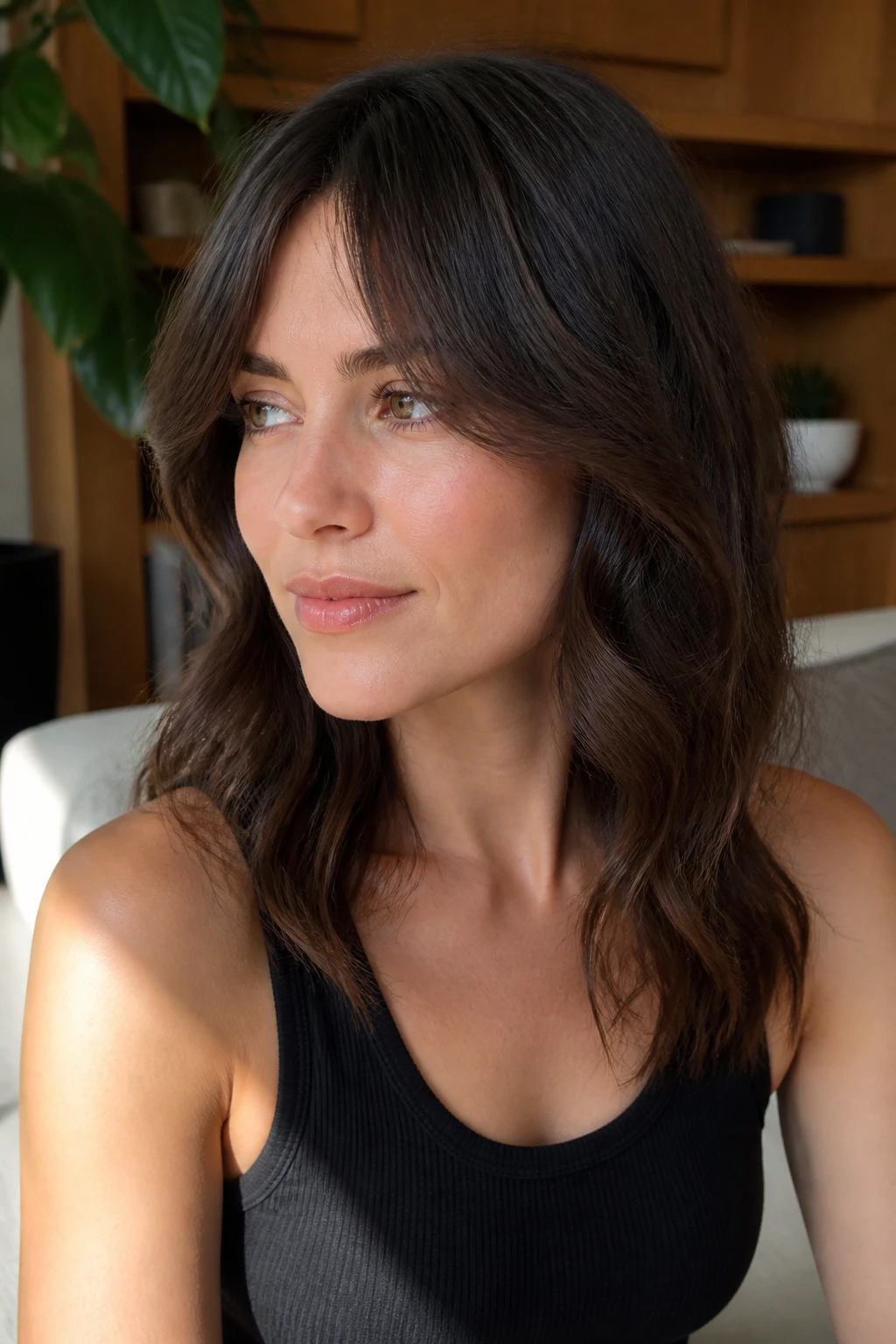
Will sleek bangs work if my waves start at the root?
Yes, but the cut needs extra length and a softer finish. If the wave starts high, avoid a short blunt line; it will puff up before lunch and look boxier on a square face.
Should bangs on wavy hair be cut wet or dry?
Dry cutting, or cutting with the wave pattern in mind, is usually safer because wavy hair changes shape as it loses moisture. If a stylist cuts wet, the bang should still be left longer than the final goal.
Can a square face wear blunt bangs?
Yes, but the blunt line needs soft edges, enough length, and a little bevel through the corners. A hard, eyebrow-level block is the version most likely to make the face look wider.
How do I stop bangs from splitting in the middle?
Set the root in both directions while drying, then let the fringe cool in the shape you want. A tiny roller or clip helps more than a heavy styling cream.
Do I need to flat iron sleek bangs every day?
Not always. A good blow-dry with a small round brush is often enough. Flat ironing is best used as a finish on the ends, not as the only thing holding the shape together.
What if my bangs get greasy fast?
That’s normal. Bangs sit against the forehead, so they pick up oil faster than the rest of the hair. Dry shampoo at the roots and a quick brush-through usually solve the problem without a full wash.
Which bang length is safest for a square face?
The safest zone is usually around brow to cheekbone length, depending on how strong your wave pattern is. Shorter than that can turn sharp fast unless the shape is very soft and deliberately textured.
Can I wear these bangs with a bob or lob?
Absolutely. In fact, a bob or lob often makes sleek bangs easier to wear because the front and body of the haircut stay visually balanced. Just avoid a bob that ends exactly at the jawline with a straight bang on top of it — that combination can read boxy.
How do I grow the fringe out without hating the in-between stage?
Keep trimming the corners and let the center lengthen first. That turns the bang into a curtain shape before it turns into a problem, and the transition looks cleaner with waves than with pin-straight hair.
The Fringe That Softens the Line

The best fringe for a square face is not the one that hides the face. It’s the one that changes how the eye moves across it. A soft curve, a diagonal sweep, or a longer center with tapered corners can make a strong jawline look more balanced without stripping away the structure that makes the face interesting in the first place.
Wavy hair adds one more layer of decision-making, but it also gives you something useful: movement. Work with that movement, keep the front a little longer than instinct says, and aim for a shape that still behaves when you skip the perfect blowout. That’s where the good bangs live.
If you’re choosing from this list, start with the shape that matches your daily routine, not your fantasy routine. The right fringe should look better after a normal Tuesday than it does in a salon mirror, and that’s a very good test.