



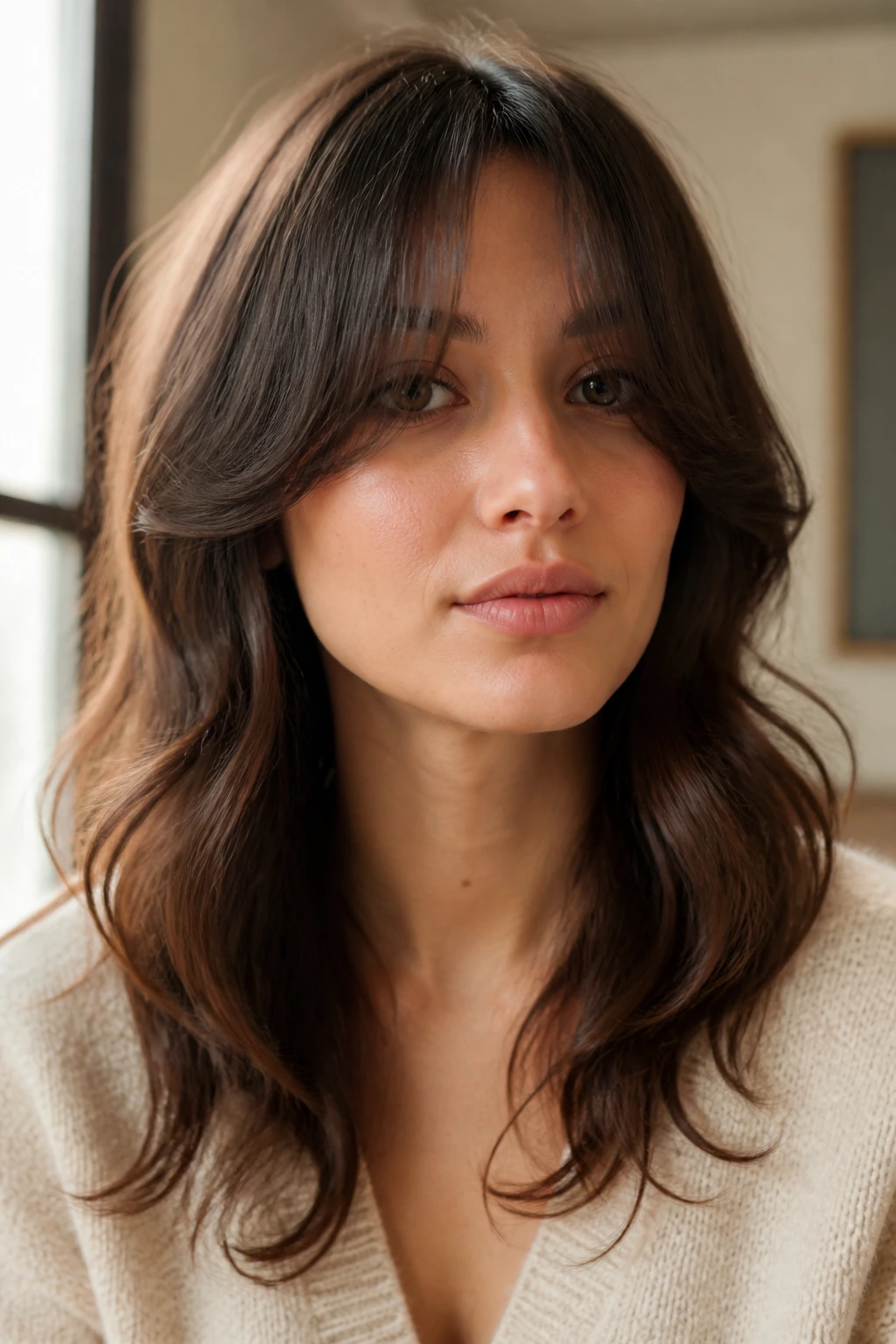
Parted bangs for square faces and fine hair live or die on one thing: the split. Get that wrong, and the fringe sits like a little curtain rod across the forehead, heavy and boxy. Get it right, and the whole face softens. The jaw looks less squared-off, the hairline gets a bit of lift, and fine strands stop looking like they’ve been pressed flat under a hat.
That pairing matters more than people think. A square face usually has a strong jaw, a broad forehead, or both, which means blunt, straight-across bangs can make the edges feel even sharper. Fine hair brings its own problem: too much density at the fringe can collapse in an hour, while too much texture can leave the bangs wispy in the wrong places. The sweet spot is a bang that opens at the part, bends away from the face, and keeps enough weight at the ends to look intentional.
I’ve always liked parted bangs more than the heavy, one-length versions on this face-and-hair combo. They move. They forgive a bad hair day. And when they’re cut with a little restraint, they do that useful trick of making the jawline seem softer without hiding it. The styles below cover the full range, from barely-there curtains to choppier, more styled splits, so you can match the cut to your hair’s density and the amount of daily effort you want to spend.
Why These Styles Work So Well on Square Faces and Fine Hair
-
Soft diagonals beat hard horizontals: A parted fringe breaks up the straight line that can make a square face look broader through the brow and jaw.
-
The split adds lift at the roots: Fine hair often lies flat where it’s cut shortest, and an open part creates a little built-in space at the hairline.
-
Longer side pieces do real work: The strands that graze the cheekbone or lip pull attention inward and downward, which softens the jaw without hiding it.
-
Less density usually looks richer: Fine hair tends to look better when the bangs are light enough to move, not so thick that they sit in a single sheet.
-
Parted bangs grow out cleanly: You can stretch the trim schedule a bit because a split fringe usually drifts into face-framing layers instead of turning into a blunt mess.
-
They play well with texture: A slight bend, a loose wave, even a little air-dried fluff reads as style here, not mistake.
1. Soft Center-Part Curtain Bangs
Soft curtain bangs are the obvious starting point, and for good reason. The center split opens the forehead just enough to keep a square face from looking boxed in, while the longer outer pieces skim the cheekbones instead of stopping abruptly at the brow.
Why This Version Works
The trick is keeping the shortest point a touch below the brows, not chopped right into them. Fine hair collapses fast when it’s cut too short, so this version needs a bit of length to stay airy. Ask for the middle to be lightly connected to the front layers, not separated into a heavy fringe.
A smooth blowout makes the shape read cleanly, but you do not need a salon round brush drama every day. A 1-inch round brush and a fast pass from the dryer are enough if the cut is right.
2. Deep Side-Part Sweep with Chin Framing
A deep side part gives square faces a diagonal line right away, and diagonal lines are your friend here. The fringe sweeps across the forehead, then drops into a longer piece near the cheekbone or chin, which keeps the shape soft instead of blunt.
The best part? Fine hair usually takes to this shape without much drama. Because the bang is stretched across more of the front, you can keep the section lighter and avoid that dense, helmet-ish look that happens when too much hair is shoved forward.
What to Ask For
- Keep the part naturally off-center, not pasted over from the crown.
- Let the longest front piece hit somewhere between cheekbone and jaw.
- Use a small amount of point cutting so the edge doesn’t read as a hard line.
3. Bottleneck Bangs with a Narrow Center Split
Bottleneck bangs are narrow in the middle and wider at the sides, which is exactly why they suit a square jaw. The center opens just enough to show the forehead, then the width increases as the bang drops toward the temples and cheekbones.
This shape is a quiet fix for fine hair, too. It looks fuller than see-through fringe because the outer corners carry the visual weight, but the center remains light. I like this version when someone wants bangs that feel deliberate without looking heavily styled.
How to Wear It
Blow the middle section straight up for a second or two at the root, then bend the side pieces away from the face with a round brush. The result should be a soft curve, not a curled-under pageant bang.
4. Feathered Split Fringe
Feathered split fringe is the one I reach for when a client says, “I want bangs, but I don’t want to see them all the time.” The strands are piecey and lightly textured, so the fringe breaks apart around the part instead of hanging in a single block.
Square faces benefit from that broken-up movement. Fine hair gets a break too, because feathering removes just enough weight to keep the front from collapsing while still leaving enough hair to register as a fringe.
Why It’s Different
This is not the place for aggressive thinning. A little feathering at the tips is enough. Too much slicing, and the bangs end up airy in the sad way, where you can see too much scalp and not enough shape.
5. Invisible Layered Bangs
Invisible layers are for the person who wants a fringe but hates the feeling of having fringe. The shortest pieces blend into longer front layers so softly that the bang almost disappears when the hair is down.
That makes this one especially good for a square face with fine hair. There’s no sharp end point to emphasize the jaw, and the front still gets that soft frame that makes a blunt bob or long straight hair feel less severe.
A small note: this cut depends on movement. If your hair is pin-straight and refuses to bend, ask your stylist to keep the shortest face-framing piece slightly longer than usual so it doesn’t vanish completely.
6. Cheekbone-Length Curtain Bangs
If you want the safest version of parted bangs, this is it. Cheekbone-length curtain bangs land exactly where they can pull the eye outward and upward without crowding the face.
They’re especially useful when fine hair needs a fringe that won’t go limp by lunch. The extra length gives the strands enough weight to sit with some shape, which means the bangs read as polished rather than sparse.
Best Styling Move
Dry the bang section first, before the rest of your hair, and direct the airflow from side to side. That little bit of cross-drying helps the split stay open instead of welding itself to the forehead.
7. Low-Density Side-Split Fringe
A low-density fringe sounds fancy, but it just means you’re using less hair in the bang area and letting the part do most of the visual work. On fine hair, that’s often the smarter move. You avoid the lumpiness that shows up when too much hair is dragged forward.
The side split gives square faces a softer edge because the fringe falls diagonally rather than straight across. It also grows out better than a blunt bang, which is handy if you’re not the type to book trims every four weeks.
Best for: straight or slightly wavy hair that needs a light front shape without a lot of maintenance.
8. Long Draped Fringe with Rounded Ends
Long draped fringe is a little more romantic and a little less obvious. The bangs curve outward at the ends, almost like a soft frame around the face, which keeps the jawline from feeling too sharp.
Fine hair likes this version because the ends can stay wispy without looking thin all over. The rounded finish gives the front enough presence that it doesn’t just disappear into the rest of the cut.
The styling detail that matters here is the bend at the ends. If you flatten them straight down, you lose the shape. If you over-curl them, the fringe starts looking dated fast. A slight outward flick is the whole point.
9. Face-Framing Bang Layers with a Soft Part
This one behaves more like a front layer than a classic bang, and that’s exactly why it works. The part is soft, the shortest pieces stay around brow level, and the longest bits blend into the sides of the haircut.
Square faces look especially good in this setup because the front doesn’t stop at one clean line. It moves around the forehead and cheek area in a way that breaks up sharper edges. Fine hair benefits because the fringe is never so heavy that it collapses.
How to Think About It
If you’re nervous about committing to bangs, this is the safest bridge cut. It gives the feeling of a fringe without forcing a hard decision about density or length.
10. Textured French-Girl Fringe, Opened Up
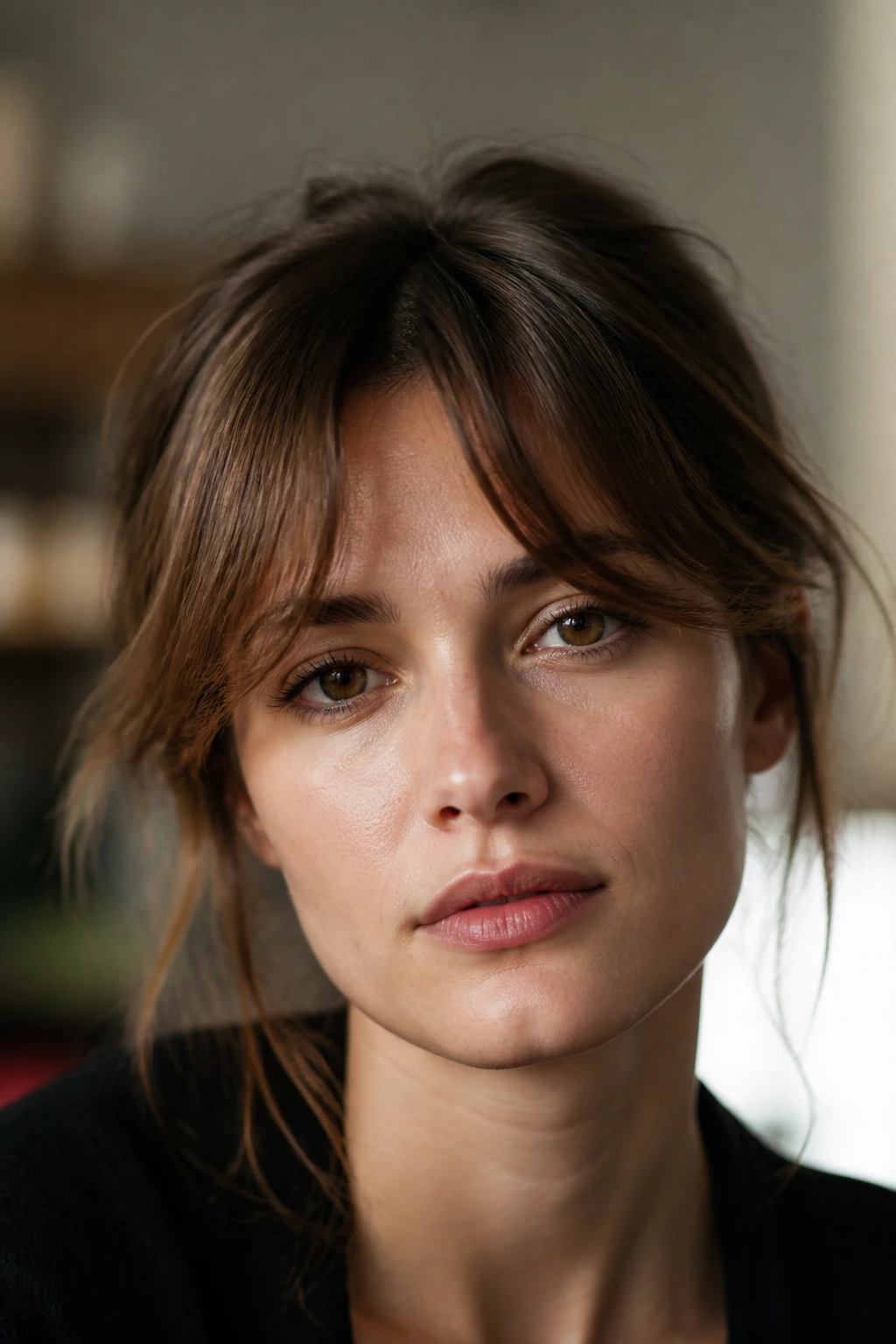
This version has attitude, but not the heavy kind. The bangs are lightly textured and separated at the part, so they fall in loose pieces instead of a dense curtain.
Square faces usually look better when the front has a bit of movement, and this fringe delivers that in a controlled way. Fine hair can wear it too, as long as the cut stays light and the texture isn’t overdone.
A word of caution: the French-girl reference can tempt people into cutting the fringe too full. Don’t. The prettier result on fine hair is usually the softer, slightly broken version with room at the scalp.
11. Tapered Side Fringe with Chin-Length Pieces
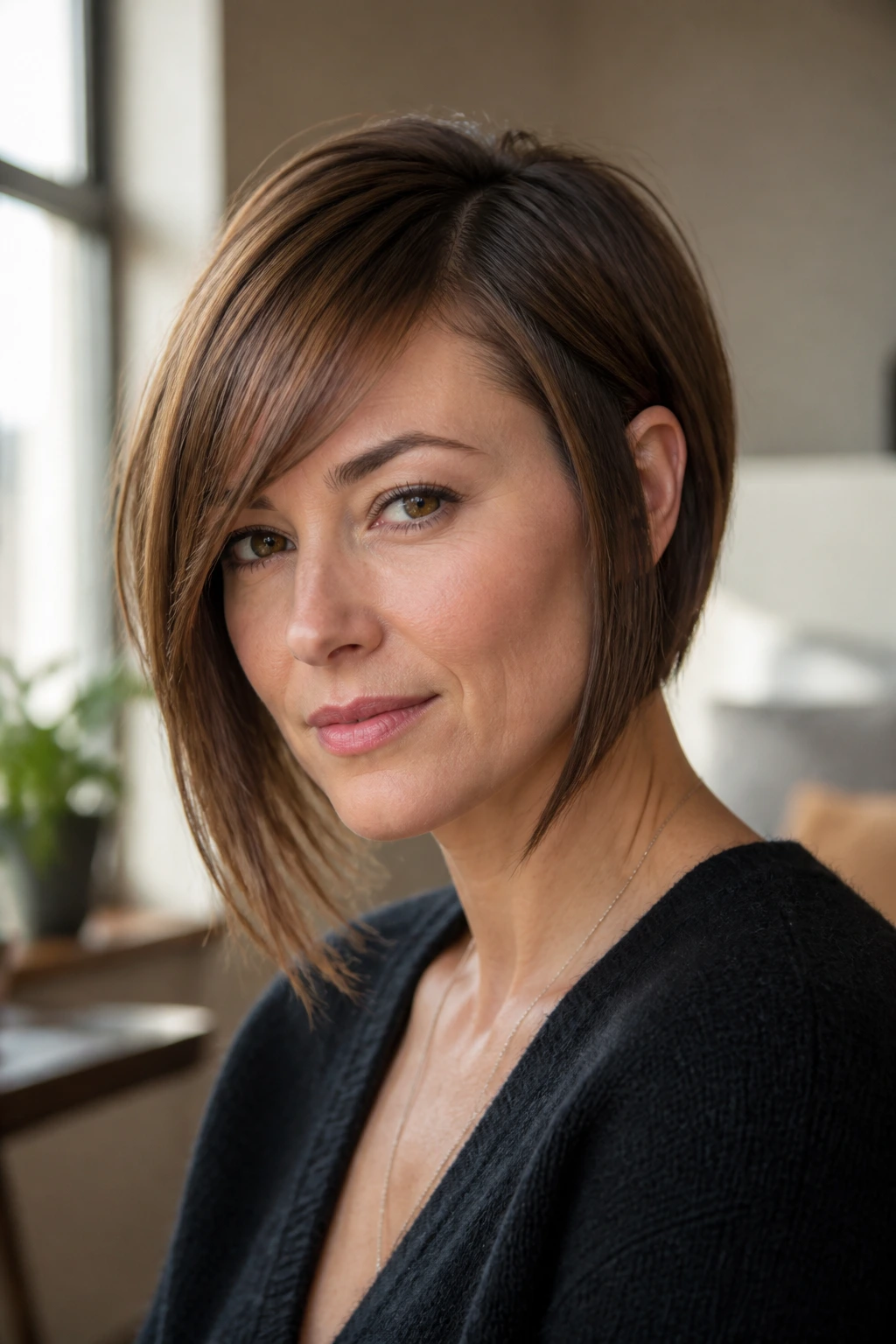
Tapered side fringe is one of my favorite shapes for a square face because it changes the geometry fast. The fringe starts shorter near the side part, then lengthens as it moves toward the cheek and chin.
That taper matters for fine hair. It keeps the front from feeling blocky and lets the cut breathe. The result is less “bangs sitting on the face” and more “hair guiding the eye where you want it.”
If your jaw is strong, this shape gives you that nice diagonal sweep without needing a lot of heat styling. A quick bend with a brush and dryer usually does the job.
12. Grown-Out Curtain Bangs
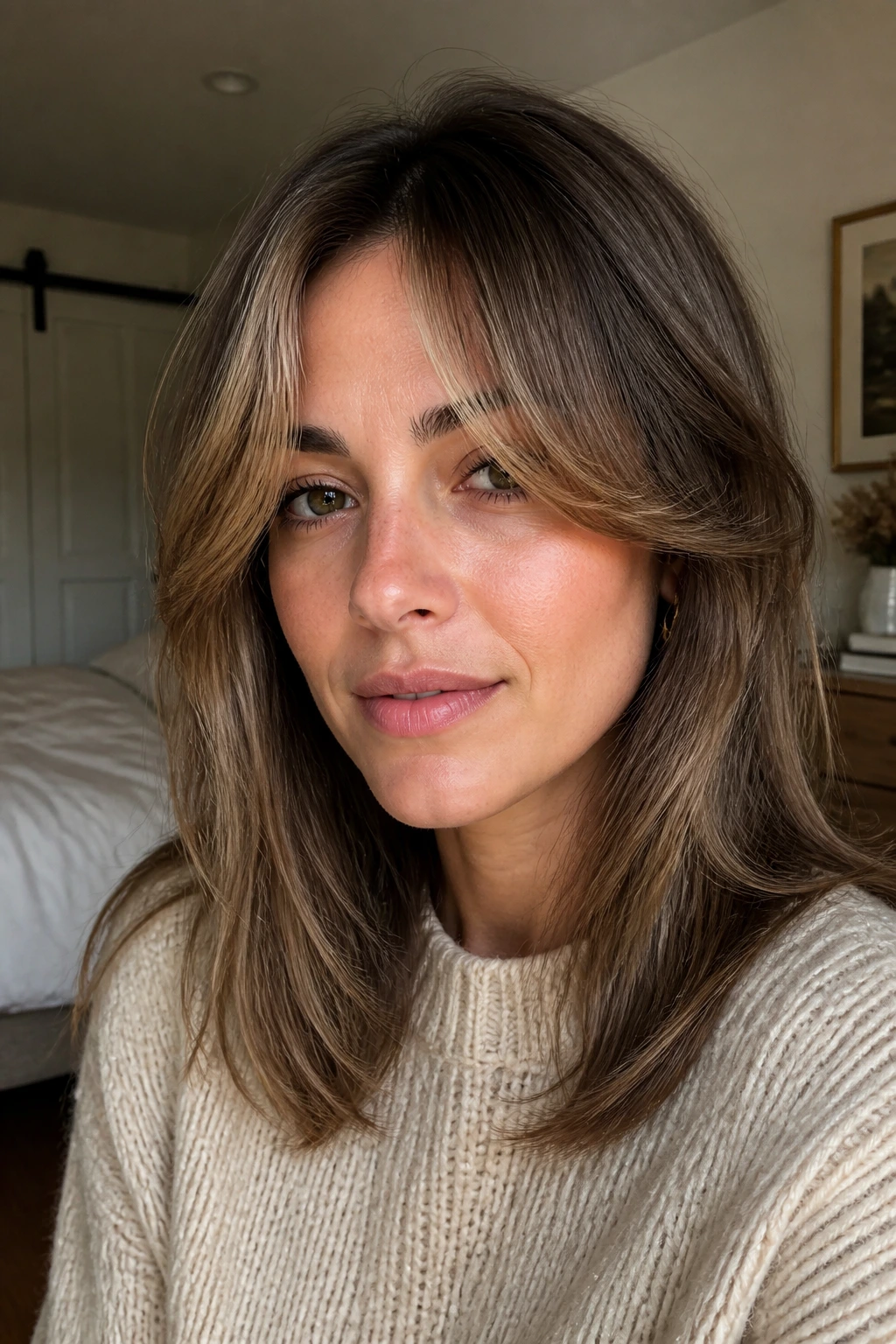
Grown-out curtain bangs are not a compromise. They’re a style in their own right, and on square faces they can be even better than freshly cut bangs because the longer pieces soften the jaw and cheekbones more gradually.
Fine hair often looks best in this stage anyway. The length adds a little weight, which keeps the bangs from separating into skinny strands too early in the day. You still get the center split, but it feels loose and lived-in rather than sharp.
The one thing to watch is the middle gap. If the split opens too wide, the style can start reading as “I’m growing out my bangs” instead of “I meant this.” A light root spray fixes that faster than extra heat.
13. Soft Choppy Curtain Bangs

Choppy does not have to mean rough. In this version, the ends are gently broken up so the fringe has movement, but the overall shape still falls in a curtain.
I like this on square faces because the broken edge keeps the front from looking rigid. Fine hair also gets a little more life from the piecey finish, especially if the hair tends to lie flat in one direction.
What Makes It Different
The chop should live at the very ends, not through the body of the bang. Once the internal density gets thinned out too much, the fringe starts looking patchy. There’s a narrow line between airy and stringy.
14. Swept-Over Fringe with Root Lift
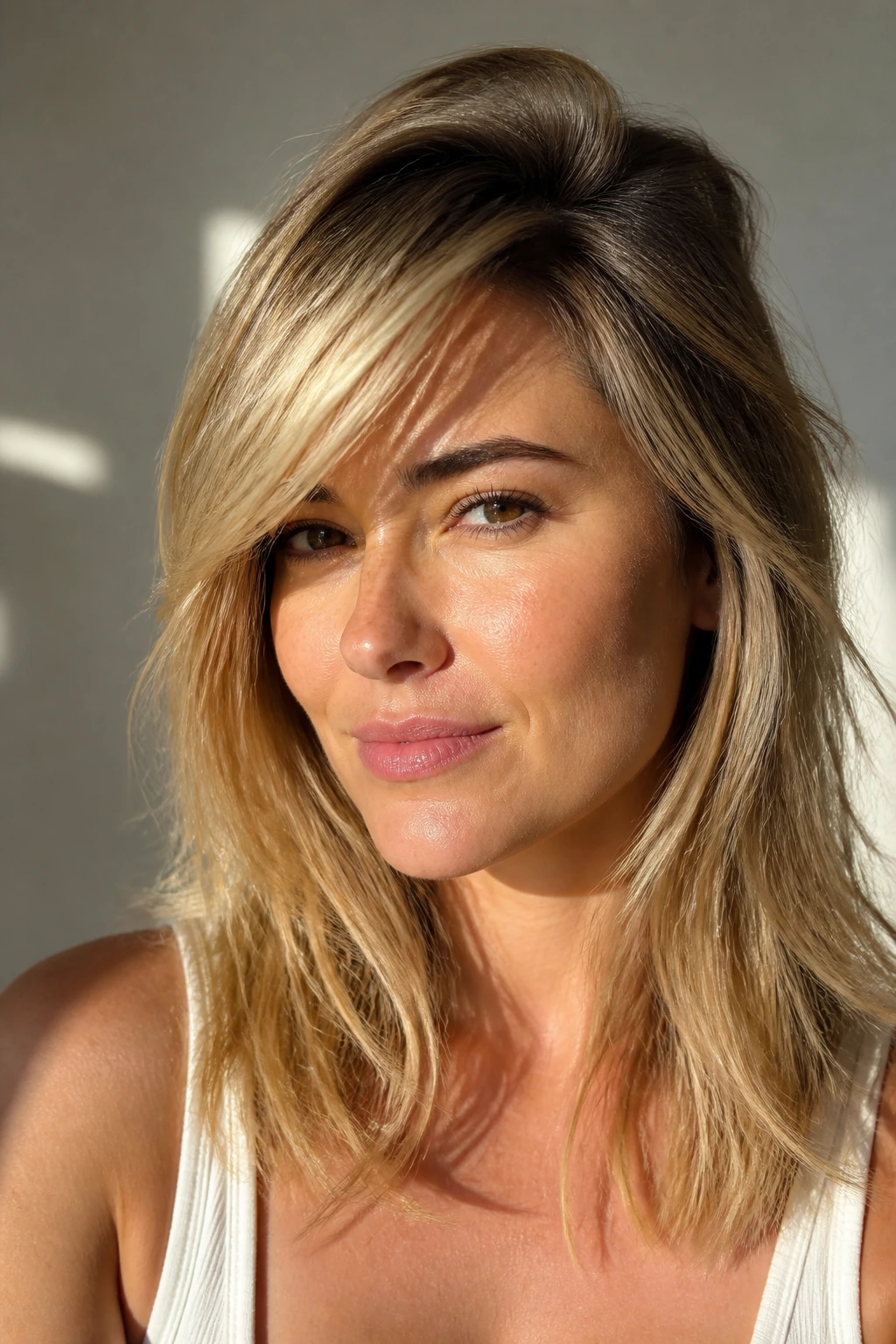
A swept-over fringe is the straight-haired cousin of the side-split bang. It starts with a deep part, then crosses the forehead in one clean, lifted sweep that keeps the front open and airy.
This shape is good when you want the forehead softened but not fully covered. Square faces often look balanced with that kind of asymmetry, and fine hair gets a nice boost because the root lift creates the illusion of more density where the fringe begins.
Use a round brush at the roots and a quick pass of medium heat, then let the ends cool in place. Cool hair holds shape better. Warm hair forgets everything.
15. Collarbone-Grazing Shingle Bangs
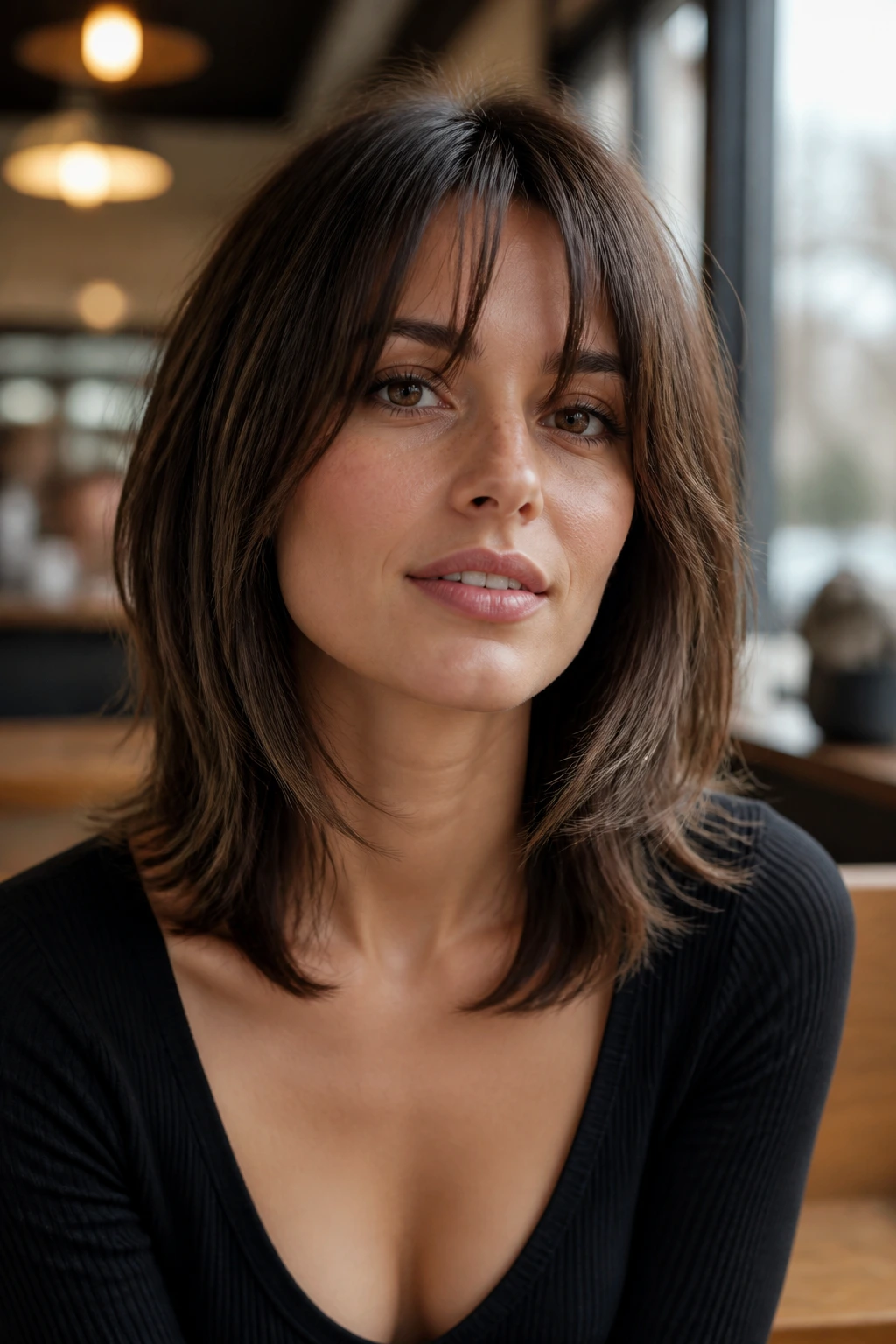
Shingle bangs are longer, almost brushed into the front layers, and they can look especially sharp on fine hair because they don’t demand a thick fringe section. The part stays open, the sides sweep long, and the whole front section reads as soft architecture rather than a separate block of bangs.
Square faces benefit from the length because it pulls the eye down past the jawline. That visual lengthening matters more than people realize. It’s not magic; it’s just shape doing shape things.
Ask For This
Tell your stylist you want the shortest point to stay well below the brow and the outer pieces to blend into the collarbone layers. If the section is cut too short, it loses the shingle effect and turns into ordinary bangs.
16. Rounded Curtain Bangs with a Loose Bend
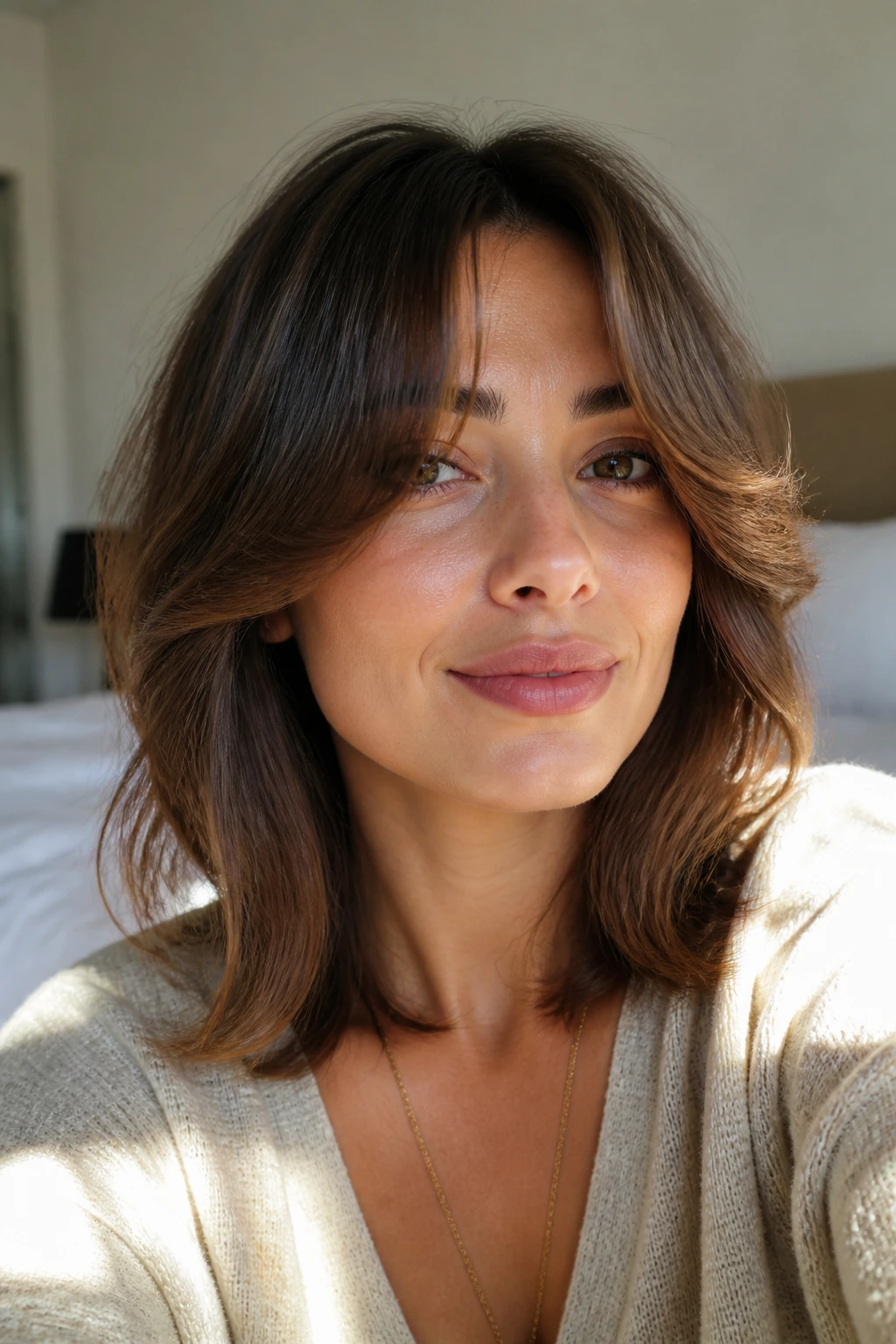
Rounded curtain bangs have a curved perimeter instead of a straight drop. That little curve softens a square face immediately, especially around the outer corners of the jaw and the brow.
Fine hair likes the rounded shape because it creates the sense of fullness without actually requiring more density. The hair bends toward the face, then opens again at the sides. That motion keeps the style from flattening into a thin line.
If your dryer tends to blast bangs into a weird kink, use a lower heat setting and a brush that is slightly smaller than you think you need. The bend should look relaxed, not curled.
17. Air-Dried Split Fringe

Not every parted bang needs a blowout. An air-dried split fringe can work well on fine hair if your natural texture has even a hint of wave or bend.
Square faces often look softer when the front is a little imperfect. The part opens the forehead, and the loose strands around it keep the edges from feeling too polished or severe.
The catch is oil control. Air-dried bangs on fine hair can separate fast if the roots get heavy. I’d use a tiny amount of mousse at the base, then leave the ends alone. Hands off. That’s the hard part.
18. See-Through Split Bangs
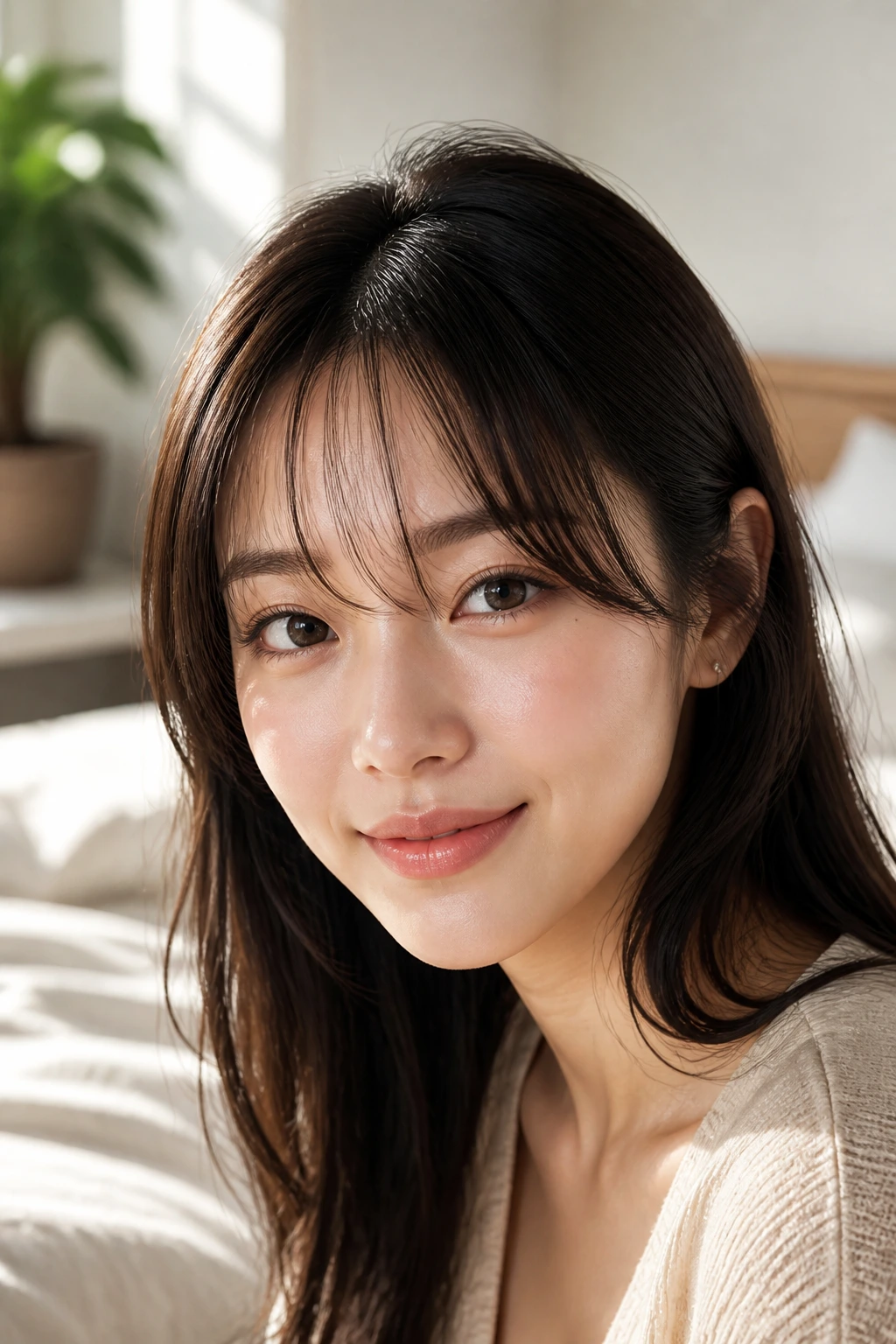
See-through bangs are light enough that you can still glimpse the forehead through them, which keeps the front from feeling dense on fine hair. The split helps even more by breaking the fringe into two softer sections.
For square faces, that transparency matters because heavy bangs can box in the brow area and sharpen the jaw by contrast. A lighter fringe keeps the whole look open.
The best version is not too perfect. A little variation in strand thickness makes the style look natural. If every piece falls in the exact same spot, it starts resembling a wig line, and nobody wants that.
19. Side-Parted Split Fringe for Wavy Hair

Wavy hair changes the game. A side-parted split fringe lets the wave do some of the work, so you’re not fighting the texture into a flat curtain every morning.
Square faces look softer when the bangs curve across the forehead and then fall away in a loose wave. Fine hair benefits too, because the wave creates the feeling of body without requiring a lot of product. A pea-sized amount of mousse is usually enough.
The Sweet Spot
Keep the fringe long enough that the wave can live. Short wavy bangs on fine hair tend to bounce unpredictably, and that is a different haircut altogether.
20. U-Shaped Open Fringe

A U-shaped fringe opens higher in the center and dips slightly at the sides, which makes it a good fit for a square face that needs a softer frame around the forehead. The curve is subtle, but it changes the mood of the haircut.
Fine hair can wear this shape because the center stays light while the sides hold a little more length. That balance makes the front look intentional, not sparse.
This is one of those cuts that looks best when the ends are clean, not over-shredded. You want the curve to read. If the texture gets too broken up, the U shape disappears and you’re left with random pieces.
21. Long Piecey Bangs with a Low-Maintenance Grow-Out

Long piecey bangs are for people who want to flirt with a fringe without dealing with a full bang schedule. The part stays visible, the strands separate a little, and the front blends into the rest of the cut fast.
That’s a win for square faces because the pieces soften the jawline without making the forehead disappear. Fine hair likes the low-density finish, especially if the hair is prone to flattening the second it’s humid or brushed too hard.
My opinion: this is one of the smartest options in the whole group if you hate maintenance. The grow-out is graceful instead of awkward.
22. Razor-Cut Parted Bangs

Razor-cut bangs can be gorgeous on the right head of hair. The blade gives the ends a soft, airy edge, which helps fine strands move instead of sit stiffly.
Square faces benefit from the fluid edge because it keeps the front from looking blocky. The part stays open, the fringe bends, and the ends feather into the sides. It’s a very different feel from a blunt scissor cut.
The caveat is texture. If your hair is already fragile, a heavy razor pass can make the bangs feel too wispy. Ask for a light hand, not a dramatic chop.
23. Soft Asymmetrical Bang Pair

This one breaks the symmetry on purpose. One side carries a little more length, and the part sits just off center, which gives a square face a softer, less rigid frame.
Fine hair often looks richer in this style because the asymmetry creates visual interest even when the actual hair density is modest. You’re not trying to fake fullness. You’re using shape to make the hair look alive.
I like this cut when someone wants something a little cooler than curtains but not as dramatic as a deep side sweep. It has edge, but it’s polite about it.
24. Wispy Split Fringe with a Lob

A lob gives a square face a clean vertical line through the neckline, and a wispy split fringe keeps the top half from feeling too geometric. The contrast is the point: solid shape below, air above.
Fine hair works well here because the fringe stays light while the lob carries the visual weight. If the bangs got any thicker, the whole cut could start looking dense in the wrong place. Balance matters.
The styling move is easy. Dry the bangs first, then tuck the ends of the lob under slightly or let them swing straight. Either way, keep the fringe lighter than the cut beneath it.
25. Face-Framing Parted Bangs with a Bottleneck Finish
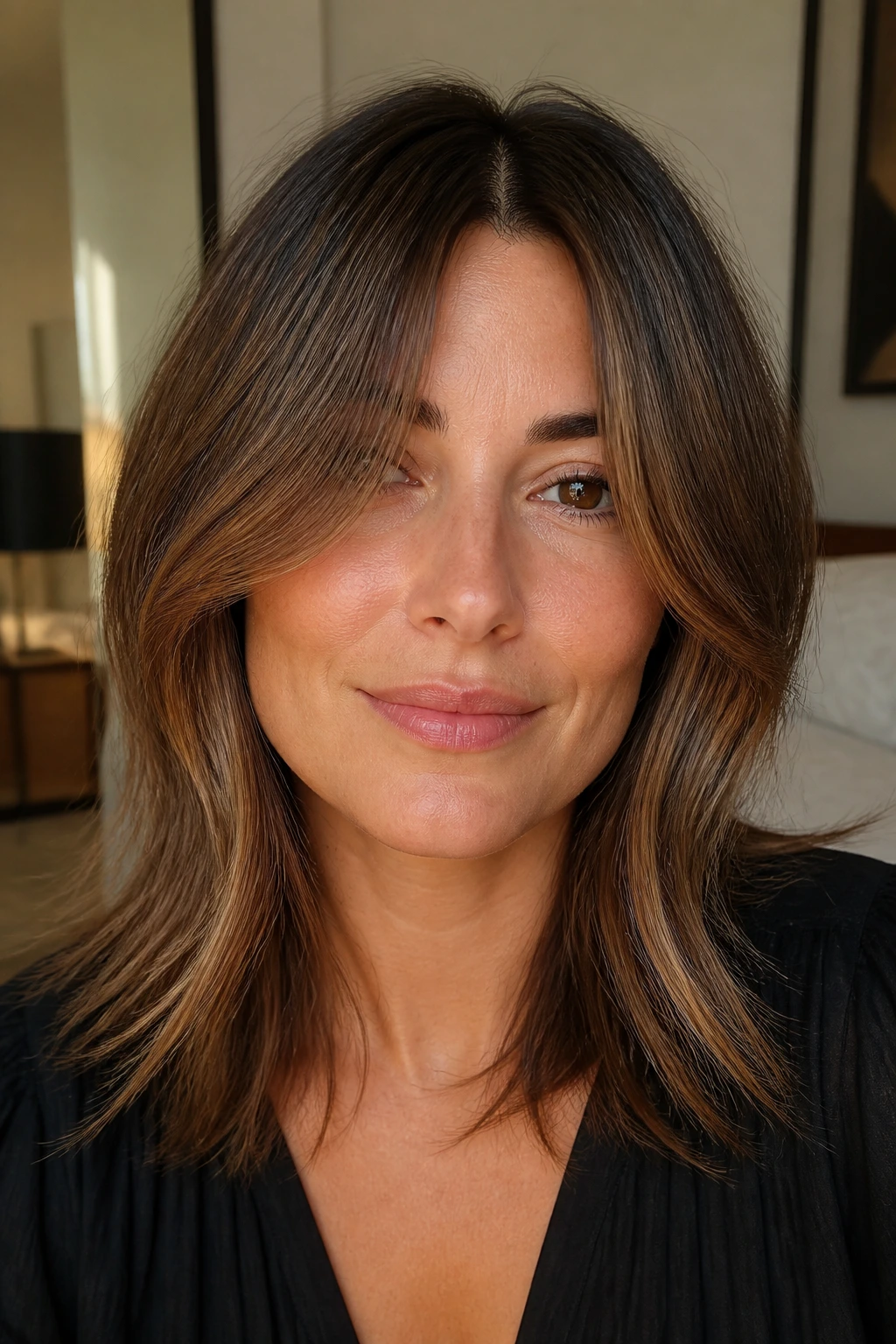
This is the style I’d choose if you want one haircut that can wander between polished and casual without fighting you. The part opens in the center, the front pieces widen toward the sides, and the outer lengths melt into the face-framing layers.
Square faces get the softness they need without losing structure. Fine hair gets a fringe that reads fuller because the widest part of the bang sits where the eye notices movement most.
There’s a nice little bonus here: the grow-out is forgiving. After a few weeks, the bangs start behaving more like front layers, which means you can stretch the trim appointment without looking overdue.
What Makes a Soft Split Better Than a Blunt Line
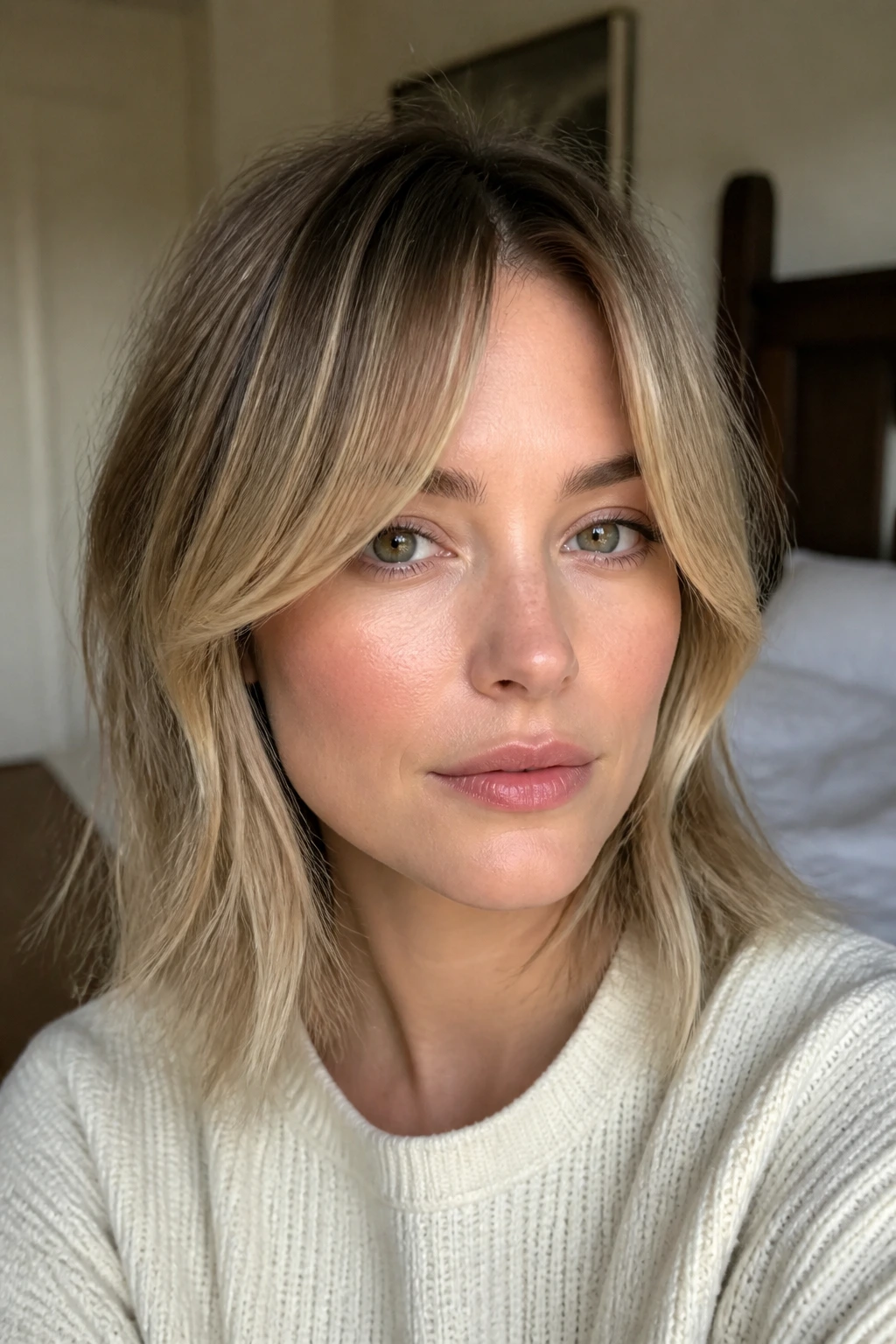
Parted bangs are not automatically better than blunt bangs, but on square faces and fine hair, they usually cause fewer problems. The reason is simple: a split fringe lets the forehead breathe while shifting attention outward toward the cheekbones.
That matters because square faces already have strong structural lines. You do not need more boxiness at the brow. You need movement, a little softness, and enough length at the sides to blur the hard edges without hiding the face.
Fine hair complicates the choice in a useful way. A blunt bang can look thin in the worst spot — right across the forehead, where every strand matters. A parted fringe spreads the weight into two softer panels, so the front can look fuller even when the total amount of hair is modest. I’d rather have a lighter fringe with a shape than a dense fringe with no movement. Every time.
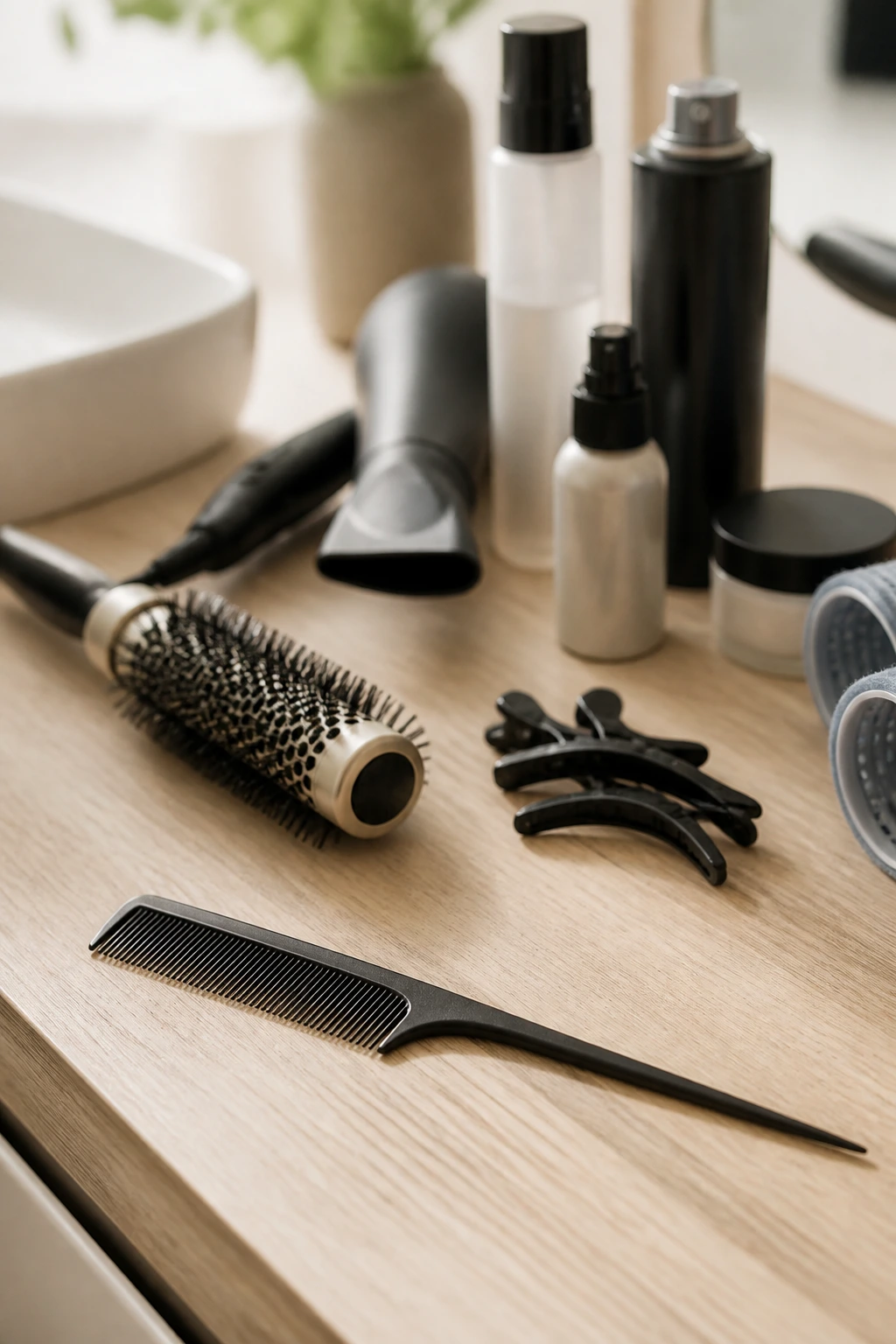
Essential Tools for These Styles
-
Tail comb: Helps you set a clean part while the hair is still damp, which matters more than people think.
-
1-inch round brush: The sweet spot for bending bangs without making them too curled.
-
Blow dryer with a nozzle attachment: Keeps airflow controlled so fine bangs don’t fly apart.
-
Light-hold mousse or root lift spray: Adds support at the roots without turning the fringe stiff.
-
Sectioning clips: Keep the rest of the hair out of the way while you dry the bang area first.
-
Dry shampoo: Useful on day two or three when fine bangs start to separate at the roots.
-
Lightweight finishing cream or serum: Use only on the ends, and only a pea-sized amount.
-
Velcro rollers, optional: Handy if you want a bigger bend and a bit more face-framing shape.
How to Ask for the Right Cut at the Salon
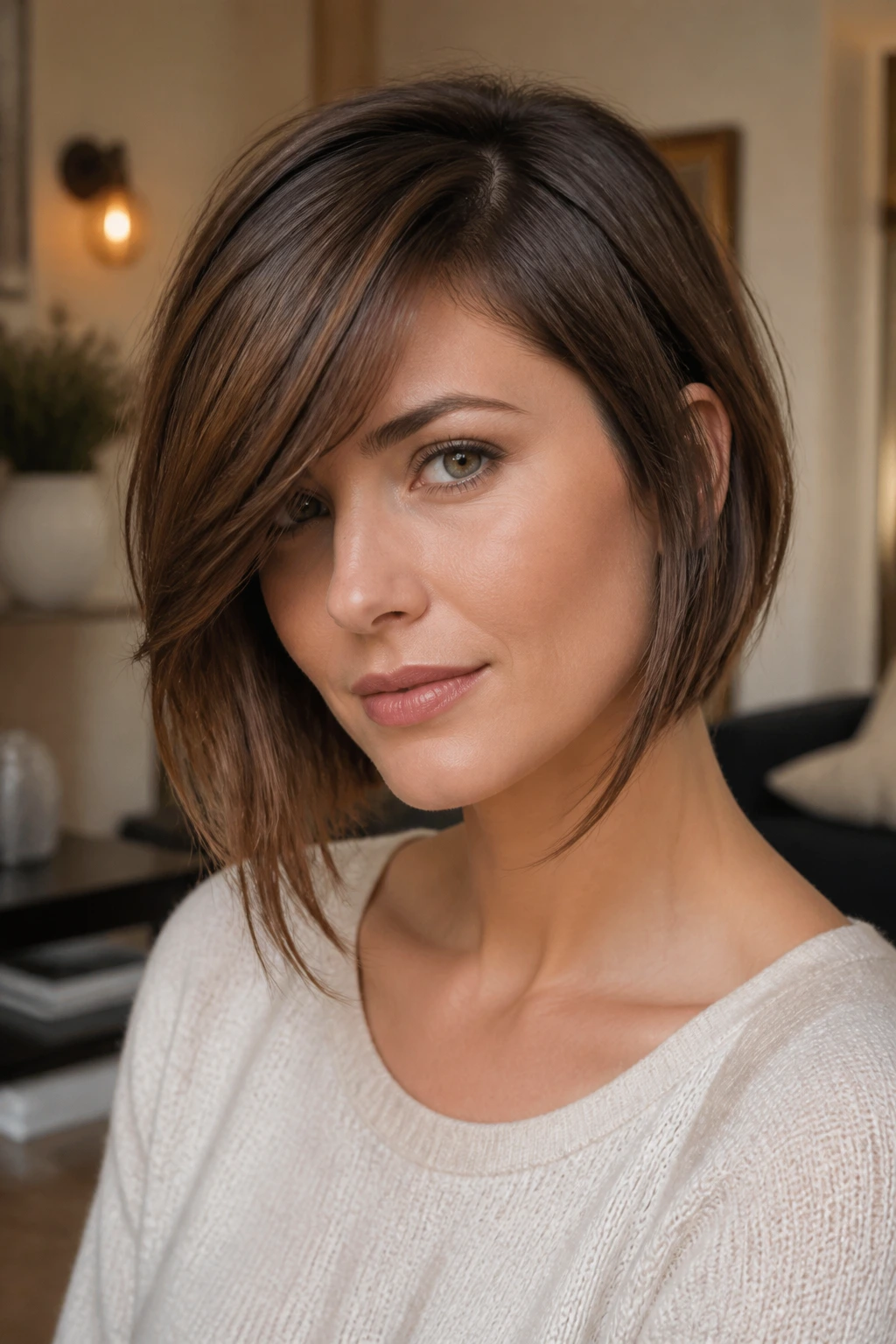
The easiest way to ruin parted bangs is to ask for “bangs that frame my face” and then hope for the best. That phrase means different things to different stylists. Bring a photo, but bring measurements too. Say where you want the shortest point to land — brow, brow bone, or just below — and where you want the outer pieces to finish, such as cheekbone, lip, or jaw.
For square faces, I usually want the center lighter and the outer pieces longer. That softens the edges instead of stopping the eye in the middle of the forehead. For fine hair, ask for minimal internal thinning. Too much texturizing can make the front look see-through in a bad way, especially when the hair is clean and newly washed.
Point cutting is often safer than aggressive razor work, though a light razor pass can be lovely if your hair is healthy and your stylist knows where to stop. Tell them you want movement, not holes. That one phrase saves a lot of regret.
How to Style Them So They Float Instead of Sit Flat
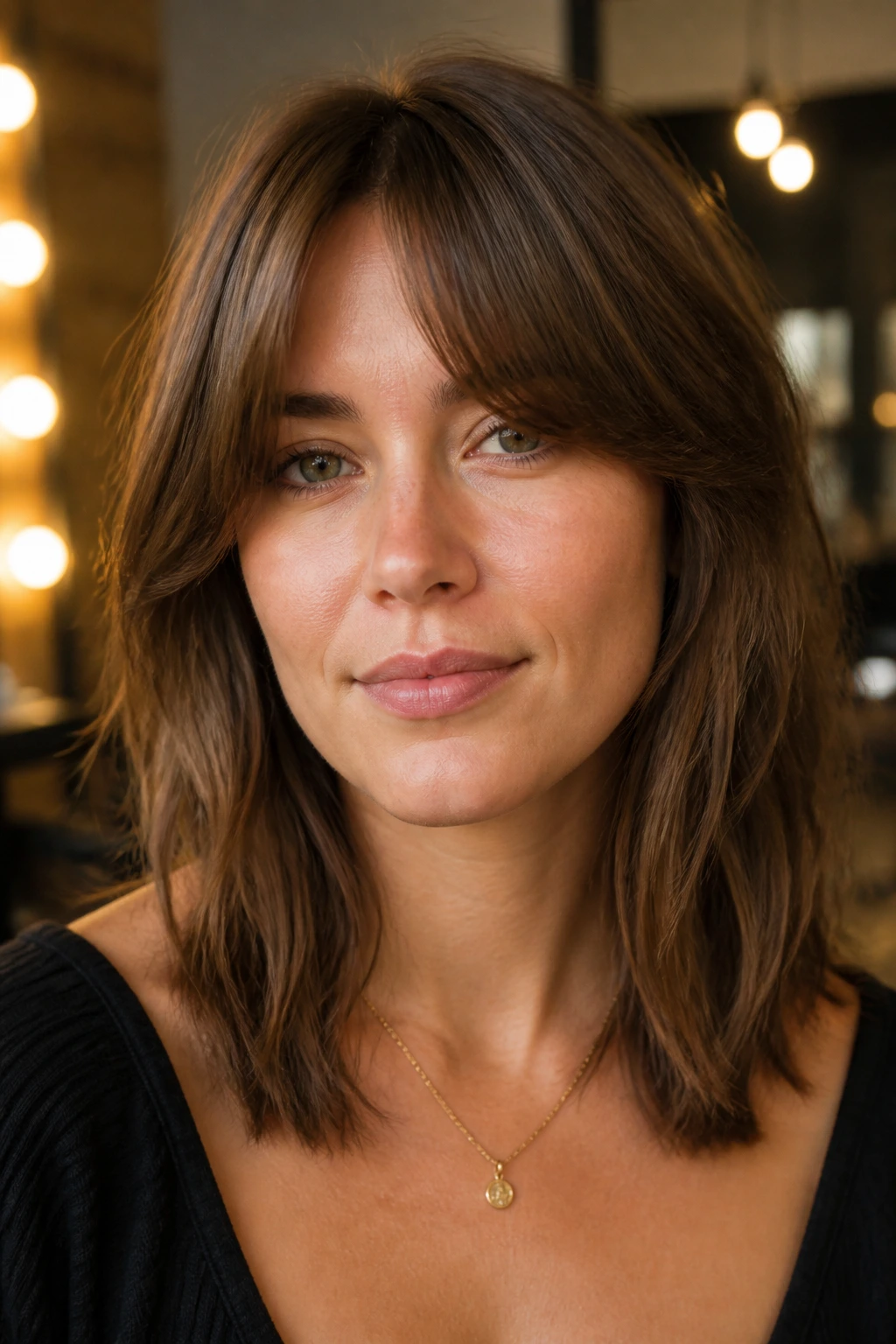
Root lift: Start with damp bangs and direct the dryer at the roots first, pushing the hair from side to side so the split has memory before the rest dries.
Bend: Use a round brush or a small brush with a curved back to give the outer pieces a soft sweep away from the face. The goal is a bend, not a curl.
Part placement: Set the part while the hair is still damp. If you wait until it’s dry, the fringe has already chosen its direction, and you’ll spend twice as long fixing it.
Finish: Use a trace of dry shampoo at the roots if the hair is fine and oily, or a pea-sized bit of lightweight cream on the ends if the fringe looks too fluffy. Heavy oil is a bad idea here. It makes the bang collapse fast.
Extra Styling Moves That Make the Shape Look Better
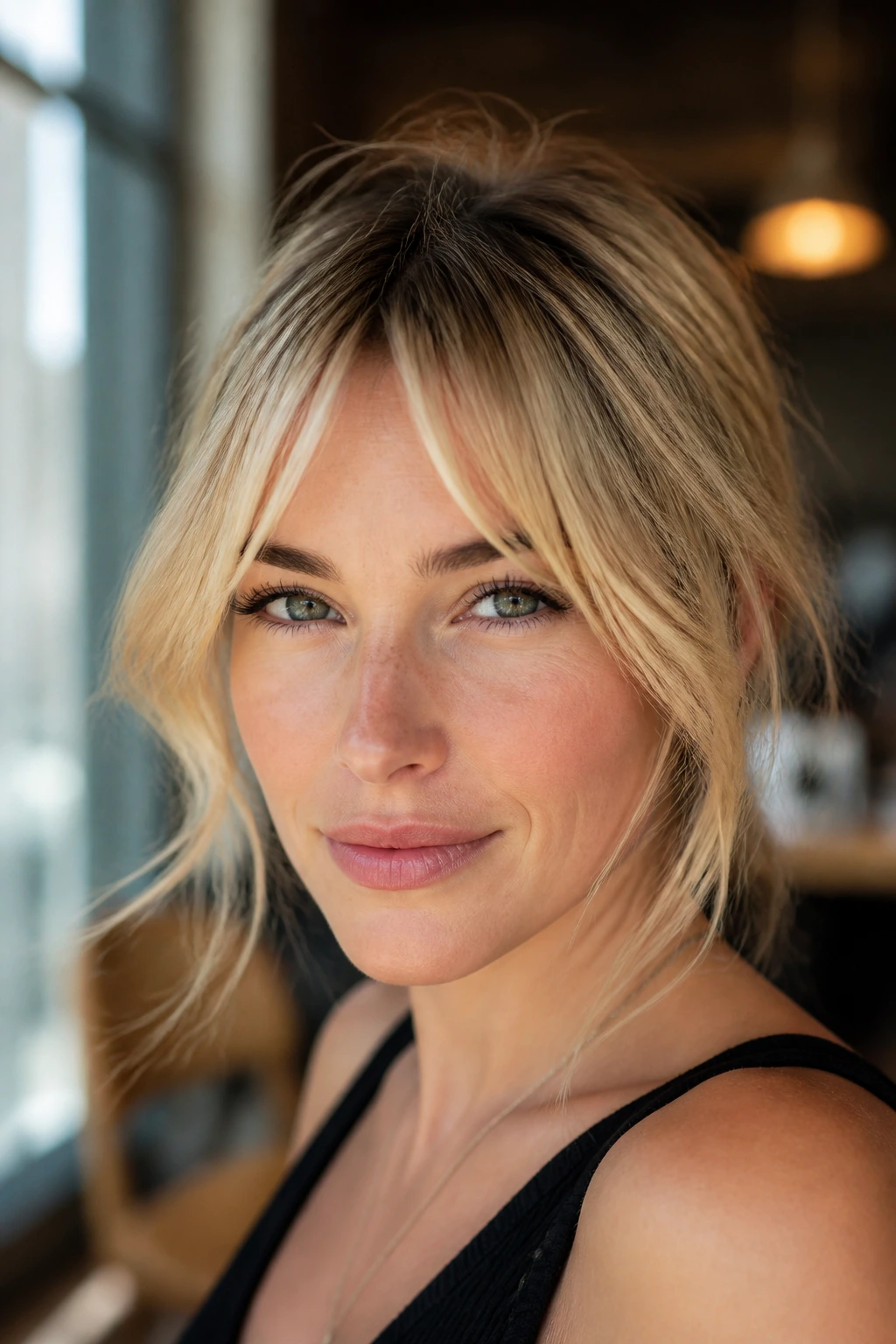
Flavor Enhancement: A mist of root-lift spray at the base of the fringe gives fine hair enough support to hold the split without feeling crunchy. Spray lightly. You are not shellacking the front porch.
Customization: If your face reads very angular, keep the longest side pieces a bit below the cheekbone. If you want more openness, stop them at the cheekbone and let the part show more forehead.
Serving Suggestions: A tucked-behind-one-ear finish can make side-split bangs feel cleaner and more deliberate. On the other hand, leaving both sides loose gives a softer, more casual line.
Breakage Protection: Fine hair near the hairline can snap if you use high heat every day. Keep the dryer moving, stay a few inches back, and use the nozzle. That little bit of control matters.
Common Mistakes to Avoid With Parted Bangs
-
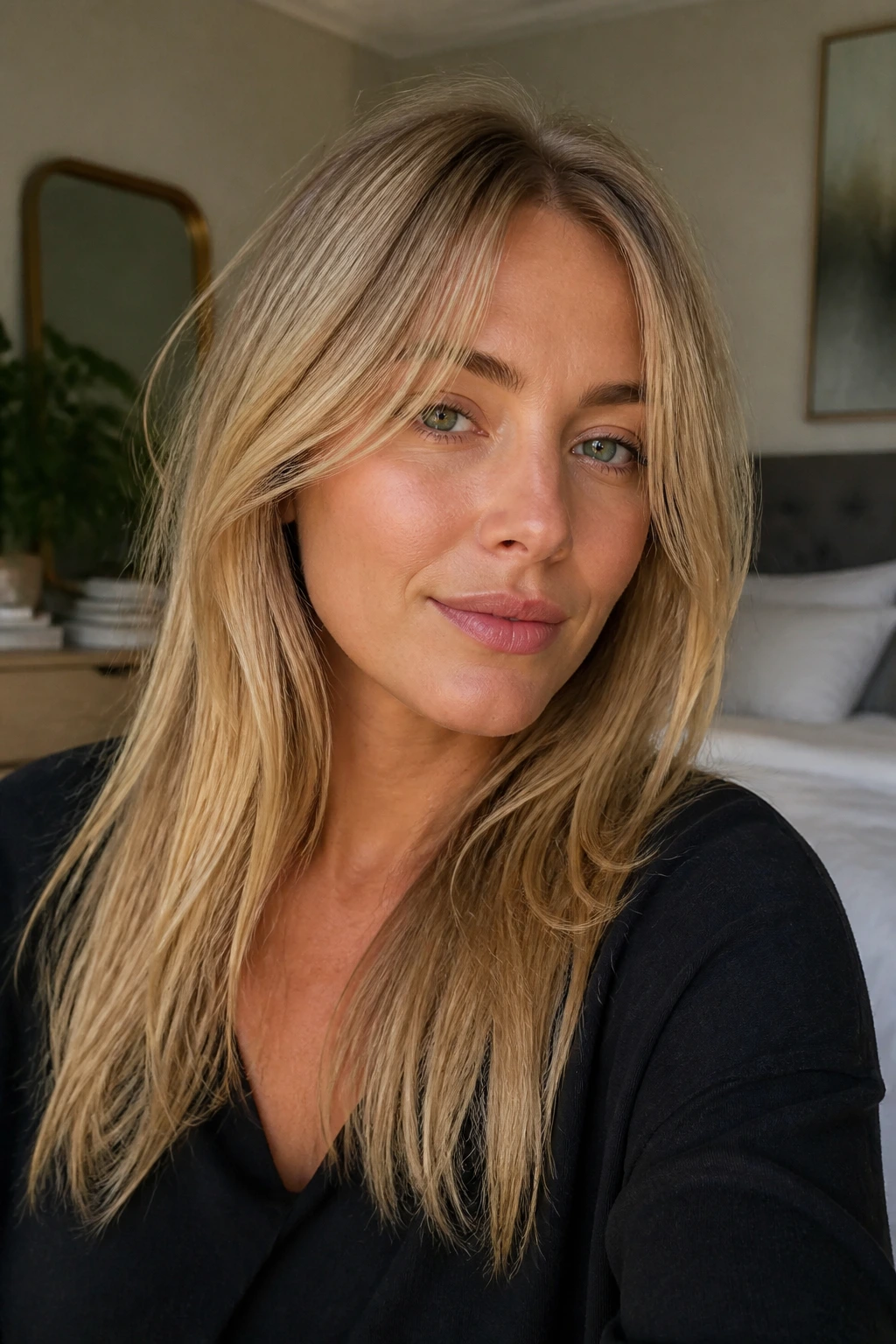
Cutting the fringe too thick: On fine hair, a dense bang looks heavy and can flatten the whole front of the haircut. Ask for a lighter section and more length at the sides.
-
Going too short at the center: A short center piece on a square face can make the forehead look boxed in. Keep the shortest point below the brow unless the rest of the cut is very soft.
-
Over-thinning the ends: If the bang starts looking stringy at the tips, it needs less texture, not more. The fix is usually a cleaner cut, not extra slicing.
-
Ignoring the natural part: Forcing a part against your cowlick is a daily chore. Work with the direction your hair already wants, then tweak it slightly with the dryer.
-
Using too much product: Creams, oils, and heavy serums weigh down fine fringe in a hurry. Use the smallest amount possible, and keep it off the roots.
Variations and Adaptations to Try
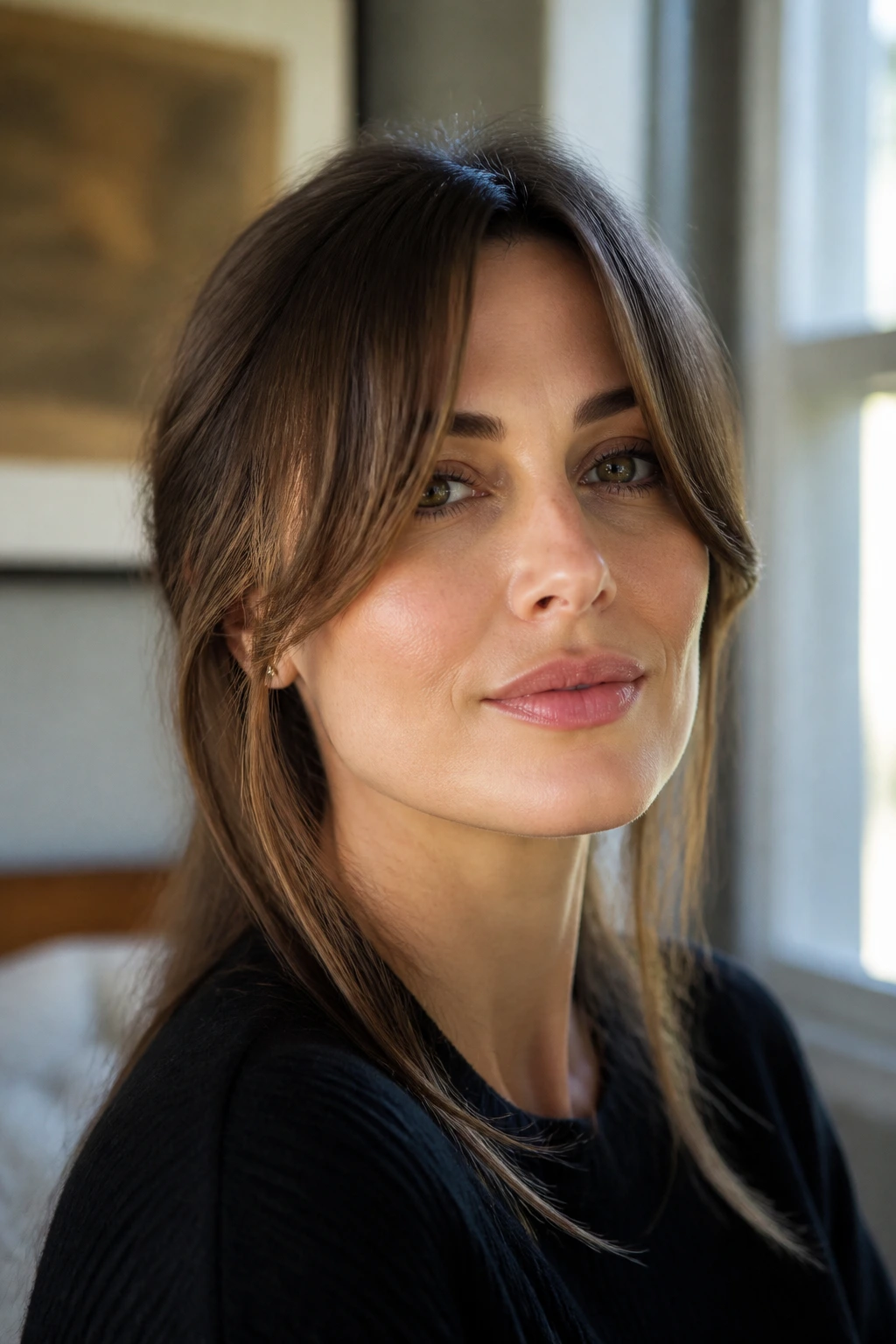
The Quiet Curtain: Keep the part soft and the sides long, but skip any strong bend. This suits people who want bangs that blend almost invisibly into face-framing layers.
The Blowout Sweep: Add a round-brush bend and a little root lift for a more polished finish. It’s a good choice if your hair is straight and you want the fringe to feel a touch fuller.
The Air-Dry Bend: Let the bang dry in its natural split with a little mousse at the roots. Best for wavy hair and for anyone who hates spending 10 minutes on the front pieces every morning.
The Razor Feather: Ask for a soft razor finish at the very ends only. This gives the fringe a lighter edge and can make fine hair move better, as long as your stylist doesn’t take too much off.
The Grow-Out Frame: Let the bangs slide longer until they live mostly as face-framing layers. This is the easiest version to maintain if you don’t want frequent trim appointments.
Keeping the Fringe in Shape Between Washes
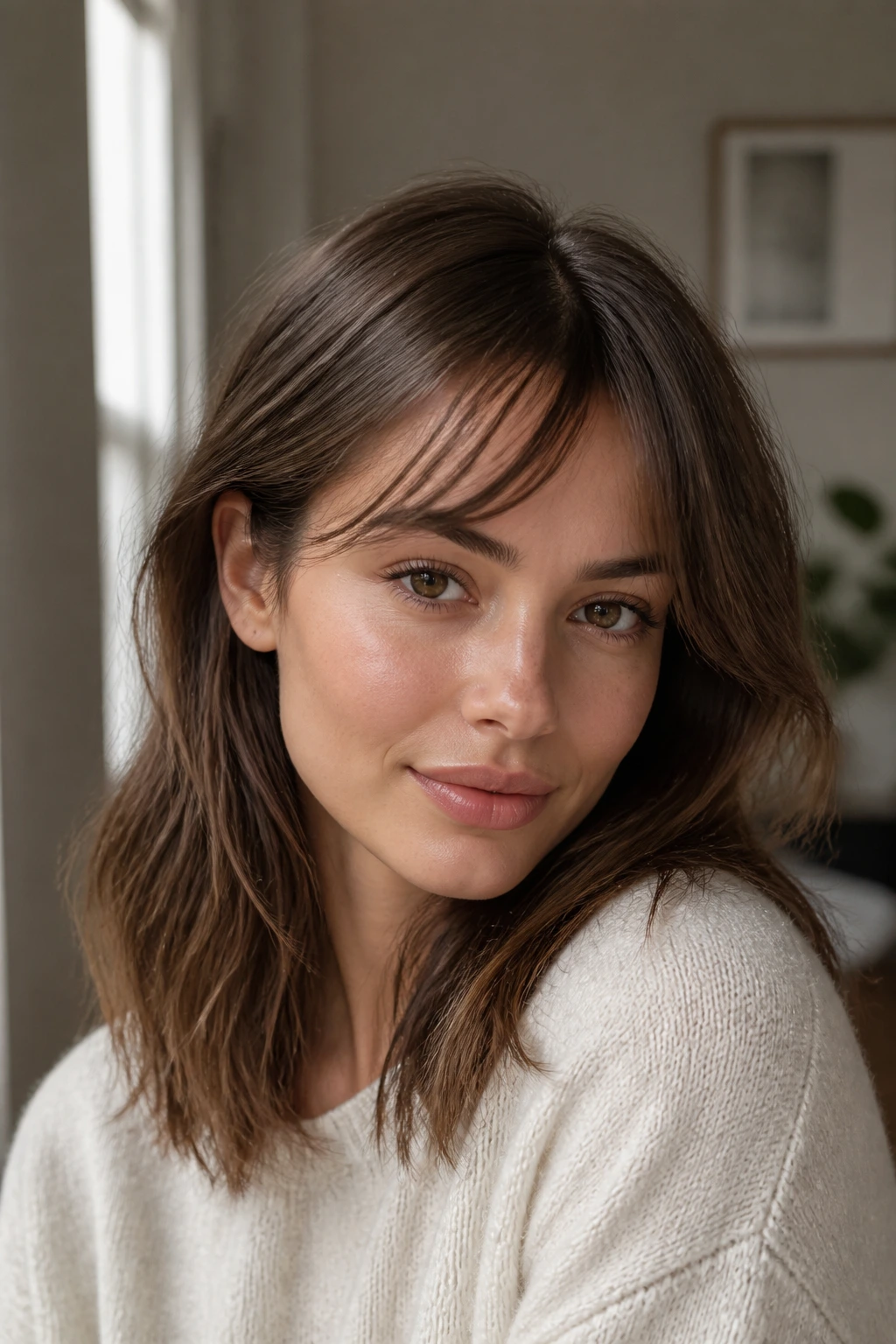
Fine bangs can go from fresh to flat faster than the rest of the cut, so maintenance matters. Most people can stretch the fringe for two to three days with dry shampoo at the roots and a quick reset with a blow dryer in the morning. If your scalp runs oily, wash the bang area separately instead of shampooing the full head every time.
Trim the fringe every four to six weeks if you want the parted shape to stay crisp. Longer curtain or grow-out styles can push a little farther, but once the shortest point drops into your eyes, the shape starts losing its balance. At night, a loose clip at the front or a silk sleep bonnet can keep the split from creasing in odd directions.
Heat damage shows up fast on fine hair, so use the lowest effective heat and stop blasting the fringe once it’s dry. That front section does not need a long, blazing blow-dry. It needs direction.
Frequently Asked Questions
Are parted bangs good for square faces?
Yes, especially when the part opens the forehead and the side pieces land around the cheekbone or jaw. That diagonal movement softens the strong lines a square face already has.
Do fine hair bangs need a center part?
Not always. A soft center part works well, but a deep side part can be better if your hair is very flat or if your cowlick keeps pushing the fringe off center.
How short should parted bangs be on fine hair?
Usually a little longer than you think. Keeping the shortest point below the brows gives the hair enough weight to fall cleanly instead of separating into thin, flyaway pieces.
What if my bangs keep splitting too wide?
That usually means the fringe is too heavy at the sides or not getting enough root support. A little mousse at the base, plus a cleaner part set while damp, usually fixes it.
Can I wear parted bangs with a bob or lob?
Absolutely. A bob or lob often makes the front fringe look even softer, because the haircut below it adds structure while the bangs keep the top light.
How often do I need a trim?
Most parted bangs need a trim every four to six weeks to stay in shape. If you’re wearing a longer, grown-out version, you can usually wait a bit longer.
Will parted bangs make fine hair look thinner?
Not if the cut is done well. A light, airy fringe often makes fine hair look fuller because the split creates lift and the eye reads movement instead of weight.
Can I style them without heat?
Yes, if your hair has a bit of natural bend. Use a light mousse at the roots, set the part while damp, and clip the front away from the face until it dries.
The Fringe That Softens the Edges

Parted bangs work best here when they act like a frame, not a wall. That means enough length to bend, enough space at the split to keep the forehead open, and enough restraint at the ends to avoid the heavy look that fights fine hair.
If your face is square and your hair is fine, I’d start with the softest version you can wear comfortably. Curtain, bottleneck, or a long side-split fringe usually gives you the most room to adjust later. Once you see how the hair behaves around your brow and cheekbones, you can go a little fuller or a little sharper next time. That’s the nice thing about this category: it has range, and the right version makes the whole haircut feel easier to live with.