



Loose curls spilling over one shoulder change the whole mood of braids. A style that might look tidy from the back suddenly feels softer, richer, and a little more alive when the weight shifts off-center and the curls move instead of sitting flat. That is the charm of side-swept braids for Black women with loose curls: the braid pattern does the work, but the curl texture keeps the style from feeling stiff or overbuilt.
The best versions are never just “braids to the side.” They use the side part, the drape, and the curl placement to shape the face and shoulders in a way that flatters textured hair instead of fighting it. Some styles lean sleek and polished, with clean feed-ins and only a few wisps around the temples. Others go full soft-glam, with braid rows melting into curls that fall over one collarbone like they were meant to be there. Both can look beautiful. The difference is in tension, balance, and how much curl you leave visible.
And that balance matters. Too tight, and the whole style starts to look severe. Too much curl, and the braid pattern disappears. The sweet spot is where the braids hold the structure and the loose curls bring the movement. That’s where this shape really shines, especially for coil-rich hair that already knows how to hold volume without much help.
Why You’ll Keep Coming Back to These Looks
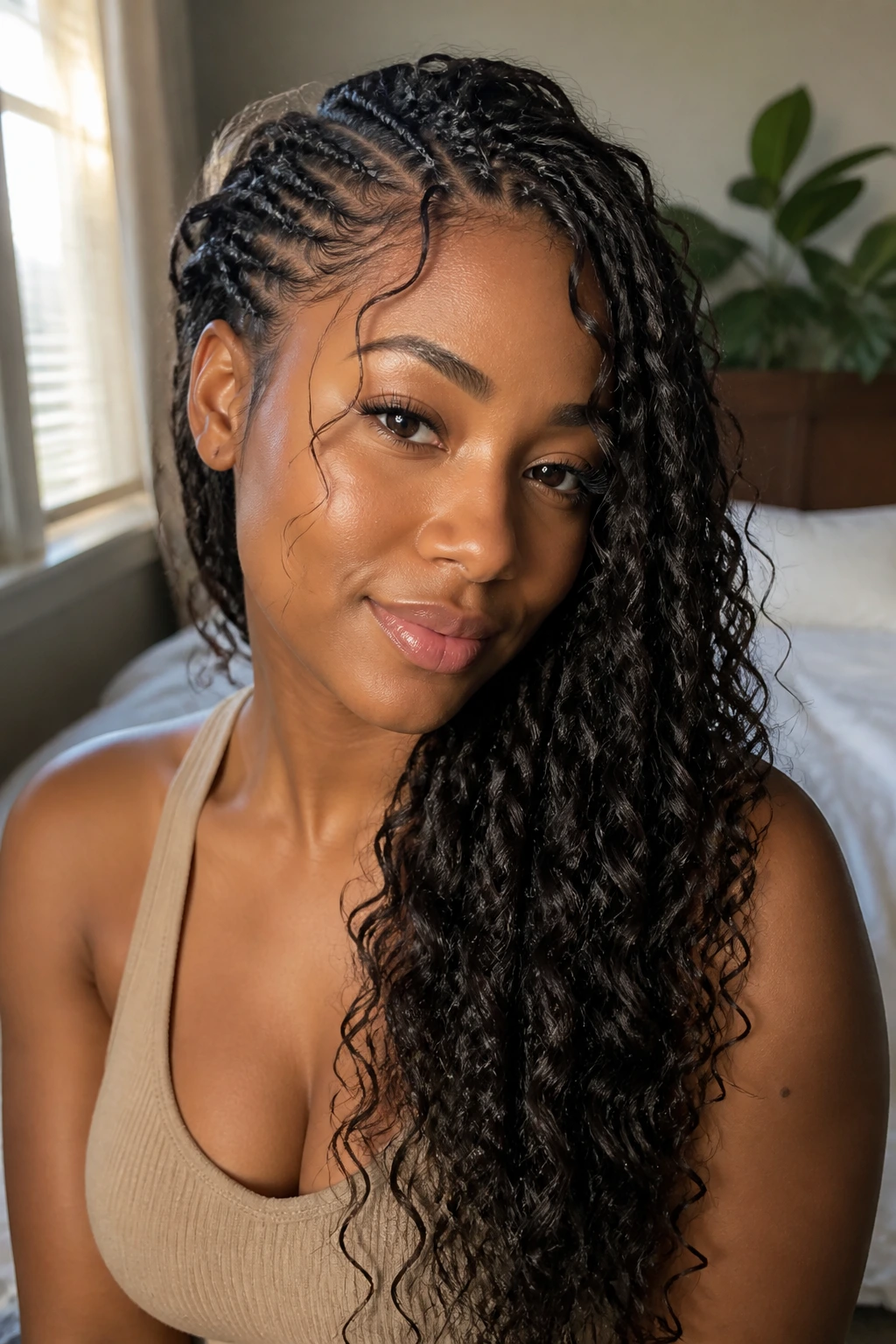
-
The side sweep opens the face: Pulling the braids over one shoulder exposes the cheekbone, jawline, and neckline, which gives even a simple braid pattern a dressed-up feel.
-
Loose curls soften the structure: The curl pieces keep the style from looking too rigid, especially when the braids are neat at the root and fuller through the lengths.
-
There’s room for your hair’s personality: You can go sleek, boho, long, short, chunky, or fine-braided without losing the side-swept shape.
-
These styles work with protective styling goals: When the braid base is done with low tension and the ends are kept secure, the hair stays tucked away and easier to maintain.
-
They photograph from almost any angle: The side drape creates movement, and movement is what keeps braids from looking flat in photos or under harsh light.
-
You can wear them up or down: A side-swept braid can read casual with a hoodie or polished with a blazer and hoops. The structure holds.
1. Deep Side-Part Goddess Braids with Loose Spiral Curls
A deep side part changes everything here. Instead of a braid style that sits politely in the middle, these goddess braids arc across the scalp and spill into loose spiral curls that hang over one shoulder with real movement. The contrast is the point: the root area looks sleek and controlled, while the ends soften into curls that bounce when you walk.
What makes this version work is the visual weight. A few thick braids are enough, especially if they’re placed to follow the curve of the head rather than running straight back. The curls should start low enough that the braid pattern still reads cleanly. If the curls begin too high, the style can look puffy instead of intentional.
Ask for low tension at the hairline and a braid finish that sits just below the ear on the heavier side. That keeps the side sweep from feeling lopsided. If you like drama, this is one of the strongest options in the whole collection.
2. Side-Swept Knotless Feed-In Braids with Curled Ends
Knotless feed-ins are the quiet overachiever here. They start small, build gradually, and sit flatter against the scalp than older braid methods, which means the side sweep feels smooth instead of bulky. Add loose curls at the ends, and the style gets a softer finish that keeps the braids from looking too severe.
The real advantage is how they move. Knotless braids already hang with a little more swing because the base isn’t weighted down by a knot. When you sweep them over one shoulder, the whole style follows your head instead of fighting it. That matters more than people think.
Best when you want less root pressure
If your edges have been through a lot, this is a smarter choice than a style that pulls hard from the temple. The braids can be medium or long, but the parting should stay clean and the curls should be light enough that they don’t tug on the braid ends. This is one of the easiest ways to get a polished side-swept look without making the front feel heavy.
3. Lemonade Braids with Wispy Curl Pieces
Lemonade braids are already built for motion. When you angle them to one side and thread in a few loose curl pieces, the whole look becomes softer and more wearable. It still has that sharp, directional braid pattern, but the curls break up the straight lines and keep the style from reading too rigid.
This works especially well if you like a face-framing braid that hugs the head first and then falls with attitude. The thinner braids help here. Thick braid rows can swallow the curl texture, while slimmer rows let the curls show up in the spaces between. The result is cleaner than boho braids, but less strict than a cornrow set with no leave-out at all.
If you wear hoops or a strong lip color, this style plays nicely with both. It has enough edge to hold its own, and enough softness to keep the finish from feeling harsh.
4. Boho Box Braids Draped Over One Shoulder
Boho box braids are for people who like a little mess in the best possible way. The braid itself stays structured, but the loose curl pieces woven through the lengths give the style a more relaxed, lived-in shape. Sweep everything to one side and it turns into a curtain of texture instead of a stiff hanging panel.
This is one of the easiest styles to wear if you want the braid look without the “perfectly pressed” finish. The curl pieces do a lot of the visual work, so you do not need ultra-thick braids or extra-long lengths to make it interesting. Shoulder-skimming or mid-back lengths can look just as good as waist-length versions if the curls are placed well.
A small caution: boho braids need a little more care at night because the loose pieces can tangle. A satin scarf and a light mousse refresh on the curl sections usually keeps them from turning fuzzy too fast.
5. Fulani Braids with a Loose Curl Fringe
Fulani braids already have that beautiful pattern work through the center and sides, which makes them a natural fit for a side-swept finish. When you angle the lengths over one shoulder and leave a loose curl fringe around the face, the style feels rooted and soft at the same time. The braid pattern stays visible, but the curls stop it from feeling overly formal.
I like this look most when the curls are concentrated around the front and the ends. That way the braids stay the main event, and the curls act like the frame around the picture. Beads can work here too, but keep them light. Heavy beads at the ends can drag the side sweep downward and make the style sit awkwardly.
If you want a style that nods to heritage while still feeling wearable every day, this is one of the strongest choices. It’s structured enough for a clean finish, and loose enough to avoid looking too hard-edged.
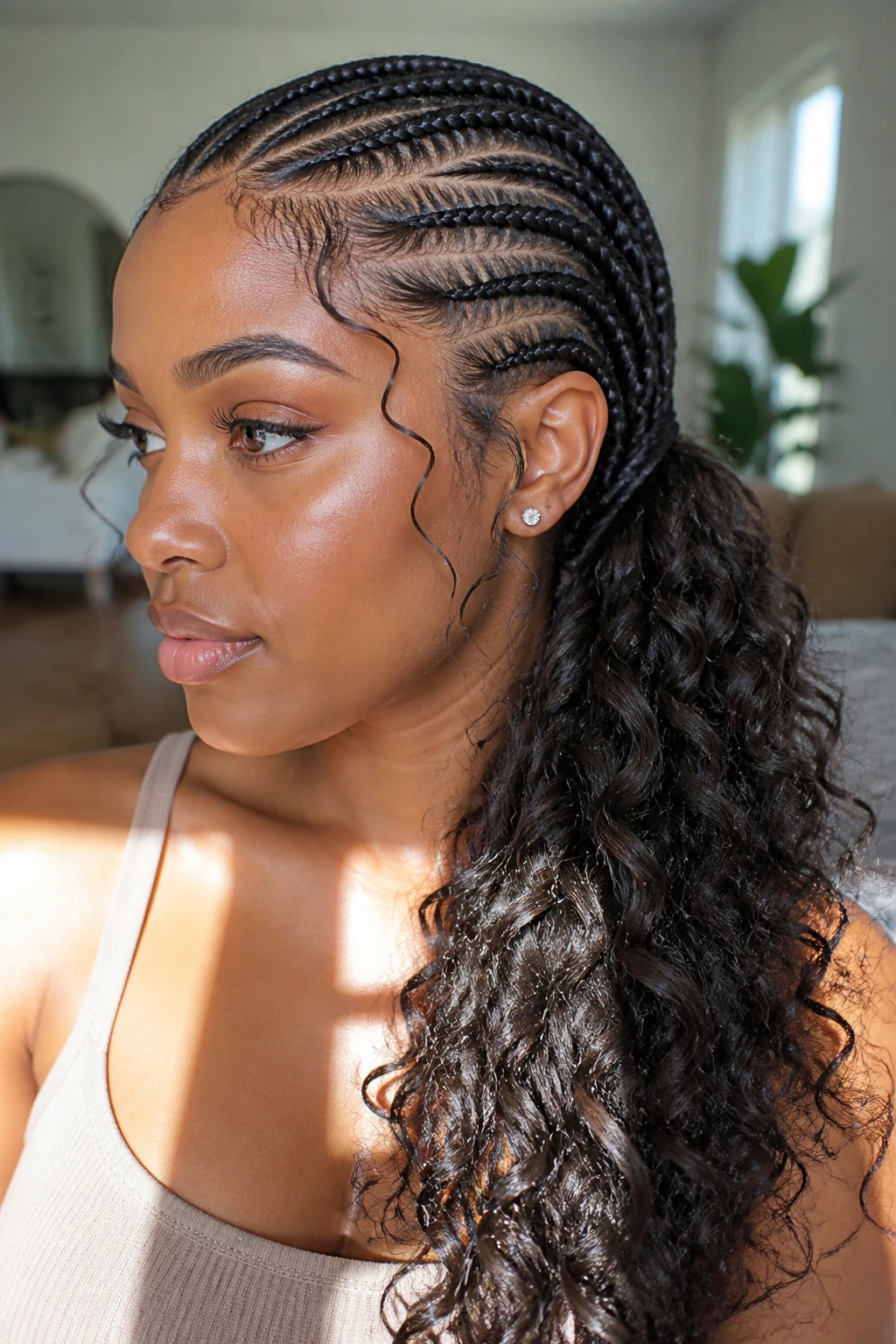
6. Stitch Braids into a Curly Side Pony
Stitch braids give you crisp lines right away. When those lines gather into a low side ponytail and the pony is finished with loose curls, the result feels sharp at the scalp and soft through the length. That contrast is why this look lands so well on thick, textured hair.
The braids themselves should be tight only in the sense of neatness, not tension. A good stitch braid reads clean because the rows are precise, not because they’re yanked down hard. Once the braids collect into the pony, the curls take over and keep the style from feeling too severe.
This is a smart option if you want a style that can move from work to dinner without a full restyle. Pull the pony over one shoulder, smooth the crown, and let the curls sit where they want to sit. Don’t overbrush them. That’s how you keep the shape from collapsing.
7. Two Jumbo Braids with Soft Curls
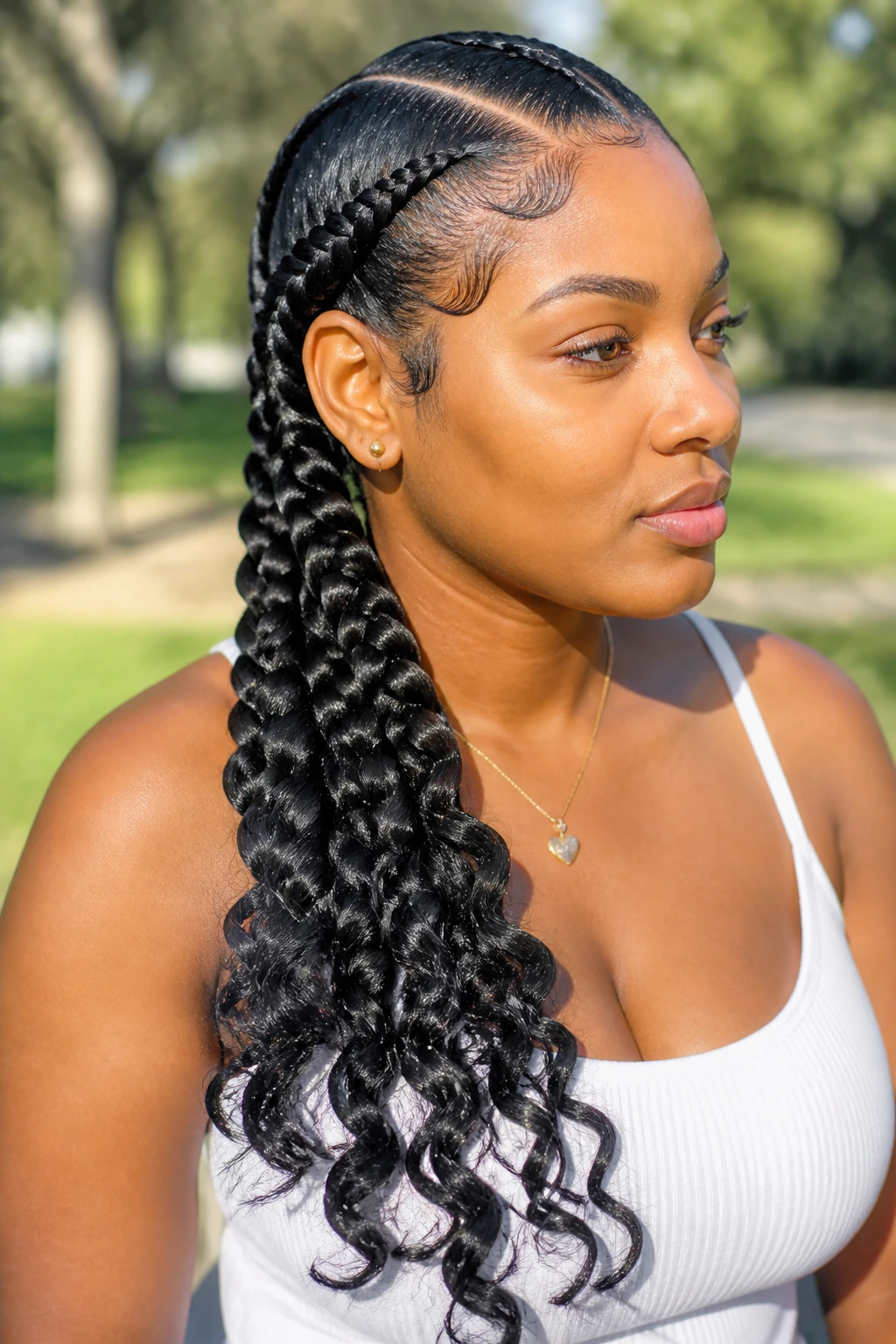
Two jumbo braids pulled to one side look simple at first glance, then the curls at the ends do the real talking. This is a blunt, confident style. There isn’t a lot of braid detail to distract the eye, so every part of the finish matters: the part, the smooth root, the curl pattern, and the way the braids land against the chest.
The reason this one works is the scale. Jumbo braids are fast to install compared with tiny braids, and the side sweep gives them direction so they do not just hang there like ropes. Add a few soft curls at the ends or a bit of curl tucked around the face, and the whole style relaxes immediately.
This one suits people who want a lower-install-time look with a strong silhouette. It does not need much decoration. A clean middle or deep side part, a bit of shine, and curls that hold their shape are enough.
8. Side-Swept Passion Twists with a Soft Finish
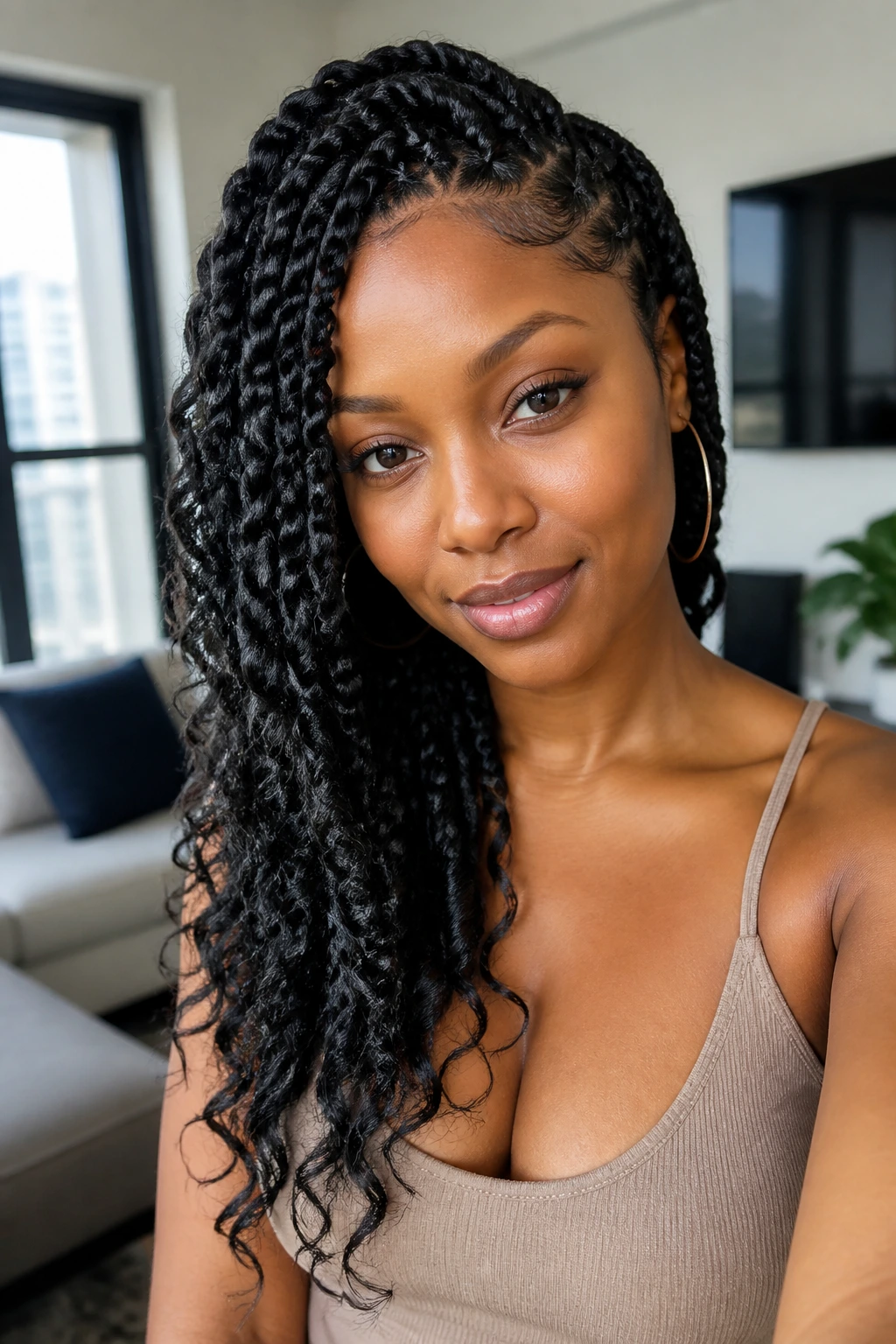
Passion twists are not braids in the strictest sense, but they belong in this conversation because the shape behaves the same way once you sweep it over one shoulder. The twist texture is springier, a little looser, and a little more touchable than a classic braid. That makes it a good choice if you want movement without losing the protective feel.
The side sweep helps the twists settle into a single flowing mass instead of spreading wide across the back. Loose curls at the ends make the silhouette feel lighter, which matters because passion twists can get visually heavy if they are too long or too thick. Keep the root section clean and the ends airy.
This style is forgiving. If a twist frizzes a bit, it still looks intentional. That is part of the charm. It wears well when you want softness first and sharpness second.
9. Side-Cornrow Halo with Free Curls
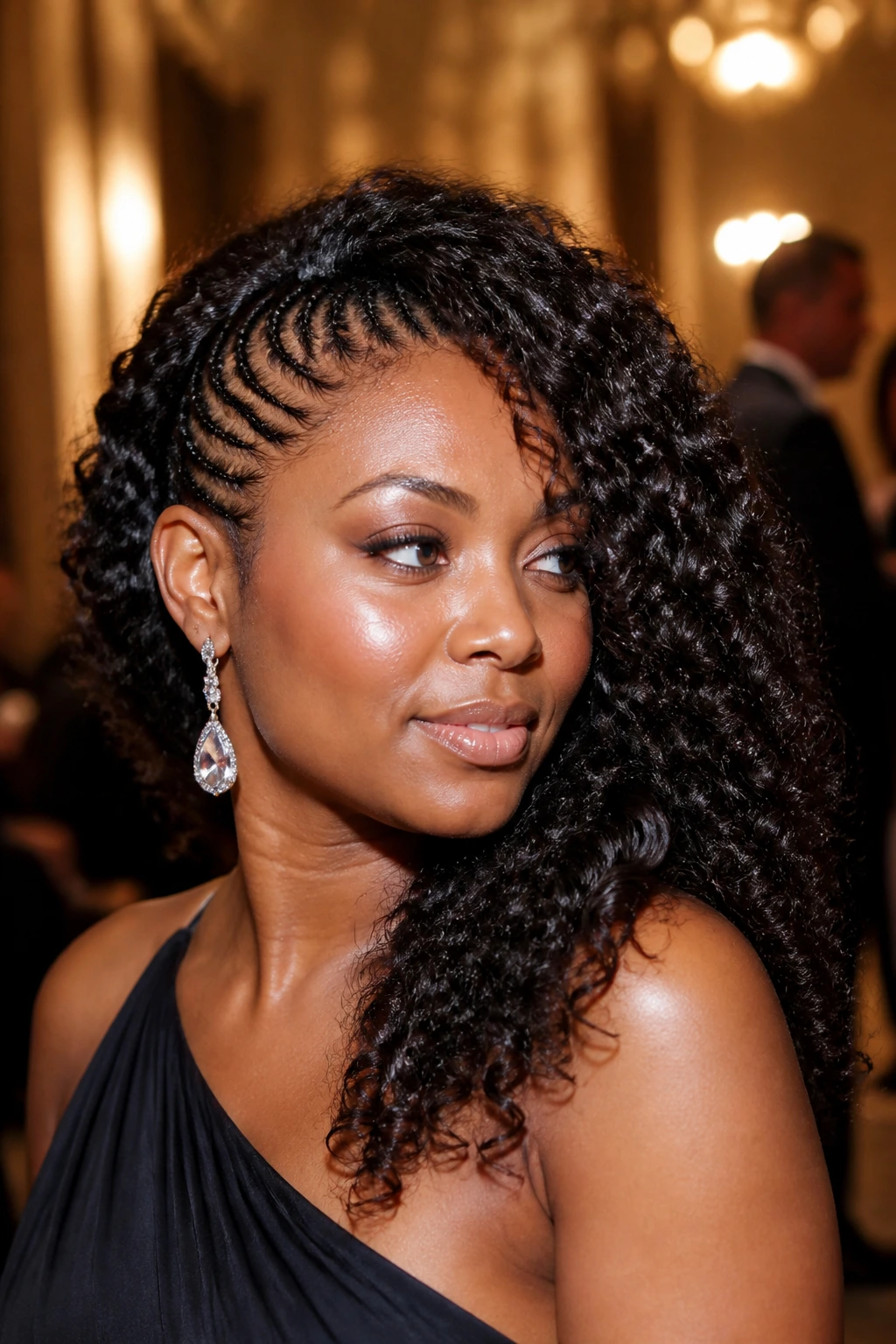
A side-cornrow halo is one of those styles that sounds fussy and ends up looking better than expected because the shape is doing real work. The braids curve around the head, then release into free curls on one side, which gives you a crown effect without making the whole look rigid. It sits between an updo and a down style.
The trick is keeping the halo braid clean enough to read from a distance. Once the curls begin, let them stay loose. Too much product on the curl section will make the whole side feel sticky and dull, and that kills the contrast that makes this style good. The hairline should feel calm, not strained.
I like this one for events where you want your hair up off the face but still want softness near the shoulders. It feels considered, not overworked.
10. Braided Bob Draped to One Side
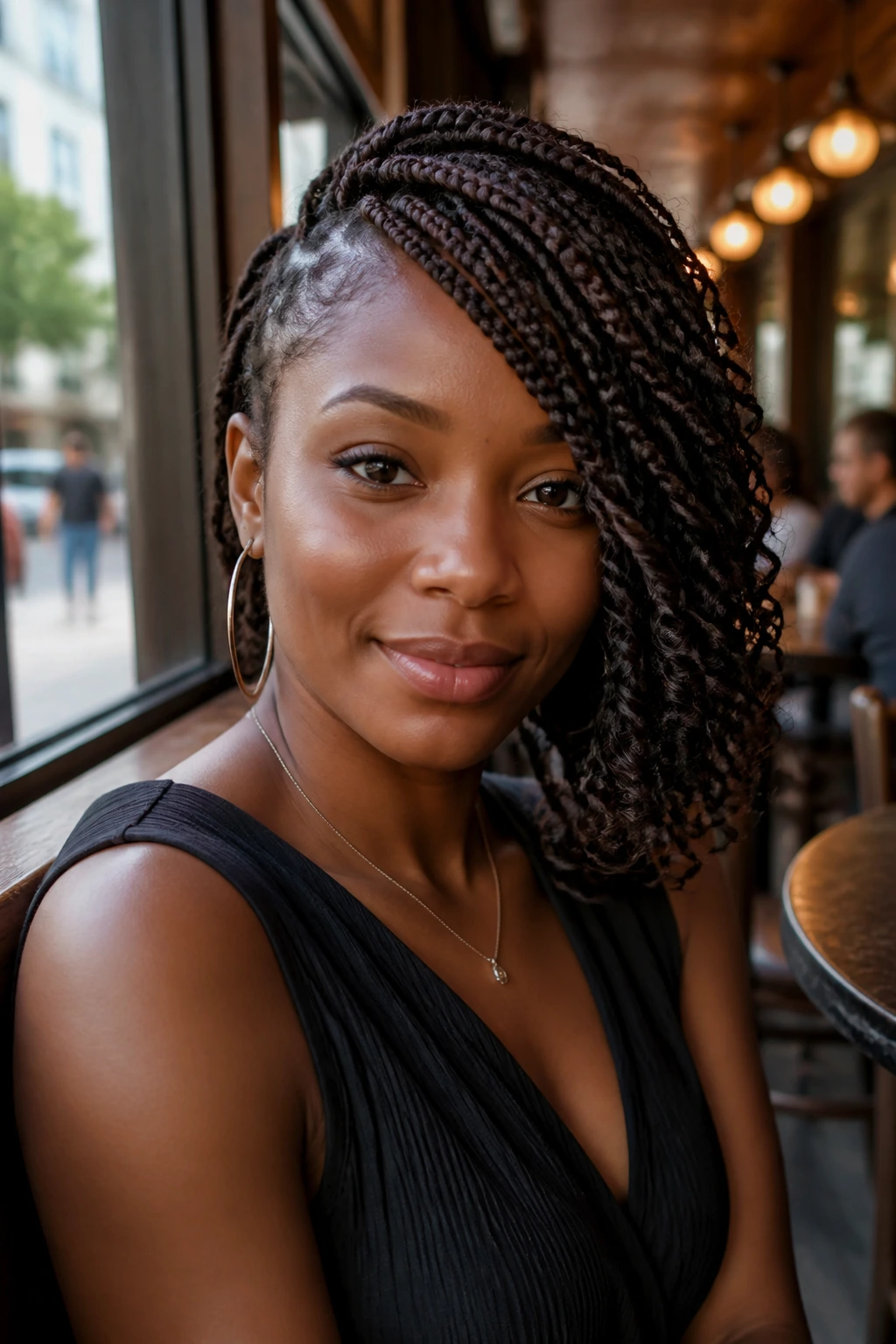
A braided bob swept to one side is sharp in a different way. Shorter length changes the whole mood. Instead of the drama coming from long braids moving across the body, it comes from the compact shape and the way the curls land right near the collarbone or jaw.
This is a strong option if you dislike long install weight or if your neck gets irritated by heavy styles. The bob shape lets you keep the braid detail close to the face, where it does more visual work. Loose curls at the ends stop the cut from looking blunt, which is the biggest risk with any shorter braided style.
If you want the silhouette to stay neat, keep the ends lightly curled rather than overly fluffy. A bob depends on shape, and shape disappears fast when the curls get too big.
11. Micro Braids with Layered Loose Curls
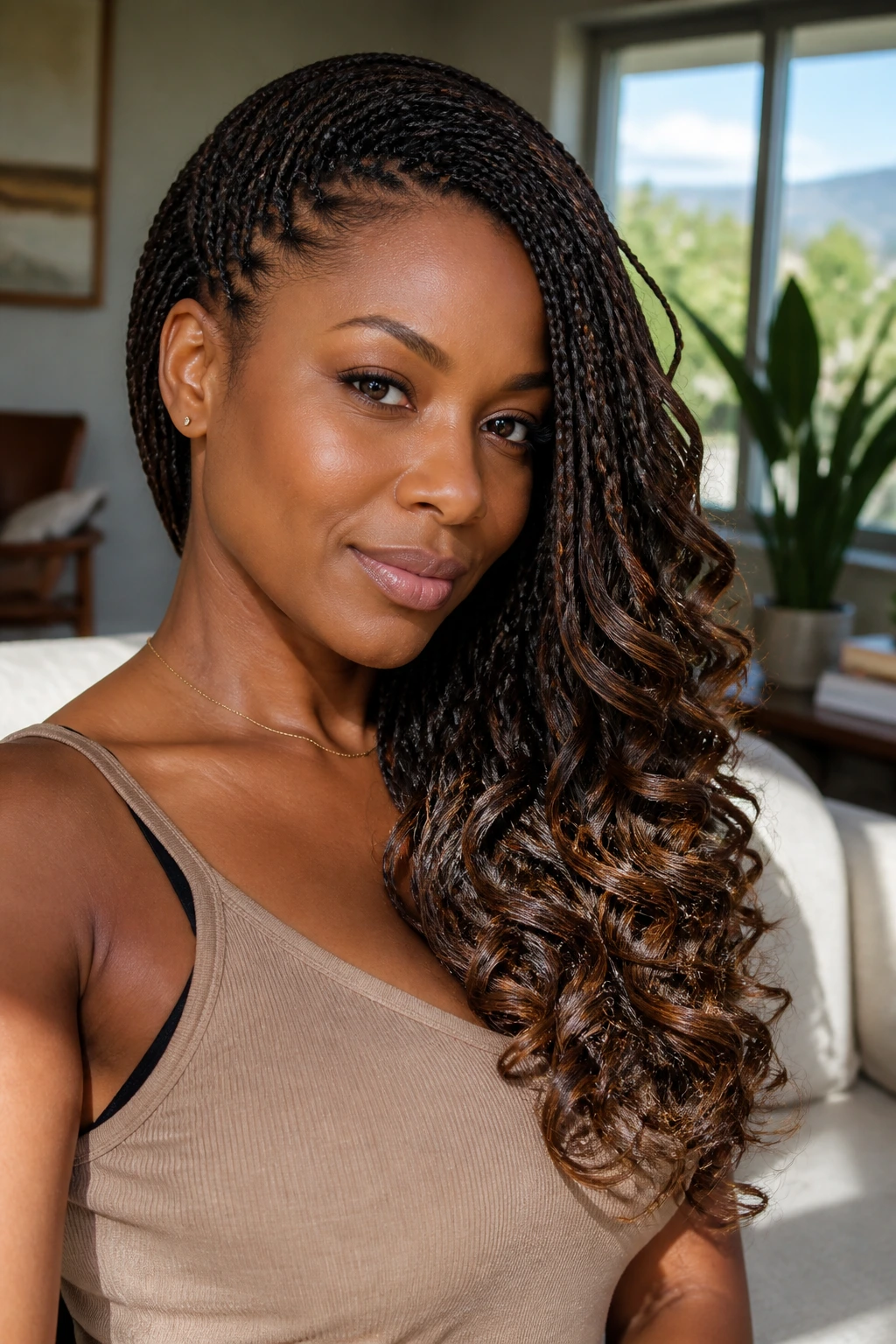
Micro braids are a time investment, no way around it. They take patience from the stylist and a real commitment from the wearer. What they give back is movement. Lots of it. When swept to one side and layered with loose curls, they create a fine-textured fall that looks almost like fabric moving over the shoulder.
The danger with micro braids is overloading them. If the curls are too dense or the braids are too tight, the style loses the airy feeling that makes micro braids interesting in the first place. Keep the parting clean, let the curls live mostly in the lower half, and the style stays elegant instead of busy.
This look is for someone who likes detail. Up close, it is all tiny texture and soft shape. From a distance, it reads like a smooth sweep.
12. Senegalese Twists with Curly Tails
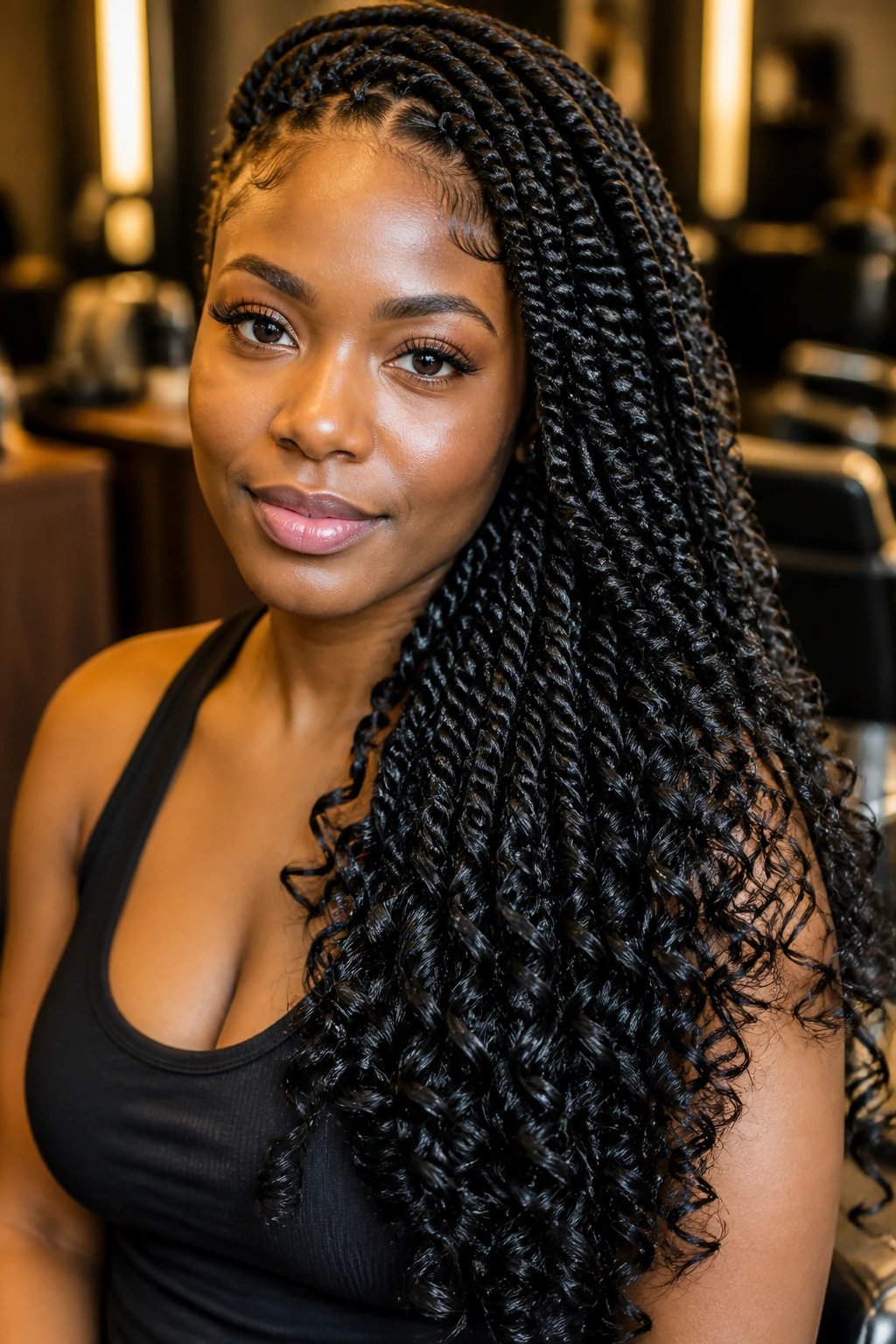
Senegalese twists bring a shinier, rope-like surface than many braid styles, and that sheen works well when the twists are gathered to one side. Add curly tails, and you get a finish that feels polished without becoming stiff. The twist texture catches the eye, while the curls keep the ends from looking blunt.
This is a good option if you like the feel of a protective style that still has a sleek finish. Twists also tend to look slightly more fluid than classic box braids when they move, which matters once they fall over one shoulder. The side sweep keeps the length from spreading too wide across the back.
The style does need a little palm-roll maintenance if the twists start to puff up too quickly. A light mousse and a satin wrap will do more here than heavy gel ever will.
13. Tribal Braids with Beaded Ends
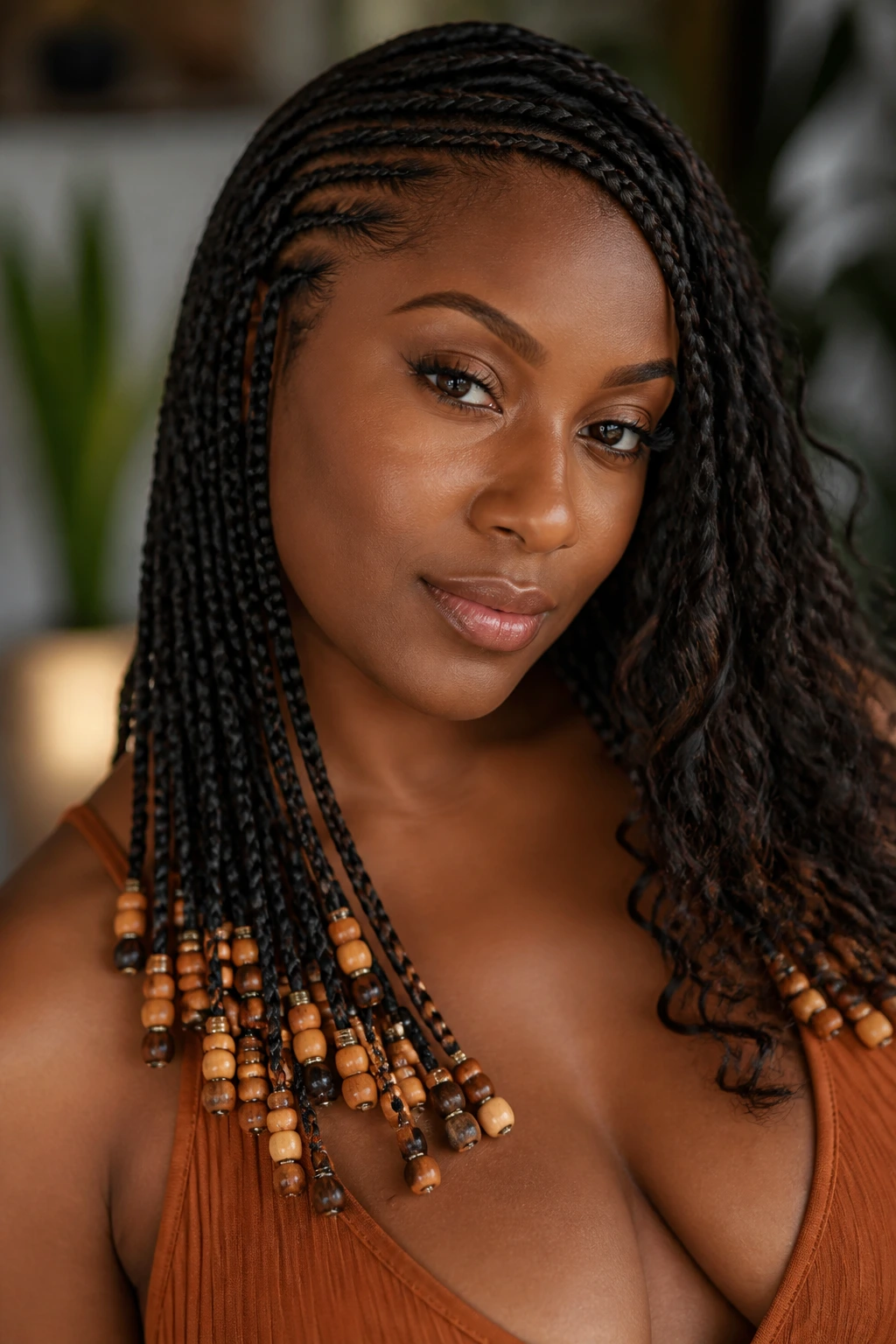
Tribal braids can be playful or elegant, depending on how hard you lean into the details. The side-swept version works best when the braid pattern stays balanced on the scalp and the ends fall over one shoulder with beads or curly tips that give the style a little sound and movement. That’s what makes the look feel alive.
Beads are the obvious decoration, but don’t overdo them. A few at the braid ends or around a focal braid line are usually enough. Too many beads can make the side feel bottom-heavy. Loose curls near the front help offset that and stop the style from feeling too rigid or too themed.
This style has presence. You do not need much else. A plain outfit and a clean neckline are usually enough to let the braids carry the look.
14. Braided Updo with Side-Cascading Curls
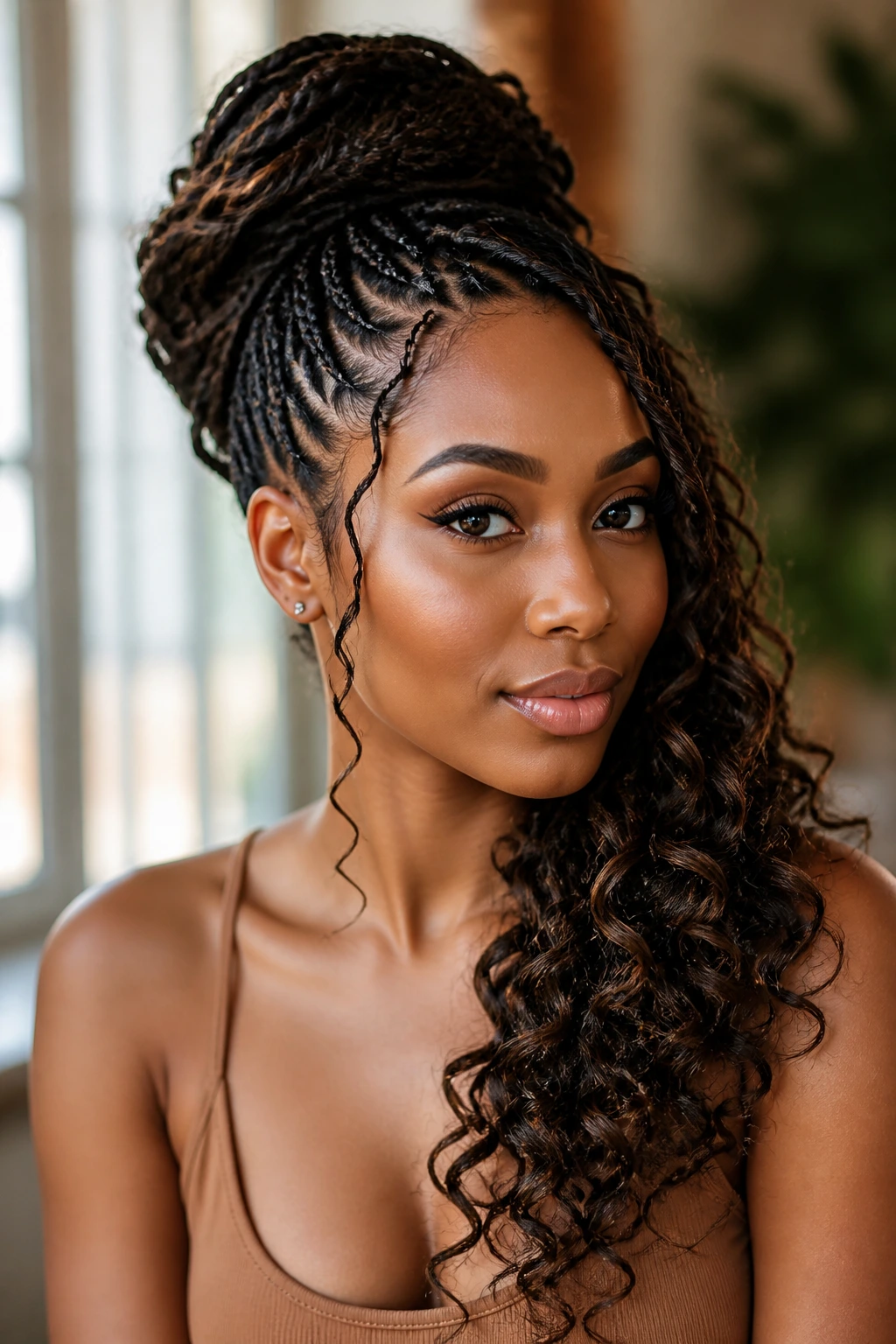
A braided updo can sound formal and, frankly, a little stuffy. Not this one. By pinning the braid structure up and letting a side cascade of loose curls fall down one shoulder, you keep the face open while still showing length and texture. It’s the braid version of wearing heels with a soft dress.
The success of this style depends on where the curls start. If they’re too high, the updo can look messy in the wrong way. If they’re too low, you lose the drape. The sweet spot is a clean pinned crown with curls beginning around the nape or just behind the ear.
This is one of the best choices for weddings, graduations, and any event where you want the back of the style to stay controlled while the front and side feel relaxed.
15. Side-Part Faux Locs with Face Curls
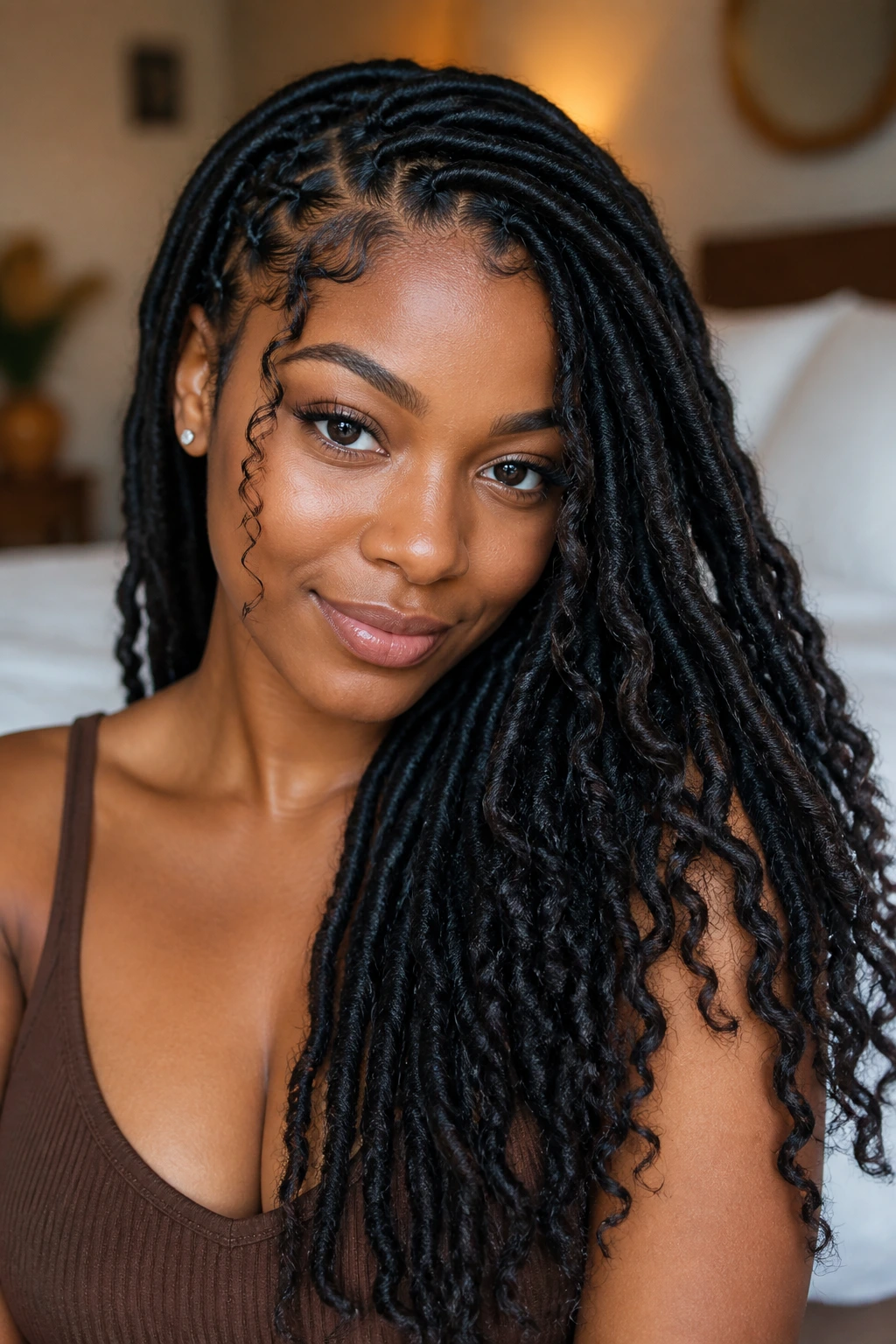
Faux locs already carry weight and texture, so a side sweep works best when the locs are not overly thick. Pull them over one shoulder, leave a few soft curls around the face, and the whole style stops looking blocky. The curls matter here because they break up the denser lines of the locs.
This look has a slower, more grounded energy than shiny braids or twists. It feels a little earthy, a little romantic, and very wearable with simple clothes. The side part helps it avoid that “all one mass” look that locs can fall into when they’re installed too uniformly.
I would keep the accessory load light here. A cuff or two is enough. The curl pieces and the loc texture already do the visual lifting.
16. Curly Mohawk Braids Swept Left
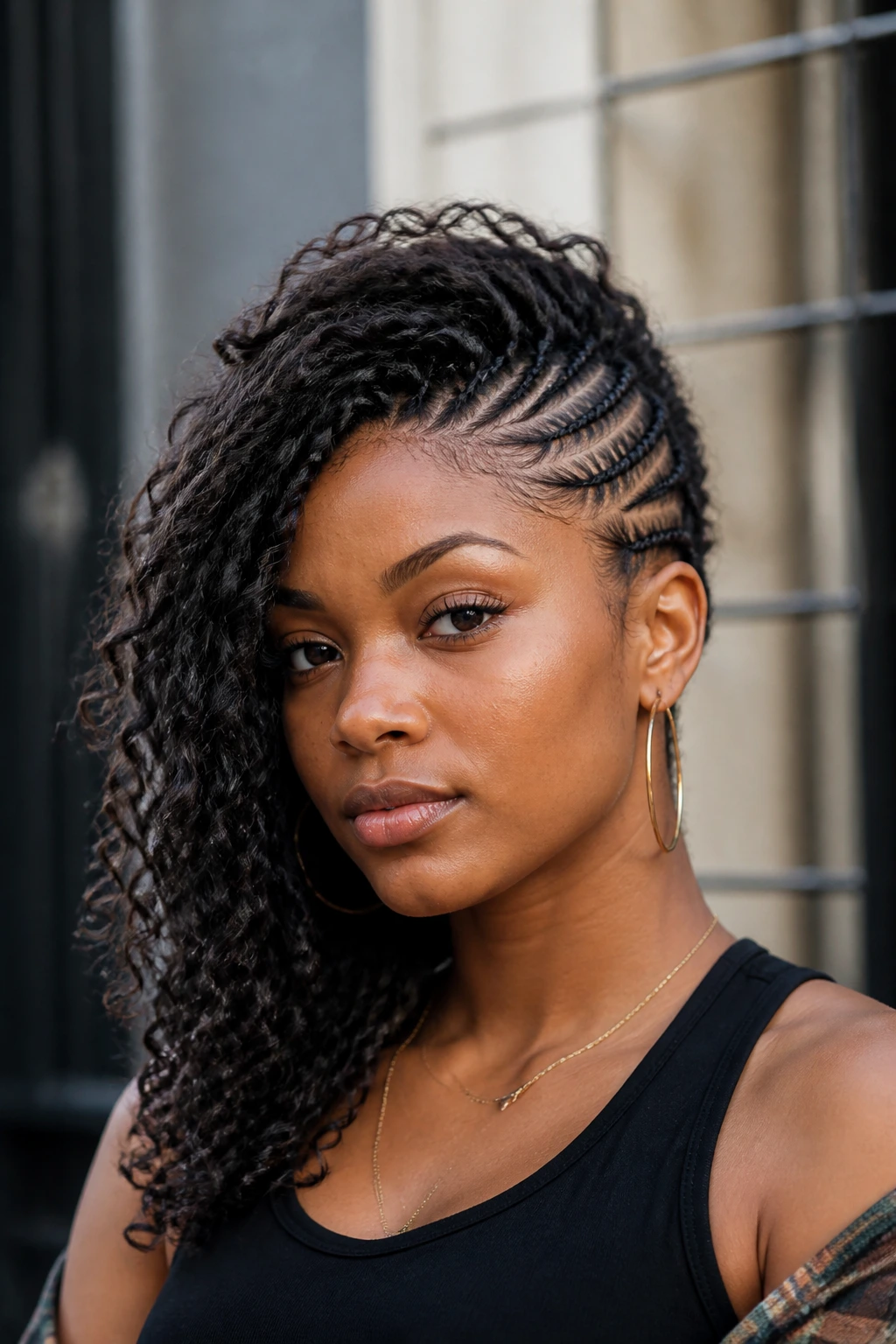
This one has attitude. Cornrows or flat braids run along the sides, creating a lifted center ridge that sweeps hard to one side and drops into loose curls. The result is part mohawk, part side-swept braid, and completely unapologetic.
The reason this shape works is contrast. The sides are controlled, the center has volume, and the curls bring softness to an otherwise sharp outline. It is a strong choice if you like styles that show the face and make the profile interesting from the side. You do not need long curls for it to work, either. Medium-length spirals or rod-set ends can be enough.
If you want a look that reads bold without needing color or heavy jewelry, this is one of the cleanest routes.
17. Side-Swept Feed-In Ponytail with a Wrapped Base
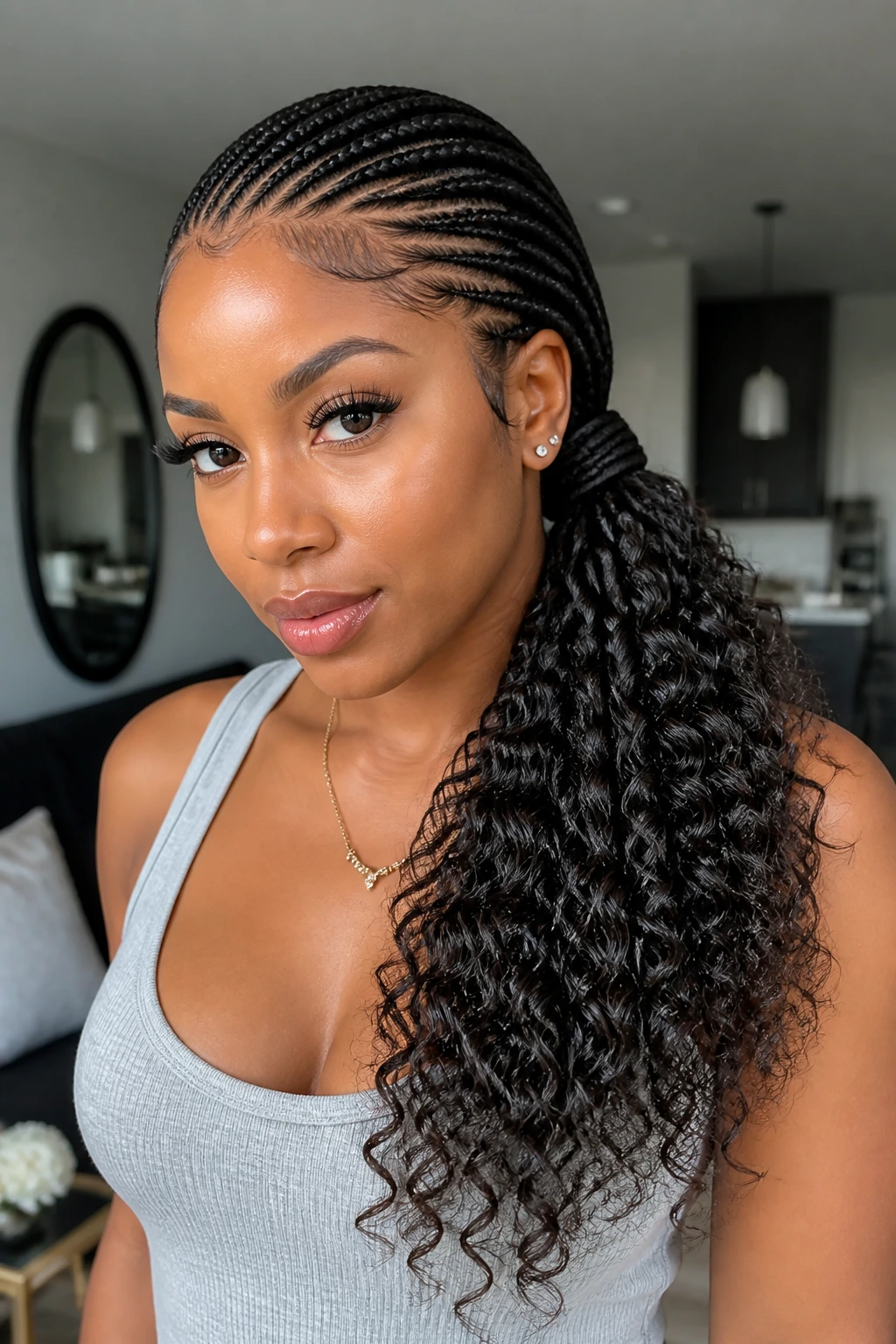
A feed-in ponytail placed low and to one side is one of the easiest styles to wear when you want polish without fuss. The wrapped base hides the transition, the pony sits over the shoulder, and the loose curls give the length enough softness to keep it from looking too severe.
This is a good everyday protective style because the scalp stays tidy and the pony itself does not need much fussing during the day. The wrapped base also makes the install look cleaner, which matters if your parting is crisp and you want the style to read intentional from the first glance.
If you like a style that moves well when you walk and still feels secure in humid air, this is a dependable pick.
18. Side Crown Braid with Loose Tendrils
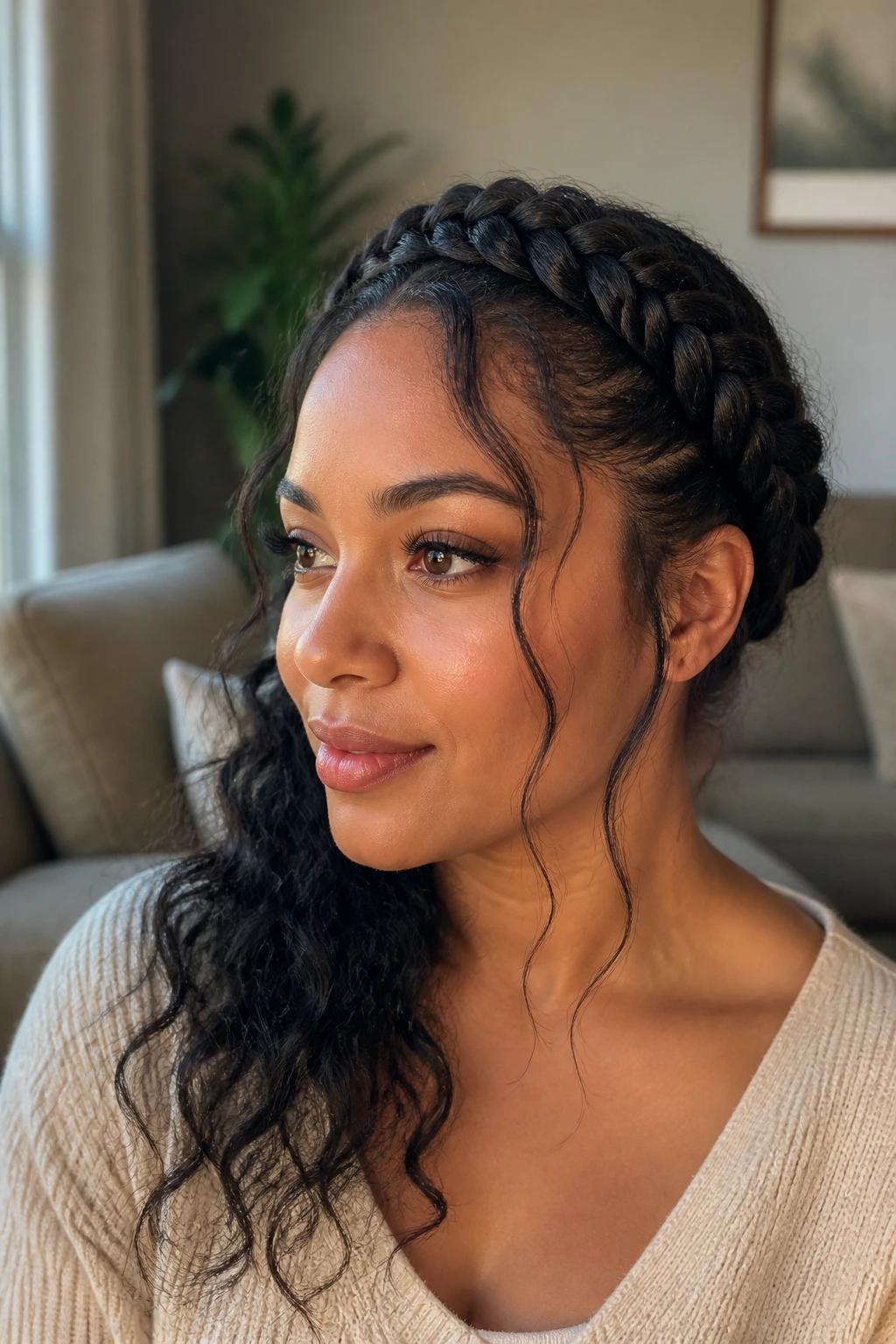
A crown braid can feel overly neat if every strand is tucked in. Leave out a few tendrils, sweep the braid to one side, and the whole style changes. It becomes softer, less ceremonial, and easier to wear with jeans or a dress without looking overdressed.
The tendrils should be chosen carefully. A couple around the temples and one or two near the jawline are enough. More than that, and the braid starts to lose shape. Loose curls at the end or along the side help the braid read as romantic instead of matronly, which is a trap a lot of crown styles fall into.
This is one of the better options when you want your hair off your face but still want visible texture around the edges.
19. Half-Up Side Braids with Open Curls
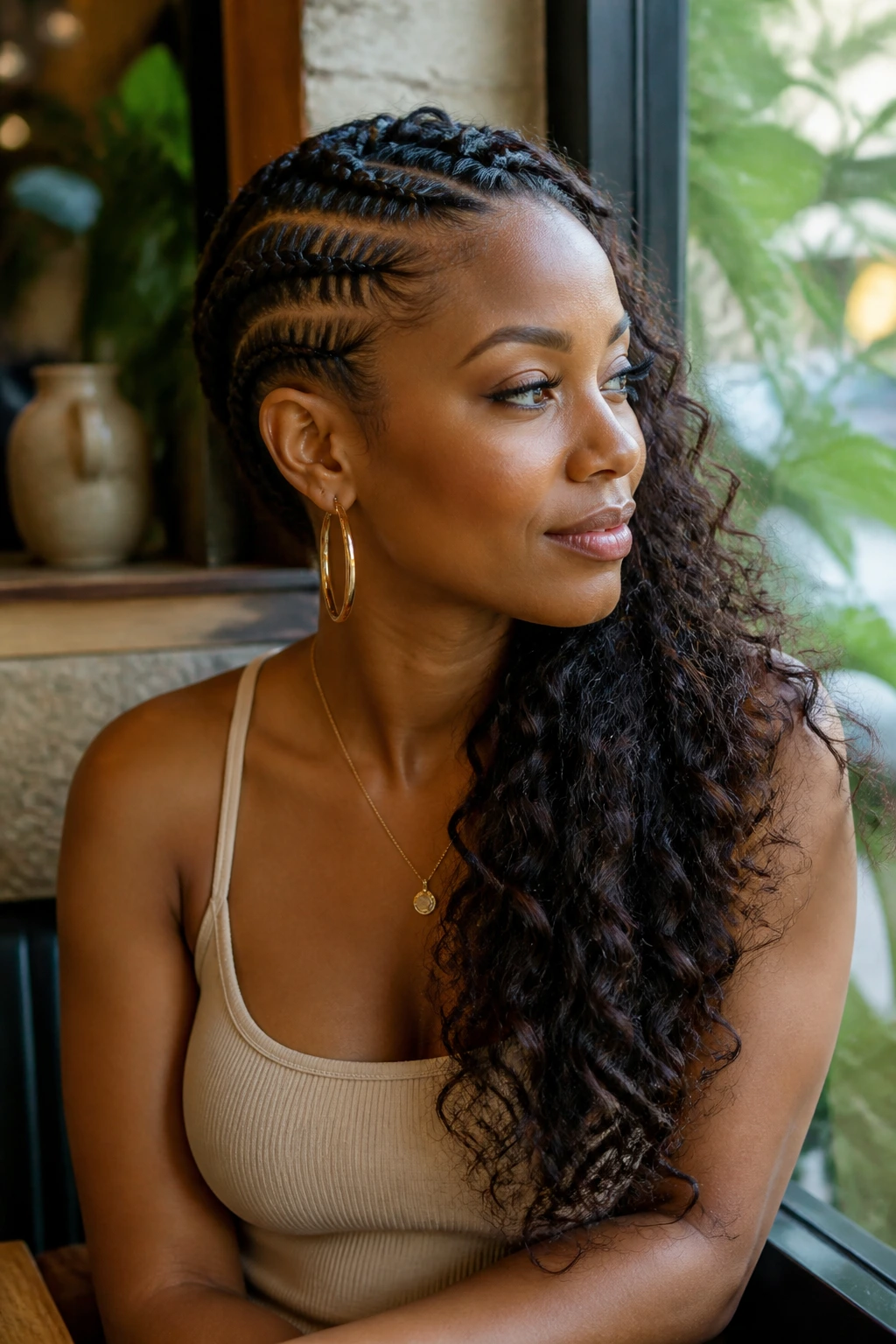
Half-up styles are useful because they let you keep some hair controlled while leaving the rest open and soft. With side-swept braids, that means the top section can be braided into a neat set of rows or a side plait, while the lower section falls in loose curls over one shoulder or down the back.
The shape is flattering because it gives lift near the crown without forcing everything into an updo. That’s a useful trick if your hair is thick and you don’t want all that density pinned tightly against your head. It also keeps the face line open, which helps the curls feel lighter.
This is a smart style for people who want a braid-first look that still shows off curl texture. It reads relaxed without looking unfinished.
20. Rope Braids with Soft Spiral Ends
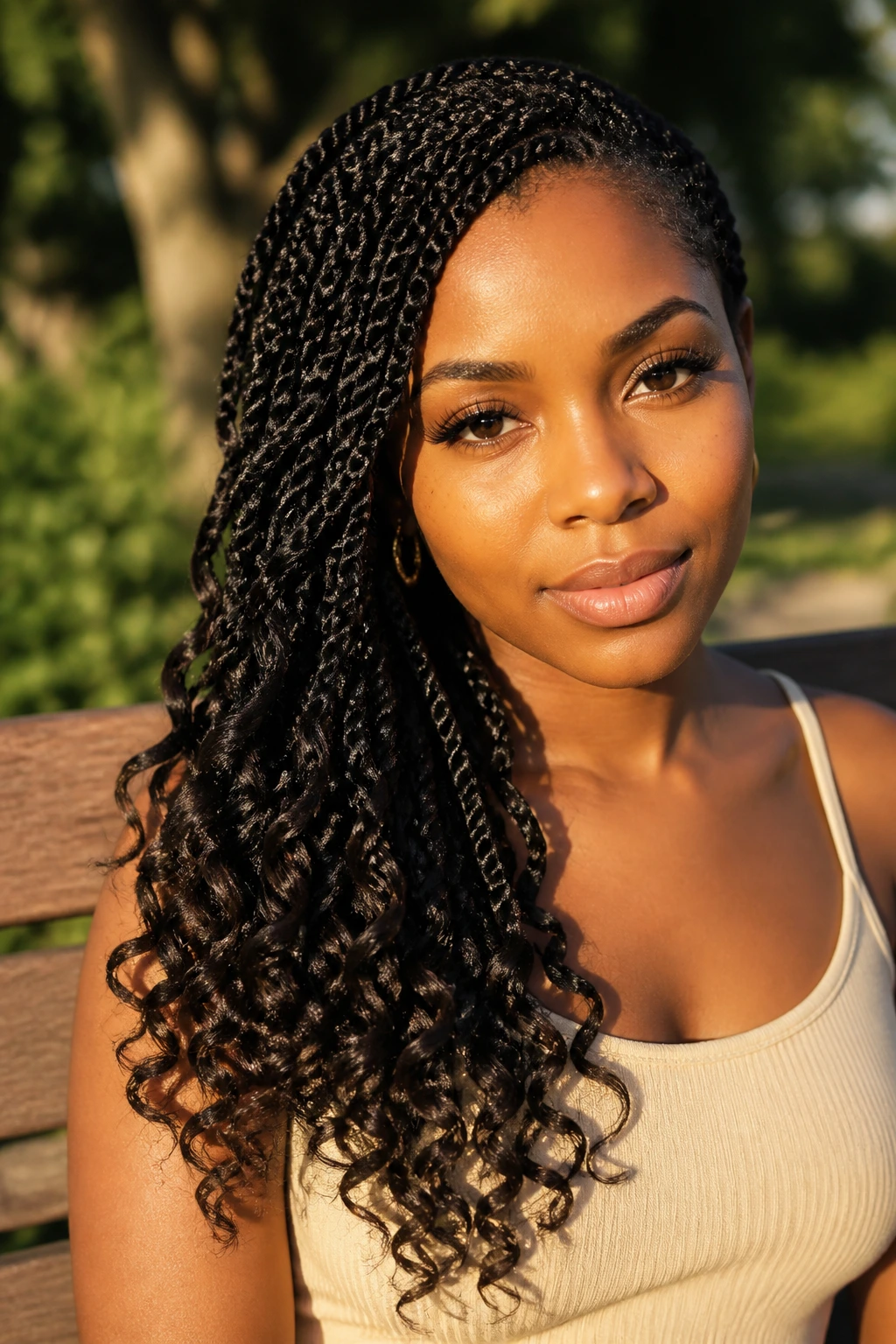
Rope braids have a smoother, tighter twist profile than many other braids, and that makes them a clean base for loose spiral ends. Sweep them to one side and the shape turns almost ribbon-like. It is simple, but not plain.
The key here is sealing the ends well enough that the twists do not unravel halfway through the week. A good curl finish helps, too. Spiral ends or flexi-rod curls look best because they keep the braids from ending in a blunt rope stump. The style needs that softness at the bottom.
I would choose this one if you want something neater than boho braids but less stiff than classic cornrows. It sits in the middle in a good way.
21. One-Shoulder Bubble Braids with Curls
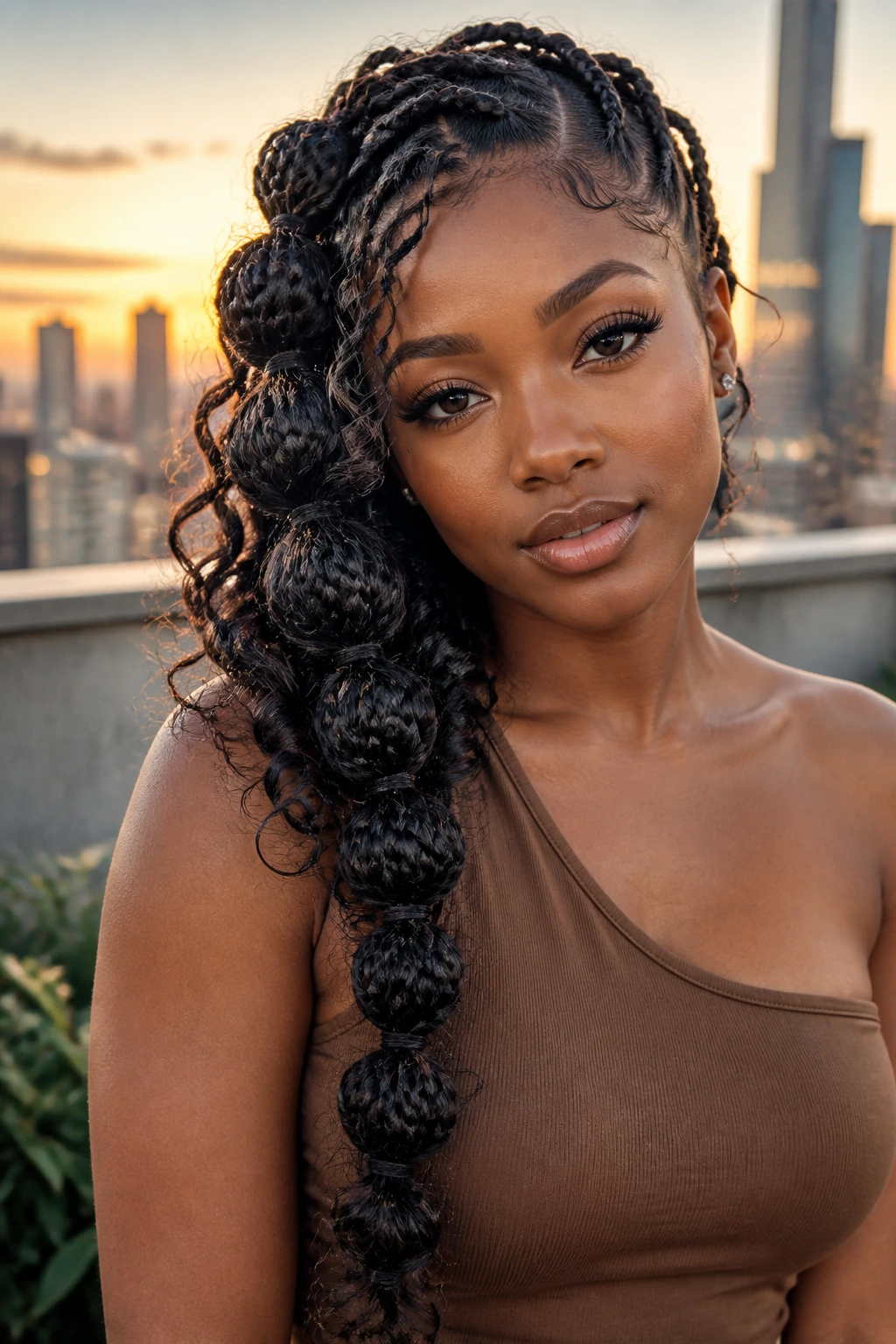
Bubble braids are playful, and when they’re styled over one shoulder with curls tucked between the sections, they feel young without being childish. The bubble spacing creates obvious shape, while the curls soften the transitions and keep the style from looking too blocky.
This is one of the more fashion-forward options in the list. It works best with smooth roots and controlled sections, because the bubbles need clear separation to read well. Loose curls can sit at the ends or peek out between the bubbles if you want more texture. Either way, the side sweep is what keeps the style from looking like a costume.
If you want a braid-adjacent look that stands apart from the usual feed-in or box braid set, this is a fun lane to try.
22. Side-Swept Crochet Braids with a Deep Part
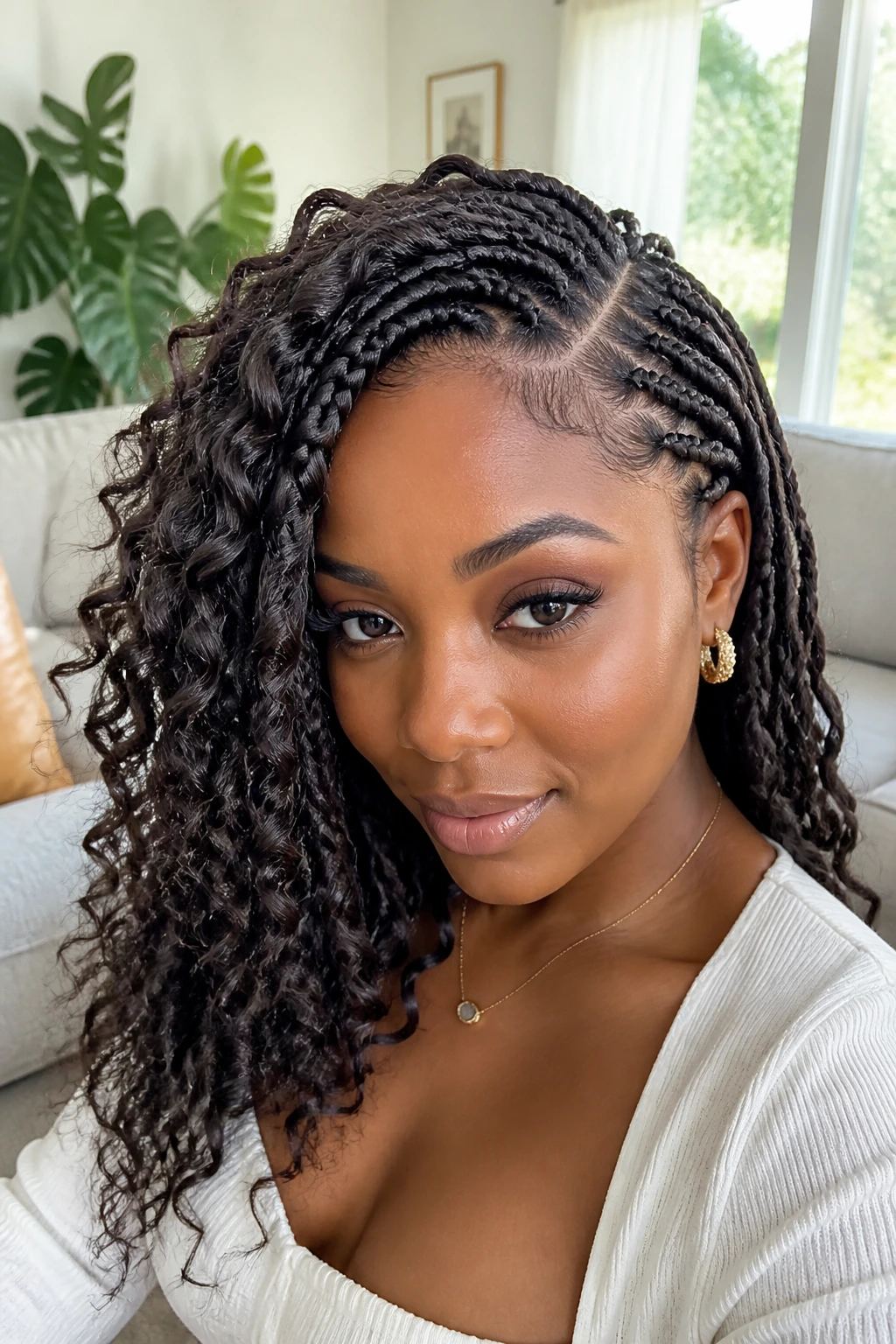
Crochet braids can be a time-saver, and the deep side part gives them enough structure to feel styled rather than thrown on. If the crochet hair comes pre-curled or pre-textured, the side sweep becomes even easier because the finished shape already wants to fall with volume.
The advantage here is speed. The style can be installed faster than many hand-braided looks, and the side part keeps the finish neat enough for everyday wear. Loose curls around the front or ends help hide any sectioning that feels too uniform. That makes the whole style look more expensive than it is to put together.
This is a smart choice if you want length and softness without sitting for an all-day braid install.
23. Braided Lob with Curled Layers
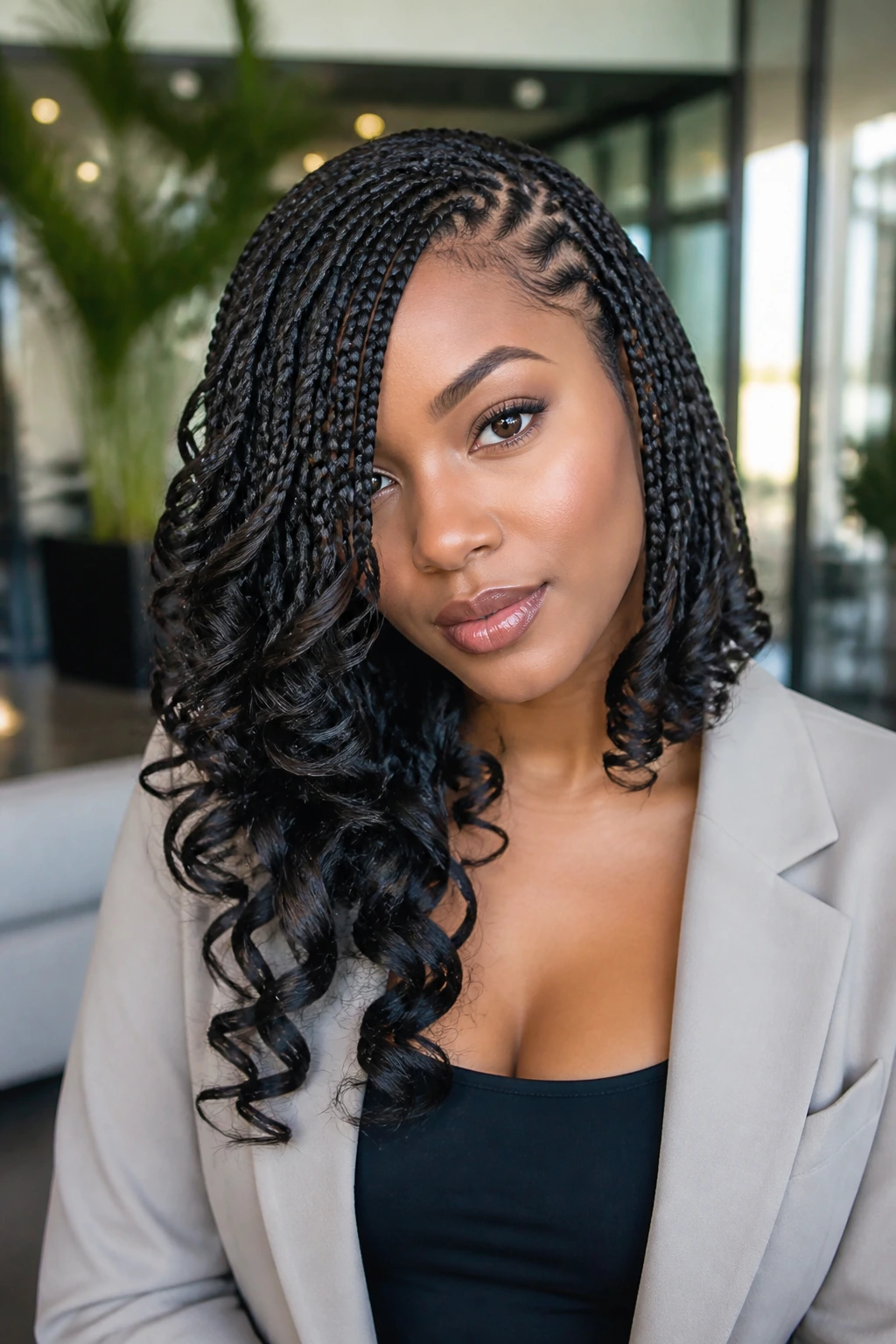
A braided lob lands right around the shoulders or a little below, which is a sweet spot for people who want braid movement without long weight. The side sweep lets the lob sit across the chest and jawline in a way that feels modern, not heavy. Add layered curls, and the whole shape gains movement from top to bottom.
This version is especially good when you want a style that works with jackets, collars, and office clothes. Long braids can fight with a blazer. A lob usually doesn’t. The curls add enough softness to keep it feminine, but the shorter length keeps it practical.
It is one of the best middle-ground choices in the collection. Not too long. Not too flat. Easy to live in.
24. Side-Swept Goddess Locs with Wispy Ends
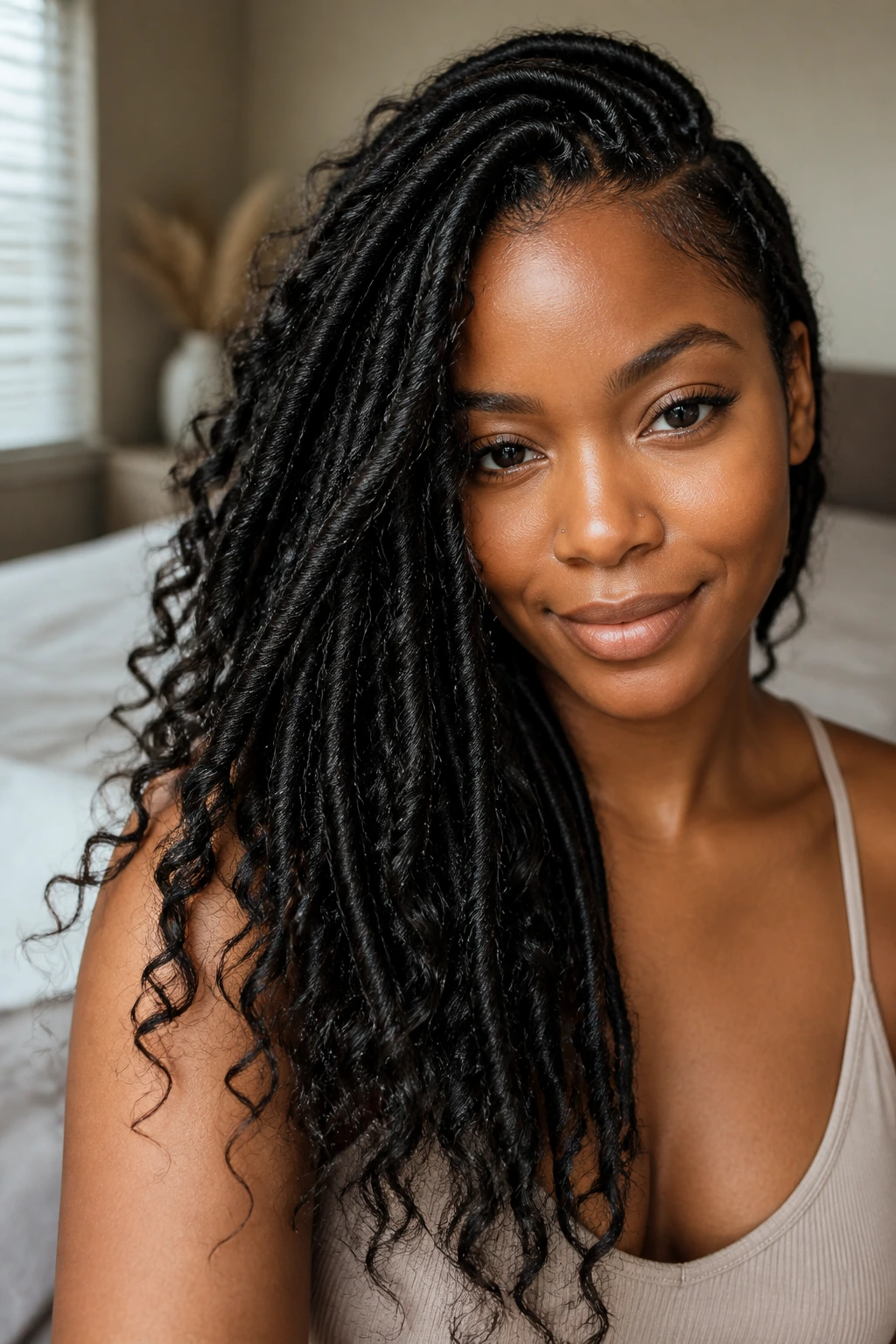
Goddess locs already come with loose curly pieces woven through, so the side-swept shape suits them naturally. Pull the locs over one shoulder and let the wispy ends break up the heavier texture. The look becomes softer, lighter, and a little more romantic than standard faux locs.
This style can get bulky if the locs are too thick or too many. The better version leaves enough open space for the curly strands to show. Those wisps are what keep it from reading like a solid block of texture. They also help around the face, where the loc shape can sometimes feel severe if every strand is tucked away.
If you want a style with presence but not too much stiffness, this is a strong pick.
25. Braided Chignon with Loose Curls Tucked to One Side
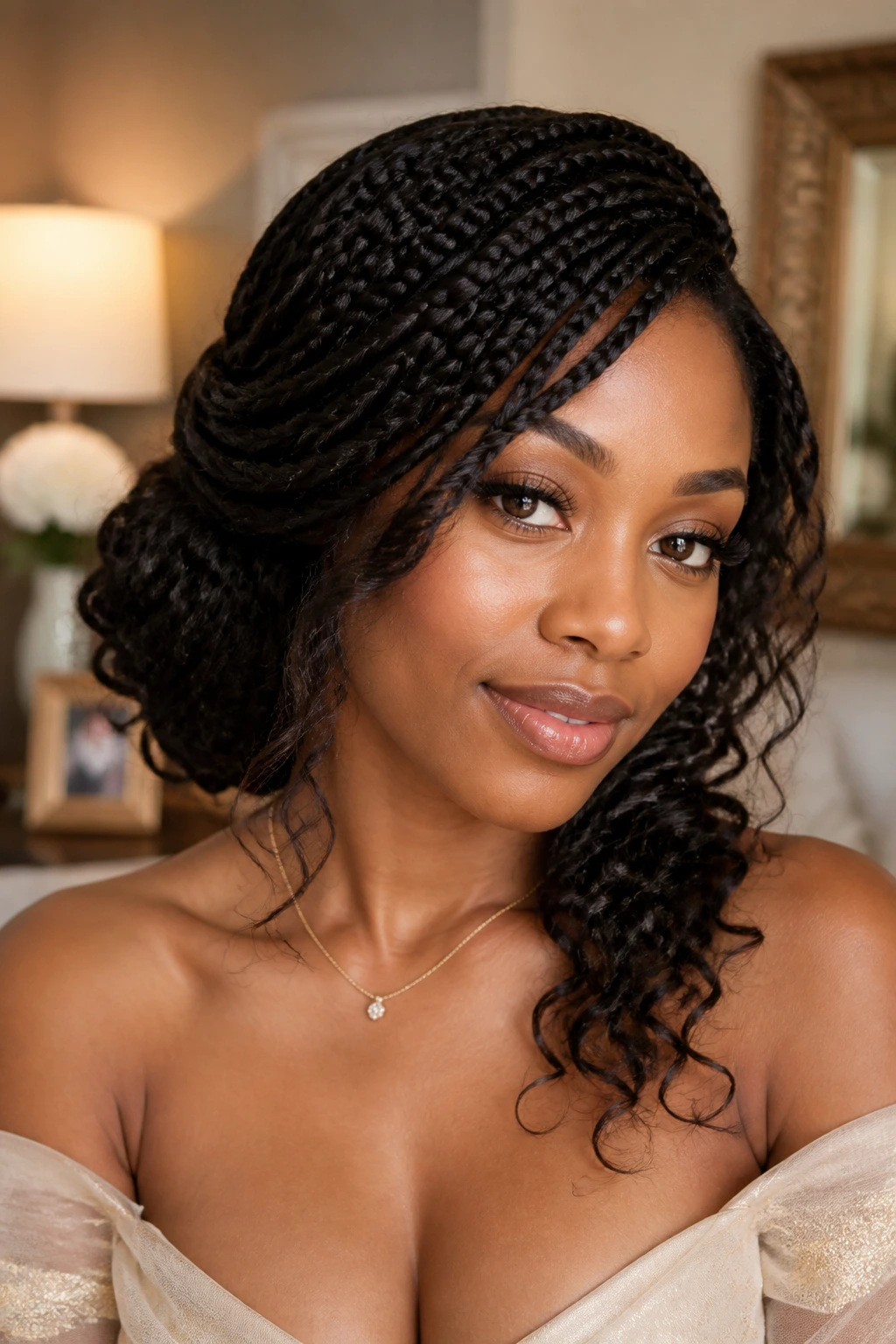
A side-swept braided chignon is the most polished finish in the set, and it still keeps the loose curl softness that makes the whole idea work. The braids are gathered into a low side bun or twist at the nape, then a few curls are left to fall or spill around the cheek and shoulder. It looks deliberate. It also looks comfortable, which is rare in formal hair.
The style is best when the bun itself is neat but not squeezed tight. Leave enough slack for the curl pieces to sit naturally. If the chignon is pinned too aggressively, the whole shape can go rigid, and then the curls feel like an afterthought.
For weddings, formal dinners, or any event where you want the hair to stay put without disappearing, this one has a strong case.
Why the Side Sweep Changes the Whole Shape
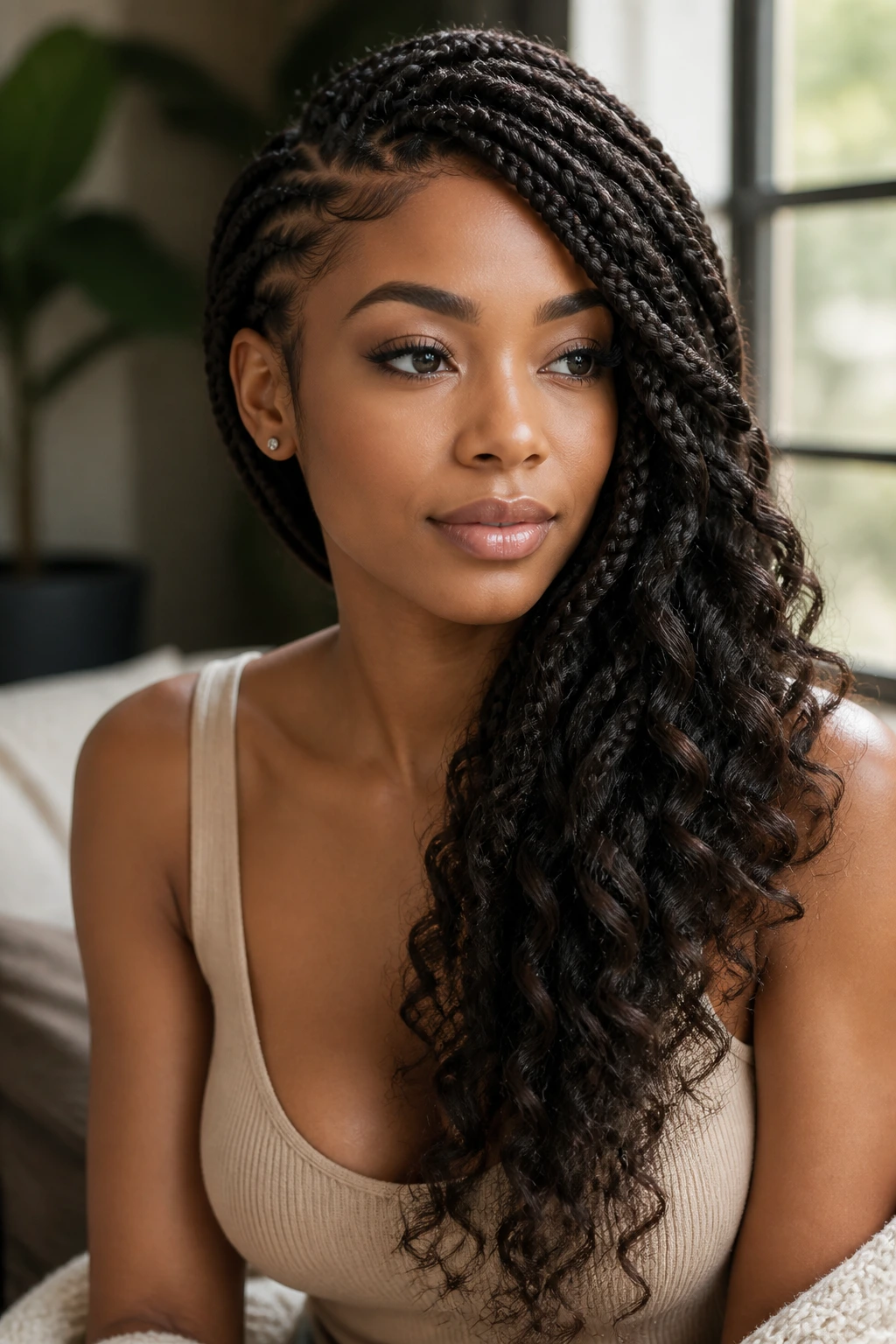
A braid style can be technically good and still look flat if the weight sits straight down the back. The side sweep fixes that. It gives the eye a place to land, creates a visible line from shoulder to jaw, and lets loose curls do something useful instead of just hanging there. That is why these styles feel more styled than ordinary braid sets.
The other advantage is balance. Side-swept braids change the distribution of weight, which can be kinder to the scalp when the style is installed with care. A heavy style that pulls equally on both sides can feel punishing after a few days. Shifting the bulk to one side changes the feeling on the head and the way the style moves when you turn or tilt.
There is also a simple visual trick at work. Hair that falls over one shoulder creates a built-in frame for the face and neckline. That’s why these styles work with hoops, off-shoulder tops, and even plain white tees. The braid pattern is doing structure; the curls are doing softness; the side sweep is doing the framing. All three matter.
Essential Equipment for These Looks
-
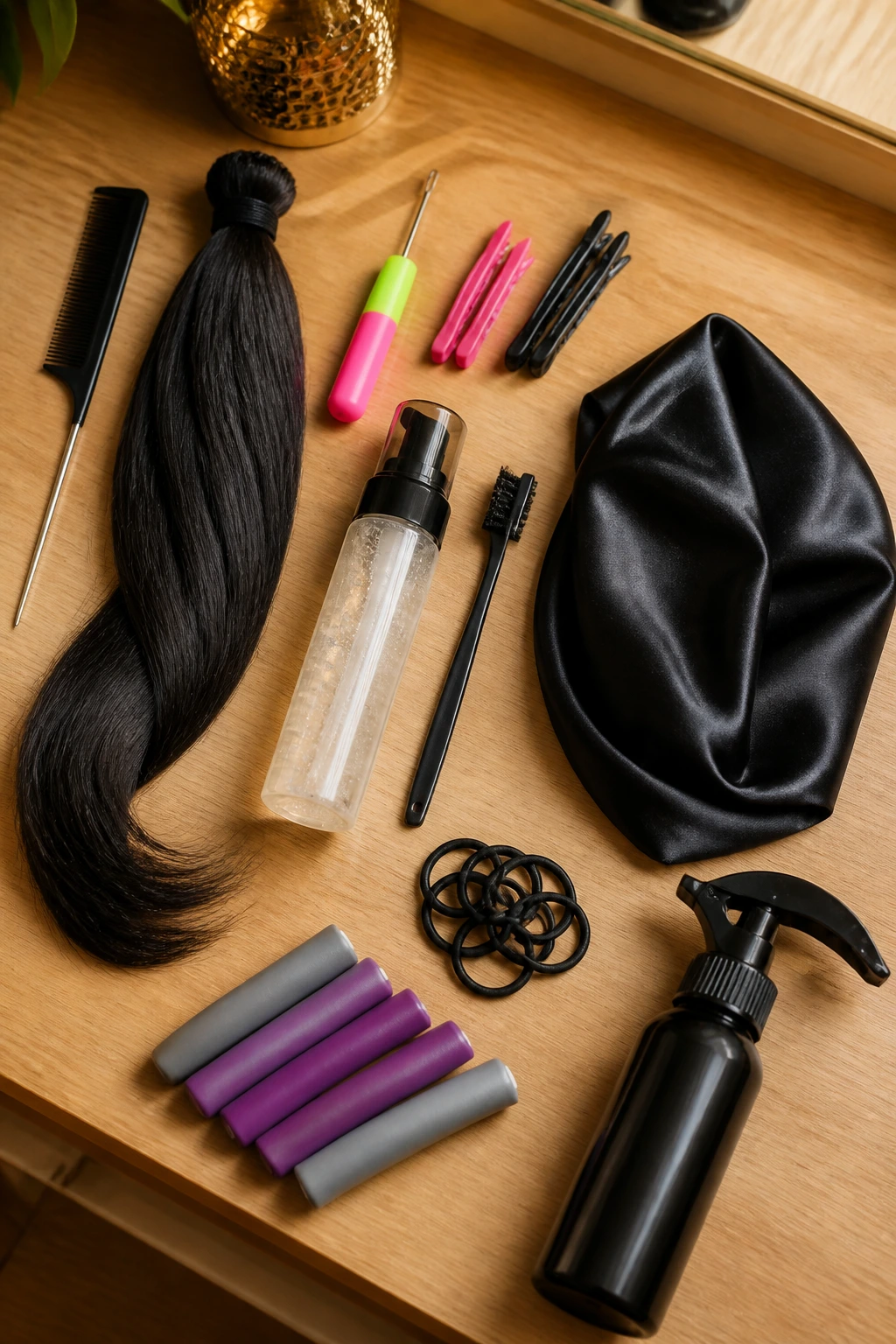
Rat-tail comb: Clean parts make side-swept styles look intentional, and this is the tool that gives you those straight lines.
-
Pre-stretched braiding hair: It cuts down on blunt ends and makes the install smoother, especially for feed-ins and goddess styles.
-
Crochet hook or latch hook: Useful for crochet braids, faux locs, and quick braid installs where added hair needs to be secured neatly.
-
Duckbill clips: These keep sections out of the way while you braid and help prevent the parting from getting messy.
-
Lightweight mousse: Good for smoothing flyaways and setting the loose curls without turning them stiff.
-
Edge brush: Handy, but don’t use it to force every hair flat. It should refine the hairline, not scrape it raw.
-
Satin scarf or bonnet: Non-negotiable if you want the side sweep and curls to survive the night.
-
Small hair ties and clear elastics: Best for sectioning, ponytail bases, and anchoring the ends before dipping or curling.
-
Curling rods or flexi rods: Useful for creating the loose curl finish on the ends if the hair is not already textured.
-
Light oil or braid spray: Keep it light. You want sheen and comfort, not a greasy film that weighs down the curls.
Smart Shopping and Hair-Selection Tips
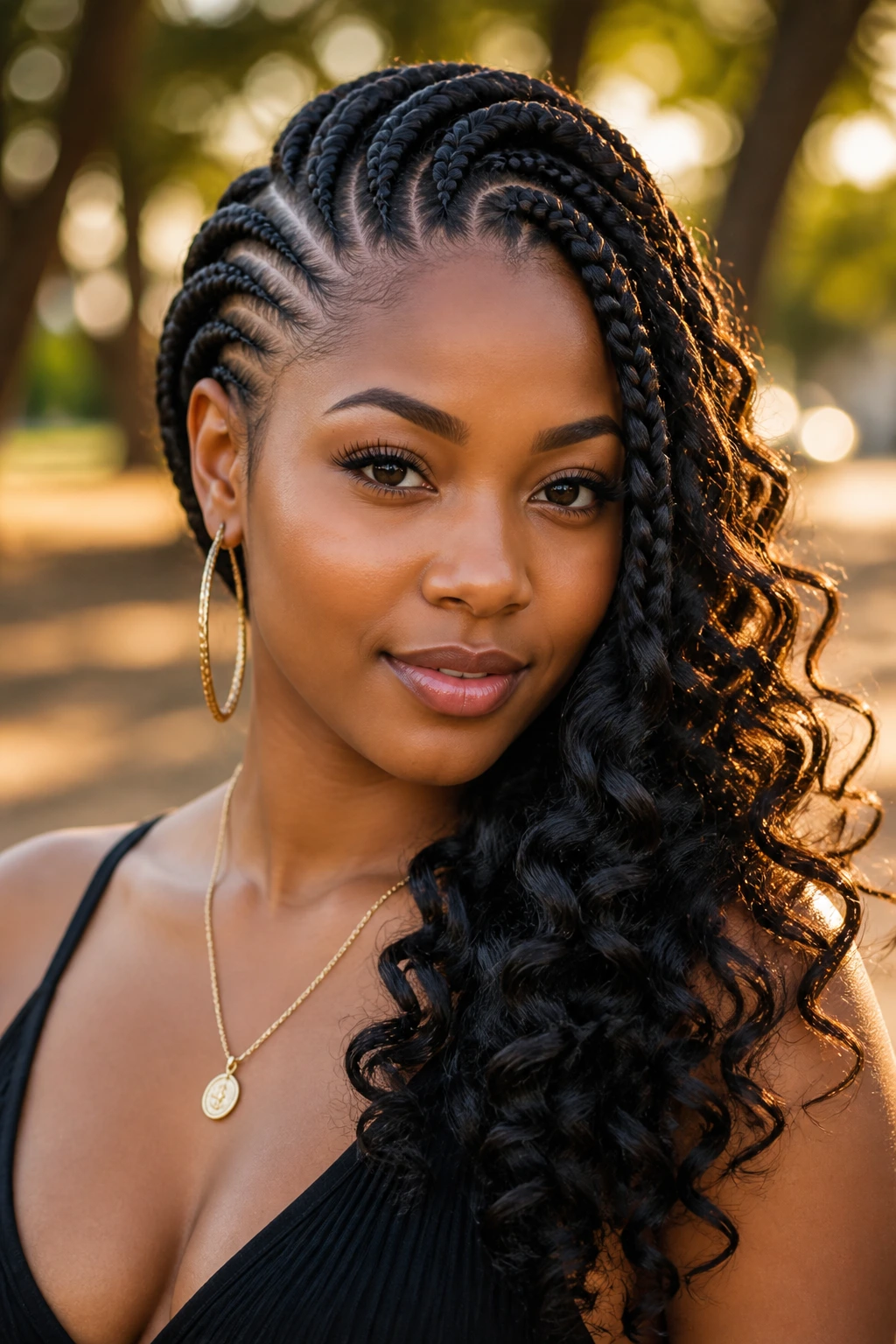
The hair you choose matters more than most people admit. Cheap braiding hair can still work, but it should at least be pre-stretched and easy to separate without turning into a fuzzy clump in your hands. If the hair catches and tangles before it ever gets on your head, that is a bad sign. Save yourself the trouble.
For the loose curl pieces, texture matching is the big decision. Water-wave, deep-wave, and spiral curl additions all read differently in the finished style. Water-wave tends to look softer and a little looser. Spiral curls give more spring. Deep-wave sits in the middle and can be easier to blend with boho braids or goddess styles. If the curl texture looks too shiny compared with the braid hair, it can stand out in a cheap way, so test the combination before you commit.
Color matters too, and not just for dramatic reasons. A shade that is half a tone off can make the braid pattern look muddy or patchy in daylight. If you’re blending ombré hair, keep the curl pieces in the same color family or the ends can look disconnected from the braid body. For natural-black styles, a soft 1B or 2 usually looks more believable than a harsh jet black under bright light.
Pack count is another place where people guess badly. Shorter braided bobs might need 3 to 4 packs. Longer, fuller, or curl-heavy looks often need 5 to 7, depending on braid size and hair density. Don’t buy based on the package photo alone. Buy based on how full you want the side sweep to look and how much of your own hair is being tucked away.
How to Wear These Styles Without Losing the Shape
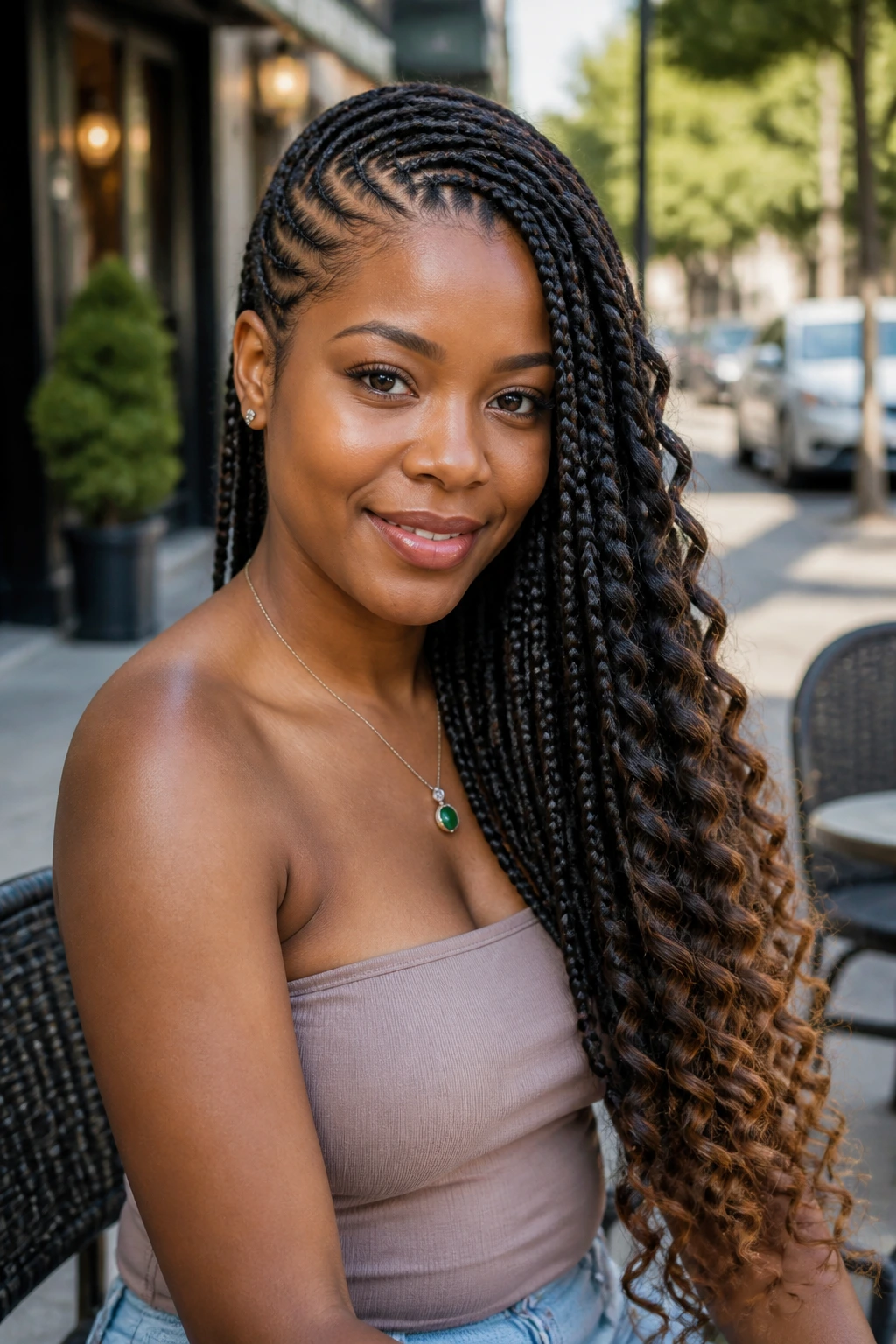
Presentation: Let the side with the most braid volume sit forward, and keep the opposite side sleek so the drape has a clear line. If the style is long, move the braid or twist just enough that it rests on the collarbone instead of hanging dead-center on the chest.
Accessories: Small hoops, gold cuffs, or a single statement earring usually work better than piling on everything at once. The curls already bring texture, so the accessories should sharpen the look, not crowd it.
Fit: Open necklines, one-shoulder tops, blazers with a clean lapel, and simple dresses all give these braids room to move. High collars can hide the sweep, which wastes the whole point. If you’re wearing a turtleneck, choose a shorter braid length so the style still has space.
Occasion Match: Sleeker feed-ins and stitch braids feel right for work or formal settings. Boho braids, goddess locs, and passion twists read softer for weekends, brunch, and nights out. The braid itself can stay the same; the finish decides the mood.
Additional Tips and Finishing Moves
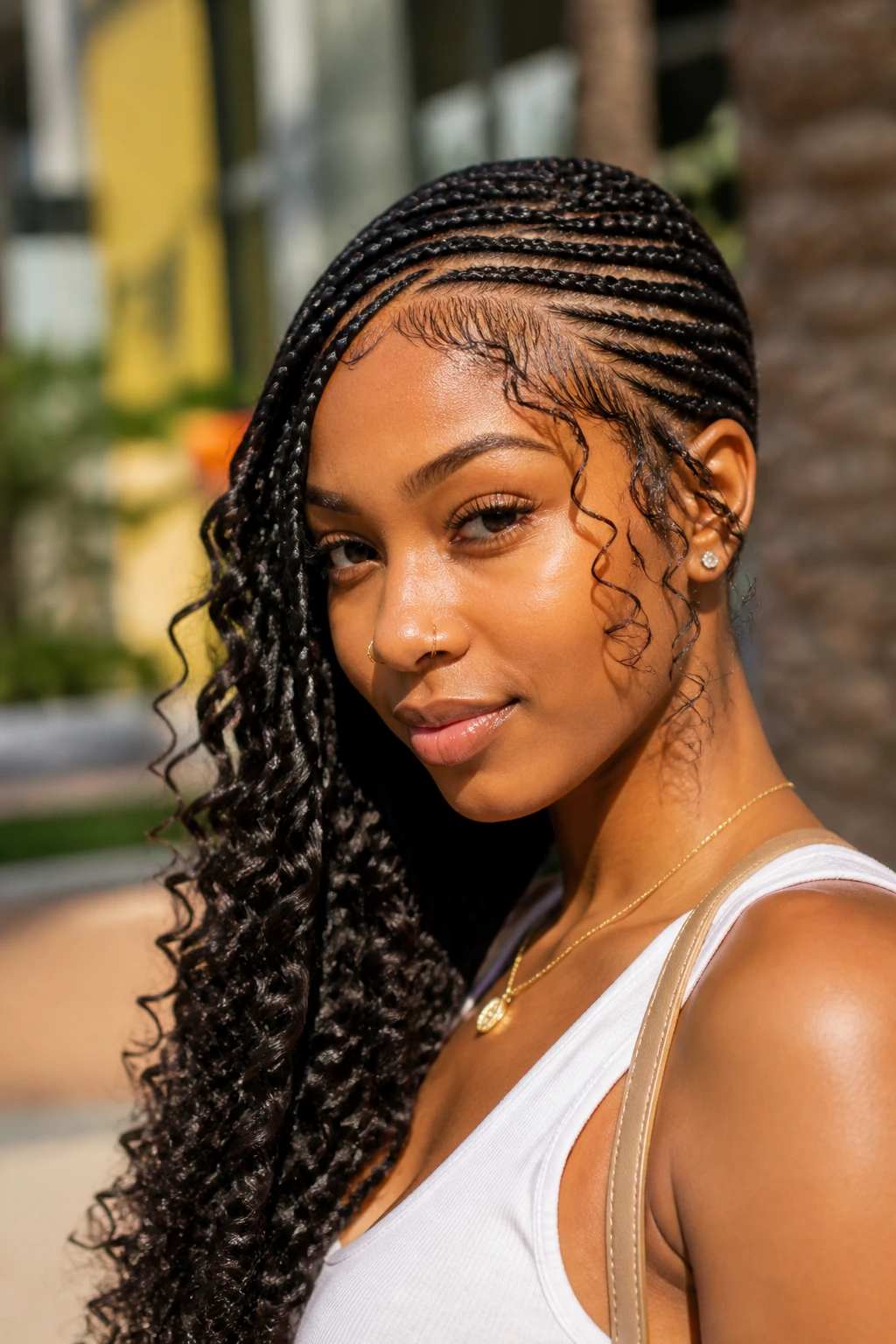
Curl Refresh: If the loose curls start to droop, mist them lightly with water, scrunch in a little mousse, and reset a few pieces on flexi rods overnight. Don’t drown the hair. A little moisture is enough.
Scalp Comfort: If the front feels tight after installation, that is not something to “get used to.” It means the tension is wrong. A good side-swept braid should feel secure, not sharp at the temples.
Flavor Enhancement: A tiny bit of lightweight shine spray on the braid lengths gives the style a cleaner finish, especially on darker hair. Keep it off the roots if your scalp gets oily fast.
Make-It-Yours: If you like a soft look, leave more curls around the face and keep the braid lines smaller. If you want something bolder, add cuffs, beads, or a stronger side part. Same silhouette. Different personality.
Common Mistakes That Flatten the Style
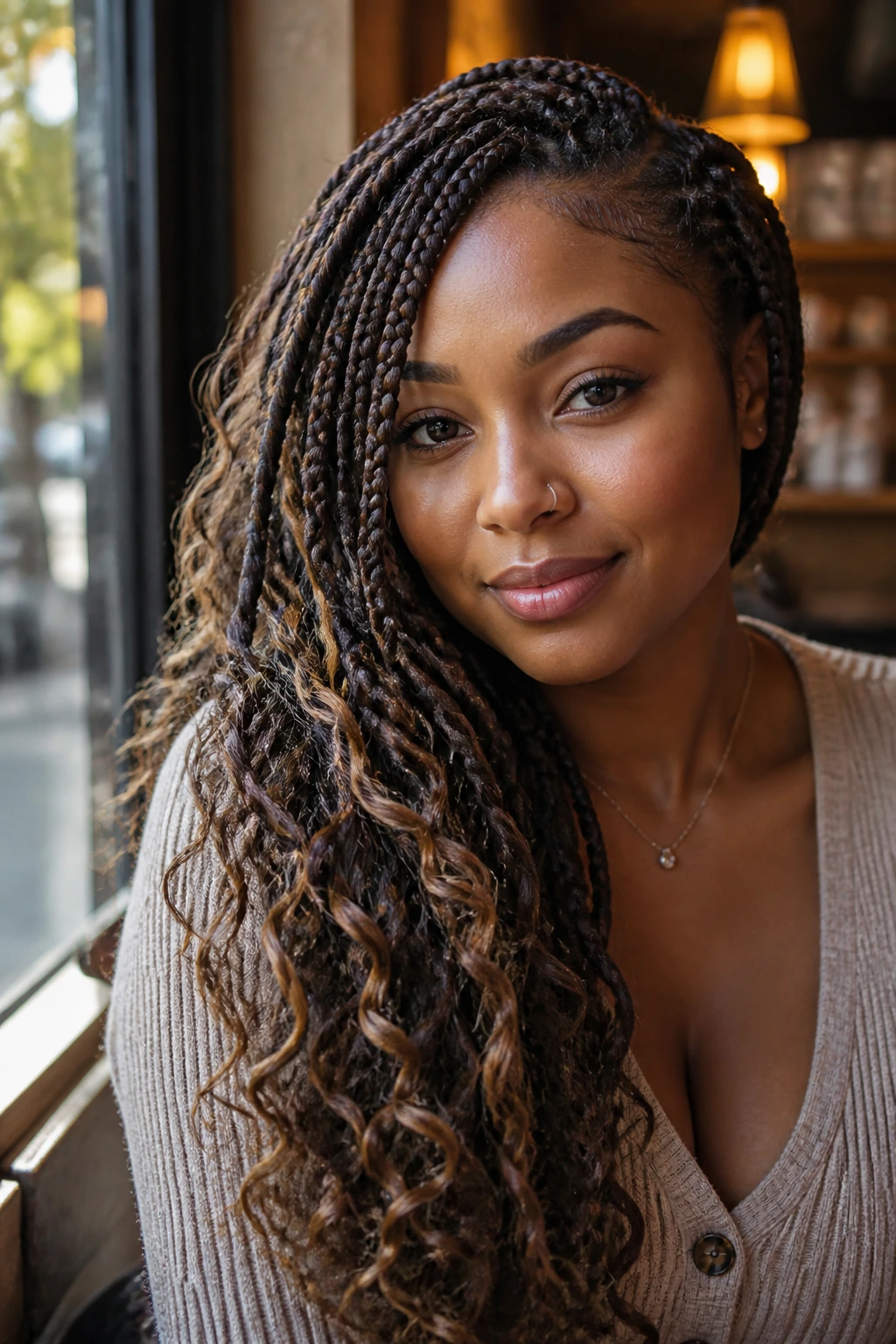
The first mistake is pulling the side part too tight at the temple. The style ends up looking harsh, and your scalp will let you know about it before the day is over. Keep the root clean, not punishing.
Another common problem is choosing the wrong curl texture for the braid hair. If the curls are too tight and the braids are too smooth, the finish feels disconnected. If the curls are too loose, the style loses shape fast. Match the texture to the braid weight, not to the photo on the pack.
People also overdo product. Too much mousse or edge control makes the roots look stiff and flaky. Use a light hand, especially around the hairline and on the curl pieces. You want control, not a shell.
And then there’s the nighttime issue. Sleeping without a scarf or bonnet is the fastest way to crush the side sweep and tangle the loose curls. Wrap the style in the direction it already falls so you don’t force the shape to fight itself.
Variations and Adaptations to Try
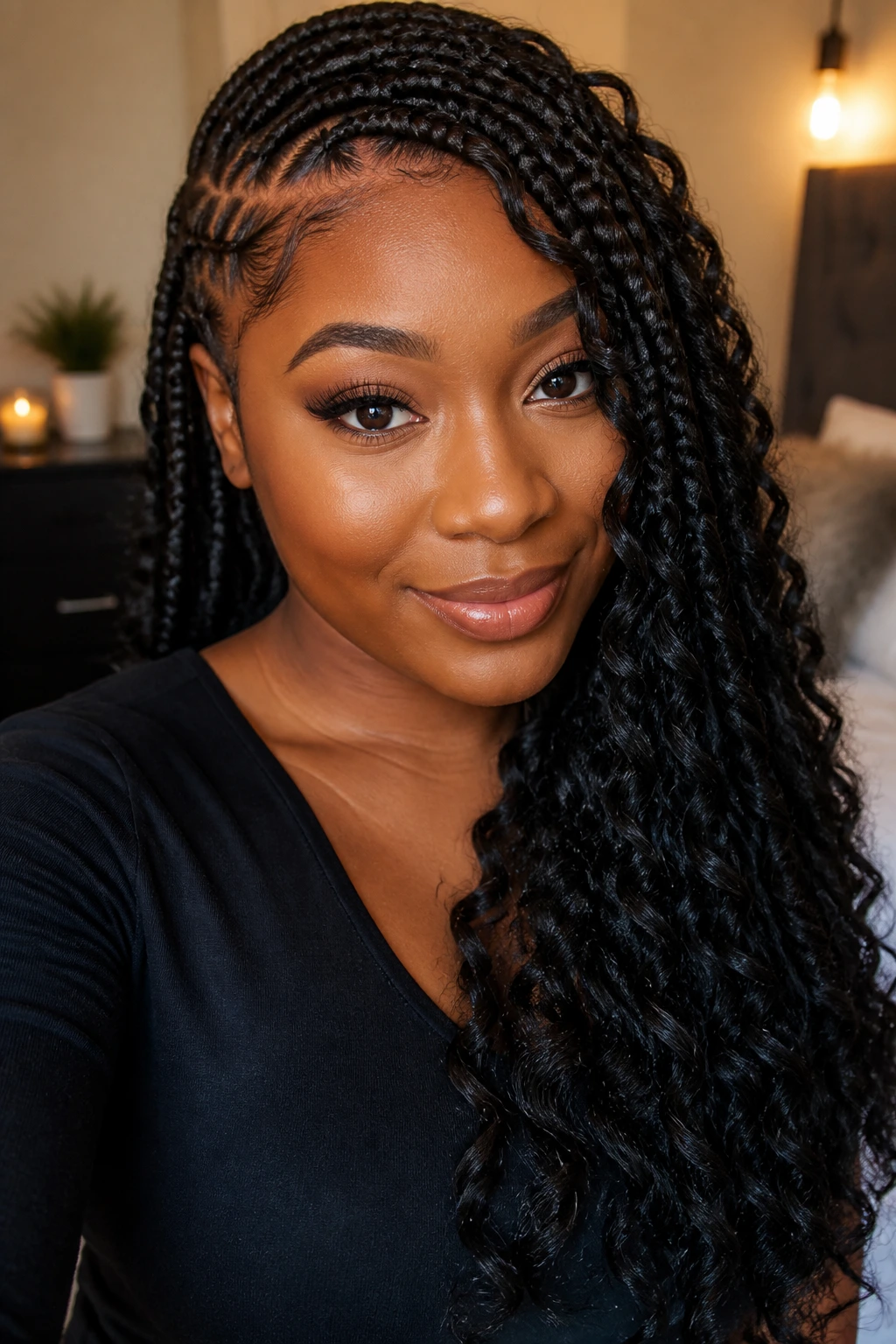
The Low-Tension Everyday Version: Choose knotless feed-ins or medium braids, keep the side part soft, and use loose curls only at the ends. It’s lighter on the scalp and easier to wear for long stretches.
The Full-Glam Version: Add extra curl pieces, longer lengths, and a couple of braid cuffs near the front. This works best for events where you want the style to stand out even in low light.
The Short-Hair Friendly Version: Build the style with feed-in braids or crochet hair that stops around the shoulders. You still get the side sweep, but without the drag of waist-length extensions.
The Soft Natural Version: Leave a little of your own texture out near the front or along the part line, then braid the rest into a side drape. This looks gentler and feels less rigid than a fully tucked install.
The Bold Statement Version: Use a deeper side part, larger braid rows, and one strong curl cascade over the shoulder. It’s sharper, more graphic, and better when you want the silhouette to read from across the room.
Night Care, Refreshing, and How Long the Style Stays Sharp
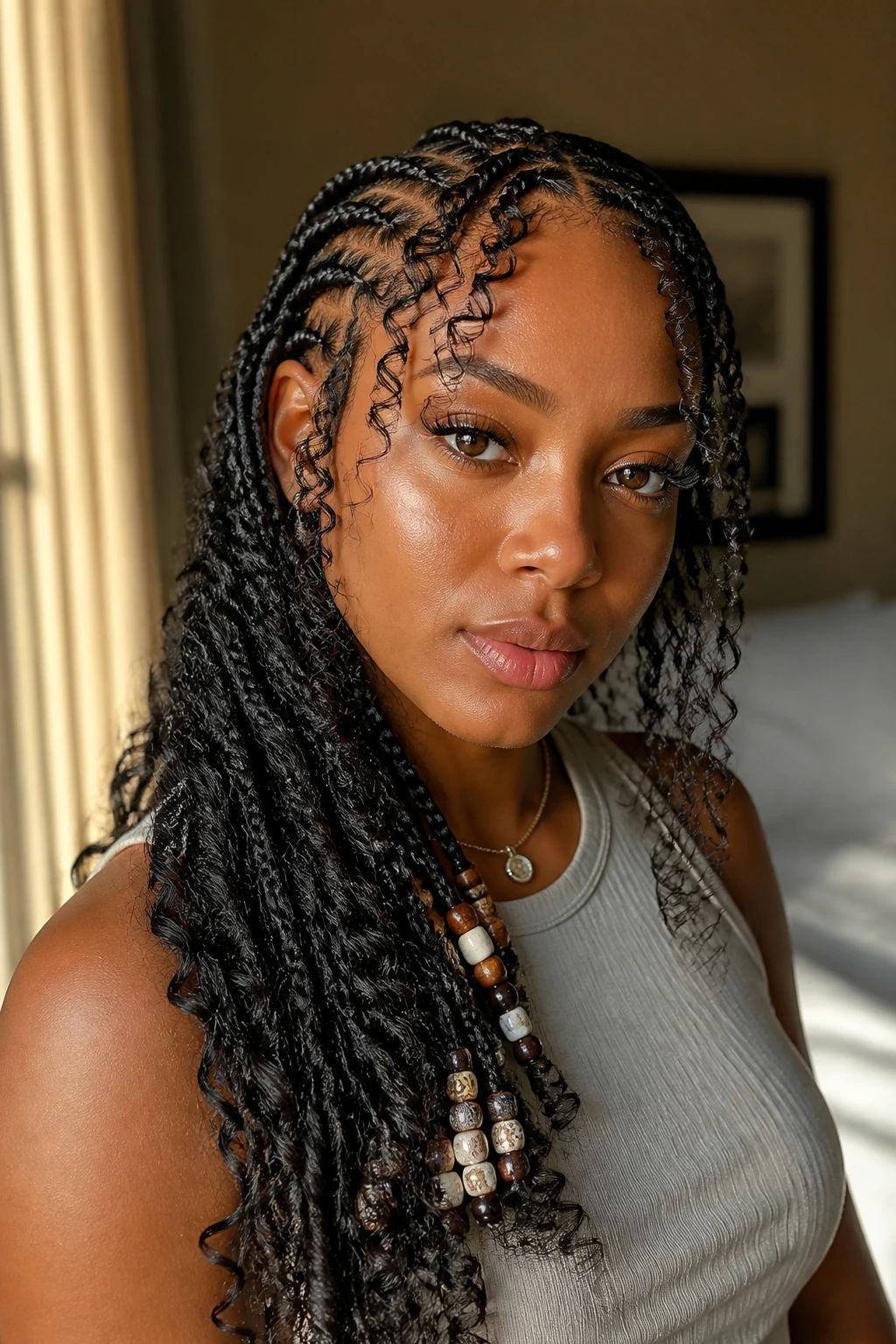
Side-swept braids with loose curls usually hold best when you treat the braids and curls like two different jobs. The braids want protection. The curls want shape. If you wrap everything together carelessly, the curls flatten and the side sweep starts to drift.
At night, lay the style in the direction it already falls, then wrap a satin scarf around the hairline and crown. A bonnet works too, but scarves usually keep the side sweep in place better if the style is long. If the ends are curly, gather them loosely so they are not crushed flat under your pillow.
For refreshes, a light mist of water on the curls every few days is enough for most styles. Follow with a small amount of mousse or foam if the curl pattern has started to puff out. Don’t soak the braids. Saturating the roots makes them heavy and can shorten the life of the install.
Most of these styles stay neat for several weeks when the parts are clean and the tension is right, but the curl texture will usually soften before the braid base fails. That’s normal. If the curls start to tangle badly or the roots begin to lift, it’s time to refresh or remove the style instead of squeezing out one more week.
Frequently Asked Questions
How long do side-swept braids with loose curls usually last?
A well-installed style can hold for several weeks, but the curl pieces will usually soften before the braid base does. The actual lifespan depends on braid size, scalp oil, nighttime wrapping, and how often you manipulate the curls.
Are these styles hard on the hairline?
They don’t have to be. Knotless and feed-in versions are kinder on the front than tight traditional installs, but the real difference is tension. If your temples feel sore the first day, the style is too tight.
Can I wear this look on short natural hair?
Yes. Feed-in braids, crochet installs, and added braiding hair make it possible even if your own hair doesn’t reach shoulder length. The braid base just needs enough anchor points to hold the side sweep.
What curl type works best with braids?
Water-wave gives a softer finish, deep-wave sits in the middle, and spiral curls bring the most bounce. Pick the one that matches the braid weight. Heavy braids need sturdier curls; fine braids can take lighter pieces.
How do I keep the curls from tangling?
Sleep in a satin scarf, separate the ends gently with your fingers, and use a light foam rather than greasy products. The more you rub the curl sections, the faster they knot up.
Can I wash the style while it’s installed?
You can clean the scalp carefully, but you don’t want to soak the curls every time. Use diluted shampoo or a gentle scalp cleanser at the roots, then dry the style fully so the braid base does not stay damp.
What if the side sweep keeps falling flat?
Pin the braid or twist at the nape for a few minutes after wrapping, then let it settle on the side again. Sometimes the problem is simple weight distribution, not the braid itself. A little clipping while the hair cools or dries can help it remember the shape.
Do these styles work better with one side or both sides braided?
One-sided styles give a stronger drape, but two-sided braid bases can still sweep over if the length and weight are there. If you want the hair to sit neatly against the body, one side usually wins. If you want a fuller look, keep both sides braided and let only the finished length fall to one shoulder.
The Shape That Keeps Moving
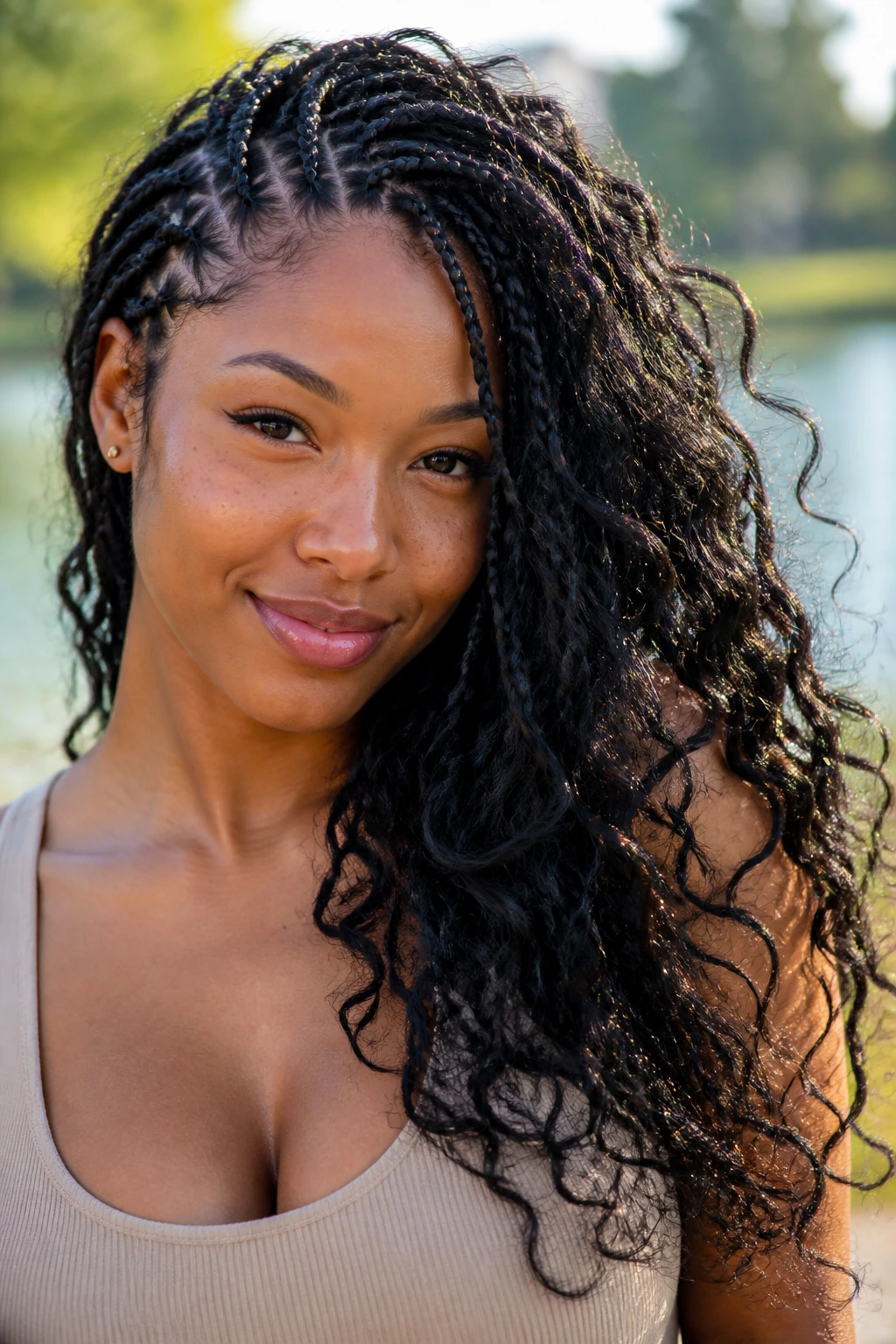
Side-swept braids with loose curls have staying power because they solve three problems at once: they give the hair structure, they keep the silhouette soft, and they put the movement where the eye wants it. That’s a better formula than trying to force every braid to sit perfectly still. Hair looks more alive when it shifts a little.
The best part is how personal these styles can be. You can go sleek, boho, formal, bold, or barely-there romantic and still stay inside the same shape. Change the braid size. Change the curl pattern. Change how far the part leans. The whole mood shifts with those small choices.
And when the curls sit just right over one shoulder, the style does that rare thing braided hair does so well: it protects the hair and still looks like it has a pulse.