



Curly bangs are not hard because curls are hard. They’re hard because a curl that looks obedient when it’s wet can spring up an inch, split in two, and change the whole line of your face before lunch.
Side-swept bangs for curly hair dodge a lot of that chaos, but only when the cut respects shrinkage, density, and the way your part naturally wants to live. Face-framing layers do the heavy lifting here. The fringe is the headline; the layers are the structure underneath.
Curls tell on a bad cut. A fringe that sits too short or too thin will puff, separate, and spend all day arguing with your forehead. But when the shortest piece lands where your curl actually falls — not where it looked cute in the salon mirror — the whole shape starts to move with you instead of against you.
Why These Side Sweeps Keep Curls in Motion
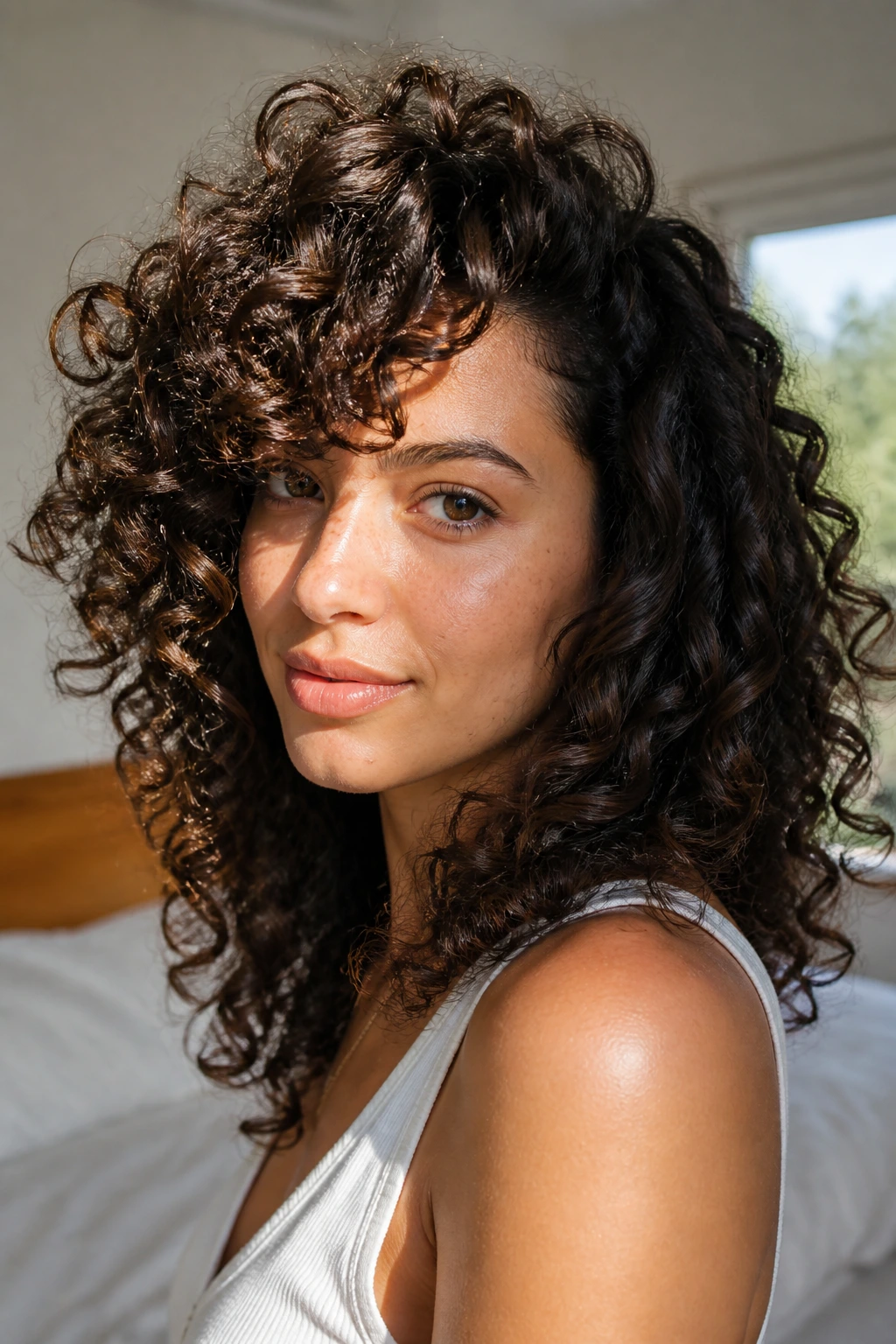
Shrinkage is the whole game here: A side-swept fringe on curly hair needs length you might think is too long in the chair, because each bend steals visual inches once the hair dries.
Face-framing layers do the polishing: The side sweep gets attention, but the layers from cheekbone to jawline are what stop the front from looking like a triangle with a curl attached.
The diagonal line softens the forehead fast: A bang that travels from temple to cheekbone breaks up width at the top of the face without flattening the curl pattern into a helmet.
They’re easier to grow out than blunt fringe: When the shortest piece already angles into the rest of the cut, the grow-out stage looks intentional instead of like a mistake you have to pin back.
You can tune the shape to your hair’s mood: Dense curls want weight left in the front, fine curls want less thinning, and mixed textures usually need a longer lead piece so the front doesn’t collapse by midday.
1. Cheekbone Sweep with Temple Layers
This is the version I trust when someone wants side-swept bangs for curly hair without turning the front into a full project. The shortest piece lands around the cheekbone once dry, then the face-framing layers start at the temple and curve down in a soft diagonal. The result feels light, but not wispy in a flimsy way.
Why it works
The cheekbone gives the curl somewhere to land. Shorter than that and the front can pop up too high; longer than that and the bang starts disappearing into the rest of the haircut. This shape works especially well on 2C to 3B curls, where the curl pattern has enough spring to create movement but not so much shrinkage that everything jumps out of line.
- Best for: oval, heart, and square faces.
- Ask for: the shortest piece to hit the cheekbone when dry.
- Watch for: over-thinning the front, which makes the sweep frizzy by lunch.
- Styling note: clip the bang to the heavier side while diffusing for the first 8 to 10 minutes.
One clean curl at the front can change the whole haircut. That’s the trick here.
2. Deep Side Part and Floating Fringe
A deep side part can make curly hair look fuller, not flatter. People get nervous about moving the part far off center, but when the cut has enough face-framing layers, the side with the fringe picks up lift and the other side gives the shape some breathing room. It’s a good move for medium-density hair that tends to go flat at the roots.
The floating fringe matters because it doesn’t sit like a curtain. It skims across the forehead, then breaks into separated curls near the brow and temple. That little bit of separation keeps the front from looking heavy, which is useful if your curls clump tightly and hate being forced into one solid sheet.
I like this on round or softly square faces. The diagonal line pulls the eye upward first, then outward. If your hair is thick, ask the stylist to keep the fringe slightly heavier than they would on straight hair. Curls need weight in the front or they puff out and lose the sweep.
3. Collarbone Lob with Feathered Face Frames
If your curls sit between polished and messy and you want the haircut to do most of the work, this is the one. The lob hits around the collarbone, the front layers feather from the cheek down, and the side-swept bang blends into the length instead of sitting apart from it. It’s an easy shape to wear with glasses, clips, or nothing at all.
What to ask for at the chair
- A collarbone length that still leaves room for shrinkage.
- Face-framing layers starting below the cheekbone if your curls are tight.
- A side bang that can tuck behind the ear on day two.
- Enough internal weight that the curl doesn’t frizz into a halo.
This cut is smart for people who don’t want a bang that needs perfect styling every morning. The side sweep can be refreshed with a mist bottle and a little curl cream, and the lob length keeps the front from looking chopped off. It’s one of those cuts that looks better with a little lived-in texture.
4. Curly Shag with a Windblown Bang
What if you want movement first and neatness second? Then the curly shag with a windblown bang makes a lot of sense.
The crown stays a little shorter, the sides drop into soft layers, and the fringe sweeps sideways instead of hanging straight across the forehead. On curly hair, that extra lift at the top keeps the shape from sinking into your cheeks. It also gives the front a built-in bend, which is handy if your curls like to split into chunky pieces rather than one polished coil.
Styling note
Use a diffuser on low heat and hover at the roots for the first few minutes. After that, tilt the fringe to the side with a clip or your fingers and leave it alone until it’s mostly dry.
The shag is a good match for 3A to 3C curls because the cut wants texture. It does not need perfect curl clumps. In fact, a little separation at the front makes the side sweep look more relaxed and less staged.
5. Spiral Sweep for Defined 3A Ringlets
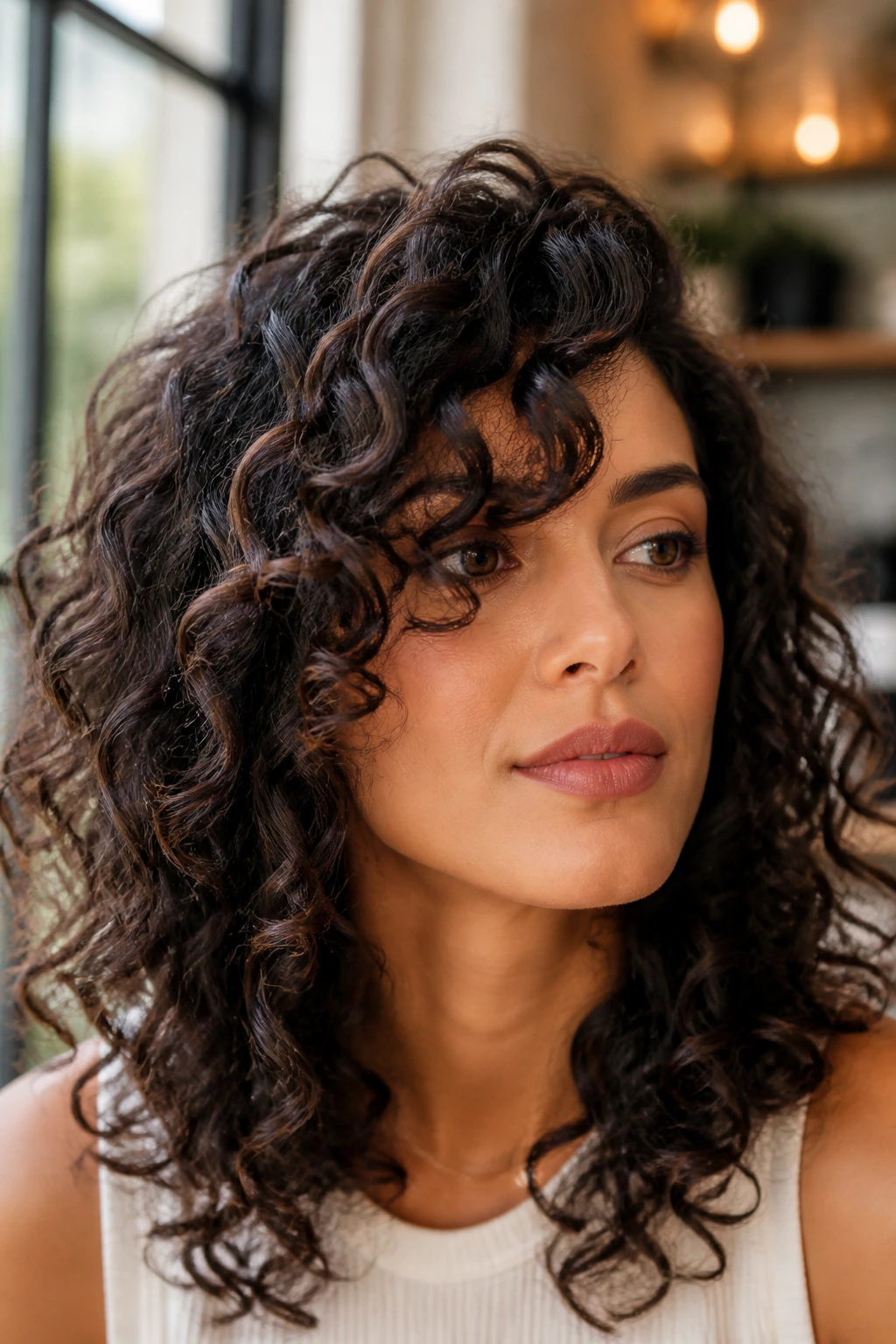
Defined ringlets love a side sweep because the curl pattern already wants to show off. If you have 3A curls, this shape keeps the front playful without letting the fringe sit too high on the forehead. The trick is to leave the shortest point long enough that the ringlets can bounce, not pop.
The face-framing layers should start around the outer eye or cheekbone and then fall in a gentle diagonal. That keeps the curl family together — bang pieces, side layers, and longer length all moving in the same direction. When the shortest strand is cut too short, 3A curls can turn into little springs. Cute. Also annoying.
This one shines with a light gel cast and a soft scrunch once the hair is dry. You want the ringlets to keep their shape, but not feel crunchy. If you have fine 3A curls, ask for less thinning than you think you need. Thin enough to move. Heavy enough to stay in the sweep.
6. Rounded Ringlets with a Soft Bend
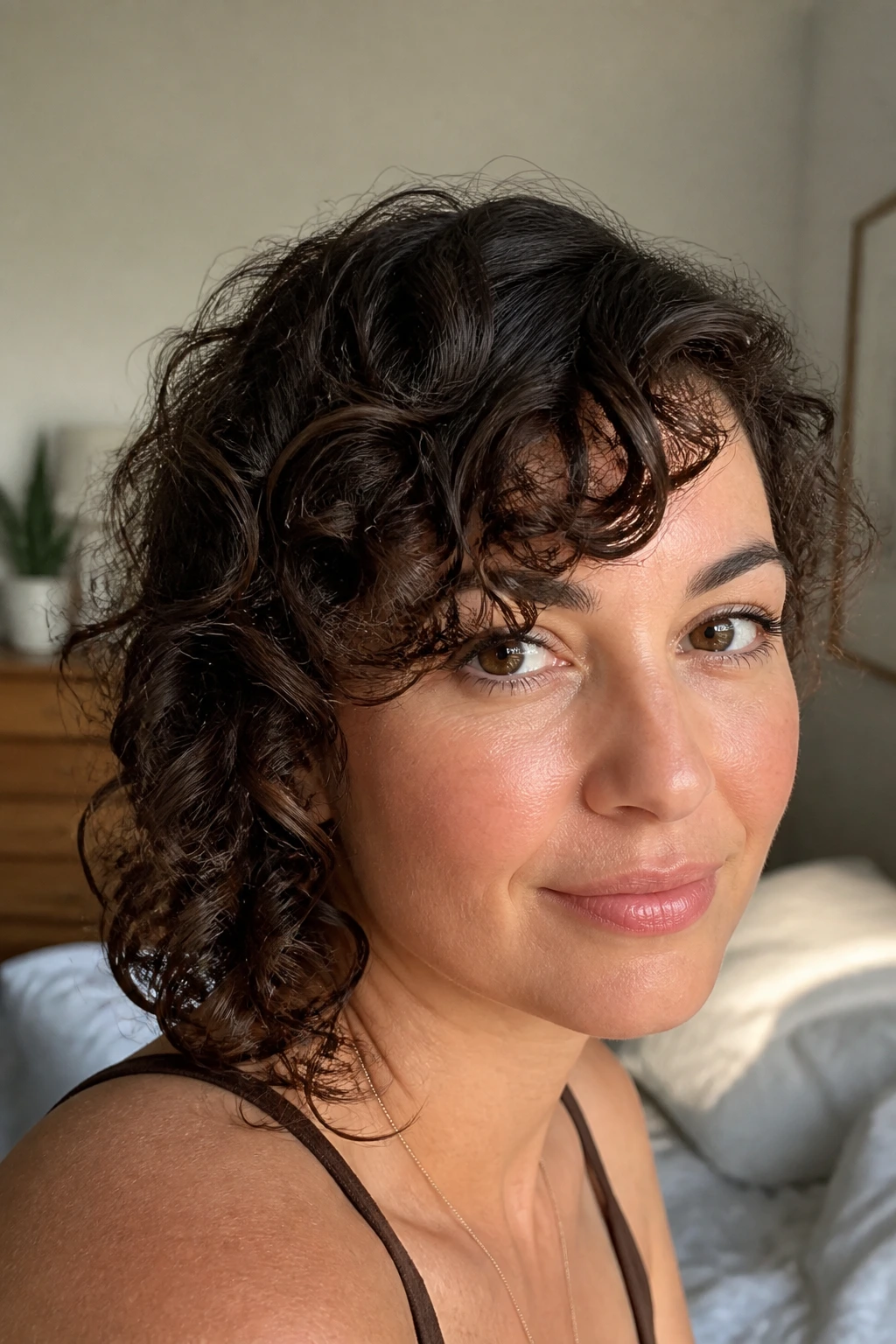
A blunt bang on curls can feel boxy fast. A rounded ringlet sweep keeps the curve, which is why it works so well on faces that need a little softness across the forehead and temple.
The side-swept section should follow the curve of the brow, then arc into the side layers without a hard line. The layers around the face do not need to be dramatic here. A few well-placed pieces around the eye and jaw are enough to give the style shape without stealing the natural bounce of the ringlets.
This is especially good for 3B curls that clump into defined S-shapes. The hair already has structure. The cut just needs to point it in the right direction. I’d choose this over a heavy shag if you like a cleaner look that still feels curly and not stiff.
7. Tapered Coil Fringe with Sculpted Sides
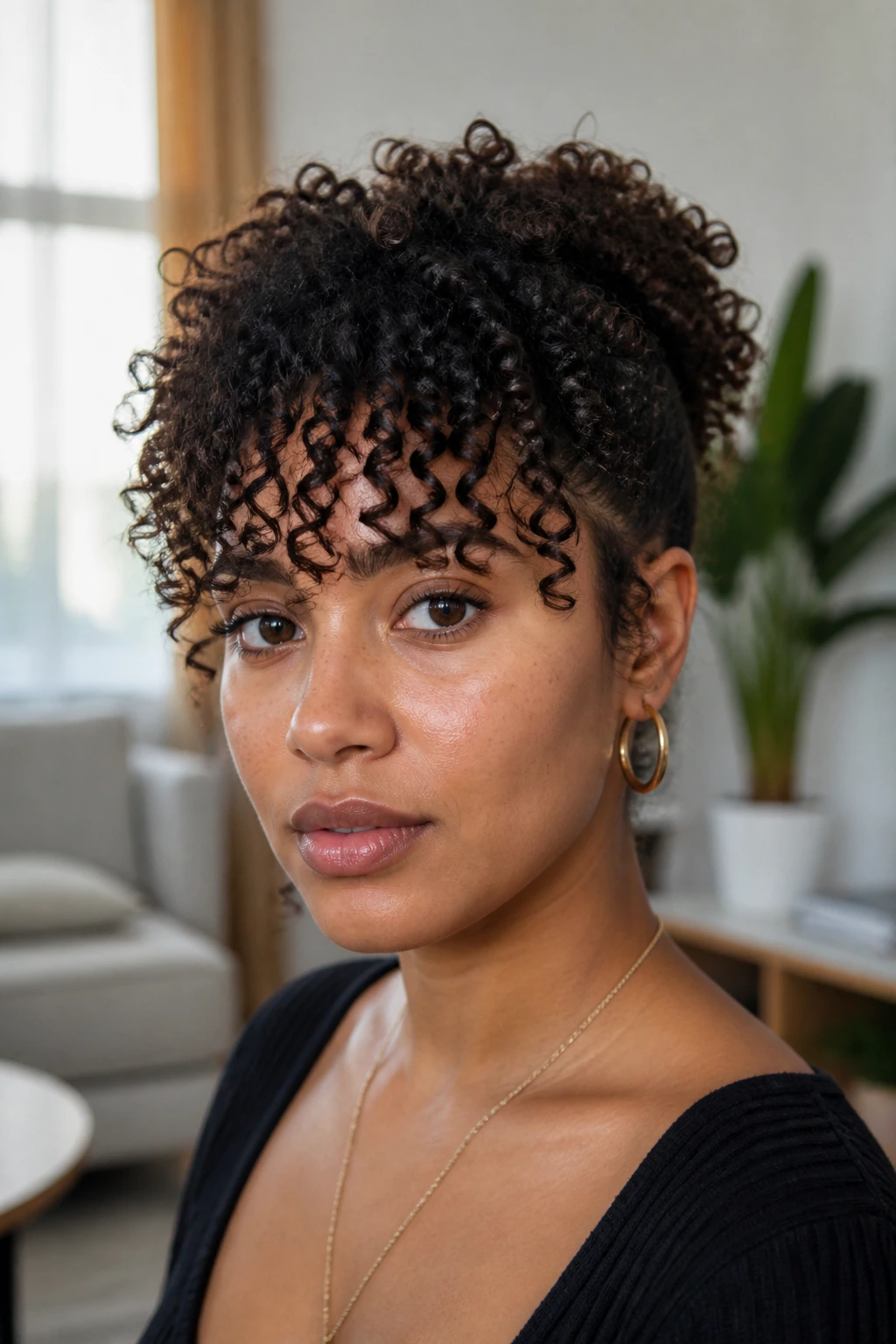
Tight curls and coils need a different kind of side bang. They’re not looking for a flat sweep across the forehead; they want a tapered front that bends sideways and keeps enough weight to show the shape of the curl.
Best for tight curls
- 3C to 4A coils that shrink a lot when dry.
- Hair that feels dense at the front.
- Faces that benefit from softness around the temple and cheek.
The face-framing layers should be cut with the coil pattern in mind, not against it. That usually means leaving more length at the shortest point and tapering the side pieces slowly into the rest of the cut. If a stylist thins this section too aggressively, the front turns fuzzy before the rest of the hair has even finished drying.
How to ask for it
Ask for a dry check on the front pieces and a curl-by-curl look at the hairline. You want the sweep to sit at the side when the coil springs up, not cut to the final length while stretched out wet.
8. Curly Bob with a Light Floating Fringe
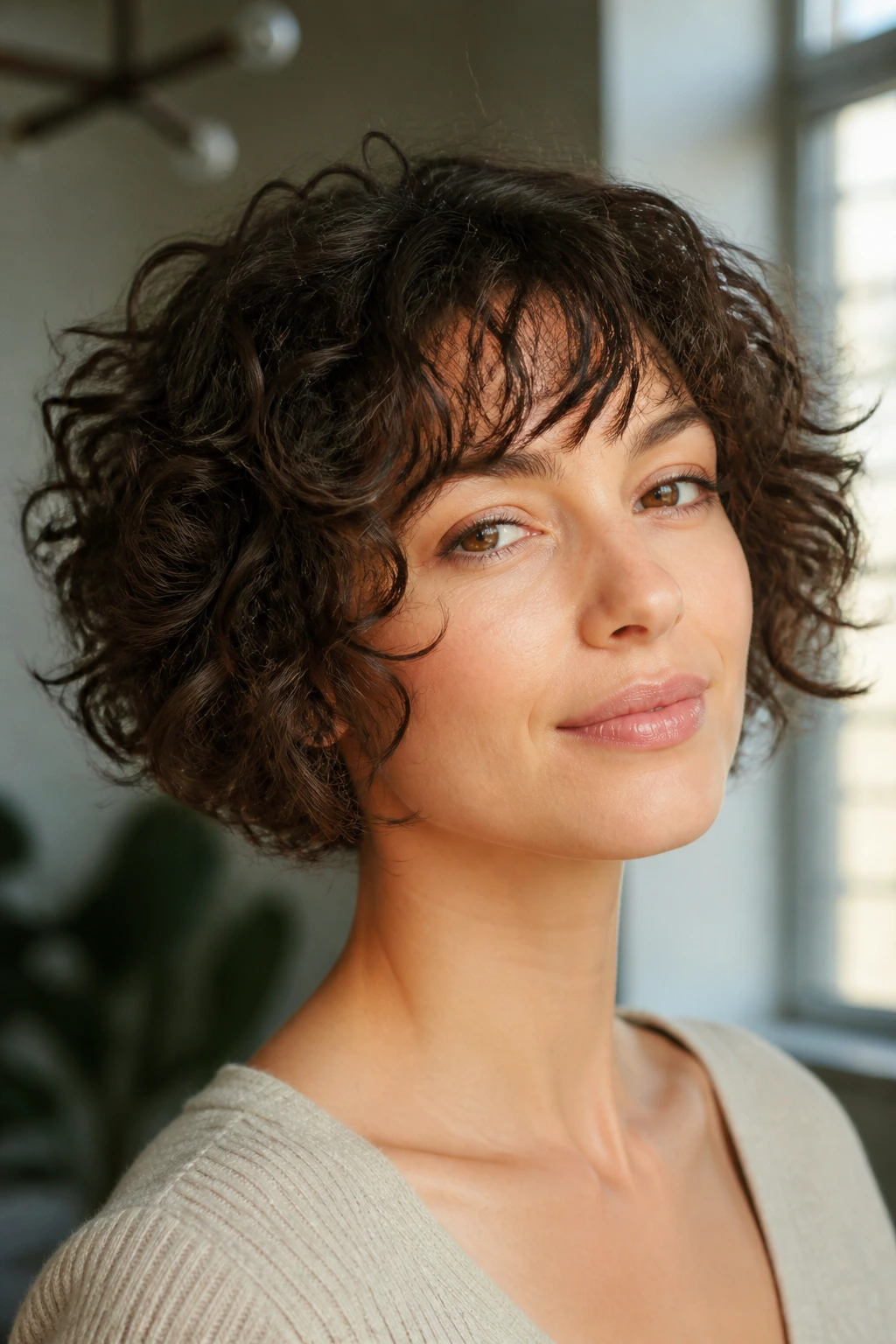
A bob gets a bad reputation when curls turn it into a triangle. The fix is not always more length. Sometimes it’s less stiffness at the front.
A curly bob with a light floating fringe keeps the sides compact, then lets the side-swept bangs break the top edge so the cut doesn’t look blocky. The fringe should be long enough to tuck or twist if needed, and the face-framing layers should skim from the temple toward the jaw. That little diagonal softens the bob’s line and keeps the curl pattern front and center.
This works especially well on people who want a shorter haircut but still want some face movement. One of my favorite details here is the way the front curl can swing forward, then settle back to the side after a shake. That movement makes the haircut feel alive instead of chopped.
9. Wolf Cut with Side-Balanced Volume
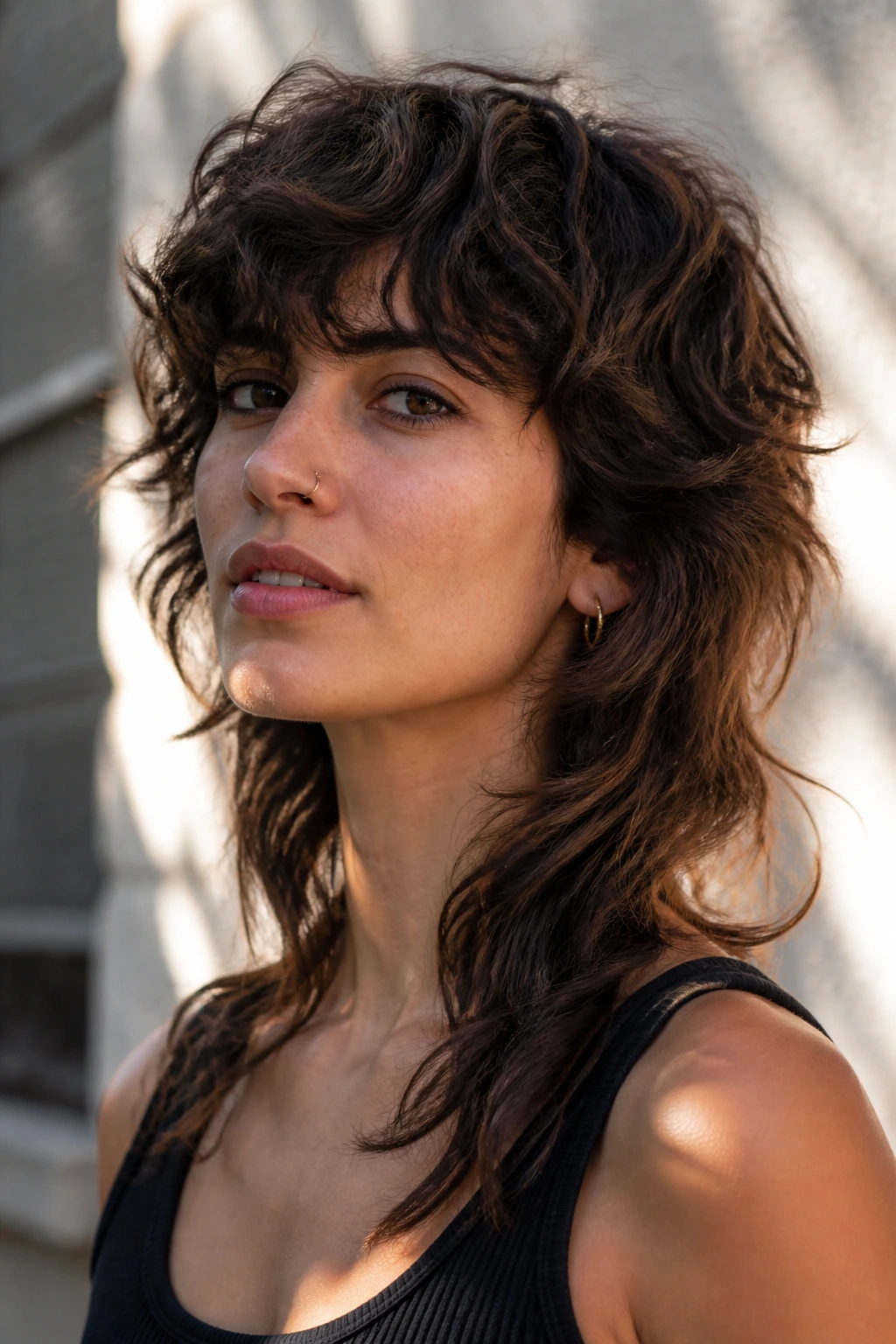
If you like a little edge, this is the cut that keeps curly hair from looking too precious. The wolf cut leans on shorter crown layers and longer, uneven sides, and the side-swept fringe gives that shape a softer landing at the face.
The bang does not need to be neat. In fact, it shouldn’t be. It should drift into the longest face-framing pieces, which helps the front connect to the rest of the layers. On thick curls, this is a good place to remove bulk near the crown while leaving enough weight around the temples to stop the fringe from floating away.
Wear this one when you want movement and some attitude. It looks especially strong with curls that make visible clumps. If the pattern is too soft, the cut can lose some of its bite. But when the curl is there, the shape has a nice, slightly wild energy.
10. Long Diagonal Sweep with Cheekbone Layers

Unlike curtain bangs, which split the front evenly, a long diagonal sweep keeps one side dominant. That matters if your part never sits dead center and you’d rather work with it than fight it.
The longest edge of the bang should graze the cheekbone or just below it, while the shorter side opens the forehead enough to keep the look airy. The face-framing layers then continue the diagonal so the eye travels from temple to jaw in one smooth line. That line can sharpen round faces or soften a strong forehead without flattening the curl.
I’d pick this for medium to long curly hair where the front needs a little drama but not a lot of upkeep. It’s also a good option if you wear your hair tucked behind one ear. The sweep keeps the style intentional even when one side gets pinned back.
11. Jawline Mullet Sweep
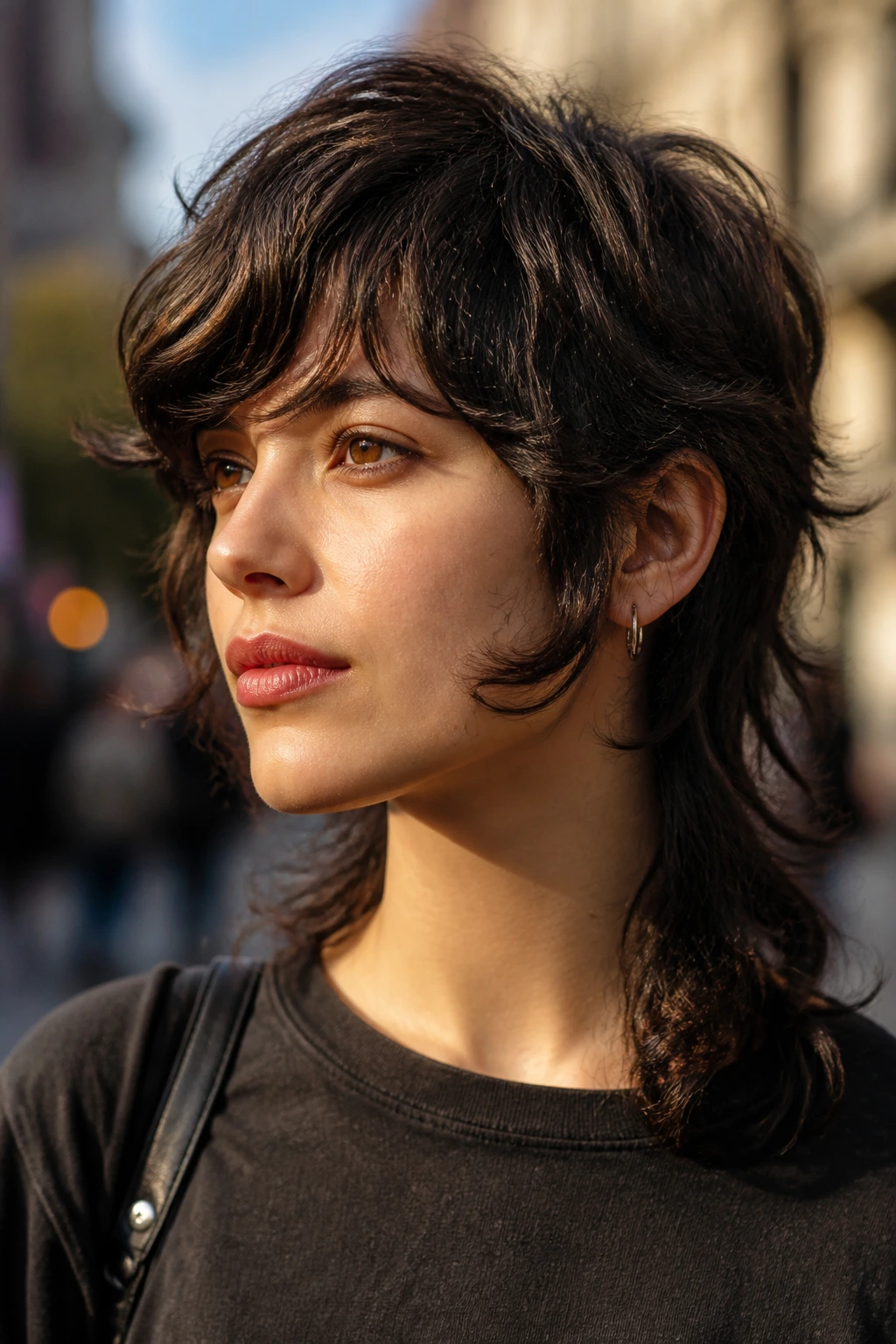
Why does the modern curly mullet work so well with side bangs? Because it leaves room for the fringe to be a feature instead of a problem.
The top stays shorter, the back keeps its length, and the side-swept bang falls toward the jaw instead of trying to behave like a straight-across fringe. That jawline landing point is what makes the cut feel balanced. Without it, the front can look too short compared with the rest of the shape.
Good for
- Curls that like volume at the crown.
- Faces that need width at the sides.
- People who don’t mind a little attitude in their haircut.
A soft side bang keeps the mullet from getting too hard-edged. Ask for face-framing layers that start near the cheekbone and continue into the longer back pieces so the whole cut feels connected.
12. Rounded Afro with an Asymmetric Fringe
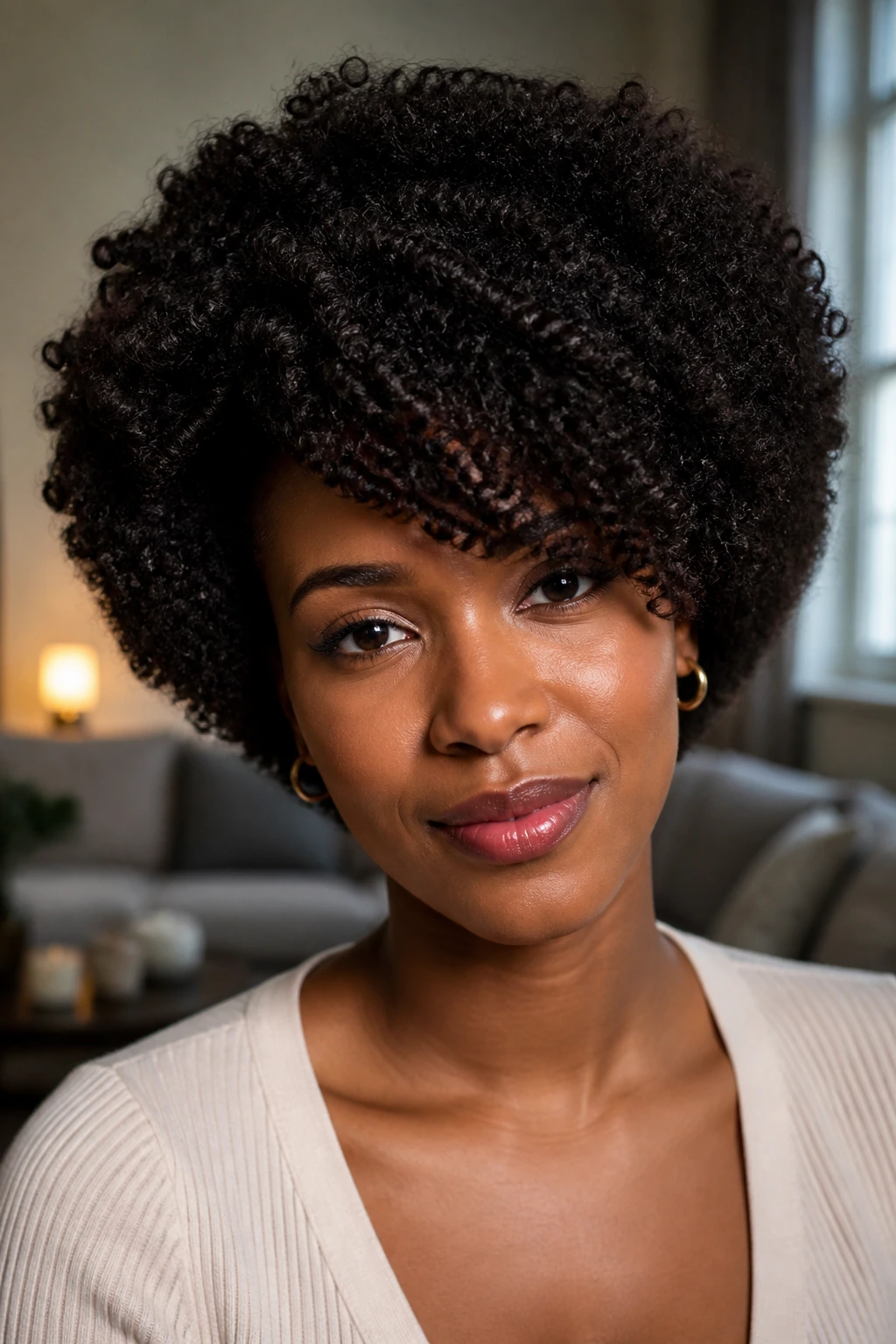
A rounded afro with a side sweep is not about flattening the front. It’s about carving shape. The fringe sits to one side, but it still belongs inside the overall round silhouette, which keeps the haircut from feeling top-heavy.
This cut works beautifully on dense Type 4 hair when the front is left with enough length to curl upward and over instead of being chopped short. The face-framing layers should be carved, not thinned into dust. You want the front to move toward the side, then settle back into the round shape of the afro.
The asymmetry is what gives it character. One side can skim the temple while the other opens the forehead a little more. That contrast is the point. It softens the front and still preserves the fullness that makes the cut feel strong.
13. Dense Curl Sweep with Weighty Internal Layers
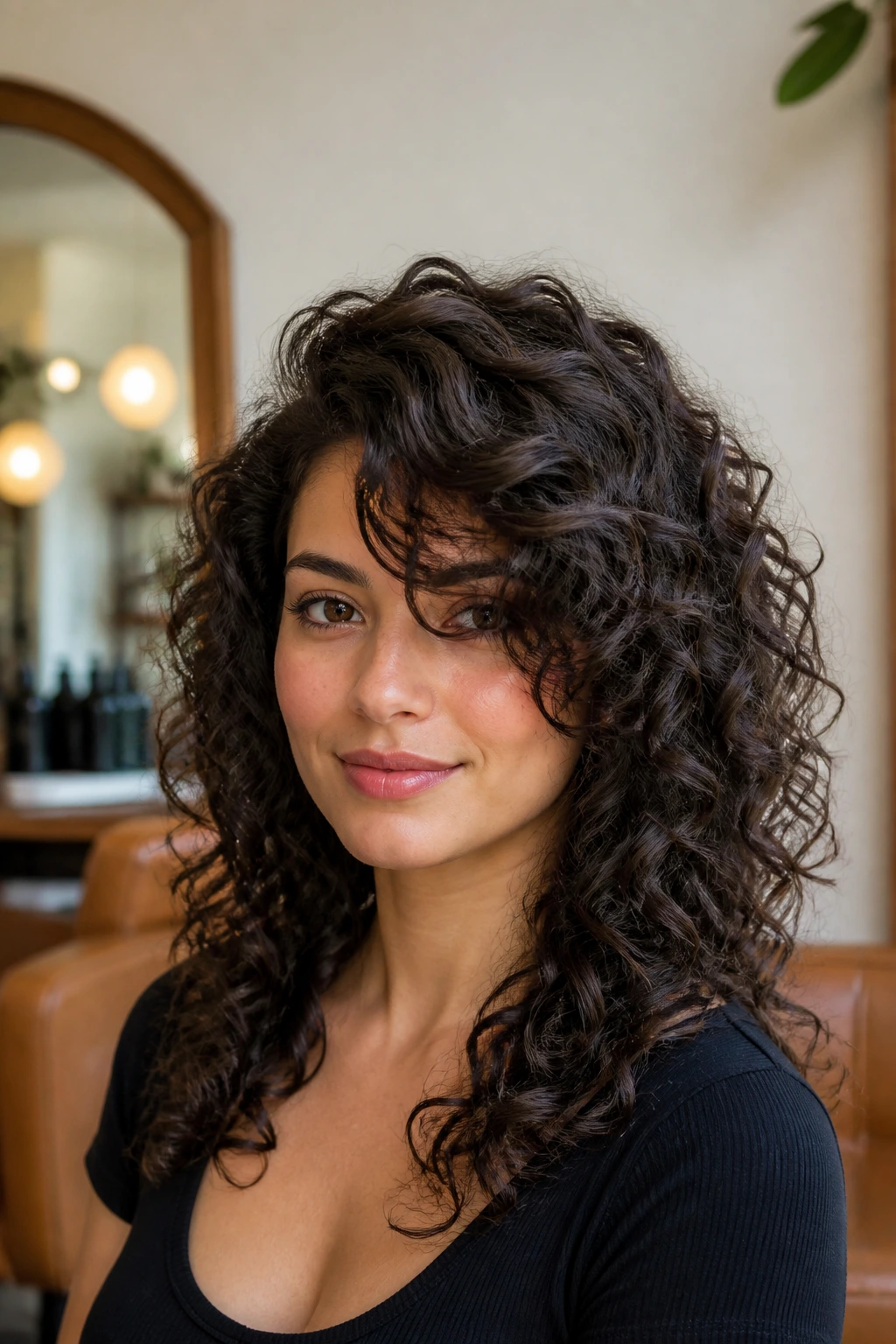
Dense curls usually need two things that sound like opposites: less bulk, more weight. The side-swept bang has to stay heavy enough to hold its line, while the internal layers quietly remove the excess puff underneath.
Why the weight matters
When the front is too light, dense curls explode outward and lose the sweep. When it’s too heavy, the front sits like a curtain and refuses to move. The sweet spot is a fringe with enough structure to bend sideways, plus internal layers that keep the rest of the cut from turning into a triangle.
Styling it
Use a cream-and-gel combo, but keep the product off the ends of the shortest bang pieces if they get weighed down fast. Diffuse the front first, then let the rest air-dry for a few minutes. That keeps the fringe from getting dragged flat by the weight of the back.
This is the style I’d choose for thick curls that need shape more than volume control.
14. Airy Fine-Curl Bangs with Soft Face Frames
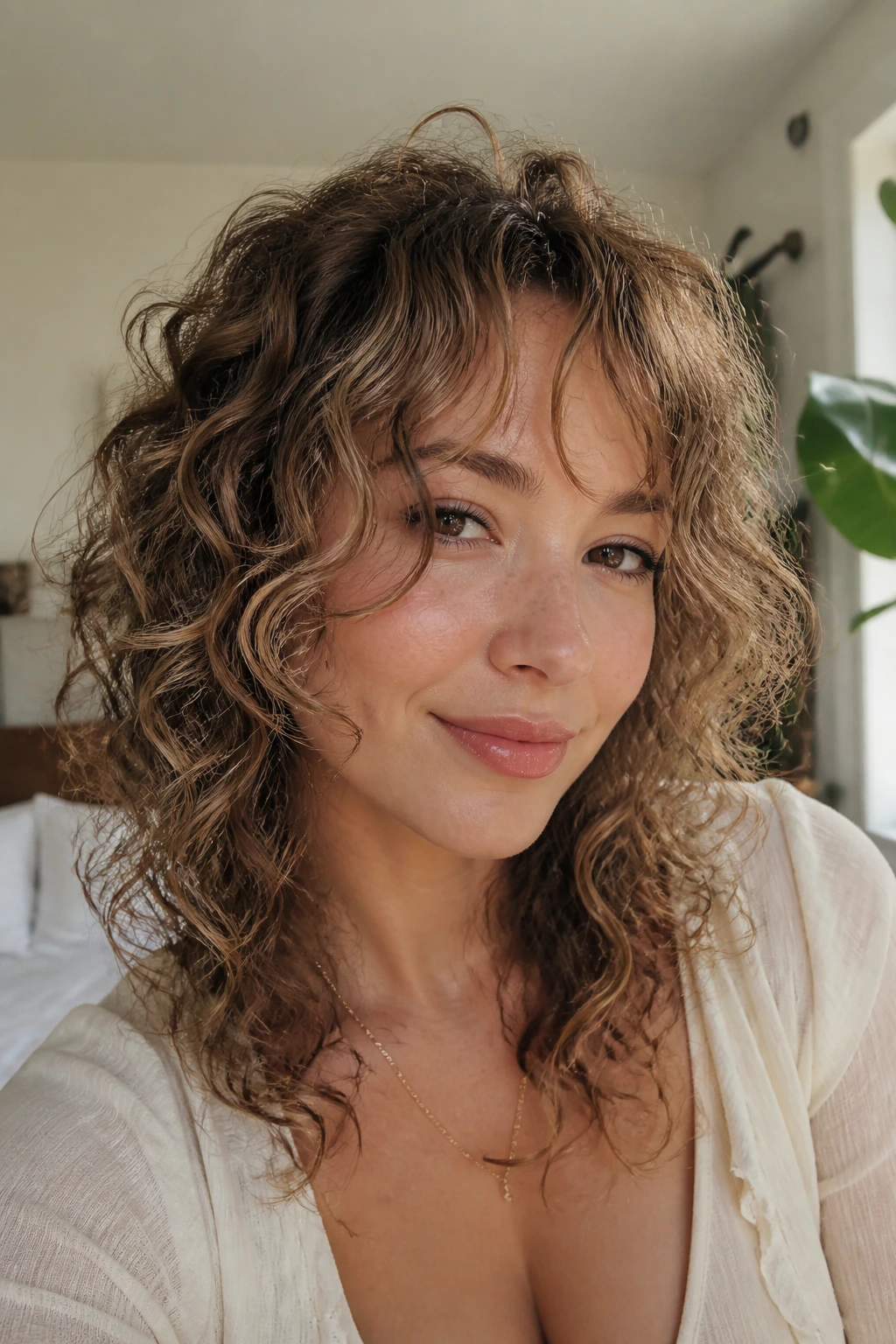
Fine curly hair asks for a lighter hand, not a lot of aggressive thinning. The fringe should feel airy, yes, but not see-through. If you can practically count the strands at the front, the cut may be too sparse.
A fine-curl side sweep works best when the face-framing layers start just below the cheekbone and stay soft around the edges. That gives the front enough shape to move without collapsing. The bang itself should still have a clear diagonal line, because a vague front section on fine curls can look like it forgot what it was doing.
The styling move that helps most is root lift. A little clip at the front while the hair dries can give the bang enough direction to fall sideways instead of straight down. Use a light cream, not a heavy butter or thick custard that pulls the curl flat. Fine curls hate being overfed.
15. Glam Volume Sweep with Big Curled Ends
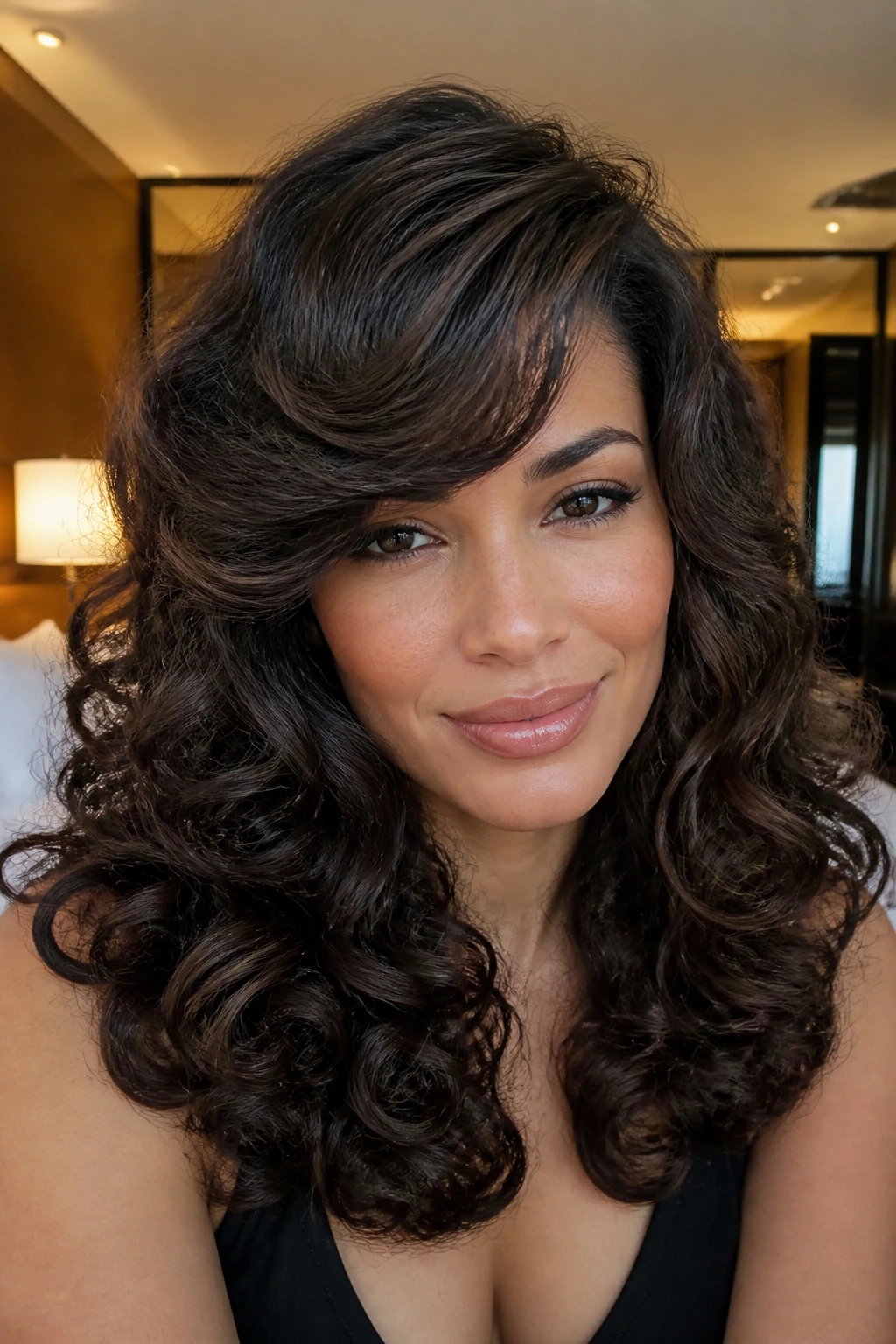
Some side bangs are subtle. This one is a statement.
The glam volume sweep leans into big, soft curls and a side fringe that curves across the forehead with plenty of body. The face-framing layers should hit around the cheek and chin so the front feels lush, not sparse. This shape looks best when the curls are defined and the ends have a little extra polish.
When to wear it
- Dinner out.
- Photos.
- Any day you want your hair to look like it had an opinion before you did.
Use a diffuser, set the part deeply to one side, and keep the front clumped in larger sections while drying. If the curls separate too much, the whole style loses its glamour. A light gloss serum on the very ends can help, but keep it away from the roots unless you want the front to fall faster.
16. Off-Center Fringe for a High Forehead
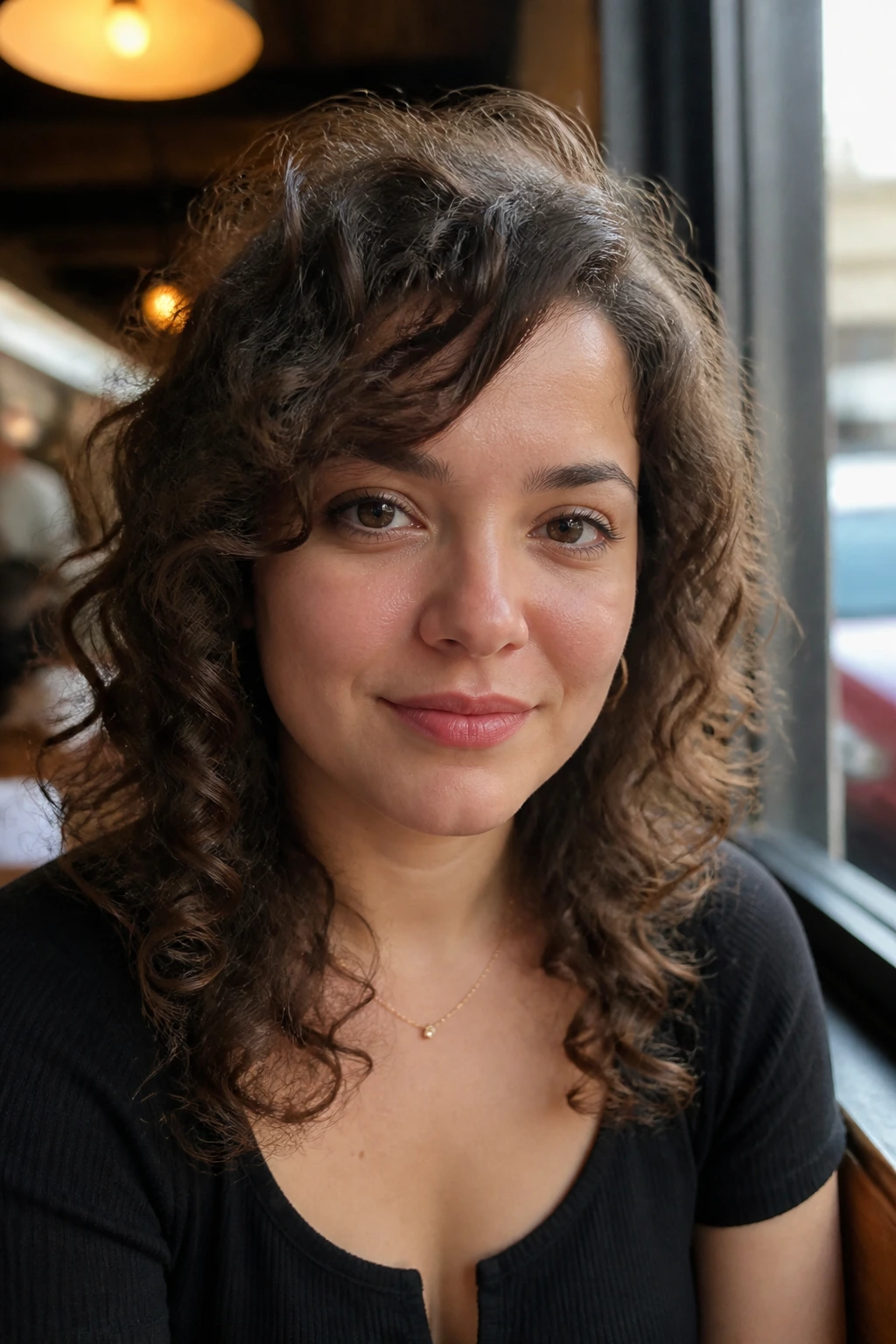
A deep side part is not the only way to work with forehead space. An off-center fringe can do the same job with a little more softness and less drama.
The bang starts just off the natural part, then sweeps over in a gentle diagonal that breaks up the length of the forehead without hiding it entirely. Face-framing layers around the cheekbone keep the front from looking heavy, which matters on curl patterns that expand as they dry. If the fringe is cut too short here, the shape can puff upward and lose that flattering diagonal line.
Quick read
- Best on medium to thick curls.
- Especially useful for heart and long faces.
- Keep the shortest piece long enough to bend, not stand up.
This is the shape I’d pick if you want a visible fringe but don’t want it to feel like a full curtain of hair in your eyes.
17. Low-Maintenance Sweep for Wavy-Curly Hair
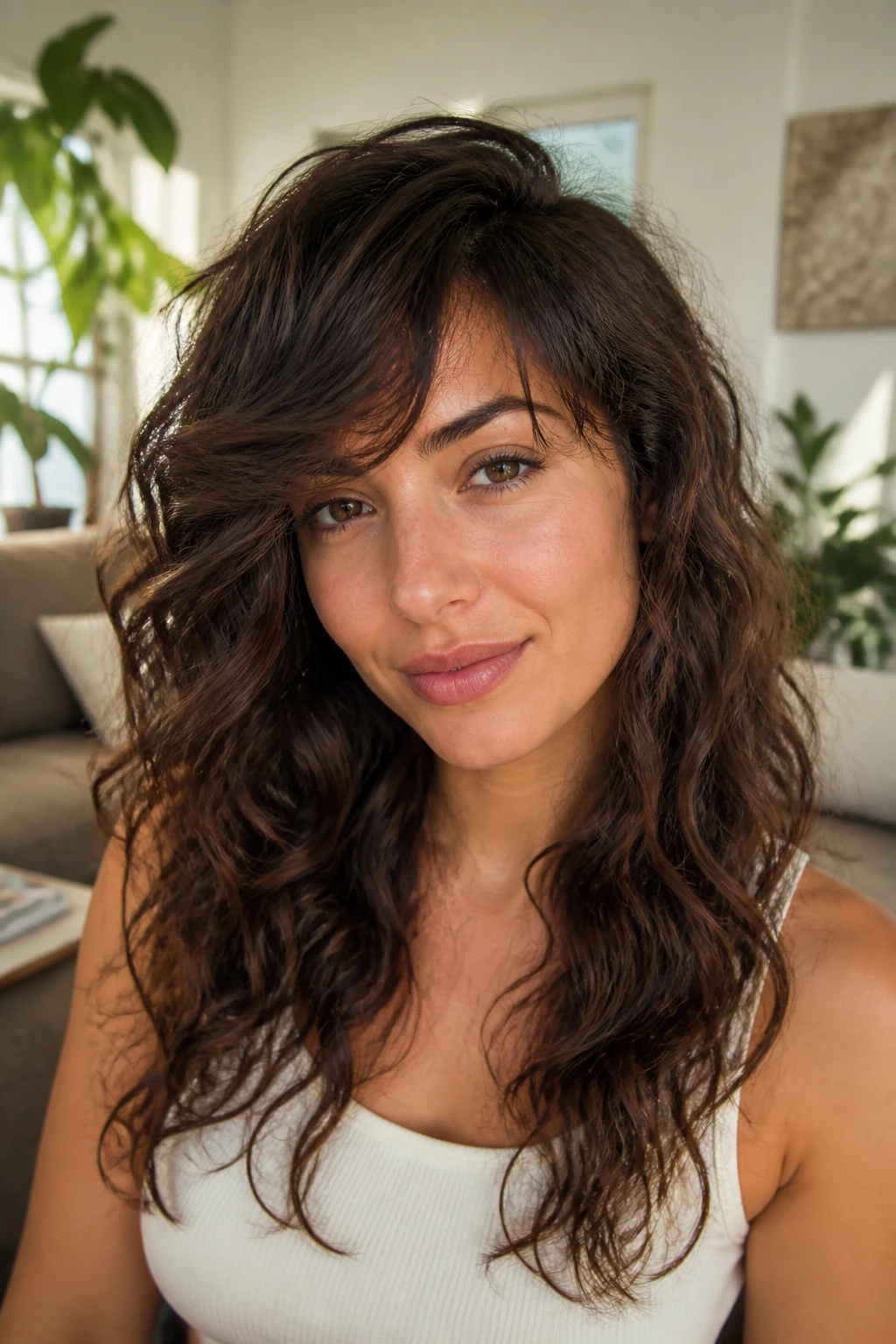
Wavy-curly hair is tricky because it behaves like a negotiator. One section bends, one section waves, and the front often dries differently than the sides. A low-maintenance side sweep solves that by leaving the bang long enough to work with both textures.
The face-framing layers should be gentle and blended, not chopped into obvious steps. That keeps the cut from looking uneven when the wave pattern is looser near the hairline. The front can be tucked behind one ear, pushed forward, or let fall sideways on its own. That flexibility is the selling point.
I’d choose this for someone who wants movement without having to restyle every morning. A mist bottle and a tiny bit of curl cream are enough. The shape will never look pin-straight, and that’s the point. It should look like it belongs to the hair you actually have.
18. Cheekbone-First Layers That Lead the Eye
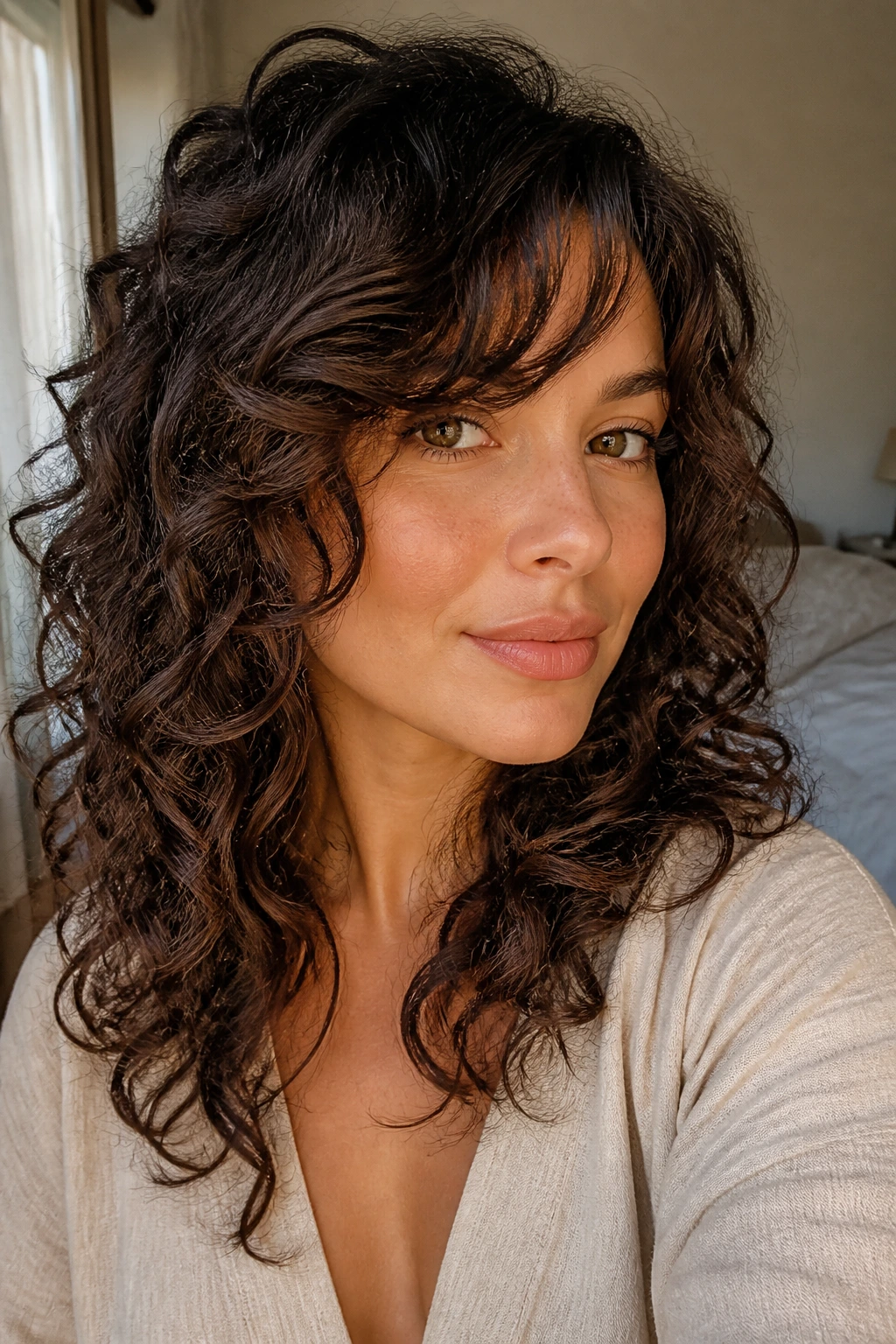
The best face-framing layers on curly hair usually start higher than people expect. Cheekbone-first layers give the side-swept bang a landing strip, then move the eye down toward the jaw. That’s a much cleaner shape than starting the layers too low and hoping the front will somehow sort itself out.
This is the technical haircut under a lot of the prettier photos. The bang may be the thing everyone notices, but the layers around it are what keep the front from ballooning. If your curls have a lot of spring, asking for cheekbone-first framing can make the cut look more balanced on day three than it did on day one.
I like this especially on cuts that need refinement more than drama. It’s a quiet move. Very useful. The haircut gains movement without losing weight, which is exactly what curly front sections need when humidity enters the room uninvited.
19. Grow-Out Friendly Fringe with Blended Sides
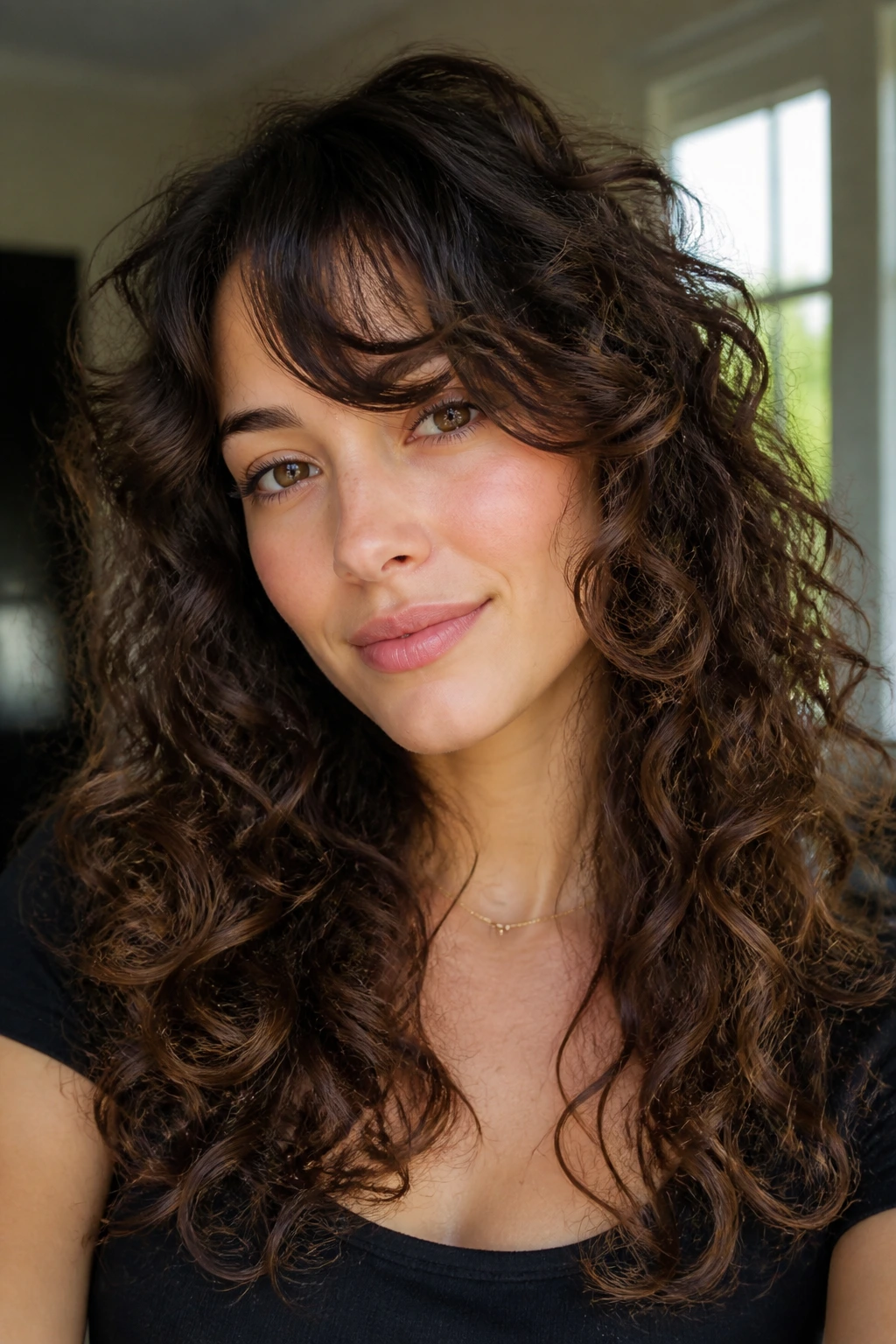
Why do some curly side bangs look intentional on week eight and others look like a regret on day twelve? Usually because the good ones were cut with grow-out in mind.
This version keeps the shortest piece a touch longer and blends the sides slowly into the rest of the face-framing layers. That means the fringe can be tucked back, re-parted, or allowed to drop forward without a hard line showing where the bang ends and the rest of the haircut begins. It’s a smart choice if you hate frequent trims.
Why it lasts
The front never becomes too short to hide, and the side layers continue the movement as they lengthen. If you want a fringe that can survive a few weeks of forgetting about it, this is the one to ask for.
A small trim every 6 to 8 weeks keeps it neat, but it won’t punish you if life gets busy.
20. Ponytail-Friendly Side Bangs with Long Edges
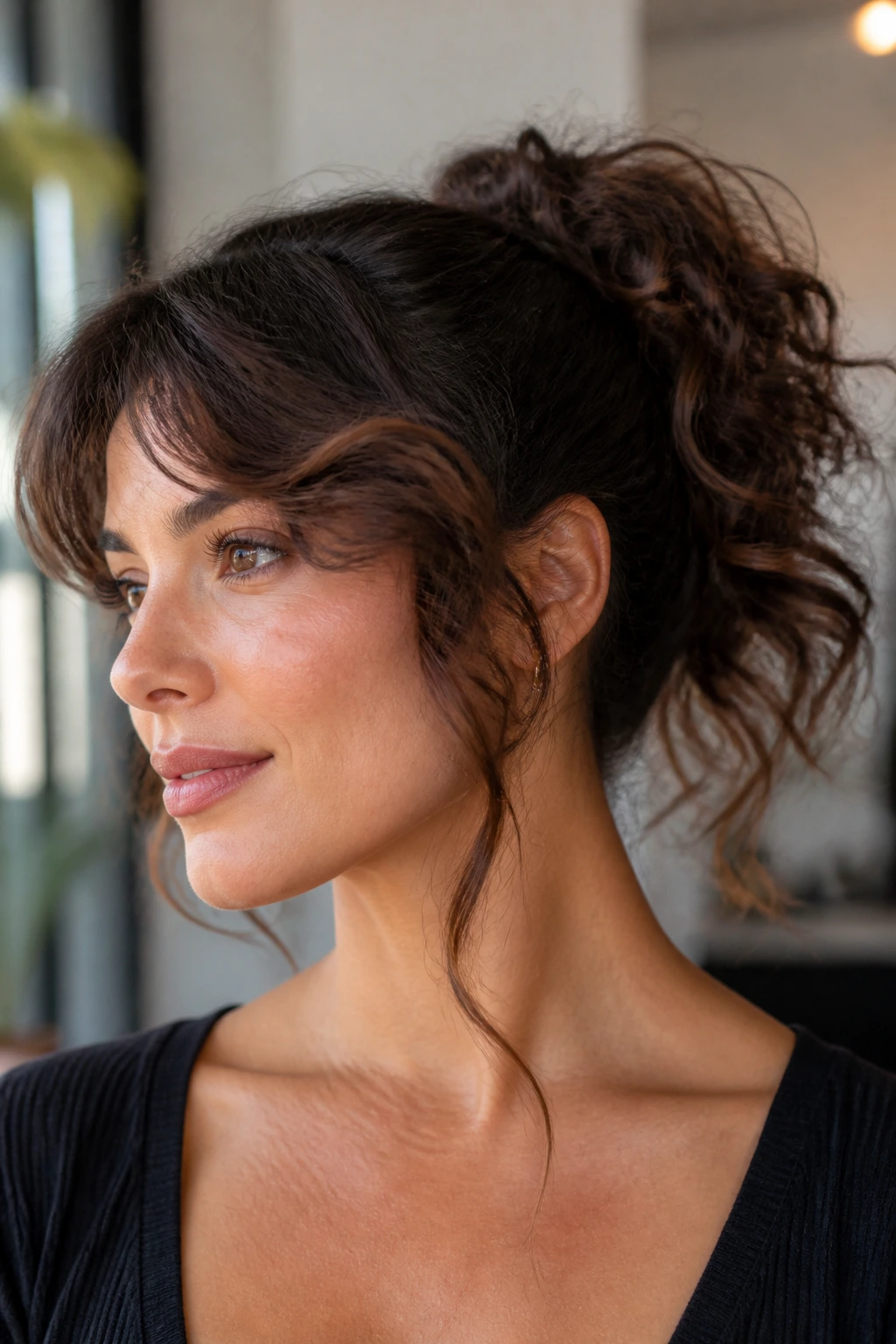
A lot of people want bangs that still look good when the hair goes up. Fair. Life happens. Work happens. Gym happens. This side-swept shape keeps the longest front pieces long enough to stay out of your face when the rest of the hair is pulled into a ponytail or loose bun.
The face-framing layers should live near the cheek and jaw, not stop abruptly at the temples. That gives you a few options: leave them out for softness, pin them back with a small clip, or let them fall around a loose tie. On curly hair, that flexibility matters more than a super-short bang that only works down.
I’d call this the most practical version in the set. It still gives you a fringe, but it doesn’t demand that your hair be fully down for the style to make sense. That alone makes it a good everyday haircut.
21. Humidity-Proof Sweep with a Longer Lead
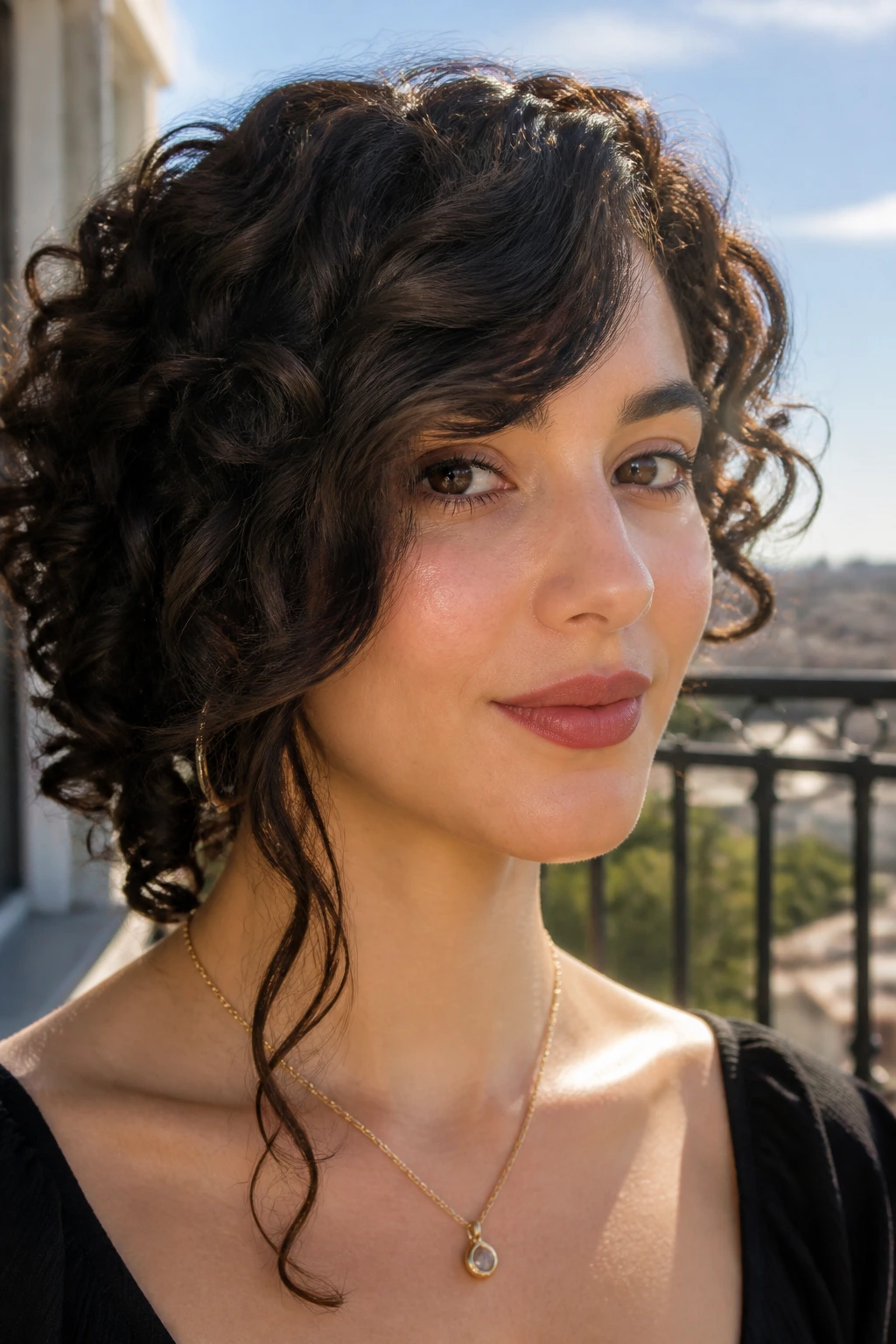
Humidity does not create frizz out of nowhere. It exposes a cut that’s too light at the front. That’s why this longer side sweep tends to hold up better in damp air than a super-short fringe.
The bang should keep enough length to bend sideways instead of flying up. The face-framing layers need a little more weight too, especially near the temple and cheek, where fine frizz likes to collect. If your hair is already prone to puffing, this is not the time to get aggressive with thinning shears.
A stronger hold gel at the roots can help set the direction, but the real fix is in the cut. Longer lead pieces, slower taper, and fewer razor-thin ends. Simple. Effective. The haircut does most of the humidity fighting before product even enters the chat.
22. Round-Face Sweep with Diagonal Lift
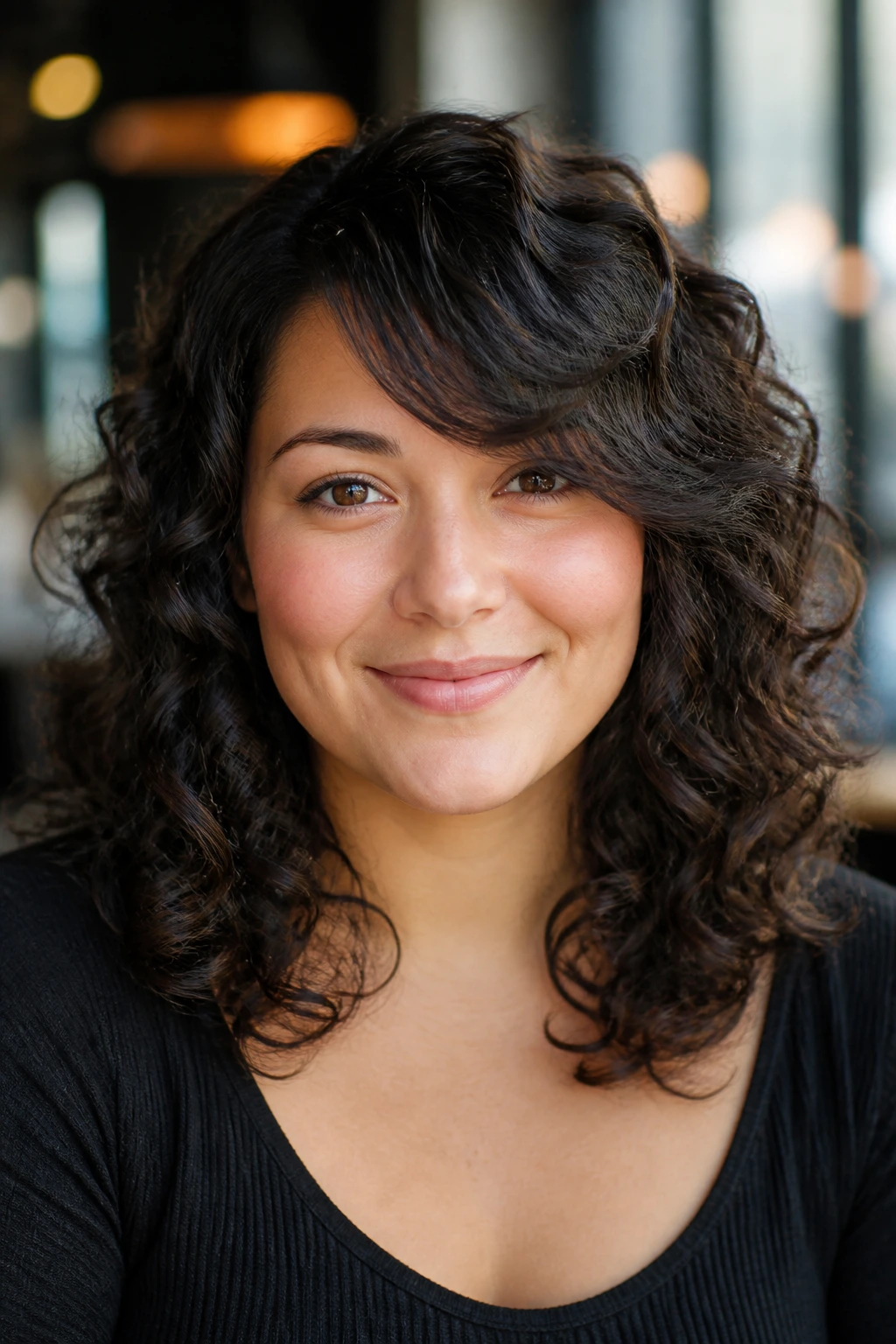
Round faces usually benefit from a side sweep that creates a clear diagonal line. Not a hard line. Just enough movement to pull the eye upward and away from the widest part of the face.
The fringe should start slightly above the part, then angle down across the forehead toward the cheekbone. That diagonal does more than a center part can. It breaks up symmetry and adds length where a round face often wants it. Face-framing layers should continue below the cheekbone so the style doesn’t stop too early and widen the cheeks.
This shape works best when the front stays a bit heavier than expected. If the bang is too light, it can puff and widen the face instead of slimming the line. A side sweep with real weight is the smarter move here.
23. Long-Face Sweep with a Wider Front
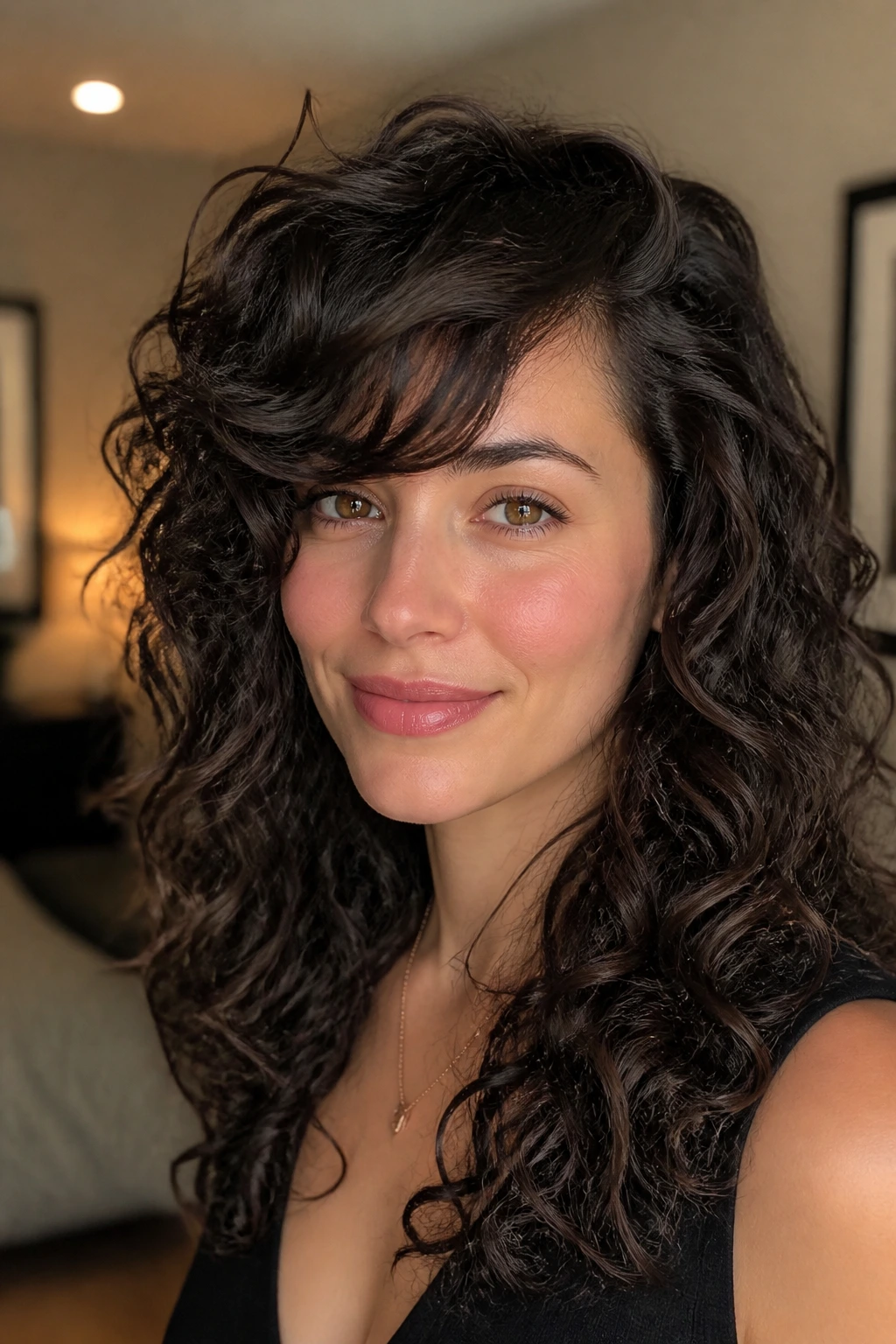
Long faces need a different trick. Instead of adding more vertical line, the cut should create width across the forehead and cheek. A wider front with side-swept bangs does that without forcing a blunt bang that can fight the curl pattern.
The fringe should land lower and fuller, with face-framing layers that sit closer to the cheek and jaw. That gives the front some visual width and keeps the face from looking even longer. A slightly deeper side part helps too, because it shifts weight to one side and builds that horizontal break across the face.
Good details to ask for
- More width at the front, less taper at the temple.
- Layers that curve outward, not just downward.
- A side sweep that stays soft instead of razor-light.
This is one of those cuts that changes the balance of the whole face without needing a dramatic length change.
24. Ribbon-Highlighted Fringe with Soft Dimension
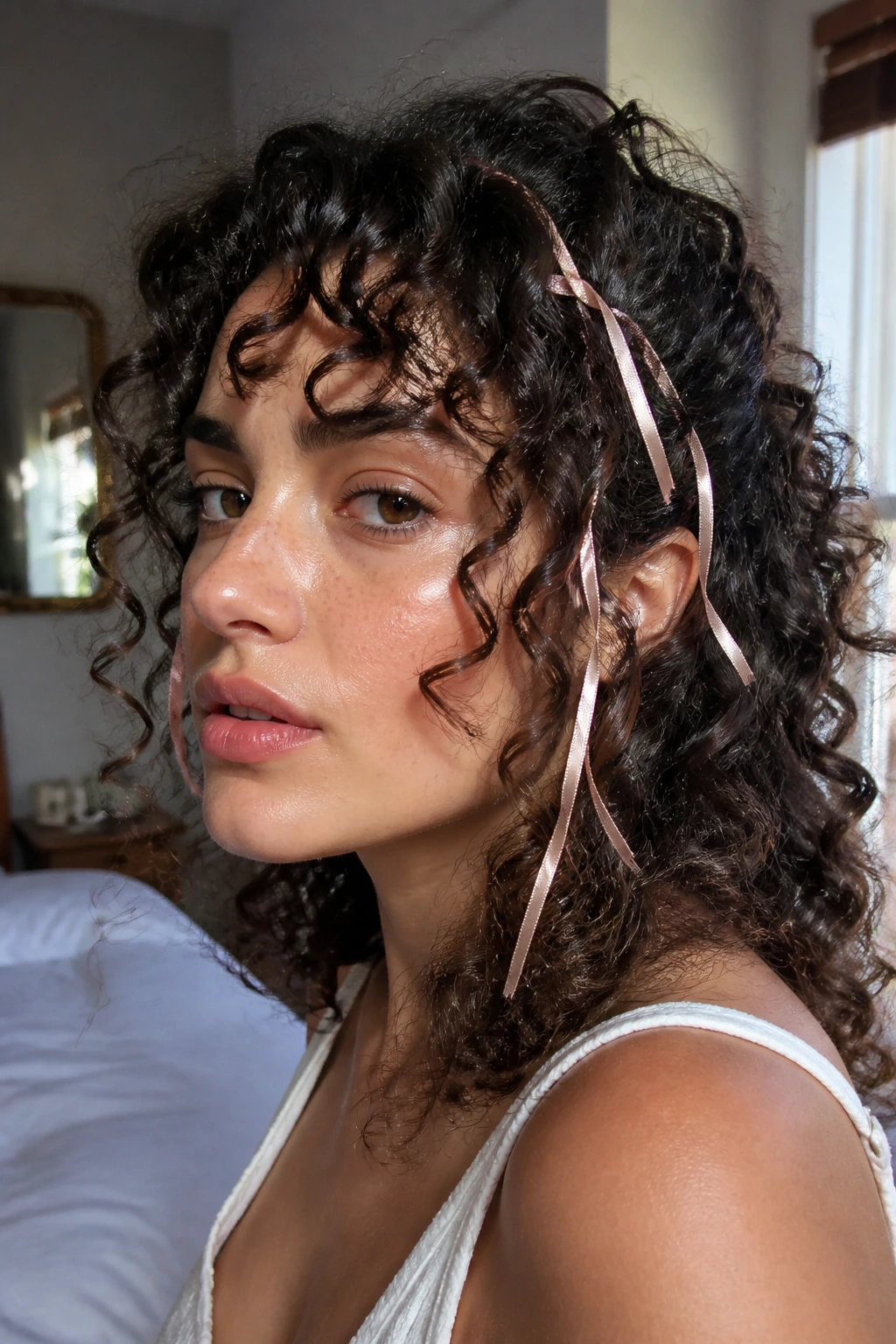
Can color change how side-swept bangs read on curly hair? Absolutely. Ribbon highlights can make each curl in the fringe look more visible, which helps the sweep look intentional even when the texture is loose or mixed.
The key is to keep the face-framing layers soft enough that the color shows through in little bends instead of one flat stripe. Too much slicing can scatter the highlight and make the front look frizzy. A few bright ribbons near the cheekbone and temple are enough to give the fringe dimension.
This works especially well on hair that otherwise disappears a little in the front. The color gives the eye a place to land. And because curls break up light naturally, the highlighted pieces look different from straight hair color — softer, less stripey, more woven into the shape.
25. Tailored Side Sweep for Your Exact Curl Pattern
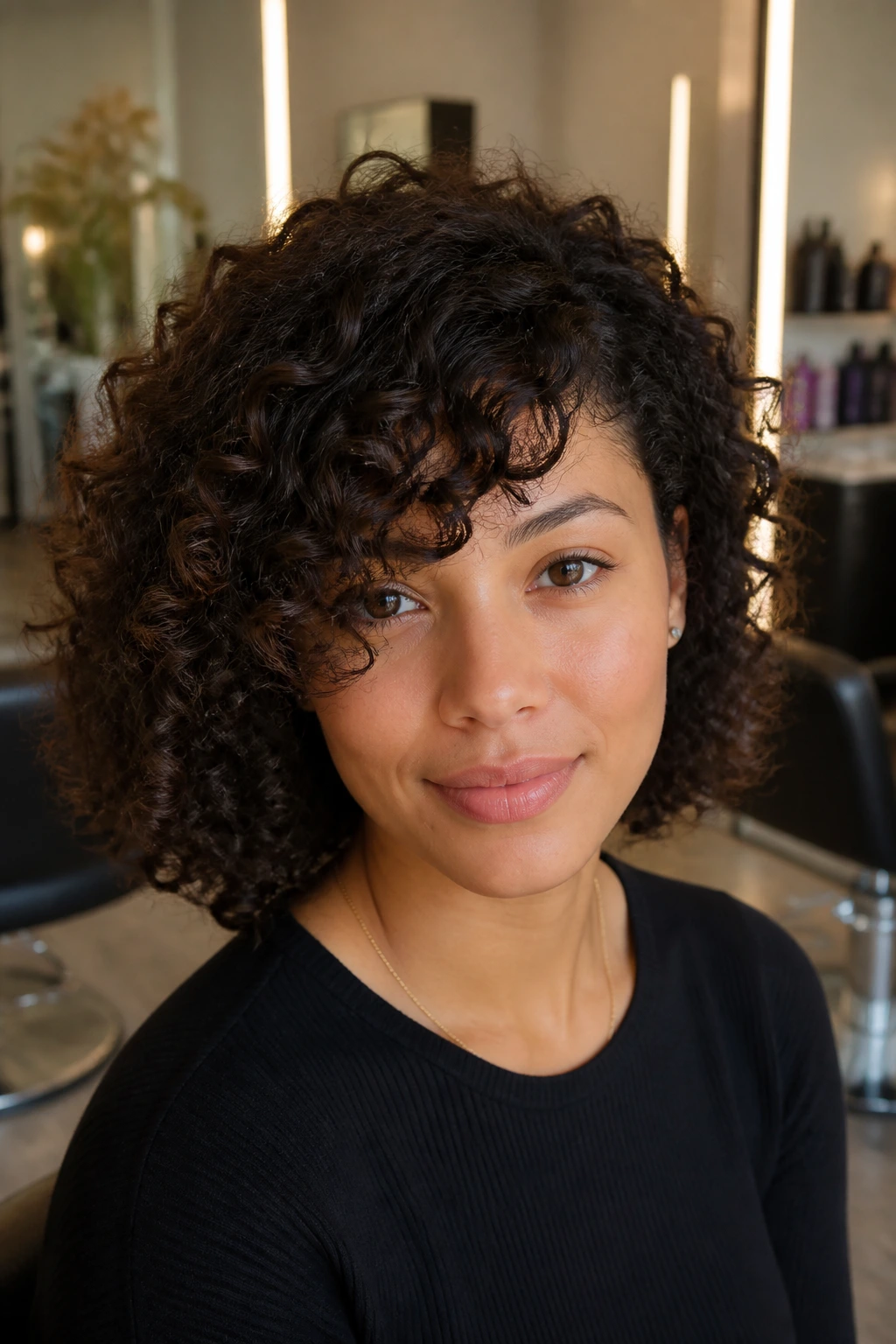
The best side-swept bangs for curly hair are the ones that match your density, shrinkage, and daily routine. That sounds obvious until you see a cut that was copied from a photo with a completely different curl type. Then it becomes painfully clear.
A tailored sweep starts with one honest question: where does your front curl actually fall after it dries? Not when stretched. Not when brushed. After it dries. The shortest point should land there, and the face-framing layers should be cut to continue that line instead of fighting it. That’s the whole reason this style works so well when it’s done right.
Bring three things to the salon chair: a photo of the front view, a photo of the side view, and a note about how long your curls shrink. That’s better than saying you want “something soft” and hoping for magic. Curls prefer clarity. So do stylists.
Why the Cut Shape Matters More Than the Product
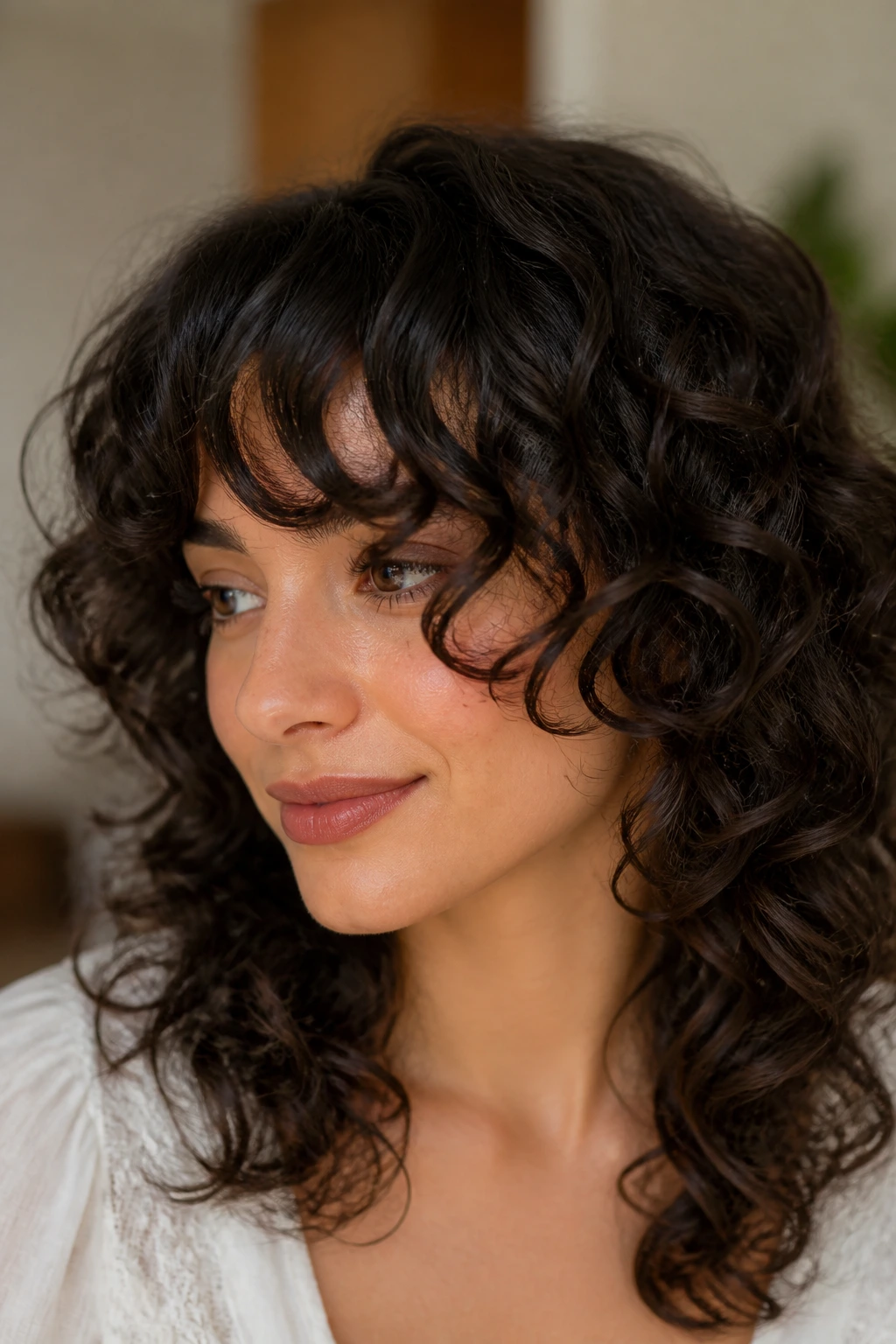
A styling cream can smooth the front, and gel can hold the sweep in place, but neither one fixes a cut that was built with the wrong geometry. On curly hair, the front shape lives or dies by where the weight sits, where the shortest piece lands, and how fast the layers release into the sides. That’s why a good side-swept fringe often looks effortless even before product enters the picture.
The best cuts leave enough weight at the front for the curls to form a clean curve. They also avoid over-thinning the face-framing layers, which is the fastest way to make curls frizz and separate into flyaway pieces. If a stylist wants to carve too much away, push back. Gently, but push back.
I also like side-swept bangs that respect the natural part rather than forcing the hair into a side it hates. A dramatic part can work, but only if the curl pattern is willing to travel there. If it isn’t, you’ll spend every morning dragging the front into submission. Not worth it.
What to Tell Your Stylist Before the First Snip
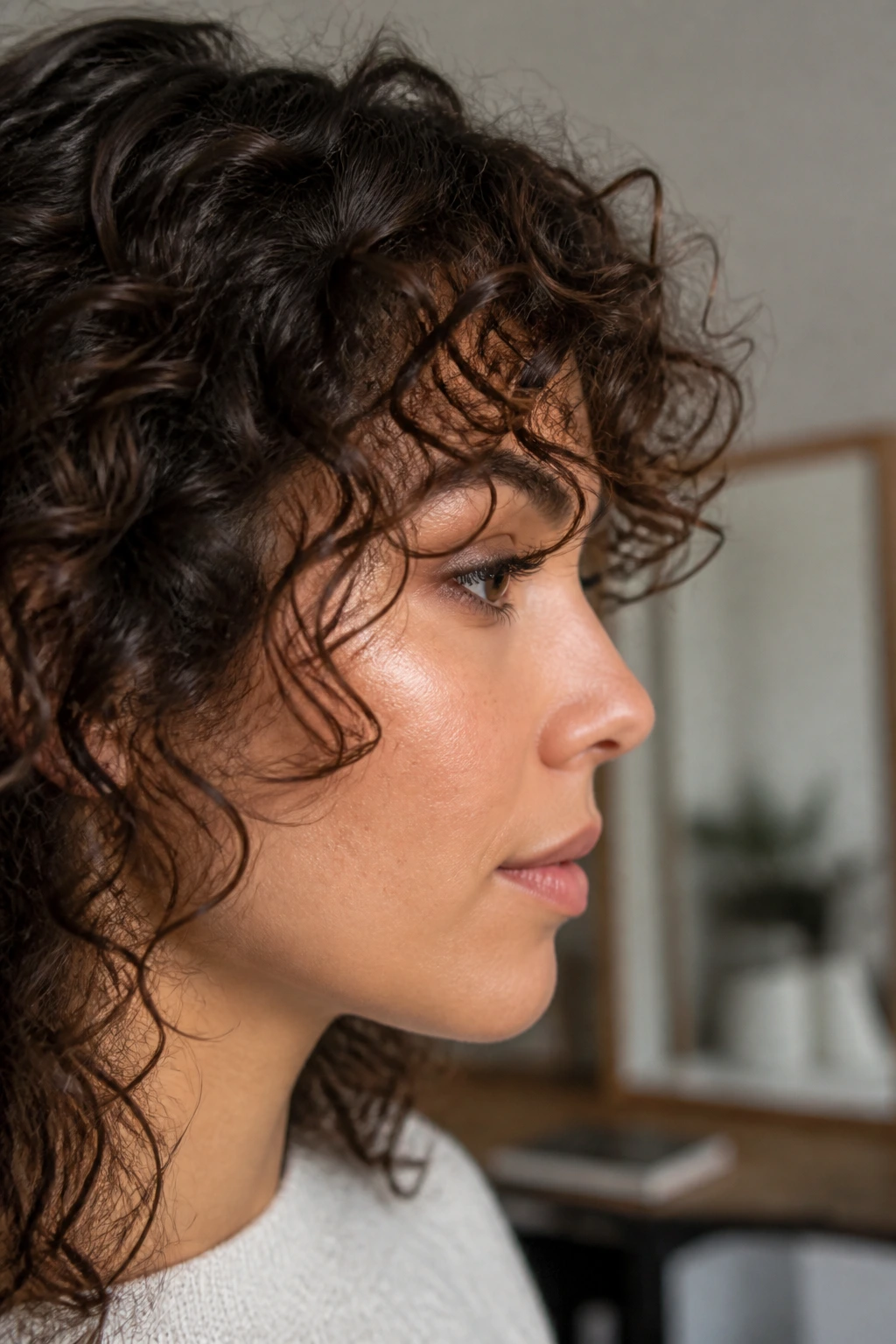
Dry-check the front: Ask for the fringe to be judged on dry or near-dry hair, because curls lie when they’re wet and shrink differently once they bounce back.
Leave the shortest piece longer than you think: If your hair springs up a lot, the shortest bang piece should probably land at the cheekbone or just below it once dry.
Match the layers to density: Thick curls need more internal weight; fine curls need less thinning and more shape. The same cut does not suit both.
Bring side-view photos, not only front shots: A side-swept bang is all about angle, and a side view shows whether the layers actually connect.
Talk about your routine honestly: If you air-dry, say so. If you diffuse for 10 minutes and leave, say that too. The haircut should fit the way you live, not the way a mood board looks.
Common Mistakes That Make Curly Fringe Puff or Split
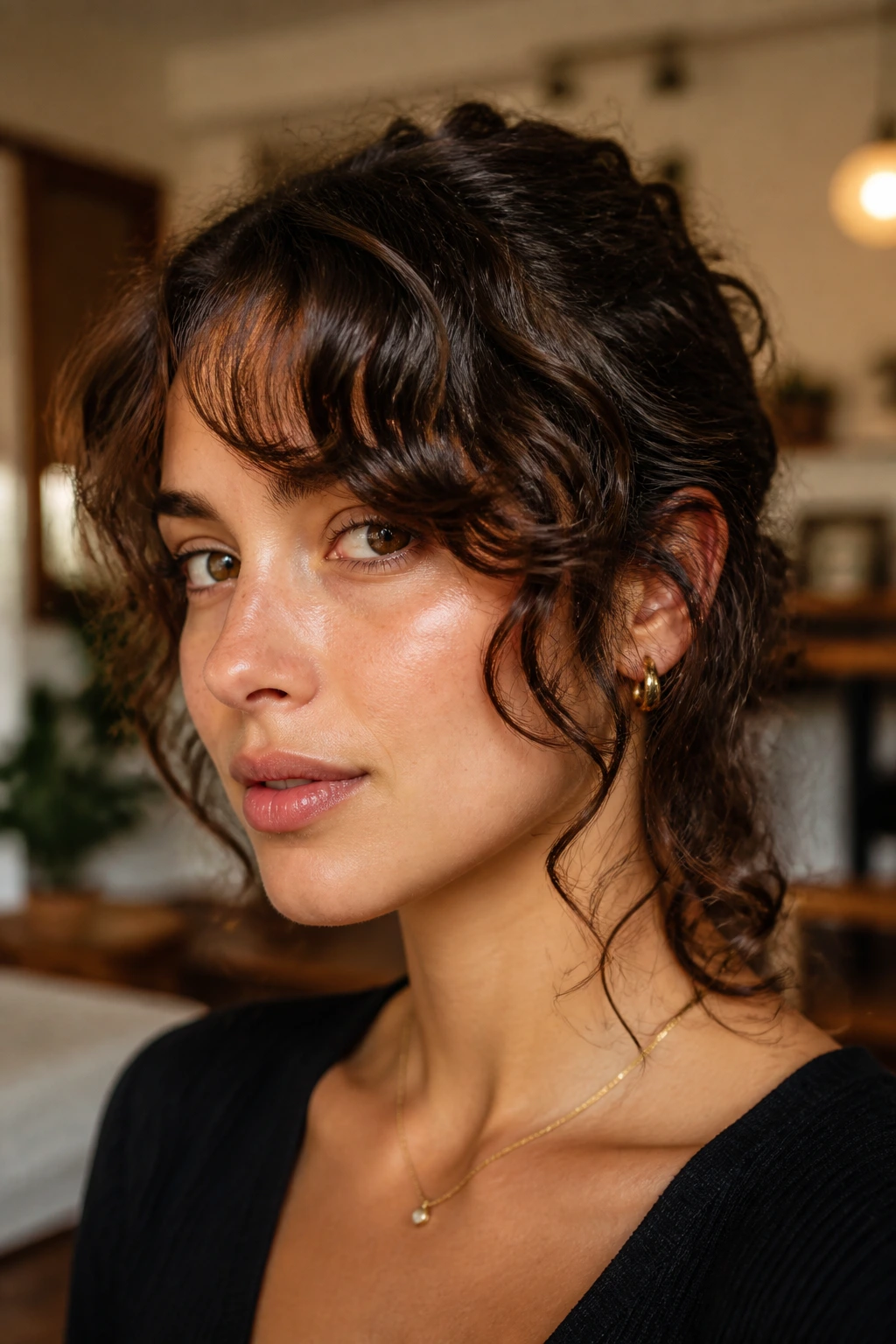
Cutting the bang too short on dry-frizz-prone curls: The symptom is a front that jumps above the brow and splits into little fuzzy pieces. The fix is simple: leave more length than you would on straight hair and check the curl pattern dry.
Thinning the face-framing layers too much: The front starts looking see-through, then puffs out around the temple. Keep some weight in the fringe so the sweep can hold its line.
Forcing the part to sit somewhere it hates: If the curls fight the part, the bang will keep separating. Work with the part the hair prefers, then adjust the cut around it.
Styling the fringe while touching it too much: Lots of hands on drying curls creates frizz and ruins the diagonal line. Set the side with a clip, diffuse, and leave it alone until it’s mostly dry.
Ignoring the front at refresh time: People mist the back and forget the bang. That front section is often the first to flatten, so give it a tiny reactivation with water and a pea-sized amount of product.
Named Variations to Try Next
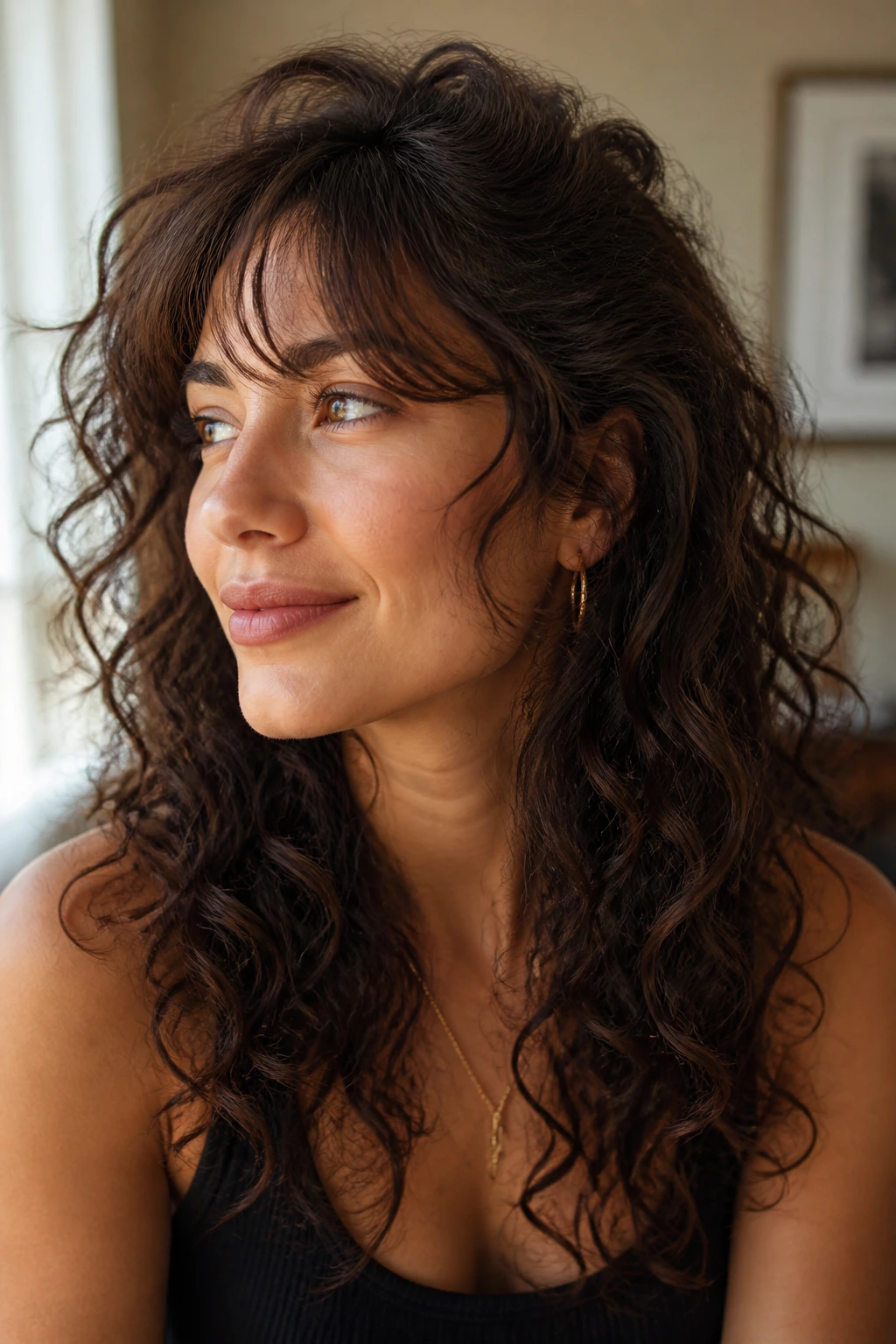
Soft and Long: Keep the fringe below the cheekbone and let the side layers stay blended. This is the easiest version to grow out and the least demanding when you want to pin one side back.
Big and Airy: Choose this when your curls are dense and you want volume around the face. The cut should hold more weight in the front so the sweep has body instead of fluff.
Pinned-Back Friendly: Leave the front long enough to tuck behind one ear or clip at the temple. Good for people who wear their hair up half the week and down the other half.
Humidity Armor: Ask for a slightly longer bang and less thinning near the root. That extra weight helps the front resist puffing in damp air.
Short and Sculpted: Better for tighter curls that shrink a lot. The bang still needs to land longer than expected, but the shape can be more compact as long as the curl pattern is respected.
Tools That Make Styling Easier
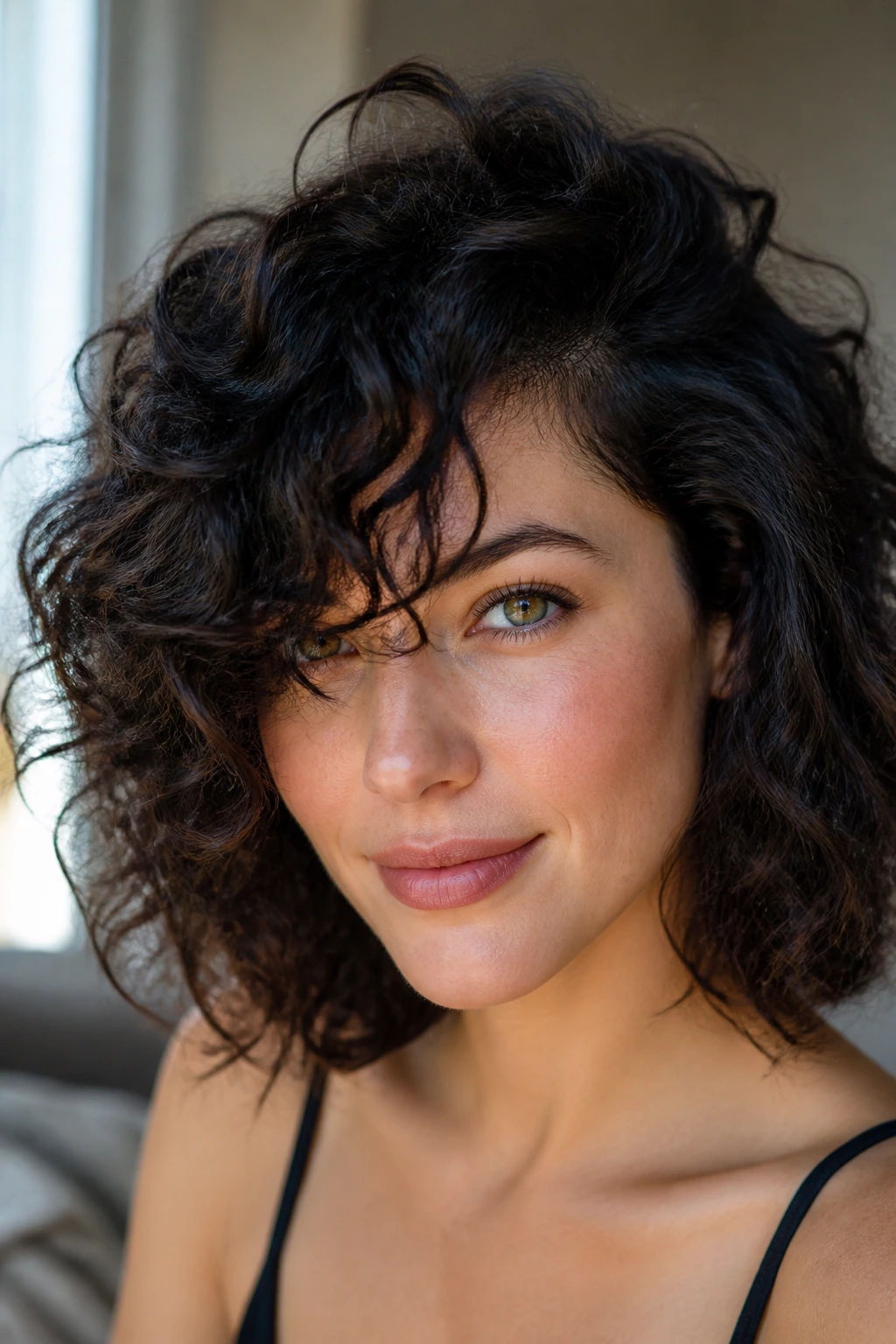
- Spray bottle: A fine mist wakes up the front without soaking the whole head.
- Diffuser attachment: Helps set the side sweep without blasting the curls into frizz.
- Wide-tooth comb: Useful for distributing product through the front without breaking up curl clumps too much.
- Duckbill or salon clips: These are the easiest way to hold the bang to one side while it dries.
- Microfiber towel or cotton T-shirt: Great for blotting water from the roots without roughing up the cuticle.
- Curl cream: Adds slip and helps the side pieces bend instead of puff.
- Gel with medium hold: Useful for setting the front line so the bang keeps its diagonal shape.
- Satin pillowcase or bonnet: Keeps the fringe from getting crushed overnight, which matters more than people think.
Keeping the Fringe in Shape Between Cuts
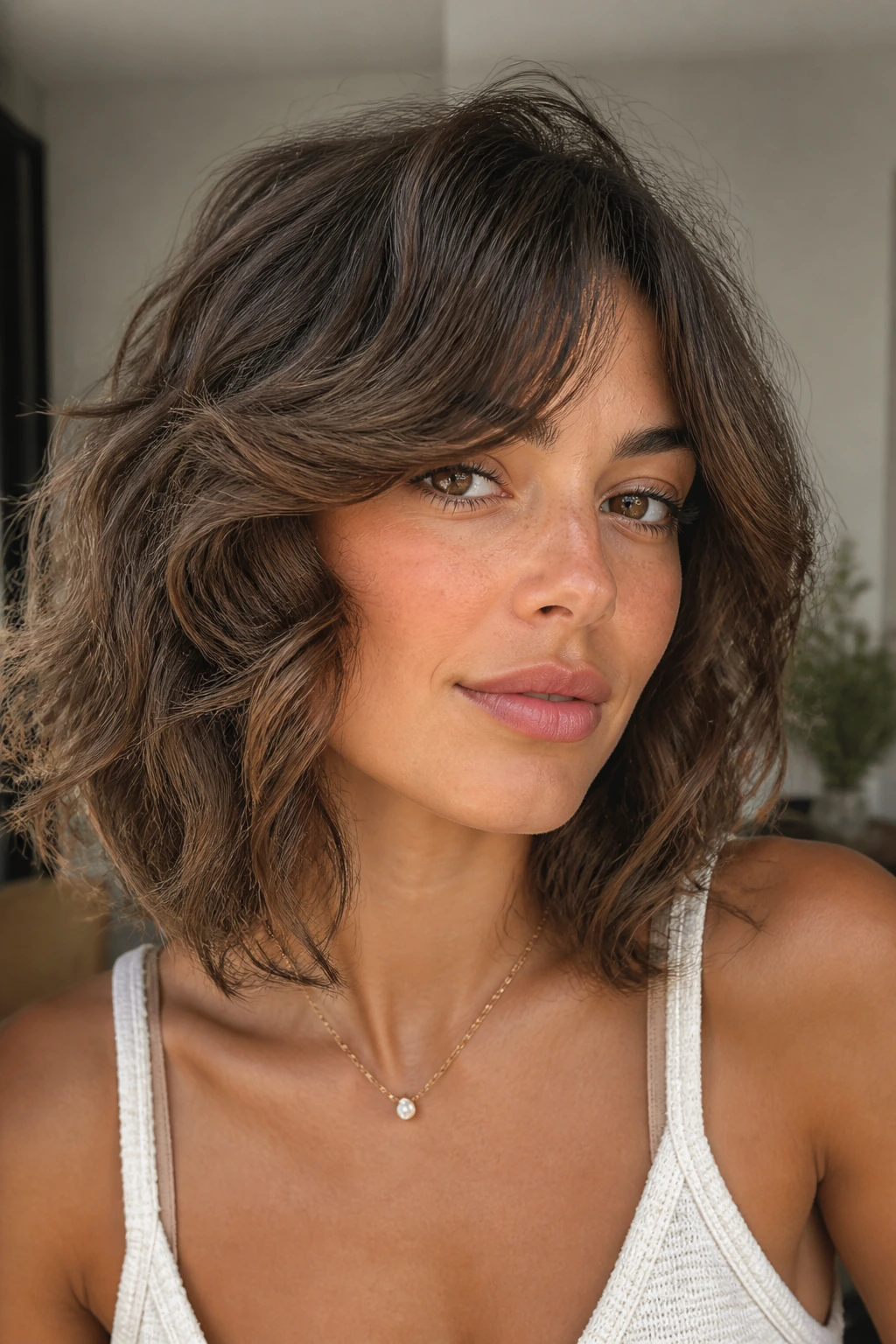
Curly bangs need a little more attention than the rest of the haircut, but not as much as people fear. If the fringe is short, plan on a trim every 4 to 6 weeks. If it’s longer and blended into the layers, you can often stretch that to 6 to 8 weeks before the shape starts losing its line.
On wash days, style the front first. That’s the section that usually needs the most direction. A quick mist, a dab of product, and a clip at the side while it dries can save the whole look.
Sleeping matters too. A loose pineapple or bonnet keeps the front from flattening, and if the bang gets creased, re-wet only the front instead of restarting the whole head. If the length is growing out, shift the part a little farther to one side over time. That softens the transition and keeps the fringe from looking like it changed its mind overnight.
Questions People Ask Before Cutting Curly Side Bangs
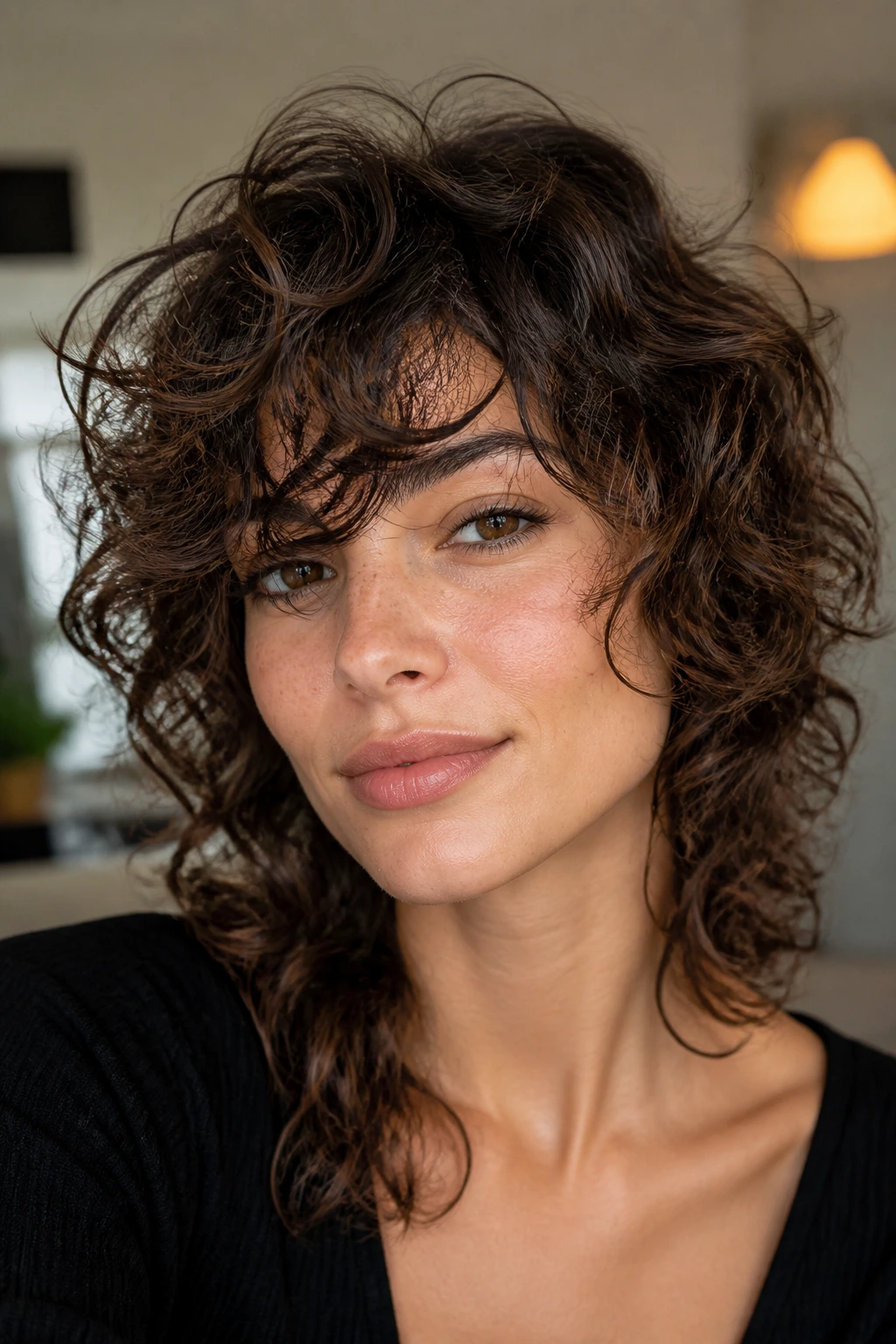
Will side-swept bangs work on every curl type?
Not exactly, but they can be adjusted for most curl patterns from loose waves to tight coils. The biggest difference is length: tighter curls usually need a longer starting point because shrinkage is stronger.
Should curly side bangs be cut wet or dry?
Dry or near-dry is safer. Wet curls can look longer and looser than they really are, which is how people end up with a fringe that springs up too high.
How do I stop the bang from splitting at the part?
Give the front a little root support with a clip while it dries, and don’t over-lighten the layers around the temple. A bang that’s too thin separates fast.
Can I wear these bangs with a ponytail or bun?
Yes, if the front pieces are long enough to tuck, clip, or leave out softly. If you wear your hair up often, ask for a longer side sweep that still looks good when the rest is pulled back.
Are side-swept bangs good for fine curly hair?
They can be, but the cut has to stay light without getting sparse. Fine curls need shape and lift, not a ton of removal around the front.
What if my curls shrink more than I expected?
Leave the bang longer next time and ask for the shortest point to be checked dry. That one change solves a surprising number of bad fringe cuts.
How often do they need trims?
Shorter fringes usually need attention every 4 to 6 weeks. Longer blended sweeps can go a bit longer, especially if the layers are designed to grow out softly.
What if humidity makes the front puff out?
Use a stronger hold product at the roots and ask for more weight in the cut. If the front is too airy, product can only do so much.
A Fringe That Grows With You
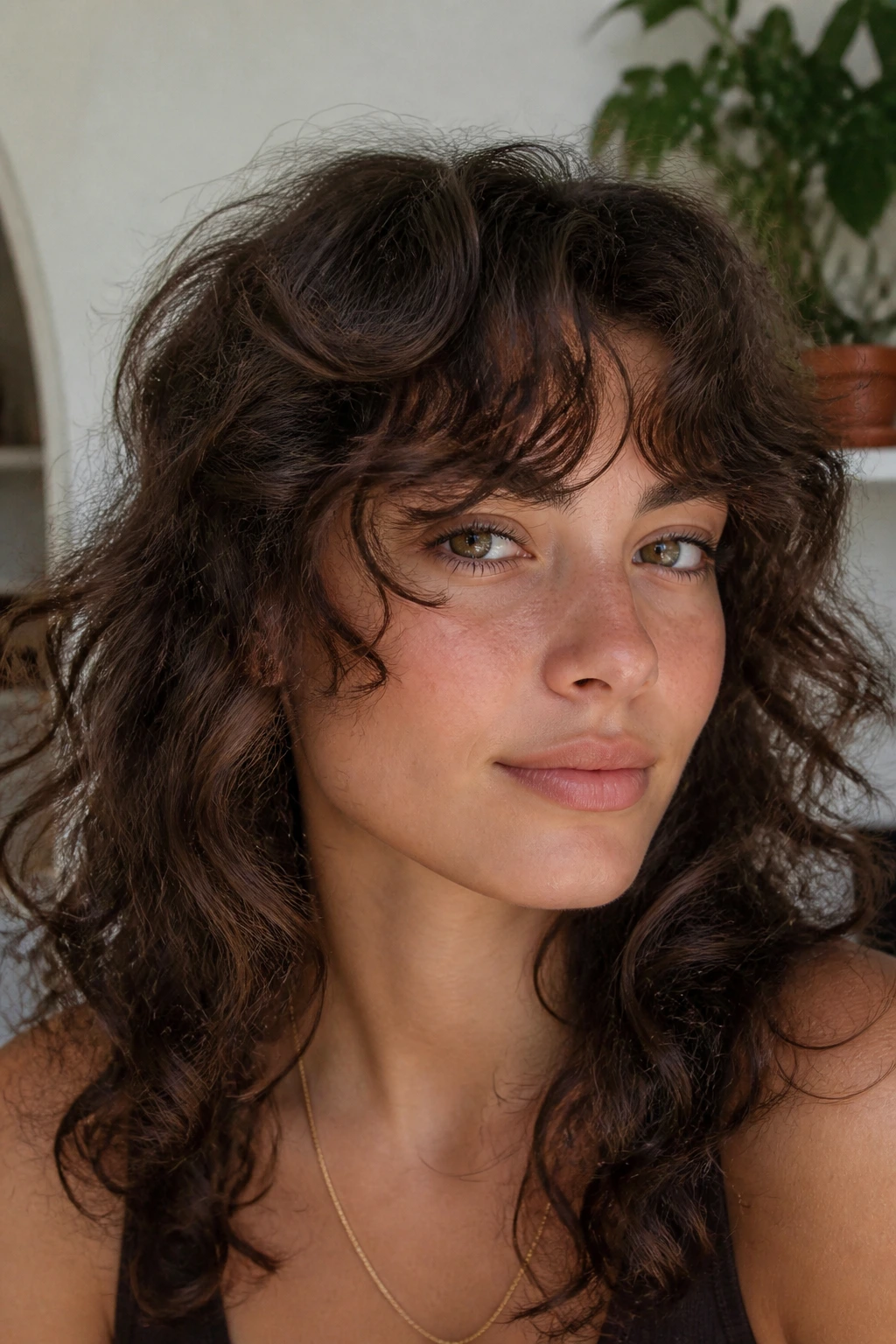
The nicest thing about side-swept bangs on curly hair is that they don’t have to stay one thing forever. A good cut can start polished, then loosen into something softer a few weeks later without looking unfinished. That’s rare with bangs. Most fringes either stay exact or turn into a nuisance.
Curly hair does better when the front has room to breathe. Give it that room, keep the face-framing layers honest, and let the shortest piece land where your curl already wants to fall. The rest becomes much easier.
Bring the right photo, speak plainly about your shrinkage, and resist the urge to cut the bang too short. That tiny bit of restraint is usually what separates a fringe you fight from one you actually enjoy wearing.