



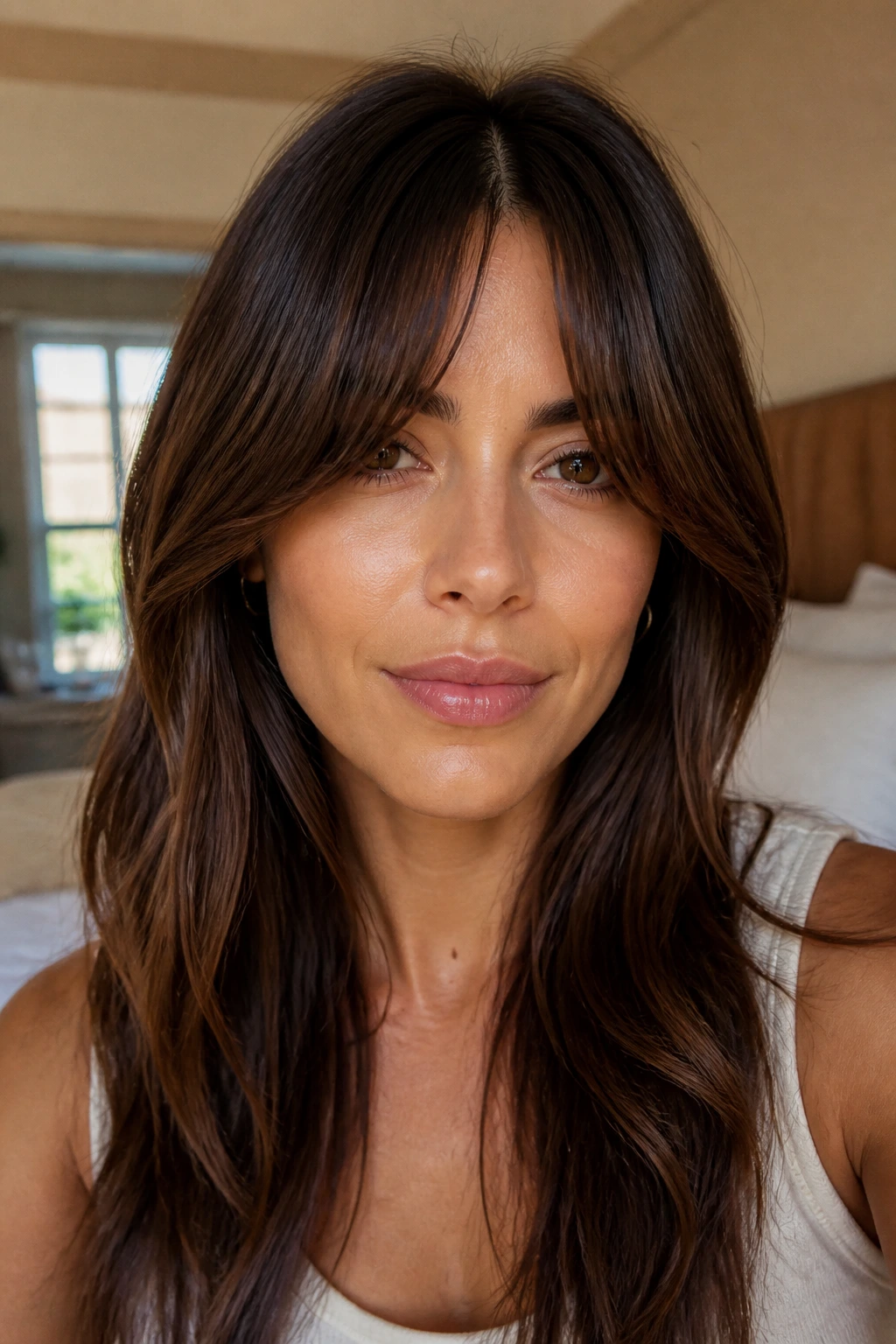
Curtain hair extensions with bangs for long faces can change the whole read of a haircut in a single mirror check. The wrong fringe leaves you with more forehead, more length, more vertical line. The right one pulls the eye sideways at the cheekbones, which is exactly where a longer face usually wants some help.
The part that gets missed, over and over, is this: you do not need to hide your face. You need to break up the stretch. A soft center opening, side lengths that brush the lip or collarbone, and enough bend around the temples can make the whole shape feel calmer without turning it heavy or fussy. Length is not the enemy. Placement is.
I like curtain bangs on longer faces more than blunt micro-fringes, and it’s not close. Curtain pieces give you room to breathe, especially when the rest of the hair is built with extensions that carry the weight and keep the silhouette full from the sides instead of straight down the middle. The 25 looks below run from soft and office-friendly to full-glam and a little editorial, because long faces don’t all need the same frame.
Why This Collection Works for Long Faces
-
Side Width Where It Counts: These looks place the fullest part of the fringe around the cheekbones, which gives a long face a wider visual stop point than a blunt straight-across bang ever could.
-
Less Straight-Down Length: Extensions can add inches fast, but these styles keep the length from hanging in one uninterrupted curtain, which is the mistake that makes an elongated face look even longer.
-
Flexible Forehead Coverage: Some of these fringes sit right at the brow, some skim just below it, and some stay airy enough to show skin. That range matters because not every long face has the same forehead height.
-
Better Grow-Out: Curtain shapes age more gracefully than a hard bang line. You can push them apart, pinch them forward, or wear them swept wider on lazy days.
-
Texture-Friendly: Wavy, curly, straight, and blowout finishes all work here if the face frame starts in the right place and the extension blend isn’t too blunt.
-
Less Salon Regret: A curtain fringe is easier to adjust with a round brush, dry shampoo, or a small trim than a full blunt bang that was cut too short on day one.
Why Curtain Hair Extensions with Bangs Suit a Long Face
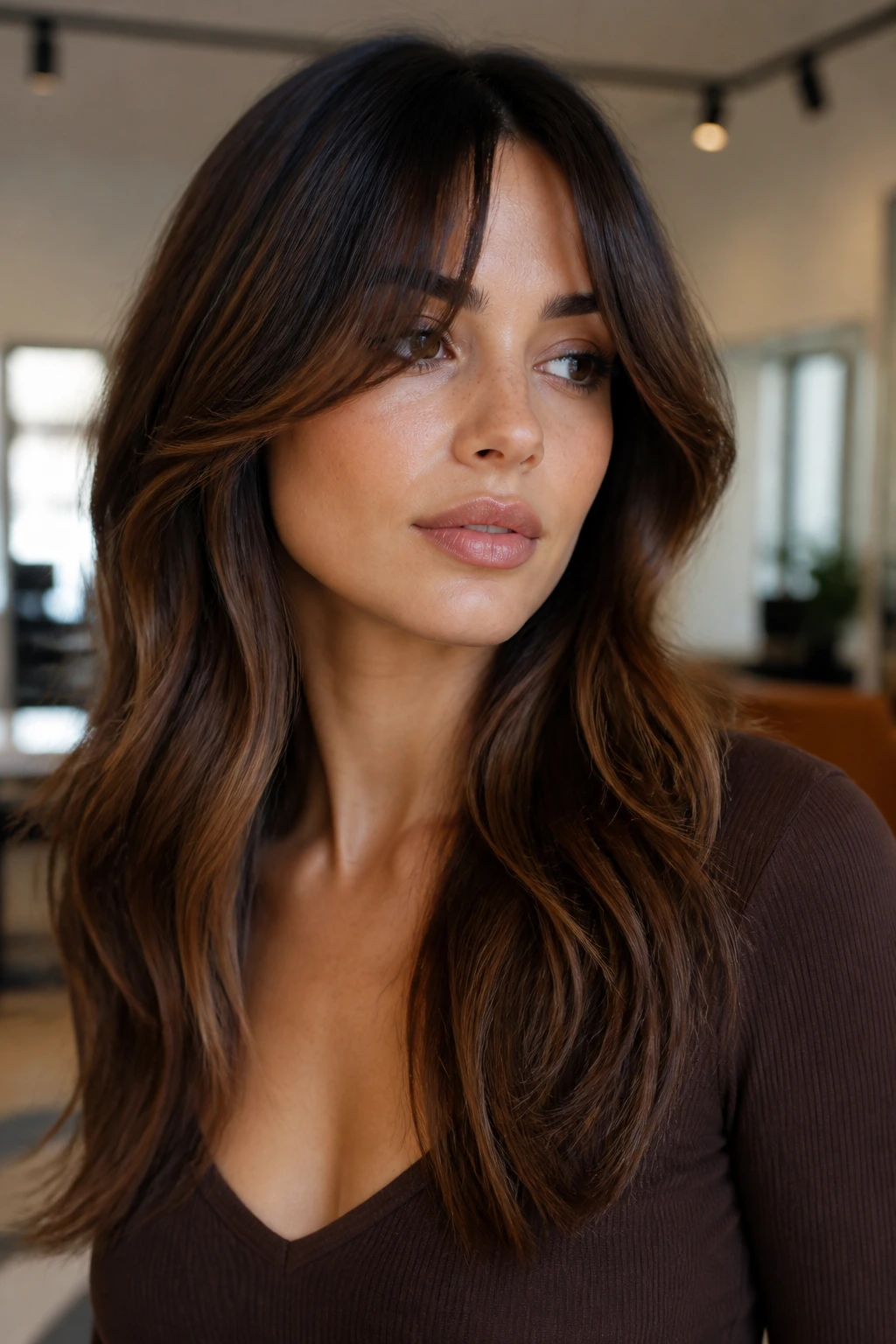
A long face usually needs width before it needs more length. That sounds obvious, but it’s the thing most bad haircuts ignore. When hair falls in one straight line from crown to chest, the eye reads that line first. Curtain pieces interrupt it. They split in the middle, open at the cheekbones, and create a little horizontal movement that slows the whole visual slide.
The other reason this pairing works is that it keeps the forehead from becoming the main event. You do not need a wall of hair across the brow. That usually looks stiff, and on a longer face it can feel even more severe. A softer fringe lets some skin show while still placing weight where it helps most. The result is a face frame that feels lifted, not buried.
Extensions matter here because they let the lower half of the style carry some of the attention. If the ends are fuller through the collarbone, rib cage, or waist, the fringe can stay airy without the look falling flat. That balance is the whole trick — not too much bang, not too much long, just enough of both.
How to Choose the Right Bang Weight and Extension Length
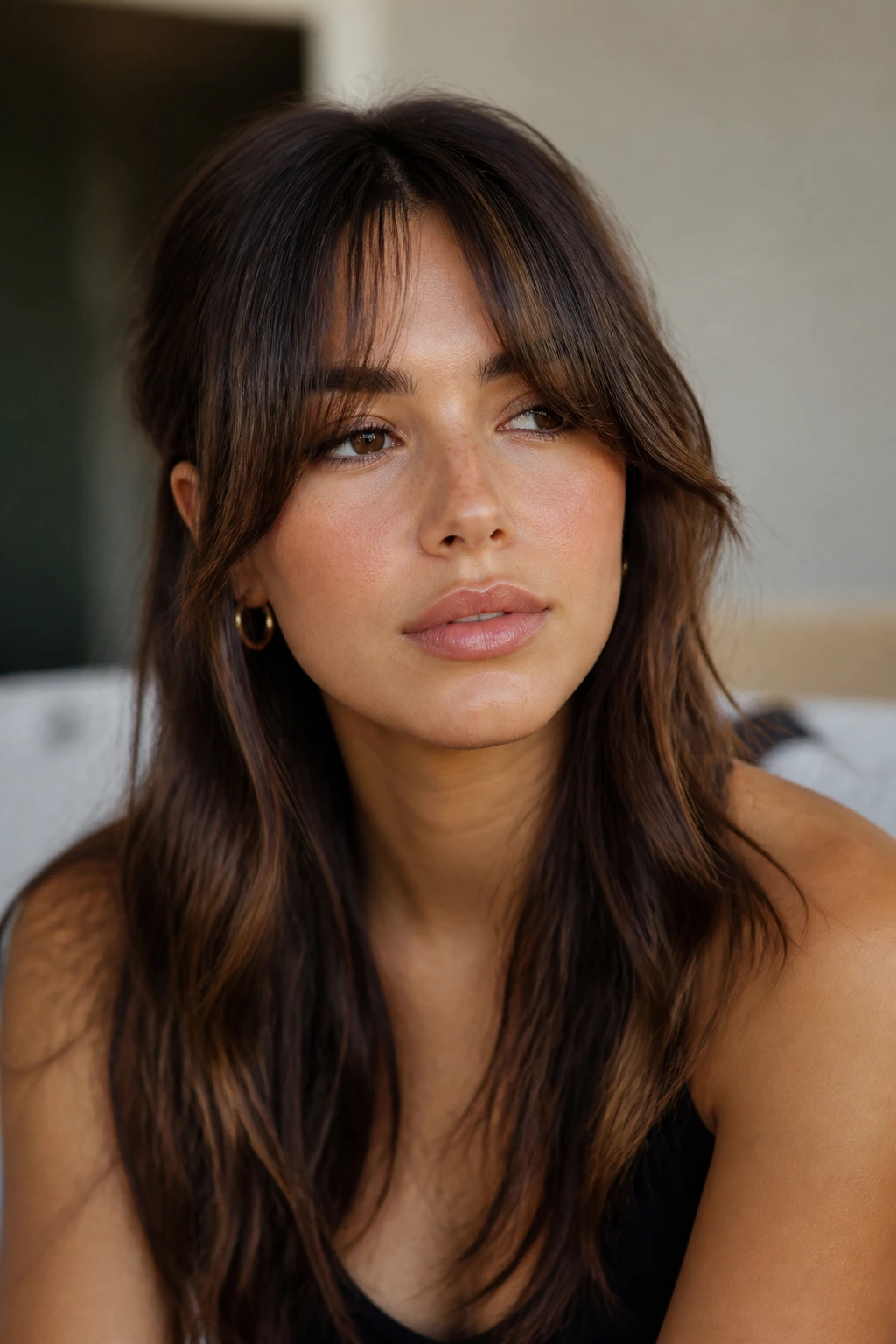
The shortest point of a curtain fringe should usually land around the brow or just below it on a long face. If you start much higher, you expose too much forehead and the face reads taller. If you start much lower, the fringe can droop and lose the open shape that gives this look its lift. The sweet spot is where the bangs bend away from the center and widen as they move outward.
Start with the Brow, Not the Hairline
A brow-grazing center point keeps the style soft. It gives you coverage without boxing the face in, and it leaves enough room to push the fringe wider when you want more openness. If your forehead is especially long, ask for a touch more density at the middle so the center doesn’t split too thin.
Let the Longest Face Frame Hit the Cheekbone or Lip
The side pieces should not disappear into the jawline like curtain cords. They should bend near the cheekbone, then drift toward the lip or collarbone. That bend matters because it places width right where a longer face benefits from it. Longer than that is fine, but the first visual stop should happen higher up.
Match Density to Your Hair Texture
Fine hair usually needs a lighter, see-through fringe with less bulk at the roots. Thick hair can take a fuller curtain shape, but it still needs interior thinning so the front doesn’t become a helmet. Curly and wavy textures need enough length to account for shrinkage, which means the shortest point often has to sit lower than you think.
Keep the Extension Length in Proportion
If the fringe is soft and the extensions are waist-length, the contrast can look beautiful or a little too dramatic depending on your density. For most long faces, chest to mid-back length is the safest starting point. It gives the face frame somewhere to land without turning the whole look into one vertical sheet.
1. Cheekbone-Cut Chestnut Curtains
Chestnut tape-ins with a soft curtain fringe do one clean thing: they break the long line of the face right where the eyes want relief. I like this version when the roots are a touch deeper than the mids, because the shadow near the part keeps the fringe from looking pasted on. The whole look feels warm, grounded, and easy to wear with a simple blowout.
Why It Works
The shortest point sits near the brow, then the sides open toward the cheekbone instead of falling straight past the jaw. That little bend matters. It creates width without stuffing the forehead with hair. Chestnut also keeps the length from reading too shiny or too flat, which helps when the extensions are doing the heavy lifting.
- Best length: Chest or collarbone extensions; anything longer can drag the profile down.
- Best texture: Soft blowout or large-wave bend.
- Best part: A true center part with a tiny offset at the root.
- Styling cue: Wrap the front pieces away from the face for 8 to 10 seconds with a round brush.
My favorite detail: keep the center two inches flatter than the sides. It stops the fringe from puffing into a triangle.
2. Bottleneck Bangs with Honey Extensions
Bottleneck bangs are a safer bet than a super-wide curtain on a long face because they stay narrow in the middle and widen only when they reach the temples. That means the forehead doesn’t get chopped into a giant block, which is what a lot of people fear when they hear “bangs.” Honey-blonde extensions make the shape look lighter still, especially if the ends are layered.
The bright pieces around the front are doing a lot of work here. They catch the light near the cheekbones and make the face feel a little broader without turning the whole style blond-to-the-core. I’d choose this if your features are delicate and you want the fringe to frame rather than cover.
The shape looks best when the center is dry first and the sides are coaxed outward with a small round brush. Don’t overbuild the front. Bottleneck bangs need space to breathe.
3. Feathered Blowout Fringe
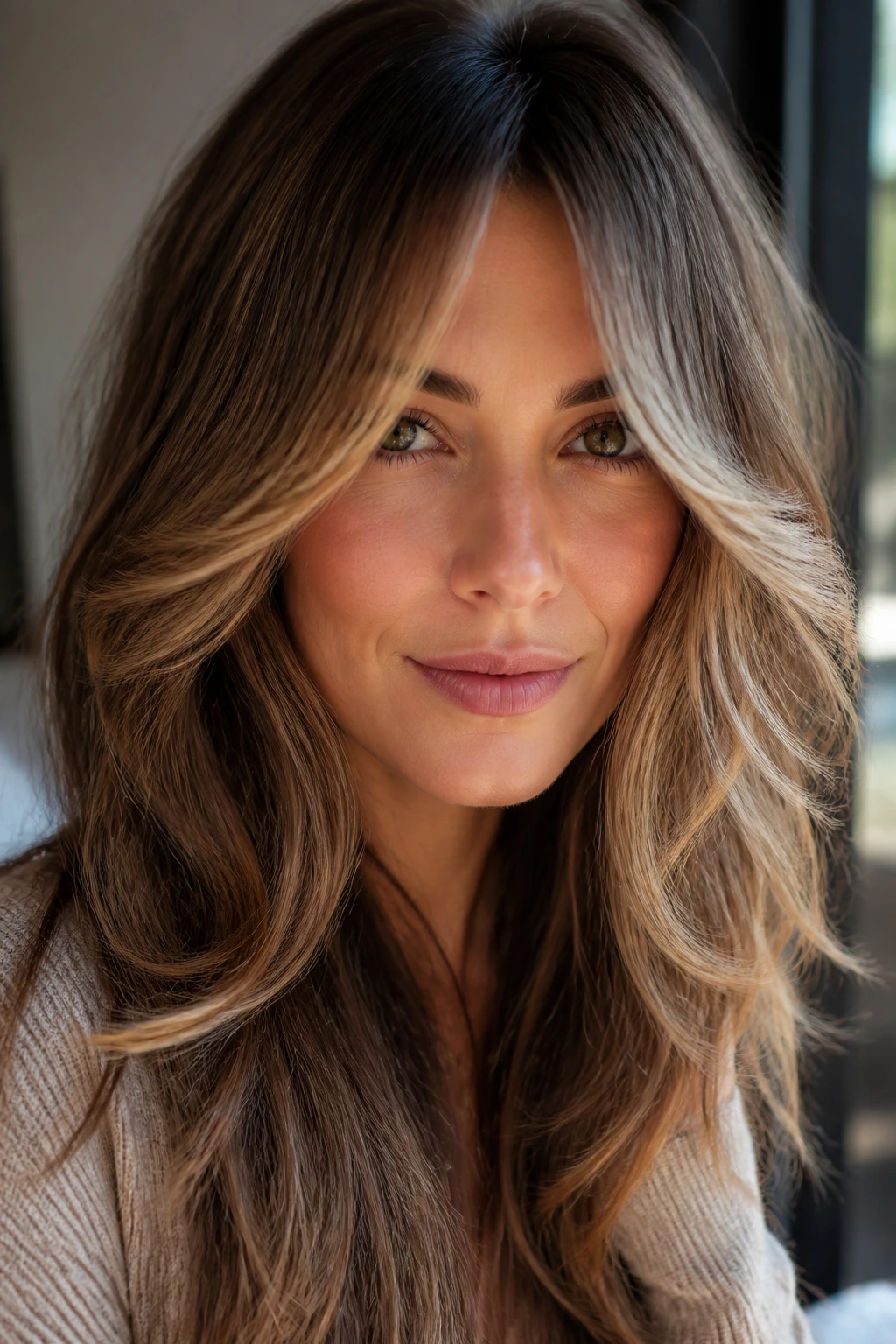
What makes a feathered blowout work on an elongated face? Movement. Not volume for its own sake, not height at the crown, just movement that pushes the eyes outward for a second before the hair drops again. That pause is enough.
How It Wears
A feathered curtain fringe can sit almost weightless when you blow-dry it with a 1.5-inch round brush and a nozzle attachment. The extensions should have soft bends through the middle, never a tight curl near the ends. If the finish gets too round, the face frame starts to look old-fashioned in a way that fights the shape of a longer face.
The best version lands just below the brow at center and opens wider through the cheekbone. It’s a good pick if you like hair that looks styled but not stiff.
Quick rule: if the fringe can’t move when you shake your head, it’s too set.
4. Shaggy Waves with Mid-Length Bangs
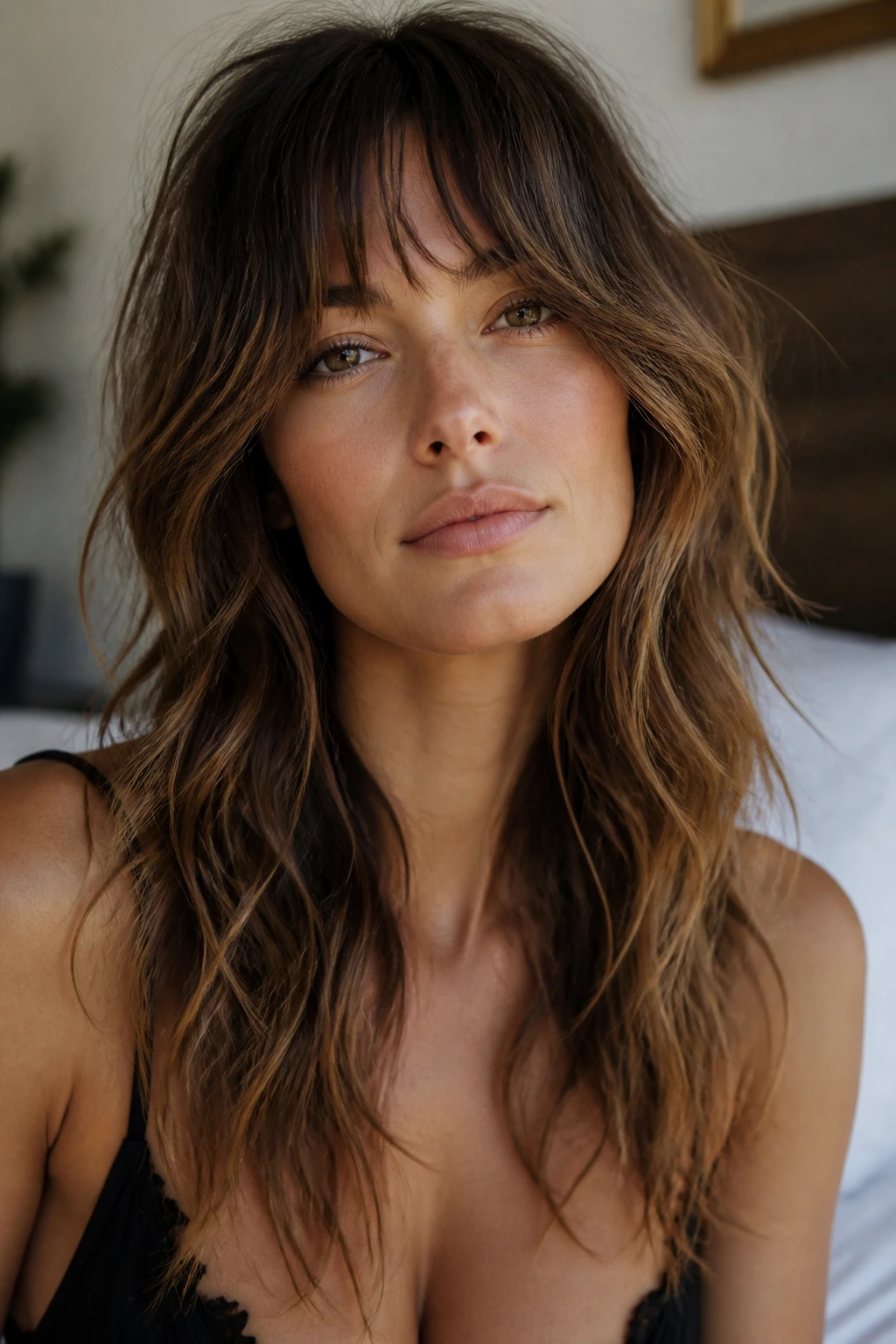
Picture hair that looks like it already has good opinions about itself. That’s the shaggy wave version of curtain bangs. It works because the layers are broken up enough to keep the face from feeling stretched, but not so chopped that the extensions look choppy at the ends.
A long face can take a shag if the layers hit at more than one point. The fringe should touch the brow, then fall into cheekbone pieces, then into collarbone layers. That staggered shape keeps the eye moving sideways instead of just down. It’s messy in the good way. Not lazy. Just lived-in.
- Best for: Natural wave, fine-to-medium hair, and clip-ins you don’t want to style every morning.
- Skip if: Your hair has zero bend and you never want to add one.
- Style note: A dry texturizing spray at the mid-lengths helps the layers separate.
The haircut should feel like it has been worn a few times, not freshly ironed within an inch of its life.
5. Sleek Glass Length with Open Fringe
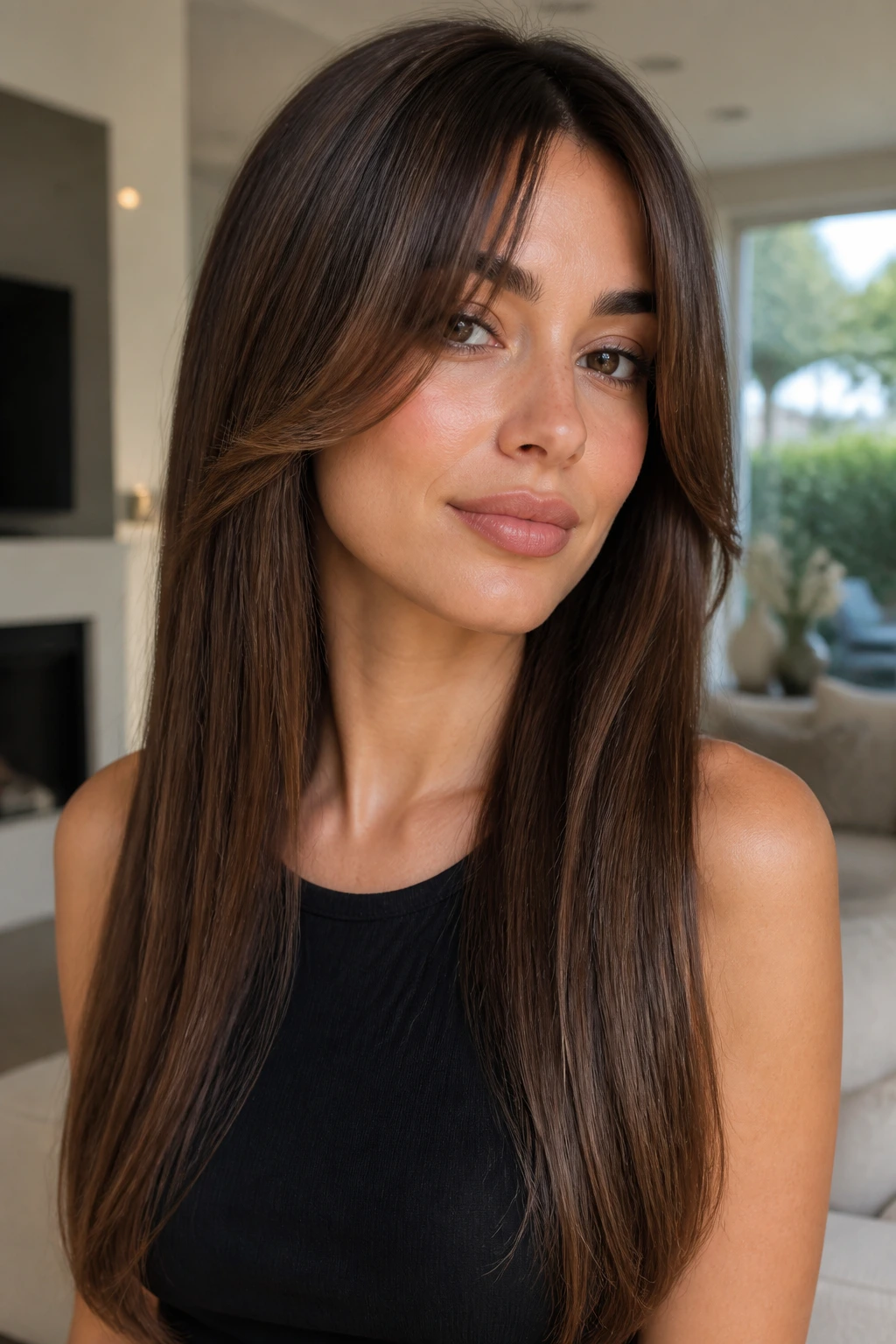
This is the cleanest version for people who like hair to behave. Straight extensions give the length a polished drop, but the fringe keeps the face from looking even longer than it is. The secret is that the bangs cannot be pin-straight all the way through. They need a slight outward bend at the cheekbone, or the whole thing becomes a curtain in the boring sense of the word.
I like this look best with a very light root lift and glossy ends. The shine makes the hair look expensive without making it loud. On a long face, that glossy line works only if the fringe is open enough to interrupt it. Otherwise, the eye glides right down the length and never stops.
Keep the ends blunt enough to feel full, but not so blunt that they become a ruler line. A tiny bevel at the bottom helps. So does a middle part that is more suggestion than precision.
6. Curl-Forward Curtain Bangs
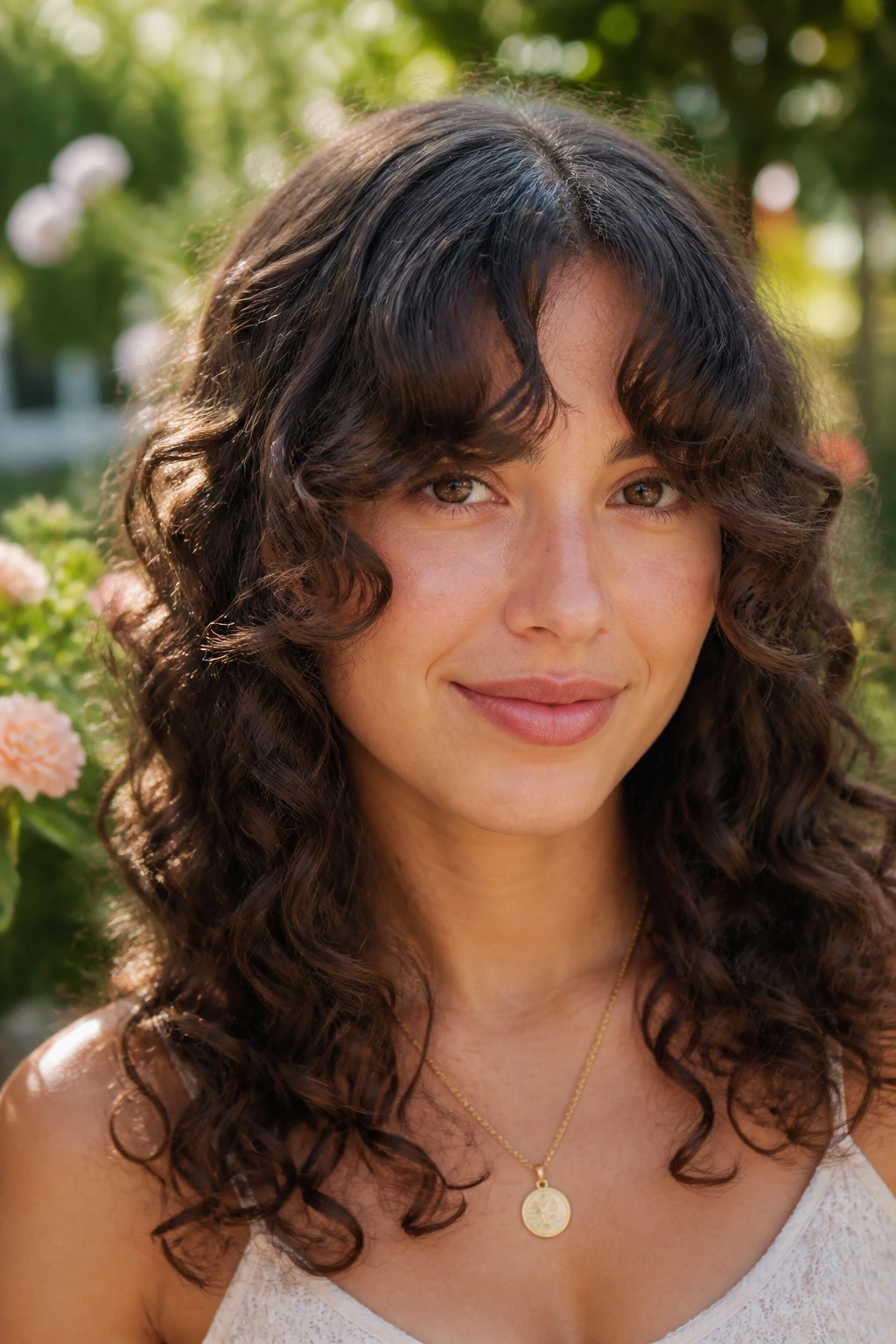
Unlike straight curtain bangs, curly versions need room for shrinkage and spring. That means the shortest point usually has to sit lower than you think, especially if your hair coils up as it dries. For a long face, that’s good news. You get the width of the curl plus the soft break of the fringe.
This style is best for textured hair that already wants to move sideways as much as down. Extensions should match the curl pattern closely or the front will look disconnected, which is the fastest way to make a face frame look fake. Keep the layering soft around the cheeks and let the bangs land in a gentle arc.
What Makes It Different
A curl-forward fringe gives the face width without needing a flat blowout. It also hides the fact that extensions can be hard to blend when the texture is tight or springy. If your curls shrink a lot, ask for a longer bang and have it trimmed again after it’s been styled in its natural state.
Best recommendation: use a diffuser and stop before the hair is 100 percent dry. Let the rest air-finish.
7. Bright Money Pieces and Airy Fringe
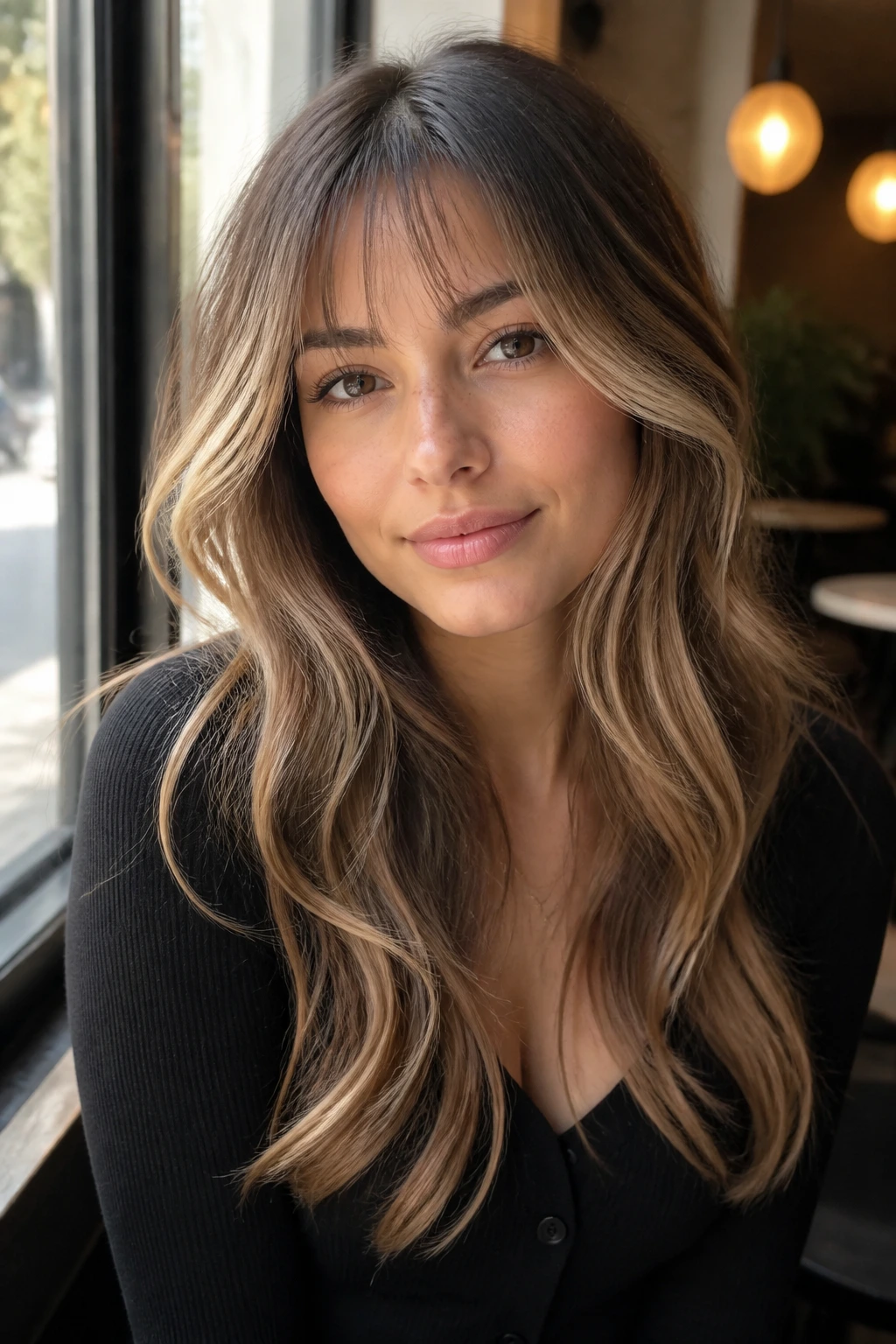
Bright money pieces can do more for a long face than an extra two inches of length ever will. The lighter strands at the front pull the eye sideways, especially when they start around the temple or cheekbone instead of right at the hairline. The fringe stays airy, so the forehead doesn’t disappear, but the face gets a cleaner frame.
This look is especially good if the rest of your hair is a soft brunette, caramel, or dark blonde. The contrast gives the front pieces a clear job. They’re not just decoration. They are the visual stop sign. Ask for the lightest pieces to sit one level lighter than the base, not five levels lighter, or the front can take over.
- Best placement: Temple to cheekbone.
- Best finish: Loose bends, not tight curls.
- Best extension type: Tape-ins or sew-ins with a careful color melt.
- Avoid: Stripey front highlights that stop at the chin.
The shape should feel bright, not busy.
8. Fuller Fringe for Tall Foreheads
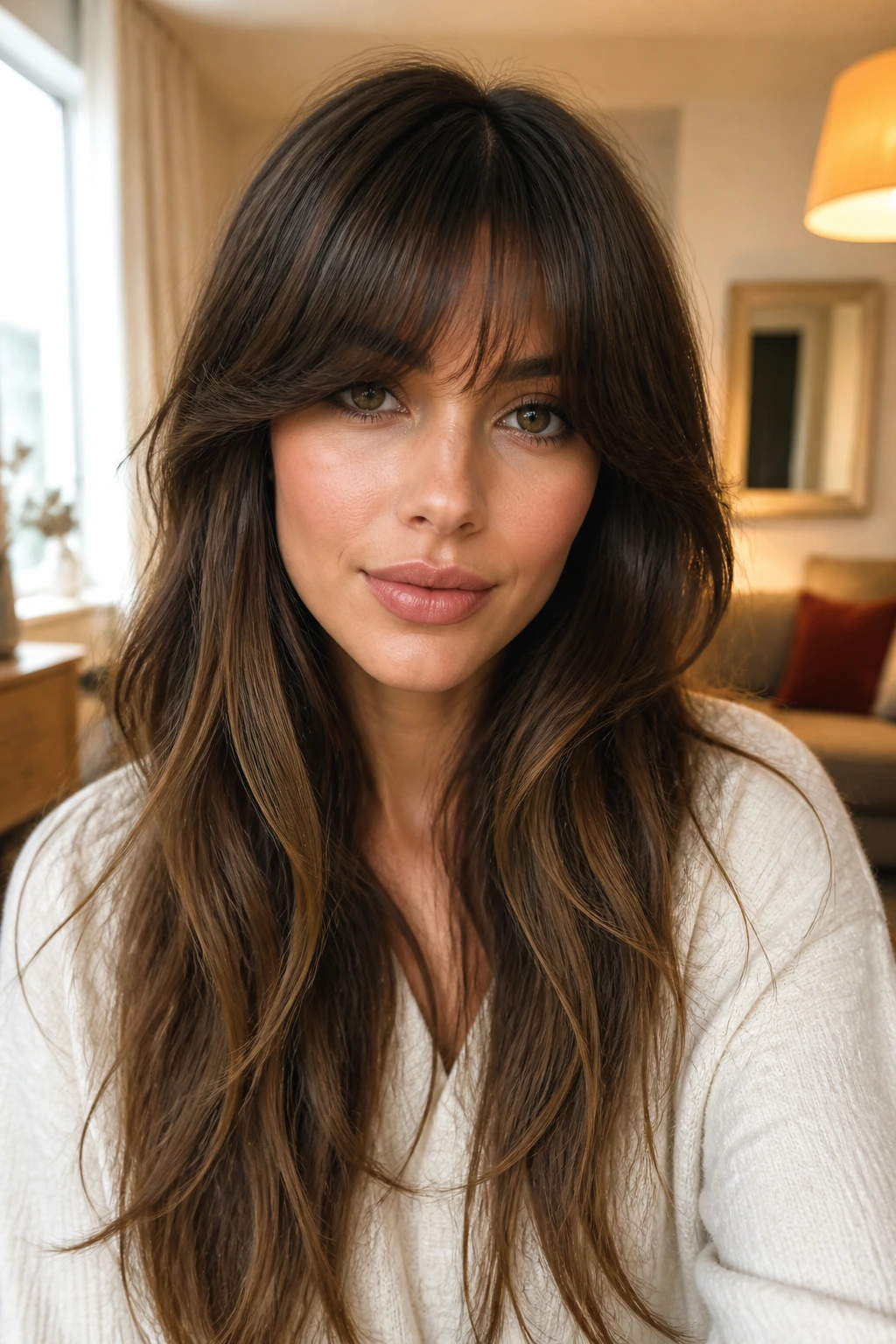
A bold curtain fringe can be the right answer when the forehead is tall and the rest of the face is slim. People get nervous about fullness up front because they think it will look heavy, but heaviness only happens when the fringe is cut straight across and left with no movement. A fuller curtain can still open at the sides.
The trick is to keep the center dense enough to cover the long vertical space, then carve the outer edges so they sweep outward at the brow bone. Long extensions help balance that extra weight. If the ends are too light, the front ends up doing all the work and the style can feel front-heavy.
This version looks best on hair that can hold a bend. If your strands are silky and slippery, you’ll need a little root spray and a round brush set. Otherwise the bangs fall apart by noon.
One clean sentence. The fringe should frame, not fight.
9. Off-Center Curtain Sweep
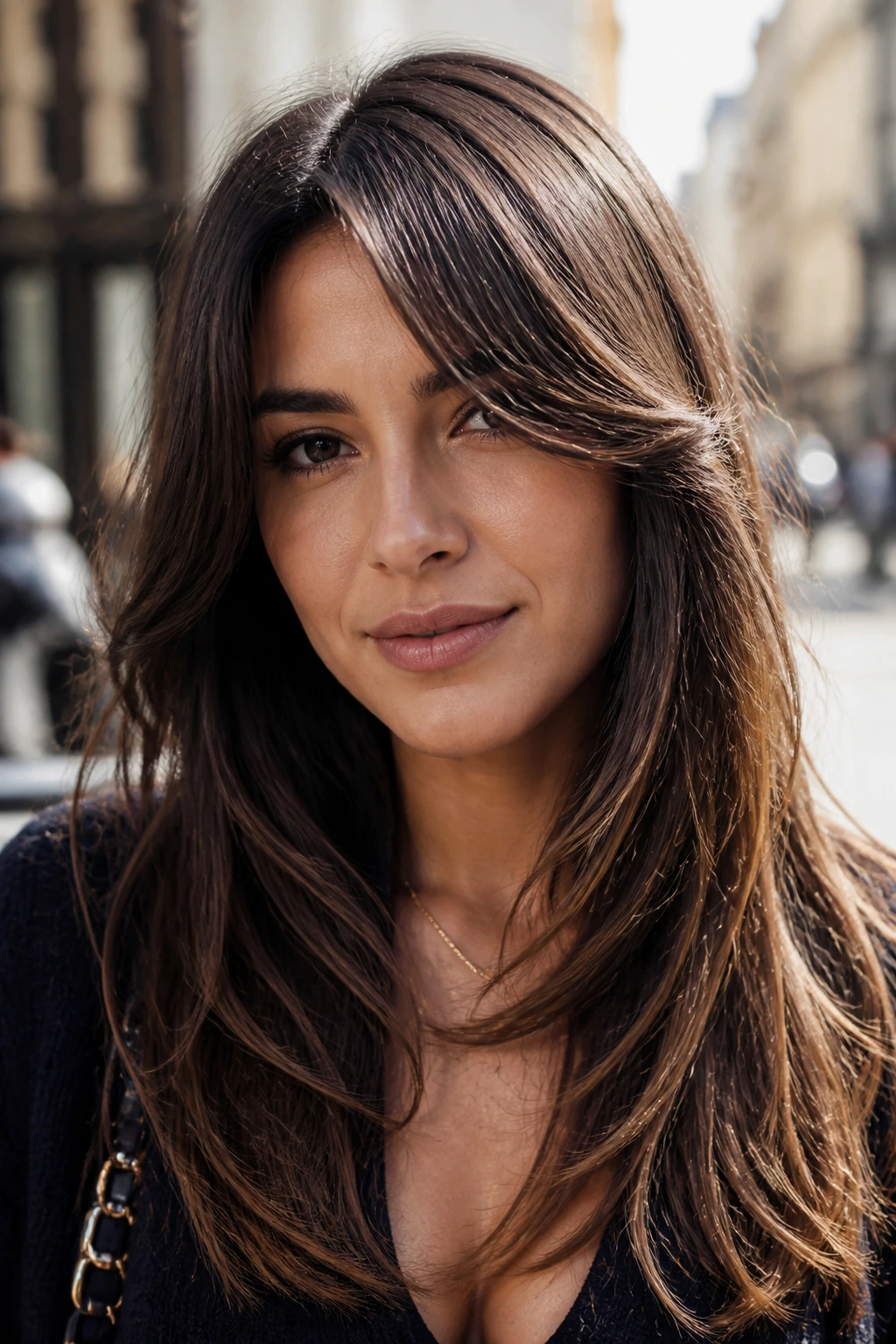
What if a strict middle part makes your face look too long? Then shift the root a half-inch off center and let the curtain sweep fall a little unevenly. That small move can soften the symmetry enough to stop the whole style from feeling rigid.
Best When
This is the one I’d reach for if your face is long, your features are narrow, and you don’t love the look of a dead-center split. The uneven part gives the bangs a little swing, which changes how the eye reads the forehead. It also helps if one side of your hair naturally falls flatter than the other.
The extension lengths should still open around the cheekbones, but the root should feel a touch more relaxed. You’re not committing to a side part. You’re just avoiding the straight line that can make a longer face feel even more vertical.
A tiny root lift at the heavier side keeps the sweep from collapsing.
10. Butterfly Layers with Long Ends
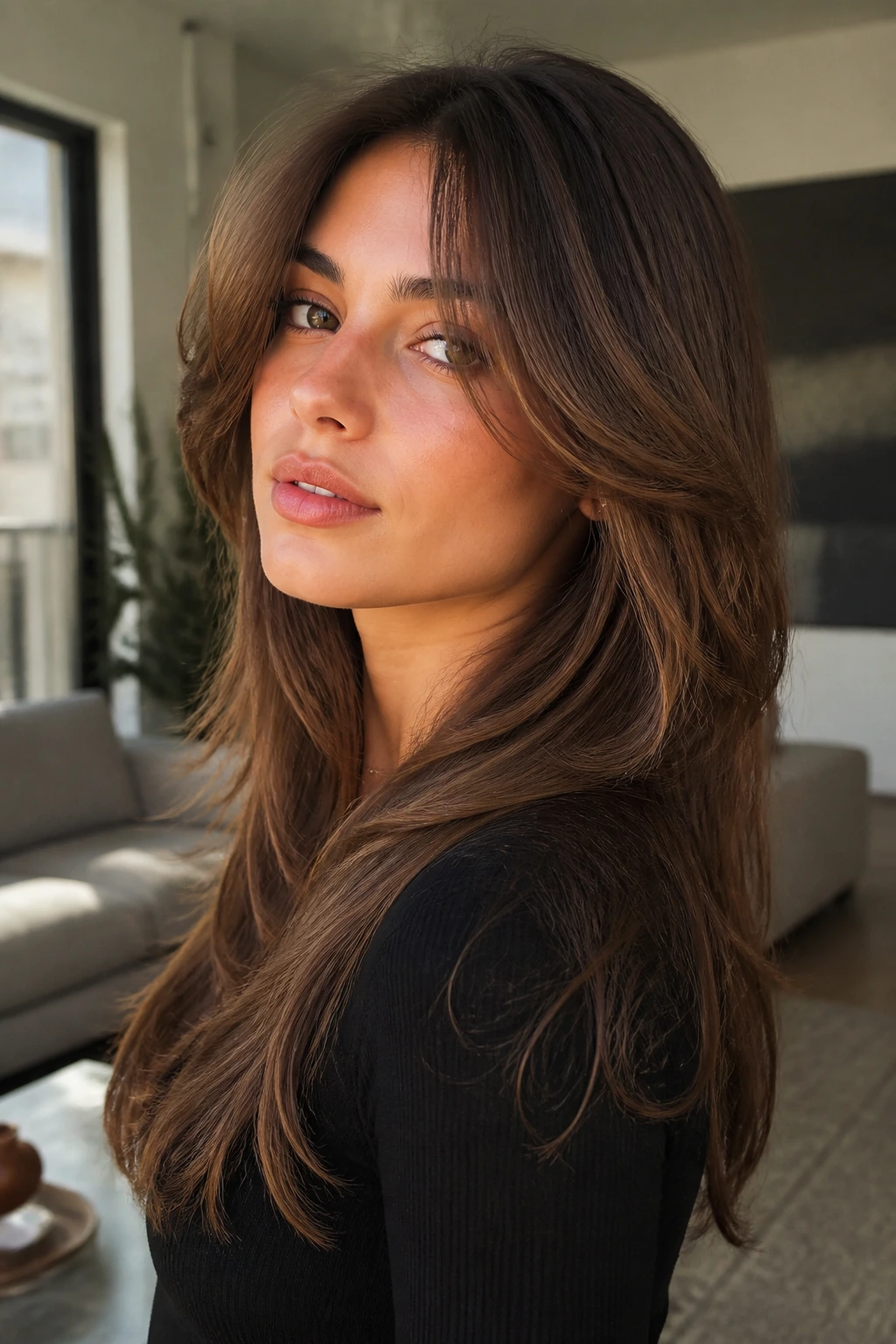
Butterfly layers give a long face something useful: movement near the shoulders and a little lift around the cheekbones. The shape looks like it has air under it when you turn your head, which is a better effect than a static wall of length. Curtain bangs finish it off by keeping the forehead from reading too open.
Think of this one as a soft upper layer with a longer underlayer. The bangs are not the whole story. They just help the rest of the style make sense. Extensions should be layered enough that the longest pieces are not all the same length, or the butterfly shape loses the swing that makes it interesting.
- Best for: Medium-to-thick hair with tape-ins or clip-ins.
- Ask for: Face-framing layers that start near the cheekbone.
- Style tip: Curl the top layer away from the face and the lower layer toward it for mixed movement.
The haircut should feel like it lifts when you move, not just when you pose.
11. Waist-Length Gloss and Brow-Skim Fringe
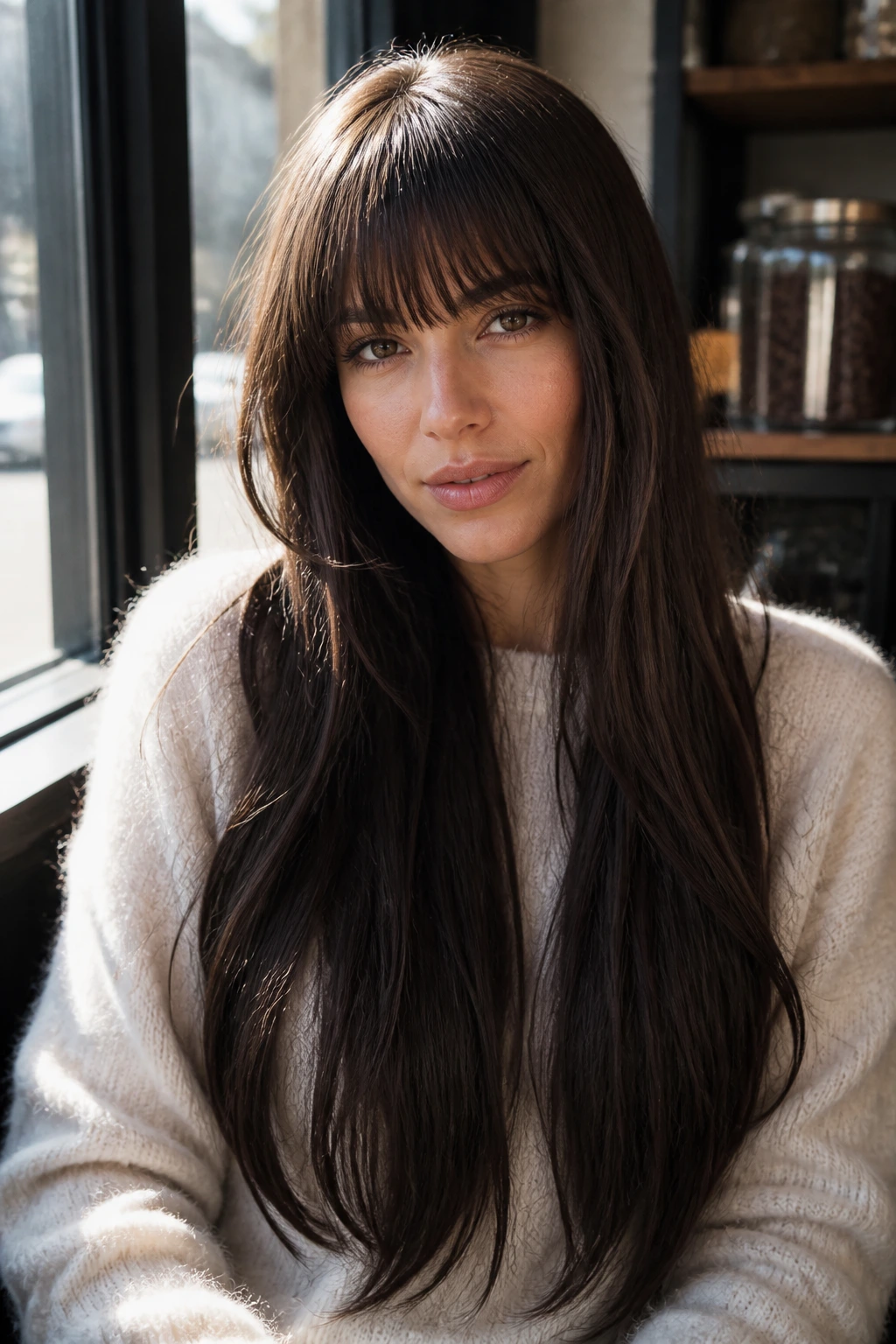
Long, glossy lengths can look sharp on a long face if the fringe interrupts the drop early enough. That means the bangs should skim the brow, not sit miles above it, and the side pieces should bend before they hit the jaw. If the front is too sparse, the eye keeps going straight down. No pause. No width.
This version is for people who like a cleaner, more polished line. The extensions can be very long, but they need an internal layer around the face so the shape doesn’t become a simple column. I prefer a slight bevel at the ends rather than a hard blunt finish. Hard edges make the style feel stricter than it needs to be.
The brow-skim fringe is the entire point. It gives the face a place to stop before the long line takes over.
12. Root-Shadow Blonde with Soft Bends
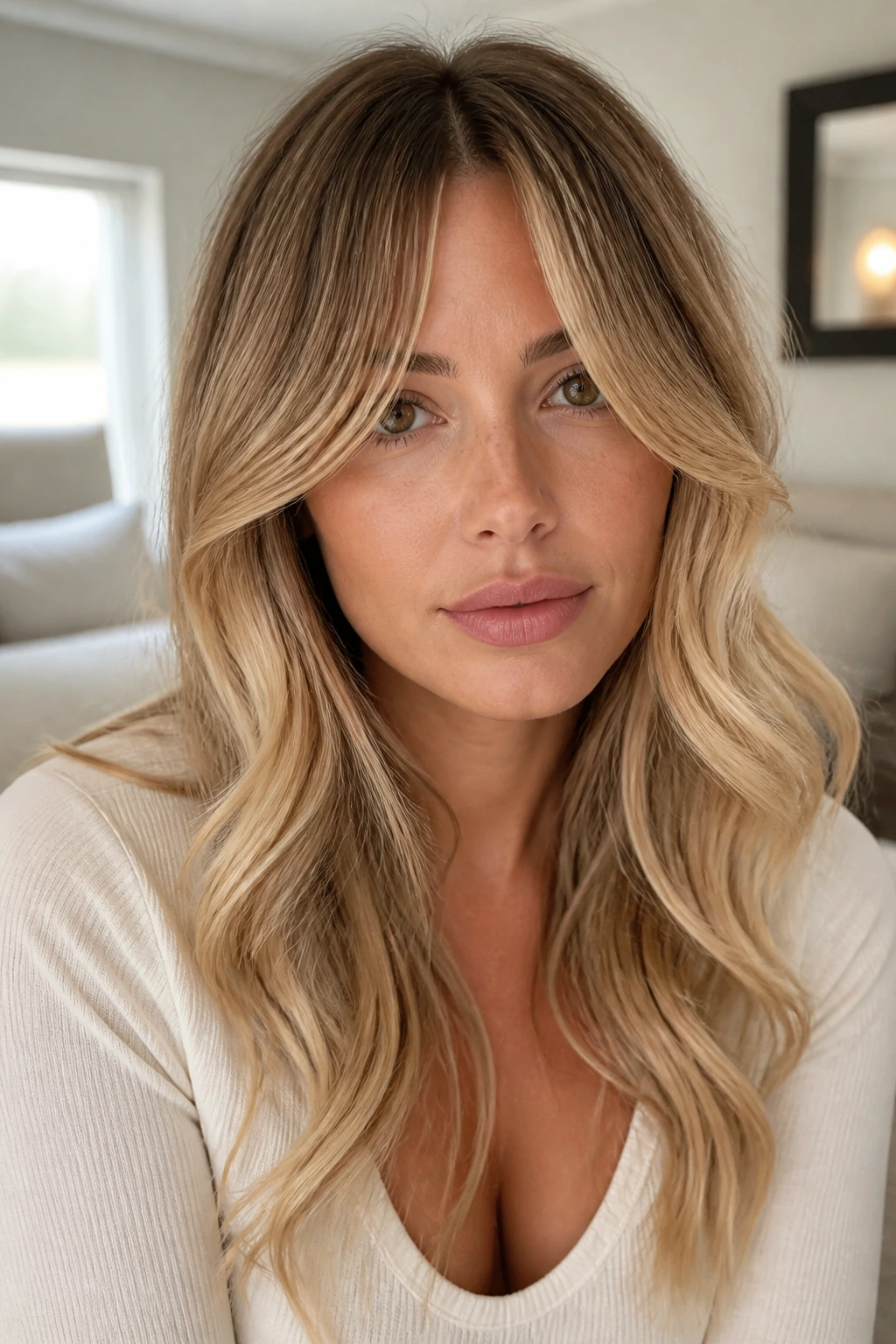
Root-shadow blonde is the easier version of blonde on a long face because the darker root prevents the front from looking too flat and over-light. It’s a gentler blend, especially when paired with curtain bangs that only open after the brow. Compared with icy all-over blonde, this one keeps more depth at the scalp.
That depth matters. It makes the top look thicker and gives the bang area some anchor. The soft bends through the extensions do the rest, especially when they hit around the lip or chest. I’d pick this if you want brightness without needing a salon visit every few weeks to keep the tone from turning brassy.
What Makes It Different
The color helps the face frame read as layered, not pasted on. The darker root makes the center feel narrow in a good way, then the lighter lengths widen the silhouette below. That balance is especially useful on long faces because it creates shape at two levels instead of one.
Best recommendation: keep the front highlights soft, not stripey, or the fringe starts to look separated.
13. Copper Ribbons and Piecey Curtain Fringe

Copper is one of those colors that can make curtain bangs feel alive even before you touch a curling iron. On a long face, the warmth does a nice job of pulling attention sideways, especially when the front ribbons are piecey and not overblown. The look is vivid, but not because it is screaming at you. It’s vivid because the pieces are placed with intention.
Why It Works
The fringe should break into a few separated strands around the brow and cheekbone rather than sitting in one smooth sheet. That little separation gives the face breathing room. It also helps if the extension ends are tapered, because copper can look heavy fast when all the length lands in one blunt line.
- Best match: Warm or neutral skin tones.
- Best extension choice: Hand-tied or tape-in hair with dimension through the mids.
- Styling cue: Use a light wax or cream on the front pieces only.
Keep the copper rich, not orange. The wrong copper looks loud in a cheap way. The right one just warms the whole face.
14. Razor-Soft Black Hair Curtain Bangs
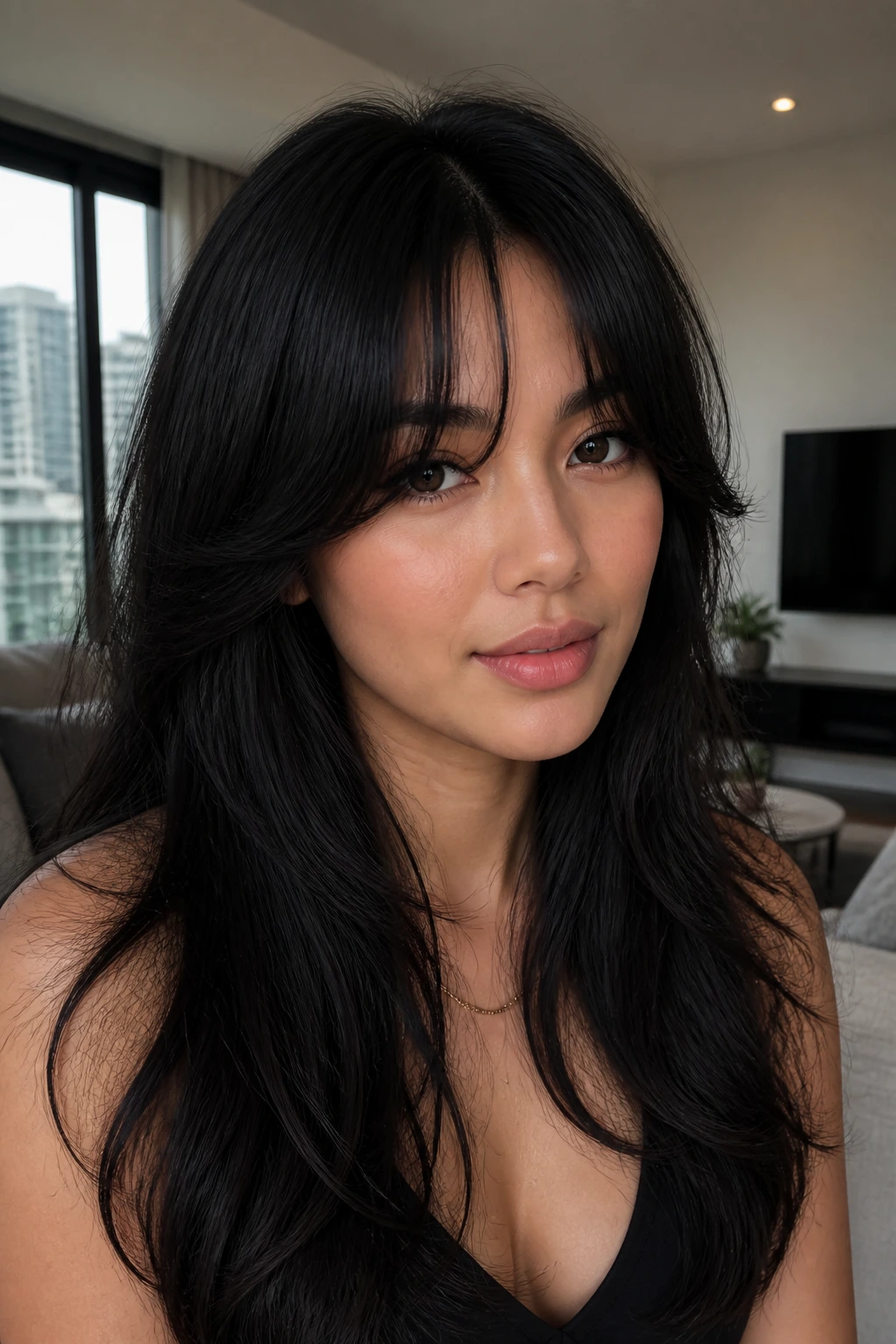
Black hair can look brutally straight if the cut is too blunt, and that is bad news on a long face. Razor-soft curtain bangs fix that by loosening the edge without making the fringe thin. The result is softer around the forehead and more controlled through the ends.
This look works especially well when the extensions are silky and the layers are long enough to move. If the front gets too heavy, the face looks boxed in. If it gets too airy, the density of the black hair can make it feel abrupt. The middle ground is a feathered curve that opens around the eye line.
I’d choose this when you want drama without hard lines. The hair can still be shiny and dark. It just needs a little less severity at the front.
15. Heatless Waves and Loose Fringe
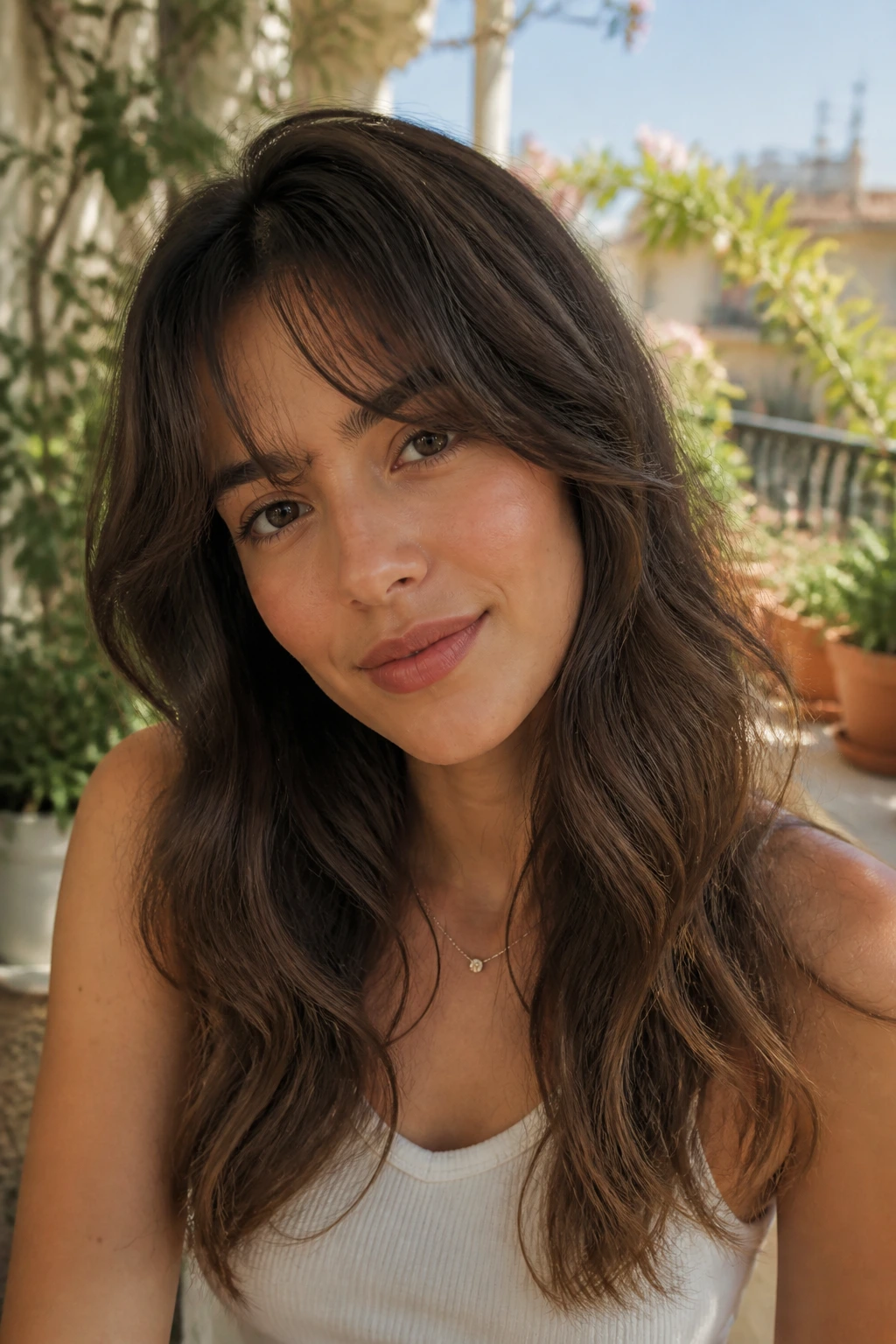
Can you wear curtain bangs with extensions and skip the hot tools most days? Yes, if you build the shape the right way. Heatless waves work because they keep the front from collapsing into a flat sheet, and the fringe can be trained with clips or rollers while the rest dries.
How to Wear It
Start with damp hair and wrap the front pieces away from the face using a soft foam rod or a large heatless curler. Let the side lengths set in a loose S-shape. Once dry, separate the bangs with your fingers and pin each side for five minutes so the curve holds.
This is a good option if your face is long and your hair gets frizzier with heat. The fringe stays soft, the extensions keep their bend, and the overall shape feels less overworked. It’s also one of the better choices if you want your hair to look a little undone on purpose.
A flat iron can always refine the ends later. The set matters more than the tool.
16. Clip-In Volume with Wide Curtain Bangs
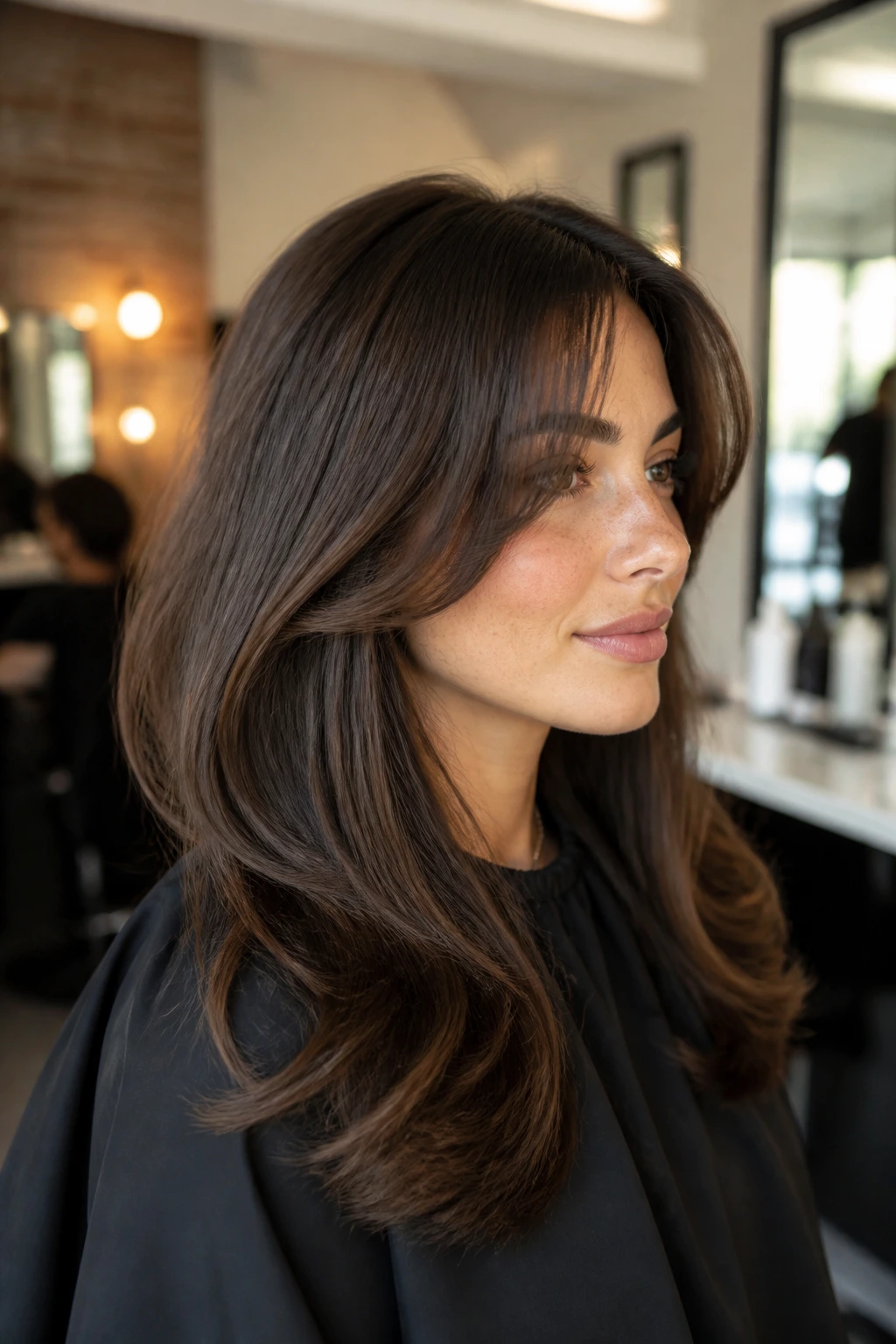
Picture getting a wider cheekbone frame in ten minutes. That’s the point of clip-in volume with curtain bangs. The clips add fullness through the sides and back, which lets the fringe stay soft up front instead of trying to carry the whole haircut by itself.
This version is good if your natural hair is fine or you want the option to remove the extra bulk at night. Clip-ins can sit lower than tape-ins, so the front pieces don’t feel crowded. Keep the bangs wide enough to open across the temples, but not so wide that they cover the whole forehead. That’s the balance.
- Best placement: Below the temple, above the ear, never right under the bang line.
- Best finish: Loose blowout, not a tight curl.
- Best for: Events, photos, or a temporary shape change.
The face should look framed from the side, not hidden from the front.
17. See-Through Bangs for Fine Hair
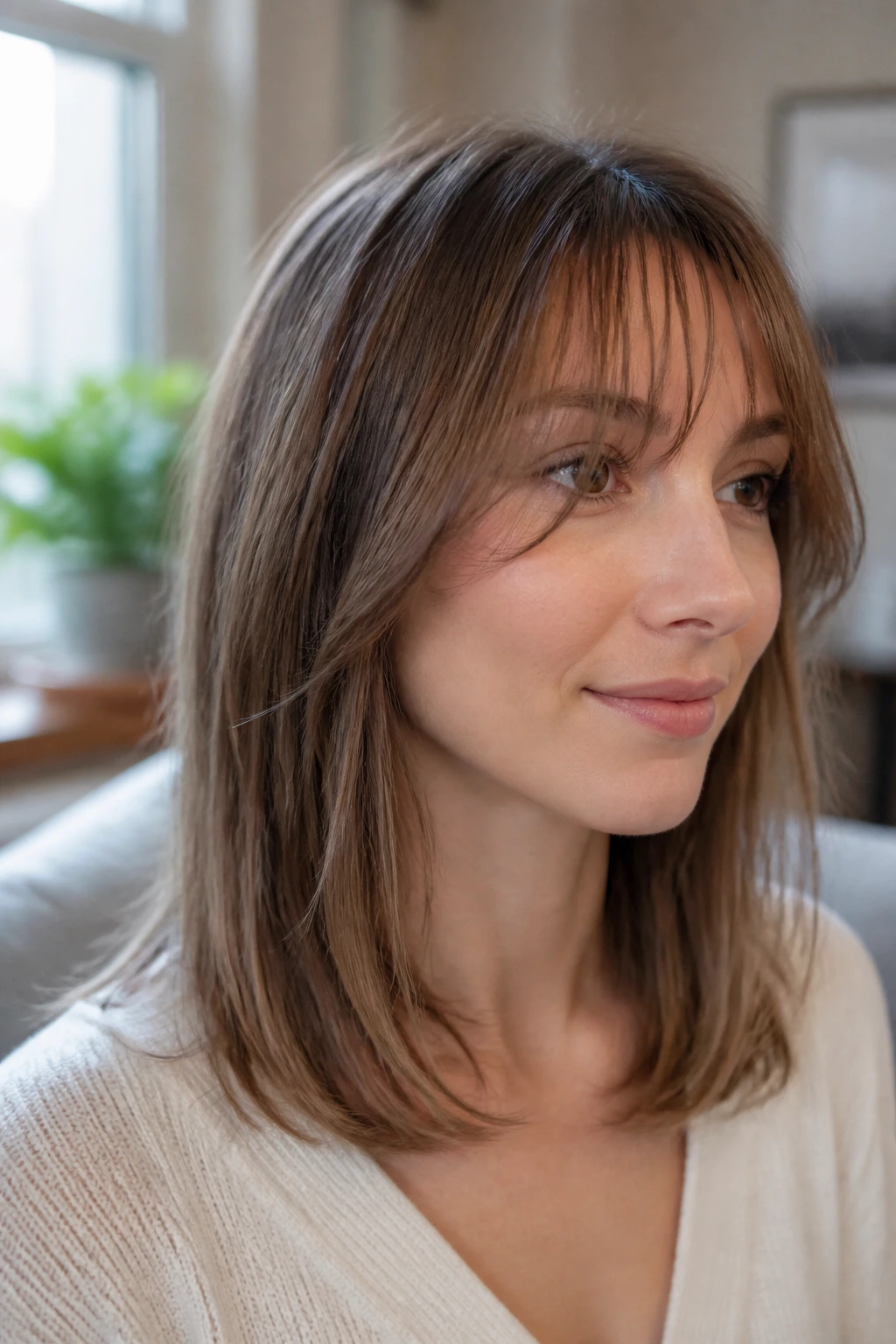
Fine hair often looks best with a curtain fringe that doesn’t pretend to be thick. A see-through version leaves little gaps between the strands, which keeps the front airy and stops it from clumping at the roots. On a long face, that airiness is useful because it gives the forehead a soft break without weighing the rest of the cut down.
The extension lengths should be light too. Heavy bundles can swallow fine hair fast, especially around the temples. I’d keep the longest pieces at the collarbone or just below if the natural density is low. That way the haircut still reads as full, but it doesn’t look like it borrowed all its shape from the extensions.
A one-sentence rule: if the fringe feels sticky when you separate it, it’s too dense.
18. De-Bulked Fringe for Dense Hair
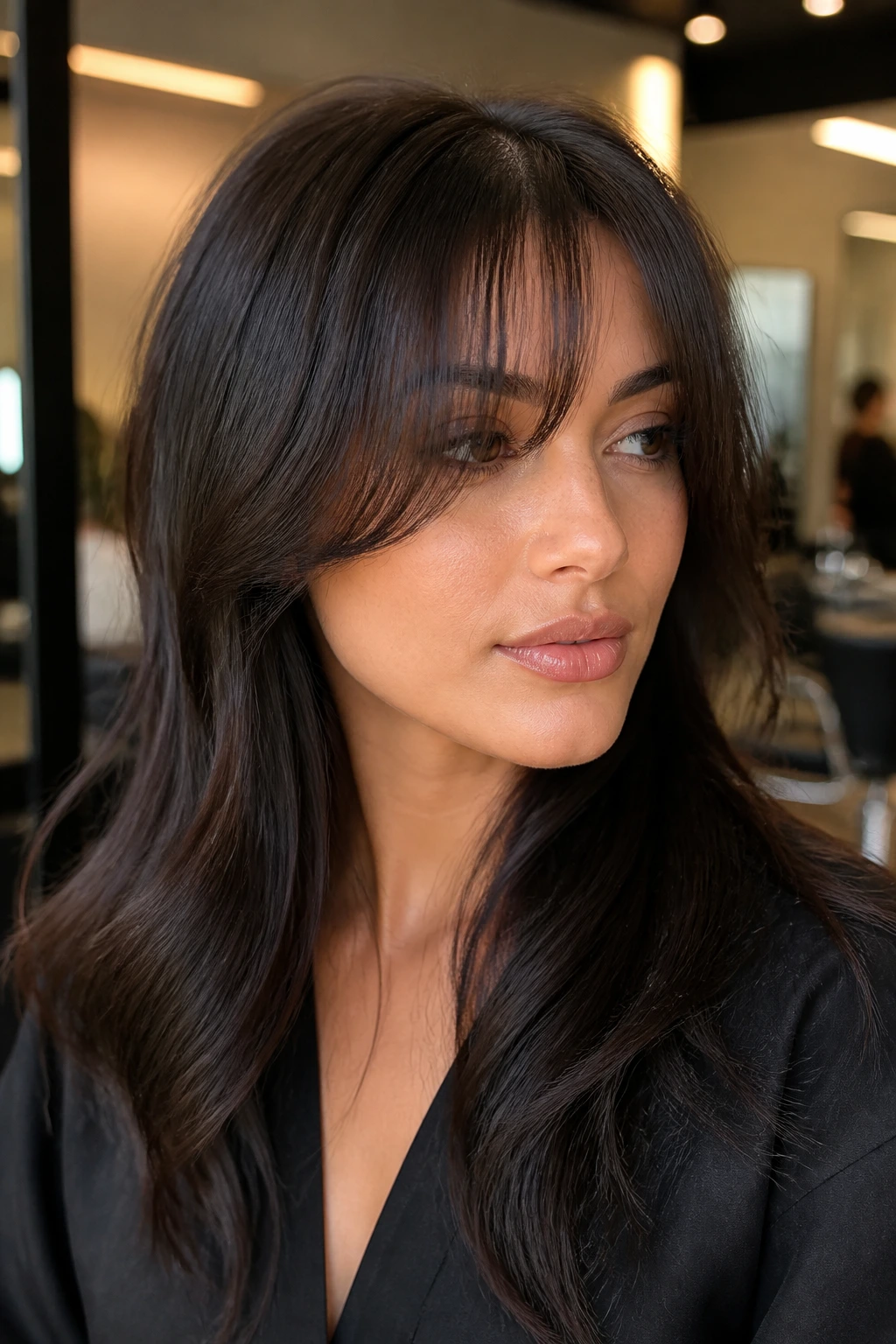
Dense hair needs a different kind of curtain bang. Not thinner in a weak way — thinned in the interior so the shape can actually move. Otherwise the front sits like a slab, and slabs are not kind to long faces. They add width in the wrong place and flatten the cheekbone area.
This version works best when the stylist removes weight from the inside while leaving the outer edges intact. That keeps the fringe soft without making it wispy. Extensions should be layered with the same idea: remove excess bulk where the face frame starts, then keep enough density through the ends to support the shape.
What to Watch For
If the bangs poof outward at the sides, they’re too heavy. If they split into stringy pieces, they’ve been thinned too much. The good version sits in the middle and moves when you blow-dry it.
Best recommendation: ask for internal texturizing, not an aggressive chop.
19. Cheekbone Frame with Center Part
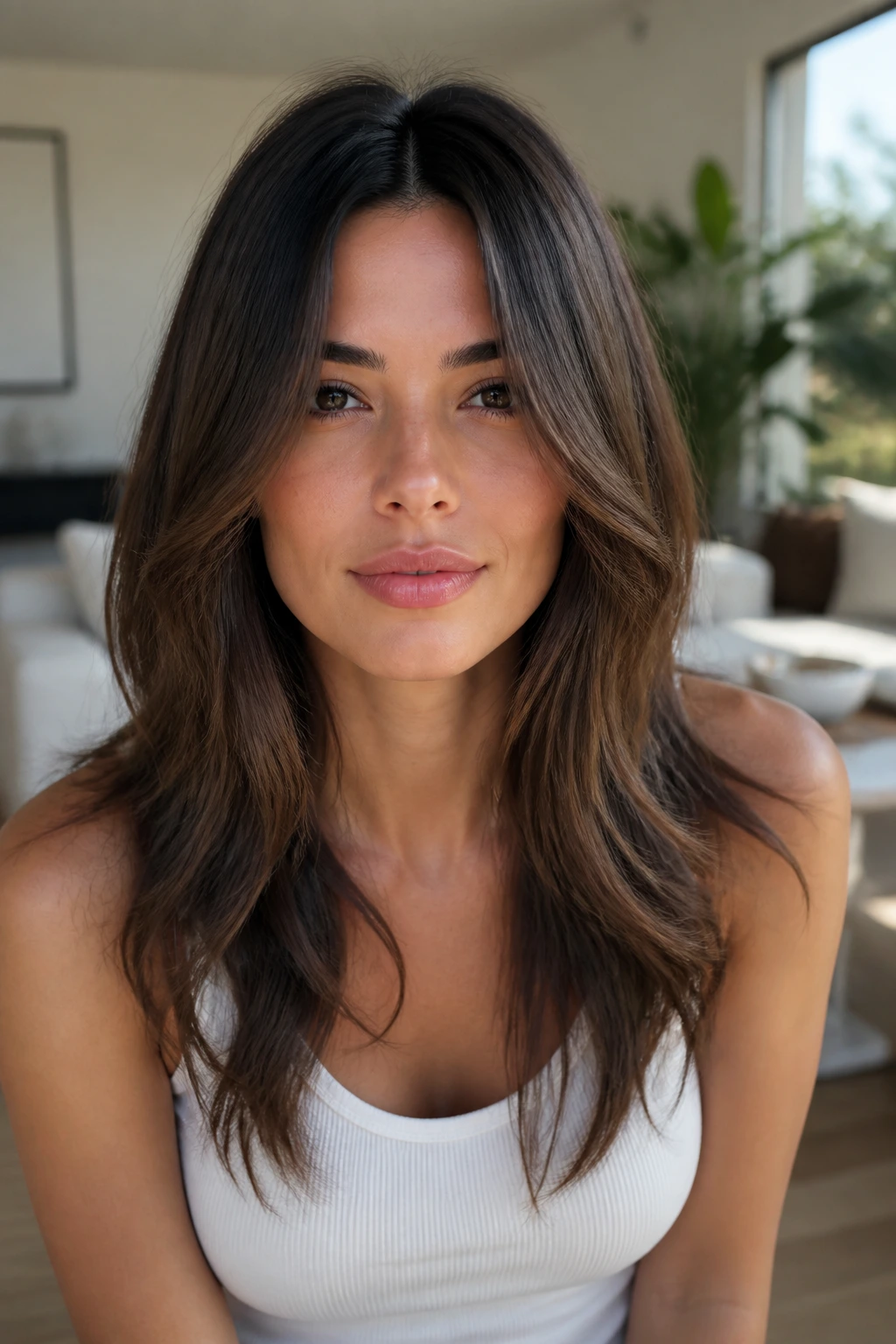
A center part on a long face does not have to be severe. If the face frame starts at the cheekbone, the middle part becomes a clean line instead of a long, empty runway. That’s the difference between symmetrical and stretched.
The style works nicely when the front pieces are cut to land near the cheekbones and lip corners, with the rest of the extensions falling in soft layers. You want the eyes to hit that first bend and stop there for a second. That’s what makes the look feel balanced.
- Best for: People who like symmetry but need some side softness.
- Best texture: Wavy or softly curled, not flat-iron straight.
- Best note: Keep the center root lifted just a little so the part doesn’t sink.
A center part can be very flattering. It just needs something to do.
20. Braided Texture and Front Curtains
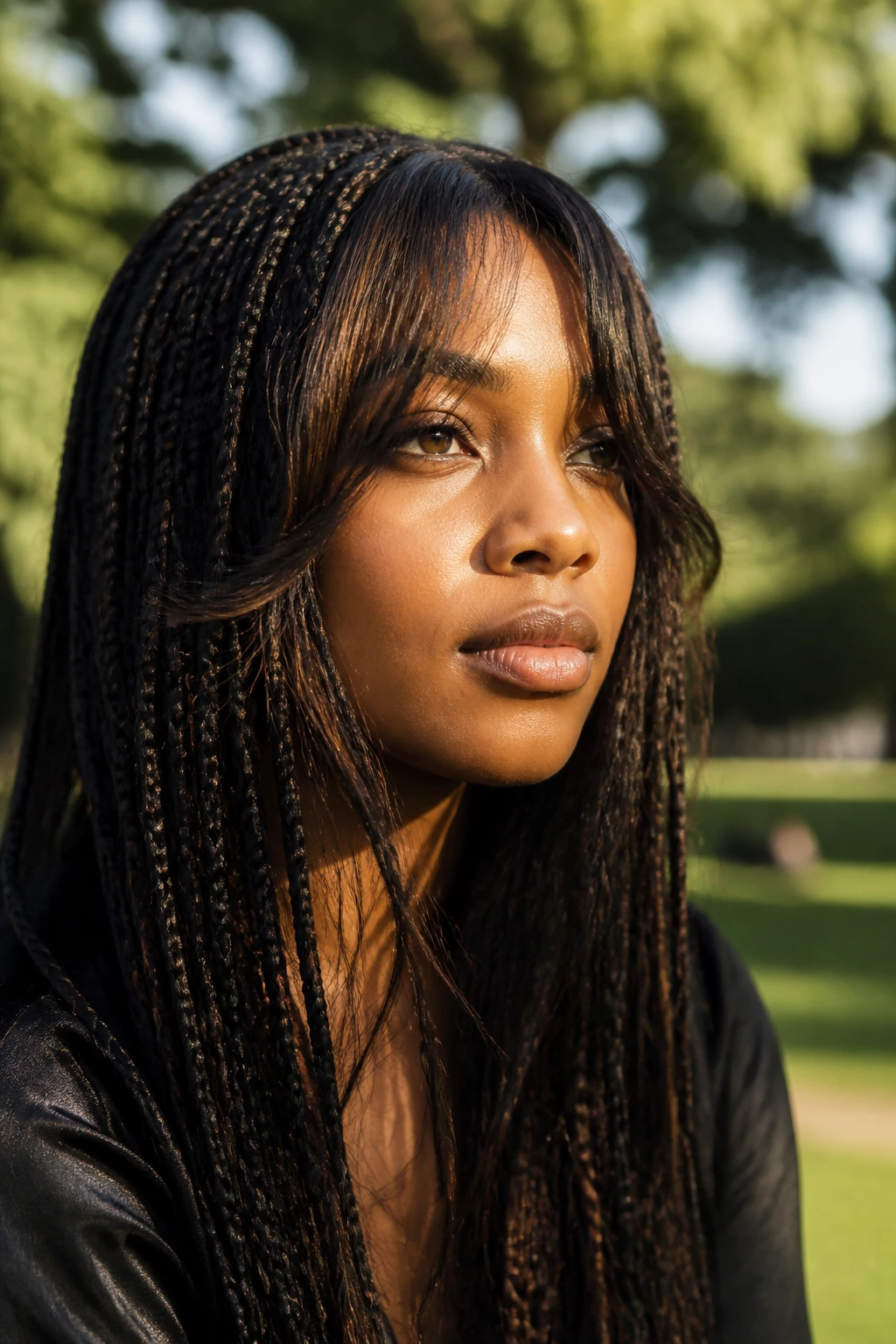
Braided texture brings a nice surprise to long faces because it creates width in the body of the hair, not only at the front. When you add curtain pieces to that texture, the face frame gets softer and the overall silhouette feels broader at the sides. It’s especially useful if your hair naturally shrinks or puffs in a way that makes straight styles hard to hold.
This version loves braid-outs, twist-outs, or loosely crimped extension hair. The fringe should stay flexible and not glued down. The more defined the bend, the better the long face balance tends to be, because the eye sees texture before it sees length.
If your texture is tighter, keep the front pieces a touch longer than you would on straight hair. Shrinkage is not a suggestion. It will do what it wants.
21. Halo Layers with Soft Face Frame
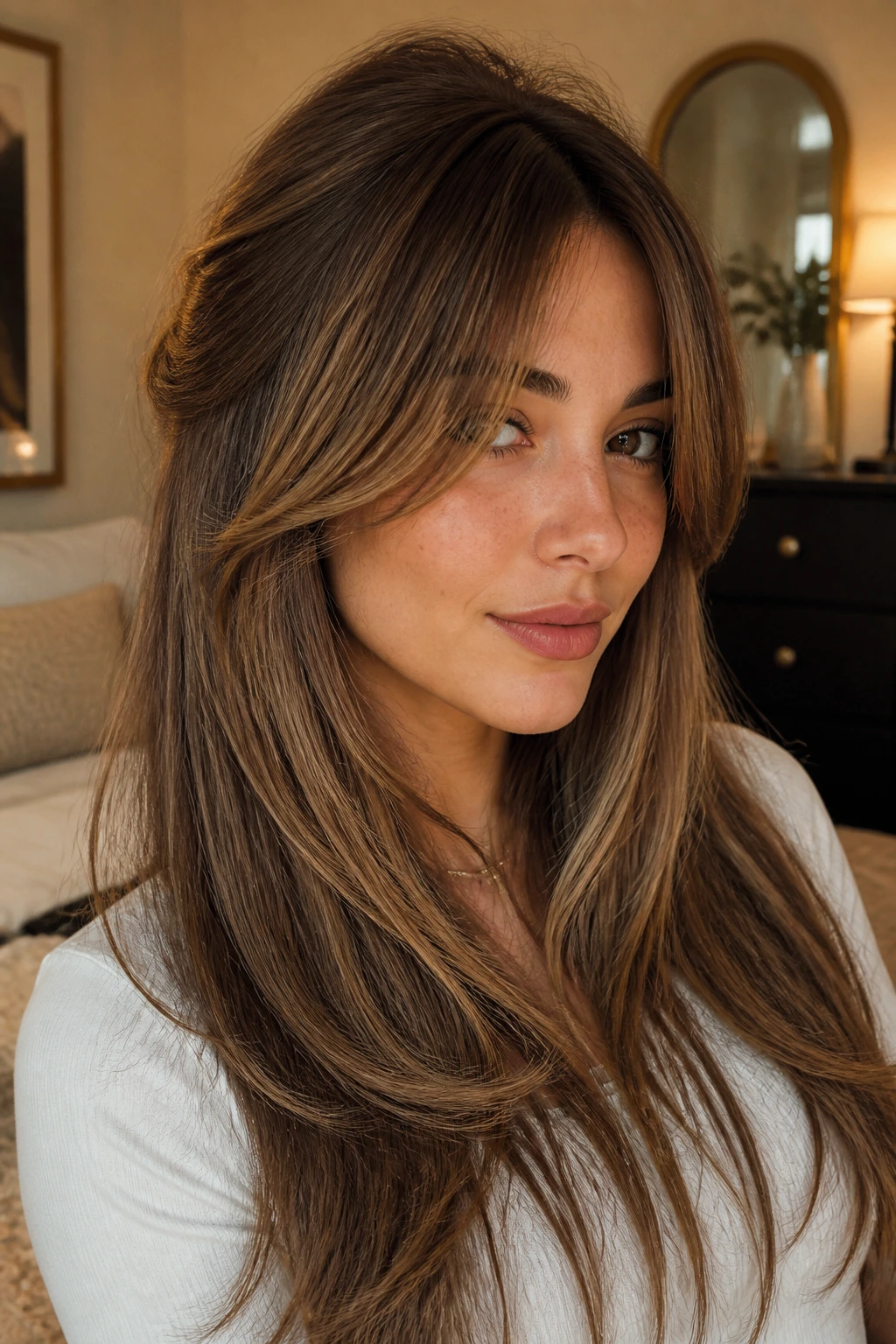
Halo extensions are a smart choice when you want fullness without a lot of install fuss. They keep the top lighter, which is useful on a long face because you don’t need extra crown height fighting the fringe. The face frame can stay soft and open, and the rest of the length hangs where it should.
Best When
This is the right call if you want a temporary shape boost with less commitment than sewn-in or taped-in hair. The curtain bangs can be styled separately from the halo, which makes the front easier to manage if your natural hair is a different texture. Keep the shortest point around the brows and let the side lengths brush the cheekbone.
The look can go glam fast if you overcurl the ends, so keep the bend loose. Halo hair should support the curtain, not overpower it.
A clean separation between front and back keeps the shape believable.
22. Sew-In Blend with Long Curtain Bangs
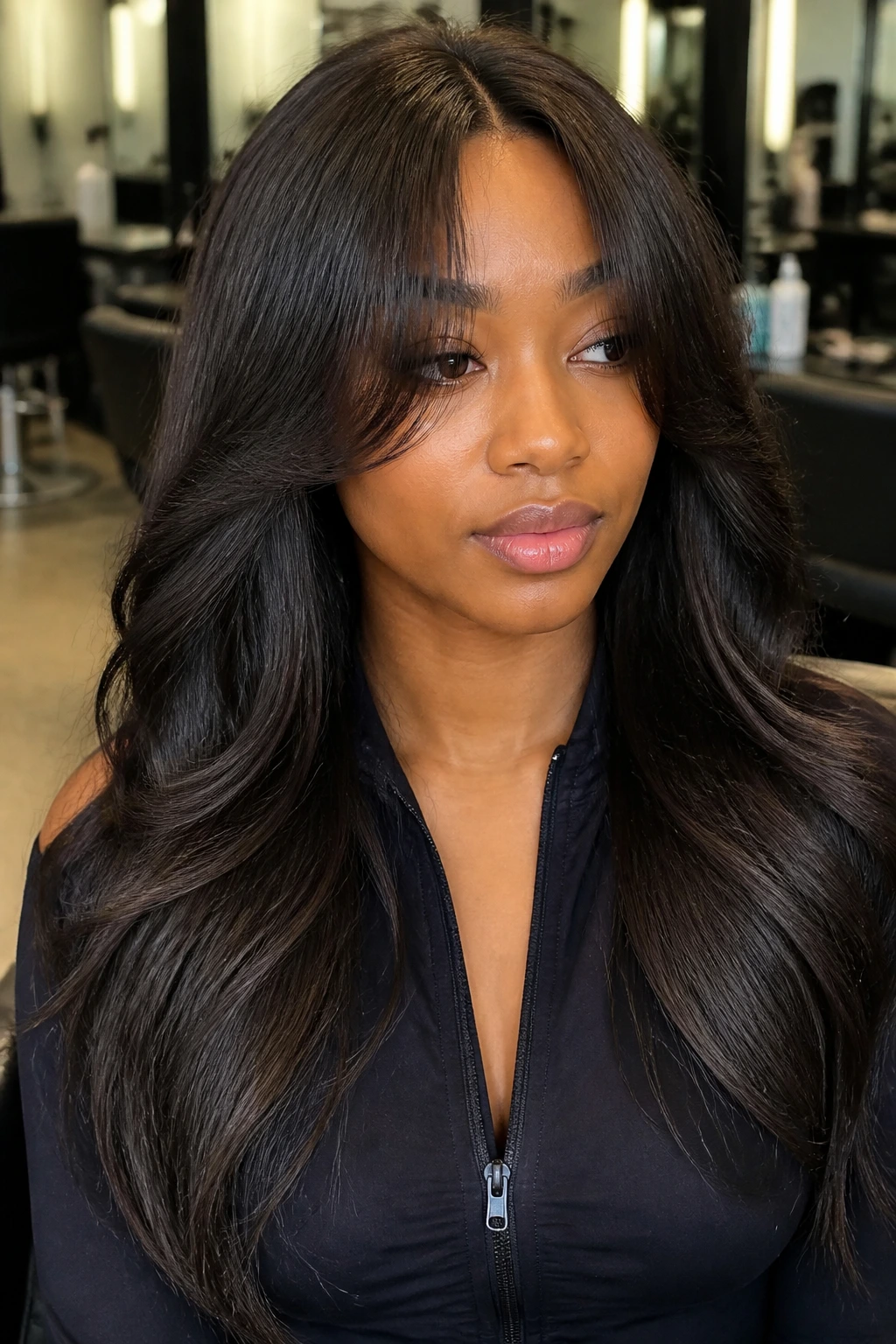
A sew-in gives a long face a lot of support through the sides and back, which is useful when the front fringe is meant to stay soft. The install can carry more density without looking obvious, especially if a stylist leaves out enough natural hair around the hairline for the curtain to move naturally.
This version looks best when the bangs are cut after the weave settles, not before. That lets the shape follow the actual fall of the hair. If the front is too thick at the seam, the style gets boxy. If it is too sparse, the install edge can show through. The sweet spot is a blended front that opens around the cheekbone and stays airy near the brows.
The overall effect should be smooth, not helmet-like. A sew-in can do that, but only if the front is handled with care.
23. Tapered Ends with Ribbon Highlights
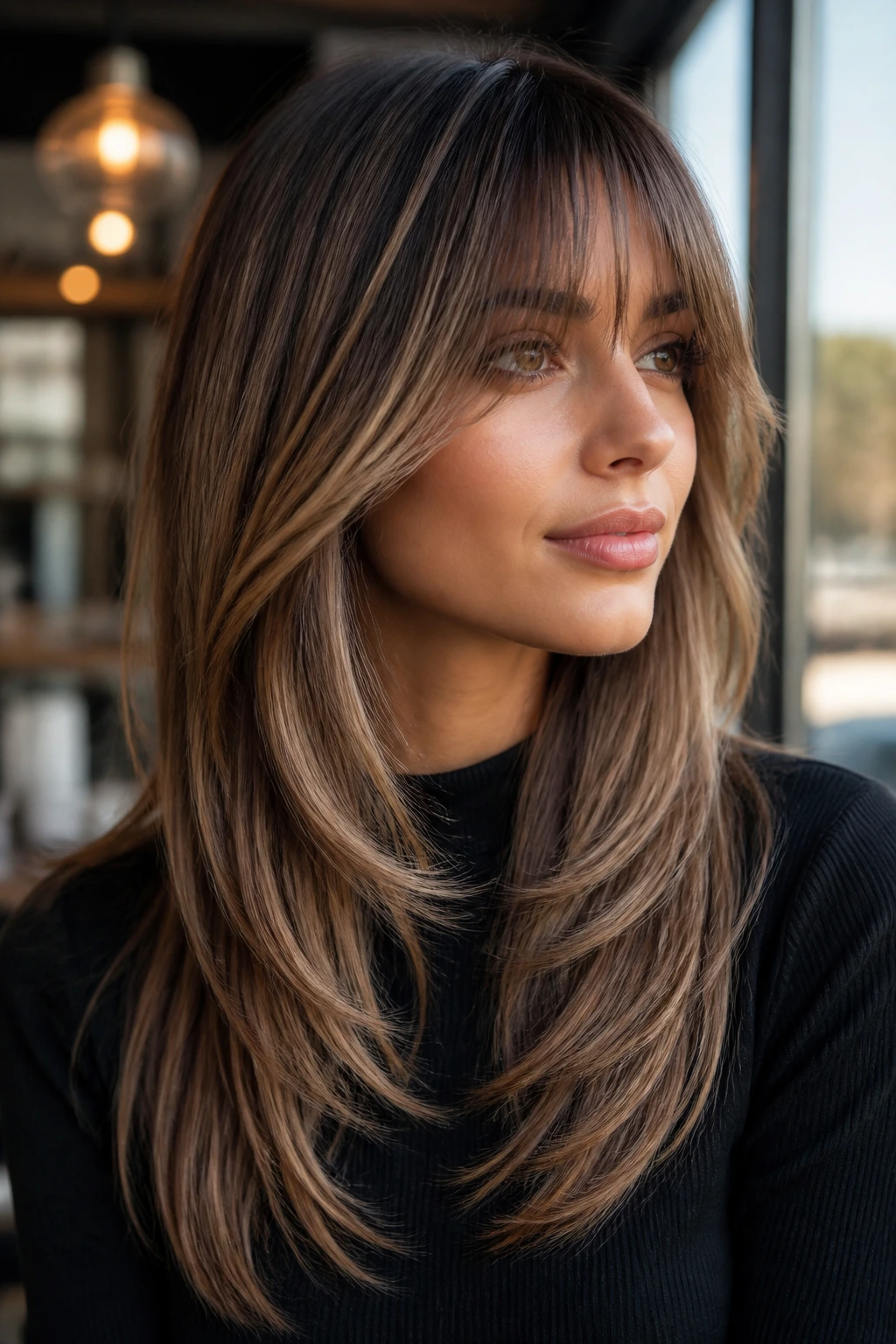
Tapered ends are underrated on long faces. They keep the length from ending like a hard line and give the curtain fringe a softer background to sit against. Ribbon highlights work the same way: they move the eye sideways without creating a loud stripe.
This look feels especially good when the extensions are layered from the cheekbone down. The top stays open, the ends narrow a little, and the whole cut has some swing. It is one of the better choices if you want your hair to look expensive without looking done-to-death.
The fringe should be soft enough to brush the brow, but not so airy that it disappears. The highlight ribbons should be thin and broken up, not chunky. Chunky highlights can make a long face feel longer because they drag attention straight down.
24. Editorial Model-Off-Duty Fringe
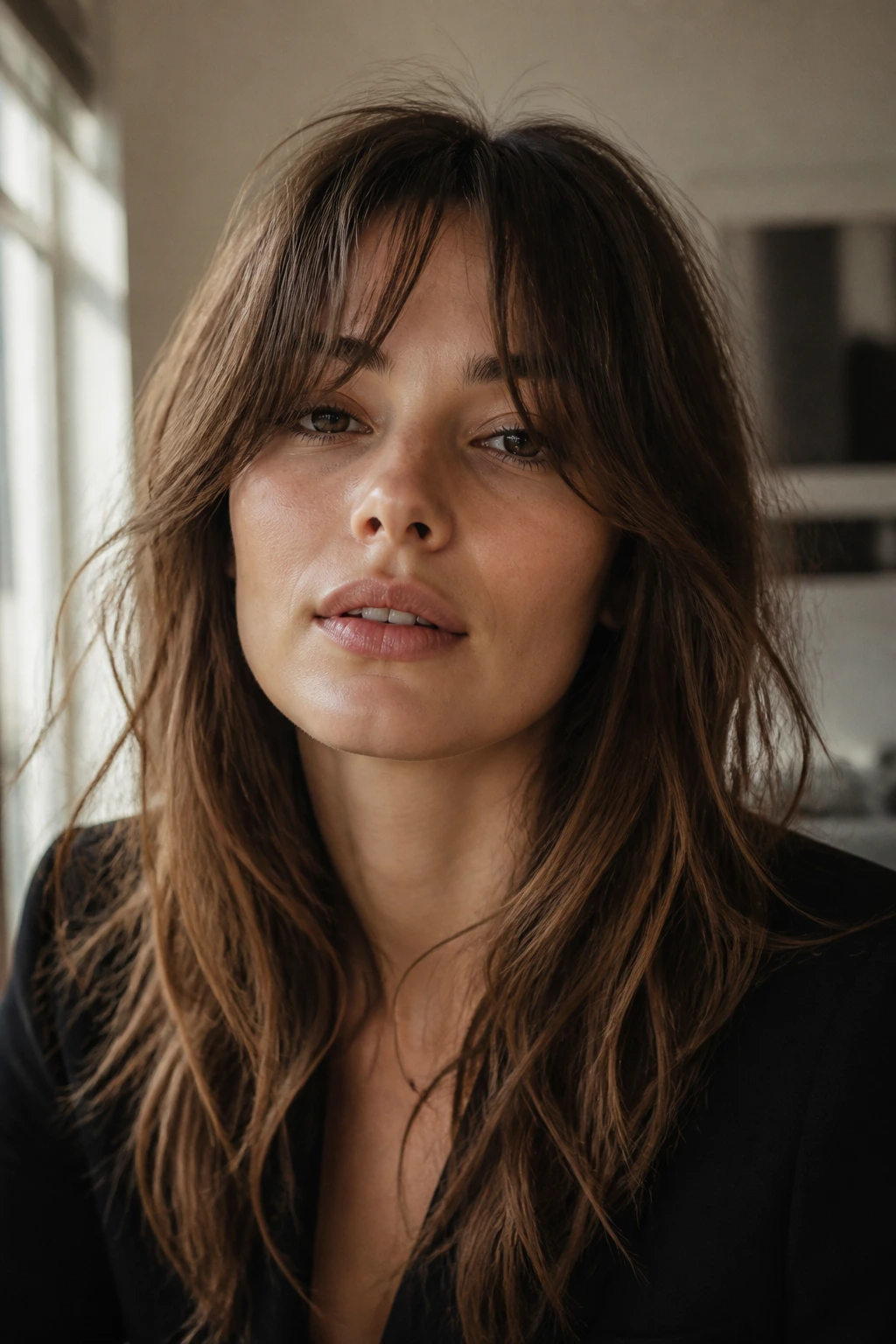
A messy curtain fringe can work if the mess is controlled. That’s the whole point of the model-off-duty version. The face frame sits a little looser, the part is not perfect, and the extensions fall in soft bends that look like you slept well and got lucky. On a long face, that looseness takes the edge off a strong vertical line.
This style is best when you don’t want a polished blowout every time. A little root lift, a little bend through the sides, and a bit of texture spray is enough. If the front gets too separated, the face can look drawn out, so don’t over-piecemeal the bangs.
Why It Works
The slight disorder keeps the shape from becoming too severe. You get width, movement, and a shape that doesn’t scream salon chair. That matters more than people admit.
25. Deep Side Lift with Airy Curtains
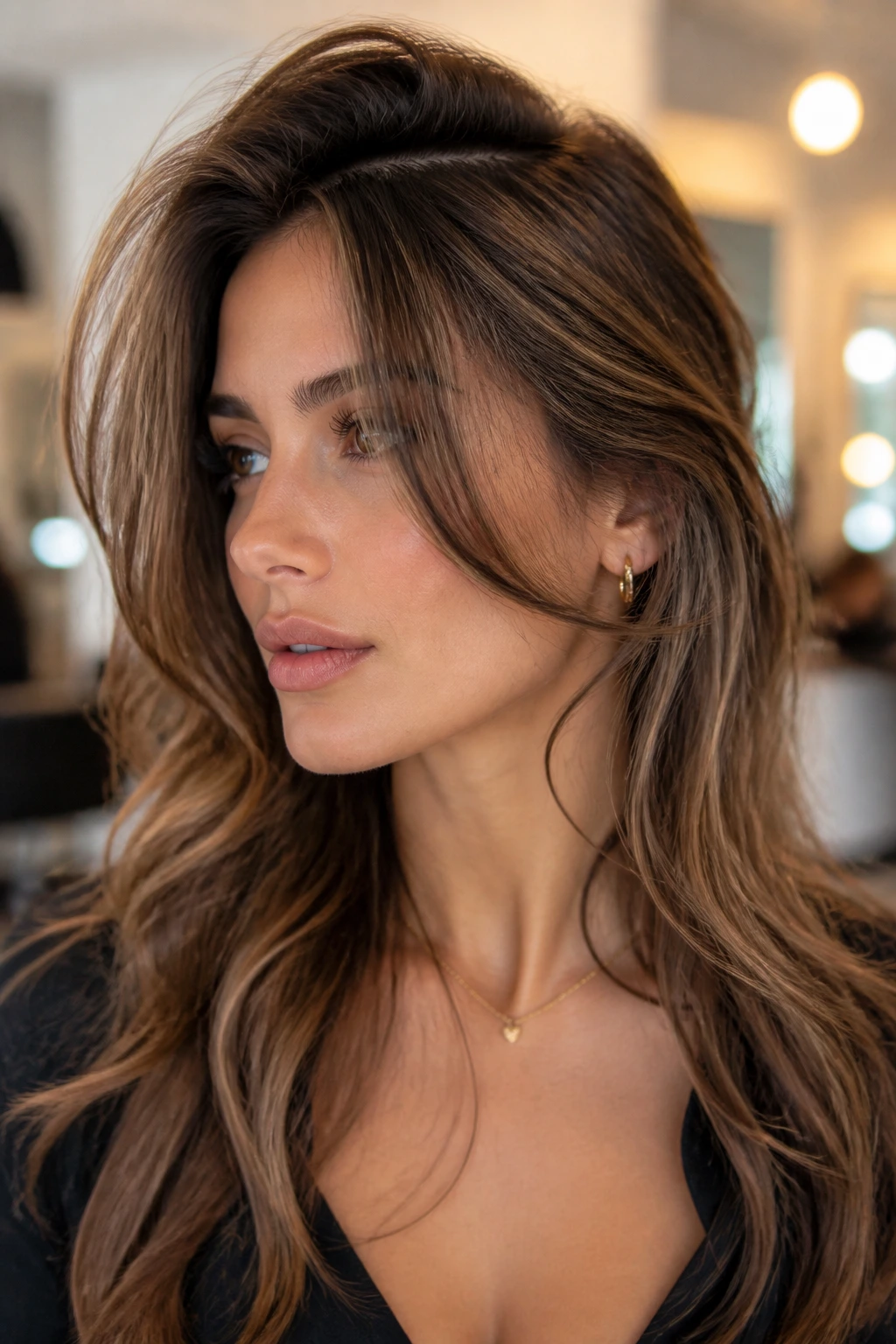
A deep side lift is the one I’d try for someone who likes curtain bangs but wants a touch more drama than a standard center opening gives. The side lift changes the balance at the root, which helps a long face feel shorter without cutting the fringe too short. The airy curtain still opens at the temples, but the root direction does some of the work too.
What to Ask For
Keep the longest face-framing pieces around the lip or chin, and ask for a gentle lift at the heavier side so the bang doesn’t fall dead center. That little adjustment can make the style feel less symmetrical and more flattering if your face is very narrow. It also helps when the extensions are thick and need a softer top line.
Quick takeaway: this is a smart choice if a strict middle part looks too long on you, but you still want the softness of curtain bangs.
Styling Curtain Hair Extensions with Bangs So They Hold Their Shape
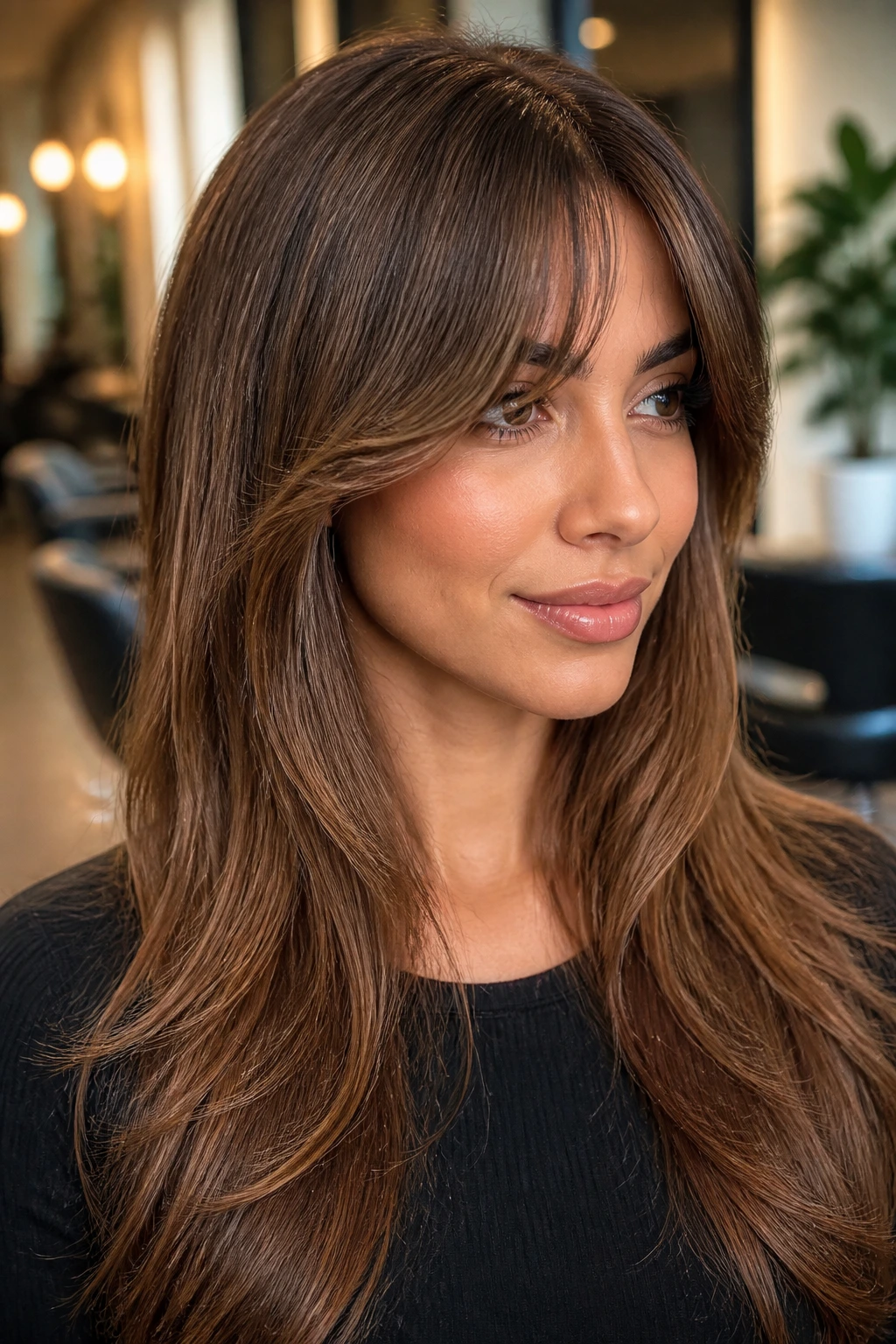
The front matters first. Dry the bangs before anything else, because if the fringe sits flat while the back is still damp, the whole shape goes sleepy at the root. I use a concentrator nozzle and a round brush, and I aim the airflow first down and then sideways. That sequence matters. It keeps the cuticle smoother while still giving the fringe enough bend to open away from the face.
Once the bang section is shaped, let it cool in place. Cool hair keeps the curve; warm hair forgets it. If you skip the cool-down, you’ll spend the whole day pushing pieces back into shape. A Velcro roller, a clip, or even a small pin can help the side pieces hold their outward sweep for ten minutes while you finish the rest.
Don’t overcoat the front with serum. The bangs are the first part to show oil, product, and humidity. A pea-sized amount on the ends is plenty. Keep the roots clean, keep the bend soft, and let the side pieces do their job.
Essential Tools for These Looks
-
1.5-inch round brush: Big enough to create a soft curve without making the bangs roll into a tight coil.
-
Blow-dryer with concentrator nozzle: Directs airflow so the fringe dries in the shape you want, not in the shape the room air chooses.
-
Tail comb: Useful for clean center parts and for lifting the bang section without tearing the top layer apart.
-
Duckbill clips: Great for holding the curtain pieces while they cool; they keep the bend in place.
-
Heat protectant spray: Needed anytime you use a brush dryer, flat iron, or curling iron near extensions or bangs.
-
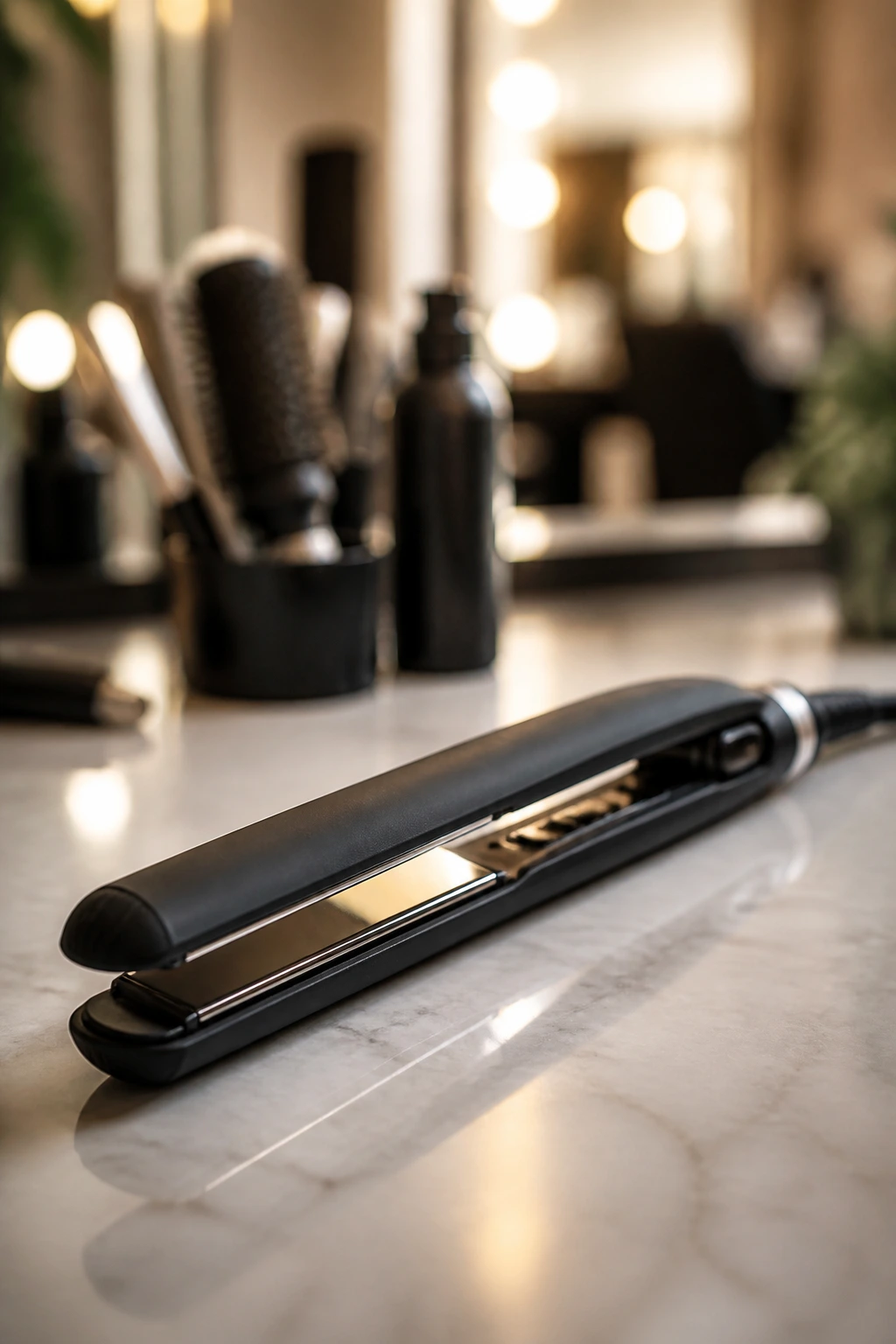
1-inch flat iron: Best for refining the side pieces and adding a soft bend at the ends.
-
1.25-inch curling iron or wand: Good for a loose wave through the extensions when you want movement without corkscrew curls.
-
Lightweight mousse or root lift spray: Gives the fringe enough structure to stay open instead of collapsing at the brow.
-
Dry shampoo: Helps the front stay fresh, especially if your forehead tends to get oily.
-
Satin storage bag or extension hanger: Handy for clip-ins so they don’t tangle or crease between wears.
Common Mistakes That Make a Long Face Look Longer
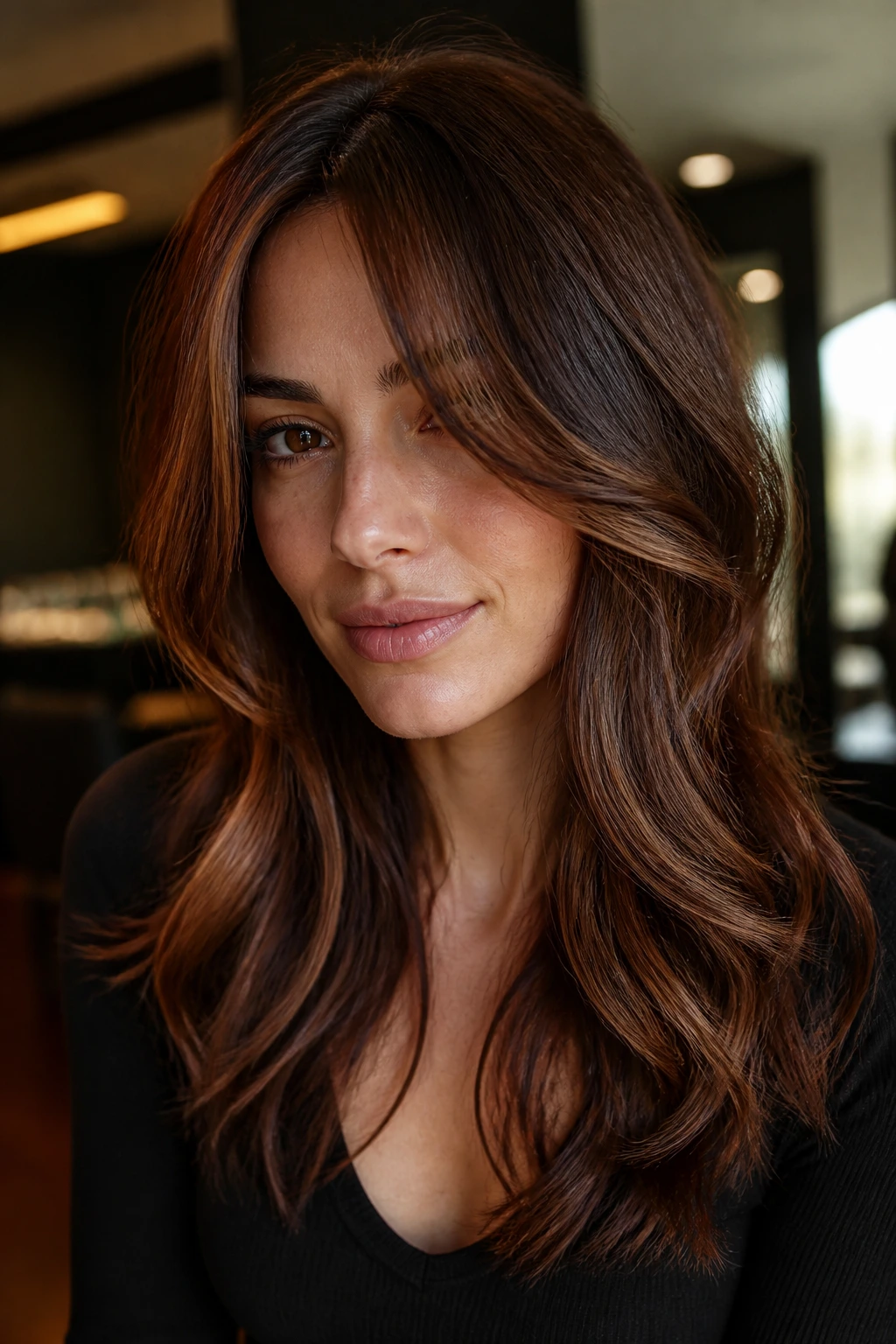
The biggest mistake is cutting the fringe too short in the center. When the brow is too exposed, the eye keeps moving upward and the face feels taller. The fix is simple: keep the shortest point around the brow, then let the sides open gradually. A curtain fringe should frame the forehead, not erase it.
Another bad move is letting the extensions fall in one straight sheet from temple to waist. That shape gives you length without width, which is the wrong trade on a long face. Ask for face-framing layers that start near the cheekbone or lip, and don’t skip the bend through the mid-lengths.
A third issue is over-thinning the bangs until they turn stringy. Fine see-through bangs can be lovely, but stringy is not the goal. If the fringe looks see-through because the stylist removed too much weight, it won’t sit cleanly and it will split too easily.
Watch the root line too
A center part that is too sharp can add another vertical line right down the middle of the face. Softening the root with a little lift, or shifting the part by half an inch, can make the whole style feel wider and more relaxed.
Humidity is the last troublemaker. If the front frizzes while the lengths stay smooth, the contrast makes the face frame look unfinished. Use the right product for your texture, then leave it alone. Touching the bangs every five minutes ruins the shape faster than weather does.
Variations and Alternatives Worth Trying
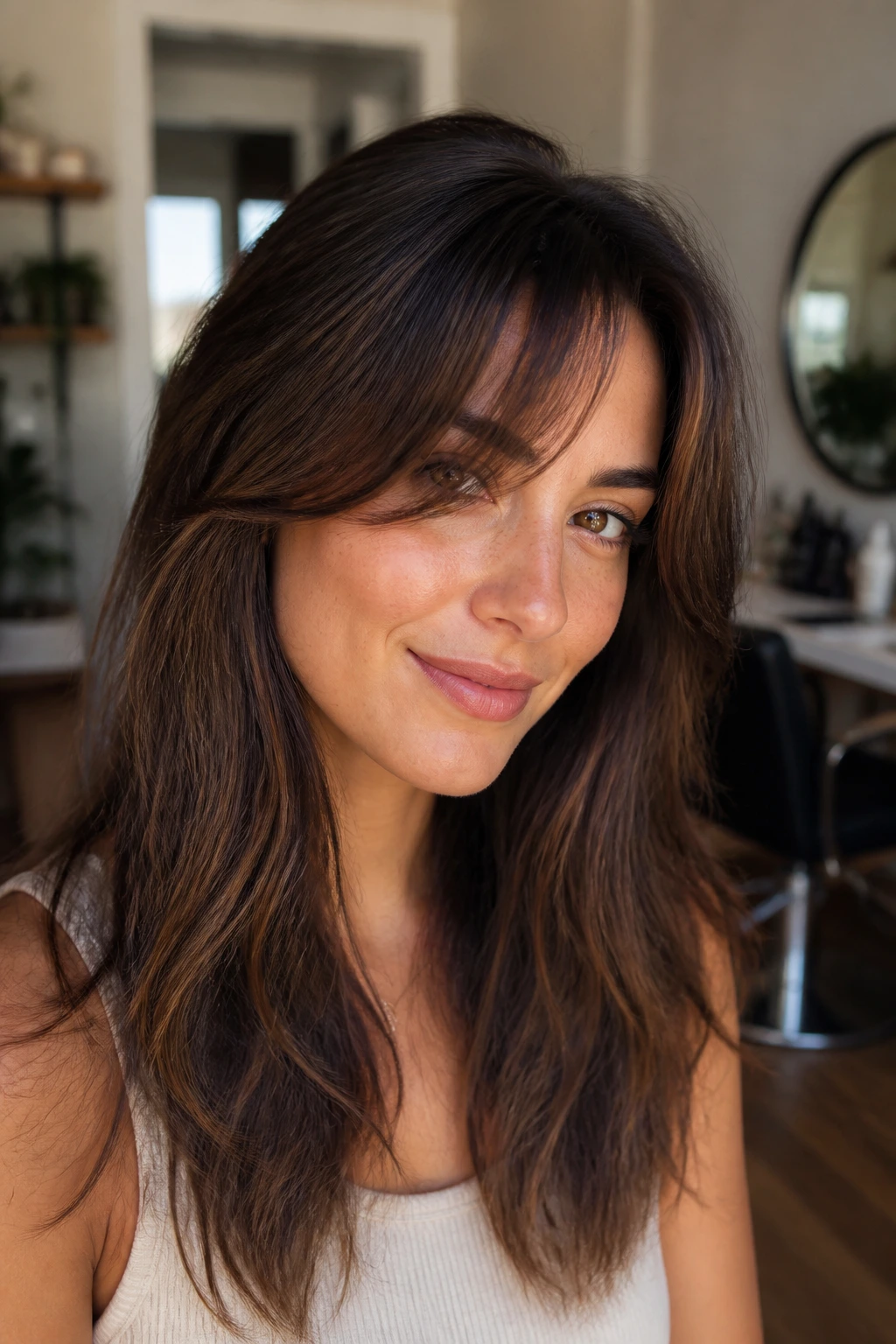
The Soft Office Sweep: Keep the curtain fringe light, low-maintenance, and barely off center. This is the one for people who need the shape to work with minimal morning effort and no obvious styling drama.
The Big Blowout Frame: Add a fuller round-brush set through the front and let the side pieces turn out at the cheekbone. It’s polished, fuller, and better when you want the extension length to look intentional rather than just long.
The Curly Halo Curtain: Pair natural curls or a halo install with a looser curtain shape. The texture gives the face width, and the fringe softens the forehead without needing a perfect blowout.
The Clip-In Weekend Switch: Use clip-ins for density and remove them before bed. This is useful if you want to test a stronger face frame before committing to a permanent install.
The Grow-Out Fringe: Let the bangs sit a little longer and softer while the extensions keep the shape below. This is the safest option when you’re between salon visits or growing out a previous cut that was too short.
Keeping Curtain Hair Extensions with Bangs Fresh Between Washes
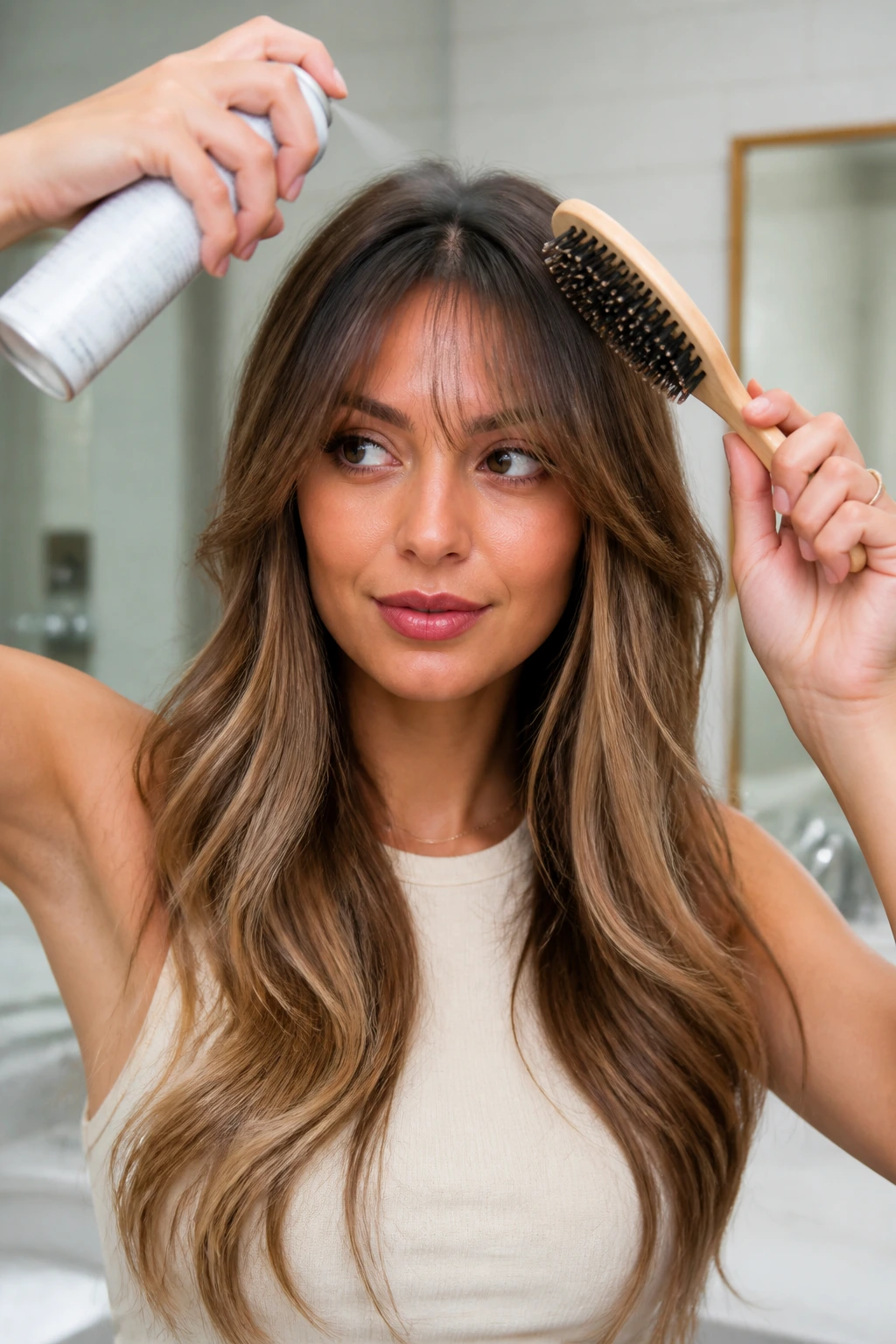
The fringe will always get oily first. That’s just the forehead doing forehead things. On most hair types, the bangs may need a light refresh every one to two days even if the rest of the hair can wait longer. A small mist of dry shampoo at the roots, followed by a quick brush and a five-minute re-bend with a round brush, usually does the job.
Clip-ins need to be taken out before bed and stored flat or hanging so they don’t kink at the wefts. Wash them after eight to ten wears, or sooner if product buildup starts making them feel sticky. Tape-ins and sew-ins need a different rhythm. Tape-ins usually need a move-up every six to eight weeks. Sew-ins tend to need tightening or maintenance around six to ten weeks, depending on growth and scalp tension.
Night care matters
Sleep on a satin or silk pillowcase if you wear bangs and extensions often. If the fringe wants to separate, clip the front lightly away from the face before sleep. Don’t wrap the bang area too tightly; that creates bend marks that are annoying to fix the next morning.
Trim the fringe every four to eight weeks if you want the curtain to keep its shape. Let the extension lengths go longer between major reshaping appointments, but check the ends for tangles and dry spots every few washes. Dry ends make the whole style look tired, fast.
Frequently Asked Questions
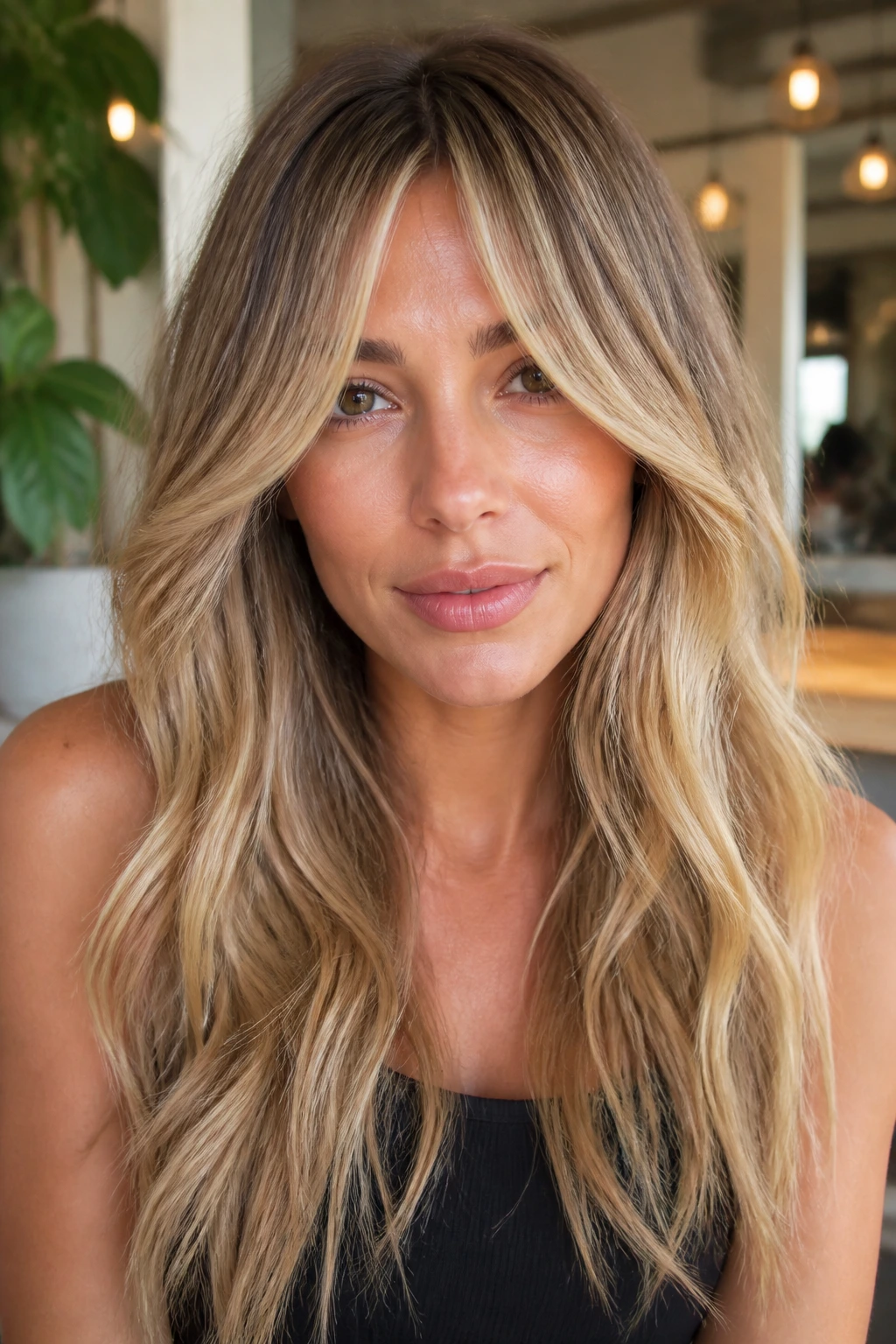
Do curtain bangs actually suit long faces?
Yes, if they’re cut and styled to open at the cheekbones instead of sitting like a heavy block across the forehead. The width of the fringe matters more than the amount of forehead covered.
Should curtain bangs be shorter or longer on a long face?
Usually a brow-grazing center and longer sides work best. Too short in the middle makes the face look taller, while too long can flatten the frame and lose the lift.
What extension type works best with curtain bangs?
Clip-ins are the easiest if you want flexibility, while tape-ins and sew-ins give a smoother, more permanent blend. Halo extensions can work too, especially if you want less top heaviness and a softer install.
Can curly hair wear this look?
Absolutely, but the bang length needs to account for shrinkage. Curly and coily textures usually need a longer starting length, then a trim once the hair is styled in its natural pattern.
How do I stop the bangs from splitting too much?
Start with a little root lift and keep the center piece from being too thin. If the part keeps opening, the fringe may need more density or a softer off-center root.
Will long extensions make my face look longer?
They can, if the hair hangs in one straight line with no face framing. The fix is layered sides, a cheekbone opening, and some bend through the lower half of the hair.
What if my forehead is small?
Choose a lighter curtain fringe that starts a little lower and stays airy. You still get the side frame without letting the bangs crowd the face.
How often should I trim the fringe?
Every four to eight weeks is a good range for keeping the shape clean. If you like a grown-out, softer curtain, you can stretch that a little longer, but the bend will need more styling.
A Softer Frame at the Finish
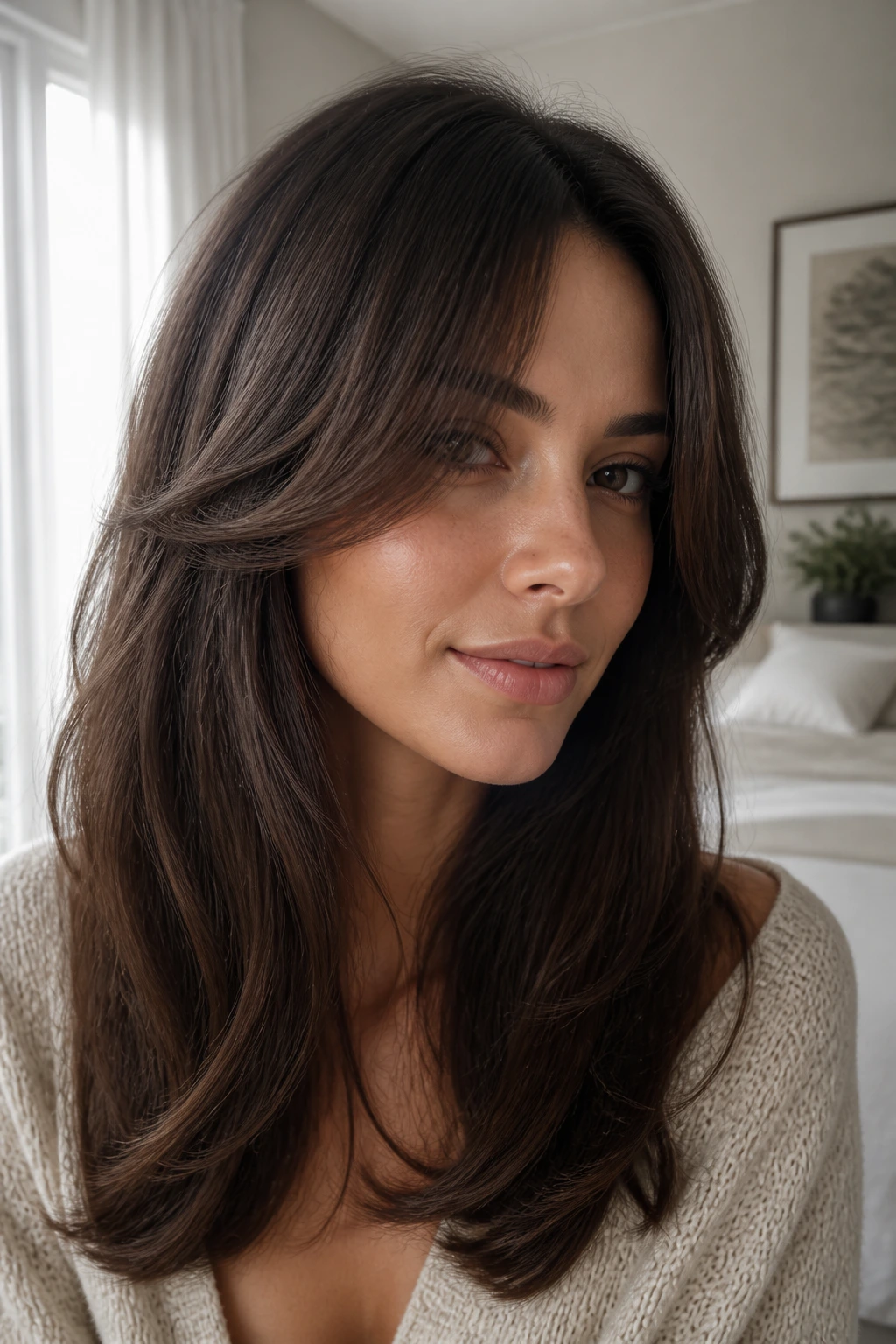
Long faces do not need to be hidden; they need a frame that stops the eye in the right place. Curtain hair extensions with bangs do that better than almost any other fringe-and-length pairing because they shape the sides first and let the length behave itself. That’s the real advantage here. The bangs are not decoration. They are the first line of balance.
Pick the version that matches your texture and density, then test it in real life: one blow-dry, one humid day, one morning when you don’t have time to fuss. If the fringe still opens at the cheekbones and the extensions still give the face some width, you’ve got the right shape. Start there, and the rest gets easier.