



Fine hair can sit right at shoulder length and still look full—if the cut knows where to hold weight and where to breathe. That’s the whole trick. One blunt line in the wrong place, and the ends look see-through by noon. Put the layers in the right spots, though, and the hair suddenly reads as thicker, cleaner, and a lot more awake around the face.
The best shoulder length haircuts for fine hair with soft layers don’t chase drama for its own sake. They keep a solid perimeter, then add movement with restraint: a cheekbone piece here, a collarbone graze there, maybe a few internal layers that never show their hand until the light hits. That’s the kind of cutting that makes fine hair look like it has more body than it actually does.
I’ve always preferred this length on fine hair because it behaves. You can tuck it, bend it, clip it back, air-dry it, blow it out, or let it do a half-rebellious bend on its own. The shapes below each handle that differently, and the good ones all have one thing in common: they protect the ends while giving the front something to say.
Why These Cuts Keep Fine Hair from Falling Flat
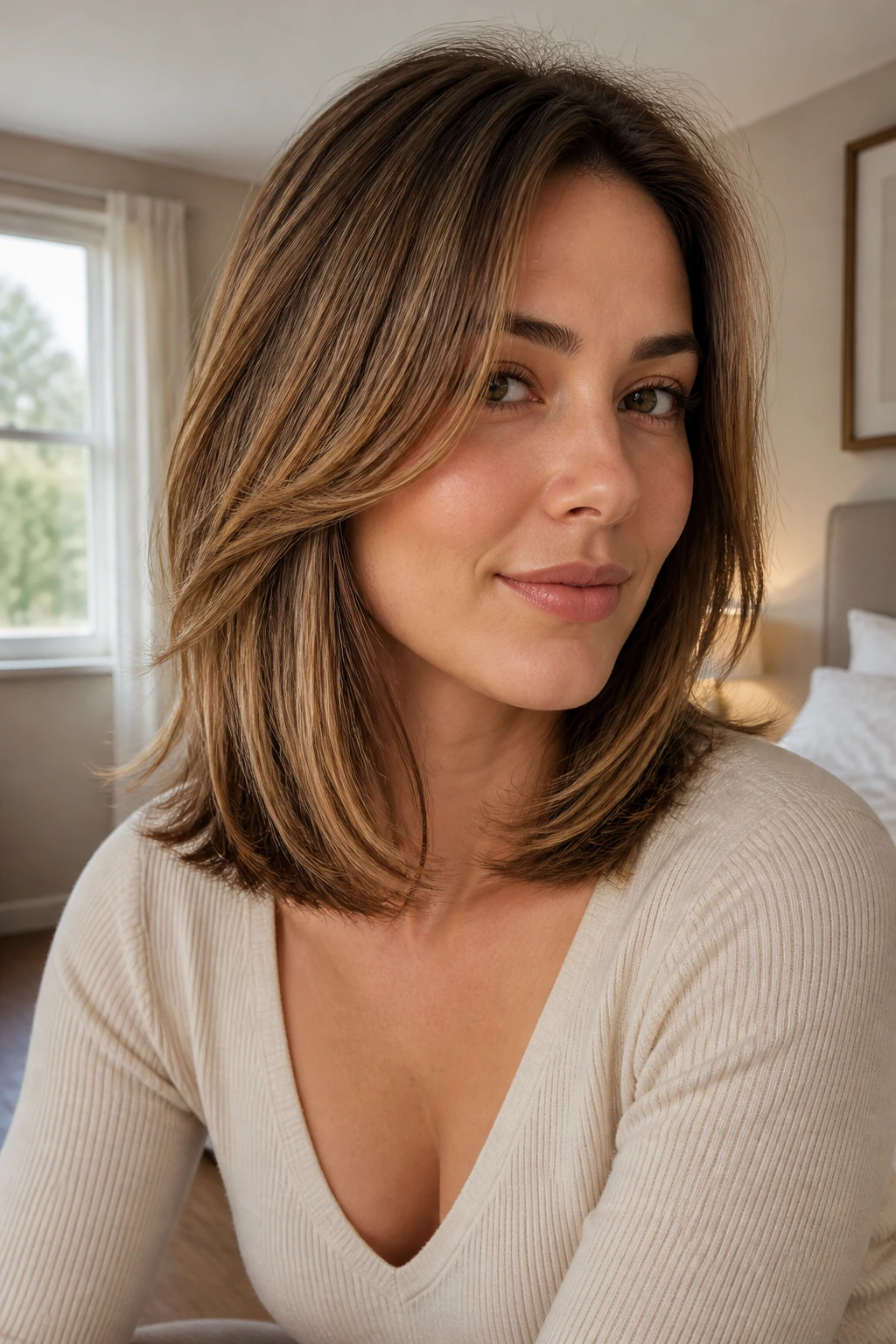
- A stronger hemline matters: Fine hair looks fuller when the bottom edge stays blunt or softly rounded instead of broken up into wisps.
- Movement belongs near the face: Soft layers around the cheekbone and jaw add shape without stealing density from the back.
- Shoulder length gives fine hair a break: Anything much longer can drag the roots down and make the mids and ends look stringier.
- Soft layers age better as they grow: The shape still looks intentional eight weeks later, instead of collapsing into random short pieces.
- Bang-friendly, but not bang-dependent: These cuts can work with curtain bangs, side-swept fringe, or no fringe at all.
- Easy to style without chasing volume all day: A little root lift and a quick bend at the ends usually does the job.
1. The Blunt Collarbone Lob with Soft Face-Framing
A blunt collarbone lob is the haircut I reach for when fine hair needs structure more than it needs decoration. The line sits right at the collarbone, which gives the ends enough visual weight to look dense, and the soft face-framing starts lower—usually around the cheekbone or just under it—so the front moves without thinning the whole cut out.
Why It Works
The blunt edge does the heavy lifting. Fine hair often looks best when the perimeter is solid and the layering stays light, because a thick-looking hemline is what tricks the eye into seeing more hair than is actually there. The face frame can be point-cut just enough to soften it, but the back should stay calm and clean.
This one is especially good if your hair goes limp when it’s too layered. It gives you a cut that still swings when you turn your head, but it doesn’t fall apart after a day of wear.
2. The Invisible-Layer Lob
What if the layers stay hidden? That’s the appeal here. From the outside, this looks like a simple shoulder-grazing lob, but inside the shape there are subtle layers that remove bulk in the middle without breaking the outer line.
What Makes It Different
The perimeter stays blunt, which is the part everyone sees first. The softer movement lives underneath, so the hair gets a little lift when you blow-dry or tuck one side behind your ear, but the ends still look full from the front. That matters a lot on fine hair. A visible stack of layers can read as thin in daylight, especially when the hair is straight.
Best For
- Hair that falls flat at the crown but still has decent ends
- People who want movement without a shaggy finish
- Anyone who likes a low-key cut that still has some shape when air-dried
Ask your stylist for internal layering only, with the outer line left mostly intact. That one detail saves the cut.
3. The Soft Shag with Dense Ends
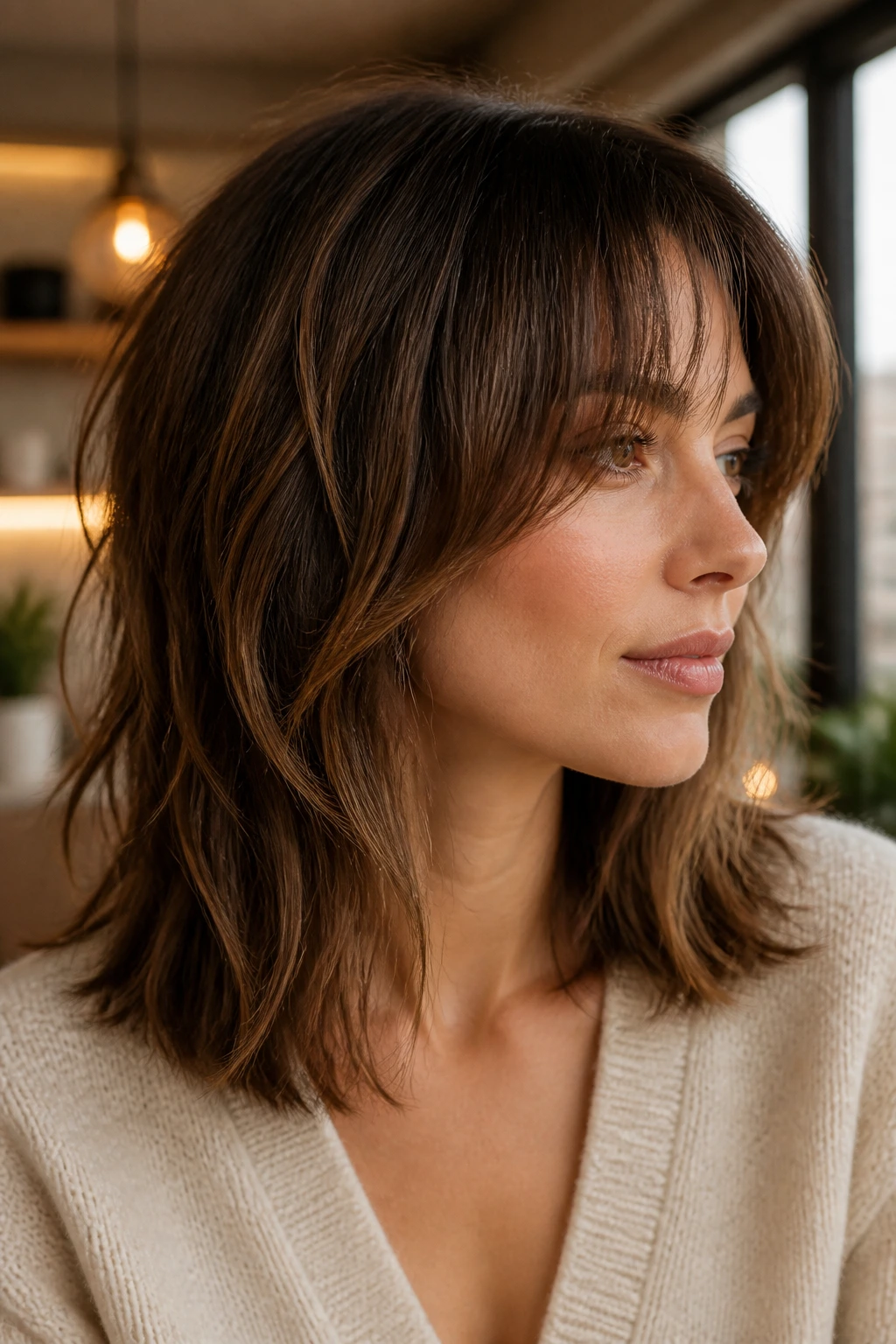
If you like a little edge, this is the cut that gives it to you without wrecking the hemline. A soft shag on fine hair has to be handled carefully. Too many short layers and the ends go feathery in a bad way. Keep the layers long, keep the ends full, and the whole thing feels lighter around the face without losing its spine.
It’s the kind of cut that wakes up with texture spray. Straight hair gets a mild bend. Wavy hair gets a loose, lived-in shape. And because the shoulder length keeps the weight from disappearing, the style can still sit neatly instead of exploding into a halo of flyaways.
I like this version most when the layers begin below the cheekbones and taper toward the collarbone. That keeps the shape soft, not choppy.
4. The Rounded Shoulder Cut with Internal Layers
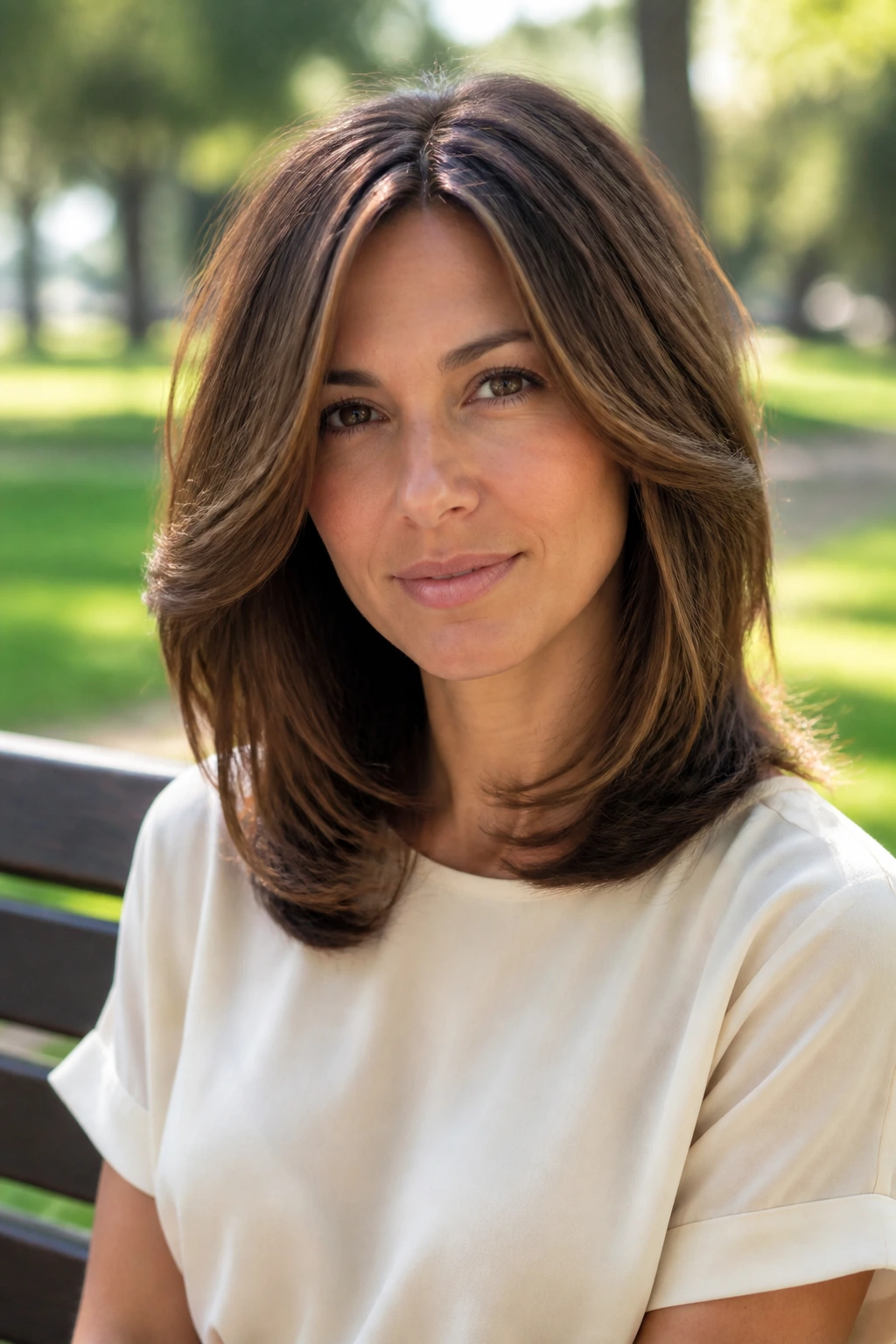
Not every layered cut needs to look layered. This rounded shoulder cut is proof. The outside line curves gently in toward the neck and shoulders, which gives fine hair a fuller outline than a stick-straight cut sometimes can. Inside that shape, a few hidden layers create lift where the head rounds, so the style doesn’t collapse on the sides.
The roundness matters. Fine hair can look a little flat when the cut falls in a sharp rectangle, especially around the jaw. A rounded silhouette gives the eye something softer to follow, and that makes the hair look more plush.
Ask For
- A shoulder-length base with a soft U-shaped finish
- Internal layers placed through the crown and mid-lengths
- Minimal thinning at the ends
- Face-framing that begins near the mouth or jaw, not the chin
5. Curtain Bangs with Long Soft Layers
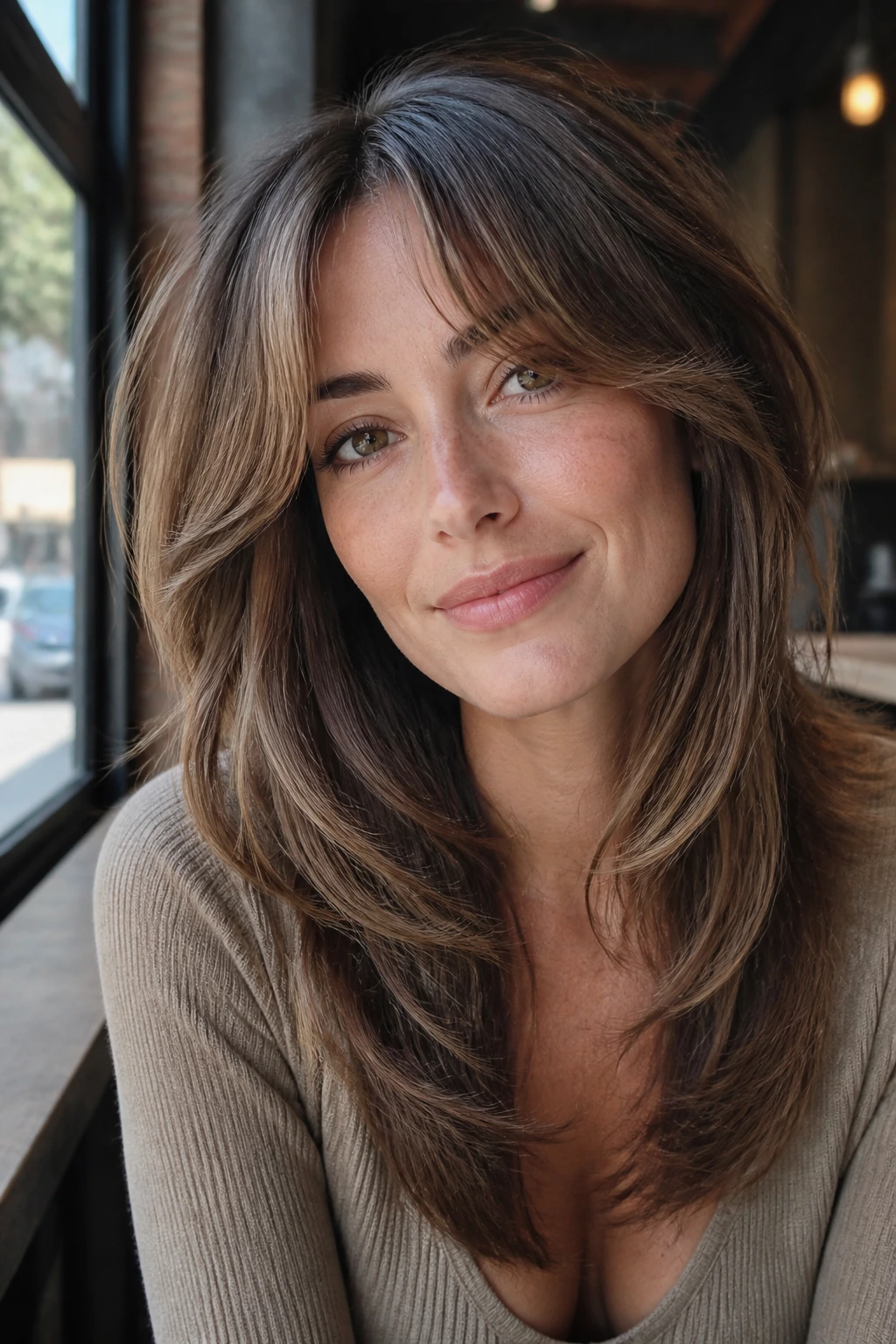
The first thing you notice is the fringe. Curtain bangs can change the whole feel of shoulder-length fine hair, especially when they’re paired with long, soft layers that start under the cheekbones. The bangs draw attention up and in, while the rest of the cut keeps its length and density.
This version works because the bangs take pressure off the rest of the style. Instead of asking every inch of hair to create shape, the fringe gives the front some movement right away. That can be a relief if your hair likes to go limp at the roots. The key is to keep the layers long enough that the ends don’t look threadbare.
If you wear glasses, this cut can be a smart choice. Just keep the shortest fringe pieces long enough to clear the frames and brush them to either side.
6. The Soft Wolf Cut
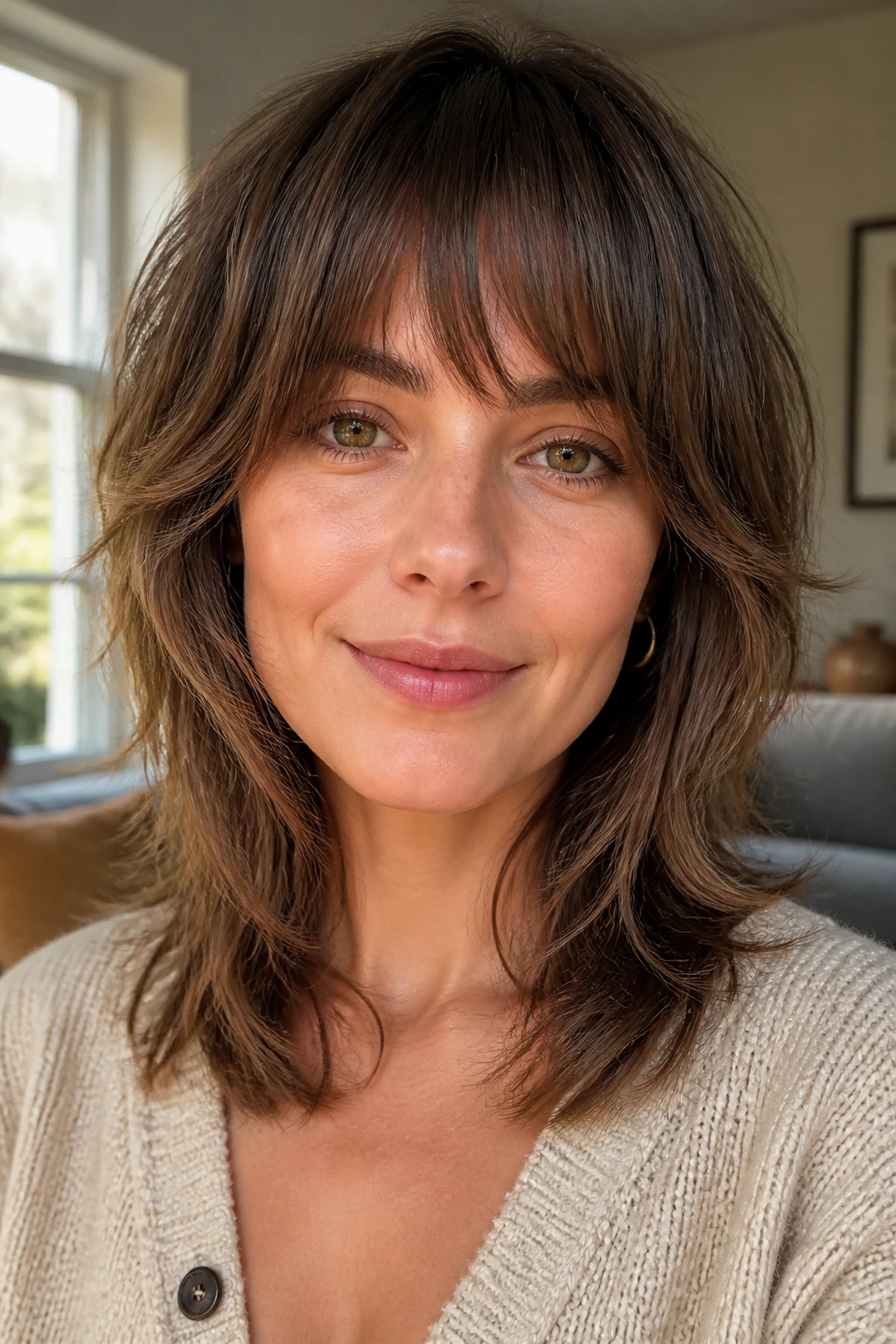
A soft wolf cut on fine hair only works when the edges stay calm. Go too short in the crown and you end up with a funny little puff that doesn’t go anywhere. Keep the layers long, let the neckline taper gently, and you get a cut with movement that still respects the hair’s lack of density.
The Shape to Ask For
Think of this as a wolf cut that has been dialed back for fine hair. The crown gets lift, the sides get a soft cascade, and the ends stay thick enough to hold a shape. The fringe can be wispy, but it shouldn’t be sliced into pieces so small that it disappears after one wash.
This cut is best if you like texture and don’t mind a little air-dried mess. It won’t read polished in the same way a blunt lob does, and that’s the point. It’s better to look a little undone than thin.
7. The Side-Part Lob with Diagonal Layers
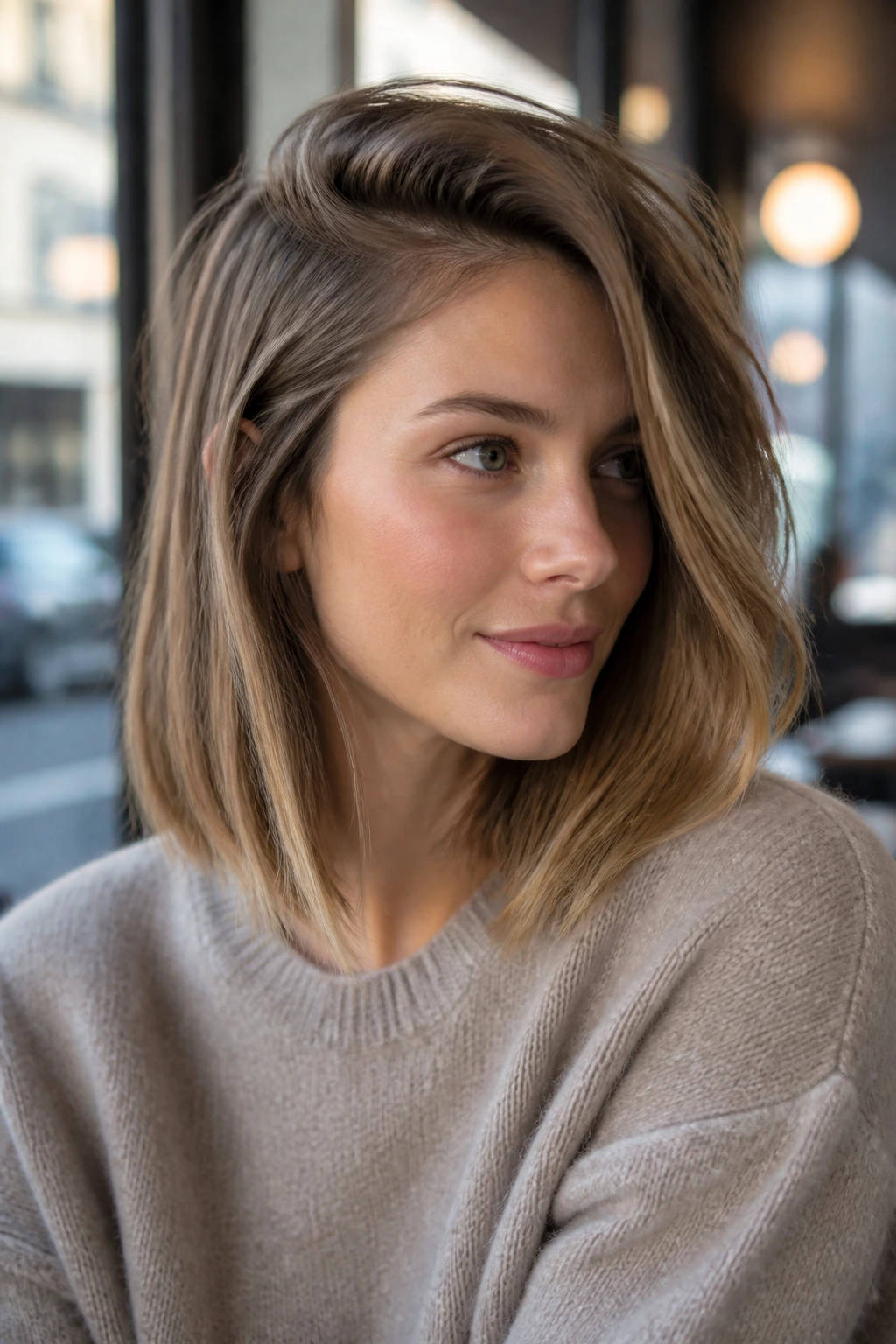
A deep side part changes the haircut more than people expect. On fine hair, it throws a bit of lift into the crown and creates a diagonal line across the face, which makes the whole style feel fuller on one side without needing extra bulk everywhere else.
The diagonal layers follow that same movement. They’re not short enough to look choppy, but they’re not so long that they disappear. I like this cut for people who want a little drama without committing to a fringe. One side can be tucked behind the ear, and the other side keeps a soft sweep over the cheek.
If your roots tend to lie flat, this is a good haircut to pair with a quick root-clip while drying. Even ten minutes of lift at the front changes the way the shape settles.
8. The U-Shaped Shoulder Cut

The U-shape is the quietest way to get movement. From the front, the cut grazes the collarbone and dips a little longer in the back, which keeps the hair from looking boxy. The sides still feel full because they’re not carved up into short pieces, and that’s a huge advantage on fine hair.
I like this cut for anyone who wants shoulder-length hair that grows out politely. It doesn’t get weird after a few weeks. The soft layers sit inside the shape instead of hanging out as visible steps, so the cut can keep its shape longer than a sharper layered style.
Why It Suits Fine Hair
- The dip at the back gives the illusion of thickness
- The front pieces can be shaped around the jaw without losing density
- The finish works with a blowout, a bend, or a loose wave
9. The Grown-Out French Bob at the Collarbone

French-bob energy, but with shoulders in the room. That’s the mood here. The line is relaxed, the fringe is optional, and the ends are soft enough to move but still dense enough to hold their own. On fine hair, that balance is what keeps the style from looking overworked.
This cut usually works best with a little bend at the ends, not poker-straight perfection. A round brush or a one-inch curling iron can give the front a slight tuck under, which makes the hair look a bit fuller through the jaw. If the hair is straight and slippery, a matte texturizing spray at the mid-lengths helps keep the shape from sliding off.
The charm is in the restraint. You don’t need much. A little curve, a little fringe, and a line that stops at the right place.
10. The Flipped-End Shoulder Cut

Flip the ends under or out, and the whole mood changes. This shoulder-length cut is built for that small bit of styling, which makes it appealing if you want movement without a complicated routine. The layers stay long and soft, but the hemline sits in a way that takes well to a brush or curling iron at the last two inches.
The best version has enough density at the bottom that the flip feels intentional, not skinny. That means no aggressive thinning and no slicing the ends to pieces. Fine hair can handle a playful bend, but it needs a solid base to keep the style from looking airy in the wrong way.
This cut is especially nice on straight hair that tends to lie too flat. One quick turn of the iron creates a shape that looks polished without acting polished. There’s a difference.
11. The Sleek Shoulder Cut with Barely-There Layers
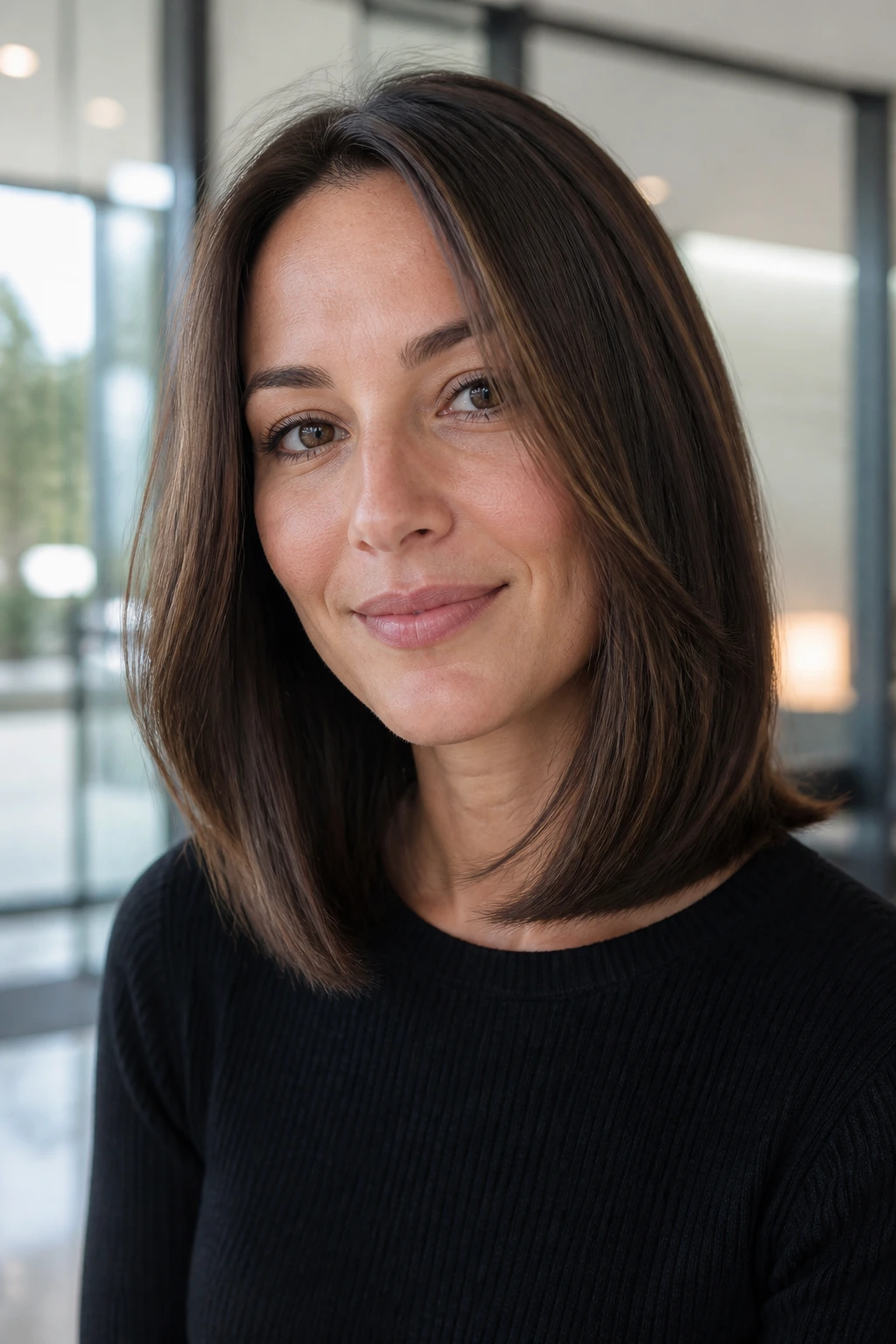
Sleek doesn’t have to mean severe. In this version, the hair stays shoulder-length with a clean line, and the layers are so light they mostly show up as movement around the face and a little softness through the mids. That keeps the cut modern without exposing the fine texture too much.
This is a smart choice if your hair already has a smooth finish and you don’t want to fight it. Heavy layering can make sleek fine hair look thin at the bottom, which is the opposite of what you want. A nearly one-length shape gives you that polished, simple outline, while the soft layers stop the front from looking blunt and boxy.
Styling Note
Use a heat protectant and a medium round brush. Dry the roots first, then turn the brush just at the ends. That tiny bend is enough.
12. The Bottleneck Bangs Lob
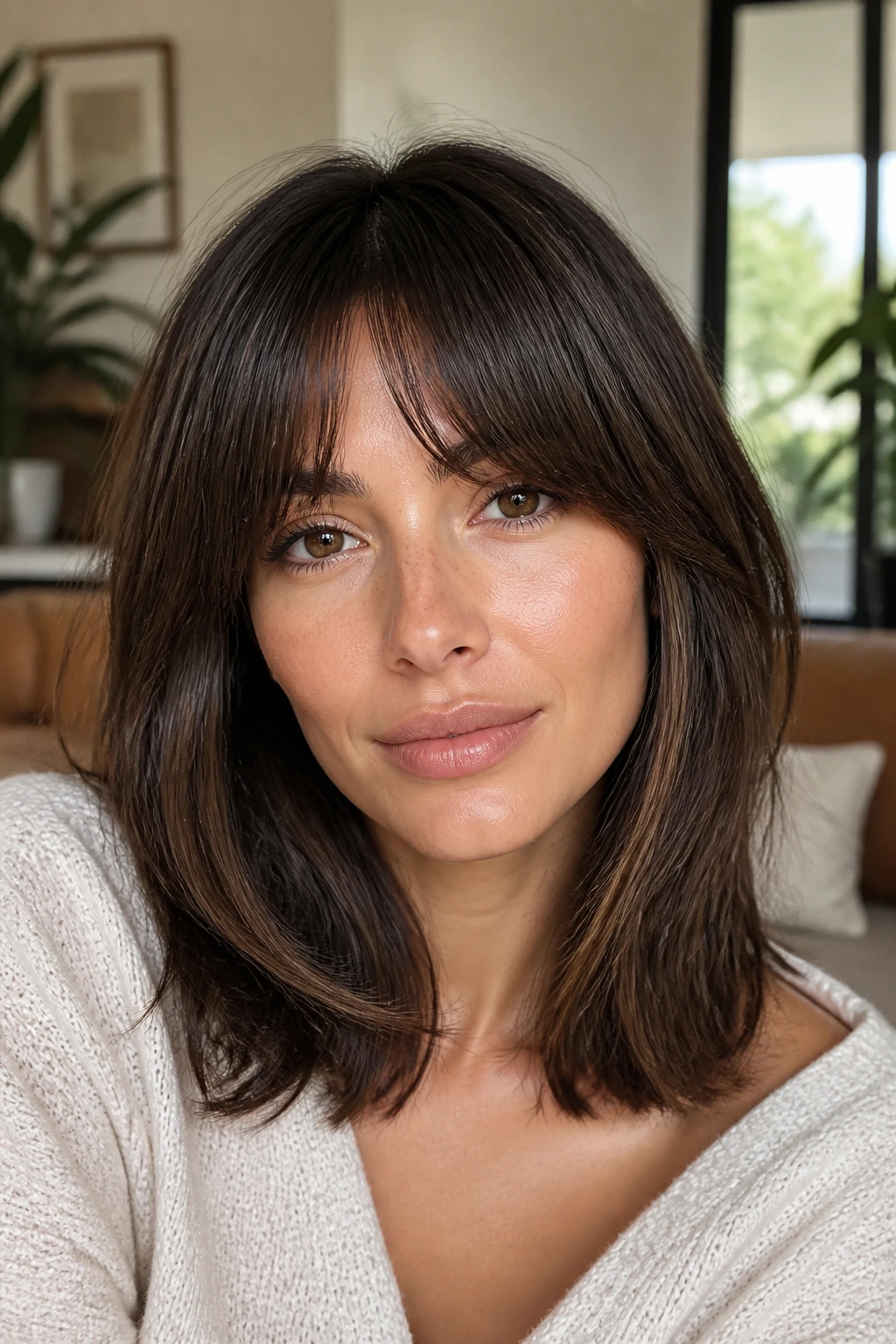
Bottleneck bangs can pull attention to the eyes without crowding the face. On shoulder-length fine hair, they work because the center is shorter and the sides slide longer, which blends into the lob instead of sitting like a separate piece of furniture on your forehead.
The lob underneath should stay fairly clean and dense. If the bangs are the only thing with shape, the rest of the hair can look like an afterthought. Keep the layers soft and the face frame long enough to connect the fringe to the shoulder line. That bridge matters.
For finer hair, I like bottleneck bangs more than heavy full bangs. They use less hair, which leaves more density in the rest of the cut, and they grow out more gracefully. You’ll need trims on the fringe more often, though. That’s the trade-off.
13. The Mid-Shaft Layered Lob
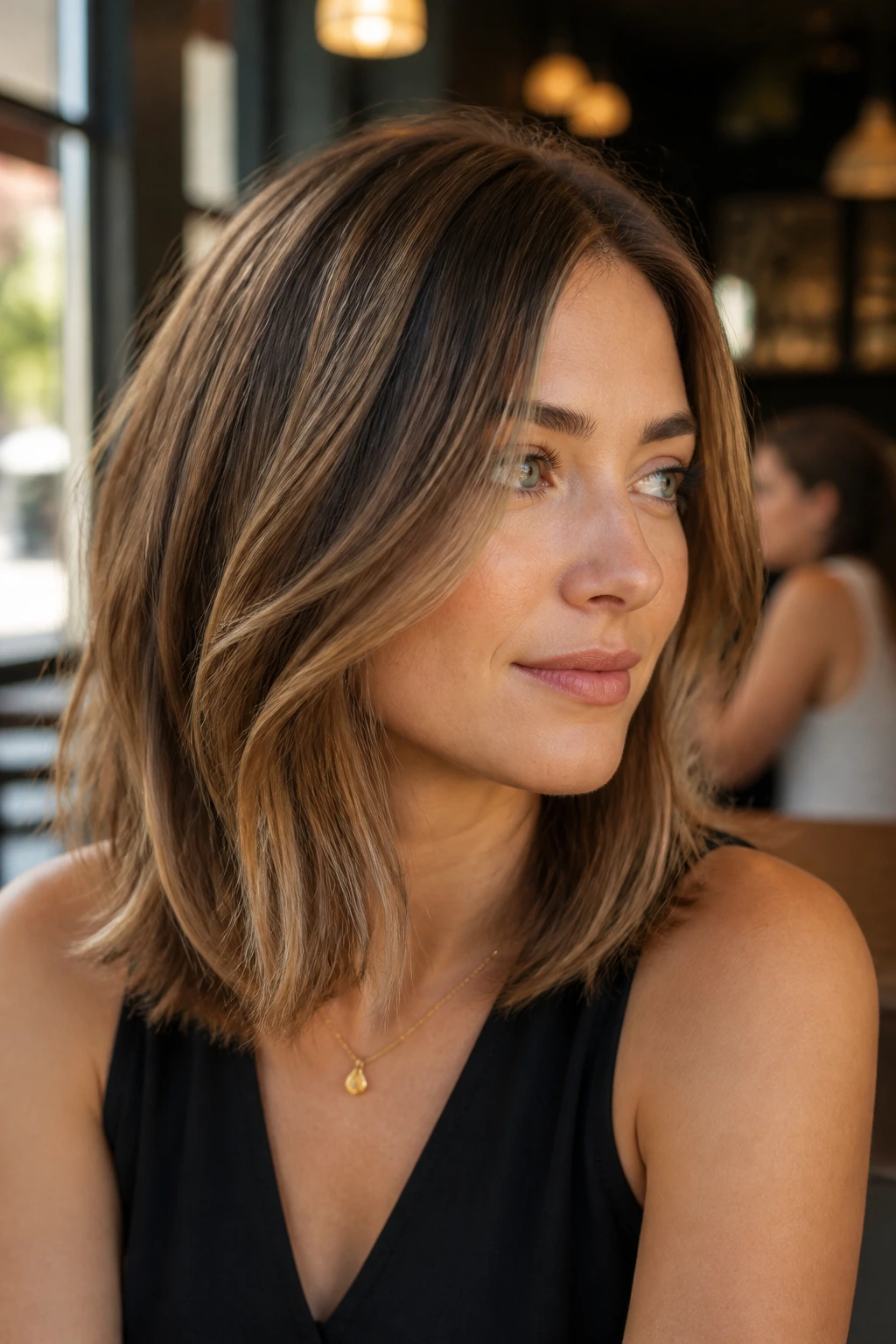
Mid-shaft layers are the compromise most people overlook. Instead of starting right at the cheekbone or dropping all the way to the ends, the movement begins through the middle of the hair shaft. That gives fine hair some lift where it actually needs it, without making the ends look chopped up.
The cut still needs a solid perimeter. If the ends are too broken, the layers just expose how thin the hair is. But when the hemline stays clean, the mid-shaft texture adds a little bounce that shows up when you walk or turn your head. That kind of movement reads as healthy, not fussy.
This is a very good option for people who wear their hair in a half-up style often. The lifted section around the back doesn’t collapse as hard, and the front still has enough pieces to frame the face.
14. The Air-Dried Wavy Lob
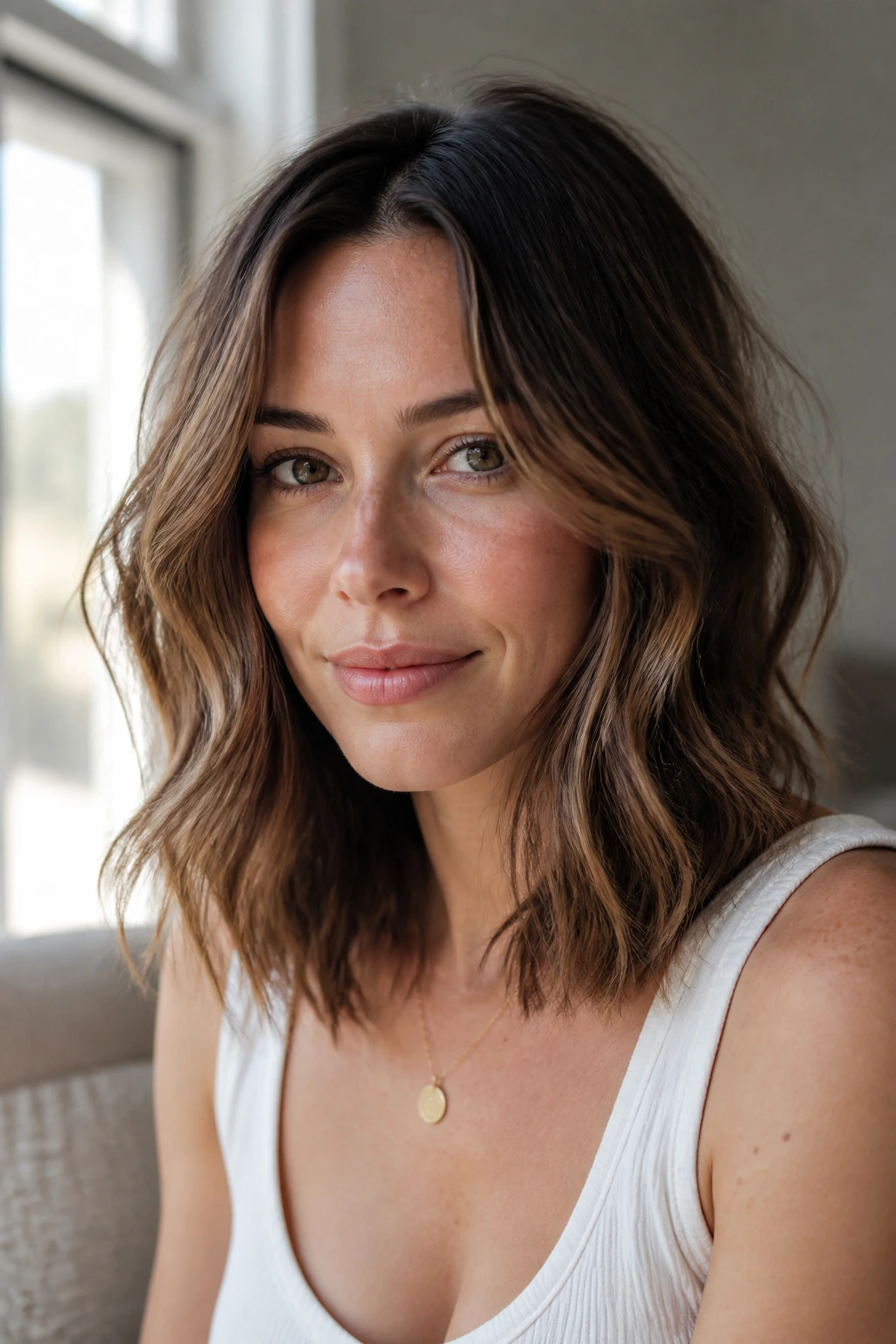
Air-dried fine hair needs a cut that knows what it will do on its own. This one does. The layers are long, the ends are soft, and the overall shape is loose enough to let natural bend appear without turning into a frizzy triangle. That matters more than perfect symmetry when you’re not heat-styling every day.
A wavy lob works best when the cut isn’t too clever. The front can have a little face frame, but the rest should stay simple so the waves can fall where they want. If you add too many short pieces, the hair can puff out while still looking thin at the tips. That’s a bad trade.
Scrunch in a light foam, let it dry halfway, then twist a few front sections around your fingers. That’s enough to keep the shape from drying limp.
15. The Angled Shoulder-Length Cut
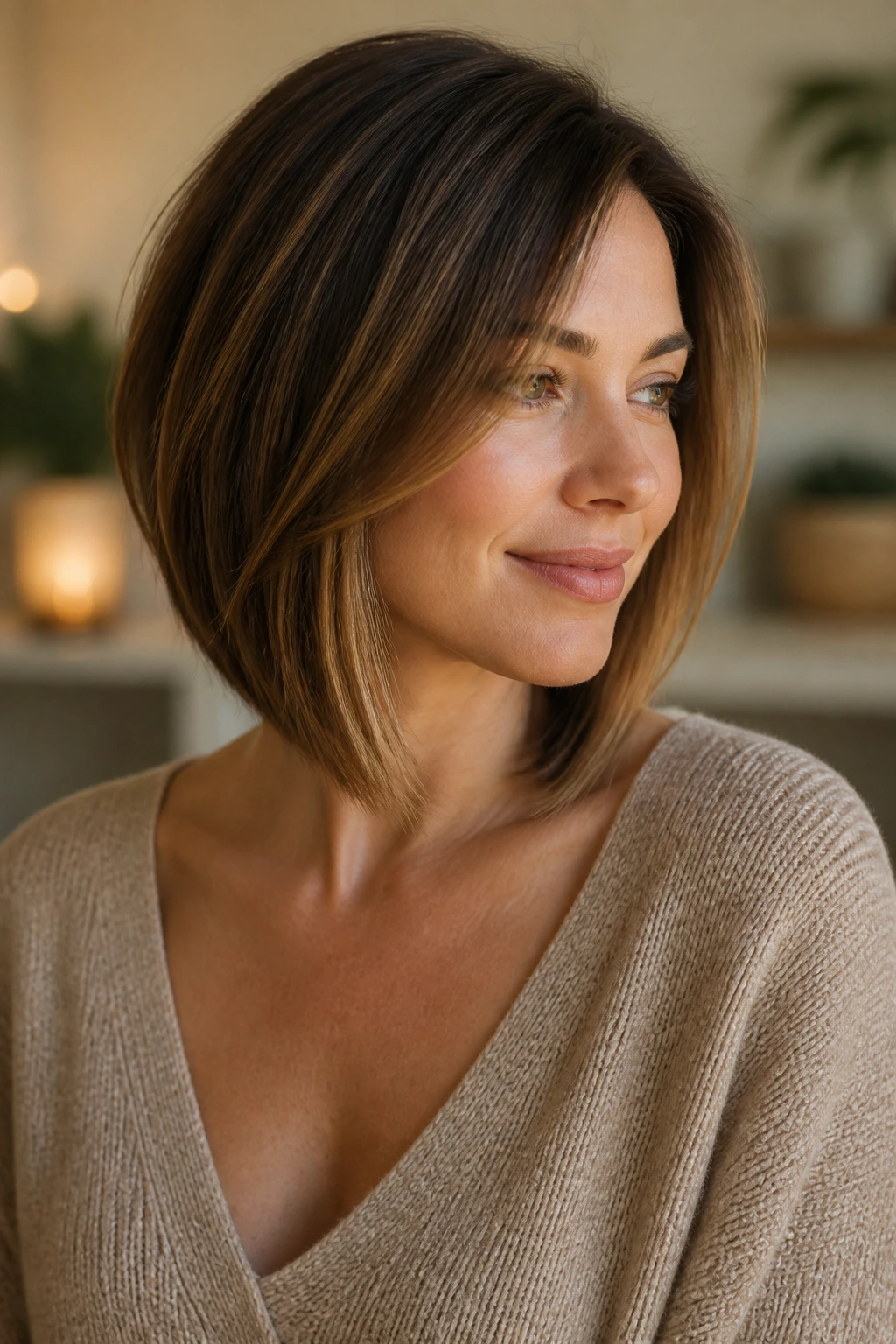
An angled lob gives the front a little more swing. The hair sits a touch shorter at the front and longer at the back, which lets the front pieces frame the jaw while the back keeps enough length to feel full. On fine hair, that subtle shift in length can make the cut look more deliberate.
I don’t love steep angles on fine hair. They can make the back look too sparse and the front feel disconnected. A soft angle is better. You want just enough slope to create motion when the hair is tucked behind the shoulders, not a dramatic wedge that shouts from across the room.
If you like wearing your hair behind one ear, this shape is especially forgiving. The front still shows a clear line, and the back keeps its bulk.
16. The Razor-Framed Face Layers
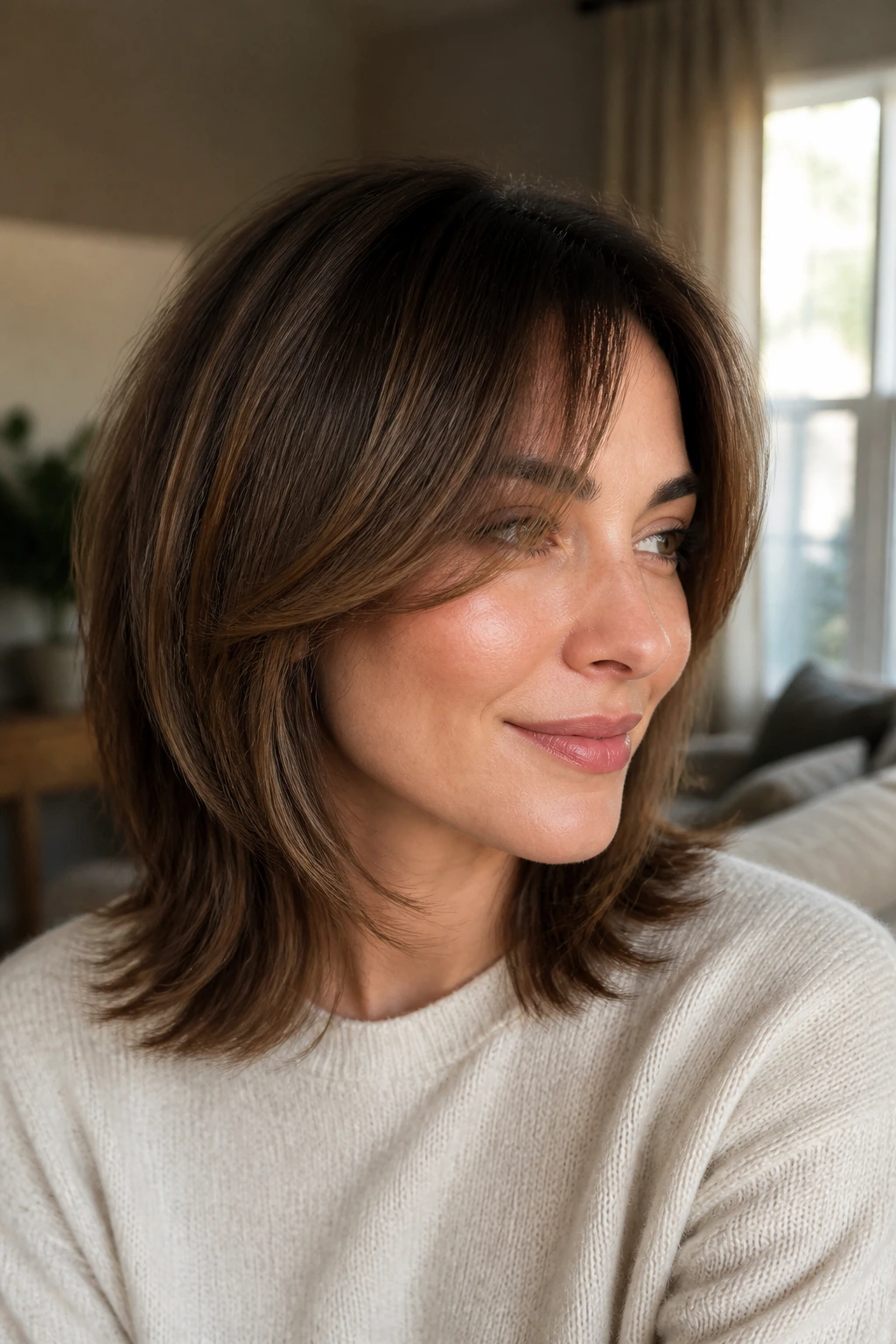
Razor-framed pieces can look airy—or ragged. The difference is the hand doing the cutting and how much hair gets touched. On fine hair, I only like razor work around the face and only when the stylist keeps it soft and controlled, not shredded.
What to Watch For
The front pieces should skim the cheekbone or jaw in a gentle sweep. If the razor is used too high or too often, the edges lose density and the hair starts to split into wisps that catch light in the wrong way. Scissors can do the same job more safely if your hair is especially fine or fragile.
This is a good cut if you want a little softness around the face without giving up the shoulder-length base. It feels slightly more relaxed than a blunt lob, but not as textured as a shag.
17. The Soft Mullet-Inspired Lob
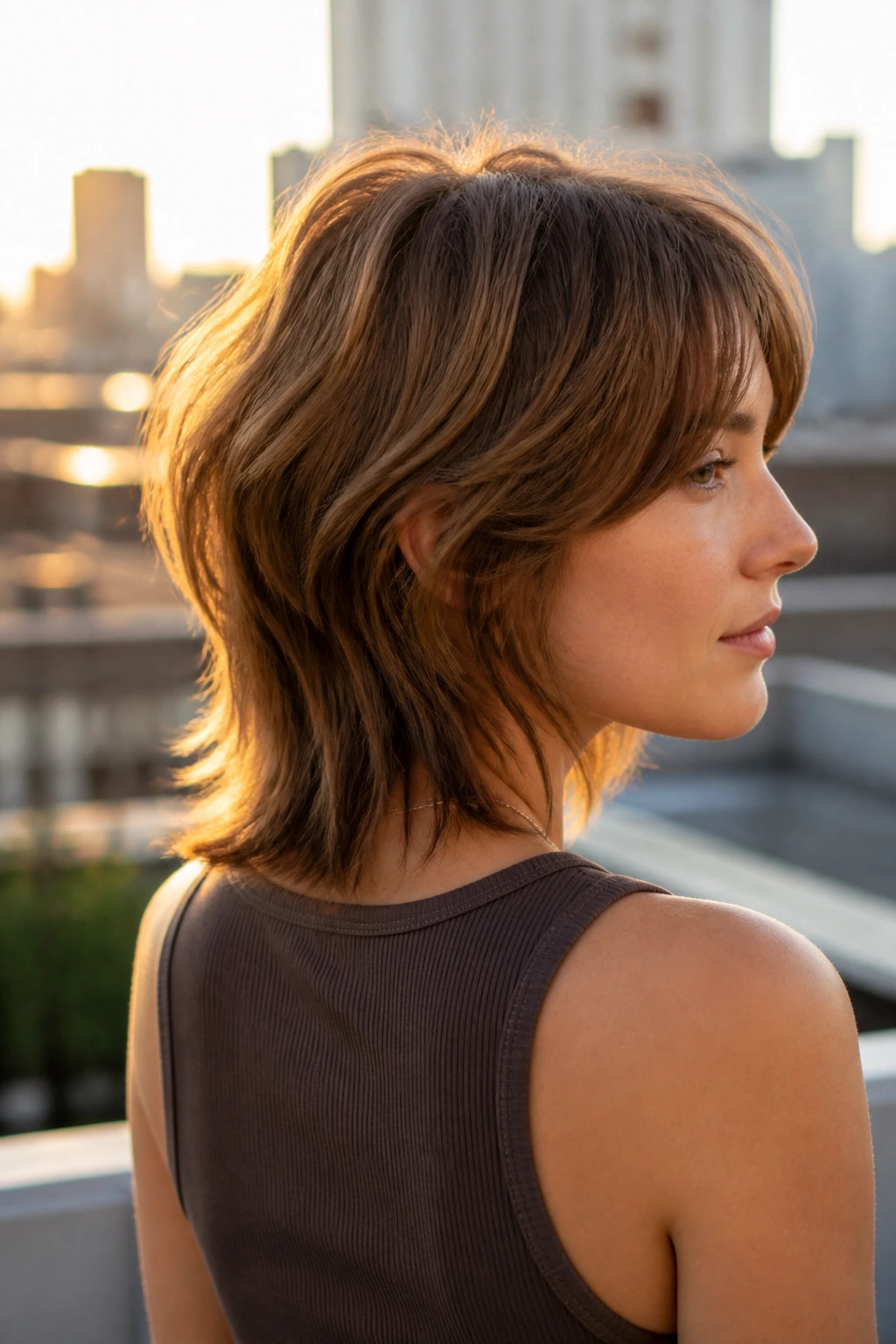
A soft mullet-inspired cut is the edgy cousin in the group, but it still needs to behave. The front stays chin-to-collarbone length, the crown gets a bit of lift, and the neckline tapers just enough to create movement. On fine hair, the softness is what keeps it wearable.
This version works because it creates contrast without destroying the outline. The top can look lightly lifted, the sides can stay loose, and the back can taper a little, but the overall length remains shoulder level. That means the ends still have enough density to look like hair, not a weather report.
If you want a shape with personality and you do not want to spend twenty minutes styling it every day, this is a good candidate. It looks better with a bend than with a straight iron-flat finish.
18. The Deep Side-Part Volume Lob
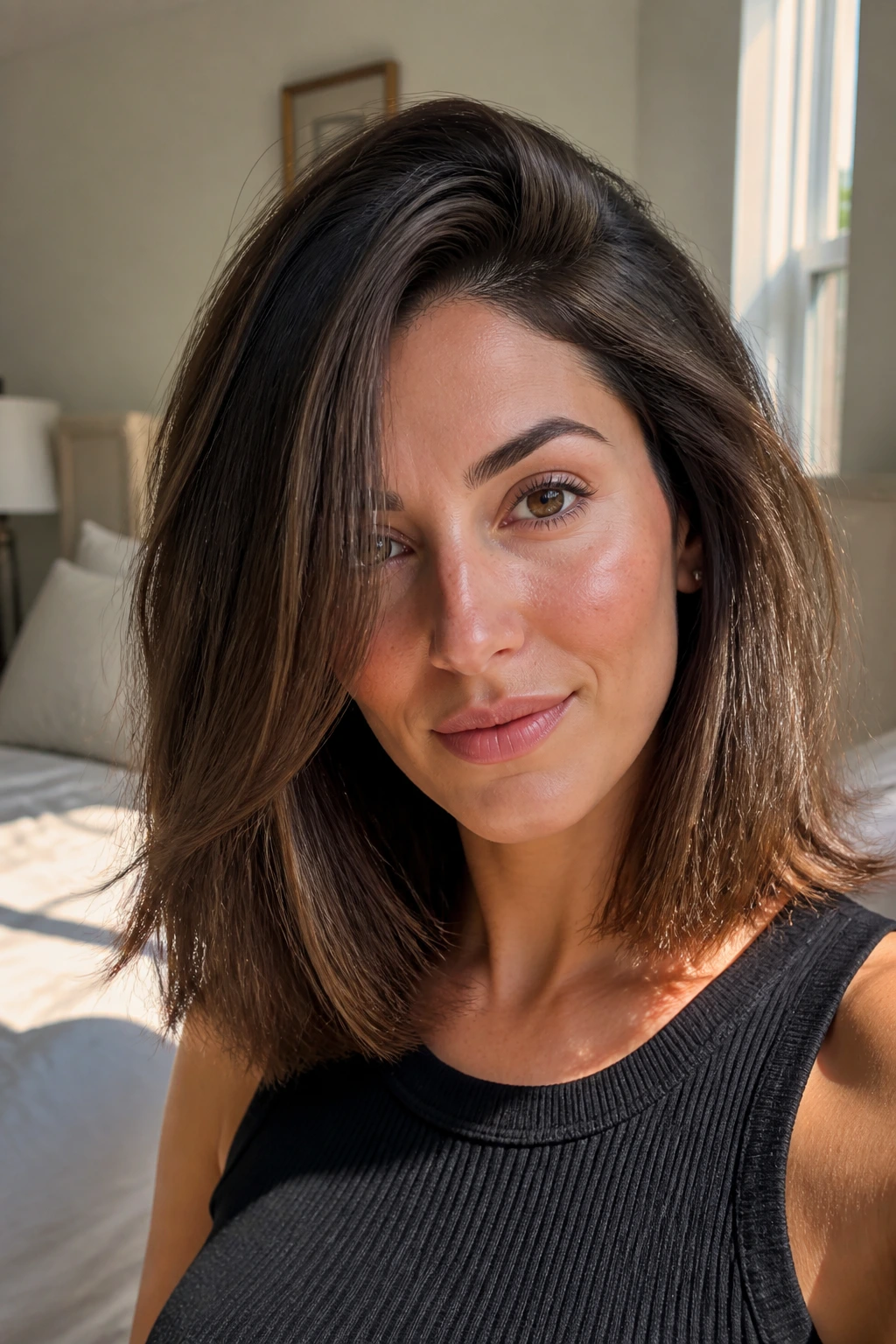
A deep side part is still one of the easiest ways to fake fullness. Fine hair often loses a little life when it’s split dead center, especially if the roots are soft. A side part pushes more hair over one side, which creates instant lift at the top and a fuller-looking crown.
The lob underneath should stay relatively simple. If you over-layer the cut and add a deep side part, the hair can look busy instead of thick. Keep the ends dense, then use the part to create the shape. It’s a small shift, but it changes the haircut a lot.
Best For
- Flat crowns
- Straight or slightly wavy hair
- Anyone who likes to tuck one side back with a clip or barrette
19. The Crown-Lift Layer Cut
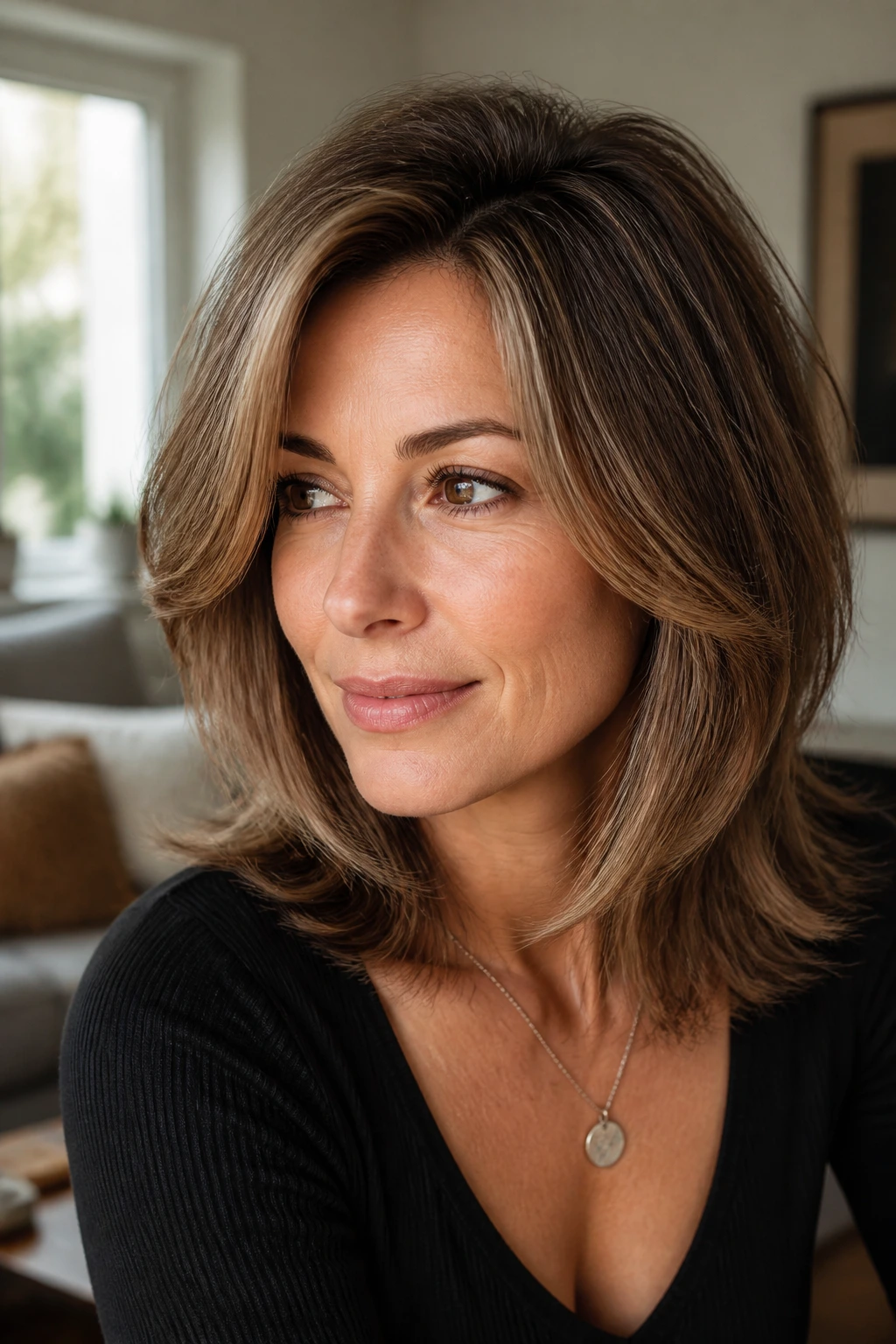
If your crown lies flat, start the layers there instead of chasing the ends. That’s the whole point of this cut. The upper layers are placed high enough to create a little lift at the top, while the lower lengths stay full enough to keep the hair from looking wispy.
This works better than many people expect on fine hair because the volume is put where the eye notices it first. You get height without needing to tease the hair into a puff or load on a pile of product. A round brush at the roots helps, but the cut is doing the real work.
It’s a smart option if you wear your hair down most days and want it to look a little more alive by the time you’re out the door. The style still feels soft, not shellacked.
20. The Rounded Blowout Cut
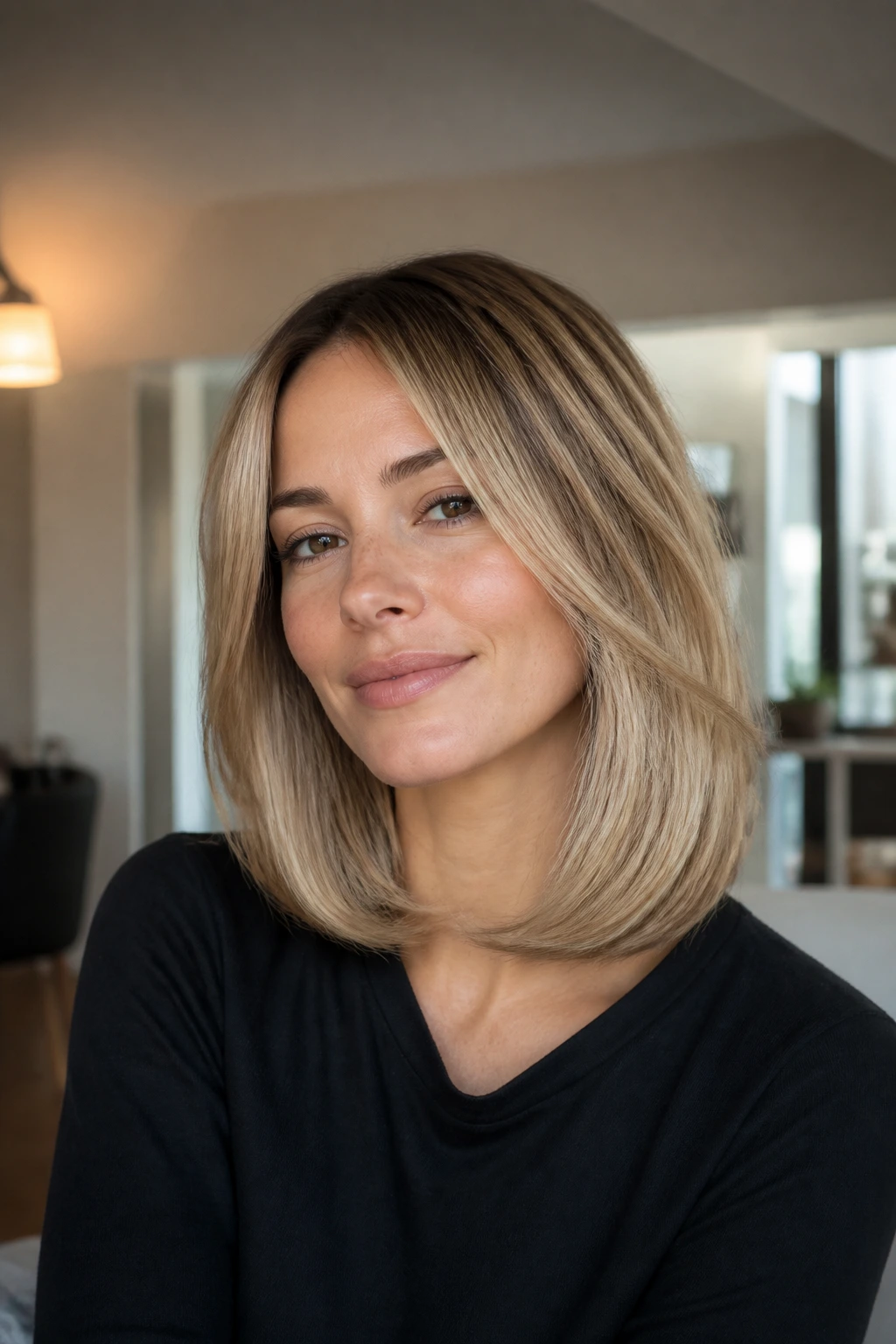
The round-brush blowout cut is made for anyone who likes lifted roots and smooth ends. The length sits around the shoulders, the layers are long and blended, and the whole shape curves inward just enough to give the illusion of more thickness through the mids.
This cut looks especially good on fine hair that responds well to heat styling but doesn’t hold complex curls for long. You’re not forcing the hair into big waves that fall out in an hour. You’re giving it a shape that reads well when the ends bend softly under and the crown has a little air under it.
A 1.5-inch round brush and a concentrator nozzle do most of the work here. If the brush is too large, the hair won’t get enough bend. Too small, and the style starts to look overdone fast.
21. The Shattered Lob with Soft Ends
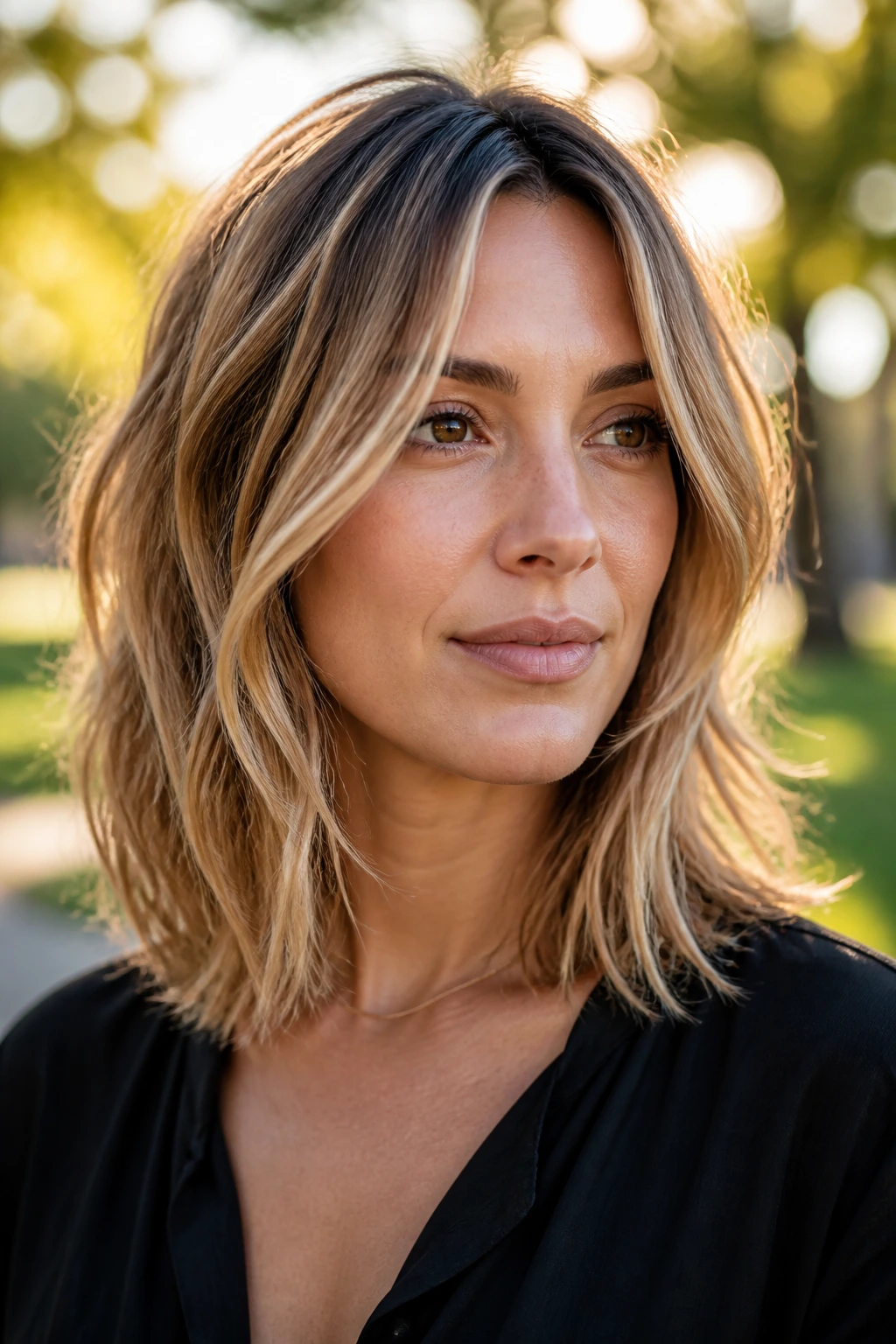
Shattered ends sound aggressive, but the right version is controlled. This lob keeps the line broken up just enough to feel light, while the longer layers and soft face frame prevent the cut from going stringy. It’s a little more textured than a blunt lob, but still respectful of fine hair.
I like this cut for straight hair that looks a bit too severe when it’s all one length. The shattered edge softens that without making the hair sparse. The trick is to keep the texturizing near the outer surface, not carve into the interior where the density lives.
If you use dry texture spray, this cut wakes up nicely on day two. The pieces separate a little and the whole shape gets easier to move around.
22. The Shoulder-Length Crop with Baby Fringe

Baby fringe can be cute on fine hair, but it needs a dense perimeter to stay balanced. That’s why this cut works: the fringe is short and sharp, yet the rest of the hair remains shoulder length with enough fullness to anchor it. Without that denser body, the fringe can look like it belongs to a different haircut.
This is not the most forgiving choice on the list. It makes a point. But if you like that slightly retro, slightly graphic look, it can be a strong option. The soft layers around the sides help the style feel less severe, especially if the fringe is point-cut rather than chopped bluntly.
Keep in mind that short fringe needs regular trims. If you hate maintenance, skip this one and go for a curtain bang instead.
23. The Center-Part Airy Lob
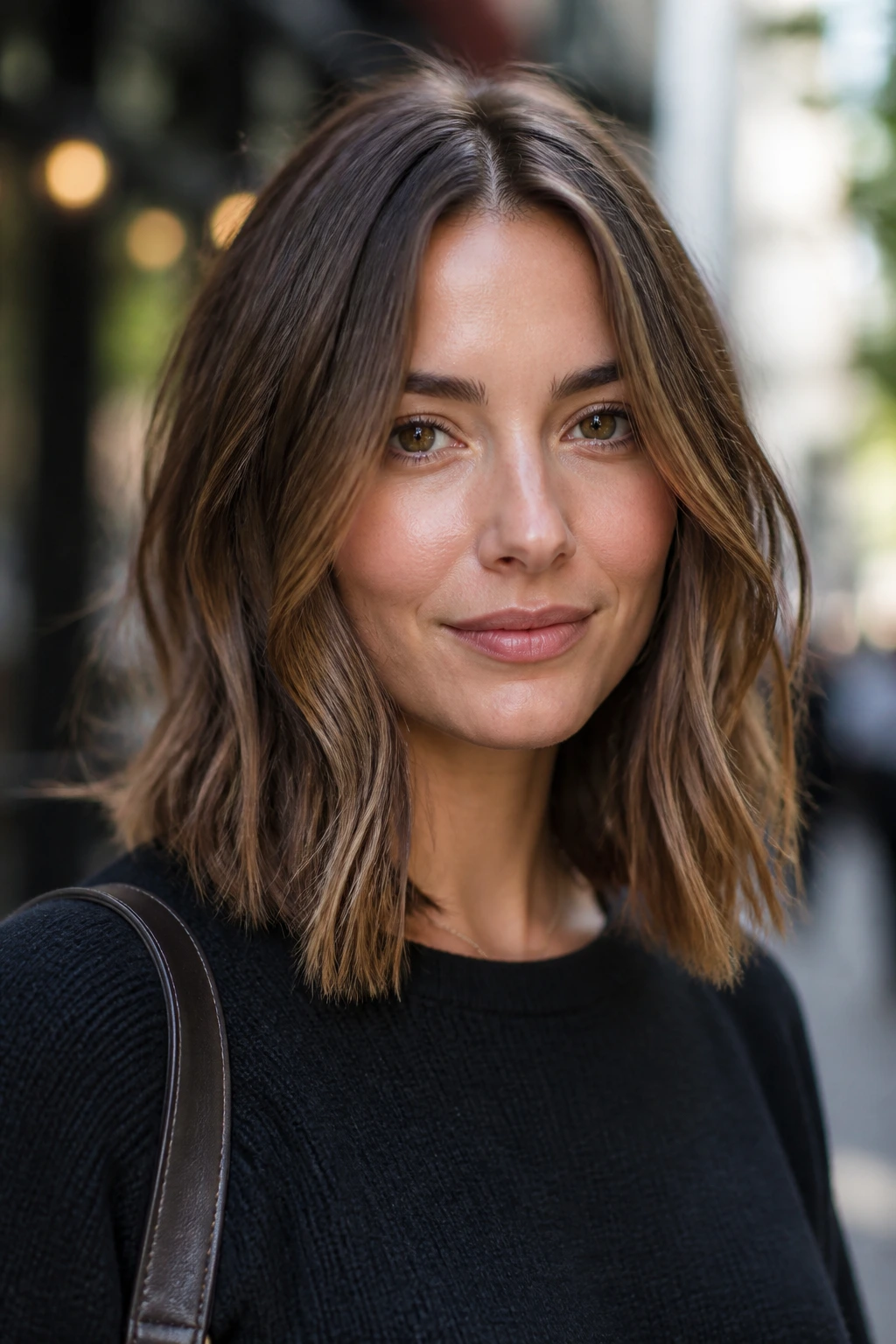
The center part has a bad reputation with fine hair mostly because the cut is wrong. If the length is too long, the layers too thin, or the front too short, the part exposes everything. But with a shoulder-length lob and soft layers, the center part can look neat, modern, and balanced.
The key is density at the jaw and collarbone. Let the front pieces start low enough that they don’t split the face in an awkward way. The middle part then becomes a clean line rather than a harsh one. On slightly wavy hair, it looks especially good because the movement sits evenly on both sides.
A little root spray at the part helps keep the top from collapsing inward. Nothing heavy. Just enough lift so the part doesn’t go flat against the scalp.
24. The Hidden-Weight-Line Collarbone Cut
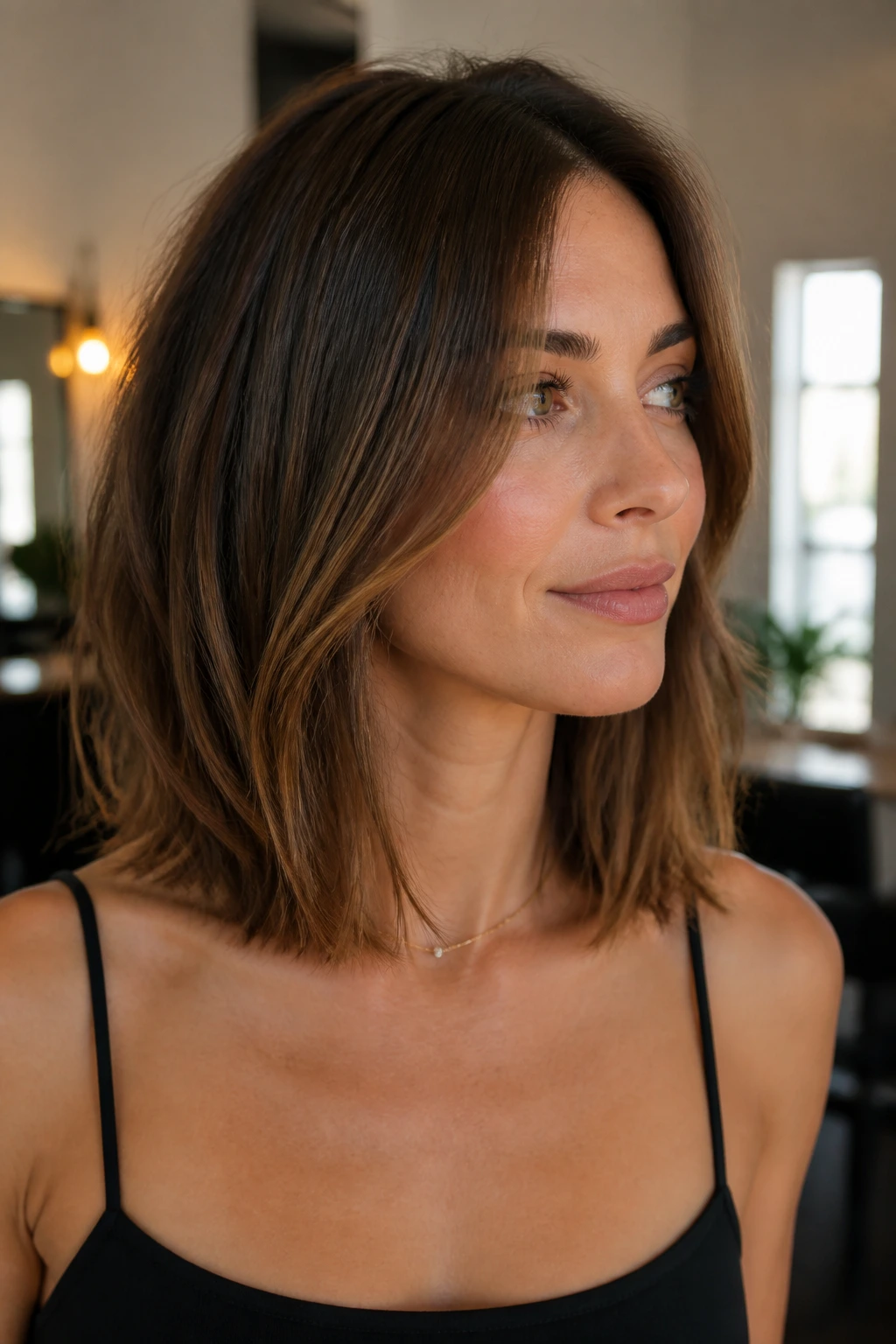
A hidden weight line can make shoulder-length hair look thicker than it is. Instead of cutting all the hair into the same blunt edge, the stylist keeps a strong visible line at the bottom while shaping some of the interior for softness and bend. You get a cleaner silhouette without the hard boxiness of a strict one-length cut.
This is a nice middle ground for people who want polish but not stiffness. The face-framing can be soft and long, and the ends still hold enough bulk to look solid when the wind hits them. That matters more than it sounds like it should. Fine hair that gets too feathered can disappear outside.
If you like a neat look that still moves when you turn your head, this is one of the smarter choices.
25. The Polished Shoulder-Length Cut with Curtain Fringe

Curtain fringe plus a polished shoulder cut is the safe bet that still has movement. The fringe opens the face, the shoulder-length body stays full at the bottom, and the soft layers keep the style from feeling heavy or helmet-like. It’s a balanced shape, which is why so many people keep coming back to it.
The cut works best when the fringe is long enough to sweep into the sides of the haircut instead of sitting as a separate layer. That connection is what makes the style feel intentional. Keep the ends blunt enough to hold density, and the whole look reads as airy without becoming thin.
This is one of the easiest shapes to style into a tidy everyday look. A quick round-brush pass through the fringe and a bend through the mids is usually enough.
Why Shoulder Length and Soft Layers Work So Well on Fine Hair
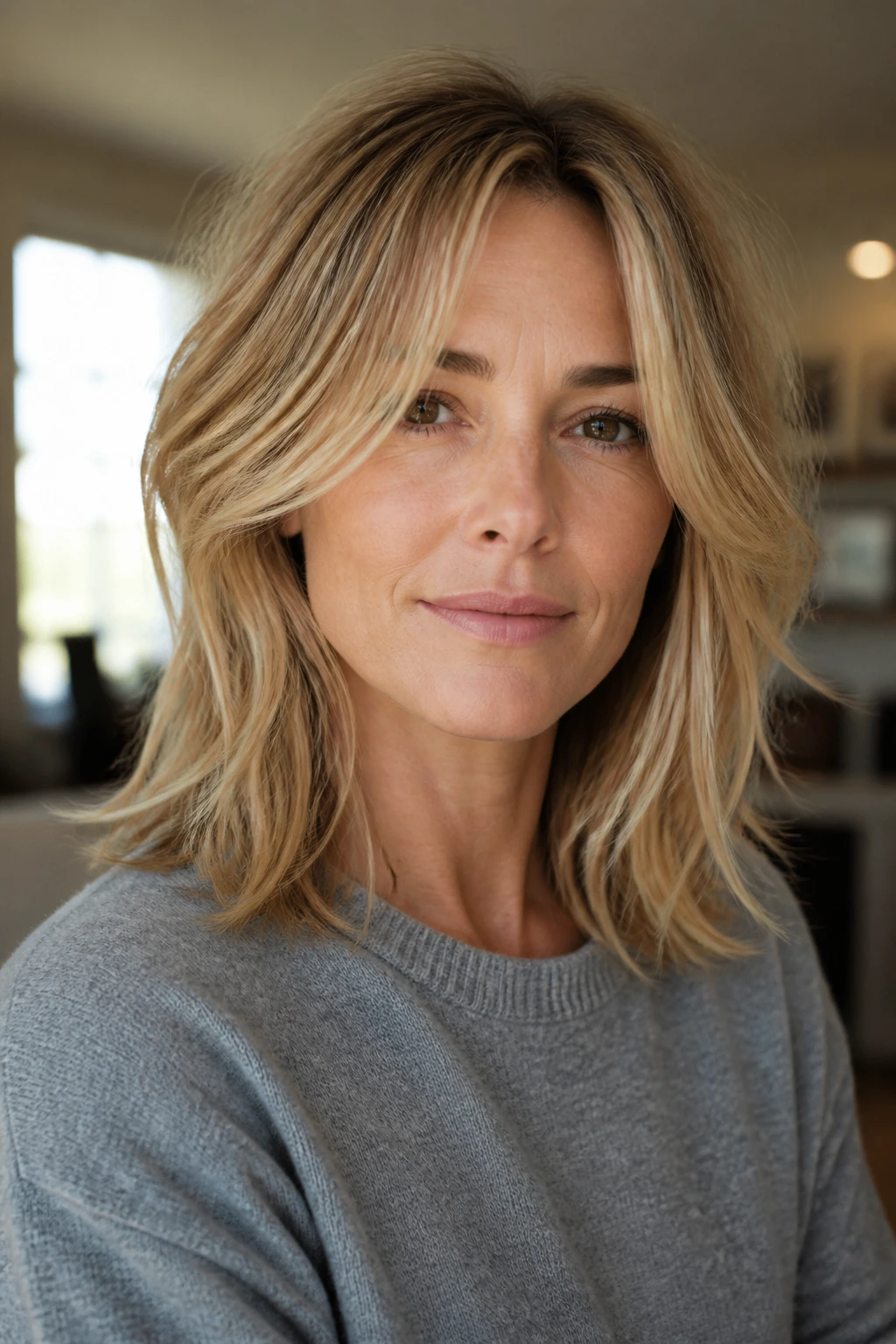
Shoulder length hits a sweet spot for fine hair because it keeps the hair from getting dragged down by its own weight. Too long, and the roots often lie flatter while the ends start looking sparse. Too short, and you can lose the little bit of mass that makes fine hair look present.
Soft layers help by moving shape away from the ends and toward the parts of the head where the eye reads volume first. Around the cheekbones, jaw, and crown, a small amount of layering can change the whole silhouette. The mistake is thinking more layers automatically means more body. Usually, it means the opposite.
The weight line matters
A strong hemline is your friend. Even when the cut has texture, the bottom should still feel like a line, not a mist.
Face-framing does more than people think
A few pieces around the face can make the cut look styled even when the rest of the hair is barely touched. That’s a smart place to spend your layers.
Fine hair likes direction
A good cut gives the hair somewhere to go. If the shape is too shapeless, fine hair collapses. If it’s too broken up, the density disappears. The middle ground is where the good stuff lives.
How to Ask Your Stylist for the Right Shape
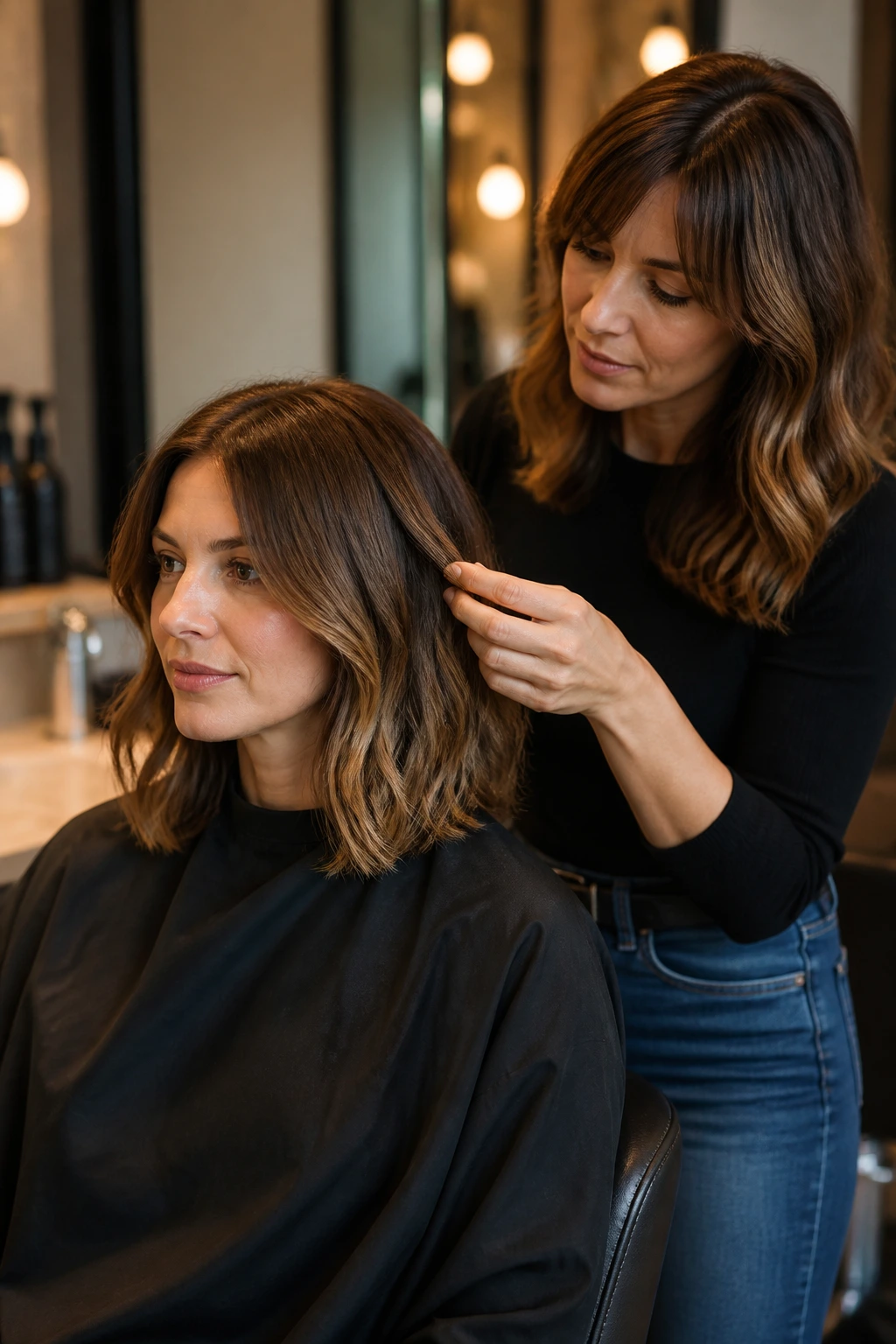
Bring a photo, but don’t bring just one. I’d bring two: one for the length and one for the texture. A lot of shoulder-length haircuts for fine hair with soft layers fail because the client likes the movement in one photo and the perimeter in another, and nobody says that out loud. Say it out loud.
Use plain words. Ask for shoulder-length or collarbone length, a full perimeter, and soft face-framing pieces that start low enough to keep the ends looking thick. If you want layers, ask for internal or long layers, not a heavily textured finish. If you do not want the ends thinned, say that directly.
Phrases that help
- “I want the ends to stay dense.”
- “Keep the layers long and soft.”
- “Please avoid over-thinning the bottom.”
- “I’d like movement around the face, not a lot of short pieces in the back.”
- “Can you show me how it will fall when it’s air-dried?”
That last one matters more than people think. Fine hair can look one way wet and another way dry, and a stylist who understands that will save you a lot of regret.
Tools That Actually Help Fine Hair Hold Volume
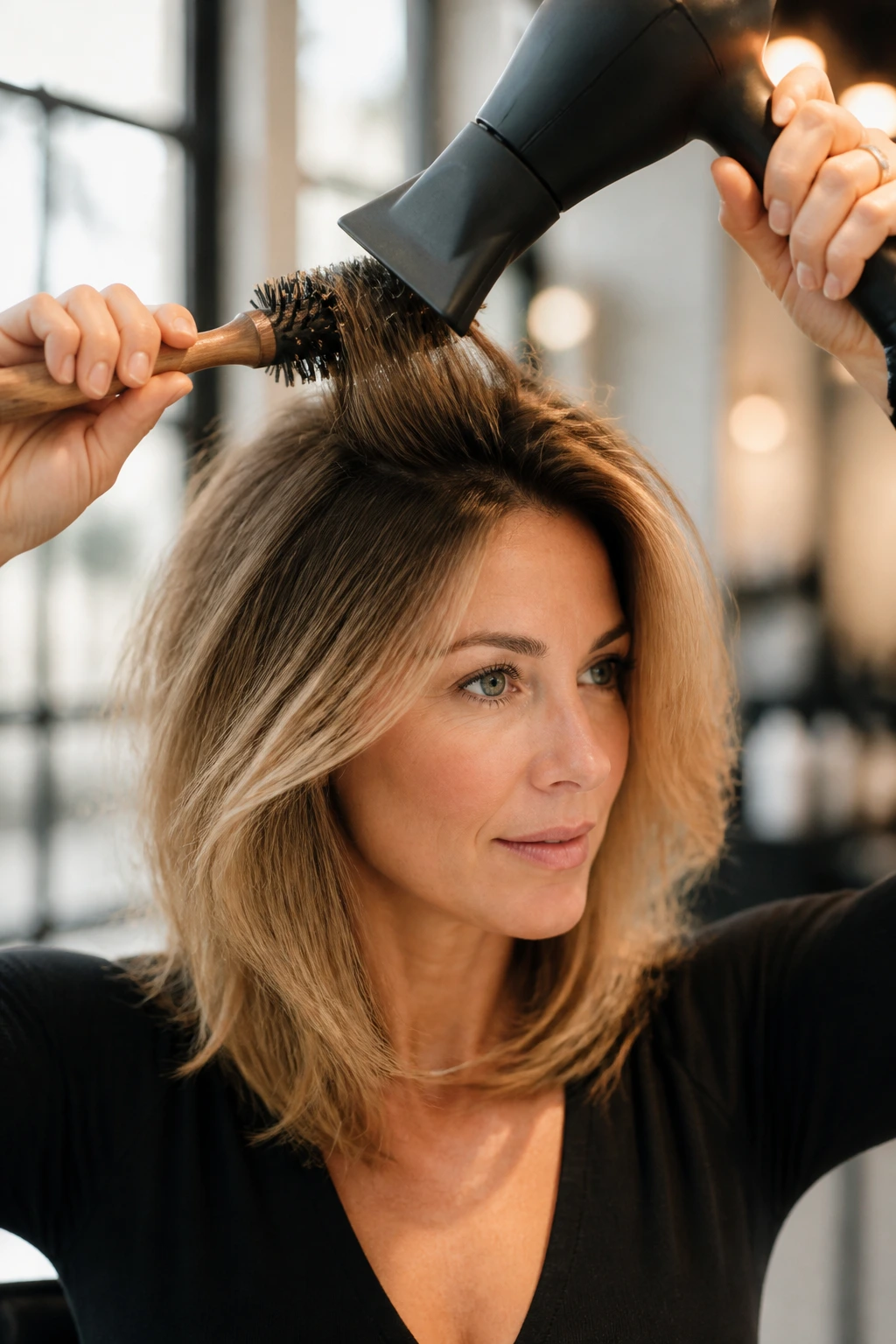
- A 1.25-inch or 1.5-inch round brush: Big enough to smooth the length, small enough to create bend at the ends.
- A blow dryer with a concentrator nozzle: The nozzle keeps airflow directed so the roots don’t get blasted flat in every direction.
- Root-lift mousse or spray foam: A small amount at the roots gives fine hair a little structure before you dry it.
- Light heat protectant spray: Fine hair burns easily, and heat damage shows fast on softer textures.
- Velcro rollers or large clips: Useful for setting the crown while the hair cools.
- Dry shampoo: Best used before the hair looks greasy, not after it has already gone limp.
- Texturizing spray: A light mist through the mids can separate the pieces without making them crunchy.
- Tail comb: Handy for clean parts and for lifting small sections at the crown while drying.
- Wide-tooth comb: Better than a dense brush when the hair is damp and fragile.
How to Style Fine Hair Without Crushing the Shape
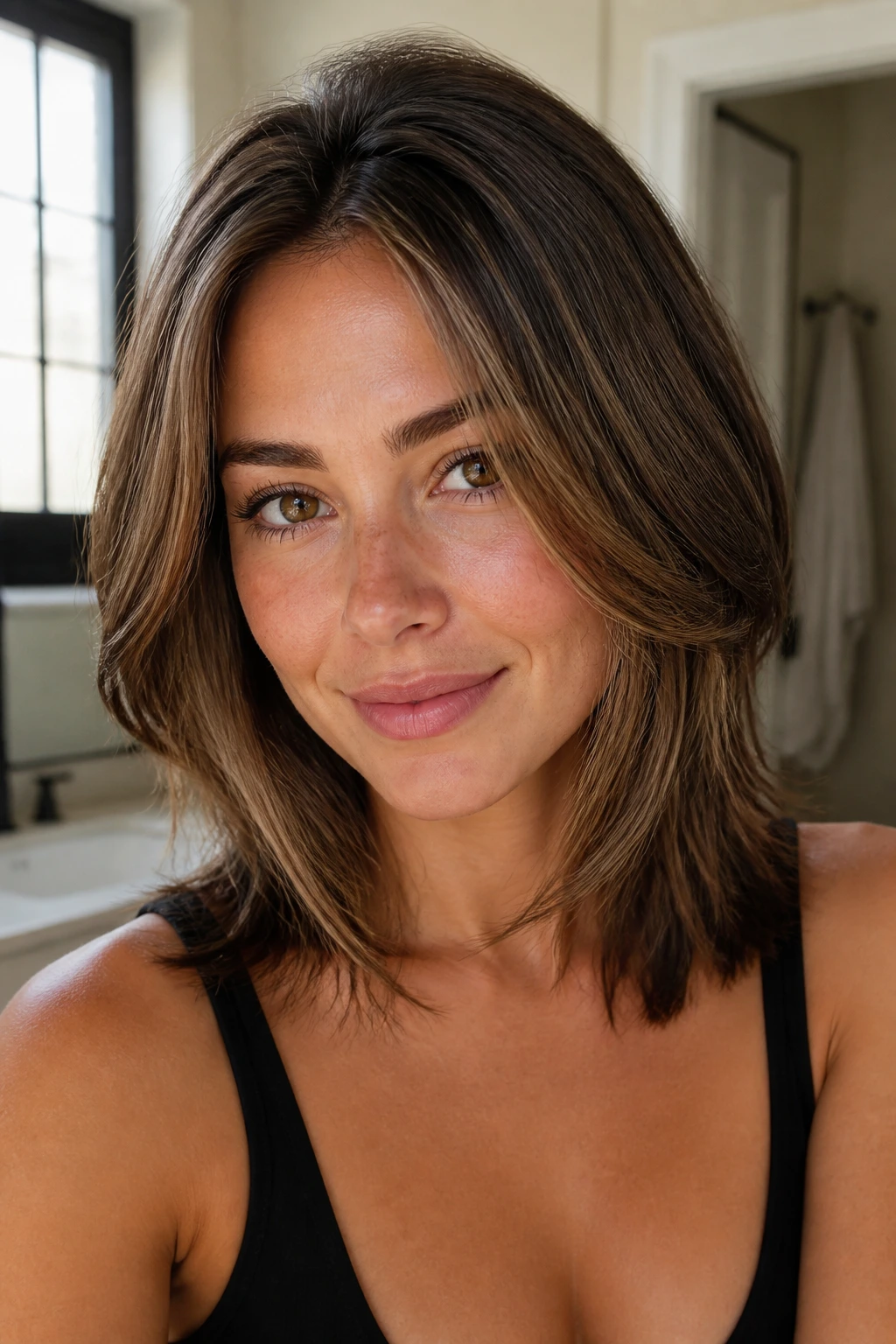
Root lift first. That’s the part people skip, and it’s the reason the whole style can collapse by lunchtime. Put mousse or root spray on damp hair at the scalp, then dry the roots before you fuss with the ends. If the roots stay wet too long, they dry flat.
Blow the hair in the direction you want it to live. If you want a side part, start there. If you want the face frame to turn in, aim the brush that way from the beginning. Hair remembers tension while it cools, and fine hair in particular settles exactly where you left it.
Don’t pile on product. Fine hair gets heavy fast. One pea-sized blob of cream can be too much if it’s the wrong formula. Use lighter sprays and foams, then add texture only at the end if the mids need grip.
Air-drying needs a plan. If you’re not using heat, scrunch the ends, clip the crown for lift, and keep your hands off the hair until it’s mostly dry. Touching it while it’s damp is how you flatten all the nice shape you just built.
Common Mistakes That Make Fine Hair Look Thinner
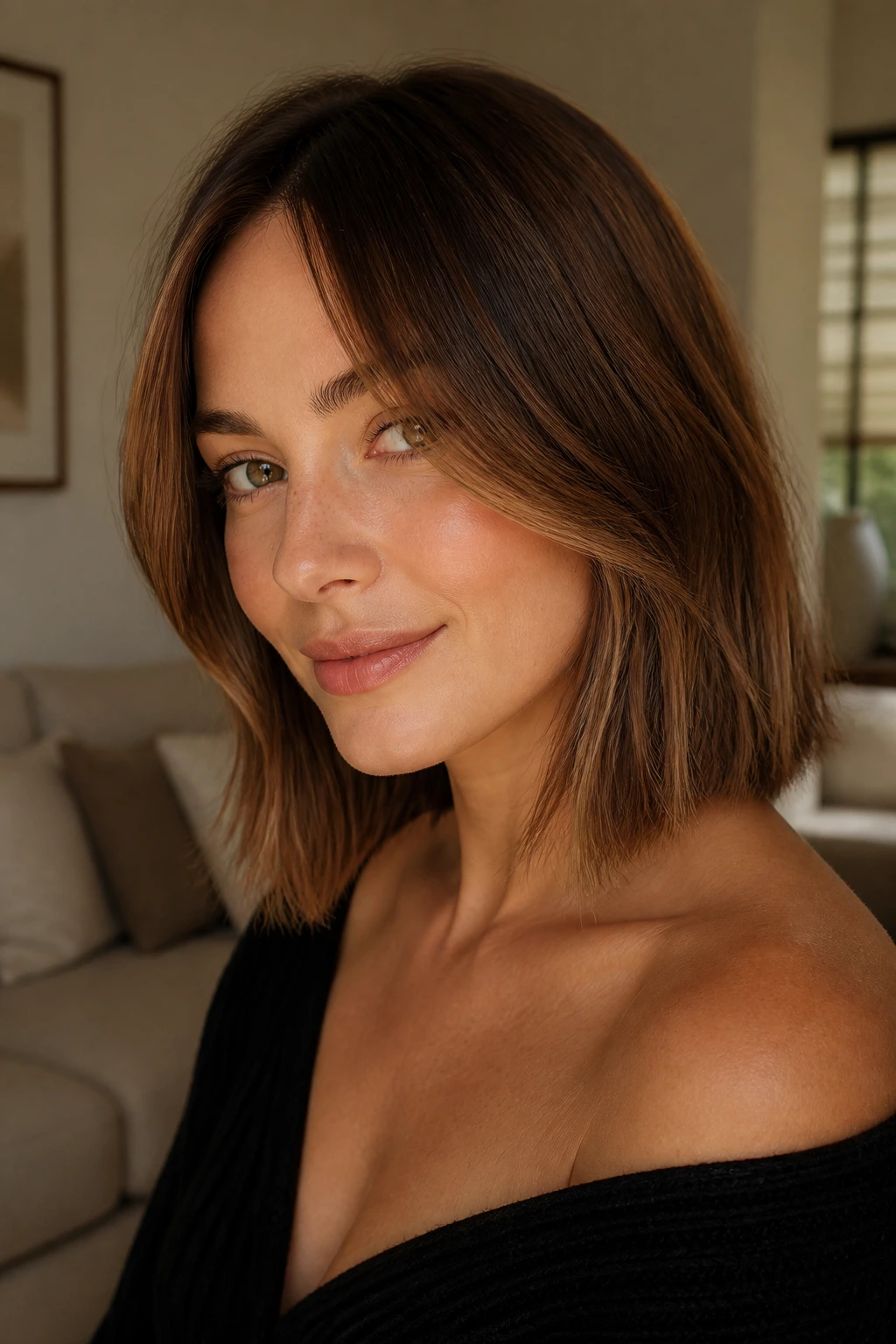
- Too many short layers: The hair loses its hemline, and the bottom starts looking see-through. The fix is a longer, softer layer pattern with more weight left at the ends.
- Over-thinning the perimeter: If the stylist texturizes the ends too much, the cut can look airy in the chair and sparse a week later. Ask for point-cut softness, not heavy debulking.
- Ignoring the crown: A flat top makes even a good cut look tired. A little lift at the roots or some crown-focused layering helps the whole shape read fuller.
- Choosing a fringe without density: Short bangs on very fine hair can look separated and fragile. If the front is sparse, curtain bangs or a side-swept fringe usually behave better.
- Using heavy cream at the roots: Fine hair drinks up product and then collapses. Keep creams and oils on the mids and ends only.
- Waiting too long for a trim: Once the shape loses its clean edge, fine hair starts looking stringy fast. Trim the ends before they split and shred.
Variations and Adaptations to Try
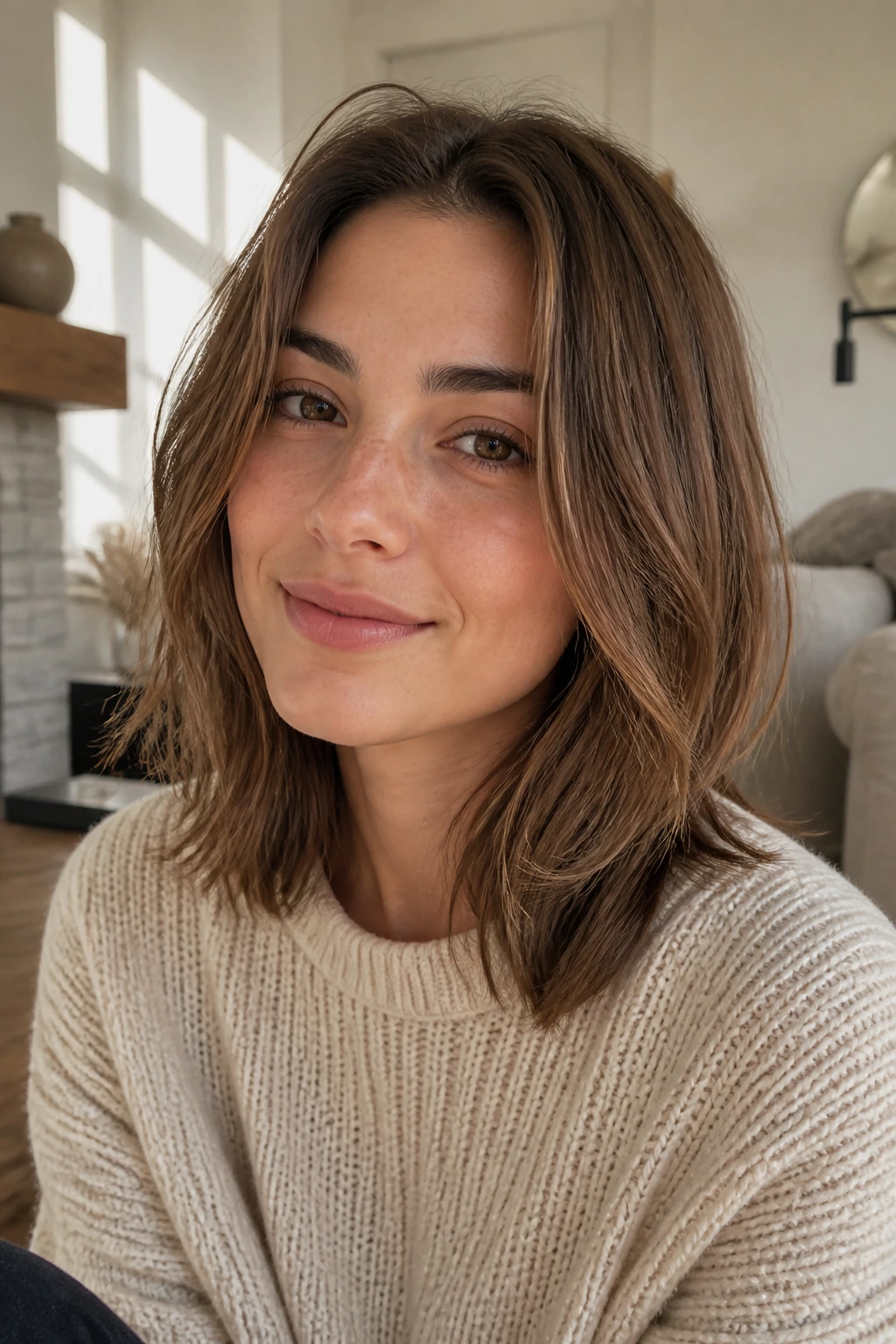
The Low-Maintenance Air-Dry Version
Ask for a shoulder-length base, soft internal layers, and a long face frame. Skip the fringe and keep the shape loose enough that it can dry on its own without awkward bends.
The Blowout Version
Keep the perimeter blunt and add long layers that respond well to a round brush. This is the best choice if you like smooth ends and a little lift at the crown.
The Edgy Textured Version
Use a soft shag or shattered lob as the starting point, but keep the layers longer than you think. The goal is texture with density, not a choppy finish that exposes the scalp.
The Fringe-Forward Version
Curtain bangs, bottleneck bangs, or a light side fringe can shift attention upward if your hair is thin through the lengths. Just keep the fringe long enough to blend into the rest of the haircut.
The Extra-Fullness Version
For very fine hair, ask for the least layering of all. A blunt collarbone line with tiny face-framing pieces often looks thicker than a cut with more movement.
Keeping the Cut Fresh Between Trims
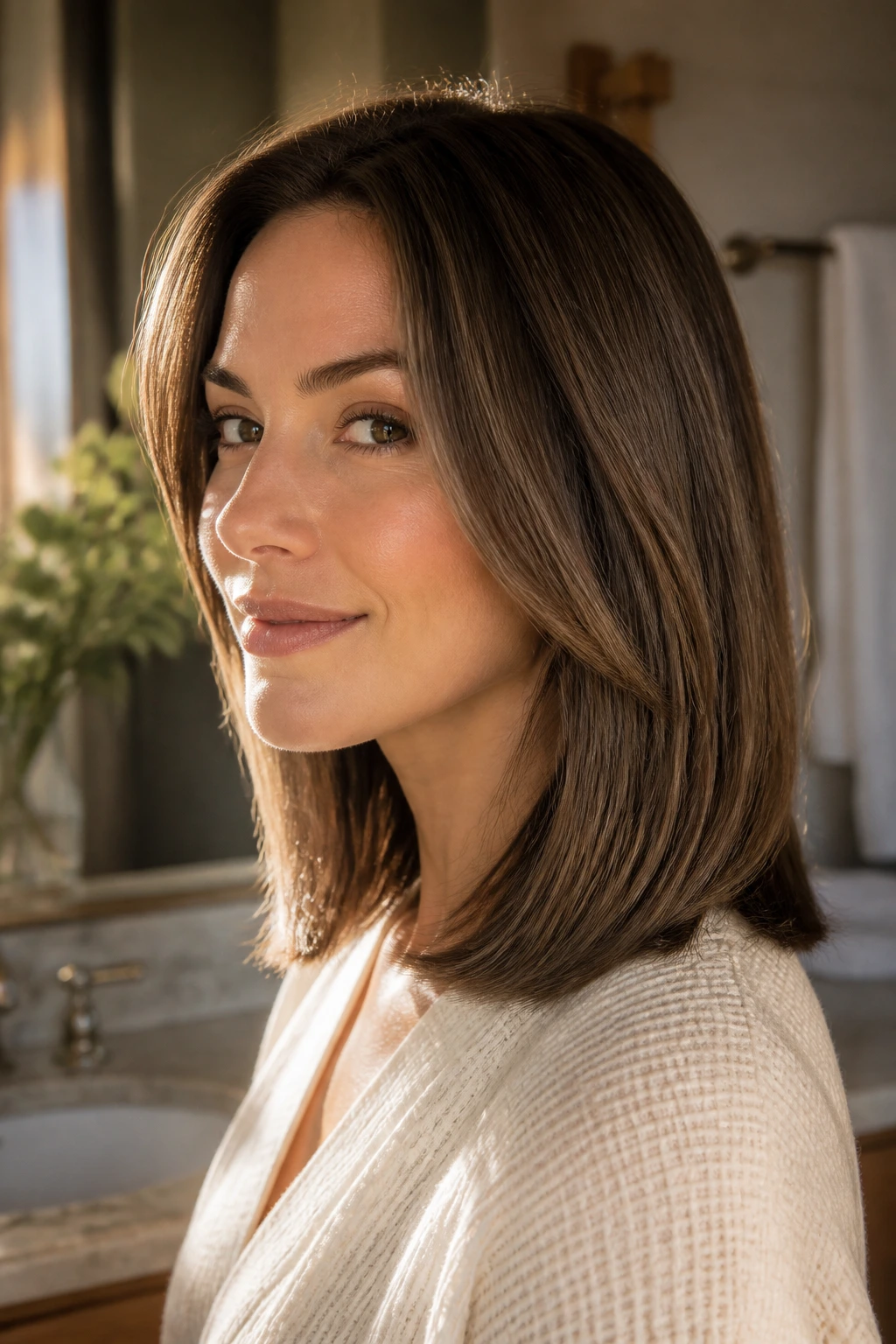
Fine hair shows wear quickly, so the trim schedule matters. I’d keep most shoulder-length cuts on an 8- to 10-week trim cycle, especially if the ends start to split or the face frame loses shape sooner than the back. Bangs usually need attention every 3 to 4 weeks, and if you’re wearing a softer fringe, even a tiny tidy-up can keep it from drifting into your eyes.
At home, dry shampoo is best used on the roots before the hair feels greasy. Spritz it in at the crown and hairline, let it sit for a minute, then work it through with your fingers. That buys you shape the next morning. If your hair is wavy, a light mist of water on the mids can wake the face frame back up; if it’s straight, a quick pass with a round brush at the ends usually brings the cut back into line.
Sleep matters more than people admit. A loose topknot can dent fine hair, so a low loose clip or a silk pillowcase helps preserve the shape. Nothing fancy. Just less friction, fewer bent ends, and a better chance that the haircut looks like it still knows what it’s doing when you wake up.
Frequently Asked Questions
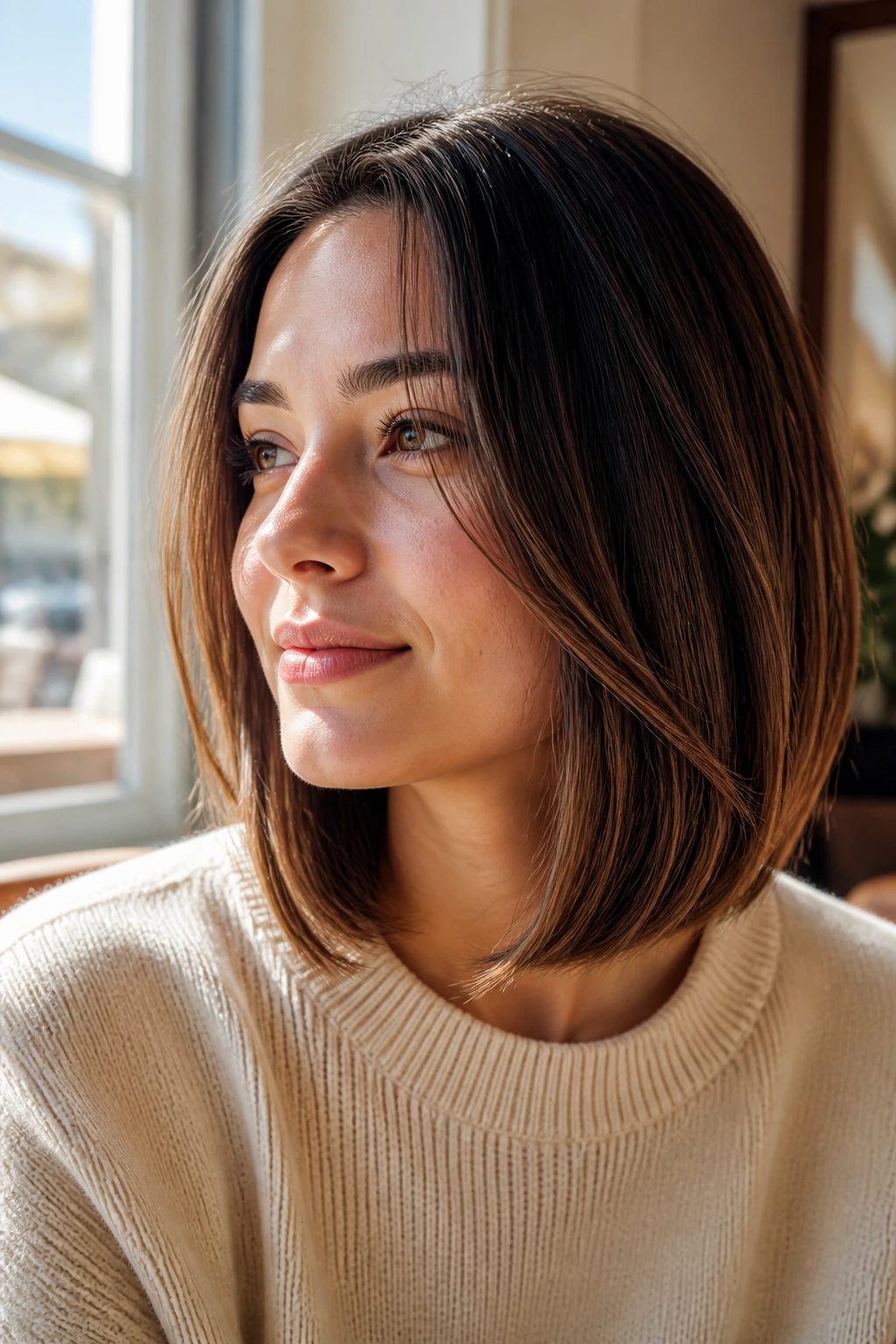
Will soft layers make fine hair look thinner?
They can, if they’re cut too high or too heavily. The safer version keeps the layers long and the perimeter dense, so the hair gains movement without losing the thick-looking edge at the bottom.
Is a blunt cut better than layers for fine hair?
A blunt line often makes the ends look fuller, which is why it works so well. But very fine hair can still benefit from soft face-framing or hidden internal layers if you want movement without giving up density.
Can I wear curtain bangs with fine hair?
Yes, if the fringe is kept long and connected to the rest of the cut. Short, chunky bangs can look sparse on fine strands, while curtain bangs tend to blend better and grow out more gracefully.
How often should I trim shoulder-length fine hair?
Most people do well with trims every 8 to 10 weeks. If the ends split easily or the shape depends on a clean line, you may want a slightly shorter cycle.
What if my hair goes flat by midday?
That usually means the cut is fine but the roots need help. Use a root-lift product on damp hair, dry the roots first, and keep heavier creams off the scalp. Dry shampoo can also give the crown a little grip once the hair is fully dry.
Can fine hair handle a shag or wolf cut?
Yes, but only in a softened version with long layers and a full hemline. If the layers are too short, the hair can lose too much density and start looking wispy instead of textured.
Should my stylist use a razor on fine hair?
Only with restraint. A razor can soften the face frame nicely, but if it’s used too aggressively on fragile fine hair, the ends can look frayed. Scissors or point-cutting are usually safer for the back and hemline.
What’s the best parting for fine hair at shoulder length?
A side part often gives the easiest lift at the crown, while a center part works best when the cut is dense enough around the jaw and collarbone. If your roots are very flat, a slight off-center part can be the easiest compromise.
A Cut That Still Has Its Shape
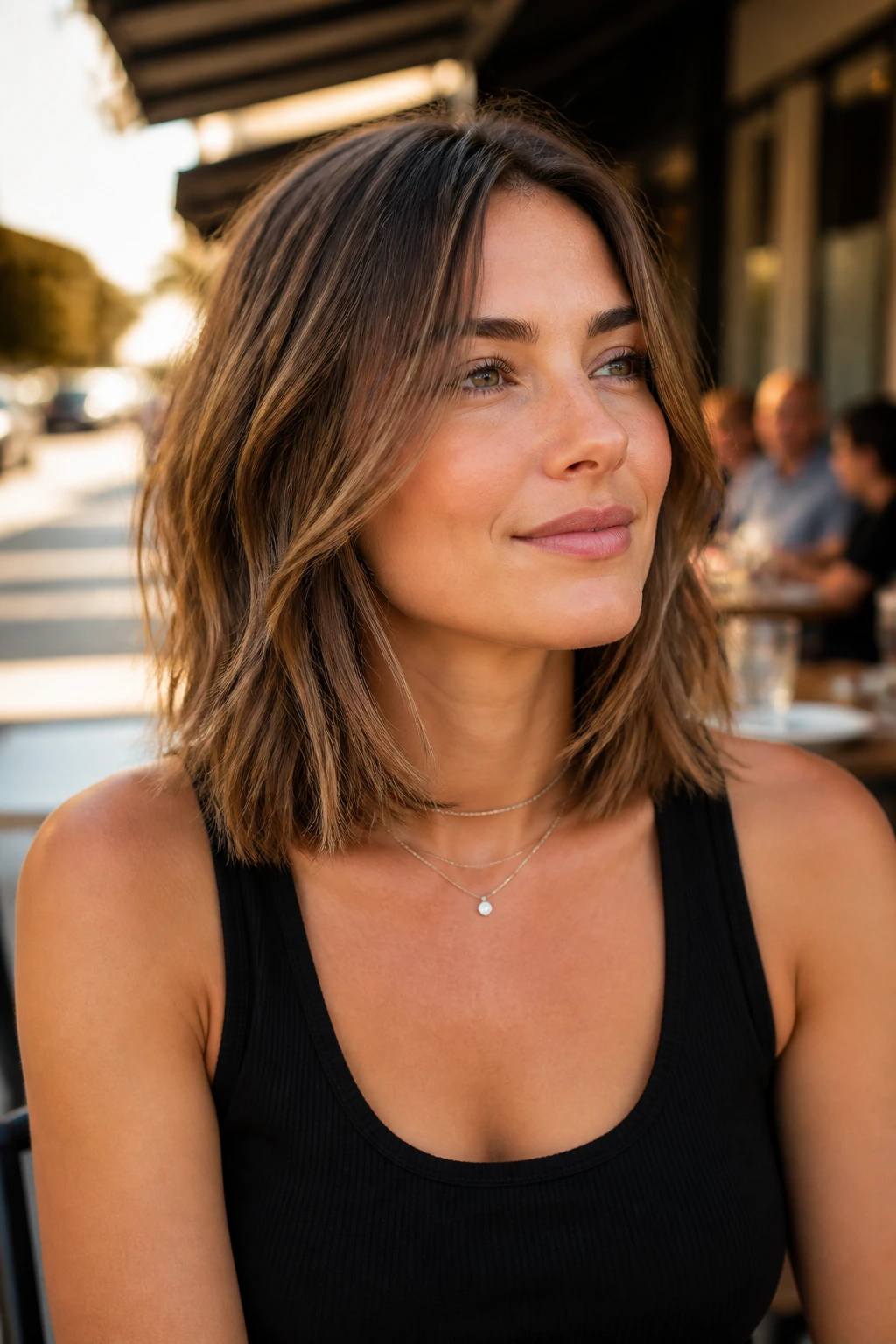
The nicest thing about shoulder length haircuts for fine hair with soft layers is that they don’t ask the hair to be something it isn’t. They work with the texture you have, then build the illusion of fullness in smart places: around the face, through the crown, and along a perimeter that still feels solid when you run your fingers through it.
That’s the part worth remembering. Fine hair doesn’t need to be carved into pieces to look interesting. It needs shape, a little air, and an edge that doesn’t give up halfway down the strand. Pick the version that fits how you actually wear your hair, and the cut will do the rest.