



Straight hair can be brutally honest. Every cut line shows. Every heavy corner at the jaw shows. And on a heart-shaped face, the wrong layer placement can make the forehead feel wider and the chin look even smaller, which is not the effect anyone is going for when they leave the salon with a fresh haircut.
Long layers are the fix when they’re placed with some care. Not the choppy, over-thinned kind that fray at the ends. The good version keeps length, moves the eye down past the cheekbones, and gives straight hair enough bend so it doesn’t hang there like a single hard sheet. That balance matters more on a heart-shaped face than most people realize.
The sweet spot is usually somewhere around the cheekbone, the mouth, or the collarbone — never all in one haircut, and never in the same way for every head of hair. Fine straight hair needs a lighter touch. Thick straight hair needs weight removed from the inside, not hacked off the perimeter. And if the front pieces are too short, the whole cut starts arguing with the face instead of working with it.
Why This Collection Works for Straight Hair and Heart-Shaped Faces
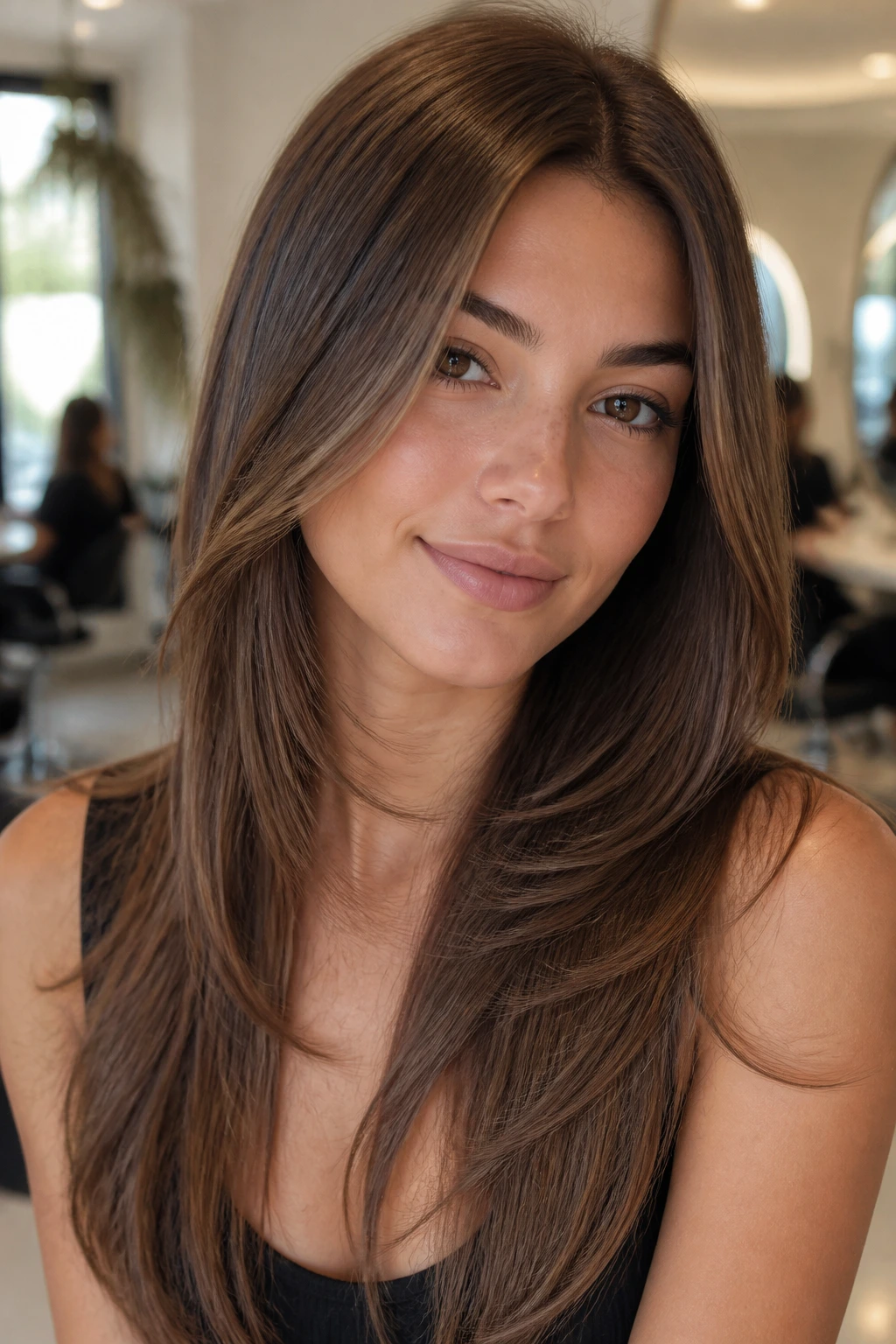
-
The front gets softened without losing length. The best long layers move attention away from a broad forehead and toward the cheekbones and collarbone, which gives the face a calmer line.
-
Straight hair finally gets some motion. On smooth hair, a tiny shift in layer placement changes everything; a layer that starts one inch higher or lower can be the difference between sleek movement and limp ends.
-
The chin stays in proportion. Heart-shaped faces often need softness near the jaw, not a blunt stop right at the narrowest point, and long layers handle that better than short, face-tight cuts.
-
You keep the long-hair silhouette. These cuts preserve the feeling of length, which matters if you don’t want to trade structure for drama.
-
Styling stays flexible. A center part, a side part, a soft bend with a flat iron, or a round-brush blowout can all change the mood without changing the cut itself.
Why Long Layers Need a Different Strategy on a Heart-Shaped Face
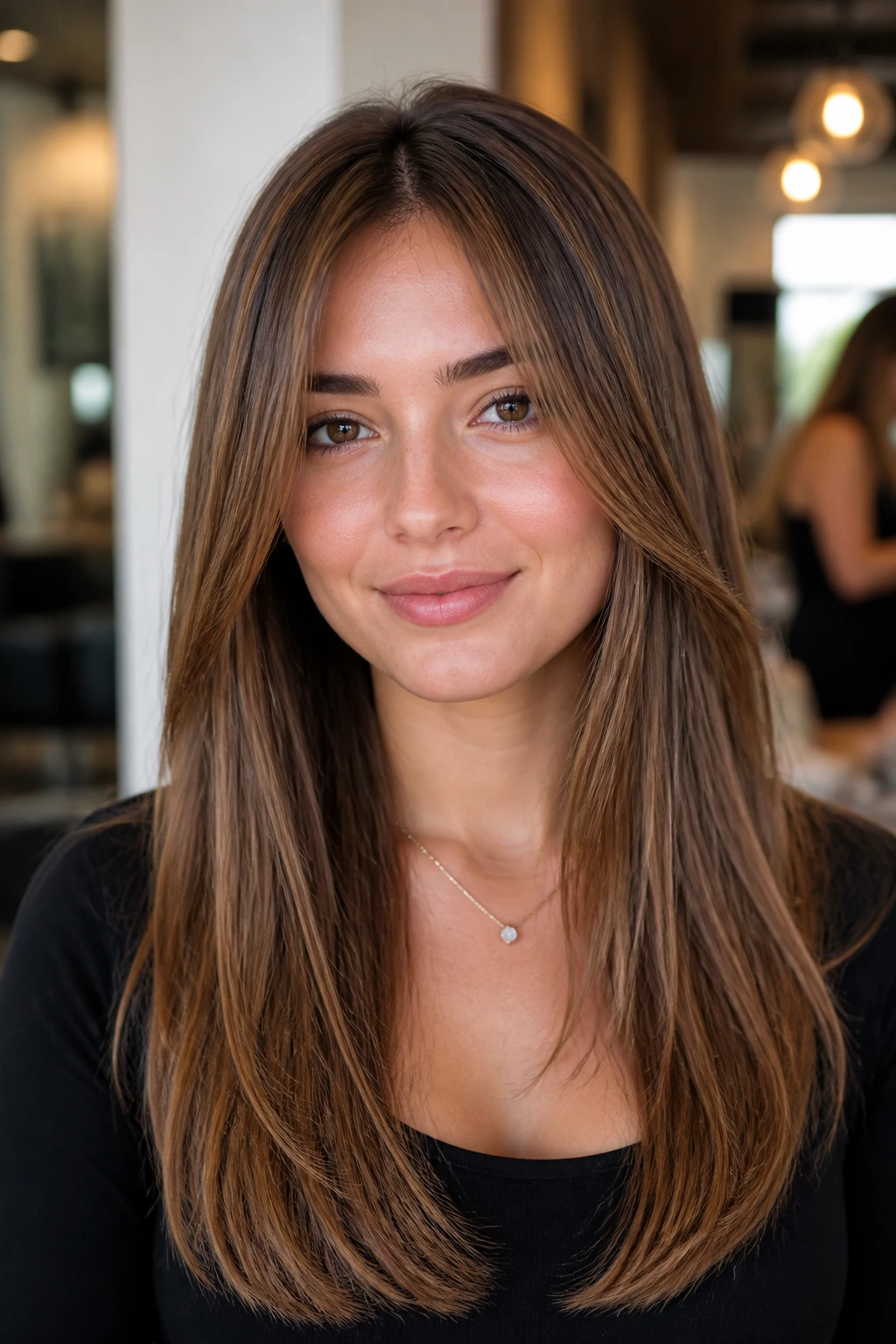
A heart-shaped face has a wider forehead, usually strong cheekbones, and a narrower jawline. That combination can look elegant with the wrong cut and a little lopsided with the wrong one. Long layers work because they let the haircut start high enough to soften the forehead, then drift lower so the bottom half of the face doesn’t get swallowed by too much width at the top.
Straight hair makes that balancing act more obvious. Curly or wavy hair has built-in forgiveness; straight hair has none. A layer that is too short shows up as a shelf. A layer that is too deep makes the ends look stingy. The haircut has to be planned with the part line, the density, and the way the hair falls after a blow-dry.
I also like long layers here because they can be subtle. That matters. You do not need a dramatic shag to get shape. Sometimes the smartest move is a quiet one: a soft front angle, a bit of internal removal, and enough movement near the collarbone to keep the cut from collapsing into one flat curtain.
Where the First Layer Usually Belongs
If the first layer starts around the cheekbone, you get softness near the widest part of the face. If it starts near the mouth or collarbone, the haircut leans sleeker and keeps more weight in the body of the hair. I usually think of the first layer as the haircut’s first sentence — if it lands in the wrong place, everything after it sounds off.
A good stylist will not just say “long layers” and wing it. They’ll look at where your face widens, where your hair naturally parts, and whether your ends need movement or weight. That tiny bit of precision is the whole game.
1. Cheekbone Curtain Layers for Straight Hair
Cheekbone curtain layers are the classic answer when you want the front of the haircut to do something useful. The shortest pieces open around the outer cheekbone and then slide into longer lengths that stay soft and straight, not chunky. On a heart-shaped face, that placement is gold because it breaks up forehead width without chopping into the jaw.
I like this version on straight hair because it stays neat. The hair falls in clean ribbons, and the face-framing pieces don’t puff up into an odd little triangle. Ask for the front to begin near the cheekbone, with the longest front pieces blending into the chest-length hair, not stopping at the chin.
Why it flatters
Those front pieces pull the eye inward and downward. That means the forehead feels less dominant, and the chin gets a little breathing room.
Best if: you wear a center part or a gentle off-center part.
Avoid if: you want almost no front movement at all.
2. Jaw-Softening Face Frames That Skim Past the Chin
This cut starts a little lower than people expect. The front layers skim the jawline instead of stopping right on top of it, which matters when the jaw is already the narrowest part of a heart-shaped face. The result is softer, cleaner, and less fussy than the cut-in-at-the-chin look.
Straight hair shows this shape beautifully when the ends are polished. The front should bend away from the jaw just enough to create a small curve, not a hard notch. I’d ask the stylist to keep the shortest face-framing piece just below the mouth and connect it slowly toward the rest of the length.
That little drop makes a difference. It keeps the haircut from feeling over-edited.
3. Long Butterfly Layers With a Soft Blowout Shape
Butterfly layers give you that lifted front and long lower length that people keep saving to their camera rolls. The top section has shorter layers that float around the collarbone and chest, while the lower section stays long and full. On straight hair, the trick is restraint — too much layering and the whole thing turns thin at the ends.
This is one of my favorites for heart-shaped faces because it creates width around the middle of the face, not the forehead. That helps the face read more balanced. Blow-dry the front pieces with a round brush and a slight turn away from the face, and the haircut does half the work for you.
How to wear it
- Center part for a cleaner line.
- Side part for more forehead softening.
- Loose blowout for the best shape.
4. Invisible Internal Layers for Heavy Straight Hair
Invisible layers are the quiet workhorse of the bunch. Nothing screams “layered haircut” from the outside, but the inside of the shape has weight removed so straight hair stops drooping at the ends. If your hair is thick, dense, or a little blunt-looking, this is the kind of layering that can save the whole silhouette.
The outer line can still look almost one-length, which I like on heart-shaped faces because it doesn’t crowd the jaw. The movement lives inside the haircut instead of on the surface. Ask for internal layers only, especially if you’re wary of seeing short pieces around the face.
That’s the secret here. It gives shape without advertising itself.
5. Rounded U-Shape Layers That Keep the Bottom Soft
A U-shaped cut is gentler than a V and more polished than a straight blunt line. The hem curves softly upward at the sides, so the front and back feel connected instead of separated by a hard corner. On a heart-shaped face, that rounded edge helps the haircut feel less pointed around the chin.
Straight hair likes the U shape because it lies cleanly. There’s less risk of a wispy bottom point, which can happen when the hair is very smooth and the layers are cut too aggressively. If you want a cut that grows out well, this is one of the safest bets.
I’d call this the “quietly flattering” option. It doesn’t grab attention. It just makes the whole head look more even.
6. Sharp V-Shape Layers for More Movement Down the Back
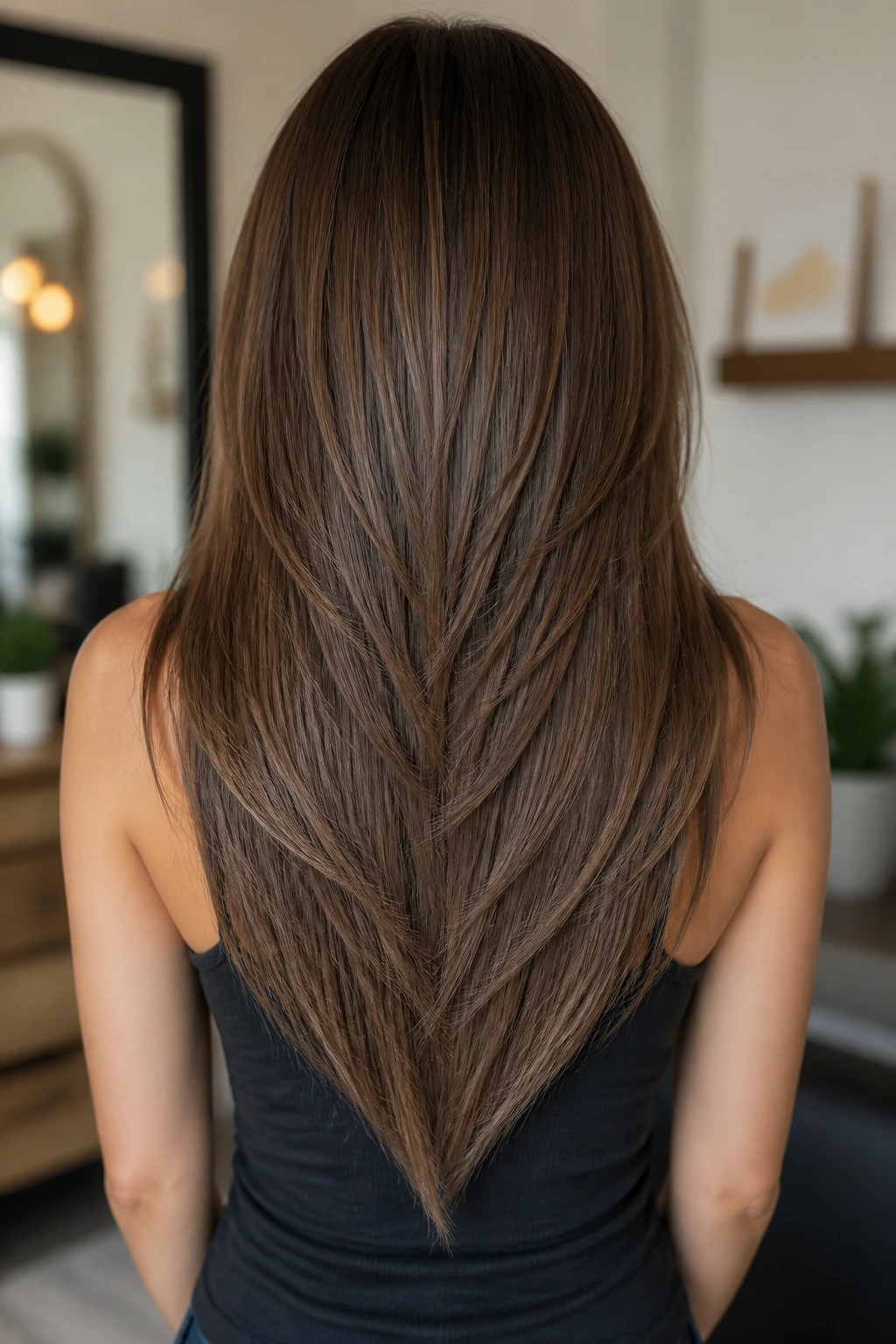
If a U shape is soft, a V shape is the slightly sharper cousin. The back falls to a point, and the front layers angle down toward it, which creates a long line through the body of the hair. On straight hair, that line looks crisp rather than fuzzy, and that crispness can be useful when the cut needs visual length.
For heart-shaped faces, the V works best when the front pieces are not too short. Keep them around the collarbone or below, so the width sits in the middle of the face rather than right at the temples. I’d recommend this shape if you want your hair to feel long and directional, not puffy.
One caveat. If your chin is very narrow, make the point in the back soft rather than dramatic.
7. Feathered Ends That Lighten Thick Straight Hair
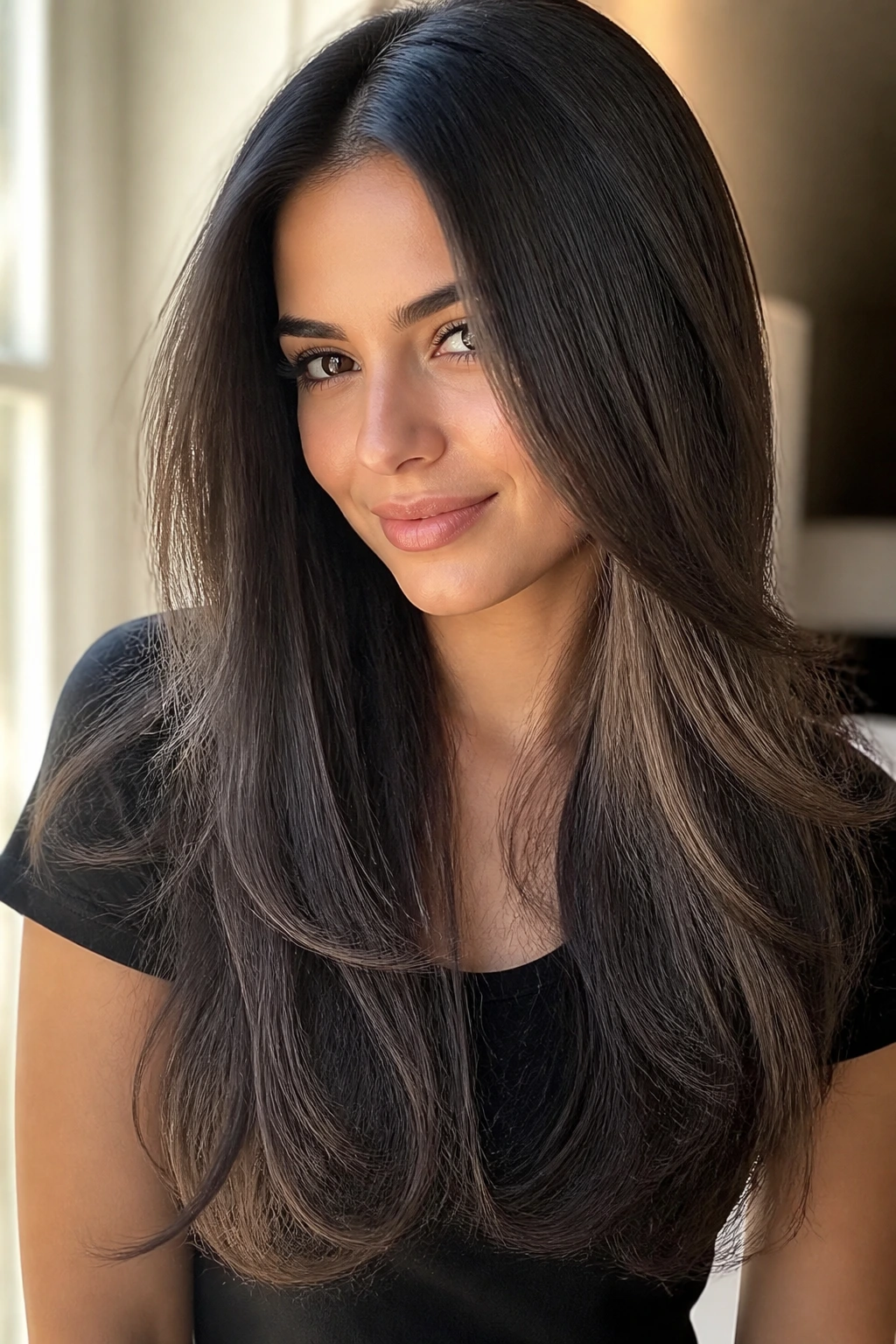
Feathering at the ends gives straight hair a more breathable finish. The ends taper instead of stopping in one hard line, which helps thick hair move and stop looking like a helmet. On a heart-shaped face, feathered ends can keep the lower half from feeling heavy or boxy.
This style works best when the feathering stays in the last third of the hair. Too much feathering too high up, and the ends start to look stringy. A good stylist will lift the weight from underneath while leaving enough bulk at the perimeter so the haircut still has shape.
A little feathering goes a long way. That’s especially true on hair that already lies smooth.
8. Off-Center Sweep Layers That Pull the Eye Diagonally
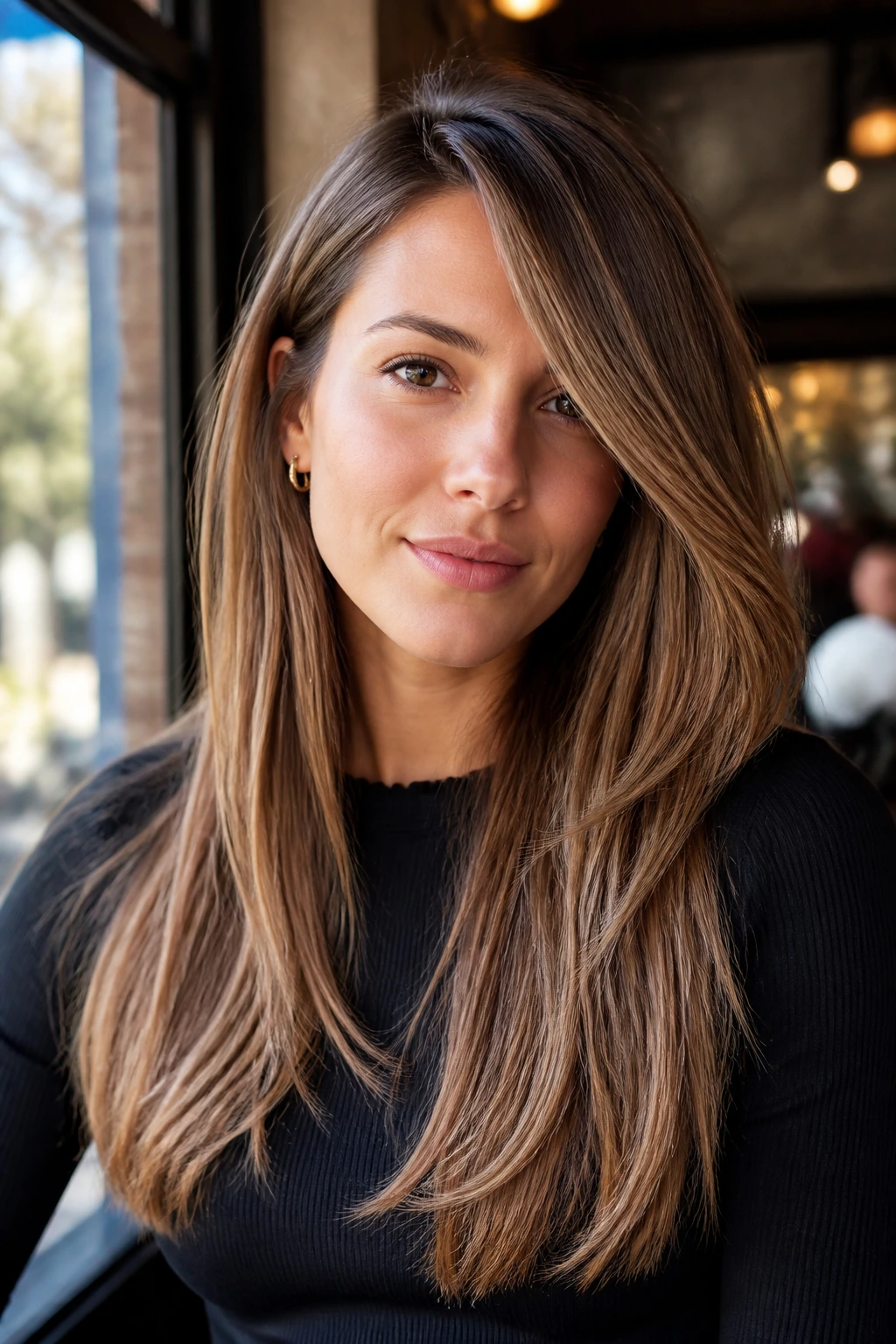
A slightly off-center part changes how the layers land across the face. The front pieces sweep across the forehead instead of splitting it in two, which is useful when you want to soften width without committing to bangs. On straight hair, the diagonal line looks sleek and intentional, not accidental.
This cut is a nice choice if you wear your hair tucked behind one ear now and then. The front pieces should be long enough to slide past the cheekbone, then taper into the rest of the haircut without a visible jump. That diagonal line is what gives the face a little slack.
I like this one on people who want their haircut to look styled even on a low-effort day. The part does a lot of the heavy lifting.
9. Bottleneck Bangs With Long Layers
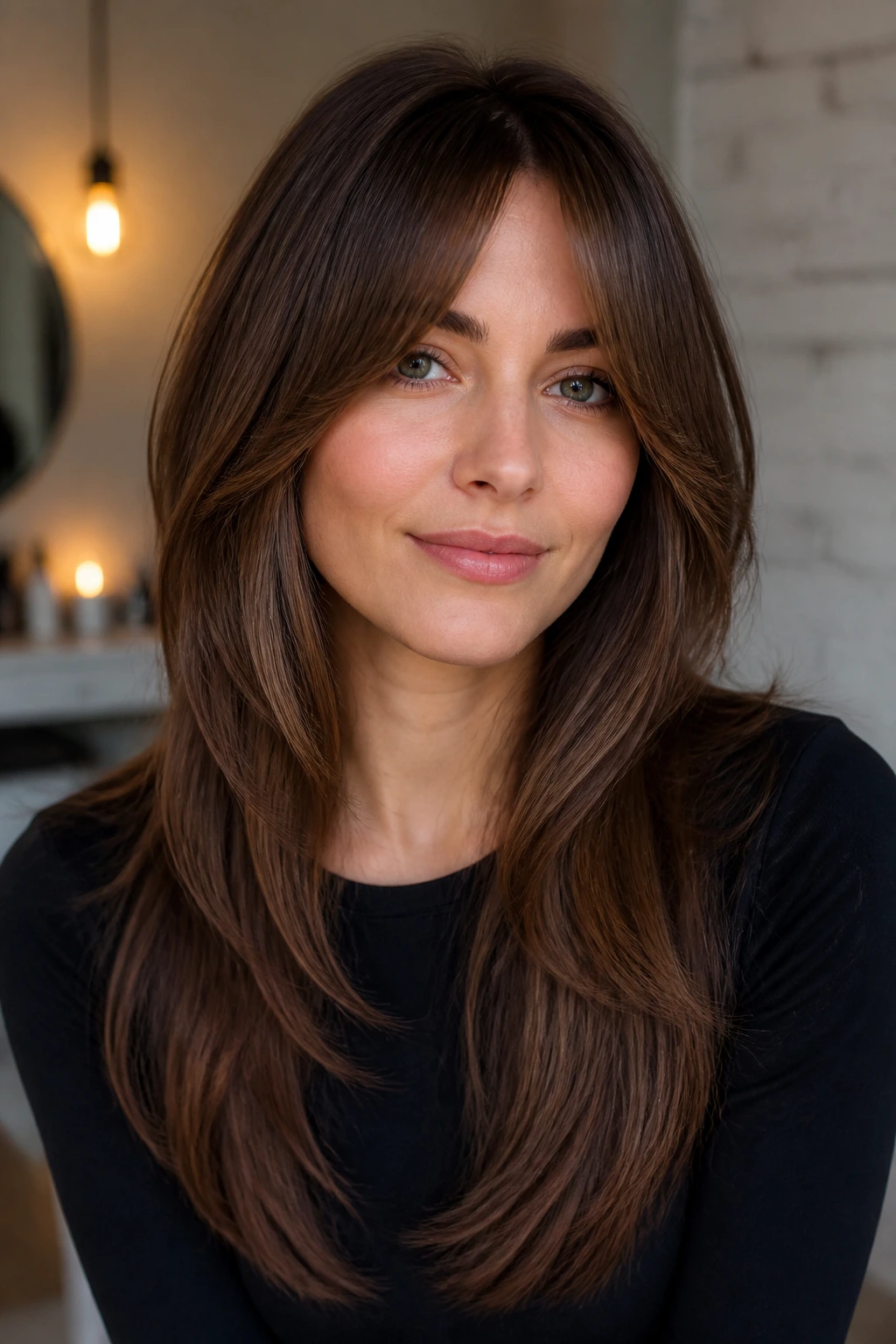
Bottleneck bangs can work beautifully on heart-shaped faces because they’re softer than blunt bangs and less committed than a full fringe. The center is a little shorter, then the sides gradually lengthen to blend into the layers. On straight hair, the shape stays clean and readable.
The real advantage is balance. Bottleneck bangs add softness at the forehead without boxing in the face, and the long layers below keep the haircut from feeling top-heavy. I’d ask for the shortest center piece to hit around the upper eyebrow area, then have the sides taper down to the cheekbone.
They do need a bit of styling. Not much, but enough. A quick bend with a round brush or a flat iron keeps them from sitting too flat.
10. Side-Swept Fringe With Long Cascading Layers
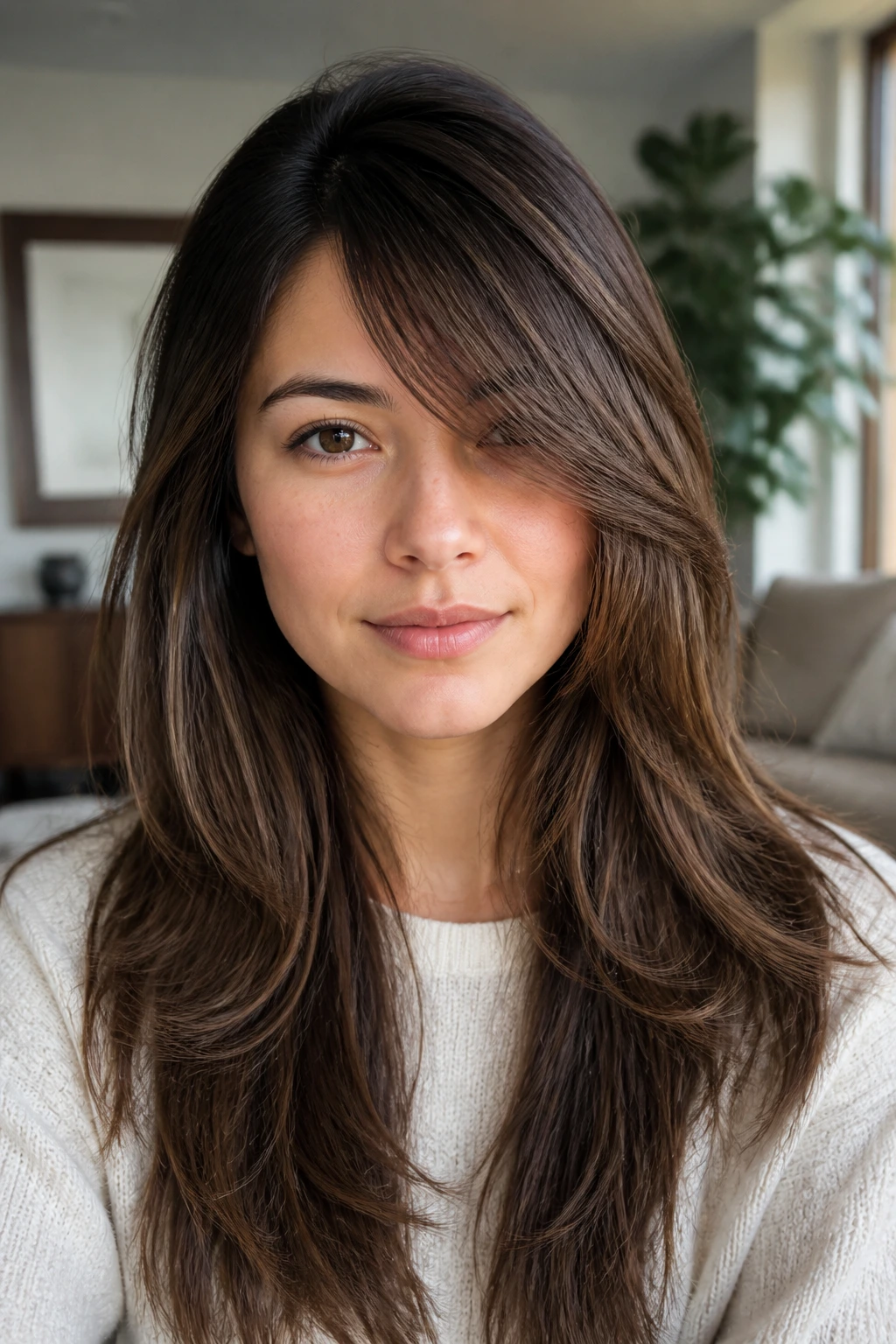
A side-swept fringe has a different kind of charm. It sends the eye diagonally across the face, which can make a wider forehead feel less dominant. Paired with long layers, it gives straight hair movement without making the haircut feel overly textured.
This cut is especially good if you like a softer, slightly romantic shape. The fringe should begin deep enough to blend with the crown, not look pasted on top. The longest side should land somewhere around the cheekbone or jaw, depending on how much forehead you want to cover.
A side-swept fringe is also easier to grow out than people think. If you get tired of it, it becomes a face frame. That’s not a bad exit plan.
11. Collarbone-Bounce Layers That Move When You Walk
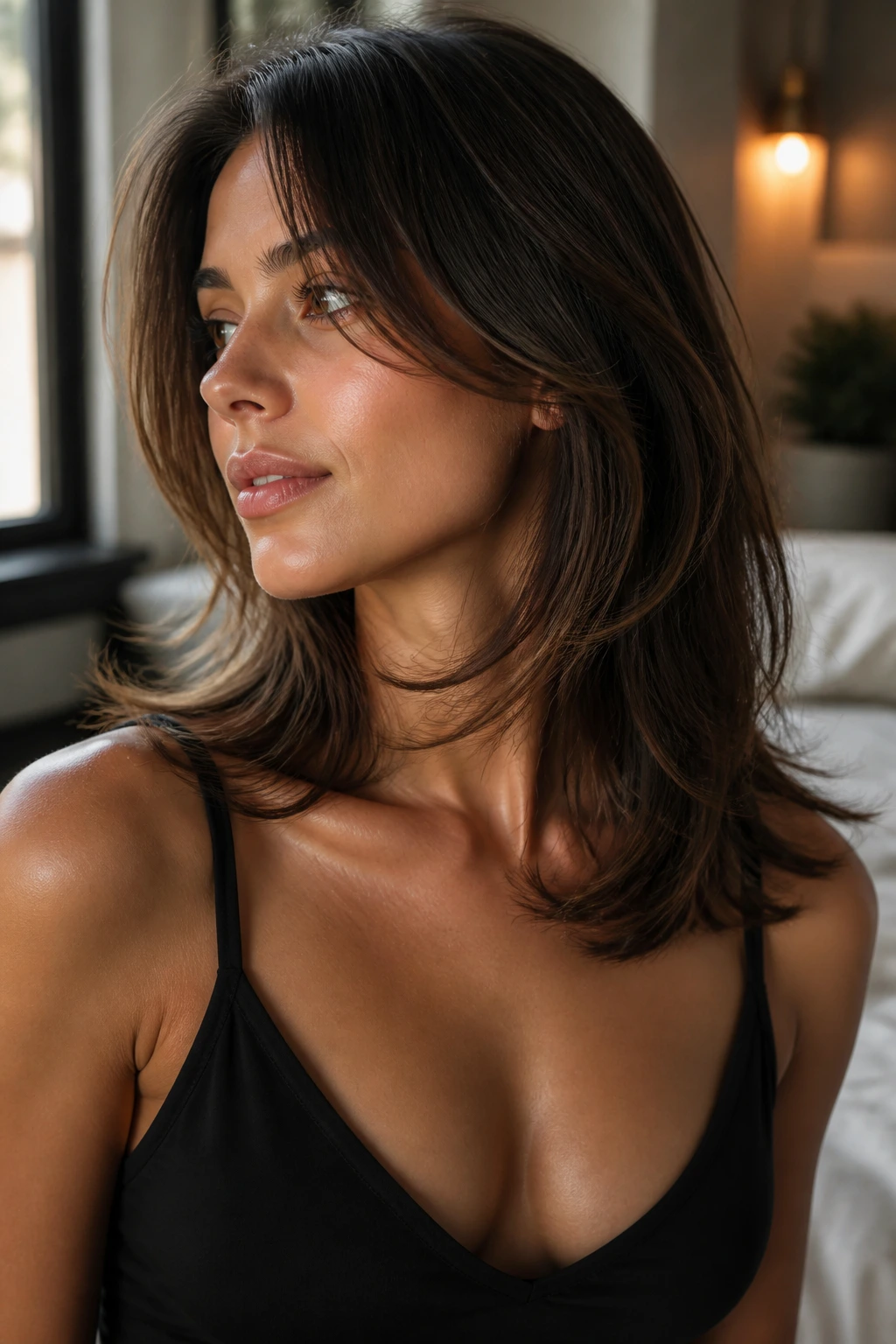
Collarbone-bounce layers start their most noticeable movement right where the hair hits the collarbone. That’s a smart place for heart-shaped faces because it creates fullness around the lower half of the face without piling volume on top. On straight hair, the collarbone is also where the hair naturally bends when it’s dry, so the cut looks polished with very little work.
I like this style when someone wants the haircut to do a little swinging but not too much. The layers should be long enough to flick softly when you turn your head, not short enough to spring out. Think movement, not bounce in the old-school pageant sense.
If you wear high-neck tops or jackets a lot, this cut looks especially good. The hair sits right where the neckline ends.
12. Long S-Curve Layers for Clean Movement
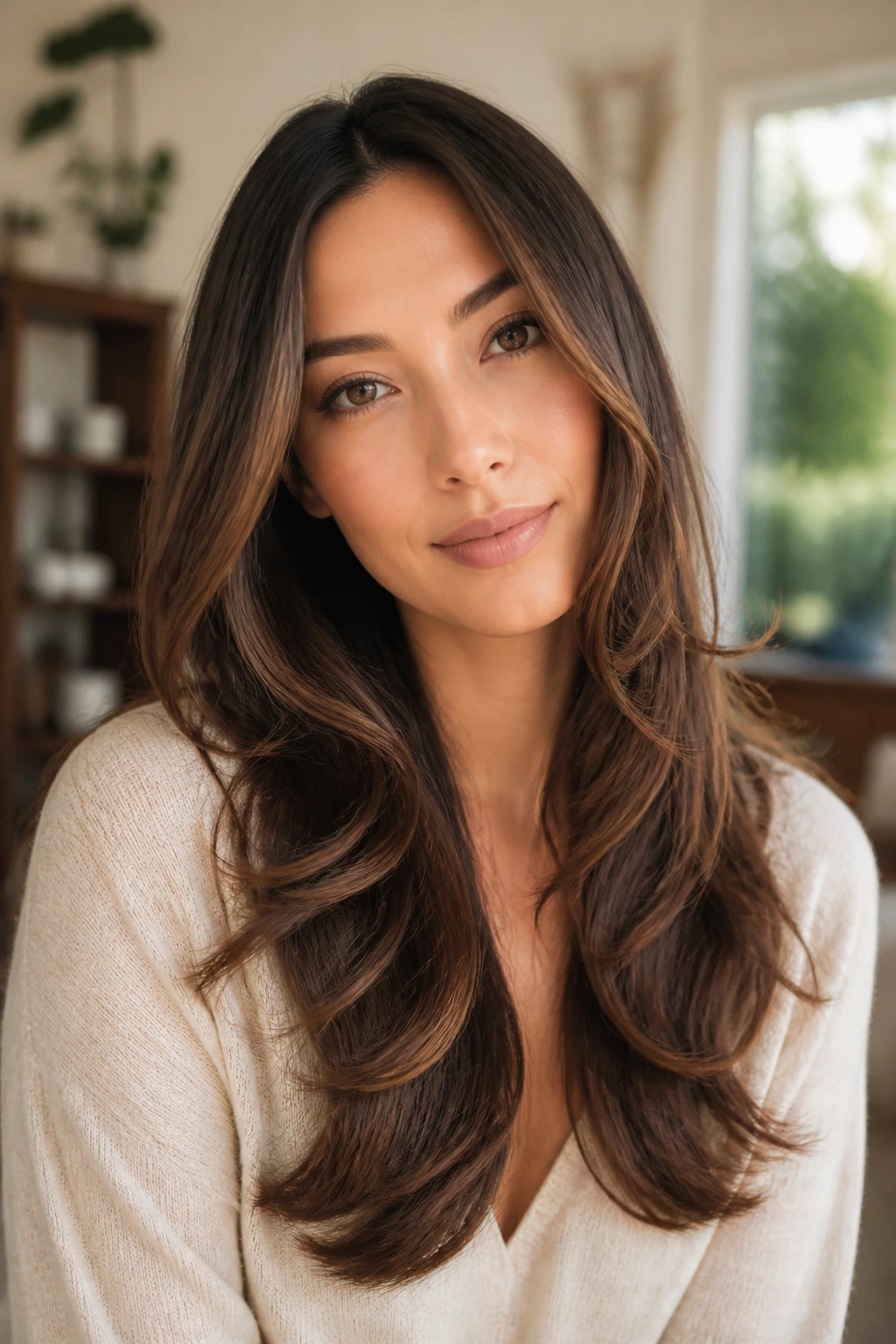
An S-curve layer pattern is one of those cuts that sounds technical and ends up looking easy. The front pieces flow from the cheek area into the chest area in a soft curve, then the length carries that line through the back. Straight hair makes the shape very visible, which is why I like it for this texture.
How it behaves
The curve keeps the haircut from looking blocky. It also avoids the hard point that a more dramatic V-cut can create.
A heart-shaped face benefits because the curve draws attention through the middle of the face, not just the forehead. Ask your stylist to keep the front long and make the curve gradual. If the bend is too aggressive, the cut starts to look like two different haircuts living on the same head.
13. Blunt Bottom With Soft Top Layers
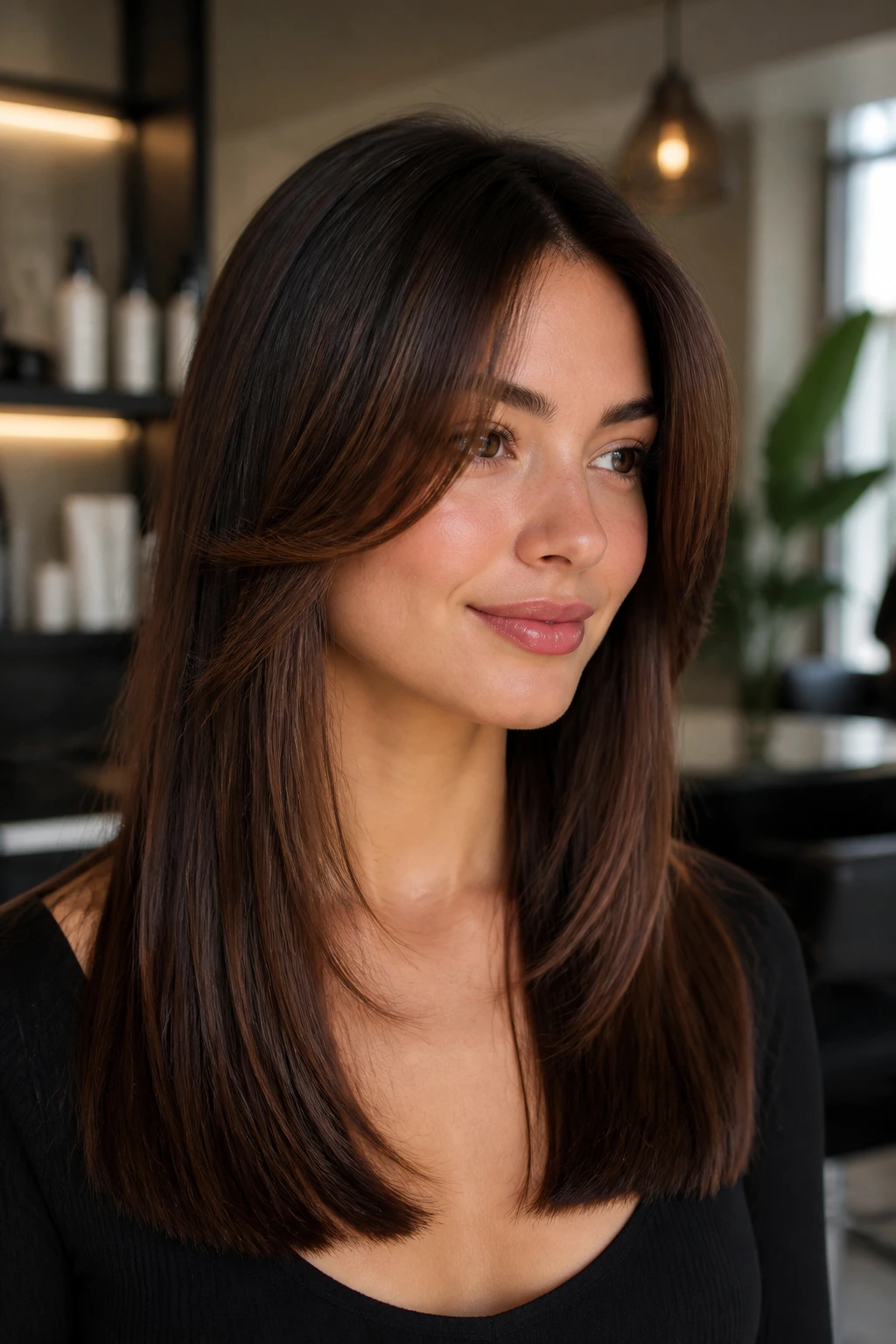
Here’s the thing: not every long layered cut needs a wispy end. Sometimes the smartest move is to keep the bottom line blunt and add softness only in the top section. That preserves weight, which straight hair often needs, and it gives the face just enough movement to balance a heart shape.
This is a good compromise if you like structure. The perimeter still looks clean, but the top layers prevent the crown from feeling too boxy. Ask for a blunt or nearly blunt hem with soft, long top layers that begin above the cheekbone and blend into the rest.
It’s a solid choice for people who worry about losing thickness at the ends. Reasonable worry, honestly.
14. Air-Light Razored Layers for a Softer Edge
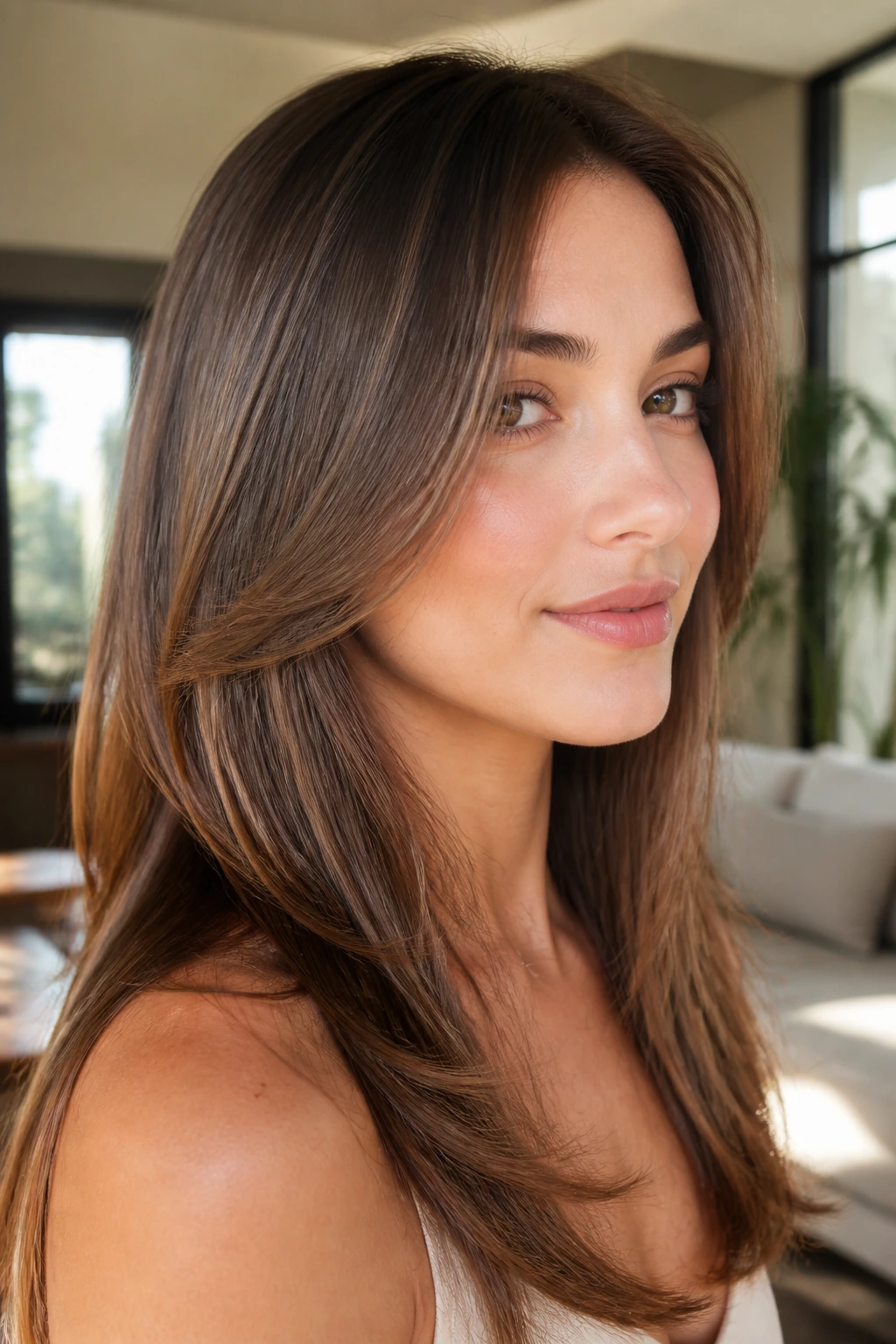
Razored layers can be lovely on straight hair when they’re done with a light hand. The goal is an airy edge, not shredded ends. Used carefully, a razor takes the stiffness out of the haircut and gives the front pieces a little swing.
I’d be careful here if your hair is very fine, because too much razor work can make the ends look sparse. But on medium-to-thick straight hair, this cut can create movement that scissors sometimes can’t. It works well on heart-shaped faces when the shorter pieces stay around the cheekbone and never crowd the temples.
If you like a hair that feels lived-in rather than crisp, this is the lane.
15. Thick-Hair Layers That Keep Weight at the Ends
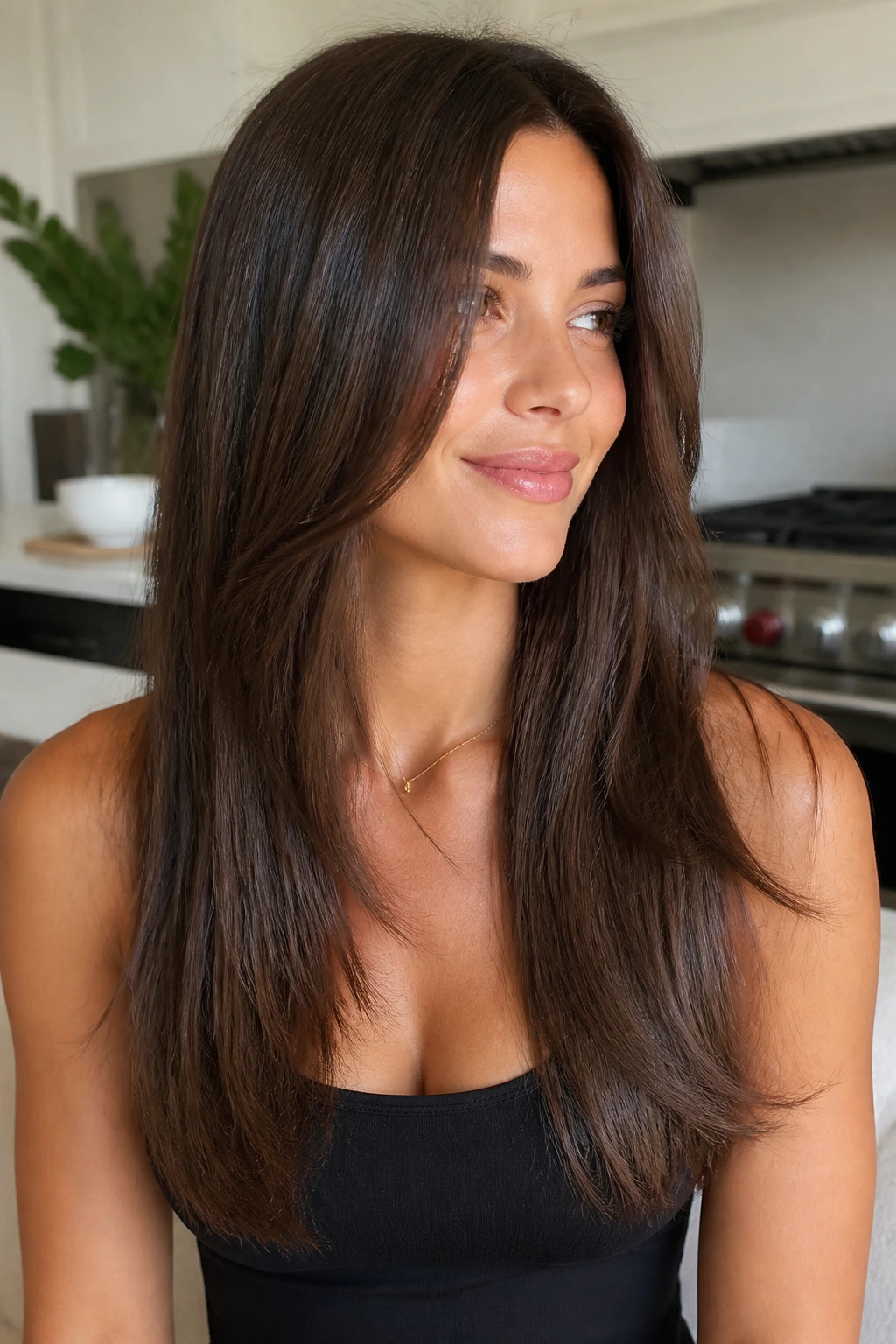
Thick straight hair has its own personality. It can look lush, but it can also turn into a block if the weight sits in the wrong place. The best long layers for thick hair remove bulk from the inside while leaving enough weight at the hem so the ends don’t look skinny.
For a heart-shaped face, I like this because it keeps the lower face from getting visually lost. The long layers should be slow and graduated, with the shortest pieces staying well below the cheekbone. You want movement, not a halo of shorter pieces.
If you have thick hair and straight texture, ask the stylist to leave the perimeter dense. That one request saves a lot of disappointment.
16. Fine-Hair Layers With a Light Root Lift
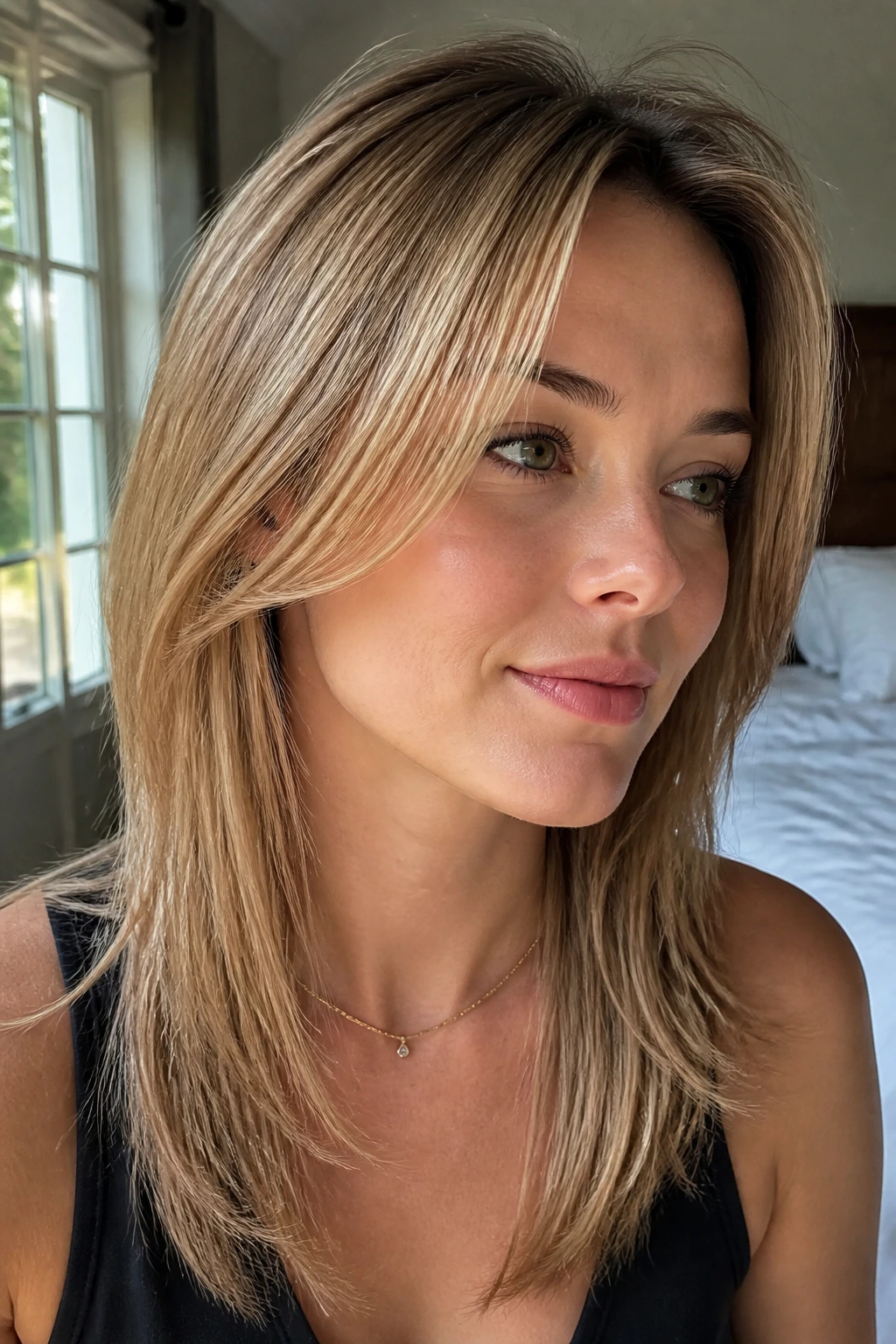
Fine straight hair needs discipline, not drama. Too many layers and it goes see-through fast. The smarter move is a light layer pass near the front and a small amount of root lift at the crown, which gives the haircut body without stripping away the shape.
This style is useful on heart-shaped faces because it keeps the top from flattening against the forehead. The front should still be soft and long, but the bulk of the hair needs to stay intact below the cheekbone. Think of it as a whisper of layering, not a haircut with opinions.
I’d avoid aggressive face-framing here. Fine hair looks better when the edges stay full enough to hold the line.
17. Face-Framing Money Piece Layers
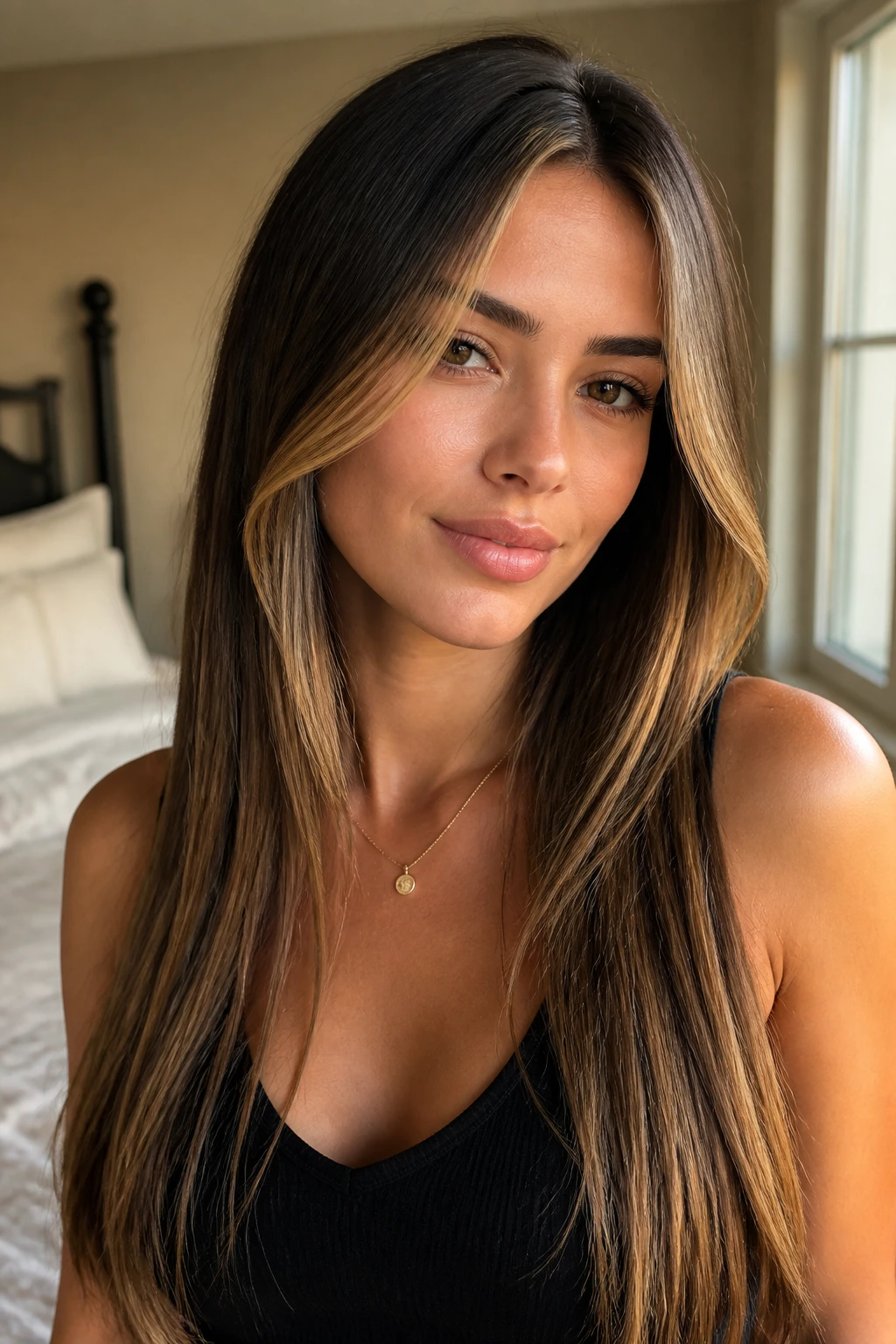
Money piece layers are the brighter, more obvious front pieces that frame the face and draw attention outward. Even without color, the cut itself has the same effect: it opens the front and shifts attention to the cheekbones and eyes. On a heart-shaped face, that can be a very useful trick.
Straight hair keeps this style crisp. The front pieces should be long enough to feel intentional, usually beginning around the cheekbone and moving into the chest length. If you add highlights to the front sections, the layered shape becomes even more readable.
I like this for someone who wants the haircut to show up in photos without looking overstyled. A little dimension at the front changes the whole head.
18. Grow-Out Friendly Layers That Stay Clean for Months
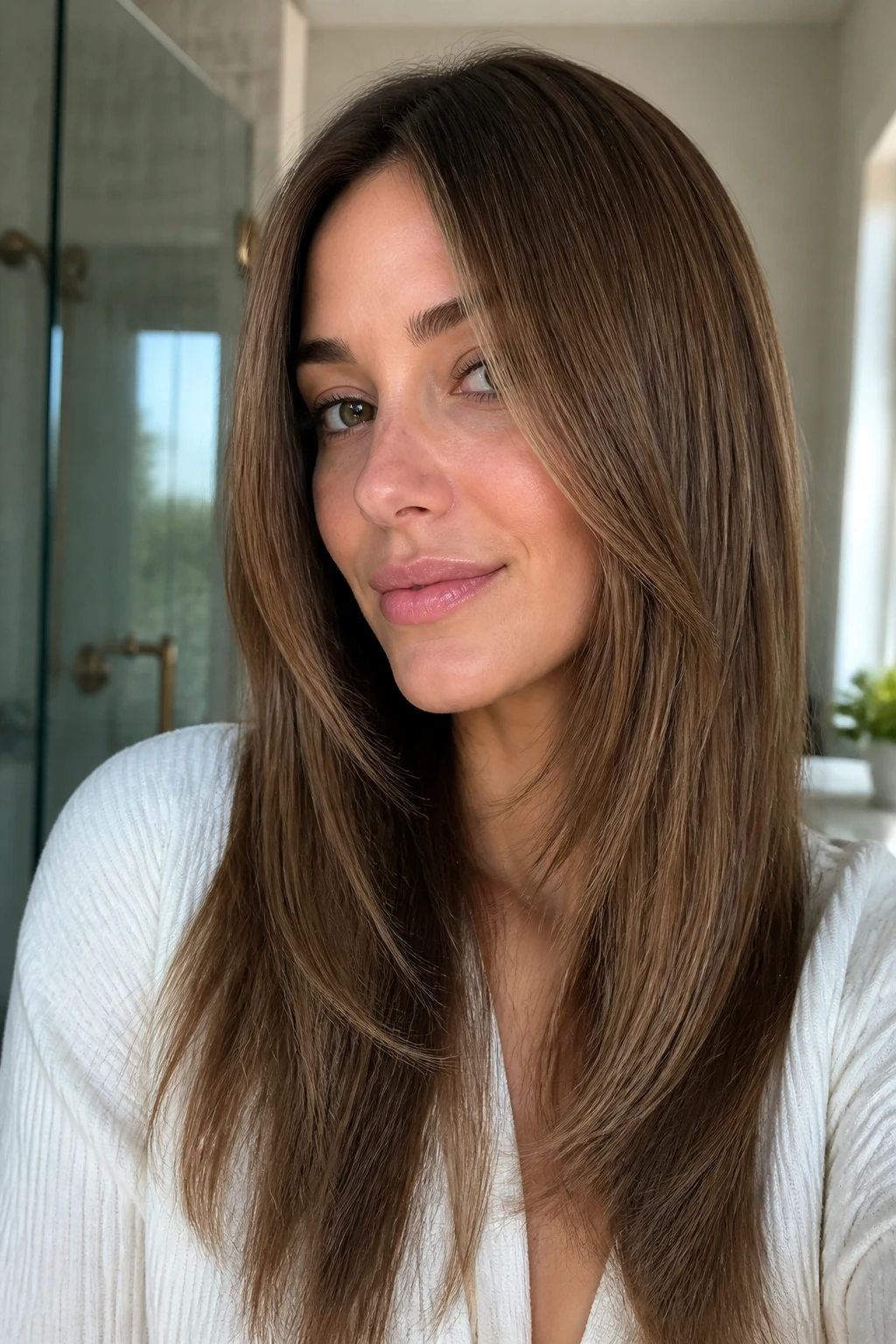
Not everyone wants to sit in a salon every eight weeks. Grow-out friendly layers are built for that reality. The shortest pieces start low, the transitions stay slow, and the perimeter keeps enough weight that the haircut doesn’t turn ragged as it grows.
This is a smart option for heart-shaped faces because the softening happens gradually instead of all at once. Straight hair is unforgiving when it grows out badly, so a slower layer pattern helps the front keep its shape longer. I’d ask for the shortest face-framing piece to land around the mouth or lower, then blend it carefully.
This cut is a little less flashy than some of the others. That’s the point.
19. Layered Blowout Cut With Flip and Movement
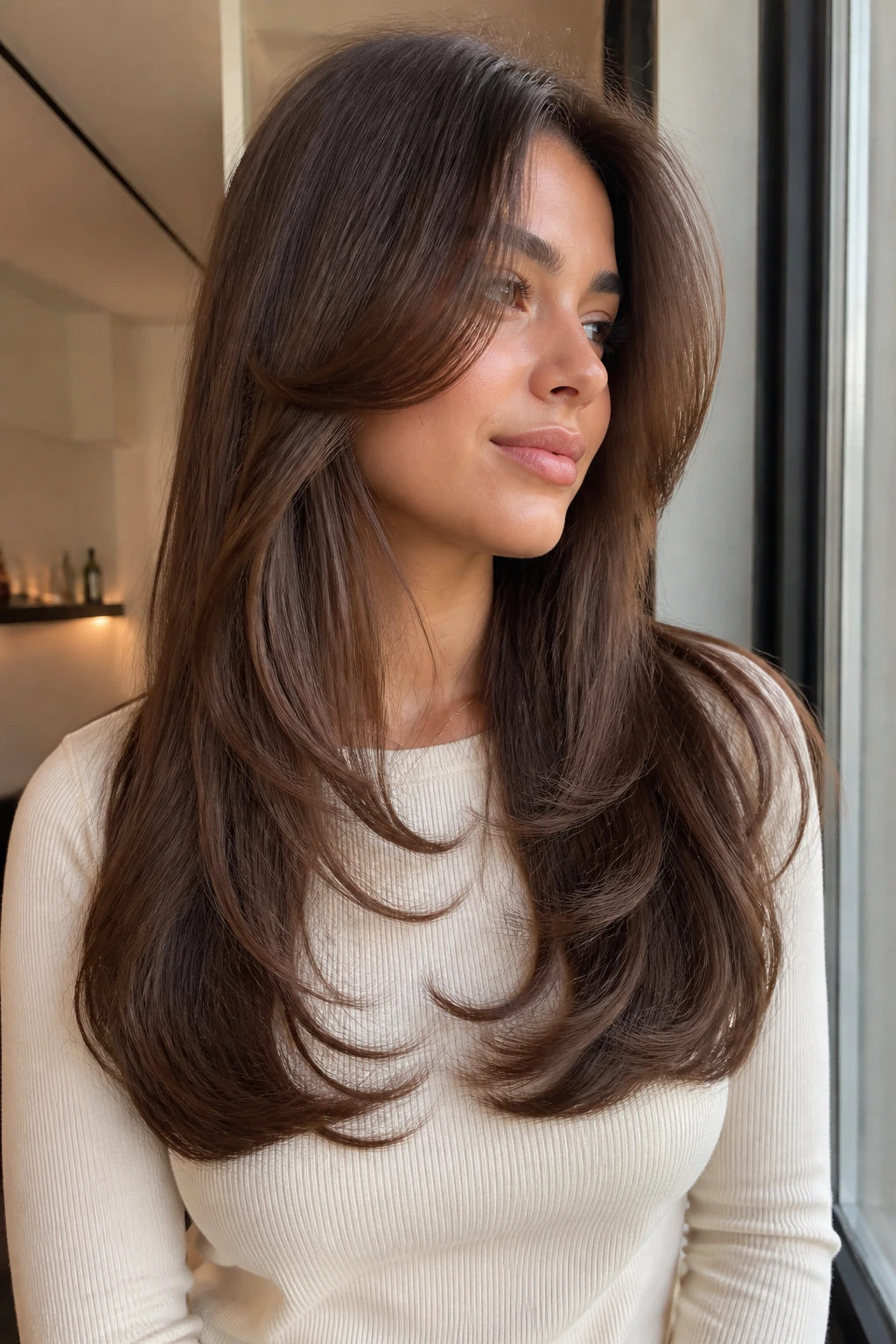
Some cuts are built for air-drying. This one is built for a brush and a dryer. A layered blowout cut uses long face-framing pieces and subtle body layers that flip under or away from the face with very little effort. Straight hair shows the movement cleanly, which makes the haircut look more expensive than it actually is.
A heart-shaped face benefits because the blowout opens around the cheeks and settles softly near the jaw. I’d keep the front pieces long enough to bend, not so short that they kick out in a weird way. A 1.5-inch round brush does a lot of the work here.
If you like that polished salon feel, this is the one to keep on your reference board.
20. Soft Diagonal Layers That Fade Into the Length
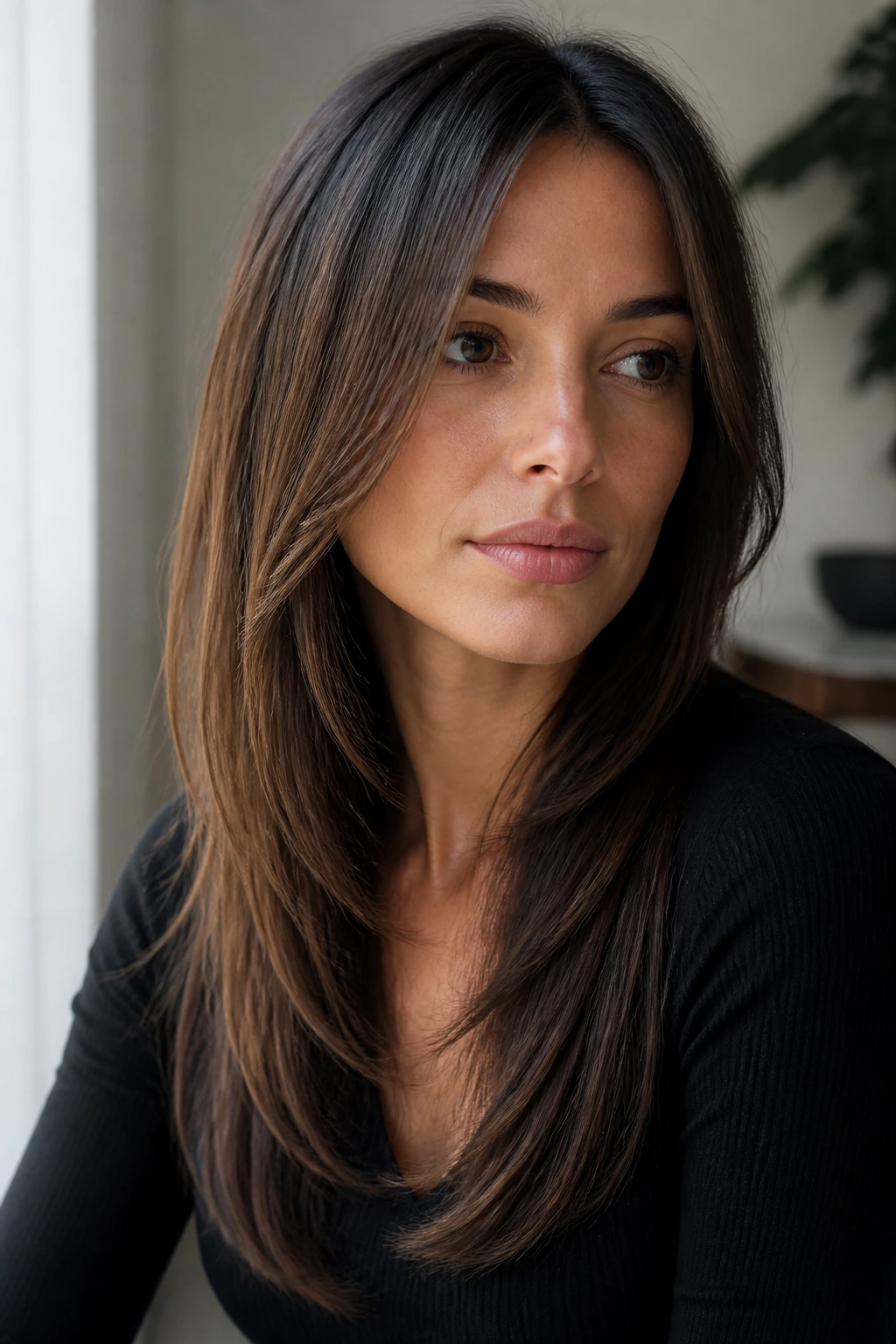
Diagonal layers are subtle, but they’re sneaky good. Instead of cutting a big obvious face frame, the layer line moves on a soft diagonal from the front toward the back. The result is movement without a lot of visual noise.
On straight hair, that diagonal line keeps the haircut from feeling boxy. On a heart-shaped face, it gently redirects attention away from the forehead and toward the center of the face. I’d call this a good choice for someone who wants their hair to look tidy even when they do very little to it.
The cut needs a careful hand. If the diagonal is too steep, the layers start shouting. Keep it quiet.
21. Tucked-Behind-the-Ear Front Layers
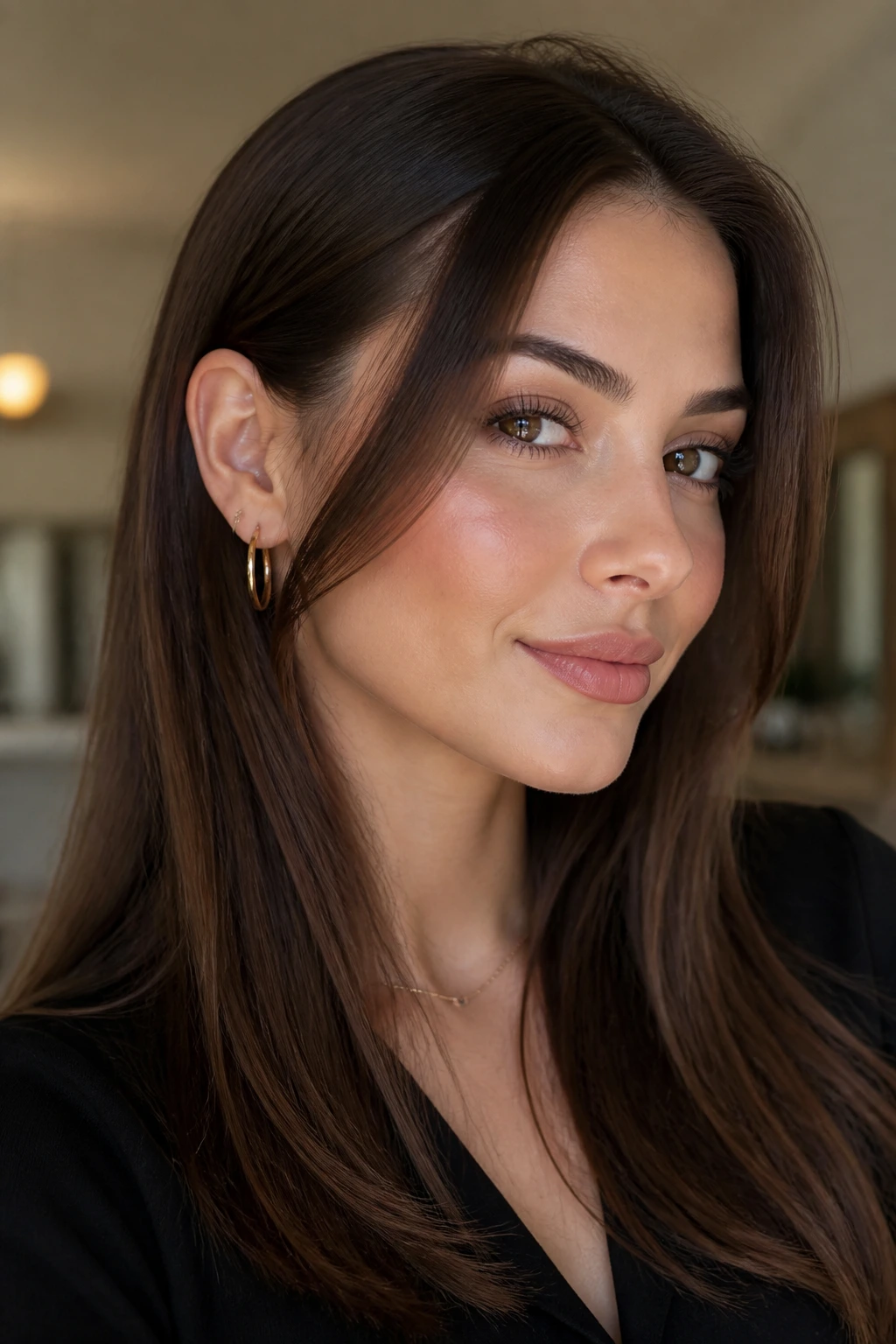
This one is for people who actually wear their hair behind one ear. The front pieces are long enough to tuck, but they still frame the face when worn forward. That sounds simple, and it is, but the balance is tricky on straight hair — too short and the pieces escape; too long and they disappear.
For heart-shaped faces, this shape gives the forehead softness while keeping the jaw open. The face frame should land around the cheekbone or just below it, then blend into the rest of the length. It’s especially good if you wear earrings, because the cut doesn’t fight with them.
I like cuts that behave in real life, not just in a mirror. This is one of them.
22. Polished Center-Part Layers With Symmetry
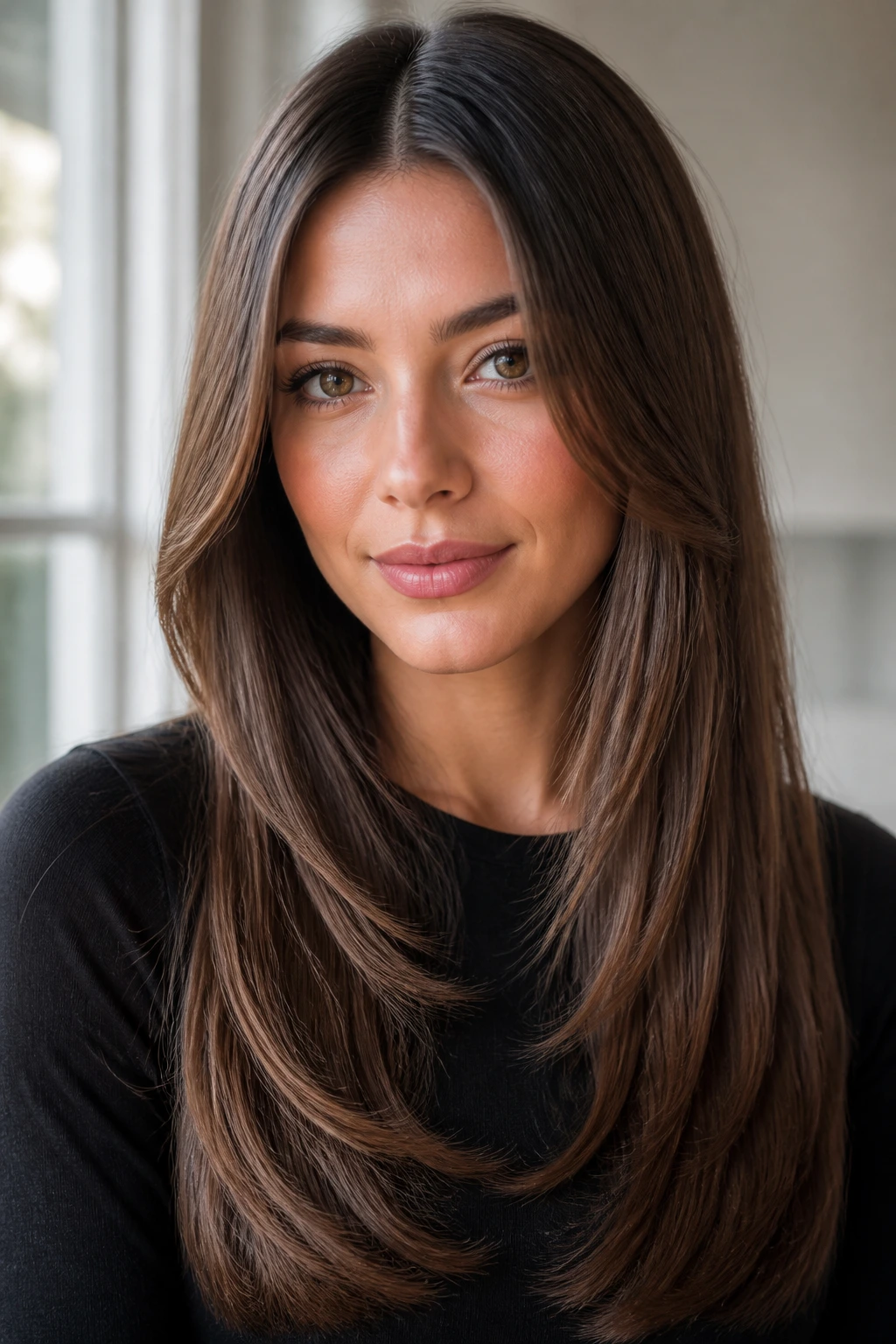
A center part can work beautifully on a heart-shaped face if the layers are soft enough. The key is not to make the front too blunt. Instead, the layers should begin around the cheekbone or lip area and fall evenly on both sides, which keeps the face open without looking severe.
Straight hair makes this style look polished fast. You get the visual neatness of symmetry, but the long layers keep it from turning rigid. This is a clean, modern shape, and I’d recommend it to anyone who wants structure without a lot of movement around the crown.
One caution. If your forehead feels very wide to you, keep the front pieces a little longer so the center part doesn’t exaggerate it.
23. Piecey Front Layers That Break Up a Solid Curtain
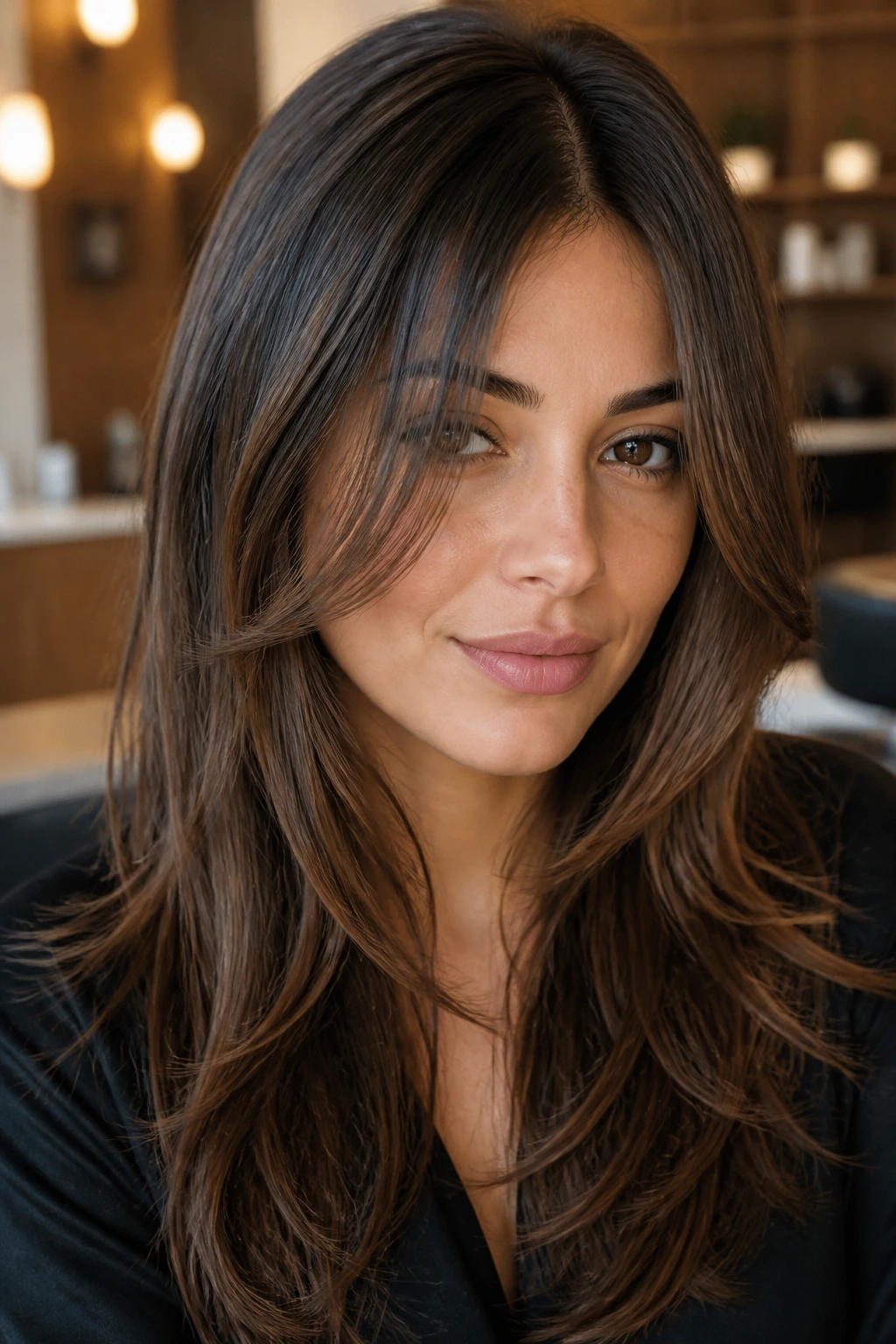
Piecey layers are the opposite of one heavy curtain of hair. The front is separated into slimmer sections that move independently, which gives straight hair a little life. On a heart-shaped face, that separation helps soften the top half and stop the haircut from feeling too dense around the temples.
This cut works best when the pieces are long enough to hold their shape. You don’t want tiny wisps; you want deliberate, visible strands that fall around the cheekbone and mouth. A lightweight styling cream or a touch of pomade on the ends can help define the pieces without making them greasy.
I think this one suits people who don’t want a formal look. It’s neat, but it has edge.
24. Feathered Hem Layers for a Softer Finish
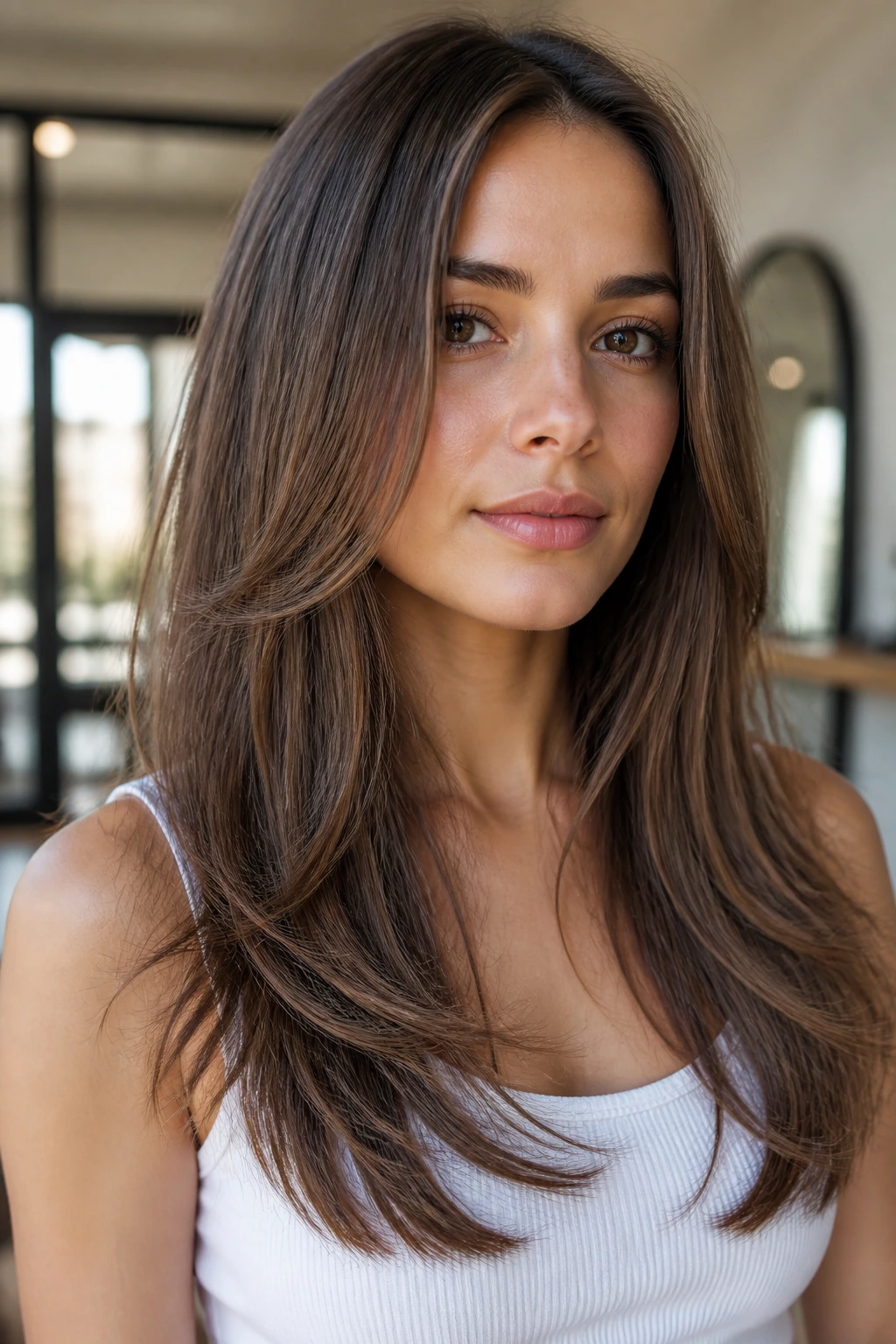
Feathering at the hem gives the bottom of the haircut a gentler edge. Instead of ending in one blunt line, the hair tapers just enough to move. On straight hair, that can stop the ends from looking heavy and stiff, which is a common problem with longer cuts.
For heart-shaped faces, a feathered hem keeps the lower half from feeling square or weighed down. The front can still be long and framing, but the finish at the bottom needs to stay light. I’d recommend this if your hair is thick enough to support it and you want the cut to feel airy rather than dense.
The trick is moderation. Feathering should soften the hem, not erase it.
25. Balanced U-Layers With a Soft Edge
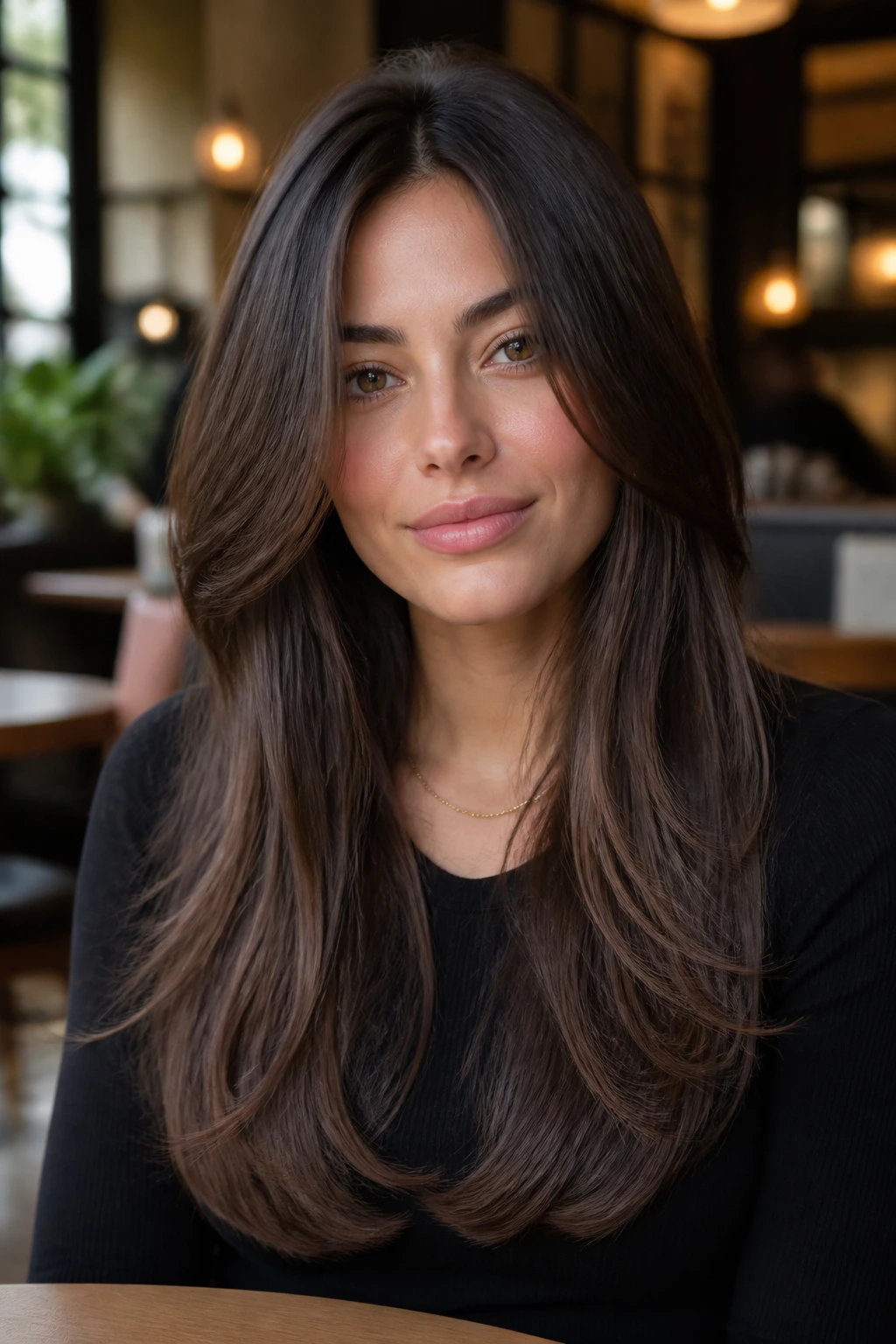
If you want one version that sits in the middle of nearly everything, this is it. Balanced U-layers keep the perimeter rounded and soft, the front pieces long enough to flatter the forehead, and the ends full enough to look healthy on straight hair. It’s not the flashiest cut in the room. It is, however, the one I trust most when someone wants a safe, clean result.
The soft edge matters because heart-shaped faces can get overwhelmed by too much volume at the top or too sharp a point at the bottom. A rounded U keeps the eye moving smoothly from forehead to cheekbone to jaw. Ask for long layers that start around the collarbone and blend gradually into a curved hem.
If you want one haircut that can live with a center part, a side part, a loose blowout, or air-dried polish, this is the one I’d hand over first.
How to Ask for the Cut So Your Stylist Doesn’t Guess
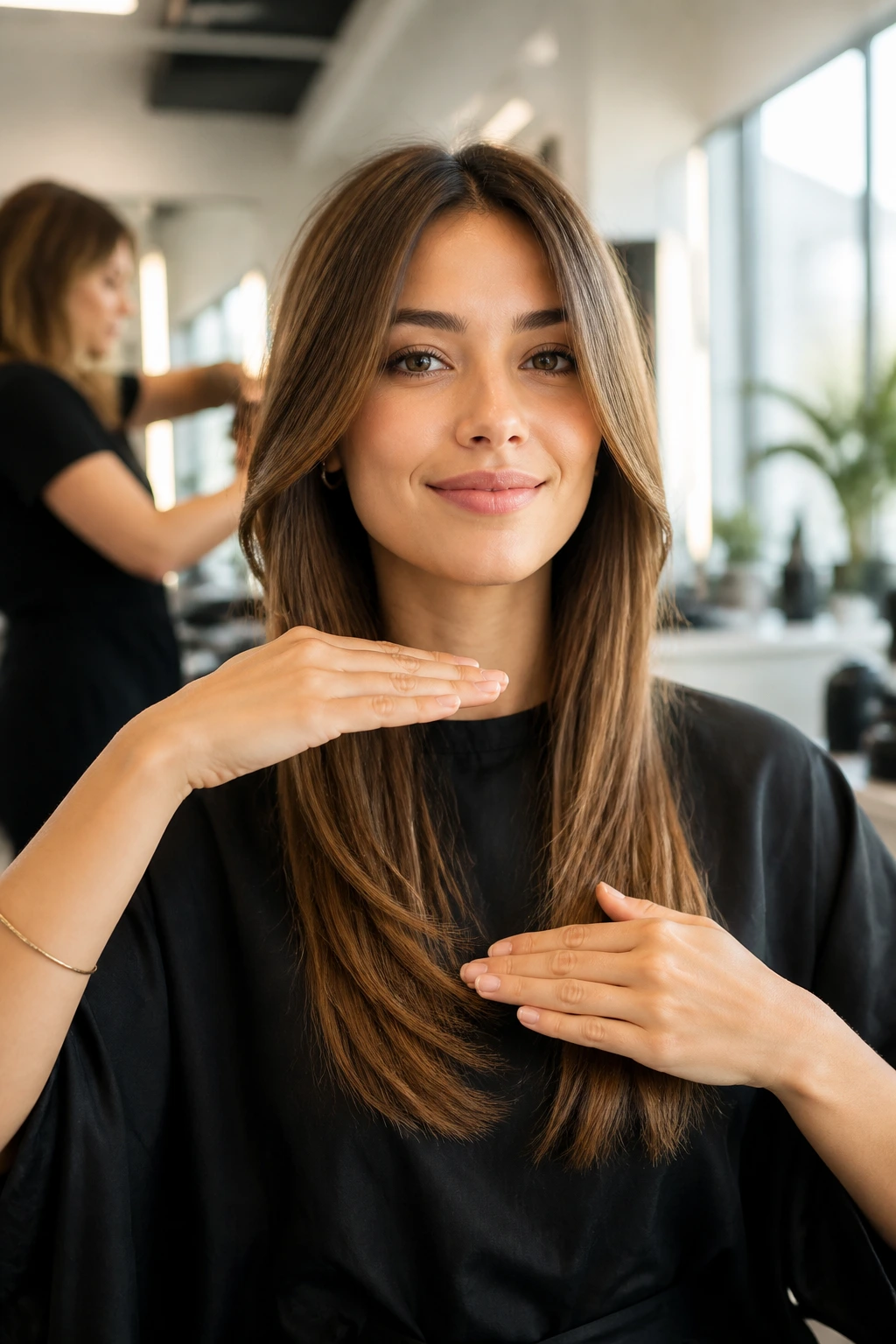
The fastest way to get a disappointing layer cut is to say “just long layers” and hope the stylist reads your mind. They won’t, and honestly, they shouldn’t. Straight hair and heart-shaped faces need a little more direction than that because the difference between flattering and flat often comes down to where the first layer begins.
Use specifics. Say where you want the shortest front piece to land — cheekbone, mouth, collarbone, or lower. Tell them if you wear a center part, a side part, or both. And mention whether you want the haircut to look more blended and quiet or more obvious and piecey. That gives the stylist something workable instead of a vague wish.
Bring two photos if you can. One should show the front, because that’s where the face framing lives. The other should show the side or back, because long layers can look good from the front and completely wrong from the profile. If your hair is very straight and fine, say that out loud. If it’s dense and tends to sit heavy, say that too. Haircuts are geometry. The better the measurements, the better the result.
Styling Moves That Keep Straight Layers From Falling Flat
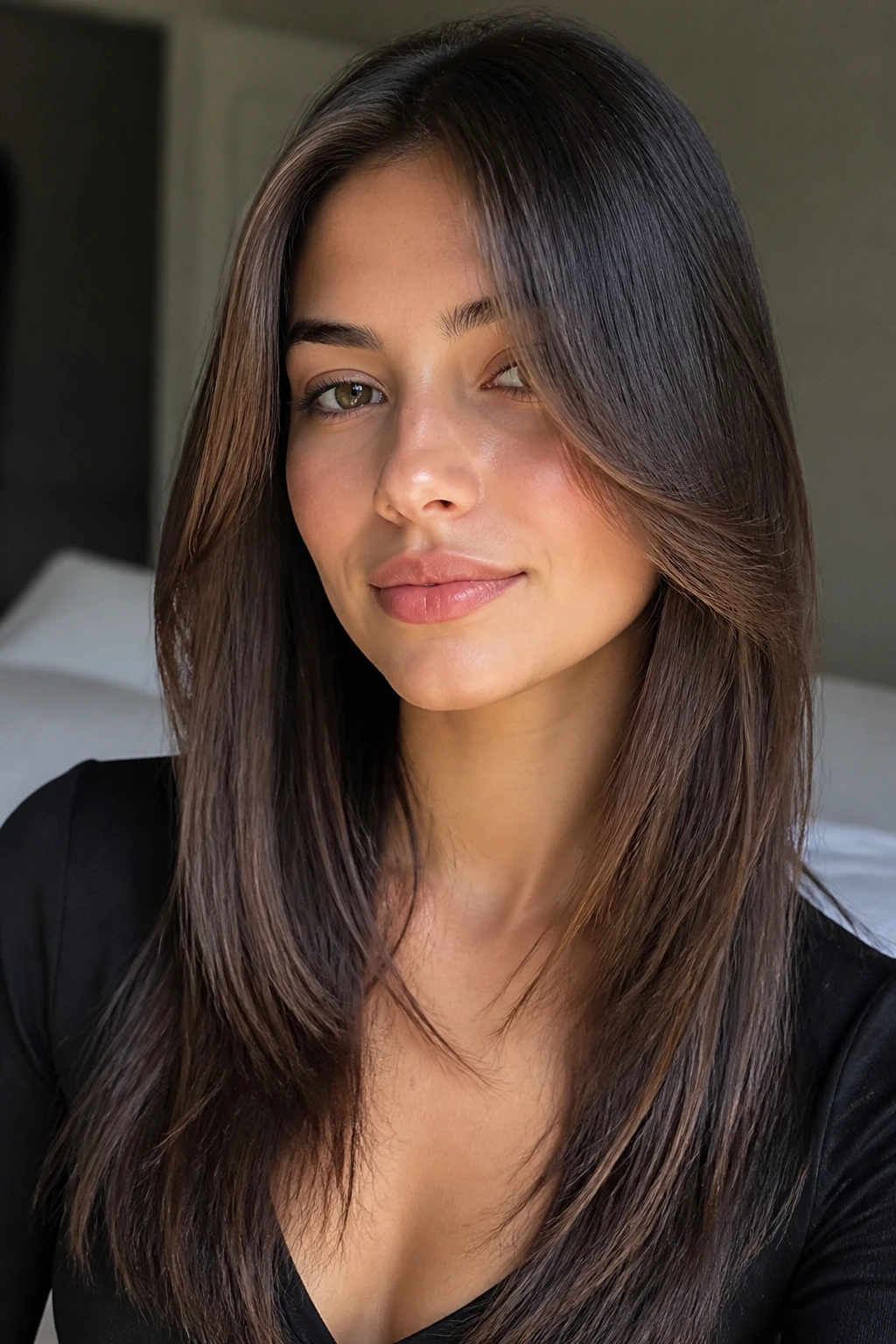
Straight layered hair can go limp if you let it air-dry with no plan. That’s not a moral failing. It’s texture. The fix is usually a little root support and a little direction at the ends, not a mountain of product.
Start with a light mousse or root-lift spray at the crown if your hair tends to collapse. Blow-dry the front pieces away from the face with a round brush, even if it’s only for five minutes. That tiny bend gives the layer something to do. If you use a flat iron, don’t clamp the hair straight down the shaft — make a soft C-shape at the ends so the pieces don’t hang like ruler-straight strips.
Also, watch the part. A center part can make heart-shaped faces look balanced, but a soft off-center part often takes pressure off the forehead and helps the layers fall more naturally. Change the part once in a while, even if you have a favorite. The hair settles differently, and sometimes that’s all the cut needs.
Common Mistakes That Make These Layers Miss the Mark
-
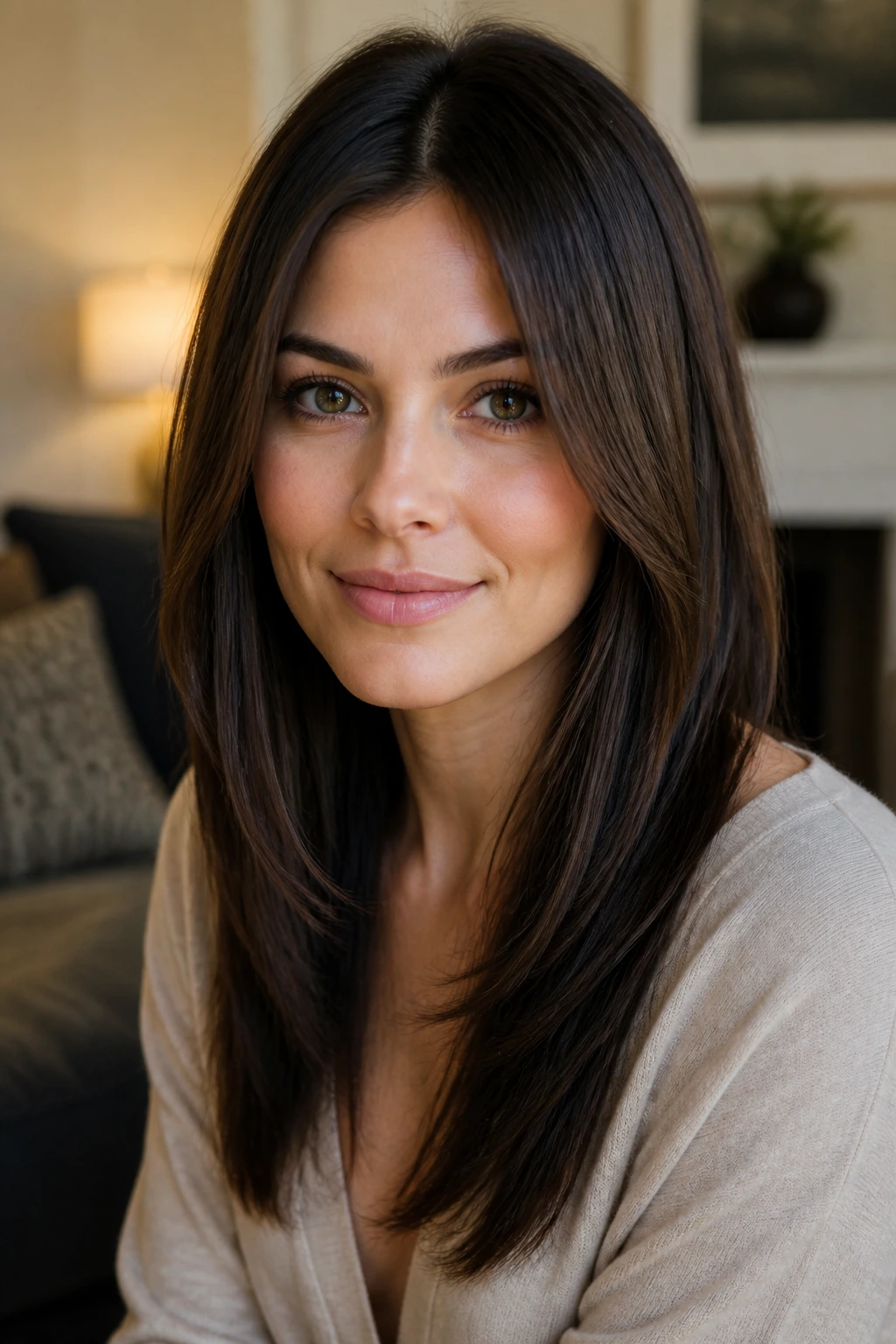
Starting the front layers too high. The symptom is a puffy crown and a forehead that looks wider than it is. The fix is to keep the first visible layer closer to the cheekbone or mouth, especially on straight hair.
-
Cutting the face frame at the chin. That can make the chin look even narrower on a heart-shaped face. Ask for longer pieces that slide past the jaw instead of stopping right on it.
-
Over-thinning the ends. Straight hair turns stringy fast when the perimeter loses too much weight. Keep the hem dense enough to look full, even if the inside of the cut is layered.
-
Ignoring hair density. A cut that works on thick hair can swallow fine hair, and a fine-hair cut can look bulky on thick hair. The layer depth has to match the amount of hair on your head.
-
Styling everything straight with no bend. If the cut was made to move, it needs a little shape from the brush or iron. Otherwise the layers can disappear into one long line.
-
Forgetting the parting pattern. A cut designed for a center part can look lopsided on a hard side part, and the reverse is true too. Tell the stylist how you actually wear it.
Variations and Alternatives to Try
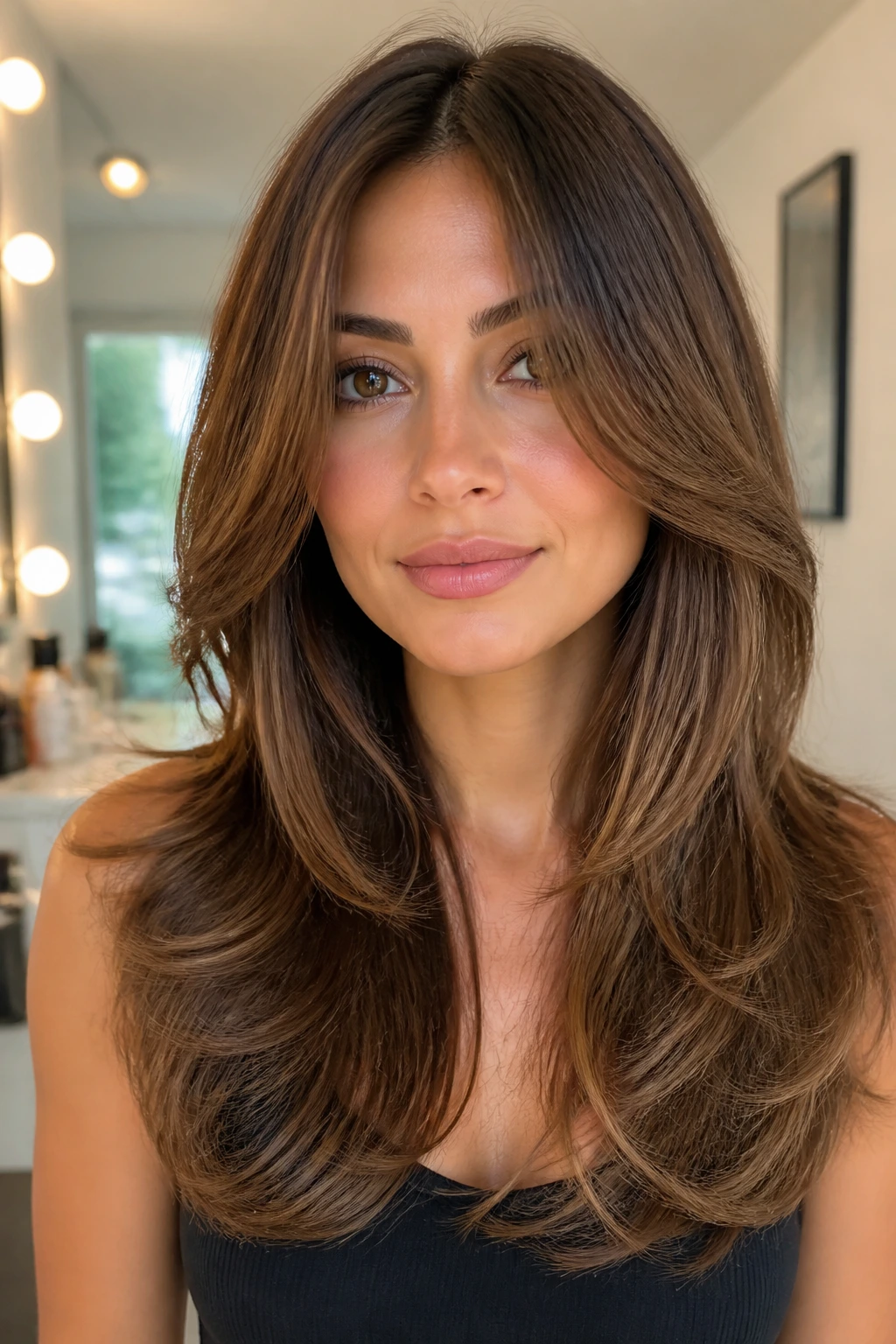
Curtain Fringe Companion: Add a soft curtain fringe if you want more forehead softness without a heavy bang. Keep the fringe long enough to split at the cheekbone so it blends into the rest of the haircut rather than sitting on top of it.
Fine-Hair Minimal Layer Version: If your hair is fine, trim only the front pieces and add the lightest internal layers near the crown. That keeps the ends full and stops the haircut from going see-through around the shoulders.
Thick-Hair Weight-Removal Version: For dense straight hair, ask for internal debulking rather than a lot of visible layers. The outside stays smooth, while the inside loses enough weight to stop the cut from hanging like a block.
Side-Part Soft Sweep Version: If you never wear a center part, commit to a diagonal sweep and let the layers support it. The asymmetry softens the forehead and gives the face a longer line.
Low-Maintenance Grow-Out Version: Keep the front pieces longer and the layers slower. This is the one that lets you stretch appointments without the haircut going shaggy after six weeks.
Tools That Make the Cut Easier to Wear
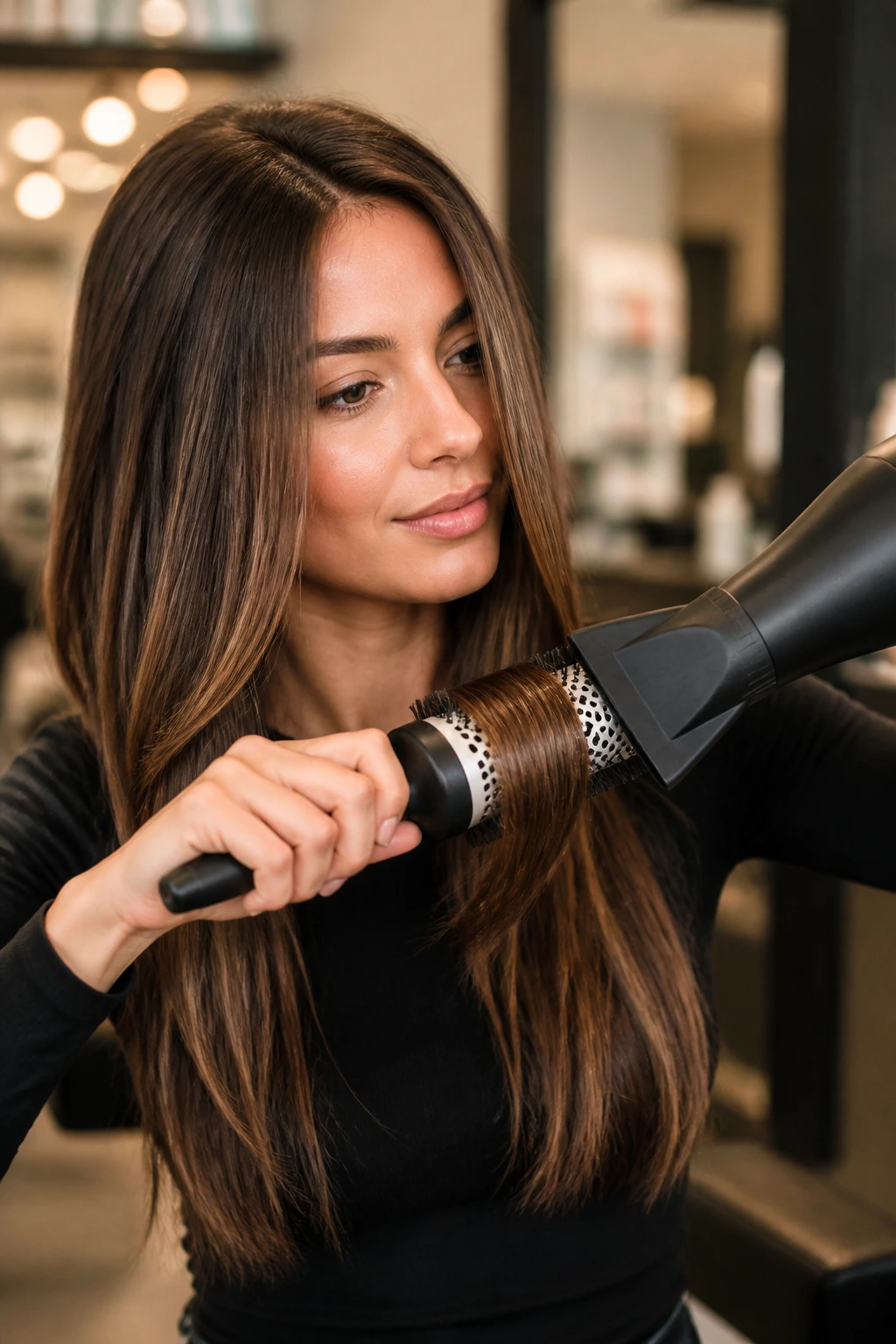
- 1.25- to 1.5-inch round brush: Best for giving the front pieces a soft curve without turning the whole head into a curl.
- Blow dryer with a nozzle attachment: Directs airflow so the layers dry smooth instead of flipping every which way.
- Flat iron with rounded edges: Useful for a gentle bend at the ends and a little movement through the face frame.
- Sectioning clips: Keep the front pieces separate while you dry the crown and lower lengths.
- Lightweight mousse or root-lift spray: Helps straight hair hold shape without sticky buildup.
- Heat protectant spray: Worth using every time you blow-dry or iron. Straight hair shows heat damage quickly.
- Tail comb: Good for setting the part exactly where you want it before the cut or style.
- Texturizing spray or dry shampoo: Handy when the roots go flat and the layers need a small lift.
Keeping the Shape Fresh Between Trims
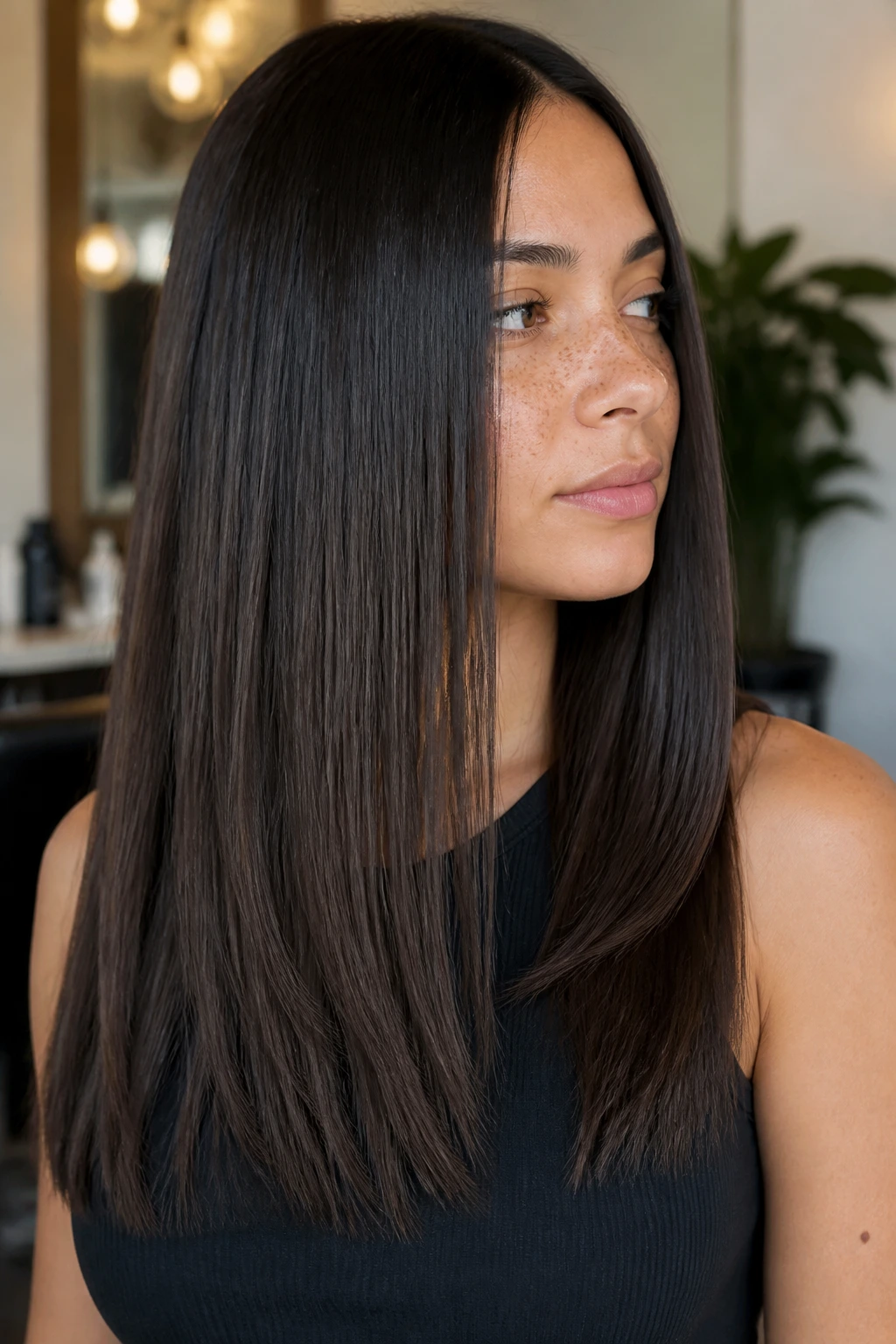
Long layers grow out better than shorter cuts, but they still need maintenance. If you want the front pieces to keep framing the face where they should, plan on a trim every 8 to 10 weeks. If you’re letting the hair grow and you only care about the overall length, you can stretch to 12 weeks, but the front may start slipping below the sweet spot for your face shape.
The fastest way to ruin the shape is to let the ends become too ragged. Straight hair shows split ends and uneven corners faster than wavy hair does. A small dusting at the bottom keeps the cut looking deliberate instead of tired. And if the front pieces start hanging in your eyes or dropping below the jaw in a way you don’t like, get just those sections refreshed. You do not always need a full haircut to fix the problem.
At home, a little routine helps. Dry the front first, clip it while it cools, and don’t overload the roots with heavy oil. If the hair starts falling flat by midday, a small spray of dry shampoo at the crown can bring the layers back to life without making the ends look dusty.
Questions People Ask Before They Sit in the Chair
What layer length is most flattering for heart-shaped faces?
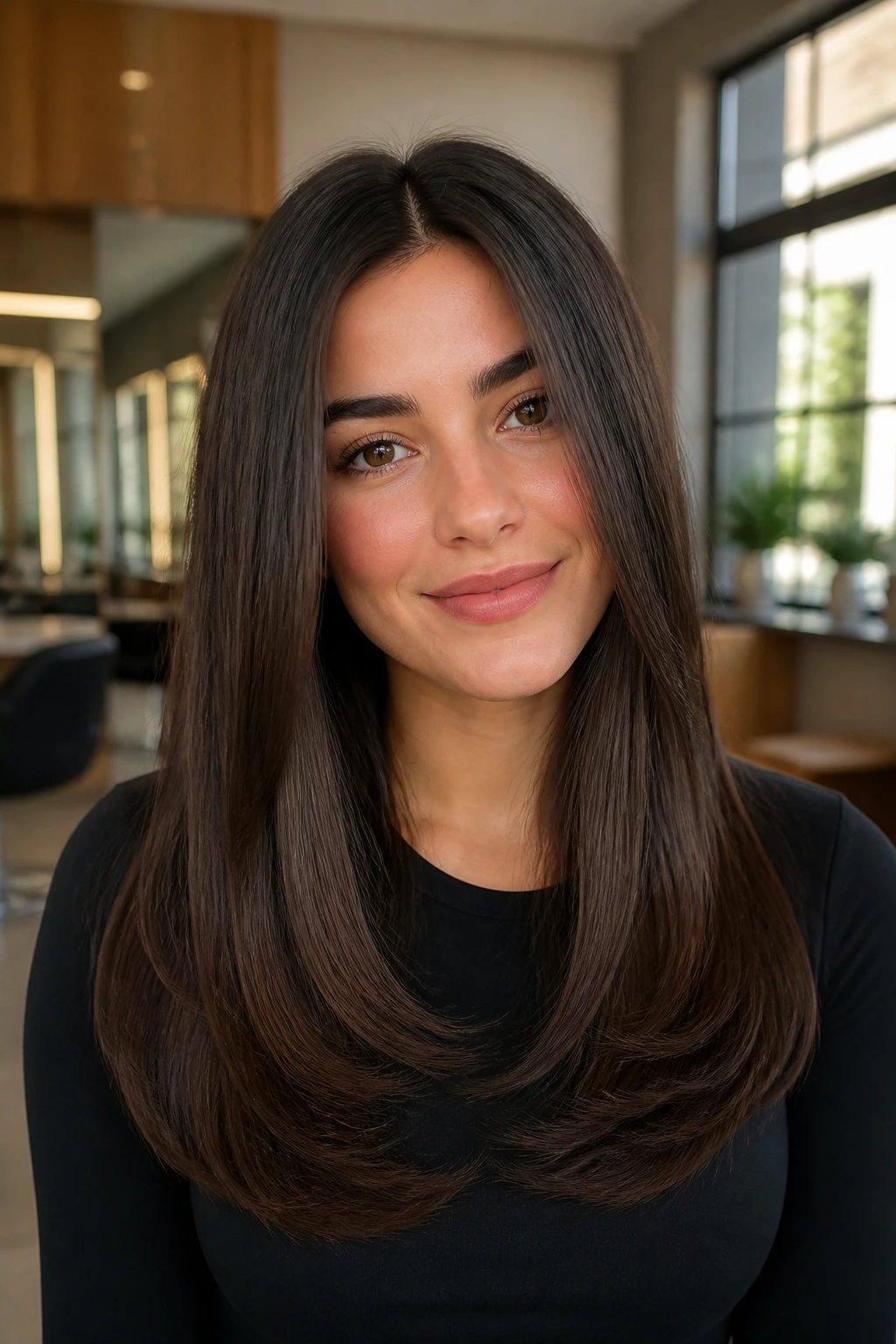
Cheekbone, mouth, and collarbone are the three lengths that show up most often for a reason. Cheekbone layers soften the forehead, mouth-length layers skim the jaw, and collarbone layers keep the front open without looking too chopped up.
Do long layers make straight hair look thinner?
They can, if the layers start too high or the ends are thinned too much. The fix is simple: keep the perimeter full and ask for soft, controlled layering instead of a heavily razored finish.
Is a center part good for a heart-shaped face?
It can be, as long as the front pieces are long enough to soften the forehead. If the center part feels severe, a slight off-center part usually gives the face a little more ease.
Should I add bangs with long layers?
You can, but the bang shape matters more than the bang itself. Bottleneck bangs and soft curtain fringe usually work better than a blunt full fringe because they blend into the face-framing pieces instead of cutting across them.
What if my hair is very fine?
Ask for fewer visible layers and keep the ends fuller. Fine straight hair needs shape, not a lot of removal, or it starts looking wispy and tired after one wash.
What if my hair is thick and heavy?
Ask for internal layering and a cleaner perimeter. That removes weight where you feel it most without turning the outside of the haircut into frayed edges.
How often should I trim long layers?
Every 8 to 10 weeks if you want the shape to stay crisp. If you’re growing it out and don’t mind a softer outline, you can go a little longer, but the front may need a cleanup sooner.
Why do my layers flip out strangely at the ends?
Usually because the layers were cut too short for your hair length or your blow-dry direction keeps pushing them outward. A round brush, a smoother finish, and a slightly longer face frame usually fix it.
The Layer Cuts Worth Taking Seriously
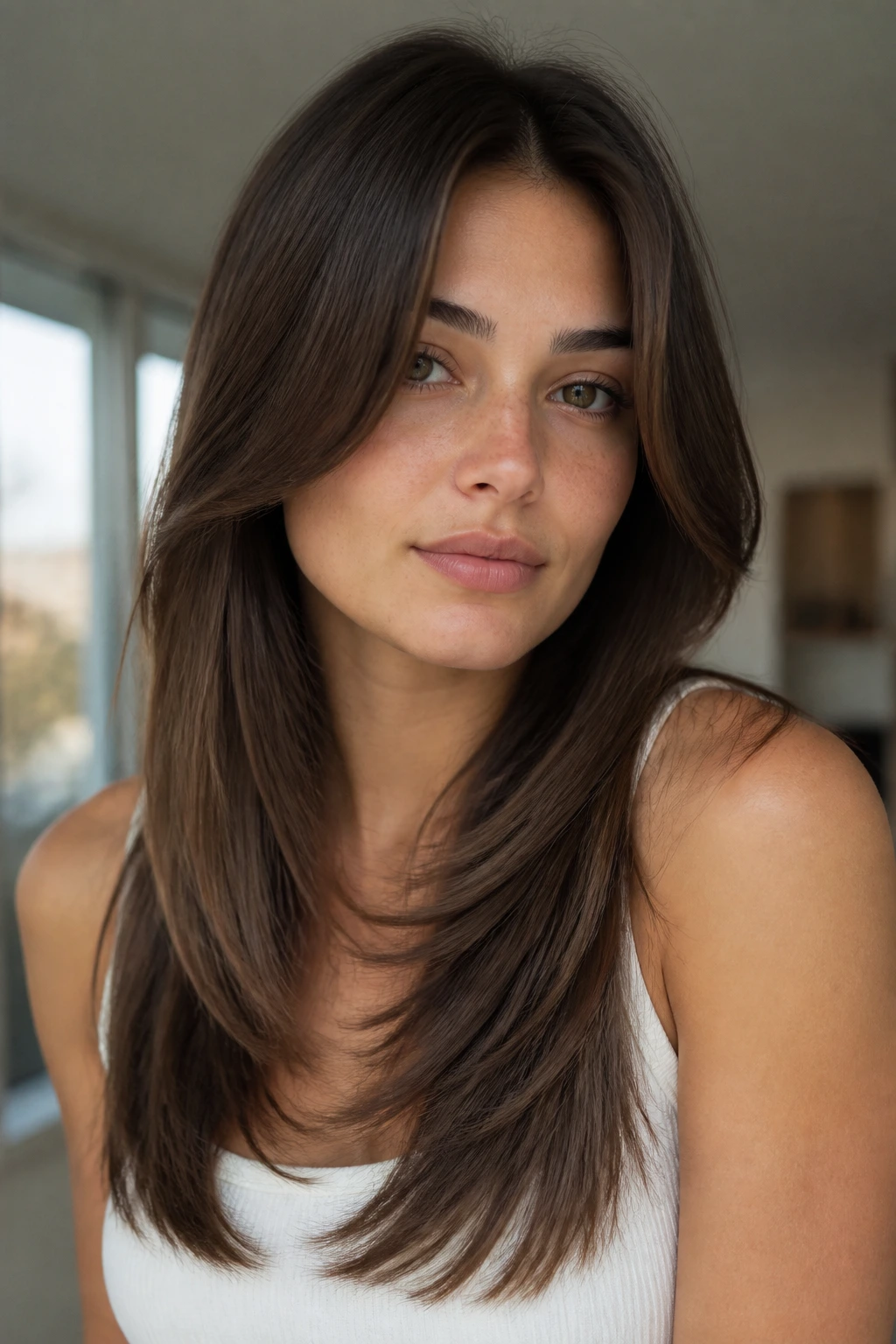
Long layers on straight hair can be annoyingly easy to get wrong and very rewarding when they’re done right. The face shape matters. The starting point matters. Even the part line matters. On a heart-shaped face, the best cut doesn’t fight the forehead or crowd the chin; it eases both into balance with a shape that still looks clean from the back.
If you want the safest starting point, I’d reach for a soft U shape, a cheekbone curtain layer, or a butterfly cut with long, slow blending. Those three give you room to adjust after the first styling session, which is where a lot of cuts either prove themselves or fall apart.
And that’s the nice part. Once the layers land in the right place, the haircut starts doing more of the work for you.