



A good short haircut on fine hair has a narrow job description. It has to create lift where the strands go limp, keep the ends from looking wispy, and still leave enough movement that the whole thing doesn’t read like a helmet. With short layered haircuts for older women with fine hair, that balance matters even more, because fine hair gives up its volume fast if the cut is too blunt or too shredded.
And that’s the part people get wrong. They ask for layers because they want texture, then end up with too much removal at the perimeter and a shape that collapses by lunchtime. The better cuts keep some weight at the bottom, build softness near the face, and let the crown do a little work instead of asking the ends to carry the whole style.
I keep coming back to the same idea: fine hair does best when the haircut respects its limits. Not every head of hair wants choppy pieces everywhere. Some cuts need a clean neck, a cheekbone-skimming fringe, or just enough stacking at the back to make the silhouette look intentional. The 25 styles below are built around that reality, not around wishful thinking.
Why This Collection Feels Worth Saving
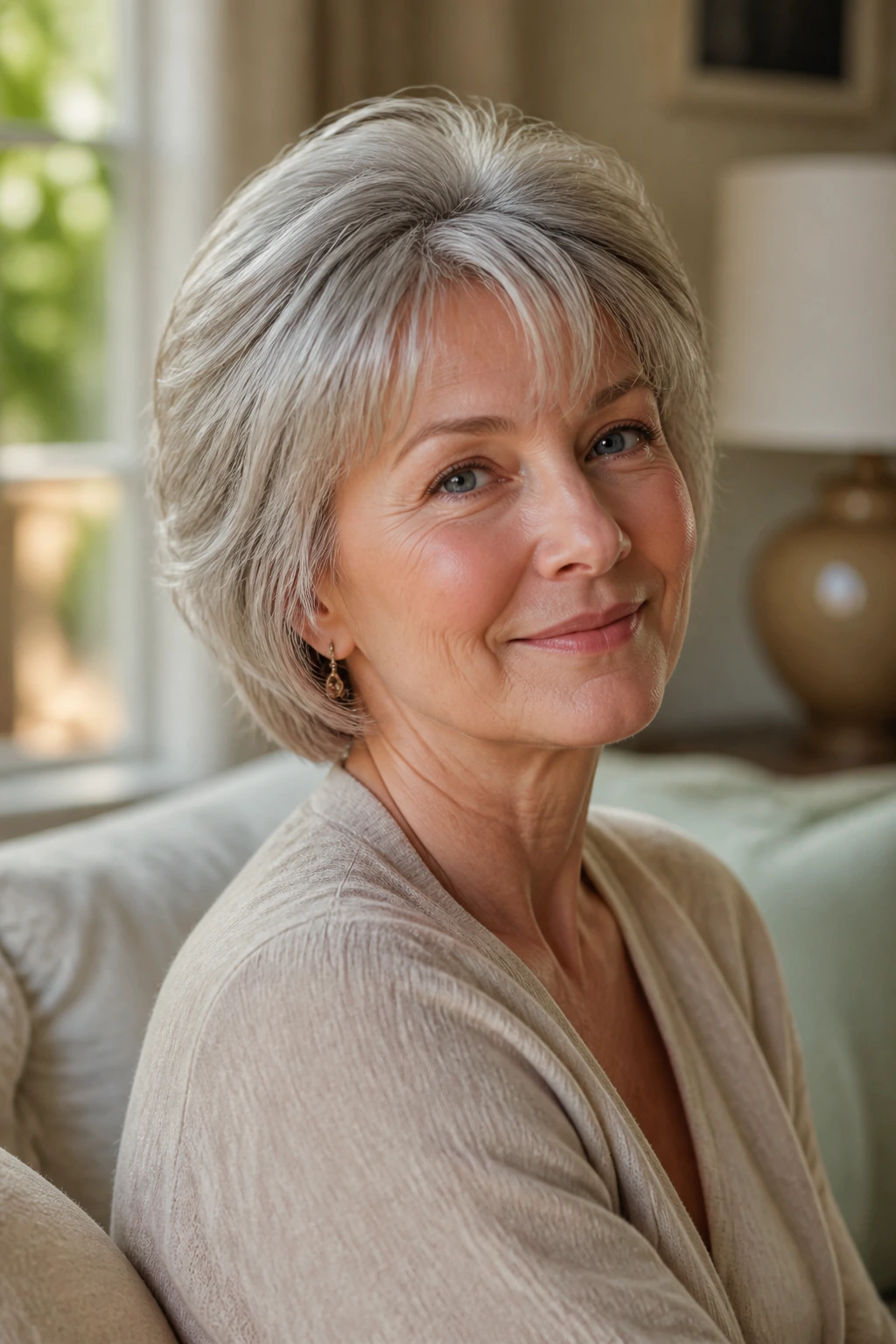
-
Built for fine strands: These cuts rely on placement, not bulk, so the hair looks fuller without being over-thinned.
-
Face-framing does real work: A small curve around the cheek or jaw can make a short cut look softer and more lifted in seconds.
-
They grow out in a civilized way: The best versions still look like hair after six weeks, not like a botched trim you keep hiding with a headband.
-
Most work with everyday styling: A round brush, a blow-dryer, and a light product are enough for a lot of these shapes.
-
They play nicely with glasses: Several of these cuts leave space at the temples and ears instead of crowding the face.
-
They suit gray, silver, and highlighted hair: Fine hair often shows color dimension well, and these shapes use that to their advantage.
1. The Soft Pixie With Crown Lift
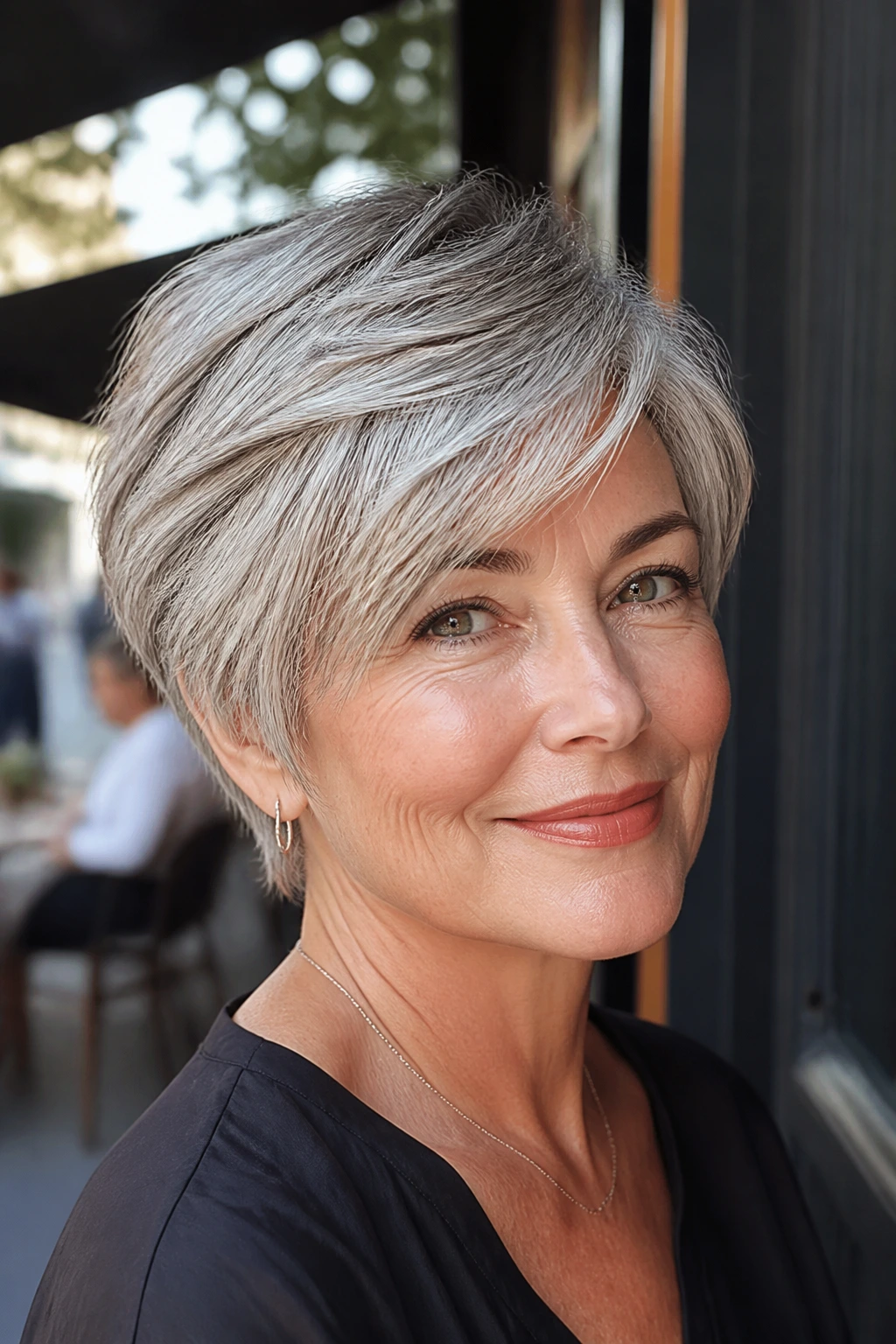
This is the cut I reach for when someone wants the shortest possible shape without losing softness around the face. The sides stay close, the crown gets a little lift, and the top is left long enough to move instead of spike. On fine hair, that small bit of height matters. It keeps the cut from sitting flat against the scalp.
Why it works: The crown carries the visual weight, so the rest of the cut can stay light and tidy. Ask for short, blended layers through the top and a clean but not shaved neckline. If the stylist starts cutting too aggressively into the sides, the shape can start to look sparse, and sparse is the enemy here.
A little mousse at the roots and a quick finger-dry are usually enough. This is one of those styles that looks better when it’s not overworked.
What to ask for
- Short sides with a softly tapered nape
- Crown layers that are kept movable, not choppy
- A top length that can sweep forward or up
- Soft edges around the ears
Best for: women who want a fast morning routine and a haircut that still looks deliberate with minimal styling.
2. The Feathered Pixie-Bob
The pixie-bob sits in that sweet spot between cropped and bobbed, which is why it flatters fine hair so well. It gives you enough length to tuck behind one ear, but the back and sides stay close enough to keep the shape light. Feathering around the top makes the whole cut move instead of hanging in a hard line.
You can wear this one smooth or a little piecey. I like it best with a side part and a soft fringe that brushes the brow without swallowing the face. The feathering should feel airy, not wispy to the point of disappearing. There’s a difference. One reads as texture; the other reads as over-thinning.
This is a smart choice if you want a short cut that doesn’t feel severe. It has a little swing when you turn your head, which is a nice thing to have.
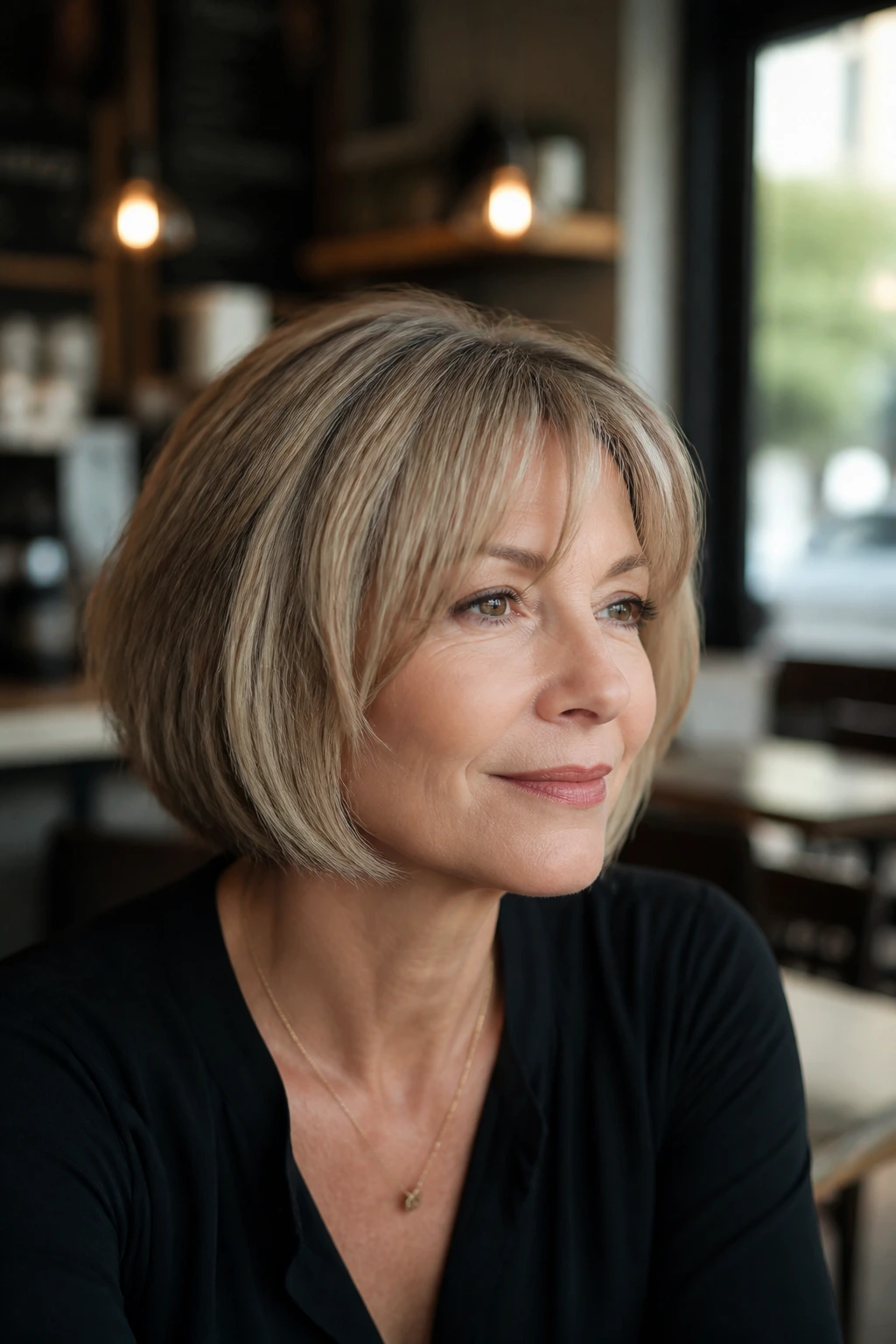
3. The Chin-Length Bob With Face-Framing Fringe
Chin length is a useful place for fine hair because it gives the ends enough weight to look full. Add a few face-framing pieces and the whole cut suddenly stops feeling blocky. The fringe should graze the cheekbones or slightly brush the brows, not hang heavy across the forehead.
Why it stands out: the length hits at a flattering point for most faces, especially if you want to soften the jawline. That tiny bend in the front pieces draws the eye upward. Fine hair often looks better when the cut creates a frame first and volume second.
Keep the underside clean and ask for minimal thinning through the ends. Too much texturizing here makes the line look broken. A flat brush or a small round brush works better than a giant tool that can’t get close enough to the head.
4. The Layered French Bob
A French bob is usually short, chic, and a little cheeky. On fine hair, it works best when the layers stay subtle and the silhouette stays rounded. The length sits somewhere near the jaw, and the fringe is soft enough to move instead of sit like a ruler across the forehead.
This version is especially good if you want a haircut that feels polished without trying too hard. The curve at the bottom gives the illusion of thickness, which fine hair loves. Keep the layers internal so the top doesn’t go see-through. That’s the trick.
Wear it with a loose bend in the front, not a stiff curl. A bit of root lift and a light smoothing cream at the ends usually does the job.
5. The Bixie With Side-Swept Fringe
A bixie is what happens when a pixie decides it wants a little more room. The shape is cropped, but the top has enough length to sweep to the side and the back can keep a small bob-like curve. For fine hair, that extra top length is useful because it makes styling easier without making the whole cut heavy.
The side-swept fringe is the part that changes the mood. It softens the forehead, covers any cowlick drama, and gives you a nice diagonal line through the face. I like this one for women who want short hair but do not want to feel bare around the temples.
A small amount of root spray at the crown gives the bixie some lift. If the ends start to look floppy, a tiny bit of pomade on the fingertips is enough. Tiny. Not a walnut.
6. The Angled Bob With Tucked Nape
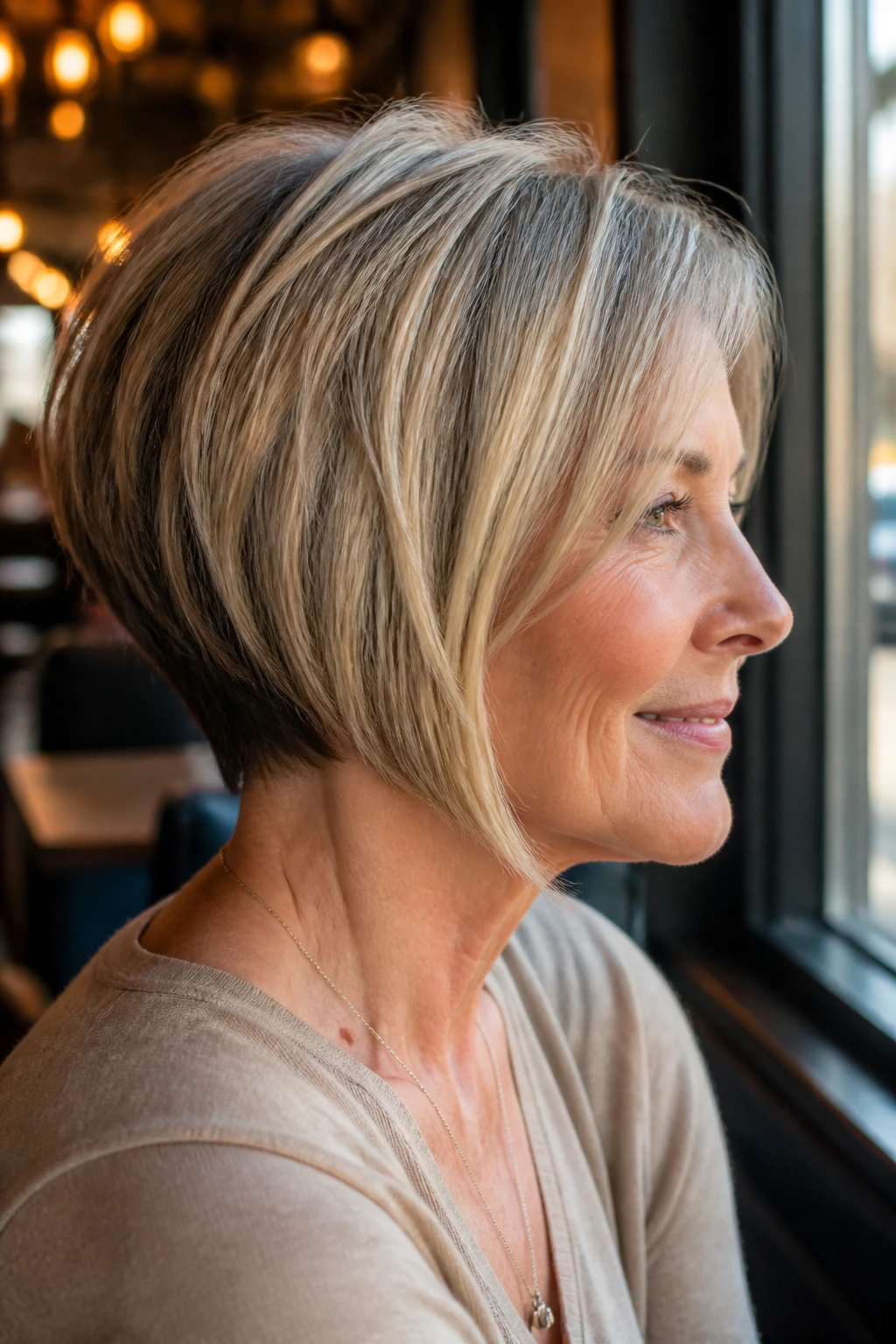
An angled bob gives fine hair a built-in sense of motion. The front stays a touch longer, while the back is cut in tighter near the nape. That shorter back keeps the shape from dragging, and the longer front pieces give the face a little length and polish.
This cut works because the angle creates an illusion of density. Your eye sees the clean line and assumes the hair has more body than it actually does. Clever, yes. But also practical.
Ask for a soft angle, not a sharp wedge unless you want something more dramatic. Too steep and it can start to feel dated fast. The tucked nape keeps the neck clean, which is especially nice with earrings, high collars, or glasses that already bring some shape to the face.
7. The Shaggy Bob With Wispy Ends
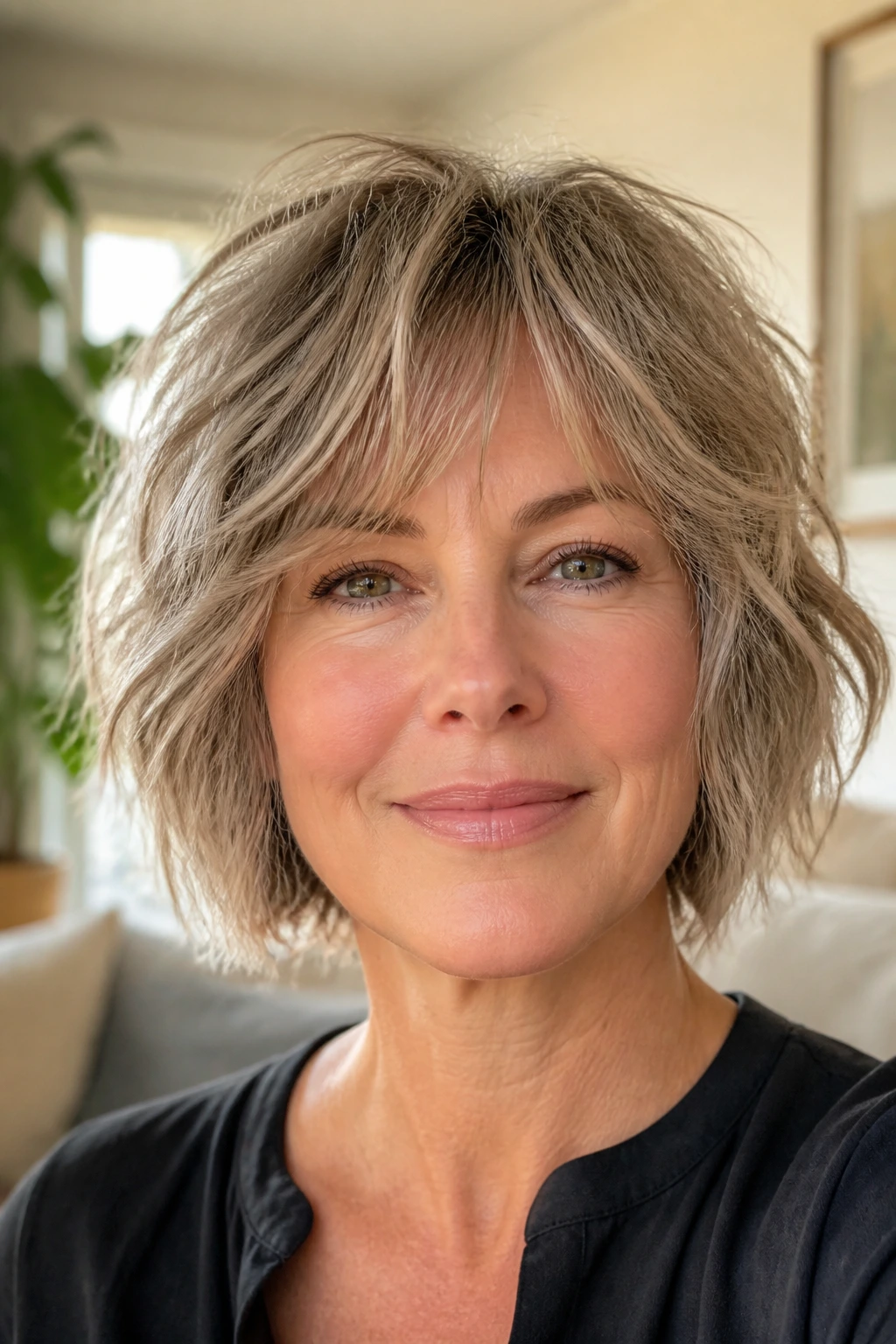
The shaggy bob is a good home for fine hair when the layers are soft and the texture is controlled. You want movement, not frizz. The ends should look lightly chipped, not chewed. That’s the line you’re trying to walk.
Why does it work? Because a little unevenness breaks up the heaviness that fine hair can develop at one length. You get air between the strands, especially if your hair has a slight wave. Straight fine hair can wear this cut too, but it usually looks best with a loose bend rather than a poker-straight finish.
A side part and a touch of texture spray can keep the shape from going flat. If your hair is very soft, ask for the layers to start lower, around the chin, so the crown doesn’t lose too much weight.
8. The Rounded Wedge Cut
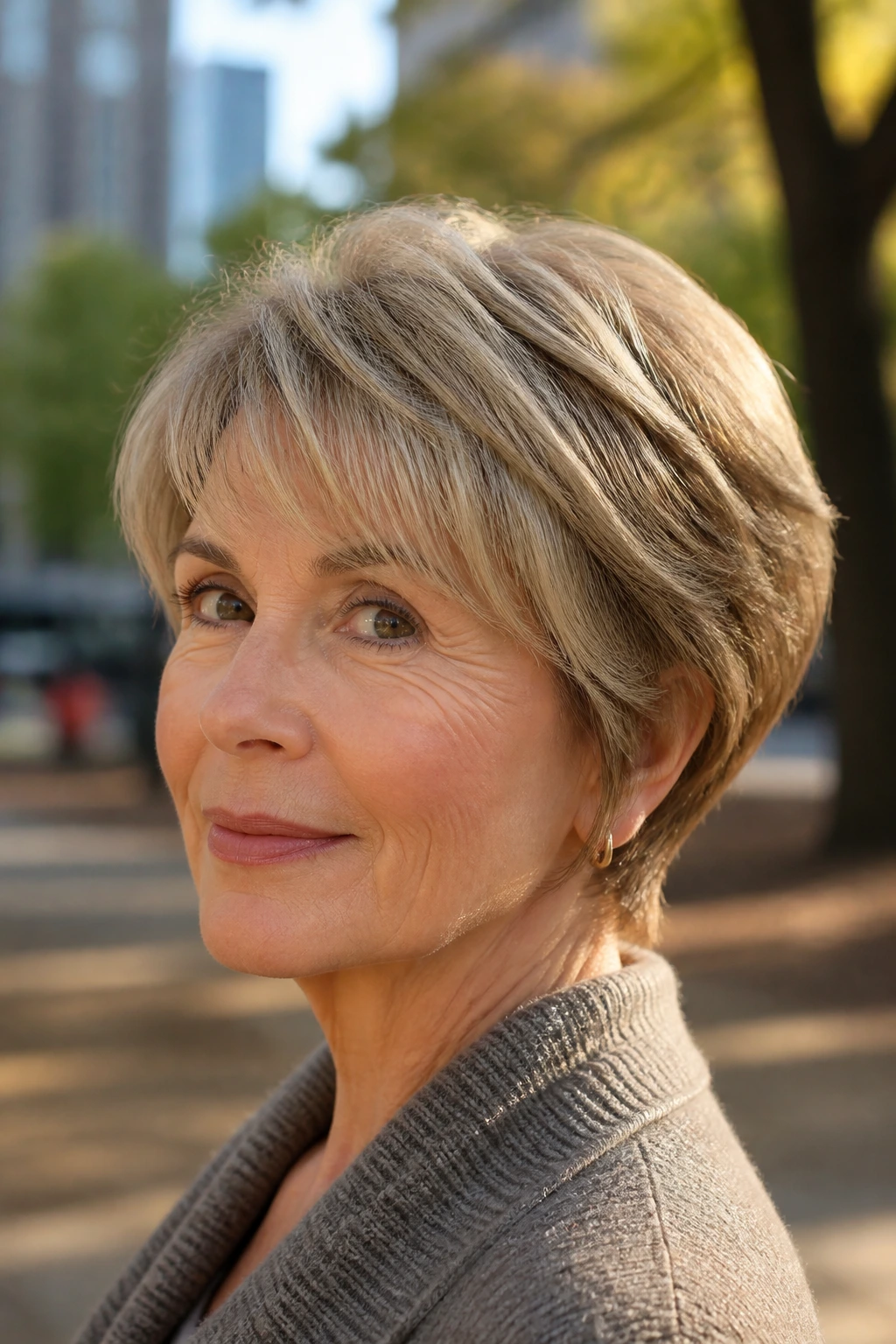
The wedge is back whenever hair needs structure. It’s shorter in the back, fuller through the crown, and softly curved toward the face. Fine hair often benefits from that rounded architecture because it holds its shape longer than a loose, over-layered style.
Why this one earns its keep: the cut creates volume where the head naturally needs it most—at the crown and upper back—without asking the ends to puff out. That matters. Too much width at the bottom can make fine hair look hollow above the neckline.
Keep the layers blended, not chopped. The silhouette should feel smooth from the side and lifted from the rear. If you wear glasses, the wedge can be especially smart because it keeps hair off the temple arms and doesn’t pile into the frame.
9. The Collarbone-Skimming Layered Lob

This is the longest cut in the bunch, and I still think it belongs here because some women want a little more length while keeping the hair light. The collarbone is a useful landing spot. It gives the ends enough mass to look fuller and still keeps the whole cut easy to move around.
The layers should be hidden enough that the outline stays clean. A few face-framing pieces can soften the front, but I would not push this style into heavy shattering. Fine hair gets tired quickly when the ends are overprocessed with layers.
If your hair tends to flip out at the shoulders, this cut can be trimmed so it turns inward slightly. That small adjustment changes the whole feel of the haircut. It looks finished instead of accidental.
10. The Curly Short Crop
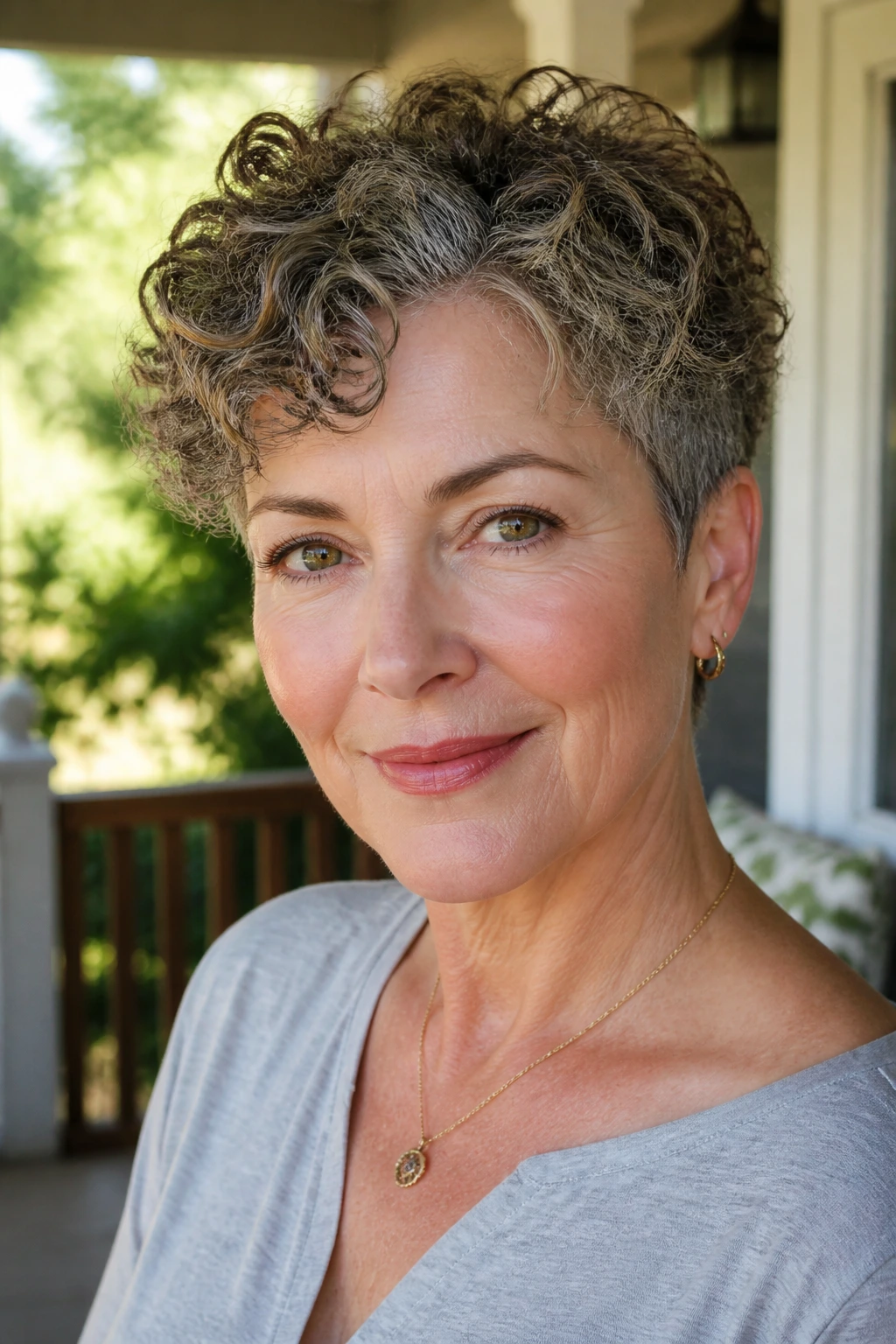
Curly fine hair needs a different kind of layering. You’re not trying to create fake fullness; you’re trying to let the curl pattern stack without getting bulky in the wrong places. This short crop keeps the sides controlled and leaves enough height on top for the curls to spring.
What makes it different: the best version works with the curl’s natural bend instead of forcing a smooth shape. On fine curls, too much thinning can create a halo of frizz and not much else. Better to preserve density and shape the cut where the curls actually land.
A diffuser helps, but so does a short air-dry routine and a small amount of curl cream. Keep the product light. Heavy creams flatten fine curls faster than people expect.
11. The Deep Side-Part Crop
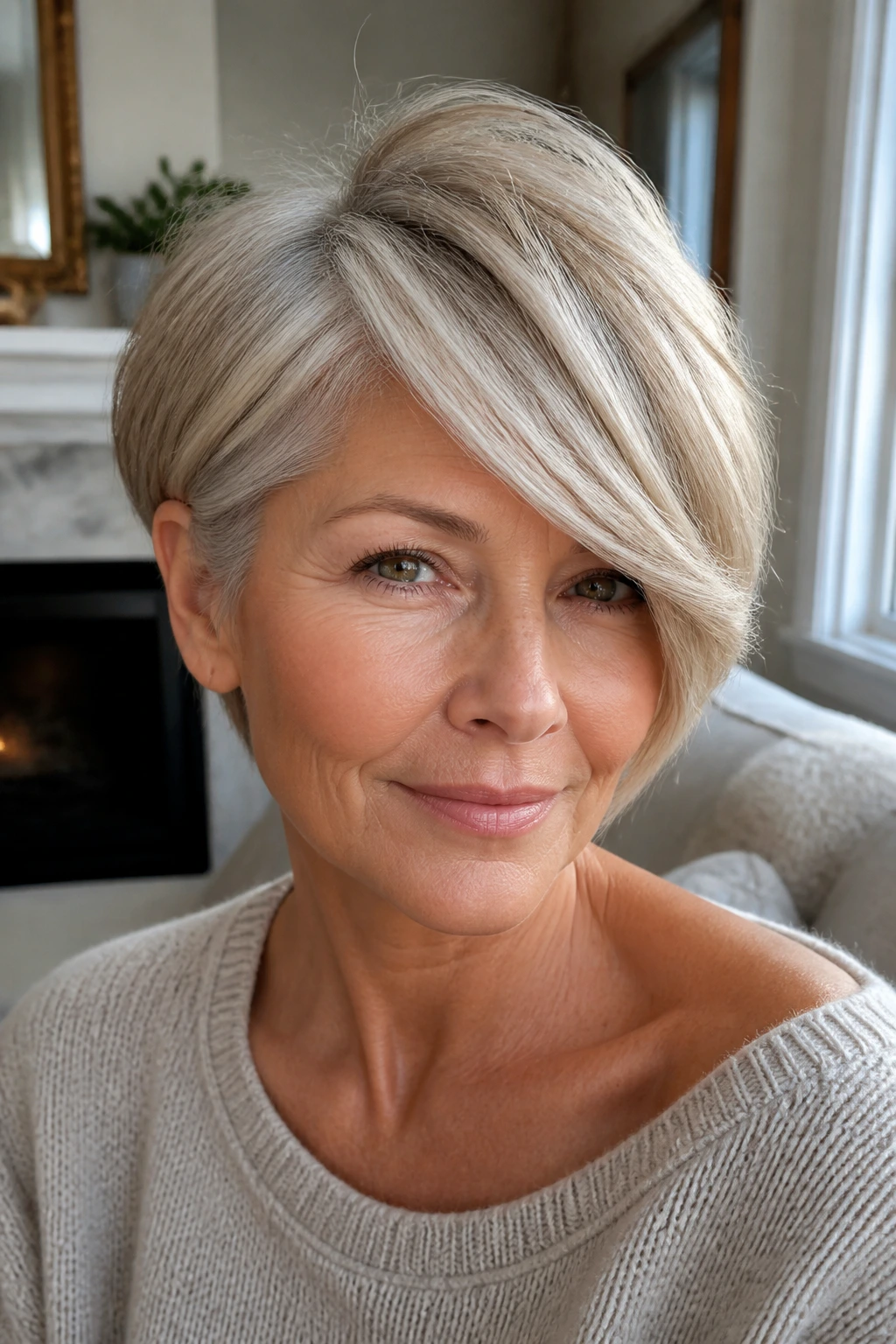
A deep side part can change a fine-hair cut without changing the length at all. It lifts one side, creates a fuller front, and gives the crown a little built-in drama. On older women, it can also soften the forehead and draw the eye across the face in a flattering way.
This style works best when the top is left long enough to sweep over, but not so long that it falls into the eyes every five minutes. The sides can be short and neat. The magic is in the imbalance. One side does the work, the other stays clean.
Quick notes
- Use a root-lifting spray at the heavier side
- Blow-dry in the direction opposite the part for extra lift
- Keep the fringe soft so it doesn’t turn into a curtain
- Re-part before the hair dries for the best hold
It’s a smart move for days when your hair feels limp and needs a reset without a full wash.
12. The Razor-Textured Bob
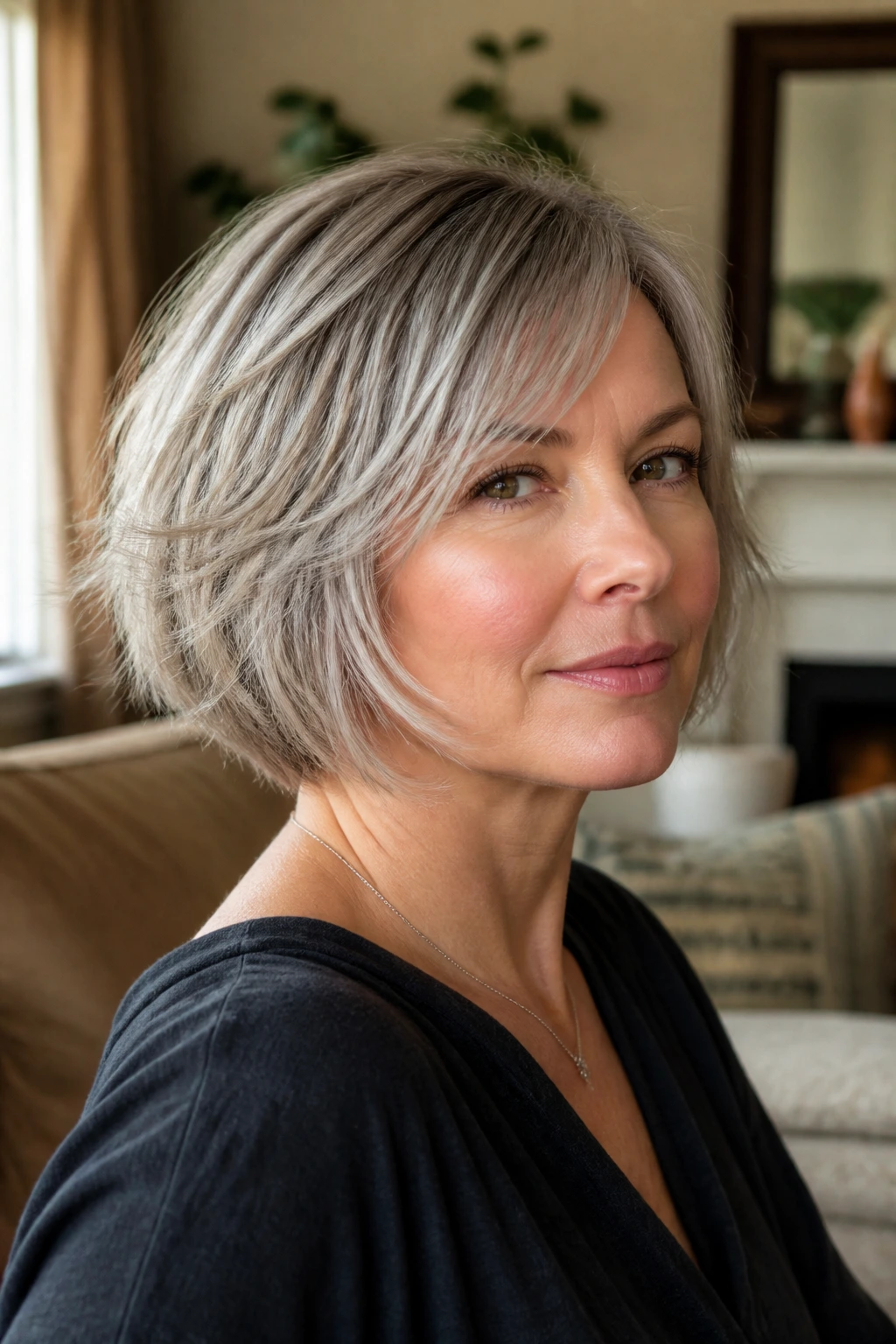
A razor cut can be beautiful on fine hair when it’s used carefully. The goal is to soften the ends and remove some bulk, not shred the cut into dust. You want texture that moves. You do not want little transparent strings that disappear the second humidity shows up.
The bob length keeps the shape grounded, while the razor work adds a bit of swing. This is a nice option if your hair is naturally straight and wants to lie there in a single flat sheet. A bit of texture at the edges breaks up that stubborn heaviness.
Ask the stylist to keep the razor work away from the very perimeter if your hair is already fragile. Fine hair can get too airy at the ends if the blade is used recklessly. A controlled hand matters more here than the tool itself.
13. The Choppy Asymmetrical Bob
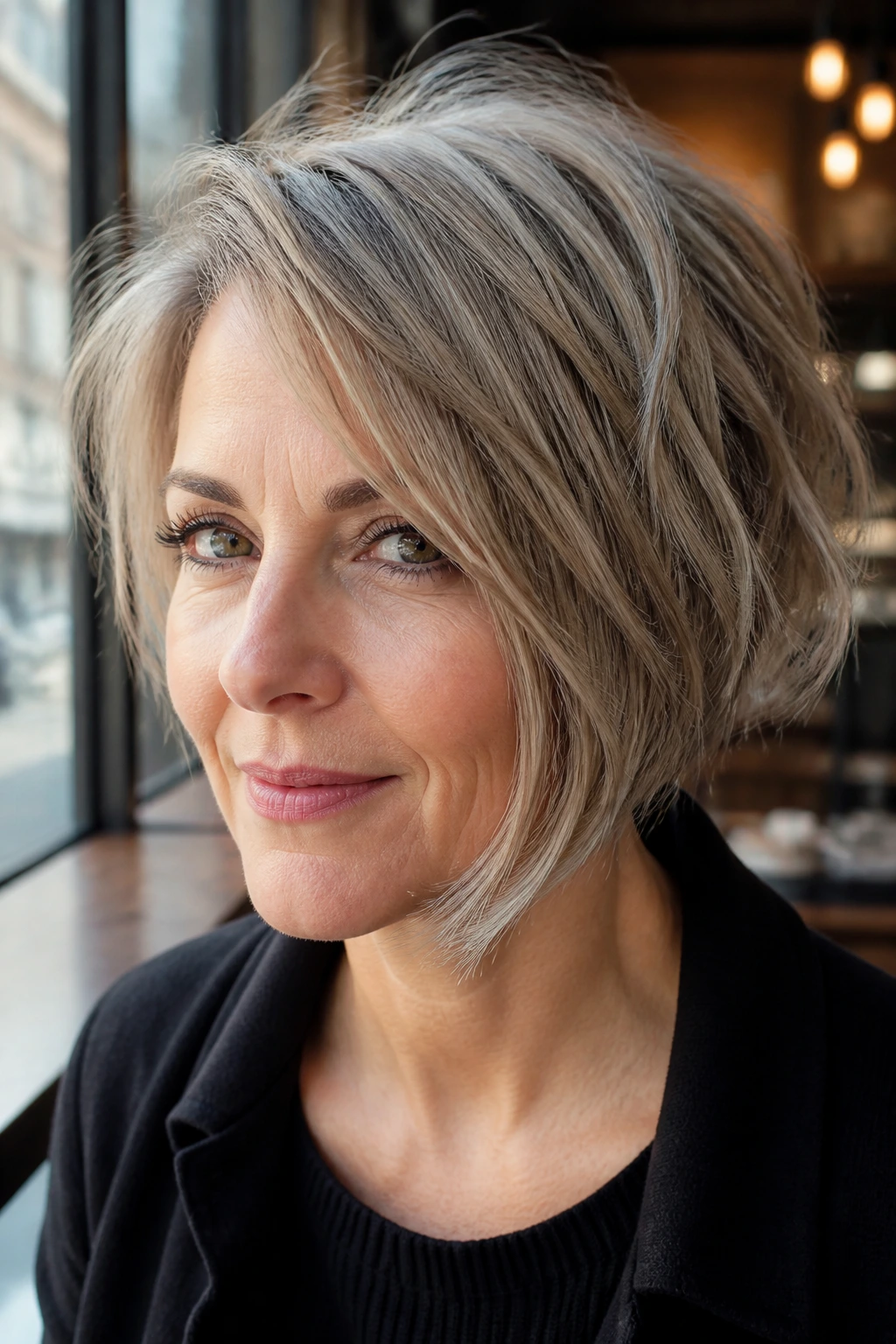
Asymmetry does useful things for fine hair. It keeps the cut from looking too proper, and it creates the impression of movement even when the hair is barely styled. One side sits a little longer, the other lifts slightly, and the whole shape feels more modern without needing extra volume everywhere.
This cut is especially good if one side of your hair naturally falls flatter than the other. The asymmetry can work with that instead of fighting it. Keep the layers soft near the face so the longer side doesn’t drag the whole cut down.
The upkeep is a little more frequent than with a plain bob. That’s the price of the shape. Still, if you like a haircut that does not sit politely in place all day, this is a strong one.
14. The Soft Pageboy

The pageboy gets a better reputation when it’s softened up. In its best version, the ends curl under slightly and the layers stay smooth rather than severe. Fine hair likes the pageboy because it creates a clean outline, and a clean outline can look fuller than a lot of texture.
The trick is avoiding the mushroom effect. That means keeping the crown controlled and the edges not too stiff. A side-swept fringe can help a lot here, especially if you want the cut to feel less retro and more current without chasing trends.
This is a haircut that looks especially good when it’s well brushed and lightly polished. A round brush and a little shine spray go a long way.
15. The Tapered Crop With Longer Top
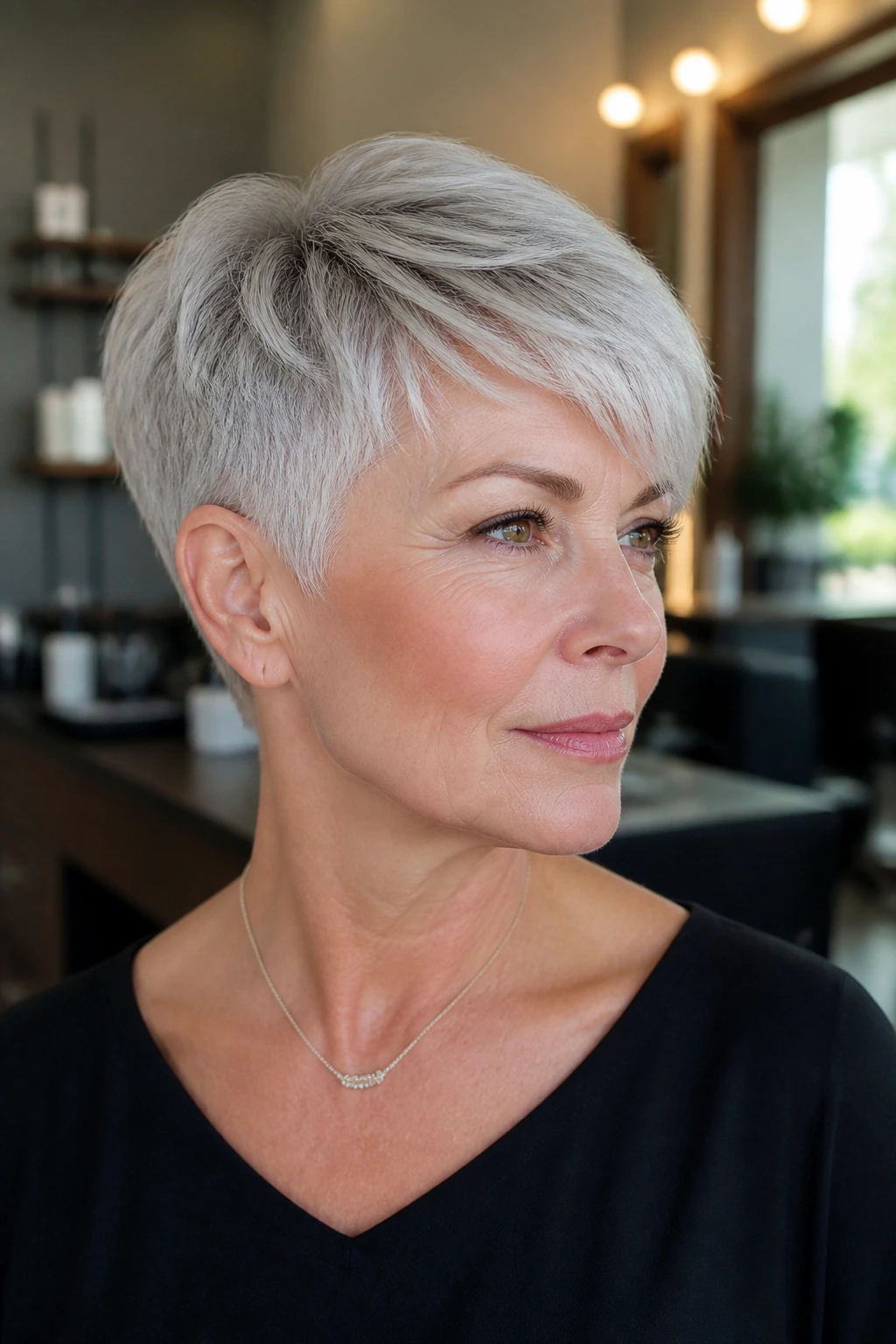
When someone wants a cropped cut but still wants styling options, this is the one. The sides and back are tapered close, while the top stays long enough to sweep forward, up, or to the side. On fine hair, that top length gives you shape without asking the rest of the cut to hold extra weight.
Why it works: the eye reads the longer top as density, even if the overall hair is fine. That’s the kind of useful illusion I’m happy to support. The taper keeps the neckline crisp and makes the style feel neat rather than fluffy.
This is also one of the easiest cuts to refresh with a dab of texturizing paste. Use less than you think. A pea-sized amount is often enough for the whole top if your hair is short.
16. The Swing Bob
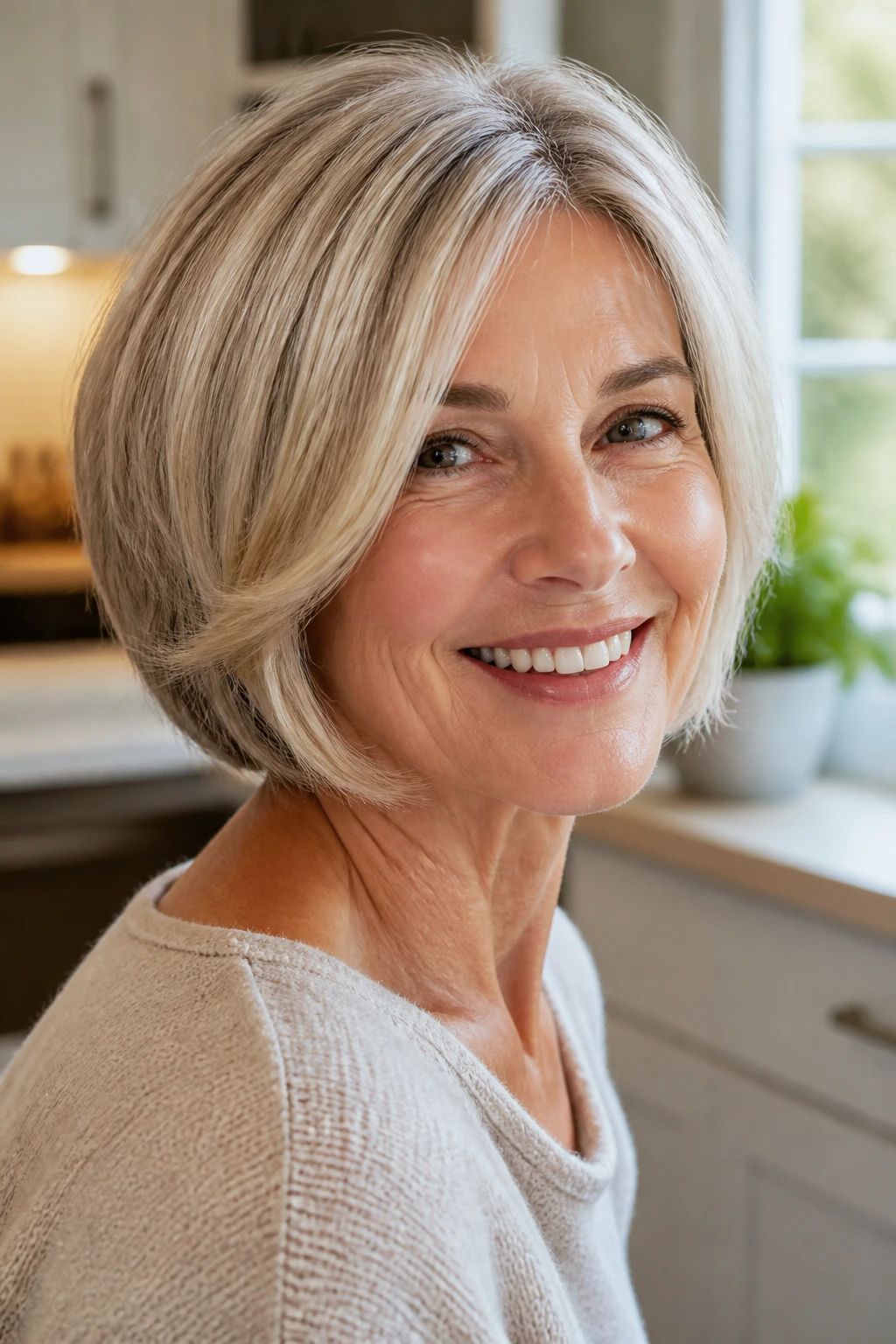
A swing bob has a little motion built into the silhouette. The front hangs slightly longer than the back, but the line is gentler than a sharp angled bob. For fine hair, that softness keeps the cut from looking too sliced up while still giving you movement around the jaw.
The swing comes from the way the hair is cut and dried. Blow it forward a bit, then round the ends under just enough to create that easy bend. It feels a little old-school in the best way: neat, wearable, and not too fussy.
This is a strong choice if you like a bob that moves when you turn your head. It’s not loud. It just works.
17. The Bob With Curtain Bangs
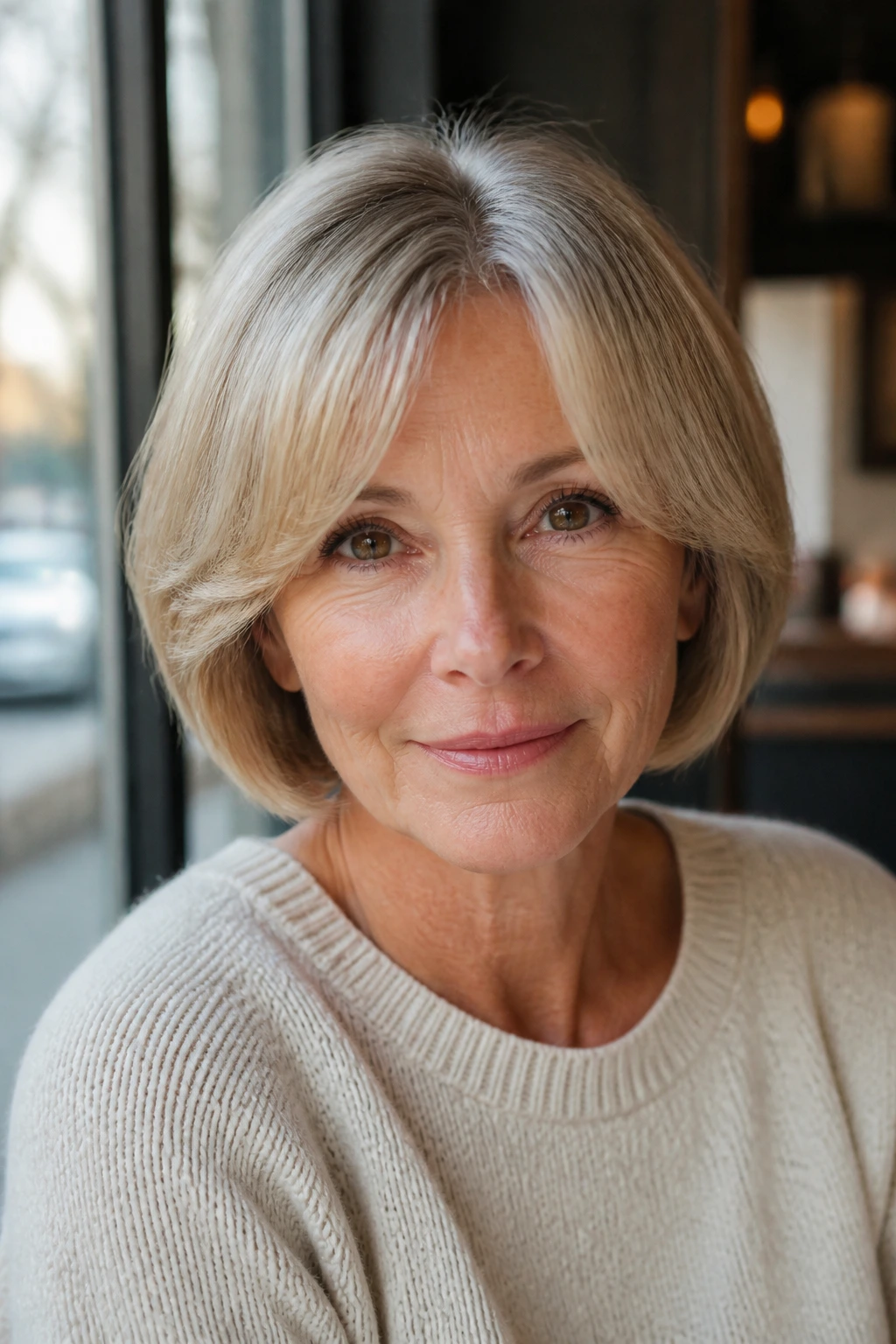
Curtain bangs can be a gift for fine hair if they’re kept light and blended. They split softly at the center or just off-center, frame the eyes, and reduce the need for heavy face-framing layers elsewhere. That matters when you don’t want to lose too much density at the sides.
A bob with curtain bangs works best when the fringe length lands around the cheekbones or just below. Too short and it can look choppy. Too long and the effect gets lost in the rest of the cut. The sweet spot is the part where the bangs feather out and open the face instead of closing it in.
I’d call this one quietly flattering. It doesn’t scream for attention. It just makes the face look more finished.
18. The Silver-Blend Crop
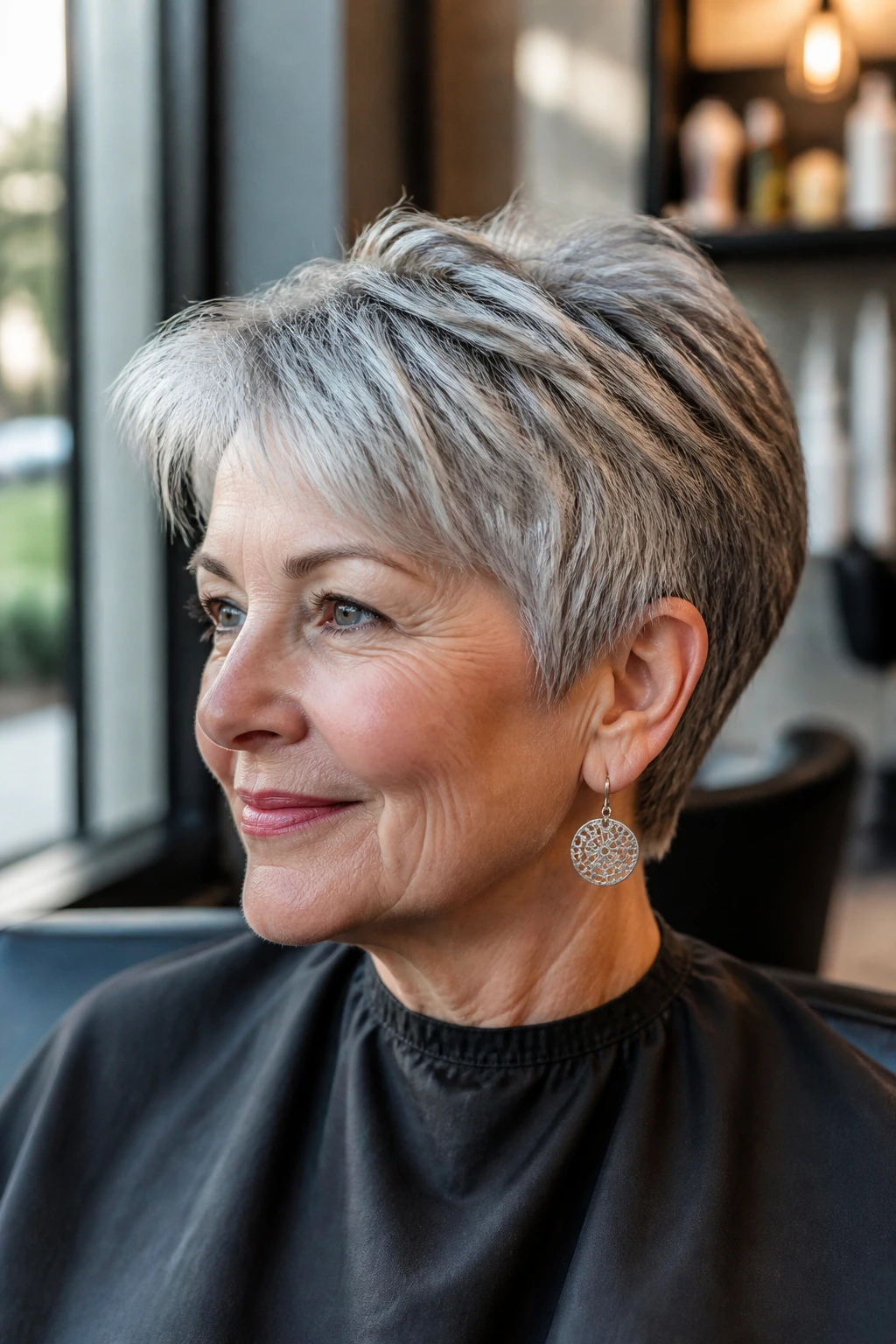
Gray and silver hair often has its own texture story. Sometimes it’s finer, sometimes it’s a little coarser, and sometimes both happen on the same head. A silver-blend crop uses short layers to show off that color variation while keeping the silhouette compact enough to avoid the frayed look fine hair can develop.
This is a cut that benefits from a bit of shine. Silver strands can look dry if the ends are over-thinned, so ask for enough weight at the perimeter to keep the shape glossy and full. A soft side part helps the color catch the light in different places, which makes the cut look richer.
It’s one of my favorites for women who want the color to feel like part of the style, not an afterthought.
19. The Inverted Bob
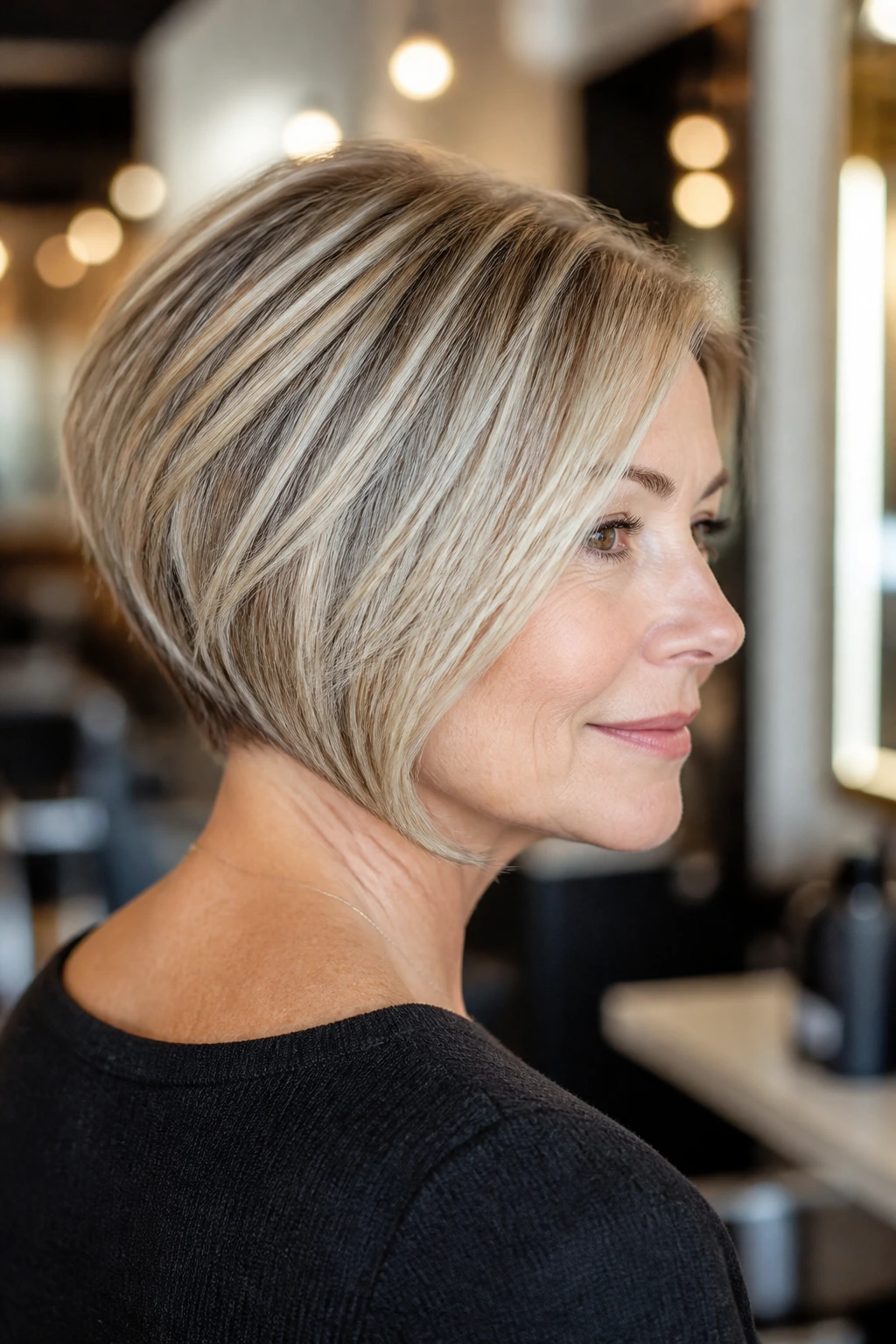
The inverted bob has more lift in the back and more length near the face. That front/back contrast gives fine hair a stronger silhouette, which is useful when the strands themselves don’t have much diameter. The back is stacked enough to support the head shape, while the front can skim the jaw in a flattering line.
Ask for a gentle inversion if you want wearability. A severe inversion can look dramatic but is harder to style day after day, especially if your hair lies flat. A softer version keeps the nape neat and lets the front do the framing.
This cut can be a lifesaver for hair that collapses in the crown. It gives the illusion of structure where the hair most needs it.
20. The Tousled Invisible-Layer Bob
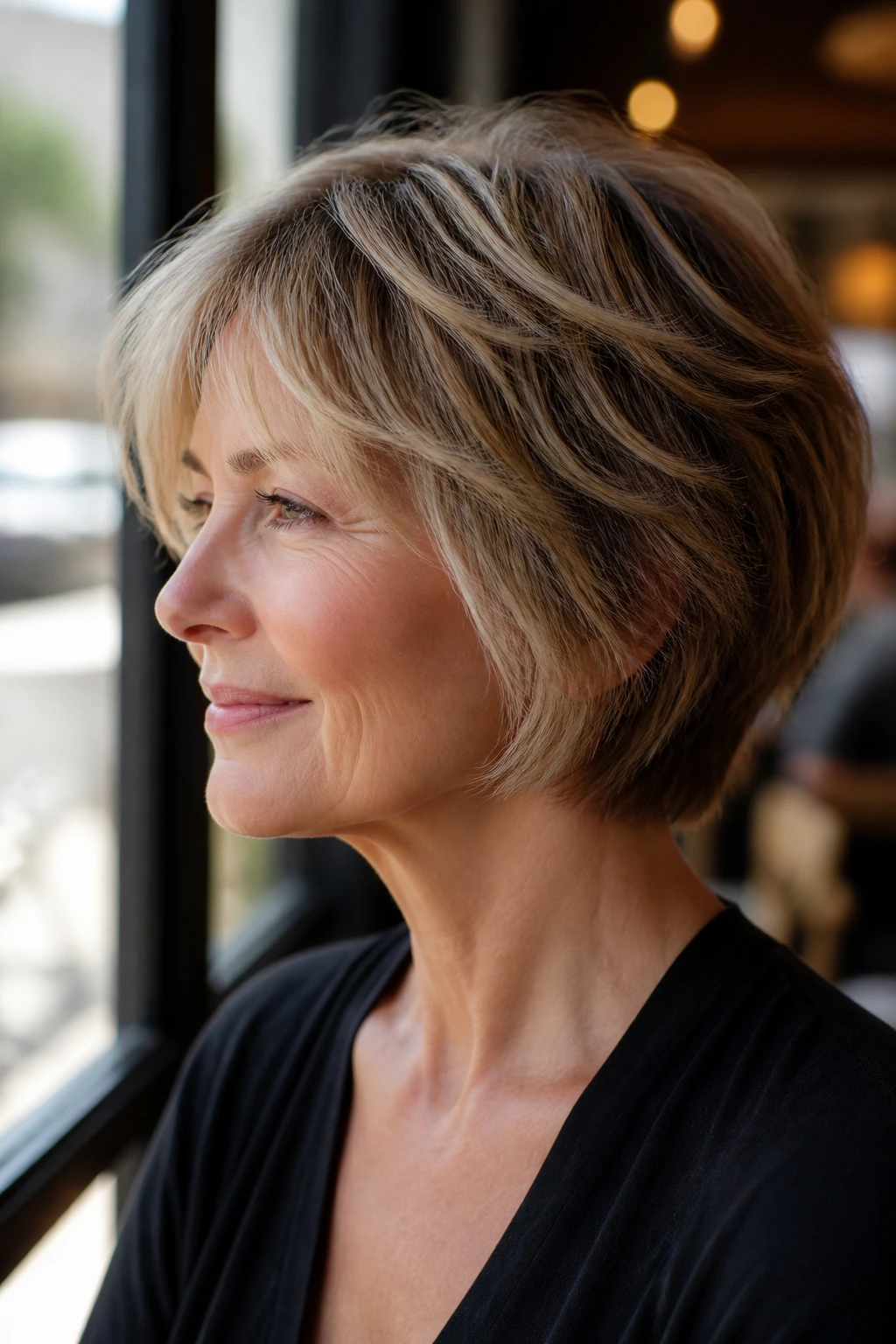
Invisible layers are the kind that do their work without shouting about it. The outer shape stays clean, while the inside of the bob gets enough relief to keep the hair from puffing out or hanging like a block. For fine hair, this is a smart compromise.
The tousled part comes from the finish, not from over-cutting the shape. A little salt spray or lightweight mousse can bring out texture, but the haircut itself should already be doing the heavy lifting. If the hair is too aggressively layered, the bob loses its body. Hidden layers prevent that.
This is a strong choice if you want a bob that looks easy rather than styled within an inch of its life. There’s a difference, and people notice it.
21. The Soft Mullet Shag
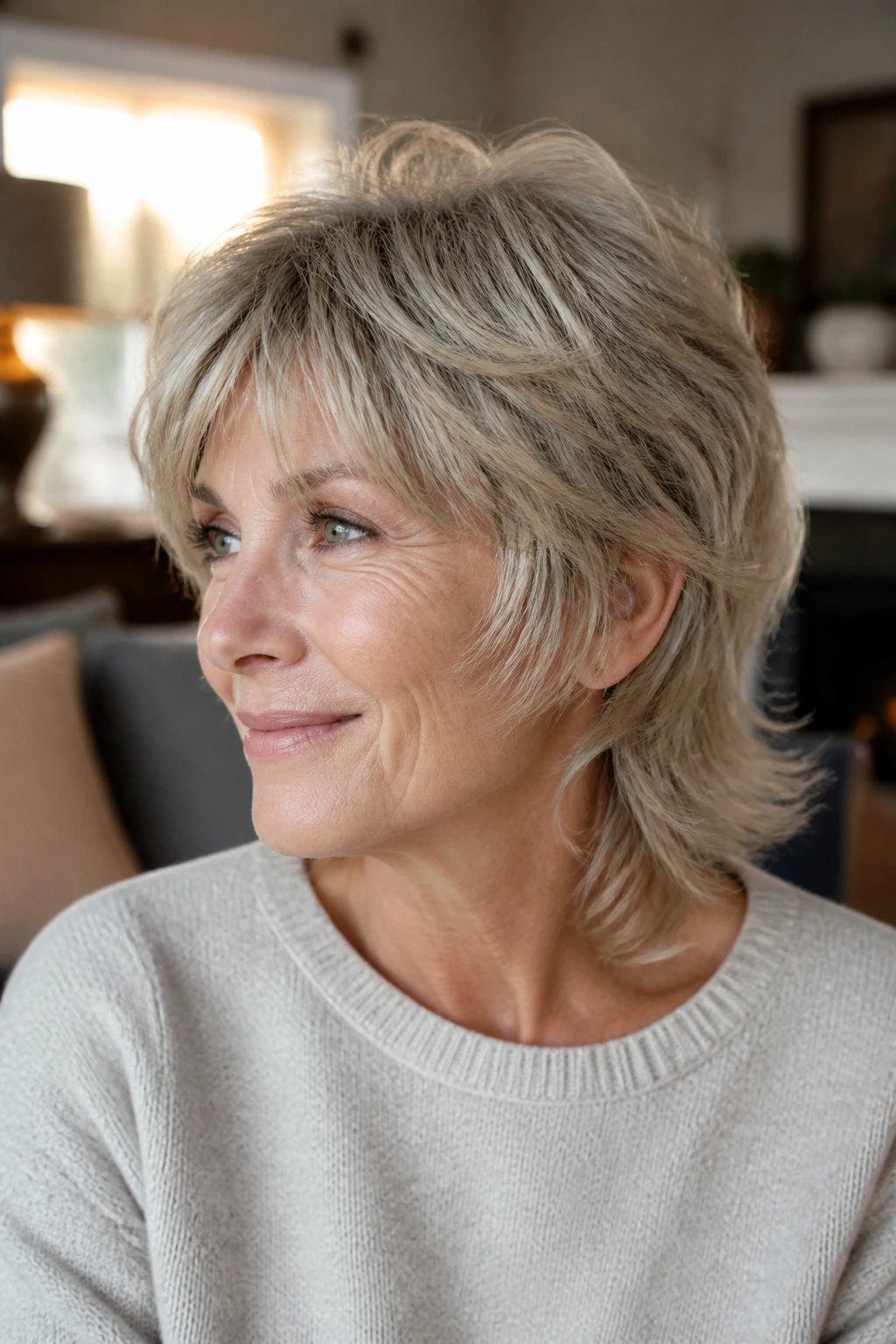
A softer mullet-inspired shag can be surprisingly kind to fine hair, as long as it isn’t taken too far. The top and crown get enough lift to create shape, while the back keeps a little length for swing. The front pieces should feather around the cheekbones and jaw, not stop abruptly.
The reason this cut works is simple: it spreads the visual interest across the head instead of concentrating it in one flat line. Fine hair can’t always carry a heavy geometric shape, but it can carry movement. That’s what this gives you.
Keep the layers soft and avoid over-texturizing the ends. If the whole thing gets too shredded, the result is all air and no structure. Not the goal.
22. The Ear-Grazing Crop With Sideburns
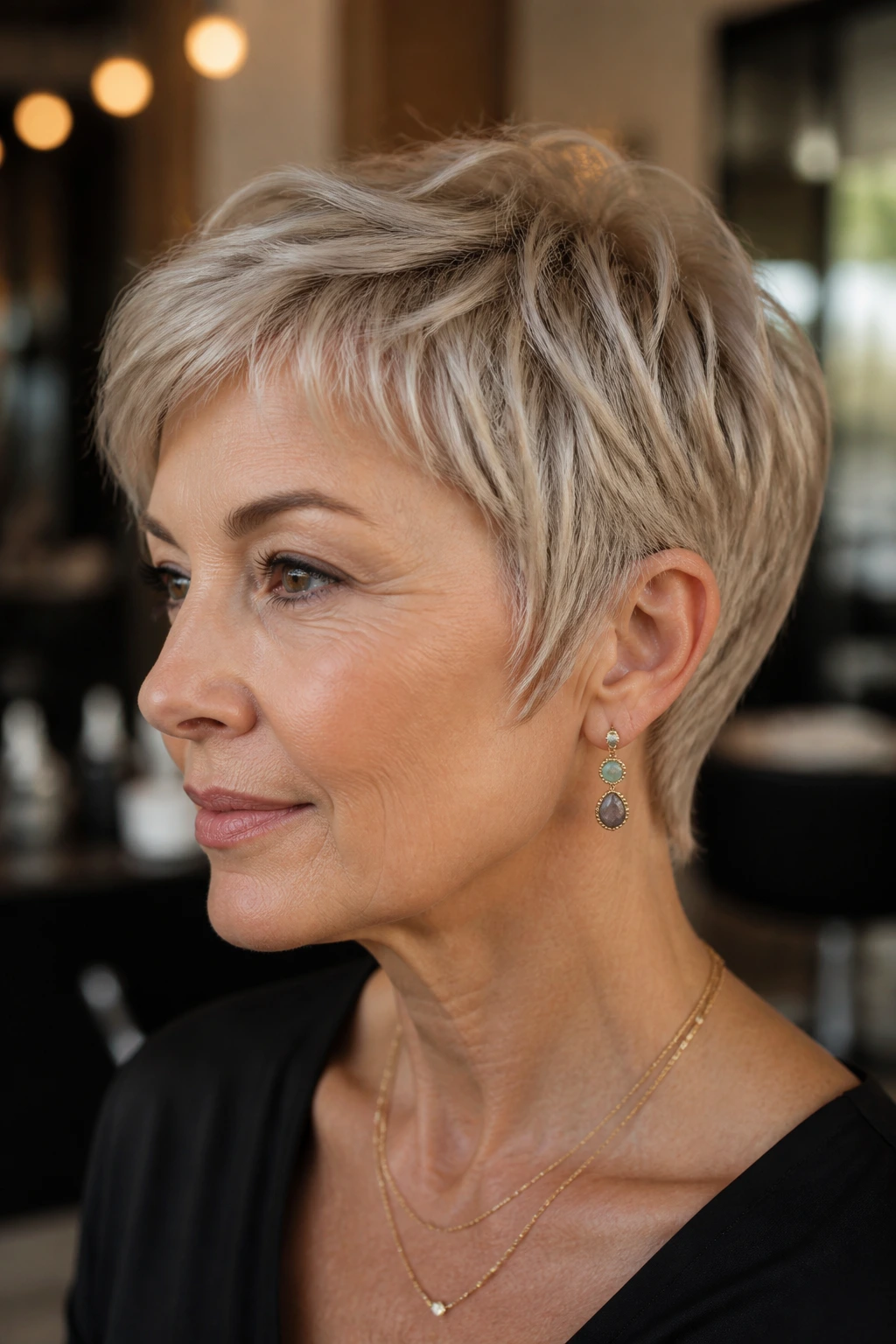
There’s something sharp and pretty about a cut that opens the ear and keeps the sideburn area intentional. Fine hair often looks thicker when the edges are deliberate, and that’s exactly what this crop does. The length stays short enough to feel easy, but the sideburns and top layers add a little visual softness.
This is a great option if you wear earrings or glasses. The shape leaves space around the face, so the accessories don’t have to compete with the hair. The key is keeping the sideburn area soft, not blunt.
A small amount of pomade can help the side pieces sit where you want them. Use it sparingly. A heavy hand at the temples turns neat hair into sticky hair, and nobody asked for that.
23. The Rounded Bob With Micro-Layers
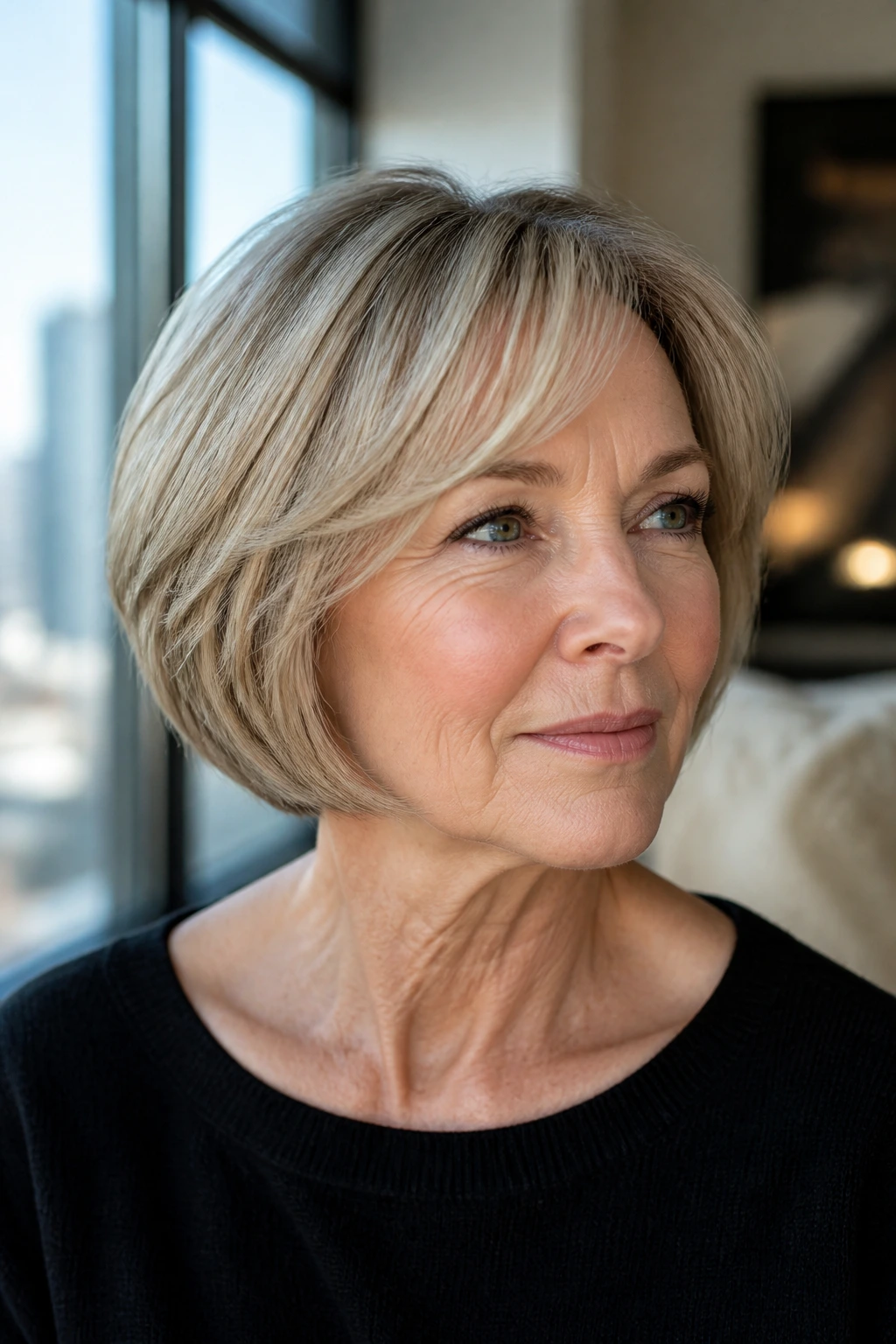
Micro-layers are subtle, almost hidden. They’re there to keep the bob from feeling boxy, not to create a big textured effect. For fine hair, that restraint is useful because the hair gets lift without losing the clean outline that helps it appear fuller.
The rounded shape is especially flattering if your hair tends to fall flat at the sides. It gives the cut a little arc around the head, which looks fuller than a straight side-to-side line. I like this one for women who want polish and do not want to spend twenty minutes trying to coax the ends into agreement.
A slight under-turn with the blow-dryer finishes it nicely. Nothing dramatic. Just enough bend to make the haircut look considered.
24. The Curtain-Fringe Crop
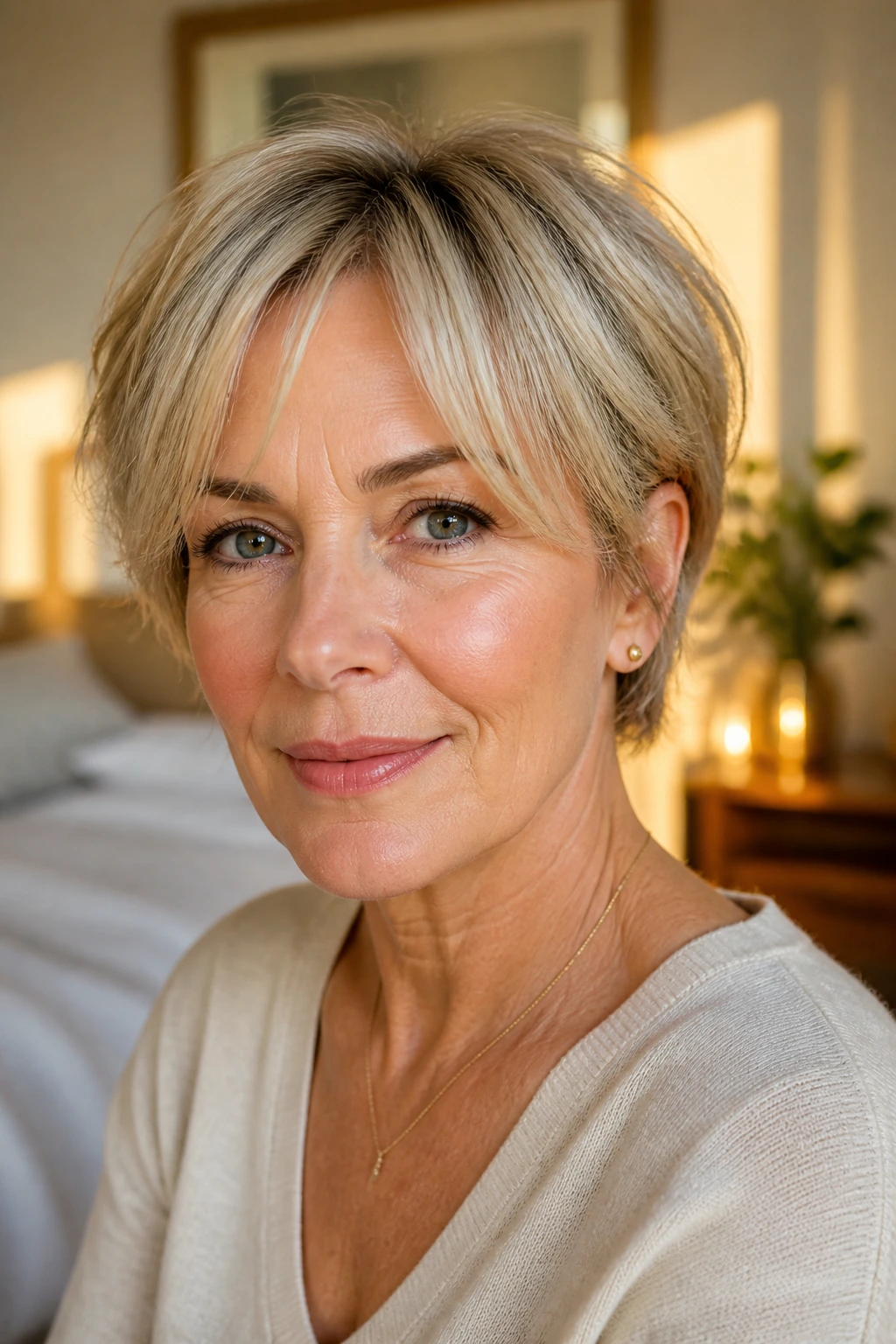
This cut brings the fringe to the front of the conversation. The crop stays short, but the curtain fringe opens the face and creates a little softness right where fine hair can sometimes feel a bit severe. The layers around the top should be light, then longer through the fringe so the hair can fall away from the center.
What makes it different: the fringe does the framing, so the rest of the cut can stay compact and easy. That’s useful if your hairline is strong or your forehead feels like the part of the face you want to soften. The opening effect of the bangs helps the whole haircut breathe.
Blow-dry the fringe with a small round brush or even a large roller for a few minutes. Let it cool before you touch it. That tiny pause helps the shape hold.
25. The Polished Crop With Lifted Crown
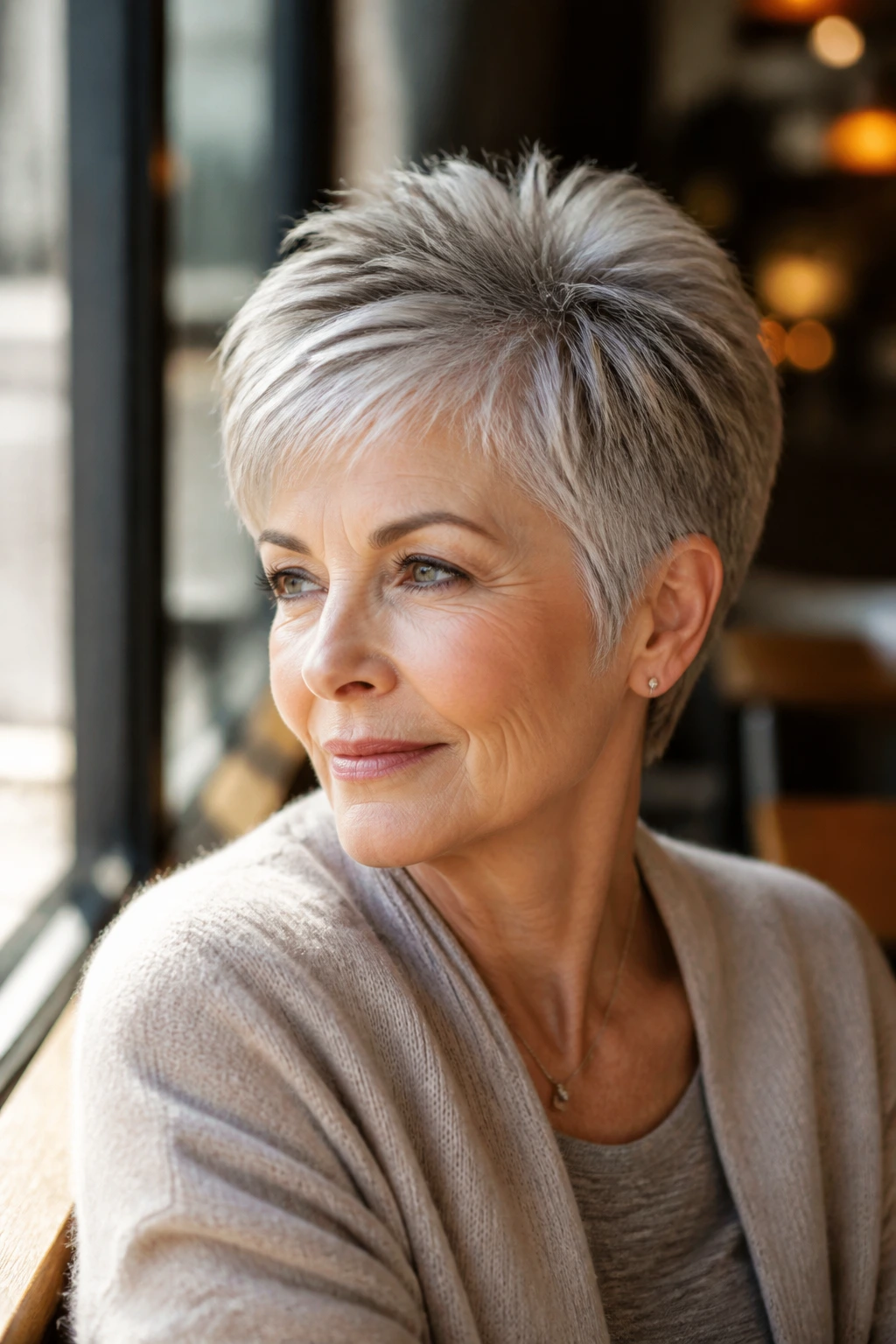
This is the haircut I’d give someone who wants clean lines, a little height, and almost no fuss. The sides stay close, the crown gets intentional lift, and the top is layered just enough to move. Fine hair loves a shape like this because it doesn’t waste strength where the strands are weakest.
There’s a neatness to it that never feels severe if the crown is handled well. Keep the top soft and the neckline tidy, and the whole cut looks tailored without being stiff. It’s also one of the best options for people who want a style that still looks good if they skip a wash day.
A little root spray, a blow-dry with the head tipped forward, and a final cool shot on the crown. That’s the whole game. Simple, and thankfully not boring.
Why Short Layers Work Better Than Heavy Ends
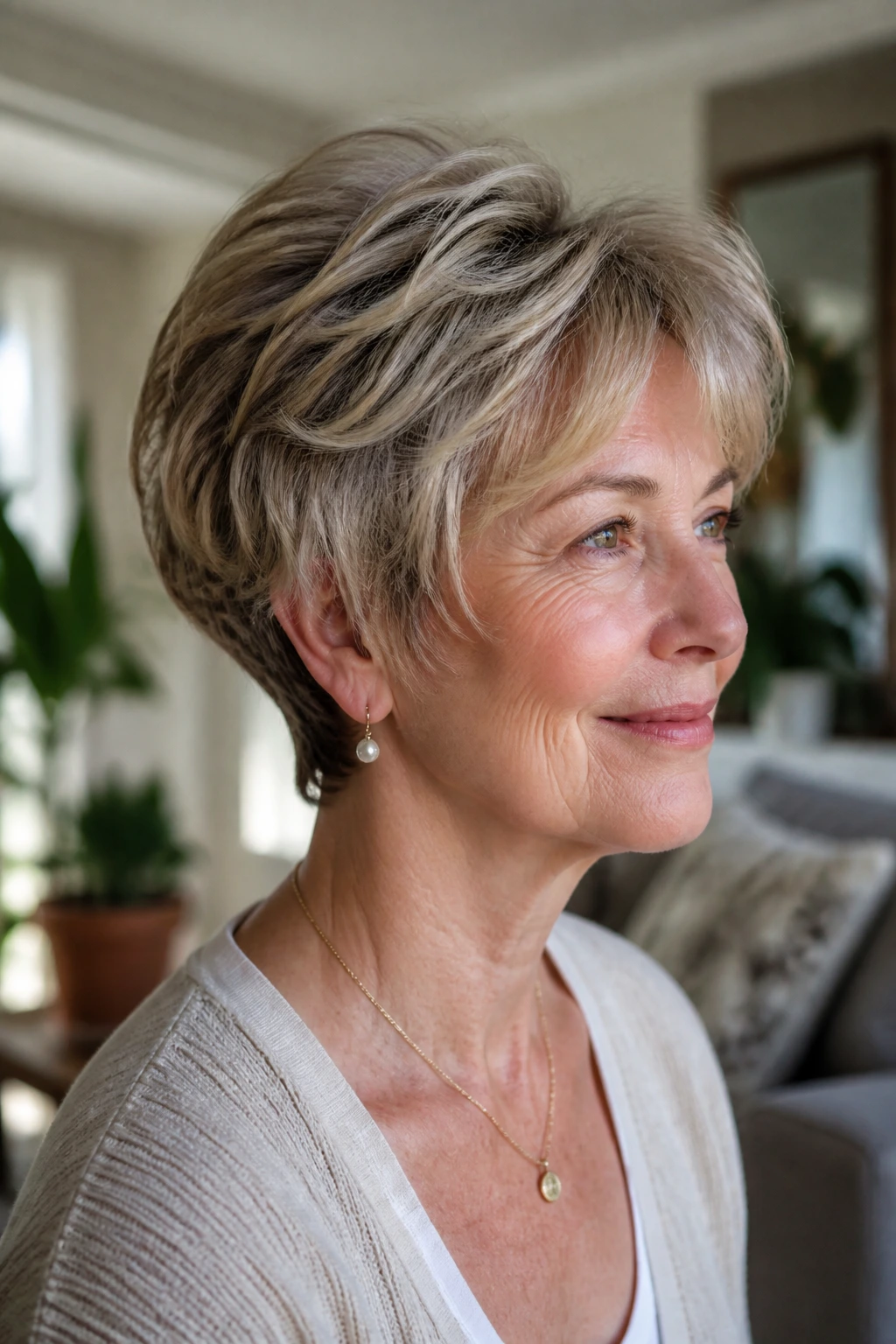
Fine hair needs a haircut that respects density, not just length. A heavy one-length cut can look blunt for a day or two, then it starts to sit there like a wet ribbon. Short layered cuts solve that by removing weight where the hair collapses and keeping enough perimeter to make the ends look full.
The smartest versions use internal layers, crown lift, and face-framing pieces in different proportions. Internal layers reduce bulk without exposing the ends. Crown lift creates height at the top of the head, which is where flat hair looks most obvious. Face-framing pieces help the haircut look finished even when the rest of the hair is kept simple.
There’s also a practical reason these cuts last. Fine hair grows out fast in appearance, not just in length. A shape with a clean neckline and controlled layering can still look intentional three or four weeks after the salon visit. That matters more than a lot of people admit. A haircut that needs perfect styling to survive is a bad bargain.
How to Ask a Stylist for the Right Shape
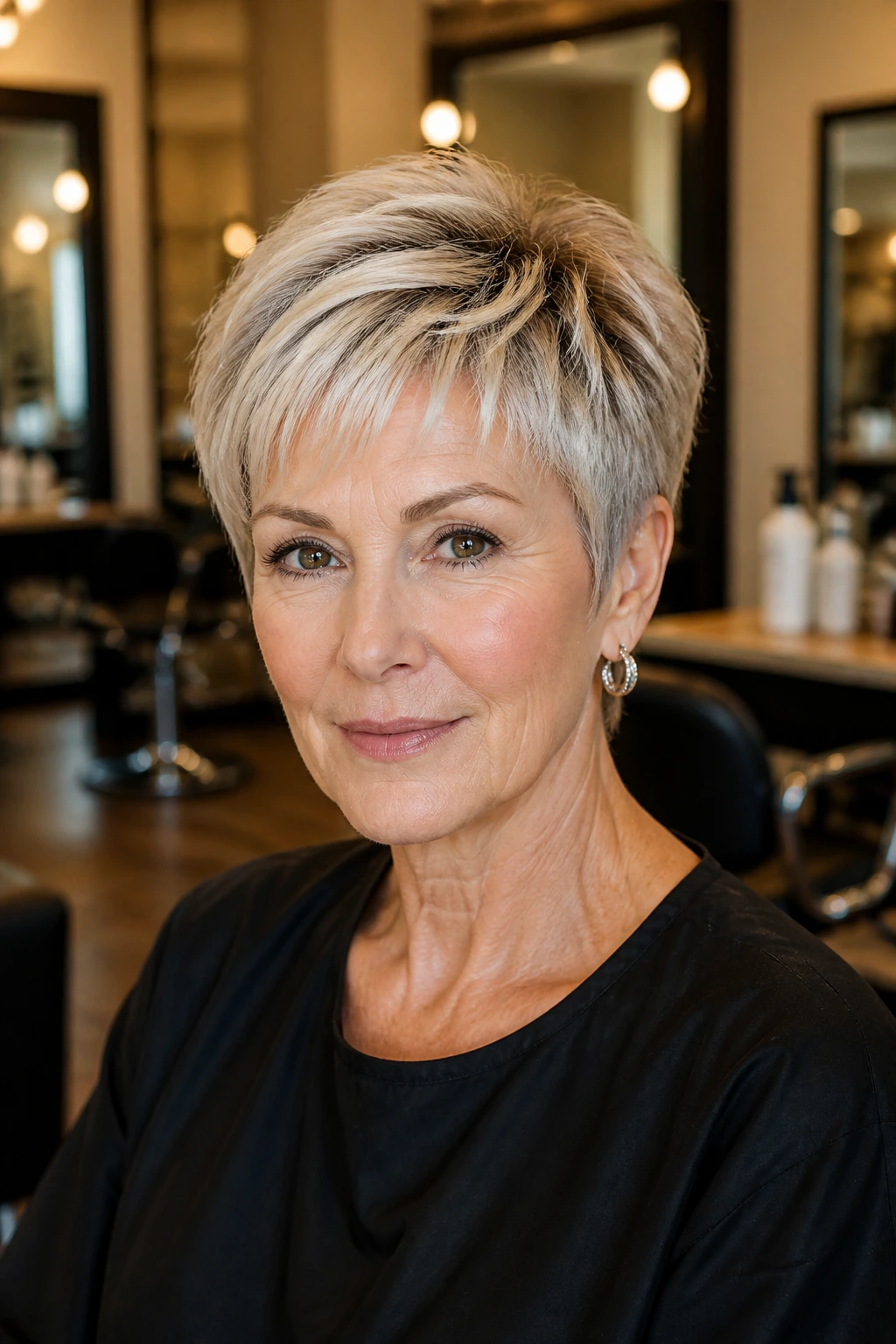
Bring photos, yes, but bring the right photos. A pixie on thick hair can look like a different haircut entirely once it lands on fine strands. Show examples of hair with similar density, similar texture, and similar growth pattern around the crown and temples. Those details matter more than face shape alone.
Tell the stylist what your hair does on its own. Does it split at the back? Does one side puff up near the ear? Does the crown go flat by noon? A good cut for fine hair should answer those specific problems, not just look nice when you leave the chair. Ask where the layers will start and how much weight will stay at the perimeter. If the answer sounds vague, push for more detail.
A few useful phrases:
- “Keep the ends full.”
- “I want lift at the crown, not everywhere.”
- “Please avoid over-thinning the sides.”
- “I need a shape that works with minimal styling.”
That last one is a lifesaver. It tells the stylist what kind of life the haircut has to survive.
Tools That Make Styling Fine Hair Easier
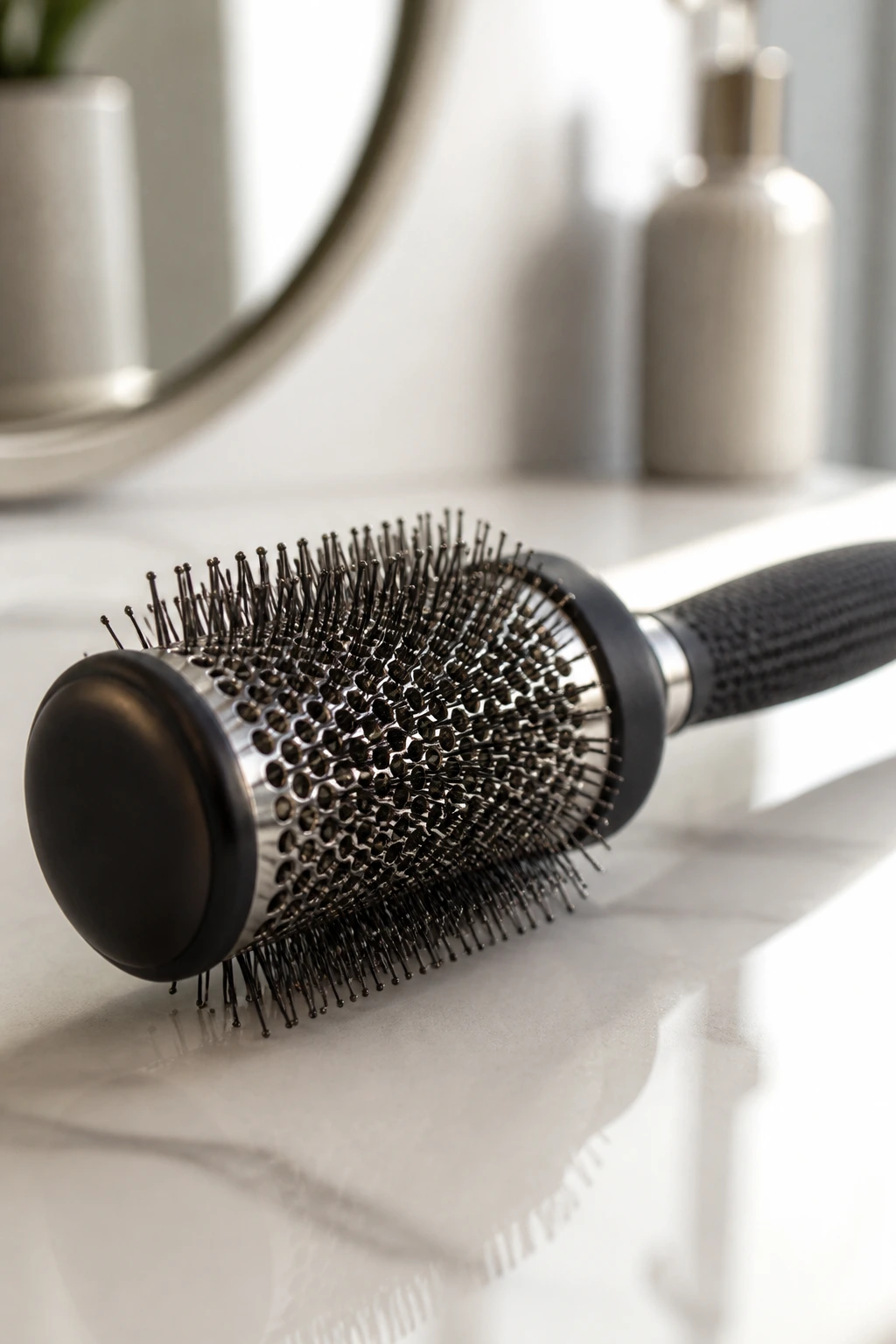
You do not need a bathroom shelf full of products. You need a few things that do one job well.
- Blow-dryer with a nozzle: Directs air at the roots instead of blasting the hair into frizz.
- Small round brush: Helps create lift in pixies, bobs, and fringes without flattening the crown.
- Vent brush: Good for quick drying when you want a looser finish.
- Root-lifting spray: Best at the crown and hairline before blow-drying.
- Light mousse: Gives fine hair a little grip without that crunchy, sticky feel.
- Heat protectant spray: Use it every time you use a dryer, brush, or iron.
- Texturizing spray: Helpful on short layers when you want separation at the ends.
- Tail comb: Useful for clean parts and sectioning.
- Sectioning clips: Keep the top separate from the sides while you dry.
- Light-hold hairspray: Finishes the style without turning it rigid.
A diffuser can be useful if your fine hair is wavy or curly. A flat iron may help on a bob, but only if you’re using it for a bend, not for pin-straight tension.
How to Wear These Cuts Day to Day
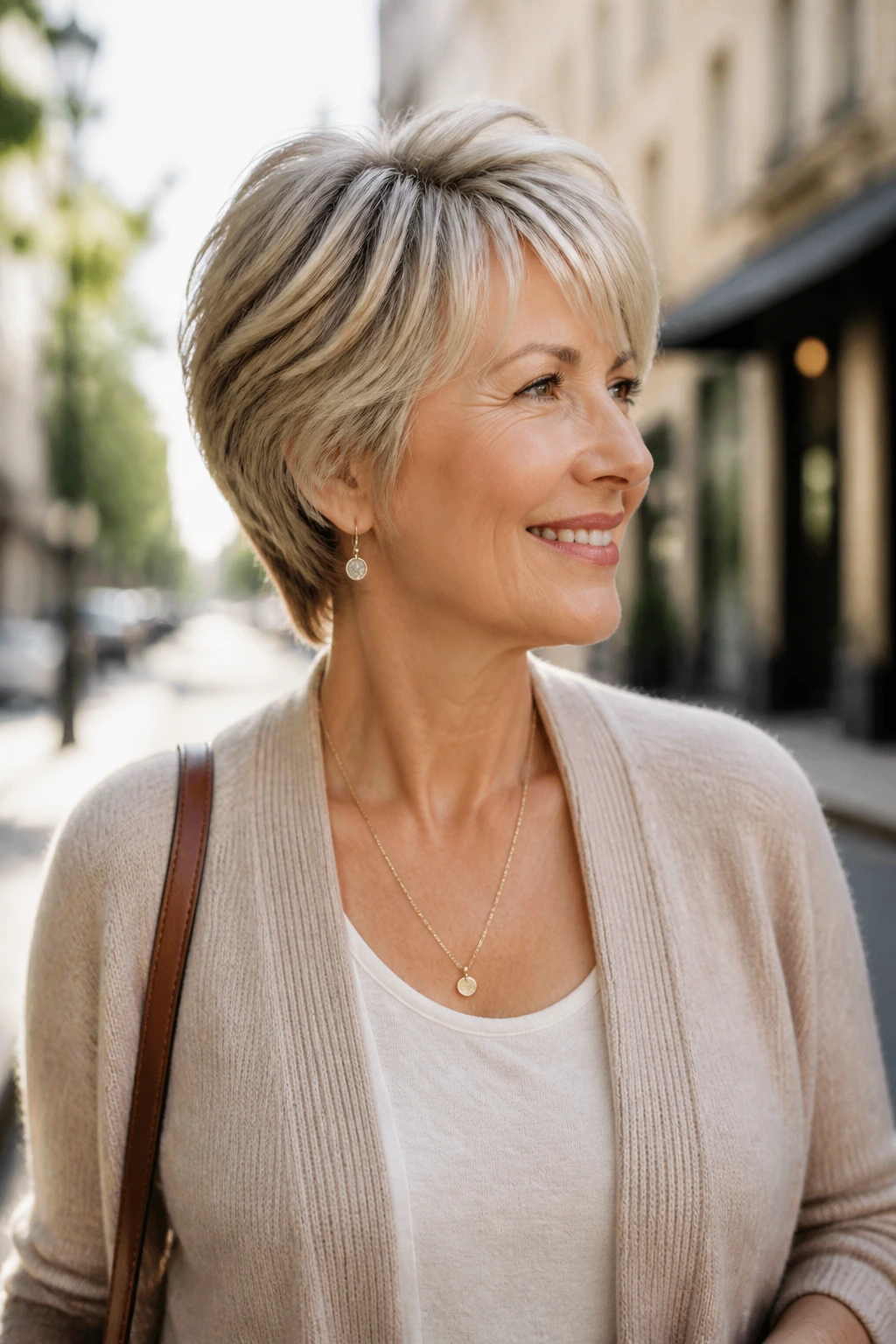
Shape: The best version of a short layered cut should look like it has a center of gravity. That can mean height at the crown, a curve near the jaw, or a soft sweep over the forehead. What you don’t want is equal volume everywhere. That usually reads as puffy on fine hair.
Products: Go lighter than your instincts tell you. Fine hair gets weighed down fast, so start with a pea-sized amount of cream or paste, then add only if the ends look dry. Root products belong at the base, not through the length. If you spread them too far, the crown goes limp and the ends go stringy.
Styling: Blow-dry the roots first. That’s the part that decides the shape. Once the roots are dry, set the top in the direction you want and let it cool there. If you let the hair dry flat, you’ll fight it all day. A little effort at the beginning saves a lot of frustration later.
Accessories: Glasses, earrings, and collars can all work with these cuts, but the shape needs to leave them some room. If you wear bold frames, keep the sides cleaner. If you love earrings, a tucked nape or cropped side helps. That’s the kind of detail people notice in real life.
Extra Styling Tricks That Add Lift Without Stiffness
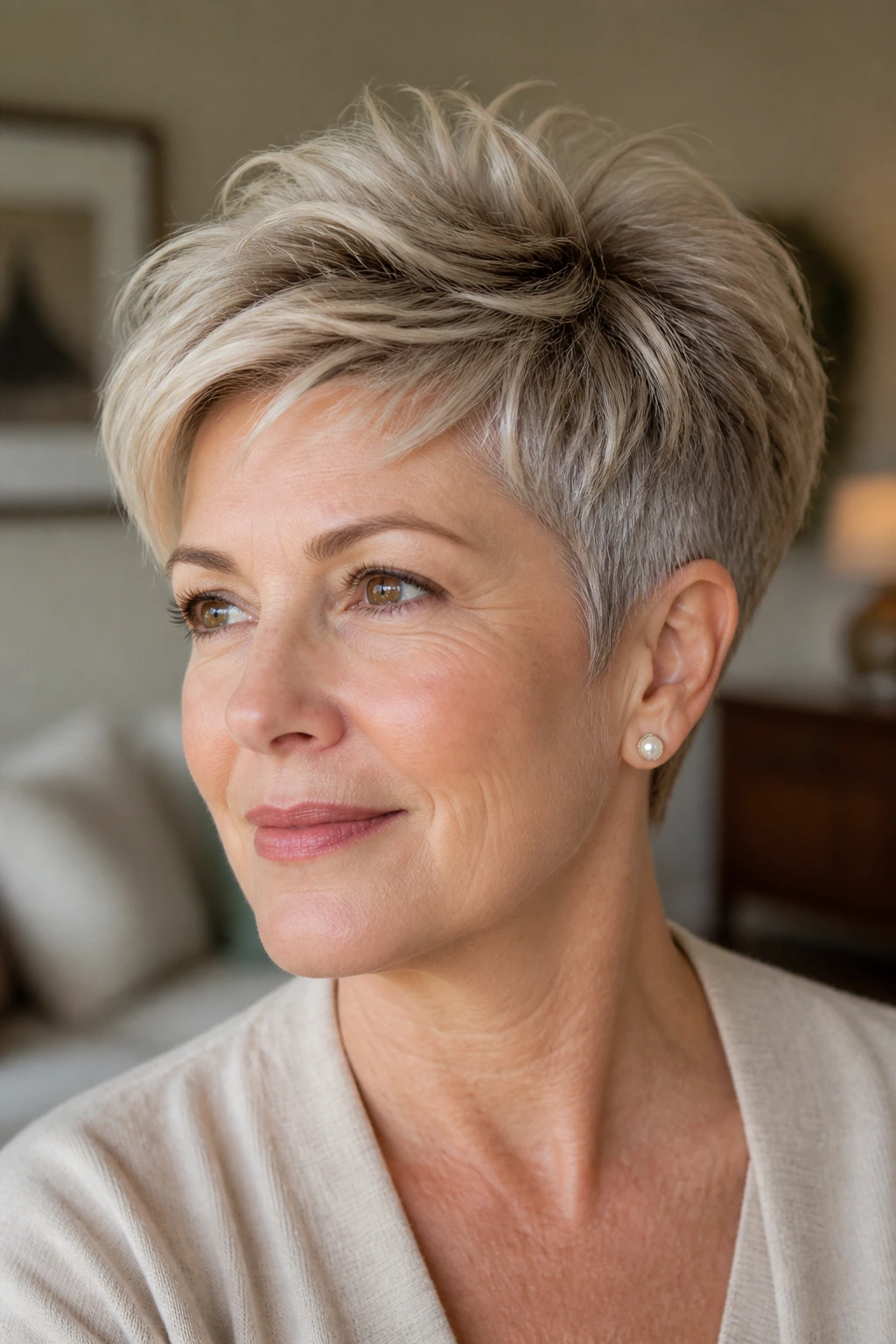
Root Lift: Flip the head upside down for the first minute of drying, then switch back and aim the nozzle at the crown. That small change builds lift without making the top feel frozen in place.
Texture: If the hair looks too soft after styling, mist the mid-lengths with texturizing spray and scrunch once or twice. Do not keep scrunching. Fine hair gets fuzzy if you keep touching it.
Heat-Safe Shortcut: Set the fringe or front layers on a large roller for ten minutes while you finish makeup or get dressed. The shape cools in place, and that cooling time helps the hair remember where it’s supposed to sit.
For Flat Days: Dry shampoo at the roots can be used even on clean hair. Spray it underneath the top layer, let it sit for a minute, then massage lightly with fingertips. That gives the crown a little grit.
For Silver Hair: A shine serum, used only on the ends, can stop gray or white hair from looking fuzzy under bright light. Two drops. That’s enough.
Common Mistakes That Flatten the Shape
-
Over-thinning the ends: Fine hair does not need to be reduced to scraps. If the ends look see-through in the mirror, the fix is usually a stronger perimeter, not more texture.
-
Cutting too many short layers around the crown: This can make the top stand up in awkward little pieces while the rest of the cut looks sparse. Ask for lift, not shredding.
-
Using heavy creams or oils all over: They drag the hair down fast. Keep richer products off the roots and use only a trace on the ends.
-
Skipping the blow-dry at the roots: Air-drying flat at the scalp makes even a good cut look tired. If you only have five minutes, spend them at the roots, not the ends.
-
Choosing bangs that are too thick: Heavy fringe can swallow fine hair and make the face look boxed in. Wispy, side-swept, or curtain styles usually behave better.
-
Letting the cut grow past its shape: Short layers lose their lines faster than blunt cuts. Once the nape or crown starts collapsing, the haircut looks older than it is.
Variations to Match Texture, Glasses, and Grow-Out Plans
The Glasses-Friendly Sweep: Keep the sides slim and the fringe light so the hair doesn’t crowd the temples. This is a good fit if your frames are thick or you wear them all day. The haircut should open the face, not fight the glasses.
The Air-Dry Version: If your hair has a natural wave, ask for layers that encourage bend rather than polish. This cuts down on styling time and lets the hair dry into a softer shape. It’s especially useful if your morning routine is short and realistic, which is the best kind of routine.
The Gray-Blend Version: Add face-framing layers and a soft crown lift so silver or salt-and-pepper hair shows dimension instead of just brightness. A few lighter pieces near the front can make the whole cut look fuller without adding bulk.
The Easier Grow-Out Version: Keep the layers longer and the neckline softer. This option won’t need trimming quite as fast, and it still looks neat when it starts to grow. Good choice if salon visits are spread out.
The Stronger-Lift Version: For hair that lies very flat, ask for more stacking in the back and a slightly shorter top. This creates a firmer silhouette and gives the crown more structure. It’s not the softest option, but it can be the most convincing.
Keeping the Cut in Shape Between Salon Visits
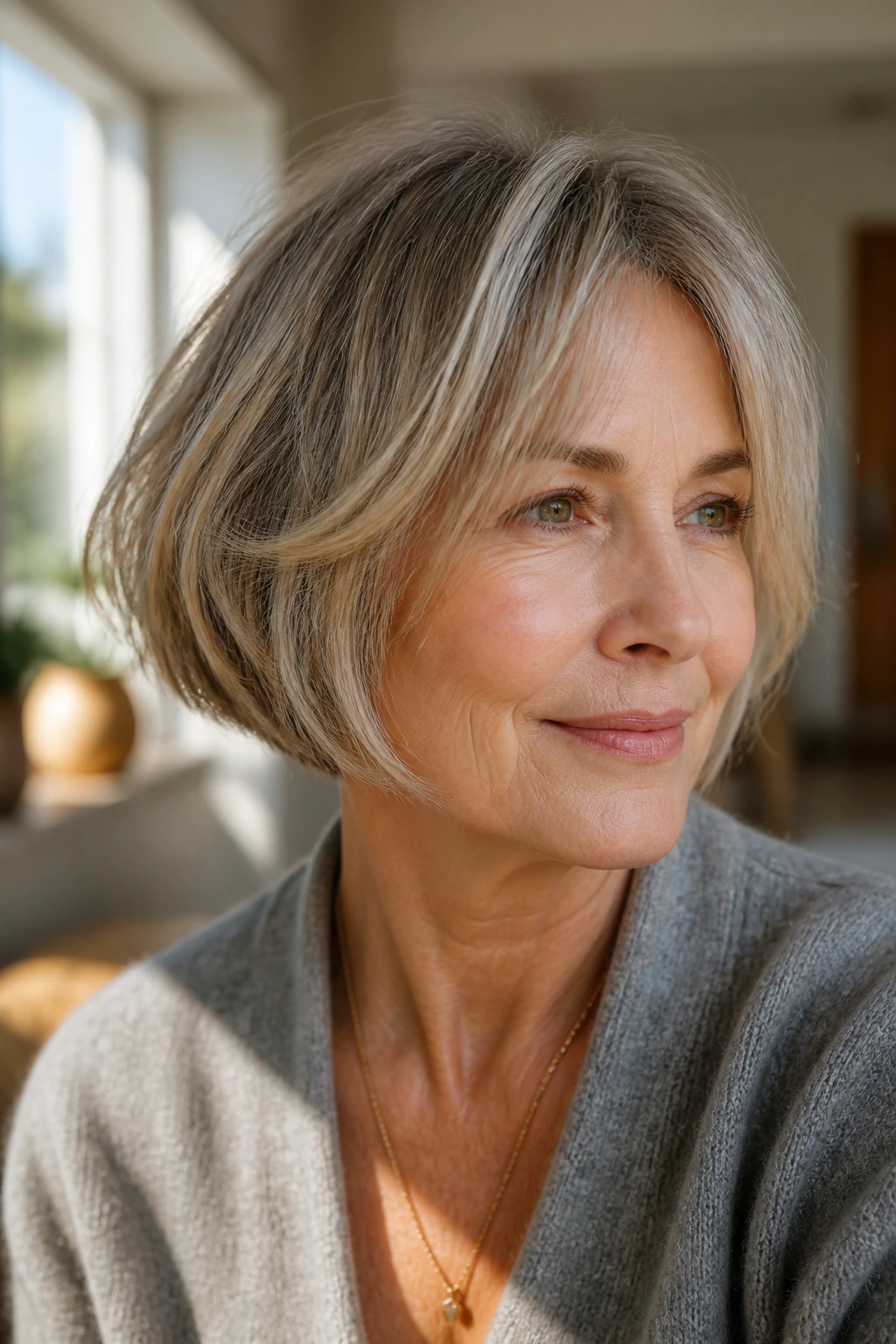
Short layers need a little maintenance, but not as much as people fear. The main goal is keeping the crown from collapsing and the perimeter from turning fuzzy. For most fine hair, a trim every 5 to 8 weeks keeps the shape honest. If you wear bangs, they may need a touch-up sooner, sometimes every 2 to 4 weeks, depending on how fast they hit your lashes.
Daily care matters more than people think. Sleep on a satin or silk pillowcase if your hair tangles easily. It reduces the little friction bends that can make fine hair look battered by morning. If the cut is short, a quick mist of water at the crown and a five-minute round-brush refresh can bring it back faster than a full wash.
Product buildup can flatten fine hair in a hurry, so wash often enough to keep the roots light. That might mean every other day, or it might mean every third day if your scalp is calm. Use a clarifying shampoo every couple of weeks if your roots start feeling coated. The hair should feel clean at the base, not squeaky in a dry way. That difference matters.
If you color your hair, especially with highlights or silver blending, keep the ends trimmed regularly. Fine hair shows split ends fast, and split ends make the whole cut look thinner than it is. A haircut like this does best when the shape is protected before it starts to fray.
Frequently Asked Questions
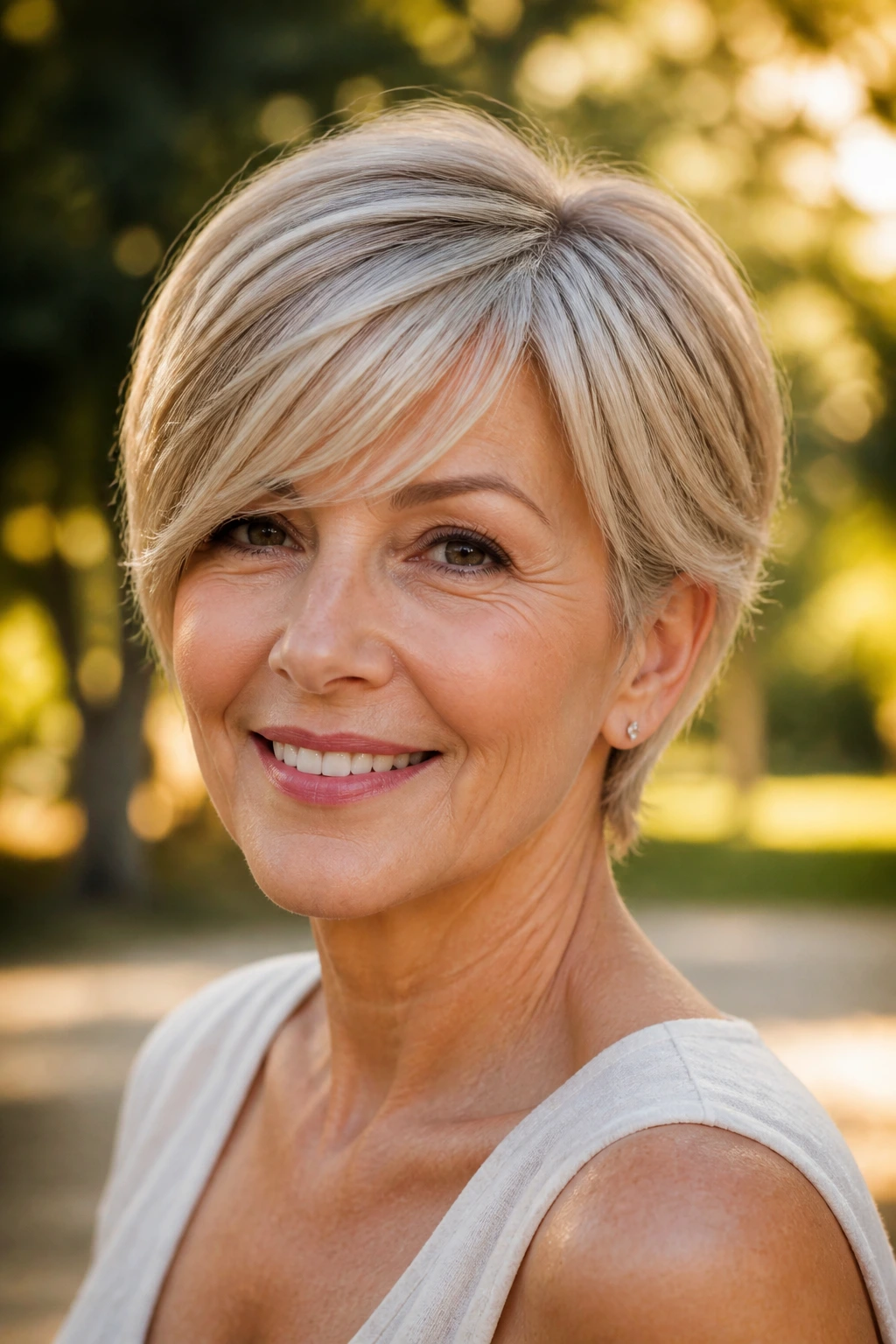
Will short layers make fine hair look thinner?
Not if they’re placed well. The danger comes from over-thinning the perimeter and cutting too much out of the crown. A good stylist keeps enough weight at the ends so the hair still reads full.
Is a pixie or a bob better for fine hair?
A pixie gives you more crown lift and less styling time. A bob gives you more face framing and a little more versatility. The better choice depends on whether you want a lighter feel or a slightly fuller outline.
Should I avoid bangs with fine hair?
No, but the type of bangs matters. Wispy, side-swept, or curtain bangs usually work better than heavy straight fringe because they let air move through the front of the cut.
How often should I get the haircut trimmed?
Short layered cuts usually need more frequent maintenance than long styles. Plan on 5 to 8 weeks for the shape, and sooner if the fringe starts covering your eyes or the nape loses its line.
Can I air-dry a short layered haircut?
Yes, especially if your hair has a bit of wave. Straight fine hair often needs root lift from a blow-dryer to keep the shape from collapsing, but wavy hair can air-dry nicely with the right product.
What if my hair is very straight and limp?
Pick a style with crown lift, a clean neckline, and a little angle around the face. Straight hair needs a haircut with structure; otherwise it goes flat and stays flat.
Are razor cuts good for fine hair?
Sometimes, but they need a careful hand. A razor can soften ends and add movement, yet too much blade work can make fine hair look sparse. A controlled point cut is often safer.
Do these cuts work with glasses?
Yes, especially the ones with cleaner sides and softer temple areas. If you wear glasses, avoid a cut that piles volume right where the frames sit, or the whole thing starts to feel crowded.
A Cut That Leaves Fine Hair Lighter
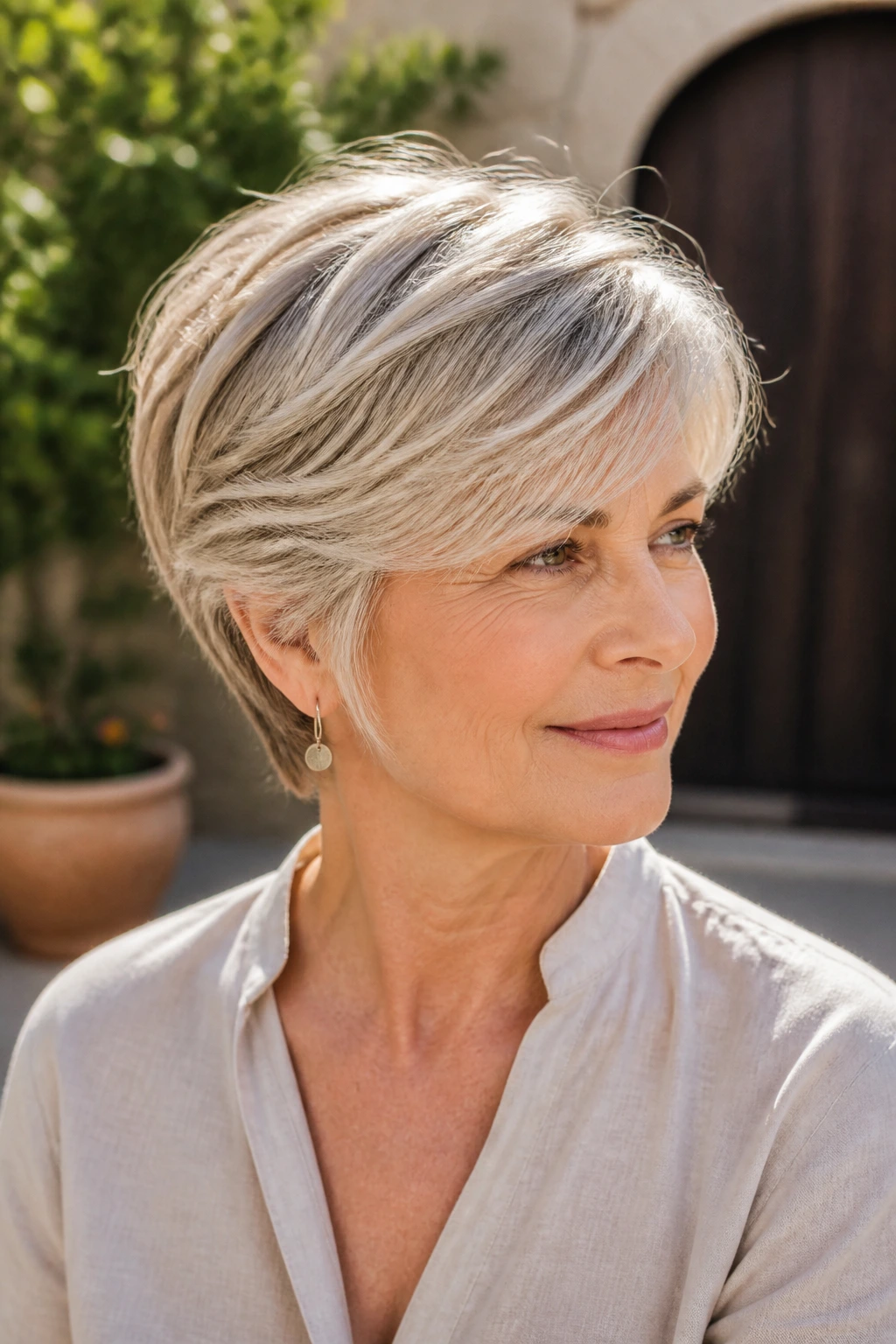
The nicest thing about the best short layered haircuts for older women with fine hair is that they stop fighting the hair’s natural behavior. They don’t demand impossible volume. They give the crown a lift, the face a frame, and the ends enough weight to look like hair instead of mist.
Bring the right photo, yes. But bring your routine too. A haircut that fits your mornings, your glasses, your texture, and your tolerance for styling will always beat a prettier picture that only works in a salon mirror. The right short layered cut should make your hair feel lighter, not more needy.