



Thick hair can behave like a good problem and a bad one at the same time. Left blunt, it sits heavy and stubborn at the bottom. Cut too high, it balloons at the crown and starts stealing width from the face in all the wrong places. That’s why long layers for thick hair and oval faces matter so much: they don’t just add movement, they decide where the weight should live.
Oval faces get a lot of freedom, which is both a blessing and a trap. You can wear cheekbone pieces, curtain fringe, a deep side sweep, a blunt perimeter, a soft U-shape, or a longer V through the back — but the cut still needs a plan. Thick hair is unforgiving when the plan is vague. It will show every lazy layer, every over-thinned end, every awkward shelf.
The best versions keep the length, make the front lighter, and stop the whole head from turning into a triangle by mid-afternoon. They let the hair swing. They let the ends stay full. And they make the face look framed instead of swallowed. That’s the good stuff, and it lives in the placement more than the label.
Why These Cuts Matter for Thick Hair and Oval Faces
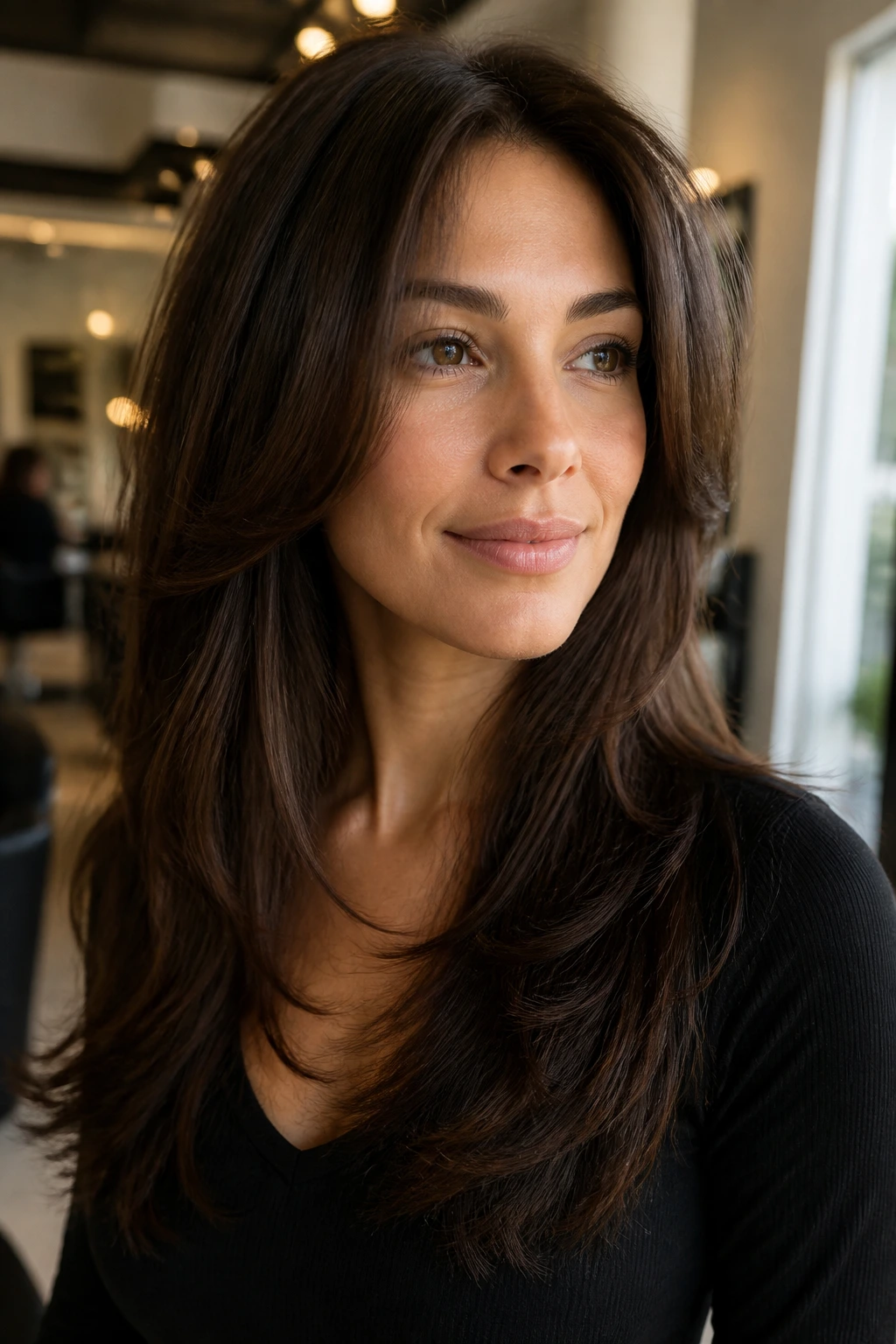
Weight control: Thick hair needs places to lose bulk without losing its shape, and long layers do that better than a blunt chop or aggressive thinning scissors.
Face balance: Oval faces can handle more shapes than most, so the haircut can focus on movement at the cheekbone, jaw, or collarbone instead of trying to “fix” proportions that already work.
Length protection: These looks keep enough hair at the bottom to braid, pin, or wear straight without the ends looking skinny and tired.
Styling range: Some of these cuts air-dry into soft bends, while others want a round brush, a flat iron, or a curling wand with a light hand.
Grow-out sanity: Good long layers don’t fall apart after a few weeks; they keep their outline long enough that the in-between stage still looks intentional.
Less puff, more swing: The point is not to make thick hair smaller. The point is to move the bulk so the hair moves with you instead of sitting like a helmet.
1. Butterfly Layers with Curtain Pieces
Butterfly layers are the easiest way to make thick hair look lighter without stripping the length. The shorter face-framing pieces pull attention up toward the cheekbones, while the longer back layers keep the weight and movement where thick hair needs it most. On an oval face, that combination works because it opens the front without changing the face’s natural balance.
The best butterfly cut on dense hair does not start too high. If the shortest layer hits somewhere around the upper cheek or just below it, the shape has lift without turning fuzzy. I like this cut best when the front pieces are blended enough to tuck behind the ear on a lazy day, but still visible when the hair falls forward. That little edge matters.
A round brush or a 1.25-inch curling iron makes this shape come alive, but it also behaves decently on a rough air-dry. The whole cut reads as soft movement at the front and controlled length at the back. Clean, not chaotic.
2. The Soft U-Shape That Keeps the Ends Full
A U-shaped perimeter is the haircut I reach for when someone wants layers but refuses to sacrifice density at the bottom. The line curves gently instead of dropping in a hard shelf, so the hair still looks heavy enough to feel substantial while the layers ease the bulk above it. Thick hair loves that kind of discipline.
Why the U shape beats a straight line
A blunt bottom on thick hair can sit like a panel. The U shape breaks that blocky feel without exposing the ends too early. Oval faces get a nice bonus here: the curve echoes the face shape without making the cut feel over-designed.
This cut is especially good if you like your hair straight most days. The back keeps a clean line, the front can have longer face-framing layers, and the overall silhouette stays smooth even when the weather has other plans. It’s one of those shapes that looks quietly expensive because the ends still have enough weight to lie down.
If you hate wispy-looking tips, this one is for you. It gives movement without that see-through, over-layered finish that thick hair can fall into fast.
3. A V-Cut With Swing at the Back
A V-cut sounds dramatic on paper, but thick hair can wear it better than most textures. The center back stays longest, the sides angle inward, and the whole shape creates a sharper point at the back without making the ends look thin. On dense hair, that taper reads as movement, not scarcity.
The shape works because thick hair fills in the V. Fine hair can leave the point looking stringy; thick hair gives it body. Oval faces get a sleek vertical line here, which is useful if you want the haircut to feel a little longer and more sculpted without adding bangs or heavy front layers.
I’d call this a good choice for people who wear their hair loose more than tied back. The back has enough structure to show the cut off, especially on straight or softly waved hair. If you want the front to matter more, pair the V with cheekbone pieces so the style does not look like all the action lives behind you.
4. Invisible Internal Layers
What if you want the movement of layers without seeing the steps? Invisible internal layers are the answer. The stylist removes weight from inside the shape instead of carving obvious tiers into the surface, which keeps the outside line smooth while the hair itself gets lighter and easier to swing.
This is a strong option for thick hair that tends to expand. The haircut keeps the top layer looking polished, but underneath, there’s enough relief that the ends stop fighting each other. On an oval face, the lack of visible steps can be a good thing; the face frame stays clean, and the cut doesn’t add visual busyness where you don’t need it.
Best for:
- Hair that feels heavy at the crown or around the parietal ridge.
- Straight or loosely wavy textures that look bulky when cut one length.
- People who want a sleeker surface with less obvious layering.
If your hair is already frizzy, this isn’t the place to go wild with the scissors. Internal layers work best when they’re precise. They should lower the density, not shred the ends.
5. Cheekbone-First Face Framing
The smartest face-framing layers usually start where the face has the most structure. For thick hair and oval faces, that often means the cheekbone zone. A layer that lands there draws the eye upward and gives the front of the cut a place to move without making the whole style feel short.
This shape is especially useful if you wear the hair tucked behind one ear, because the front pieces keep falling back into a soft diagonal instead of sitting like a curtain. That diagonal matters. It breaks up the width of thick hair around the face and gives the haircut a bit of shape without leaning on bangs.
If you want this look to read well, ask your stylist not to overconnect the front layer into the rest of the haircut. You want it to feel blended, yes, but still distinct enough to frame the face instead of disappearing into the shoulder-length mass. Too much blending and you lose the point.
6. Collarbone Drop Layers
Collarbone-level face framing is one of my favorite tricks for thick hair because it keeps the front pieces long enough to behave. They skim the collarbone, bend away from the face, and add shape without turning into a constant maintenance project.
On an oval face, this placement elongates the front in a subtle way. It gives the eye a clean line to follow, which is useful if your hair is dense enough to otherwise sit straight down the sides. The cut works particularly well when the rest of the layers are longer and connected, not chopped into separate blocks.
This is also one of the friendliest long-layer styles for people who blow-dry only once or twice a week. The collarbone pieces still look intentional when they air-dry crooked, and they’re long enough to tuck, pin, or twist back if the day gets annoying. That flexibility is worth more than a fancy name.
7. Long Shag With a Clean Edge
A shag only works on thick hair when somebody keeps the perimeter honest. If the bottom gets too shredded, the whole cut loses weight in the wrong place and starts to look fuzzy instead of textured. The better version keeps the edge clean, then builds movement above it.
Thick hair gives a shag real body, which is why this style can look rich instead of thin. The layers around the crown and temples break up the heaviness, while the ends stay full enough to anchor the shape. Oval faces can wear the softness around the cheeks without looking over-framed.
A dry texture spray, a diffuser, or even a little rough blow-dry gives this cut the right attitude. I like it most on hair that already has some natural bend. If your hair is pin-straight, you can still wear it, but you’ll need a bit more styling to keep the layers from settling flat.
8. Feathered Blowout Layers
There is a very specific swing that happens when thick hair is cut for a blowout. The ends feather back from the face, the top lifts without puffing, and the whole cut looks like it remembers how to move. That is the point of feathered long layers.
What makes it different
A feathered blowout shape starts with longer internal layers and a face frame that’s built to curve away from the cheeks. It works best when the hair is dried with a round brush and a nozzle, section by section, with the ends pulled smooth rather than curled tight. Thick hair holds that finish better than most textures.
Oval faces do well here because the shape opens around the eyes and cheekbones without needing bangs. You get lift, swing, and a polished line around the front. If you want hair that looks done without looking stiff, this is a reliable place to live.
9. Waterfall Layers Through the Mid-Lengths
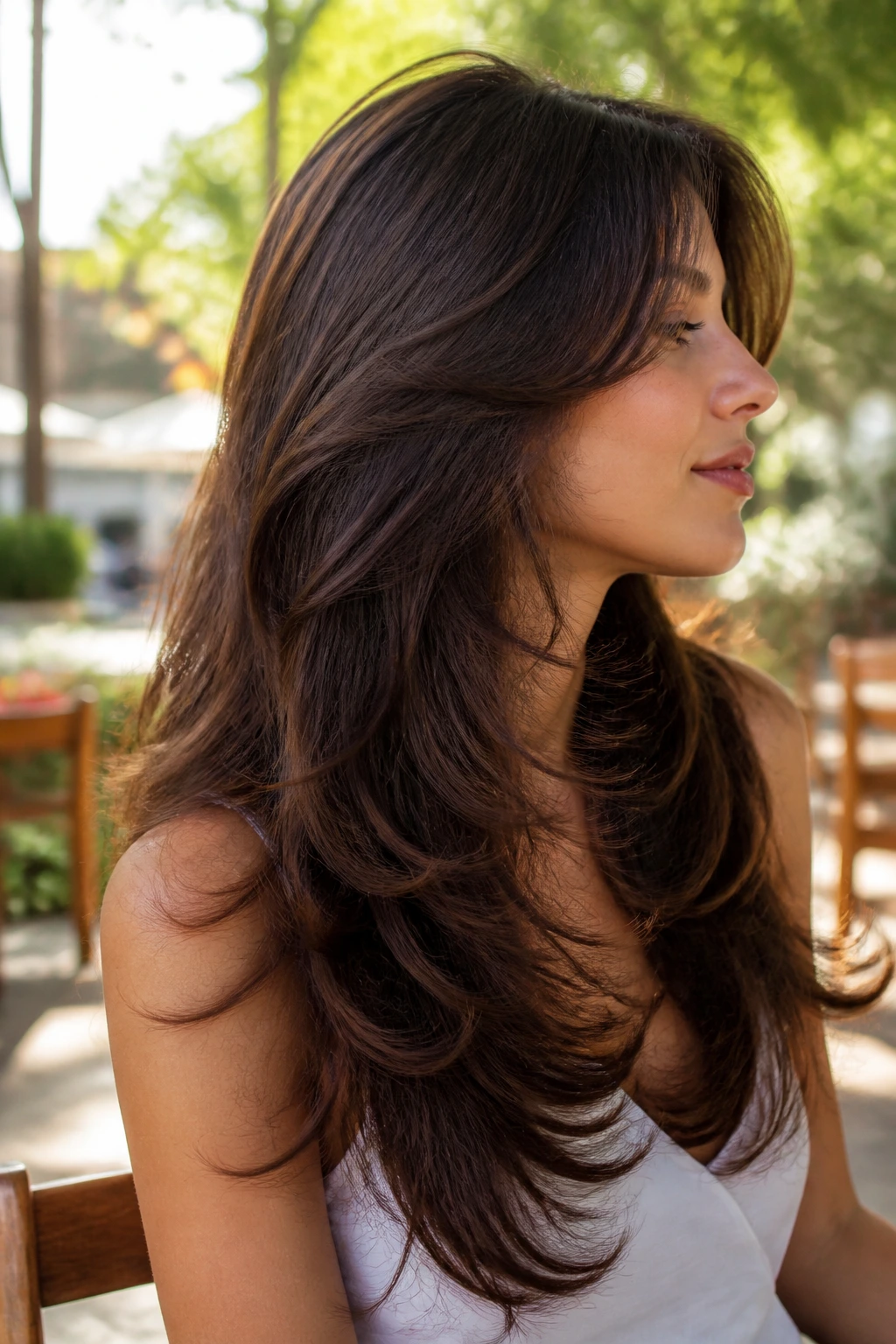
Waterfall layers are what you choose when you want the cut to look like it steps downward in soft stages instead of making abrupt jumps. The movement starts through the mid-lengths, so the hair feels like it cascades rather than collapses.
This is a strong pattern for thick hair because the bulk is often packed through the middle of the strand. Taking weight out there changes the whole silhouette. The ends still look substantial, which keeps the haircut from getting airy in a bad way. Oval faces benefit because the front can stay smooth while the interior of the cut does the hard work.
A waterfall shape also photographs well when the hair is worn over one shoulder, though that’s not the only reason to like it. It’s just a practical, handsome cut. The kind that still looks considered after a long day.
10. Rounded Layers With a Curved Hem
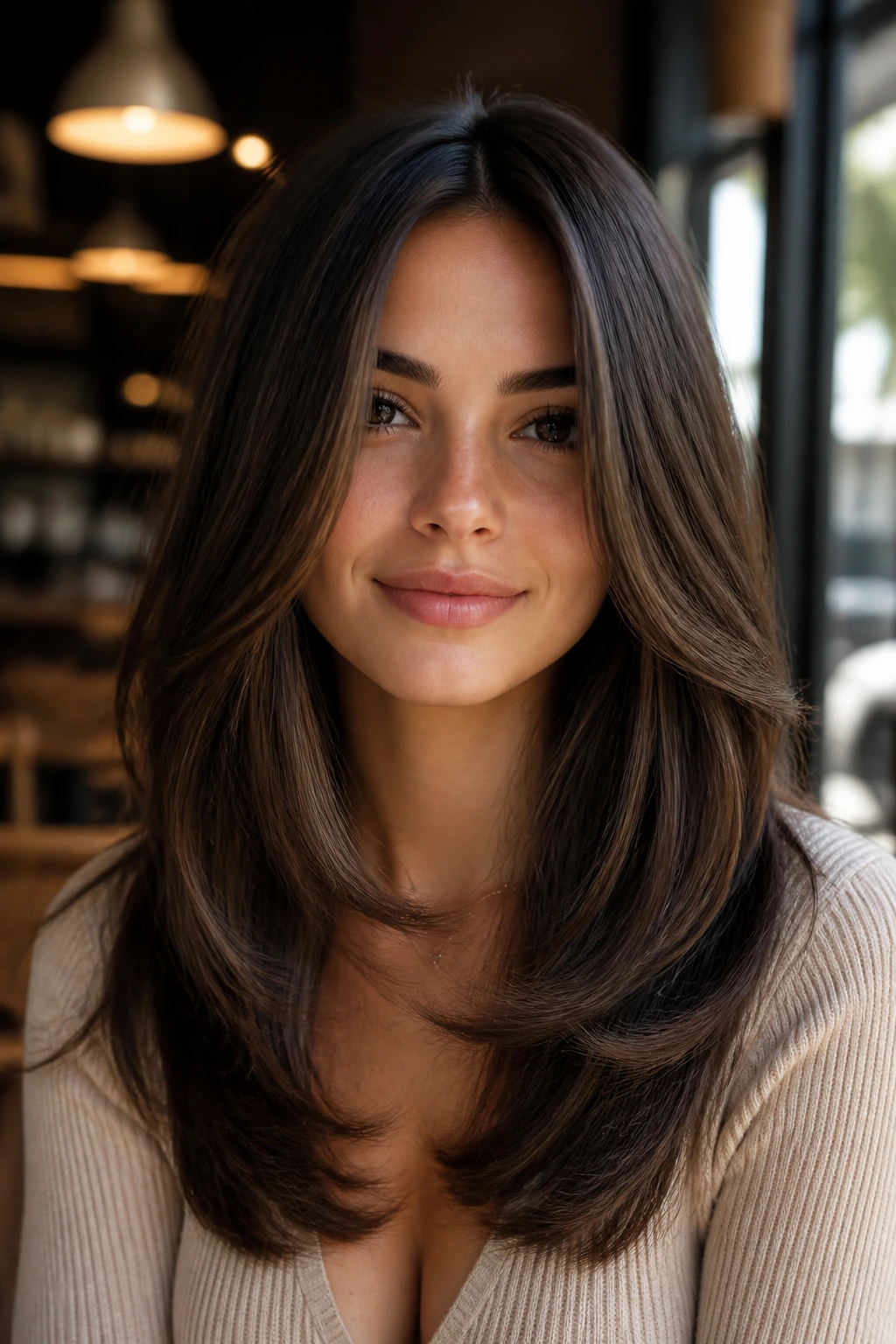
Not every layered cut should feel edgy. A rounded layered shape keeps thick hair from turning boxy at the sides, and the curved hemline gives the whole cut a softer finish than a blunt, straight-across edge.
This is a particularly good choice if your hair has a lot of density near the ends. The rounded perimeter makes the shape feel more intentional, almost like the haircut is hugging the jaw and shoulders instead of hanging there. On an oval face, the curve mirrors the face’s balance without crowding it.
The real charm is in the outline. The layers inside the cut may be doing all sorts of practical work, but what people notice is the smooth shape at the edge. It looks calm. Thick hair can use a little calm.
11. Razor-Soft Layers for Straight Thick Hair
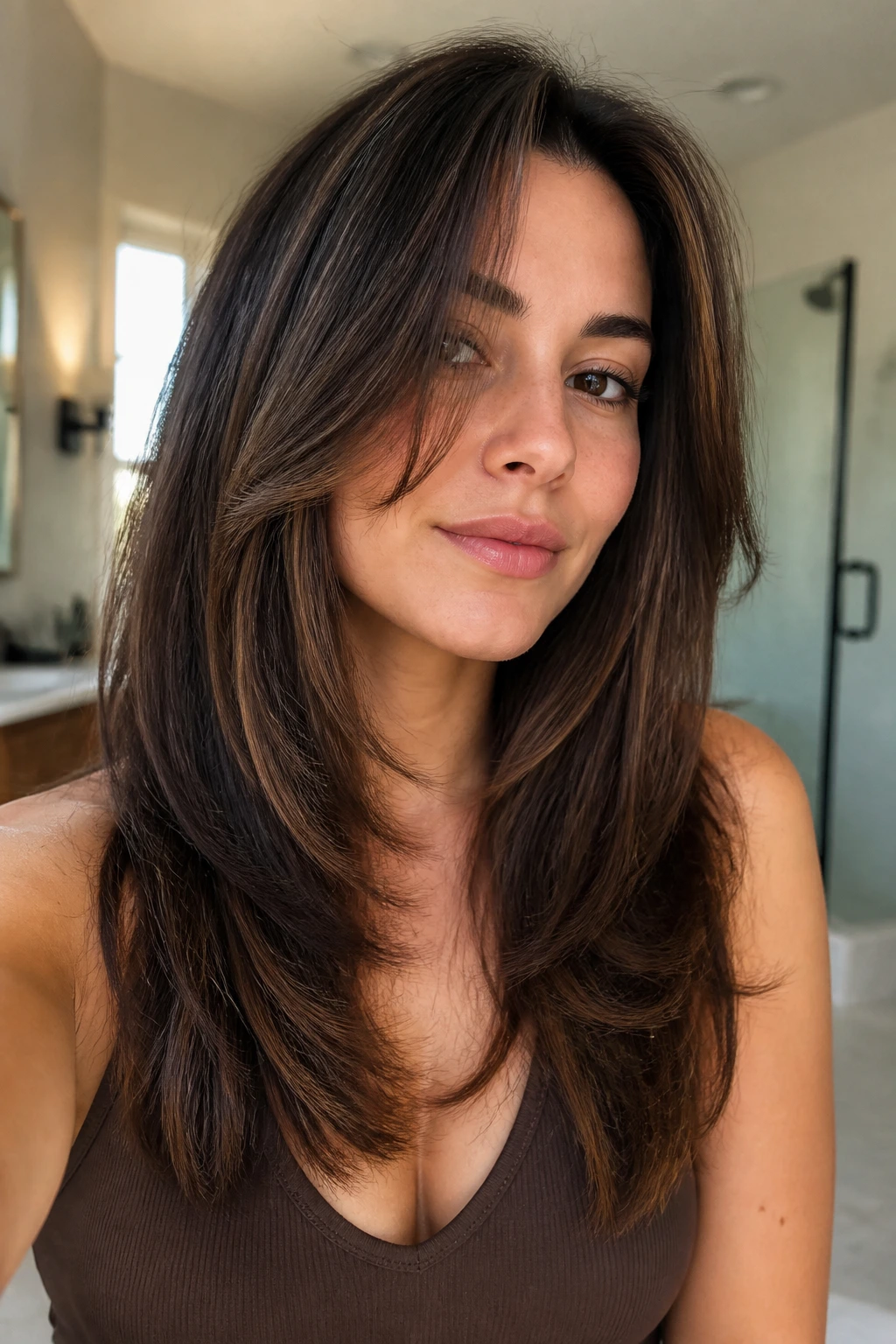
A razor cut is a tool, not a personality test. On very straight, very dense hair, razor-soft layers can remove weight in a way that scissors sometimes can’t, especially if you want the ends to feel lighter and less blocky.
Use it only when the texture cooperates
If your hair is coarse, frizzy, or very porous, a razor can rough up the ends and make the shape puff. On straight thick hair, though, the same tool can create airy movement without obvious steps. The face frame stays sleek, the ends don’t sit in one heavy shelf, and oval faces get a little extra contour around the front.
This cut asks for a careful hand. It is not the right move for every head of hair, and I’d rather say that plainly than pretend it’s magic. When it works, it gives long thick hair a modern, lightly shattered edge that still feels controlled.
12. Bottleneck Bangs With Long Layers
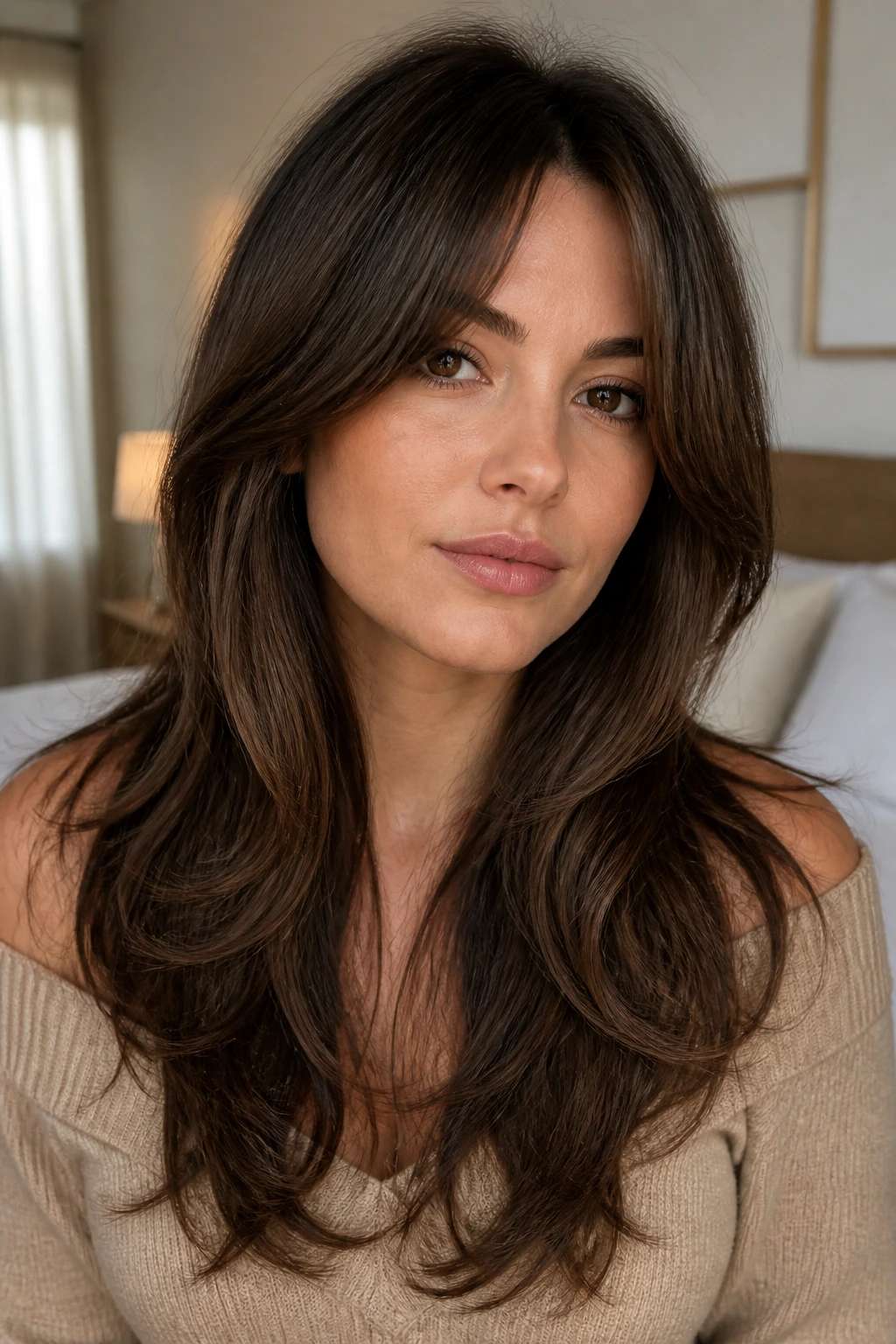
Want face shape without committing to full bangs? Bottleneck bangs are the smart middle ground. They stay narrow in the center, widen around the temples, and melt into long layers instead of sitting as a hard fringe line.
That shape is especially nice on thick hair because there’s enough density to keep the bangs from going wispy. Oval faces can wear the slightly narrower center without losing balance, and the wider sides create a soft frame that feels flattering without being fussy. The whole front opens and closes with movement instead of hanging like a curtain.
This style is also kind to grow-out. The center stays short enough to feel intentional, but the sides blend into the haircut so they can live longer between trims. If you want face-framing with less commitment than classic bangs, this is one of the few options that earns its keep.
13. Center-Part Symmetry Layers
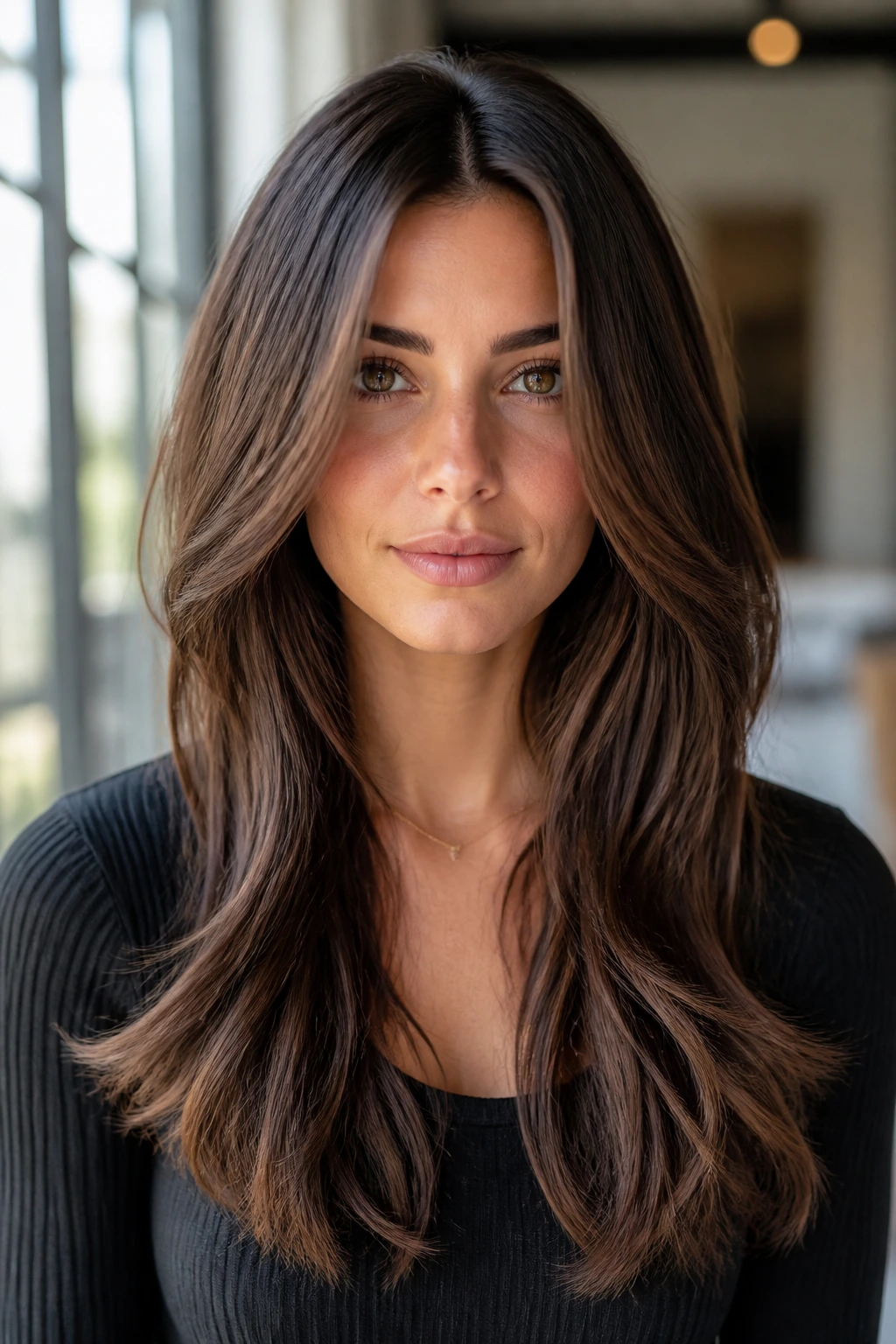
A center part on an oval face is almost unfair in how well it can work. Add long layers, and the symmetry becomes clean instead of severe. Thick hair gives the part enough presence to matter, while the layers keep the front from going flat and heavy.
This is the cut for someone who wants order. The front pieces usually start around the cheekbone or jaw, then fall evenly on both sides. The effect is calm. No drama needed.
It’s especially good if your hair has a lot of natural body and you don’t want to fight it every morning. A center part with long, connected layers lets the hair settle where it wants, but the silhouette still looks finished. If your face already reads balanced, this cut lets that balance breathe.
14. Deep Side-Part Sweep Layers
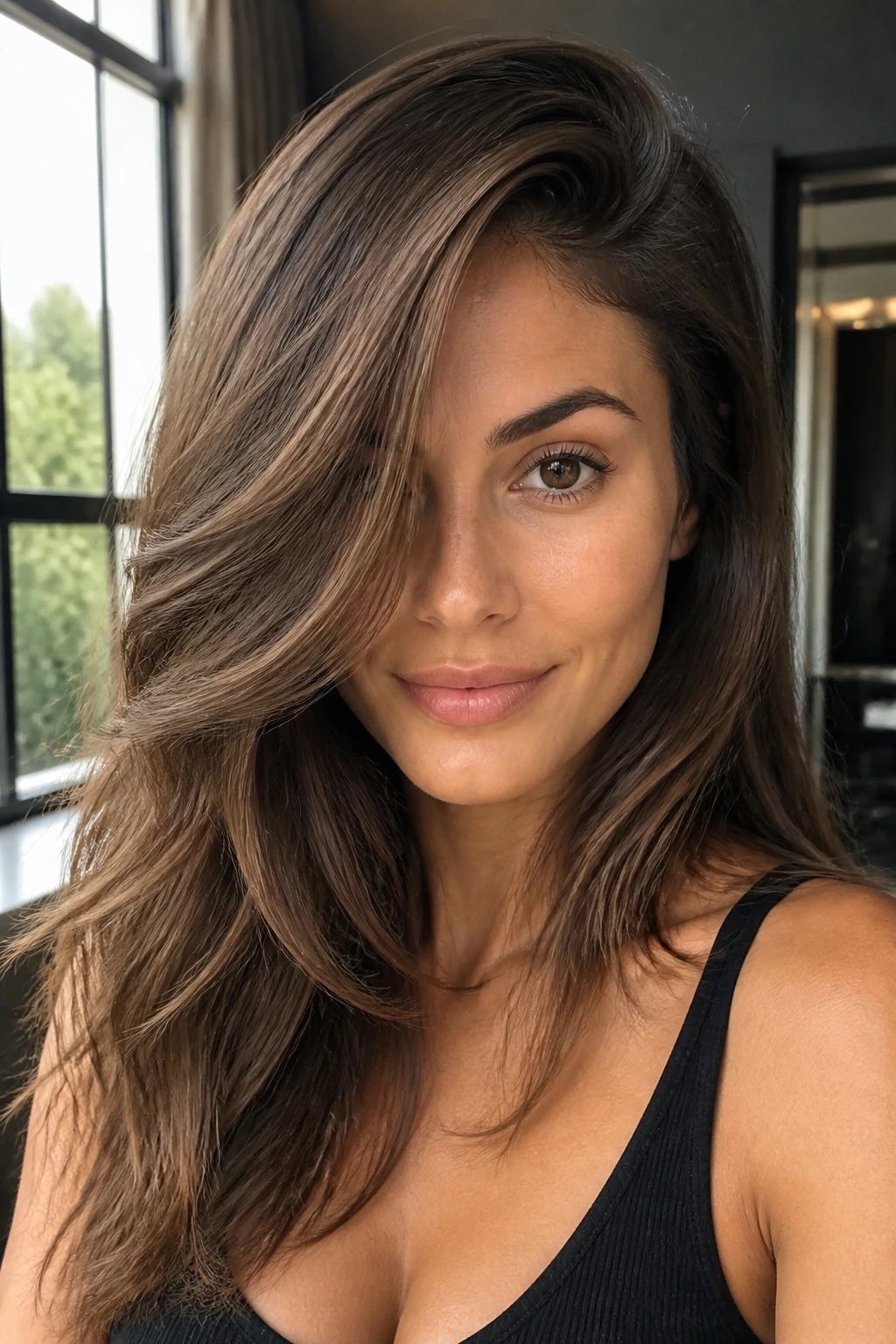
Sometimes the fastest fix for thick hair is not more cutting. It’s a deep side part. Shift the part over a few inches, and the roots lift, the front falls diagonally, and the whole style gets sharper in seconds.
Oval faces wear side parts well because the shape can handle the asymmetry. The layers sweep across the forehead and cheek, which gives the haircut more motion than a center part while still keeping the length long. For dense hair that tends to sit heavy near the roots, this is an easy win.
The only catch is control. If the hair is very resistant, you may need to clip the part while it cools after blow-drying or set it with a small roller at the root. Not a big deal. Just enough to teach the hair where to go.
15. Crown-Relief Layers for Heavy Density
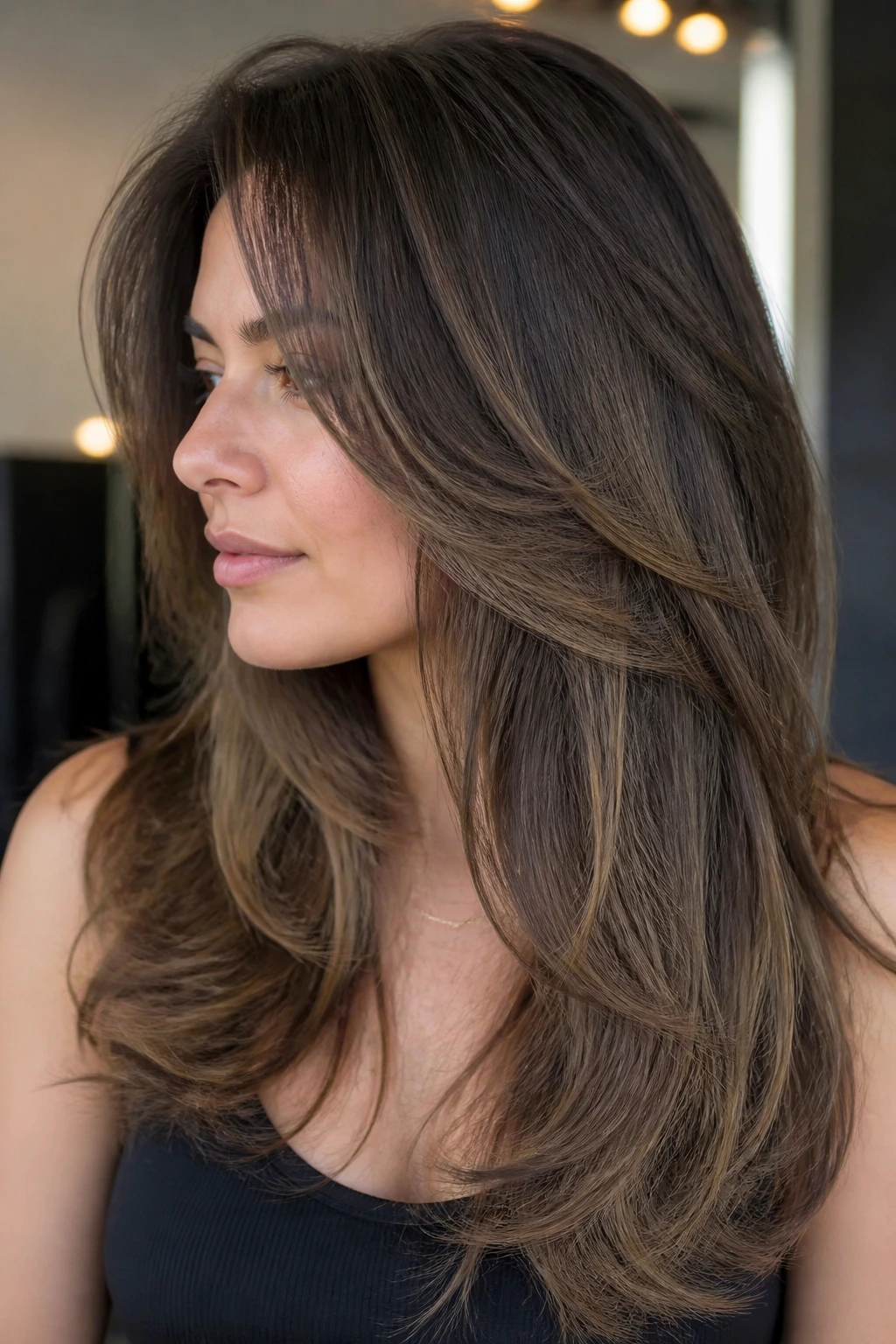
If your hair feels like it’s wearing a heavy coat by noon, the real issue is usually the crown and upper mid-lengths. Crown-relief layers remove some of that hidden weight so the top stops sitting like a shelf.
This cut is less about what people see and more about how the hair falls. You want the density lifted from inside the shape, not shredded off the perimeter. That way the ends still look full, but the whole cut moves when you turn your head. Oval faces benefit because the top doesn’t spread sideways and widen the profile.
What to ask for
- Internal removal at the crown, not aggressive thinning at the tips.
- Long face-framing pieces that connect into the front.
- A dry check after the cut so the stylist can see where the bulk actually lives.
This is the kind of layered haircut that makes thick hair easier to live with, not just easier to look at.
16. Air-Dried Wave Layers
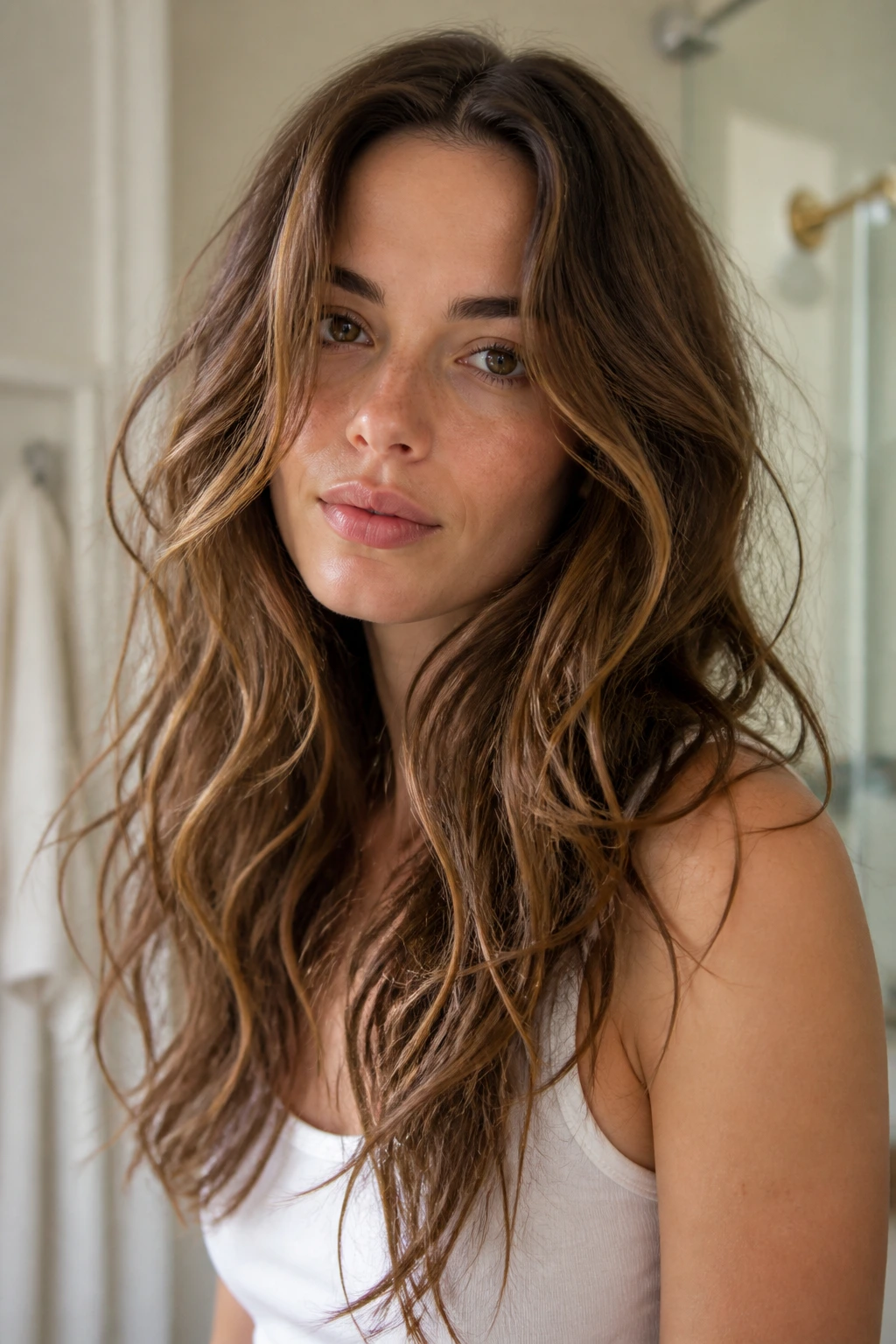
Some cuts are built for a brush. Others are built for a towel, a little product, and a patient wait. Air-dried wave layers belong in the second camp. They follow the natural bend of thick wavy hair instead of forcing it into a polished blowout every day.
The shorter front pieces should still sit in a flattering place — usually around the cheekbone or jaw — but the rest of the layers can be longer and looser. Thick hair gives waves enough mass that they don’t disappear as the hair dries, which is half the battle. On an oval face, the soft framing keeps the shape light around the cheeks without narrowing the face too much.
A cream or mousse on damp hair helps here, but the real trick is not touching it too much while it dries. Once the wave pattern starts to settle, leave it alone. Thick hair hates being fussed with half to death.
17. Glossy Straight Layers With Tapered Fronts
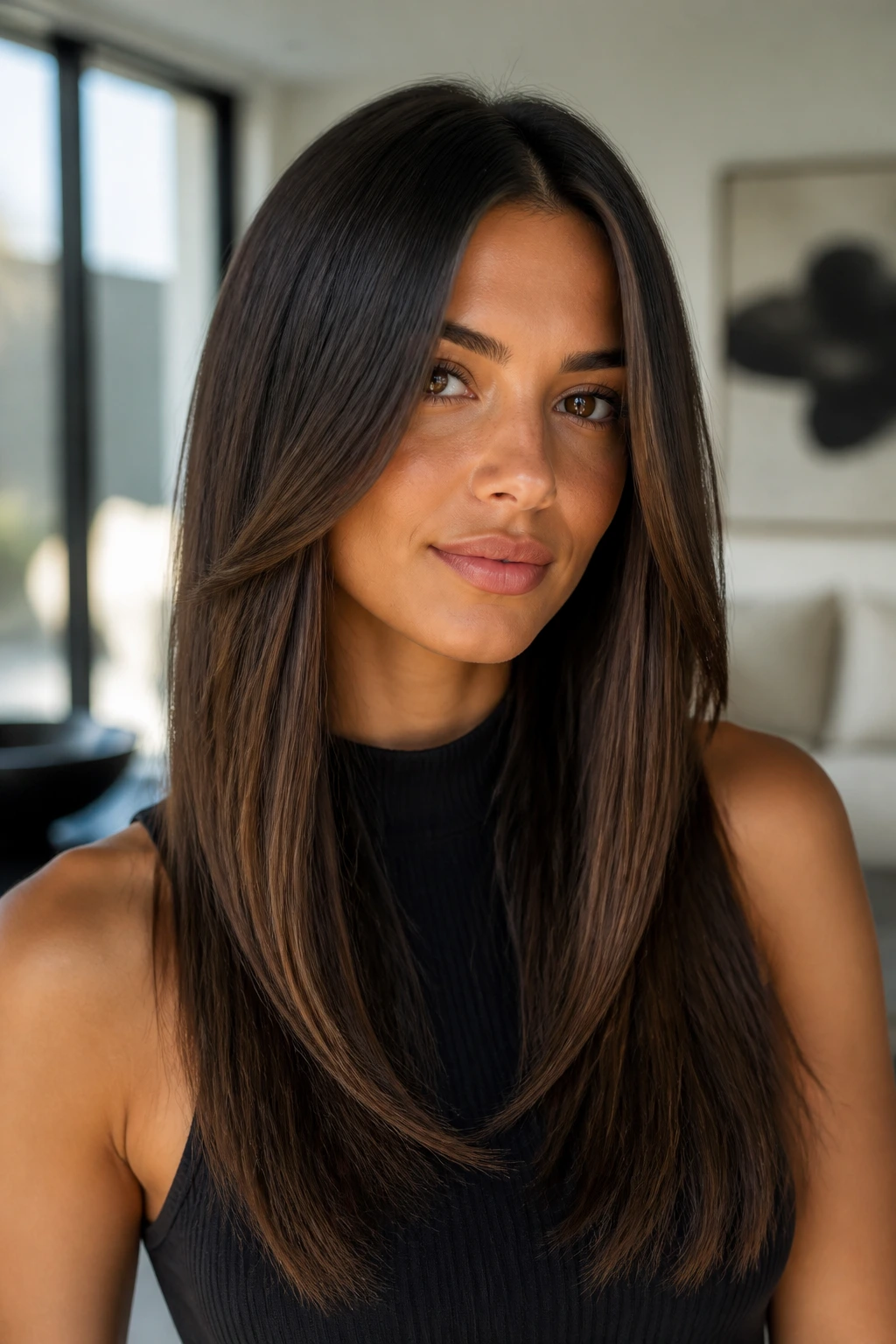
Sleek hair does not have to feel flat. Glossy straight layers use long, gradual tapering at the front so the haircut still moves even when it’s worn smooth and straight. The outline stays polished, which thick hair can do very well when it’s not over-layered.
Oval faces look especially good with this shape because the smooth front pieces trace the face without competing with it. The layers should be long enough to preserve weight, but the front can still bend slightly in toward the jaw or away from the cheekbones, depending on how much framing you want.
This is a strong choice if you love a clean middle part or wear your hair tucked behind the shoulders most days. It looks deliberate in a way that short, choppy layers often do not. Very simple. Very effective.
18. Beachy Bend Layers
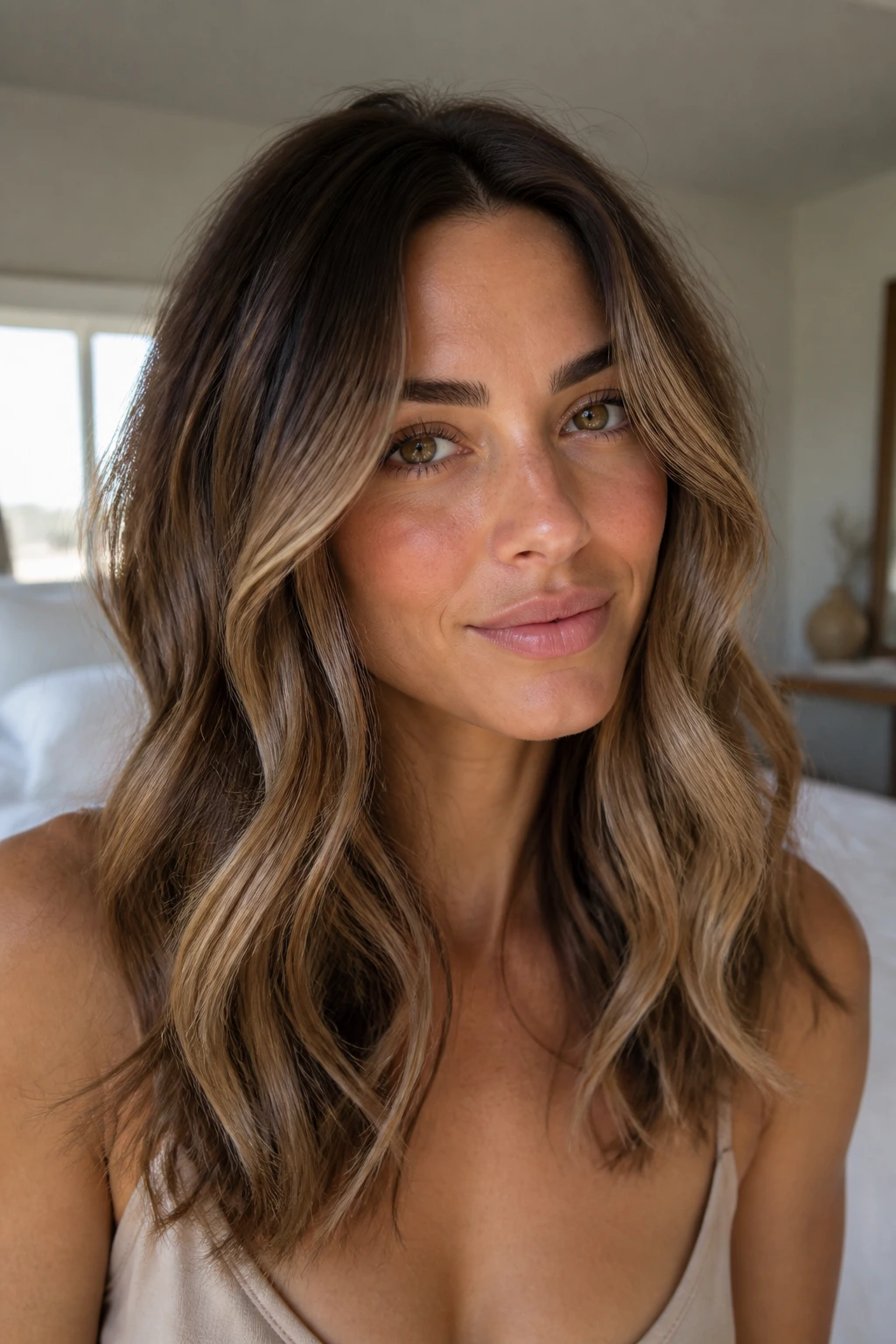
If you like hair that looks touched by a curling iron but not fussed over, beachy bend layers are a good fit. The cut is shaped so the ends break into loose bends instead of sitting in one rigid line, which thick hair handles naturally once there’s a little movement in the shape.
The face frame should stay long enough to skim the jaw or collarbone. Too short, and the bend can puff. Too long, and the style loses the casual swing that makes it work. Oval faces do well because the layers create motion without forcing the face into a sharp contour.
A 1-inch iron, alternating directions, and leaving the last inch of the ends out will give you that slightly broken finish. It’s one of the easier layered looks to style badly, so restraint matters. Tight curls. Too much. Leave them soft.
19. Ponytail-Friendly Long Layers
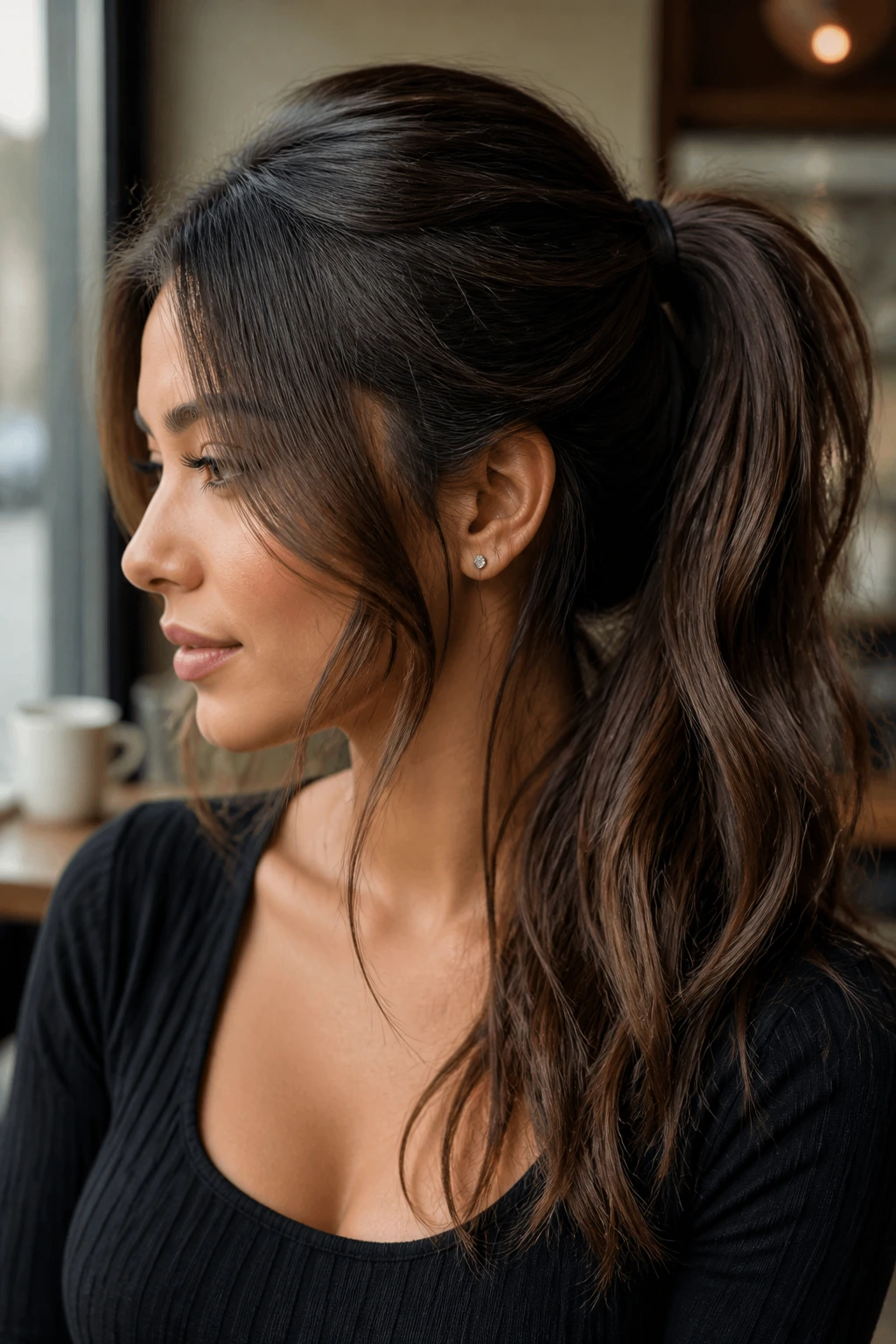
Some layered cuts are gorgeous down and awkward in a ponytail. This is not one of them. Ponytail-friendly long layers keep the front pieces long enough to stay in the tie or slip into the style without producing that awkward escaped-short-piece look around the face.
This matters more than people admit. Thick hair gets tied up a lot — gym days, hot kitchens, long work shifts, humidity, you name it. If the face-framing layers are too short, they live in your eyes or stab out of the ponytail. If they’re long and connected, the whole cut still reads like a haircut when the hair is up.
Oval faces can wear this version especially well because the front pieces can be kept around cheekbone length or lower, which still flatters the face when the hair is down but behaves when it goes back. Practical beats pretty here, and luckily it can be both.
20. Blunt Base + Long Interior Layers
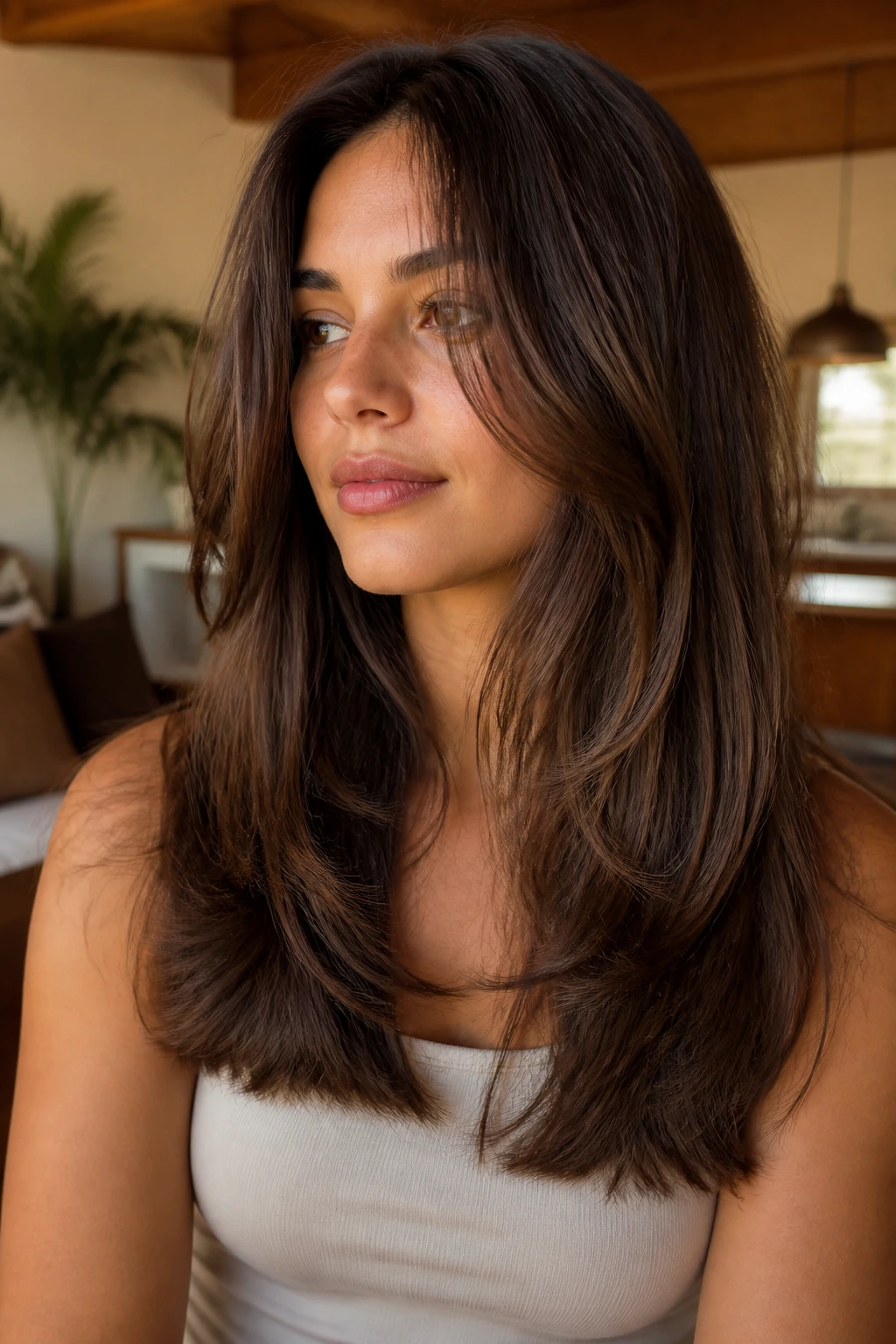
I have a soft spot for this one because it respects thick hair instead of trying to weaken it. A blunt base with long interior layers keeps the bottom line solid and full, while the inside of the haircut loses enough weight to move.
That combination is gold on dense hair. You get the authority of a strong perimeter and the softness of layered movement when the hair swings. Oval faces benefit because the face frame can stay subtle; the main shape lives in the body of the cut, not in a dramatic front piece.
This is also a great option if you like your hair looking expensive in the least flashy way possible. Straight, waved, blown out — it holds up across textures. The shape doesn’t beg for attention. It just looks finished.
21. Piecey Ends With Micro-Texture
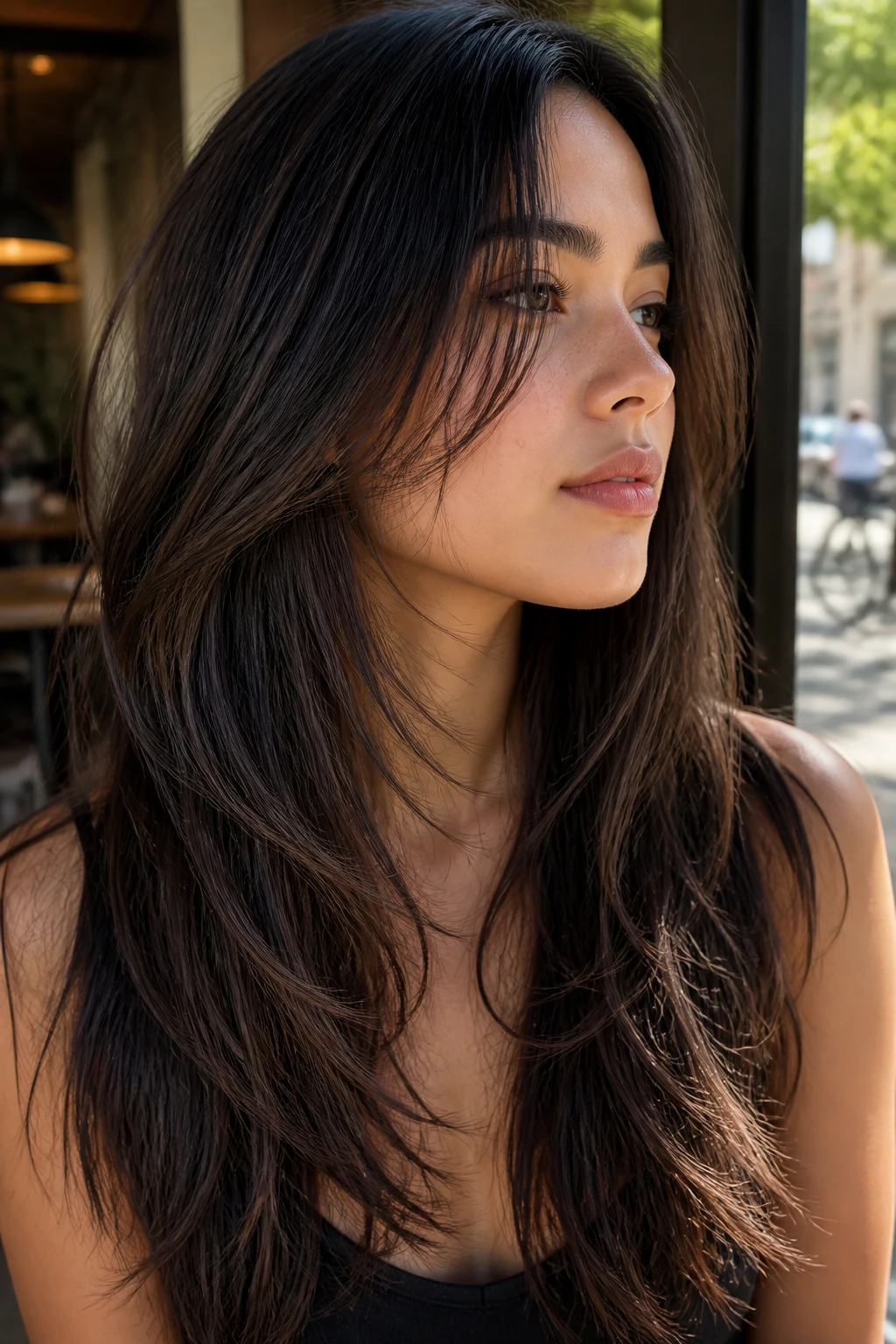
At the ends, a little separation goes a long way. Micro-texture around the lower few inches gives thick hair a touch of movement without making the tail of the haircut look thin or shredded.
This works best when the stylist is careful about where the texture goes. You want tiny breaks in the line, not a full-on razor assault. Oval faces get a bit of edge here because the textured ends keep the cut from feeling too round or too heavy near the shoulders.
Use a tiny bit of wax, paste, or a light cream on the ends after styling. Not much. Too much product will collapse the texture right back into one sticky clump. The whole effect should feel piecey, not crunchy.
22. Mid-Length Support Layers
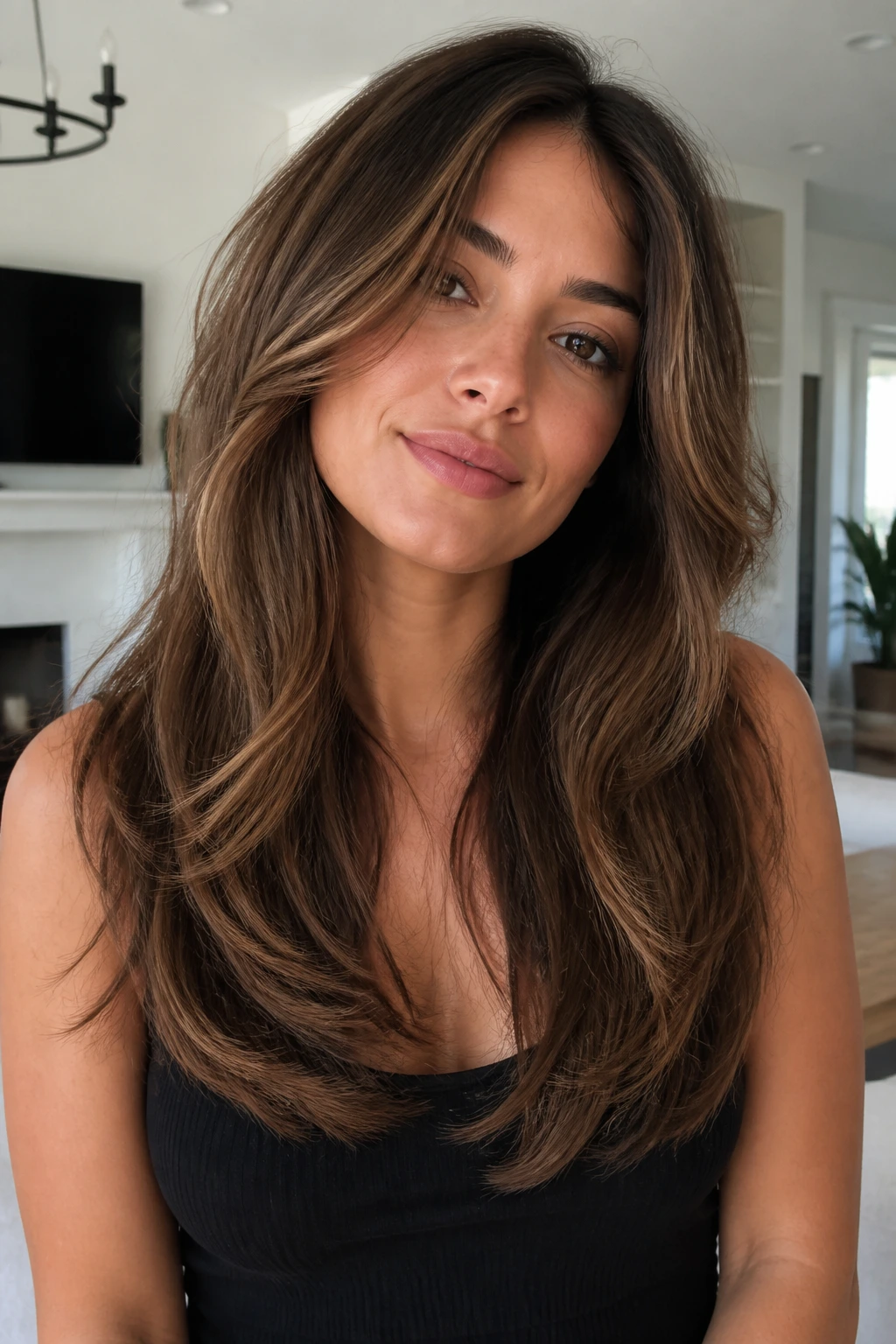
Some layers are there for the front. Some are there for the back. Mid-length support layers are the invisible workhorses that keep thick hair from hanging too heavily through the middle.
This pattern is useful when the hair is long enough to weigh itself down, but you still want a lot of hair left at the bottom. The support lives around the ribcage and chest area, which helps the whole shape fall better as it grows. Oval faces can wear it well because the face frame doesn’t need to do all the lifting.
This is one of those cuts that looks simple until you compare it to a one-length cut. Then the difference is obvious. The movement starts where the hair usually drags, which means the style stays softer all the way down.
23. Jawline Guide Layers That Follow the Bone
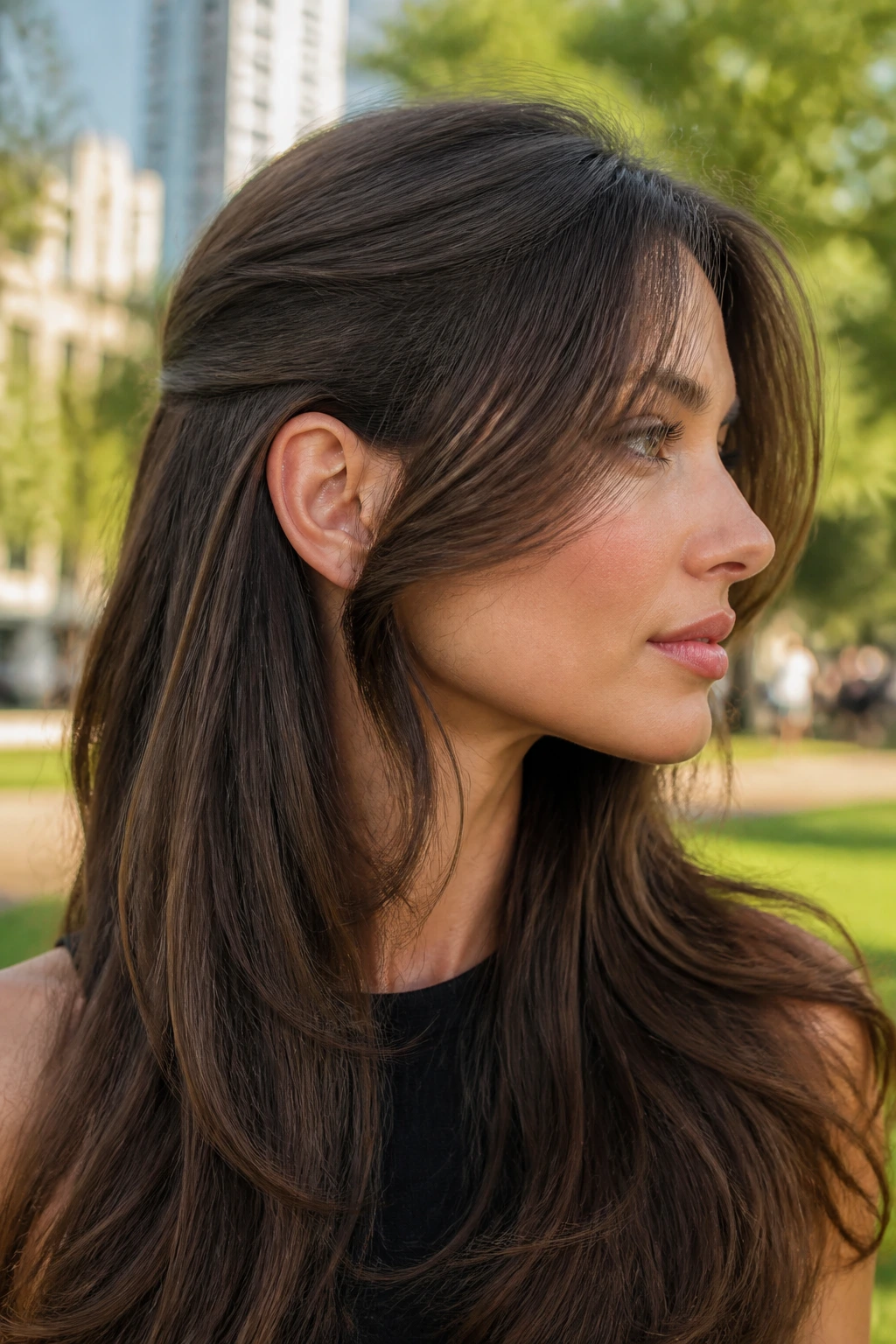
The jawline is where a layered haircut either starts making sense or falls apart. Jawline guide layers trace the bone instead of floating somewhere random beside it, and that makes thick hair feel shaped rather than merely cut.
On oval faces, this is a subtle way to add contour without over-correcting anything. You don’t need to carve a new face shape. You just want the front pieces to fall in a way that gives the eye a clear line to follow. Thick hair responds well because the front doesn’t sit in one huge solid curtain.
This version is especially nice if you wear your hair behind the ears on one side. The jawline piece becomes part of the style instead of a loose afterthought. Small detail. Big payoff.
24. Growth-Out Friendly Layers
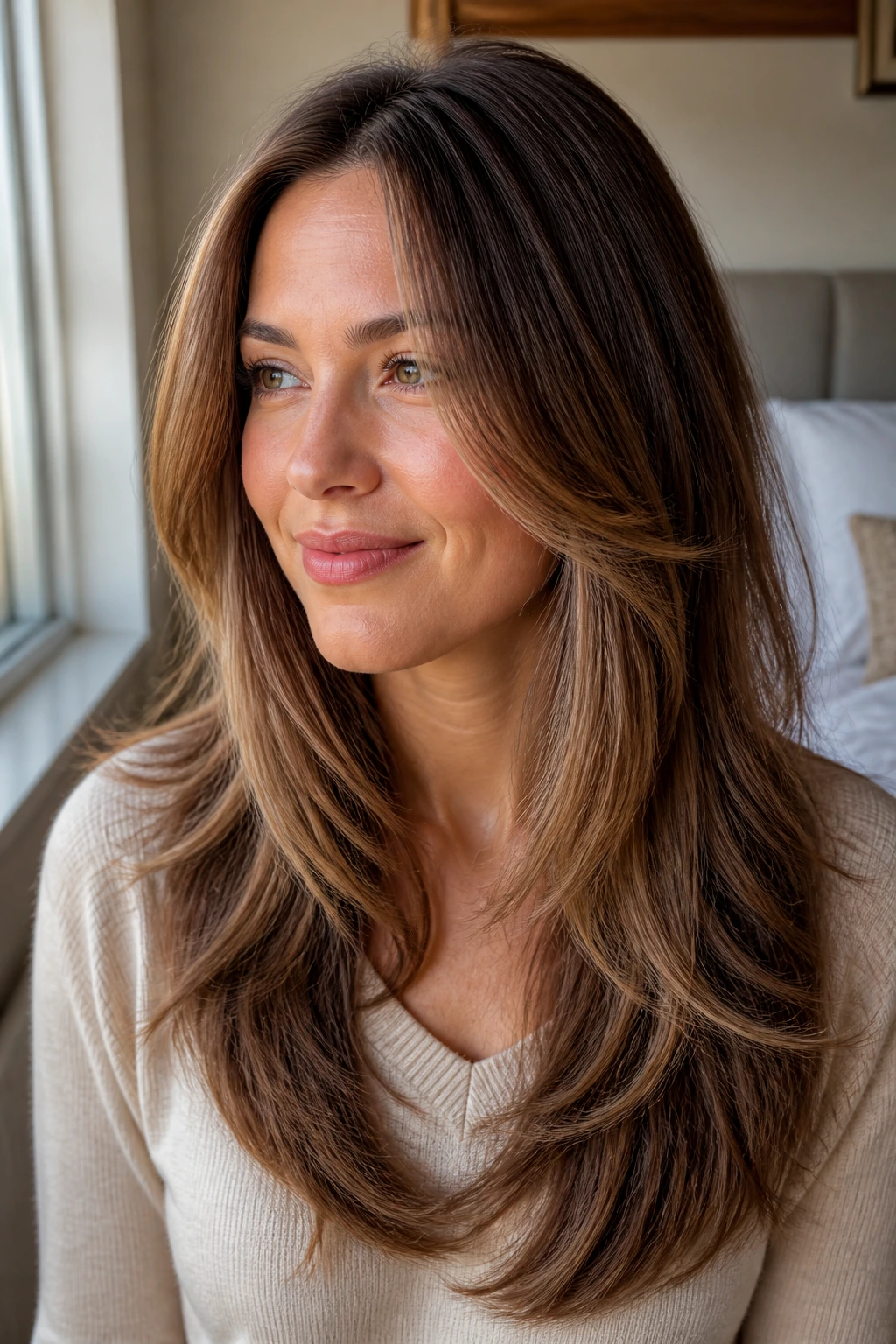
If you hate a haircut that goes weird after six weeks, this is the one to ask about. Growth-out friendly layers are blended enough that the shape softens gradually instead of turning into a shelf of awkward lengths.
That matters for thick hair, which can grow out in blocks if the layers are too abrupt. A smoother connection between the face frame, the mid-lengths, and the ends keeps the cut usable longer. Oval faces get a bonus here because the framing stays flattering even after a few inches of growth.
I’d choose this version for anyone who only wants a cleanup a few times a year. It is not the flashiest cut in the group, but it’s one of the smartest. The best haircut is often the one you don’t have to think about every week.
25. Maximum-Movement Layers for Extra-Thick Hair
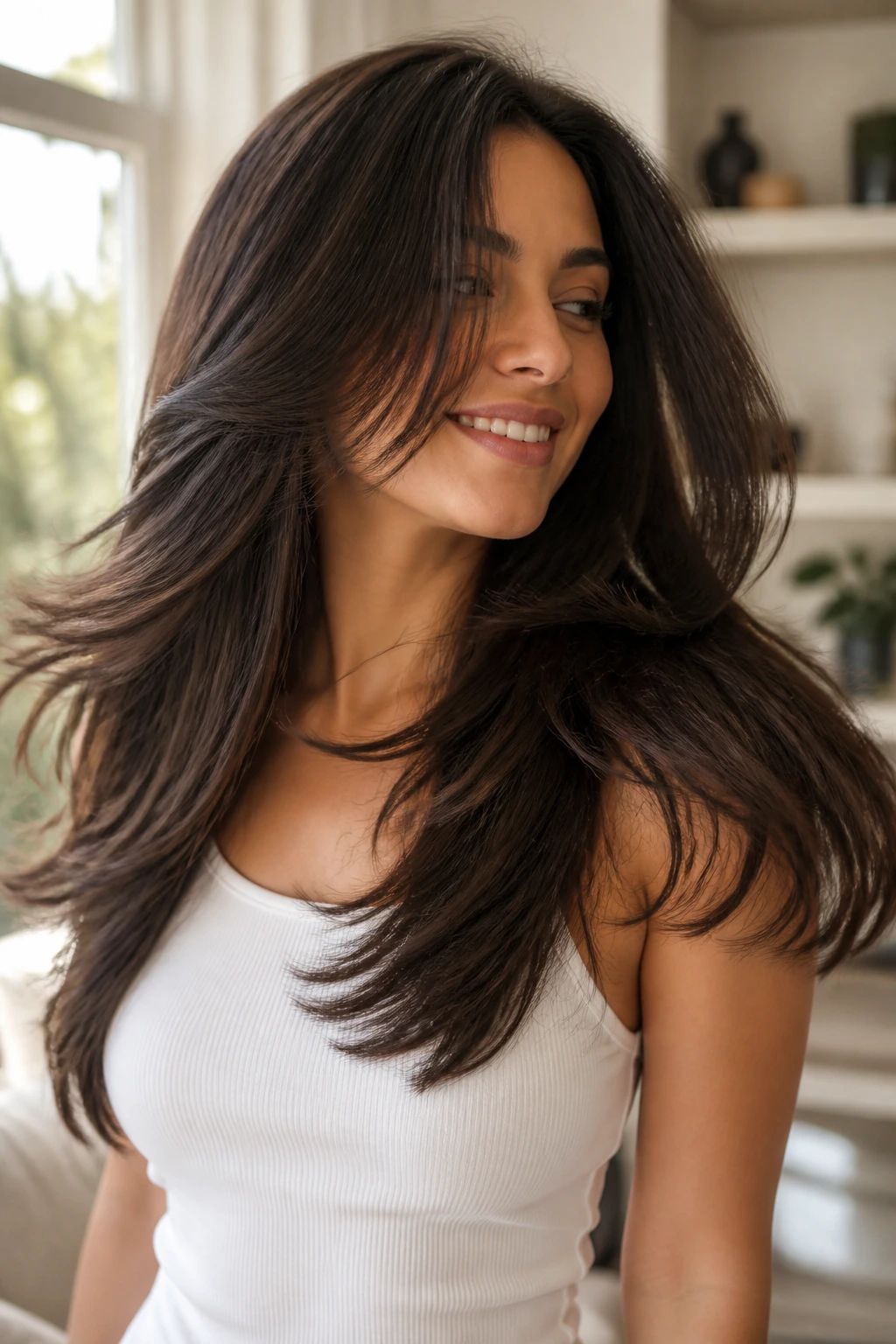
Some hair needs more than a polite trim. It needs a real change in shape. Maximum-movement layers do that by taking real weight out of the interior while keeping the outer length long enough to preserve the silhouette.
This is the version for very dense hair that tends to sit heavy at the shoulders or expand near the crown. The stylist needs to be careful, because too much removal can leave the ends looking thin, but the right balance gives the hair swing from root to tip. Oval faces can wear the result easily because the face frame can stay soft while the body of the cut does the hard work.
Done well, this cut moves when you turn your head. Not in a dramatic, flip-everywhere way. Just enough to feel alive. That’s the goal, and thick hair can absolutely do it.
Why Long Layers Work So Well on Thick Hair and Oval Faces
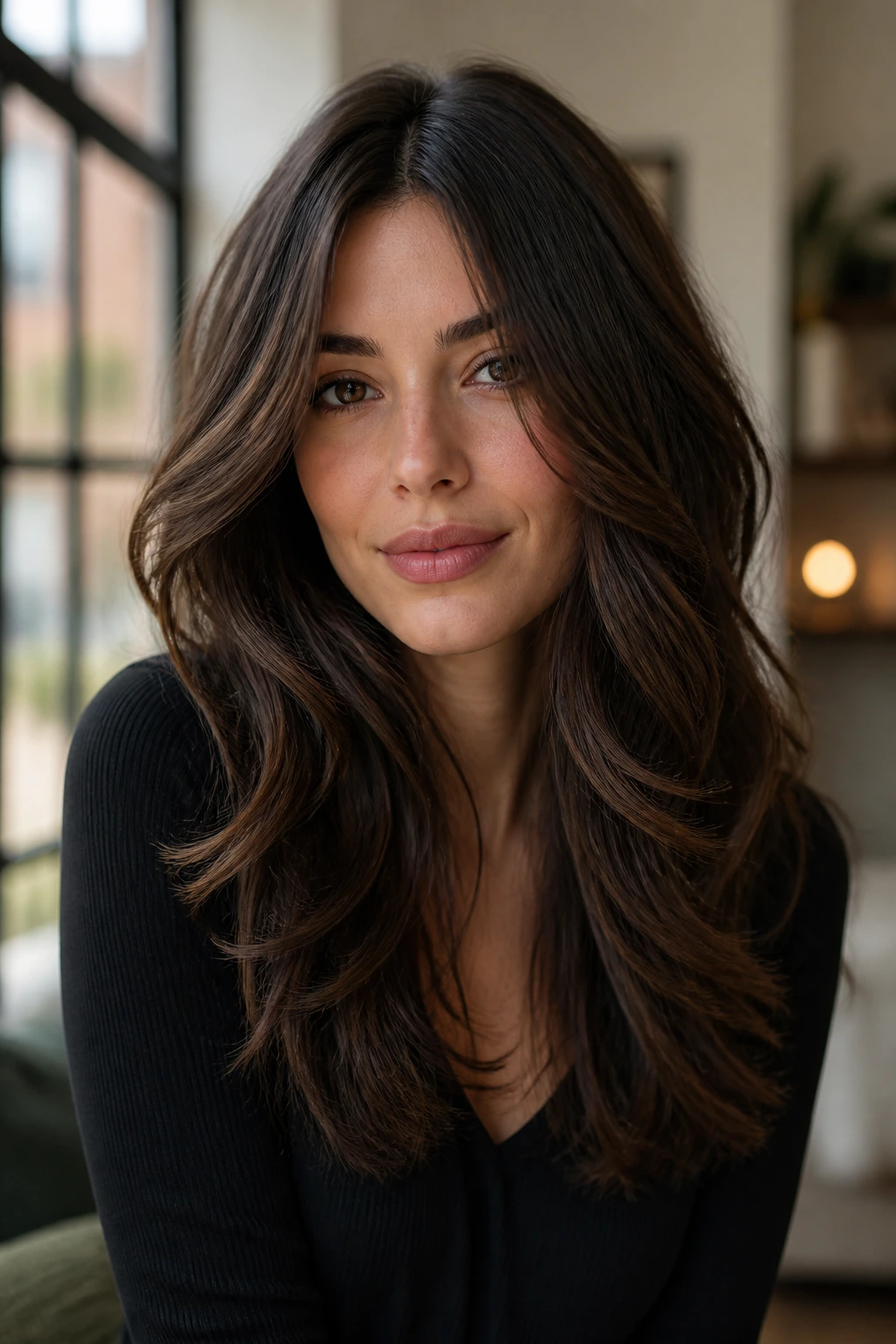
Thick hair needs routing more than it needs shrinking. That’s the part people get wrong. They see density and reach for thinning shears or a vague “more layers” request, then wonder why the haircut ends up puffy at the top and tired at the ends. Long layers work because they move weight, not just remove it.
Oval faces are a good match for that kind of haircut because the face already gives you balance to work with. You can frame the cheekbones, open the jawline, or keep the front pieces long and soft without throwing off the proportions. There’s room to choose the mood of the cut.
Thick hair wants structure, not guesswork
The best long layer patterns create a path for the hair to fall. They stop the sides from puffing, keep the perimeter from looking like a shelf, and give the ends enough bulk to stay grounded. That matters more on dense hair than on almost any other texture.
Oval faces can handle different kinds of framing
A lot of face shapes need one precise frame to avoid distortion. Oval faces have more flexibility. That means the haircut can lean into movement, softness, or polish without fighting the bone structure underneath. Lucky, honestly.
The silhouette is the real test
Forget whether a cut sounds trendy. Stand in front of a mirror and look at the outline. If the top is too wide, the bottom too thin, or the front too busy, the haircut will look off no matter how nice the layers are. Shape first. Style second.
What to Tell Your Stylist Before the First Snip
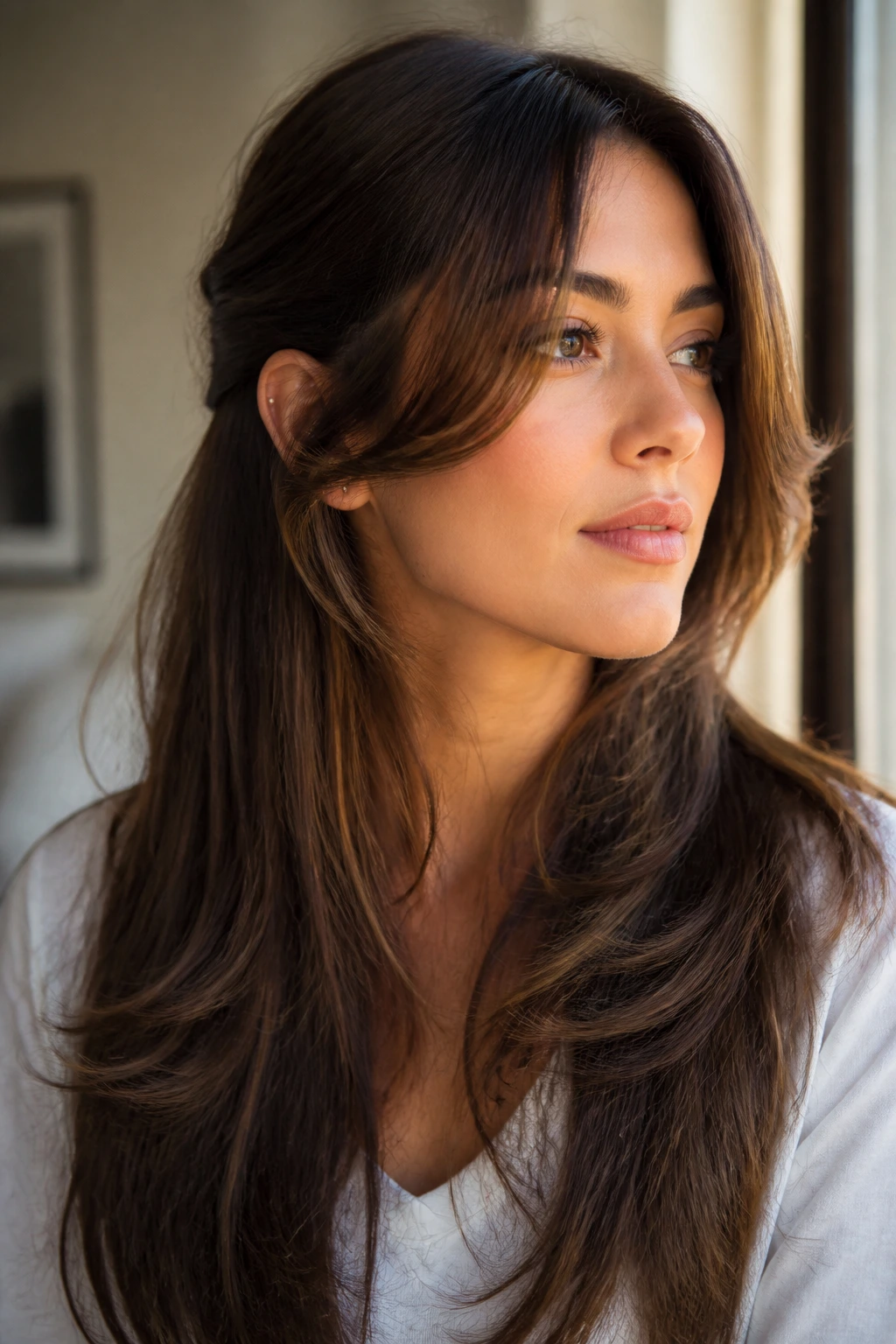
A good layered cut starts with a blunt conversation. Not rude. Just clear. Tell the stylist how you wear your hair most days — straight, wavy, air-dried, curled, clipped up, tucked behind ears — because the same cut can behave in two completely different ways depending on how you live with it.
Bring photos that show the front, the back, and the texture you want. A single pretty salon photo is often useless if it hides the exact part you care about. If you need volume at the cheekbones, say that. If you want the ends to stay full, say that too. Dense hair can handle precision, and your stylist should hear it.
A few useful phrases
- “Keep the perimeter full.”
- “Take weight out of the interior, not just the ends.”
- “Start the face frame around the cheekbone or collarbone.”
- “I want movement, but I do not want wispy ends.”
- “Please keep the layers connected so they grow out softly.”
That last one is worth repeating. Growth pattern matters. A layered cut that looks perfect on the first day but gets weird after three shampoos is a bad haircut wearing good makeup.
Tools That Make the Layers Fall the Right Way
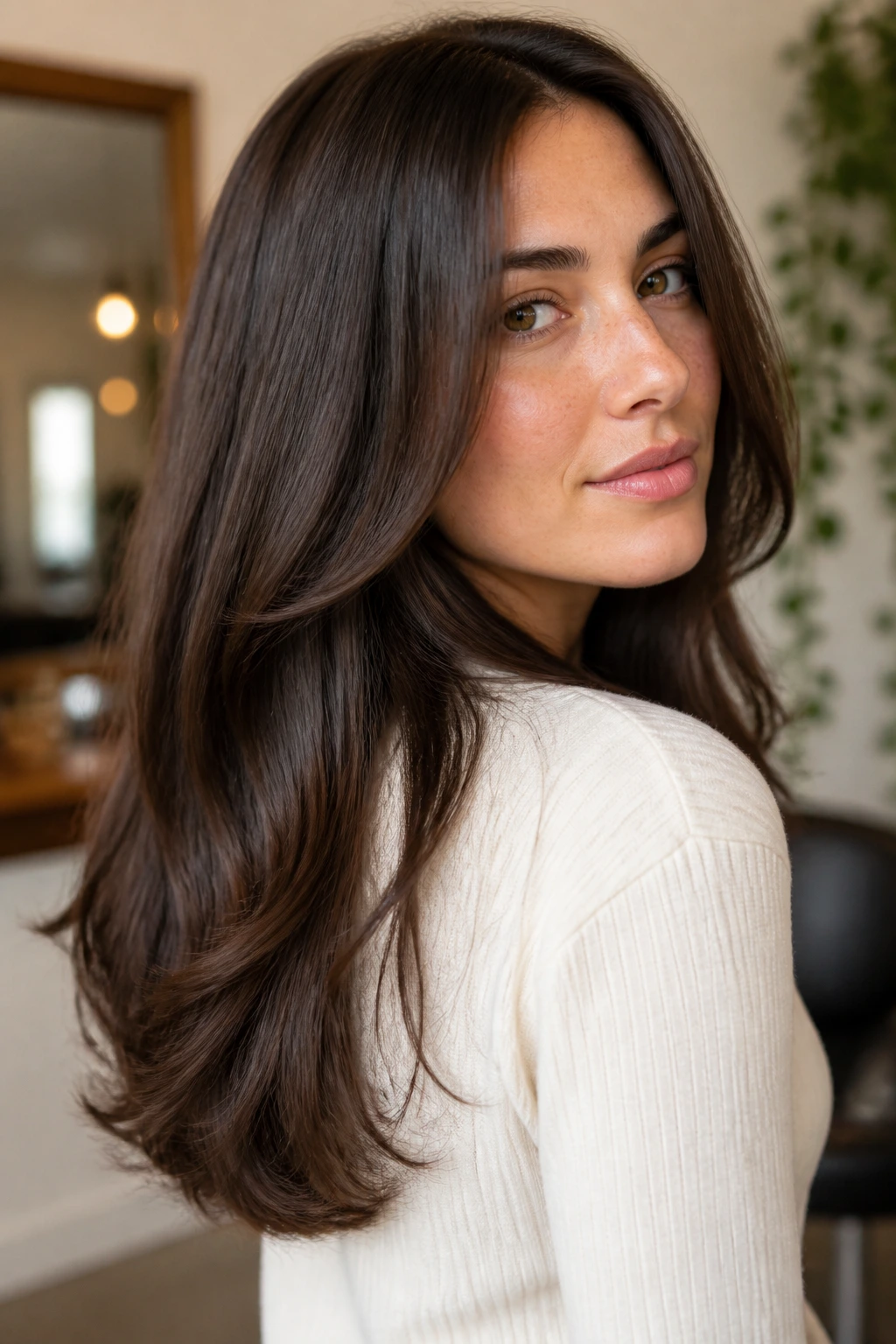
The right tools do not change the haircut, but they change how it reads. Thick hair with long layers usually behaves best when you can control tension, heat, and friction without overworking it.
- Blow dryer with a nozzle: A concentrator attachment keeps the airflow directional, which helps the layers lie smooth instead of puffing everywhere.
- 1.25-inch round brush: Good for lifting the face frame and bending the ends under or away from the face.
- Wide-tooth comb: Best for detangling wet hair without stretching the layers out of shape.
- Sectioning clips: Thick hair needs sections. If you try to blow-dry it all at once, the underlayers stay damp and the top collapses.
- Heat protectant spray: Use it on damp hair before any hot tool. The ends will thank you.
- Lightweight mousse or volumizing foam: Especially useful at the roots and mid-lengths for air-dried or blow-dried styles.
- Smoothing serum: A small amount on the lower lengths helps thick hair look glossy instead of fuzzy.
- Dry shampoo: Good for refreshing roots on day two or three without piling on more heat.
- 1-inch curling iron or flat iron: Useful for adding a bend to the front pieces and soft movement through the ends.
- Satin pillowcase or bonnet: Not glamorous, but it keeps the face frame from getting roughed up overnight.
Styling Moves That Keep Long Layers Visible
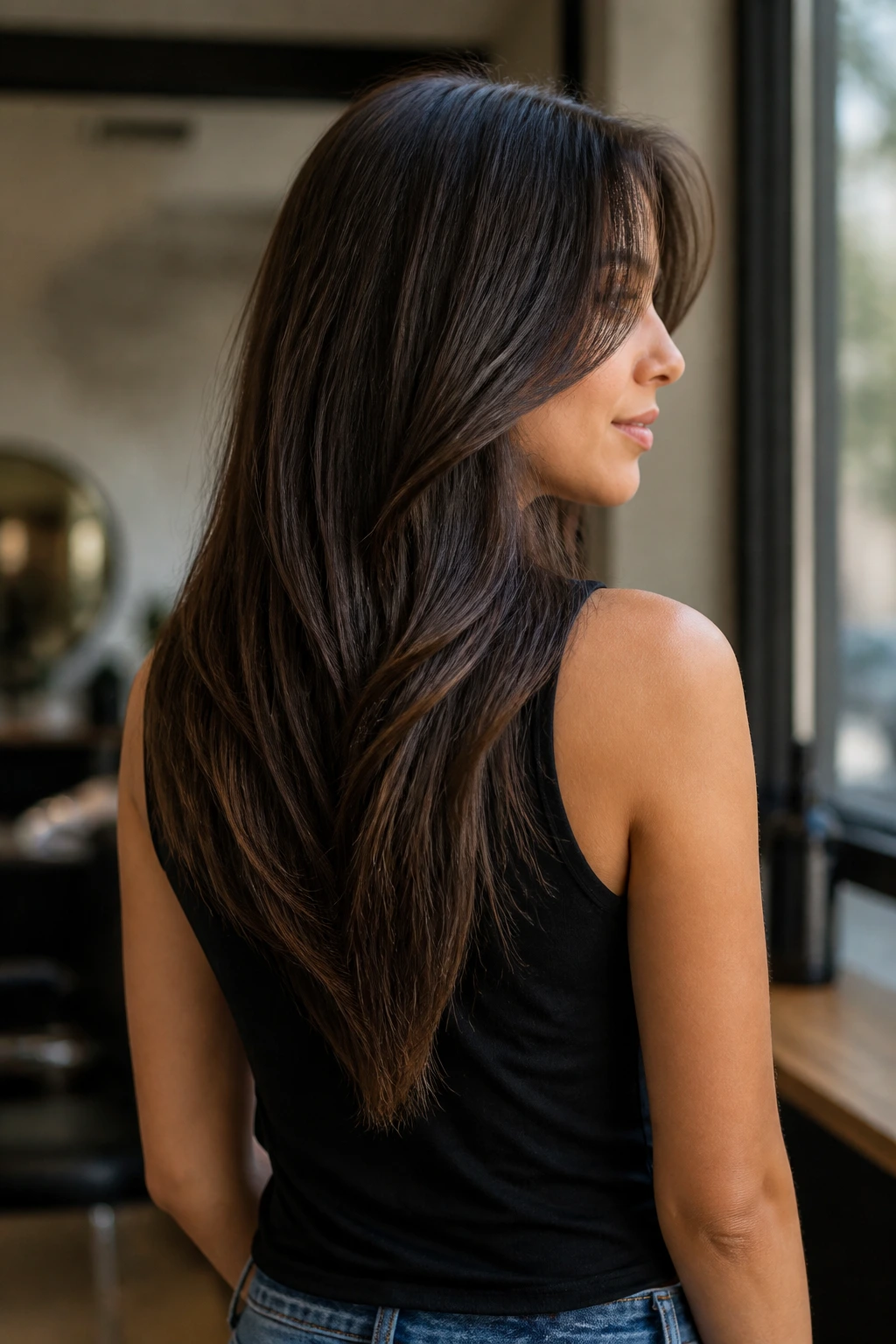
A layered haircut can disappear fast if you slap products on it with no plan. Thick hair usually needs the opposite of what people think: smaller amounts, placed more carefully.
For a soft air-dry
Start with a leave-in conditioner on damp lengths, then add a little mousse through the mid-lengths and roots. Scrunch the ends once or twice, twist the face-framing pieces away from the face, and let the hair dry without touching it every five minutes. Thick hair usually needs time more than fuss.
For a round-brush blowout
Work in sections. Dry the roots first, aiming the nozzle downward so the cuticle lies flat. Then use the brush to pull the front pieces away from the face and the ends under or slightly out, depending on the shape you want. The heat matters, but the tension matters more.
For a quick curled finish
Use a curling iron or wand on only the top half and the front pieces. Leave the last inch or two of the ends out for a modern look. Once the curls cool, brush them out lightly with your fingers or a wide-tooth comb. Thick hair holds that shape nicely if you don’t overdo it.
For second-day hair
Dry shampoo at the roots, a tiny bit of serum at the ends, and a quick bend on the front pieces can bring the cut back to life. You usually do not need to re-style the whole head. Just fix the bits people see first.
Keeping the Shape Between Salon Visits
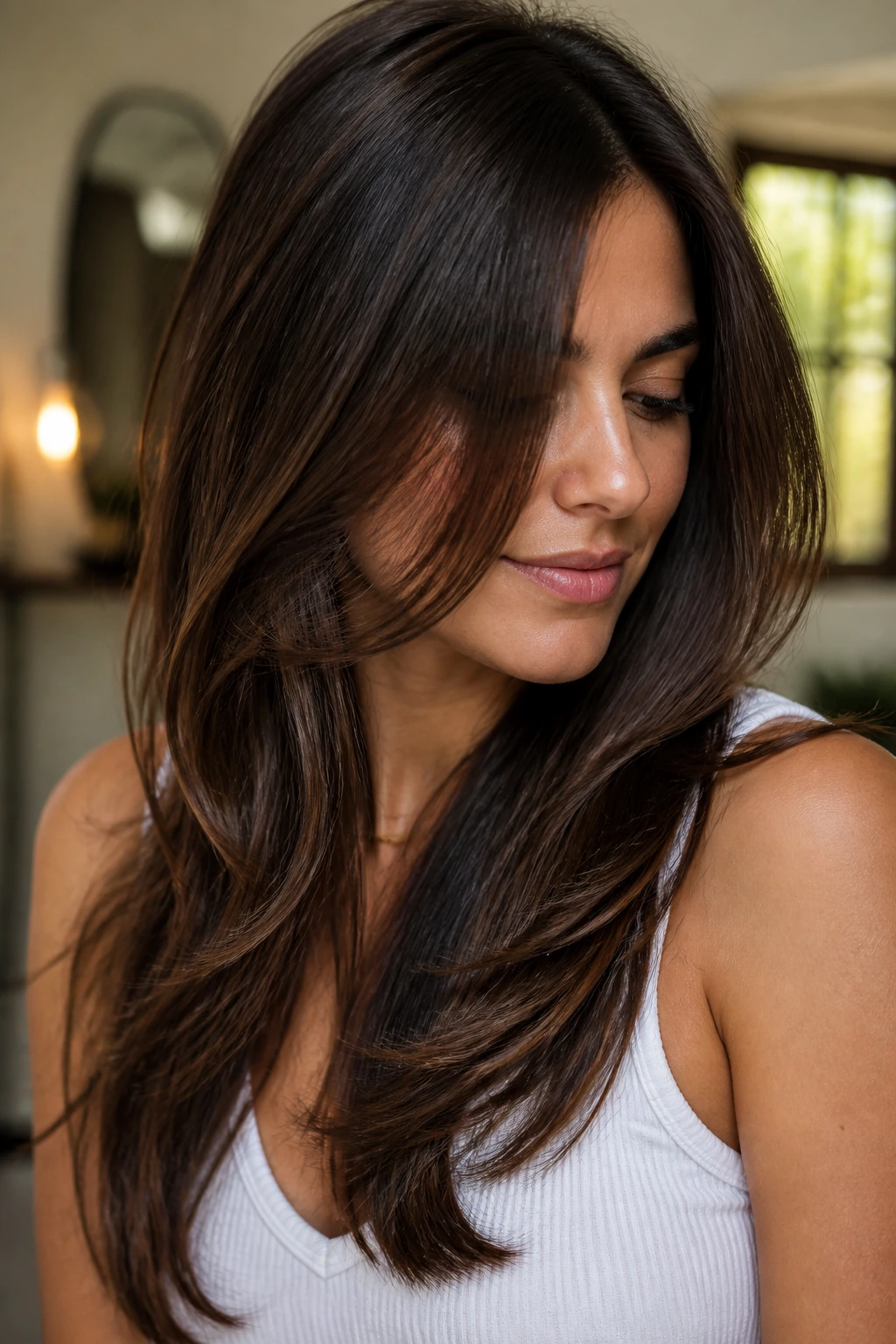
Long layers stay prettier when you do not let the front pieces wander into chaos. For most thick haircuts, a trim every 8 to 12 weeks keeps the ends from spreading out and the face frame from sliding too far past its sweet spot. If your front pieces are the star of the cut, you may want a small dusting sooner.
At home, sleep matters more than people think. A loose braid, low twist, or satin pillowcase can keep the layers from getting kinked and frizzy overnight. If you wake up with the front pieces stuck at odd angles, mist them lightly with water or leave-in spray and reshape them with a brush or fingers.
Wash-day habits matter too. Thick hair often gets overloaded with product because it can “take” more. It can also look limp if you pile on too much. A light hand keeps the layers visible. If the ends start looking heavy, clarify once in a while and reset with a small amount of conditioner only from mid-length down.
Extra Tips and Finish Moves
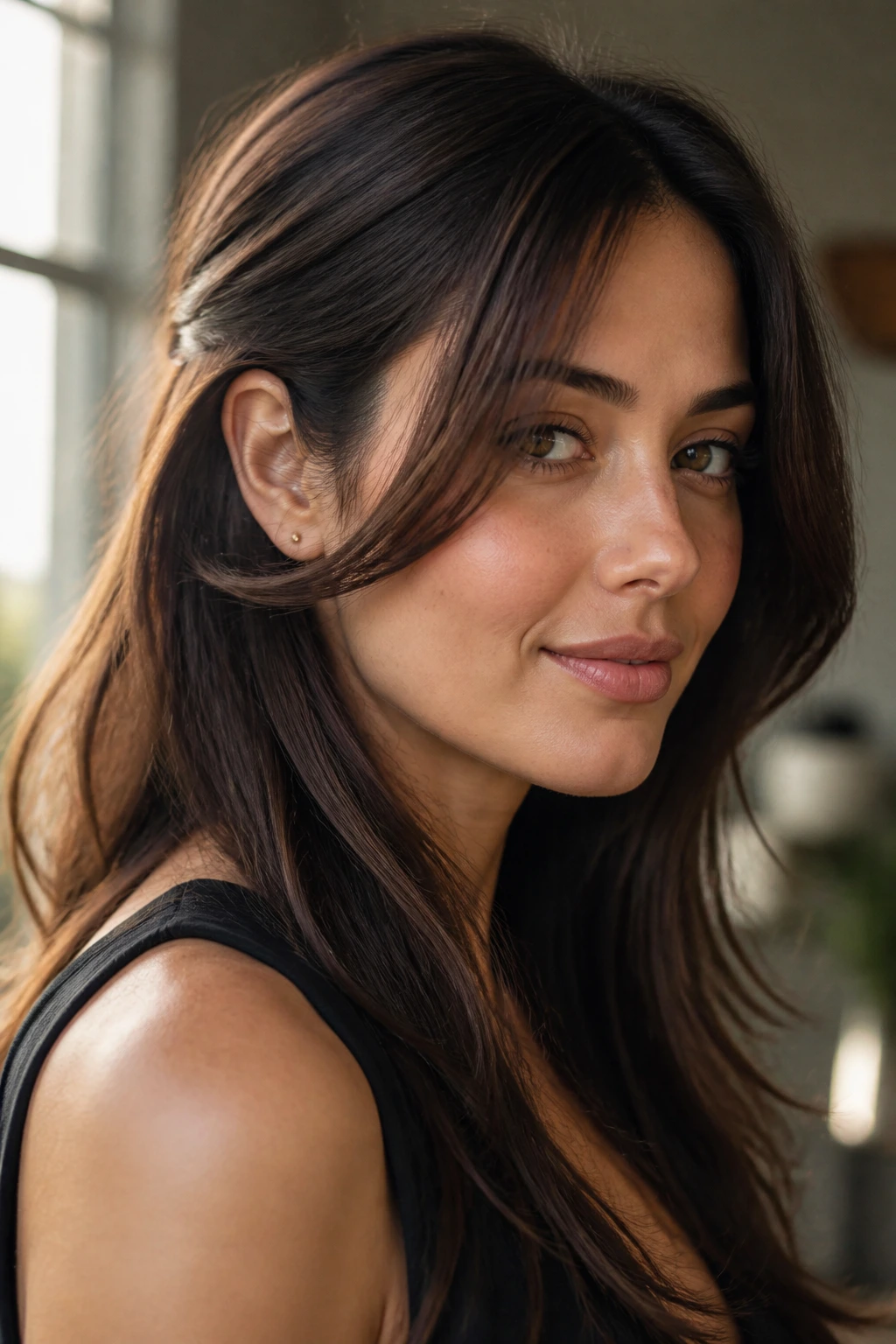
Root Lift: Blow-dry the roots in the opposite direction of your part for the first few minutes, then switch back. That gives thick hair a cleaner lift without teasing it into a frizz ball.
Face-Frame Boost: A small round brush or velcro roller on the front pieces while you do makeup can create a soft bend that makes the whole cut look finished.
End Definition: If the ends get too puffy, use a pea-size amount of smoothing cream just on the last four inches. Do not smear it from root to tip unless you want the layers to go flat.
Customization: If you wear glasses, keep the shortest face-framing pieces slightly lower so they do not collide with the frames every time you turn your head.
Low-Effort Version: Tuck one side behind the ear, clip the opposite side at the temple, and let the longest layers fall forward. That alone can make a layered cut look deliberate on a rushed morning.
Common Mistakes That Turn a Good Layered Cut Into a Mess
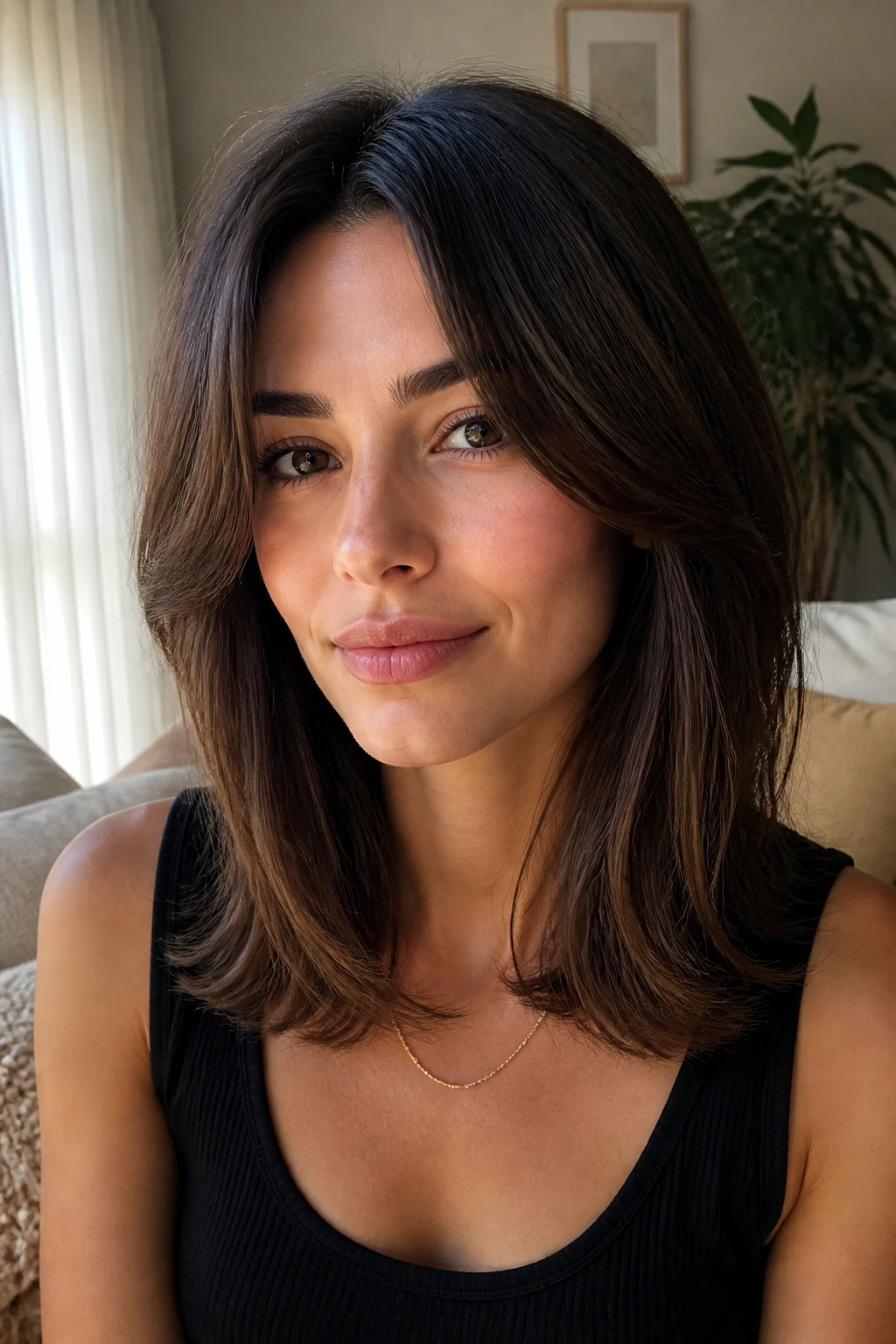
Starting the shortest layer too high.
That’s how thick hair gets a halo at the crown and looks puffy by noon. The fix is simple: keep the first major layer lower, around the cheekbone or collarbone, unless you specifically want a lot of volume up top.
Over-thinning the ends.
Thick hair can survive thinning better than fine hair, but not when the stylist shreds the perimeter. The symptom is a see-through tail that flips weirdly and tangles fast. Ask for internal weight removal instead of aggressive texturizing at the bottom.
Ignoring how you actually style your hair.
A cut that looks great blown out might fall apart if you air-dry every day. If you live in ponytails or claw clips, the front pieces need to be long enough to join the rest of the hair instead of escaping like little rebels.
Cutting the front too short for your routine.
Short face-framing layers can be cute, but on thick hair they can also become a daily annoyance. If you tuck your hair behind your ears or wear it back often, keep the front longer than you think you need.
Forgetting shrinkage and bend.
Wavy or curly thick hair will spring up more than straight hair. If the stylist cuts it wet without accounting for that, the layers can end up shorter and fluffier than planned. A dry check helps a lot.
Variations and Alternatives to Try
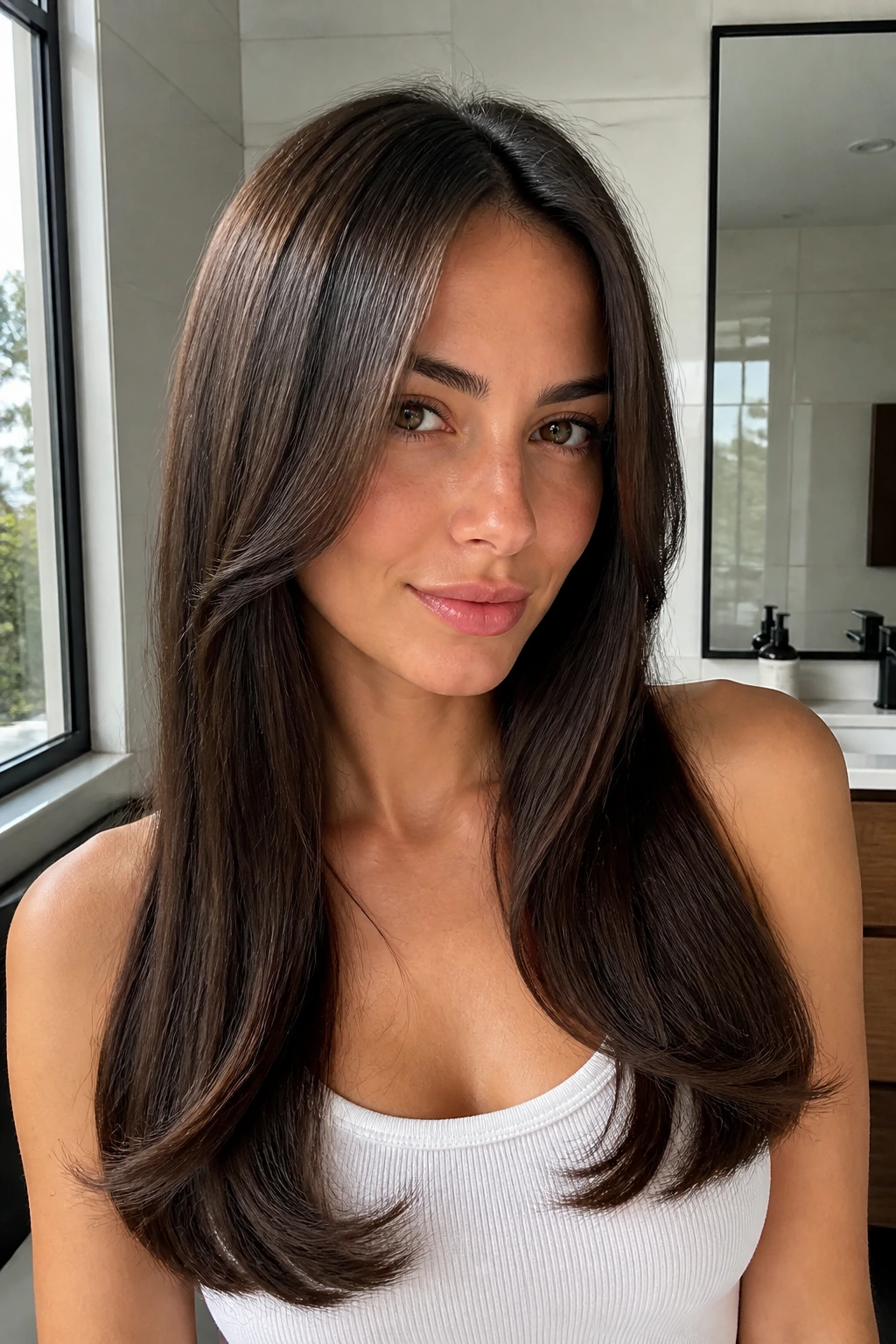
Straight-Sleek Version
Keep the layers long, the perimeter blunt, and the face frame tapered softly into the jaw. This version works best when you wear the hair smooth and shiny, with only a slight bend at the ends. It is the cleanest option for thick hair that tends to look bulky when over-textured.
Air-Dry Wavy Version
Ask for longer internal layers and a gentle front frame that supports the wave pattern rather than fighting it. A little mousse and leave-in conditioner are enough on most days. This version is a good fit if you want movement without a daily hot-tool routine.
Curly Volume Version
Curly thick hair usually needs layers that are longer than people expect. Too many short steps can make the shape expand outward instead of dropping. Keep the front pieces soft around the face and let the interior layers create the lift.
Big Blowout Version
This version leans into round-brush styling, feathered front pieces, and a shaped perimeter that moves when you turn your head. It’s the most glamorous of the bunch and probably the most styling-dependent. If you like hair that looks like it came from a salon chair, this is the lane.
Low-Maintenance Grow-Out Version
Choose connected layers, a full bottom line, and face-framing pieces that start lower and blend slowly. The haircut will soften instead of breaking apart as it grows. That matters if you hate returning to the salon every few weeks just to fix the front.
Frequently Asked Questions About Long Layers for Thick Hair and Oval Faces
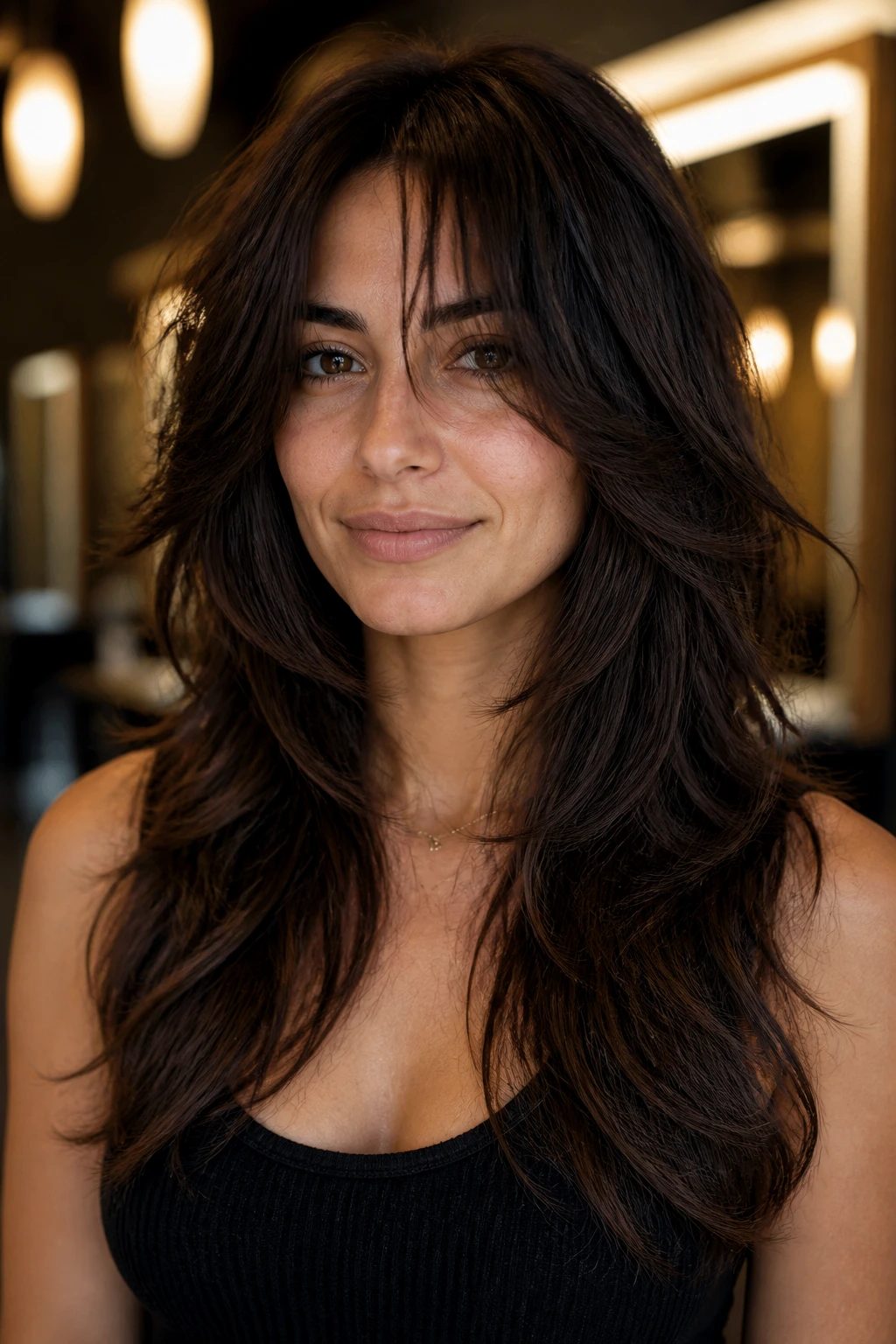
Do long layers make thick hair look thinner?
Not if they’re cut well. The goal is to remove bulk and add movement, not to strip density away. A good layered cut should still look full at the ends and balanced at the crown.
Where should the shortest layer start on an oval face?
Usually somewhere between the cheekbone and collarbone is the safest range. Cheekbone pieces create more face framing, while collarbone pieces keep the look softer and easier to grow out.
Are curtain bangs a good match for thick hair?
Yes, if they’re cut with enough weight. Thick hair gives curtain bangs body, so they don’t go see-through as quickly. Just keep the center softer than a blunt fringe and connect the sides into the long layers.
Will these cuts work on curly thick hair?
Absolutely, but the layers need to respect shrinkage. Curly hair often needs longer layers than straight hair, because the curl pattern lifts the shape once it dries. A dry cut or a careful curl-by-curl approach can help a lot.
How often should I trim long layers?
Most thick layered cuts look clean with a trim every 8 to 12 weeks. If the front frame starts falling into your eyes or the ends feel bulky, that’s usually your signal that it’s time.
What if my hair becomes triangular after the cut?
That usually means the weight was removed in the wrong place or the crown was left too full. The fix is to add internal layering higher up and keep the bottom perimeter heavier. A stylist who understands thick hair should know how to rebalance it.
Can I still wear my hair in a ponytail with long layers?
Yes, but the face frame needs to be long enough to cooperate. If you wear ponytails a lot, keep the shortest front pieces below cheek level or they’ll escape constantly.
Are texturizing shears necessary?
No. They can help in the right hands, but they can also wreck thick hair if used too aggressively. The better question is whether the stylist is shaping the interior cleanly instead of trying to solve everything with thinning.
The Shape That Keeps Its Lines
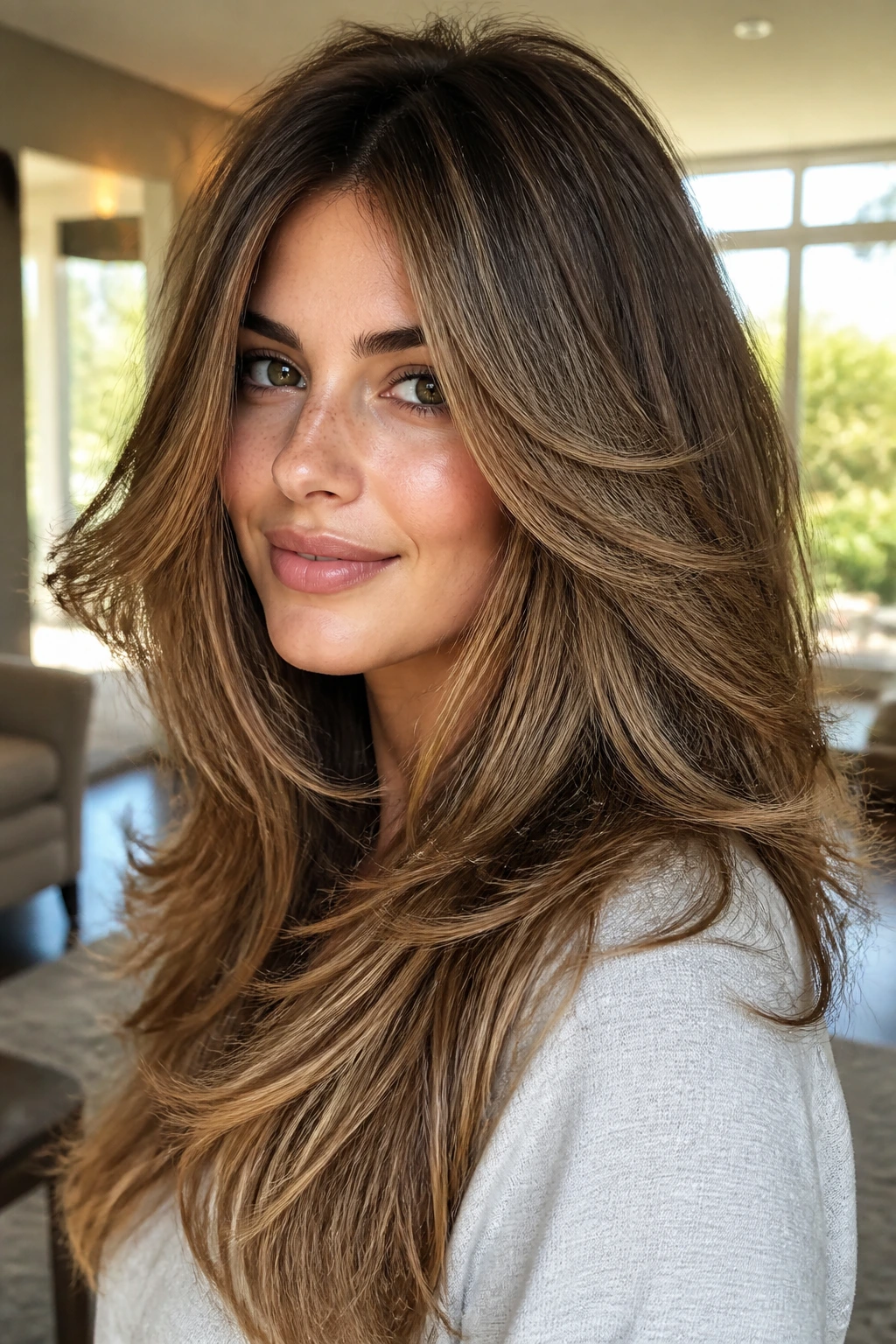
The best long layers for thick hair and oval faces don’t try to tame the hair into something it isn’t. They give it a route. They put the weight where it behaves, lift the parts that go flat, and leave enough length that the whole cut still feels like hair, not a chopped-up project.
That’s the real reason these styles work. They respect density. They respect balance. And when the layer map is right, the hair moves in a way that makes the face look clearer, not busier.
Bring a photo, yes. But bring a plan too. If you know where the cheekbone pieces should start, how much length you want to keep, and whether you’ll wear it blown out or air-dried, the haircut has a much better chance of landing exactly where it should.