



Layered hairstyles for wavy hair work best when the cut respects the bend that’s already there. Slice waves bluntly in the wrong spot and you get the usual suspects: ends that hang heavy, sides that puff out, or that triangular shape nobody asks for. Put the layers in the right places, though, and the whole head starts moving with you instead of against you.
That’s why the good layered cuts for waves are rarely about removing as much hair as possible. They’re about placement. A few inches higher at the cheekbone changes the face. A softer internal layer can take weight out of thick waves without turning the outline wispy. A longer front piece can make a center part feel less severe. Small changes. Big payoff.
And no, every wavy head does not need a shag. Some wave patterns want a whisper of face framing. Some need a stronger crown. Some look best with a collarbone lob that keeps the perimeter solid while the inside does the work. The fun part is that layered hairstyles for wavy hair can be gentle or edgy, polished or messy, long or cropped, as long as the shape is doing something useful.
Why These Layered Cuts Work So Well on Wavy Hair
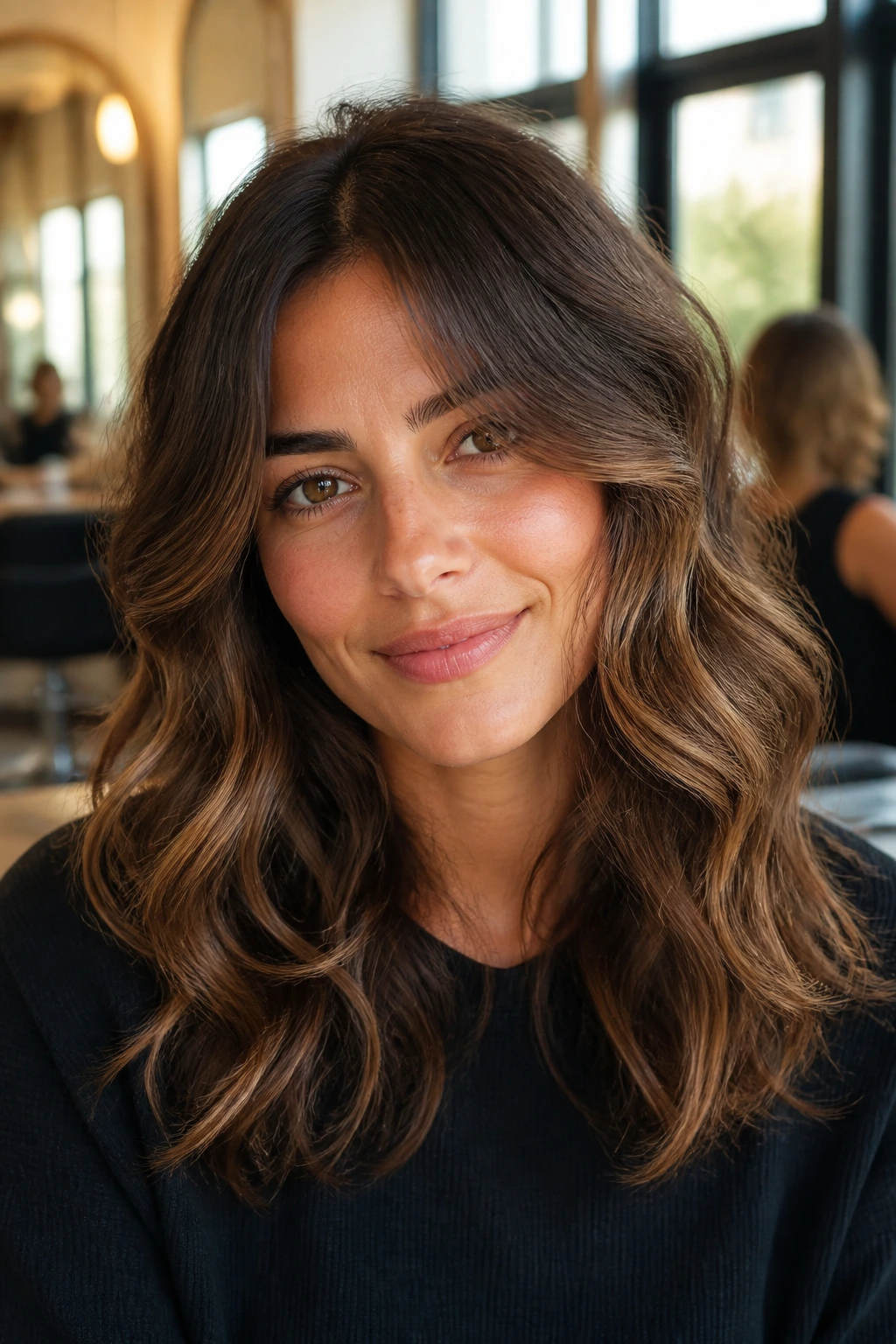
- Shape control: Layers stop waves from ballooning at the sides and let the cut bend where your hair already wants to bend.
- Face framing: The right front pieces can open the face without chopping off the length you’ve spent years growing.
- Less fight on wash day: A good layered cut gives waves a natural path, so you spend less time forcing them into shape.
- Better density balance: Thick hair can lose weight where it’s bulky, while fine hair can keep a fuller outline with hidden layers.
- Cleaner grow-out: Soft layers blur into the next trim instead of turning into a blunt shelf six weeks later.
1. Long Face-Framing Layers That Keep the Length
Long face-framing layers are the easiest “yes” if you like your length but want your waves to stop hanging there like curtains. The shortest pieces usually start around the cheekbone or just below it, then taper into long lengths that keep the perimeter feeling full. That little bit of lift around the face does a lot of work.
Best for
Thick waves, medium-density hair, and anyone who wants movement without losing the bottom line of the haircut. It also plays nicely with a center part or a soft side part.
Ask for the front pieces to be connected, not chopped off in a hard line. That matters. If the shortest layer is too short, the cut starts fighting your natural wave instead of framing it. When it’s placed correctly, the whole style reads soft from the front and long from the back.
2. Curtain Bangs Folded Into Soft Waves
Curtain bangs and wavy hair are a natural pair when the fringe is cut with enough length to move. The pieces should sweep away from the center and land somewhere between the cheekbone and jaw, depending on how much face you want to show. Too short, and they spring up into a little shelf. Too long, and they disappear.
The best version of this cut has bangs that blend into layered sides instead of sitting on top of the haircut like a separate thought. That blended transition is what keeps the look easy. Blow them forward with a round brush for a polished finish, or let them air-dry and then twist each side away from the face with your fingers.
3. The Butterfly Cut With a Wavy Finish
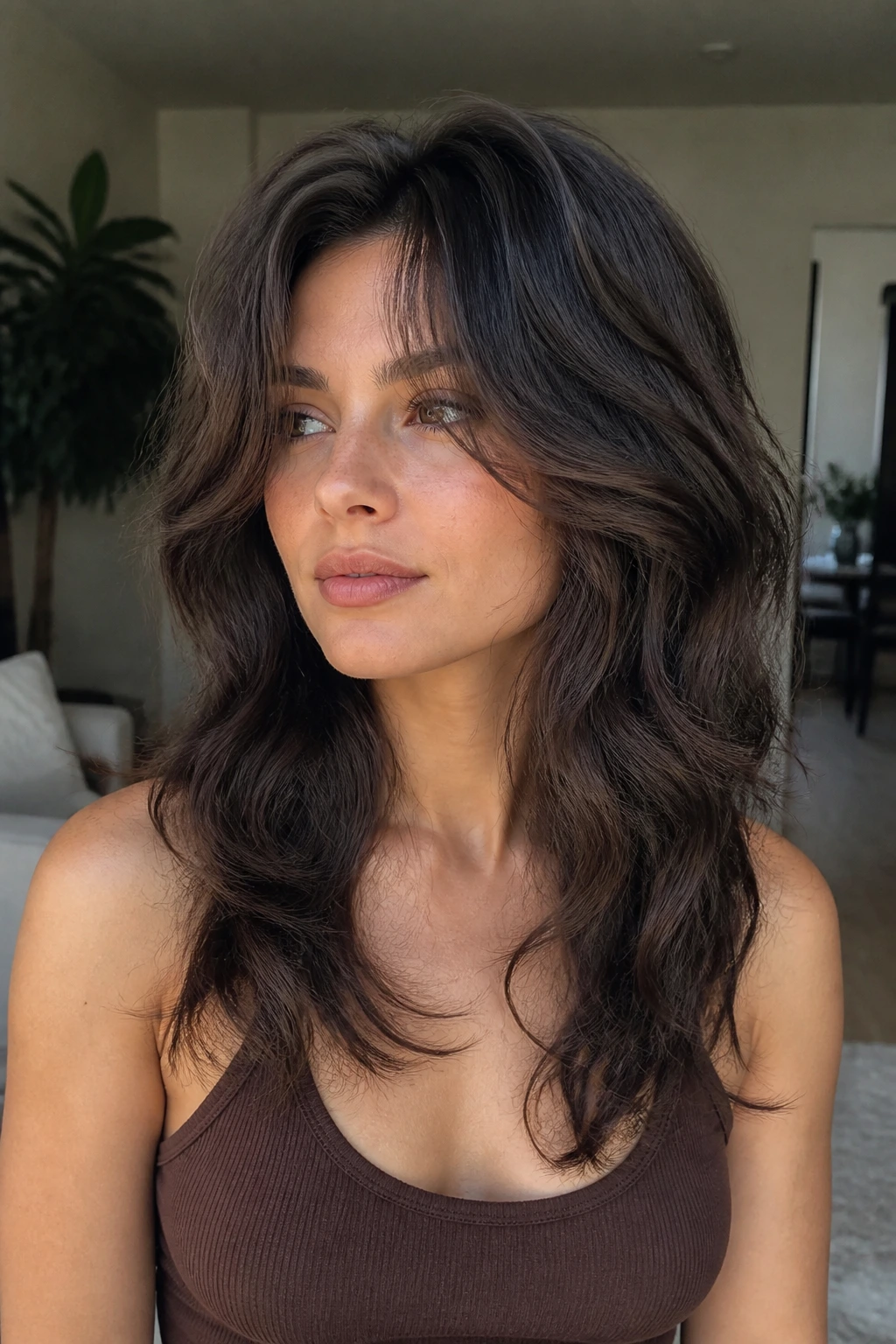
The butterfly cut gives you that full, floating shape around the crown while keeping the ends long and swishy. On wavy hair, it can look expensive in the best possible way if the layers are cut with restraint. You want lift near the top, not choppy chaos everywhere.
This cut works because it gives the illusion of a shorter haircut around the face while leaving the back long enough to keep the weight. That means your waves can move without the whole style collapsing into one flat mass. If you style with a diffuser, clip the crown while it dries. If you heat-style, use a large round brush and direct the front pieces away from the face for that soft winged shape.
4. A Modern Shag With Airy Fringe

The modern shag is the cut for people who want their waves to look a little lived-in without trying too hard. The layers are shorter, the fringe is airy, and the ends are broken up enough to keep the shape from feeling heavy. It’s messy, but not random.
What makes this version modern instead of costume-y is restraint. The perimeter still matters. The best shag on wavy hair keeps enough length at the bottom so it doesn’t puff out like a triangle the second humidity shows up. A light mousse at the roots, a scrunch with gel through the mids, and a diffuser on low heat usually give it that piecey bend people want.
5. The Wolf Cut, Toned Down for Everyday Wear
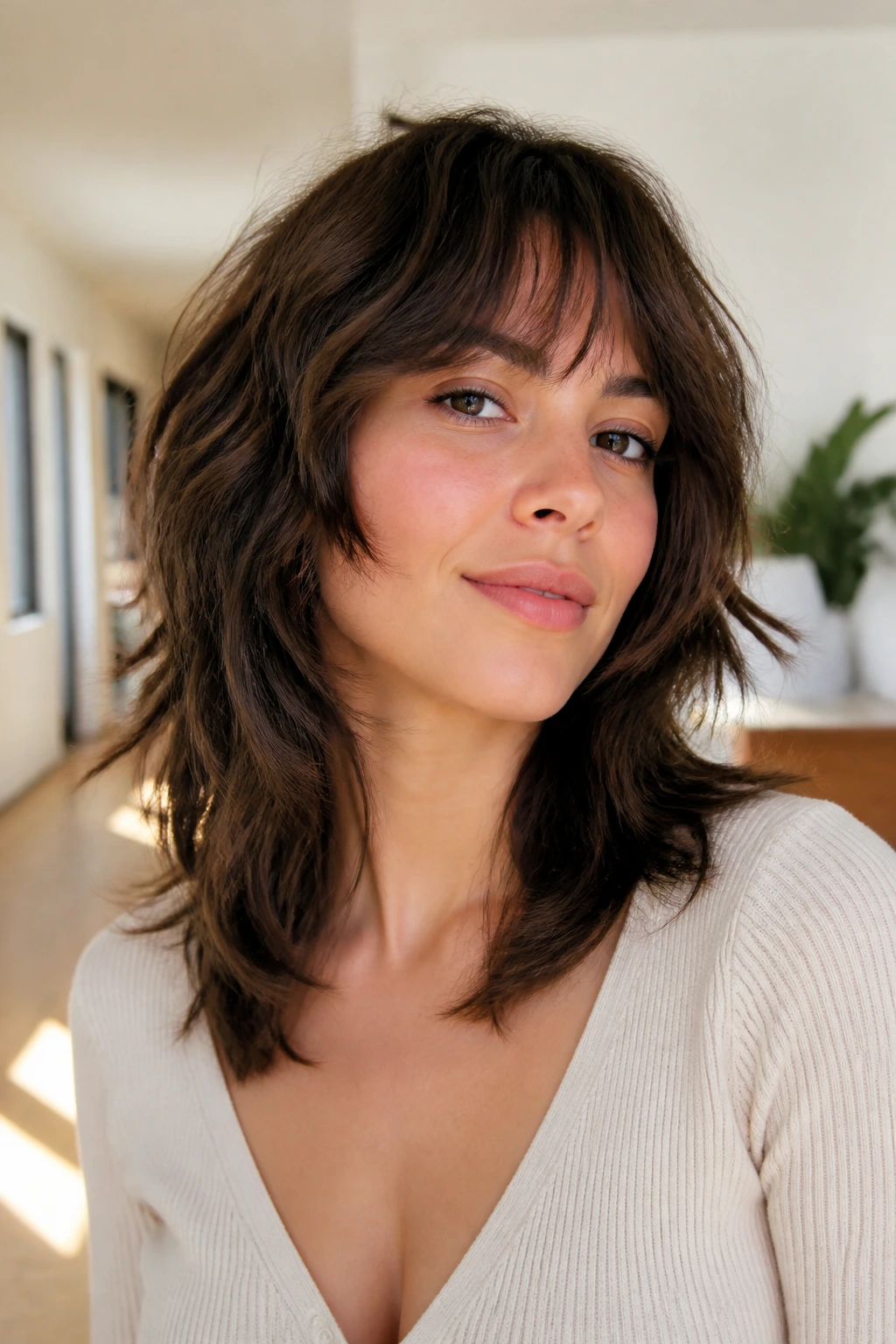
A wolf cut on wavy hair can be wild, but it doesn’t have to be extreme. The wearable version keeps the top short enough to create lift, then lets the bottom stay longer and softer so the outline doesn’t look too jagged. That contrast is the whole point.
This is a good pick if your waves have a little attitude and you want the haircut to match. It’s also useful when your hair is dense and tends to grow sideways. Ask for a softer crown, not a shaved-down crown. The difference matters. The first gives movement; the second can leave you with a shape that’s hard to calm down on busy mornings.
6. Collarbone Lob With Invisible Layers
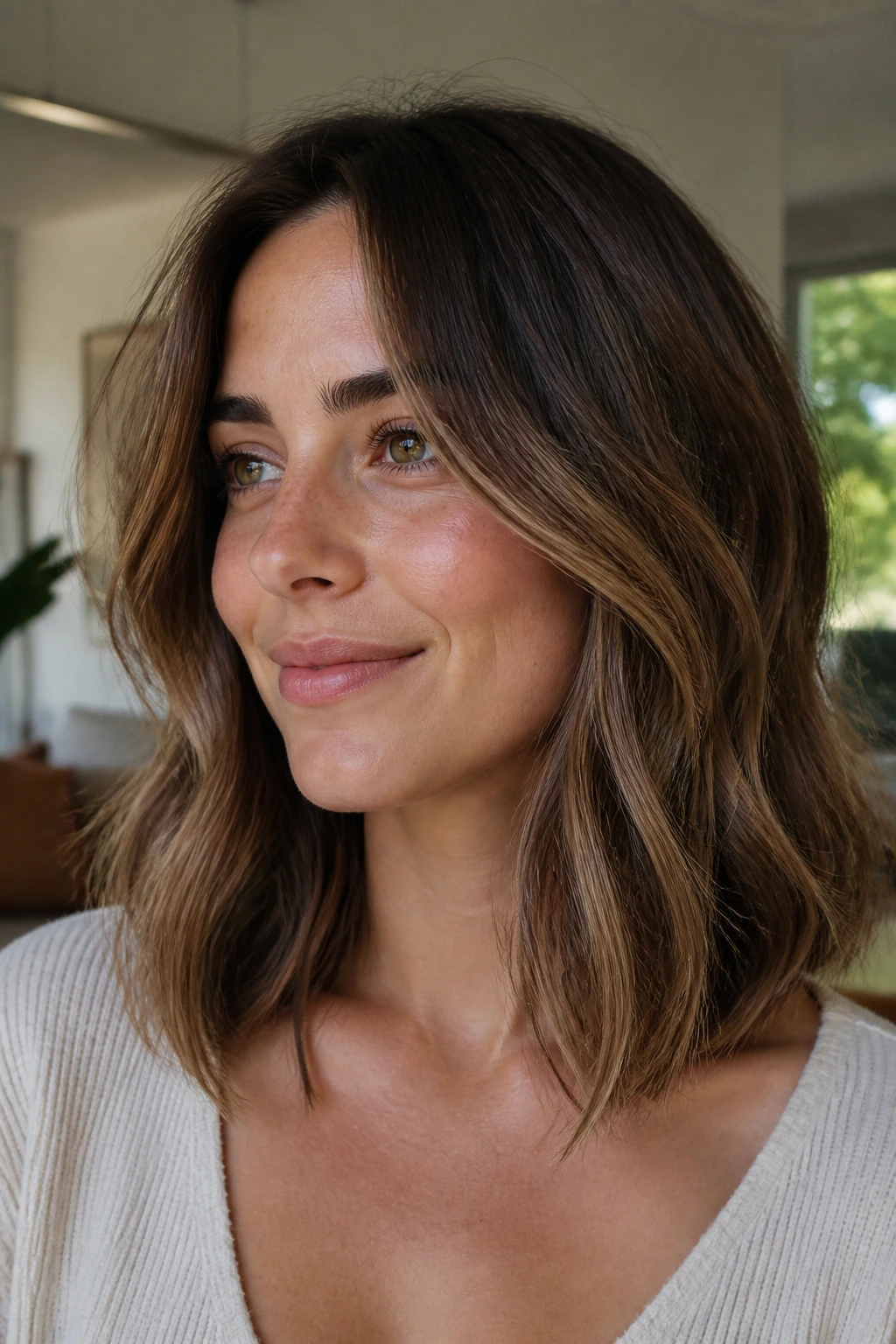
A collarbone lob is one of those cuts that looks simple until you notice how much easier it makes the hair behave. The invisible layers sit inside the haircut, so the outer line still looks clean while the interior has room to move. That’s a smart move for waves that need shape but not obvious steps.
This cut is especially good if you want something polished enough for work but loose enough to air-dry on a lazy day. The collarbone length gives the hair a place to graze and bend, which keeps the ends from flipping out in a weird way. If your hair is fine, ask for very light internal layering only. Too much and you lose the body that makes this cut work.
7. U-Shaped Long Layers
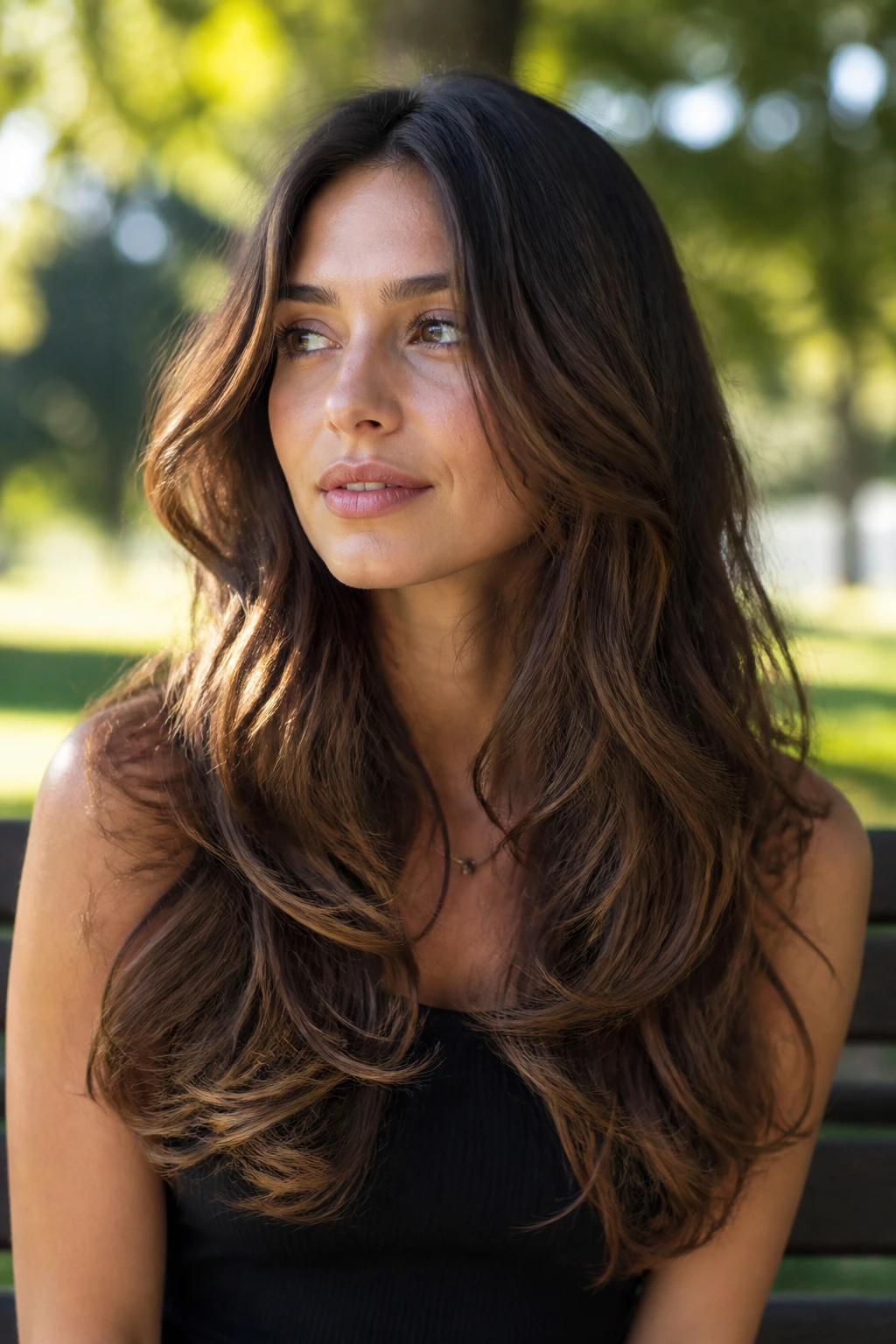
U-shaped layers are a quiet fix for long wavy hair that feels too blocky at the ends. The perimeter curves softly, and the layers start low enough to preserve the density through the middle. It’s a shape that looks expensive because it isn’t shouting for attention.
Why it helps
The curve keeps long hair from feeling like a flat curtain, and the low-starting layers let the wave pattern show without removing too much bulk. On thick hair, that means less heaviness at the bottom. On finer waves, it means the ends don’t thin out so much that the haircut starts looking see-through.
If you wear your hair long and don’t want a dramatic transformation, this is one of the safest bets. It gives movement, but not a lot of obvious separation. Sometimes that’s the exact right amount.
8. V-Cut Waterfall Layers
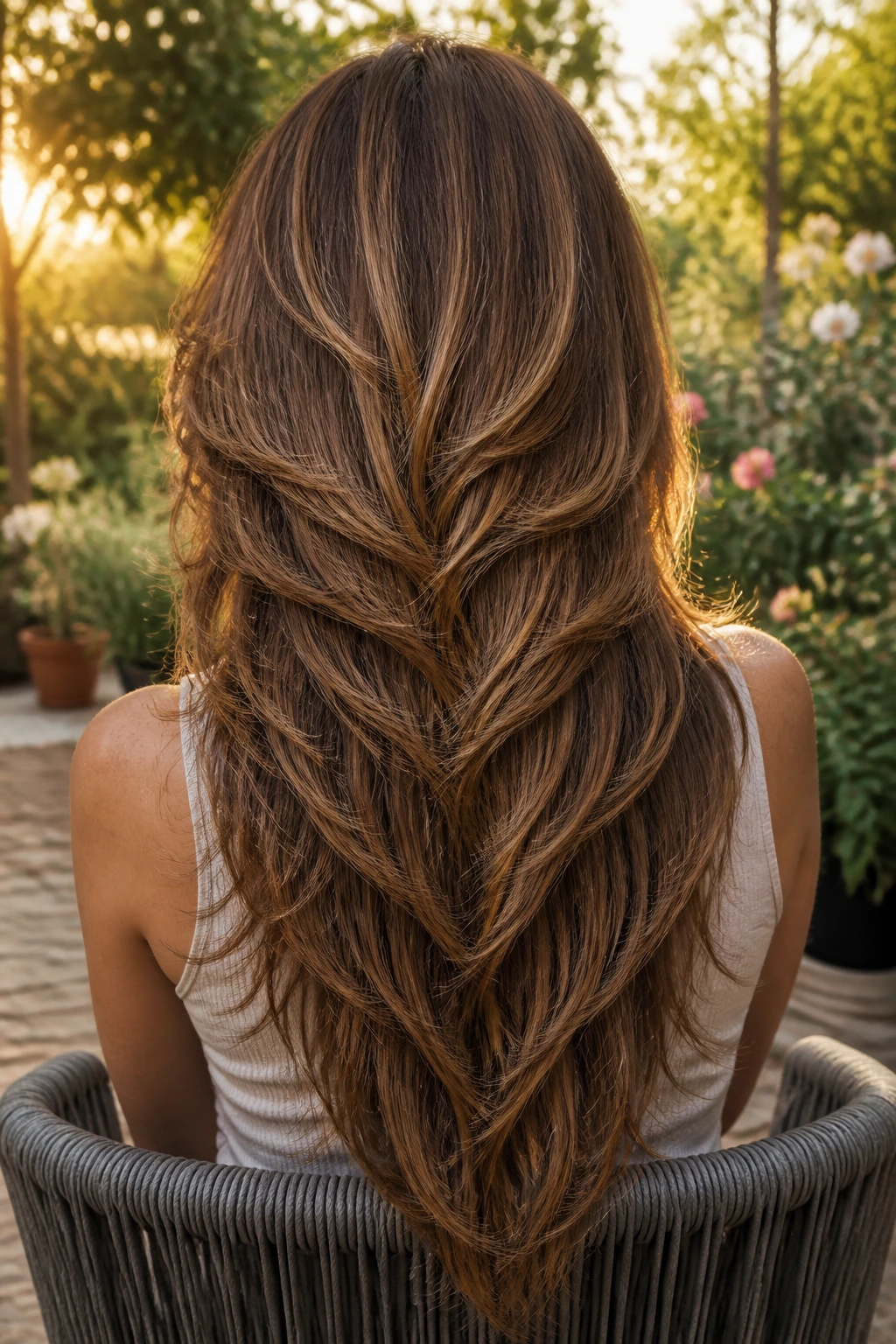
V-cut layers give long wavy hair a sharp, cascading silhouette from behind. The longest center pieces stay low, while the side sections taper inward so the whole shape falls into a point. It’s a more dramatic outline than a U-cut, and it looks especially good when the waves catch just enough light at the ends.
The trick is keeping the point soft, not severe. If the V is cut too deep, the front can feel disconnected from the rest of the hair. A gentler V works better for waves because it allows movement without making the bottom of the haircut look stringy.
This cut suits people who wear their hair over the shoulders and want the back to do something interesting when it swings. It has a little drama built in. Not a bad thing.
9. Choppy Midi With Textured Ends
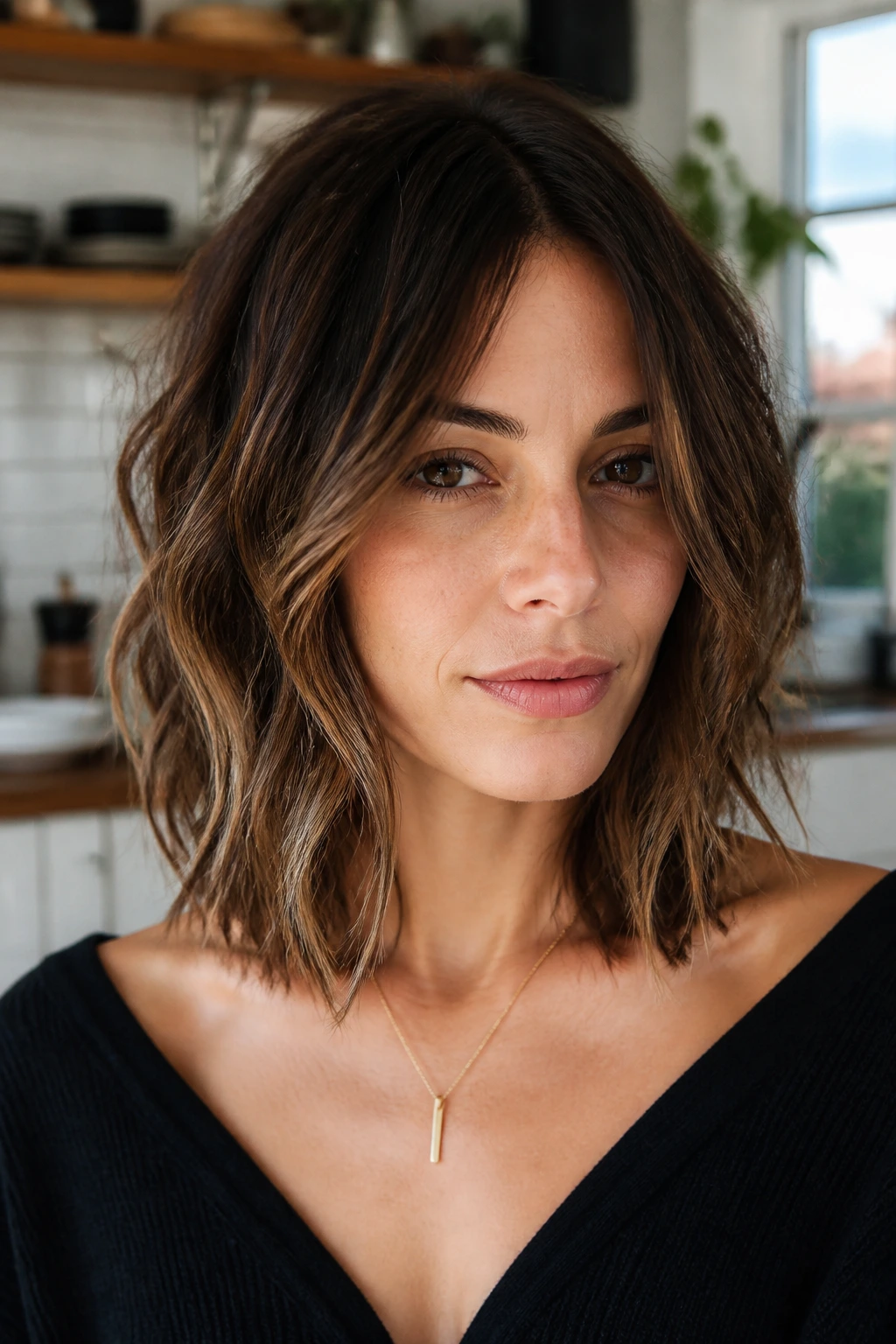
A choppy midi cut sits in that sweet spot between shoulder length and a longer bob, and waves love the texture. The ends are broken up enough to keep the outline from looking too round or too heavy, while the interior still holds body. It’s a good “I want shape, not fuss” haircut.
What keeps this from looking dated is the balance between clean and rough. You want enough pieceiness that the waves separate naturally, but not so much razoring that the ends fray. A sea salt spray or a light texture mist works well here, especially if you like your hair to look better after a little movement.
10. The Rachel Cut, Loosened Up
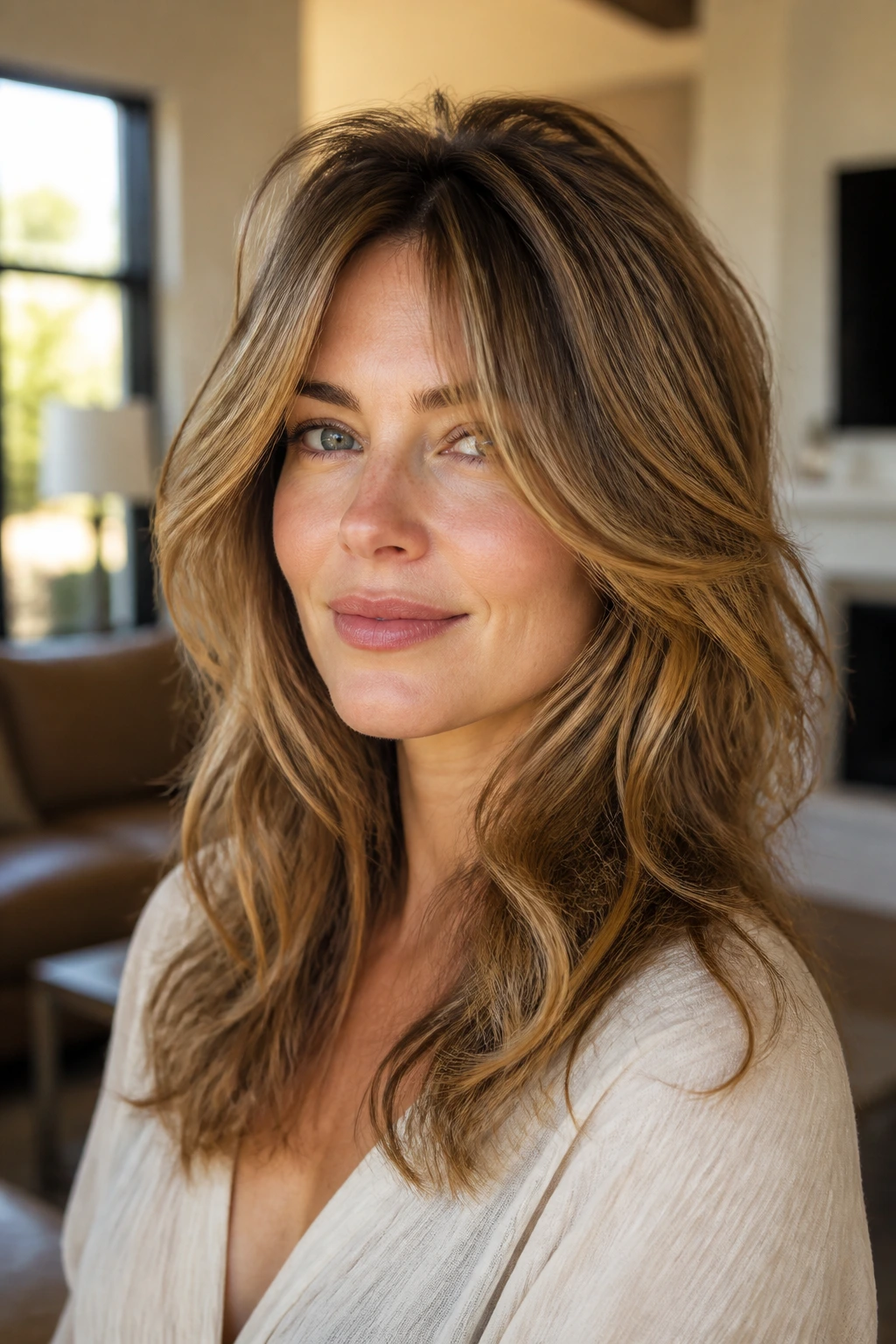
The Rachel cut still has a lot of life left in it, especially when you stop thinking of it as a full blowout and start thinking of it as a layered frame with bounce. The modern version keeps the face pieces soft, the crown lifted, and the ends less round than the original. On wavy hair, that loosened shape feels much easier.
It works because the layers create a bend that waves can sit into instead of fighting. You don’t need the old-school, super-brushed finish for it to work. In fact, it often looks better when the wave texture is allowed to stay visible. A diffuser, a brush lift at the roots, and a little scrunch out of the cast is enough.
11. Feathered Shoulder-Length Layers
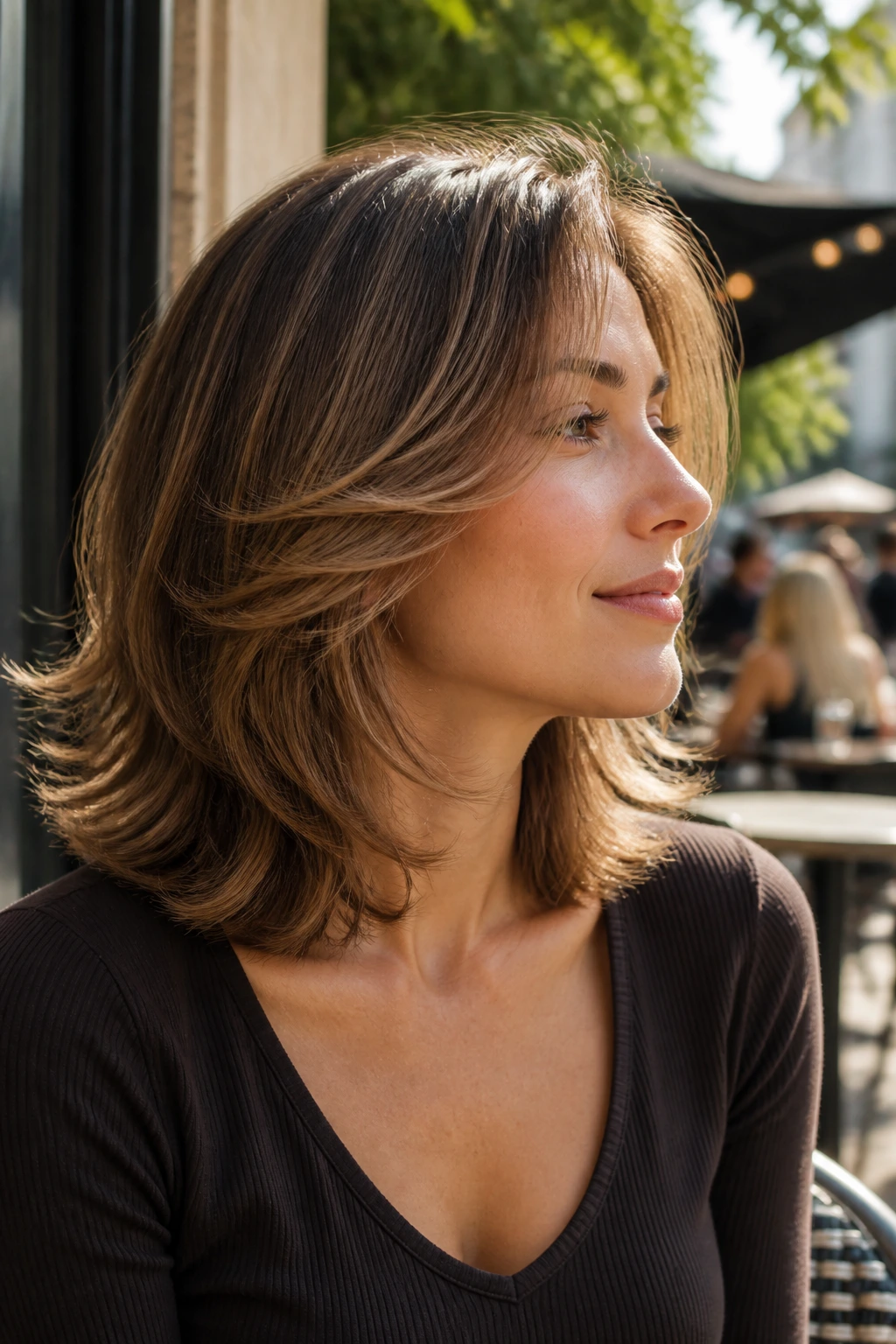
Feathered layers are lighter and more directional than blunt shoulder-length cuts. The ends flick away from the face, which gives wavy hair a bit of air around the jaw and collarbone. That can be a nice change if your current cut feels heavy at the bottom.
This shape is particularly good if your waves get bulky at the sides. The feathering breaks up the mass without turning the whole cut into a shag. If you style it with a medium round brush, the front pieces sweep away from the cheeks in a soft curve. If you air-dry, tuck the front behind your ears for a few minutes while it sets. Little trick. Works.
12. Layered Bob With Bendy Ends
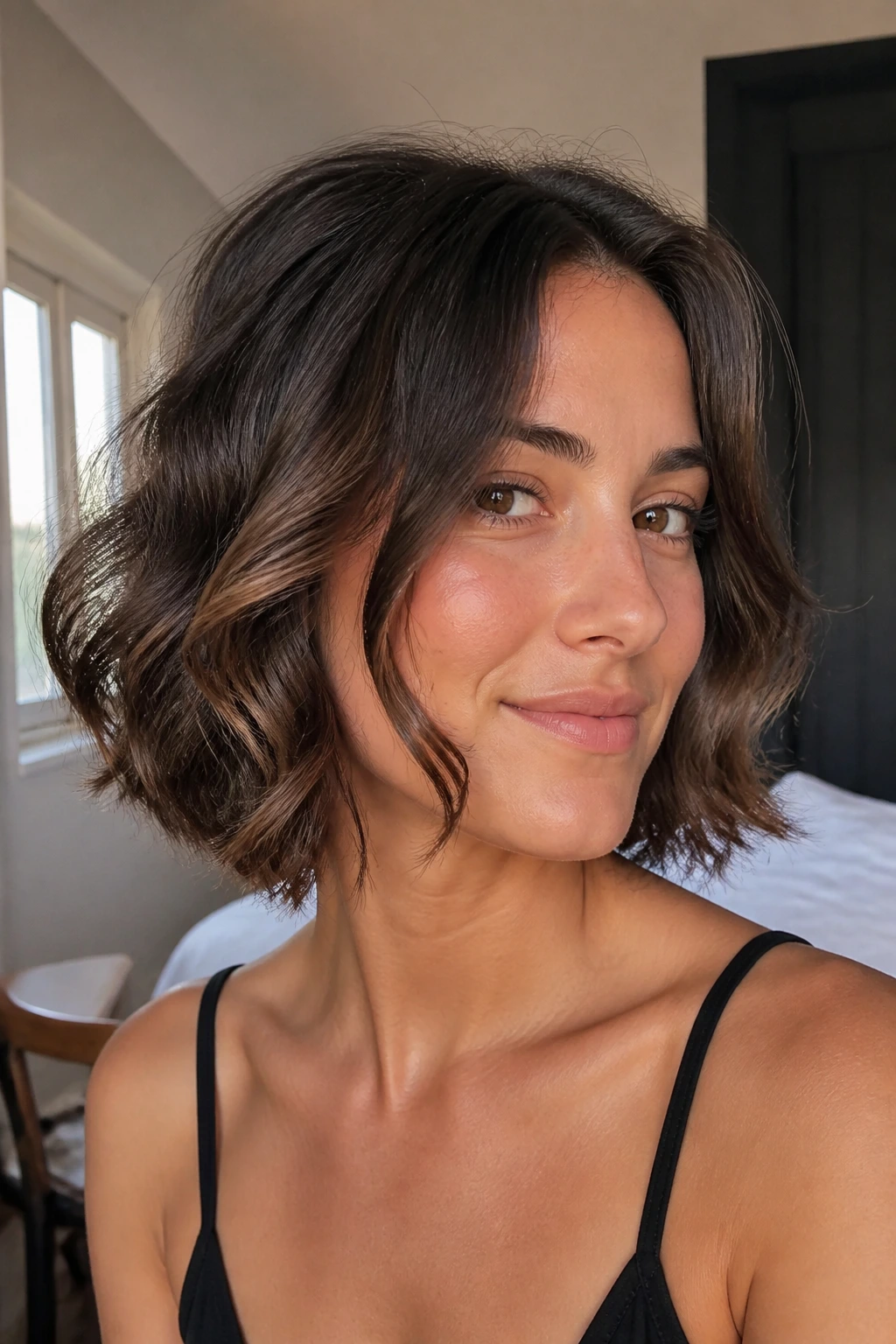
A layered bob with bendy ends is short enough to feel sharp but long enough to keep wavy texture visible. The best version lands around the jaw or just below it, with a little internal layering to prevent the shape from going boxy. This cut is all about movement at the ends.
Wavy hair can look fantastic in a bob when the length is chosen with shrinkage in mind. If your waves spring up a lot, don’t let the cut land too high. You want the bob to skim, not hover. Add a gel or cream-light mousse at the ends, scrunch, and let the wave pattern do the rest. It’s one of the few short cuts that can still feel soft.
13. The Octopus Cut for Dense Waves

The octopus cut sounds odd until you see how well it handles thick, wavy hair. The top is fuller, the lower lengths stay longer and wispy, and the overall shape lands somewhere between a shag and a layered curtain. It has a lot of movement without losing the sense of a real haircut.
This cut is strongest on dense waves that can carry a lot of shape without collapsing. It gives lift around the head and a lighter tail through the ends. If you go this route, keep the internal layers soft enough that the ends don’t turn ragged. The silhouette should feel deliberate, not accidental.
14. Razored Layers for Thick, Heavy Hair
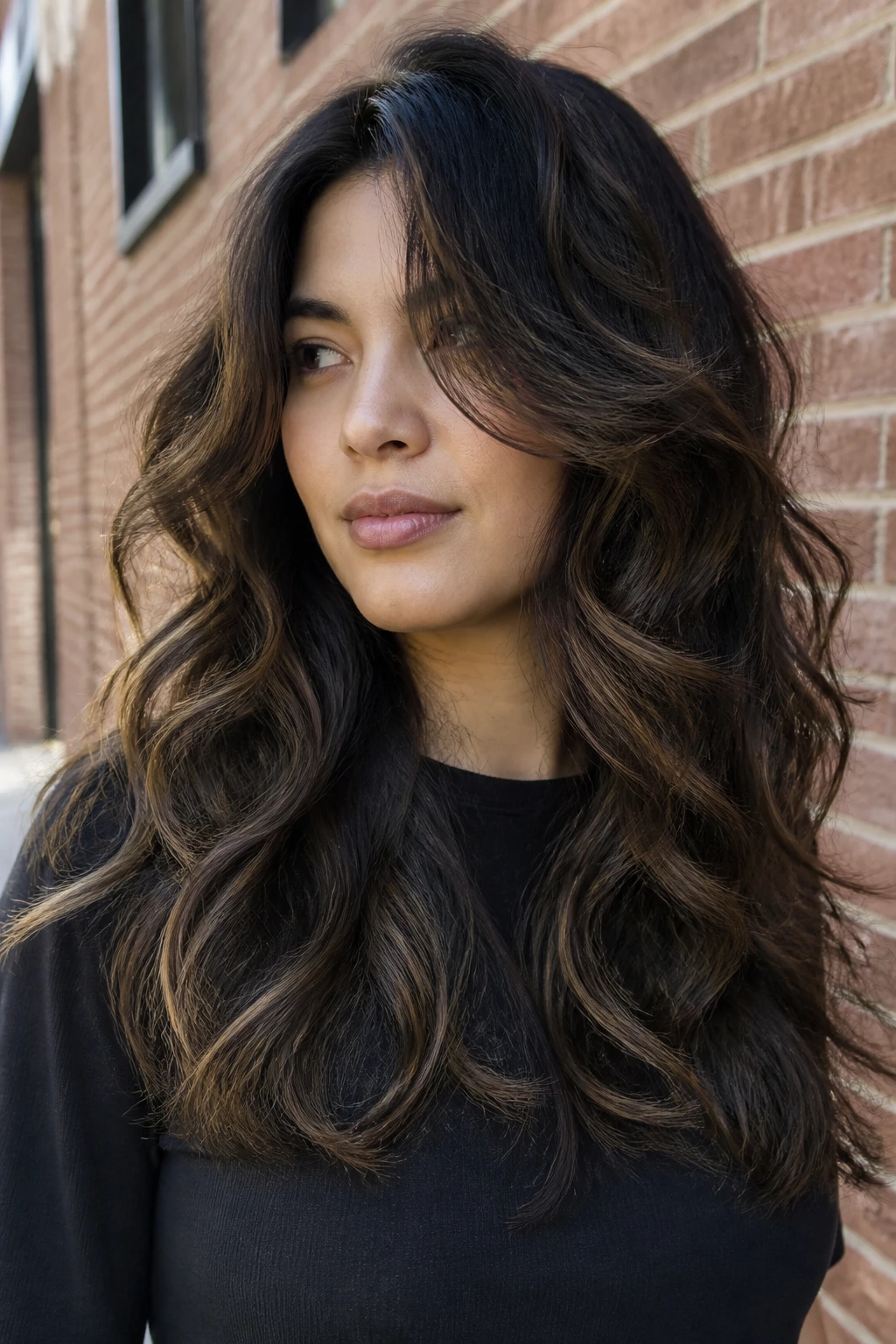
Razored layers can be a lifesaver for thick waves, but only when they’re used with a light hand. The point is to remove bulk and make the hair move, not to shred the ends until they look dry and feathered out. A skilled cut makes the hair feel freer without losing integrity.
This is one of the few situations where a razor can make sense if your hair is coarse and naturally resistant. It helps the wave pattern fall instead of standing up in a hard block. Still, if your ends are already fragile, a scissor cut may be safer. The texture should look softened, not thinned out to the point of frizz.
15. Invisible Internal Layers for Fine Waves
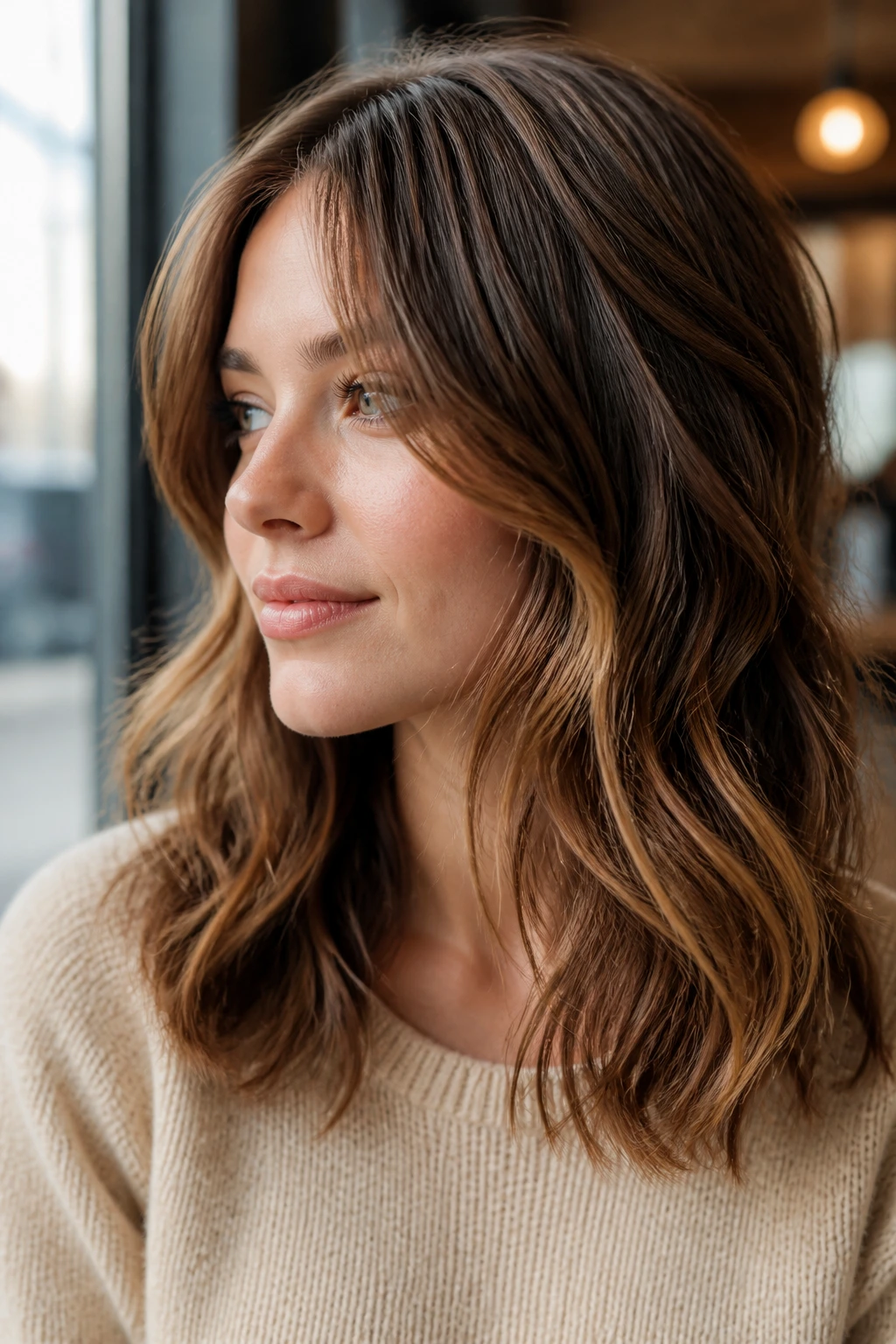
Fine wavy hair usually needs a subtler hand. Invisible internal layers remove weight from inside the haircut so the outside still looks full. That’s the part people forget. Fine hair often needs shape, not obvious steps.
A blunt perimeter with hidden movement can keep the ends from looking stringy while still letting the waves breathe. It’s a very smart option if you like volume but hate the look of heavy layering. Ask for the shortest pieces to stay under the top layer, not visible when the hair is down. The haircut should look simple from the outside and better once it starts moving.
16. Side-Swept Fringe With Long Layers
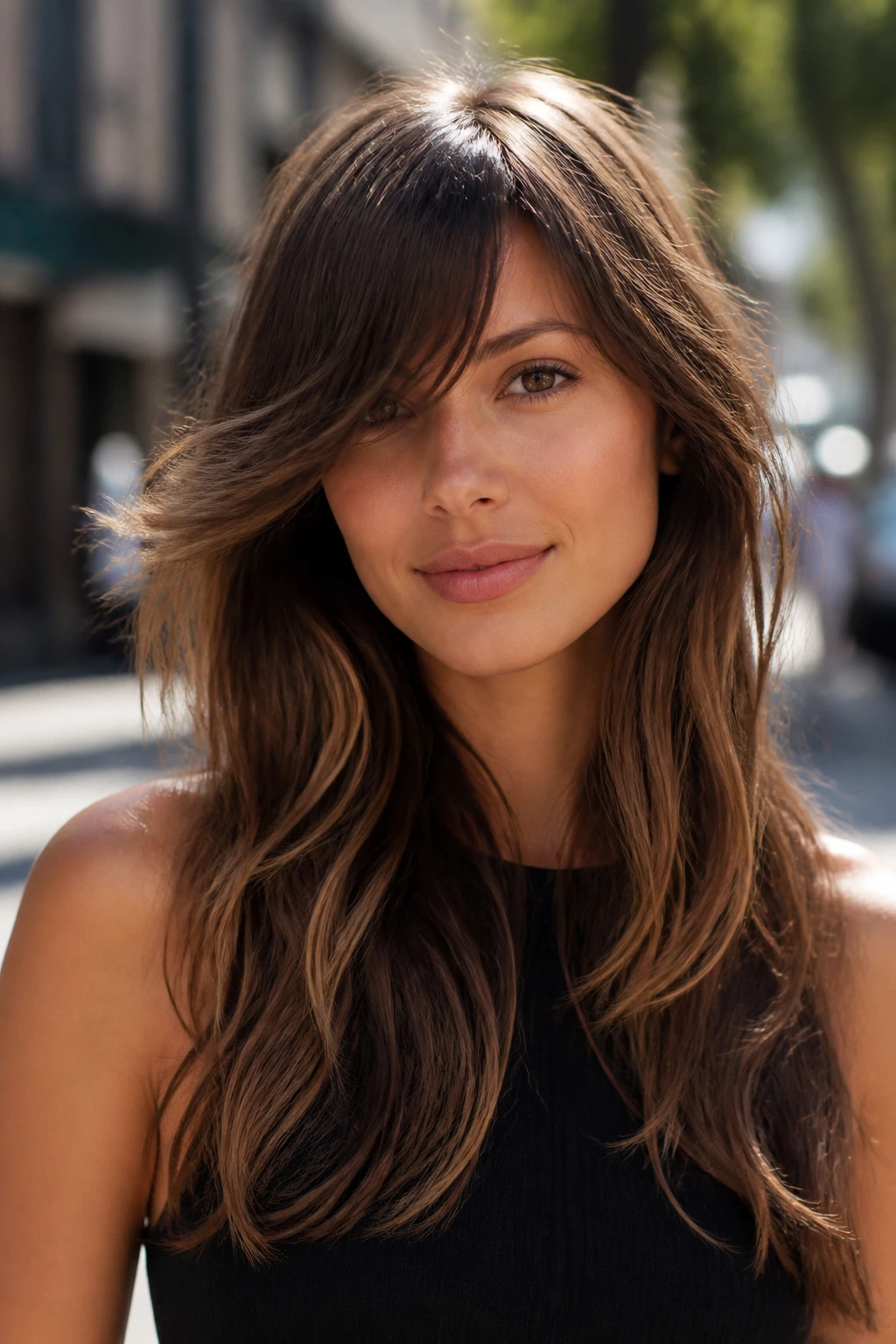
A side-swept fringe gives wavy hair a little asymmetry, which can be useful if a center part feels too plain or if one side has a stubborn cowlick. The fringe sweeps across the forehead and blends into longer layers that carry the rest of the shape. It’s softer than a full bang and easier to grow out.
This cut is one of my favorites for people who want face framing without the commitment of curtain bangs. It can be tucked, flipped, or worn loose depending on the day. If you want the front to look deliberate, blow-dry the fringe in the direction you want it to live, then let the rest of the hair stay loose and wavy.
17. Angled Lob With a Clean Front Line
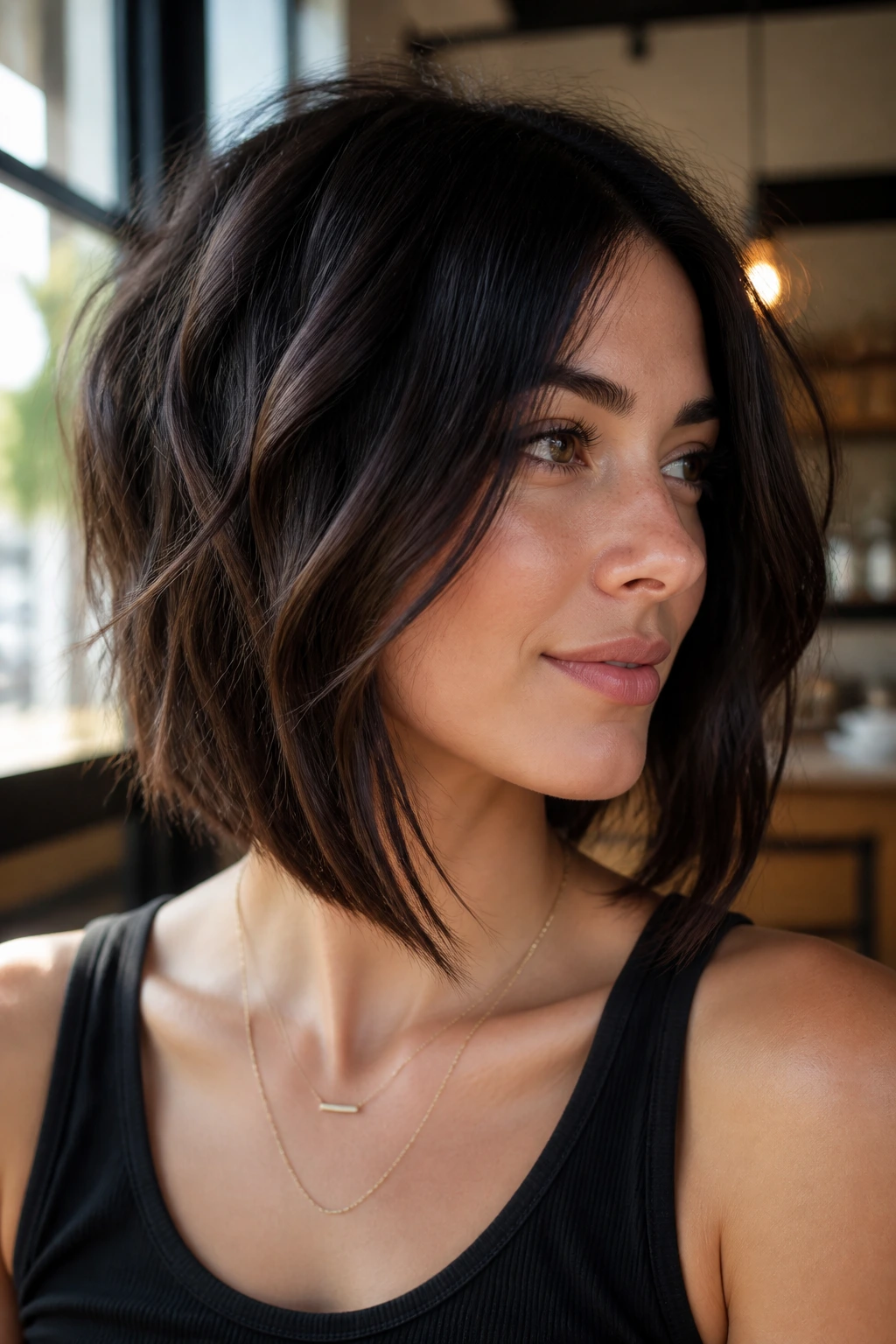
An angled lob gives the haircut a little tension in the best way: shorter in the back, longer in the front, and clean enough to look polished with almost no effort. On wavy hair, the angle helps the front pieces move around the jaw and collarbone instead of sitting in one flat line.
This style works when you want structure but not stiffness. The front line should be long enough to skim the neck, not so short that the wave pattern bloats outward. I like this cut for people who wear earrings or sharp necklines, because the shape frames the face without needing a lot of extra styling.
18. Mermaid-Length Layers That Still Move
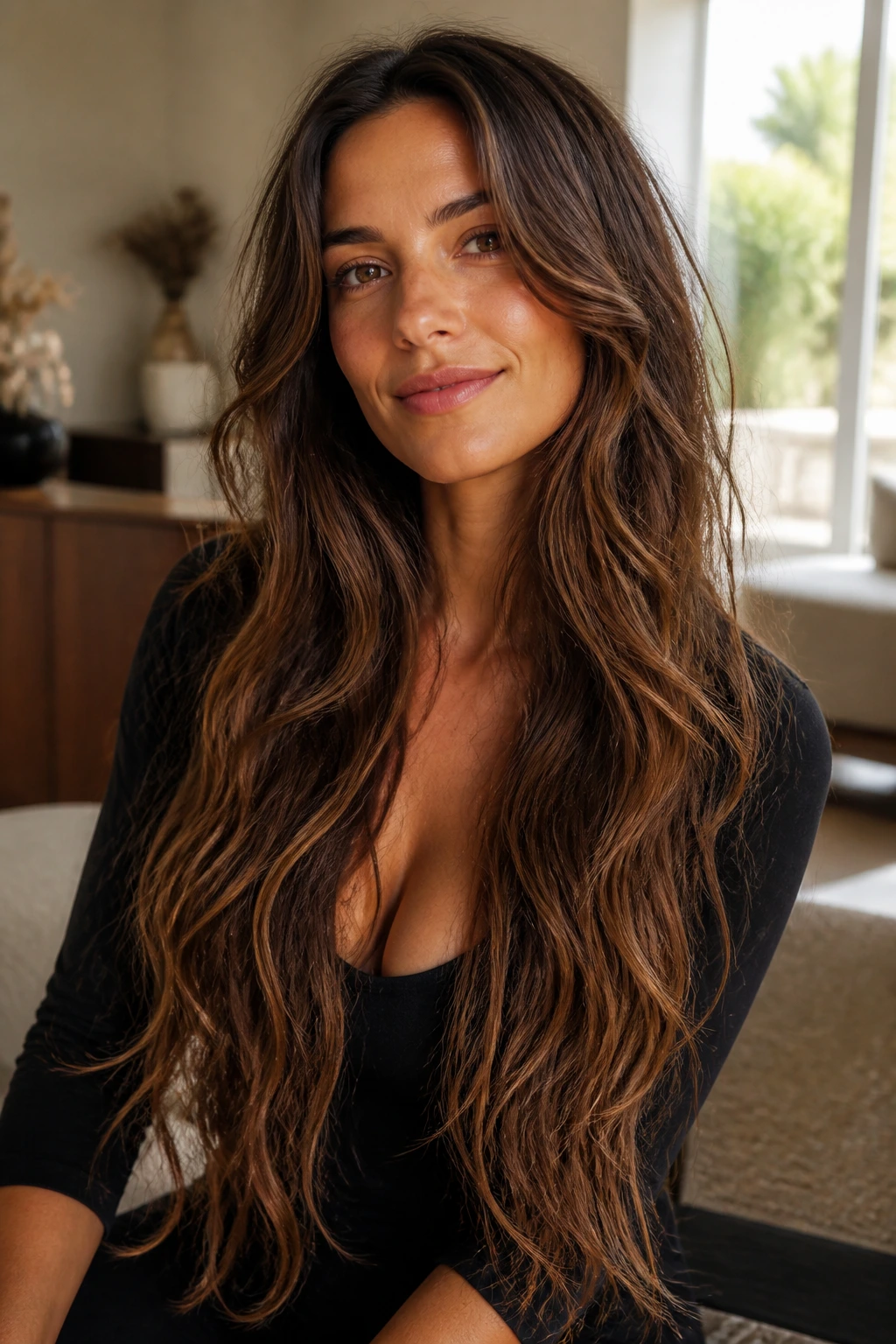
Mermaid-length hair can get heavy fast, which is why soft low-starting layers make such a difference. The goal is to keep the long silhouette while stopping the bottom from becoming one solid sheet. Waves need some room to separate, especially when the length goes past the chest.
This cut is for people who genuinely want to keep the length. Not “maybe someday” length. Real length. A gentle face frame, low layers, and clean ends keep it from looking flat. If the hair is fine, go easy on the layering. If it’s dense, the middle sections can take a little more removal so the whole shape moves when you walk.
19. Tousled Midi With Broken-Up Ends
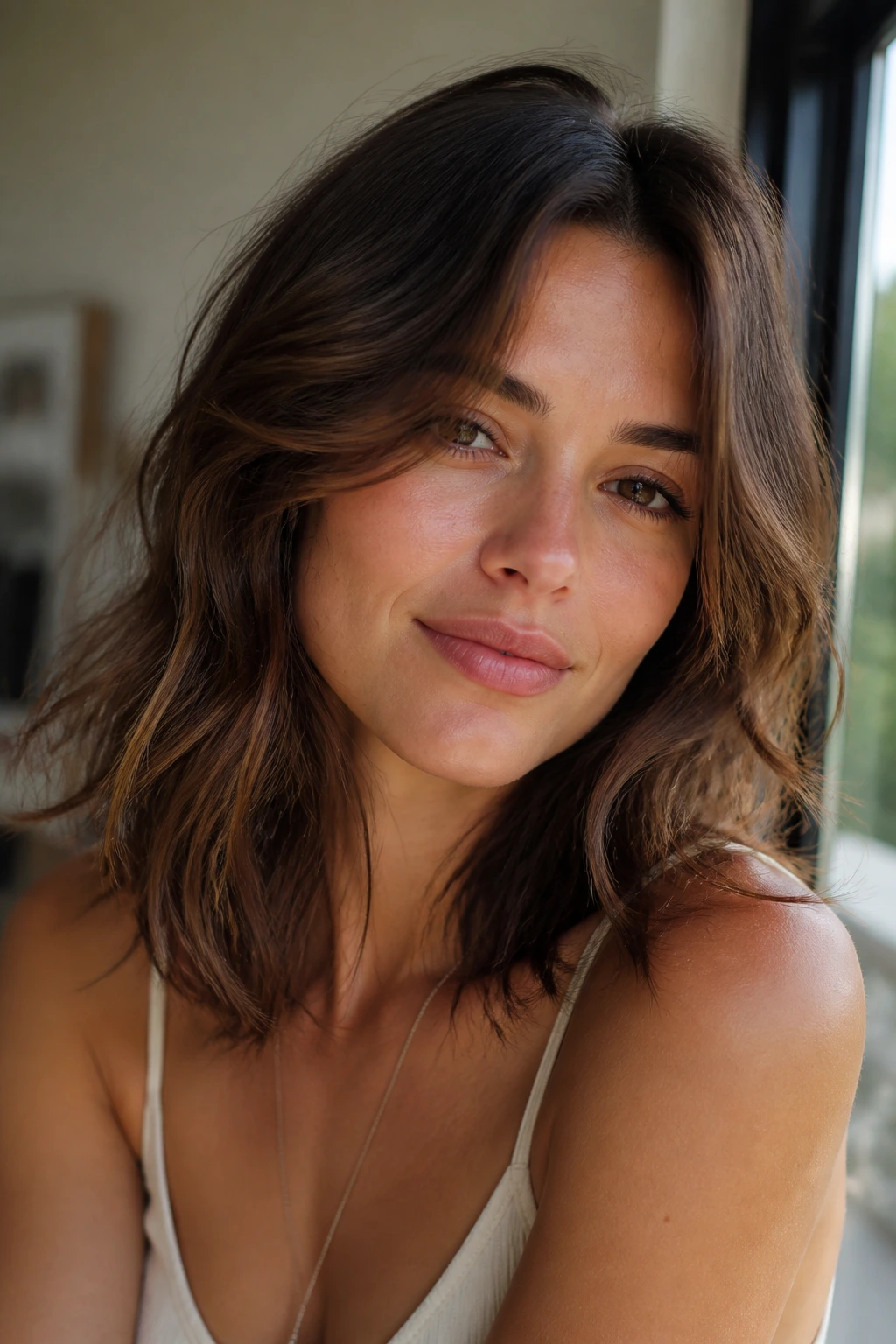
A tousled midi is the haircut version of “I ran my hands through it and left the house,” except it still looks intentional. The ends are broken up enough to keep the wave pattern visible, and the length usually lands somewhere between the collarbone and the top of the chest. It’s an easy shape to live in.
This one works best when you don’t want too much perfection. If the hair has natural bends, the midi cut lets those bends show without demanding a full blowout. A little leave-in conditioner, a touch of mousse, and a diffuse-or-air-dry routine can be enough. The texture should feel relaxed, not crunchy.
20. Disconnected Crown Layers for Extra Lift
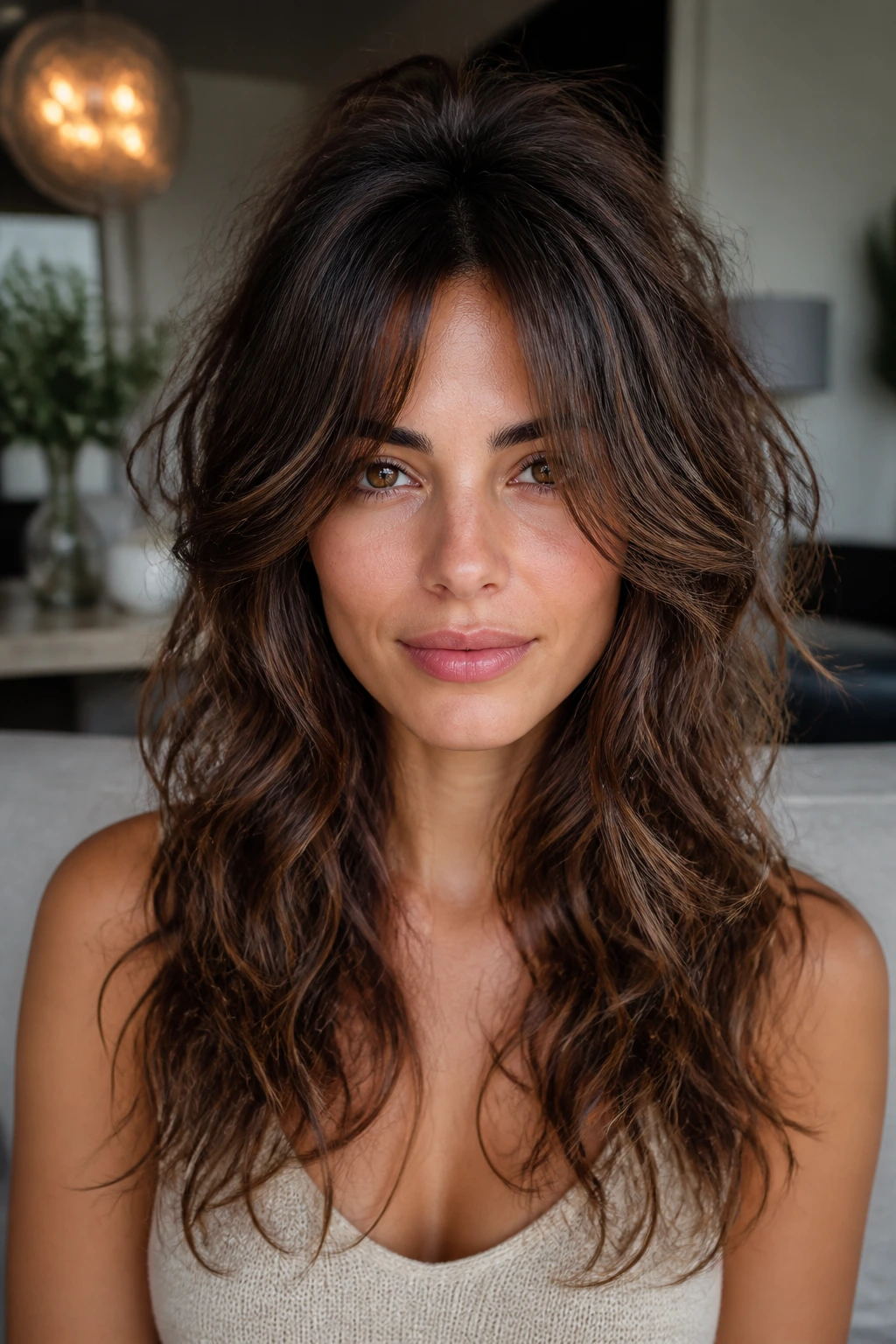
Disconnected crown layers create lift where wavy hair often goes flat: right at the top. The shorter pieces live in the crown area, while the rest of the length stays longer and more grounded. That contrast can give the whole haircut a more sculpted look.
This is a smart option for dense waves or hair that collapses at the roots. It gives the top shape without having to shorten everything else. If you go too far with this cut, though, the crown can look choppy, so the transition has to be handled carefully. The difference between “lifted” and “uneven” is small here.
21. Chin-Length Wavy Shag Bob

A chin-length wavy shag bob is short, punchy, and full of texture. It has the movement of a shag with the compact shape of a bob, which makes it feel lively even on days when you do almost nothing to it. The fringe and layers keep the haircut from looking helmet-like.
This cut suits people who like bold shape and don’t mind regular trims. Chin-length hair grows out fast in terms of silhouette, so the edge can start to lose its clean line sooner than a longer cut would. A bit of texture spray and finger drying is usually enough to wake it up. It’s a fast haircut with a lot of personality.
22. Soft Cheekbone Layers for an Easy Grow-Out
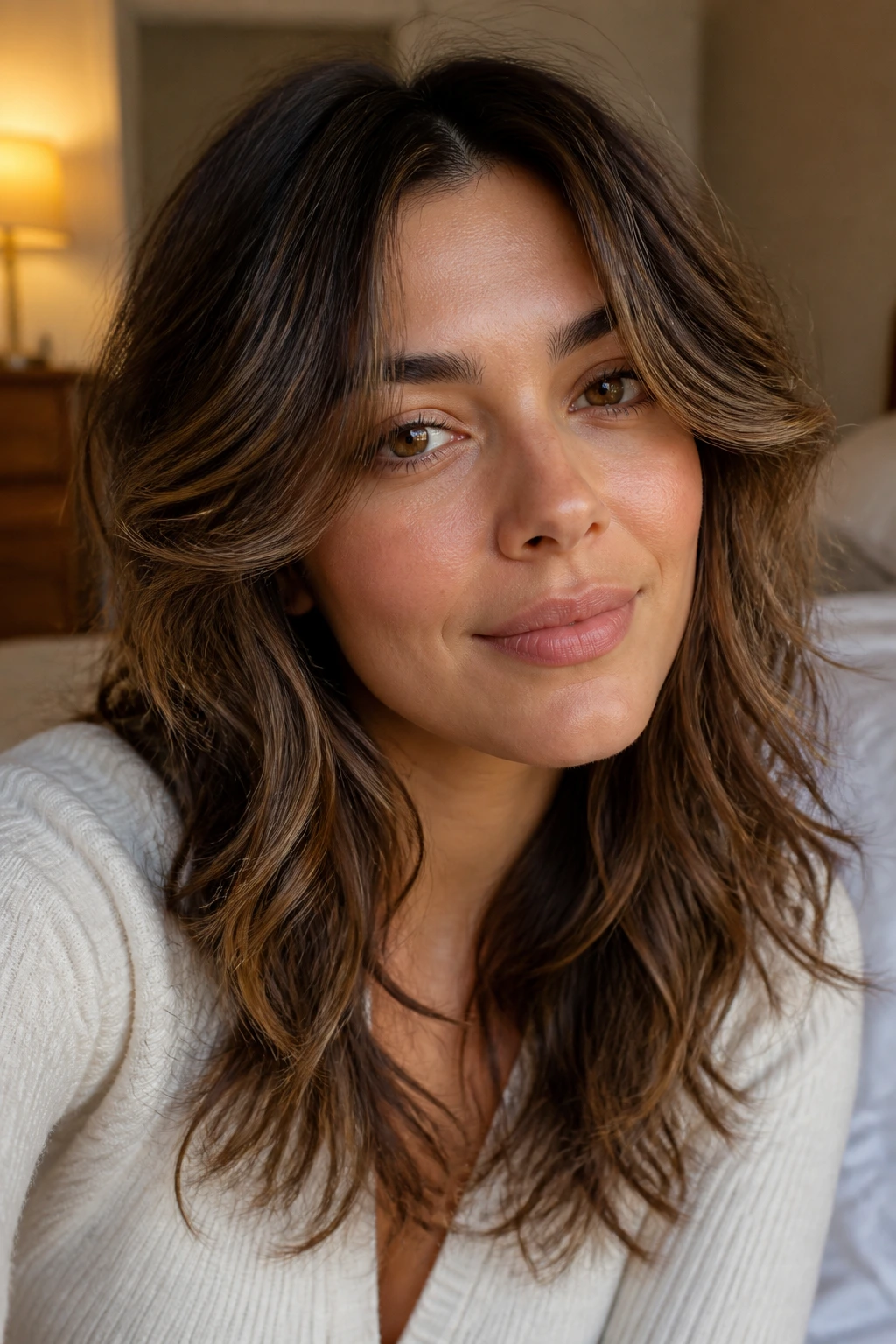
Soft cheekbone layers are the quiet winner if you want the face framed without a dramatic chop. The shortest pieces start around the cheekbone, then fall into longer layers that stay easy to grow out. This makes the haircut forgiving, which is worth a lot.
It’s especially nice for people who want to test layered hairstyles for wavy hair without committing to a heavy shag or a short fringe. The shape flatters most face shapes because it opens the center of the face while keeping the sides soft. If you’re unsure where to begin, this is the one I’d point to first. Simple. Clean. Easy to live with.
Why Layering Changes the Whole Shape of Wavy Hair
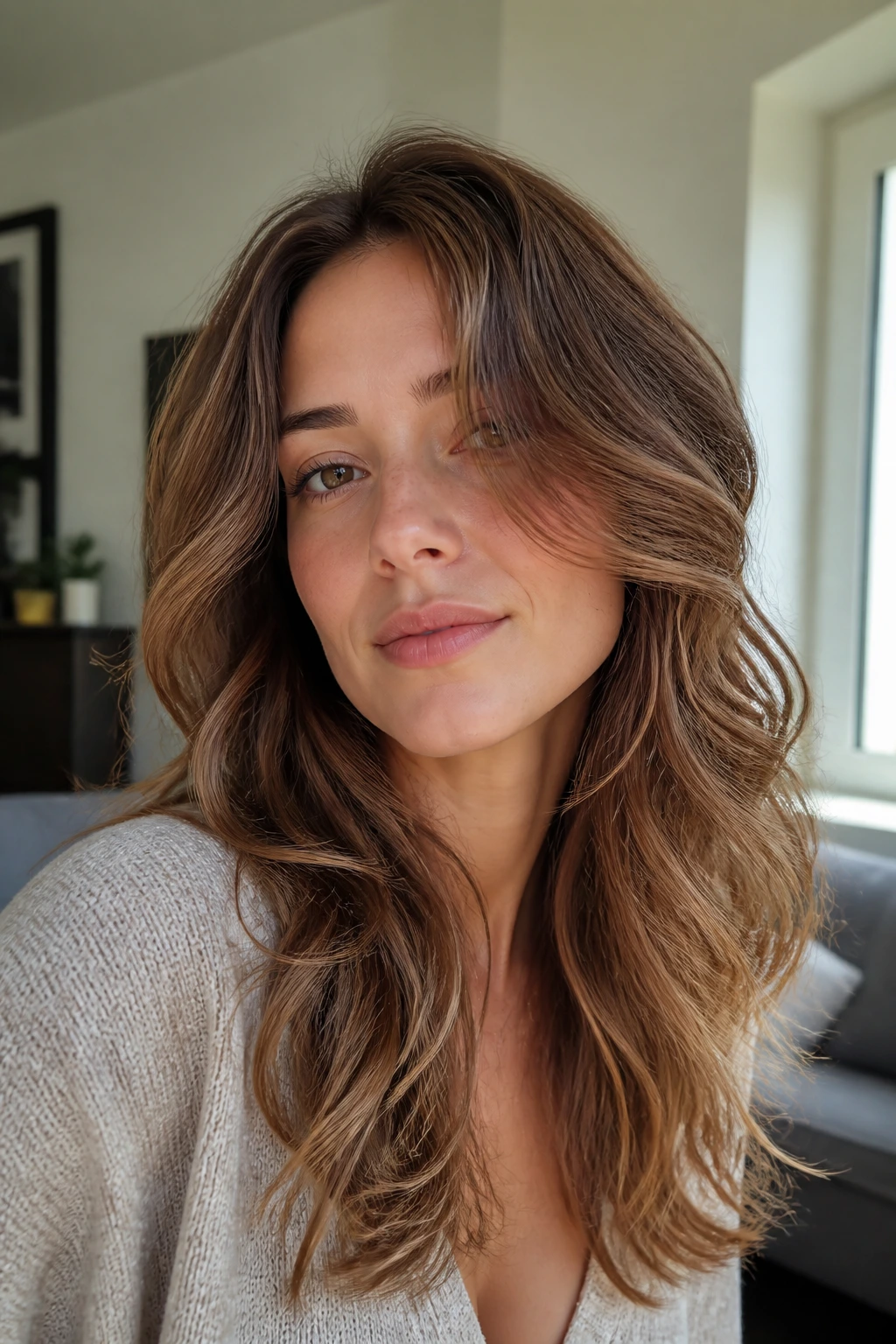
The real job of layers isn’t to make wavy hair “more interesting.” It’s to let the bend happen in the right places. A blunt cut can make waves look thick but stubborn, while a layered cut can move the weight around so the hair falls in a cleaner curve. That’s why two people with the same wave pattern can end up with wildly different results from a single trim.
Where the layers start matters more than the word “layered” itself. A short crown layer gives lift. A cheekbone frame opens the face. A low internal layer removes bulk without changing the outline. A perimeter that stays strong keeps the ends from looking see-through. The good cuts are built like that: one small decision supporting the next.
And there’s a reason some wavy hair looks better with soft layers while other heads can handle more texture. Density changes the math. Fine waves need more outline and less interruption. Thick waves can take shape removal farther up the head. If you’ve ever had a haircut that looked fine wet and odd dry, that’s usually a placement issue, not a styling failure. The cut and the wave pattern were never speaking the same language.
The Tools That Make These Cuts Easier to Wear
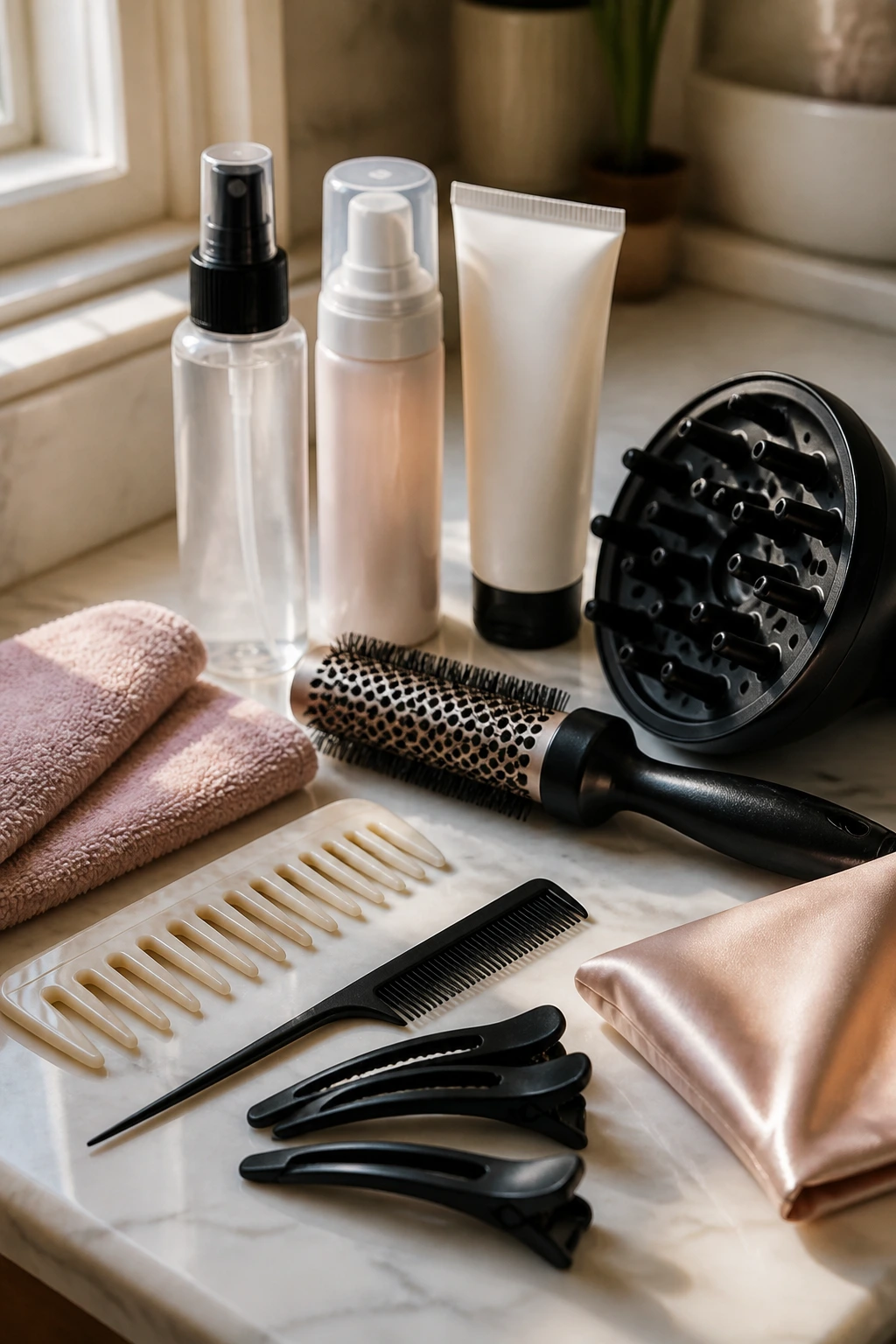
- Wide-tooth comb: Detangles waves without dragging the pattern flat, especially after conditioner.
- Microfiber towel or cotton T-shirt: Cuts down on rough frizz when you scrunch out water.
- Duckbill clips or sectioning clips: Useful for lifting the crown while it dries and for setting face-framing pieces.
- Diffuser attachment: Helps waves dry with more shape and less blast from the dryer.
- Medium round brush: Good for curtain bangs, butterfly layers, and any front pieces that need a soft bend.
- Light mousse or foam: Adds lift without the heavy feel some creams leave behind.
- Gel with a flexible cast: Keeps the wave clumps together while they dry, then scrunches out cleanly.
- Heat protectant spray: Non-negotiable if you use a brush dryer, flat iron, or curling wand.
- Tail comb: Handy for clean parts and for placing layers where they’ll dry in the right direction.
- Silk or satin pillowcase: Reduces the morning mess that can wreck a good layered shape.
What to Tell Your Stylist Before the First Snip
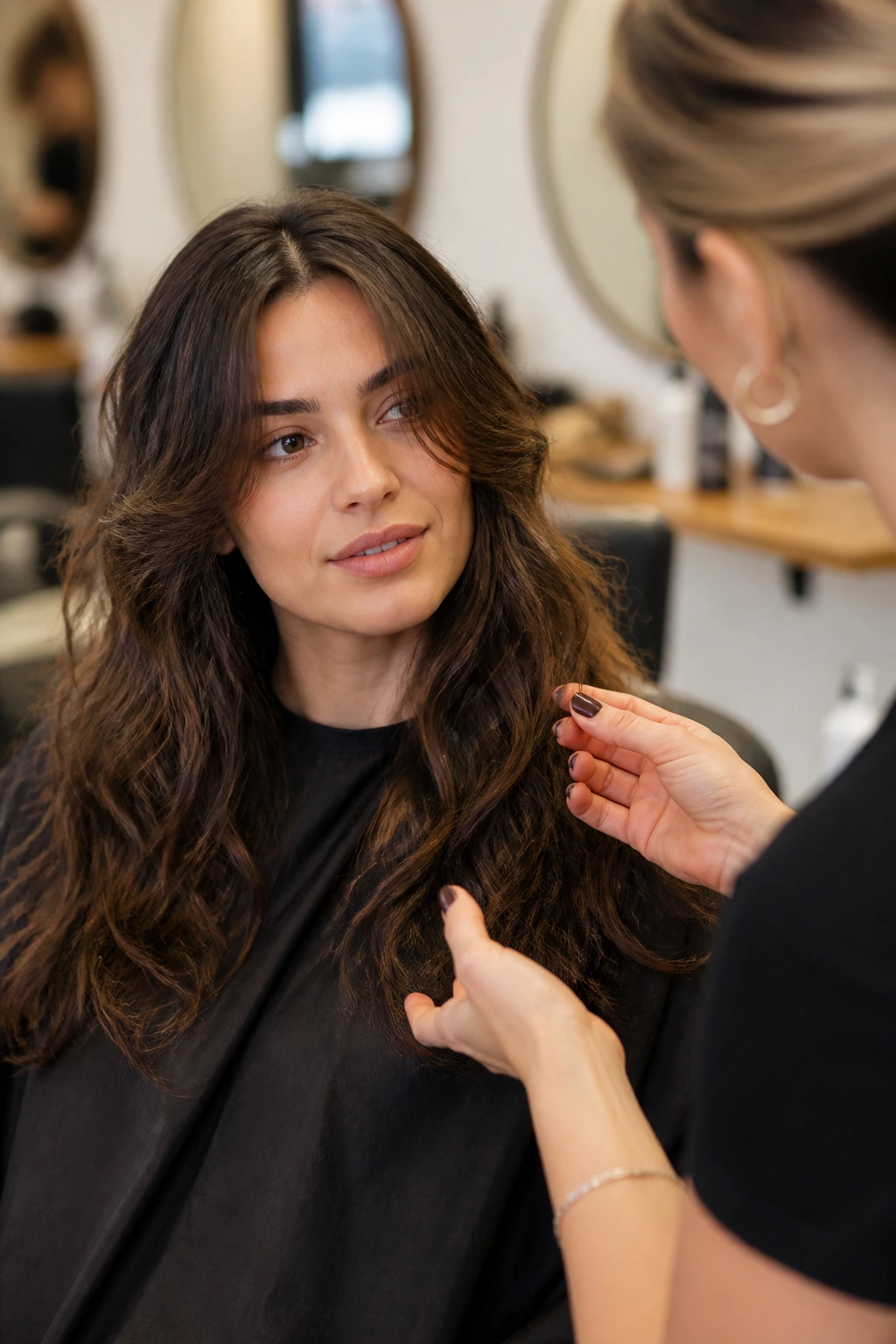
A good layered haircut for wavy hair starts with a real conversation, not a vague “make it lighter” request. Bring photos, yes, but tell the stylist how your hair behaves when it’s not being helpful. Does it puff at the sides? Go flat at the roots? Shrink more than expected? Those details decide where the layers belong.
The most useful things to mention are your usual part, how often you style, and whether you air-dry or diffuse. If you never use heat, say that. A cut built for a round-brush finish can feel awkward if your actual routine is a towel scrunch and a prayer. Tell them how much length you want to keep and where you like the shortest face-framing piece to fall. Cheekbone, mouth, jaw, collarbone — those are not small choices.
If your hair is dense, ask about removing weight from the interior rather than hacking the outline apart. If it’s fine, ask for layers that preserve fullness at the ends. That one sentence can save you from a haircut that looks like two different heads were involved.
How to Wear These Cuts Without Overstyling Them

Presentation: Keep the cut’s strongest feature visible. A butterfly cut wants lift at the crown. A cheekbone frame wants those front pieces to fall forward before you tuck one side behind your ear. A shag wants separation, not brushed-out smoothness.
Pairings: The face frame changes how earrings, glasses, and necklines sit against the hair. A collarbone lob looks sharp with hoops and open necklines. A side-swept fringe softens glasses and strong brows. A chin-length shag bob makes a high collar or a crew neck feel more deliberate.
Finish: Don’t make every style glossy and smooth. Some of these cuts look better with a matte texture, a little grit, or a clean air-dried bend. The right finish depends on the haircut’s shape. A modern Rachel cut likes a soft blowout. A wolf cut usually looks better a little rough around the edges.
Maintenance: If you need a style that survives a fast morning, pick the cuts with strong perimeter lines and subtle internal layers. They fall back into place more easily. The more extreme the shape, the more you’ll need to refresh the roots and front pieces.
Small Styling Tweaks That Change the Result Fast

Root Lift: Clip the crown while the hair is still damp, then remove the clip once the roots are about 80% dry. That tiny pause can stop the top from lying flat all day.
Front Piece Direction: Always dry the face-framing pieces away from the face first, even if you want them to fall forward later. It creates a softer bend instead of a kink.
Texture Control: Use mousse at the roots and cream only on the mids and ends if your waves collapse easily. Too much cream near the scalp is a fast route to limp hair.
Polish: If the ends look fuzzy, smooth just the last inch with a small amount of serum between your palms. Don’t coat the whole head. You’ll erase the shape.
Make-It-Your-Own: If you want less drama, keep the layers low and the face frame long. If you want more movement, ask for shorter crown layers and a stronger bend around the cheekbone. Same haircut family. Different energy.
Keeping the Shape Between Wash Days

Layered wavy hair usually holds up for a few days if you don’t crush the pattern at night. A loose pineapple or a soft clip at the crown keeps the top from flattening while you sleep. A silk pillowcase helps too, though it won’t fix a bad cut. It just makes a good one last longer.
On day two, a light mist of water on the mids and ends often brings the waves back faster than adding more product. Scrunch, twist a few stubborn front pieces, and leave the roots alone unless they’ve gone limp. If the hair starts to feel coated, that’s your sign to use less cream and more gel the next wash day.
By day three or four, some layered cuts still look good; others need a full refresh. The shag and wolf cut tend to keep shape longer because they’re built for mess. Sleeker cuts like the lob or angled front need a bit more help. If buildup starts to dull the wave pattern, clarify every couple of weeks and reset the shape with a smaller amount of styling product. Clean hair shows the layers better. That part never really changes.
Other Ways to Wear the Same Cut
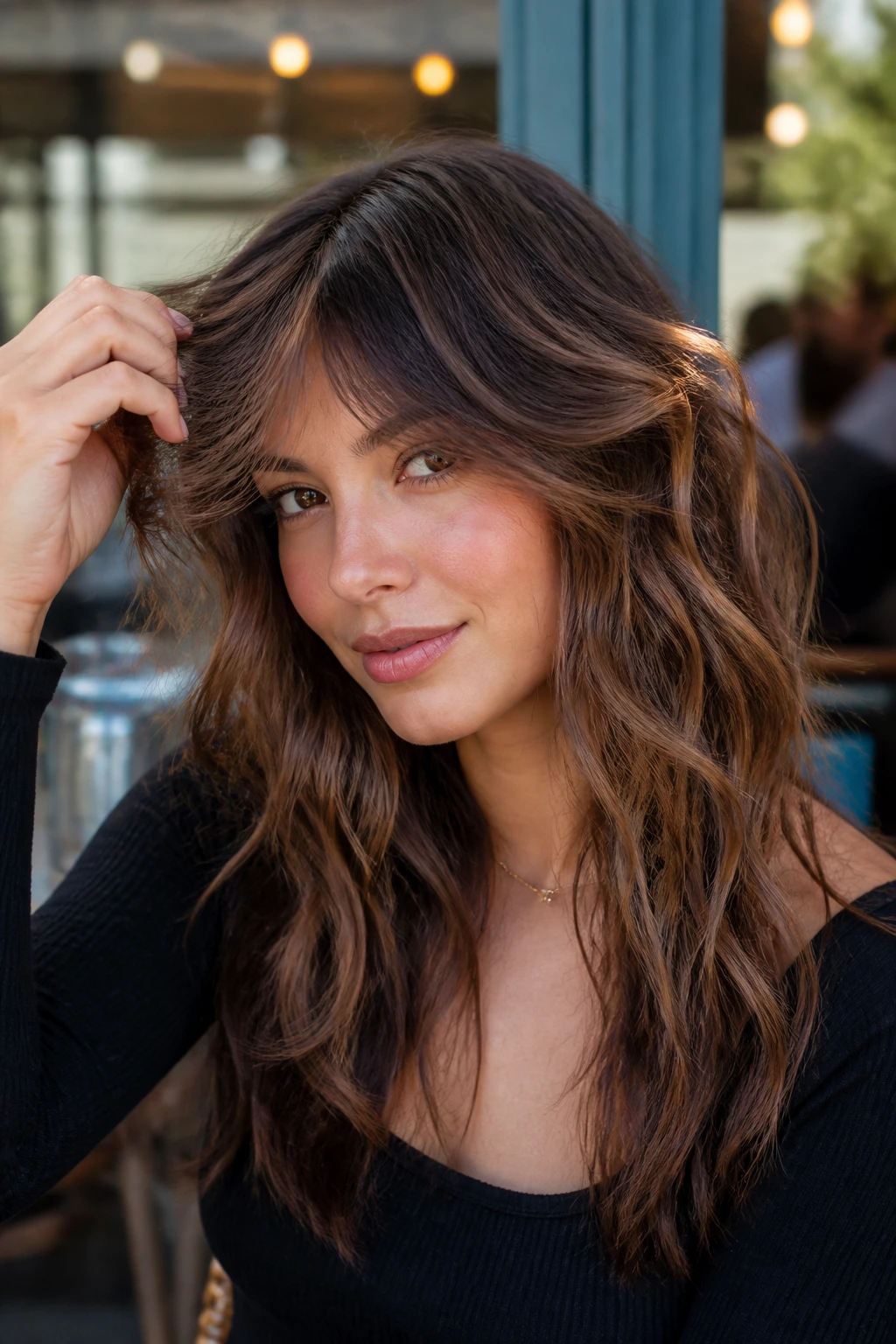
Fine-Wave Whisper Layers: Keep the outer line blunt and ask for tiny internal layers only. This gives a fuller silhouette while still letting the wave bend breathe.
Thick-Hair Weight Removal: Go a little higher with the layering if your hair swells at the sides. The cut should lose bulk where it stacks, not just at the ends.
Air-Dry Friendly Shape: Ask for long face framing, a soft perimeter, and layers that start below the cheekbone. That version grows into a nice shape even when styling time is short.
Heat-Styled Polish: If you like blowouts, choose butterfly, Rachel, or feathered layers. These cuts respond well to a round brush and a bit of direction at the front.
Shorter and Sharper: If long hair drags you down, the layered bob, shag bob, or angled lob can give you shape without much length. The haircut feels fresh, not fussy.
Common Mistakes That Flatten Waves or Wreck the Shape
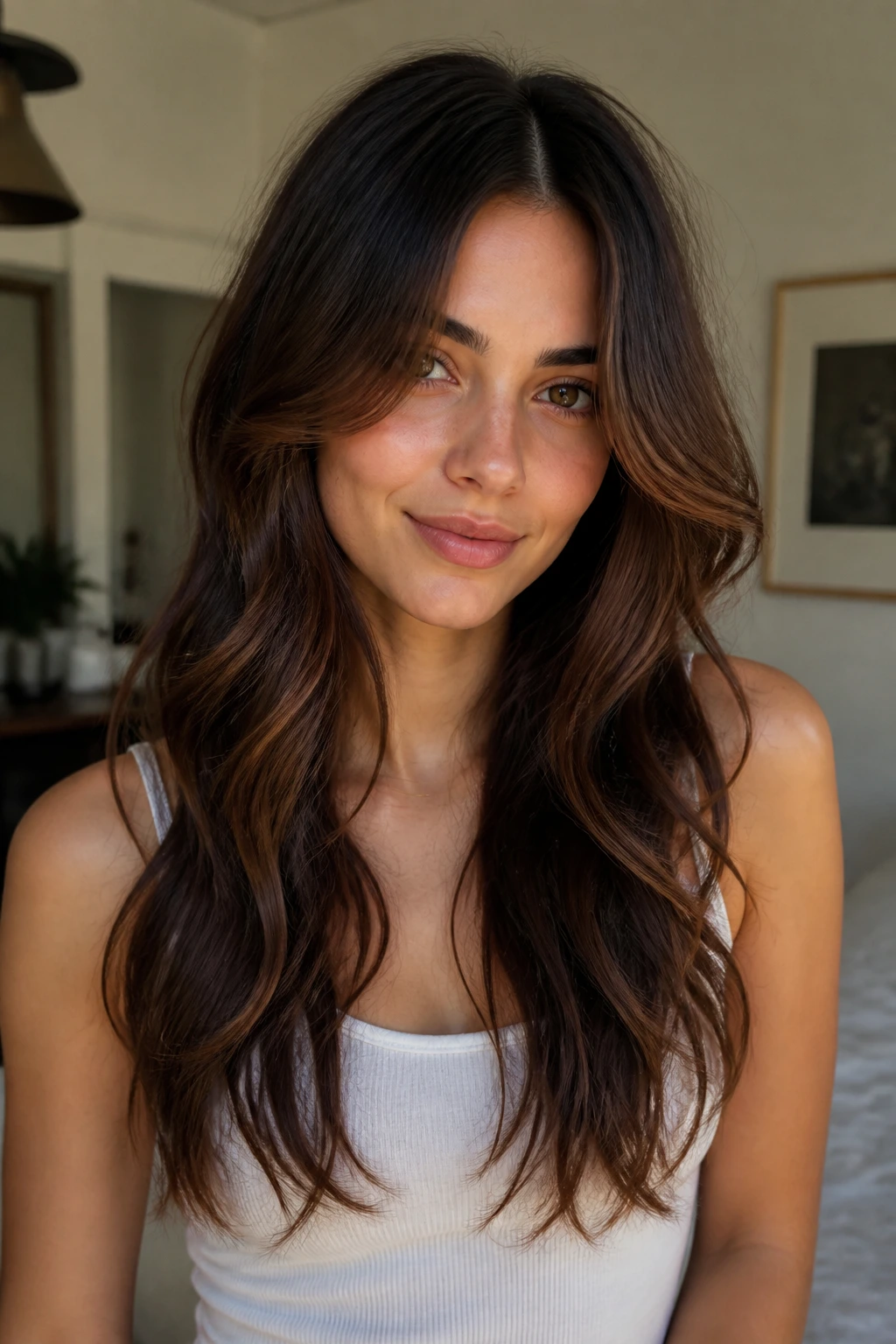
- Starting the shortest layer too high: If the face frame begins near the eye or brow on wavy hair, it can puff outward and sit awkwardly. Start lower unless you know your wave pattern can handle it.
- Over-thinning thick hair: Removing too much bulk leaves the ends ragged and frizzy, especially in humidity. Ask for weight removal with scissors or soft internal layering instead.
- Using heavy cream all over: Waves often need more hold and less butter-like softness. Too much rich product at the roots makes the shape slump by noon.
- Ignoring shrinkage: Wavy hair often lifts when it dries. If the stylist cuts it too short wet, the finished result can jump up several inches higher than expected.
- Blunting every edge: A hard, one-length perimeter can make waves look wide and static. Even a subtle taper or internal layer can change the way the haircut moves.
- Skipping trims for too long: Layered cuts lose their shape when the ends fray. A small dusting every 8 to 12 weeks keeps the outline from drifting.
Frequently Asked Questions

Which layered haircut works best for fine wavy hair?
Invisible internal layers or a collarbone lob are usually the safest place to start. They keep the outline fuller while giving the wave enough room to bend, which matters a lot when the hair is fine and easy to flatten.
Are layers a bad idea if my waves are frizzy?
No, but the placement has to be careful. Frizz usually gets worse when the ends are over-thinned or the haircut removes too much weight from the perimeter, so softer layers and a stronger outline tend to behave better.
What should I ask my stylist for if I want face framing?
Ask where the shortest piece should land on your face — cheekbone, lip, jaw, or collarbone — and say how much movement you want around the front. That gives the stylist a real target instead of a vague “make it soft” request.
Can a layered bob work on wavy hair without looking puffy?
Yes, if the length and layering are chosen with your wave pattern in mind. A bob that lands at the jaw or just below it, with subtle internal layering, usually holds shape better than a short bob cut too high.
How often should layered wavy hair be trimmed?
Many layered cuts look best with a small trim every 8 to 12 weeks. Short shags and bobs may need the shorter end of that range, while long layers can often stretch a little longer before the shape starts to drift.
Do curtain bangs work if my hair is very wavy?
They can, but they need length. Curtain bangs that are cut too short can spring up and sit away from the face, so a longer version that blends into the layers usually behaves better.
What if my hair gets flat at the roots after the haircut?
Ask for less weight removal at the crown next time and use a root-boost mousse or clips while drying. Flat roots are often a sign that the top was cut or styled too heavily, not that waves “can’t” hold volume.
Can I still air-dry if I have lots of layers?
Absolutely. In fact, many layered cuts air-dry better because the wave pattern has room to form. The trick is to use enough hold at the mids and ends so the layers separate in a clean way instead of frizzing apart.
A Cut That Lets the Waves Lead
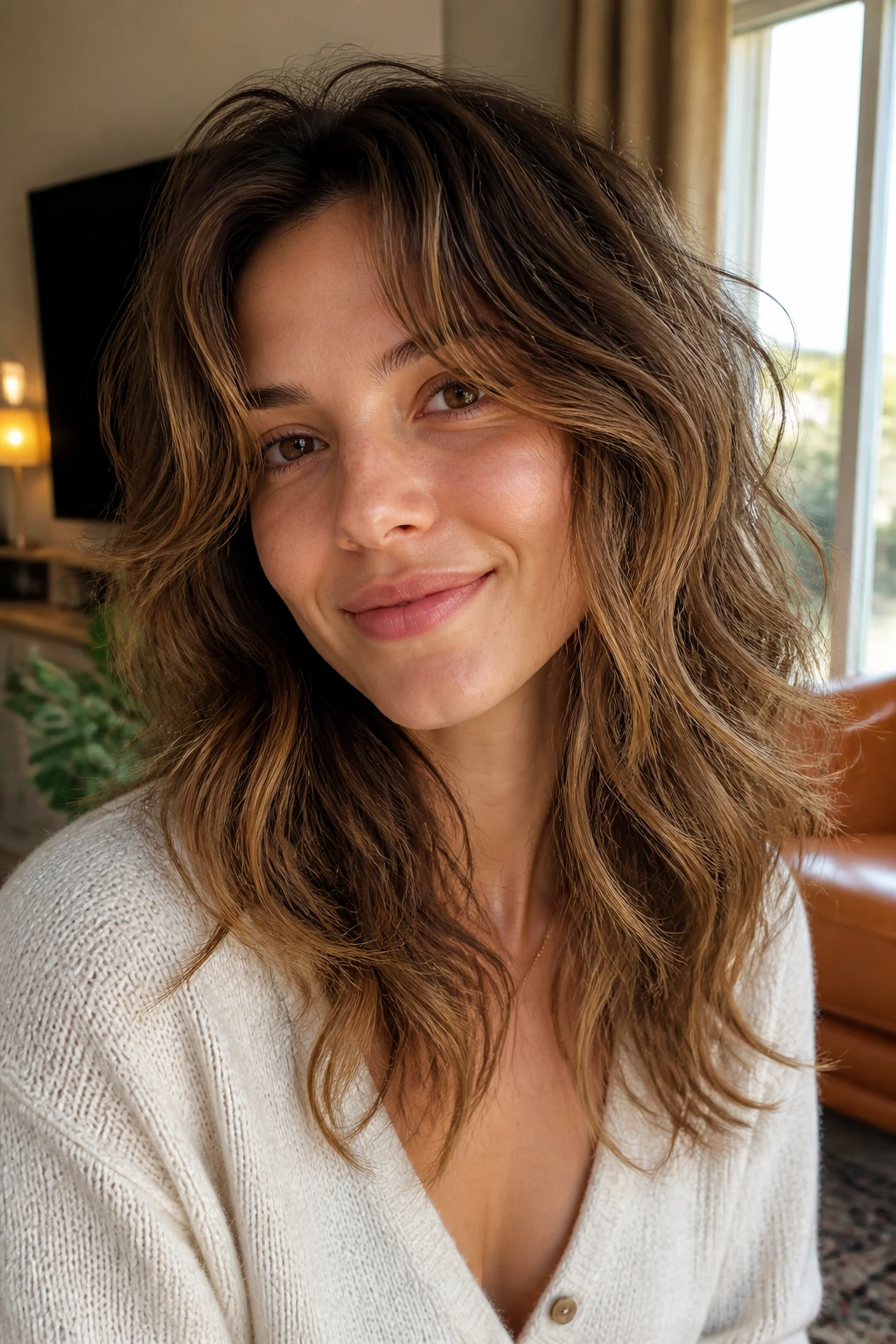
The best layered haircut for wavy hair doesn’t fight the bend, and it doesn’t force every strand into the same shape. It gives the waves a path. Some cuts do that with a strong face frame, some with hidden layers, some with a sharp bob or a soft shag, but the principle stays the same: placement first, drama second.
That’s why these styles work across so many different wave patterns. You can keep length and still get movement. You can go shorter and still keep softness. You can wear the haircut polished on one day and barely touched the next. That flexibility is the whole point.
Pick the shape that matches how you actually live with your hair, not the one that looks best only when you’ve spent forty minutes under a diffuser. The right cut should look good when the waves are doing what they do on their own.