



Round faces don’t need to be hidden behind length. They need a cleaner outline, a little vertical movement, and a cut that knows where to stop.
That’s why a short thick bob with lowlights works so well when the shape is right. Thick hair already brings body; the problem is when all that body lands in one blunt ring around the cheeks and makes the face read wider than it is. Darker strands threaded under the top layer change that instantly. They put shadow where the eye would otherwise get stuck.
I like lowlights on this kind of bob more than a burst of bright highlights. Highlights can be lovely, sure, but on dense hair they often make the sides look broader when the blow-dry falls flat. Lowlights do the opposite. They carve. They soften. They make the cut feel deliberate instead of puffy.
Why These 25 Bobs Work on Round Faces
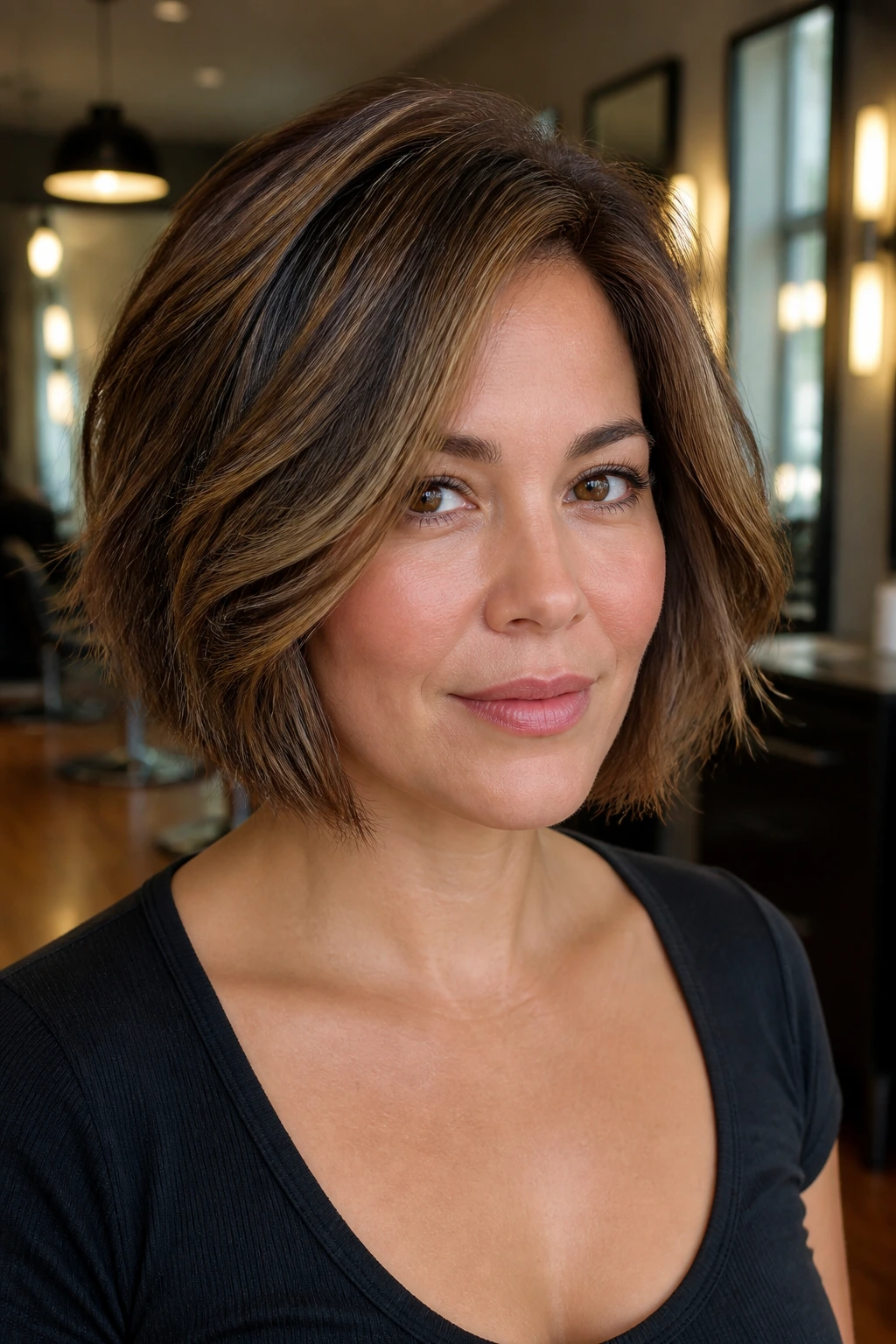
- Longer Front Pieces: A front edge that lands at the jaw or just below it pulls the eye downward, which is exactly what a round face needs.
- Shadow Through the Interior: Lowlights placed under the surface break up bulk without turning the whole head dark.
- Shape Variety: Some of these cuts stack, some angle forward, and some stay soft. That keeps thick hair from feeling trapped in one fixed outline.
- Better Grow-Out: Because the darker pieces sit below the top layer, the color looks lived-in longer and the shape stays readable between appointments.
- Styling Freedom: These bobs hold a smooth bend, a loose wave, or a tucked finish without collapsing into one heavy line.
- Less Cheek Width: Side parts, bevels, and diagonal fronts all help the bob skim around the face instead of sitting squarely on it.
1. Deep Side-Part Chin Bob with Chestnut Ribbon Lowlights
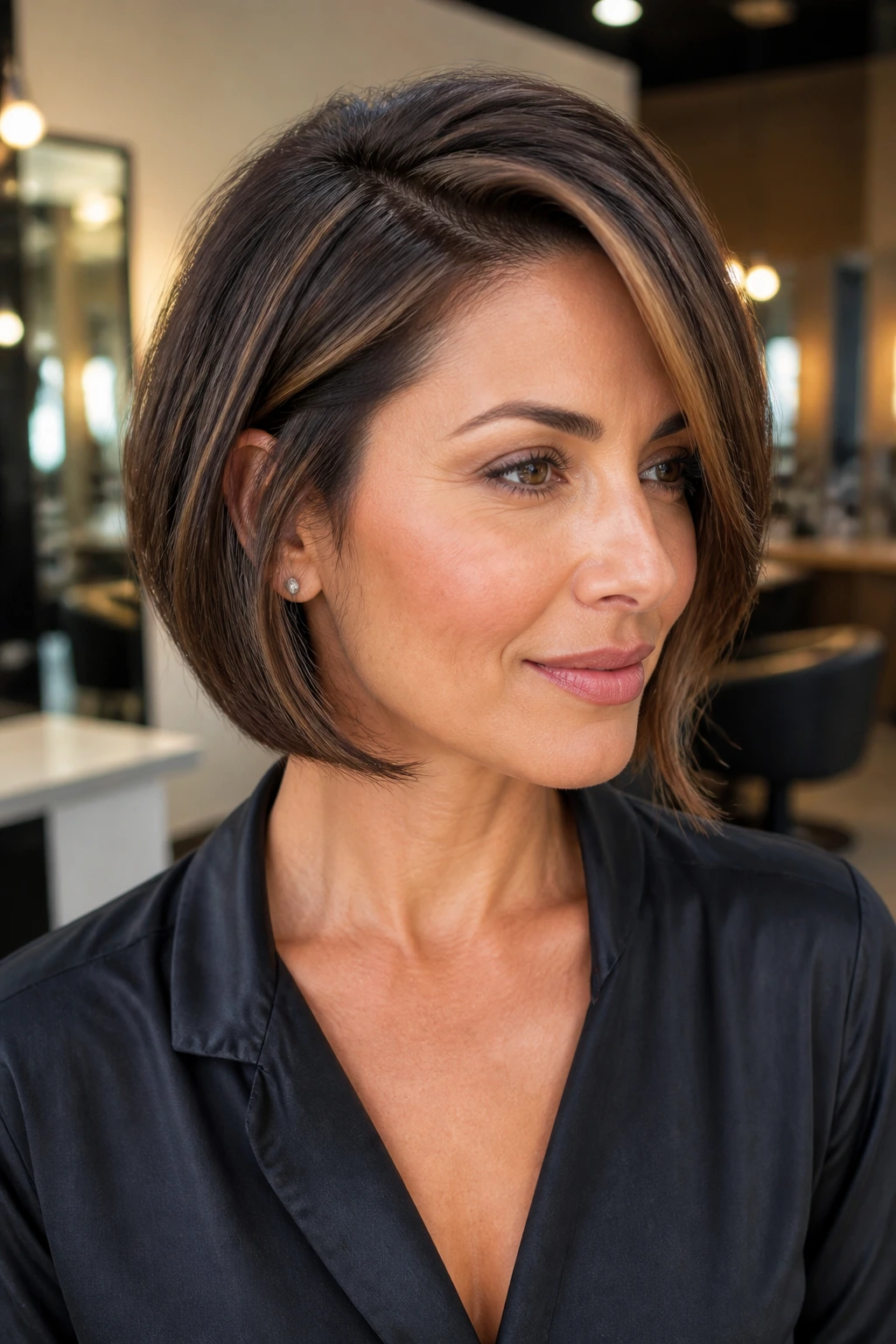
A hard side part changes the whole attitude of this cut. It gives the face a diagonal line to follow, and that diagonal is doing real work here because it pulls attention away from the widest point of the cheeks. Chestnut ribbon lowlights tucked under the top layer keep the thick perimeter from reading like one solid block.
Ask for the front pieces to land just below the chin, not at cheek height. That small shift matters more than people think. If your hair has a natural flip, ask for a soft bevel at the ends so the line curves inward instead of kicking out.
This one suits anyone who likes a polished finish without stiffness. One ear tuck helps, too. Clean. Sharp. Done.
2. Stacked Crown Bob with Toffee Lowlights
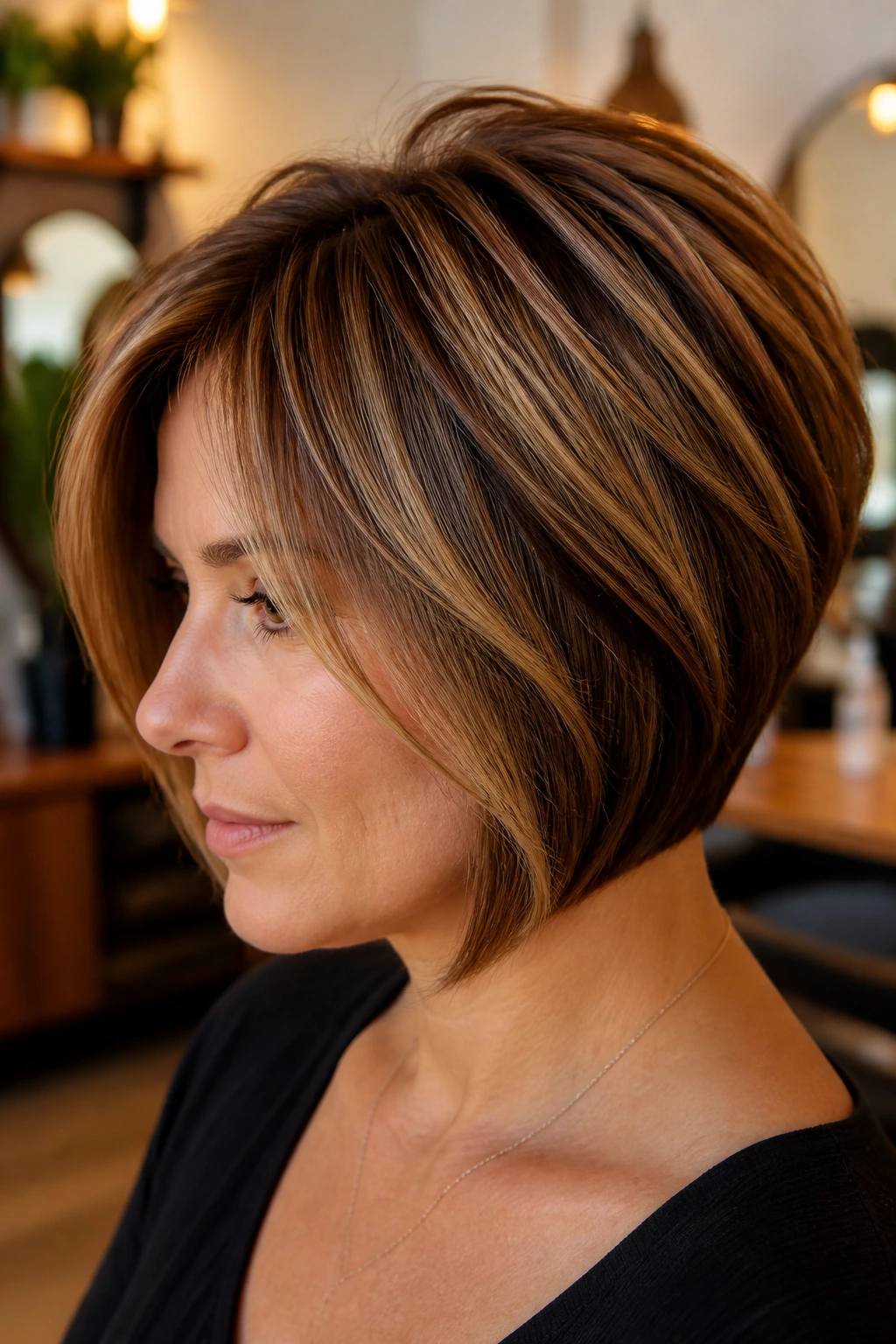
Stacking in the back is the quiet fix for thick hair that wants to sit like a shelf. Shorter layers underneath the crown create lift where a dense bob usually collapses, and toffee lowlights keep the top from flashing too much light and puffing outward.
The front should still skim the jaw so the face doesn’t end at one blunt line. That balance is the whole point. Shorter in the back, longer in the front, shadow underneath. It’s a simple equation, and it works because it gives height where you want it and restraint where you need it.
If your hair grows fast, ask for a soft stack rather than a severe one. The softer version stays tidy longer and looks less chopped out after a few weeks.
3. Soft Angled Bob with Mushroom Brown Shadow
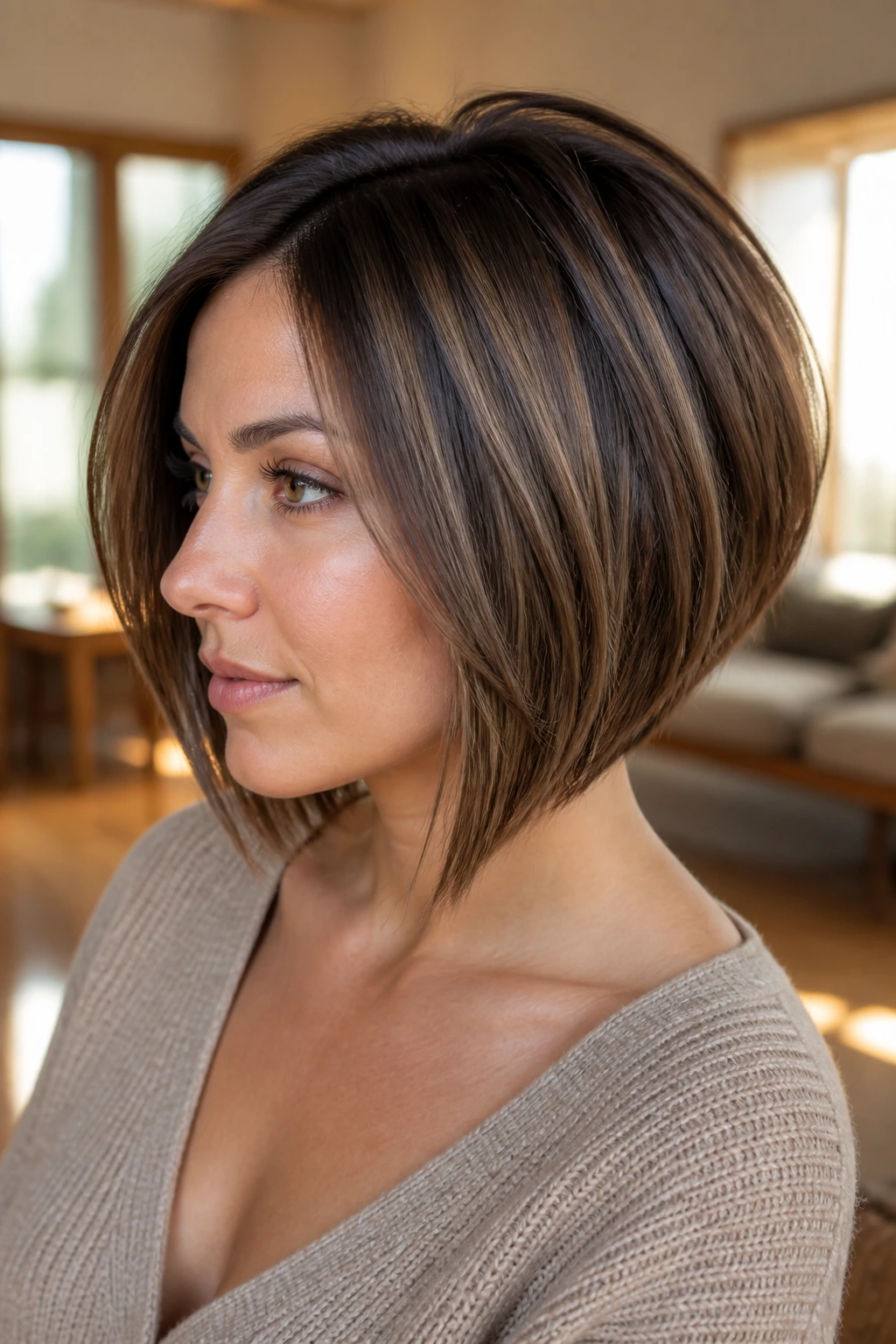
This is the safer lane if you like movement but don’t want your bob to shout. The angle is gentle, not harsh, so it narrows the face without turning the cut into a hard triangle. Mushroom brown shadow lowlights cool down the bulk and keep thick hair from looking too warm and wide near the cheeks.
What to Ask Your Stylist For
- Keep the front a touch longer than the back, but not dramatically so.
- Place the darker pieces mostly underneath and through the interior.
- Leave enough weight at the perimeter so the hair still swings.
- Soften the ends with point-cutting instead of razor-thinning the whole edge.
That last part matters. Too much thinning can make thick hair frizz at the ends while the sides stay heavy. A soft angle with careful lowlights keeps the shape controlled without making it flat.
4. Choppy Chin Bob with Cocoa Peekaboo Lowlights
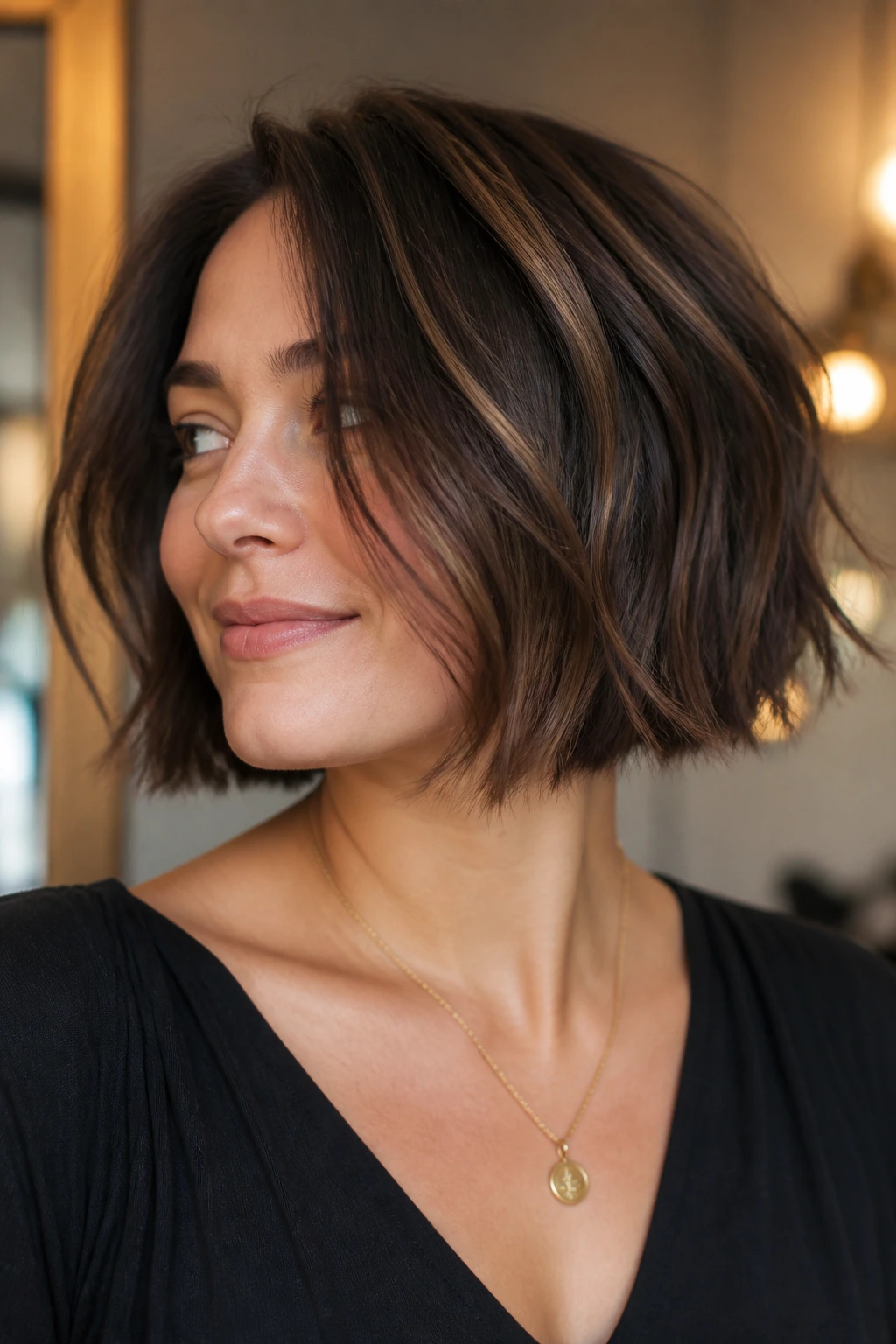
A blunt chin bob on thick hair can look boxed in a hurry. Choppy ends fix that. They break up the line just enough that the cut feels airy, and cocoa peekaboo lowlights hide beneath the top layer so the movement shows when the hair shifts.
The best part of this one is the way it changes in motion. Straight on, it reads clean and compact. When you turn your head, the darker bits flick through the front and give the bob some depth. That’s useful on a round face because the eye keeps moving instead of settling on a single circle.
Keep the styling loose here. A little bend through the midlengths is enough. If you curl it into a big round wave, you lose the whole point.
5. Rounded French Bob with Walnut Lowlights
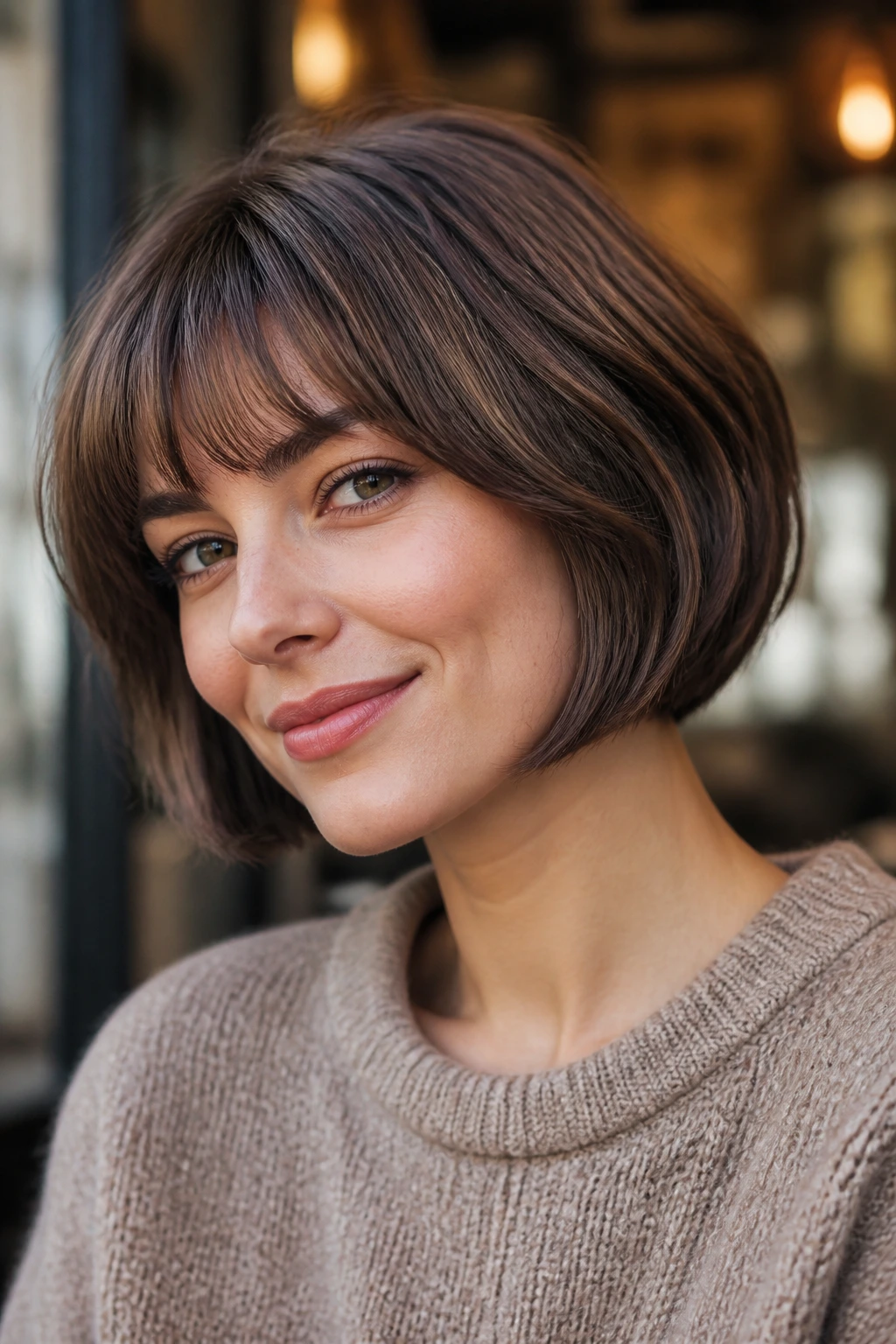
The French bob gets tricky on round faces because it can cross the line from chic to too short very quickly. The fix is not to avoid it. The fix is to let it skim the cheekbone instead of ending high and square. Walnut lowlights near the temples and underlayer keep the shape from looking like a helmet.
This version likes a soft fringe or a broken-up front, not a solid wall of bangs. The roundness stays, but it’s trimmed with intention. Thick hair makes the line feel plush, and the lowlights stop that plushness from turning into bulk.
I like this one for someone who wants a little attitude in the cut. It’s neat. It’s compact. It has a bit of Paris in it, without pretending to be effortless when it actually takes good shaping.
6. Jaw-Length Bob with Espresso Underlights
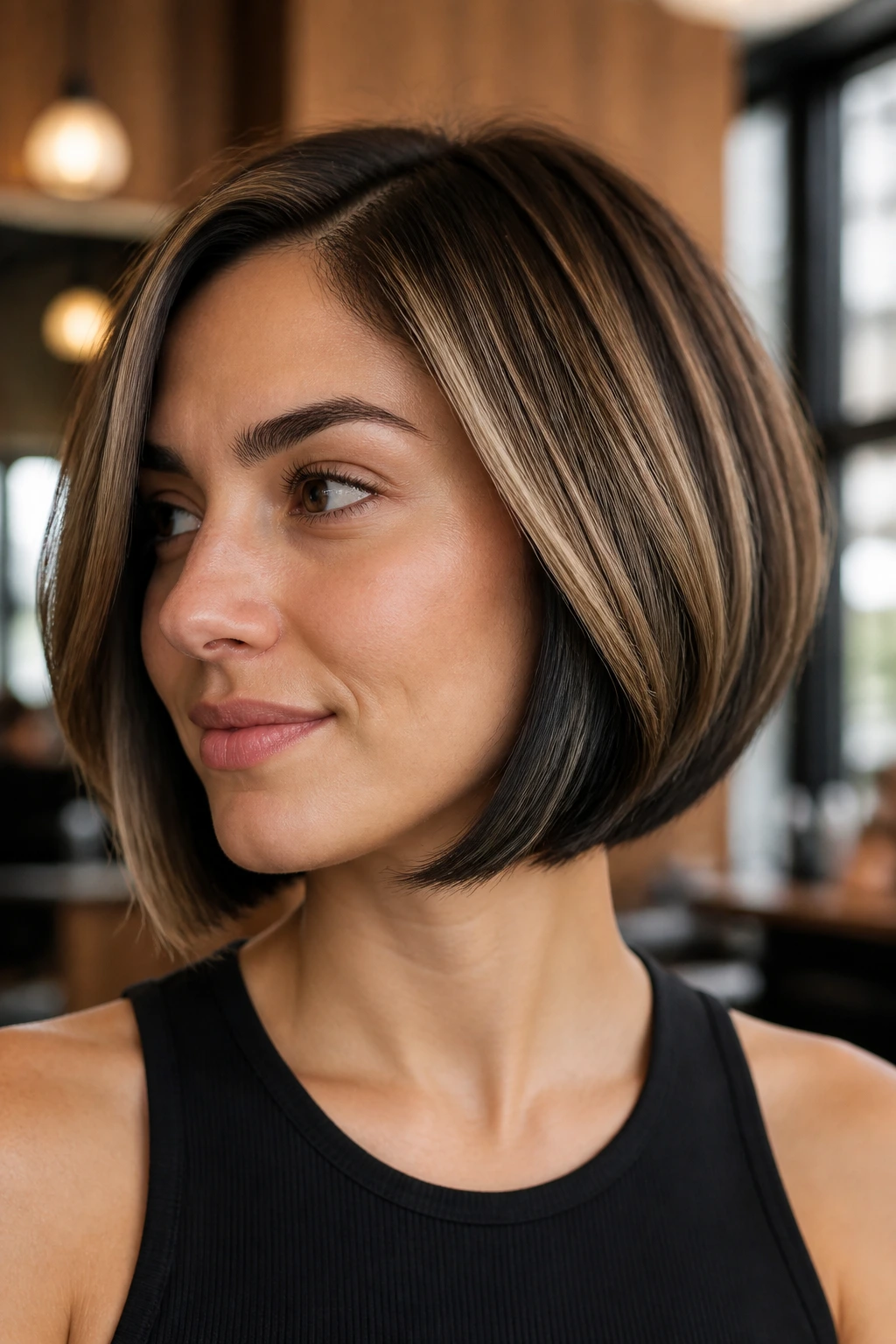
A jaw-length bob is one of the best lengths for a round face because it stays close enough to feel short, but not so short that it widens the cheeks. Espresso underlights give the ends a deeper base, which helps dense hair lie flatter under the visible layer.
The darker color should live underneath, not stripe across the surface. You want a shadow line, not a zebra effect. When the hair moves, that inner darkness keeps the shape from blooming outward. It also makes the top layer look cleaner, almost carved.
This cut looks especially good when blown smooth with a slight inward bend. Keep the crown lifted and the sides controlled. Heavy ends without lift at the root are where this one goes sideways.
7. Wavy Chin-Length Bob with Beige Brunette Lowlights
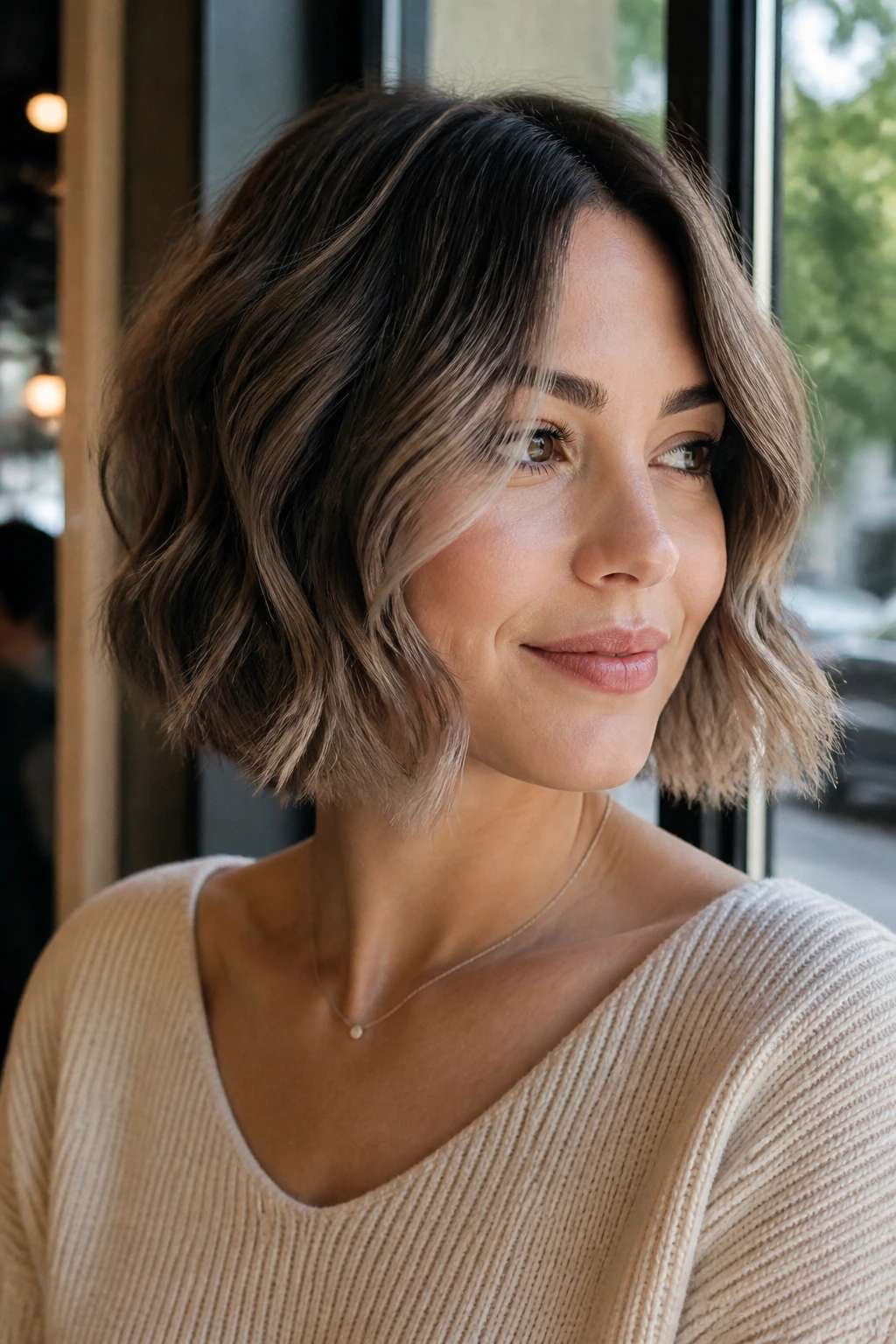
Waves can widen a round face if they’re too round themselves, so the trick here is a loose, elongated wave rather than a puffed curl. Beige brunette lowlights add a soft contour through the bends, which helps the bob look dimensional instead of puffy.
This is one of those cuts that benefits from a little imperfection. If the wave is too polished, it can look dated. If it’s too loose, it can lose the shape. Aim for bends that start below the cheekbone and finish toward the collarbone area, even if the cut itself sits shorter.
It’s also a good option if your thick hair resists exact styling. The lowlights give the eye some structure, so even a quick air-dry can still look intentional.
8. Inverted Bob with Honey Brown Lowlights
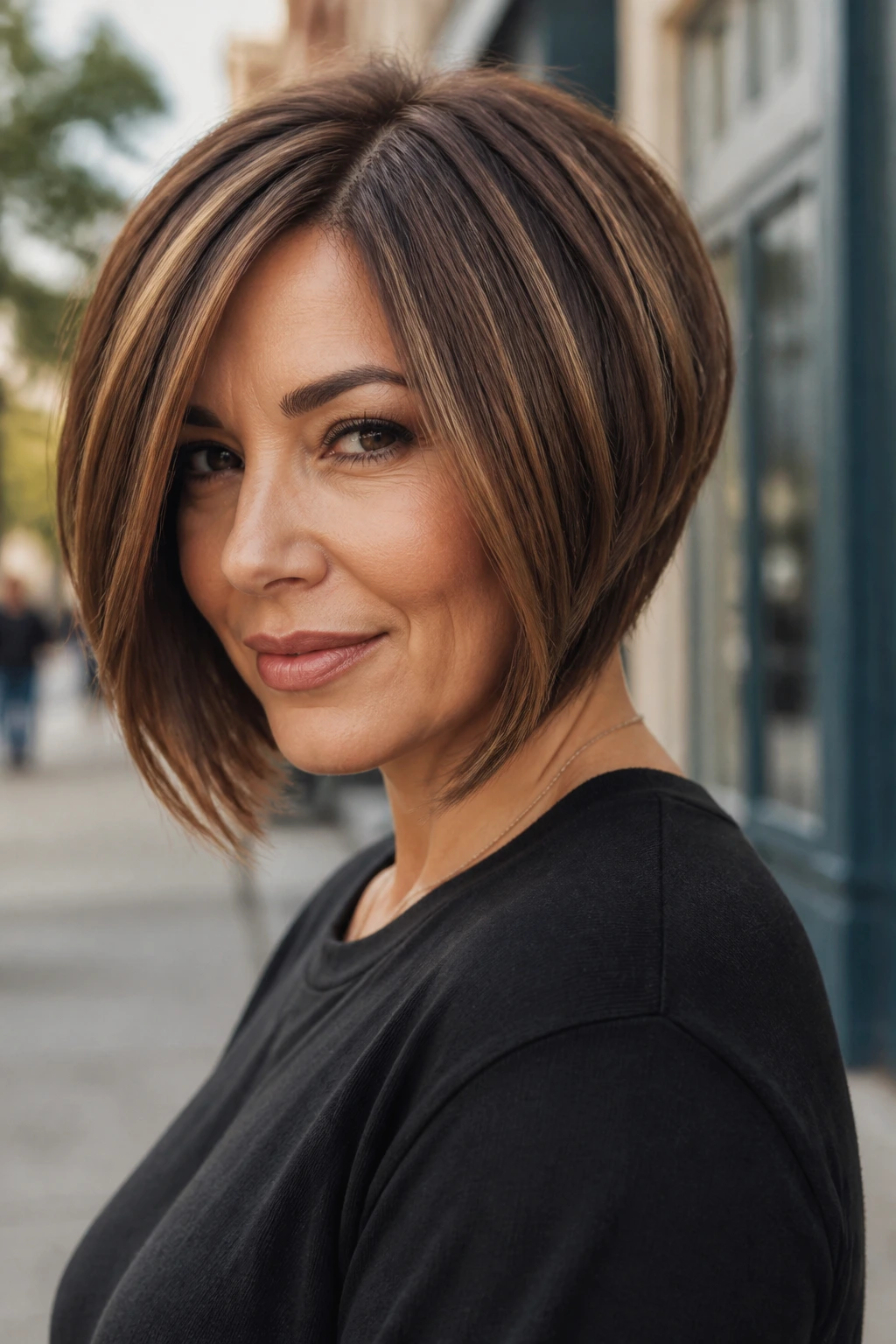
The inverted bob does a lot of the slimming work on its own because the front stays longer than the back. Honey brown lowlights make that angle look richer and prevent the top from flattening into one bright sheet.
This one is a little more dramatic than the soft angled version, but not cartoonish. The back should hug the nape tightly, and the front should swing forward enough to graze the jawline. That forward movement is what pulls the face visually longer.
If you want this shape to hold, the blow-dry has to respect the angle. Lift at the crown, smooth the back, and keep the front pieces directed forward rather than curling them under too much. Too much curl kills the cut.
9. Blunt Bob with Hidden Dark Chocolate Lowlights
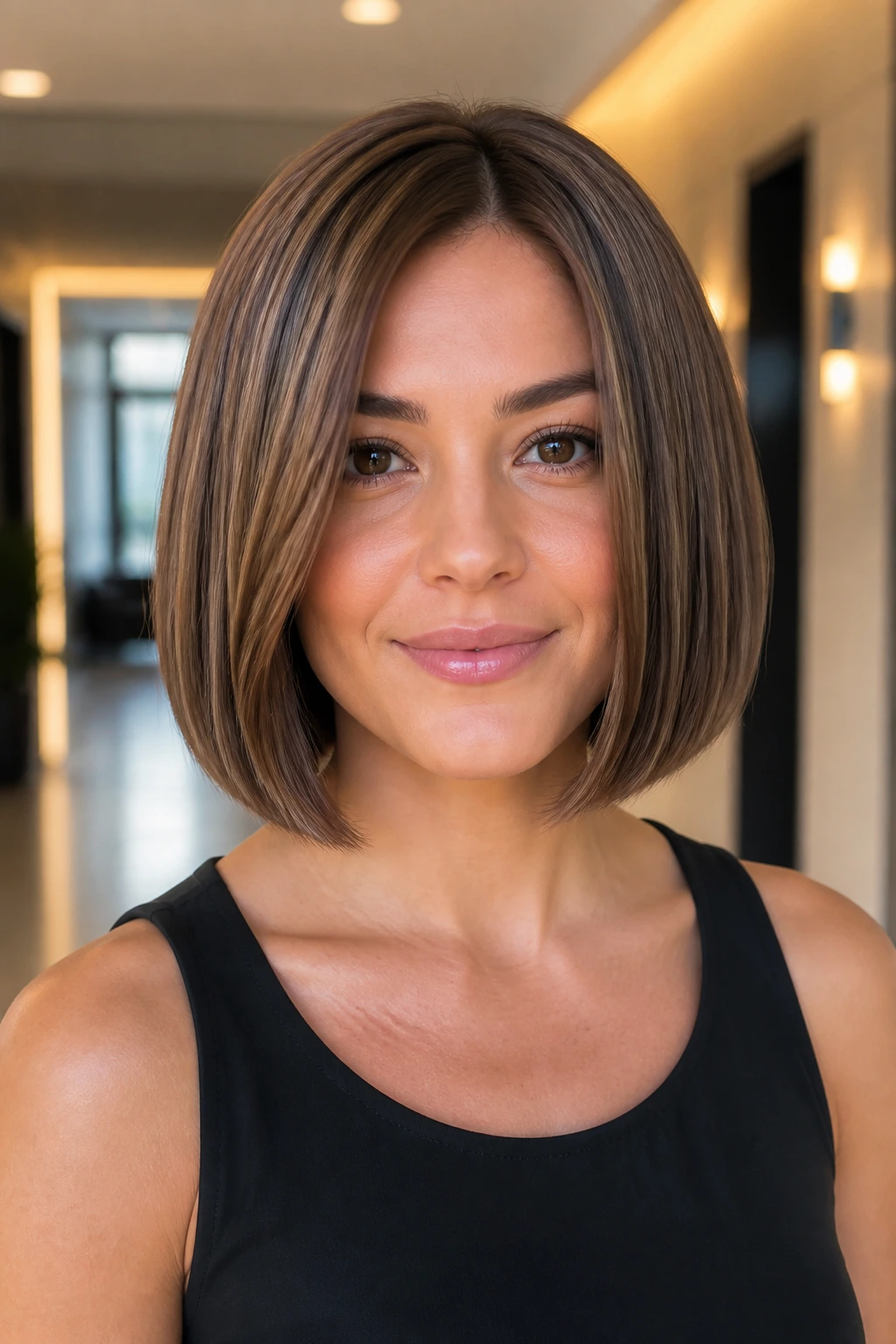
Yes, a blunt bob can work on a round face. The catch is that it needs discipline. On thick hair, a blunt edge can look heavy fast, so hidden dark chocolate lowlights are doing the invisible work underneath by taking away some of the visual bulk.
This version is for someone who likes sharp lines and doesn’t mind a little maintenance. The edge should sit cleanly, with the ends trimmed straight, but the interior lowlights keep it from becoming a wall. That contrast is what saves it.
A center part can work here if the face has strong cheekbones or a little natural length. If not, nudge it off-center. Even half an inch changes the whole read.
10. Side-Swept Bob with Ash Brown Lowlights
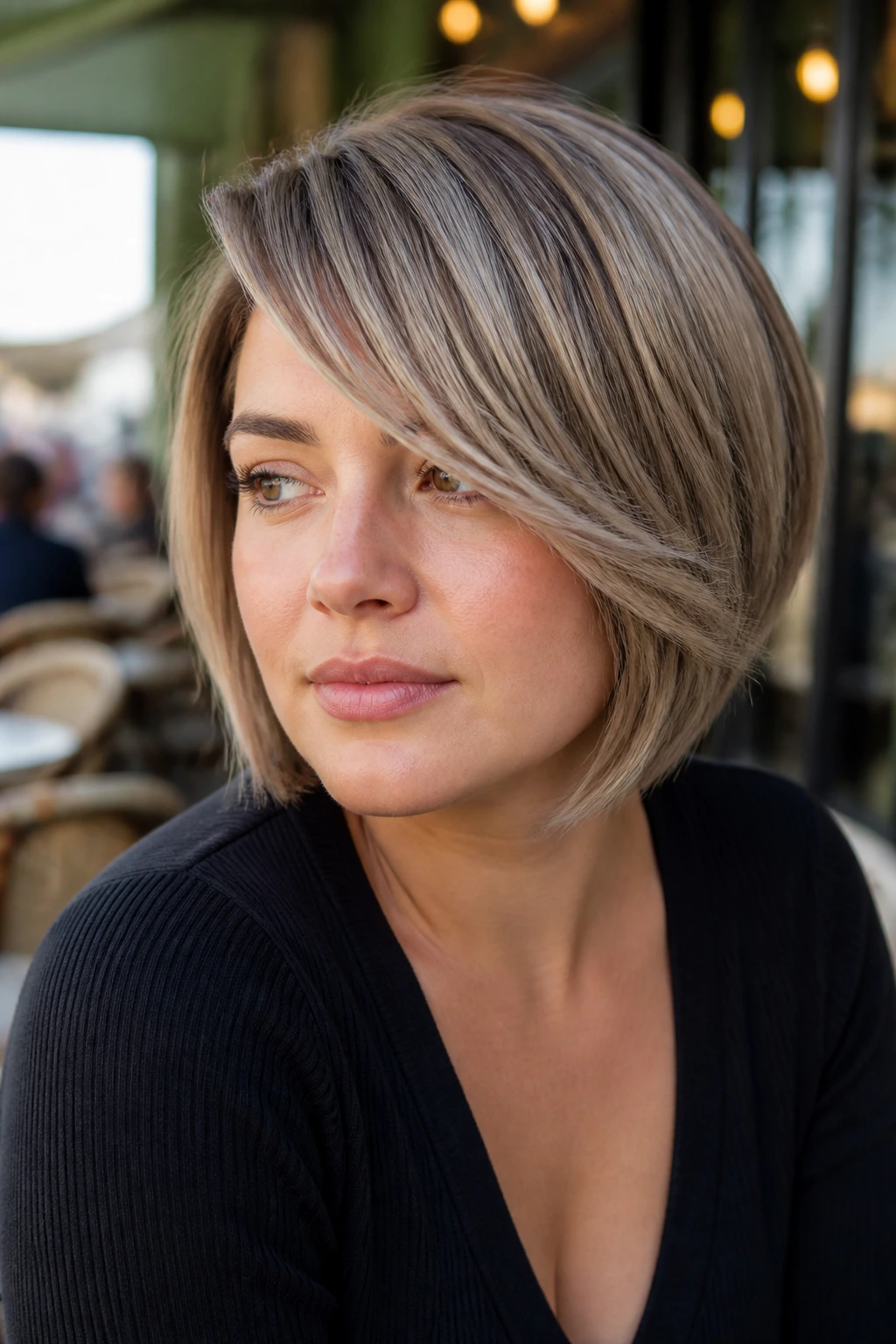
A side-swept fringe is a quiet cheat code for round faces. It breaks the circle without looking fussy, and ash brown lowlights add contour through the front so the bob doesn’t brighten and widen at the temples.
This style is especially nice if your hair tends to get fluffy around the cheeks. The sweep draws one side longer and softens the other. The darker pieces underneath stop the whole shape from turning into one flat brown cap.
Keep the fringe light, not heavy. You want movement, not a curtain. If the front gets too thick, the bob loses its angle and the face gets boxed in again.
11. Tousled Shag Bob with Mocha Lowlights
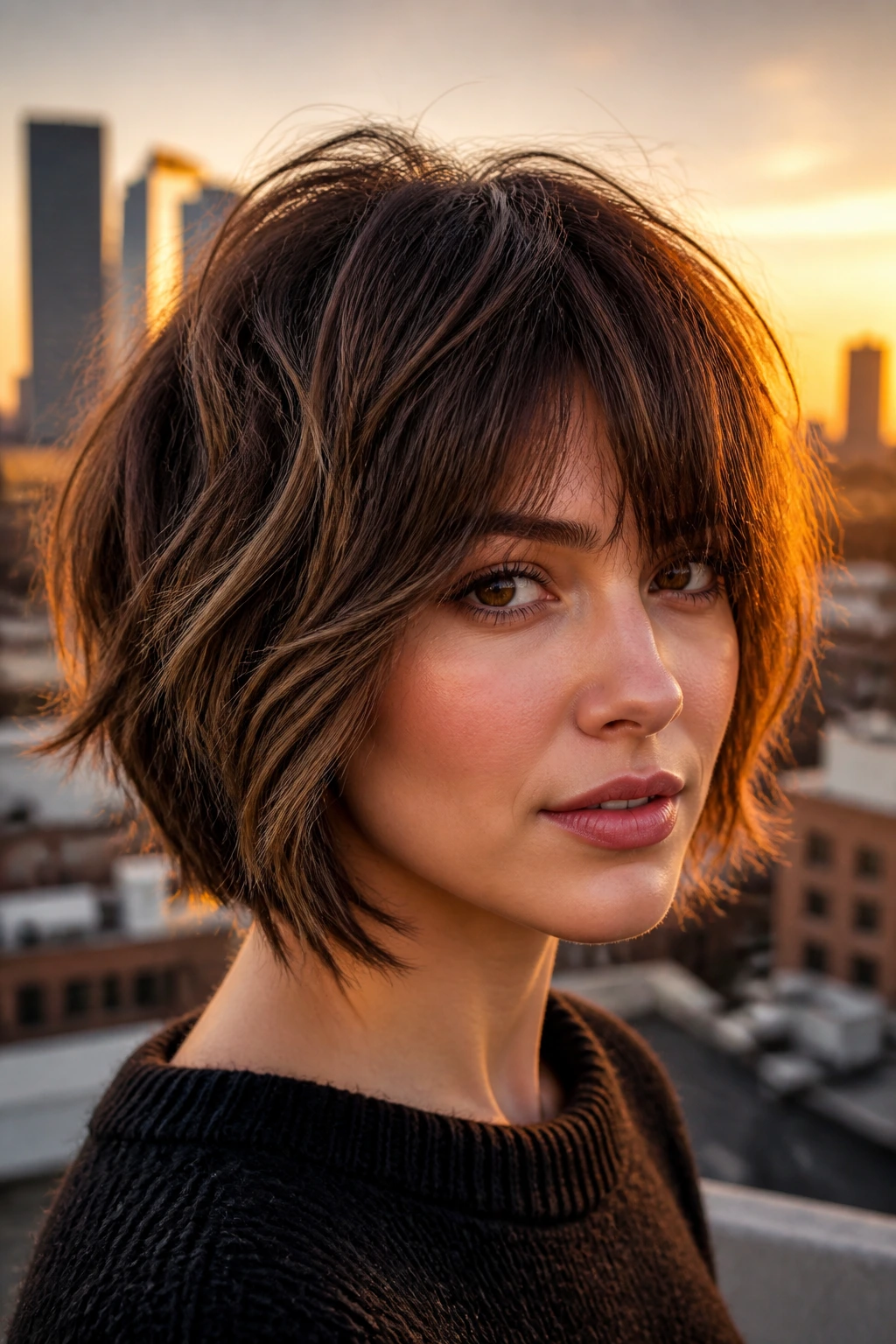
This is the more relaxed cousin in the group, and I like it a lot for dense hair that wants to move. The shaggy layers remove some of the weight inside the bob, while mocha lowlights keep the texture visible instead of fuzzy.
A thick bob with too many soft layers can go fluffy. The trick here is to keep the layers purposeful: shorter around the crown, piecey through the sides, and a little stronger at the perimeter so the shape still holds. That mix stops the face from being swallowed by volume.
Air-dry cream or a diffuser works better than overblown brush styling here. Let the ends break apart a little. That slight messiness is the whole charm.
12. Feathered Bob with Cinnamon Lowlights
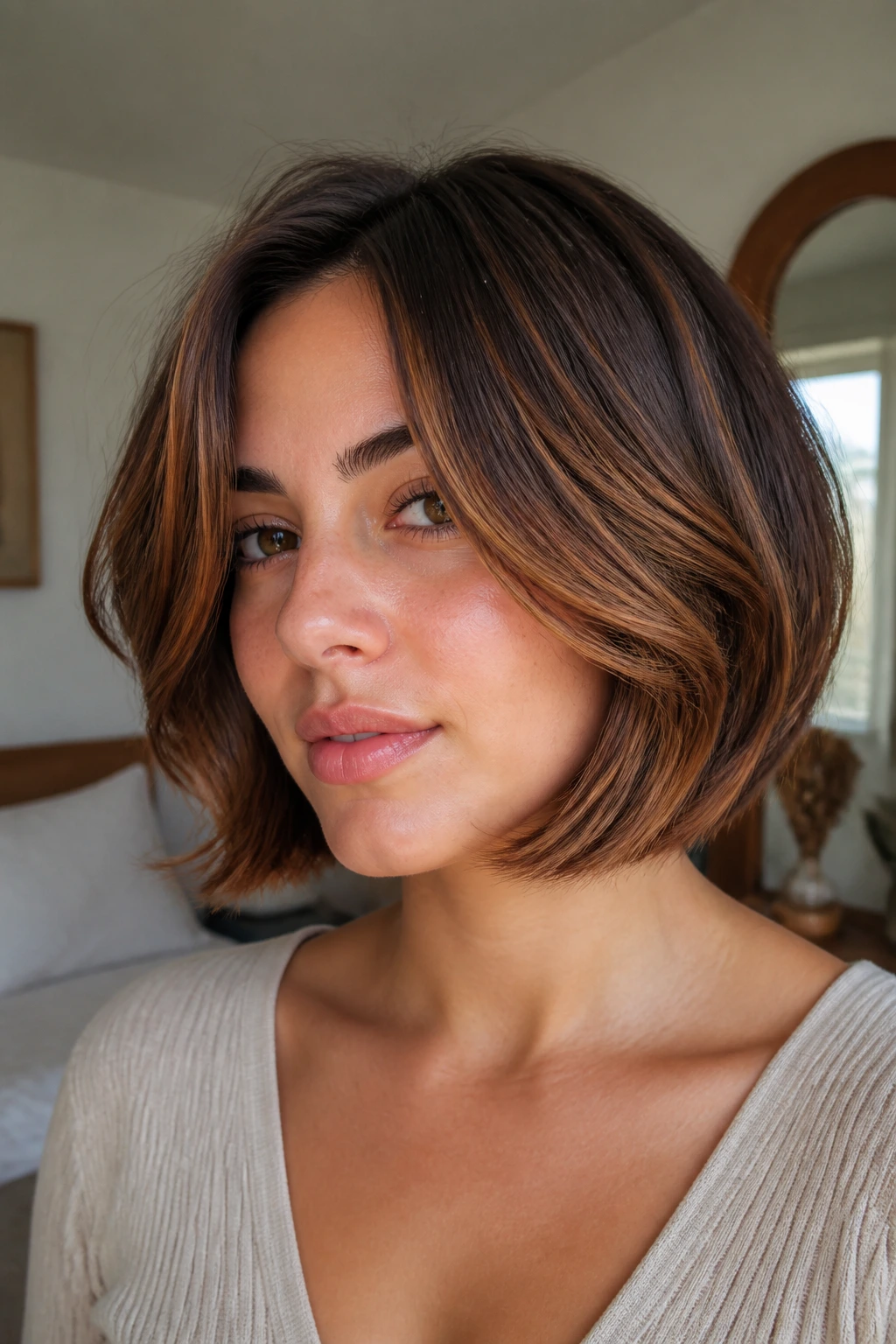
Feathering sounds old-fashioned until you see it done properly. On a thick bob, feathered ends stop the cut from sitting like one heavy slab, and cinnamon lowlights warm the interior so the movement shows through.
This cut is good when you want softness around the jaw without losing the bob shape. The feathering should happen inside the cut, not just at the surface, or you’ll get wispy ends with a bulky middle. That’s a bad trade.
If your hair flips out, this one can still work. Blow-dry the front forward first, then bend the ends in with a round brush or a flat iron set to a low, controlled temperature. Keep it subtle.
13. Tucked-Behind-Ear Bob with Bronde Lowlights
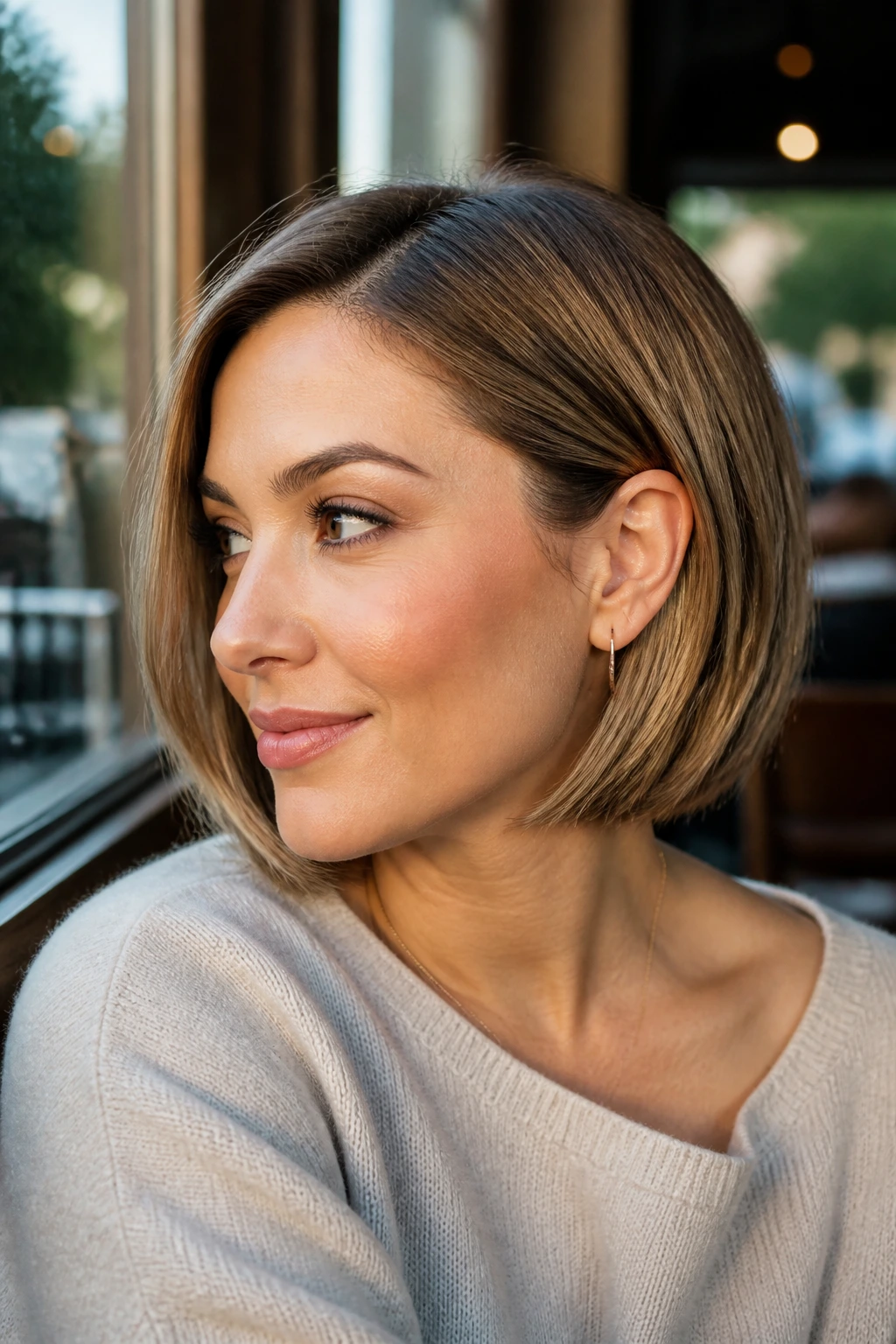
Tucking one side behind the ear is one of the easiest ways to give a round face a cleaner line. It opens the cheekbone and makes the bob feel lighter immediately. Bronde lowlights keep the exposed side from going too bright and losing depth.
Why It Flatters a Round Face
- The tucked side creates a vertical break near the cheek.
- The longer side softens the jaw without stopping at the widest point.
- Bronde lowlights add enough darkness to keep the cut from puffing at the surface.
- The look reads polished even when the rest of the hair has a little bend.
This is a nice choice for glasses wearers, too. The ear tuck clears space around the frames and keeps the whole look neat instead of crowded.
14. U-Shaped Bob with Smoky Brunette Lowlights
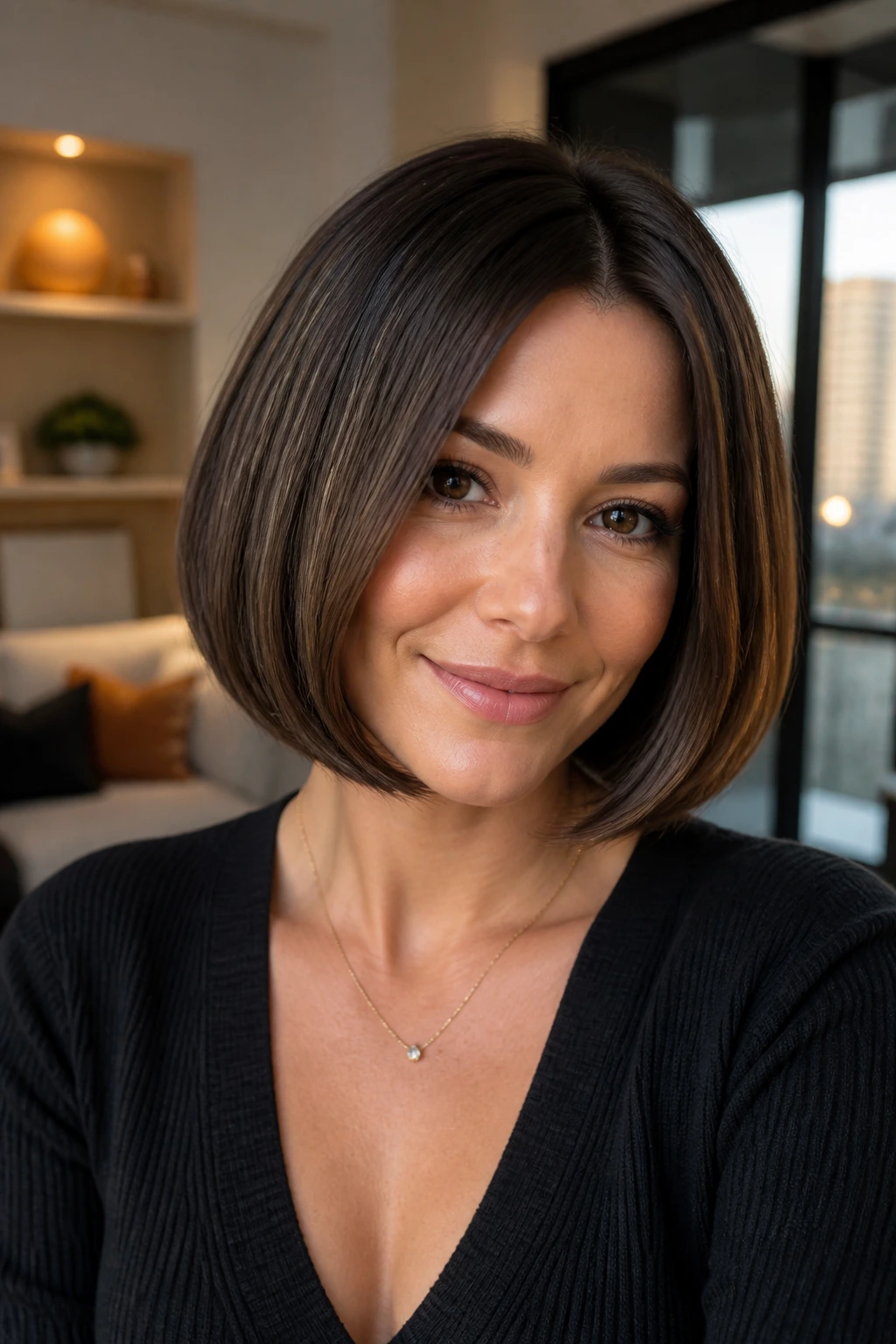
The U-shaped hemline is one of the prettier options for thick hair because it softens the straight-across look without drifting into layers everywhere. Smoky brunette lowlights deepen the curve and keep the ends from looking too blunt.
This shape is useful on a round face because it makes the sides a little longer than the center, which encourages the eye to move downward. That downward pull matters. It’s subtle, but it keeps the bob from stopping the face in its tracks.
If your hair tends to spread wide at the jaw, keep the interior weight controlled and the bottom edge smooth. A rough U shape can still widen. A clean one looks sculpted.
15. Graduated Bob with Caramel Lowlights
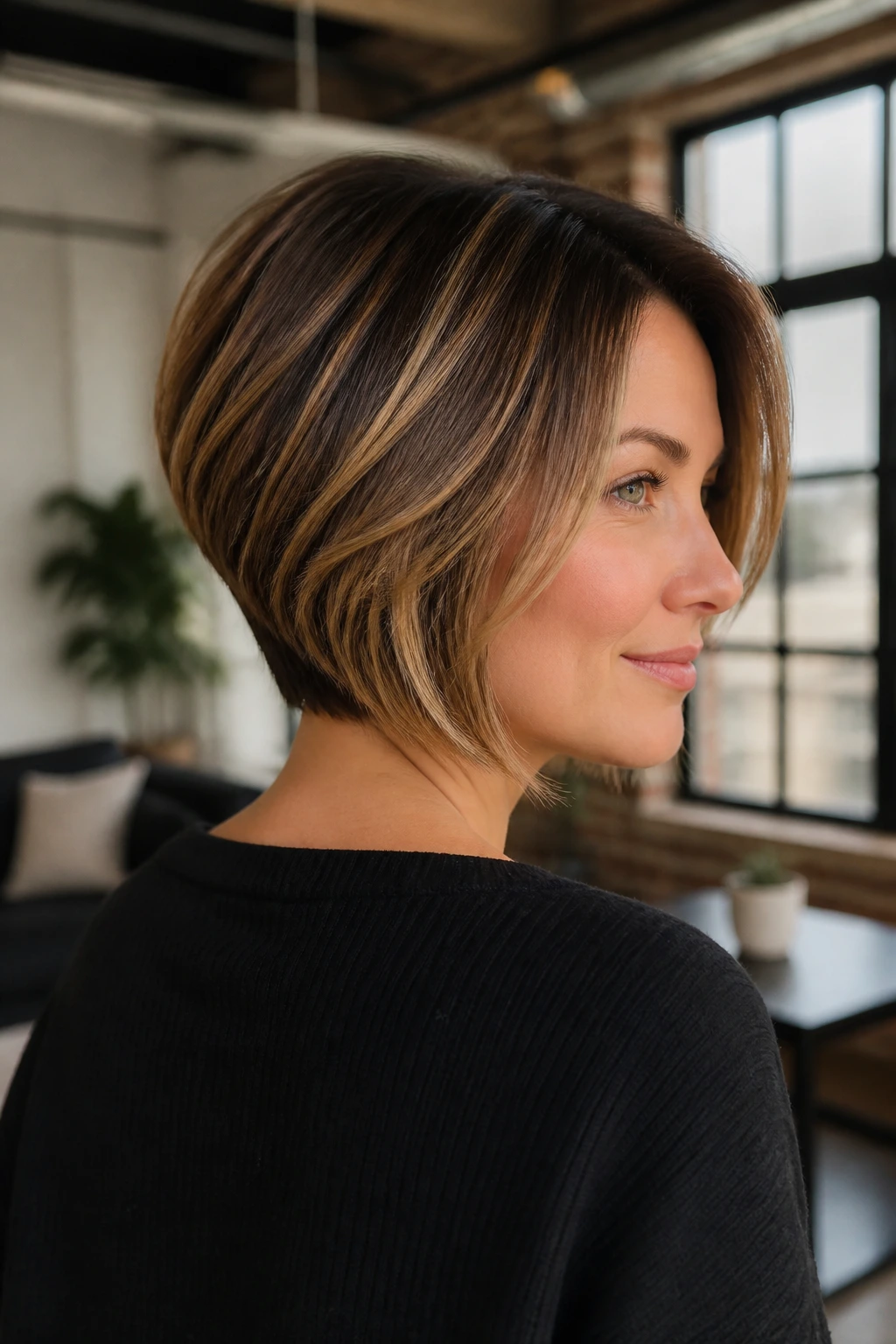
Graduation in the back gives thick hair a place to stack without feeling bulky all over. Caramel lowlights add warmth through the lower layers and keep the shorter back from looking too dark or heavy.
This cut shines when the stylist leaves enough front length to graze the jaw. The graduation should build quietly from the nape upward, not jump abruptly. If it gets too steep, the back starts to feel like a wedge and the front loses its softness.
It’s a good in-between bob for people who want shape but not drama. The silhouette is tidy. The color has depth. The face gets a little lift without much fuss.
16. Curly Chin Bob with Deep Mocha Lowlights
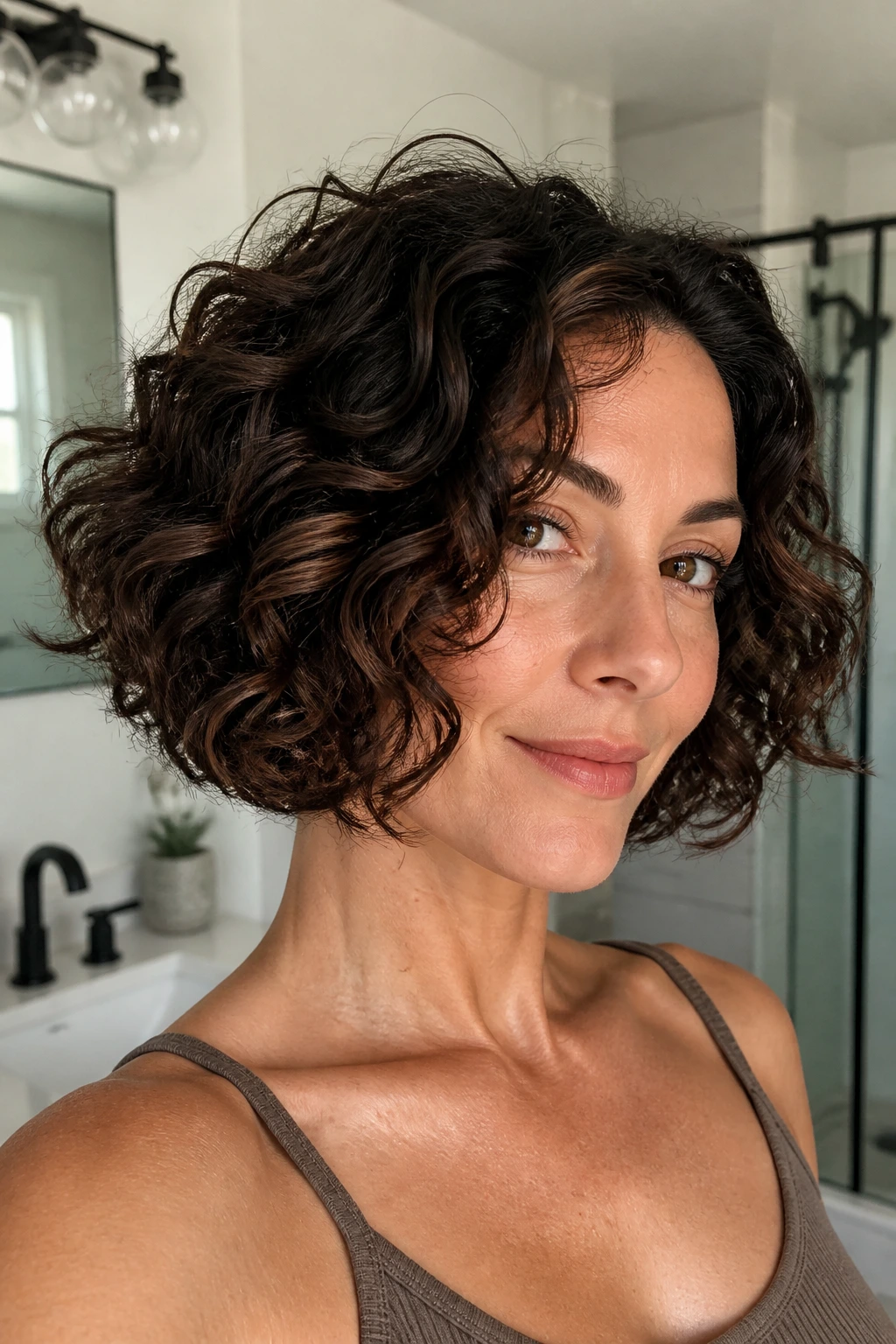
Curly hair on a round face can be gorgeous in a chin bob, but the curls need room to spring upward without expanding sideways too much. Deep mocha lowlights create pockets of darkness inside the curl pattern, which keeps the shape from turning into one big halo.
This cut works best with controlled layers. Too much layering and the curls pop outward; too little and the bottom goes heavy. The sweet spot is a shape that lets the curls stack gently and fall around the jaw with some air between them.
Use a diffuser or air-dry with curl cream. Skip heavy butters near the roots. They flatten the crown, and a flat crown is not your friend here.
17. Bouncy Micro Bob with Sandalwood Lowlights
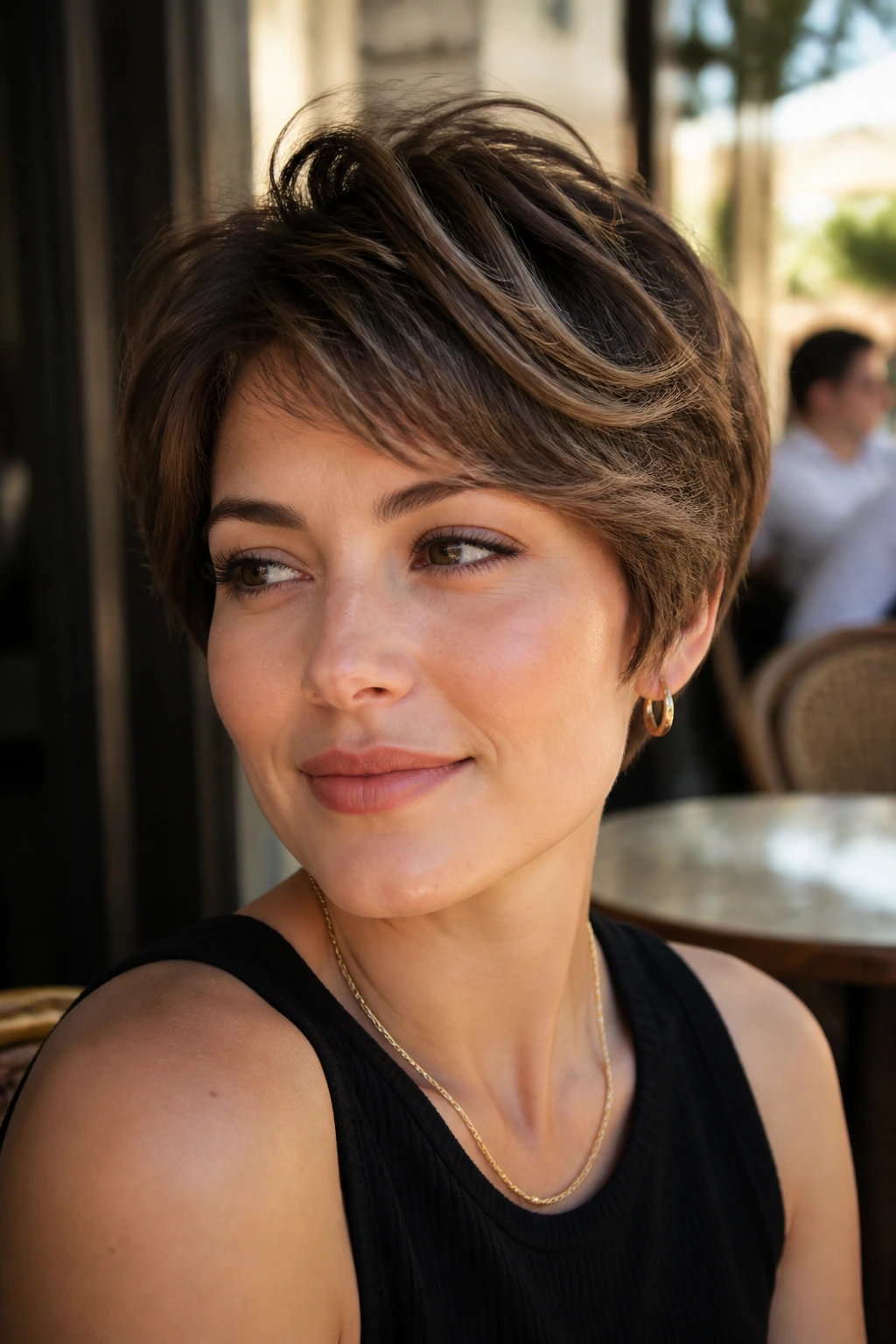
A micro bob sounds daring, and it is, but thick hair gives it some structure that fine hair can’t always manage. Sandalwood lowlights soften the edges and keep the little shape from looking too blocky.
The key is bounce, not width. The ends should move, but not flare out. That usually means a slightly beveled perimeter and a bit of lift at the crown so the face gets length from above rather than bulk from the side.
This one is best if you like a neat silhouette and don’t mind coming back for trims. If the ends grow too long, the whole shape loses its charm fast. Shorter bobs make that very clear.
18. Angled Bob with Coffee Bean Lowlights
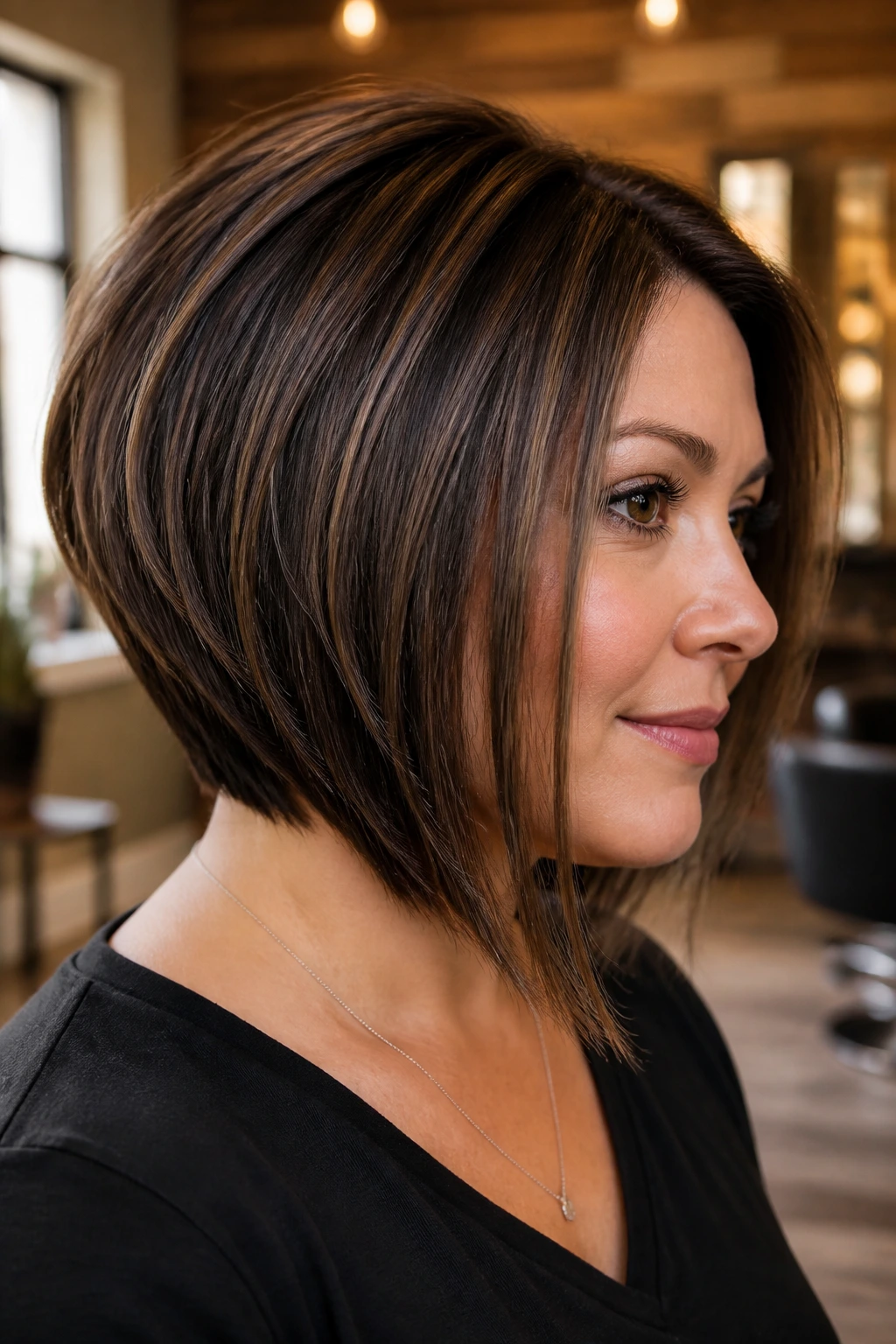
A strong angle can be fantastic on a round face because it cuts across the softness and gives the eye somewhere to travel. Coffee bean lowlights sharpen the line by keeping the back grounded and the front a little richer and deeper.
What to Watch For
- The front should be longer than the chin, but not drag heavily past the collarbone.
- The back needs enough stacking to keep the neckline neat.
- Lowlights should sit under the surface so the angle still looks clean.
- The ends should be smooth, not wispy, or the whole shape loses its edge.
This is one of the bobs I recommend when someone wants a little attitude. It’s not severe, but it has a spine to it.
19. Tapered Nape Bob with Chestnut Shadow
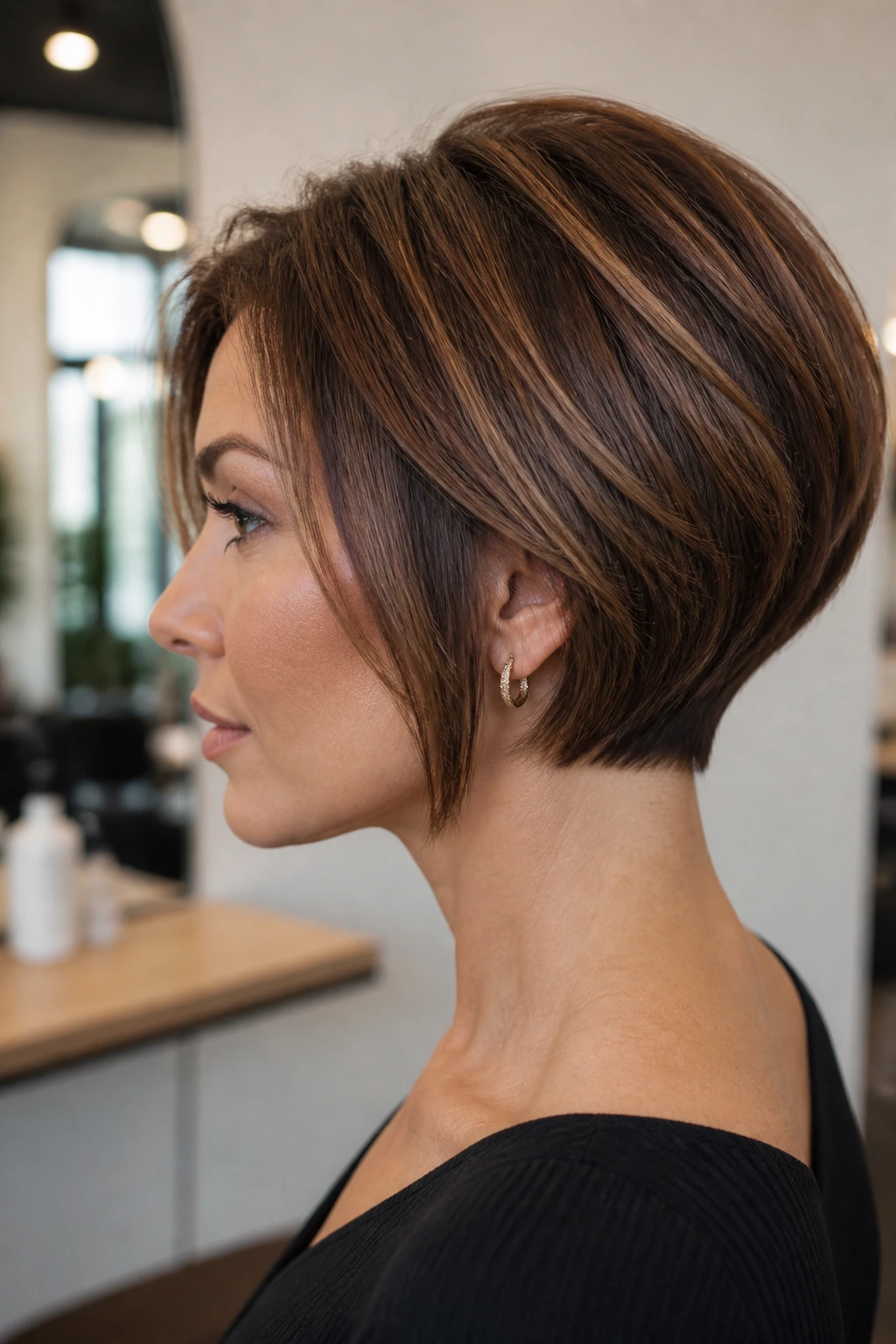
A tapered nape cleans up a thick bob faster than almost anything else. It removes that heavy shelf at the back of the neck, and chestnut shadow lowlights keep the shortened nape from reading flat.
The front can stay a touch fuller here, which is smart on a round face. You get the neatness in the back and enough softness around the face to avoid that pinched look some short bobs can create. It’s a tidy shape, but not a severe one.
If your hair grows into the neck, this is a good answer. The taper prevents that fuzzy triangle at the back that thick hair loves to build when it gets a little too long.
20. Airy Layered Bob with Taupe Lowlights
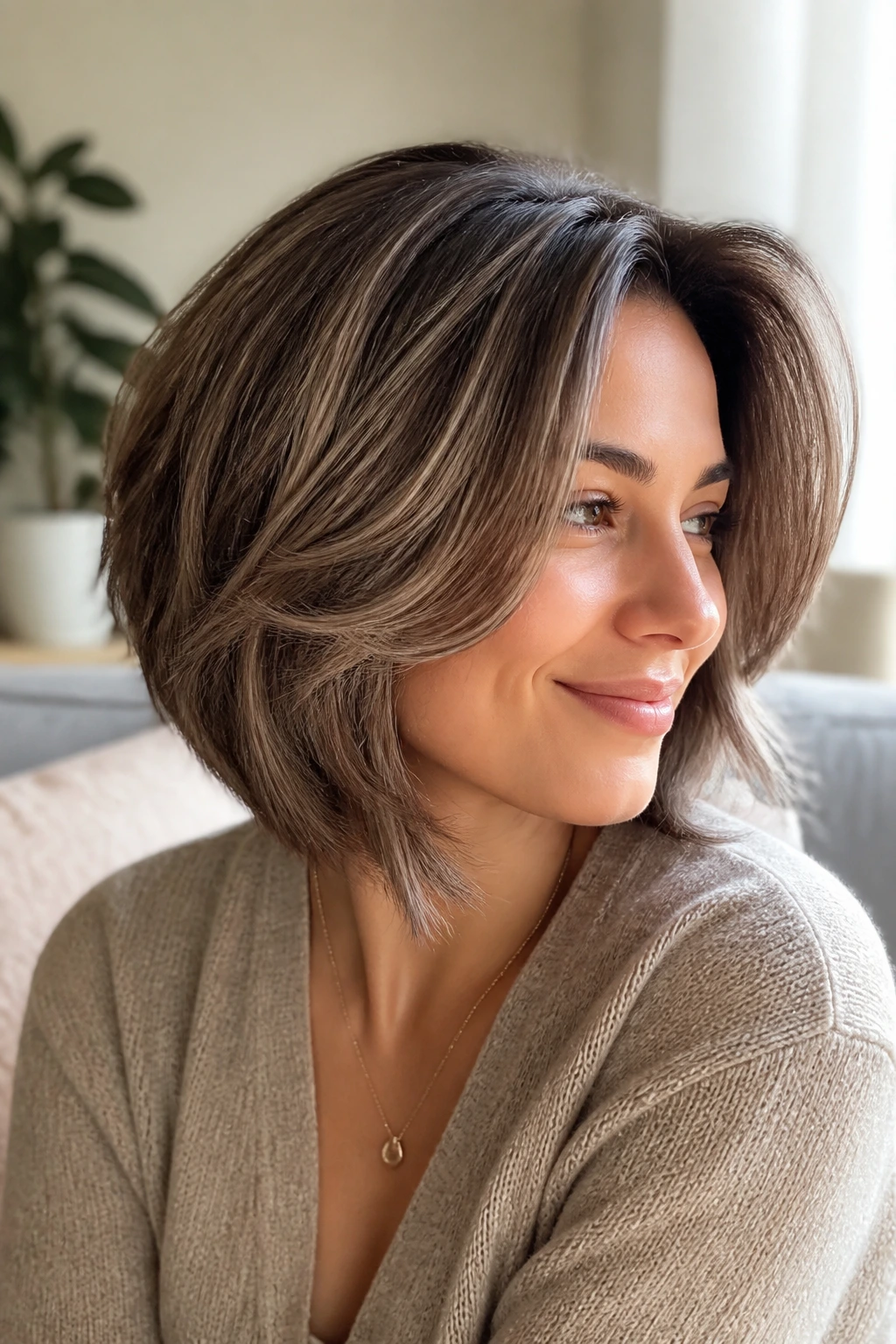
Airy layers are useful when thick hair needs breathing room, but the layers have to be distributed carefully. Taupe lowlights help the layers read as shape instead of frizz, especially if your hair has a natural wave.
This cut is softer than the stacked or angled versions. It works because the interior has movement, while the perimeter still gives the face a controlled line. That combination keeps the bob from swelling sideways at the cheeks.
I like this one for someone who wants easy styling. A little cream, a quick blow-dry, and you’re done. No heroic effort. No huge round brush marathon.
21. Parisian Bob with Dark Mocha Lowlights
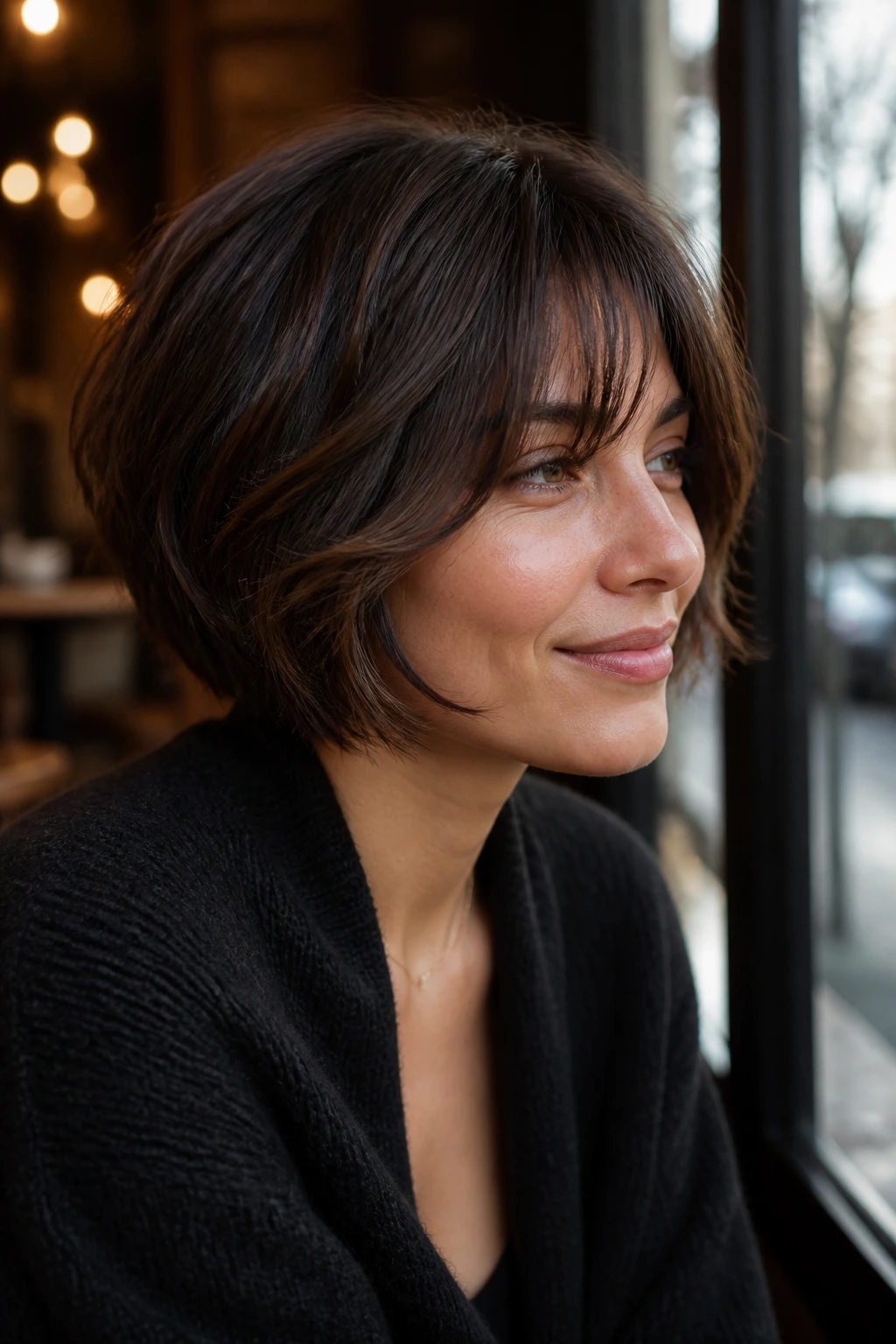
The Parisian bob usually leans a little shorter and a little softer around the front, often with a fringe that’s not perfectly behaved. Dark mocha lowlights keep the shape grounded so it doesn’t go airy in the wrong places.
This look depends on restraint. The fringe should break rather than sit like a block. The sides should skim the face, not hug it too tightly. On a round face, that looseness is what keeps the style from feeling cute in a way that shrinks the features.
If you like a bob that looks better with a day of wear on it, this one is worth a look. It gets a little better once it settles. Very few haircuts can say that.
22. Asymmetric Bob with Bronze Lowlights
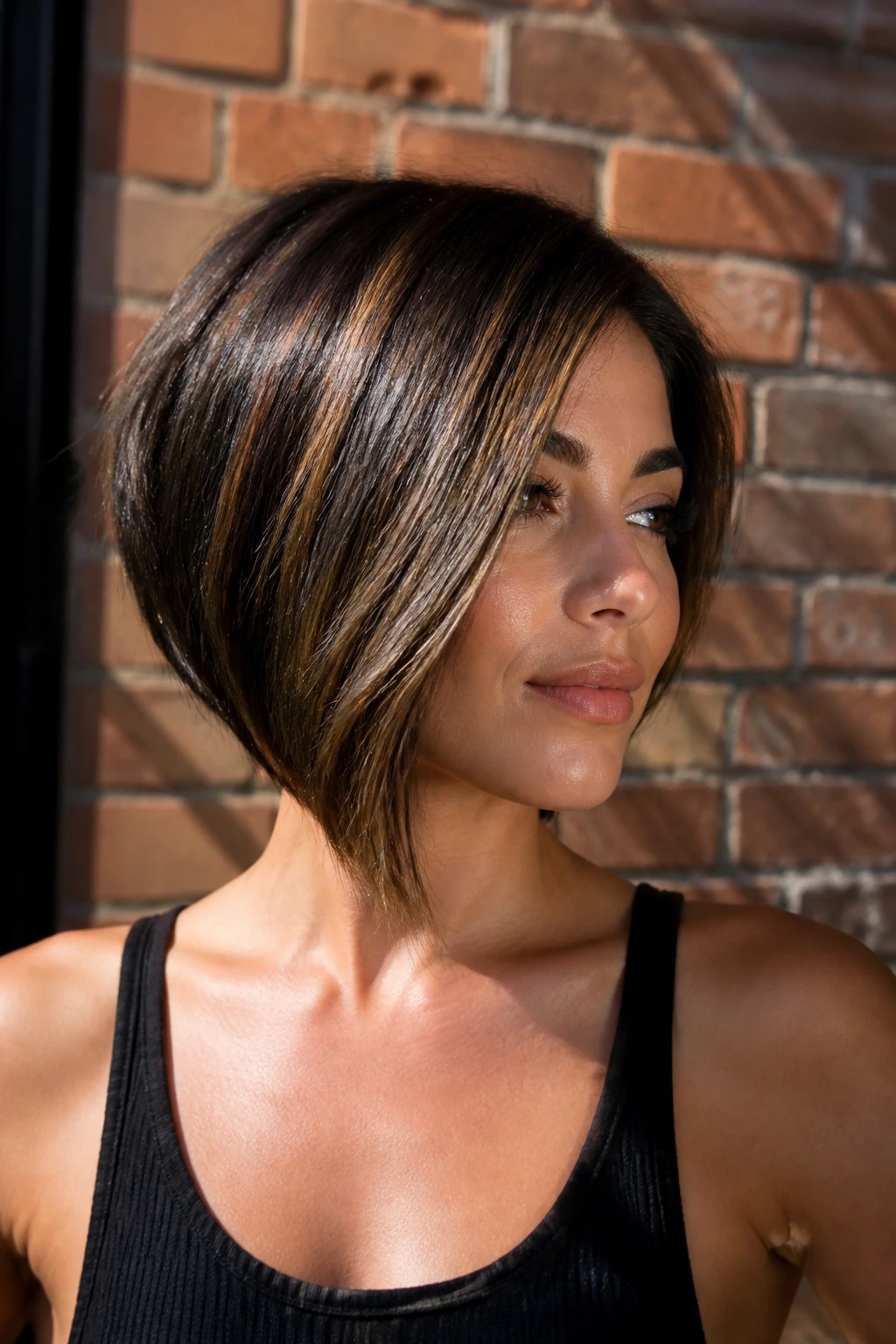
Asymmetry is not subtle, and that’s the appeal. One side sits slightly longer, which changes the visual balance of the face right away. Bronze lowlights add depth through the longer side so the shape feels rich instead of lopsided.
The trick with this cut is control. If the asymmetry is too dramatic, it can look forced. Keep the difference noticeable but not extreme, and let the longer side sweep past the jaw with a clean line.
This style is good if you want the bob to feel a little more editorial. It has a strong diagonal, which round faces usually welcome. The eye keeps moving. That’s the whole game.
23. Blowout Bob with Neutral Brown Lowlights
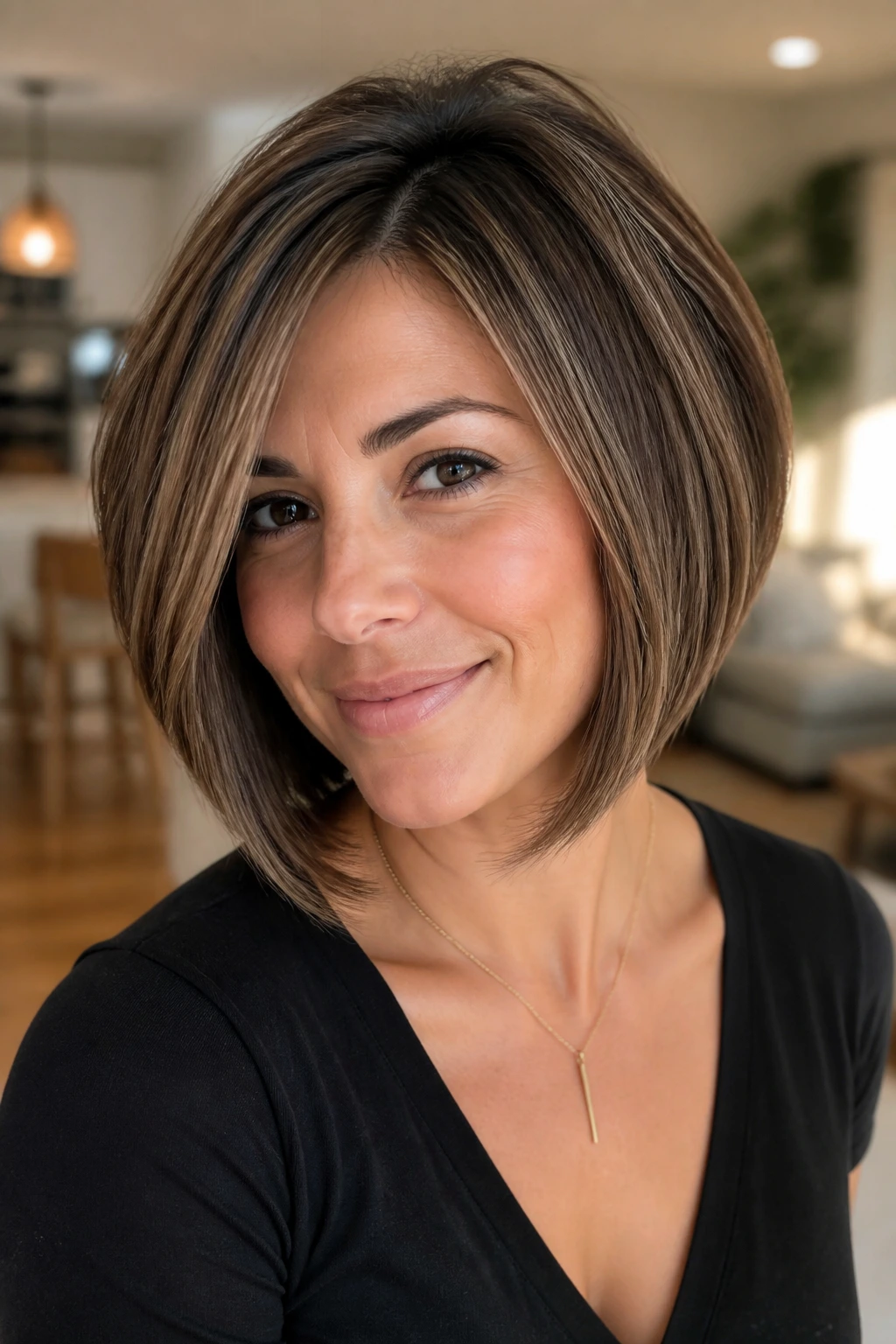
A blowout bob can be one of the prettiest ways to wear thick hair because it gives you lift without letting the ends explode. Neutral brown lowlights make the volume look soft and expensive-looking in the plainest sense of the word: tidy, controlled, and not overworked.
How to Get the Most From It
- Set the roots with mousse before drying.
- Use a round brush only on the midlengths and ends.
- Pull the front forward slightly so it brushes the jawline.
- Finish with a light serum only on the ends.
This cut is about polish. If you over-curl the ends or use too much oil, the shape sinks. Keep it airy at the crown and clean at the perimeter, and the round face benefits from the longer, smoother line.
24. Wedge Bob with Dimensional Chocolate Lowlights
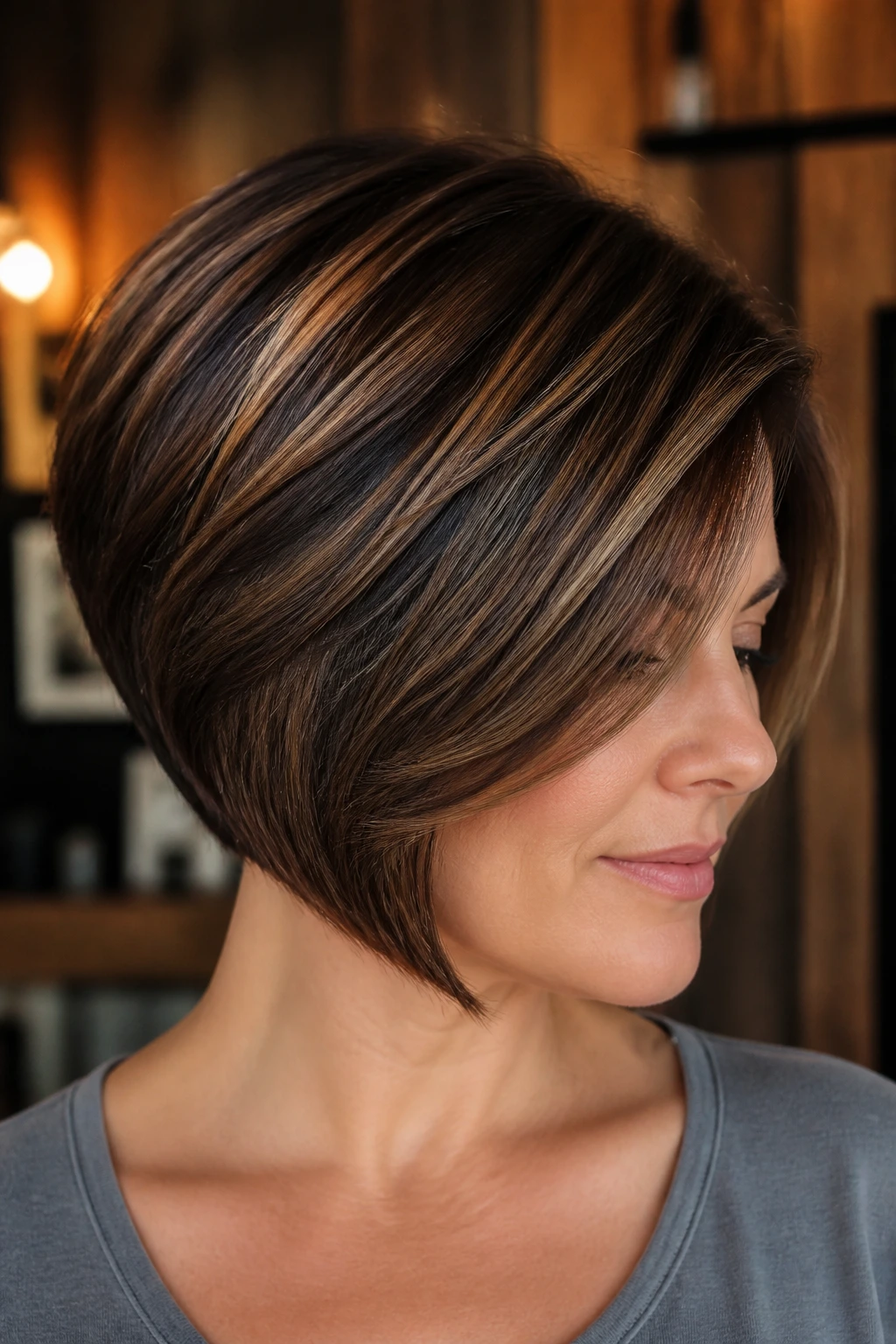
The wedge bob has a retro backbone, but thick hair gives it a modern payoff when it’s cut cleanly. Dimensional chocolate lowlights keep the stacked back from looking too dense and add movement through the interior.
The best wedge bobs don’t feel hard. They feel shaped. That means the back has lift, the sides taper toward the jaw, and the color has enough depth to show the layers. On a round face, the upward build at the back adds height, which is useful because it stretches the silhouette.
If you like structure more than softness, this one deserves a serious look. It’s neat, sculpted, and a little stronger than the softer bobs above.
25. Soft Undercut Bob with Smoky Cocoa Lowlights
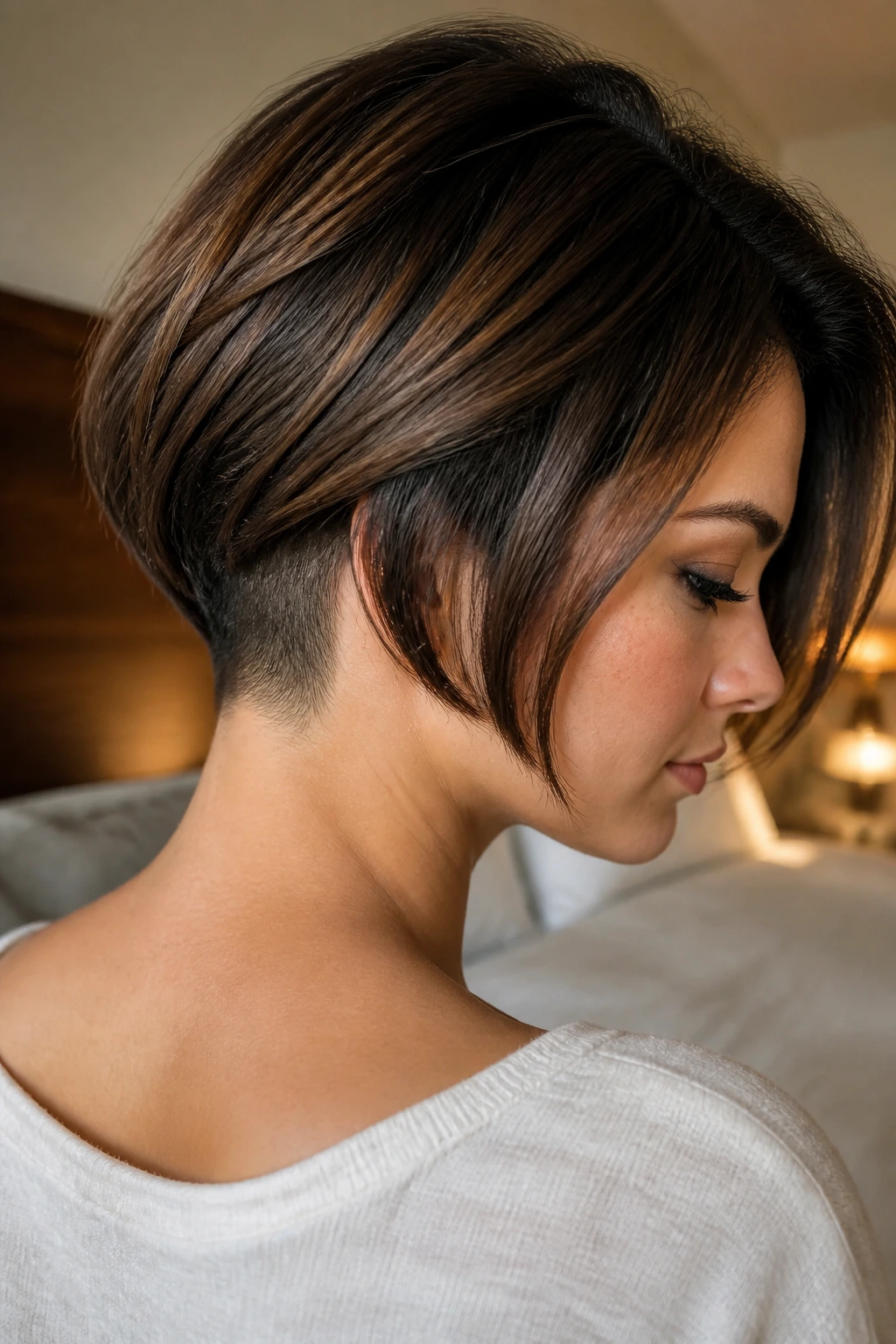
A hidden undercut is one of the smartest moves for very thick hair, especially if the bottom layer keeps bulking up around the neck. Smoky cocoa lowlights disguise the transition so the cut stays smooth on top and lighter underneath.
This isn’t an undercut that needs to show off. It’s there to remove weight where you don’t want it, then let the bob fall cleaner around the face. The result is a shape that feels lighter without losing the thickness that makes bob hair look expensive and full.
It’s a strong finish to this list because it solves a real problem. Some thick bobs need more than shaping. They need a little hidden subtraction.
Why Lowlights Change the Shape of a Thick Bob
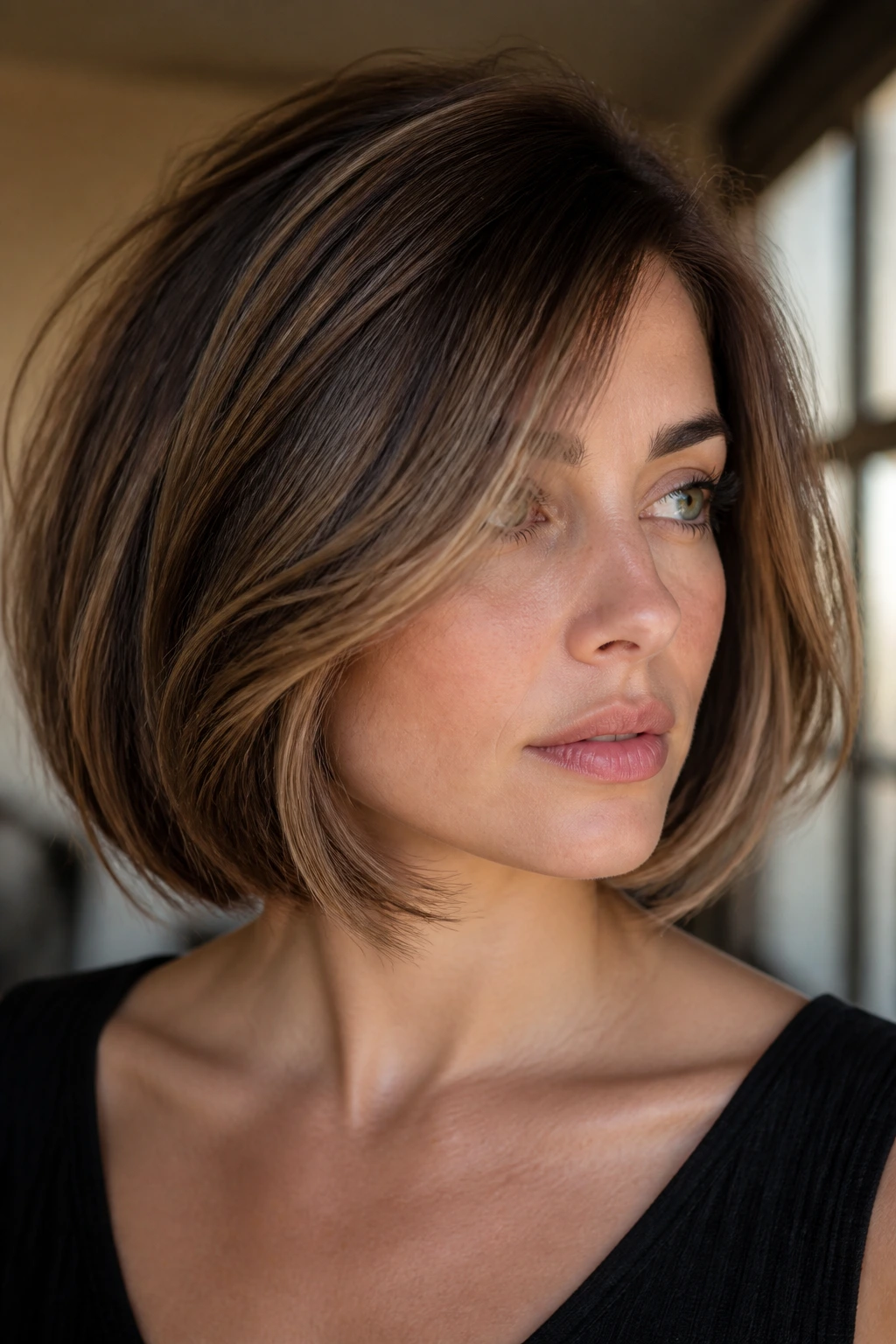
The useful thing about lowlights is not just color. It’s contour. Darker strands act like shadow in a painting, and shadow is what keeps a thick bob from reading as one flat shape across the face.
On round faces, that matters even more. Bright pieces tend to widen the visual field, especially when they sit at the cheekbone or temple. Lowlights do the opposite. They break the surface into smaller planes, which makes the bob feel narrower, deeper, and more intentional. A good color placement can make the haircut look like it has better bones.
Placement matters as much as tone. I like lowlights tucked through the interior, around the nape, and under the crown rather than sprayed evenly everywhere. If they’re too evenly distributed, the effect goes muddy. If they’re too chunky, the hair starts looking striped. Fine weaving, not big blocks, is what gives thick hair that controlled finish.
There’s another bonus that people miss. Lowlights let the ends look fuller without looking wider. That sounds contradictory, but it isn’t. The hair still has thickness, only now the eye reads depth instead of bulk. That’s the sweet spot.
Smart Color Choices for the Darker Pieces
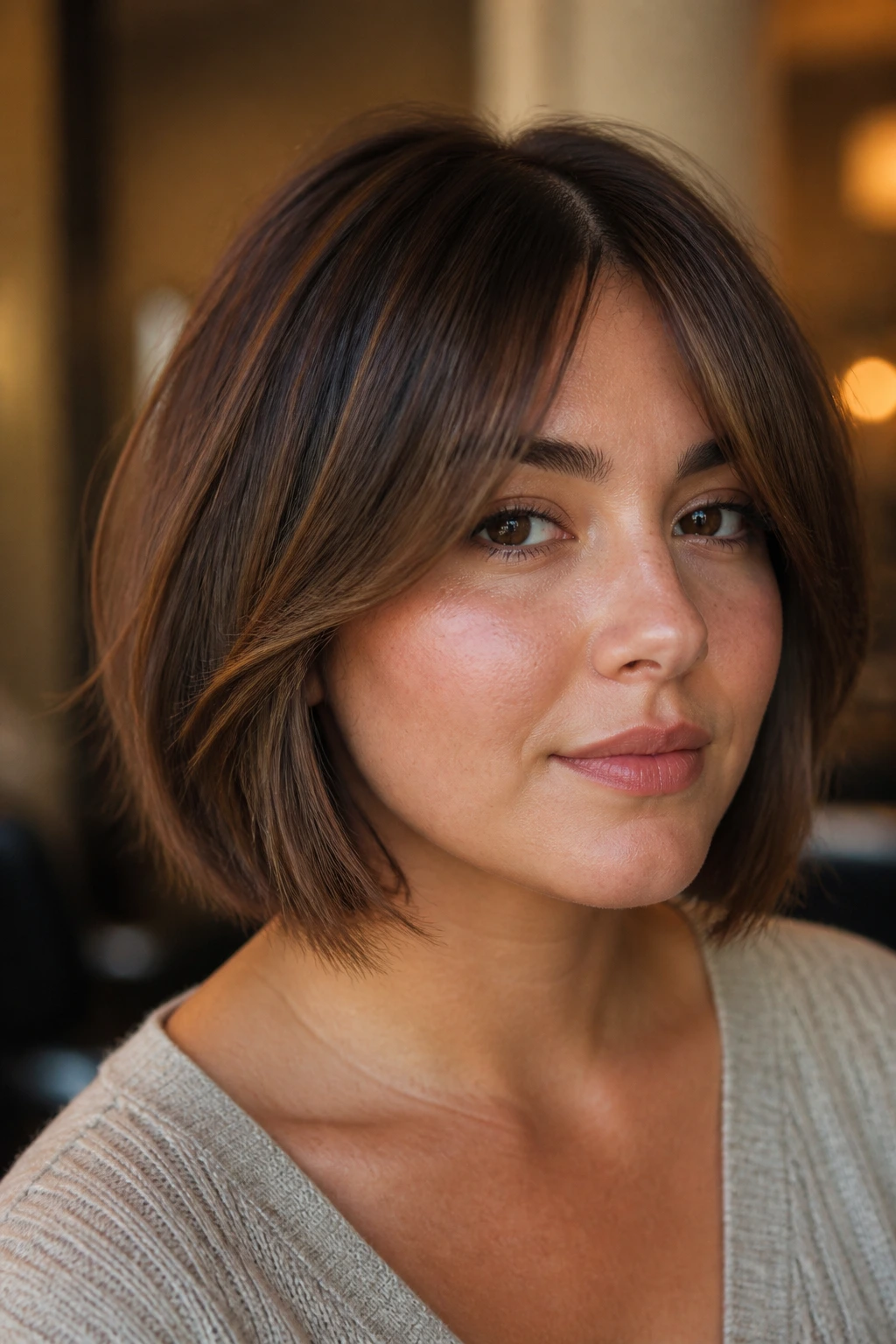
A lowlight should deepen the base, not fight it. On most brunettes, one to two levels darker is enough. Go darker than that and the strands can look painted on, which is not the same thing as dimension.
Warm bases usually do well with chestnut, caramel-brown, mocha, or cinnamon tones. Cool bases tend to prefer mushroom, ash brown, taupe, or smoky brunette shades. If your skin leans rosy, cool lowlights can keep the bob from turning too orange near the jaw. If your skin leans golden, warmer lowlights often look softer.
Good Color Decisions by Base Shade
- Light brown base: Try chestnut, beige brunette, or soft caramel-brown lowlights.
- Medium brown base: Mushroom brown, mocha, and taupe usually sit well without looking harsh.
- Dark brown base: Keep the lowlights glossy and a touch lighter than black so the movement still shows.
- Gray blending: Neutral brown and smoky brunette shades make the grow-out less abrupt.
If you like a little brightness near the face, keep it whisper-thin. One or two face-framing highlights are enough. The rest of the work should come from the lowlights carrying the bulk of the shape. Too many bright pieces and you lose that slimming shadow.
How to Style Short Thick Bobs with Lowlights
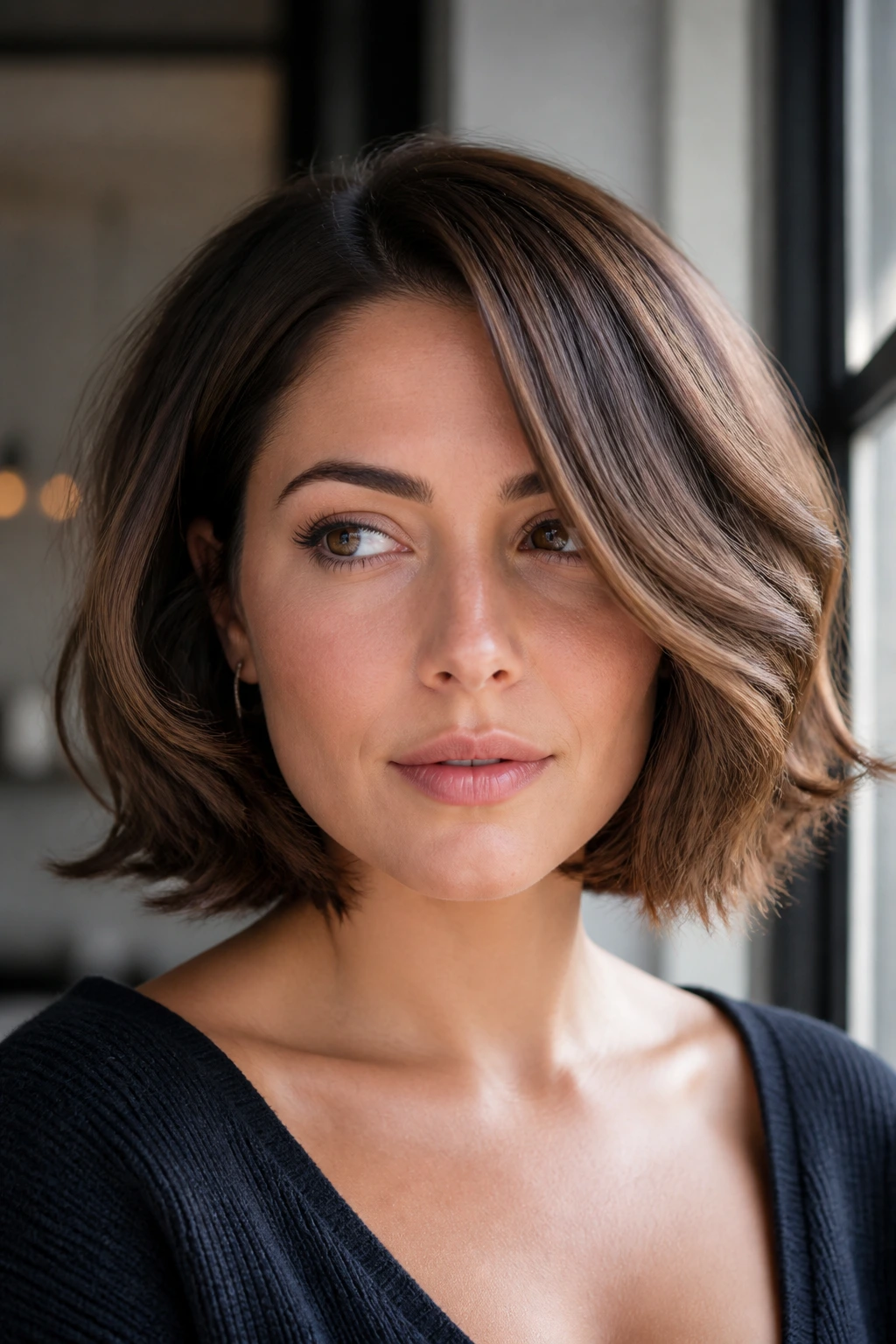
Parting changes more than people expect. A side part gives a round face a diagonal line, and that line cuts through the width of the cheeks in a useful way. A center part can work, but only if the front pieces are long enough to fall past the cheekbone or if the cut has a strong angle.
Part the Hair
Start where the natural growth wants to go, then nudge it off-center if the face needs more length. If you fight a stubborn cowlick, don’t force a perfect part. A slightly crooked part looks better than a flat, stressed one.
Shape the Ends
Keep the ends controlled. Thick bobs get broad fast when the bottom flips out too much, so aim for a soft inward bend or a loose, separated wave. A round brush or a flat iron with a gentle wrist turn works; a giant curl does not.
Finish With the Right Product
Use mousse at the roots if you want lift, and keep cream or serum on the midlengths and ends only. Dry texture spray is useful when the bob needs separation. Heavy oil usually makes thick bobs collapse.
Refresh on Day Two
Mist the roots lightly, rework the front pieces with your hands, and add a quick bend at the jaw with a flat iron if needed. Don’t drown it in product. That only drags the shape downward.
Essential Tools for Cutting, Styling, and Color Care
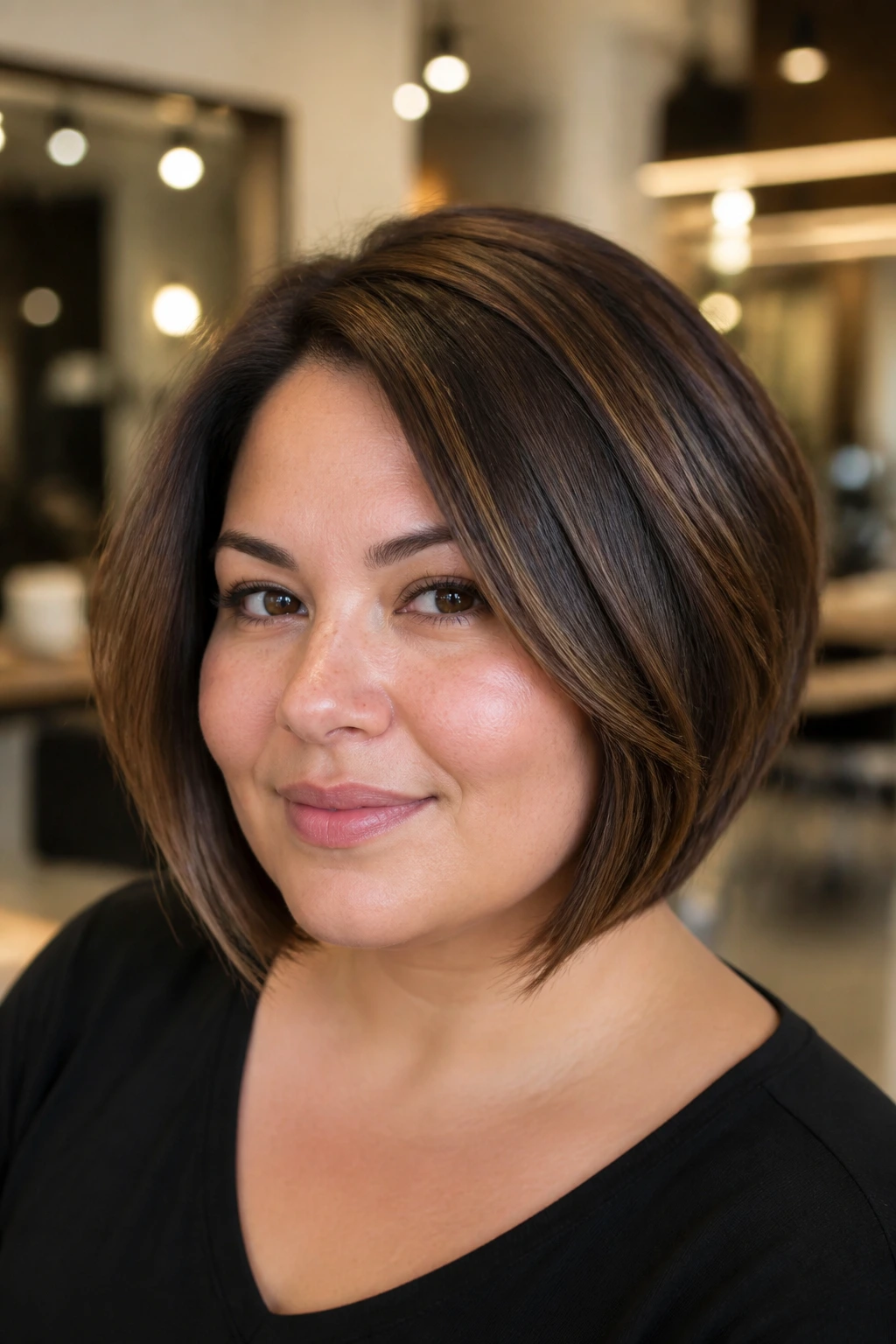
- Sharp salon shears: Clean shears matter for thick hair; dull ones crush the ends and make the bob fray.
- Tail comb: Useful for clean parts and for sectioning lowlight placement.
- Sectioning clips: Thick hair slips out of place fast, so clips save time and frustration.
- Round brush, 1 to 1.5 inches: Best for smoothing the front and giving the ends a controlled bend.
- Vent brush or paddle brush: Good for rough-drying dense hair before refining the shape.
- Blow dryer with a concentrator nozzle: Direct airflow keeps the bob from puffing around the cheeks.
- Heat protectant spray: Use it before any iron or hot brush work.
- Light mousse or root-lifting foam: Helps the crown stay lifted instead of collapsing into the face.
- Texture spray: Useful for choppy or shaggy versions that need separation.
- Color-safe shampoo and conditioner: Keeps the lowlights from fading into a dull brown wash.
- Gloss or tone-refresh product: Helpful if the darker pieces start looking flat or muddy.
Additional Tips for More Lift and Less Bulk
Crown Lift: Dry the roots first, lifting them away from the head with your fingers or a brush. Thick bobs need root support or they settle right onto the cheeks.
Bulk Control: If your hair is dense, ask for interior removal, not an aggressively thinned perimeter. The outer line should stay full enough to look healthy. The inside is where the weight can go.
Color Placement: Put the darkest pieces where the hair gets widest. Around the nape, through the interior, and just under the crown are all useful spots. That’s where the eye tends to read bulk first.
Finish With Discipline: One too-heavy serum can flatten the whole cut. Use the smallest amount you can get away with, warmed between your palms, then press it only into the ends.
Make the Front Do the Work: If you want the face to look longer, spend your styling time on the front sections. A good front piece that grazes the jaw will do more than a perfectly smooth back ever will.
Common Mistakes That Make a Bob Widen the Face
Stopping the Cut at Cheek Level: When a bob ends right at the widest part of the face, the cheeks and the hairline compete. Move the front a little lower or create a stronger angle.
Using Lowlights That Are Too Chunky: Thick stripes can look busy and make the hair feel blocky. Fine weaving or soft foiling gives a cleaner shadow.
Over-Thinning the Ends: A lot of dense-hair cuts go wrong here. The ends get wispy, the body stays heavy, and the bob balloons in the middle. Keep the edge full enough to hold shape.
Curling Everything Outward: Big outward curls widen the silhouette. A soft inward bend or a broken wave sits better on a round face.
Ignoring the Crown: If the roots lie flat, the sides take over. A little lift up top changes the proportions more than people expect.
Choosing Lowlights That Are Nearly the Same as the Base: If the contrast is too low, the color disappears. If it’s too high, the hair can look striped. Aim for enough difference to show depth, not enough to shout.
Variations and Alternative Approaches
Curtain Fringe Version: Add a curtain fringe to a soft angled or French bob and let the fringe open at the center. It creates a vertical frame that lengthens a round face without hiding the eyes.
Curly-First Version: If your hair is curly, keep the bob a touch longer and let the lowlights sit inside the curl pattern. That keeps the shape from swelling sideways and makes the movement look deliberate.
Cool Smoky Version: Swap warm chestnut and caramel tones for mushroom, taupe, and ash brown. This is the better lane if your skin reads cool or if your hair already pulls red.
Soft Glam Blowout Version: Go smoother, add root lift, and let the ends turn under just enough to skim the jaw. It’s the polish-first version for people who want the bob to look tidy all day.
Low-Maintenance Grow-Out Version: Keep the lowlights more concentrated underneath and around the nape. That way the shape stays dimensional even when the color starts to blur at the roots.
Maintenance, Trims, and Color Refreshes
Thick bobs don’t stay cute by accident. They need regular shape checks, or the bottom edge starts to widen and the whole silhouette gets blunt in the wrong way. A trim every 6 to 8 weeks is a solid rhythm for most of these cuts. If your hair grows fast or flips hard at the ends, you may want the shorter end of that window.
Color needs its own schedule. If the lowlights are warm and glossy, a refresh every 6 to 10 weeks usually keeps them readable. Cooler brunette tones often need a tone correction sooner if they start to turn muddy or too ash-heavy. A simple gloss can help without changing the whole color story.
At home, use color-safe shampoo and don’t scrub the lengths like you’re cleaning a skillet. The darker pieces live under the top layer for a reason; you want them to stay rich, not stripped. If you heat-style often, protect the ends every time. Thick hair can take a little heat, but repeated high heat will rough up the perimeter faster than most people expect.
Between washes, dry shampoo can help the crown stay lifted, but use it sparingly. Too much powder at the roots can make thick hair feel chalky and dull. A better trick is to refresh the front pieces with a little water mist and a quick bend from a brush or iron.
Questions People Ask Before Getting This Cut
Will lowlights make my thick bob look thinner?
Visually, yes, in a good way. They break up the mass so the hair reads as shaped instead of bulky, but the actual density is still there. That’s why thick hair looks especially good with this color placement.
What lowlight shade is safest if I don’t want a huge change?
Stay one level deeper than your base and keep the tone close to your natural undertone. Chestnut, mocha, and neutral brown are the easiest starting points because they add depth without making the hair look dramatically darker.
Can a round face wear a blunt bob at all?
Yes, but the blunt line has to sit in the right place and the color has to do some of the contour work. If the cut ends right at the cheek and the color is flat, the face can look wider. A little angle or subtle off-center part helps a lot.
Do bangs work with these bobs?
They do, especially curtain bangs or a broken side fringe. Heavy straight-across bangs can shorten the face too much unless the rest of the cut is longer and softly angled.
What if my hair puffs out at the cheeks every time I blow-dry it?
Move the nozzle downward, keep the brush tension gentle, and direct the ends inward only at the last second. If you overwork the sides, they swell. That puff is usually a styling issue, not a haircut disaster.
Can curly hair use lowlights in a short bob?
Absolutely. The lowlights just need to be placed inside the curl pattern so they show when the curls separate. Curly bobs usually need a touch more length and less aggressive layering than straight ones.
How do I keep the bob from looking too triangular?
Don’t strip too much weight from the ends, and don’t let the crown go flat. A soft stack, a little root lift, and lowlights under the surface keep the silhouette balanced.
Is a side part better than a center part for every round face?
Not every one, but it usually helps. A side part creates asymmetry, which gives the face a longer read. If your hair naturally falls in the center and looks good that way, keep it—just make sure the front pieces are long enough to frame, not stop, the cheeks.
A Bob That Does the Heavy Lifting
A thick bob on a round face is never just about the chop. It’s about where the weight sits, where the eye lands, and where the color goes dark enough to create shape. Lowlights give you that shape without stealing the fullness that makes thick hair so satisfying to wear.
The best versions here don’t fight the face. They draw it. One clean front angle, one smart part, one shadowed interior layer, and the whole haircut starts behaving better.
If you’re heading to the salon with one of these photos, pick the version that matches your texture first and your styling patience second. That’s the order that keeps a bob looking sharp long after the first blow-dry fades.