



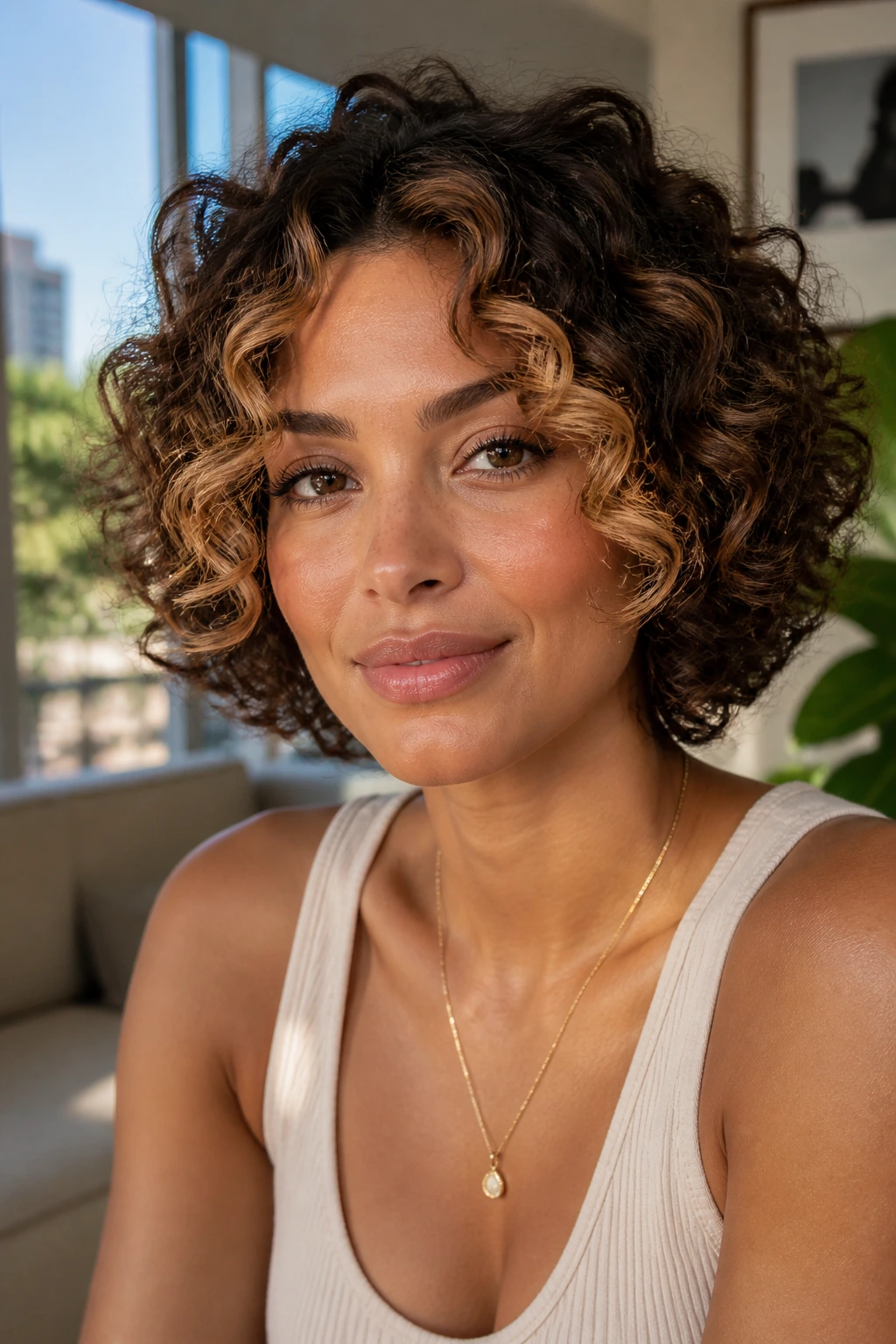
The best curly-hair highlights are the ones that land on the bend of the curl, not the straight bits in between. On short hair, that matters even more. A highlight painted in the wrong place can vanish into the shrinkage, or worse, turn into a stripe that fights the curl pattern instead of moving with it.
Short curly hair has a funny little trick up its sleeve. A few well-placed lighter pieces can make a bob look fuller, a pixie look less helmet-like, and a cropped shag look like it has actual depth instead of one flat color washed over the top. The trick is placement, tone, and restraint. Too much brightness too high up, and the cut starts to look busy. Too little contrast, and you might as well not have colored it at all.
I’ve always liked highlights on curls that look as if the sun found them by accident. The good ones don’t shout from across the room. They catch the eye when the hair moves, when a coil springs back, when a side part shifts and shows a hidden ribbon underneath. That kind of color works with short curls, not against them.
Why These Short Curly Highlights Work So Well
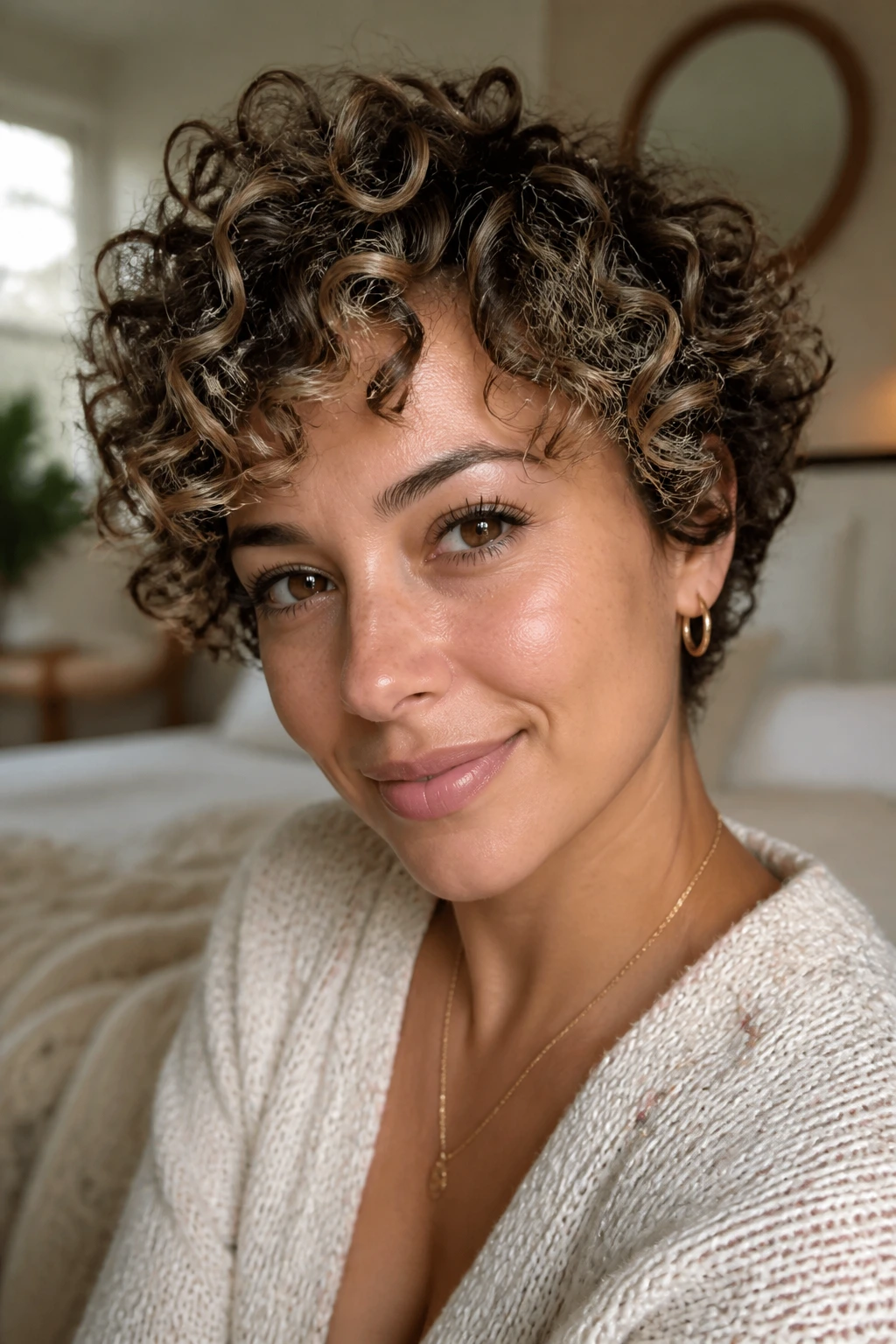
- They follow the curl pattern: A lighter ribbon placed on the outside of a curl reads louder than the same stripe on stretched hair, which means you need less lightness than you think.
- They soften short shapes: Pixies, bobs, and cropped shags can look blocky fast; a few painted pieces break up the outline and give the cut a little movement.
- They grow out with less drama: Soft placement near the hairline, crown, and top layer avoids the harsh line that screams for a touch-up.
- They show up after shrinkage: Curly hair lifts up as it dries, so color placed on the surface still shows even when the length disappears.
- They can be bright or subtle: You can keep the root darker and paint just enough lightness to make the curls pop without turning the whole head into a maintenance project.
- They flatter short cuts from every angle: A highlight that looks tame in the mirror can look gorgeous from the side or back once the curls stack and separate.
1. Honey Ribbon Highlights
Honey ribbons are the safe bet I keep coming back to for short curls because they add warmth without turning the hair into a high-contrast experiment. On a curly bob or a rounded crop, the honey tone catches on the outer curve of the curl and gives you that soft, sunlit look that never feels stiff.
Why It Works on Short Curls
Honey sits in that sweet middle ground between blonde and brunette. It lightens the shape, but it does not blow the cut apart. If your base is medium brown or dark blonde, this shade usually reads as dimension first and color second, which is exactly what short curls need.
What to Ask For
Ask for fine ribbons through the top layer and around the face, with a little extra brightness at the crown. I like this better than a full-head lighter weave on short hair, because the darker underneath color makes the curls look fuller.
My take
If you want a color that still looks polished when your curls are second-day flat at the root, honey wins. It’s forgiving. It also plays nicely with warm skin tones, though I’ve seen it look lovely on cooler complexions when the stylist keeps it slightly beige instead of orange.
2. Caramel Money Piece
A caramel money piece is the quickest way to make short curly hair look intentional. You keep the rest of the hair deeper, then brighten the front sections just enough to frame the face and pick up every twist near the temples.
What Makes It Different
This one is all about the front. On a short bob or curly shag, the money piece creates a clear focal point without requiring a full head of highlights. That matters if you like color but don’t want to sit through a heavy lightening session.
The best version isn’t thick. That’s the mistake people make. A chunky front stripe can look dated fast, especially when curls bounce. Ask for a softer, more diffused placement that fades into the sides.
Best For
- Short curly bobs with a side part
- Cropped shags that need face framing
- Dark brunettes who want brightness without going blonde
Small warning
Caramel gets loud if your base is already warm. In that case, ask for a beige-caramel blend rather than a rich gold, or the front can drift too orange after a few washes.
3. Copper Micro-Lights
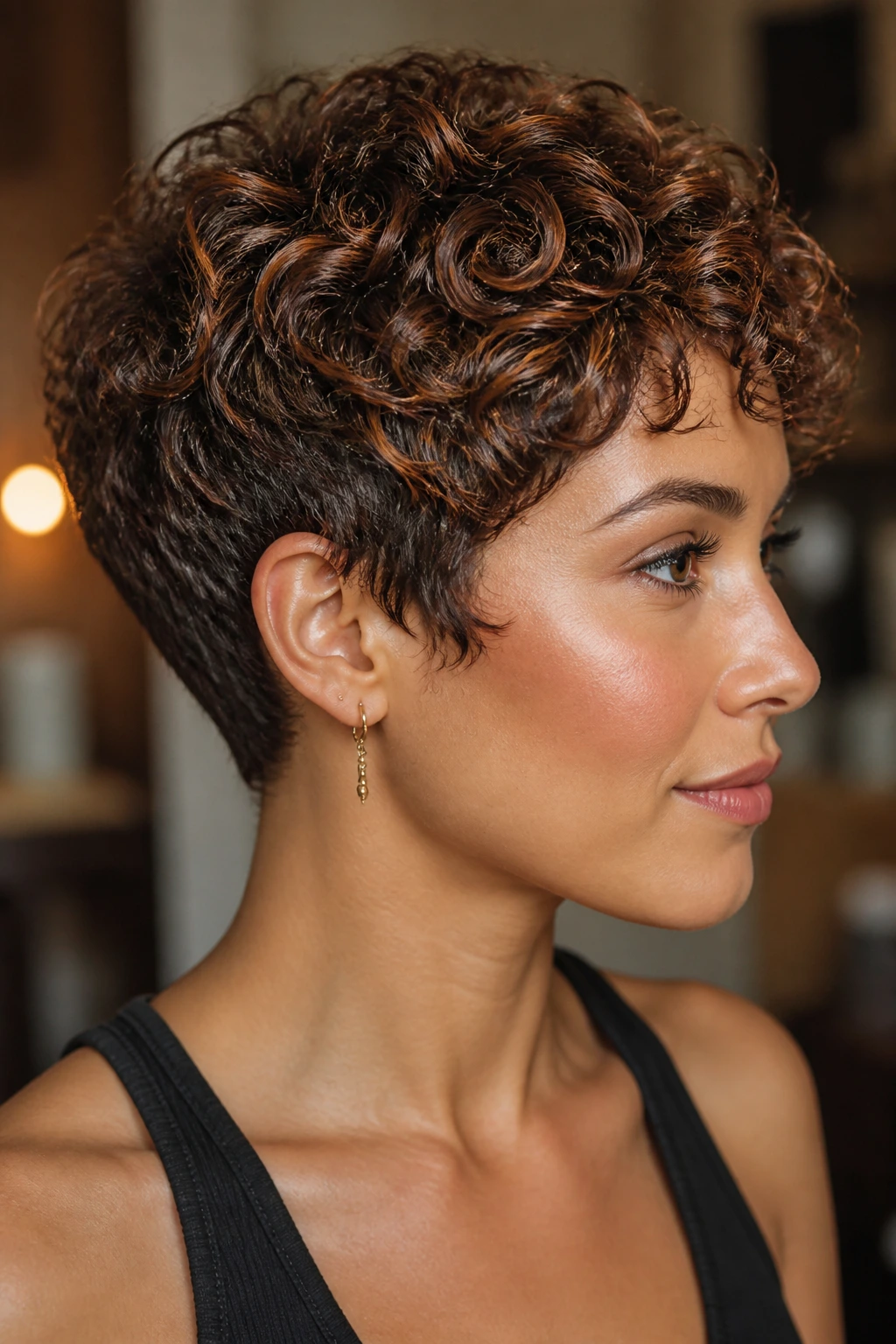
Copper micro-lights are tiny, thin highlights that bring a little spark to dark curls without looking striped. They work especially well on short cuts where a big color shift would feel heavy.
Why I Like Them
Copper is the color people either love instantly or avoid for fear of going too red. On curly hair, the trick is to keep it fine and scattered. Those thin pieces catch the light when the curls separate, so the color feels alive rather than painted on.
A short curly pixie or tightly layered crop can handle this look better than you’d expect. Because the curls sit close to the head, the copper pieces become part of the texture instead of fighting it.
If You Want It Softer
Ask your colorist for a copper-gold mix instead of a true red copper. That keeps the result warmer and a little less intense, especially if your hair tends to grab pigment fast.
4. Golden Balayage Ends
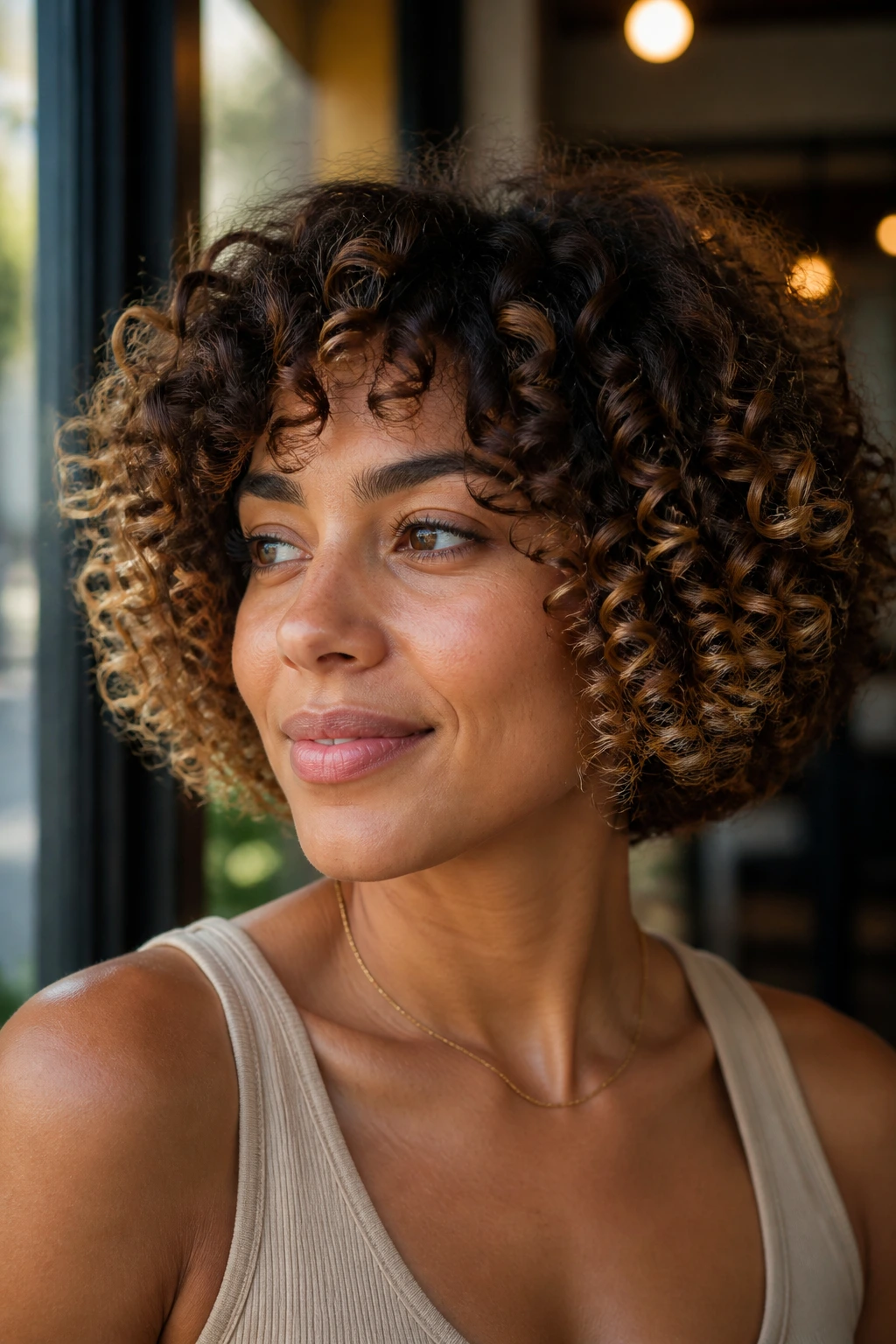
Golden balayage ends work when you want the bottom half of the curl to look lighter without losing depth at the root. On a short lob or grown-out curly bob, the ends take on a little brightness and the whole cut feels lifted.
The Shape Benefit
Short curly hair can look dense at the bottom, especially if the ends are blunt. Lightening the ends softens that line. It also gives the curls a more tapered look, which is useful when you want the style to feel airy instead of heavy.
What to Watch For
This works best when the lift is subtle. If the ends go too pale, the hair can start to look dry even when it isn’t. My preference is a golden beige rather than a strong yellow blonde, because it stays softer as it fades.
When It Fits
This look is excellent if you wear your curls loose most of the time and you don’t want to fuss with roots every few weeks. The dark-to-light shift hides growth better than a sharp highlight line.
5. Espresso Lowlights with Light Ribbons
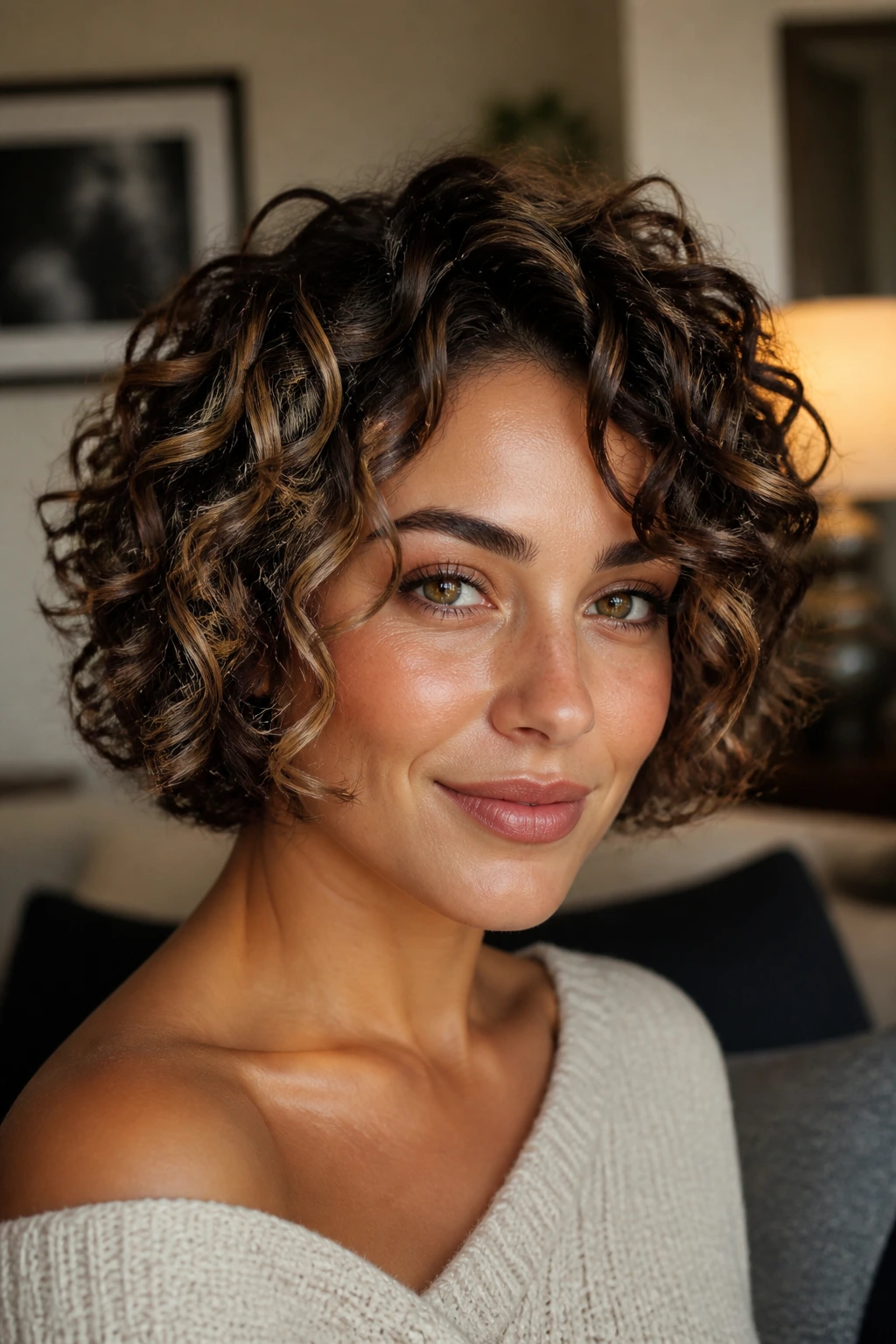
A lot of people chase brightness and forget that lowlights are doing half the work. On short curly hair, espresso lowlights threaded under lighter ribbons make the curls look deeper and fuller, not flatter.
Why This Beats One-Tone Lightening
Curly hair needs contrast. If you lighten every piece the same way, the shape can go fuzzy. Espresso lowlights add shadow between the curls, which makes the light pieces stand out more without needing extra bleach everywhere.
Best Use Case
This is one of my favorite options for brunettes who want highlights but hate seeing the scalp through the curls. A few espresso pieces underneath keep the color grounded, especially on a short curly bob with lots of movement.
How It Should Feel
The finished hair should look like you can see into it. That’s the goal. Not flat. Not streaky. Just depth, with the light pieces sitting on top of darker ones so the curls have something to bounce against.
6. Babylights on a Curly Bob
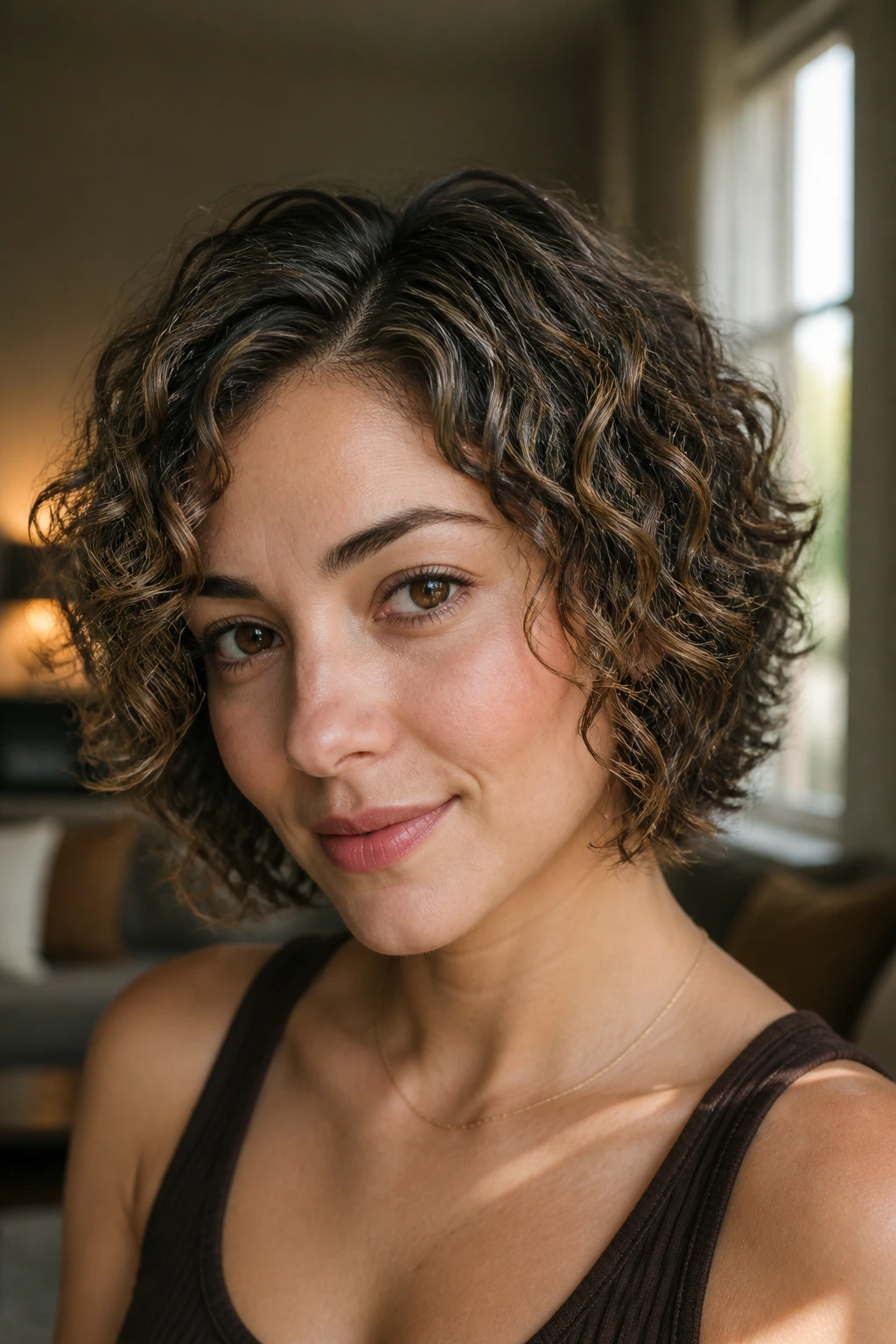
Babylights are tiny, fine highlights, and they are one of the smartest choices for a short curly bob. They don’t scream for attention. They whisper, which is better on a cut that already has plenty going on.
Why Babylights Work
The thinness matters. Curly hair expands visually once it dries, so small foils can cover more ground than you expect. Babylights keep the color soft and even, which is useful if you want a brightener that still looks believable.
A Good Stylist Move
Ask for the color to be concentrated on the top layer, around the part, and just off the face. On a bob, that placement lets the highlights show from the top and side without looking like a helmet of streaks.
My opinion
If you’re nervous about highlights on curly hair, start here. Babylights are the least likely to fight your texture, and they tend to fade in a flattering way. They’re also one of the few highlight patterns that look good even when the curls are not at their best.
7. Bronze Halo Highlights
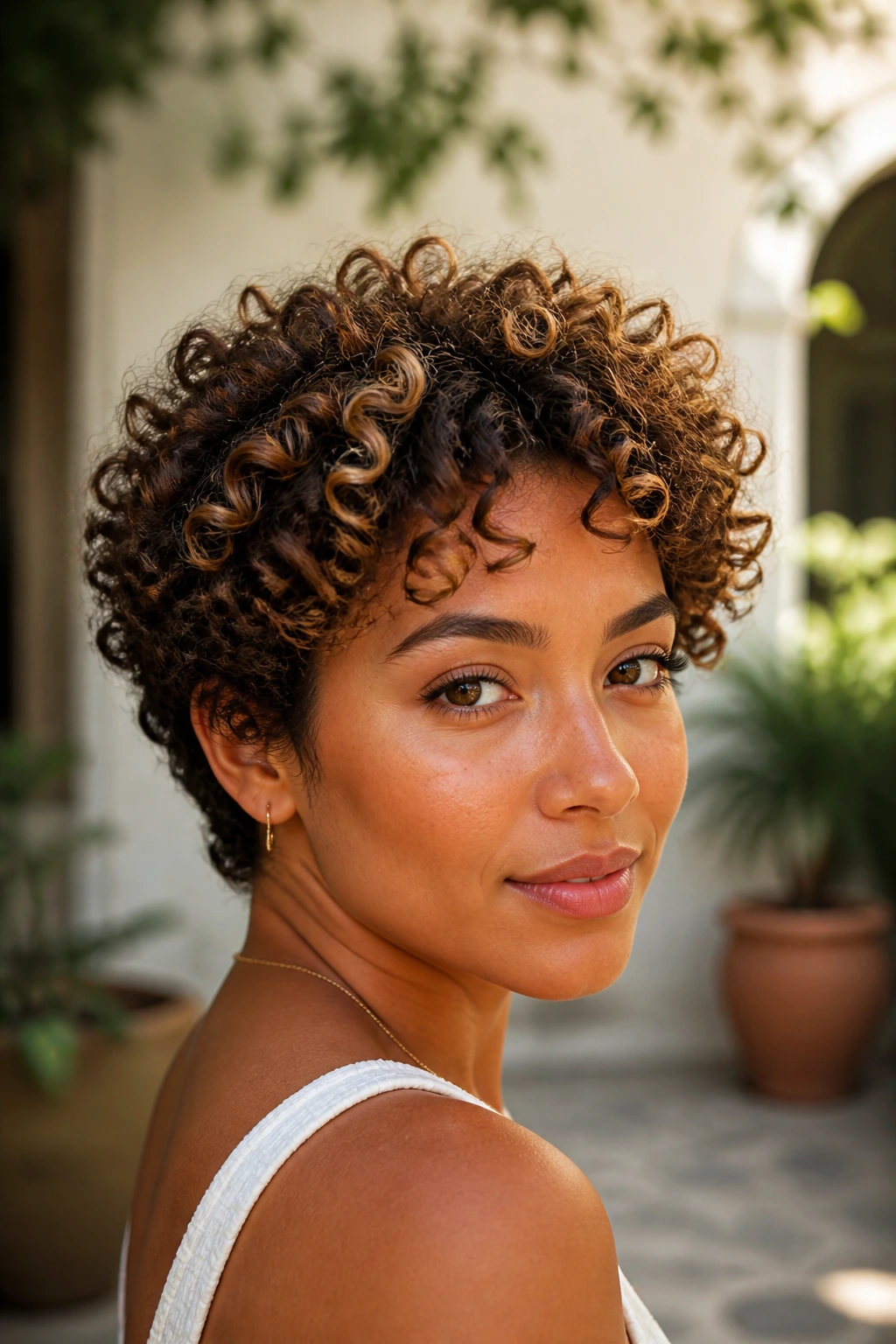
Bronze halo highlights circle the head with warmth, usually concentrated around the crown, the upper sides, and the outer layer. On short curls, this creates a glow that feels natural rather than placed.
Why It Flatters Short Curls
The halo shape works with the roundness of curls. Instead of brightening random bits, you brighten where the eye naturally lands: the top and the outer curve. That can make a short cut look taller and more dimensional.
Bronze is also a nice middle tone. It sits between gold and brown, so it doesn’t look too flashy on dark bases. If your skin leans warm or olive, it tends to play particularly well.
Best Cut Pairing
A curly pixie with volume on top and shorter sides is made for this. The halo catches the lift at the crown and keeps the cut from feeling flat.
8. Mushroom Brown Ribbons
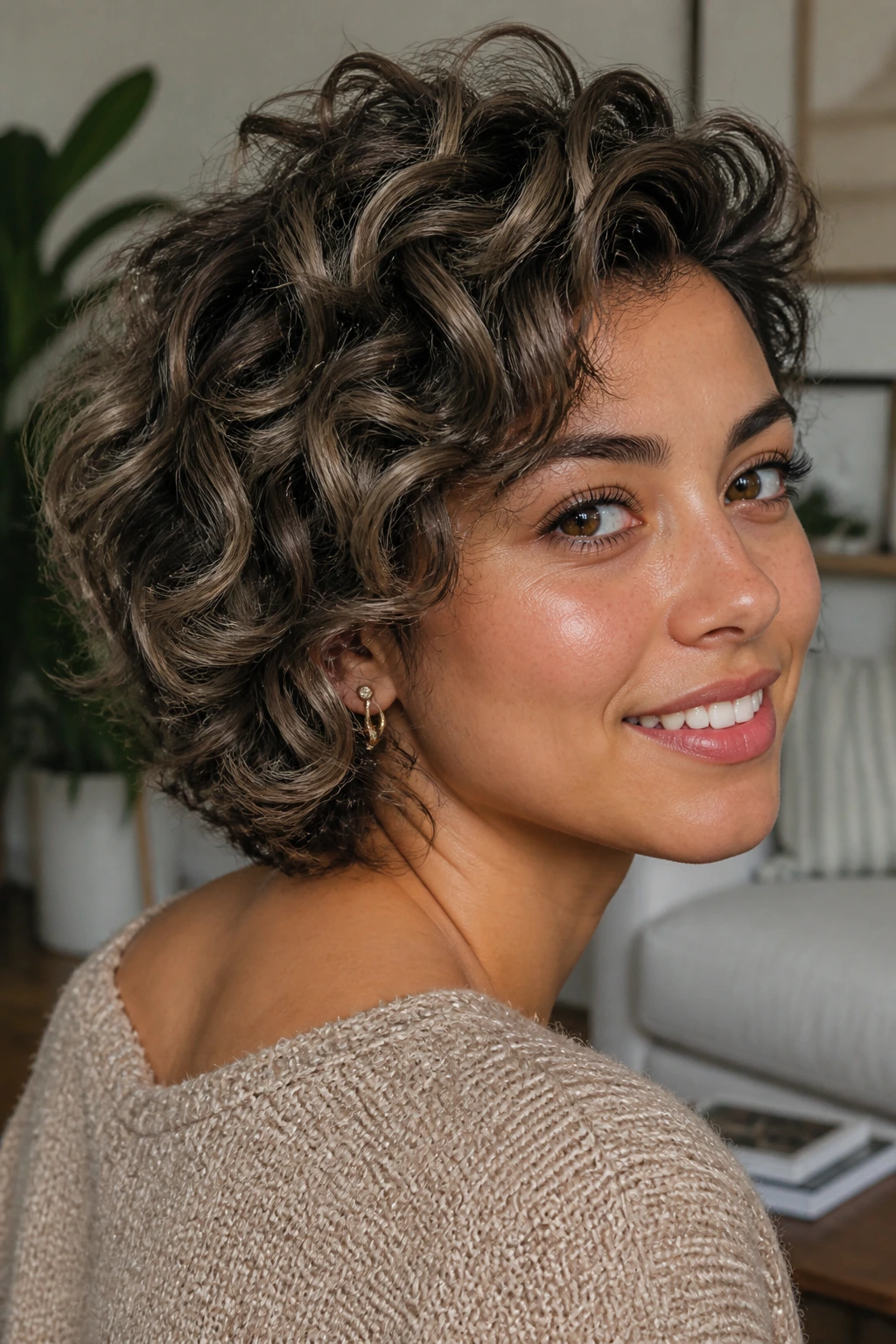
Mushroom brown is the cooler, ashier cousin of caramel, and it has a quiet kind of charm on short curls. If you hate warmth that turns orange after a few washes, this is one to look at.
What Makes It Interesting
The shade is muted, so the contrast is softer. That means the highlights don’t leap out; they blend and then reveal themselves as the curls move. It’s a good choice for short hair when you want dimension without brightness shouting at you from across the room.
Who It Suits
This works beautifully on medium brunettes and anyone whose skin tone likes cooler brown shades. It also suits a grown-out curly shag where you want the color to look lived-in, not freshly done and over-labeled.
Small caveat
Mushroom brown can go flat if the stylist makes it too gray. You want a soft taupe-brown, not a dull khaki mess. There’s a difference, and it matters.
9. Auburn Peekaboo Panels
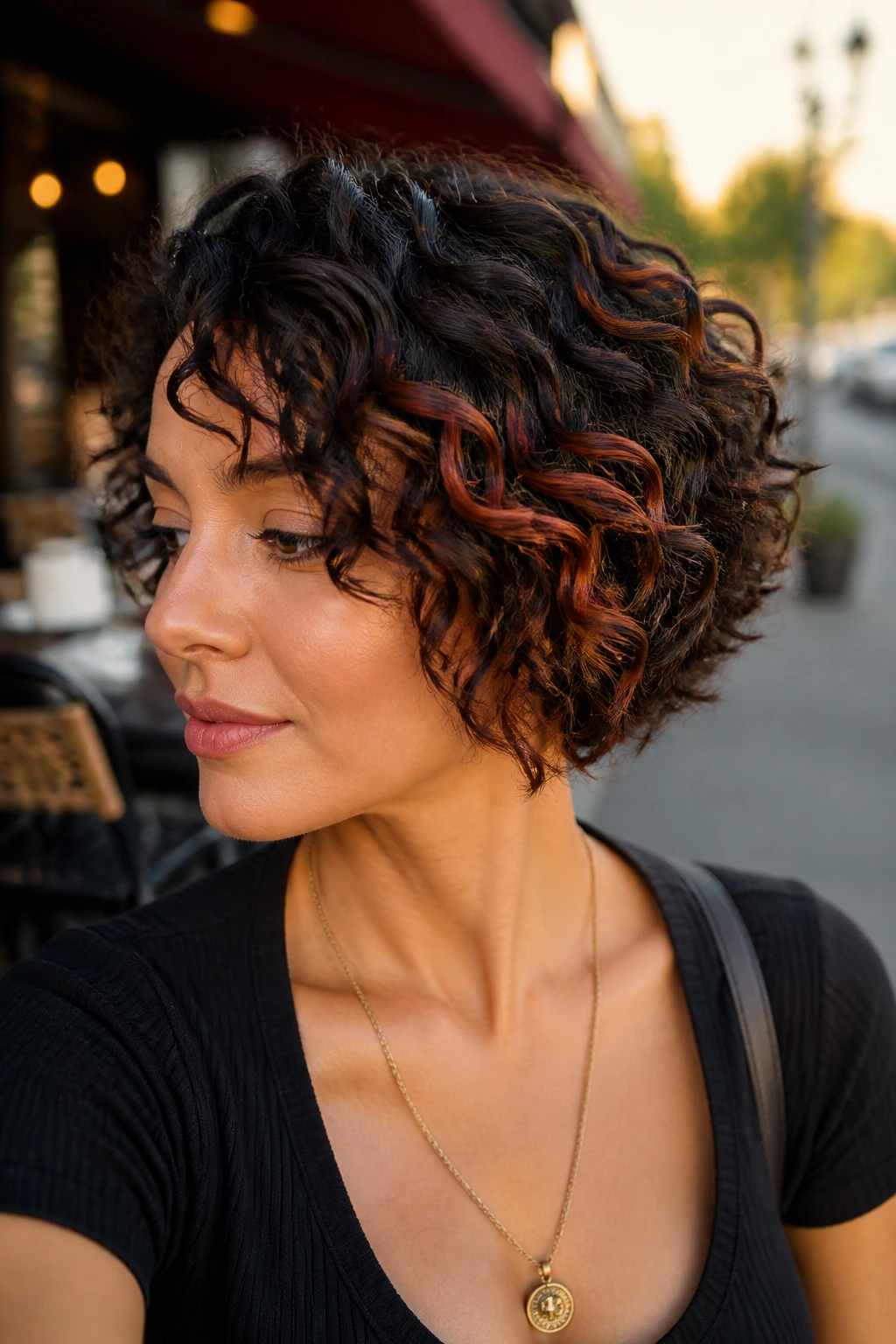
Peekaboo color is one of the smartest tricks for short curly hair because you hide brightness under the top layer and let it flash only when the hair moves. Auburn panels do that with a warm, spicy edge.
Why It Works
Short curls stack on top of each other. That means hidden color underneath can peek through more often than people expect, especially on a shag or layered bob. Auburn adds warmth without changing the whole head, which keeps the style easy to wear.
Where It Shines
This is a good pick if you like your color a little playful but still work-friendly. The auburn only shows from certain angles, so you get interest without needing a bold all-over red.
Tip
Keep the top layer a shade deeper than the panels underneath. If everything is equally bright, the peekaboo effect disappears.
10. Champagne Tips on a Curly Pixie
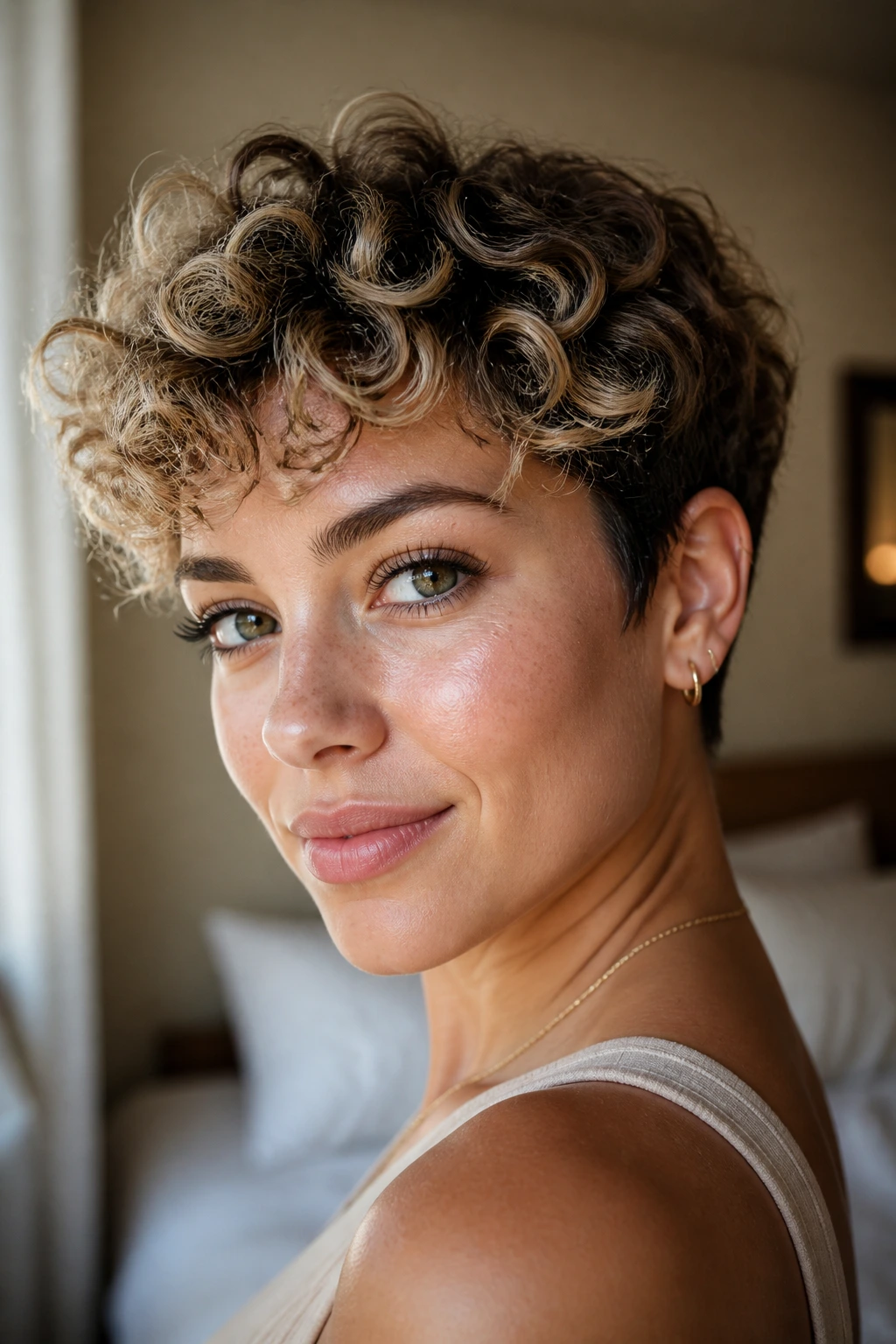
Champagne tips are exactly what they sound like: a soft, pale glow on the ends of a curly pixie. They’re lighter than honey, but not as stark as icy blonde, which makes them a nice middle path.
Why This Feels Fresh
On a pixie, the ends do a lot of visual work because there isn’t much length to paint. Light tips make the curls look defined, especially around the fringe and crown. They also help the cut look less like a single shape and more like individual curls with personality.
Best For
- Very short curly pixies
- Tight curls that spring up a lot when dry
- Haircuts with a longer top and shorter sides
A blunt truth
This is not the easiest look to maintain if your hair is naturally dark and porous. Champagne can turn brassy if the toner slips. If you want it softer, ask for a beige-champagne finish instead of a clean blonde one.
11. Toffee Slices on a Tapered Cut
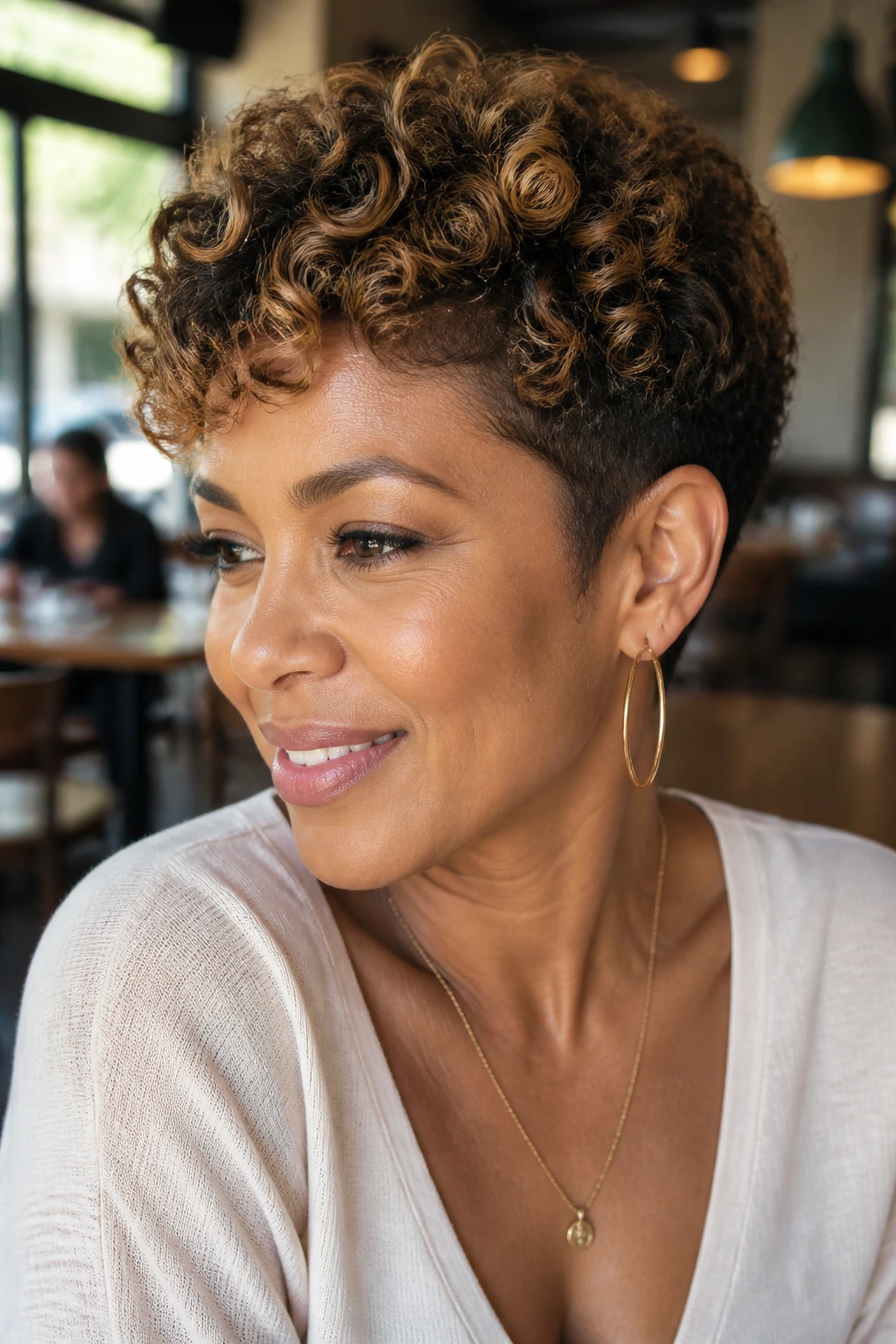
Toffee slices add width and warmth to a tapered cut, which is a nice fix when the sides are shorter and the top needs more visual interest. The color should sit where the curls bend and fan out, not all over the head.
Why It’s Smart
Tapered cuts can look very sharp or very soft depending on color. Toffee helps soften the line. It gives the haircut a rounder, richer look and keeps the crown from dominating the silhouette.
Practical note
Ask for slices rather than broad panels. Slices create just enough contrast to matter, but they don’t turn the cut busy. On short curly hair, that restraint is the difference between chic and cluttered.
I’d use this when
You want warmth, you want shape, and you do not want to explain your color to everyone in the room. It’s noticeable, but not loud.
12. Sandy Bronde Melt
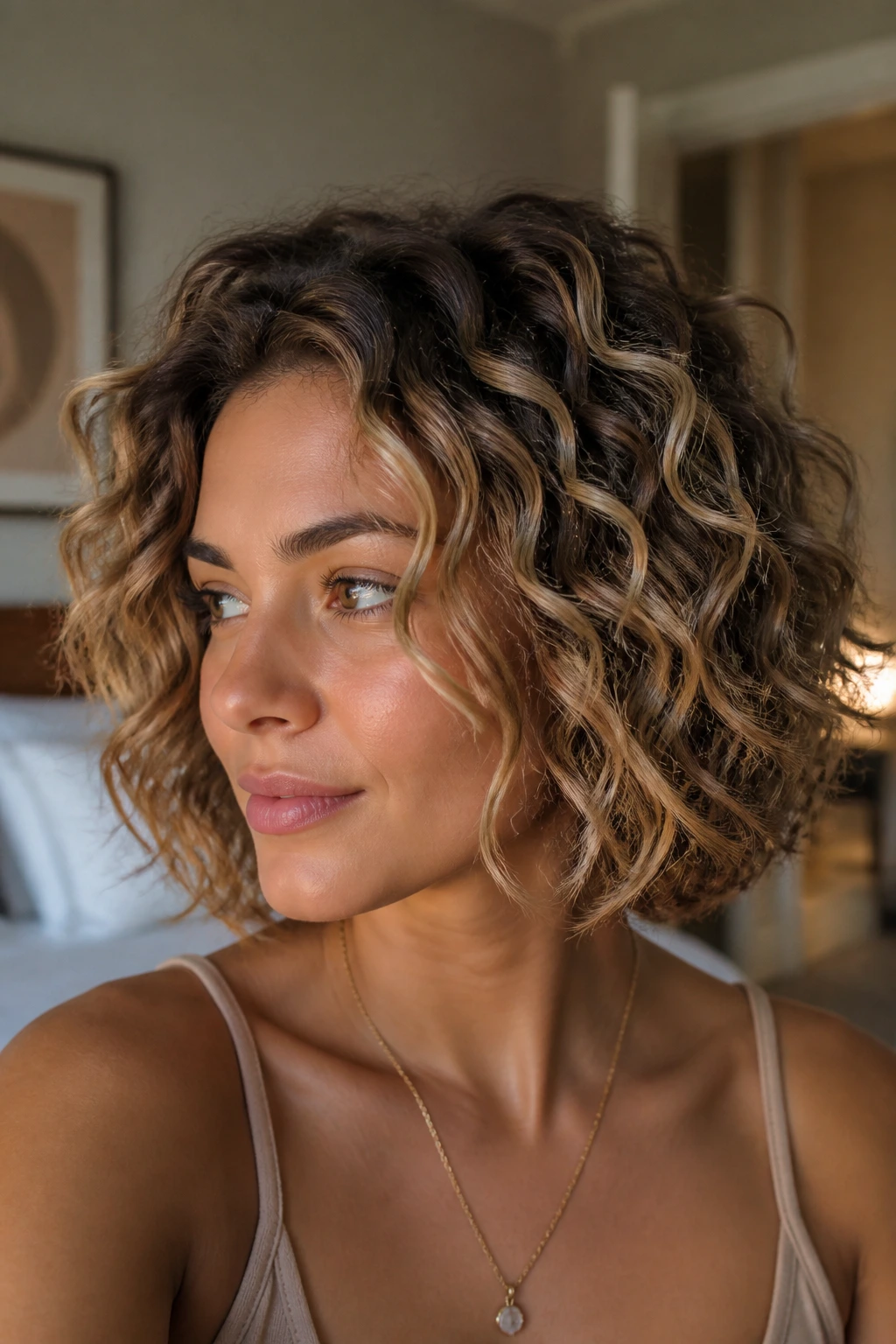
Bronde can sound vague until you see it on short curls. Sandy bronde is a brown-blonde blend with soft beige tones, and it’s one of the best options if you want the hair to look lighter without committing to full blonde.
Why It Flatters
The brown base keeps the cut grounded. The sandy pieces lighten the edges and top layer, which makes the curls look more open. On short hair, that melt effect can make the style feel smoother from root to tip.
Best Pairing
This is especially good on a curly lob or layered bob where the color needs to travel through the shape. It looks easy, but it still has enough contrast to read in photos and in person.
Tiny detail that matters
Ask your colorist to keep the tone beige, not gold. Beige tends to age better through several washes. Gold can get brassy if your water is hard or your hair is porous.
13. Cinnamon Veil Highlights
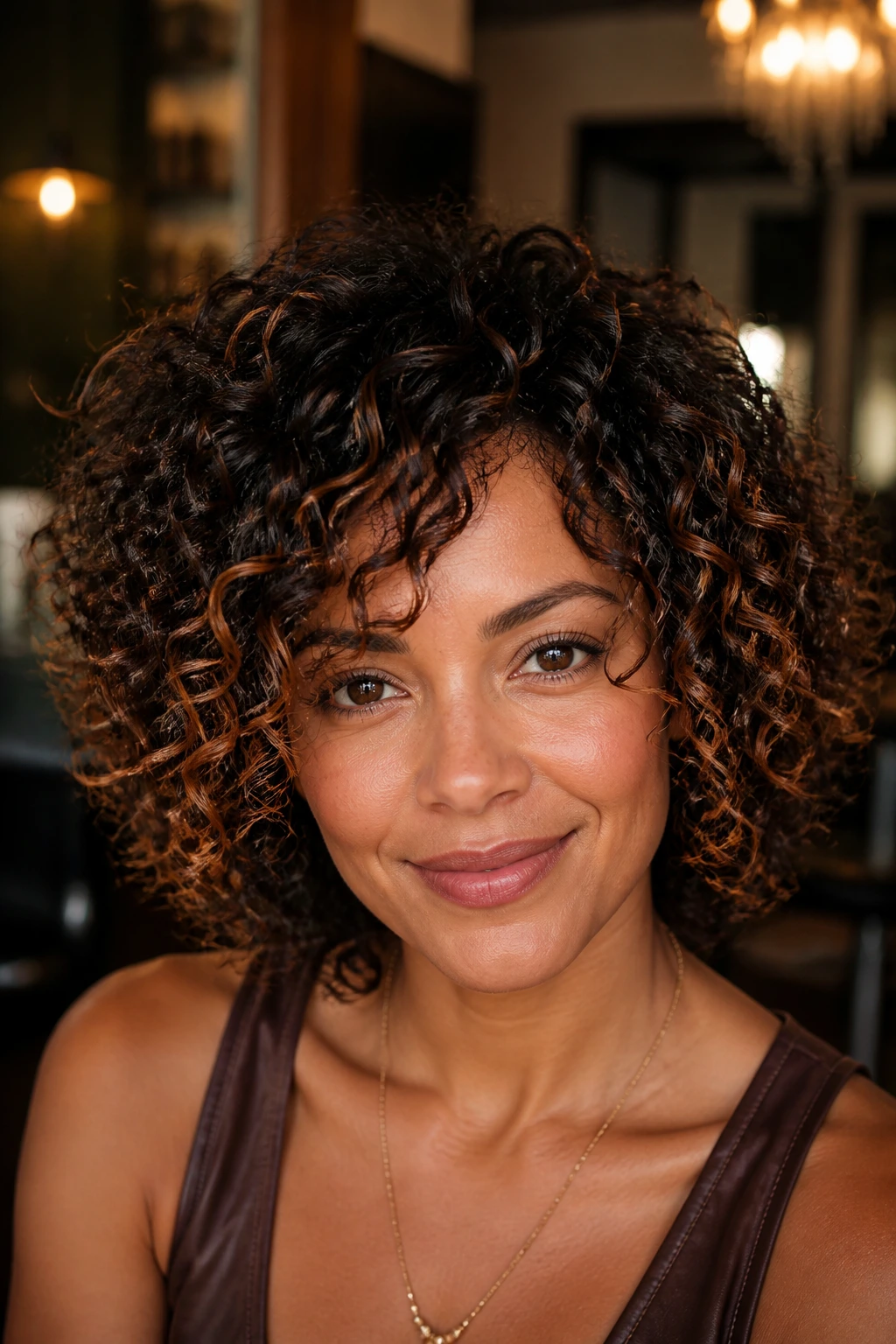
A cinnamon veil is warmer and spicier than caramel, but softer than copper. It wraps around short curls like a thin layer of warmth, which is a pretty nice place to land if you want color that feels seasonal without actually being tied to one.
Why It Works on Texture
Curly hair thrives on contrast, but it also needs softness near the face. Cinnamon does both. It brings enough red-brown warmth to show up on dark hair, then fades into the curl pattern instead of sitting on top of it like paint.
Best Use Case
This is lovely on brunettes who want to avoid blonde altogether. It also works on redheads who want to deepen the existing tone rather than add another layer of brass.
My preference
I like cinnamon best when it’s threaded through the top curls and hairline, with the underlayer left deeper. That gives you the sense of color without making the whole head look warm at once.
14. Beige Blonde Ribbons on Dark Brown Curls
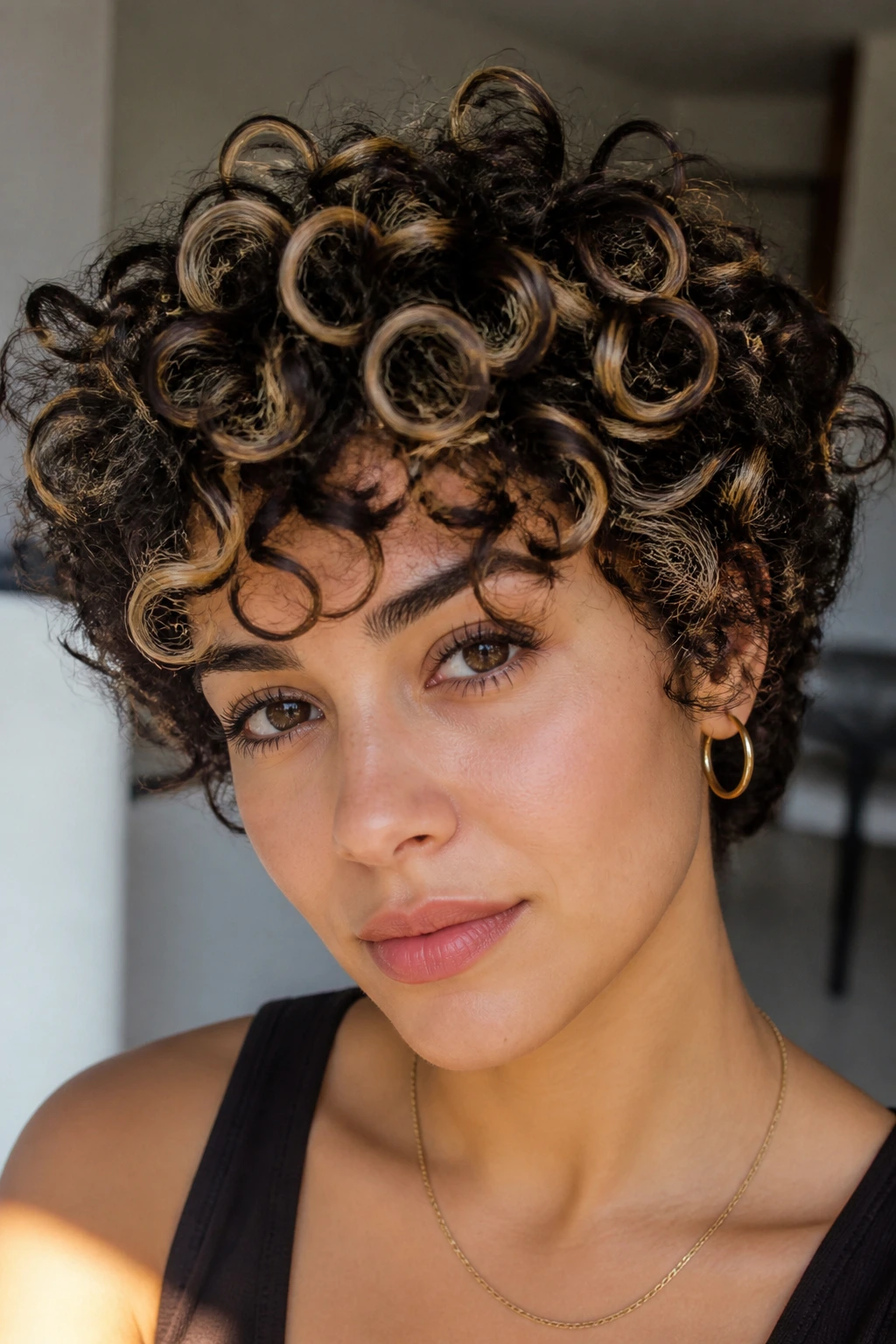
Beige blonde ribbons are the bolder side of curly-hair color, and I’m putting them here because they can look fantastic when the placement is clean. Dark brown curls plus a few beige ribbons can turn a short cut into something crisp and bright.
Why It Gets Attention
The contrast is the point. Beige blonde is softer than white blonde, so it doesn’t look harsh against dark hair. On short curls, the lighter pieces catch the outer coil and show off the curl shape in a way that flat hair never could.
Who Should Try It
If you like your curls to look obvious and dimensional, this is your lane. It’s especially good on layered crops, where the lighter ribbons can travel through the shape without making the haircut feel boxy.
One caveat
Don’t let the stylist overpack the front. A few brighter pieces near the face are enough. Too many, and the look loses its lift and starts to feel busy.
15. Rose Gold Tint on Short Curls
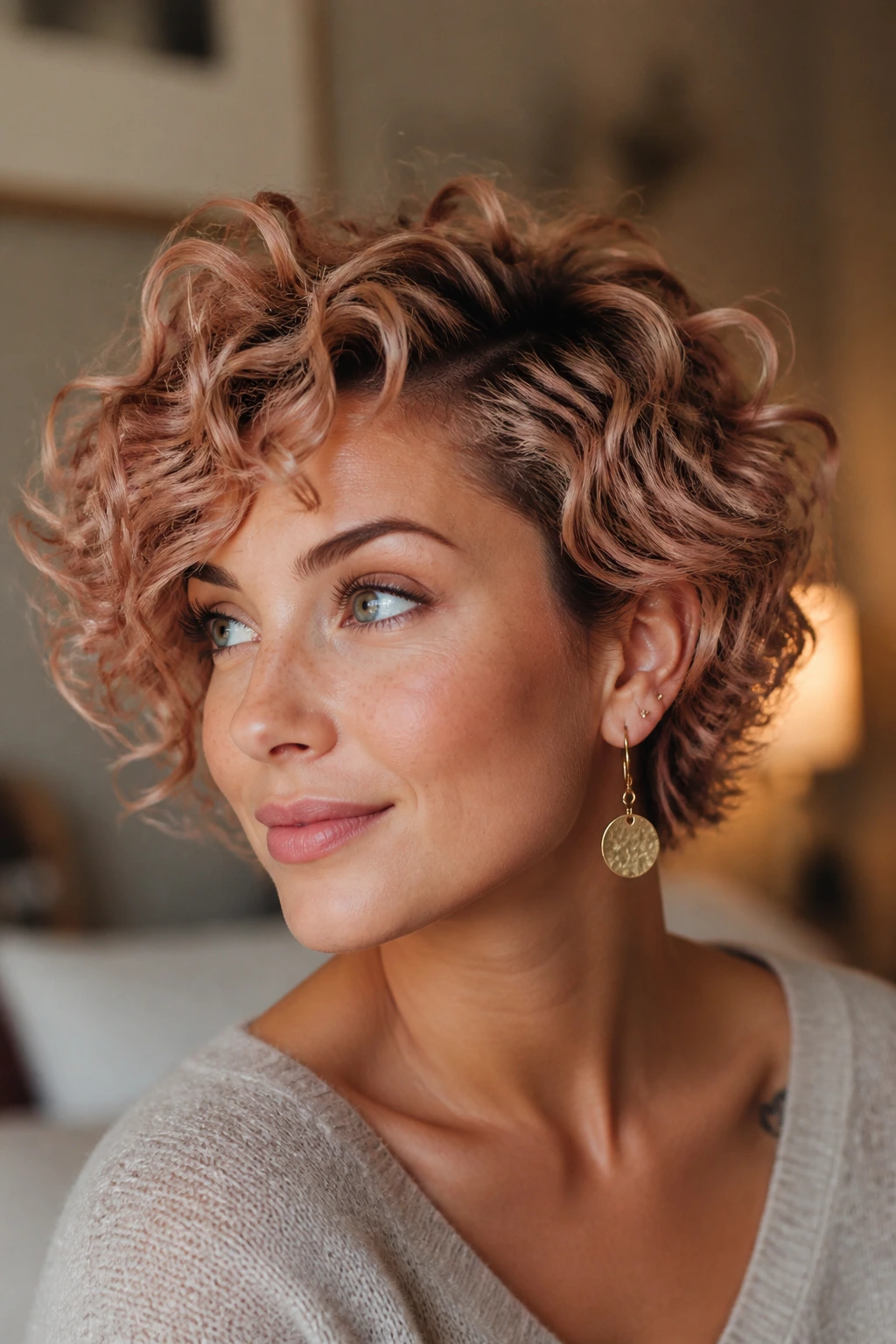
Rose gold on curls is the kind of color that looks subtle from far away and slightly magical up close. On short hair, it works best as a soft tint over lightened pieces, not as a full-on neon pink moment.
Why It Works
The curl pattern breaks the color up, which helps rose gold look chic instead of costume-like. The pink-gold tone is softer than copper and more playful than beige blonde, so it gives short curls a little personality without making the cut louder.
Best For
This suits lighter brunettes, dark blondes, and anyone who likes warm skin-flattering color. It also looks especially nice on cropped curls with lots of texture around the fringe.
The maintenance truth
Rose tones fade faster than brown or beige shades. If you like the fresh blushy look, plan on a gloss or color-depositing conditioner to keep it from washing out into plain gold.
16. Caramel Balayage on a Curly Shag
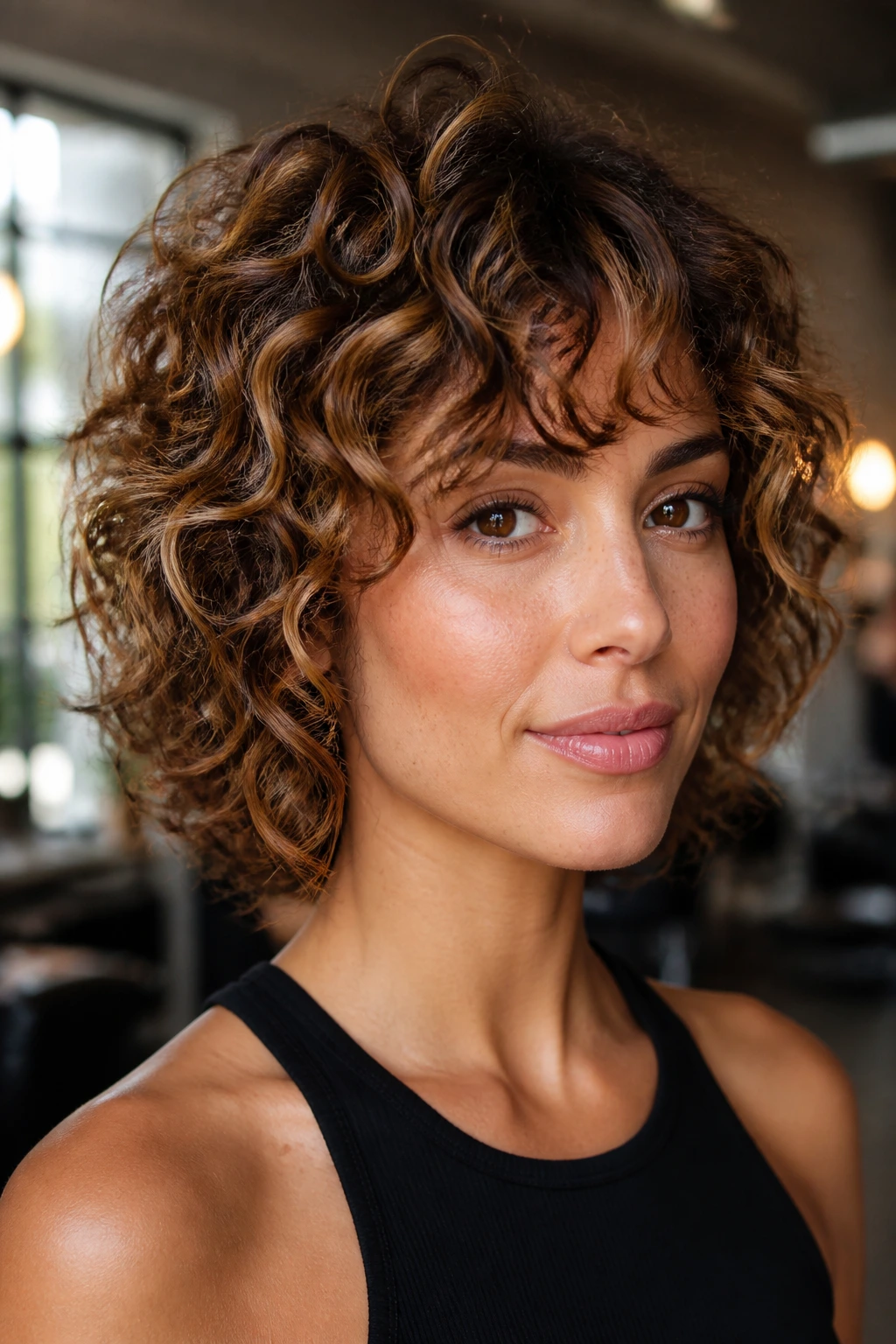
A curly shag practically begs for caramel balayage. The layers already create movement, and the caramel pieces follow those layers so the hair looks fuller at the ends and lighter at the top.
Why It’s a Strong Match
Balayage works well here because it’s painterly. You don’t need a ton of foils or precise stripes. The hair is cut to move, so the color should move too. Caramel gives the shag a lived-in feel that suits the shape.
How it should be placed
Keep the brightest pieces on the outer layers and around the cheekbones. Let the underneath stay deeper. That way the curls stack with contrast instead of blending into one warm blur.
Best part
This is one of the easiest styles to grow out. If you hate seeing roots, a shag with caramel balayage gives you enough softness that the regrowth line isn’t the first thing anyone notices.
17. Walnut and Honey Dimension
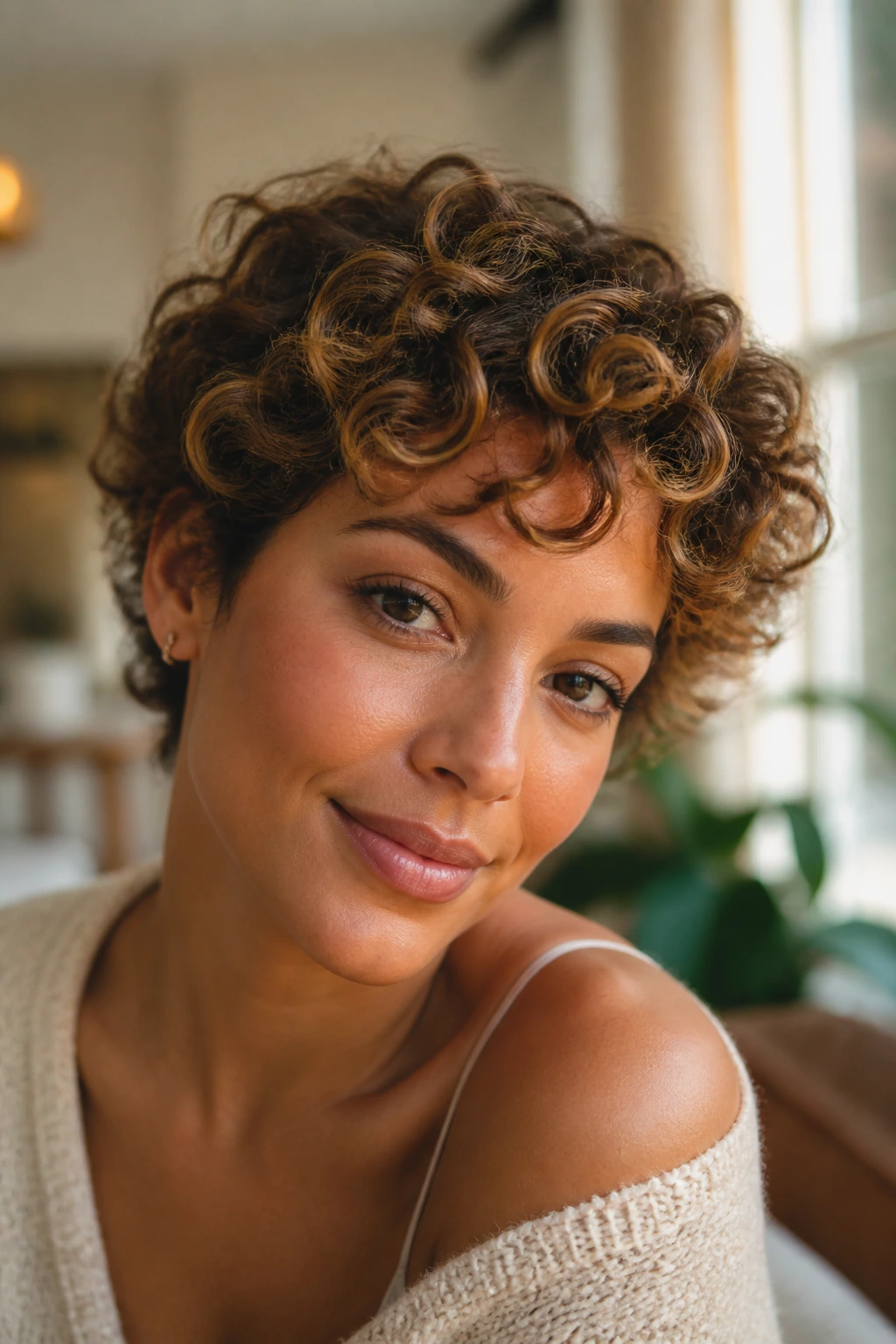
Walnut and honey is a mixed-tone look, and that mix matters. Walnut keeps the base rich and grounded, while honey pieces give the curls a little light and lift.
Why I Rate It
On short curly hair, mixed tones can look more expensive than a single highlight shade. That’s not fluff. The hair ends up reading as depth first, color second, which is exactly what textured cuts benefit from.
Where It Works Best
This pairing is excellent for medium brunettes who want some brightness but don’t want to jump all the way to blonde. It’s also a nice bridge if you’re growing out older highlights and want the color to look intentional again.
Small stylist note
Ask for the honey pieces to stay around the surface of the hair and the walnut to live underneath and near the root area. That keeps the contrast visible without making the curls look chopped up.
18. Smoky Beige Highlights
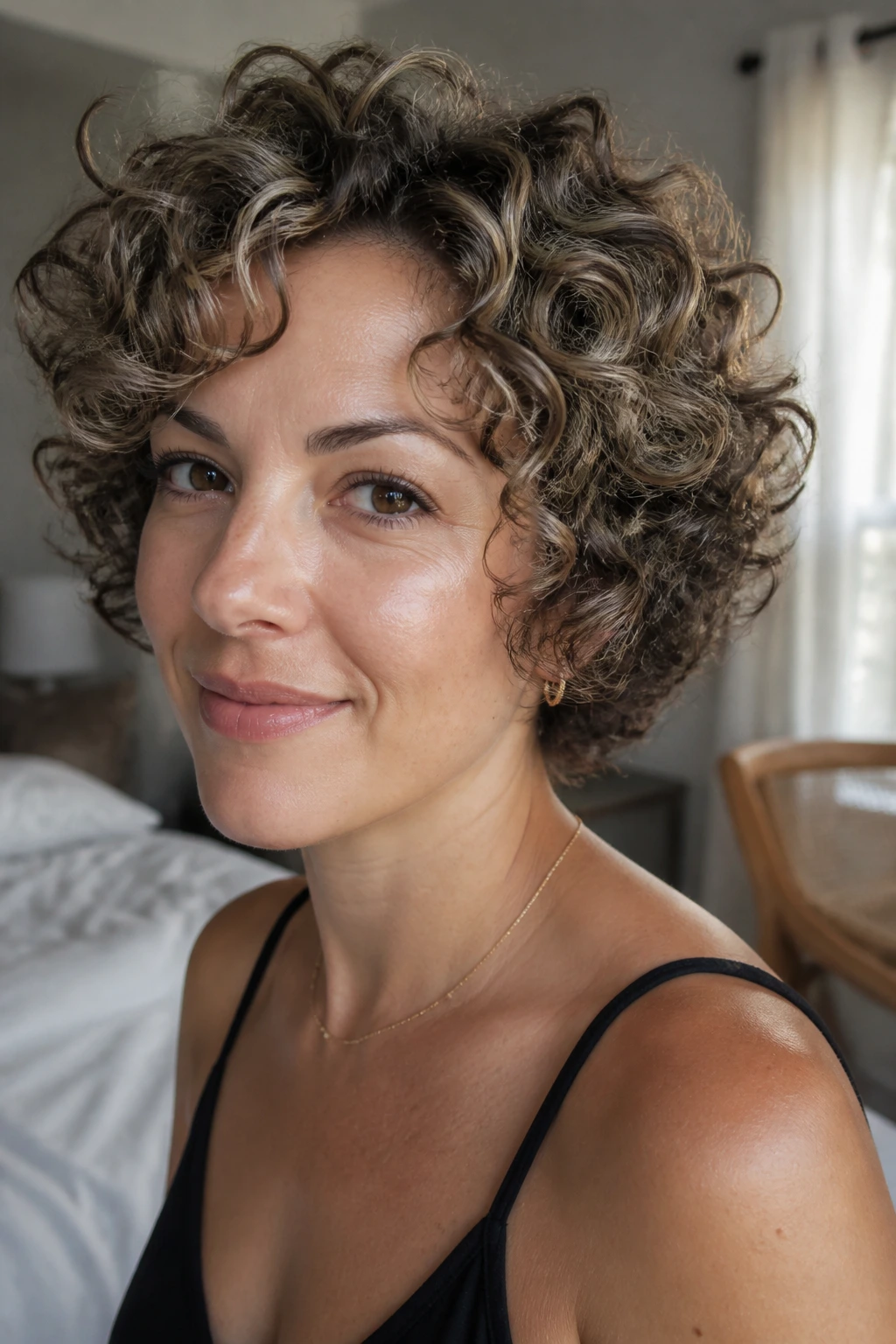
Smoky beige is for people who want lightness without warmth. On short curls, the smoky tone can look crisp and modern, especially if your base is medium brown or dark blonde.
Why It Feels Different
Most curly highlights lean warm. Smoky beige takes the temperature down. That can be a relief if gold and copper never look quite right on you, or if your hair tends to pick up orange from lightening.
Best Use
This look is especially nice on rounded bobs and curly lobs, where the softer neutral tone keeps the cut from reading too sweet. It’s a clean look. Quiet, but not boring.
One warning
Cooler tones need a careful toner and a decent maintenance plan. If you ignore them, they can fade muddy fast. This is not the place to skip gloss appointments and hope for the best.
19. Strawberry Bronde on Short Curls
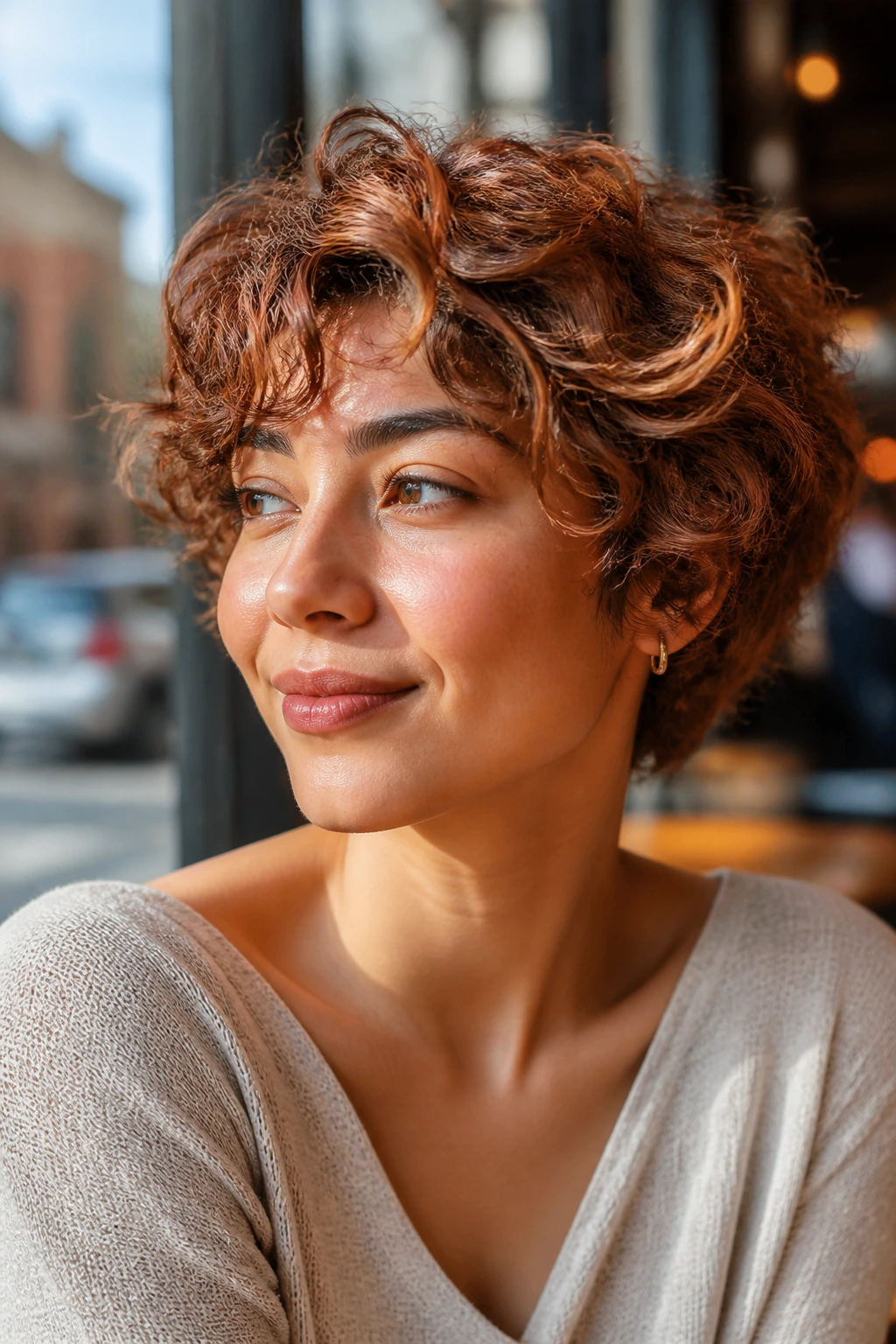
Strawberry bronde sits between blonde, brown, and a hint of red, which sounds messy on paper and looks lovely in the mirror when done well. On short curls, the color adds warmth and texture without turning fully copper.
Why It Works
The mix gives the hair movement. You catch the red-gold notes when the curls shift, then the brown comes back in to keep it from floating away. That balance makes it a strong option for short cuts that need a little spark.
Best For
Light brunettes, redheads who want to soften their tone, and dark blondes who are tired of plain beige all benefit from this. It’s one of those colors that makes a haircut look styled even when you did almost nothing to it.
My honest take
This one can go too sweet if the red is too heavy. Ask for strawberry as an accent, not the whole story.
20. Sunlit Chestnut Paint
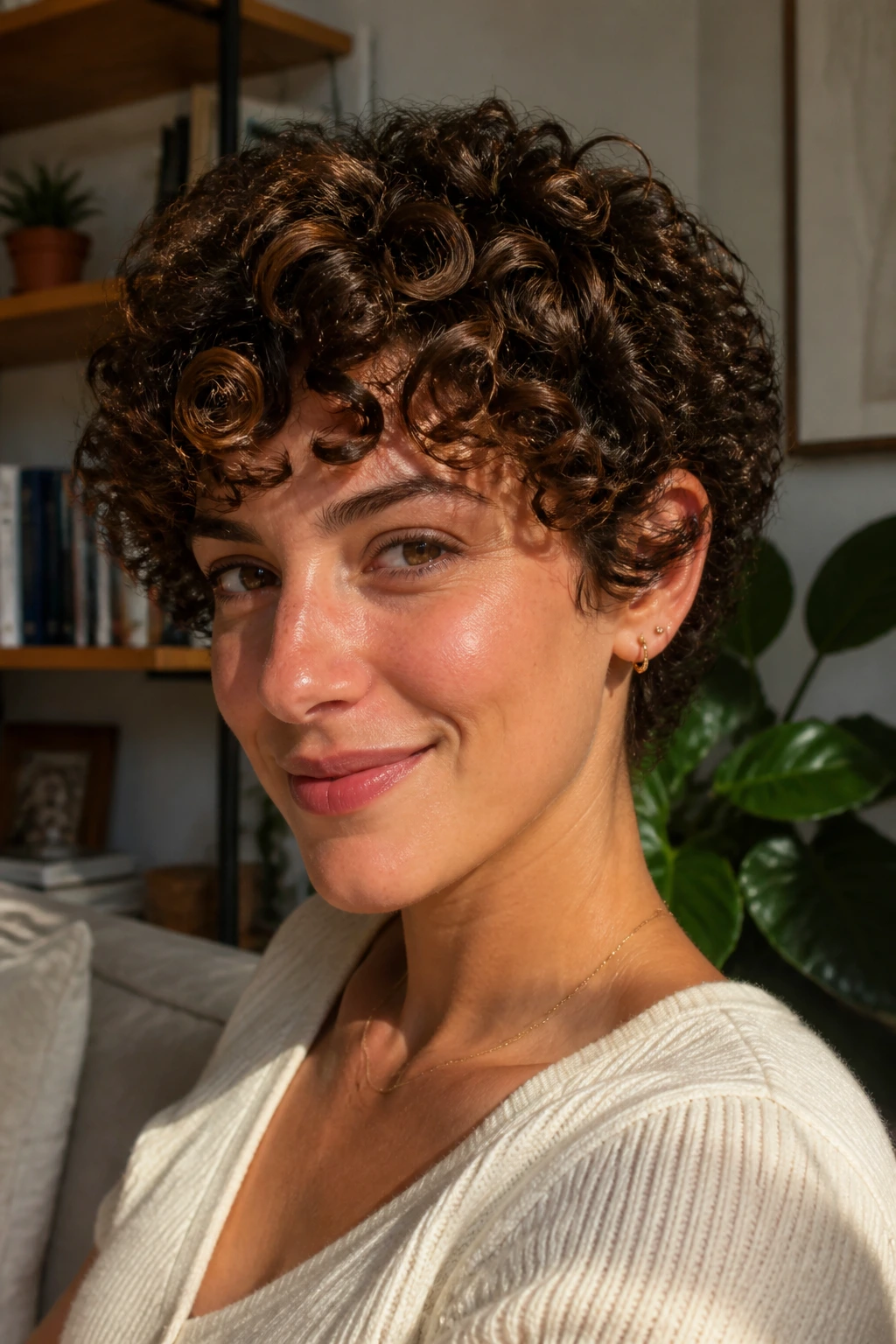
Chestnut is an underrated highlight tone on curly hair. It doesn’t scream. It glows. A sunlit chestnut placement gives short curls warmth and a soft sheen that looks especially good on deeper brunette bases.
Why It’s Worth Considering
This is one of the least dramatic ways to brighten short curls, which is why it works so well for people who want to color their hair without looking obviously colored. The chestnut tone sits close enough to brown that it blends, but the sunlit pieces still catch the eye.
Best Pairing
I like this on a curly pixie with a longer top or on a short layered bob. The chestnut pieces can sit in the crown and around the face, which makes the shape feel rounder and a little fuller.
The practical upside
Chestnut ages gracefully. Even when it fades a bit, it usually still looks like a richer brown, not a tired blonde.
21. Platinum Micro-Accents on Deep Brown Curls
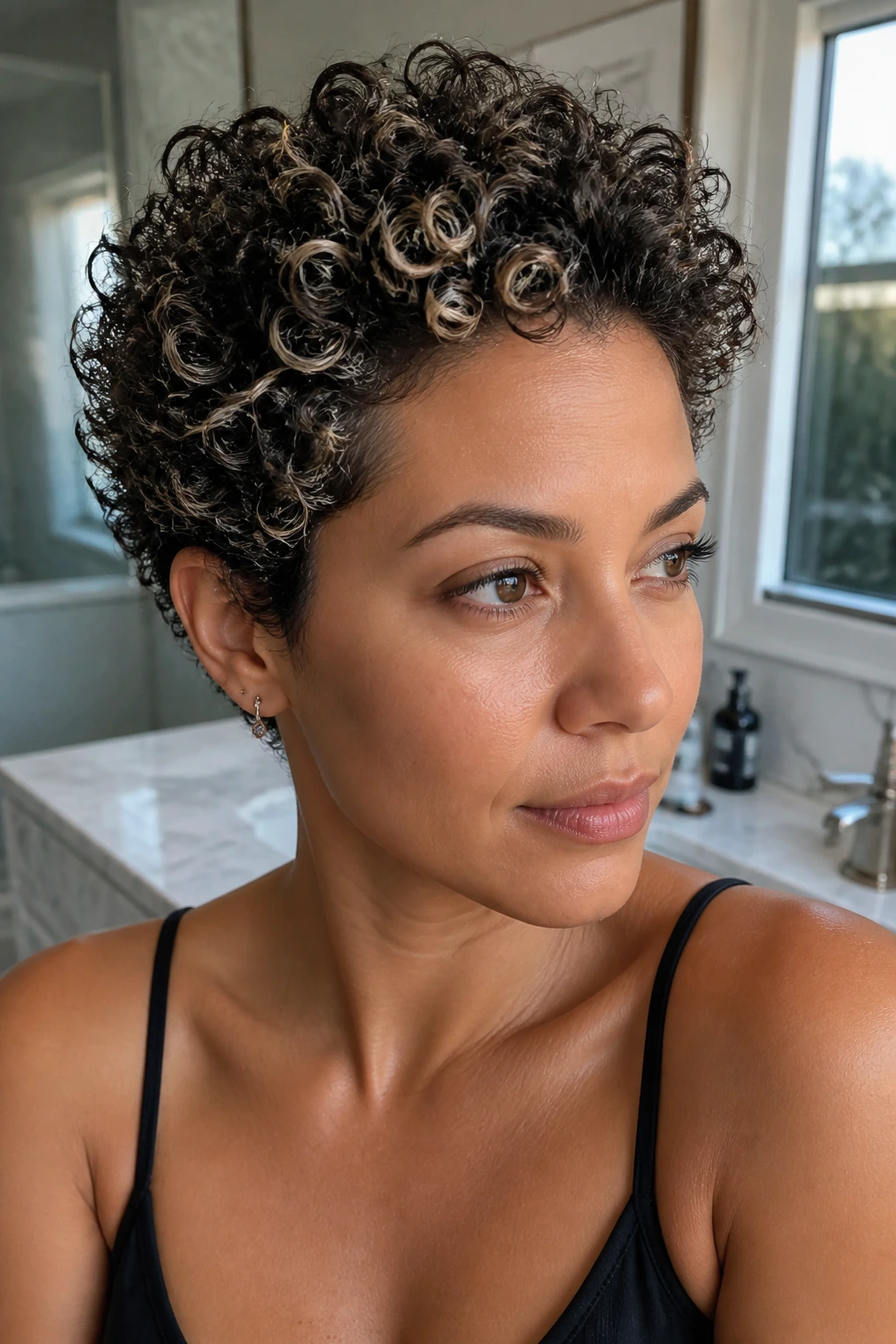
Platinum micro-accents are tiny, bright flashes on a deep brunette base. Tiny is the key word. On short curly hair, a little platinum goes a long way.
Why It Can Work
The curls break the lightness into little sparks instead of one big block. That’s why the style feels edgy without being loud. It also makes the curl pattern more obvious, because each bright accent separates a coil from the one next to it.
Best for the brave
If you like contrast and you don’t mind upkeep, this is a sharp look on a short curly crop or asymmetrical bob. It has attitude. No pretending otherwise.
Important caution
Platinum is the highest-maintenance option in this list. It can dry hair fast, especially on already porous curls. If the goal is health and softness first, choose beige or champagne instead.
22. Maple Drizzle Highlights
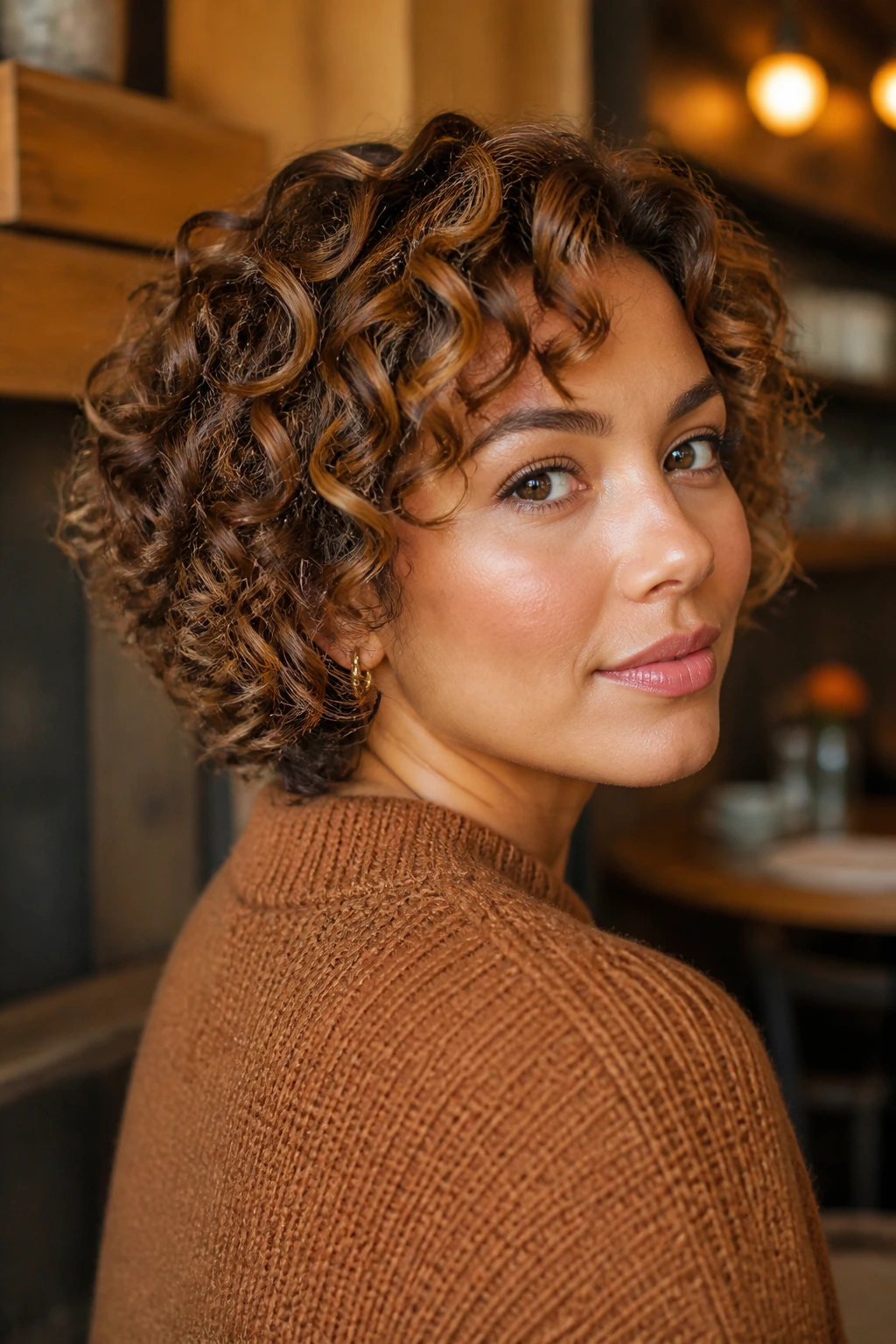
Maple drizzle is a warm, syrupy highlight pattern with pieces that seem to melt into the base color. It’s softer than copper and richer than honey, which makes it a good middle-road shade on short curls.
Why It’s Nice on Short Hair
Short curls can lose detail if the color is too uniform. Maple drizzle gives you just enough movement to make the shape interesting. The color looks especially good on a bob with lots of bend or a cropped shag with a little length at the crown.
What to ask for
Ask for scattered ribbons rather than heavy panels. You want the color to sit where the curls naturally separate, not sit in one obvious line.
My bias
This is one of the easiest warm shades to live with. It doesn’t demand a certain makeup look or a specific outfit. It just makes the hair look richer.
23. Cocoa and Cream Streaks
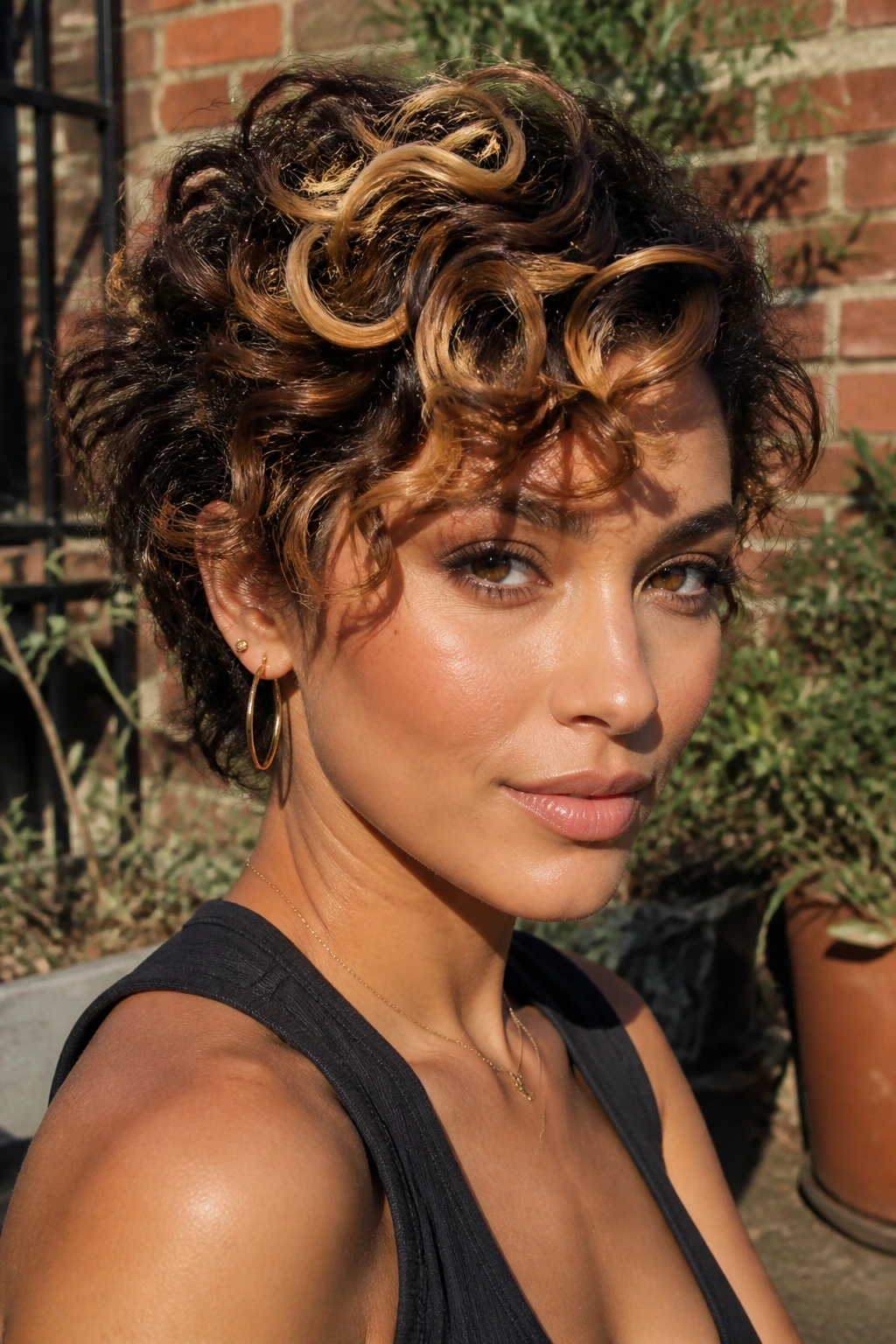
Cocoa and cream is a high-contrast pair that works when you want visible dimension on short curly hair. The darker cocoa pieces stop the look from going washed out, while the cream pieces brighten the edges and top layer.
Why It Stands Out
This isn’t a soft whisper of color. It’s more deliberate. On a curly bob or short shag, the contrast can make the curl pattern read cleaner and fuller, especially if your hair is naturally dense.
Best Use
I’d use this on hair that already has some shape and layer separation. Without that, the contrast can look a little patchy. With it, the result feels graphic in a good way.
Quick rule
Keep the cream pieces away from the entire underside. If you brighten every strand, the “streak” effect disappears and the curls lose depth.
24. Ginger Ribbon Lights
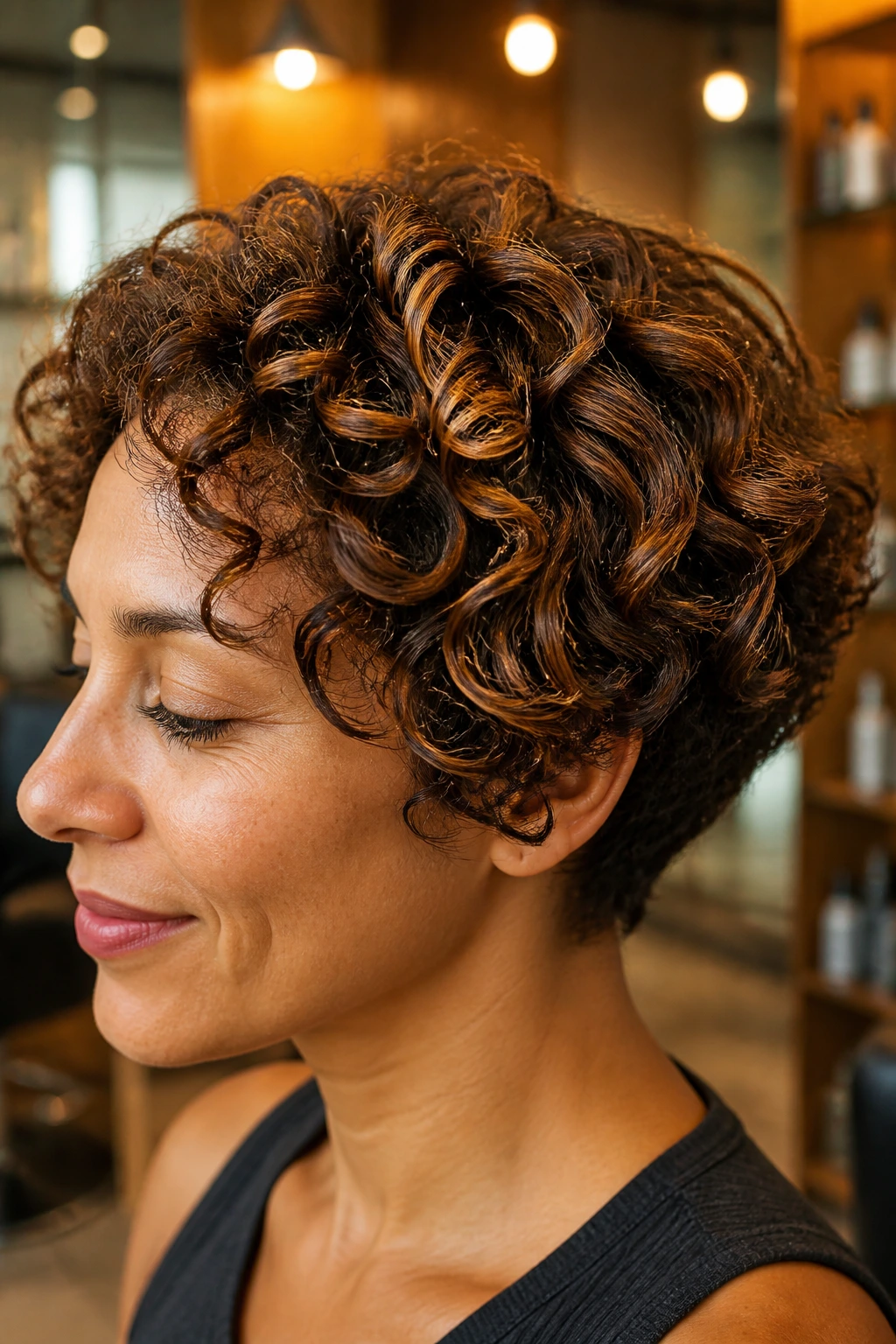
Ginger ribbon lights bring energy. They’re warmer and brighter than cinnamon, but not as bold as full copper. On short curls, they can make a simple cut look lively with very little extra effort.
Why They Work
Ginger catches light fast. That makes it useful on cropped curls that might otherwise disappear in deeper browns. The ribbon shape keeps the color from looking blocky, which is exactly the problem short hair can have when the highlights are too wide.
Best For
This is a strong choice for warm skin tones and naturally red or auburn bases. It also plays nicely on medium brunettes who want a reddish glow without fully committing to a redhead look.
Practical tip
If your hair is already porous, ask for a softer ginger-beige mix. Pure ginger can fade loud and uneven.
25. Soft Mocha Halo with Bright Ends
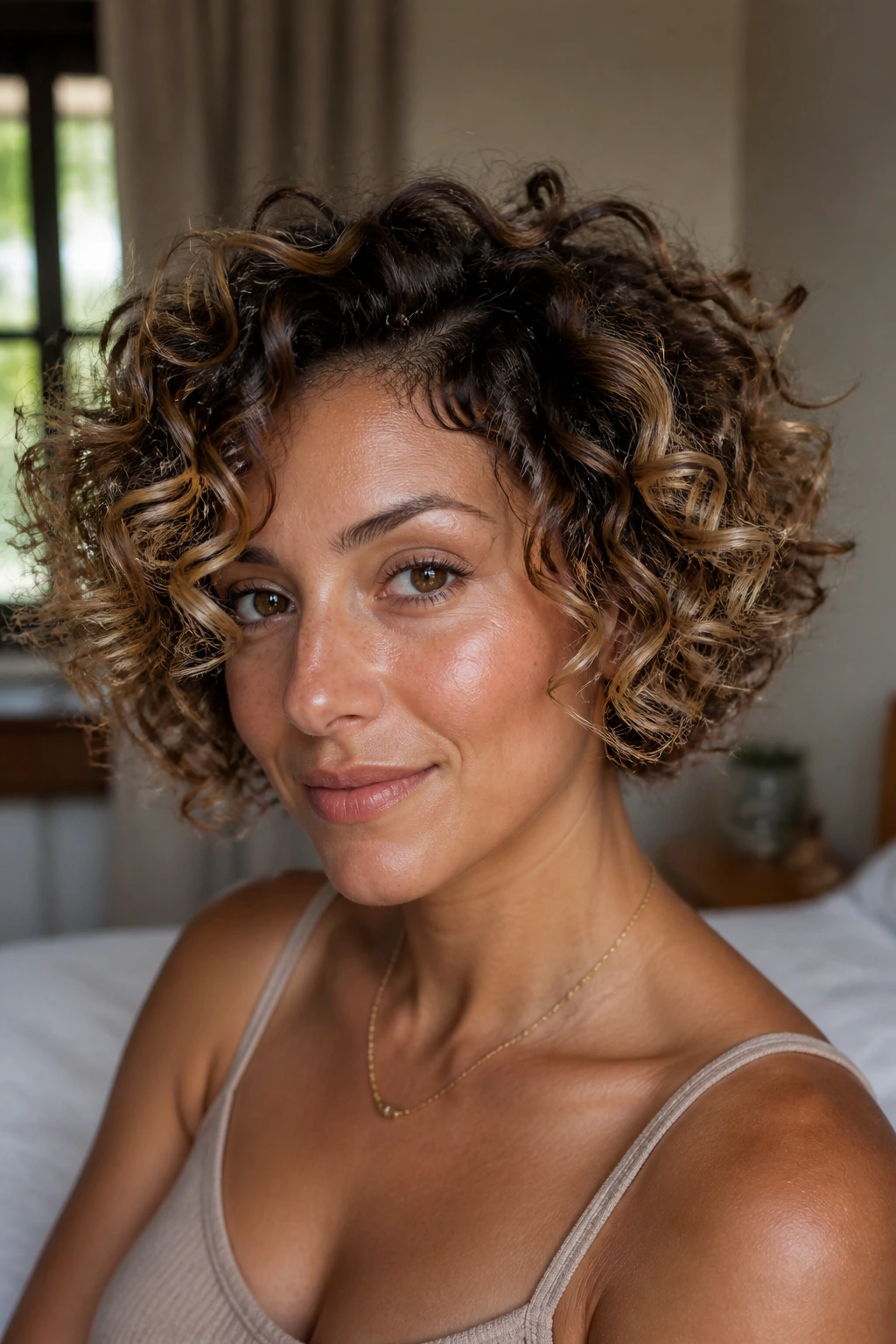
Soft mocha with bright ends is the closing move I’d choose for someone who wants the whole haircut to feel polished. You keep the root and mid-lengths mocha-rich, then brighten the ends just enough to show shape and movement.
Why It Works So Well
Short curly hair often needs a clear top-to-bottom story. A mocha halo gives you the depth near the scalp, and the brighter ends keep the cut from feeling heavy. It’s balanced, but not bland.
Where It Fits
This is lovely on a curly bob that sits at the jawline or just below it. The ends catch the eye when the curls flip outward, which makes the cut look lighter without sacrificing depth at the root.
Final thought on the style
If I had to pick one option for someone who wants color that grows out cleanly and doesn’t fight the curl pattern, this would be near the top. It’s soft. It’s readable. It doesn’t try too hard.
Why Placement Matters More Than Brightness on Curly Hair
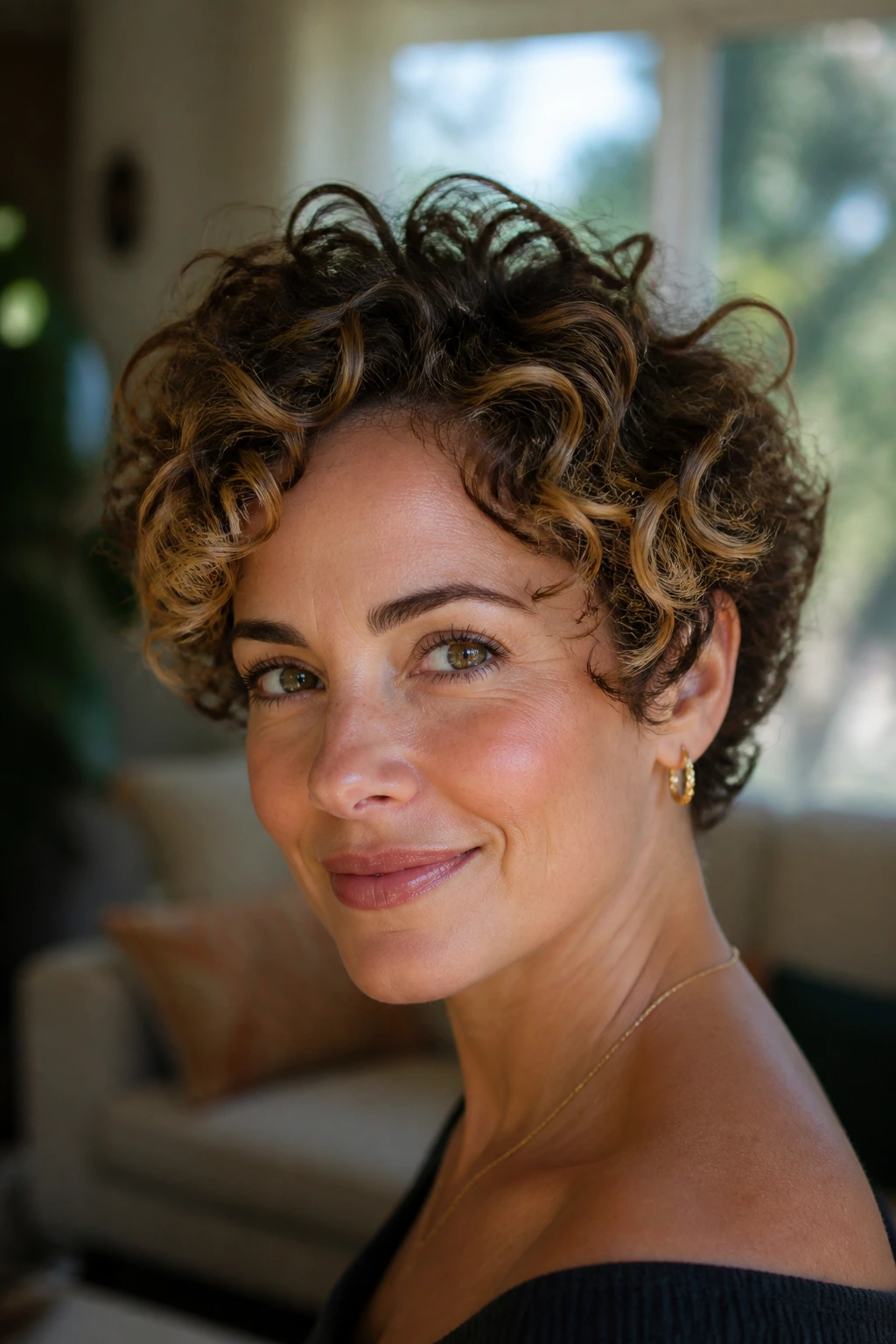
Curly hair does not show color the way straight hair does. That’s the first thing I tell anyone who wants highlights on a short cut. The curl bends, twists, and shrinks, so the painted piece you saw on the foil rarely lands exactly where you think it will once the hair is dry.
That’s why placement matters so much. A highlight at the crown can change the whole shape of a curly bob. A lighter ribbon around the cheekbone can make a short cut feel lifted even when the length is barely there. Put the brightness in the wrong spot, and the color disappears into the curl or lands as a stripe that never quite settles.
For short curly hair, the smartest highlights usually live on the outer curve of the curl, around the face, and in the top layer where the light hits first. The underlayer can stay darker. It should stay darker, honestly. That shadow gives the curls something to sit against, and it keeps the whole head from looking overworked.
Essential Tools for Short Curly Highlights
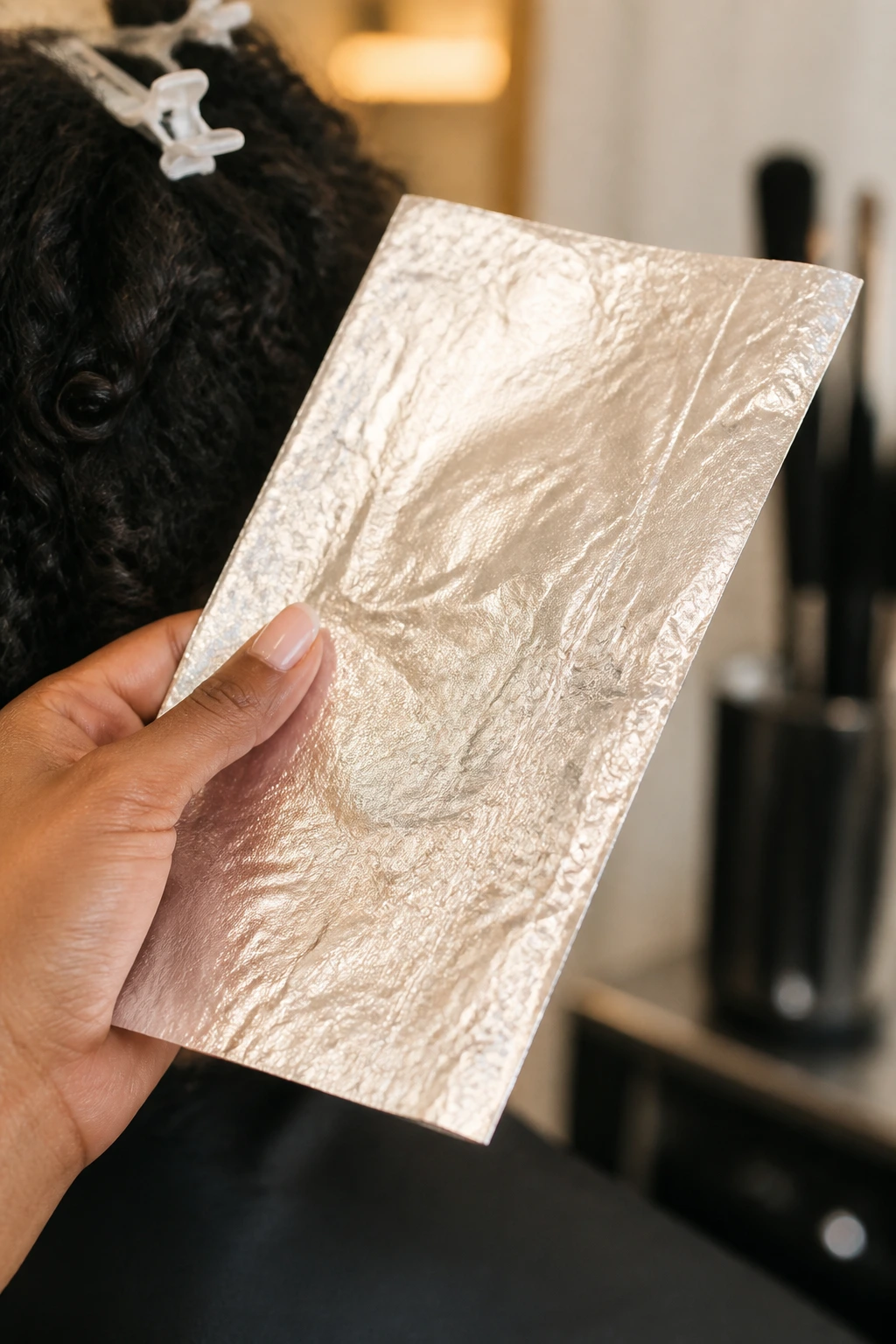
- A stylist who understands textured hair: Curly hair needs color placement based on how it falls when dry, not just how it looks stretched out in the chair.
- Reference photos from more than one angle: Bring front, side, and back shots so the placement makes sense on a short cut.
- Foils or balayage boards: These help a colorist control brightness without flooding the whole head.
- Tint brush and bowl: Useful for precise face-framing pieces and fine ribbons.
- Bond-building treatment: Helps protect curls during lightening and keeps the hair from feeling brittle afterward.
- Color-safe, sulfate-free shampoo: Keeps the toner and pigment from rinsing out too fast.
- Deep conditioner or mask: Weekly moisture matters more once lightener is involved.
- Wide-tooth comb or detangling brush: Gentler than a fine brush on freshly colored curls.
- Microfiber towel or T-shirt: Cuts down on frizz when the hair is wet and fragile.
- Diffuser: Helps you see the color pattern as the curls dry instead of stretching it into a different shape.
How to Choose the Right Shade for Your Curl Pattern
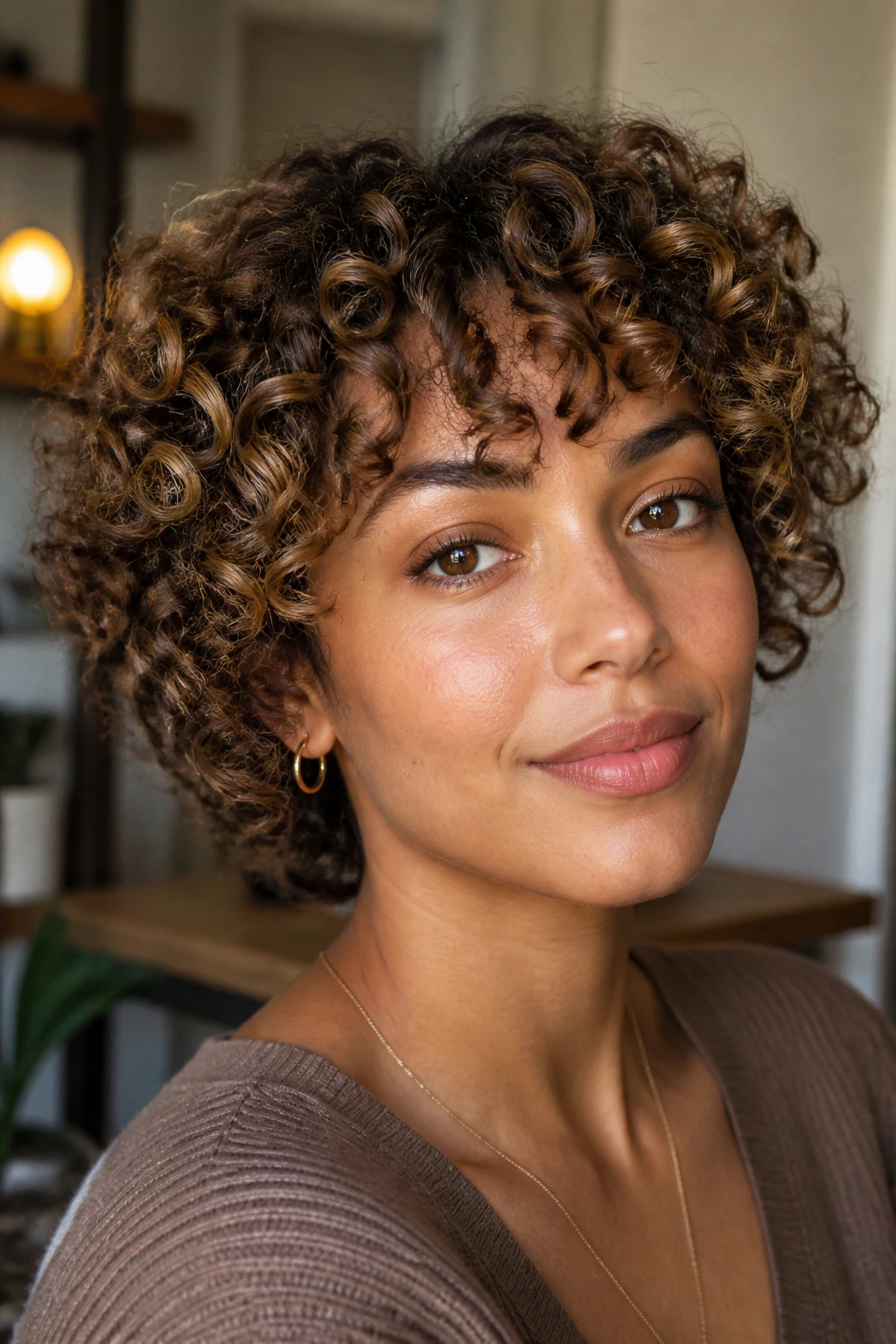
Short curly hair is unforgiving about shade choice, which is good news if you like honest results. The curls will show you fast whether the tone is too warm, too cool, too pale, or too heavy. That can save you from a mistake, but it also means you should think about your base color before you pick a highlight.
If your hair is dark brown, anything from level 6 to level 8 usually gives enough contrast without making the curl look stripped. Level 9 and up can be beautiful, but only if you’re willing to care for it and keep it toned. On medium brown hair, beige, caramel, honey, and bronze usually behave well. On black or very deep brown hair, copper, chestnut, cinnamon, and soft caramel often look richer than icy blonde.
Porosity matters too. Curls that have been colored before tend to grab warmth fast. If your hair turns orange the minute it sees lightener, cooler beige or smoky tones may behave better than gold. And if your hair is fine, a few thin ribbons will usually look fuller than thick panels. Thick panels can turn the curl pattern into one big shape. I’d avoid that unless you want a louder, stripier result.
How to Style These Highlights So They Actually Show Up
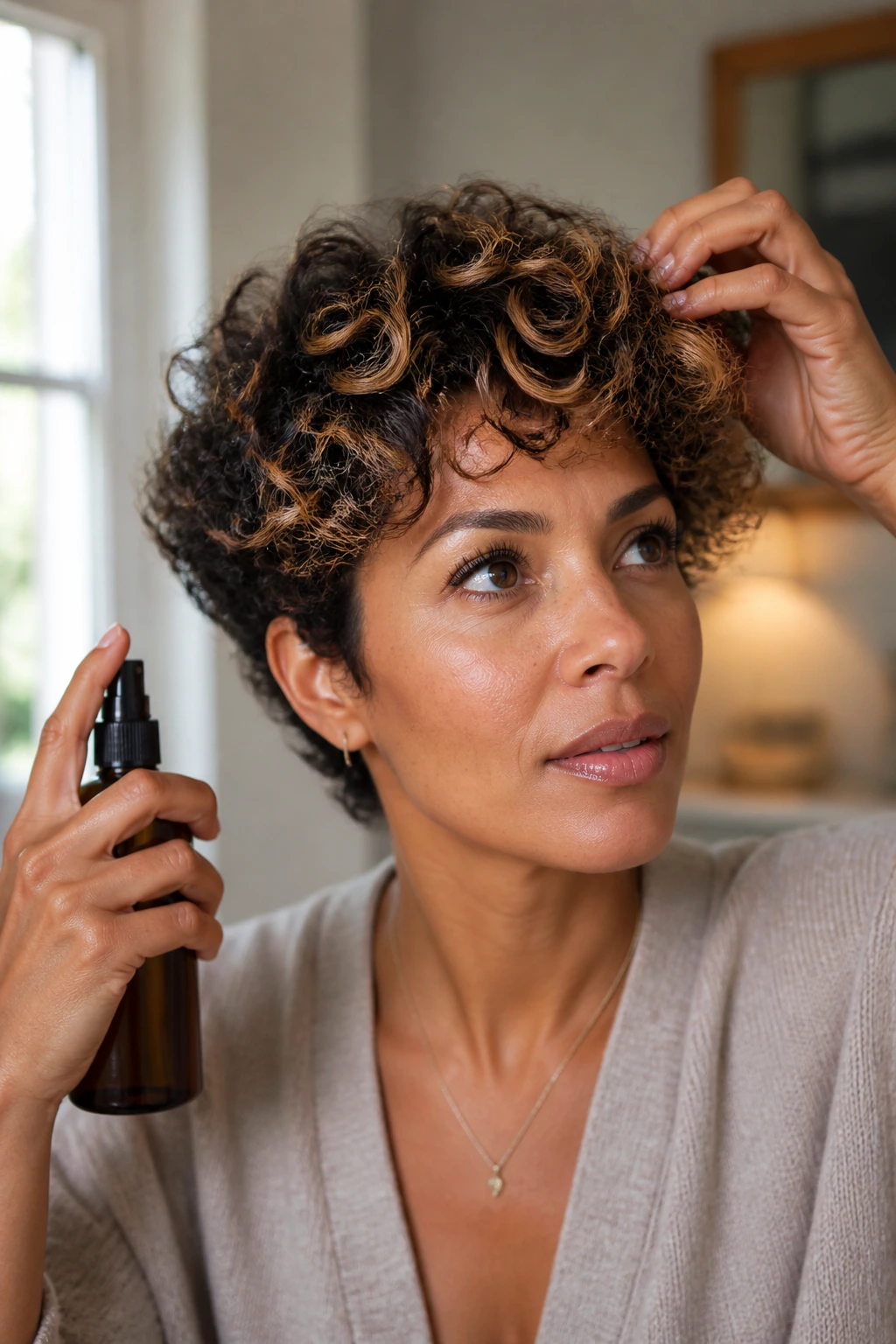
Placement: Ask for the brightest pieces where the hair sits on top when dry: crown, hairline, outer curve, and the top of the front sections. On short curls, those are the spots that catch light first and show the shape of the cut.
Styling: A light curl cream or mousse usually works better than a heavy butter when you want the highlights visible. Heavier products can clump the curls together and hide the ribbons. Diffuse just until the hair is mostly dry, then let the rest air-dry so the color stays separated and the curl pattern doesn’t get stretched flat.
Cut Pairing: Pixies and very short crops can handle bolder contrast on top. Bobs and shags often look better with finer, more blended pieces. If your cut has a lot of layers, the color should follow the layers instead of fighting them.
Wear Time: Some placements look best fresh. Others are built to grow out. Face-framing money pieces need more frequent refreshes, while balayage ends and babylights can stretch longer without screaming for attention.
Extra Ways to Make Curly Highlights Pop
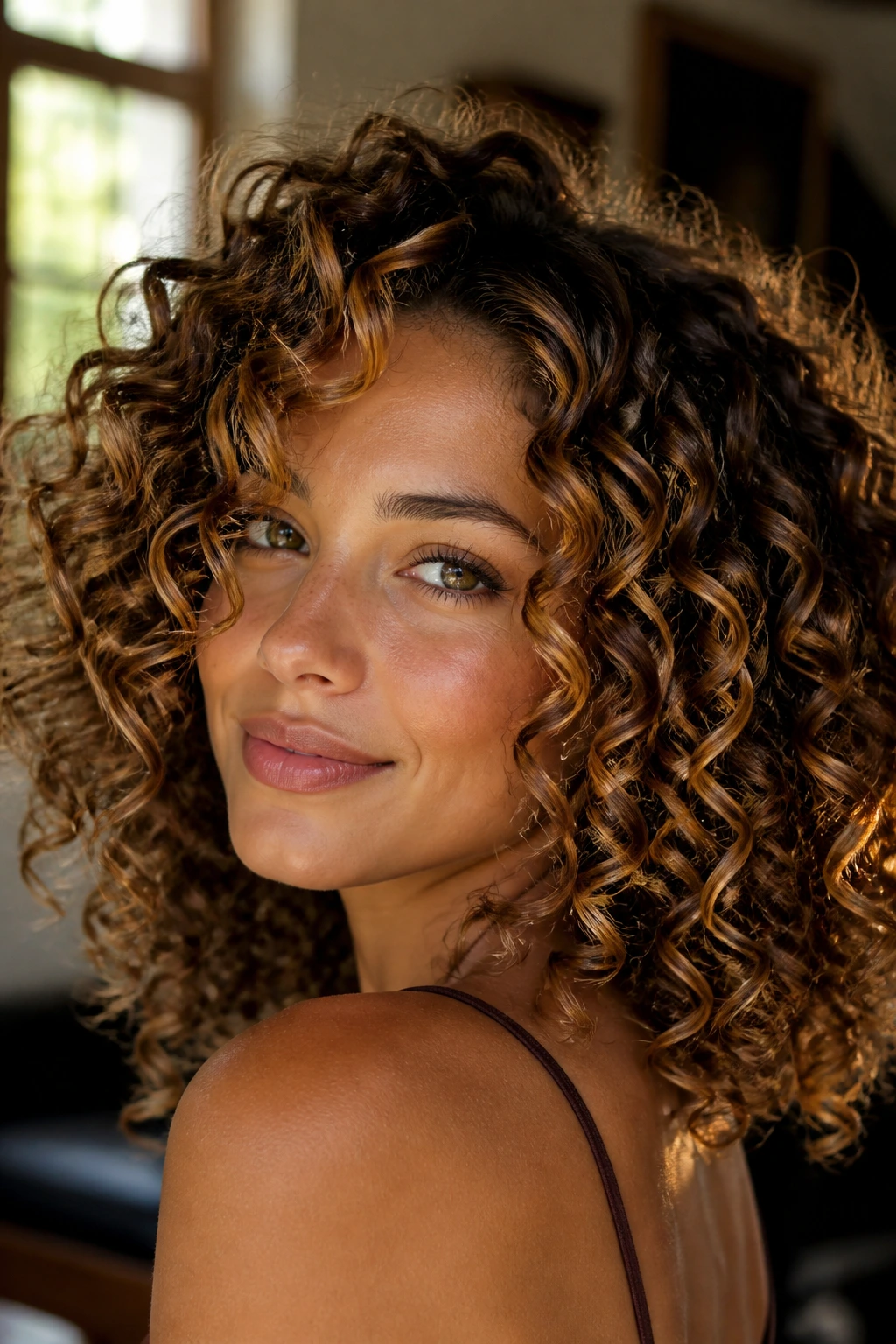
Tone Enhancement: A clear gloss or tinted glaze after lightening can make the color look richer and help curls reflect light without feeling crunchy. I like this move on caramel, bronze, and honey shades because it keeps them glossy, not brassy.
Customization: If you want more drama, ask for one brighter front section and leave the rest softer. If you want less drama, ask for a deeper root and only a few pieces around the hairline. The same color formula can read wildly different depending on where it lands.
Serving Suggestions: Curl cream, a bit of gel at the outer ringlets, and a microfiber scrunch can make highlight placement easier to see. A tiny drop of serum on the ends helps the lighter pieces sit cleanly instead of puffing out.
Make-It-Yours: Cool undertones usually look good with smoky beige, mushroom brown, and champagne. Warm undertones tend to love honey, bronze, caramel, and cinnamon. If you’re blending gray, beige and taupe shades usually look softer than a bright blonde stripe.
Common Highlight Mistakes on Short Curly Hair
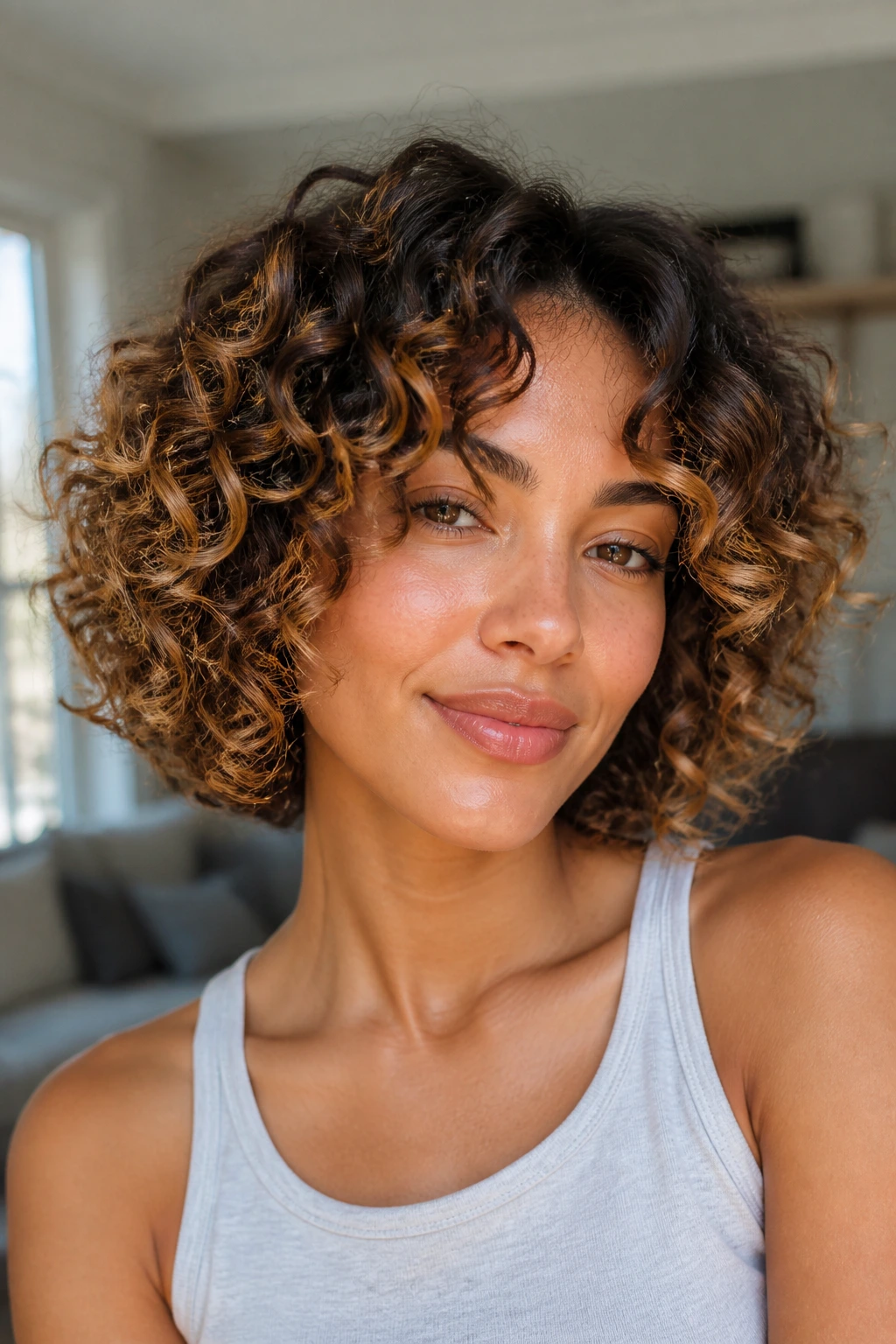
Making every piece too wide: Thick streaks can turn short curls into a striped mess. The fix is finer placement, especially on the top layer and around the face, where the curls already do the visual work.
Ignoring shrinkage: Highlights painted on stretched curls often end up in the wrong place once the hair dries. The fix is to plan the color on how the hair wears naturally, not how it hangs wet.
Going too light in one appointment: Short curls can take lightness beautifully, but not always all at once. If the hair is dark or previously colored, jumping straight to pale blonde can dry the hair out and make the curl pattern less springy.
Skipping toner or gloss: Fresh lift can look yellow, orange, or flat if it isn’t refined. A gloss gives the color a more finished tone and helps the pieces blend into the haircut.
Forgetting the underlayer: If every highlight sits on the outer surface, the head can look flat from the side. A few deeper pieces underneath create shadow and make the brighter parts stand out more cleanly.
Styling it straight once and calling it done: Short curly highlights should be judged on the way the hair wears curly. If you only look at them blown out, you may miss the actual balance of the color.
Helpful Variations to Try
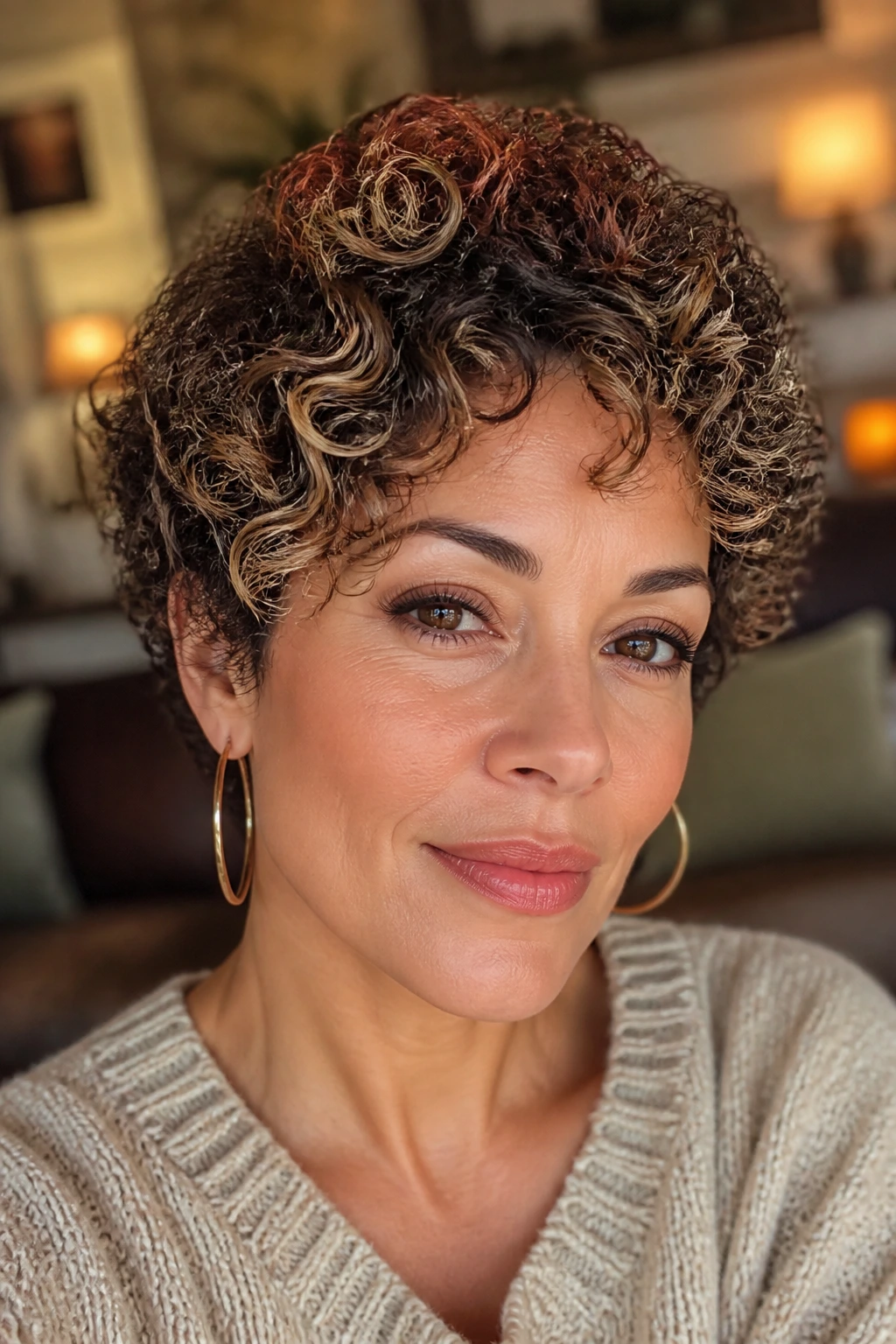
The Soft Brunette Glow: Keep the base rich and add just a few honey or caramel ribbons around the face. This is the low-drama choice, and it grows out cleanly on short bobs and shags.
The Copper Accent Crop: Use copper or auburn only in the front and crown. The result feels vivid without becoming a full red transformation, and it looks especially good on short pixies with lots of texture.
The Cool Beige Blend: Swap warm golds for smoky beige and mushroom tones. This is the move if you hate brass or want the color to feel cleaner and more modern.
The High-Contrast Brunette: Pair deep cocoa with beige blonde or platinum micro-accents. This works best on structured short cuts where the curl pattern is already strong and defined.
The Gray-Softening Mix: Blend taupe, beige, and light brown pieces around the hairline and top layer. It’s a better option than a harsh platinum stripe if you’re trying to ease into gray blending on curly hair.
How to Keep Short Curly Highlights Looking Fresh
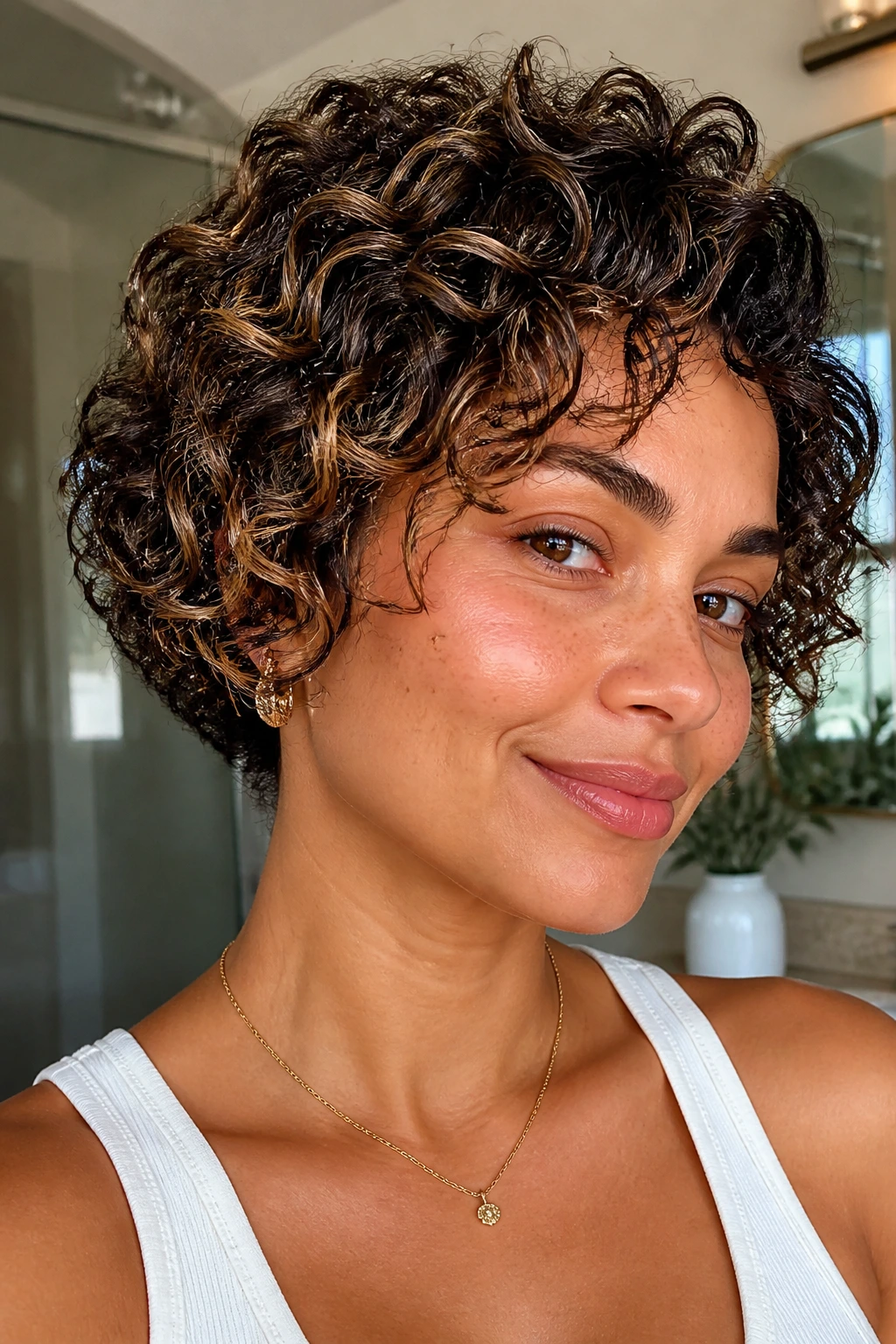
Short curly highlights don’t need babying every day, but they do need a real maintenance plan. The first 48 hours after coloring matter if your stylist used toner or a gloss; don’t rush in with a clarifying shampoo unless you’ve been told to. For most color, a gentle sulfate-free cleanser and cool-to-lukewarm water are safer bets.
Week to week, a deep conditioning mask once a week helps the highlighted curls stay springy instead of papery. If you’ve gone blonde, beige, or champagne, a purple shampoo every 7 to 10 days can keep brass from taking over. If your hair pulls orange, blue shampoo can help, but use it lightly. Too much and the hair can look muddy.
Touch-up timing depends on placement. Face-framing money pieces may need a refresh every 6 to 8 weeks if you want them crisp. Babylights and balayage can often stretch to 10 to 14 weeks, especially on a short curly bob where the grow-out blends into the shape. The haircut itself still needs trims, though. On short curls, a trim every 6 to 10 weeks keeps the ends from turning fuzzy and hiding the color you paid for.
Sleep on satin. Use a bonnet, scarf, or pillowcase. That tiny habit keeps the lighter pieces from roughing up at night, and it helps the curl pattern hold its shape so the highlights still show in the morning.
Frequently Asked Questions
Do highlights make short curly hair look thinner?
They can, if the placement is too sparse or too light. Fine ribbons, lowlights, and careful shadow at the root usually do the opposite and make the curls look fuller.
What highlight color is easiest to live with on curly hair?
Honey, caramel, bronze, and beige-brown blends tend to grow out softly and stay readable through several washes. They also hide minor brass better than icy blonde.
Should highlights be painted on curly hair dry or wet?
For many stylists, dry placement gives a better read on where the color will land once the curl springs back. Wet hair can stretch and shift, which makes the finished result harder to predict.
Are foils or balayage better for short curls?
Foils give tighter control and brighter lift; balayage gives a softer, more painted effect. On very short curly cuts, many colorists use both because the crown and face may need different treatment from the ends.
How often do curly hair highlights need touch-ups?
That depends on the design. A money piece can need attention every 6 to 8 weeks, while a soft balayage may hold for 10 to 14 weeks before it starts looking tired.
Can I get highlights if my curls are already dry or color-treated?
Yes, but the lightener should be handled carefully. Bond-building treatment, conservative lift, and a good aftercare plan matter a lot more when the hair has already been through something.
What if my highlights turn brassy?
That usually means the tone needs a gloss, toner, or a smarter shampoo plan. Purple or blue shampoo can help between visits, but if the color has drifted too far, a salon gloss usually fixes it better than repeated washing.
Will highlights ruin my curl pattern?
Not if the lightening is handled with restraint and the hair is treated well afterward. Overprocessing can rough up the curl, but careful lifting, bond repair, and regular moisture usually keep the pattern intact.
Soft Light, Better Shape
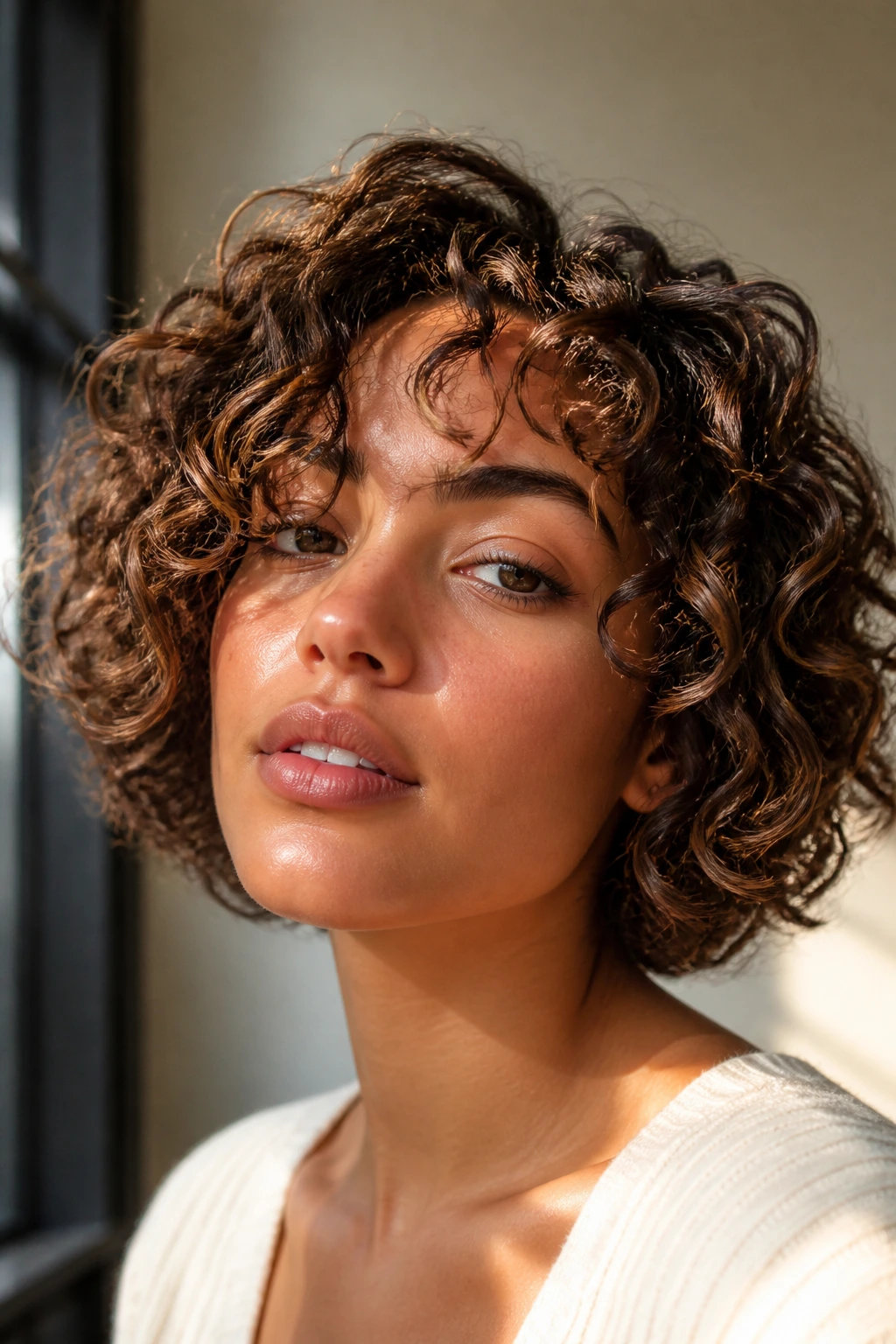
Short curly hair does not need a lot of help to look good. It needs the right help. A few well-placed ribbons, a cleaner tone, or one bright money piece can change the shape in a way that feels natural, not forced.
My favorite part of curly highlights is that they reward movement. The color changes when the hair turns, and that makes even a tiny crop feel alive. If you choose placement with the curl pattern in mind, the result usually looks better on day ten than it did on day one — which is rare, and kind of the whole point.