



Brown highlights for pale skin and heart-shaped faces can go sideways in a hurry. Too orange, and the color starts shouting over the skin. Too chunky, and the forehead looks wider than it already is. Too high at the temples, and the eye goes straight to the top half of the face, which is the one place a heart-shaped face rarely needs extra volume.
The sweet spot is quieter. Softer brown ribbons, placed with a little restraint, can take the sharpness out of a pointed chin, keep the cheekbones visible, and stop fair skin from looking washed out under one flat brown sheet. Mushroom, chestnut, cocoa, hazelnut, taupe — those shades sound subtle on paper, but in hair they do very different jobs. Small shifts matter here. A lot.
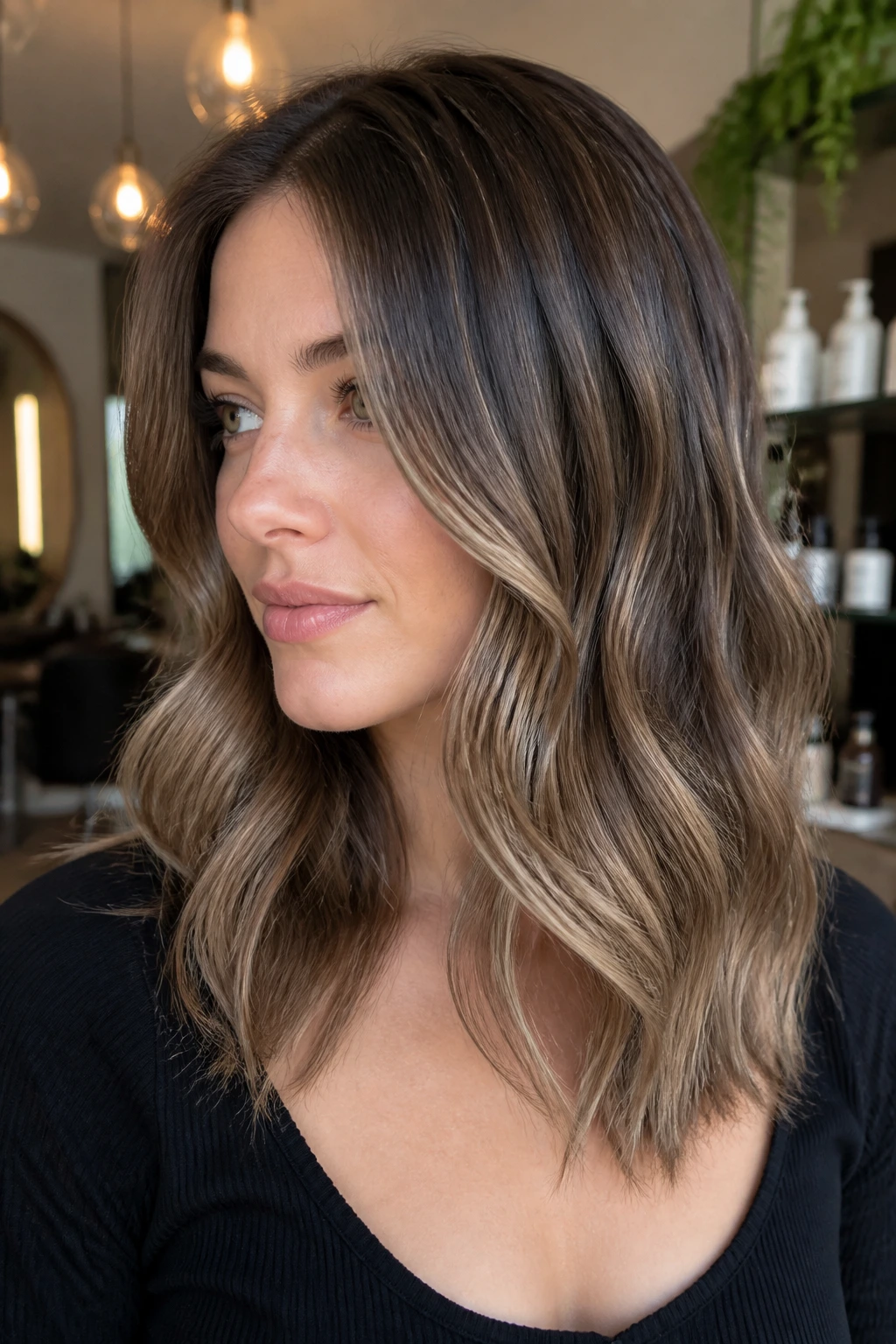
What I like about brown highlights on pale complexions is that they don’t have to look “done” to look intentional. A few well-placed ribbons around the cheekbone, a soft money piece that stops before the forehead gets bulky, or a root melt that keeps the top calm while the ends breathe a little — that’s the good stuff. The trick is matching tone to undertone and placement to face shape, then letting the hair move. Stiff color looks like a helmet. Soft placement looks like light.
Why These Brown Shades Work So Well Together
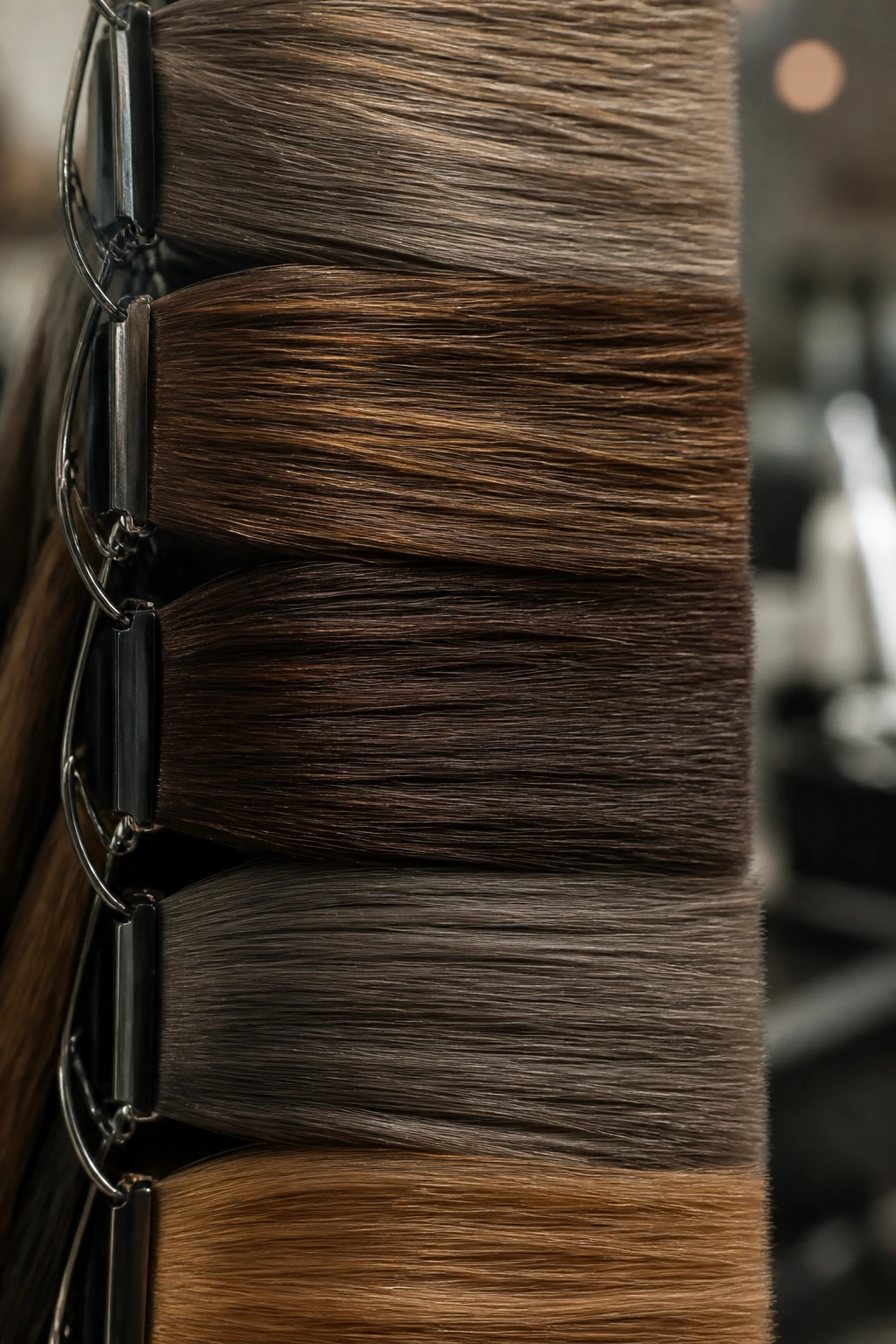
Face balance: A heart-shaped face usually carries more visual weight in the forehead and cheekbone area, so the best brown highlights send brightness downward instead of parking it all at the hairline.
Skin-tone control: Pale skin can turn sallow fast under the wrong brown, which is why mushroom, chestnut, cocoa, and taupe are in the mix before the warmer caramel shades.
Low-drama grow-out: Brown highlights soften the line between your natural color and the lightened pieces, so the grow-out looks lived-in instead of stripey.
Salon flexibility: These looks can be done with balayage, foils, babylights, or a gloss, which means you can choose between subtle and obvious without changing the whole idea.
Shape-friendly placement: The right brown highlight pattern can make a pointed chin look less sharp and keep the forehead from feeling like the loudest part of the haircut.
Undertone range: Cool, warm, and neutral options all belong here, because pale skin is not one single category and anyone pretending otherwise is selling you a shortcut.
The Tone Map That Keeps Brown Looking Clean on Pale Skin
Cool-leaning fair skin usually looks best with ash brown, mushroom brown, smoke brown, taupe, and soft cocoa. These shades have a muted base, so they sit beside pink or rosy skin without making it look redder.
Warm-leaning fair skin can handle caramel, toffee, hazelnut, cinnamon, and amber brown more easily. The warmth has to be soft, though. If the brown looks copper-heavy, it can turn brassy fast and start fighting your skin instead of flattering it.
Neutral skin gets the widest lane. Chestnut, milk chocolate, latte brown, and biscuit tones usually read clean because they sit right in the middle and don’t tilt too far gold or gray.
For a heart-shaped face, placement matters just as much as tone. Brightness around the cheekbone, through the mid-lengths, and a little below the jawline tends to soften the angles. Heavy brightness at the temples does the opposite. It pulls the eye upward and can make the top of the face look even broader.
If you remember one thing, make it this: the best brown highlight is not the brightest one. It’s the one that makes your face look balanced, your skin look awake, and your hair look like it has depth instead of a single paint job.
1. Soft Mushroom Brown Face-Framing Ribbons
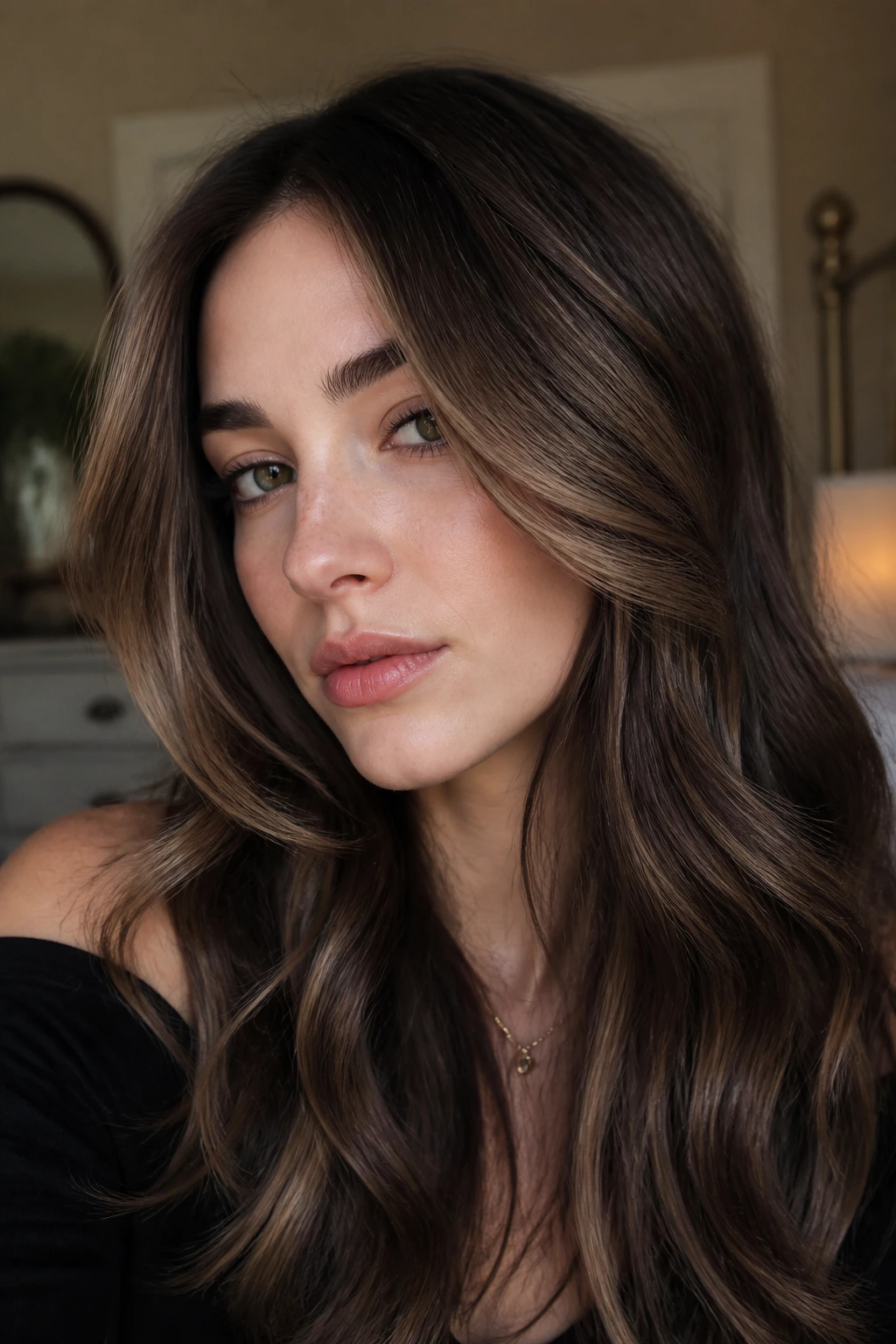
Mushroom brown is the shade I reach for when pale skin needs softness without going beige and dull. These face-framing ribbons sit in that cool-neutral zone that keeps fair complexions from turning pink or ruddy, and the result feels calm rather than striped.
For a heart-shaped face, ask for the brightest strands to start just below the temple and drift through the cheekbone. That keeps the forehead from looking wider and gives the lower face a little more visual weight. Small placement shift. Big payoff.
Why it flatters a heart-shaped face
The cooler tone cuts the sharpness of a pointed chin and keeps the eye moving down the length of the hair. On medium to long cuts, it also works especially well with a soft wave, because the bend catches the ash-brown tone instead of flashing a high-contrast line.
2. Milk Chocolate Balayage Waves
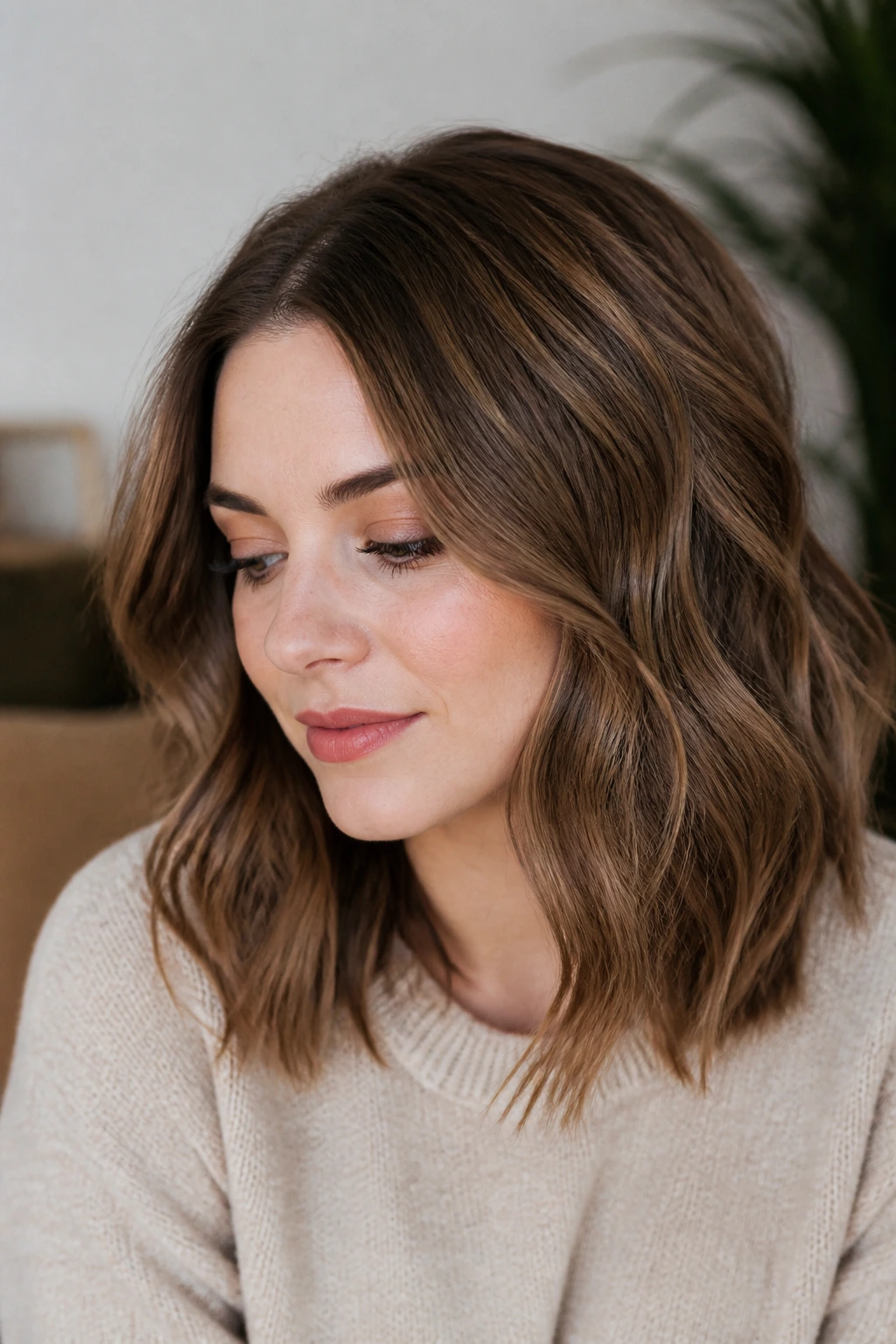
Milk chocolate is one of those shades that looks expensive without trying to look expensive. It has enough depth to warm pale skin, but it doesn’t go red or orange unless the underlying hair is already fighting brass. On loose waves, the brown sits in broad ribbons and gives the hair that plush, dimensional finish people usually mistake for better genetics.
This is a strong choice if you want softness around a heart-shaped face without a hard frame at the hairline. Keep the lighter pieces through the mid-lengths and ends, then leave the root area a little quieter. The forehead stays visually relaxed, and the lower half of the face gets more movement.
Best on: shoulder-length cuts, long layers, and hair that already bends easily with a round brush or curling iron.
3. Beige Chestnut Babylights
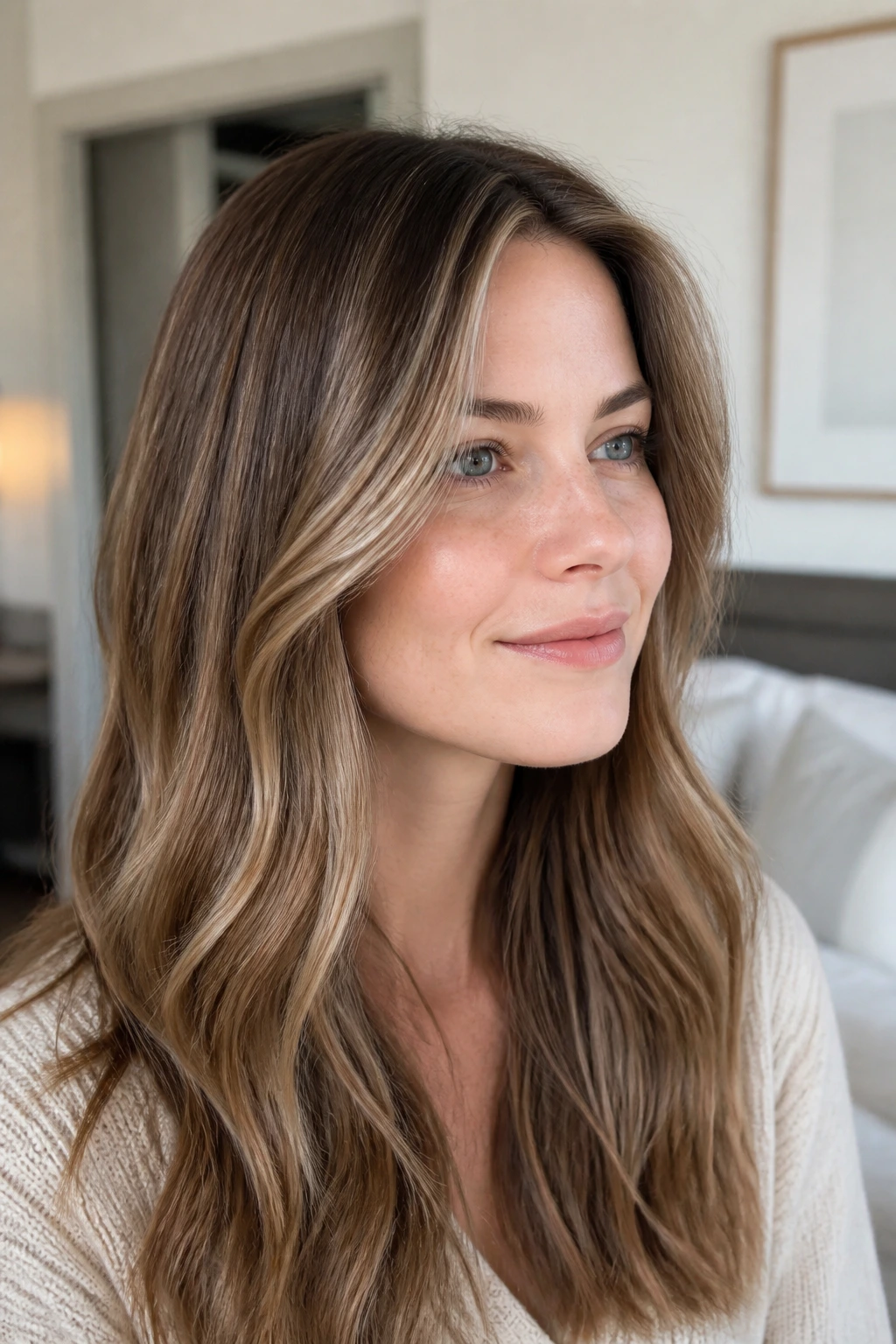
Babylights are tiny, almost whisper-thin highlights, and that makes them a smart move on pale skin. Beige chestnut reads as polished rather than loud, especially when the base color is already a light brunette or dark blonde. The effect is subtle shine through the whole head, not obvious color blocks.
Heart-shaped faces usually benefit from this kind of understatement. Instead of carving out the temples, the lighter strands sit all over and let the haircut do the face framing. If you wear your hair straight, this is one of the few brown-highlight looks that still has life in the mirror instead of flattening out into one tone.
Ask for the babylights to be denser from the cheekbone down. That keeps the top half soft and shifts attention where you want it.
4. Caramel Cocoa Money Piece
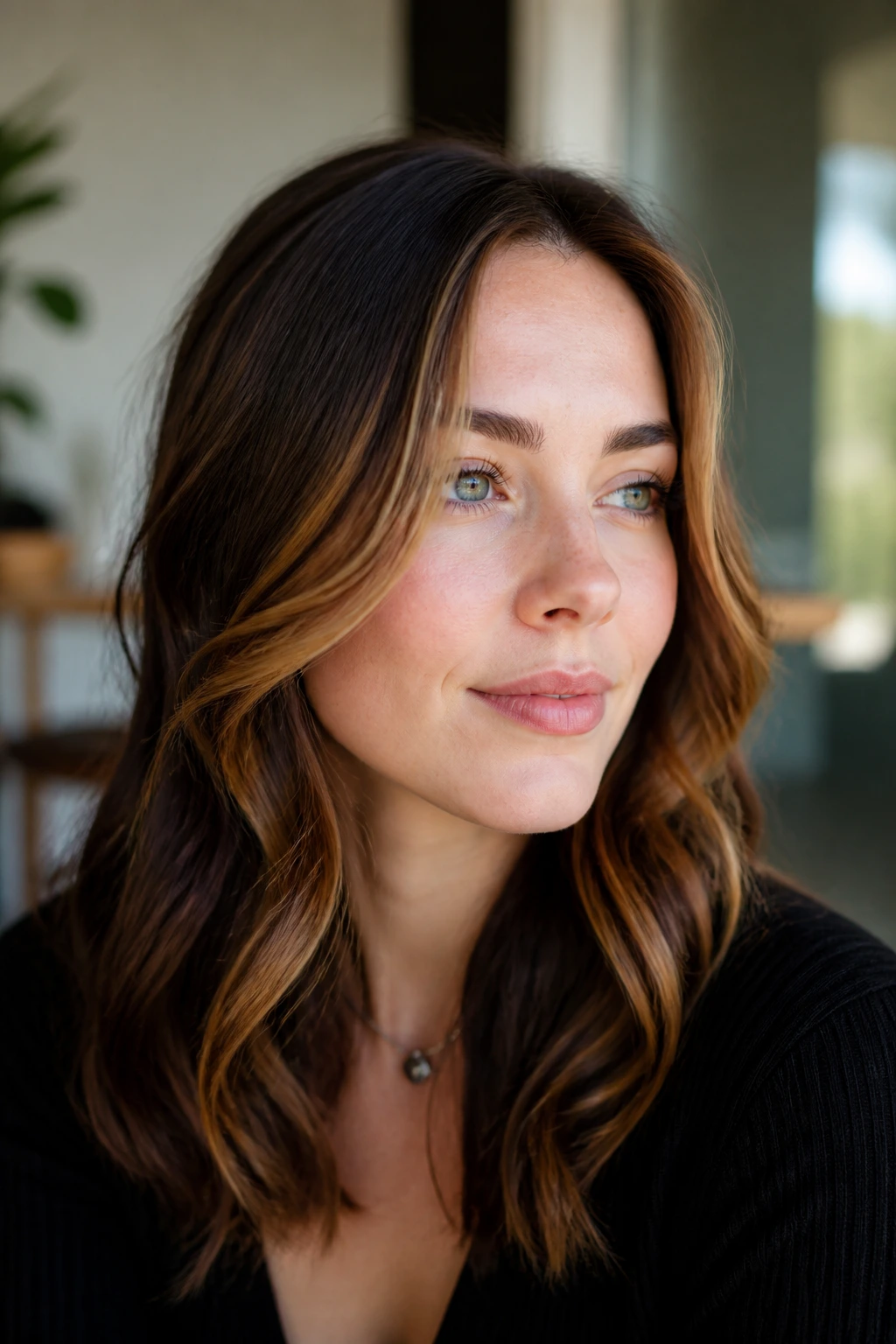
A money piece can be tricky on pale skin, because it’s easy to go too bright and end up with a strip that looks pasted on. The cocoa version solves that. The caramel is muted by a deeper brown shadow near the root, so the brightness feels woven in rather than painted on.
On a heart-shaped face, this works when the front pieces start around the cheekbone and stop before they get too chunky at the forehead. You want the face to open up, not flare out. A little bend away from the face helps here; straight money pieces can look harsher than the same color in a soft wave.
What to ask for
- A soft, not chunky money piece.
- Brightness that begins around the cheekbone.
- A cocoa root shadow to keep the contrast from getting loud.
- A gloss that leans neutral if your skin is pink or cool.
5. Cool Taupe Root Melt
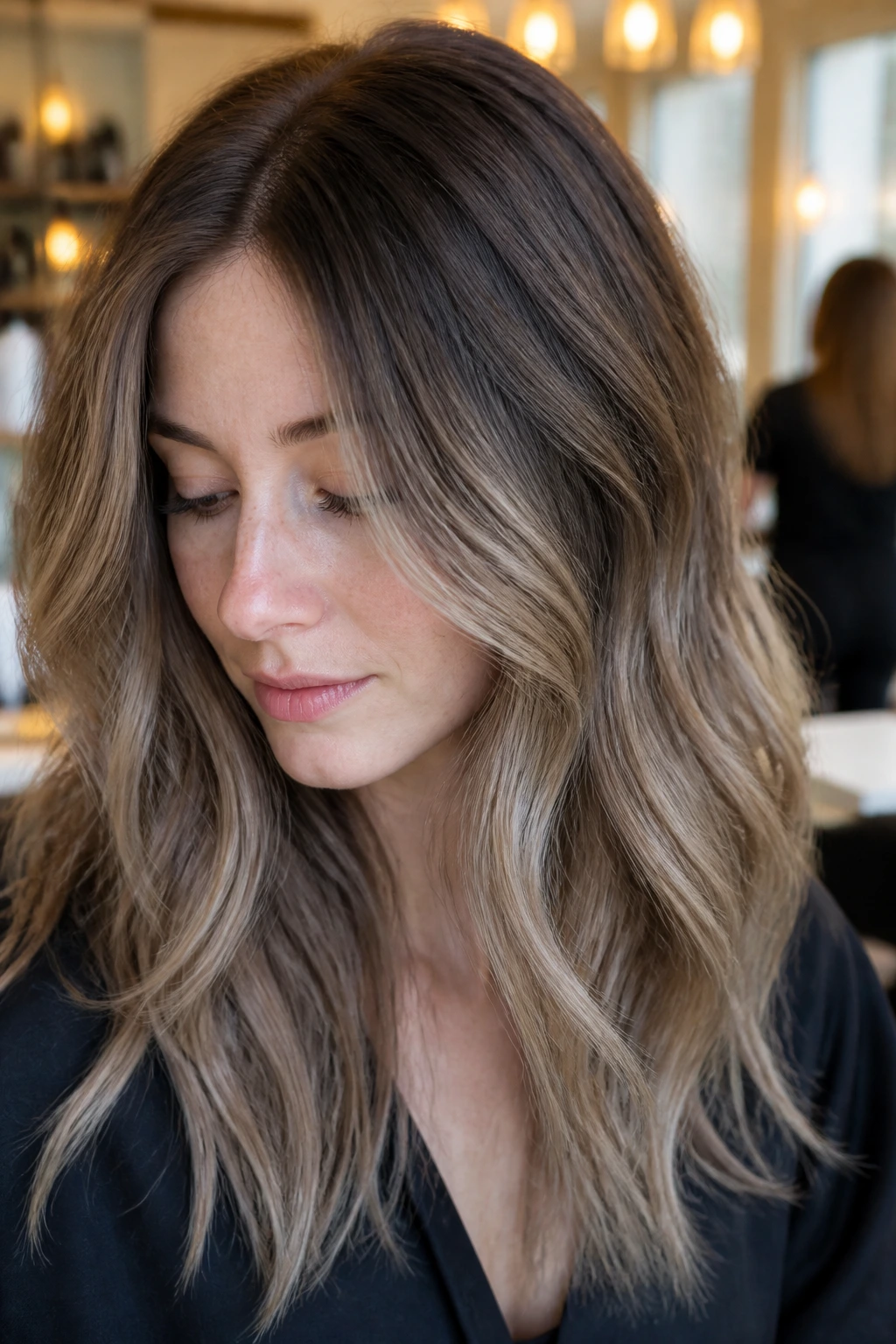
Taupe brown is the shade that makes some people think, “Wait, why does that hair look expensive?” It’s quiet, slightly smoky, and excellent on pale skin that goes red in sunlight or under warm indoor bulbs. A root melt in this tone softens the top of the head and lets the ends lighten just enough to feel dimensional.
For a heart-shaped face, the root melt is a sneaky good move because it keeps the crown from becoming the brightest zone. That matters. Brightness near the top can widen the forehead visually, and taupe keeps the whole upper section steady while the lower lengths do the work.
If you hate visible grow-out, this is one of the safest options in the whole list. It fades gracefully and doesn’t need constant rescue.
6. Toffee Ends on a Lob
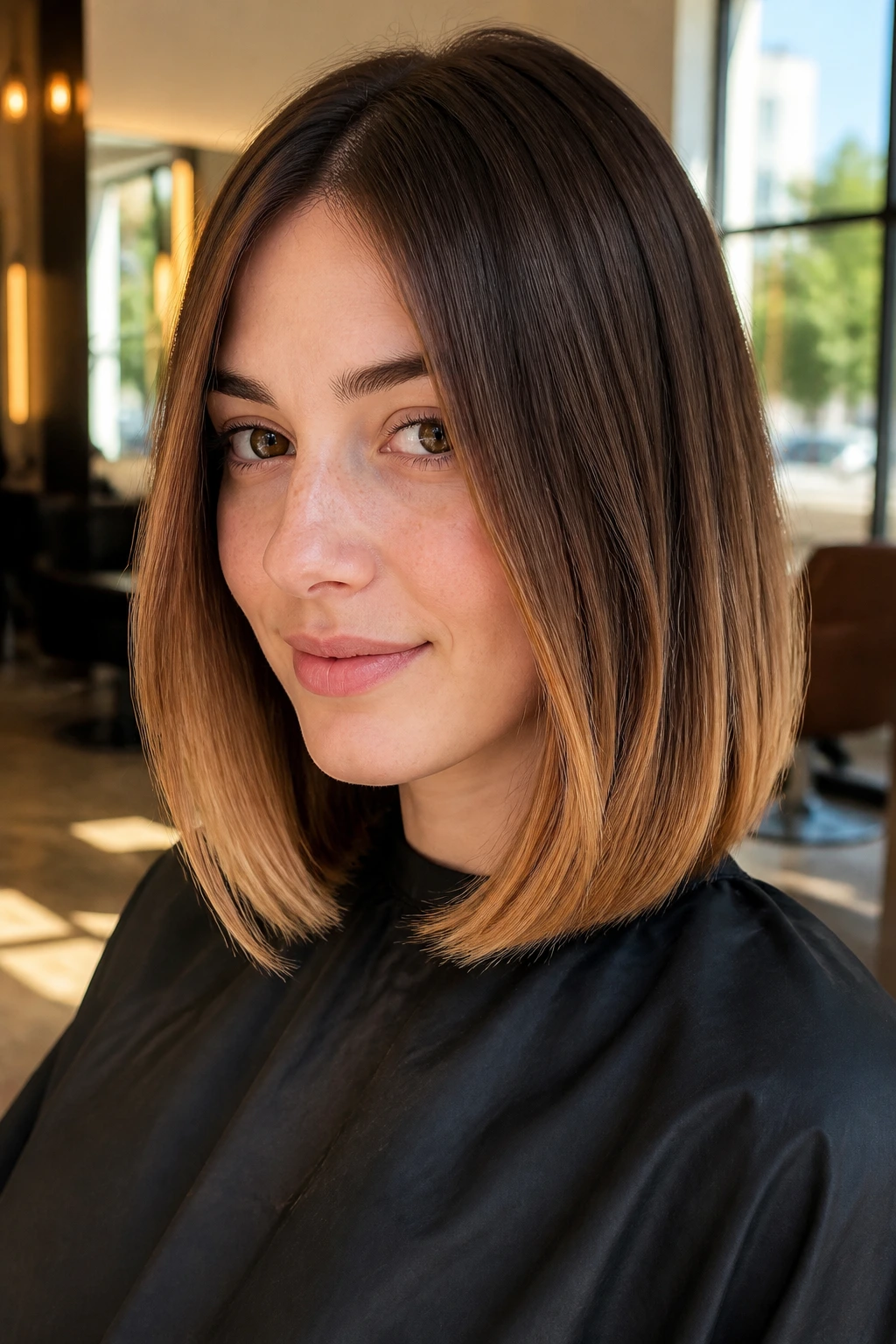
A lob with toffee ends does one thing very well: it makes the lower half of a heart-shaped face look fuller and softer. That matters when the chin is narrower than the forehead, because all the visual load doesn’t have to sit at the top. The color lands at the ends, so the shape of the haircut changes before the eye even registers the shade.
On pale skin, keep the toffee more biscuit than orange. A warm shade can be lovely here, but if it leans too coppery, the ends start to look louder than the haircut. A slight beige gloss keeps the warmth from going sharp.
This one is especially good on blunt or slightly textured lobs. The ends catch the light as you move, and that movement is doing half the face-framing for you.
7. Cocoa Peekaboo Panels
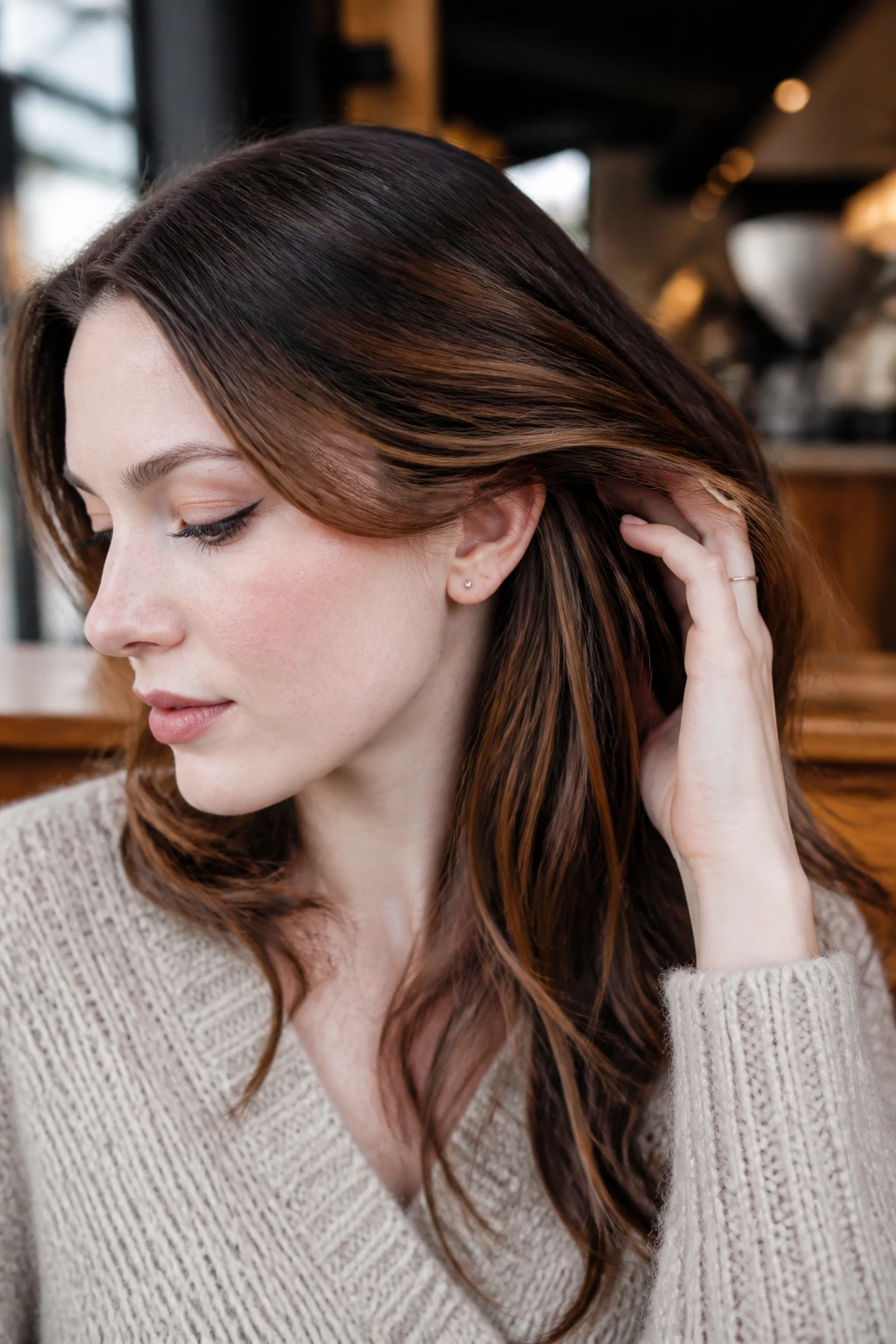
Peekaboo panels are for anyone who wants depth without turning the whole head into a highlight map. Cocoa underlayers peek through when the hair swings or is tucked behind the ear, which makes the color feel playful instead of static. On pale skin, the darker brown gives just enough contrast to keep the hair from fading into the face.
For heart-shaped faces, peekaboo panels work because the brightness or darkness doesn’t sit at the temples all day long. The movement matters. The face stays open, but the strongest color impact happens lower and deeper through the hair.
Tip: ask for the panels to sit under the top layer, not just behind the ears. That way they show when the hair moves, not only when it’s deliberately arranged.
8. Ash Brown Foilyage
Foilyage gives you the softer sweep of balayage with a little more lift, which is handy if your base color is dark blonde or light brown and you want the highlights to actually show. Ash brown keeps the result from going coppery on pale skin, and the foil placement gives a cleaner ribbon than freehand painting alone.
This is a strong match for heart-shaped faces when the brighter pieces run through the mid-lengths and ends rather than sitting at the crown. You get movement around the jaw and neck area, which helps soften the lower half of the face. On wavy hair, the ash tone can look especially smooth because the bends break up any harsh edge.
The one thing to watch: ash brown can go flat if the toner is too gray. You want smoky, not dull. Those are not the same thing.
9. Cinnamon-Glazed Layers
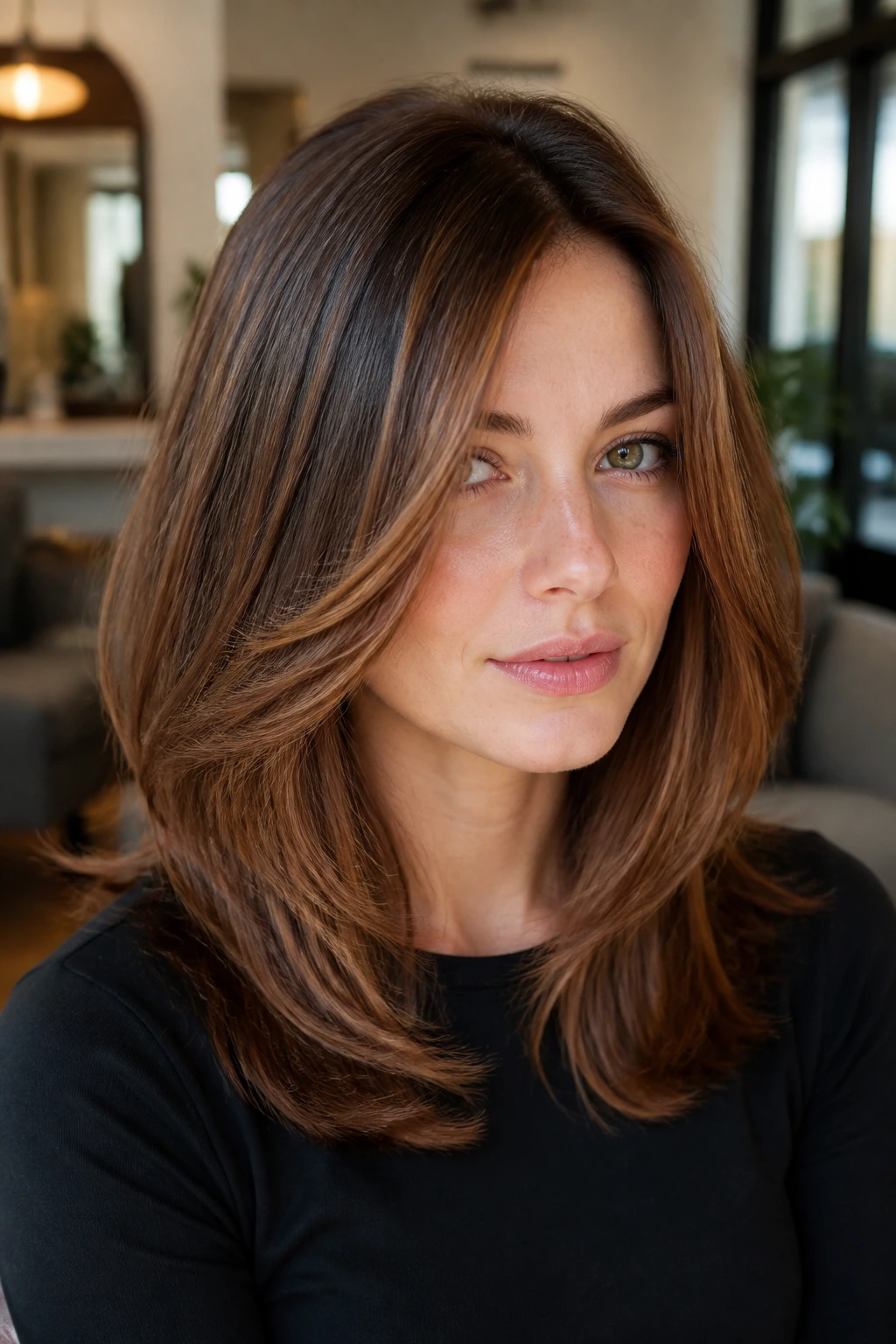
Cinnamon-brown can look gorgeous on pale skin when it’s glazed, not blasted on. A glaze keeps the warm tone sheer and reflective instead of heavy. That matters if your complexion already picks up pink, because too much red in the hair can make the skin look flushed.
With a heart-shaped face, layered cuts are where this shade earns its keep. The lighter cinnamon lives on the movement, and the movement sits lower through the sides and ends, which balances a broad forehead better than a blunt block of color would. Keep the brightest warmth below the cheekbone if you can.
A straight blowout can make cinnamon look smooth and shiny. A bend through the ends makes it look richer. Tiny difference. Huge shift.
10. Sandy Brown Slices
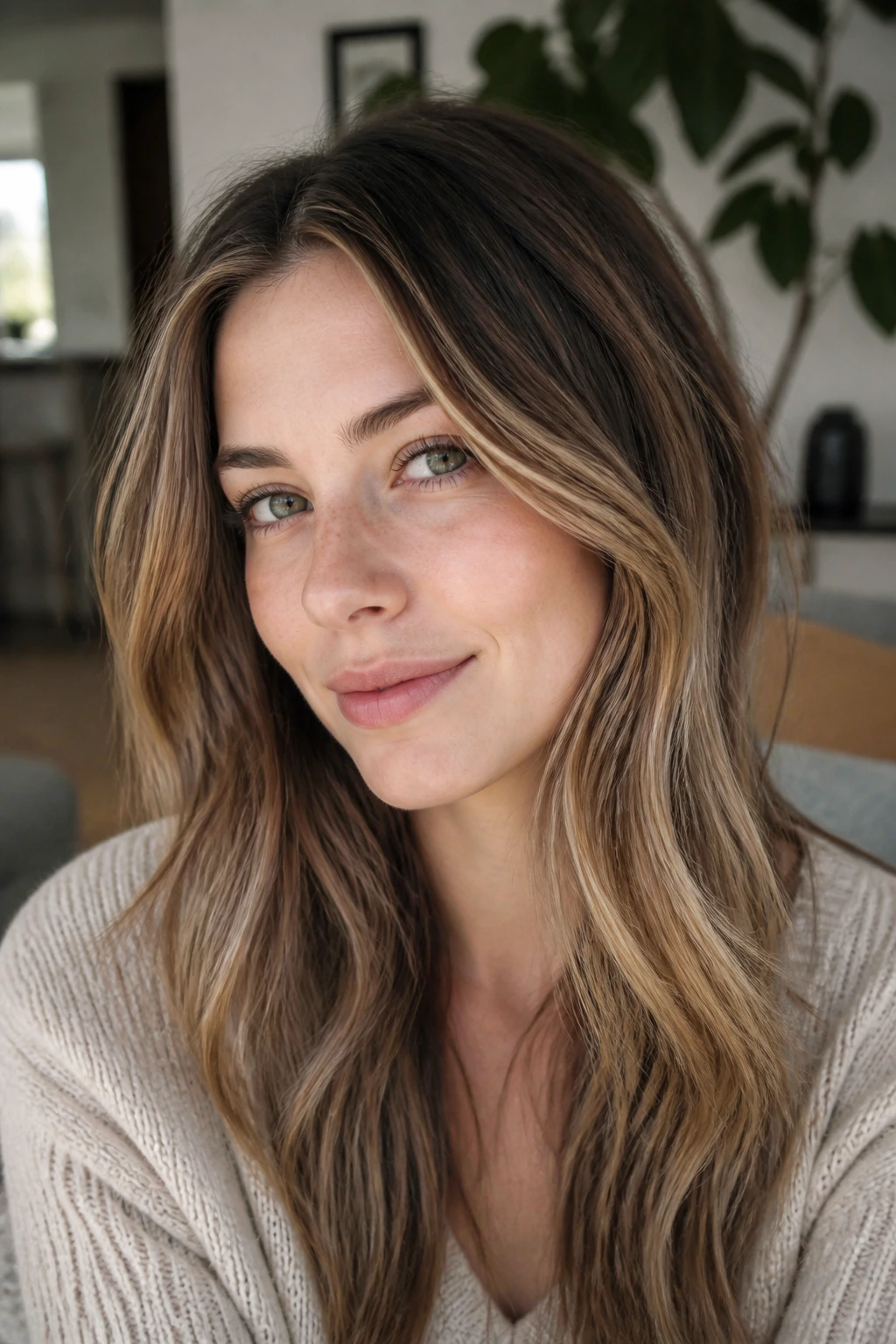
Sandy brown slices are broader than babylights and softer than chunky streaks. They work when you want people to notice dimension, not the fact that you had color put in your hair. On fair skin, sandy brown usually reads as soft beige-brown rather than gold, which is why it’s so easy to live with.
For a heart-shaped face, ask your colorist to place the slices around the sides and below the eyes, then let them taper toward the ends. That prevents the top half from feeling too bright. The haircut gets to keep its shape, and the color supports it instead of fighting it.
Good pairings
- Long layers that show movement.
- Loose waves that break up the slice pattern.
- A soft side part if your forehead feels prominent.
- Neutral makeup so the brown stays the star.
11. Walnut Micro-Highlights
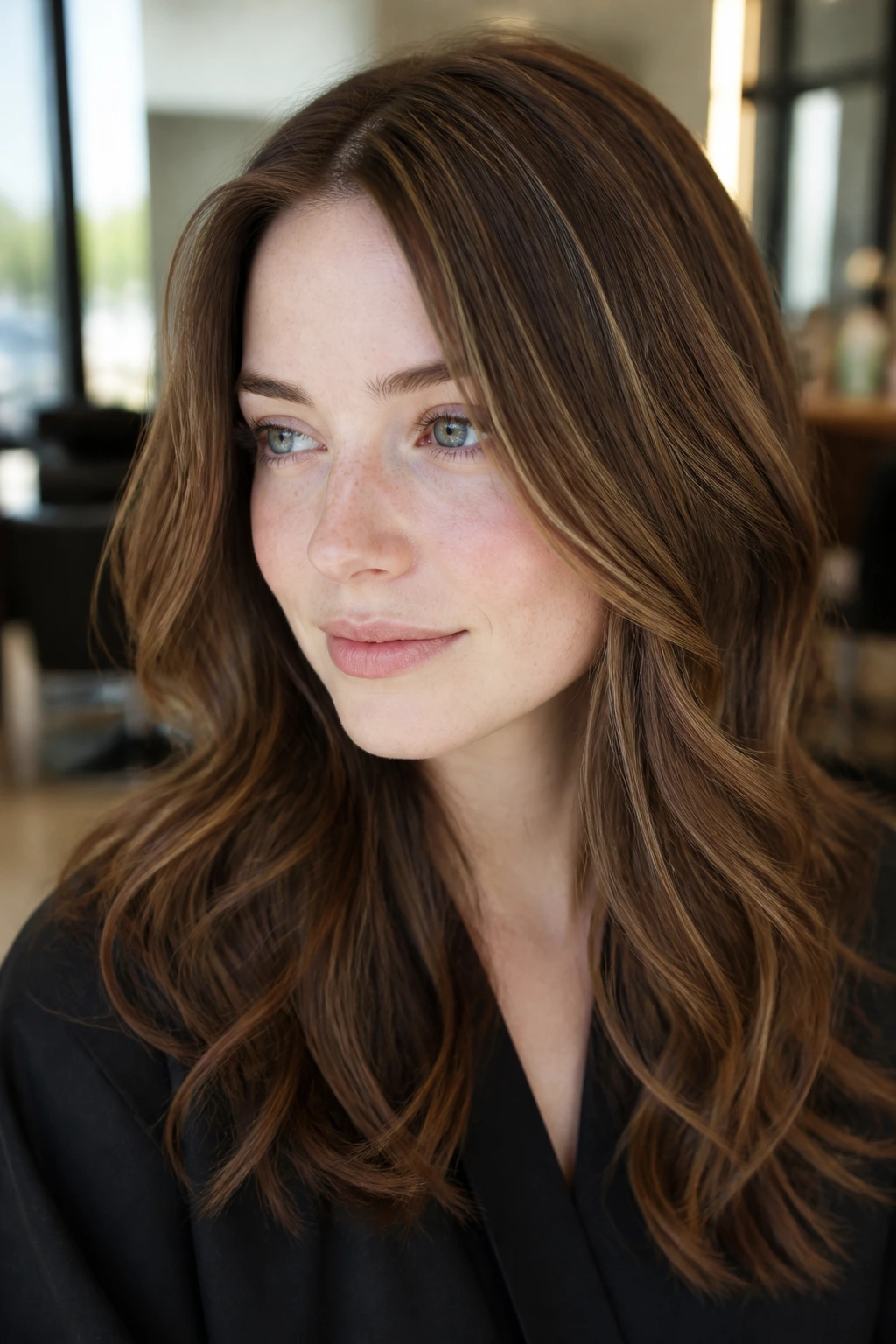
Walnut micro-highlights are the quiet ones. You may not spot them from across the room, but up close they give the hair a woven, glossy look that plain color never manages. On pale skin, that slight shift in tone is enough to wake up the face without asking the hair to go blonde.
For a heart-shaped face, micro-highlights are useful because they don’t create hard edges at the temples. They spread the light in tiny threads instead of one obvious frame. That makes the forehead look softer and the cheekbones less severe. If your hair is fine, this is a smart choice because tiny threads won’t make the hair look choppy.
This look also grows out politely. It doesn’t scream for attention when the roots come in.
12. Mocha Shadow Root Blend
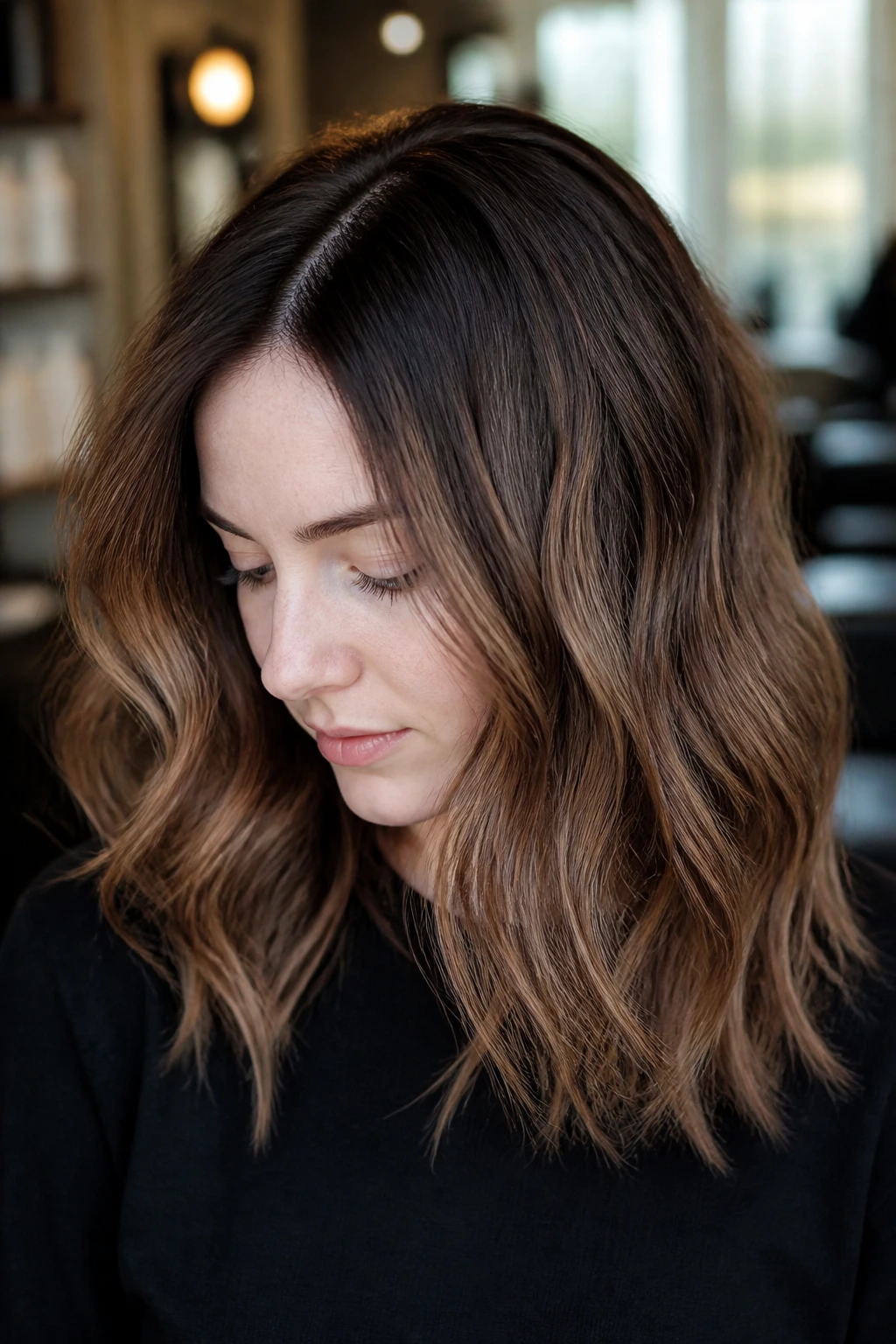
Mocha shadow root is for people who want their color to look deliberate from day one. The root stays a little deeper, the mids pick up brown dimension, and the ends remain soft enough to move. On pale skin, mocha is one of those shades that feels rich without turning heavy.
Heart-shaped faces benefit because the darker root keeps the eye from parking on the forehead. The visual emphasis shifts lower, and the face reads longer. If your cut includes curtain bangs or face layers, that shadow root makes the front pieces look more expensive than a uniform highlight pattern would.
Best on: balayage, ombré-ish blends, and hair that needs a softer grow-out schedule.
13. Rosewood Brown Gloss
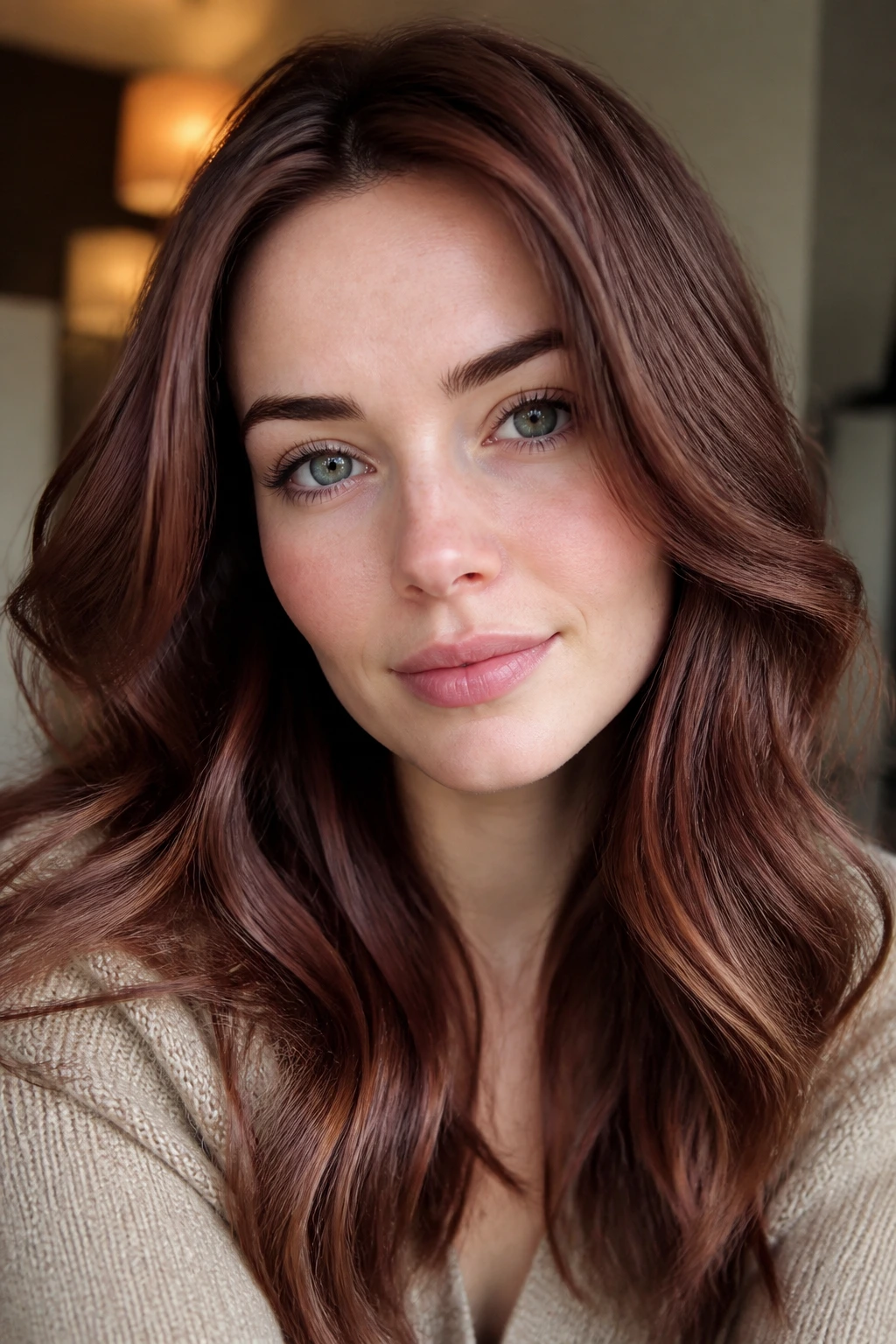
Rosewood brown sits between brown and muted berry, which is why it can save fair skin that looks flat under ordinary chestnut. There’s just enough rosy depth to warm the complexion without tipping into red hair territory. Used as a gloss, it catches light in a smoother way than a full highlight package.
For a heart-shaped face, I like this when the cut is simple and the hair needs color to do the framing. The rosewood tone can soften sharp angles around the chin while still leaving the forehead area calm. It’s especially pretty on straight styles where the gloss can read cleanly from root to end.
If you’re cool-toned and hate warmth near your face, skip this one. If your skin can take a little soft warmth, it’s quietly flattering.
14. Biscotti Curtain Pieces
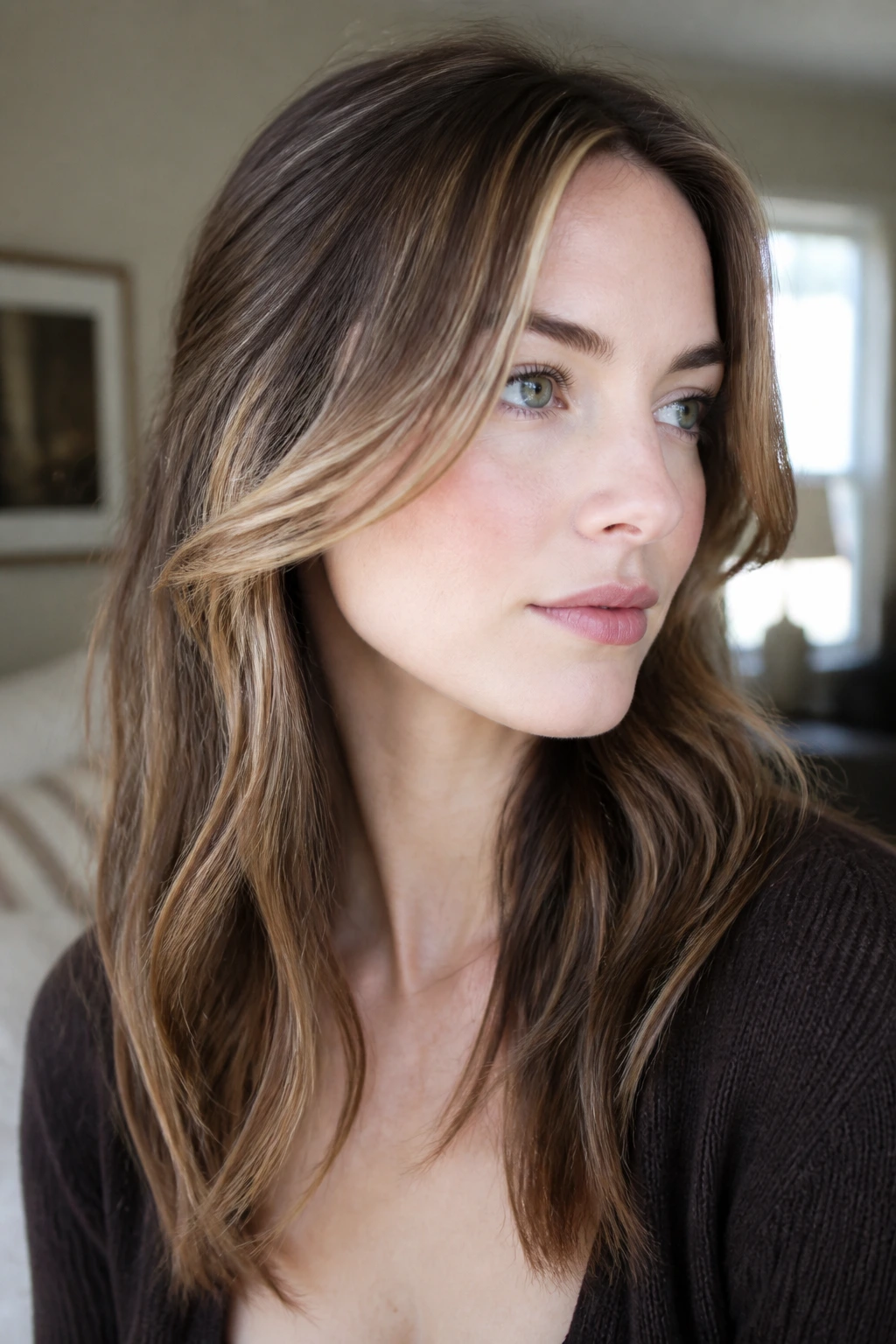
Curtain pieces are a smart place to put brown dimension because they hang right where the face wants definition. Biscotti brown is light enough to be visible on pale skin, but not so blonde that it turns brassy the second you step outside. It gives the eyes a frame without stealing the whole show.
On a heart-shaped face, curtain pieces should start a little lower than you might think. If they begin too high, they can widen the forehead. Drop them to the cheekbone, let them sweep toward the jaw, and the face starts to look more balanced almost instantly.
This is one of those styles that looks better when the hair is a little messy. Too polished and it can feel formal. A loose bend is where it lives.
15. Smoke Brown Glossed Ends
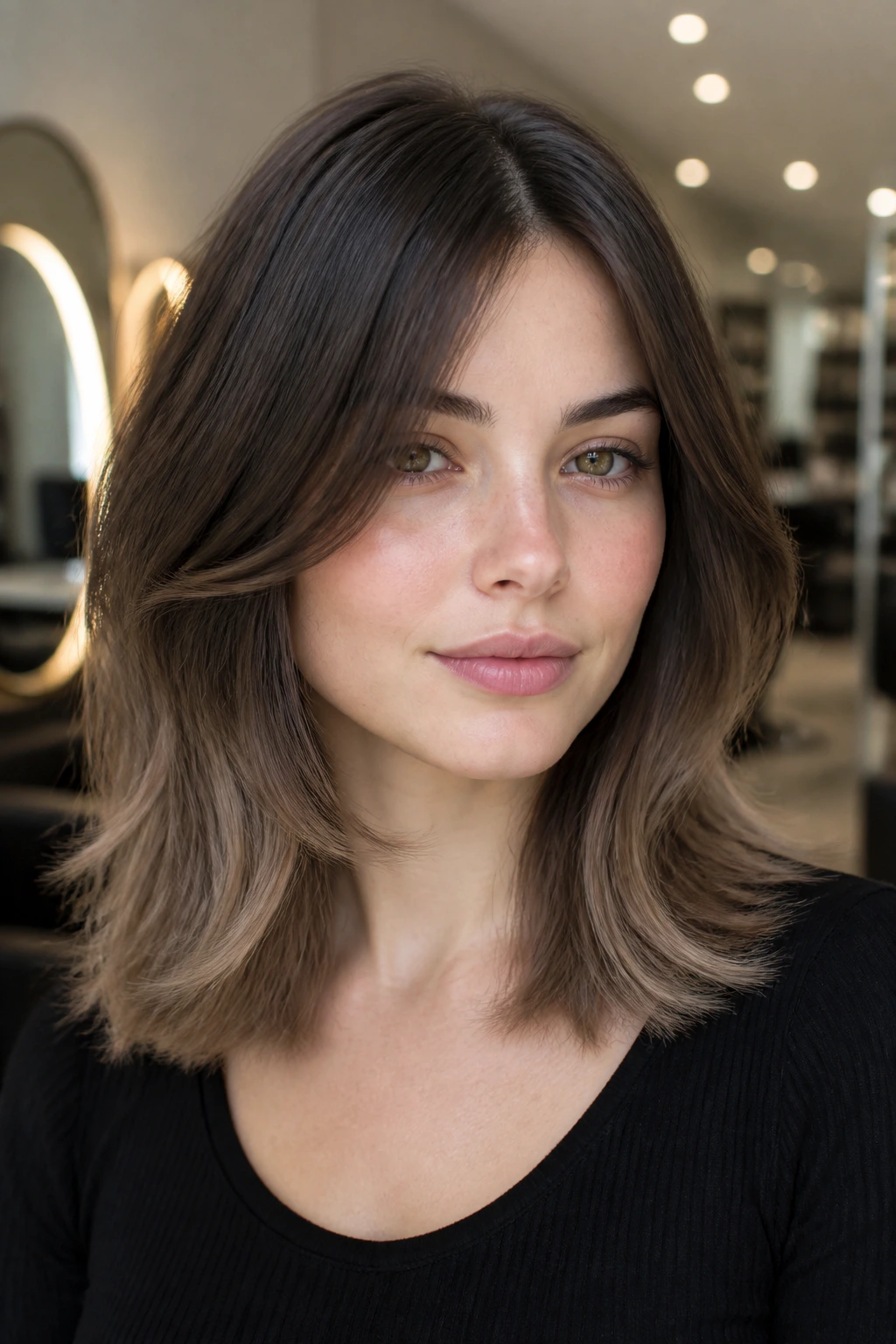
Smoke brown is the moody sibling in the brown family. It’s cool, a little muted, and very useful when pale skin gets overwhelmed by warmth. Glossing the ends gives the hair a soft fade, so the color doesn’t stop abruptly and look chopped off.
For a heart-shaped face, smoke brown works because it places the visual weight at the bottom. That helps a pointed chin feel less sharp, especially on longer hair. It also lets the upper section stay clean and quiet, which is usually what you want when the forehead is the widest point.
This is not the choice for someone chasing bright shine. It’s for someone who likes low-contrast color that still has shape.
16. Toasted Almond Mid-Length Lift
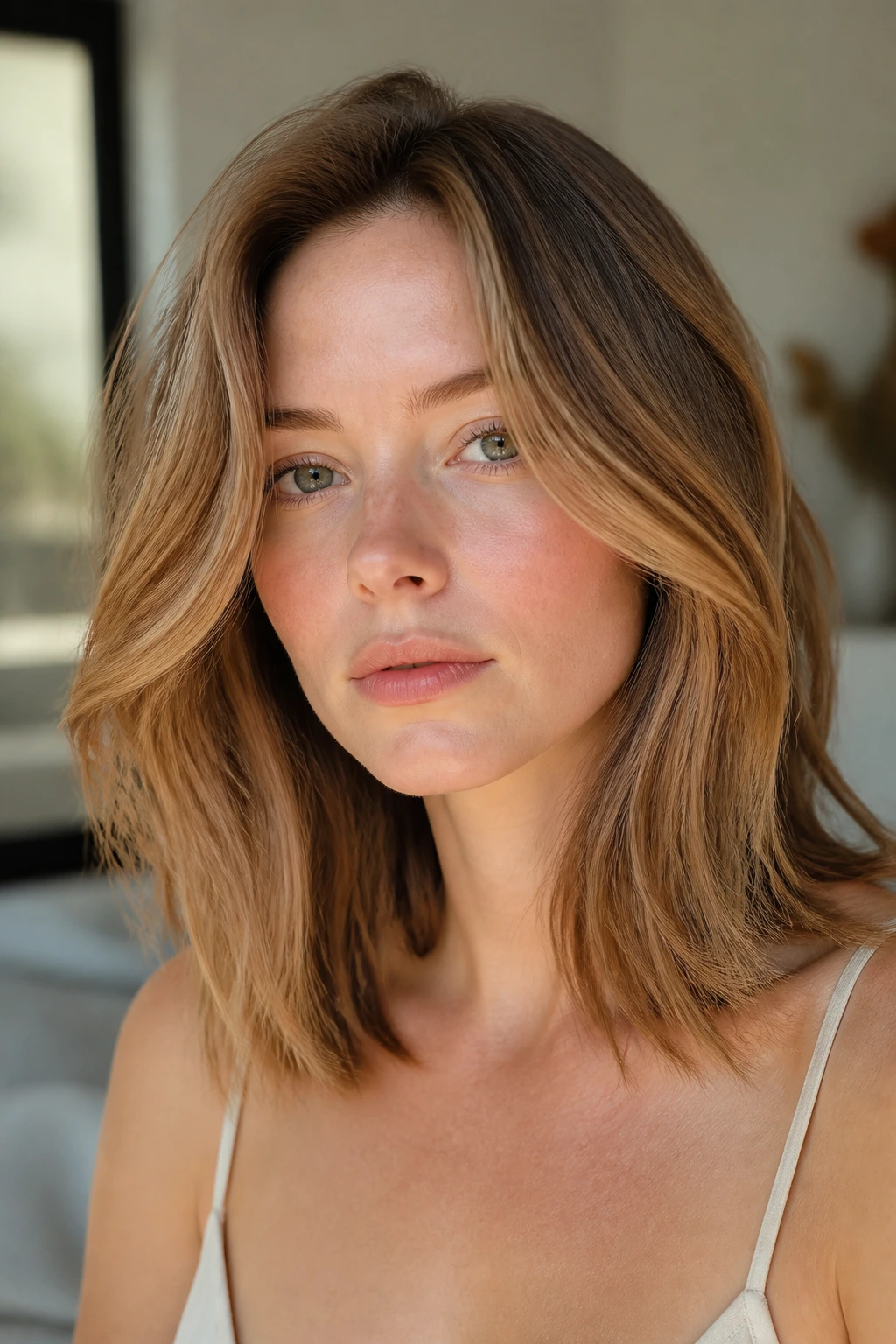
Toasted almond sounds warm, and it is, but the trick is keeping it in the mid-lengths rather than the crown. That gives pale skin a soft golden-brown lift without widening the forehead. The color should look like sunlight found the hair halfway down, not like the whole head was dipped in caramel.
For a heart-shaped face, mid-length lift is underrated. It keeps attention between the eyes and collarbone, which is usually the sweet zone for this face shape. If the hair is layered, the almond tone catches on the shorter pieces and creates movement around the cheeks instead of above them.
A little gloss helps here. Almond can go too yellow if it’s left raw.
17. Hazelnut Halo Highlights
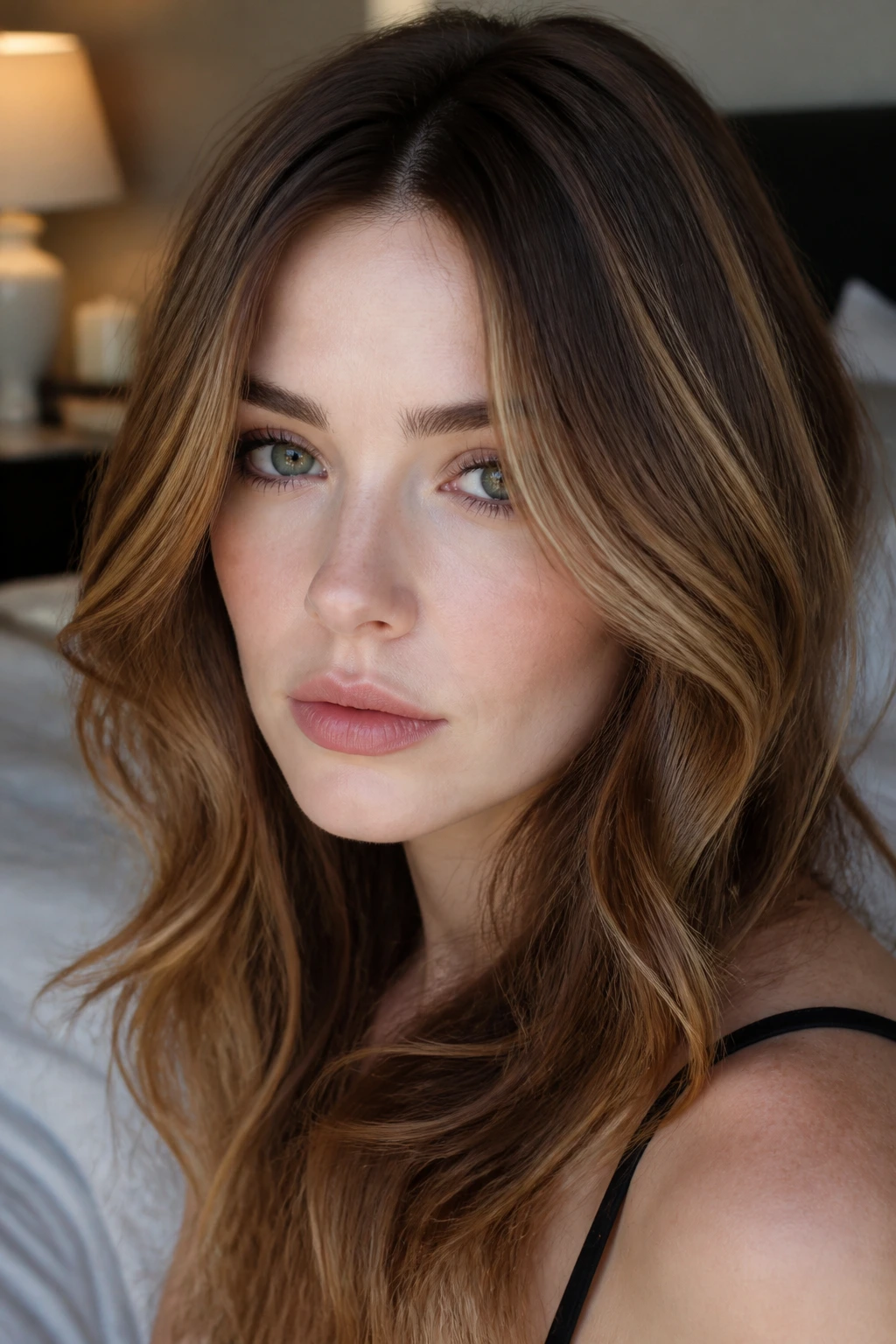
Halo highlights wrap around the outer layers of the hair and sit like a soft ring of light. Hazelnut brown is warm enough to show up on pale skin but still grounded enough not to look orange. It’s a nice middle road if you want visible color and a gentle finish.
For a heart-shaped face, the halo needs to be placed carefully. Keep it off the very top front if your forehead is broad, and let the brighter strands orbit the sides and lower curves of the cut. That gives the face a softer outline without overloading the upper half.
This style shines on wavy blowouts and long layers, where the outer shell of the hair moves a little away from the face. Flat ironed hair can make the halo look too literal. Motion helps.
18. Chestnut Underlayer Sweep
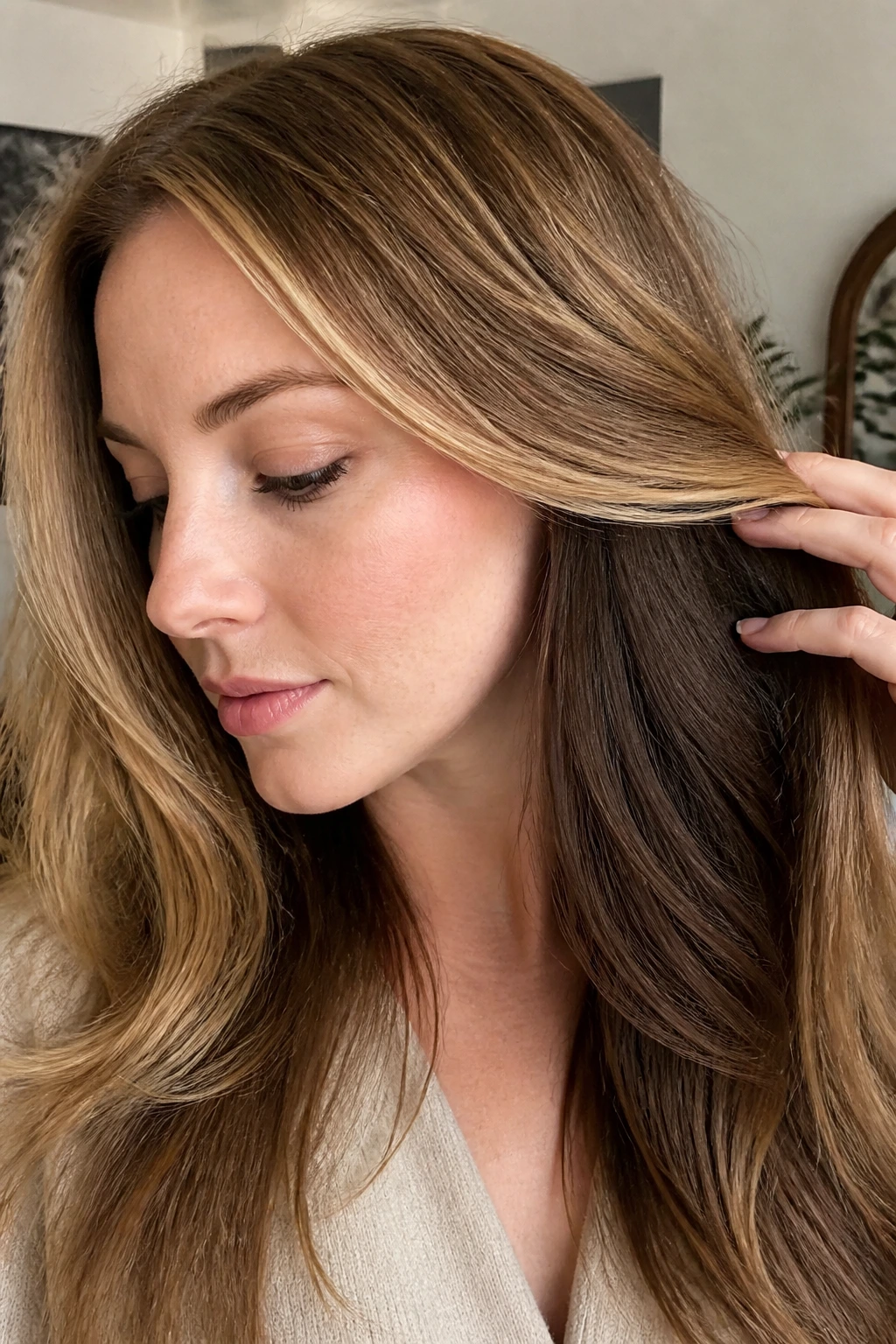
Underlayer color is a favorite of mine because it gives you depth without making the whole head louder. Chestnut underneath the surface adds richness every time the hair moves, which is ideal if you want the highlights to reveal themselves slowly. On pale skin, the chestnut warmth reads as healthy rather than brassy when it’s kept low and deep.
For a heart-shaped face, underlayers are helpful because they shift attention away from the temples and toward the lengths. The hair feels fuller around the jaw and collarbone, which balances the narrower lower face. If you wear half-up styles, the chestnut shows even more and can look especially good against fair skin.
This is a quiet choice, but not a boring one.
19. Latte Bronde Midlights
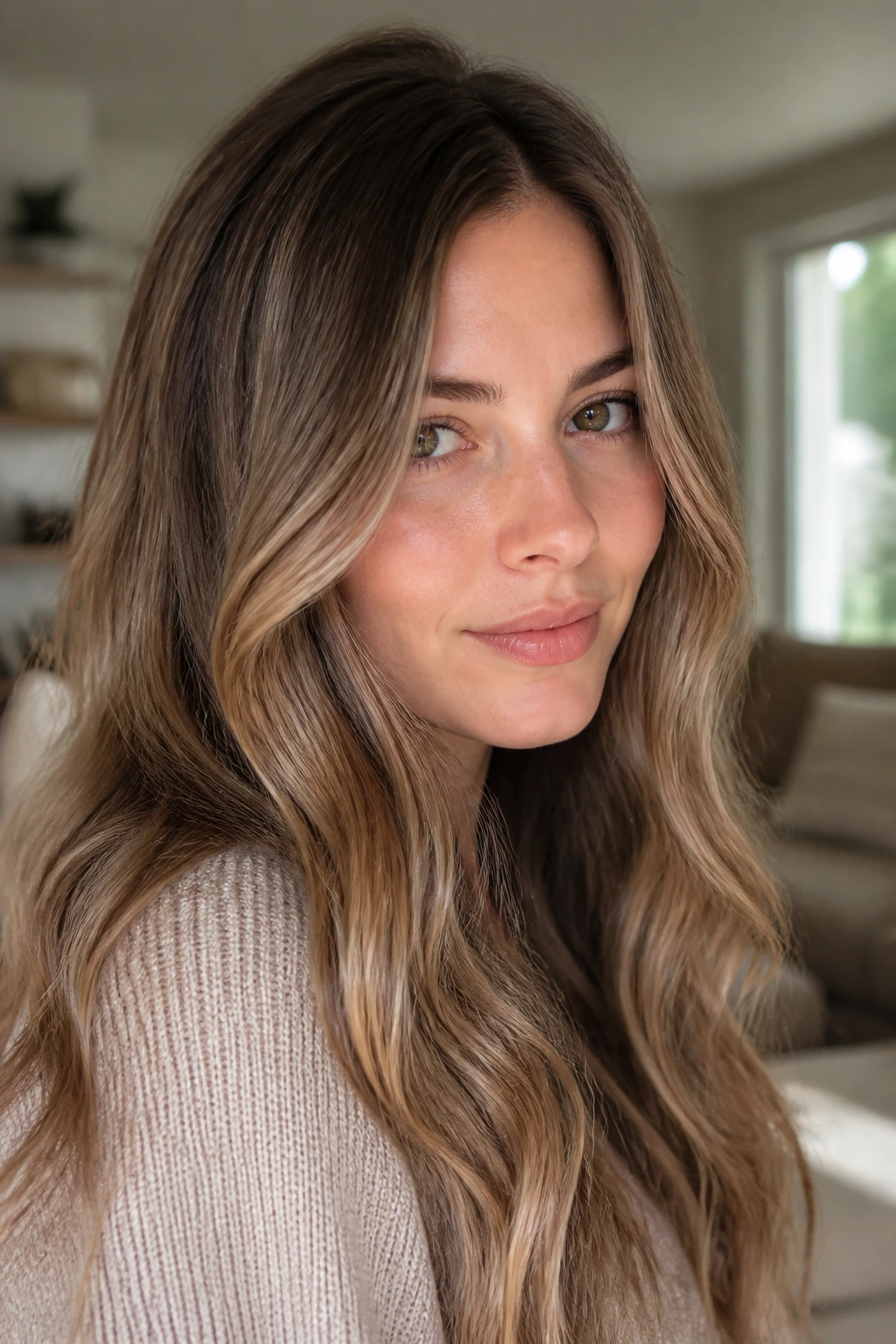
Latte bronde sits between blonde and brown, which is why it has such a useful job on pale skin. It softens the jump from your natural shade to the highlight shade, so the hair doesn’t look striped or too severe. The midlights keep the color from floating only on the surface.
On a heart-shaped face, midlights help because they can be placed lower through the sides, where the face needs softness. If your base is light blonde, this is one of the easiest ways to add dimension without sliding into dark brunette territory. The face stays bright, but not stark.
If you like a soft center part, latte bronde tends to behave nicely. It doesn’t need aggressive styling to look finished.
20. Sorrel Brown Contour Balayage
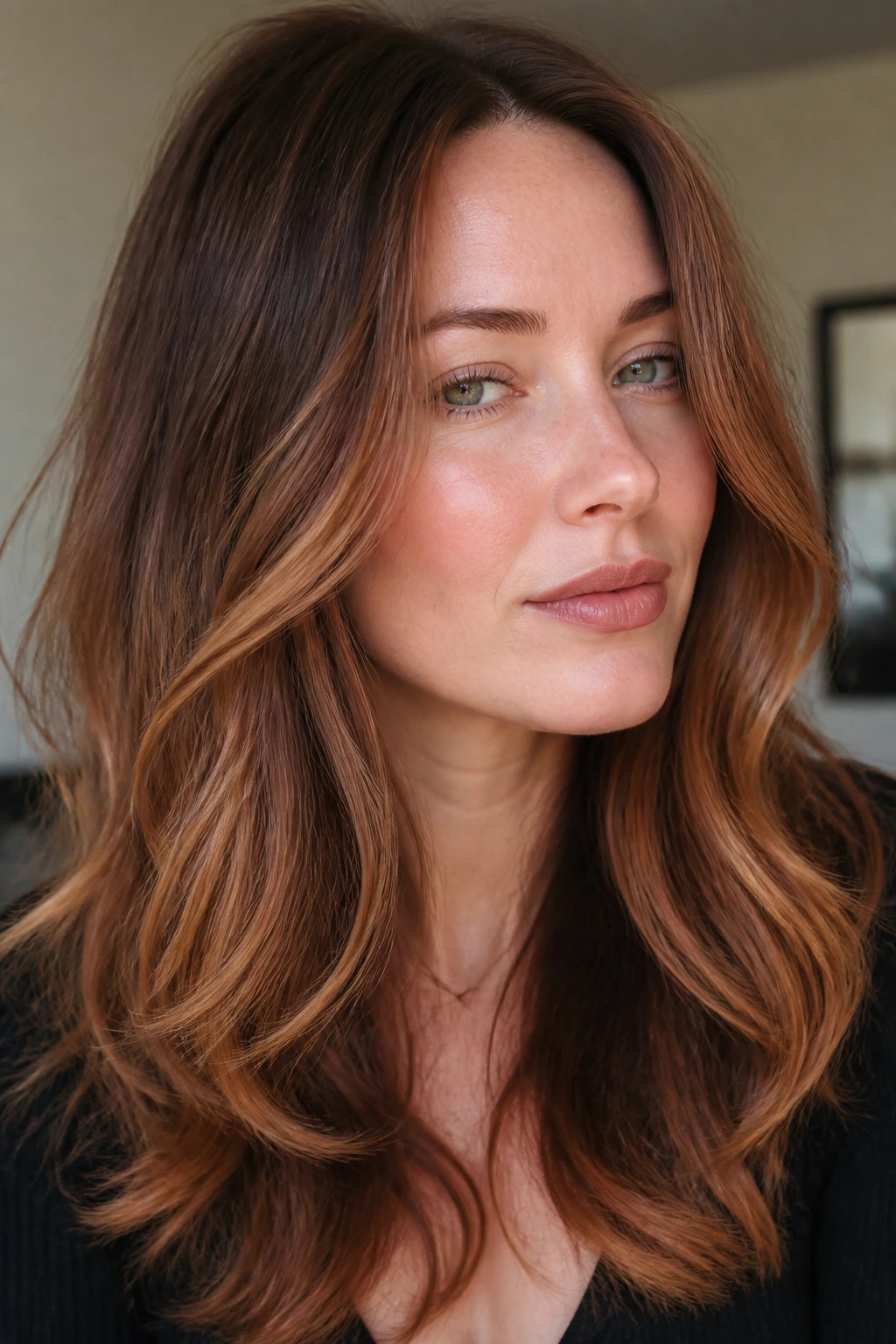
Contour balayage is one of the few color techniques that names the job honestly. It contours the face. Sorrel brown, with its warm but muted edge, works well when you want to carve a little softness into a heart-shaped face without building hard contrast. The lighter pieces can sit around the cheekbones and jaw, not just around the forehead.
That placement matters. Brightness near the cheekbone gives the face a more oval read, while keeping the temples calmer stops the forehead from grabbing the spotlight. On pale skin, sorrel should stay muted enough to avoid the copper trap. It’s more brown-with-warmth than red-brown.
This is a strong option for layered cuts and long bobs, especially if you like face-framing pieces that move when you turn your head.
21. Maple Glaze Tips
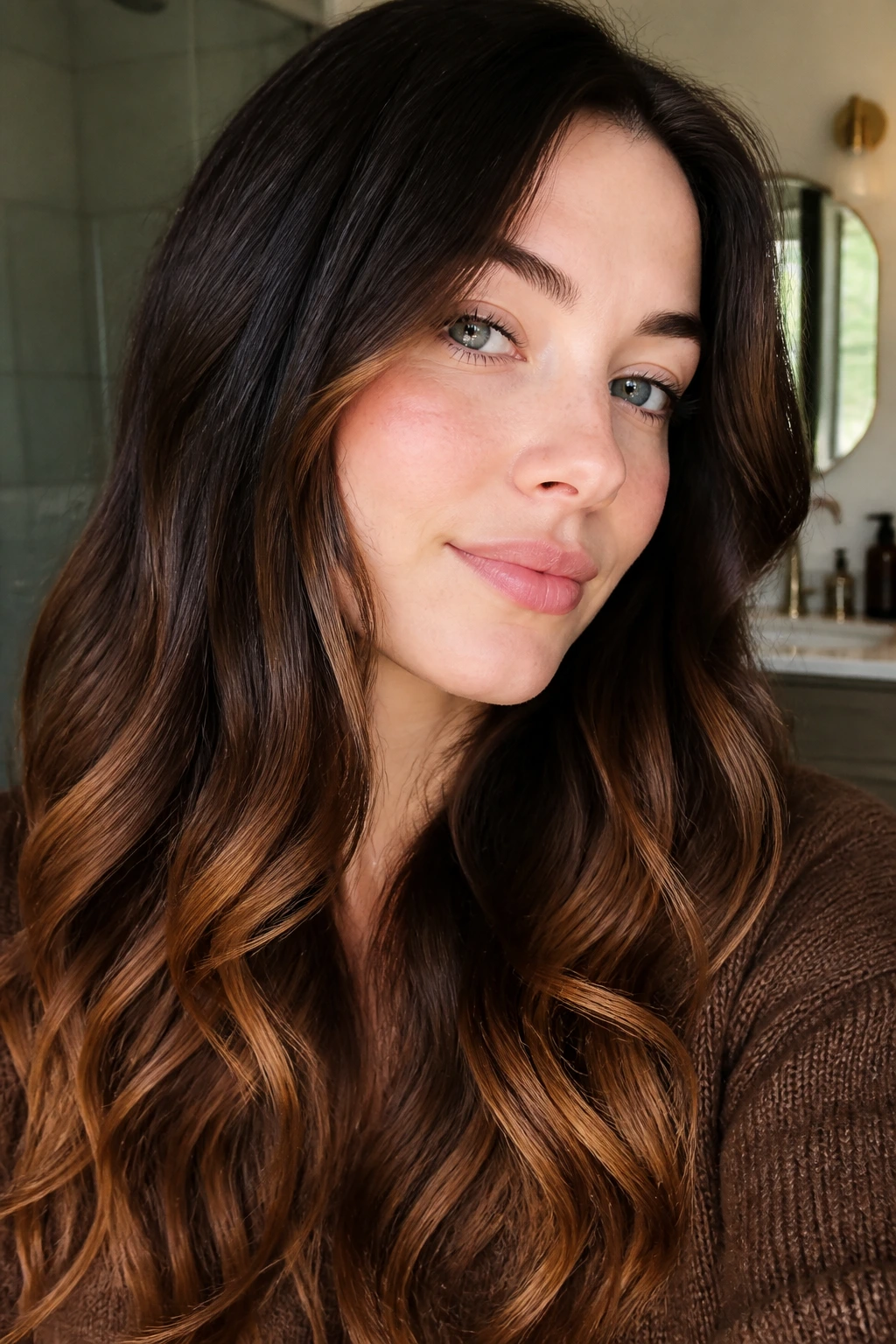
Maple glaze is the kind of warmth that works if you keep it sheered out. Put it on the tips, and pale skin gets the benefit of a soft brown glow without the root area doing too much. It’s a good answer when you want warmth but not an all-over warm tone.
For a heart-shaped face, tip color adds visual weight to the lower half of the hair. That helps balance a wider forehead and sharp chin. The ends look fuller, especially if the hair is blunt or slightly textured.
A glaze like this does not need much maintenance. It’s one of the easier ways to test whether warmer brown belongs on you before you commit to a larger color change.
22. Driftwood Brown Ribbon Lights
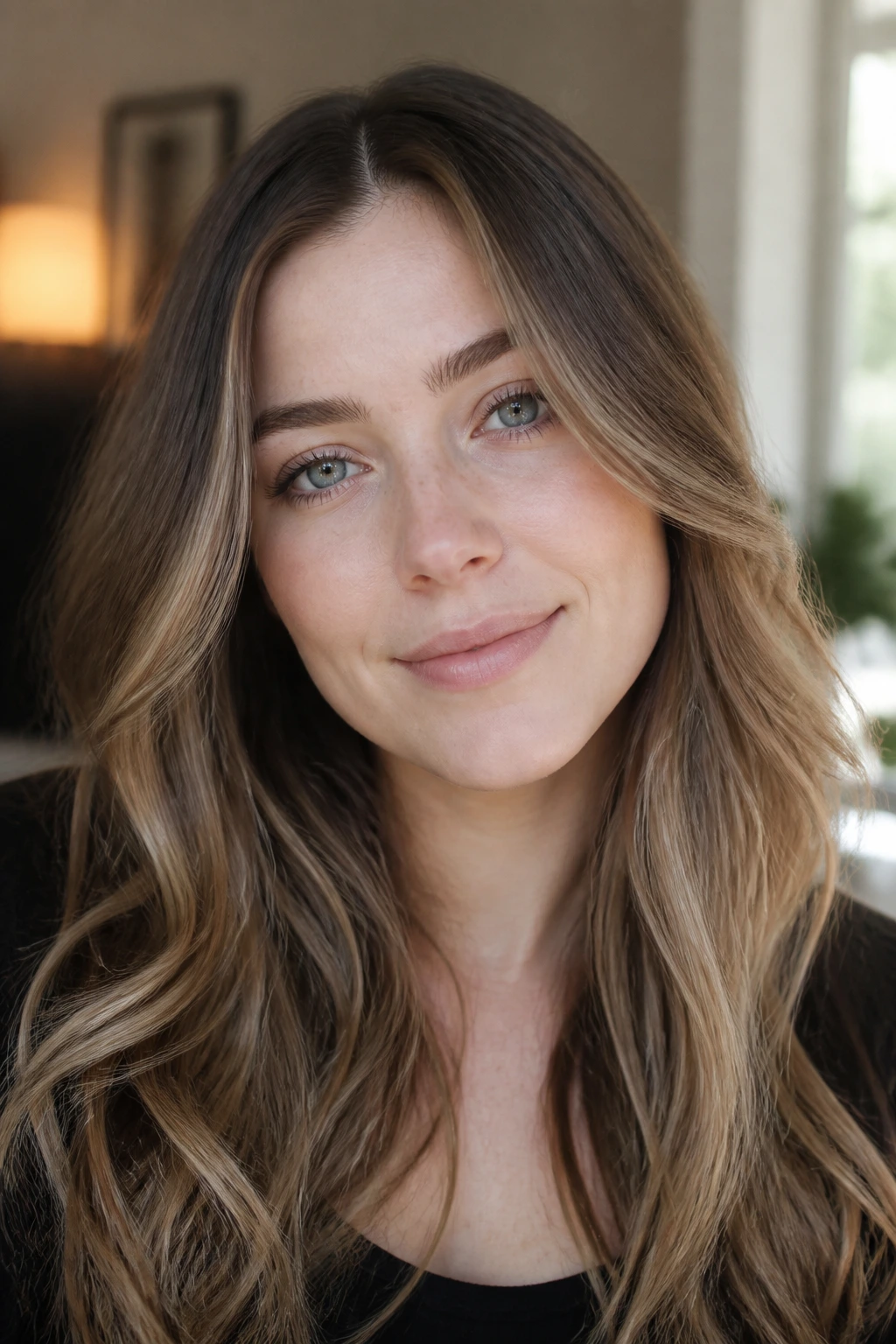
Driftwood brown is cool, sandy, and a little weathered in a good way. Ribbon lights in this shade give pale skin dimension without turning the hair muddy, which is the usual complaint with darker browns on fair complexions. The effect is soft, not flat.
For a heart-shaped face, keep the ribbons through the sides and lower lengths. The face gets softer, and the eye doesn’t linger on the forehead as much. If your hair has natural wave, the ribbons move in and out of view, which keeps the color from feeling static.
I like this one for people who want brown highlights but don’t want to admit they want highlights. It’s understated in the best sense.
23. Velvet Cocoa Seamless Ribbons
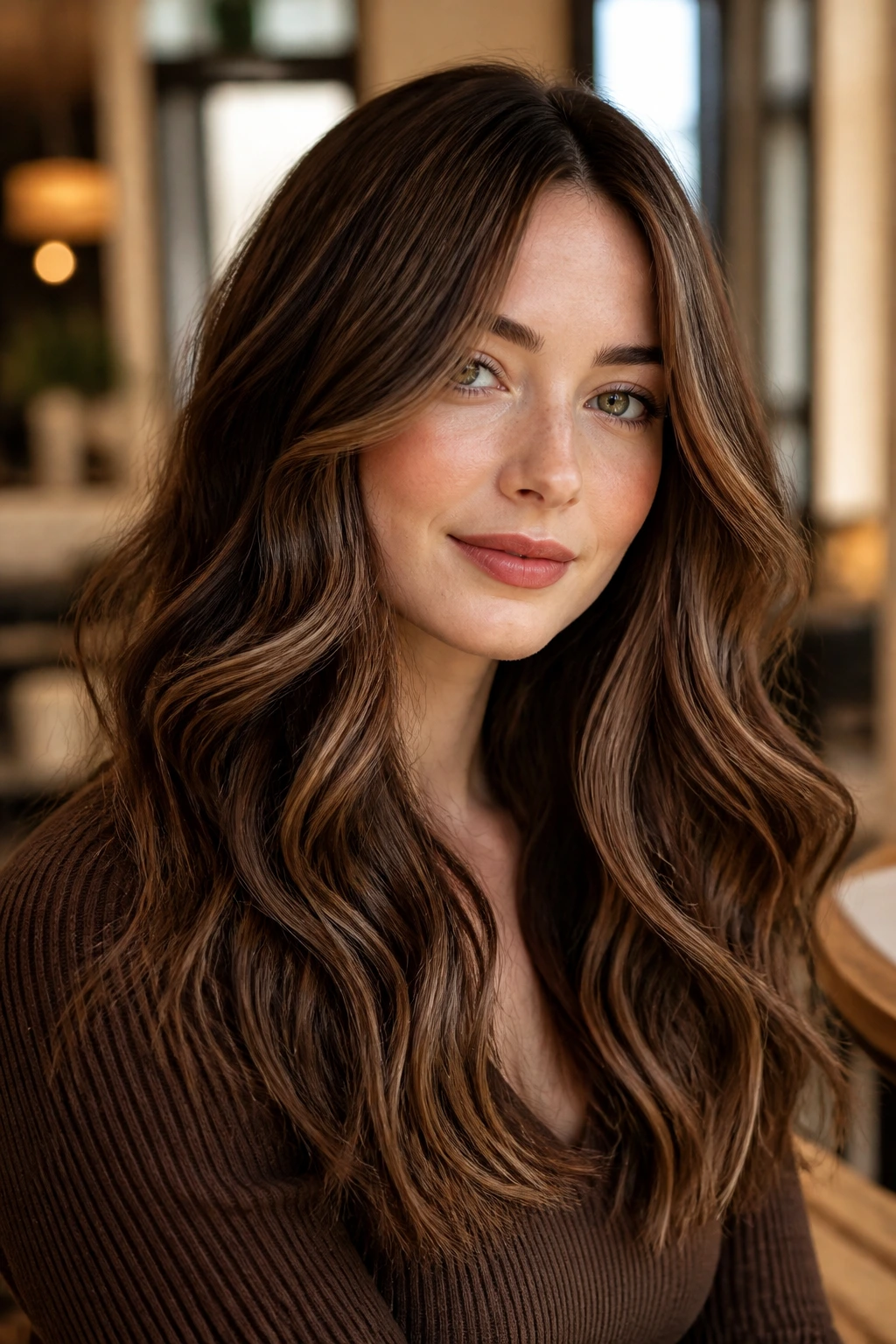
Velvet cocoa is all about plush depth. The ribbons are stitched into the hair so they don’t look like separate pieces, which is a relief if you hate stripey color. On pale skin, the cocoa needs enough softness to avoid looking like ink, but when it’s done right it gives the hair a richer surface than blonde alone can manage.
Heart-shaped faces need this kind of seamlessness because harsh contrast at the top can exaggerate width. Keep the contrast moderate, let the pieces melt into one another, and the face reads smoother. The result is especially good on layered cuts where the ribbons can travel through the movement instead of sitting still.
This is a “quiet confidence” look without the cliché. Better said: it’s the kind of brown that looks expensive because nothing about it is shouting.
24. Amber Brown Airy Slices
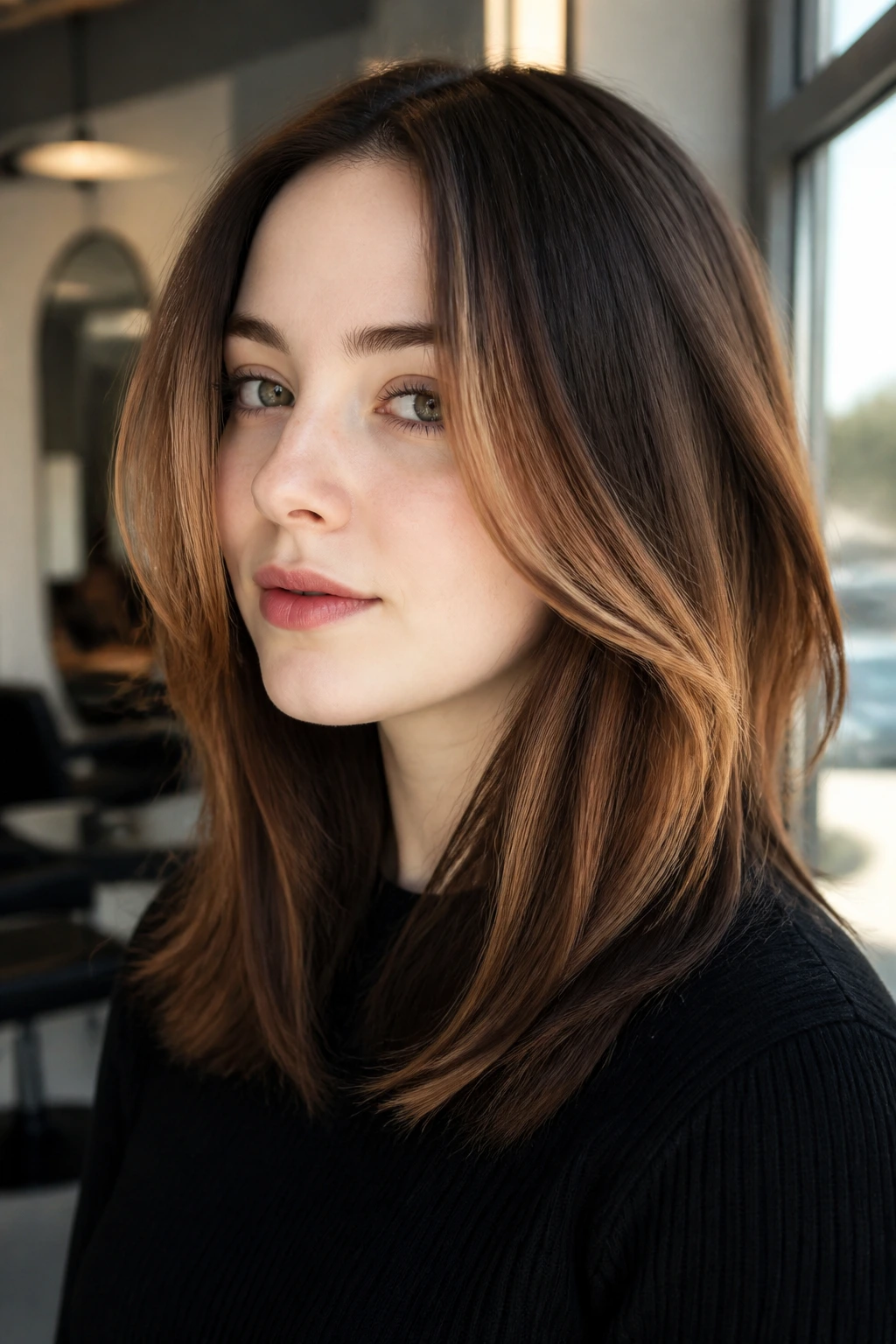
Amber brown brings warmth, but the airy slice placement keeps it from going heavy. That matters on pale skin, where rich brown can swallow the face if it’s packed in too densely. Airy slices let the hair breathe and keep the color from turning into one broad block.
For a heart-shaped face, this style works if the slices begin a little lower and are spaced out around the sides. You want the light to skim the face, not wrap the forehead in it. A few well-placed amber ribbons can make a blunt cut look softer and a long cut look fuller.
If your skin has golden undertones, this is one of the easiest warm browns to wear.
25. Chestnut-and-Mushroom Melt
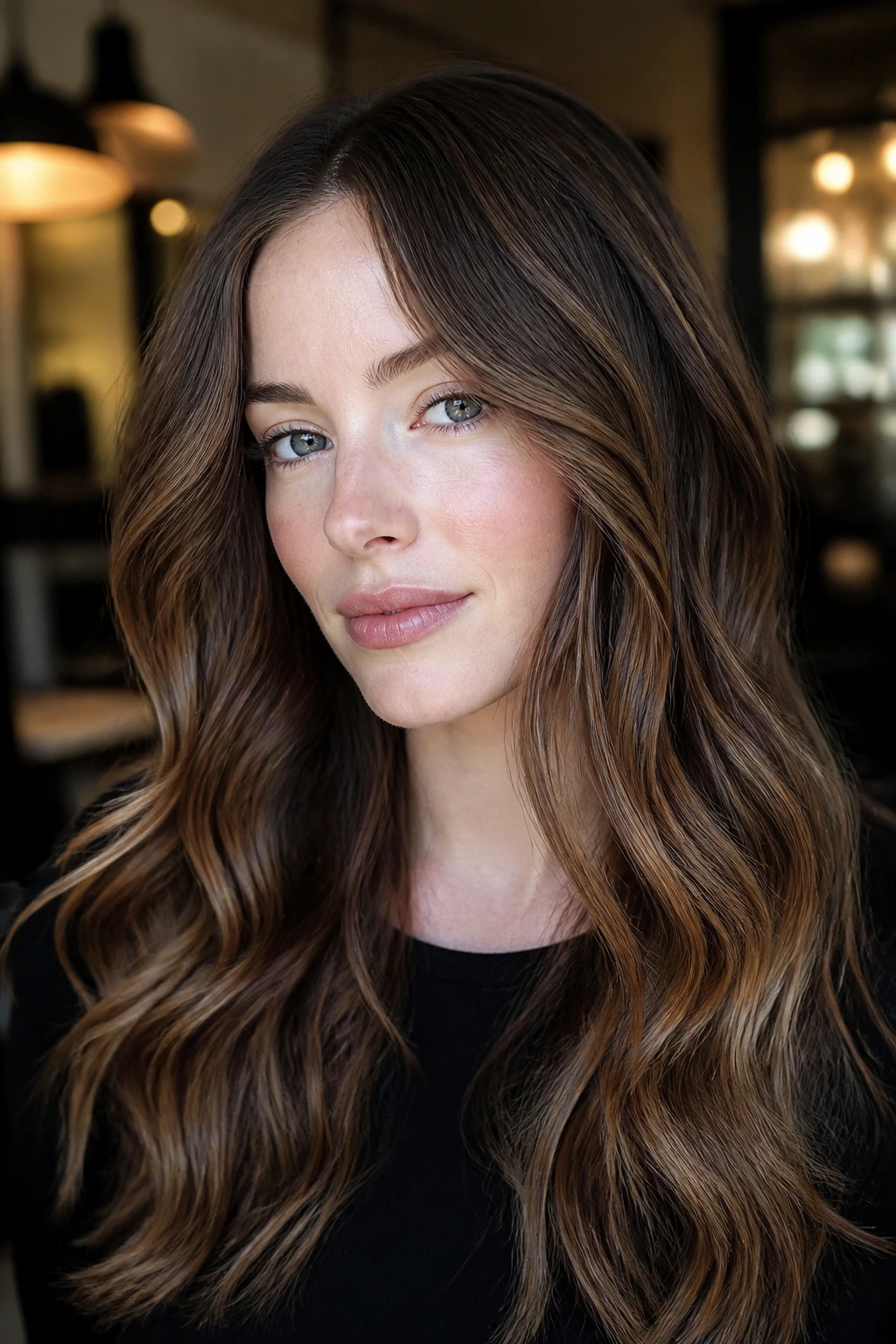
If you want one option that sits in the middle of the whole conversation, this is it. Chestnut gives the hair enough warmth to keep pale skin from looking drained, and mushroom brown reins it back before it turns coppery. The melt between the two shades keeps the result smooth and layered, not busy.
For a heart-shaped face, the blend is useful because the darker mushroom at the top can soften the forehead while the chestnut through the mids and ends adds weight lower down. That balance is the whole game here. You get a gentle frame, not a spotlight.
This is the look I’d point to first if someone said, “I want brown highlights, but I don’t want to regret them in a week.” Fair enough.
How to Brief Your Colorist So the Face Shape Stays Soft
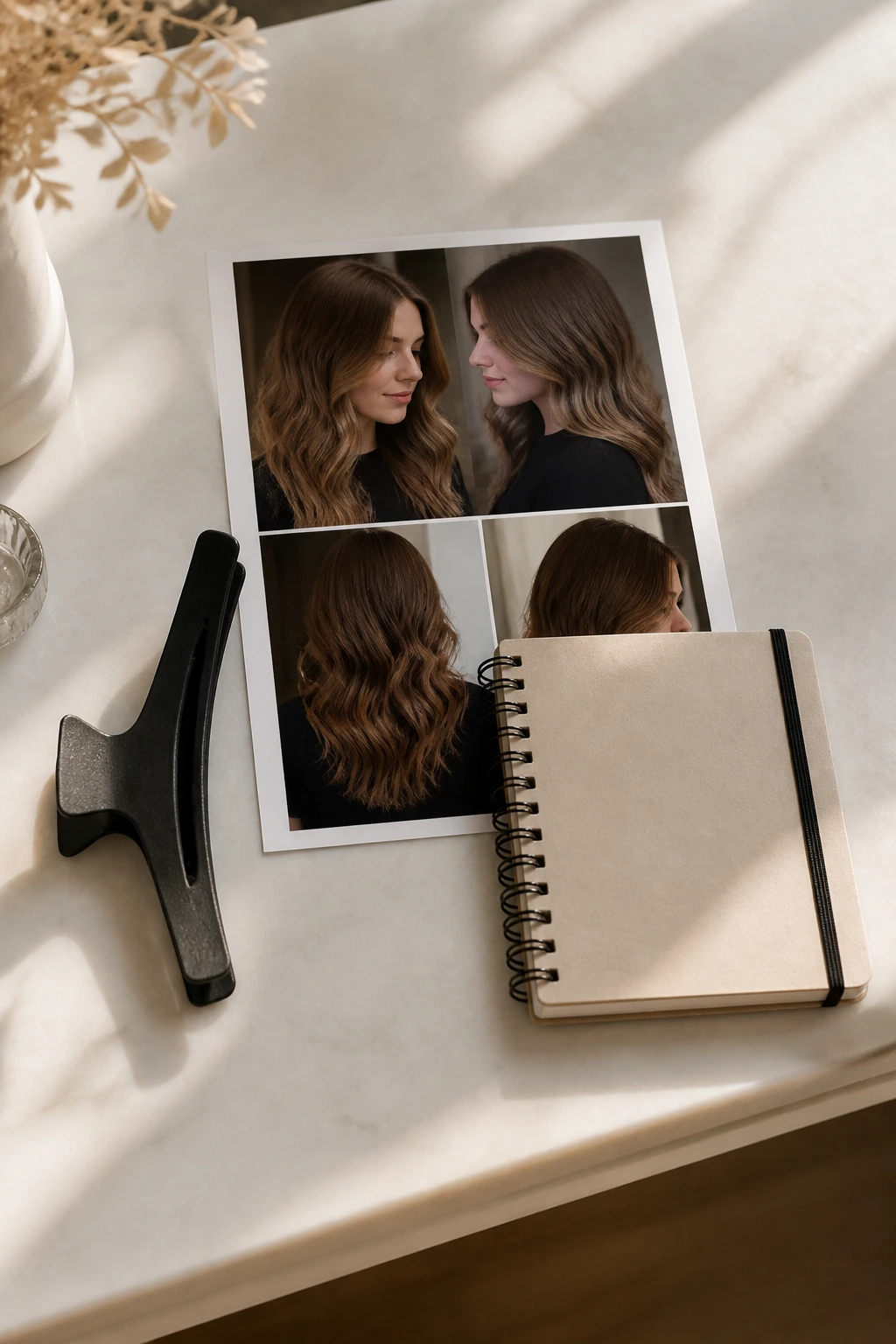
A good color appointment starts before the foil goes in. Bring 2 or 3 photos that show both the front and the side of the color you want, because face-framing brown highlights can look wildly different depending on how far up they sit. One photo of the tone, one photo of the placement, and you’ve already saved yourself a lot of explaining.
Placement matters more than brightness. Ask for the brightest pieces to stop around the cheekbone or just below it, especially if your forehead is broad. If you want a money piece, say you want it soft, not thick. If you want balayage, ask for the lightest movement through the mid-lengths and ends rather than heavy lightening at the temple.
Tone needs a name, not a vibe. Mushroom, taupe, chestnut, cocoa, hazelnut, milk chocolate, and ash brown all describe different things to a colorist. “Brown” by itself can land anywhere from orange-caramel to muddy ash, and that’s a very wide field.
Styling matters on day one. Tell your colorist how you part your hair most of the time. A center part, a side part, and curtain bangs all change where the brightness should sit. Tiny detail. Huge consequence.
Tools, Photos, and Salon Notes Worth Bringing Along
- Reference photos in daylight: Screen colors can lie. A daylight photo shows the tone more honestly than a dim salon mirror.
- A photo of your usual part: If you wear a center part every day, the placement should work with that shape, not against it.
- A list of your hair history: Box dye, old highlights, keratin treatments, and henna all matter more than people think.
- A color-safe shampoo and conditioner: Bring the names if you already use them so the colorist knows what your hair tolerates.
- A heat protectant you actually like: The finish after a color service often depends on how the hair is dried and styled.
- A metal-free sectioning clip: Handy for home maintenance and for keeping curls out of your face while the color settles into place.
- A small notebook or phone note: Write down toner formulas, gloss timing, and how often your highlights lift warmth. You will forget if you rely on memory.
How to Wear the Color So the Shape Reads Right
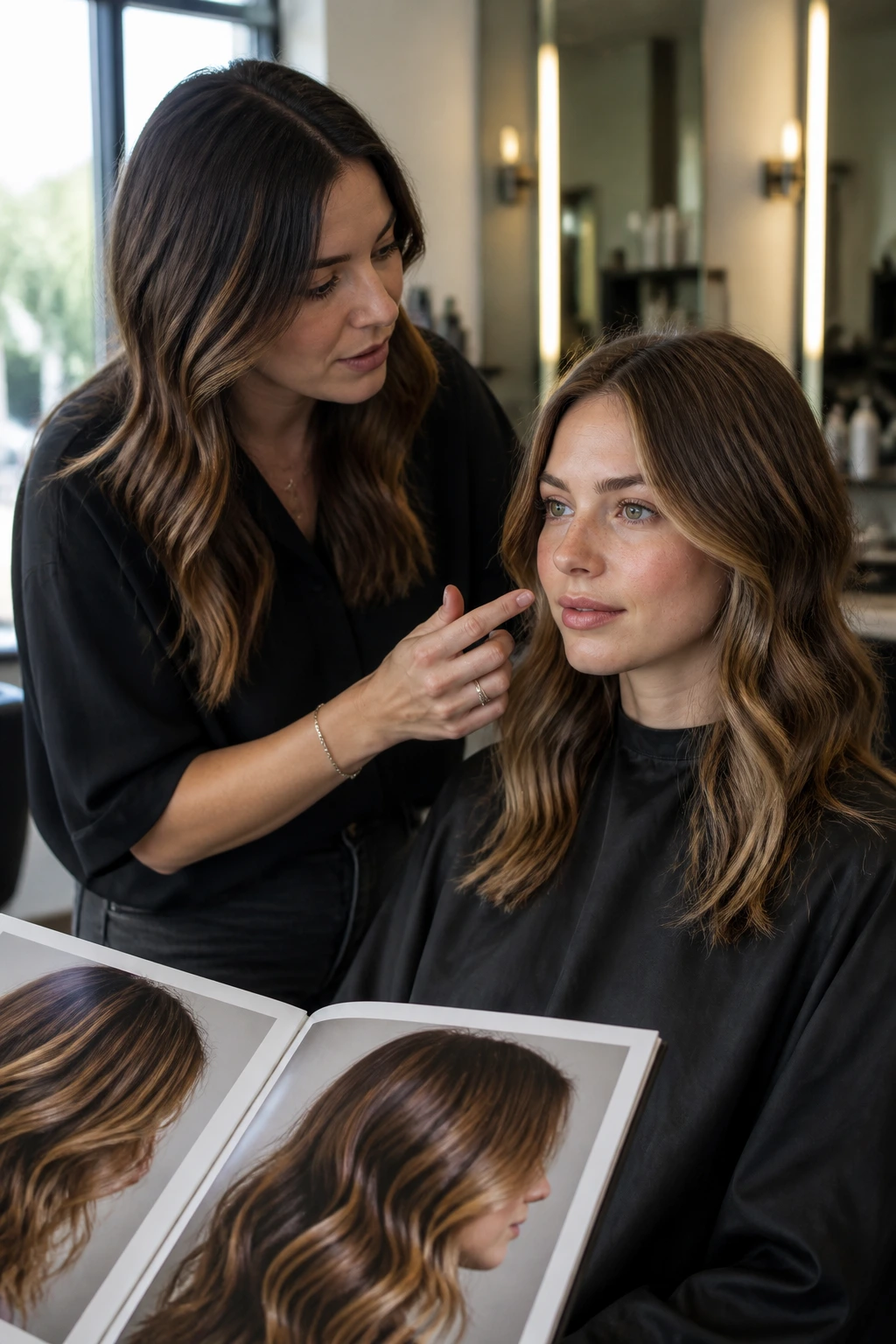
A heart-shaped face usually looks best when the eye moves down through the hair instead of getting stuck at the temples. That means styling matters. A soft off-center part is often easier on the forehead than a razor-straight middle part, though bangs can change that equation fast.
Blow-dry direction: Aim the front sections slightly forward first, then sweep them away from the face at the ends. That bend softens the cheekbone line and keeps the forehead from feeling too open.
Wave pattern: Loose waves from cheekbone to collarbone show brown ribbons better than tight curls. Tight curls can make the color look busy; loose bends let the brown breathe.
Finish: A light shine spray or a pea-sized amount of serum on the ends keeps brown highlights from looking dry. Dry brown hair can read flat fast, especially on pale skin where the contrast is already low.
If you wear your hair up, leave a few soft pieces near the jaw. That little detail helps the chin area feel fuller, which is exactly what this face shape usually appreciates.
Common Mistakes That Make Brown Highlights Look Flat
Too much orange. The fastest way to make fair skin look tired is to choose a brown that turns coppery the second light hits it. The fix is a cooler or more neutral tone, plus a gloss that keeps brass in check.
Brightness parked at the temples. That spot already gets attention on a heart-shaped face. If the highlights live there and nowhere else, the forehead can look broader. Move the light lower through the sides and ends instead.
One-tone brown with no variation. Brown that’s all one depth can look heavy on pale skin. Ask for ribbons, babylights, or a melt so the color has some movement.
Going too dark at the root. A very dark crown can flatten fair skin and make the face seem smaller in a harsh way. Keep the root soft unless you’re intentionally after a deeper contrast.
Ignoring how the hair falls. A gorgeous color placed on the wrong part of your cut won’t save the shape. If your hair flips outward at the cheeks, that’s where the color should work hardest.
Variations and Alternate Directions to Try
Cool-First Mushroom Blend
If your skin leans pink or rosy, push the palette toward mushroom, taupe, and ash. The result stays soft and keeps the complexion from looking flushed.
Warm Chestnut Shine
If your undertones are golden, a chestnut or hazelnut path can look richer than a cool brown. Keep the warmth muted and glazed, not copper-heavy.
Low-Maintenance Shadow Melt
For people who don’t want obvious grow-out, ask for a deeper root with soft brown mids. It blurs the line between appointments and makes the face look longer.
Textured Curl Ribboning
On curly or wavy hair, ribboned highlights should follow the curl pattern rather than fight it. That keeps the face framing natural and avoids the stripe effect when the hair moves.
High-Softness Curtain Frame
If you wear bangs or curtain pieces, keep the front soft and start the brighter tone lower. It stops the forehead from taking over and keeps the cheekbones in the conversation.
Keeping the Color Fresh Between Appointments
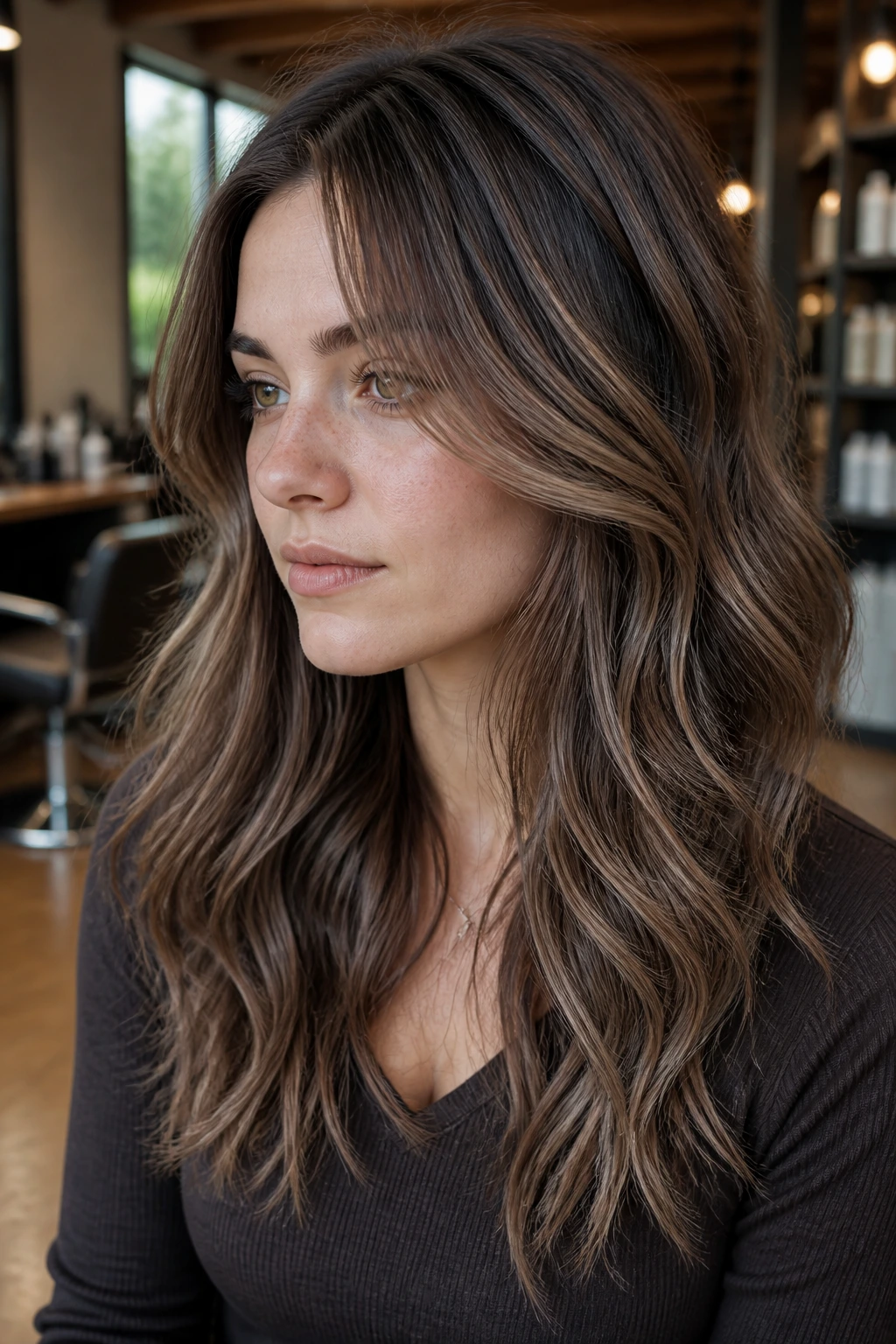
Brown highlights are not as needy as platinum blonde, but they are not maintenance-free either. On pale skin, the biggest issue is tone drift. Cool browns can turn dull, and warm browns can go brassy. Both problems are fixable if you stay ahead of them.
Plan on a gloss or toner refresh every 6 to 8 weeks if your hair is lightened and exposed to heat often. If your hair lifts warm quickly, a blue-leaning shampoo once every one to two weeks can help, but don’t overdo it or the color can go flat. For cooler tones, a purple shampoo is usually enough to keep the brass from creeping in.
A weekly deep conditioner matters more than people think. Brown highlights show dryness fast because the tone isn’t hiding anything. If the ends start looking rough, the color reads older than it is. Trim every 8 to 10 weeks if you wear a shorter cut, or every 10 to 12 weeks if the length is longer and the ends stay healthy.
Sun, chlorine, and hot tools all pull brown pigment down. A heat protectant before styling and a hat in hard sun both buy you time.
Frequently Asked Questions
Which brown highlights look best on very pale skin?
Mushroom brown, taupe brown, ash brown, and soft chestnut are the safest starting points. They usually sit close enough to the skin’s tone that they add depth without making the complexion look yellow or muddy.
Do brown highlights flatter a heart-shaped face?
Yes, if the placement is handled with some care. The brightest pieces should sit lower through the sides and ends, not only at the temples, so the forehead doesn’t become the main event.
Should I choose warm or cool brown?
Match the tone to your undertone first. Cool or pink-leaning skin usually likes ash, mushroom, and smoke brown; warmer skin tends to handle caramel, hazelnut, and chestnut better.
Are face-framing brown highlights enough, or do I need a full head?
Face-framing can be enough if you want a small change and you already like your base color. If your hair looks flat in the mids and ends, a few more ribbons through the lower half will give the face more balance.
What if the highlights turn orange?
That usually means the lightening lifted warm or the toner faded. A cool gloss or a blue-based toning shampoo can help, but if the brass is strong, you may need a salon refresh.
Can brown highlights work on naturally dark blonde hair?
Absolutely. In fact, dark blonde is one of the easiest bases for this look because the brown reads as dimension instead of a full color overhaul.
How often will I need upkeep?
If you choose a balayage or root melt, many people can stretch color services to 8 to 12 weeks. Babylights and money pieces often need a little more attention if you want them to stay crisp.
Can I wear brown highlights with bangs?
Yes, and curtain bangs are especially good here. The trick is to keep the brightest bits from sitting too high at the forehead, because bangs already bring attention to that area.
The Shade That Gives the Face Some Breathing Room
Brown highlights on pale skin can be quiet in the best way, and that quiet is doing real work. It softens sharp angles, keeps the forehead from dominating the frame, and gives fair skin something richer than a flat brunette block. The right shade does not fight your features. It steadies them.
If I had to boil the whole thing down to one practical rule, it would be this: choose a brown that looks like depth first and color second. Then let the placement do the shaping. That’s the part most people miss, and it’s why some brown highlights look muddy while others make the whole face seem more balanced.
Pick one tone family, one placement idea, and one maintenance plan you can actually live with. The hair will be easier to wear, and the face around it will look more intentional the moment it moves.