



Bangs for women over 40 with wavy hair work best when the cut bends with the wave instead of fighting it. A fringe that looks soft in the salon chair can spring up, split apart, or puff at the temples once it dries, and that’s why so many blunt, straight-across ideas fall apart fast.
The sweet spot is movement. Not chaos. Movement.
I like bangs that leave room for shrinkage and a little personality: cheekbone-grazing curtain pieces, wispy brow skimmers, side sweeps that can be tucked behind one ear when the humidity gets rude. They soften the front of the face without trapping you in a helmet. Cute, yes. Precious, no.
The other thing worth saying out loud: wavy hair after 40 often asks for a smarter front shape, not a shorter one. Cowlicks get bossier. Texture gets less predictable. Foreheads, glasses, and daytime styling time all matter more than whatever a celebrity wore on a red carpet. The list below leans into hair that has a real life, because that’s the only kind worth wearing.
Why These Bangs Keep Working

-
They leave room for shrinkage: Wavy fringe rarely sits where it lands wet, so the longer shapes on this list give you breathing room after the hair dries and starts to bend.
-
They soften the front of the face: Pieces that hit the brows, cheekbones, or temples pull the eye upward without turning your forehead into a hard line.
-
They grow out without looking botched: Curtain and side-swept shapes can slide into face-framing layers instead of forming a stubborn shelf at the center.
-
They behave around glasses: Several of these cuts open at the middle or angle away from the frame line, which keeps the front from feeling crowded.
-
They don’t demand a full styling ritual: A round brush, a diffuser, or a quick bend with a small iron is enough for most of them. That matters on busy mornings when you’re not in the mood for a 20-minute battle.
-
They still look like hair, not a project: The best bang shapes here keep texture visible. That little bit of unevenness is what makes wavy fringe look modern instead of stiff.
Why Wavy Hair Changes the Fringe Math After 40
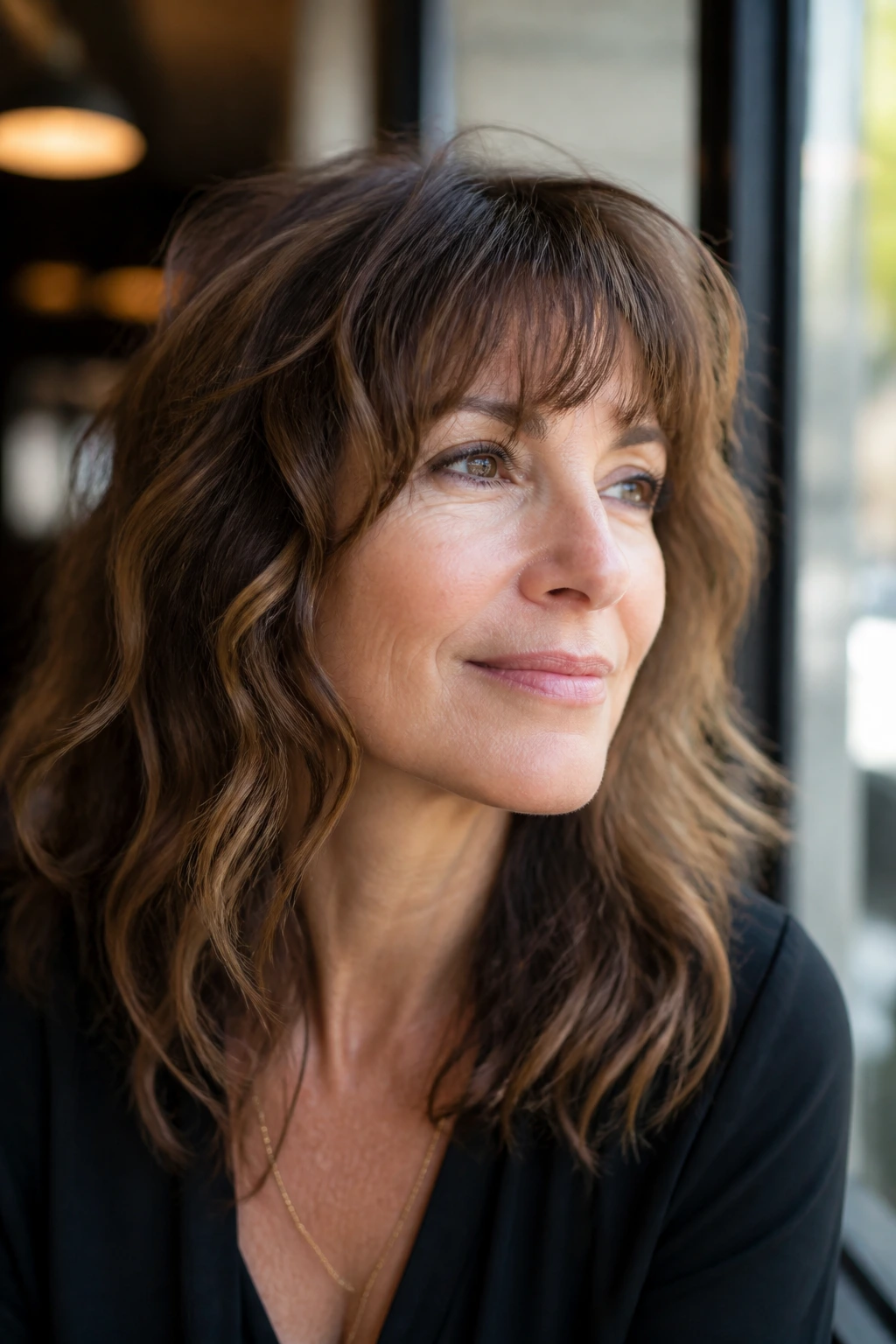
Wavy hair has a habit of changing the shape after it leaves the salon. Straight hair mostly does what it’s told. Wavy hair negotiates. That means the same bang length that looks brow-grazing when it’s damp can land halfway up the forehead once it dries, especially if your hair is fine, porous, or touched by a strong bend at the front hairline.
After 40, the conversation gets a little more specific. Some women lose density at the front. Some get a more obvious cowlick. Some notice the wave pattern getting drier or a bit wirier near the face, especially around silver strands. None of that means bangs are off the table. It means the cut has to respect the way your hair actually moves.
Dry cutting helps a lot here. So does point cutting, which softens the edge instead of slicing a hard line across the forehead. If you want a shorter fringe, ask for the shortest point to be cut longer than you think you need — then let the stylist check it once the hair has dried or been fully blown out. A half inch matters. A full inch matters more.
And yes, forehead coverage is part of the story. So is softness. But the real win is a bang shape that doesn’t force you to fight your hair every morning just to look put together.
1. Long Curtain Bangs
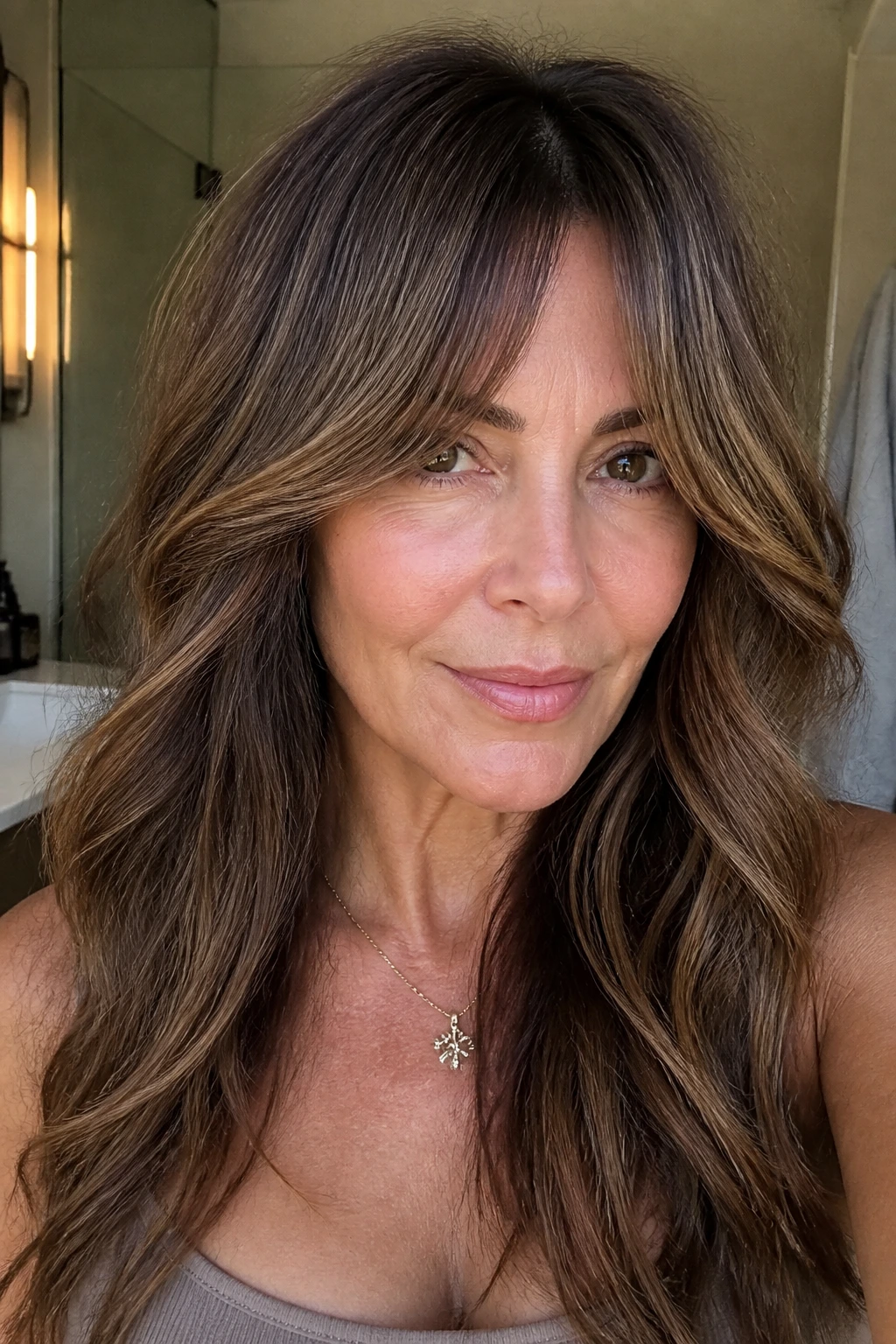
Long curtain bangs are the safest place to start if you want movement without regret. The center split keeps the front open, while the longer sides drape into the cheekbones and blend into the rest of the cut. On wavy hair, that extra length is gold. It gives the wave room to settle instead of popping up like a little spring.
Why it works
Ask for the shortest pieces to land around the bridge of the nose and the longest to brush the tops of the cheekbones. That range looks soft once it dries, and it can be pushed wider or tighter depending on the day. If your wave pattern is uneven, curtain bangs also hide that better than a blunt line ever will.
Best for: round faces, heart shapes, and anyone who wants an easy grow-out.
Style it with: a light mousse at the roots and a 1.25-inch round brush, or just twist the front section away from the face while blow-drying.
Watch for: cutting them too short while soaking wet. Wavy curtain bangs almost always bounce up.
2. Side-Swept Bangs With a Soft Bend
Want something a little more polished? Side-swept bangs bring instant shape without forcing a center part. The trick is keeping the sweep soft, not shellacked. A wavy fringe that arcs across the forehead looks relaxed and grown-up in the best way, especially when the ends feather into the side layers.
How to wear it
This cut works well if you have a strong cowlick or a part that refuses to stay in the middle. Ask for the bang to start near the arch of the brow and graduate longer toward the temple. On styling days, blow-dry it in the opposite direction first, then sweep it over to encourage lift at the root. That little trick keeps the bang from collapsing flat by lunchtime.
If you wear glasses, this is one of the friendliest shapes around. It clears the frame line and keeps the front from feeling boxed in.
3. Bottleneck Bangs That Open at the Center

Bottleneck bangs are having their moment for a reason: they create a soft opening in the middle, then widen around the brows and taper into the sides. On wavy hair, that shape feels forgiving. It doesn’t demand perfect symmetry, and it gives the wave a place to break naturally.
The center should be narrow, almost like a tiny window, with the wider pieces drifting toward the temples. That means you can still see some forehead, which keeps the look light. I prefer this shape when someone wants bangs but hates the idea of maintenance-heavy fringe. It’s a smart compromise.
Ask for point-cut ends and a little extra length near the outer corners. If the front gets oily fast, bottleneck bangs also look better on day two than a dense, straight fringe does. That matters more than people admit.
4. Wispy Brow-Grazing Fringe
Wispy bangs are the quiet achievers of this whole list. They sit lightly across the forehead, skimming the brows without swallowing them, and they look especially good on wavy hair that has a little natural separation. The softness is the point. You want movement, not a solid curtain.
What makes them different
A wispy fringe should never be over-thinned until it turns stringy. That’s the mistake. Ask for light point cutting, not aggressive razor work, and keep the shortest pieces just at or slightly above the eyebrow line. If the hair is fine, leave a bit more weight in the center so the fringe doesn’t disappear on day one.
These bangs are nice for women who want forehead coverage without the commitment of a full, heavy bang. They also make silver or highlighted strands look dimensional, because the texture shows through instead of being hidden.
5. Feathered Shag Bangs
Feathered shag bangs are what happens when fringe decides to relax. They blend into a layered cut, usually with soft shaggier pieces around the cheekbones and temples, so the front never feels separate from the rest of the hair. That makes them especially good for wavy hair, because the wave pattern helps the layers kick out instead of hanging flat.
Why they work
The feathering removes bulk from the front and sides, which keeps thicker hair from turning triangular. The result is airy, not wispy in a thin, sad way. There’s a difference. Ask for the bangs to be cut dry or nearly dry, and make sure the layers around the face are connected so the fringe doesn’t look like it was pasted on later.
Style note: a diffuser on low heat makes this shape come alive fast.
6. Choppy Piecey Fringe
Choppy fringe has a bit more attitude. Not bad attitude. Just enough separation to make the front feel lively. On wavy hair, those little broken-up pieces can look very good because they echo the natural bend of the hair. Straight, chunky bangs would fight the texture. Choppy bangs let it show.
I’d choose this shape if your hair is medium to thick and you don’t want the front to sit like one heavy sheet. Ask for point cutting and, if your stylist is comfortable with it, a slightly shattered edge through the ends. Then keep the styling product light. A pea-sized amount of cream or paste is plenty. Too much product turns “piecey” into sticky, and nobody wants that.
7. Side Curtain Hybrid
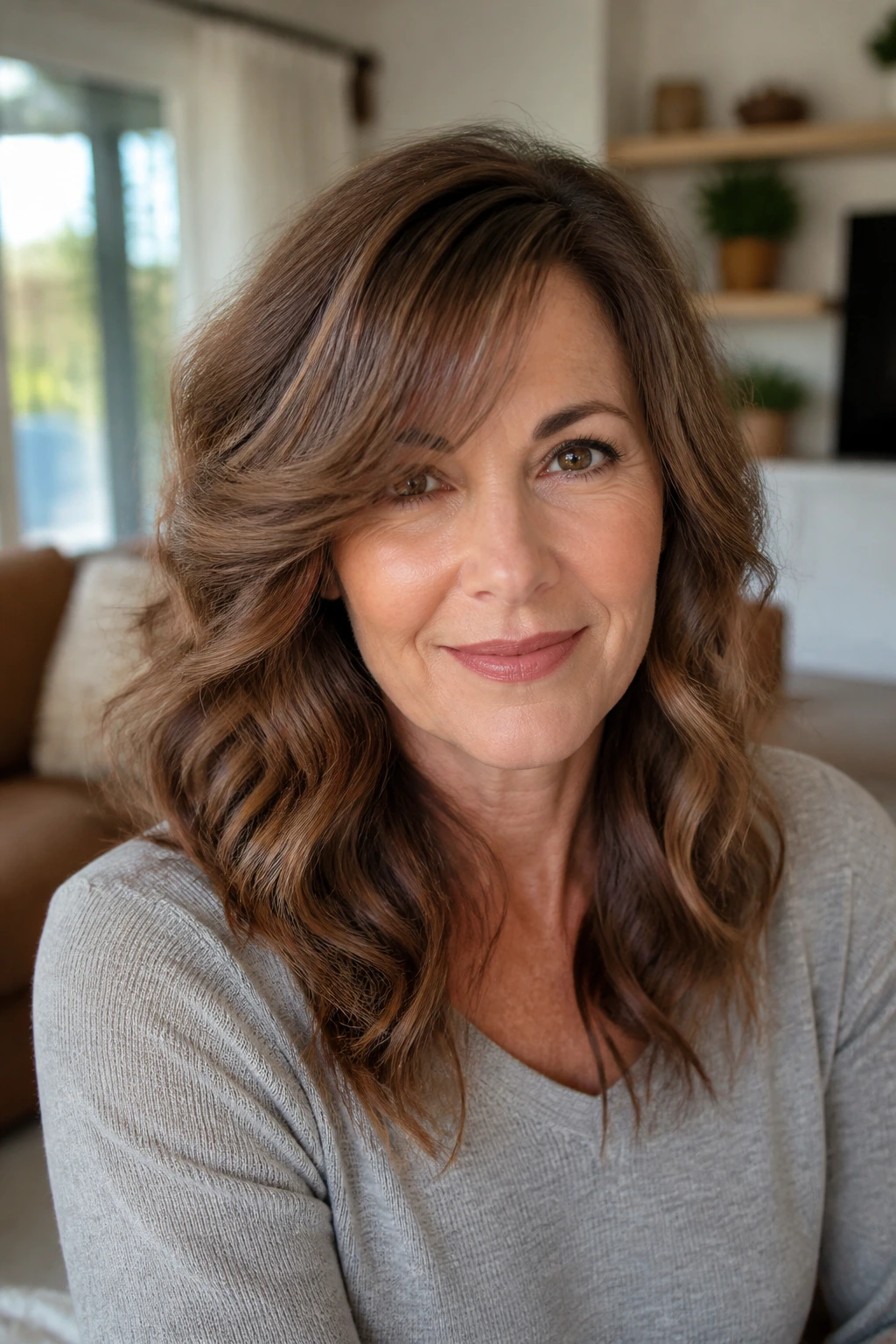
This is the fringe for people who like curtain bangs but don’t love a strict center split. The hair starts a little off-center, then falls outward in soft arcs. It’s a nice middle ground if your face shape feels better with a side part or if your hair naturally parts that way and refuses to change its mind.
Best for
- Waves that flip at the front
- Faces that don’t want the forehead fully covered
- Anyone growing out bangs who still wants a shape
Ask your stylist to keep the shortest section around eyebrow level and let the longer pieces reach the top of the cheekbones. That extra length buys flexibility. You can tuck one side, part it deeper, or let it fall forward on humid days when you need a little help.
8. Rounded French Fringe
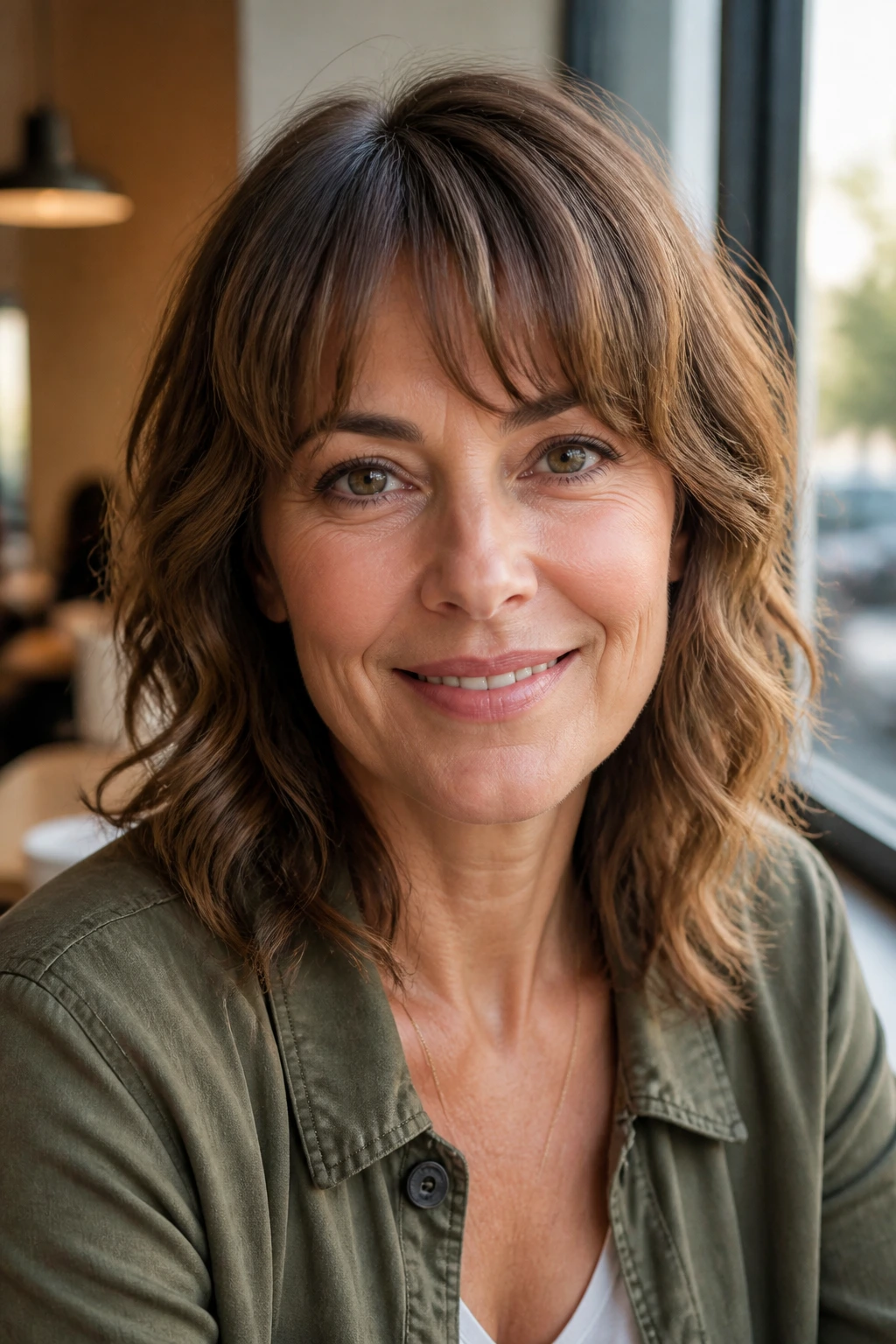
Rounded French fringe has a soft curve through the front, which makes the face look a little more finished without turning severe. On wavy hair, the curve matters. It keeps the bang from looking like a blunt block when the wave pops up. If you want a touch of polish with a relaxed edge, this is a strong option.
The key is softness through the corners. Ask for the center to sit a bit shorter than the edges, and keep the ends feathered so they melt into the rest of the cut. Blow-dry with a small round brush, rolling the front under just enough to encourage the bend. No need to force a hard curl. That can look old-fashioned fast.
9. Arched Bangs With Soft Ends
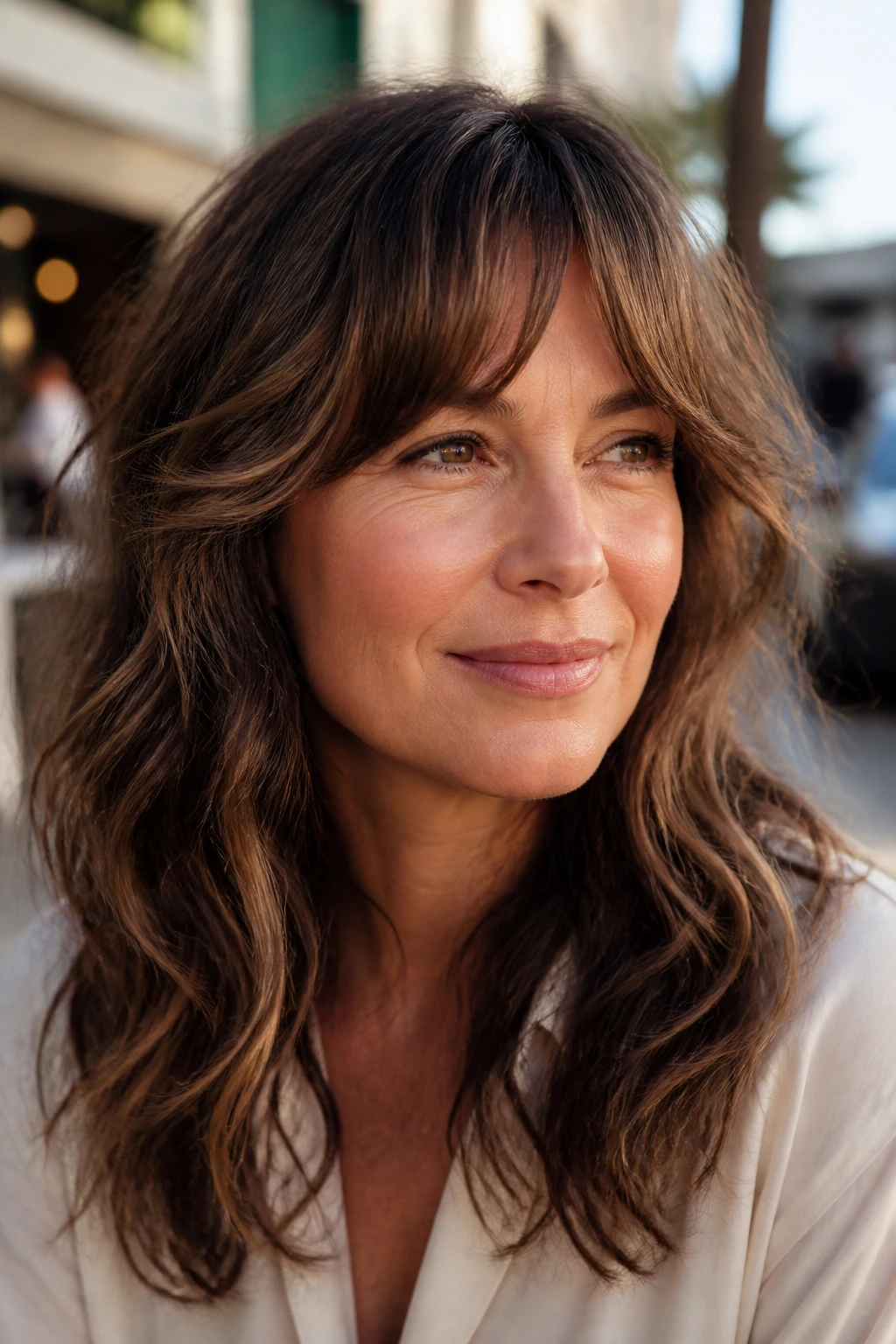
Arched bangs are a good answer when you want the front to open a bit more in the center and sit slightly longer at the sides. The curve gives the eye a place to move, which can be flattering on square or rectangular faces. It also keeps the fringe from landing in one heavy line across the forehead.
This shape works best when the arch is gentle, not a perfect cartoon crescent. Ask for the center to brush the brows and the outer corners to taper down toward the temples. If your wave is strong, let the stylist point-cut the edge so the arches don’t puff. I like this one for women who want some forehead coverage but don’t want to feel hidden behind hair.
10. Tapered Full Fringe
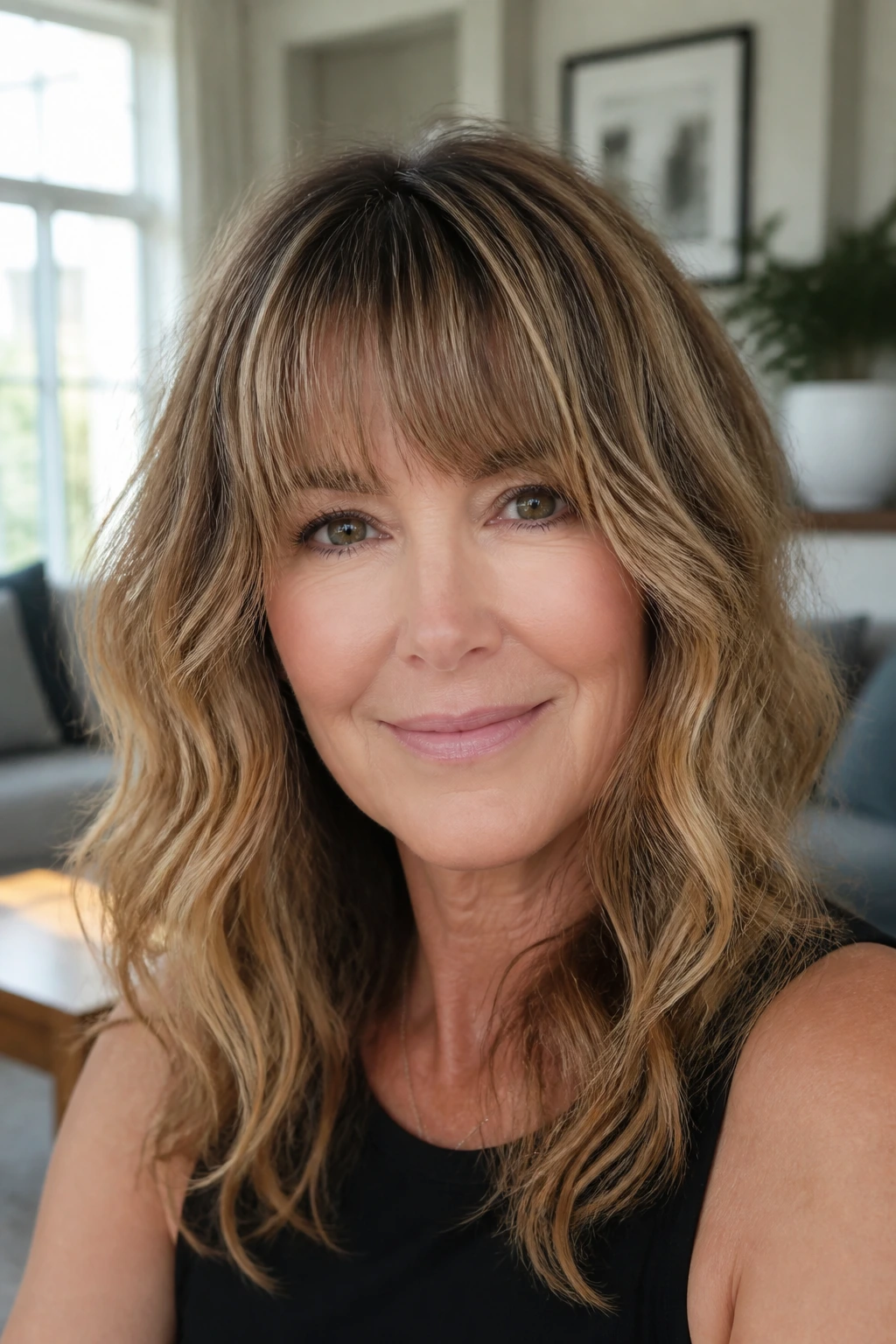
A tapered full fringe gives you more coverage at the center while softening toward the sides. It’s a smart choice if you want bangs that feel present but not harsh. The taper helps the fringe live with wavy hair instead of standing against it.
What to ask for
- Fullness at the center, not a blunt wall
- Slightly longer outer corners
- Point-cut ends to avoid a shelf-like edge
This style can be especially flattering if your forehead feels broad and you want balance without going into heavy-bang territory. It also works well with layered cuts, because the edges can blend into the face-framing pieces rather than stopping abruptly. Keep the center a little longer than your first instinct. Wavy hair nearly always shortens more than you think.
11. Face-Framing Bangs That Start at the Cheekbones
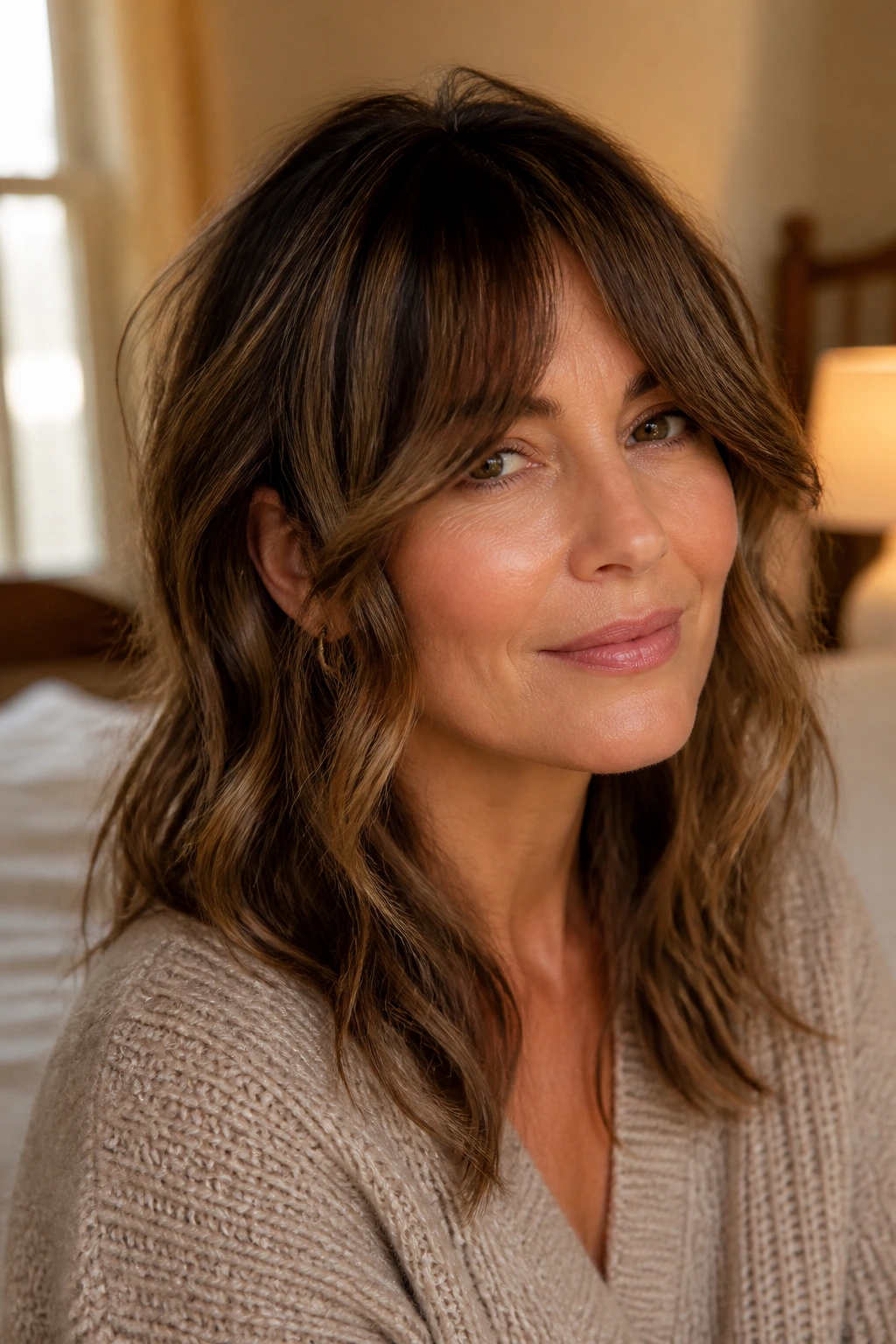
Sometimes the best bangs are barely bangs at all. Cheekbone-starting face-framing pieces give you the soft effect of fringe without a full front section sitting on the forehead. They sweep in from the sides, which makes them a lovely choice if you’re bang-curious but cautious.
What I like about this cut is how easy it is to grow out. It already behaves like a layer, so there’s no awkward line waiting for you three weeks later. If your hair has a loose wave, the front pieces will curve naturally around the face. Ask for the shortest pieces to start near the cheekbones and connect them into the top layers with a light hand.
12. Grown-Out Baby Fringe

This one is for anyone who wants something a little cool without committing to a tiny, severe bang. A grown-out baby fringe sits short enough to show shape, but soft enough that it doesn’t feel edgy for the sake of being edgy. On wavy hair, the softness is what saves it.
Keep the center around the top of the eyebrow or slightly above, then let the corners stretch longer. If the hair is too fluffy, the whole idea falls apart. Ask for texture, not thinning. That distinction matters. You want little broken pieces that move, not see-through ends that disappear against the forehead. Pair it with a textured bob or shag and the whole cut feels intentional.
13. Deep Side Part Fringe
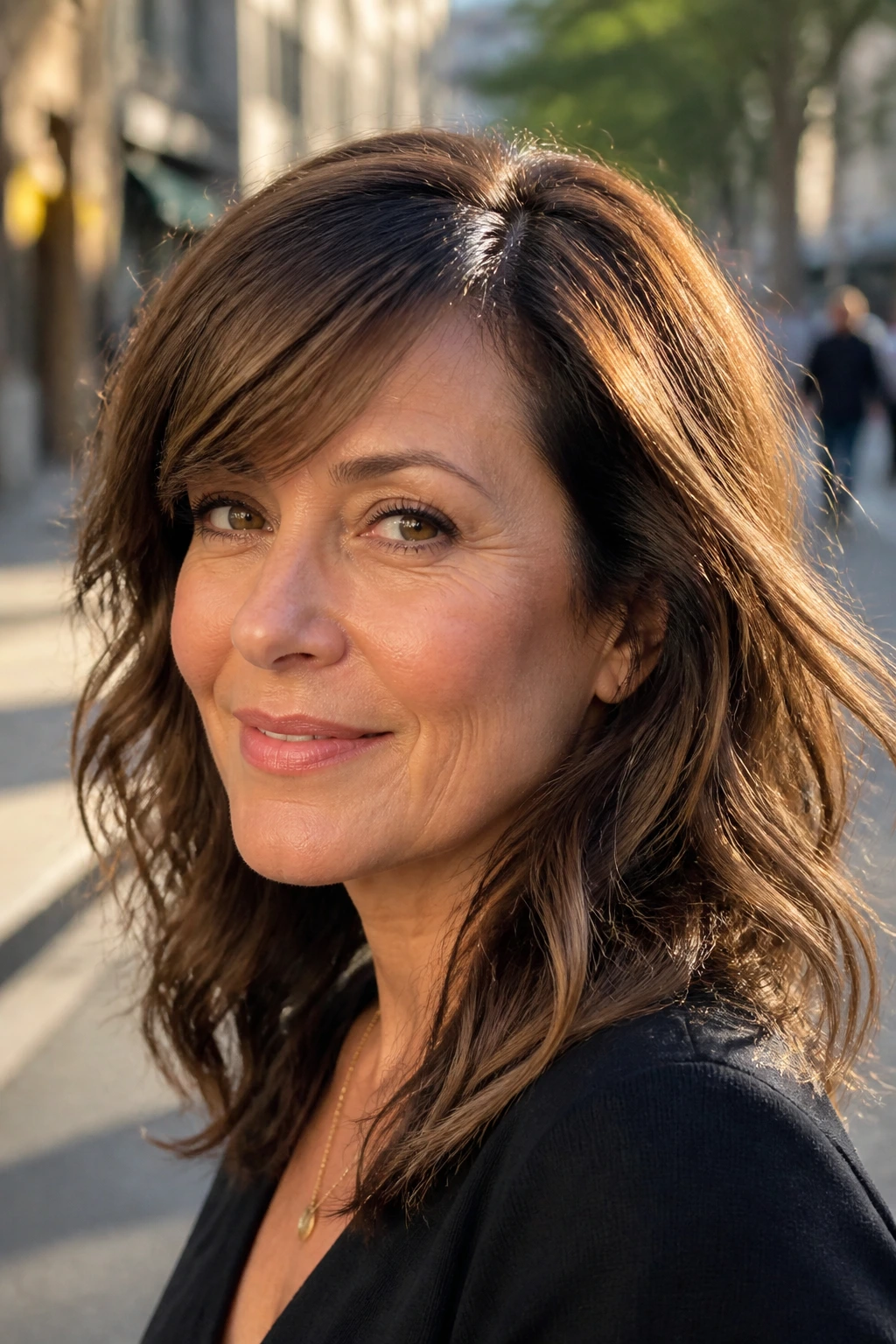
A deep side part fringe is the answer when your hair naturally wants to fall one way and you’re done arguing with it. The front sweeps over from the heavier side, which creates movement and a little drama without requiring actual drama in your morning routine.
This style is good for cowlicks because it works with the direction the root wants to take. It’s also forgiving if one side of your hair is flatter than the other. Ask for the shortest piece to start near the arch of the brow on the heavy side, then angle the length down toward the temple. The result is elegant in a low-key way, and it tends to survive a full day better than more structured fringe.
14. Layered Lob Bangs
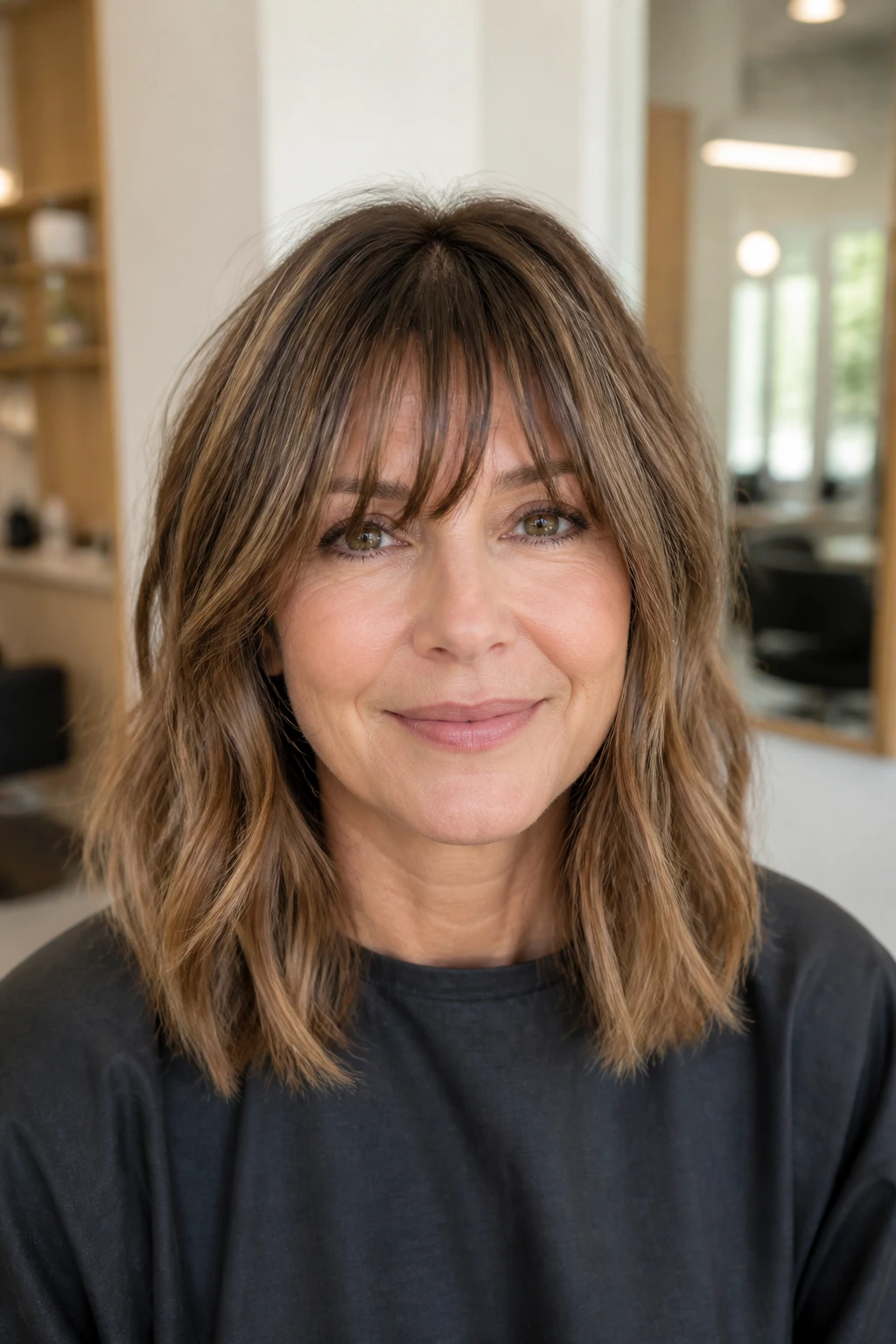
If your haircut already lives in lob territory, layer the front and let the bangs become part of the shape instead of a separate feature. Layered lob bangs are soft, practical, and easy to wear on wavy hair because everything falls into the same general rhythm. Nothing looks bolted on.
Why I like them
They’re perfect for women who want fringe but don’t want the front of the haircut to dominate the room. The bangs can sit at brow level, then blend into chin-length or collarbone-length pieces. That keeps the silhouette balanced. Ask for the layers around the face to start at the jaw or cheekbone, then let the fringe taper into them. It’s a nice option if you want movement with almost no visual hard edges.
15. Curved Bangs for Glasses
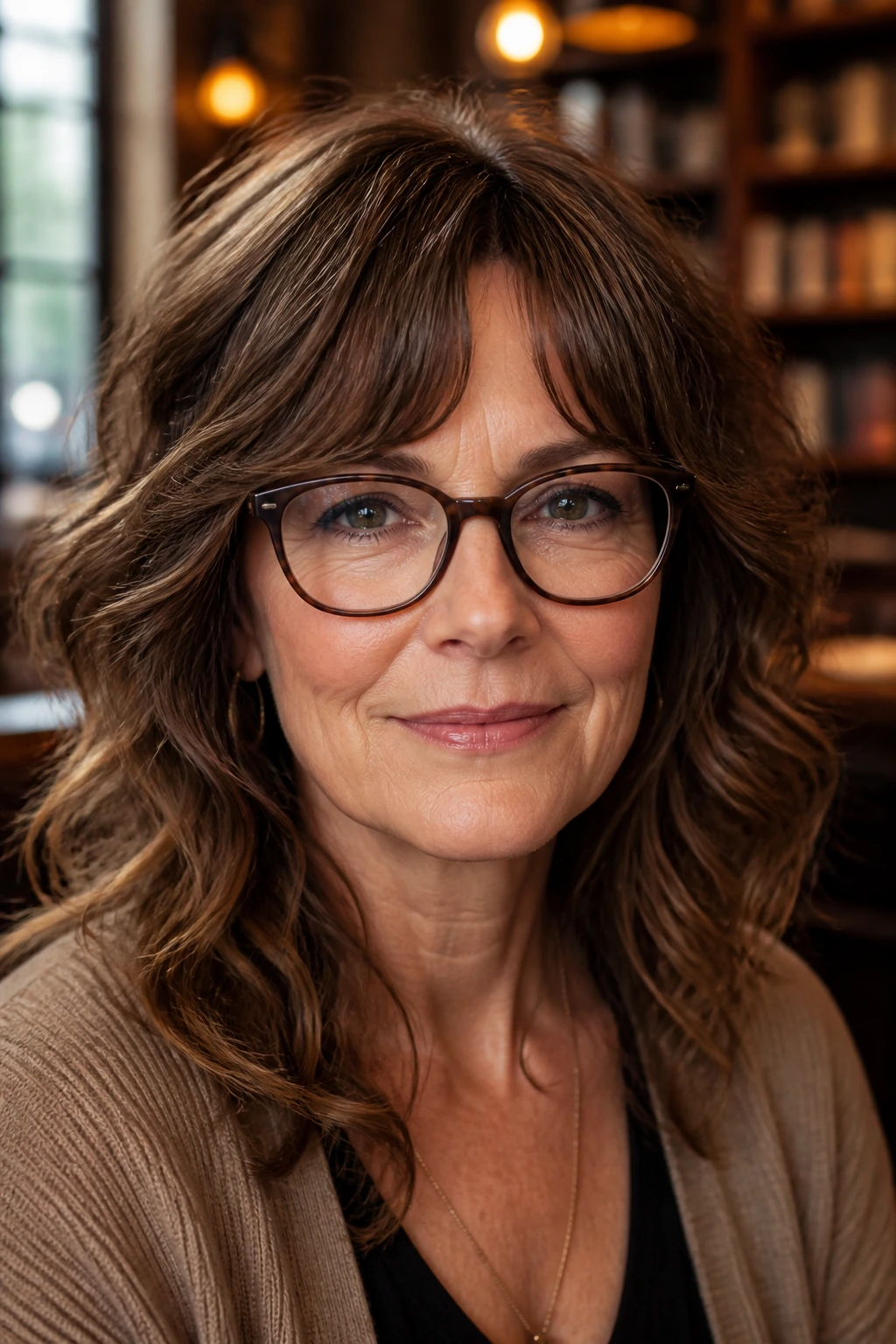
Glasses change the whole bang equation. You need room for the frame, room for the wave, and enough softness that the front doesn’t crowd your face. Curved bangs do that well. They arc gently above the frames and keep the center open enough that your glasses don’t end up hiding your fringe.
The best version lands just above the brow line in the center and sweeps a touch longer at the sides. That lets the front breathe. Ask your stylist to check the bang shape with your glasses on. Seriously. That tiny step saves a lot of annoyance later. If you wear larger frames, the bang should usually sit a bit longer than you first expect so it doesn’t compete with the top edge of the lens.
16. Soft Razor-Cut Fringe

Razor-cut fringe can look beautiful on wavy hair when it’s done lightly. The ends are softer, the line is less blunt, and the hair moves with a little swing. The catch is that razor work can fray some textures, so this is not a blind yes for everyone.
Use it when
Your hair has a smooth wave pattern, not a super dry or overly porous front. Ask for a soft hand, not a heavy slice. If your stylist uses a razor, the fringe should still feel controlled at the ends. Pair it with a lightweight cream and avoid sticky styling products that break up the texture too much. A razor fringe should look airy, not shredded.
17. Airy Blended Bangs for Fine Hair
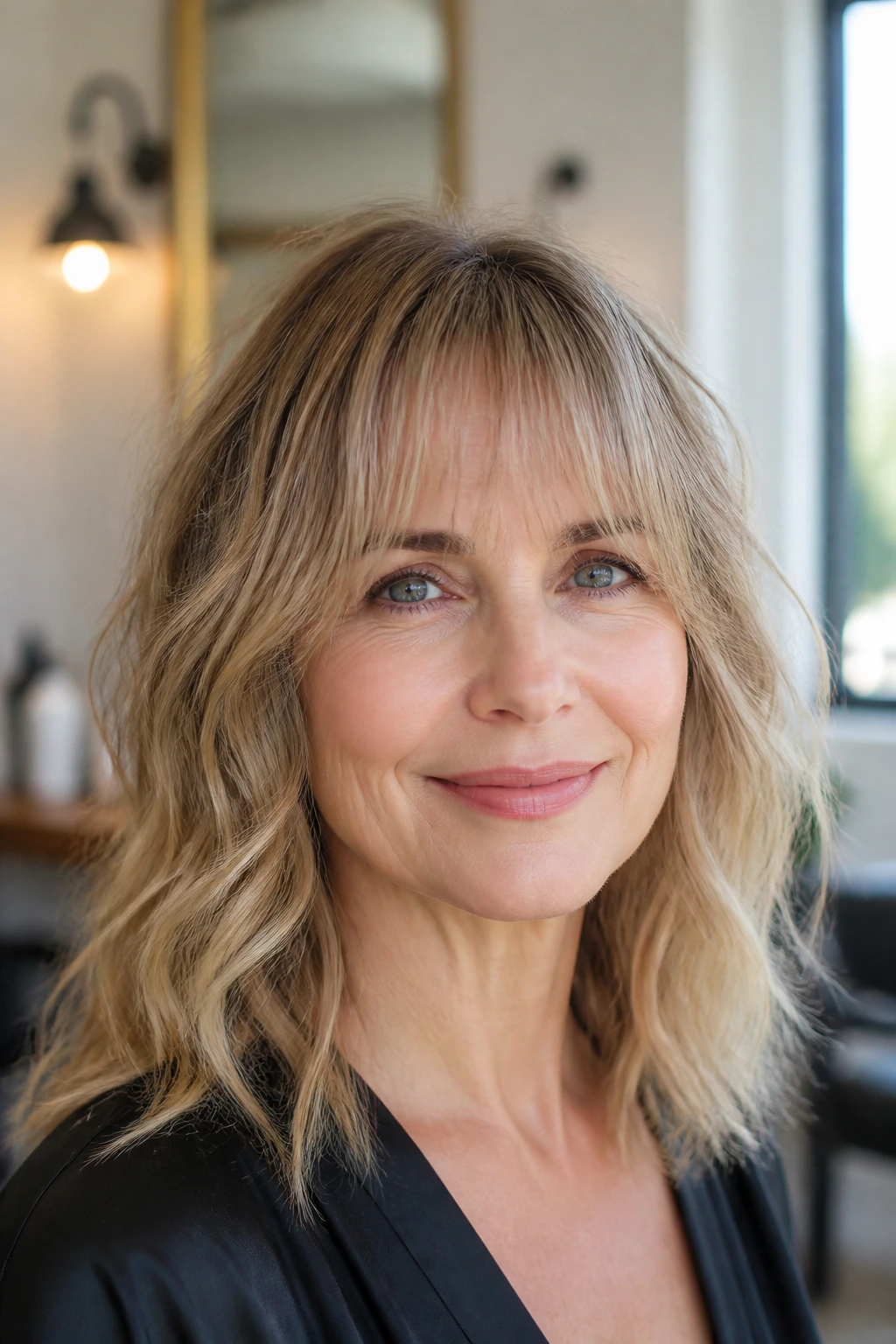
Fine hair and bangs can get along, but the cut has to be careful. Too much thinning and the front disappears. Too little shape and it falls flat against the forehead. Airy blended bangs thread that needle by keeping some weight at the center while tapering the edges into the side layers.
This style is useful if you want lift without a lot of bulk. The blend keeps the front from looking disconnected, and the lightness helps the wave show up instead of collapsing under product. Ask for soft internal texture, not aggressive removal. Then use a root-lifting spray only at the first inch of hair. That’s enough. More product just makes fine hair limp and sad by noon.
18. Swept-Over Bangs for Thick Waves
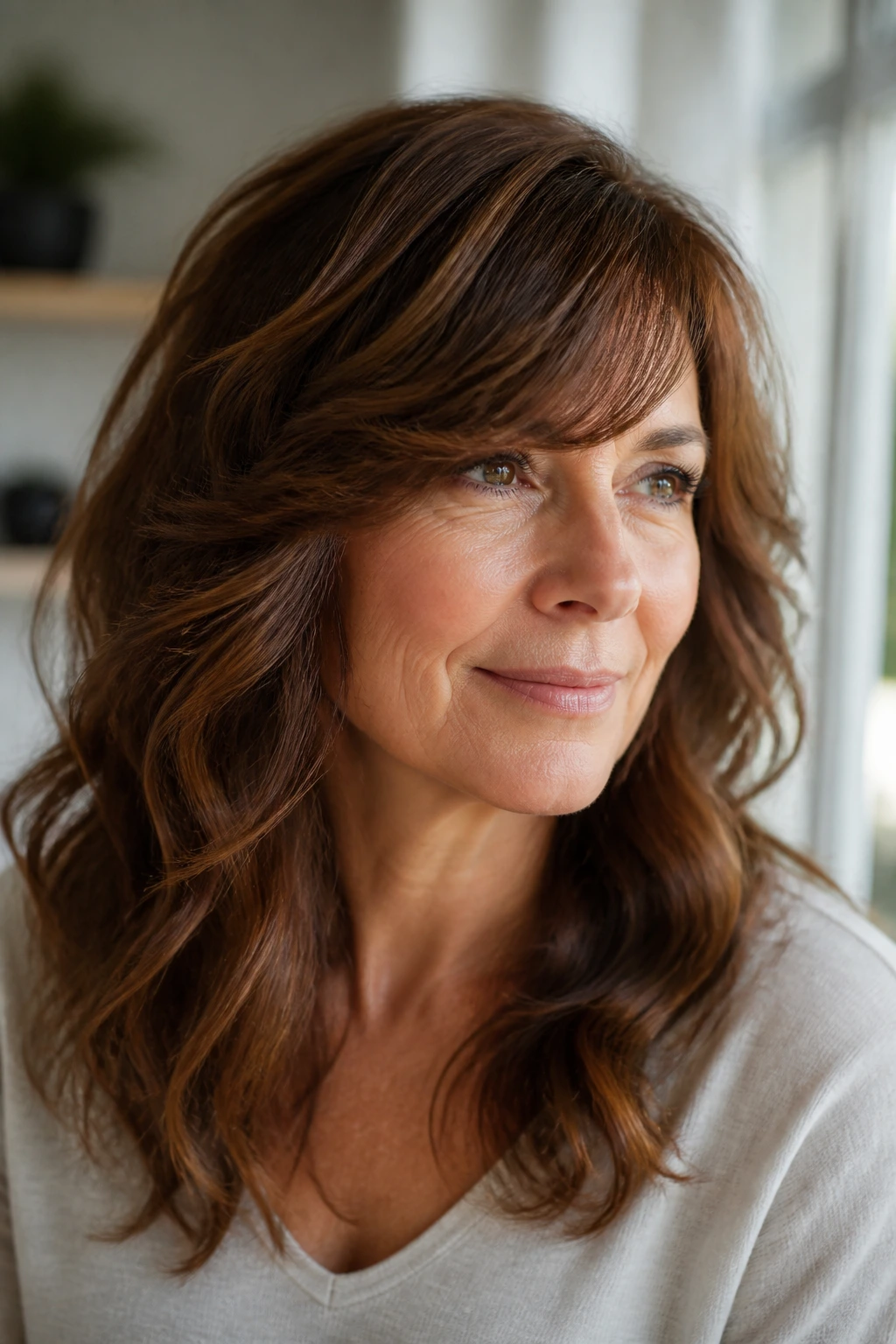
Thick wavy hair loves a sweep when it starts acting bossy. A swept-over bang can take a heavy front section and make it look intentional instead of bulky. The key is controlled direction. You want the front to move, not pile up.
Ask for the bangs to be cut with enough weight to stay in place, then have the stylist remove bulk from the underlayer so the shape doesn’t puff. A round brush and a quick blast from the dryer usually set this up fast. I’d pick this if your hair takes forever to dry and you don’t want to flatten the whole front section with a flat iron every morning. The sweep gives you polish without flattening the wave everywhere else.
19. Soft Micro-Bangs for the Bold

Micro-bangs can work on wavy hair, but only when they’re softened. Hard little bangs cut too bluntly can look choppy in a bad way once the wave lifts them. Soft micro-bangs keep the short length but break up the edge so the look feels wearable, not costume-y.
This is a braver choice, no sugarcoating it. You need to like the way your forehead shows and you need a stylist who understands wave shrinkage. Ask for the shortest point to sit above the brows and the corners to be a touch longer. The back of the fringe should still have enough softness to move. If you want something playful and low-maintenance isn’t your top concern, this can be a fun one. If you want zero effort, skip it.
20. Wavy Shag Fringe
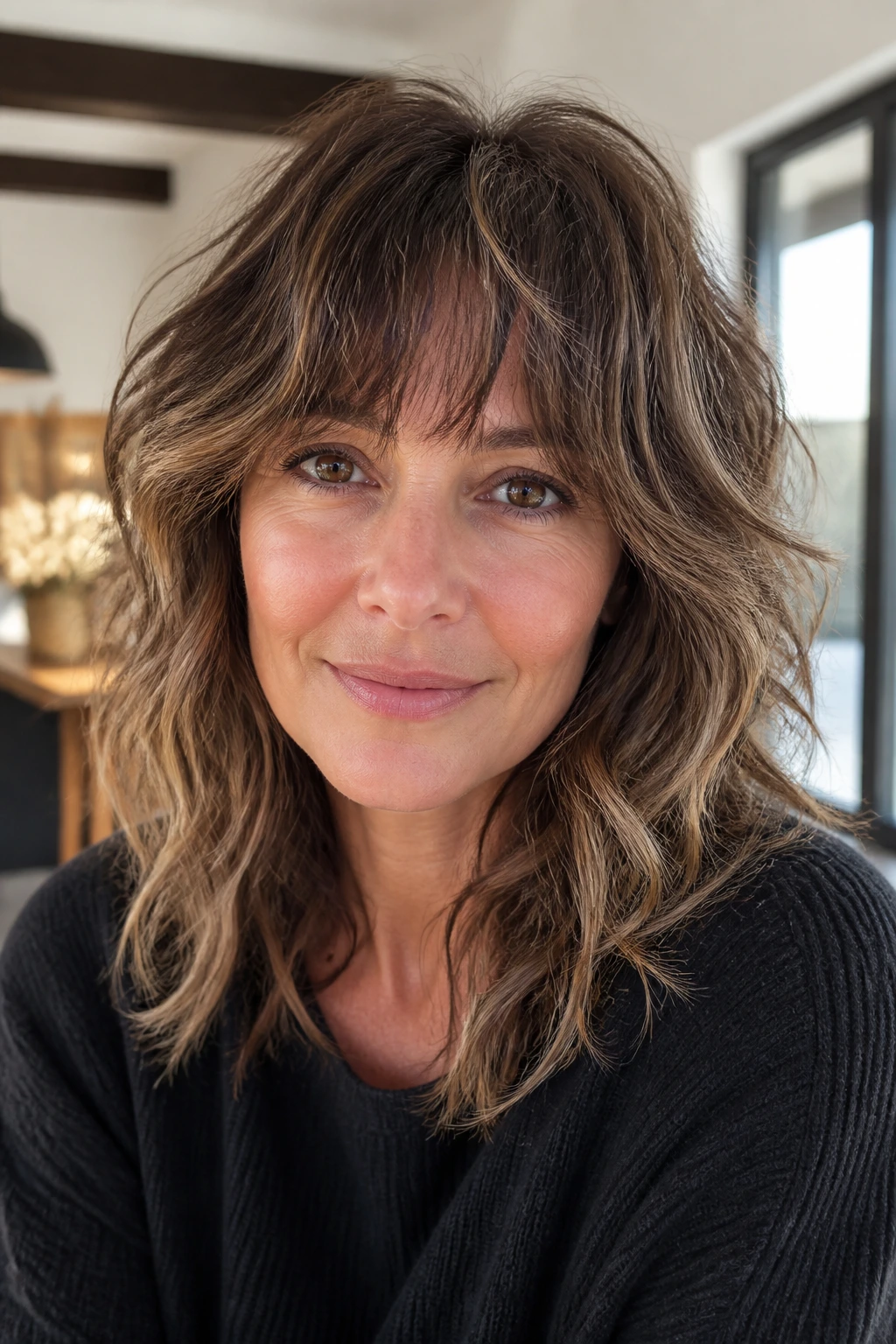
A shag fringe is one of the easiest ways to make wavy hair look alive. The front is broken up, the layers stay loose, and the overall effect is relaxed rather than polished. That’s not a flaw. It’s the whole appeal.
The best shag fringe doesn’t hang as one section. It melts into the layers around the crown and cheeks. Ask for the stylist to connect the bang to the rest of the haircut with point cutting, then keep the ends irregular enough that the wave can bounce. If you air-dry, this style often looks better with a little leave-in cream and nothing else. Too much smoothing steals the point of the cut.
21. Invisible Bangs
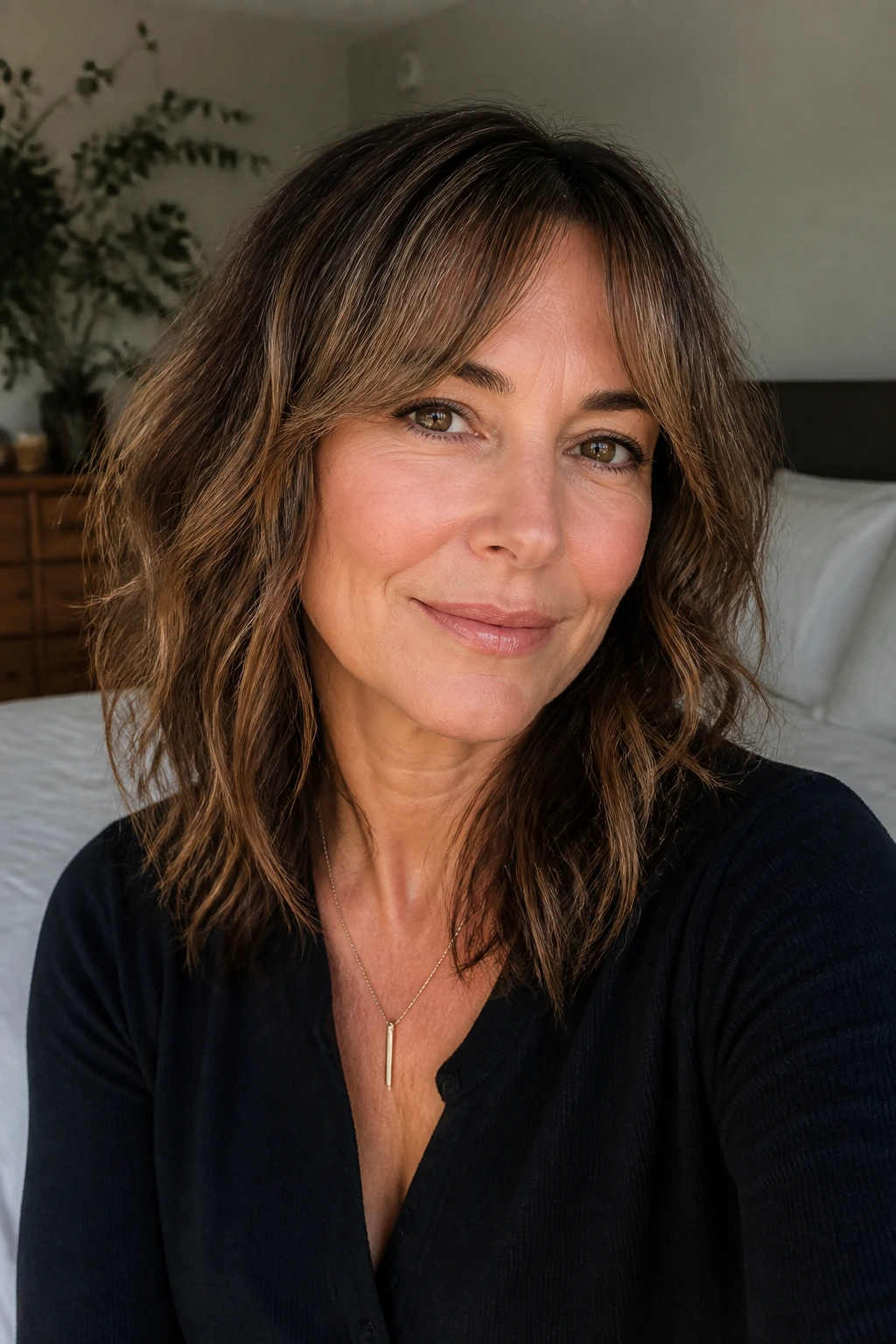
Invisible bangs are the shy cousin of real fringe. They’re there, but barely. The front pieces live as face-framing layers that suggest a bang shape without declaring one. For women who have wanted bangs for years but don’t want the daily maintenance, this is a clever place to land.
Why it helps
The hairline stays open, which makes the look easy with makeup, glasses, or a busy schedule. The front pieces can be styled forward on some days and tucked back on others. Ask for the shortest section to graze the cheekbone and the inside corners to blend into the side layers. The result is soft and flexible, which is exactly what a lot of wavy hair needs after 40.
22. Chin-Grazing Curtain Bangs

Longer curtain bangs that reach the chin might sound dramatic, but they’re some of the easiest bangs to live with once you get used to them. They give a beautiful line around the face and offer plenty of room for wave shrinkage. If your hair tends to puff at the front, longer is safer.
These bangs are especially good if you want to slim the sides of the face or if you’re growing out a shorter fringe and don’t want the in-between stage to look messy. Ask for the shortest point around nose length and let the outer sections drop well below the cheekbones. It’s a good option for strong waves, because the bend gives the shape its movement.
23. Piecey Split Fringe
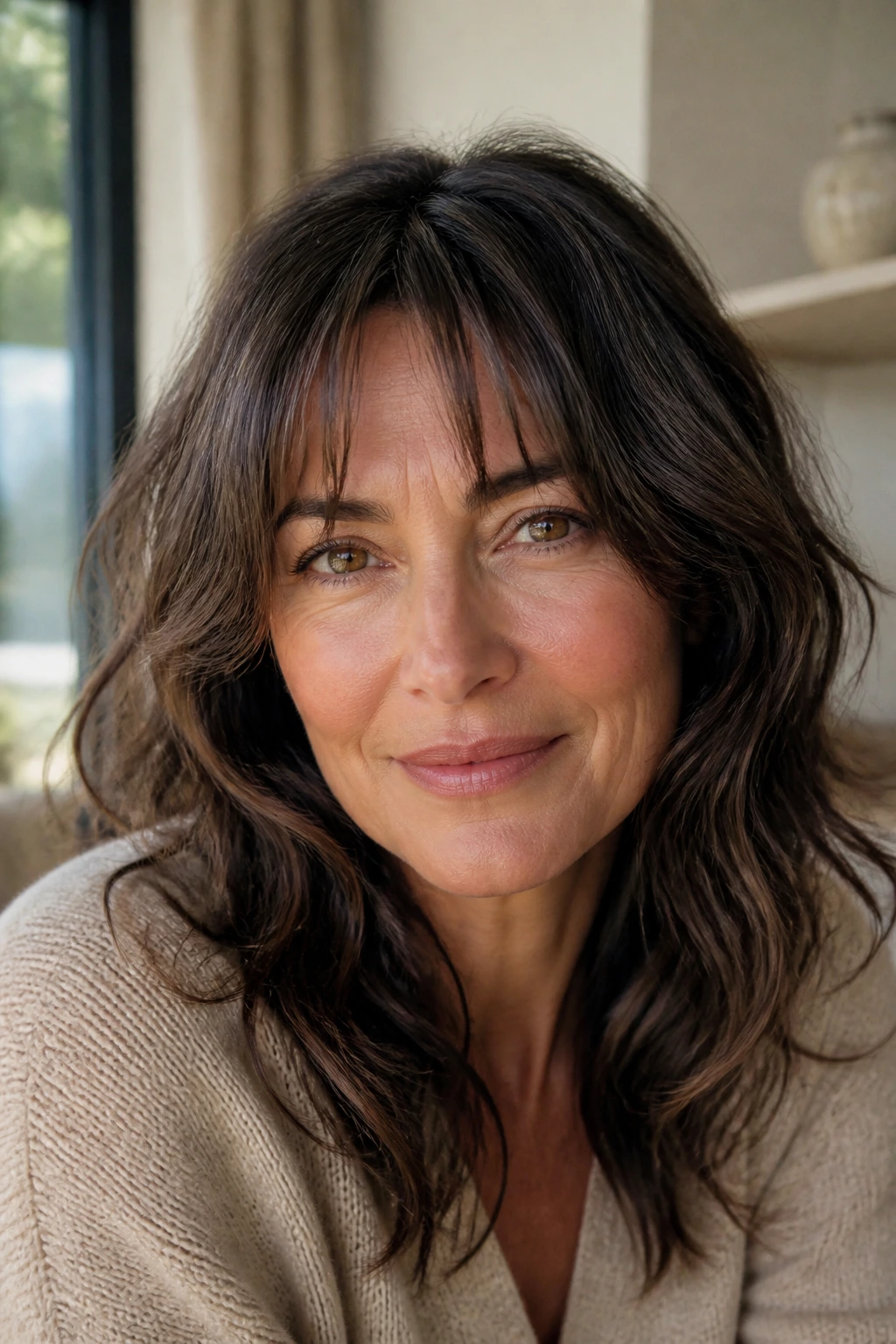
A piecey split fringe is basically the cool, lived-in version of bangs that know how to separate nicely. It opens in the center or slightly off-center, but instead of forming one clean arc, the front falls into smaller pieces. Wavy hair often does this on its own, so the cut just needs to cooperate.
You’ll want a light styling paste or cream, not a heavy serum. The goal is separation, not slickness. Ask your stylist to leave the bang a little longer than you might expect and to point-cut the ends so the pieces don’t connect into one thick mass. This shape is great when you want softness around the face but still like a bit of edge.
24. Soft Blunt Bangs With Texture
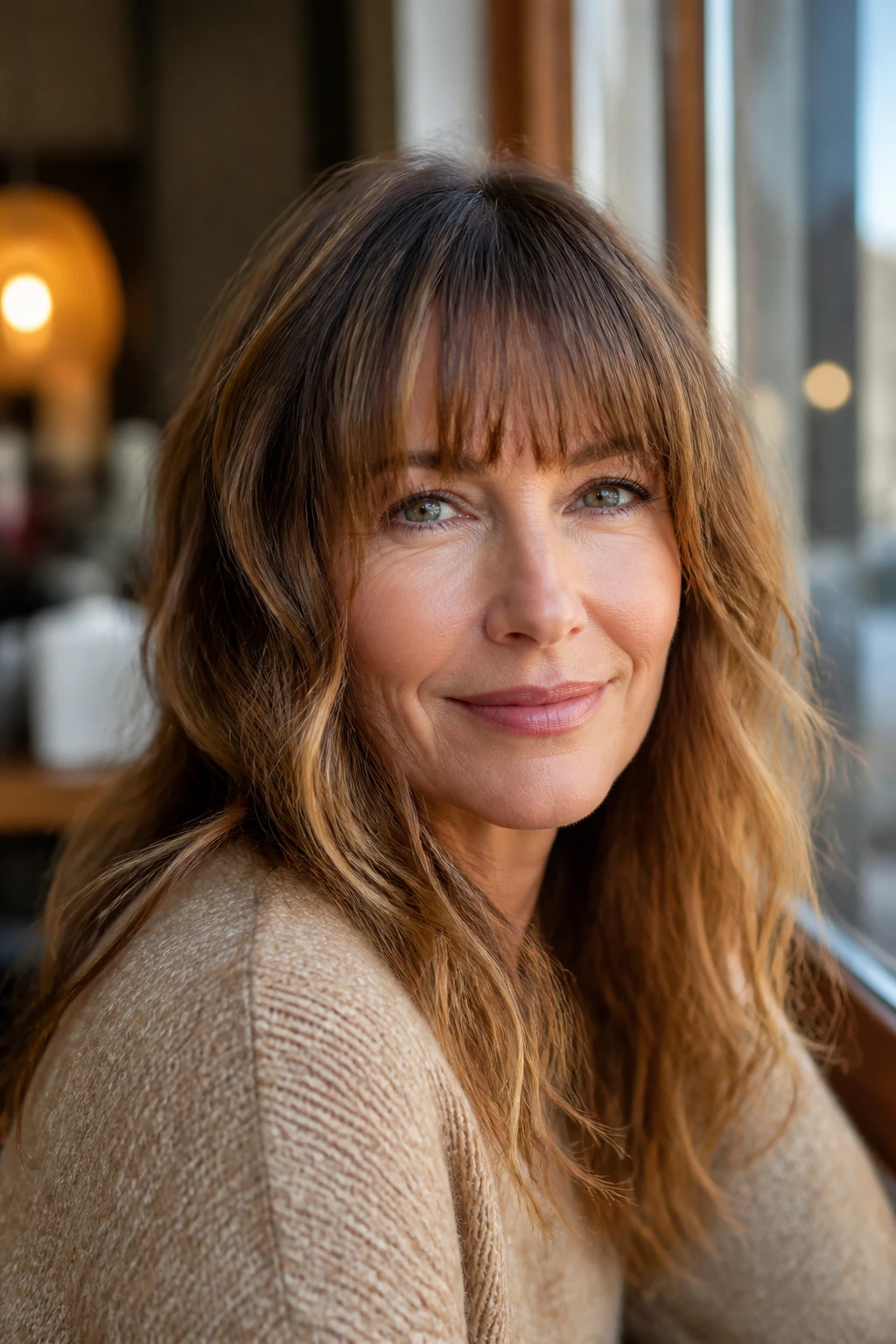
A soft blunt bang is the closest thing on this list to a classic full fringe, but texture keeps it from feeling severe. The line is there, which gives coverage and structure, yet the ends are broken up enough to move with the wave. That matters a lot on wavy hair, because a truly blunt line can puff or split in weird places.
Ask for the center to keep some density and the edges to be lightly textured, not sliced paper-thin. This works best on medium to thick hair that has enough body to hold the shape. If your forehead coverage is the main goal, this is one of the strongest options. Just be honest about the upkeep. A fuller fringe wants more frequent trims than curtain bangs do.
25. Oval-Skimming Fringe
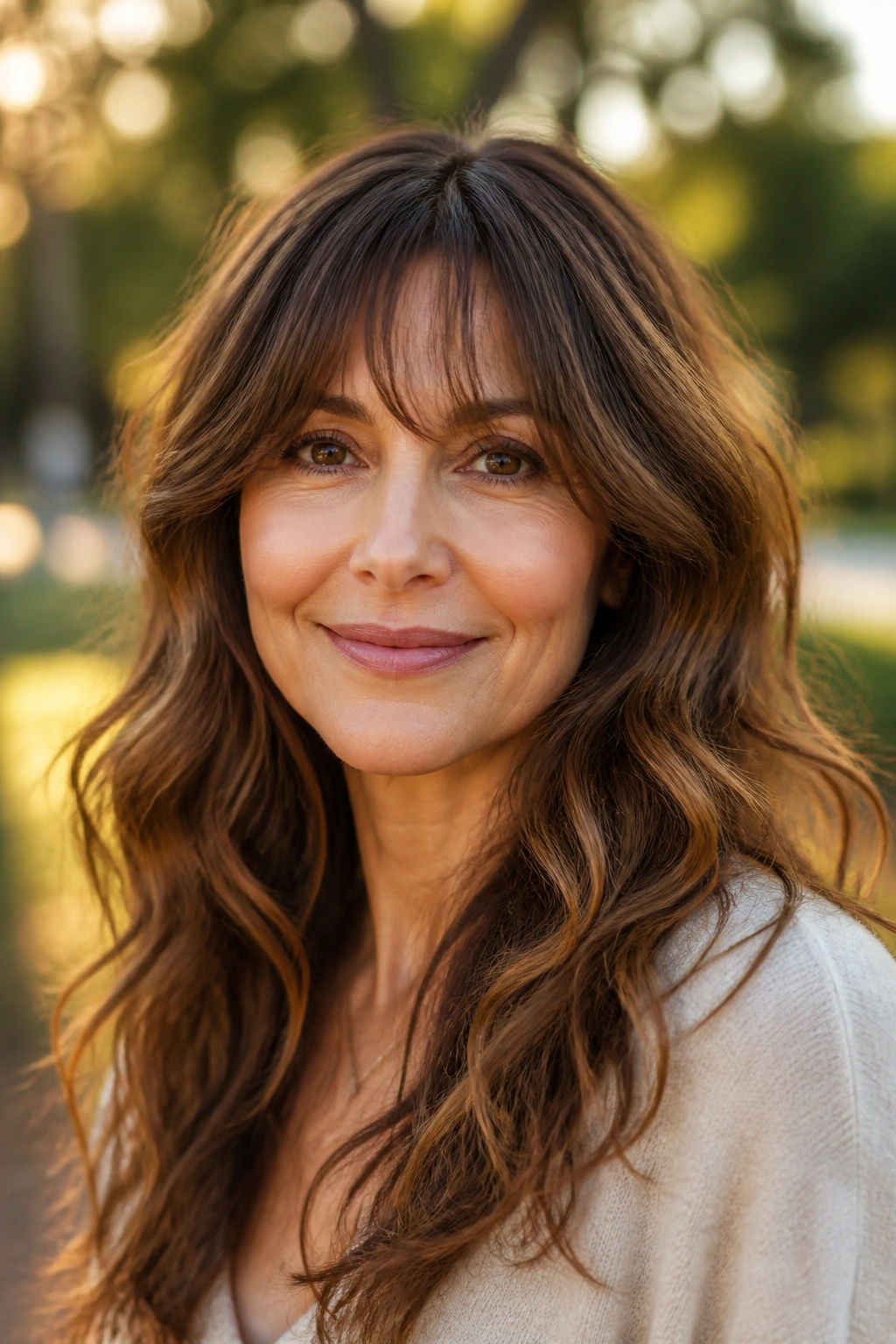
Oval-skimming fringe is the elegant, easy landing spot for women who want bangs that flatter and never feel too trendy. The front sits in a long arc, usually brushing the brows and then drifting out toward the cheekbones. On wavy hair, that long shape stays soft even when the texture wakes up during the day.
This is my pick for anyone who wants one style that can be dressed up, pinned aside, or left to fall naturally. Ask for enough length to keep the fringe below the danger zone of shrinkage, then have the ends point-cut for softness. It pairs well with layered mids, lobs, and longer cuts because it doesn’t fight the rest of the hair. It just frames the face and gets on with life.
What Wavy Bangs Need From the Stylist’s Chair
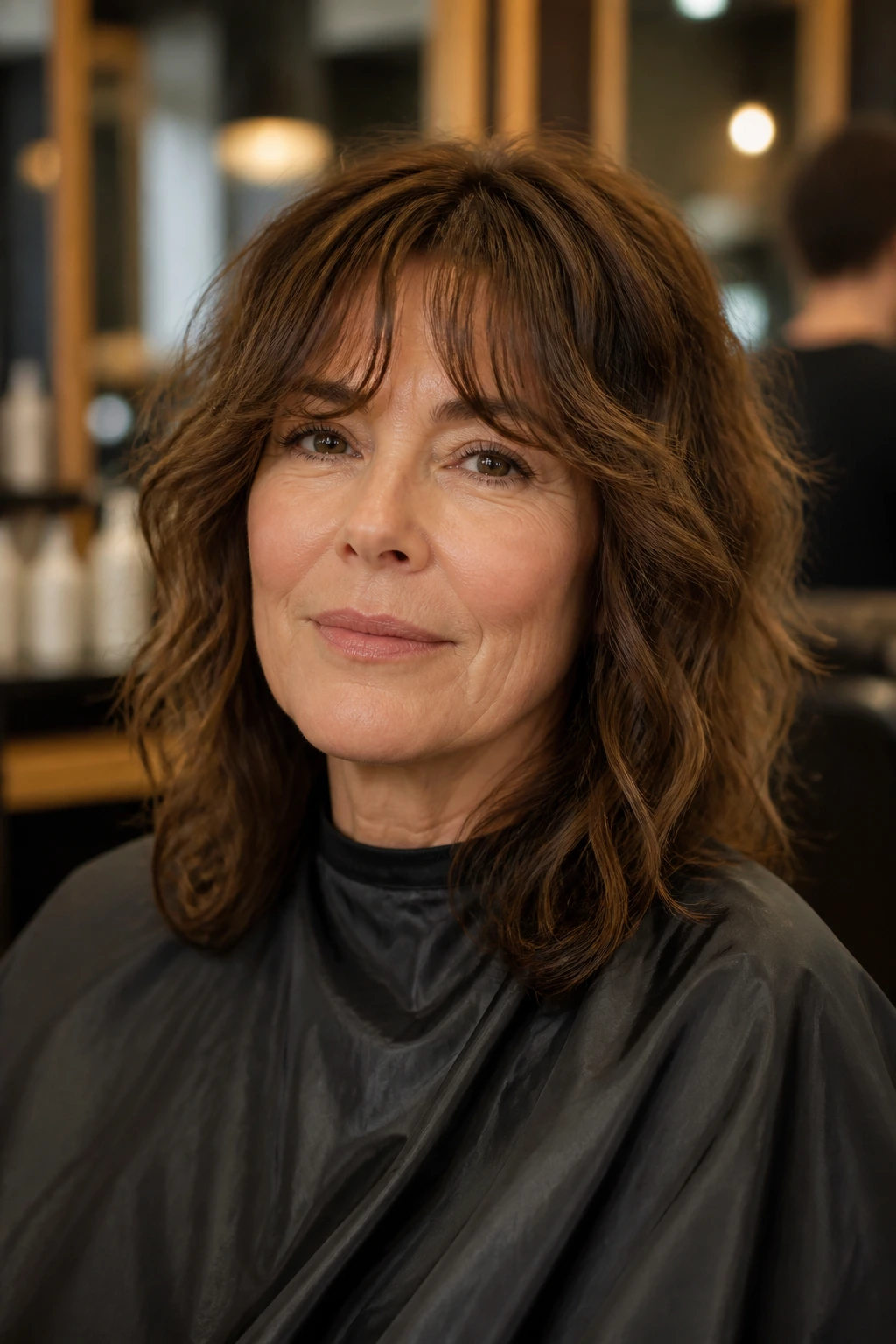
The most useful haircut advice is boring in the best way: show up with clean hair, bring a couple of photos, and talk about how much styling you’re willing to do on a normal Tuesday. A stylist can work with a wave pattern. They cannot read your mind about whether you’re happy using a round brush every morning or whether you want to air-dry and walk away.
Dry cutting or cutting on hair that’s mostly dry tends to be kinder to wavy fringe, because shrinkage changes the line. If your front pieces are especially bendy, ask for the bang to be left longer than the reference photo. The reference photo probably doesn’t share your forehead height, your cowlick, or your texture. That’s fine. Hair never arrives with a disclaimer.
Tell the stylist if you wear glasses. Tell them if your hair gets oily at the roots fast. Tell them if you tuck the sides behind your ears all day. Those details change the shape more than a face chart does. And if the stylist wants to razor the front, ask what that will do to your texture before they start. A good cut should fit your actual routine, not the fantasy version where you have twenty spare minutes and perfect weather every morning.
Tools That Keep Fringe From Turning Moppy
-
A blow dryer with a nozzle attachment: The nozzle lets you aim the airflow at the roots, which matters when you’re trying to lift the front without blasting the whole head into a puff.
-
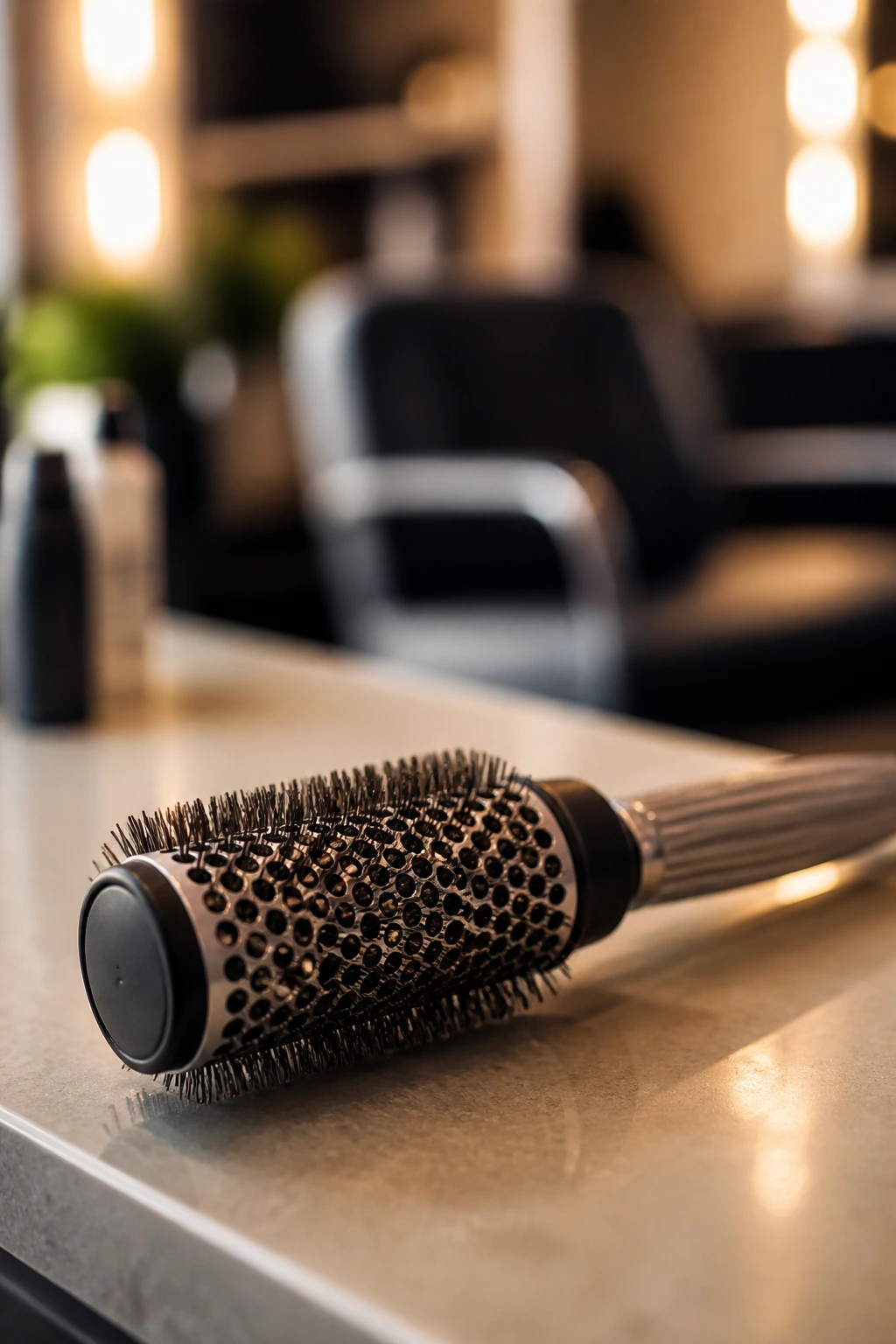
A small round brush, about 1 to 1.25 inches: Smaller brushes give better control at the fringe and help bend the ends without over-curving them.
-
A flat iron or mini straightener: Use it for one quick bend at the ends or to smooth a stubborn cowlick, not to iron the whole bang flat.
-
Duckbill clips: These are handy for pinning the bang section out of the way while the rest of the hair dries.
-
A wide-tooth comb: Better than a harsh brush when the hair is wet and wavy, especially if the front tangles fast.
-
Heat protectant spray or cream: Use it every time you use hot tools. The bangs get the most heat, and they show dryness first.
-
Light mousse or root-lift spray: A little goes a long way. Heavy products flatten wavy fringe and make it look dirty faster.
-
Dry shampoo: More useful on bangs than almost anywhere else on the head. Keep the roots clean, not the ends chalky.
Styling Moves That Actually Make a Difference
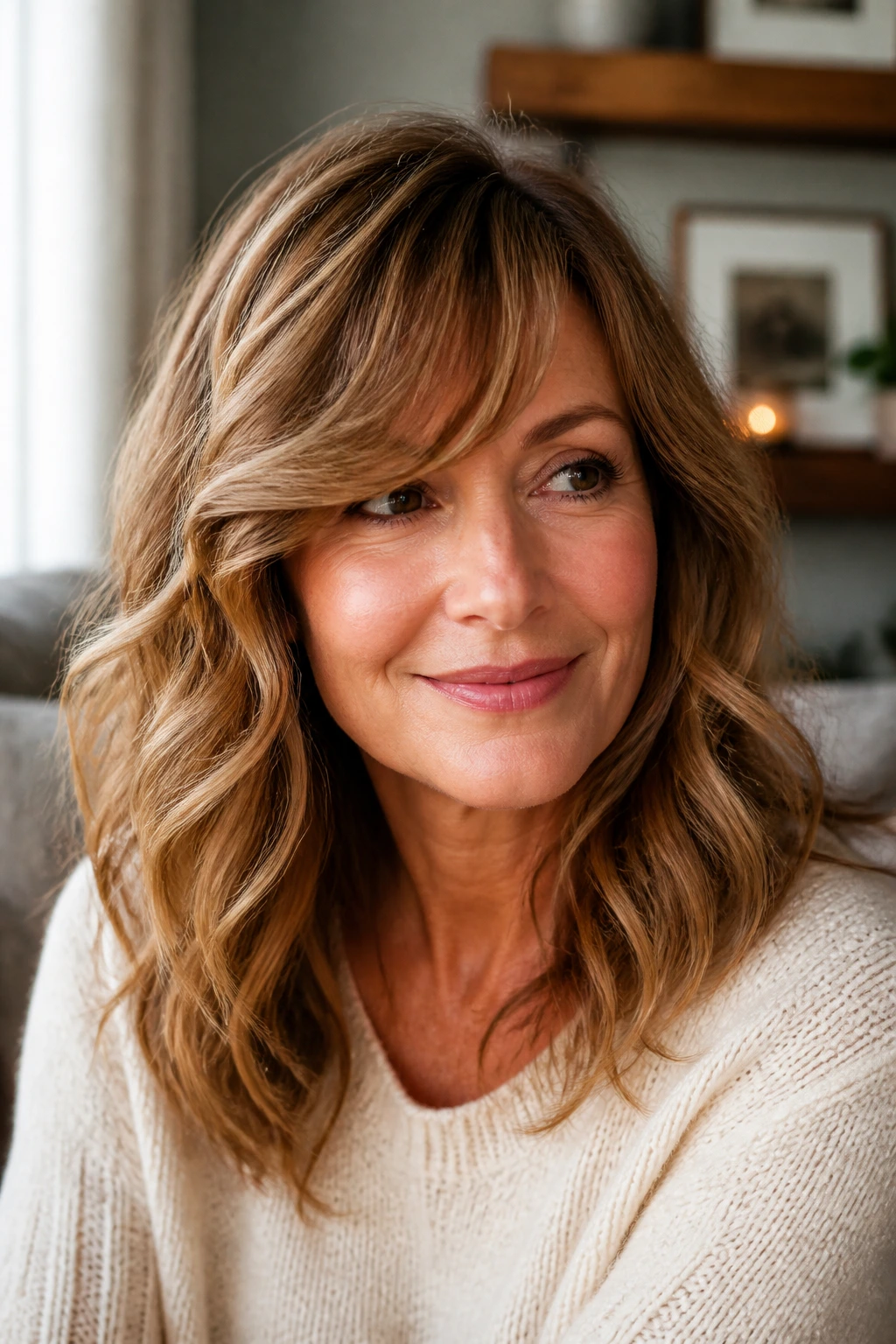
Start with the front section only. Don’t wait until the entire head is dry and then panic over the bangs. They need their own minute. Blot them with a towel, add a tiny bit of mousse or cream, and begin shaping while they’re still damp enough to move.
Direct the roots first. If the bang wants to split, blow-dry it in the opposite direction for a few seconds before sweeping it into place. That little push changes how the root sits, which matters more than how pretty the ends look in the mirror.
Use less product than you think. Wavy fringe can turn greasy fast. A pea-sized amount of styling cream is usually enough for the whole front section. Add more only if the hair drinks it up immediately. If it sits on top of the hair, you’ve gone too far.
Finish with a cool shot. One cold blast from the dryer helps set the bend. It’s a small move, but it keeps the fringe from collapsing while you finish the rest of your face or get dressed.
Leave the ends imperfect. A little pieceiness is not a failure. It’s the point. Bangs that move a bit throughout the day look softer and more flattering than bangs that stay glued into one shape.
Common Mistakes That Make Bangs Harder Than They Are

The first mistake is cutting them too short while they’re wet. Wavy hair can bounce up more than you expect, and a half-inch mistake becomes a full-on forehead situation once the hair dries. The fix is plain: leave extra length, then trim again after the wave settles if needed.
Another mistake is over-thinning. Some stylists are a little too eager with the texture shears, and the result is see-through fringe that separates into sad little strings. Ask for point cutting or soft texturizing instead of aggressive thinning, especially if your hair is already fine.
A third problem is trying to copy a straight-hair bang photo without adjusting for your bend pattern. Wavy fringe needs more length, more softness, and more room to move. If the photo shows a blunt edge, translate that into a softer version for your own texture.
Skipping trims is another one. Bangs grow fast enough to slide into your eyes, and the shape goes sideways even faster on wavy hair. Plan on a trim every 3 to 5 weeks if you want the style to stay clean.
And then there’s the product trap. Too much cream, serum, or hairspray weighs the front down and makes it separate sooner. Use lighter products than you would on the rest of your hair. The fringe is the first place to show overdoing it.
Ways to Adapt the Look Without Starting Over

The Soft Grow-Out Plan: Start with curtain bangs or a side curtain hybrid. They’re the easiest shapes to lengthen later because they already live as part of the face-framing layers.
The Fine-Hair Lift Plan: Choose airy blended bangs or wispy brow-grazing fringe, then pair them with a root-lifting spray at the base only. Keep the ends light so the front doesn’t collapse.
The Thick-Wave Control Plan: Pick swept-over bangs, a tapered full fringe, or a shag shape with internal texture. These cuts remove bulk without making the front look sparse.
The Glasses-Friendly Plan: Go with curved bangs, long curtain pieces, or oval-skimming fringe. Anything that arcs around the frames rather than landing right on them tends to feel easier day to day.
The Silver-Blend Plan: If your grays are coming in with more texture, softer styles like bottleneck bangs or piecey split fringe keep the front from looking too stiff. Shine comes from the cut shape first, then from a light serum on the ends.
Keeping Fringe Fresh Between Wash Days
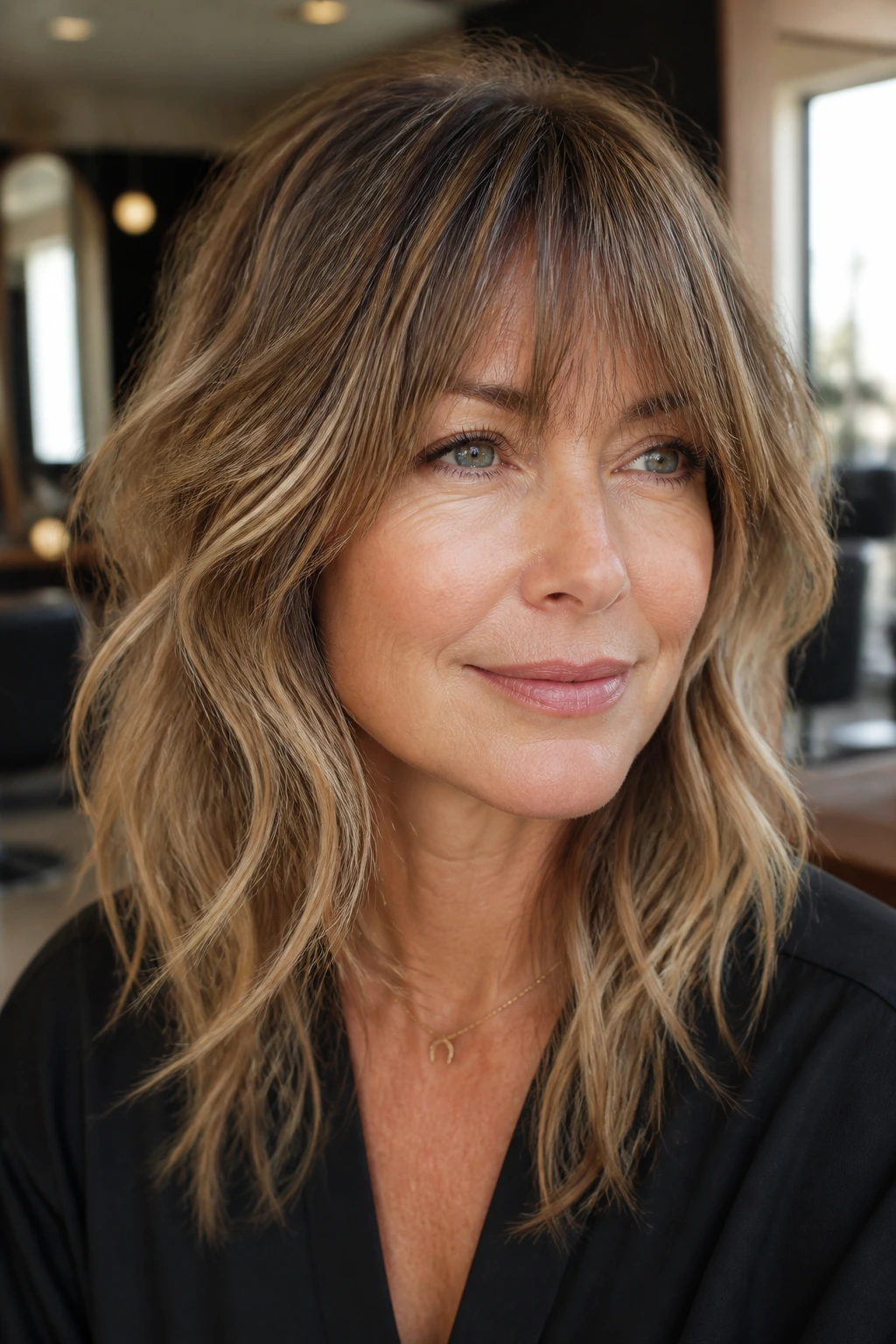
Bangs usually need more attention than the rest of the head. That’s the deal. The forehead adds oil, the wave pattern changes shape, and a fringe that looked fresh at 8 a.m. can start separating by lunch. A tiny bit of dry shampoo at the roots helps, but use it sparingly. Spray or tap it into the base, wait a minute, then brush lightly. Don’t dust the ends. That just makes them dull.
At night, pin the front section up or sweep it aside before bed. A silk pillowcase helps too, because bangs rub against cotton and wake up rougher than the rest of the hair. If the fringe is stubborn in the morning, mist it lightly with water, reshape with your fingers, and give it 30 to 60 seconds of dryer time. You do not need a full wash.
Trim timing depends on the shape. Curtain bangs can often stretch to 6 or 8 weeks. Fuller fringes and shorter shapes usually need a cleanup sooner, around 3 to 4 weeks, because the line gets heavy fast. If you’re growing them out, ask for tiny trims that protect the outer corners. That’s the part that saves the whole grow-out.
Frequently Asked Questions About Bangs for Women Over 40 With Wavy Hair
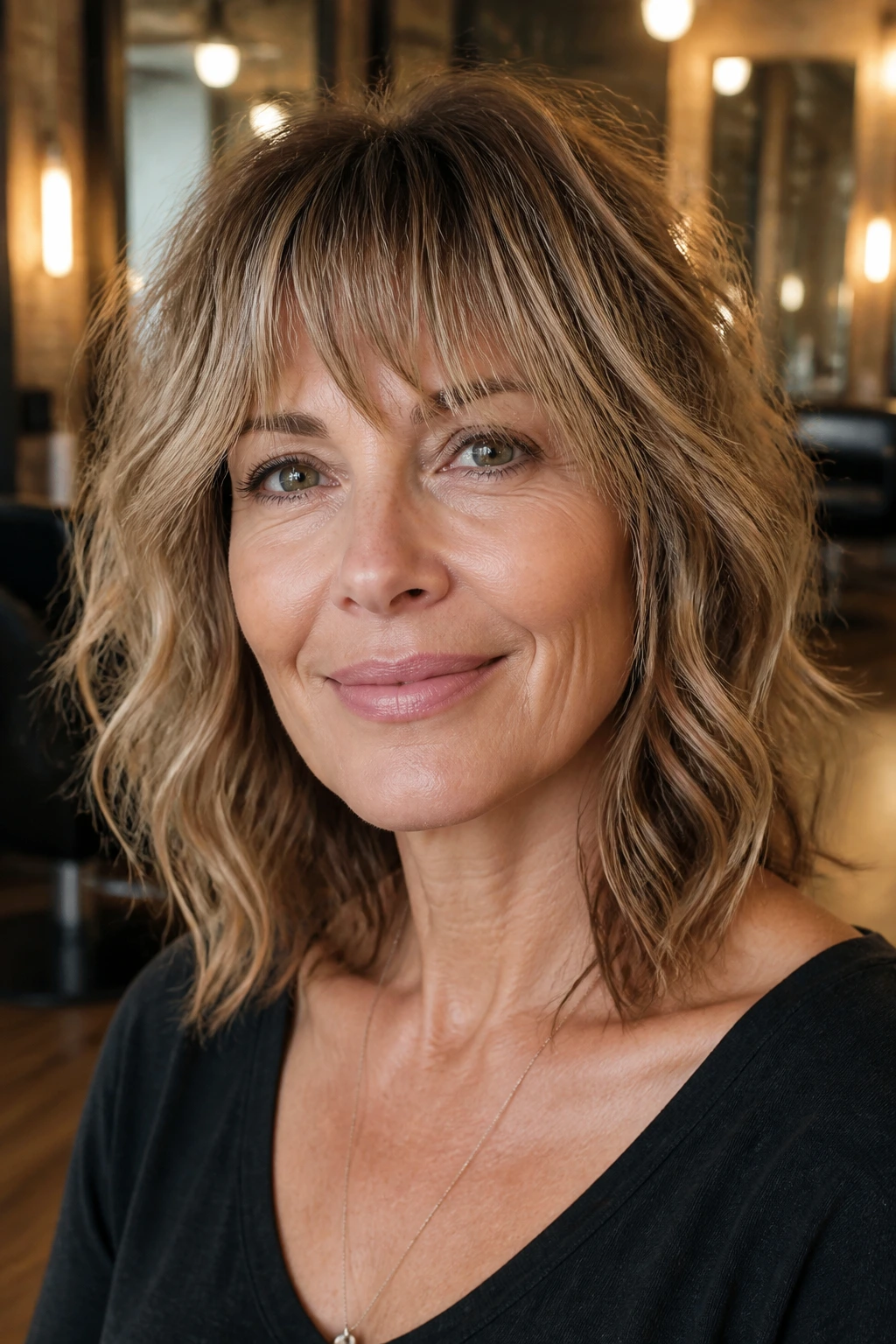
Should wavy bangs be cut dry or wet?
Dry or mostly dry is usually better, because the wave pattern can shorten a lot once the hair loses moisture. A dry cut also shows the cowlicks and uneven bends that matter most at the hairline.
What bang style is easiest to grow out?
Curtain bangs and side curtain hybrids are the easiest because they already melt into face-framing layers. You can wear them split wider, tucked aside, or pushed back while they lengthen.
Can I wear bangs if I use glasses?
Yes, but choose a shape that opens above the frame line. Curved bangs, bottleneck bangs, and long curtain pieces tend to work better than a heavy full fringe that lands right on the glasses.
What if my bangs separate by noon?
That usually means the roots need a little more lift and the product load is too heavy. Try less cream, more root direction when blow-drying, and a small amount of dry shampoo at the base.
Are blunt bangs a bad idea for wavy hair?
Not bad, just less forgiving. A soft blunt bang with texture can work, but a hard straight-across line often needs more daily styling and can puff or split if the wave is strong.
How often should I trim them?
Most bang shapes need a trim every 3 to 5 weeks if you want them to stay in the sweet spot. Longer curtain styles can go longer, but the front still benefits from tiny shape checks.
What’s the best product for wavy fringe?
A light mousse, a small amount of cream, and heat protectant cover most needs. If your bangs go flat fast, use a root-lift spray at the base and leave the ends alone.
Can I get bangs if my hair is getting finer?
Yes, but pick a shape with some softness and avoid over-thinning. Wispy brow-grazing fringe, airy blended bangs, and long curtain bangs are usually safer than a dense, heavy front.
The Fringe That Moves With You

The best bangs for women over 40 with wavy hair do one thing well: they make the wave look deliberate. They don’t ask your hair to become straight, and they don’t force your face into a hard frame. They leave room for movement, for growth, for the days when you want a little polish and the days when you need your hair to cooperate with the least possible fuss.
If I had to narrow the field fast, I’d start with long curtain bangs, a soft side-swept fringe, or a bottleneck shape. Those three give you the most room to adjust, which is worth a lot when texture shifts, weather changes, and your patience is not infinite. Pick the shape that matches your styling habits, not the fantasy version of your routine. That choice tends to age better than a dramatic cut ever will.