



Oval faces make bangs a little less risky than most people think. The forehead, cheekbones, and jaw already sit in balance, so the cut has room to play without dragging the shape off center. That is why long layers with bangs for oval faces can look polished or undone, soft or sharp, and still keep the face open.
The catch is that “bangs” is not one thing. A curtain fringe that splits at the bridge of the nose behaves very differently from a blunt line that sits just above the brows. Same with layers: some skim the cheekbones, some start at the collarbone, some are so light they only show when the hair moves.
Get the spacing wrong and the whole cut feels off. Put the shortest layer too high and an oval face can suddenly look longer; cut fringe too thick and the forehead disappears. Get it right, though, and the haircut changes with a tuck behind one ear, a bend from a round brush, or that slightly messy second-day wave that tends to look better than the first-day blowout anyway.
Why This Collection Works So Well on Oval Faces
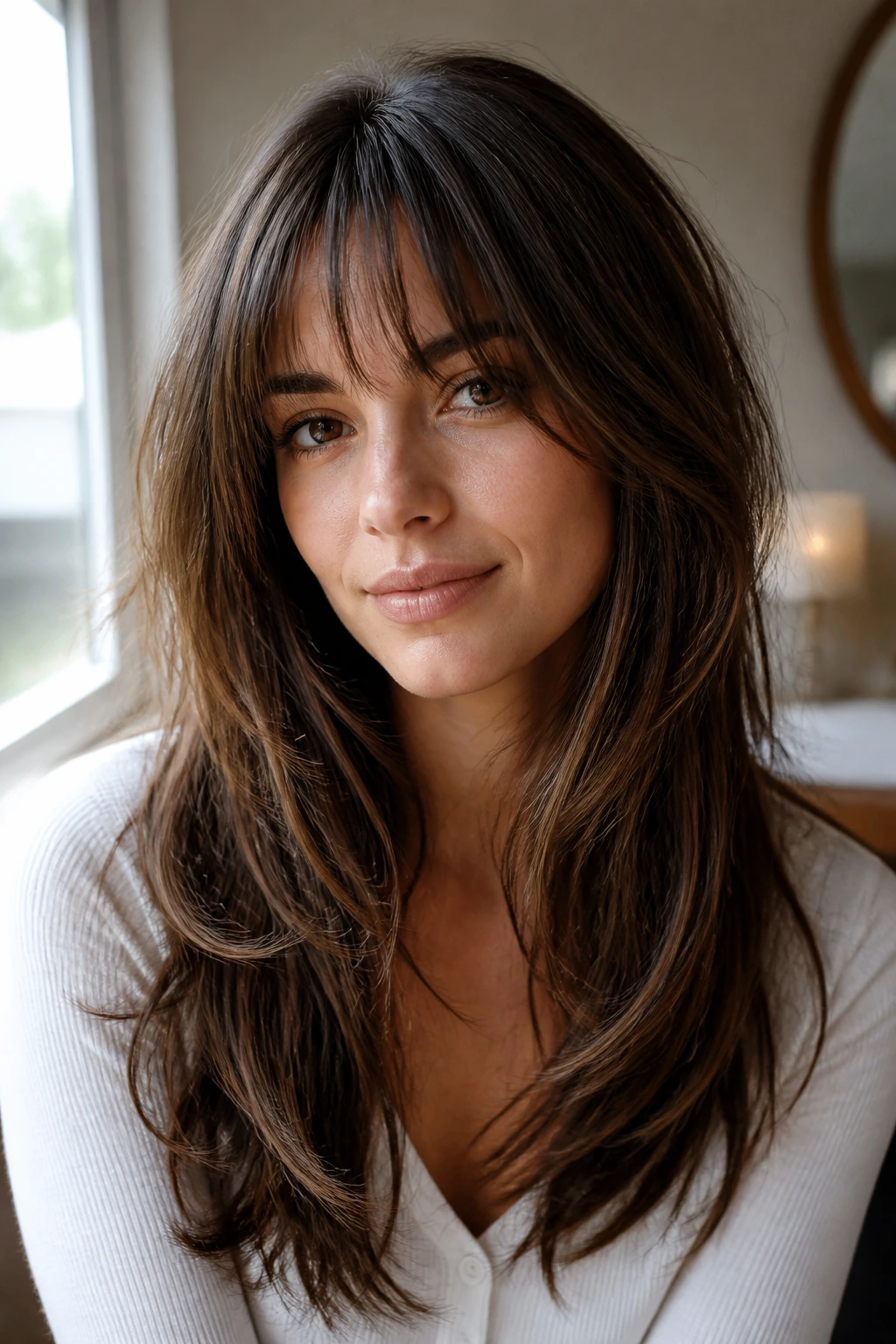
-
The face shape already gives you room. Oval faces can carry a blunt fringe, a center split, or a side sweep because the proportions stay balanced even when the bangs shift the eye line.
-
Long layers keep the length from feeling flat. A cut that falls past the shoulders needs movement somewhere, and layers around the cheekbones or collarbone keep the hair from hanging like one heavy sheet.
-
The fringe changes the mood fast. Curtain bangs soften strong features, side bangs lean romantic, and a blunt bang makes the whole look feel sharper in one clean line.
-
Texture matters more than people admit. Straight hair shows every edge, wavy hair shows every bend, and curly hair needs a longer bang length so it does not spring up and sit too high.
-
You can grow it out without panic. If the layer placement is smart, a few extra weeks between trims just turns the fringe into a face frame instead of a bad haircut.
1. Butterfly Layers with Curtain Bangs
This is the cut that flares out at the cheekbones, then drops away in long, soft steps. The curtain bangs split near the center and land somewhere between the brows and the top of the cheekbones, which keeps an oval face open instead of boxed in.
Why It Feels So Balanced
The butterfly shape gives you lift at the crown and movement through the front without sacrificing length. If your hair sits flat, that upper layer wakes it up. If your hair is thick, the longer bottom layer keeps the whole thing from turning puffy around the shoulders.
Ask for the shortest face-framing piece to hit around the cheekbone, not higher. That one detail keeps the fringe from swallowing the face. A little bend at the ends matters more here than perfect symmetry.
What to Tell Your Stylist
- Long layers that start around the collarbone
- Curtain bangs that open around the nose bridge
- Soft internal layering, not a choppy shag
- Enough weight left at the ends so the cut still looks long
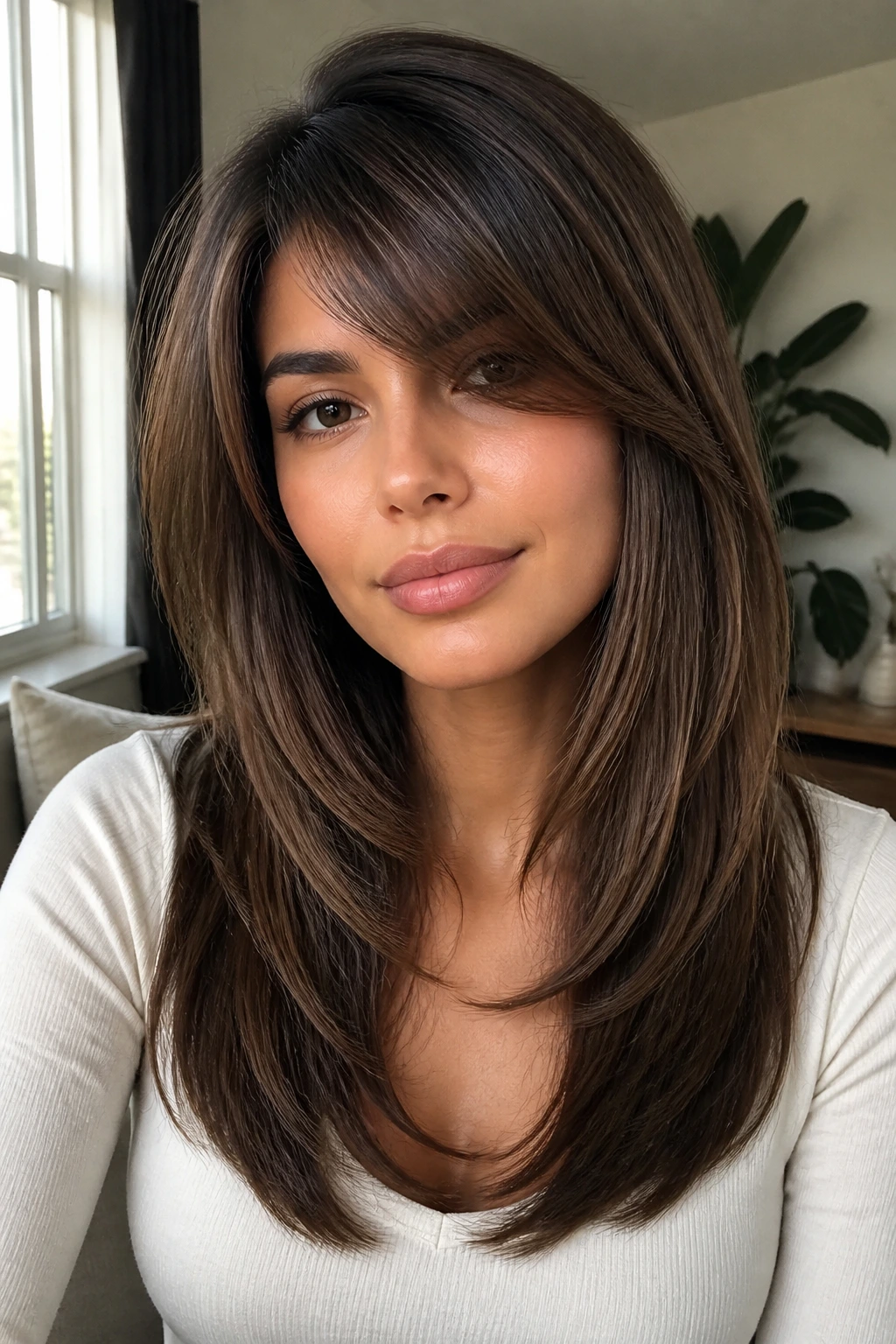
2. Side-Swept Bangs with Sleek Face-Framing Layers
A side-swept bang is the easiest way to keep an oval face from looking too long when the hair is worn straight. The diagonal line cuts across the forehead, and that tiny shift changes the whole mood of the haircut.
The key is restraint. The bang should sweep, not cover. If it drops too far into the eye, it turns fussy; if it’s cut too short, it loses the gentle bend that makes this style work. I like this look best when the front layers start around the chin and skim down toward the collarbone in one clean line.
For straight or slightly wavy hair, this is a low-drama option. It looks finished with a round brush, but it does not collapse if you let it air-dry. The trick is to keep the sweep soft, not helmet-like.
3. Bottleneck Fringe with a Soft Shag
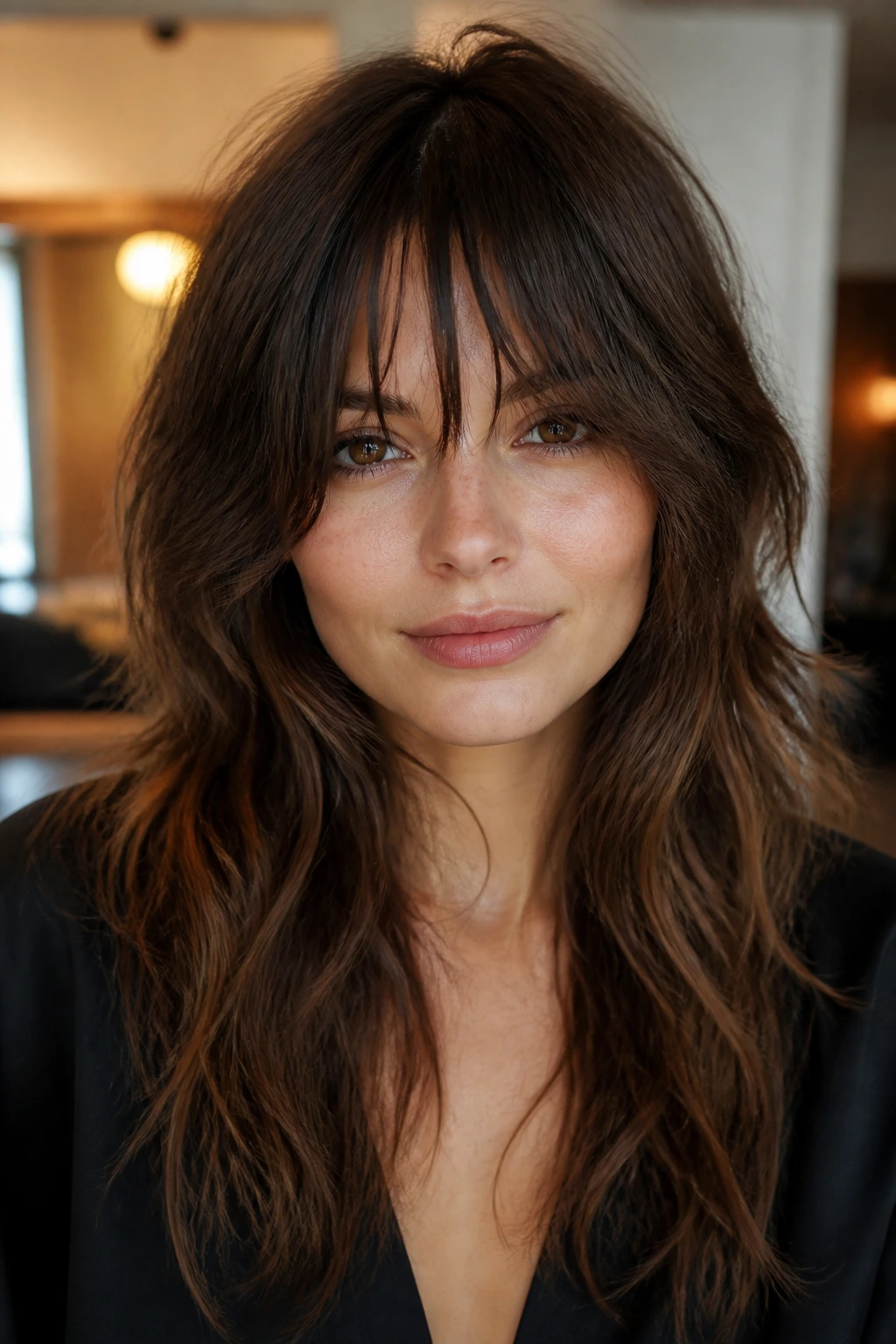
Why does this one keep showing up in good salons? Because it solves the “bangs feel too heavy” problem without making the forehead look bare. Bottleneck bangs start a little tighter in the center, then open out before they hit the cheekbones, so the shape feels narrow at first and airy by the sides.
That works nicely on oval faces because the center line draws the eye upward without boxing in the temples. Pair it with soft shag layers that begin below the chin, and the cut gets movement without turning into a full wolf cut. The result is relaxed, but not messy in a careless way.
Best For
- Hair that needs movement without losing length
- Medium to thick textures
- People who want bangs but hate a blunt wall across the forehead
One warning: this fringe looks best when the ends are a little piecey. If it’s cut too neat, it loses the charm.
4. Blunt Brow-Grazing Bangs with Smooth Long Layers
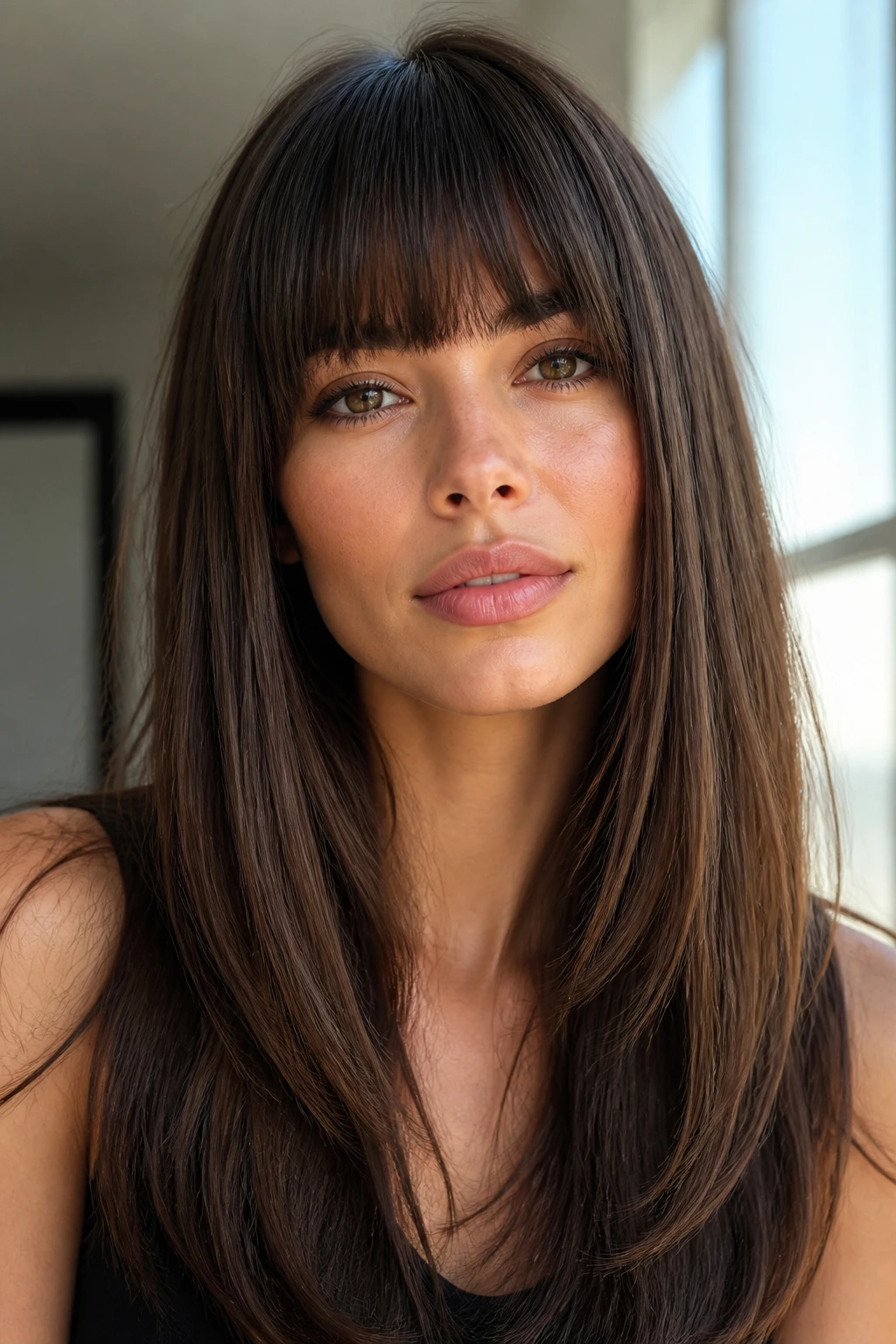
A blunt bang can be terrific on an oval face, and I mean terrific in the blunt, graphic sense of the word. The straight line across the brows puts a frame on the face immediately, while the long layers below keep the rest of the cut from looking boxy.
This version works best when the fringe hits right at or just above the brows and the layers stay smooth through the sides. If the layers are too choppy, the bang and the body of the hair start fighting each other. You want contrast, not chaos.
The style reads polished when it’s freshly blown out and still holds up on day two with a quick flat-iron bend under the ends. It is the bluntest option in this collection, and that’s exactly why it has such a clean effect.
5. Wispy Fringe with U-Shaped Layers
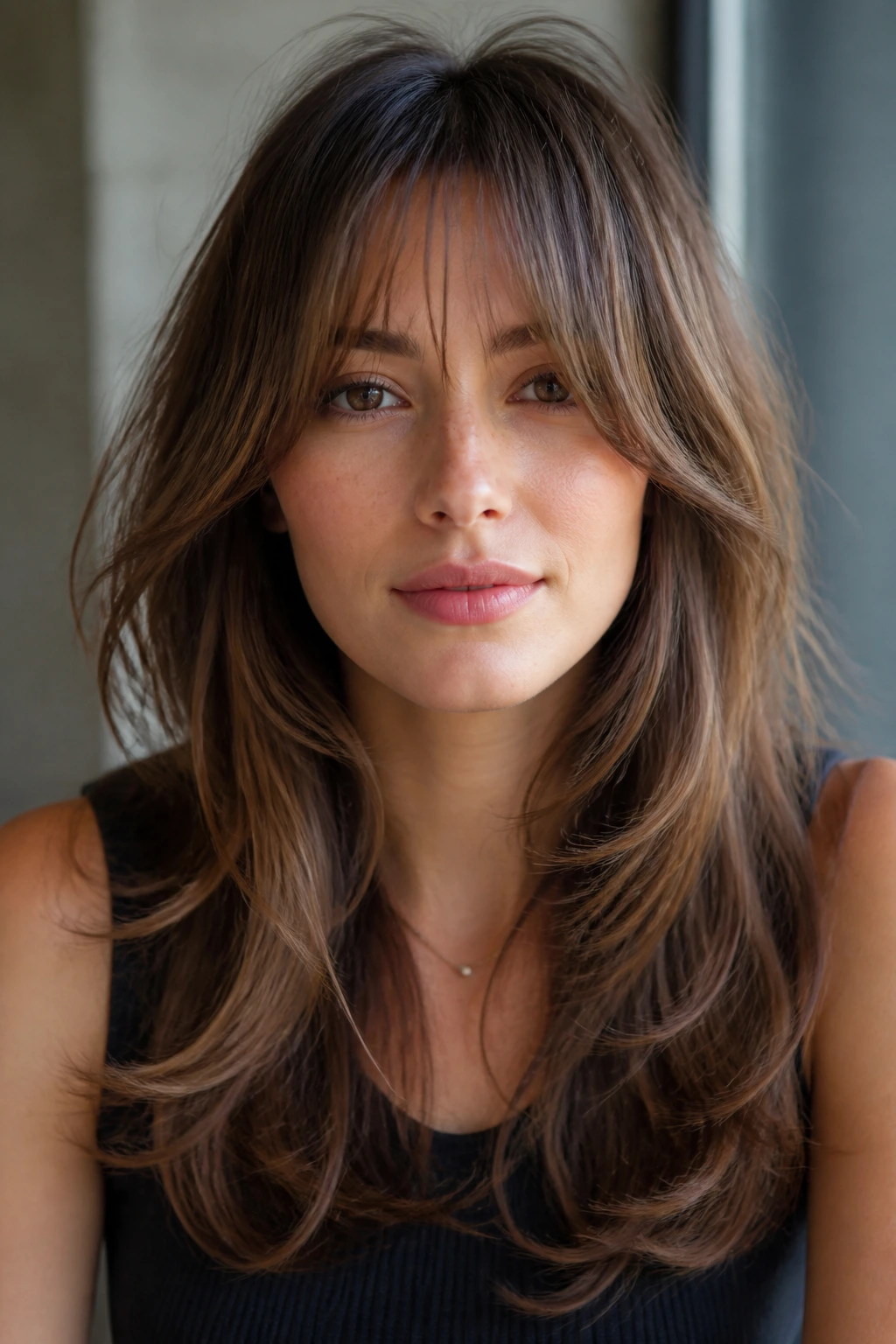
Wispy bangs are the easygoing cousin in the group. They sit light on the forehead, let a little skin show through, and do not demand the same exacting styling as a blunt fringe. On an oval face, that softness keeps the features open and lets the eyes stay central.
The U-shaped cut underneath gives the hair a gentle curve, shorter in front and longer in back, so the overall shape feels smooth instead of triangular. I like this version on medium-density hair because it keeps the ends from looking thin while still giving the front some movement.
Why It Stays Soft
- The fringe is thinned just enough to move
- The longest front pieces start around the chin
- The center back length keeps the hemline from looking chopped
If you like hair that falls into place with very little drama, this is one of the easiest shapes to live with.
6. Feathered Blowout Layers with Swoopy Bangs
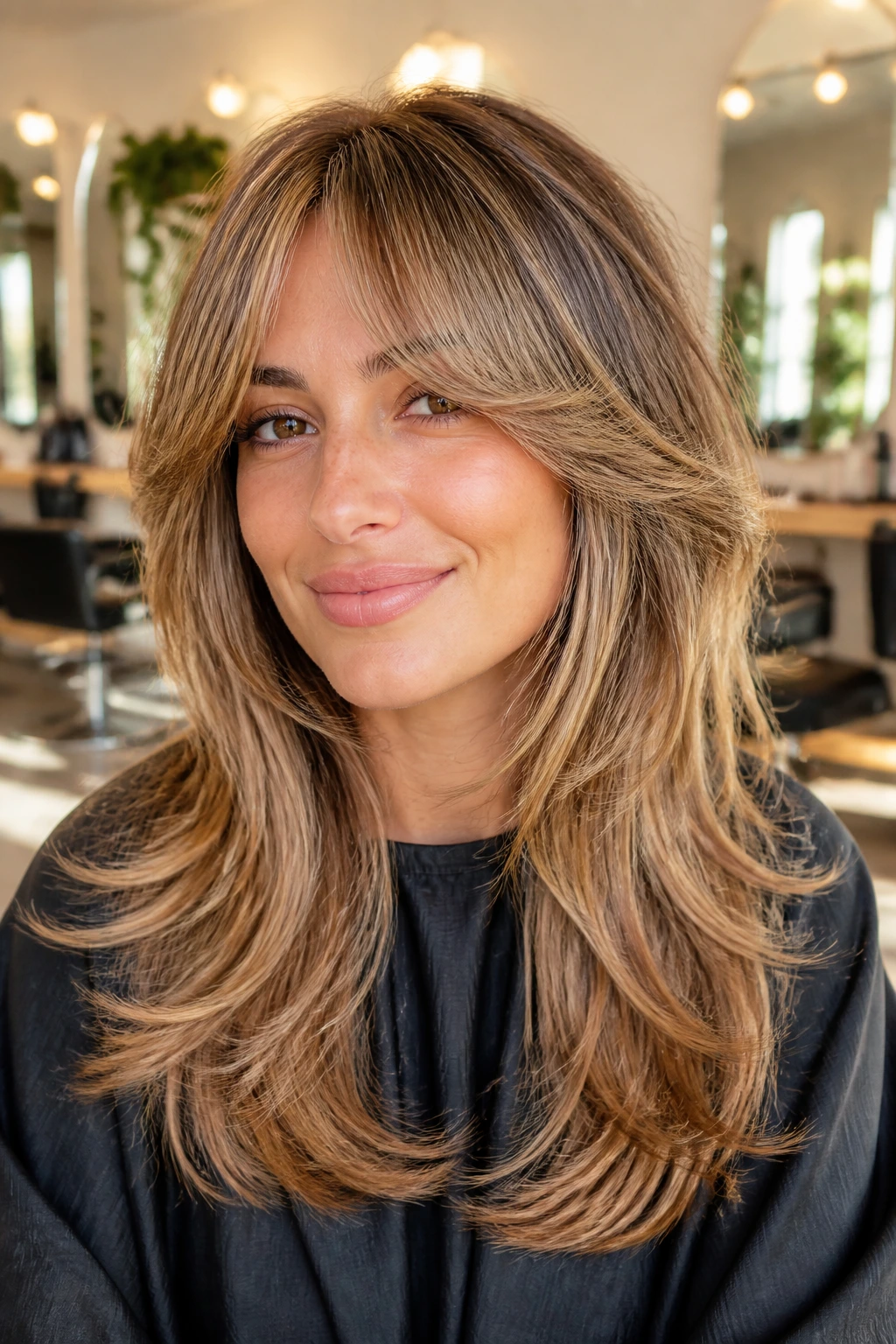
This cut has a very specific energy: brushed-out volume, soft ends, and bangs that curve away from the face rather than sitting flat on it. It’s the sort of style that looks like you spent longer getting ready than you actually did.
The feathering matters. Layers should be sliced with enough softness that the blowout can bend them under without leaving hard steps. On oval faces, swoopy bangs are flattering because they keep the top half lively and the lower half long, so the eye travels through the whole shape instead of stopping at one line.
How It Should Move
- Bangs sweep away from the center
- Layers flip slightly at the ends
- The crown has lift, not bulk
- The length still reads as long hair, not a mid-length cut
This one really likes a round brush and a decent blow-dryer. Not fussy. Just deliberate.
7. Piecey Bangs and a Modern Wolf Cut
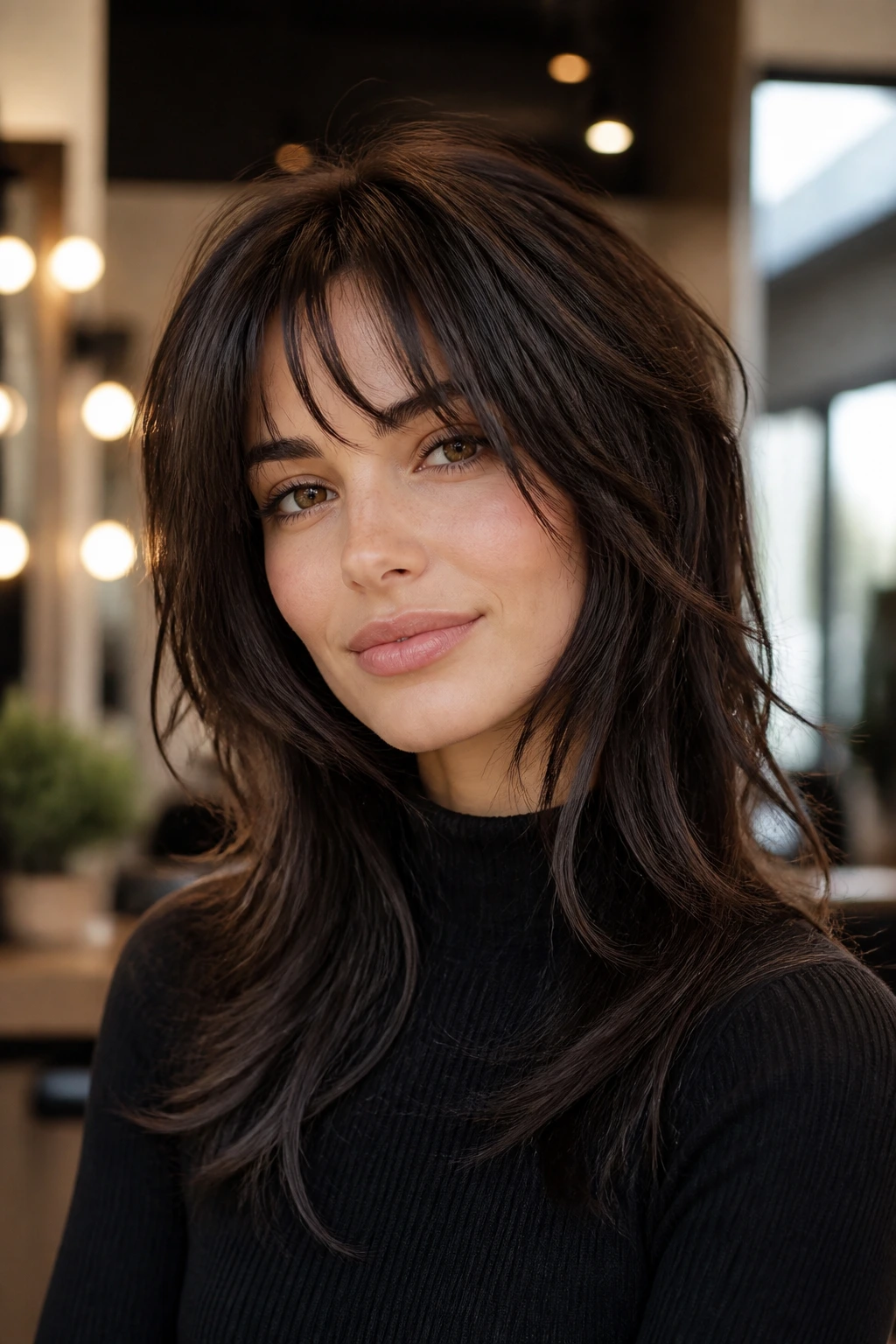
A softer wolf cut can work beautifully on oval faces when the bangs stay piecey and the layers are long enough to keep the shape from going full rocker. The fringe is the interesting part here: it should look separated, not solid, with a few distinct strands breaking up the line.
That broken texture keeps the forehead from feeling sealed off. It also lets the cut look less perfect, which is the point. The layers around the cheekbones and jaw should stay long enough that the style still reads as “long hair with movement,” not an aggressively short shag.
This is the most attitude-heavy option in the group. If you like hair that looks better a little mussed, this one delivers.
8. Arched Fringe with Rounded Long Layers
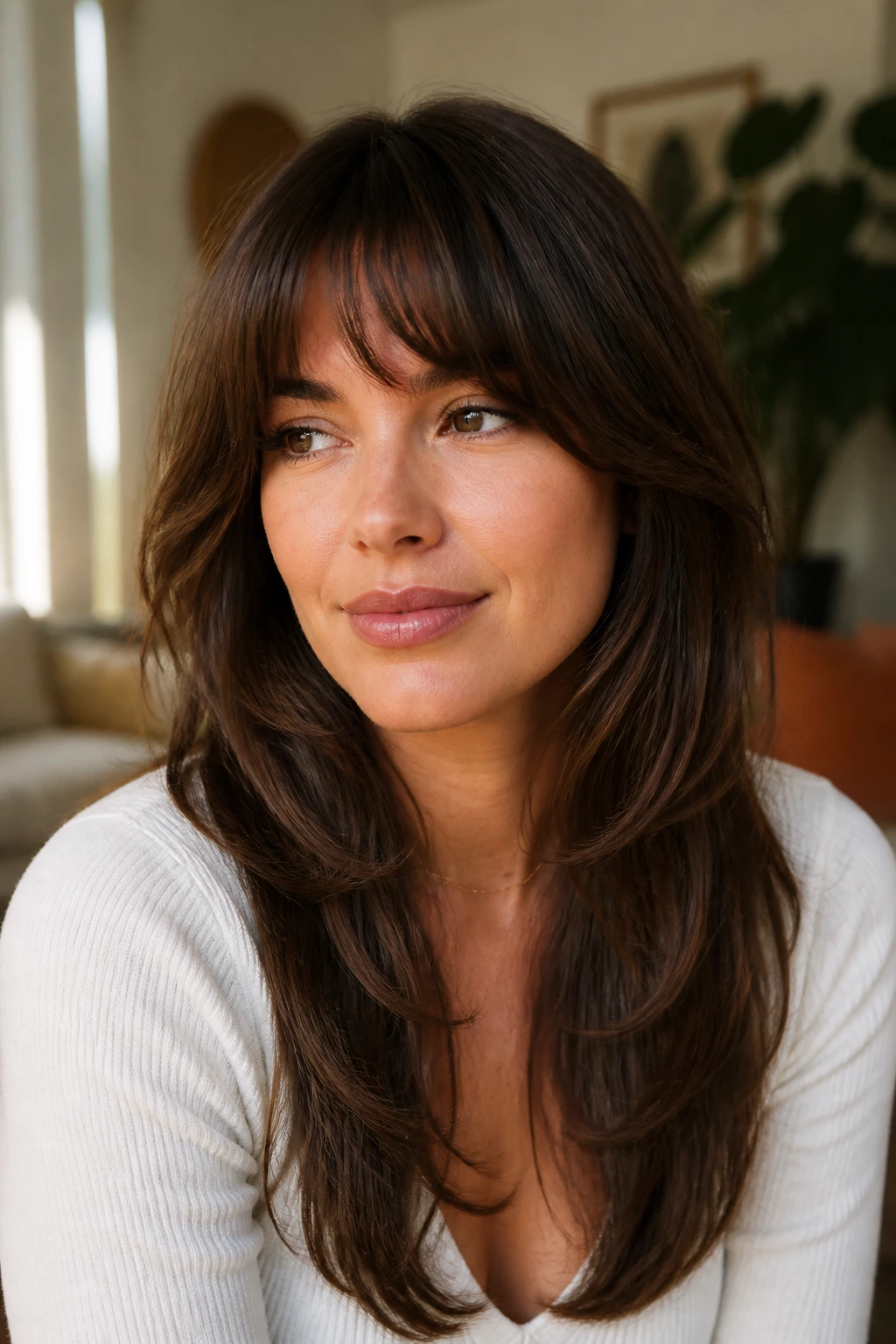
Arched bangs are underrated. A slight curve across the forehead can look softer than a straight fringe while still giving the face a clear frame. On an oval face, that arch follows the natural balance of the shape instead of cutting across it.
Pair it with rounded long layers and the whole cut starts to feel intentional in a very quiet way. The layers should curve inward around the jaw and collarbone, then fall longer toward the back. That shape gives the hair a smooth outline when it’s down and keeps the front pieces from hanging limp.
Best When You Want
- A softer alternative to blunt bangs
- A style that still looks neat when tucked behind the ears
- A cut that works with both smooth and gently wavy texture
9. Long Curly Layers with Curly Bangs
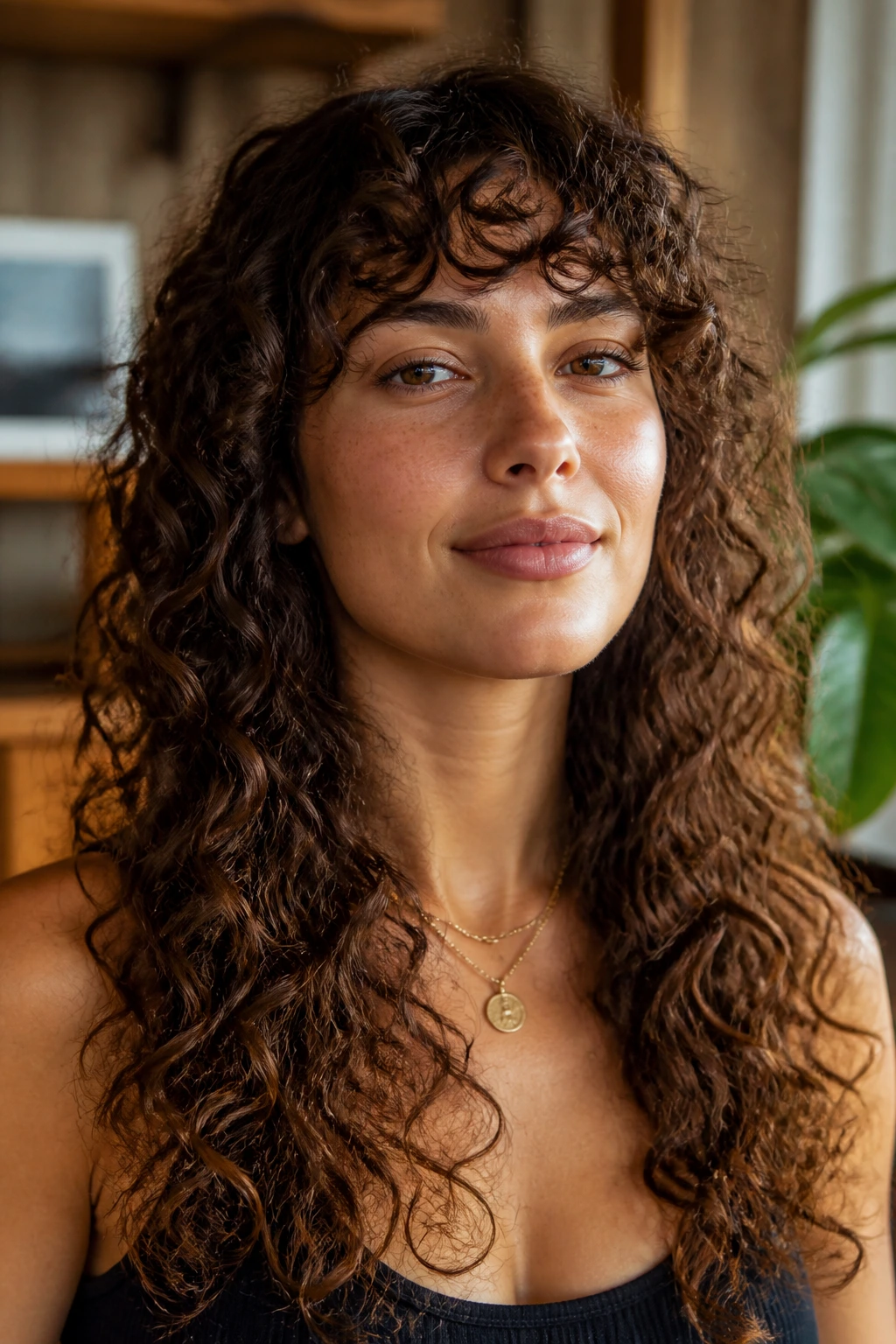
Curly hair needs a different rulebook, and this is one of the best examples. The bangs have to be cut longer than they look on the cutting chair, because curls spring up after they dry. That alone saves a lot of frustration.
On an oval face, curly bangs can look fantastic when they land around the brow or just below it and then shrink into a soft curve. The long layers below need enough room to form ringlets without stacking into a pyramid. A dry cut helps here, and so does a stylist who understands curl shrinkage instead of guessing.
Keep in Mind
- The fringe should be shaped to the curl pattern, not against it
- Layers need room to spring
- A curl cream with hold matters more than heavy oil
If you have curls, do not let anyone cut the bangs as though your hair were straight.
10. Deep Side-Part Bangs with Cascading Layers
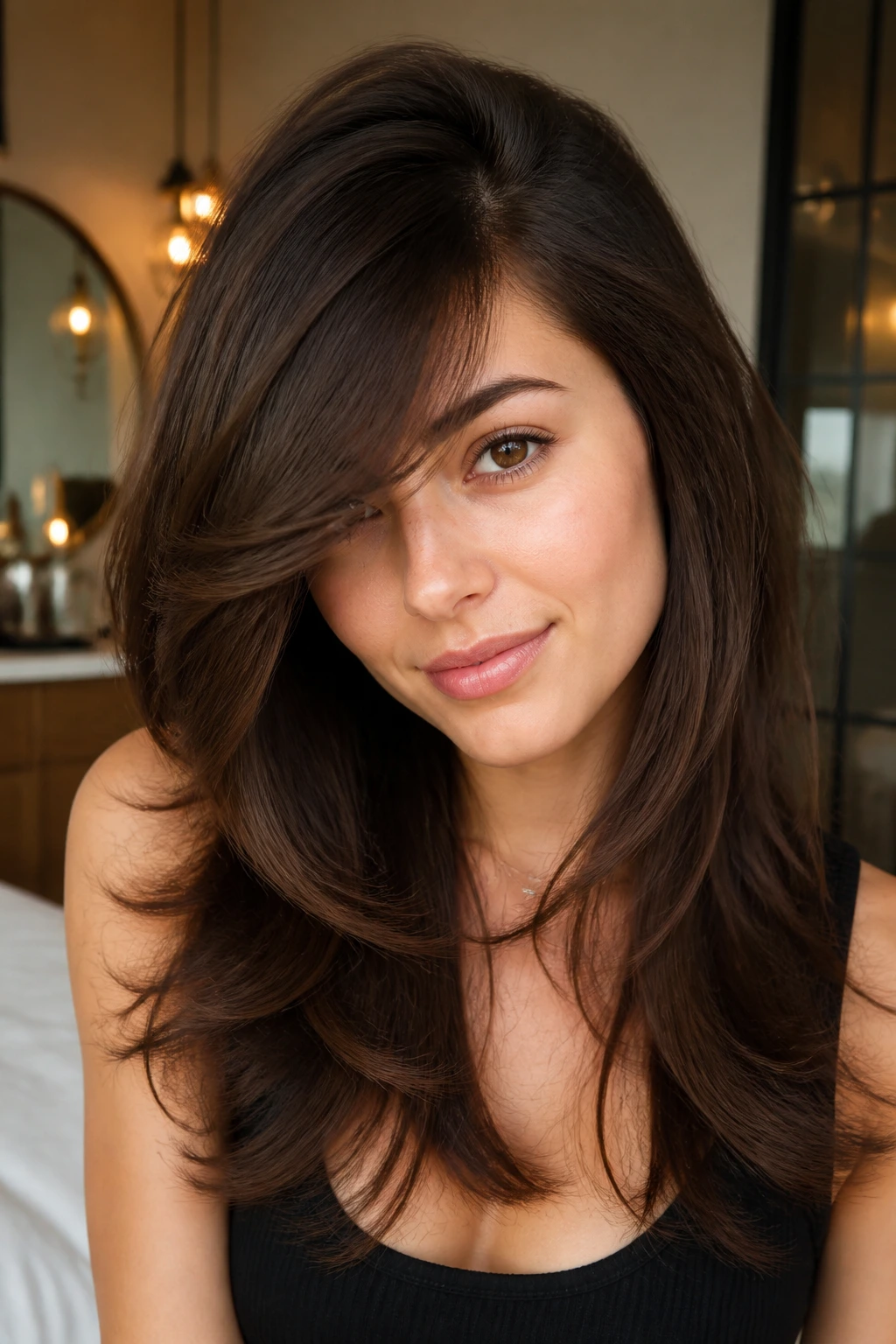
Sometimes the easiest fix is a deep side part. It draws a strong diagonal across the forehead and gives the cut a little drama without needing a full fringe. On an oval face, that diagonal can make the cheekbones stand out in a flattering way.
The cascading layers should begin around the cheekbone and continue down in soft steps. The front section on the heavier side can sit longer, almost like a face frame that melts into the rest of the hair. This is especially good if you want bangs, but only on days when you feel like styling them into place.
It’s a smart in-between cut. Not a commitment-heavy fringe, not a no-bangs haircut either. The side part gives you movement without putting a hard line across the forehead.
11. Eyelash Bangs and Beach Waves
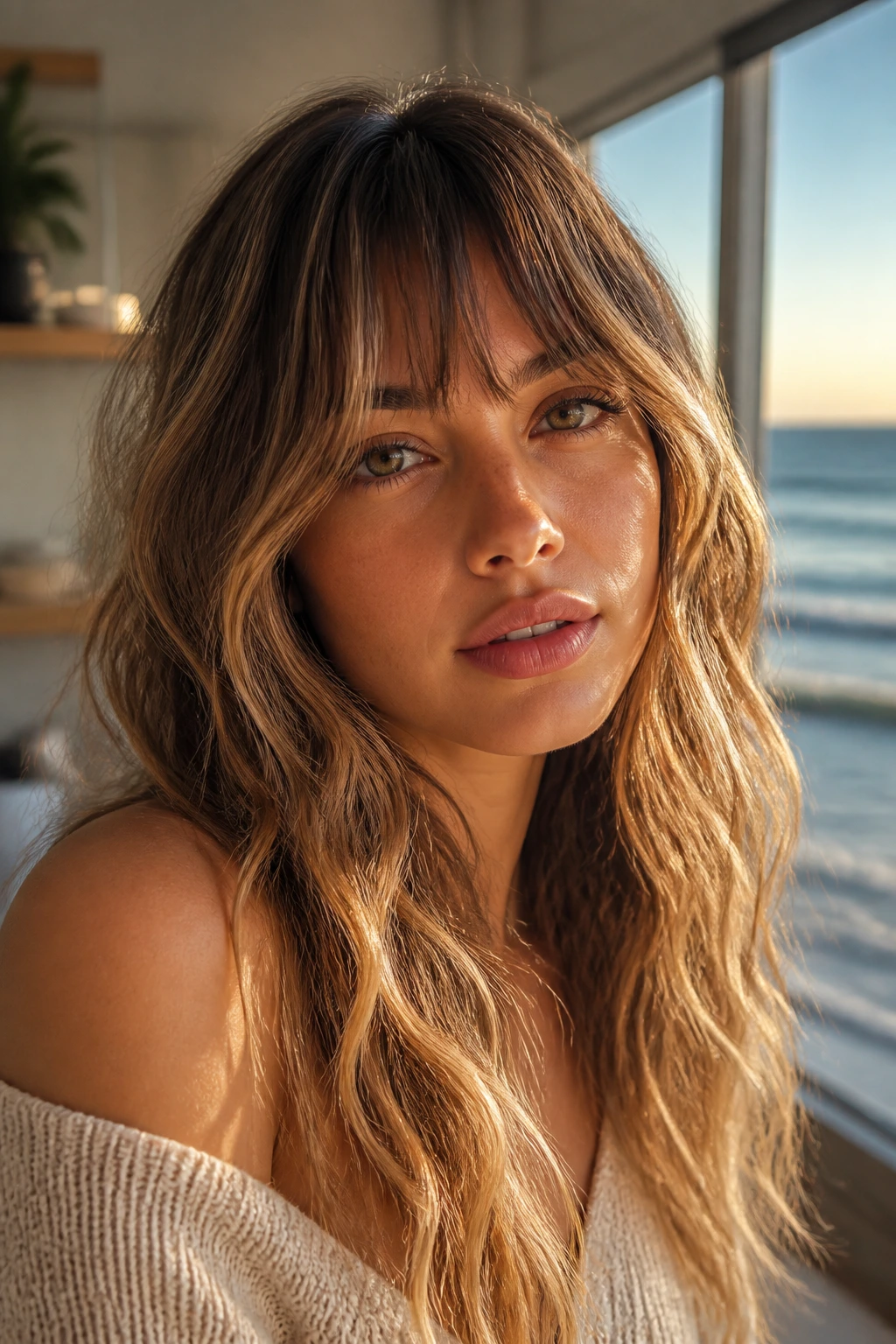
Eyelash bangs are one of my favorite options when someone wants fringe without a heavy front. They skim the lashes, give the eyes a little shadow, and then disappear into loose waves. On an oval face, that length keeps the forehead visible enough that the shape never feels crowded.
The beach-wave layers underneath should be soft, not crimped or overdone. You want bends that look natural, almost like the hair dried in salt air, except with a little more control. If the bangs are cut blunt but kept long, they can be tucked to the side or split in the middle on lazy days.
How It Reads
- Light at the forehead
- Soft through the cheeks
- Loose through the ends
- Easy to pin back when needed
This is the low-stress fringe for people who want options.
12. Invisible Layers with Barely-There Fringe
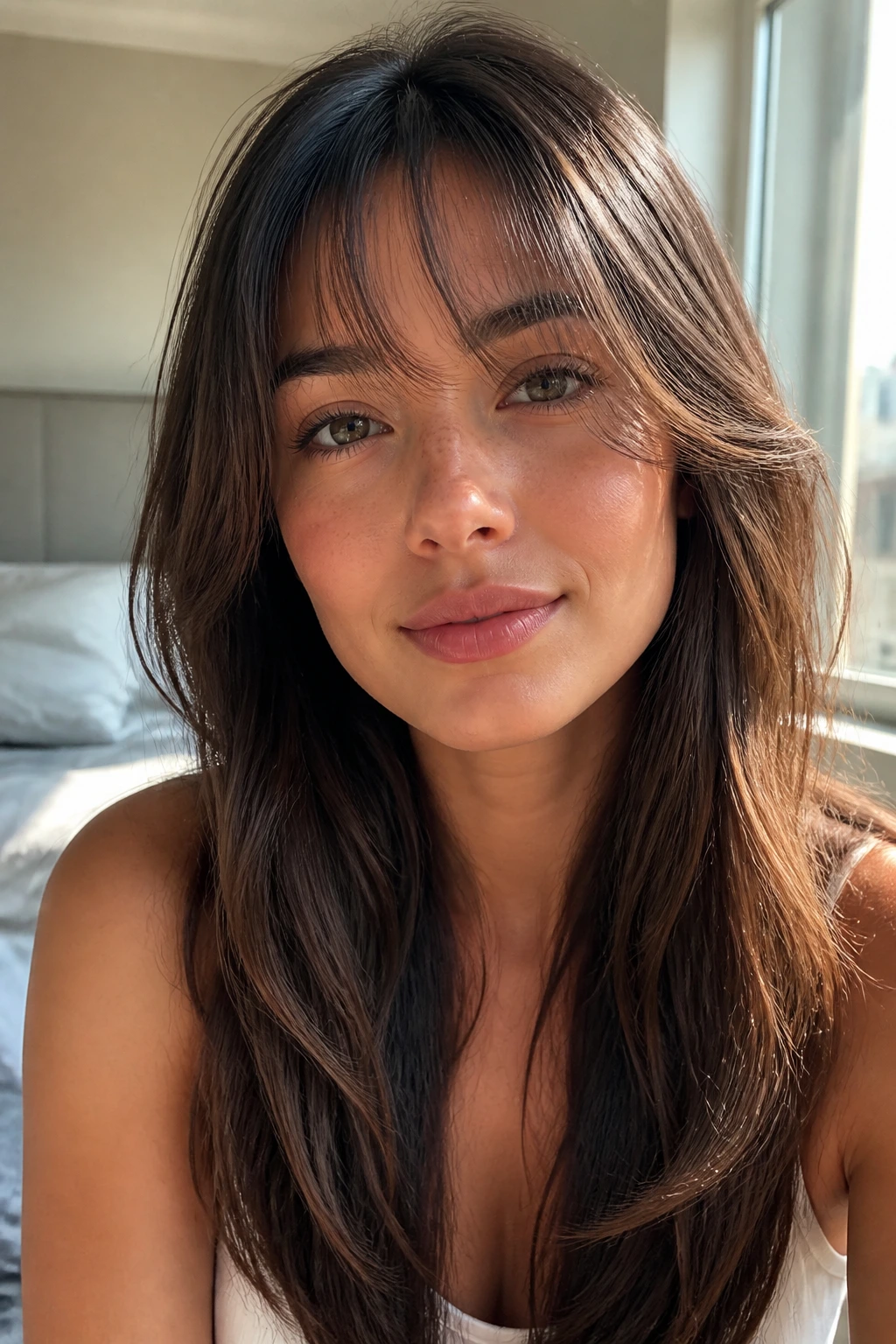
Here’s the quietest haircut in the whole set. The layers are so subtle you only really notice them when the light hits the hair or when it moves. The fringe is barely there too — just enough to soften the front, not enough to announce itself.
That makes sense on an oval face, because you do not need the haircut to correct the shape. You just need it to add motion. The result is long hair that feels lighter around the face without losing length or looking overworked.
This cut is especially kind to people who hate seeing obvious steps in their layers. If you want the hair to feel polished without advertising the fact that it was cut in layers, this is the one.
13. Choppy Shag Layers with Textured Bangs
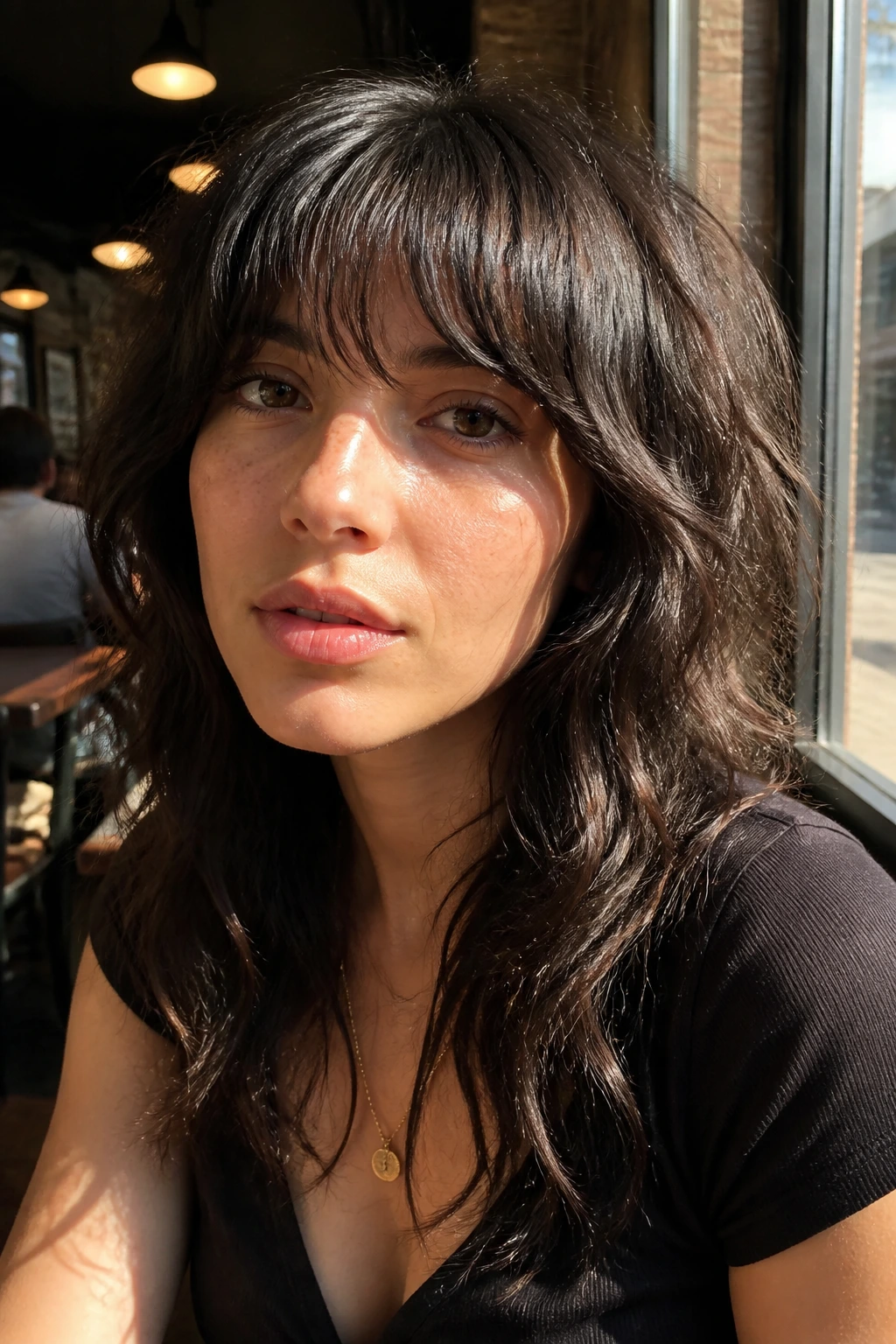
A choppy shag can look fantastic on oval faces when the texture is controlled. The bangs should be broken up with razor work or point-cutting so they sit in little sections instead of one solid strip. That keeps the fringe light enough to show the face.
The layers through the sides can be rougher and more separated. That movement gives the haircut energy, especially on hair that naturally wants to hold a bend. The whole style reads casual, but the cut itself needs precision. A shag that is cut lazily just looks uneven. A shag that is cut well looks deliberate.
Best For
- Medium to thick hair
- Natural wave
- Anyone who wants shape without a salon-perfect blowout
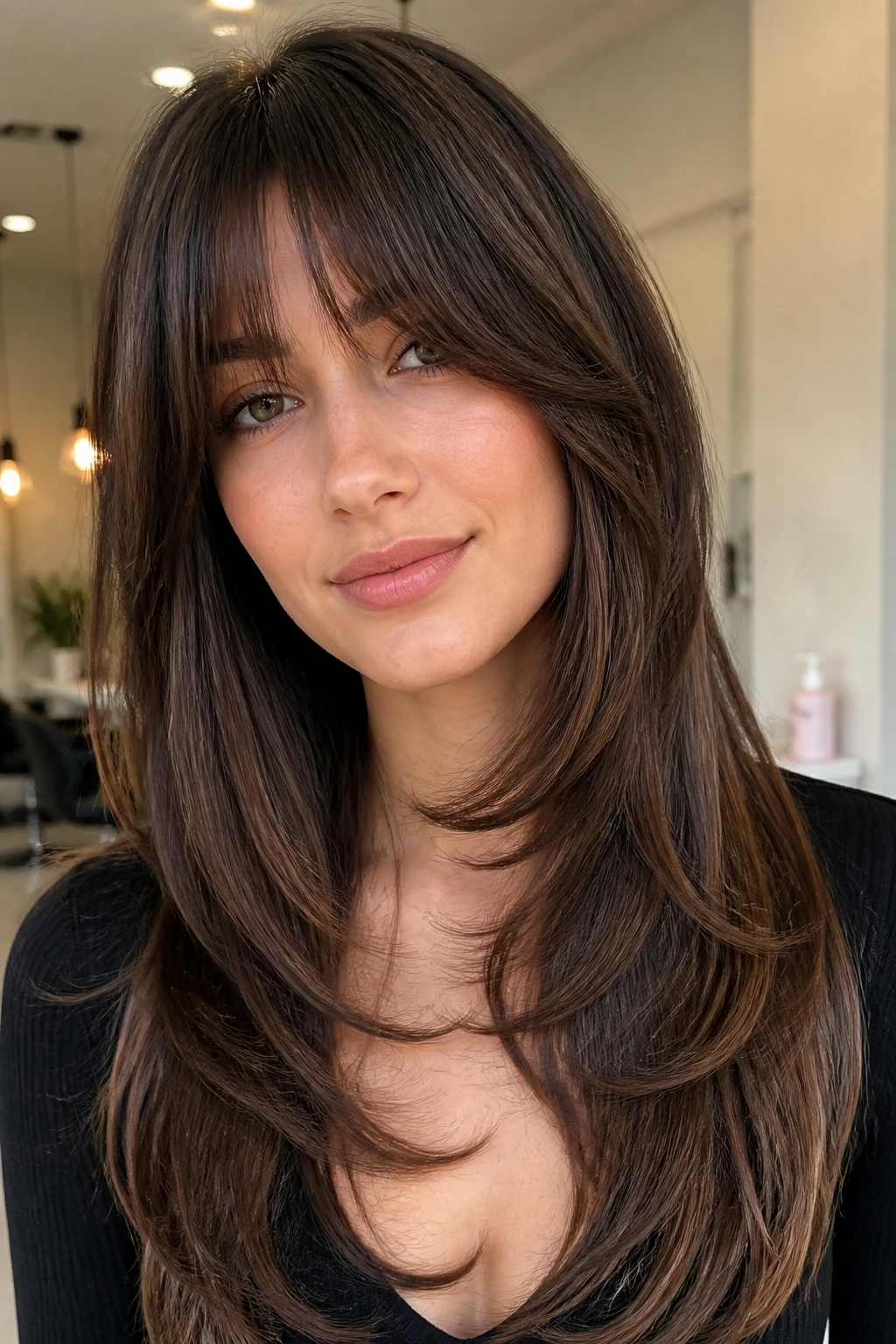
14. Center-Part Curtain Fringe with C-Shape Layers
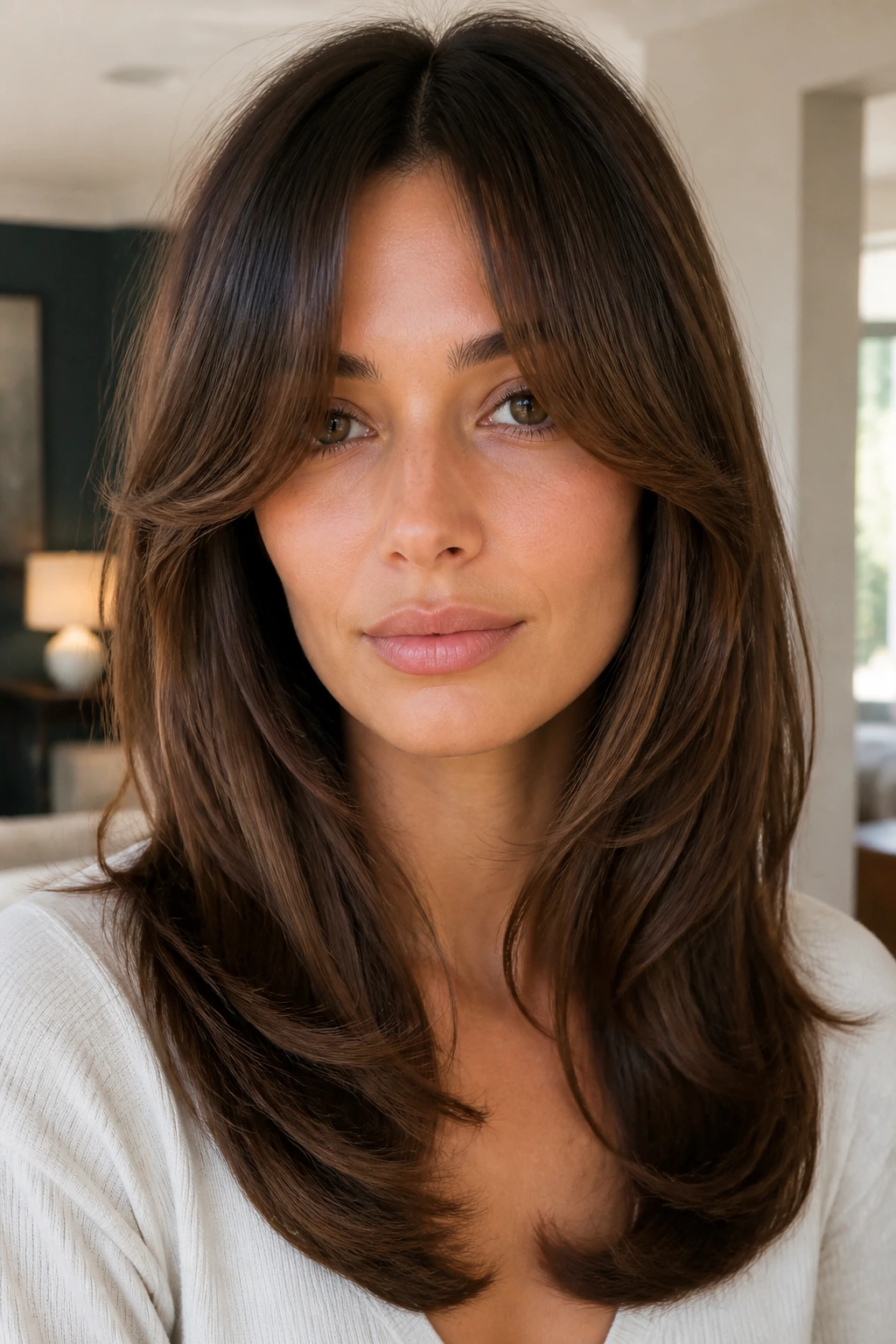
This one is a cleaner, more refined version of curtain bangs. The fringe splits neatly down the center and falls in a C-shape around the eyes and cheekbones. On an oval face, that line leaves the proportions intact while still changing the front of the haircut.
The layers should follow the same curve, short near the front and longer as they move back. That C-shape is what gives the cut its softness. It keeps the length looking expensive without needing a lot of styling product. A round brush can polish the front, but the shape should still make sense when the hair dries on its own.
This is the version I’d point to for someone who wants bangs but does not want to feel like they’re “wearing bangs” every day.
15. Heavy Straight Fringe with Polished Length
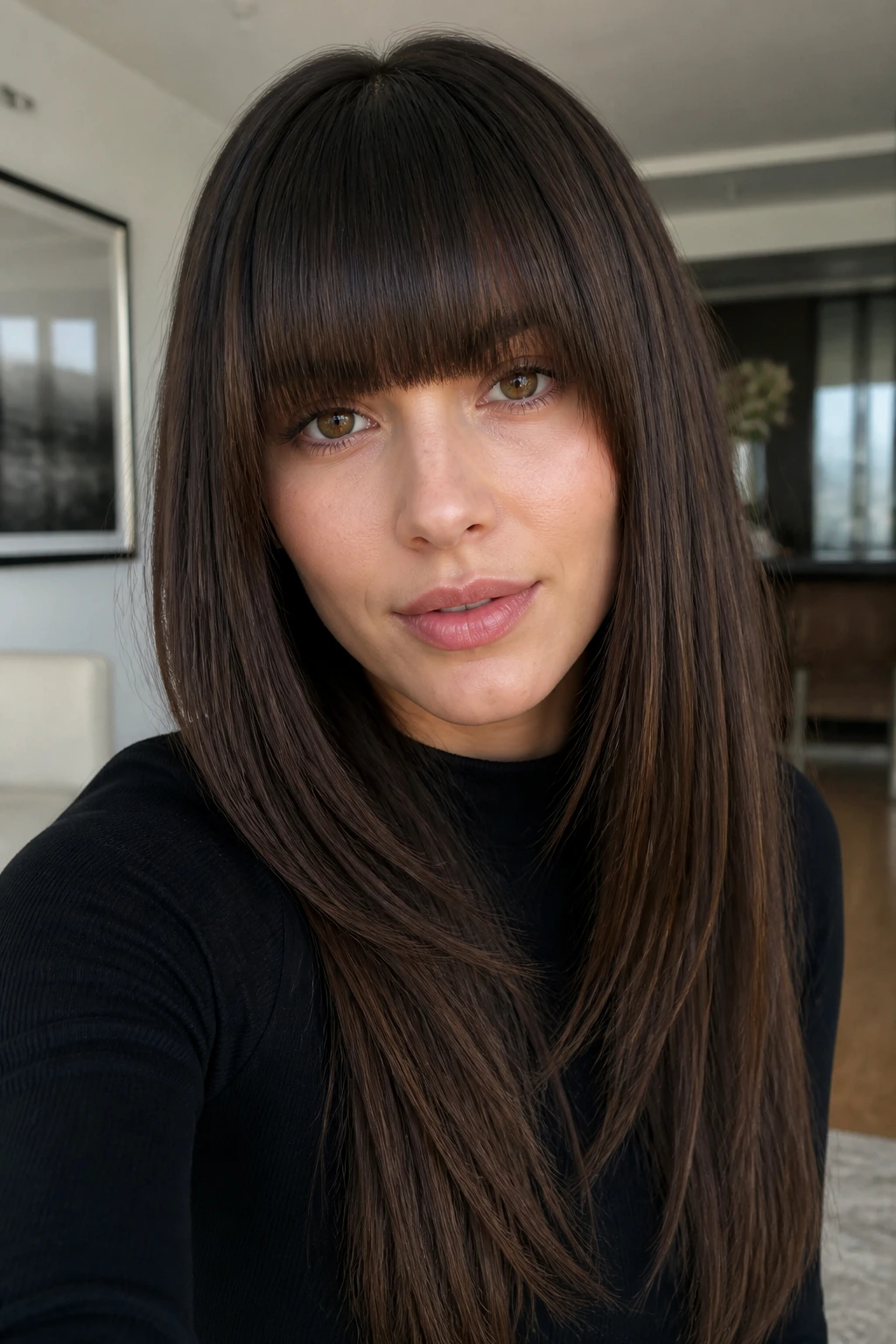
A heavy fringe can absolutely work on an oval face. In fact, it can look striking. The trick is to keep the rest of the hair long, smooth, and slightly layered so the bang has a clean place to live.
This cut has presence. The fringe sits low and solid, while the layers below stay sleek enough that the contrast feels sharp instead of bulky. If the hair is very thick, the bang can be thinned a little at the ends so it does not sit like a curtain. If the hair is fine, keep the fringe a touch lighter so it does not swallow the face.
It’s not a casual look. It likes good styling, regular trims, and a little commitment. But when it lands, it looks crisp in a way softer bangs never will.
16. Micro Bangs with Long Soft Layers
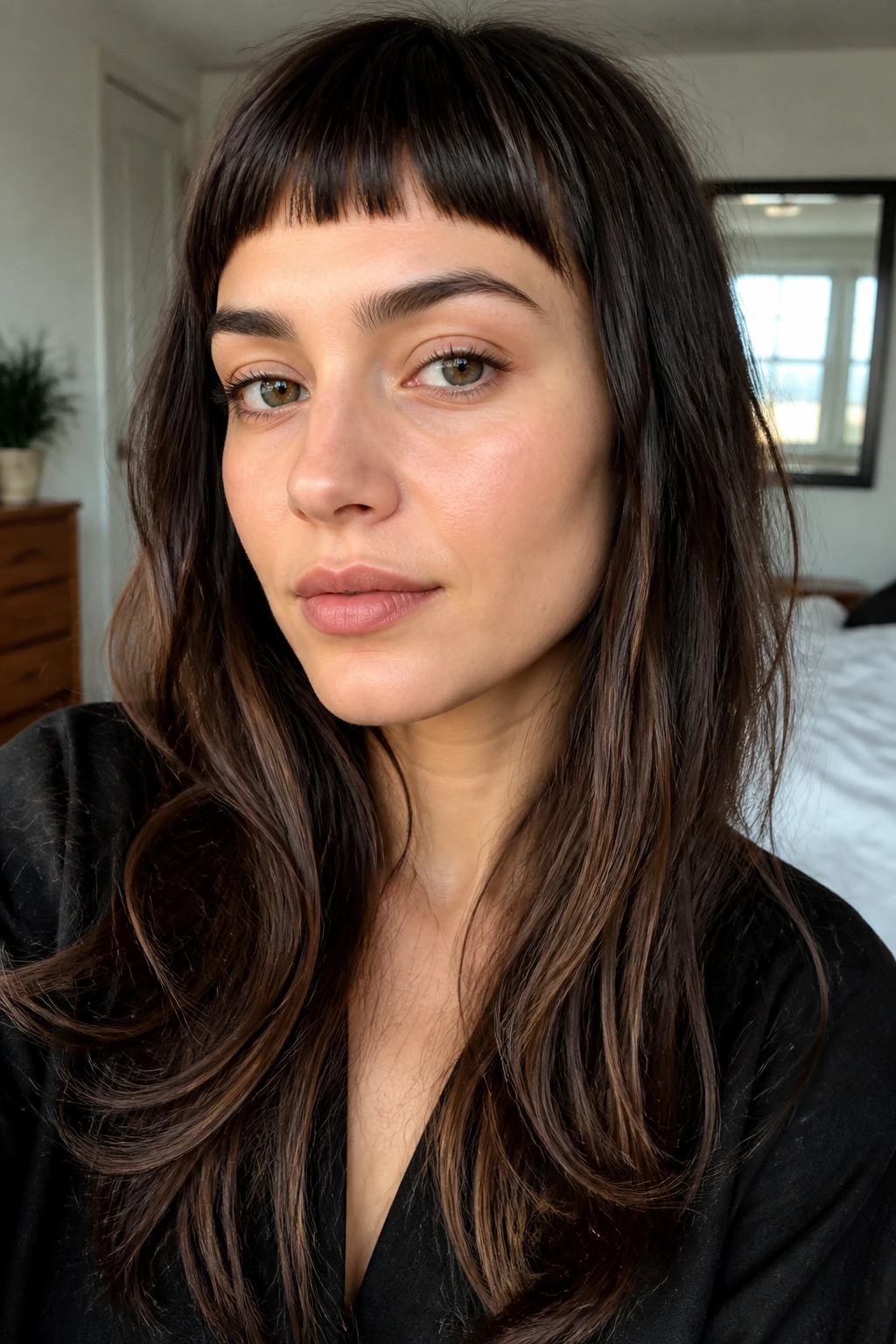
Micro bangs are the bold one in the room. On an oval face, they work because the longer lower lengths soften the sharpness of the fringe. Without that balance, the style can feel too severe. With it, the cut looks modern and deliberate.
The layers should stay soft and long — no hard stacking, no aggressive angles. That balance matters because micro bangs already bring the drama. The rest of the hair has to calm the eye. I like this on straight or slightly wavy hair, where the fringe line stays readable and the lengths can move freely.
What Makes It Work
- Short fringe, but not heavy fringe
- Long layers that keep the face open
- A little edge near the brows
- Less styling at the bottom than you’d expect
This is the cut for someone who wants the bangs to make the statement.
17. Sliced Layers with Airy Bangs
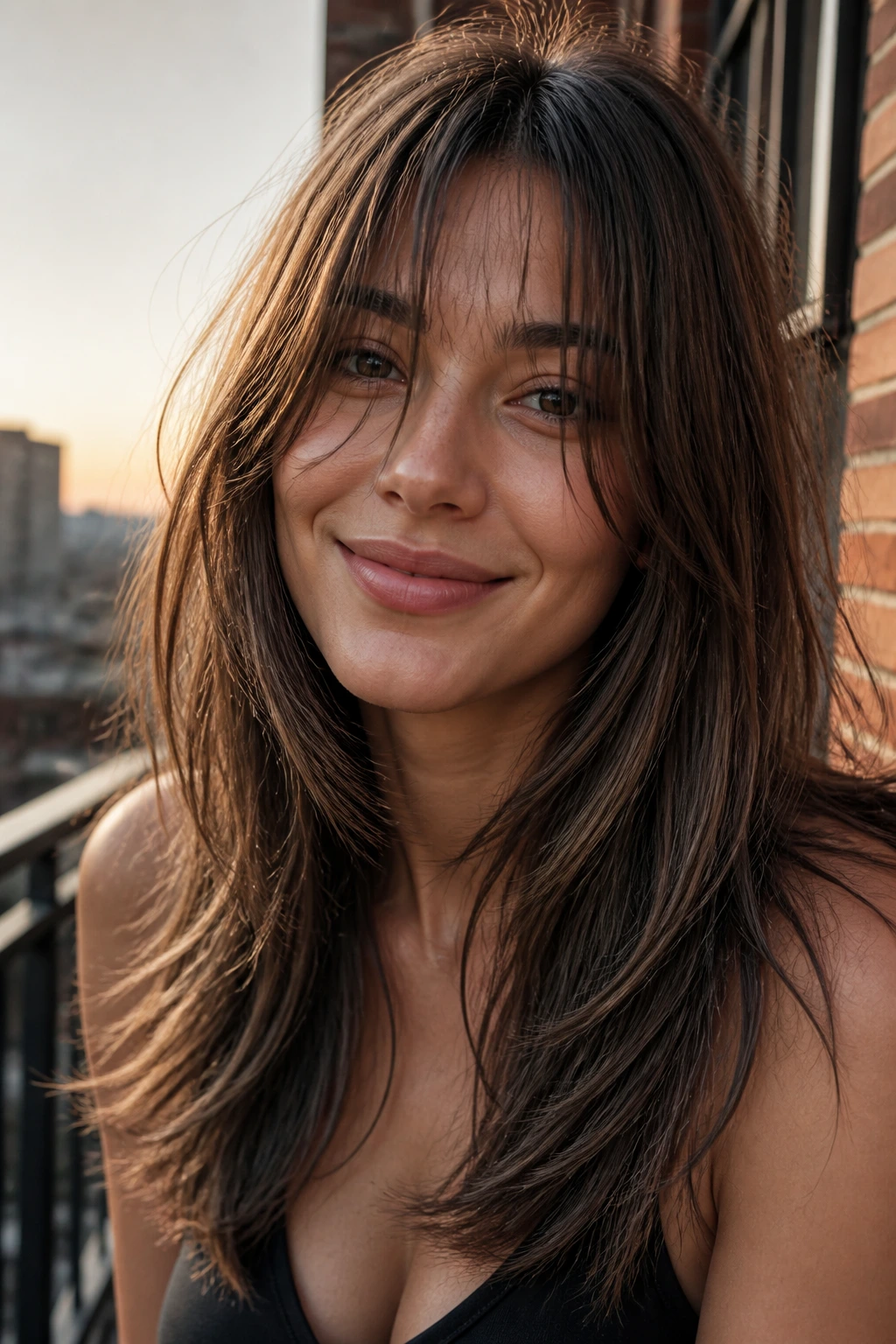
Sliced layers are all about motion. Instead of a heavy, blunt outline, the hair falls in thinner sections that move more easily when you walk or turn your head. Pair that with airy bangs and the whole haircut feels light around an oval face.
The fringe should sit between wispy and full, with enough density to show shape but enough transparency to let the forehead breathe. That middle ground is hard to fake if the bangs are cut too thick or too sparse, so this one needs a careful hand. A good slice through the lengths keeps the style from looking choppy in the wrong way.
It’s one of the best choices for medium-density hair that tends to go flat at the roots. The texture is doing a lot of work here, and the haircut is smart enough to let it.
18. Long V-Cut Layers with a Light Fringe
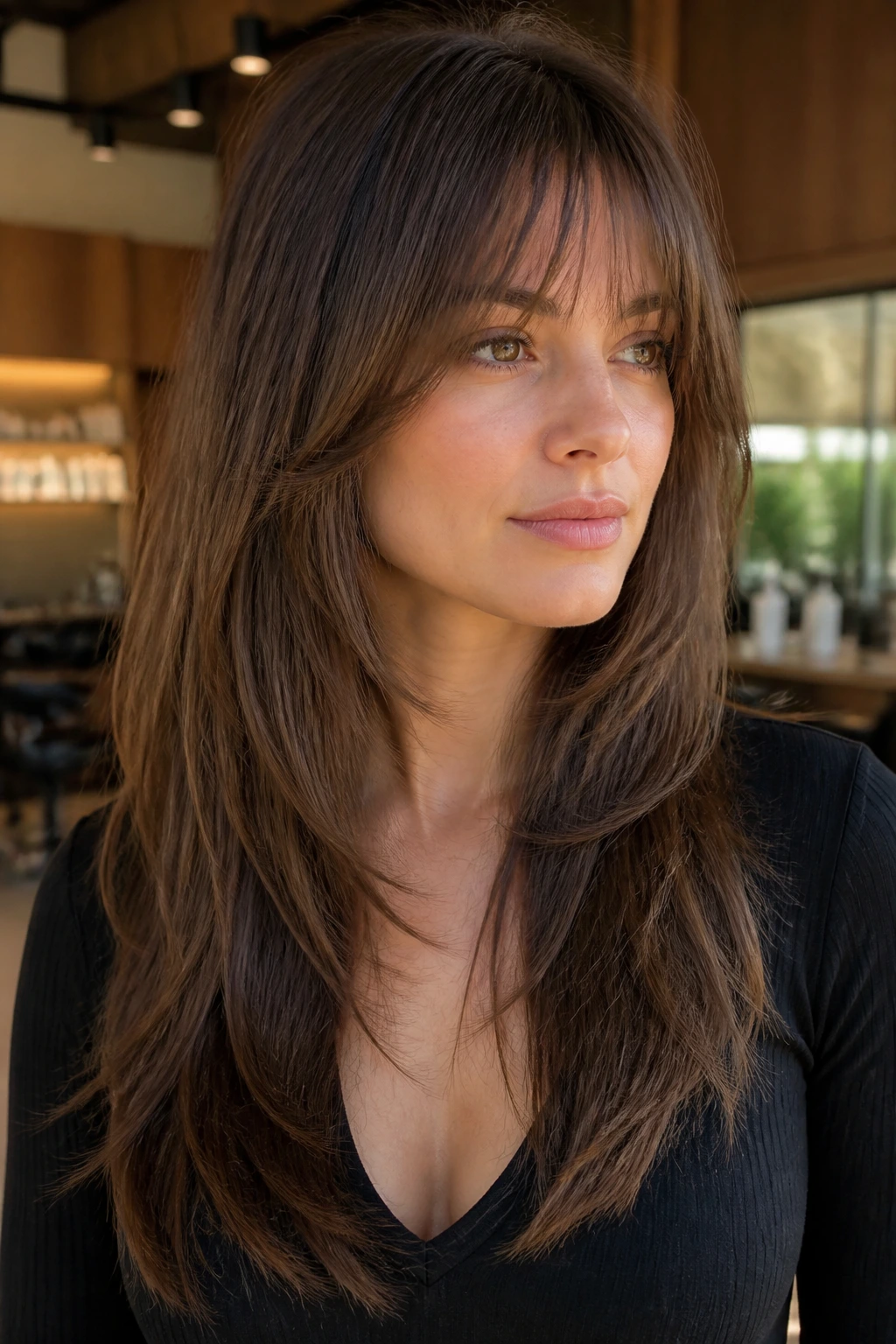
A V-cut gives the hair a point down the back, which sounds dramatic until you see how soft it looks once it falls. On an oval face, the V shape can lengthen the silhouette a touch without making the front feel narrow.
The light fringe should stay airy — think soft pieces at the brows or just below, not a dense wall. The layers around the face should angle toward the collarbone and then fall longer through the back. That combination keeps the haircut feeling long and feminine without turning into one flat sheet of hair.
Who This Suits
- People who love length
- Hair that loses shape quickly at the ends
- Anyone who wants a little structure without obvious chunkiness
19. Long Layers for Thick Hair with Thinned Bangs
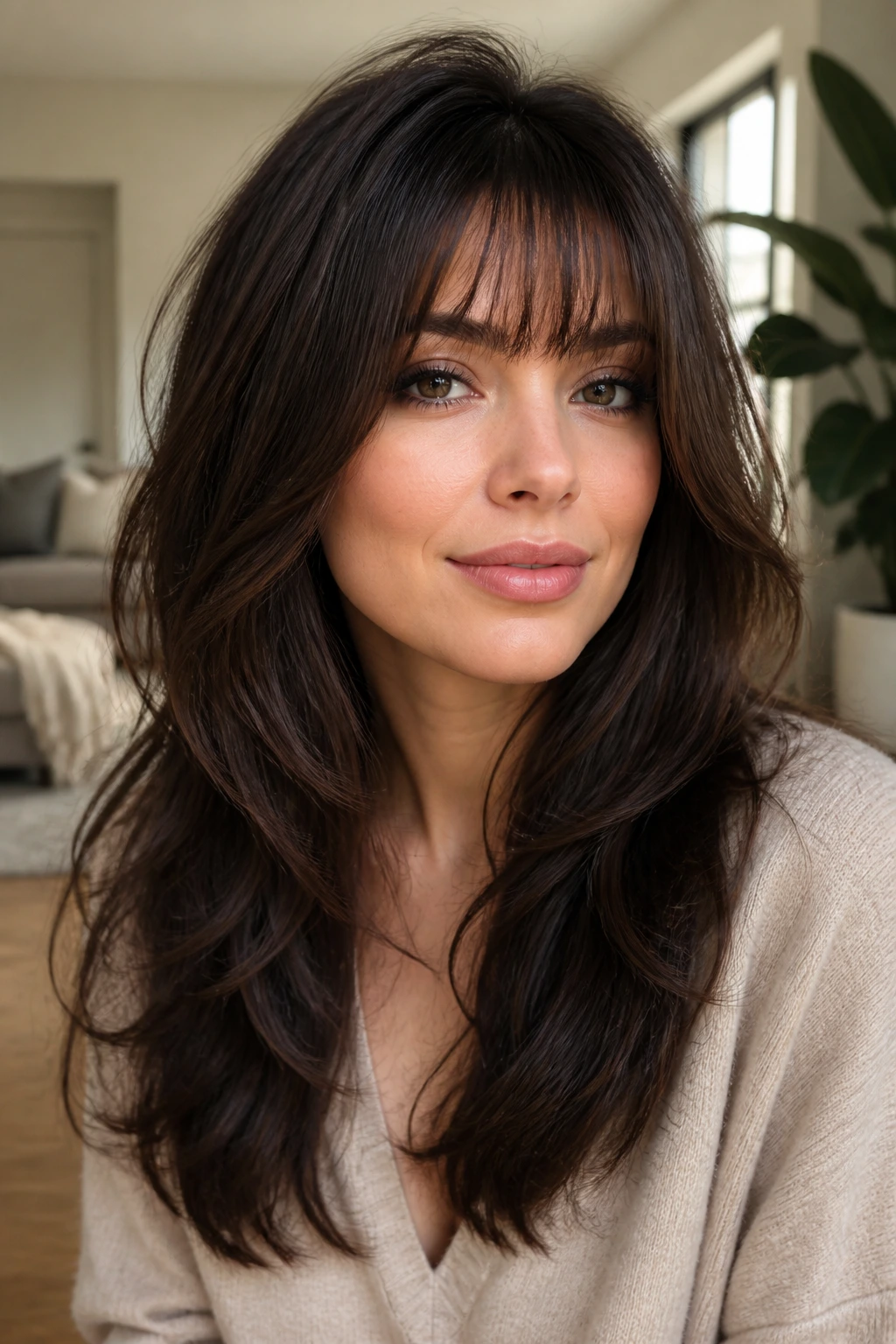
Thick hair needs a cut that takes weight out without making the ends look scrappy. This version does that by keeping the layers long and the bangs thinned just enough to move. On an oval face, the result is shape without bulk.
The trick is to remove weight where the hair swells most — usually around the sides and the fringe — while leaving enough density for the style to hold its line. If the bangs are left too full, they can sit like a shelf. If too much hair is removed from the lengths, the ends can fray and look thin. The middle path is the one that works.
This is a control cut. It keeps thick hair from taking over the face.
20. Long Layers for Fine Hair with Lifted Bangs
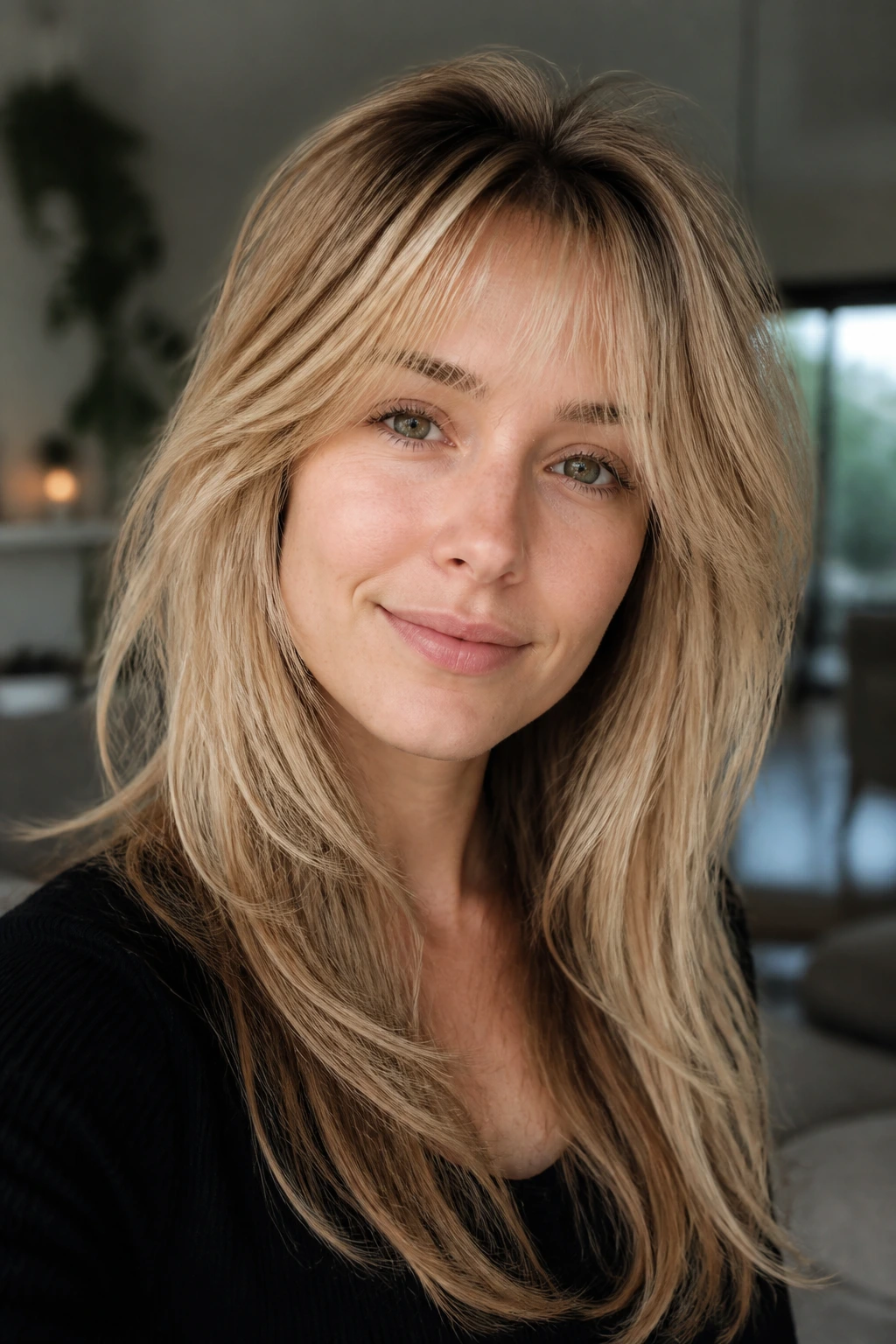
Fine hair needs a different game plan. The layers should create movement without slicing away so much weight that the hair goes see-through at the ends. The bangs need a little lift at the roots so they do not cling to the forehead.
A lifted fringe is usually better than a heavy one here. You want the front to feel airy and full enough to show shape, but not so dense that it collapses by lunchtime. A root spray or mousse at the crown helps, and a round brush can give the bang a tiny bend that makes the whole cut look more alive.
Best Result
- Layers that start lower, not around the ears
- Bangs that are soft, not over-thinned
- A little volume at the crown
- Length that stays visually full
21. Soft Bottleneck Bangs with Face-Framing Length
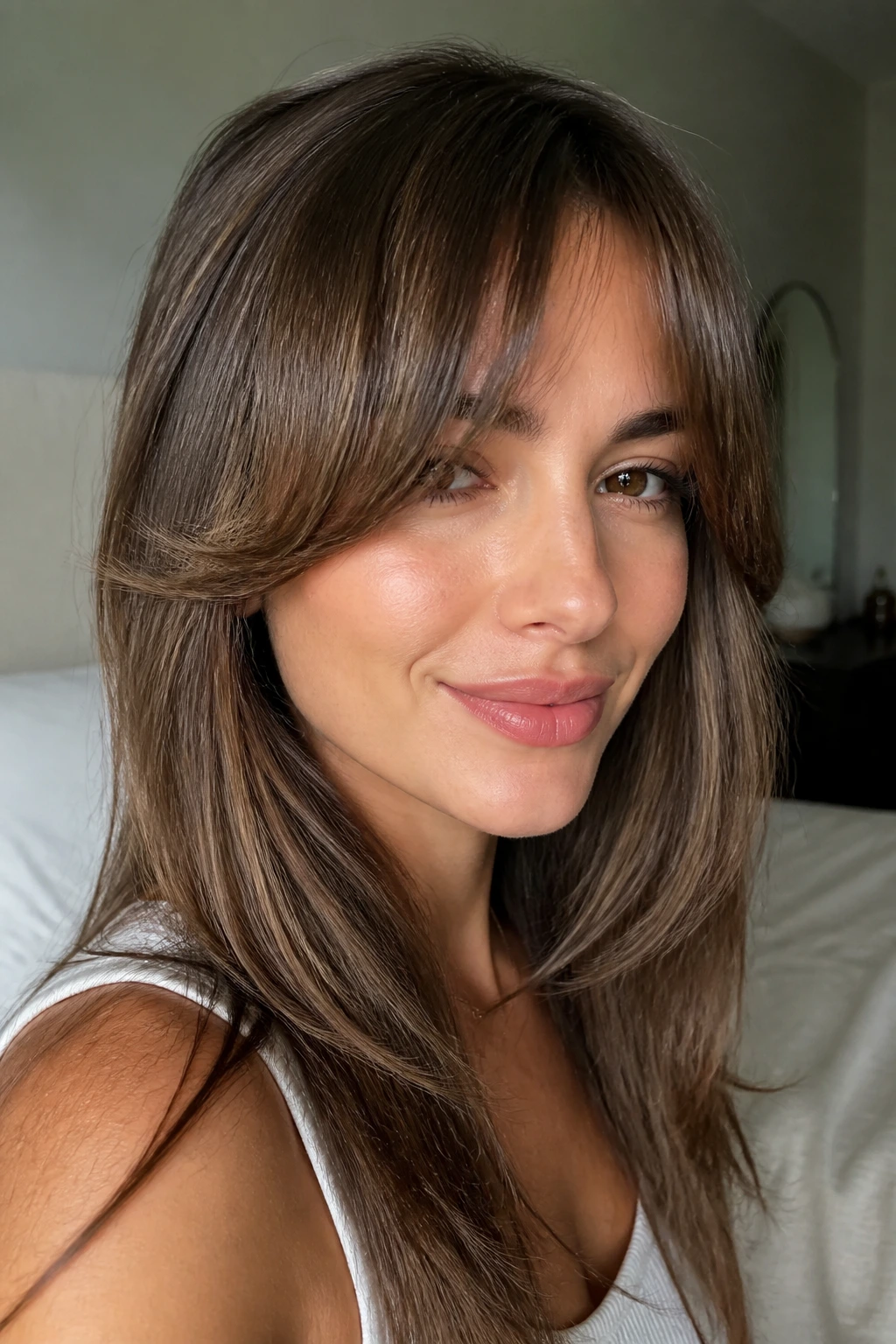
This is the gentler sibling of the stronger bottleneck fringe. The center is a little shorter, the sides open out, and the face-framing pieces stay long enough to brush the cheekbones. On an oval face, that combination adds structure without feeling severe.
The longer front pieces matter a lot here. They keep the fringe from reading as a standalone feature and instead fold it into the whole haircut. I like this version for people who want bangs but are nervous about getting locked into a blunt look.
It’s a flexible cut. Wear it brushed forward, split in the middle, or tucked behind one ear when you want to change the shape.
22. Glam Blowout Layers with Long Curtain Fringe
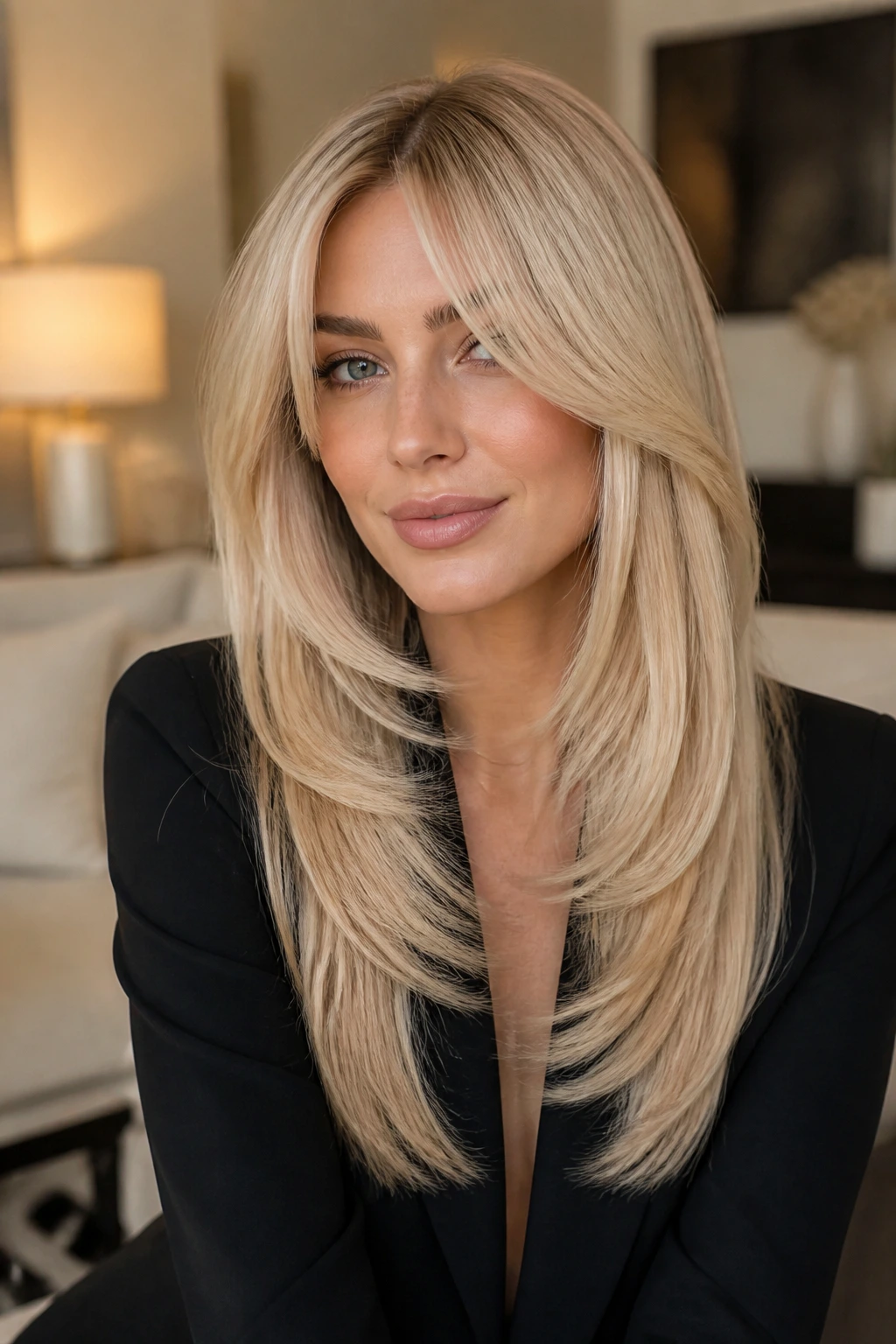
This is the polished one. The layers are long and intentional, the fringe is split and brushed away from the center, and the whole cut has that smooth, lifted shape that looks like it was made for a big round brush. On an oval face, it gives the features a neat frame without stealing focus.
The best version has movement through the ends and some body at the crown, but not too much volume at the sides. You want the bangs to skim the brows, then bend into the longest face-framing pieces. If the layers are cut well, the hair falls in a soft cascade instead of a stiff pyramid.
It’s a little glam, a little classic, and not nearly as high-maintenance as it looks. If you want a haircut that feels dressed up without looking fixed in place, this is the one.
Why Long Layers and Bangs Change the Balance So Fast
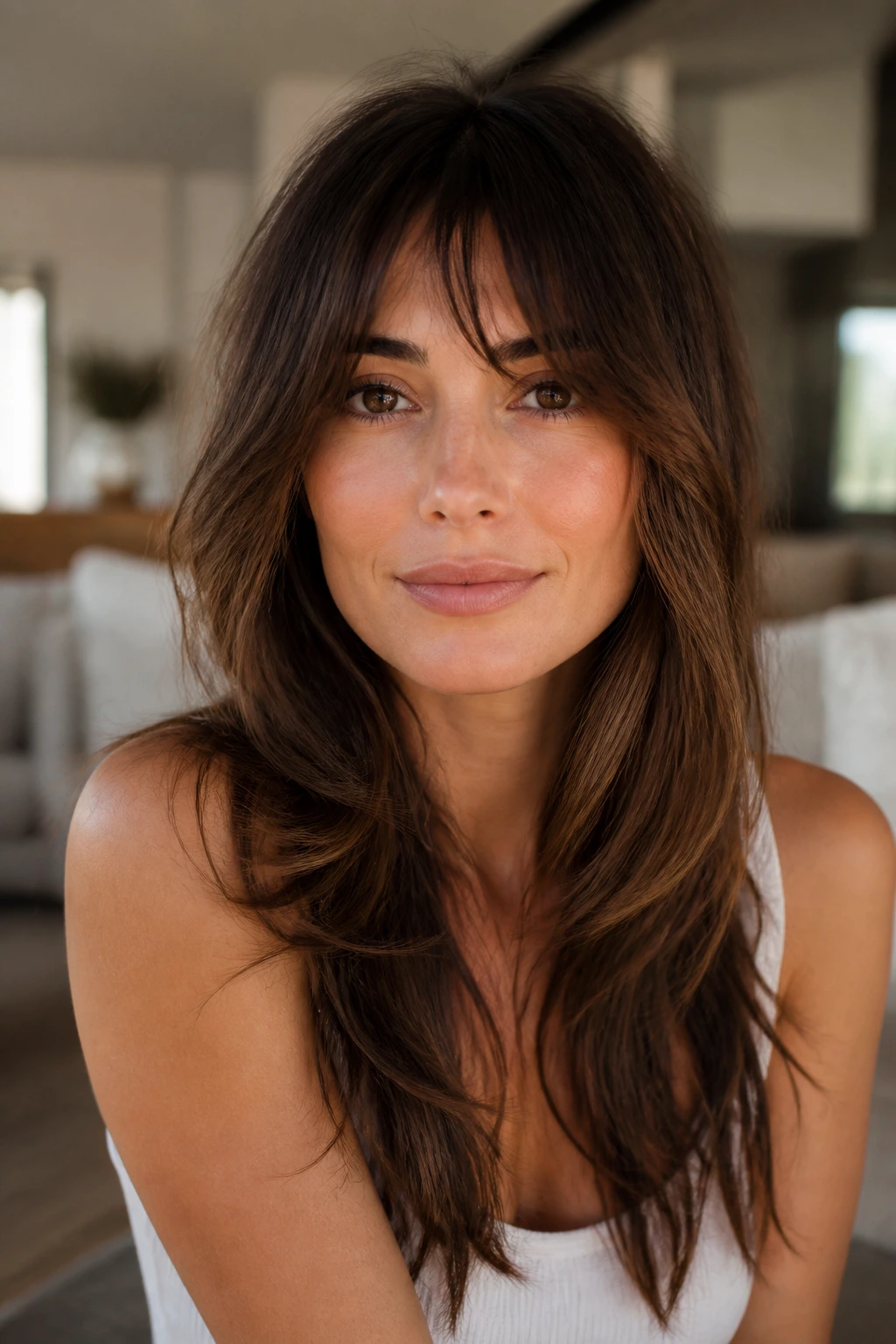
An oval face does not need correction the way some other face shapes do. That’s part of the appeal, and part of the challenge. With this shape, bangs and layers are less about “fixing” anything and more about choosing what you want the eye to notice first.
A curtain fringe pulls attention toward the eyes and cheekbones. A blunt bang makes the top half feel more compact. Long layers keep the lower half from dragging the whole style down. Put those three things together, and you can move the emphasis around without changing the overall harmony of the face.
The best cuts in this category do not fight the oval shape. They edit it. A little. Cleanly. That is the difference between a haircut that sits there and one that changes every time the light, the brush, or the weather changes.
What to Ask for at the Salon
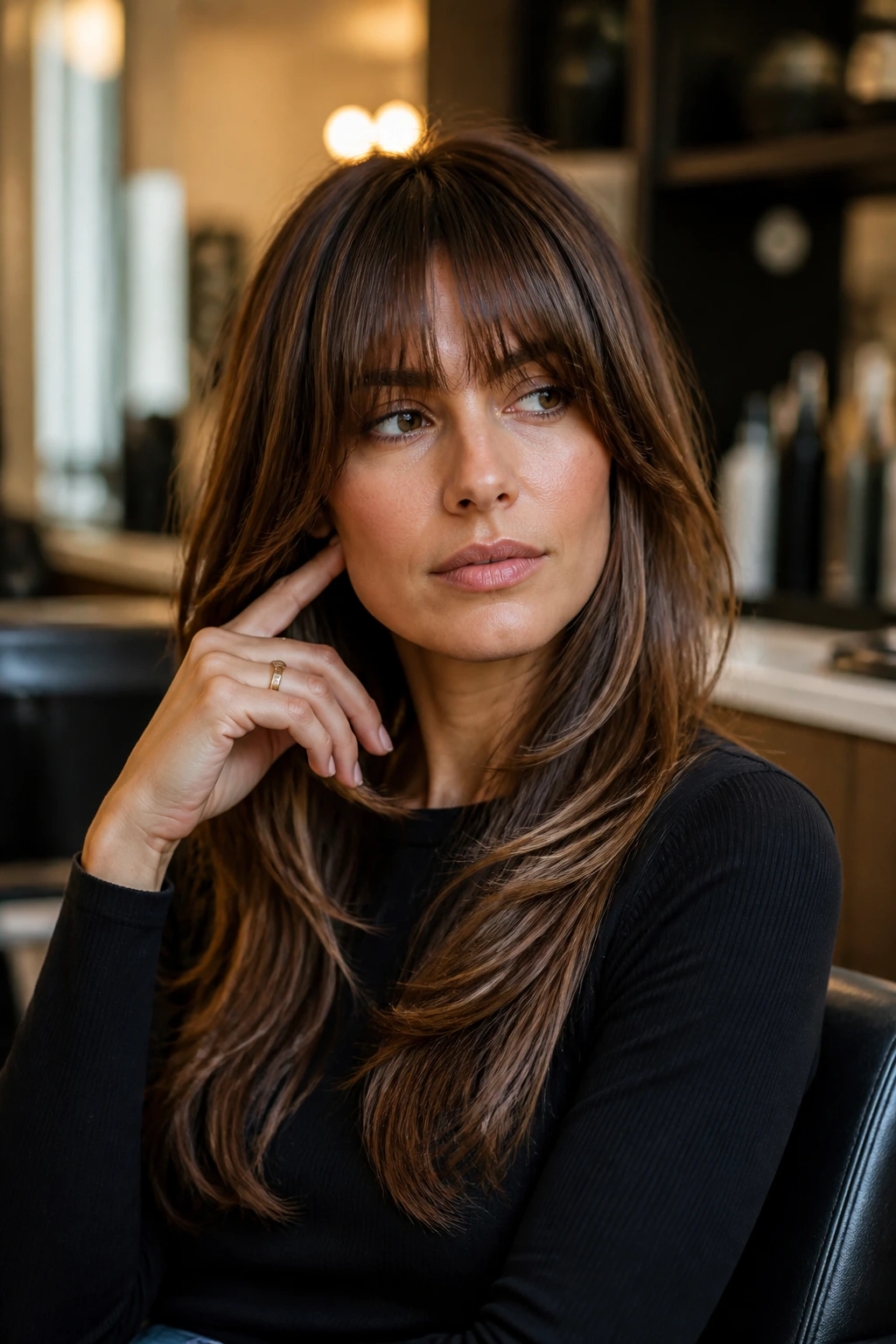
If you walk into the chair and say only “long layers with bangs,” you leave too much up to chance. The good version of this cut depends on where the shortest piece lands, how much weight stays in the ends, and whether the fringe is meant to sit flat or split open.
Be specific about the shortest layer. Say “cheekbone,” “chin,” or “collarbone” rather than “face-framing.” Those words tell the stylist how much of the front to leave. If you want curtain bangs, mention whether you like a short opening at the center or a softer, longer split that starts lower on the nose.
Bring one or two photos of the shape, not just the bang. A lot of people love a fringe in a picture but miss that the layer placement is doing half the work. And if your hair has a strong cowlick, say so. That one detail can change the whole plan.
The Tools That Make These Cuts Easier to Wear
-
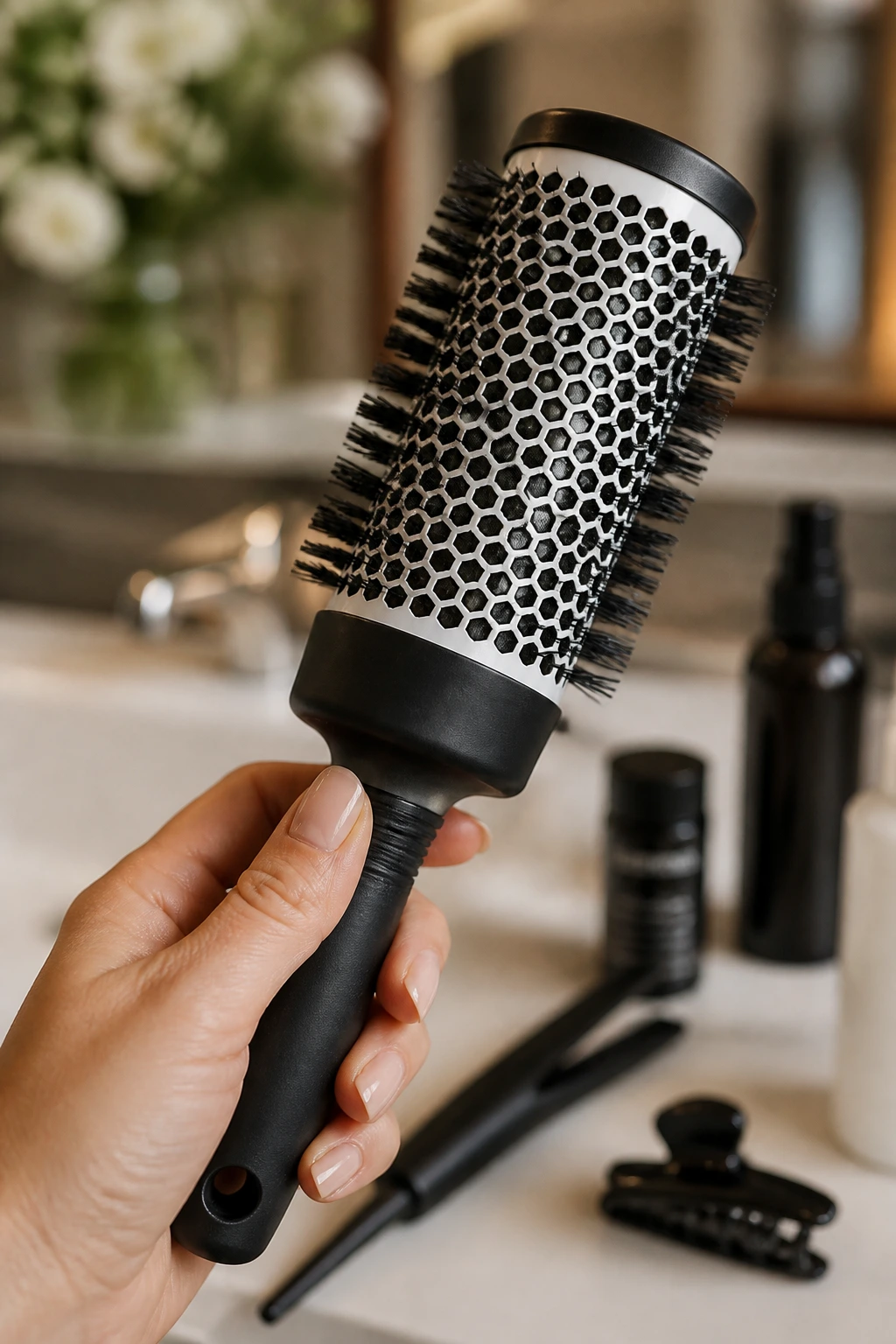
Round brush, 1½ to 2 inches: This gives bangs a bend and keeps the ends from flipping in a cheap-looking way.
-
Blow-dryer with a narrow nozzle: Direct airflow matters, especially for curtain bangs and side-swept fringe.
-
Heat protectant spray: Use it before any brush-dryer or flat-iron work so the ends do not get rough and puffy.
-
Light mousse or root lift spray: Fine hair usually needs this at the crown if the layers are meant to show shape.
-
Styling cream or curl cream: Wavy and curly textures need something that keeps the layers soft instead of frizzy.
-
Small flat iron: Good for shaping bangs only. Do not clamp the whole head flat unless you want the hair to lose all life.
-
Duckbill clips or sectioning clips: These keep bangs separate while the rest dries, which is a tiny habit that makes a big difference.
How to Style These Cuts Without Fighting Your Hair
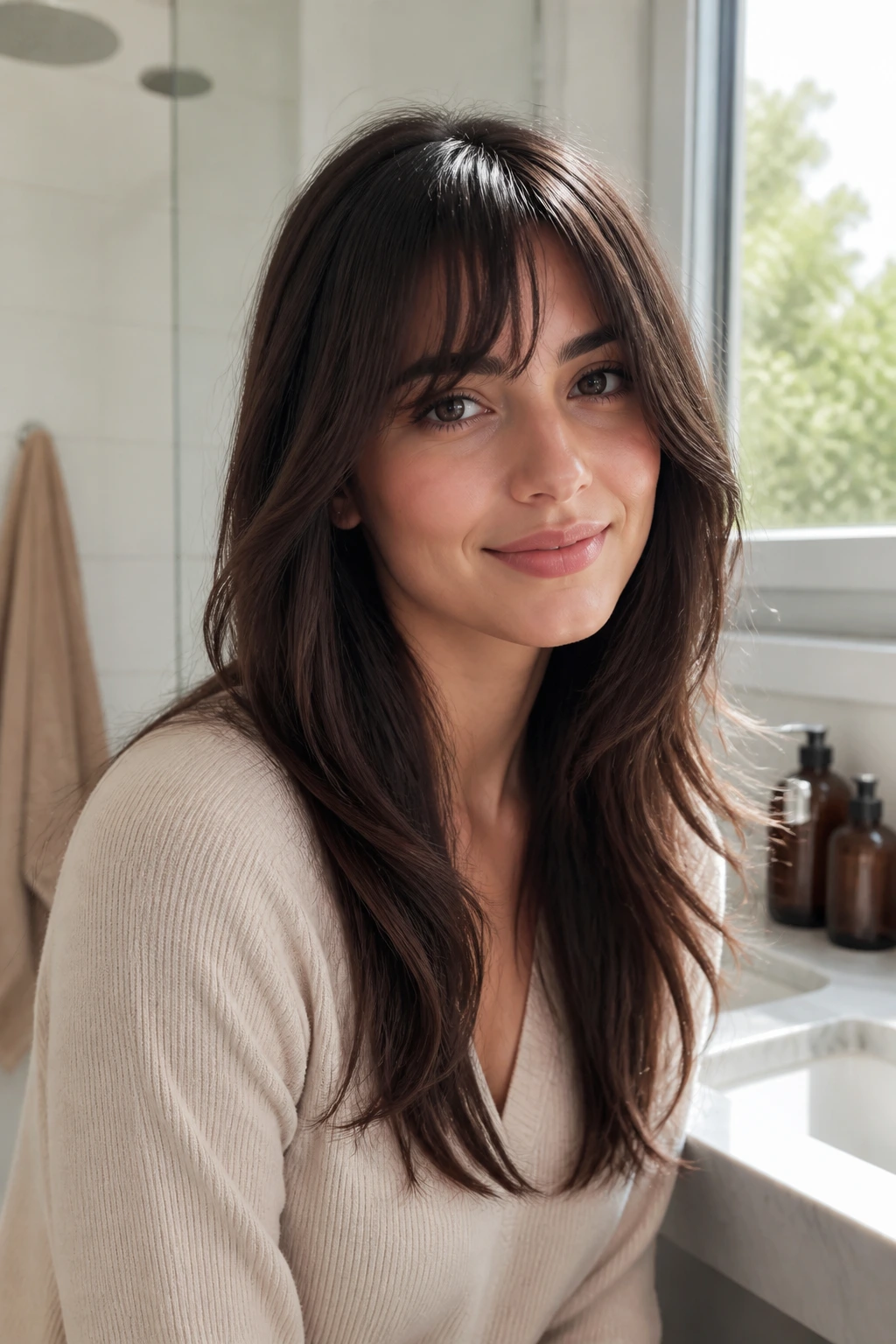
A good long layered cut with bangs should not take a full beauty-school routine every morning. The trick is to choose the finish that matches your texture and stick to it instead of bouncing between three methods and wondering why the bangs misbehave.
Blowout Finish: Use a round brush on the bangs first, not last. Dry the fringe from side to side until the roots set, then bend the ends under slightly so they do not stick out. Finish the layers with a loose under-turn at the bottom, not a curl.
Air-Dry Finish: Scrunch a small amount of mousse or curl cream into damp lengths, then clip the bangs into place while they dry so they do not split in random directions. Once dry, rake the fringe apart with your fingers, not a brush.
Second-Day Reset: Mist the bangs lightly, reshape the roots with a blow-dryer for 20 to 30 seconds, and add a touch of dry shampoo only at the scalp. If you powder the whole fringe, it goes chalky fast.
Polished Finish: Run a flat iron only through the bang line and the front two layers. That’s it. The rest should keep some movement, or the cut loses the whole point.
Common Mistakes That Flatten the Shape
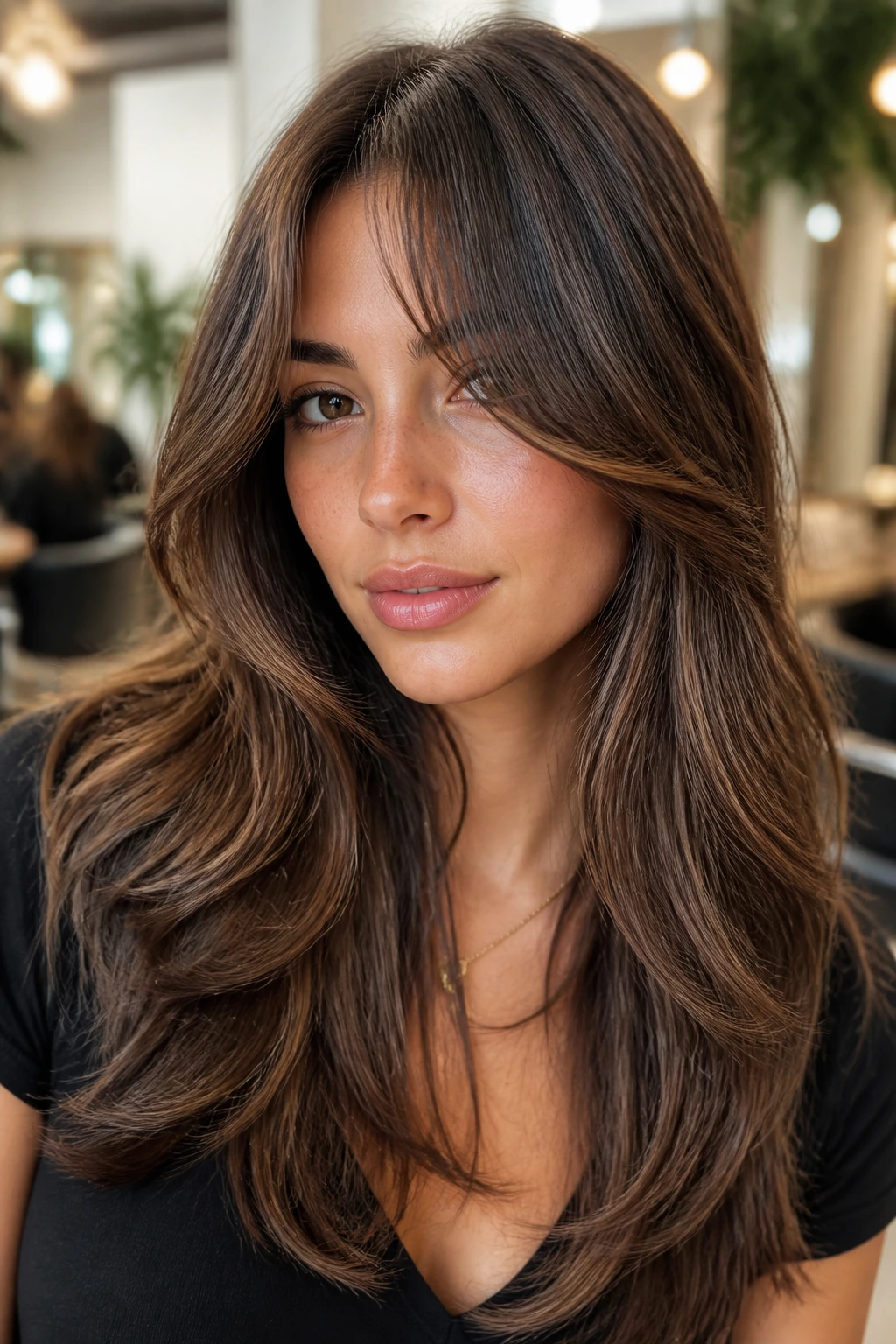
The biggest mistake is cutting bangs too short for the way the person actually wears hair. If you live in side parts and low ponytails, a short blunt fringe can turn annoying in a week. The fix is to choose a bang length that still looks good when it’s swept away from the face.
Another problem is starting the shortest layer too high. On an oval face, that can drag the eye upward and make the face feel longer than it is. Ask for the first face-framing layer to begin around the cheekbone or chin unless you truly want a more dramatic frame.
Thinning fine hair too much is a rough one. The ends go wispy, the bangs separate in sad little strands, and the haircut loses body. If your hair is fine, keep the layers lower and the fringe soft, not shredded.
Cowlicks deserve respect. They can split bangs, push them sideways, or make one side sit a half-inch higher than the other. A dry cut, or at least a careful blow-dry direction at the root, can save you from wrestling with it every morning.
Smart Variations for Different Hair Textures
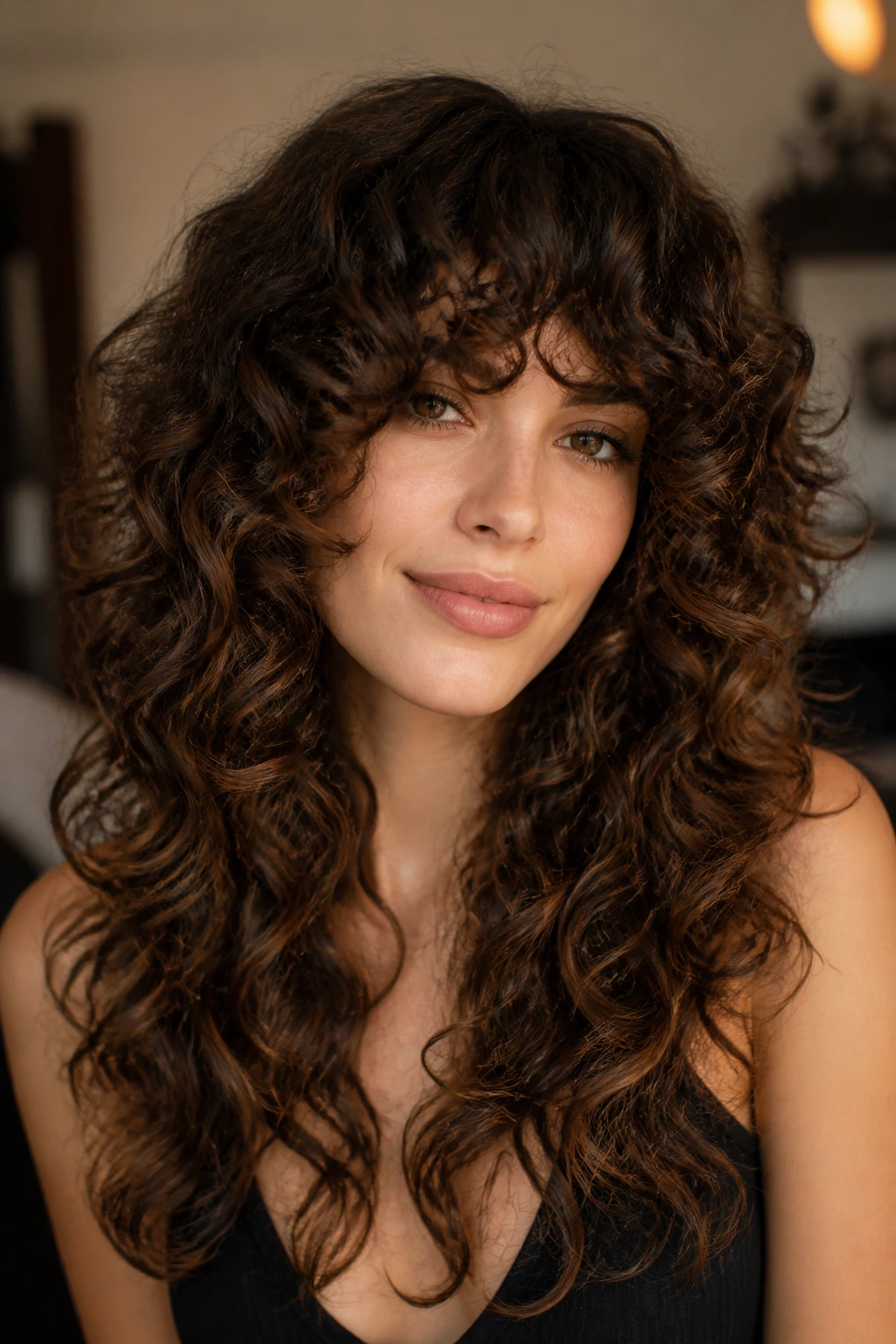
The Fine-Hair Lift: Keep layers lower and add a soft bang with a little root volume. This keeps the hair from looking see-through around the face, which happens fast when the layers are cut too high.
The Thick-Hair Control Cut: Use longer layers and a thinned fringe so the style does not balloon out at the sides. This is the version that keeps the shape clean without making the ends thin.
The Curl-Friendly Shape: Cut the bangs longer than you think you need and shape the layers around the curl pattern, not against it. The cut should look good when the hair shrinks, not only when it’s wet.
The Low-Maintenance Grow-Out: Choose curtain bangs or a side sweep with long layers that begin lower, around the collarbone. When they grow, they still read as a face frame instead of an awkward in-between.
The Statement Fringe: Go for blunt or micro bangs if you want the front of the haircut to carry the whole mood. Keep the layers soft underneath so the face does not get overwhelmed.
Keeping the Shape Between Salon Visits
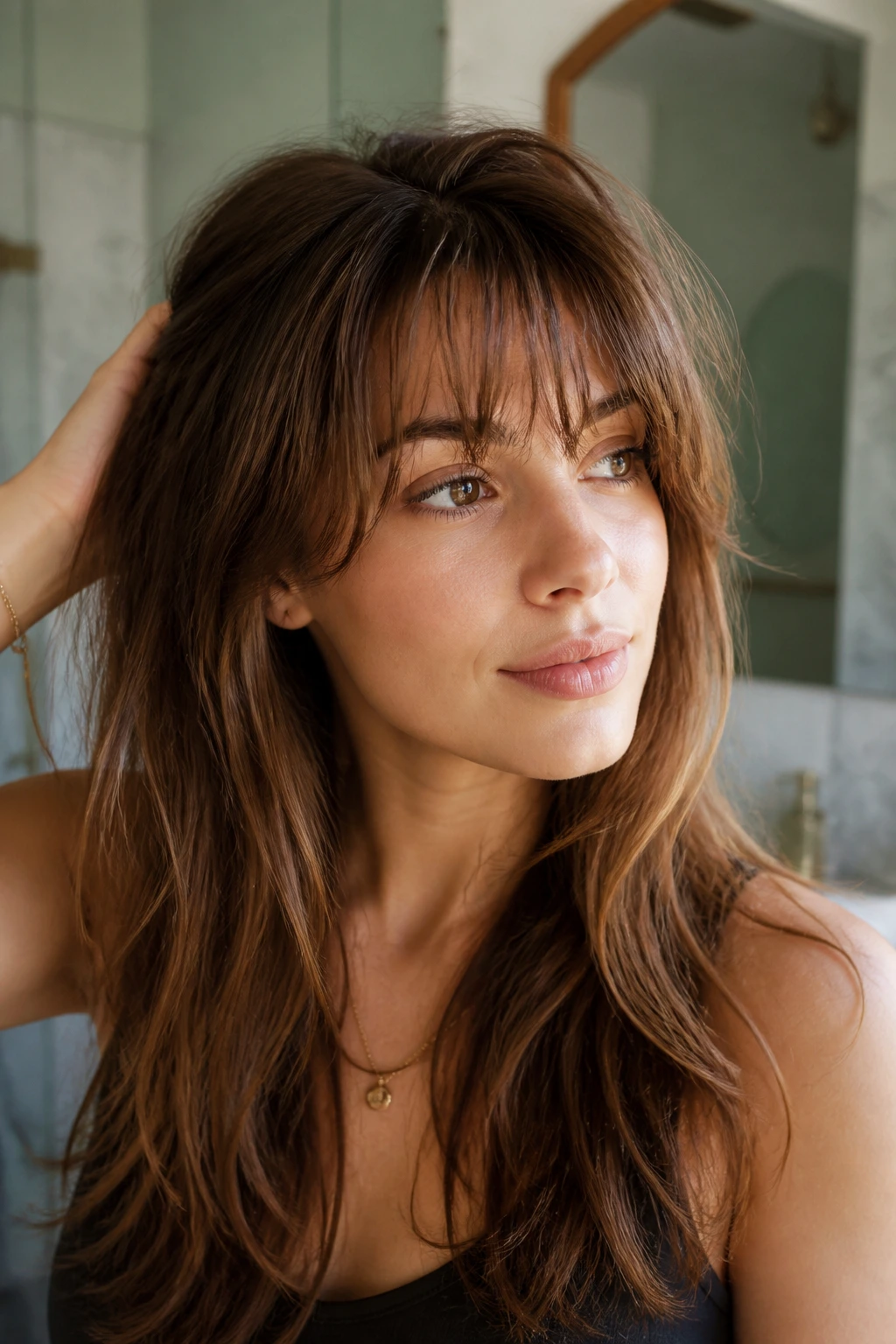
Bangs need touch-ups faster than the rest of the cut. That’s not a flaw; it’s the deal you make when you choose fringe. Most people can go 3 to 5 weeks before the bang line starts getting too long for comfort, while the long layers themselves can usually wait 8 to 12 weeks depending on how much movement you want to keep.
Sleep habits matter more than people expect. A silk pillowcase cuts down on the weird crease you get when bangs get shoved sideways all night. If your fringe wakes up flat, mist the roots lightly and blow-dry for 20 seconds instead of soaking the whole section. Wet bangs take too long to reset and often dry in the wrong shape.
Dry shampoo is useful, but only at the root. If you spray it through the whole bang, the hair turns dusty and rough. A little at the scalp, then a quick fingertip lift, is enough. And if the ends start looking stringy before the rest of the cut feels too long, ask for a dusting, not a full reshaping. That keeps the layers moving without starting over.
Frequently Asked Questions
Do long layers with bangs make an oval face look shorter?
They can, if the bangs are cut heavy and the layers start too high. A soft curtain fringe, side sweep, or brow-skimming bang usually adds shape without closing off the face.
Which bang style is easiest to grow out?
Curtain bangs and side-swept bangs are the easiest to live with as they grow. They naturally blend into the front layers, so you do not get that hard “between stages” look as quickly.
Can curly hair wear long layers with bangs?
Yes, but the bangs need to be cut longer and shaped with the curl pattern in mind. Curly fringe shrinks, so a dry cut or curl-by-curl approach saves a lot of regret.
Are blunt bangs too much for oval faces?
Not at all. They can look excellent, but they work best when the rest of the hair stays long and soft so the cut does not feel top-heavy.
How often should I trim the bangs?
Most fringe shapes need a trim every 3 to 5 weeks, especially if they sit at the brows or below the lashes. The long layers can usually stretch much longer.
What if my bangs split in the middle on their own?
Then curtain bangs may be your best friend. A natural split is easier to work with than against, and a center-opening fringe often looks better on the second day anyway.
Can I still tie my hair up with this kind of cut?
Yes, and that’s one reason long layers are so practical. Leave out the front pieces or the fringe, and the style still looks intentional in a ponytail or claw clip.
What should I avoid if I wear glasses?
Skip a fringe that sits right on the frame edge unless you like constant readjusting. A longer curtain bang or a softer brow-grazing shape usually plays nicer with glasses.
A Cut That Keeps Its Shape
Long layers with bangs can do a lot for an oval face because the proportions already give the haircut room to breathe. You are not forcing the face into a shape it does not want. You are choosing where the eye lands first, how soft the forehead feels, and how much movement the lengths carry through the shoulders.
That’s why the best version is the one matched to your texture and your patience level. Some people need a blunt fringe and a clean blowout. Some need a curtain bang they can toss apart with their fingers. Some need layers that do the work quietly and never ask for much.
Pick the version that fits your mornings, not just your photos. That’s the cut you’ll keep reaching for, because it still looks like you on the third day, not just the first.