



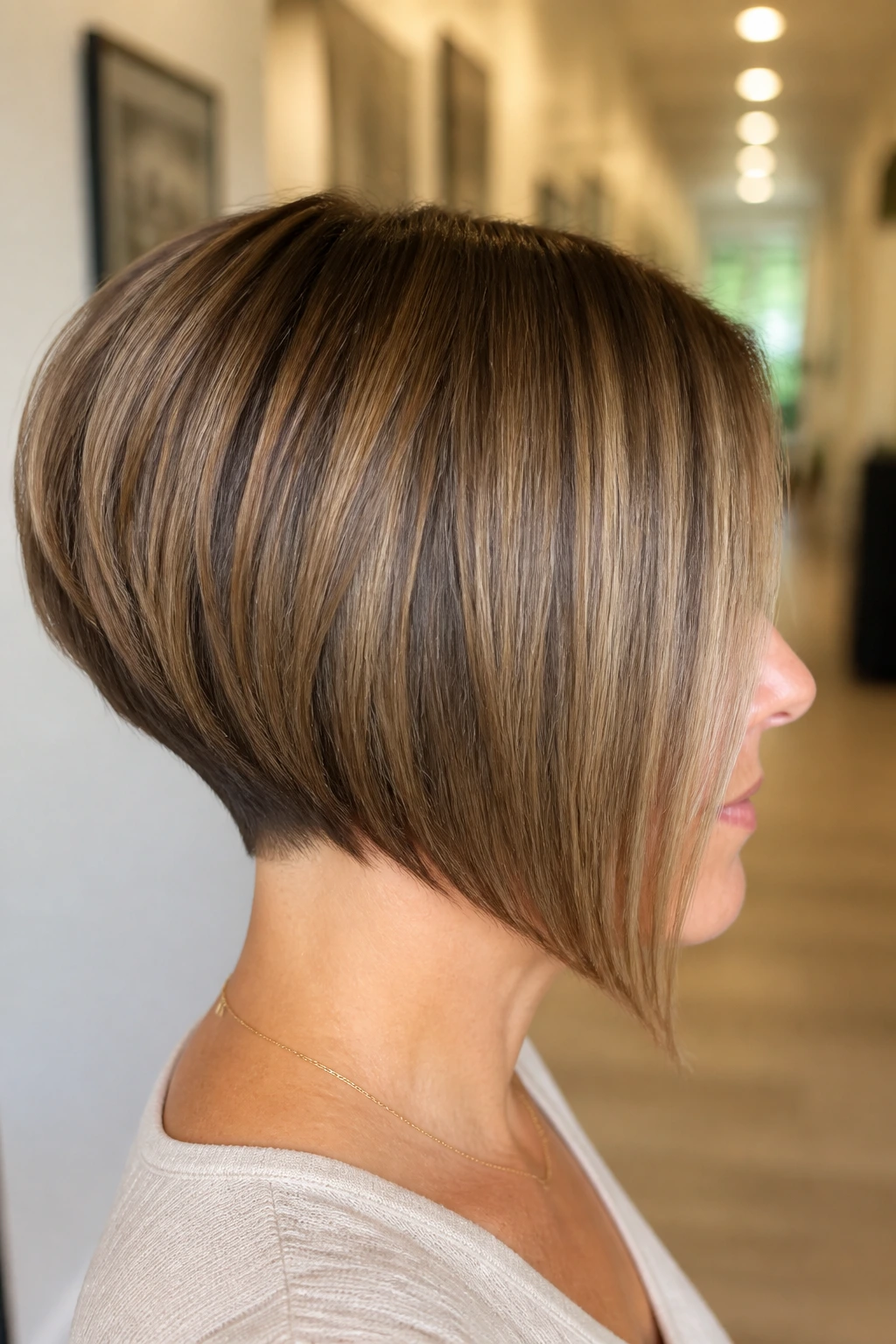
Fine hair doesn’t need more length. It needs shape. A good bob — especially short stacked bobs for fine hair with face-framing layers — gives the hair somewhere to go instead of letting it slide flat against the head by noon.
That’s the whole trick, really. The stack at the back creates lift where fine hair usually goes limp, and the face-framing layers keep the front from turning into one blunt, boxy line. Done well, the cut moves. It swings a little when you turn your head, and the ends sit with a soft bend instead of a paper-thin flick. Done badly, it can look wispy at the cheeks and collapsed at the crown. There’s a thin line between “airy” and “why does my hair look see-through?” and the right shape matters more than most people realize.
I’ve always thought the best bob for fine hair is the one that looks like it has structure even on lazy days. Not a helmet. Not a wedge from the early salon-booking era. Something clean through the nape, a little lighter around the face, and short enough at the back that the hair can’t weigh itself down. That’s why these cuts work so well when the layer placement is thoughtful. You get lift without piling on product, and that’s a much better bargain than spending every morning fighting gravity with a round brush and blind hope.
Why These Bobs Deserve a Spot on Fine Hair
-
Built-in Lift: The stacked back removes weight from the nape, which helps fine strands sit higher instead of draping flat.
-
Face Softening: Face-framing layers keep the cut from reading sharp or severe, especially if your hair falls straight and close to the head.
-
Less Product Dependence: A smart bob shape can do more than a heavy mousse ever will, and that matters when fine hair gets greasy fast.
-
Cleaner Grow-Out: The right front angle lets the cut grow a few weeks longer without turning into a shapeless triangle.
-
Works With Real Life: Air-dried, blow-dried, tucked behind the ear, or bent with a flat iron — these shapes hold up without needing a perfect morning.
-
Better Movement at the Ends: Fine hair can look stringy if the ends are over-thinned, so the best versions of this cut keep enough substance to move and still look full.
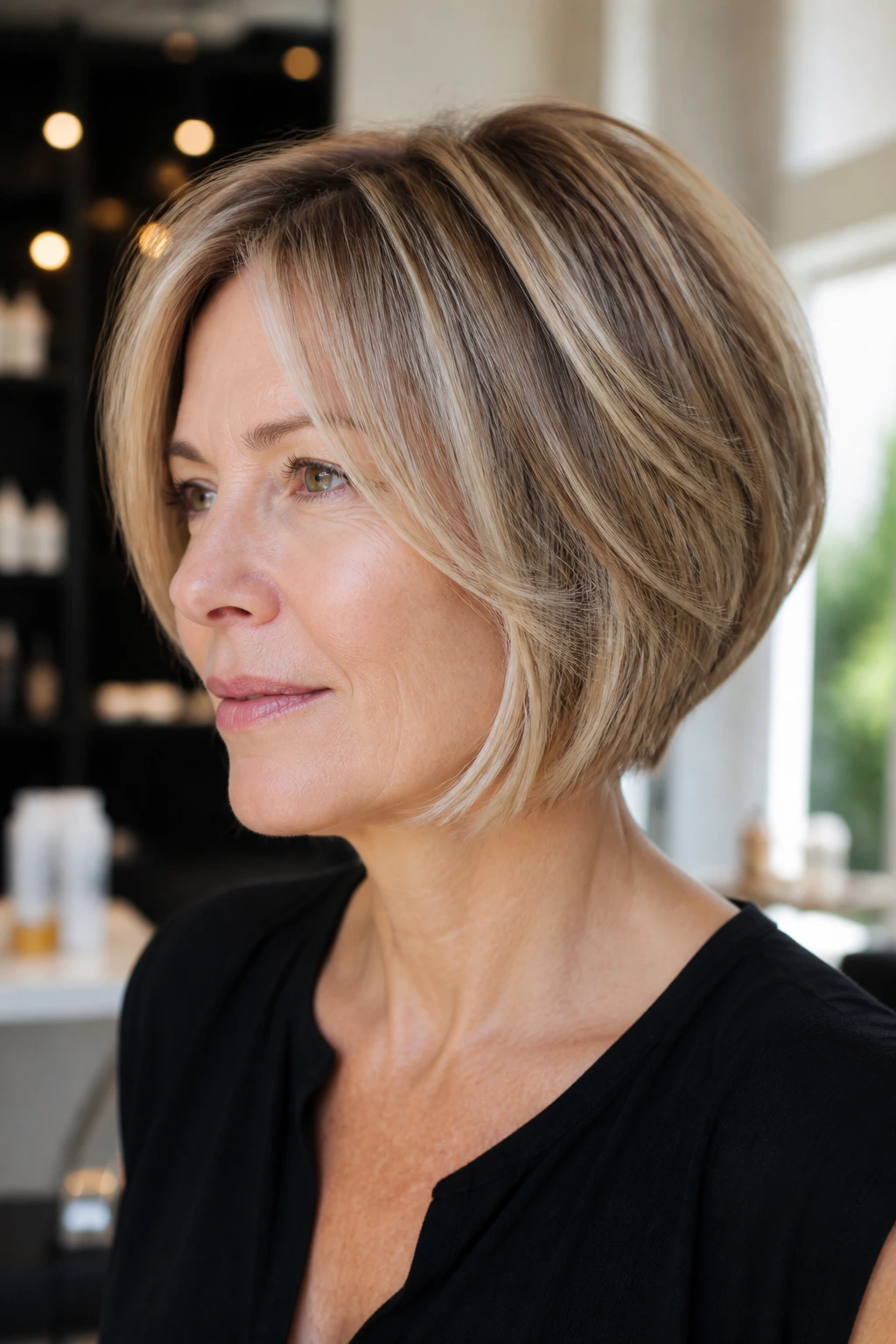
1. Chin-Length Stacked Bob with Soft Cheekbone Layers
A chin-length stacked bob is one of my favorite places to start because it gives fine hair a shape that reads instantly, even before styling. The back sits snug and lifted, while the front pieces skim the cheekbones and taper toward the jaw. That little bit of forward movement keeps the cut from feeling too neat in a boring way.
The key is keeping the stack controlled. If the nape is carved too high, fine hair can look sparse at the back. A softer graduation — shorter underneath, slightly longer through the crown — gives you that rounded lift without exposing too much scalp.
Why It Works for Fine Hair
Chin length is short enough to keep the outline strong. The cheekbone layers pull the eye forward, which is a nice trick when the top needs a bit more visual fullness. I like this shape on hair that tends to flatten after a few hours, because the cut itself is doing some of the work.
If you wear a side part, this one gets even better. The longer front side lifts away from the face and makes the whole style look fuller than it really is.
2. Inverted Bob with a Clean Nape Stack
A clean inverted bob is the haircut version of good posture. The nape is tight and tidy, and the front length angles down in a way that makes fine hair look deliberate, not limp. When the line is sharp enough, you don’t need much else.
This cut is especially useful if your hair falls straight and won’t hold much texture. The angle creates the illusion of density because the front hangs with purpose while the back stays compact. It’s one of those styles that looks polished even when you only run a brush through it and leave.
The face-framing layers should start no higher than the cheekbone for most fine-hair clients. Shorter than that, and the front can get too see-through unless the hair is naturally dense.
3. Side-Parted Stacked Bob for a Little Crown Lift
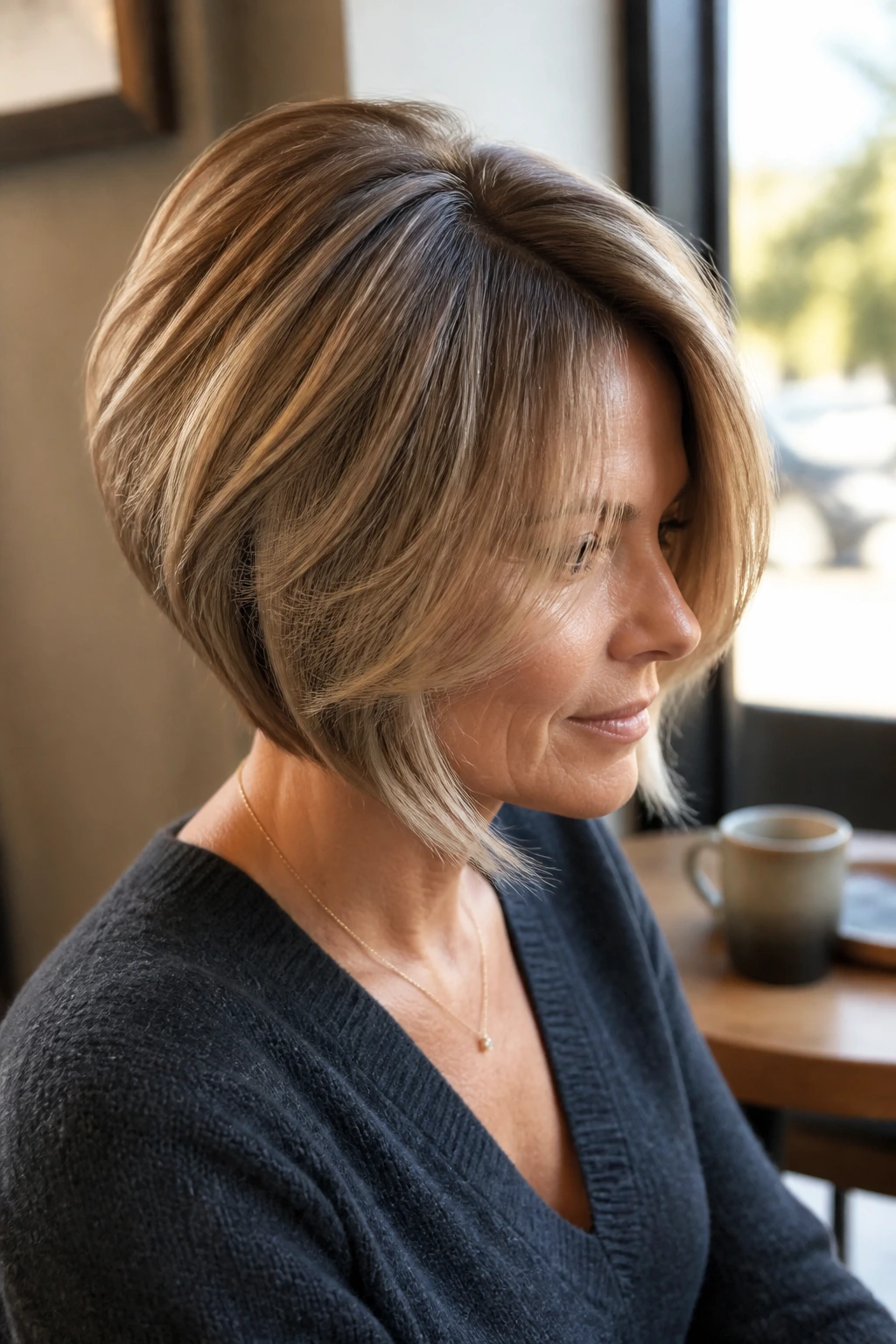
A side part can save a bob that otherwise wants to sit flat. Move the part an inch or two off center, and the root on the heavier side lifts almost by default. That extra height at the crown is gold when your strands are fine and soft.
This version of the stacked bob feels a touch less formal than a symmetrical cut. The side with more hair can be swept across the forehead in a way that blends into the face-framing layers, while the opposite side keeps the nape neat and short. It’s a small change, but it changes the whole mood of the haircut.
What to Ask For
Ask your stylist to keep the back stacked enough to build volume, but not so much that it turns into a hard shelf. You want the front to drop gently from the side part, not hang in two disconnected chunks. That’s the difference between airy and fussy.
4. French Bob with Grown-Out Face Framing

A French bob with face-framing layers has a little attitude without demanding daily perfection. It usually sits between lip and chin length, with the front pieces soft enough to break up the line around the mouth and jaw. On fine hair, that softness keeps the cut from looking severe.
The best part is the way it moves when you tuck one side behind your ear. The front pieces fall out just enough to create that undone shape people always try to fake with too much styling cream. I’d take this cut on straight or slightly wavy fine hair any day.
It does need restraint. If the layers are too short, the whole thing loses its clean edge. Keep the front longer and let the stack do the visual lifting in the back.
5. Curtain Bang Bob with Rounded Layers
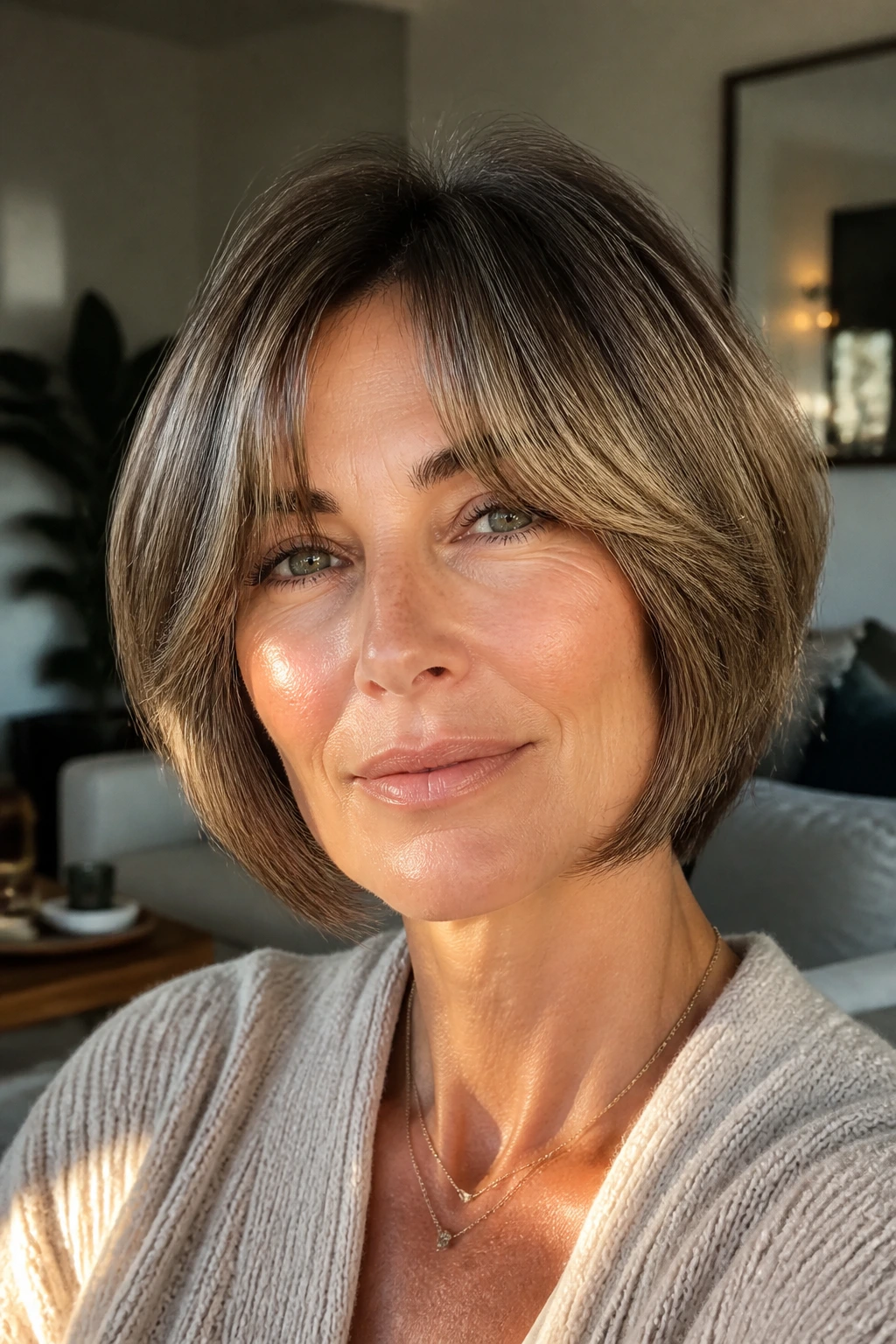
Curtain bangs can be tricky on fine hair, but when they’re done with a light hand, they do a nice job of breaking up the forehead and softening the whole cut. In a short stacked bob, the curtain shape blends into the face-framing layers and keeps the front from feeling heavy.
The rounded layers through the bob matter here. They help the hair curve in toward the neck instead of flaring out at the sides. That curve is flattering on fine hair because it gives the illusion of thickness without trying to pretend the hair is something it isn’t.
This is a good choice if you like a cut that feels a little lived-in. The bangs don’t have to be perfectly centered every day. A slight shift in part can make them look better, honestly.
6. Razor-Cut Bob with Wispy Ends
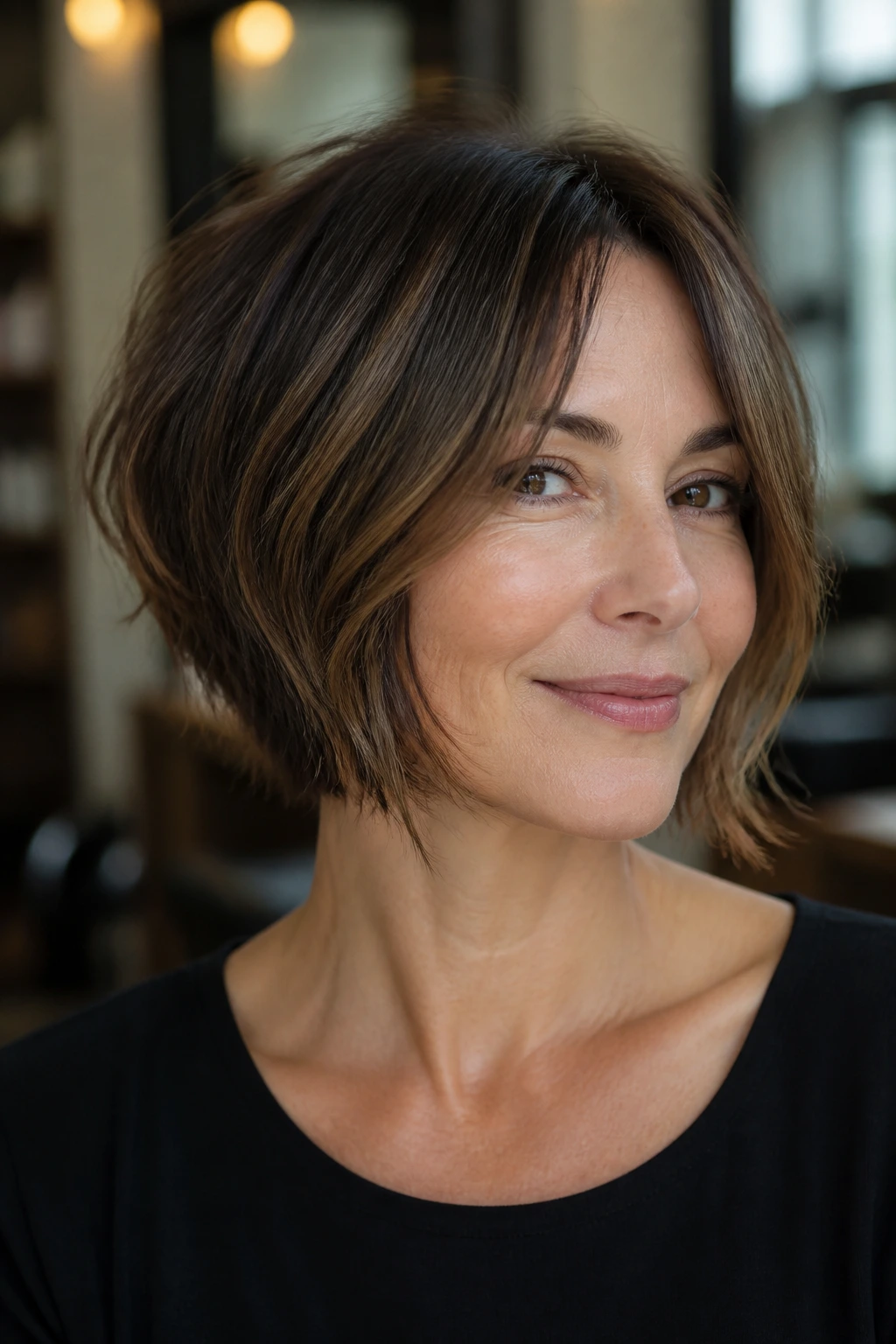
A razor-cut bob can look gorgeous on fine hair when the stylist knows where to stop. The ends get a little piecey and feathered, which gives the cut movement and keeps it from looking blocky. The face-framing layers can be sliced softly so they taper into the jaw instead of landing like a hard shelf.
Here’s the catch: razor cutting is not the place to get greedy. If fine hair is already sparse at the ends, too much slicing can make the perimeter look thin and tired. I prefer this style when the hair has enough density to handle softness without disappearing.
The Texture Payoff
This cut shines when you use a lightweight spray or a small amount of mousse and rough-dry the roots. The ends separate just enough to show shape, not so much that they look frayed. That balance is what makes it feel modern rather than over-processed.
7. Jaw-Length Bob with Hidden Interior Layers
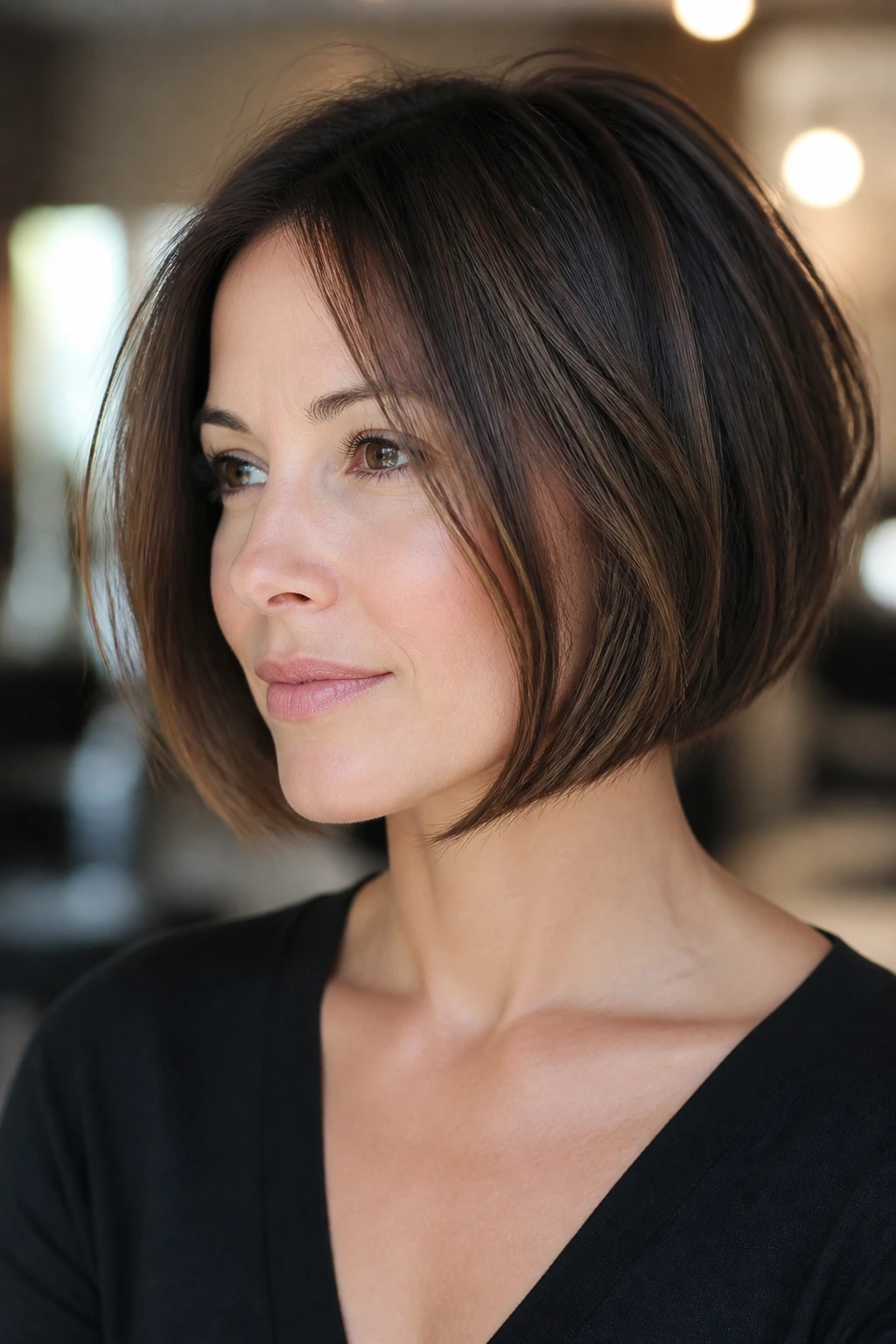
Some haircuts shout. This one doesn’t. A jaw-length bob with hidden interior layers keeps the outside line clean while removing just enough weight inside the shape to give fine hair a little spring. It’s a smart move if you want fullness without obvious layering.
The face-framing pieces should be subtle here. Think of them as a soft bevel around the face rather than a dramatic curtain. That helps the haircut sit close to the jaw and makes the silhouette feel fuller from the side.
The reason I like this cut is simple: it photographs like a blunt bob, but it behaves more like a layered one. You get the neat edge and the lift. That’s a rare combination.
8. Wavy Stacked Bob with Air-Dried Bend
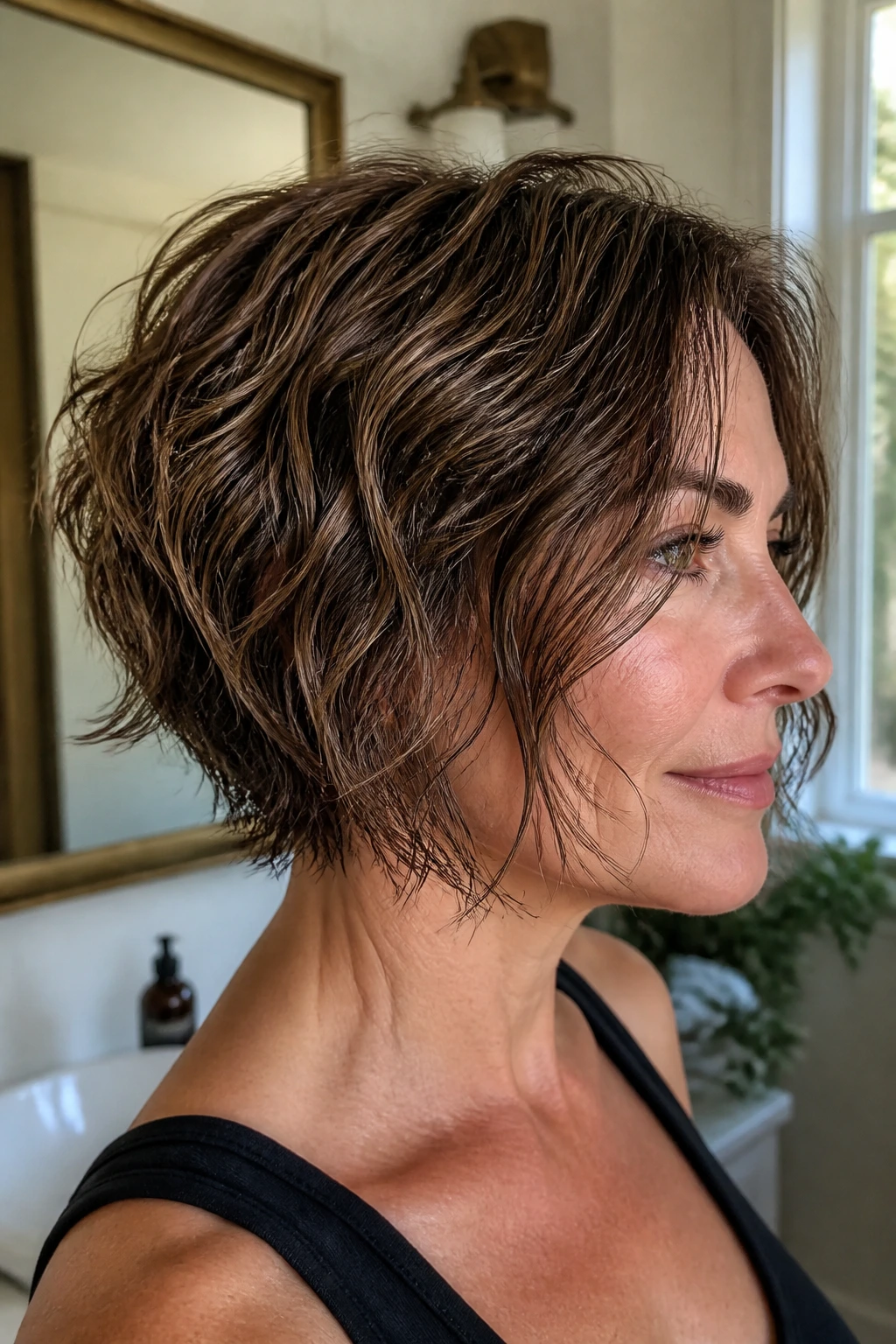
If your fine hair has even a little natural wave, don’t fight it. A wavy stacked bob uses the texture to create lift through the crown and movement around the face, which is exactly what a flat, one-length cut tends to miss. The trick is keeping the layers soft enough that the waves don’t spring outward like a bell.
This version works especially well with face-framing layers that start around the cheekbone. When the wave hits those longer front pieces, you get a curved line that looks casual but still deliberate. A little salt spray or mousse can help, but too much product will drag fine hair down fast.
Air-Dry Note
Scrunch the hair with a microfiber towel and let the top dry without touching it too much. If you keep fluffing the roots while it’s still damp, the wave pattern can break into weird bends. Patience matters here. Annoying, yes. Worth it, also yes.
9. Sleek Angled Bob with Long Front Pieces
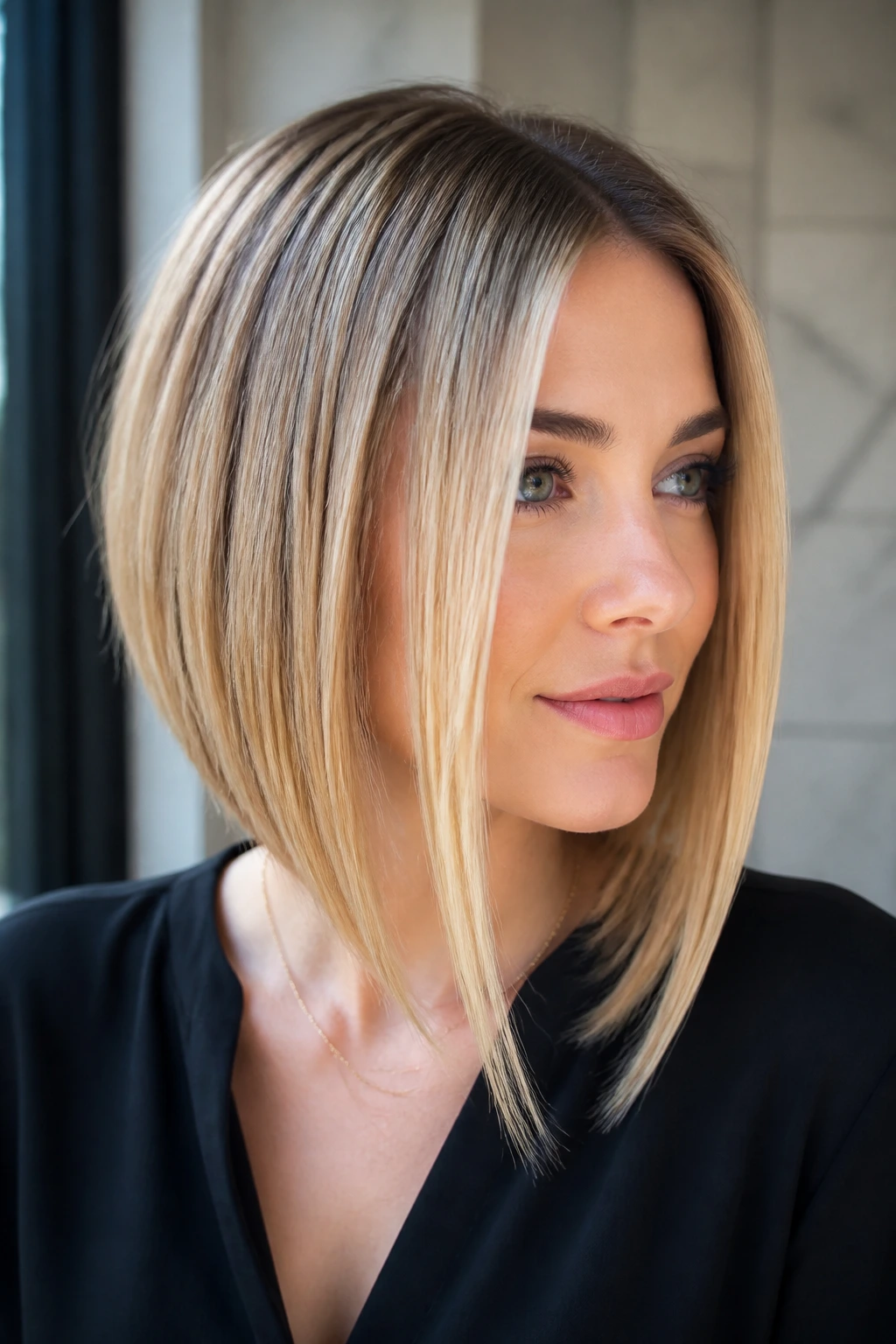
A sleek angled bob is for someone who likes a cleaner line and doesn’t want a lot of texture competing with the cut. The back sits shorter, the front gets longer, and the whole shape slopes downward in a way that makes fine hair look intentional and sharp.
Long front pieces are the key. They draw attention away from the lack of bulk at the bottom and make the face look framed rather than boxed in. If your hair is straight and fine, this is one of the easiest bobs to keep looking neat with a flat brush and a blow dryer.
I’m partial to this cut when the hair is glossy and smooth. It has a little edge, but not in a loud way. Clean. Simple. Effective.
10. Layered Bob with a Feathered Nape
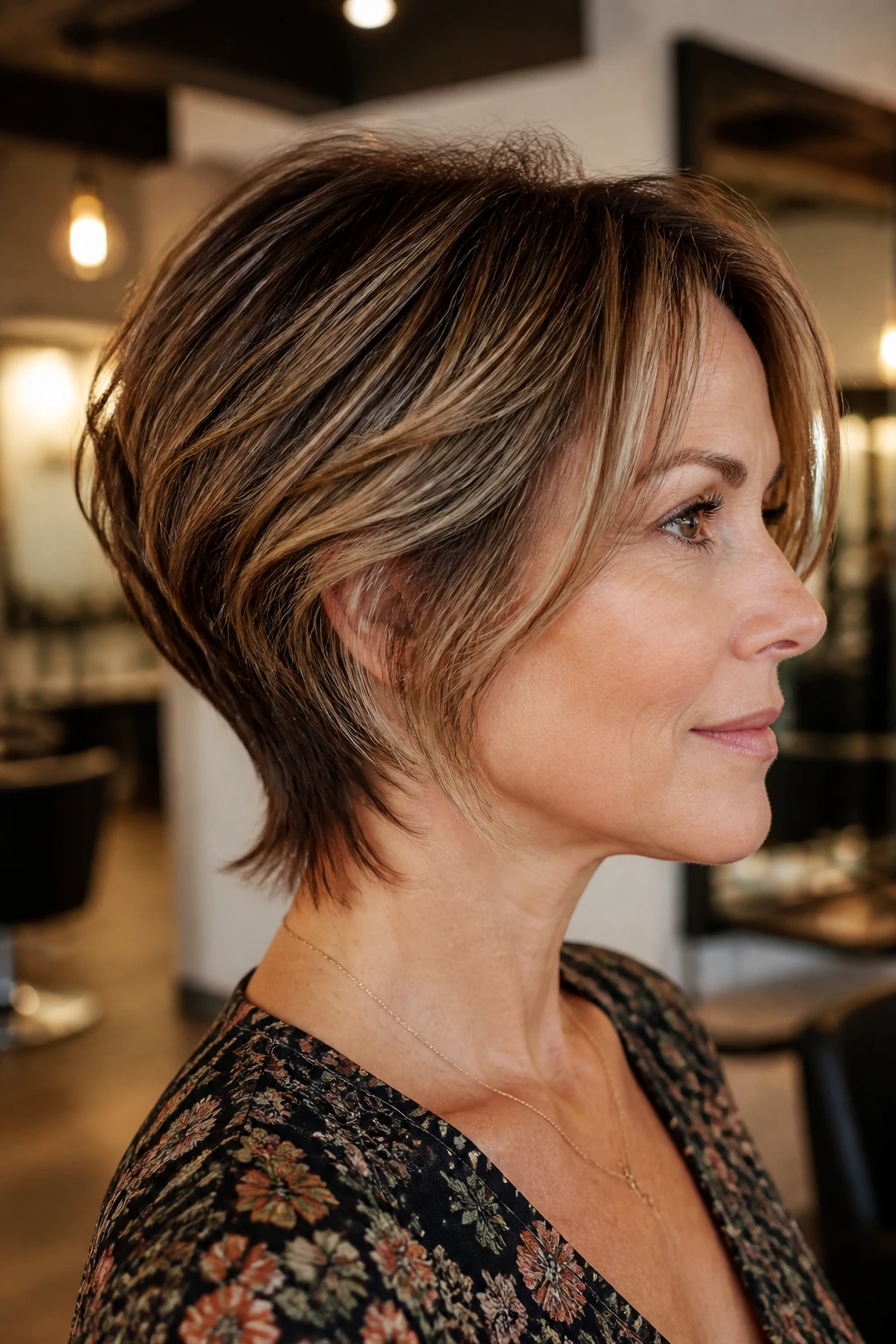
A feathered nape keeps a short bob from feeling heavy at the neck. Instead of one blunt line hugging the collar, the hair tapers softly upward, which gives fine hair lift and a cleaner silhouette. The face-framing layers should echo that softness so the cut feels connected from back to front.
This cut is especially useful if you hate hair sticking to your neck. The feathering keeps the nape light, and the short length gives you that crisp bob shape without too much bulk. It’s practical, but it doesn’t look practical. That’s a win.
If your hair tends to puff at the sides, keep the feathering focused low at the nape and leave a little more weight through the cheek area. That keeps the shape from getting too airy.
11. Micro-Bang Bob with Soft Sides

Micro bangs change the whole mood of a bob. Paired with a short stacked shape, they create a strong top line that keeps fine hair from getting lost in too much face framing. The sides stay soft, which stops the cut from feeling severe.
I’d only recommend this if you like a noticeable style. Micro bangs are not subtle. They draw attention straight to the eyes and brow, and the bob underneath needs enough structure to support that contrast.
The face-framing layers here should be longer and more delicate, almost like a whisper around the jaw. Too much layering near the front and the whole thing starts to look overworked.
12. Collarbone-Grazing Lob with a Short Stack
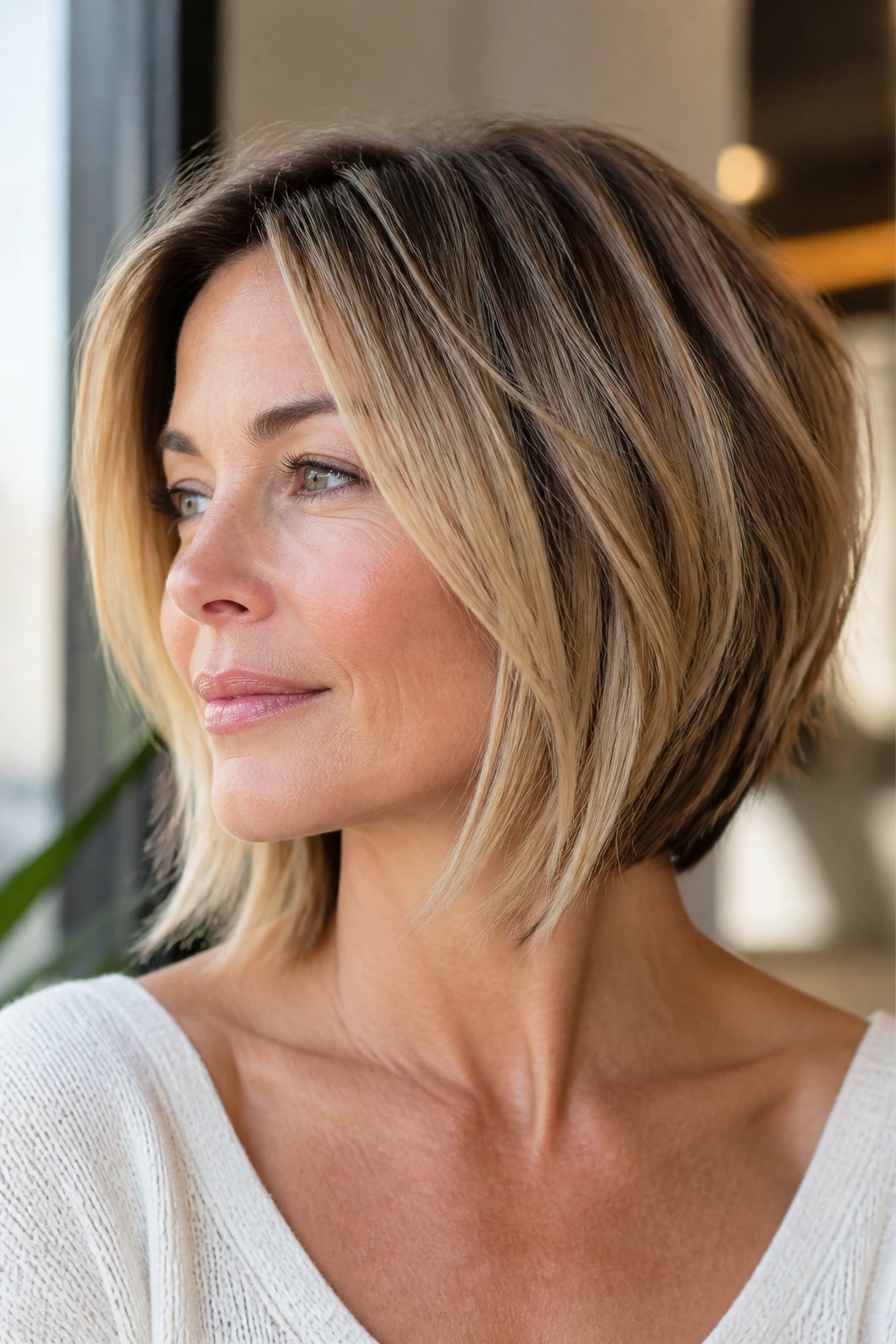
Yes, it’s a lob, but it still belongs here. A collarbone-grazing length with a short stacked back gives fine hair a longer option without sacrificing the lift that makes short cuts work. The face-framing layers are longer too, usually starting closer to the chin or collarbone.
This is the cut for people who want to keep some length but are tired of hair that hangs flat and gets stringy at the ends. The stack at the back keeps the crown from collapsing, and the front pieces make the face look narrower and more open.
It’s also a good stepping stone if you’re nervous about going too short. You get the shape of a bob with a little extra swing.
13. Tucked-Behind-the-Ear Bob with Lifted Crown
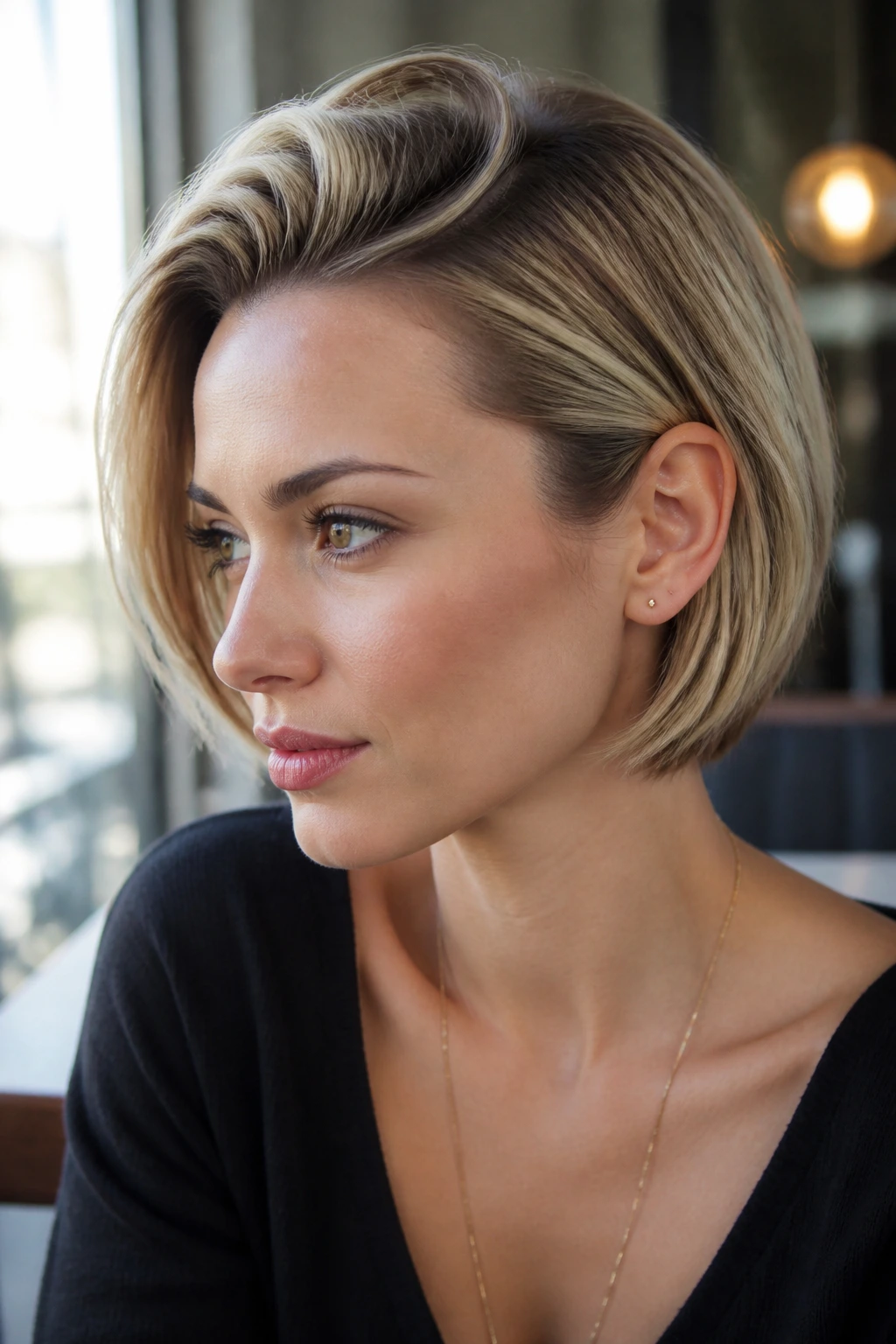
Some haircuts look best when they’re styled back from the face. A tucked-behind-the-ear bob with a lifted crown plays off that idea, letting one side stay open while the other gets tucked in to show off the jaw and cheekbones. Fine hair benefits because the crown can be lightly teased at the roots without needing a ton of product.
The face-framing layers need enough length to move when tucked, usually just past the cheekbone. If they’re too short, the tucked side can look chopped off. Longer front pieces make the whole thing feel softer and more natural.
This one is quietly flattering. It doesn’t shout for attention, but it makes the neck look longer and the crown look fuller. That’s a decent trade.
14. Shaggy Bob with Piecey Face Framing
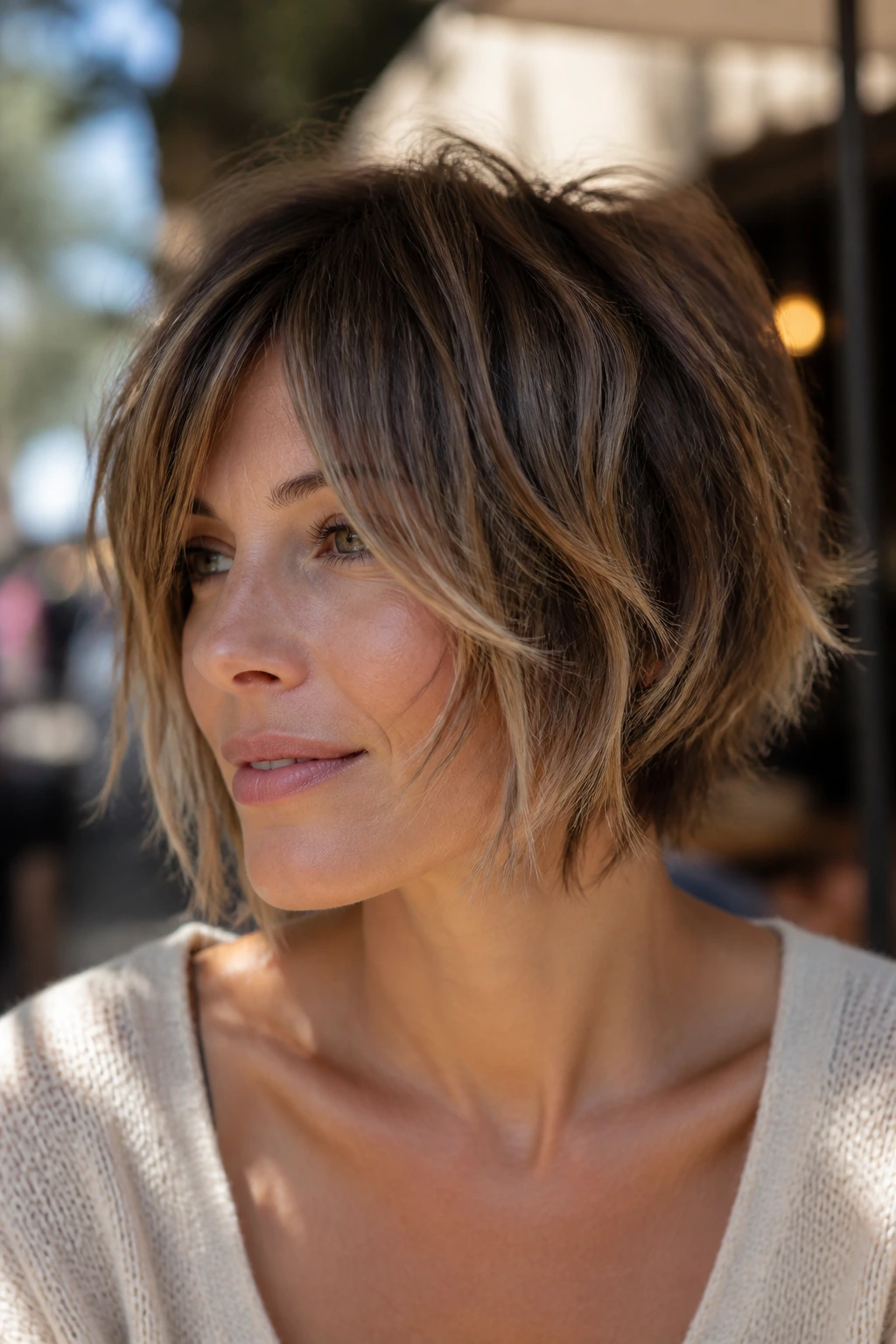
A shaggy bob is the messy cousin in this family, and I mean that as a compliment. The stack is still there, but the layers are looser and the front pieces are cut in a way that gives a little separation around the face. Fine hair can wear this shape well as long as the layers don’t get too numerous.
This works best when you like texture. A bit of wave cream or a light texturizing mist helps the ends break apart in a controlled way. Without that, the cut can just look fuzzy. There’s a difference.
What Makes It Different
The piecey front makes the haircut feel casual, but the stacked nape keeps it from drifting into shapeless territory. It’s a good fit if your hair has soft bends and you don’t want a style that looks over-polished.
15. Rounded Bob with a Full, Bouncy Silhouette
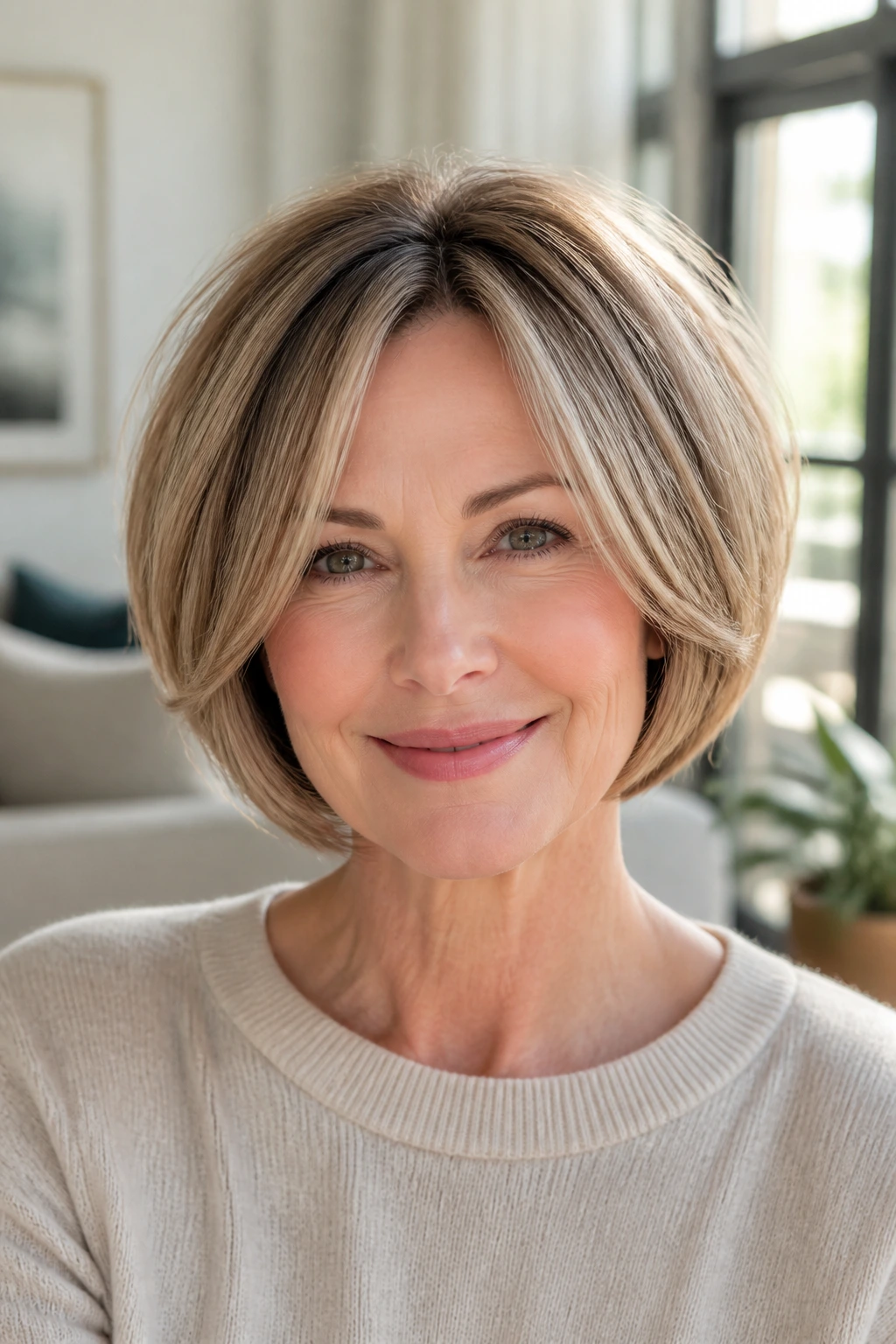
A rounded bob brings the hair inward at the ends, which is exactly what fine hair often needs. Instead of letting the perimeter flare out, the cut curves toward the neck and cheekbones, building the illusion of fullness around the head. Face-framing layers help keep the sides from turning into one smooth dome.
This is one of those styles that looks best when it’s blown dry with a round brush and a little root lift. The rounded silhouette can feel almost old-school in the nicest way. It has structure. It also has a little softness, which keeps it from feeling stiff.
If your hair is very straight and slippery, this may need more styling than some of the other cuts here. But when it works, it really works.
16. Asymmetrical Bob with One Long Front Side
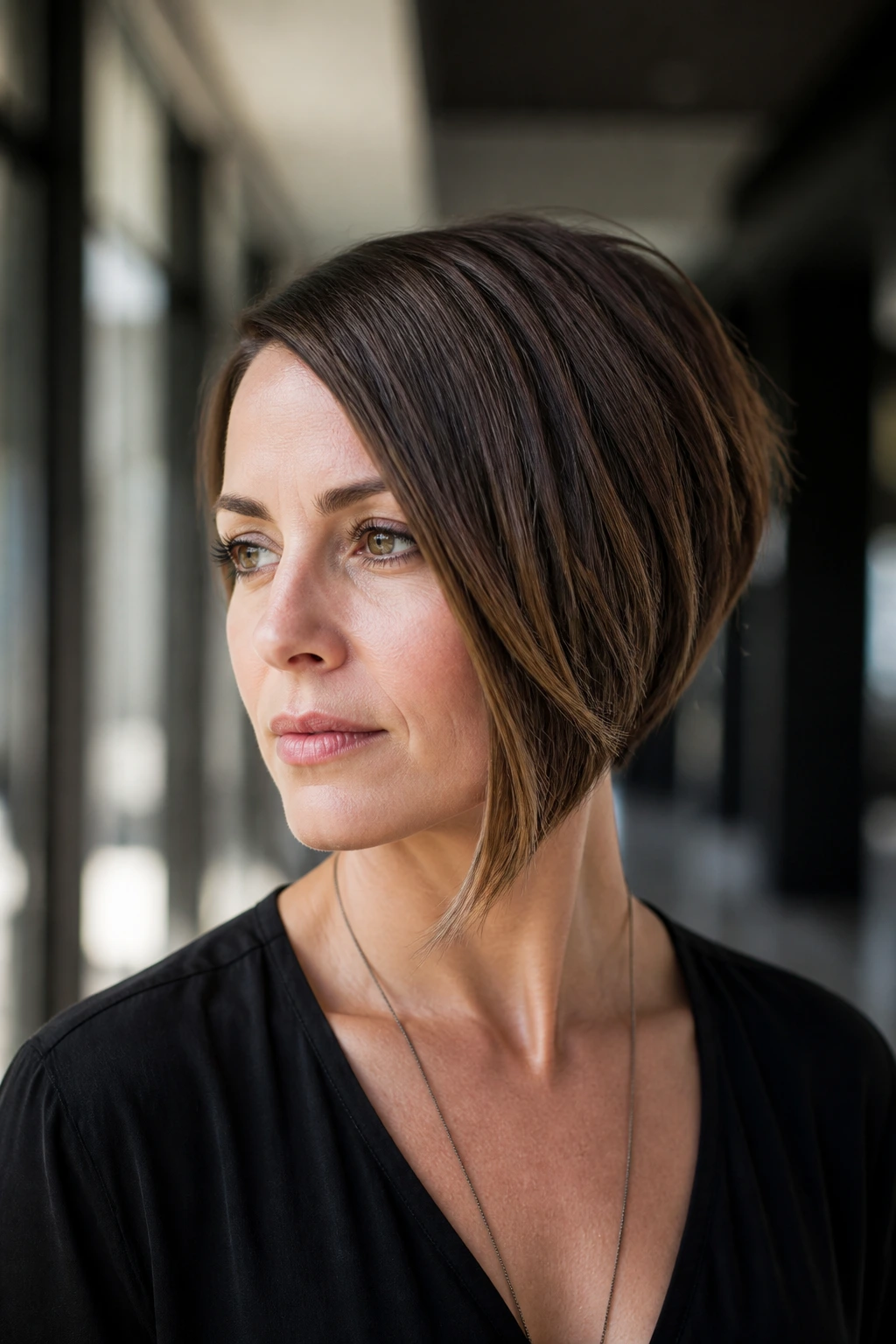
An asymmetrical bob changes the geometry in a way fine hair usually appreciates. One side stays slightly longer, the other side tucks up into the stack, and the uneven line creates interest even when the hair itself is not especially thick. Face-framing layers blend into the long side and make the asymmetry feel intentional.
I like this for people who want a bob with personality but don’t want a wild cut. The shape is modern without being fussy. And because one side is longer, the eye reads more length and movement than there really is.
A Small Warning
The asymmetry should be subtle. If one side is too long, the cut can start looking lopsided instead of sleek. Keep the difference visible but not dramatic unless you’re ready to style it every morning.
17. Blunt Bob with Barely-There Stack
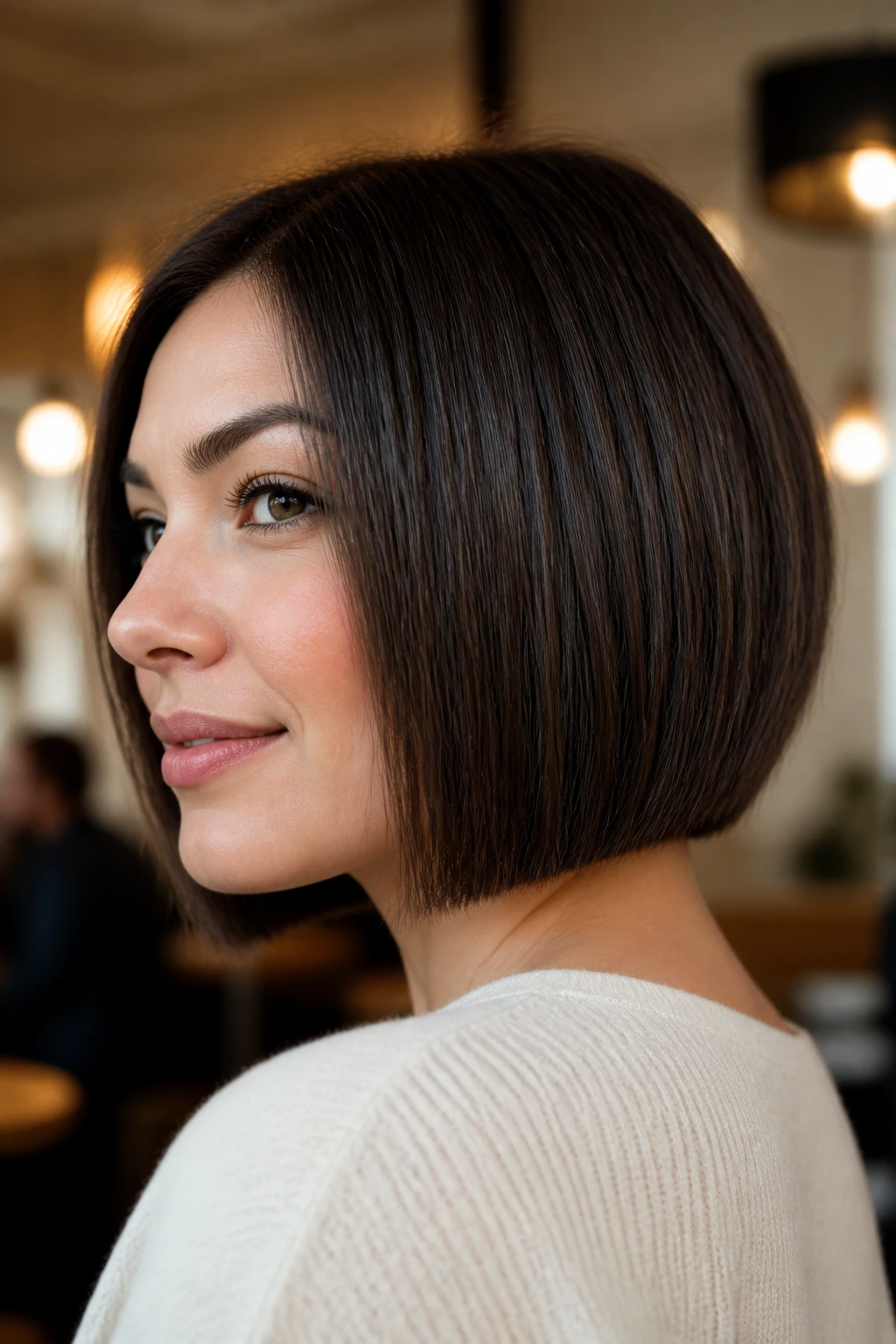
Not every stacked bob needs to announce itself. A blunt bob with a barely-there stack gives fine hair a stronger edge while sneaking in a little lift at the back. The face-framing layers are soft and mostly there to prevent the blunt line from feeling heavy around the face.
This shape works especially well when the hair is naturally fine but plentiful. You keep the density at the perimeter, which is useful if thinning the ends makes the whole head look too sparse. The stack is more about support than drama.
It’s a clean, polished option. If your hair likes to lie flat, the hidden stack gives it a better starting point.
18. Curly-Friendly Stack with Longer Face Layers
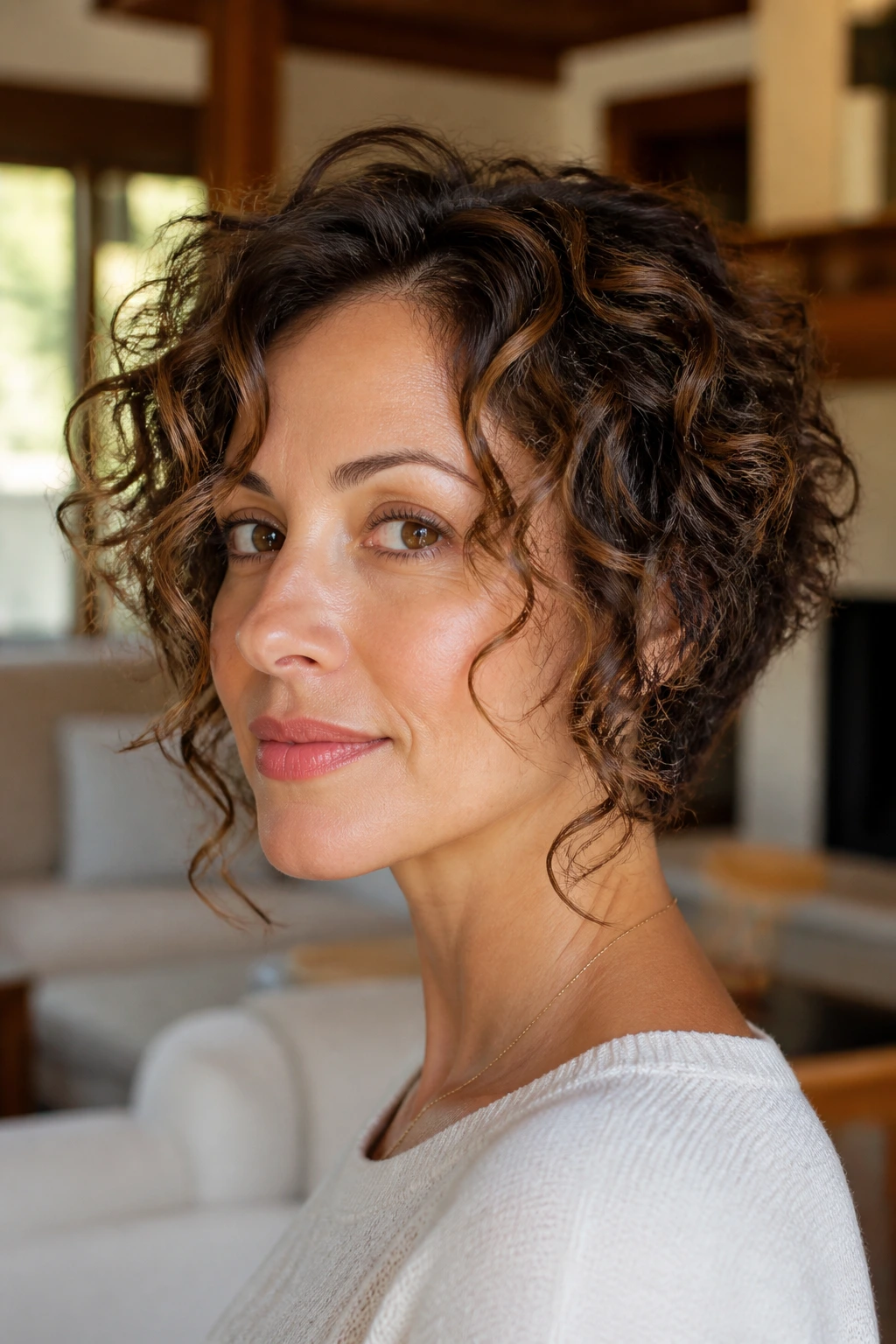
Fine curls need a different kind of bob. Too much stacking can make the hair spring up unevenly and expose the nape, so the better approach is a controlled stack with longer face-framing layers that follow the curl pattern. The front should be left long enough to curl instead of frizzing out at the cheek.
This cut can be gorgeous when the curls are soft and loose. The shape keeps the bottom from looking bulky, while the longer front pieces stop the outline from getting too round. It’s a balance thing. That’s the whole haircut, really.
A diffuser helps here, but don’t blast the hair dry. Let the curls form a bit before you touch them much. Fine curls punish overhandling.
19. Off-Center Part Bob with Diagonal Framing
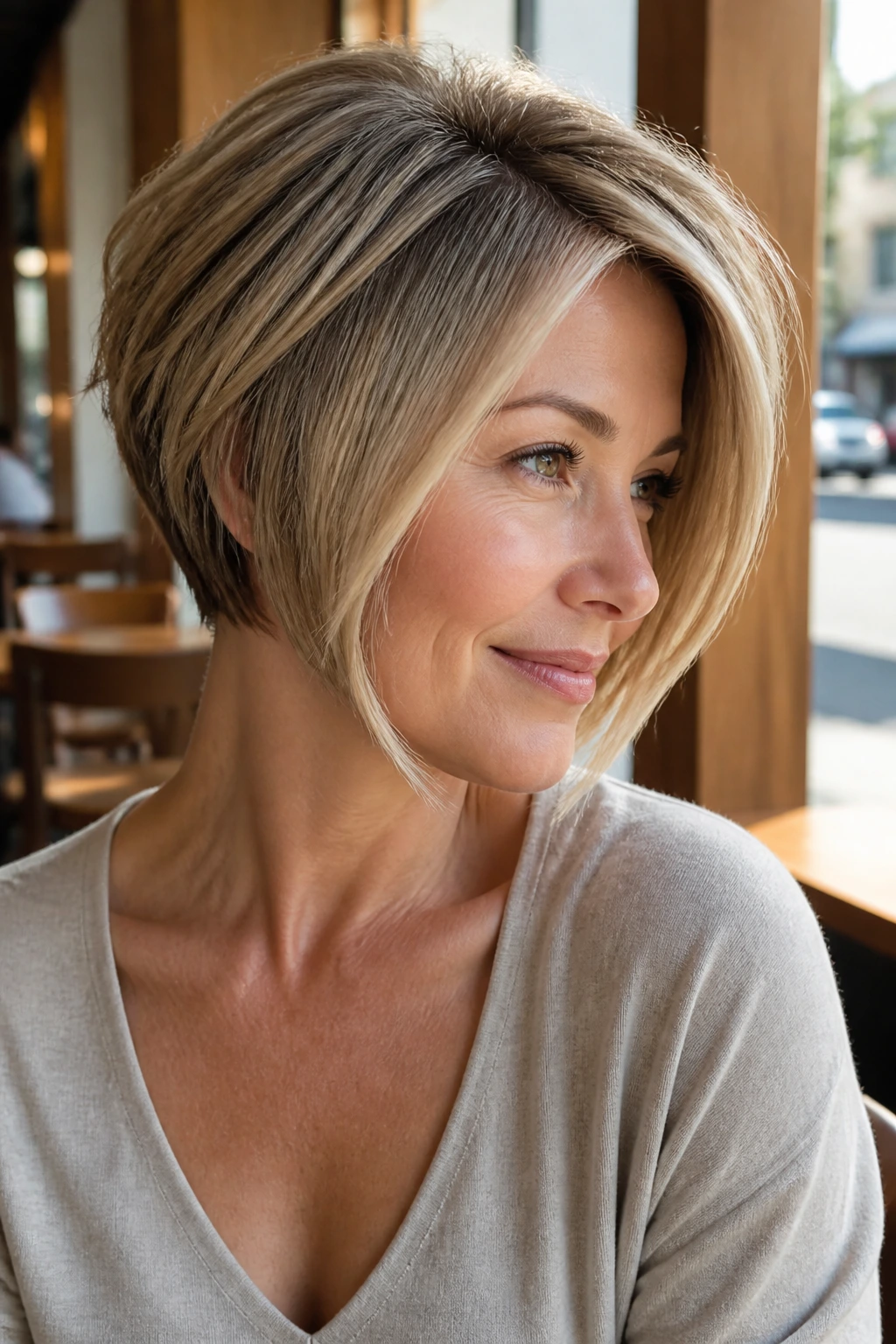
A slight off-center part gives a bob a little movement before you even pick up a brush. The diagonal line from part to chin creates a subtle frame around the face, and the stack at the back keeps the shape from dropping flat under its own weight. Fine hair loves the extra lift that comes from not being forced into a dead-straight center part.
This version is one of the easiest to wear if you want a clean, modern look without a lot of styling drama. The front layers should angle toward the longer side, almost like a soft sweep rather than a hard fringe. That keeps the face open and gives the whole cut a little swing.
The best part? It grows out well. No weird shelf. No sudden flop.
20. Airy Bob with Internal Graduation
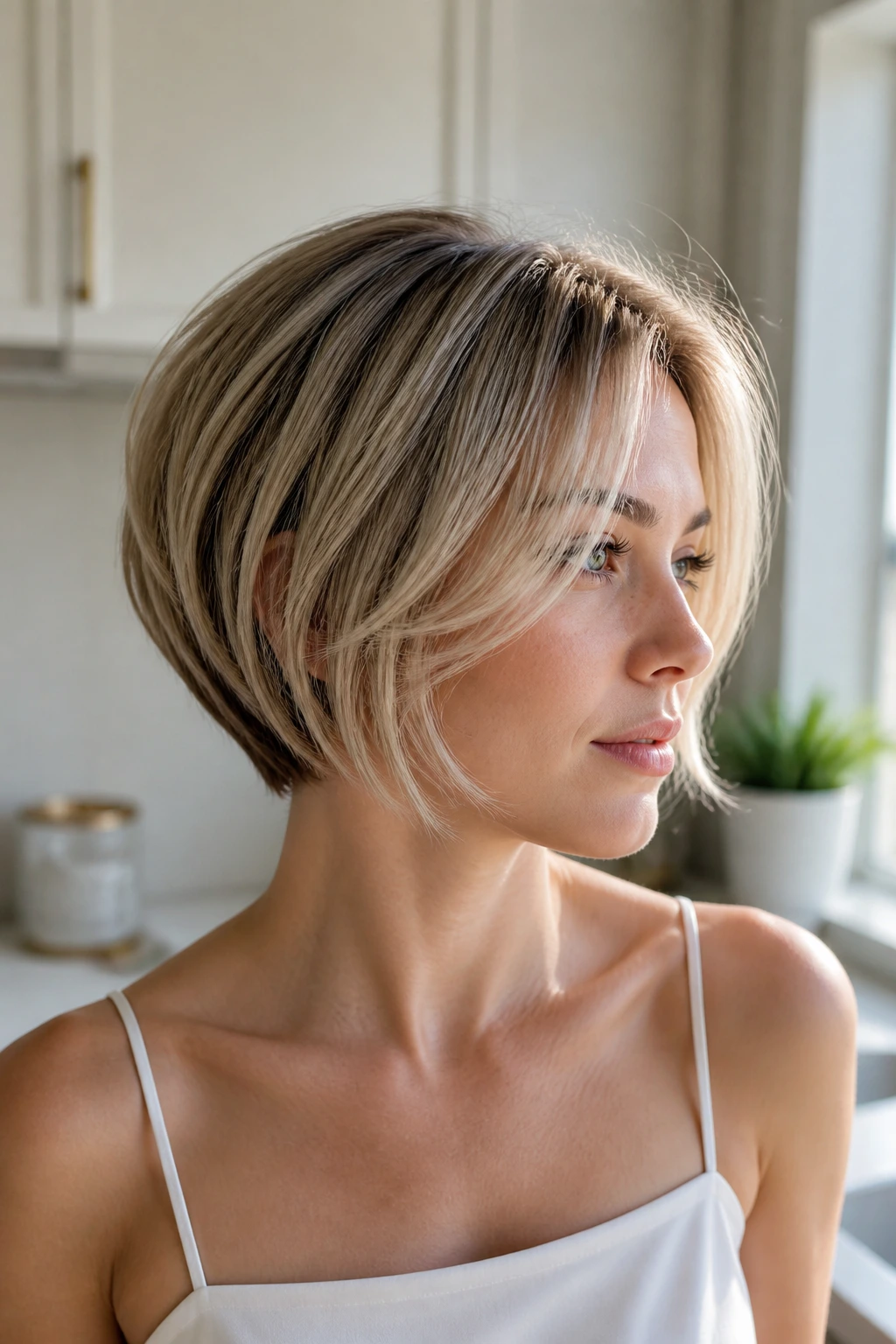
An airy bob is all about internal structure. The outside line can stay soft and light, while the inside layers support the shape and stop fine hair from collapsing. Think of it as hidden architecture. Not flashy, but it matters.
The face-framing layers should be long and feathered so the ends don’t look thin. This is a strong choice if you want movement without a lot of visible layering, especially on hair that’s naturally smooth and not very textured. It keeps the silhouette from feeling heavy around the chin.
I prefer this cut for clients who don’t want to see a lot of layers but still need the root lift that comes from a stacked shape. It’s the quiet achiever of the bunch.
21. Deep Side-Swept Fringe Bob
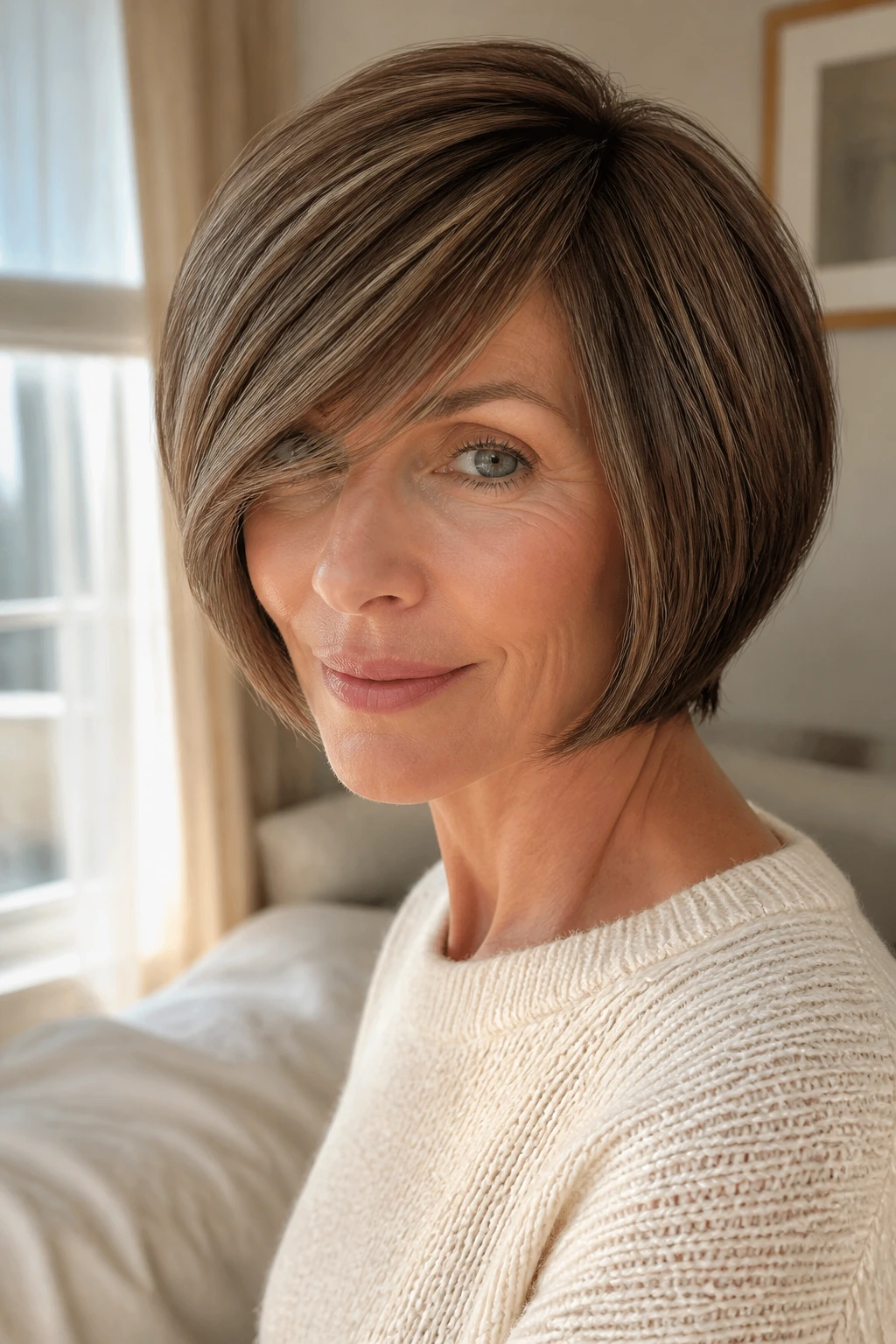
A deep side-swept fringe can make fine hair look fuller at the front because it spreads the visual weight across the forehead instead of stacking it in the center. Paired with a short bob, it softens the face and blends into the front layers without needing a lot of thickness.
This cut is especially nice if your hairline is a little uneven or if one side of your part always behaves better than the other. The fringe can hide that. It can also make a shorter bob feel less severe, which is a useful thing if your features are sharp.
The stack in the back should stay neat so the front fringe doesn’t steal all the attention. Otherwise the shape loses its balance.
22. Tapered Bob with a Narrow Nape
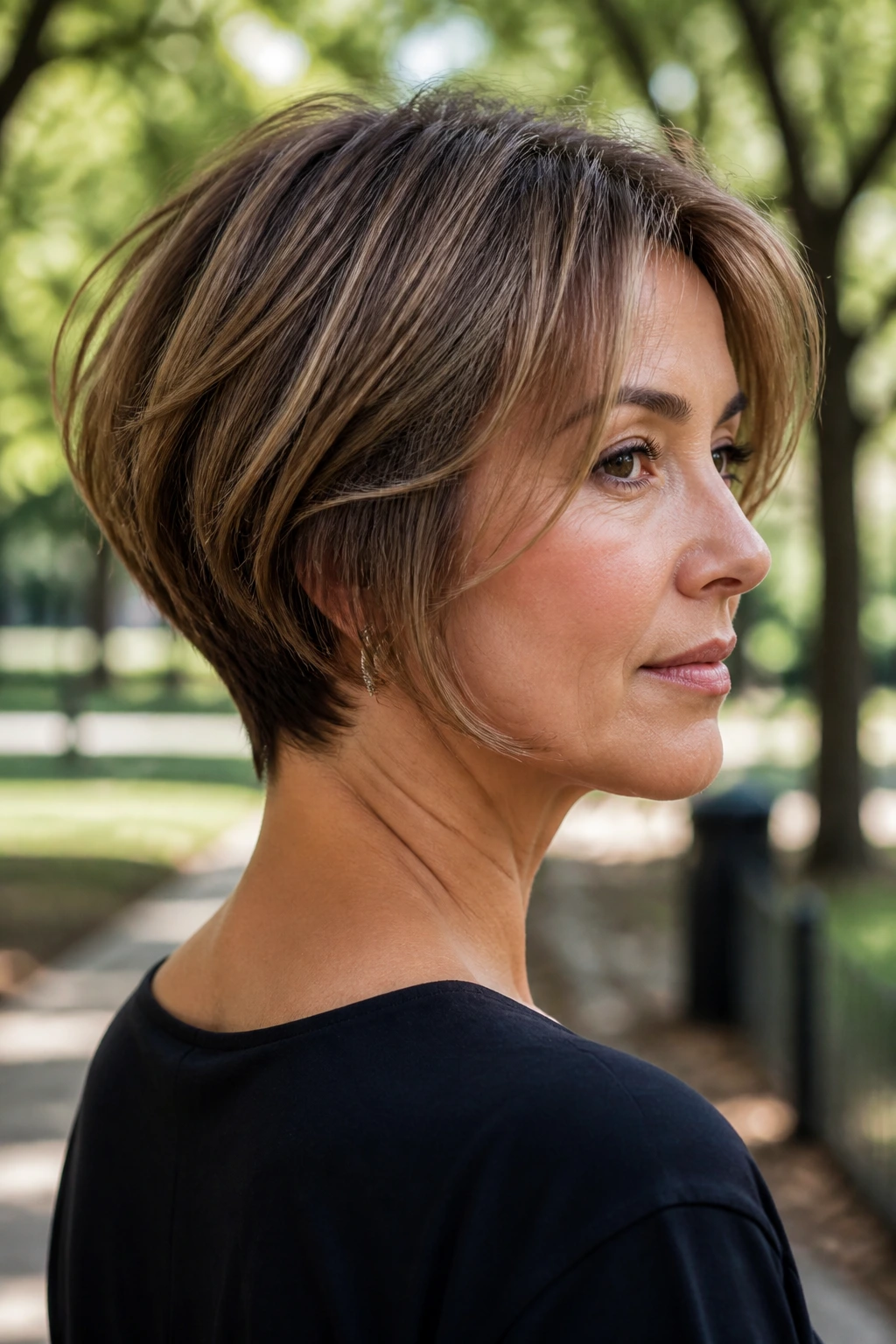
A tapered bob narrows in toward the nape, which makes the back of the head look more sculpted. Fine hair gets a lift from that taper because the cut reduces bulk where it would normally drag the shape down. The front layers can then fall softly around the face without competing with the back.
This style is neat, but not stiff. I think it works best when the finish is a little soft around the edges, not razor-sharp. That keeps it from looking too formal.
If you wear glasses, this bob is especially handy. The face-framing pieces can be shaped to clear the frames without tucking everything behind the ears.
23. Soft Undercut Bob for Dense Fine Hair
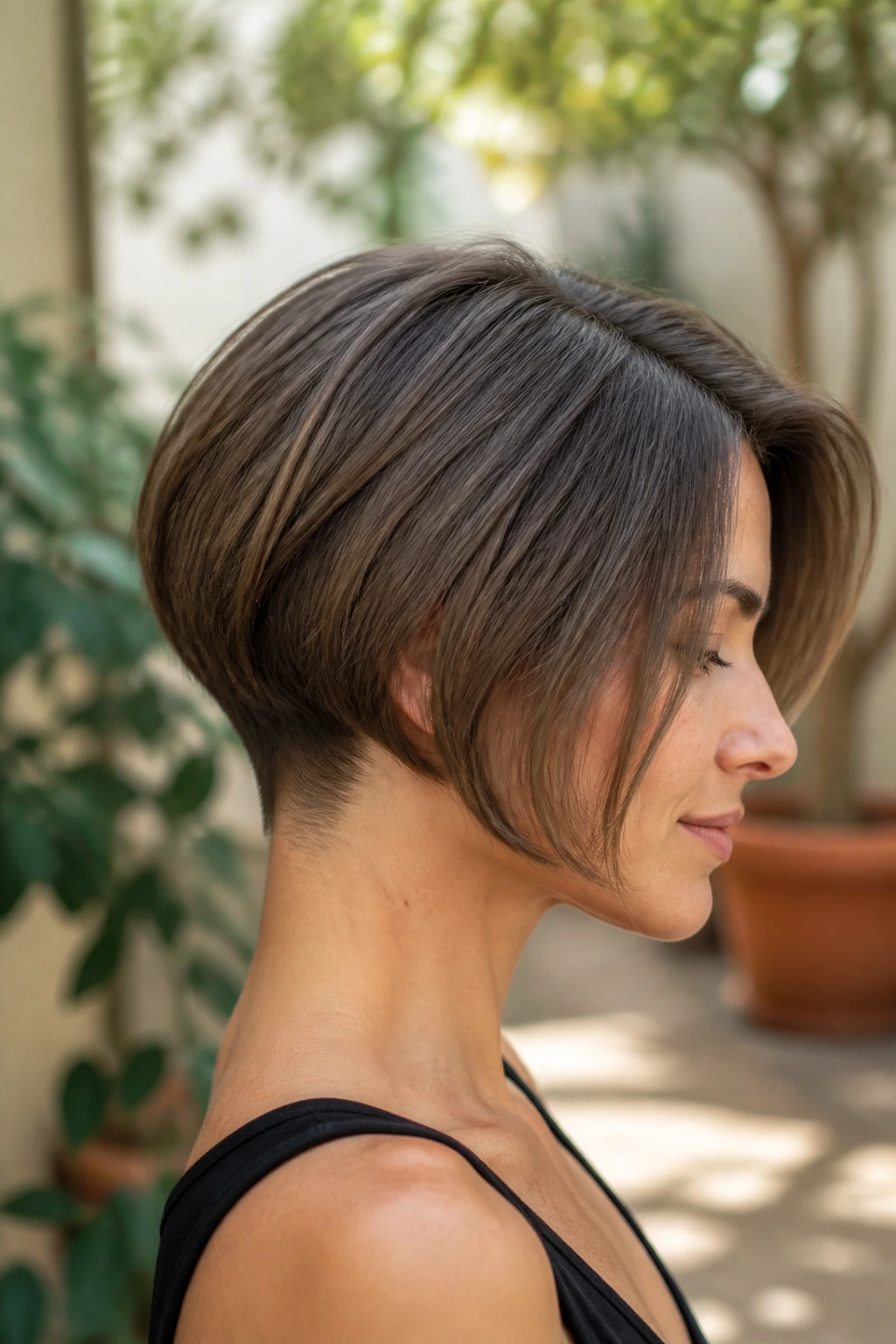
Fine hair can still be dense. People forget that. If you have a lot of strands but each one is slim, a soft undercut bob can remove hidden weight underneath while leaving the surface looking full. The face-framing layers stay longer so the cut doesn’t get too airy.
This is not the same as shaving the whole underside. It’s subtler, and that’s the point. The underlayer is thinned enough to keep the bob from puffing out, but not so aggressively that the scalp shows through.
When It Makes Sense
Choose this if your bob balloons at the ends or if the back takes forever to dry because there’s simply too much hair there. The undercut helps the style lie cleanly while the front pieces still feel soft and feminine.
24. Tousled Bob with Beachy Texture
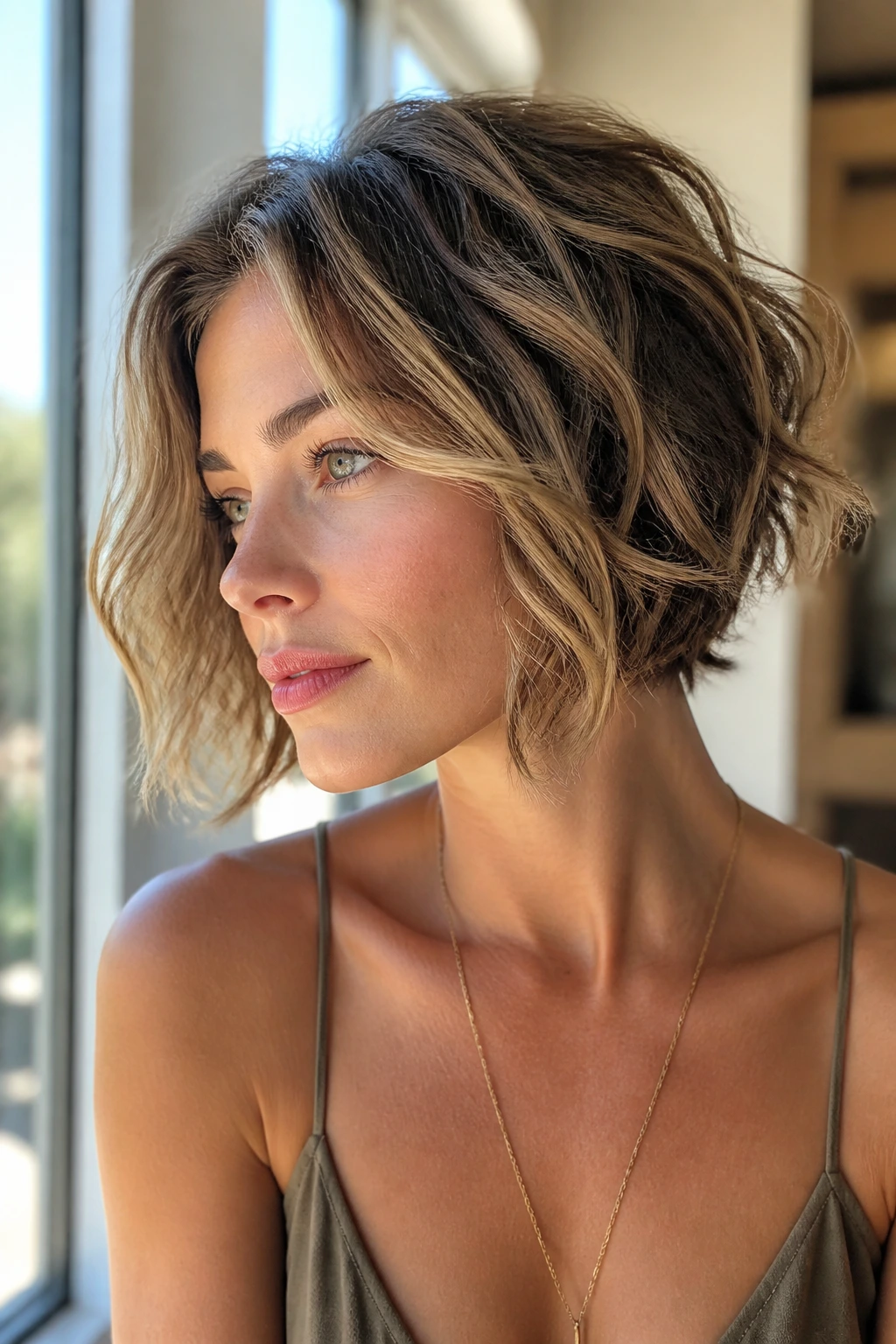
A tousled bob is one of the easiest ways to make fine hair look fuller without trying to fake thickness too hard. The stack builds lift, the face-framing layers break up the outline, and a little bend through the mid-lengths makes the hair look like it has more life than a straight blowout would show.
This cut works best when the texture is controlled. Two or three bends with a flat iron are enough. You don’t want tight waves here; they can make the hair look shorter than it is and expose the ends.
If you like hair that looks a little imperfect in a nice way, this is a strong pick. It doesn’t need to look freshly styled every second.
25. Grow-Out Friendly Stacked Bob with Collarbone Fronts

This is the bob I’d recommend to the person who wants the shape now and less regret later. The back stays short and stacked for lift, while the front stays long enough to graze the collarbone as it grows. Fine hair gets the volume of a bob without an awkward hard stop when the cut begins to lengthen.
The face-framing layers are the glue here. They bridge the short back to the longer front, so the grow-out phase feels planned instead of accidental. That’s a huge difference if you don’t love salon appointments every six weeks.
It’s practical, sure. But it also looks good on day one. That’s the part people forget to ask for.
Why a Stacked Shape Lifts Fine Hair Better Than a Straight Cut
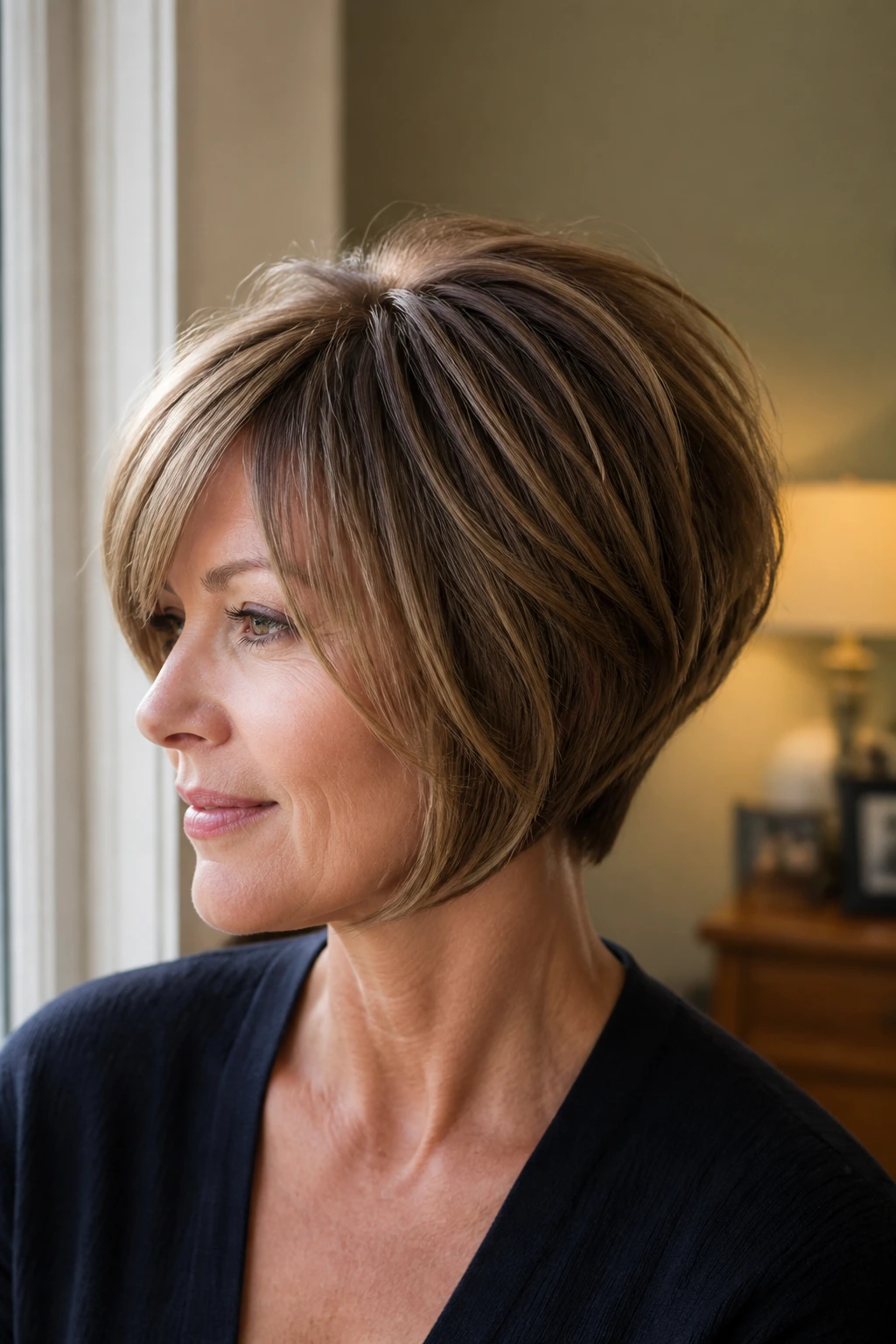
A straight one-length cut can look clean on fine hair for about ten minutes. Then gravity wins. The hair settles, the ends get wispy, and the whole shape starts to look a little too honest about how much hair is actually there. A stacked bob changes that by taking weight out of the back and giving the crown a curved support line.
That curve matters. Hair doesn’t “float” on its own; it needs structure under it. When the nape is stacked properly, the top layers rest on a built-in shelf of shorter lengths, which creates lift without needing a ton of teasing or backcombing. Face-framing layers help the front travel with that shape instead of hanging there like a separate piece.
I also like how stacked bobs behave on second-day hair. Fine hair usually collapses overnight, but a well-cut stack wakes up with less damage than long layers do. You still need a dry shampoo or a quick root spray sometimes. You’re not getting magic. You are getting a cut that does half the job before you even touch it.
Essential Tools for Styling These Bobs
-
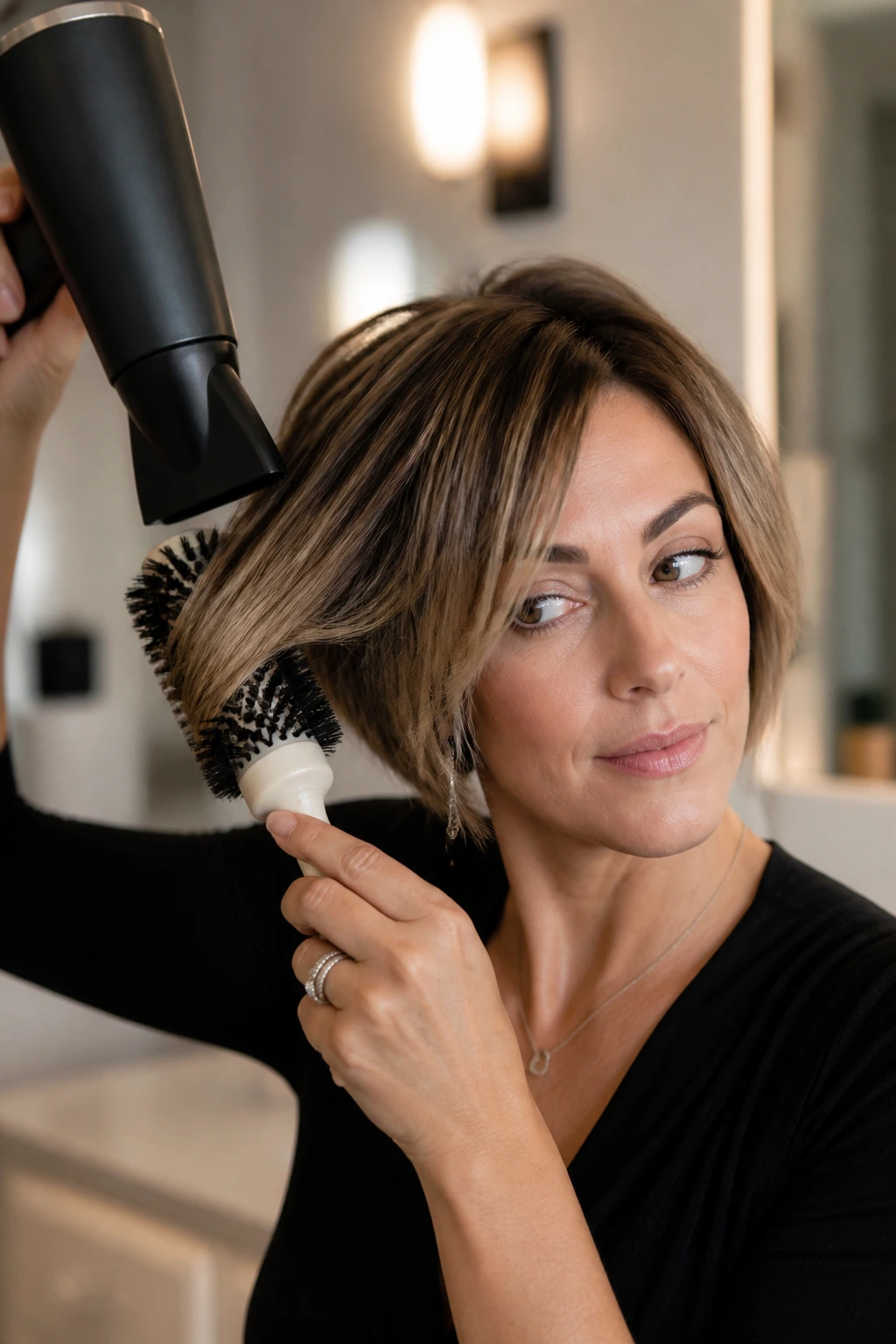
Blow dryer with a concentrator nozzle: Directs air at the roots so the crown doesn’t puff randomly.
-
Small to medium round brush: A 1-inch brush gives more bend; a 1.5-inch brush gives a softer curve at the ends.
-
Heat protectant spray: Fine hair burns fast, especially around the face where pieces are shortest.
-
Lightweight mousse or root-lift spray: Adds body without the heavy, sticky feel that can crush fine strands.
-
Flat iron with narrow plates: Useful for bending face-framing layers or flipping the ends under with precision.
-
Tail comb: Helpful for clean parting and lifting sections at the crown while blow-drying.
-
Duckbill or sectioning clips: Keep the top out of the way when you work the lower layers.
-
Texturizing spray: Good for finishing, but use it lightly; too much can make fine hair feel dry and rough.
-
Smoothing serum: One drop on the ends can calm frizz, though I’d avoid loading it on the roots.
-
Mirror with good side visibility: Sounds silly, but stacked bobs live and die by the side profile.
What to Tell Your Stylist Before the First Snip
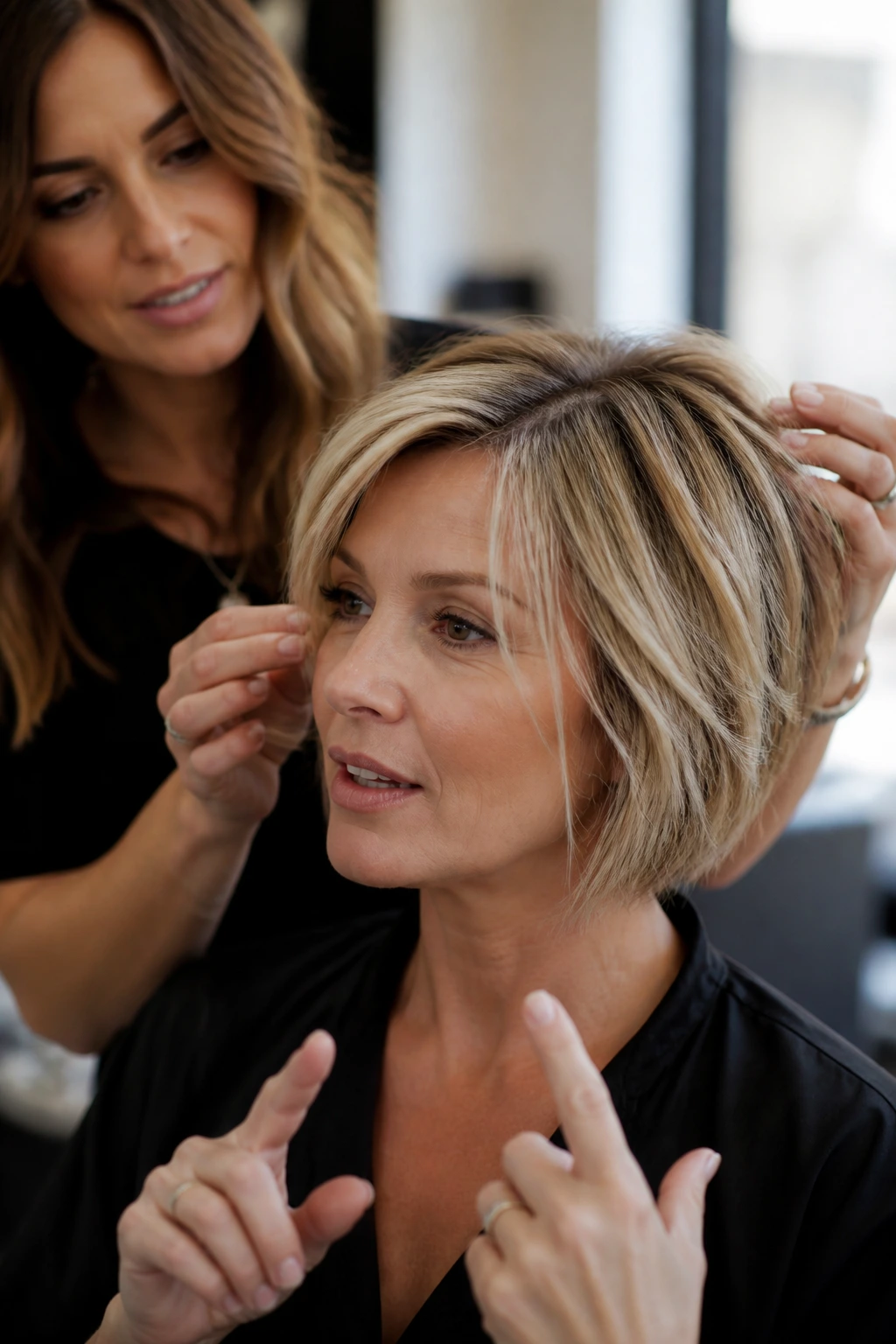
Fine hair needs a conversation, not a vague request for “something shorter.” Bring photos, yes, but also talk about where your hair falls flat. Tell the stylist whether the crown needs lift, whether the nape gets bulky, and whether the ends tend to look thin after a few weeks. Those details shape the cut more than the inspirational image on your phone.
Ask where the face-framing layers will start. Cheekbone? Jaw? Chin? That one answer changes the whole look. If your hair is very fine at the temples, starting too high can leave the front wispy. Starting lower usually keeps more softness and control.
One more thing: tell them how much time you want to spend styling. A stacked bob can be sharp and polished, but it can also be designed for air-drying. Those are different cuts. Don’t let anyone pretend they’re the same.
How to Style These Bobs Without Flattening the Crown
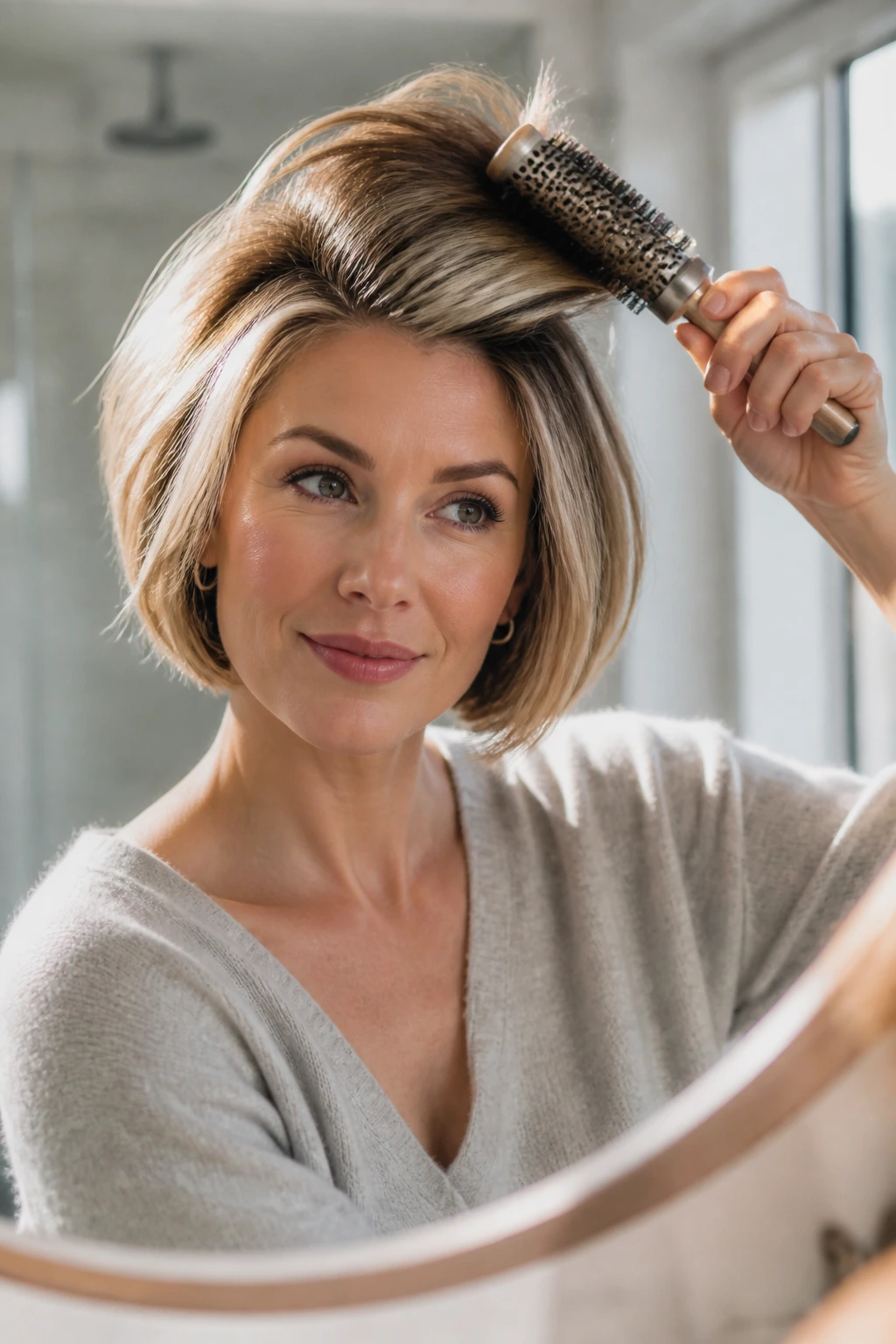
Root lift first.
That’s the part people skip, then wonder why the haircut looks smaller than it did in the chair. Dry the roots in the opposite direction of your part for a minute or two, then switch back and smooth the top into place. It gives the crown a little memory.
Use less product than you think.
Fine hair gets heavy fast. A pea-sized amount of smoothing cream is plenty for the ends, and even mousse should feel like a whisper, not a mask. If your hair starts to look damp after product, you’ve gone too far.
Round brush the face-framing pieces forward, then away.
That tiny movement opens the face and keeps the layers from sticking flat to the cheeks. For a softer finish, wrap the ends around the brush for just a second as the heat cools.
Sleep on it gently.
A satin pillowcase helps, and a loose clip at the crown can keep the stack from getting smashed. It’s not glamorous. It works.
Small Styling Moves That Make the Cut Look Fuller
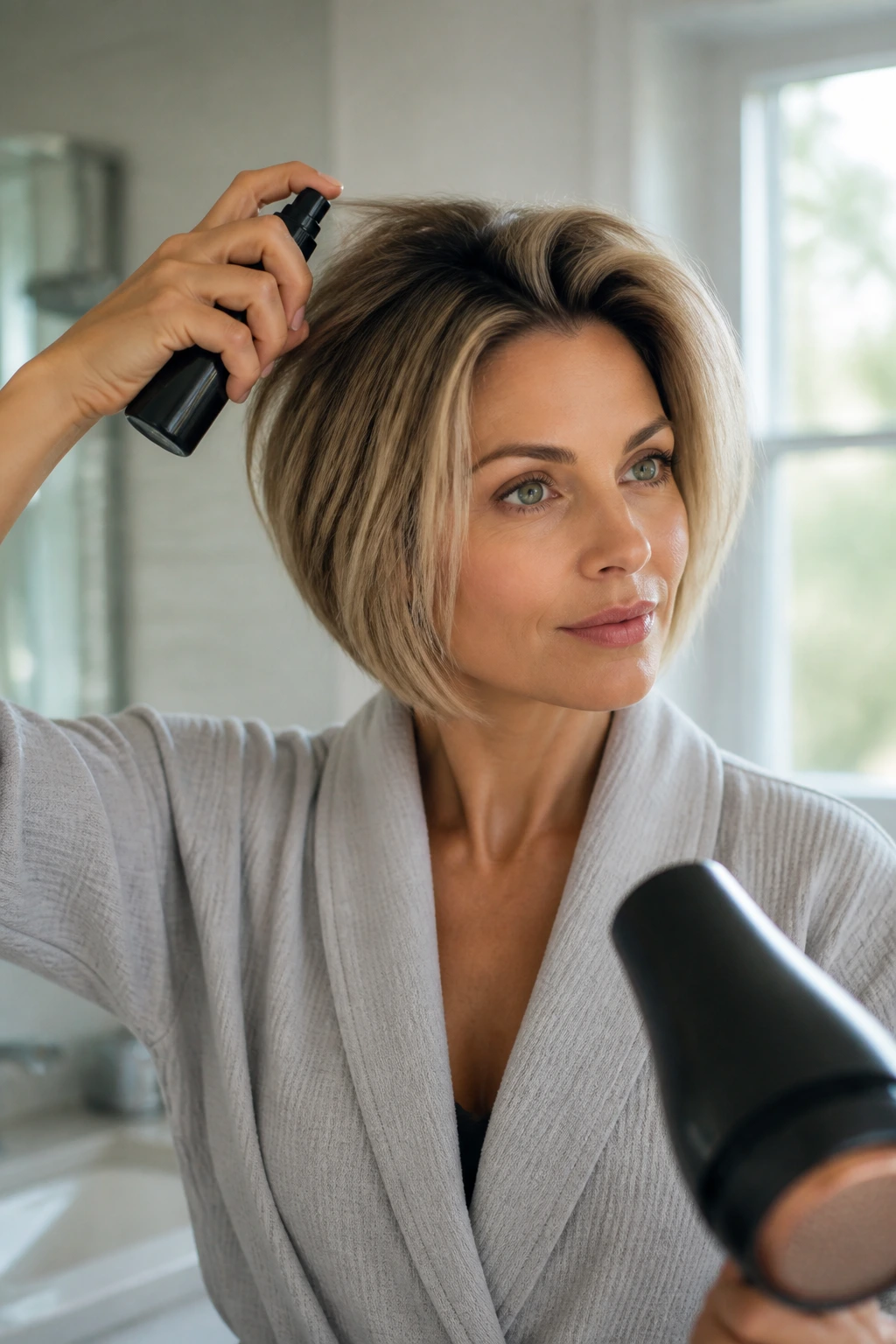
Root Lift: Use a root spray only at the base, then blow-dry that area with your fingers before you pick up the brush. Fine hair often needs the roots to be dry before the lengths are finished.
Texture Control: If the ends separate too much, rub one drop of serum between your palms and touch only the last half-inch. Don’t rake it through. That’s how the bob loses its shape.
Face Framing: Bend the front pieces away from the face for a cleaner look, then flip one side inward if you want a softer line. Either way, keep the motion light. Over-curled face layers can look dated fast.
Volume Refresh: On day two, mist the crown with water or a lightweight spray, lift with your fingers, and hit it with cool air for 20 to 30 seconds. You don’t need a full wash to make the style behave.
Common Mistakes That Make Fine Hair Look Thinner
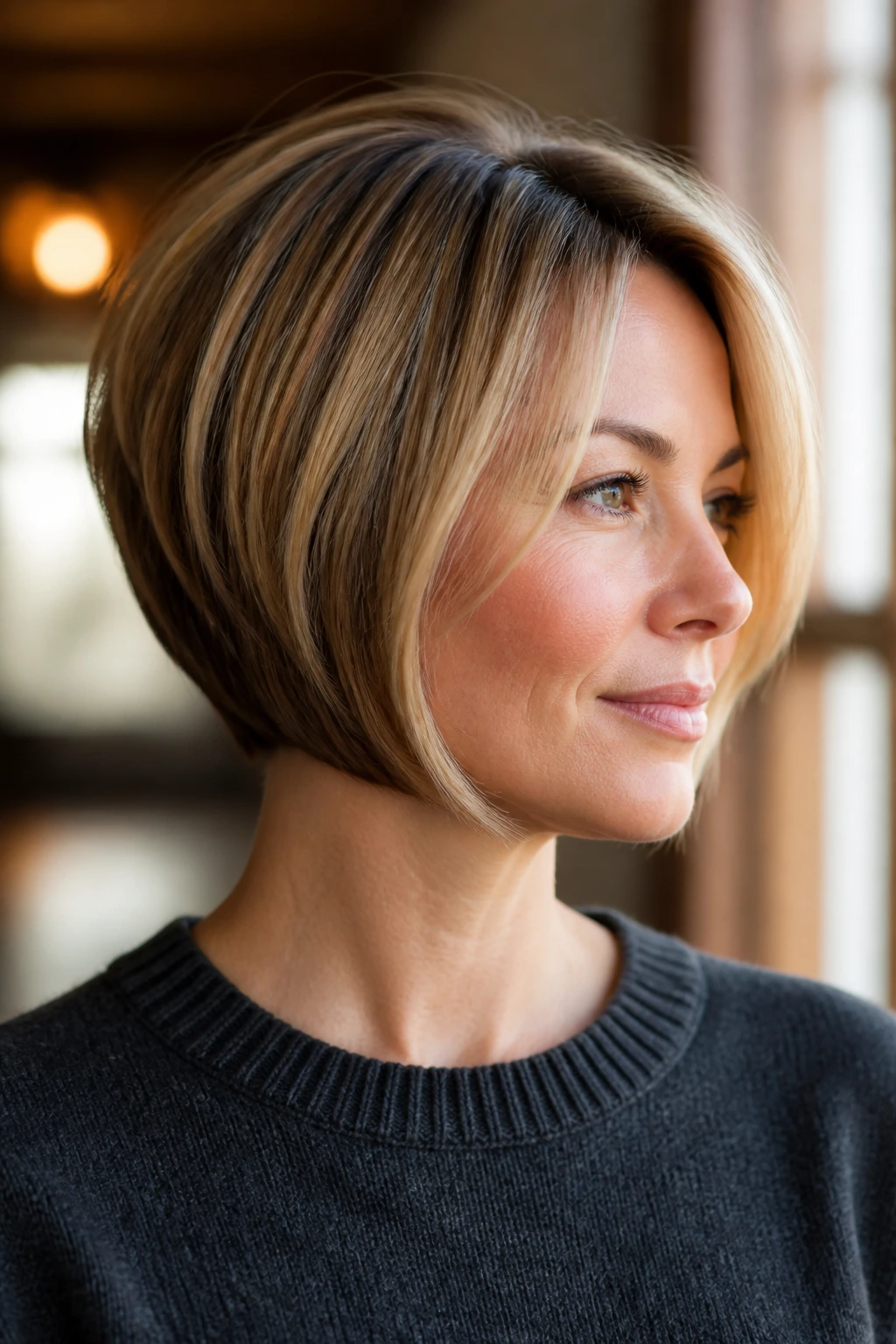
The first mistake is over-layering the ends. Fine hair can’t always support a lot of slicing. When the perimeter gets too wispy, the cut starts to look see-through from the side, and no amount of blow-drying fixes that. Keep the lower line strong.
Another bad move: stacking too high at the back. People ask for “lots of volume,” and the result is often a round little cap sitting on the crown. That shape can look dated and make the hair seem shorter than it is. A controlled stack gives lift without turning the bob into a helmet.
Heavy creams are a sneaky problem too. They promise smoothness, then weigh fine hair down by lunchtime. If your style goes flat near the roots but greasy at the ends, the product is probably the issue, not the haircut.
And then there’s the face-framing layer problem. Short front layers can be lovely on thick hair, but on fine hair they sometimes disappear into gaps around the temples. If you want softness, ask for longer layers that start lower and move with the jaw.
Ways to Adapt the Cut to Your Hair and Face
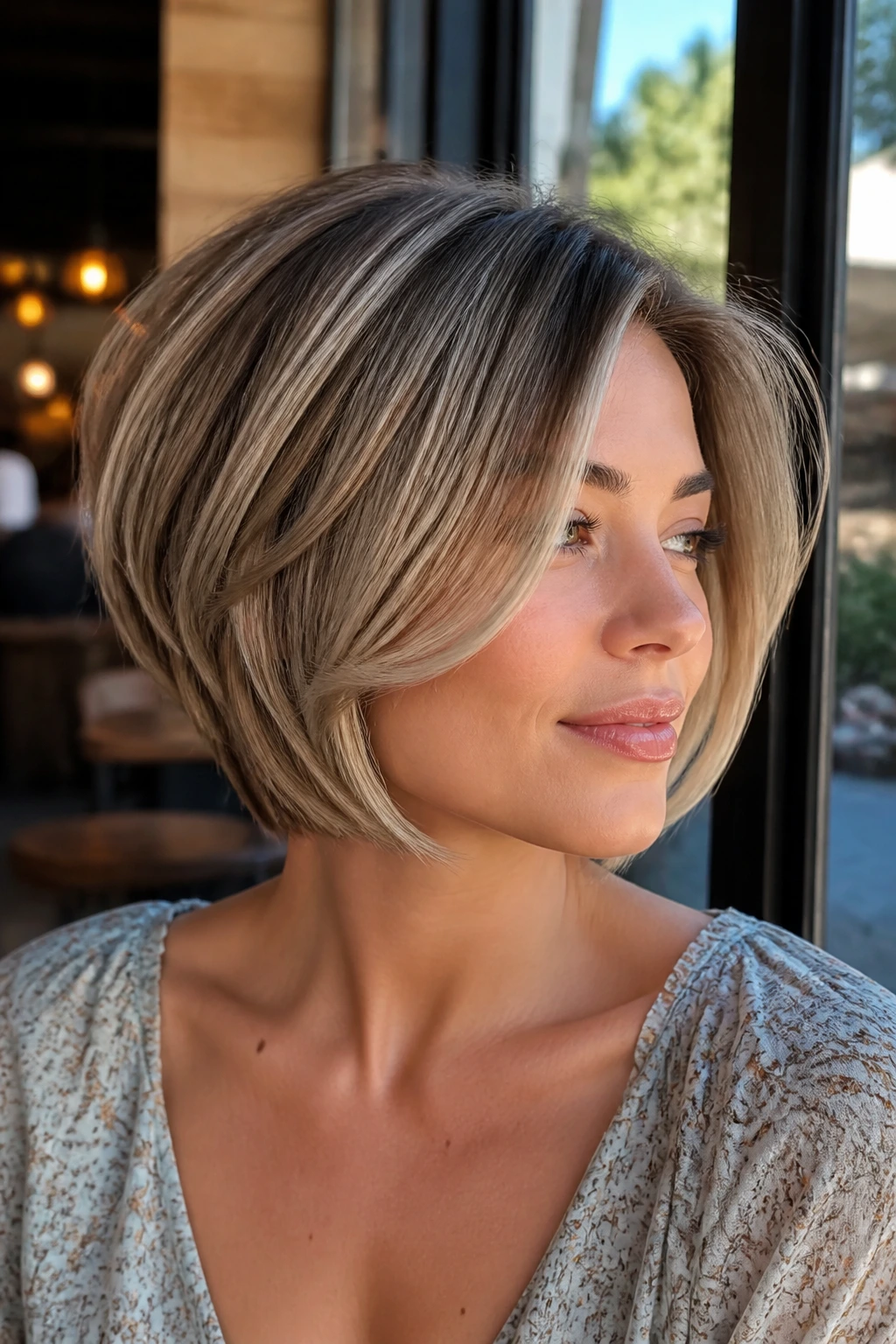
The Soft Round Version:
Best if your face is narrow or angular. Keep the stack modest and let the front layers curve toward the cheekbones. The goal is width without bulk.
The Sharp Angled Version:
Good for straight fine hair that falls flat in humid weather. A stronger front angle creates the illusion of thickness and keeps the cut looking crisp even when the roots soften a little.
The Air-Dry Version:
Works for wavy fine hair and anyone who hates heat styling. Ask for gentle layering and a stack that supports the natural bend rather than fighting it.
The Low-Maintenance Grow-Out Version:
Choose longer front pieces and a softer nape. The cut will hold its shape longer between trims, and the front won’t awkwardly stop at the chin after a month.
The Extra-Lift Version:
Best for very flat crowns. A side part, a controlled stack, and shorter crown support can make the top look fuller without needing heavy teasing.
Keeping the Shape Between Trims

A stacked bob is not a set-it-and-forget-it cut. Fine hair shows growth fast because the shape relies on clean angles, and those angles blur once the back grows out too much. Most people do best with a trim every 6 to 8 weeks, though if the nape grows fast or your hair flips outward early, 5 weeks may feel better.
At home, the easiest maintenance move is keeping the roots clean and the ends light. A dry shampoo at the crown can stretch wash day by a day or two, but don’t powder the whole head. That makes fine hair dusty, not full. On wash day, rinse well; leftover conditioner near the scalp will flatten a short bob in a hurry.
Sleep care matters more than people admit. A satin pillowcase, a loose clip at the crown, or even just sleeping with the hair tucked away from friction can keep the stack from getting crumpled. You wake up with less work. Nice little victory.
Frequently Asked Questions
Do stacked bobs actually make fine hair look thicker?
Yes, but only if the stack is controlled and the perimeter stays clean. The lift comes from shape, not from creating more hair, so the cut has to support the crown without thinning the ends too much.
What face shape works best with face-framing layers?
Most face shapes can wear them, but the starting point changes. Cheekbone layers flatter round and square faces, while jaw-length pieces can soften longer faces without making the front too wide.
Can I air-dry a short stacked bob and still keep it looking tidy?
You can, especially if your hair has some natural bend. Use a light mousse, comb it into place once, then leave it alone while it dries. The less you touch it, the cleaner the stack tends to look.
How often should I trim a short stacked bob on fine hair?
About every 6 to 8 weeks is the sweet spot for most people. If the nape starts to lose its shape or the front layers drop into your eyes, trim sooner.
Will a stacked bob work if my hair is thin, not just fine?
It can, but be careful with too many short layers. Thin hair needs a stronger perimeter and softer face framing so the cut doesn’t look see-through from the sides.
Is this cut good with glasses?
Yes, if the front pieces are planned around the frames. Ask for face-framing layers that clear the arms of the glasses instead of sitting right on top of them.
What if my bob flips out at the ends?
That usually means the cut is a little too blunt for your texture or the blow-dry is pulling the ends outward. A softer bevel, a smaller round brush, and a quick pass of cool air usually fix it.
Can I keep a side part with a stacked bob?
Absolutely, and on fine hair it often helps. The side part gives the crown a little lift and makes the whole style look fuller than a strict center part.
Why These Cuts Keep Working
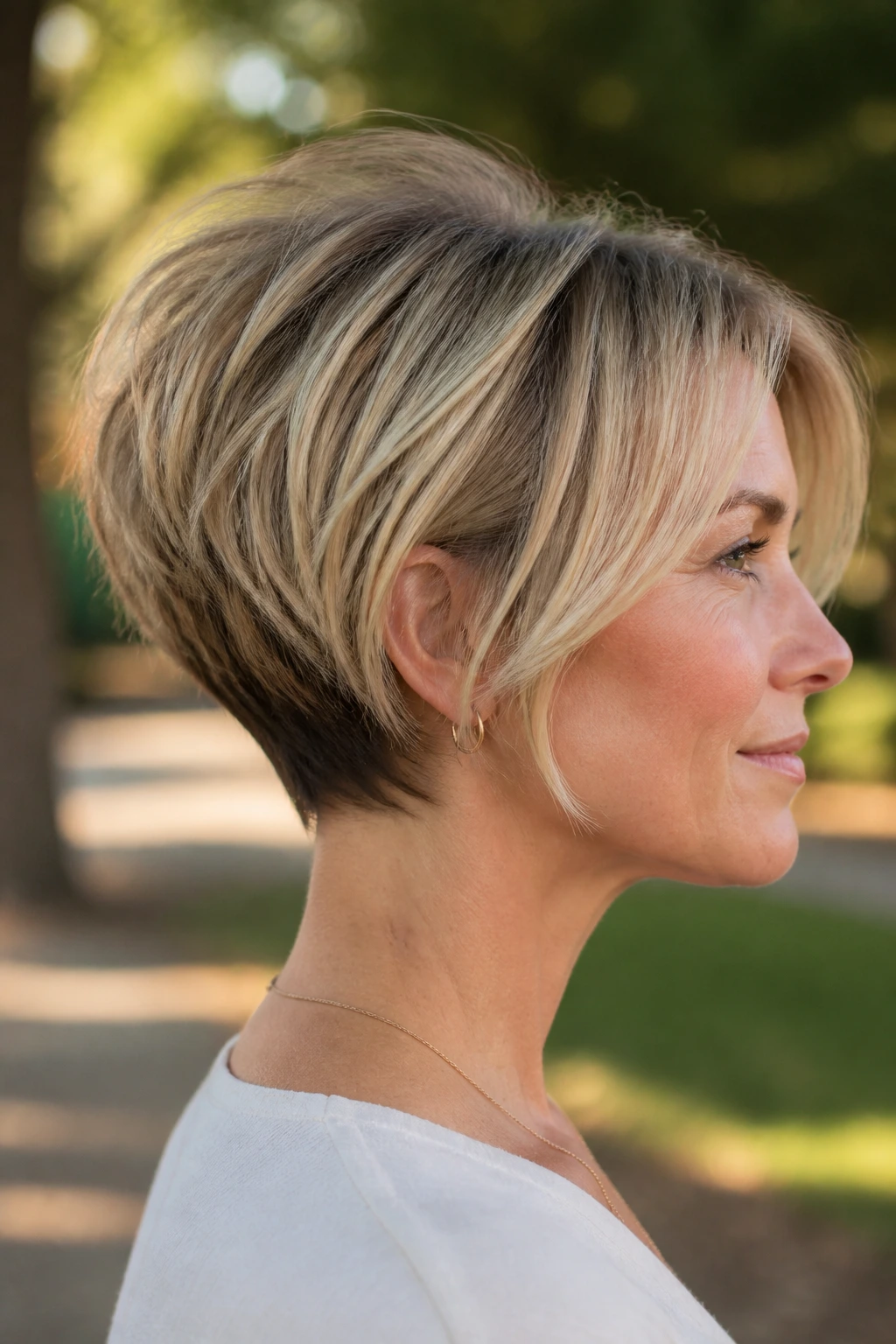
The reason stacked bobs stay useful is simple: they solve a real problem without asking for a fake one. Fine hair rarely needs more product than people think. It needs a smarter shape, a cleaner neckline, and front pieces that frame the face instead of hanging there like an afterthought.
Pick the version that fits your hair’s behavior, not the one that looks best on a still photo. That’s where the good cuts live — in movement, in lift, in the way they behave when you’ve got five minutes and a hair dryer that’s seen better days.