



Straight hair tells on a bob faster than almost any texture. Miss the length by half an inch, and the shape either drops dead flat or lands right on the jaw like a ruler.
That is why Asian bobs for straight hair and square faces need more thought than a quick chop and a blow-dry. The cut has to do two jobs at once: keep the line clean enough to suit straight strands, and move the eye away from the jaw corners that make a square face look boxier.
I like bobs that know where to stop. Some stop just below the jaw and tuck inward; others drop to the collarbone and let the face breathe. A few lean sharper on purpose. The point is not to hide the face. It’s to make the face and the cut stop fighting each other.
Why These Bobs Work Better Than a Random Chin Chop
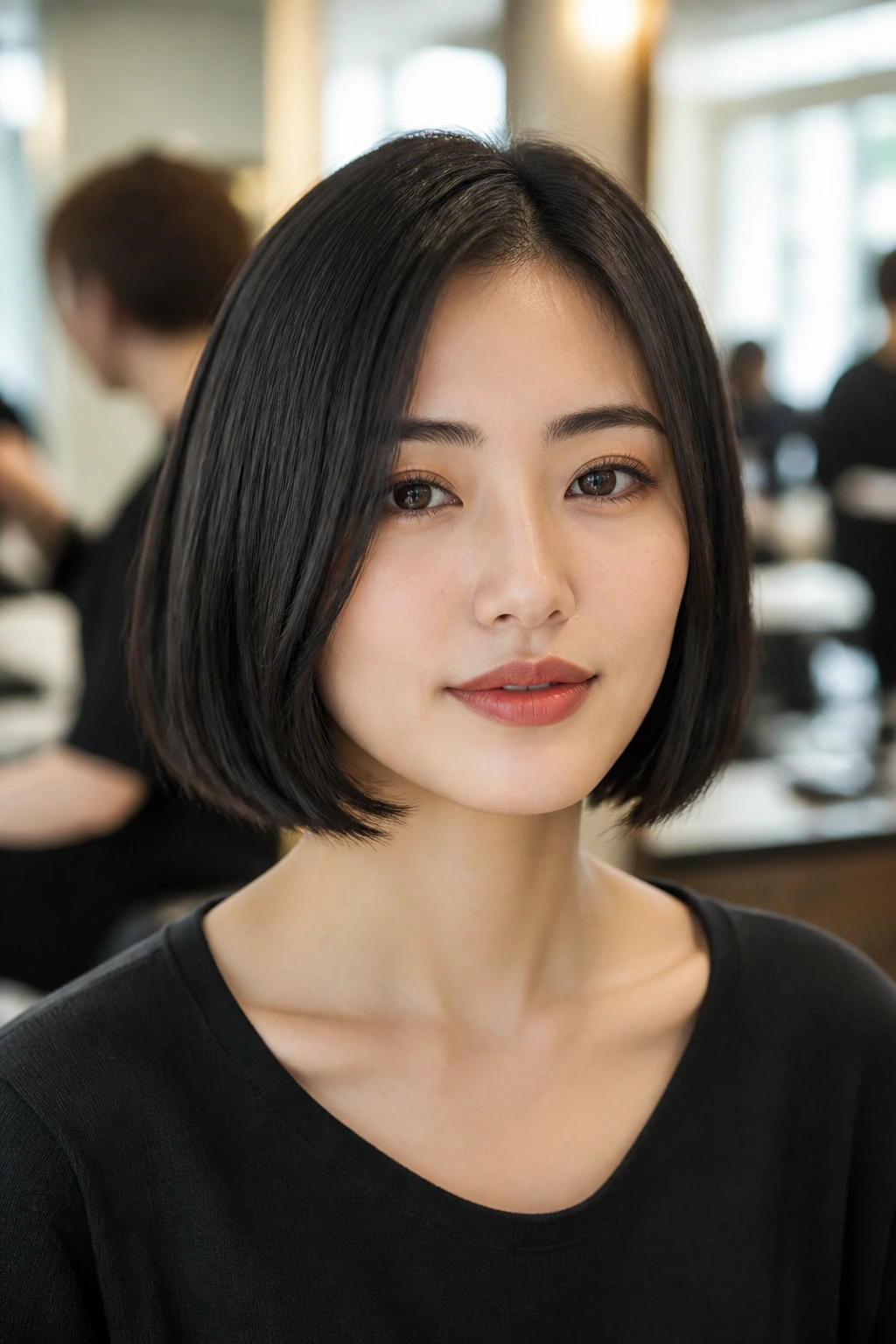
-
Straight Hair Shows Every Line: If the hem is off, you see it immediately, which is why clean cutting and weight placement matter more here than they do on wavy hair.
-
Square Faces Need Direction, Not Just Length: A bob that lands right on the jaw can square off the lower face; a bob that drops below it or curves inward changes the angle without making the haircut feel timid.
-
Dense Hair Needs Internal Discipline: Many straight Asian hair types carry enough weight to look crisp, but that same density can turn into a shelf if the interior is ignored.
-
You Can Go Soft or Sharp on Purpose: These cuts range from airy and face-framing to blunt and glassy, so there’s room to match your face shape and your tolerance for styling.
-
Most of These Are Salon-Realistic: You can ask for them with plain language at the chair: length, part, hem line, weight removal, bend at the ends. No drama required.
-
They Grow Out Well if the Baseline Is Right: A good bob does not fall apart after six weeks; it just shifts into a lob with a little more swing.
Why the Hem Line Matters More Than the Hair Length
A bob is not only about inches. It’s about where the line lands against your face, and square faces are the easiest place to see that difference. If the hem hits exactly at the jaw, the haircut starts echoing the shape you’re trying to soften. If it falls a touch below, the eye keeps moving downward.
The hem line
On straight hair, the bottom edge reads like a ruler. That sounds strict, and sometimes that’s the point, but most square faces look better when the line is softened with a slight underbend, a C-shaped finish, or a length that sits a little below the jaw. Even half an inch matters here. Seriously.
The part
A center part can lengthen the face, but it also puts every bit of symmetry on display. A side part cuts diagonally across the forehead and breaks up the squared lower face. Deep side parts do this most aggressively; soft off-center parts do it in a quieter way. If your hair falls flat, the part is doing more work than most people realize.
The corners
The corners of a square face are the whole game. A bob can work with them, soften them, or repeat them. I prefer the first two. Ends that curve inward, face-framing pieces that begin at cheekbone level, and a bit of movement around the jaw are the things that keep straight hair from feeling severe.
1. Jaw-Grazing Blunt Bob
A jaw-grazing blunt bob is clean, unapologetic, and a little dangerous in the best way. The trick is that “jaw-grazing” should mean near the jaw, not parked right on top of it. When it lands a fraction below, the haircut looks deliberate instead of boxy.
On straight hair, this cut gives you that sharp outline people notice from across a room. For square faces, it works when the ends are kept crisp but the line sits just low enough to let the jaw breathe. Ask for a blunt perimeter with a tiny bit of underbevel at the ends. That small inward tilt changes everything.
If you want a bob that looks polished with almost no texture, this is the one. Blow-dry it smooth with a paddle brush or flat brush, then bend the last half inch under with a flat iron if the ends insist on flipping out. Skip heavy layering. The whole point is the line.
2. Korean C-Curl Bob
What makes a Korean C-curl bob so useful? The ends do the softening for you. Instead of a hard, flat edge, the hem turns inward in a shallow C shape that nudges the eye away from a square jaw.
This one is made for straight hair that resists movement. You can set the bend with a round brush and blow-dryer, or cheat with a flat iron by turning the wrist just at the final inch. The bend should look memorized, not curled. Tight curls make the shape feel old-fashioned fast.
For square faces, the best version usually sits at chin-to-just-below-jaw length, with the front pieces a little longer than the back. That gives the face some vertical pull without losing the tidy outline. If you like hair that looks neat after a 10-second comb-through, this cut earns its keep.
3. Collarbone Lob with a Center Part

A collarbone lob is the escape hatch for anyone who wants the bob idea without sitting directly in the jaw zone. It drops low enough to break the square frame, and straight hair helps it look expensive without trying too hard. The cut can still feel bob-like, just with more room to move.
The center part gives the face a long, open line, which helps when your jaw is broad or your cheekbones are close to the same width. Keep the ends blunt or softly bevelled. Too many layers can make a lob look thin at the bottom, and on straight hair that can read as lank rather than light.
I like this length when someone wants versatility. It can tuck behind the ears, sit sleek against the neck, or be bent inward for dinner and office life. Not flashy. Just useful.
4. Deep Side-Part Sleek Bob

A deep side part changes the whole mood of a straight bob. The line across the forehead becomes diagonal, the top gains a little lift, and the jaw no longer feels like the strongest shape on the head.
This cut works best when the bob itself stays clean and shiny. The side part supplies movement; the cut supplies structure. Keep the length between the chin and the upper neck, and ask for the front to skim just below the cheekbone on the heavier side. That keeps the face from looking cut off.
If your hair lies pin-straight, this is one of the easiest ways to make it look intentional. Tuck the lighter side behind one ear and let the other side fall forward. The contrast is half the charm.
5. French Bob with See-Through Fringe

Short, airy, and a little cheeky. A French bob with see-through fringe has that old-city-street confidence that comes from not overthinking the cut. On straight hair, it sits with a neatness that almost looks architectural.
The fringe matters here. Heavy bangs can pin a square face into a block. A see-through fringe leaves a little forehead showing, which keeps the top half of the face from feeling boxed in. Let the bob itself graze the cheekbone or rest just above the jaw, but avoid a hard stop right at the widest point of the jawline.
This is one of those cuts that looks easy only when the trimming is good. The fringe should be wispy, not sparse in a sad way, and the hem should stay blunt enough to hold its shape. With a little dry texture spray at the roots, it wakes up fast.
6. Curtain-Bang Bob

A curtain-bang bob is the polite answer to a strong jaw. The bangs part in the middle and sweep away from the face, which means the eye gets a soft path downward instead of a blunt wall of fringe.
Straight hair makes curtain bangs look especially neat, but they need a little bend to stay open. A round brush or a quick pass with a blow-dryer and medium barrel brush is enough. The shortest point of the bang usually lands around the nose or cheekbone, then the pieces lengthen as they move outward. That shape is what flatters square faces; it directs attention upward, then out.
I like this cut when someone wants softness but doesn’t want to lose polish. It also grows out well. The bangs become face-framing layers before they get awkward, which buys you time between trims.
7. A-Line Bob with a Longer Front
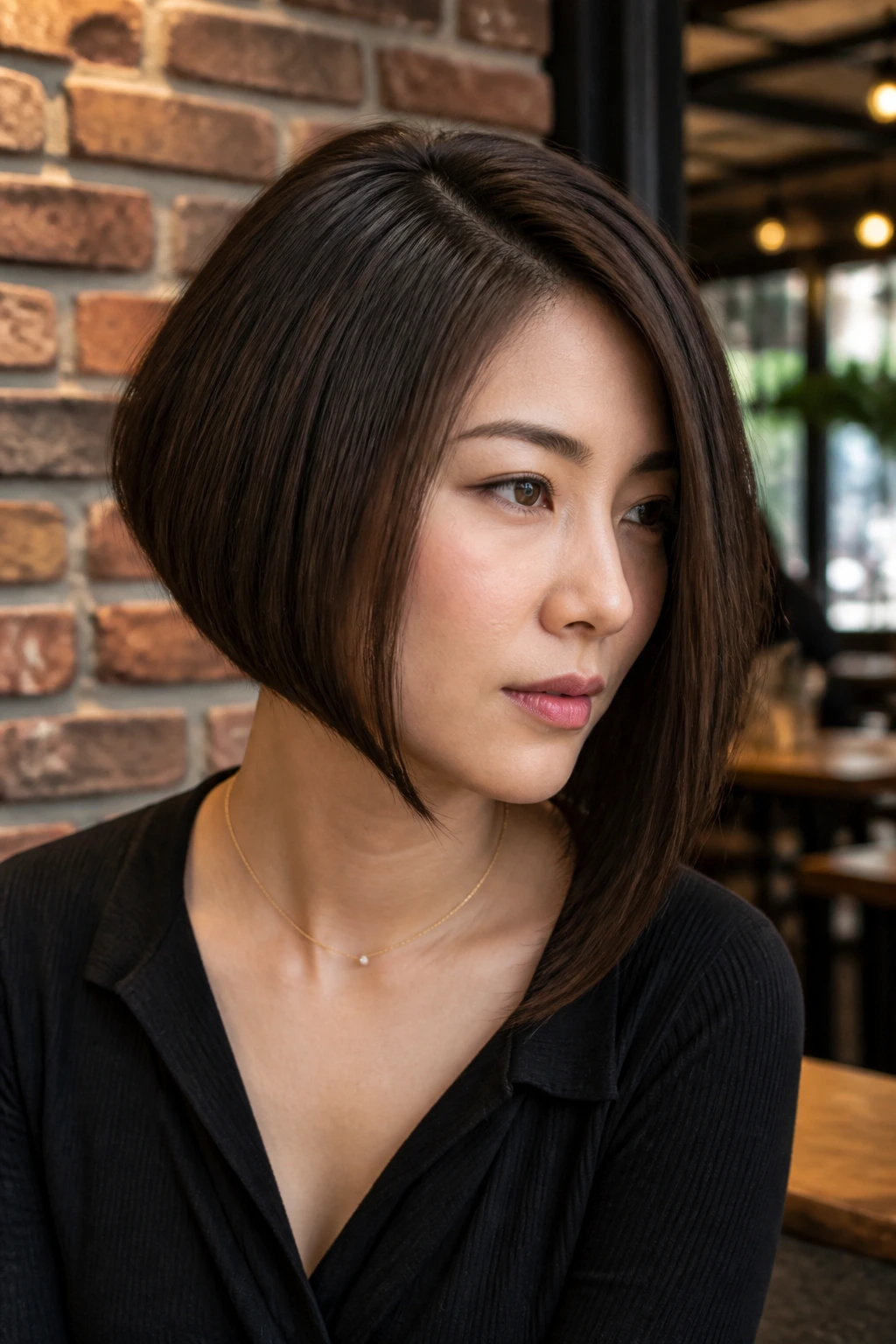
An A-line bob is a good move if your jaw feels wide and you want the hair to travel forward instead of stopping at the same spot. The back stays shorter, the front gets longer, and the whole shape angles toward the collarbones.
On straight hair, that slant is easy to see. It gives the haircut motion even when the hair is still. For square faces, the longer front pieces are the important part; they pull attention below the jaw and soften the lower edge without losing the clean look of a bob.
This cut can look too severe if the front is cut too steeply. Ask for a soft A-line rather than a hard wedge unless you want a sharper fashion feel. A slight curve at the ends keeps it from reading like a triangle.
8. Rounded Chin-Length Bob
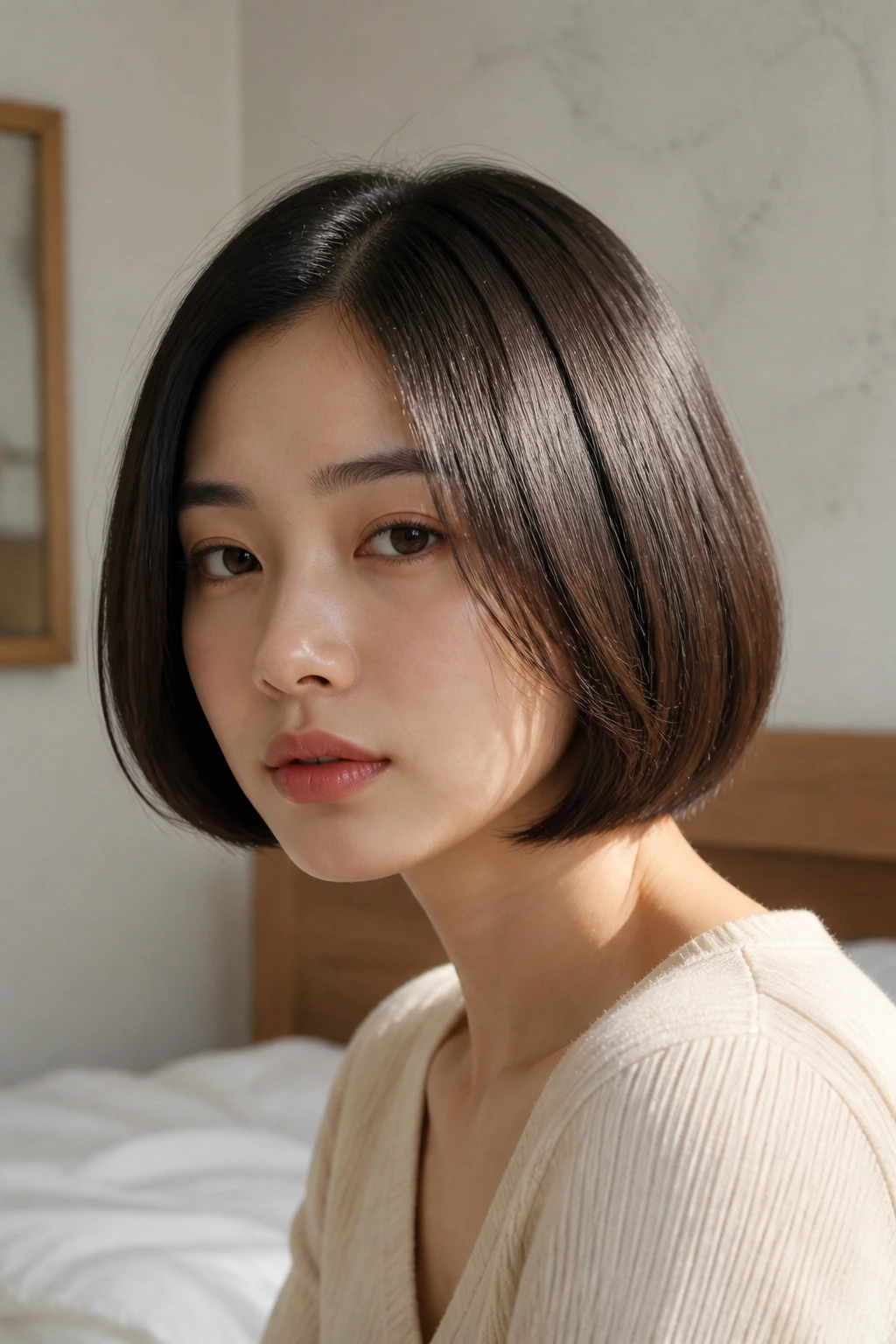
A rounded chin-length bob takes the blunt bob and sands down the corners. The hem curves around the face instead of drawing a straight line across it, which helps square faces a lot more than people expect.
The shape works best when the back is not overly stacked. You want a soft dome, not a helmet. On straight hair, the roundness comes from the cut itself and from how you dry it. Use a round brush or a large paddle brush to guide the ends inward. If the front pieces are left a little longer than the center, the whole cut feels smoother.
This is a strong choice if you like a neat profile but hate anything too rigid. It has enough shape to look done, and enough softness to keep the jaw from dominating the mirror.
9. Box Bob with Soft Corners
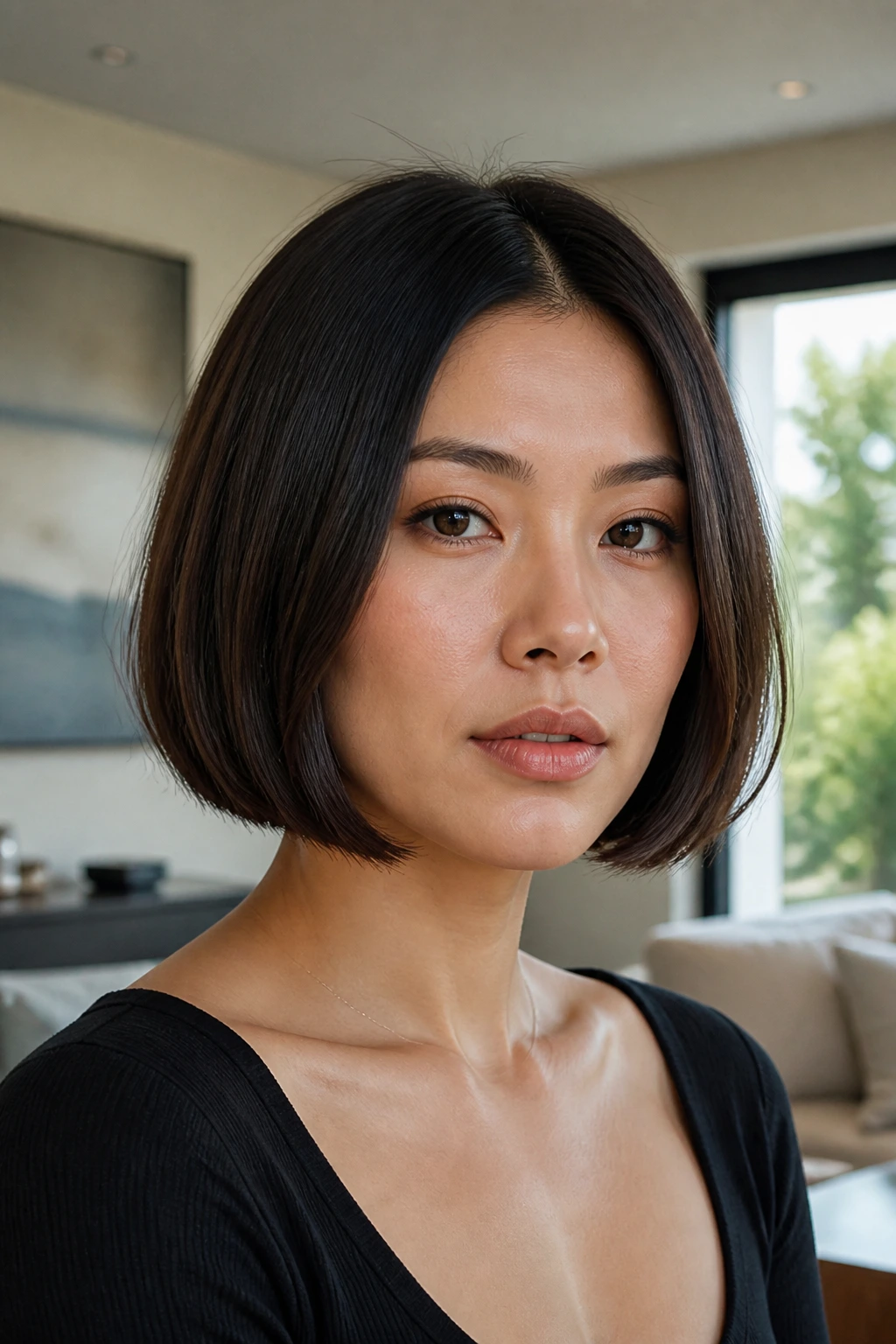
A box bob sounds harsh until you see the corners softened by a careful hand. It is still geometric, still precise, but the edges are point-cut or slightly bevelled so the cut doesn’t slam into the jaw.
On straight hair, the box shape gives you a clean perimeter that stays visible even when the weather is not helping. Square faces can wear it if the hem sits just above or just below the jaw and the corners are not razor-hard. That little bit of softening is the difference between deliberate and severe.
This cut is for someone who likes structure. If you want hair that looks neat with a center part, a turtleneck, and a crisp collar, this is your lane. It’s not soft. It is controlled. That’s the appeal.
10. Graduated Nape Bob
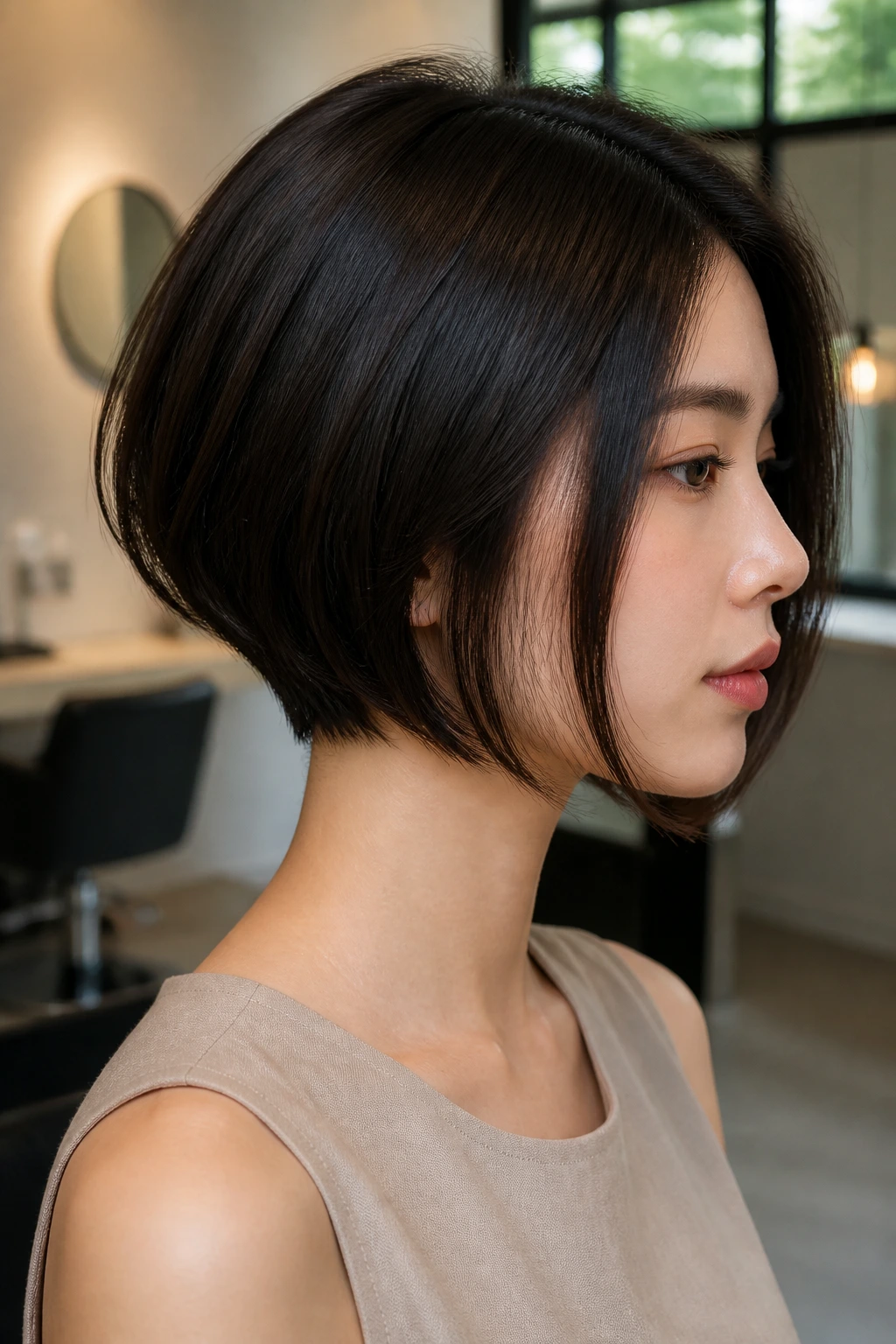
The graduated nape bob is all about lift in the back. The hair is stacked slightly shorter at the nape and gradually gets longer toward the front, which gives straight hair a built-in curve without needing much styling.
That back lift matters when the hair is dense and sits close to the head. It keeps the bob from looking like a flat sheet. For square faces, the longer front pieces help offset the jaw while the shorter back keeps the whole shape from feeling heavy.
This cut looks best when the graduation is clean, not bulky. Too much stacking can puff out at the crown. Ask for a smooth transition and a front that still has enough length to soften the sides of the face. If your hair collapses by lunch, this is one of the better fixes.
11. Invisible-Layer Bob
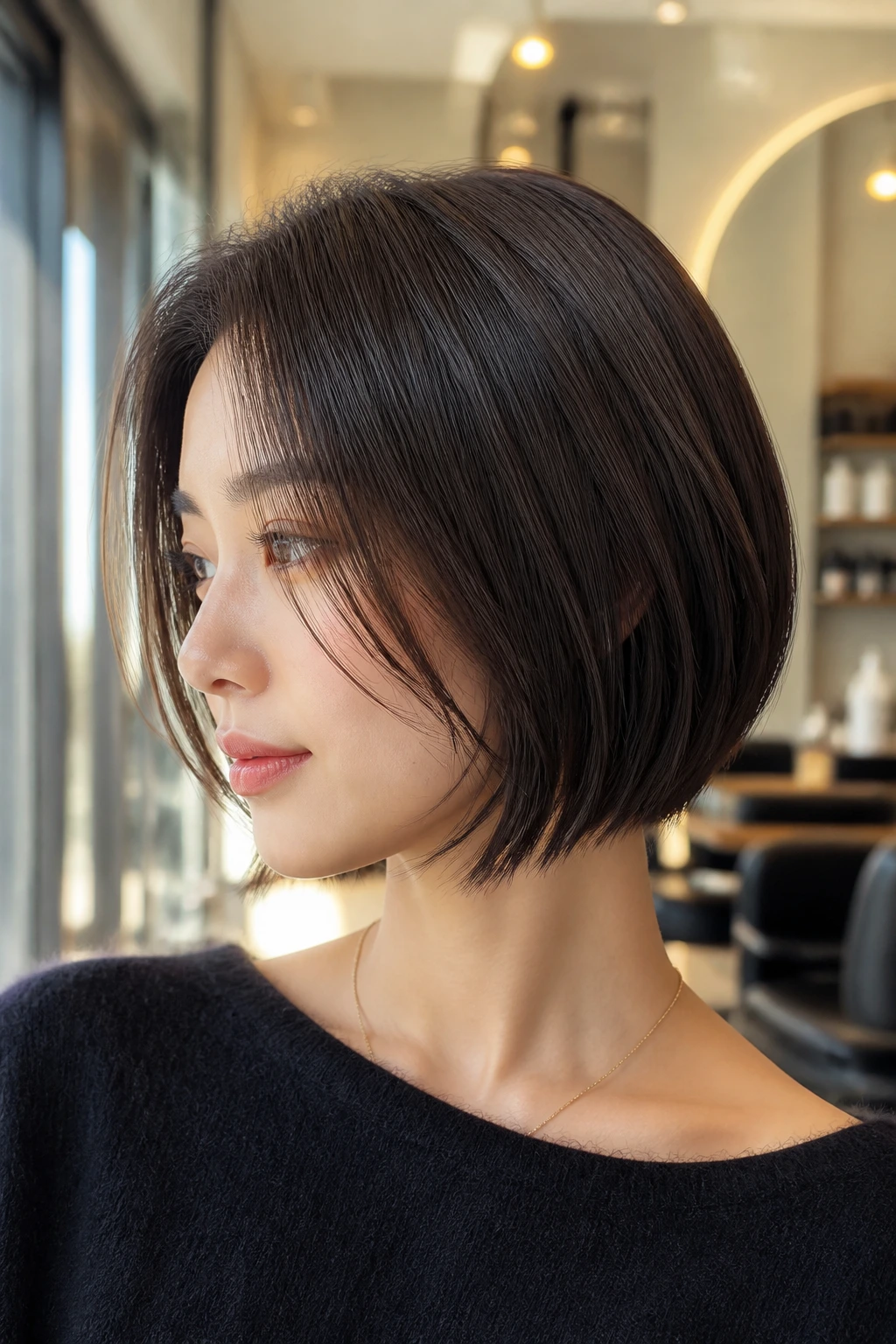
Invisible layers are the quiet answer to thick straight hair. Nothing looks choppy on the surface, but the inside has been relieved of weight so the ends stop acting like a solid board.
That matters on square faces because the outer line stays neat while the haircut gets some air. You get movement without obvious layers that flare out around the jaw. The best version usually keeps the top surface clean and places the internal removal lower, away from the cheekbone.
If you’ve ever had a bob that looked gorgeous at the salon and then turned into a shelf at home, invisible layers are probably what you needed. Ask your stylist to remove bulk underneath while keeping the perimeter intact. That’s the whole trick.
12. Asymmetrical Bob
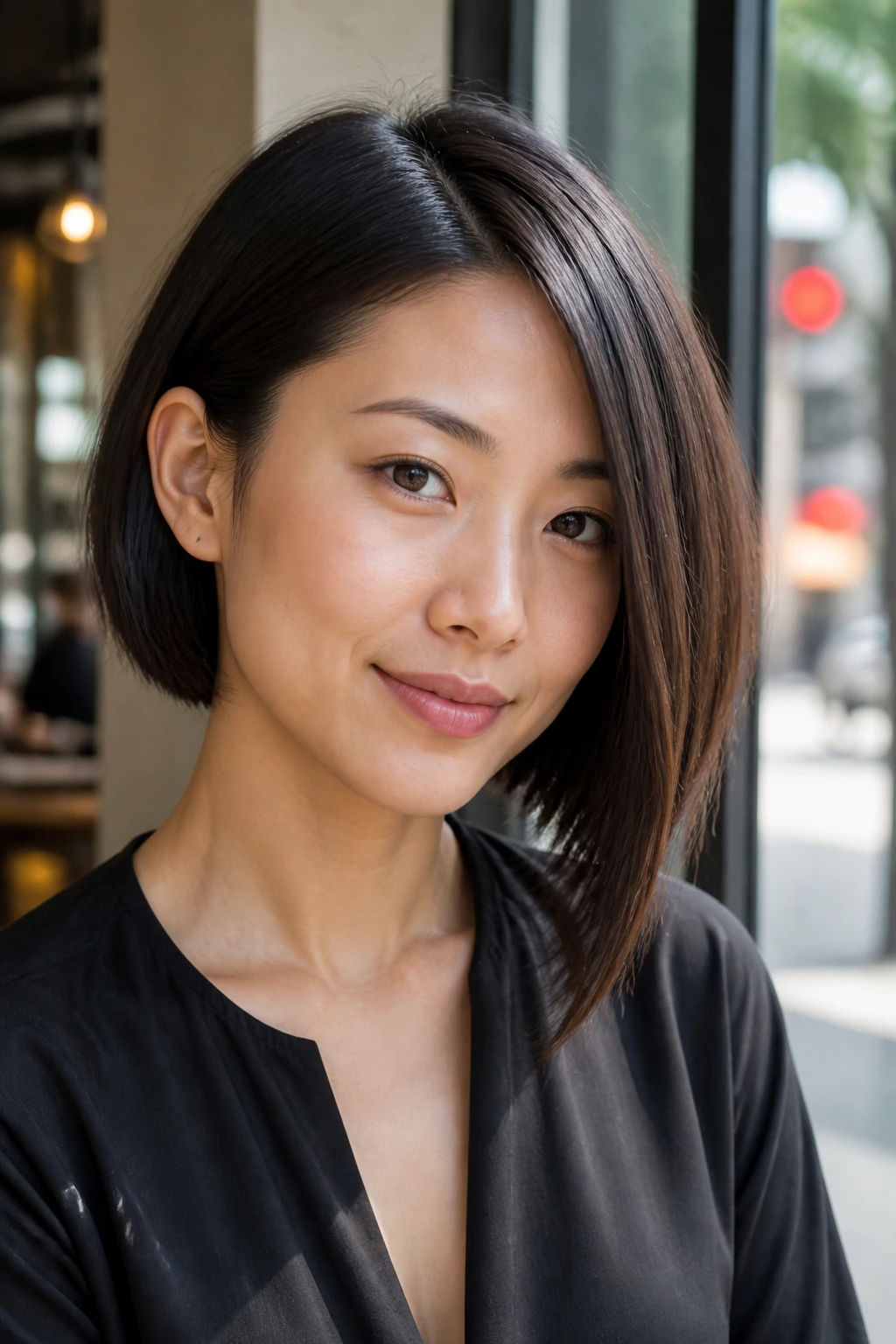
An asymmetrical bob uses imbalance on purpose. One side hangs a little longer, the other sits a touch shorter, and the diagonal line pulls the eye away from square symmetry. It sounds dramatic. It is. That’s why it works.
Straight hair is perfect for this because the shape reads clearly. For square faces, the angled line helps break up the width of the jaw and can make the whole face look less boxy. The difference between sides does not need to be huge. Even an inch or two is enough.
This is a good cut if you like hair that says something before you do. It also lets you tuck the shorter side behind the ear and keep the longer side forward. Simple styling. Big effect.
13. Hime-Inspired Bob
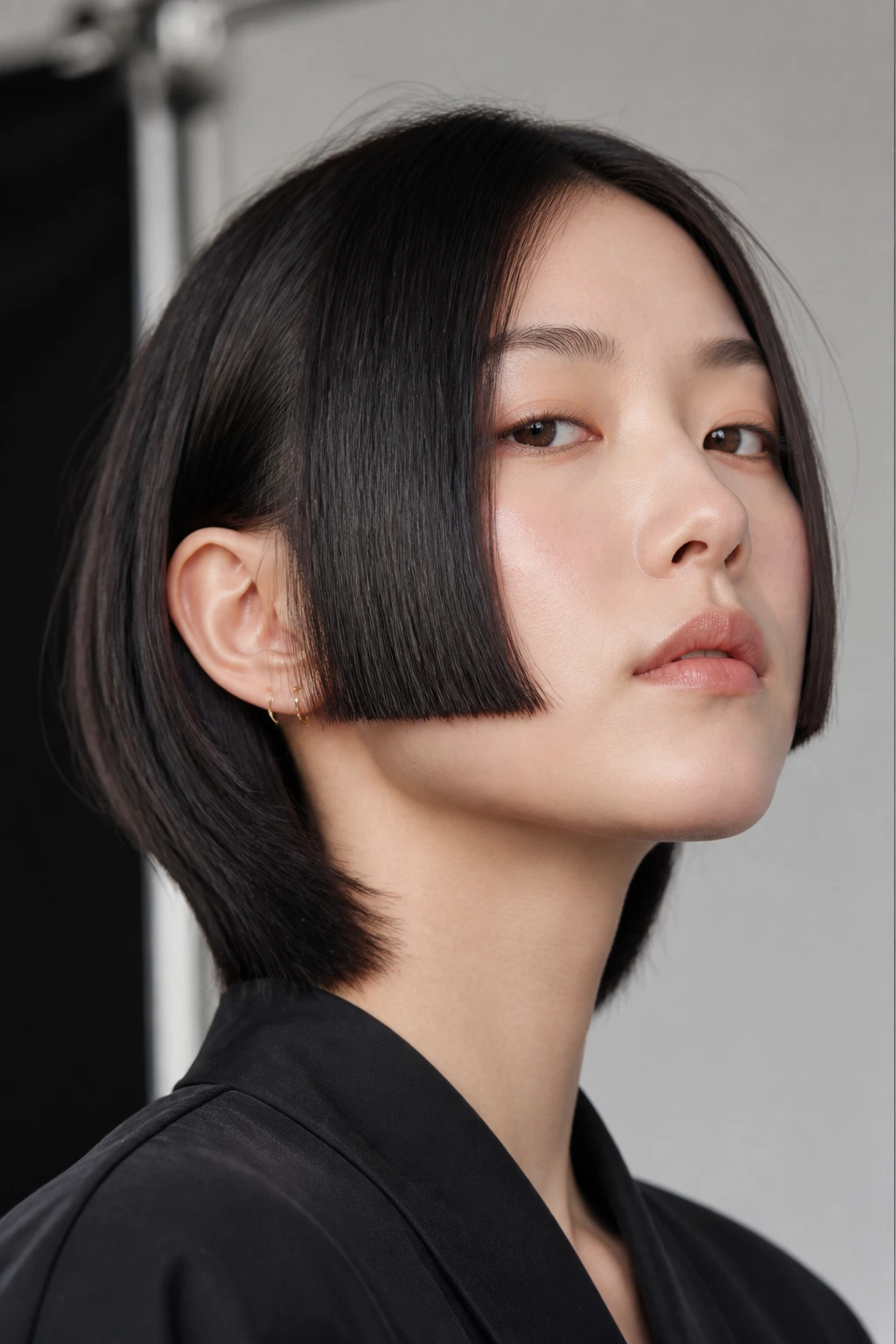
A hime-inspired bob has that sharp, fashion-forward split between the cheekbone-length side pieces and the rest of the bob. It can look very cool on straight hair because the lines stay crisp. It can also look costume-y if the lengths are too extreme or the side pieces are cut without softness.
For square faces, the face-framing sections are what make it interesting. They break the lower face into segments, which keeps the jaw from reading as one hard block. The longer back section gives the haircut a bob foundation, while the side pieces create movement around the cheekbones.
If you want this look, ask for restraint. That sounds odd for such a structured cut, but it matters. The shortest side pieces should land where they help your face, not where they shout at it.
14. Hush-Cut Bob

A hush-cut bob has softened layers that whisper rather than announce themselves. The ends look feathery, the front pieces melt into the bob, and straight hair gets a little floating motion without losing its shape.
This is one of the safer bets for square faces because the layers start lower and sweep around the jaw instead of ending exactly there. The result feels lighter, which helps if your hair is dense and stubborn. The best version still keeps enough weight at the hem so it doesn’t turn stringy.
I’d choose this if you want softness first and edge second. It’s not as graphic as a blunt bob, but it’s easier to wear on ordinary days when you don’t want to fight the mirror.
15. Deep Side-Part Lob
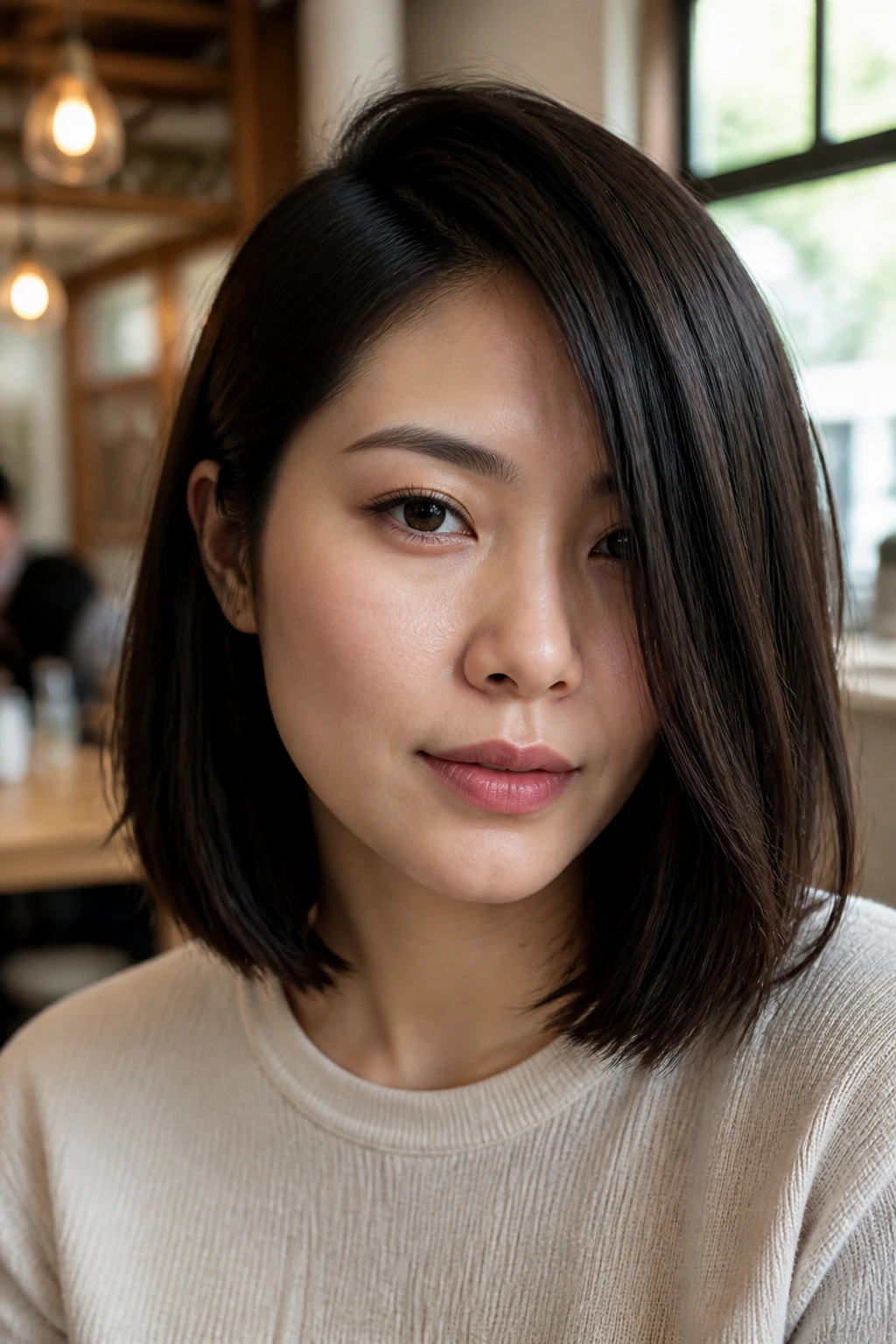
A deep side-part lob brings length and asymmetry together, which is a strong combination for square faces. The lob keeps the jaw from being the center of attention, and the deep side part gives the crown a little lift without much work.
On straight hair, this cut has a nice clean fall. The longer length means the ends can be kept blunt or slightly curved, and the side part prevents the whole shape from feeling too straight down and down. If your face is broad through the lower half, this is one of the most forgiving options in the whole group.
The main thing to watch is limpness at the roots. A root-lifting spray or a quick blow-dry at the part keeps the top from collapsing. After that, the cut does the rest.
16. Tucked-Ear Minimal Bob
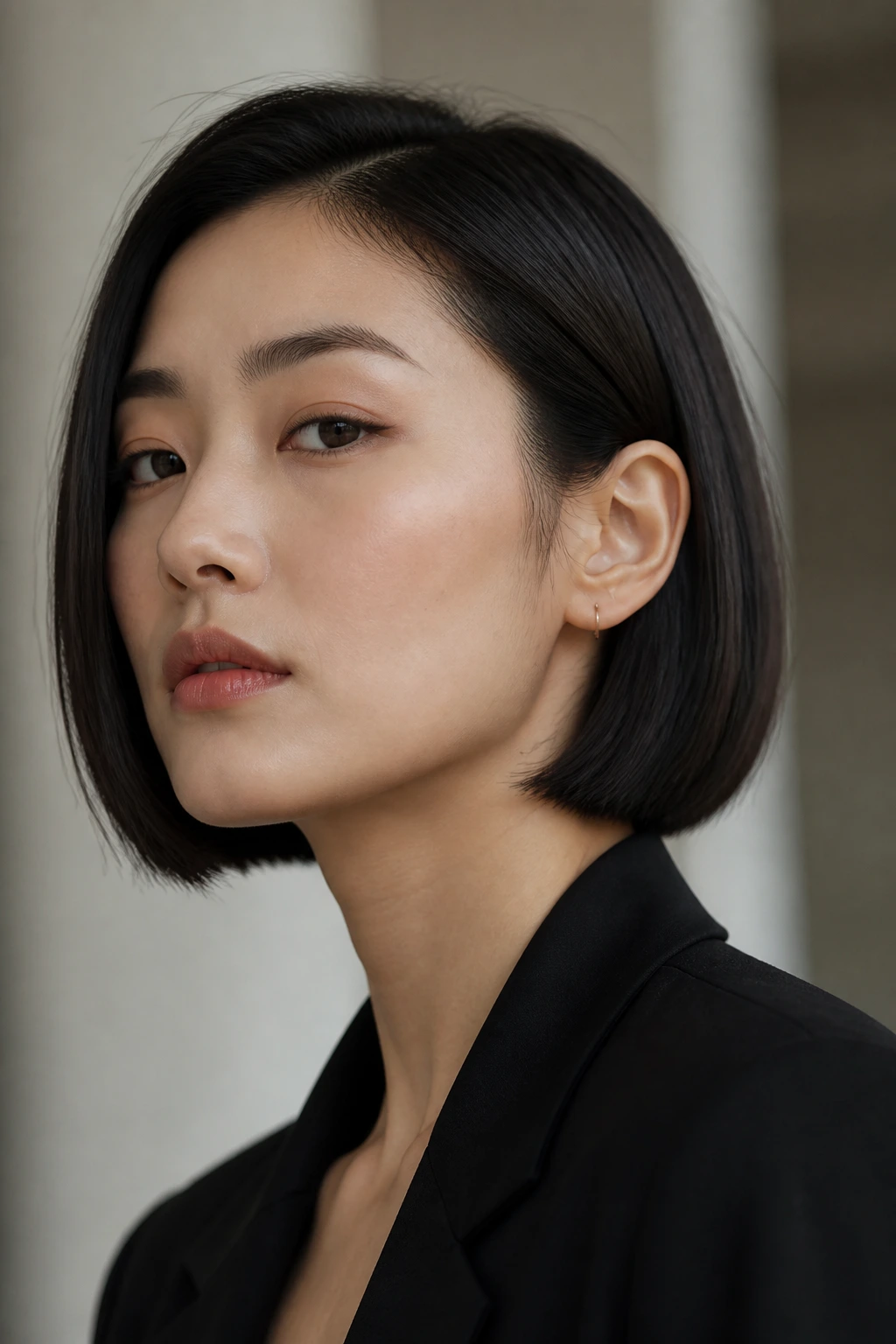
A tucked-ear minimal bob is for people who like a clean neck and a quiet outline. The hair sits around the jaw or just below it, then gets tucked behind the ear so the face gets a little opening on one side.
That opening matters on square faces because it breaks the width at the cheeks and jaw. Straight hair makes the tucked shape look very deliberate, almost editorial. If the ends are too blunt or the line too square, though, the cut can feel severe fast. Soft corners help here.
This is the bob for earrings, collars, and sharp shirts. It looks best when the hem is precise and the side part is not too stiff. Small details. Big payoff.
17. Airy Feathered Bob
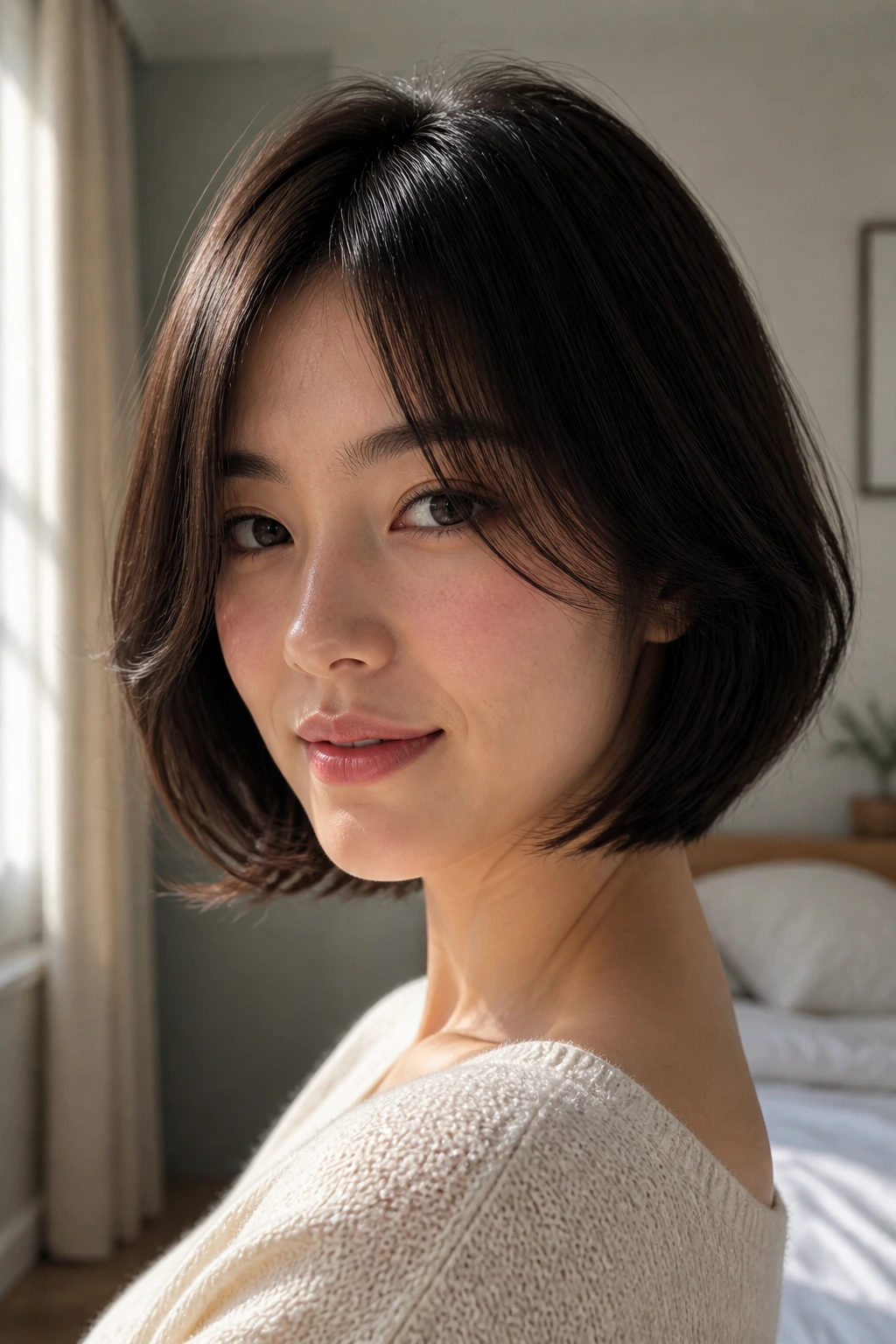
An airy feathered bob takes weight out of the ends so the haircut moves instead of sitting like a block. On straight hair, the feathers should be subtle. Too much feathering and the ends look thin and scraggly, which is not the same thing at all.
Square faces do well with this cut because the softness around the perimeter keeps the jaw from standing out so hard. The feathery finish should begin lower on the head, not right at the cheekbone. That keeps the volume from widening the face where you least want it.
This one shines when the hair is medium to thick and needs relief. A tiny amount of texture spray can help, but don’t drown it. The shape should stay clean.
18. Micro Bob with a Soft Edge

A micro bob is short enough to feel bold and long enough to still read as a bob, not a pixie. The danger zone is the jawline. If the hem hits there, the face can look wider. If it sits above the jaw or a little below it, the cut looks much cleaner.
For square faces, the soft edge is what saves it. Ask for a blunt base that is softened at the corners, and avoid a hard square shape right around the chin. Straight hair loves this cut because it shows the outline so clearly, but you need a neat finish or the whole thing goes fuzzy fast.
I would not call this the easiest bob on the list. I would call it one of the most striking when it’s right. It’s short, tidy, and a little fearless.
19. Face-Framing Bob
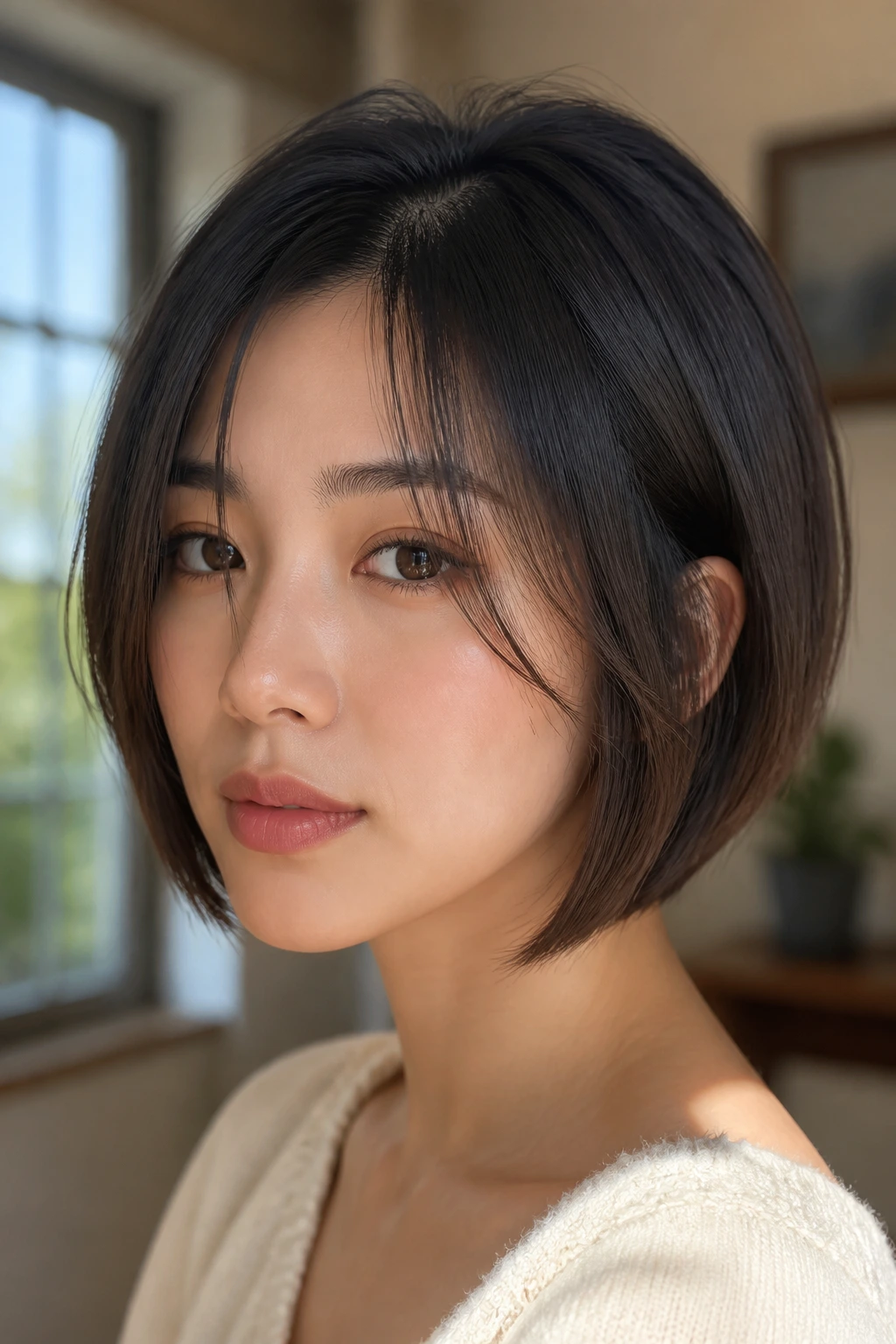
A face-framing bob puts the attention on the cheekbones, not the jaw. The front pieces are cut to skim and soften, then the rest of the bob supports that shape in the back and sides. It’s a useful cut if your face shape needs direction more than length.
Straight hair makes the framing pieces sit neatly, which is half the battle. Ask for the shortest face-framing piece to start around the cheekbone and descend toward the jaw in a gentle slope. That slope keeps the lower face from feeling boxed in.
This cut is especially good if you wear glasses or like to tuck hair behind one ear. The framing pieces keep the look from turning flat, even when the rest of the bob is tidy.
20. Inward-Bent C-Bob
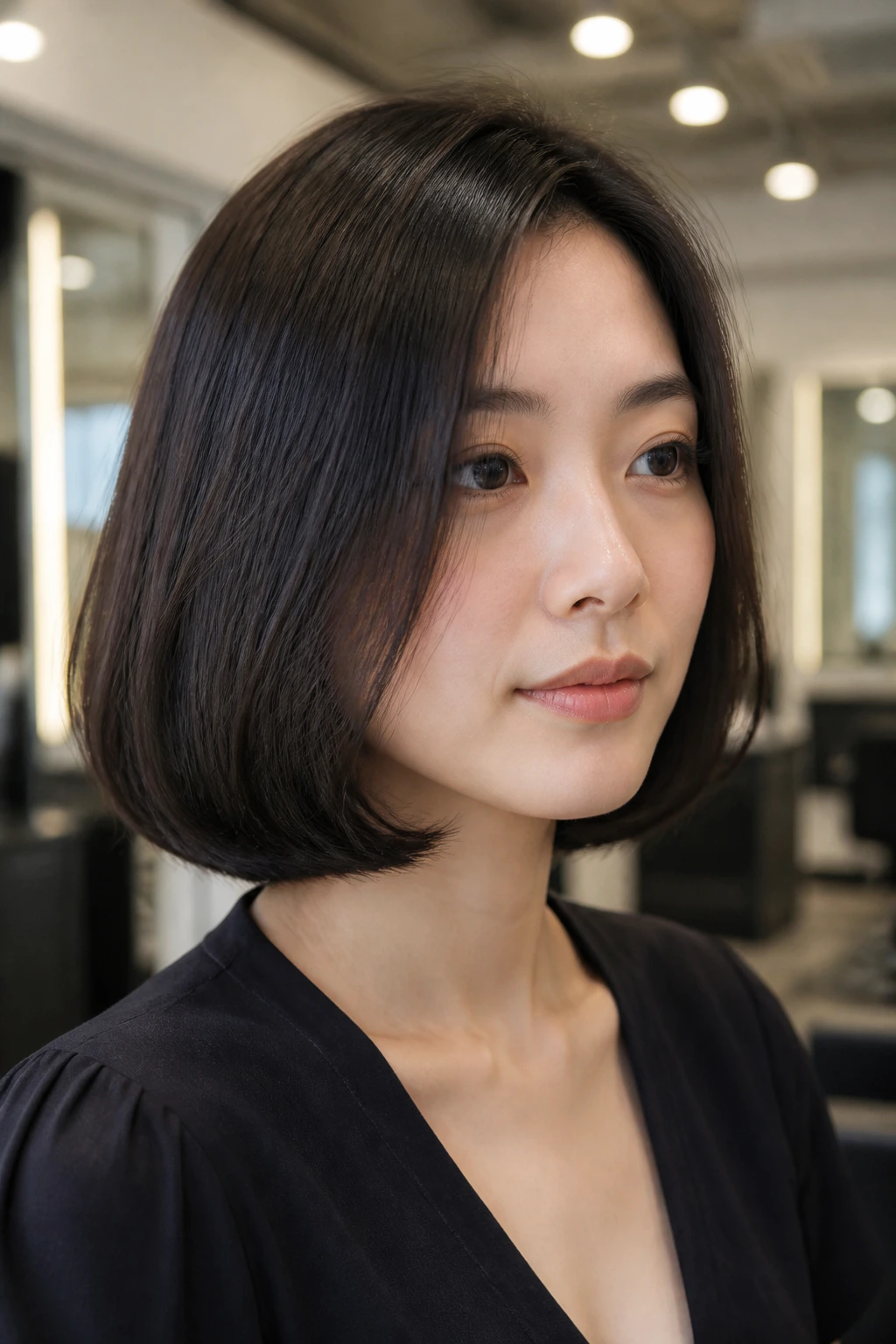
The inward-bent C-bob is the polished cousin of the Korean C-curl style. The ends turn in, but the line stays a little fuller and more controlled, which gives straight hair a smooth finish without looking overly styled.
Square faces benefit because the bend softens the corners and the fuller body at the hem keeps the jaw from taking over. The length usually sits between chin and neck, though a slightly longer version can work if your jaw is especially strong. The bend is the point. Without it, the cut loses its shape.
I like this one for workdays and dinners and every occasion that rewards hair that stays put. It looks neat in humid weather only if you keep product light and the blow-dry disciplined.
21. Soft Shaggy Bob
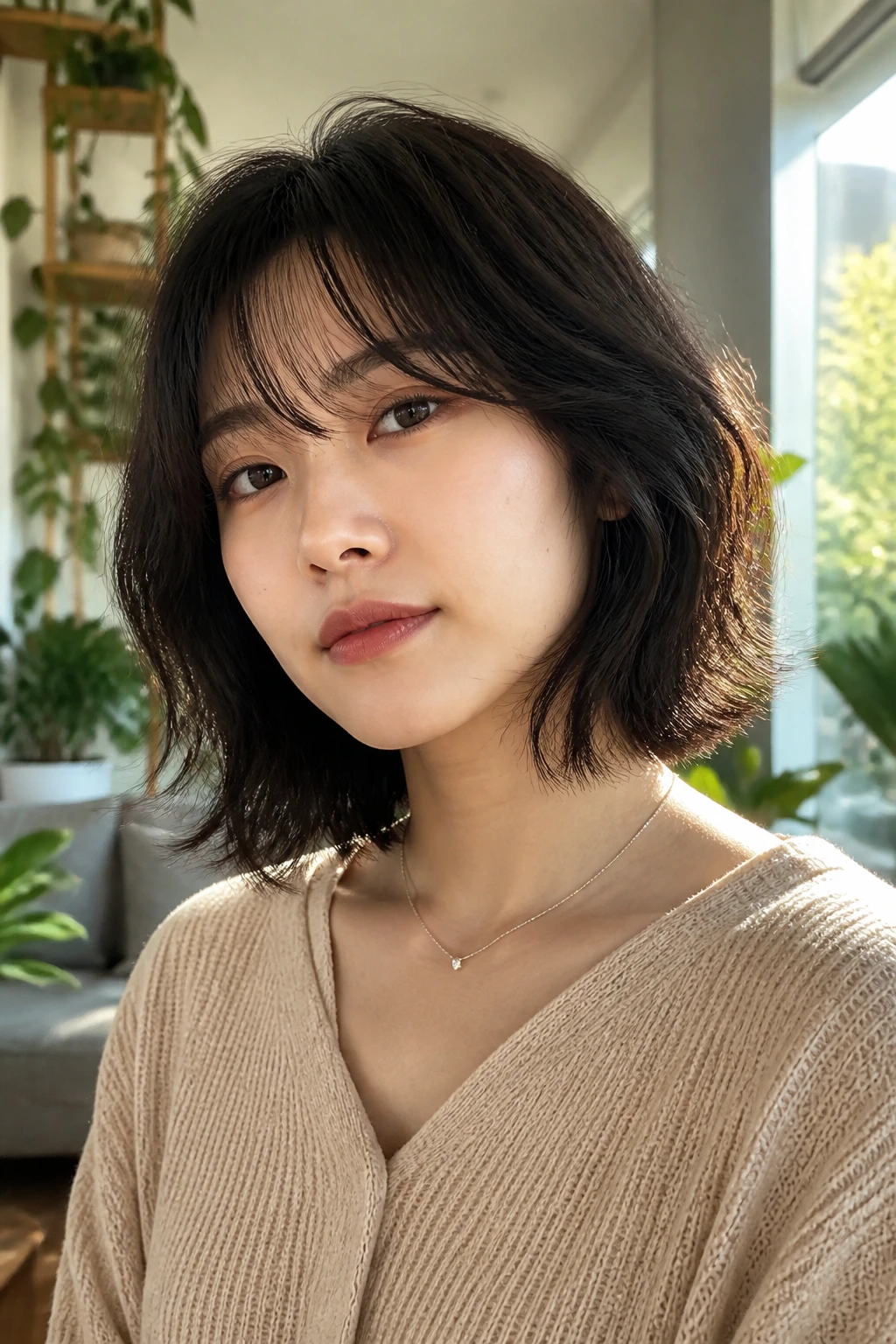
A soft shaggy bob is not a mess. It’s a controlled looseness. The layers are light, the ends are broken up, and straight hair gets enough motion to stop looking like a single sheet.
For square faces, the softness matters more than the shag part. You want the layers to start low enough that they don’t widen the cheeks. If they begin too high, the haircut can spread out at the sides and make the jaw look heavier. That’s the mistake people make with shag cuts on straight hair.
This one suits someone who wants less precision and more movement. It’s also kinder to grow-out phases than a blunt bob, since the layers keep it from turning into a solid block.
22. Glass Bob
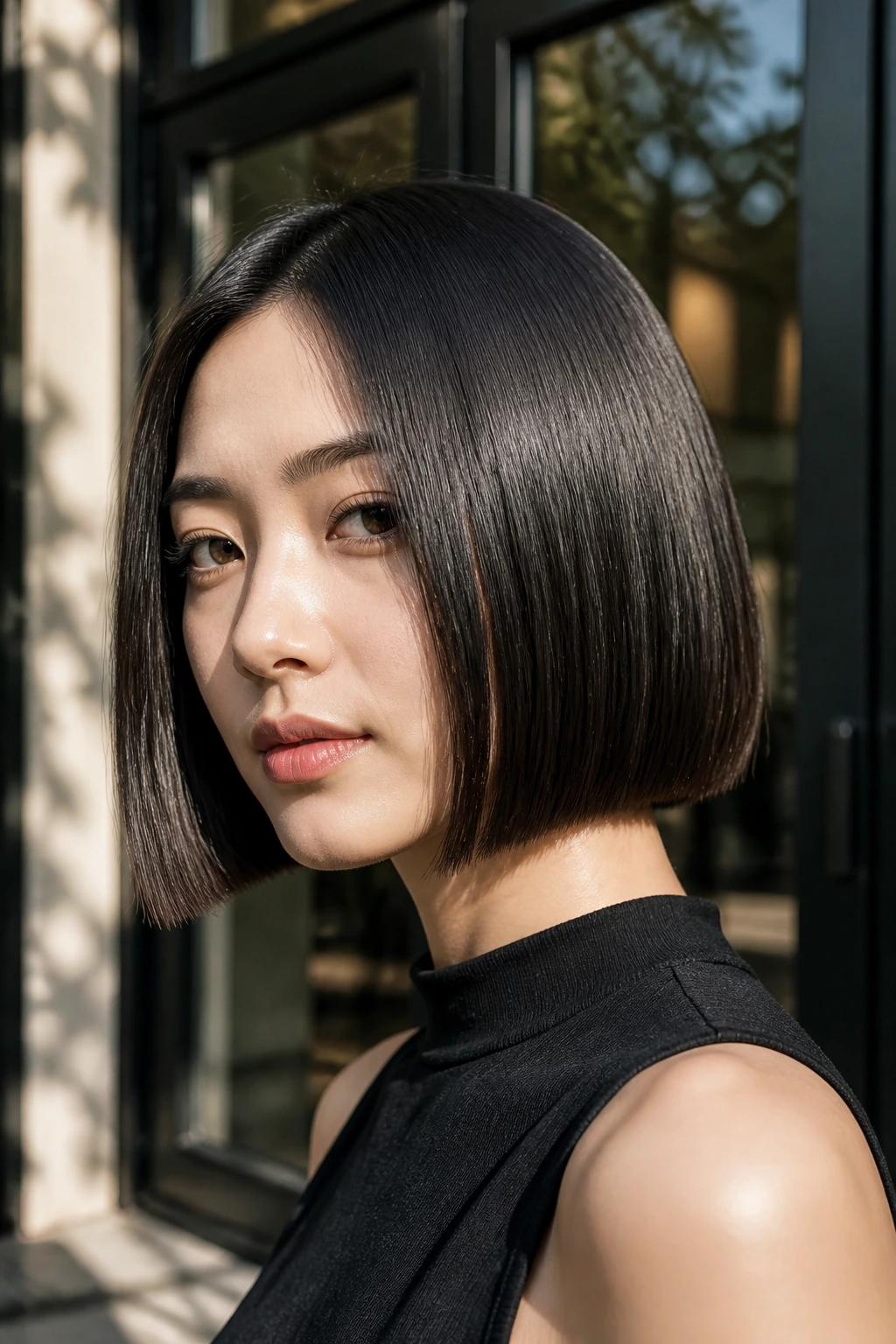
A glass bob is about shine, line, and control. The finish is smooth enough to reflect light, the hem is clean enough to show every detail, and the hair usually stays sleek from root to end. Straight hair makes this cut look very direct. There’s nowhere to hide.
Square faces can wear a glass bob well if the length sits below the jaw or the part is offset enough to break the symmetry. A center-parted glass bob can be gorgeous, but it needs the hem to be just right or it turns severe. The cleaner the cut, the more important the exact length becomes.
This cut asks for maintenance. No way around that. The upside is that when the line is right, it looks sharp in a way that reads expensive without needing much extra styling.
23. One-Length Polished Bob

A one-length bob sounds plain, and that’s why it works. The whole cut sits on one baseline, which gives straight hair a dense, tidy look. On square faces, the polish comes from where that baseline lands and whether the ends are slightly bevelled.
The best version is not chopped aggressively at the jaw. It sits a little below it, with enough weight to stay sleek and enough softness at the edge to avoid a hard box. This is the cut for people who dislike layers and want the simplest possible silhouette.
If your hair is thick, a one-length bob can be a gift. It keeps the ends from flying apart and makes styling faster. If your hair is fine, keep it a touch longer so it doesn’t collapse.
24. Nape-Exposing Undercut Bob
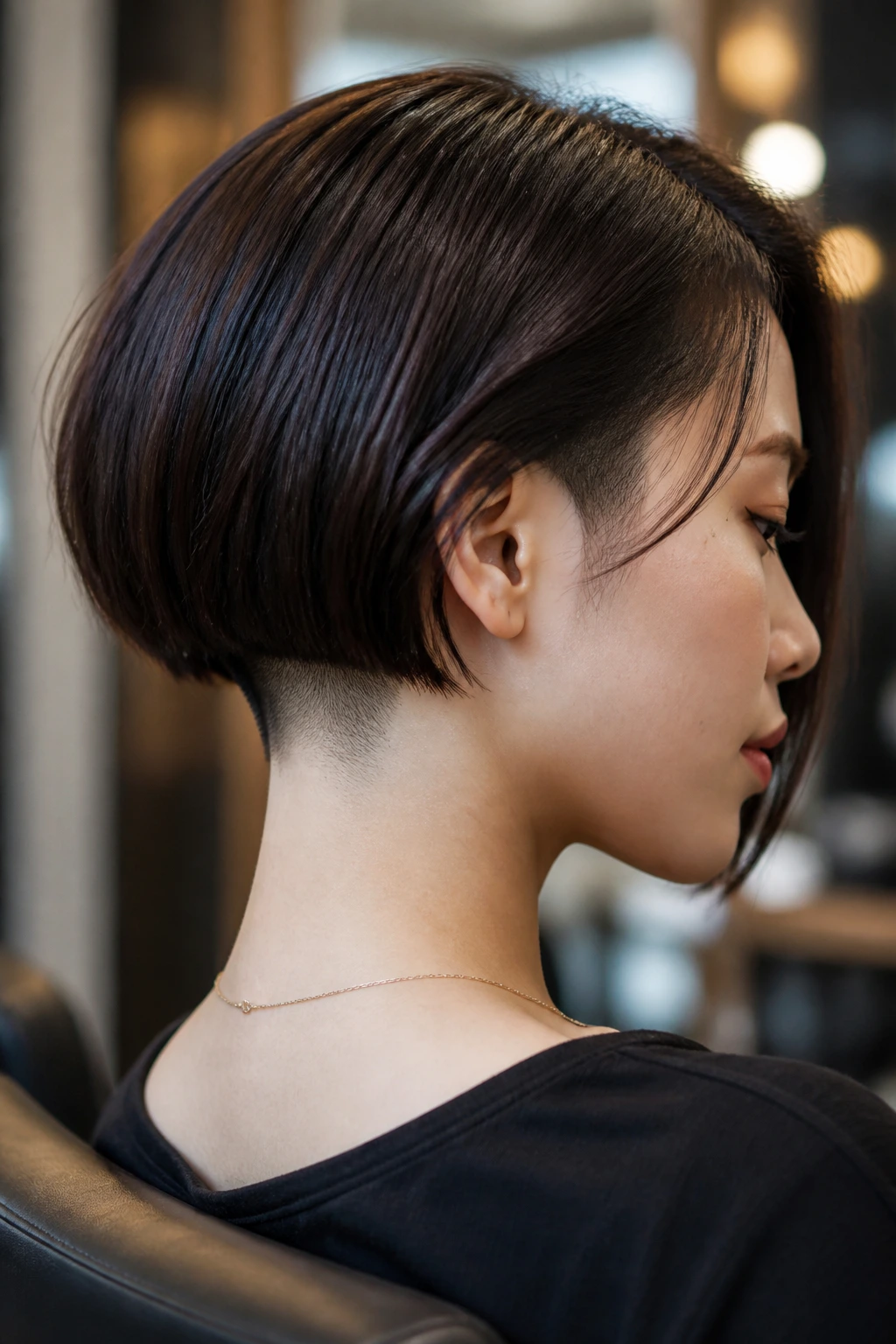
A nape-exposing undercut bob solves a problem that straight, dense hair creates all the time: too much bulk where the hair meets the neck. By removing hidden weight underneath, the top layer can fall cleaner and swing better.
That swing helps square faces because the silhouette feels lighter and less blocky. The visible line can still be blunt or soft, but the shape underneath is doing some of the work. It’s a clever cut, not a flashy one, even if the word “undercut” sounds louder than it is.
This is the bob I’d pick for very thick hair that refuses to sit flat. It also grows out in a useful way, because the hidden undercut keeps the top looking neat longer than you’d expect.
25. Long Bob with Cheekbone Layers
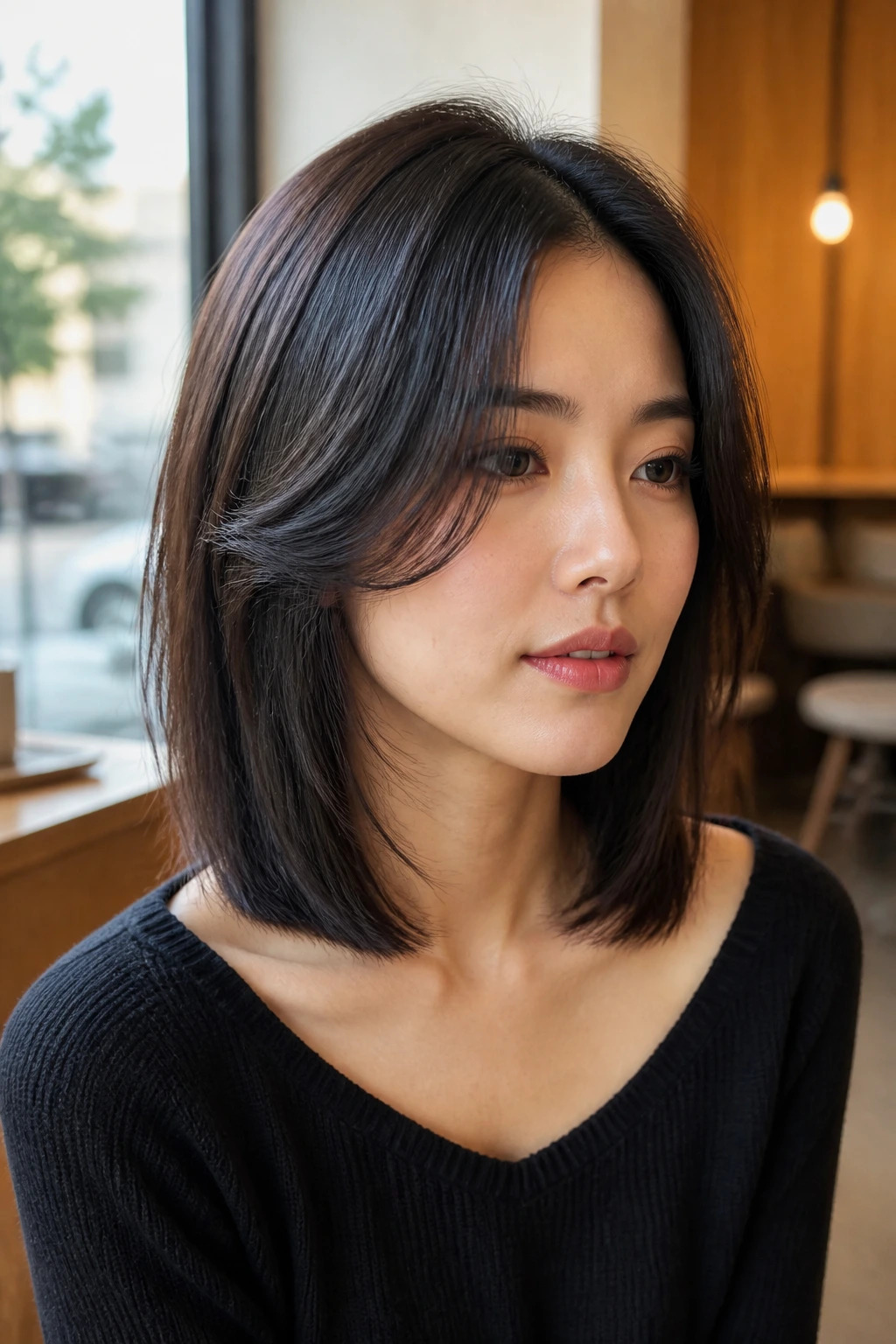
A long bob with cheekbone layers is the safest ending point if you like the bob idea but want the least risk around the jaw. The length usually lands at the collarbone, and the layers start high enough to frame the cheekbones but low enough to spare the jawline.
Straight hair gives this cut a clean, calm look. The layers add movement where the face needs it, and the longer length prevents the lower face from feeling too emphasized. It’s one of the easiest cuts to wear if you’re unsure about short hair but still want the bob family.
I like this one because it grows out well, works with center or side parts, and doesn’t need perfect styling every morning. Some haircuts ask for a mood. This one just asks for a comb.
What to Tell the Stylist So the Cut Softens the Jaw
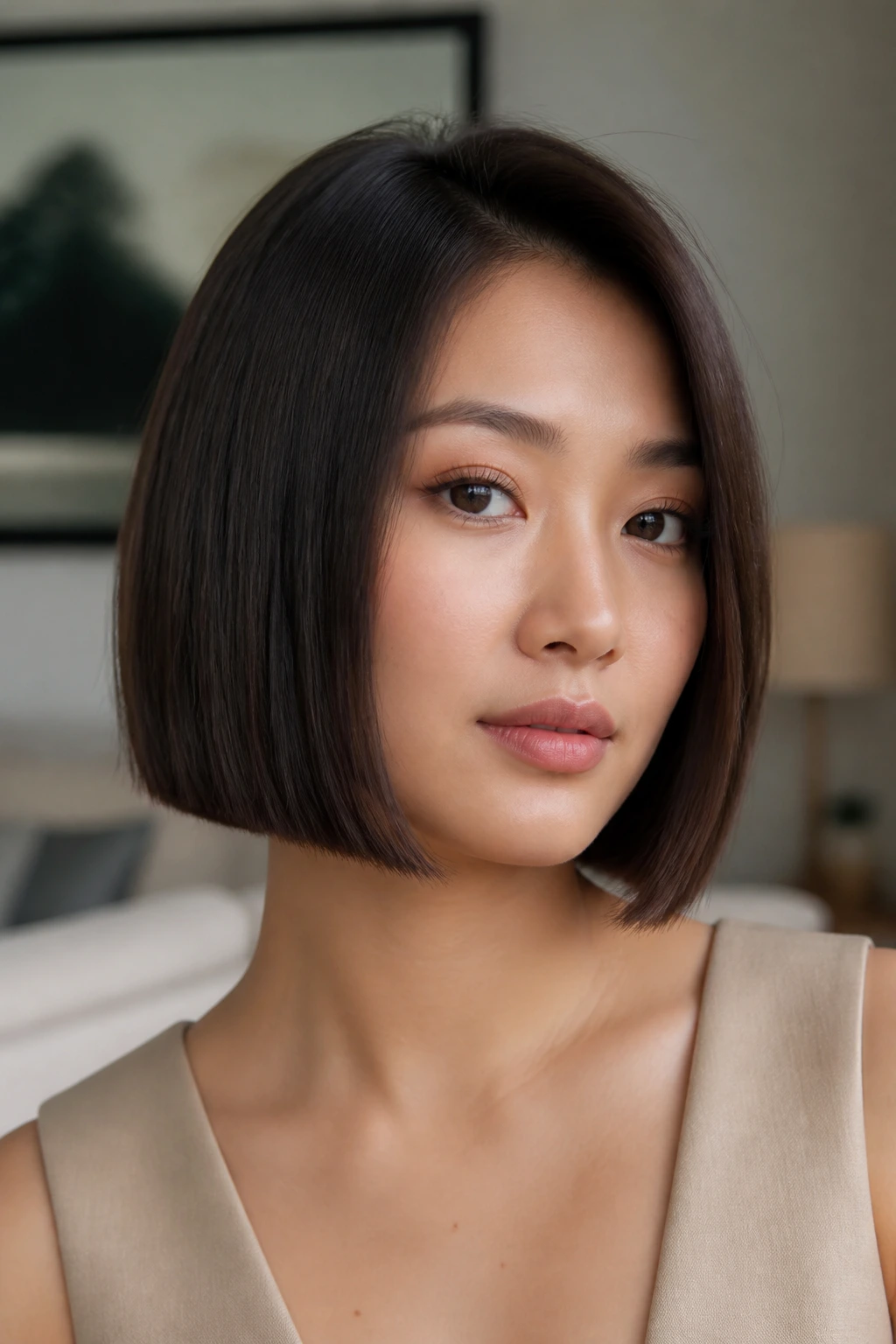
The chair conversation goes better when you stop talking in vague words like “soft” and “bouncy” and start giving the cut a job. Say where you want the hem to fall. Say whether you want the front longer than the back. Say whether the ends should turn in or stay blunt. That’s the language that gets you a bob that fits a square face instead of one that merely resembles a bob.
Length: Ask for the front pieces to land at least a little below the jaw if you want the face to look less square. Even a half-inch changes the line.
Weight: Tell your stylist whether your hair feels heavy at the ends or flat at the crown. Dense straight hair usually needs hidden weight removal, not surface layers sprayed across the top.
Finish: If you want the bob to curve inward, ask for a C-bend or bevel at the hem. If you want crispness, ask for a clean blunt line with softened corners.
Parting: Mention how you wear your part most days. A cut can look lovely on a center part and awkward on a side part if the weight is distributed wrong.
Tools That Keep Straight Hair from Falling Flat
-
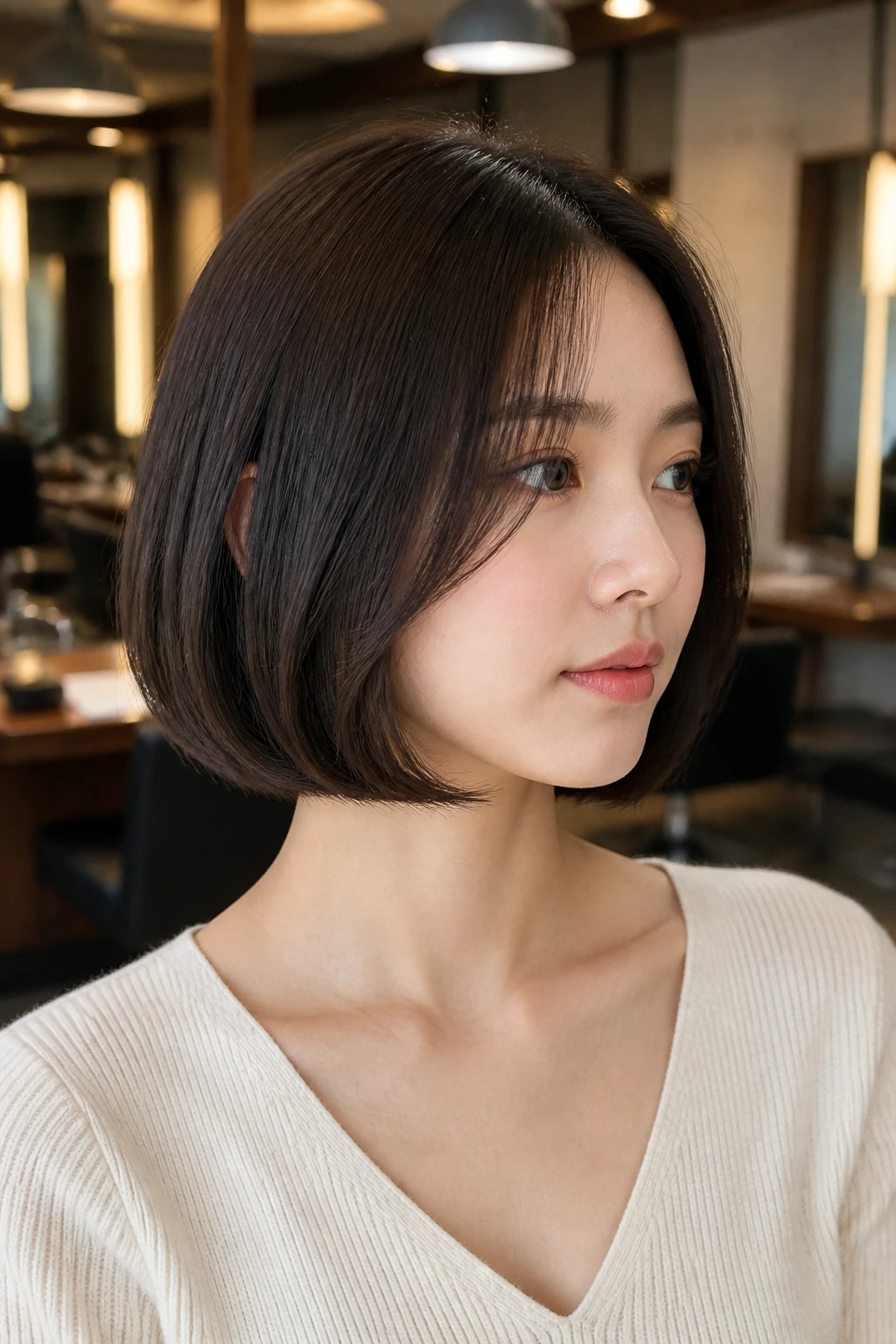
Blow dryer with a concentrator nozzle: This keeps airflow directed and helps the ends stay smooth instead of puffing in random directions.
-
1- to 1.5-inch round brush: Small enough to bend the ends, large enough to avoid tight curls that fight a square face.
-
Flat iron with rounded edges: Useful for a single inward turn on the hem, especially on the bob styles that rely on a C-shape.
-
Heat protectant spray: Straight hair shows heat damage fast, and damaged ends make even a good bob look tired.
-
Light serum or gloss: One drop on the ends is enough. More than that, and the hair starts to look stringy.
-
Duckbill clips: Handy for sectioning while you dry the roots and shape the front pieces.
-
Tail comb: Good for making clean parts and checking whether the hem is actually level.
-
Silk pillowcase: Not glamorous, just useful. It keeps the ends from getting fuzzy and bent in the wrong direction overnight.
What to Do When the Bob Starts Looking Boxy
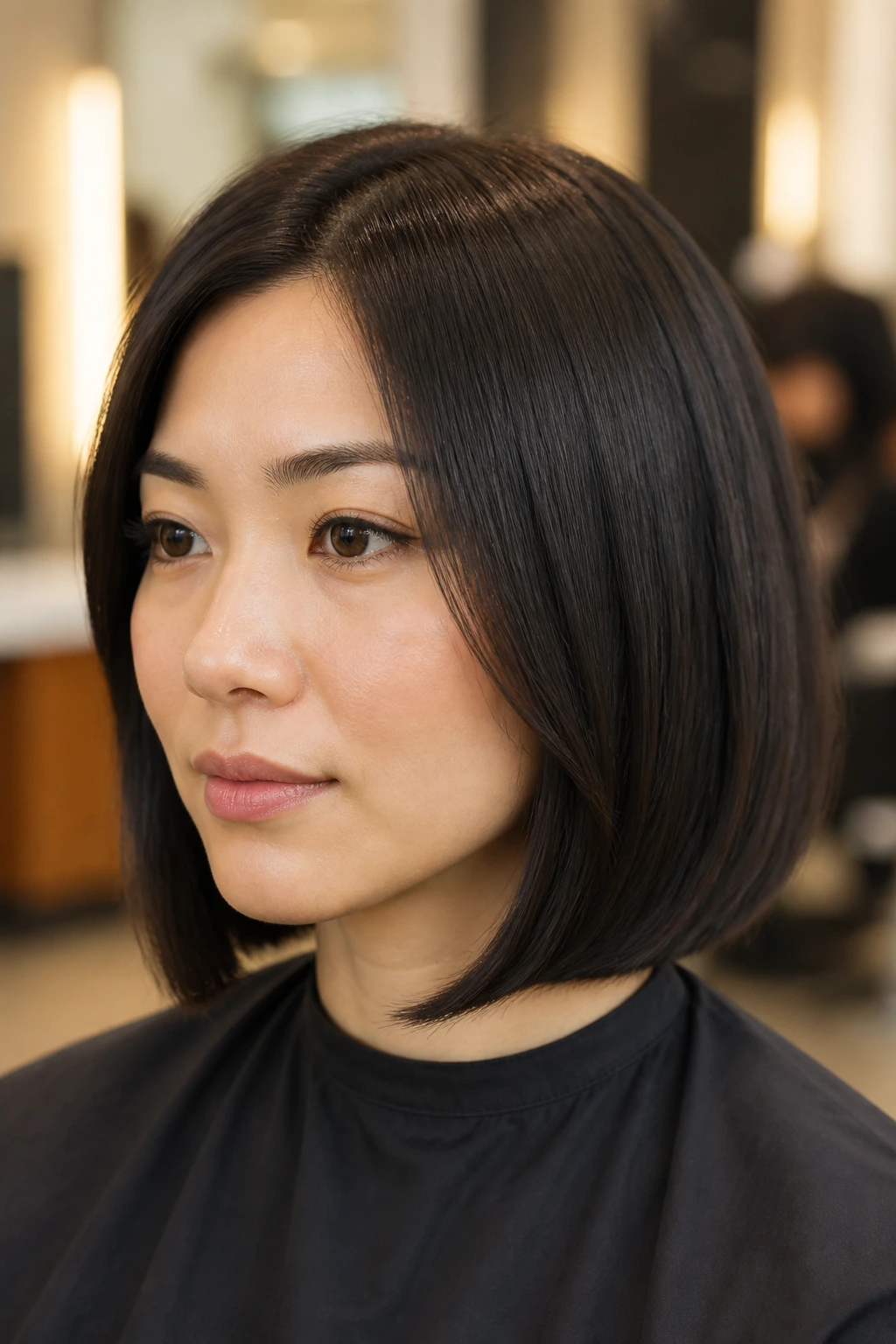
The bob usually goes boxy for one of three reasons: the length hits the jaw too directly, the interior is too heavy, or the styling is too flat. The fix depends on which problem you actually have. That’s the annoying part. It is not always the haircut’s fault.
If the hem is sitting right on the jaw, the easiest fix is a tiny bit of length or a stronger inward bend. If the ends feel like a shelf, ask for internal weight removal next time, not more layers on top. And if the hair collapses at the crown, you need root lift, not more oil.
The things I’d change first
- Move the part slightly off-center.
- Bend the ends inward, not outward.
- Use less conditioner near the roots.
- Ask for point cutting on the corners only.
- Trim the perimeter before it turns fuzzy.
The bob is one of those cuts that can look perfect on day one and tired on day twenty-one if you let the shape drift. That’s normal. It just means the line is doing real work.
Other Ways to Bend the Same Cut Toward Softness or Sharpness
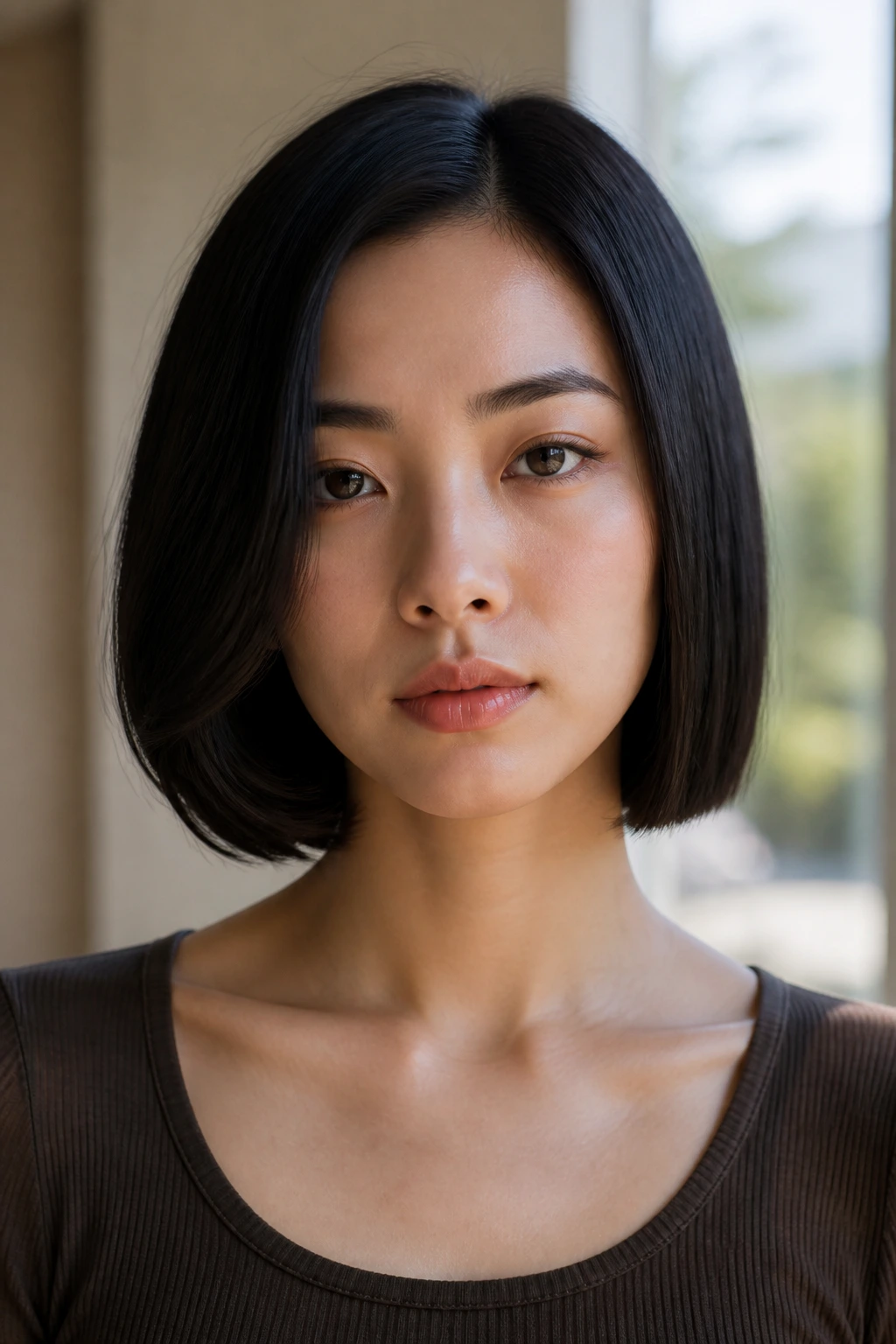
-
Soft-Corner Version: Keep the length and line, but ask for point-cut ends and a gentle curve under the face. It’s the easiest way to tone down a blunt bob without losing structure.
-
Sharper Editorial Version: Keep a cleaner baseline, move the part deep to one side, and use a flat iron to create a stronger bend at the hem. This version likes strong collars and simple makeup.
-
Low-Fuss Air-Dry Version: Choose a collarbone lob or hush-cut bob, remove bulk underneath, and let the hair settle with a tiny bit of leave-in cream. It won’t be glassy, but it will be easier to live with.
-
Thicker-Hair Version: Add a hidden undercut or internal graduation so the bob doesn’t puff out at the neck. Thick straight hair needs discipline more than decoration.
-
Fine-Hair Version: Keep the hem one length, avoid too many internal layers, and stay just below the jaw. Fine hair often looks fuller when the line is clean and the edges are not shredded.
How to Keep the Shape Between Salon Visits
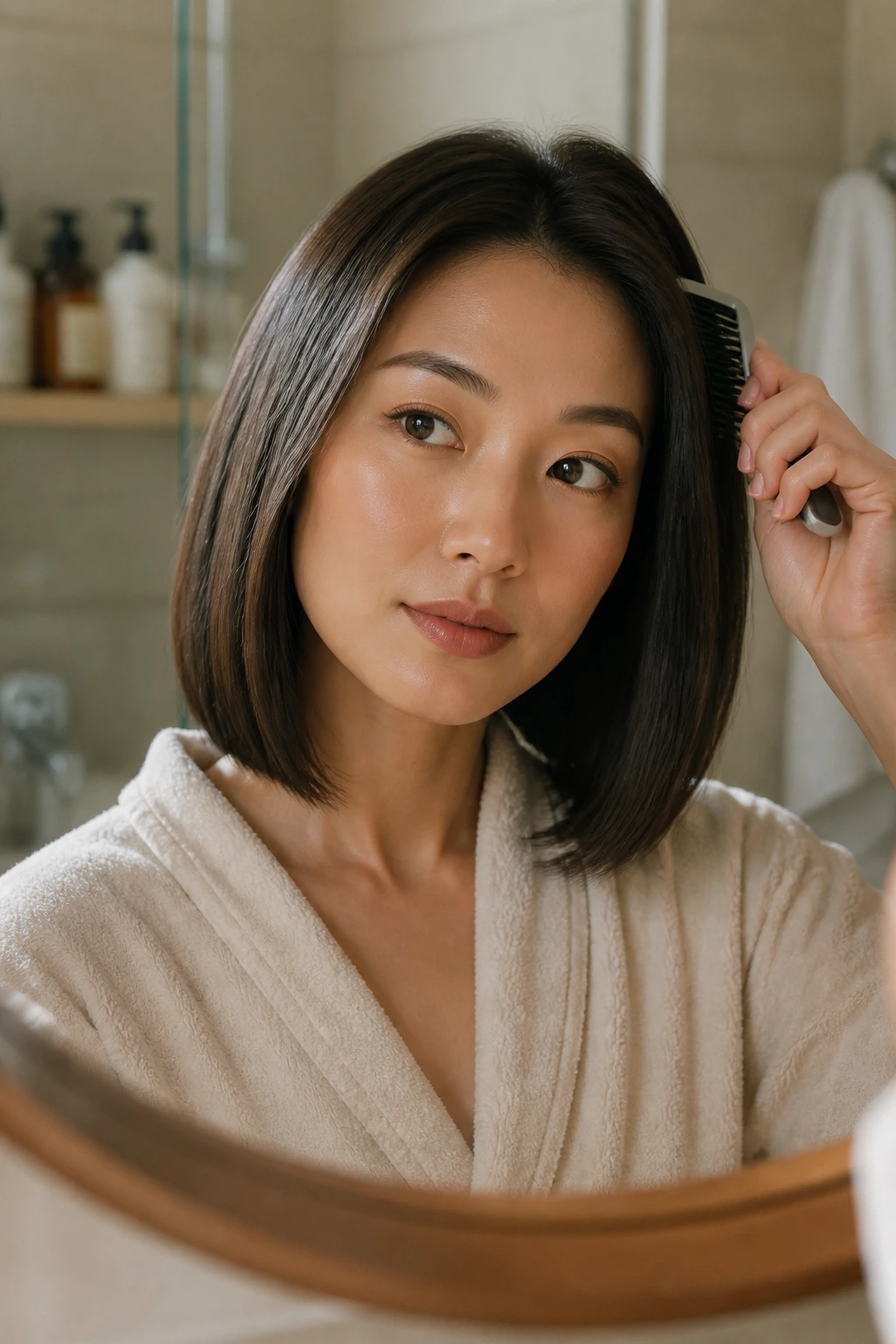
A bob lives or dies by maintenance. You do not need to babysit it, but you do need to respect the hem line. Straight hair shows growth quickly, and square faces need the cut to stay in the right place or the whole effect changes.
Blunt bobs and glass bobs usually want trims every 6 to 8 weeks. Lobs can stretch farther, closer to 8 or 10 weeks, before the shape starts to get soft in a bad way. Bangs or curtain fringe need more frequent attention, often every 3 to 4 weeks if you want the opening at the forehead to stay clean.
At home, use conditioner from mid-length to ends and keep heavy oils away from the roots. Dry shampoo helps if the crown goes limp, but use it at the scalp only. Heat protectant is not optional if you blow-dry or flat iron the ends. Straight hair remembers heat damage, and damaged ends are what make a bob look ragged before its time.
Bob Questions People Ask Before the Chop
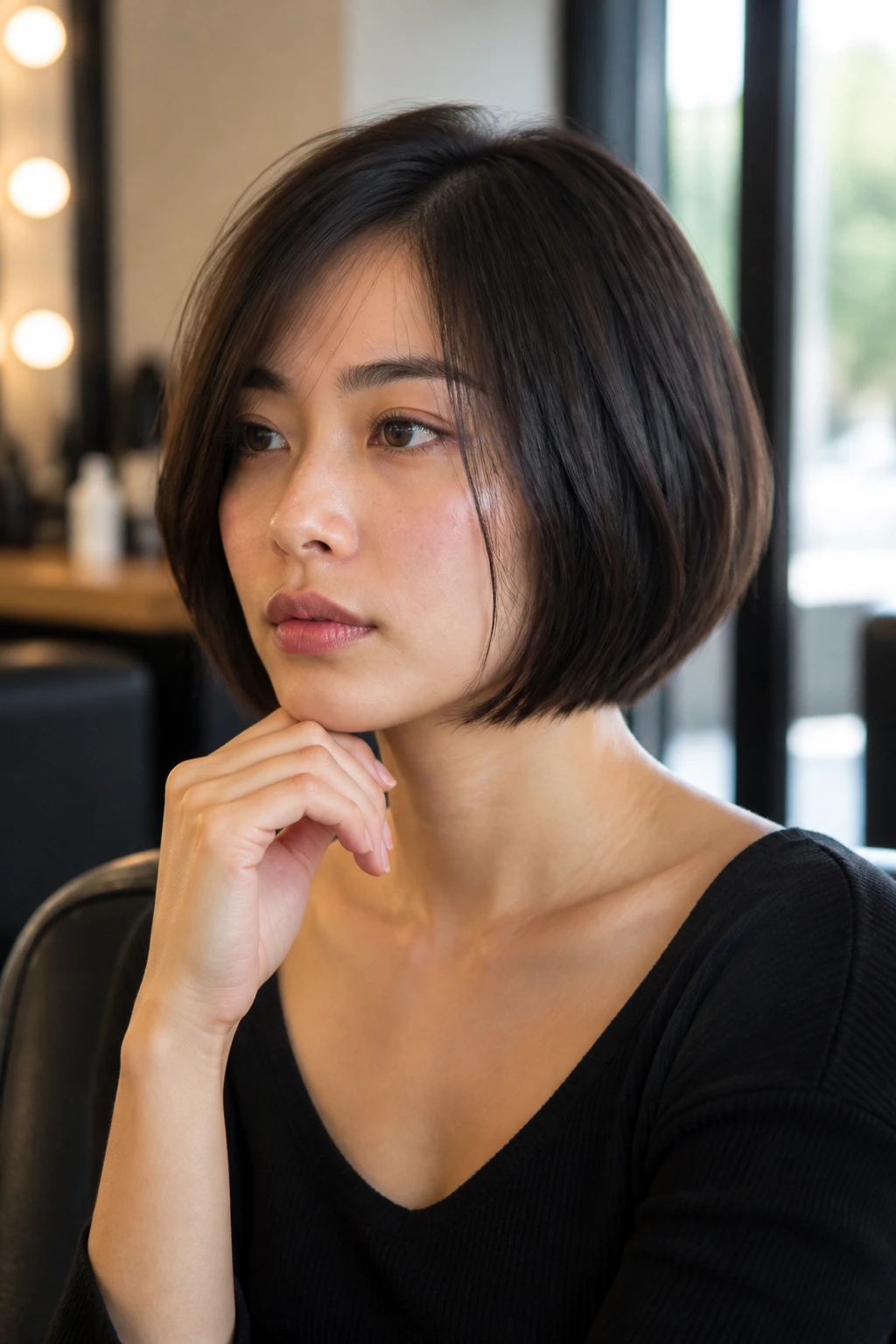
What bob length flatters a square face most?
The safest range is usually just below the jaw or at the collarbone. That keeps the hem from landing on the widest part of the face. If you want something shorter, soften the corners and avoid a hard stop right at the jaw.
Do straight hair types need layers in a bob?
Not always. A one-length bob can look cleaner on straight hair than a layered one, especially if the hair is dense. If you need movement, ask for invisible layers or face-framing pieces rather than choppy surface layers.
Can a square face wear a blunt bob?
Yes, but the placement matters. A blunt bob that sits right on the jaw can read boxy; a blunt bob that lands a bit below the jaw or bends inward usually works much better.
Are bangs a bad idea with square faces?
No, but the wrong bangs are harsh. Heavy, straight-across fringe can box the upper face. Curtain bangs, see-through fringe, or longer side-swept pieces usually soften the shape more kindly.
How do I keep a straight bob from going flat by noon?
Build lift at the roots with a blow-dryer and a nozzle, then keep conditioner off the scalp. A little root spray helps more than a pile of serum. The ends need polish; the roots need air.
What if my hair is thick and sticks out at the sides?
Ask for hidden weight removal, not a lot of surface layers. Thick straight hair often needs the bulk taken out underneath so the perimeter can fall cleanly. A blunt surface with a lighter interior is usually the sweet spot.
Can I air-dry these styles?
Some of them, yes. The collarbone lob, hush-cut bob, and soft shaggy bob are easier to air-dry than a glass bob or a sharp blunt bob. If the style depends on a C-bend, you’ll probably need at least a little brush work.
How often should I trim a bob?
Shorter bobs usually need a trim every 6 to 8 weeks. Longer lobs can go a bit longer. Once the hem starts flipping in odd directions or the corners stop reading clean, it’s time.
The Shape I’d Reach For Again

A good bob on straight hair does not hide the face. It edits it. That is the whole appeal. Square faces do not need to be buried under length, and straight hair does not need to be apologized for. The cut just has to land in the right place and respect the jaw instead of boxing it in.
If I were choosing for someone who wants the safest path, I’d start with a collarbone lob, a soft C-curl bob, or a long bob with cheekbone layers. If the goal is sharper, a blunt bob with softened corners or a glass bob can hit hard in the right way. The best choice is the one that keeps its shape when the room gets messy.
The next time you sit in the chair, ask where the hem line will fall before you ask for anything else. That one question usually tells you whether the bob is about to work with your face or stand squarely against it.