



Short neck bobs can look razor-sharp or puff up into a triangle, and thick hair is usually the reason. When the cut lands at the nape with the right amount of weight removed, the whole shape changes: the neck looks longer, the jaw looks cleaner, and the hair stops fighting your shirt collar all day.
For women over 40, that matters for a very practical reason. A good bob shouldn’t ask for a full production every morning. It should give you shape when you air-dry, hold a clean line after a blowout, and still look like it belongs on a real head of hair — not a beauty-school mannequin.
Thick hair is generous, but it can also be bossy. The right short neck bob works with that density instead of hacking it to pieces, and that difference shows the moment the cape comes off.
Why These Neck-Length Bobs Earn Their Keep
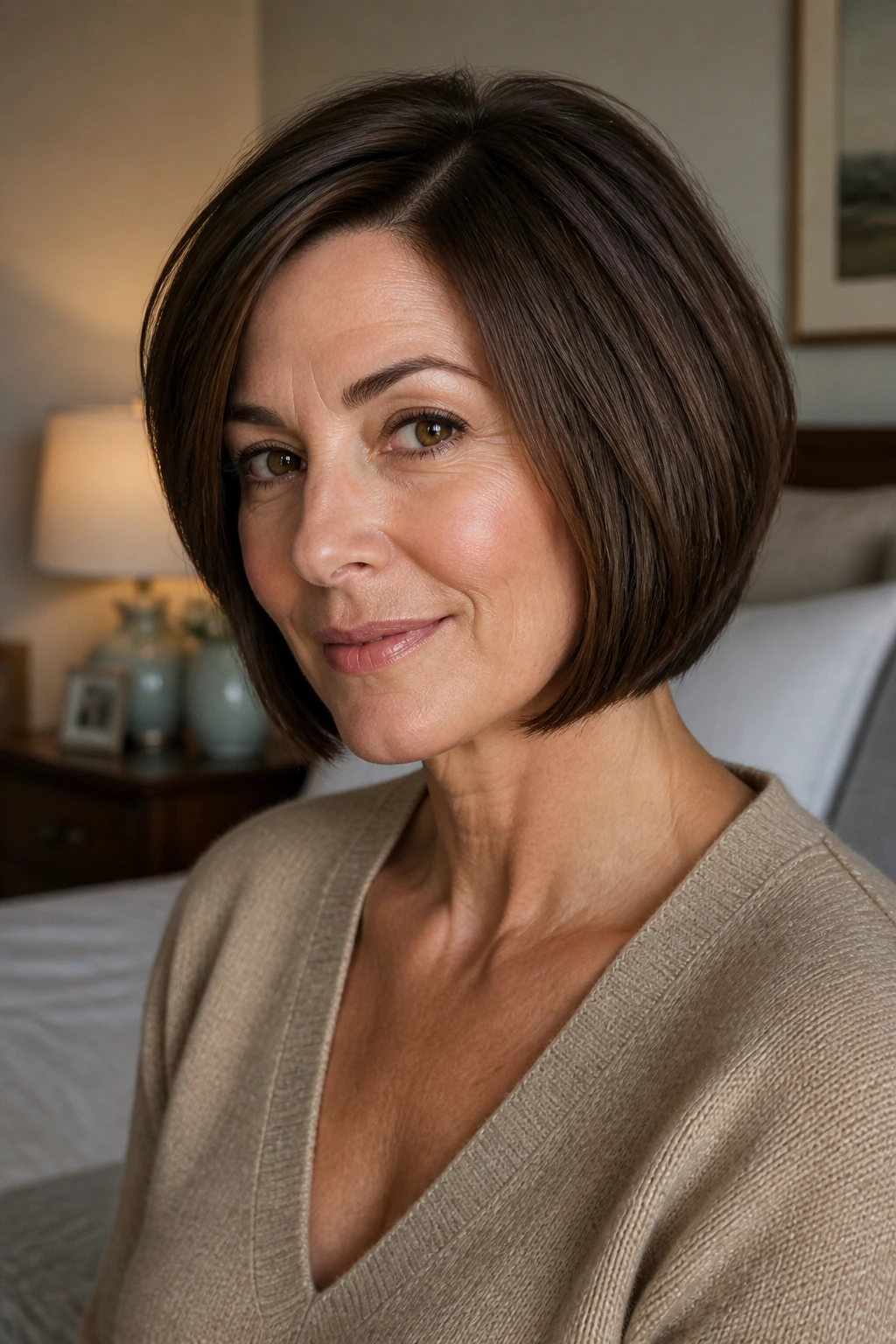
- Bulk control: A cut that stops at the neck removes weight where thick hair tends to balloon, so the silhouette sits closer to the head instead of flaring outward at the collar.
- Cleaner neckline: Shorter backs show off the neck and jaw in a way that feels crisp, especially with earrings, crew necks, or collarbones peeking out from a sweater.
- Less daily wrestling: The best versions need a quick bend, a brush-through, or a light round-brush pass — not a 40-minute fight with three hot tools.
- Better gray behavior: Thick silver strands often grow wiry and wide; a sharp bob edge keeps them looking intentional instead of fuzzy.
- Face framing without fuss: Slight front length, side parts, or soft bangs can soften a strong jaw or bring balance to glasses without adding bulk.
- Salon longevity: These cuts age well between trims if the weight line is placed correctly, which means the shape does not collapse after two washes.
1. The Polished Blunt Neck Bob
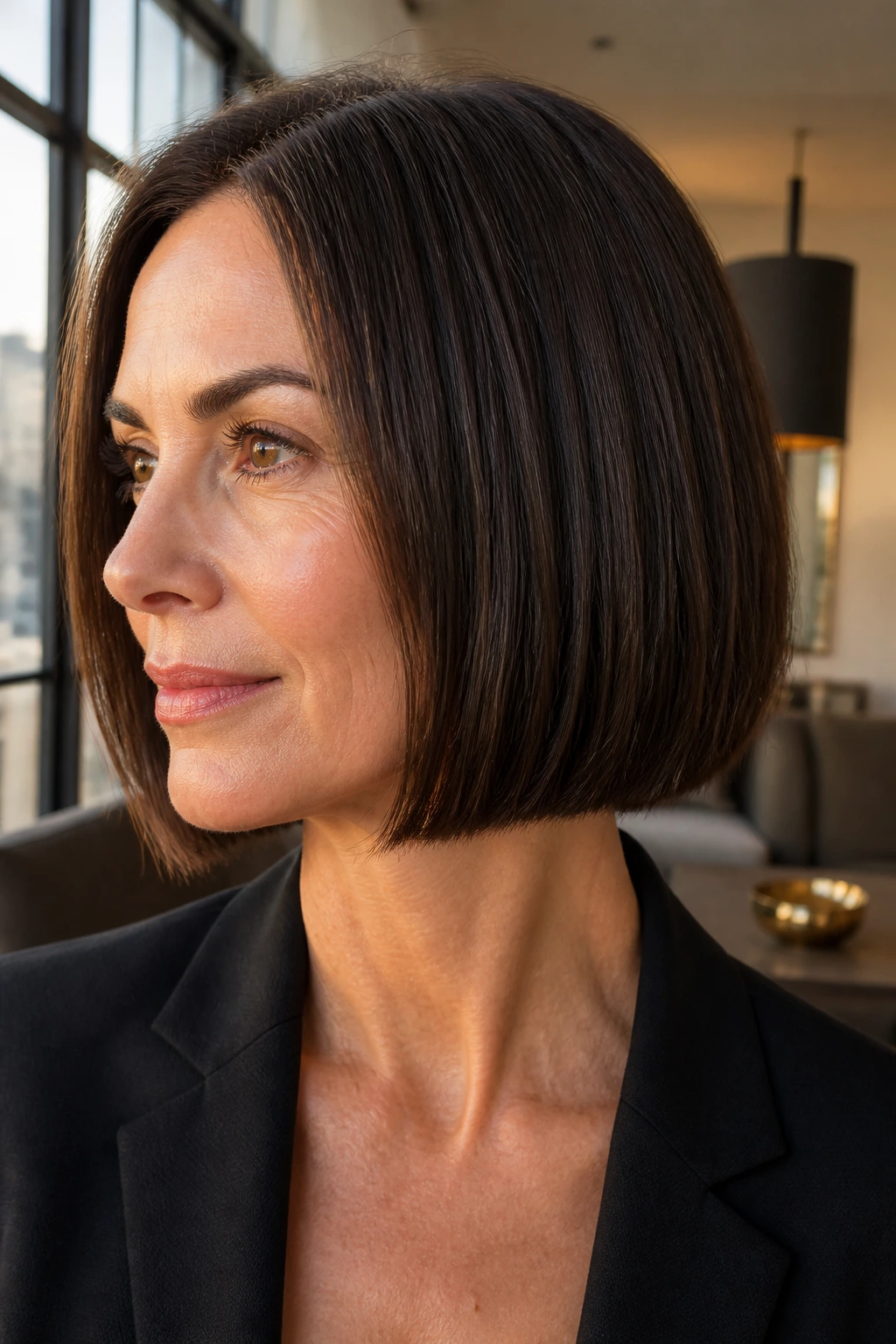
A blunt neck bob is the cleanest answer when thick hair wants to spread out at the sides. The line sits just above the collarbone or right at the nape, and the ends stay solid enough to look purposeful.
Ask for minimal internal layering and a little point-cutting at the tips so the edge doesn’t read like a shelf. That tiny bit of softening matters; otherwise, dense hair can look too boxy.
This one shines when you like a neat finish and don’t want too much movement. A paddle brush, a concentrator nozzle, and a flat iron bend at the ends are usually enough.
2. The Stacked Nape Bob
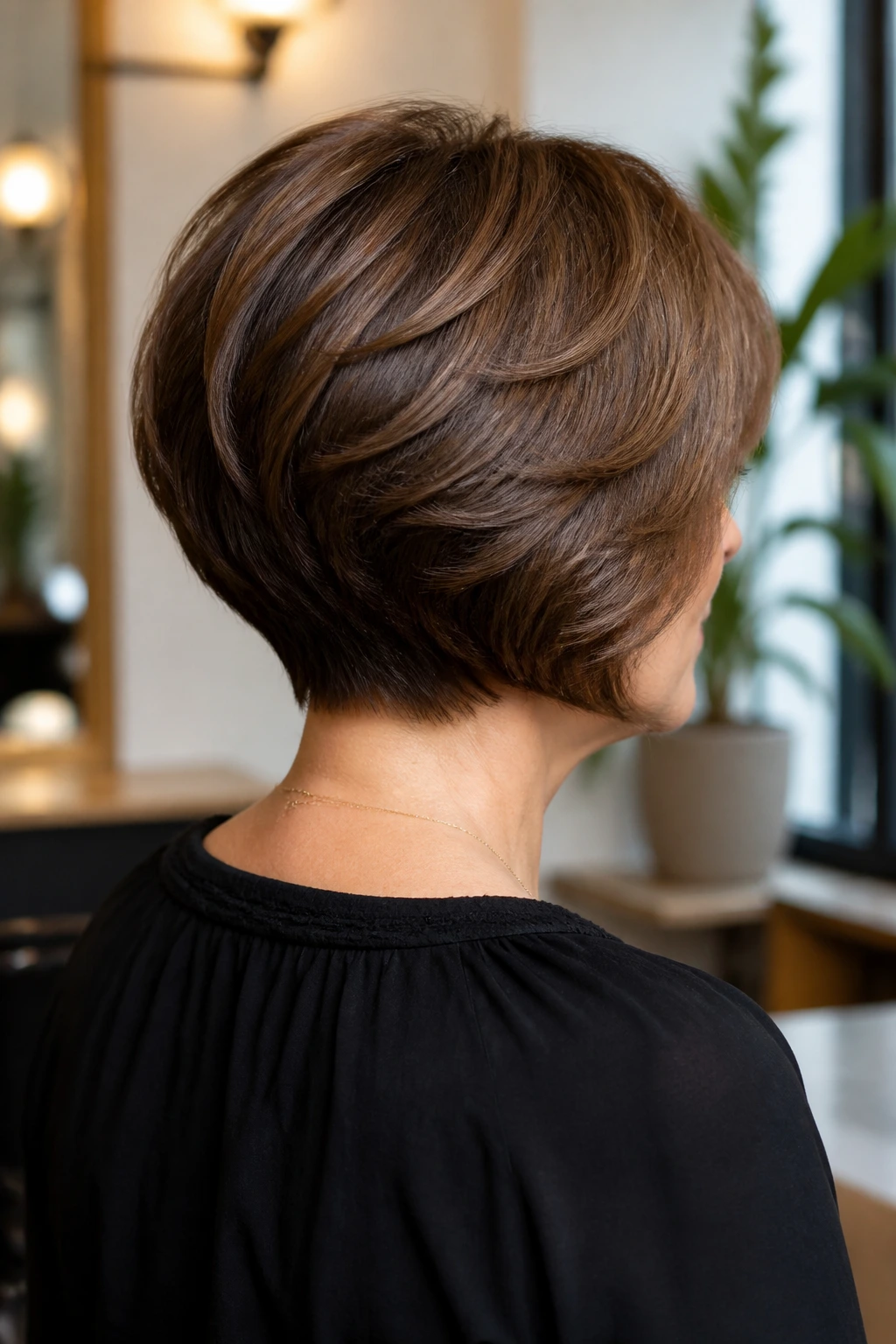
Need lift at the back without turning your head into a triangle? A stacked nape bob handles thick hair by taking weight out of the lower back section and letting the crown sit higher.
What the Stack Fixes
The stack solves the bulky, heavy feeling that happens when dense hair hits neck length all in one heavy block. The back should hug the head, not puff off it. A good stack is subtle, not 2009 drama.
Keep the graduation moderate. Too much and the cut turns into a wedge with a mood problem.
3. The Soft Layered Neck Bob
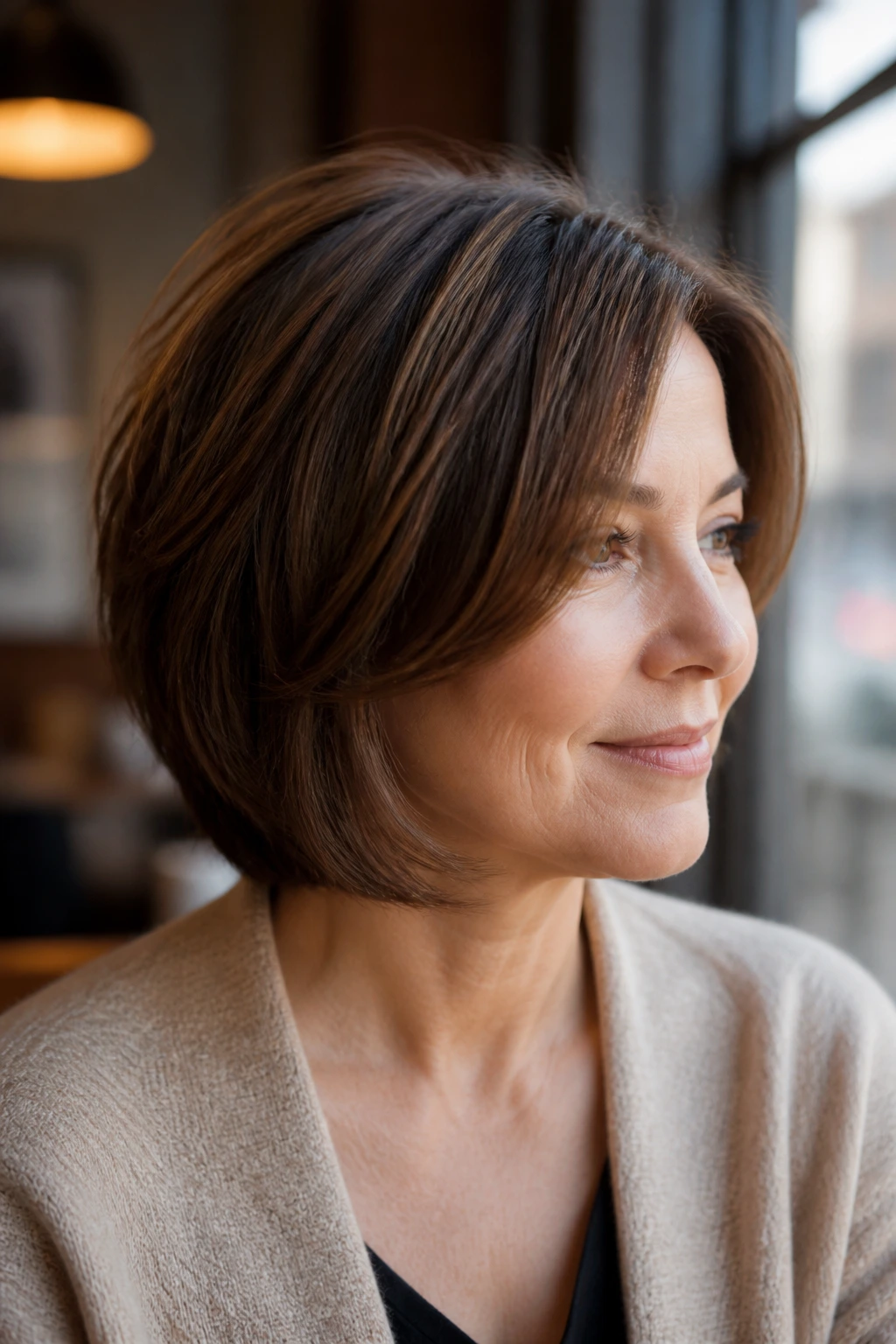
This is the bob for women who want shape, not sharpness. The layering stays low and controlled, which gives thick hair movement without stripping away the body that makes the cut look healthy.
What it feels like: lighter at the ends, softer around the jaw, and much less likely to sit there like a cardboard helmet. That’s the whole point.
If your hair has a slight wave, this cut usually behaves beautifully with a bit of mousse and air-drying. If it’s straighter, a quick round-brush pass creates a smooth curve without flattening the whole head.
4. The A-Line Bob
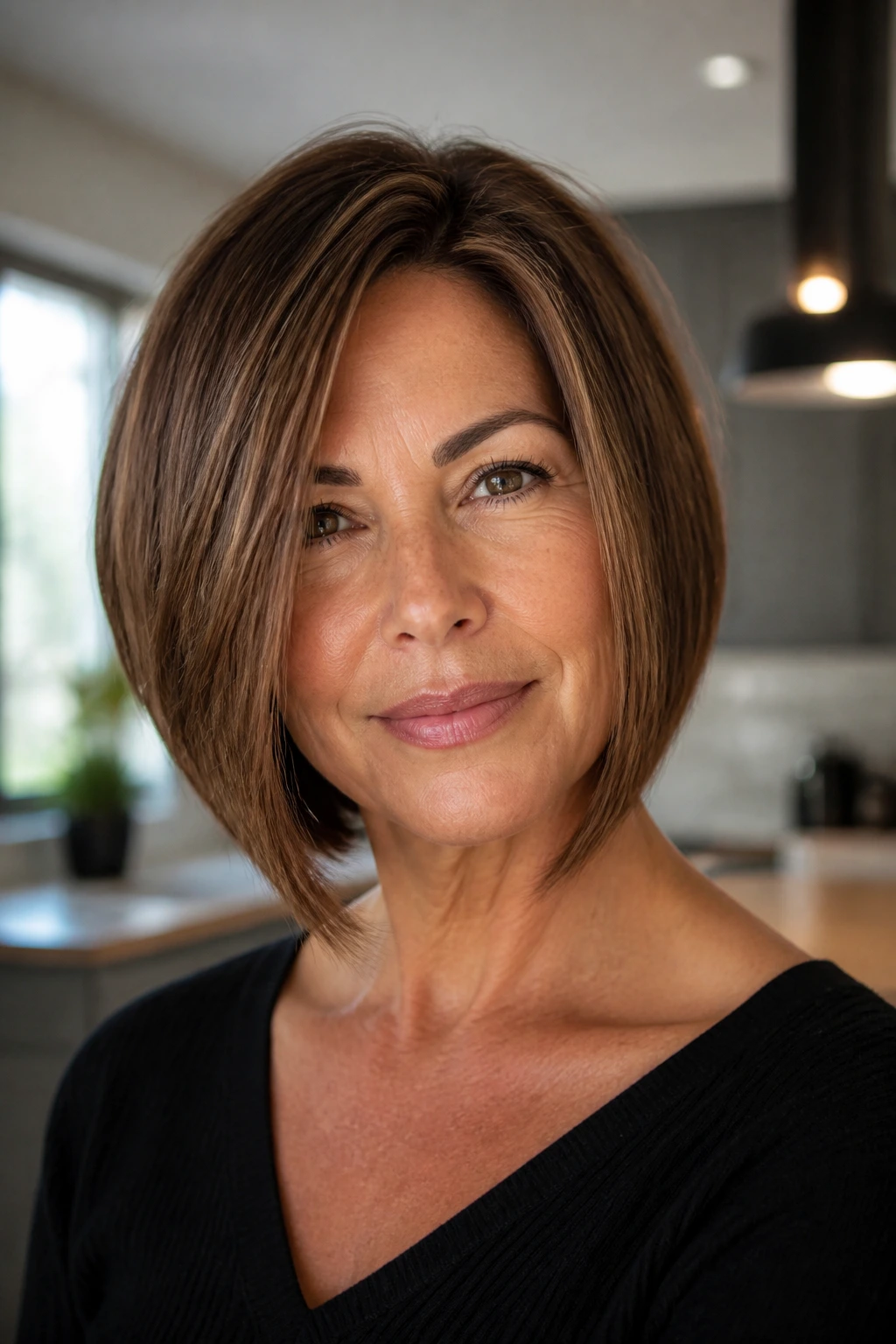
The A-line bob is longer in front and shorter in back, which is useful when thick hair needs a little front weight to keep the silhouette sleek. The diagonal line draws the eye forward and gives the neck room to show.
It works especially well if you dislike a blunt box around the face. The longer front pieces soften the look, and that can be a nice balance with strong cheekbones or a fuller jaw.
Keep the angle obvious enough to matter, but not so steep that the front starts looking disconnected from the back. That’s the line where the cut loses its polish.
5. The Feathered Bob
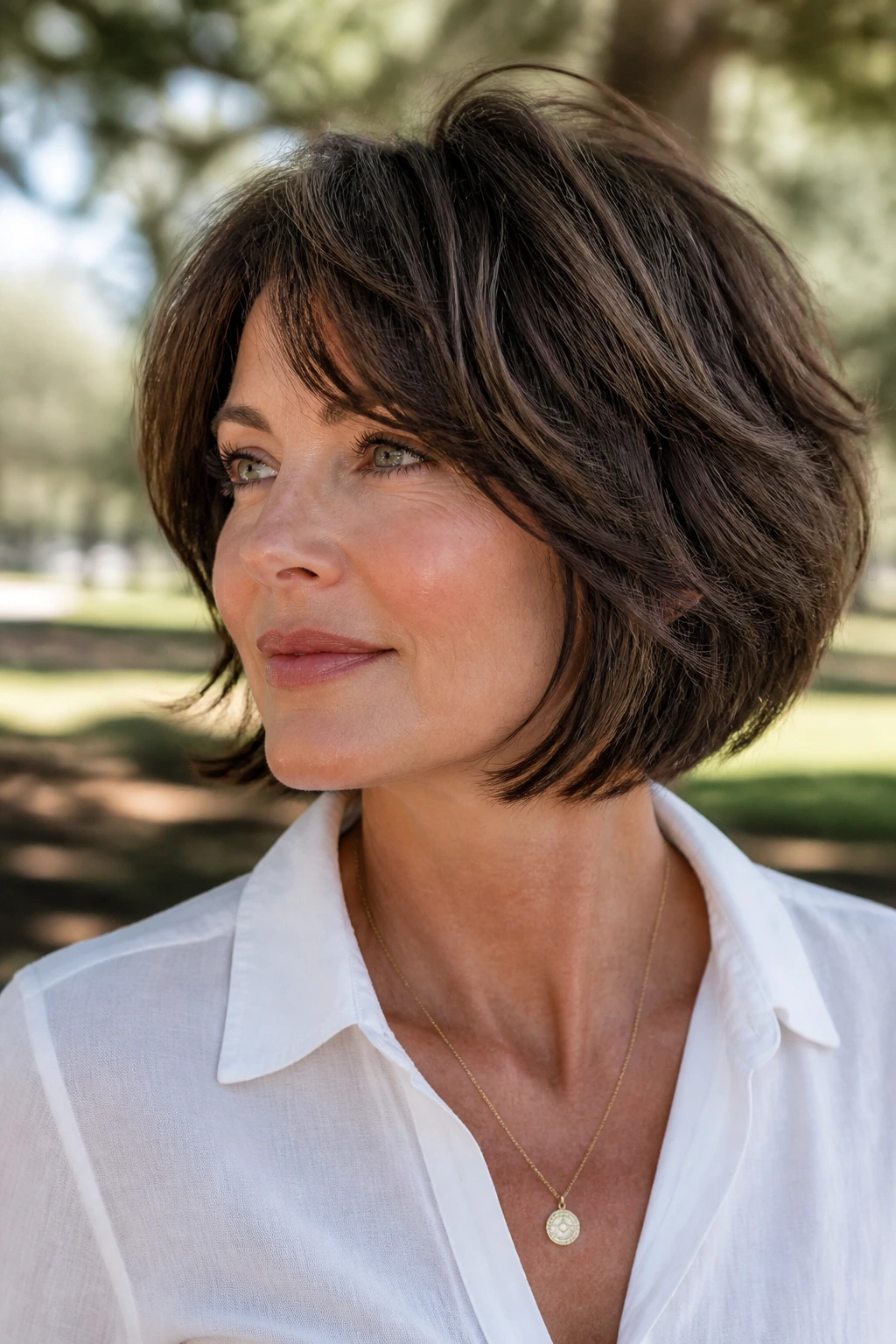
Feathering is old-school in the best way when it’s done with restraint. Thick hair benefits from feathered internal layers because they break up the mass while keeping the perimeter neat.
The finish should look airy at the ends, not shredded. That’s a big distinction, and it’s the difference between movement and frizz.
Best For
- Hair that feels heavy after a fresh wash
- Women who want a softer frame around the face
- Cuts that need shape with minimal styling time
6. The French Bob with Brow-Grazing Fringe
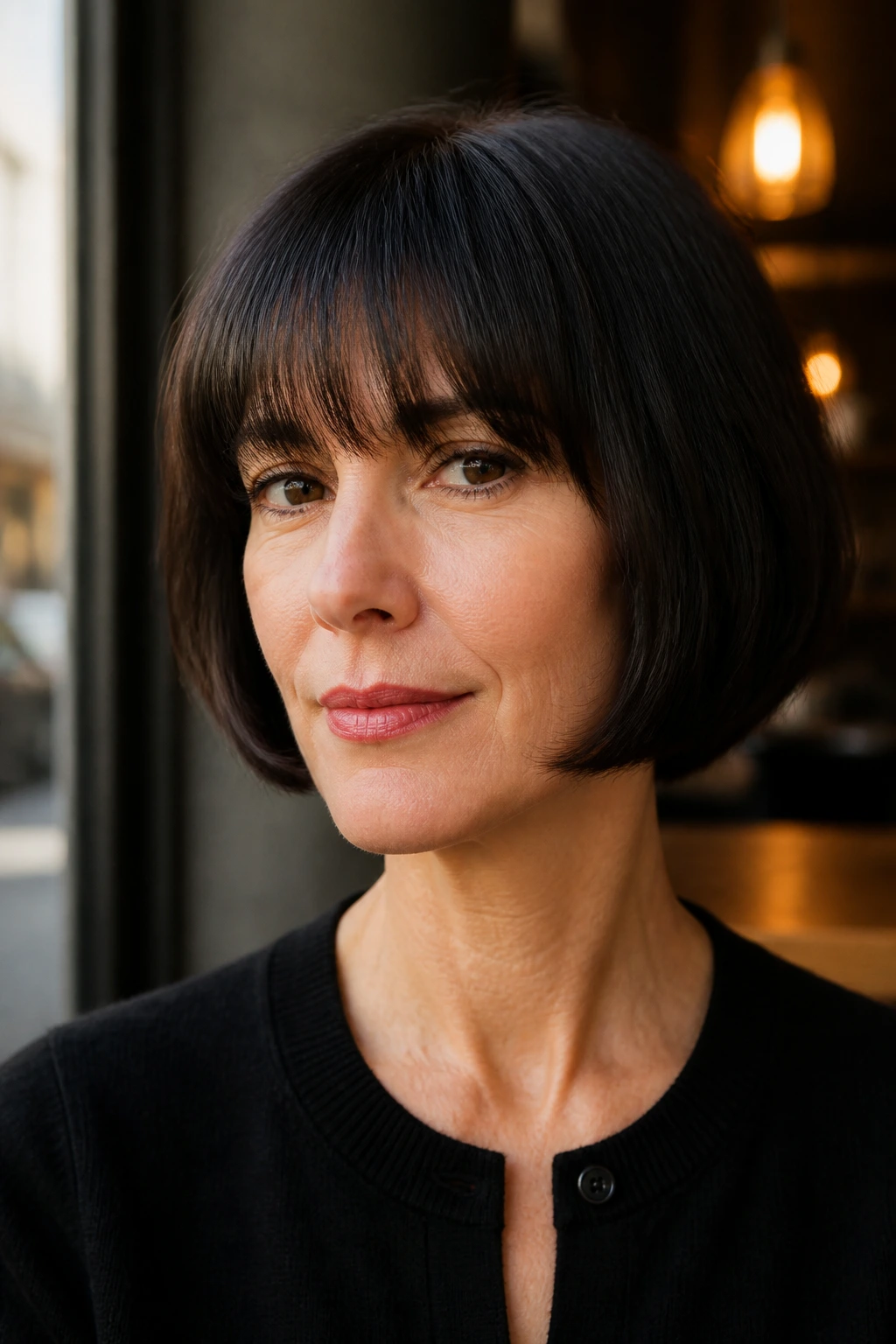
This one has attitude, but not the loud kind. A French bob paired with a brow-grazing fringe can make thick hair look deliberate and chic, especially when the cut sits high enough to show the neck.
The fringe matters here. Keep it full enough to read as a true bang, but not so dense that it forms a heavy curtain across the forehead. A little interior texture helps the line sit flatter.
It’s a strong choice if you like a smaller, sharper silhouette and don’t mind regular bang trims. Without that upkeep, the fringe can start to crowd the face fast.
7. The Inverted Bob
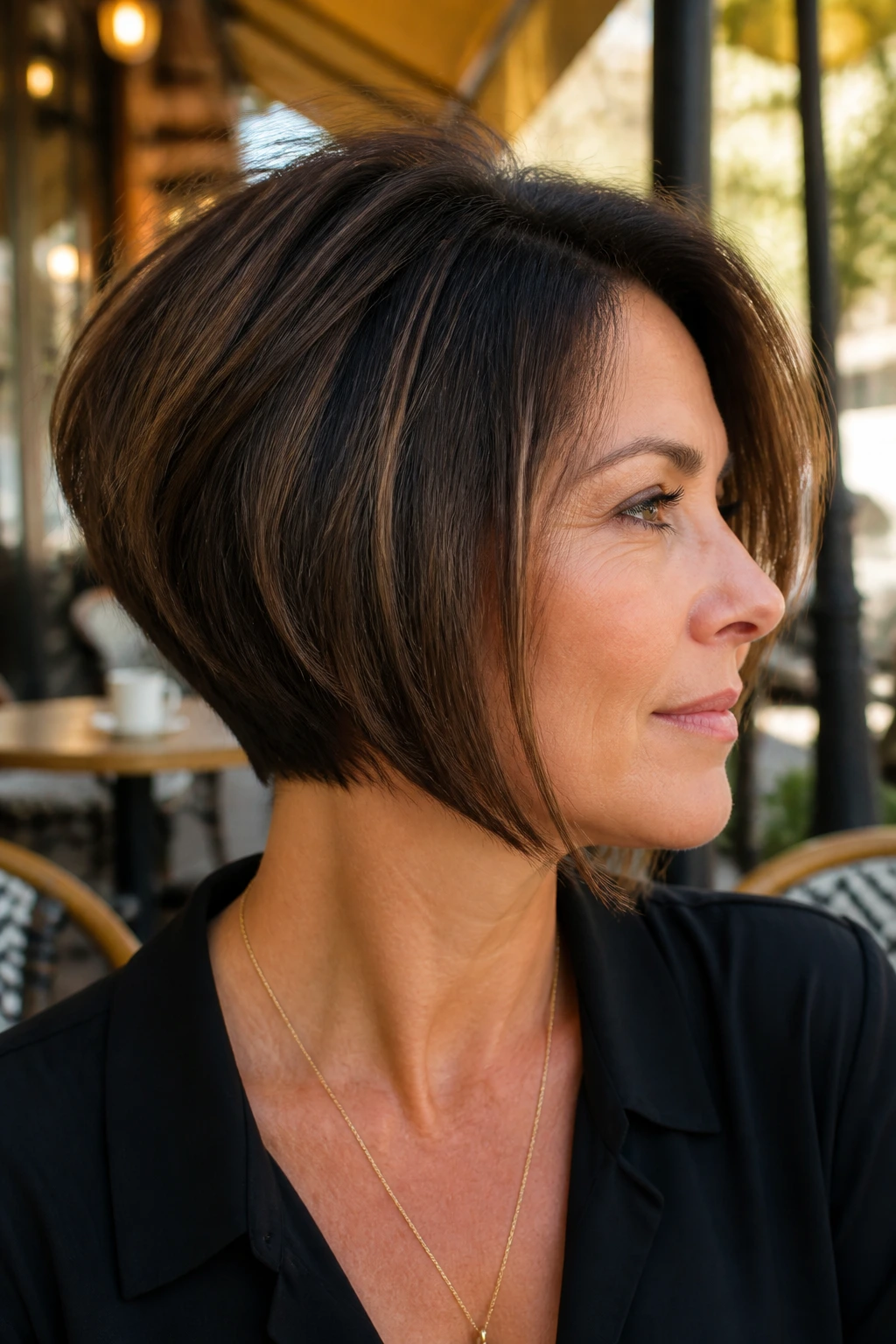
The inverted bob is the blunt bob’s more dramatic cousin. The back sits shorter and the front drops longer, which gives thick hair a direction to follow instead of letting it spread in every direction at once.
Why It Works
The steepness keeps the weight from sitting in the wrong place. Thick hair can look swampy at the nape if it’s all one length; this cut pulls that weight upward and forward.
It’s best when you want the cut to look strong from the side. That angle is half the appeal.
8. The Tapered Undercut Bob
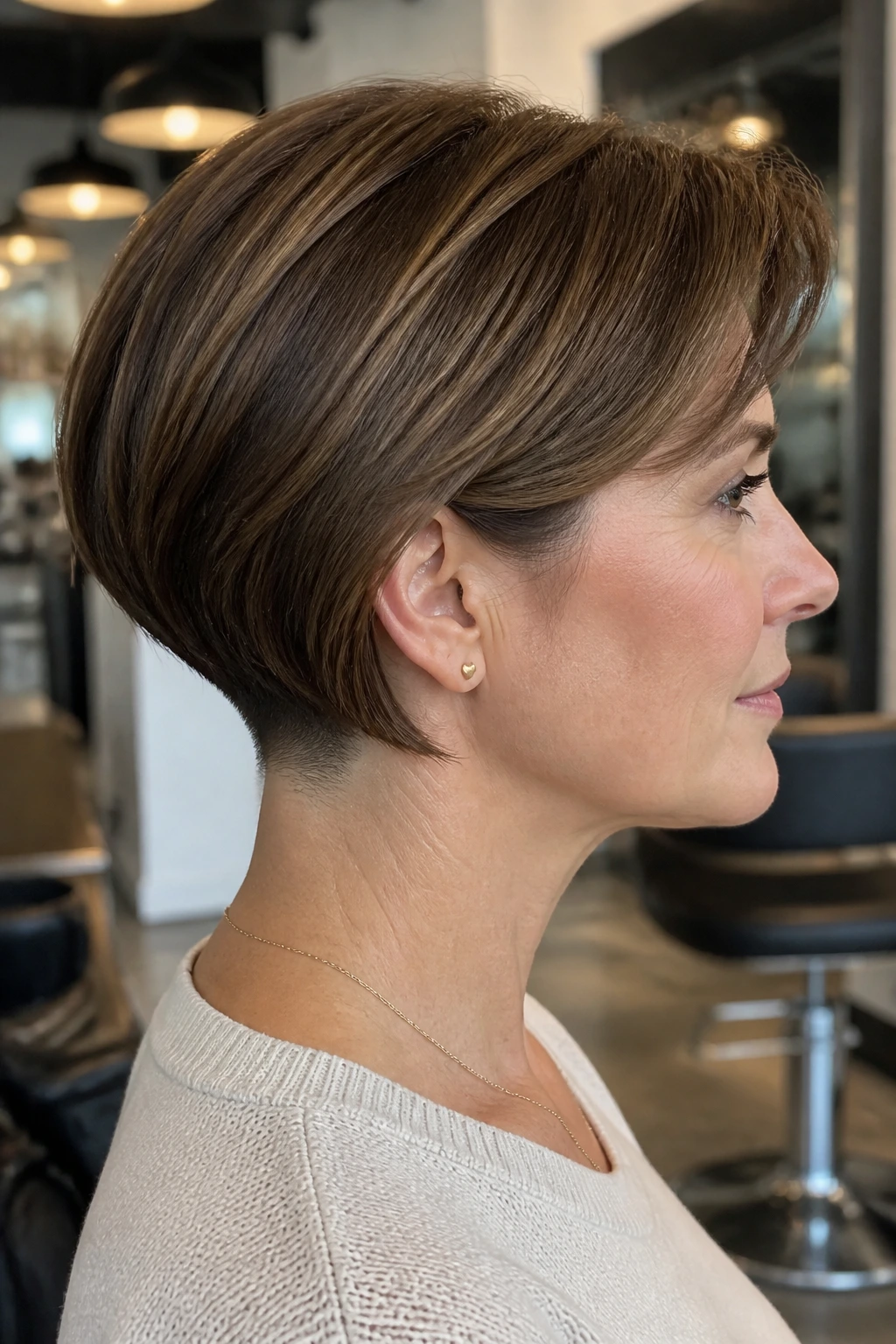
If your hair is truly dense, a hidden undercut can be a lifesaver. The top layer stays bob-length, while a small section at the nape or beneath the crown is shortened to remove bulk.
Done well, nobody sees the undercut unless your hair lifts. They just see a cleaner shape that lies closer to the head.
This is the one I recommend for hair that feels thick enough to stand on its own. It also helps if your nape grows in hard and fast, because the reduced density keeps the back from ballooning between appointments.
9. The Curly Neck Bob
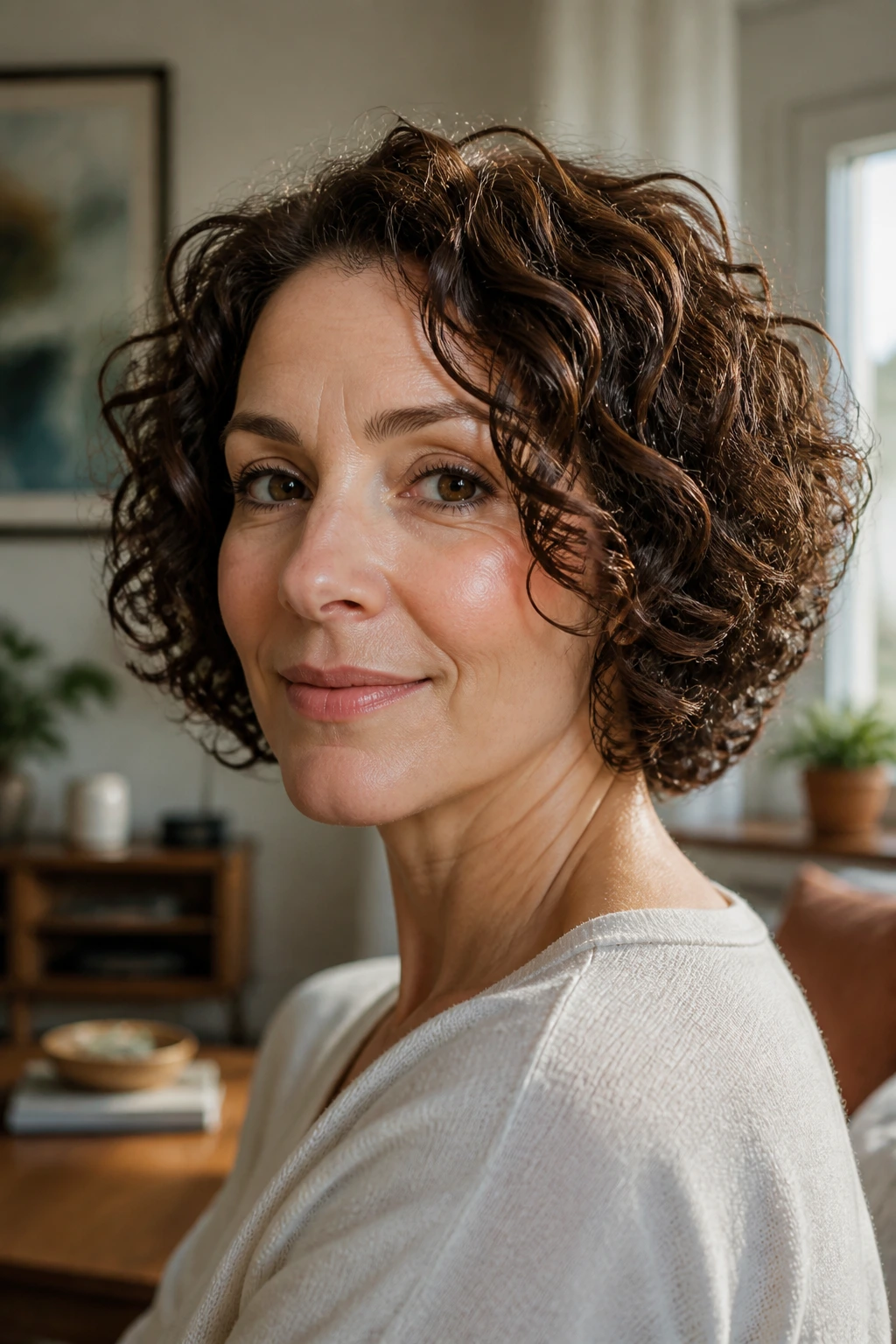
Curly hair can wear a neck-length bob beautifully, but only if the cut respects shrinkage. Ask for a dry cut or at least a curl-by-curl approach so the shape lands where you want it.
The best curly bob at this length has room at the crown and a rounded perimeter that doesn’t collapse into a pyramid. That sounds obvious until you’ve seen a stylist attack curls with thinning shears. Don’t let that happen.
A diffuser on low heat and a light cream through the ends are usually enough. Keep the product weight down, or the curls close in and the neck-length shape disappears.
10. The Side-Part Volume Bob
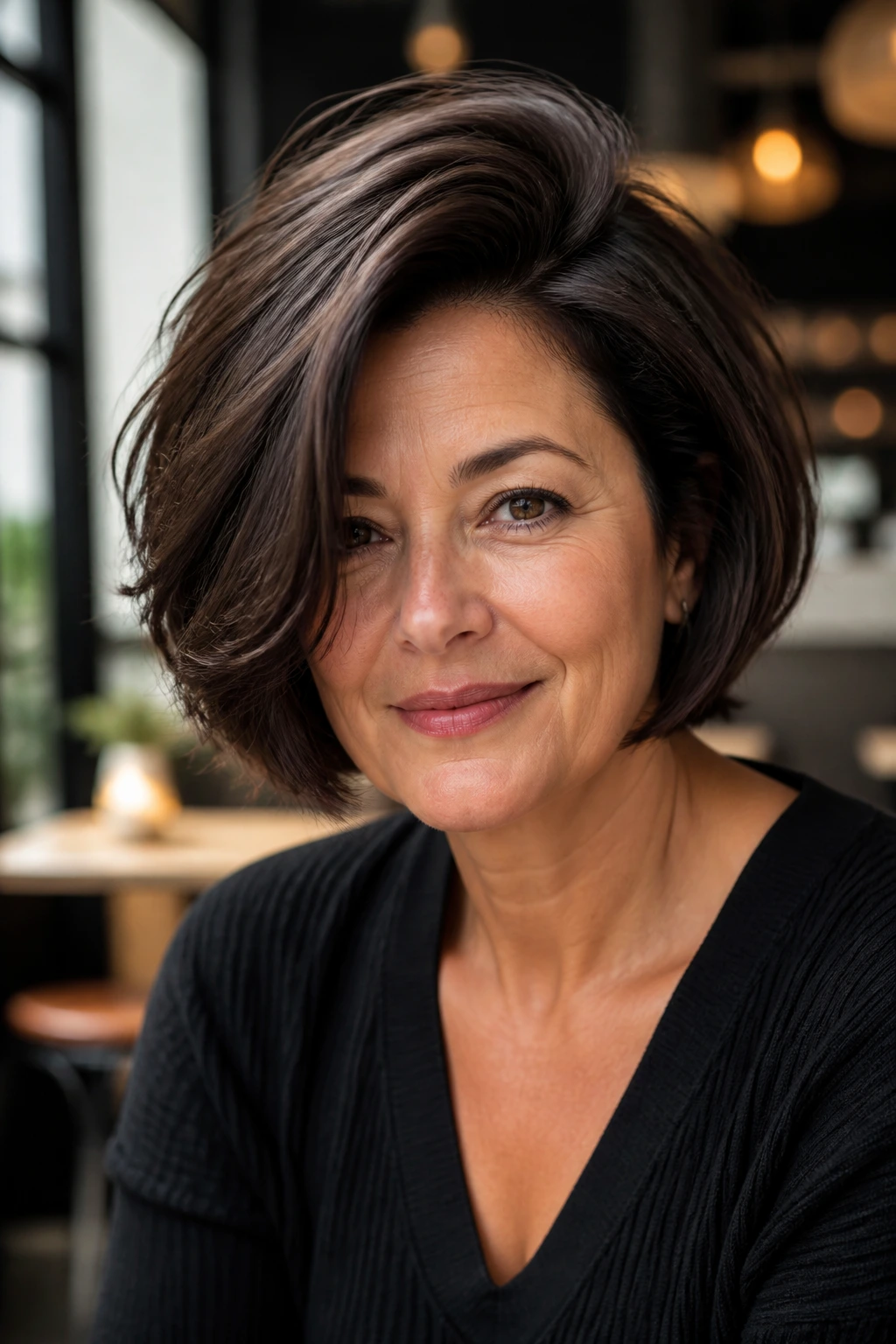
A deep side part can rescue thick hair that sits too flat at the crown and too wide at the sides. The imbalance creates lift where you want it and reduces the “helmet” effect that some bobs get after a few days.
This cut is especially good for women who wear glasses or want a little softness around the eyes. The sweep of hair gives the face movement without needing extra length.
A root-lifting spray at the part and a round brush on the top section are enough to make the shape read cleanly. You do not need a full salon blowout every morning.
11. The Chin-Skimming Graduated Bob
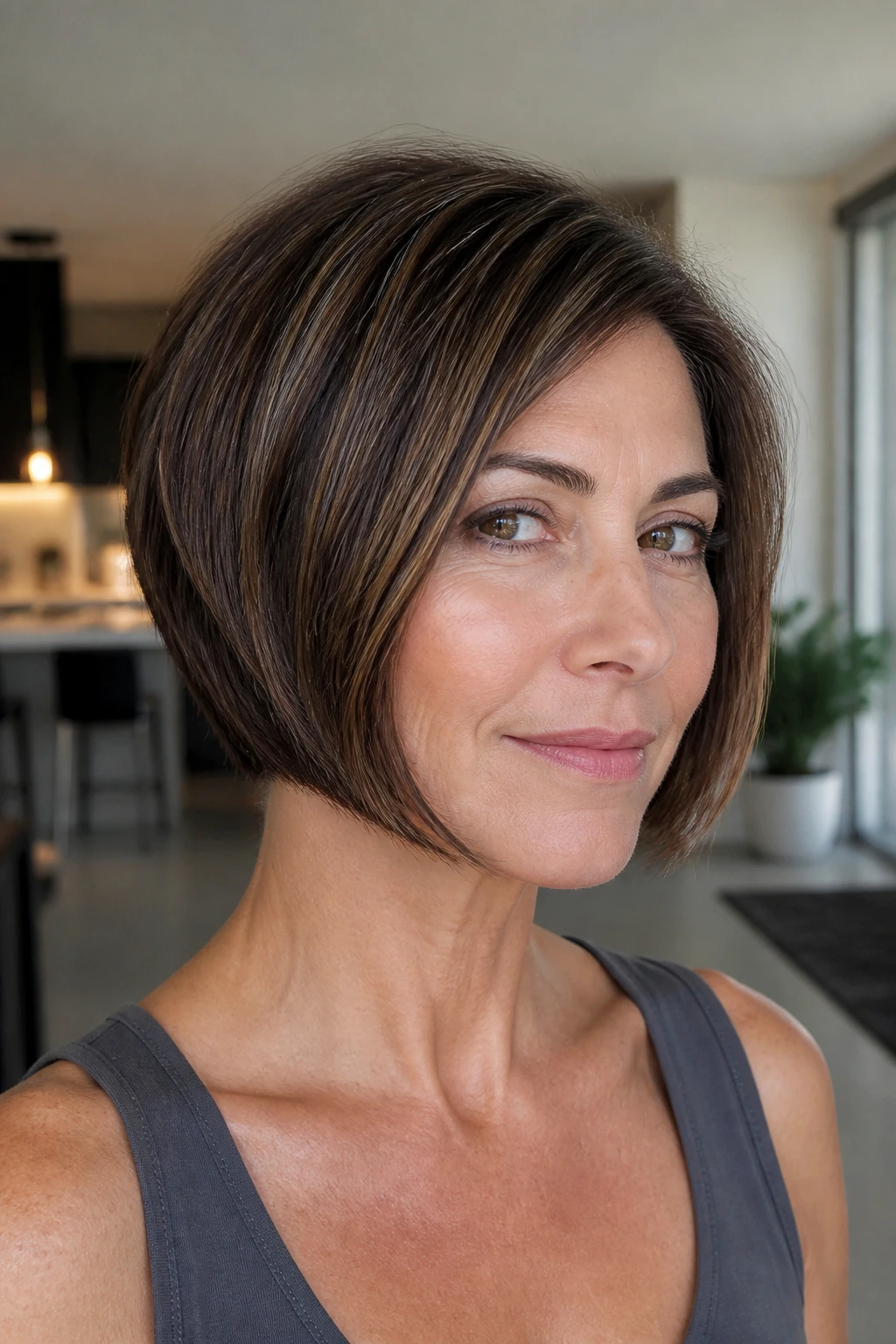
This version sits just a touch longer in front, which makes it easier to wear if you’re nervous about going too short. Thick hair gets enough room to settle, and the nape still stays tidy.
The graduation gives you structure without a hard edge. It’s a useful middle ground if your face shape feels better with a little front length.
One good rule: if the front hits the widest part of the jaw, ask for another half-inch. Small changes matter here more than people think.
12. The Razor-Textured Bob
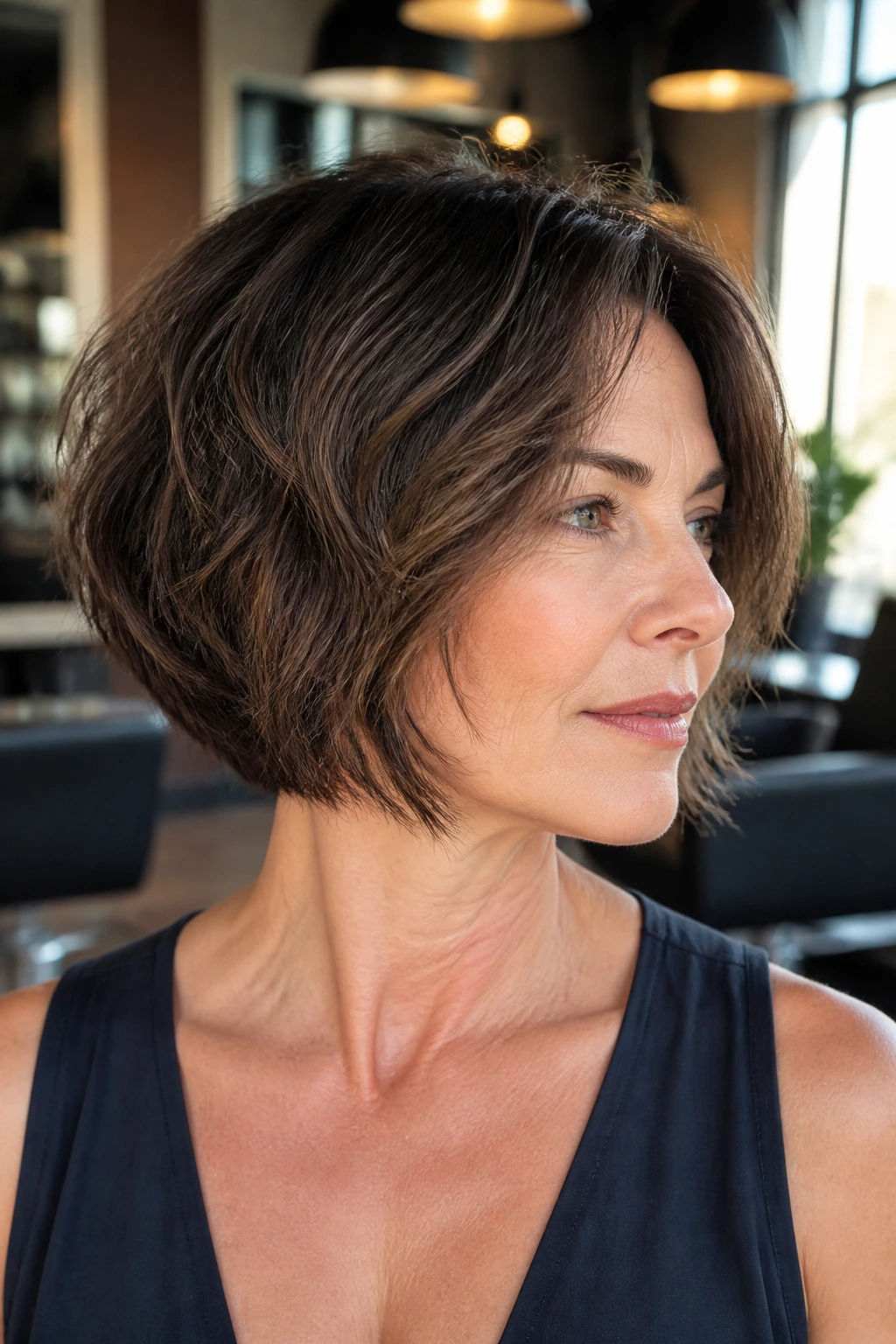
A razor-cut bob can look soft and light, but only if the stylist knows how thick hair behaves under a blade. Used carefully, razor texture breaks up the heaviness and gives the ends a more undone feel.
Used badly, it frays the perimeter. So yes, this is a trust-the-stylist cut.
It’s a strong option for hair that feels too dense for blunt lines, especially if you like a little swing and you don’t mind a more lived-in finish.
13. The Swoopy Fringe Bob
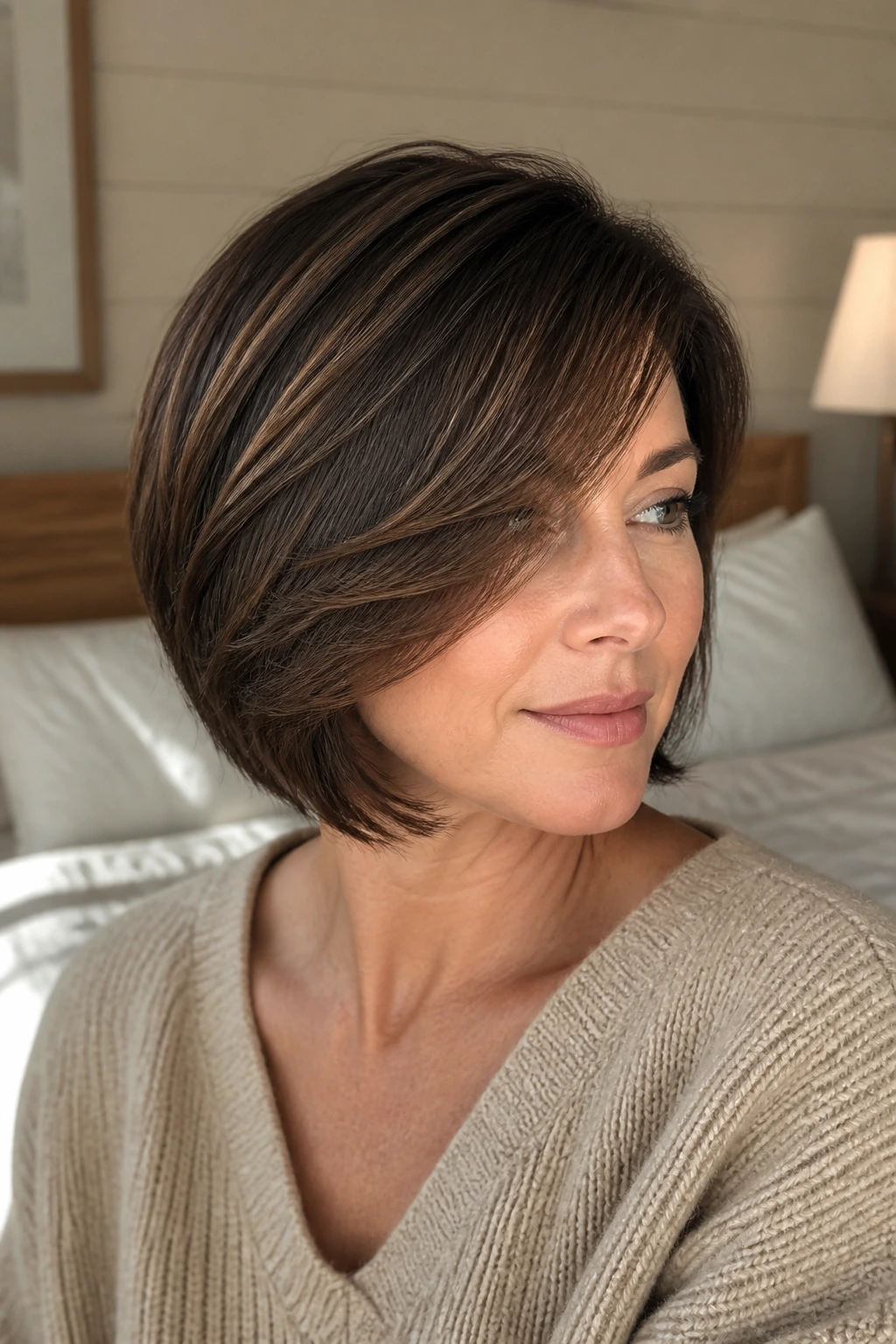
A long side fringe changes the whole mood of a neck bob. It softens the forehead, gives thick hair a flattering diagonal line, and keeps the cut from feeling severe.
This is one of my favorite choices for women who want movement around the eyes without committing to a full bang. It also plays well with a side part, which helps the whole head look less square.
Styling Note
Blow the fringe forward first, then sweep it across while it’s still warm. That’s how you keep it from separating into chunky pieces.
14. The Micro-Layer Bob
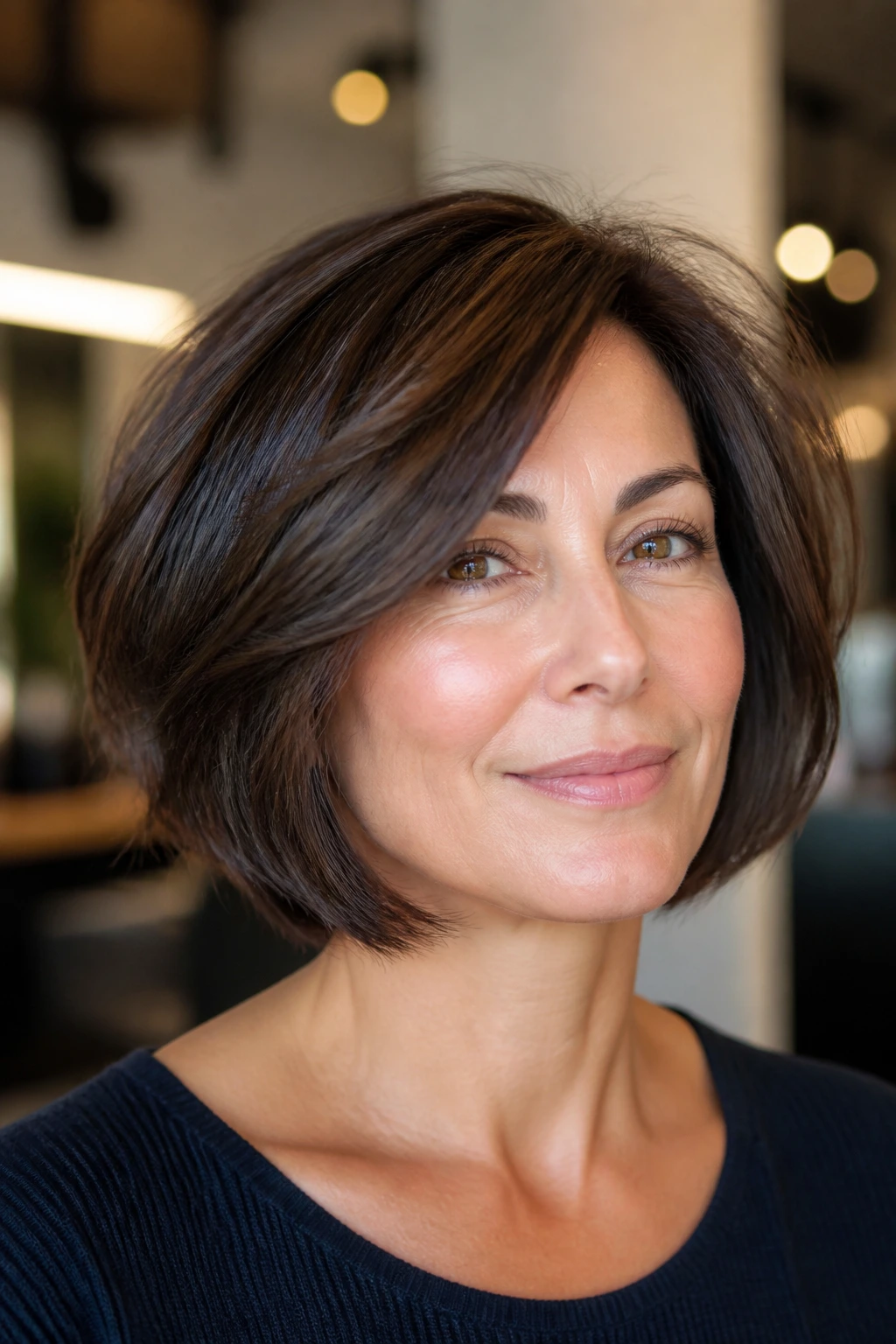
Micro-layers are tiny, almost hidden layers placed to break up bulk without changing the outline much. On thick hair, that can be a huge advantage.
The shape stays intact. The hair just stops behaving like one solid mass.
This cut is smart if you like blunt ends but need the interior to feel lighter. It’s also a good choice if you’ve had too many overly layered cuts and want the perimeter to come back with some weight.
15. The Classic Pageboy Bob
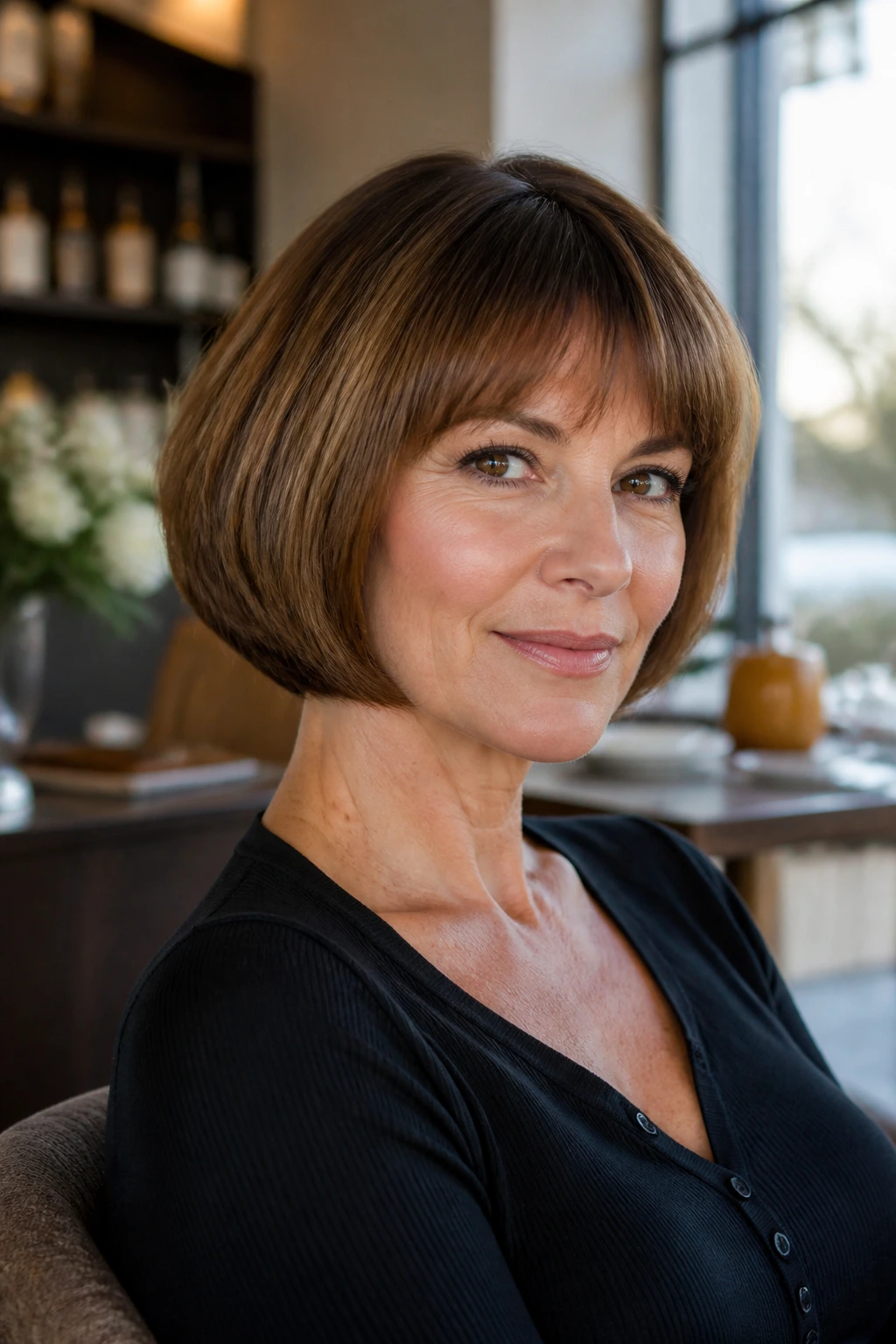
The pageboy bob curves under at the ends and usually has a more polished, rounded silhouette. On thick hair, that curve can feel tidy and almost architectural.
It works best when the ends are under-controlled, not over-styled. Think smooth bend, not a hard helmet curl. A medium round brush and a touch of cream on the mid-lengths usually get you there.
This one has presence. If you like a neat shape that still has a bit of vintage edge, it’s a strong contender.
16. The Tucked-Under Blowout Bob
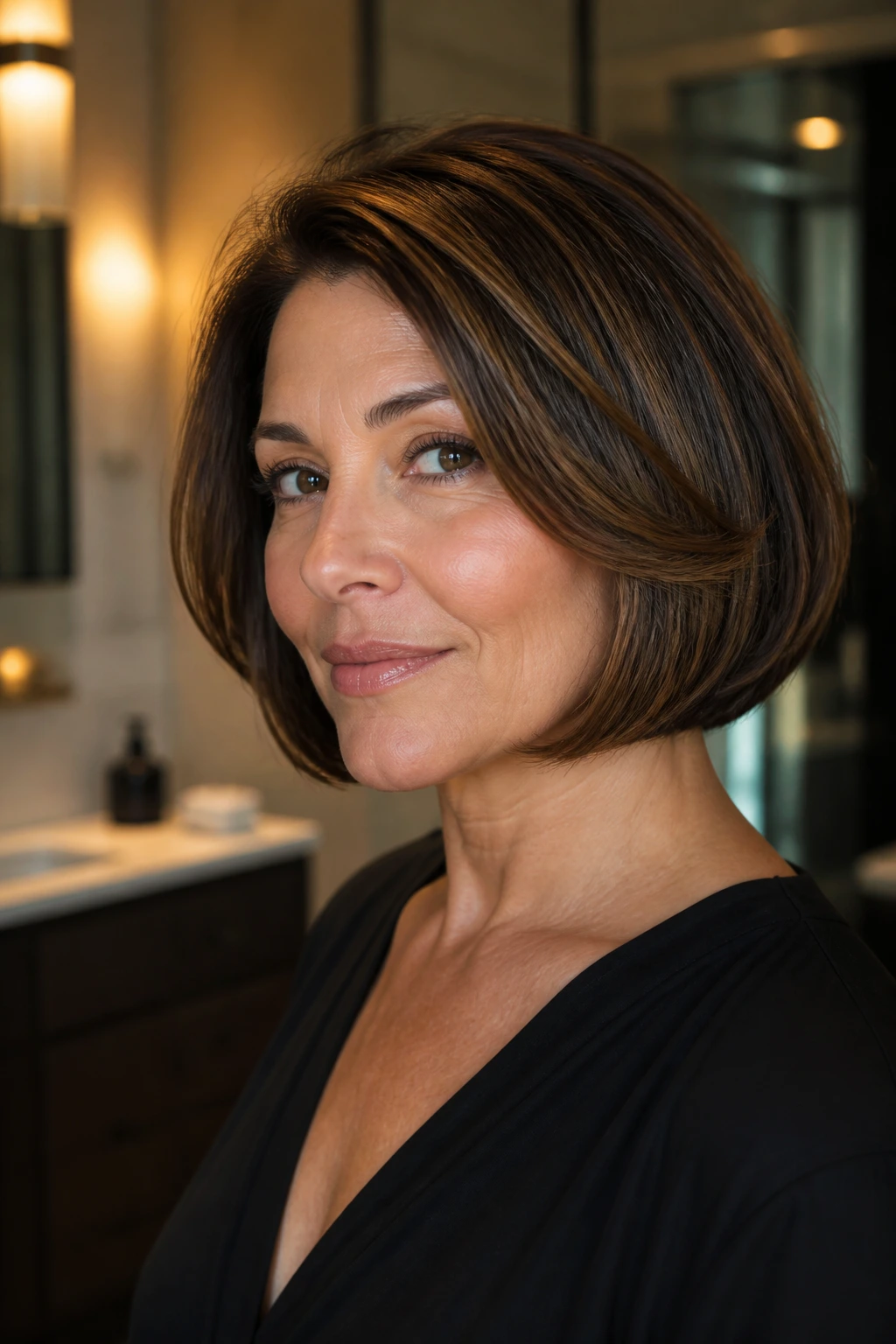
Some bobs live or die by styling, and this is one of them. The cut itself is straightforward, but the real effect comes from drying the ends under with a round brush or hot brush.
That tucked finish keeps thick hair from kicking outward at the shoulders. It also makes the neck look longer, which is a neat little trick when you want polish fast.
The key is not too much volume at the root. Keep the top smooth, then build shape from the mid-lengths down.
17. The Air-Dry Bob

Not every thick bob should fight for a perfect blowout. The air-dry version is cut to work with your natural bend, so it lands in a good shape even when you leave it alone.
The styling goal is soft separation, not strict symmetry. A dab of curl cream or light mousse can keep the ends from puffing while they dry.
If you hate hot tools or just don’t want them every day, this is the bob to ask about. It saves time without looking unfinished.
18. The Glassy Blunt Bob
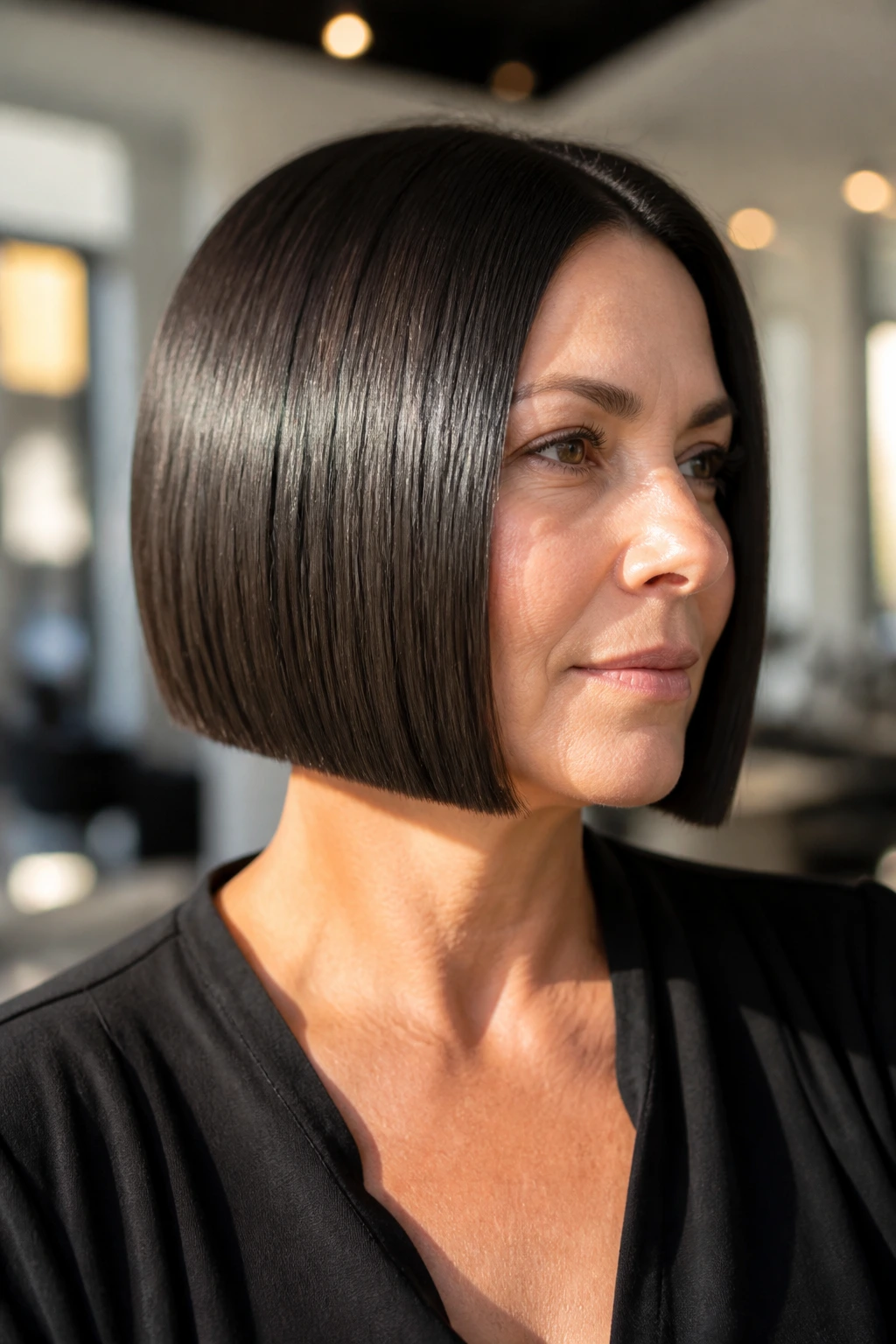
This is the sleek one. The hair sits in a straight, reflective sheet, and thick strands make that look especially strong when the cut is clean.
A glassy blunt bob needs a precise edge and a smoothing routine that doesn’t overload the roots. Use heat protectant, dry with a nozzle, and finish with a flat iron only where the bend won’t sit right on its own.
The result is sharp and modern. If your hair already lies fairly straight, this cut may be one of the easiest to maintain.
19. The Wispy Bang Bob

Thick hair and soft bangs can live together if the fringe is cut with air in it. A wispy bang keeps the forehead covered without trapping too much density in one spot.
That helps a lot when you want a shorter neck bob but don’t want the face to look crowded. The bangs should feel feathered and movable, not pasted down.
This is a good compromise if you like the idea of a bang but don’t want heavy upkeep. It’s more forgiving than a blunt fringe and easier to grow out.
20. The Piecey Bob
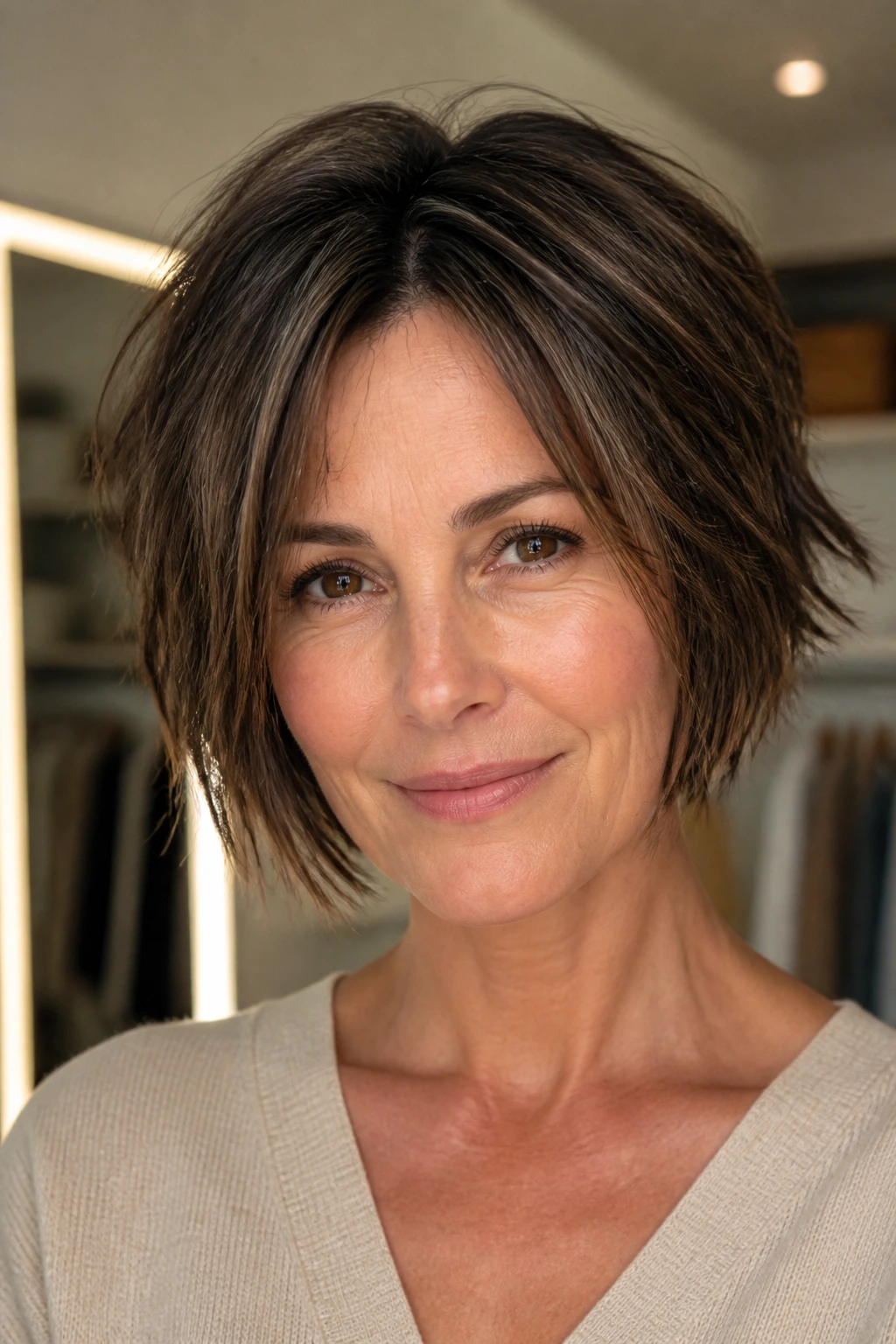
Piecey texture gives thick hair a more relaxed finish. Instead of one smooth block, you get separated sections that move around the head and keep the neck area lighter.
This cut usually looks best with a little matte or satin-finish texturizing spray. Too much shine and the separation disappears; too little and the style can flatten.
It’s a good call if you like hair that feels a bit undone, especially on days when you don’t want everything polished to a shine.
21. The Silver-Blend Bob
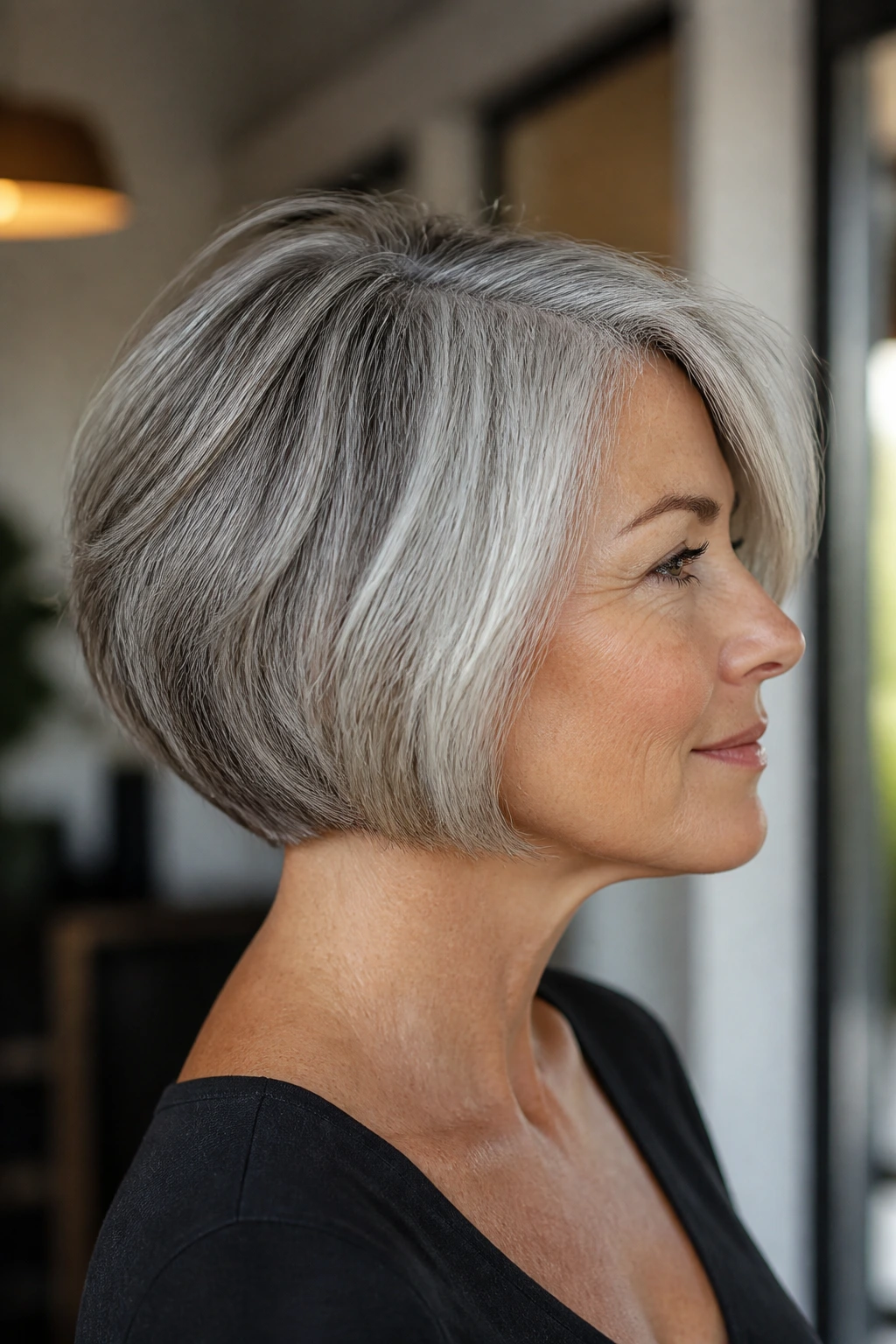
Gray hair often looks best in a bob that has a clean perimeter and a little dimension at the top. The shape lets the silver strands show off instead of scattering them into frizz.
If your color is a mix of gray, white, and darker strands, this cut makes the contrast look intentional. A soft side part or a touch of crown lift helps keep the blend visible instead of dull.
This one is quietly elegant in the useful sense of the word: it works because the haircut does the heavy lifting, not because the styling is fancy.
22. The Salt-and-Pepper Rounded Bob
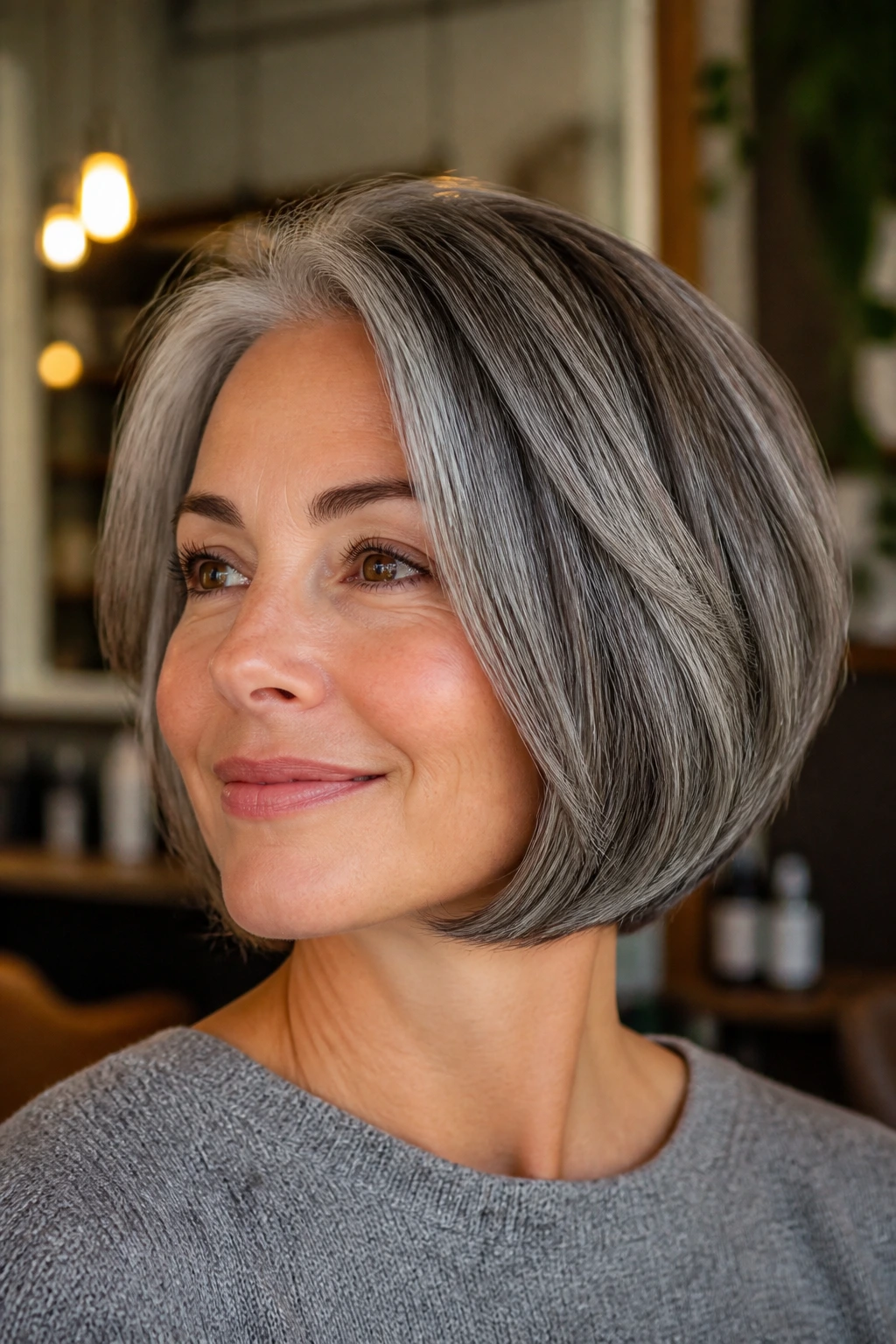
A rounded bob softens the edges of thick hair and gives salt-and-pepper color a graceful outline. The curve around the jaw and neck keeps the shape from feeling too severe.
It’s especially nice if your hair has a coarse texture and a natural puff to it. The rounded edge contains that energy instead of fighting it.
I like this cut for women who want the hair to look full but still intentional. The roundness gives movement without losing structure.
23. The Deep Side-Swept Bob
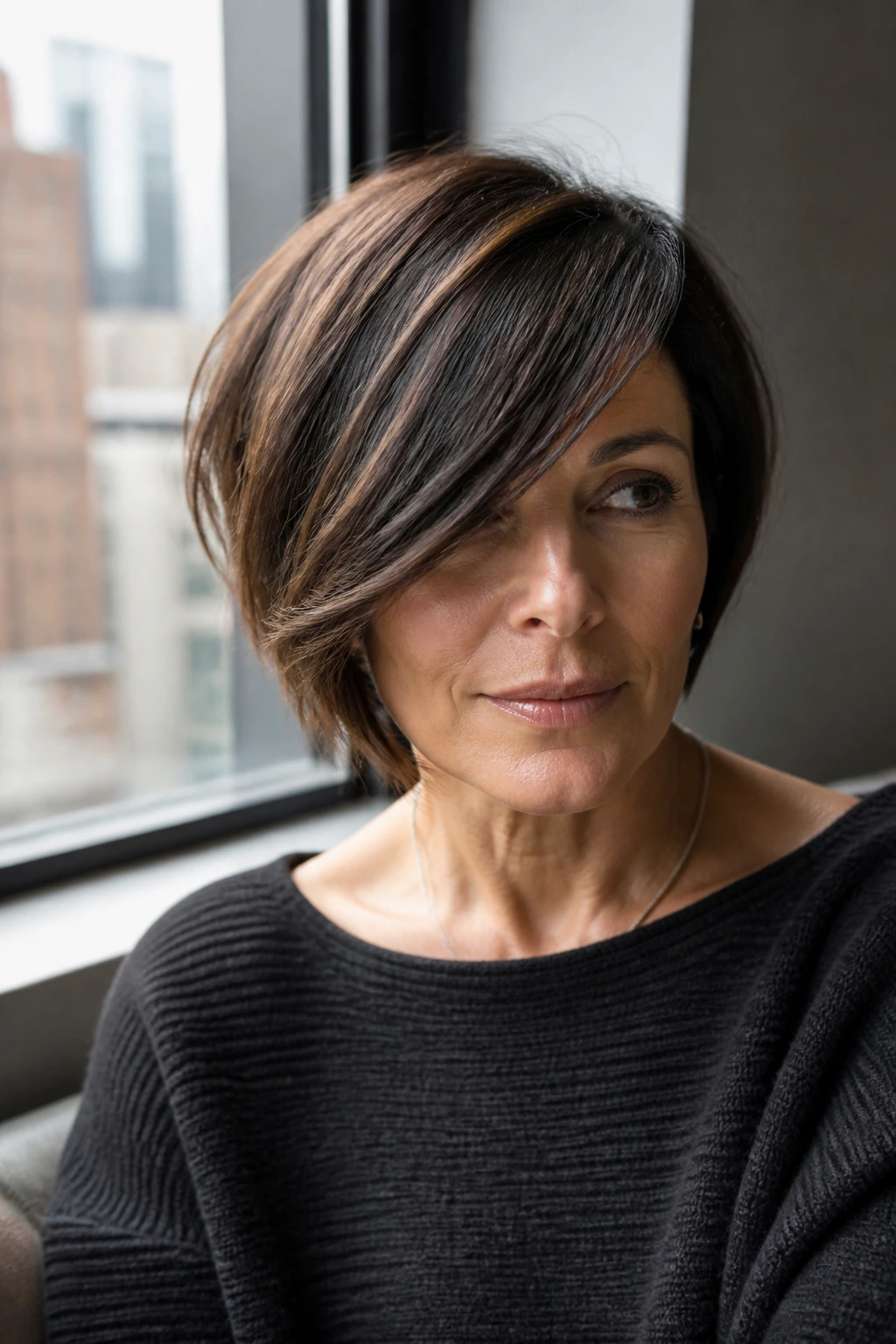
A deep side-swept bob is a little more dramatic than the standard side part. The extra sweep creates a strong diagonal line across the forehead and makes thick hair fall in a more flattering direction.
The asymmetry works well if you want to soften one side of the face or balance a stronger jaw. It also gives the back a chance to stay neat while the front does the visual work.
A light spray at the roots and a brush directed toward the sweep are enough. The cut should not need a lot of product to hold that shape.
24. The Tapered Back Bob
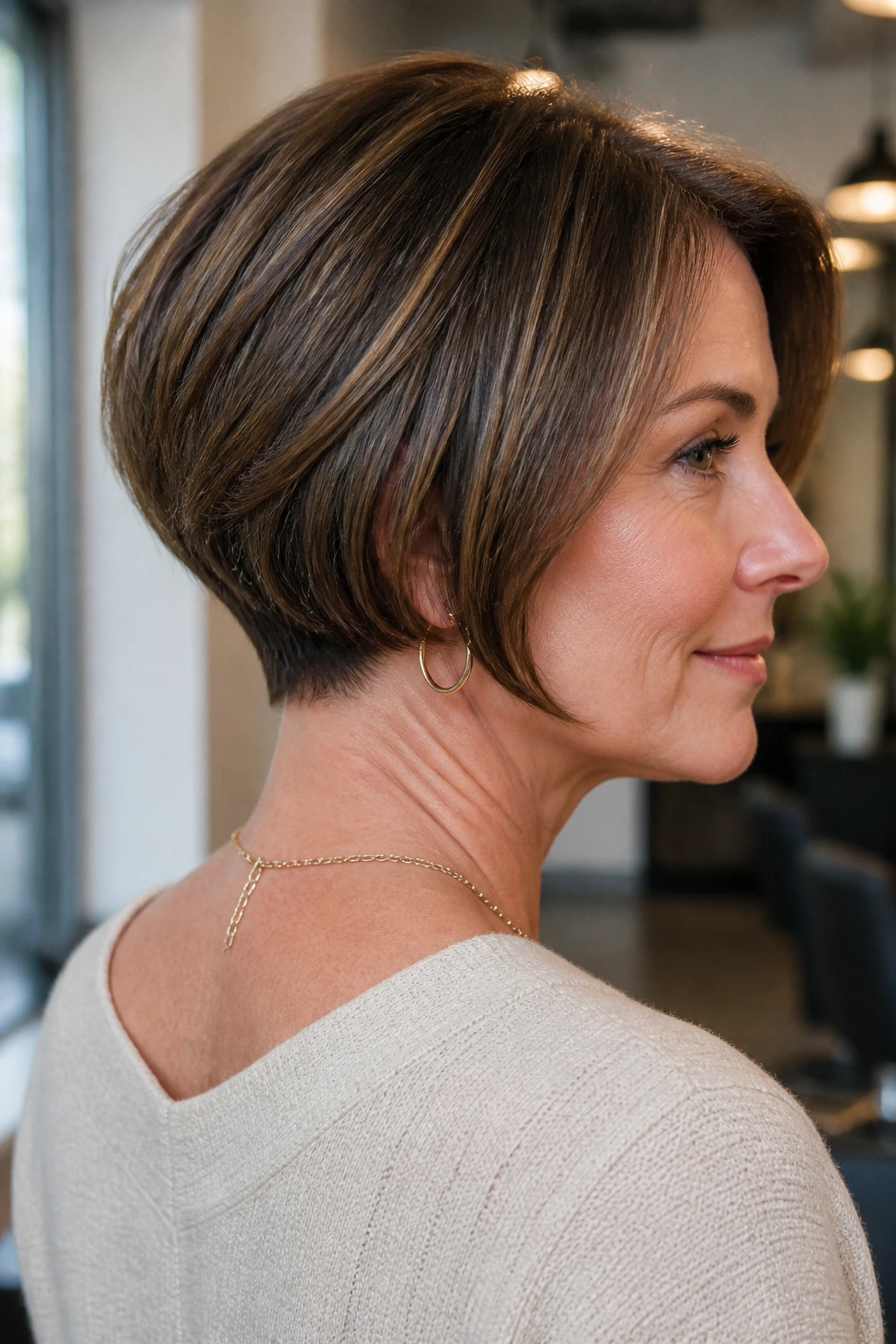
This is one of the best choices when you want a shorter nape with a cleaner back view. The taper keeps the bulk from collecting at the collar, which is where thick hair often starts to misbehave.
The front can stay slightly longer for balance, but the back does the real work here. It hugs the head and keeps the silhouette tight.
If you wear blazers, high necks, or structured tops, this cut has a nice relationship with clothing. No awkward bumping. No collar fluff.
25. The Soft Wedge Bob

A modern wedge bob isn’t about the stiff geometry people remember from old salon photos. Done softly, it gives thick hair a neat taper at the back and a more relaxed front.
The shape is useful when your hair needs room at the crown but not too much width at the sides. It also gives a neat neckline, which is the whole reason a neck-length bob earns its spot.
Keep the edges rounded and the layers subtle. A hard wedge can feel dated fast; a soft one looks intentional and easy to wear.
What Makes a Neck-Length Bob Behave on Thick Hair
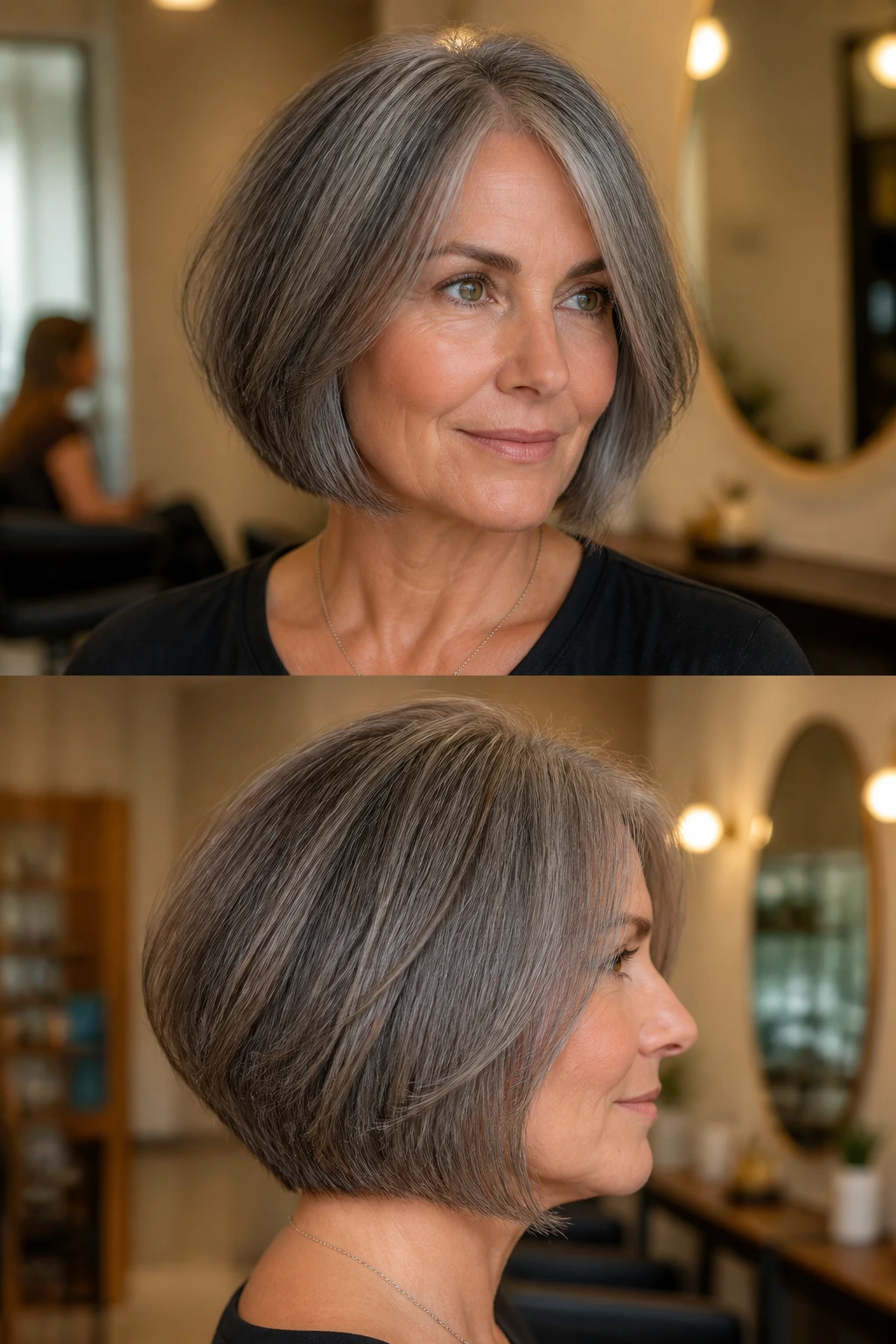
Thick hair is not the enemy. A bad shape is. That’s the part so many bob cuts get wrong — they remove length but forget to remove the right amount of bulk, so the hair ends up wide at the sides and heavy at the back.
The real trick is placement. A neck-length bob needs weight control at the interior, a perimeter that stays honest, and a neckline that works with your growth pattern instead of crashing into it. If your hair kicks out at the nape or swirls in two directions, a good stylist will leave a little more length there and trim with that behavior in mind.
Where the Cut Matters Most
The back of the head, especially around the occipital bone, decides whether the cut hugs or floats. Too much weight low down and the bob looks boxy. Too many short layers near the crown and it can puff into a halo. The sweet spot is a clean outline with enough interior relief to let the hair settle.
Gray and coarse strands deserve extra respect here. They often resist bend and hold their own shape, which is great when the line is right and annoying when it isn’t.
Essential Tools for Cutting, Drying, and Refreshing These Bobs
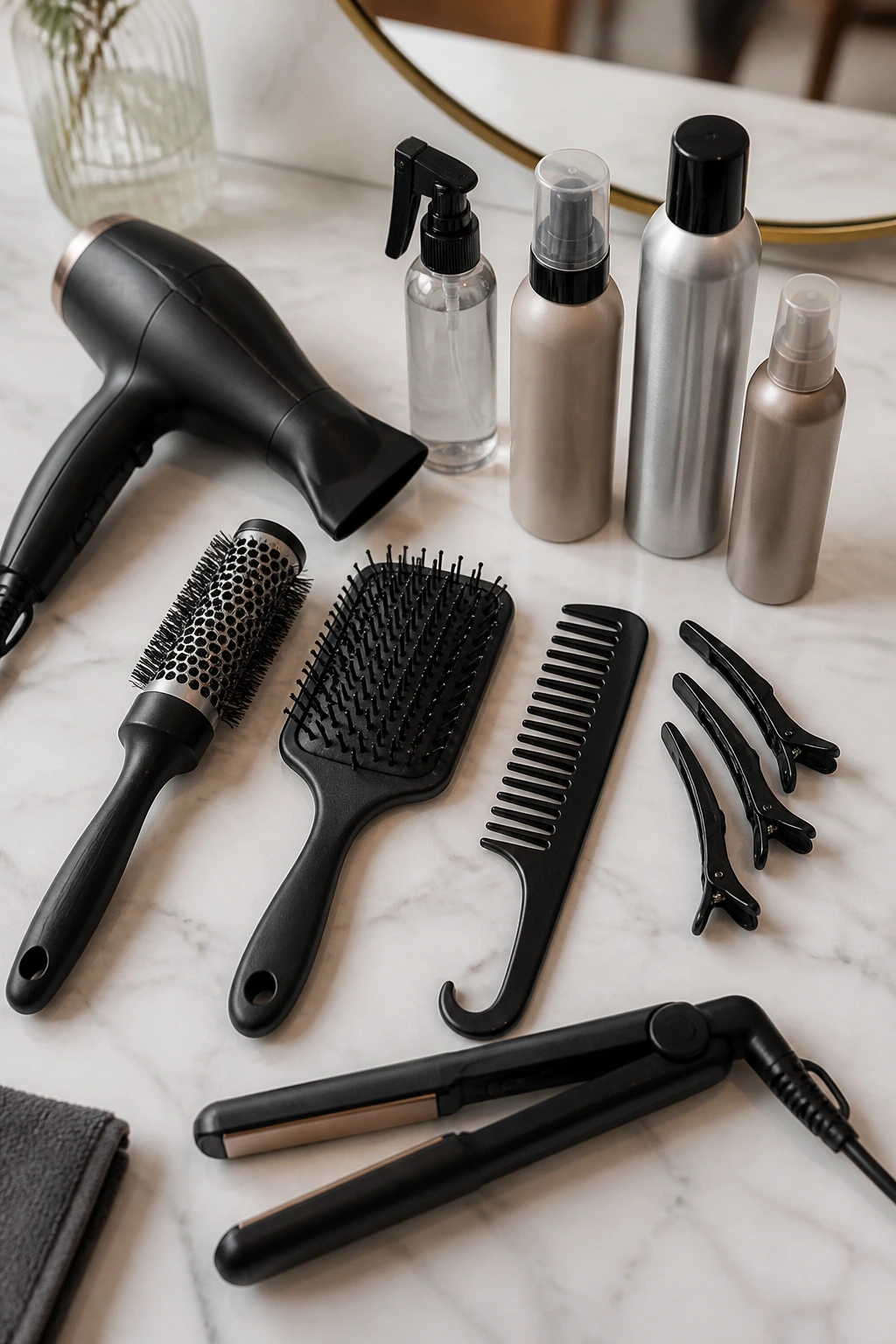
- Blow dryer with a nozzle attachment: The nozzle directs air where you need it, which matters when you’re trying to smooth thick hair at the nape.
- 1- to 1.5-inch round brush: Good for curling ends under, bending an A-line front, or adding a soft curve to a blunt bob.
- Paddle brush: Useful for straightening the surface fast without flattening every bit of volume out of the crown.
- Wide-tooth comb: Helps detangle thick hair without pulling the ends apart before styling.
- Sectioning clips: Thick hair needs sections. There’s no shortcut that works better.
- Heat protectant spray: Non-negotiable if you use a flat iron, hot brush, or blow dryer regularly.
- Lightweight mousse or root lift spray: Best for building shape without making the bob feel greasy.
- Dry shampoo: Helps the crown stay clean-looking between washes and gives some grip to the roots.
- Texturizing spray: Use this when you want piecey movement instead of a sleek finish.
- Flat iron or hot brush: Optional, but handy for smoothing the ends or refining the line.
What to Tell Your Stylist Before the Cape Comes Off
Thick hair bobs live or die on the haircutting conversation. Don’t just say “short bob” and hope for the best. Say where you want the line to sit — at the nape, just under the ear, or brushing the neck — and be specific about whether you want the back stacked, blunt, rounded, or slightly longer in front.
Ask for internal debulking, not aggressive thinning. That distinction matters. Thinning shears can make the ends fuzzy and hungry-looking, while well-placed layers or point-cutting control bulk without wrecking the perimeter.
Bring one photo of the silhouette you like and one photo of the neckline you don’t. That second picture saves a lot of guesswork.
How to Style These Cuts on Real Mornings
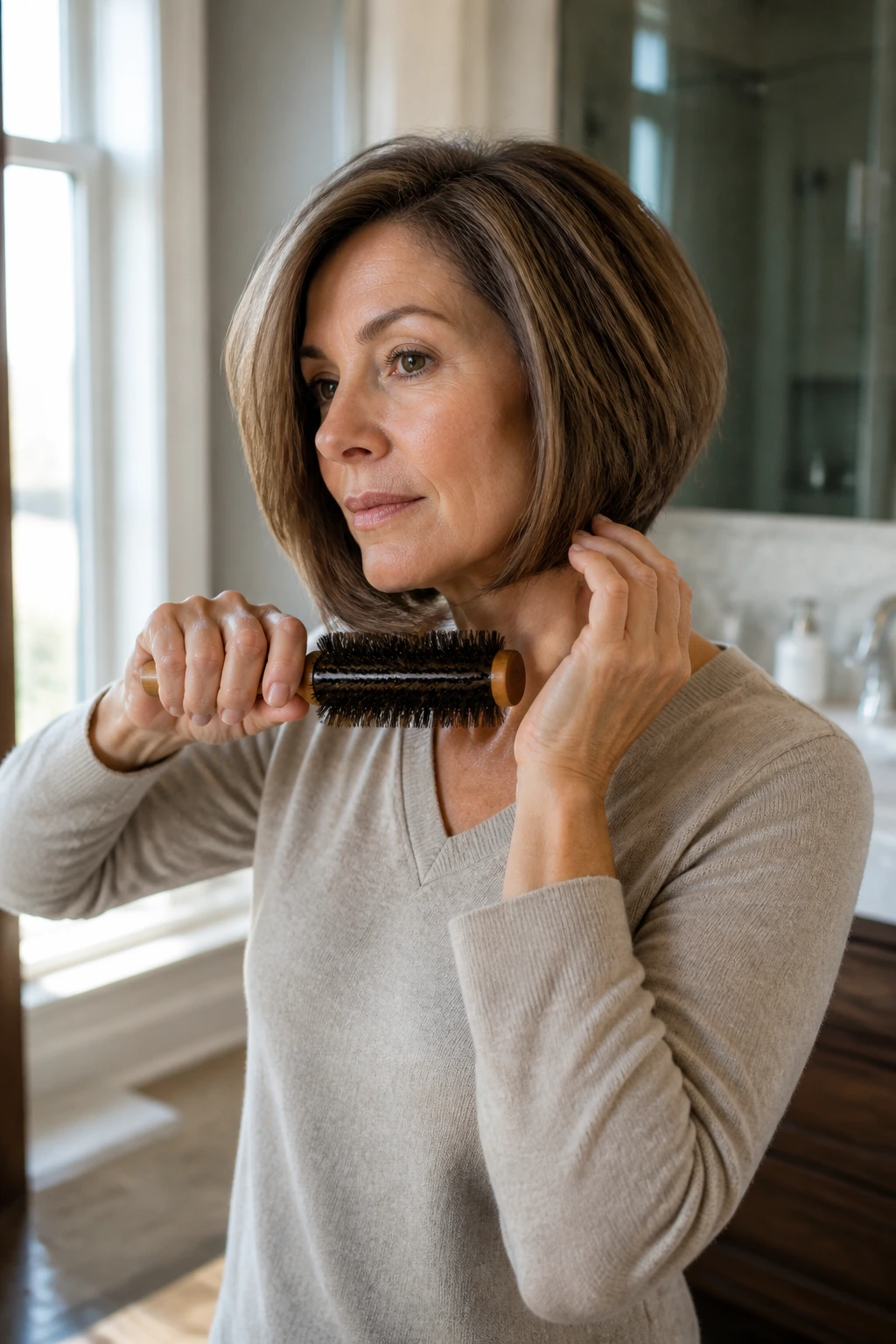
Sleek mornings: Rough-dry the roots first, then use a round brush or paddle brush to smooth the mid-lengths. Finish by curling just the ends under for a clean line that still moves.
Air-dry days: Work a small amount of mousse or curl cream through damp hair, then scrunch or twist the ends so they dry in shape instead of spreading out. If your hair is very thick, clip the top sections up briefly so the crown doesn’t dry flat.
Second-day rescue: Hit the roots with dry shampoo, mist the ends lightly with water, and re-bend only the front pieces or fringe. You don’t need to redo every strand.
For a little polish: Tuck one side behind the ear, add a drop of serum to the ends, and let the neckline show. Simple. Effective.
The Mistakes That Make Thick Bob Hair Look Boxy
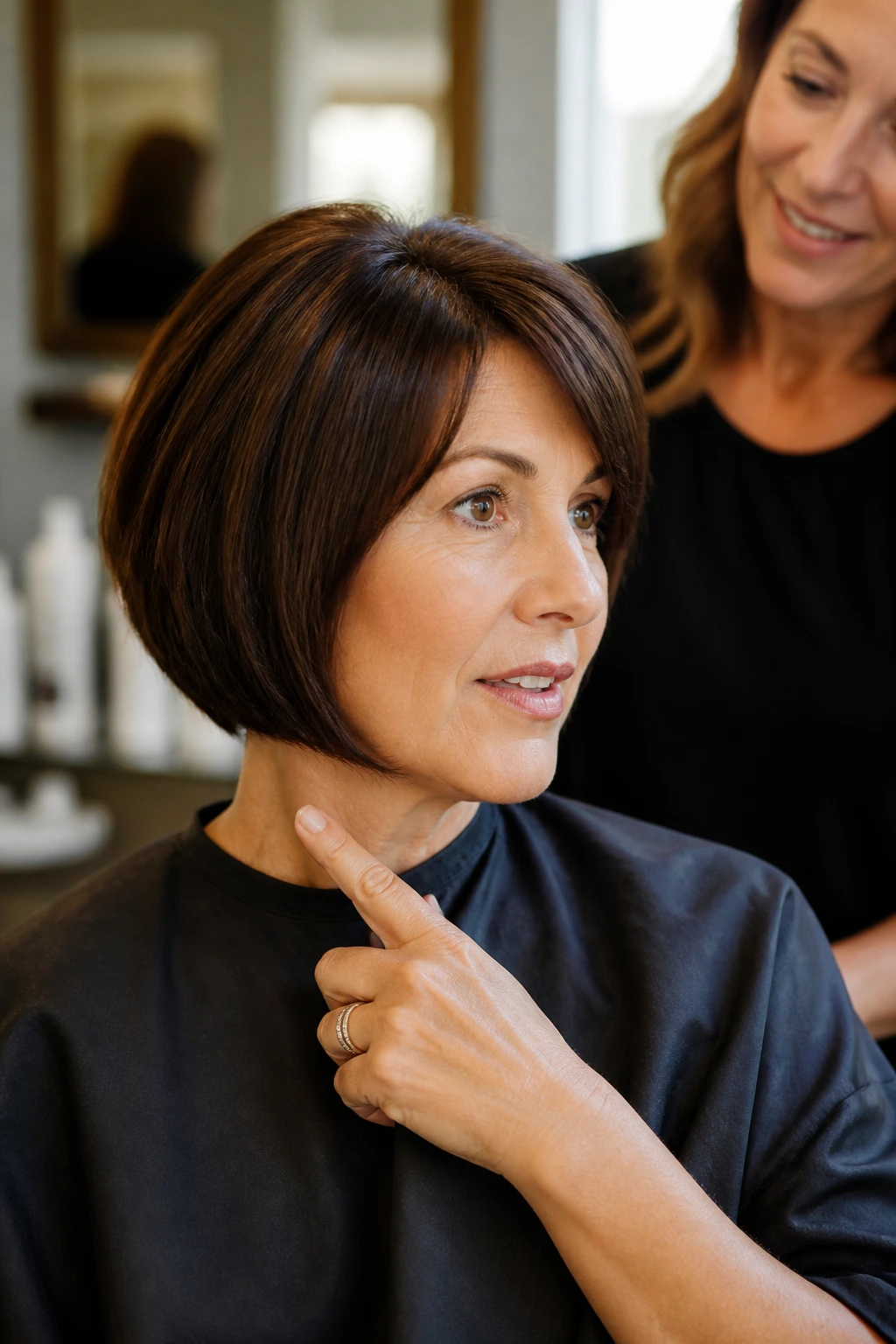
The first mistake is cutting the back too full. The hair sits like a block and starts to flare at the collar. The fix is a cleaner nape with smart internal removal of weight.
Another common problem is over-thinning the ends. The bob loses its shape, the ends frizz, and the whole cut starts looking tired after one wash. Ask for point-cutting or layered debulking instead.
Then there’s ignoring the growth pattern. If your nape swirls or kicks out, a bob that’s too short there will revolt. Leave enough length to calm the cowlick, or you’ll be chasing it with a flat iron every morning.
A fourth issue: heavy bangs on already thick hair. That can crowd the face fast. If you want fringe, keep it wispy, side-swept, or textured enough to breathe.
Additional Tips and Texture Boosters

Texture Boost: A tiny amount of mousse at the roots and a texturizing spray through the ends can give thick hair shape without turning it crunchy. I’d rather see a little movement than overworked smoothness that collapses by noon.
Color Play: Soft highlights, lowlights, or silver blending can make the layers and edges read more clearly. Thick hair already has presence; dimension just helps the cut show its shape.
Fringe Strategy: If you’re unsure about bangs, start with a longer side fringe or a curtain-style sweep. Both can be tucked, pinned, or grown out without wrecking the bob’s outline.
Finish Choice: Choose one finish and stick to it most days — sleek, rounded, or piecey. Mixing all three at once tends to look accidental.
Keeping the Shape Between Trims
A good neck bob usually needs a trim every 6 to 8 weeks if the line is blunt, stacked, or sharply graduated. Textured cuts can stretch a little longer, but the neckline will tell on you first.
Wash timing matters too. Thick hair often doesn’t need daily shampooing, and many bobs look better on day two because the roots have a bit of grip. Use a light shampoo on the scalp, conditioner only from mid-lengths to ends, and clarify every 2 to 4 weeks if you use dry shampoo or heavier creams.
Sleep helps more than people think. A silk pillowcase, a loose clip, or even pinning the front sections away from your face can keep the bob from waking up flat or creased. If the nape starts flipping out, that’s your haircut asking for help, not a sign you need a new routine.
Common Mistakes to Avoid
- Going too short at the nape on the first cut: Thick hair can spring upward and expose more neck than you expected. Leave a little extra length the first time, then shorten later if needed.
- Using heavy oils near the scalp: They flatten the crown and make thick hair look greasy fast. Keep shine products on the ends only.
- Skipping sectioning while styling: Thick hair dries unevenly when you blast it all at once. Work in small sections or the top will be smooth while the bottom rebels.
- Overloading with product: Mousse, cream, serum, and spray all at once can make the cut sag. Pick one main product and one finish product.
- Letting the shape grow out too far: Once a neck bob drops onto the shoulders, the silhouette often widens. The fix is a trim, not more styling.
Variations and Adaptations to Try
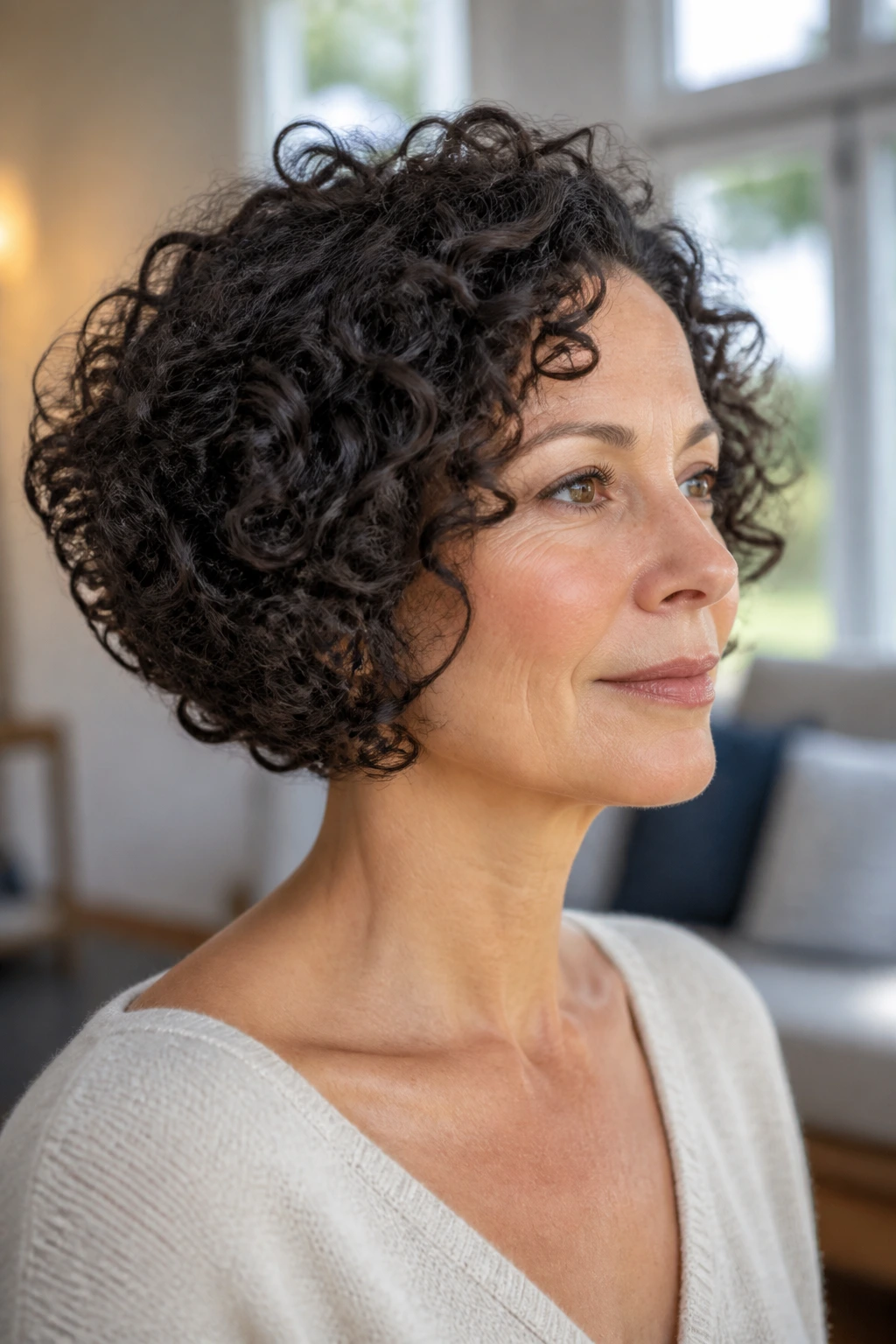
Curly Coil Bob: Keep the perimeter rounded and cut it dry so the curls land where they live, not where they pretend to live. This is the right move if your hair shrinks a lot after washing.
Undercut Relief Bob: Hide a small undercut beneath the top layer when your density is out of control at the nape. It keeps the cut cool, lighter, and easier to dry.
Fringe-Switch Bob: Swap a blunt bang for a side fringe or curtain sweep whenever you want the whole cut to feel softer. The back stays the same; the mood changes fast.
Low-Heat Air-Dry Bob: This version leans on mousse, a quick towel blot, and air-drying with the hair clipped into place. It’s ideal if hot tools feel like a chore.
Silver-Glow Bob: Pair a crisp edge with subtle dimension through the top and sides so gray hair reads bright, not flat. A little contrast helps the shape stand out.
Frequently Asked Questions
Will a short neck bob make thick hair puff out?
It can, if the cut is too blunt in the wrong place or too heavily layered at the crown. A good version removes weight inside the shape and keeps the neckline controlled so the hair sits close to the head.
Should thick hair be layered in a bob?
Usually, yes, but the layers should be strategic. You want enough internal movement to stop the bob from feeling bulky, not so many short pieces that the ends go fuzzy.
Is a neck-length bob flattering on round faces?
It can be, especially with a slight A-line, a side part, or longer front pieces. Those details draw the eye downward and keep the widest part of the hair away from the cheeks.
What if my hair is curly or wavy?
Ask for the cut to be shaped in the way you wear it most often. A curl cut or air-dry-friendly bob keeps the perimeter from shrinking too high and turning into a mushroom shape.
How often should I trim it?
Most thick neck bobs need shaping every 6 to 8 weeks. If you have a blunt edge or a strong nape line, wait too long and the whole style starts to look wide.
Can I wear a neck bob with bangs and glasses?
Yes, but keep the fringe soft enough to avoid crowding the face. Side-swept or wispy bangs usually play nicer with glasses than a heavy, straight fringe.
What should I ask for at the salon if I want volume but not bulk?
Ask for a clean perimeter, controlled internal debulking, and a little lift through the crown. Those three pieces are the difference between a bob that moves and a bob that puffs.
Does this cut work if my hair turns frizzy in humidity?
It can, as long as the perimeter is well shaped and the ends aren’t over-thinned. A smoothing cream on damp hair and a quick pass with a round brush help the bob hold its line better in damp air.
A Cut That Keeps the Heavy Lifting to a Minimum
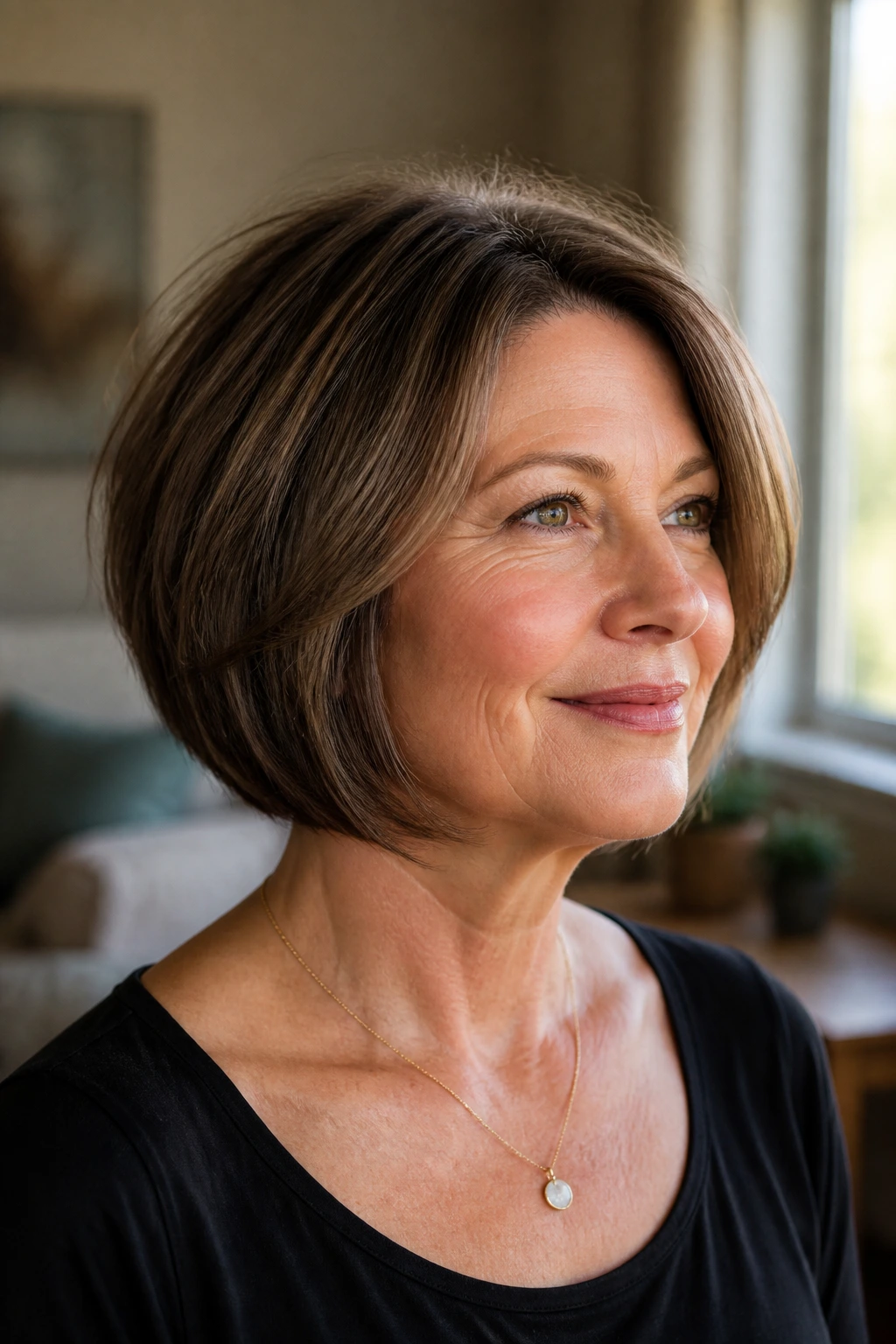
The best short neck bob for thick hair doesn’t try to erase your hair’s density. It channels it. That’s why the clean blunt line, the soft stack, the subtle undercut, and the feathered versions all have a place here — they solve different versions of the same problem.
For women over 40, that’s the real win. You get shape, movement, and a neckline that looks intentional, not accidental, and the haircut keeps doing its job even when you don’t feel like styling it.
Bring the right reference photos, ask for weight control where it matters, and the bob will do the rest.