



A boyfriend bob for thin hair and square faces has one job: keep the ends looking plush while taking the edges off a jaw that’s already doing a lot of work. The cut lives in a tiny sweet spot — too short and it sits on the jaw like a box; too layered and the perimeter starts looking wispy by lunchtime. Get it right, though, and the whole face looks softer, longer, and a little less stern.
The best versions don’t fight your hair texture. They borrow tricks from blunt bobs, lobs, and shaggy cuts without committing to any of them too hard: a slightly off-center part, a cheekbone-skimming fringe, a bevel at the ends, or a soft bend that makes the outline feel deliberate instead of helmet-like. Thin hair likes a solid edge. Square faces like a curve. The boyfriend bob sits between those two truths and doesn’t apologize.
These 25 cuts range from polished to undone, from ear-grazing to collarbone-length, because the same formula does not suit every head shape or hair density. Some versions keep as much weight as possible at the perimeter. Others sneak in motion around the cheeks so the jaw stops being the loudest thing in the room. The sweet spot is in here somewhere.
Why These Boyfriend Bobs Work on Thin Hair and Square Faces

-
They keep the outline dense: A blunt-leaning perimeter from cheekbone to collarbone makes fine strands read thicker, which matters more than chasing fake volume at the roots.
-
They soften the jaw without hiding it: Side parts, curved ends, and cheekbone pieces interrupt the square lines that can make a face look harsher under straight lighting.
-
They don’t rely on heavy layering: Too many short layers around the ends are the fastest way to make thin hair look see-through, especially when it’s freshly washed.
-
They style well with a little bend: A 1-inch iron, a round brush, or even a tucked-under air-dry gives the shape enough movement without turning it into a full blowout.
-
They grow out in a useful way: A good boyfriend bob usually looks fine at six weeks and still holds its shape at ten, which saves you from that awkward “needs a trim but can’t decide why” stage.
1. Soft Center-Part Boyfriend Bob
A center part can be a gamble on thin hair, but this version earns its keep by sitting just below the jaw and keeping the ends slightly beveled. The effect is clean without being severe. On a square face, the vertical line through the middle helps lengthen the face, while the soft edge keeps the jaw from feeling boxed in.
Why It Works
The secret is restraint. Ask for a perimeter that lands about 1 to 1.5 inches below the jaw, with only a light curve under the ends — not a stacked back, not a chunky shelf. Thin hair needs that dense-looking line at the bottom, and the center part gives the whole shape a little symmetry that reads calm instead of flat.
What to Ask For
- A center part that can be nudged half an inch off-center if the crown is sparse.
- Length just below the jaw so the cut doesn’t hit the widest part of the face.
- Light point cutting only at the very ends, so the line stays full.
A small root lift spray at the crown changes everything here. Seriously. Without it, this cut can collapse into the scalp by noon.
2. Side-Swept Fringe Boyfriend Bob
The side-swept fringe bob is the one I reach for when someone wants softness first and drama second. The fringe arcs across the forehead, then disappears into cheek-length pieces that blur the edges of a square jaw. It feels relaxed, but the structure underneath is doing real work.
Why It Flatters a Strong Jaw
A side-swept fringe cuts diagonally across the face, which is exactly what a square face wants. Straight, horizontal lines tend to exaggerate width. A diagonal breaks that up. Keep the fringe long enough to graze the brow and temple; if it’s too short, it turns fussy fast and you lose the boyfriend-bob looseness.
For thin hair, the trick is not to over-thin the fringe. A wispy bang sounds flattering in theory, then shows every scalp gap under bright bathroom light. Keep the fringe narrow, soft, and blended into the front sections instead.
Styling Note
Blow-dry the fringe first, using a small round brush and directing the hair slightly away from the face. Once it cools, tuck one side behind the ear. That little asymmetry does a lot of heavy lifting.
3. Collarbone-Length Boyfriend Bob with Blunt Ends
This is the safest cut in the group if your hair tends to go limp the second humidity shows up. The length sits at the collarbone, where thin hair can still look full, and the ends stay blunt so the silhouette doesn’t fray into nothing. Square faces benefit because the length falls below the jaw entirely.
Why It Works
A collarbone bob is technically closer to a lob, but that extra inch or two matters. It gives the face more vertical space and gives the hair more weight. The blunt edge makes the bottom line look thicker than it is, which is the oldest trick in the book and still one of the best.
If you wear your hair straight, this cut can look polished with almost no work. If you bend the ends under with a round brush or flat iron, it starts to feel a little less formal and more borrowed-from-the-boyfriend, which is the point.
Keep In Mind
Ask your stylist not to stack the back too high. The density belongs at the perimeter. Thin hair hates being over-layered at the nape.
4. French Boyfriend Bob with Airy Bangs
This is the short one with attitude, but it only works if the bangs are kept light and the sides stay soft. The cut usually lands around the chin, sometimes a touch above, and the airy fringe interrupts the forehead just enough to take pressure off the jawline. It’s a small cut with a loud outline.
Why It Works
Square faces often look best when the forehead and cheekbones get a little movement. Airy bangs do that without building a wall across the brow. The key is keeping the fringe piecey, not dense. If the bangs are too heavy, thin hair at the crown starts to look even thinner.
The rest of the cut should stay blunt enough to preserve width through the bottom. That contrast — light fringe, solid perimeter — keeps the shape from looking feathered and fragile.
Best For
- Fine hair with some natural body.
- Faces that can handle a shorter cut without feeling boxed in.
- Anyone willing to style the bangs separately in the morning.
A tiny amount of dry shampoo at the roots around the bangs keeps them from separating in weird little stringy strands.
5. Chin-Skimming Curved Boyfriend Bob
What makes this bob work is where it refuses to land. It skims the chin but curves inward instead of stopping dead on the jaw. That slight bend changes the whole read of the face. A square jaw looks softer when the hair encourages the eye to follow a curve instead of a hard edge.
Why It Works
A straight cut at the chin can be brutal on a square face. This one avoids that problem by staying a little longer in front and slightly shorter in back. The result is a shape that hugs the face without clinging to it.
Thin hair benefits from the gentle curve because it creates the illusion of movement without requiring a lot of layers. You get shape from the cut itself, not from fighting the texture every morning.
Styling Detail
Use a medium round brush and dry the front pieces forward, then bend them inward at the very end. Don’t overdo the curl. A soft hook at the bottom is enough.
6. Choppy Point-Cut Boyfriend Bob
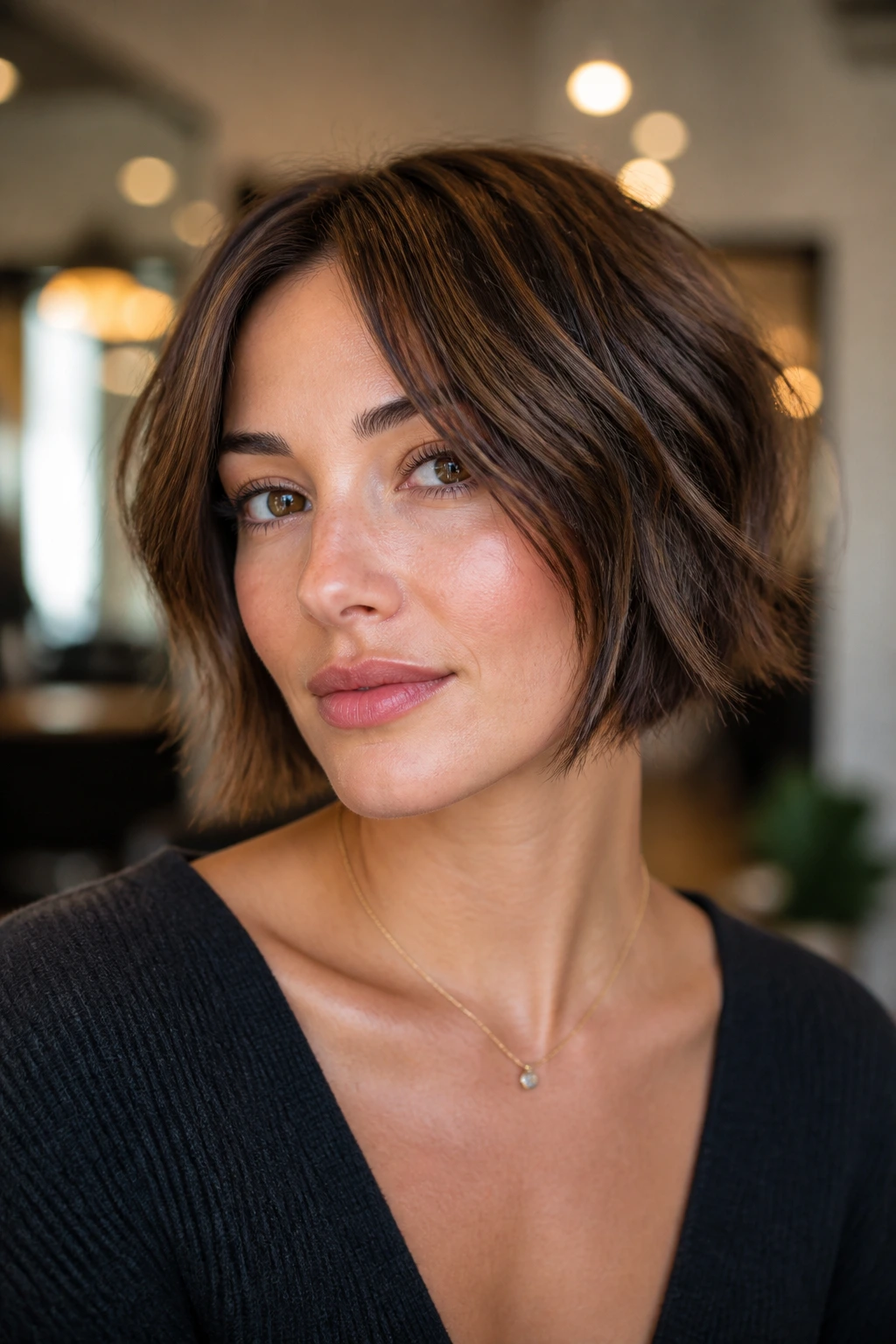
A choppy bob sounds like a texture cut, but the good versions are controlled. The perimeter still matters. The difference is in the ends, where point cutting breaks the line just enough to keep the bob from looking too heavy or stiff.
Why It Works
Thin hair can look flat when every strand sits in the same exact line. Point cutting adds a little air between pieces without shredding the shape. The square face gets a softer outline, and the hair gets more visible movement.
The catch? Too much choppiness ruins the illusion of density. If the stylist goes too far into the ends, the bob starts looking see-through. Ask for the texture mostly in the interior and only light breakup at the outer edge.
Quick Clues to Ask For
- “Keep the ends full.”
- “Use point cutting, not aggressive thinning.”
- “Leave enough weight so the bob still reads as a bob.”
A texture spray on dry hair helps separate the pieces, but use a light hand. One mist too many and the hair starts feeling sandy.
7. Tucked-Behind-the-Ear Boyfriend Bob
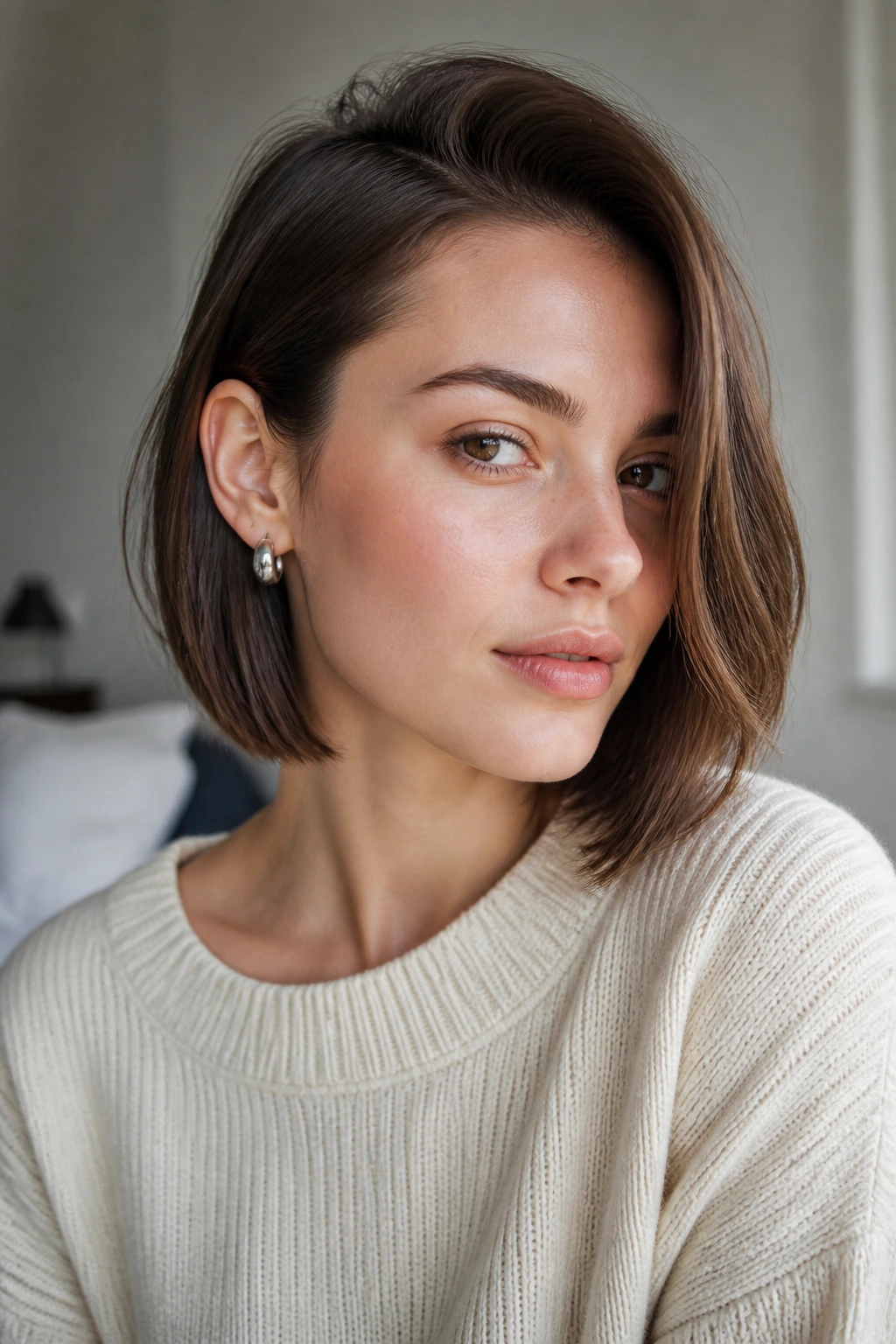
This one is sneaky. On paper, it sounds basic. On the head, it changes the whole face. One side stays tucked behind the ear, which opens up the cheekbone, while the other side keeps enough softness to stop the cut from looking severe.
Why It Works
Square faces often need a little asymmetry. A tucked side creates a visual break, and the exposed cheekbone draws attention upward instead of outward. For thin hair, the trick is to keep the front pieces long enough that the tuck doesn’t expose too much scalp at the temple.
The length should graze the jaw at the front and sit a touch longer in the tucked section. That way, the ear tuck looks deliberate instead of like you ran out of hair.
Styling Tip
Tuck the side that naturally falls flatter. Let the other side keep a little bend. That contrast gives the cut energy without making it loud.
8. Wavy Boyfriend Bob with Cheekbone Pieces
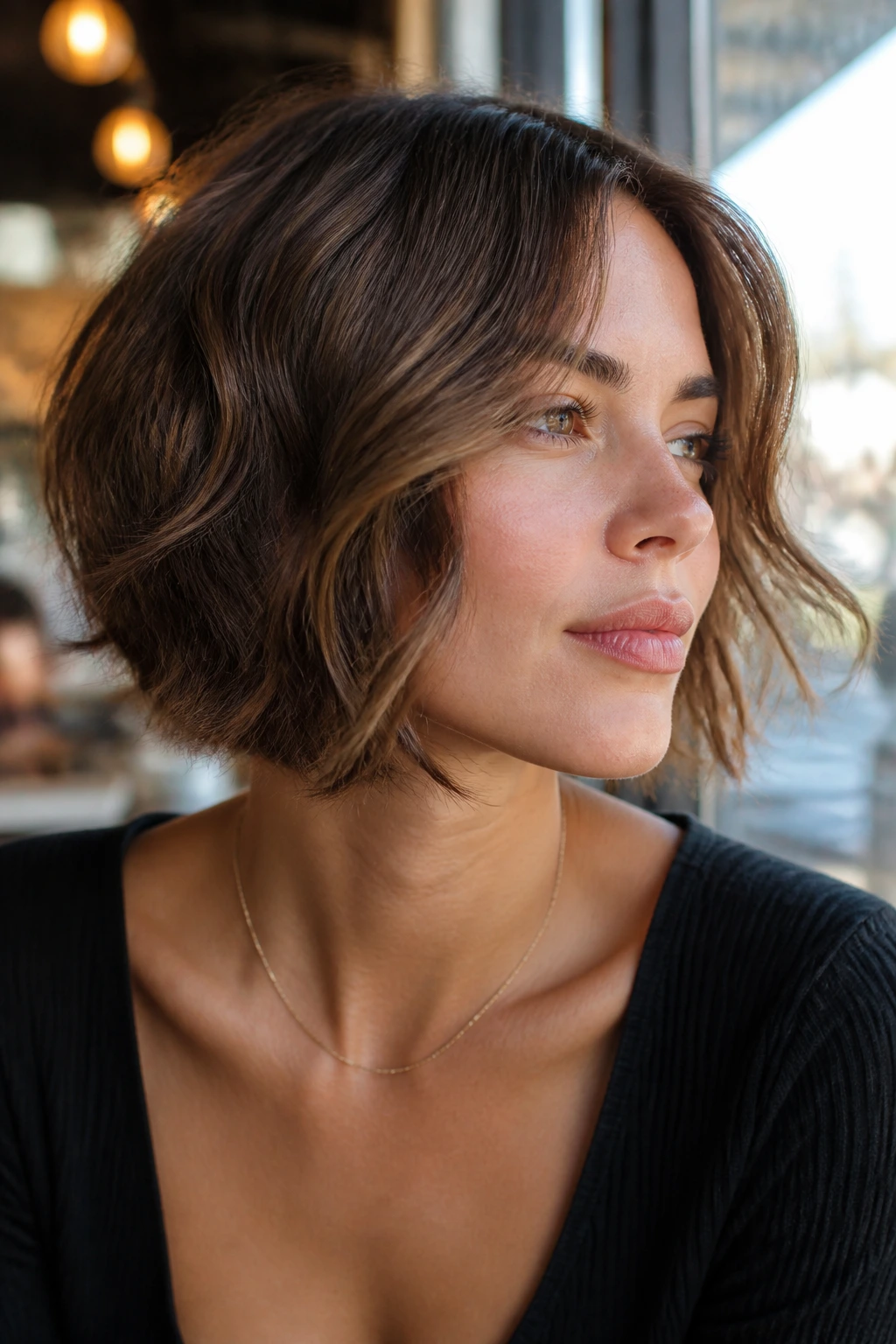
A little wave changes this cut from neat to lived-in. The important part is that the wave starts around the mid-length, not at the root. Thin hair needs the root area to stay light and lifted. Square faces need those cheekbone pieces to interrupt the jawline.
Why It Works
The cheekbone pieces are doing more than they seem. They act like soft curtains at the sides of the face, which keeps the jaw from feeling like the widest point. If your hair naturally bends, this cut makes sense because it works with the hair instead of forcing it straight.
Use a 1-inch iron or a flat iron bend, and leave the last inch of the ends straighter. That mixed finish keeps the bob from turning into a full glam wave, which would be too much shape for a thin head of hair.
Styling Note
A pea-sized amount of lightweight cream through the mid-lengths keeps the wave from fluffing out. Avoid heavy serum near the roots. It kills the lift fast.
9. Feathered Crown-Volume Boyfriend Bob
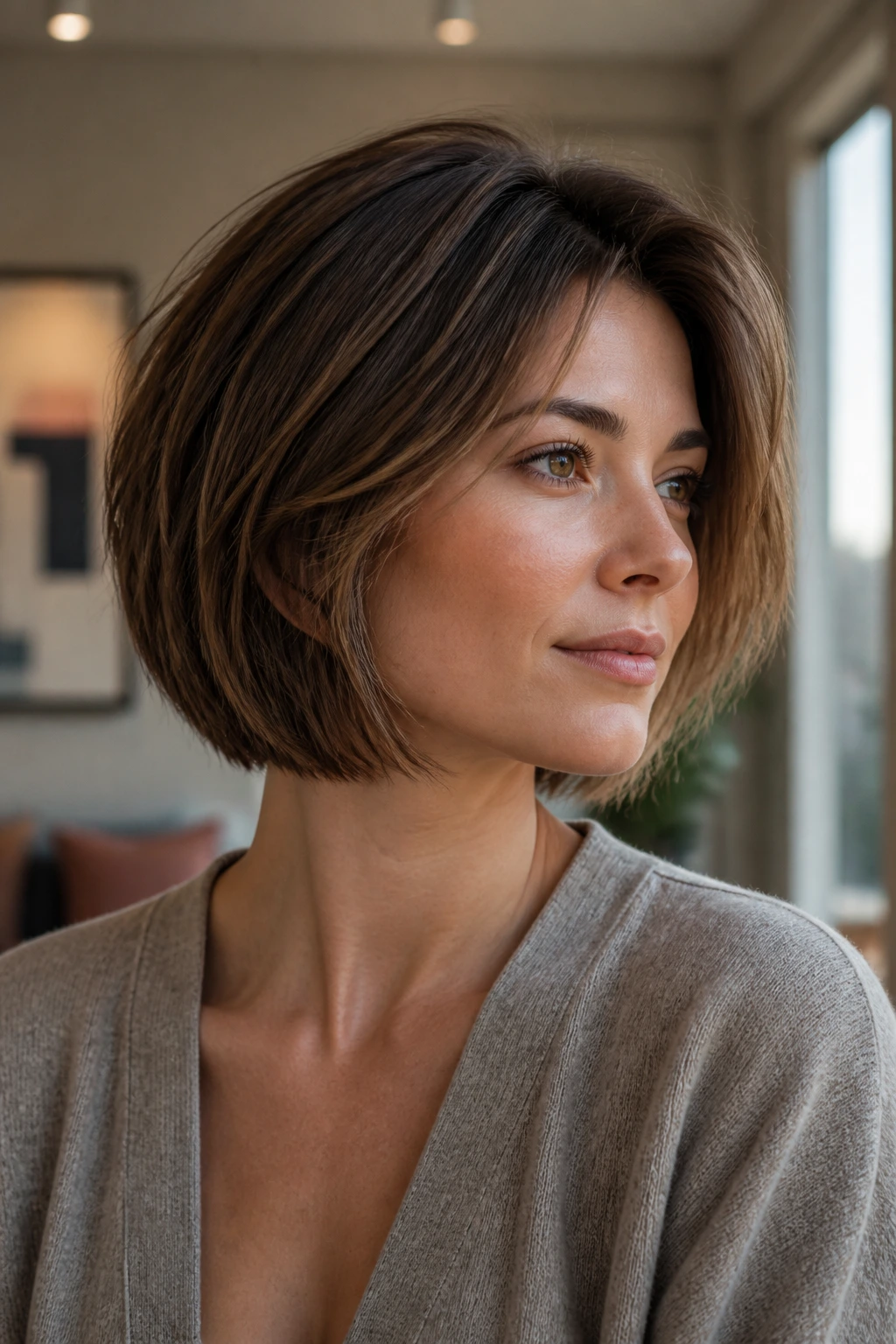
If the crown is where your hair disappears, this is the cut to study. The perimeter stays clean and solid, but the top gets just enough internal feathering to give the roots a lift. The result is a bob that doesn’t lie flat against the scalp.
Why It Works
Thin hair often needs volume in only one place: the crown. Not everywhere. Feathering there gives the illusion of height without turning the sides puffy. Square faces benefit because a little lift on top lengthens the profile and keeps the bottom of the face from feeling overly weighted.
The line at the ends should remain blunt-ish. That’s the anchor. If both crown and perimeter get shredded, the haircut loses shape in a hurry.
Styling Move
Flip the part to the opposite side while the hair is still warm from the blow-dryer. It trains the roots up for a few hours and gives the cut more life than a simple air-dry ever will.
10. Deep Side-Part Sleek Boyfriend Bob
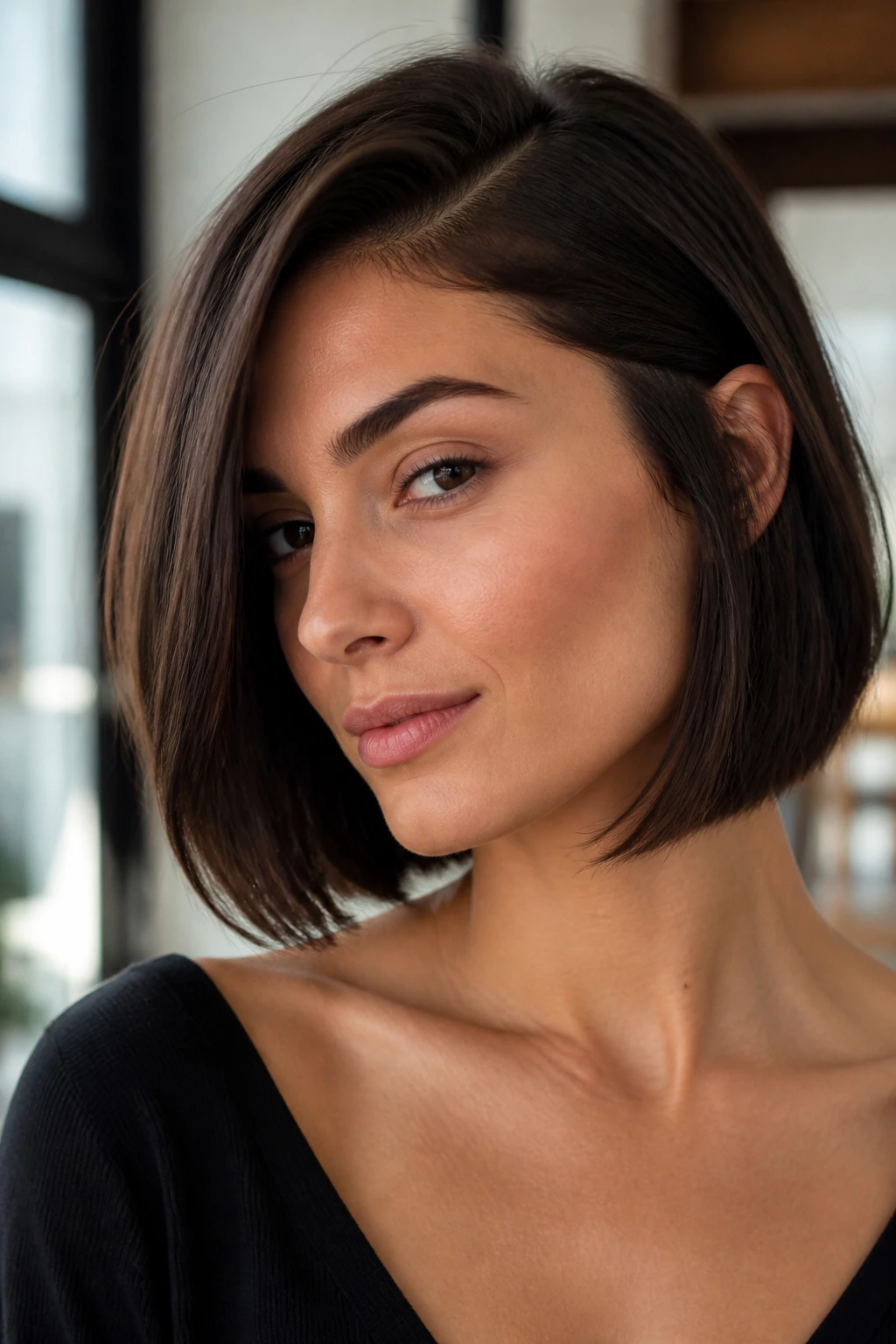
A deep side part can look almost severe in the chair, then turn chic the second the hair is smoothed down and the ends are bent under. The diagonal line helps a square face because it interrupts the symmetry that can make strong angles feel heavier. Thin hair also gets a lift at the root where the part changes direction.
Why It Works
This is not about plastering the hair flat. It’s about creating one strong line at the part and keeping the rest sleek enough to show the cut’s shape. The bob should end below the jaw, with the front just long enough to skim the cheek and soften the corners.
If you want this to hold, prep with a root mousse and blow-dry using the nozzle pointed down the shaft. That smooths the cuticle and keeps the ends from puffing out like static-prone straw.
Best For
- Naturally straight or lightly wavy hair.
- Fine hair that needs a clean silhouette.
- Square faces that can handle a sharper styling line.
11. Boxy-Soft One-Length Boyfriend Bob

This cut sounds blunt because it is blunt, but the softness comes from the styling and the slight bevel in the last half-inch of the hair. It sits right in that sweet zone where fine hair looks dense and the square face doesn’t get trapped under a hard jawline cut.
Why It Works
One-length bobs are usually the best friend of thin hair because they keep the ends thick. The problem is when they end exactly at the jaw. That’s when the square face gets louder. Move the length just below the jaw, and the whole thing changes.
The “boxy-soft” part comes from not overdressing it. Blow it out until smooth, then barely curve the ends under. That’s enough. A lot of people ruin this cut by overcurling it and making the base look narrow.
Small Warning
If your stylist wants to stack the back or carve out too much weight, push back. The fullness belongs in the line, not in a bunch of internal holes.
12. Curly Boyfriend Bob for Fine Texture

Curly hair and thin hair can live in the same head, which means this cut has to respect both realities at once. The bob should be shaped dry, curl by curl, so the length lands where the curls actually sit, not where they look like they’ll sit when wet.
Why It Works
Square faces and curls can be a really nice combination because the curl pattern naturally softens the angles. The mistake is cutting too much into the perimeter. Fine curly hair needs enough weight to stop the ends from frizzing into a halo.
Ask for a bob that falls around the chin to just below the jaw when dry, with gentle face-framing pieces that start around the cheekbone. That keeps the shape soft without widening the face.
Styling Note
Use a lightweight curl cream and diffuse on low heat. High heat and too much product will flatten the root while puffing the ends. A strange tradeoff. A common one.
13. Lob-to-Bob Transition Cut
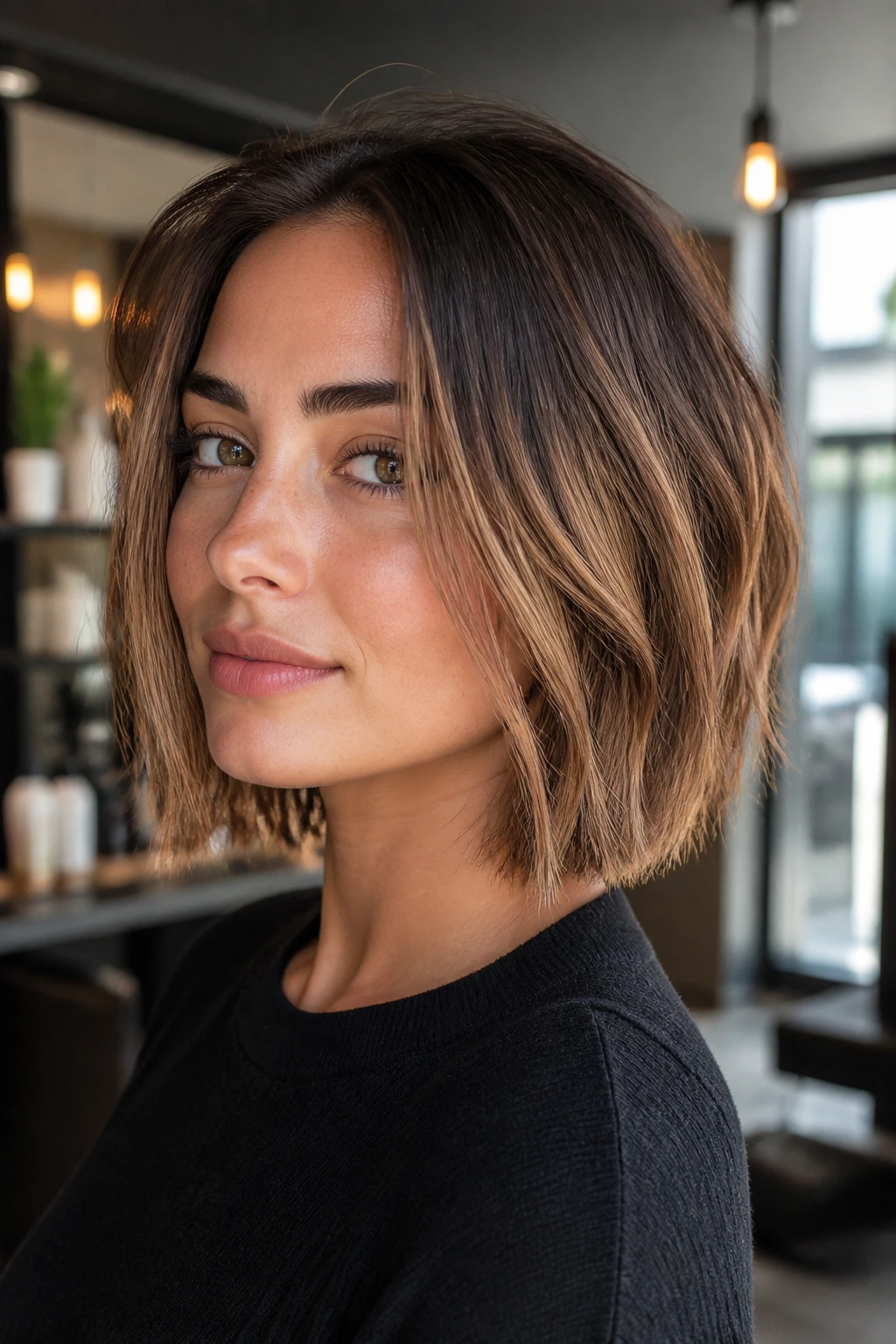
Not everyone wants to jump straight into chin length, and honestly, I think that’s smart. A lob-to-bob transition cut keeps enough length to feel familiar while trimming away the dead weight that makes thin hair hang limp. It’s the least dramatic way into the boyfriend-bob family.
Why It Works
This version usually lands somewhere between the collarbone and the top of the shoulder, depending on how much density you have. For square faces, that extra length keeps the haircut below the jaw, which buys you softness without forcing bangs or heavy shaping.
It’s especially useful if your hair has broken ends. A little length plus bluntness can make the whole head look healthier than a shorter cut that’s too aggressively layered.
Best Move
Tell the stylist you want to keep enough length for a ponytail or quick tuck behind the ear. That gives a clear boundary and helps avoid the “we took off four inches and called it a trim” problem.
14. Air-Dried Piecey Boyfriend Bob
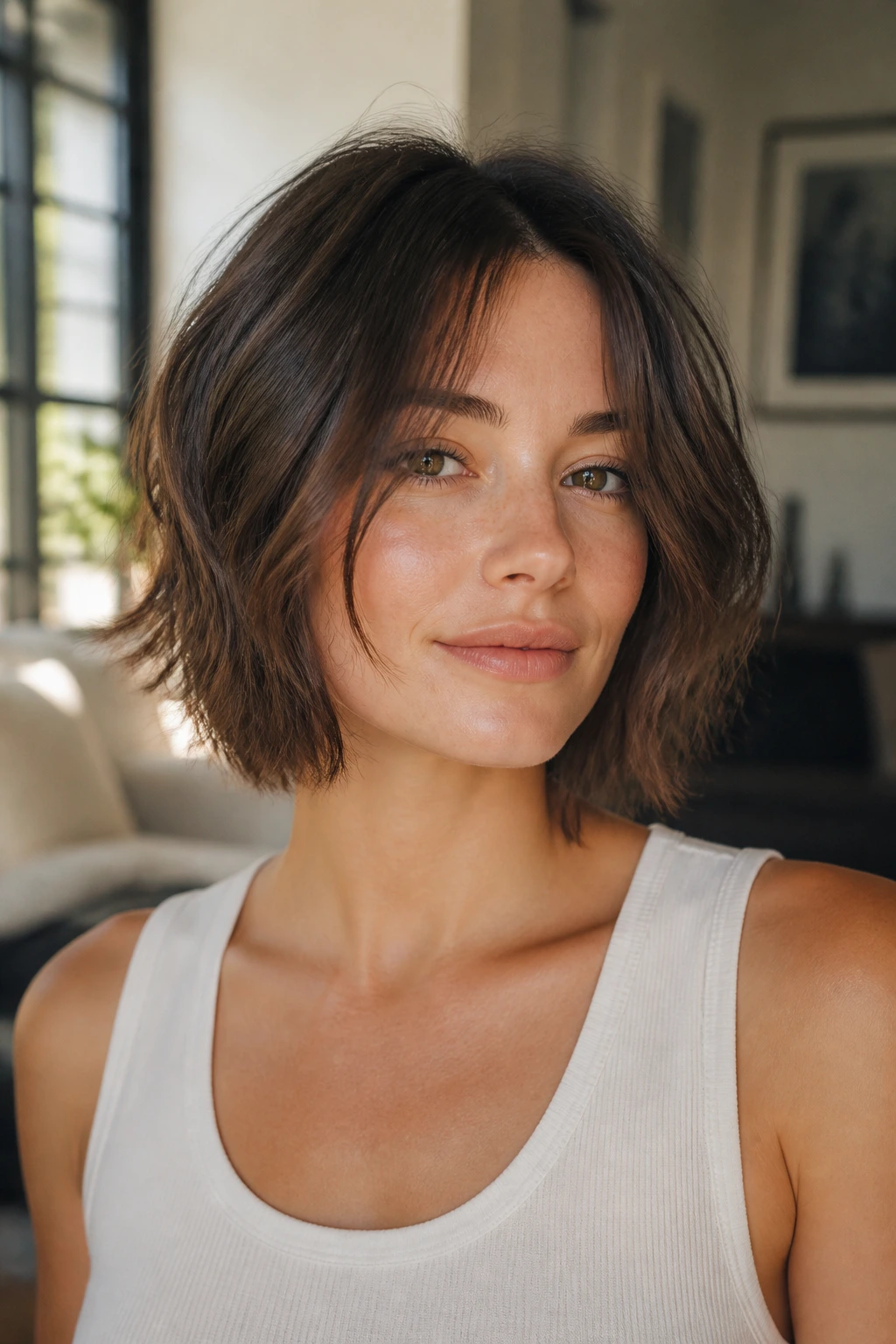
This is the low-effort version that still looks intentional. The cut itself needs some internal movement, but not too much. After a towel squeeze and a little product, the hair can dry on its own into soft pieces that break up the jawline instead of framing it like a box.
Why It Works
Thin hair often looks better when it isn’t overworked. Air-drying preserves the soft separation at the ends, especially if you scrunch in a light mousse and let the front pieces fall where they want. A square face benefits because the hair doesn’t collapse into a strict line.
The key is keeping the perimeter full. Air-dried doesn’t mean thin and limp. It means slightly rough, with the ends still carrying enough weight to read as a shape.
Product Cue
Use a mousse or foam, not a sticky cream, at the roots and through the mid-lengths. Then resist touching it until it’s mostly dry. The more you fuss, the flatter it gets.
15. Rounded Boyfriend Bob with Internal Graduation
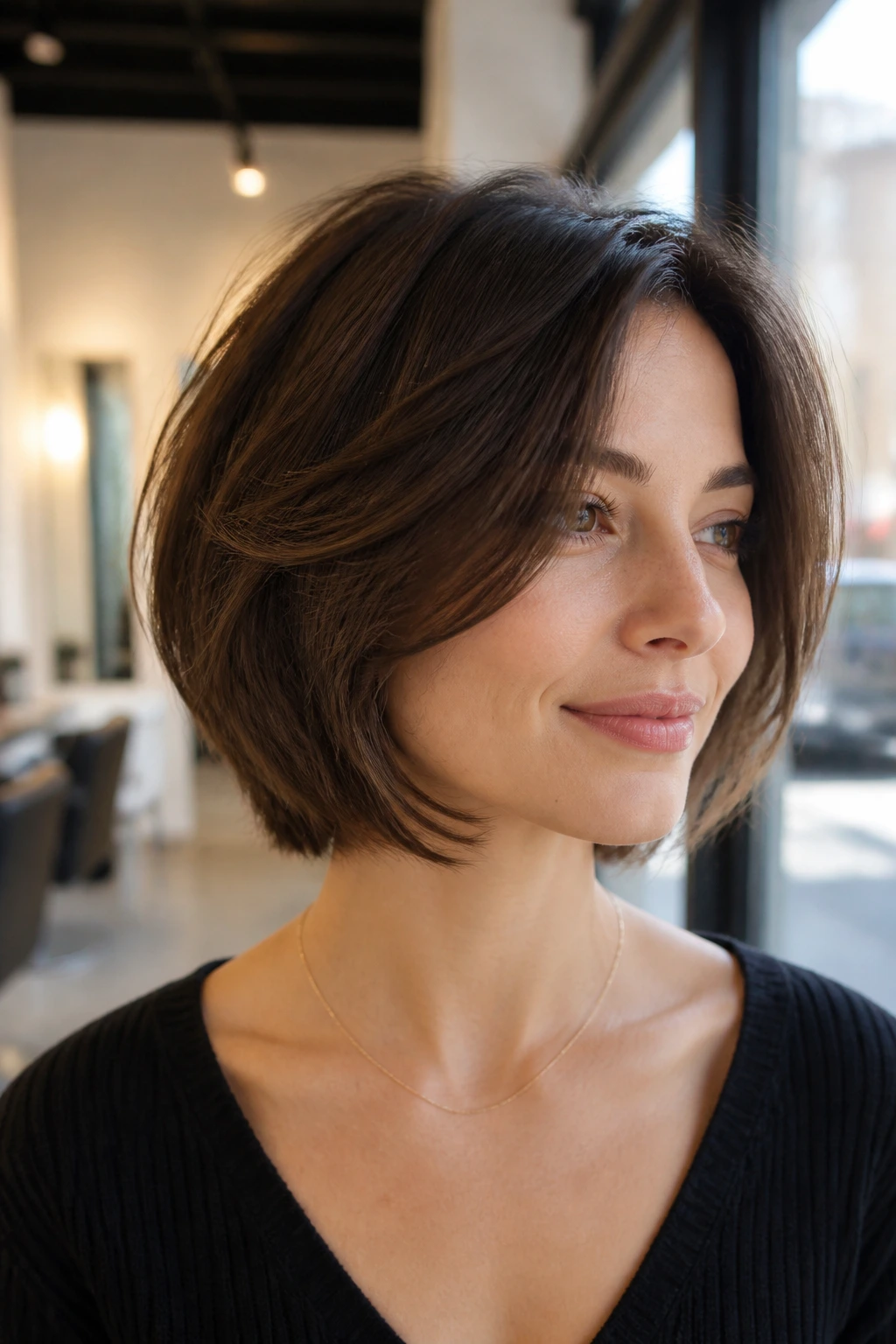
Rounded cuts sound old-fashioned until you see one done well. This version has a softly curved outline that follows the cheekbones and opens just enough around the jaw to keep the face from looking boxy. The graduation inside the cut gives lift without showing off.
Why It Works
Internal graduation is useful on thin hair because it builds a little support under the top layers. The hair doesn’t need to be stacked high at the nape; it just needs a subtle shape that pushes the outer line up where it belongs.
Square faces usually like rounded silhouettes because the curve does what the jaw won’t: it softens. A bob that hugs the cheeks and then rounds out gently at the bottom feels balanced rather than geometric.
Styling Note
This cut looks best with a round brush and a calm hand. Don’t force a lot of bounce into it. The curve should be quiet.
16. Long-Fringe Piecey Boyfriend Bob

A long fringe can rescue a face shape that needs softening around the forehead and temples. The rest of the bob stays fairly simple, which is good because the fringe is the star here. For thin hair, that means the fringe has to be narrow enough to preserve density on the sides.
Why It Works
The fringe starts around brow to cheekbone level and blends into the front sections. It gives the eye somewhere to go besides the jaw. That matters on square faces, where the lower half can otherwise dominate the profile.
Because the fringe is long and piecey, it can be parted in the middle, swept aside, or tucked. That flexibility makes the cut less fussy than a blunt bang and far easier to grow out.
Styling Tip
Dry the fringe separately with a small brush or even your fingers and a nozzle. If you dry the whole head first and leave the fringe for last, it usually dries in the wrong direction and sticks out like it has opinions.
17. Asymmetrical Boyfriend Bob

A slight asymmetry can change the whole mood of a bob. One side sits maybe half an inch longer than the other, which is enough to make the face feel longer and the jaw less boxy. It also keeps the cut from looking too tidy, which is a nice match for the boyfriend-bob idea.
Why It Works
Square faces often look softer when the hair does not mirror itself perfectly on both sides. The asymmetry creates movement and pulls attention across the face. Thin hair benefits because the cut doesn’t have to rely on heavy layering to feel interesting.
Keep the length difference subtle. This isn’t a fashion-gag haircut. It’s a quiet shape shift. Too much imbalance and the eye goes straight to the cut instead of the face.
Best For
- Straight hair that can show the line clearly.
- People who wear one side tucked more often than the other.
- Anyone tired of hair that sits too predictably.
18. Shaggy Sleepy Boyfriend Bob
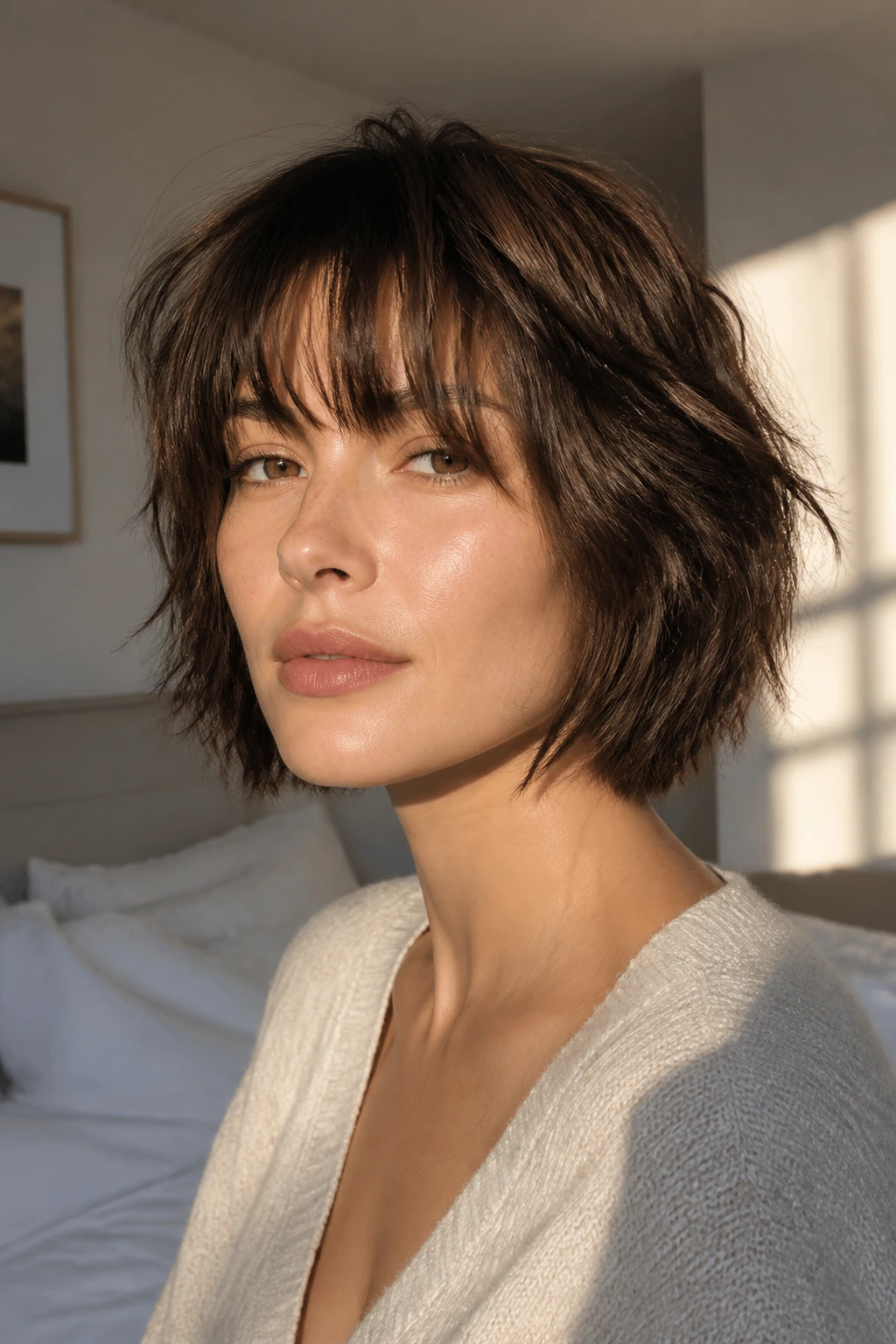
There’s a fine line between shaggy and scrappy. The good version looks relaxed and a little slept in; the bad version looks like the ends were attacked with scissors in the dark. For thin hair, the shag needs to stay light and strategic, with the bulk preserved at the bottom.
Why It Works
A soft shag inside a bob shape can break up the square face without stealing too much density. Texture begins around the cheekbone and gets lighter toward the crown. That keeps the top from feeling flat and the sides from ballooning.
The words “sleepy” and “shaggy” matter here because the finish should not be too polished. A bit of bend, a bit of pieceiness, and a full-looking perimeter are enough. More than that starts to look overstyled.
Styling Note
Use a salt-free texture spray if your hair is already dry or fragile. Salt sprays can rough up fine strands in a way that looks cool for two hours and sad by dinner.
19. Jaw-Softening Undercurve Boyfriend Bob

This is one of my favorites because it solves a very specific problem. The ends turn under and slightly forward, which keeps them away from the broadest part of the jaw. The silhouette feels gentle, almost shell-like, but not fussy.
Why It Works
A square face looks sharper when the hair ends exactly at the jawline. An undercurve bob avoids that clash. The slightly forward bend also gives thin hair a fuller outline because the ends appear to sit on a wider surface.
Ask for the front to be fractionally longer than the back. Not dramatic. Just enough to let the hair hug the face rather than stop against it.
Styling Cue
Use a round brush and direct the hair under only at the last few inches. If you curl the whole length, the cut loses its relaxed feel. Small bend. That’s all it needs.
20. Bixie-Bob Hybrid
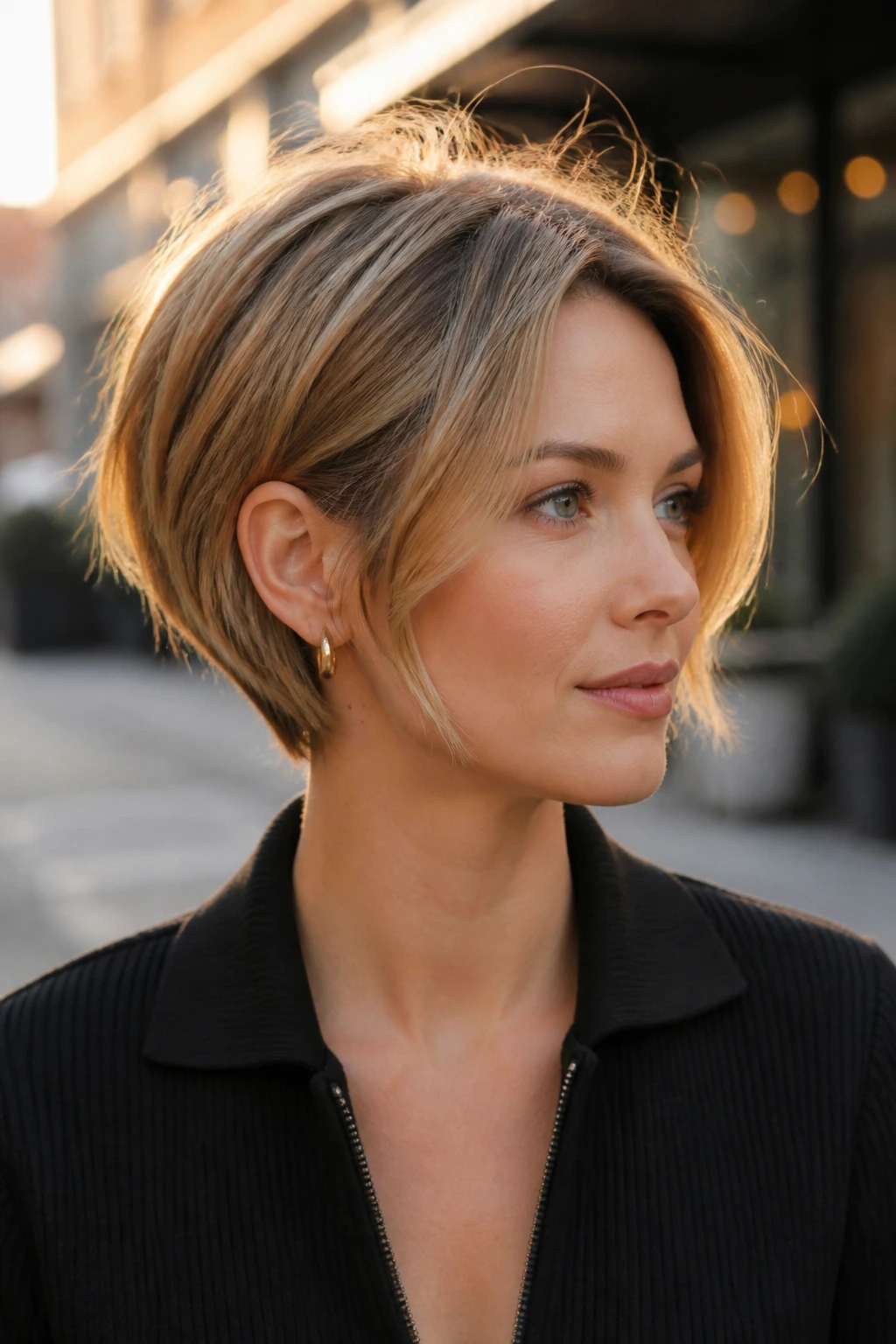
This is the shortest option in the group, and it’s not for everyone. It mixes bob weight with a little pixie lift at the crown and around the ears. On thin hair, that can create welcome fullness. On square faces, the longer front pieces matter because they keep the haircut from turning boxy.
Why It Works
A bixie-bob hybrid works when the nape is clean and the top has just enough length to move. The face-framing strands should still graze the cheek, or the jaw becomes the loudest thing again.
This is a good choice if your hair is very fine and refuses to hold a longer bob shape. The shorter length can actually look thicker because there’s less weight pulling it flat.
Small Warning
Do not let this become a mullet in disguise. The top needs softness, not dramatic separation. That’s a different haircut, and not the one we’re after here.
21. Slicked-Back Minimal Boyfriend Bob
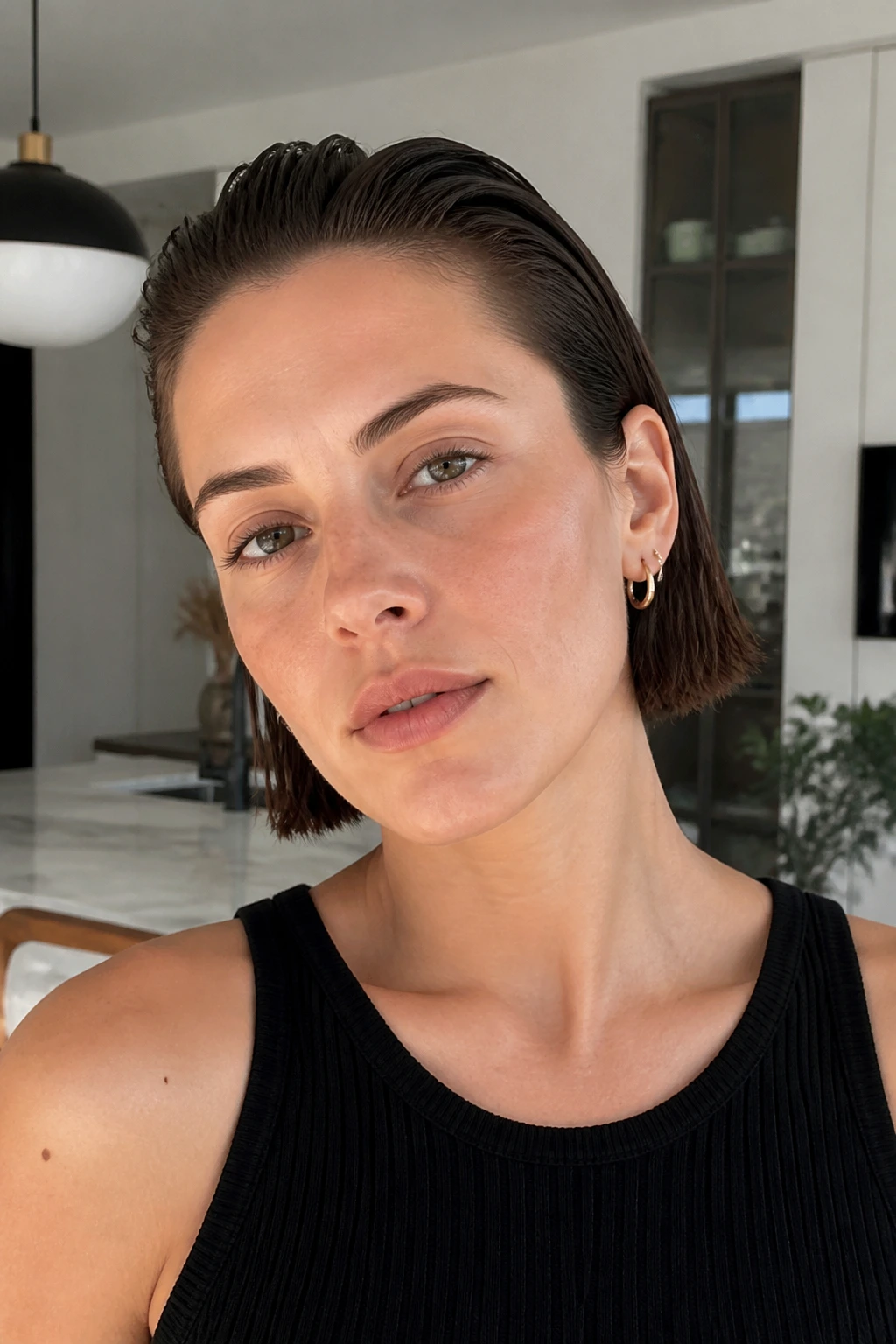
A slicked-back bob isn’t the everyday answer for most thin hair, but it can look sharp in the right length. The cut needs to sit below the jaw, with enough front length to tuck behind the ears without exposing too much scalp. The square face gets a strong, clean frame instead of a harsh one.
Why It Works
This look depends on contrast. The hair is smooth at the top and slightly softer at the ends, so the face stays visible. Fine hair can actually benefit from the smoothness because it prevents fuzz and flyaways from making the cut look thinner than it is.
The trick is not to pull the hair straight back from the temples unless you like a severe look. Leave a little softness at the front and keep the sides controlled, not plastered.
Styling Note
Use a light gel or cream-gel, then comb the hair into place with a fine-tooth comb. Too much product turns the whole thing stiff and crunchy. That’s not the mood.
22. Razor-Cut Boyfriend Bob with Soft Edges
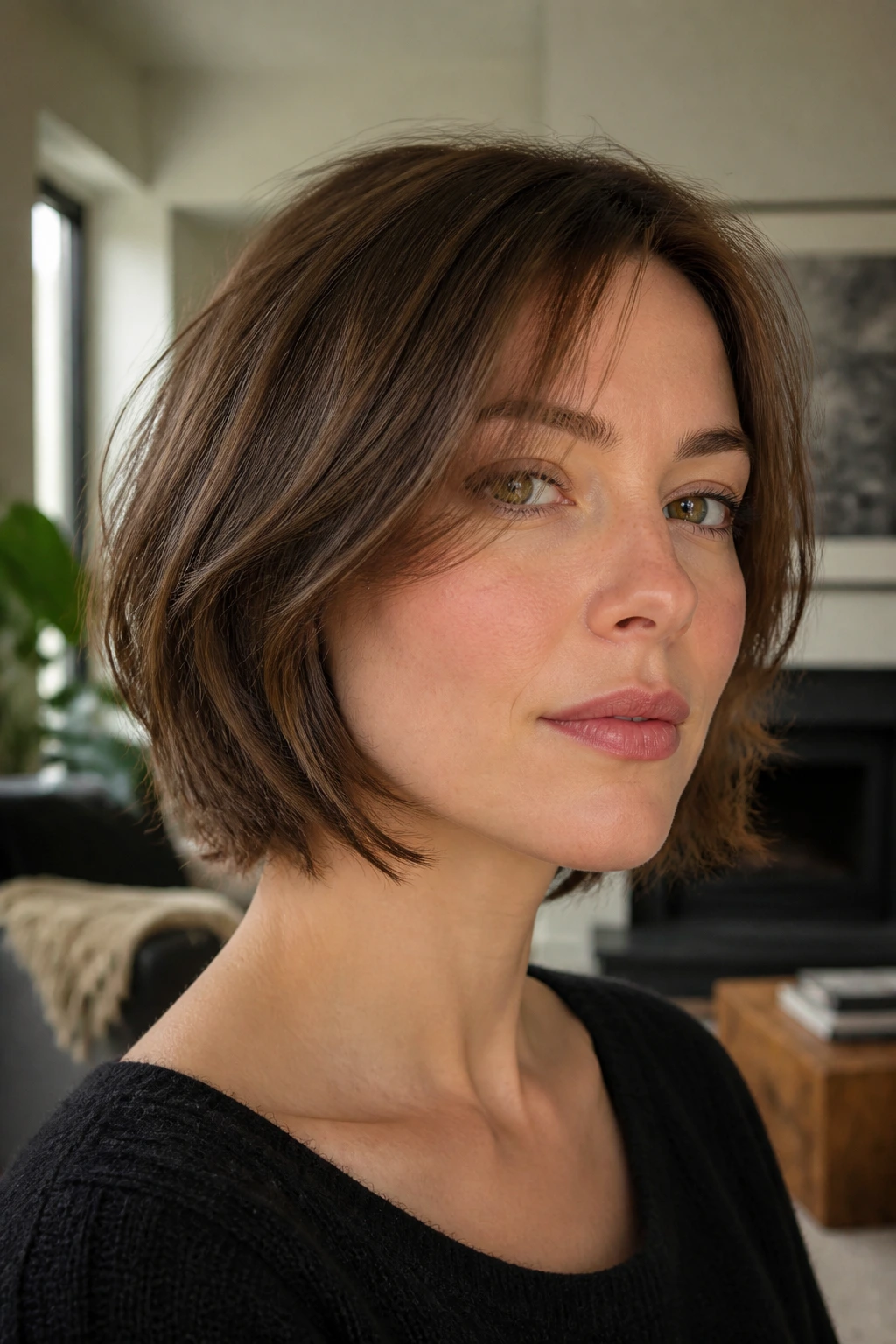
A razor cut can be lovely on the right hair, but thin hair needs a gentle hand. Here, the razor is used to soften the outer edge and add a little movement near the front, not to shred the ends into nothing. The effect is airy but still controlled.
Why It Works
Square faces often benefit from a bob that doesn’t look too blunt or architectural. Soft edges give the face room. Thin hair gets the visual lift of movement without sacrificing all its density.
This is the cut to choose if your hair has a bit of natural bend and you hate stiff ends. If your hair is already fragile or breaks easily, make sure the stylist keeps the razor work minimal. Over-razored fine hair goes fuzzy fast.
Best Use
A tiny dab of styling cream through the ends helps the cut stay piecey rather than puffy. Use less than you think. Fine hair always punishes overproducting.
23. Blowout Boyfriend Bob with Root Lift
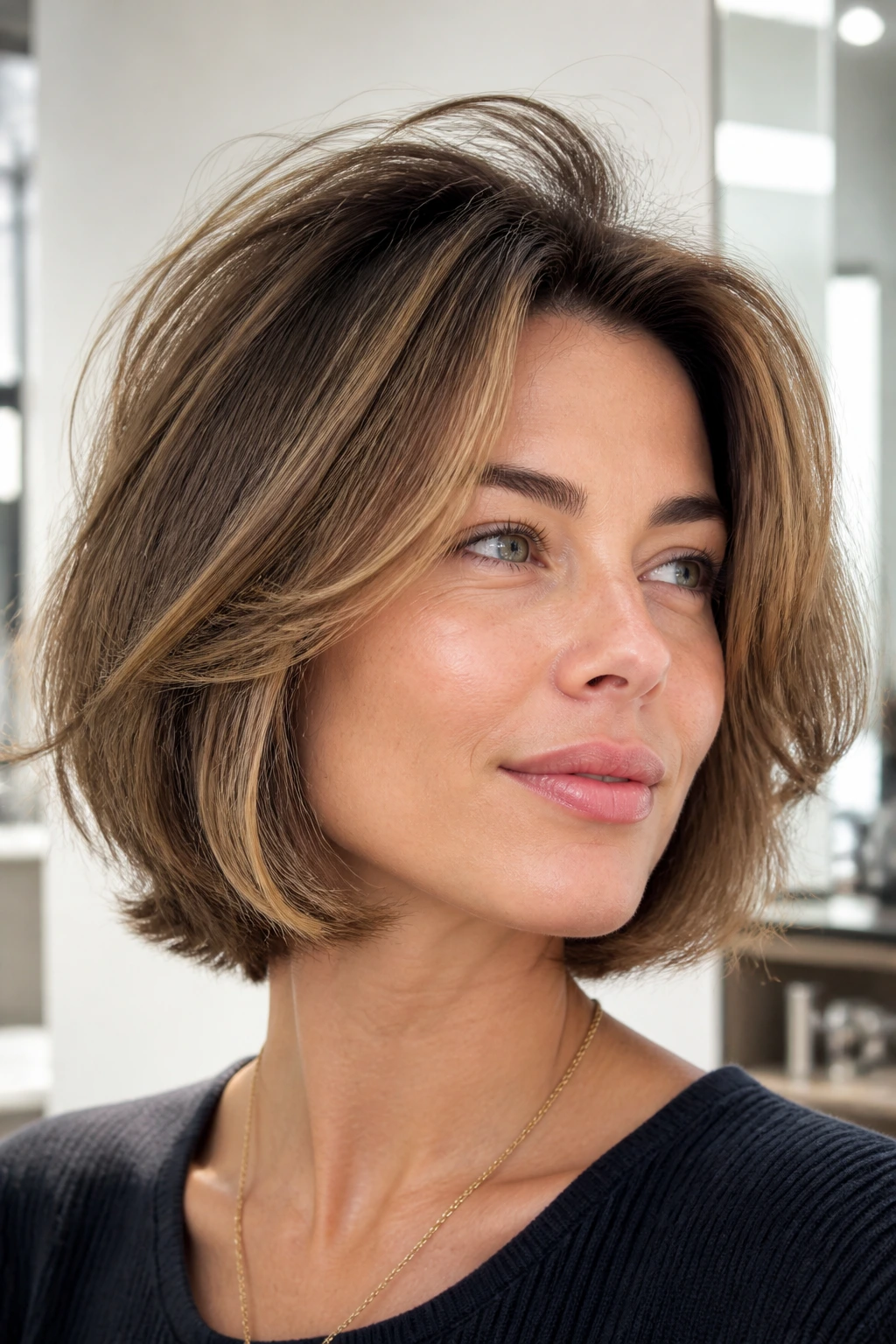
If you want the haircut to look a little more expensive without being shiny or formal, this is the move. The shape is simple, but the styling adds body where thin hair actually needs it: at the roots and around the crown. Square faces get the bonus of softer curves around the cheeks.
Why It Works
Root lift makes the face appear a little longer and keeps the hair from collapsing into the temples. A round brush or velcro rollers can push the roots up while the ends curl under softly. The result is fuller-looking hair without the heavy layer structure that can make thin hair look scraggly.
This cut can be collarbone length or just below the jaw. The real difference is in the finish. You’re building a cloudier outline, not a tight one.
Styling Cue
Blow-dry the roots first, clip the crown up while it cools, then finish the ends. That cooling step matters more than most people think. Hot hair falls. Cool hair holds.
24. Curtain-Bang Boyfriend Bob

Curtain bangs earn their keep here because they split the face down the middle and then drift out to the sides, right where a square face needs some softness. The bob underneath can stay fairly simple and still look styled. Thin hair likes the fact that the fringe is broad, not dense.
Why It Works
The curtain bang should start around the cheekbone or just below, not at the middle of the forehead. That keeps it from looking too short or too heavy. When the side pieces sweep back toward the jaw, they create a soft frame that makes the face look longer.
The rest of the cut can stay blunt-ish and shoulder-skimming or chin-length, depending on how much density you have. If the bangs are too thick, they steal volume from the rest of the head. Keep the balance in mind.
Styling Note
Dry the bangs with a round brush, pulling them slightly away from the face, then let them settle. A quick pass with a flat iron can refine the bend, but don’t over-smooth them or they lose that soft split.
25. Barely-There Maintenance Boyfriend Bob
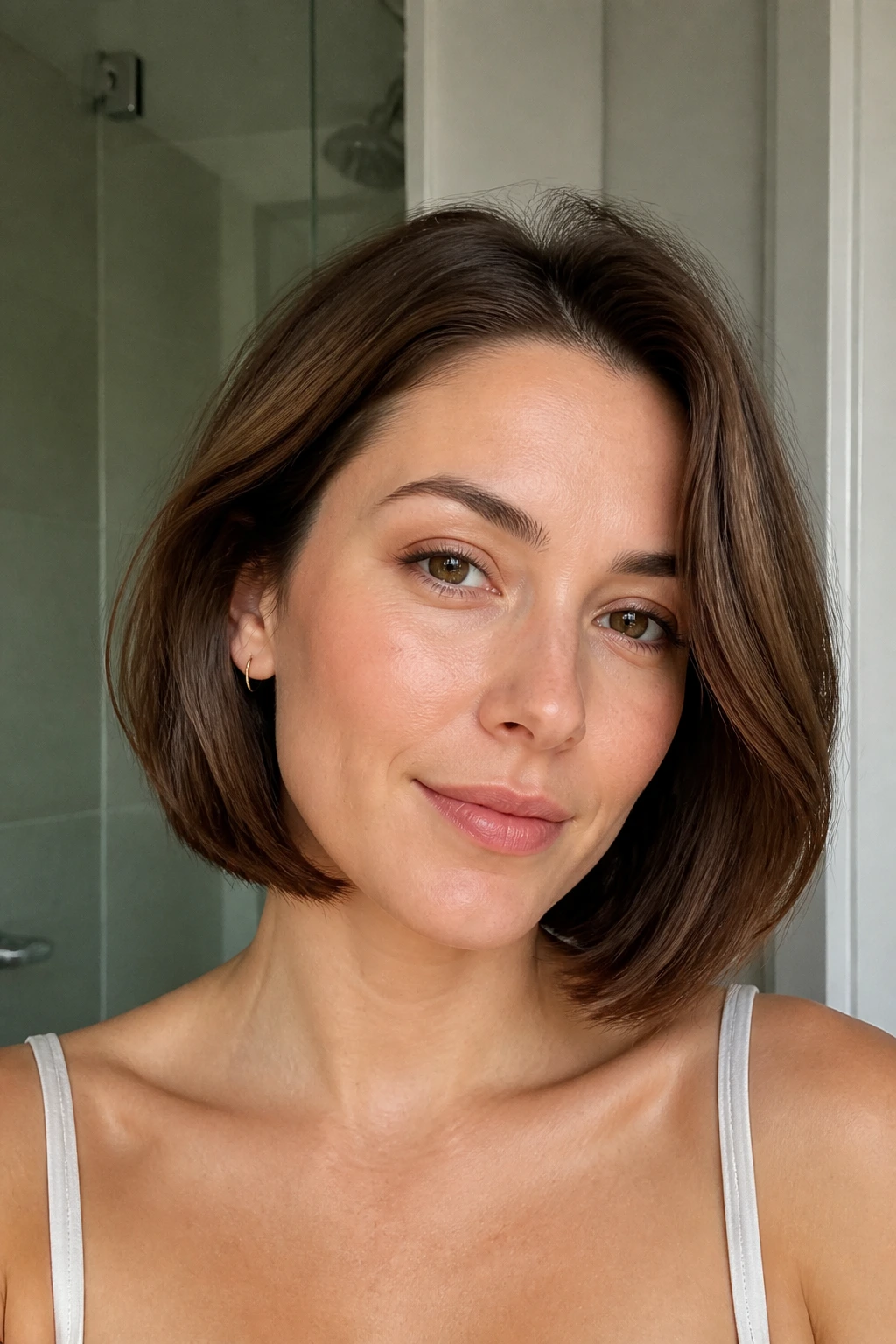
This is the easiest version to live with. The length sits just below the chin or a touch lower, the ends stay full, and the whole cut is built to look decent even when you haven’t fought with it for twenty minutes. For thin hair, that restraint is a gift.
Why It Works
A low-maintenance bob has to be cut well because it won’t be rescued by heavy styling. The perimeter should feel solid, the layers minimal, and the front just soft enough to avoid squaring off the jaw. Square faces benefit because the cut lives below the widest part of the face and doesn’t crowd it.
I like this version for people who want a shape they can tuck, rough-dry, or bend once and move on. It is not flashy. It is dependable. And sometimes that’s the smartest choice in the room.
What Makes It Hold Up
Ask for a slight undercurve and a clean neckline. That alone keeps the cut from turning shapeless three weeks later.
How Boyfriend Bobs Get Cut Without Losing Density
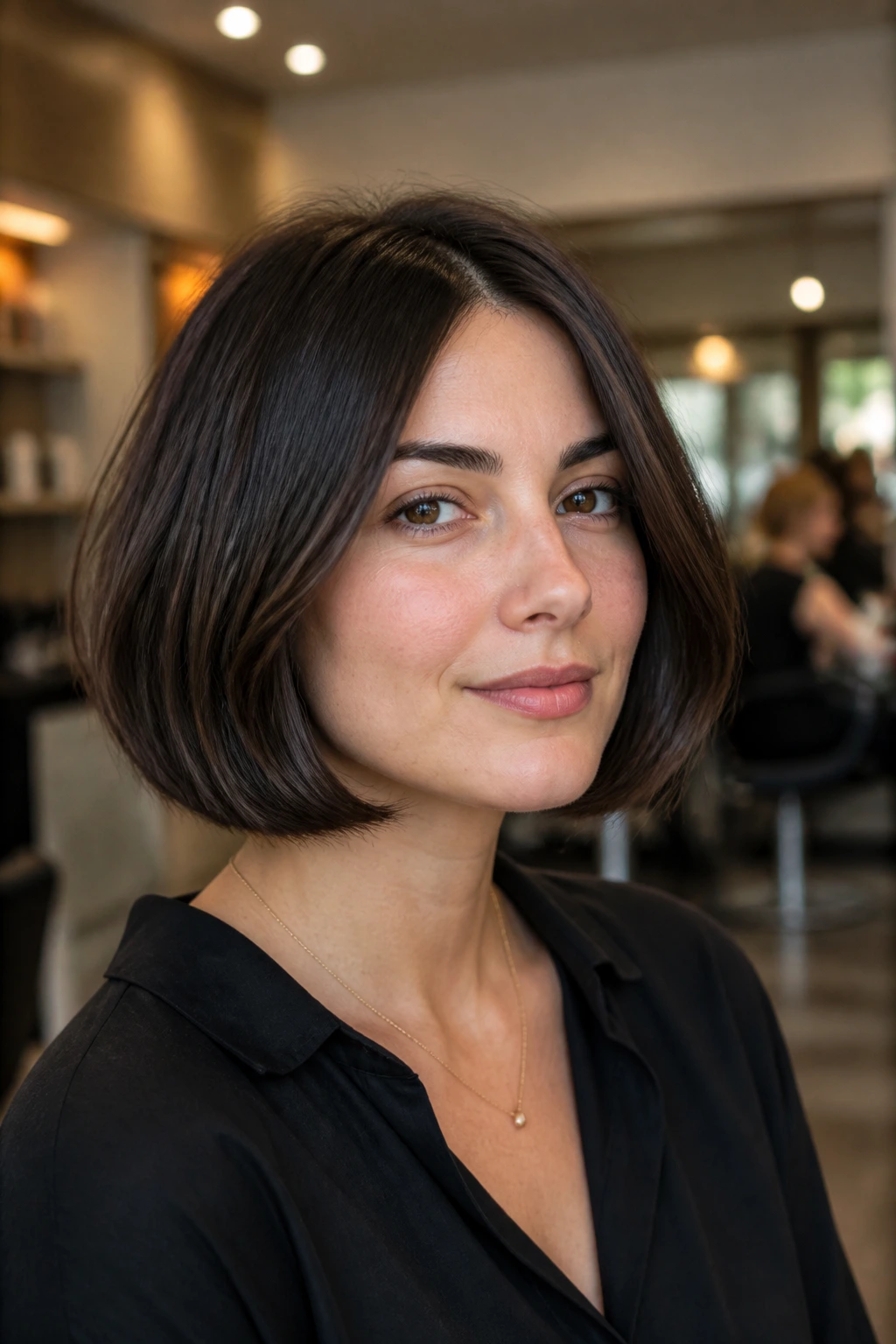
A good boyfriend bob is built from restraint, not from chopping away everything that looks heavy. Thin hair needs the perimeter to stay thick, and square faces need the ends to land in the right place. Those two needs can fight each other if the cut is too ambitious.
Start with the length. The safest zone is usually just below the jaw or right at the collarbone, depending on how much fullness you have and how much face-softening you need. If the hair ends exactly on the jaw, the line can harden the face. If it falls too far below the jaw without shape, it can drag the whole cut down.
The second thing is the internal texture. Ask for point cutting, light slide cutting, or subtle graduation — not aggressive thinning. The point is to take away bulk only where it creates puff or shape issues, not to hollow out the ends. Thin hair is unforgiving when a stylist gets scissor-happy.
Finally, parting matters more than people think. A center part lengthens a face. A deep side part softens the angles. A small off-center part can be the quiet middle ground when the crown is sparse. That tiny decision changes the whole haircut.
How to Ask Your Stylist for the Right Length and Shape

Bring photos, yes, but bring the right kind. One photo should show length. Another should show fringe or face-framing detail. If you try to make one picture do everything, you usually get a haircut that copies the vibe and misses the actual structure.
What to Say at the Chair
Tell your stylist you want a boyfriend bob that stays full at the ends and softens the jaw rather than sitting on it. That sentence matters. Mention whether you want the shortest point to land above the chin, at the chin, or below the jaw. Those are not small differences.
If your hair is fine, say you want the perimeter kept dense and any layering kept low and subtle. If your face is square, ask for pieces that start around the cheekbone or slightly below, not a blunt block right at the jaw.
What to Avoid
- Too much stacking at the back: It can make the silhouette puffy on top and skinny at the ends.
- Over-thinned fringe sections: The forehead starts showing through in odd ways.
- A hard chin-length line: Great on some faces. Briskly unforgiving on square ones.
One Helpful Script
“I want a soft boyfriend bob with enough weight at the bottom so my hair still looks full. Can we keep the length below my jaw and use face-framing pieces to soften the corners?”
That sentence gets the job done.
Styling Moves That Keep Fine Hair From Collapsing

Fine hair is not hard to style. It’s just rude about product choice. Heavy creams, thick oils, and too much smoothing balm can flatten the crown before you’re done with breakfast. The shape needs lift at the roots and movement at the ends, not a glaze.
Start on damp hair with a lightweight mousse or root spray. Work it mainly through the crown and the top two inches of the sides. Don’t drown the ends in product. They need enough help to stay separated, not enough to cling together.
Blow-dry using the nozzle pointed downward over the lengths, then lift the roots with your fingers or a vent brush. If you want bend, use a 1-inch or 1.25-inch round brush only on the last few inches. That keeps the line soft. A huge curl everywhere turns the cut into something else.
Dry shampoo belongs on day two, not only when the hair looks dirty. A little on clean roots adds grit and helps the style stay up. Let the spray sit for 30 seconds before rubbing it in. Otherwise it just wets the hair and makes it worse.
Tools and Products Worth Keeping Nearby
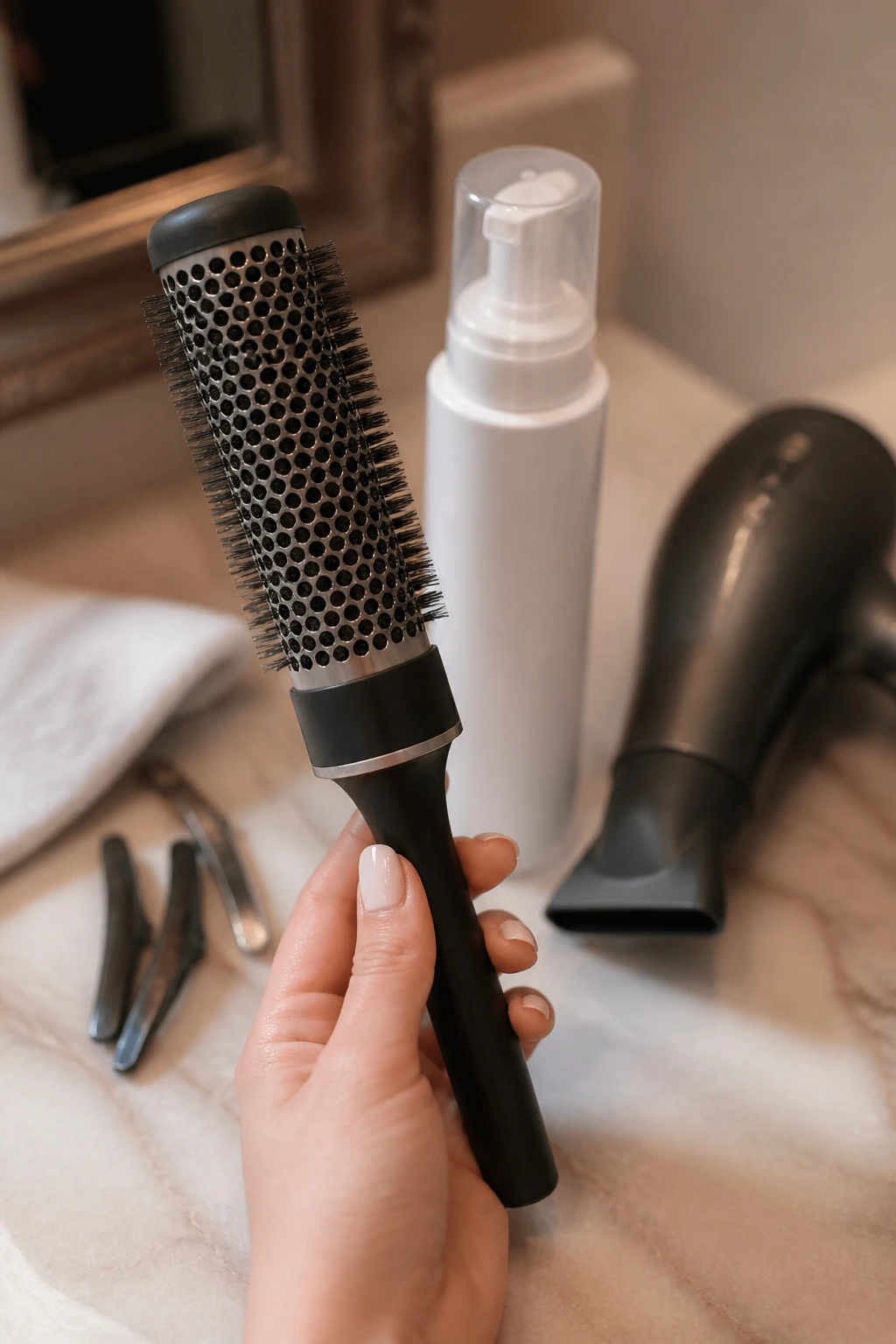
- Blow dryer with a nozzle: The nozzle smooths the hair shaft and helps the ends fall cleanly instead of puffs.
- 1-inch or 1.25-inch round brush: Best for bend at the ends and lift around the crown.
- Lightweight mousse or foam: Gives fine hair body without the sticky finish that heavier creams leave behind.
- Root-lift spray: Useful at the crown and temples, especially on flat roots.
- Dry shampoo: Adds grip and keeps the style from sliding after a few hours.
- Heat protectant spray: Non-negotiable if you use a blow-dryer, iron, or both.
- 1-inch curling iron or flat iron: For soft bends and face-framing movement.
- Microfiber towel or cotton T-shirt: Cuts down on frizz when you start with damp hair.
- Small sectioning clips: Handy when you’re drying the bangs or lifting the crown in layers.
- Light texture spray: Good on day two, but keep it light so the ends don’t look dusty.
How to Keep the Shape Between Salon Visits

Boyfriend bobs usually stay flattering longer than sharper cuts, but they still need a little care. The main thing to watch is the perimeter. When the ends lose their line, fine hair starts to look stringy. When the front gets too long, the shape can drag the jaw back into the picture.
Most people do well with a trim every 6 to 8 weeks if the cut sits around the chin or just below it. If the length is closer to the collarbone, you can usually push that out a bit longer. Bangs and fringe pieces need more attention — often every 2 to 4 weeks, depending on how fast your hair grows and how much you like them to sit in the eyes.
Between trims, keep the crown clean and the ends hydrated but not heavy. A tiny amount of leave-in spray on the mid-lengths is enough. Skip thick oils unless your hair is truly dry. Fine hair and heavy oil are enemies.
If the cut starts to puff outward at the sides, it usually means the ends need a blunt refresh, not more layers. That’s the tell. A trim, not a texture job, is what brings the shape back.
Common Mistakes That Make the Cut Look Harsh or Flat

-
Cutting it right on the jaw: That’s the fastest way to make a square face look boxier. Push the length a little lower or soften it with front pieces.
-
Thinning the ends too much: Thin hair needs density at the edge. If the ends look wispy on day one, they’ll look worse in a week.
-
Using too much smoothing cream: The hair lies flat, the crown goes limp, and the whole thing loses the borrowed-from-the-boyfriend ease that makes the cut work.
-
Skipping the parting plan: A center part can flatten sparse crowns, while a side part can shift the face shape in a better direction. Don’t wing it every day and hope for the best.
-
Over-curling the whole bob: A small bend at the ends is flattering. Big ringlets turn a relaxed cut into a different haircut entirely.
-
Letting the neckline grow too long: The nape gets bulky, the silhouette drops, and the face loses the soft frame it had in the chair.
The fix is usually simple. Trim the perimeter. Use less product. Make the part intentional. That solves more problems than another layer ever will.
Variations and Alternatives to Try

The Collarbone Exit Ramp: If you’re nervous about short hair, start here. It keeps the boyfriend-bob feel but gives you enough length to tuck, wave, or pull back without much trouble.
The Side-Part Softener: Best for square faces that need a little diagonal movement. The side part and longer front pieces loosen the jawline and keep fine hair from reading too symmetrical.
The Air-Dry Shape: Good for people who don’t want to heat-style every morning. Ask for a cut with a blunt base and a little internal softness so the hair falls into pieces on its own.
The Polished Blowout Version: Choose this if your hair is thin but cooperative. The blowout gives the crown lift, the ends turn under cleanly, and the whole cut looks fuller in photographs and in person.
The Curly-Friendly Version: For wavy or curly fine hair, keep the length a touch longer and cut it dry. That protects the curl pattern and keeps the ends from turning fuzzy.
Frequently Asked Questions

What length is most flattering for thin hair and square faces?
Usually just below the jaw or at the collarbone. That keeps the line off the widest part of the face while giving the hair enough weight to look full at the ends.
Can a blunt bob work on fine hair?
Yes, and it often does. The catch is placement. A blunt edge below the jaw looks thick and clean; a blunt edge right on the jaw can feel harsh on a square face.
Should I get bangs with this cut?
Only if the bangs are soft enough to preserve density elsewhere. Side-swept fringe and curtain bangs are safer than heavy straight bangs if your hair is thin.
Is a center part a bad idea?
Not automatically. A center part can lengthen a square face, but if your crown is sparse, an off-center part may give you more lift and less scalp show-through.
How often should I trim a boyfriend bob?
Every 6 to 8 weeks is a good range for chin-length shapes. Longer versions can stretch a bit more, but the perimeter still needs a refresh before it starts to fray.
Can I air-dry this haircut?
Yes, if the cut was shaped with that in mind. You’ll want a good base line, light product, and a little finger separation while it dries.
What if my hair is too flat at the crown?
Ask for a little crown support in the cut and use root spray or mousse at styling time. A deep side part can help too, because it lifts the roots where the part changes direction.
Is a razor cut a good idea for thin hair?
Sometimes, but lightly. Too much razor work can make fragile ends look weak. A controlled razor edge can soften the perimeter; a heavy-handed one can make the cut look sparse.
The Shape I’d Ask For First
If you’re standing at the salon chair with thin hair and a square face, I’d start with the collarbone-length or just-below-jaw version and add soft face-framing pieces. That gives you the best mix of thickness, movement, and face-softening without asking your hair to do tricks it doesn’t want to do.
From there, the details can shift. A side part can loosen the jaw. A fringe can break up the forehead. A little bevel at the ends can keep the whole shape from feeling hard. Get those three things right, and the boyfriend bob stops being a trend phrase and starts being a haircut you can live in.