



Thick hair is generous until it isn’t. Leave it too long and it drops under its own weight. Cut it too short and it can balloon at the sides, especially when the ends hit the shoulders and flip out with a mind of their own.
That is where a mid length lob earns its keep. On thick hair, the sweet spot usually lives somewhere from the collarbone to a few inches below it, where the cut still has movement but doesn’t puff into a shelf. Oval faces get extra room to play here. Center part, side part, blunt edge, soft fringe — the proportions stay balanced, which means the haircut can do more without tipping into chaos.
The real trick is weight placement. Not more layers. Not fewer layers. The right layers, in the right place, on the right perimeter. Get that wrong and the cut feels bulky by lunch. Get it right and the hair falls with a clean line, soft bends, and enough swing to look intentional on a regular Tuesday.
Why This Collection Feels Different
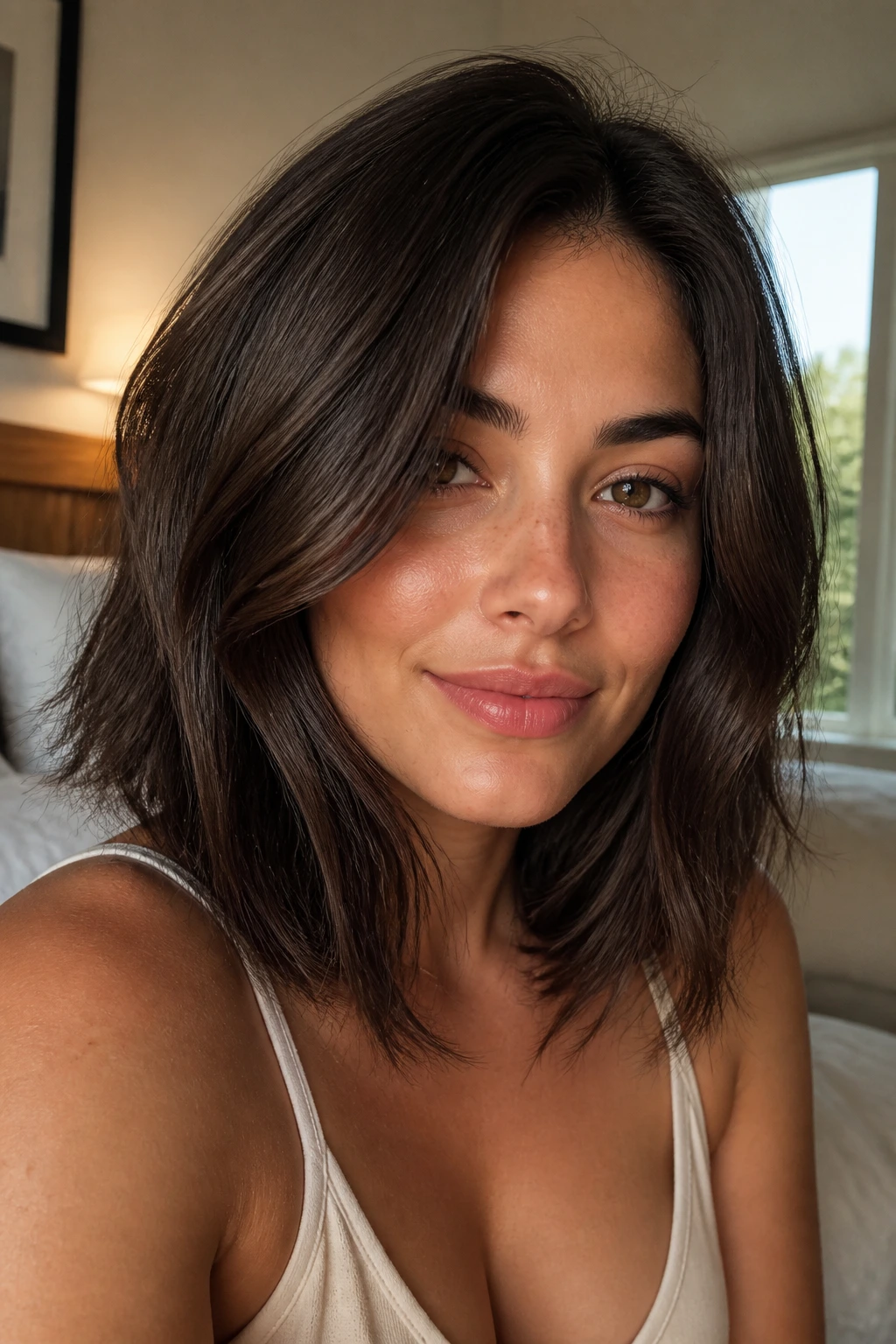
-
Built for density: These mid length lobs keep the heaviest part of thick hair low enough to stop the ends from flaring out at the shoulders.
-
Oval-face friendly: An oval face can handle blunt edges, softer curves, or a bit of asymmetry without getting visually crowded.
-
Styling range: Every cut here can be worn straight, waved, tucked, or air-dried without turning into a different haircut the moment humidity shows up.
-
Salon-ready detail: Each look gives you a real direction to take to a stylist — perimeter, fringe, angle, or layer placement — not just a vague screenshot.
-
Grow-out proof: These shapes still look deliberate after a few weeks, which matters when thick hair starts expanding faster than your haircut appointment calendar.
1. Blunt Collarbone Lob
A blunt collarbone lob is the version I keep coming back to when thick hair needs a hard stop. The line gives the ends somewhere clean to land, and on an oval face it frames the cheekbones without adding width. It looks calm, even when the hair itself is not.
Why it works: Thick hair behaves better when the perimeter is strong. Ask for a clean one-length outline with only a light point-cut on the last half inch so the ends don’t look chopped or frayed. That perimeter weight keeps the shape from puffing out at the sides.
How to style it: Blow-dry with a paddle brush, pulling the hair down and slightly forward. A flat iron bend at the very ends — no more than a half-turn — keeps it from looking stiff.
Small warning: If your hair is coarse, don’t let anyone thin the interior aggressively. You want control, not see-through ends.
2. Soft A-Line Lob
Compared with a straight one-length cut, a soft A-line lob lets thick hair fall forward instead of flaring outward. The front pieces skim the collarbone while the back sits a touch shorter, which gives an oval face a little extra lift without messing with its balance.
That slight angle matters more than people think. It keeps the eye moving downward instead of sideways, and that’s usually what dense hair needs most. The shape looks especially good when the hair is tucked behind one ear, because the longer front panel still reads clean.
If you like a cut that works with a quick blow-dry and doesn’t need much product, this is an easy pick. Ask for a subtle A-line, not a dramatic slope. Too much angle can make thick hair look like it’s trying too hard.
3. Center-Part Lob With Hidden Layers
Why does a center part work so well here? Because an oval face can take the symmetry, and thick hair can use the hidden layers to stop the bottom from sitting like a block. The layers live underneath, so the top still reads sleek.
That’s the part a lot of stylists get wrong. They layer too high, and suddenly the top starts floating while the ends still carry all the weight. Better move: keep the face-framing pieces long, let the internal layers begin below the cheekbone, and preserve the line around the outside.
Where the hidden layers should sit
They should remove bulk from the middle and lower section, not from the crown. If your hair expands around the jaw, this cut is a clean fix.
A center part gives the style a long, balanced look. It also makes the cut feel modern without asking for extra styling every morning.
4. Curtain Bang Lob
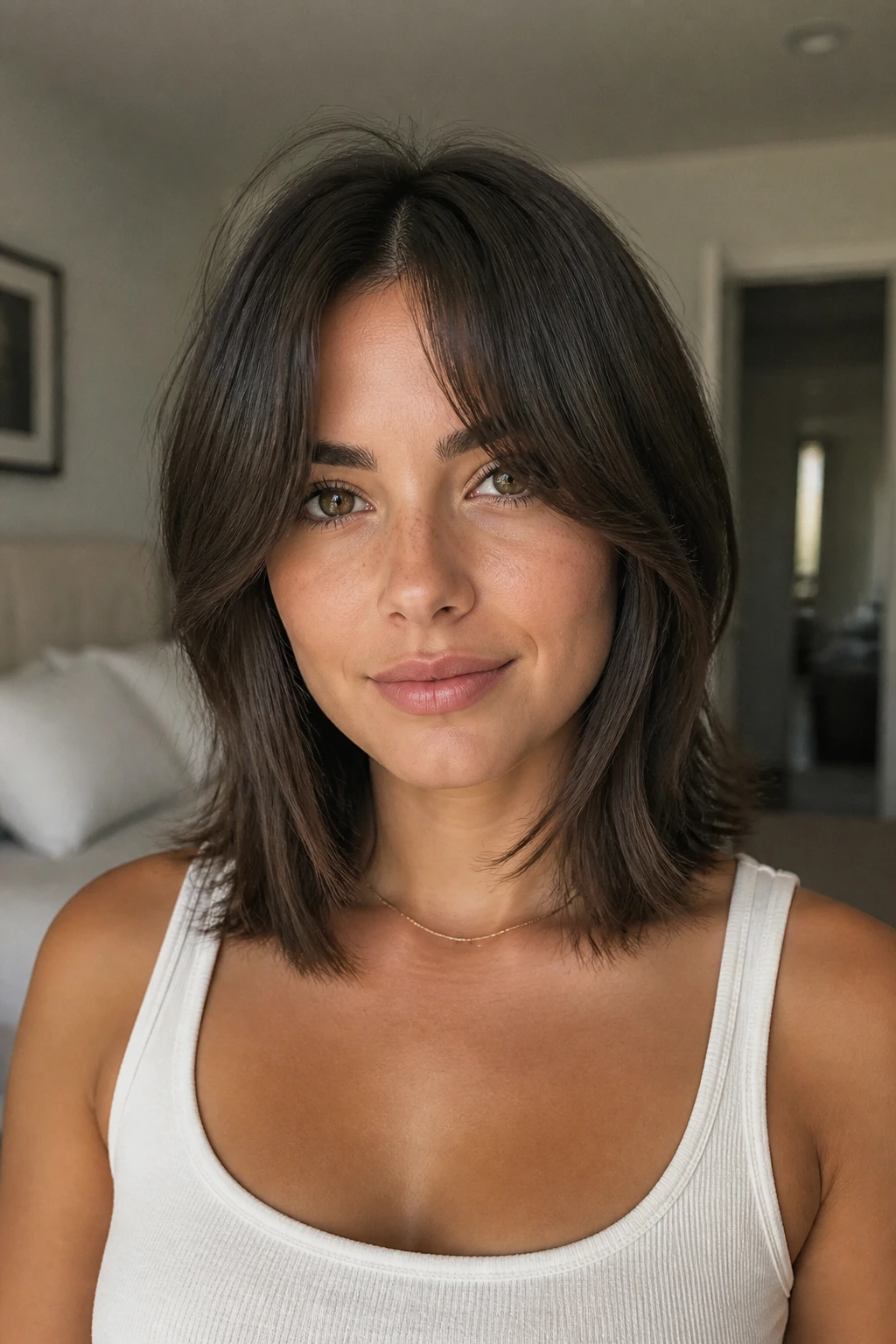
Curtain bangs are one of the few fringe choices that can soften thick hair without swallowing an oval face. When the bangs part at the center and sweep into the cheekbones, they create a frame instead of a curtain wall. That matters. A lot.
The length is the deal-breaker. Keep the shortest part of the fringe around eyebrow level or slightly below, with the longest pieces brushing the cheekbones. Short curtain bangs on thick hair tend to kick out and sit there like little shelves. Nobody needs that.
This lob looks best when the perimeter stays fairly light and the fringe carries the softness. If your forehead feels a little open with a middle part, this is a tidy fix that still lets the rest of the haircut keep its structure.
5. Deep Side-Part Volume Lob
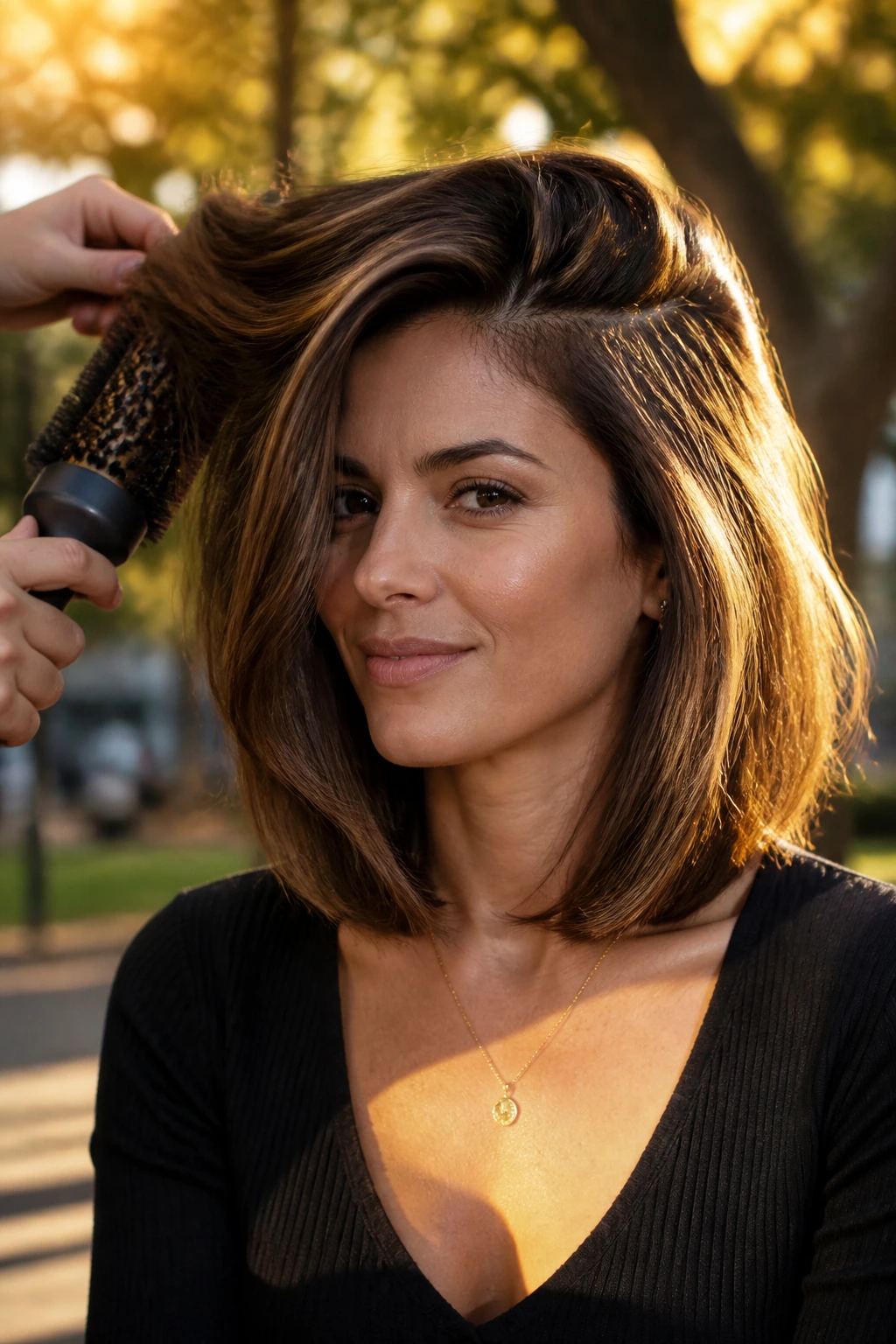
A deep side part gives thick hair a natural lift at the crown, which is useful if your roots collapse the minute the hair dries. On an oval face, the asymmetry adds shape without throwing the whole cut off balance.
This is the lob I’d choose for someone who wants a little drama but not a full haircut overhaul. The side part builds height on one side, and the heavier panel on the other side pulls the rest of the hair into line. It can make dense hair look more controlled, not less.
Use a round brush at the root when you dry it. Just lift the first two inches, then let the rest fall. Overdoing the volume at the crown is the fastest way to make thick hair look broad.
6. Choppy Textured Lob
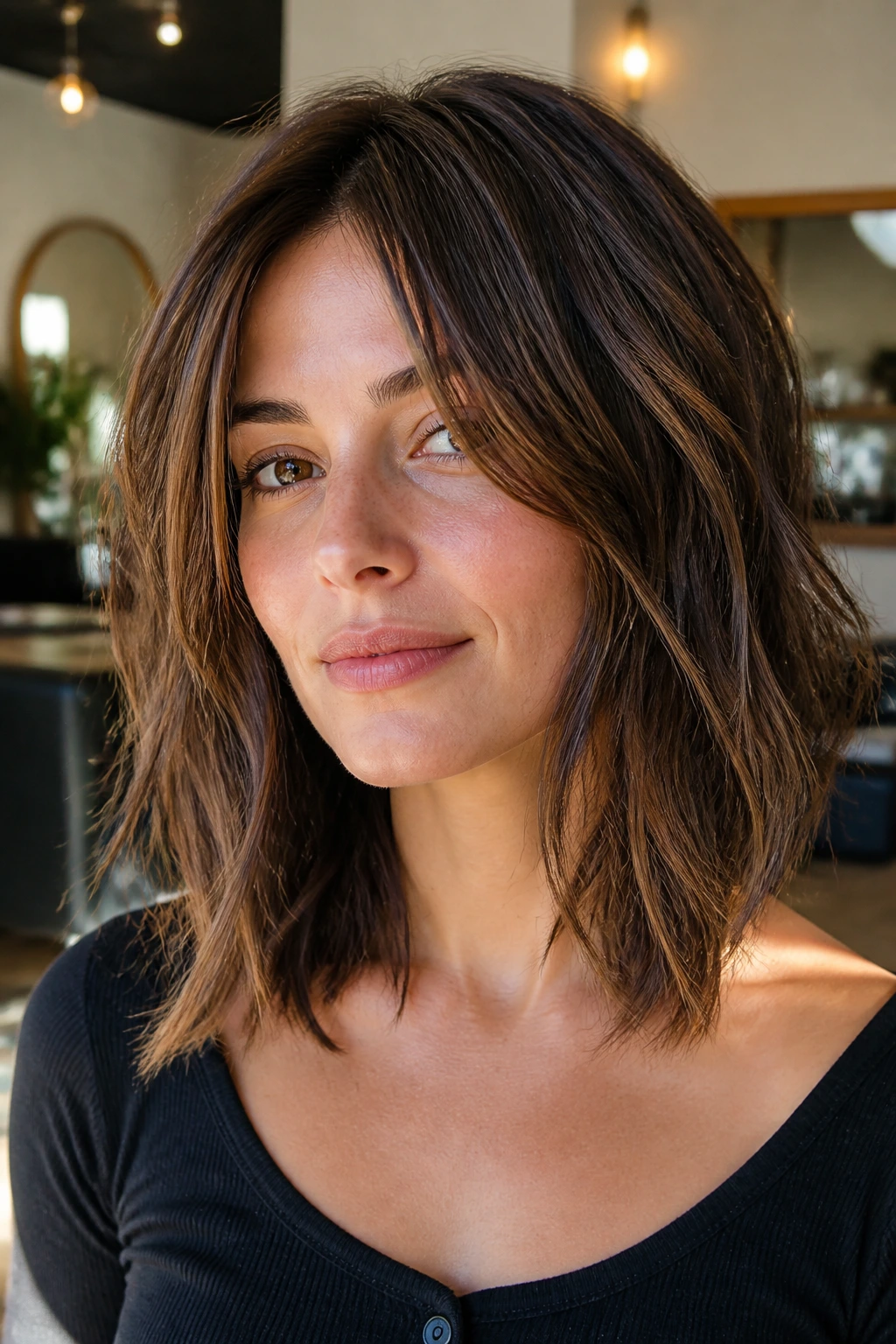
A choppy lob only works when the texture is deliberate. Thick hair does not need to be shredded into pieces; it needs enough broken-up movement that the ends stop reading as one heavy line. That’s a different thing.
Ask for point cutting at the perimeter and small, controlled internal pieces through the mid-lengths. A razor can help on some textures, but on coarse hair it can also leave the ends fuzzy, so this is one of those times where less tool can mean better finish.
The best version of this cut still has shape. It is not a mess. When you run your fingers through it, the hair should separate into soft sections, not collapse into frizz.
7. Sleek Glass Lob
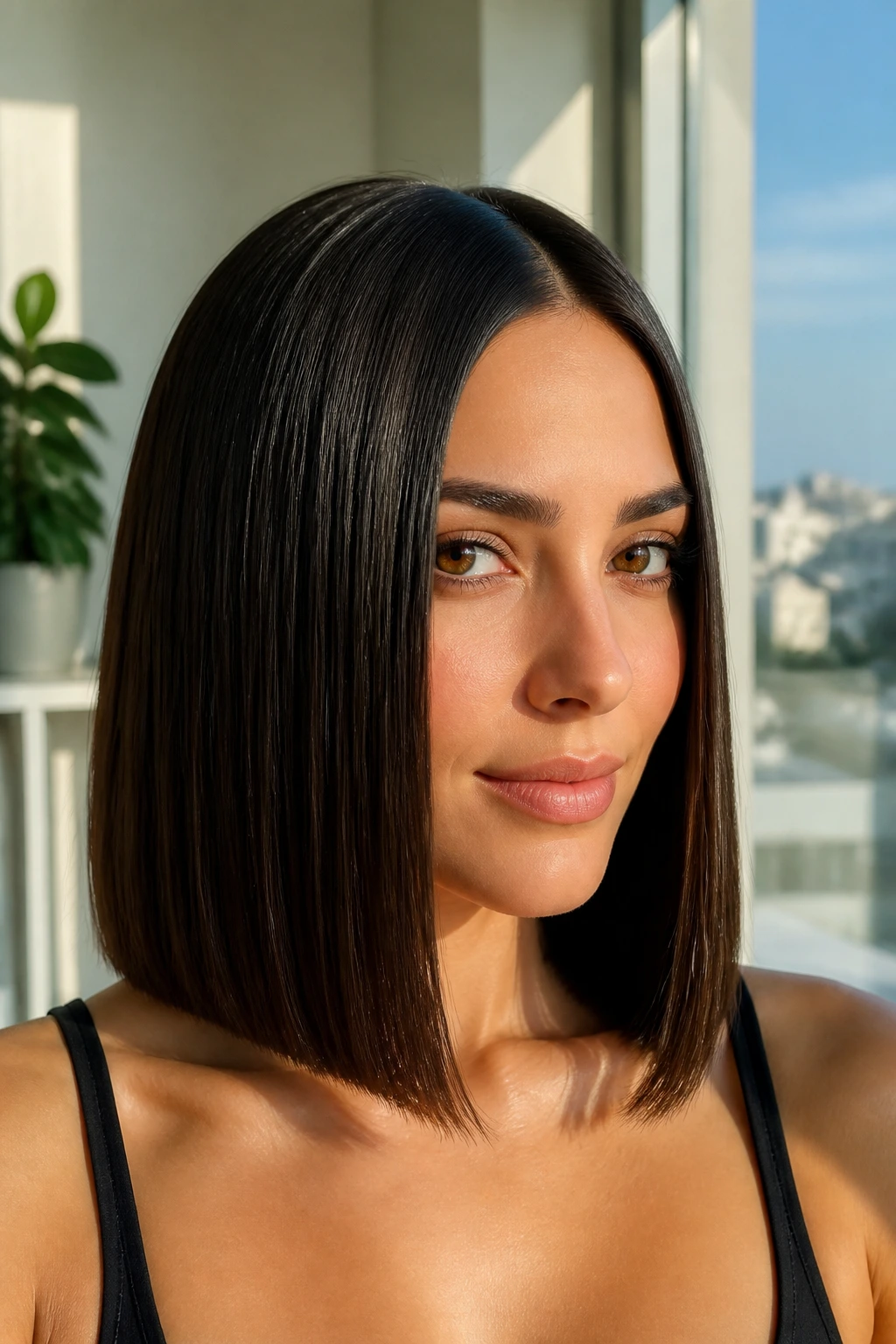
A sleek lob makes thick hair look expensive in the most practical sense: it lies where you put it. No fluff at the ends, no random bends, no halo around the crown. On an oval face, the long vertical line keeps everything neat.
This is a good choice if your hair tends to swell during the day. The trick is to dry the roots first, then pull the lengths straight down with a paddle brush or flat brush. Finish with one pass of a flat iron if needed, but do not keep revisiting the same section. That’s how you get heat damage and weird dent marks.
Use a tiny amount of smoothing cream on damp hair and a drop of serum on the last inch only. Too much product and the sleek look turns greasy fast.
8. Wavy S-Bend Lob
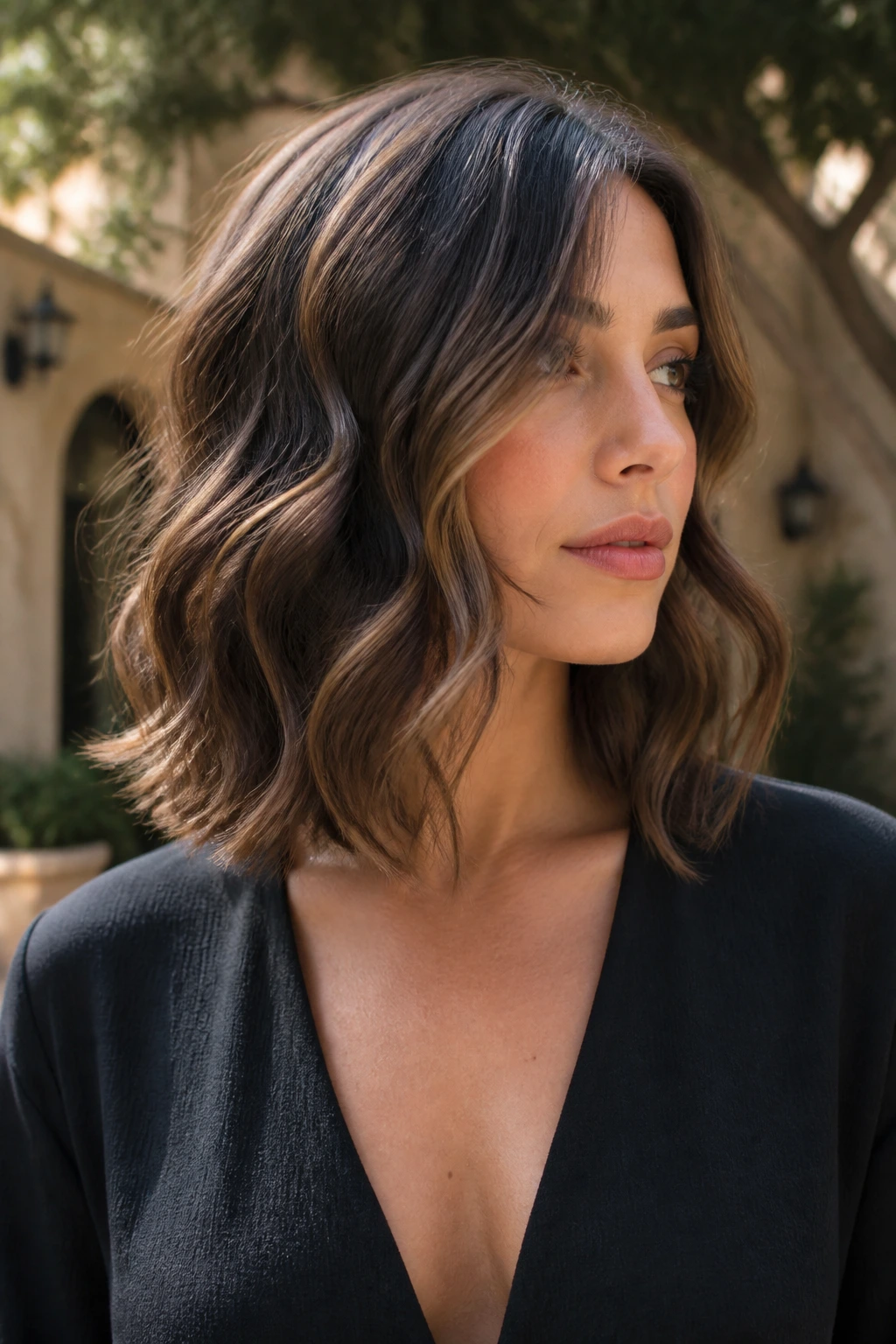
If your thick hair likes a bend more than a curl, an S-bend lob is a smart place to put it. The wave pattern softens the width of the cut without breaking the length into too many layers, which helps an oval face keep its clean shape.
This look works especially well when the hair has enough body to hold a wave but not so much texture that it frizzes at the first sign of weather. Use a 1 to 1.25-inch iron, wrap the hair loosely, and brush the waves out while they are still warm. The goal is a soft S, not a ringlet.
The cut itself should stay fairly simple. If the base is too heavily layered, the waves can turn messy instead of polished.
9. U-Shaped Lob
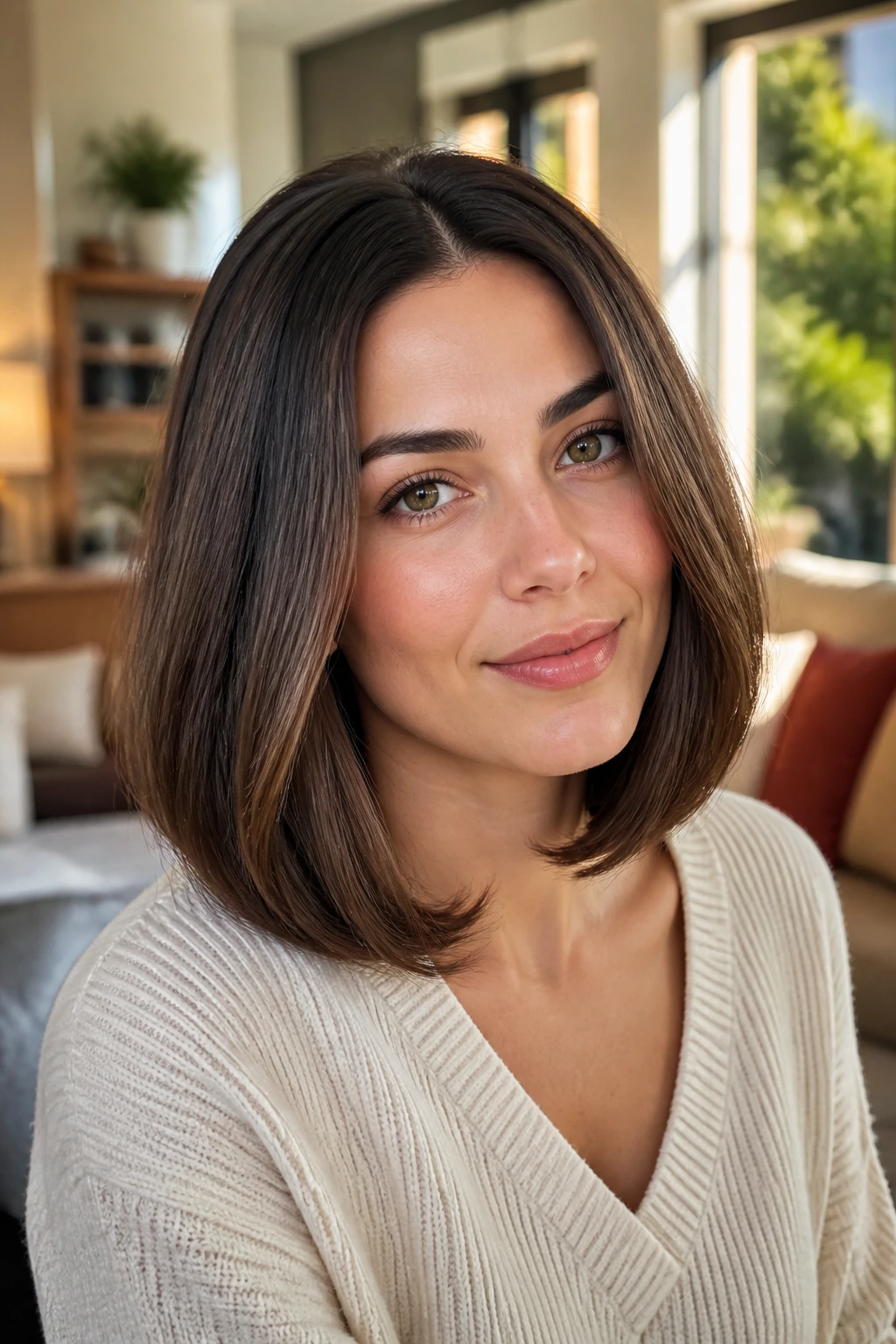
Why does a U shape help dense hair? Because it softens the bottom line without turning the haircut into a triangle. The center sits a touch longer, the sides curve up gently, and the whole shape feels rounder and easier to move.
That curve matters on thick hair. A straight bottom can look sharp, almost boxy, if the ends are heavy. A U-shape eases the edge so the cut follows the body instead of fighting it. On an oval face, the shape keeps the length flattering and the perimeter from getting too wide at the sides.
This is one of those cuts that looks better when the blow-dry is not perfect. The curve does some of the work on its own. You just need enough smoothing to show the line.
10. Hidden-Layer Lob
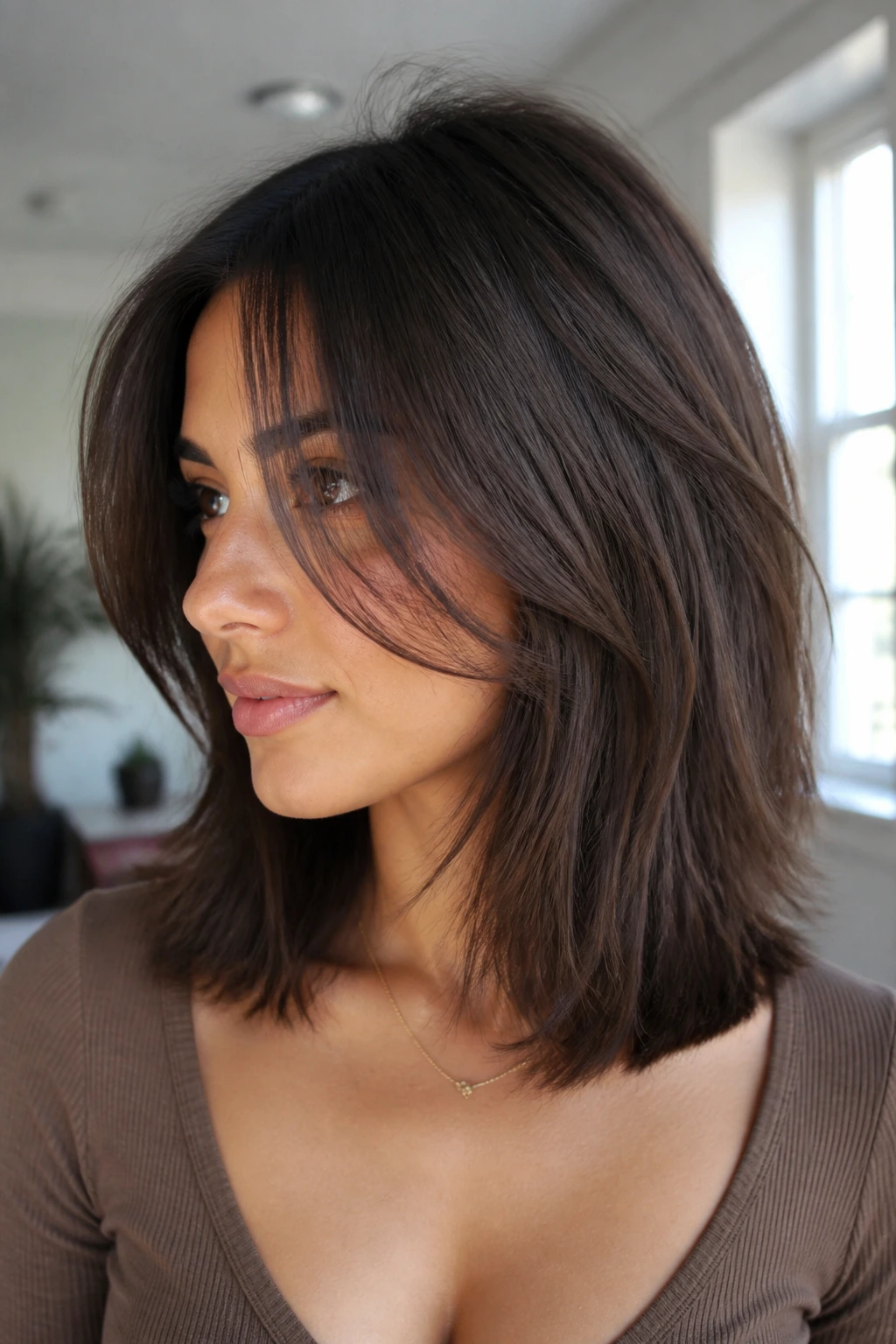
A hidden-layer lob is for anyone who wants movement without obvious stairs in the haircut. The top layers stay long enough to keep the outline tidy, while the internal sections release some of the bulk that thick hair carries around the mid-shaft.
That setup is gold when your hair feels heavy but you still want it to look full. Too many visible layers can make dense hair puff at random spots. Hidden layers do the quieter job. They let the cut swing.
Best part of this shape
The ends still look thick. That is the point.
If you want a cut that can be worn straight one day and bent the next, this is one of the most flexible options in the whole group. It gives shape without turning the lob into a shag.
11. Flipped-End Lob
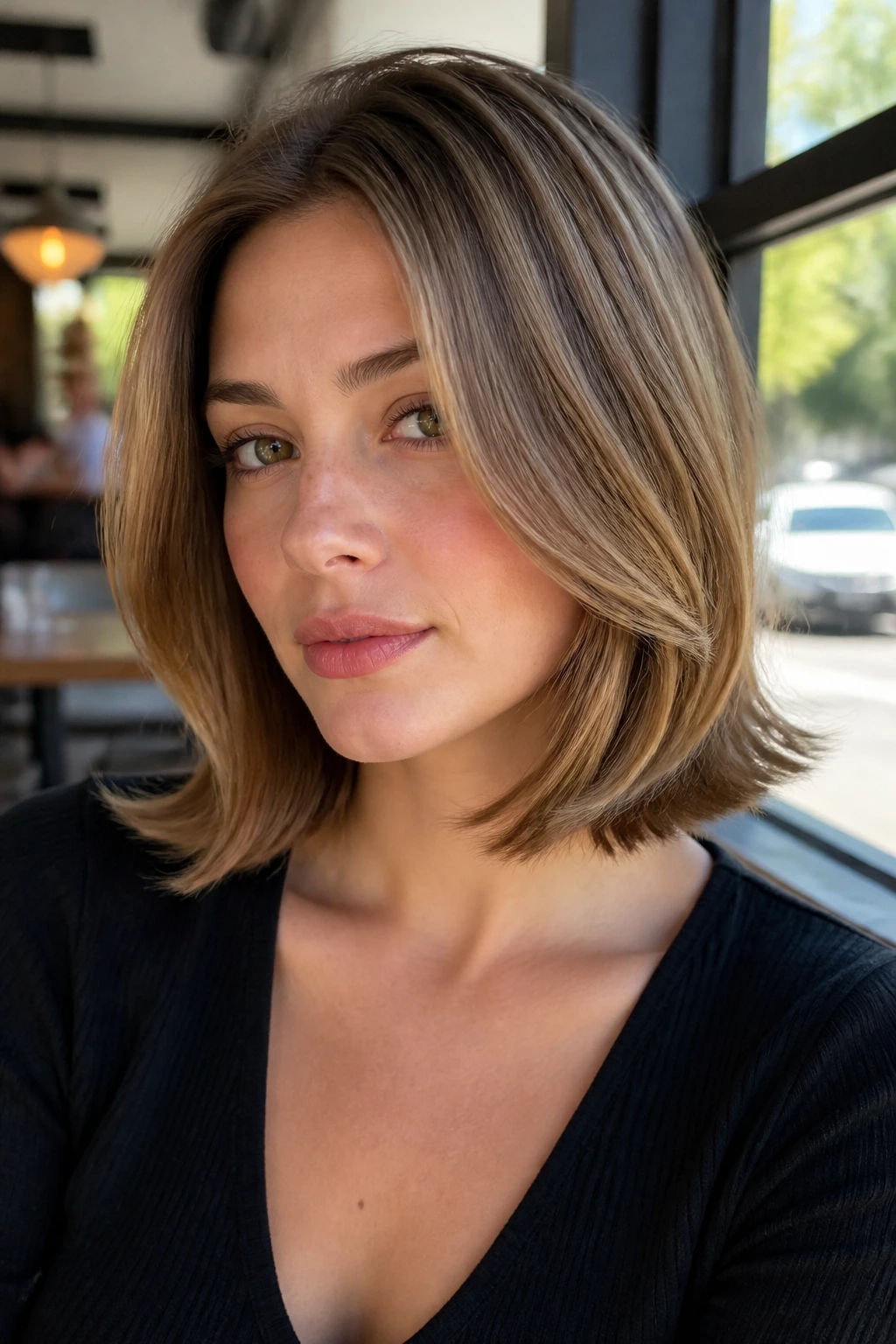
A flipped-end lob brings a little energy to thick hair without forcing the whole style into big waves. The tiny outward turn at the ends keeps the haircut from sitting flat against the shoulders, which is useful when the density starts to feel heavy.
The nice thing about this version is that it looks deliberate even when you do very little to it. A blow-dryer and a round brush can build the flip in minutes. You do not need a giant barrel or a lot of product. Just a clean bend at the ends.
On an oval face, the flipped edge adds a bit of visual width at the lower line, so keep the flip soft. Think lift, not retro pageant hair. There’s a line between playful and dated, and this cut lives or dies on that line.
12. Asymmetrical Lob
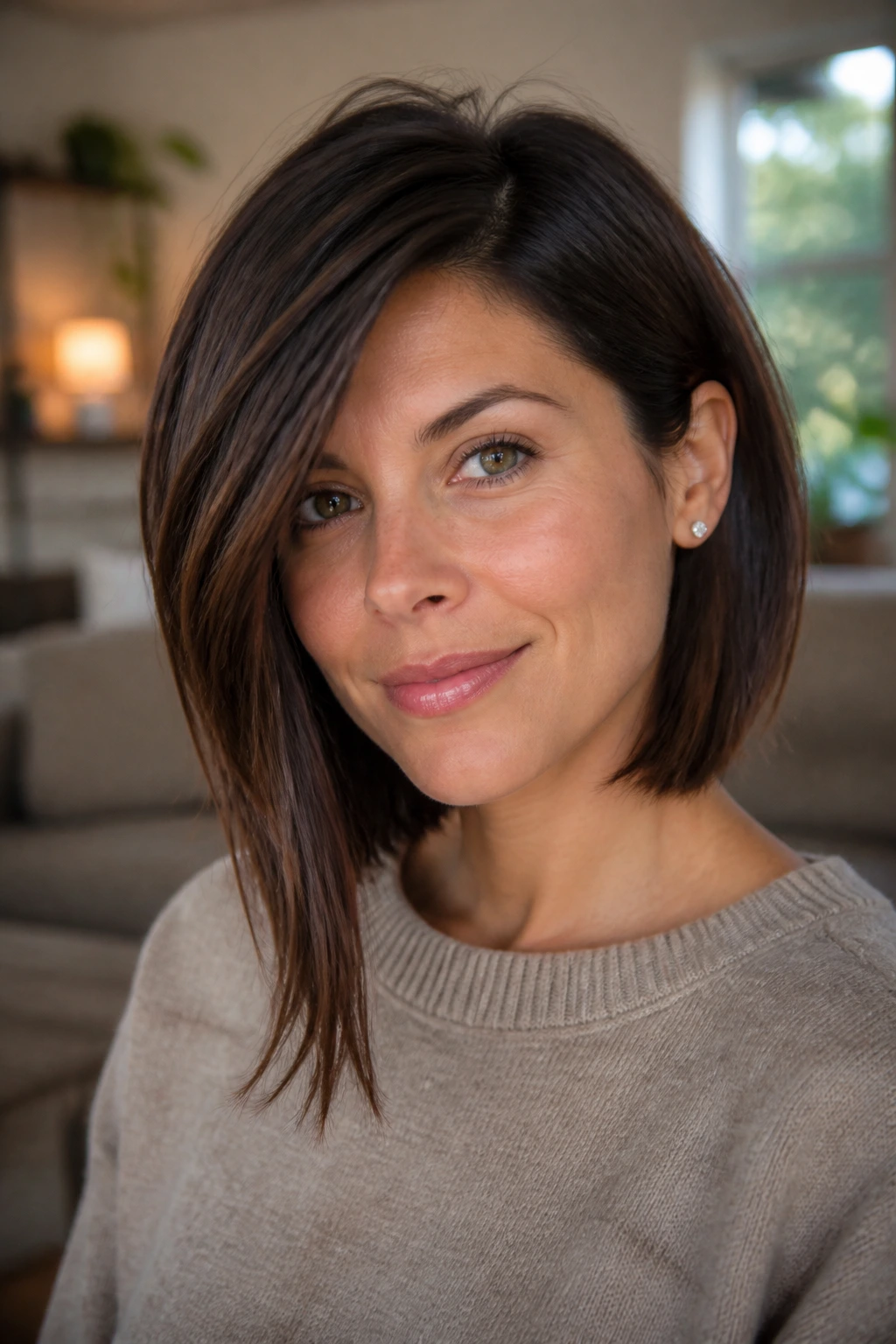
One side longer than the other sounds dramatic, but on thick hair it can be the exact thing that stops the cut from feeling too square. The off-balance shape pulls attention diagonally, which is useful on an oval face because it preserves the clean proportions while still giving the haircut personality.
This is a strong option if you wear your hair tucked behind one ear a lot. The longer side stays visible, the shorter side keeps the neck open, and the whole thing feels sharper than a standard lob.
Do not overstate the angle. A tiny difference in length is usually enough. If the asymmetry gets extreme, thick hair can start to look bulky on the longer side and sparse on the shorter one. That’s not the effect you want.
13. Face-Framing Lob
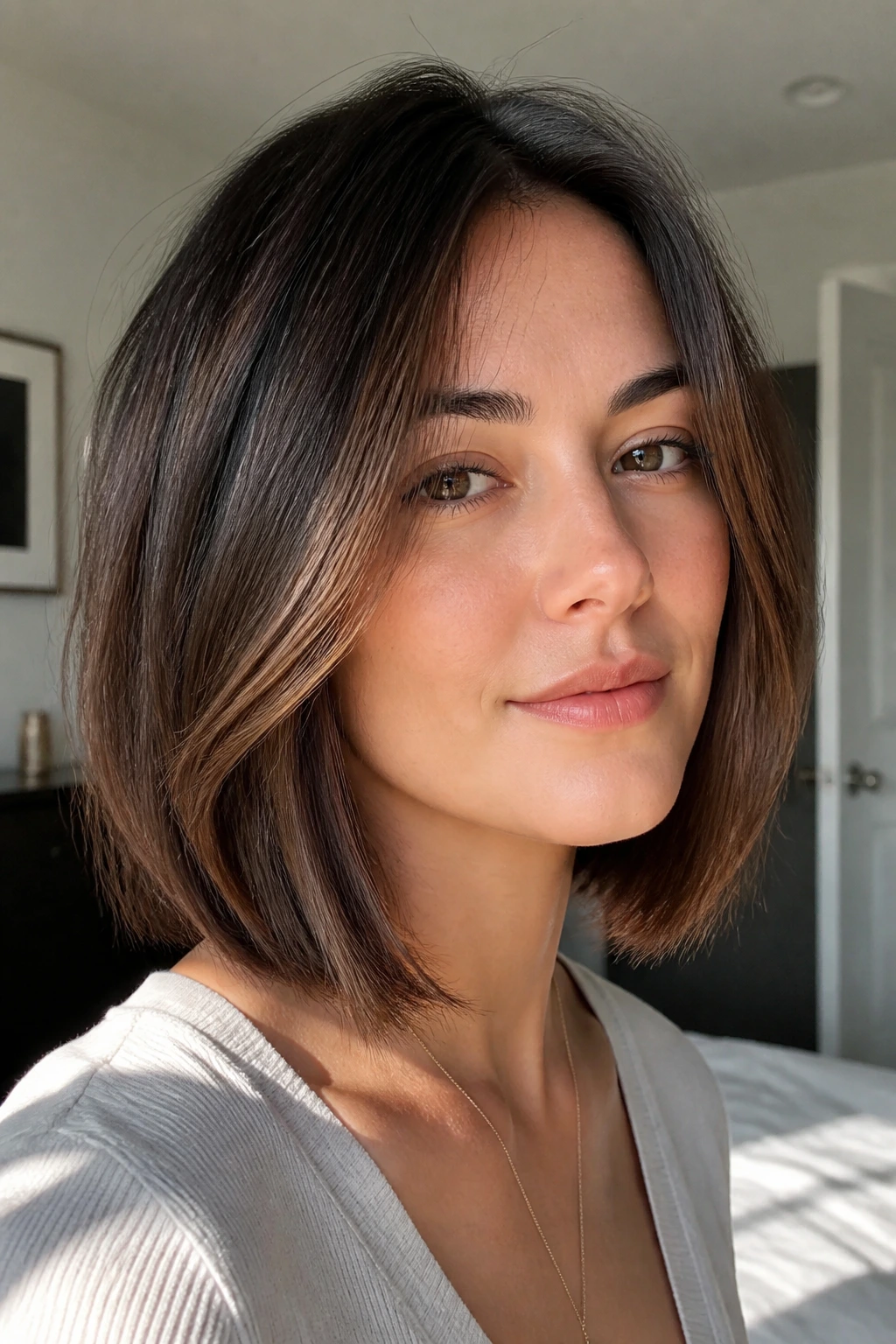
If you tuck one side behind your ear all day, you already know the front pieces matter more than the back. A face-framing lob puts the attention right where it belongs: cheekbones, jawline, and the line from chin to collarbone.
The best face framing on thick hair starts lower than people expect. Too high, and the front looks like a disconnected layer. Better to begin around the chin or just below the cheekbone so the pieces fall into the haircut instead of sitting on top of it.
On an oval face, this cut can sharpen the look without shrinking it. It is one of the easiest ways to add softness around the front while leaving the length clean.
14. Shag-Lite Lob
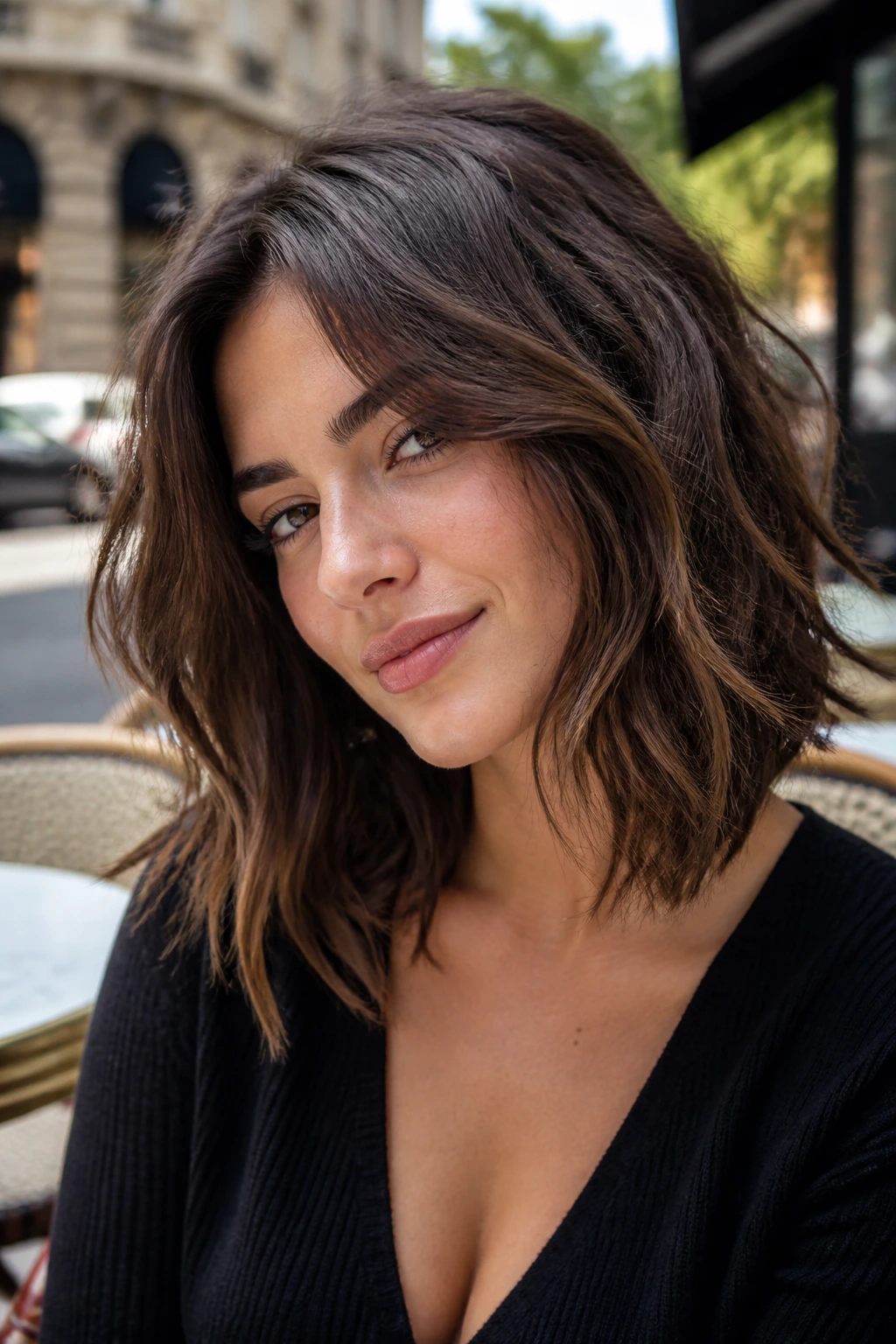
A shag-lite lob is what happens when you want texture but not the full mess of a shag haircut. Thick hair can carry the style beautifully if the layers stay long and the ends keep some weight.
The reason this works is simple: dense hair already has body, so a little roughness around the surface goes a long way. You don’t need short crown layers or extreme feathering. Just enough broken-up movement to stop the hair from sitting like a solid curtain.
This cut is better if you like to scrunch and go, or if you don’t mind a slightly undone finish. It’s less tidy than a blunt lob, but it has more life. That trade makes sense when the hair itself is doing most of the heavy lifting.
15. Rounded Lob
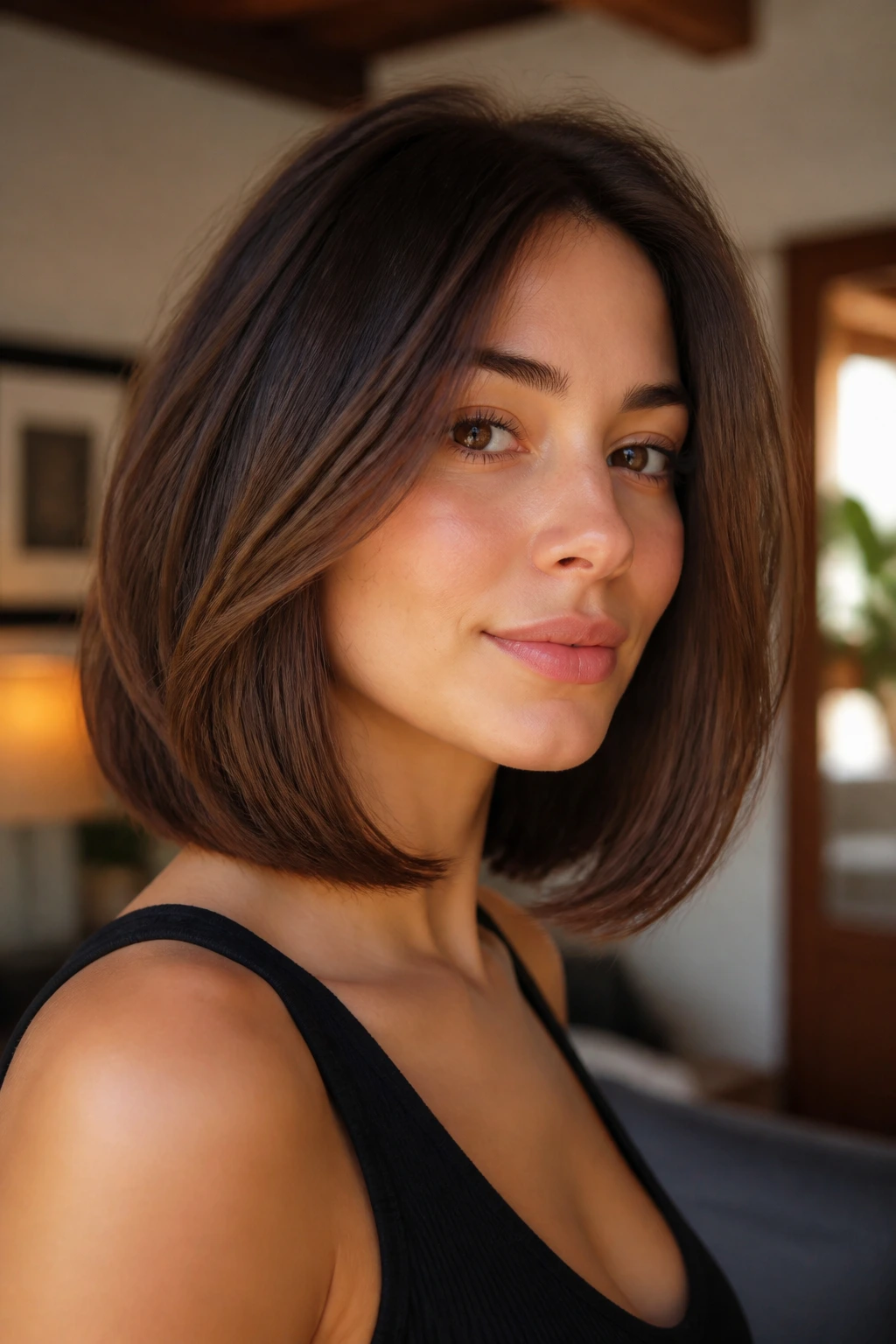
Why do rounded edges calm thick hair? Because they turn the perimeter inward instead of letting it jut out at the sides. A rounded lob keeps the ends curved in a way that flatters an oval face and softens the overall mass of the cut.
This is a quiet haircut, and I mean that as a compliment. It doesn’t announce itself with sharp lines or broken texture. It just sits well. That makes it a good choice if you want thick hair to look controlled without obvious styling.
Ask for the shape to be rounded through the bottom, not stacked at the back. A stacked lob can turn heavy hair into a wedge. Rounded is better when you want the cut to feel smooth and easy.
16. Air-Dried Natural Lob
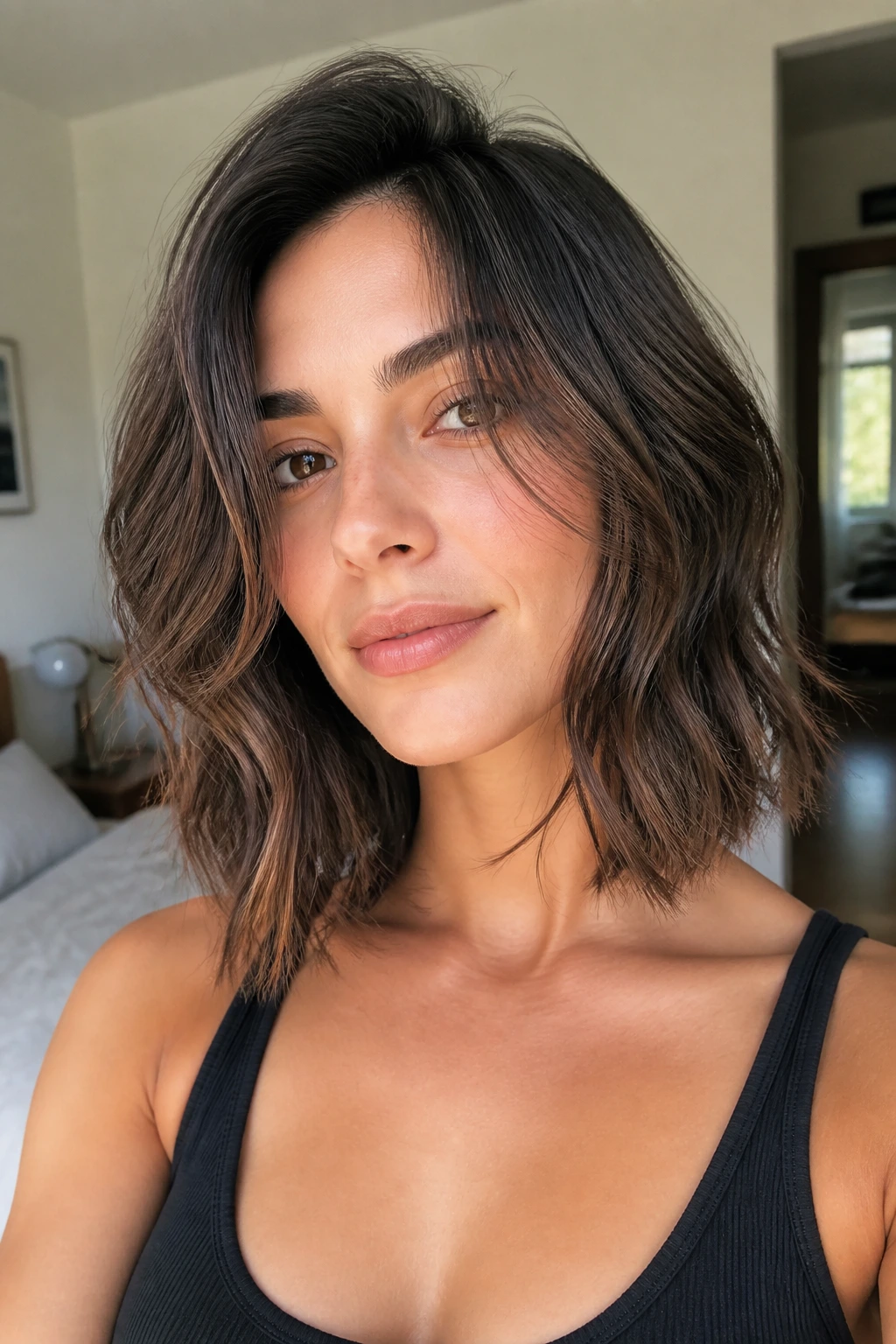
Some cuts only work if you fight your texture. This one should work with it. An air-dried lob is especially useful when thick hair has its own wave pattern and you want the finished result to look soft rather than blown out.
The perimeter still matters, though. A clean collarbone line with a few long internal layers keeps the hair from expanding into a big triangle as it dries. Add a leave-in cream or light curl cream to damp hair, scrunch it once or twice, and let it dry without touching it every five minutes.
Good for mornings that stay busy
Not every haircut needs a round brush. Sometimes the best version is the one that survives a towel dry and a little patience.
If your oval face likes a little movement around the chin, this shape can look relaxed without losing form.
17. Bottleneck Bang Lob

Bottleneck bangs are the clever cousin of curtain bangs. They stay a bit narrower at the center of the forehead and open wider around the cheekbones, which gives thick hair a softer front without crowding an oval face.
That narrower center helps a lot. Thick fringe can get bulky fast, and if the bangs start too wide, they can swallow the face instead of framing it. Bottleneck bangs solve that by keeping the middle light and the sides longer.
This lob works best when the rest of the haircut stays fairly clean. You want the fringe to be the interesting part, not a competition between bangs, layers, and ends. A little restraint here makes the haircut look smarter.
18. Deep Side Sweep Lob
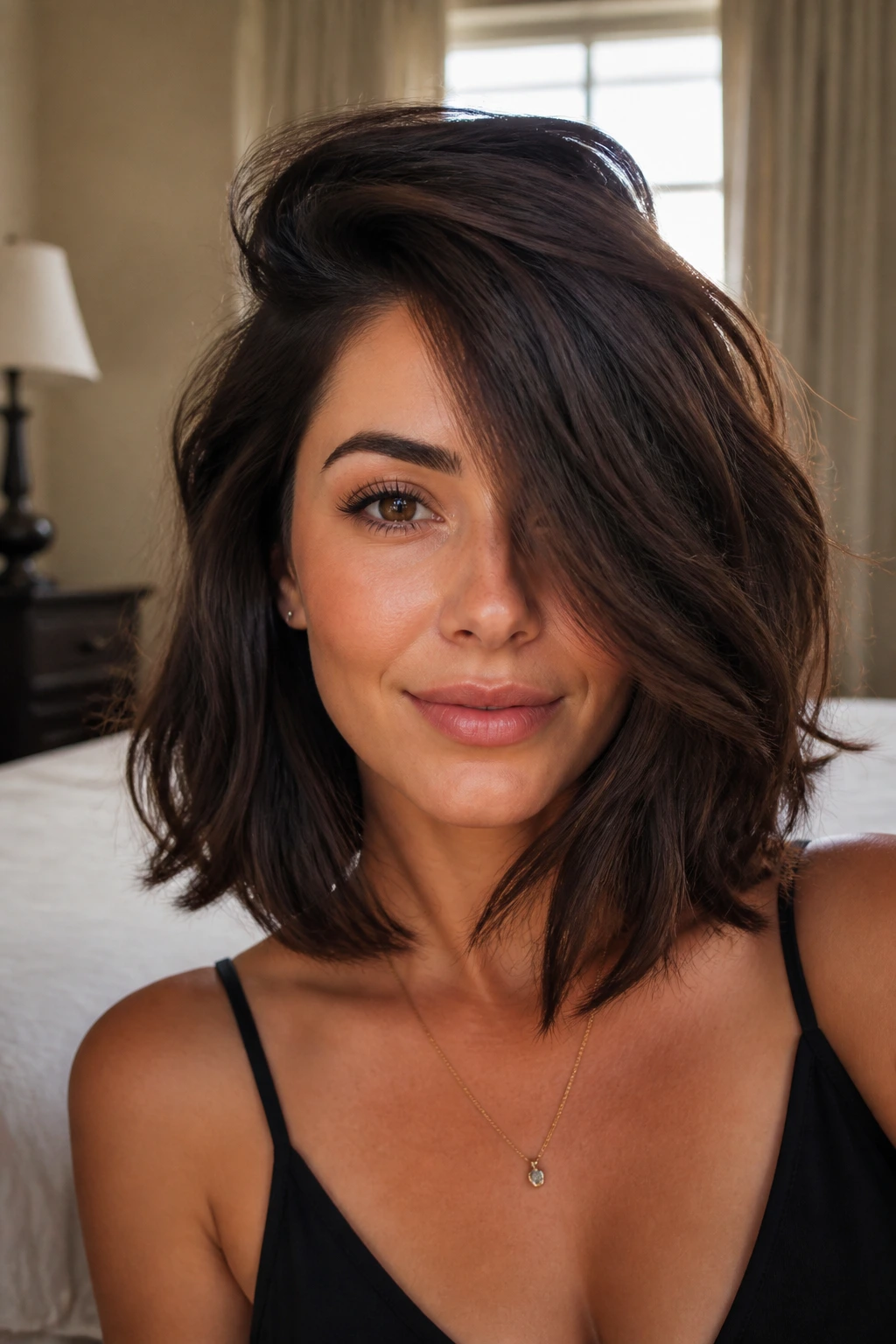
A deep side sweep gives thick hair instant structure. The hair moves across the forehead, takes some pressure off the center line, and creates a soft diagonal that looks flattering on an oval face without being fussy.
This is the lob for days when you want volume that looks intentional. Not teased. Not crunchy. Just a strong sweep that keeps the roots lifted and the front from sitting flat. A root-lifting spray and a round brush at the front section usually do the job.
If your hair tends to collapse at the top but stays full at the ends, this shape balances both. The sweep gives the crown some life while the length keeps the overall cut grounded.
19. Feathered Lob
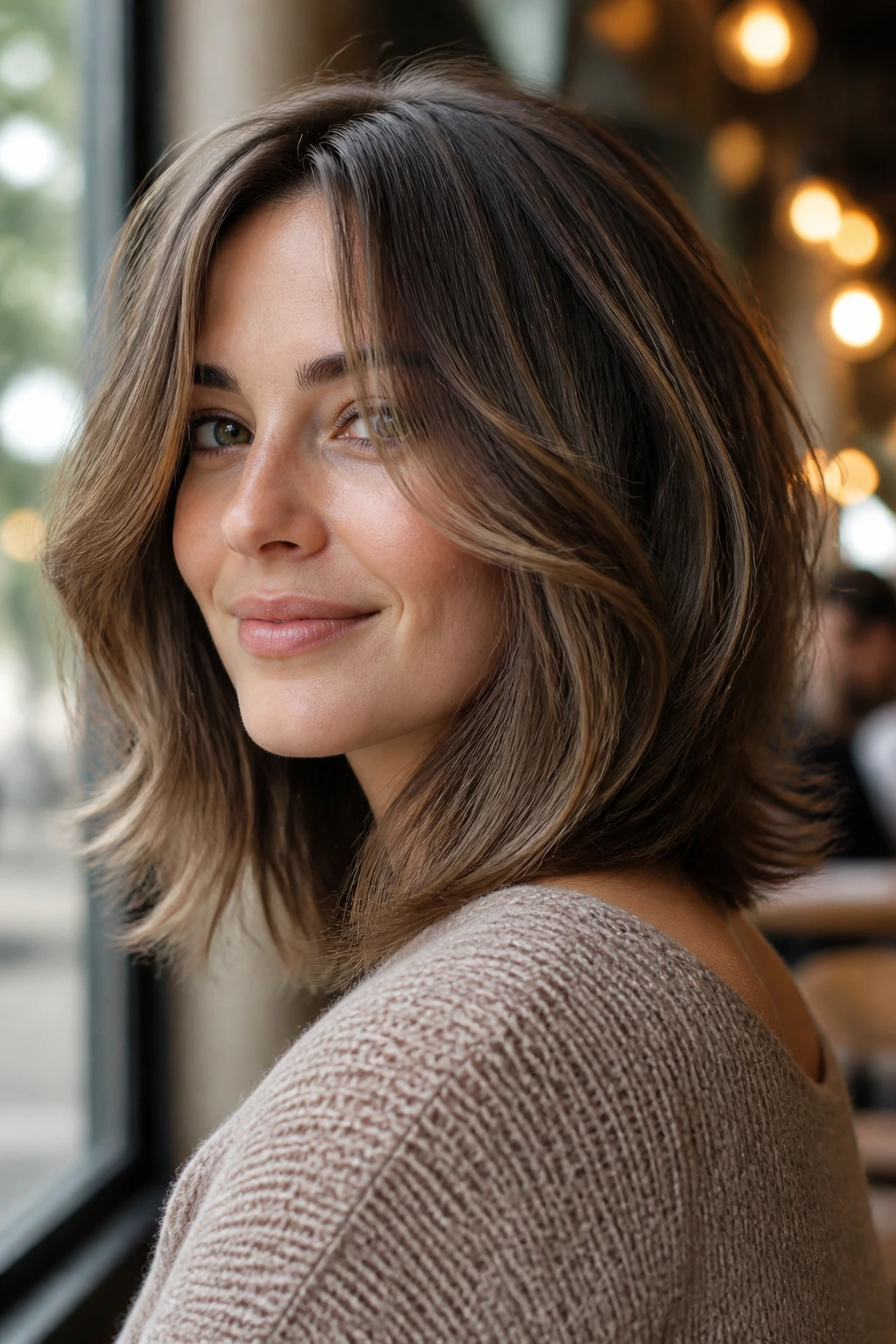
Feathering around thick hair is a fine line. Done well, it lightens the outline and gives the haircut air. Done badly, it turns the ends wispy and tired. The difference is where the feathering lives.
Keep it around the face and through the top layer, not all through the perimeter. That way the weight stays at the bottom while the movement stays visible in the front. On an oval face, feathering can soften the cheek area and keep the cut from feeling too solid.
This shape is best if you like hair that moves when you turn your head. It has a little softness, a little swing, and just enough texture to keep the cut from reading as one heavy sheet.
20. Chin-Grazing Front Lob
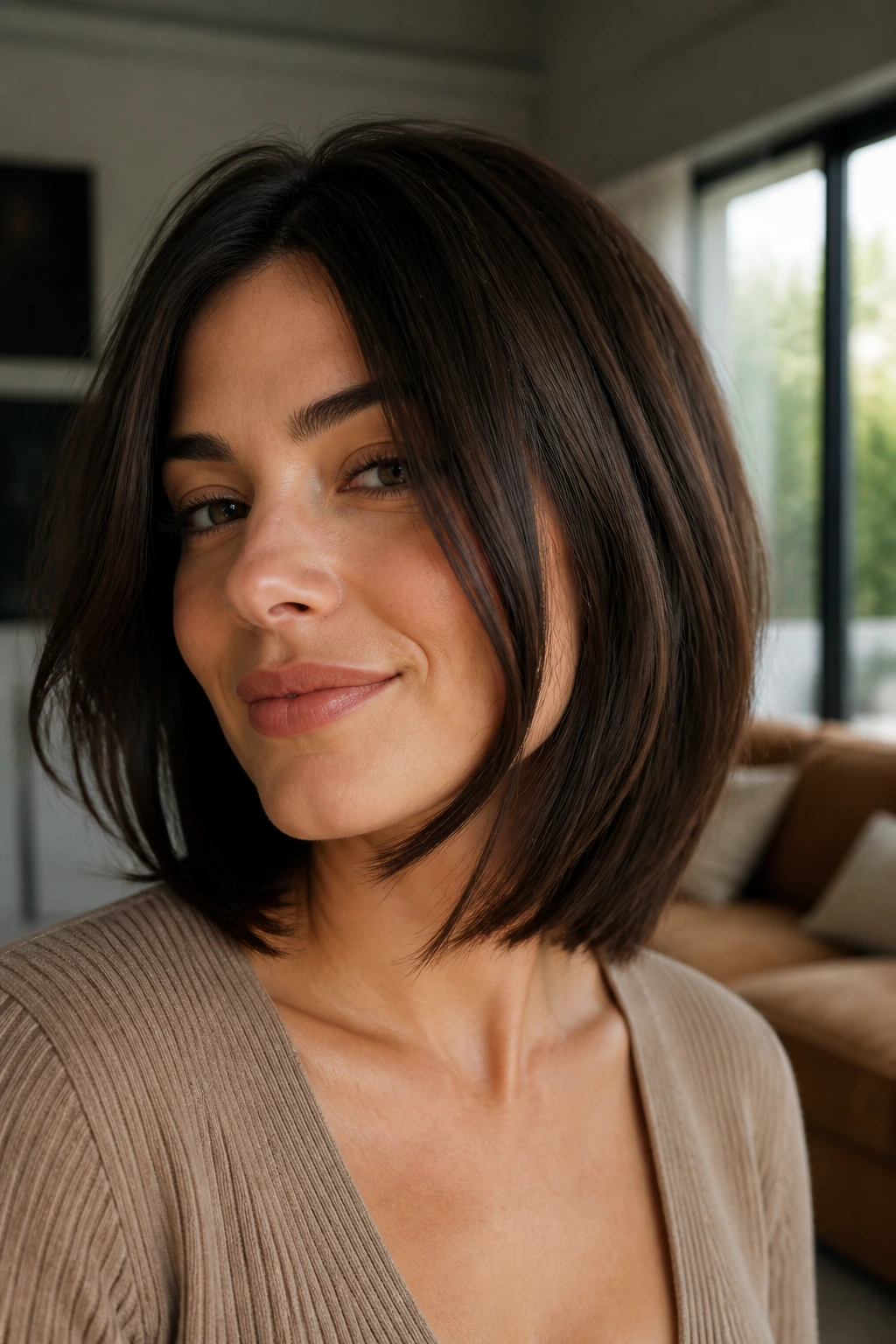
A chin-grazing front piece changes the whole mood of a lob. The front hits right around the jaw, while the back stays closer to collarbone length, which lets thick hair keep its body without looking bulky around the sides.
That front length helps the face. It draws the eye to the jawline and gives an oval face a little extra frame without compressing it. I like this shape when the hair needs a bit of drama but not a full angle.
It also gives you something to do with the hair on bad mornings. Tuck one side, curl the front under, or leave it straight and let the shape do the work. The haircut should still look good before the styling gets perfect.
21. Polished Blowout Lob
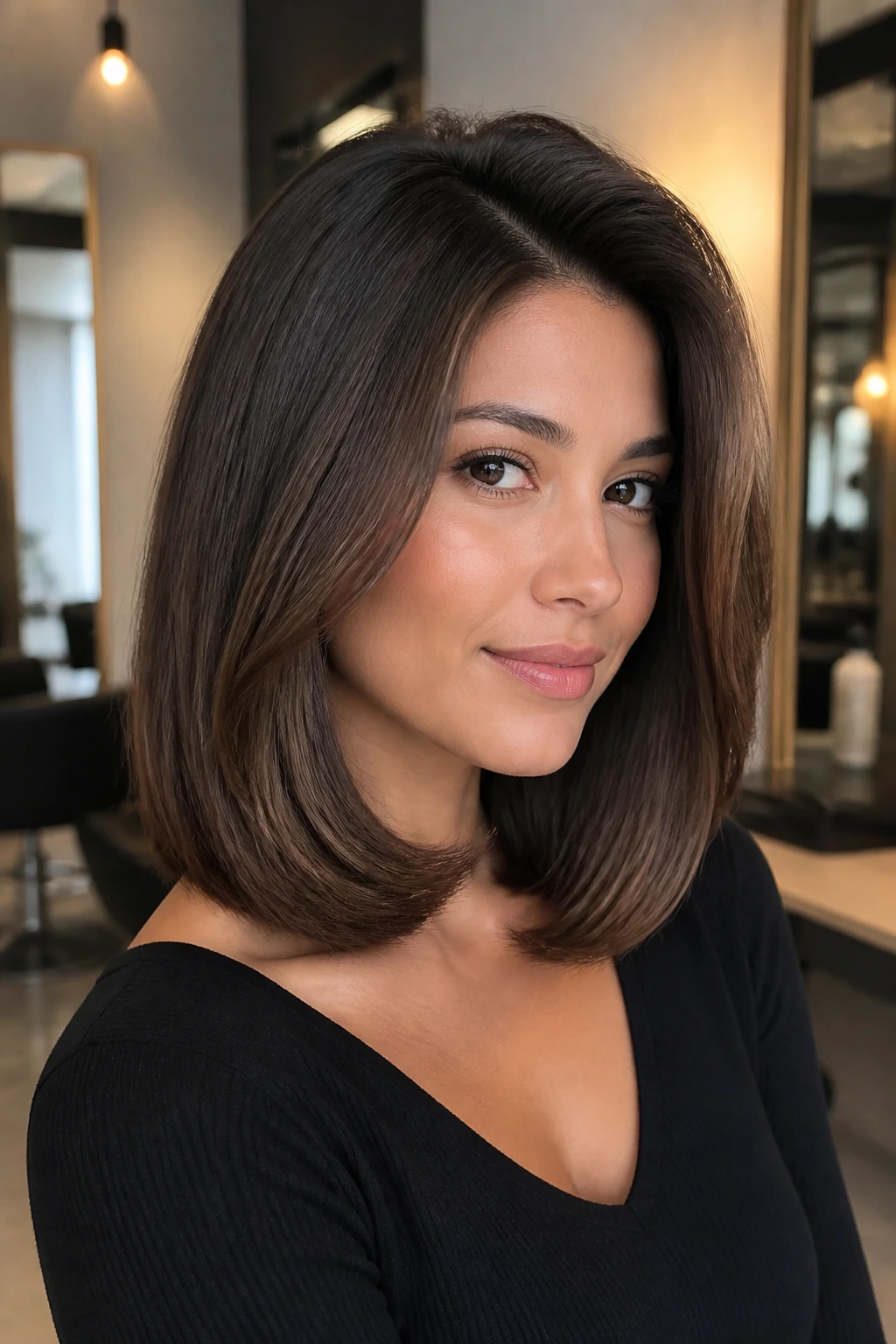
A polished blowout lob is the one that makes thick hair look orderly in the best possible way. The ends curve under, the root has lift, and the whole cut sits with enough movement to avoid a helmet effect.
What to ask for
Ask your stylist to keep the length around the collarbone and to avoid short layers near the top. That combination lets the blowout hold its shape longer and keeps the haircut from expanding as the day goes on.
This is a good choice if you like your hair smooth but not flat. Oval faces wear it well because the balanced shape keeps the attention on the center of the face instead of pushing everything outward.
22. Razor-Soft Lob
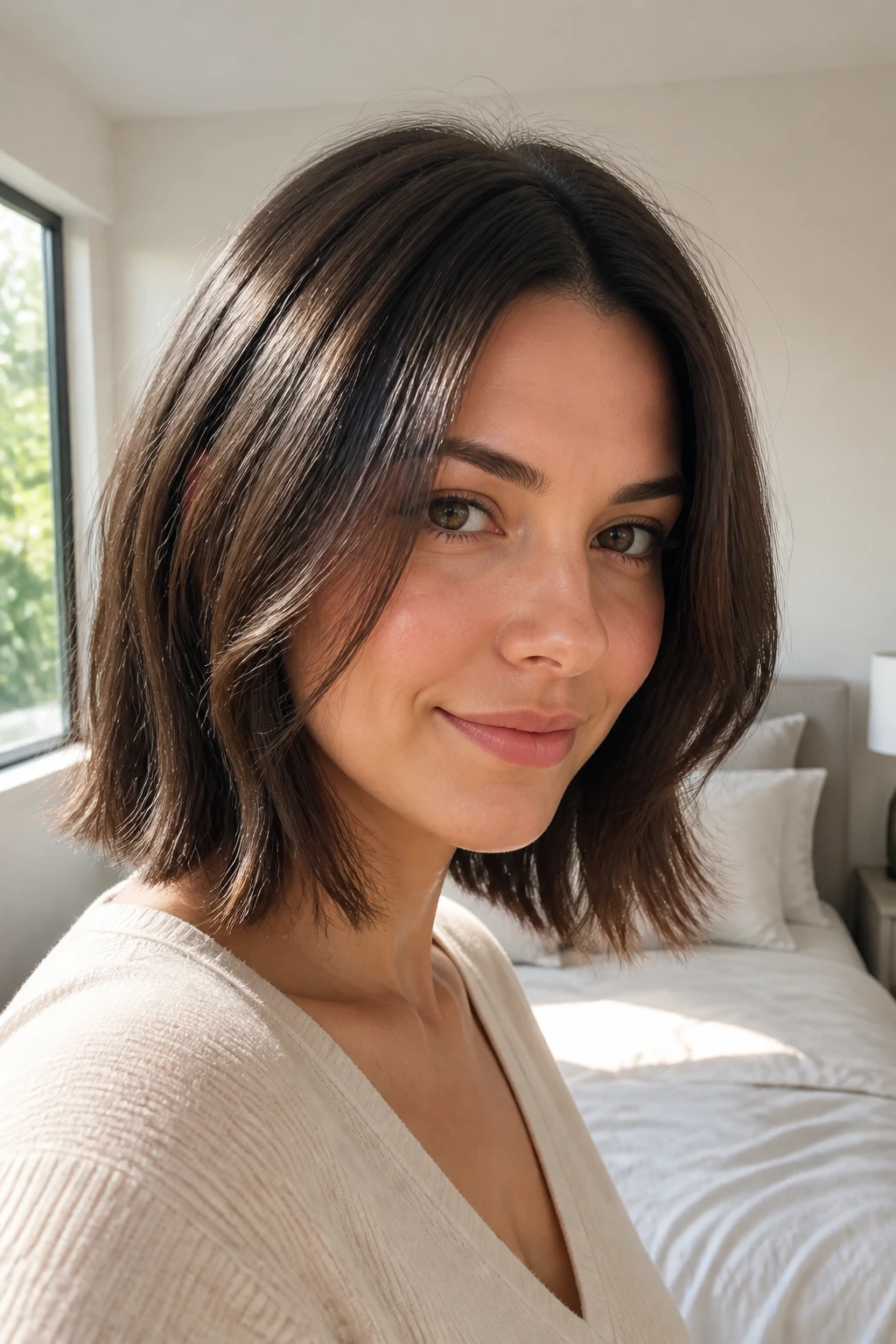
A razor-soft lob can be beautiful on thick hair, but only when the razor work stays controlled. The goal is to soften the line, not shred the ends into a fuzzy mess.
This cut works best on hair that is dense but not too coarse. The razor can lighten the look and create movement through the ends, which helps if your lob tends to feel heavy and blunt. On an oval face, the softness around the front can make the whole cut feel lighter.
Use this version when you want edge without looking severe. If your hair already frizzes easily, ask for scissors-based texturizing instead. That small decision can save you a lot of afternoon puff.
23. Internal Debulked Lob
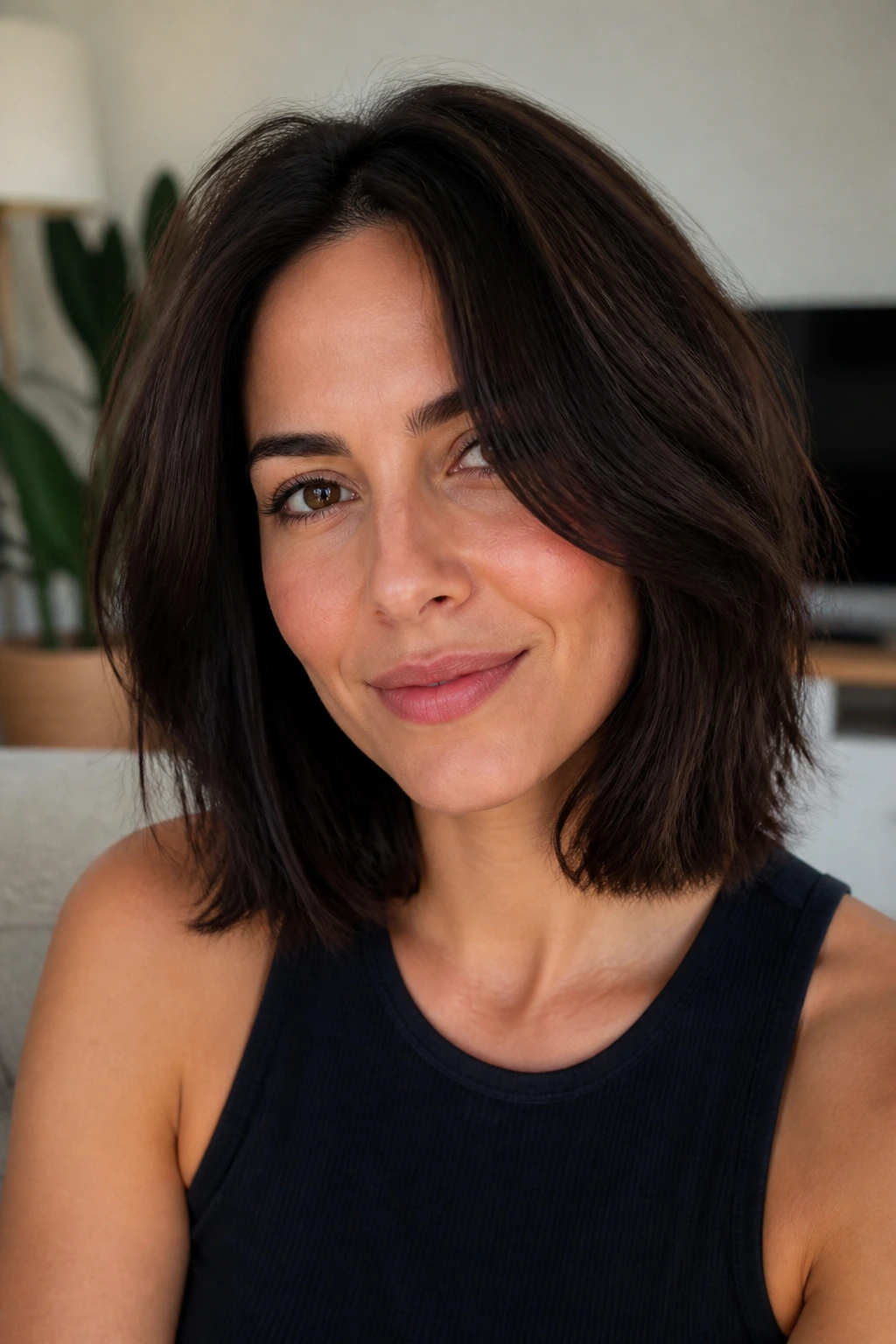
How do you remove bulk without making thick hair look chopped up? Internal debulking. The stylist takes weight out from inside the shape, not from the outside line, so the perimeter still looks clean.
That matters because dense hair can lose all sense of shape if the interior is overcut. The ends look thin, the surface gets uneven, and the hair starts sticking out in places you didn’t ask for. Better to keep the outside line strong and let the hidden sections handle the weight.
This cut is especially useful if your hair feels hot and heavy around the neck. A careful debulked lob sits lighter on the head without sacrificing that useful mid-length length.
24. Tousled Mid-Length Lob
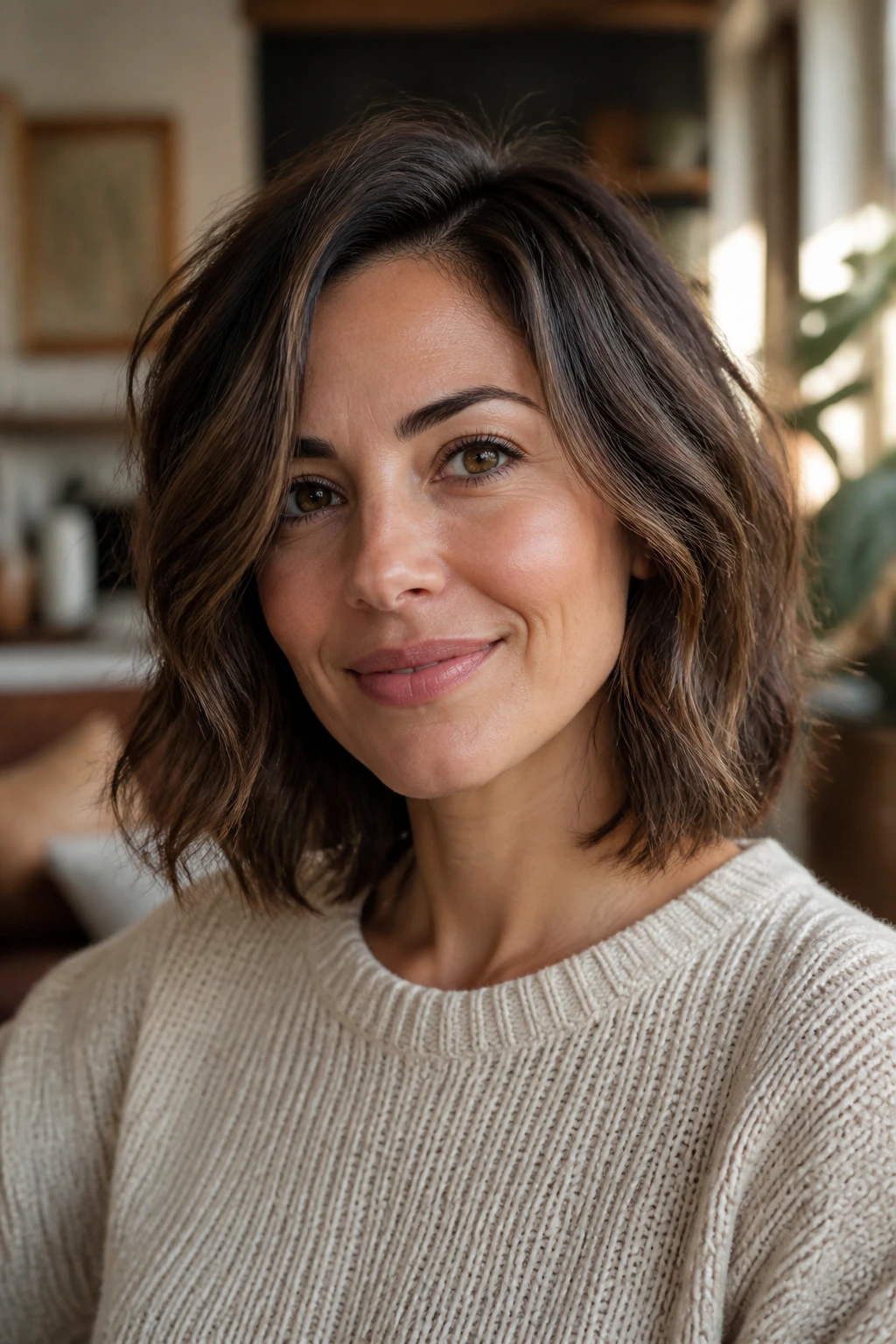
A tousled lob is not the same thing as a shag, and that distinction matters. Tousled means the texture looks relaxed, not torn apart. On thick hair, that relaxed shape can keep the cut from feeling overly formal.
The best version has a blunt enough base to stay grounded, then enough surface movement to keep the strands from clumping into one flat mass. Think loose bends, separated ends, and a bit of airy volume at the crown. On an oval face, the effect feels casual but still balanced.
This is one of the easiest cuts to live in if you like to switch between air-dried and styled hair. It forgives a lot. Which, honestly, is part of the charm.
25. Minimalist One-Length Lob
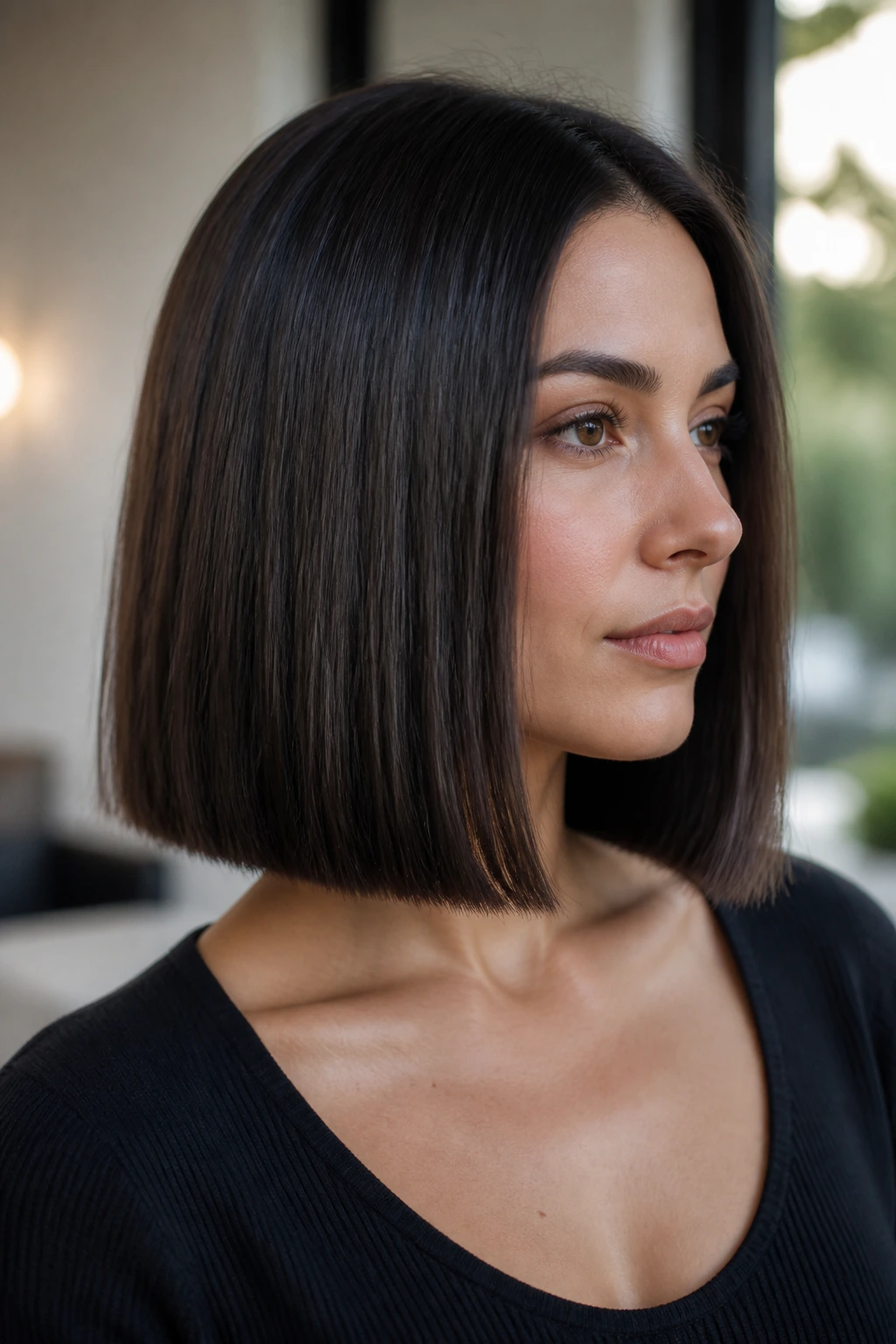
Sometimes the smartest lob is the plain one. A minimalist one-length cut lets thick hair show off its own texture and density without any extra tricks. On an oval face, the clean line keeps the whole look straightforward and strong.
This is not the haircut for someone chasing lots of movement. It is for someone who likes the shape to do the talking. The secret is precision at the perimeter and enough polish at the finish that the ends sit neatly instead of fanning out.
If your hair already has good body, a minimalist lob can look more expensive than a cut with too many layers. That’s the quiet truth here. The line is the style.
Why Thick Hair Behaves Better at Lob Length
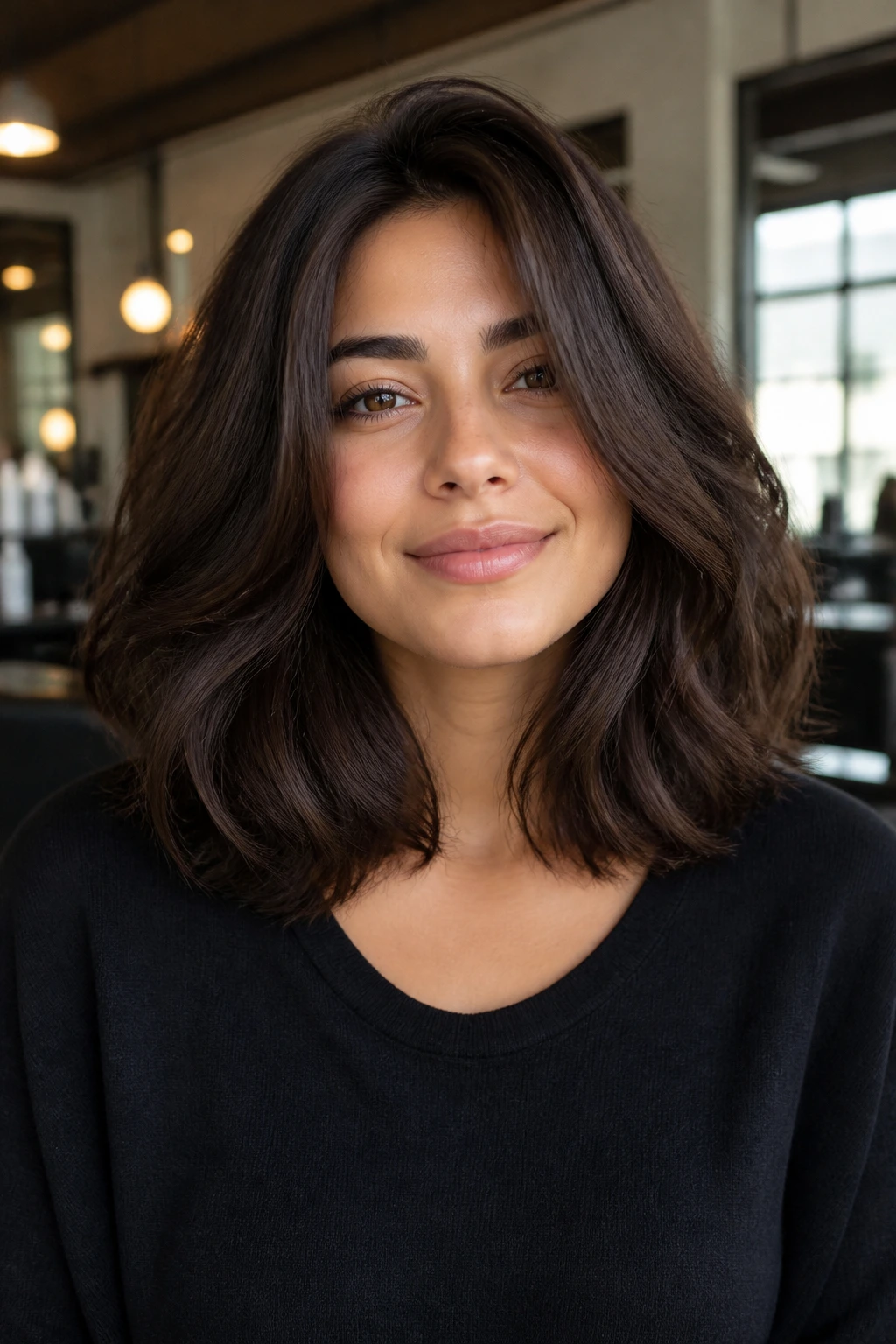
A mid length lob works on thick hair because it keeps the weight where hair naturally wants to settle. Too long, and the lengths pull at the roots while the ends get dragged into a flat, heavy curtain. Too short, and thick hair can flare outward and build width around the cheeks and jaw. Collarbone length is the sweet spot because the hair still has enough weight to lie down, but not so much that it turns into a slab.
Oval faces get a real advantage here. The proportions are already balanced, so the haircut can change the mood without having to fix the geometry of the face. That means blunt ends, side parts, curtain bangs, and subtle angles all have room to breathe.
Dry-cutting helps. Thick hair often looks different once it sheds water, so a stylist who checks the perimeter dry is doing you a favor. Layer placement matters more than layer count. A few long internal layers placed below the cheekbone can ease bulk without wrecking the outline. And do not overthin the ends unless you want separation that looks flimsy by day two.
Humidity still has opinions. It always does. But a lob with the weight in the right place gives you a fighting chance.
Essential Tools for Styling These Cuts
-
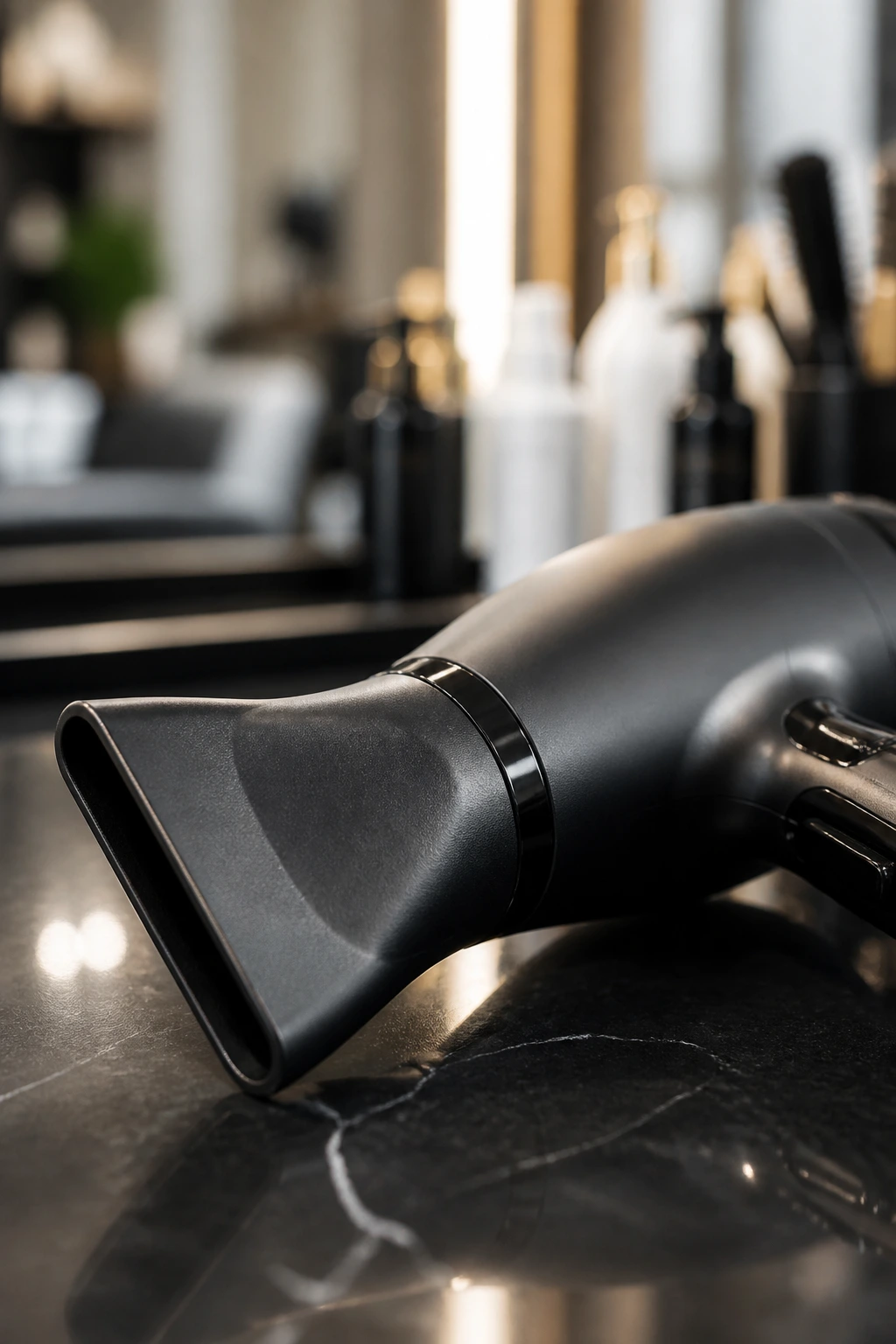
Blow dryer with a concentrator nozzle: Directs airflow downward so thick hair smooths instead of puffing.
-
Paddle brush: Helps stretch the length and keep the perimeter neat when you want a clean finish.
-
Medium round brush: Builds bend at the ends and a little lift at the crown without making the shape too big.
-
Flat iron, preferably 1-inch plates: Best for blunt edges, slight flips, and polishing the front pieces.
-
1 to 1.25-inch curling iron or wand: Useful for soft waves, S-bends, and quick texture on dense hair.
-
Sectioning clips: Thick hair is easier to style in clean panels; this saves time and reduces missed spots.
-
Heat protectant spray: Non-negotiable if you use hot tools. Thick hair may look sturdy, but the outer layer still burns.
-
Light smoothing cream or serum: Keeps the ends from looking rough, but use a small amount so the lob doesn’t get limp.
-
Dry shampoo: Good for the roots on day two or day three, especially if the crown goes flat while the ends still hold shape.
What to Tell the Stylist at the Chair
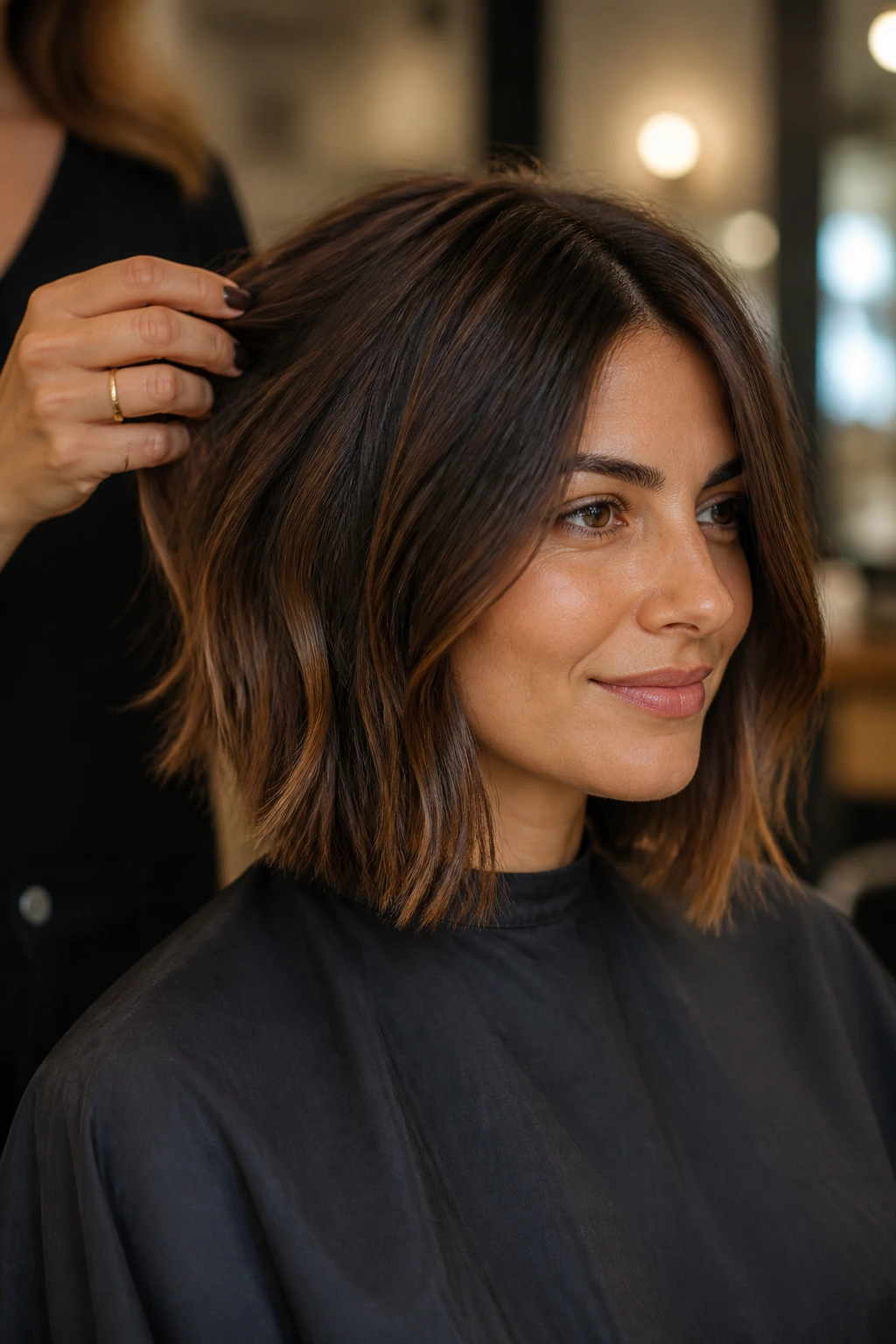
Be blunt, in the kind way. Thick hair needs specific words. Say where you want the length to land — collarbone, just below, or mid-chest if you want a longer lob — and say whether you want the outline blunt, curved, or angled. That one detail changes the whole haircut.
If you like layers, ask where they start. The answer should not be “all over.” For dense hair, internal weight removal below the cheekbone usually works better than short top layers that puff at the crown. If you want face framing, name the landmarks: chin, cheekbone, or collarbone. That gives your stylist a real map.
Bring photos, but bring words too. Photos are useful for the vibe. Words are what keep the cut from drifting into something technically similar but wrong for your hair. Also mention your styling habit. Air-dry only? That changes the cut. Flat iron every day? That changes the cut too.
How to Make a Lob Sit Right on Thick Hair
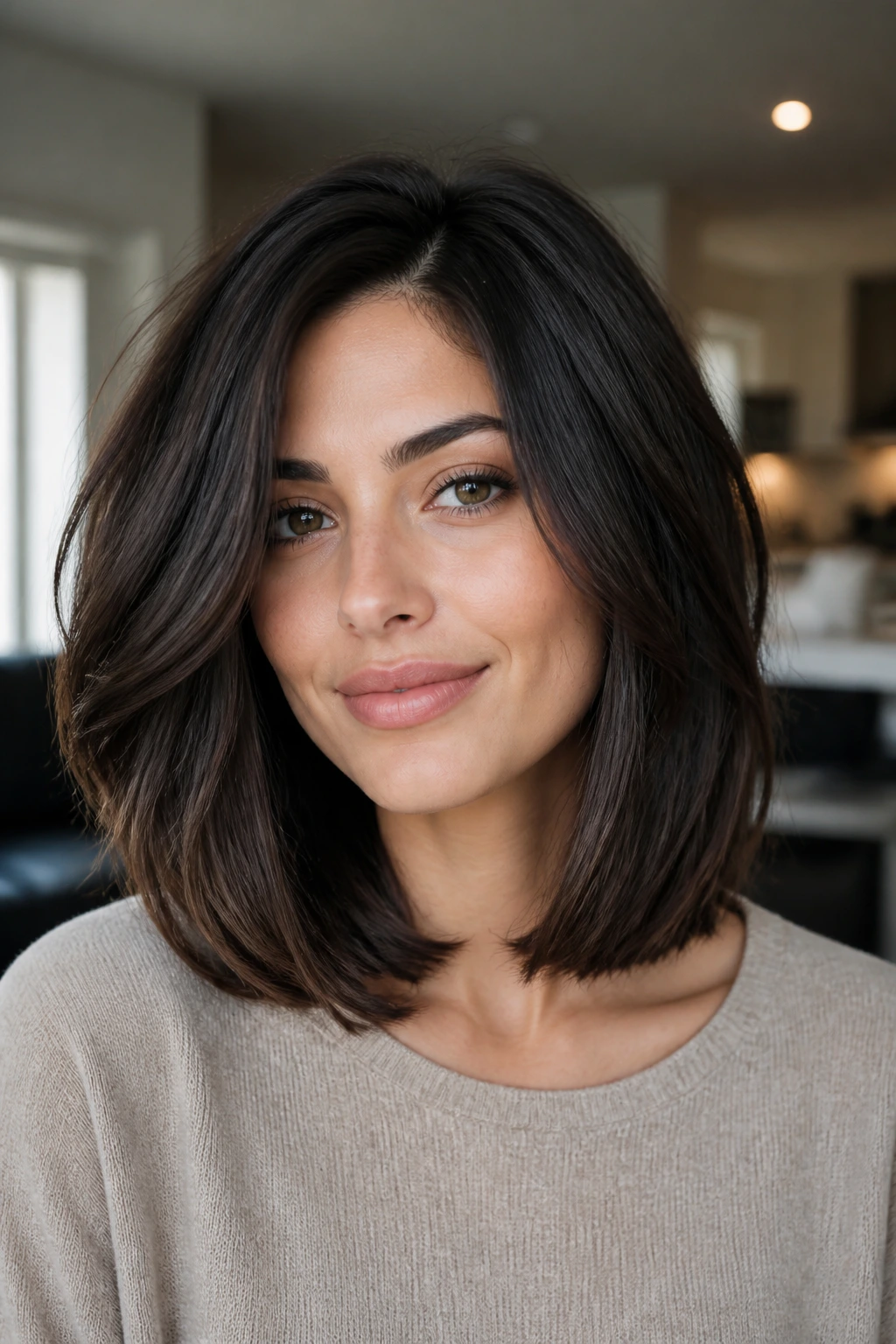
Weight line: Keep the heaviest line at the collarbone or just below it. That is where thick hair usually settles with the least fight.
Layer placement: Use long internal layers, not short choppy ones at the top, unless you want a shag effect. The goal is movement under the surface, not collapse on the outside.
Parting: A center part shows off symmetry on an oval face, while a deep side part can help if your roots fall flat. Switch parts occasionally if one side starts to go limp.
Finish: For sleek cuts, blow-dry downward and don’t chase every strand with the iron. For textured cuts, leave a little bend in the ends so the density looks soft, not overworked.
Humidity plan: A tiny amount of anti-frizz cream on damp hair goes farther than a big handful of product on dry hair. Thick hair likes control, not armor.
Common Mistakes That Throw the Shape Off
-
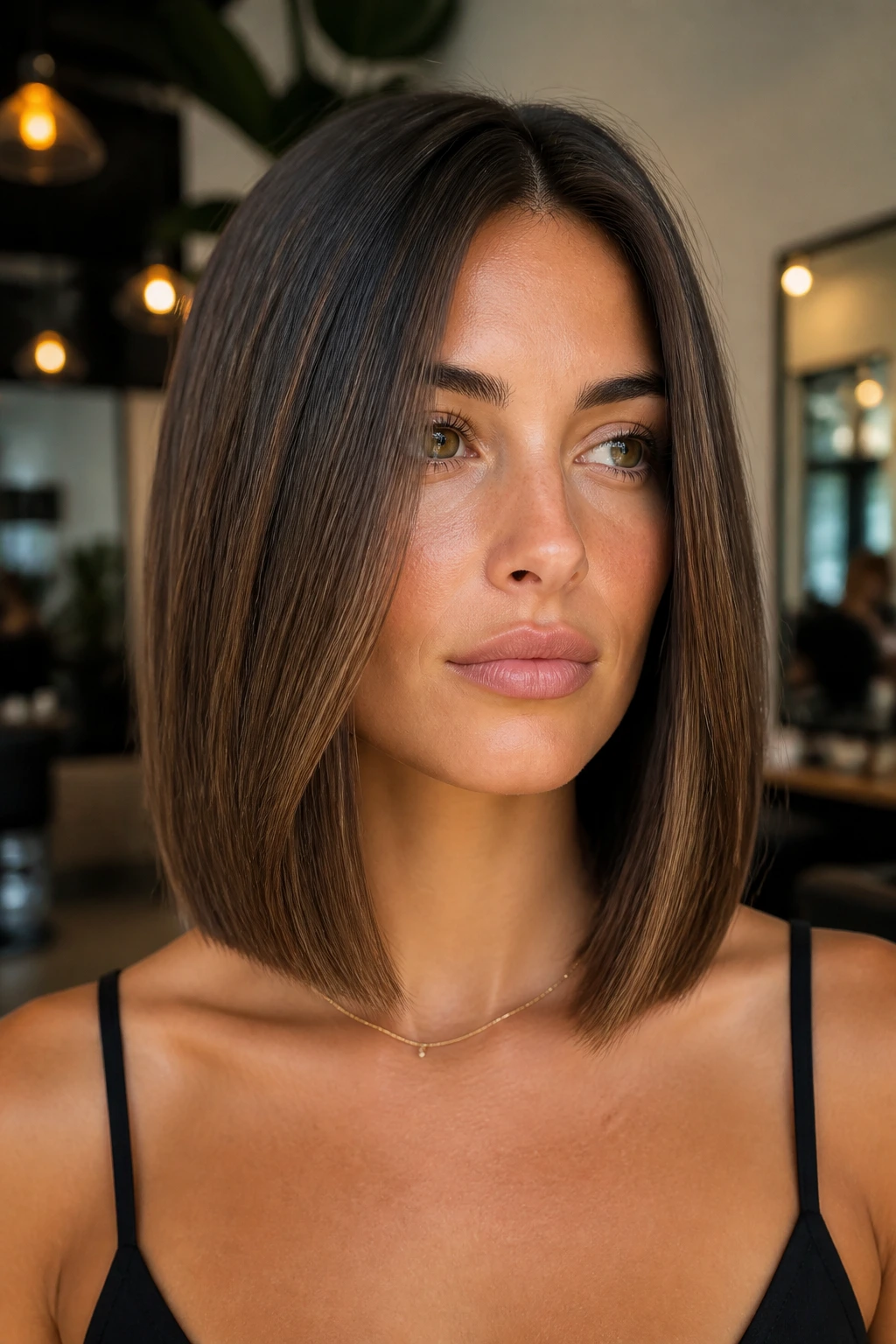
Cutting the lob too high at the shoulder: Thick hair flips right at the widest point and makes the haircut look wider than it is. Keep the line at or below the collarbone if you want the shape to fall.
-
Over-thinning the interior: The ends start to look wispy while the top still feels full. The fix is gentle internal weight removal, not aggressive shredding.
-
Starting layers too high: If layers begin near the cheekbone or higher, thick hair can puff around the face and make the cut feel busy. Keep the first real layer lower unless you want a more obvious shag effect.
-
Ignoring the part: A part that fights your growth pattern creates lift in the wrong place. A center part is not mandatory, and neither is a side part. Pick the one that lets the hair sit flatter at the root.
-
Styling only the ends: If the roots are flat and the mids are puffy, the whole haircut looks off. Build shape from the top down, even if you only spend three extra minutes on the crown.
Variations and Alternatives Worth Trying
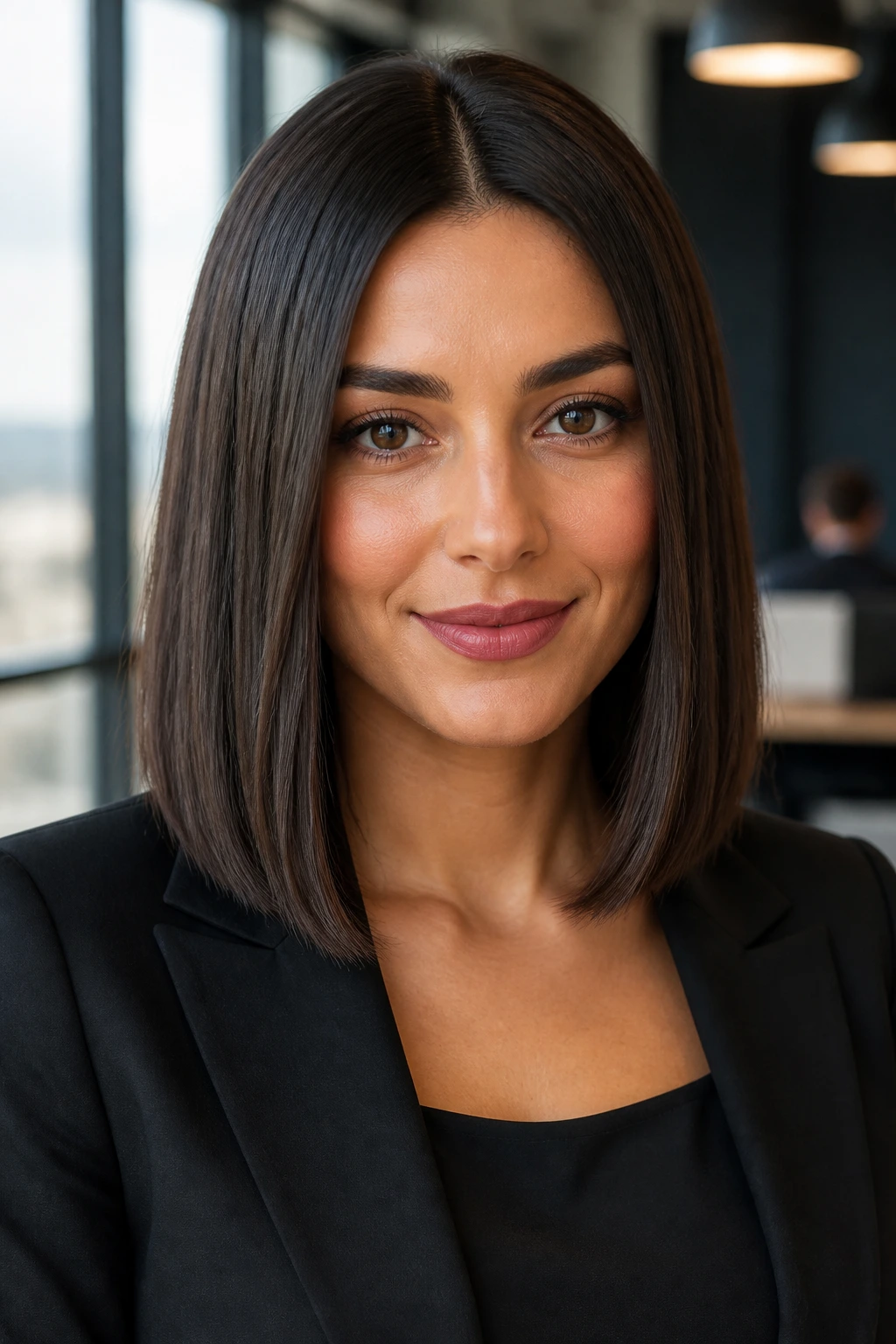
The Polished Boardroom Lob: Keep the line blunt, the finish sleek, and the part clean. This version works if you want thick hair to look controlled without much visible styling effort.
The Air-Dry Lob: Use long internal layers and a little leave-in cream, then let the texture do the rest. Best if your hair already has wave or soft curl and you don’t want to spend half the morning blow-drying.
The Fringe-First Lob: Put curtain bangs or bottleneck bangs at the front and keep the rest of the cut simple. The fringe becomes the feature, which is useful if you want a new look without losing length.
The Soft Shag Lob: Add longer, broken-up layers through the mids and ends. This fits thicker hair that likes movement and a slightly undone finish, but it should still keep a solid perimeter.
The Grow-Out Lob: Ask for a shape that still looks tidy when it slips an inch longer than planned. Long face-framing pieces and a collarbone line make the cut forgiving between trims.
Keeping the Lob Looking Fresh Between Trims
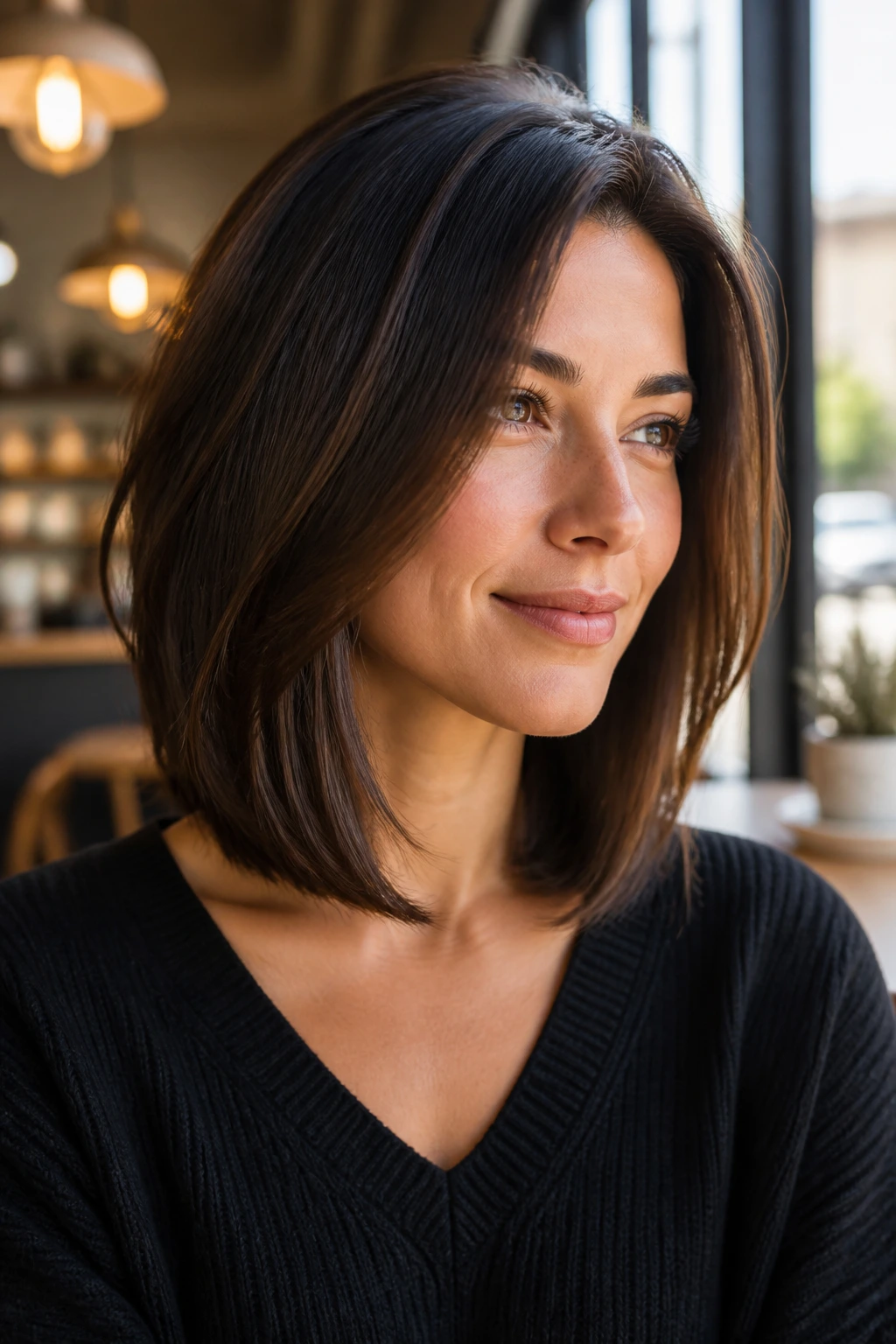
A good lob should not fall apart after two washes. Thick hair usually holds shape longer than fine hair, but it can also grow into a boxy triangle if you ignore the ends for too long. Plan on a trim every 8 to 10 weeks for a blunt or polished lob. If the cut has more layers or texture, 10 to 12 weeks can still work.
Between washes, dry shampoo at the roots helps the top keep some lift. Use it early, not only when the hair already feels greasy. Thick hair tends to hide oil longer than you expect, then suddenly the crown goes flat while the ends still look full.
At night, a loose braid or a silk pillowcase keeps the cut from snagging and bending at odd angles. In the morning, refresh the front pieces with a quick blow-dry or a light mist of water and a round brush. If your hair is straight, that is often enough. If it’s wavy, you may only need to re-bend the ends and let the rest be.
Heat tool heat should stay moderate. Thick hair can tolerate more, but it does not need a scorched finish to look smooth. One careful pass beats three impatient ones.
Frequently Asked Questions
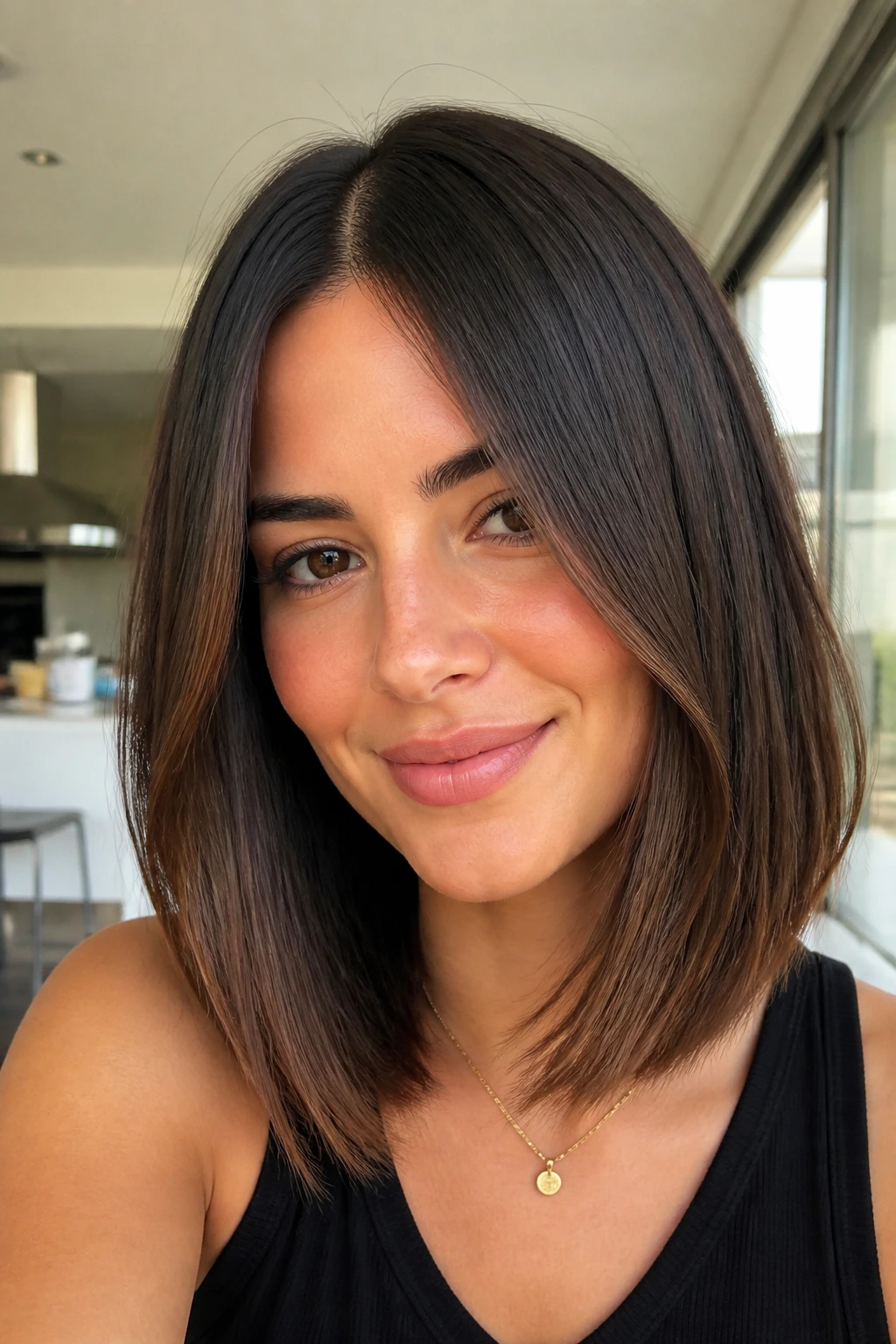
Is a lob better than a bob for thick hair?
Usually, yes, if you want more room for weight control. A bob can sit above the shoulders and flare out faster, while a lob has enough length to keep thick hair from puffing at the widest part of the neck and jaw.
What length is most flattering on an oval face?
Most oval faces can wear a wide range, but collarbone length is especially forgiving. It keeps the proportions balanced and lets you wear center parts, side parts, or fringe without the haircut overpowering the face.
Should thick hair be layered in a lob?
A little, yes. The useful kind of layering is long and internal, not short and choppy through the crown. That way you reduce bulk without turning the perimeter thin or fuzzy.
Can I wear bangs with a mid length lob if my hair is dense?
Absolutely, but the fringe needs room to move. Curtain bangs and bottleneck bangs work better than blunt short bangs because they break up the forehead without adding a heavy block of hair at the front.
What if my lob flips out at the ends?
That usually means the cut lands right at a shoulder point or the ends are too blunt for your texture. Ask for the length to sit slightly lower, or soften the perimeter with controlled point cutting so the hair can curve instead of bounce.
Does a lob work on thick curly or wavy hair?
Yes, and often better than you’d expect. The key is to cut it with the natural shape in mind and keep enough length so the curls or waves don’t spring up into a short triangle.
How often should I style it with heat?
Only as often as your hair actually needs it. Many thick-hair lobs look best with a quick smooth-out at the crown and a light bend at the ends, not a full hot-tool routine every day. Save the heavy heat for the days you want a polished finish.
What if my hair is thick but fine in strand size?
That combo usually needs less bulk removal than coarse hair, but it still benefits from a precise perimeter. Ask for shape rather than aggressive thinning, because fine strands can go limp fast if the interior is overcut.
The Shape That Never Fights Thick Hair
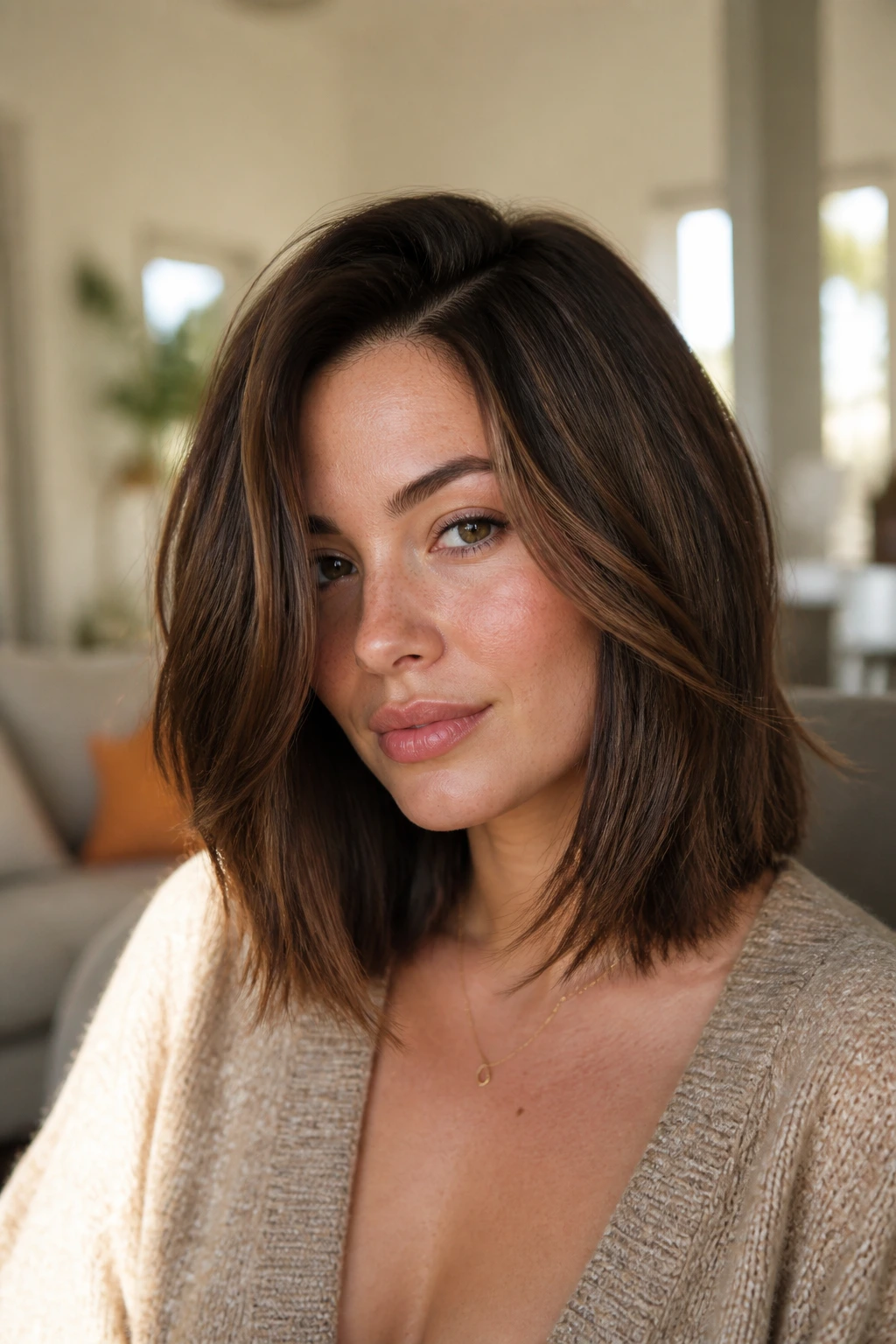
The best mid length lob does not wrestle thick hair into submission. It gives the hair a line to follow. That is the whole game. Collarbone length, thoughtful weight removal, and a perimeter that knows where to stop — that combination can make dense hair feel lighter without making it look thin.
Oval faces make the experiment easier. They can take a blunt edge, a soft curve, or a bit of asymmetry and still look balanced. That freedom is worth using. Pick the version that matches how you actually wear your hair, not the one that only looks good in a still photo.
A good lob should feel like the hair finally has a job. Not a fight. A job.