



Straight hair is brutally honest. Every blunt edge shows. Every uneven line shows. And that’s exactly why a shaved side-swept bob can look so good on it: the cut doesn’t have to fight the texture. It uses it. The smoothness gives the shape a clean outline, while the shaved side or undercut removes the heavy, boxy feel that straight hair can pick up when it sits all one length.
A lot of bobs depend on waves or bend to look alive. These do not. They work because the diagonal sweep, the close-cut side, and the glossy top section create contrast even when the hair is flat and freshly blown out. That contrast is what makes the haircut read from across a room — not volume, not curl, just smart structure and a little nerve.
The best versions feel sharp without looking severe. Some hide the shaved section until you tuck the hair behind one ear. Others lean all the way in and make the side shave part of the design. The trick is choosing the balance that fits your face, your hairline, and how much upkeep you’re willing to live with.
Why These Cuts Work So Well on Straight Hair
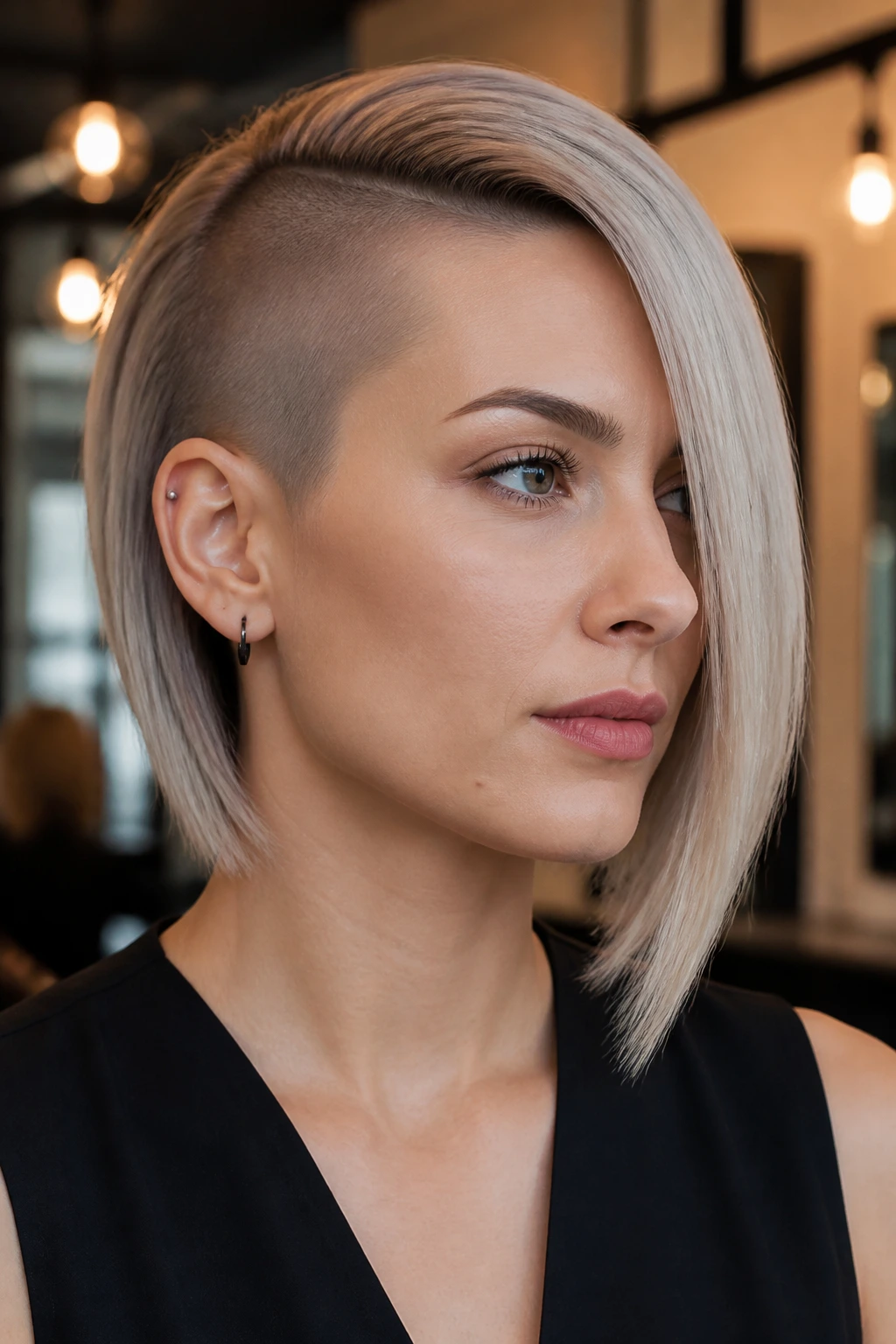
-
Clean lines show up fast: Straight hair lays flat enough to show the diagonal sweep, the blunt edge, and the shaved section without a lot of styling drama.
-
Bulk disappears in the right place: A side shave or undercut takes weight out of the side or nape, which keeps the bob from puffing out at the jawline.
-
The part does half the styling: A deep side part gives straight hair instant direction, so the bob reads intentional instead of helmet-like.
-
It’s strong even when simple: You do not need curling irons or beachy texture here. A smooth blowout and a decent flat iron pass are often enough.
-
Grow-out can be controlled: If the shave is tucked low or hidden behind longer layers, it can grow for weeks before it starts looking messy.
-
The shape changes with one tuck: Wear it down and neat for a tighter look, or tuck one side behind the ear and let the shaved section do the talking.
1. The Subtle Temple-Fade Sweep
This is the introvert’s version of a shaved bob, and I mean that as a compliment. The temple area is clipped just enough to remove bulk, then the longer top is swept hard to one side so the shave peeks out only when the hair moves.
For straight hair, that small shift matters. The top stays sleek, but the side gets a little tension and direction, which keeps the whole cut from collapsing into a flat sheet. Ask for a narrow fade or a very short clippered strip if you want the change to stay quiet.
Best for: people who want a sharp detail they can hide when needed.
Styling note: blow the top away from the shaved side with a nozzle attachment, then finish with a light serum on the ends. Too much product near the roots makes this look greasy fast.
2. The Deep Side-Part Shaved Bob
A deep side part is doing real work here. The weight drops over one eye, the shorter side opens up the face, and the shaved area gives the haircut a hard edge that keeps the part from feeling old-fashioned.
This cut lives on contrast. One side should feel dense and smooth, the other almost bare near the temple or behind the ear. On straight hair, that contrast looks crisp instead of fussy. If your hair is fine, ask your stylist to keep the top section slightly longer than you think you need; the sweep needs enough length to drape, not poke out.
How to wear it: flat iron the front sections with a tiny bend at the ends, then tuck the heavy side behind one ear. It should look deliberate, not pinned into submission.
3. The Chin-Length Razor Sweep
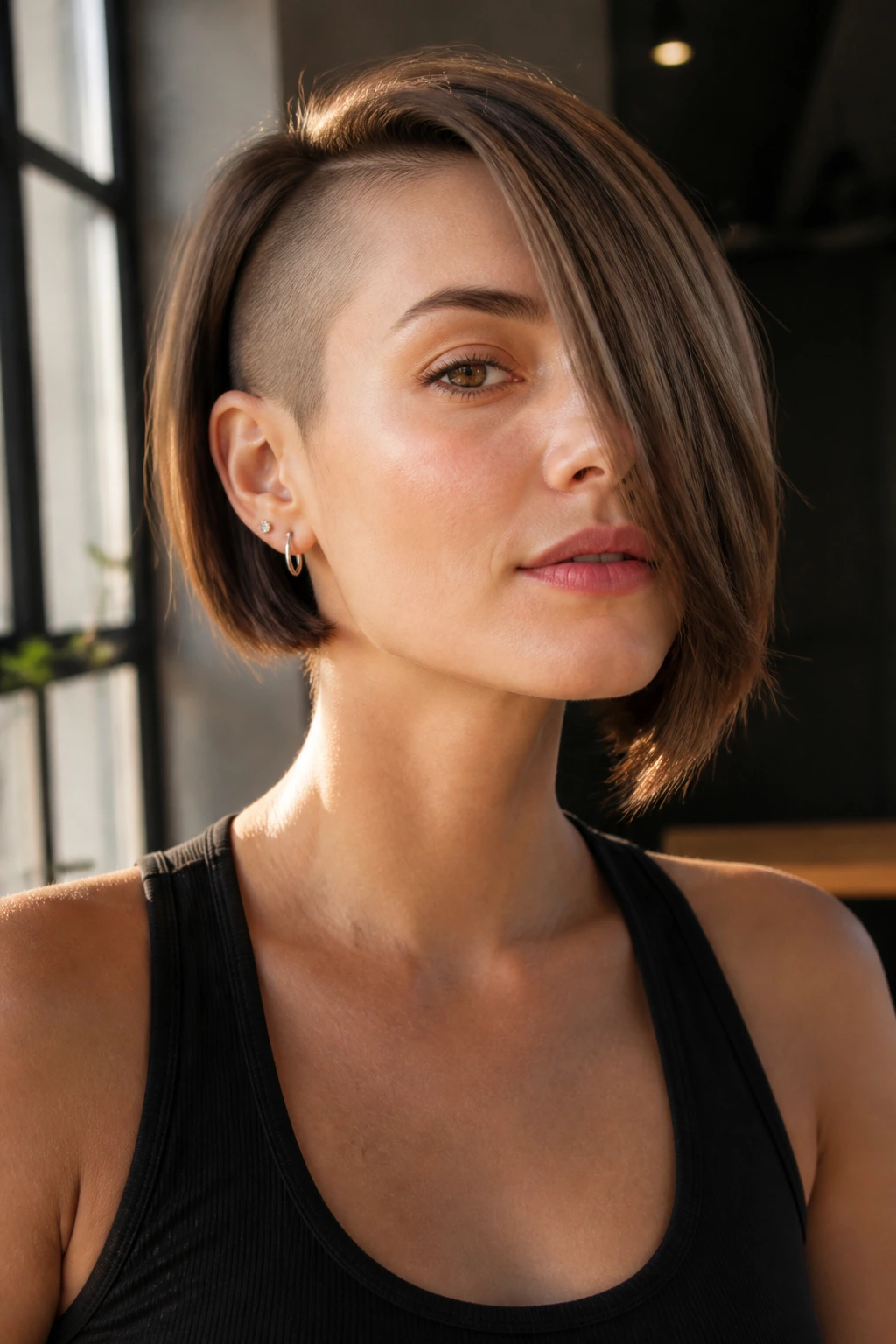
Chin length is the sweet spot when you want the side sweep to frame the face without drifting into lob territory. Add a razor-cut perimeter and the ends stop looking blocky, which straight hair can do so easily when it’s cut blunt and too even.
The shaved side here should stay narrow. Think of it as a clean slice, not a big undercut. The point is to make the bob feel lighter on one side while the length at the chin keeps enough shape to show off the jawline. If your jaw is sharp already, this cut can echo that line beautifully. If it isn’t, the diagonal front sections soften it.
Tip: this one looks best with a glassy finish. Keep the roots smooth, but leave the ends soft and moveable rather than overly stiff.
4. The Hidden Panel Shave
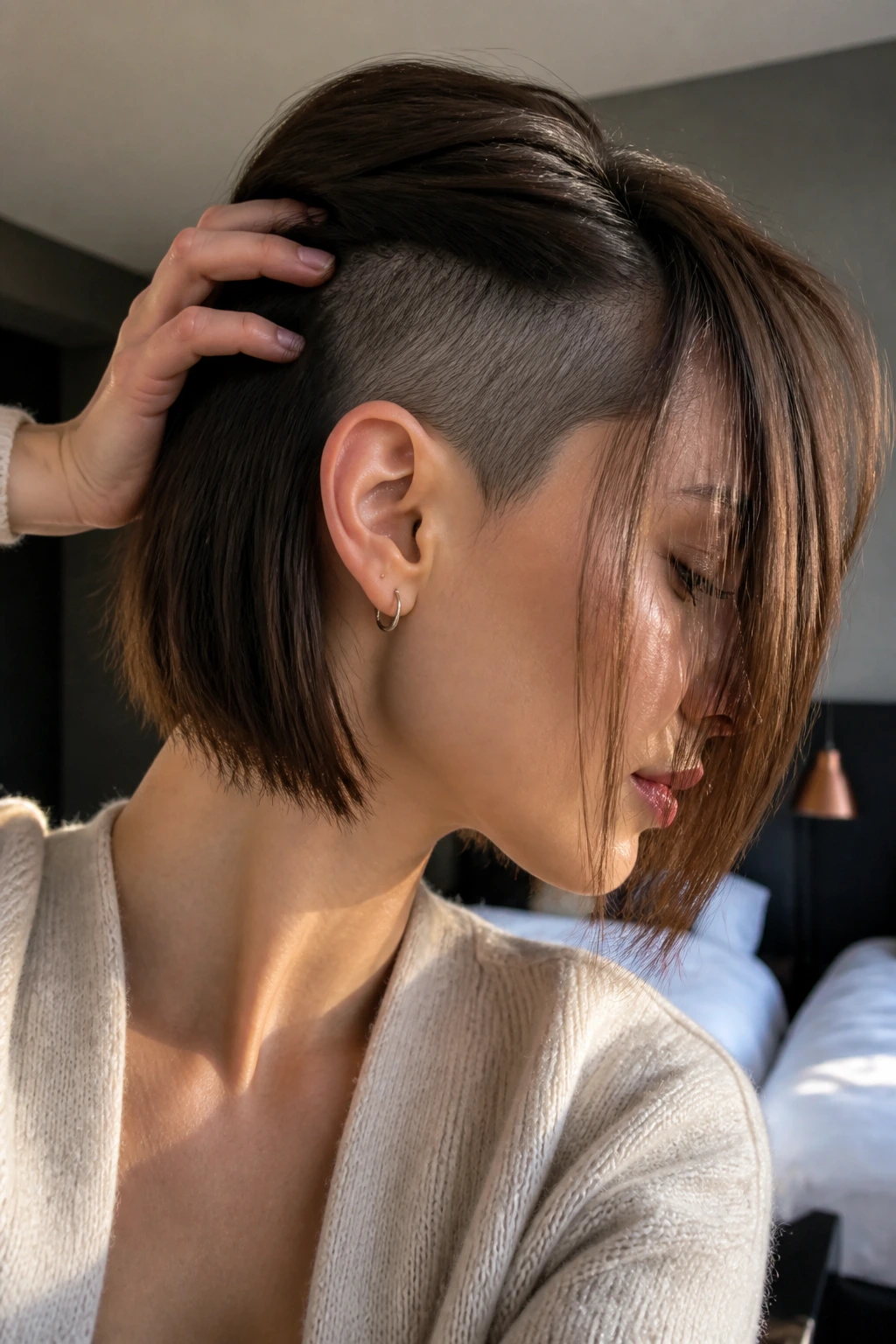
This is the haircut for people who want the idea of a shave without broadcasting it to the whole office. The panel sits under the top layer, usually around the side or just behind the ear, so it only shows when the hair gets tucked or swings.
Straight hair is ideal for this because it falls cleanly over the hidden section. There’s no puff or wave to betray the undercut. That means you can wear it sleek, then flip it around and expose the shaved panel when you want the change to matter.
Ask for a narrow internal shave and keep the outer bob one length or very lightly graduated. If the top is too layered, the reveal can look choppy instead of slick.
Best for: anyone who wants flexibility more than drama.
5. The Ear-Tuck Bob with Clean Nape
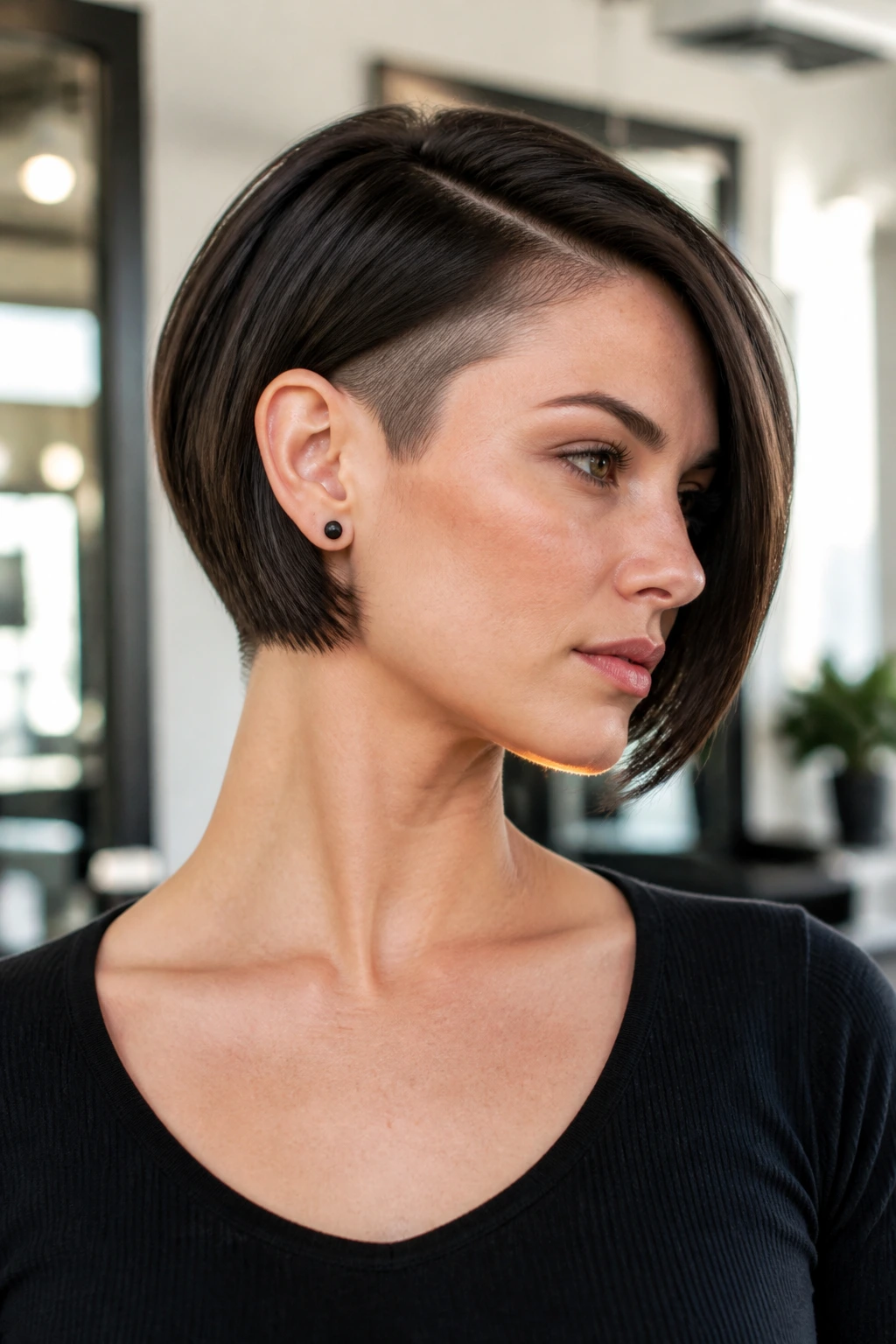
This cut is built around the tuck. One side stays full enough to sweep across the cheekbone, while the nape is cut close and clean so the line at the back stays sharp when the hair sits against the neck.
It’s a smart choice for straight hair because straight strands expose every bump in the nape area. If the shave is tidy, the whole cut looks expensive in the old-school sense — precise, not loud. If the nape is left too fuzzy, though, the illusion falls apart. That is why I’d rather see a shorter, cleaner finish than a half-done fade.
Wear it with: a tucked side, small hoop earrings, and a smooth blowout. That trio does more for the haircut than extra layers ever will.
6. The Asymmetrical One-Side-Longer Bob
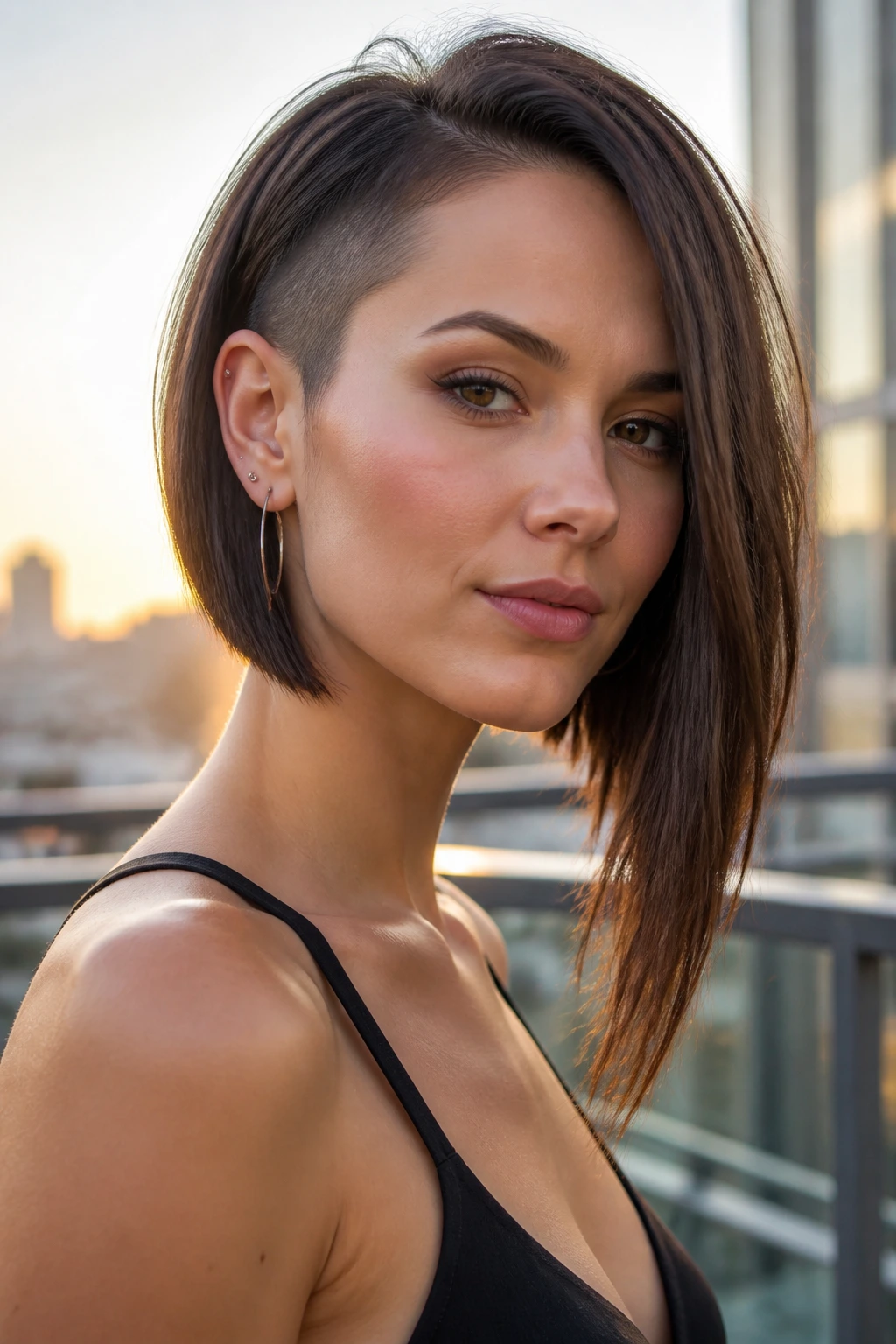
Some bobs whisper. This one tilts. One side skims the jaw or collarbone, while the other sits shorter and often leads into the shaved panel or temple detail. It’s a strong shape, but on straight hair it reads as precise rather than wild.
The asymmetry should be obvious when the hair is parted and still. That’s the point. You want the eye to catch the longer front piece, then notice the shaved side as the counterweight. If the difference between sides is tiny, the effect disappears once you start styling.
H3: Why it works
Straight hair gives asymmetry a clean edge because the lengths don’t blur together. Ask for the longer side to angle forward just enough to brush the collarbone or mouth, depending on how dramatic you want the line.
A little shine spray helps here. Not a cloud of it. One or two passes through the surface sections is plenty.
7. The Stacked Nape Shaved Bob
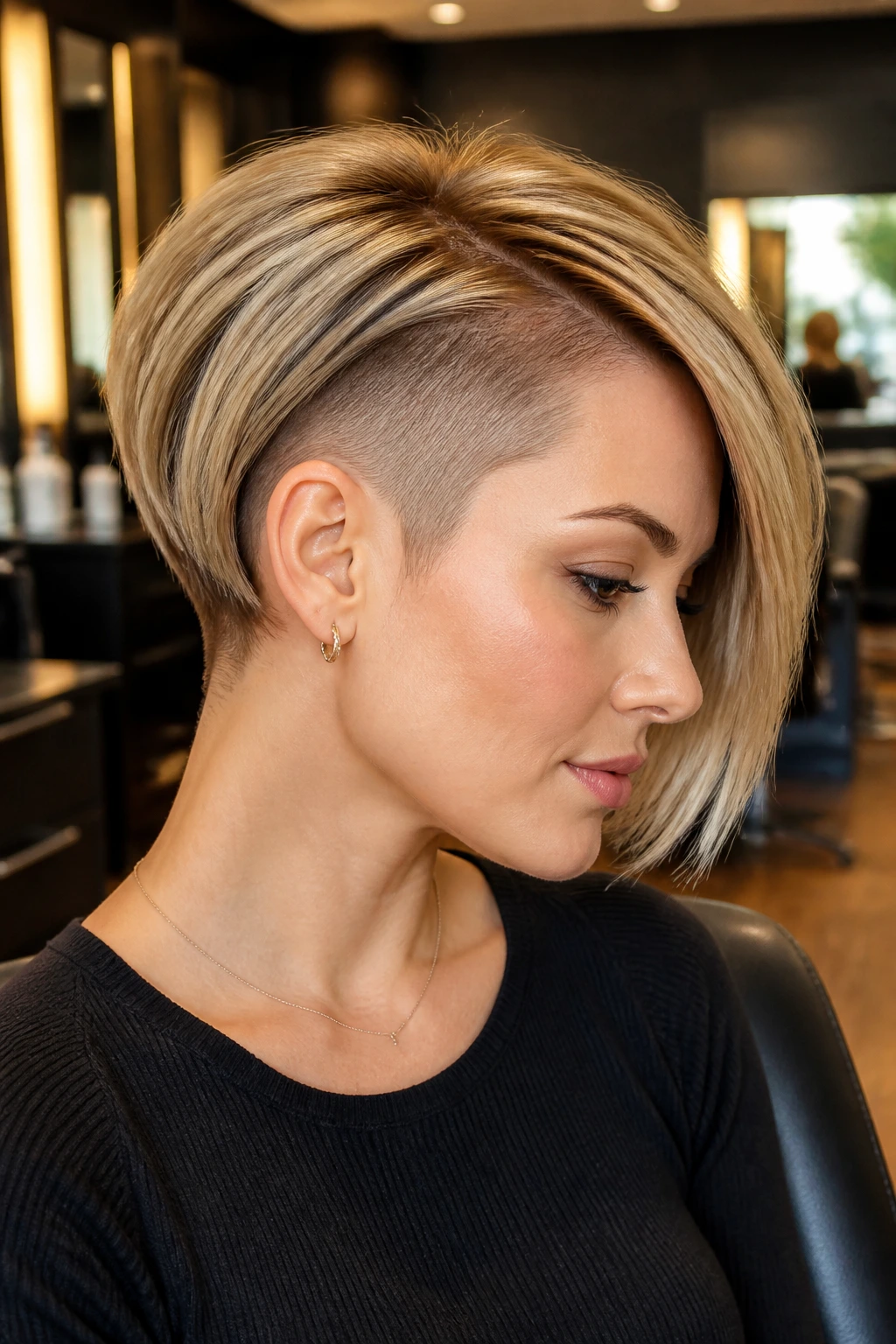
Stacked at the back, tight at the nape, and swept across the front — this is the bob for someone who likes the back of a haircut to matter. The stacked layers lift the crown slightly, while the shaved nape strips out the heaviness that straight hair can collect there.
The result is a shape that sits close to the head but doesn’t look flat. That’s the magic. Straight hair often needs a little architecture in the back so the front can stay sleek without the whole cut turning into a ruler. Keep the stack moderate if your hair is fine; too much graduation can make the crown go skinny.
Styling note: blow-dry the back with a round brush to bend the layers under, then smooth the front with a flat brush so the side sweep stays polished.
8. The Blunt-Line Bob with a Side Slice

I love this one because it refuses to apologize for being blunt. The perimeter is cut straight, almost severe, and then a narrow shaved slice on one side breaks the block so it doesn’t feel heavy or boxy.
That little interruption changes everything. Straight hair loves a blunt line, but it can also make the head look square if there’s no release point. The side slice gives the cut a place to breathe. It works especially well on thicker straight hair, where the weight at the bottom can otherwise make the bob sit like a shelf.
Keep the front length at the jaw or just below it. Any shorter and the blunt edge can start to feel harsh rather than crisp.
9. The Micro Bob with Long Fringe
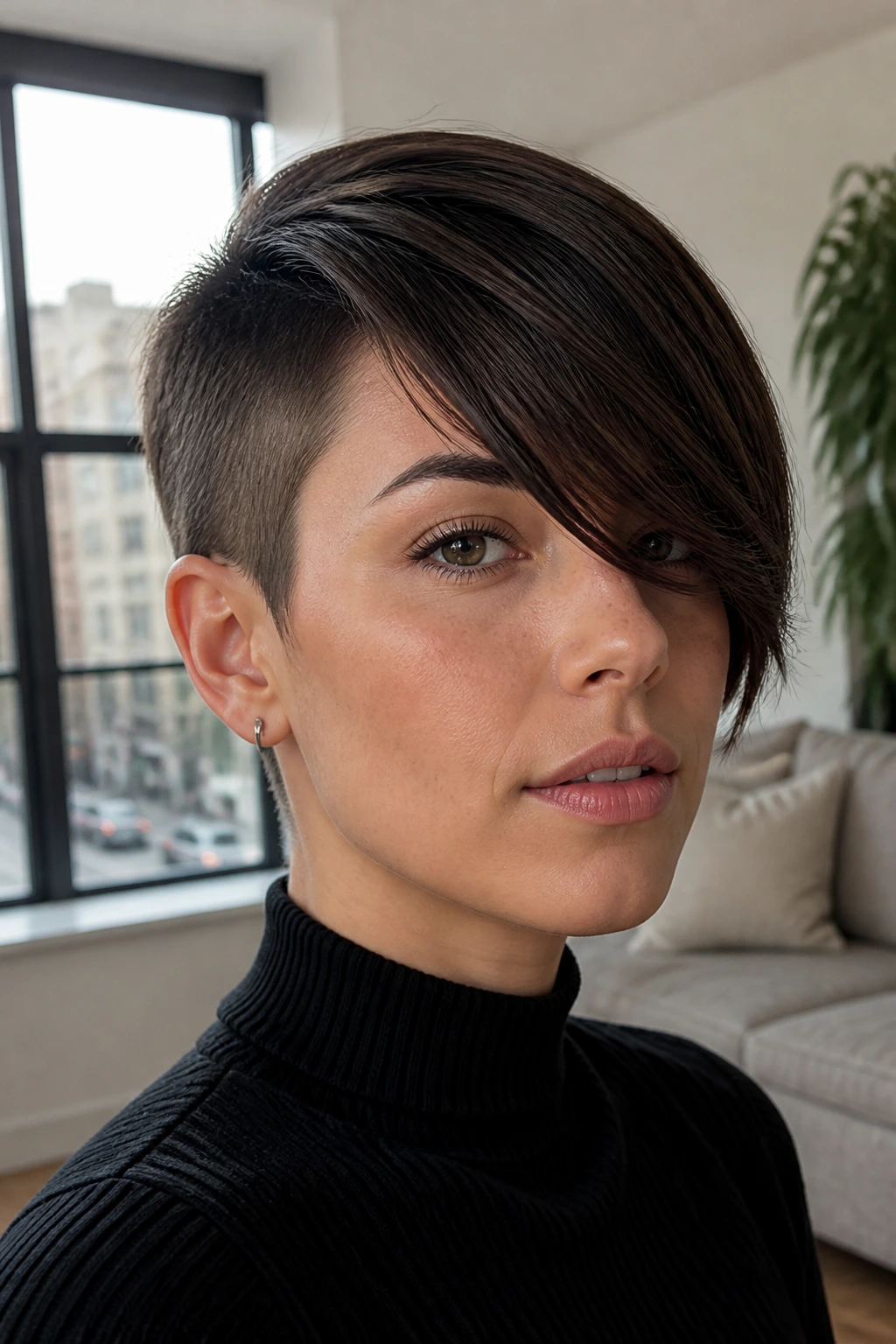
This one has attitude. The bob itself stays short — often around the cheekbone or just under the ear — while the fringe sweeps long and side-heavy across the forehead and down one side.
The shaved side keeps the micro length from feeling too rounded or too “one shape.” It’s the contrast that gives the haircut movement. Straight hair helps because the fringe drops with a clean line instead of puffing up. If your forehead is shorter, ask for the sweep to start farther back, closer to the part, so the fringe doesn’t crowd your face.
Best for: people who like a tight silhouette and want one piece of hair to do the visual work.
A tiny bit of paste at the ends of the fringe can keep it from splitting apart in the middle of the day.
10. The Collarbone Bob with Temple Clearance
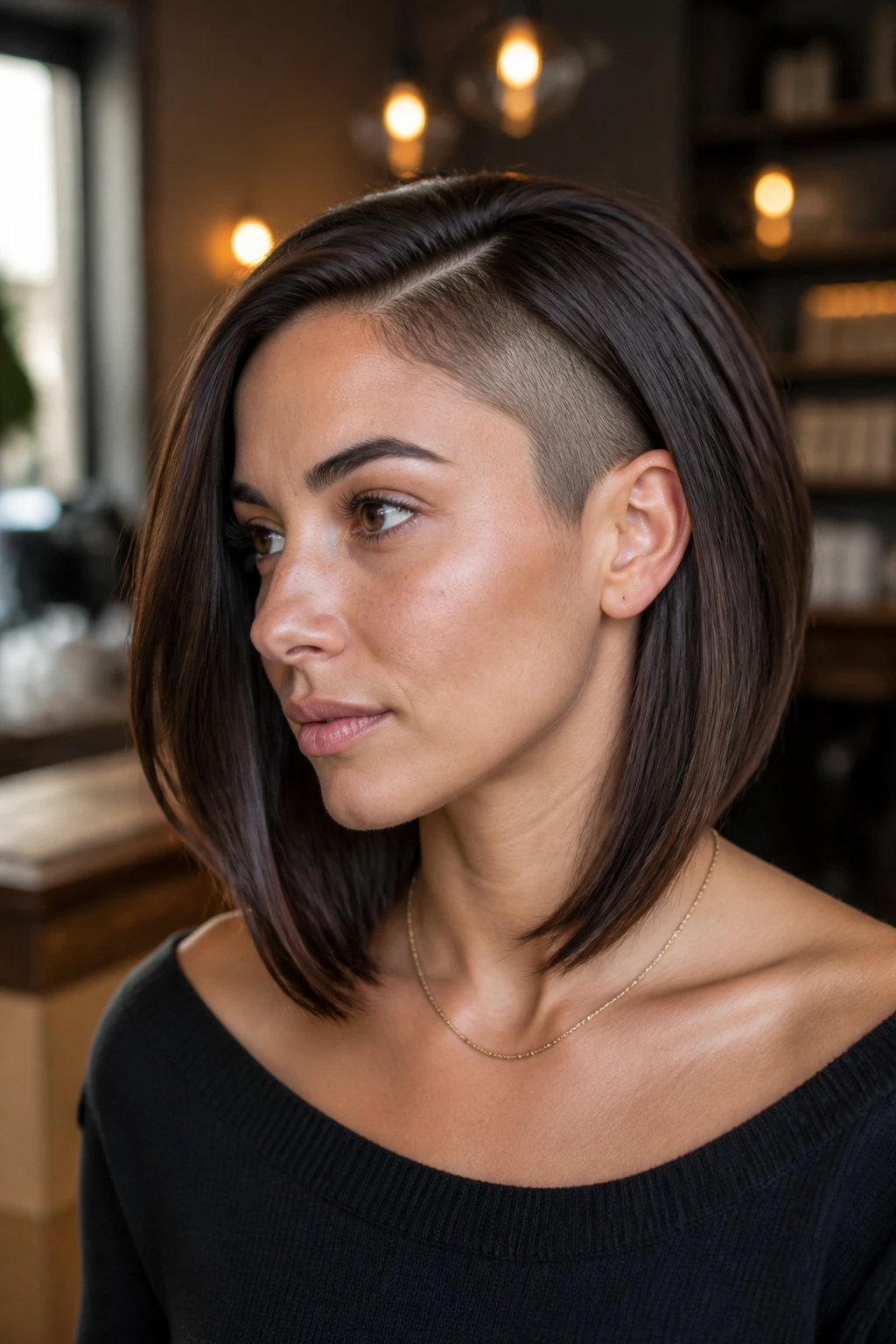
A collarbone bob gives you more to work with, which makes the shaved detail feel less obvious and more tailored. The length hangs just long enough to swing, but the temple clearance keeps the side from turning puffy when the hair tucks behind the ear.
This is one of the more wearable shaved side-swept bobs for straight hair because it behaves like a classic lob from the front and a sharper cut from the side. If you want a hairstyle that can move between polished and slightly rebellious without a full change-up, this is a good lane.
H3: Ask for this
Tell your stylist you want the front to hit the collarbone and the shave to stay narrow and low. That keeps the look sleek instead of edgy-for-edgy’s-sake.
11. The Tapered Side-Swept Bob
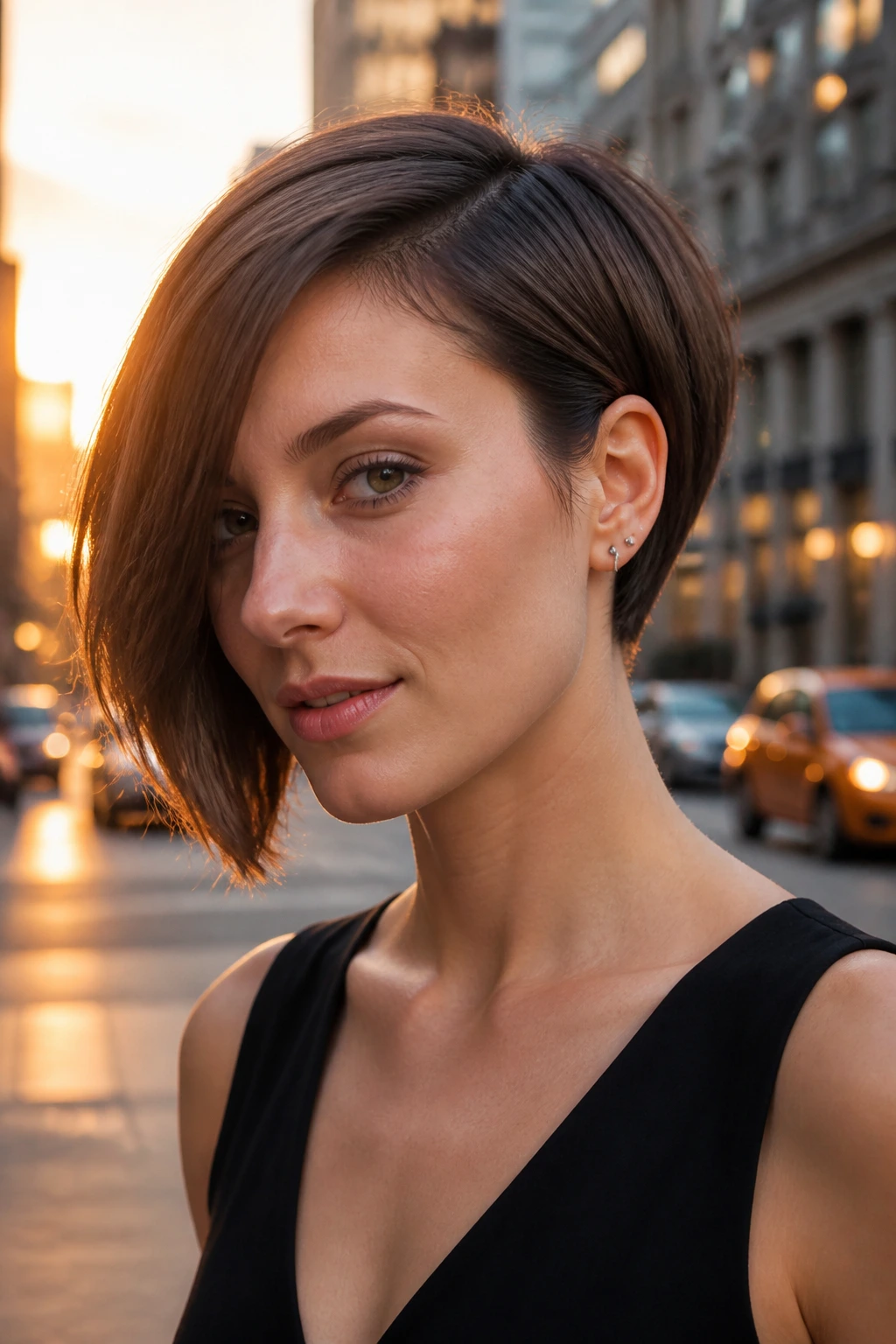
The taper is doing the quiet work here. Instead of stacking a lot of layers or cutting the perimeter blunt, the shape narrows gradually toward the nape and opens toward the front, where the sweep becomes the star.
Straight hair takes well to tapering because it shows the change in length without requiring texture. The side-swept front creates a soft diagonal, and the tapered back keeps the neck area neat. If your hair is heavy or grows in a way that makes the bottom feel bulky, this cut is often a better choice than a boxy bob.
Pro move: keep the ends razor-light or point-cut rather than blunt. It stops the bottom from sitting like a hard shelf.
12. The Glass-Hair Bob with Underneath Undercut
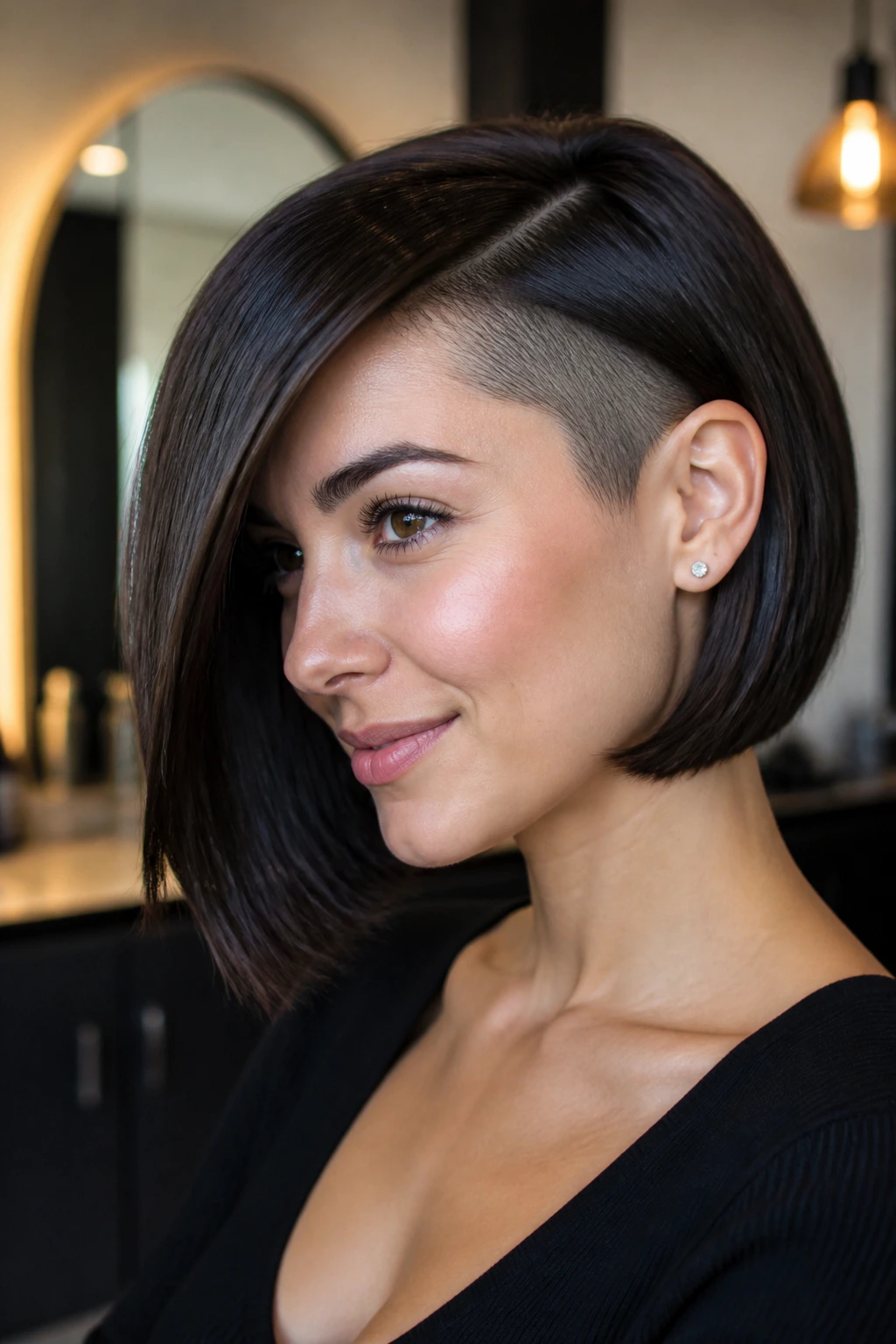
If you like your hair to look smooth enough to reflect light, this is the one. The top layer is cut for a polished, glassy finish, while the undercut sits underneath and removes weight you never see in the mirror — but you feel it every time you blow-dry.
That hidden weight removal matters on straight hair. It lets the top fall cleaner, so the side sweep doesn’t get dragged down by bulk at the back or under the ear. This is the version I’d point to if you want a bob that looks expensive without needing a lot of visible layers.
Use a heat protectant with slip, then a flat iron only on the outer layer. The undercut is there to help the shape; you do not need to over-style it.
13. The Pixie-Bob Hybrid Sweep
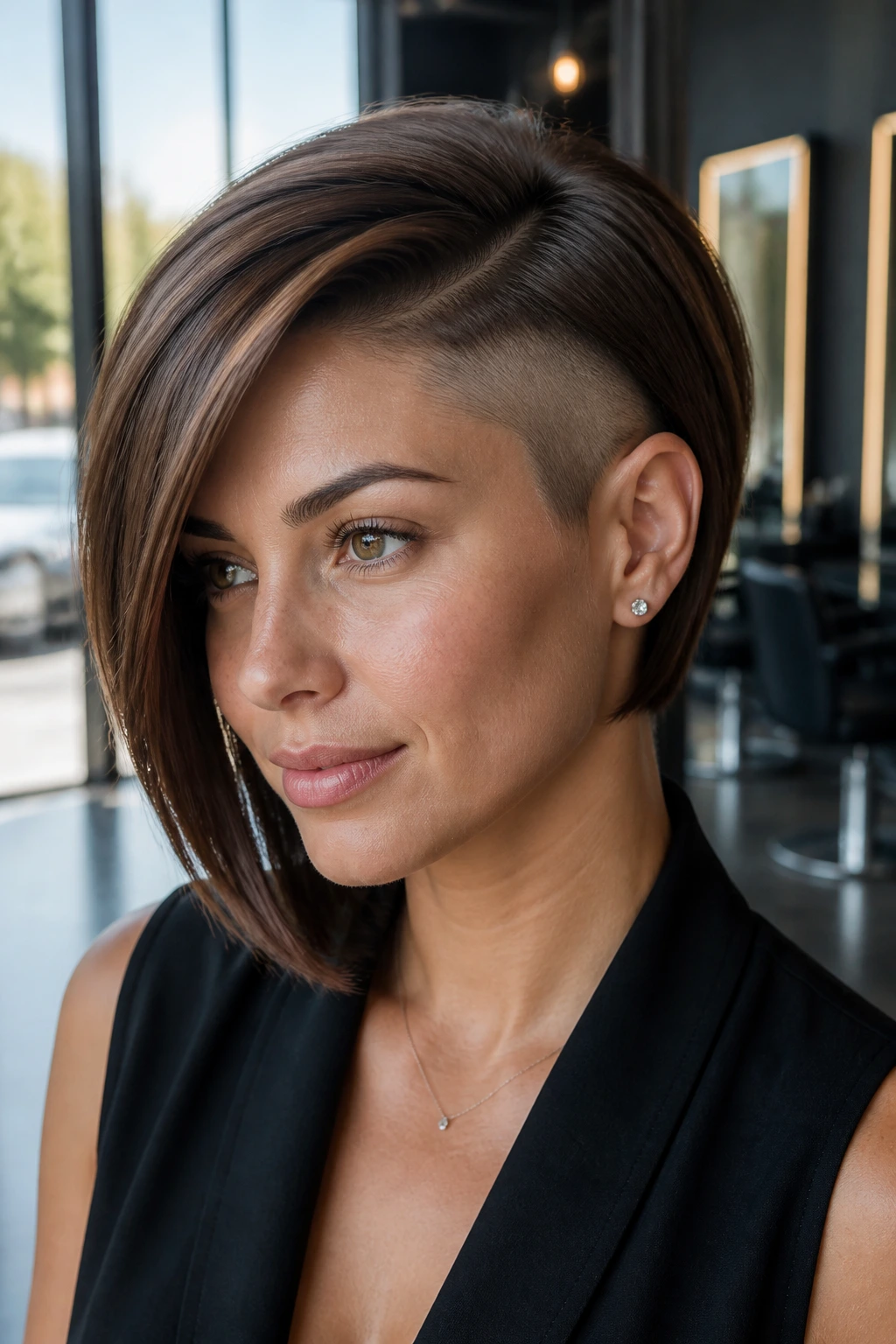
This sits right between a bob and a grown-out pixie, and that in-between quality is the point. The sides are short enough to feel neat, the top is long enough to sweep diagonally, and the shaved section keeps the whole shape from puffing out.
Straight hair makes this hybrid especially clean because the distinction between short and long sections stays obvious. That’s helpful. It stops the cut from turning into a vague “short haircut” and gives it a real silhouette. Ask for the top to be long enough to brush the brow or cheekbone, depending on how much face framing you want.
One-sentence reality check: this is not a lazy haircut. It needs a fast style with a comb or flat brush, or it can fall flat fast.
14. The Feathered-Edge Shaved Bob
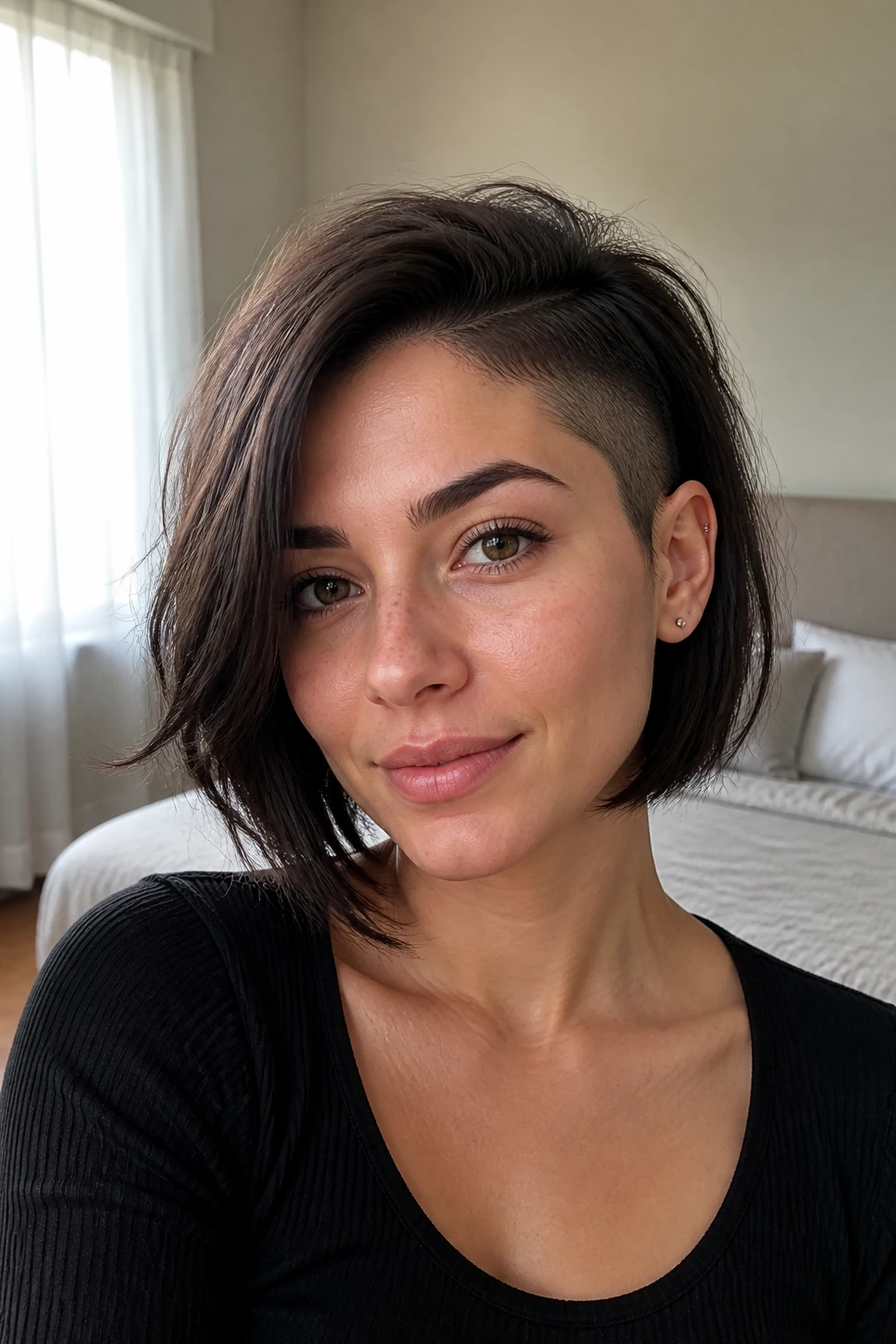
Feathering is a small thing with a big payoff on straight hair. Instead of blunt, weighty ends, the perimeter is softened so the bob swings a little when you turn your head. Add a shaved side, and the haircut gets movement without needing actual waves.
The feathers should stay subtle. Too much thinning turns straight hair wispy in a bad way, especially at the ends. What you want is a light edge that bends easily, not a shredded perimeter that looks worn out after three shampoos.
Best for: people who hate the feeling of a heavy line at the bottom.
Keep the shine on the surface, not the ends. A pea-sized amount of smoothing cream is enough. More than that and the feathering starts to clump.
15. The Heavy Fringe Contrast Bob
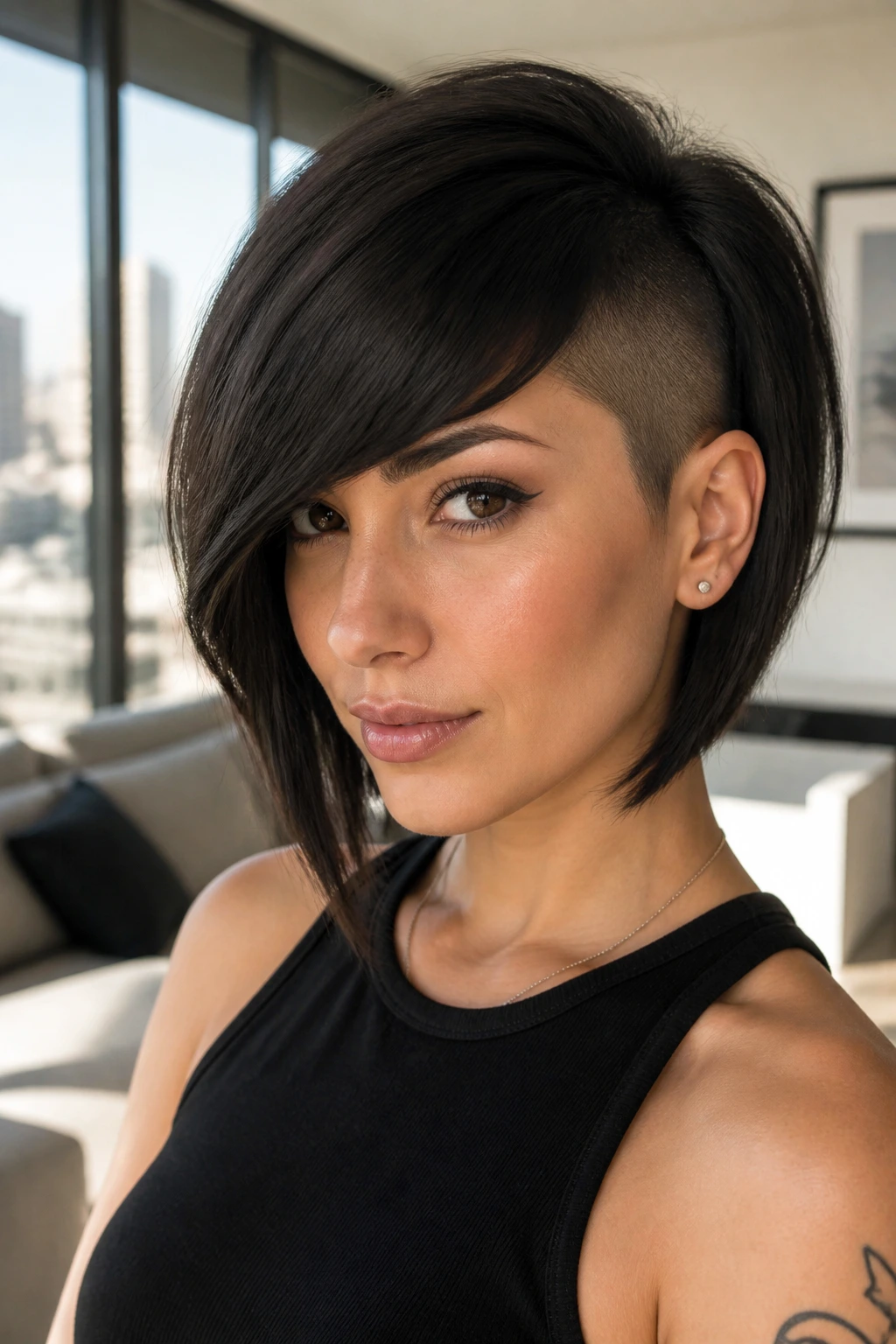
A heavy side fringe changes the mood of the cut fast. Instead of a light sweep, you get a denser band of hair falling diagonally across the forehead, with the shaved side balancing out the weight.
This works especially well if your straight hair is fine to medium and you want the top to feel fuller. The fringe creates the illusion of density, while the side shave takes pressure off the rest of the cut so it doesn’t mushroom. I like this version on people who want their haircut to frame the eyes first and the jaw second.
H3: Styling note
Blow the fringe forward first, then push it into the side sweep while it’s still warm. That sets the bend where you want it instead of fighting the hair once it cools.
16. The Graphic Undercut Side Bob
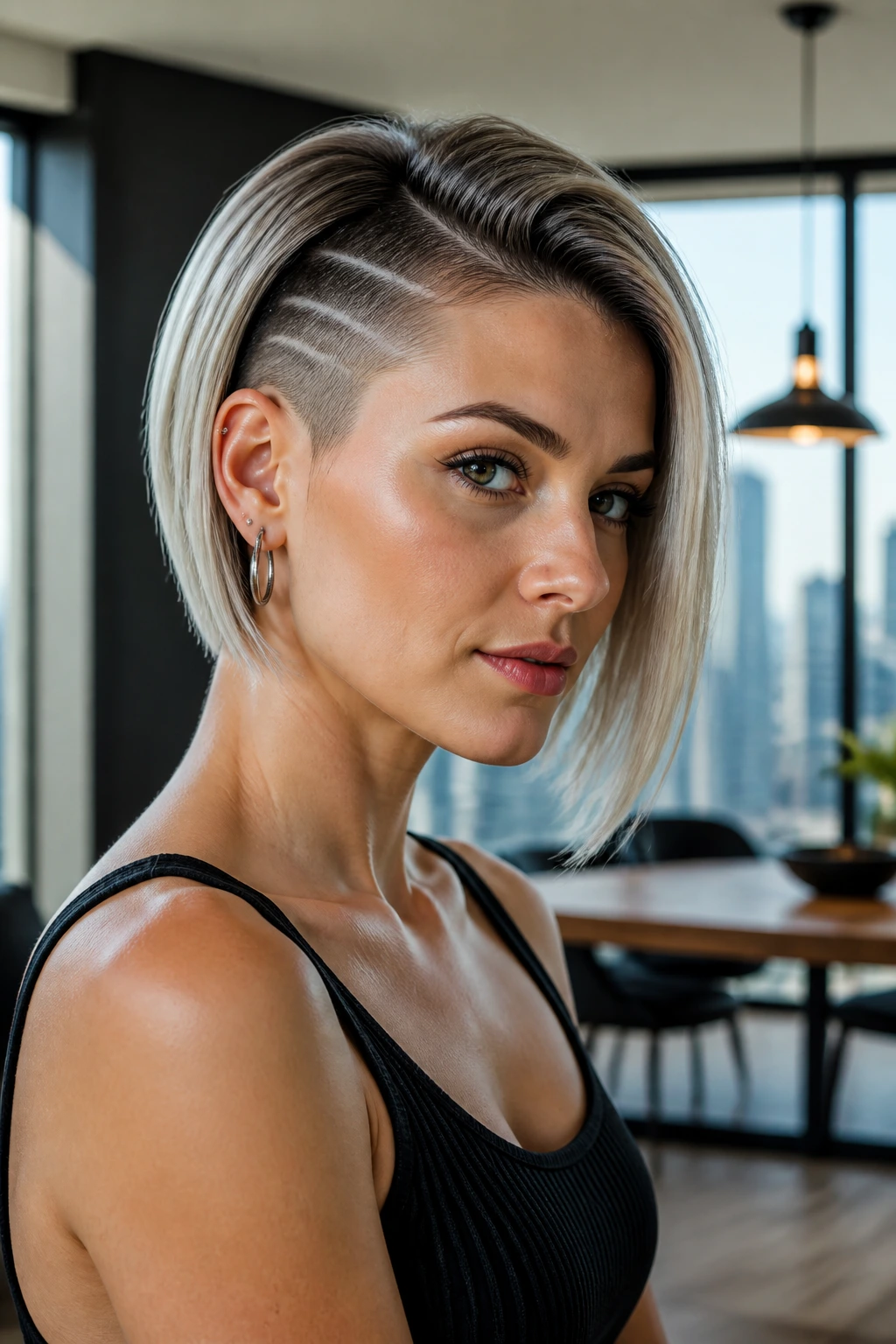
Now we’re in visible-shave territory. The side is shaved high enough to show a strong panel, and the top is cut to sweep over it with purpose. Some people add a line or a small design, but even without that, the geometry is the point.
Straight hair handles this haircut well because the top layer lays over the undercut with a clean edge. No frizz, no fluff, no guesswork. If you want a cut that looks sharp in a ponytail, tucked behind one ear, or pinned back on one side, this is a strong pick.
Be honest with yourself about upkeep. A graphic undercut grows out faster visually than a hidden one. That’s part of the deal.
17. The Rounded Bob with Shaved Side Panel
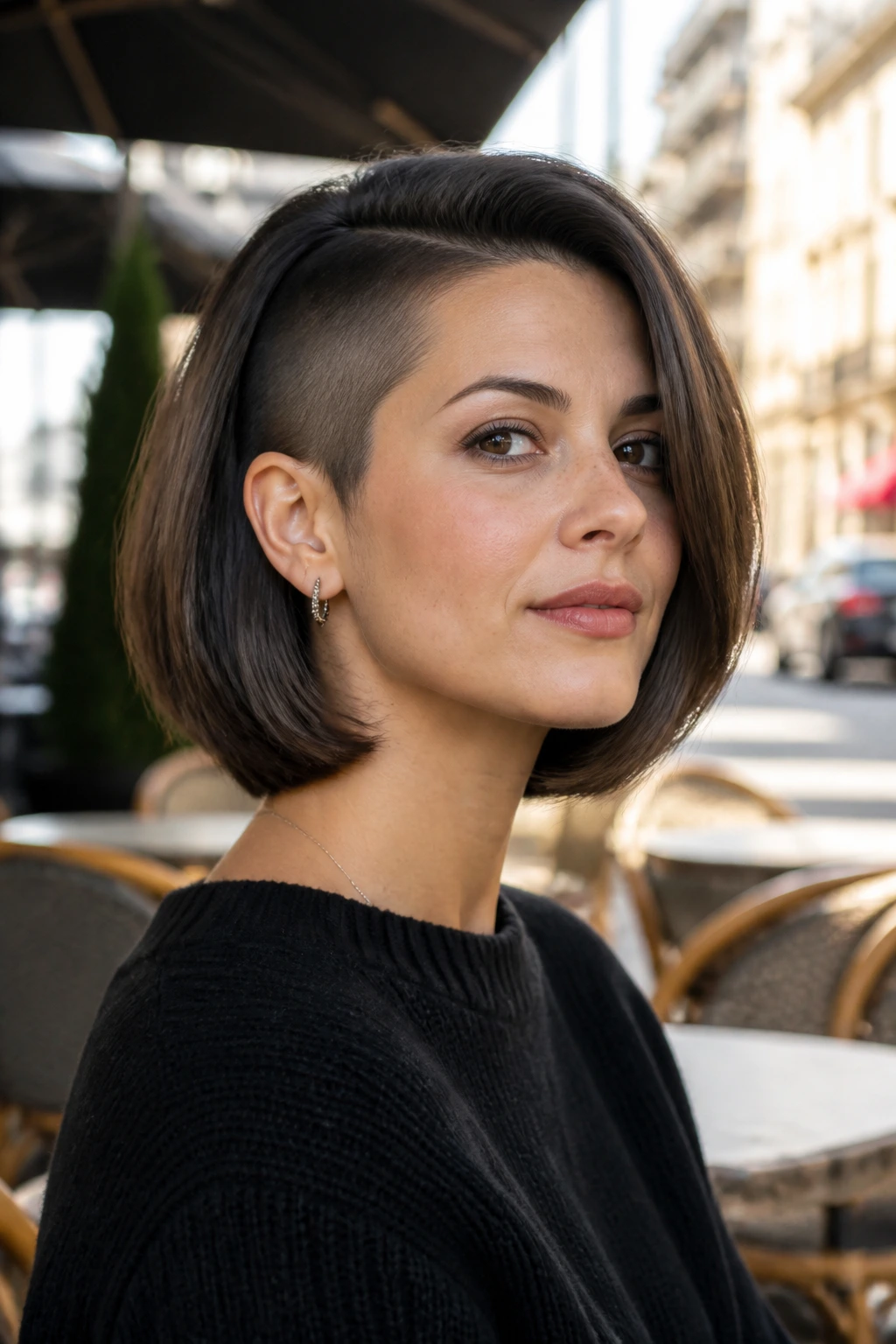
A rounded bob usually feels soft and feminine, but the side panel shave changes the tone. The overall silhouette still curves inward toward the neck and jaw, yet one side opens up with a close-cut panel that keeps the shape from feeling too sweet.
This mix works well on straight hair because the roundness is visible without curling. The ends can be shaped under slightly with a brush, while the shaved panel gives the cut a little edge. If your face is narrow, the rounded shape adds body without making the haircut bulky.
Best for: anyone who wants something neat, but not stiff.
Try not to overload this one with volumizing spray. A small amount at the crown, not the sides, keeps the round shape from ballooning.
18. The Fine-Hair Side Sweep Bob
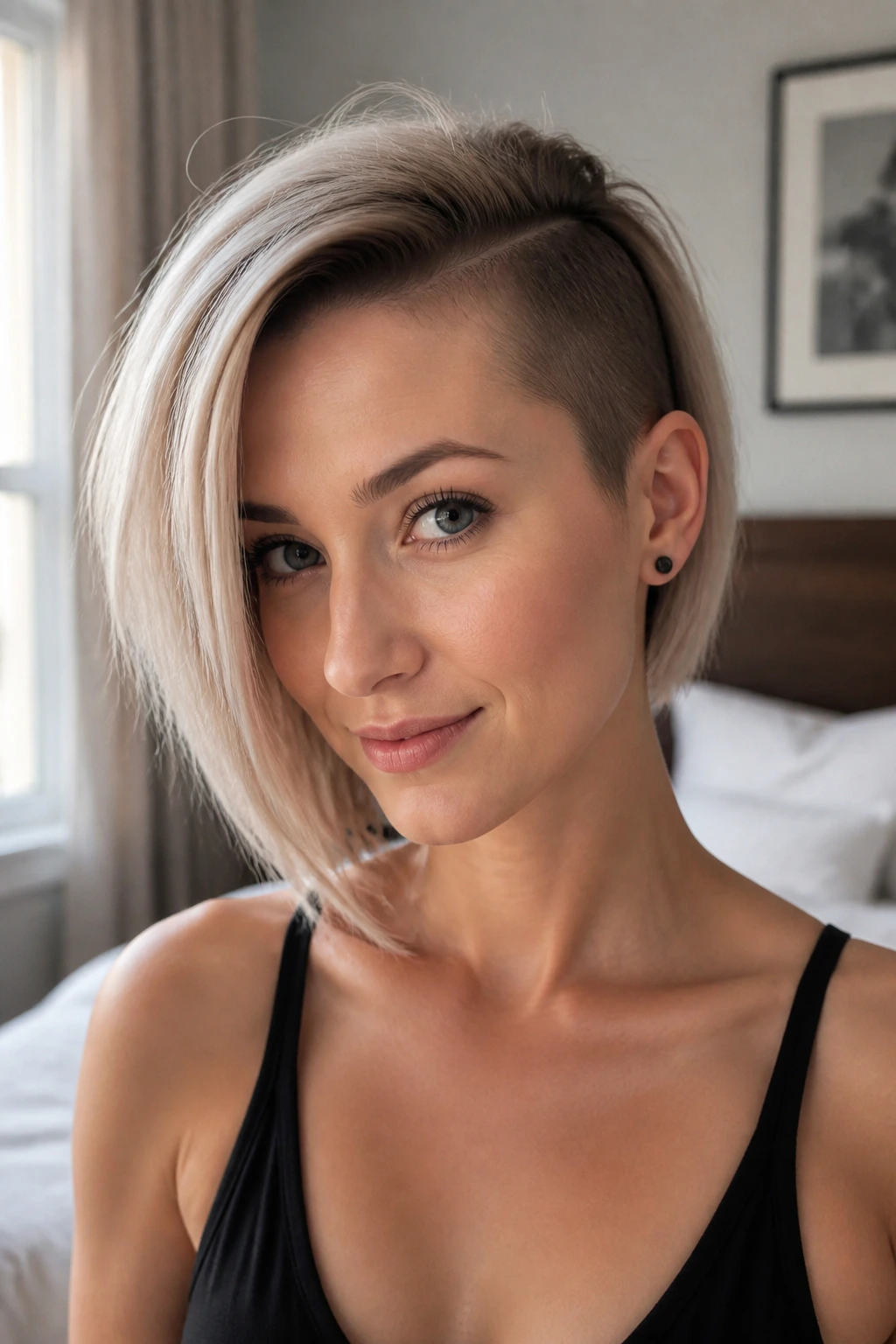
Fine straight hair needs a different answer than thick straight hair. This version keeps the cut light, with minimal layering and a narrow shave that removes just enough weight to keep the side from drooping.
The trick is not to overcut it. Fine hair can go see-through fast if the stylist gets enthusiastic with the thinning shears. Ask for the perimeter to stay blunt or softly beveled, and let the side-swept front create the movement. The shave helps the style feel intentional even when the rest of the hair is lying close to the head.
A root spray at the crown gives a little lift. You do not need volume for miles. You need the front to stay lifted off the cheek.
19. The Thick-Hair Relief Bob
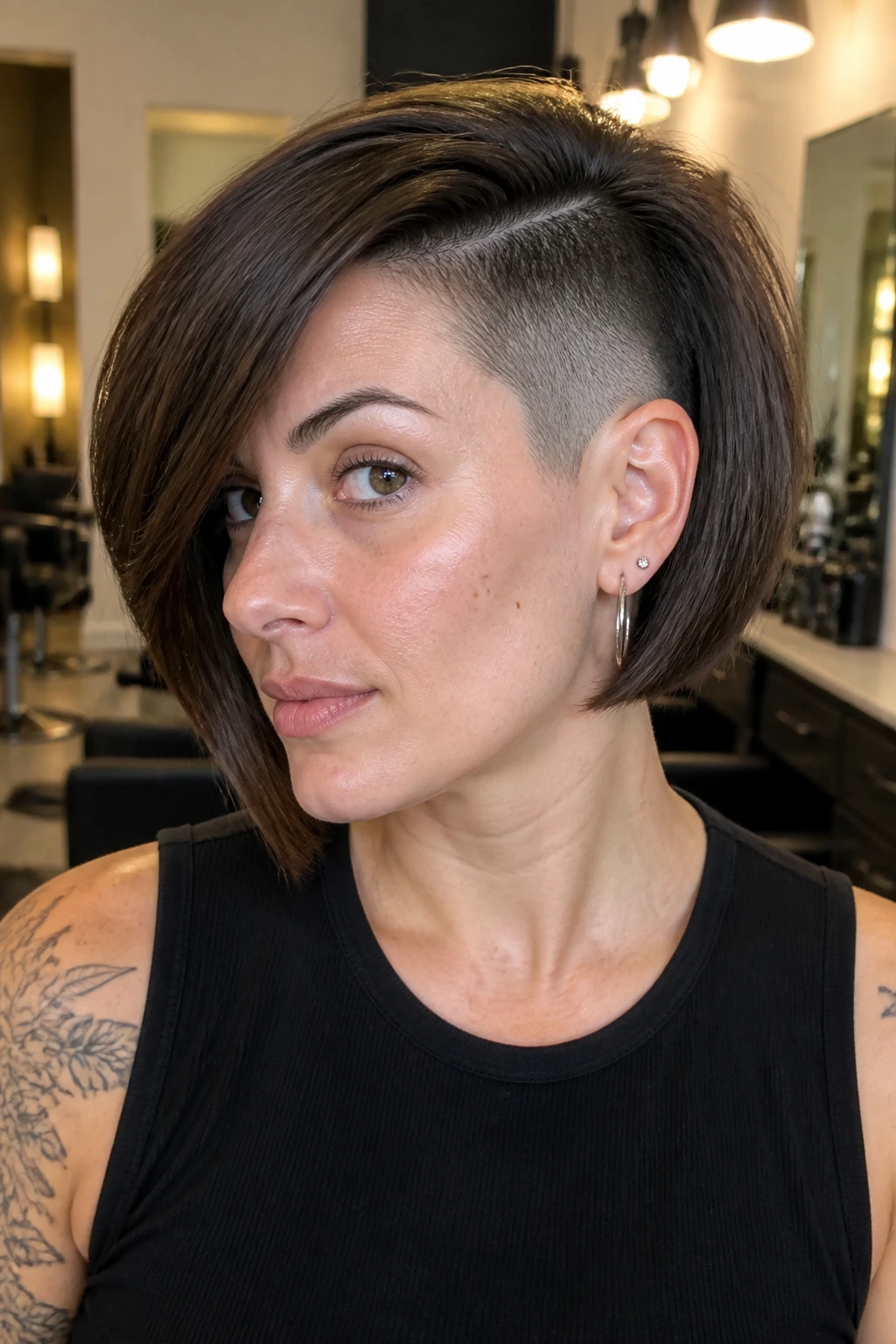
Thick straight hair can wear a bob like a block if the weight isn’t managed. This cut solves that with a shaved side or hidden panel that removes a chunk of density where it usually builds up near the ear and jaw.
The result is less helmet, more shape. That’s the practical advantage. The bob can still look full, but it stops fighting your neck and shoulders every time you dry it. If your hair feels heavy even when it’s freshly cut, this is probably the version to ask about.
Tip: have the stylist check the balance both tucked and untucked. Thick hair can reveal a problem only once it sits in motion, not while it’s clipped up.
20. The Soft Graduation Bob
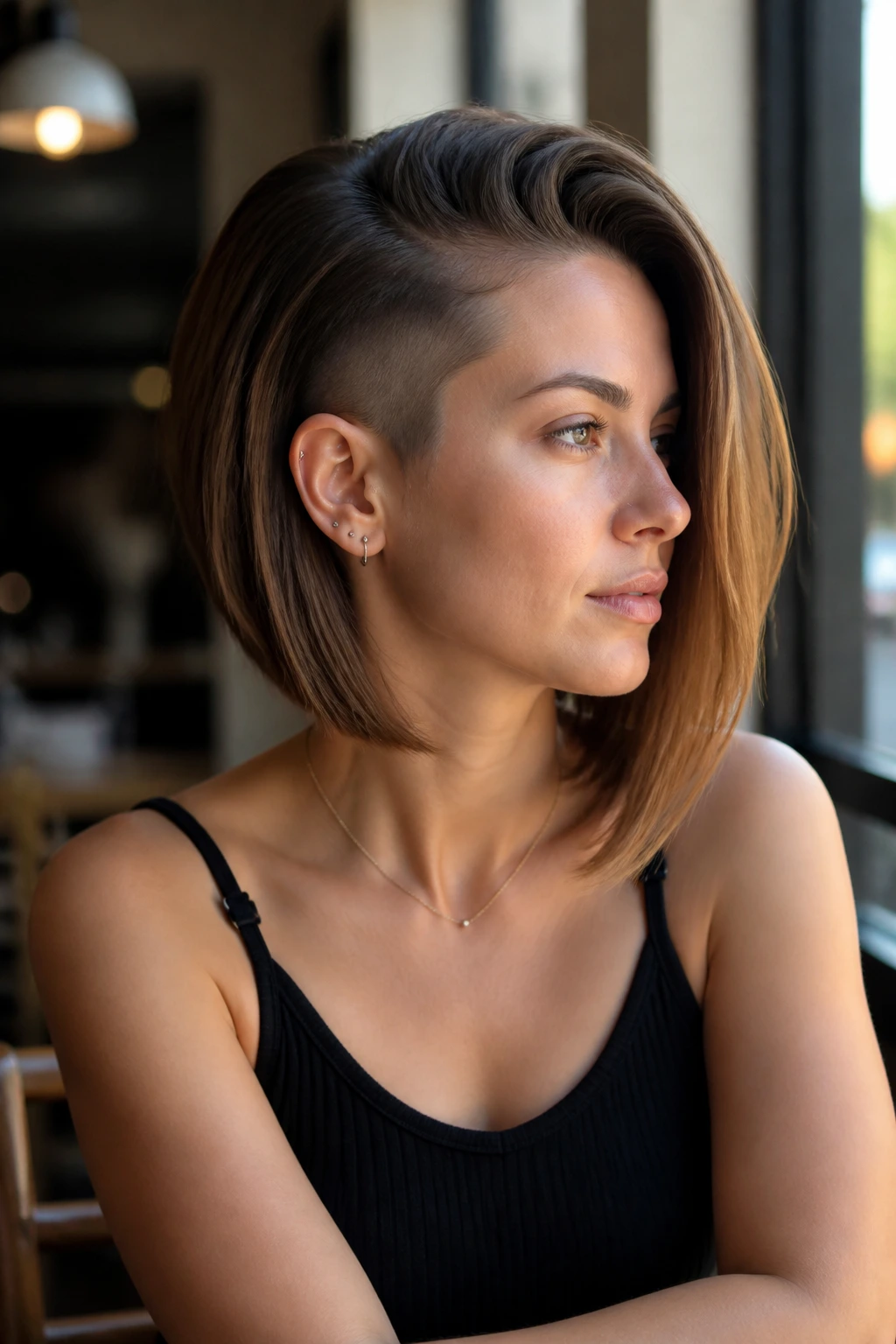
Graduation gives the back of the bob a small lift and keeps the front from hanging like a curtain. On straight hair, that subtle angle can be enough to make a side sweep feel cleaner and more controlled.
This is a low-drama haircut in the best sense. The shaved side is there, but the overall line stays soft, which makes it easier to wear to work or on days when you don’t want your hair to feel like the main event. The shape is especially useful if your hair sits flat at the crown and needs a little structure from the cut itself.
A smooth blow-dry with the brush pointed slightly upward at the roots helps the graduation show up. No need to chase big volume.
21. The Temple-Shave Statement Bob
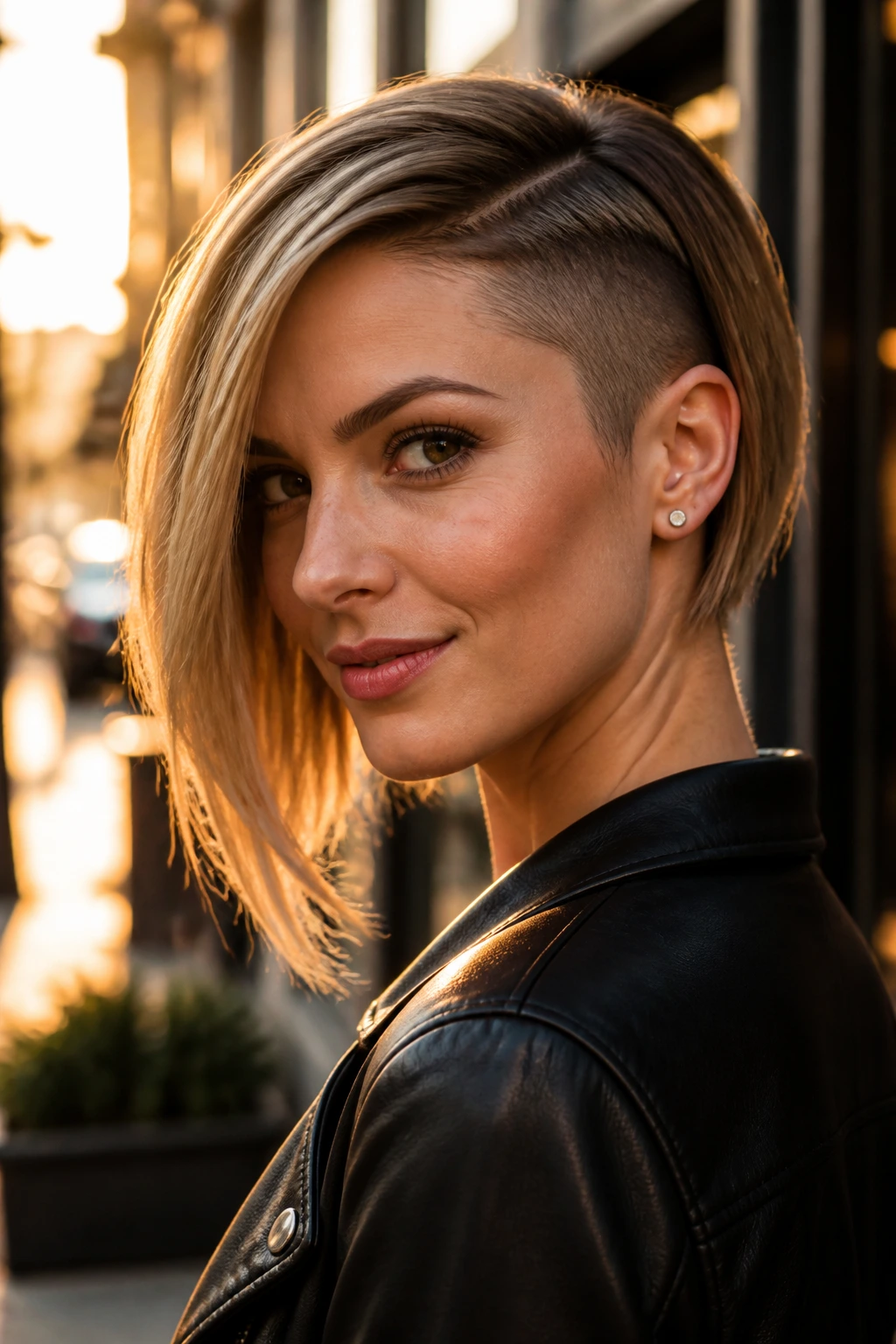
Here the shave is part of the look, not a secret. The temple area is cut clearly short, the side sweep is long enough to create contrast, and the whole haircut feels deliberate from the first glance.
I like this version for straight hair because the clean texture lets the temple shave look almost architectural. There’s no curl pattern to blur the edges. If you want earrings to show, glasses to sit cleanly, or the side of your face to look more open, this cut does that work.
H3: Why it reads so clearly
The temple is one of the easiest places to create contrast without sacrificing overall length. You still keep a bob shape; you just give the eye a sharper place to land.
22. The Hidden Undercut Bob
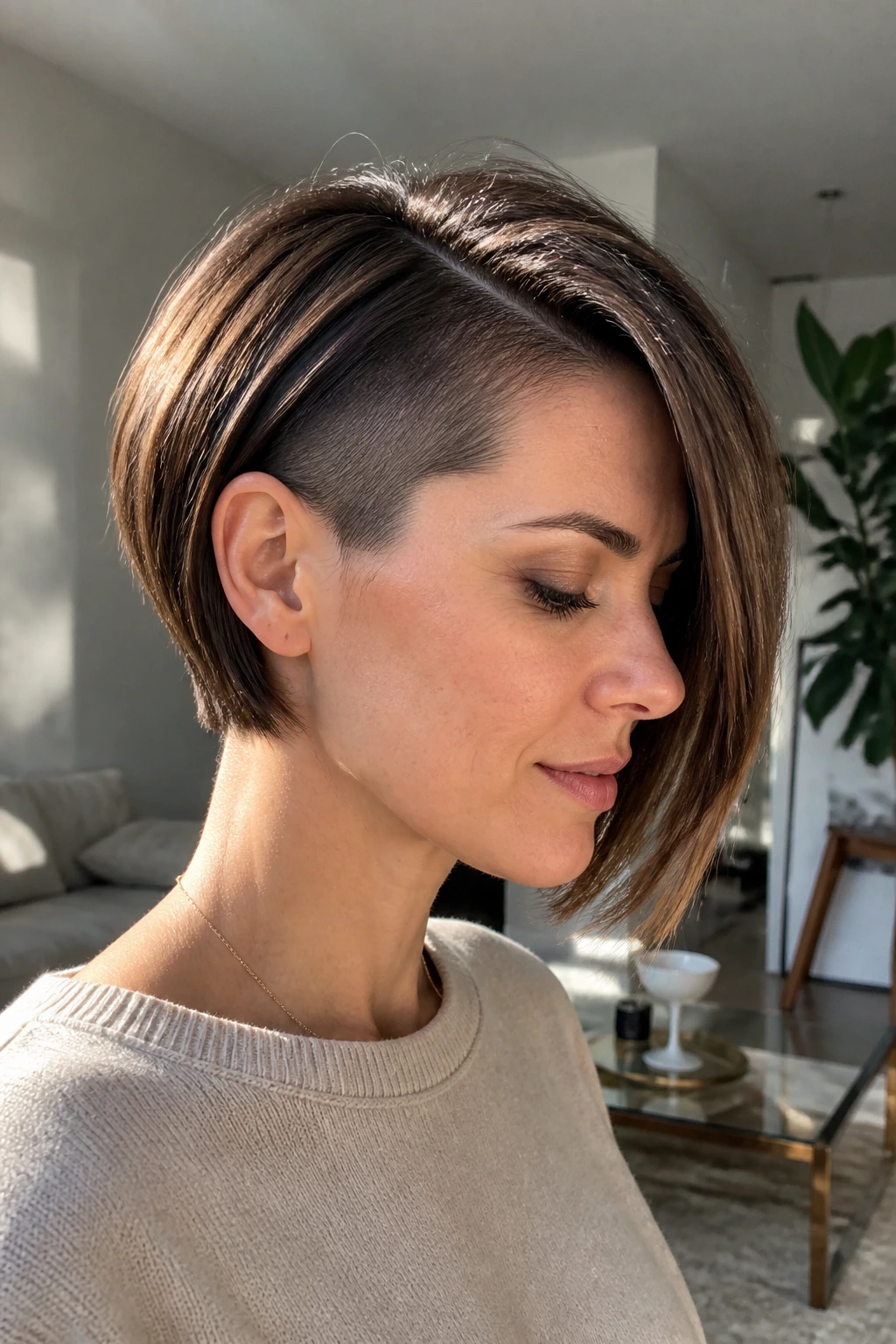
If the phrase “shaved bob” makes you nervous, start here. The undercut lives underneath the top layers, so the haircut looks like a regular side-swept bob until the hair moves.
Straight hair is especially good for this because it drapes neatly over the shaved section. That means you can keep the look polished for most situations and reveal the undercut only when you want to. It’s one of the more practical options if you’re testing the idea before committing to a fully visible shave.
Ask your stylist to keep the top long enough to cover the undercut even when the hair is tucked. That one detail saves a lot of awkward grow-out days later.
23. The Inverted Side-Swept Bob
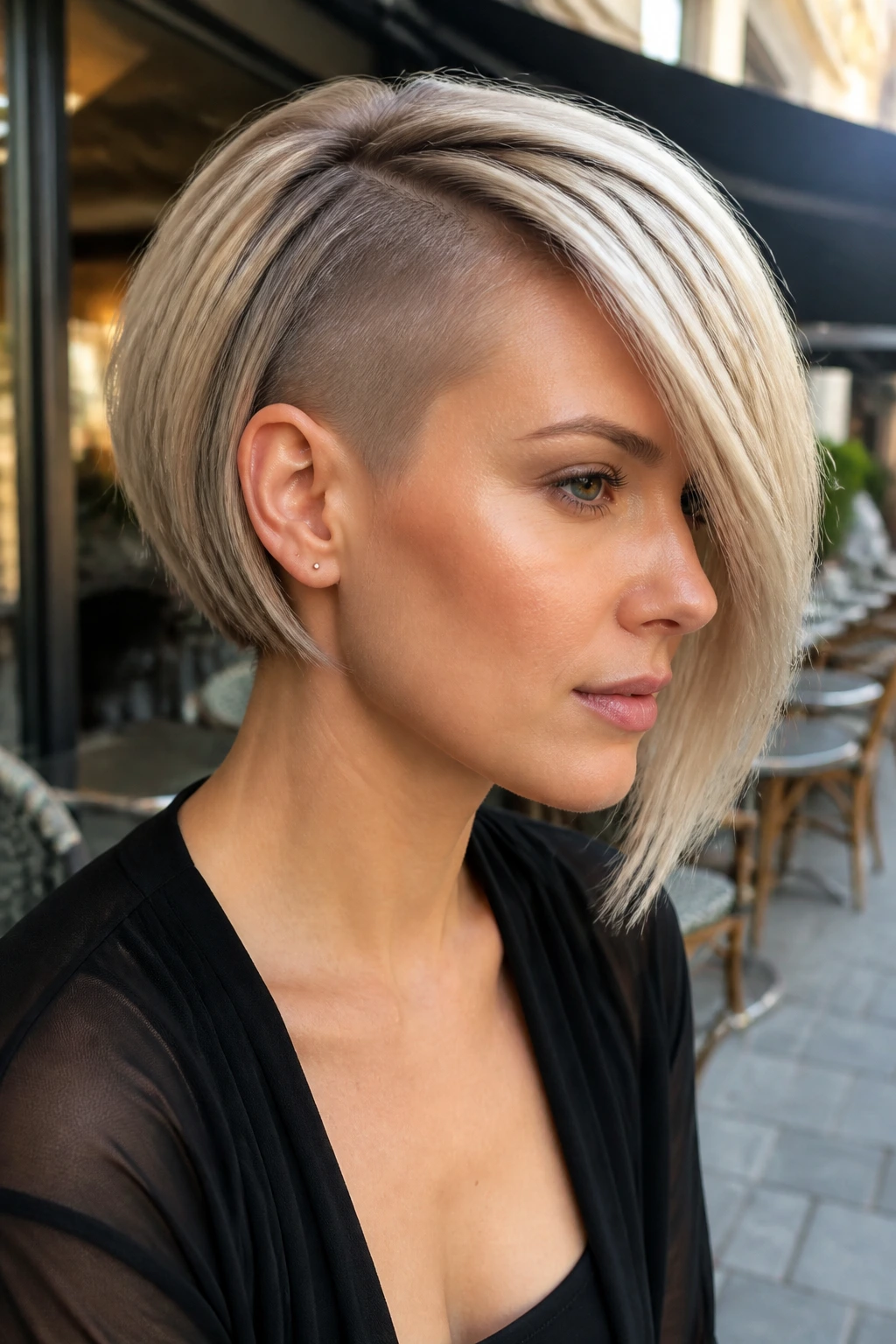
The inverted bob gives you a shorter back and longer front, which already creates a nice line. Add a side sweep and a shaved side, and the whole cut gains a strong diagonal that flatters straight hair because the shape stays readable.
This style can feel sleek or sharp depending on how clean you keep the nape. The back should hug the head without puffing out, and the front should angle past the chin enough to show movement. It’s a good choice if you like looking polished from the side profile — which, let’s be honest, is how a lot of people see our hair first.
Best for: anyone who wants a bob with a little built-in drama but no curl styling.
24. The Long Bob with One-Side Shave
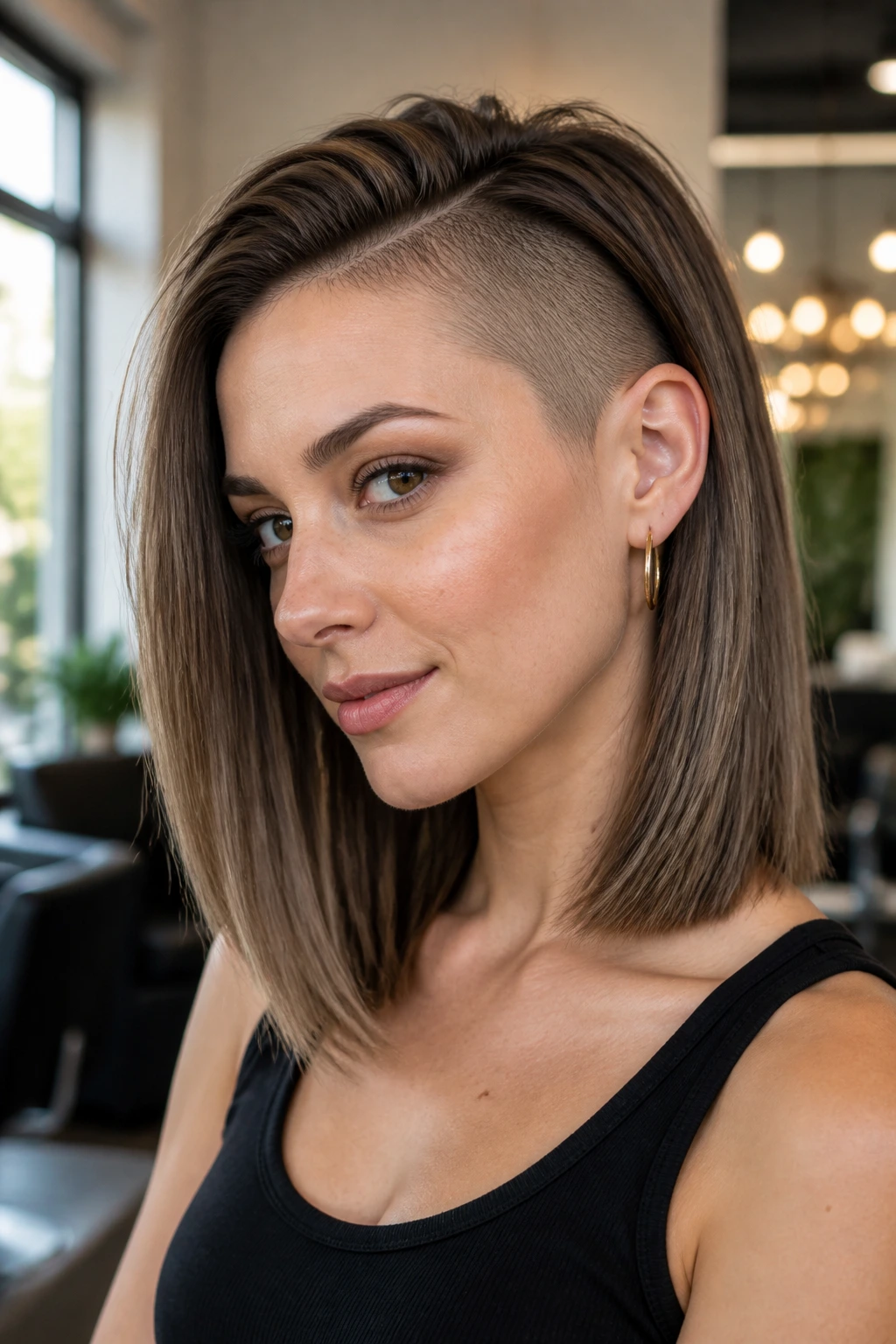
A lob with a single shaved side gives you the best of both worlds: length to tuck, clip, or wave if you want it, and a close-cut detail that keeps the shape from feeling too safe.
This is one of the easiest shaved side-swept bobs for straight hair to live with because the length covers growth better. If the shave starts to soften, the longer top still looks clean. You can wear it with a deep side part for more sweep, or part it closer to the center and let the shave peek through when the hair moves.
Keep the front ends blunt or softly beveled. Too many layers at this length can make the lob go thin at the tips.
25. The Precision Blunt Bob with Micro Layers
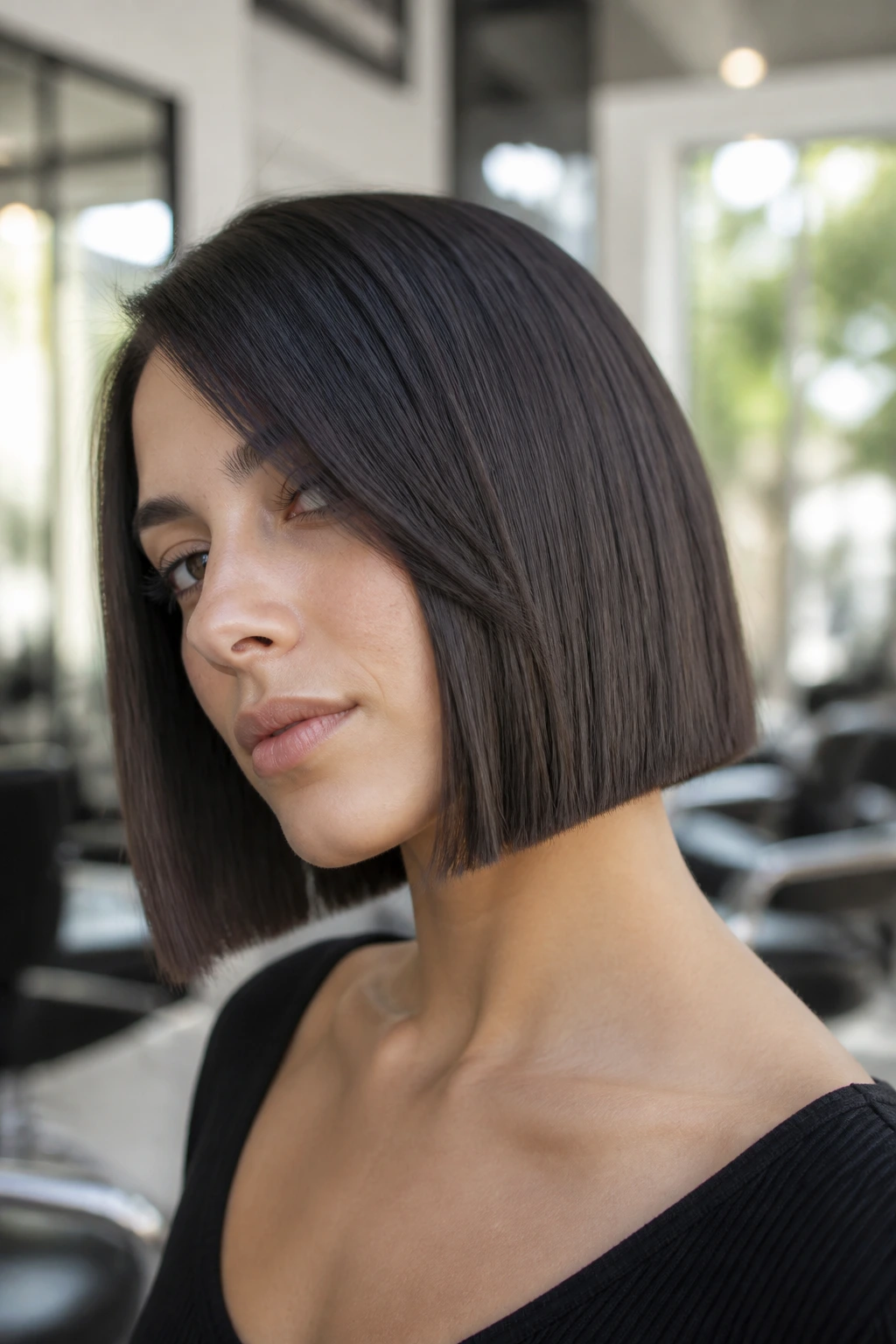
This cut is all about discipline. The perimeter stays straight and exact, while micro layers near the interior take out just enough weight to let the side sweep fall better.
Straight hair loves precision, and this version leans hard into that strength. The layers should not be visible as texture; they should just help the bob move instead of hanging like a sheet. The shaved section adds a break in the line, so the whole haircut doesn’t feel too rigid.
One good rule: if you can see the layers too easily, they’re too heavy. Micro layers should support the shape, not announce themselves.
A flat iron pass plus a light mist of shine spray is often all this haircut needs.
26. The Face-Framing Sweep Bob
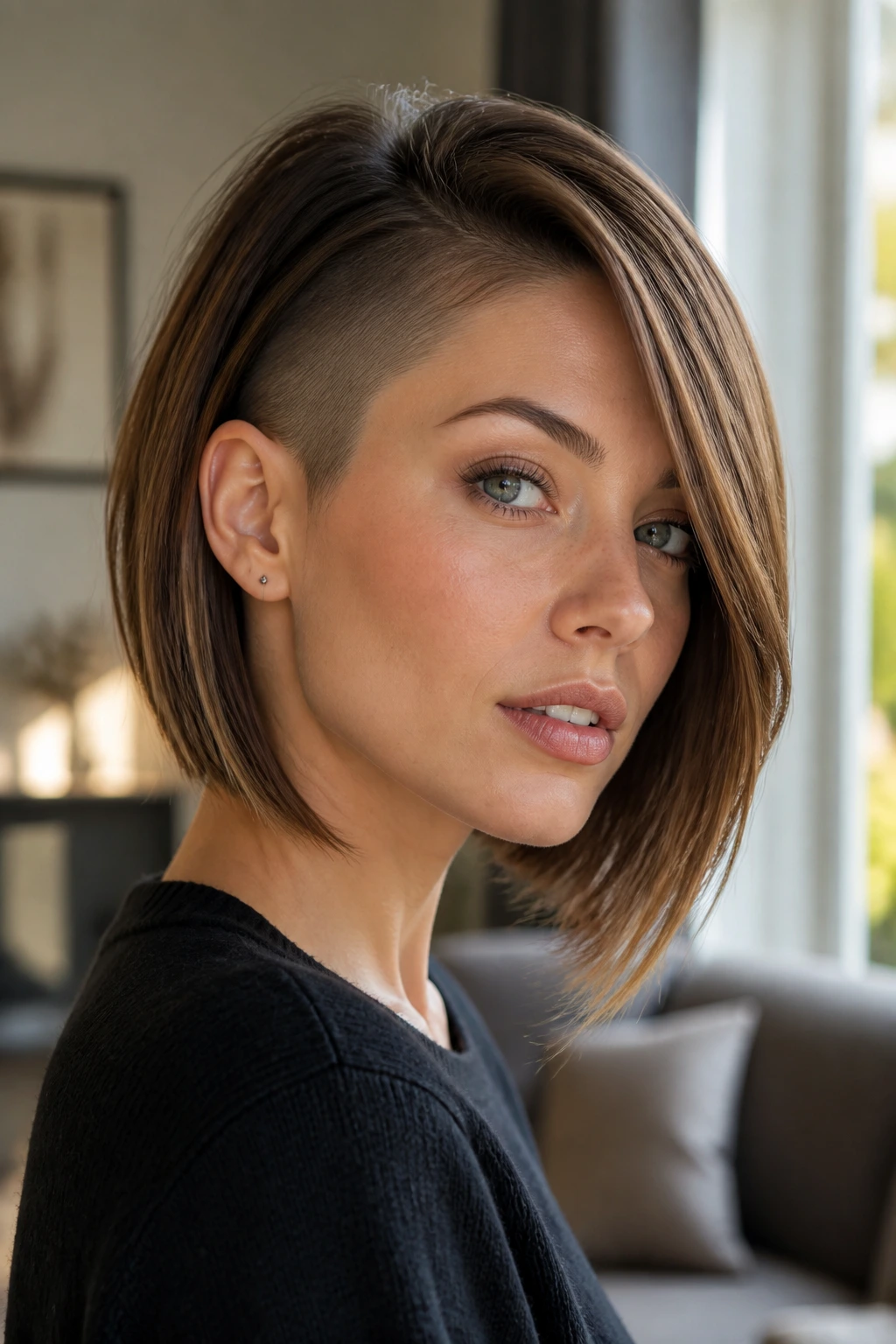
Some cuts shave for edge. This one shaves for framing. The longer front pieces hug the cheekbone and jaw, while the side-swept motion pulls attention toward the eyes. The shaved side clears away visual bulk so the frame around the face looks cleaner.
This is a flattering choice if you want to soften the lower half of the face without adding width. Straight hair can make face-framing pieces sit flat against the cheeks, so the shaved side gives those front sections room to move. The effect is subtle, but it changes the whole mood of the haircut.
Try a tuck on the longer side and leave the front piece loose. That tiny shift is enough.
27. The Airy Sliced-Ends Bob
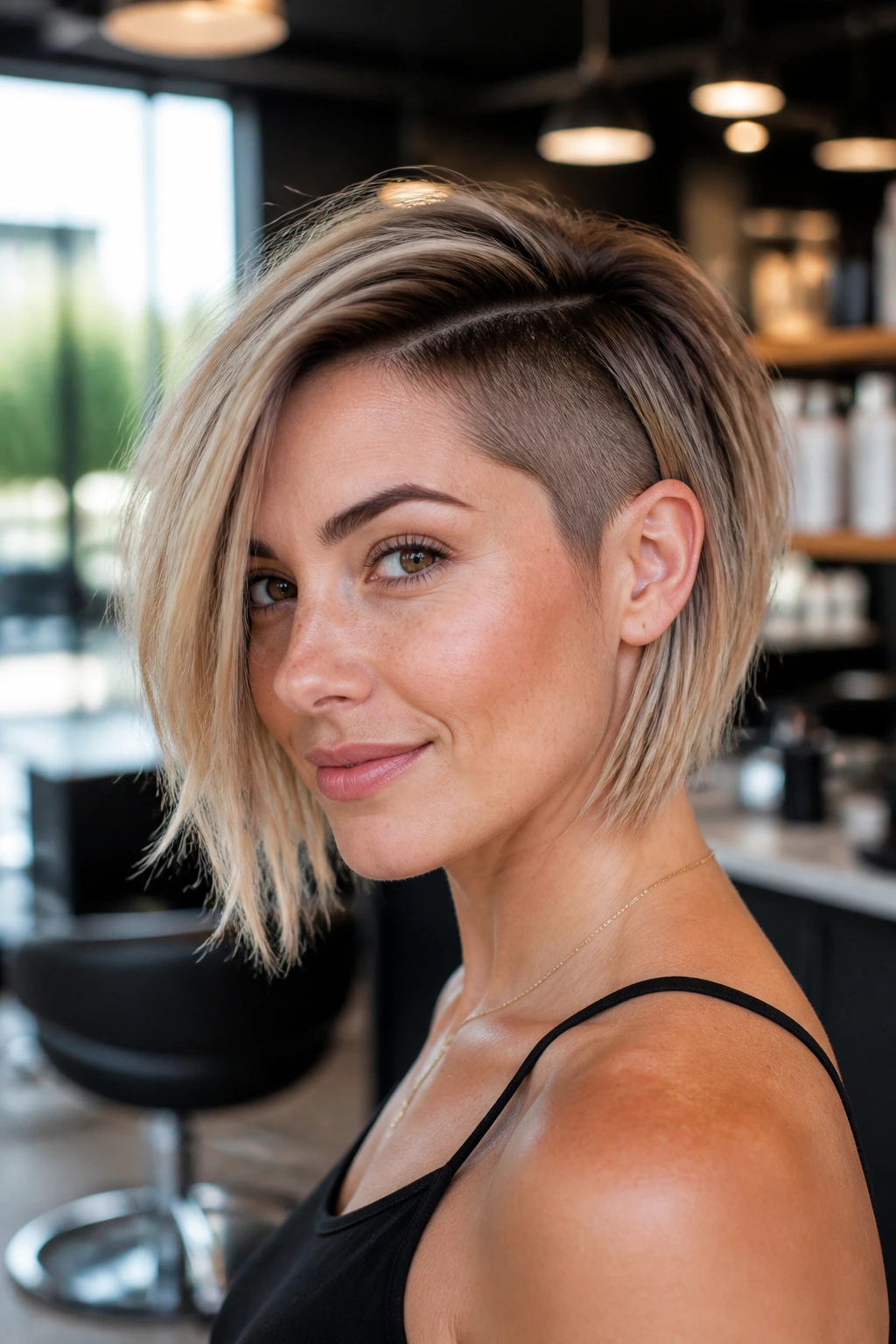
Sliced ends have a different feel from feathered ends. They’re lighter, more separated, and a bit more piecey, which works well when you want the side sweep to move instead of sit in one solid block.
On straight hair, slicing helps the ends avoid that blunt, too-perfect line that can look harsh if the cut is heavy. The shaved side keeps the silhouette from getting soft in the wrong way. If you have a lot of hair and want the bob to sit nearer the head, this is a smart cut to ask about.
Styling note: use a tiny bit of wax on the very ends only. You want separation, not crunch.
28. The Clean Occipital Line Bob
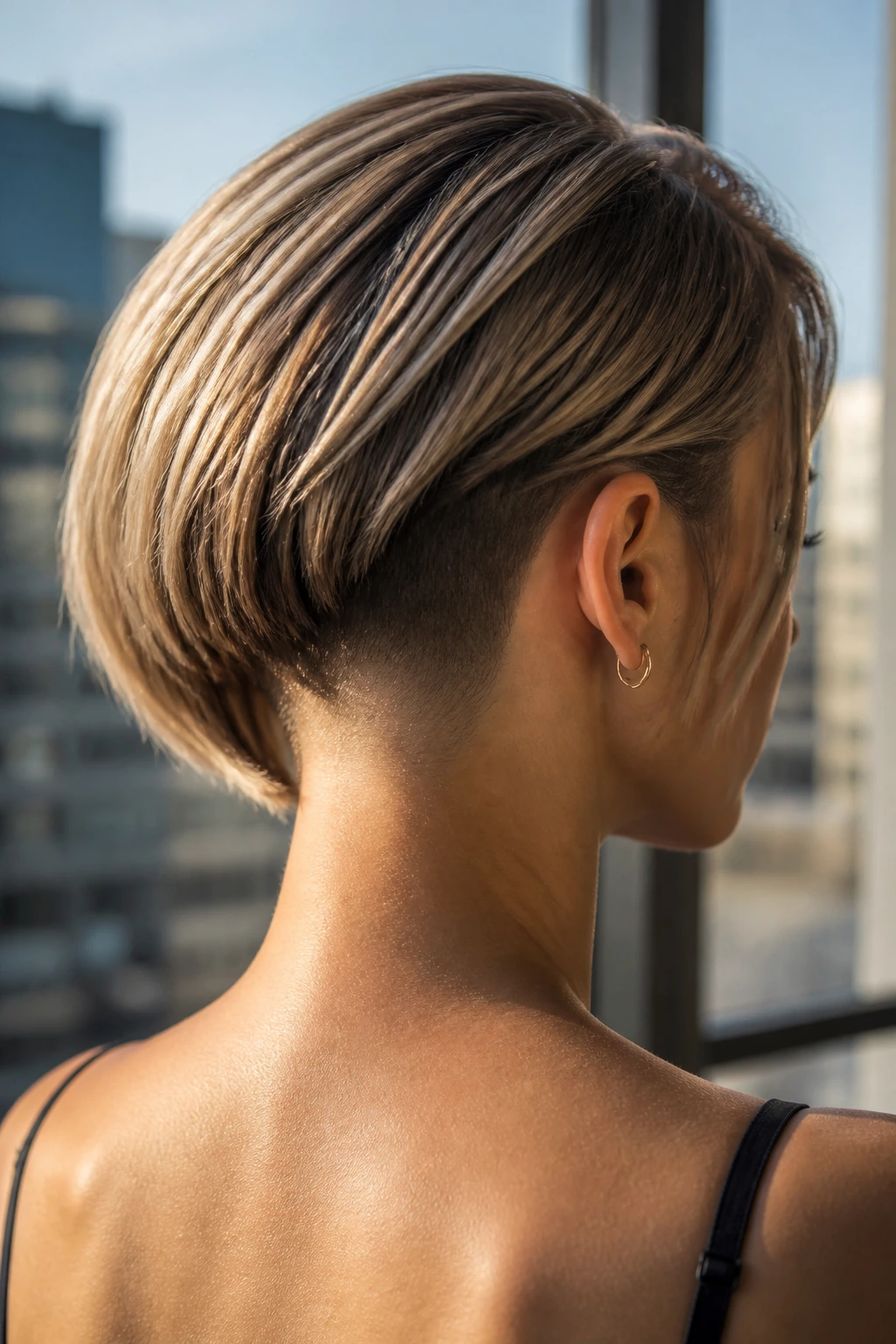
The occipital area — the back curve of the head — is where a lot of bobs either sit beautifully or get awkward. This cut treats that area like the main event, keeping the line clean and controlled so the side sweep has a solid base to fall from.
A shaved nape or lower side section helps the back stay close to the head. That matters on straight hair because the line at the back shows everything. If it’s good, the haircut looks refined. If it’s off, you will see it in every mirror. This version is for people who care about the back view as much as the front.
Tell your stylist you want the neckline and back curve checked from multiple angles before they finish. Worth the minute.
29. The Sleek Side-Part Bob with a Narrow Shave
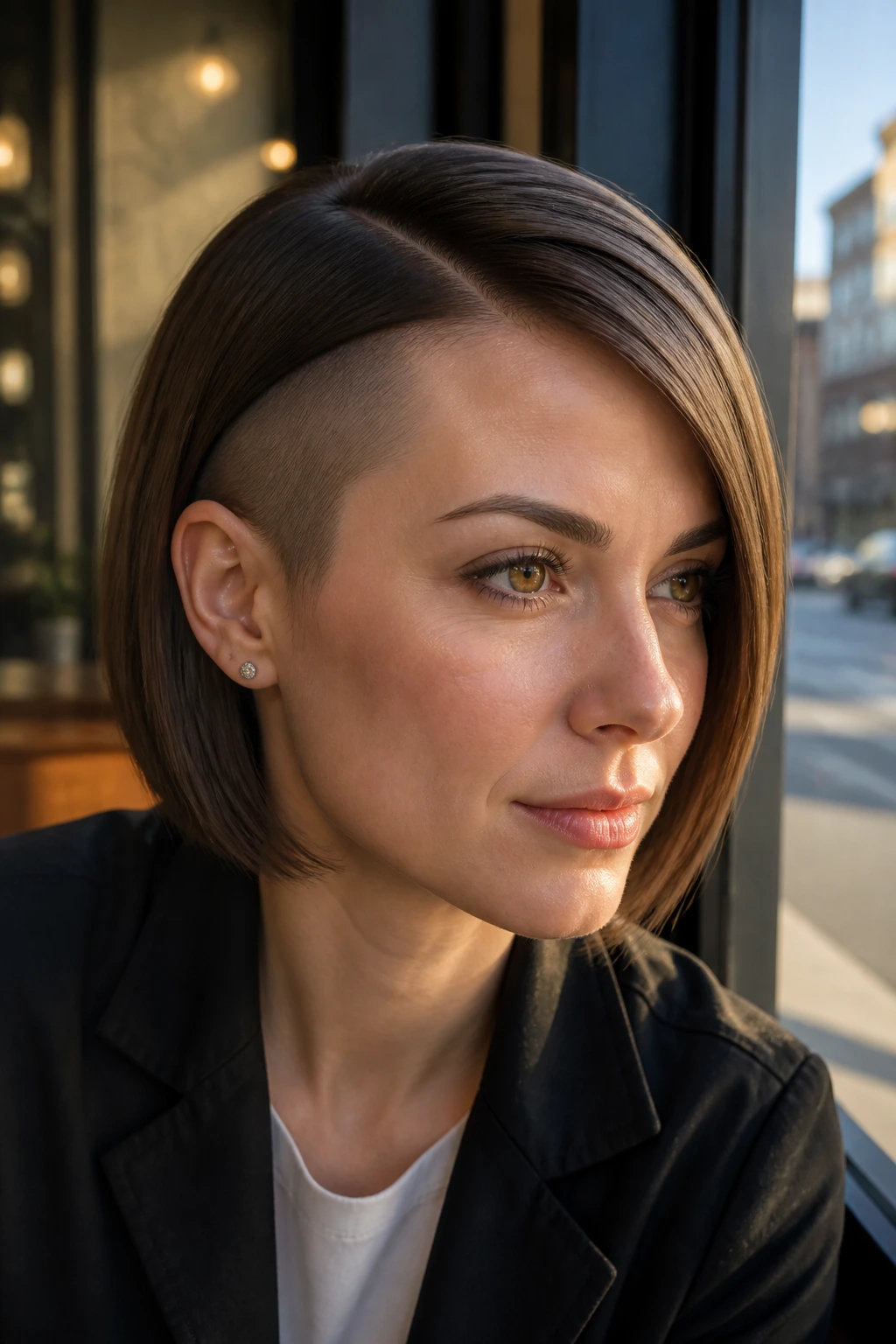
This one is all about restraint. The side part is deep, the top is smooth, and the shave stays narrow so the haircut reads sleek rather than aggressive.
The narrow shave gives just enough contrast to keep straight hair from looking too solid. That’s the sweet spot if you want polish, not shock value. A lot of clients ask for a “little edge” and then panic when the cut gets too visible. This is the safer version that still feels intentional.
H3: When to choose it
Pick this if you wear structured clothes, minimal makeup, or glasses and want the haircut to frame your whole face without fighting the rest of your look.
30. The Grow-Out Friendly Shaved Bob
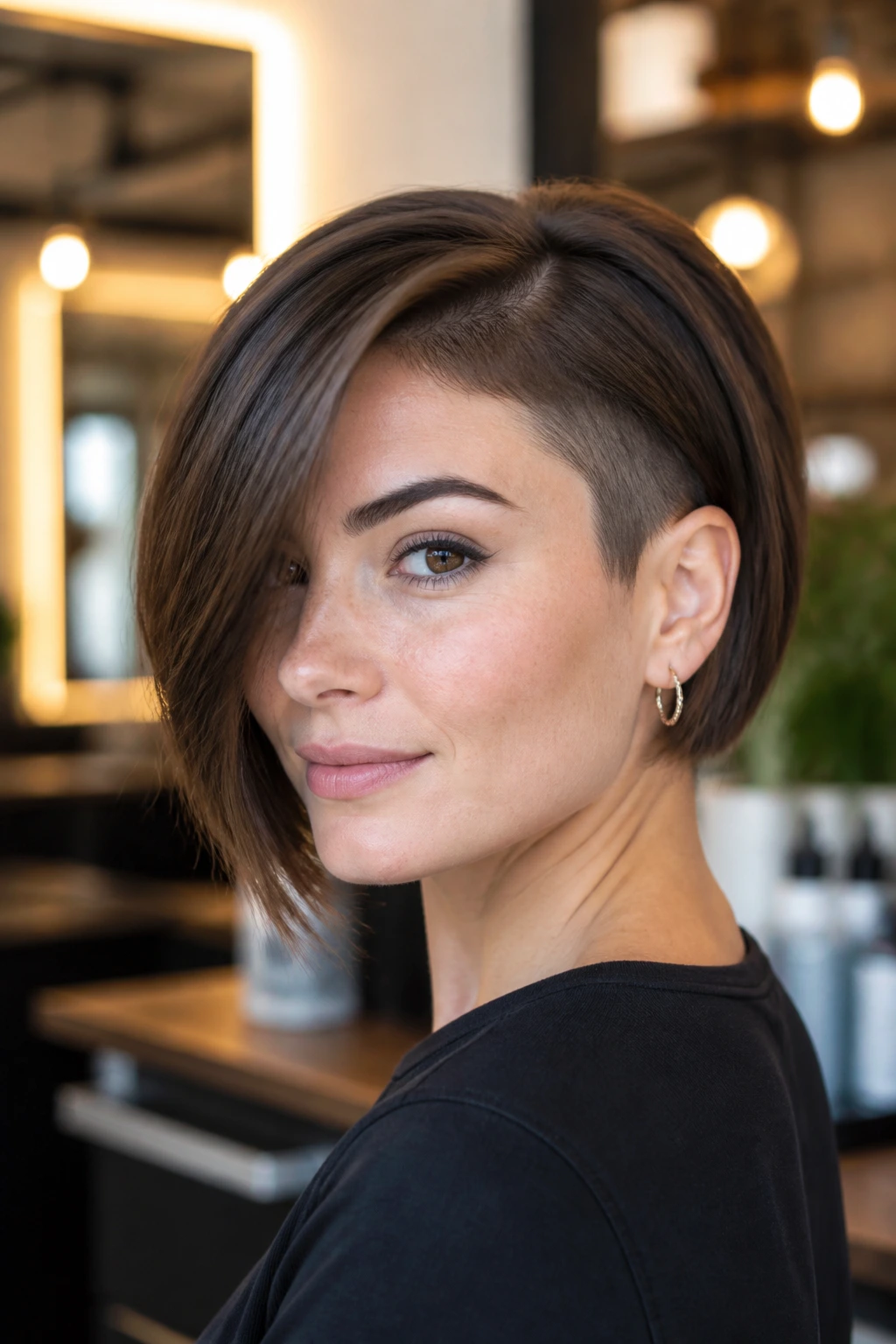
Not every shaved bob needs to be high-maintenance. This version keeps the shave low, the top long enough to cover most of it, and the side sweep soft enough that the shape still works when the grow-out starts showing.
Straight hair helps here because the new length settles in a neat line rather than sticking out in random directions. That means you can stretch the time between clean-ups a bit longer than you could with a curlier texture. Ask for a shave that sits low at the nape or behind the ear, not high into the side of the head, and keep the outer bob just long enough to tuck.
If you want a cut that can survive a busy stretch without losing its shape, this is the one to keep in your back pocket.
Why Straight Hair Makes the Shave Look Sharper
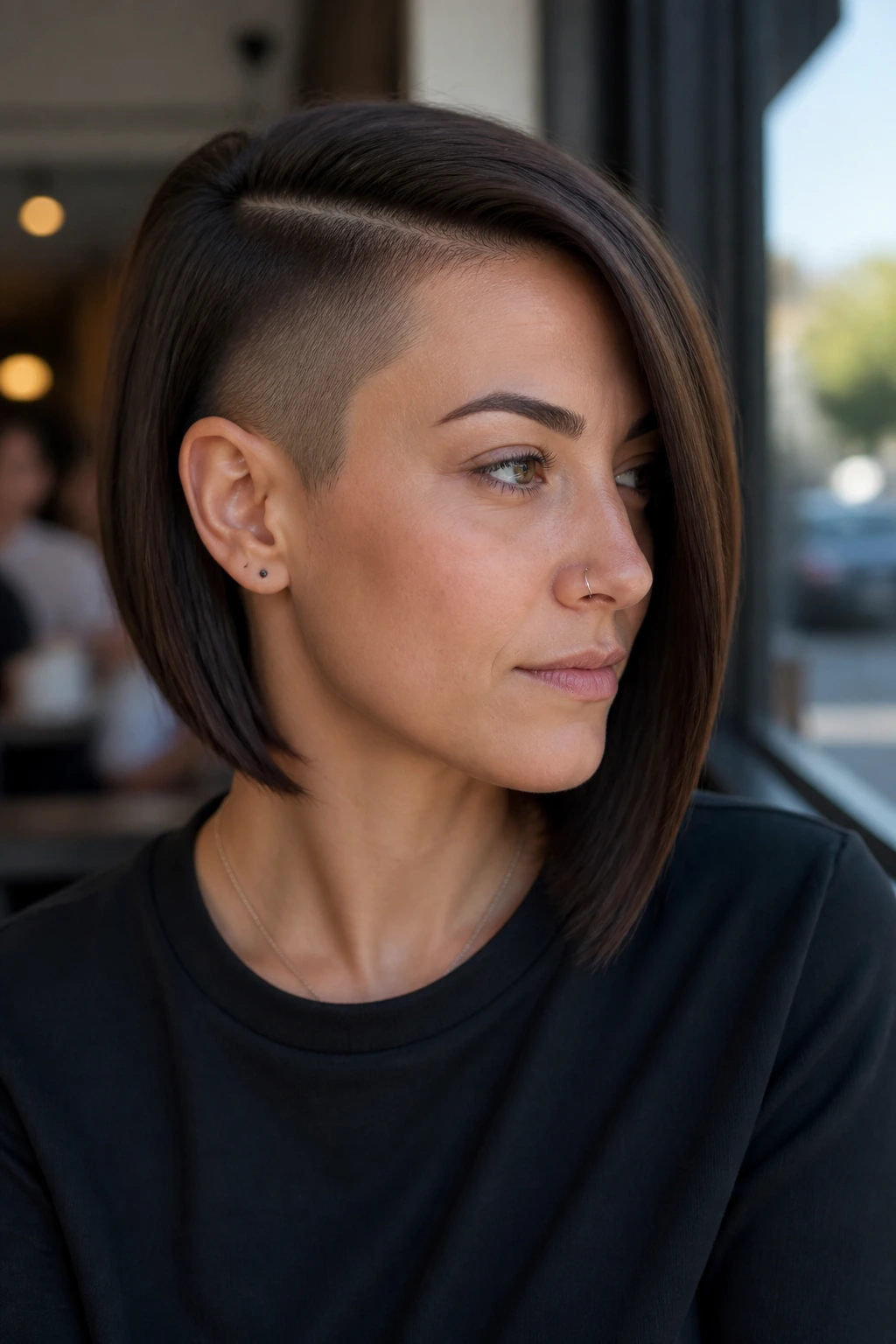
Straight hair does not hide much, and that is the whole advantage here. The line of the bob stays visible, the side sweep lands cleanly, and the shaved section looks crisp instead of blurred into the rest of the cut.
The other thing straight hair does well is show balance. If the top is too heavy, you know immediately. If the shave is too high, you know immediately. That honesty is useful. It gives you a haircut that can be adjusted in small increments instead of requiring a full stylistic leap every time you want a change.
There’s also a practical side. A straight texture takes less coaxing to reveal a part, a tuck, or an asymmetry. A quick blow-dry with tension, a flat brush, and a cool shot at the end can set the shape. No curls needed. No fussing with a dozen products. Just a cut with enough structure to hold its own.
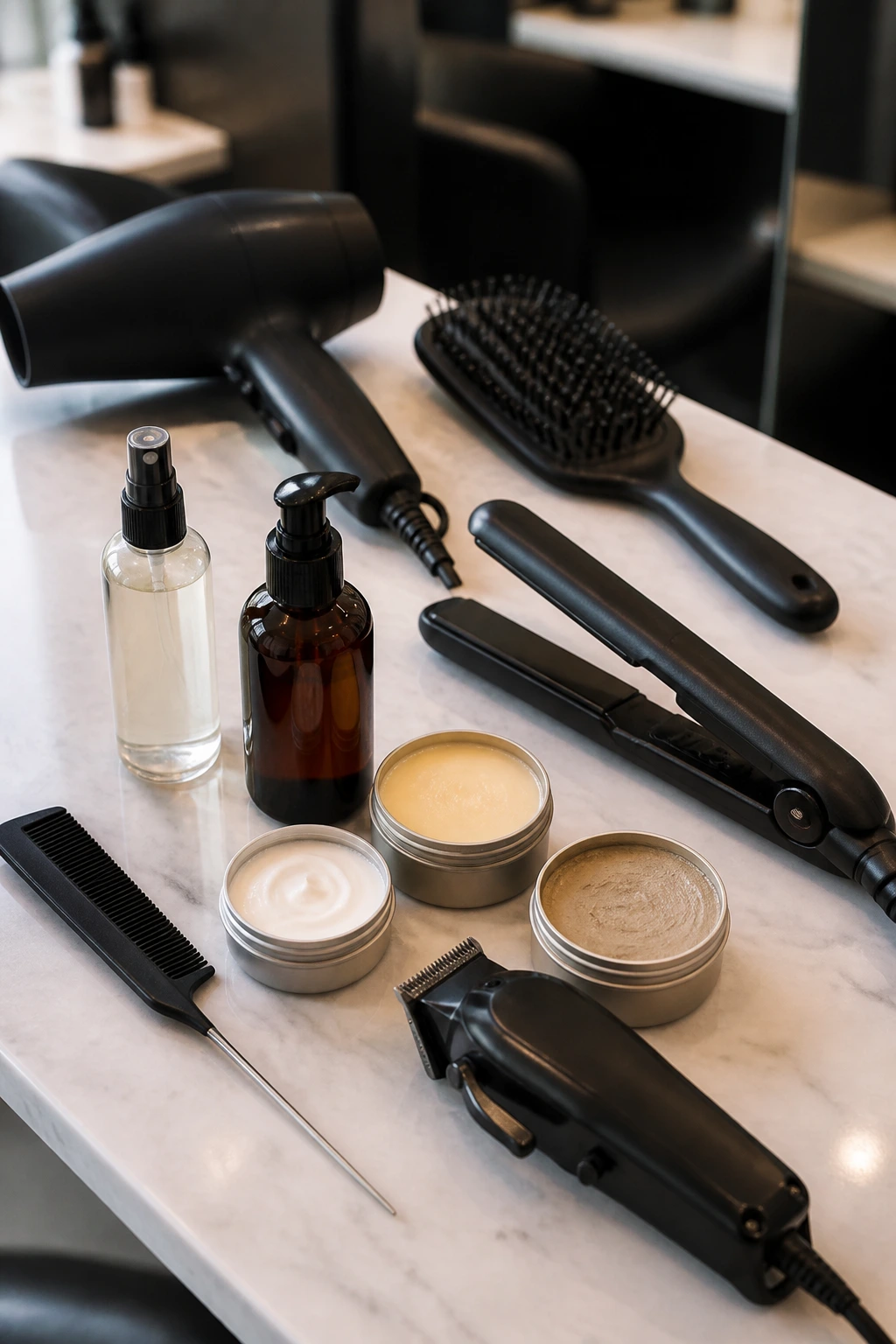
Tools, Brushes, and Styling Products That Matter
-
Tail comb: Helps carve a deep side part and keep the sweep clean while you blow-dry.
-
Blow dryer with nozzle attachment: The nozzle gives you tension and direction, which matters more than raw heat.
-
Flat brush or small paddle brush: Best for straightening the top layer without adding a round bend you didn’t ask for.
-
1-inch flat iron: Useful for polishing the front pieces and smoothing the ends, especially around the jaw and cheekbone.
-
Lightweight heat protectant: Keeps the surface smooth and cuts down on that dry, rough feel after heat styling.
-
Smoothing serum or light oil: Use a small amount on the mid-lengths and ends only; roots need to stay clean.
-
Texture paste or soft wax: Handy for separating the fringe or defining a tucked side without making it crunchy.
-
Optional clipper or trimmer: Only if you plan to maintain a visible nape or temple shave between salon visits.
How to Ask for the Right Version at the Salon
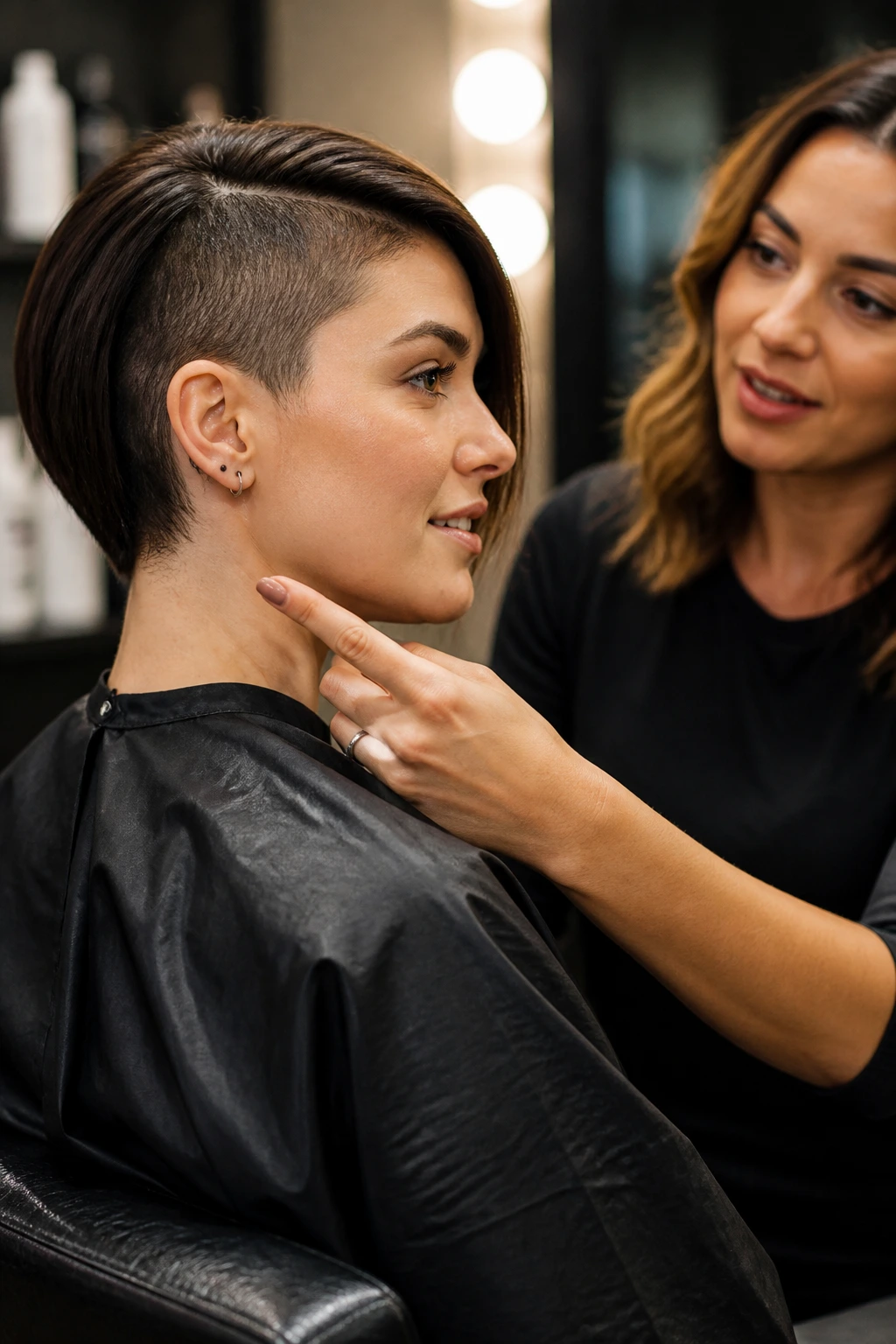
Bring photos, yes, but bring language too. A good stylist can work from a picture, yet the details that matter are often the ones nobody circles with a finger. Say where you want the shave to live — temple, behind the ear, nape, or hidden underneath — and say whether you want it visible only when tucked.
Be specific about your straight hair. If it’s fine, thick, pin-straight, or prone to a cowlick at the temple, that changes the cut. A deep side part can fight a stubborn growth pattern. A very short shave can show more scalp than you expected. A blunt perimeter can look sleek on one person and stiff on another.
Bring up your usual styling routine too. If you air-dry, your stylist needs to know. If you flat iron every morning, say that. If you hate trimming every four weeks, say that louder. The right version of this haircut depends as much on upkeep as on shape, and the least flattering mistake I see is a cut designed for someone else’s schedule.
How to Style the Sweep Without Making It Puffy
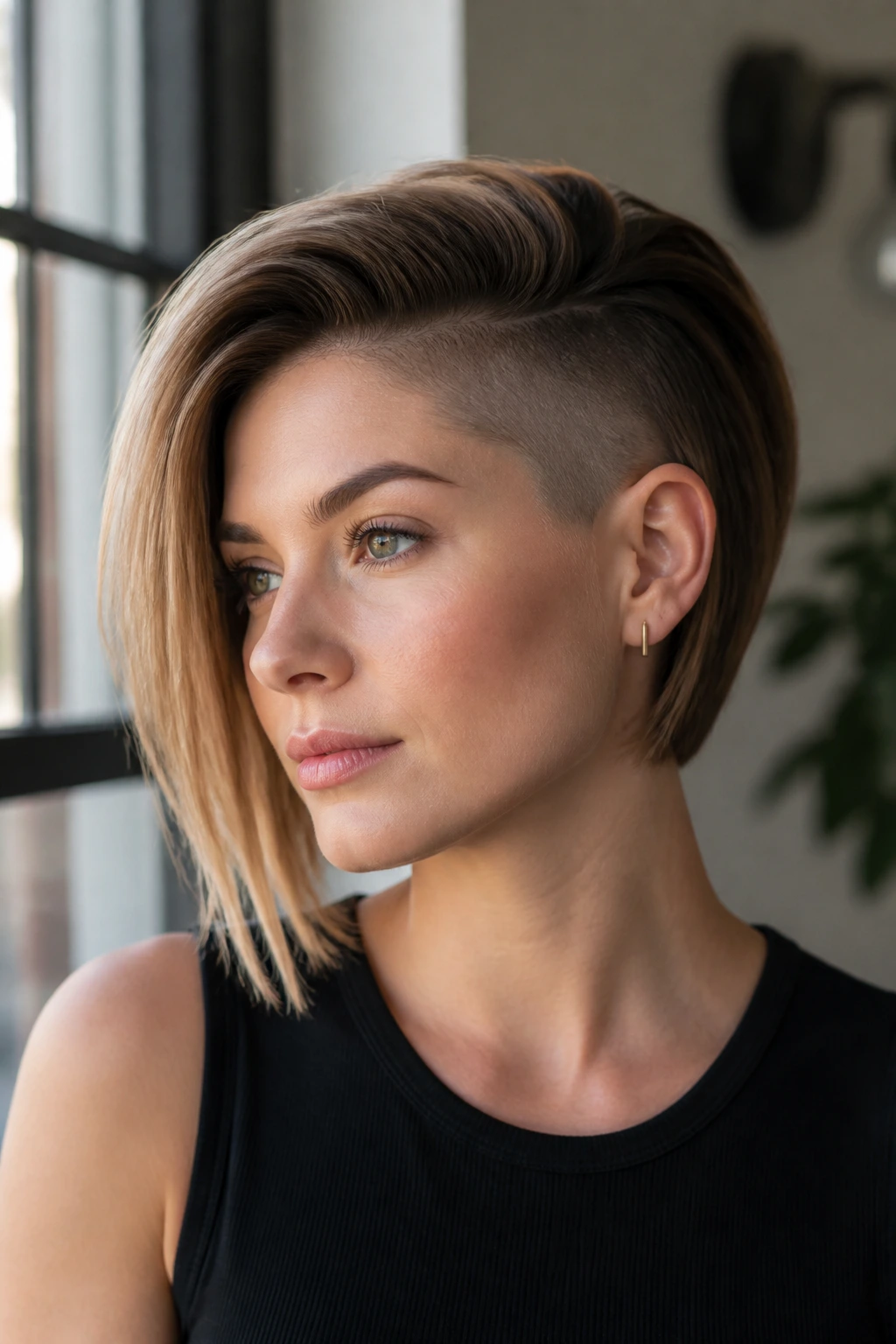
Start with damp hair and set the part before you dry anything else. That matters more than the product bottle. Once the hair begins drying in the wrong direction, you spend twice the time forcing it back.
Use a nozzle on the dryer and push the top section away from the shaved side with a brush. Keep tension through the ends so the sweep falls cleanly, then hit it with cool air before moving on. For straight hair, that cool shot is what locks in the bend without puff.
If you want extra polish, use a flat iron only on the top layer and the front pieces. Don’t iron the whole head. That’s how the style starts looking overworked and thin. A tiny amount of serum on the ends is enough. Anything more near the roots will flatten the whole shape and make the shave feel accidental.
Common Mistakes That Make This Cut Fall Flat
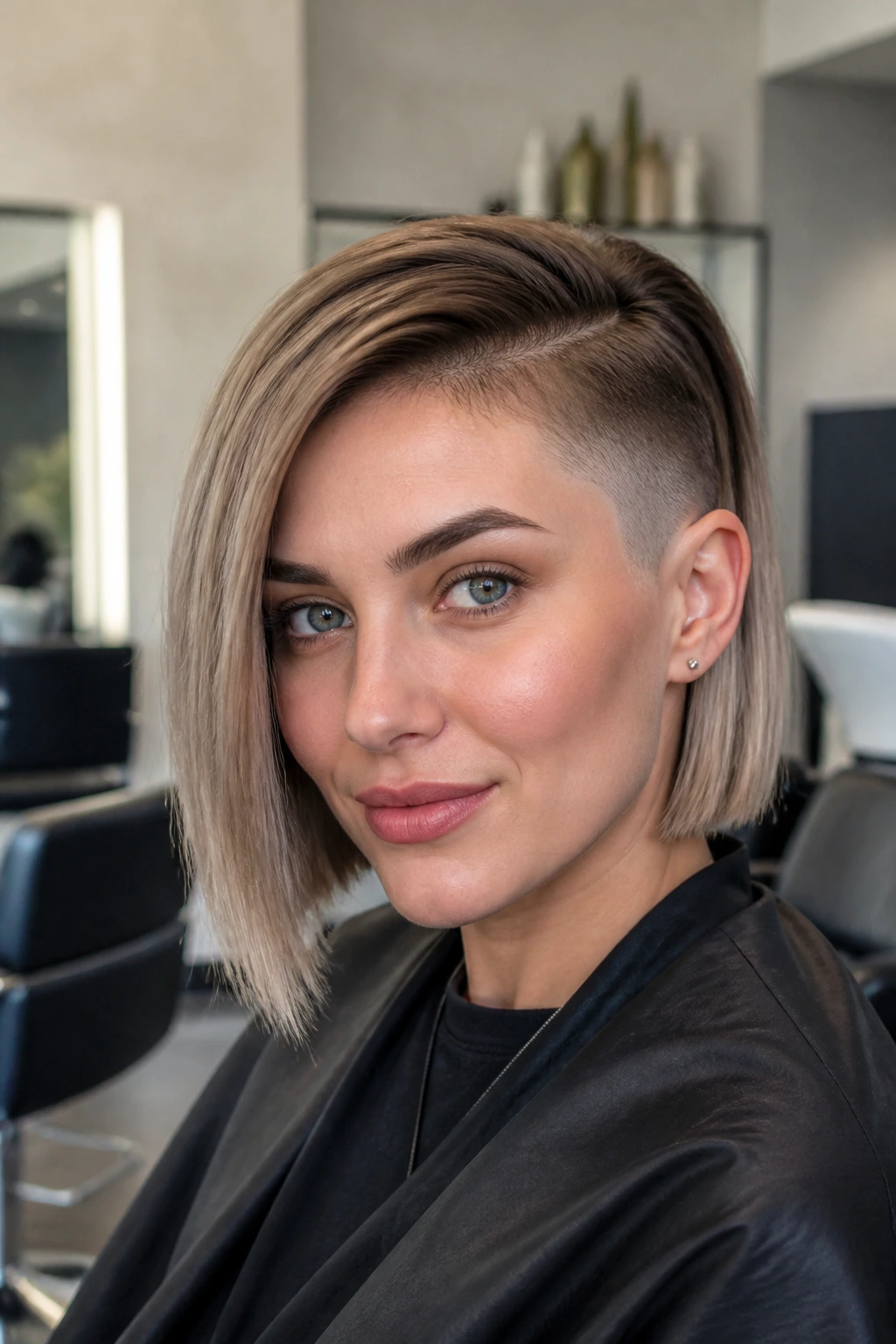
The first mistake is shaving too high too fast. A high shave can look sharp in the chair and strange two weeks later, especially if the top is not long enough to cover it. The fix is simple: keep the shave low or narrow unless you know you want the contrast.
Second, people often ignore the hairline and cowlicks around the temple. Straight hair still has little bends and springs at the roots, and a bad growth pattern can push the sweep open in the wrong place. A stylist should check how the front falls dry, not just wet.
Third, the top gets cut too short. If the side sweep cannot cross the face, it stops being a side-swept bob and starts being just short hair. You need enough length for the diagonal to land.
Last, too much product. Straight hair shows buildup faster than wavy hair, so heavy creams and oils can make the whole cut collapse by noon.
Variations and Alternatives to Try

Office-Friendly Hidden Shave: Keep the undercut low and the top long enough to cover it when worn down. You get the clean shape without having to explain your haircut in every meeting.
Bold Temple Reveal: Raise the temple shave a little higher and keep the sweep dramatic. This version shows best with earrings, sharp eyeliner, or a tucked side.
Fine-Hair Lift Version: Ask for a blunt perimeter, minimal layering, and a narrow shave that removes weight without making the ends look sparse. It gives fine straight hair more structure at the roots.
Thick-Hair Shape Saver: Use a hidden panel or nape shave with light graduation through the back. This keeps bulk from sitting at the jaw and makes drying faster.
Long Grow-Out Lob: Let the front fall past the collarbone and keep the shave low. This is the easiest adaptation if you want to keep the idea of the cut while softening the maintenance load.
Keeping the Shape Sharp Between Cuts
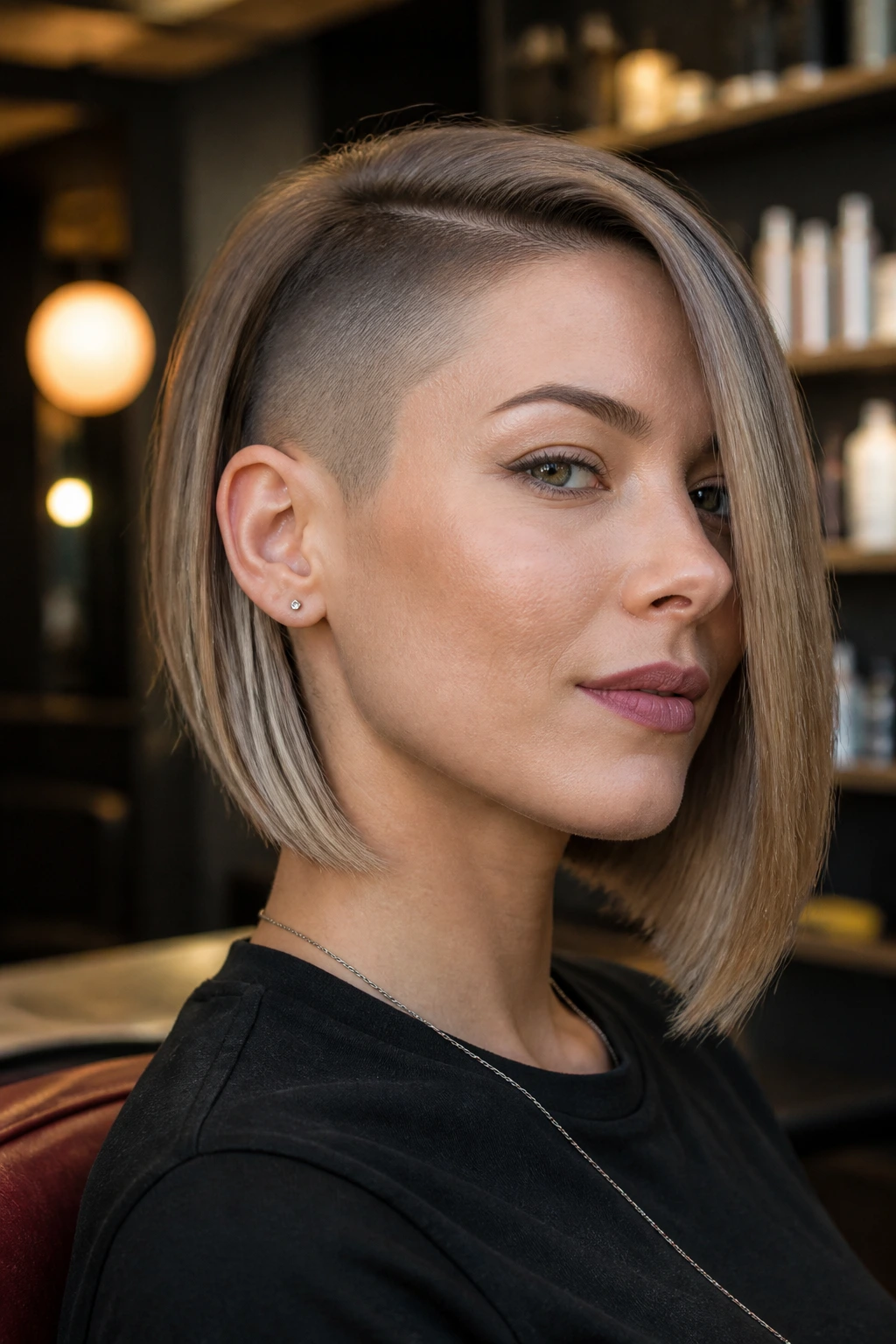
A shaved side-swept bob does not forgive neglect, but it does reward routine. Most people need a quick clean-up on the shaved area every 2 to 4 weeks if the detail is visible. Hidden shaves can stretch farther, sometimes 5 to 6 weeks, depending on how fast your hair grows and how much of the shave shows.
The rest of the bob usually holds its shape for 6 to 8 weeks before the ends start losing their line. Straight hair will reveal split, frayed tips faster than textured hair, so trim timing matters more than people expect. If the bob begins to flip in odd directions at the jaw, that is your sign.
Wash the shave area well. Product build-up can make the close-cut section look dull and patchy. A light conditioner on the lengths is fine, but keep it off the scalp if the shave is visible. And if you style with heat often, give the ends a break now and then. Straight hair shows dry damage fast, and a crisp bob can slide into a tired-looking one before you notice.
FAQs About Shaved Side-Swept Bobs for Straight Hair
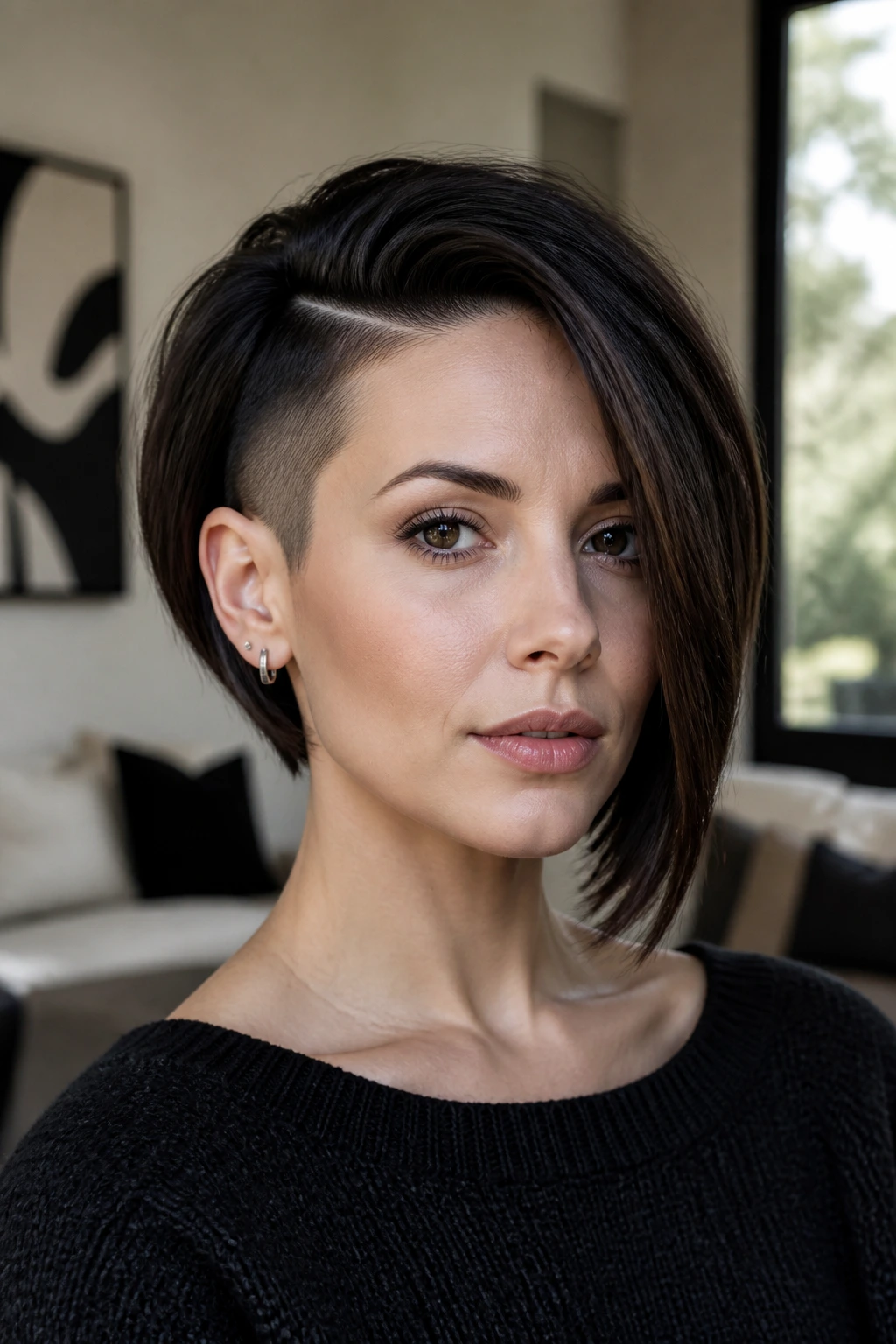
Will this haircut work if my hair is fine and flat?
Yes, but the version matters. A hidden undercut or a narrow temple shave usually works better than a high, dramatic shave because it removes weight without exposing too much scalp. Keep the top long enough to sweep cleanly across the face.
Can I hide the shaved side when I need to?
If the shave is low, yes. A longer top layer can cover an undercut or temple panel when the hair is worn down, tucked carefully, or parted away from the shaved side. A high shave is harder to hide and should be chosen with that in mind.
How often will I need touch-ups?
Visible shaves usually need a clean-up every 2 to 4 weeks. Hidden undercuts can stretch longer, but once the edge starts softening enough to show under the top layer, the shape loses its sharpness.
What if my hair has a strong cowlick near the part?
That does not rule the cut out, but the part placement may need adjusting. A stylist can shift the sweep slightly farther back or use the cowlick as part of the shape instead of fighting it every morning.
Does this cut need a lot of styling every day?
Not a lot, but some. Straight hair usually cooperates with a quick blow-dry and a flat brush, yet the side sweep looks best when the part is set on damp hair and the front is directed while drying. Skipping that step often leaves the bob looking lopsided.
Can I wear this with glasses?
Yes, and some versions look better with glasses than without them. A temple shave or tucked side can keep the frame arms from fighting the hair around the ear, which is one of the more practical reasons to choose this cut.
What if I want the style but not the maintenance?
Choose the longest version you can live with, keep the shave low and narrow, and avoid a dramatic asymmetrical shape. A collarbone lob with a hidden undercut is much easier to grow out than a short, high shave.
Should the shaved section be clippered or scissored?
For a true shaved look, clippers are the standard. Scissor-short areas can mimic the effect a little, but they don’t give the same clean contrast or the same crisp line on straight hair.
A Sharp Edge That Still Feels Wearable
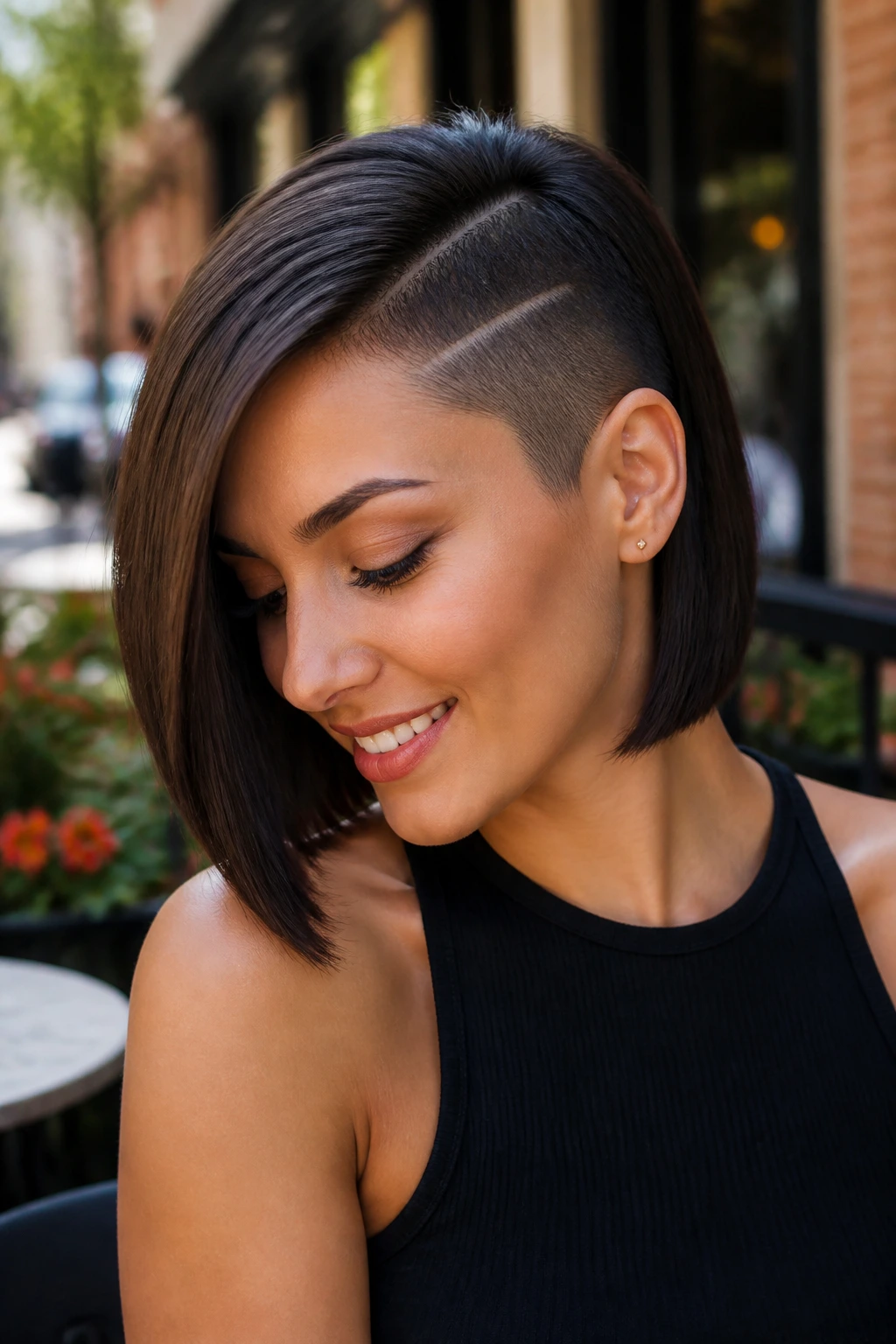
The nicest thing about these cuts is that they do not rely on curls, teasing, or a mountain of spray. Straight hair gives the shape a clear line, and the shave adds just enough contrast to keep the bob from feeling plain. That’s the whole trick, really: a haircut that knows where to be smooth and where to be ruthless.
Pick the version that matches your routine, not the one that looks loudest on a mood board. A hidden undercut can be just as satisfying as a temple shave if it fits your life better, and on straight hair, both can look exact in the best possible way.
If you want the top to glide and the side to do something interesting, this family of bobs earns its place. Choose one, show your stylist the part line, and let the shape do the talking the first time you tuck one side behind your ear.