



Heart-shaped faces can make a bob work harder than people expect. The forehead and cheekbones usually carry a lot of the visual weight, so the cut has to soften the top half, keep the jaw from disappearing, and let the waves do some of the talking. With the wrong length, a bob can puff at the sides or sit too high on the head. With the right one, the face looks calmer, longer, and a little more expensive-looking without trying so hard.
Wavy hair gives you a real advantage here. It already has bend and body, which means a bob doesn’t have to fake movement with a lot of hot tools. The catch is that waves also react fast to weight removal, over-layering, and bad parting decisions. A blunt edge at the wrong spot can turn into triangle territory. Too much crown volume can make the forehead feel wider than it is.
That’s why bob choices matter so much for this face-and-texture combo. The best ones don’t fight the natural wave pattern. They work with it, then place the length where it softens the chin, skims the cheekbones, or shifts attention downward in a clean line. Some of these cuts are sleek. Some are lived-in. A few are a little cheeky. All of them are worth knowing before you sit in the chair.
Why This Collection Stands Out
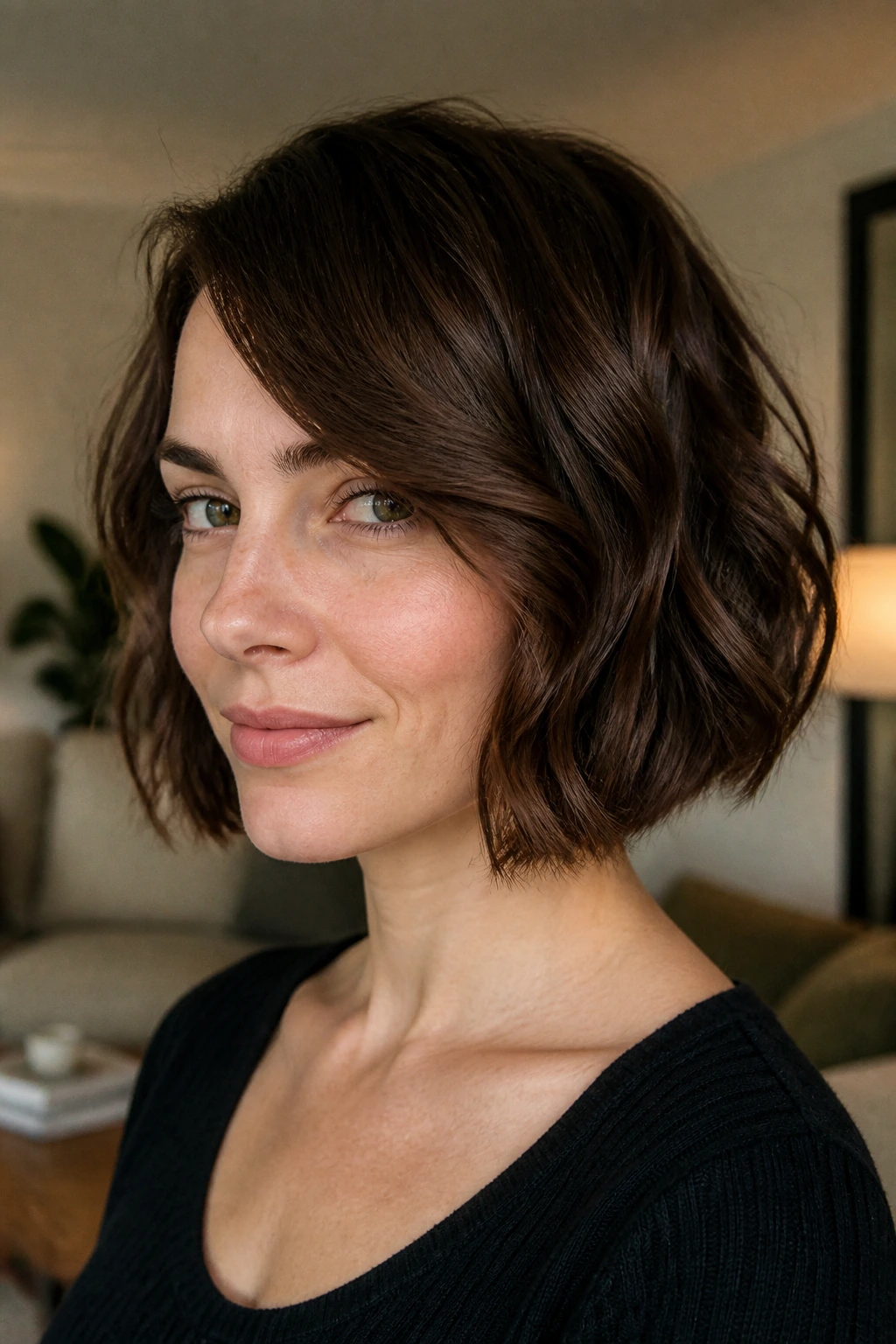
- Built for wave pattern: These cuts leave enough room for a natural bend, so the shape doesn’t collapse the second your hair dries.
- Face-shape first: Each bob either softens the forehead, widens the lower face a bit, or does both without turning the haircut into a helmet.
- Salon-friendly wording: You can actually describe these shapes to a stylist without waving around a dozen vague photos and hoping for the best.
- Short, medium, and long options: Not everyone wants chin-length hair, and this collection gives you room to stay close to the neck or keep a little shoulder-skimming length.
- Real styling range: Some of these look best air-dried, some need a brush and a diffuser, and a few only need a quick bend at the ends.
- Thick or fine hair, covered: The list includes airy cuts, heavier shapes, and in-between versions so you can match the cut to the amount of hair on your head, not just the face shape in the mirror.
1. Chin-Length French Bob With a Side Sweep
A chin-length French bob has that neat, slightly undone feel that makes wavy hair look deliberate instead of chaotic. On a heart-shaped face, the side sweep matters almost as much as the cut itself. It keeps the forehead from taking over, and the chin-length edge gives the lower half of the face a little more visual weight.
Why this shape works
The trick is where the line lands. If the ends stop right at the chin, the look can get sharp and a bit severe. I prefer it a touch below, with a soft bend under the jaw and enough movement that the outline doesn’t feel rigid.
- Ask for a length that lands at or just below the chin.
- Keep the ends blunt enough to hold shape, but not so blunt they sit like a shelf.
- Use a side part that starts slightly off-center.
- Style with a light mousse and a quick diffuser dry.
My favorite detail: tuck one side behind the ear and let the other side fall forward. That tiny asymmetry does a lot of work.
2. Soft Jawline Bob With Invisible Layers
This is the bob for someone who wants shape without the obvious “layered haircut” look. The perimeter stays clean, but the interior loses a little weight so the waves can move instead of puffing out at the sides. On a heart-shaped face, that hidden structure helps the jaw look a little fuller without adding width at the temples.
The best version starts just above or just below the jawline, depending on how strong your wave pattern is. If your hair is thick, ask for weight removal under the top layer, not around the face. If it’s fine, keep the layers conservative so the cut doesn’t deflate by noon.
This one looks especially good when the waves clump into soft ribbons rather than tiny frizzed-out pieces. A pea-sized amount of curl cream or a lightweight leave-in is enough. Anything heavier can make the whole thing collapse into a damp-looking triangle, and nobody needs that.
What to tell your stylist: “Keep the outline clean, but take weight out inside so it bends without bulk.”
3. Collarbone Lob With Loose Ends
Want the shortest haircut that still lets you shove it into a small clip on bad days? This is the one. A collarbone lob gives heart-shaped faces a longer line through the lower face, which is useful if your chin is already narrow and you don’t want the haircut to sharpen it further.
How to wear it
This cut is forgiving because the extra length gives your waves somewhere to fall. You can wear it with a center part, but I like it best with a soft off-center part and a few bent pieces that start around the cheekbones. That keeps the top half open without making the forehead feel broad.
- Best for medium to thick wavy hair.
- Easy to air-dry with a little leave-in and scrunching.
- Good if you want enough length for a low ponytail or claw clip.
- Ask for slightly longer front pieces so the haircut angles toward the collarbone.
It’s a practical cut, yes, but not a boring one. The loose ends keep it from looking too polished, which is exactly what makes it feel current without needing a lot of effort.
4. Curtain Bang Bob That Opens the Cheekbones
Curtain bangs can be a gift for heart-shaped faces when they’re cut with enough softness. They split the forehead visually, then drift toward the cheekbones instead of sitting like a hard wall across the front. Pair them with a bob that sits at the cheek or upper neck, and the whole cut feels balanced in a very natural way.
The key is restraint. Curtain bangs should begin shorter in the center and grow longer as they move outward, but they shouldn’t be so dense that they block your eyes. On wavy hair, they usually need a little round-brush help at the roots or they’ll separate too quickly and lose the frame.
I like this shape when the bob itself stays loose and slightly piecey. If the bob is too solid and the fringe is too fluffy, the haircut can get top-heavy. Keep the ends light, keep the fringe movable, and don’t over-flatten the crown.
A small round brush, a quick root lift, and a dab of styling cream at the bangs is enough. Leave the rest of the wave pattern a little undone. That contrast is the point.
5. A-Line Bob With a Tucked Nape
An A-line bob gives you a clean diagonal from the back of the head to the front, and that line is quietly flattering on a heart-shaped face. The shorter nape lifts the neck area, while the longer front pieces keep the eye moving downward. That downward line helps counter a wider forehead without making the face look boxed in.
This cut works best when the front isn’t too dramatic. A steep A-line can feel trendy for about five minutes and then start looking fussy. A soft slope is better. You want people to notice the shape, not the engineering.
The tucked nape also makes the back feel tidy, which matters if your waves tend to bloom outward as they dry. The shape stays close to the head near the neck and opens up toward the jaw, where you actually want the softness. That’s the whole point.
If your hair is dense, ask for internal debulking near the nape. If your hair is finer, keep the line cleaner and avoid too much texturizing at the ends.
6. Textured Shag Bob With Piecey Ends
This is the cut for people who want their waves to look a little wild in a controlled way. A shaggy bob gives heart-shaped faces softness around the lower half and keeps the top from looking too severe. The piecey ends break up any blunt line that might otherwise sit hard against the chin.
What makes it different
Unlike a classic blunt bob, a shag bob is built on movement. The layers are meant to encourage separation, not perfection. That matters if your waves have a mind of their own, because the cut stops trying to force symmetry and starts working with the way your hair already falls.
A middle part can work here, but I usually prefer a slightly off-center one so the volume doesn’t land in a straight curtain around the face. If your waves are coarse, the texturizing should be subtle. Too much and the ends frizz up fast. Too little and the shag loses its point.
This is one of the easiest options to air-dry. Scrunch in mousse, twist a few sections while damp, and walk away. The cut should keep itself together without needing a lot of fuss.
7. Rounded Bob With Airy Crown Volume
A rounded bob sounds prim, but it doesn’t have to be. On wavy hair, the shape can stay soft at the sides and gently lifted at the crown, which helps a heart-shaped face because the eye moves upward without getting trapped in width at the temples. The roundness is subtle. It should feel like a curve, not a bubble.
If your hair is fine or medium, this is a good one. It gives the illusion of fullness without needing heavy layering. If your hair is thick, ask for the crown to be built with care so it doesn’t puff. That’s the real line to watch.
I like this style when the ends brush just under the cheekbones and turn in a little. It gives the face a smoother outline. A soft side part can keep the forehead from looking broad, but a center part can work too if the crown volume stays modest.
A little root spray, a round brush near the top, and a light finish on the ends are enough. No stiff helmet hair. Please.
8. Asymmetrical Bob With a Deep Side Part
A deeper side part changes everything. Add one side that falls a little longer than the other, and the face gets an instant diagonal line that softens the forehead and distracts from a narrow chin. It’s a sharp cut in the best sense: not severe, just intentional.
This style is especially useful if your waves tend to fall flat on one side anyway. Instead of fighting the natural bend, the asymmetry makes that difference part of the shape. That’s smart haircutting, not a mistake dressed up as style.
The longer side should skim the jaw or upper neck, not hang too far into the chest unless you’re moving toward a lob. If the difference between sides is too dramatic, the haircut can start feeling costume-like. Keep it subtle and the effect is much better.
I’d recommend this one for medium-density waves that hold a bend for most of the day. It’s one of those shapes that looks polished with almost no effort, which is a rare thing. Even better, it grows out without getting ugly fast.
9. Blunt Bob With Feathered Tips
Can a blunt bob work on wavy hair? Yes, if you stop it from becoming a brick. The feathered tips matter here. They keep the clean line of the cut while softening the edge just enough that the waves can move instead of sticking out like a shelf.
For heart-shaped faces, the blunt perimeter gives the lower half of the face more presence. That’s useful when the forehead is broader and the chin is narrower. The feathering at the tips keeps the bob from looking too heavy or too square.
This one tends to work best a little longer than chin length, or the ends can sit too close to the narrowest part of the face. A soft center part can look elegant, but if your forehead feels prominent, a slight side part is the safer choice. Keep the roots controlled and the ends loose.
If you wear this cut, resist the urge to over-texturize it at home. A blunt bob needs the line to stay visible. Too much roughing up and the whole shape loses the point.
10. Wavy Box Bob With a Center Part
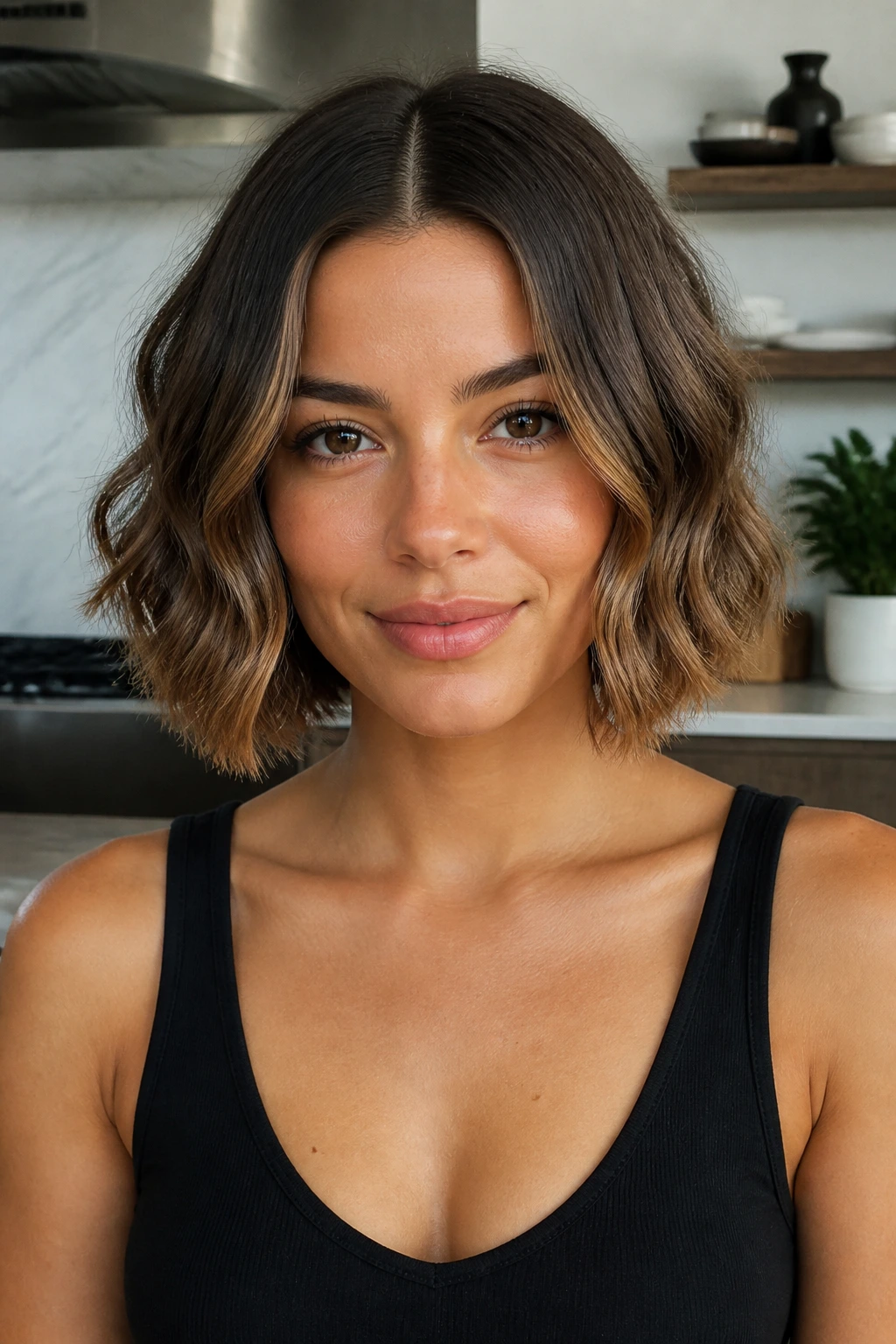
A box bob is square-ish, not flat. That’s the difference. The edges sit more evenly around the head, and on wavy hair the movement softens the geometry enough that it doesn’t feel harsh. For a heart-shaped face, it can work when the length lands below the cheekbones and the front doesn’t stop too high.
The center part is the risky part, and I’ll say that plainly. If your forehead is broad and you dislike showing it, this cut needs either a soft fringe or a little extra length in front. Without that, the line can feel too exposed on top.
Still, there’s something satisfying about the clean shape. The waves keep it from looking too severe, and the lower width gives the jaw more visual presence. It’s a good pick if you like structure but don’t want a fussy haircut.
I’d keep styling simple: air-dry with a light cream, then break up any stiff pieces with your fingers once it’s dry. No need to fight the boxy outline. Let it be a little architectural.
11. Layered Lob With Face-Framing Ribbons

This is the most forgiving choice in the whole group, and I mean that in the best way. A layered lob gives heart-shaped faces length, movement, and enough face-framing softness to calm a strong forehead without hiding the whole face behind hair. It also lets wavy hair do what it wants without bulking up at the cheeks.
The face-framing pieces should start around the cheekbone or just below it, then taper toward the collarbone. That keeps the front from looking too chopped up. I like this cut on hair that has uneven waves, because the layers help blend different bend patterns instead of exposing them.
If you’re unsure about going shorter, start here. It’s a safe middle ground. The cut still reads as a bob, but it gives you more styling options than a chin-length shape. You can tuck it, clip it, braid it, or just let it fall.
A flat iron isn’t necessary. A bend with a round brush or a quick wave refresh is enough. The beauty of this shape is that it looks intentional even when you did very little.
12. Razor-Cut Bob With Loose Movement
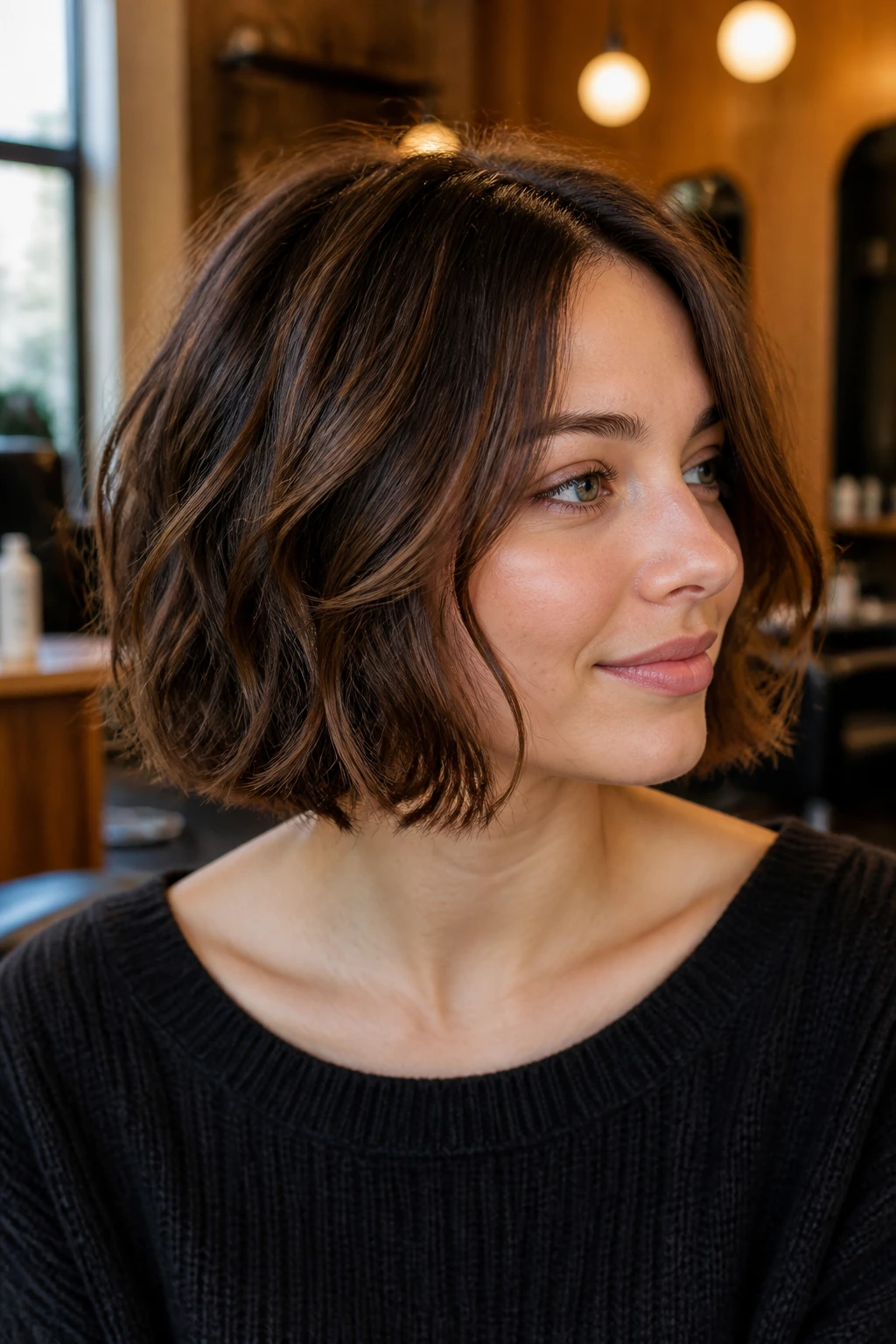
A razor-cut bob is all about air. The ends look softer because the cut breaks the line a little, which can be lovely on wavy hair if the razor work stays light and controlled. For heart-shaped faces, that airy movement helps soften the lower face without piling extra bulk at the temples.
The catch
Too much razor work, especially on coarse waves, can leave the ends frayed and thirsty-looking. So this is not the cut to ask for if your hair already behaves like straw in dry weather. A good stylist will use the razor to soften the perimeter, not thin the whole head into fuzz.
What I like here is the way the shape feels relaxed but not shapeless. The cut can sit just below the chin or drift into a short lob. Either way, it should move when you turn your head. That little swing matters.
Styling is easy if you keep the finish light. A small amount of cream, a touch of texture spray, and a few scrunches are enough. If the hair starts looking frizzy, stop adding product and step back.
13. Bixie-Bob Hybrid With a Longer Fringe

This one is for the person who wants a little edge without going fully short. A bixie-bob hybrid sits between a pixie and a bob, but the longer fringe keeps it friendly for a heart-shaped face. That fringe can soften the forehead while the shorter back keeps the haircut light and playful.
The important part is the fringe length. It should graze the eyebrows or cheekbones, not sit as a hard, short bang that makes the face look top-heavy. With wavy hair, the texture keeps the cut from looking too precise, which is exactly what gives it personality.
I’d especially recommend this for thicker waves that need a lot of weight removed. It opens up the neck, makes the hair feel lighter, and still leaves enough length in front to frame the face. If you’re worried about a full bob feeling too heavy around the chin, this is a smart compromise.
You do need to style it a little. A dab of mousse, a bit of finger drying, and a quick pinch at the fringe will keep the shape readable. That’s the tradeoff.
14. Side-Swept Bang Bob With Cheekbone Lift
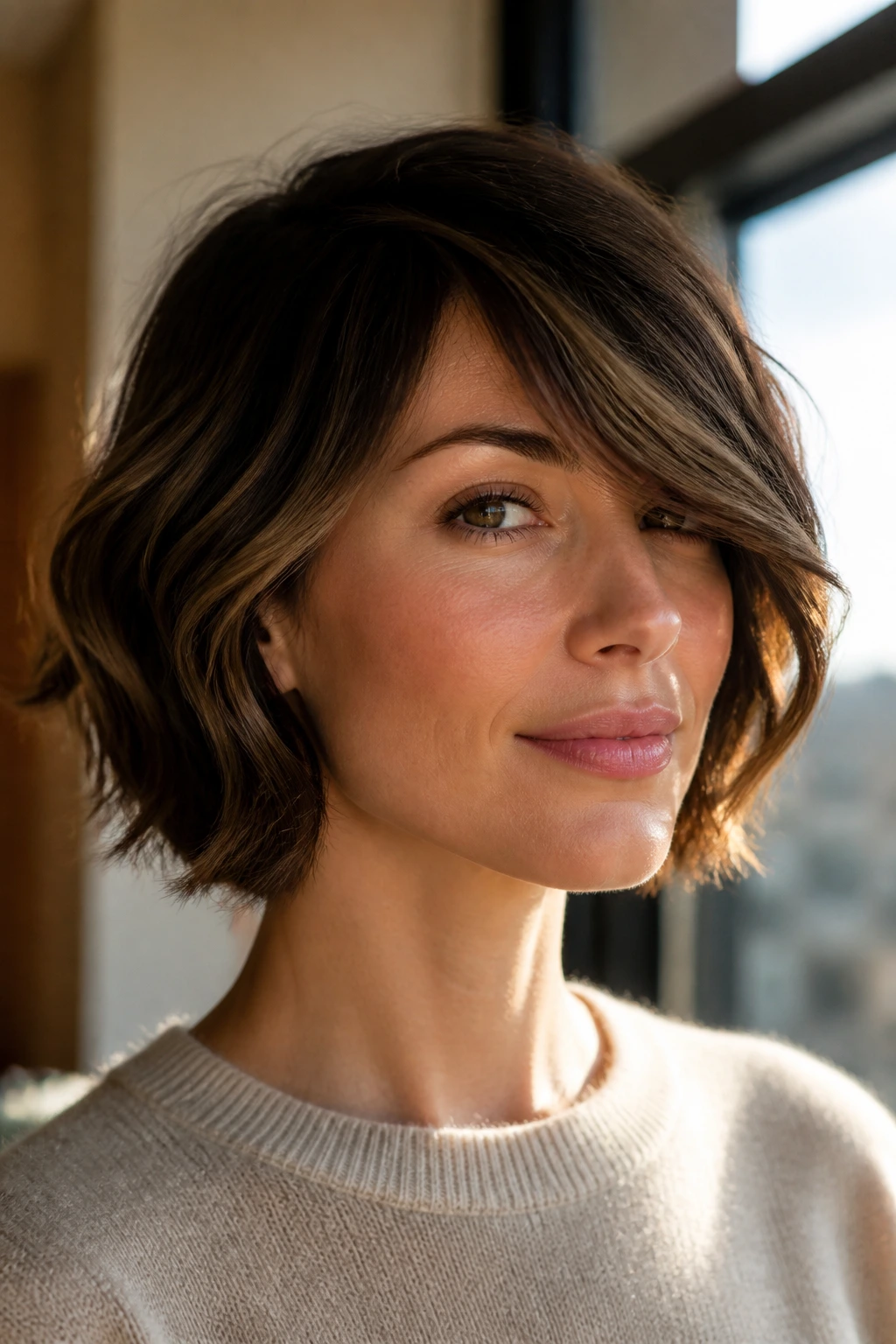
Side-swept bangs are one of the oldest tricks in the book, and they’re still here because they work. On a heart-shaped face, the sweeping line draws attention across the forehead instead of across it, which softens width up top and puts emphasis closer to the cheekbones. Pair that with a bob that lands near the jaw, and the shape gets a nice diagonal flow.
How to style it
The bang should be long enough to move. If it’s cut too short, it can spring up and lose the sweep. Ask for softness through the ends so it doesn’t sit as a heavy curtain.
- Best on medium waves with a little natural bend.
- Easy to tuck behind the ear when you want a cleaner face line.
- Works with side parts better than center parts.
- Ask for the bang to blend into the front layers instead of ending abruptly.
This is one of those cuts that looks better after a little bit of wear. The waves settle, the fringe falls where it wants, and the whole thing starts to look lived-in in a good way.
15. Tousled Mid-Neck Bob With Hidden Layers
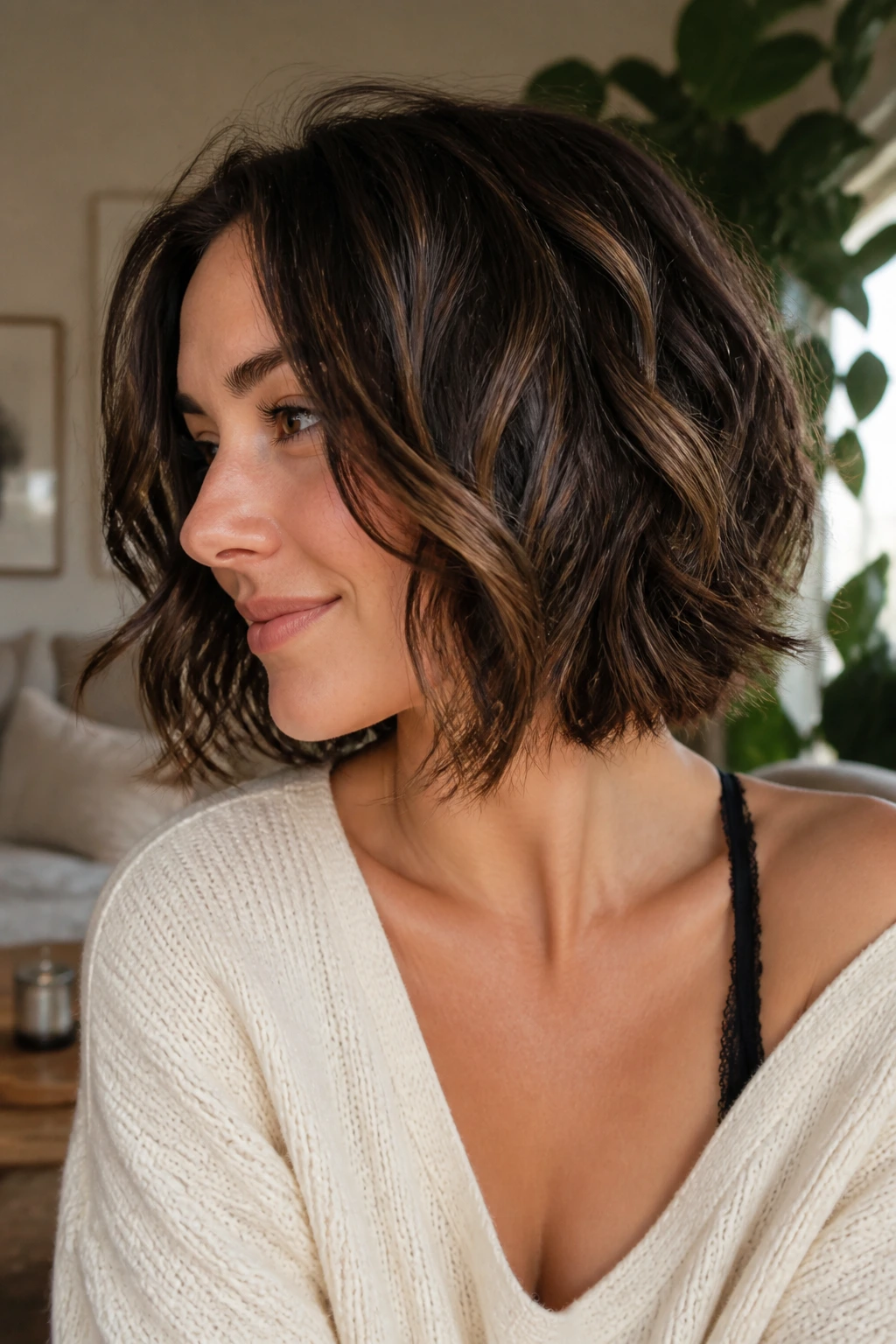
A mid-neck bob gives you enough length to keep the cut soft, but not so much that it loses the bob shape. Hidden layers matter here. They stop the waves from building a wide shelf around the lower face, which is a common problem when someone with a heart-shaped face goes shorter without enough movement.
I like this version for people who want an everyday cut that doesn’t need a blowout to behave. You can air-dry it, twist a few pieces, and go on with your day. The length sits below the chin, so the face keeps some breathing room. That alone makes a big difference.
The styling goal is relaxed separation. Not curls. Not a polished bend every single day. Just enough texture to keep the outline from looking flat. A tiny amount of cream through the ends and a mist of salt spray at the mid-lengths is enough.
This is also one of the easiest shapes to grow out. The hidden layers keep it from turning into a triangle as it gets longer, which is a nice bonus if you hate frequent salon visits.
16. Graduated Bob That Narrows at the Nape
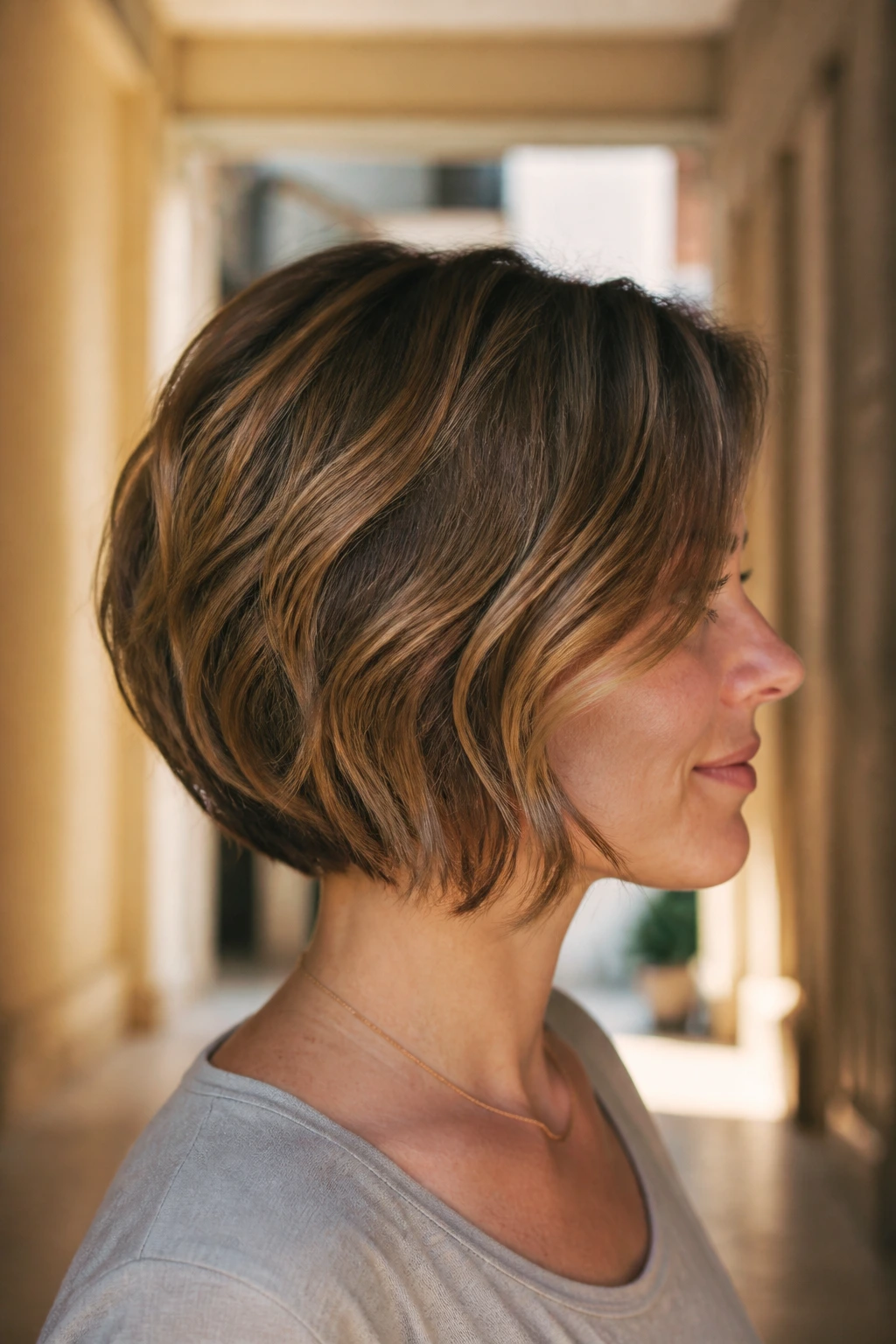
A graduated bob uses stacking in the back, but on wavy hair and a heart-shaped face, the grading should stay gentle. Too much stacked volume at the crown can make the forehead feel larger. Too little, and the cut loses the lift that makes the neck look longer.
The sweet spot is a shape that hugs the nape, then opens softly toward the front. The front pieces can brush the cheekbones or jawline, which gives the face a bit of softness where it needs it most. It’s a clean shape, almost tailored, but the waves keep it from feeling stern.
I like this cut on denser waves because the internal structure helps control bulk. If your hair is fine, you can still wear it, but the stacking needs to be subtle or the back can look thin fast. That’s the thing with graduated cuts: they’re about balance, not drama.
A side part tends to flatter this shape more than a dead-center part. It breaks the symmetry just enough to soften the forehead and keep the cut from feeling too geometric.
17. Beachy Long Bob With Minimal Layers

Some people want the least possible interference with their wave pattern. This is that haircut. A beachy long bob with minimal layers keeps the line long and loose, which works well when a heart-shaped face needs softness more than structure. The face gets room. The waves get room. Everyone wins.
The lack of heavy layering is the point. Too many layers on a wavy lob can make the ends kick out in odd directions and widen the whole cut. Keeping the interior fairly quiet lets the texture stay natural and the silhouette stay long.
This is one of the easiest bobs to live with if you prefer air-drying. Add leave-in conditioner, scrunch, and stop touching it. If you want a little polish, bend just the front pieces away from the face with a curling iron. That tiny bit of shaping is enough.
I’d choose this if you like soft hair around your face but still want a cut that feels clean and grown-up. It’s not flashy. It doesn’t need to be.
18. Bottleneck-Bang Bob With Soft Width

Bottleneck bangs are clever on heart-shaped faces because they’re narrow at the center, then open up toward the sides. That gives the forehead a lighter frame without creating a hard line across it. Add a bob with soft width through the ends, and the face reads more balanced almost immediately.
This cut works especially well on wavy hair because the fringe doesn’t have to lie perfectly smooth. A little bend makes the shape look better, not worse. The bob can sit around the jaw or slightly longer, depending on how much face framing you want.
I like bottleneck bangs when the rest of the haircut stays understated. If the layers are too choppy and the bangs are too big, the look gets busy fast. Keep the fringe soft and let the bob carry most of the visual work.
A light round-brush pass at the bangs and a quick scrunch through the rest of the hair is enough. You do not need a full blowout for this to read well.
19. Worn-In Italian Bob With Full Ends

The Italian bob has a little weight to it, and that’s part of the charm. It tends to sit fuller through the ends, which can be useful on a heart-shaped face because it gives the lower half more presence. Wavy hair helps keep the shape from getting too stiff.
I think this cut works best when it looks like it’s been worn a bit, not freshly ironed into place. The ends can curve under or kick out slightly, and the perimeter should stay strong. If the cut is too airy, it loses that lush feel. If it’s too heavy, the waves disappear.
A side part or a soft off-center part keeps the forehead from feeling too exposed. The fullness through the bottom balances the narrower chin without pulling the eyes straight to it.
This is a good choice if you like hair that feels a little luxe and a little casual at the same time. It’s not a fussy style, but it does need a good cut line. That’s where the shape lives.
20. Chin-Grazing Bob With Flipped-Out Ends

A chin-grazing bob with flipped-out ends has a bit of attitude, and I’m here for that. The flips keep the ends from clinging to the jaw in a way that can make the chin look sharper. For a heart-shaped face, that little outward bend creates softness and motion right where you want it.
The length is the important part. It should graze the chin, not chop right into it. The difference is subtle in the chair and obvious in the mirror. One version softens the face; the other can make it feel more pointy.
This style is fun on wavy hair because the natural bend helps the flip happen without a lot of heat. A round brush or a quick pass with a curling iron at the ends can set the movement, but you don’t need every section to be perfectly even.
If you want a bob that feels energetic instead of precious, this is a good place to start. It’s a little retro, a little current, and very willing to move when you do.
21. Air-Dry Bob With a Soft Undercut
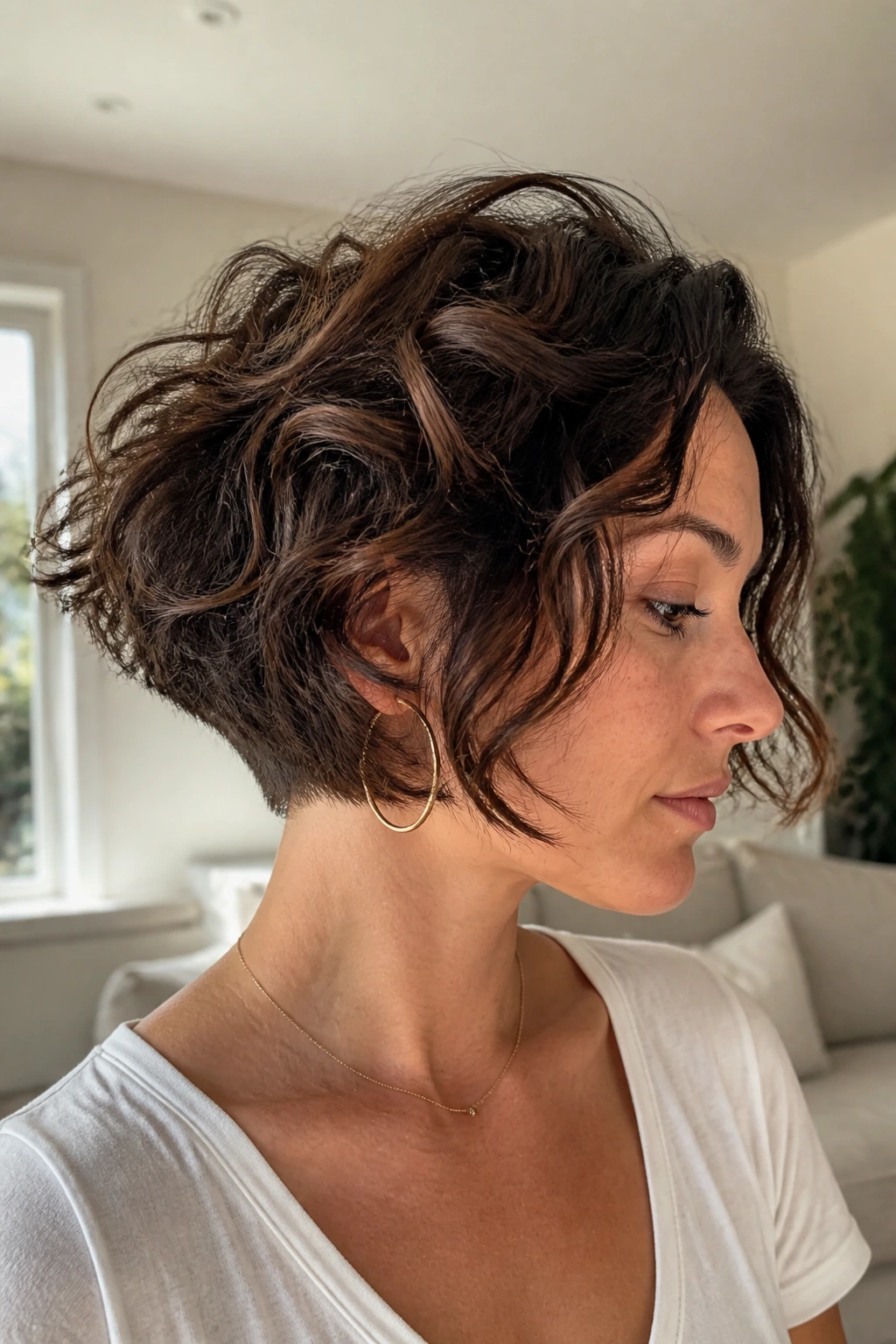
An undercut sounds dramatic, but on the right bob it can just mean taking bulk out underneath so the top layers fall better. For thick, wavy hair and a heart-shaped face, that can be a huge relief. The haircut sits closer to the head, the waves stack more neatly, and the face keeps its softness.
Why the undercut helps
It removes the hidden weight that often makes bobs flare out at the bottom. That flare is the enemy here. It widens the lower face in a way that can fight with the narrower chin.
The top layer should still have enough body to look full. You’re reducing bulk, not shaving the shape down to nothing. That’s a line worth protecting.
This cut is a great air-dry candidate. Once the bulk is gone, the waves settle faster and the shape needs less intervention. If you’ve spent years fighting triangle hair, this version feels like a small mercy.
22. Polished Wavy Bob With a Tapered Front
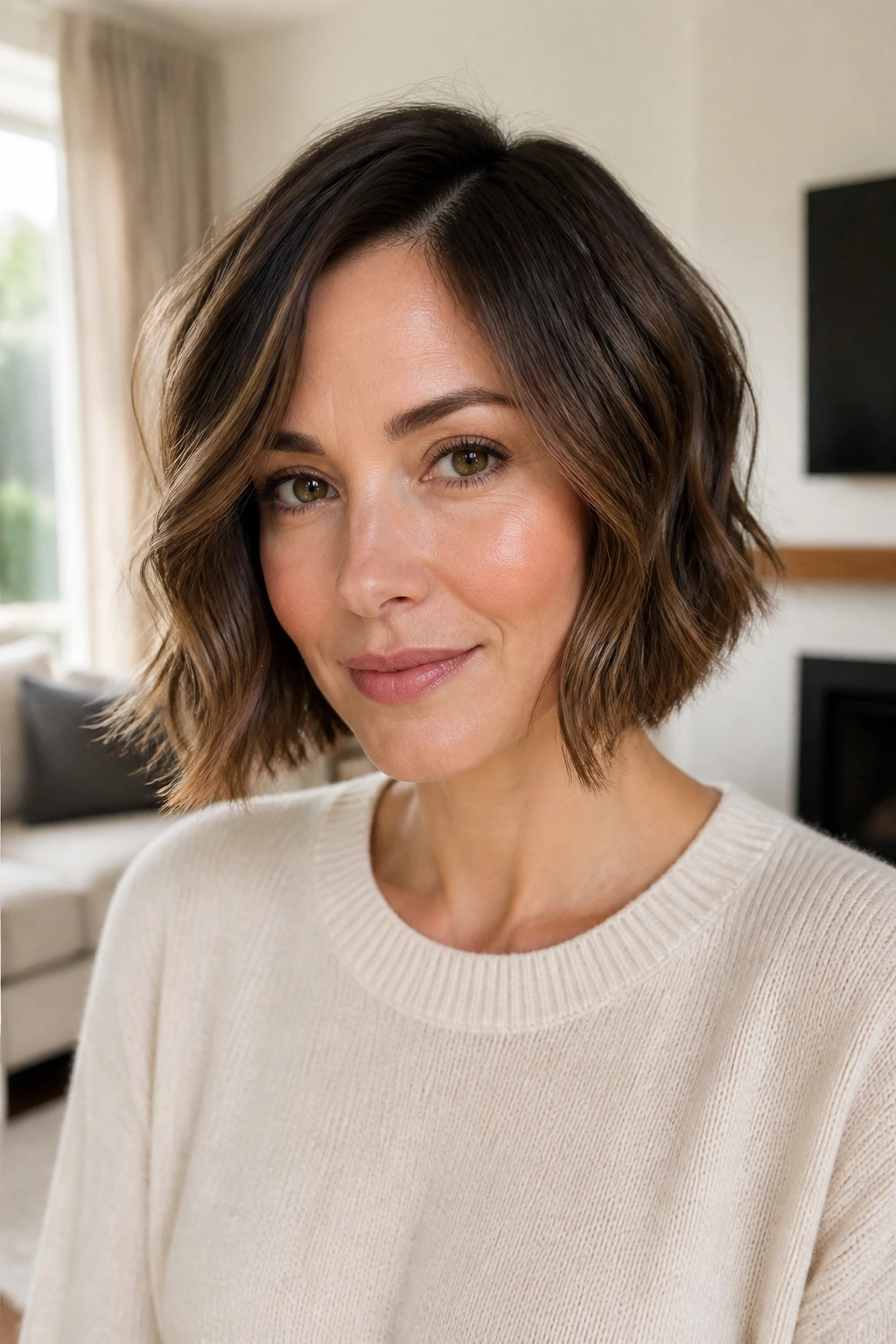
If you want a bob that reads a little sharper without losing softness, this is the cleanest option in the bunch. A tapered front gently lengthens the pieces nearest the face, which helps a heart-shaped face because the eye moves downward instead of stopping at the forehead. The back stays neat, the front stays flattering, and the whole cut has a tidy swing.
This is the bob I’d pick for someone who likes a more put-together finish. It can still be waved and relaxed, but the taper gives it shape even when you don’t style much. That makes it feel expensive in the everyday sense, not the showroom sense.
If your waves are loose, keep the taper modest so the front doesn’t look stringy. If your waves are tighter, the length difference can be a little more obvious. Either way, the goal is flow, not drama.
I like this one because it’s balanced from every angle. The face gets softness, the neckline gets clarity, and the bob keeps its line even as it grows.
Why Bobs and Wavy Hair Play Nicely With Heart-Shaped Faces
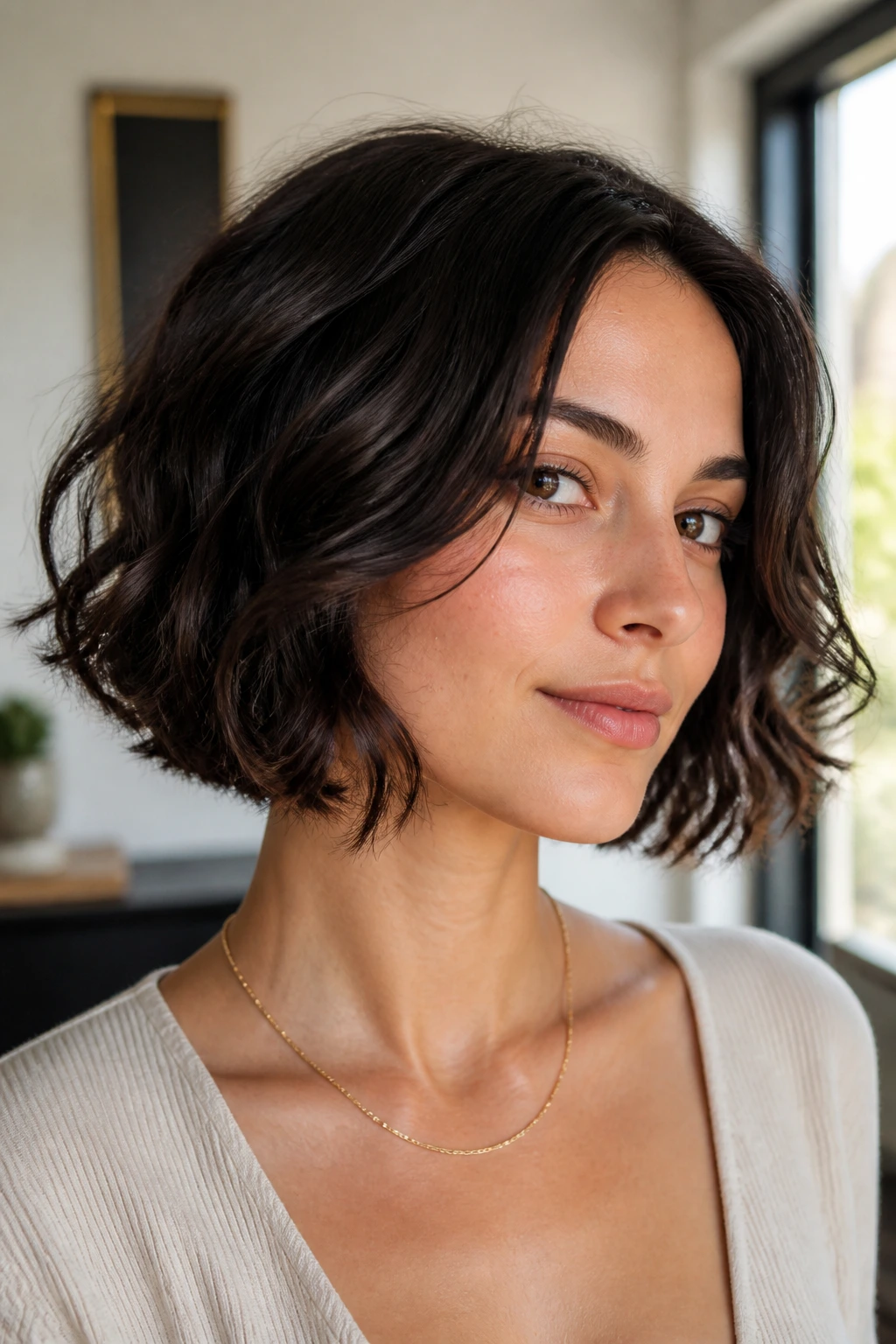
The reason these cuts work is simple: they move the visual weight away from the forehead and toward the lower half of the face. Heart-shaped faces usually have a broader upper section and a narrower chin, so a bob needs to create softness where the face tapers. Wavy hair helps because it naturally builds texture around the jaw and neck, which is exactly where balance tends to matter most.
The mistake people make is assuming every bob should be short and crisp. That’s not the rule here. Some of the best versions are chin-length, some skim the collarbone, and some keep a little extra length in front so the face doesn’t look top-heavy. The wave pattern changes the math too. A loose wave can make a blunt line look airy; a tighter wave can turn a short, layered cut into a puffed-out shape if the weight isn’t managed.
I also think parting matters more than people admit. A side part can soften a broad forehead in a way that no amount of styling product can fake. A center part can work, but it usually asks for more length or fringe to keep the top half from dominating the look.
How to Ask for the Right Cut at the Salon
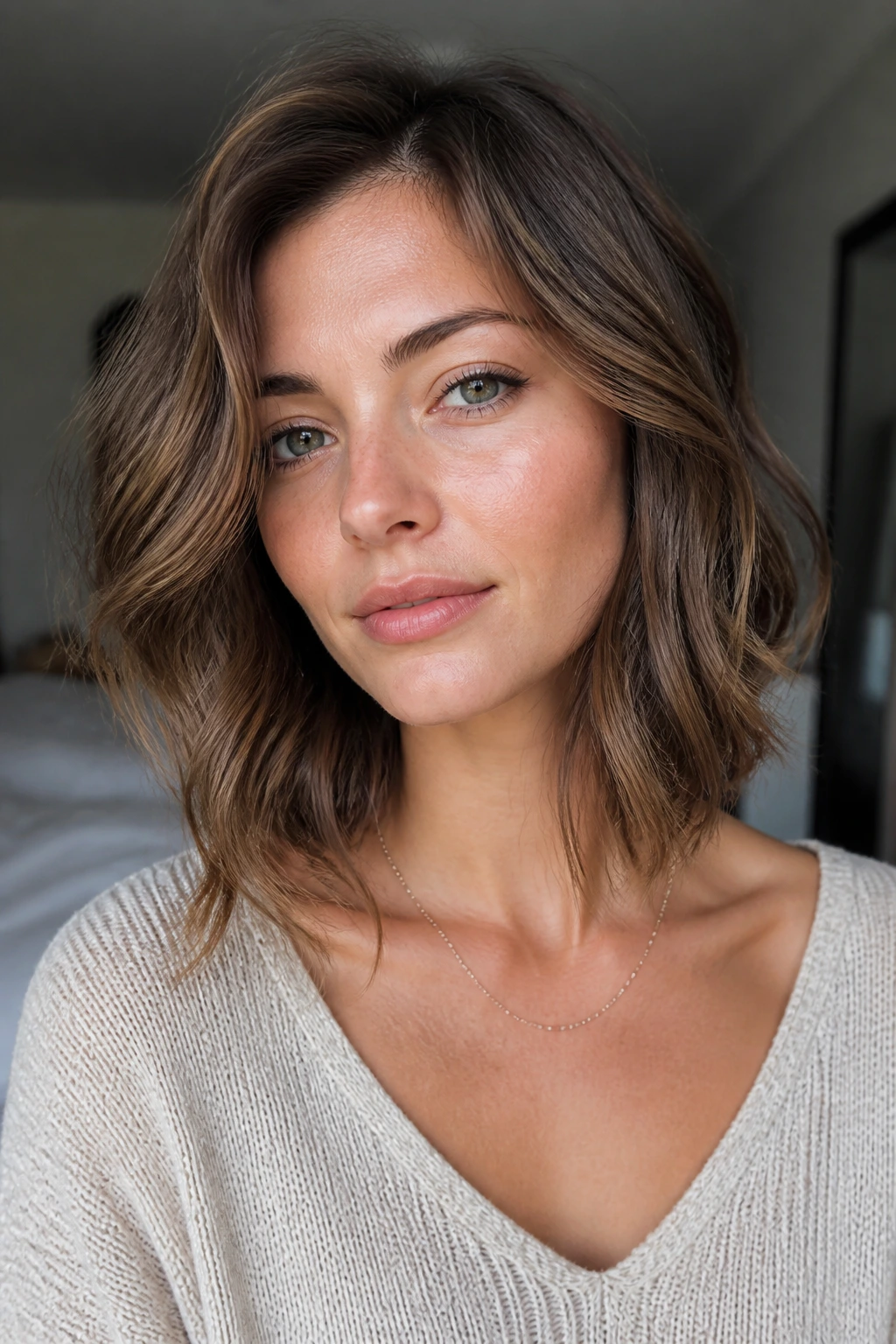
Bring photos, yes, but bring useful ones. A front view, a side view, and a picture of the back of the neck tell your stylist more than one glamorous snapshot from the chin up. Then say what your hair actually does: where it frizzes, whether the waves bend more at the ends or the roots, and how much styling you’ll tolerate on a normal weekday.
Use shape language. Ask for length that softens the chin, movement around the cheekbones, and less width at the temples if that’s the problem you’re trying to solve. If you want the cut to stay airy, say so. If you want weight left in the ends, say that too. Stylists can work with clear instructions. Vague “make it cute” energy is how people end up frustrated.
For wavy hair, I’d also mention whether you plan to wear it mostly air-dried or styled. That changes how much internal layering makes sense. A cut built for a round-brush blowout can look too structured when you let it dry on its own. The same goes for the other direction. Be honest about your routine. It saves everyone a headache.
Tools That Make Styling a Wavy Bob Easier

- A diffuser attachment: This keeps waves from blasting apart while you dry them and helps the shape stay more controlled at the crown.
- Lightweight mousse or foam: A small palmful at the roots gives wave memory without turning the haircut sticky or heavy.
- Leave-in conditioner: Useful if your waves get dry at the ends; apply it from mid-length to the bottom third.
- Heat protectant spray: Even if you only touch the front pieces, this matters. Shorter hair gets heat styled more often than people think.
- Microfiber towel or soft T-shirt: Rough bath towels make waves frizz faster, especially in a bob where every inch shows.
- 1-inch curling iron or straightener: Handy for bending the front pieces away from the face or giving the ends a slight curve.
- Wide-tooth comb: Better than a brush on damp waves if you want to keep clumps intact.
- Duckbill clips: Great for setting volume at the crown while the hair cools.
- Light texture spray: Useful when the bob needs separation and the ends keep falling into one flat sheet.
- Small round brush: Best for fringe, side parts, and a little root lift near the face.
Small Styling Moves That Change the Whole Shape
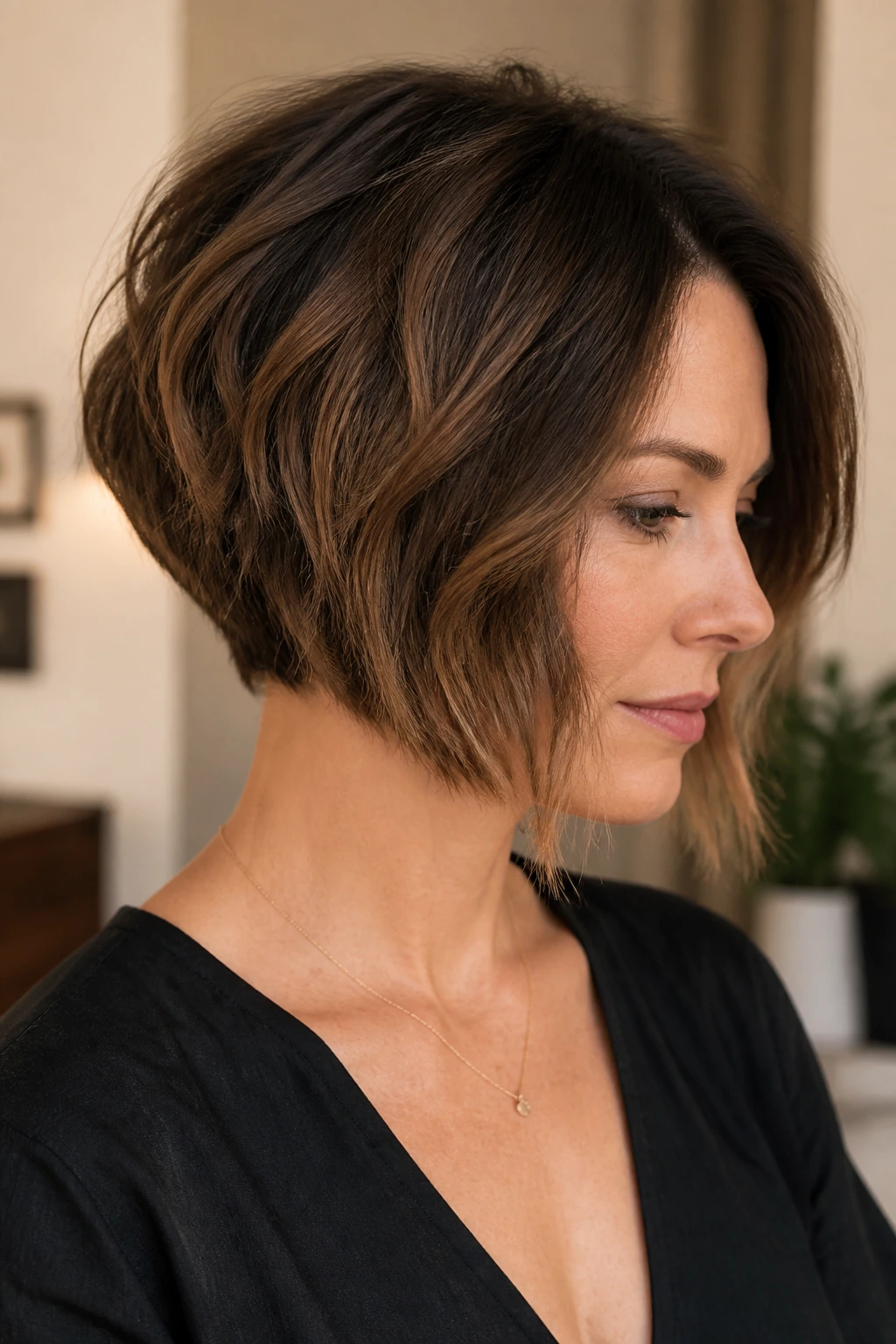
Parting: Shift your part a half-inch off center before you reach for hot tools. That tiny move can soften the forehead and stop the haircut from sitting too symmetrically, which is often the real problem with heart-shaped faces.
Root lift: Put mousse at the roots only where you need lift, then diffuse on low heat until the top is about 80 percent dry. If you dry it all the way while scrunching hard, the crown can go puffy and the sides can widen.
End direction: Bend the front pieces away from the face if the chin feels sharp. Bend them inward if the bob needs a little more weight. That one detail changes the whole outline.
Finish: Use serum sparingly on the lower third of the hair. Too much product on the top makes the forehead feel smaller in the wrong way, almost like the haircut is pressing down.
Refresh: Mist the bob lightly the next day, twist two or three sections around your fingers, and let them dry for 10 minutes before touching them again. You do not need a full wash to bring the shape back.
Common Mistakes That Throw the Balance Off

The biggest mistake is cutting the bob too short at the chin and then wondering why the face looks sharper. On a heart-shaped face, that spot already draws attention. If the line sits there with no softness, it can make the lower half feel more pointed than it is. Ask for a little length below that spot unless you really want a more dramatic edge.
Too much crown volume is another one. It sounds harmless until you see how much wider the top of the face starts to look. If your hair is wavy, root lift should live near the part and crown, not balloon out across the whole head.
Over-layering is a classic problem, especially on thick waves. The haircut can look great wet and then dry into a triangle with frayed ends. If your stylist removes weight, make sure they do it inside the shape or at the nape, not all around the perimeter.
Heavy bangs are tricky too. Thick fringe across the entire forehead can fight the balance you’re trying to create. Softer curtain bangs or side-swept fringe usually do the job better.
And finally, don’t rough-dry the whole head until every section is dry and then expect the wave pattern to behave. Stop earlier. Let some dampness remain, shape the ends, and walk away. Overhandling is what often ruins a good bob.
Variations and Alternatives When You Want a Different Feel

Longer-Lob Escape Hatch: Keep the cut at collarbone length if you like the idea of a bob but don’t want to lose versatility. This version is easier to tie back, less dramatic to grow out, and gentler on a wide forehead because the extra length pulls the eye down.
Soft Fringe Swap: Replace full bangs with curtain or bottleneck fringe if you want forehead coverage without heaviness. The fringe can be trimmed dry or nearly dry so it lands where your waves naturally settle.
Thicker-Hair Reset: If your hair is dense, ask for internal debulking and a shape that stays closer to the neck. That keeps the lower half from puffing out and makes the bob sit cleaner.
Fine-Hair Lift: Keep layers lighter and the perimeter a touch stronger. Fine waves need the edge to hold, or the cut can disappear by midday.
More Edge, Less Softness: Choose an asymmetrical or bixie-bob variation if you like a sharper look. These styles shift attention away from the chin by introducing diagonal lines and shorter back length.
Keeping the Cut Fresh Between Trims

Bob haircuts show growth fast, especially when they sit around the chin. If your cut is blunt or heavily shaped, plan on a trim every 6 to 8 weeks. If you’re wearing a longer lob with loose layers, you can often stretch that to 8 to 10 weeks before the shape starts slumping.
Fringe needs its own schedule. Curtain bangs or side-swept bangs usually want a small cleanup every 3 to 4 weeks if you like them tidy. If you let them grow out, they’ll just blend into the front pieces, which is fine too. I actually think that can be a good thing if you’re tired of the maintenance.
At home, keep the ends healthy. A little leave-in on damp hair, a satin pillowcase, and a light trim of split ends when they start catching in your fingers all help the bob look fresh longer. Don’t overload it with oil. Short hair shows buildup fast, and waves get limp when the finish gets greasy.
If the shape starts to flip in odd places, don’t panic. That’s usually a sign the cut needs a dusting around the perimeter, not a full reinvention. Bobs are like that. They tell on themselves.
Questions People Usually Ask Before the Chop

What bob length flatters a heart-shaped face most?
Usually chin length to collarbone length works best, but the sweet spot depends on your wave pattern. If your waves spring up a lot, a slightly longer bob may end up looking like a true chin-length cut once it dries.
Should heart-shaped faces avoid center parts?
Not always. A center part can work if the bob has enough length, fringe, or softness around the face. If your forehead feels broad to you, a side or off-center part is often easier to live with.
Do wavy bobs need layers?
Not always, but some internal shaping usually helps. Waves can puff out if the haircut is too heavy, yet too much layering can make the ends frizz. The trick is controlled weight removal, not a chop-and-hope situation.
Is a blunt bob a bad idea for wavy hair?
No, but it needs the right edge and the right length. A slightly longer blunt bob with feathered tips usually behaves better than a short, hard line at the chin.
What if my hair is thick?
Ask for hidden layers, nape debulking, or a softer graduated shape. Thick wavy hair can turn wide fast, so the cut should reduce bulk where it matters instead of shaving the whole head down.
What if my hair is fine?
Keep the layers light and the outline clean. Fine waves need structure more than aggressive texturizing, or the bob can go flat and stringy.
Can I air-dry this kind of bob?
Yes, and some of the cuts here are made for that. Use a small amount of mousse or cream, scrunch gently, and leave the hair alone while it dries so the wave pattern stays intact.
How often should I trim it?
Shorter bobs usually need more frequent trims than lobs. If the shape sits at the jaw, six to eight weeks is a good rhythm; if it’s longer and softer, you can wait a bit longer.
The Bob Shapes I’d Try First
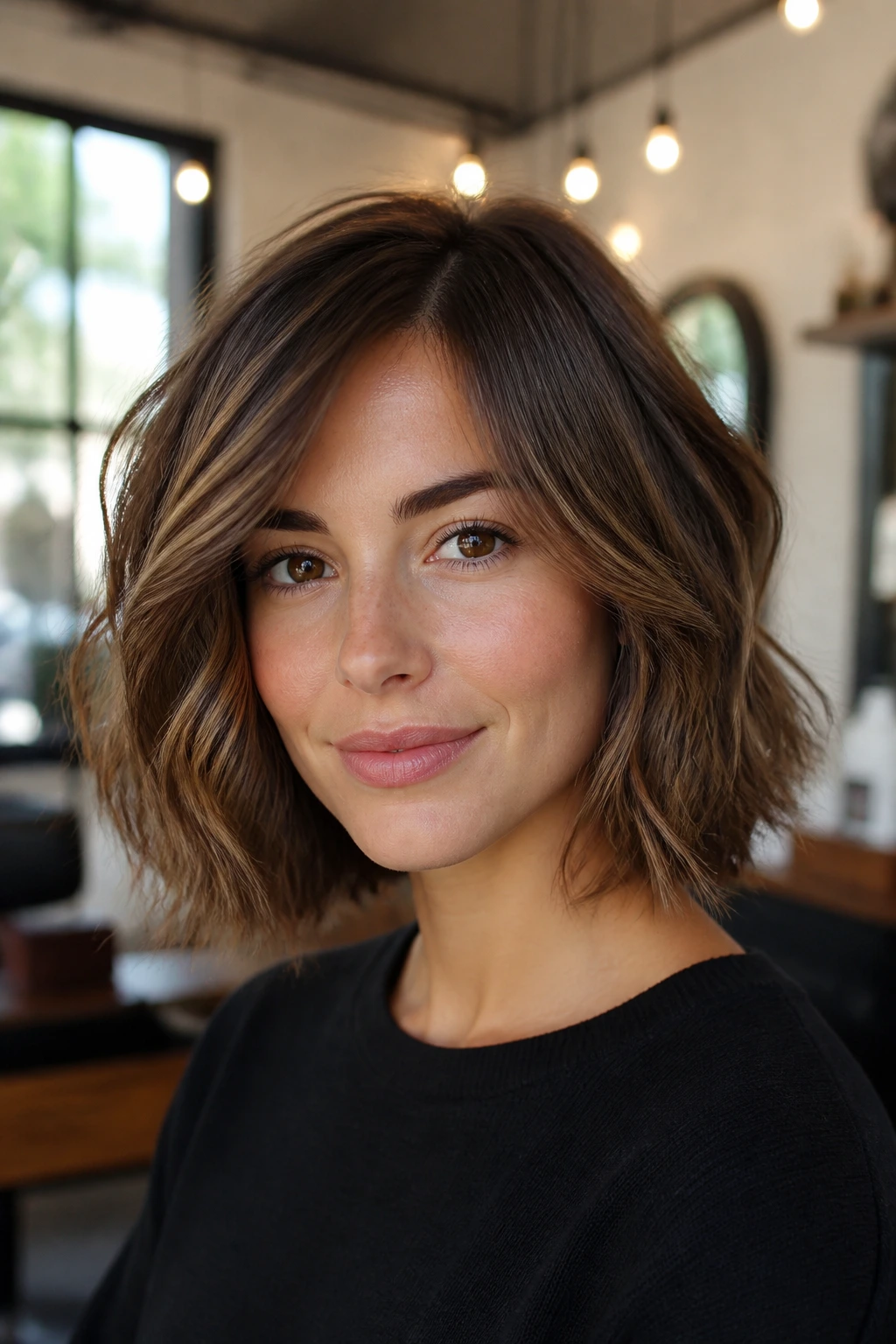
If you want the safest starting points, I’d go straight to the layered lob, the French bob with a side sweep, or the soft jawline bob with invisible layers. Those three do a lot of quiet work for heart-shaped faces without asking your waves to behave like straight hair. They’re adaptable, which matters more than being trendy for five minutes.
The bigger lesson here is that the best bob for a wavy, heart-shaped face is the one that respects both the face and the texture. Not one or the other. Once you get that balance right, the rest is just deciding whether you want a little edge, a little polish, or enough softness to let the cut wear in naturally.