



Fine hair tells on a bad fringe fast. One extra millimeter of length, one too-many pass with thinning shears, one heavy cream worked into the roots, and suddenly the front of your hair is doing that limp, separated thing that makes you reach for a clip by 10 a.m. That’s why short bangs can be such a smart move on fine strands: they use less weight, dry faster, and—when the cut is right—sit in place with a lot less bargaining.
The sweet spot isn’t the same for everyone, and that matters more with fine hair than with thick hair. A fringe that looks airy and chic in a photo can turn see-through if the stylist removes too much bulk, while a blunt little line can look fuller than expected because it keeps the ends together. Short low maintenance bangs for fine hair work best when they leave enough density at the edge to read as a shape, not a collection of wisps fighting for attention.
That’s the fun part, honestly. There isn’t one “correct” bang here. There are 25 different ways to get a shorter front section that flatters fine hair without turning your morning into a blow-dry rescue mission. Some sit above the brows and stay crisp. Some sweep sideways and almost behave like a soft face frame. Some look better a little messy, which is a mercy when your hair has a mind of its own. The trick is picking the version that plays nice with your texture, your cowlicks, and the amount of effort you actually want to spend in front of a mirror.
Why These Fringe Styles Work So Well on Fine Hair
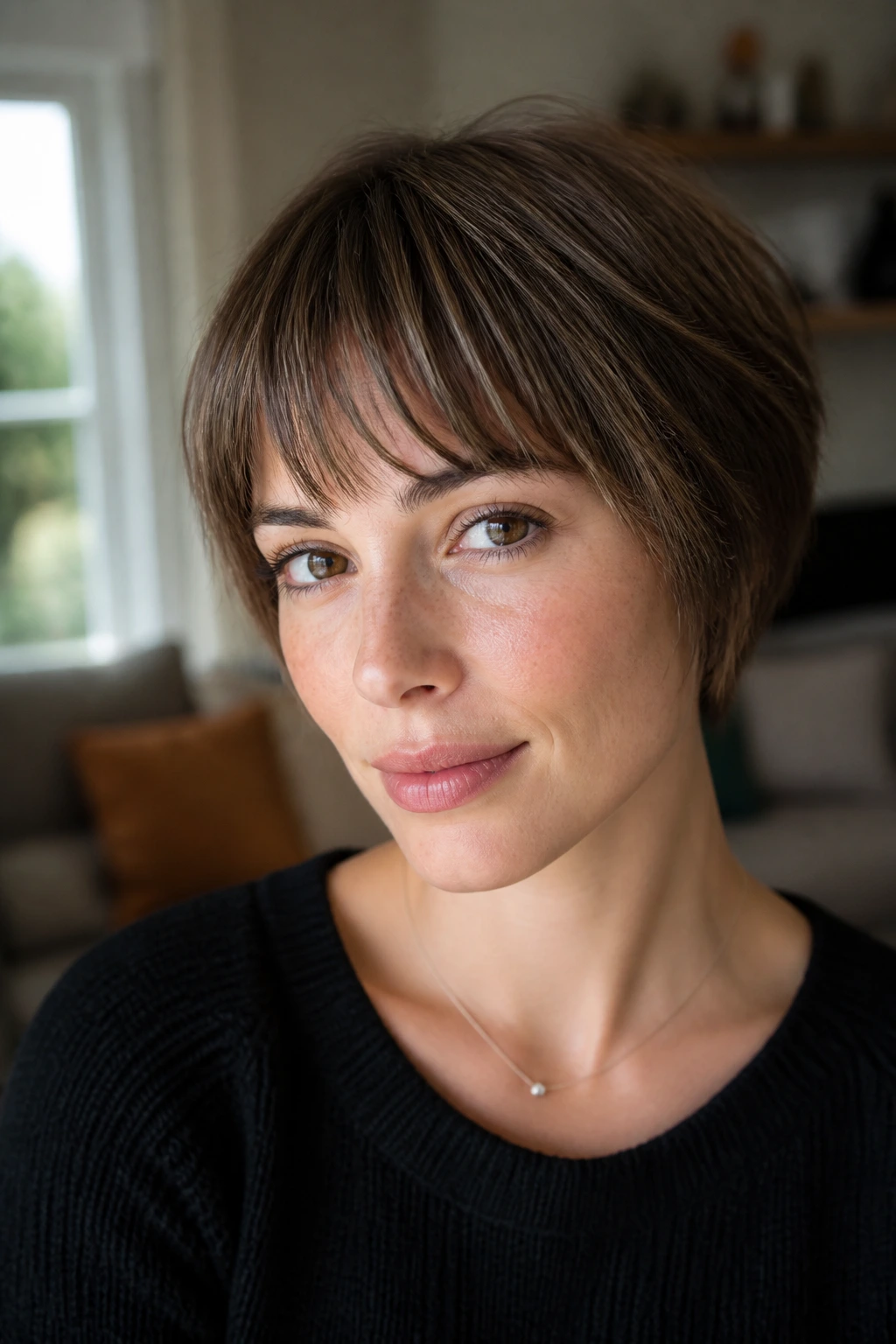
- Less weight, less collapse: Shorter bangs don’t drag the front of fine hair downward the way long, heavy fringe can, so they keep their shape longer between washes.
- Faster styling: A 30-second root blast and a round brush are often enough, because fine hair dries fast and doesn’t need a full production.
- Better movement at the forehead: A little separation at the ends gives the fringe air, which keeps it from sticking flat like a strip of tape across the brow.
- Easier grow-out: Many of these cuts transition into curtain pieces or face-framing layers without that awkward “I need to hide this” stage.
- More shape, less bulk: Fine hair can look thin when it’s over-thinned. These styles keep enough edge definition to look intentional.
- Works with day-two hair: A light mist of dry shampoo can revive the roots, and that matters when the forehead area tends to get oily first.
1. Micro Fringe With Soft Ends
Micro fringe is the tiny, deliberate cousin of a full bang. On fine hair, it works because there’s less material hanging across the face, so the front stays lighter and dries in a hurry. The soft ends keep it from looking severe; you want the line to be crisp enough to read as a choice, not a mistake.
Why It Flatters Fine Hair
The length usually sits well above the brows, which means the fringe doesn’t have much chance to split and sag. That’s a blessing if your roots go flat fast, but it also means the cut needs a little softness at the edge—think point-cut ends, not a hard ruler line.
If you wear glasses, this can be a sharp look. If your forehead gets oily quickly, it’s even better, because the bangs don’t soak up as much product and weight as a longer fringe would.
Best for: petite foreheads, short bobs, pixies, and anyone who likes a clean, slightly graphic front edge.
Watch for: if your cowlick pushes straight up at the center, ask for a tiny bit more length in the middle. A micro fringe with no room to bend can kick around all day.
2. Brow-Skimming Blunt Fringe
A blunt fringe doesn’t always mean heavy. On fine hair, a brow-skimming version can look fuller than a feathered cut because the ends sit together instead of breaking apart. The line lands just at or slightly above the brows, which gives the illusion of density without requiring a ton of hair.
What Makes It Work
The key is keeping the cut narrow enough that it doesn’t swallow your face. Too wide, and fine hair starts to reveal gaps at the temples. Too long, and the fringe loses that neat, tucked feeling and just sits there.
I like this style when the rest of the haircut is clean and simple—think jaw-length bob, sleek pixie, or a one-length cut with minimal layering. It looks strongest when you blow-dry it straight down first, then give the ends a tiny bend under with a mini round brush or a flat iron.
Pro move: trim the bang a touch shorter in the center if your face is longer. That keeps the line from drooping over the eyes by midday.
3. Wispy Baby Bangs
Wispy baby bangs are shorter than eyebrow-grazing fringe and softer than micro bangs. They’re cut with enough texture to move, which makes them one of the easiest short styles for fine hair if you hate a strict, polished finish.
They do ask for a little honesty. If your hair is very sparse at the front, wispy bangs can go too transparent fast. But when there’s decent density, they give a light, airy shape that doesn’t demand a perfect blowout every morning.
How to Wear Them
Air-dried baby bangs can look charming if you separate the ends with dry fingers and a speck of texturizing spray. Blow-dried, they read more refined and sit flatter against the forehead. Either way, skip heavy serums. They make wispy fringe piece out in a sad, stringy way.
Tip: ask for the shortest point to land around mid-forehead, not higher. A half-inch makes a huge difference when the hair is fine.
4. Side-Swept Pixie Fringe
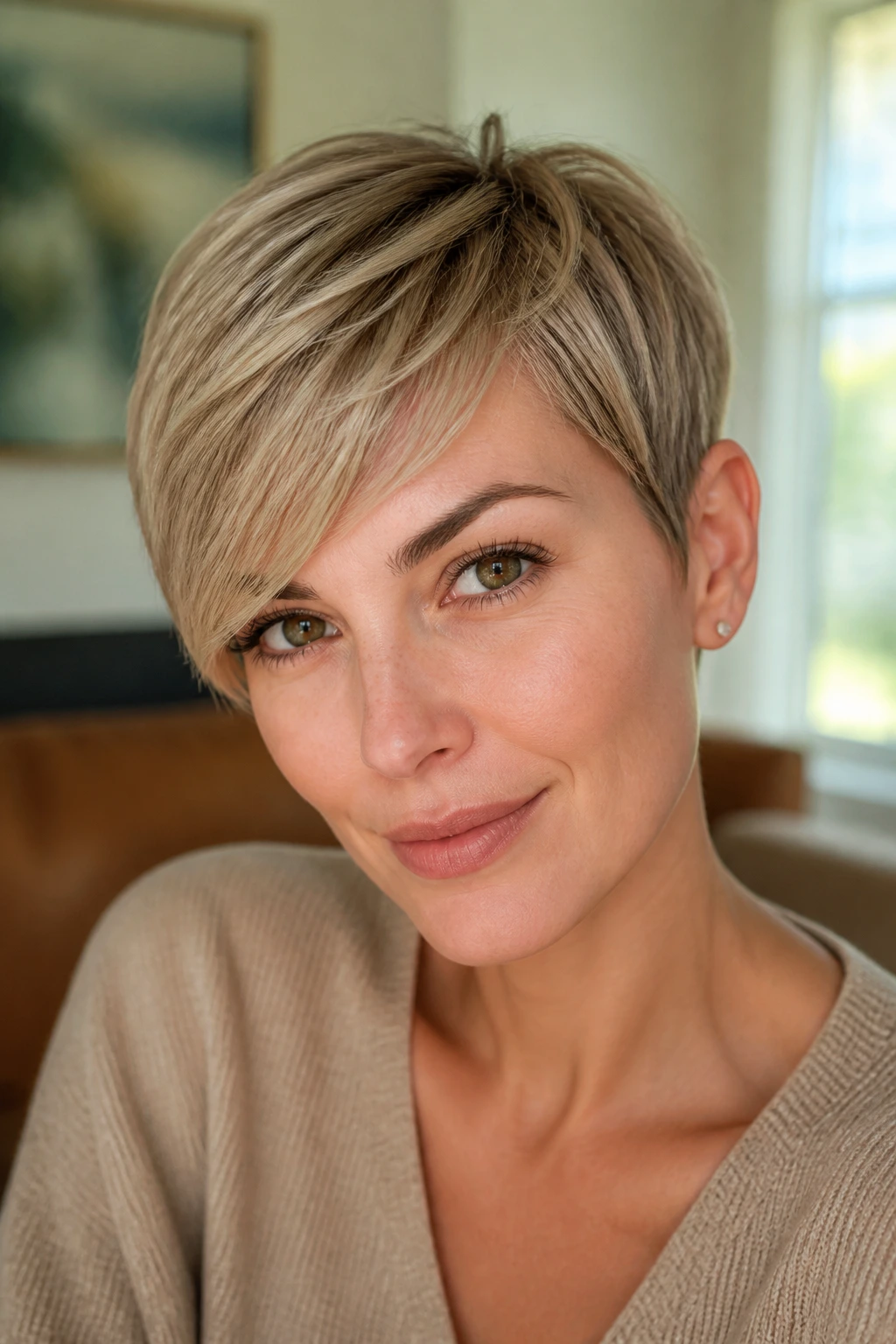
Side-swept fringe is a quiet hero for fine hair. It gives you the feeling of bangs without forcing a hard front line, and the side direction helps hide any cowlicks that refuse to behave. On a pixie or short crop, it adds softness right where the haircut can sometimes feel too bare.
The best version is long enough to tuck behind one brow, short enough to fall back into place after you shake your head. That balance keeps maintenance low. No elaborate round-brush choreography required.
Why It’s So Forgiving
Fine hair often loses lift at the crown before it loses shape at the ends. A side-swept fringe works with that, because a little root volume at the part is enough to keep it moving. You can even rough-dry it with your fingers, then direct the front over with a small brush at the last minute.
If you wear earrings or glasses, this style is especially good. It frames the face without boxing it in. And when it grows out, it slides naturally into a longer side fringe instead of turning into a blunt awkward shelf.
5. Choppy French Fringe
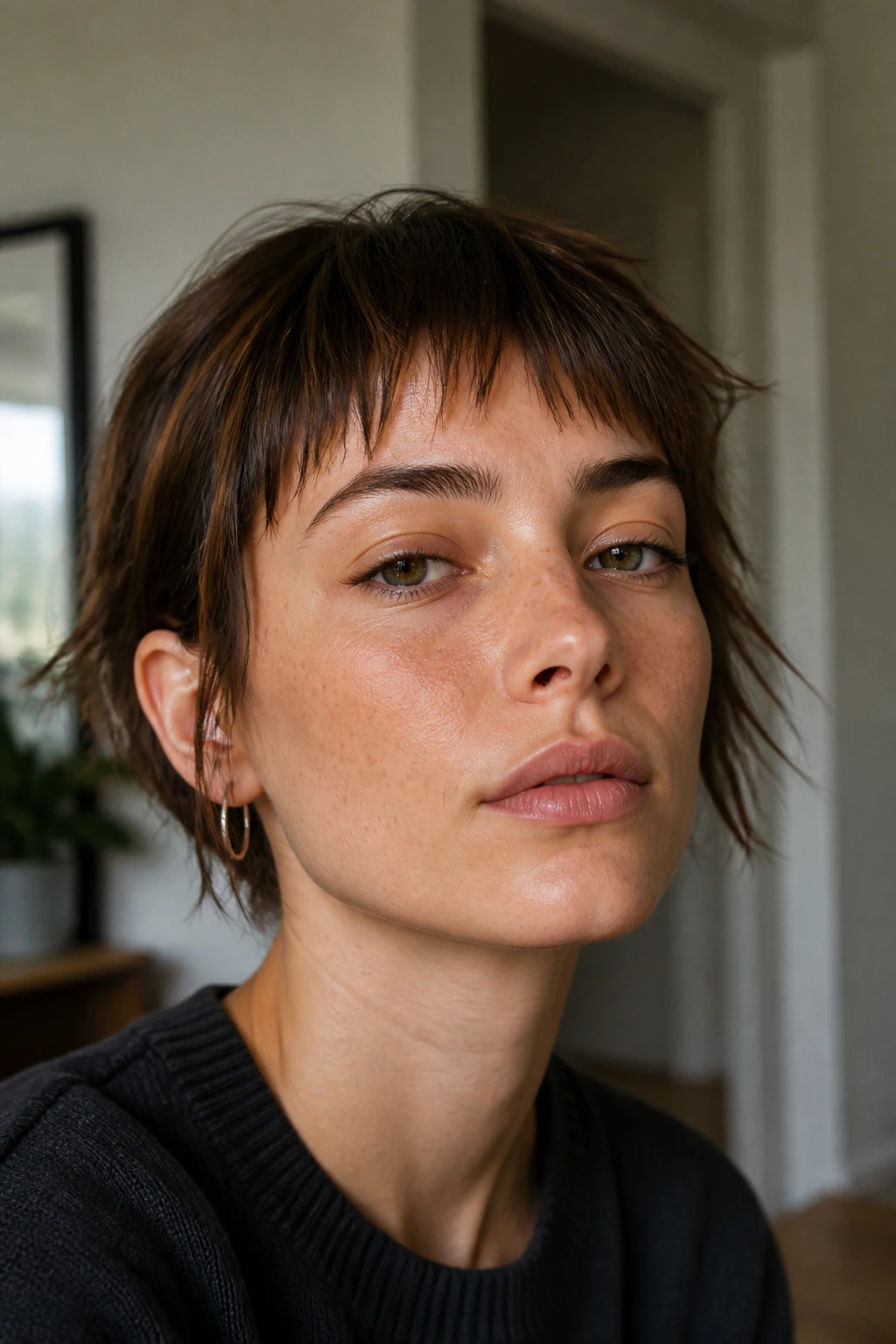
French fringe gets tossed around as a phrase so often that it’s almost lost meaning, but the good version has a specific feel: short, broken up, and softly imperfect. On fine hair, that broken edge is useful because it keeps the bangs from lying like a sheet across the forehead.
A choppy version can be cut a little shorter in the center and slightly longer toward the sides. That shape helps the fringe soften as it grows, which is handy if you don’t visit the salon every month.
The Best Way to Style It
Dry it forward, then split the fringe into two or three tiny sections with your fingers. A pea-size bit of mousse at the roots gives it lift without making the front crunchy. If you want more separation, a quick mist of texture spray from mid-length to ends does the trick.
Skip this: thick balm or oil near the hairline. It makes the piecey look turn limp fast, and fine hair rarely recovers from that gracefully.
6. Rounded Soft Fringe
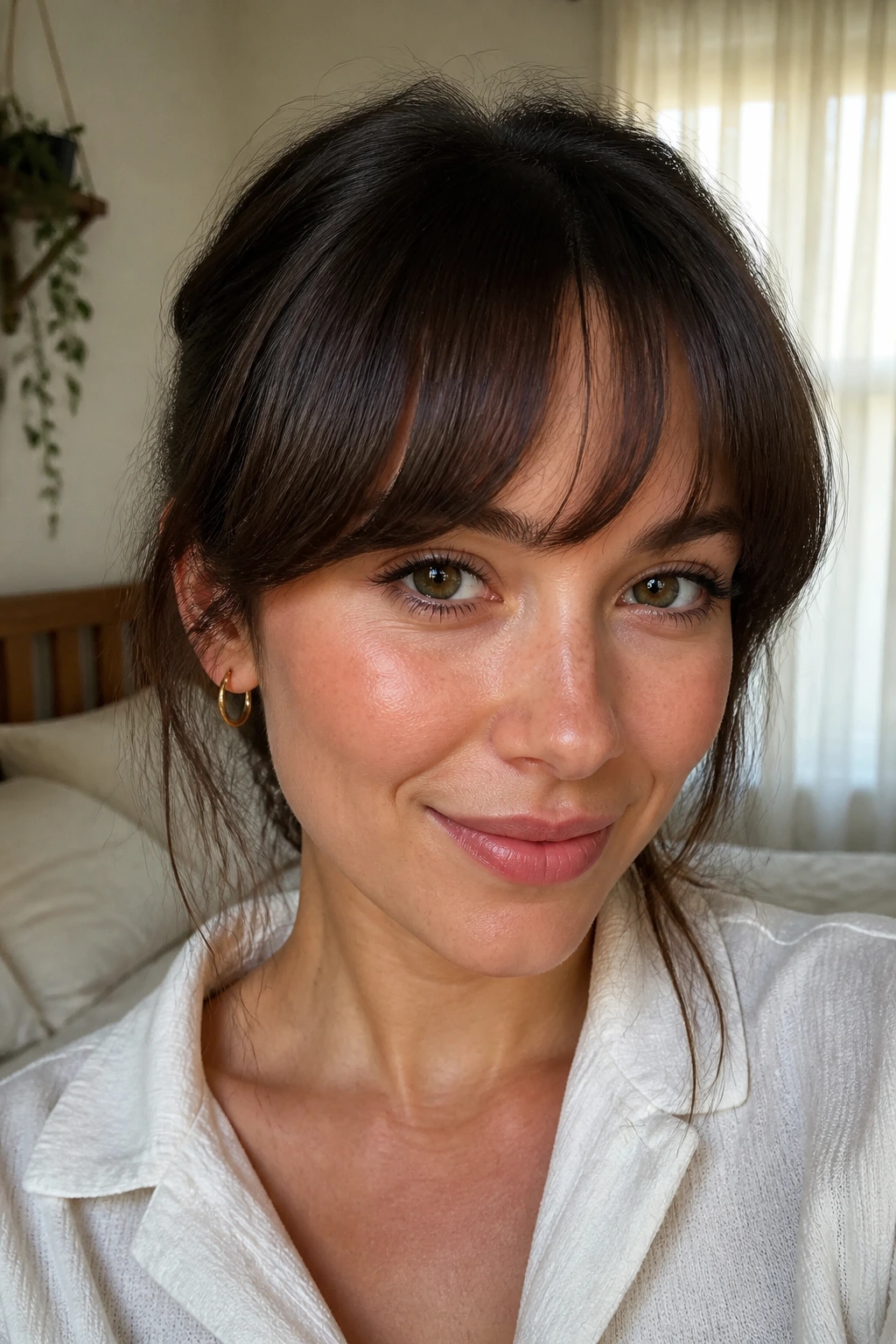
Rounded bangs curve gently at the edges instead of cutting straight across. For fine hair, that curve can be a real advantage because it makes the fringe look fuller at the center while easing into the temples. The shape feels polished, but not stiff.
This is the bang I’d point to for someone who wants a neater look without the commitment of a blunt graphic line. It suits bobs, soft shags, and layered cuts where the front needs a little structure.
Small Detail, Big Difference
The rounded shape works best when the sides are left a touch longer. That extra length prevents the fringe from looking like a tiny helmet. It also makes the grow-out smoother, since the edge can blend into cheekbone layers instead of hanging like a separate piece.
If your face is wider at the forehead, ask for the center to be the strongest point and the sides to taper softly. If your forehead is shorter, keep the curve subtle. A deep round shape can eat up too much face space.
7. Short Curtain Fringe
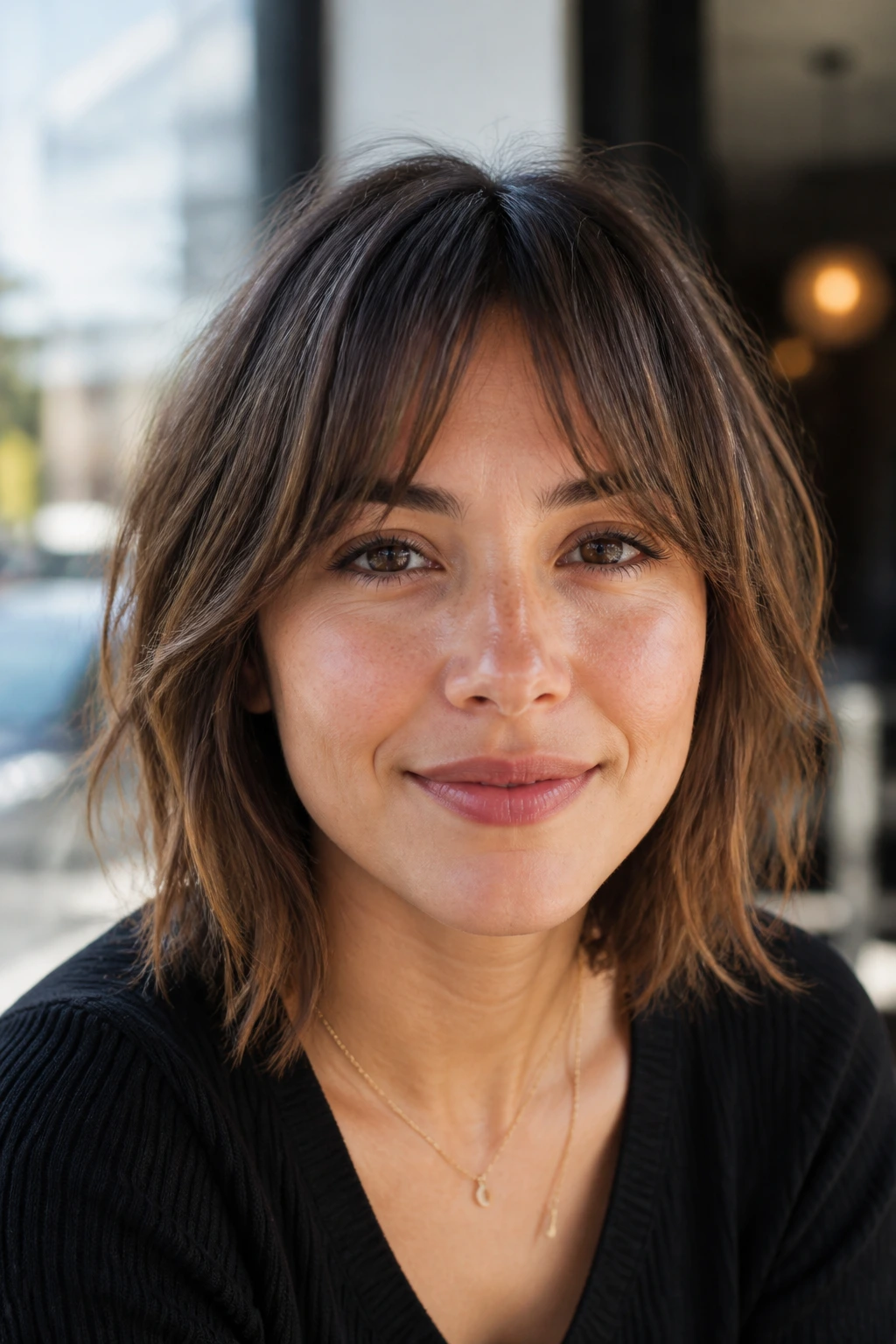
Curtain bangs don’t have to be long. A short curtain fringe sits just below the brows in the center and sweeps away at the temples, which gives fine hair a way to frame the face without committing to full bang coverage.
This is one of the easiest styles to live with if you rotate between wearing your hair down and pulling it back. The fringe can split naturally in the middle or slightly off-center, and either way it looks intentional.
H3: How It Stays Low-Fuss
The center part gives the illusion of movement without needing a lot of heat styling. You can blow-dry the middle forward for 10 seconds, then guide each side away from the face with a round brush. Done.
The trick is not making it too long. If the front pieces drop below the cheekbones right away, they stop reading as bangs and start behaving like grown-out layers. Some people like that. If you want a true fringe feel, keep the shortest point around brow level or just above.
8. Shaggy Piecey Fringe
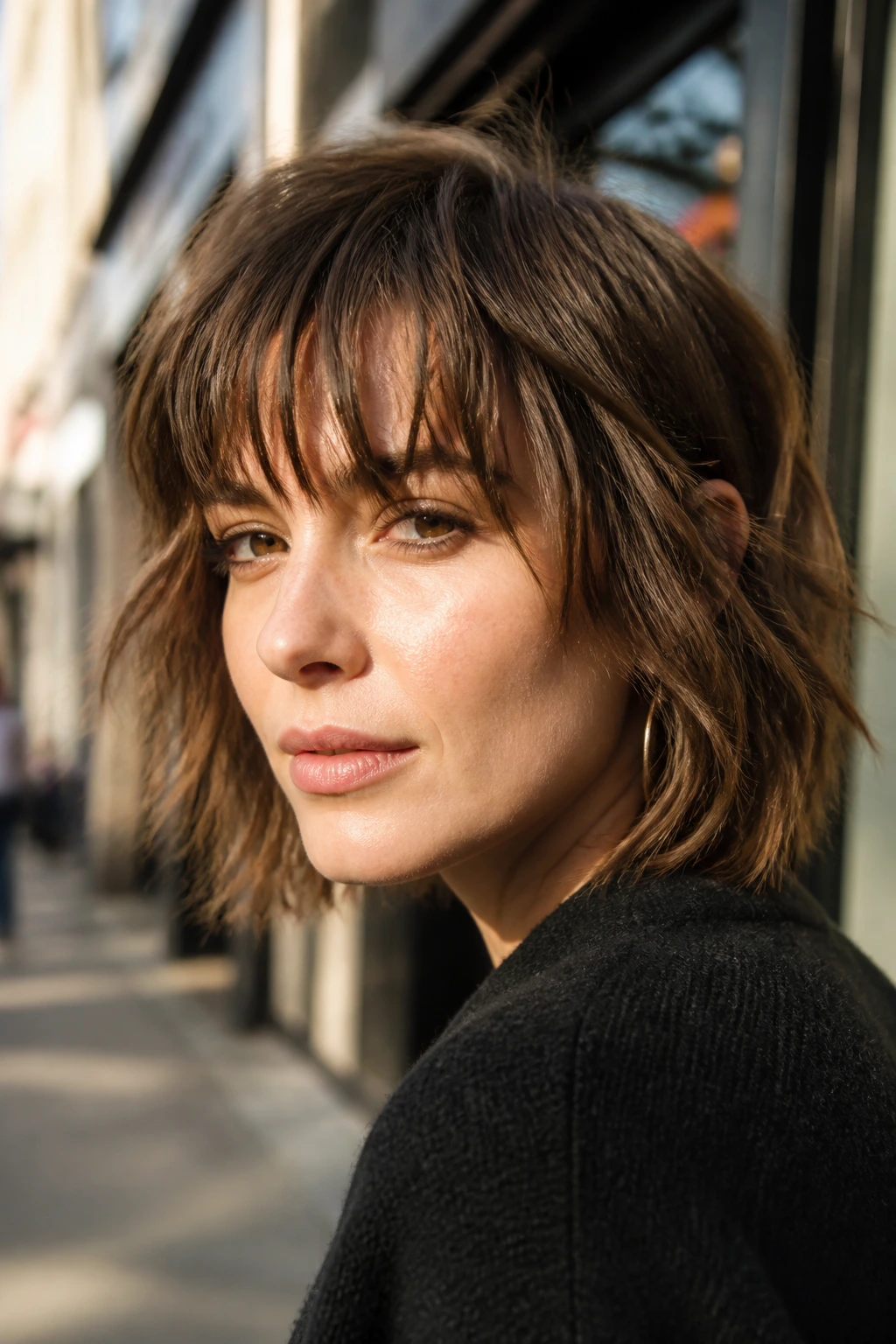
A shaggy fringe is built for hair that already wants texture. Fine hair can absolutely wear it, but the cut needs restraint. Too much texturizing and the front gets stringy; enough texture to create separation, and it looks airy and cool in a way that’s hard to fake with styling alone.
This style works well when the rest of the haircut has layers, especially around the cheekbones and jaw. The bangs don’t have to do all the work. They just need to connect to the rest of the shape.
What to ask for: point-cut ends, a little internal separation, and no over-thinning at the crown. Fine hair usually needs more edge than removal.
That last bit matters. If a stylist goes after the fringe with thinning shears like they’re trimming a hedge, you’ll lose the density that makes this cut look good.
9. Arched Fringe

Arched fringe follows a soft curve that’s shortest in the center and slightly longer at the sides. On fine hair, that arch keeps the center from crashing into the eyes while still giving a fuller-looking line than a straight, blunt cut might.
I like this for rounder faces and for anyone who wants bangs but doesn’t want a heavy front wall. The curve creates a little lift at the middle of the forehead, which can make fine hair look more lively than a flat horizontal line.
The styling part is easy. Blow-dry the center forward first, then sweep the sides down and out. If the arch collapses, it usually means too much product or too much moisture near the roots.
10. Cropped Crescent Fringe
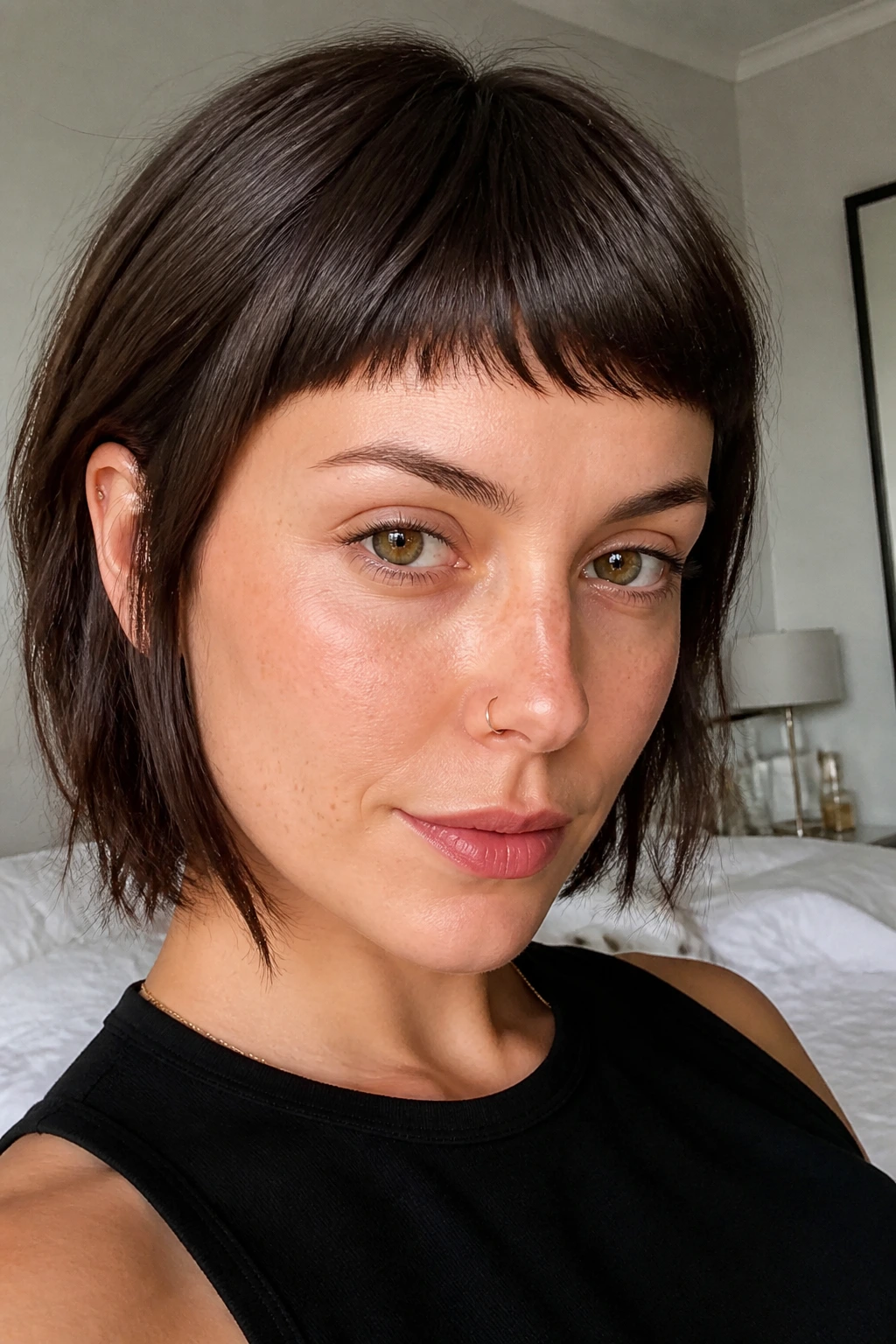
Crescent bangs are a little more sculpted. They curve gently upward toward the outer corners, almost like a soft smile across the brow. The cropped version keeps them short enough for a low-maintenance routine, while still giving fine hair a polished frame.
This is a surprisingly nice option if your hair is thin in diameter but fairly dense overall. You can keep enough fullness in the line to make it look deliberate without needing a thick, heavy section.
What It Looks Like in Practice
The shortest point usually lands around the center of the forehead or just above the brows. The sides can graze the outer brow or sit a touch higher, depending on your face shape. That subtle lift at the edges helps the fringe blend into the rest of the haircut instead of stopping abruptly.
A small round brush helps, but so does one quick pass with a flat iron. Not a lot. Just enough to nudge the curve into place.
11. Bottleneck Bangs

Bottleneck bangs are named for their shape: narrow at the center, then wider and softer as they angle outward. On fine hair, that shape is handy because it keeps the middle light while preserving enough side coverage to frame the face.
They’re shorter than classic curtain bangs, but not as severe as baby bangs. That middle ground makes them easier to wear if you want movement without a lot of daily fuss.
Why They’re Sneakily Practical
The longer side pieces can be pinned back, tucked behind the ear, or left loose. On days when the front looks flat, you only have to rework the center section, not the whole fringe. That saves time.
Ask for texture, not thinning. The cut should have a broken edge, but the density at the center still needs to be there or the bottleneck shape turns into two sad strings.
12. Feathered Eyebrow Fringe

Feathered bangs brush the brows and break apart a little at the ends, which keeps them from looking boxy. On fine hair, that feathering is a nice compromise: enough structure to look like a real fringe, enough lightness to avoid the helmet effect.
This style is especially useful if you wear your hair in a bob or collarbone-length cut and want something a little softer around the eyes. It doesn’t demand perfection. A small bend in the ends is enough.
A Few Details That Matter
- Keep the ends soft, not shredded.
- Dry the bangs forward first, then direct them slightly down.
- Use a lightweight mousse if your roots go flat by noon.
- Avoid heavy cream at the roots; it kills the airy look.
The fringe should hover near the brows, not cover them. If it sits too low, it can take over your face in a way that doesn’t do fine hair any favors.
13. Asymmetrical Sweep
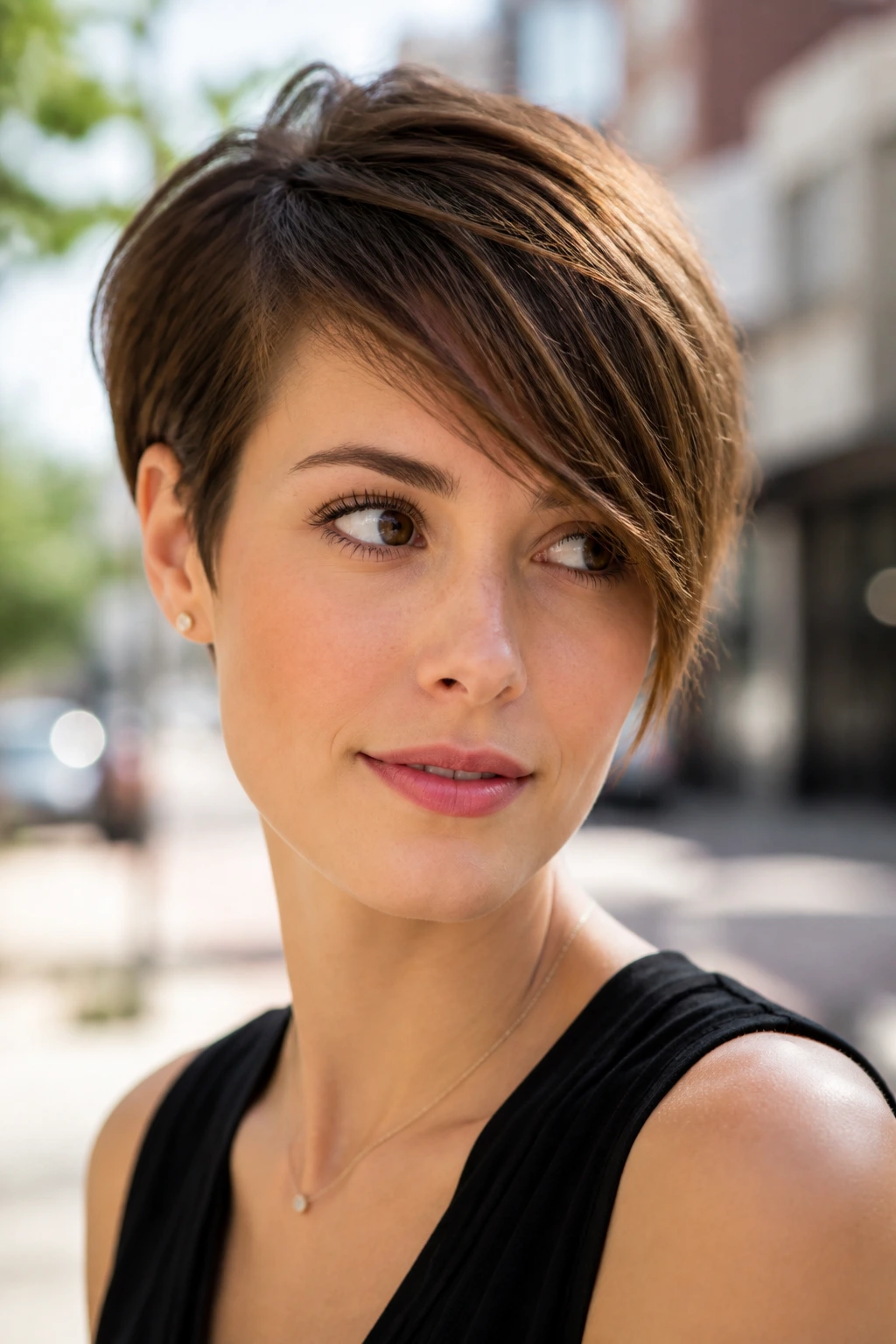
An asymmetrical fringe is one of the easiest ways to make fine hair look intentional without forcing a symmetrical shape that might fall flat. One side is shorter, the other slightly longer, and the line moves across the face instead of stopping dead in the middle.
That movement is the whole point. Fine hair tends to show every limp edge, so a diagonal shape can hide a lot of that by giving the eye somewhere to travel.
It’s a smart pick if you have a strong side part already. The fringe can ride with the part instead of fighting it, which makes styling faster. Sometimes the best bang is the one that doesn’t argue with your hairline.
14. Short Shattered Fringe
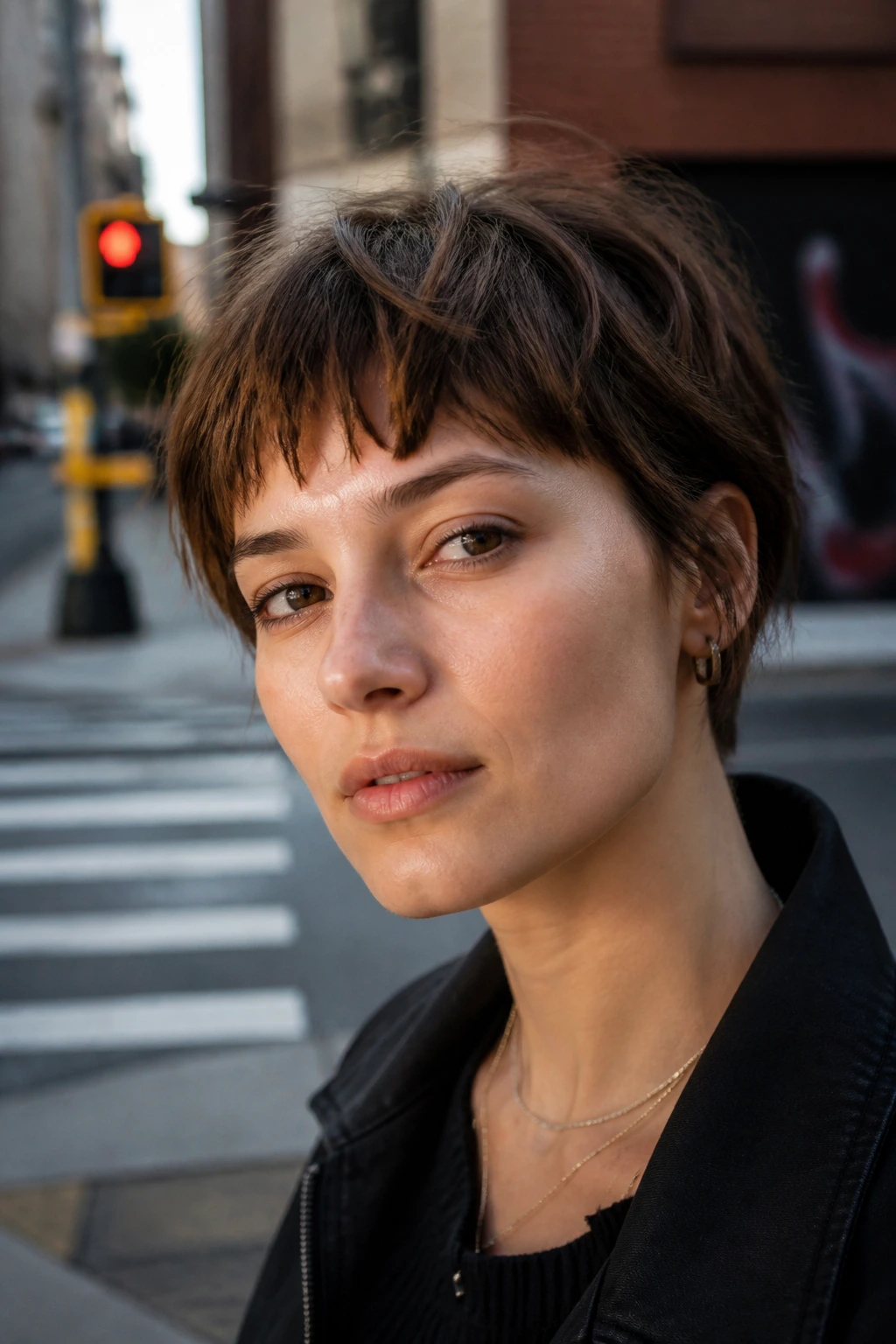
A shattered fringe is softly broken into tiny pieces, but the short version keeps the overall look compact. On fine hair, the goal is controlled messiness. Not chaos. There’s a difference, and it shows fast at the front of the face.
The shattered texture helps the fringe move when you blink, which sounds silly until you realize that movement is what keeps fine hair from looking pasted down. It’s one of the better options if you like a little edge but don’t want a blunt line.
How to keep it from getting too sparse: ask for soft point cutting, not aggressive thinning. And tell the stylist you want the fringe to still read as a band, even with separation. That sentence matters.
15. Pixie Bangs With Tapered Sides
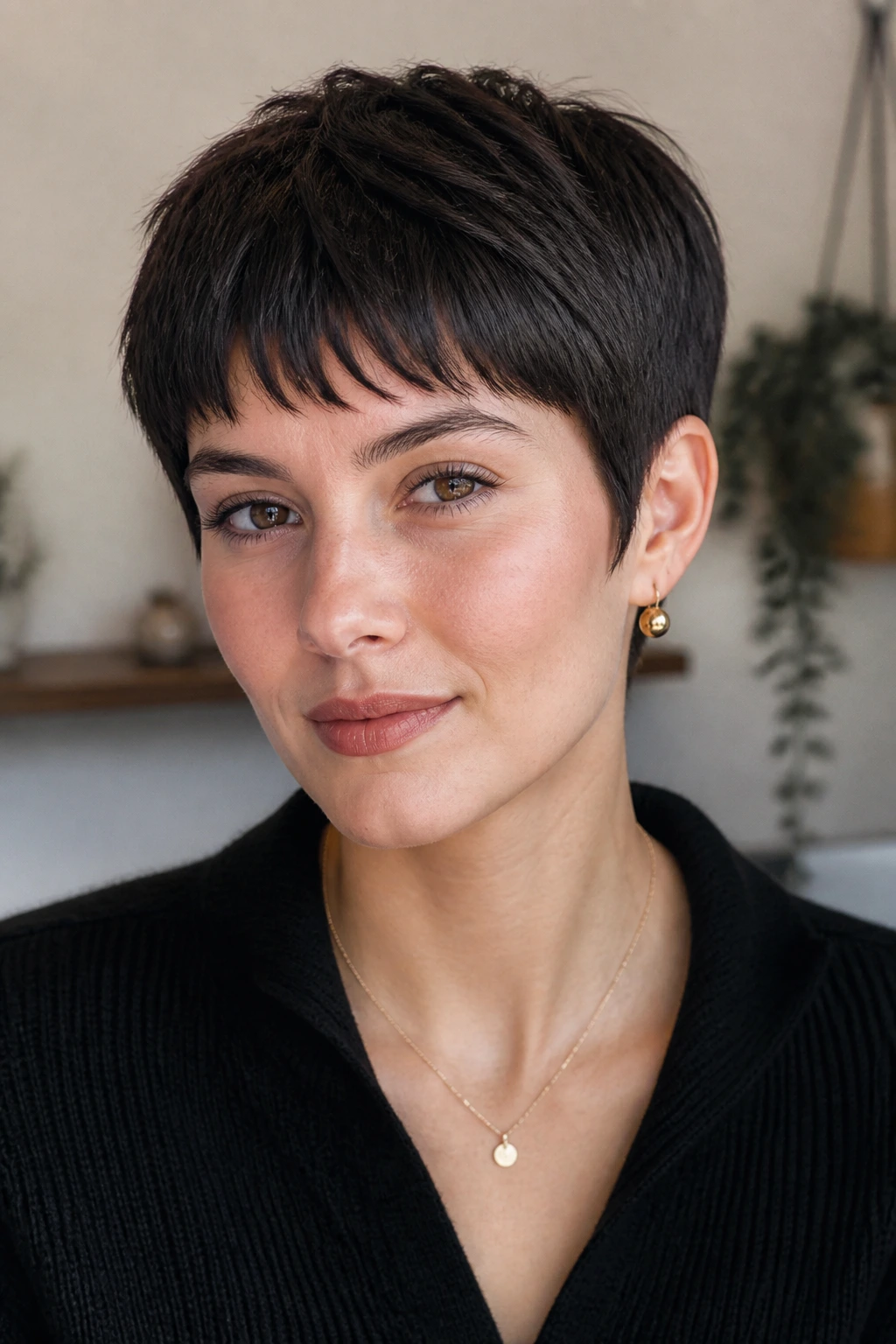
Pixie bangs with tapered sides are neat, tidy, and low on drama. The fringe sits short across the forehead, then melts into shorter side pieces that skim the temples. On fine hair, that taper helps the cut feel intentional instead of abrupt.
This is a good choice if you already wear a short crop or pixie and want the front to look a little sharper. It doesn’t need much styling beyond a quick blow-dry and a fingertip amount of paste at the ends.
H3: The Part That Saves Time
Because the sides are tapered, you don’t have to fight a heavy line when the hair grows out. The shape just softens. That means fewer awkward weeks between cuts.
If your hair tends to lie flat against the scalp, ask for a tiny bit of lift at the root in the center section. It makes a bigger difference than another half-inch of length.
16. Curved Cheekbone Fringe
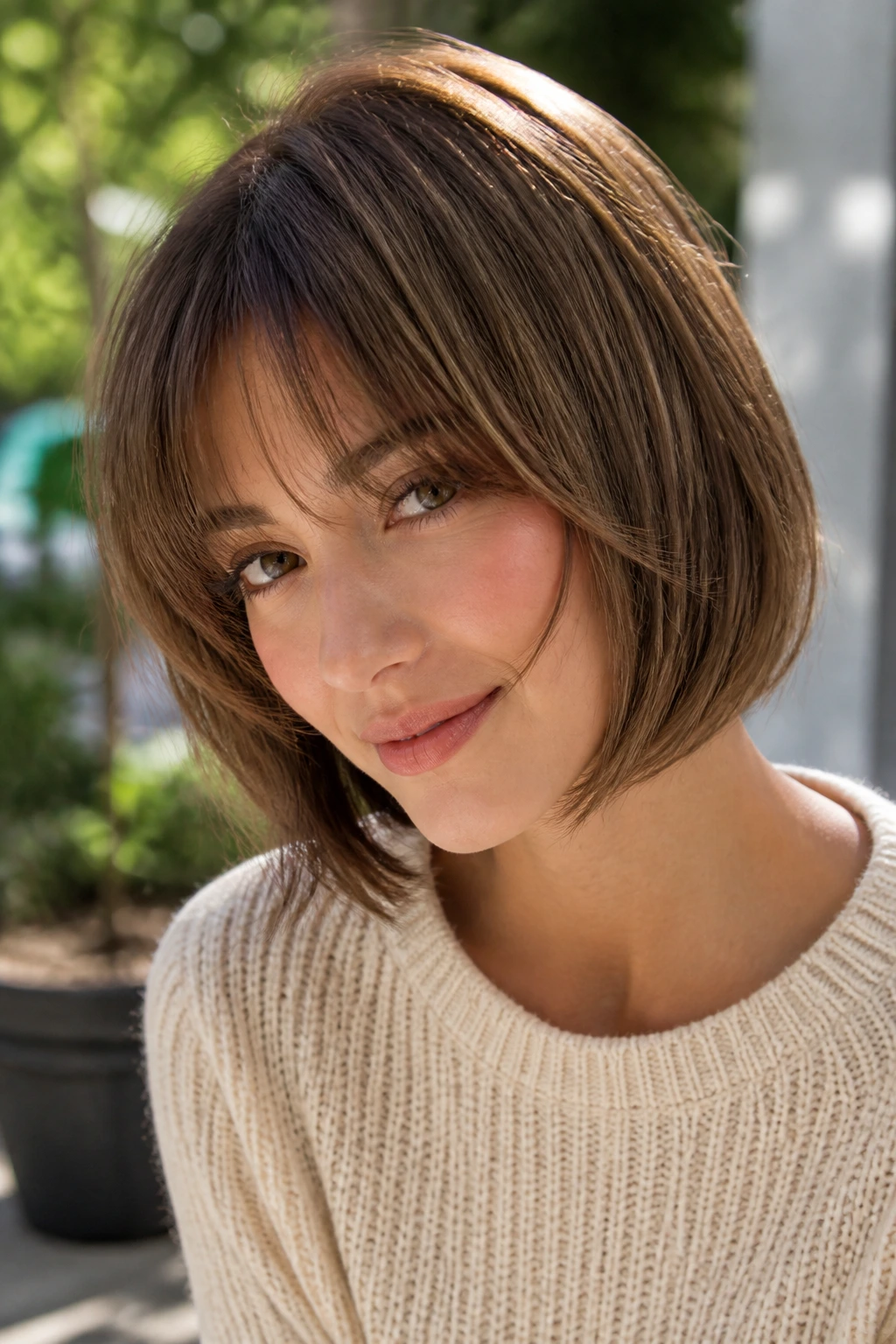
Curved cheekbone fringe begins short near the center and sweeps down toward the face, ending around the cheekbones. On fine hair, that curve can be lovely because it draws attention outward and gives the front section a graceful shape without needing a lot of density.
This is a good option if you want bangs that work with a bob, a lob, or a layered shoulder cut. It’s not a strict bang in the traditional sense. More of a face-framing front piece that happens to sit shorter.
The best part is how it grows out. The longer outer pieces fold into the rest of your layers instead of hanging around like they got left behind.
17. Airy See-Through Fringe
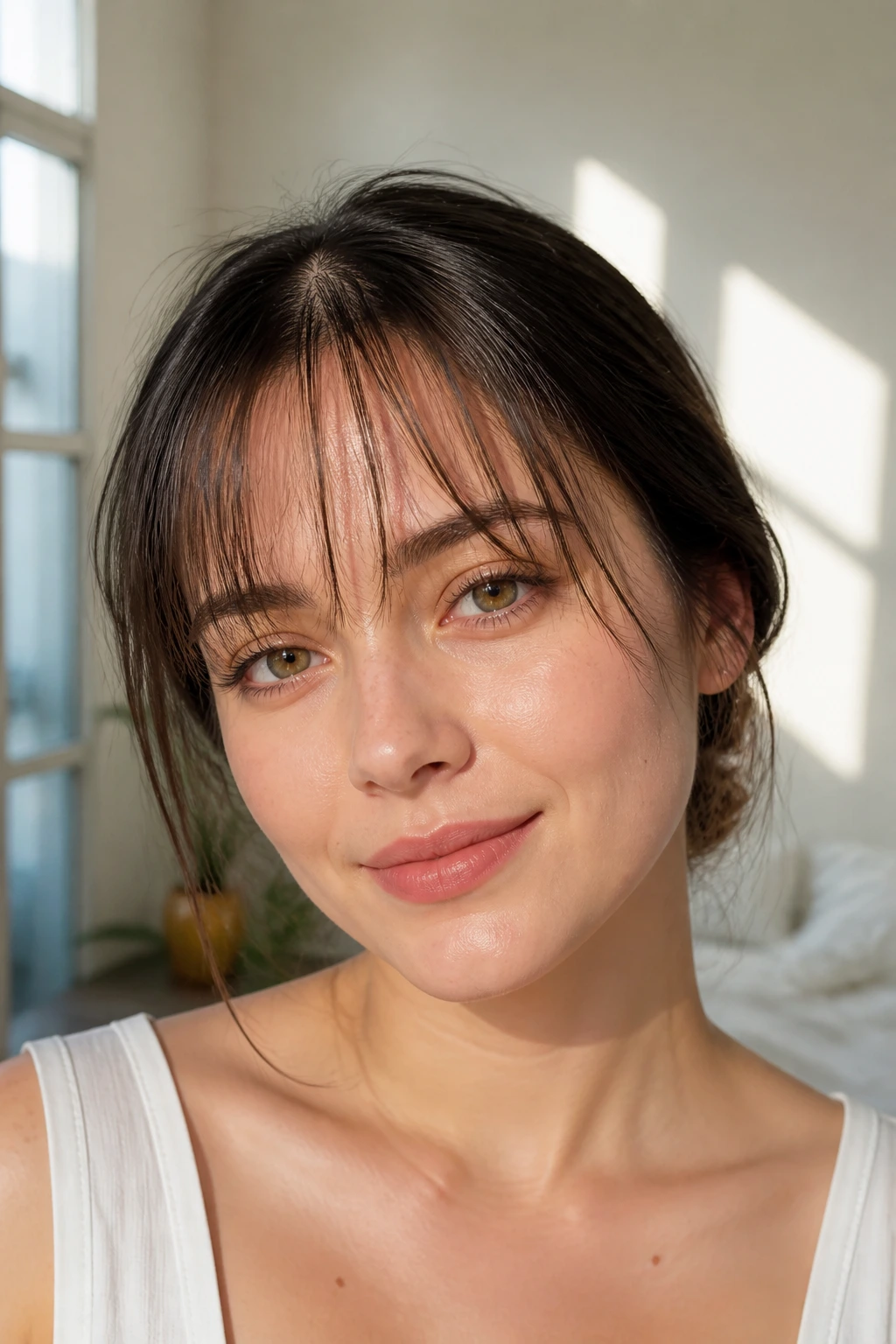
See-through bangs are popular for a reason: they’re light, soft, and forgiving on fine hair if you keep the density right. The “airy” version leaves enough space between strands that the forehead peeks through, which helps the style look deliberate rather than sparse.
That said, this one can go wrong fast if the hair is cut too thin. The goal is translucent, not vanished.
What to Request
Ask for a full-looking section with a soft finish. Then ask the stylist to keep the bang narrow enough that the temples stay clean. That’s how you avoid the stringy corners that make see-through fringe look unfinished.
Styling is easy. A small round brush, 20 seconds of heat, and a cool shot at the end are enough for most people. If the hair falls apart during the day, dry shampoo at the roots—not the ends—brings it back.
18. Mini Shag Fringe
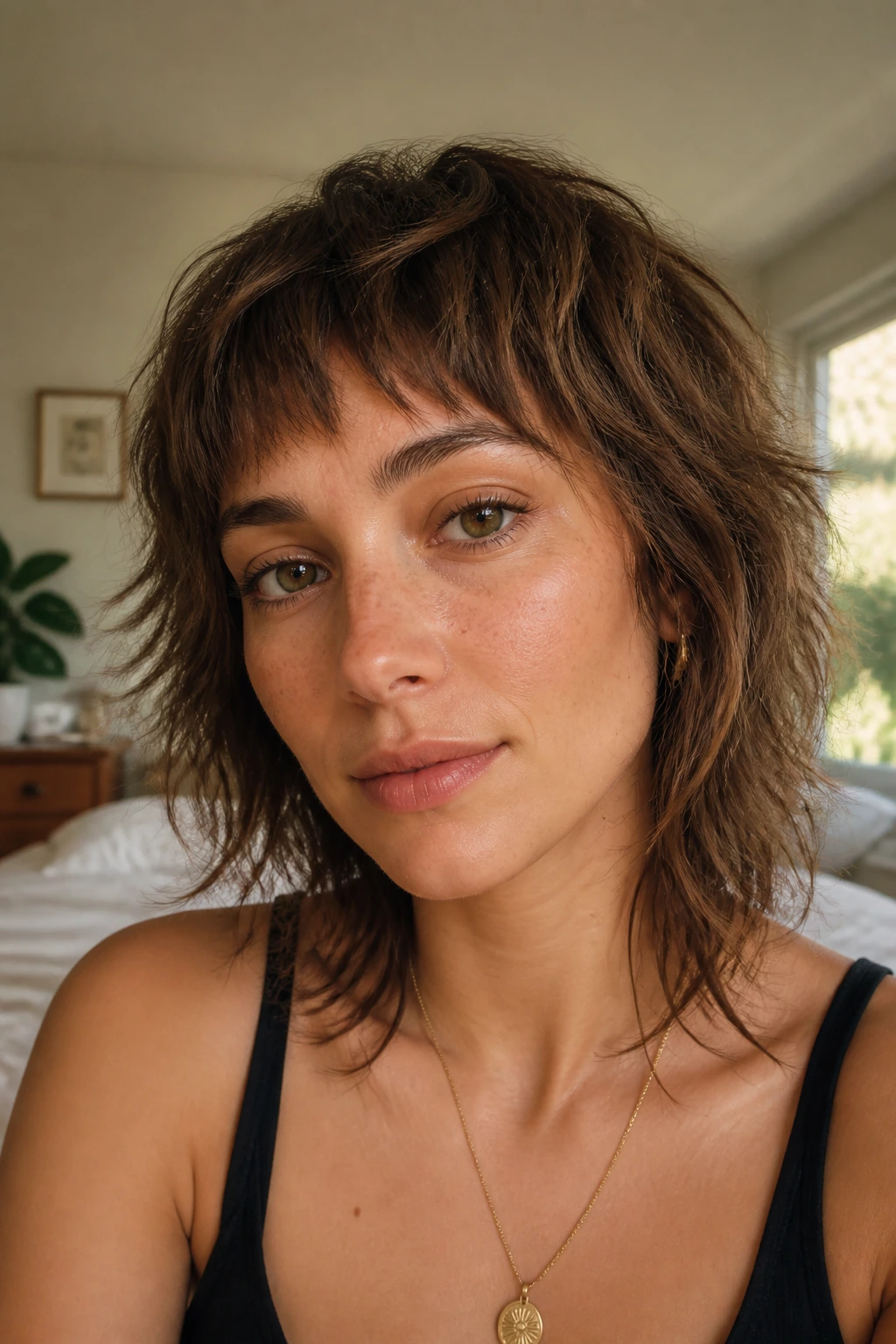
Mini shag fringe takes the feel of a shag haircut and shortens the front enough to stay manageable. It’s textured, broken up, and a little rebellious, but it still suits fine hair because the piecey edge stops the fringe from becoming heavy or blocky.
This style makes the most sense if the rest of your hair has movement too. A one-length cut can make mini shag bangs look disconnected. Add layers around the face, and the whole thing clicks.
The real advantage is that it never has to look perfect. A little twist, a little bend, a little flyaway—fine. That’s the aesthetic.
19. Center-Split Short Fringe
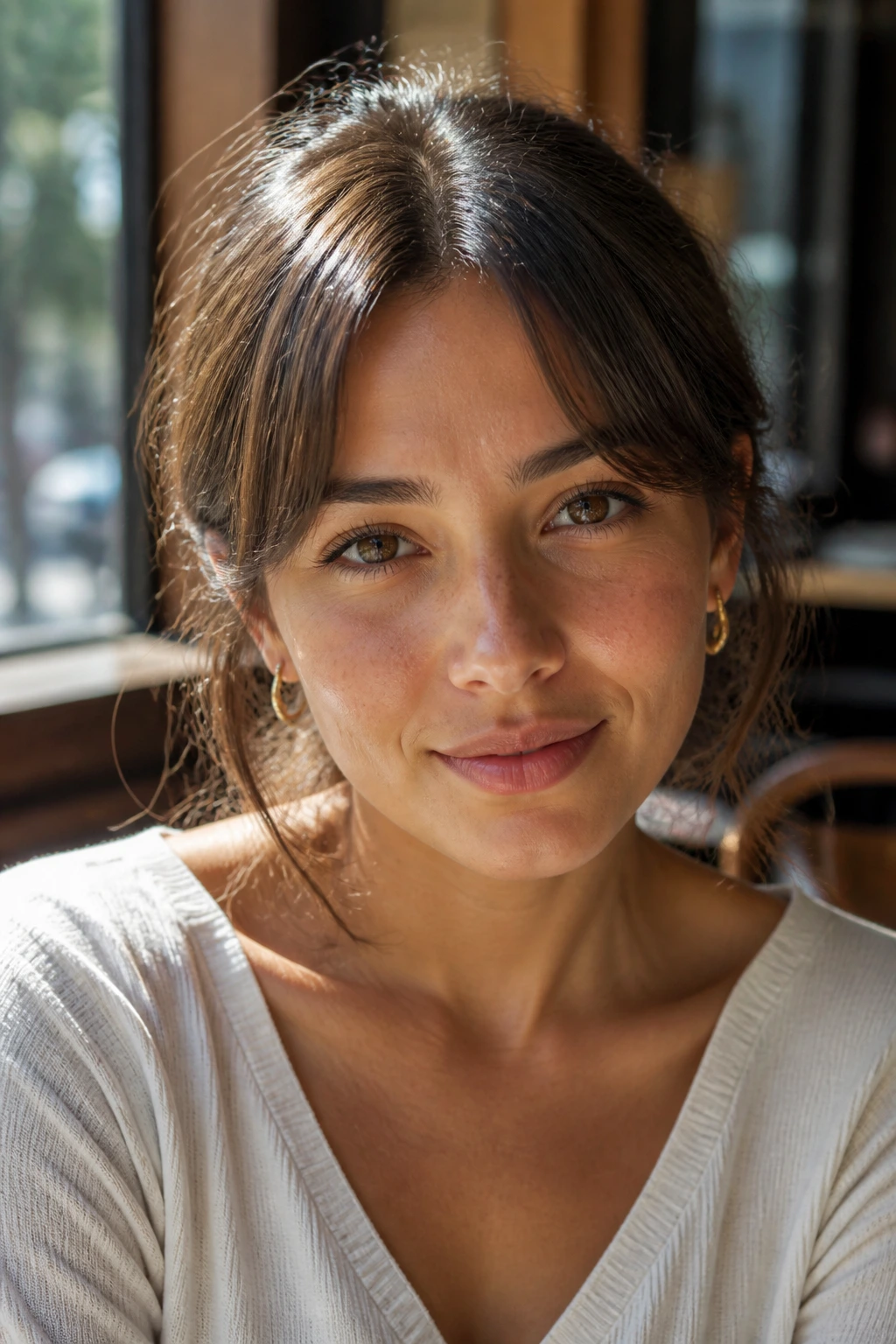
A center-split short fringe gives you the shortest version of curtain bangs without dragging the front down too much. Fine hair benefits from that split because the two sides can be refreshed separately, and the center part keeps the shape from getting bulky.
It’s a good compromise if you want bangs but fear commitment. On days when you want your forehead open, the pieces can be tucked aside. On days when you want a bit more frame, they fall forward on their own.
Why It’s Easy to Live With
The split creates a built-in escape route for growth. Instead of one blunt band that suddenly feels too long, you get two sections that can be coaxed into layers. That means fewer “I need a trim right now” moments.
If your hair is very fine and very straight, keep the center section short enough to show the split. If it gets too long, it just becomes face-framing layers without the bang effect.
20. Blunt-to-Piecey Hybrid
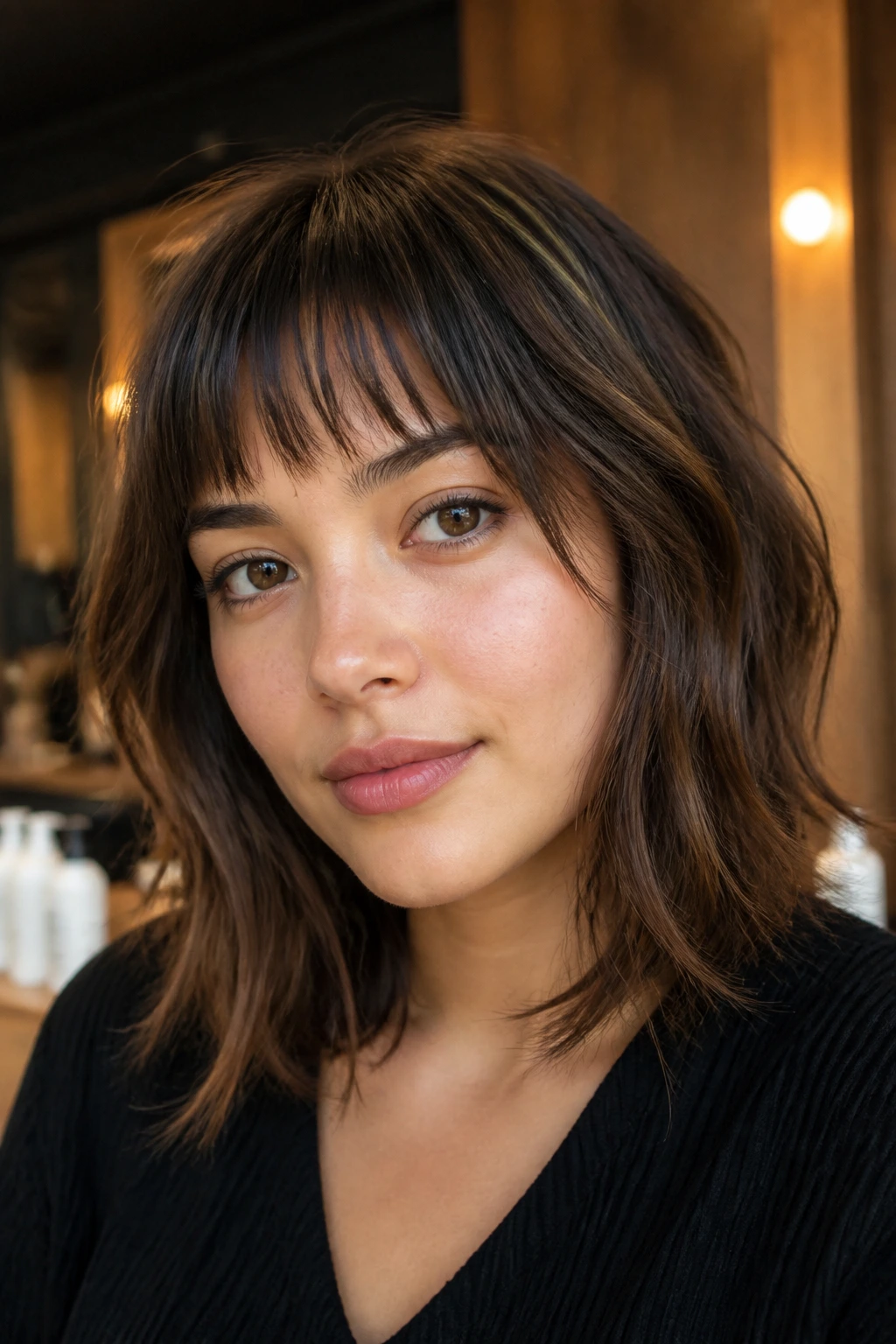
This is one of my favorites for fine hair because it gives you the density of a blunt edge with the movement of a piecey fringe. The center sits together enough to look full, then the ends break apart just enough to keep it from feeling stiff.
It’s useful if you want a fringe that looks good on day one and still behaves on day three. That matters. A lot of bangs only look good on the first blowout. This one can survive a bit of lived-in texture.
The Balance
The trick is keeping the base line solid and the interior slightly textured. If the stylist removes too much hair from the inside, you lose the blunt effect. If they leave it too blunt, it can sit like a straight line across the face. Somewhere between those two is the sweet spot.
Pair it with a bob, a cropped cut, or soft layers. It likes structure.
21. Soft Triangle Fringe

A soft triangle fringe is widest at the sides and lighter through the middle, which gives the face a gentle frame without a hard shelf across the forehead. On fine hair, that wider outer shape can make the front look fuller even if the middle stays light.
This style works nicely for people who want a fringe that blends into the haircut rather than standing apart from it. It’s flattering, low-fuss, and surprisingly good at disguising a narrow or uneven hairline.
The soft part matters. You want the corners to taper, not flare out. Think gentle triangle, not costume wig.
22. Tucked Side Fringe
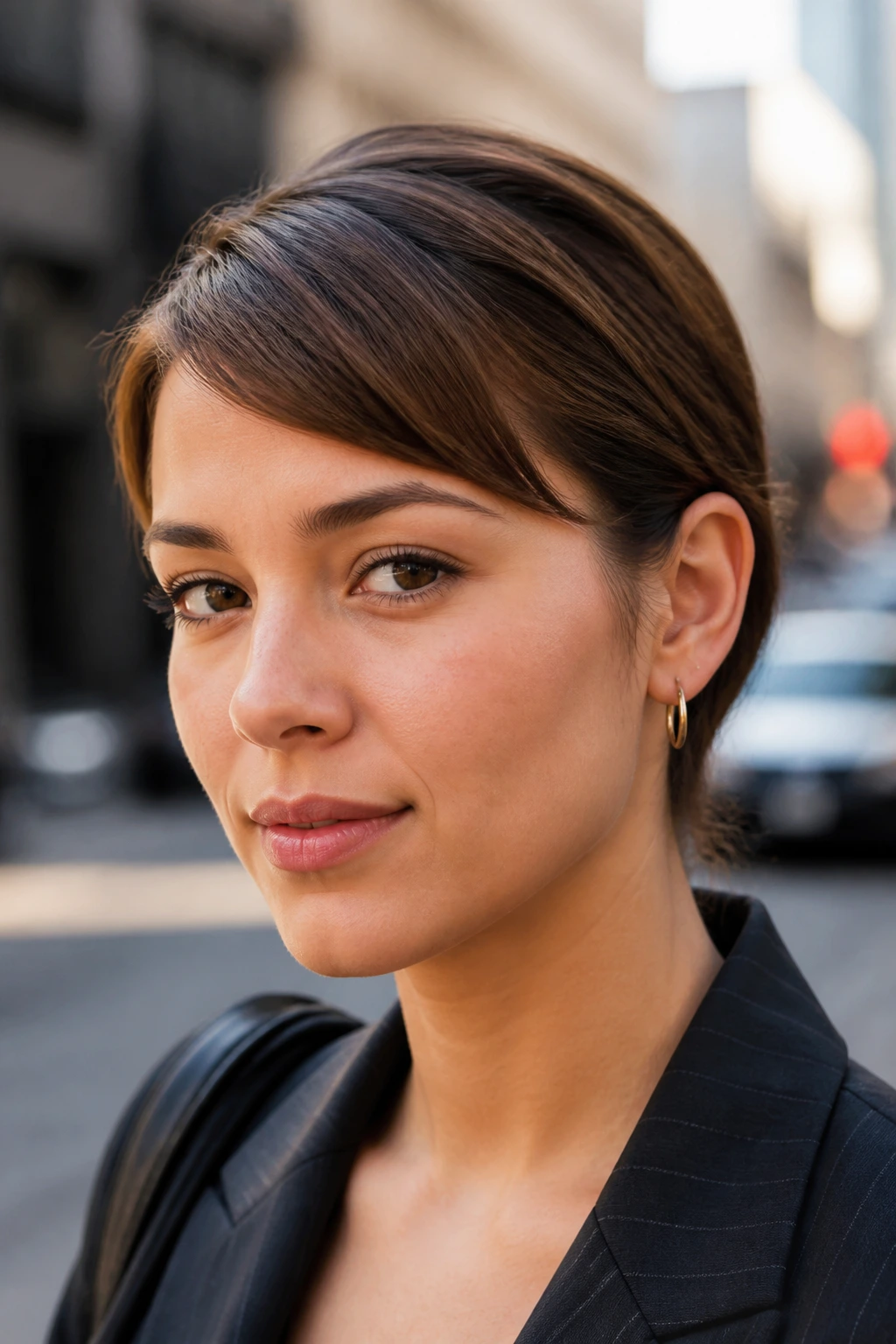
A tucked side fringe is about as practical as bangs get. The fringe is short enough to sweep over, but long enough at the side to tuck behind the ear when you need the face clear. Fine hair likes that flexibility because it tends to lose volume faster than you’d like.
The best thing about this style is the day-to-day escape hatch. If the front gets greasy, you tuck it. If it falls flat, you redirect it. If it starts to grow out, it still looks like a side fringe.
A Little Styling Note
Use a light mist of flexible-hold hairspray, not a heavy lacquer. You want the front to move, not lock into place like cardboard. A quick finger comb after spraying gives it that loosened finish.
23. Layered Fringe With Inner Bend

Layered fringe with an inner bend has a soft curve that pulls slightly toward the face before turning under. That bend helps fine hair look intentional because it creates a shape the hair wouldn’t naturally hold on its own.
This is a good choice if your bangs always want to split at the center. The bend gives them direction, which is half the battle. A tiny round brush or even the curve of a flat iron can create that inward movement in seconds.
The style also blends well into longer layers. It doesn’t feel like a separate strip cut across the forehead. It feels connected.
24. Face-Hugging Fringe
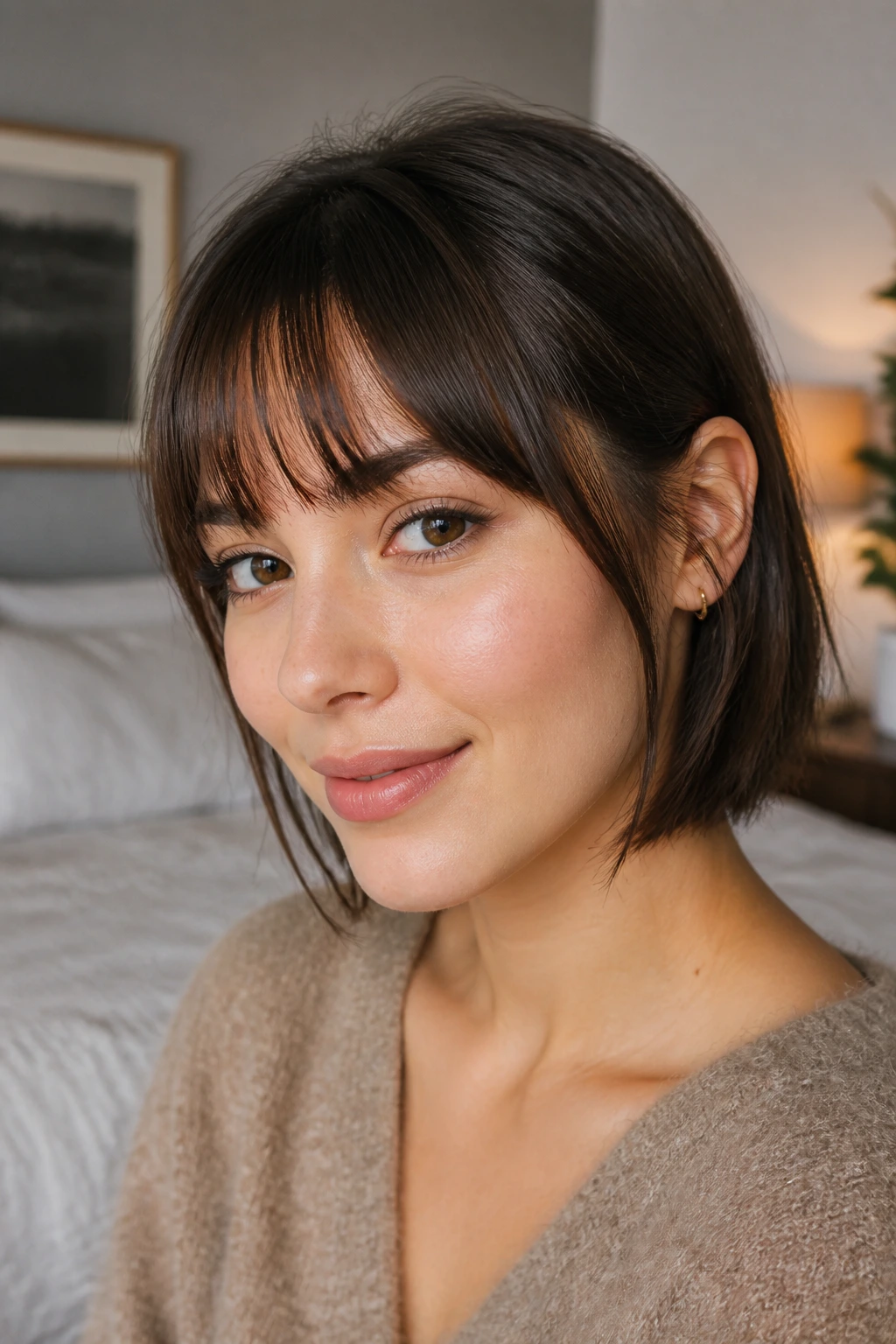
Face-hugging fringe sits close to the forehead and temples, then curves around the outer face. It’s a subtle style, but on fine hair it can look richer than you’d expect because the line stays clean and the shape is close to the face.
This one is for anyone who likes a controlled outline. There’s less float, less flick, less chance of the bang wandering off in a humidity fight. If your hair tends to puff at the sides, a face-hugging shape can calm that down.
Best pairing: sleek bobs, short lobs, and hair that’s worn behind one ear a lot.
25. Brush-Forward Fringe
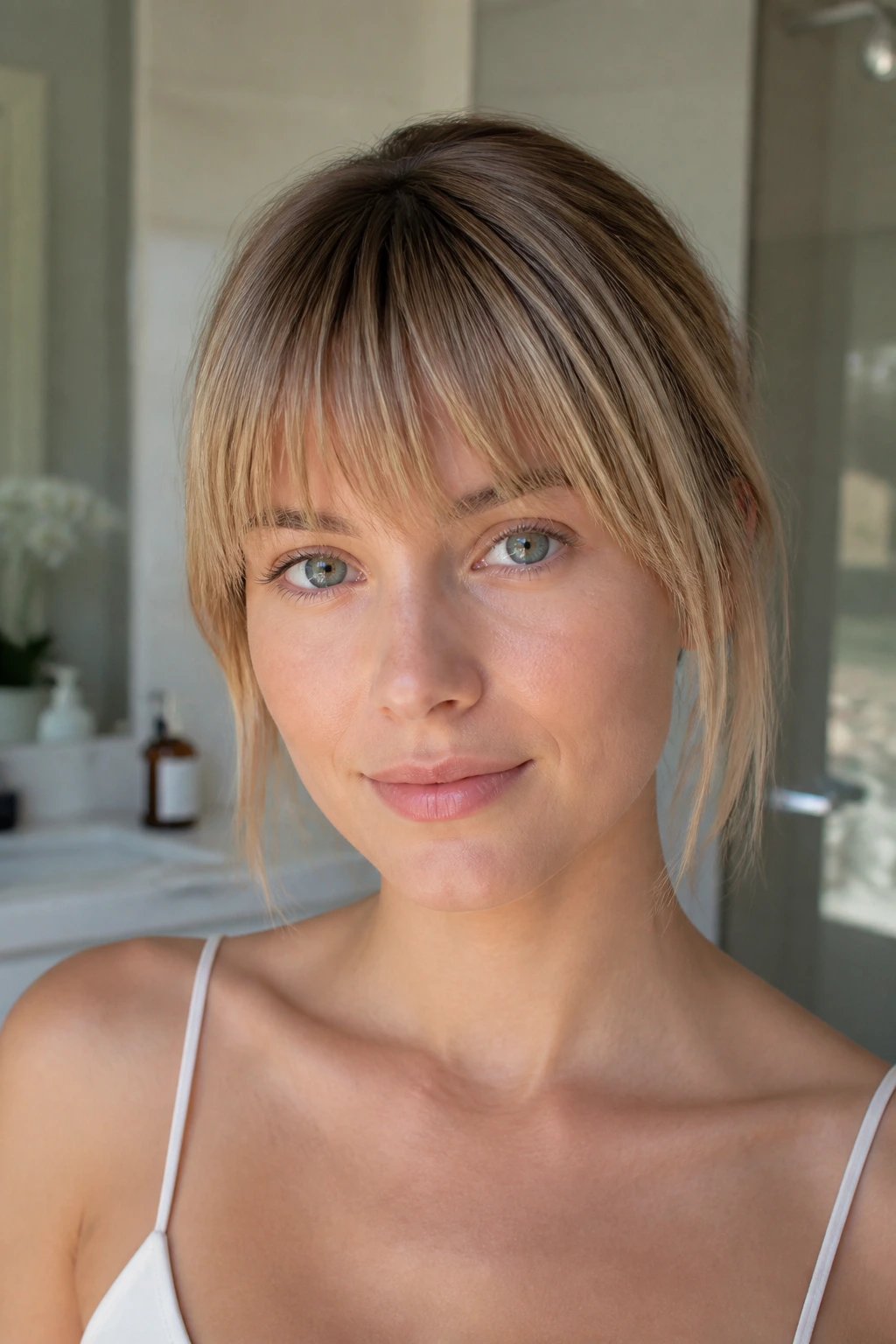
Brush-forward fringe is the simplest one on this list, and that’s partly why it works. The hair is cut so it naturally falls forward, but not so long that it drapes into the eyes all day. Fine hair responds well to this because the front doesn’t need complicated coaxing—just a quick brush and maybe a blast of air at the root.
H3: Why Simplicity Wins Here
When a cut depends on too many products, fine hair pays for it by going limp. A brush-forward fringe avoids that trap. The edge is enough on its own.
This is the style I’d recommend to someone who wants bangs but doesn’t want to think about them every morning. It’s the least fussy of the bunch, and when it grows out, it just starts behaving like face-framing layers. No drama. No awkward line. Good hair math.
What Makes These Bangs Easier to Live With Day to Day

Fine hair rarely behaves like thick hair, so the smartest fringe choices are the ones that don’t demand a perfect routine. A short bang dries fast, which means you’re not stuck with a damp forehead while you wait for the rest of your hair to finish. That alone is worth something on rushed mornings.
The other payoff is oil control. Hairline oil shows first on fine bangs, and shorter styles can be revived with dry shampoo, a quick blow-dry, or even a wash in the sink. I know that sounds annoyingly old-school, but it works. Bangs are the one part of a haircut that often deserves a separate 30-second wash.
Why the Cut Matters More Than the Product
A good fringe shape can survive a little bad weather and a little laziness. A bad one needs rescue every day.
That’s why the best short low maintenance bangs for fine hair aren’t the fanciest or most dramatic. They’re the ones with enough structure at the edge, enough softness at the corners, and enough room to grow without making you regret the appointment.
Tools That Make Styling Short Bangs Less Annoying
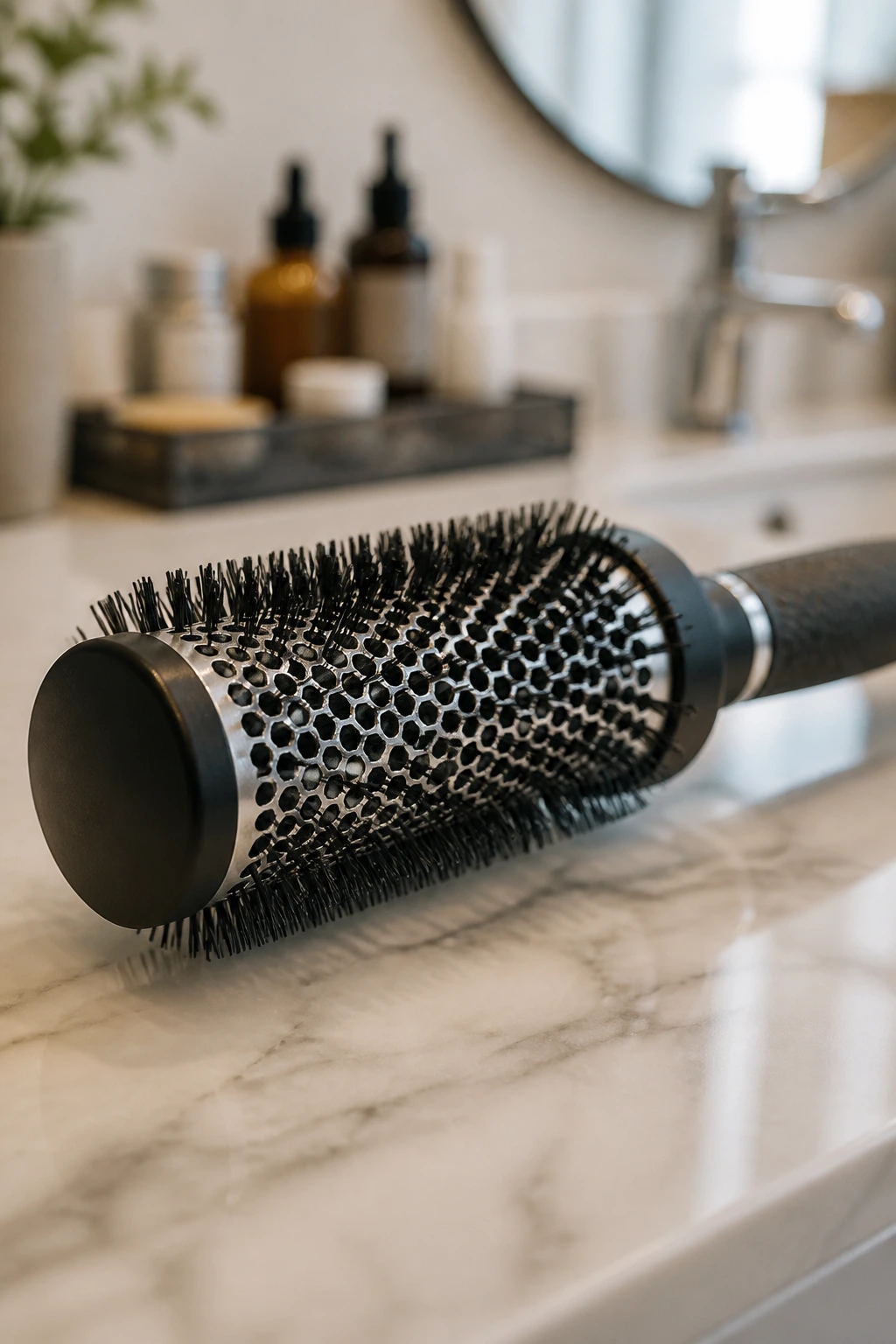
- Small round brush: A 1-inch brush is easier to use on short fringe than a big blowout brush, and it gives fine hair a cleaner bend.
- Blow dryer with nozzle: The nozzle keeps airflow pointed at the roots instead of blasting bangs in every direction.
- Fine-tooth comb: Good for separating a fringe into sections without pulling out too much shape.
- Light mousse: A walnut-size amount at the roots adds lift without the sticky finish that fine hair hates.
- Dry shampoo: Handy for day-two volume and oil control along the forehead.
- Mini flat iron: Useful for nipping a curve into blunt or arched fringe when a brush won’t cooperate.
- Duckbill clips: Great for pinning the rest of the hair away while you focus on the bangs.
- Flexible-hold hairspray: Keeps movement without turning the fringe stiff.
- Stylist’s texturizing shears: Best left to a professional, because fine hair can lose density fast if these are used too aggressively.
What to Ask Your Stylist Before You Sit Down

Bring photos, yes, but bring expectations too. Fine hair needs a bang that keeps enough edge to look full, and a good stylist should talk through how much hair belongs in the fringe section. If they jump straight to “we’ll thin it out,” pause. Fine hair usually needs careful shaping, not a lot of removal.
Ask where the shortest point will land when the hair dries naturally. That question matters more than it sounds. A bang that looks perfect wet can be half an inch shorter and a lot more aggressive once it’s dry. Also ask how the style will behave when you tuck the rest of the hair behind your ears or pull it into a ponytail.
Product Choices That Actually Help
Look for root-lift mousse, lightweight dry shampoo, and flexible hairspray. Heavy creams, thick oils, and rich leave-ins can make the front section collapse by lunchtime, especially if your forehead runs oily. If your hair gets flyaway at the front, a tiny bit of smoothing cream on the very ends—not the roots—can calm it without flattening the bang.
One more thing. Fine hair often looks better when the fringe is cut a touch longer than your first impulse says. You can always take another quarter-inch off at the next trim. You can’t glue it back on.
How to Wear Them Without Fighting the Cut

Placement: Let the fringe fall where the cut wants to land first. Then adjust with a brush or your fingers. For fine hair, forcing the bangs into a shape they don’t want usually makes them split.
Pairings: Short bangs look especially good with bobs, pixies, lobs, and soft shags. They also work with glasses and tucked-behind-the-ear styling because the front stays compact.
Finish: Decide whether you want smooth, piecey, or lightly messy. Fine hair can do all three, but it’s happier when you choose one finish and stick with it instead of layering on three products and hoping for magic.
Maintenance: Give the fringe a separate touch-up in the morning if needed. Thirty seconds at the roots is enough most days. That’s the trade: a little focused effort up front, less fuss everywhere else.
Small Styling Moves That Make a Big Difference

Volume Boost: Blow-dry the bangs from side to side for the first 10 seconds, then direct them forward. That tiny zigzag of heat lifts the root better than blasting them straight down from the start.
Texture: Use a pea-size amount of mousse or a light spray of texture mist on damp fringe, then scrunch the ends once. Don’t rake product through the whole bang unless you want separation that goes too far.
Shortcut: If the bangs wake up bent, mist them lightly with water, clamp them with your fingers for a few seconds, and dry just the root area. You do not need to wash the whole head to fix the front.
Make-It-Yours: For glasses, keep the fringe slightly shorter and lighter at the center. For cowlicks, give the shortest point a little more length and avoid cuts that sit dead-center on the stubborn spot.
The Mistakes That Make Fine Hair Bangs Harder Than They Need to Be
-
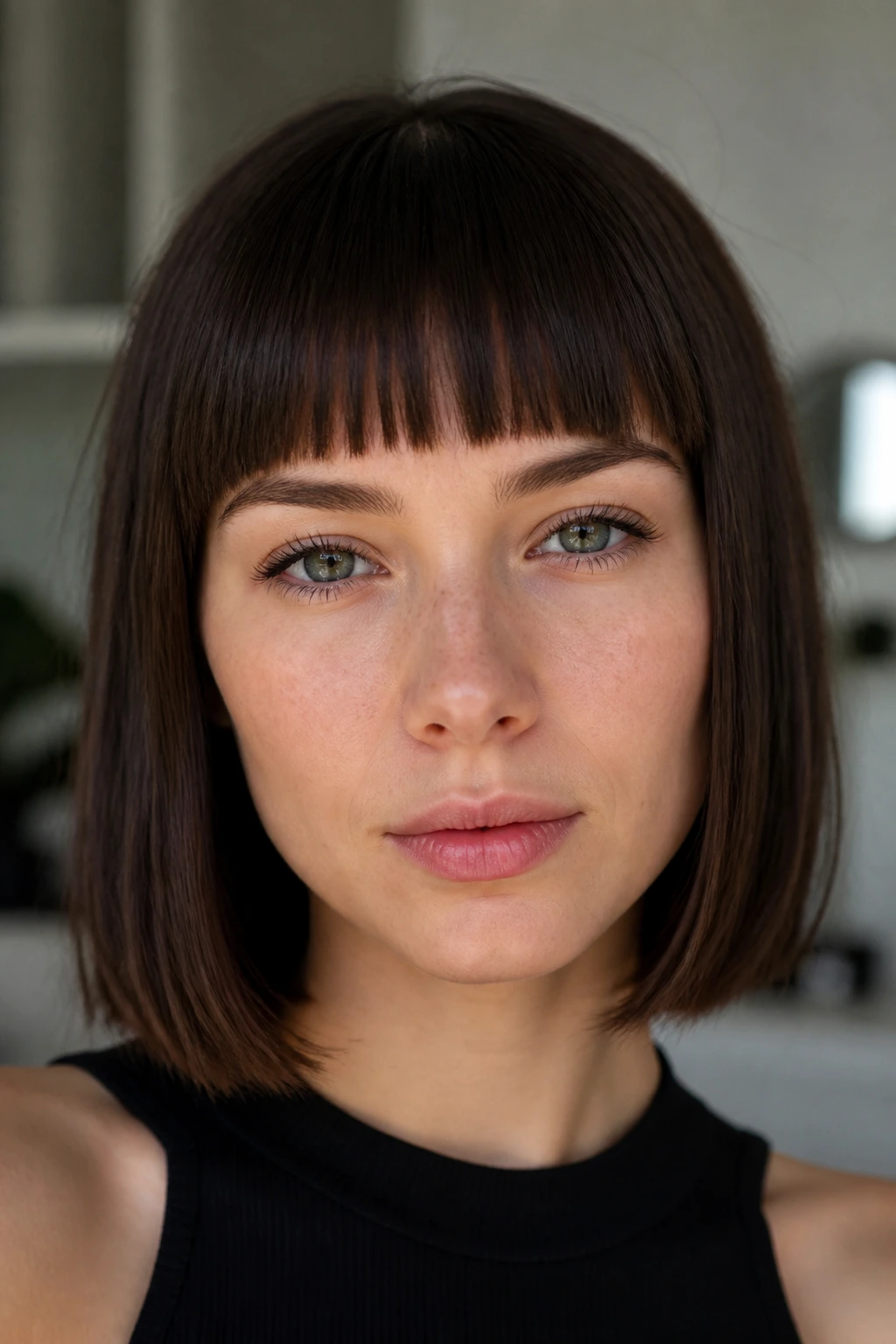
Over-thinning the fringe. The symptom is a see-through front that looks stringy within a week. The fix is a denser cutting line with soft point cutting instead of aggressive thinning shears.
-
Cutting the bangs too short on day one. They spring up when dry, and fine hair can look even shorter because it doesn’t have much weight. Leave a bit of length, then trim again once you see how the hair behaves.
-
Using rich products at the roots. Heavy creams and oils flatten fine bangs in minutes. Keep anything creamy away from the hairline and use lightweight mousse or dry shampoo instead.
-
Ignoring the cowlick. If the front grows in a swirl or splits in the middle, the wrong cut will fight that forever. Build the fringe shape around the natural growth pattern instead of pretending it isn’t there.
-
Never trimming the edges. Short bangs need maintenance. Once the line grows past its sweet spot, it starts to separate and lose the crisp shape that made it work in the first place.
Variations and Alternatives to Try
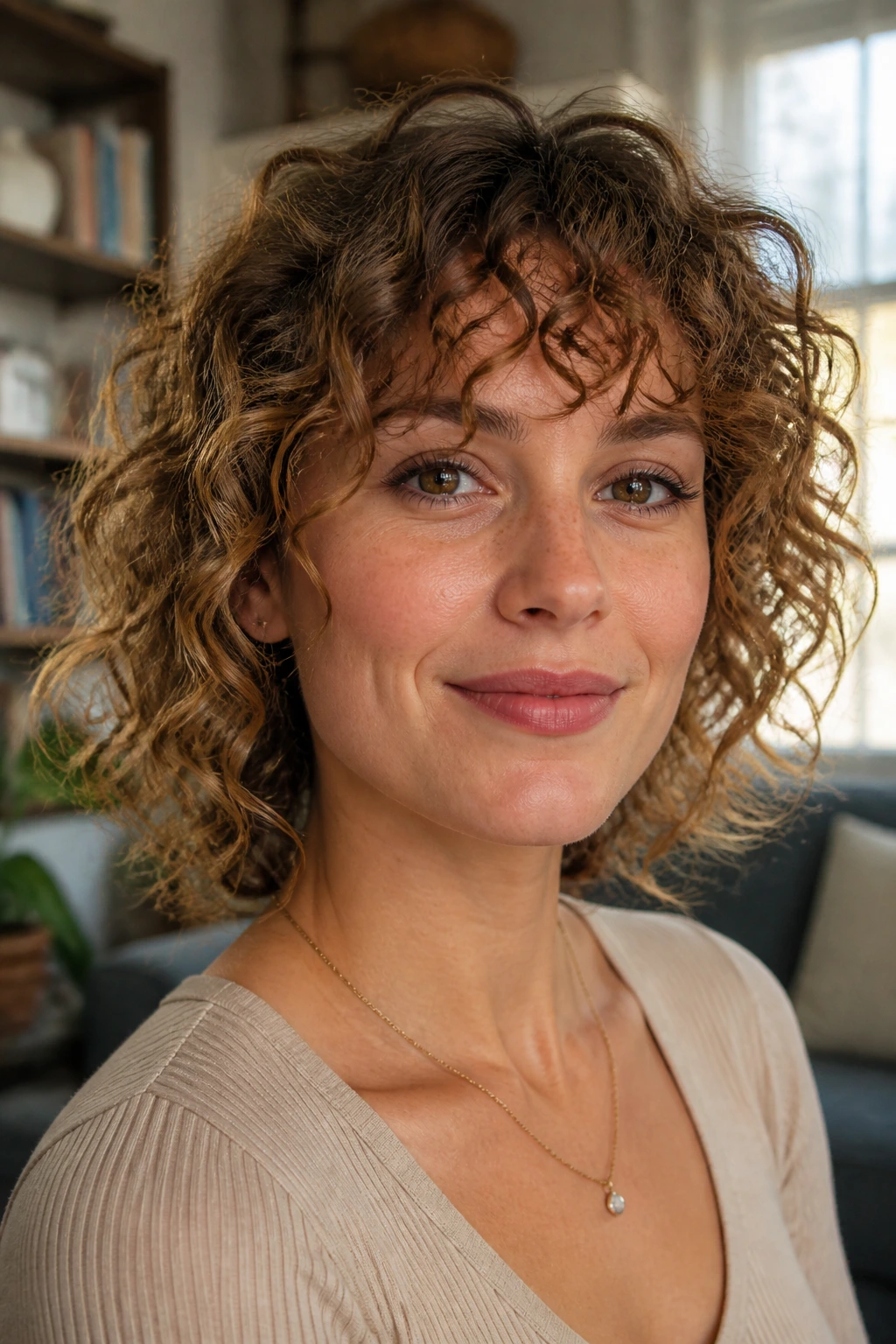
Soft Curly Fringe: If your fine hair has a bend or loose wave, keep the fringe slightly longer and cut it dry. The extra length gives curls room to spring up without turning into a tiny halo.
Glasses-Friendly Fringe: Shorten the center a touch and soften the corners. That keeps the bangs from sitting on the frames and helps the eyes stay open instead of crowded.
Grow-Out Sweep: Start with a side-swept pixie fringe or an asymmetrical shape. When you’re ready to move on, it blends into layers faster than a blunt center bang.
Sleek Bob Companion: Pair a blunt-to-piecey hybrid or rounded fringe with a chin-length bob. The haircut looks fuller because the line at the front mirrors the line at the bottom.
Humidity-Proof Fringe: Choose a mini curtain, bottleneck, or side fringe with more movement and less precision. On humid days, those softer shapes still look on purpose when they lose a little polish.
Keeping Short Fringe Looking Fresh Between Washes
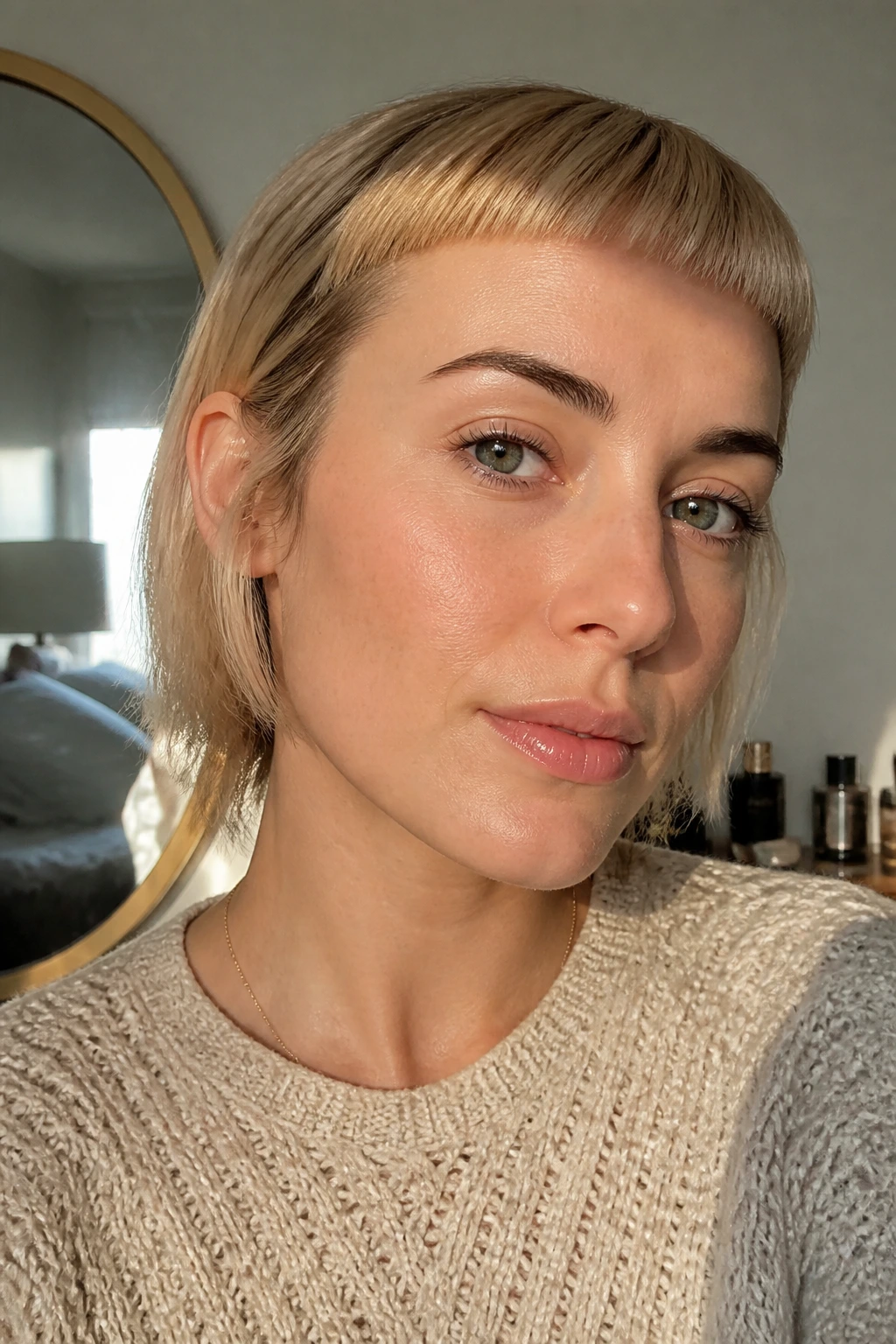
Bangs age faster than the rest of the haircut. That’s not a flaw; it’s just how forehead oil, sweat, and sleep work. The fix is not complicated, but it does need a rhythm. Wash or rinse the fringe area more often than the back, and dry it fully at the root. A half-damp bang is a gamble, and the odds are not kind.
Trim timing matters too. Micro bangs and blunt mini fringes usually need a tidy-up every 3 to 4 weeks. Softer, more blended versions can stretch to 5 or 6 weeks, sometimes a touch longer if you’re happy with a grown-out look. If the ends start poking into your eyes or splitting at the center, the cut has passed its best window.
Night Care That Saves Time in the Morning
If your bangs bend while you sleep, pin them loosely with a duckbill clip or wrap them around a small roller before bed. A satin pillowcase helps, though it won’t fix a bad cut. In the morning, a quick dampen-and-dry at the root is usually enough to put the shape back in place.
Fine hair also benefits from a clean forehead. Wipe off makeup and skincare residue near the hairline before sleep. Oils from face creams move into the fringe fast, and the next morning you’re dealing with separation you didn’t earn.
Questions People Ask Before Cutting the Fringe
Are bangs a bad idea for fine hair?
Not if the cut respects the hair’s weight and movement. Fine hair can wear bangs beautifully when the fringe is kept light enough to move but dense enough to read as a shape.
Which short bang is easiest to grow out?
Side-swept pixie fringe, short curtain fringe, and bottleneck bangs usually grow out with the least drama. They already have built-in direction, so they slip into face-framing layers instead of creating a hard line.
How often do fine hair bangs need trimming?
Most short fringe styles need a cleanup every 3 to 6 weeks, depending on how precise the shape is. The shorter and straighter the bang, the more often it needs attention.
Can I cut short bangs myself?
You can trim tiny bits between salon visits, but a first cut is better left to a stylist. Fine hair shows uneven edges fast, and once the line is off, the only fix is to wait it out or cut more off.
What if my bangs split down the middle?
That usually means the cut is too long, too heavy at the center, or fighting your cowlick. A stylist can shift the shortest point slightly off-center or lighten the shape without removing too much density.
Do short bangs make fine hair look thinner?
They can, if the fringe is over-thinned or cut too sparse. A denser edge with soft texture usually has the opposite effect, because it creates a stronger line at the front.
Can I air-dry them?
Yes, if you choose a softer style like a mini curtain, side fringe, or shattered fringe. Straight blunt mini bangs usually need a quick root blow-dry to avoid a flat, separated finish.
What should I do on greasy days?
Dry shampoo at the roots, then use a clean finger or fine comb to separate the fringe. If that’s not enough, pin the bangs back for a few hours rather than layering more product on top of oil.
A Fringe That Works Harder Than It Looks

The best short fringe for fine hair isn’t the one that steals the whole haircut. It’s the one that gives the front enough shape to matter, then gets out of the way. That might be a blunt little line, a soft side sweep, or a broken-up fringe that looks easy because it’s been cut with restraint.
I’m partial to the styles that can survive a real morning. Not the fantasy version, the real one. The one where you’re drying your bangs with one hand, holding coffee with the other, and hoping the front doesn’t separate before lunch. Pick the fringe that fits that life, and it will look better for longer.
The smartest move is usually the least dramatic one: start slightly longer, keep the density, and let the cut do more of the work than the products do. From there, the bangs can get shorter, sharper, softer, or more piecey—but they’ll still have a shape worth keeping.