



Fine hair can look fantastic at medium length, but it can also turn limp in a hurry if the shape is off by even a little. Short fine hairstyles for medium hair with soft layers solve that awkward middle ground: they keep enough length to feel versatile, but they don’t drag the ends down or let the roots go flat and sad by noon.
The trick is restraint. Too many short layers on fine hair can make the hair look see-through, especially around the crown and temples. A smarter cut keeps a solid perimeter, then uses soft face-framing pieces and gentle internal movement to bend the silhouette instead of shredding it. That’s where the good stuff lives: a bob that sits at the jaw, a lob that lands at the collarbone, a fringe that opens the face without eating up density.
I’m not interested in the kind of haircut that needs three hot tools, a sermon, and a miracle to look awake. The styles here lean on shape first. Some are polished, some are loose, some are almost too simple on the hanger — until you put them on and the whole head suddenly has lift, curve, and a little more intention.
Why These Cuts Earn Their Keep
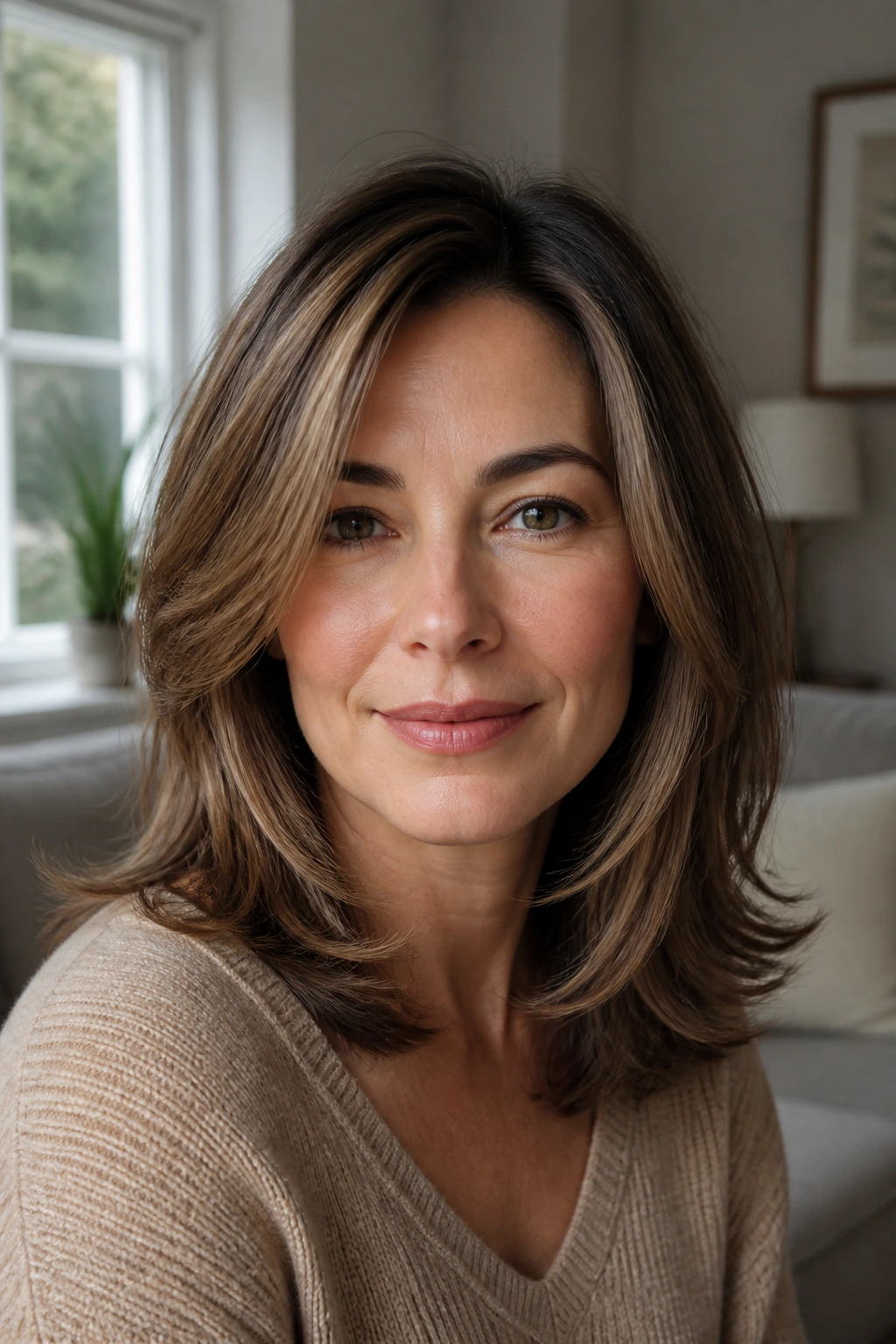
- Soft layers keep the ends from looking skinny: Fine hair needs a line that reads as full, so the best cuts leave enough weight at the perimeter to make the outline look deliberate.
- Medium length gives you room to play: A collarbone cut can be bent, tucked, flipped, or air-dried without collapsing the way a longer, heavier shape often does.
- Face-framing changes the whole haircut fast: A few well-placed pieces at the cheekbone or jaw can make the hair look lifted even when the crown is behaving like a slump.
- These styles work with regular life: You can wear them smooth, rough, or somewhere in the middle, and they still make sense on day two.
- They don’t depend on aggressive thinning: The good versions build movement with shape, not with over-texturizing that leaves the ends stringy.
- They suit different parts, faces, and moods: Side parts, middle parts, curtain fringe, tucked sides — the same basic length can go in very different directions without losing the plot.
1. The Chin-Skimming French Bob
The chin-skimming French bob is the first cut I’d reach for when fine hair needs a cleaner, stronger outline. It lands right around the jaw, which gives the hair something solid to do instead of hanging in soft, forgettable strands. A little softness around the face keeps it from looking severe, but the shape still has enough edge to hold its own.
Why It Works for Fine Hair
A blunt-ish line at the chin makes the ends look thicker than they are. That matters. Fine strands love to disappear when they’re stretched too long, and this cut solves that by keeping the strongest visual weight at the bottom.
Ask for: chin length, soft point-cutting at the ends, and light face-framing pieces that start no higher than the cheekbone.
Style it with: a side part and a round brush, or let it air-dry and tuck one side behind the ear for a cleaner line.
One good bend at the front is enough. No need to curl every inch.
2. The Collarbone Lob With Airy Ends
If you want the safest cut in the bunch, start here. The collarbone lob gives fine hair a little swing without asking it to carry extra weight, and the airy ends keep the style from looking heavy or blocky. It’s the haircut that still makes sense after a long day, which is more useful than people admit.
The length sits in that useful zone where it can be worn straight, waved, or clipped up, but it doesn’t drag the whole head flat the way longer lengths often do. On fine hair, that matters more than trendiness ever will.
Best for: anyone who wants movement but still likes enough length for a small bun or low ponytail.
Good detail to request: a blunt perimeter with soft internal layers, not a heavily shredded finish.
If your hair goes flat fast, this is the cut that buys you some breathing room.
3. The Curtain-Bang Lob With Soft Draping Layers
Need face framing without committing to a full fringe? This is the move. Curtain bangs can make fine hair look more complete around the face because they widen the silhouette at cheek level, and soft draping layers let them slide into the rest of the cut instead of sitting on top like a separate object.
The important part is length. Curtain bangs on fine hair should usually start longer than people expect — around the cheekbone, sometimes a touch lower. Too short, and they start stealing density from the front.
How to Style It
Blow-dry the bangs with a small round brush, pulling them away from the face first and then letting them fall open. That little flip at the ends keeps them from hanging in a flat curtain. A tiny bit of mousse at the roots helps, but use a light hand.
This cut looks especially good when the rest of the lob stays soft and smooth. The fringe does the visual work; the rest should just support it.
4. The Rounded C-Cut Lob
The rounded C-cut is what happens when a straight lob gets a little more grace. The shape curves inward from the jaw toward the collarbone, which gives fine hair a fuller outline without making the ends bulky. It’s a simple trick, but a useful one.
I like this shape on hair that tends to kick out at the bottom in weird directions. A C-cut guides the eye. It makes the hair look intentionally rounded instead of accidentally puffy or oddly flat.
- Best feature: the curve makes the perimeter read thicker.
- Styling note: use a medium round brush and roll the ends under for a soft bend.
- Who it suits: square and angular face shapes, because the curve takes the edge off the jaw.
The cut is quiet. That’s the point.
5. The Soft Shag With Tapered Crown
A shag can work on fine hair, but only if it is handled with some discipline. The soft version keeps the crown taper gentle and the layers long enough that the whole cut doesn’t split into wisps. I’m not interested in a choppy, over-razored shag on fine strands. That usually looks like a haircut that gave up halfway through.
This version keeps movement around the face and a little lift through the top, but it still preserves enough mass at the ends. That balance is what saves it. On wavy or slightly bent hair, the result feels lived-in without looking thin.
Good styling move: a diffuser on low heat, then a small amount of texture spray only through the mid-lengths.
What to avoid: short crown layers that expose the scalp.
If your hair is fine but naturally wavy, this is one of the few shag versions that won’t fight you.
6. The Jawline Bob With Hidden Layers
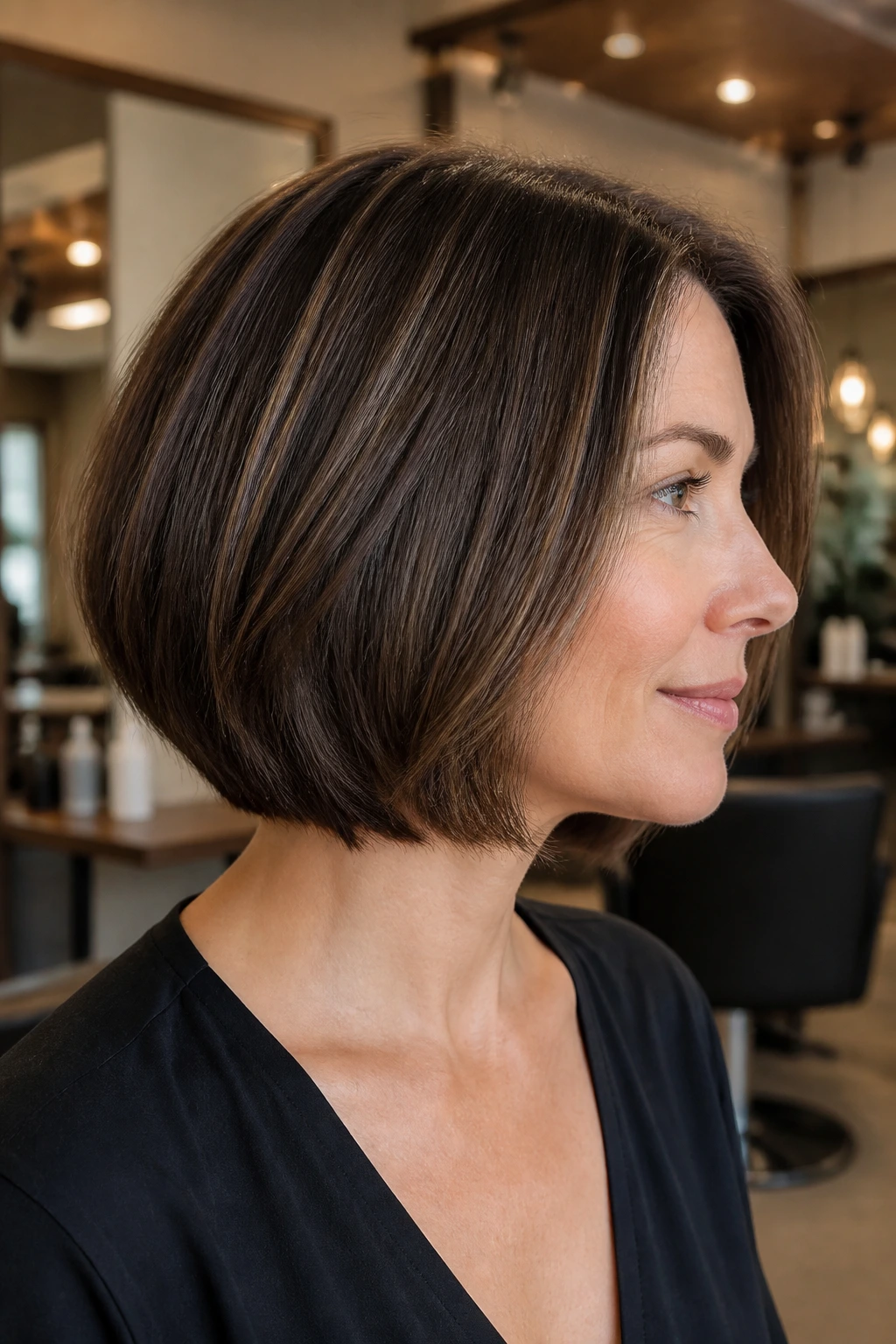
A jawline bob with hidden layers is basically a blunt bob in a nicer jacket. From the outside, the line still looks tidy and full. Inside, there’s enough subtle shaping to keep the hair from sitting like a cardboard helmet.
That hidden movement matters for fine hair because it gives the cut swing without sacrificing density. The layers stay tucked inside the shape, so the ends still look thick when the light hits them. It’s a neat trick, and honestly, more bobs should be cut this way.
What to Ask For
Ask your stylist to leave the perimeter solid and put the movement underneath, not through the top. If your hair is especially fine at the temples, keep those front pieces a little longer than you think you need. A blunt jawline bob can be stunning, but only if the line stays honest.
This cut is one of my favorites for straight hair that collapses easily. It gives structure without drama.
7. The Side-Parted Lob With Invisible Texture

A side part changes the whole mood of a fine-hair cut. It gives the roots a little lift on the heavier side and lets the hair fall with a touch more shape, which is often enough to make medium-length hair look fuller without needing a big blowout.
The texture here should be almost invisible. That’s not a bad thing. Soft layers, point-cut ends, and a clean side part can create a shape that feels polished but not stiff. Fine hair often looks best when the movement is implied rather than loudly carved in.
If your roots go flat near the part, switch the part every few days. Even half an inch makes a difference. Hair remembers where it lies, and sometimes it needs a small argument.
8. The Blowout Lob With Flipped Ends
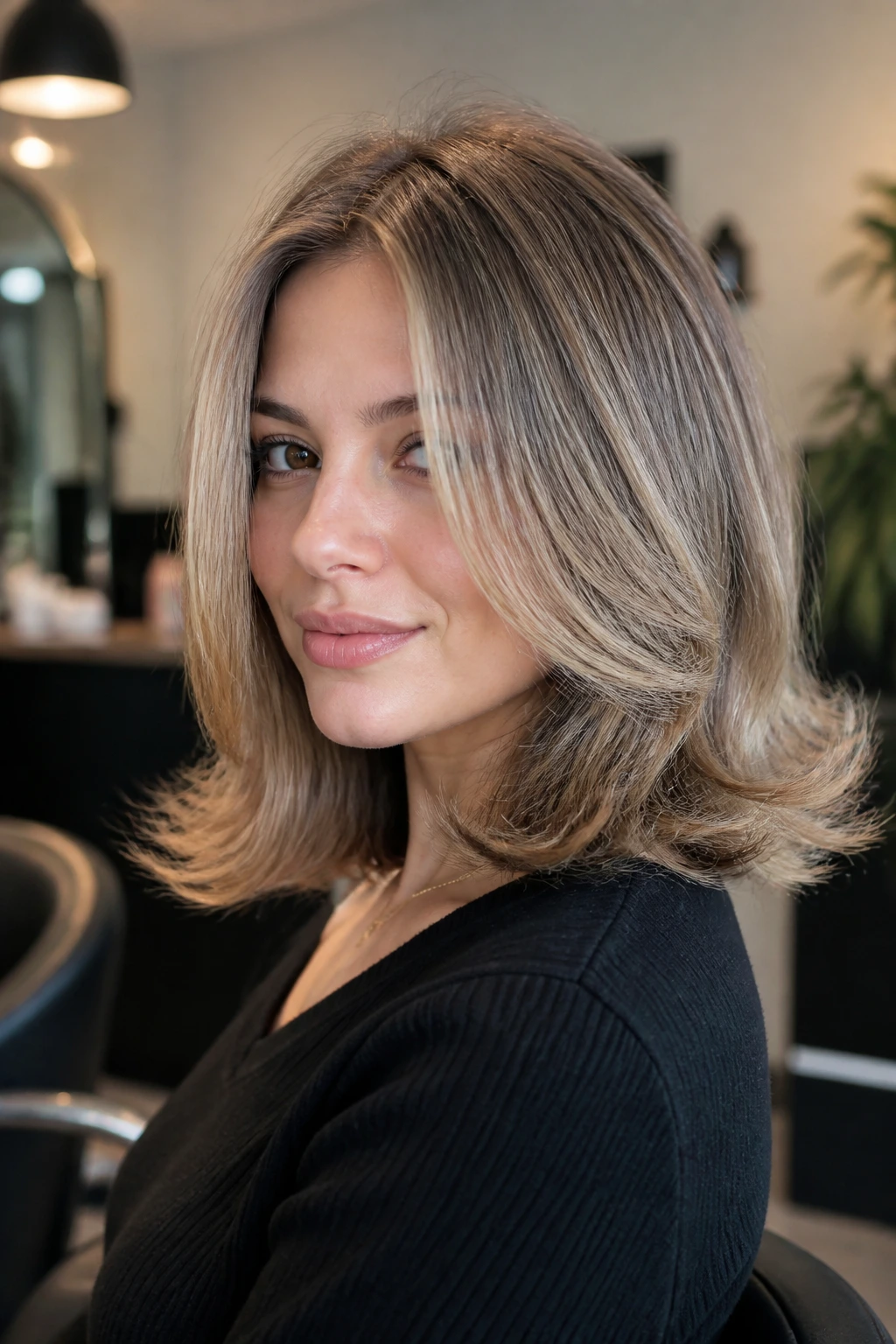
This is the cut for anyone who likes a little salon polish without going full 90s volume. The blowout lob uses the medium length to its advantage: the hair has enough weight to bend, but not so much that the ends drag down while you style it. The flip at the bottom keeps the silhouette lively.
I’d pair this with a 1.25-inch round brush and a concentrator nozzle. Dry the roots first, then roll the front pieces away from the face and let the ends kick slightly outward. That little movement keeps the style from looking stiff.
A flat iron can do the same job in a pinch, but I prefer a brush here. The result feels softer, and fine hair usually responds better when the bend looks brushed rather than pinched.
9. The Wavy Lob With Piecey Movement

This is one of the easiest styles to live in if your hair has a little natural bend. The wavy lob keeps the length long enough to preserve softness, while the soft layers help the waves separate instead of merging into one heavy sheet. It’s less “beach wave” and more “hair with a decent day.”
Piecey movement works because it creates gaps in the right places without exposing too much scalp. The trick is not to curl everything perfectly. Leave the last inch or so straighter, then shake the waves apart with your fingers once they cool.
A light texturizing spray is enough. Heavy salt spray can make fine hair feel dry and rough, and that’s a fast way to ruin the softness you were trying to create in the first place.
10. The Mini Wolf Cut for Fine Hair
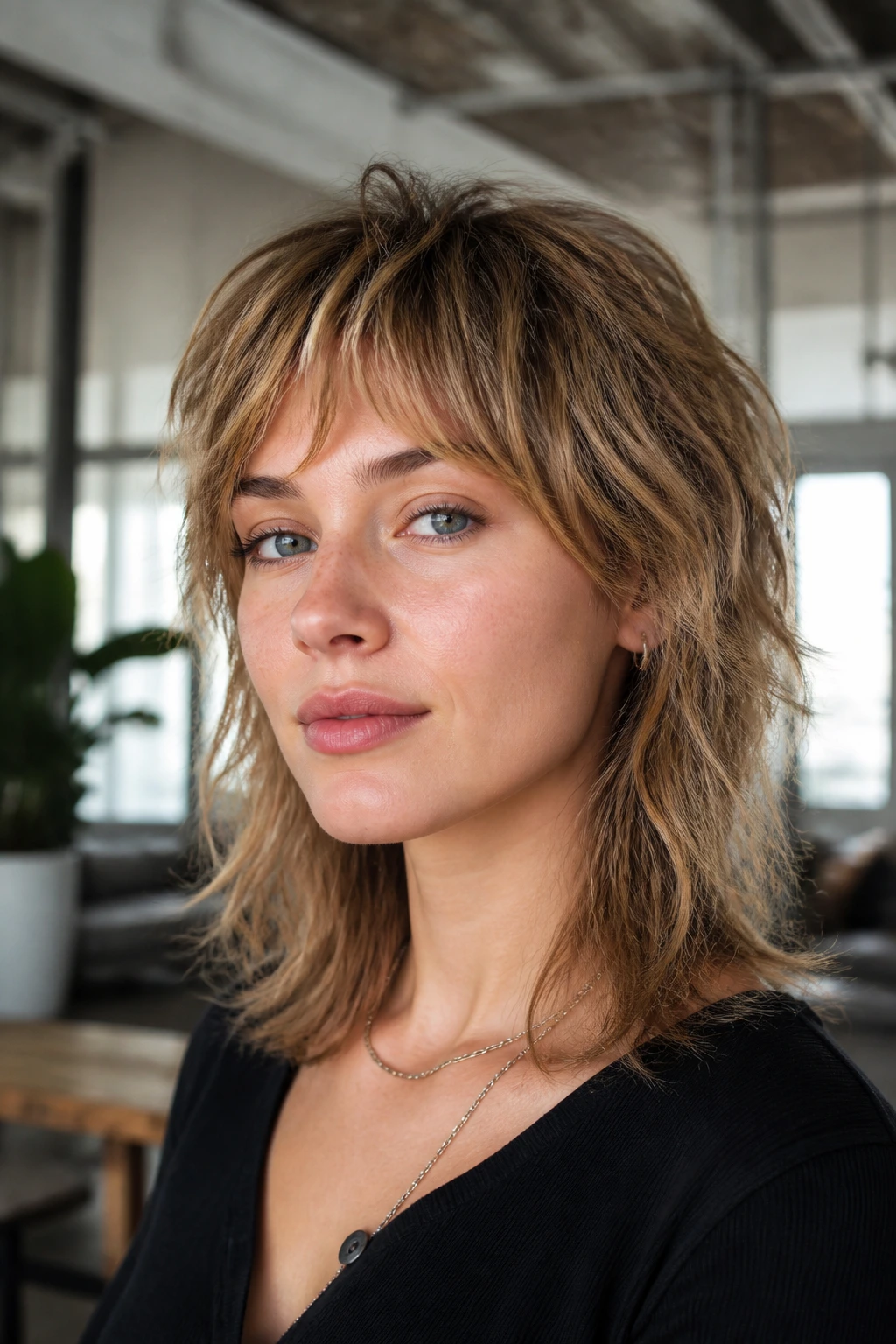
A wolf cut on fine hair can go bad quickly, so the mini version is the only one I really trust. Keep the crown layers long, the fringe soft, and the overall shape closer to a shaggy lob than a full-blown chopped-up wolf. That gives you attitude without turning the ends into feathers.
What makes this version work is restraint. You want movement around the face and a little mess through the top, but the bulk should still live in the bottom half of the cut. Fine hair needs to look like it has substance, not like it’s been aggressively edited.
Best on: wavy or slightly curly fine hair.
Not ideal for: very sparse hair at the crown, where too much layering can show too much scalp.
This is the one cut on the list that looks coolest when it’s not perfect. A little unevenness helps.
11. The Tucked-Behind-Ears Layered Bob
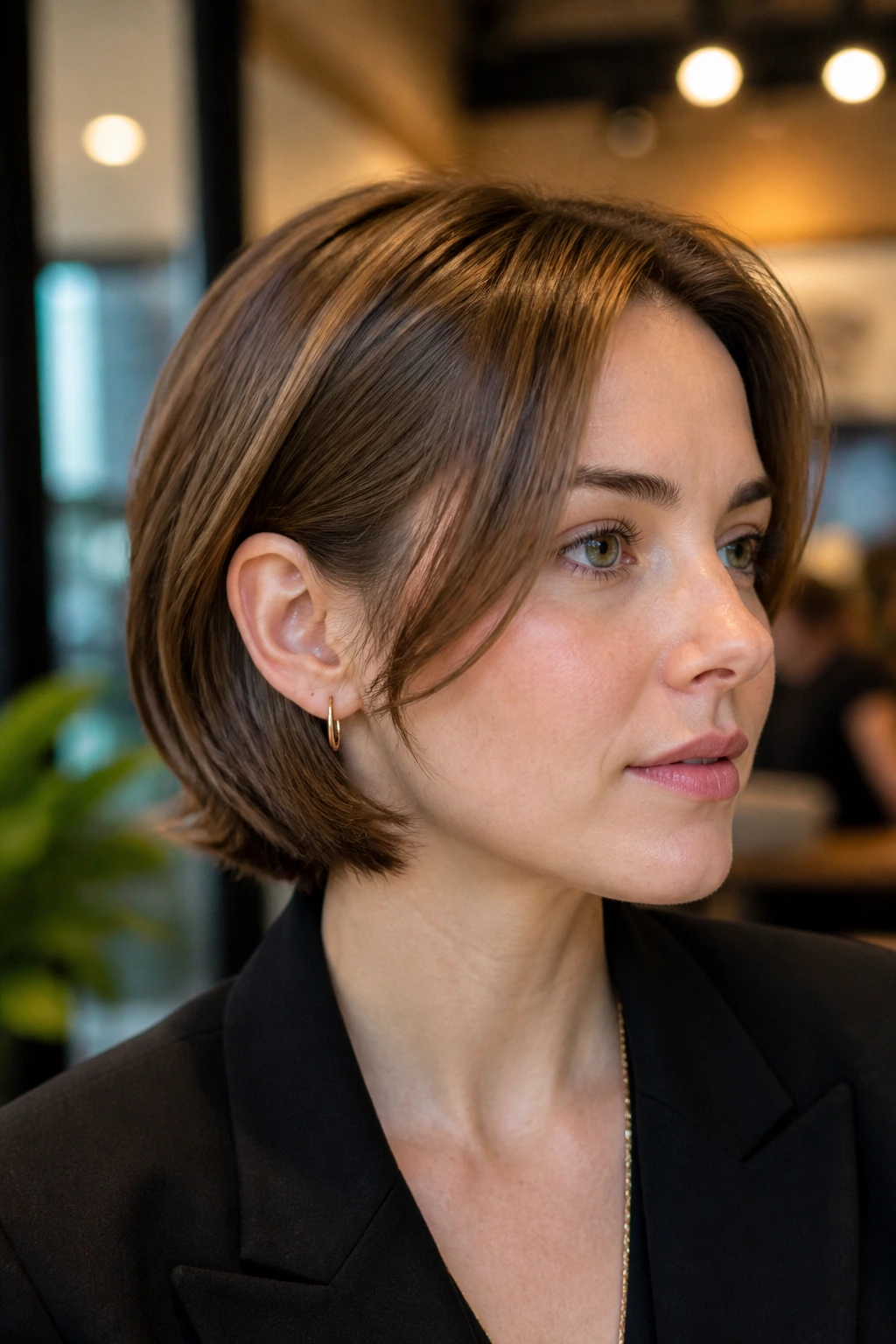
The minute a bob can tuck behind the ear without falling apart, the whole haircut starts feeling sharper. This version uses soft layers to keep the front pieces from puffing out when they’re tucked, which is the detail that saves the style. Fine hair can look wispy if the front is too short or too thinned, so the layers need to behave.
A tucked bob is especially good if you like earrings, glasses, or a cleaner neckline. It keeps the hair close to the head at the sides while the back still holds shape. That contrast is what gives it life.
One quiet benefit: it’s easy to refresh. If the crown collapses, change the part and tuck one side back. Fixed.
12. The Feathered Bob With Light Fringe
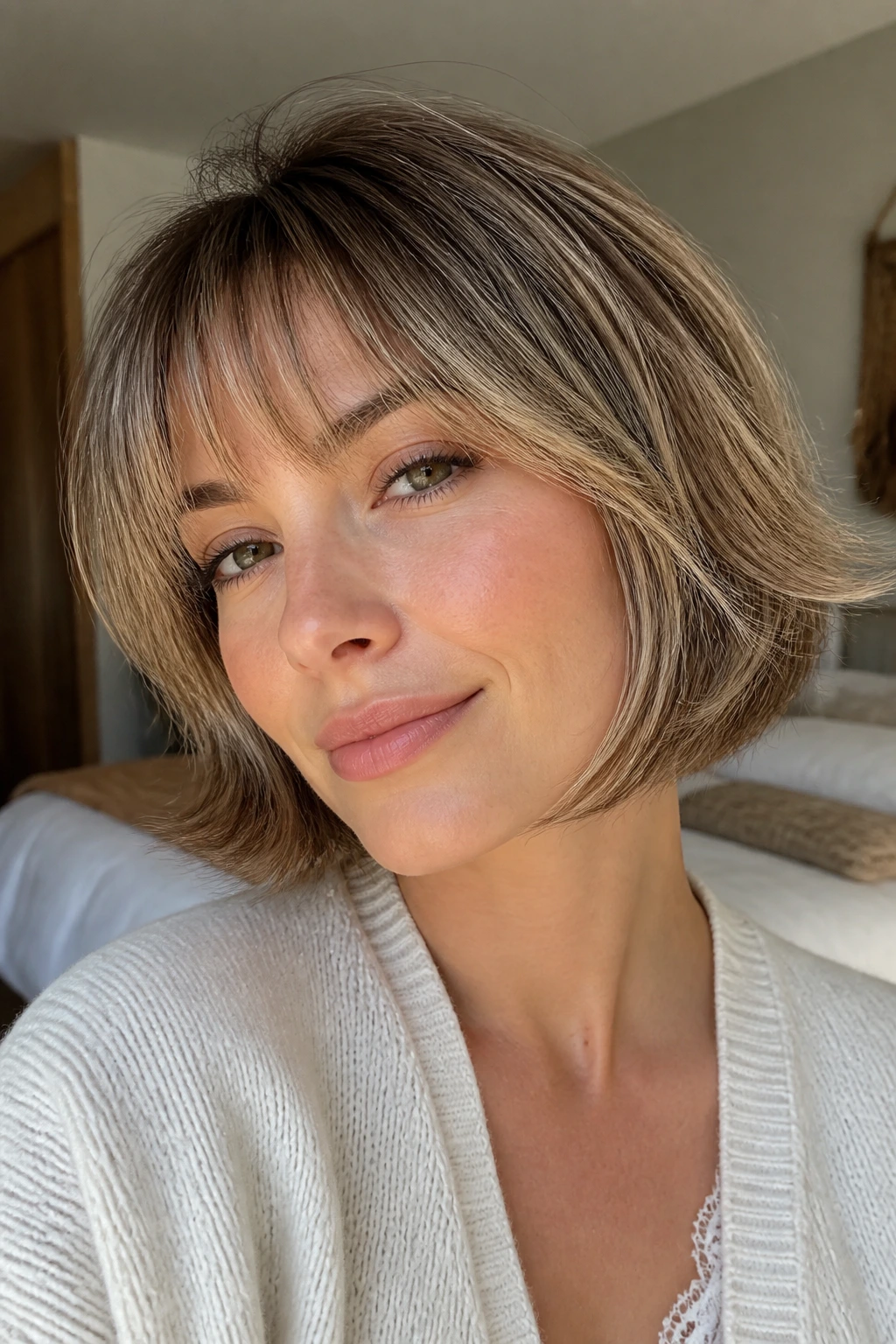
Feathered cuts on fine hair get a bad reputation because people picture old-school thinning and overdone spray. A modern feathered bob is different. The layers are kept light, and the fringe is soft enough that it frames the forehead without taking over the whole face.
I like this cut when the cheekbones need a little emphasis. The feathering draws the eye outward, which gives the face more width in a flattering way. That can be useful if your hair is fine but your face feels long or narrow and you want a softer balance.
The Best Way to Wear It
Blow-dry the fringe first, not last. That keeps it from drying in whatever direction it feels like choosing on its own. Use a small round brush and keep the movement gentle; the fringe should sit like a skim, not a wall.
A feathered bob needs clean ends. If the tips look shredded, the whole style loses its point.
13. The Side-Swept Fringe Lob
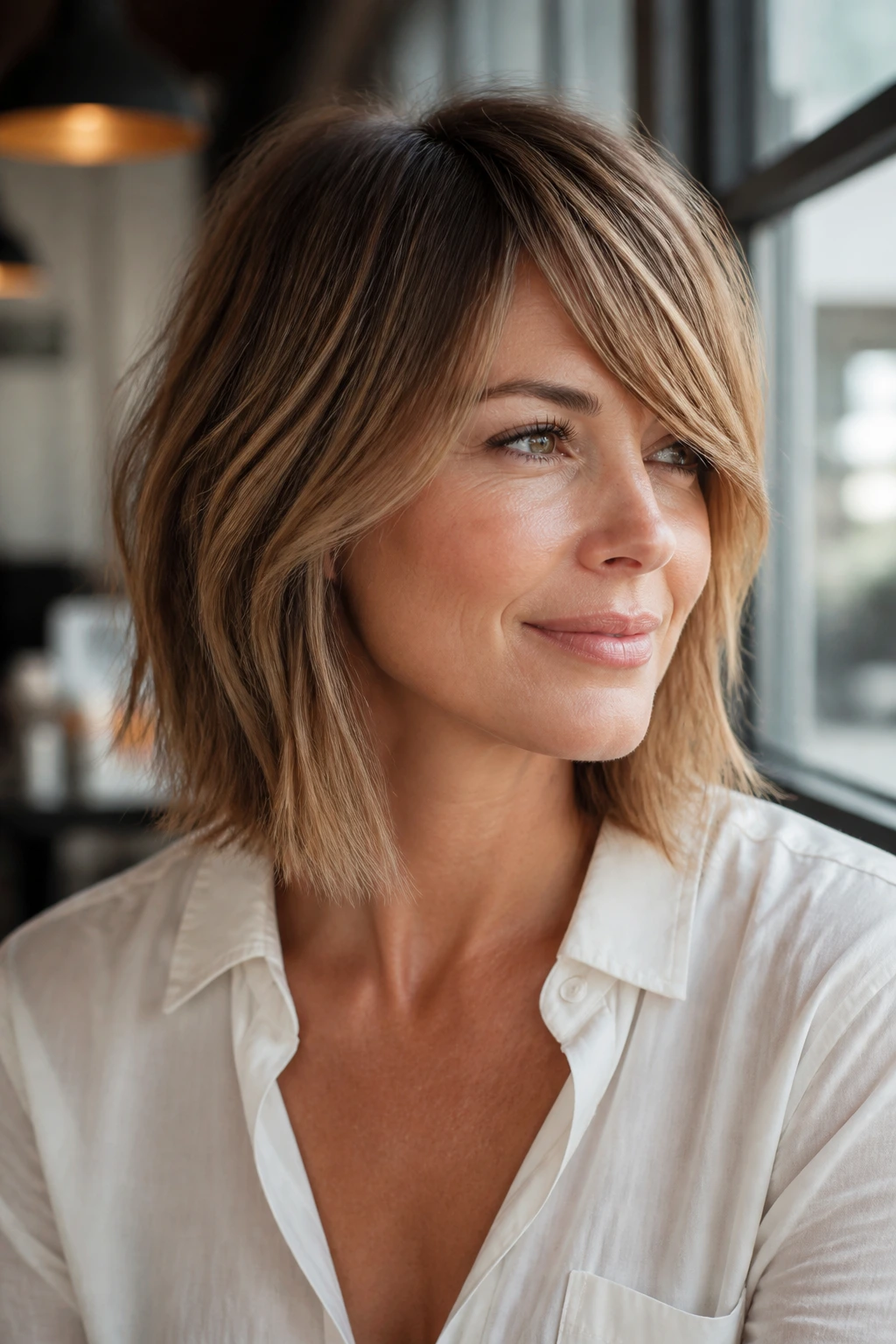
Side-swept fringe is underrated on fine hair. It gives you face framing without the commitment of a full curtain bang, and it tends to fall in a flattering diagonal line that makes the hair look more styled than it really is. That diagonal is doing a lot of work.
The best version starts long enough to blend into the side of the lob, not so short that it hangs like a separate chunk. The fringe should sweep, not sit. If you wear glasses, this shape is especially useful because it opens the upper face without crowding the frames.
A small round brush or even a quick pass with a flat brush and a dryer nozzle can keep the sweep smooth. Don’t overthink it. The fringe should fall naturally after a little direction, not after a 20-minute wrestling match.
14. The Collarbone Flip Cut
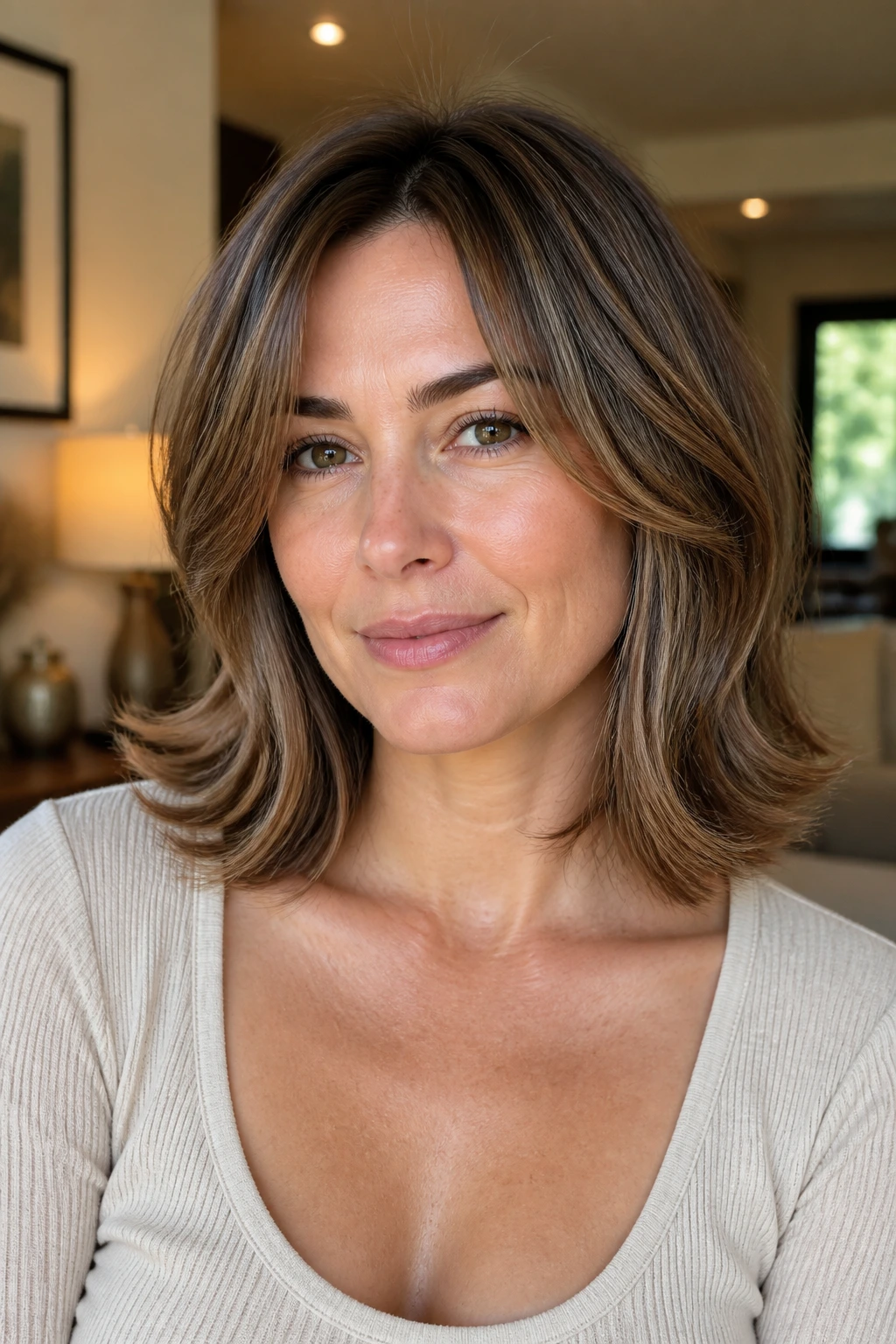
This cut is all about the ends. They land near the collarbone and flip inward or outward with a brush, which gives medium fine hair a lively finish without forcing the whole head into curls. The movement is subtle, but subtle is often enough.
The collarbone is a useful stopping point because hair tends to bend there anyway. A cut that understands that natural bend looks fuller and less accidental. If the ends are a little longer in front, even better — the shape gets a soft swing that feels finished rather than stiff.
What to style with: a medium round brush, a blow dryer, and a touch of heat protectant.
What not to do: load up on heavy cream at the roots. That defeats the whole point.
The flip should look like an easy habit, not a homework assignment.
15. The Air-Dried Sleek Lob
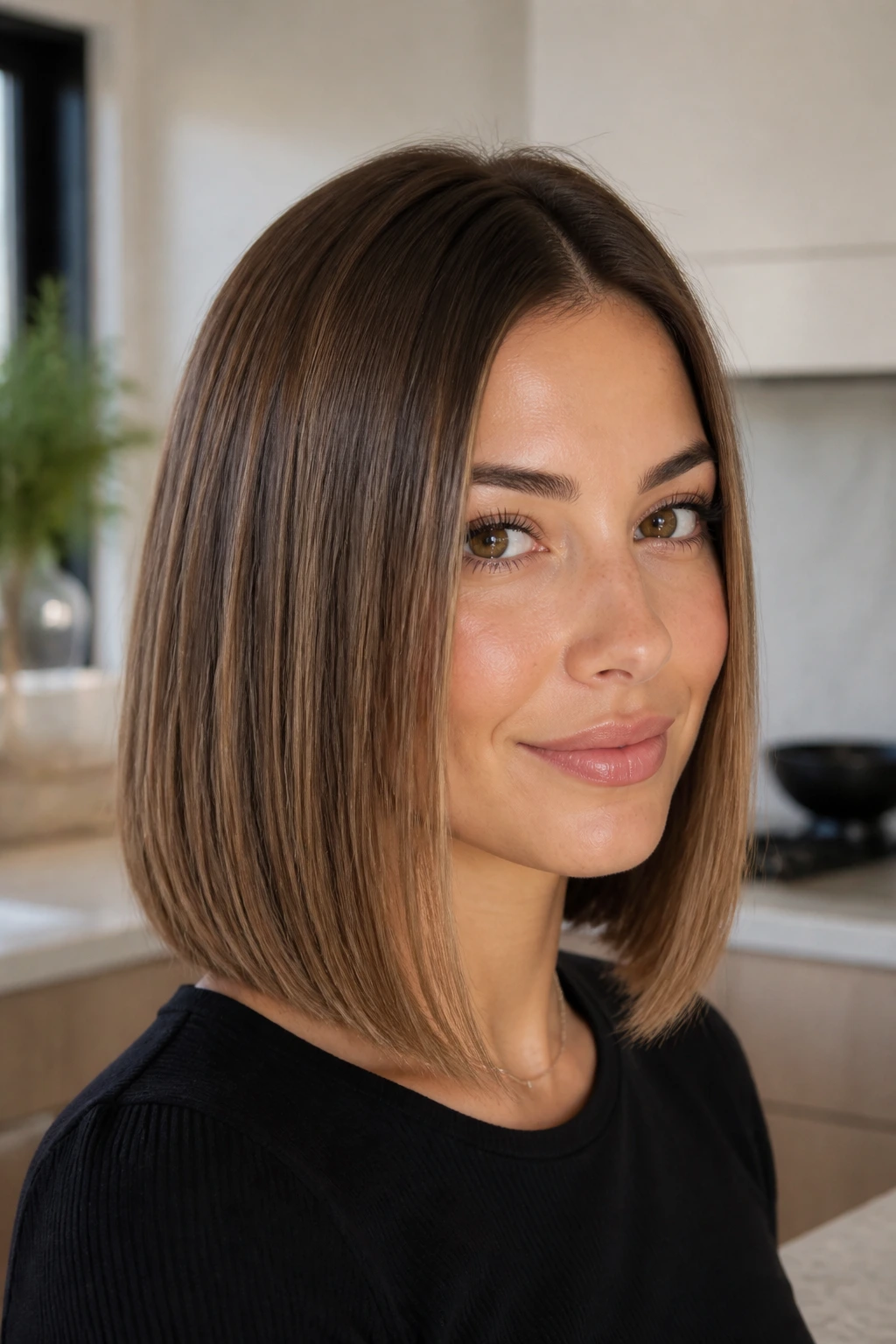
Not every fine-hair cut needs heat to behave. The air-dried sleek lob relies on a clean perimeter, a few low-profile layers, and a light product hand so the hair can fall with shape on its own. It’s a good cut if you want to skip the blow-dryer without surrendering to fluff.
The key is keeping the hair smooth while it dries, not flattening it. I’d use a light mousse or leave-in from mid-length to ends, then comb it into place and leave it alone. A quick tuck behind the ears while it’s drying can help the front sit flatter and cleaner.
This cut works best on hair that already has some natural smoothness. If your hair sticks out every which way, you may need a bit more bend at the bottom. Still, the sleek lob is one of the easiest cuts on this list to live with.
16. The Razor-Soft Lob
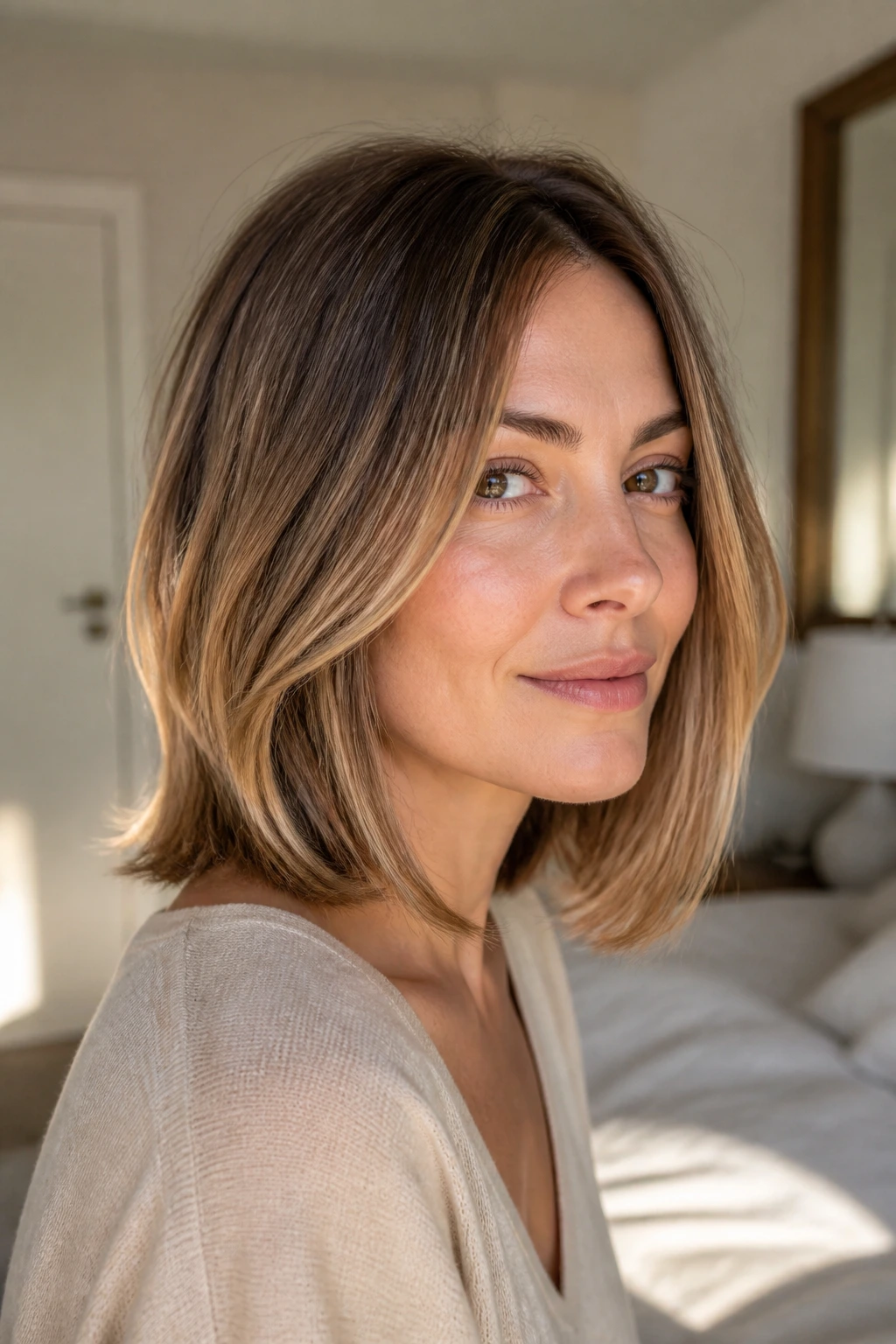
A razor can be a good tool, but only in the hands of someone who knows how fine hair behaves. Used well, it softens the perimeter and gives a lob a lighter edge without stripping away all the weight. Used badly, it leaves the ends frayed and sad.
That’s why I like this cut only when the stylist keeps the razor work minimal and controlled. The goal is a soft finish, not a shredded one. Fine hair needs enough bluntness to show density, and that part matters more than the trendy look of a piecey end.
If you’re considering this shape, ask for soft razor detailing only at the ends, not through the crown. That distinction is the whole haircut.
17. The Slightly Angled A-Line Lob
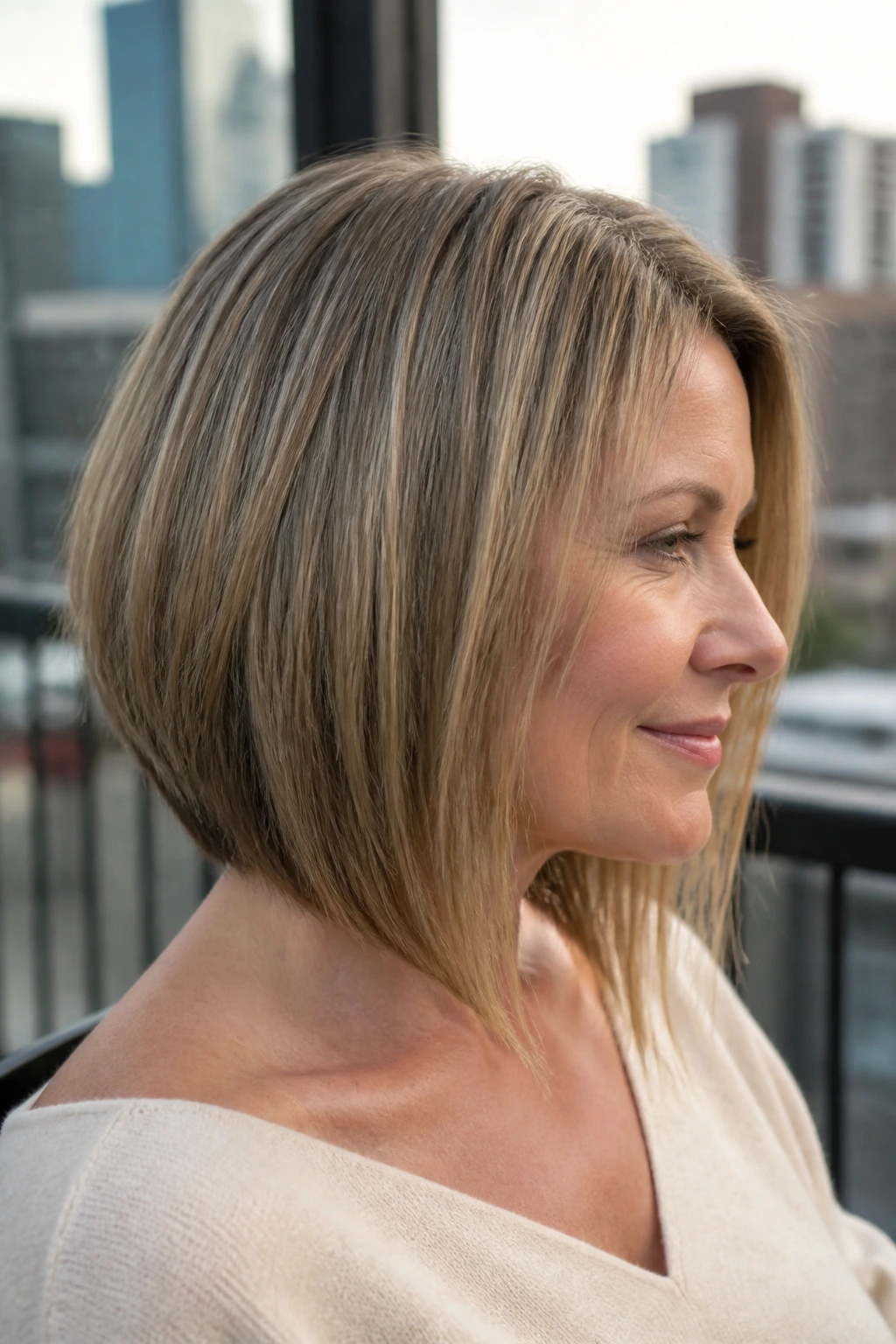
An A-line lob gives fine hair a bit of architecture. The back sits slightly shorter, the front drifts longer, and that small slope adds motion while keeping the outline crisp. The shape can make the jaw look cleaner and the neck look longer, which is a nice side effect.
I prefer a subtle angle on fine hair. Too steep, and the cut can look dated or overdrawn. The gentle version gives lift in the back without screaming for attention, and it still styles easily with a round brush or a quick flat-iron bend.
Best For
People whose hair falls flat at the nape often do well with this shape. The shorter back adds a tiny bit of spring where the head needs it most. It’s also useful if you like your hair to look sleek from the side.
One smart note: keep the front long enough to graze the collarbone. That keeps the cut from looking too sharp.
18. The Bubble-End Bob
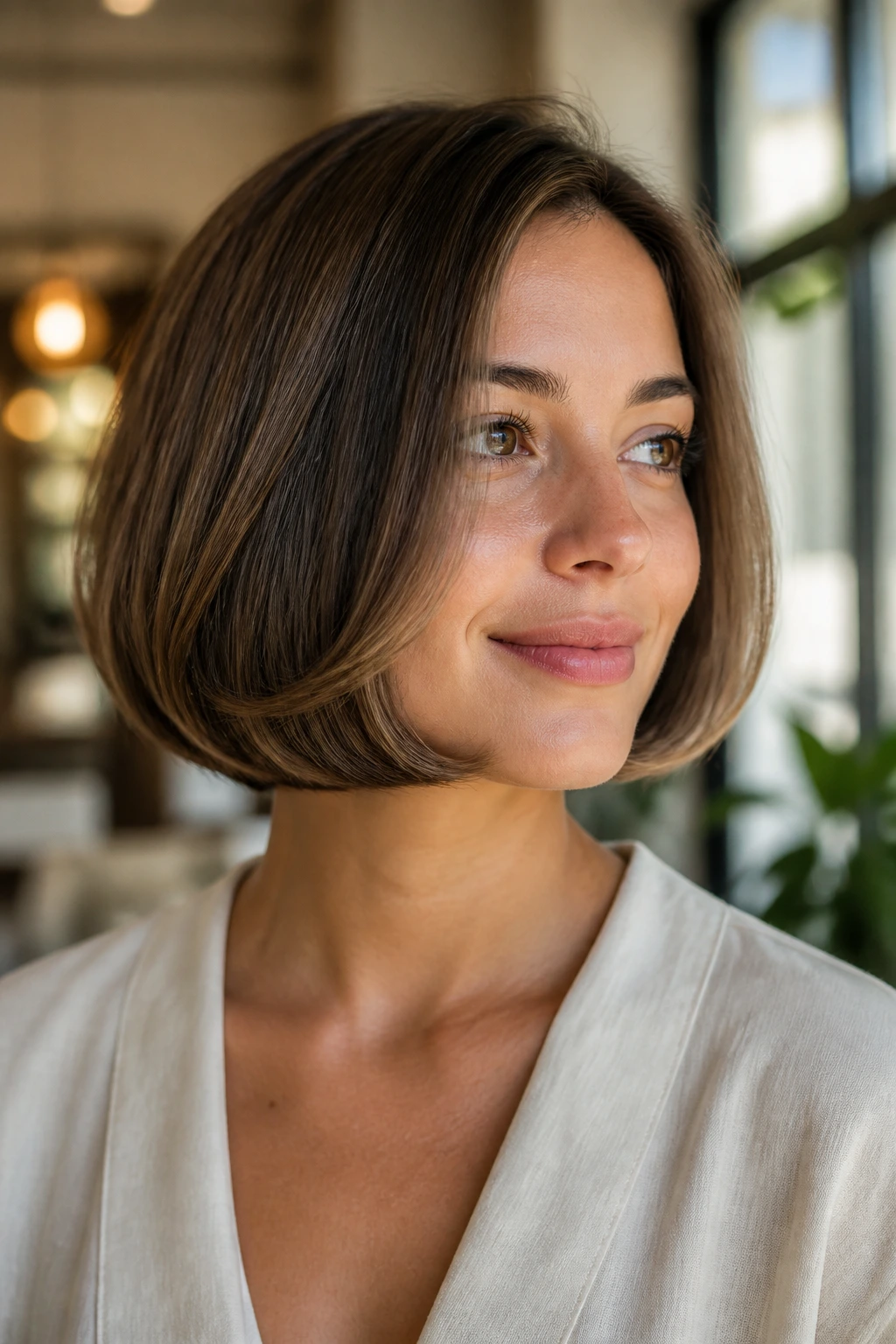
The bubble-end bob is round, full, and a little soft around the edges. The ends curve under, almost like they’ve been cushioned by the brush, which makes the whole cut read thicker. On fine hair, that shape can be a lifesaver because the perimeter does the heavy lifting.
This is not a fussy style. It works because it lets the line hold volume without making the hair look overdone. If your hair likes to flip out at the bottom in random places, this cut gives that movement a more intentional shape.
A round brush and a steady blow-dry are the main tools here. Dry the roots first, then guide the ends inward with the brush so they settle into a soft arc.
19. The Tousled Mid-Length Shag

The tousled mid-length shag is the looser cousin of the softer shag, and it works best when the layers stay long enough to keep the hair from looking hollow. Fine hair can handle texture; it just can’t handle too much of it at once.
This version is better when you like some mess in the style. A little lift at the crown, some separation at the ends, and face-framing pieces that move when you turn your head — that’s the whole appeal. It’s especially good for wavy textures that need direction but not strict control.
Styling move: diffuse until about 80 percent dry, then let the rest air-dry and break it up with your fingers.
If your hair is pin-straight, this cut still works, but it will need a touch more product to keep the pieces from falling together.
20. The Bottleneck Bang Bob
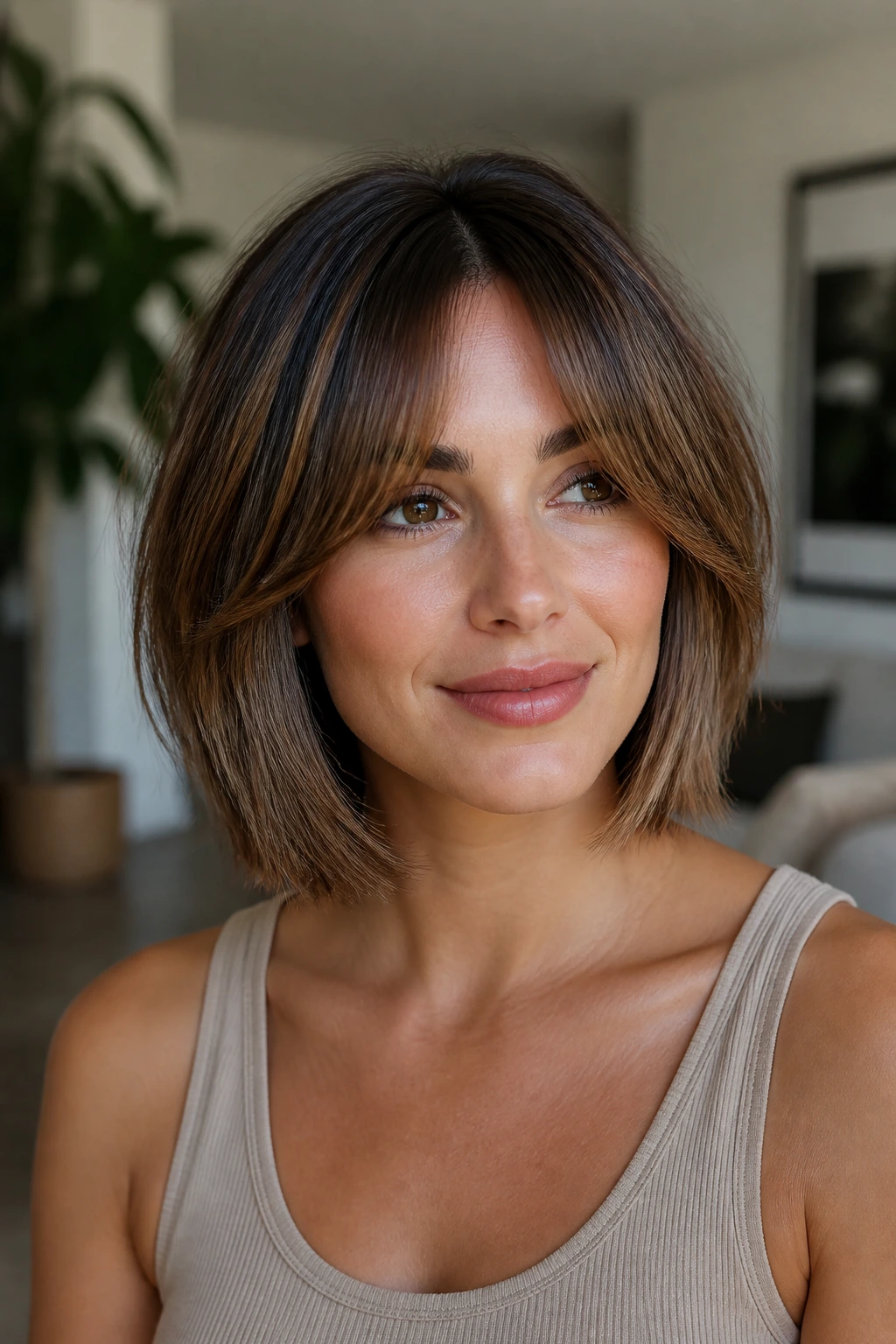
Bottleneck bangs are a smart compromise on fine hair. They start narrower in the center, then fan out as they reach the temples and cheekbones, which makes them feel softer than blunt fringe but more shaped than a curtain bang. That shape can do a lot for a bob.
The reason I like it here is simple: it gives the face a frame without eating up too much hair. Fine strands need every bit of density they can keep, so the fringe has to earn its place. Bottleneck bangs do that by blending into the side pieces instead of sitting like a hard line.
A quick trim every few weeks keeps them from growing into your eyes. They can look great with a round brush bend, but they also work with a quick side sweep if you’re in a hurry.
21. The Glassy Layered Lob
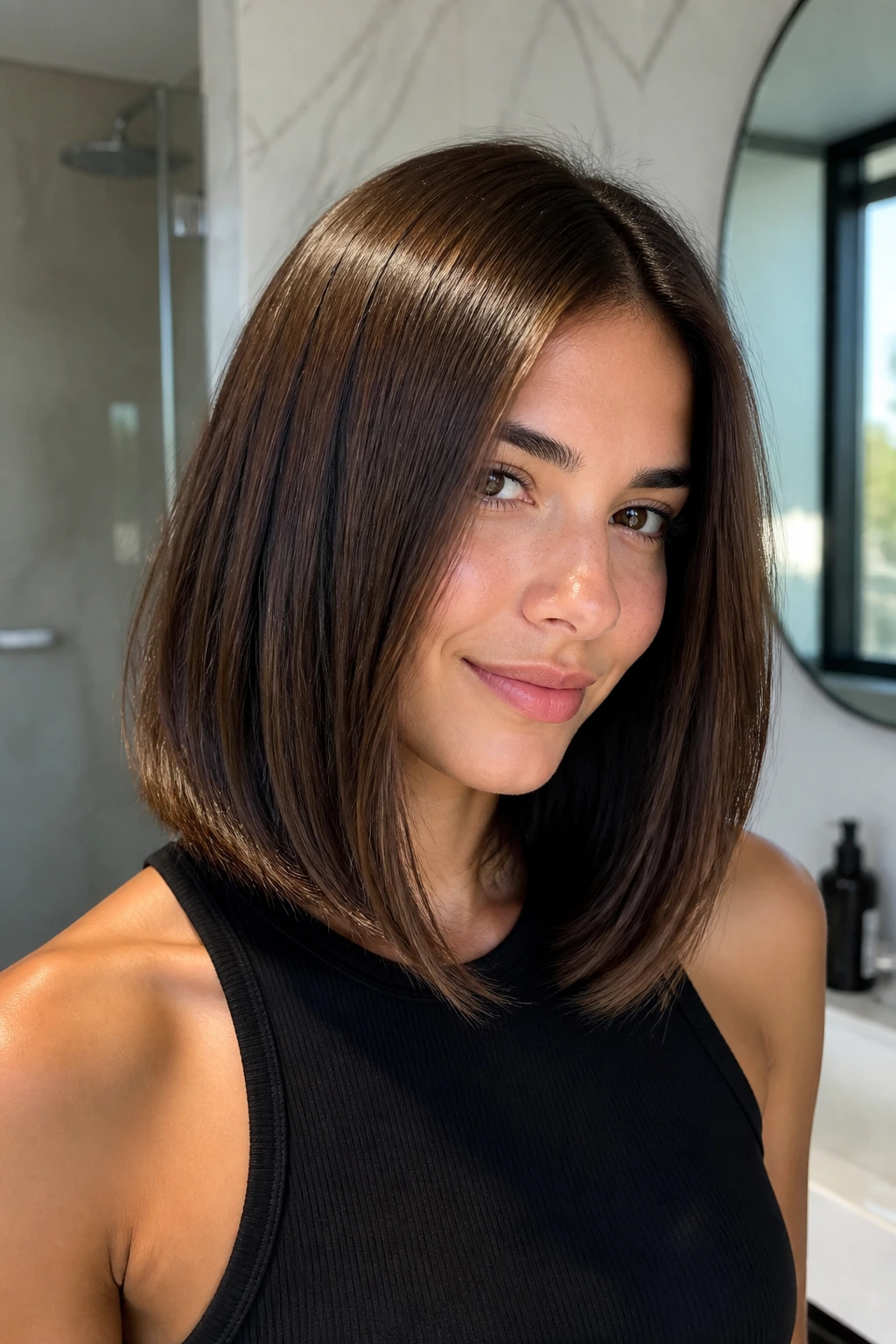
Straight fine hair can look expensive when it’s cut cleanly and styled with a little shine. The glassy layered lob leans into that. The layers are there, but they stay invisible enough that the surface reads smooth and the ends stay full.
What matters here is polish. A heat protectant, a brush-dry, and a light pass of smoothing product are enough. Don’t pile on oils. Fine hair only needs a whisper of shine, not a slick finish that makes the roots collapse by lunch.
Why It Works
The straight surface reflects light better when the perimeter stays even. Hidden layers stop the style from looking flat, but they don’t break the line into pieces. That’s the sweet spot.
If you like clean hair more than messy hair, this is one of the best bets on the list.
22. The Curved-Under Bob
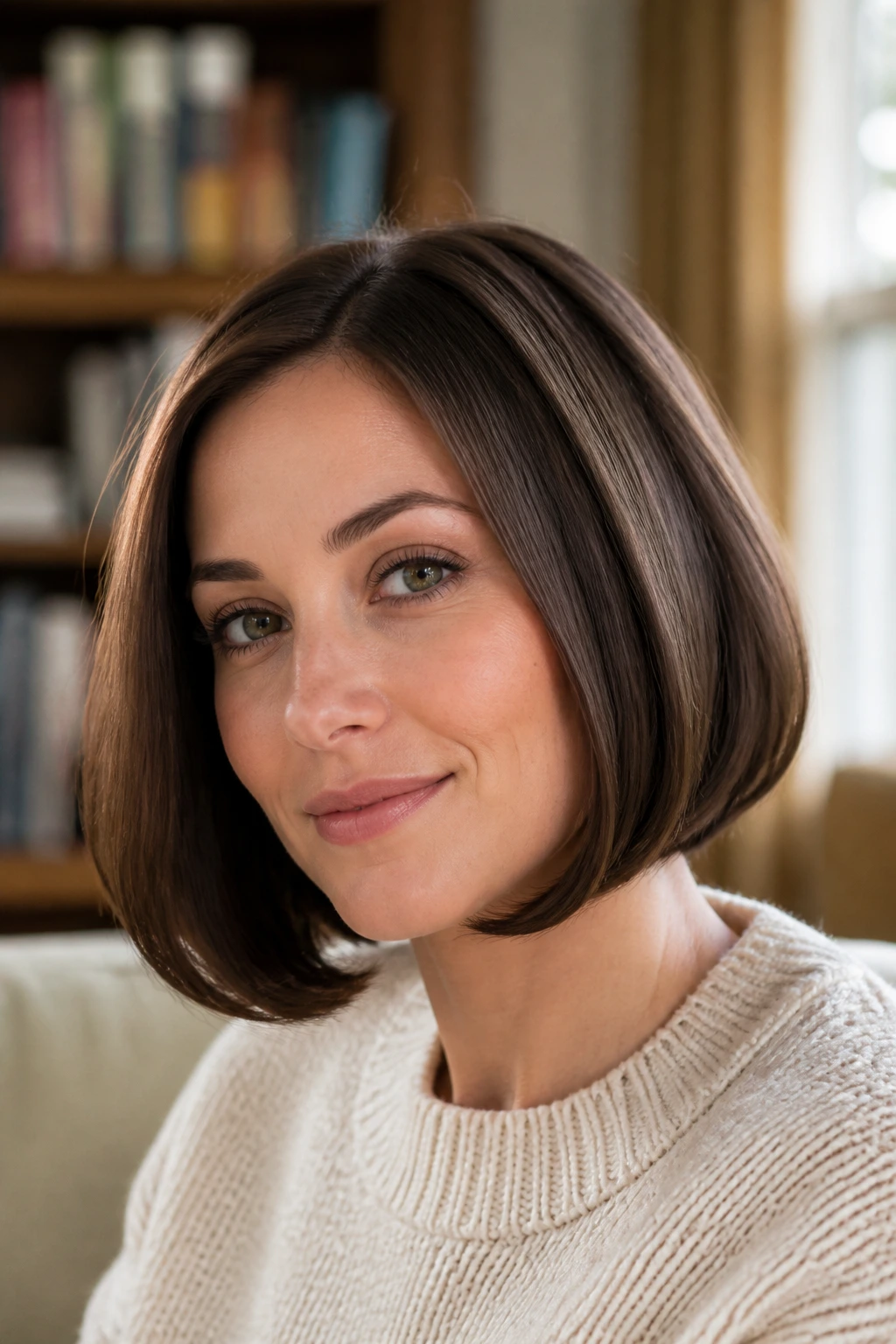
The curved-under bob is a polished cousin of the bubble-end shape. It sits closer to the head, bends inward at the ends, and gives fine hair a tidy outline that still looks soft. It’s the sort of cut that makes a plain sweater look intentional.
The curve is doing the volume work here. Rather than building height at the crown, the style uses the bottom edge to create fullness. That’s often smarter on fine hair anyway, because too much crown work can expose the scalp.
This cut likes a round brush, a calm hand, and a clean part. If your hair kicks out at the bottom, don’t fight it with too much product; guide it gently while it’s warm and let it cool in shape.
23. The Soft Pageboy

The pageboy has a retro backbone, but the soft version is much easier to live with. It rounds the hair around the jaw and nape, which makes fine strands look controlled instead of sparse. The key is keeping the shape smooth and the corners soft.
I like this cut on straight or slightly bent hair because it brings the whole style together in one clean arc. It also pairs well with glasses, because the rounded shape doesn’t compete with the frames. It sits close to the head without feeling severe.
A pageboy needs a tidy finish. If the ends get rough, the structure starts to wobble. A quick brush-dry keeps it looking deliberate.
24. The Pixie-Bob Grow-Out Cut
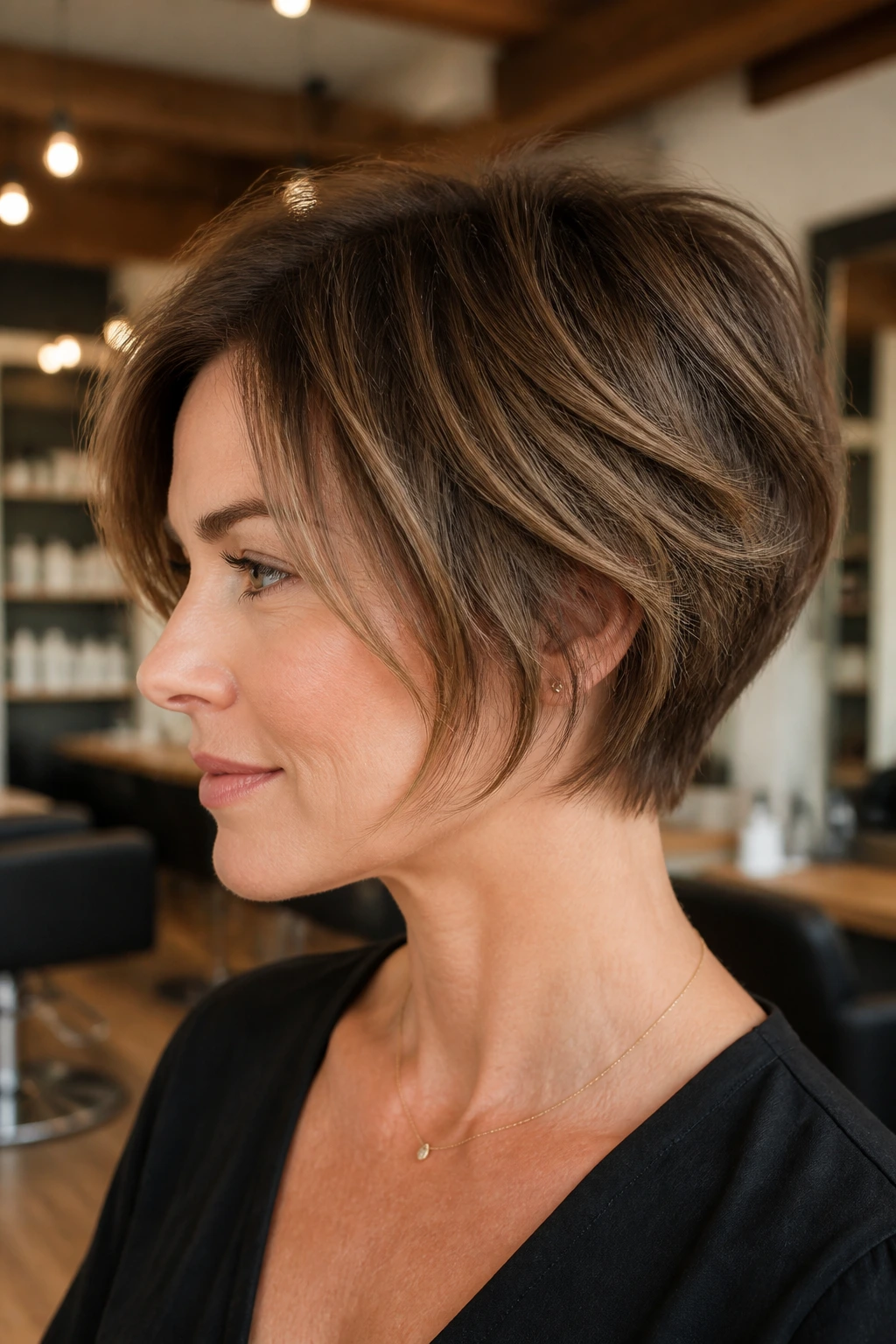
This is the cut for anyone in that awkward in-between stage: too short for a bob, too long for a true pixie. The pixie-bob grow-out cut keeps the nape neat, leaves a little more length around the ears and cheekbones, and softens the transition so fine hair doesn’t end up looking stuck.
It’s a practical haircut, and I say that with respect. The short pieces keep the silhouette light, while the longer top gives you enough styling room to make it feel like a real shape. If your hair is fine, this can be a smart way to keep movement without carrying extra bulk.
Best move: keep the top soft, not spiky. Fine hair usually looks better with a bend than with a stiff, upright finish.
25. The Invisible-Texture Midi Cut
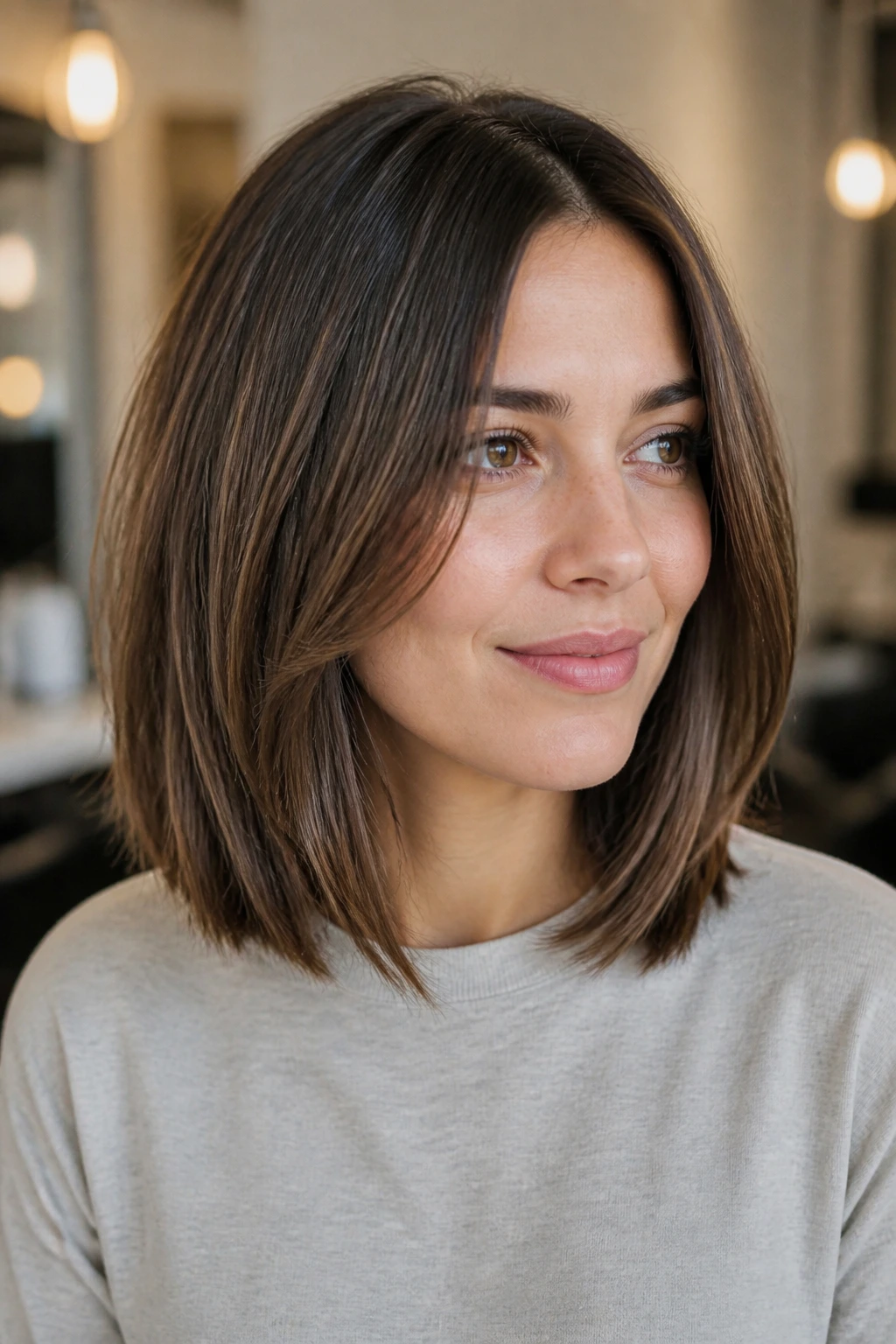
This is the quietest cut on the list, and maybe the most useful. The outline stays almost one-length, but there’s enough invisible texture inside to keep the hair from lying like a sheet. Soft face-framing layers begin low and stay blended, so the cut keeps its weight.
That matters on fine hair because obvious layers can quickly tip into stringy territory. The invisible-texture midi cut gives you movement without making the ends look sparse. If you want your hair to look thicker before you even touch it, this is a serious contender.
It’s also the easiest shape to grow out gracefully. That’s not a flashy selling point, but it’s a real one. Not every haircut needs to announce itself from across the room.
Why Short Fine Hairstyles for Medium Hair With Soft Layers Work So Well
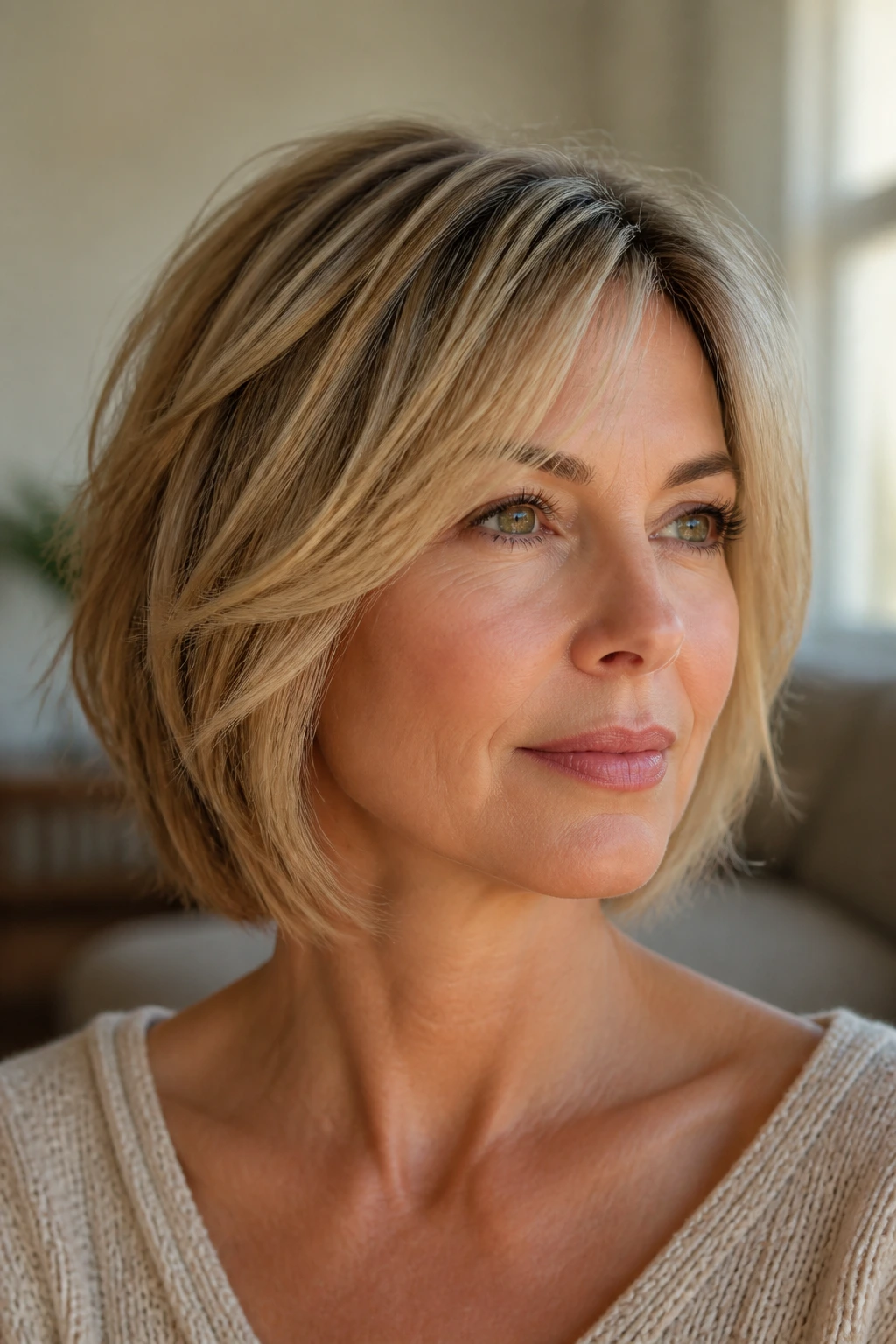
Soft layers are a geometry trick, not a thinning trick. That’s the whole story in one line. Fine hair needs the perimeter to stay visible, because the eye reads fullness from the outline before it notices movement.
The mistake a lot of people make is asking for layers that start too high. The crown gets overworked, the top loses weight, and the ends start looking transparent. A better cut keeps the strongest density at the bottom and lets the movement happen around the cheeks, jaw, or collarbone.
Where the Weight Should Stay
For most fine medium hair, the best layers start low enough that the cut still feels anchored. Cheekbone, jawline, collarbone — those are useful places because they frame the face without hollowing out the top. The hair still moves, but it doesn’t disappear.
Why the Face Frame Matters More Than the Crown
A soft face frame gives the cut lift where people actually notice it. The eye lands on the front pieces first, then follows the rest of the shape. That means a couple of well-placed pieces can do more than a dozen choppy layers ever will.
The crown can be teased, blow-dried, clipped, whatever. But if the base cut is wrong, none of that matters for long.
Essential Tools for Styling These Cuts
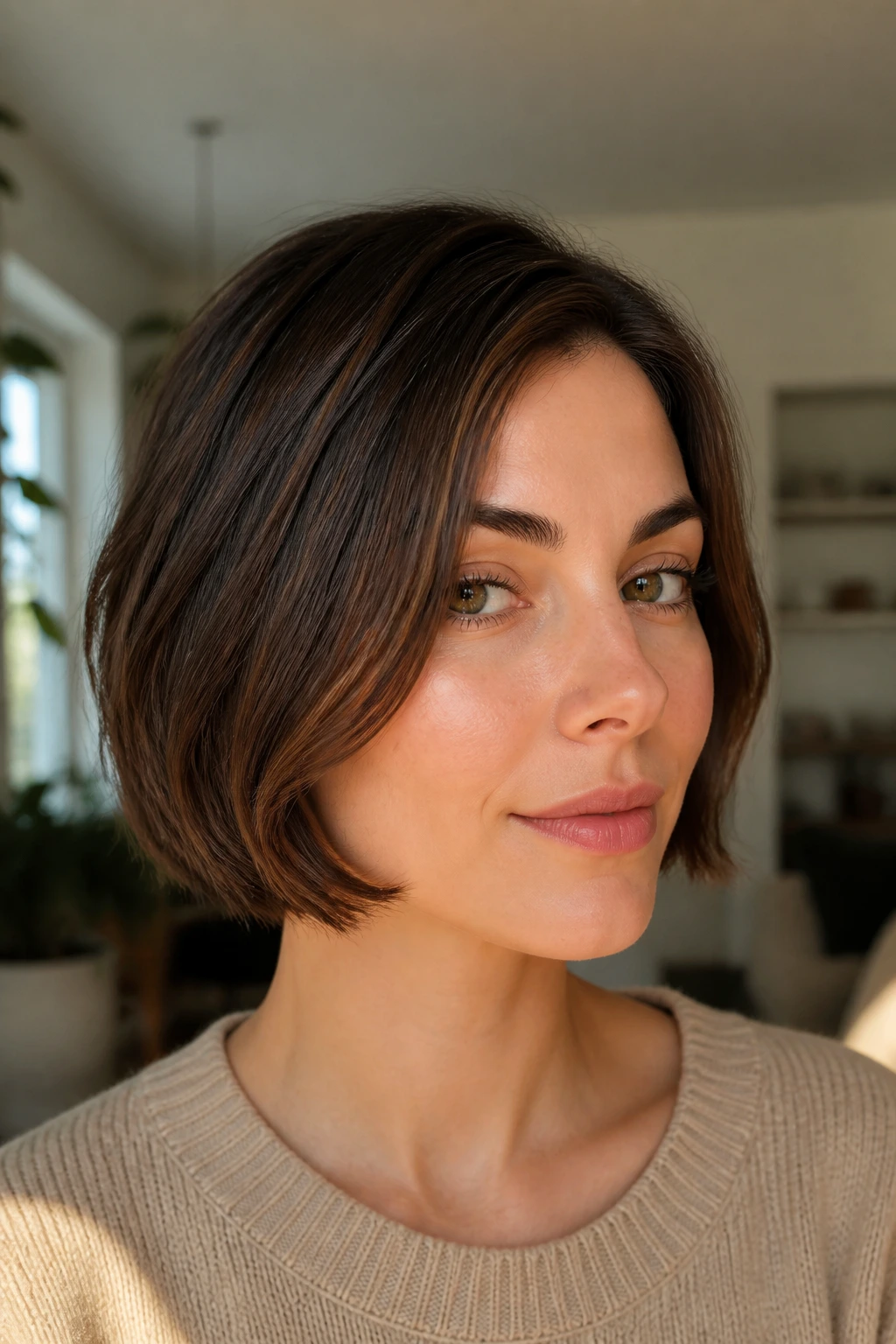
- Blow dryer with a concentrator nozzle — Directs air where you want it and helps roots dry with more lift instead of scattering every strand.
- 1- to 1.25-inch round brush — The sweet spot for bobs and lobs; big enough to shape the ends, small enough to control the front pieces.
- 1-inch curling iron or wand — Best for adding a soft bend to the mid-lengths without making the hair look overly curled.
- Lightweight volumizing mousse — Gives damp hair a little grip so it doesn’t slide flat as it dries.
- Root-lift spray or foam — Useful at the crown and part line, especially if your fine hair tends to settle close to the scalp.
- Heat protectant mist — Keeps fine ends from getting brittle, which they show faster than thicker hair does.
- Dry shampoo — Not just for oil; it also adds a bit of grit and lift at the roots on day two.
- Sectioning clips — Makes blow-drying the front pieces and crown much easier, especially on shorter cuts.
- Fine-tooth comb — Helpful for clean parts and for guiding the front into a neat, controlled shape.
- Flexible-hold hairspray — Keeps movement in place without turning fine hair into a stiff shell.
How to Ask for Short Fine Hairstyles for Medium Hair With Soft Layers at the Salon
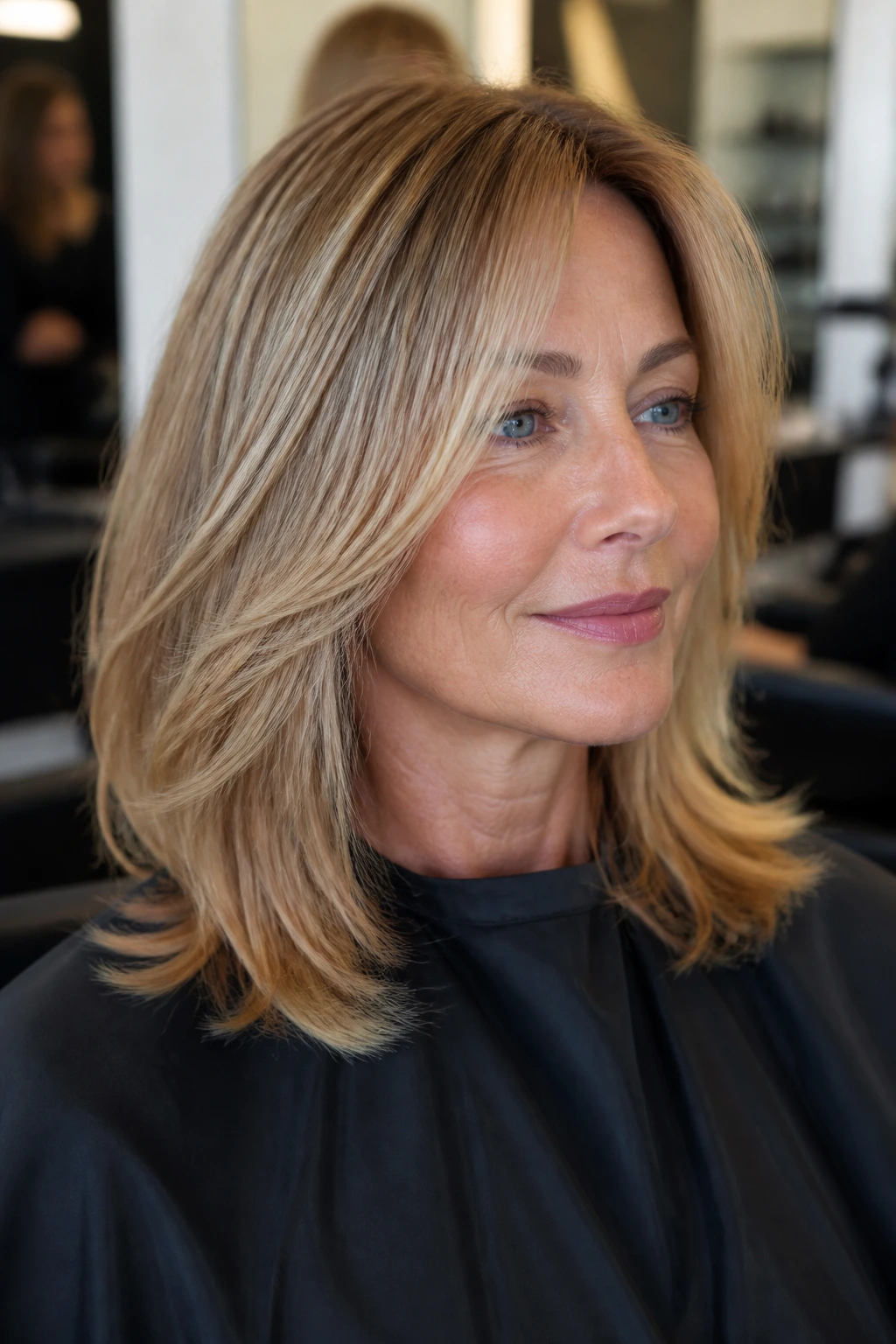
Bring photos, yes, but bring the right kind. A picture of a thick-haired bob is not the same thing as a picture of a fine-haired bob, and that mismatch is where disappointment starts. Show your stylist examples that have the same density, same texture, and roughly the same face-framing zone.
Say this part out loud: keep the perimeter full. That’s the sentence that saves a lot of good intentions. Then explain where you want the soft layers to begin — cheekbone, jawline, or collarbone — and make it clear that you do not want the top thinned into air.
The Terms That Matter
- Point-cutting at the ends, not aggressive thinning through the whole head.
- Soft face-framing layers that blend into the rest of the cut.
- Minimal crown layering if your hair already collapses at the top.
- Invisible texture if you want movement without obvious choppiness.
If your hair is fine but dense, you can usually take a little more layering through the interior. If it’s fine and sparse, especially at the temples, keep the layers longer and stay away from heavy razoring. That difference matters more than most people realize.
Styling Short Fine Hairstyles for Medium Hair With Soft Layers Without Flattening Them
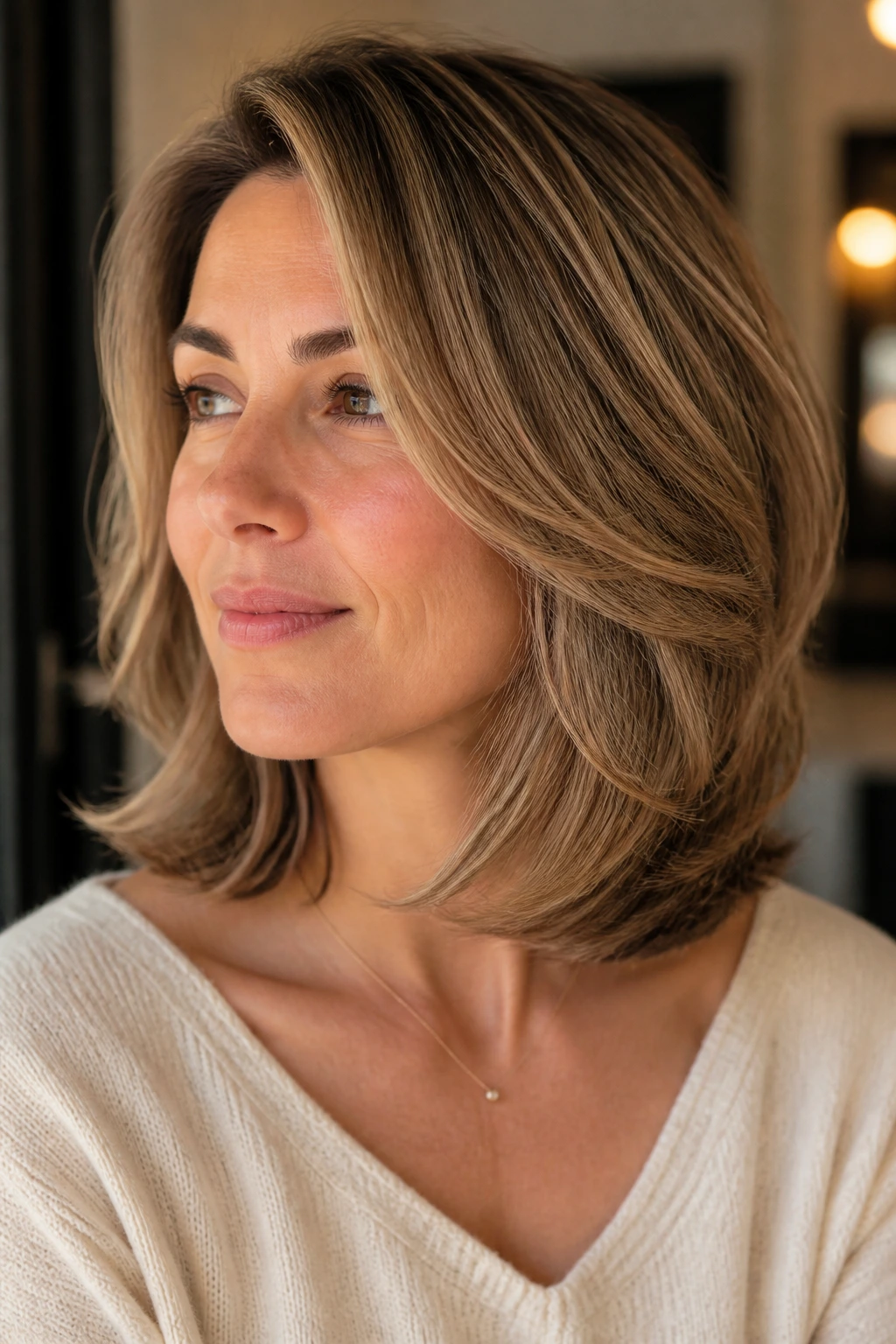
Finish: Aim for a bend, not a curl. Fine hair usually looks best when the movement is soft and controlled, with the ends doing the talking instead of the whole head trying to perform.
Best Pairings: These cuts look especially good with simple necklines, small hoops, glasses with thin frames, and collars that don’t crowd the jaw. The shape around the face is part of the style, so don’t hide it under a giant scarf unless that’s the whole point.
Length Balance: If you want more lift, keep the cut at chin to jaw level. If you need more versatility, collarbone length buys you ponytails, clips, and a little more styling room without losing the layered shape.
Event Upgrade: Give the front sections one polished bend away from the face, then leave the rest a touch looser. That little contrast keeps the style from looking overworked.
One practical note: a side part usually gives fine hair an easier lift than a strict center part. A center part can be stunning, but it’s less forgiving when the roots are sleepy.
Extra Styling Moves and Finish Tweaks
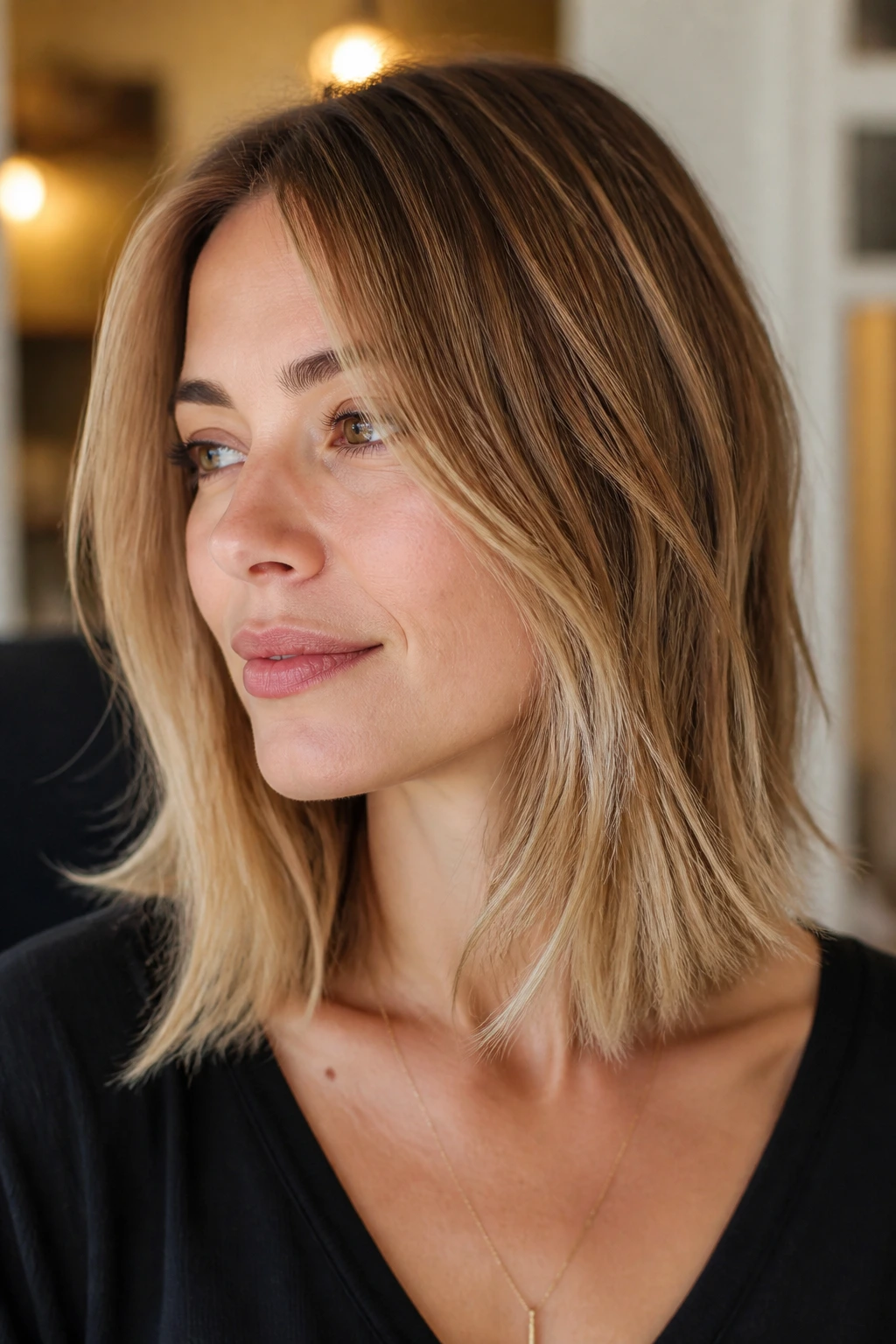
Root Lift: Dry the roots in the opposite direction of your part for the first minute, then flip back. That tiny reset gives the hair a better base without much effort.
Texture Boost: Use a small puff of dry shampoo or texturizing spray at the crown only, then stop. Fine hair can go from lifted to dusty fast, so less is usually smarter.
Face-Framing Trick: Tuck one front piece behind the ear and leave the other side loose. That asymmetry adds shape and keeps the style from looking too symmetrical or too sweet.
Low-Effort Version: Air-dry to about 80 percent, then smooth the top with a brush and let the ends keep their natural bend. It looks casual, but not accidental.
Gloss Move: If the hair is dry at the ends, use one drop of serum from the chin down. That’s enough. More than that and the whole point of a fine-hair cut gets lost.
Common Mistakes That Make Fine Hair Look Thinner
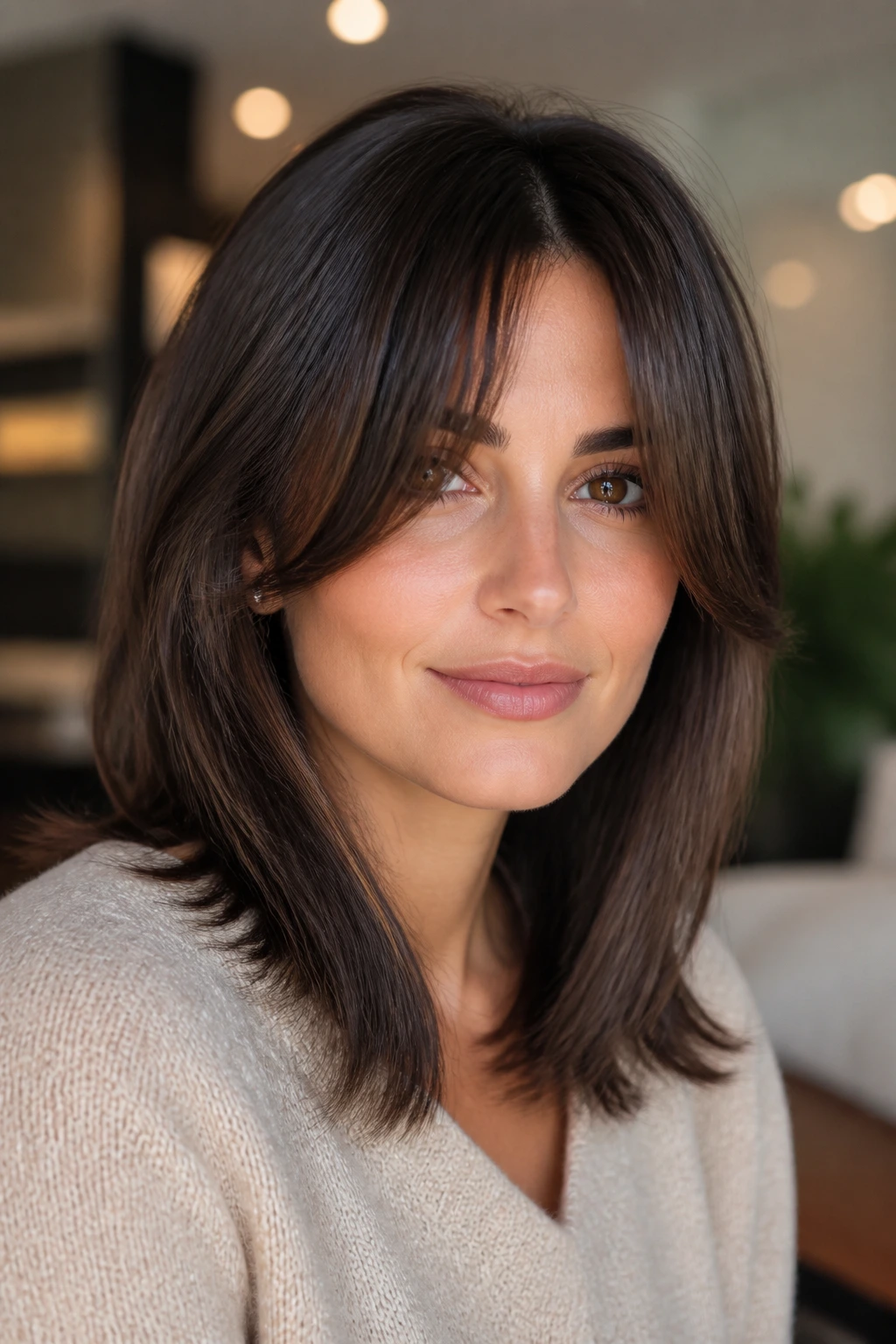
- Too many short layers at the crown: The symptom is easy to spot — you get lift on top, but the shape below looks sparse and open. The fix is to keep the top layers longer and let lift come from styling, not from cutting holes into the crown.
- Over-thinning the ends: If the perimeter starts looking wispy or translucent, the cut has lost its anchor. Ask for point-cutting only, and keep the bottom line full enough to read as a solid edge.
- Heavy conditioner near the roots: Fine hair flattens fast when the scalp area gets too much cream or oil. Keep richer conditioner from the ears down, and rinse the roots well.
- Curling every section the same way: The result is a round, helmet-like shape that looks polished in theory and bulky in real life. Alternate directions and leave the ends a little straighter.
- Never changing the part: Hair settles into old habits. If your part has lived in the same place for months, the roots may be lying flat because they’ve been trained that way.
The fix for most of these problems is the same: leave more weight in the cut than you think you need. Fine hair shows every decision.
Variations and Texture-Friendly Alternatives
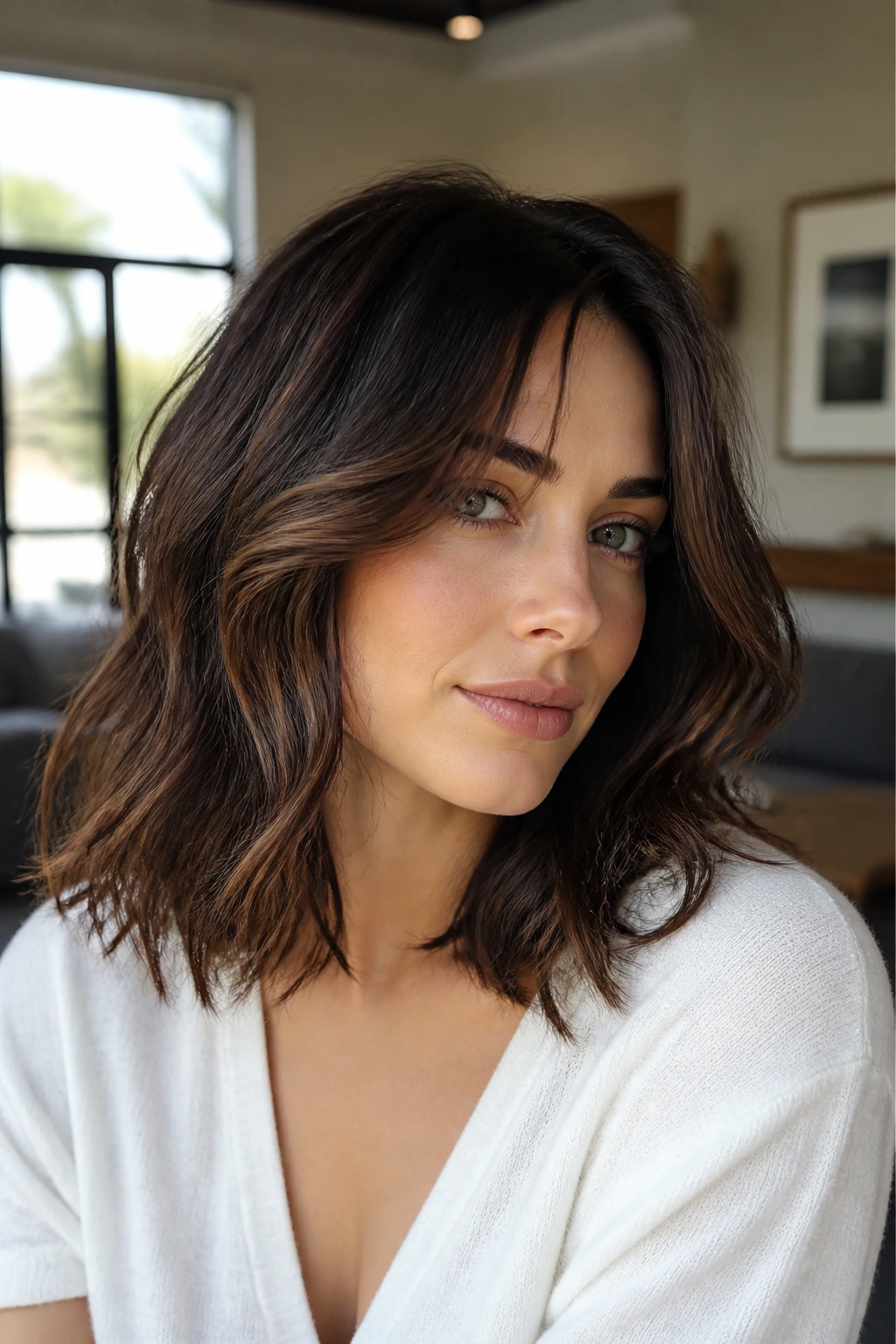
The Sleek Office Edit: Keep the perimeter clean, the layers invisible, and the finish smooth. This works when you want the haircut to look neat with almost no visible texture, and it’s especially good for straight hair that refuses to hold curl.
The Weekend Wave Edit: Add a loose bend through the mid-lengths with a wand, then break it apart with your fingers. The face frame stays soft, but the overall shape feels more relaxed and a touch undone.
The Curly-Fine Edit: If your hair is fine but has real wave or curl, keep the layers longer and the shape less choppy. Short pieces can spring too high and make the cut feel uneven, so this version leans on weight and definition instead.
The Grow-Out-Friendly Edit: Hold the length at collarbone or just below, and avoid fringe that needs constant trimming. This is the best version if you hate awkward in-between stages and want the cut to age gracefully.
The Minimal-Heat Edit: Air-dry with mousse, clip the front pieces while they dry, and stop fussing with the ends once they have a little bend. Fine hair often looks better with fewer interventions than with a long list of tools.
Keeping the Shape Between Cuts
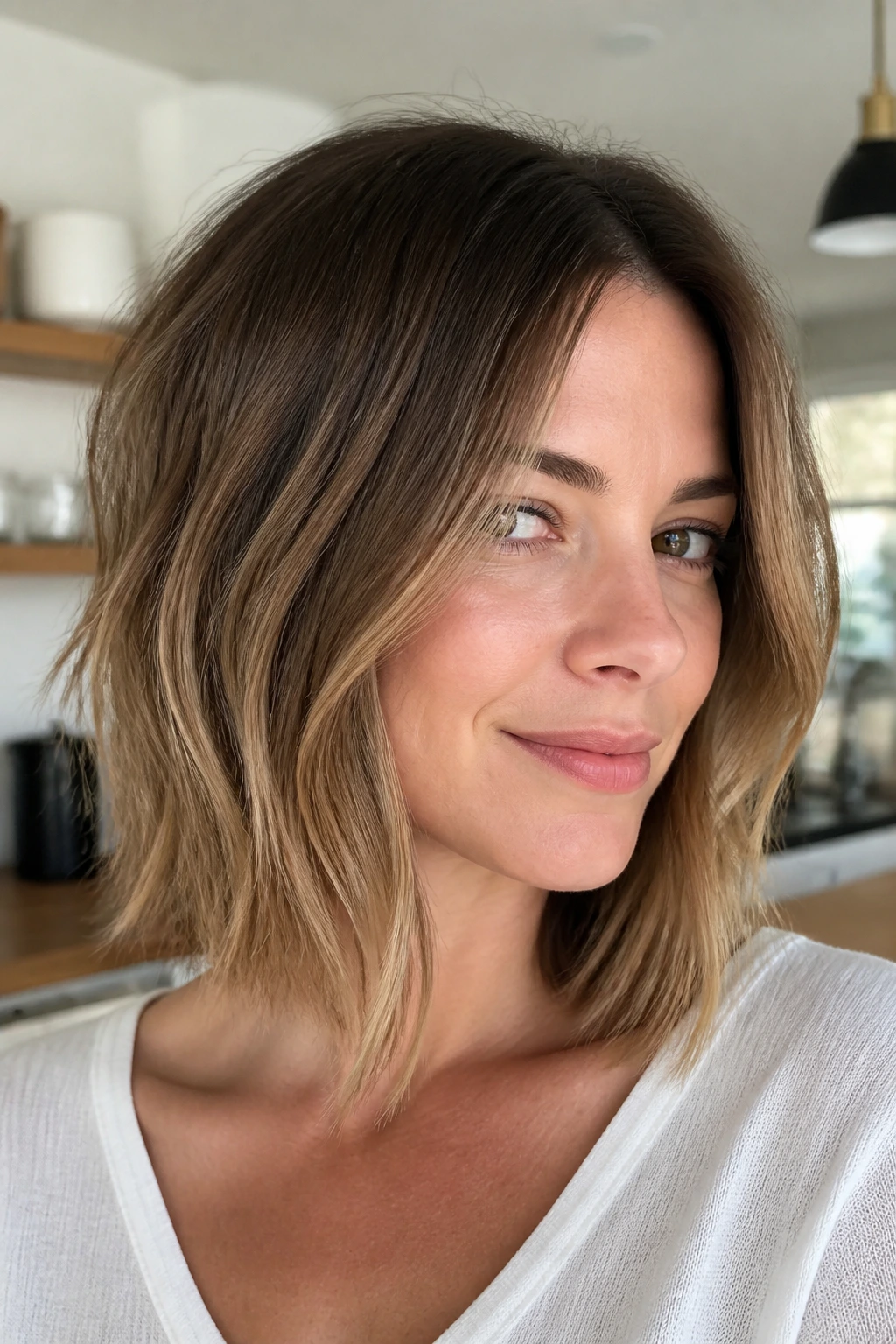
Fine hair can lose its edge fast when the ends split or the layers grow out at the wrong rate. For bobs, plan on a trim every 6 to 8 weeks if you want the line to stay crisp. For lobs, 8 to 10 weeks is usually enough unless your fringe needs more frequent cleanup.
Curtain bangs, bottleneck bangs, and side-swept fringe usually need a little more attention. I’d trim those every 3 to 4 weeks if you want the face-framing pieces to sit where they’re supposed to sit. Let them go too long and they stop framing anything; they just sit there.
Night care helps too. A loose clip, a silk pillowcase, or even just keeping the hair off the neck while you sleep can reduce bend marks and breakage at the ends. Fine hair shows friction faster than coarse hair does, which is annoying but true.
On wash days, don’t drown the roots in conditioner. Clean scalp, light mid-length moisture, and a quick root refresh with dry shampoo or a blast of air in the morning will keep the shape alive longer than heavy product ever will.
Frequently Asked Questions
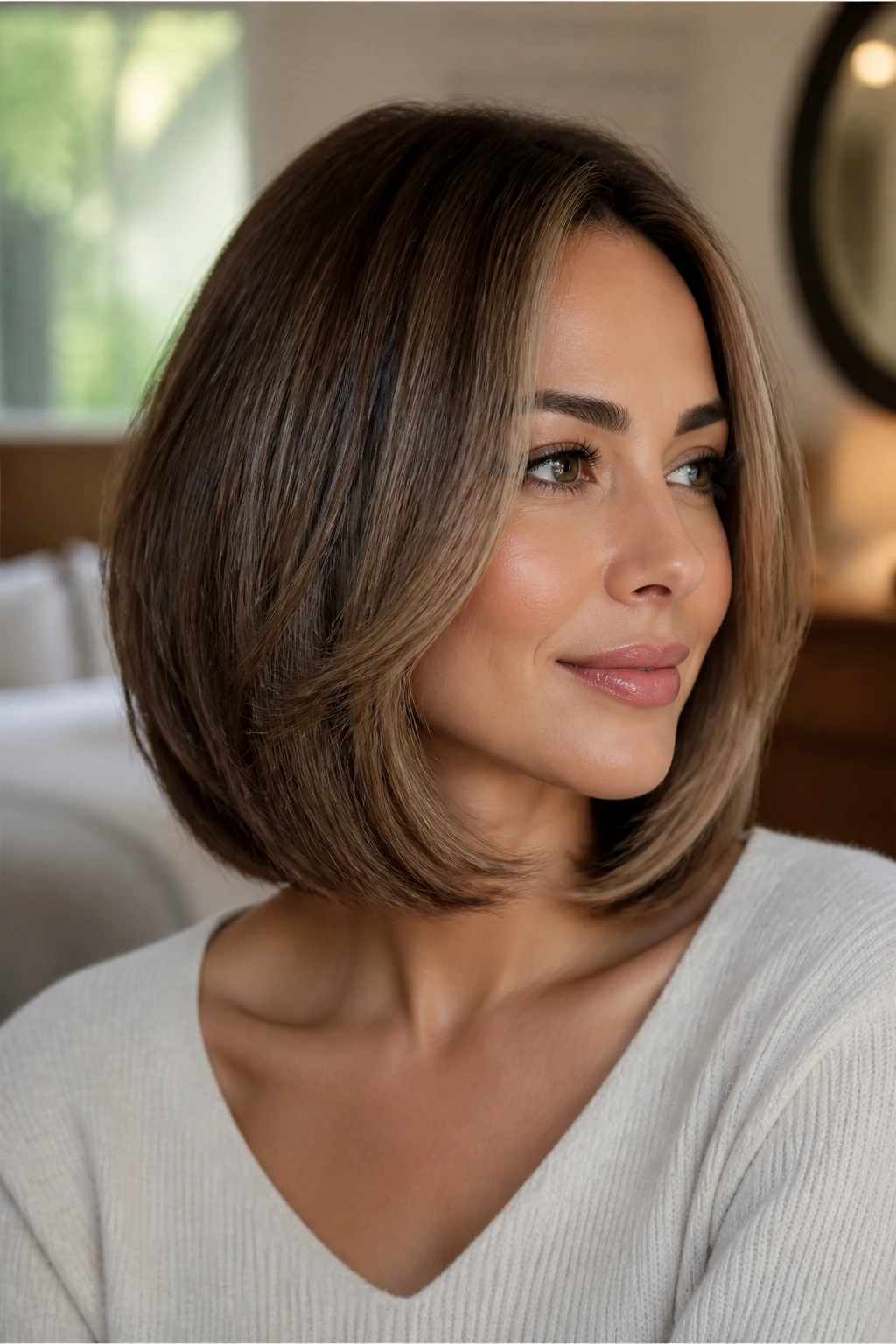
Will soft layers make fine hair look thinner?
Not if they’re cut well. The problem isn’t layers themselves; it’s layers that start too high or get thinned too aggressively through the crown. Keep the bottom line solid, and the hair usually looks fuller, not thinner.
Is a bob or a lob better for fine hair?
A bob gives you more visible lift and a stronger outline, which is useful if your hair falls flat fast. A lob gives you more styling flexibility and a softer grow-out. I’d pick the bob if you want more shape; I’d pick the lob if you want more options.
Can fine hair handle curtain bangs?
Yes, as long as they’re kept long enough to blend and not cut into a tiny, sparse fringe. Curtain bangs should start around the cheekbone area and sweep open rather than sit in a heavy block across the forehead. They work best when the rest of the cut keeps some density.
What product gives lift without making fine hair crunchy?
A lightweight mousse or root-lift spray is the safest bet. Put it on damp roots and mid-lengths, then blow-dry with direction. If your hair hates mousse, try a foam instead; it often feels lighter.
How often should I trim this kind of cut?
Most short fine styles look best with a trim every 6 to 10 weeks, depending on how precise the shape is. Bangs need more frequent cleanups, usually every 3 to 4 weeks, because they lose their face-framing job quickly once they get too long.
Can I air-dry these cuts?
Absolutely, especially if the cut has soft layers and a strong perimeter. Use a little mousse or leave-in, comb the shape into place, and leave the hair alone until it’s about 80 percent dry. Fine hair often looks better when it isn’t overhandled.
What if my roots go flat by midday?
Change the part, use less conditioner at the scalp, and start with root-lift spray or mousse before styling. If the cut itself is heavy around the crown, ask for less layering there next time. Sometimes the problem is the product; sometimes it’s the haircut.
Are razor cuts bad for fine hair?
Not always, but they’re risky. If the stylist gets too eager, razor work can leave the ends frayed and see-through. On fine hair, I prefer soft point-cutting or very light razor detailing only when the hair is dense enough to handle it.
Last Look
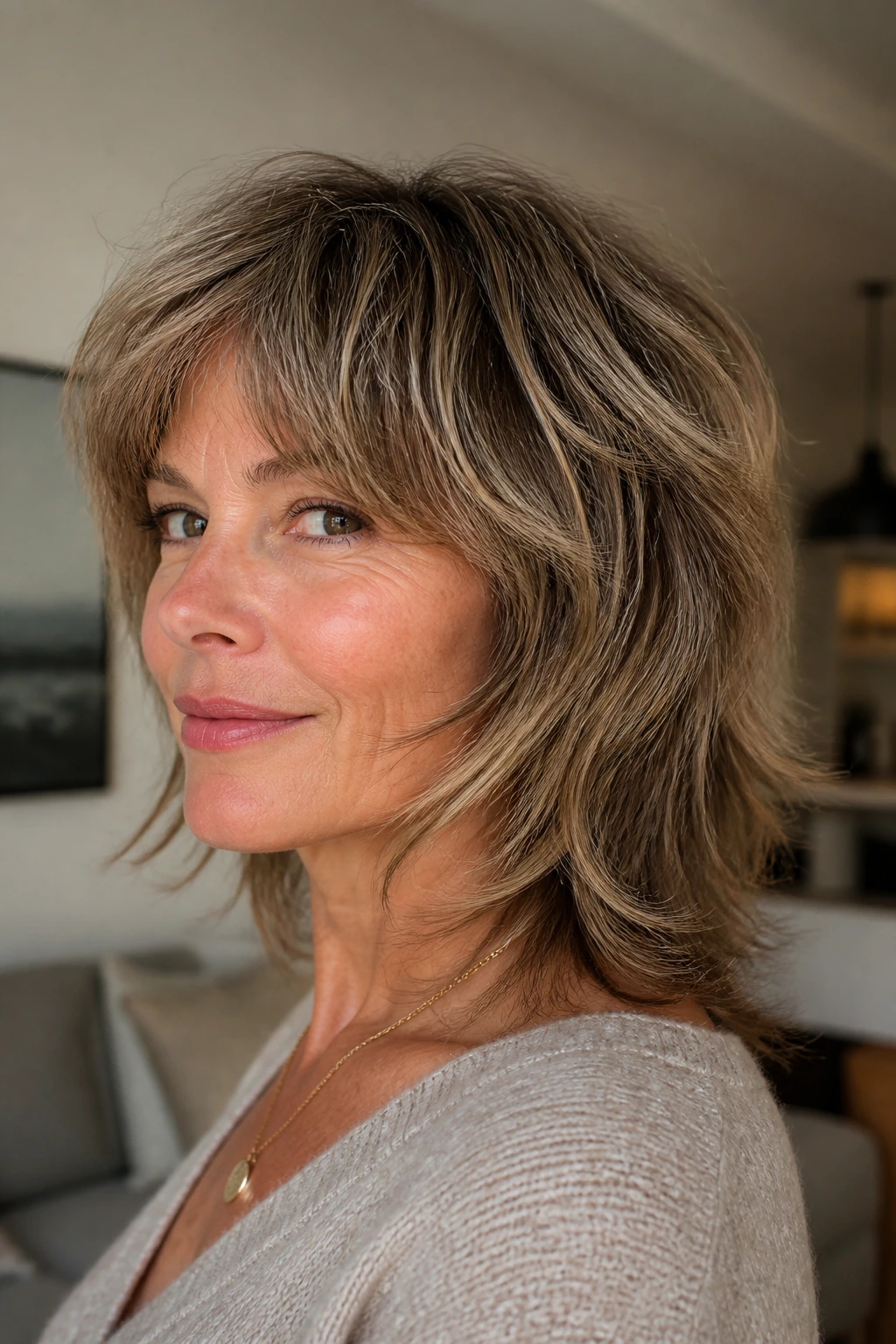
The best short fine hairstyles for medium hair with soft layers don’t try to fake thickness. They work because they keep the ends honest, the face framed, and the crown from getting chopped into dust. That’s a much better deal than chasing volume with a haircut that falls apart the second the dryer turns off.
If you want the smartest place to start, pick the collarbone lob, the French bob, or the invisible-texture midi cut. Those three cover a lot of ground without making fine hair work too hard. And if the shape looks better before you’ve even reached for a brush, that’s usually the right sign.