



Short face-framing layers for older women can do something blunt cuts rarely manage: they soften the front without making the whole haircut feel flimsy. A few well-placed pieces around the eyes, cheekbones, and jaw can pull a bob out of its boxy mood, wake up a flat crown, and stop the front from hanging like a heavy curtain. The placement matters more than the amount of hair removed. One inch too high, and the shape can get choppy fast.
I’ve always liked front layers that behave like a good tailor, not a glitter pen. They should trim the visual weight where your eye lands first, then disappear into the rest of the cut. That matters even more when hair has changed texture, which it often does. Silver strands can be wirier, fine hair can go flatter at the crown, and a face frame that used to sit nicely can suddenly feel too harsh or too busy.
Glasses change the game, too. So does a stronger jawline, a softer chin, or a hairline that has thinned a little at the temples. The right front layer can solve those things with less fuss than a full style overhaul. The wrong one can add bulk right where you don’t want it. That’s why the best versions below keep the front lively and the rest of the cut controlled.
Why These Cuts Earn Their Keep
-
They lift the face without a big length change: A layer that starts near the cheekbone can make a chin-length bob look sharper without losing the easy feel of short hair.
-
They soften hard lines around the jaw: The best face-framing pieces blur a square edge or strong jaw just enough to keep the cut from feeling severe.
-
They work with glasses instead of fighting them: A front piece that lands outside the frame gives your glasses room to sit cleanly, which is a small thing that makes a big difference.
-
They grow out with less drama: Soft layers around the front usually hold their shape longer than blunt bangs or razor-sharp chops, so you can stretch time between trims.
-
They handle changing texture well: Whether hair has gotten finer, coarser, or a little more wavy, the front can be adjusted without reshaping the entire cut.
-
They make short hair feel current without trying too hard: A good face frame gives movement near the eyes and cheekbones, which is where short cuts can look flat first.
1. Cheekbone Curtain Layers
These are the safest place to start if you want softness without a lot of commitment. The front pieces part away from the face, skim the outer cheekbone, and slide into the rest of the cut instead of stopping like a hard line. On straight or slightly wavy hair, that little bend does most of the work.
Why it works: The cheekbone is a sweet spot. It lifts the eye upward and breaks up a strong vertical line, which is especially useful on short bobs that can look boxy after a few weeks. Ask for the shortest front piece to start near the outer corner of the eye, then taper toward the jaw.
A blow-dry with a 1.5-inch round brush helps these layers settle the right way. Roll the hair away from the face, then let it cool in the brush for a few seconds before releasing it. That cooling step matters more than most people think.
2. Chin-Skimming Side Sweep
This is the cut I’d hand to someone who wants shape without too much styling. The front layer starts high enough to open the face, then sweeps diagonally toward the chin, where it softens a rounder jaw or fuller cheeks. It looks polished even when the rest of the hair air-dries a little imperfectly.
Best for: round faces, soft jawlines, and women who like a side part that does some of the lifting for them. The front should not end exactly at the widest part of the cheek. That’s the trap. Let it graze slightly below that point so it elongates rather than widens.
I like this one on hair that has some movement but not much volume. The diagonal line gives structure, and the length at the front keeps it from looking severe. If your hair tucks behind the ear often, this cut still holds its shape because the side sweep keeps a bit of swing.
3. Feathered Jawline Bob
A feathered bob around the jaw is a very specific kind of useful. It softens a strong chin, but it also stops a bob from sitting like a block around the face. The ends should feel light, not wispy in a weak way — there’s a difference.
What to ask for: a bob that lands at the jaw with face-framing layers sliced gently into the front, not hacked in with a chunkier layer. The shortest front piece can hit at the mouth or just below it if you want more movement. That’s enough to open the front without turning it into bangs.
I like this cut on fine hair because it adds motion without stealing density from the perimeter. On thicker hair, the feathering should happen through the front edges, not all over the head. Too much internal thinning and the cut loses its clean outline fast.
4. Long-Front Pixie Bob
This one has attitude, but not the shouty kind. The back stays short and neat, while the front keeps longer pieces that fall around the cheek and temple. It gives a little swing without forcing you into a full pixie grow-out.
Why it works: the longer front corners soften the transition from short back to face. That helps if your hairline has thinned at the temples, because the front pieces create a fuller frame where the eye tends to notice sparseness first. It also makes the cut feel less exposed around the face.
Style it with a small round brush or a vent brush and a quick root lift at the crown. If you want extra bend, clip the front pieces back from the face while they cool for 5 minutes. That set is what keeps them from collapsing into the cheeks.
5. Collarbone Bend Layers
Not every short face frame has to live at chin length. A collarbone cut with front layers that bend in at the face gives you a little more room if you’re growing out a bob or you want the hair off the neck without losing softness.
The trick here is restraint. The front should bend, not flop. Ask for the shortest layer to land between the cheekbone and the corner of the mouth, then let the rest of the cut keep its length. That gives the front enough shape to lift the face while the back still reads neat and simple.
This is one of my favorites for wavy hair. The natural bend around the collarbone catches a bit of movement, and the face-framing pieces keep the whole cut from feeling heavy. If your hair tends to puff at the ends, ask for less layering through the bottom and more attention at the front only.
6. Piecey Shag Crop
A shag crop can look wildly different depending on how much texture you ask for. The good version for older women keeps the layers soft around the temples and cheekbones, with enough separation to show movement but not so much that it turns into a mess by noon.
The point: this cut is about air. It lifts the crown, opens the sides, and lets the front pieces fall in little bends instead of one thick curtain. That makes it especially useful for hair that has gotten flatter over the years.
Use a texturizing spray, not a heavy paste. A dab of paste on the front ends can make them stick out in a choppy way that feels dated. The shag should feel breezy and intentional, with the face frame doing the prettiest work.
7. Angled Bob With Front Panels
If you like a more precise shape, the angled bob is hard to beat. The back is shorter, the front panels are longer, and the line gives you a clean silhouette that still softens around the face. It’s not fussy. It’s just well drawn.
The front pieces should start near the cheekbone and angle down toward the jaw or just below it. That keeps the bob from looking flat in profile. I especially like this on square faces because the diagonal front line breaks up a strong jaw without losing structure.
A side part deepens the angle and gives the crown a little lift. If your hair is straight, tuck one side behind the ear and let the front panel sit loose on the other. That asymmetry can make a simple cut look far more finished than a perfect center part ever will.
8. Wavy Internal Layers
Wavy hair does not want to be cut the same way straight hair does. It needs room for the wave pattern to move, especially around the face, where too much bluntness can make the front flare out in a triangular way. Internal face-framing layers solve that.
Ask for the shortest point to land near the eye or upper cheek, then let the layers blend through the mid-lengths without thinning the perimeter too much. The goal is to keep the wave from collapsing into one heavy sheet. Dry-cutting can help here because the stylist can see exactly where the bends sit.
I like this cut when someone wants easy styling with a little polish. Air-dry it with a leave-in cream, then twist the front pieces once before they dry. That tiny twist nudges the hair forward instead of out.
9. Grown-Out Pixie Fringe
A grown-out pixie fringe is one of the smartest ways to keep short hair from feeling harsh. The fringe stays longer than a classic pixie bang, and the temple pieces are left soft enough to frame the face rather than expose it.
Why it earns its place: it gives you coverage at the forehead and temples without closing off the face. That matters if your hairline has receded a bit or if you like a little softness around the eyes. The overall shape stays short, but the front doesn’t read severe.
This cut needs regular cleaning up at the ears and nape, but the front can stretch longer between trims. That’s nice if you want a cut that looks deliberate even when it’s not freshly shaped. Blow-dry the front forward first, then sweep it to the side before it cools. That keeps the fringe from separating into awkward little spikes.
10. Bottleneck Bang Bob
Bottleneck bangs get the name from the narrow center and wider sides, and they’re a smart partner for a short bob. The middle piece sits shorter, while the sides open out toward the cheekbone. The result is softer than a blunt fringe and more contained than a full curtain bang.
This shape is useful if you want your forehead covered a bit but do not want a heavy wall of hair. It draws attention to the eyes and breaks up a broad forehead without taking over the whole haircut. On older women, that lighter center often looks fresher than a thick, straight-across fringe.
Keep the bob itself simple. The fringe should be the feature, not every layer in the haircut. A light blowout with a round brush will separate the side pieces just enough so they don’t clump together. If they do clump, a quick pass with a low-heat flat iron on the outer bend usually fixes it.
11. Soft Wedge With Tapered Sides
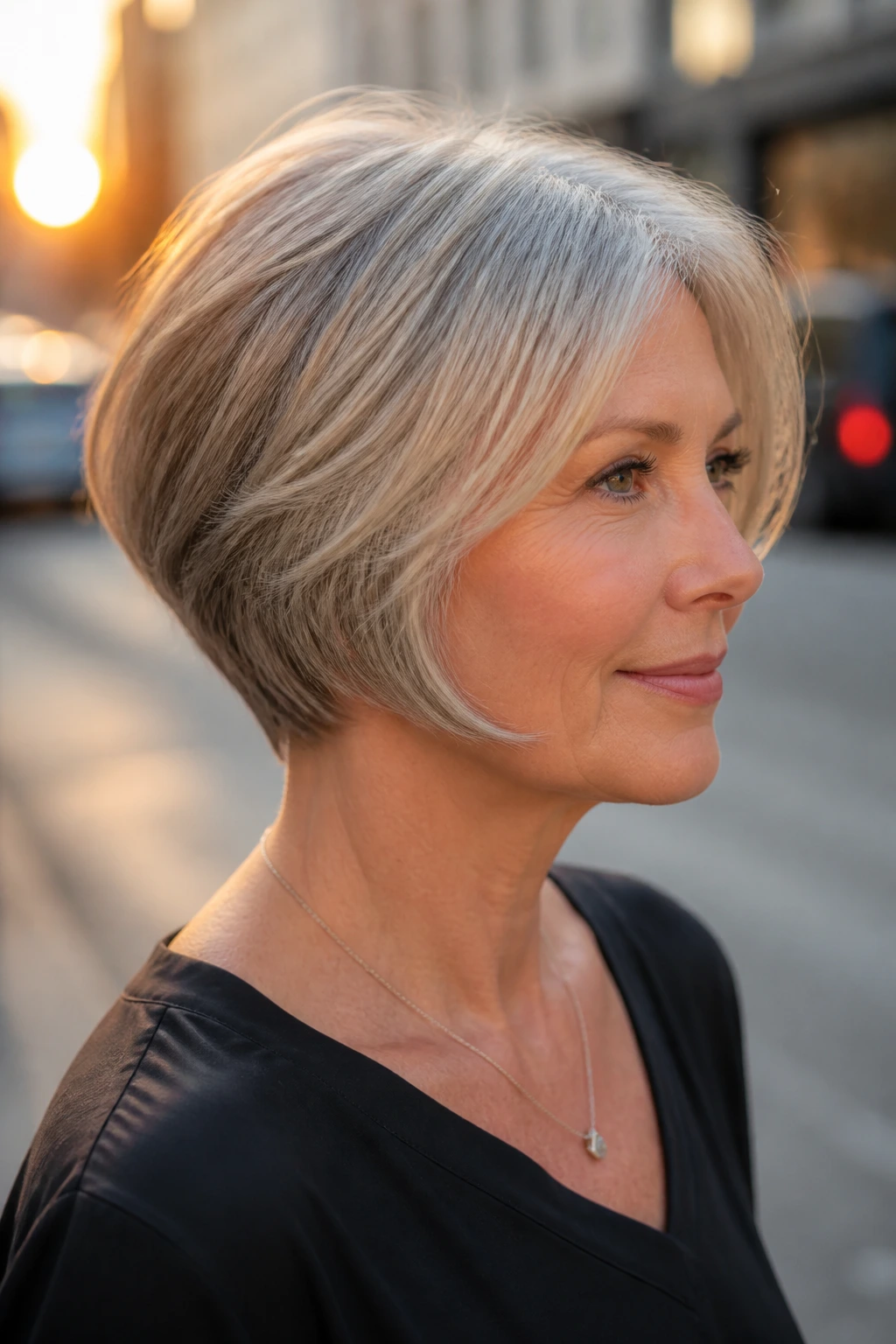
This is the cleanest cut in the bunch, and I mean that as a compliment. A modern wedge keeps the nape short and neat, then tapers the sides so the front frame curves gently around the cheeks. It gives shape fast, which is handy if your hair loses its body by lunchtime.
The front layers should not be too chopped. A wedge lives or dies by its line, and rough front pieces can make it look old-fashioned in a hurry. I like a soft taper that starts near the temple and blends into the cheek area, with the perimeter still visible.
This cut suits thick straight hair especially well. The built-in structure keeps the back from ballooning, and the face-framing pieces take away the helmet effect. If you want to see the shape, tuck the sides behind the ears and let the front fall forward. That’s where the geometry shows.
12. Rounded Bob With Lifted Crown
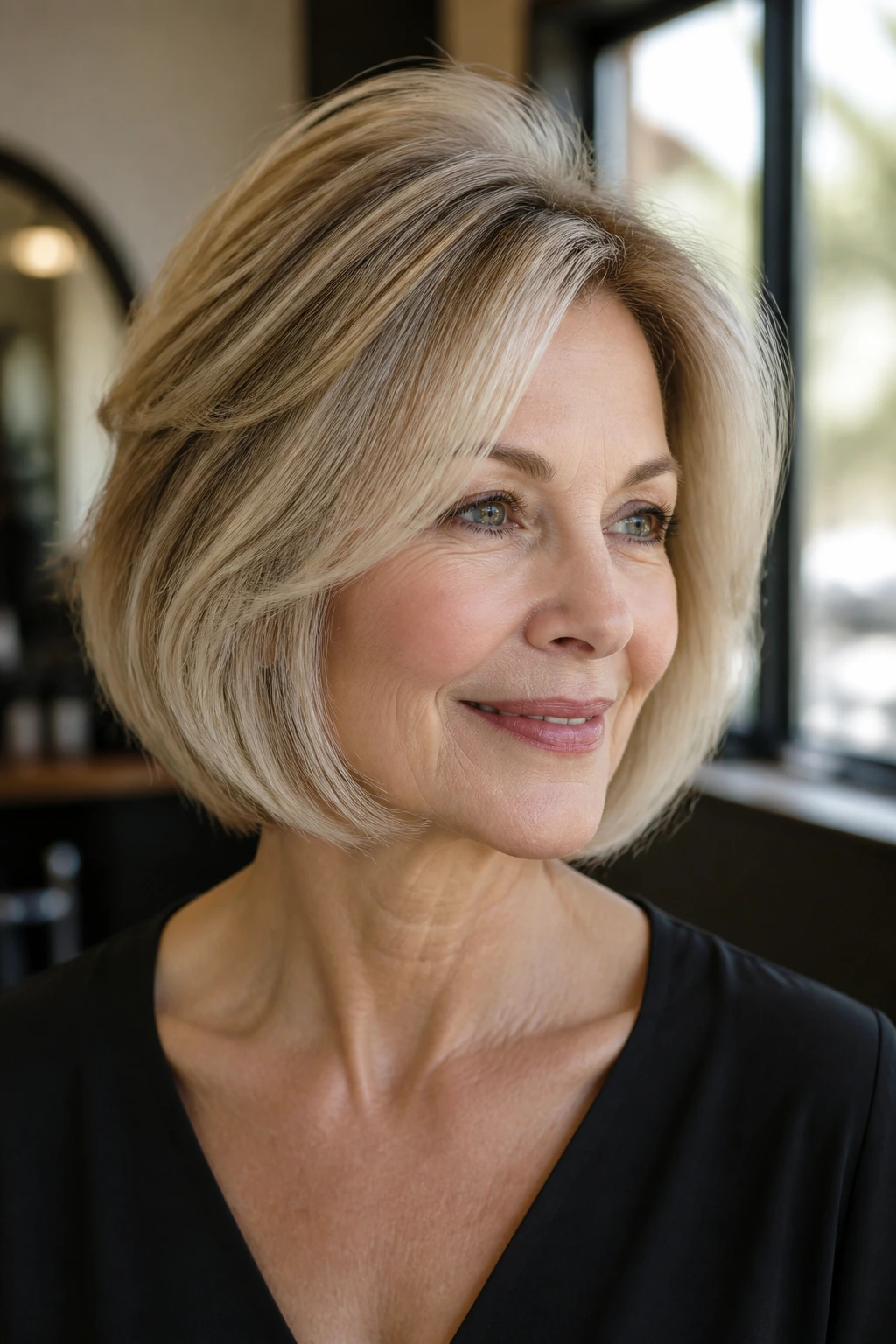
A rounded bob sounds basic until you see what happens when the crown gets a little lift and the front layers hug the face. The whole shape becomes gentler. It reads fuller at the top and slimmer through the cheeks, which can be a nice trick on longer faces.
Ask for a bob that curves inward at the ends, with the face frame starting around the cheekbone and staying soft. The top should not be over-thinned. That’s a common mistake with rounded bobs. You want lift, not see-through hair.
A root-lifting spray at the crown and a round brush at the front are usually enough. Don’t blast the whole head with high heat. It’s the front curve that matters here, and too much heat at the ends can make them flip away from the face in odd little hooks.
13. French Bob With Airy Fringe

A French bob is chin-length or just a touch shorter, and the airy fringe is what keeps it from feeling severe. The face frame is compact, elegant, and a little undone in the best way. It likes straight or slightly wavy hair, and it’s especially good if you wear glasses.
The fringe should sit light, not dense. I prefer a soft piece that touches the eyebrows and then breaks into the front layers so the whole thing moves together. If the fringe gets too heavy, the cut can look costume-like. Keep it transparent enough that your skin shows through a little.
This cut is at its best when the ends curve under by themselves. A quick bend with a round brush or a flat brush and a small flick of the wrist can do it. You do not need a perfect blowout. In fact, the cut looks better when it has a little swing.
14. Curly Face-Opening Crop
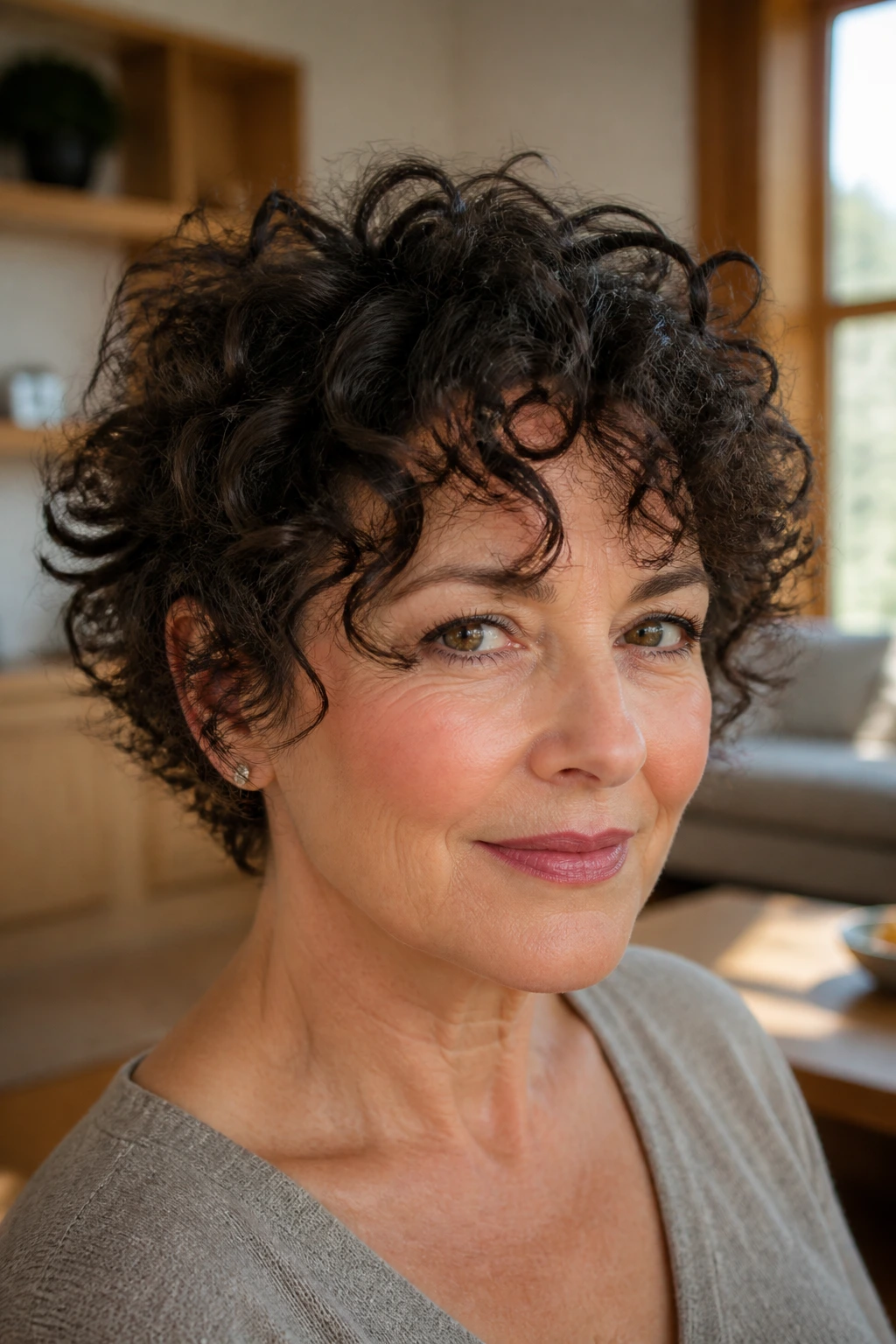
Curly hair needs the face frame cut one curl at a time, not in a blind sweep across the front. A short curly crop with face-opening layers can be gorgeous, but the stylist has to respect shrinkage. What looks chin length when wet may spring up to the cheekbone once dry.
The best version keeps the front curls slightly longer than you think you need. That lets them land around the eyes and cheeks instead of bouncing up into the forehead. Dry cutting helps because the curl pattern shows its real life, not its wet guesswork.
Use a curl cream that keeps the front pieces defined without turning them crunchy. If the front gets too short, curly hair can look all forehead and no frame. Leave a little extra length at the temples, and the whole cut softens instantly.
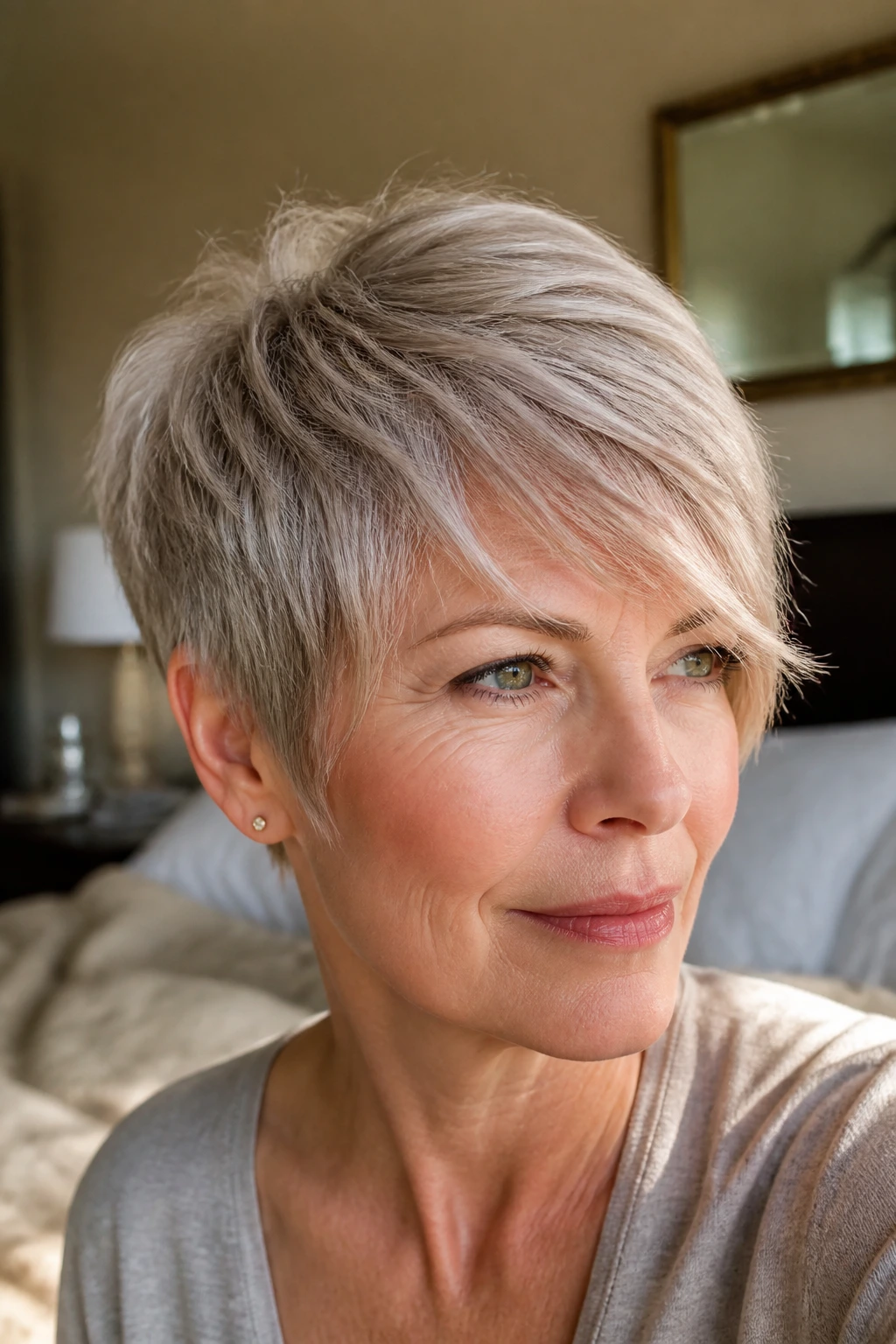
15. Silver Pixie With Temple Length
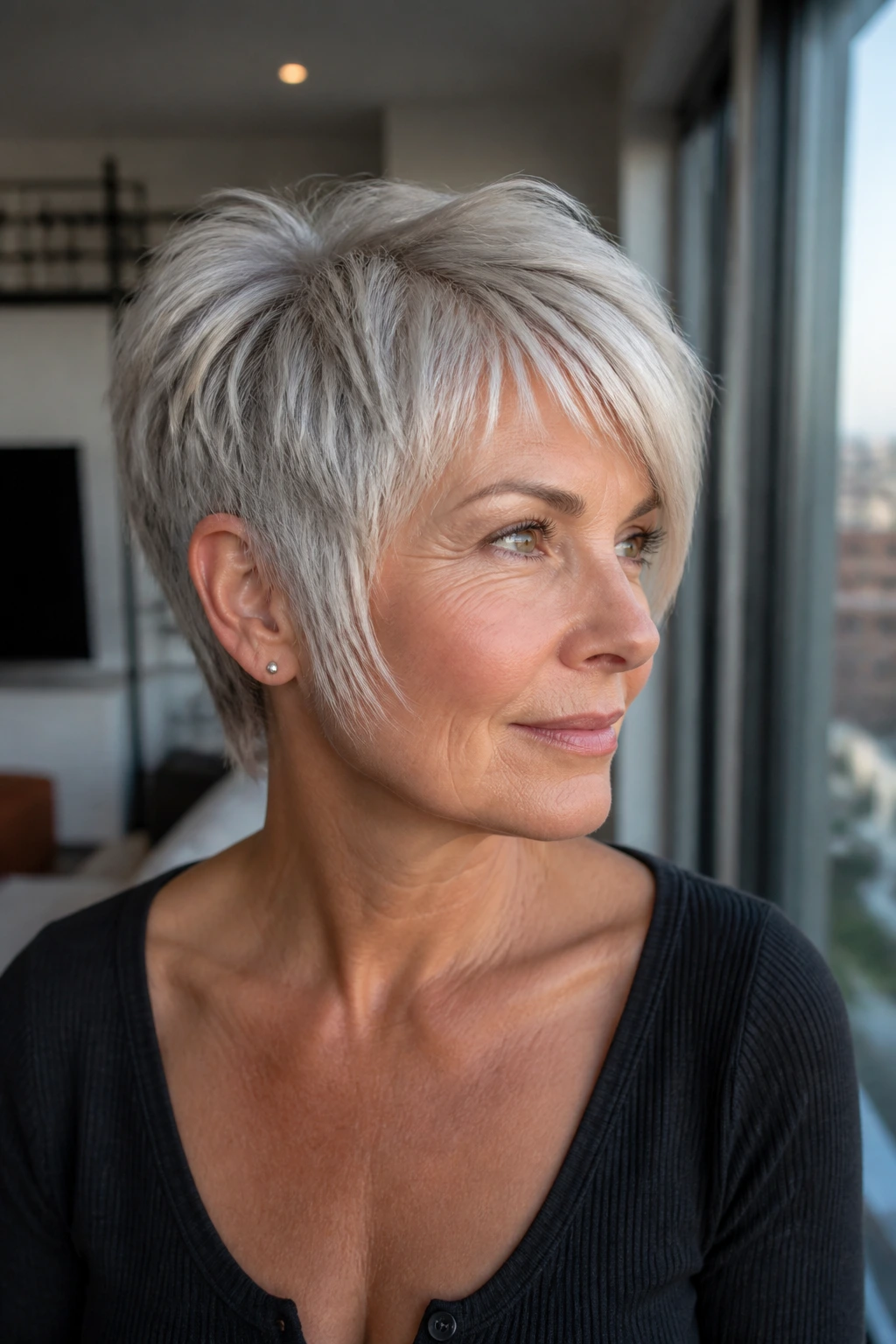
Silver hair can look sharp in the best way, but a pixie that’s too tight around the temples can make it feel severe. Leaving a little length there solves that. The longer temple pieces cut across the face gently and keep the short crop from reading hard.
This is a strong choice if your crown is getting flatter. A little lift on top and softness at the temples balances the head shape without relying on a lot of product. I like a bit of texture in the front, but not so much that the silver strands separate into stiff little spikes.
A light mousse at the roots and a small amount of cream at the ends usually beats heavy wax. Silver hair often shows product faster than darker hair does. If the front feels coated, it will look dull and piecey in a bad way. Keep it light.
16. Deep Side-Part Bob

A deep side part can change a bob more than another inch of length ever will. It creates lift at the root, drops some weight off one side, and gives the face frame a longer, slanted path across the cheek. The result is cleaner and less symmetrical.
This style is useful if one side of your hair lays flatter or if your crown has lost some height. The heavier side of the part can carry the face-framing layer, while the lighter side stays tucked neatly behind the ear. That contrast keeps the cut from feeling too uniform.
I like this with a blow-dry that starts at the roots, not the ends. If the base is flat, the whole side part collapses. A little root spray at the part line and a quick lift with the brush makes the front piece sit where it should.
17. Textured Crop With Sideburn Layers
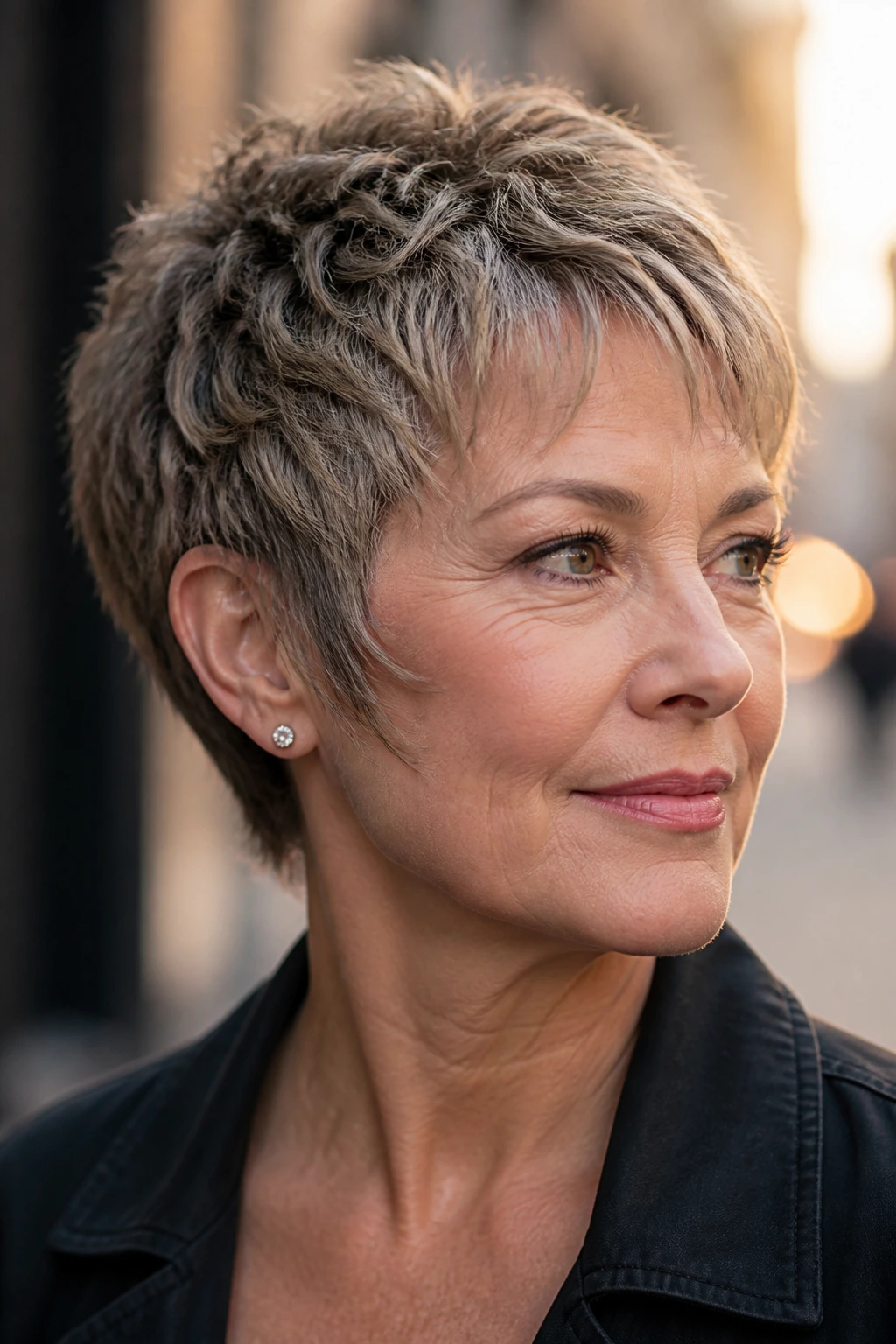
Sideburn layers sound small, but they do a lot. A textured crop with softened sideburn pieces gives the haircut a frame right where the cheek meets the jaw, which is often where short cuts look too blunt. The front becomes a curve, not a wall.
This cut is especially good for women who want something short but not severe. The crown can have texture, but the sideburn area should stay delicate. If those pieces are too chunky, they can look like little wings. Keep them narrow and tapered.
You can wear this one pushed back or swept forward. I like it best with a touch of separation at the front and a neat line at the neck. It feels modern without trying to be dramatic. That’s a nice place to land.
18. Neck-Grazing Flip-Out Layers

There’s a little retro energy in a neck-grazing cut with flip-out layers, but only if the ends stay soft. The front pieces can flip out away from the jaw, which opens the lower face and keeps the haircut from hugging the neck too tightly. It’s a good fix for hair that hangs limp when it gets shorter.
The flip should be light, not exaggerated. Think of it as movement, not a statement. Ask for the face frame to start around the mouth or chin, then taper into longer front ends that can be brushed outward with a round brush or a flat iron.
I like this shape on women who want a cut that still feels easy at a glance. It takes a few minutes to style, and the front flip does enough visual work that the rest can stay simple. Don’t load the ends with oil. That kills the shape fast.
19. Tapered Bob With Weight Removed
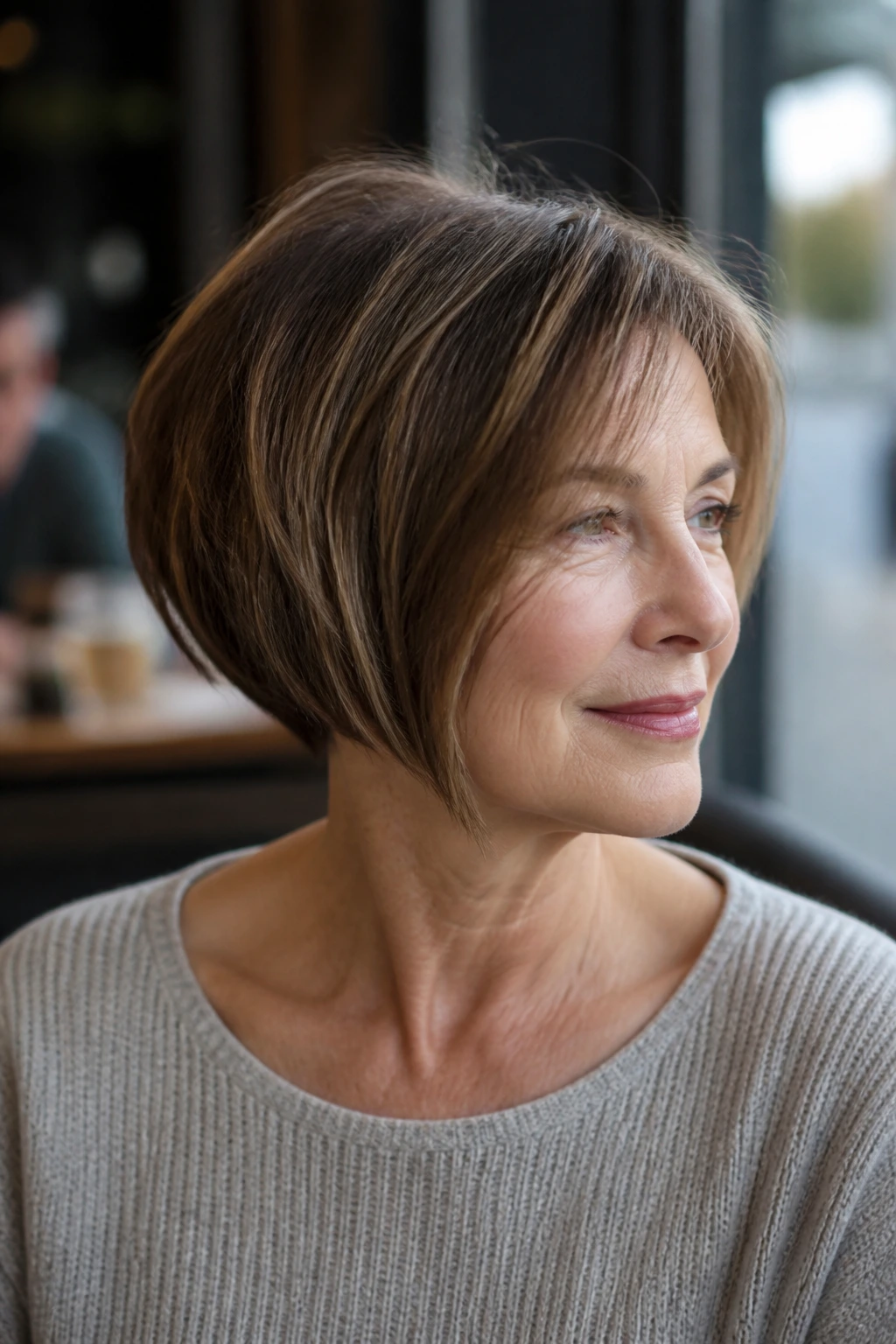
Thick hair often needs removal, but not the kind that turns the ends ragged. A tapered bob with weight removed through the interior gives you a cleaner outline and a front that sits close to the face instead of flaring out. The shape looks controlled, not puffy.
The front should be the softest part. That’s where the movement belongs. Ask the stylist to keep the perimeter crisp and do the de-bulking inside the shape, especially if the hair at the back tends to stack up. Over-thinning the ends is a mistake here. The cut needs a solid edge to hold its line.
This is one of the best options if your hair feels too dense in summer or if you’re tired of spending forever drying it. Less bulk means faster drying time and less round-brush work. And that’s a real gift, not a marketing line.
20. Asymmetrical Face Frame Cut

A small amount of asymmetry can make a short cut feel fresh without screaming for attention. One side stays a little longer than the other, and the face-framing pieces follow that shift. The cut feels tailored, not rigid.
This works especially well if you have one side of the face you prefer to soften, or if glasses sit slightly differently from one temple to the other. The longer side can drape across the cheek, while the shorter side opens up the eye area. It’s subtle enough to wear every day.
Keep the asymmetry soft. A huge angle can look dated fast. A gentle difference in length, paired with a neat nape or jawline, is usually enough. If you blow-dry the longer side forward first, then sweep it across, you’ll get the right bend without fighting the shape.
21. Modern Page Cut
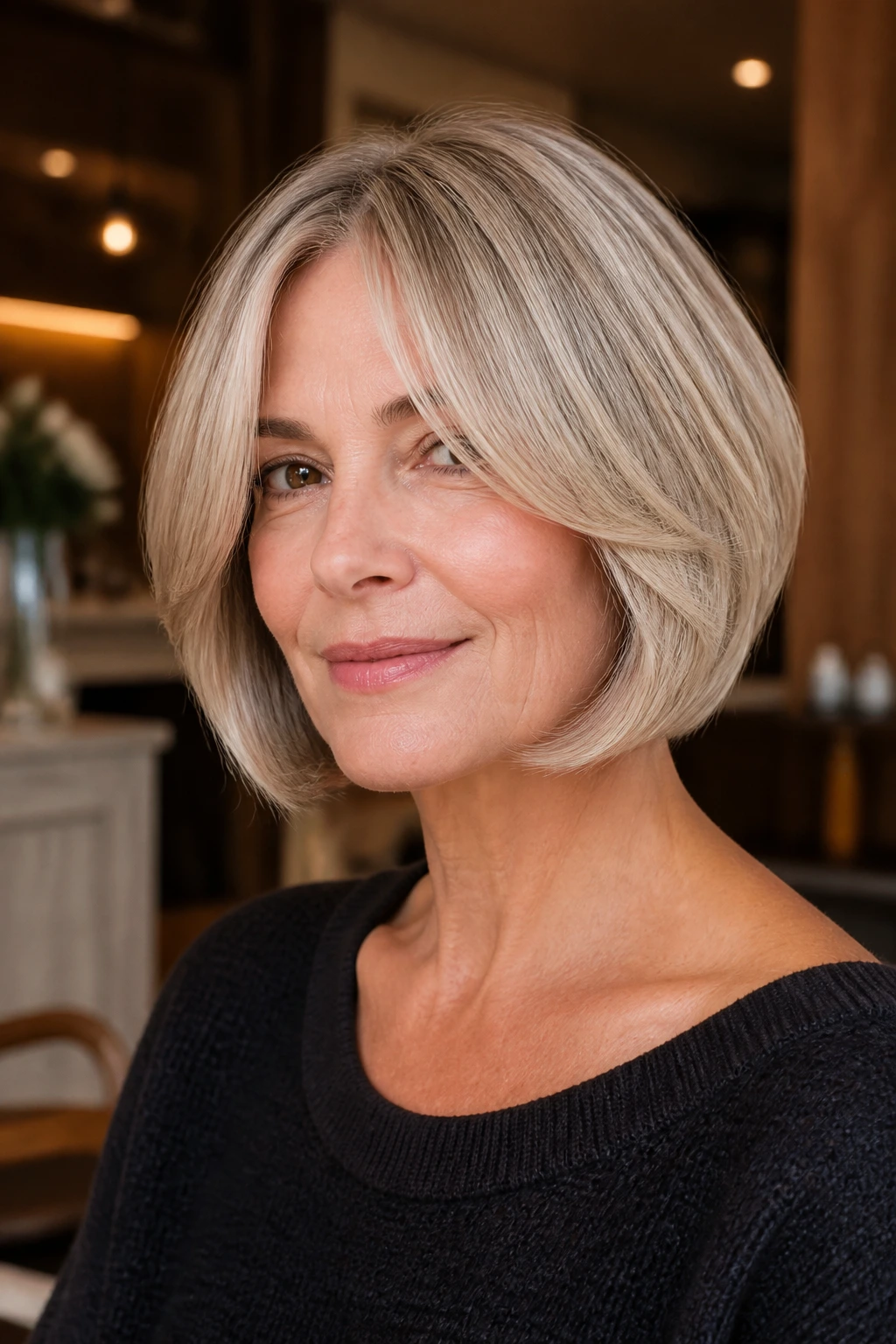
The page cut borrows from the old pageboy shape, but the modern version is lighter around the face and softer at the ends. It’s rounded, tidy, and useful for straight hair that wants to sit in a predictable way. The front layers are what keep it from feeling like a helmet.
I like the face frame to start around the cheekbones and angle under slightly. That keeps the cut from sitting as one hard bowl. If the perimeter gets too blunt, the style can feel heavy. A little interior movement changes the whole thing.
This is a neat choice for women who like the hair to hold its shape for a few days. It works with minimal styling if the cut is good. That’s the whole point. The lines do the work, and you don’t have to.
22. Short Shag With Crown Texture
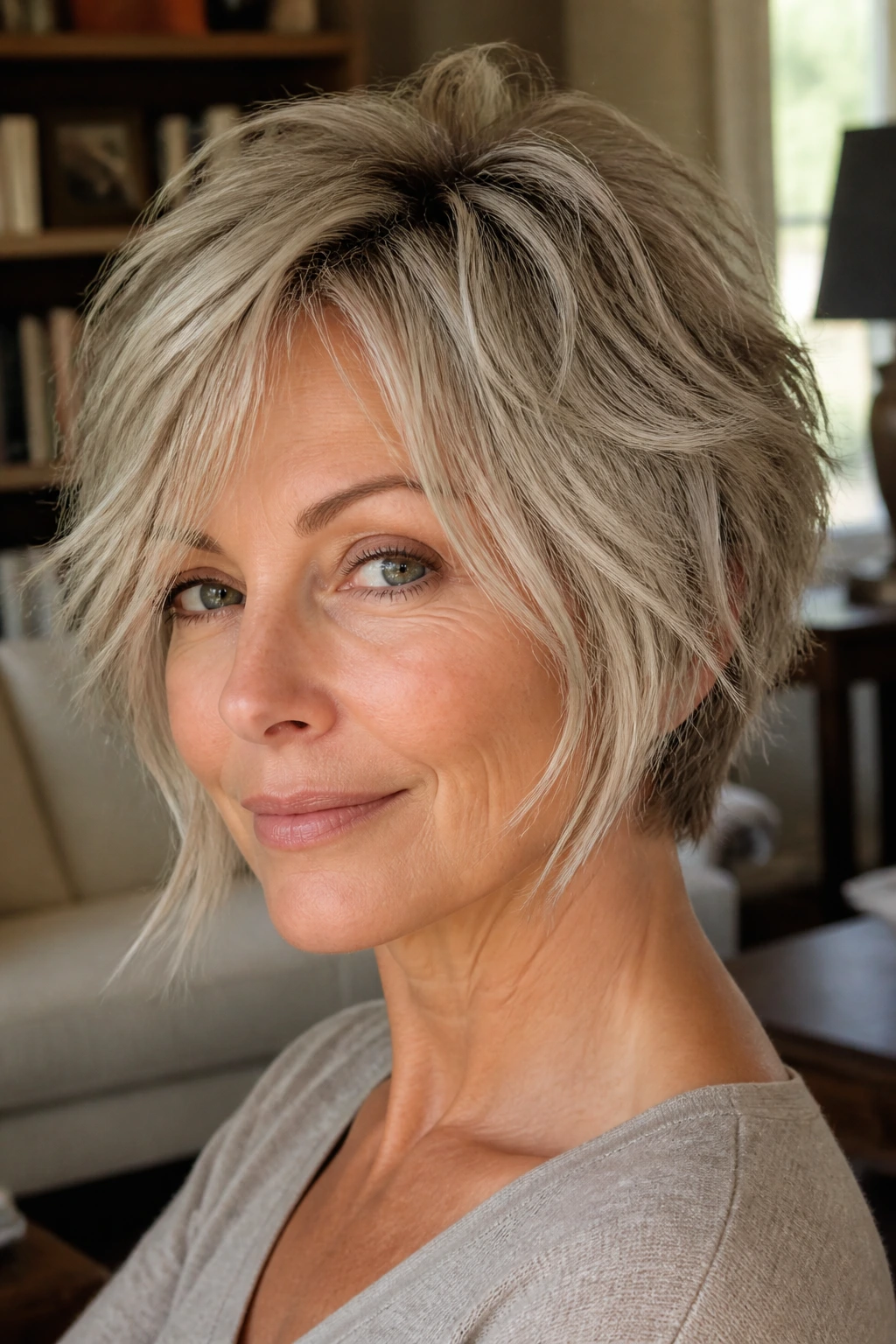
A short shag with crown texture can be a lifesaver for hair that lies flat no matter what you do. The crown gets lift, the face frame gets movement, and the ends stay soft enough to avoid the puffy triangle effect. It should look touchable, not shredded.
The trick is balance. Too much texture on the crown and the cut starts to stick up. Too little, and the shag loses its purpose. Ask for front pieces that land around the cheek or mouth, with the shorter top layers used only to create lift where the head needs it most.
This style likes a quick scrunch with mousse and a diffuser, or a rough blow-dry with fingers if your wave pattern is mild. I’d keep the finish a little messy. A shag that’s too neat loses its charm in a hurry.
23. Thick-Hair Blended Bob
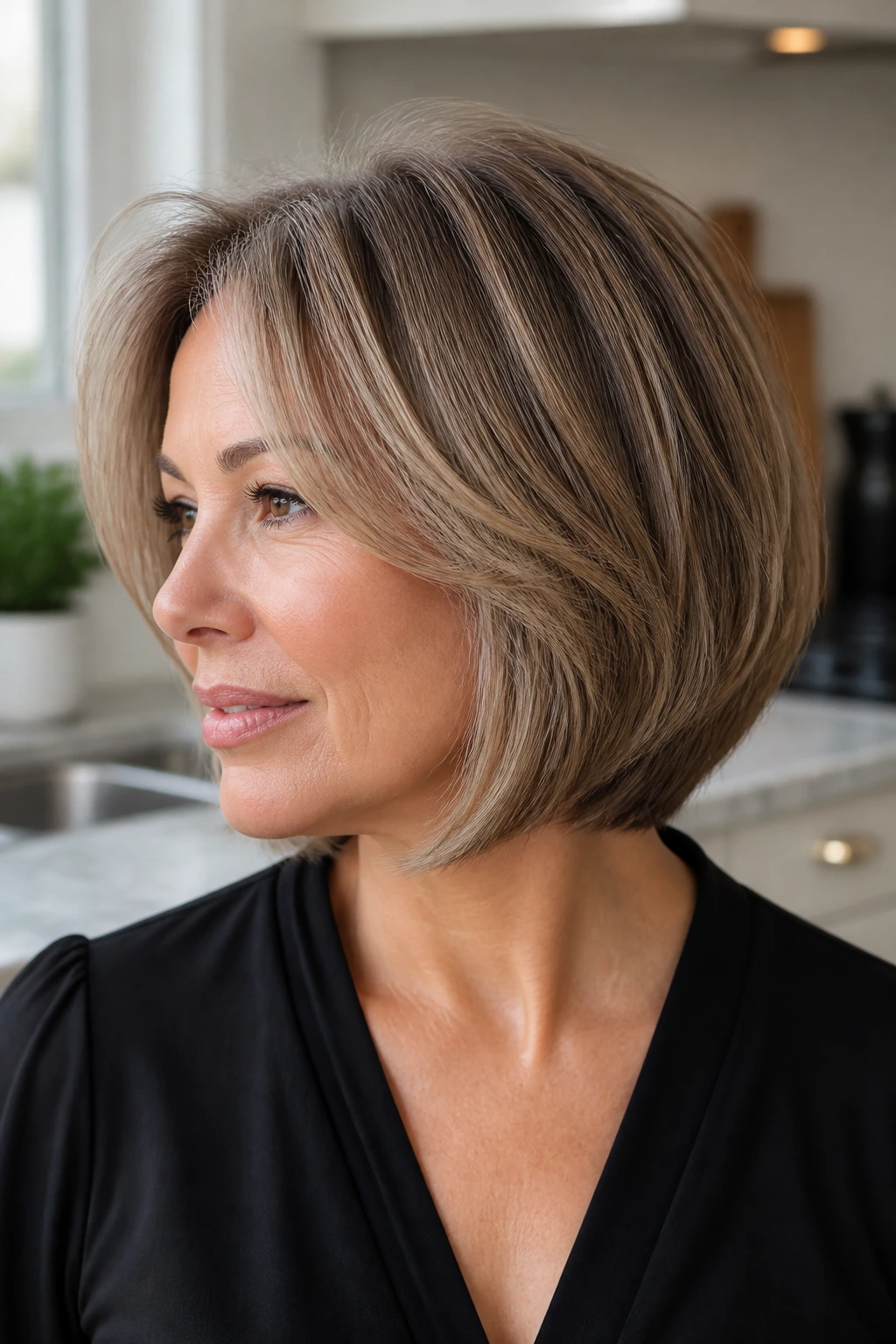
Thick hair needs blending, but not the kind that turns the whole cut fuzzy. A blended bob with face-framing layers takes the weight out of the front and lets the line at the jaw sit closer to the head. That helps the haircut feel lighter the second it’s dry.
The face frame should be woven into the rest of the cut, not dropped in as a separate chunk. That’s what keeps thick hair from looking carved up. If the layers are too sharp, you can end up with a thick block underneath and skinny pieces around the face. Nobody wants that.
A smoothing cream at the ends and a medium round brush at the front usually works better than heavy serums. Thick hair often takes longer to dry, so the front can puff if it’s handled too early. Let it get about 80 percent dry before you start shaping the front pieces.
24. Micro-Fringe Crop With Long Corners
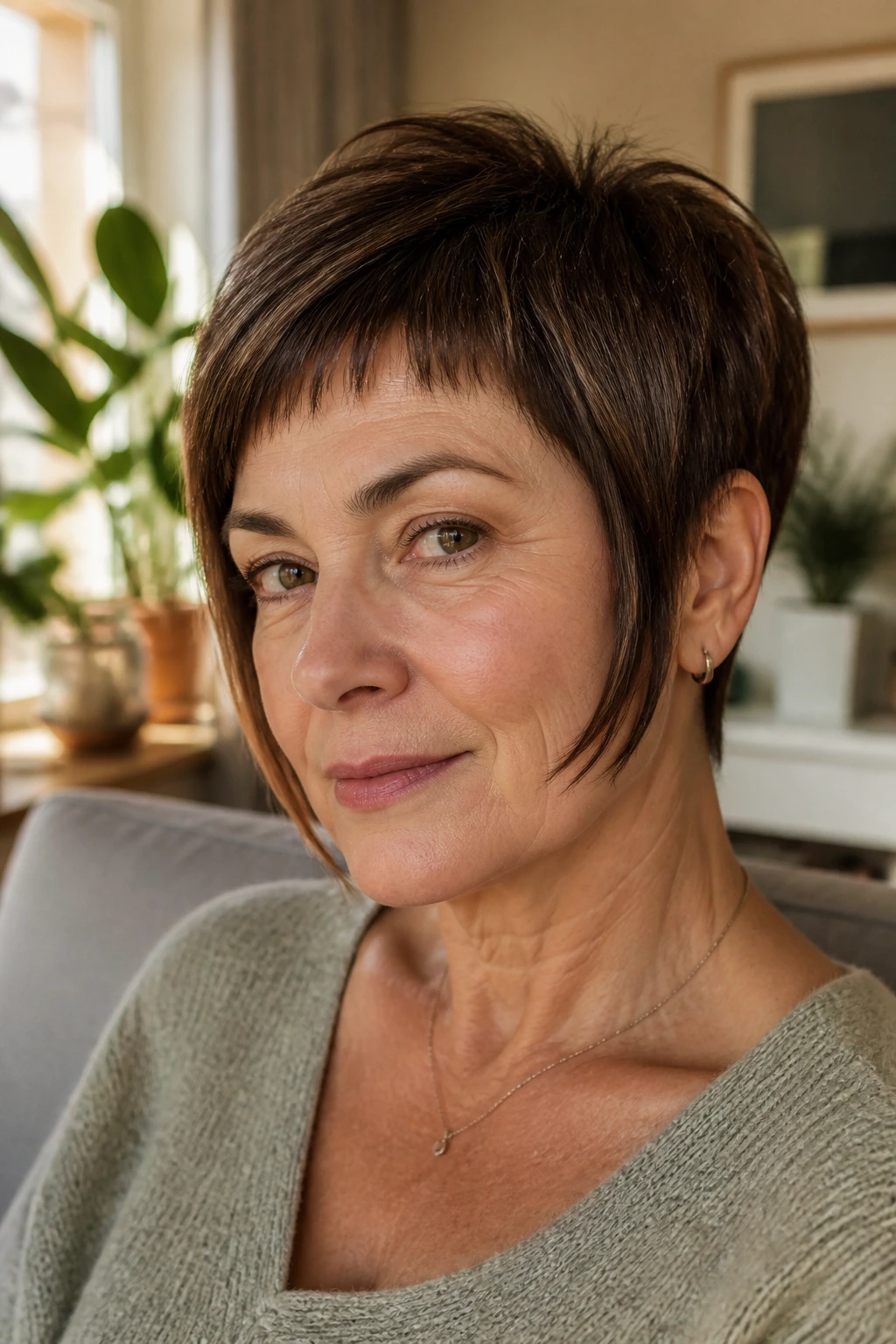
A micro fringe can be tricky, but paired with longer front corners it becomes much more wearable. The tiny fringe gives the cut energy, while the longer side pieces keep the face open. It’s a good choice if you like a little edge but do not want the forehead fully covered.
This works best on hair that is straight or only slightly wavy. The shorter fringe has to lie flat, and the corners need enough length to soften the shape near the temples. If you wear glasses, the longer corners matter even more because they stop the fringe from crowding the frames.
I would not make the fringe too severe. A very short, hard line can feel stark on older features. Keep it feathered at the edges and let the front corners do the softening. That gives you the personality of a short fringe without the hard stop.
25. Jawline Bob With Beveled Ends
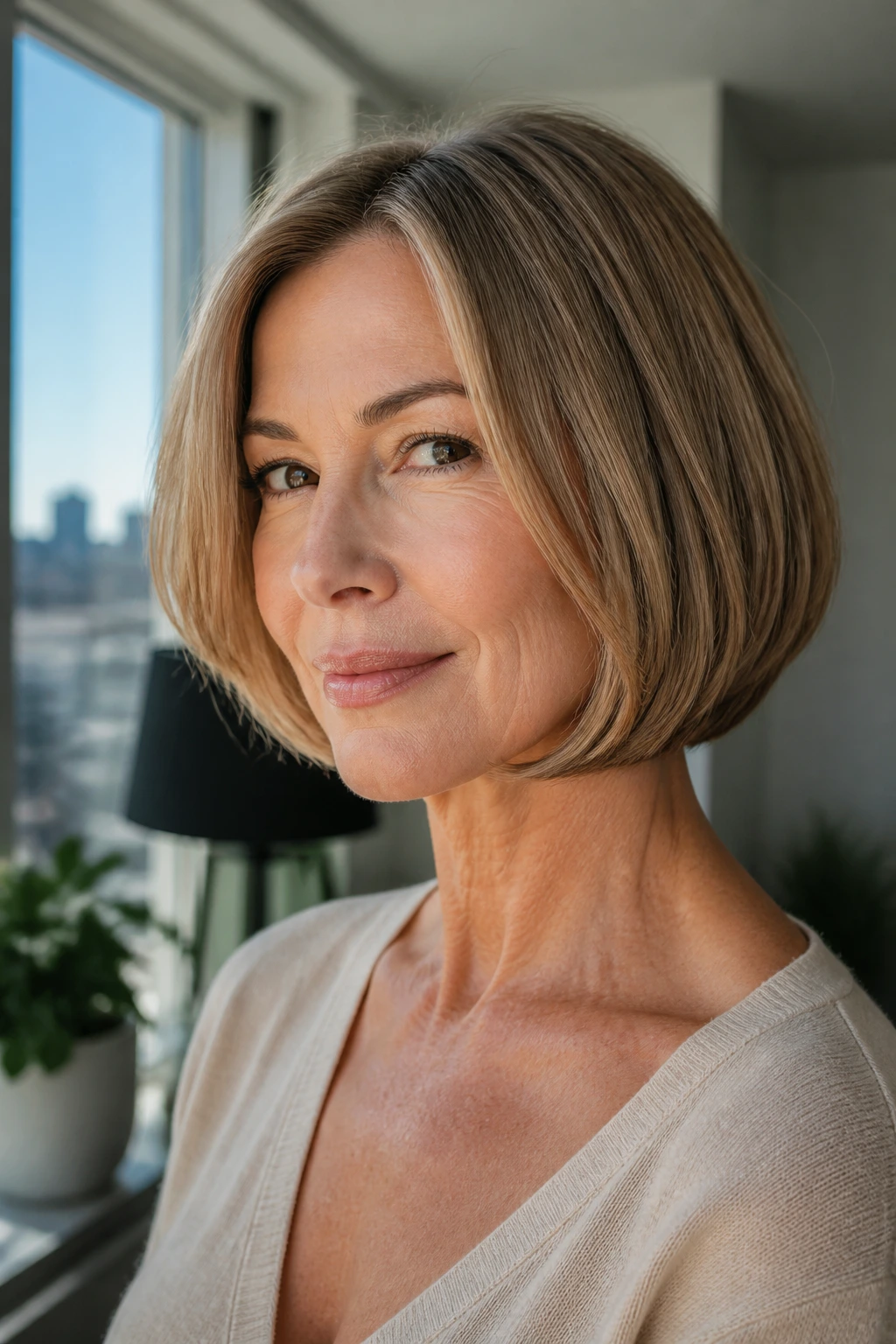
A jawline bob with beveled ends is one of those cuts that looks simple from far away and very deliberate up close. The edge sits right at the jaw, while the front layers angle in just enough to shape the face. It’s clean, but not cold.
The bevel is the important part. If the ends turn in slightly, they hug the jaw without clinging to it. If they flip outward a bit, the cut can feel more playful. Either way, the face frame should not fight the perimeter. It should support it.
This is a good finishing move for women who want the haircut to look neat even on low-effort days. The shape holds well, grows out well, and doesn’t need a pile of styling products. When the cut itself is balanced, that’s half the battle won.
How to Pick the Right Layer Length for Your Face and Texture

The shortest piece is the decision that matters most. Everything else follows from that. If you place the front layer too high, you get a chopped-up fringe effect. Too low, and the haircut loses the lift you wanted in the first place.
Round or Full Faces
A layer that lands at or just below the cheekbone usually works better than one that stops right at the widest part of the face. That creates a vertical line that stretches the look a little. Side parts help here. So does a front piece that sweeps diagonally instead of hanging straight down.
Square Jawlines
Softness matters more than width. Let the shortest front piece skim the cheek, then taper it into the jaw so the edge doesn’t fight the bone structure. I’m fond of airy ends here, not chunky ones. Chunky front layers can make a square jaw look harder.
Long or Narrow Faces
You want width, but not bulk. A fuller front piece around the cheekbone can add balance without dragging the face down. Rounded bobs and softened fringes help too. I would avoid layers that all fall straight vertical, because they can make the face seem longer than it is.
Fine Hair
Keep the layers longer and cleaner. Fine hair usually looks best when the front frame gives movement without stealing density from the ends. Too many short pieces can leave the front see-through, especially after a few weeks of wear.
Thick or Wavy Hair
You can handle more structure, but you still need the front to stay soft. That means removing bulk from the interior and keeping the face frame narrow enough to move. Dry cutting or curl-by-curl shaping helps the stylist see where the hair really falls. Wet guesses are how you get awkward corners.
What to Tell Your Stylist at the Chair
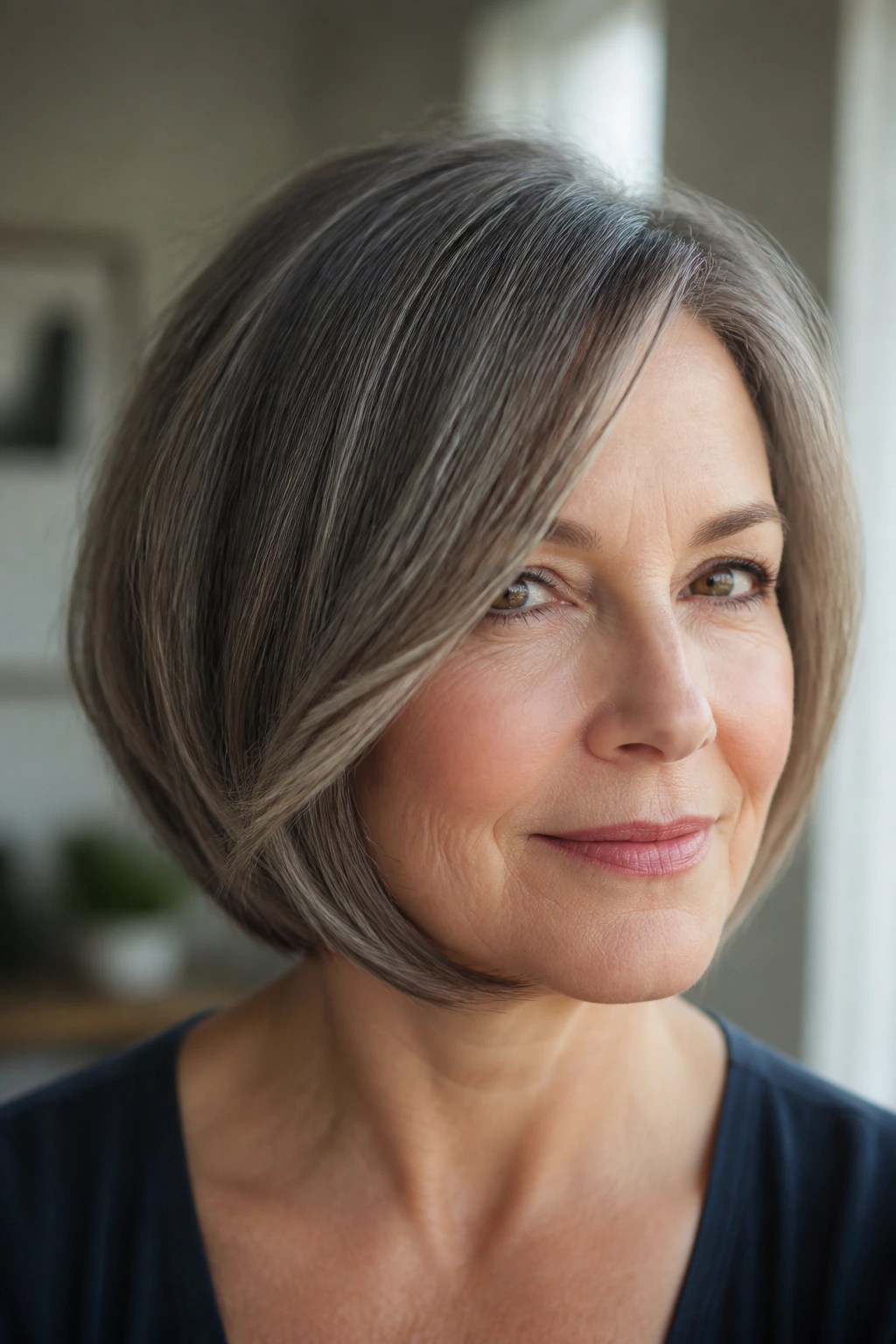
Bring one or two photos, but point to the exact part you like. Don’t just say you want “layers.” Say where the shortest front piece should land, whether you want the ends to curve in or out, and how much forehead you want covered. That saves everyone time.
Tell the stylist how you wear your hair most days. If you air-dry, say that. If you always tuck one side behind your ear, say that. If you wear glasses, say that right away, because the front pieces should be placed with the frames in mind.
A few useful things to ask:
- Where will the shortest face-framing piece fall when this is dry?
- Will the layers look soft when I air-dry, or will they need a brush every morning?
- Can you keep the perimeter full while lightening the front?
- Should this be cut dry if my hair wave pattern is strong?
- Will these layers still look good in six weeks?
Those questions get you closer to a cut you can live with.
Tools That Make Styling the Front Easier

You do not need a shelf full of gadgets. You need a few pieces that actually change how the front sits.
- 1.25- to 1.5-inch round brush: Best for bending the front pieces away from the face without creating giant curls.
- Blow dryer with a nozzle attachment: Keeps the air focused so the front doesn’t fly everywhere while you’re trying to shape it.
- Lightweight mousse: Useful at the roots when the crown is flat or the front needs a little lift.
- Heat protectant spray: Necessary if you use a brush, hot air, or a flat iron on the face frame.
- Small flat iron: Handy for nudging a stubborn front piece inward or outward by half an inch.
- Duckbill clips: Great for pinning the front away while it cools.
- Wide-tooth comb: Better than a fine comb for wavy or curly hair that needs to keep some shape.
- Light texturizing spray: Adds separation at the ends without turning them stiff.
How to Style the Layers So They Stay Soft
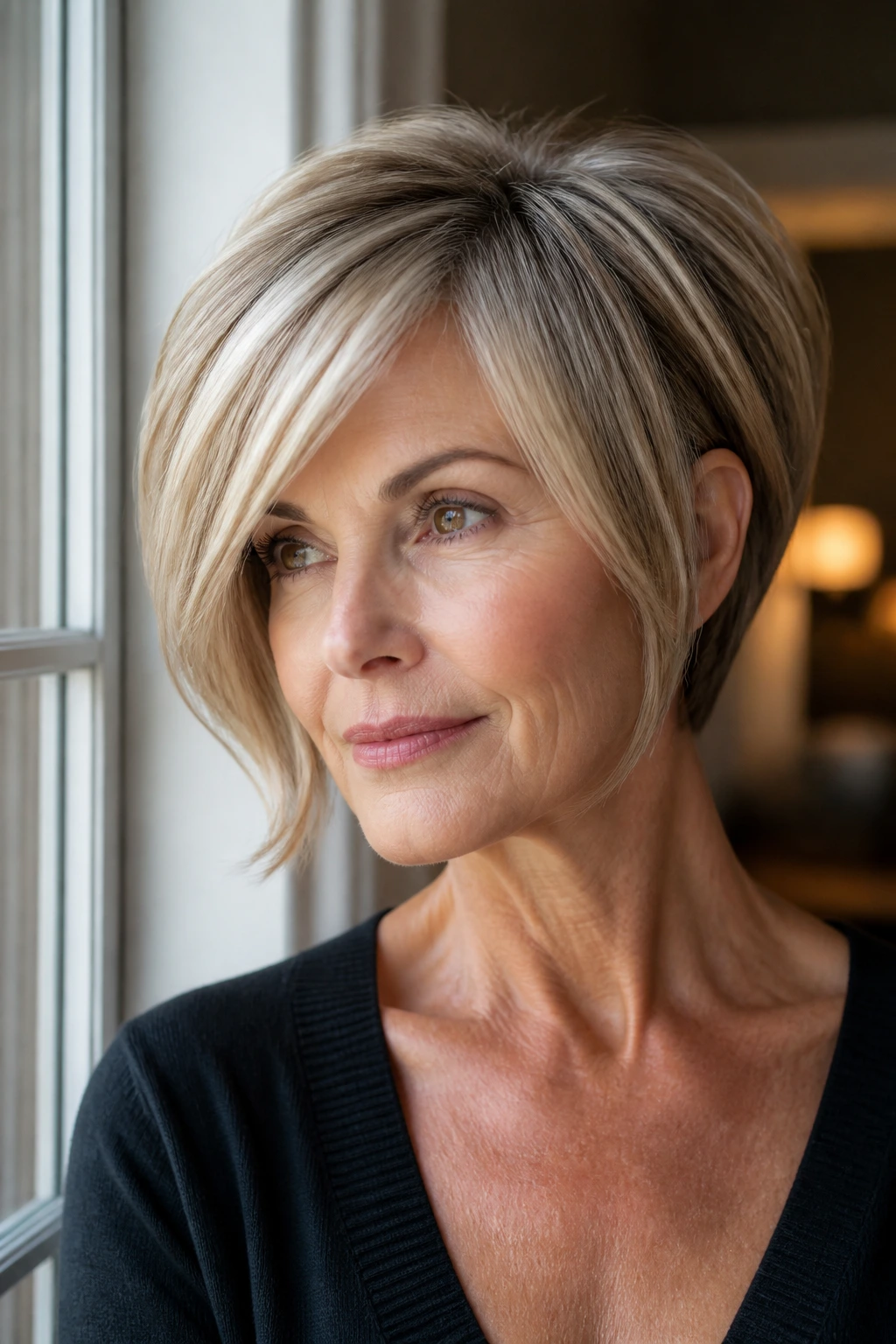
Start with damp hair, not soaking wet hair. Soaking wet hair takes forever to shape, and the front usually dries before the rest, which is how you end up with one piece doing its own thing. Work in a heat protectant and a small amount of mousse at the roots if you need lift.
Then direct the front pieces where you want them to land. If you want them away from the face, roll them outward on a round brush and hold the bend for a few seconds. If you want them to sweep across the cheek, brush them diagonally and let them cool in that position. The cool-down is what locks in the curve.
For people who don’t love blow-drying, a quick air-dry trick helps. Clip the front pieces in the right direction for 10 to 15 minutes while they set, then release them and finger-shape the ends. It sounds fussy, but it’s faster than fighting a cowlick all morning.
Finish with a pea-sized amount of cream or serum on the very ends only. Too much product near the roots flattens the lift you just created. That front area likes restraint.
Little Tweaks That Make the Cut Feel Like Yours

For Fine Hair: Keep the shortest front layer below the cheekbone and ask for a clean perimeter. Fine hair looks fuller when the edge stays solid, and the front should add motion without stripping density.
For Thick Hair: Ask the stylist to remove weight from the interior, not the ends. Thick hair can handle more structure, but it needs a controlled outline or the front will puff away from the face.
For Glasses: Let the shortest piece stop outside the frame line, not inside it. That keeps the glasses from looking crowded and avoids the constant hair-and-temple collision that drives people mad.
For Gray Hair: Use a lighter hand with product. Silver strands show buildup fast, and a heavy serum can make the front go dull. A small amount of mousse and a clean blow-dry usually works better.
For Wavy or Curly Hair: Ask where the layer falls when it dries naturally, not just when it’s wet. Curl shrinkage can move a face frame up an inch or more, which is a small disaster if the cut was placed too high.
Common Mistakes That Flatten or Age the Shape
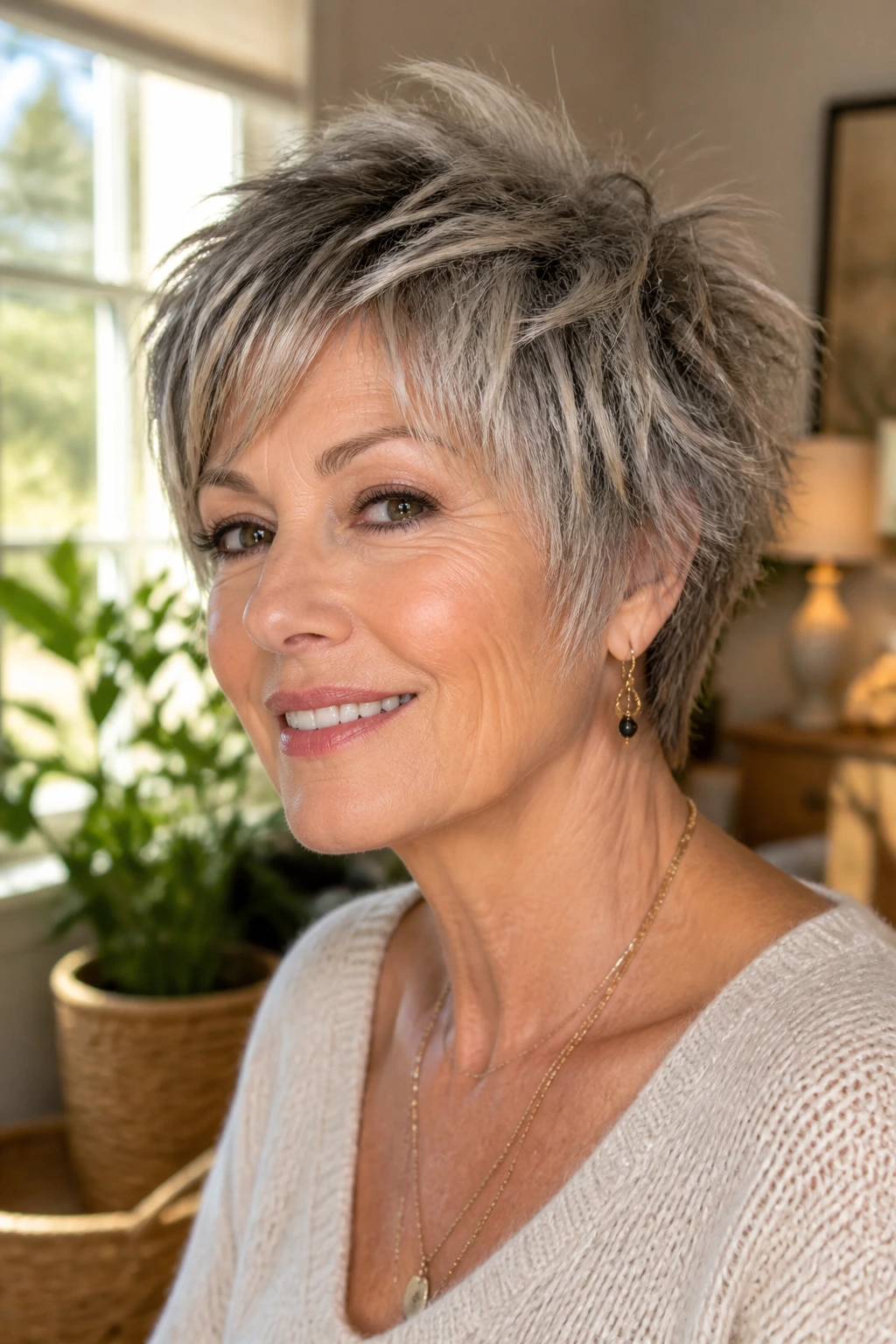
Cutting the front too high: The symptom is a choppy, almost bang-like effect that sits above the cheekbones and makes the hair look overworked. The fix is simple: keep the shortest point lower, and let the layer blend rather than stop.
Over-thinning fine hair: You’ll see see-through ends and a front that goes limp after one day. Fine hair needs softness at the face, not a shredded perimeter. Ask for bluntness with movement, not feathering everywhere.
Ignoring glasses: If the layers land inside the frame, you’ll spend all day tucking and adjusting. The fix is to map the layer to the outside edge of the glasses before the scissors come out.
Styling the front with too much oil: The hair looks separated, dull, and flat at the roots. Use less product than you think you need, and keep anything heavy away from the first two inches at the scalp.
Forgetting the crown: A beautiful face frame can still fall flat if the top is plastered down. A little root lift at the crown helps the front read as shaped instead of pasted onto the head.
Variations and Alternatives Worth Trying
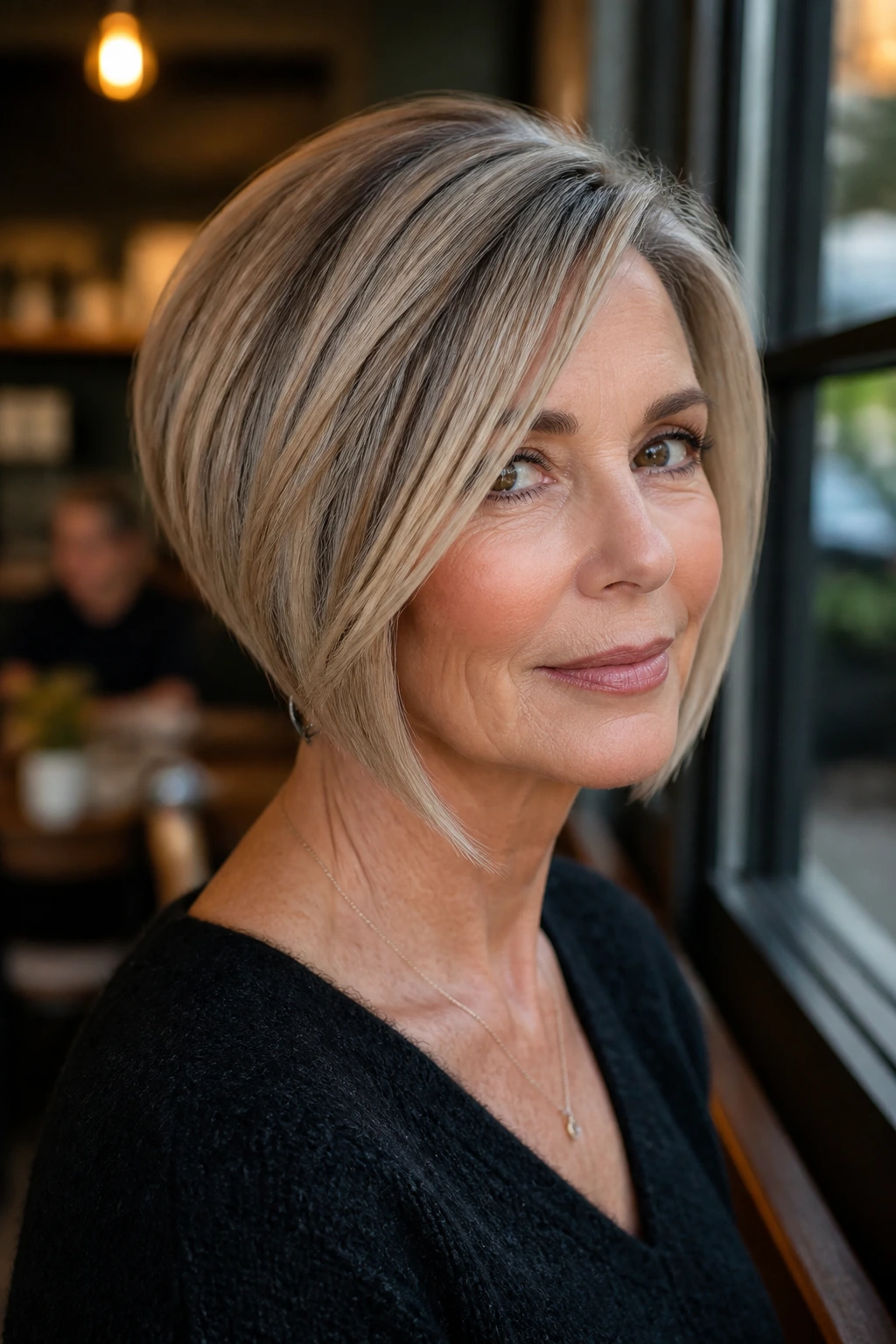
The Soft Grow-Out: Ask for face-framing layers that start lower than usual, around the mouth or chin, so the style grows out without obvious steps. This is the one I’d pick for anyone who hates frequent salon visits.
The Glasses-Friendly Sweep: Keep the layers just outside the temple line and let them skim past the frame. It’s a tidy choice if your glasses are part of your daily look, not something you only wear for reading.
The Crown-Lift Version: Pair a short front frame with a little volume on top. This helps if the crown has flattened over time and you want the face to look slightly longer and more open.
The Curly Definition Cut: Use face-framing layers that follow the curl pattern instead of forcing a straight line. This version works best when cut dry or nearly dry so the curl length is honest.
The Thick-Hair Debulked Shape: Remove weight from the inside of the cut while keeping the front pieces soft and narrow. That gives thick hair room to move without becoming fluffy at the sides.
Keeping the Shape Fresh Between Salon Visits
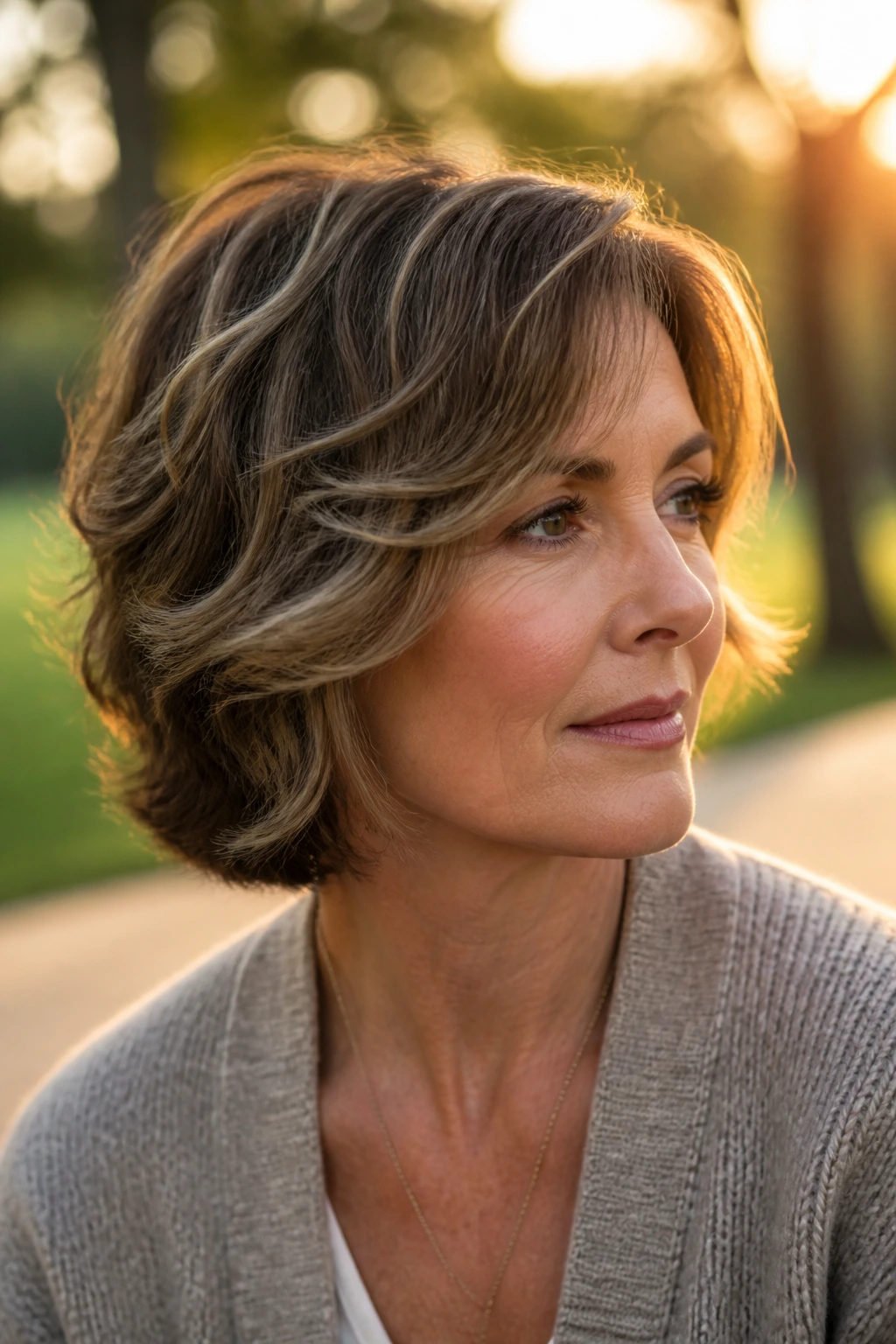
Short cuts need more attention than long ones, but not in a dramatic way. A bob or cropped shape usually looks best with a trim every 4 to 8 weeks, depending on how fast your hair grows and how precise the outline is. Pixies and crops need more frequent cleanups. Bobs can usually stretch a little longer.
The front pieces tell you when they’re getting tired. If they start landing in your eyes, folding over the cheeks, or sticking out at the jaw, the shape is losing its clean line. You don’t always need a full haircut. Sometimes a quick face-frame refresh is enough to buy another few weeks.
At home, keep the styling simple. Use heat protectant, low-to-medium heat, and the smallest amount of product that gets the job done. If you keep reaching for more mousse, more oil, or more spray, the cut is probably not the problem. It’s usually the placement.
And please do not trim these layers with kitchen scissors. They chew the ends and make the front pieces fray in a way that shows up immediately. If you want to clean up the fringe or corners yourself, use proper hair shears and take off less than you think you need. Less. Always less.
Frequently Asked Questions
What face shapes suit short face-framing layers best?
Almost any face shape can wear them, but the placement changes. Round faces usually need diagonal pieces that skim below the cheekbone, while square faces often look better with softer, slightly longer front layers that don’t stop right at the jaw.
Are these layers good for fine hair?
Yes, if the cut stays controlled. Fine hair usually does better with fewer short layers and more attention to the front corners, because too much internal thinning can make the shape see-through by the second day.
Can I wear face-framing layers with glasses?
Absolutely, and they can make glasses look more intentional. The trick is keeping the shortest pieces outside the frame line so the front doesn’t bunch up at the temples or touch the lenses every time you move.
Do these styles work on curly hair?
They do, but the cut should respect shrinkage. Curly hair is best shaped dry or almost dry so the stylist can see where the curls actually land around the cheek and jaw.
How short is too short around the face?
If the shortest piece sits above the cheekbone and you did not ask for bangs, you may be entering awkward territory. That length can look chopped unless it’s part of a clearly planned fringe.
How often should I trim short face-framing layers?
Most short cuts need a touch-up every 4 to 8 weeks. The shorter and more precise the shape, the faster it loses its line. If the front pieces are the star, they’ll tell you when they need a cleanup.
What if my hair gets puffier at the sides after a few weeks?
That usually means the interior is too full or the ends were cut too heavily. A stylist can remove weight from the right places without changing the shape, and at home you can tame the puff with less heat and less product.
Can I ask for this cut without losing length?
Yes. You can keep the perimeter at chin, jaw, or collarbone length and ask only for the front pieces to be shaped. That’s often the smartest move if you want movement without giving up the hair you already have.
The Shape That Keeps Moving

The best short face-framing layers do not shout. They slide, bend, soften, and redirect the eye a little higher than it was looking before. That is the real gift here. A good front piece can make an ordinary bob look sharper, a pixie feel less exposed, and a silver crop sit with more ease around the face.
I like cuts that make the first five minutes in the mirror easier, not harder. A little movement at the front can do that without asking for a full styling routine or a big change in length. If the shape is placed well, the haircut starts working before you even touch a brush.
Pick the version that matches your hair’s habits, not the one that looks bold on a salon wall. Then keep the front pieces light, the product minimal, and the line clean. That’s where the good hair lives.