



Brunette bangs for oval faces and wavy hair work best when the cut respects the bend instead of fighting it. That sounds obvious until you watch a fresh fringe dry, split, puff, or swing off to one side after exactly forty minutes of doing whatever it likes. Brown hair shows shape with a little more shadow than lighter hair, so when the line is good, you see it immediately. When the line is off by half an inch, you see that too.
Oval faces can wear a wide spread of fringe shapes. That freedom is nice, but it also means the wrong bang can look busy fast — too much hair at the brow, too much weight at the temples, or a center piece that shrinks up and sits higher than you planned. Wavy hair adds its own agenda. It lifts at the root, bends at the ends, and changes mood when the weather changes. A fringe that looks tidy in the salon mirror can turn into a different animal by lunch.
The sweet spot is not perfection. It’s a shape that still looks like a decision when it air-dries, gets pushed behind a brow, or bends a little more than expected. That’s the standard I keep coming back to here. If a fringe only works after twenty minutes of styling, it is too needy for real life. The styles below are the ones that hold up, soften an oval face, and play nicely with brunette depth instead of flattening it.
Why These Bangs Work on Real Wavy Brunettes
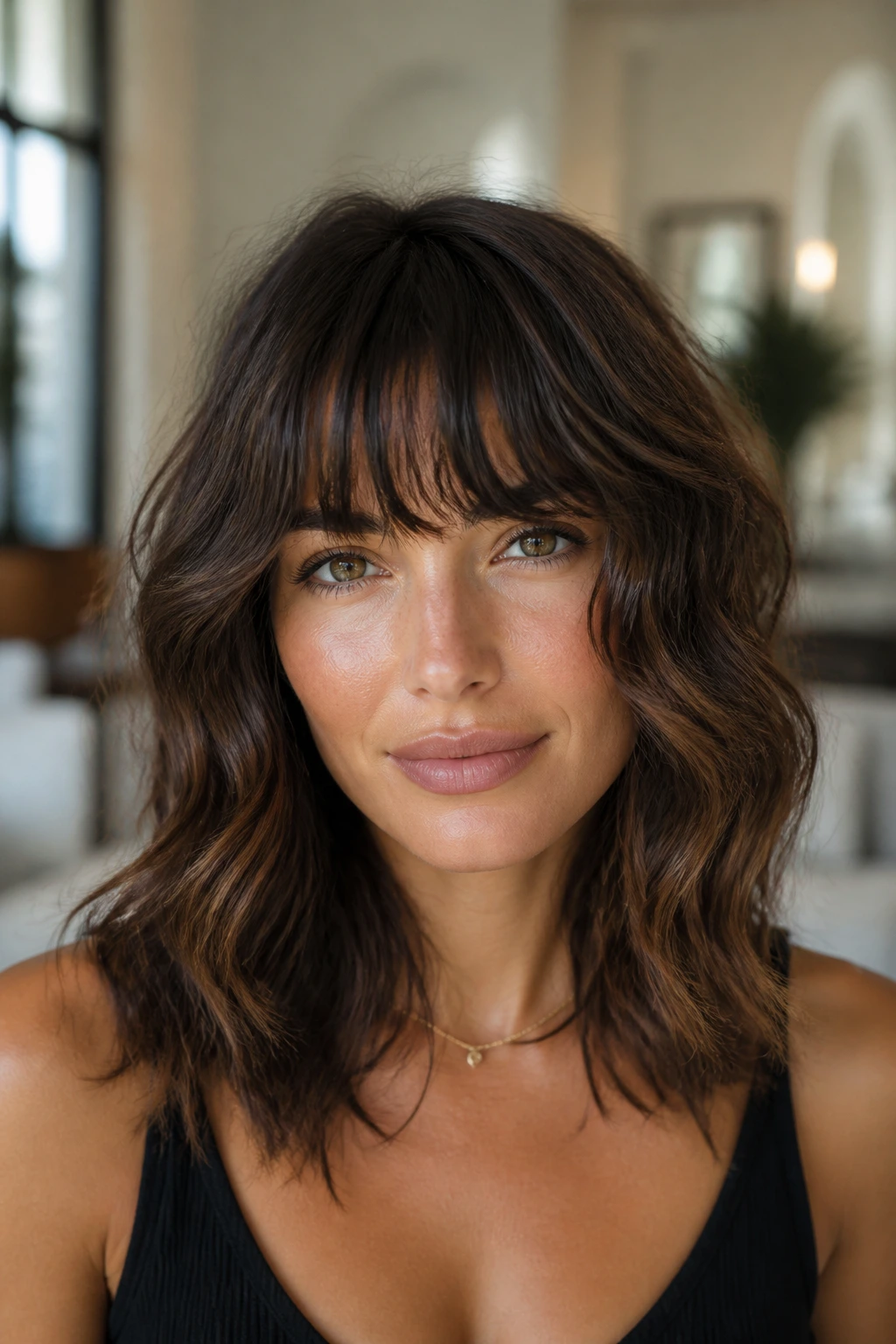
-
Oval-face balance: Each shape keeps the forehead framed without swallowing it, which matters when your face already has even proportions and doesn’t need heavy correction.
-
Wave room: The lengths leave space for about half an inch to an inch of shrinkage, which is the difference between a fringe that sits at the brow and one that disappears above it.
-
Brunette depth: Brown hair shows texture, edge, and bend in a way that makes piecey or feathered bangs read as deliberate, not messy.
-
Grow-out grace: Most of these cuts can slide into curtain layers, cheekbone pieces, or side fringe when you get bored.
-
Salon clarity: You can point to exact lengths, part placements, and density levels instead of asking for “something soft,” which is a sentence that causes trouble.
1. Soft Curtain Bangs
Soft curtain bangs are the safe first date of fringe. They split near the center, skim down toward the cheekbones, and leave enough length that your wave pattern doesn’t hijack the whole shape. On brunette hair, the middle part creates a little shadow down the face, which makes the cut look quieter and a bit richer than the same style on lighter hair.
What I like most here is the flexibility. You can wear them cleanly parted, then rough them up with your fingers and let them fall a little off-center. On oval faces, that open middle keeps the features visible while still giving the forehead some framing.
Ask for this: a center section that sits around the brow area when dry, with the outer corners reaching the top of the cheekbone.
Avoid this: cutting them to final length while the hair is soaking wet. Wavy hair retracts. Every time.
A quick pass with a 1-inch or 1¼-inch round brush is usually enough. If your waves are loose, these bangs are one of the least fussy options on the list.
2. Bottleneck Bangs
Bottleneck bangs are curtain bangs with a tighter center and a softer, wider fall at the sides. The name fits the shape: narrow at the top, broader as they move outward. On wavy brunette hair, that shape feels clean without looking hard-edged, and it suits an oval face because it keeps the center of the forehead lighter than a blunt fringe would.
Why the shape matters
The shorter middle piece gives you fringe presence, while the longer temple pieces let the cut breathe. That matters on wavy hair, because a dense, full fringe can balloon at the sides and make the whole front feel bulky. Bottleneck bangs avoid that by building in movement from the start.
I’d ask for the shortest center point just below the brow line when dry, then a gradual lengthening through the outer thirds. If your wave is strong, keep the sides a touch longer than the photo suggests. That extra quarter inch can save you from the too-short, too-round look that so many wavy fringes fall into.
They’re especially good if your brunette shade has a little dimension — chestnut, walnut, espresso with a few lighter ribbons. The cut shows those shifts nicely.
3. Side-Swept Fringe

Side-swept fringe still works because it knows when to get out of the way. The bang travels across the forehead in a diagonal line, which is useful if you have a center cowlick, a deeper wave at the front, or the kind of morning where you do not want to wrestle a full fringe into place. On an oval face, the diagonal keeps the eye moving, which stops the face from feeling boxed in.
The best version isn’t a helmet. It’s a long, soft sweep that starts somewhere near the brow and lands closer to the cheekbone. That length lets brunette hair show the line without making it stiff. If you have darker brown hair, this cut reads especially well because the side motion creates a visible curve even when the texture is loose.
A side part about an inch or two off center helps keep the fringe from splitting in the wrong place. I also like this shape for people who wear glasses, since the fringe can sit above the frame instead of crashing into it. Small thing. Big difference.
4. Wispy Brow-Grazing Bangs
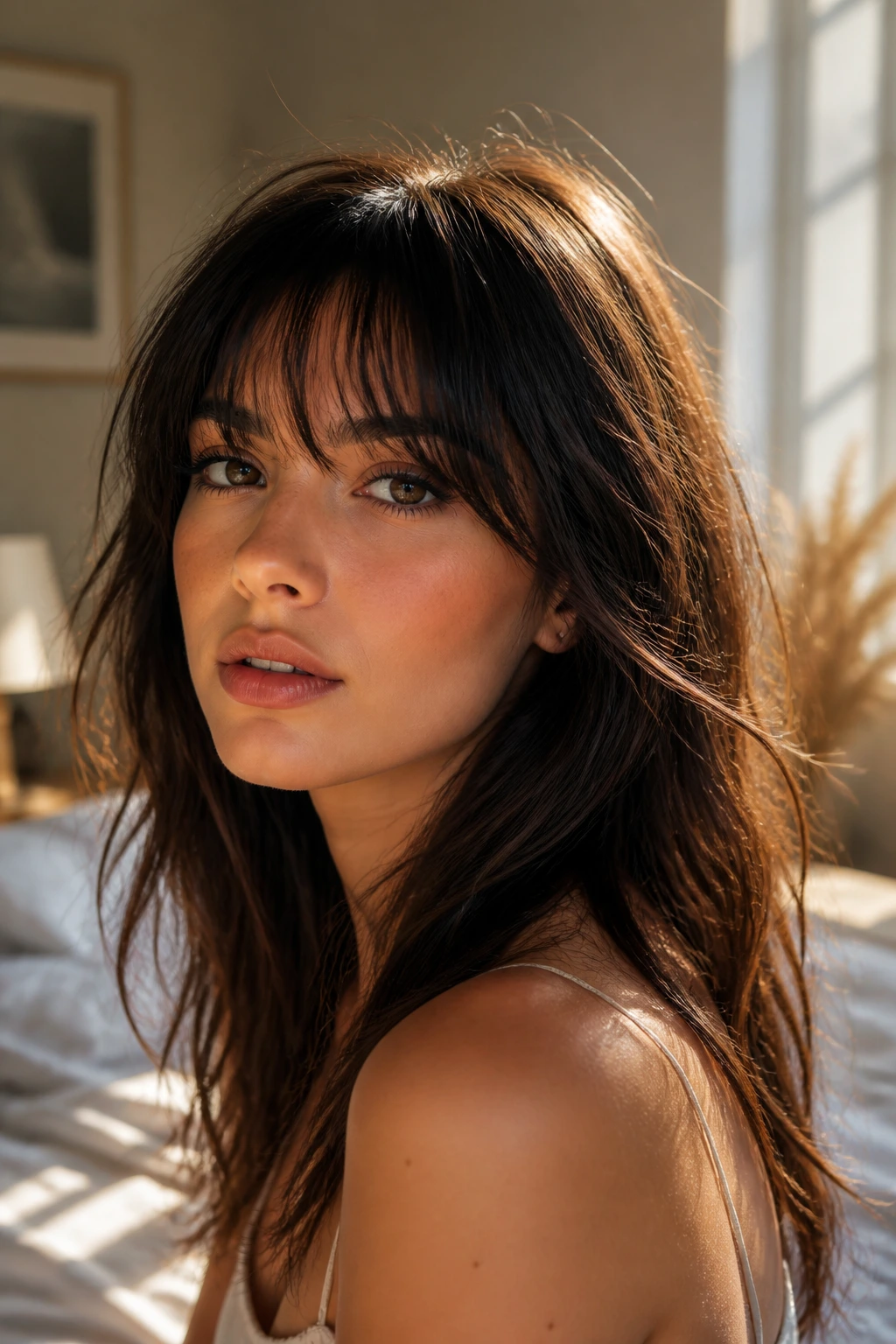
Can wavy hair wear bangs that sit right around the brow without turning into a triangle? Yes, but only if the density is kept light and the ends are softened. Wispy brow-grazing bangs rely on air and spacing, not weight. That makes them a smart pick for brunette hair that is fine to medium and a little bendy rather than springy.
The key is in the ends. You want soft, uneven tips that move when you blink, not a solid line that sits across the face like a ruler. On an oval face, that feather-light edge adds framing without shortening the face the way a thick fringe can.
How to keep them airy
- Ask for point-cutting, not a blunt slice.
- Keep the center a touch longer than the corners.
- Use a tiny amount of mousse or light cream, not a heavy serum.
- Blow-dry the roots first so they don’t separate into two little wings.
This is one of those styles that looks effortless only because the cut is doing most of the work.
5. French-Girl Fringe
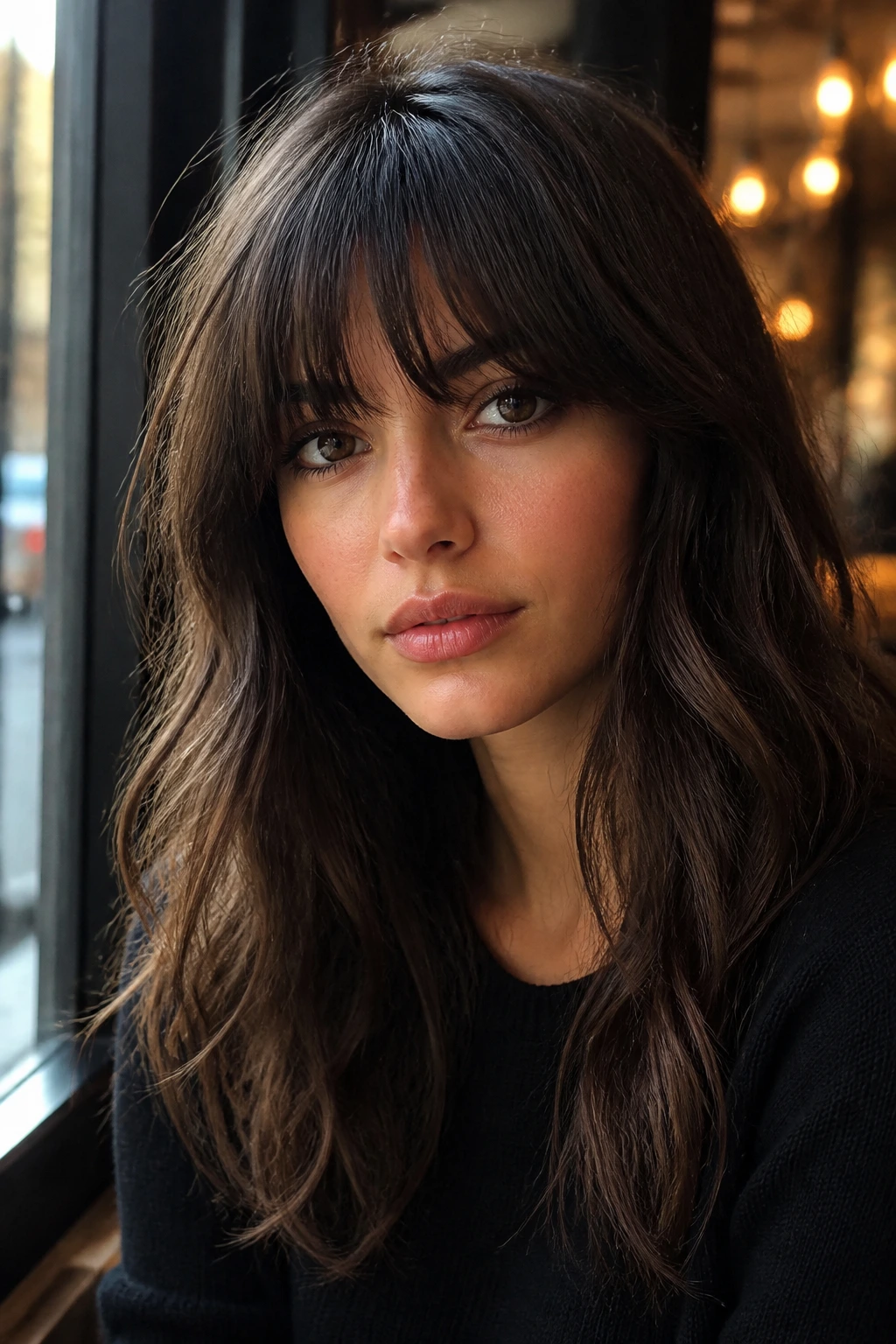
French-girl fringe is a blunt-ish, slightly piecey line that sits lower and less polished than a classic salon bang. It works on oval faces because the shape doesn’t need heavy correction, and it works on wavy brunette hair because the texture softens what would otherwise be a severe line. Brown hair saves this fringe from looking too sharp. That’s the honest truth.
The catch is maintenance. This fringe wants a quick morning reset, usually with a small round brush and a bit of directional drying. If you air-dry and walk away, it may decide to split in the middle or kick upward at the edges. Still, if you like the idea of a fringe that looks a little undone and a little expensive, this is a strong move.
I’d keep the length just above the lashes, not high on the forehead. Too short and the wave can make it jumpy. Too long and the shape loses its whole point.
6. Choppy Piecey Bangs
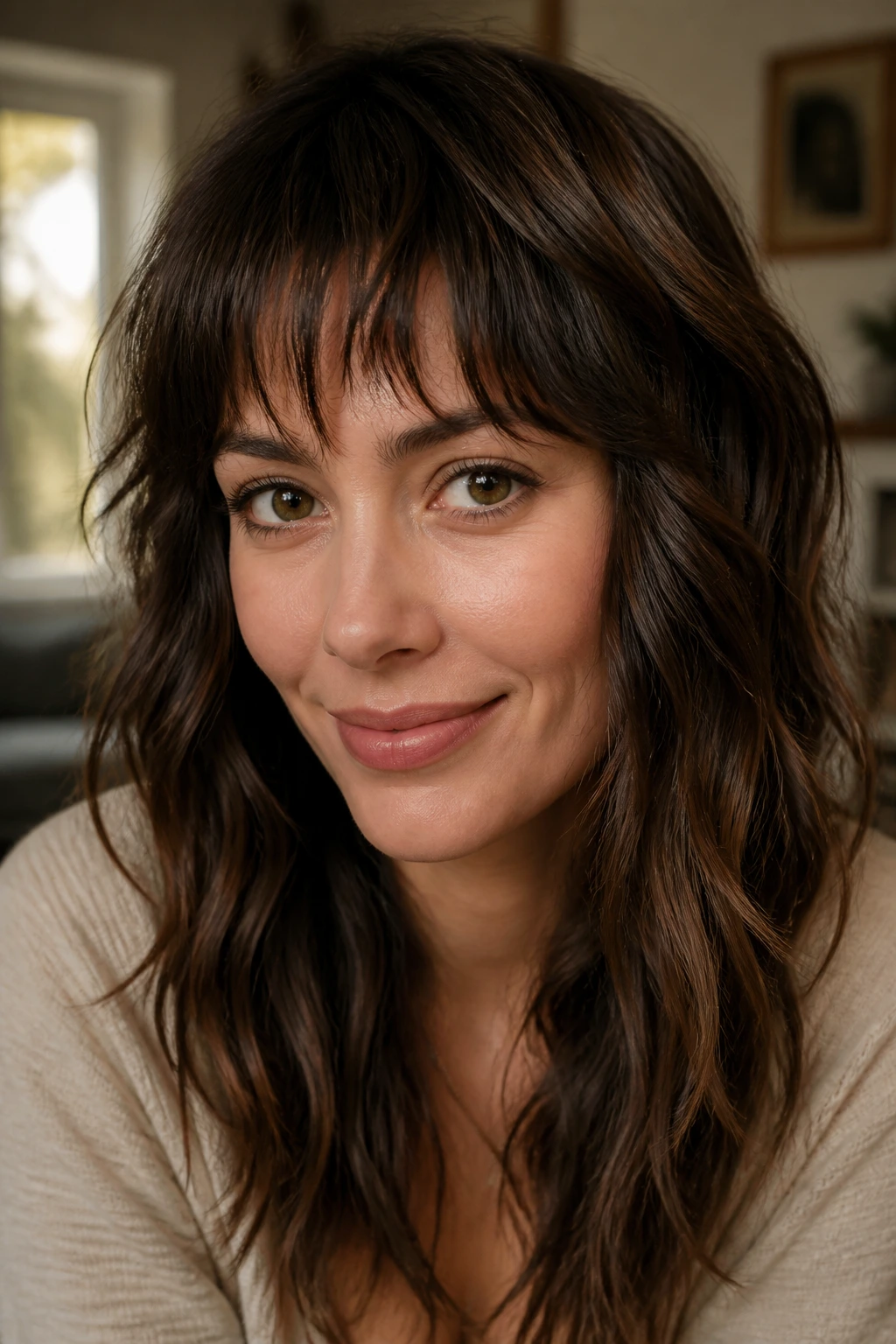
Choppy piecey bangs are what you get when the stylist leaves a little attitude in the cut. The ends aren’t straight. They’re separated into small, uneven bits that catch the light and show off the bend in wavy brunette hair. That makes the fringe feel lively instead of flat.
The shape is especially useful if your wave pattern is loose and a little irregular. Instead of fighting that, the cut turns it into texture. On an oval face, piecey bangs keep the forehead framed without building a solid wall of hair across the front.
Best for: medium-density waves, layered cuts, and people who don’t mind a fringe that looks better with fingers than with a brush.
Not ideal for: very fine hair that already breaks up too much, because too much texture can make it look sparse.
Ask for internal texture and point-cutting, then style with a pea-sized amount of cream worked through the ends. Twisting two or three front pieces while they dry can keep them from clumping into one heavy ribbon. Small trick. Works every time.
7. Feathered Full Fringe
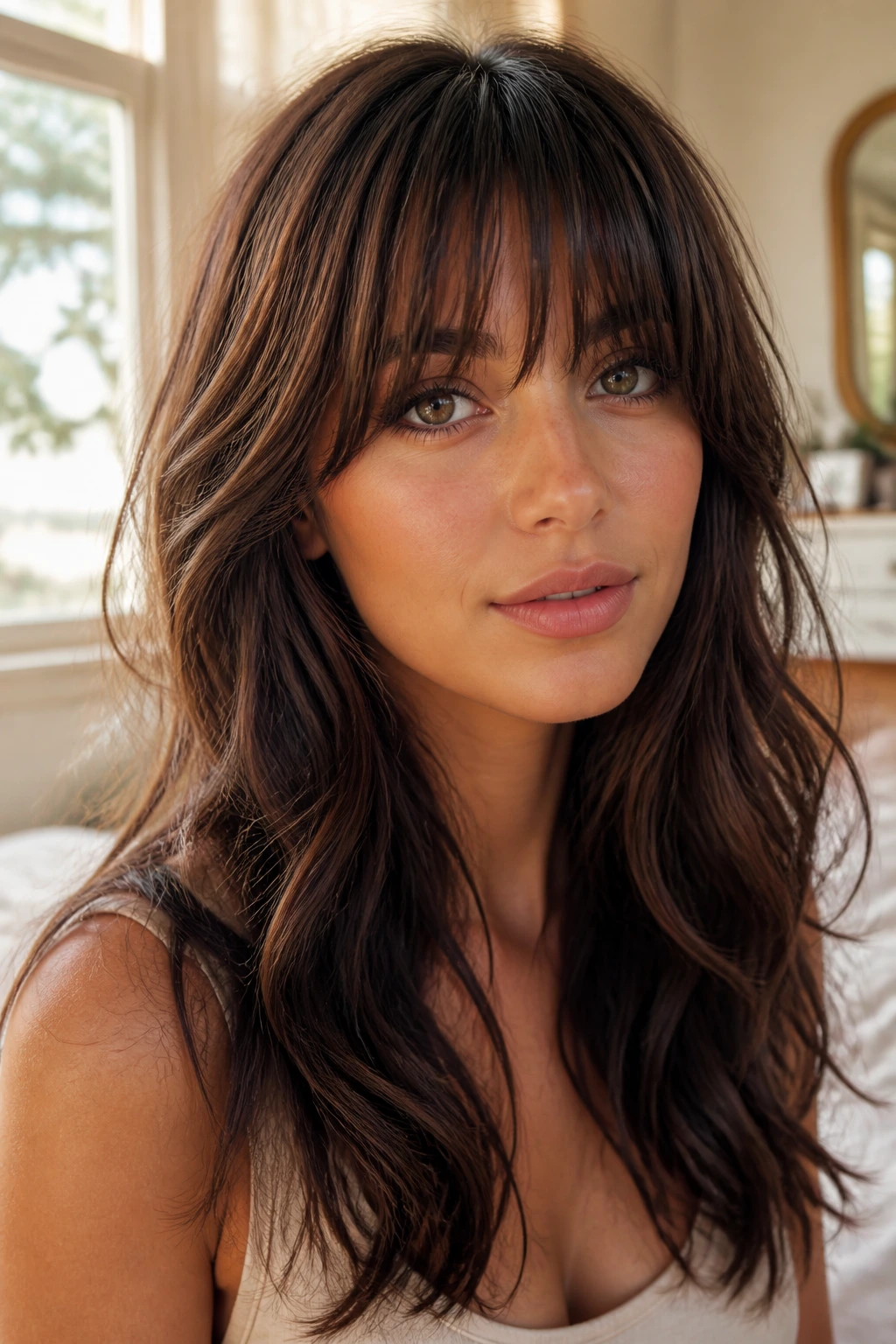
A feathered full fringe is the softer cousin of a straight-across bang. It still has coverage, but the ends are broken up enough that the line doesn’t feel heavy. That matters on wavy brunette hair, where a dense blunt fringe can puff at the corners and pull too much attention to the forehead.
What makes this cut interesting is how it frames the eyes. The fullness gives you presence, but the feathering keeps it from becoming a slab. On an oval face, that means you get structure without losing the natural balance of the face shape. I like this version when the hair is medium to thick and has enough weight to sit close to the head.
A round brush helps, but only at the root. Don’t try to force every inch perfectly straight. Let the wave return in the last half-inch or so. That little bit of bend is what stops the fringe from looking overworked.
8. Rounded Fringe
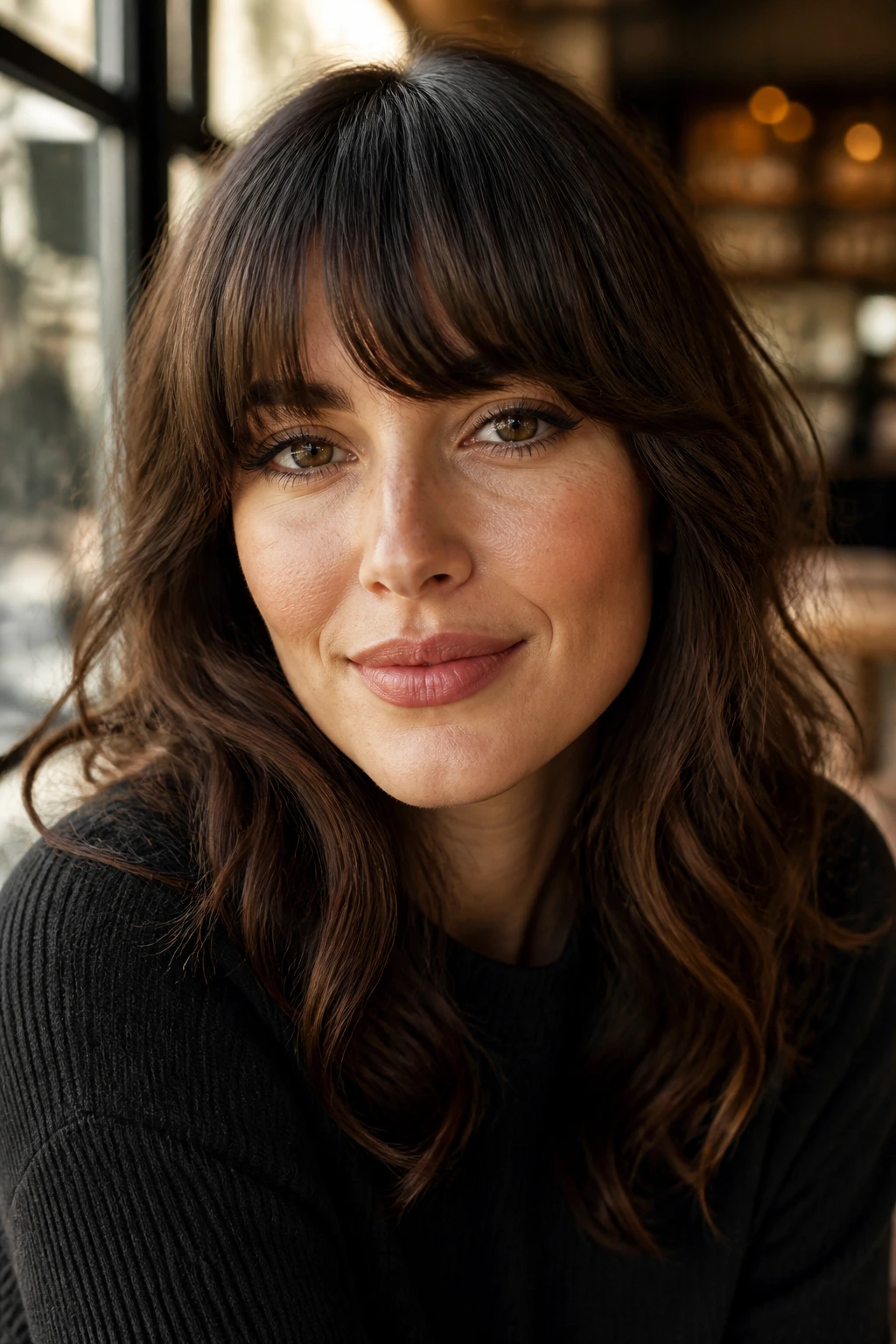
Rounded fringe curves gently across the forehead and sits a little shorter in the middle, then softens toward the temples. It’s a smart shape for oval faces because it echoes the natural oval instead of fighting it. There’s no hard edge, no blocky line. Just a subtle arc that draws the eye inward.
On wavy hair, the curve needs room. If you cut it too short wet, the middle can spring up while the sides hang lower, and the whole thing looks accidental. I’d keep the center a touch longer than you think and let the corners taper down to the cheek area. Brunette hair makes the curve easy to see, especially if the color has shine or a faint glaze.
This one reads best when the ends are softly bevelled. A flat iron can polish the very front, but don’t press it pin-straight. The whole point is that soft, rounded line. Too sharp and you lose the shape that makes it flattering.
9. Split Fringe with Face-Framing Pieces
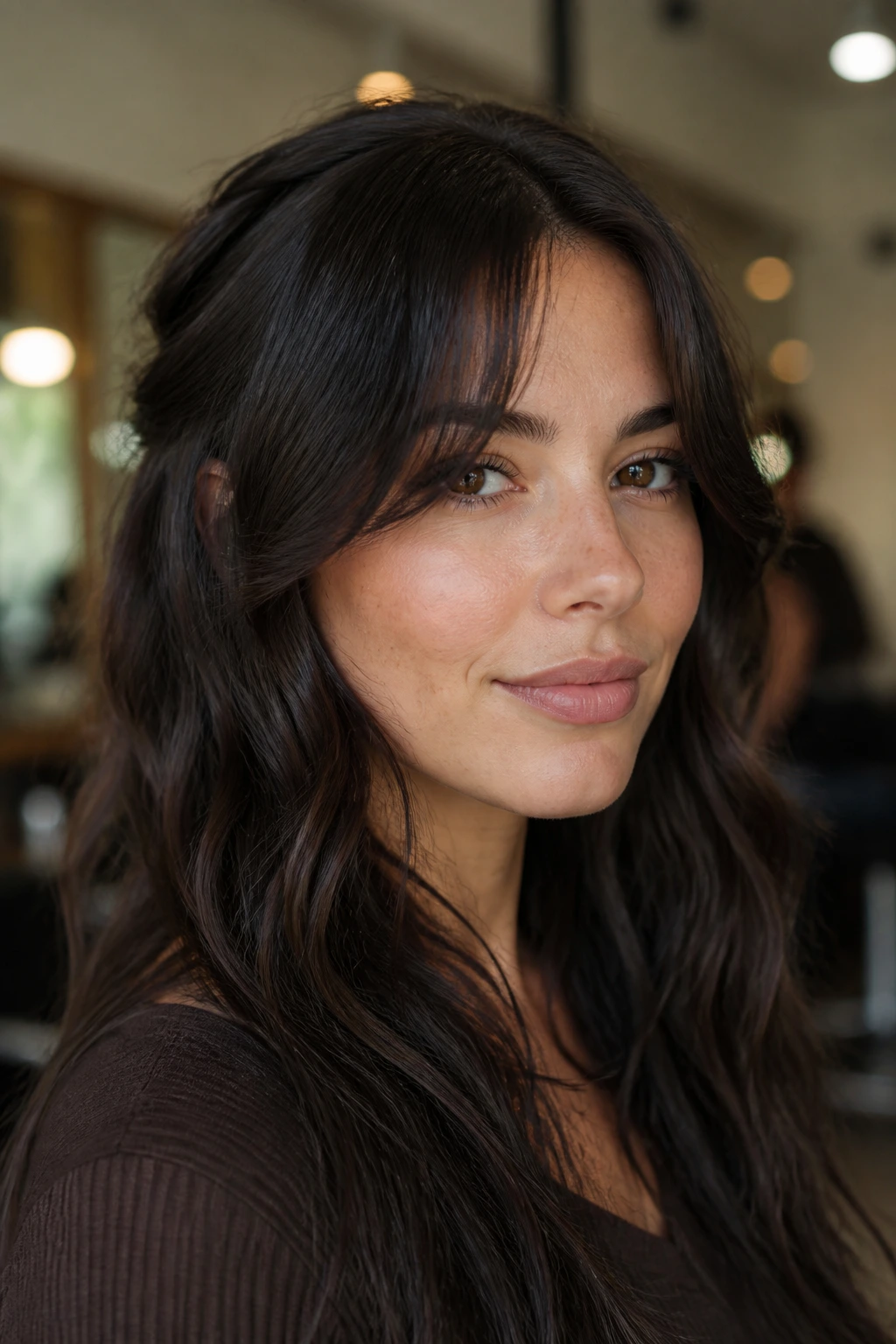
Some bangs are really two front pieces that decide to work together. Split fringe with face-framing pieces gives you that look: a little bit of fringe at the front, then longer pieces that fall toward the cheekbones and jaw. It’s an easy fit for wavy brunette hair because the split happens naturally once the wave starts moving.
This is the style I’d point to if you want bangs without that “I committed to bangs” feeling. The center stays open, which keeps the oval face visible, and the longer sides give the haircut a soft edge. It also handles grow-out well. If the fringe gets a little too long, it just starts behaving like layers.
A center part or a barely-off-center part both work here. What matters more is the transition: the bang should merge into the front layers without a sudden shelf. Ask the stylist for a soft, continuous blend through the temple area. That’s the part people usually forget to mention.
10. Arched Blunt Bangs
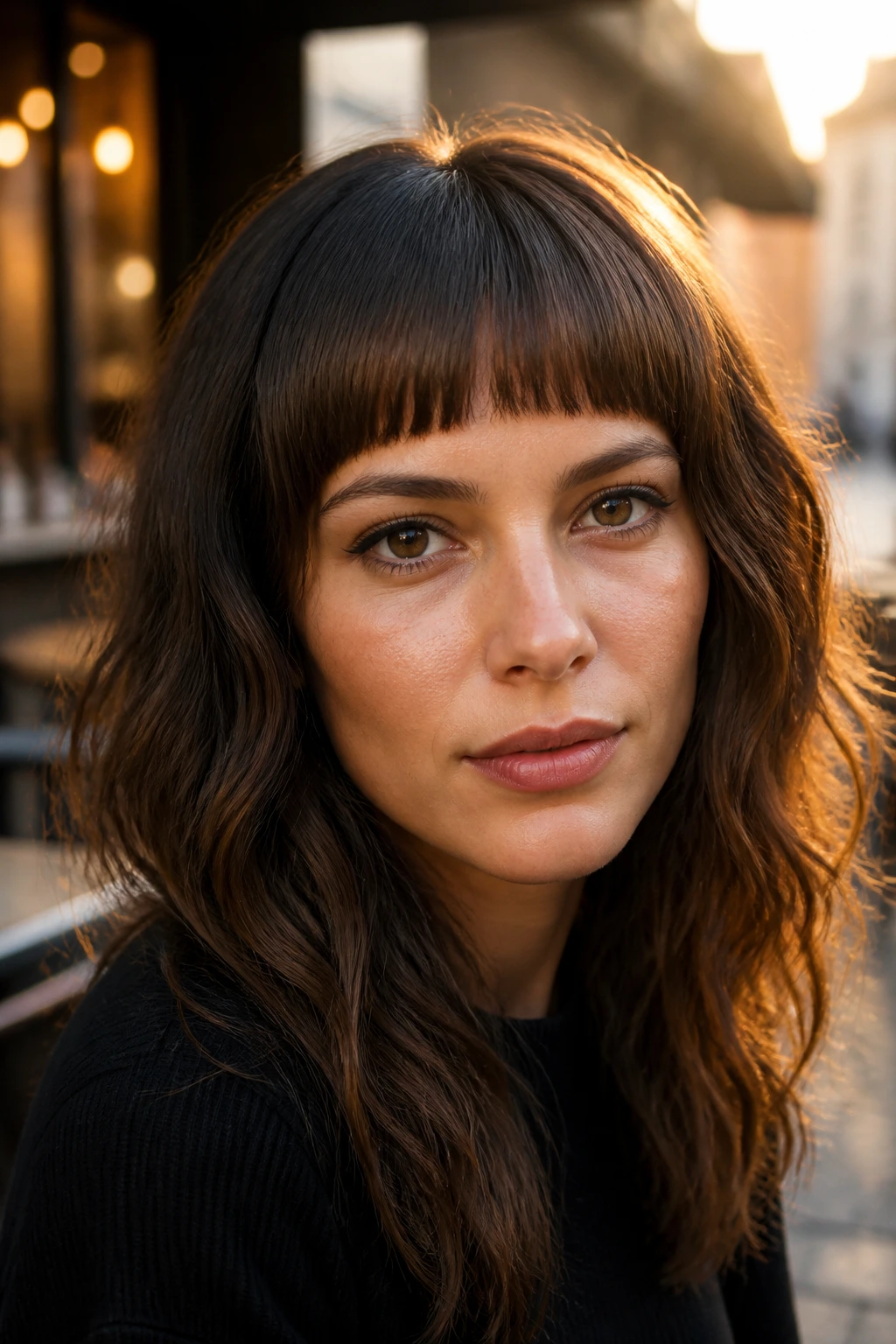
Arched blunt bangs are for someone who wants a little more punch. The line sits across the forehead, but the middle is slightly shorter and the corners drift down a bit, which makes the shape less severe than a flat straight-across fringe. On brunette hair, the line looks crisp in a way that blond hair sometimes doesn’t quite deliver.
This style works best on wavy hair that’s on the looser side or at least not too springy near the root. You need enough control to keep the center from jumping, because once it rises too high the arch reads uneven instead of intentional. I would not cut this one aggressively short unless you are already used to styling bangs every morning.
Oval faces can handle the full line because they don’t need the forehead completely exposed. In fact, the slight arch can make the face look more sculpted. Still, it’s a strong look. If you want quiet, skip it.
11. Airy See-Through Bangs
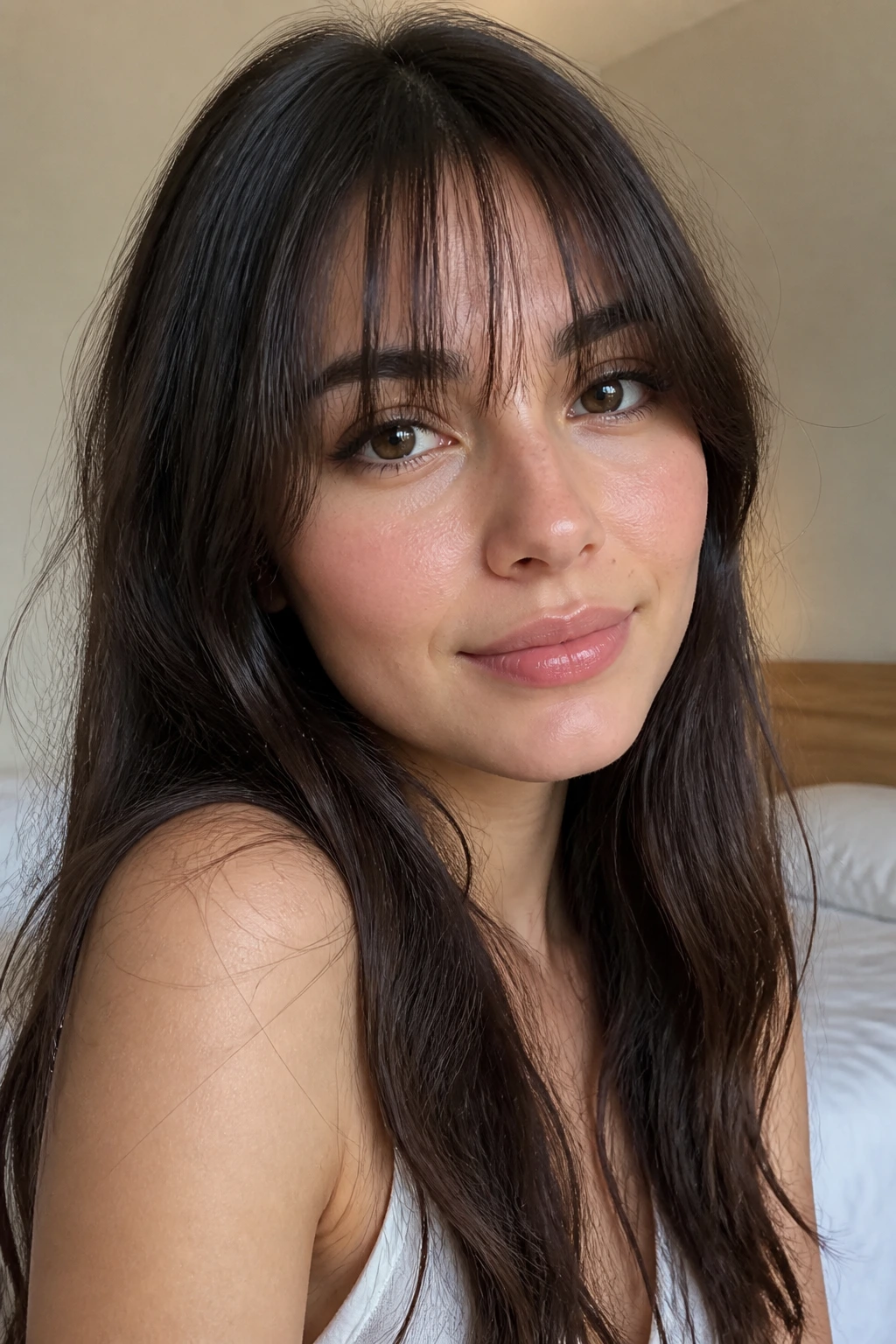
Can a fringe be present and barely there at the same time? Airy see-through bangs are the answer. The density is kept low enough that the forehead still shows through, which makes the style feel light even on darker brunette hair. That matters, because dark hair can make a tiny bit of extra density look much heavier than it does on lighter strands.
How to keep them from closing up
- Keep the section narrow.
- Remove bulk carefully at the ends, not the roots.
- Dry them forward first, then separate with fingers.
- Skip thick creams; use a mist or a pea-sized amount of mousse.
The style is a good fit for fine to medium waves, especially if your hair likes to soften rather than spring. On an oval face, the transparency keeps the face open, so the fringe frames instead of covering.
This is one of the most delicate-looking options on the list, but it’s not flimsy. It only looks that way because the cut is controlled.
12. Wavy Shag Fringe
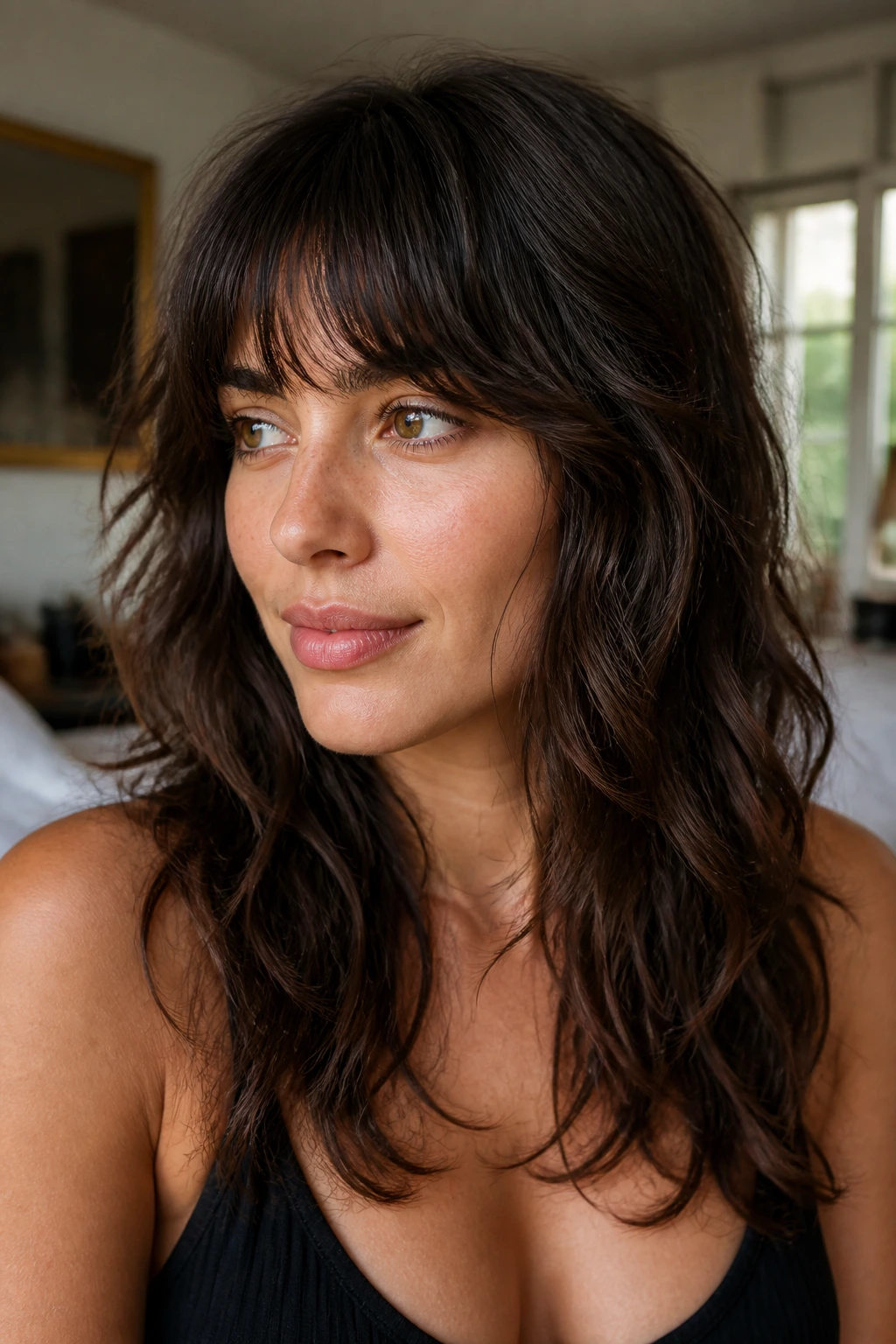
If your hair already lives in a shag, do not isolate the bangs and treat them like a separate species. Wavy shag fringe should move with the rest of the cut. The front pieces are shorter, broken up, and blended into the layers around the crown and temples. That gives brunette waves a little mess without turning the front into a heavy curtain.
I like this shape because it feels honest. It doesn’t pretend your hair is straight, and it doesn’t ask for a clean line you’ll have to fake every morning. On oval faces, the shaggy front pieces keep the forehead open while still adding texture right where the hairline needs it.
The styling is easy. Scrunch the front with a touch of mousse, then dry it with your fingers or a diffuser until the ends separate slightly. If the bangs cling together, twist two front sections in opposite directions and let them fall. It’s a small move, but it keeps the fringe from sitting like one flat strip.
13. Long Layered Bangs
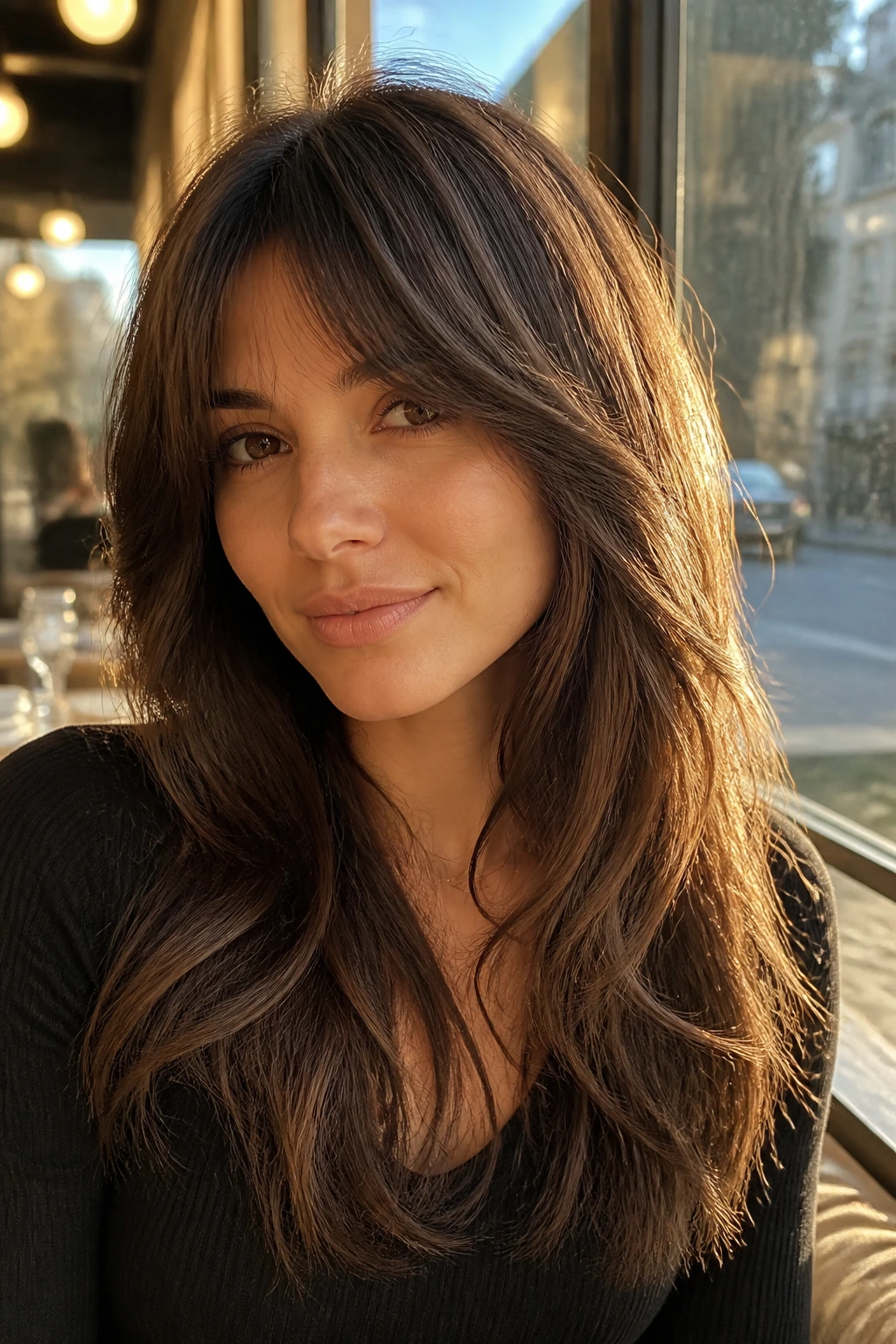
Long layered bangs are the “I want fringe, but I’m not in the mood for drama” option. They start around the brow or upper lash area, then taper into the front layers as they fall toward the cheekbones. On brunette hair with waves, this shape is especially forgiving because the layers absorb the bend instead of showing every tiny kink.
This is a smart choice if you like to tuck your hair behind your ears. The bangs can move with the rest of the cut, so you are not stuck with one face-framing block that has to behave every day. It’s also one of the easiest shapes to grow out.
The key detail is length. Ask the stylist to leave enough room for the wave to spring up without losing the outline. A lot of people get long bangs cut too short in the center and then wonder why they hover above the brows. They hover because they were never meant to be that short in the first place.
14. Deep Side-Part Bangs
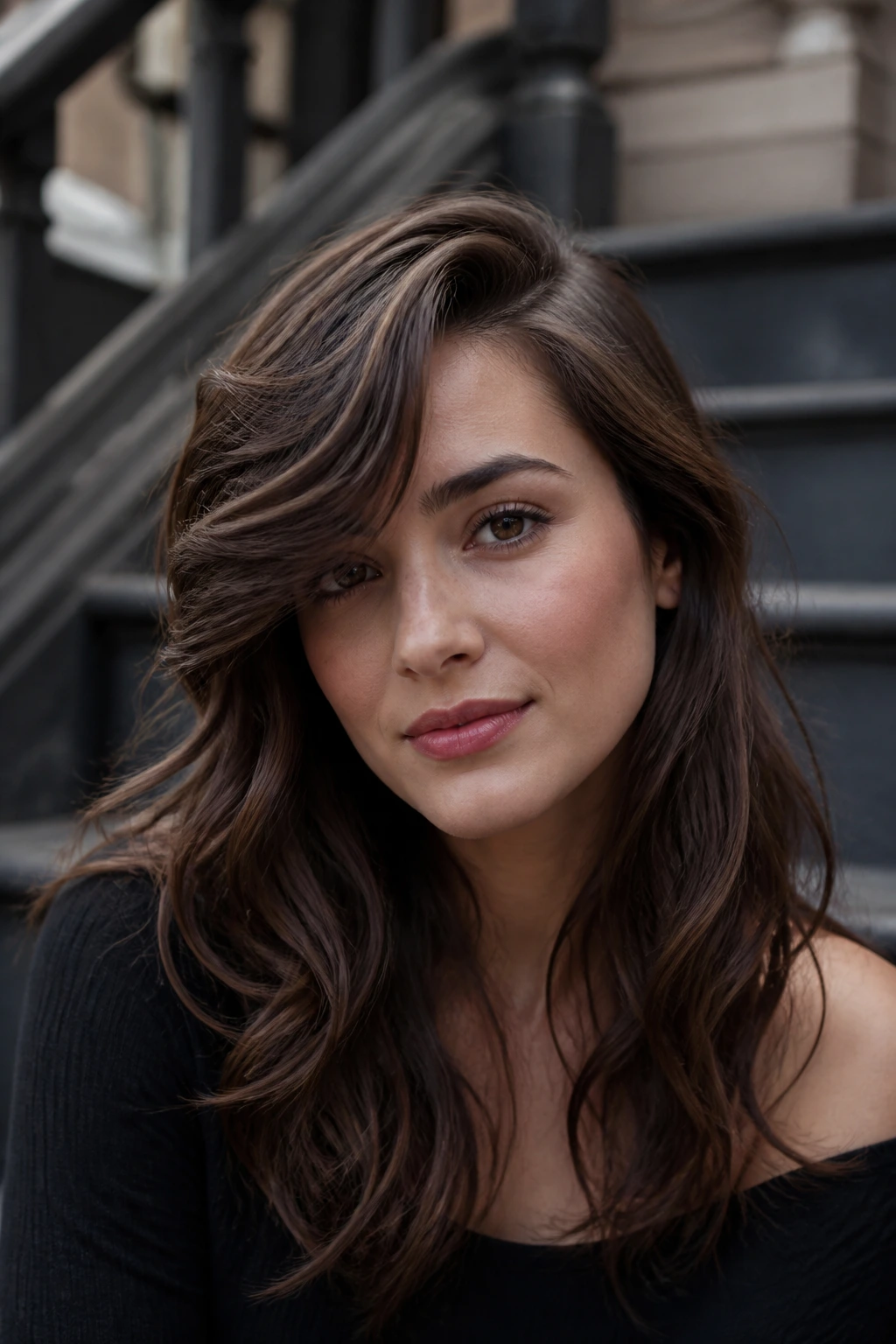
Not everyone needs a true fringe. Sometimes the best bang is the one that looks like it happened naturally after a good side part. Deep side-part bangs sweep across the forehead and collapse into the rest of the hair, which is useful if you want softness without owning a full front section.
On an oval face, the dramatic side sweep keeps the proportions open and a little elegant, but not in a fussy way. Wavy brunette hair gives this look movement right away, so you don’t have to force a bend into place. If your front hairline has a stubborn cowlick, this style usually behaves better than anything that insists on symmetry.
I’d call this the best low-maintenance option for someone fringe-curious. It gives the mood of bangs without the daily trim energy. And if you get tired of it, you can tuck it away into layers with very little drama.
15. Swoopy 1960s Fringe
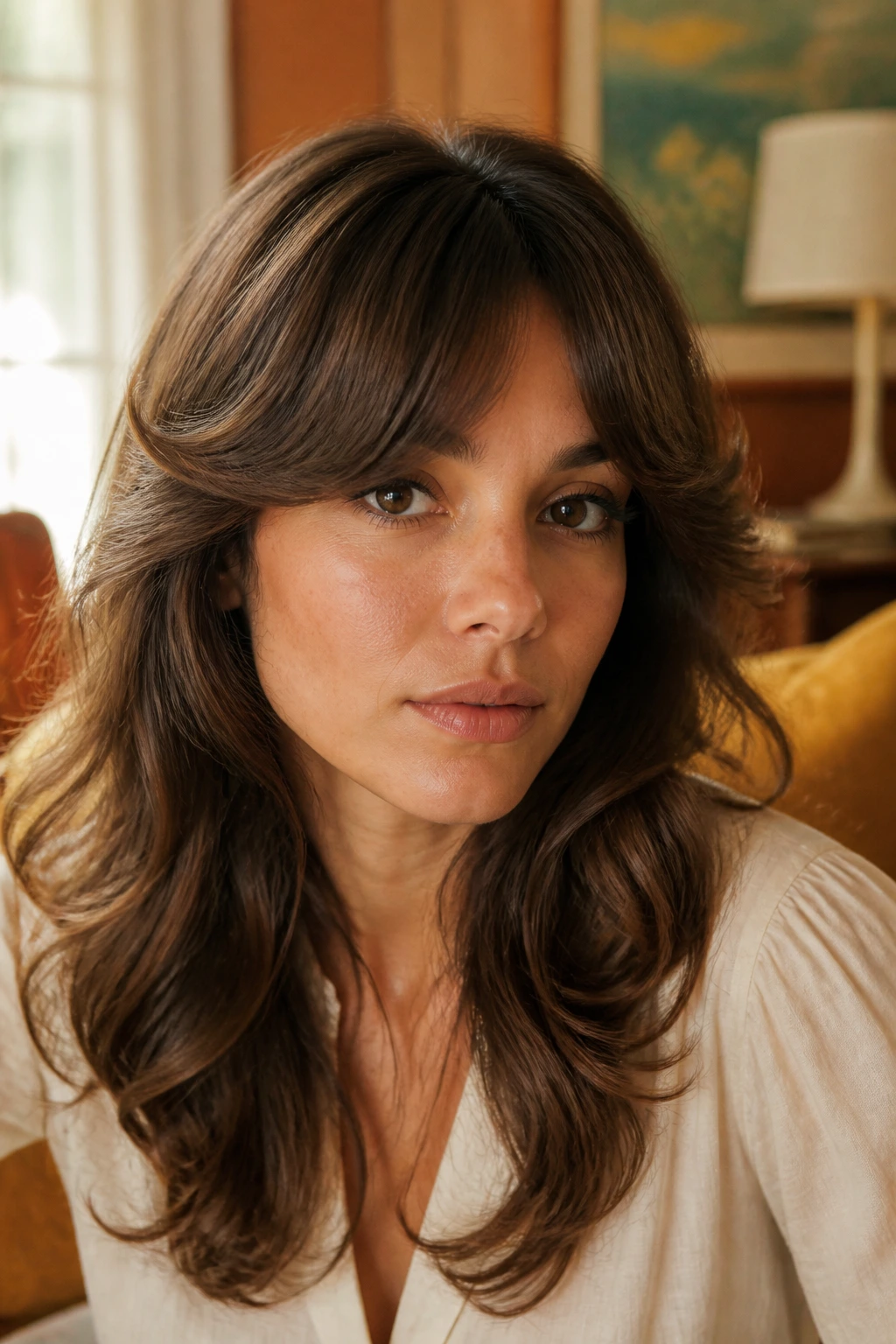
Swoopy 1960s fringe is for the days when you want a little shape and a little swing. The front section lifts away from the forehead, curves outward, and lands with a polished bend that feels a bit vintage without looking costume-y. On brunette hair, the curve shows up beautifully because the shade creates a clear outline.
This style likes a round brush. Not a giant one. A medium brush gives you enough lift at the roots without flattening the bend out of the ends. If your waves are loose, the fringe will hold the swoop with only a few seconds of heat. If they are stronger, pinning the section in place while it cools helps the shape stay where you put it.
Oval faces can wear this because the shape adds movement across the forehead without breaking the natural balance of the face. It’s a little more polished than a curtain fringe, and a little more structured than a side sweep. That middle ground is where it lives best.
16. Textured Micro Fringe
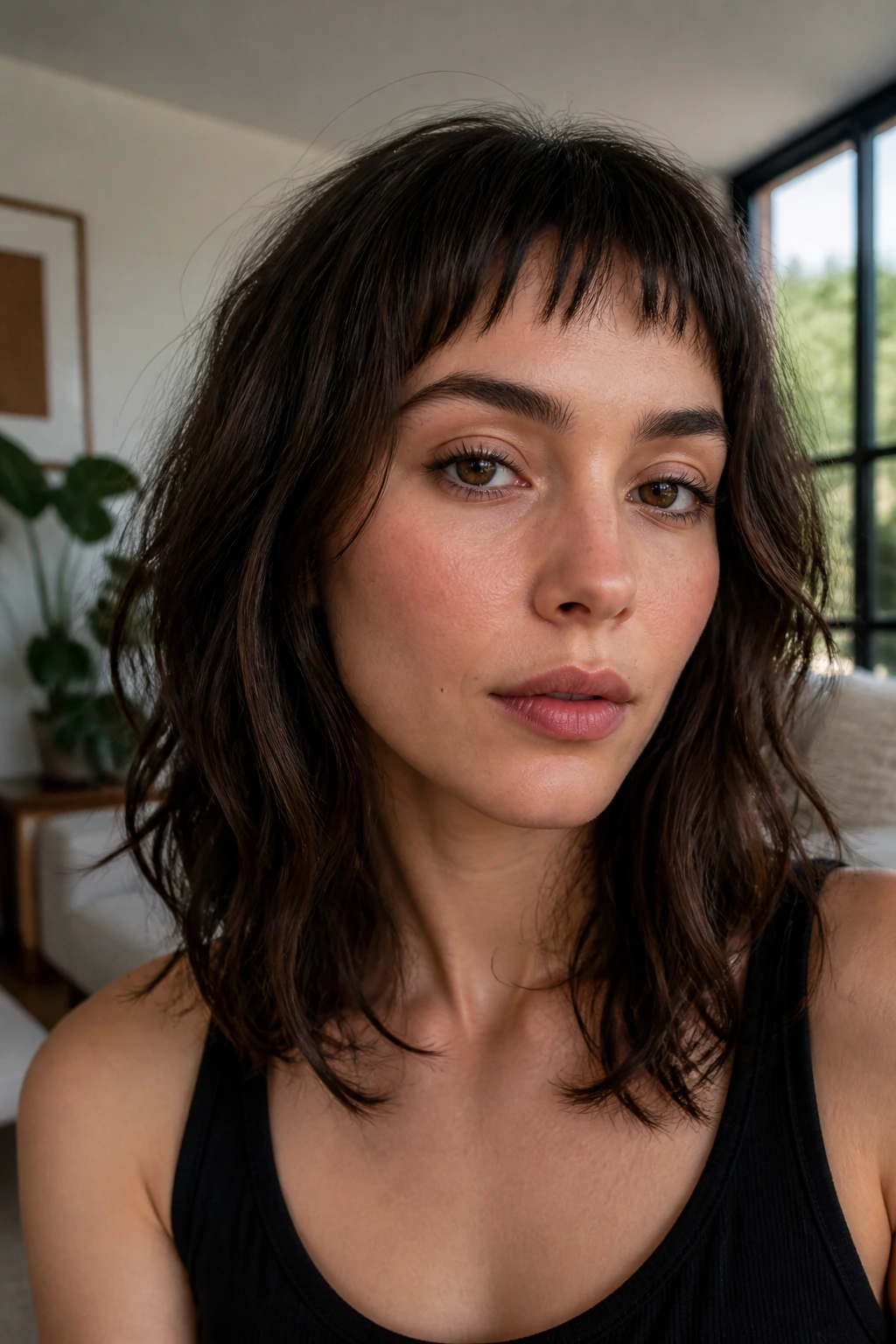
Micro fringe is not subtle. It sits short — often well above the brows — and it puts the forehead on display in a way that demands confidence and a decent amount of styling. On wavy brunette hair, the danger is obvious: if the cut is too blunt, the wave can puff and the whole thing starts to look boxy. If it’s textured correctly, though, it can be sharp in a good way.
What to ask for
- Keep the density light through the center.
- Softly texturize the ends so the line breaks up.
- Leave a little more length at the temples than in the middle.
- Avoid heavy thinning at the roots, which can make the fringe frizz.
I only like this one when the wave pattern is loose and the hair has enough control to sit close to the forehead. Oval faces can carry the short length because the proportions are already balanced, but this is still a bold choice. If you are the kind of person who touches your bangs all day, skip it. It will annoy you by Tuesday.
17. Half-Moon Fringe
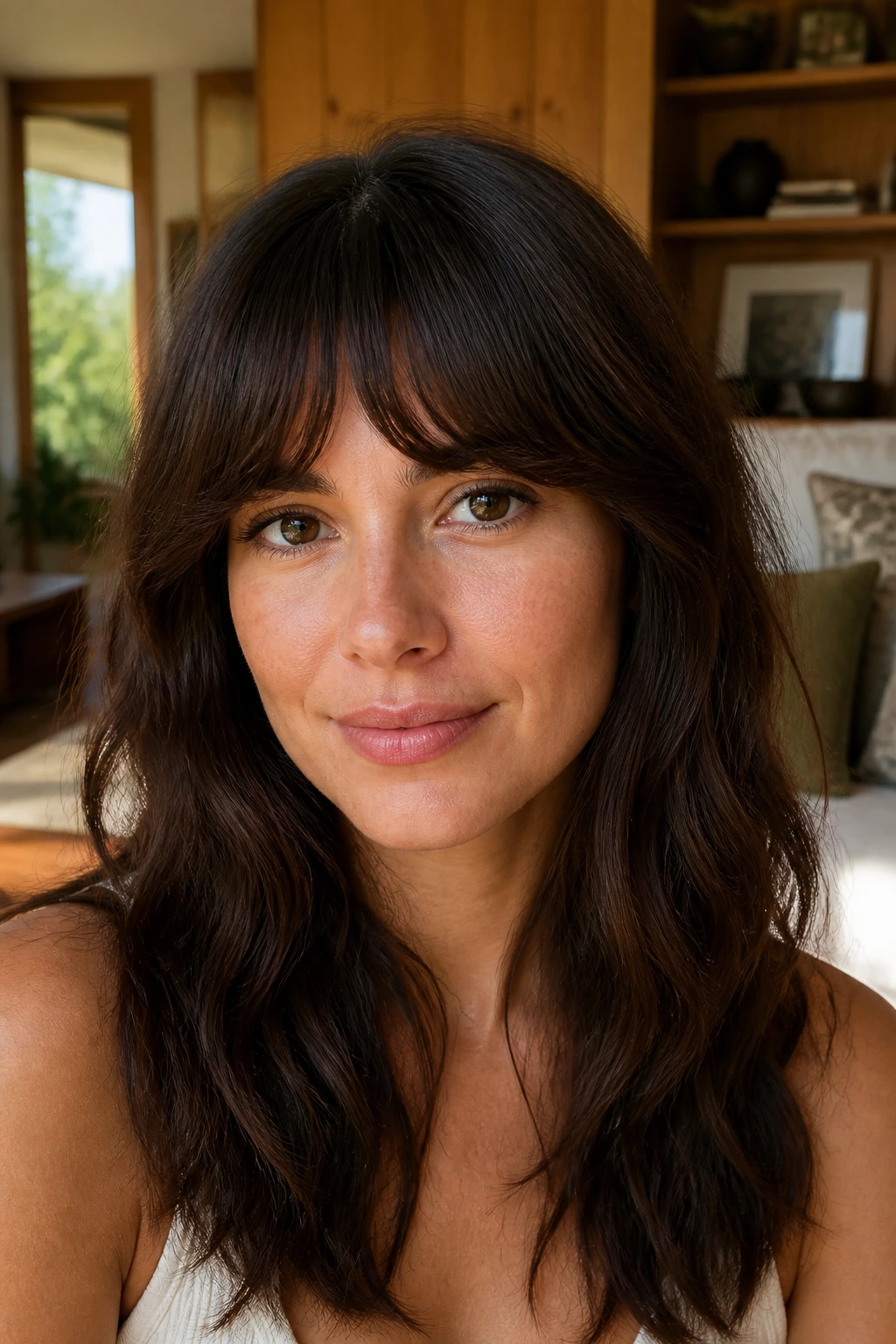
Half-moon fringe curves more fully than a rounded fringe. The center sits fuller, then the sides taper downward in a soft arc that looks a little like a shallow smile across the forehead. On brunette hair, the curve has real presence, especially if the color has depth and shine.
The cut works because it gives weight where wavy hair tends to split. The center stays substantial enough to hold its shape, while the edges ease out toward the temples. For an oval face, that fuller middle section doesn’t crowd the features the way a heavy blunt bang can. It frames them.
I’d ask for the middle to be slightly longer than you think you want, then let the stylist carve the sides gradually. That way, when the wave shrinks, the curve still sits in the right place. If the center is chopped too high, the whole fringe loses its balance fast.
18. Grown-Out Fringe
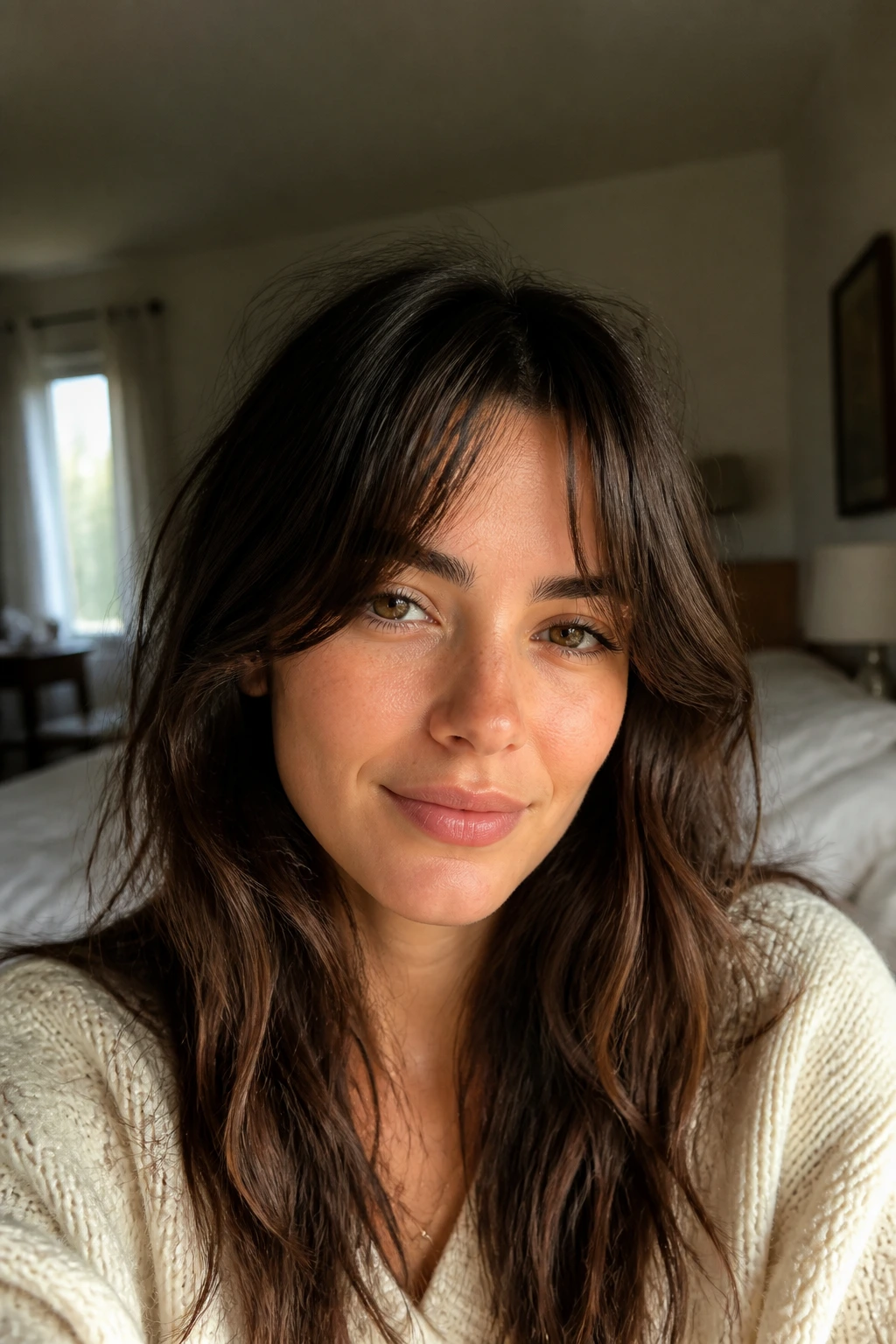
Grown-out fringe is what happens when bangs stop pretending to be bangs and start acting like layers. That sounds less glamorous than it is. The shape is one of the easiest ways to wear fringe on wavy brunette hair because it doesn’t require a perfect daily setup. You can part it, brush it back, clip it, or let it fall where it likes.
This style is especially good if you’re growing out a shorter fringe and don’t want to jump straight to all-long front pieces. The uneven lengths soften the forehead, keep the oval face open, and blend into the rest of the cut without a hard seam. I like it on people who wear their hair half-up a lot, because the front still looks finished when the rest is pulled back.
The main thing is to keep the ends clean. Too much bulk at the longest point makes the grow-out look accidental. A light dusting every six to eight weeks helps the shape stay on purpose.
19. Collarbone-Skimming Bangs
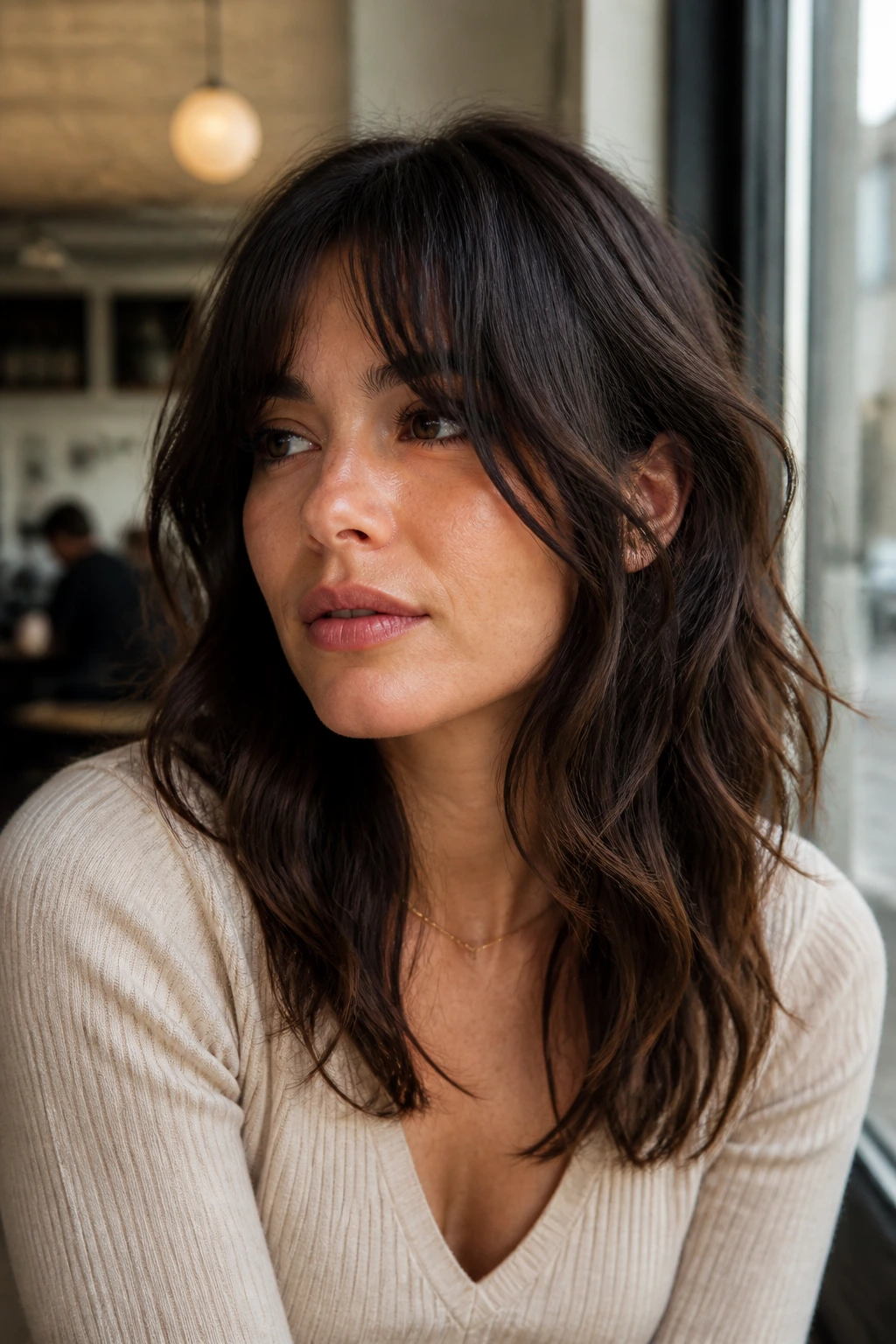
This is almost not a bang, which is exactly why it works for some people. Collarbone-skimming bangs are those long front pieces that start near the forehead and travel down into the rest of the cut, reaching well past the cheekbones. On wavy brunette hair, they create a soft frame that feels more like movement than commitment.
If your face is oval and you want the smallest possible amount of maintenance, this is a smart place to land. The fringe never feels trapped. It can split in the center, sweep to one side, or tuck behind the ear and still look like it belongs there.
I’d choose this shape for shoulder-length or longer hair, especially if your waves are loose and your front pieces naturally fold away from the face. It’s not a dramatic bang, and that’s the point. It gives structure without stealing the whole show.
20. Lash-Skimming Blunt Fringe
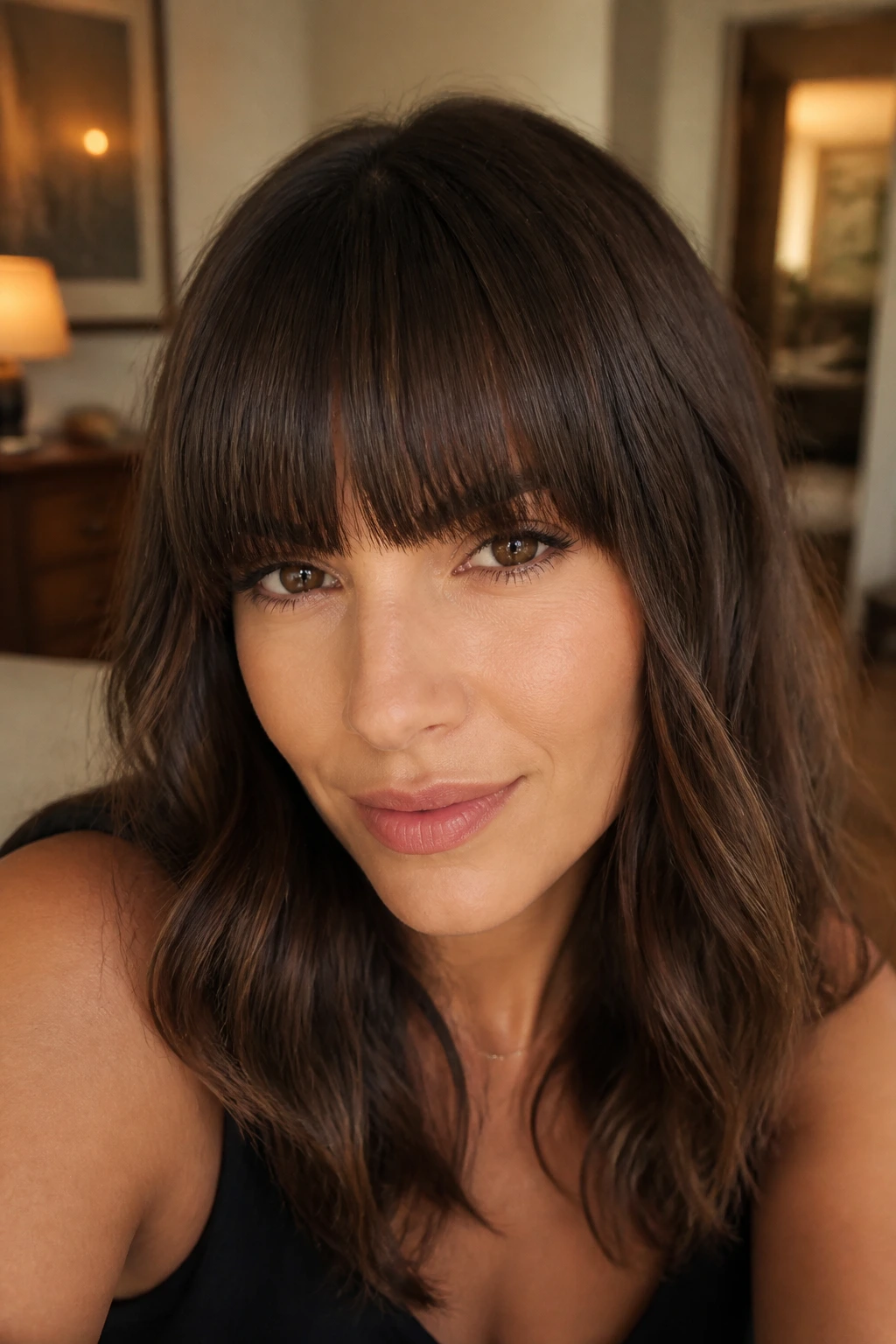
Lash-skimming blunt fringe makes a statement the second you step into the room. The line is fuller, straighter, and heavier than most of the softer options here, but the length sits just above or right at the lashes, which keeps it from feeling too severe. On brunette hair, the blunt edge looks rich and exact.
This style is best when the wave pattern is more bend than curl. If the front is too springy, the fringe will bounce up and lose the sharp line that makes it work. You’ll probably need a round brush or a small flat iron, especially at the root. That’s not a flaw. It’s the deal.
On an oval face, the heavy line can be striking because the face shape can absorb it without looking crowded. Still, I’d never cut this one short on a whim. It wants commitment, regular trims, and a little discipline on the styling side. If you prefer easy mornings, pick something else.
21. Peekaboo Fringe
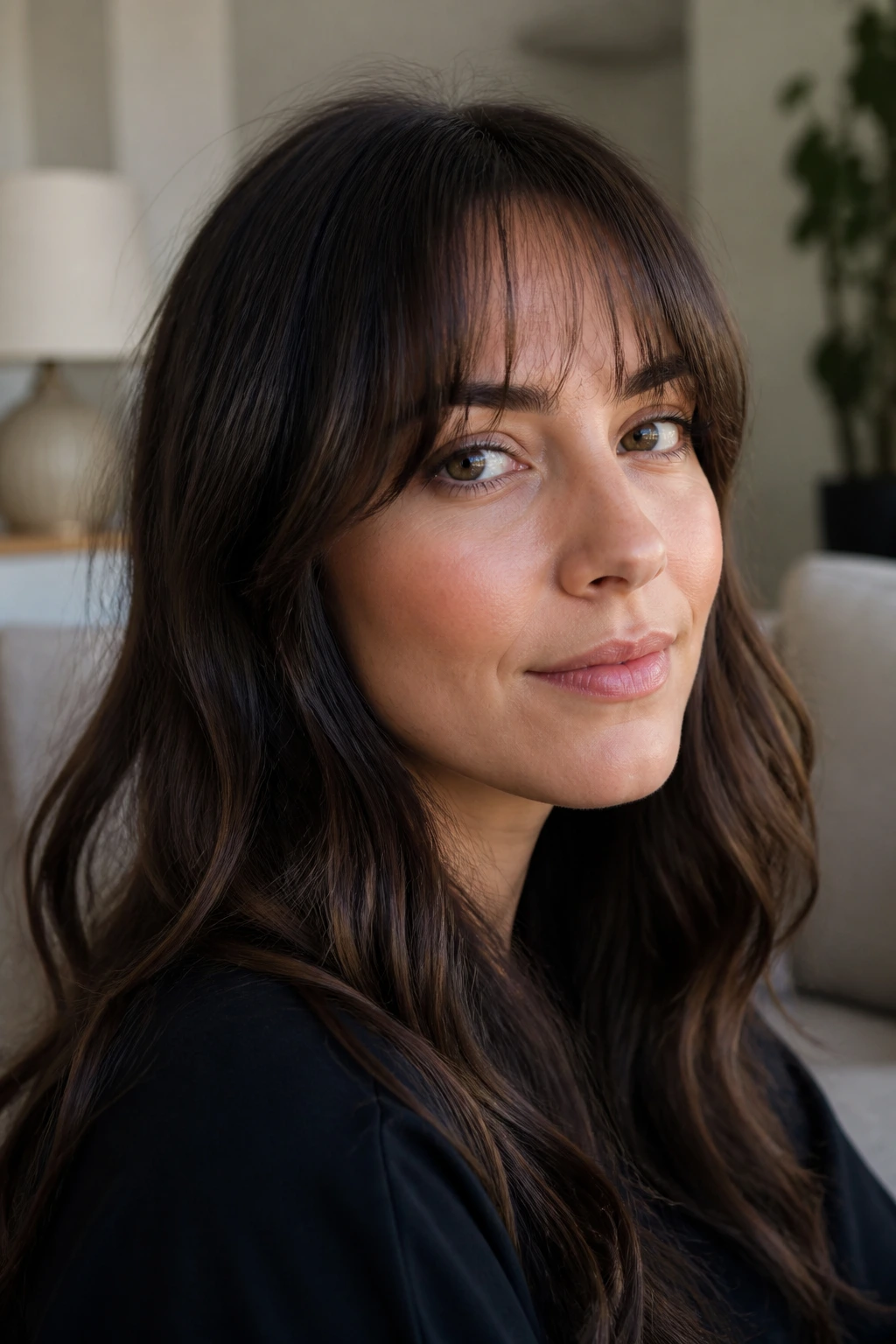
Peekaboo fringe hides in plain sight. It sits under the top layer of hair or off to a soft side part, then shows itself in movement instead of demanding all the attention at once. On wavy brunette hair, the effect is especially nice because the wave gives the hidden pieces a bit of lift and shadow.
This is one of the best options for people who are fringe-curious but not ready to go all in. You get a touch of forehead coverage, a little softness around the eyes, and a cut that still lets you brush everything back when you want a clean face. Oval faces tend to wear this easily because it never crowds the center of the face.
The name sounds delicate, but the cut isn’t flimsy. It just lives a little deeper in the haircut. If your hair naturally falls forward around the temples, this style often looks better than a more obvious bang, because it works with the grain instead of trying to redraw it.
22. Soft Razor-Cut Bangs
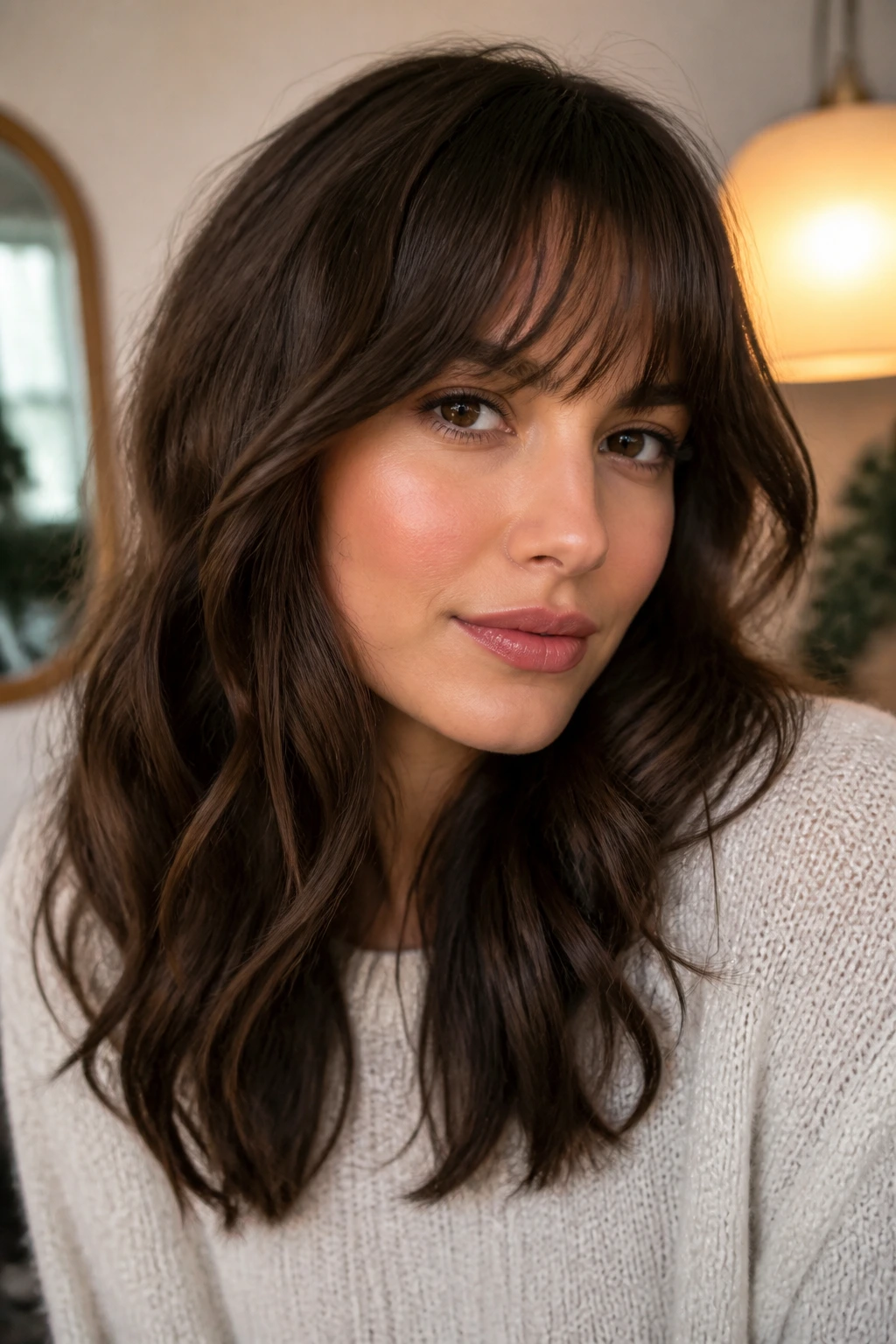
A razor cut can be beautiful on wavy brunette hair, but only when it’s done with restraint. Soft razor-cut bangs have feathered ends and a broken edge that lets the wave sit inside the cut instead of on top of it. That makes the fringe feel airy without going wispy in the bad way.
I like this shape on medium-density hair with a loose wave. The softness keeps the front from looking blocky, and the brunette color gives the edge enough contrast to show the texture. On an oval face, the softened line frames the brow without making the forehead feel boxed in.
The caution is real. If your hair is very porous or already frayed from heat, a razor can make the ends look too fluffy. Ask your stylist to go light with the blade and keep the length slightly longer than the final photo. That extra buffer matters more here than in straighter hair.
23. Wave-Enhanced Fringe
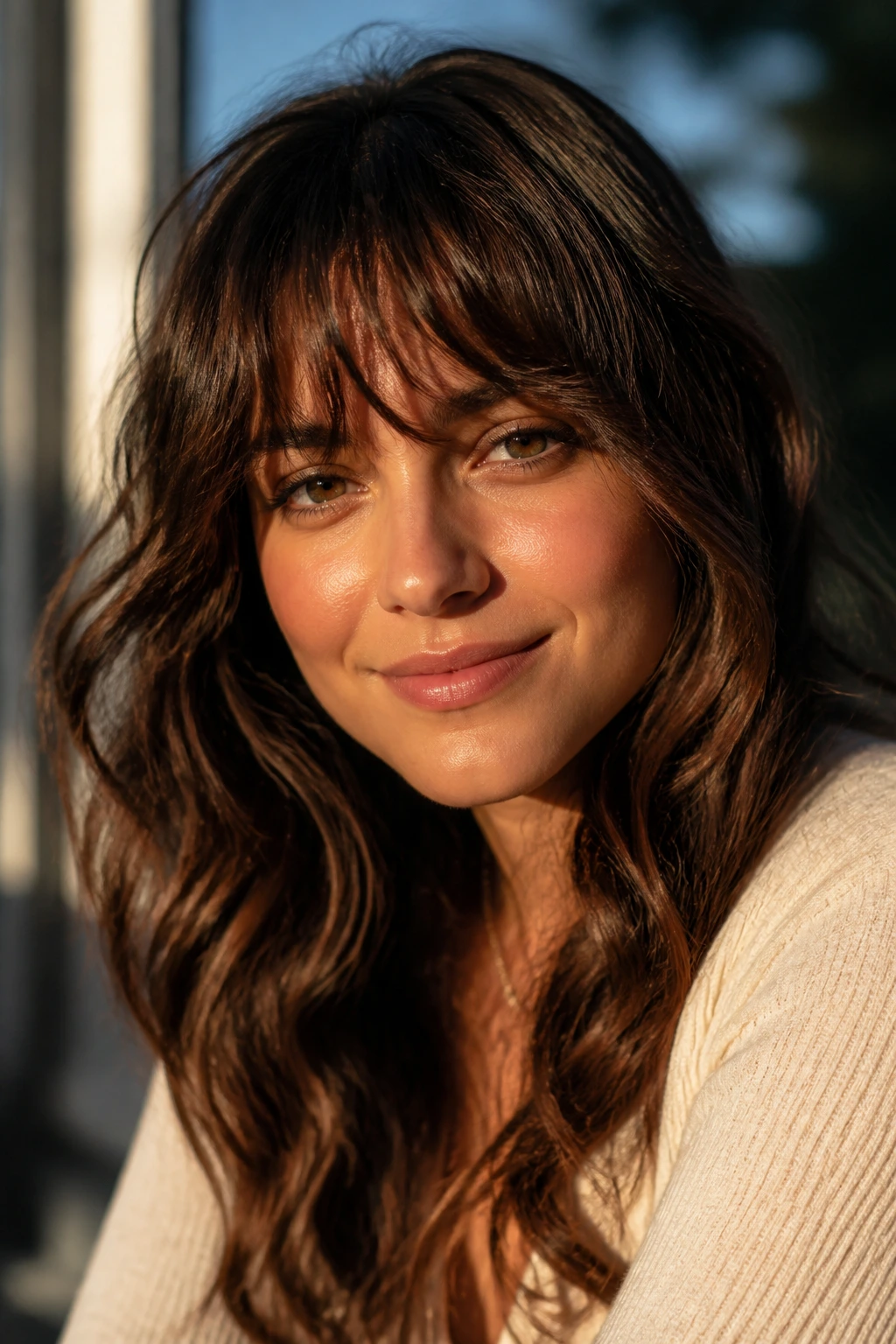
Wave-enhanced fringe is basically a fringe cut to honor the wave pattern you already have. Instead of forcing a straight line, the stylist lets the bend show up in the outline. On brunette hair, that can look especially polished, because the shadow at each curve gives the fringe shape even when it’s not perfectly styled.
This is the easiest option for people who air-dry and don’t want to fight the front of their hair every morning. The cut should account for where the wave first bends, how much the root lifts, and whether one side of the fringe is a little stronger than the other. That sounds fussy, but it saves you from the all-too-common “why does one side flip up and the other lie flat?” problem.
If you want this shape, be honest about your routine. Tell the stylist whether you diffuse, rough-dry, or do almost nothing. The best cut here is one that matches what you’ll actually do.
24. Temple-Skimming Fringe
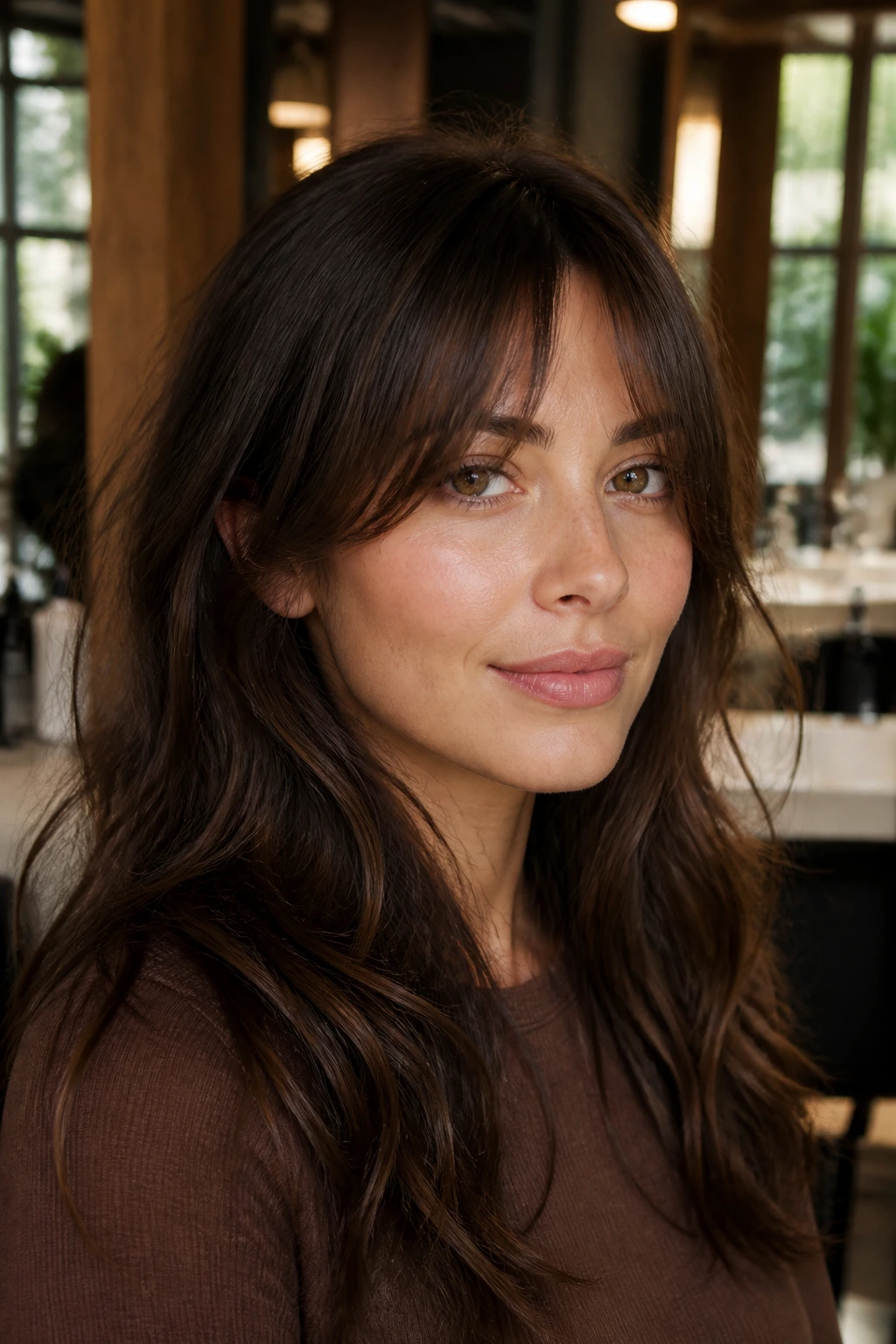
Temple-skimming fringe keeps the center lighter and lets the outer pieces drift down toward the temples, which is a very smart move for oval faces. It frames the widest part of the face in a soft way, then stays out of the center of the forehead so the whole cut doesn’t feel heavy. On brunette waves, the shape reads as sleek but not severe.
This is a good choice if you want the feel of bangs without a strong line across the front. The temples matter more than people think. Those side pieces can change the whole mood of the haircut, especially when they brush the cheekbone and then fall into longer layers. You get softness, motion, and a very clean transition.
I’d keep the center pieces just long enough to skim the brows, then let the side sections stretch past the outer corners of the eyes. That ratio keeps the face open and the fringe useful, which is really the point.
25. Long Curtain Layers
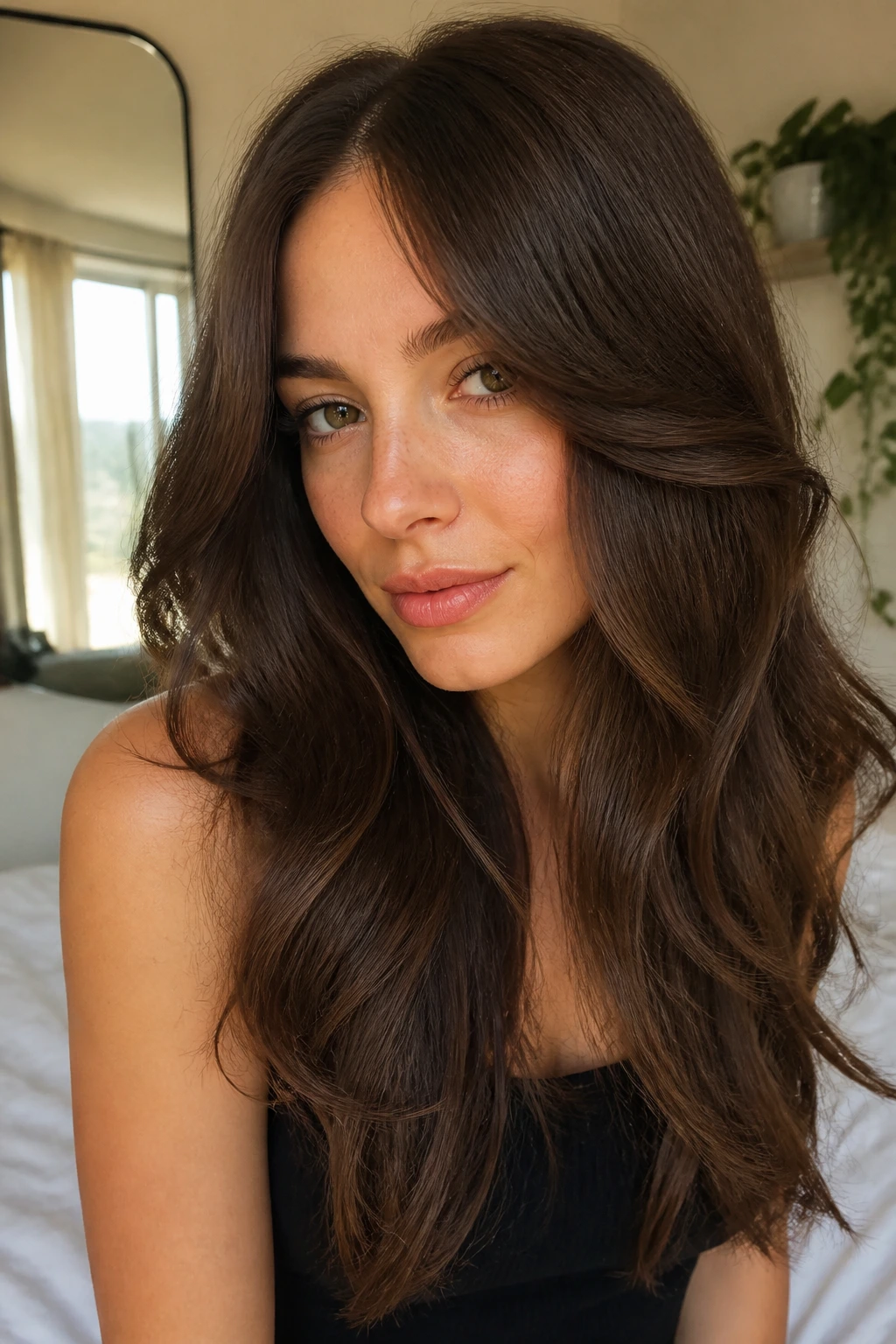
Long curtain layers are what I recommend when someone wants bangs but also wants an exit plan. The front pieces are long enough to part, tuck, or push back, and they move into the rest of the haircut so naturally that they stop feeling like a separate feature. On brunette hair, the shape is gorgeous when the ends catch a little shine and the wave bends through the lower half.
This is probably the most forgiving style in the whole group. It works on air-dried hair, brushed-out waves, and second-day texture. On an oval face, the long front layers keep the proportions open while still giving some frame around the eyes and cheekbones. You get the suggestion of bangs without the commitment to a hard line.
If you are trying bangs for the first time, start here. If you are growing them out, this is where they often land anyway. And if you already know you like a little front shape but hate the feeling of something sitting across your forehead, this is the one that tends to stay useful longest.
Why Brunette Bangs for Oval Faces and Wavy Hair Need Different Rules
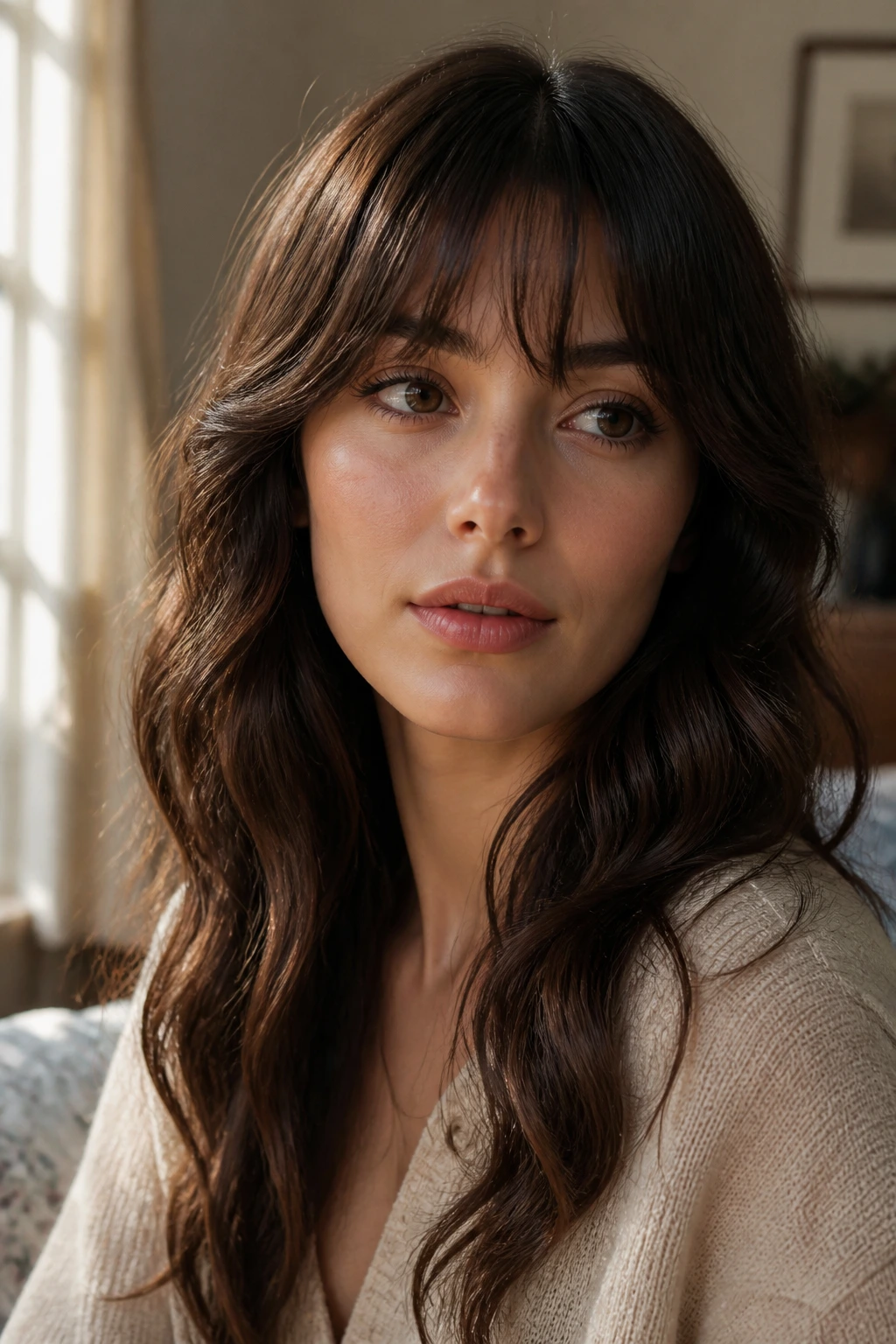
Oval faces get called “easy” so often that people forget how much a haircut can still change the balance. A fringe can shorten the face, widen the forehead, or drag the eye too low if the weight sits in the wrong place. The face shape may be forgiving, but it is not invisible. Bangs still need to land somewhere useful.
Wavy hair adds another layer of math. It shrinks when it dries, and it does not shrink evenly. The center may bounce up more than the corners. One temple may sit flatter than the other. A good cut leaves enough room for that movement and builds in shape where the wave wants to land, not where it sat for five calm minutes in the salon chair.
Brunette hair changes the visual read too. Darker brown hair shows line and shadow more clearly, which is why a blunt bang on espresso hair looks sharper than the same cut on honey blond. That can be a good thing. It can also make a fringe look heavy if the density is too thick or the edges are too hard. A little softness at the ends keeps the shape from looking helmet-like.
Tools That Keep the Fringe from Puffing Up
-
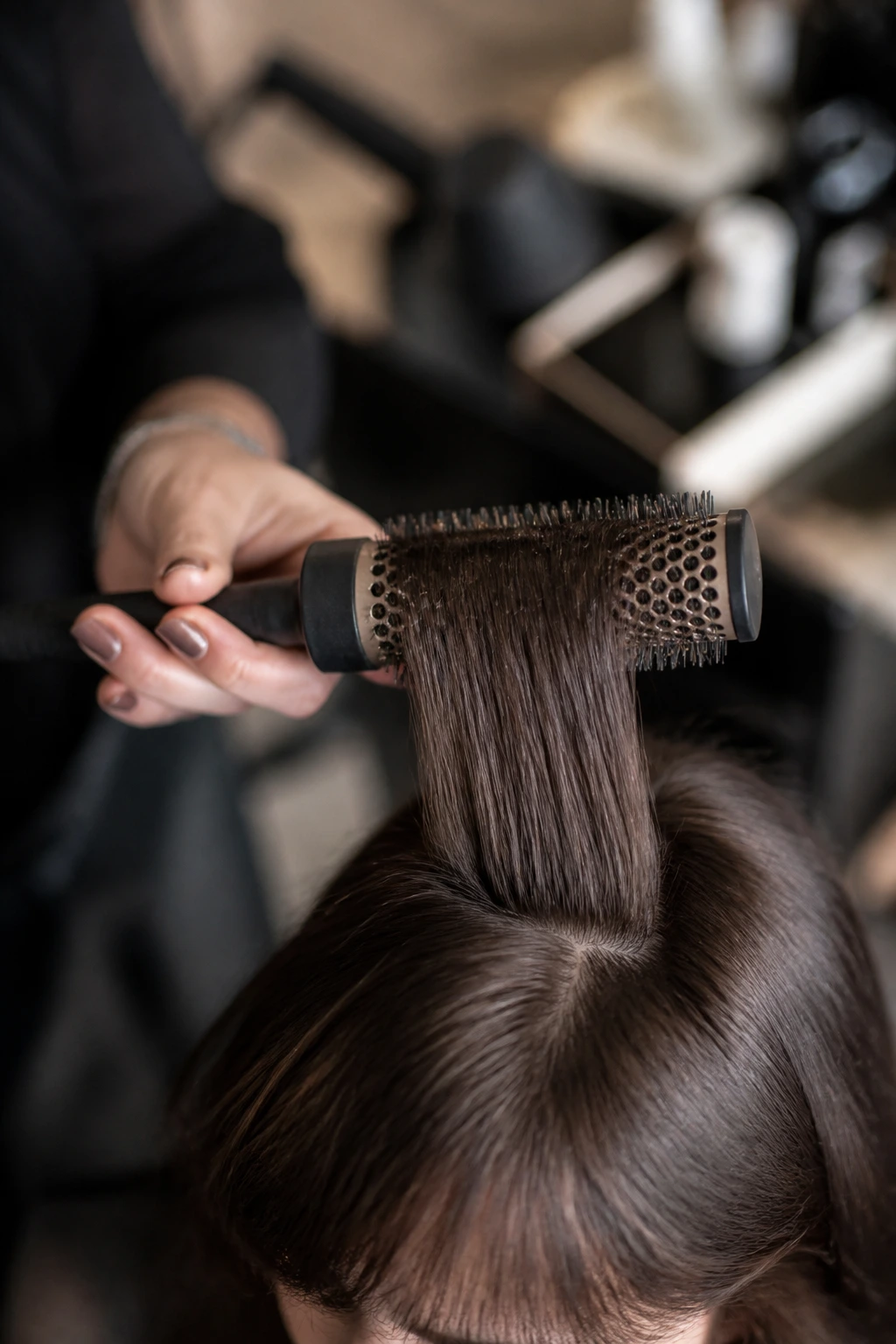
1-inch round brush: Small enough to wrap a bang section without stretching the wave too far.
-
Blow dryer with a narrow nozzle: Directs the airflow so the roots go where you want instead of flipping around.
-
Duckbill clips: Great for holding side sections out of the way while the fringe cools.
-
Fine-tooth comb: Useful for cleaning up the part and smoothing the front before drying.
-
Mini flat iron with rounded plates: Handy for the last inch of a blunt or arched fringe, especially if the wave bends hard at the root.
-
Light mousse or root foam: Gives the front enough control without making it stiff.
-
Dry shampoo: Helps on day two when forehead oil starts pushing the fringe apart.
-
Flexible-hold hairspray: Best sprayed on the brush, not directly on the hairline, if you want soft control.
How to Ask for Brunette Bangs for Oval Faces and Wavy Hair at the Salon
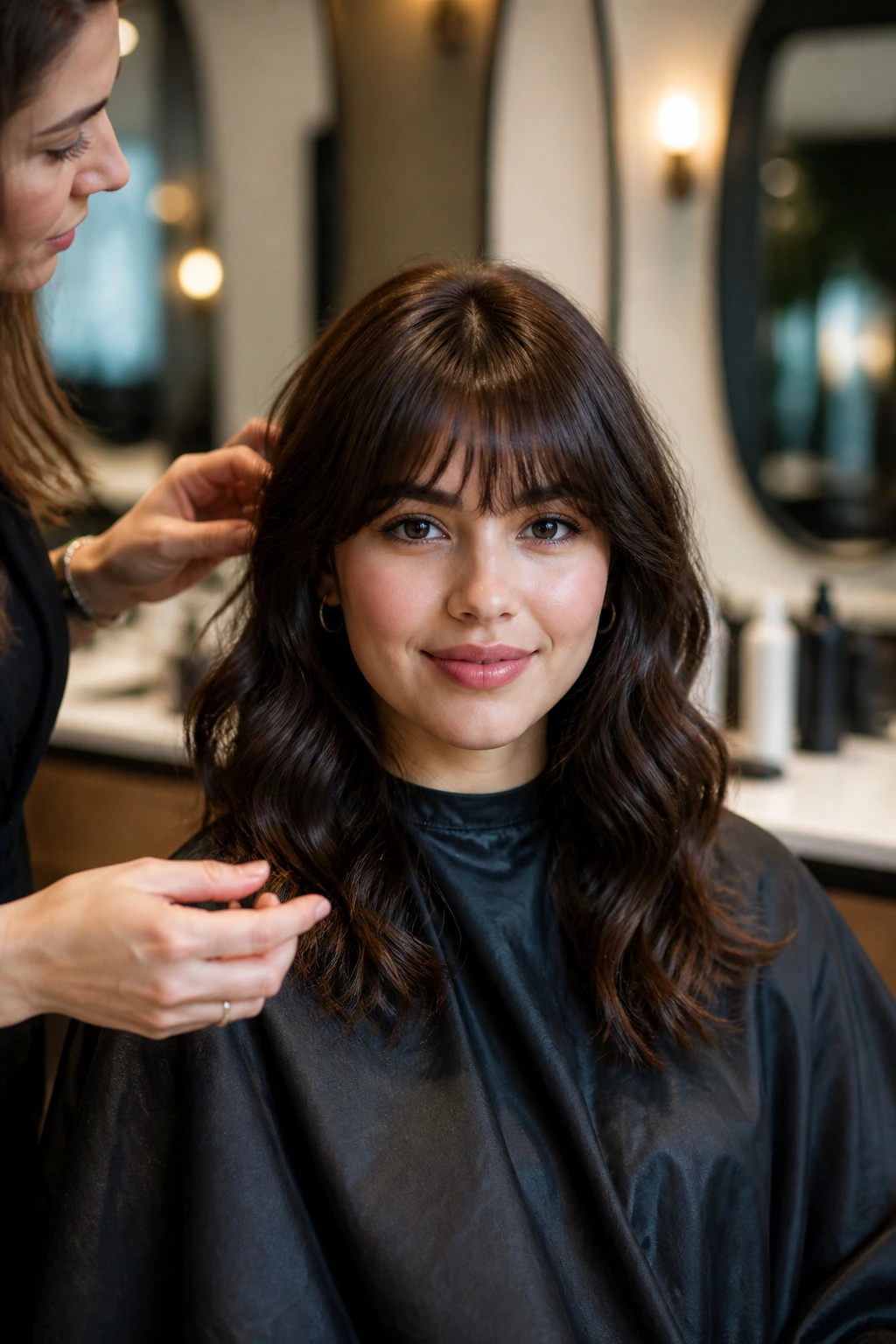
Bring photos, yes, but bring photos that look like your hair, not somebody else’s fantasy blowout. That matters more than people admit. A stylist can copy a shape much more accurately when the reference shows similar wave, density, and length. If your hair is thick and the photo is fine, the cut will not land the same way.
Tell them how the front behaves when it air-dries. Say if your wave bends hard at the temple, if one side is flatter, or if you have a cowlick near the front hairline. Those details change everything. A skilled stylist will usually leave the fringe a bit longer on wavy hair because they know it will spring up as it dries.
Also say how much effort you’re willing to give it in the morning. If you want a fringe that can be finger-dried in two minutes, don’t ask for a high-maintenance blunt line. If you enjoy round-brush styling, say that too. The right cut is partly about texture, partly about how much time you want to spend in front of the mirror.
How to Style Them So They Bend Instead of Puffing
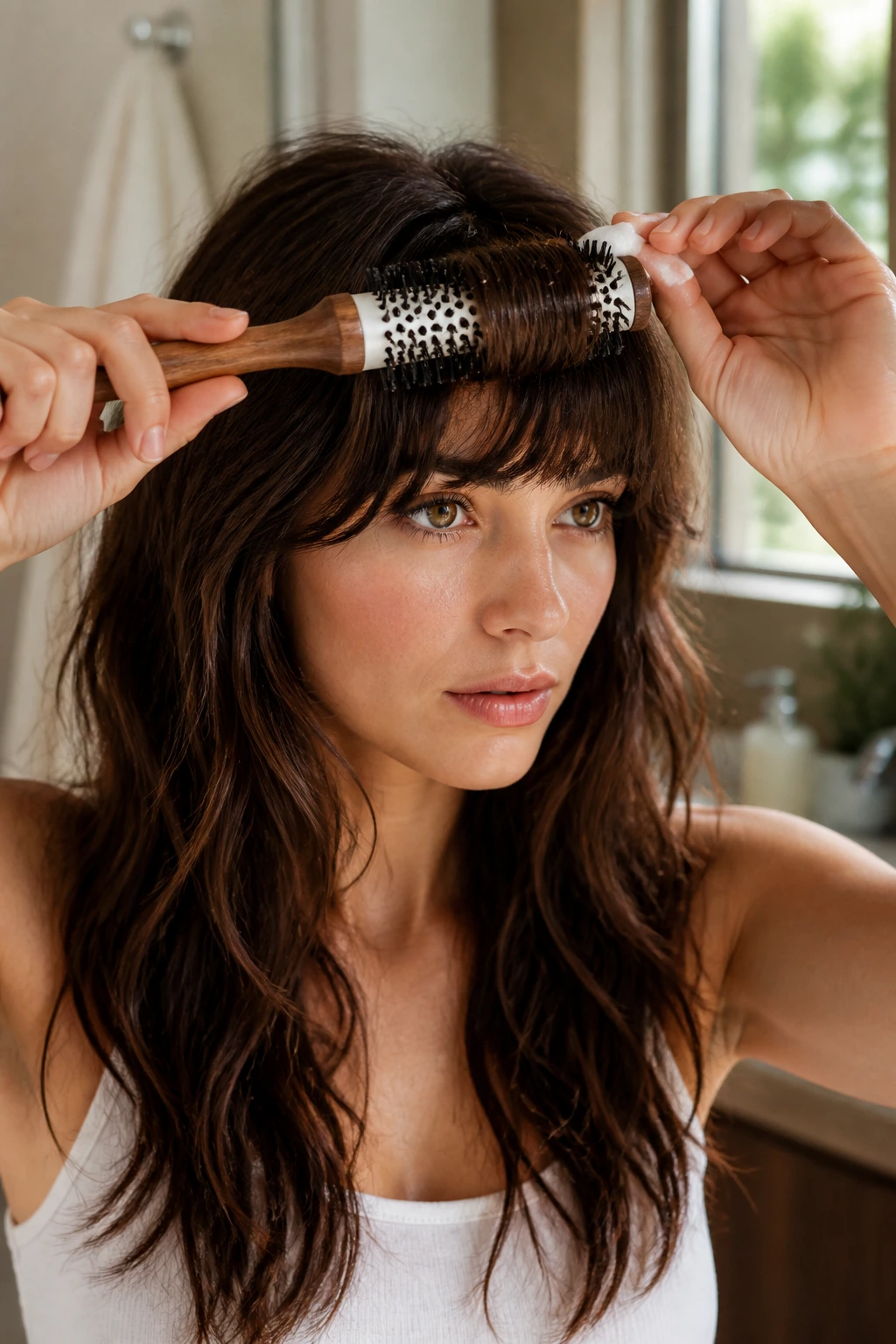
Root Direction: Start with damp bangs and direct the roots side to side for the first 15 to 20 seconds. That breaks the natural wave pattern before it sets into a lump.
Shape Control: Use a small round brush or your fingers, depending on the length. Shorter fringes usually need the brush; longer curtain pieces can be twisted and pinned until they cool.
Finish: Choose one light product and stop there. A pea-sized amount of mousse, a mist of flexible spray, or a barely-there cream is enough. Heavy oils near the root will make brunette bangs separate in oily-looking strings by lunchtime.
Cooling Time: Let the front cool in the shape you want. This is the part people skip. If you pull the brush out the second the hair feels dry, the bend won’t hold.
Refresh: On day two, mist the fringe lightly, then re-dry for 20 to 30 seconds. You do not need a full wash every time the front misbehaves.
How to Keep the Shape Between Wash Days
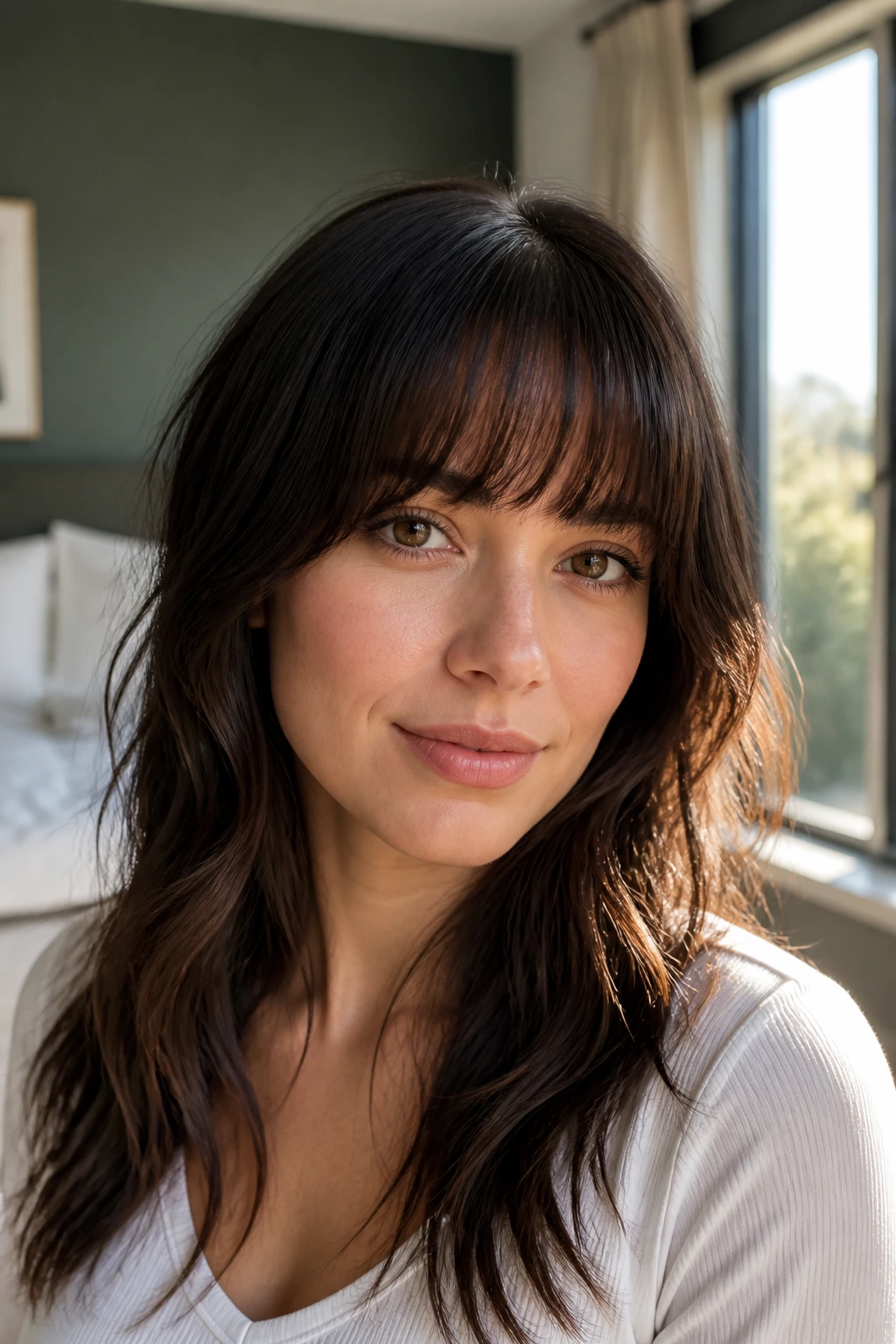
The forehead changes everything. Skin care, sweat, hats, and a simple humid room can push bang roots around faster than the rest of the cut. I like to keep bangs away from heavy face cream for a few minutes after washing my face, because soft moisturizer at the hairline tends to make brunette fringe separate into little strands.
For blunt or arched shapes, plan on trims every four to six weeks. Longer curtain layers and side-swept pieces can usually stretch to six to eight weeks. If the front starts sitting in your eyes before the rest of the haircut feels grown out, that’s your cue, not the calendar’s.
Sleeping on them can be weird. If you wake up with a kink, mist the front, brush it side to side, and give it a blast of warm air followed by a cool shot. If your bangs are long enough, you can clip them gently to the side before bed. Don’t make the clip too tight. A crease at 6 a.m. is a terrible exchange for ten minutes of effort.
Color and Finish Moves That Make the Shape Stand Out
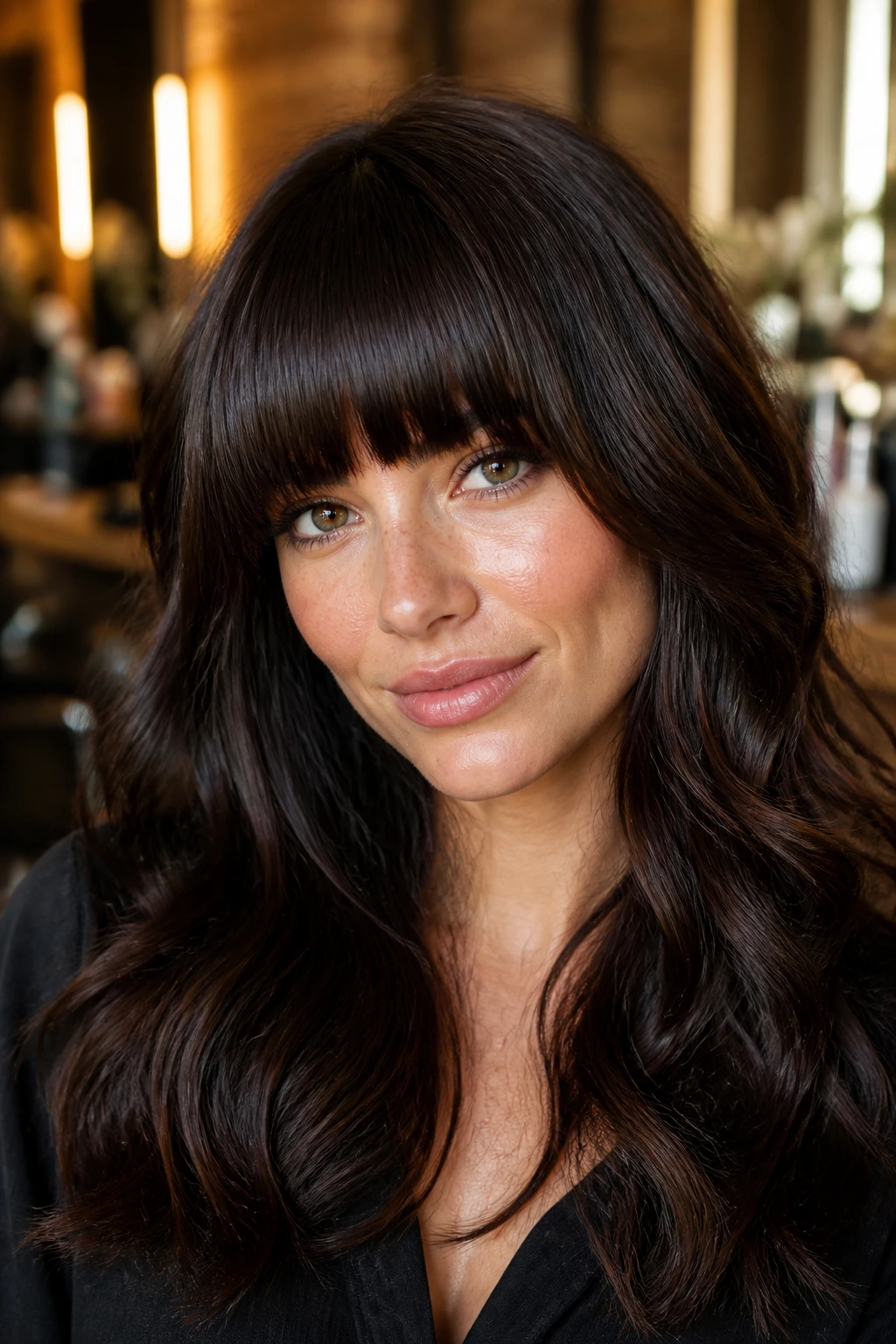
One-Tone Brunette: A deep espresso or chocolate single-process color makes blunt and arched shapes look crisp. There’s nowhere for the eye to wander, so the line becomes the focus.
Caramel Threads: Fine highlights around the outer corners show off curtain bangs and bottleneck shapes. You do not need chunky streaks. Just enough light to separate the bends.
Gloss First: A clear or tinted gloss gives brunette bangs a smooth sheen, which is especially useful on feathered or razor-cut edges. Shine makes the fringe look cleaner even when the wave is a little messy.
Shadow Root: Keeping the roots a shade deeper than the mid-lengths helps layered bangs read with more depth. That’s especially nice on wavy hair because the root shadow creates a natural frame at the forehead.
Face-Framing Lift: A few lighter ribbons at the temples can help a fringe blend into the rest of the haircut. It’s a small move, but it keeps the front from looking like it was pasted on.
Common Bang Mistakes That Make Fringe Fight Back
-
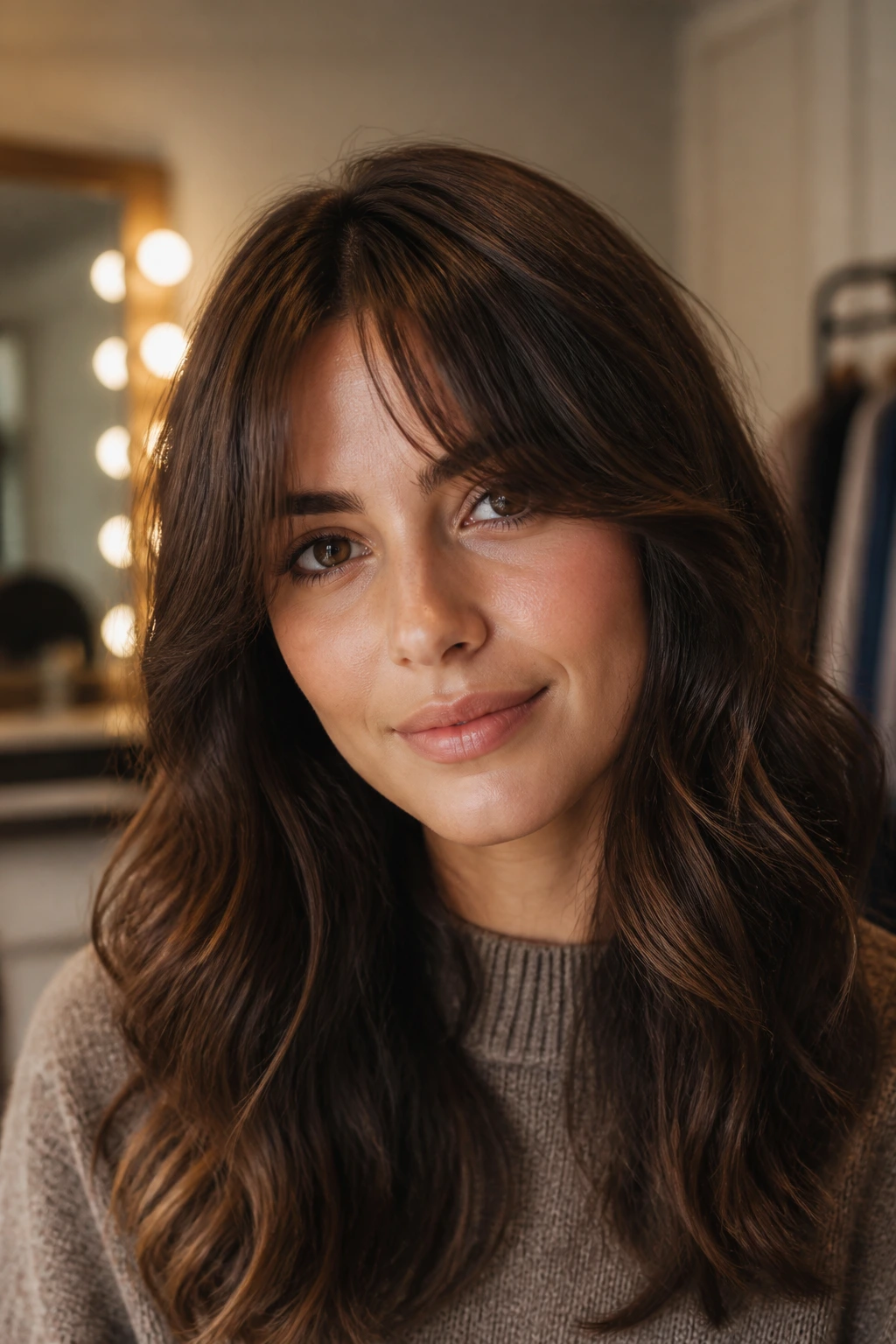
Cutting to the final length while the hair is wet: Wavy bangs shrink more than straight ones. The fix is simple: leave them longer in the chair than the photo suggests.
-
Over-thinning thick brunette fringe: If the stylist removes too much bulk, the ends can separate into fuzzy strings. Ask for soft texture, not a razored-out collapse.
-
Ignoring the cowlick: A front cowlick will push a bang open, split it, or send one side high. The answer is usually a deeper part, a little more length, or a style with built-in separation.
-
Using heavy oils near the root: The front starts clumping and slipping by midday. Keep oils and creams on the ends, not the hairline.
-
Choosing a shape that needs straighter hair than you have: A razor-straight blunt fringe on a strong wave pattern means daily heat styling. If that sounds annoying, pick a softer shape.
-
Skipping trims too long: The line stops hitting the right spot and starts hanging in your eyes. Once fringe gets that long, it often feels messy rather than lived-in.
Variations and Adaptations to Try
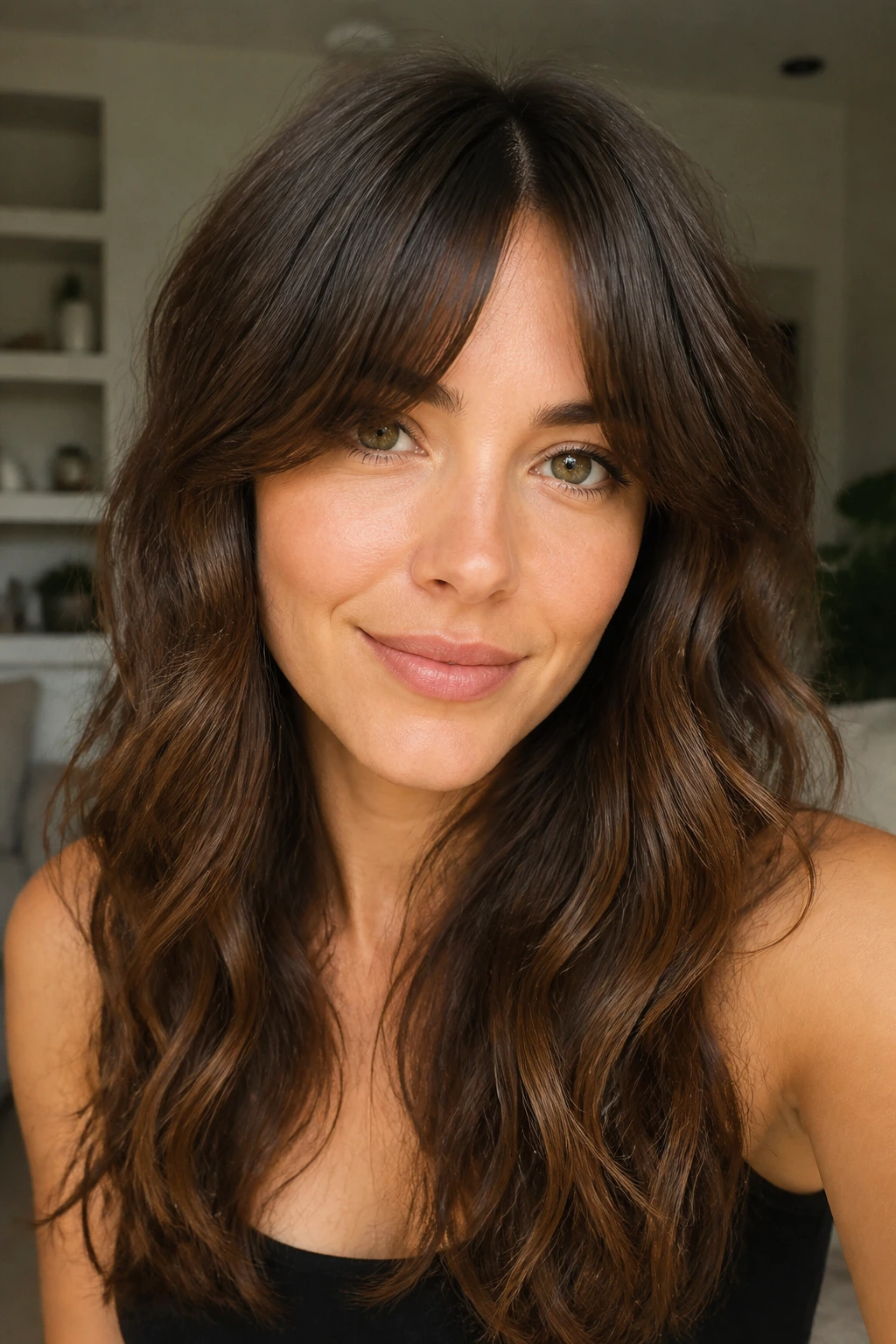
The Air-Dry Curtain Cut: Ask for long curtain bangs with point-cut ends and a little extra length through the center. This version is built for people who do not own a round brush or refuse to become one. It falls well, even when you just scrunch and go.
The Glossy Espresso Fringe: Keep the color deep and one-tone, then wear a blunt or arched shape with a clean edge. The shine makes the line look deliberate, and the darker shade gives the bangs more visual weight.
The Caramel Frame: Add subtle lighter ribbons through the temple pieces and outer bang corners. This works best with bottleneck, curtain, or long layered bangs, because the lighter pieces help the fringe blend into the rest of the haircut.
The Grow-Out Bridge: If you are between bang lengths, ask for a split fringe or long layered front pieces. That gives you fringe shape without a hard edge, so the haircut can move through awkward middle stages without looking abandoned.
The Low-Drama Side Sweep: Choose a deep side part with a long diagonal fringe if you want softness and almost no daily negotiation. It is the easiest adaptation for people with strong cowlicks or low patience.
Frequently Asked Questions
Will bangs work if my wave pattern is uneven?
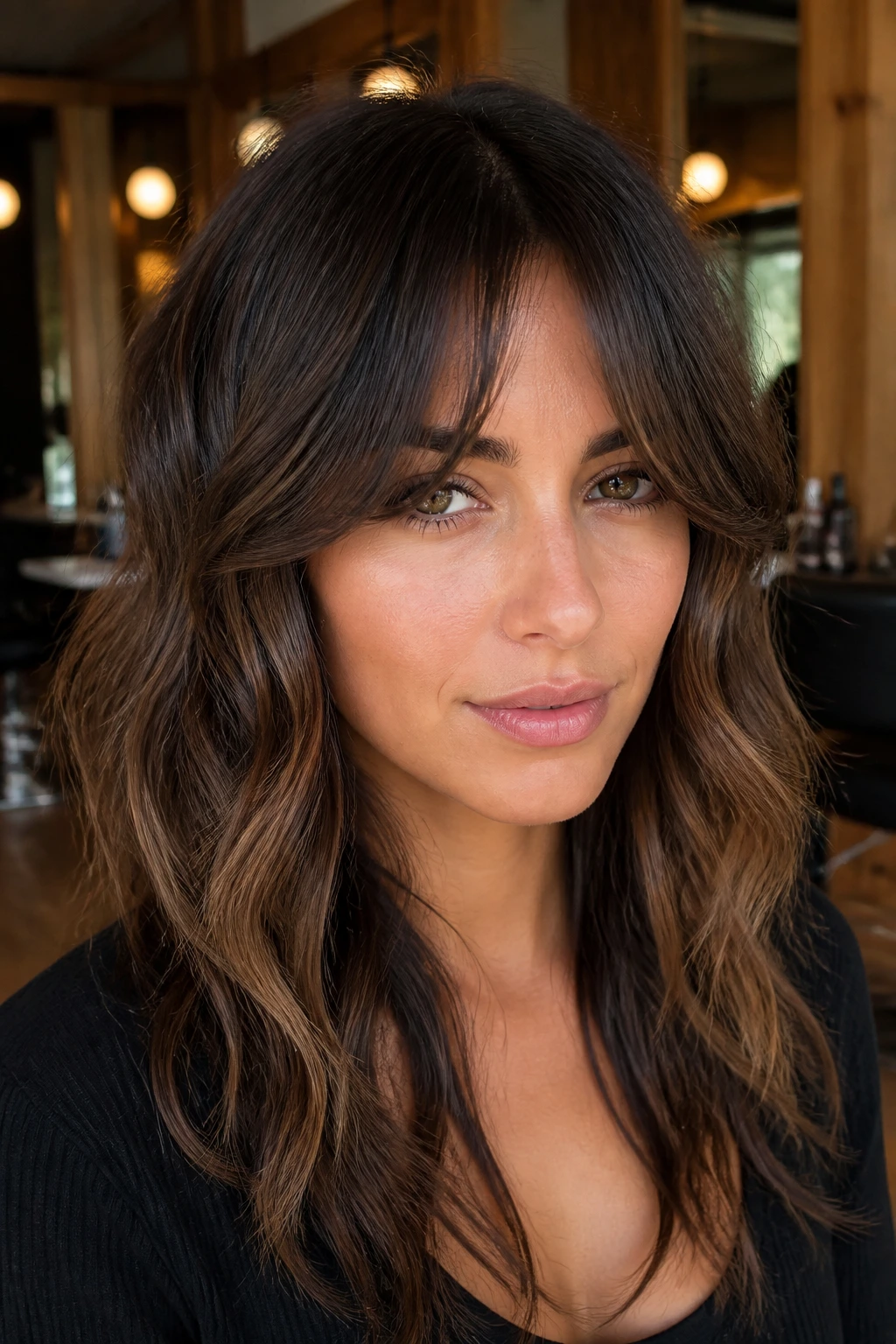
Yes, but the shape should be chosen with that in mind. Uneven waves usually do better with curtain bangs, side sweeps, or long layered fringe than with a hard blunt line, because the softer shapes hide minor differences from one side to the other.
Should wavy bangs be cut dry or wet?
Dry or nearly dry is safer when the wave pattern is strong, because you can see how much the hair shrinks and where it bends. Some stylists cut damp and refine dry, which works fine too, but a fully wet cut on wavy fringe often lands shorter than expected.
How short is too short for oval faces?
Oval faces can handle shorter bangs than many face shapes, but the hair texture still sets the limit. If your waves spring up fast, a micro fringe or high blunt line may look shorter than intended by the time it dries. I’d rather see a slightly longer bang that lands where you want it than a short one that spends all day climbing.
Can I wear bangs if I have a cowlick at the front?
Yes, but the cut has to work with the cowlick instead of trying to erase it. Deep side parts, split fringes, and longer curtain pieces usually handle that pattern better than a straight-across line. The cowlick will still exist. The point is to stop it from taking over.
What’s the easiest bang style to grow out?
Long curtain layers, split fringe, and side-swept bangs are the least annoying to grow out. They already blend into the haircut, so they do not hit the awkward “what is this doing on my face?” phase quite as hard.
How often do brunette bangs need trimming?
Shorter blunt shapes usually need a trim every four to six weeks. Longer, softer fringe shapes can go a little longer, around six to eight weeks, depending on how fast your hair grows and how much you mind the extra length.
Do heavy brunette bangs make the forehead look smaller?
Yes, which can be useful or annoying depending on the style. A full blunt fringe or dense arched bang can shorten the forehead visually, while curtain and split styles keep more space open. For oval faces, the balance matters more than the size alone.
What should I do if my bangs puff up at the roots by lunch?
Check two things first: product weight and drying direction. If you used too much cream or let the roots dry in random directions, the front will puff or split. A quick mist, a brush-through, and 20 seconds of directed heat usually fixes more than people think.
The Fringe That Still Looks Like You
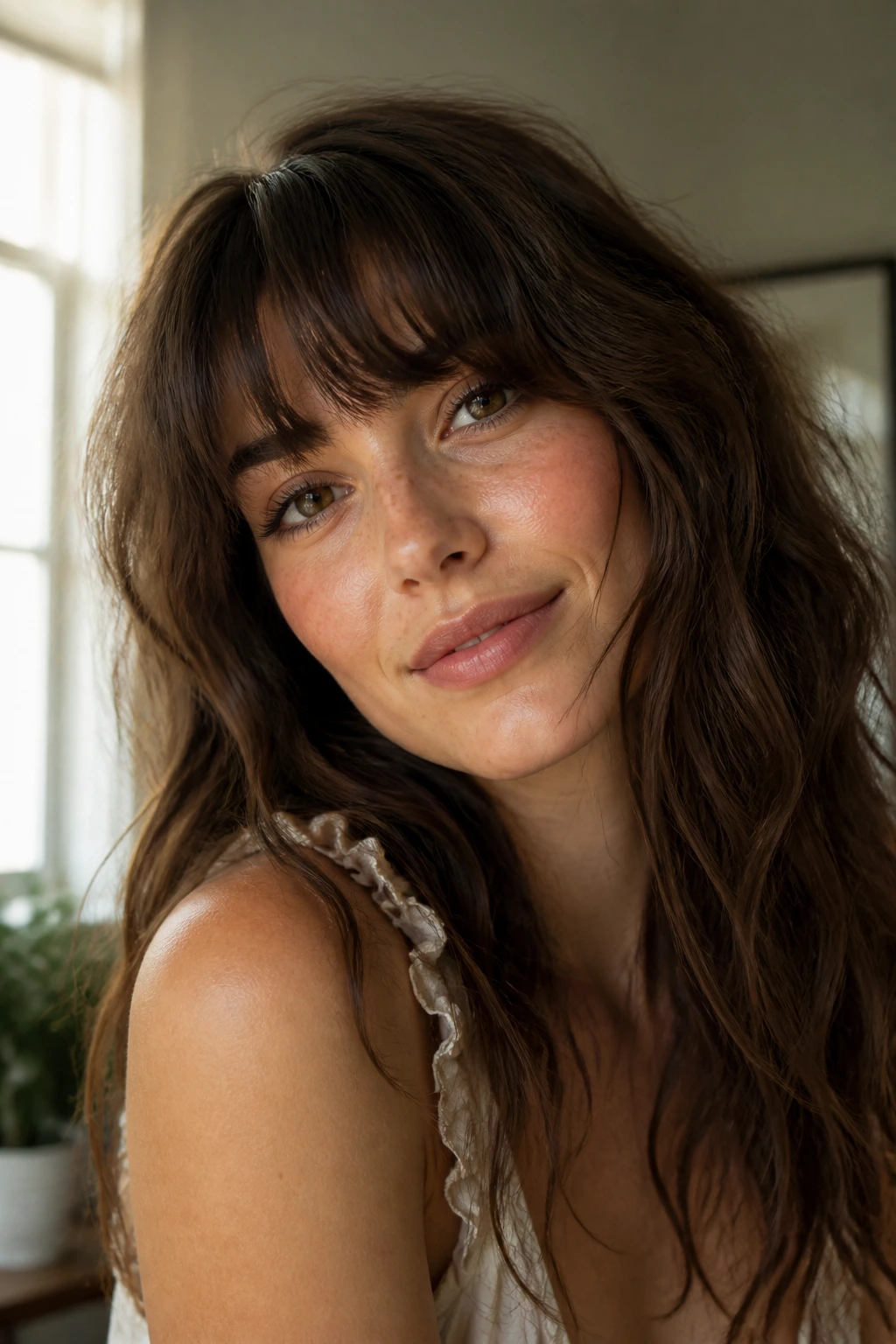
The best brunette bangs for oval faces and wavy hair are the ones that keep their shape without demanding a full-time job. A fringe that bends a little, softens at the edges, and still looks clean when you’re three hours past your first styling pass tends to earn its keep.
That’s why I keep favoring shapes with some give — curtain, bottleneck, side sweep, long layers, split fringe. They survive the parts of the day that hair tutorials love to ignore: the walk to the car, the forehead sweat, the random brush with a jacket collar, the moment you push the whole thing aside and keep going. Pick the shape that can handle that life, and you’ll wear it more often.