



A blunt cut can look crisp in the salon chair and stubborn on a busy morning. Soft layers are kinder than that. They keep the outline clean, but they let the hair move around the face instead of hanging like one heavy sheet.
That matters more after 50 than most haircut advice admits. Hair often changes texture — gray strands can feel wirier, fine hair can lose lift at the crown, and thick hair can puff at the ends if the layers are placed in the wrong spot. The fix is not “more layers.” It’s smarter layers: where they start, how much weight they remove, and whether the shape still holds when you let it air-dry.
I’m drawn to cuts that do a real job in real life. Not hair that looks cute for one blowout and then collapses by lunch. The best soft-layered styles give the face some light, keep the neckline tidy, and still look like hair, not a shell of product and hope. The list below leans that way — polished, but not stiff, and forgiving when you miss a styling day or two.
Why These Soft Layers Earn Their Keep
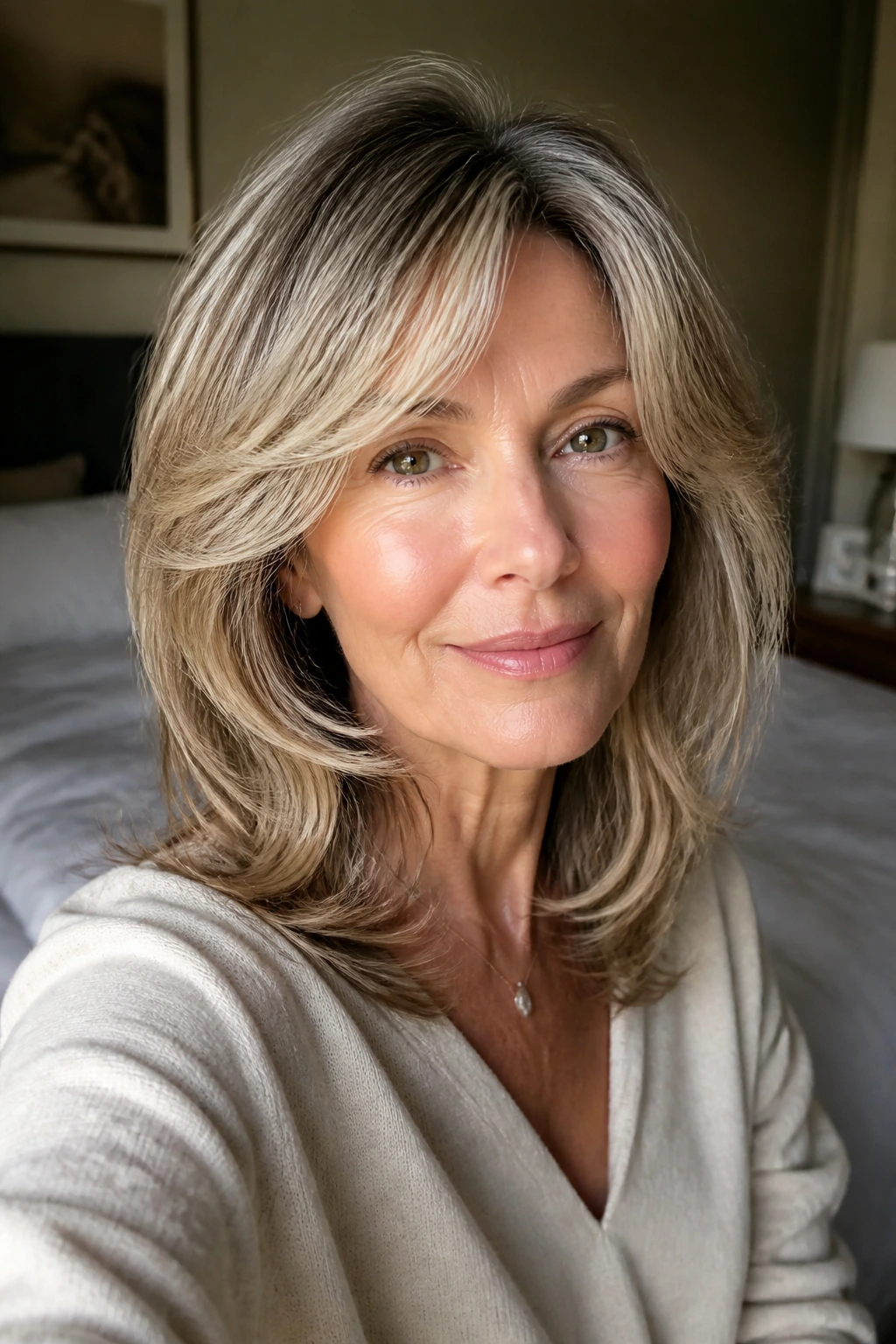
-
They soften the strongest lines in the face: The shortest pieces usually land near the cheekbone, jaw, or collarbone, which is where a haircut can ease a hard edge without hiding the face.
-
They keep the cut from looking heavy: Soft layers remove bulk from the inside of the shape, so even thick hair falls with more swing and less triangle.
-
They grow out more neatly: A clean perimeter with gentle layering tends to age better between trims than a heavily razored cut that turns uneven fast.
-
They work with gray and silver hair: Lighter strands show movement and dimension well, and soft layers keep that texture from looking blocky.
-
They give you styling range: Most of these shapes can be worn smooth, air-dried, or brushed out with a round brush, which matters when your morning routine changes.
-
They suit short, mid-length, and longer hair: The trick is not the length itself. It’s where the layers begin and how much softness the outline keeps.
1. Collarbone Lob with Soft Curtain Layers
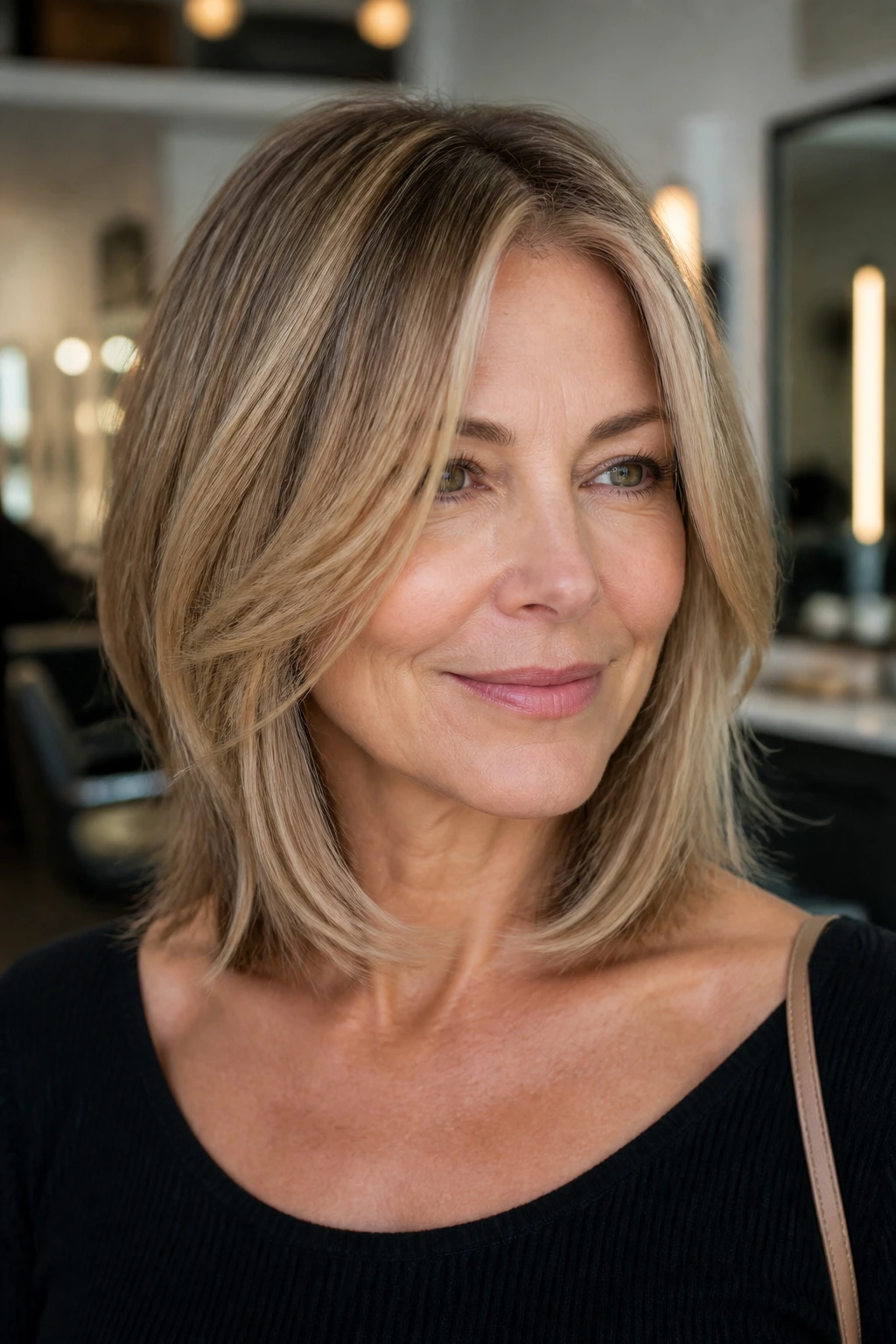
The collarbone lob is one of those cuts that earns its place by behaving. It sits right at the sweet spot where hair still feels long, but the ends don’t drag the face down. Add soft curtain layers that start around the cheekbone, and the whole shape opens up without getting wispy.
Why it flatters the face
The key is the distance between the first layer and the perimeter. If the shortest piece hits too high, the cut starts to look dated fast. If it starts around the cheekbone or just below it, the face gets lift where it needs it and the rest of the hair keeps a clean line at the collarbone.
This cut is especially useful for fine to medium hair. The lob gives the illusion of density at the bottom, while the curtain layers keep the front from sitting like a block. I like this one with a middle part when the face needs balance, or a slight off-center part when you want a little more sweep.
A round brush, a medium blow-dry cream, and a few seconds curling the front away from the face are usually enough. Nothing fancy. Just enough bend to keep it from lying flat.
2. Feathered Shoulder-Length Cut with a Side Part
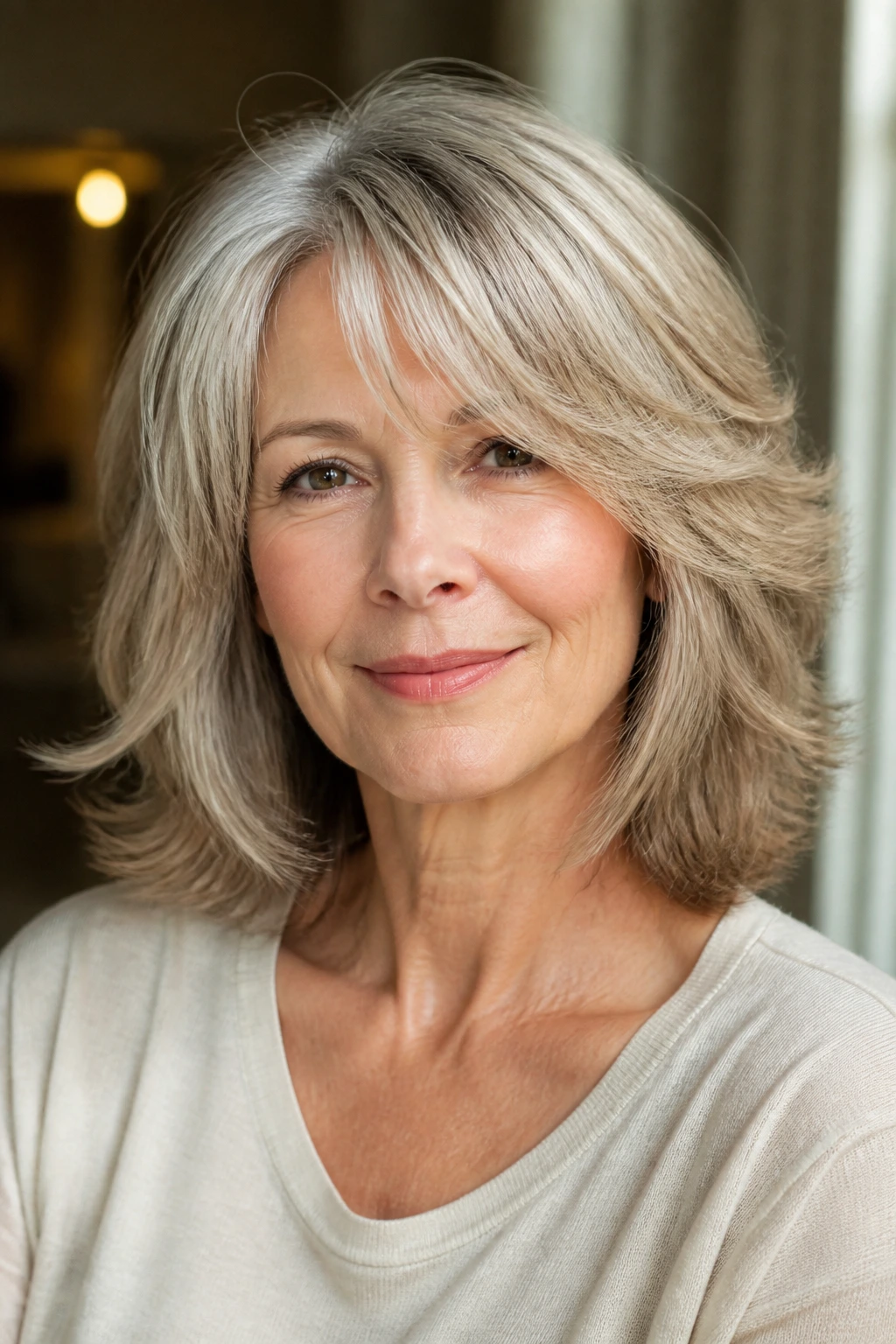
A side part changes the whole mood of shoulder-length hair. It gives the top a little lift, lets the forehead relax, and makes feathered layers look softer than they do with a strict center line. This is one of my favorite cuts for someone who wants movement without giving up the easy pull-back length that still works for clips, low buns, and half-up styles.
The feathering should live mostly around the sides and front, not hacked into the back. That keeps the silhouette smooth. If the hair is straight, the ends can be curved under with a paddle brush and a dryer. If it’s wavy, a small amount of cream on damp hair keeps the layers separated instead of frizzy.
What I like here is the way it behaves on day two. The side part loosens a bit, the feathering settles, and the cut often looks better after a little lived-in movement. That is a haircut doing its job.
3. Chin-Length Bob with Rounded Soft Layers
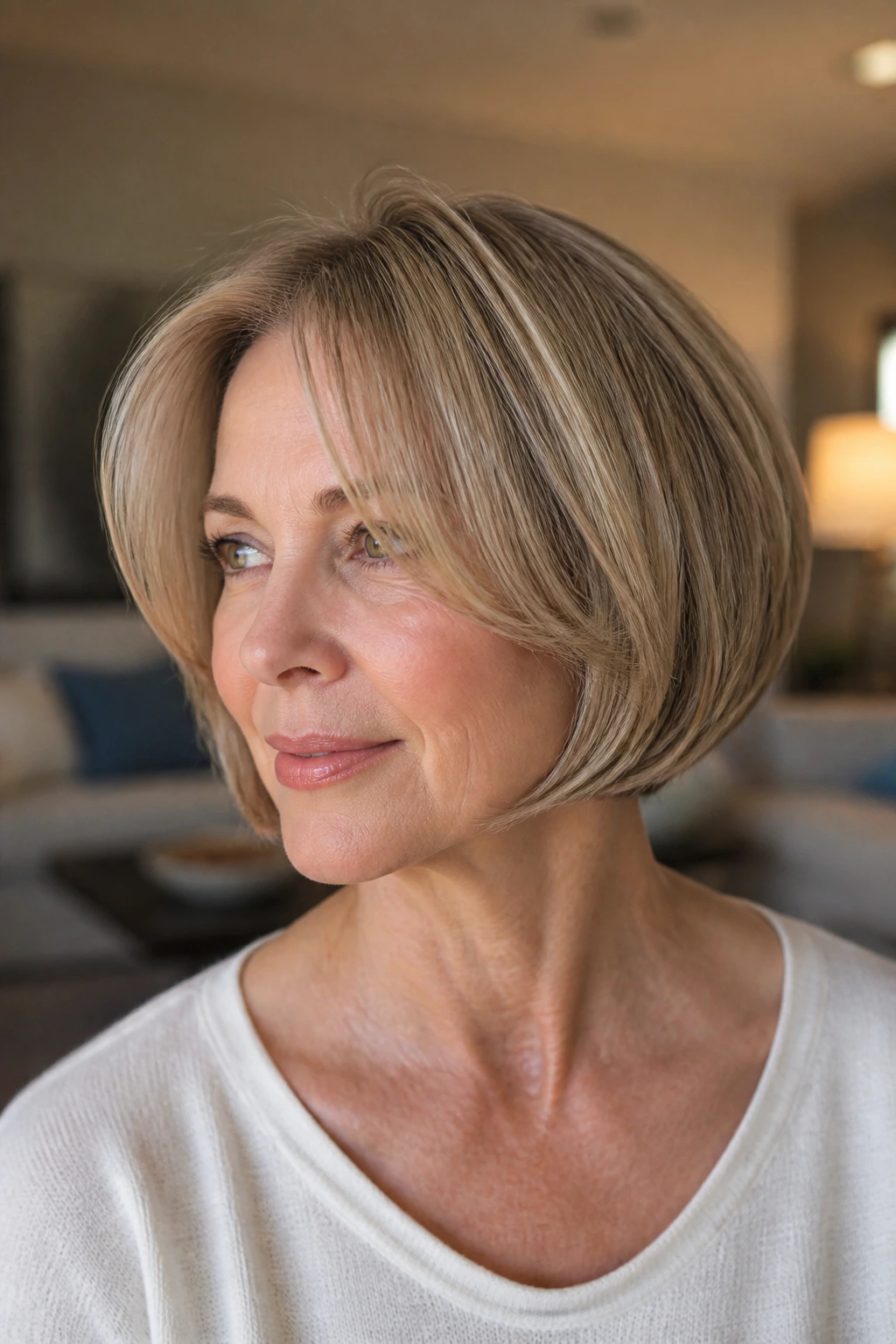
Why does a chin-length bob look so fresh when the ends are cut softly? Because it follows the jaw instead of fighting it. A blunt chin-length bob can feel severe on some faces. Add rounded layers through the crown and front, and the cut starts bending around the face instead of stopping dead at the jawline.
How to style it
The trick is to keep the shape compact. You want the bob to curve inward just enough to skim the chin, not puff out at the sides. A 1-inch round brush is enough for most hair types, especially if you dry in small sections and wrap the front pieces away from the face for a few seconds.
This cut is a good match for finer hair because the perimeter creates fullness right where you can see it. It also works for glasses wearers. The shorter line keeps the frame of the glasses and the hair from competing with each other.
If your hair grows a little wide at the sides, ask for soft interior layers rather than aggressive thinning. That keeps the bob neat instead of fluffy.
4. Sweeping Pixie with Crown Volume
When hair starts collapsing at the crown, a swept pixie can feel like a reset button. The sides stay close enough to show the neck and ears, but the top keeps enough length to move. The volume lives at the crown, not all over the head, which is why this version looks polished instead of puffy.
A good swept pixie depends on contrast. The top should be long enough to sweep diagonally across the forehead, and the back should stay tapered so the shape does not mushroom. I usually think in terms of lift at the top and control at the sides. That’s the whole game.
Use a pea-sized amount of mousse at the roots, then direct the hair forward while drying and sweep it over at the end. If the fringe falls into your eyes, it probably needs a trim, not more product. Short cuts tell the truth fast.
5. Long Layers with Face-Framing Pieces
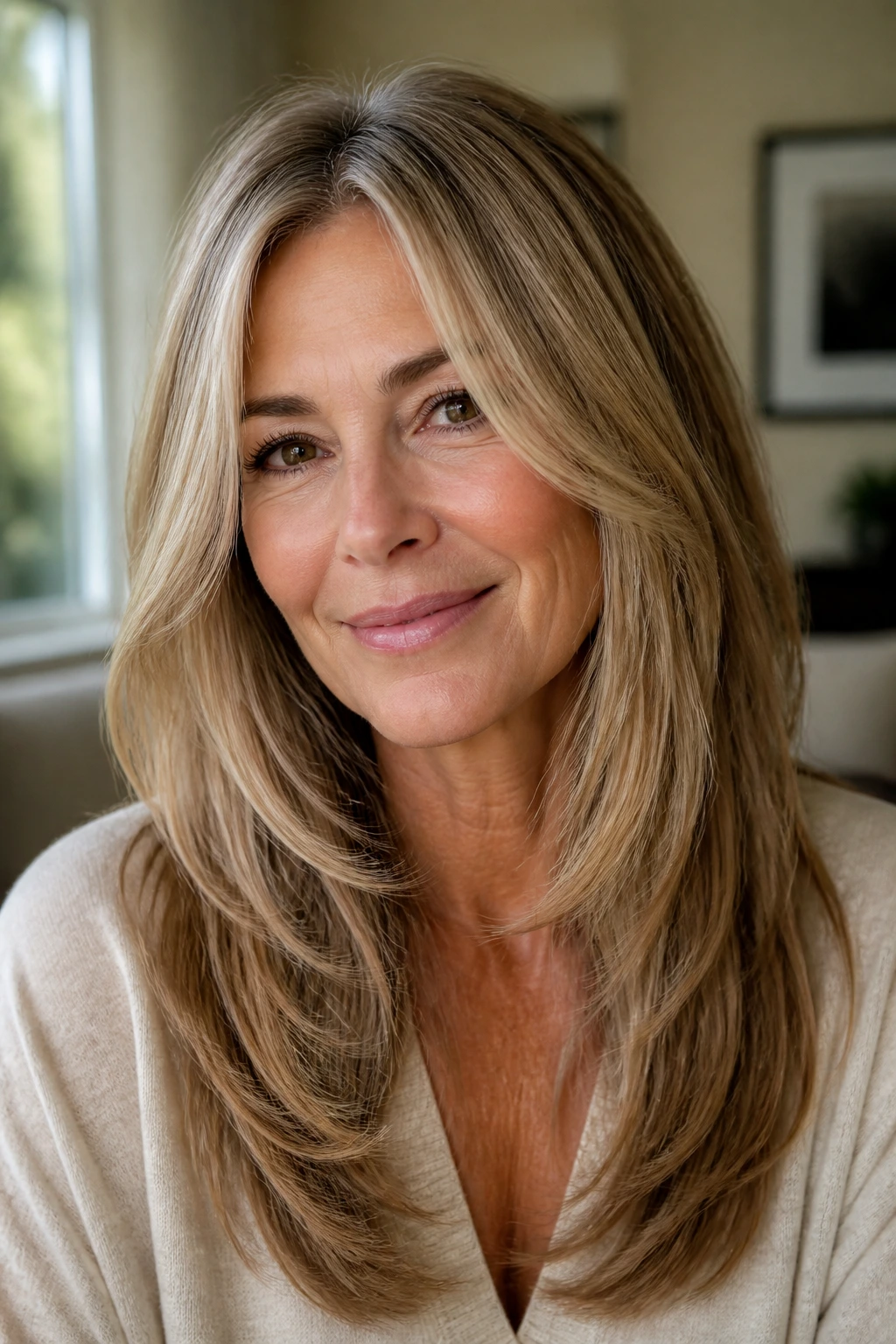
Long hair after 50 does not need to be chopped into submission. It just needs structure. Long layers with face-framing pieces keep the length you want while stopping the ends from hanging in one solid curtain. The best versions start low — usually below the chin, often closer to the shoulder — so the layers support the length rather than compete with it.
This is the cut I’d pick for someone who likes ponytails, low twists, or a half-up style but wants a little movement around the face when the hair is down. The front pieces can angle from the cheekbone to the collarbone, which is enough to soften the outline without sliding into the “too layered” zone.
It’s also a smart option for wavy hair that needs help sitting cleanly. Too many long layers can make wavy hair poof. The right ones make it swing.
6. French Bob with Grown-In Texture
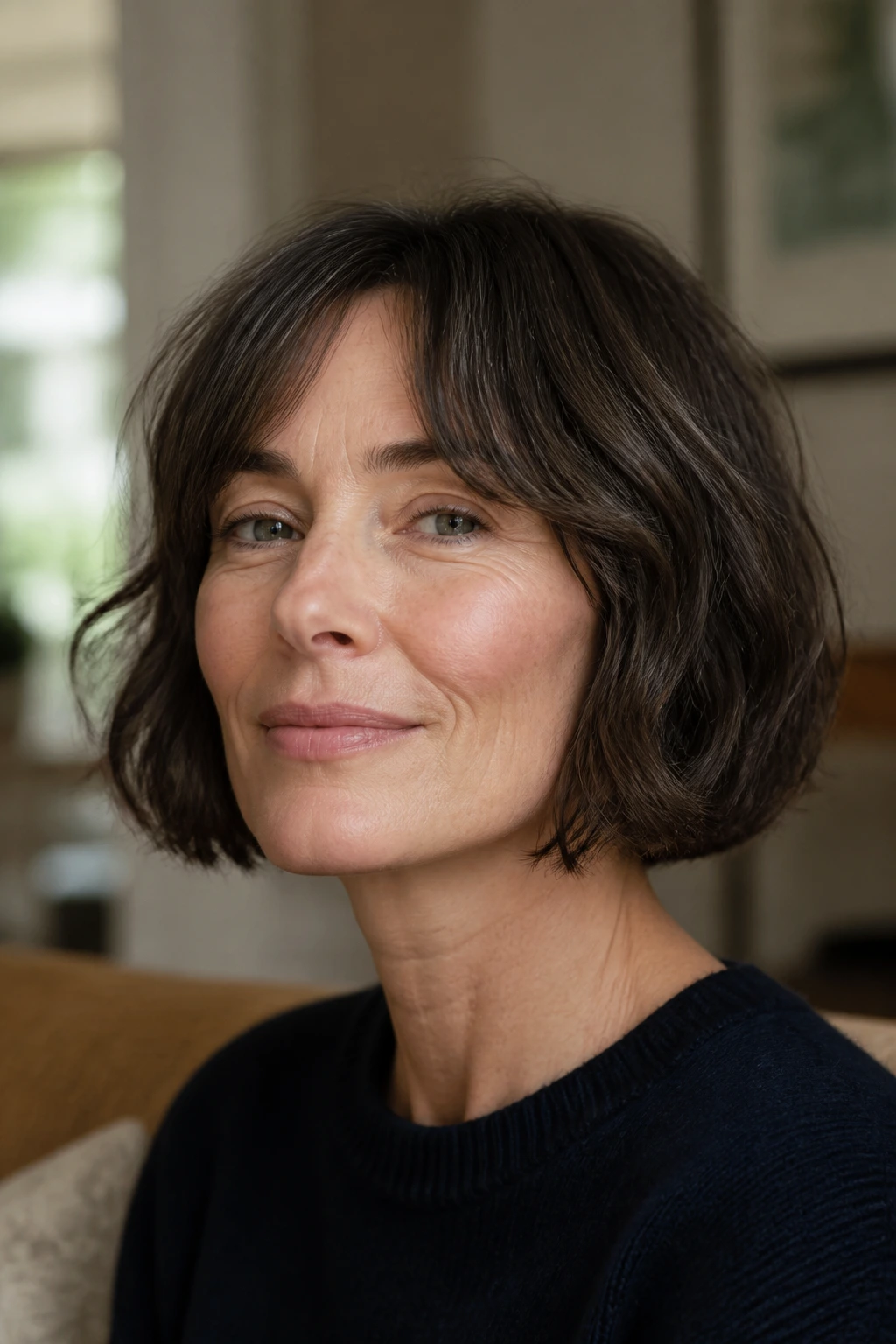
The French bob gets overdone in photos, but in real life the best version is a little less precious. Think jaw-skimming length, a soft bend, and texture that looks lived in rather than baked in with a curling wand. The ends should feel a touch broken up, not razor-sharp.
Compared with a blunt bob, this one has more air in it. That matters if your hair feels dense around the face or if you want something that doesn’t require perfect styling every morning. A side part helps, but even a middle part can work if the fringe is loose enough to move.
I prefer this cut on hair that has some natural wave. Straight hair can wear it too, but then you need a little bend at the ends — a flat iron turned only slightly to create a soft tuck, not a straight, stiff edge.
7. Soft Shag with a Wispy Fringe
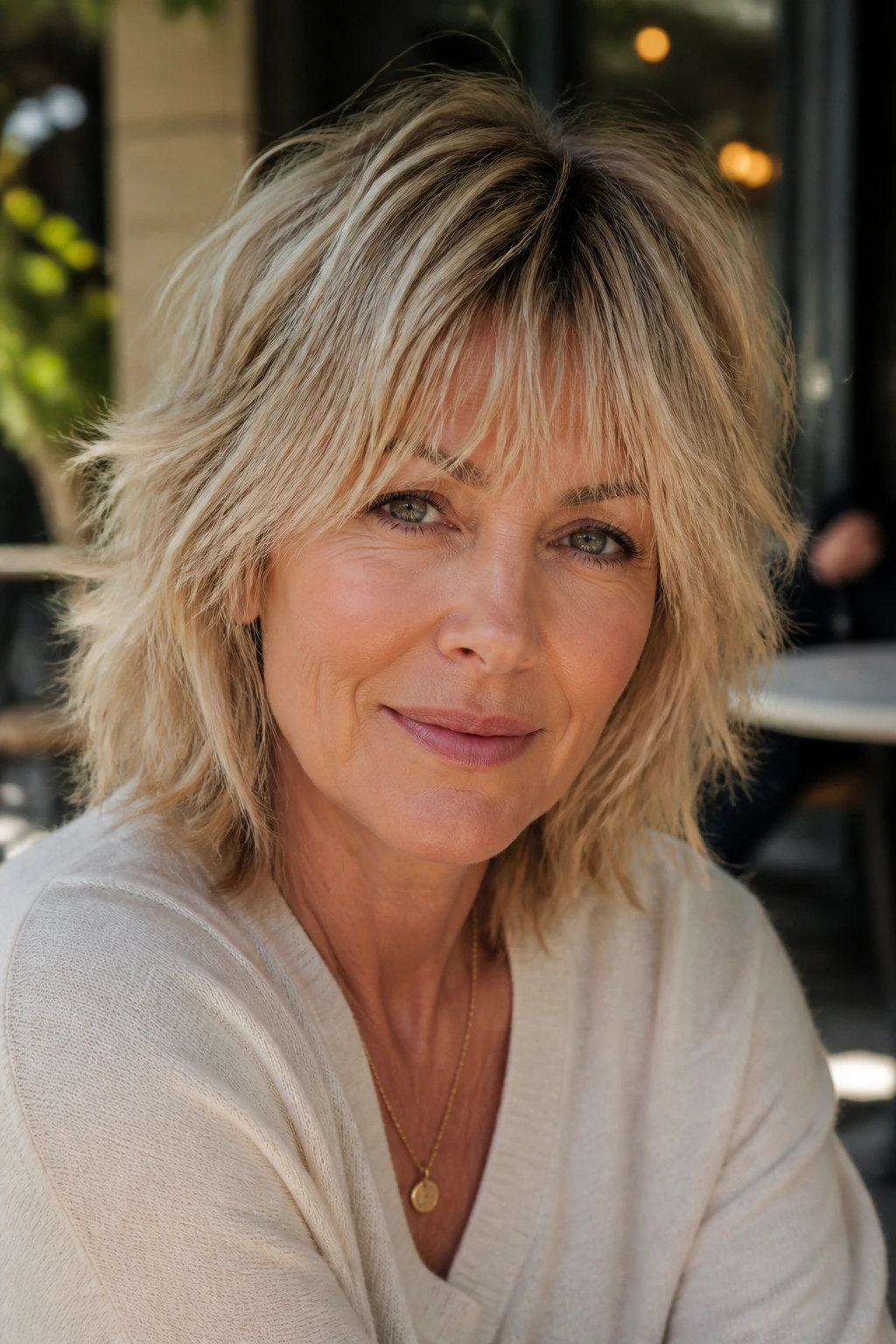
The soft shag is what happens when you want texture without chaos. The crown gets light layering, the sides get movement, and the fringe stays wispy instead of blunt. Done right, it looks airy around the eyes and temples, which is a useful place for a haircut to do some lifting.
What to ask for
Tell the stylist you want the layers blended, not sliced apart. That phrase matters. It keeps the haircut from turning into a choppy mess that demands styling paste every day. The fringe should sit soft on the forehead, not stop at the exact middle of the brow unless you enjoy constant trim appointments.
This cut likes texture spray, a diffuser, or a fast twist-and-scrunch with your fingers. It is less friendly to ultra-sleek styling, and that’s fine. Not every haircut needs to pretend it belongs in a boardroom at 7 a.m.
If your hair is very fine, keep the layers lower and the fringe lighter. Too much shag can take away the very fullness you want to keep.
8. Mid-Length Cut with Invisible Layers
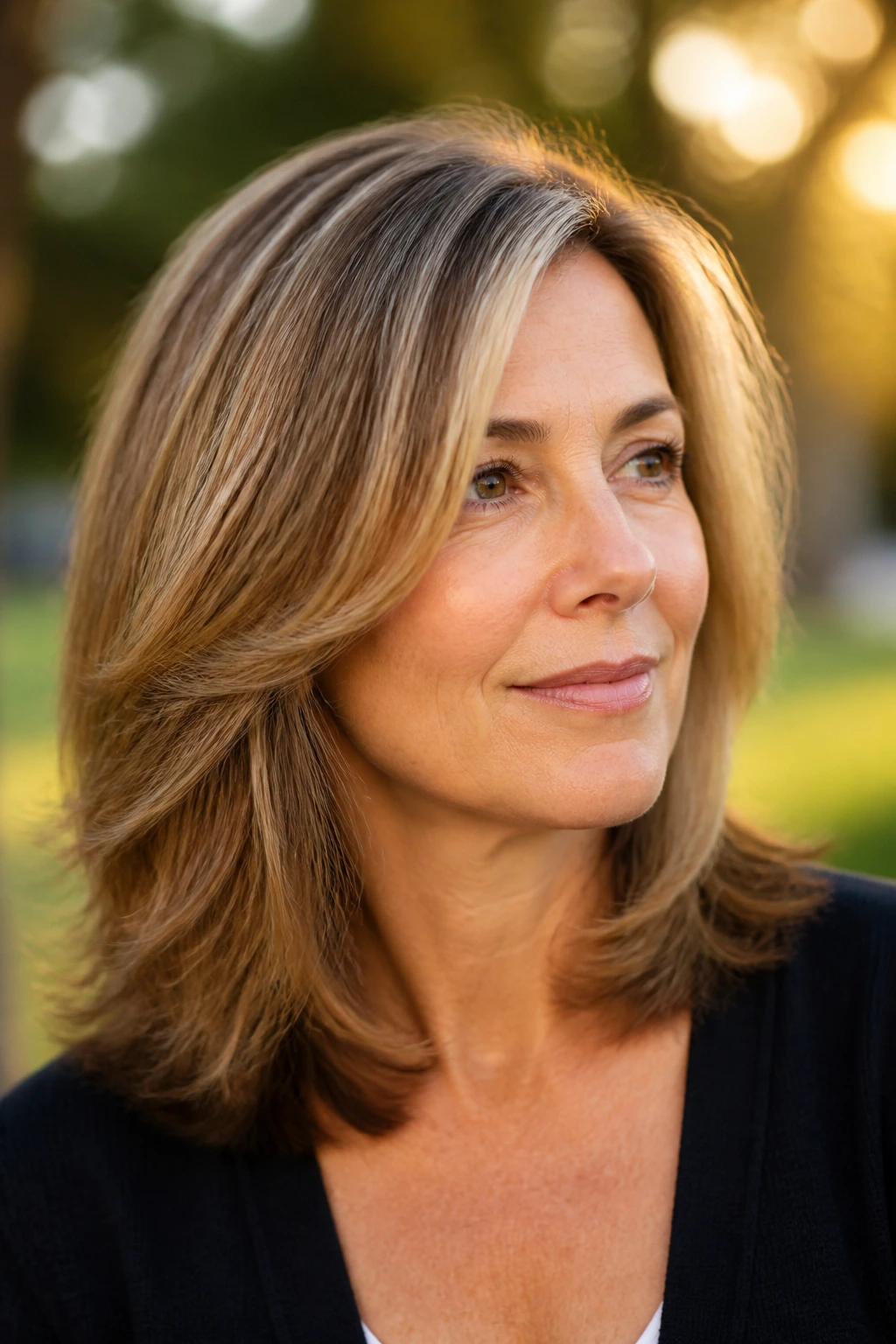
Invisible layers are my favorite answer to heavy mid-length hair. You don’t see the layers as separate steps. You feel them in the way the hair drops, which is the entire point. The surface still looks smooth, but the inside of the haircut has been relieved of some weight.
This works especially well when the hair is thick, straight, or slightly wavy and tends to flare at the bottom. The stylist removes bulk internally, often with point-cutting or careful slide work, while preserving a strong outer line. The result is calmer ends and less widening around the jaw.
If you’ve ever had a layered cut that looked too busy, this is the antidote. It gives movement without announcing itself. Quiet haircut, useful haircut.
9. Glam Side-Swept Layers
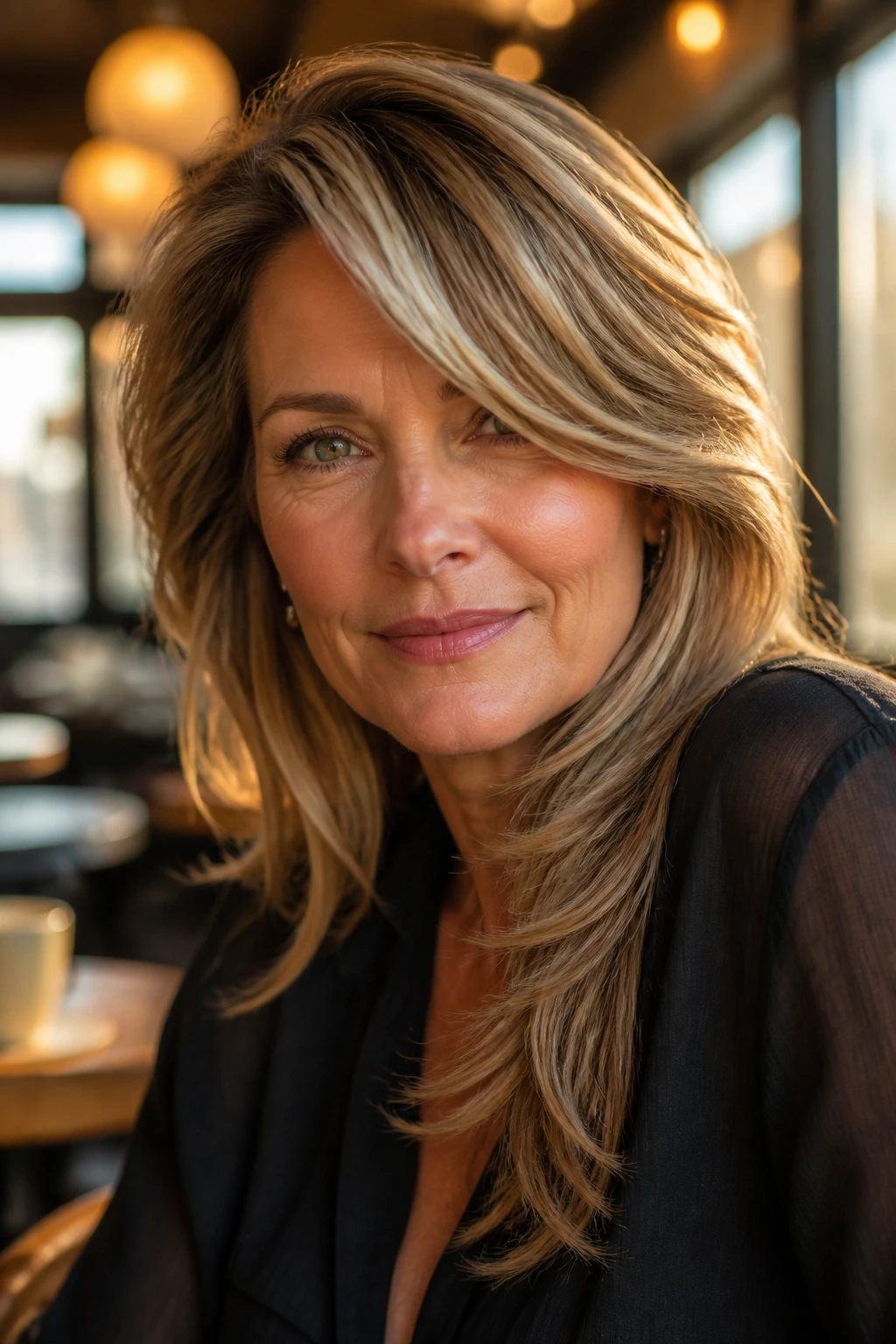
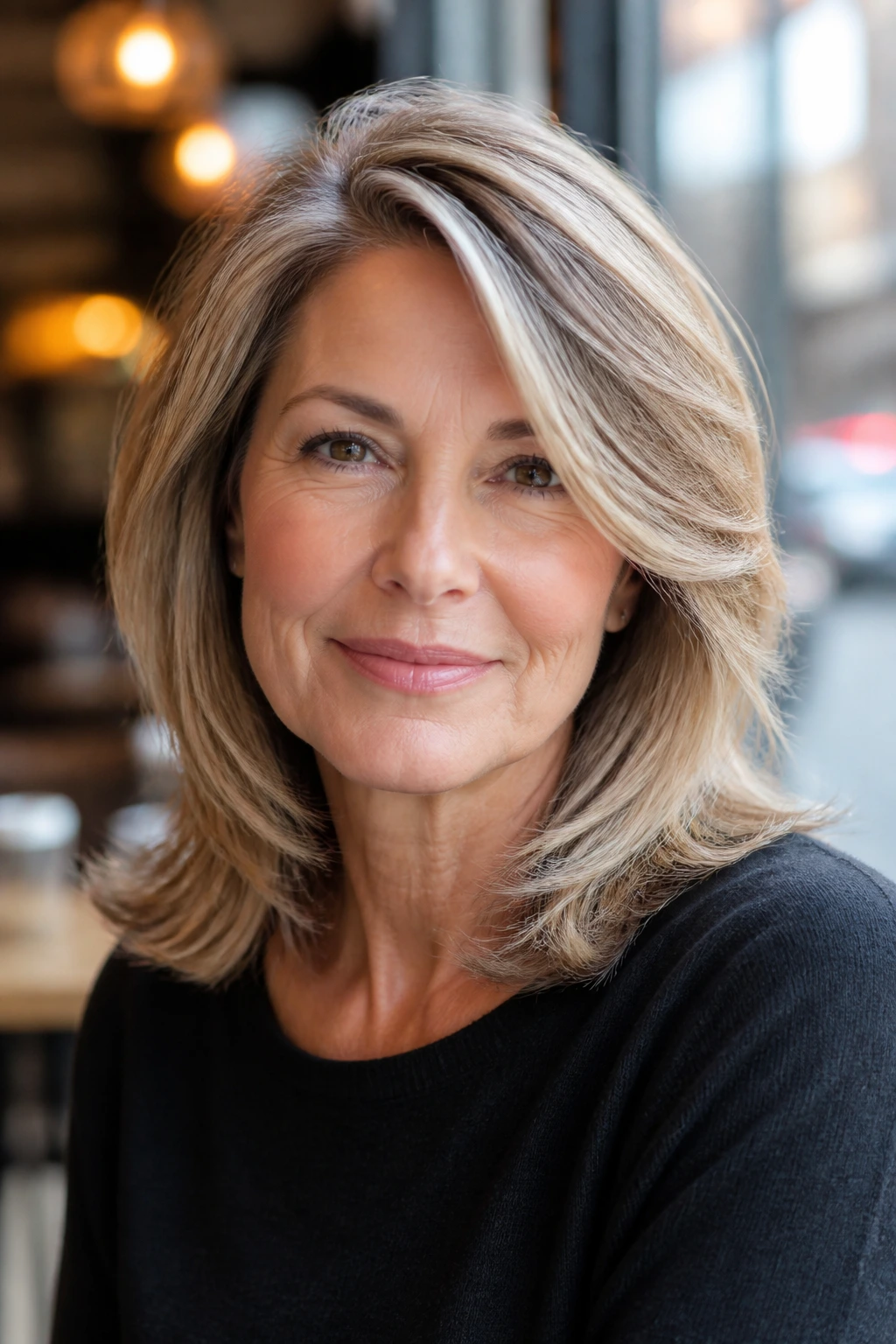
A side-swept layered cut can look dressier than almost any other shape in this list. The sweep draws the eye diagonally, which softens the face, and the layers underneath keep the hair from feeling flat or pinned in place. It’s a good choice when you want a style that still looks awake after a long dinner or a full day out.
The part should be deeper than you think. Not a dramatic theatrical swoop, just enough to create lift at the root and let the front fall in one smooth arc. A medium round brush or large Velcro roller at the front helps the shape hold that curve.
This is one of the better looks for round or square faces because the diagonal line lengthens the face without making the haircut severe. It feels polished, but the softness keeps it from looking formal in a stiff way.
10. Layered Curls with Shape Around the Face
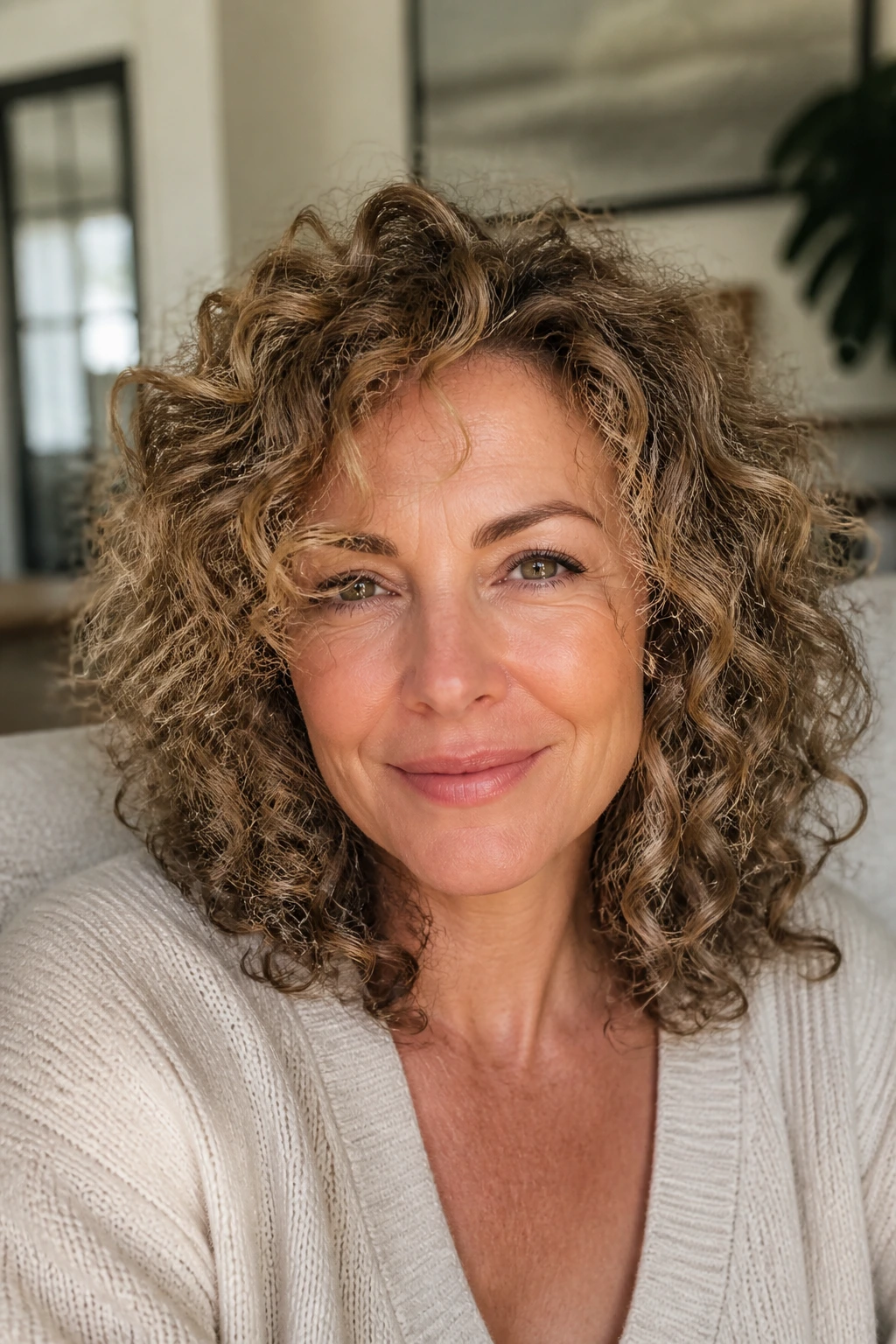
Curly hair after 50 usually needs shape more than it needs discipline. When curls lose their contour, the whole style can balloon outward. Soft layers around the face fix that by giving the curls a place to land. The shortest pieces should follow the curl pattern, not fight it.
A dry cut is often the safer move here, especially if your curls shrink a lot once they dry. Wet curl cuts can be fine, but the length judgment has to be precise. What looks like a chin-length curl when wet can jump to cheekbone once it dries.
Use this cut with a curl cream that defines without crunch. If the curls are brittle, a layer of leave-in conditioner first helps the shape stay springy. The haircut should make the curl pattern visible, not thinner.
11. Blended Gray Lob with Tapered Ends
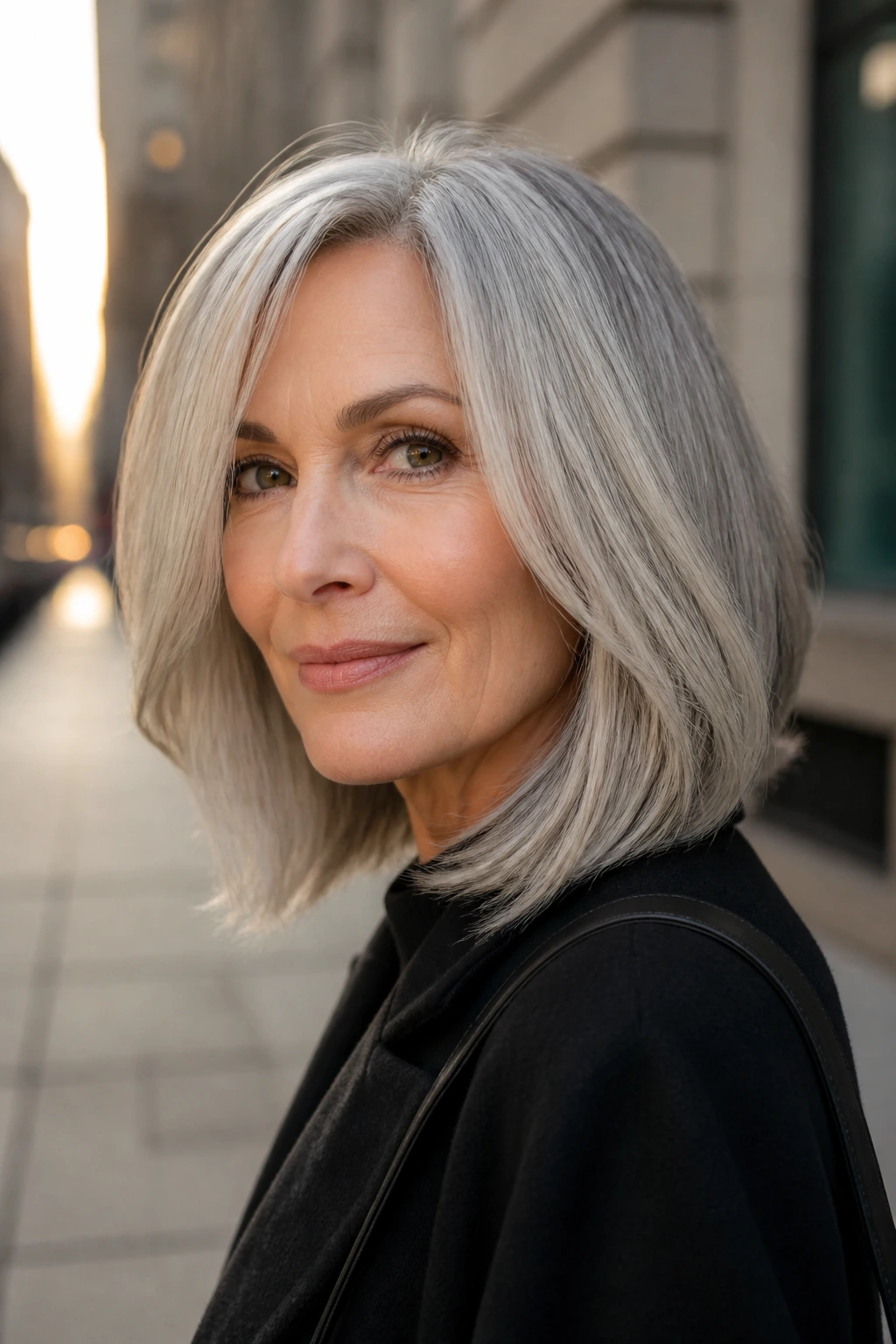
Gray hair has a personality of its own. It can be shiny, wiry, coarse, silky, or all four by the same afternoon. A blended lob with tapered ends handles that better than a blunt, boxy cut. The taper softens the silhouette and keeps the ends from looking heavy against the neck.
I like this shape because it respects silver hair’s texture instead of pretending it should behave like flat brown hair. A little taper at the ends lets the light catch the movement, while the length still offers enough weight to keep the cut grounded.
A gloss or lightweight smoothing serum can help the surface look calm, but avoid piling on oil. Gray hair can go from luminous to greasy in a hurry. This cut wants softness, not slickness.
12. Shoulder-Length Flip with Feathered Ends
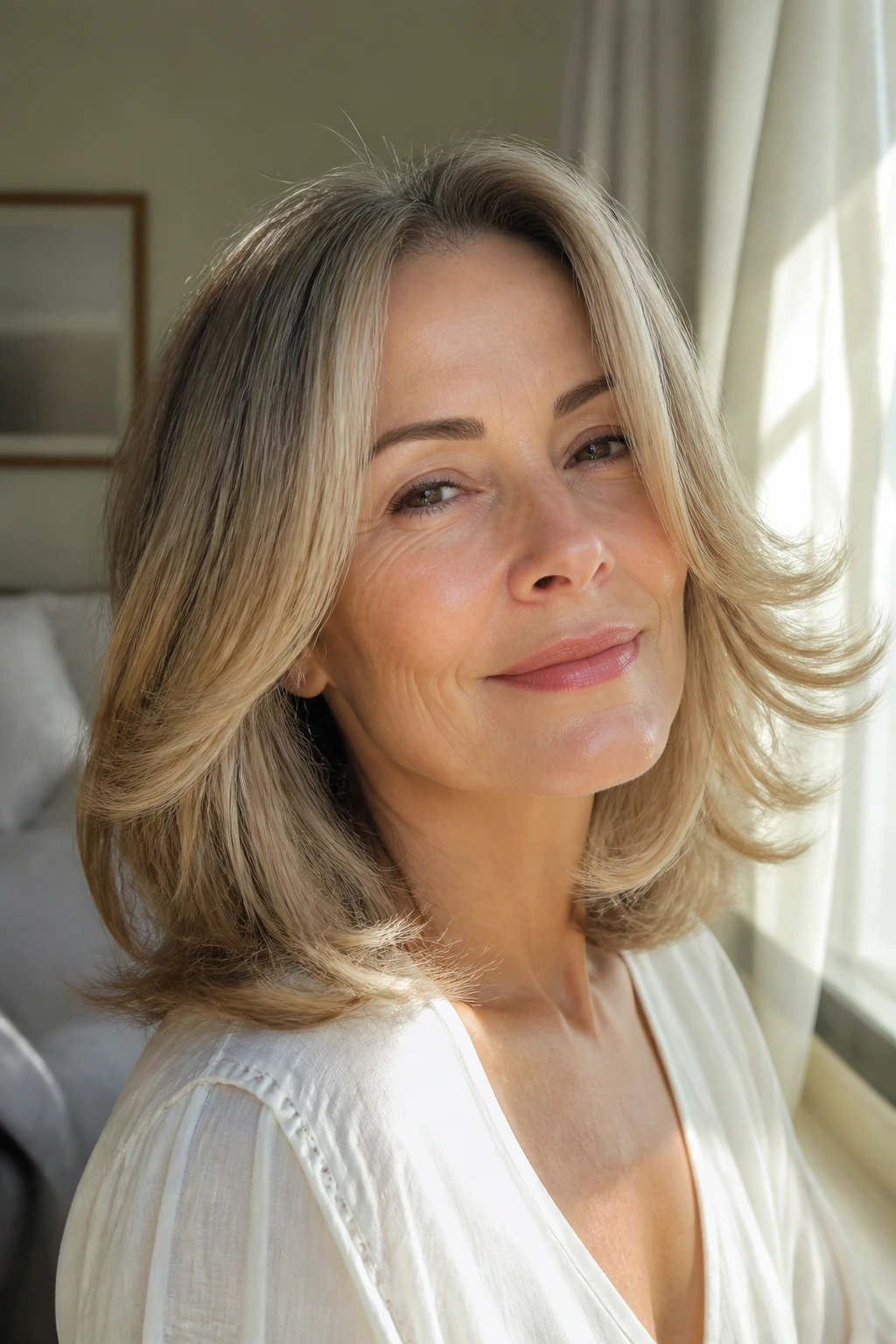
A shoulder-length flip with feathered ends is a neat way to bring some lift back into the silhouette. The ends turn out or away from the face just enough to break up the line, and the feathering keeps the top from lying too flat. It has a bit of retro energy, but it does not need to look retro at all.
This works well for hair that gets a little sleepy at the crown. A round brush and a dryer do most of the work, though a large hot roller at the front for a few minutes can make the flip hold longer. The finish should feel breezy, not lacquered.
The cut also plays nicely with highlights or silver strands because the movement shows off the color shifts. When hair moves, the color reads as richer. That’s one of those small things you notice immediately in the mirror.
13. Soft Wolf Cut for Medium Hair
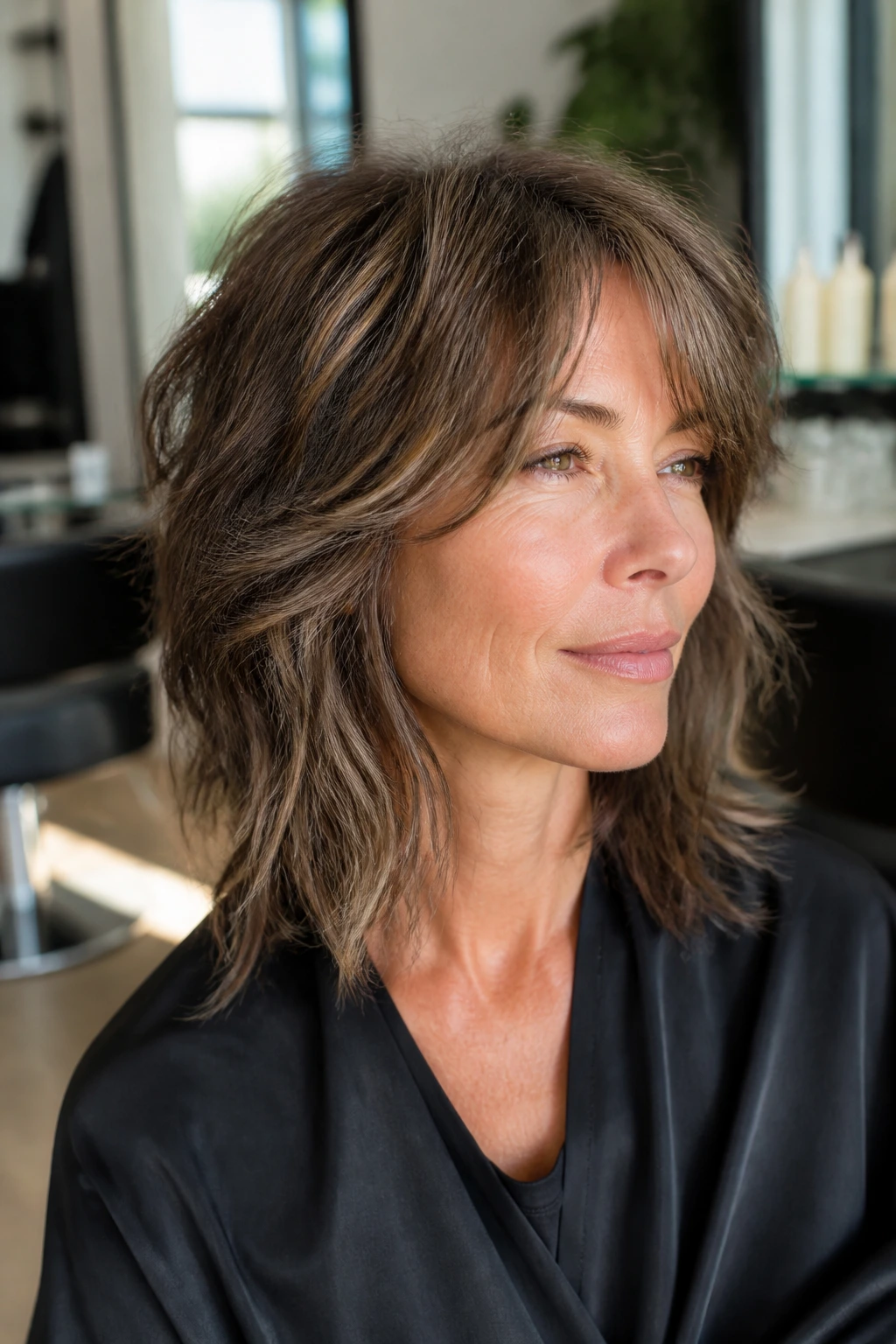
A wolf cut does not have to look wild. The soft version is much more wearable, especially for medium-length hair that needs movement without a lot of blow-drying. The crown gets a little lift, the perimeter stays longer, and the whole thing keeps a shag-like looseness that looks casual rather than punky.
Where to keep it soft
The important part is restraint. A soft wolf cut should have blended layers, not ragged chops. If the shortest pieces sit too high or the ends are shredded too much, the haircut can start to feel dated fast. Keep the contrast moderate and the perimeter clean.
This cut suits hair with some natural wave best. On straighter hair, you’ll probably need a texture spray or a bent-flat-iron finish to wake it up. On curls, the shape can look fantastic if the layers are not too short.
It’s a good choice when you want movement but not a delicate, fussy look. A little attitude. Not too much.
14. Tucked-Behind-the-Ear Bob
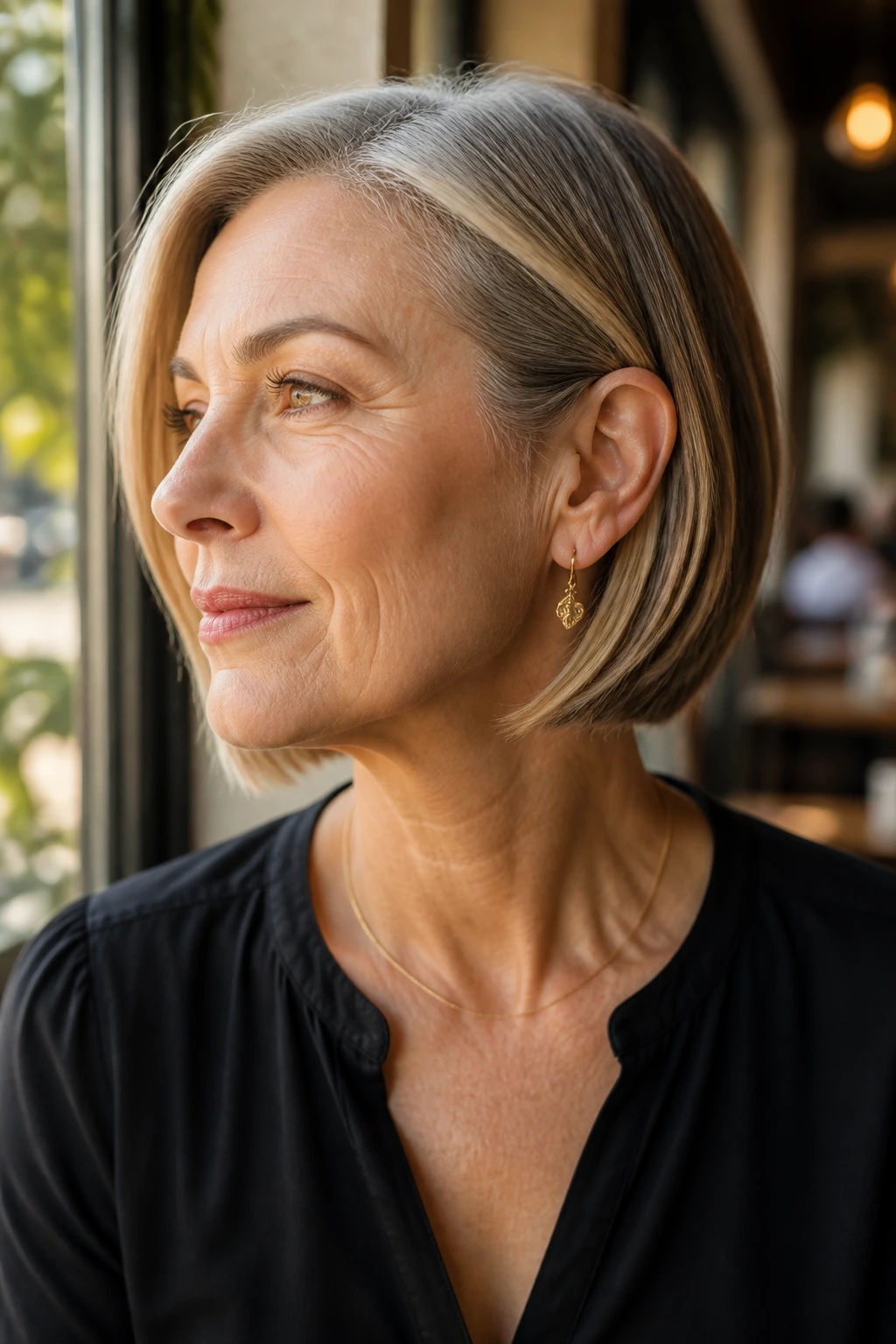
The tucked-behind-the-ear bob is one of the simplest styles here, and that’s part of its appeal. It keeps the front long enough to tuck neatly, which instantly opens the face, but the back stays short enough to feel structured. With soft layers, the hair slides behind the ear instead of fighting the bend.
This cut looks especially nice with earrings, glasses, or a strong jawline you want to show off rather than hide. The layers should skim the cheek and ear area without fraying into pieces that stick out in awkward directions. A smooth finish at the sides matters more here than big volume.
I’d call this a clean, practical cut with some polish. It doesn’t beg for attention. It just makes the face easier to see.
15. One-Length Lob with Hidden Underlayers
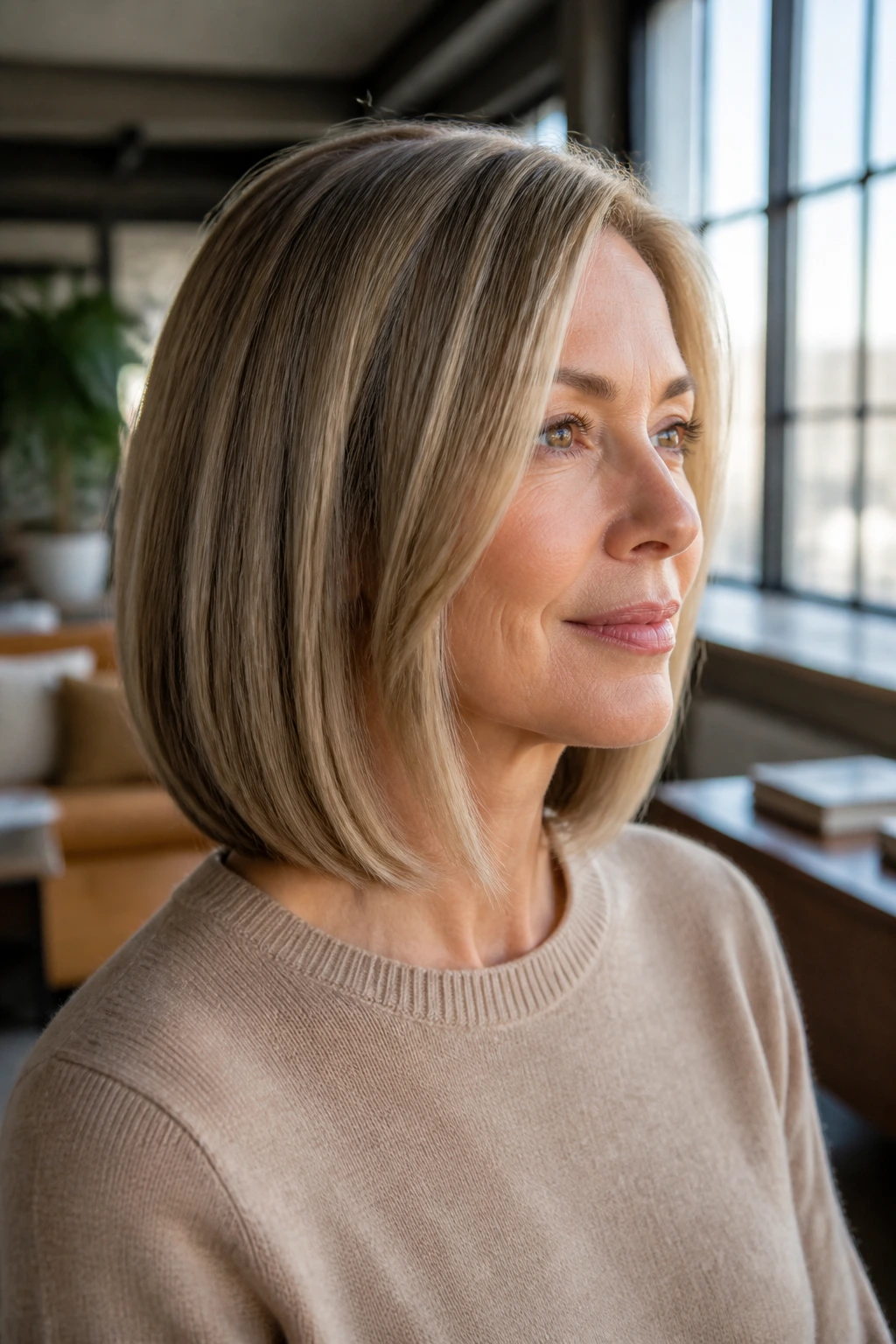
Can a one-length lob still count as layered? Yes, if the layers are hidden underneath. That’s the trick. The top line stays sleek and even, but the underlayers remove enough weight to keep the lob from hanging like a board. You get shape without sacrificing the crisp outer edge.
This is a strong choice for thick hair that behaves better with a controlled perimeter. It also works for anyone who wants the hair to look refined when straight, but still move when tucked behind the ear or bent with a brush. The difference is subtle until you run your fingers through it, and then it makes sense.
If you like the idea of low-maintenance polish, start here. It’s one of the least fussy cuts in the group.
16. Curly Crop with Crown Layers
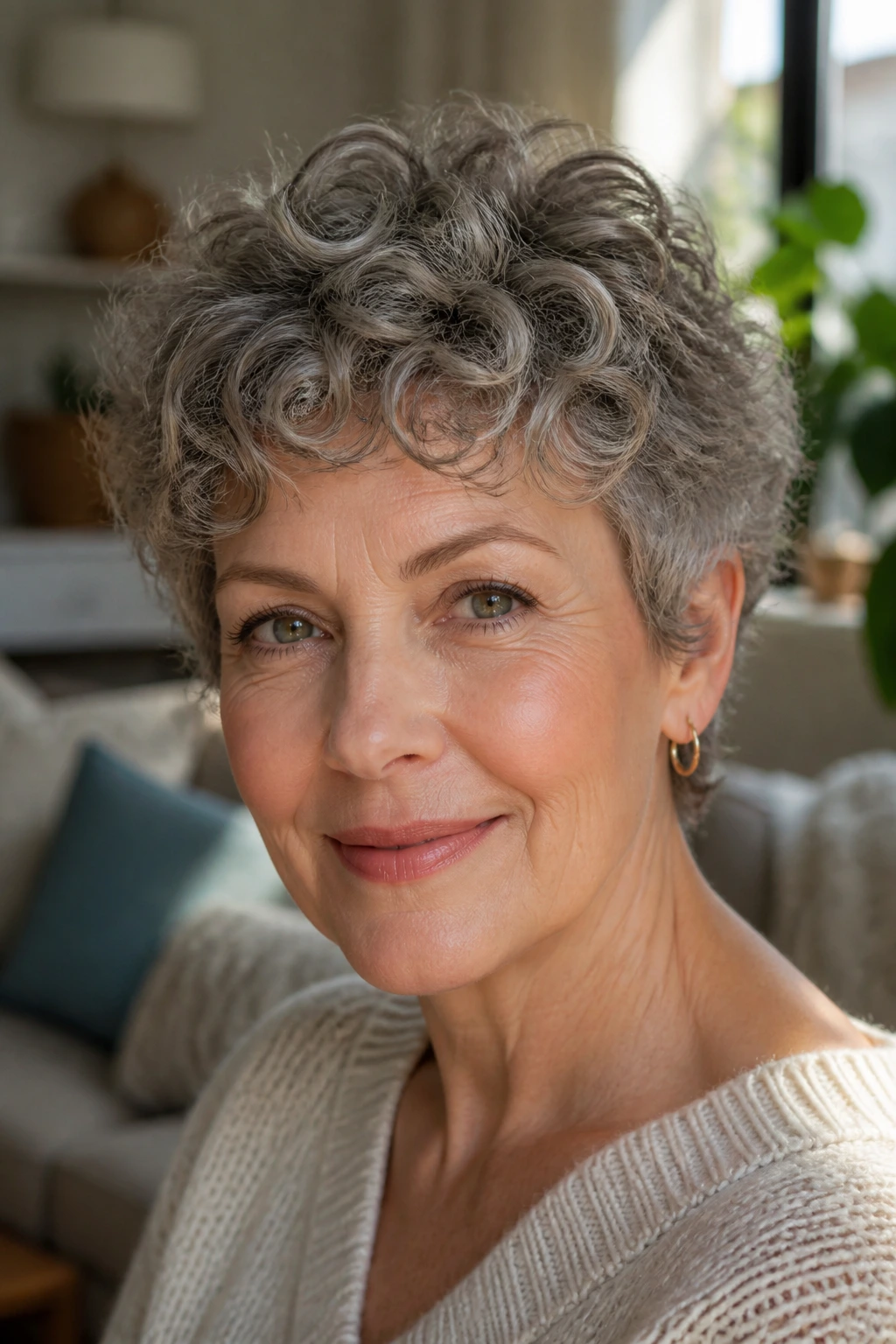
Short curly hair looks best when the crown has some breathing room. A curly crop with crown layers stops the shape from turning boxy or triangular, which is a common problem when curls are cut too evenly. The crop stays close around the sides, but the top keeps enough length for the curls to spring upward.
What makes it work
The haircut should follow the curl pattern when it’s dry, or at least very close to dry. Wet curls lie. They always do. If the stylist cuts too aggressively while the hair is stretched out, the finished shape can end up shorter and wider than planned.
This style is lovely with a curl cream and a diffuser on low heat. You want the curls defined, not blasted apart. If the hair is coarse, a little leave-in conditioner under the cream can help keep the crown from frizzing up.
It’s a short cut with a lot of personality, but still soft enough to feel elegant.
17. Airy Side-Swept Bangs and Soft Layers
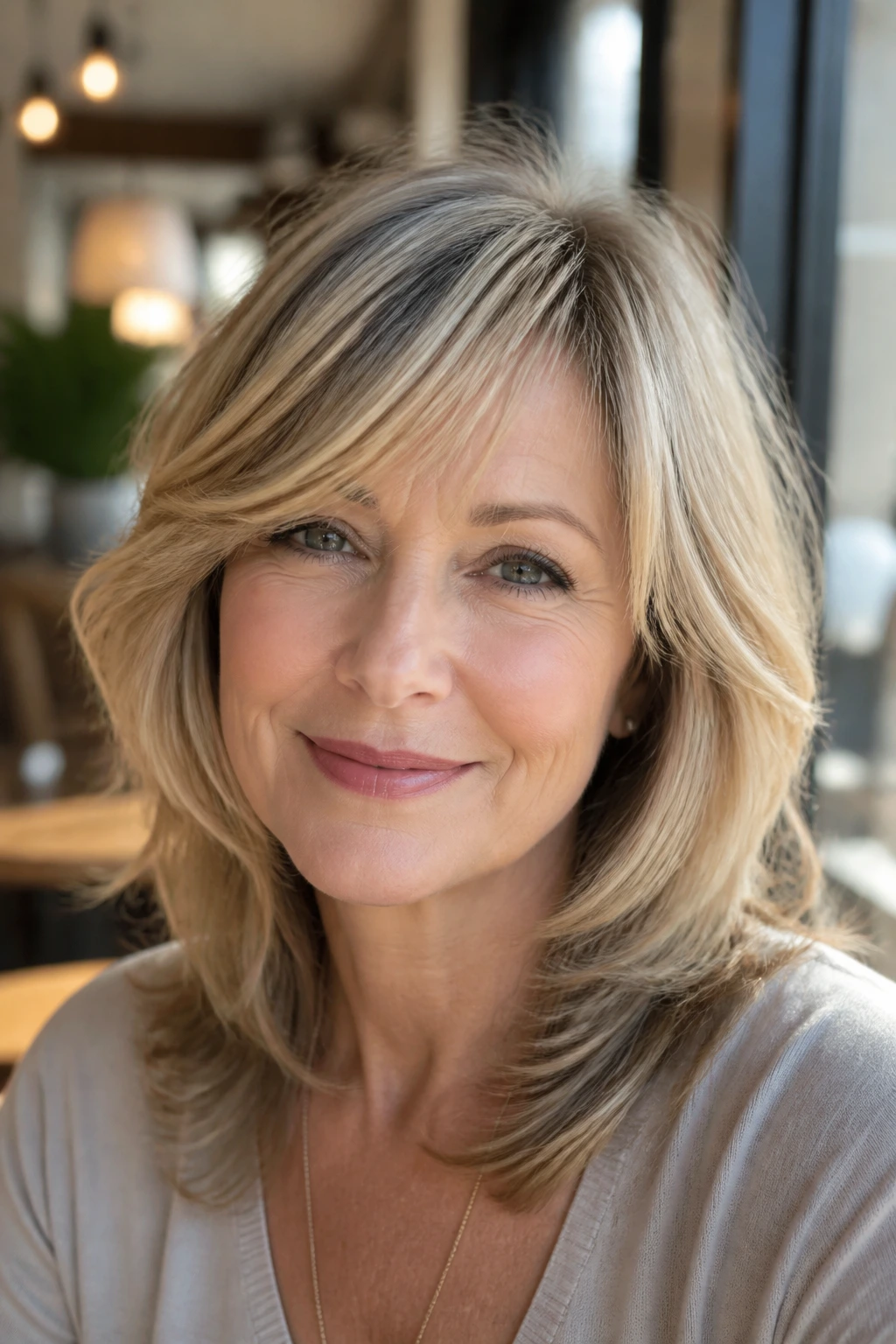
Side-swept bangs are the easiest bangs to live with when you want face-framing without the commitment of a blunt fringe. They blend into soft layers instead of sitting as a hard line, which makes the haircut feel lighter around the forehead. That matters if you want movement but don’t want to babysit your bangs every 30 minutes.
The length should start long enough to sweep across the brow and tuck into the side layers. I’d rather see them a little too long than too short. Too-short side bangs can separate and poke up, which is a small annoyance that gets old fast.
This combo works for straight, wavy, and slightly curly hair. The only thing it really dislikes is a heavy hand with hairspray. Keep the fringe touchable. That’s where the softness lives.
18. Silky Straight Layers with a Bent Finish
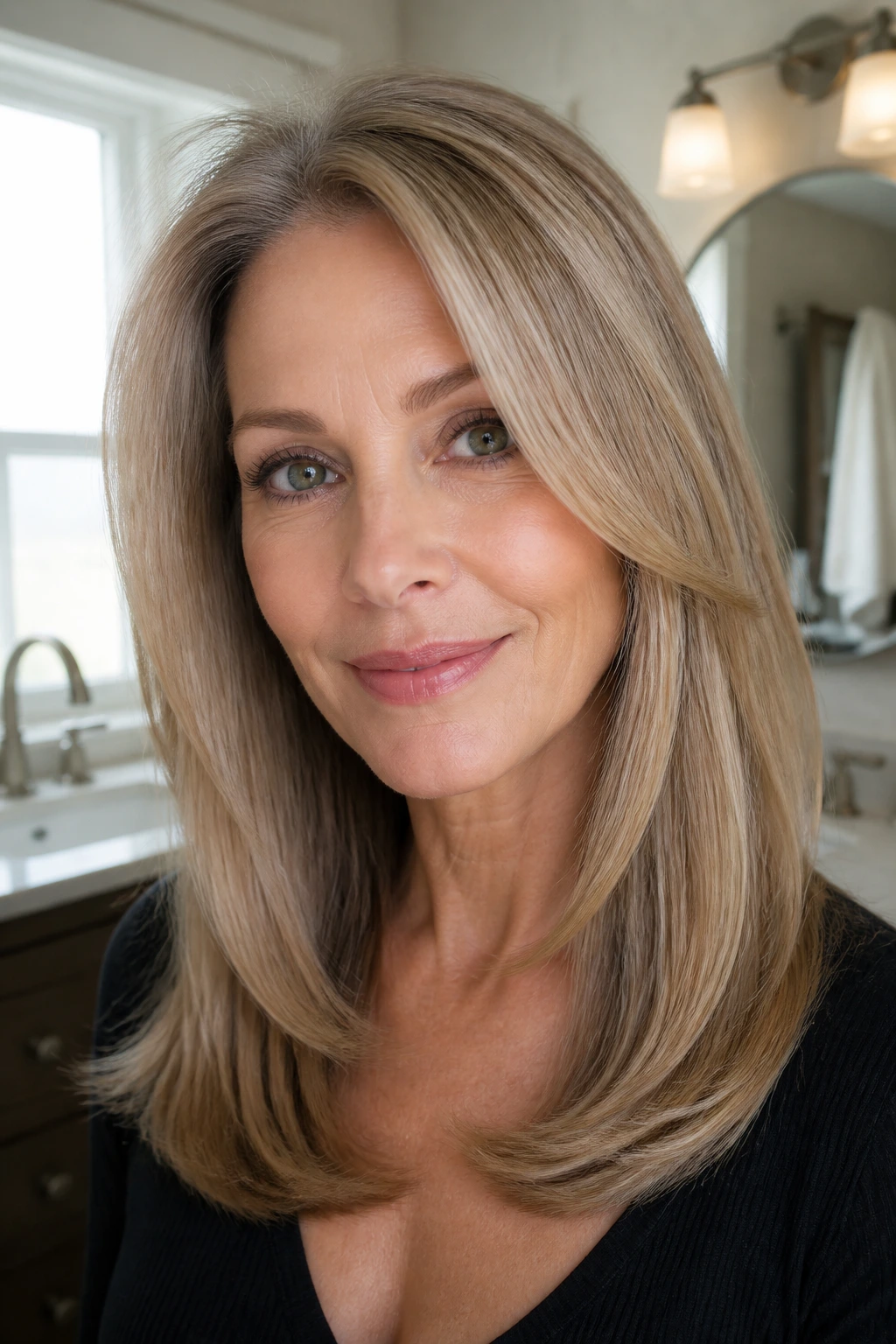
Straight hair can look flat fast, which is why the finish matters more than the cut sometimes. Silky straight layers with a bent finish keep the body smooth but give the ends a slight curve — inward, outward, or a tiny bend under. That little movement keeps the shape from feeling severe.
This is not about full blowout volume. It’s about control. The layers should be subtle enough that the line still reads sleek from across the room, then soften up when you move. A flat iron on a low-to-medium heat setting can create the bend if your hair resists the brush.
If your hair has a stubborn center part or a strong cowlick, this cut can still work, but the bend has to respect the natural direction of the hair. Fighting straight hair with too much shape usually ends badly.
19. Neck-Length Layered Cut with Movement
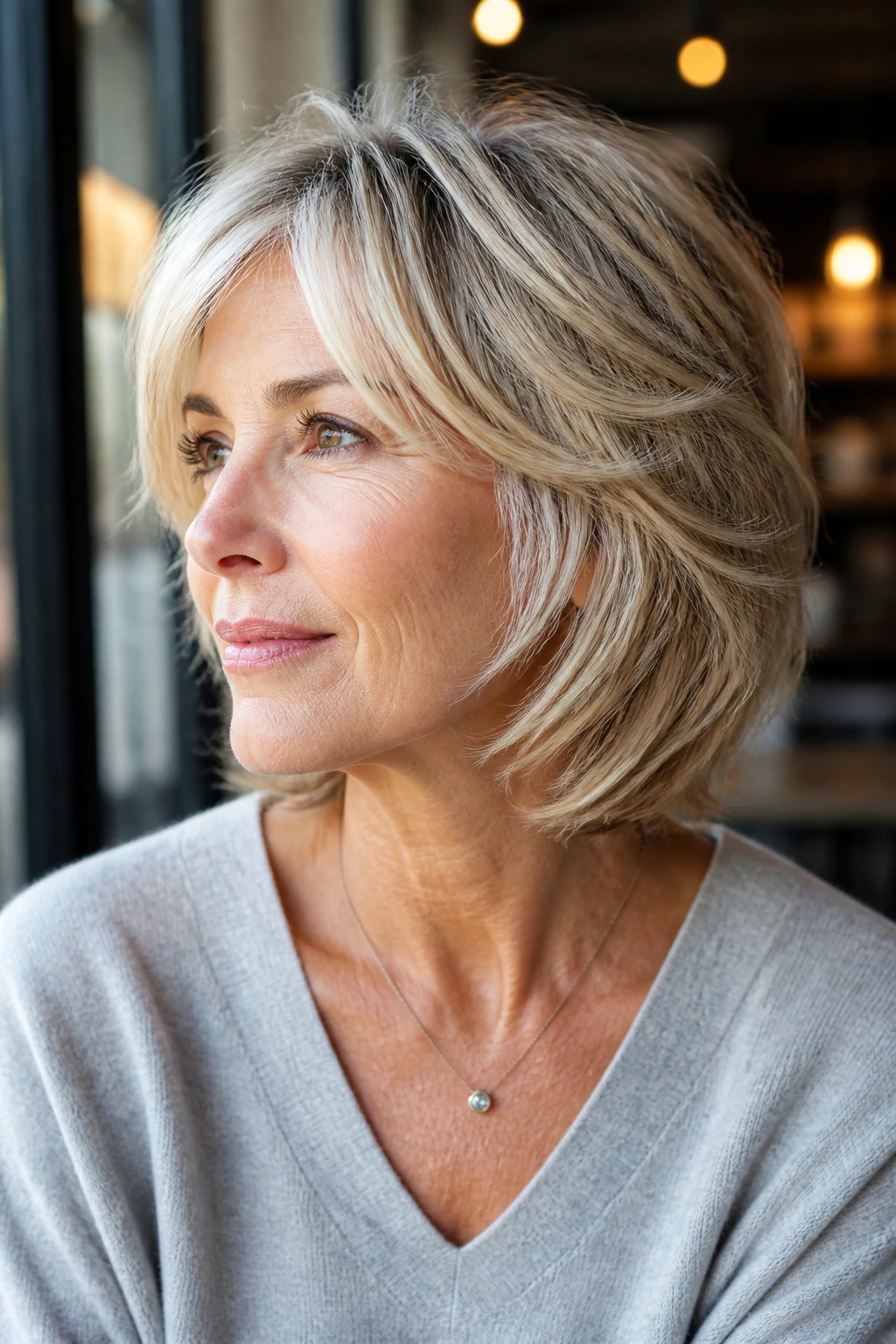
A neck-length cut can do a lot when the layers are placed with care. It keeps the neckline clean, shows off earrings or collar details, and still gives enough length for a little swing. The movement should happen around the temples, crown, and sides, not in random choppy chunks that break the outline.
This length is a smart middle ground if you want short hair without the maintenance of a pixie. It feels fresh, but not tiny. The layers can be brushed smooth for a neater look or roughed up slightly with styling cream for a looser finish.
I like this cut on people who want the hair to look intentional even when it’s not perfectly done. That’s a real-life haircut, and there aren’t enough of them.
20. Brushed-Out Blowout Layers
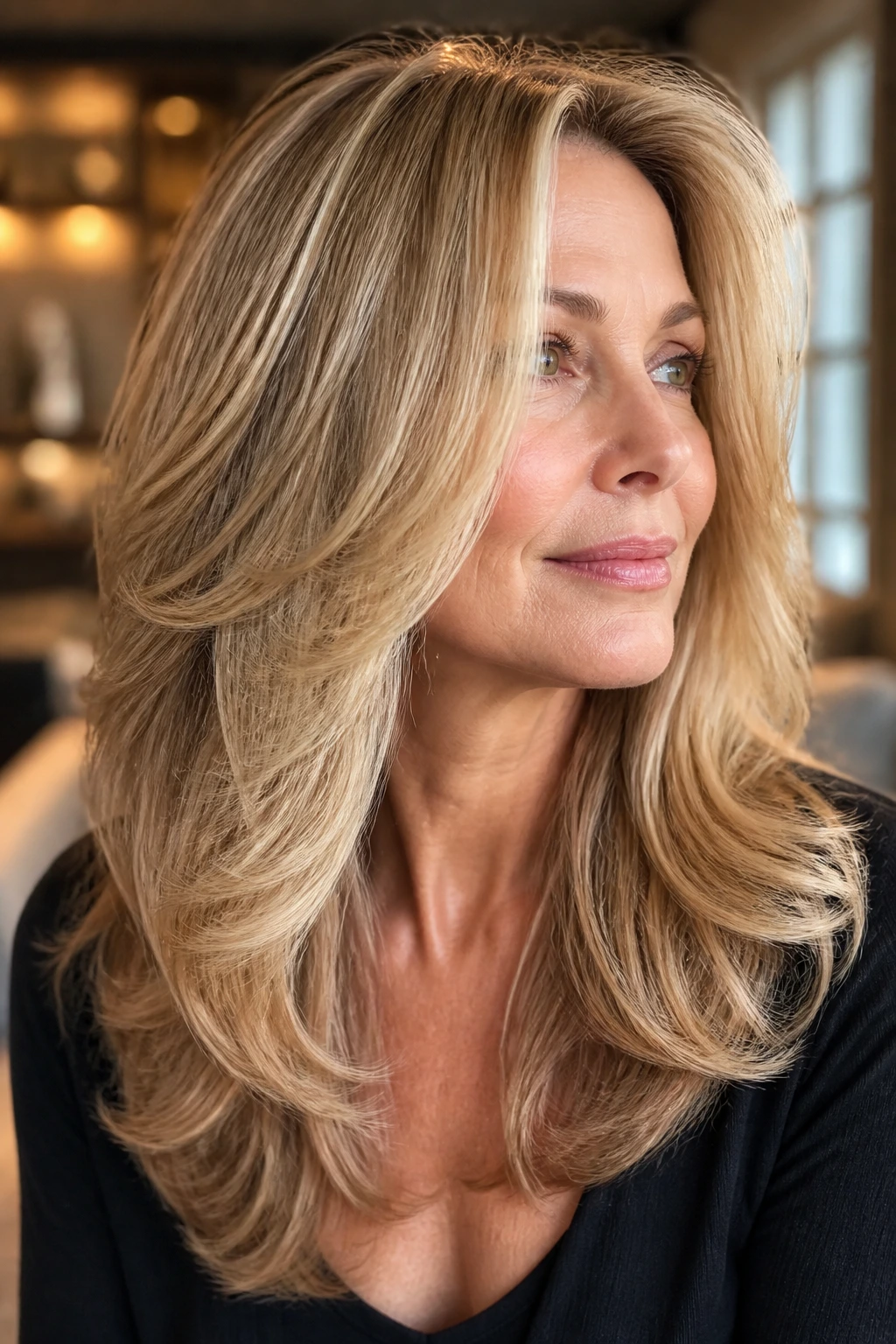
A brushed-out blowout cut is all about the way the layers fall after styling. The layers should have enough length to curve and swing when you use a round brush, but not so much that the blowout collapses after an hour. The finish is soft, full, and a little glamorous without needing a full event to justify it.
This shape is happiest with medium to thick hair. Fine hair can wear it too, but the layers should stay longer so there’s enough substance to hold the bend. Velcro rollers clipped into the front while the hair cools can help the shape last a bit longer.
If you like hair that looks as if it has been fussed over but not overdone, this is your lane. It has presence. It also photographs well in real life, which is not a small thing when the hair is being asked to do a lot.
21. Soft Asymmetrical Bob
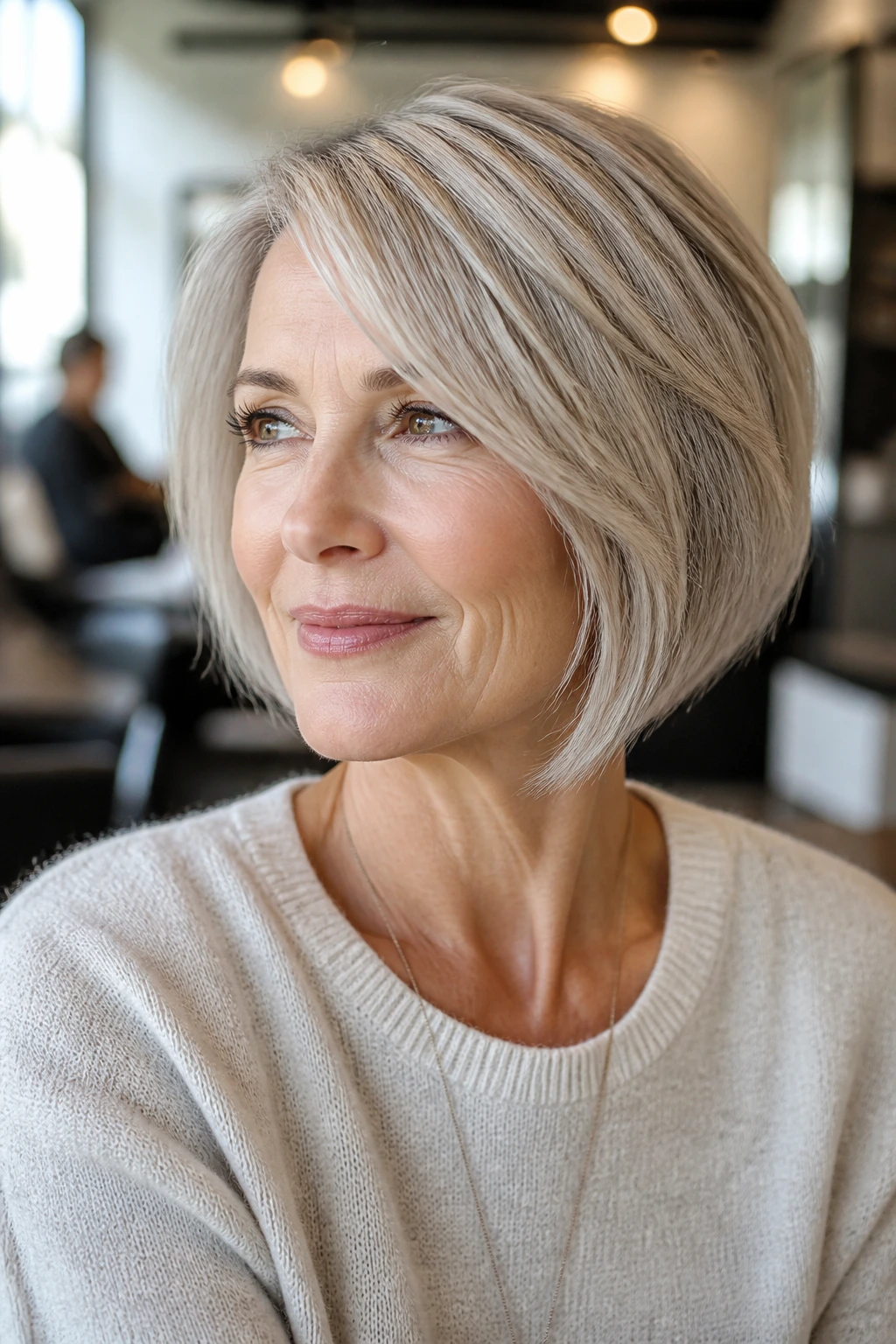
An asymmetrical bob can look sharp in a way that turns heads, but a soft version takes the edge off. One side sits slightly longer than the other, usually by about half an inch to an inch, and the layers are blended enough to keep the line from feeling severe. That difference is enough to give the haircut motion and a little modern shape.
The asymmetry works best when the longer side curves toward the collarbone or jaw rather than dropping straight. It gives the face a diagonal line, which can be useful for square or round face shapes. If the hair is thick, soft internal layering stops the weight from dragging one side down.
This is not a cut for someone who wants to forget about trims. The line looks best when it stays tidy. But if you enjoy a haircut with some attitude, this one has it.
22. Long Pixie with a Swept Fringe
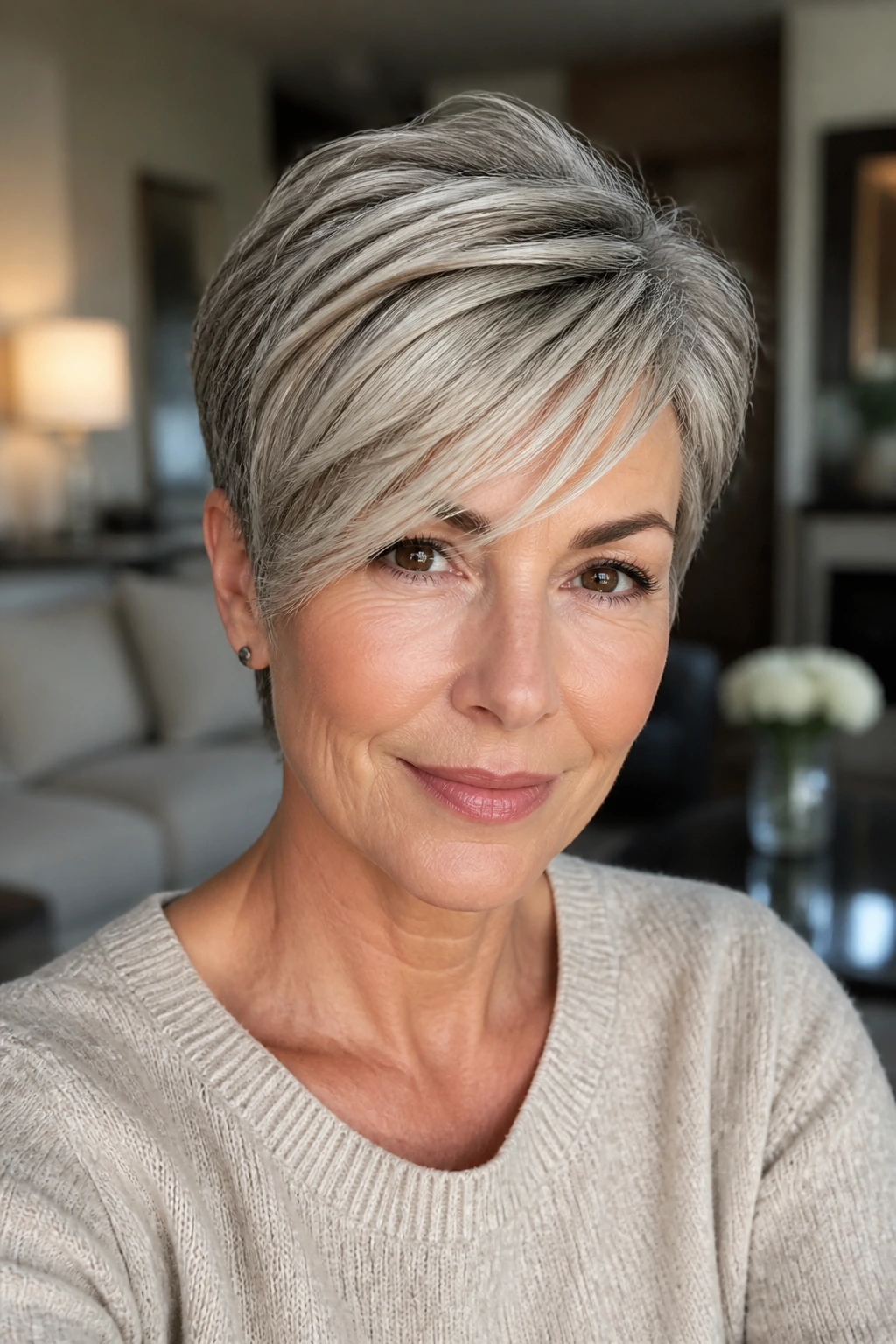
A long pixie with a swept fringe is the closest thing to a shortcut that still feels styled. The sides stay close, the top keeps enough length for lift, and the fringe sweeps across the forehead in a way that softens the face without hiding it. It’s practical, yes, but the shape still has polish.
I like this cut when someone wants quicker mornings and a neckline that feels clean. It suits straight hair, wavy hair, and even finer textures, as long as the top is cut with enough length to move. The swept fringe gives you a little drama without asking for much effort.
There’s one catch. The top needs regular shaping. If it grows too long, the pixie loses its crispness and turns vague. Keep the trim schedule tight, and it stays sharp in the best way.
How to Brief Your Stylist So the Layers Stay Soft

The easiest way to get a good layered haircut is to talk about shape, not just length. Say where you want the shortest pieces to start — cheekbone, jaw, collarbone, or chin — and say what you want the hair to do when it dries. Lift at the crown? Softness around the face? Weight left in the ends? Those details matter more than saying “lots of layers,” which can mean almost anything.
Bring two or three photos, but don’t ask for a copy-paste cut. Point out what you like in each photo. One might have a good fringe, another a good perimeter, another the exact amount of fullness at the sides. That conversation saves you from ending up with a haircut that looks borrowed from someone else’s bone structure.
Tell the stylist how much time you want to spend styling. If the truth is five minutes and a dryer, say that. If you’ll use a round brush or rollers, say that too. A soft layered cut can be built for your routine, but only if the person cutting it knows what your mornings look like.
The Styling Tools That Keep Soft Layers in Shape
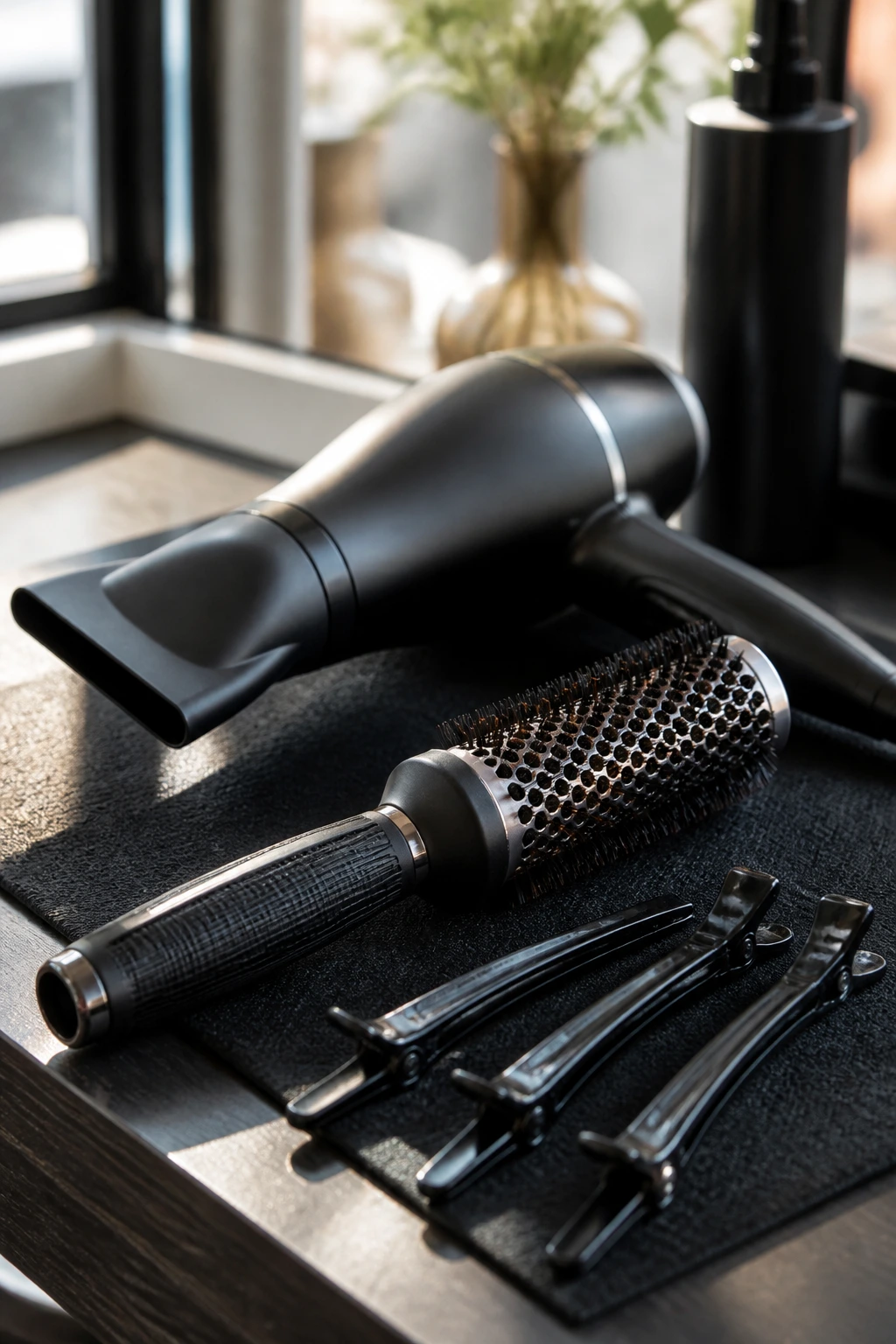
A few tools earn their place with layered hair, and most of them are not fancy.
-
Blow dryer with a concentrator nozzle: Keeps the airflow controlled so the layers don’t frizz apart while you dry them.
-
Medium round brush, about 1¼ to 1½ inches: Useful for turning the front pieces under, away from the face, or just giving the ends a little bend.
-
Sectioning clips: They make layered hair easier to dry in pieces instead of mashing everything at once.
-
Lightweight mousse or root lift spray: Better than heavy cream when you need lift at the crown or along the part.
-
Heat protectant spray: Worth it if you use a brush, iron, or rollers more than once a week.
-
Diffuser: A real help for curls, waves, and shag-like cuts that need soft structure instead of straightening.
-
Velcro rollers or large hot rollers: Useful for the front sections of bobs, lobs, and blowout cuts when you want the bend to last.
-
Satin or silk pillowcase: Not a styling tool in the strict sense, but it keeps the layers from getting mashed flat overnight.
Common Mistakes That Make Layered Hair Look Stiff
The biggest mistake is starting the shortest layer too high. Hair can go from soft to shingled in one bad decision, and once that happens the shape is hard to recover. If you want elegance, keep the shortest pieces lower and let the movement happen near the face, not all the way up the crown.
Too much thinning is another trap. Thinning shears can be useful in thick hair, but overdoing it leaves the ends ragged and dry-looking. The cut might feel lighter for a week, then it starts to puff and fray. Interior weight removal is usually kinder than aggressive texturizing.
Another common problem: styling the cut as if it were a straight line when it was built to move. Soft layers need either a bend, a curve, or a little air in the finish. If you flatten them with a stiff brush and too much spray, the whole point disappears.
Finally, people ignore growth patterns. Cowlicks at the crown, strong parts, and whorls near the temples can change how a soft layered cut sits. A good stylist works with those quirks instead of pretending they are not there.
Variations to Try If Your Hair Is Fine, Thick, Curly, or Gray
The Fine-Hair Lift: Keep the layers lower and the perimeter clean, usually at the chin, collarbone, or just below. This adds the look of density at the ends without taking away too much from the body of the hair.
The Thick-Hair Release: Ask for interior debulking and longer soft layers, not a lot of short pieces. Thick hair looks best when it can move in one calm shape instead of puffing in all directions.
The Curl-Friendly Shape: If your hair bends or coils, ask for the layers to follow the pattern when dry. That keeps the curl spring intact and avoids the triangle effect that shows up when curly hair is cut too bluntly.
The Silver Shine Edit: Gray or white hair often looks best with gentle edges and a little gloss. Leave the perimeter slightly heavier so the cut looks intentional, then soften the face-framing pieces just enough to open things up.
The Low-Heat Routine: For anyone who wants to avoid a lot of hot tools, choose a cut that air-dries well. That means softer layers, a manageable fringe, and an outline that still looks tidy when it dries with a little natural bend.
Keeping the Shape Between Salon Visits
Most soft layered haircuts need some kind of maintenance, but the trim schedule changes with the shape. Pixies usually want a cleanup every 4 to 6 weeks. Bobs and lobs can stretch a bit longer, often 6 to 10 weeks depending on how sharp you want the line to stay. Longer layered cuts can go farther, though the face-framing pieces usually show their age first.
Between visits, keep the shape from going sleepy. A little root lift at the crown, a quick bend on the front pieces, or even just clipping the front sections while they cool can bring the haircut back to life after a wash. If you sleep on one side, switch your part occasionally so the layers do not flatten in the same place every night.
Dry shampoo helps, but use it with a light hand. Too much turns soft layers dusty and stiff. A better trick is to mist the ends with a little water, smooth in a pea-sized amount of cream, and reshape the front pieces with your fingers. Quick. Clean. Done.
Frequently Asked Questions
Are soft layers good for fine hair after 50?
Yes, if the layers start low and the perimeter keeps enough weight. Fine hair usually looks fuller when the ends are intact and the face-framing pieces are gentle, not choppy.
Do soft layers work with gray hair?
They do, and gray hair often shows movement very well. The key is not over-thinning the ends, since gray strands can get wiry and dry-looking if the cut is too aggressive.
Can I wear bangs with layered hair?
Absolutely, but the safest bangs here are side-swept or wispy styles that blend into the layers. A blunt fringe can work too, but it asks for more upkeep and a clearer styling routine.
How short can soft layers go?
Very short if the shape is right. A long pixie or neck-length cut can still feel soft when the crown has lift and the fringe is blended instead of chopped straight across.
What if my hair is curly and I want layers?
Ask for a curl-aware cut, ideally done dry or with the curl pattern in mind. That keeps the finished shape from shrinking into a puffed triangle once it dries.
What if the layers feel too short after the haircut?
Give the cut a week and style it with less product than you think. If the shortest pieces still sit too high after a wash or two, the stylist may need to soften the face frame at the next trim.
How do I stop layered hair from flipping out at the ends?
Use a round brush or blow-dry brush to direct the ends where you want them while the hair cools. For stubborn pieces, a tiny bend with a flat iron usually calms them down faster than more spray.
Which of these cuts is easiest to live with day to day?
The one-length lob with hidden underlayers and the collarbone lob with soft curtain layers are both forgiving. They move well when air-dried and still look deliberate with only a little brush work.
The Shape That Keeps Moving
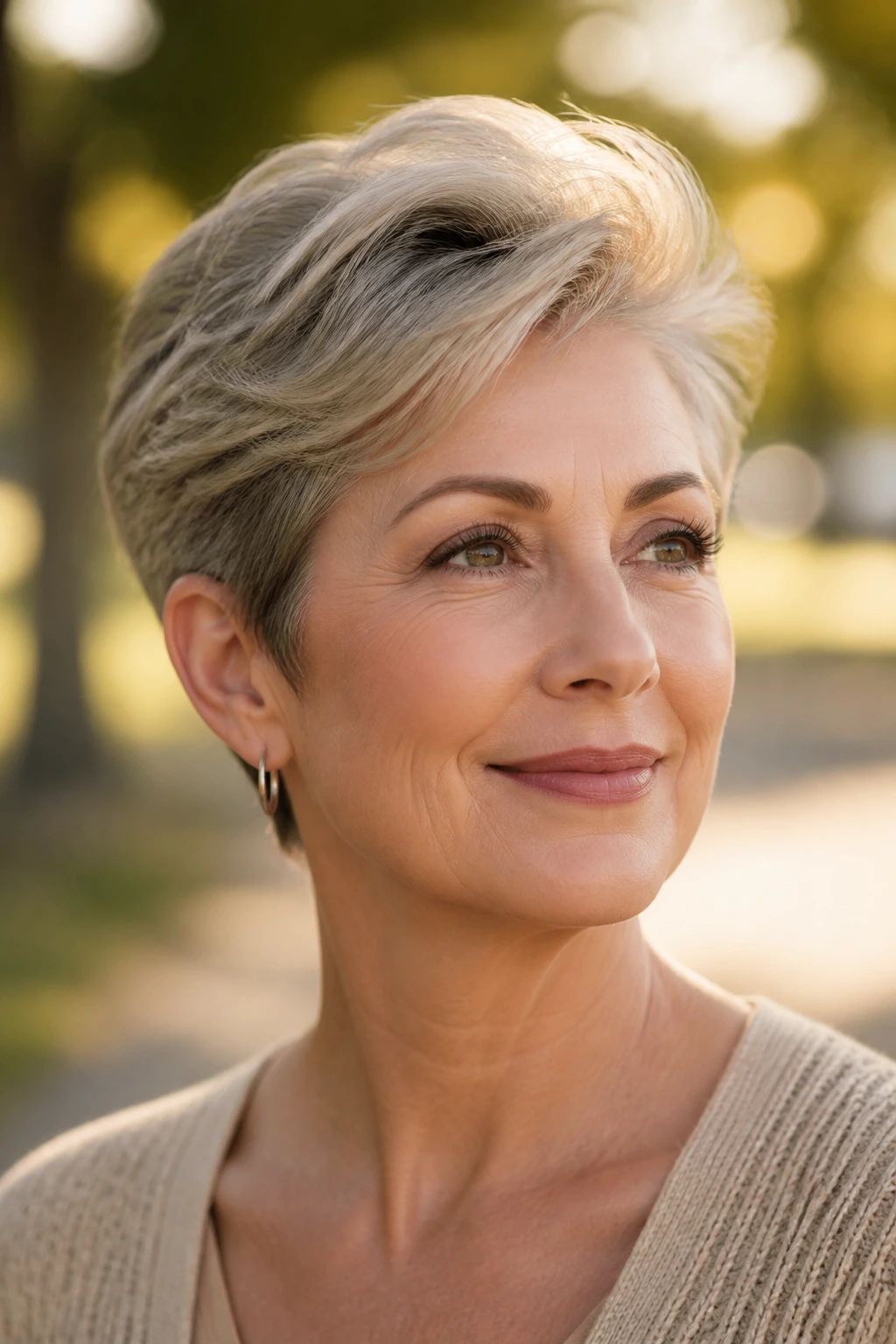
Soft layers work because they understand the job of a haircut: give the face some shape, keep the ends from hanging dead, and still behave when life gets messy. That’s why these styles feel modern without trying too hard. They have enough line to look finished, enough softness to stay flattering, and enough flexibility to survive a regular morning.
The best one is the cut that matches how you actually wear your hair. Straight, wavy, curly, brushed out, tucked back, air-dried, or blown smooth — the right soft layers will keep the outline from disappearing. And once you find that balance, the rest gets easier.