



Long hair can look expensive and still feel wrong. That’s the odd little truth people run into when the length is there, the shine is there, and yet the whole thing falls like a curtain that never quite got the memo. Layered haircuts for long hair and oval faces solve that problem with a bit of geometry and a bit of restraint. Not every layer needs to be dramatic. Some of the best ones are barely visible until the hair moves.
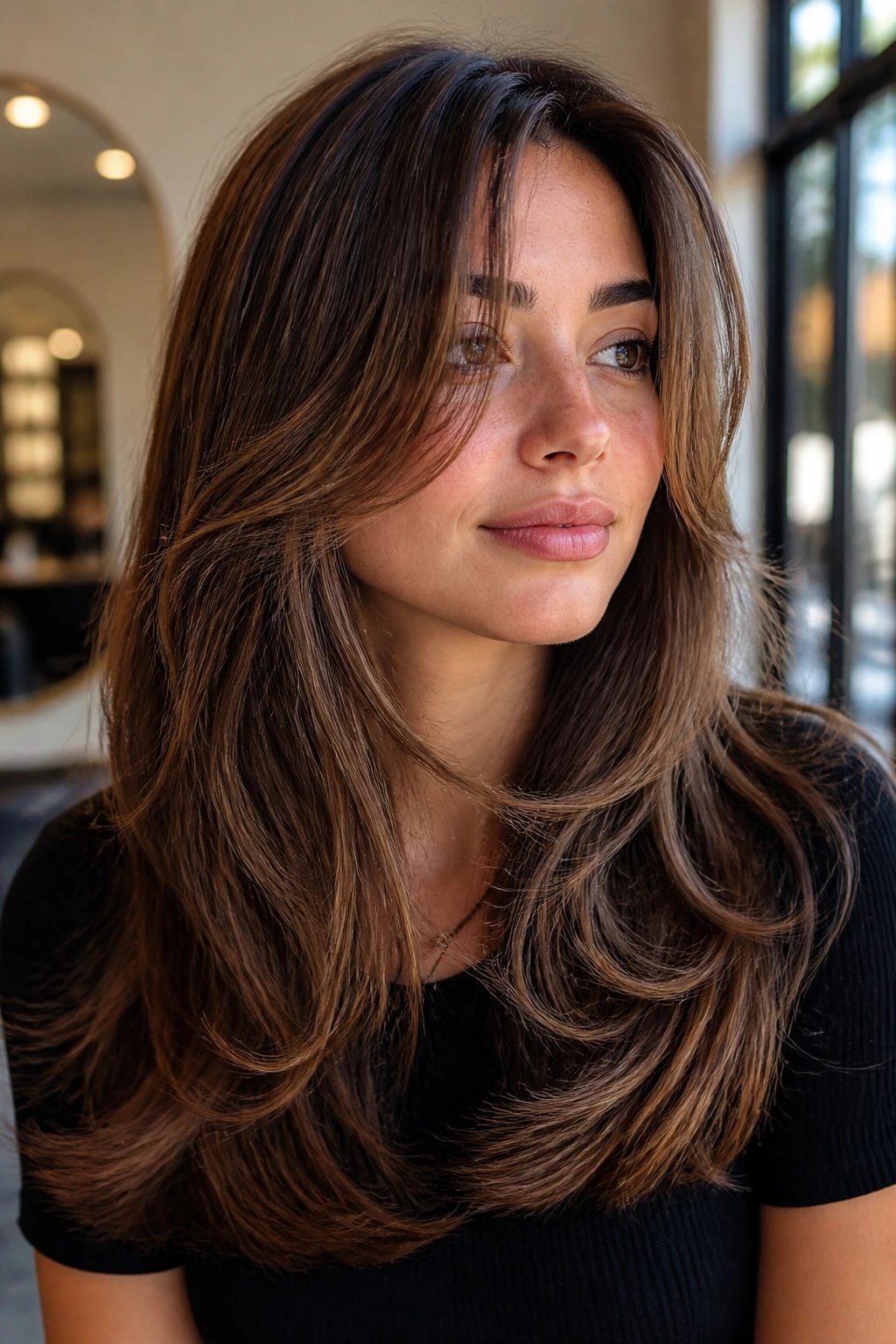
Oval faces have a reputation for being easy to style, and in one sense that’s fair. The proportions are balanced, the cheekbones are usually the star, and the forehead and jaw tend to share the stage without much drama. But that freedom can make people lazy. Too much length without shape can drag the face down. Too many short pieces can make the top of the head busy and the ends look thin. The sweet spot is usually somewhere in the middle, where the layers create lift, frame the face, and keep the length from becoming a single flat sheet.
What matters most is placement. A few inches higher or lower changes everything. A face-framing piece that starts at the cheekbone reads soft and open; the same piece cut too high can make the face feel longer, and on long hair that mistake gets amplified fast. The best cuts don’t just remove bulk. They create movement where your eye wants it, usually around the cheekbones, collarbone, and the outer edges of the hairline.
Why These Cuts Earn Their Keep
-
They keep long hair from hanging in one heavy line. That matters because the more length you keep, the more important it becomes to build shape inside the cut instead of relying on the ends alone.
-
They give oval faces a little width where it helps most. A soft curve at the cheekbone or jaw keeps the eye from traveling straight down the face and out the ends.
-
They work for different densities without forcing the same result. Fine hair needs hidden movement. Thick hair needs weight removed in the right places. The same “layered” label can do both jobs if the sectioning is smart.
-
They grow out more gracefully than blunt cuts with no shape. When the layers are long enough and blended well, the grow-out looks like a softer version of the original cut instead of a sharp mistake.
-
They make styling feel less fussy. Blow-drying a layered cut usually takes less wrestling because the hair already has a direction built in. You are not persuading a brick into a curve.
-
They can be as polished or as undone as you want. That’s the real advantage here. A layered cut can look sleek with a round brush, or loose with a bend from a curling iron, and the underlying structure still holds.
Choosing the Right Layer Pattern for Fine, Thick, and Wavy Hair
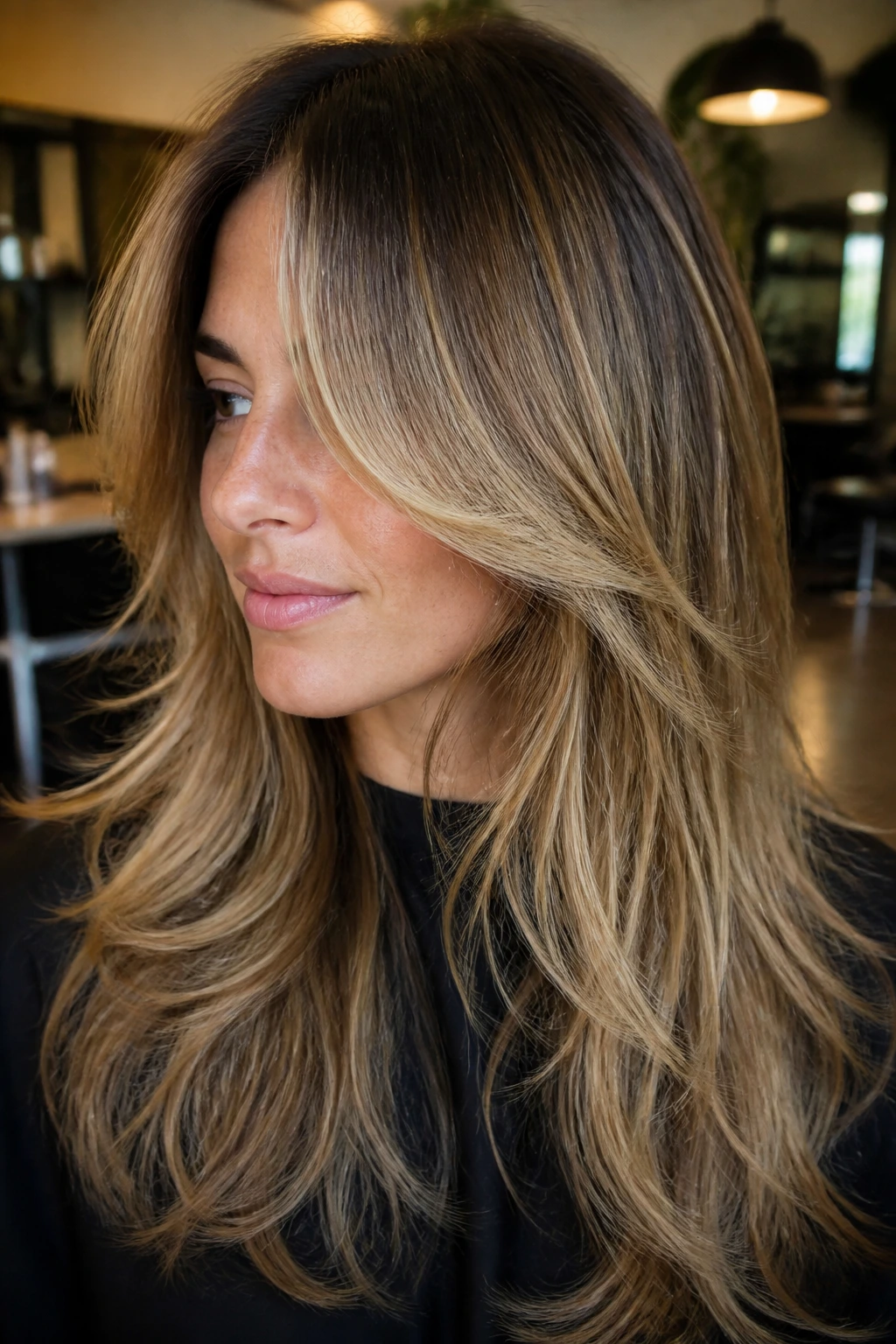
Fine hair, thick hair, and wavy hair all want different things from a layered cut. That sounds obvious, but salon language often blurs the differences. “Long layers” can mean a handful of face pieces on one head and a whole interior reshaping on another. Bring a picture, sure, but bring a texture conversation too.
Fine Hair
Fine hair usually does best with fewer, longer layers and a strong perimeter. Too many short layers make the ends look sparse, which is a rough trade if you want long hair to still feel full. A good stylist will keep the longest parts intact and use gentle internal movement or face-framing pieces to create lift without turning the cut wispy.
Thick Hair
Thick hair can carry more layering, but not random layering. If the sections are cut too short or too high, you get a mushroom effect at the crown and stringy ends underneath. Long, controlled layers remove bulk where the head needs it and leave enough weight at the bottom so the hair still drops cleanly.
Wavy or Curly Hair
Wavy and curly textures need the layers to respect the pattern. A dry cut or a curl-by-curl approach often gives the best shape because the hair shows its true shrinkage. If the layers are cut as if the hair were straight, the face-framing pieces can land much shorter than expected once the curls spring up.
What to Tell Your Stylist Before the First Snip
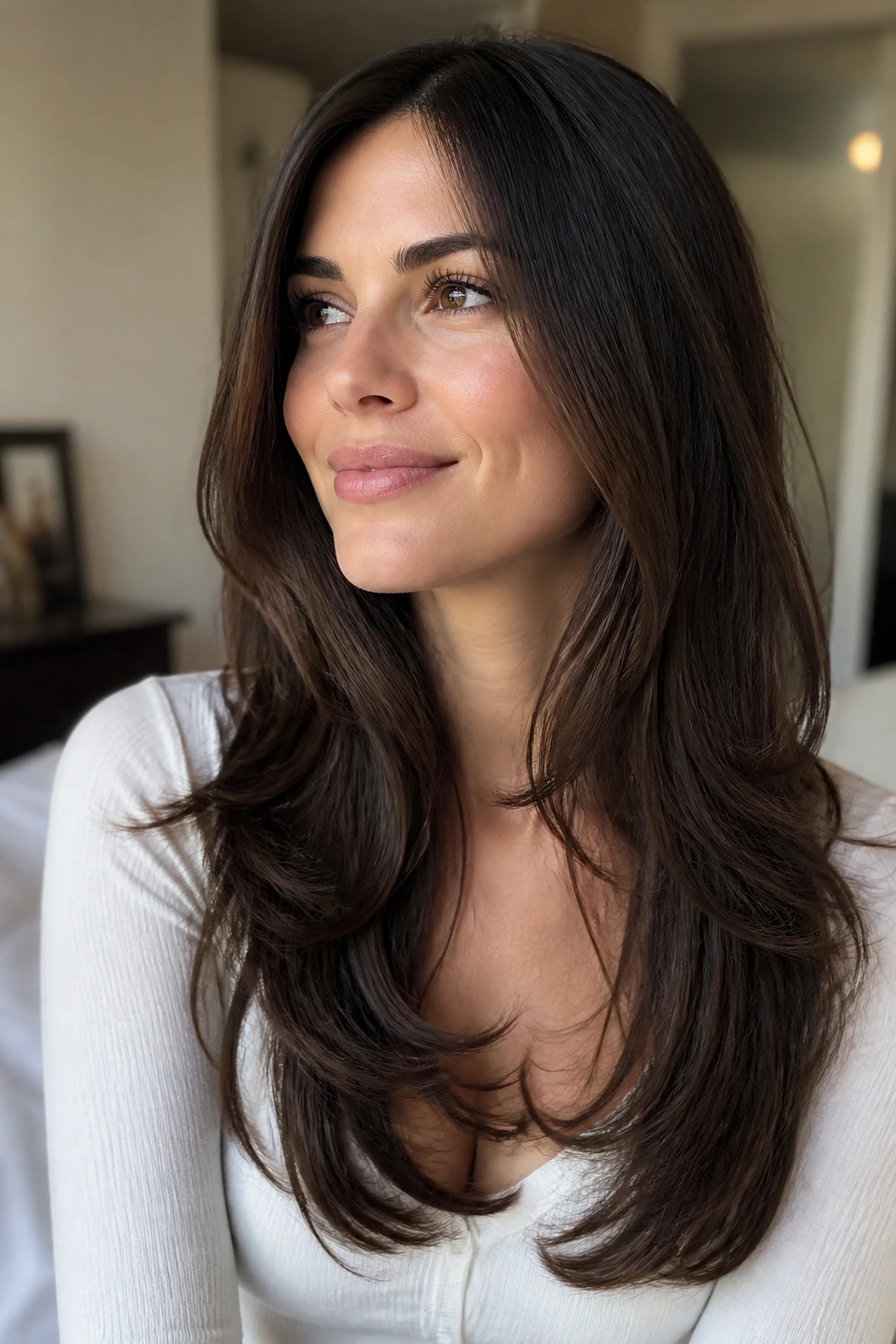
The cut is only half the story. The other half is what you say in the chair, and this is where a lot of people accidentally ask for the wrong thing. “I want layers” is too vague. So is “I want more volume.” Those words can produce a dozen different outcomes, some of them flattering, some of them not.
Ask for the exact place you want movement to start. On an oval face, cheekbone and collarbone are usually safer bets than a very short crown layer. If you want softness, say you want blended layers with point-cut ends, not a choppy stack that shows every section line. If you want to keep the length, say that out loud before the scissors open.
Bring one photo for shape and one for texture. That helps more than a dozen screenshots. One image can show the silhouette you want — maybe a rounded U-shape or a butterfly style — and the other can show the amount of bend, polish, or messiness you’re actually willing to style every morning. That part matters. Haircuts do not exist in a vacuum.
1. Feathered Layers That Start Below the Chin
Feathered layers have a way of making long hair move without stealing the length you came to the salon to keep. The key is where they begin. Start them below the chin, and they soften the sides of an oval face without turning the front into a curtain of short pieces. Start them too high, and the whole cut can feel floaty in a bad way.
What I like about this shape is the gentleness of it. The layers are visible when the hair turns, but they do not shout. A round brush or a large velcro roller gives them that soft sweep at the ends, and the result feels polished without being stiff. If your hair is medium to thick, this is one of the easiest ways to take weight out while keeping the perimeter full.
2. Curtain Bangs That Melt Into the Length
Curtain bangs are one of those rare trends that earn their keep on long hair. The center split opens the face, and the longer sides slide into the rest of the cut so the fringe does not feel like a separate event. On oval faces, that matters because the front pieces can highlight cheekbones without making the face look longer than it already is.
The trick is not to cut them too short. Curtain bangs that hit around the cheekbone or just below tend to blend better into long layers than a tiny fringe floating over the forehead. Blow-dry them away from the face with a medium round brush, then let them fall. You want a bend, not a curl. The difference is subtle, and that subtlety is the point.
3. Butterfly Layers With a Floaty Top Section
Butterfly layers look like two haircuts that shook hands and agreed to work together. The shorter pieces around the face and upper lengths create lift near the top, while the longer underlayer keeps the overall length dramatic. On an oval face, that extra width around the cheekbone area can be especially flattering because it interrupts the long vertical line of the hair.
This one shines when you like a blowout. The top section gets that airy bounce, and the lower section stays long enough to swing around the shoulders. If your hair is very fine, keep the shortest pieces a little longer so the cut does not collapse after two days. If your hair is thick, butterfly layers can remove a lot of visual heaviness without making the ends look thin.
4. U-Shaped Layers That Keep the Ends Full
A U-shape is for the person who wants movement but refuses to sacrifice that dense, satisfying edge at the bottom. Instead of a sharp point in the back, the hair curves down gently, which keeps long hair looking expensive rather than stringy. On oval faces, the soft curve keeps the eye moving without making the face feel longer.
This is a strong choice if you hate the look of obvious steps. The layers are there, but the silhouette reads smooth from the front and back. Ask for soft internal shaping and a rounded hemline so the cut stays full through the lower third. If you wear your hair straight most days, this shape has a nice habit of looking tidy even when it air-dries.
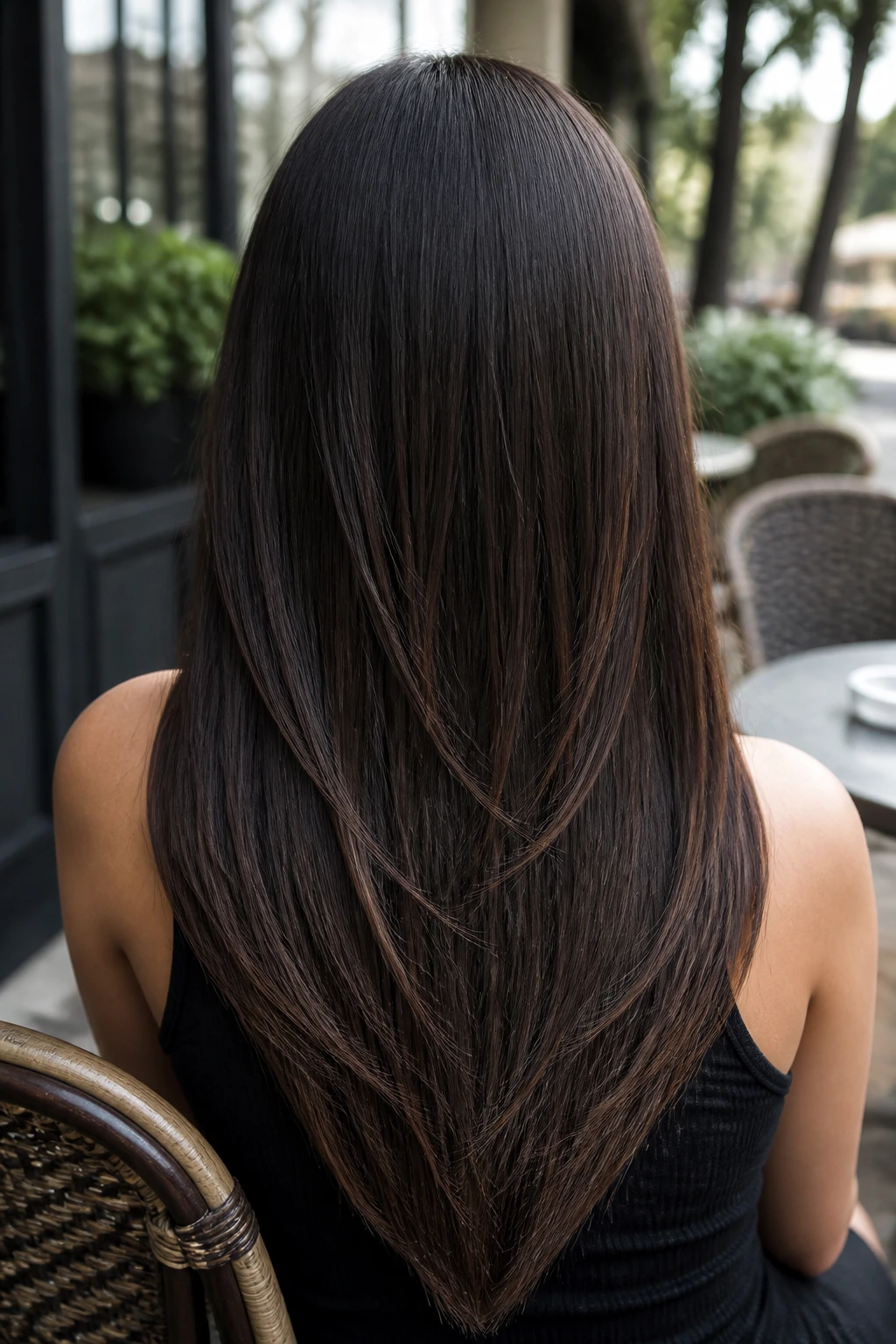
5. V-Cut Layers for a Sharper Back Profile
The V-cut is the bolder cousin of the U-shape. The back narrows to a point, so the hair has a sharper, more directional fall. That can be stunning on thick, long hair because it prevents the bottom from looking like one giant block. It also gives oval faces a little extra structure, which can be useful if your features are soft and you want the hair to echo a bit more edge.
This cut is not shy. It shows its shape best when the hair is straight or lightly waved, and it likes a good blowout because that point in the back needs polish to look intentional. If your hair tangles easily, be honest with yourself here. The V-shape can be a little more demanding than a rounded cut when it comes to brushing and upkeep.
6. Invisible Internal Layers for Fine Hair
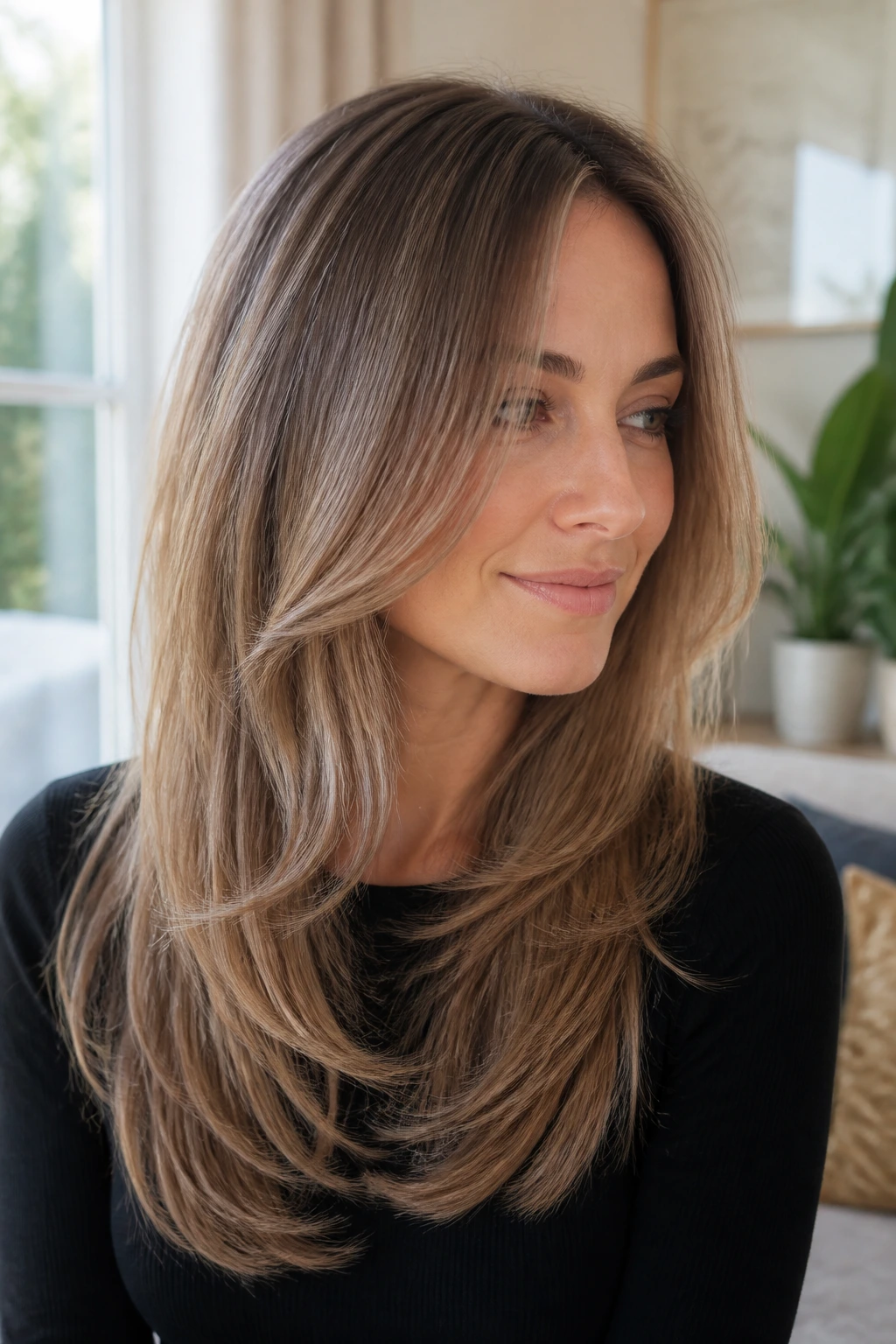
Invisible layers are the quietest trick in the book, and for fine hair they may be the smartest. Instead of obvious shorter pieces around the perimeter, the stylist removes weight from inside the haircut so the outside still looks full. That gives long hair some bend and lift without exposing every step in the cut.
The payoff is subtle but real. Hair moves more easily, roots look a little less flat, and the ends keep their thickness. On an oval face, that’s useful because you get shape without losing the clean frame around the face. If you’ve ever walked out with “layers” that somehow made your hair look thinner, this is probably the version you should have asked for.
7. Cheekbone Face-Framing Layers
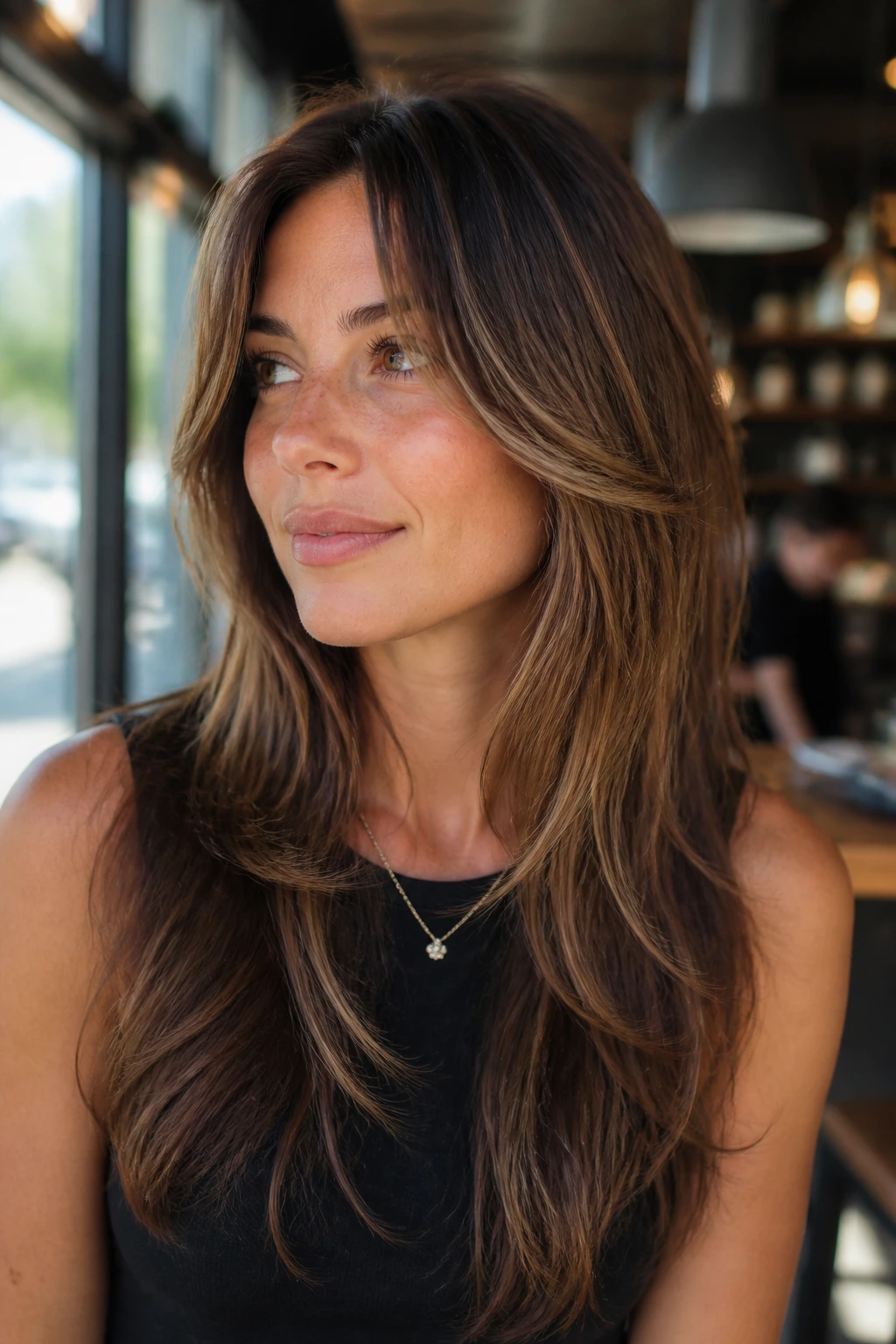
This is the cleanest way to use layers as makeup for the face. Pieces that start around the cheekbone create a visual ledge, which can widen the middle of the face in the nicest possible way. On an oval face, that kind of framing is flattering because it adds just enough interruption to keep long hair from reading like a single vertical line.
These layers work with center parts and soft off-center parts alike. They also play well with straight hair and loose waves, which is one reason stylists keep coming back to them. I like them best when the ends are point-cut so the front doesn’t look blunt. If the hair is dense, the front pieces should be blended into longer layers so they don’t look pasted on.
8. Beachy Mid-Length Layers
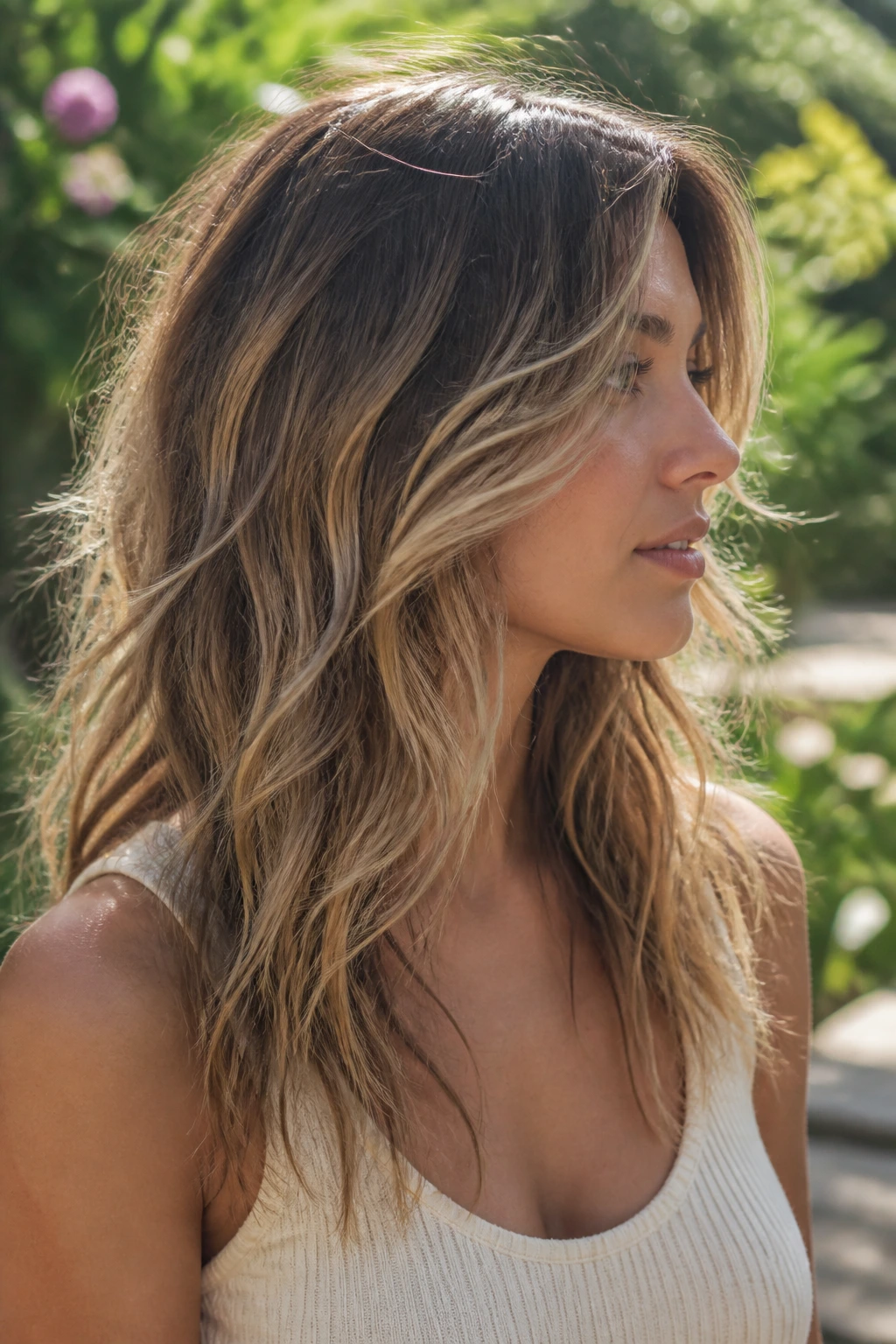
Beachy layers are less about precision and more about the way the hair falls after a bend or wave is added. They suit long oval faces because they break up the length without creating a formal, overworked shape. The best versions have enough layering to keep the movement loose, but not so much that the hair starts looking frayed at the edges.
This is the cut for someone who wants hair that looks better after a little scrunching. A salt spray, a diffuser, or a quick twist with a curling wand can wake it up fast. If your natural texture is already wavy, ask for layers that follow the wave pattern instead of fighting it. That keeps the shape soft instead of puffy.
9. Bottleneck Bangs With Long Sides
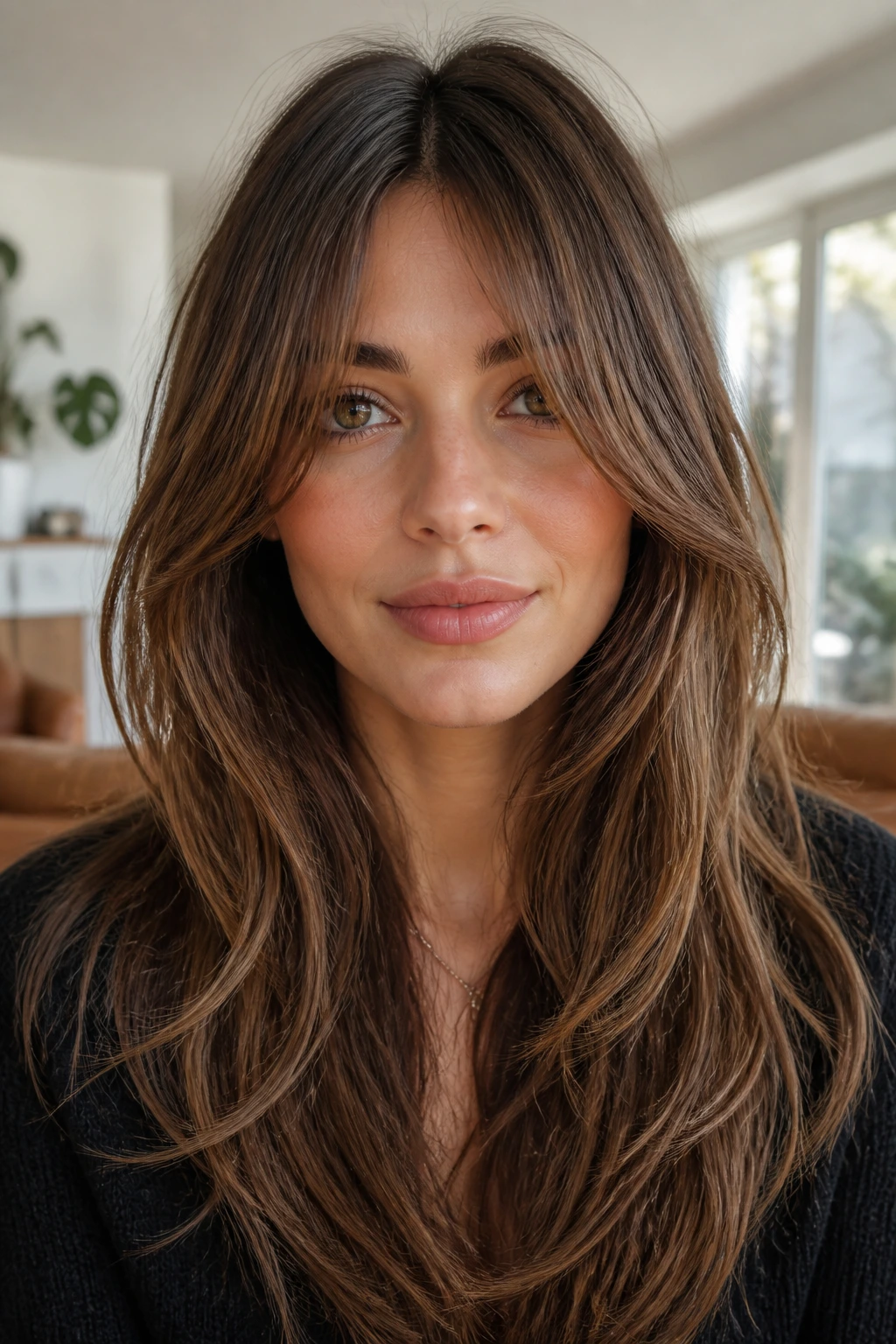
Bottleneck bangs are a smarter cousin to blunt fringe. They’re narrower at the top and widen as they move toward the cheekbones, which makes them a neat fit for oval faces that want a little structure without covering too much forehead. The long sides blend into the layers, so the whole front section feels connected instead of chopped off.
The best part is how they grow out. Because the sides are longer, they keep the cut wearable even between trims. If you do not want to commit to a heavy fringe, this is a less dramatic way to get some face framing. Style them with a small round brush or a flat brush and a quick bend at the ends. Don’t overthink it. The softness is the point.
10. Razor-Cut Layers for Straight Hair
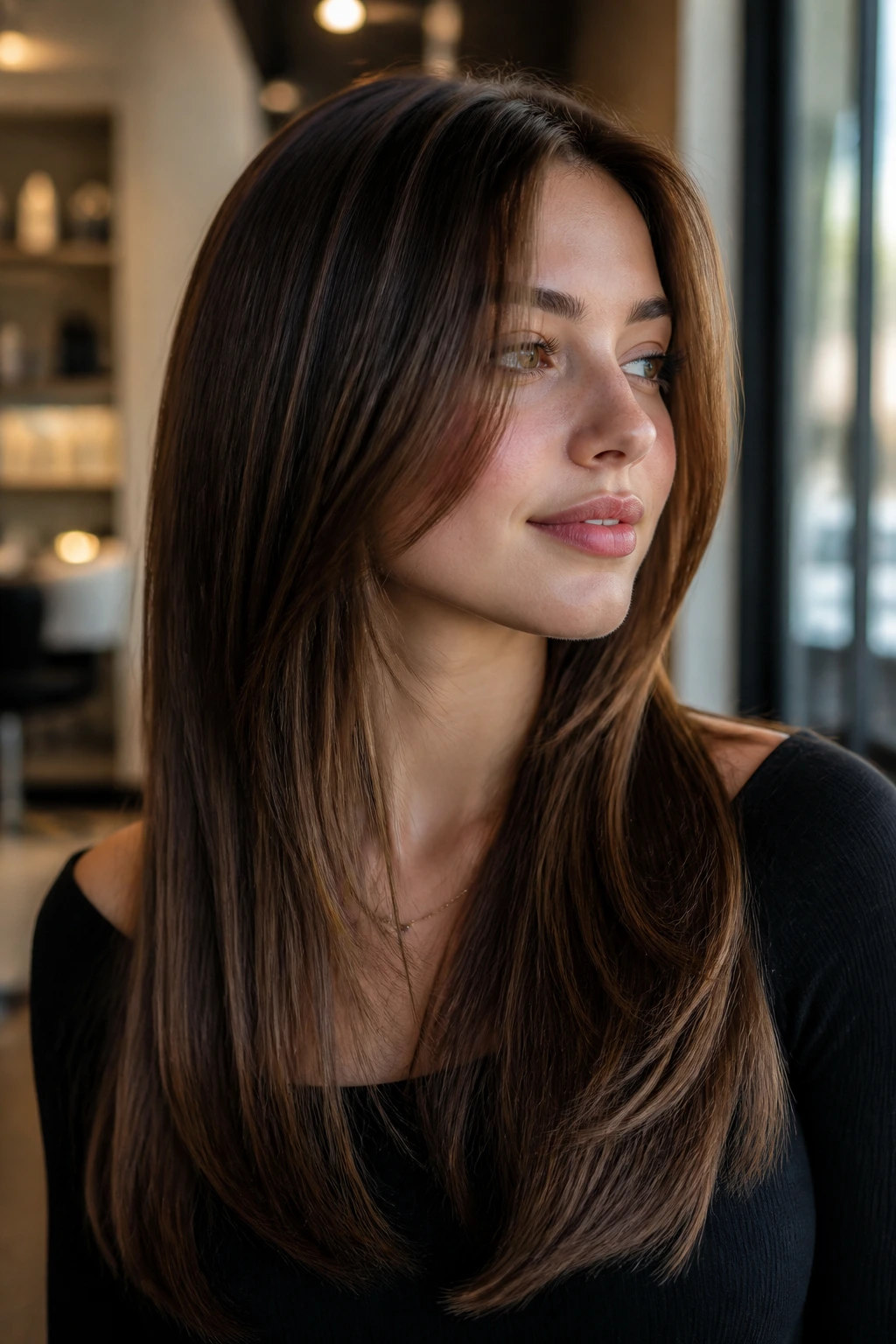
Razor-cut layers can be beautiful on straight hair because the razor softens the ends and keeps the shape from feeling too hard. The finish is airy, not blunt, and that works well on oval faces when you want a bit of edge around the cheekbones without a big, obvious layer pattern. Straight hair shows every line, so the cut has to be intentional.
There’s a catch, though. If your hair is coarse, frizzy, or prone to fuzzing up in humidity, a razor can exaggerate that texture. A good stylist will know when to switch to scissors and point cutting instead. The beauty of razor work is the softness it creates; if the ends start looking shredded, the tool is being used too aggressively.
11. Rounded Layers With Tapered Ends
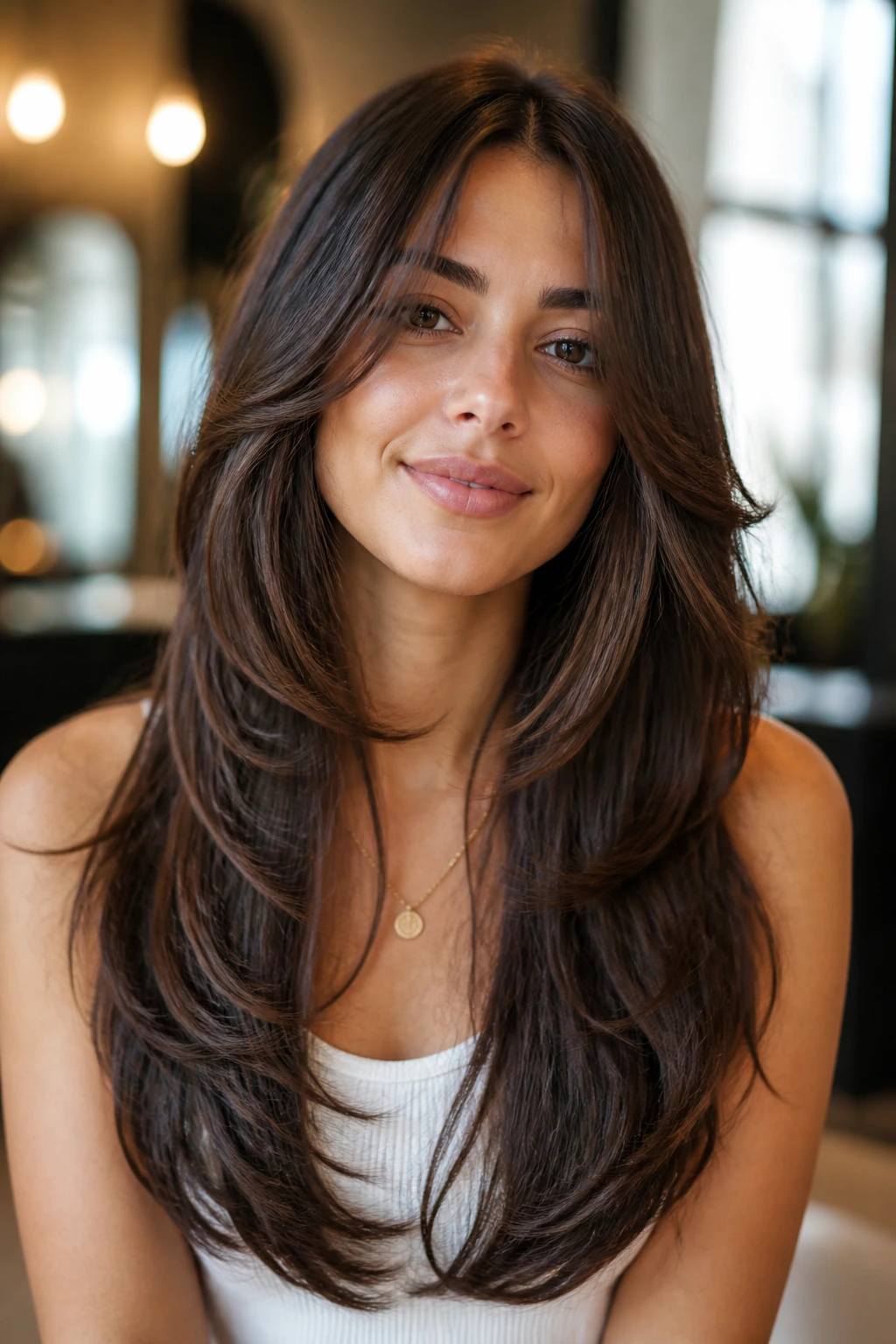
Rounded layers are underrated. They keep the overall shape soft and curved, which is useful if your long hair tends to puff out at the sides or go triangular at the bottom. Tapered ends stop the outline from looking heavy, and on an oval face that curve can make the whole haircut feel more balanced.
This shape looks especially good when the hair is worn loose and brushed through, not pinned back tightly. It has a kind of quiet polish that comes from the silhouette itself rather than from perfect styling. If you want the cut to feel feminine and smooth rather than piecey, this is one of the safer bets in the whole list.
12. Long Shag With a Grown-Out Fringe
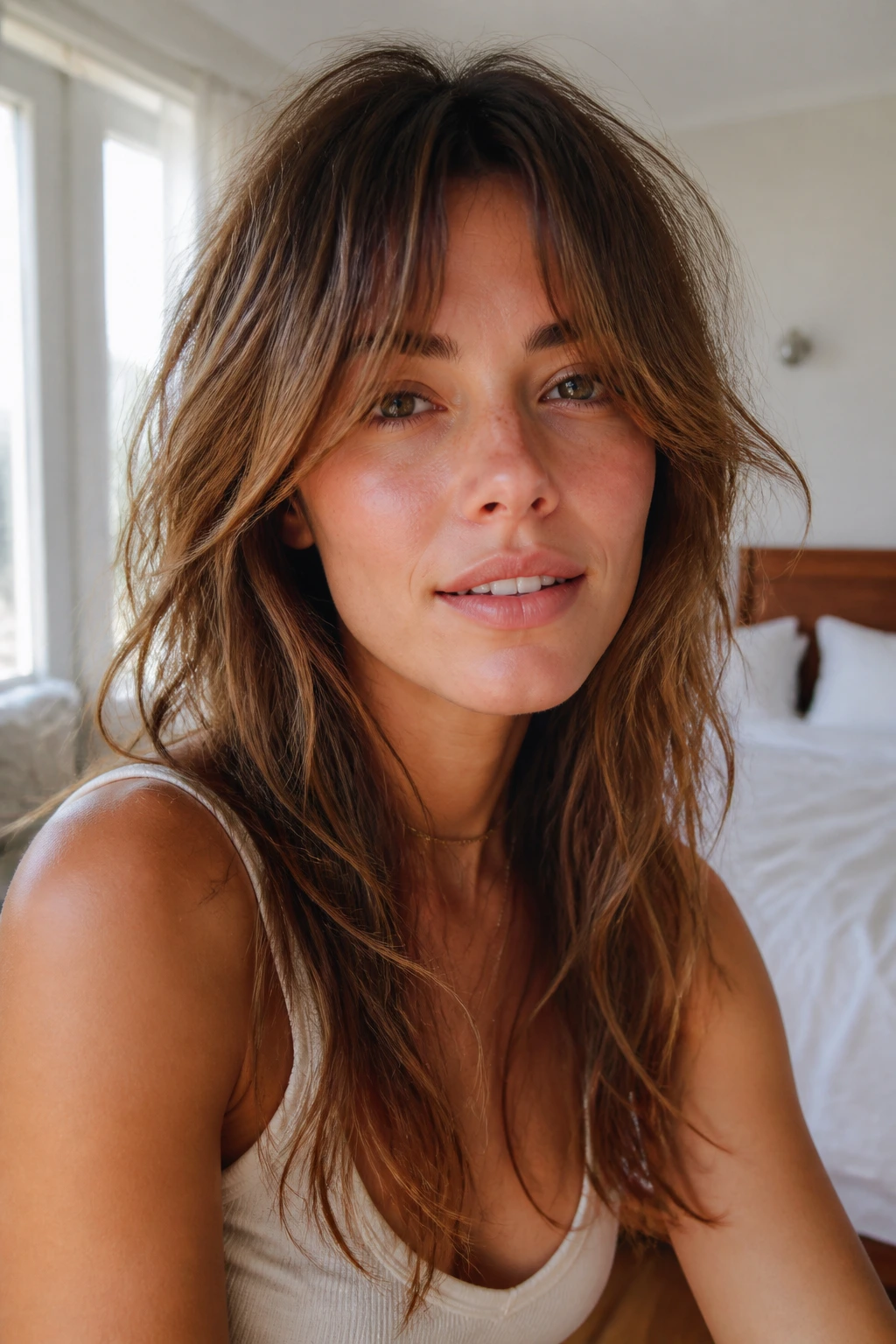
A long shag has more attitude than a feathered layer cut, but it doesn’t have to go full rock-and-roll unless you want it to. The grown-out fringe keeps the front interesting, while the longer layers underneath give the ends a little swing. On oval faces, the shag works because it breaks up the symmetry just enough to keep things from looking too neat.
This cut likes texture. Air-dry cream, light mousse, or a rough blow-dry can all help it land in the right place. If you like hair that looks a little undone on purpose, it’s a strong choice. If you prefer every strand to sit in line, the shag will probably annoy you by lunch.
13. Supermodel Blowout Layers
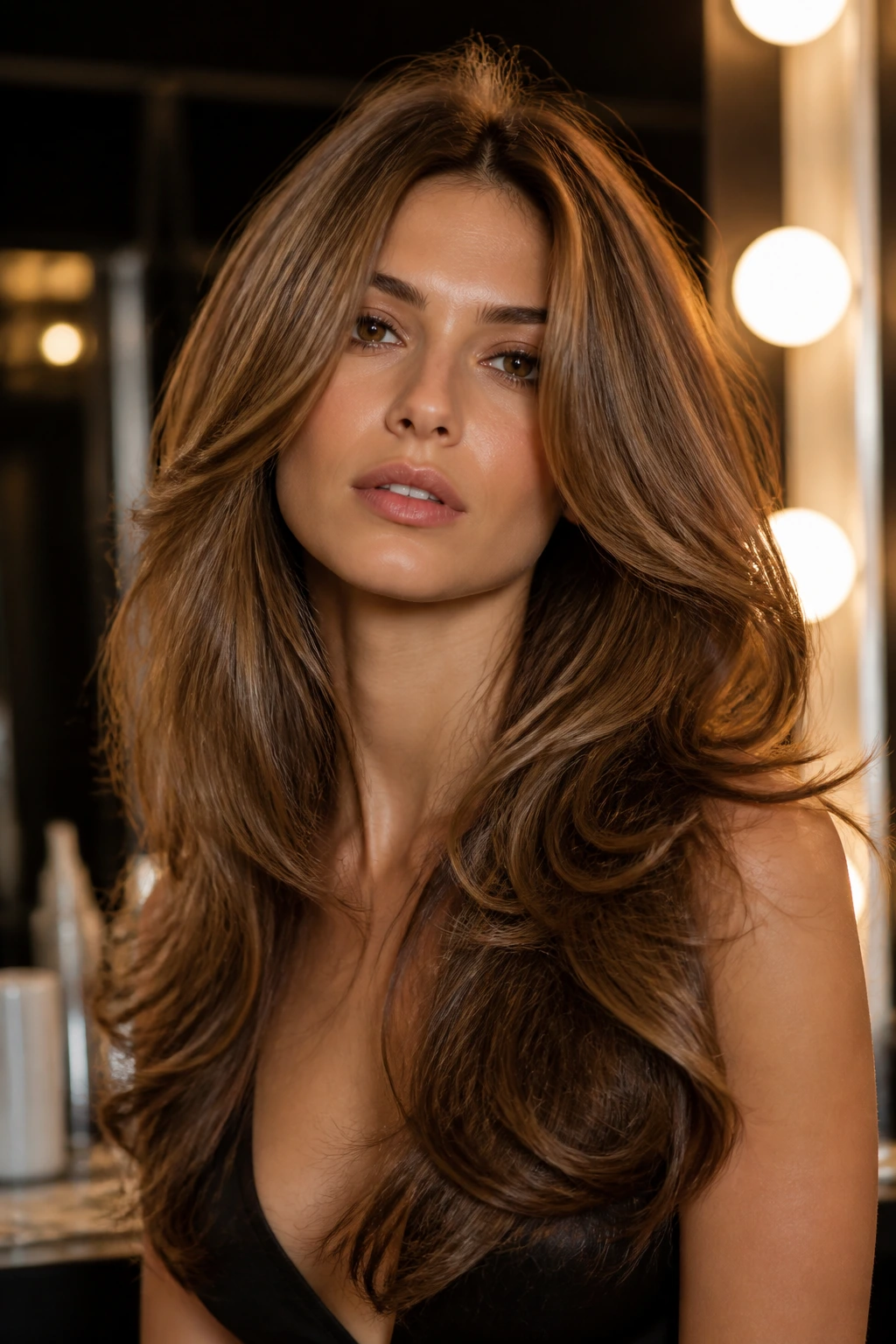
There’s a reason this shape keeps coming back: it gives long hair presence. The layers are built to move away from the face in a big, brushed-out sweep, and that lift around the cheekbones can be very flattering on oval faces. It feels glamorous, but the real trick is that it’s just a well-placed layer pattern with good styling.
This cut needs volume at the root and bend through the mids. A round brush or large rollers can help, but the cut itself does a lot of the work. The shortest pieces should frame the face without sitting too high, and the back should keep enough length to swing. Done right, it looks expensive in the old-school sense — not fussy, not stiff, just full of life.
14. Waterfall Layers for Dense Hair
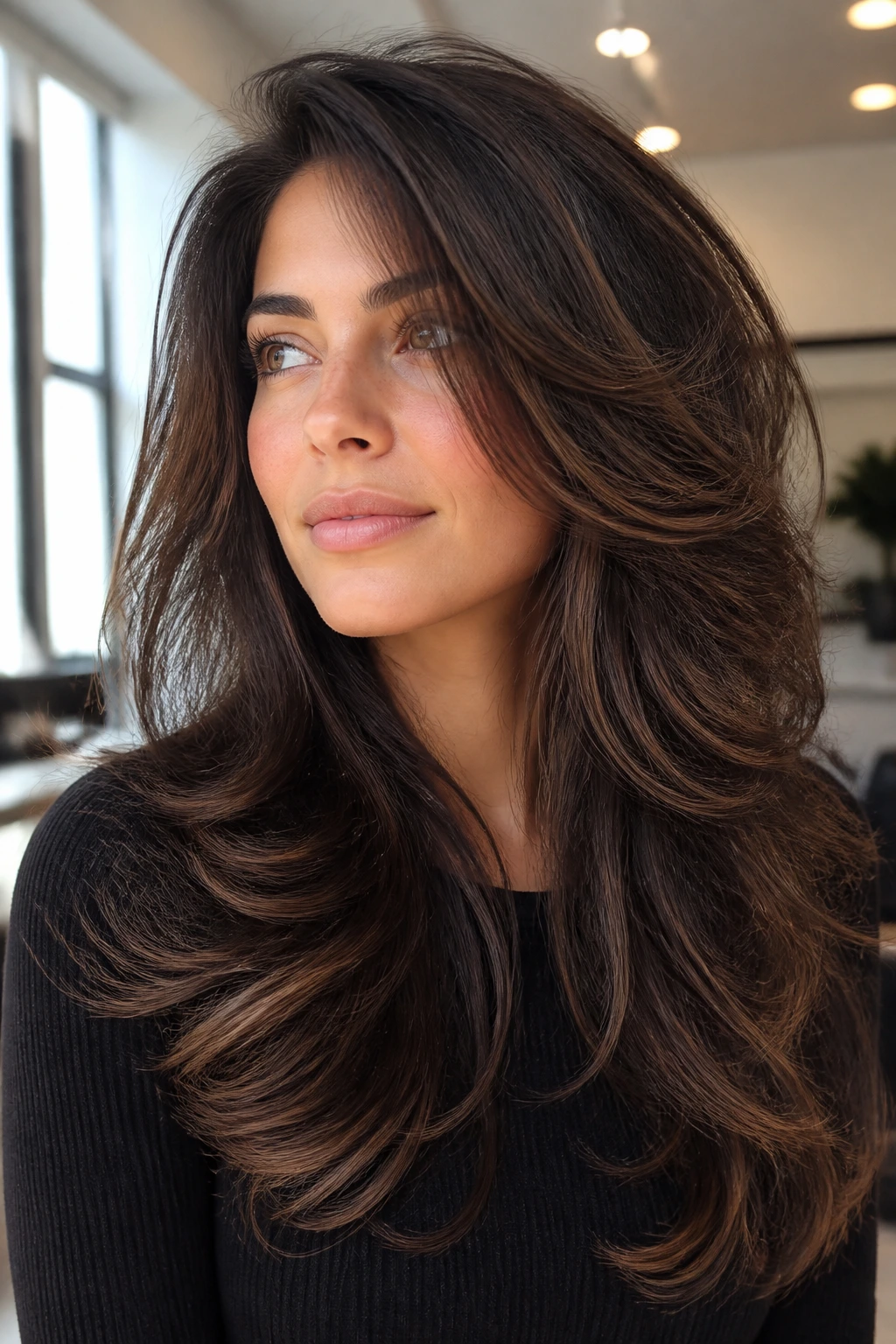
Waterfall layers cascade through thick hair the way steps soften a tall staircase. The result is movement without the kind of bulk that can make dense hair feel helmet-like. On an oval face, the cascading effect draws attention outward instead of straight down, which keeps the length feeling elegant rather than heavy.
This cut needs a careful hand. If the layers are too short or too many, the density can flip into frizz or puff. But when the transitions are long and controlled, the shape is gorgeous on thick hair. It keeps the outline broad enough to feel full while taking enough weight out of the middle so the whole cut moves instead of sitting there like a solid object.
15. Side-Part Layers That Lift the Temple
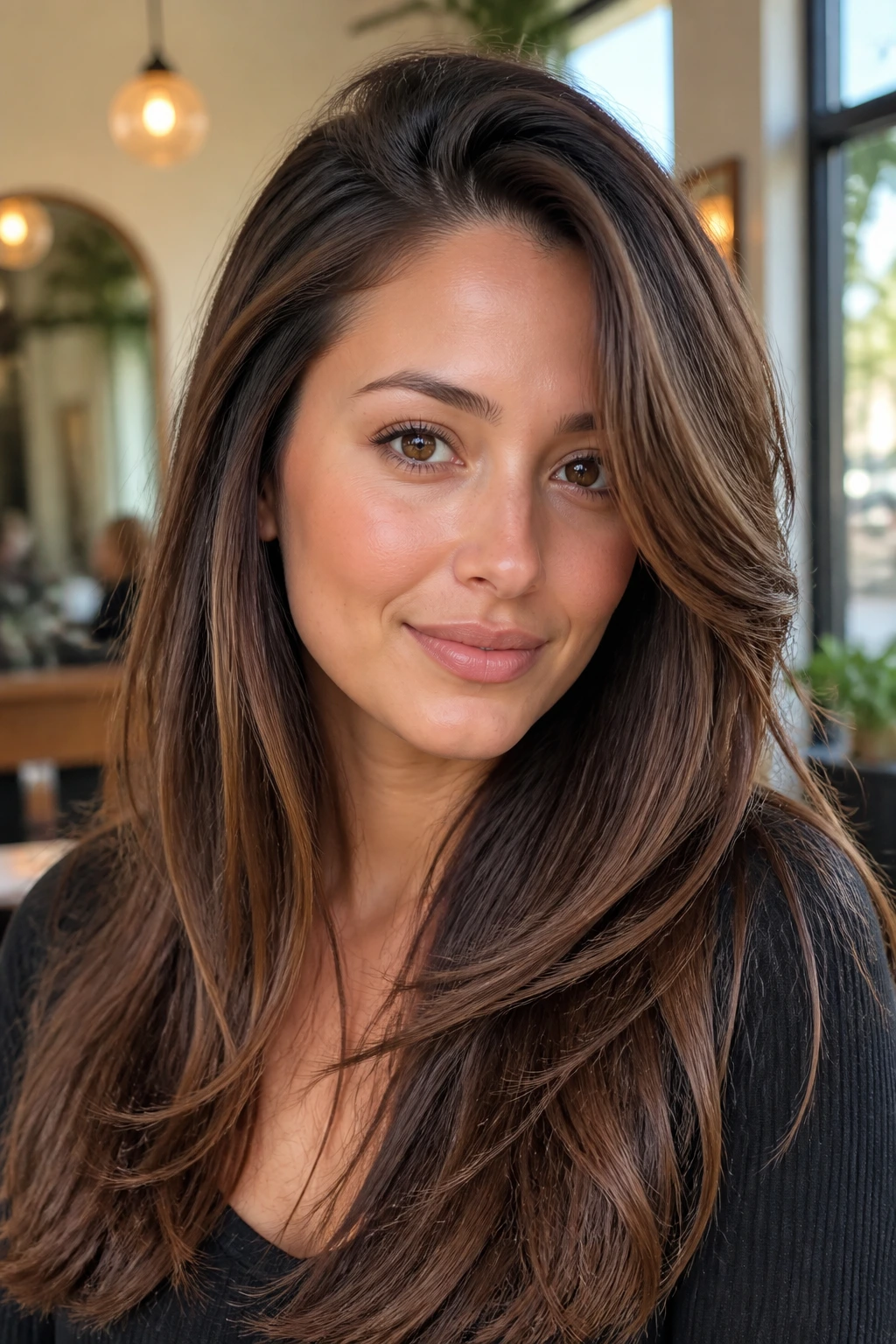
A side part can change the whole haircut without touching the length at all. When long layers are cut to support a side part, the lift at the temple gives the face more dimension and keeps an oval shape from reading too long through the center. It’s a small thing. It changes everything.
This works especially well if your hair naturally falls flat in the middle or if a center part makes your face feel a little stretched. The side sweep adds width on one side and lets the face-framing pieces travel across the cheekbone instead of straight down. It’s less obvious than bangs, which makes it a nice choice if you want a shape shift without committing to fringe.
16. Blunt Ends With Hidden Movement
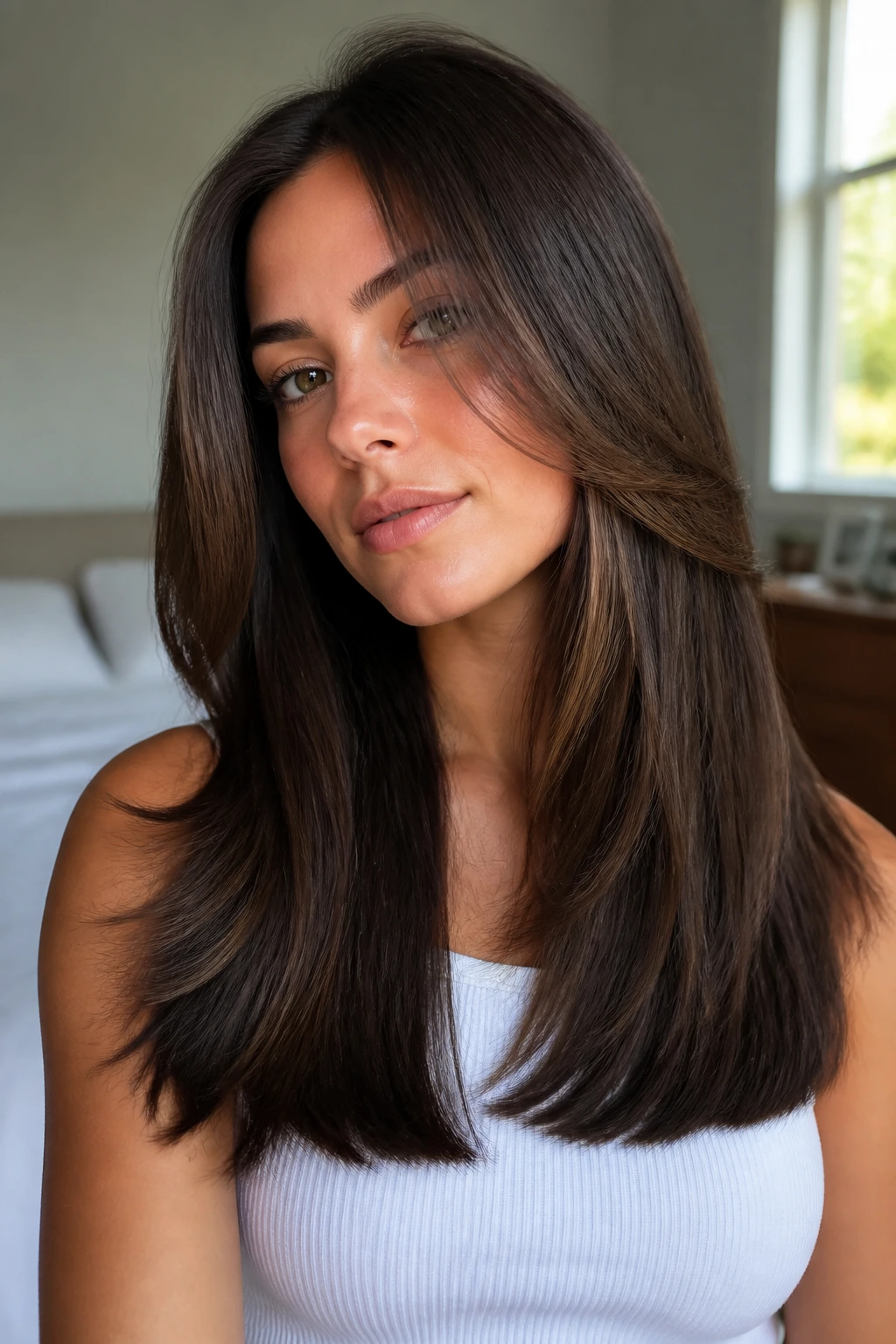
Some people want the ends to stay thick no matter what. Fair enough. Blunt ends with hidden movement give you that fullness at the perimeter while still using interior layers to stop the cut from feeling stiff. On long hair, that matters because a blunt bottom can look luxe, but only if the body of the hair still bends.
This version is especially useful for fine to medium hair that needs a fuller hemline. You keep the visual weight, but the internal shaping stops the cut from sitting like a board. On an oval face, the clean bottom line keeps the eye from wandering too far downward, which helps the face feel balanced. It’s a smart compromise.
17. Soft Wolf Cut for Long Lengths
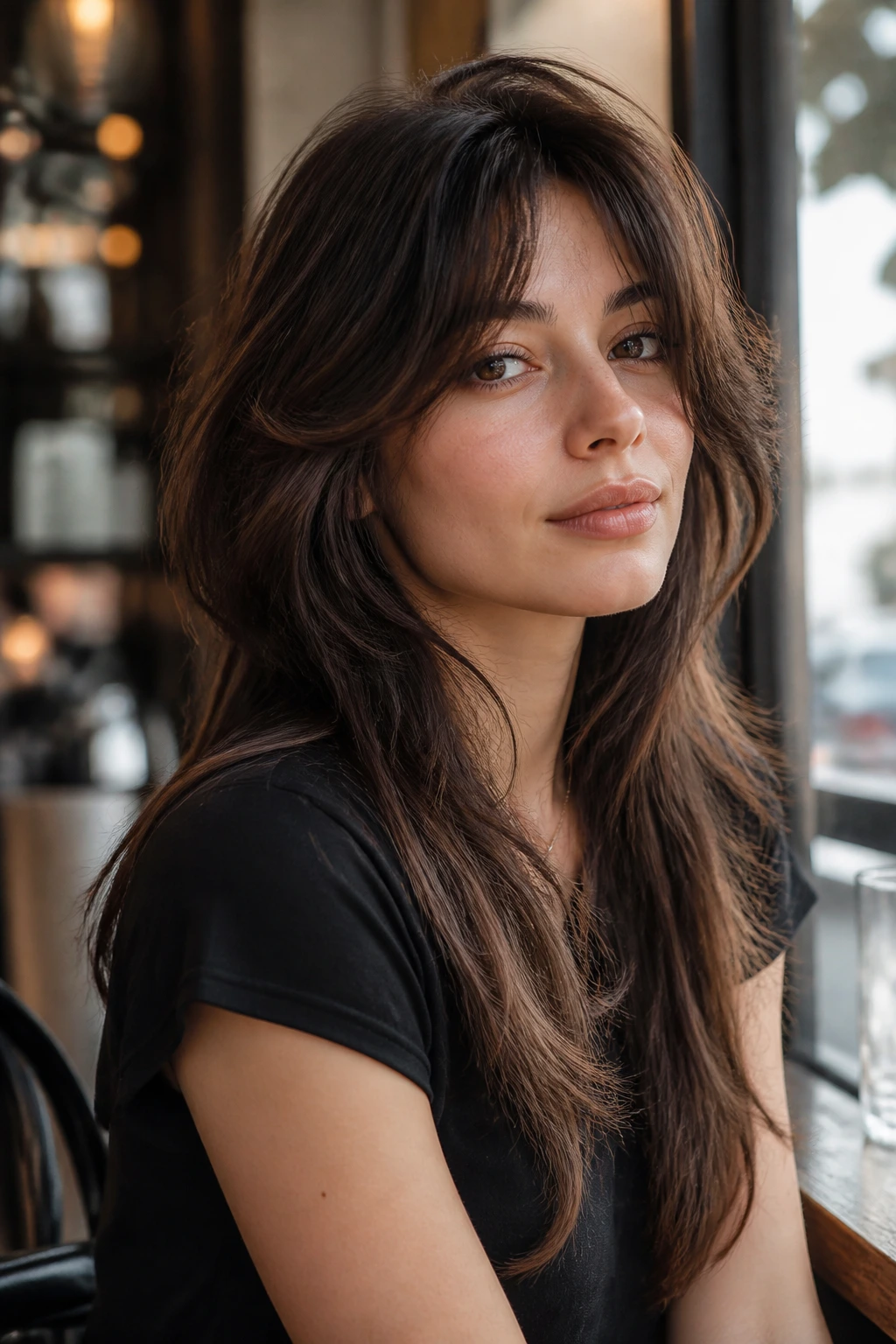
A soft wolf cut gives you texture without going full extreme. The crown is slightly shorter, the face-framing pieces are more broken up, and the overall shape feels cool in a way that still lets the hair stay long. On oval faces, that texture near the top can add personality without making the cut look top-heavy.
This is not the haircut for someone who wants a smooth, polished sheet of hair. It likes a little roughness. A diffuser, a texture spray, or even air-drying with a bit of scrunching can make it look right. If you want movement and edge but still want to keep your length, this is the version that doesn’t ask you to go all the way.
18. Swoopy Layers That Drop at the Collarbone
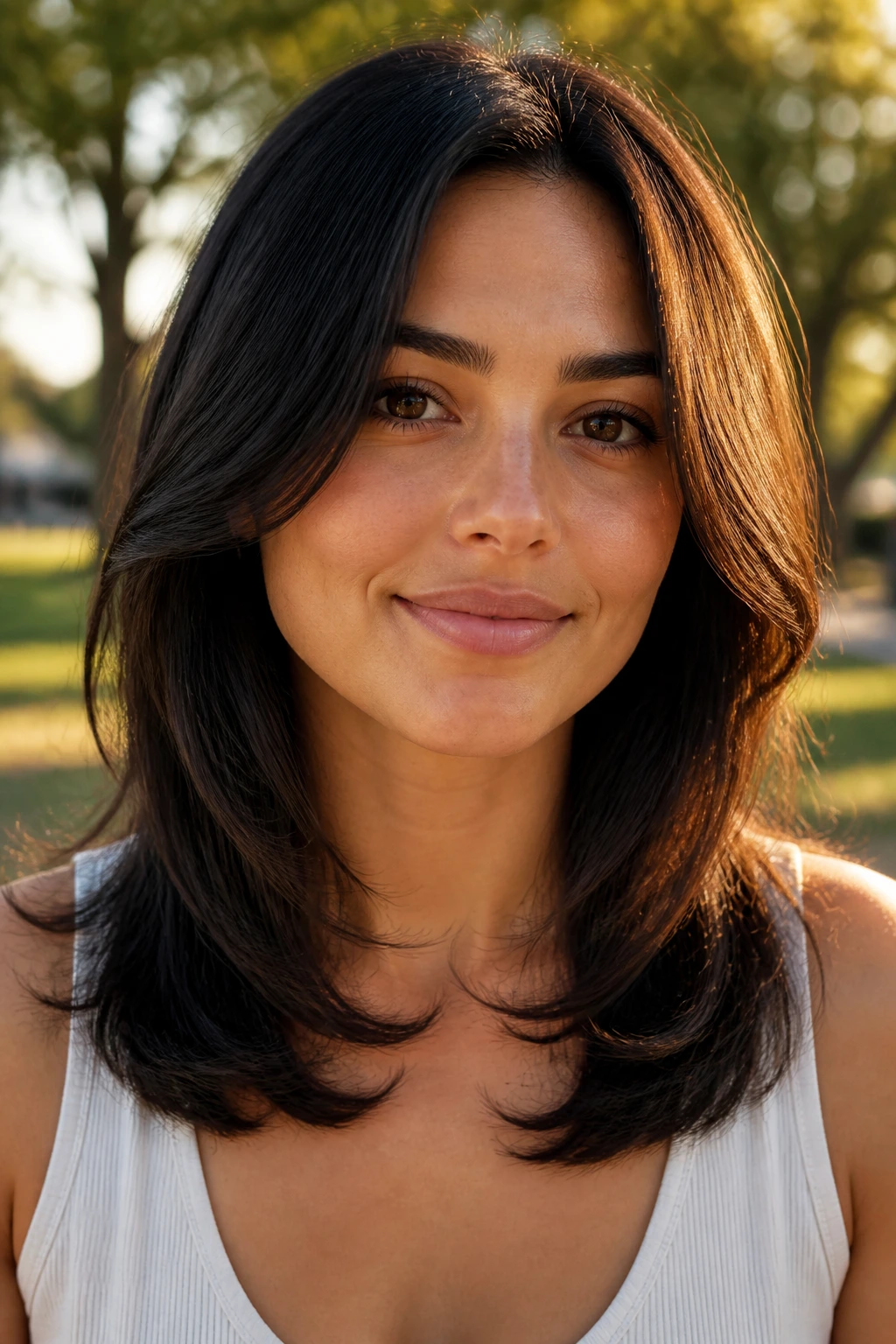
The collarbone is a useful place to build movement because it’s one of the first spots the eye notices on long hair. Swoopy layers that drop there create a soft bend around the front of the haircut and help an oval face gain a little width through the lower half. The result feels relaxed, not severe.
This cut is especially good if you wear your hair down a lot. The front pieces sweep back gently, then curve around the shoulders instead of falling straight. It’s a nice middle ground between a full face frame and a subtle long-layer cut. You can push it toward sleek or wavy and it still keeps its shape.
19. Heavy Bottom Layers for Thick Hair
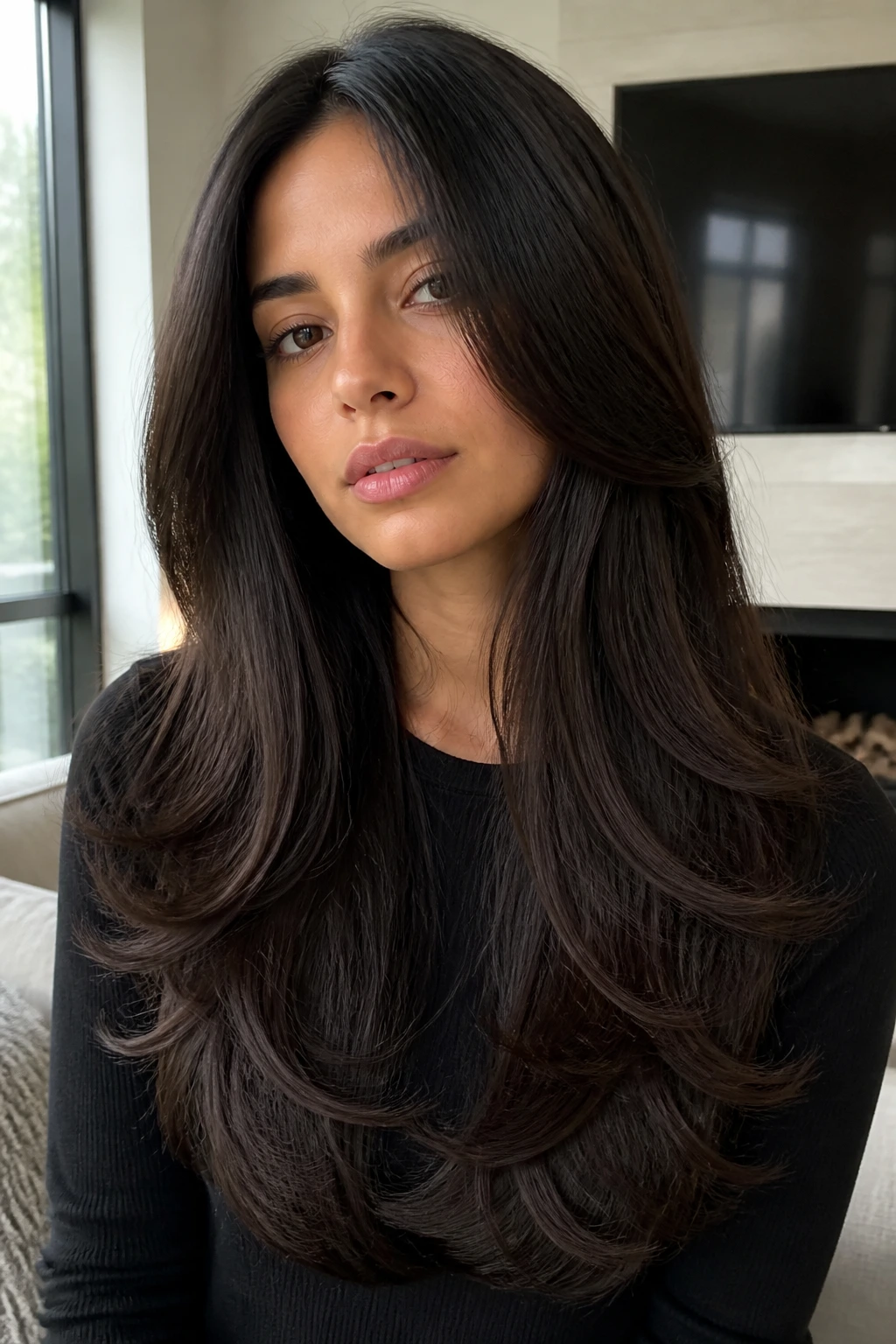
Thick hair does not always need more and more layers. Sometimes it needs weight in the right places. Heavy bottom layers keep the ends substantial while reducing bulk in the middle and underneath, which helps long hair fall better on an oval face. The silhouette stays strong instead of puffy.
This is one of those cuts where restraint does the heavy lifting. If the stylist takes too much from the top, the hair can balloon out or lose its sleek drop. Done well, though, the shape feels controlled and elegant, especially when the hair is blown smooth. It’s a practical cut, but not a boring one.
20. Curl-Friendly Layers That Follow the Pattern

Curly hair needs layers that respect its own spring, not someone else’s straight-hair idea of where the ends should land. Curl-friendly layers are cut to support the shape of the curl pattern, which keeps the hair from stacking weirdly around the face. On oval faces, that matters because curls can either frame beautifully or overwhelm the features if the layers are off.
A dry cut is often the better option here. The stylist can see how the curls sit, where they shrink, and where the weight sits at the bottom. If you’re used to flat-ironing your curls straight, you can still wear this cut that way, but the real payoff comes when the hair is allowed to live in its own texture. That usually looks better than forcing it into something else.
21. Sleek Layers With Face-Opening Pieces
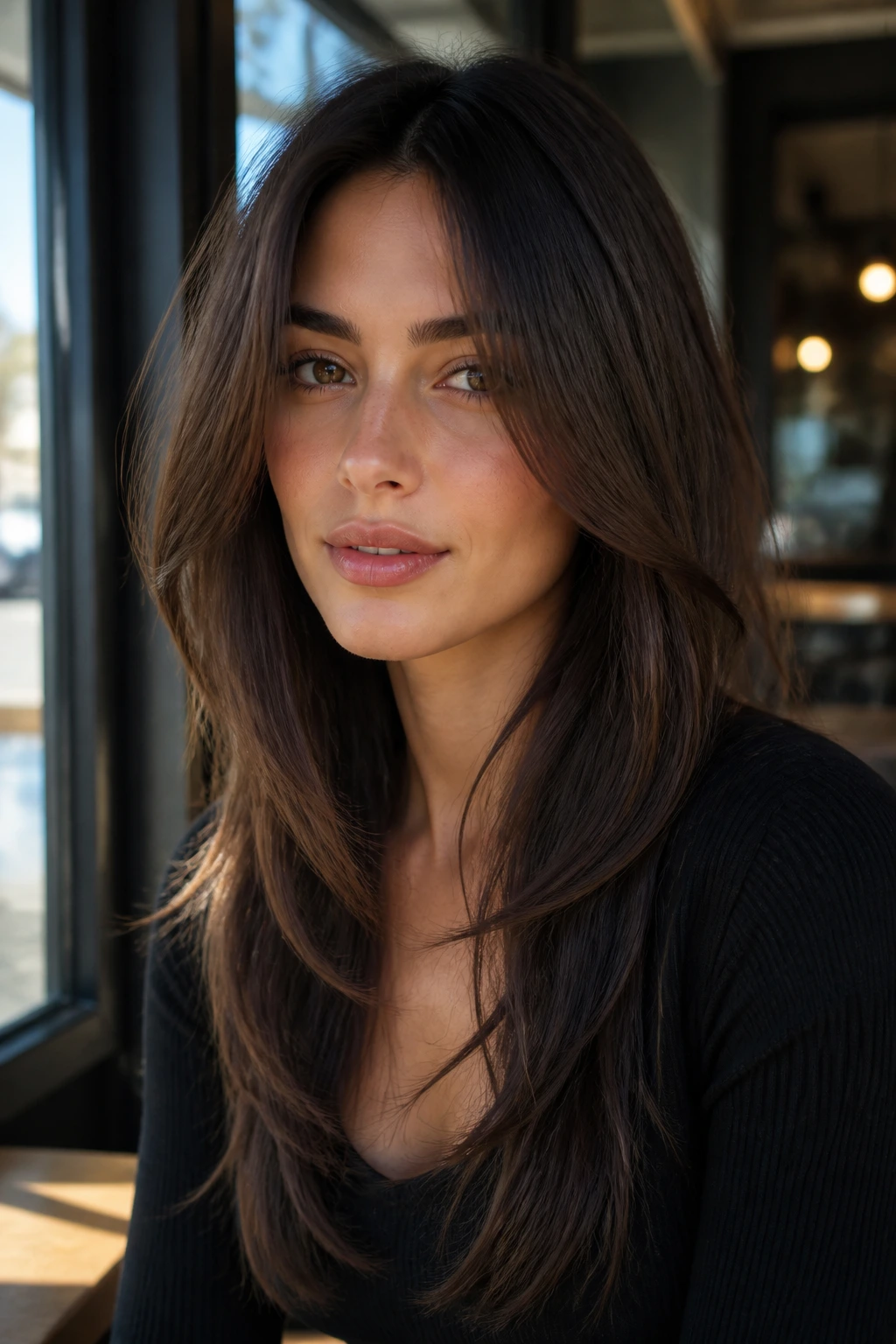
Sleek layers are for the person who likes hair that looks calm, neat, and a little expensive without being loud about it. The layers are long and smooth, and the front pieces are there to open the face rather than surround it. On an oval face, that can be striking because the bone structure gets to stay visible.
This cut works best when the ends are polished and the part is clean. It’s less about volume than about line. If your hair is naturally straight, this can be a very low-drama option that still gives you shape. If it’s wavy, you’ll need to decide whether you want to spend time smoothing it, because the cut looks best when the lines stay clear.
22. Tailored Layers for Fine, Straight Hair
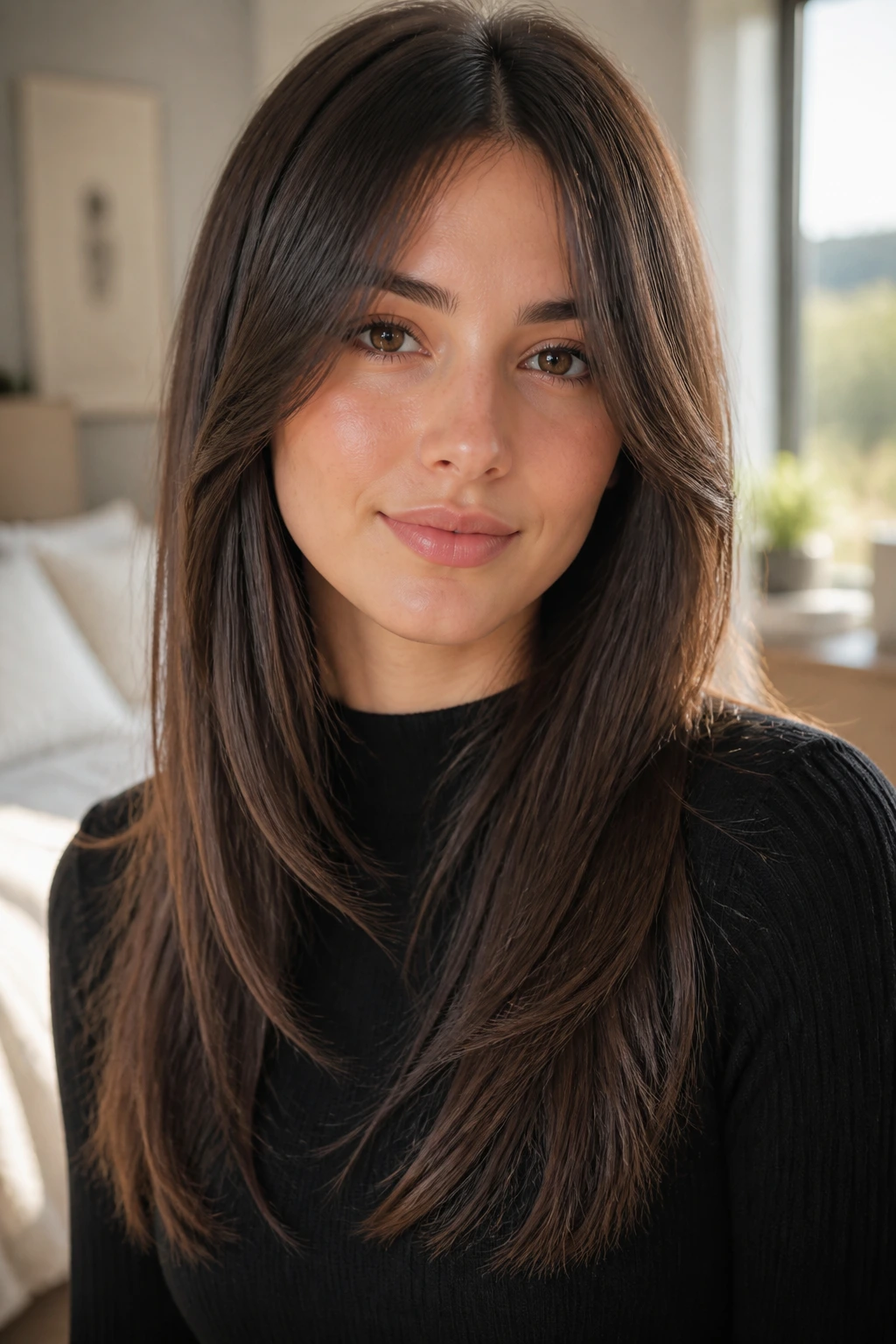
Fine, straight hair can go flat fast, so the layering has to be exact. Tailored layers use just enough movement to keep the cut from collapsing while preserving the bulk that gives the hair body. On an oval face, the goal is to keep the line soft around the cheeks without carving so much out of the ends that the whole look feels thin.
This is a good place for precision rather than drama. One or two well-placed lengths can do more than five obvious layers. Ask for soft face-framing pieces and a mostly full perimeter, then style with a light mousse or root spray if you need lift. Heavy oils are usually a bad idea here; they steal body faster than people expect.
23. Chunky Layers for Dense, Wavy Hair
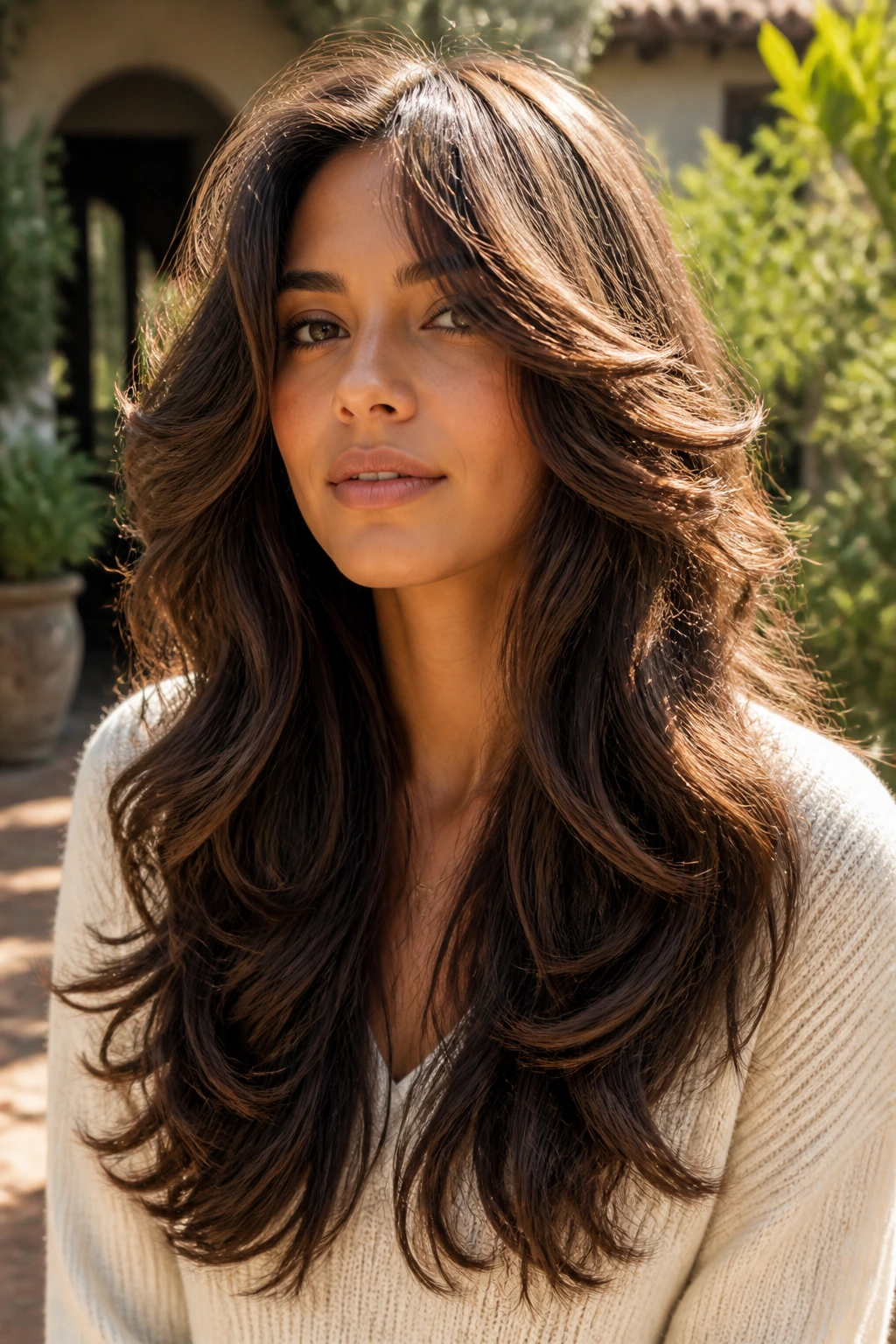
Chunky layers sound rougher than they need to be. In practice, they mean larger, more visible sections that separate the hair into strong movements instead of tiny choppy bits. Dense, wavy hair can handle that better than delicate hair because it needs enough structure to keep the shape from swelling out. On an oval face, those larger sections add width and make the face feel framed instead of swallowed.
This cut likes a touch of texture spray and a little hands-off styling. If you overbrush it, the wave pattern can turn fuzzy. If you leave it alone, it often looks better. That’s one of the reasons I like it for thicker textures: it rewards less fuss, which is a nice thing to say about any haircut.
24. Long Angled Layers Focused on the Cheekbones
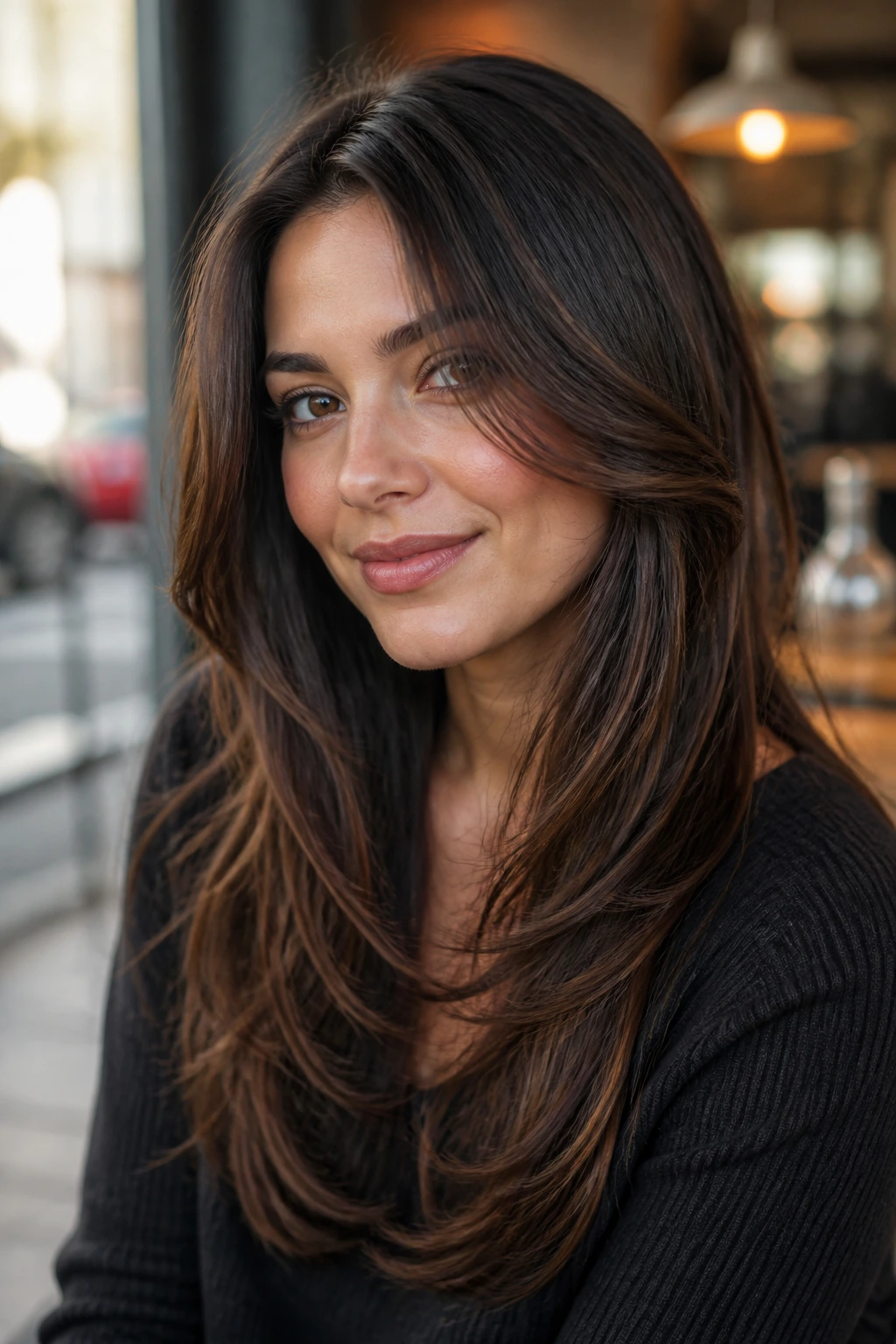
Angled layers are the cleanest way to point the eye where you want it. When the front is cut on a diagonal that lifts toward the cheekbones, the face gets instant shape without a hard fringe. On oval faces, that diagonal line can keep long hair from feeling too vertical, which is a subtle but useful trick.
This style is a strong fit if you like movement but want the haircut to stay elegant. The angle should feel intentional, not sliced. A little bend at the ends helps the line show up, especially if your hair is straight and tends to lie flat. If the pieces start too high, the angle becomes louder than it needs to be. Better to keep it soft.
25. Polished Blowout Layers for Everyday Wear
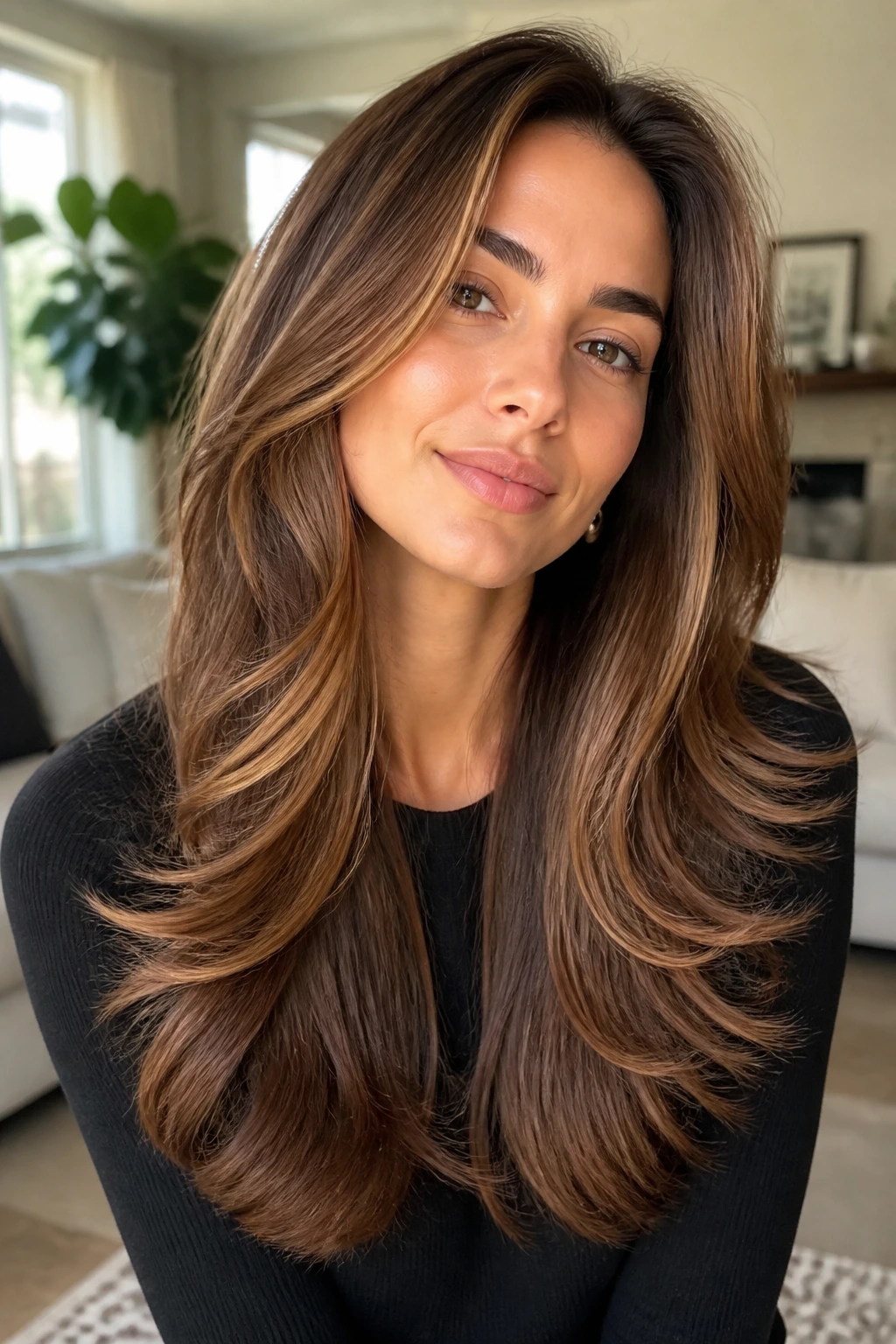
This is the practical version of the big salon blowout. The layers are long enough to feel soft, but they’re arranged to hold shape after a round-brush dry or a quick pass with a large curling iron. On an oval face, the gentle outward movement around the cheeks and jaw keeps the proportions balanced without making the hair look overworked.
I like this cut for people who want their hair to look done on a normal Tuesday, not just on a good hair day. The ends should still feel full. The top should still have lift. If the layers are too short, the polish gets lost and the shape starts to fray. Keep it long, keep it smooth, and let the motion do the talking.
How to Style Long Layers So They Keep Their Shape
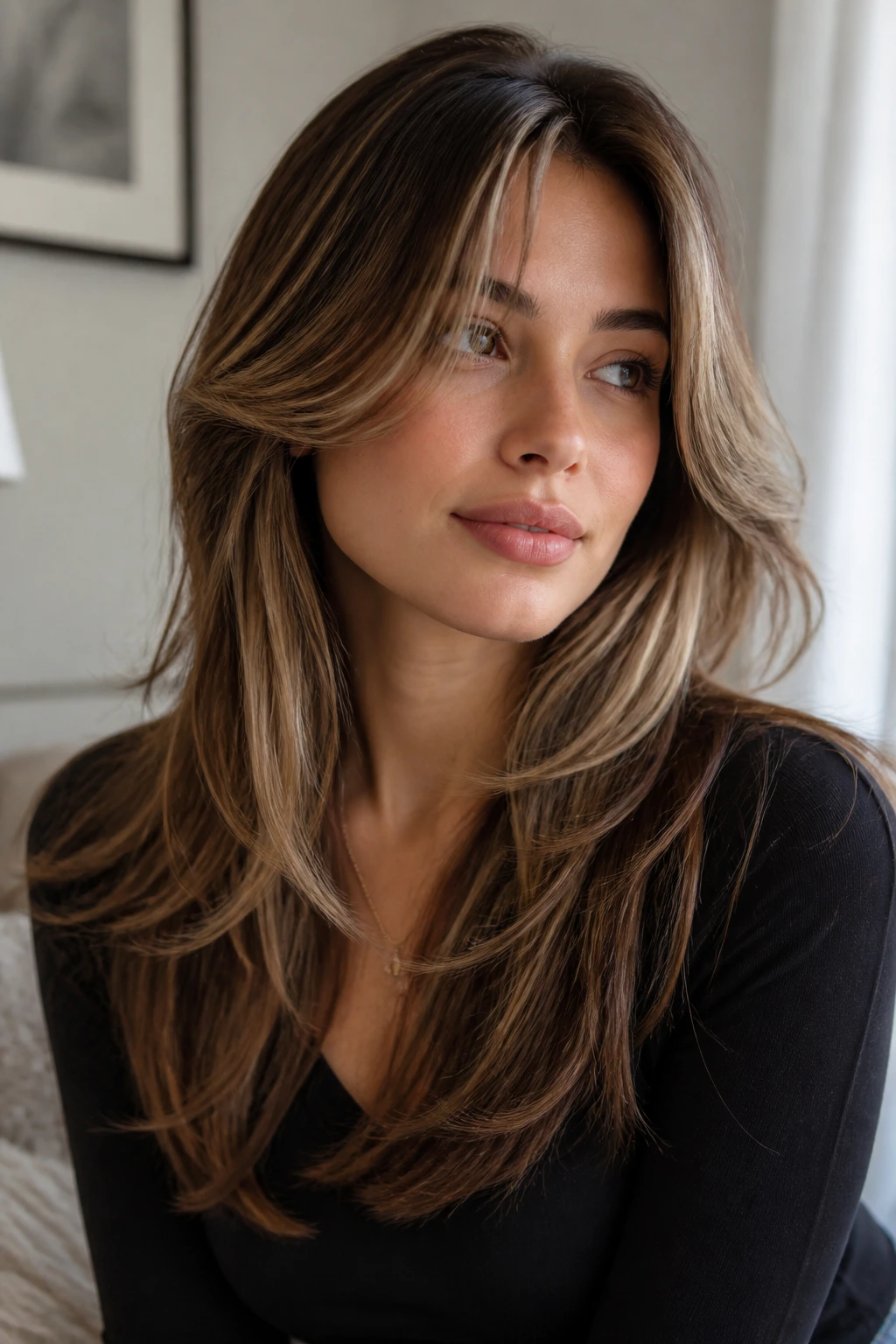
A layered cut only looks expensive if it keeps its movement past the first hour. The easiest mistake is to dry the roots flat and then spend ten minutes curling the ends. That gives you a nice lower half and a dead top. Not the look. A little root lift changes the whole read of the haircut.
Blow-dry direction matters. Pull the front pieces away from the face with a round brush, then roll them under or out depending on the silhouette you want. For butterfly or curtain-bang styles, a soft outward bend near the cheekbone usually works better than a tight curl. For sleeker cuts, keep the brush smooth and the nozzle pointed downward so the cuticle lies flat.
Product choice should match the texture. Fine hair usually needs mousse or root spray before drying. Thick hair often needs a lighter cream on the mids and ends so the layers don’t balloon. Curly hair benefits from a leave-in and a gel or foam that holds the shape while the hair dries. Skip the heavy oil at the crown. It will flatten everything by lunch.
A center part is not the only option. Oval faces can wear one, sure, but a soft off-center part can move the layers into a more flattering line and stop the hair from falling too symmetrically. Tiny change. Big payoff.
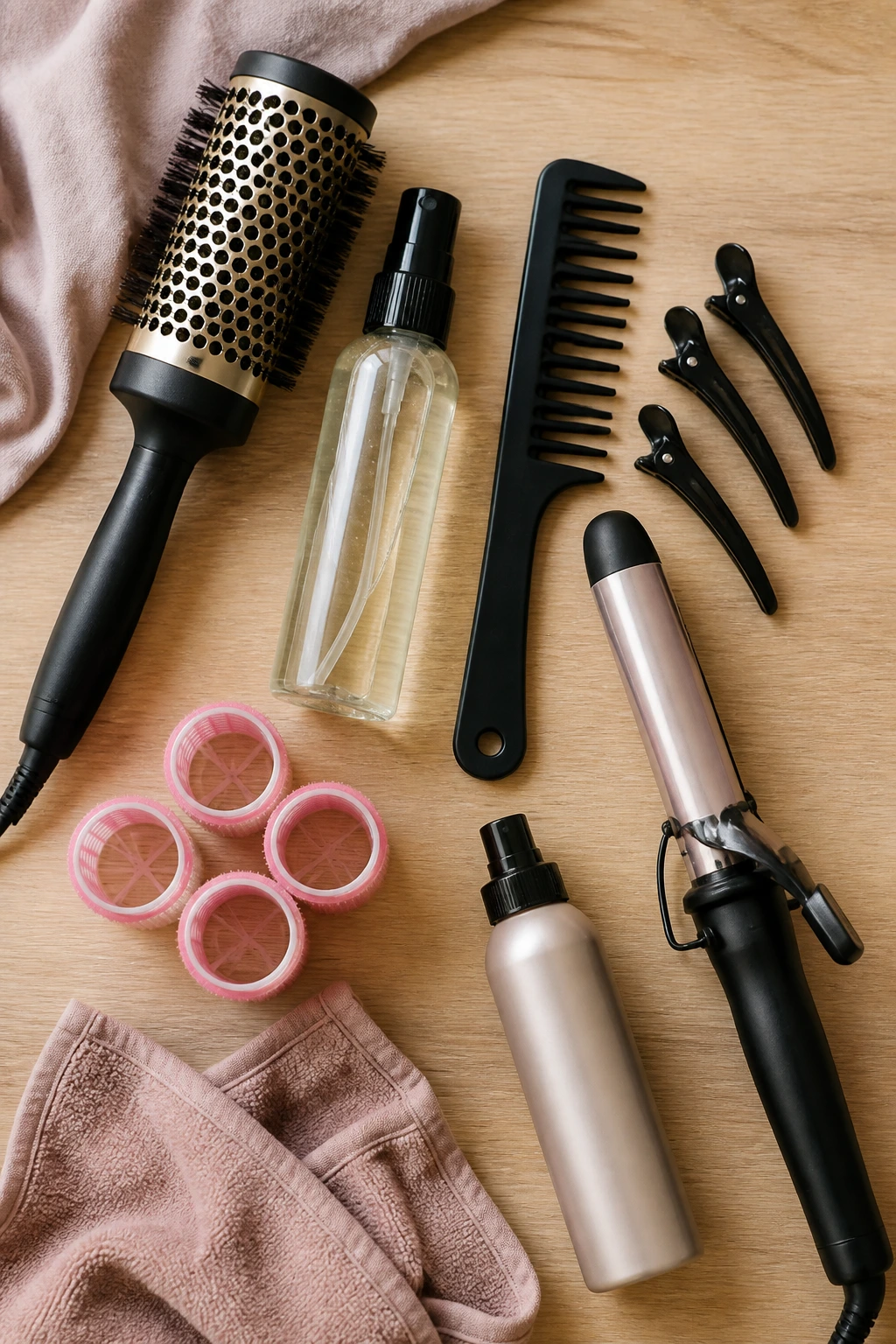
Essential Tools for Styling These Cuts
-
A 1 to 1.5-inch round brush — best for creating bend through face-framing pieces and the top layer.
-
Heat protectant spray — use it before any blow-drying or hot-tool work so the ends stay smoother.
-
A wide-tooth comb — kinder than a brush on wavy or curly layers, especially when the hair is damp.
-
Sectioning clips — they keep the top layers out of the way while you dry the underneath.
-
A 1.25-inch curling iron or wand — ideal for adding loose bends to long layers without turning them into ringlets.
-
Velcro rollers — old-school, yes, but they make a real difference on feathered or blowout styles.
-
Texturizing spray or light mousse — useful for pieces that need grip and separation instead of slide.
-
A microfiber towel or cotton T-shirt — cuts down on frizz when you’re working with waves or curls.
Common Mistakes That Throw the Shape Off
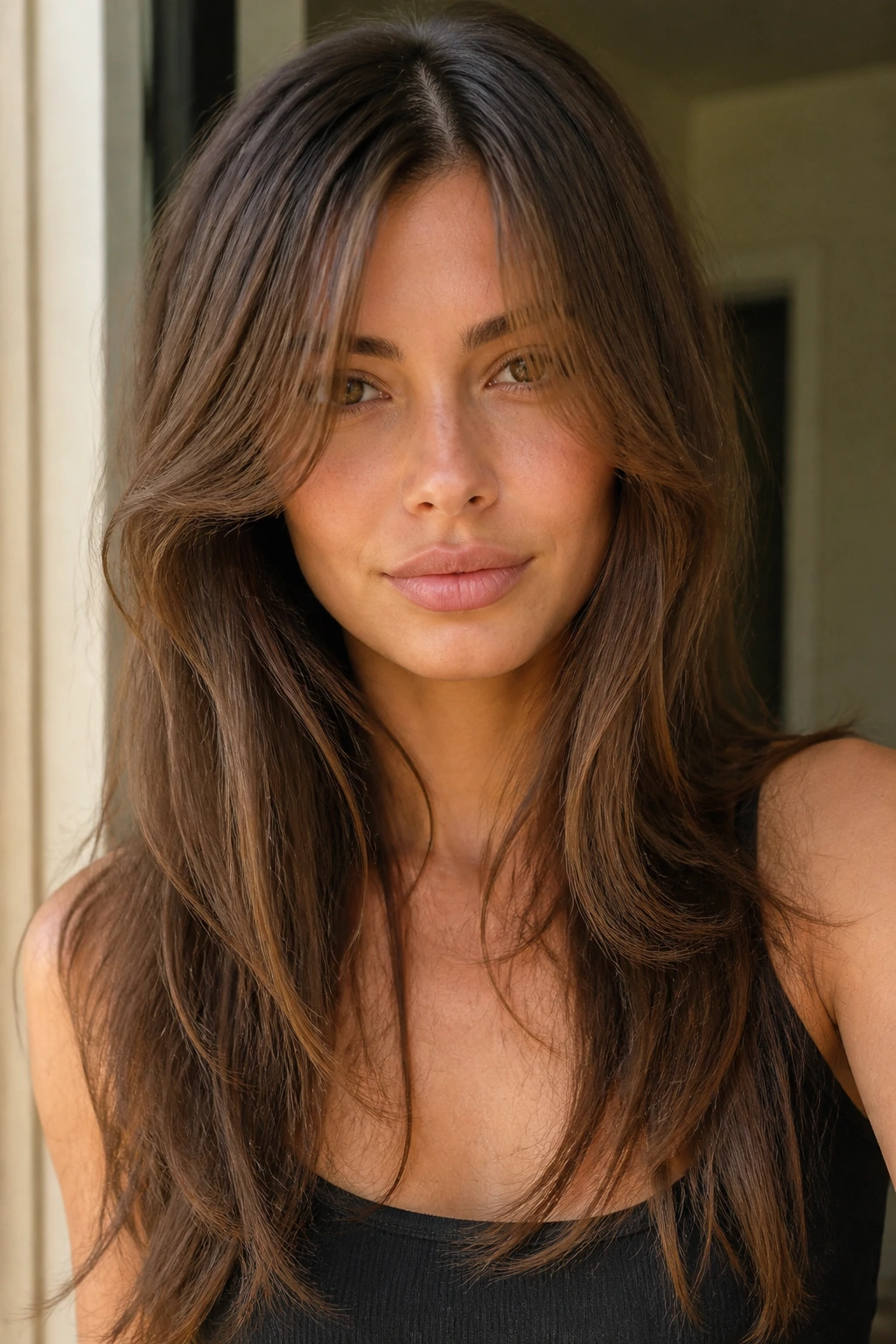
The most common error is cutting the front too short. On an oval face, that can pull the eye upward and make the face feel longer, not softer. The fix is simple: keep the face-framing pieces around cheekbone or collarbone length unless you have a very specific reason to go higher.
Another problem is over-layering the crown. The hair lifts, yes, but it can also puff into a shape that fights the rest of the cut. This happens a lot with thick hair. If the top starts looking airy while the bottom goes limp, the balance is gone. Ask for controlled internal removal instead of piling on shorter and shorter layers.
People also forget about density at the ends. Too much weight taken out of the lower third leaves the cut stringy, which is a bad look on long hair because the ends are the part that sell the length. If you like fullness, say so. Seriously. Stylist shorthand can get sloppy fast.
One more: styling only the ends and ignoring the root area. Flat roots make even the best layer pattern look tired. A little lift at the scalp, even if it’s only a fast blast with the dryer, changes the whole haircut.
Variations and Swaps for Different Hair Types
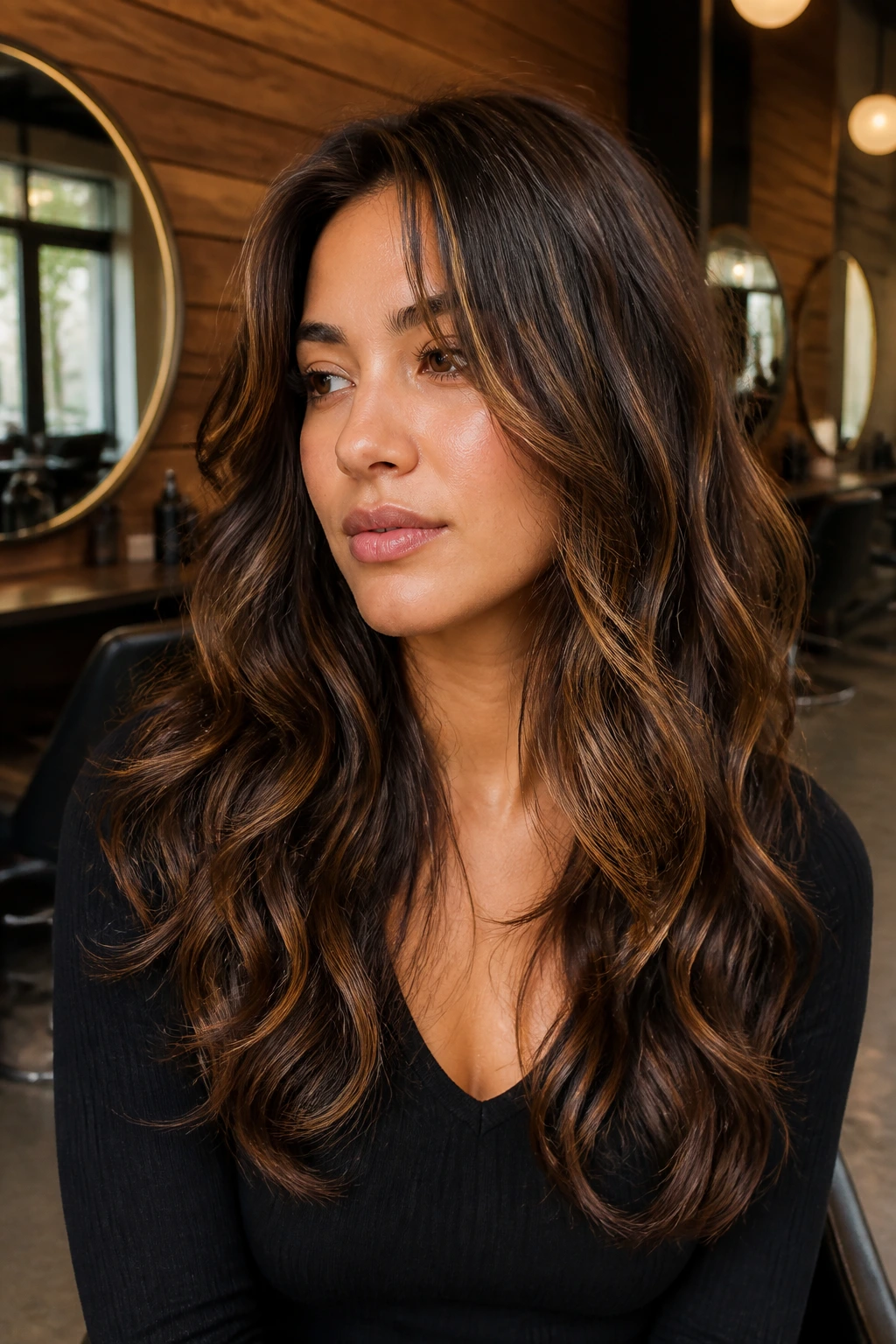
The Barely-There Version
If you hate obvious layers, ask for a perimeter that stays full with just a little internal movement. It works well on fine hair or anyone who wants shape without visible steps. The cut grows out quietly, which is useful if you only get trims a few times a year.
The Full-Texture Version
Wavy and curly hair can handle more separation and more visual layering. Ask for a cut that follows the curl pattern and allows the shorter pieces to sit around the cheekbones rather than fight them. This version gives the most movement when air-dried.
The Glassy, Sleek Version
For straight hair, keep the layers long and the ends polished. The haircut should read as smooth with shape, not piecey for the sake of it. This is the one to choose if you wear your hair down and straight most days.
The High-Volume Version
If you like a blowout with lift, ask for layers that start slightly higher and travel through the mid-lengths. It gives the face more presence and makes the hair feel airy around the cheeks. Better for medium to thick hair than for very fine hair.
The Low-Maintenance Version
If you want the haircut to behave with almost no styling, keep the layers long and the outline soft. A U-shape or a subtle face frame tends to grow out better than a sharp shag or a heavy butterfly cut. Less drama. Less work.
Keeping the Layers Fresh Between Trims
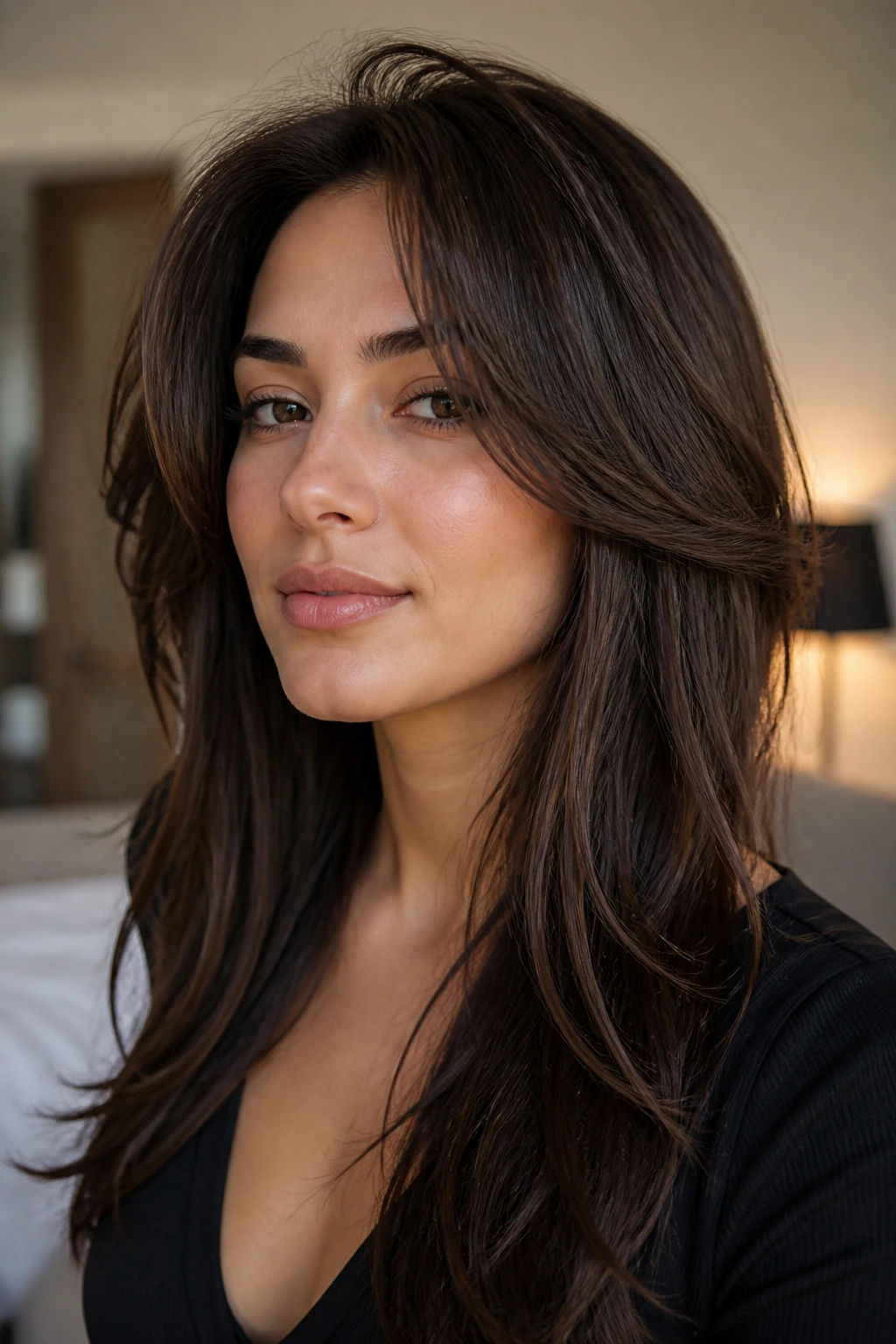
Long layers hold their shape longer than short, choppy ones, but they still need a trim rhythm. If you want the silhouette to stay crisp, an 8- to 12-week trim is usually enough. If you’re growing the hair out and just want the ends to stay healthy, you can stretch that farther, but the face-framing pieces will still need attention sooner than the rest.
Watch what happens around the face first. That’s where the shape goes muddy fastest. When the front pieces stop hitting the cheekbone or collarbone where they used to, the whole cut starts to lose its logic. A tiny dusting cut can fix more than people think.
Dry shampoo helps, but only if you use it lightly. Too much product at the root can make layered hair feel dusty and separated in the wrong way. A small amount at the crown, brushed through well, is enough for most people. And if your hair is wavy or curly, a refresh mist with water and a little leave-in can wake the layers back up without forcing another wash.
Questions People Ask Before They Commit
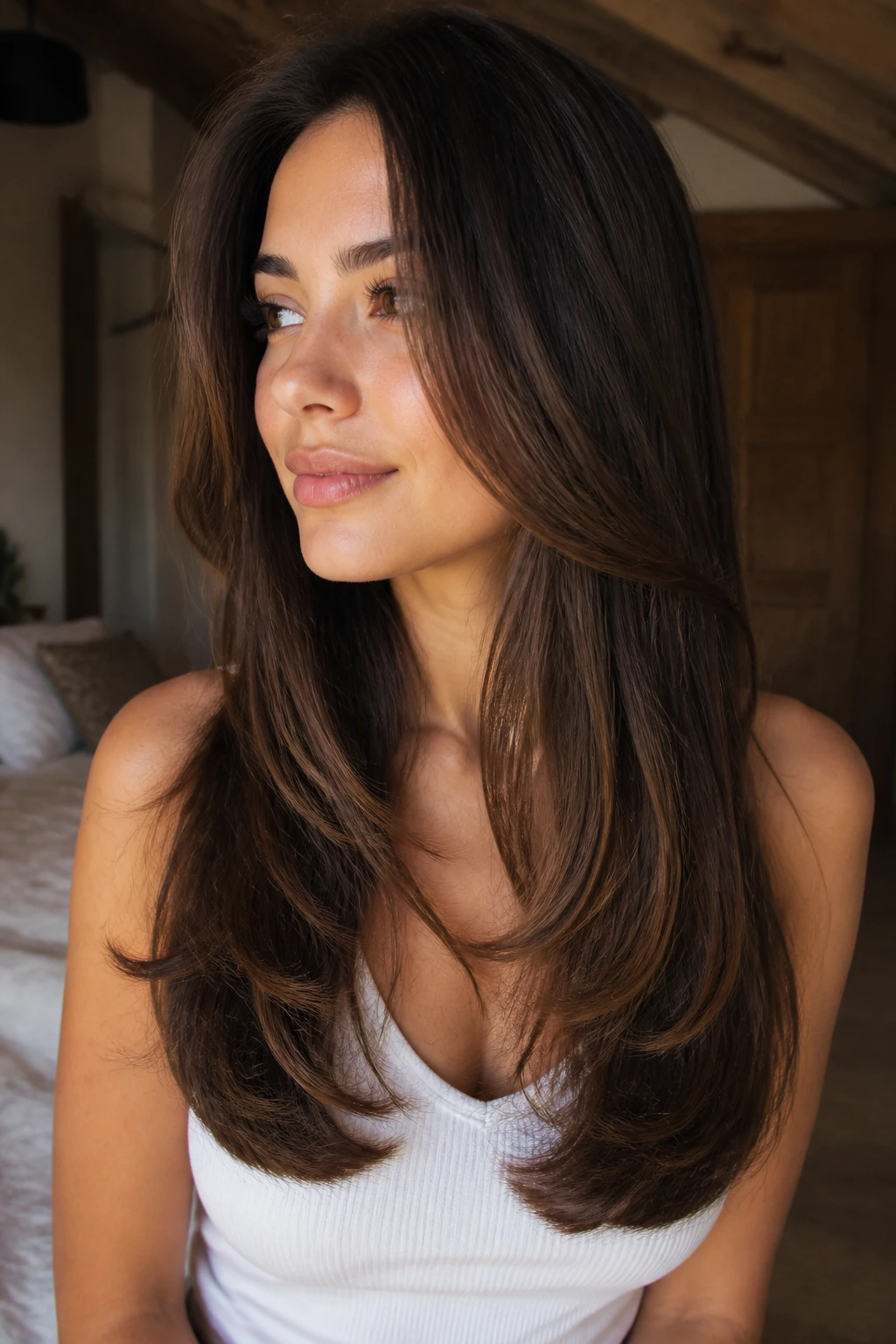
Do layered haircuts make long hair look thinner?
They can, if the layers are too short or too many. Long, blended layers usually preserve fullness while adding movement, especially when the perimeter stays strong.
Where should face-framing layers start on an oval face?
Cheekbone or collarbone is usually the sweet spot. Start too high and the face can feel longer; start too low and you lose the framing effect.
Are curtain bangs a good idea with long hair?
Yes, if you want softness around the forehead and cheekbones. They’re easier to grow out than blunt bangs and blend nicely into long layers.
What if my hair is very thick?
Ask for controlled weight removal, not a lot of short layers. Thick hair needs room to move, but it also needs enough weight left at the bottom so the shape stays clean.
What if my hair is fine and flat?
Keep the layers long and minimize thinning at the ends. Internal shaping plus a root-lift product usually works better than a heavily textured cut.
Can I wear layers if I air-dry my hair most days?
Absolutely. Wavy and curly textures often look better with layers because the shape forms itself as the hair dries. Straight hair can still air-dry well, but the layers need to be more carefully blended.
How do I know if my stylist cut the front too short?
If the hair keeps flipping into your cheek or starts making the face look longer instead of framed, the front pieces may have been taken up too high. The fix is usually patience and a better trim next time, not more chopping.
The Length That Still Moves
The best layered cuts for long hair and oval faces do one thing very well: they keep the length, but they refuse to let the length sit there like wallpaper. That’s the whole trick. A good layer pattern gives the face a place to stop, gives the hair a place to bend, and gives you a cut that still looks alive when you’re not standing under salon lights with a round brush in hand.
If you take one thing from all twenty-five options, let it be this: placement matters more than the label. Feathered, butterfly, shaggy, sleek, rounded — those words matter, but not as much as where the movement starts and how much weight stays at the ends. Bring clear references, talk honestly about your texture, and choose the version that fits how you actually wear your hair. That’s where the good cuts live.