



Wavy hair has a way of telling on a bad cut. Give it a blunt hem and the ends kick out. Stack too much weight up top and the crown goes flat while the bottom swells like a bell.
Long layers for women over 40 with wavy hair solve that awkward middle ground without making you start over from scratch. The best versions keep the length you like, let the wave pattern breathe, and soften the parts of the haircut that tend to look heavy, boxy, or oddly puffy once the hair dries.
What matters most is shape. Good long layers do not just remove bulk; they guide the wave, frame the face, and keep the ends from looking stringy or chopped up. The right version can sharpen glasses, soften a jawline, and make silver streaks look like they belong there, which they do. Let’s start with the cuts that get that balance right.
Why Long Layers Work So Well on Wavy Hair Over 40
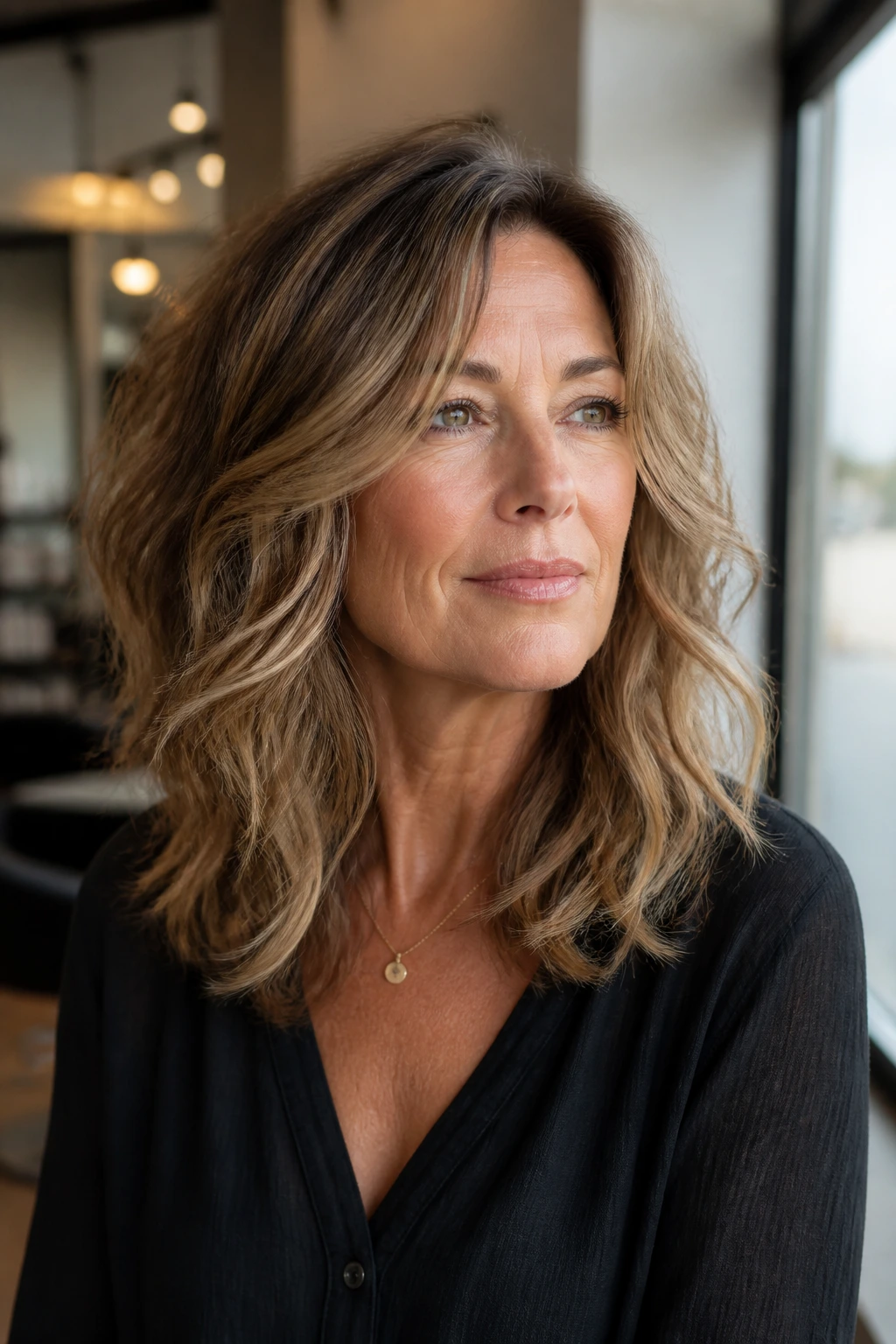
Long layers work because they respect what wavy hair already wants to do. They do not fight the bend, and they do not lock the whole head into one heavy sheet that sits there like a curtain. That matters more as hair changes over time, because density can shift at the temples, texture can get a little coarser, and the old “one-length and hope for the best” cut stops behaving.
The sweet spot is usually somewhere below the chin and above the mid-back, with the front pieces tailored to the face instead of chopped in blindly. A good layered cut can give lift at the crown, keep the perimeter full, and stop the bottom from turning triangular. It’s a cleaner silhouette. Less guesswork.
- Less bulk, more swing: Long layers remove enough weight for waves to move, but not so much that the ends look see-through.
- Better face framing: The right front pieces can land at the cheekbone, jaw, or collarbone and make the whole cut feel lighter around the face.
- Cleaner grow-out: Blended layers tend to age better between trims than sharp, short layers that announce themselves the minute they start growing.
- Helpful with changing density: If the hair is thinner at the temples or fuller through the back, layers can even that out without making it obvious.
- Flexible styling: These cuts usually work with a diffuser, a round brush, or a fast air-dry, which is part of the appeal.
1. Soft Collarbone Layers That Keep the Ends Full
If you want movement without the broom effect, start here. These layers usually begin around the collarbone, which gives the wave enough room to bend without stealing so much weight that the hair feels thin. The silhouette stays long and swishy, but the bottom stops acting like one blunt shelf.
This is the easiest long-layer shape to wear if you like your hair down most days and still want to tuck it behind your shoulders or clip it up. Ask for soft point-cutting at the ends and a very light face frame that stays below the mouth. Anything shorter can jump up when it dries, and wavy hair loves to surprise people that way.
2. Cheekbone Curtain Layers That Open the Face
Why do some face-framing layers make the face look wider instead of softer? Usually because they land too low or start too blunt. Cheekbone curtain layers fix that by opening right where the eye naturally wants to go, then melting into the rest of the cut.
Where the shortest pieces should land
- At or just below the cheekbone: That gives lift without sitting on the widest part of the face.
- Long enough to bend away from the cheeks: You want shape, not a little helmet of hair.
- Blended into the front lengths: The transition should feel like a sweep, not a step.
This cut works especially well if you wear glasses or like a side part. The front pieces can move around the frame of the face instead of crowding it, which makes the whole haircut look lighter.
3. Butterfly Layers That Lift the Crown
Butterfly layers are the cut people keep asking for when they want volume up top and length down the back. On wavy hair, the trick is to keep the upper layers soft enough that they do not poof, then leave the long perimeter doing the heavy lifting.
The result is a little floating movement around the crown and cheekbones, with the bottom still hanging in long pieces. It’s a smart choice if your roots lie flat but the mid-lengths have plenty of wave. A round brush at the top and a diffuser through the ends can make the shape show up fast.
4. Feathered Long Shag Layers
If your waves feel heavy, more texture can help. A feathered long shag takes weight out of the shape without turning the whole head into a chopped-up mess, which is the line a lot of cuts cross and never recover from.
The key is restraint. Keep the perimeter long, feather the interior, and avoid making the crown too short unless you want the whole thing to kick out. This is a good cut for anyone who likes a little edge, a little softness, and hair that looks better with a bit of air in it.
5. U-Shaped Layers That Preserve Length
A U-shape is the quietest answer in the bunch, and I mean that as a compliment. The longest point stays in the center back, while the sides curve up gently, which keeps the outline soft without taking away the feeling of length.
This shape is especially good if you hate seeing the back of your hair turn into a sharp point or a box. It also works well for ponytails and low clips because the layers blend instead of popping out in obvious steps. Ask for the U to stay rounded, not dramatic. The more subtle it is, the better it grows out.
6. Invisible Internal Layers for Finer Waves
Fine wavy hair gets bullied by too many visible layers. It needs a cleaner outline with just enough internal removal to stop the cut from hanging like one flat sheet. Invisible layers do that job without advertising themselves from across the room.
What makes them invisible
The stylist takes weight out from underneath the top surface, which keeps the outer layer looking full while giving the waves room to move. The haircut still reads as long hair. It just behaves better.
That approach is especially useful if the crown goes flat fast or the ends taper too much. Ask for a long perimeter, internal shaping, and very little slicing through the outer edge. Too much texture on fine strands can make the ends look ragged instead of airy.
7. Sweeping Side-Part Layers

A side part can do more for volume than a handful of extra layers. It shifts the weight line, lifts the crown, and lets the front fall diagonally instead of straight down the face. On wavy hair, that diagonal line matters.
This is a strong option if you want softness without committing to bangs. The longer side can tuck behind one ear, while the shorter side brushes the cheek and gives the haircut a little motion. Keep the front pieces long enough to bend, not so short that they flip out near the temple.
8. Cascading Mid-Back Layers
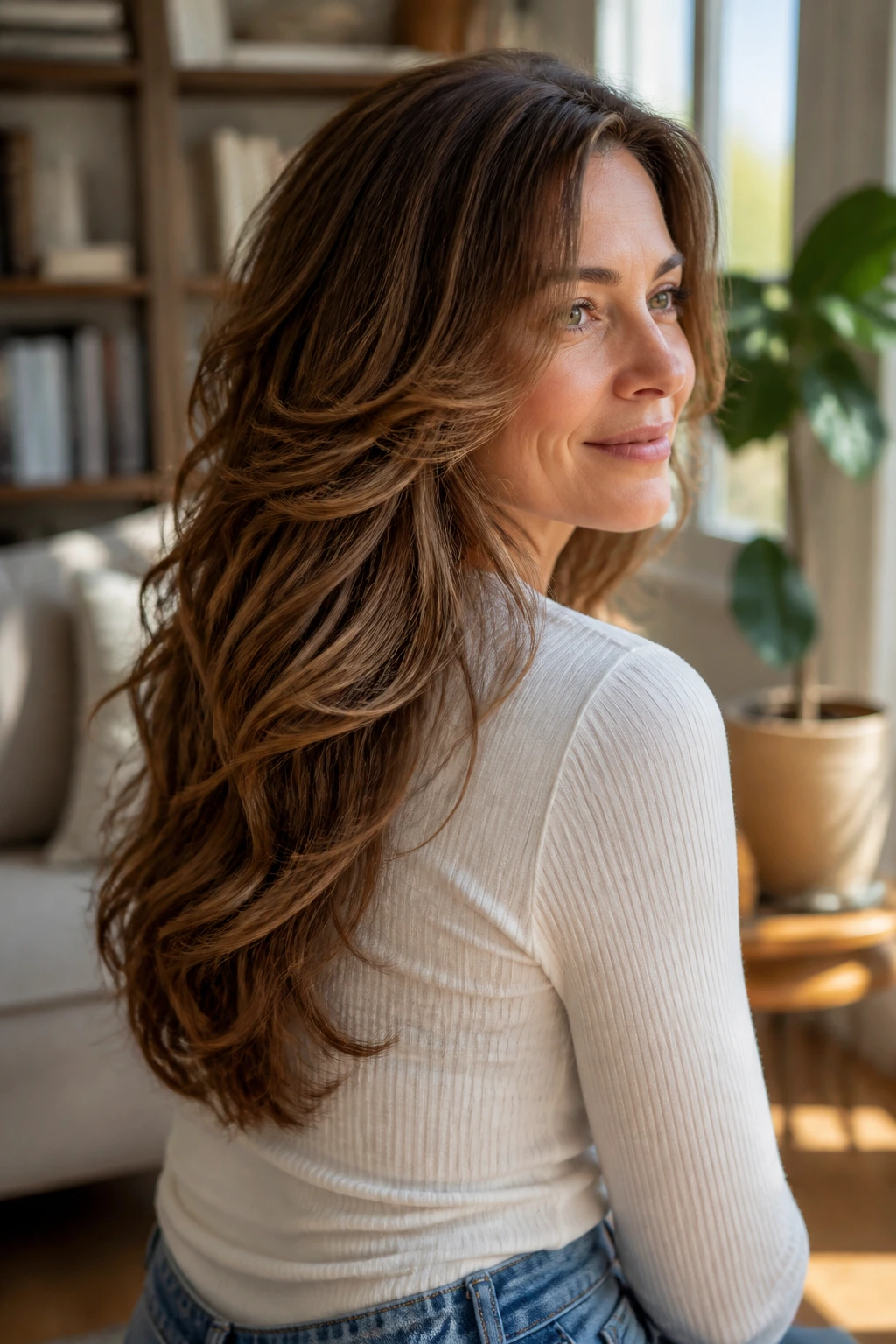
When hair reaches mid-back, a blunt edge can look like a blanket. Cascading layers break that up by stepping the lengths down in a soft way, so the hair moves instead of sitting there like a heavy panel.
- Best for dense waves: The extra weight in the mid-lengths gets redistributed before it swallows the whole shape.
- Ask for a soft V or rounded cascade: That keeps the back from looking too pointed.
- Avoid over-texturizing the ends: You want movement, not fray.
This cut looks especially good if you wear your hair loose most of the time and like to see those longer waves spill over your shoulders. It has presence. It also knows when to back off.
9. Razored Ends for a Piecey Finish
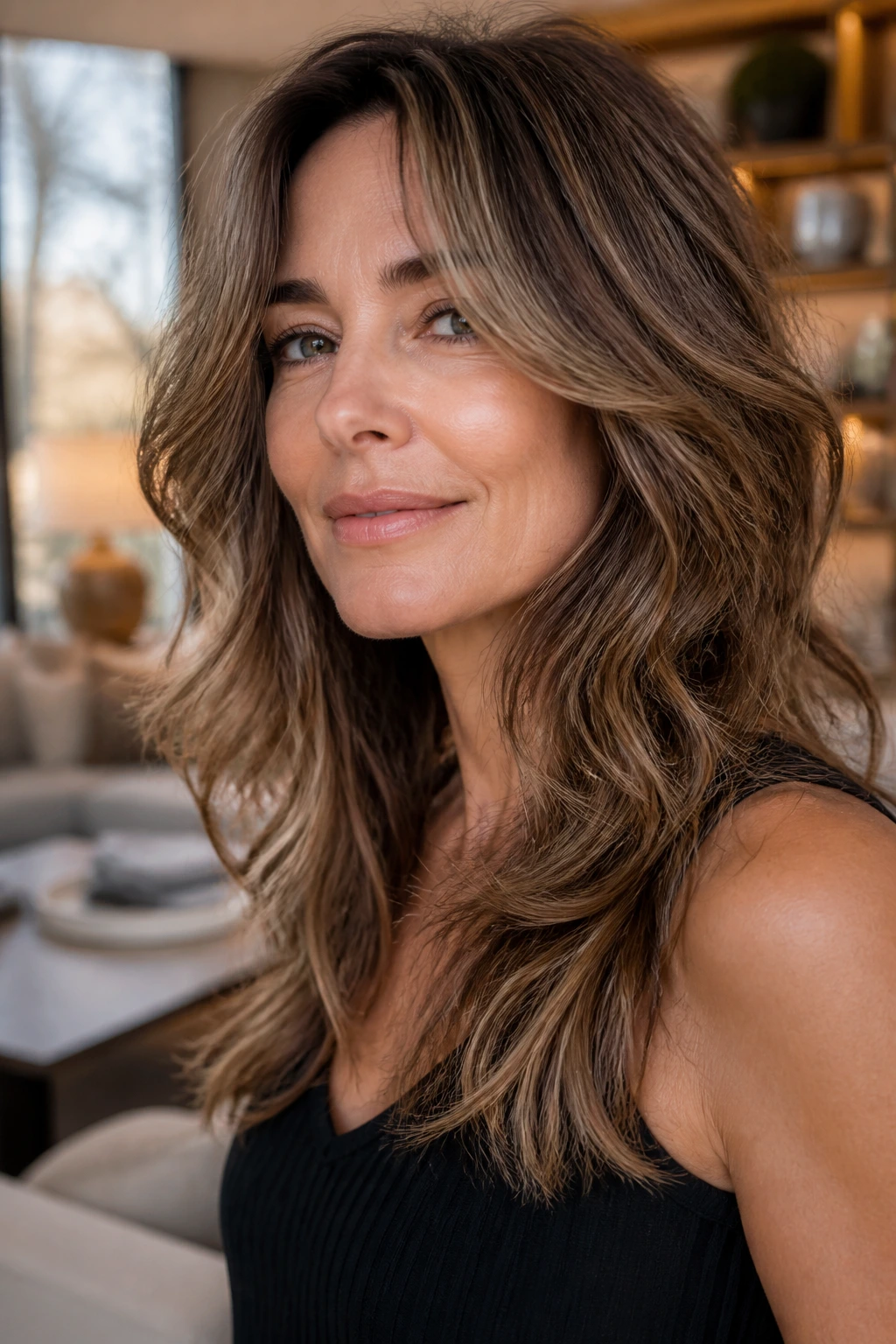
Razor cutting can make wavy hair look lifted and feather-light, but only in the right hands. Done well, it breaks up the ends so the waves separate into cleaner ribbons instead of clumping together. Done badly, it leaves the ends frizzy and thirsty.
This version fits coarse or very thick wavy hair that tends to feel bulky at the bottom. The razor should live mostly in the last couple of inches, with a very light hand. If your hair is already fragile or fuzzy, point-cutting is usually the safer move.
10. Long Layers With a Deep Side Fringe
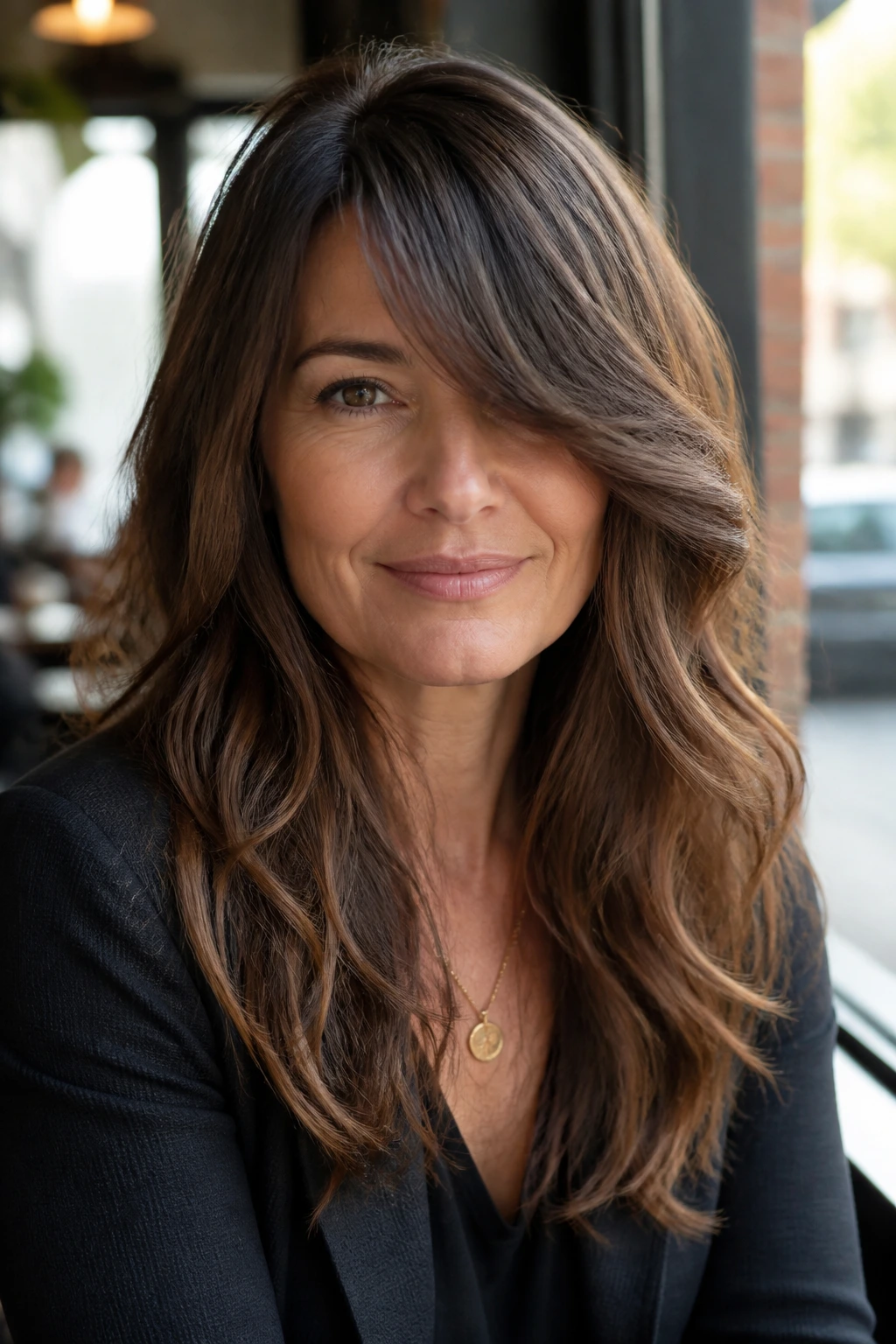
Want a little drama without a full fringe? A deep side fringe does the job. It gives you a strong sweep across the forehead, then melts into the rest of the long layers so it never feels like a separate haircut bolted on top.
This shape can soften a broad forehead and bring attention to the eyes and cheekbones. It also tucks nicely behind glasses and clips better than a short bang does. Ask for the shortest point to start high enough to sweep, not so short that it stands up when the hair dries.
11. Debulked Long Layers for Thick Waves
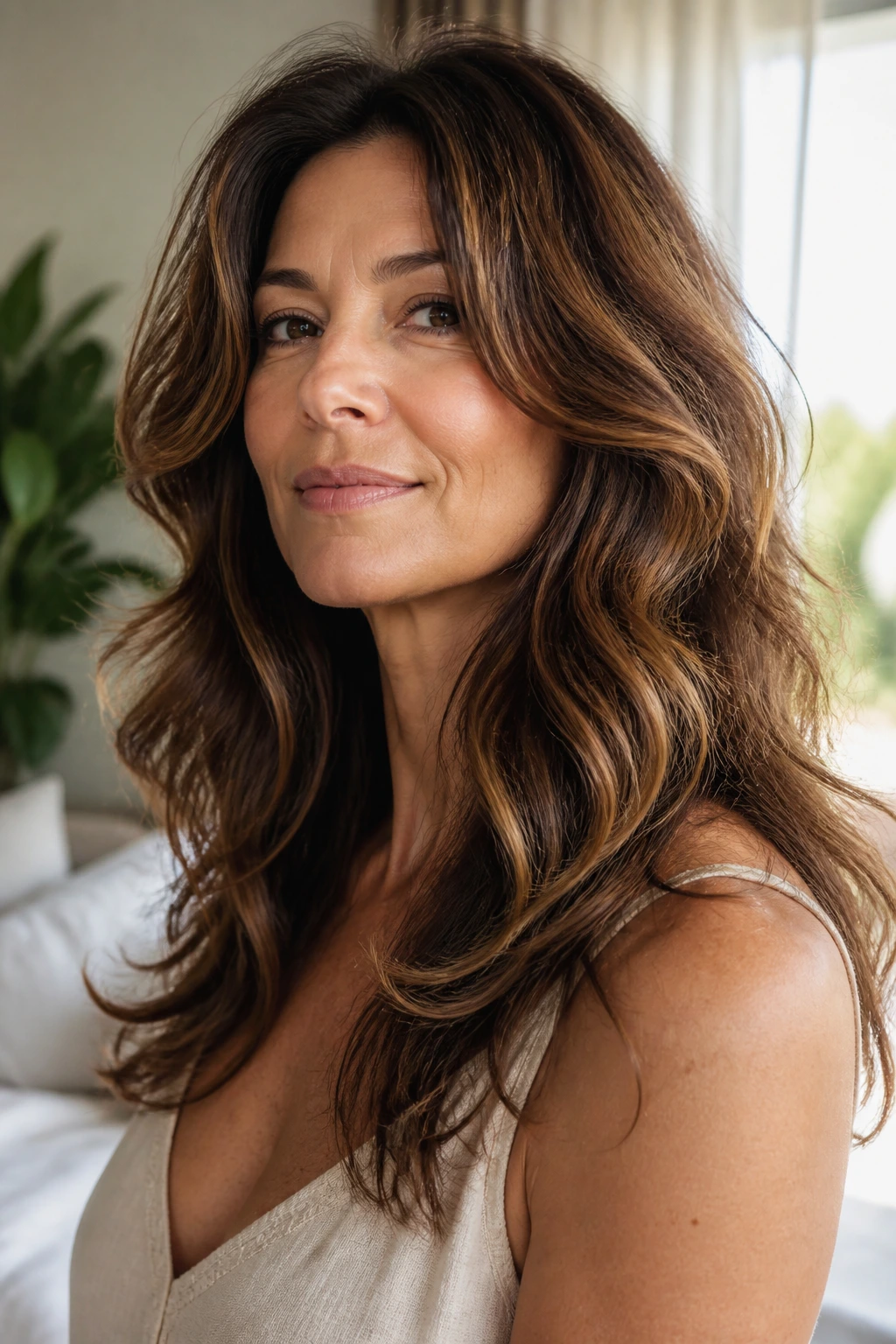
Thick wavy hair does not need more shape as much as it needs less weight in the right places. That’s the entire game here. If the hair is dense from roots to ends, the wrong layer pattern can make it expand like a triangle.
The fix is internal de-bulking, usually through the mid-lengths and lower sections, while leaving the outer outline long and clean. I prefer this over aggressive thinning shears near the crown, because the crown is where thick wavy hair can go frizzy fast. A controlled cut keeps the bulk from taking over without making the hair look hollow.
12. V-Cut Layers for a Slimmer Back View
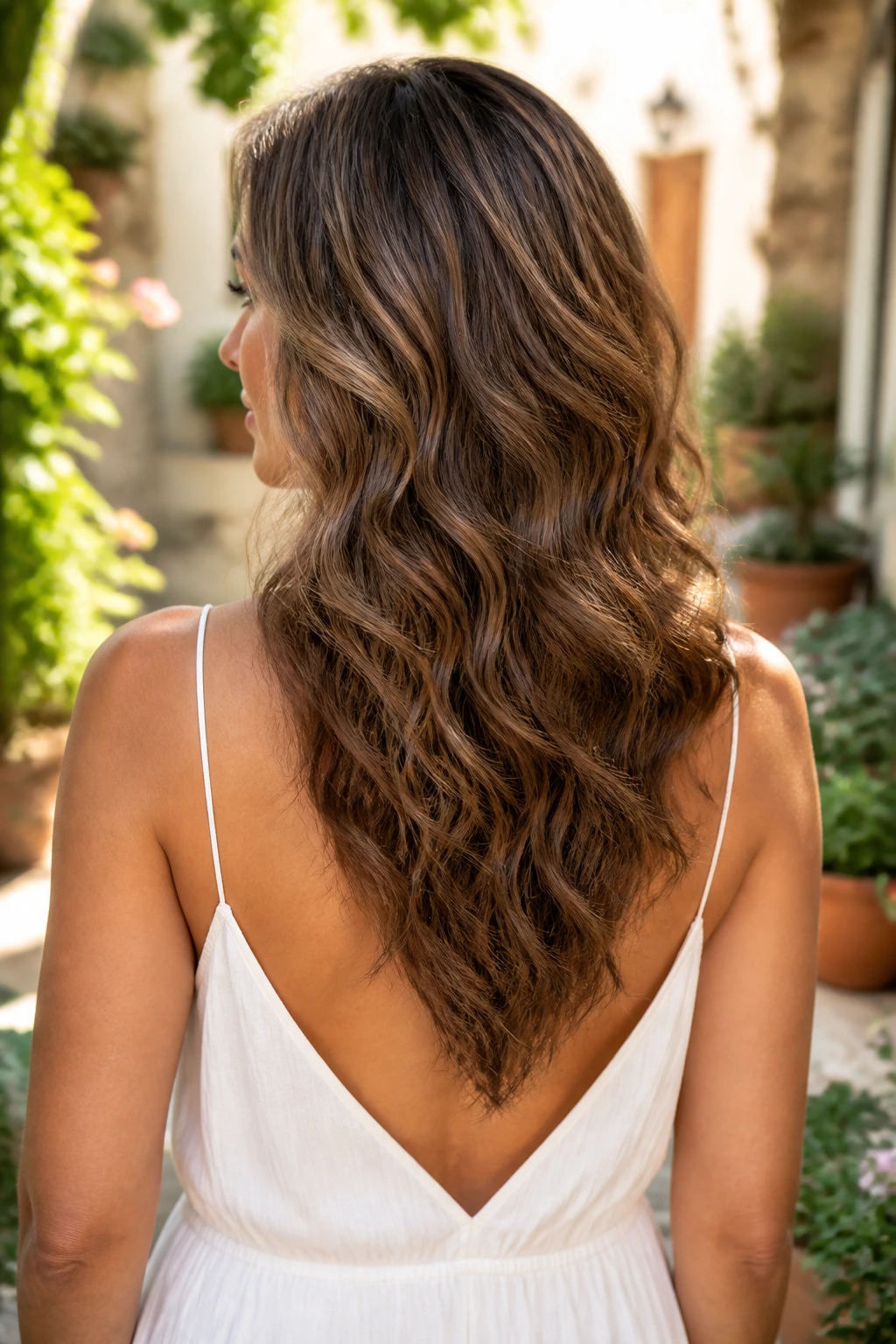
A V-cut gives the back of long wavy hair a point instead of a straight edge. The side lengths stay long, but the center back drops lower, which creates a tapered shape that looks clean when the hair is worn down.
It’s a nice choice if you like seeing a little drama from behind without chopping off inches. The V should be soft, not sharp enough to look like a triangle drawn with a ruler. If the point is too deep, the ends can start to look stringy, especially on medium-density hair.
13. C-Shape Layers Around the Jawline

A C-shape cut curves around the jaw, then flows back into the length. It’s one of the most useful shapes for softening a strong jawline or adding curve to a face that reads a little square. The bend is the point.
This is not a chopped, choppy face frame. It should feel rounded and quiet, with the shortest pieces landing where they can move around the jaw instead of sitting on it. If you wear the hair wavy, the curve shows up fast. If you blow it out, it still holds shape.
14. Long Layers With Soft Curtain Bangs
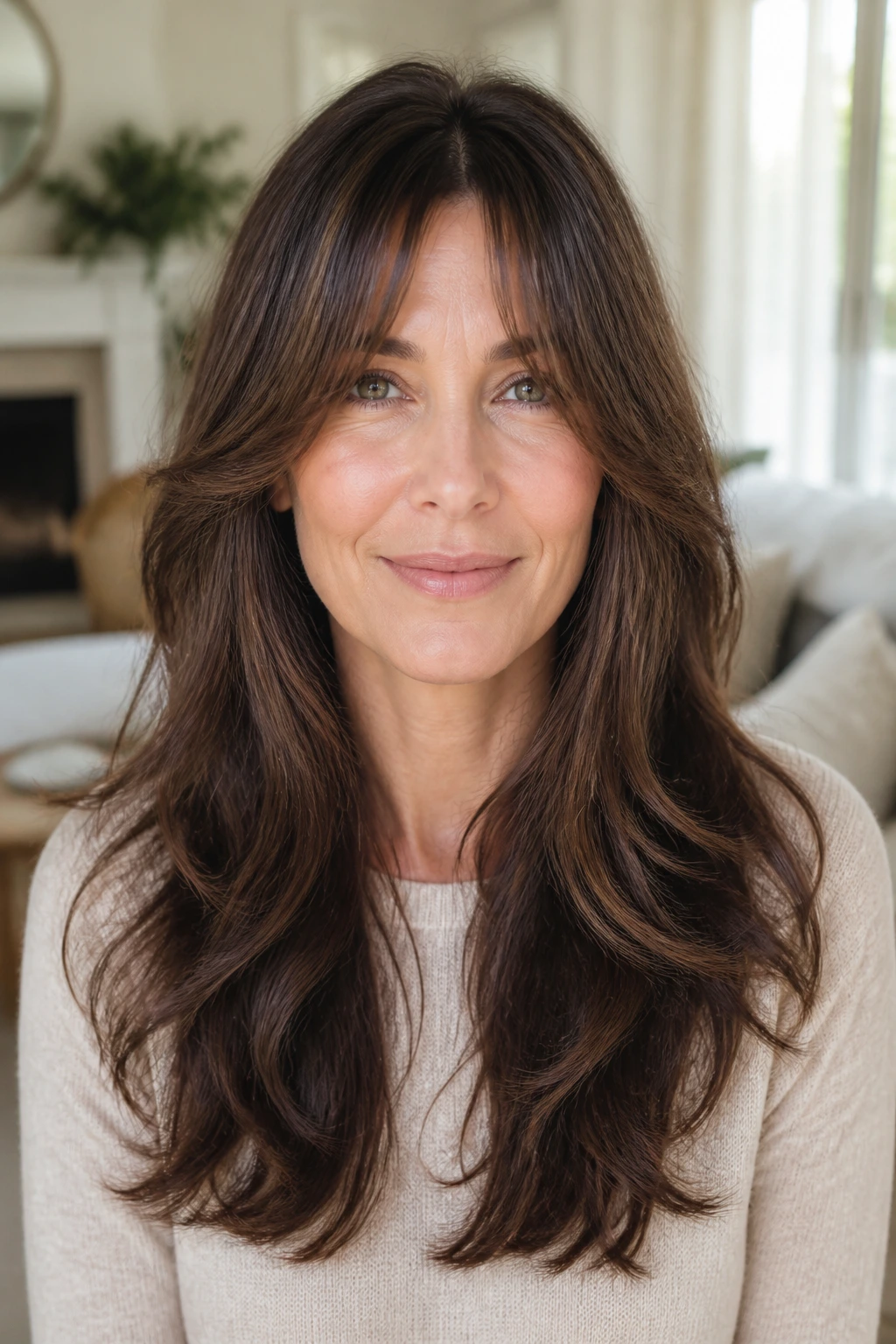
Curtain bangs are one of the easiest ways to change the feel of long layers without giving up length. The fringe part sits in the middle, parts around the face, and slides into the rest of the haircut instead of living on its own little island.
The softest versions usually start near the nose bridge or cheekbone and taper down into the front lengths. That keeps the look relaxed and easy to grow out. If you’re cautious about bangs, this is the lane to stay in. They can be tucked, pinned, or left loose depending on the day.
15. Long Layers That Show Off Silver Waves
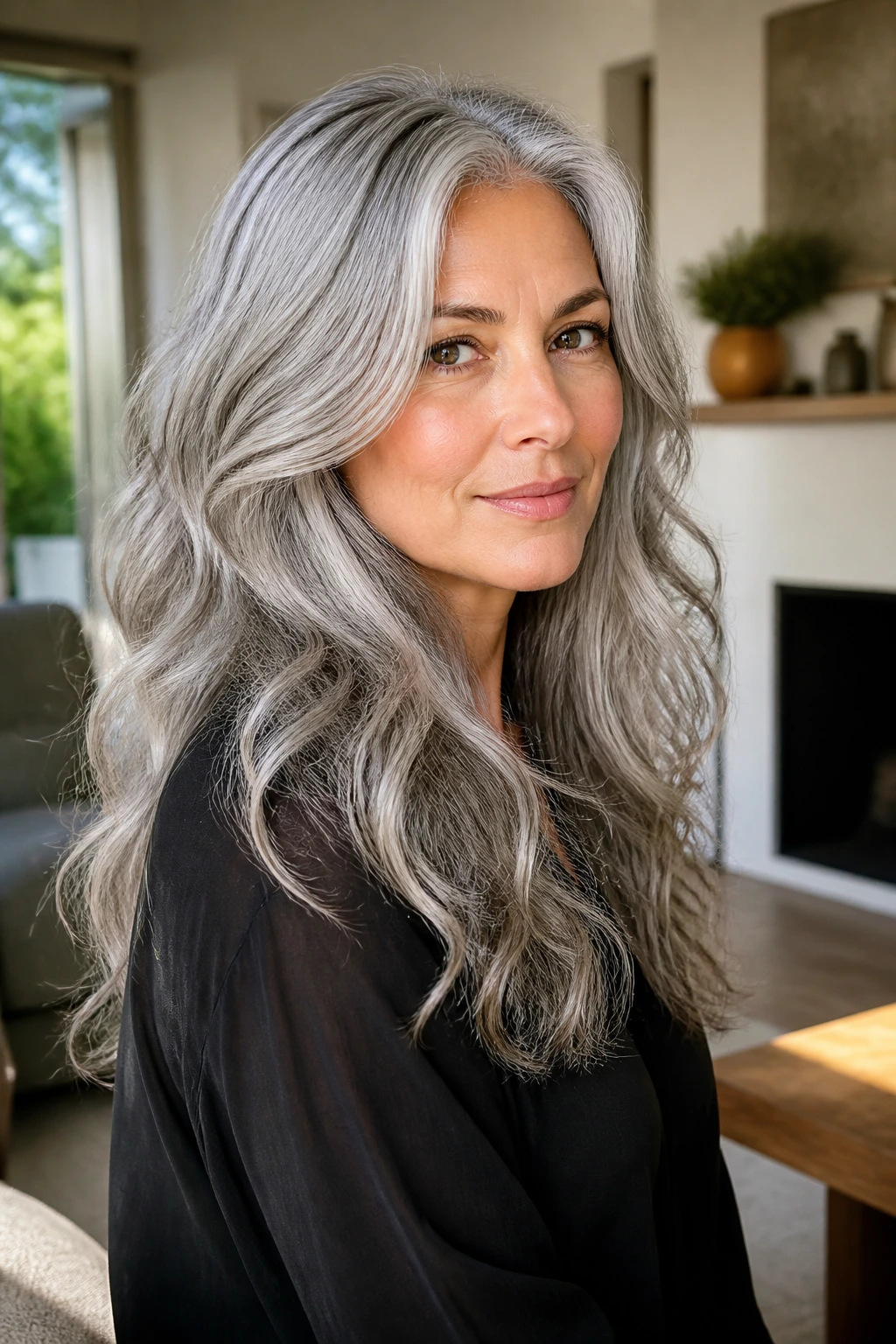
Silver and salt-and-pepper waves need a cut with room to move. The texture often reads a little drier and can look blocky if the shape is too blunt, so soft layers keep the color from sitting in one heavy mass.
I like this cut with long face framing and gentle internal shape rather than a lot of visible chopping. Silver strands catch light differently when they’re layered, and the movement helps the color read as intentional instead of patchy. A moisture-rich styling cream or leave-in can also keep the ends from looking rough.
16. Air-Dry Layers With Minimal Fuss
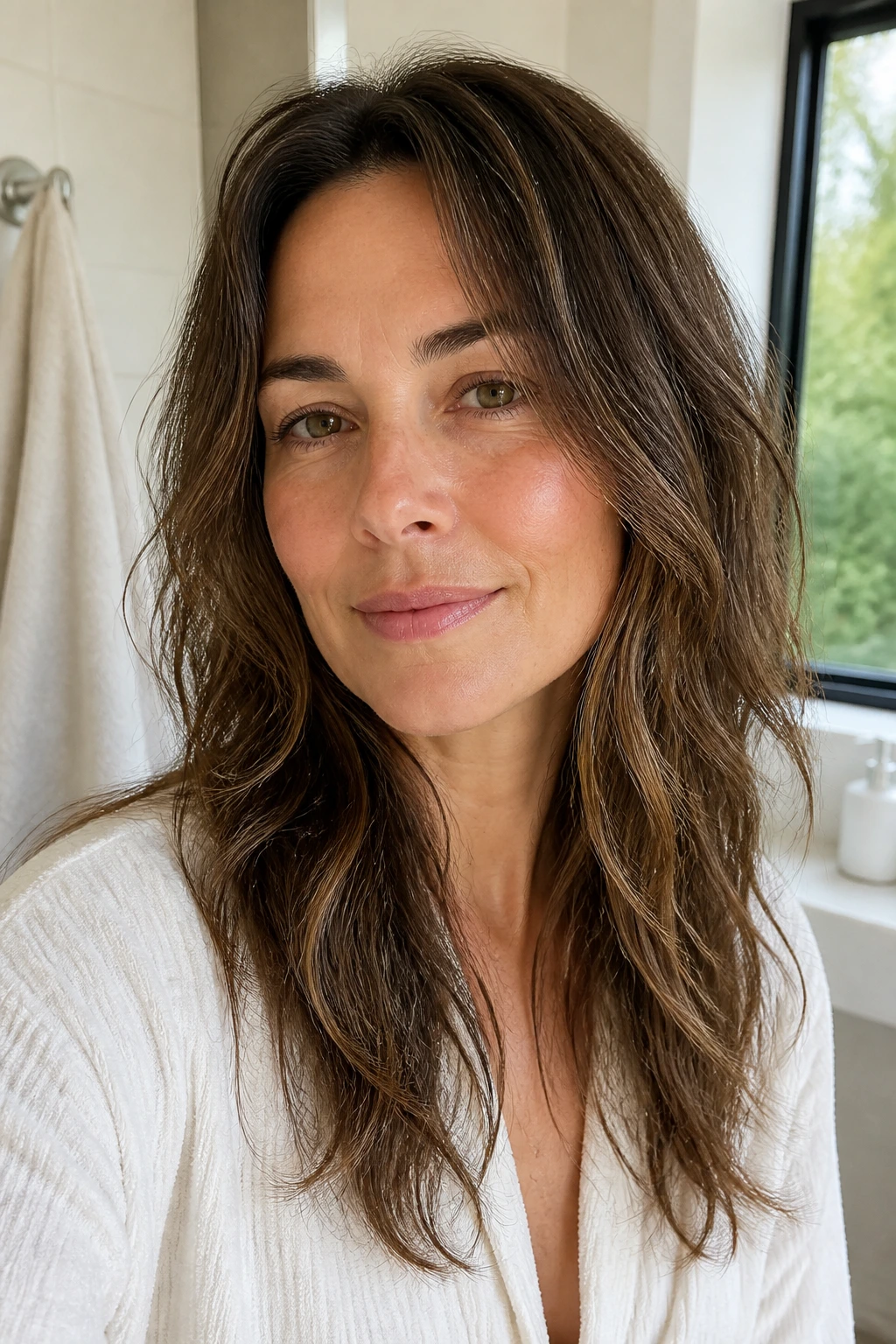
Some long layers are built for a diffuser. These are built for a towel, a leave-in, and about ten minutes of patience. The shape stays long and blended, with just enough removal through the interior to let the wave dry cleanly.
The air-dry rule
Use the lightest product that still gives you control. A pea-size amount of mousse or cream, scrunched through damp hair, goes a long way.
This cut is a relief for anyone who does not want to negotiate with a blow-dryer every morning. Ask for low, long layers and avoid too much texture at the crown, because air-dried hair shows bad layering faster than heat-styled hair does.
17. Long Layers That Flatter Round Faces
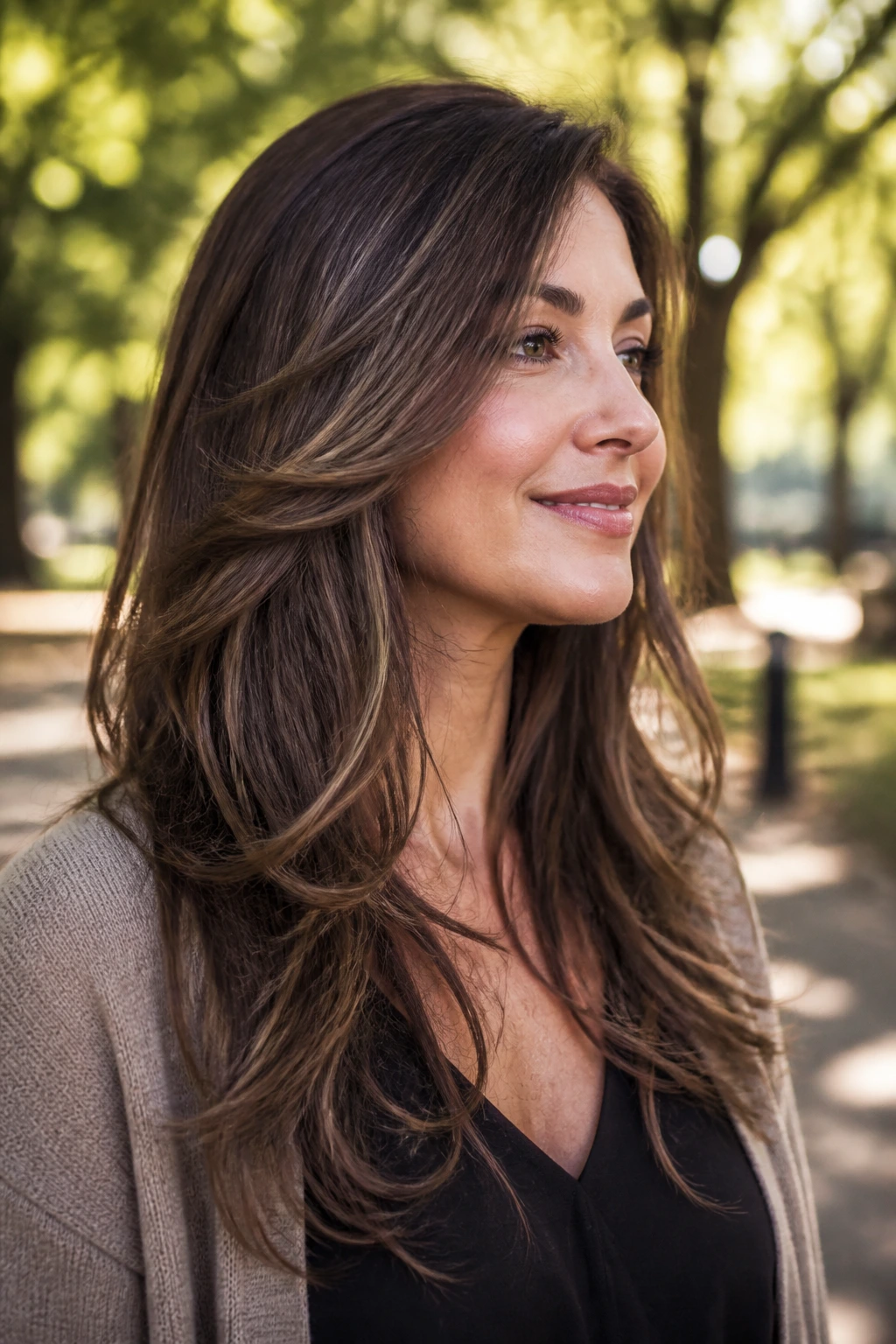
Round faces need length and diagonal movement, not width right at the cheeks. Long layers can do that beautifully if the shortest pieces stay below the widest part of the face and the overall shape keeps dropping downward.
A side part helps here, and so does a face frame that starts lower than people expect. The goal is to pull the eye vertically, not park it in the middle of the cheek. If the front pieces sit too high, the cut opens the face in the wrong direction.
18. Long Layers That Soften Square Jawlines
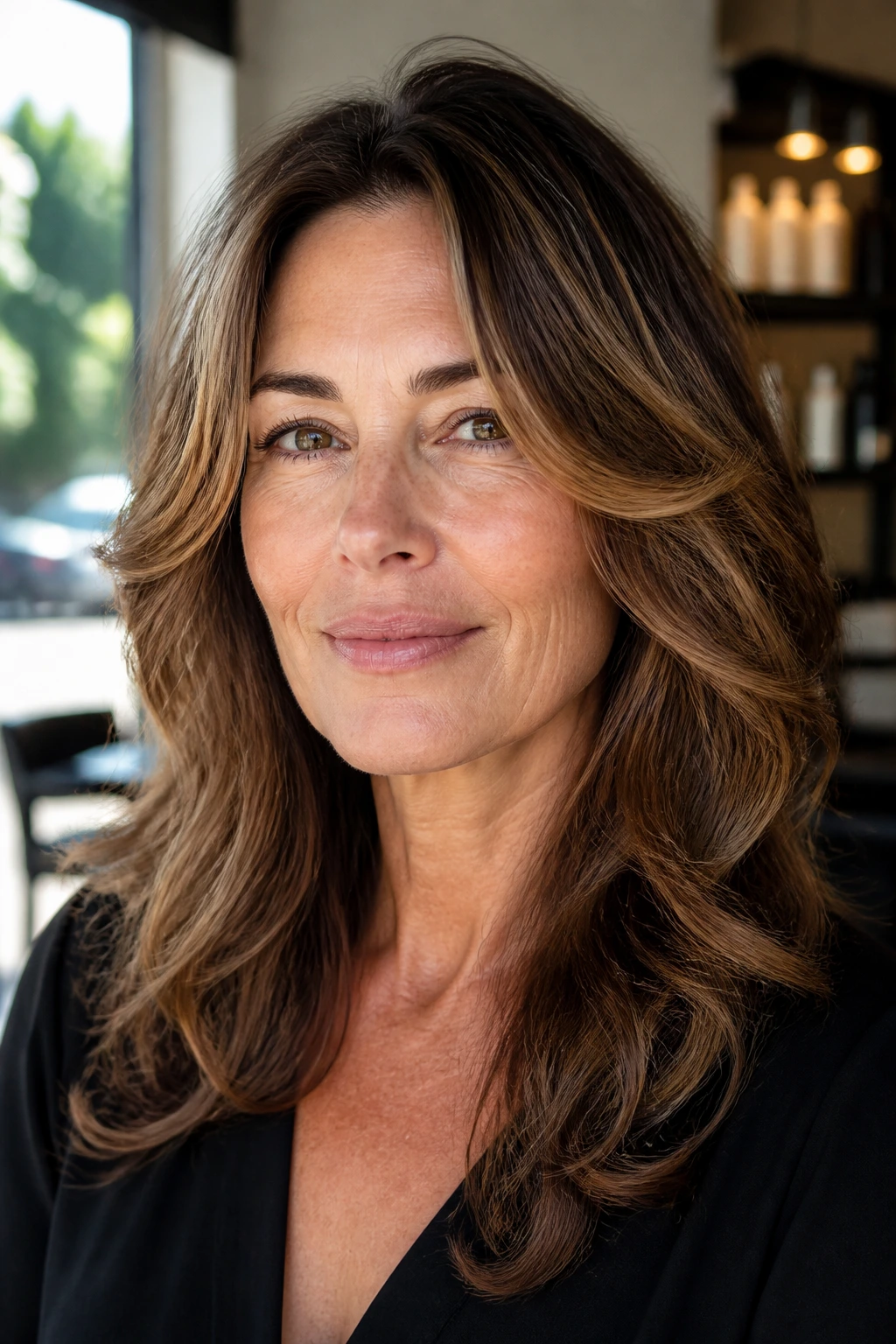
Strong jawlines can look sharp in a blunt cut, especially on wavy hair that puffs at the bottom. Long layers soften that edge by curving around the jaw and letting the hair fall in loose bends instead of straight borders.
Keep the front pieces soft and avoid a heavy, straight fringe that ends right at the jaw. That line can make the lower face feel boxy. A longer, curved face frame does the opposite. It eases the whole shape without hiding it.
19. Long Layers That Play Nicely With Glasses
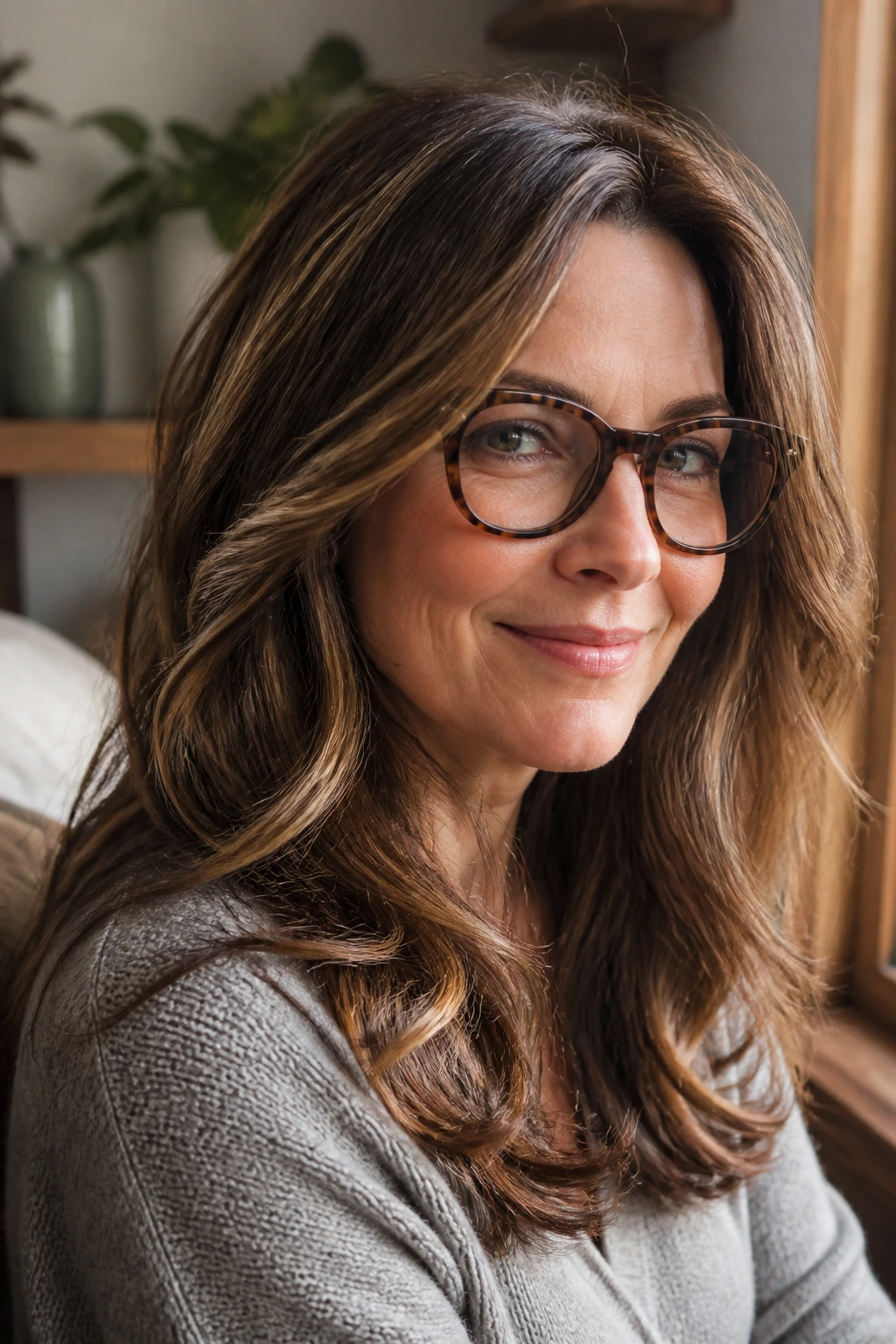
Glasses change the whole conversation. The front pieces need to clear the frame, avoid snagging on the arms, and still frame the face instead of disappearing behind plastic or metal.
The best version keeps the shortest pieces below the top rim or sweeps them to the side so they tuck cleanly. I like this cut when the glasses are part of the look, not an obstacle to it. If the frame is bold, the layers should be soft. If the frames are light, the face frame can carry a little more shape.
20. Beachy Piecey Long Layers
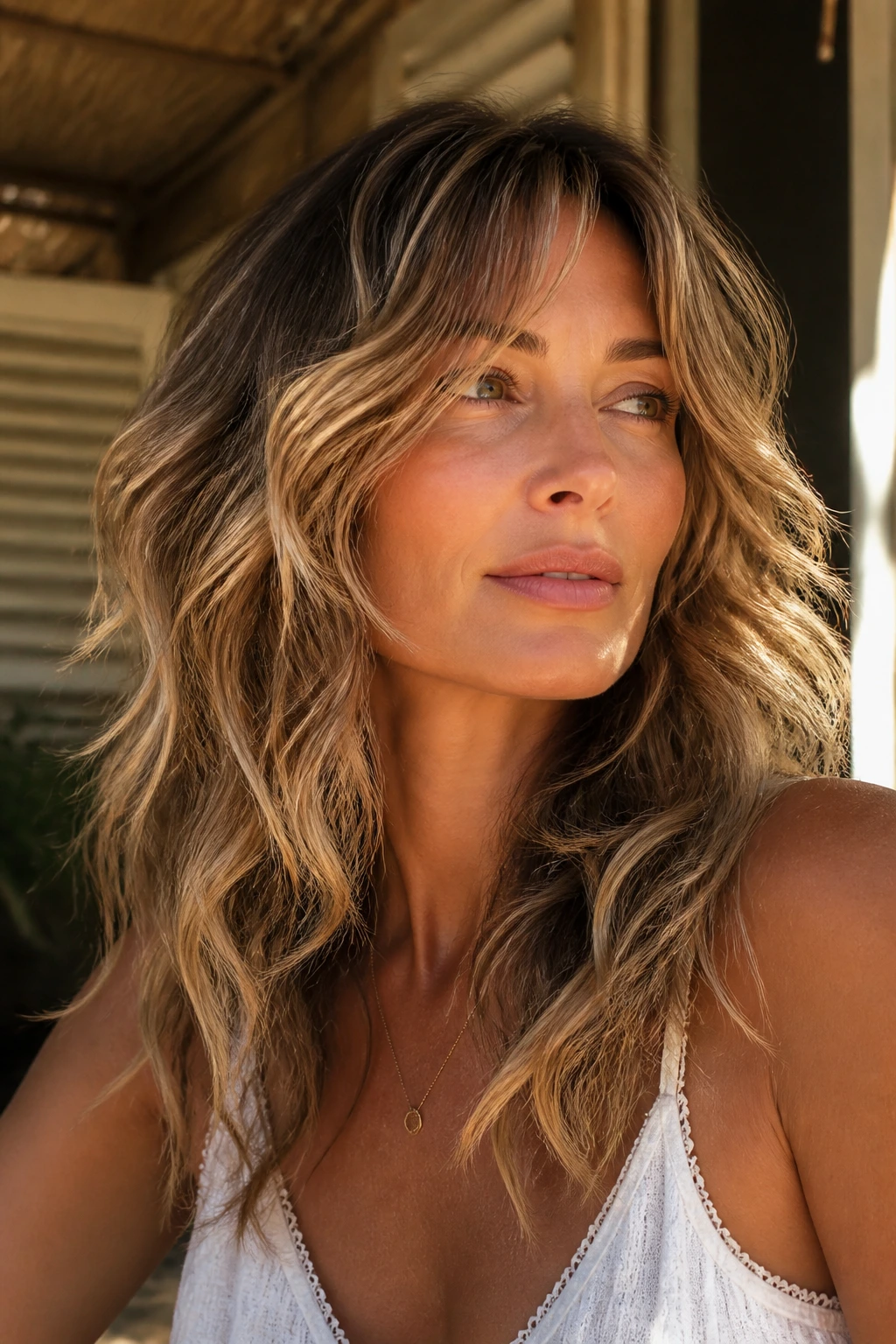
This is the cut for hair that looks too solid when it all hangs together. Beachy, piecey layers break the mass into visible sections, which gives wavy hair that loose, separated finish people try to fake with too much product.
Use a light wave spray or a touch of mousse, then scrunch and leave some texture alone. The key is not to drown the hair in cream. Beachy should still feel like hair, not like it was left near a salt lamp for a week. A little separation is enough.
21. Polished Blowout Long Layers
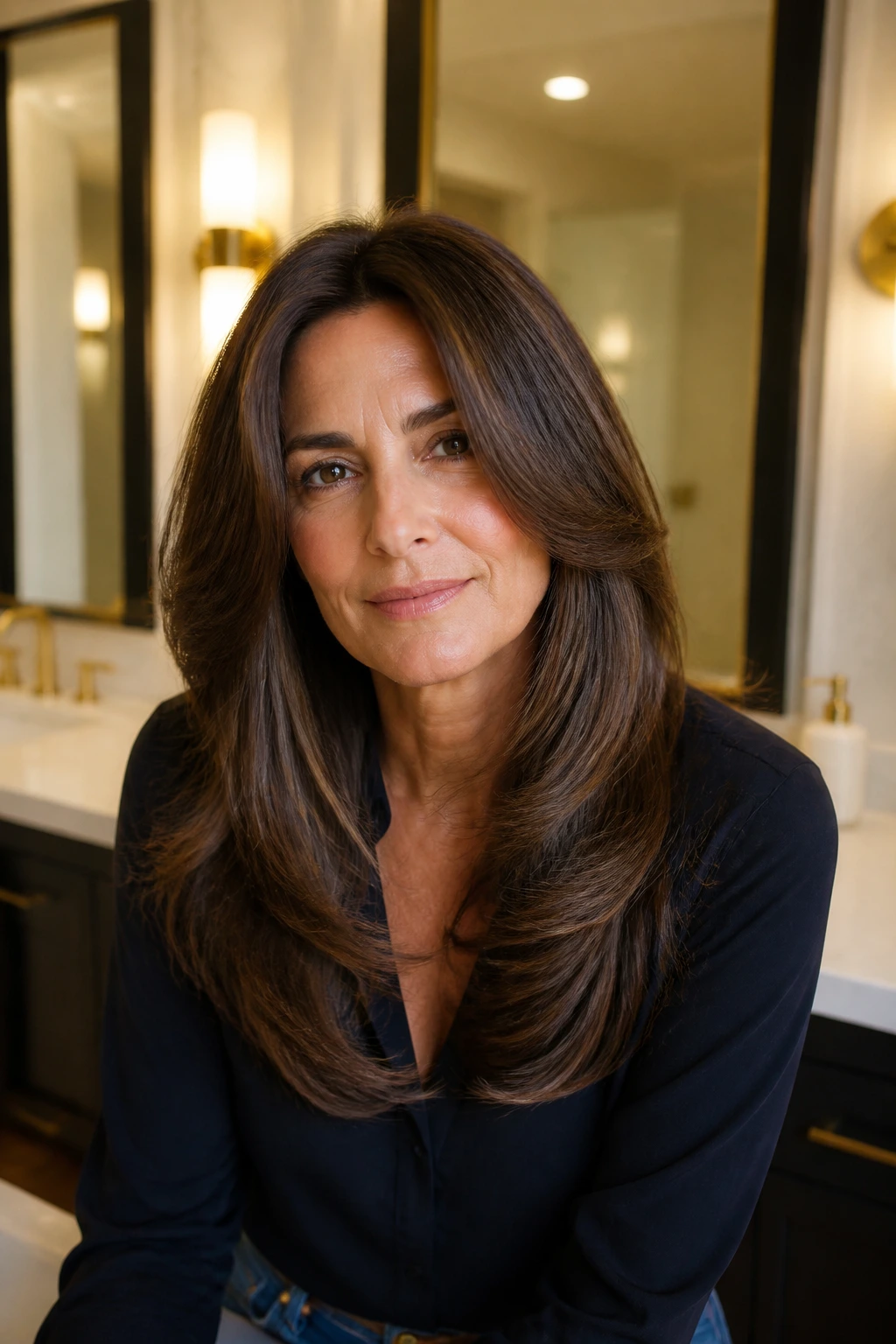
Not every wavy haircut has to lean messy. Long layers can look crisp and smooth when the ends are blown under or gently flipped with a round brush. The layering gives the brush a place to bend, which keeps the blowout from looking stiff.
This style is good for work, dinners, or any day you want the hair to read more finished than undone. Use a nozzle on the dryer, keep the brush moving, and finish with a tiny amount of shine serum on the mids and ends. Too much oil near the roots will flatten the whole thing. Fast.
22. Long Layers for Thinner Hair
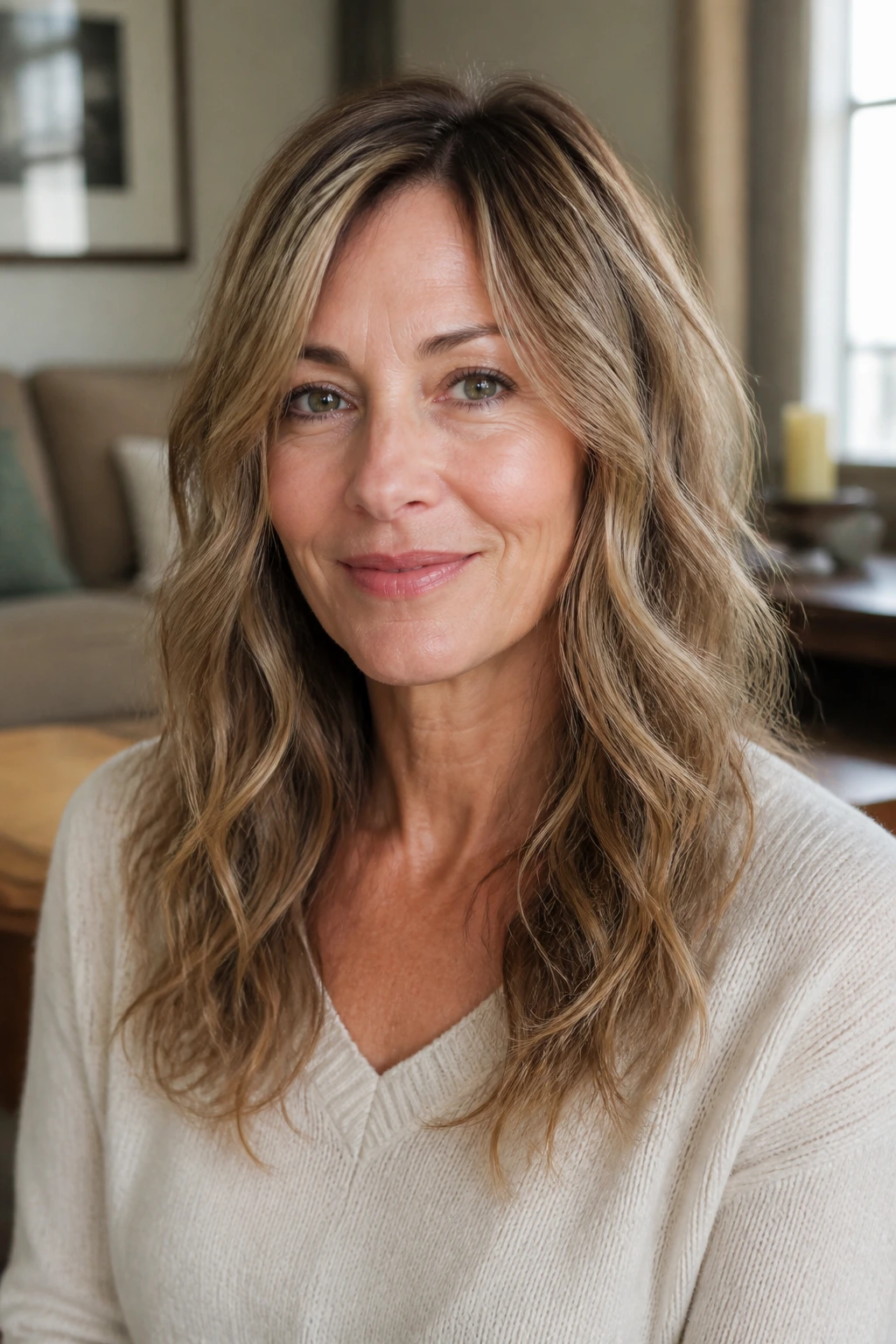
Yes, thin wavy hair can wear long layers. The trick is not to overdo them. Too many short layers can leave the ends wispy and the crown exposed, which makes the hair look even finer than it is.
What to ask for
- Long, blended layers that stay mostly below the cheekbone.
- Very little texturizing at the ends.
- A soft face frame rather than a lot of interior chopping.
That kind of cut keeps the wave pattern visible while protecting the fullness you do have. A lightweight mousse at the roots and a loose diffuse can give the hair some lift without collapsing the length.
23. Long Layers for Dense Hair
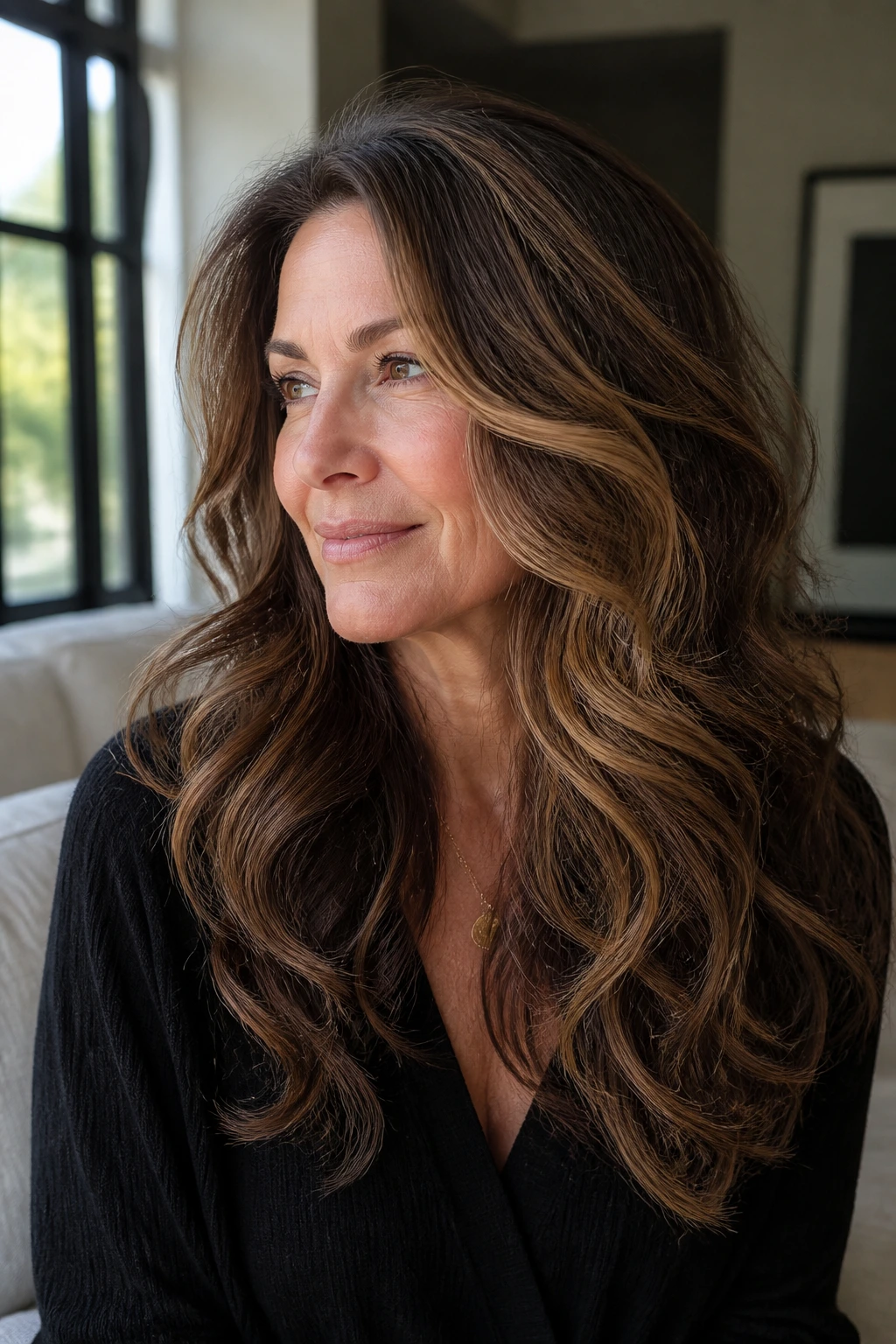
Dense hair can swallow a haircut if no weight is removed. The outer surface looks fine in the chair, then the hair dries and turns into one heavy block. Long layers fix that by taking out bulk where the wave stacks up.
This version works best when the stylist removes weight from the interior and keeps the perimeter long enough to show off the thickness. It gives the hair room to swing instead of sitting like a helmet. If the hair is very dense through the back, a soft U-shape or V-shape can help the whole cut feel lighter without making the ends sparse.
24. Long Layers That Grow Out Gracefully
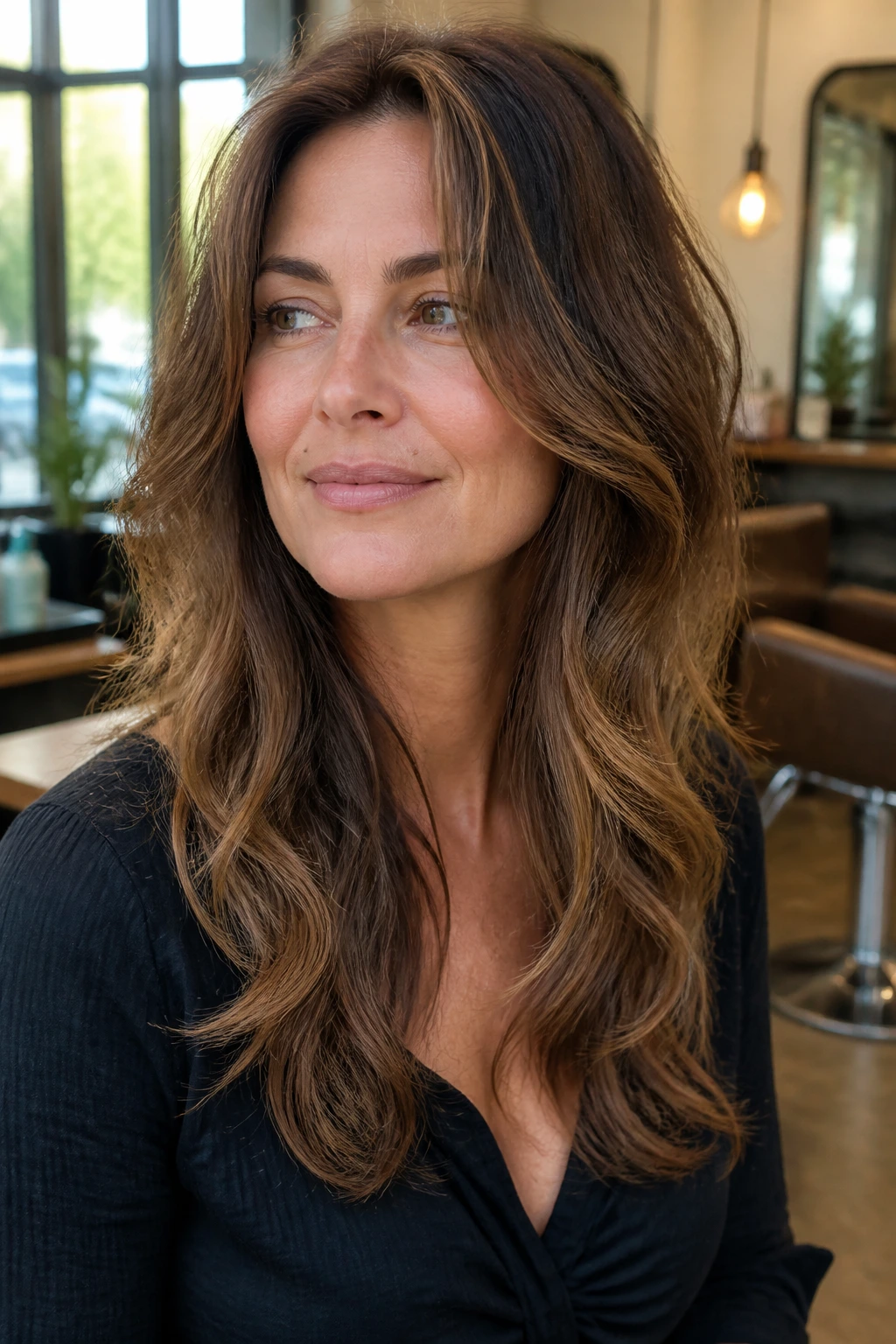
If you want a haircut that still looks like a haircut a few weeks later, this is the one. The shortest layers stay long enough that they do not announce themselves as soon as the hair grows a half-inch, and the blended shape keeps the whole cut from going weird in the meantime.
This is the version I’d hand to anyone who does not want a maintenance-heavy look. Ask for layers that start lower, usually from the chin down, and avoid a short crown unless you love regular shaping appointments. Growth should look like softness, not damage control.
25. Softly Blended Ends for a Clean, Modern Finish
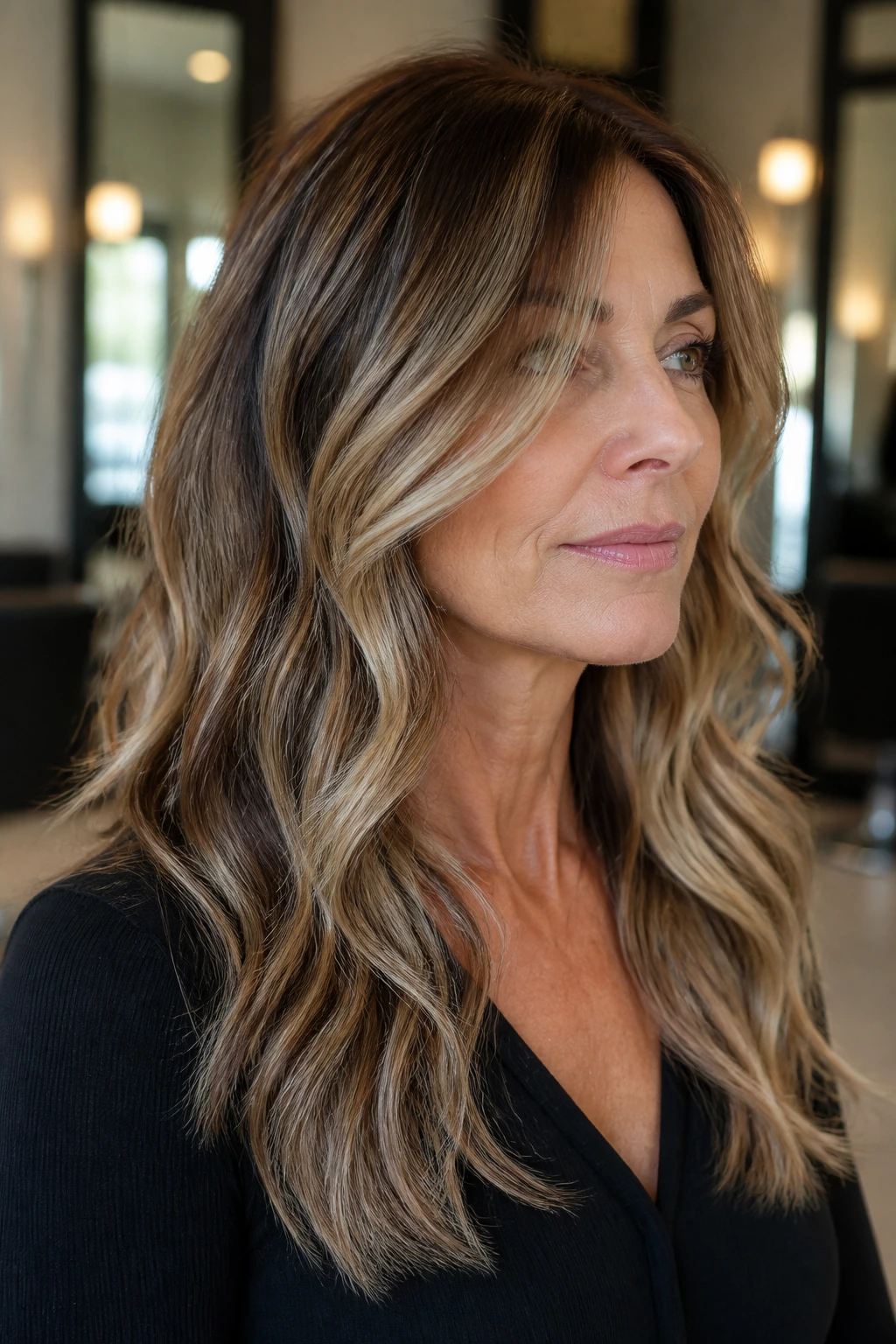
Long layers are only as good as the ends. If the last inch is hacked up too hard, the whole haircut starts looking dry and accidental. Soft blending keeps the finish clean, so the waves fall in ribbons instead of sticks.
This is a good final shape for women who want long hair that still looks intentional from every angle. The ends should move when you turn your head, not separate into uneven little spikes. That quiet finish is the difference between “long hair with layers” and a haircut that actually behaves.
How to Ask for the Cut and Style It Without Fighting the Wave
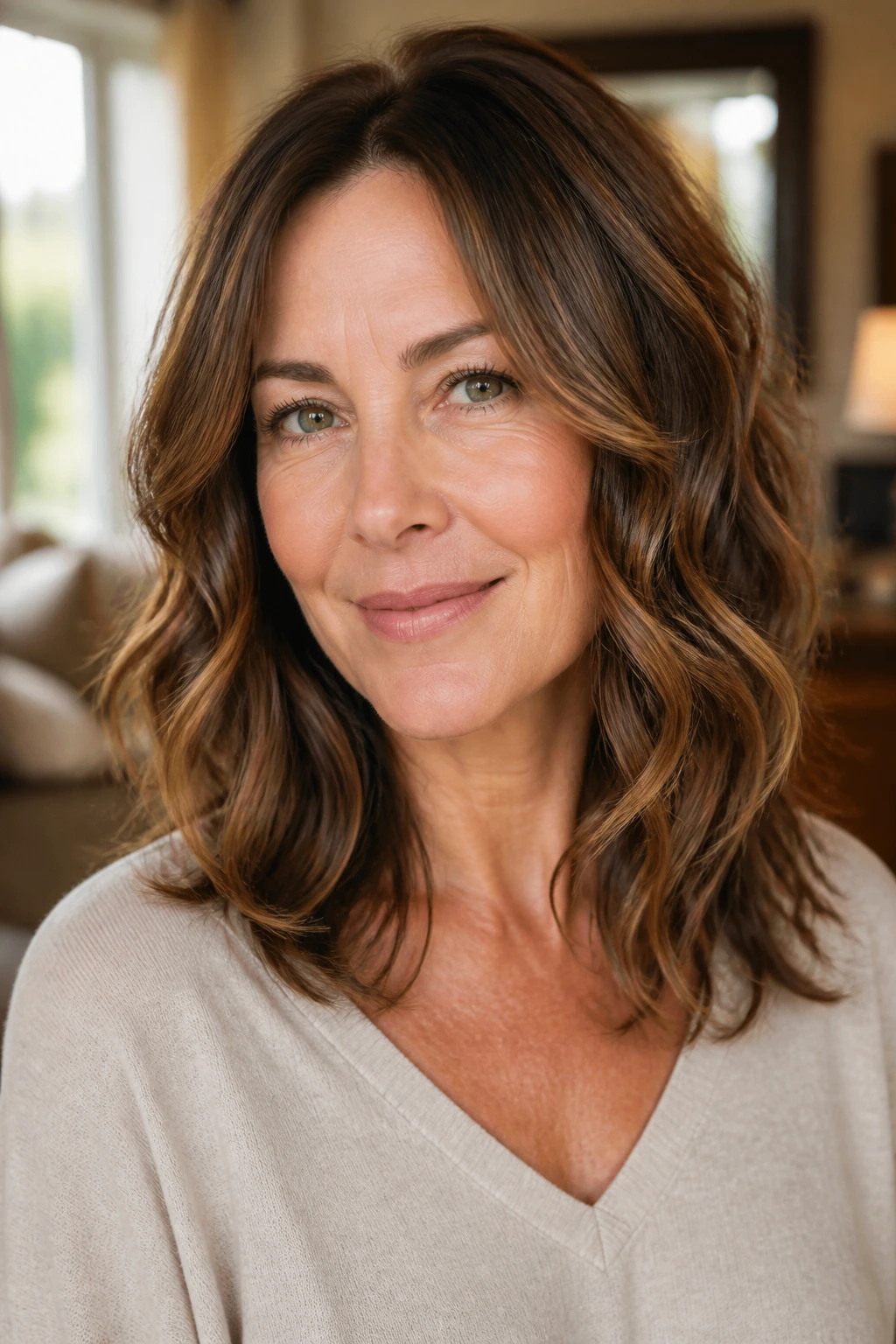
The salon conversation matters. A lot. “Lots of layers” is too vague, and wavy hair pays for vague instructions the minute it dries. Bring two photos if you can: one from the front and one from the side. They do not need to be the same head of hair, but they should show where the shortest pieces fall.
Say where you want the face frame to land. Cheekbone, jawline, collarbone, mid-chest — those are different cuts, not different vibes. Also tell the stylist how often you air-dry, how often you heat-style, and whether you tuck your hair behind your ears. Those details change the placement more than people think.
If your waves shrink up a lot, ask for a dry cut or at least for the stylist to check the shape dry before finishing. Wet hair can lie. Wavy hair lies even more. And if you wear glasses, say so before the first snip; the pieces around the temple need to respect the frames or you’ll spend all day pushing them aside.
What Usually Goes Wrong With Long Layers and Wavy Texture
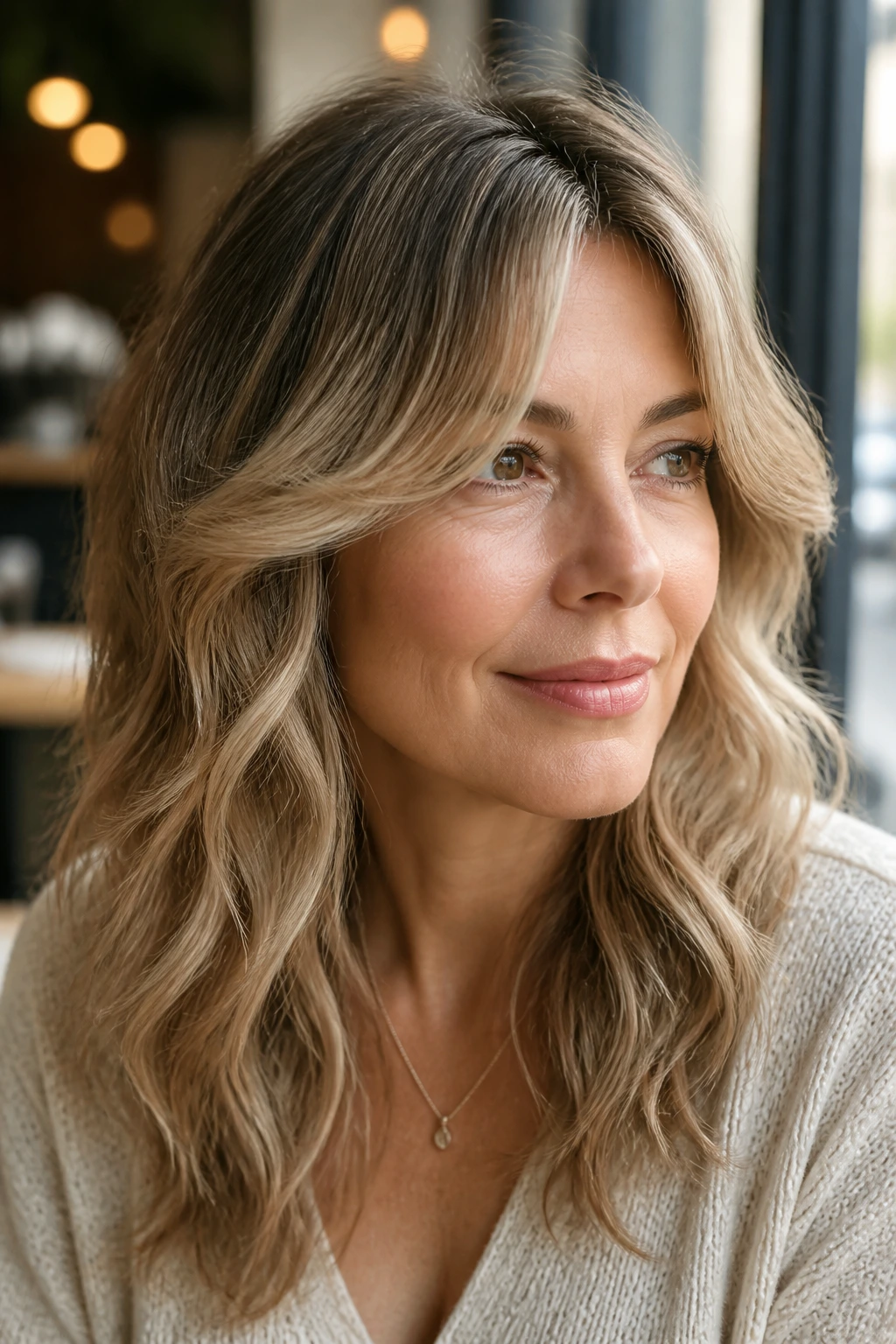
The first mistake is starting the layers too high. When the shortest pieces sit around the eyes or upper cheek, the hair can puff out and lose length fast. The fix is simple: move the shortest layer lower and keep the transition soft.
The second problem is over-thinning. Fine or medium wavy hair does not need to be shredded with a razor to look light. If the ends start to look fuzzy or transparent, the cut went too far. Point-cutting and gentle blending usually behave better.
A blunt perimeter can also fight the wave pattern. The bottom turns into a shelf, and the sides flare out. A rounded U or soft V fixes that without taking away all the length.
- Ignoring shrinkage: Waves dry shorter than they look wet, so a chin-length face frame may end up above the jaw. Cut with the dry shape in mind.
- Using heavy creams on fine waves: The hair falls flat, the crown collapses, and the layers disappear. Switch to mousse or a lighter leave-in.
- Going too long between trims: The ends split, the layers separate, and the cut loses its shape. A tidy trim keeps the outline from wandering.
Other Ways to Wear the Same Layered Cut
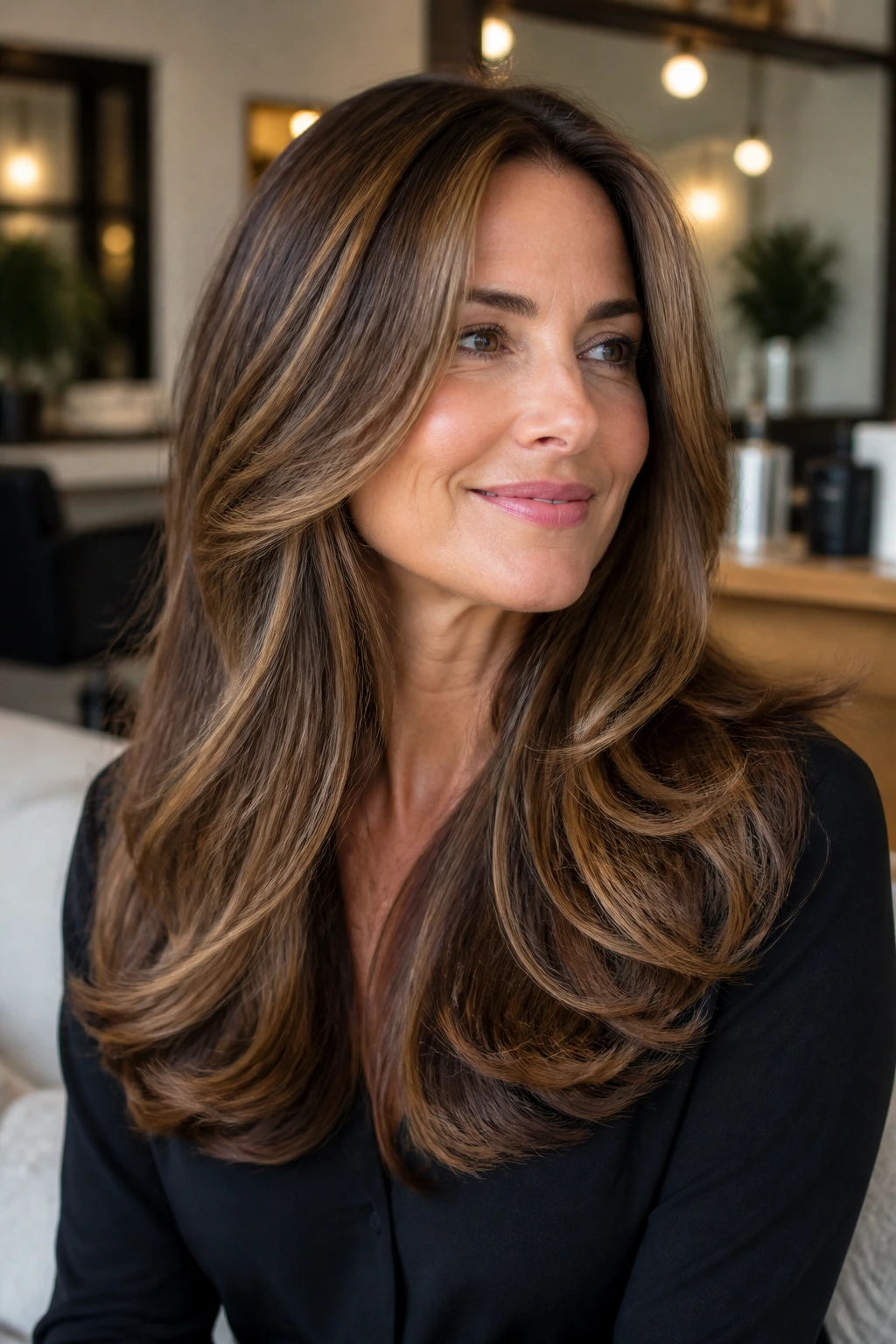
The Soft Butterfly Swap
Take the crown-lifting idea from a butterfly cut and keep the top layers a little longer. That gives you volume without the dramatic split between short top and long bottom. It works well if you want movement but do not want anyone to guess the haircut from the hallway.
The Glossy Blowout Version
Same layers, different mood. A round brush, a nozzle on the dryer, and a touch of shine serum turn the shape sleeker and more polished. This is the version I’d choose for events, work, or any day the waves need to behave.
The Air-Dry Shortcut
Ask for long, blended layers that can dry on their own without needing rescue. The hair should still have shape when it dries in a loose scrunch, which means no short crown pieces and no overtexturizing.
The Silver-First Cut
For gray or salt-and-pepper waves, keep the layers soft and the ends clean. That lets the color and texture show up without looking fluffy or dry.
The Dense-Hair Debulk
This version uses internal weight removal and a slightly lower layer line to keep thick waves from expanding. It’s the one to borrow if your hair looks bigger every time humidity shows up.
Tools and Products That Make Styling Easier
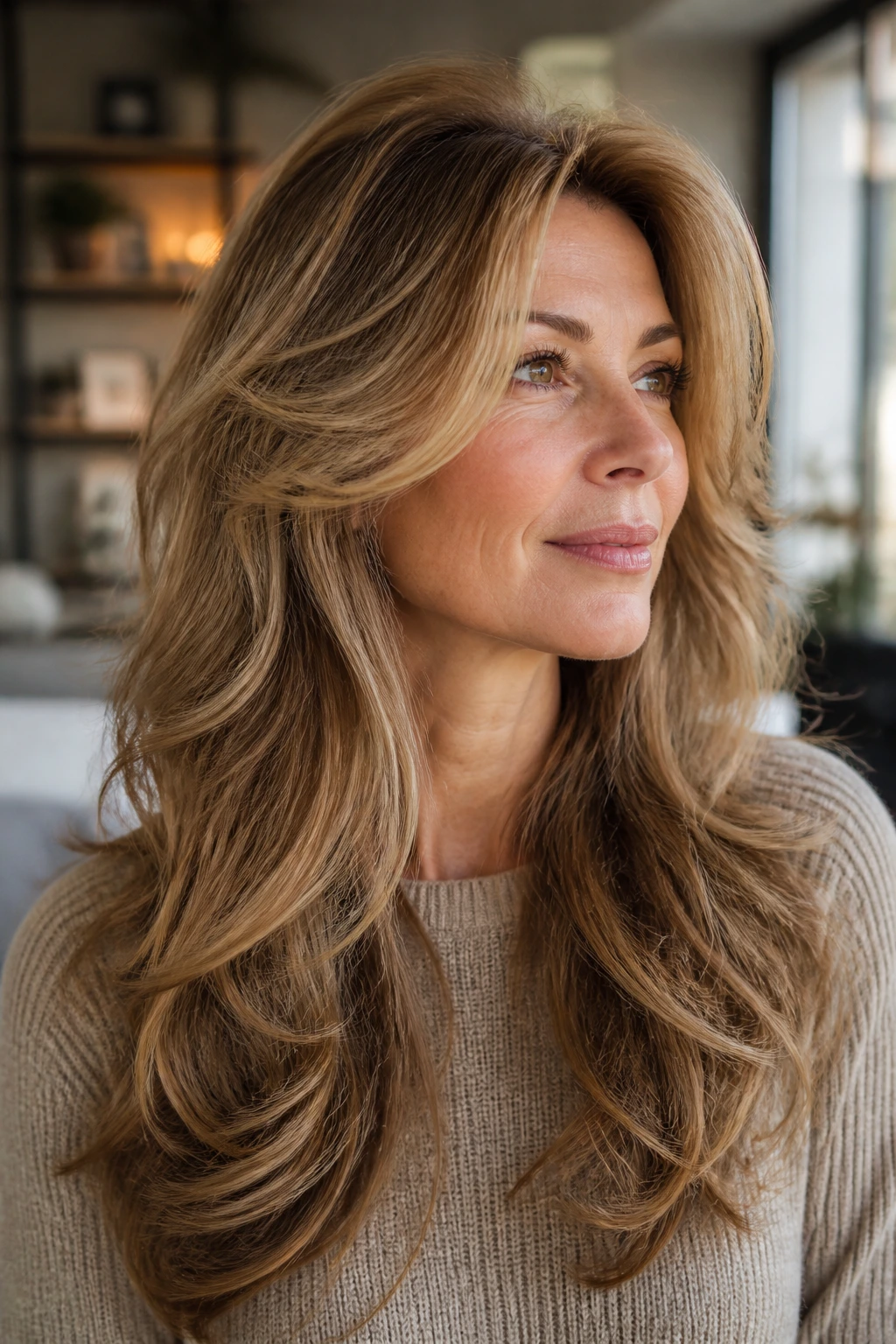
- Blow dryer with a nozzle: The nozzle directs airflow and makes the cut smoother when you want the layers to bend instead of frizz.
- Diffuser attachment: Good for airier waves and less disturbance at the crown.
- 1.5- to 2-inch round brush: Useful for polishing the front layers or giving the ends a soft curve.
- Wide-tooth comb: Better than a small brush for detangling wavy hair when it’s damp.
- Sectioning clips: They keep the crown, sides, and back separate while you dry or style.
- Lightweight mousse: Gives lift without gluing the layers together.
- Leave-in conditioner: Helps the ends stay soft, especially on silver, gray, or thick wavy hair.
- Heat protectant spray: Worth using any time a brush and dryer get involved.
- Texturizing spray or light hairspray: Handy for piecey ends and keeping face-framing layers from falling flat.
- Silk or satin pillowcase: It reduces roughness overnight and keeps the layers from waking up bent in odd directions.
Keeping the Shape Between Trims
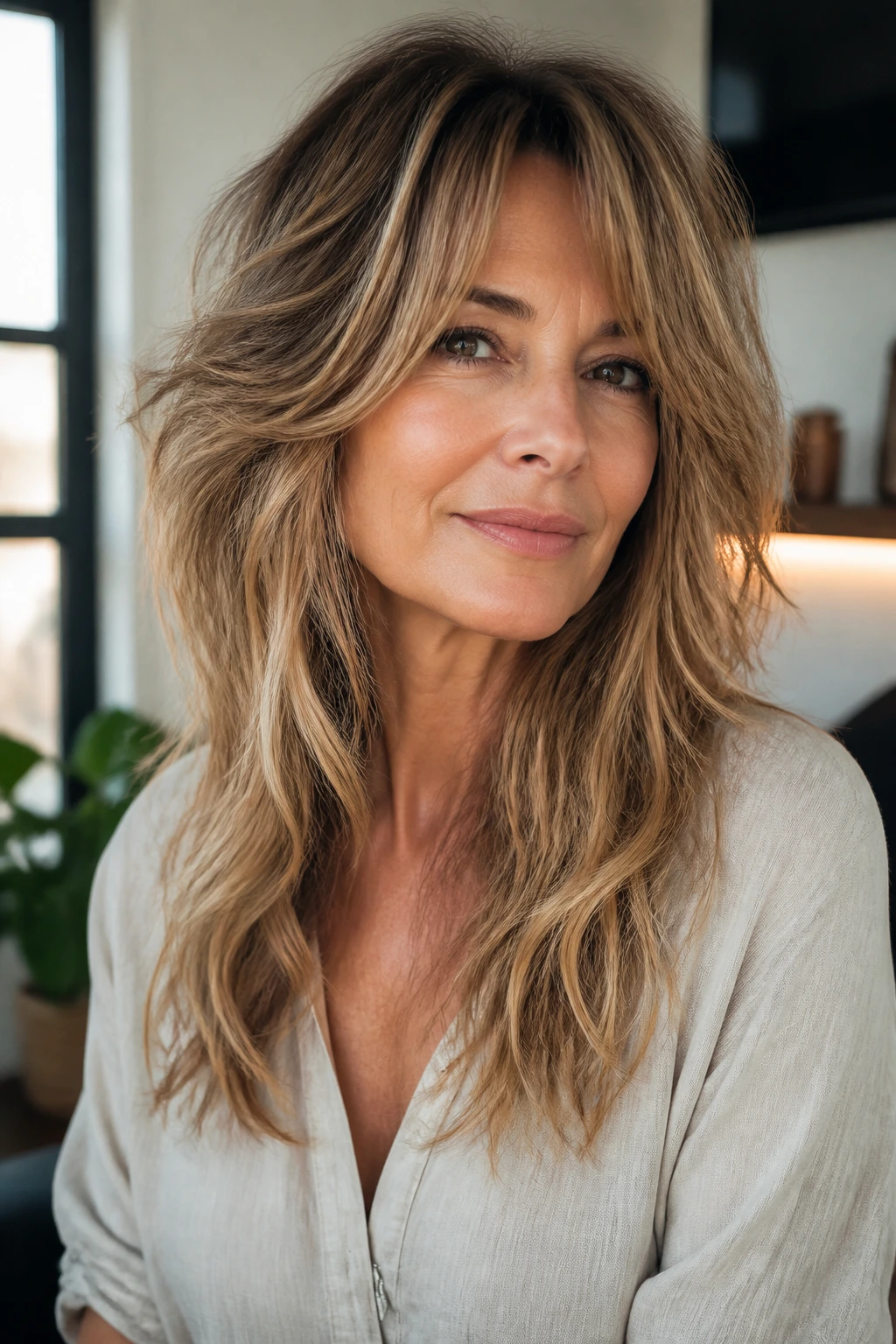
Trim rhythm: If your layers sit around the cheekbone or jaw, book a trim every 8 to 10 weeks. Longer, softer layers can go 10 to 12 weeks before they start to lose their shape. Wait much longer and the face frame usually starts doing its own thing.
Wash-day care: A weekly conditioner or mask on the mid-lengths and ends helps the layers stay smooth. If product builds up, use a clarifying shampoo every 2 to 4 weeks so the waves do not get coated and dull.
Overnight care: A loose braid, a soft scrunchie, or a satin pillowcase keeps the layers from kinking in weird places. If the hair is very wavy, a loose top knot is safer than a tight elastic at the crown.
Morning refresh: Mist the hair with water, add a small amount of leave-in or mousse to the mid-lengths, and scrunch the wave back to life. Five minutes of diffusing can fix more than people expect, but it has to start with the right product amount. Too much and the layers sag.
Frequently Asked Questions
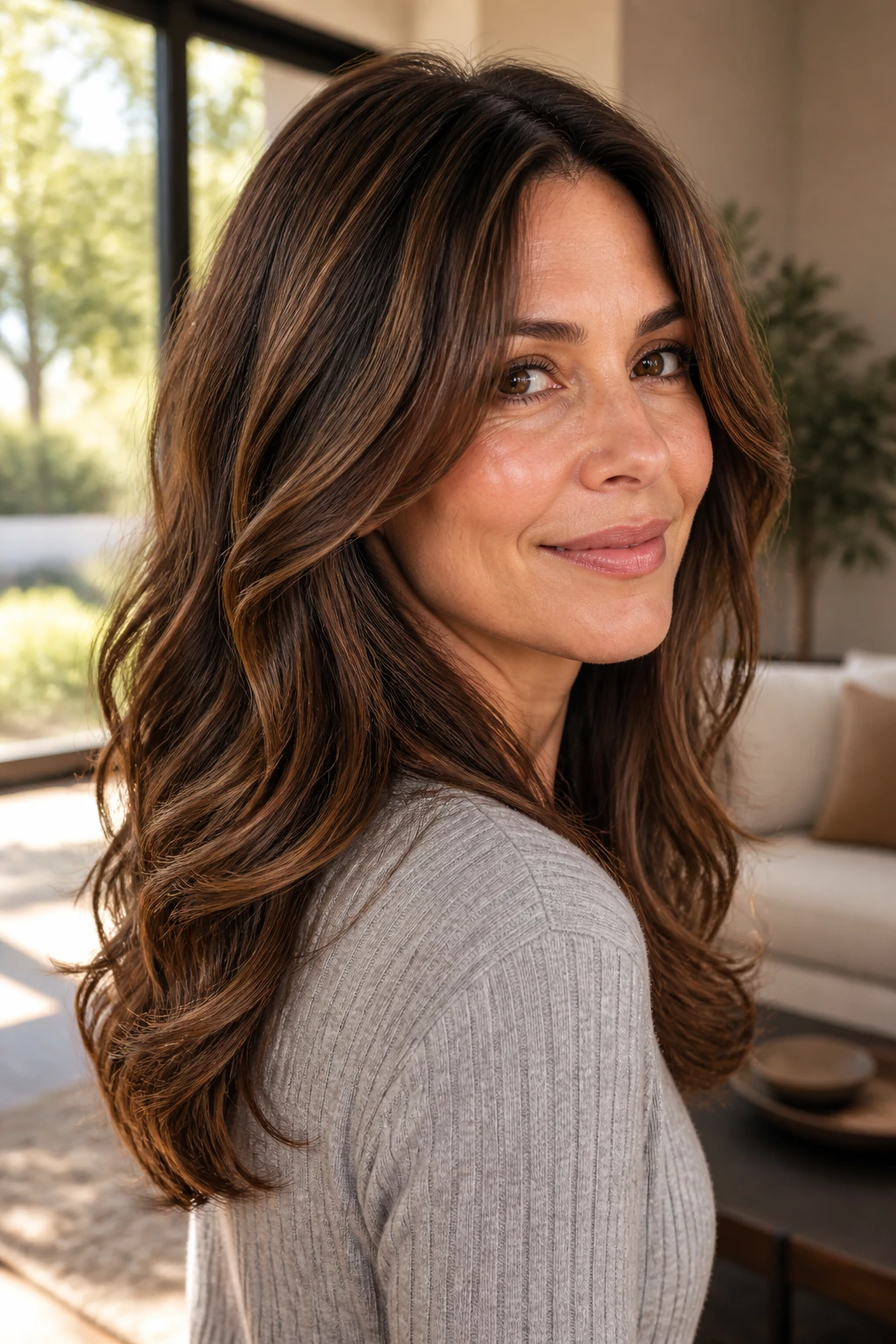
Are long layers good for wavy hair after 40 if my hair is fine?
Yes, but they need to be subtle. Fine waves usually look best with longer layers that start low and an outer shape that stays full, otherwise the ends can go wispy fast.
Will layers make my wavy hair frizzier?
They can if the cut is too aggressive or the hair is over-thinned. Soft layers, a light leave-in, and less rough towel drying usually keep the frizz down.
How short should the face frame be?
For most wavy hair, the safest range is cheekbone to collarbone. Shorter than that can spring up when it dries and end up looking more severe than planned.
Can I still straighten my hair if I get long layers?
Absolutely. Long layers tend to look cleaner when straightened than short, choppy ones do, because the blend is softer and the ends do not stack into obvious steps.
Do curtain bangs work with glasses?
They can, if the shortest pieces are long enough to part and sweep around the frames. A bang that’s too short tends to fight the glasses instead of framing them.
What if my hair is thick and triangular?
Ask for internal weight removal and a rounded perimeter, not just visible layers on the top. That’s usually what keeps the bottom from flaring out.
How often should I trim long layers?
Most people do well with trims every 8 to 12 weeks, depending on how high the face frame sits and how much shape they want to keep. If the ends split early, don’t wait for the perfect appointment window.
What if the layers come out too choppy?
That usually means the layers were cut too high or too blunt for the wave pattern. A softening trim can help, but the easiest fix is to go back and ask for the ends and transitions to be blended more gently.
The Cut That Keeps Its Promise
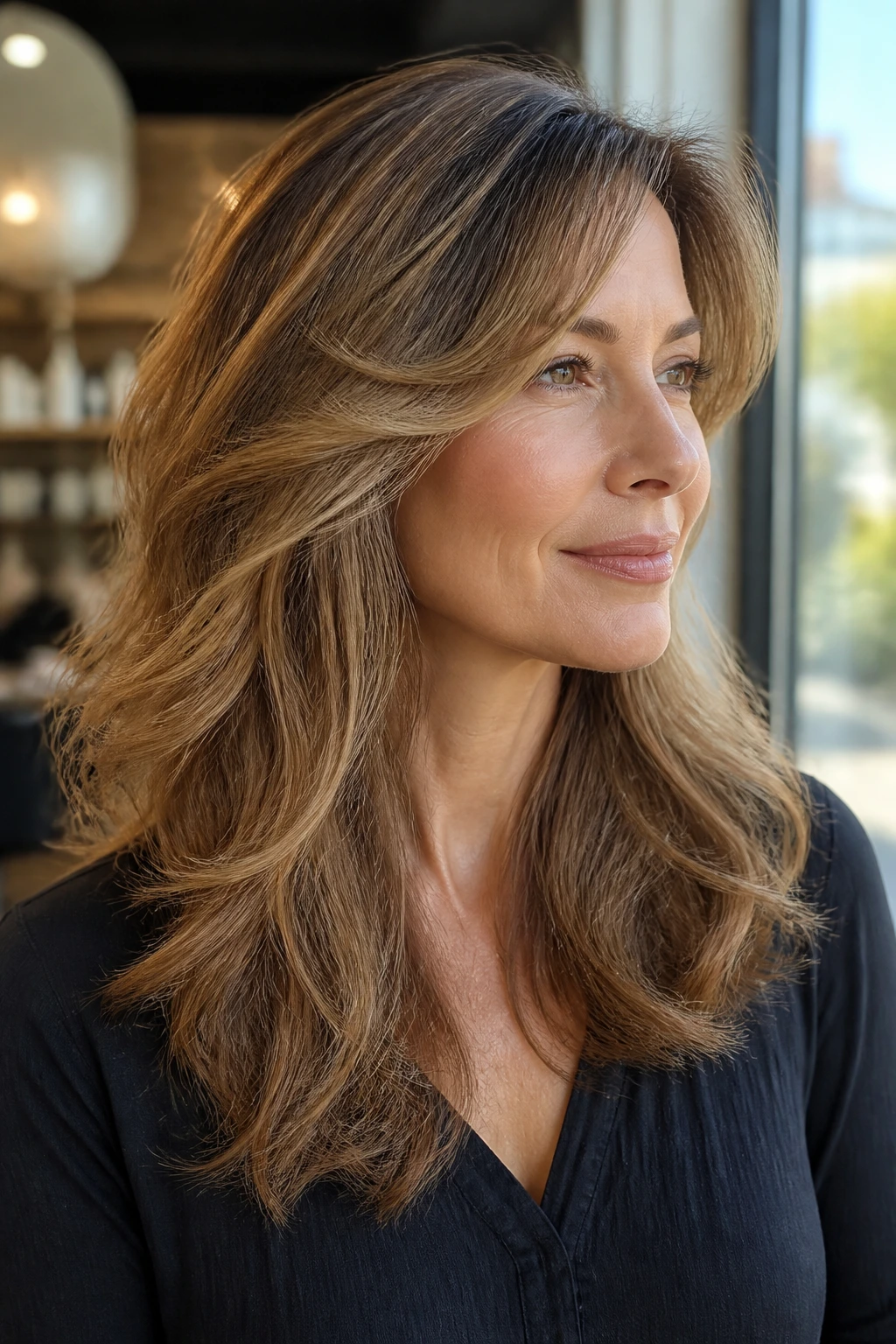
The best long layers do not shout for attention. They make wavy hair sit better, move better, and grow out without turning into a maintenance project. That’s the real win here. A cut can be flattering and still feel like your hair, not a costume you have to manage every morning.
If you’re choosing between several versions, start with the one that matches your actual routine — not the one that looks the most dramatic in a salon chair. The best layered cut is the one that still looks deliberate on day three.