



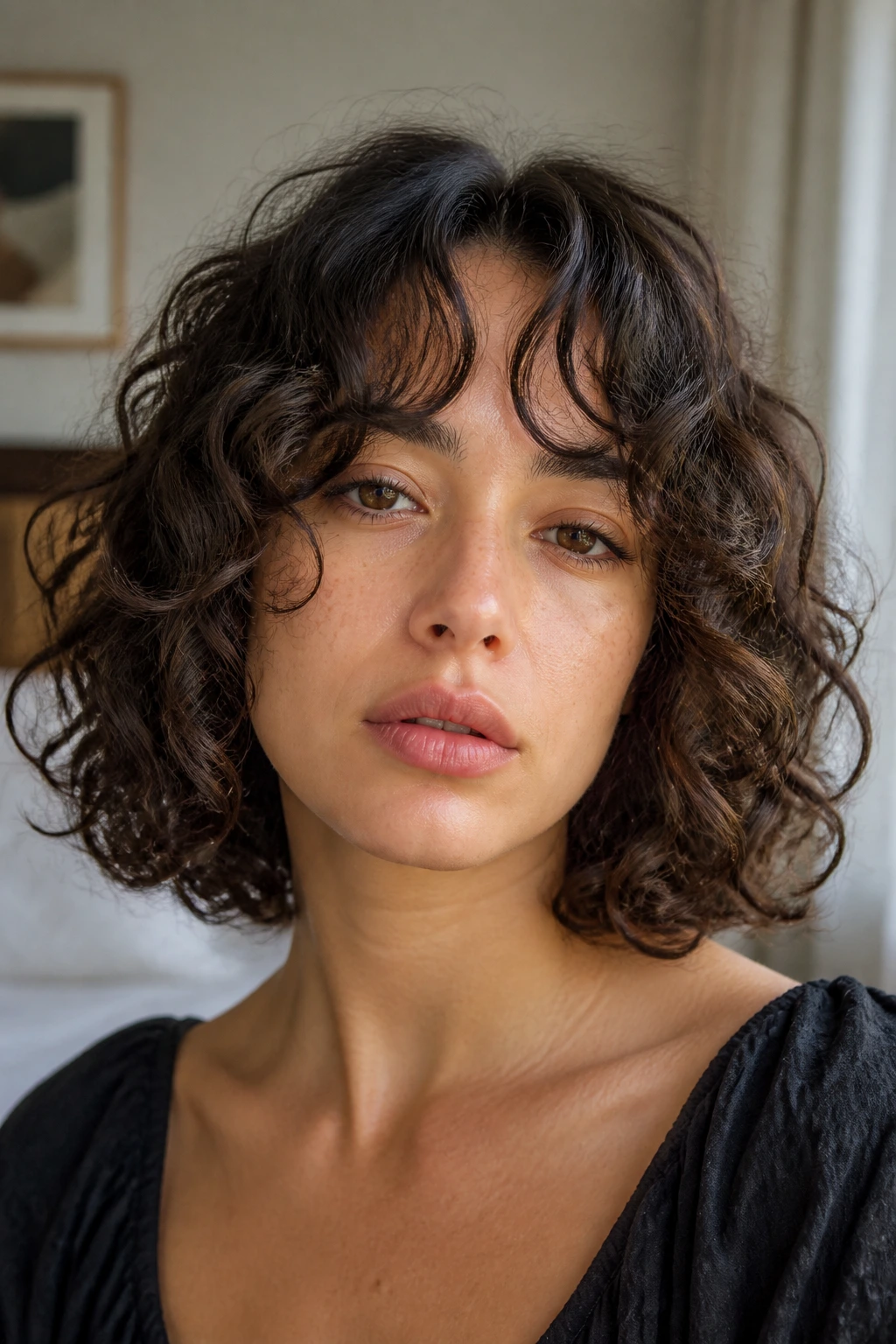
Short lobs for women with curly hair have one job: make the curl pattern look deliberate instead of halfway grown out. When the length lands in that collarbone-to-jawline zone, curls get room to spring, but they don’t drag themselves flat the way longer lengths often do. That’s the sweet spot. Not too short to feel fussy. Not so long that the shape disappears under its own weight.
A good lob on curls is not about copying a straight-hair bob and hoping the texture behaves. It’s about reading where your curls live when they’re dry, how much they shrink, and where the perimeter needs to sit so the whole cut looks balanced from morning to night. A curl that falls to the chin when wet may sit two inches higher once it dries, and that difference matters more than most salon menus admit.
The cuts below lean into that reality. Some keep the bottom line blunt and crisp. Some open up the crown with layers. Some use bangs to soften the forehead, and some lean into asymmetry, density, or face shape. A few are low-drama enough to air-dry without much thought. A few ask for a little more shaping at the chair. All of them are built for curls that need movement, not weight.
Why These 25 Short Lobs Stand Out on Curly Hair
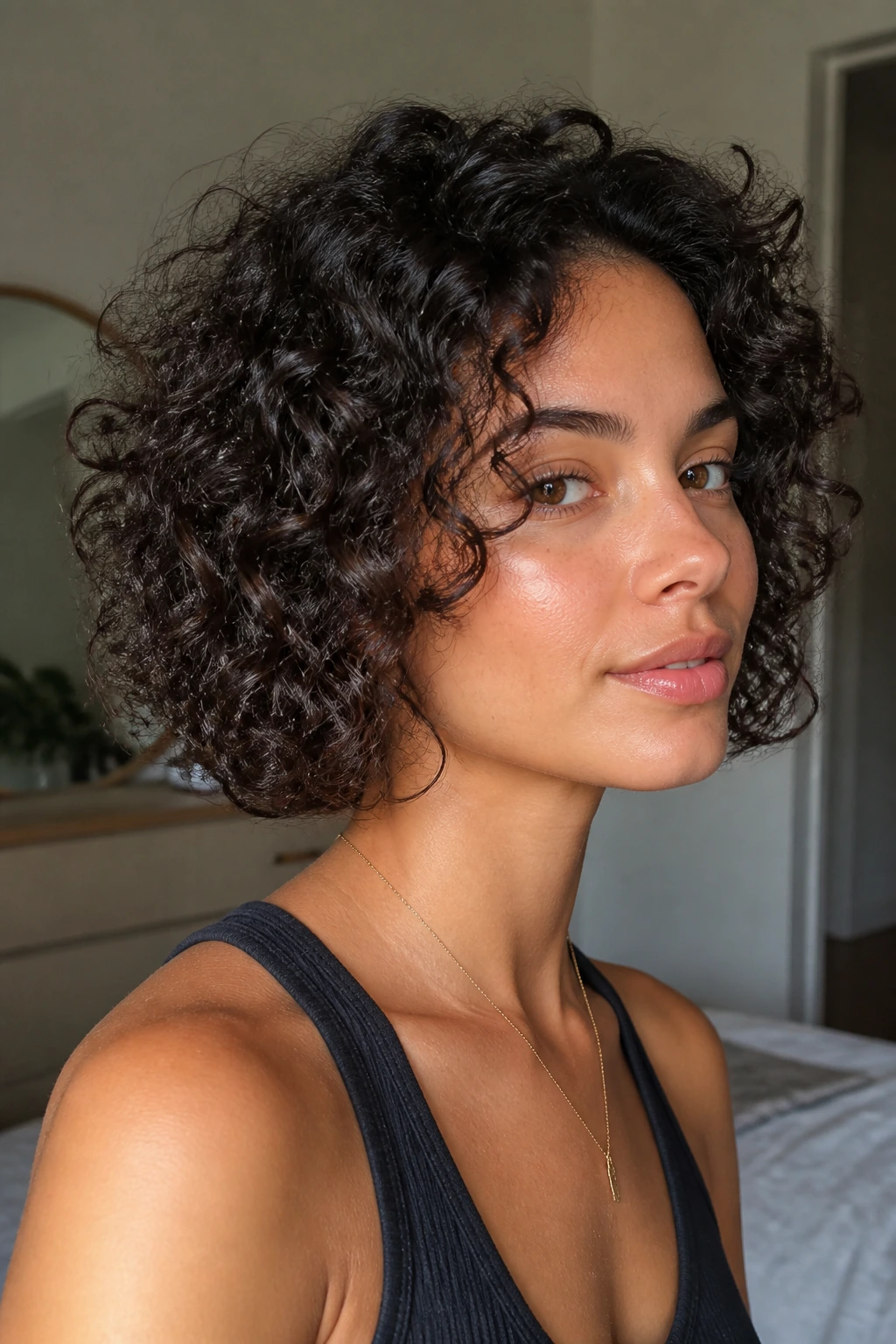
-
Shrinkage-Friendly: These lob ideas respect the fact that curls usually sit shorter once dry, so the cut line is chosen around the real shape, not the wet illusion.
-
Shape Without the Triangle: The best curly lobs remove bulk where it swells and keep weight where the curl needs to hang, which stops that old pyramid look cold.
-
Easy to Style Up or Down: A short lob gives you enough length for a clip, a half-up twist, or a clean air-dry, but it still feels light around the neck.
-
Face-Framing Control: Small changes at the front — a side part, a longer cheekbone piece, a narrow bang — change the whole mood of the cut.
-
Works With Density, Not Against It: Thick curls get room to move. Finer curls keep a strong outline. That balance is why the lob keeps showing up in curl salons.
-
Salon Communication Is Easier: You can ask for a dry length, a blunt edge, or a 1- to 2-inch interior layer, which gives the stylist concrete numbers instead of vague wishes.
1. Chin-Grazing Curly Lob
A chin-grazing lob can look almost architectural on curly hair. The line sits right where the jaw starts to matter, so the curls frame the face instead of hanging around it. On tighter 3A and 3B patterns, that length gives shape without turning into a helmet.
Why the Jawline Matters
The jawline is one of the few places where curls can make a clean visual stop. If the cut lands too low, the curl pattern starts to blur into the shoulders. If it lands too high, the roundness can crowd the cheeks. The chin zone gives you a hard edge with enough bounce to keep the cut soft.
Quick Shape Notes
- Best for curls that shrink 1 to 3 inches after drying.
- Ask for the dry perimeter to sit just below the chin if your hair is springy.
- Works well with a slight off-center part when you want more lift.
- A few longer pieces in front keep the cut from reading boxy.
My favorite detail: leave the front a touch longer than the back. It keeps the curl line from puffing straight out at the jaw.
2. Collarbone Curly Lob
The collarbone lob is the one I keep circling back to because it gives curly hair a place to settle without losing swing. It lands low enough to feel easy, but not so low that the curls hang like wet rope by midday. That’s a useful thing.
It also behaves better through grow-out than a shorter bob. When the front ends sit a half-inch below the collarbone and the back is just slightly shorter, the whole cut keeps a clean slope even after a few months. If your curls are dense, this length stops the ends from stacking up around the shoulders.
A collarbone lob is the version I’d point to for anyone who wants options. You can diffuse it for volume, air-dry it for a softer halo, or pin one side back and still keep the shape intact. It doesn’t need a dramatic styling plan to look finished. It just needs clean sectioning and a cut that understands shrinkage.
3. Blunt Curly Lob
Can curly hair wear a blunt cut without looking stiff? Yes — if the perimeter is clean and the interior weight is handled with care. That’s the trick most people miss. A blunt lob on curls works best when the bottom line is decisive but the bulk inside the head has been lightly removed so the shape can move.
What Makes It Work
The blunt edge gives the curls a clear border, which looks polished even when the texture is messy in the best way. On looser curls, it can make the ends look fuller. On tighter curls, it gives the silhouette a solid base so the hair doesn’t puff outward in every direction.
How to Style It
- Use a light mousse at the roots so the top doesn’t collapse.
- Scrunch in gel on soaking-wet curls for a smoother edge.
- Diffuse on low heat if you want the perimeter to stay crisp.
- Avoid aggressive brushing after drying; it breaks the line fast.
A blunt curly lob is not lazy hair. It’s precise hair. The shape does the heavy lifting.
4. Side-Part Curly Lob
If your curls tend to fall flat at the crown, a side part is the easiest fix that doesn’t involve cutting half your hair off. It creates instant lift at the roots and makes the lob look fuller on one side, which is useful if your curl pattern opens up more near the temple or crown.
This style works especially well on round and square faces because the part breaks the symmetry just enough to soften the outline. I like it on medium-density curls that need a little movement but not a pile of layers. The part alone can change the balance by a surprising amount.
- A deep side part creates more root height than a shallow one.
- Keep one front piece slightly longer so the face doesn’t lose frame.
- Use clips at the roots while drying if the part wants to close back up.
- Flip the part occasionally so one side doesn’t flatten permanently.
One small parting change can save the whole cut.
5. Center-Part Curly Lob
A center-part curly lob has a calm, almost clean symmetry that makes curls look intentional instead of wild. The middle line lets both sides mirror each other, which is useful when your curl pattern is even and you want the shape to read as polished rather than playful. It’s a little more direct than a side part. I like that.
The cut itself usually needs soft interior shaping so the weight doesn’t collect at the bottom and drag the middle line off balance. That’s especially true if your curls are dense or your hair has a lot of spring at the crown. With the right layering, the center part gives a long vertical line through the face and lets the curls fall around it instead of fighting it.
The best version leaves the front pieces just long enough to skim the cheekbones. Too short, and the part looks severe. Too long, and the middle loses all definition. Somewhere in the middle, the whole thing starts to make sense.
6. Bottleneck Bang Curly Lob
A bottleneck bang is the curly lob’s clever middle ground. Unlike a blunt fringe, it leaves more space at the temples and opens the center of the forehead, so the bangs don’t sit there like a solid curtain. The curl shape stays airy, and the front still gets attention.
This cut is useful if you want a fringe but don’t want to spend every morning reshaping a wall of curls. The shorter center pieces dry faster and give lift, while the longer side pieces blend into the lob. That makes the grow-out easier too. Nothing about it feels trapped.
The best bottleneck bang curls usually sit around eyebrow level when wet and land higher when dry. That shrinkage can be dramatic, so I’d always ask for a dry preview if your curls are springy. If your forehead is shorter, keep the center pieces a touch longer. If your hairline is wide, let the outer pieces sweep softly into the sides.
7. Shaggy Curly Lob
A shaggy lob is the answer when your curls want movement more than neatness. The top layers are cut to let the curl stack build up at different heights, which gives the shape that slightly undone, lived-in look without needing a lot of product. It is not messy hair. It is layered on purpose.
Why It’s Different
The shag stops the bottom from feeling heavy while keeping enough length for the lob to read as a bob’s grown-up cousin. On curls that tend to clump, the shag gives each section a little room to separate without exploding. That’s useful if your hair gets bulky at the sides or if the back tends to puff out.
A good curly shag lob usually has 1- to 2-inch interior layers and a perimeter that still feels solid. The top should not be hacked to pieces. Too many short bits turn into frizz fast. A restrained shag is better. Much better.
8. Rounded Curly Lob
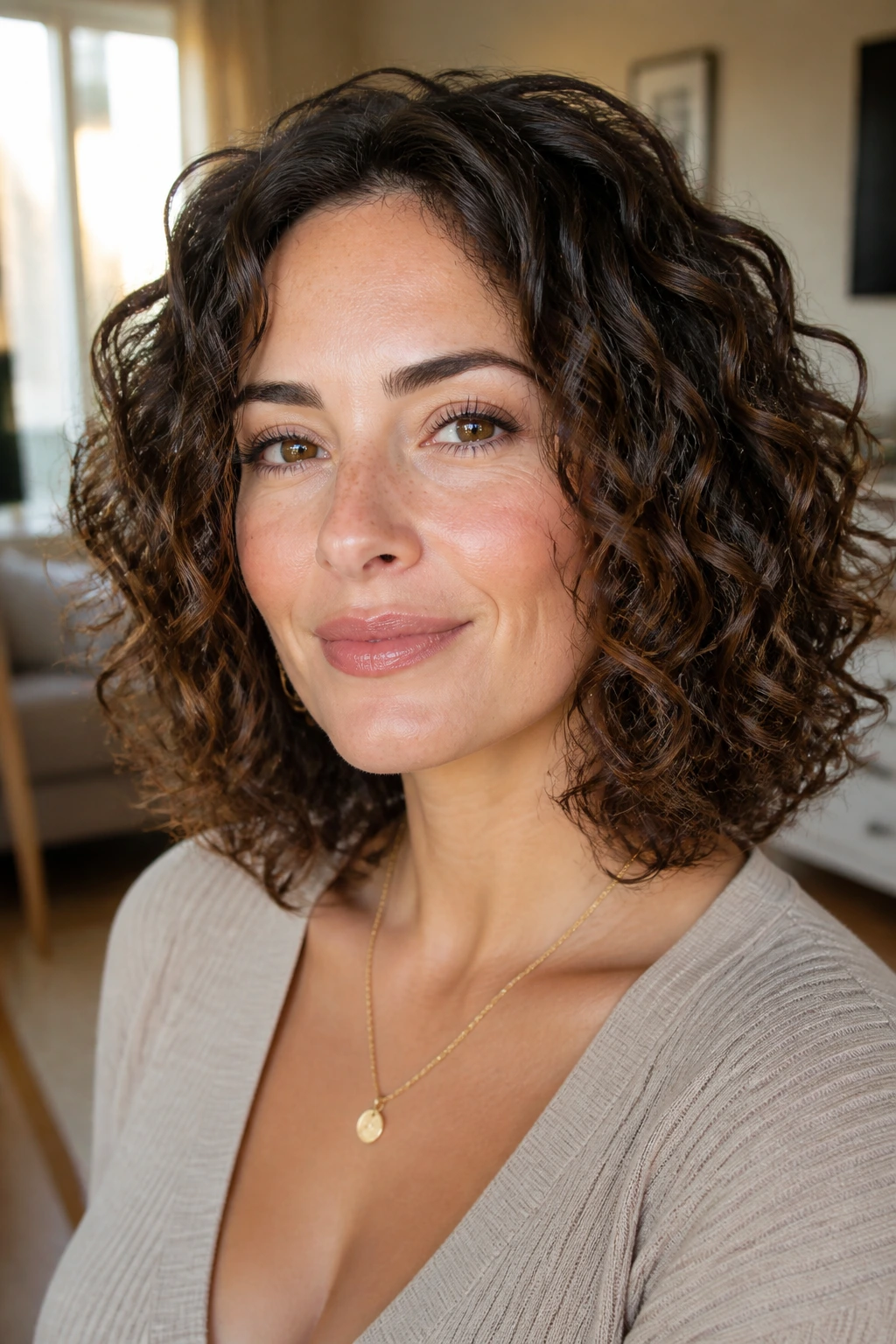
The rounded lob is for anyone who wants the cut to feel soft all the way around, with the volume distributed evenly instead of shoved to the sides or the bottom. Picture the silhouette as a curve, not a triangle. The curls follow the head shape and then taper gently toward the ends.
This shape suits hair that expands wide when dry. The rounded outline pulls that width back in, especially around the cheeks and nape. It also works well if your curls are a little coarse or if your texture has a mind of its own in humid air. The curve gives the eye something to follow.
If you like the feeling of hair that moves as one piece instead of breaking into separate clumps, this is the version to keep in your folder. It looks especially good with a soft side part and a diffuser pass that finishes at the roots, not just the ends.
9. Asymmetrical Curly Lob
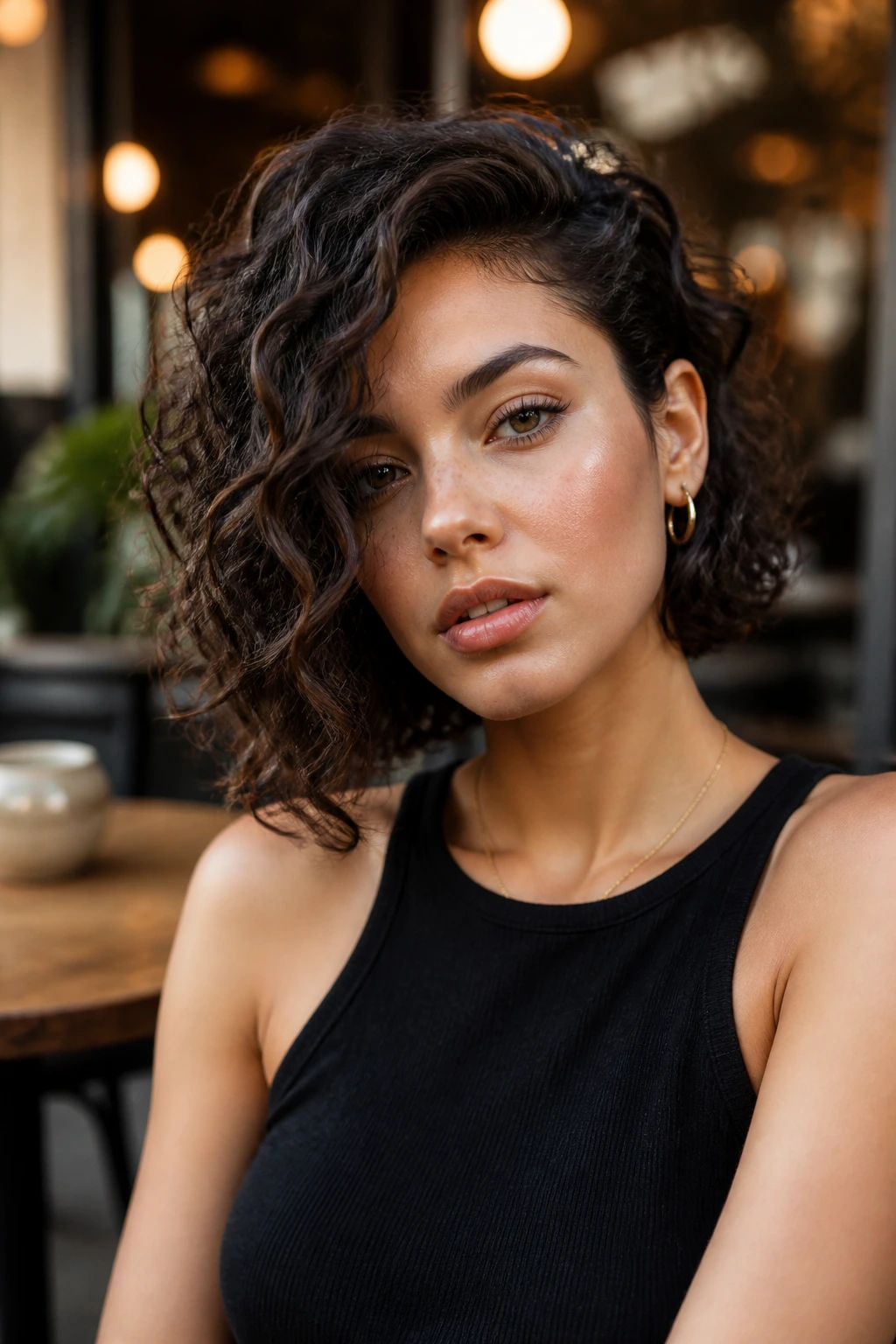
An asymmetrical lob gives curly hair edge without needing a dramatic undercut or a shaved side. One side sits slightly longer — sometimes by an inch or two, sometimes more — and that difference creates motion the second you turn your head. Curls love that kind of imbalance.
Why does it work so well on texture? Because the curls already have their own irregularity. A small length difference feels stylish rather than awkward. On straight hair, asymmetry can look sharp in a cold way. On curls, it looks alive.
How to Keep It Intentional
- Keep the longer side only 1 to 2 inches below the shorter side unless you want a sharper effect.
- Let the part sit slightly off center so the cut doesn’t feel stiff.
- Use a diffuser to keep both sides from shrinking differently.
- Ask the stylist to check the shape from the front and profile. Back views can fool you.
The best asymmetrical lobs are subtle. If the difference is too huge, the curls start arguing with each other.
10. Inverted Curly Lob
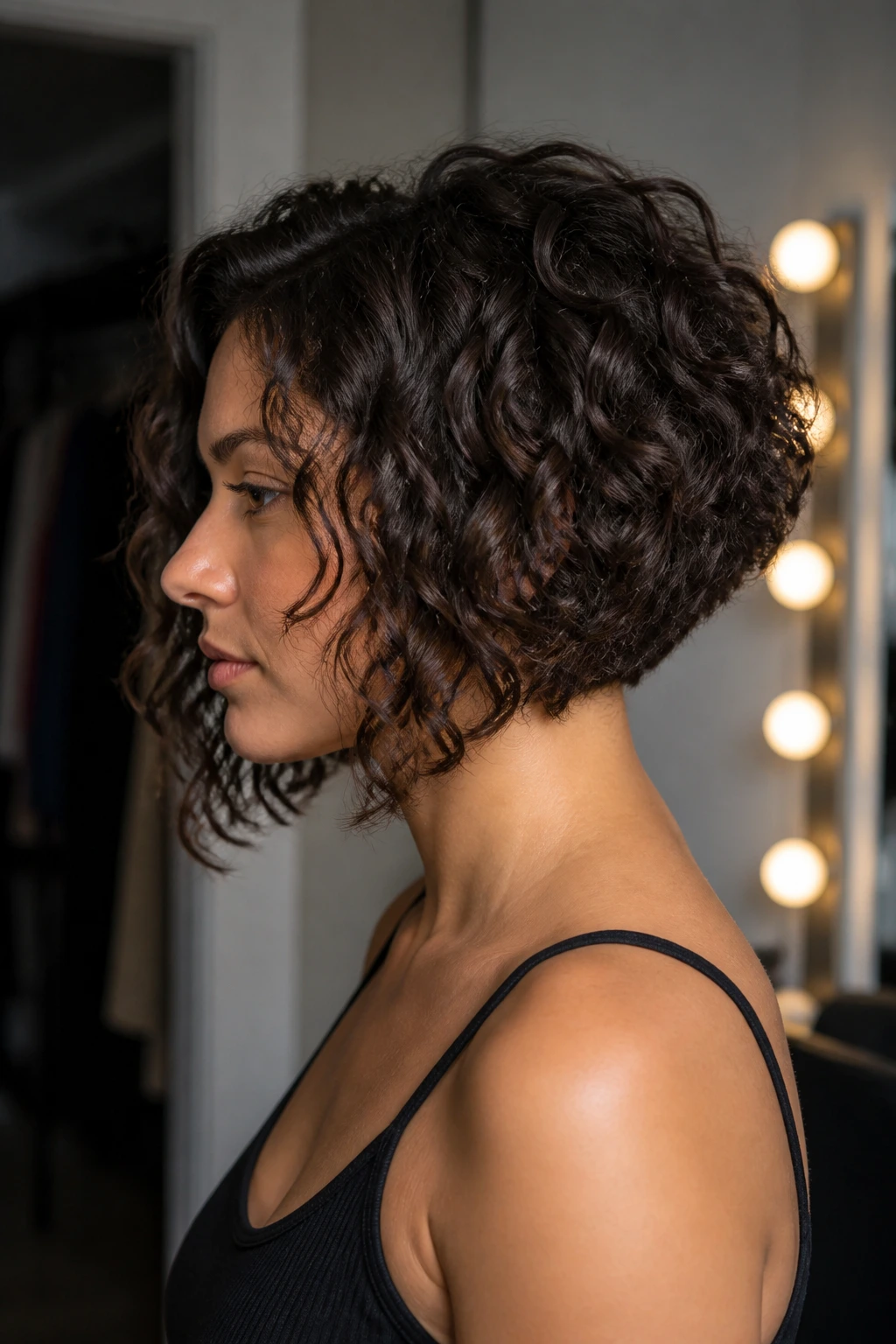
An inverted lob is shorter in back and longer in front, and curly hair can wear that slope beautifully when the gradation is gentle. The back lifts away from the neck, which is handy if your curls get hot or frizzy against the collar. The front keeps enough length to frame the face and soften the angle.
I like this cut on dense curls that need a little relief in the back. It removes some of the bulk where hair often grows the thickest while leaving the front pieces long enough to feel feminine without being fussy. The line is the whole story here. If the angle is too steep, it turns into a 2010s memory. A mild angle feels modern and wearable.
The key is balance. You want the back to be tidy, not chopped. You want the front to fall forward, not hang as a separate curtain.
11. Curly Lob With Face-Framing Pieces
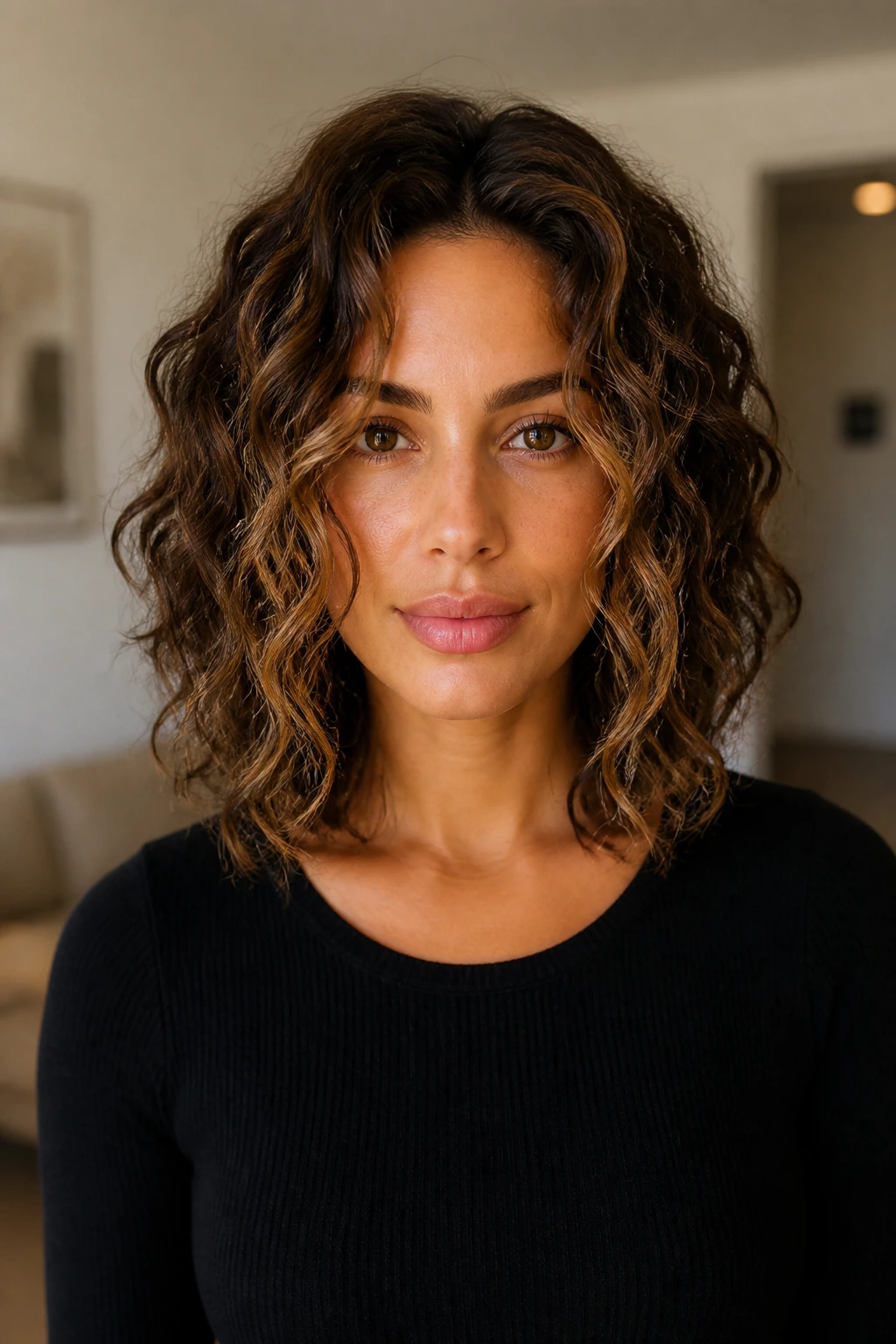
Face-framing pieces are one of those details that sound small but change everything. A curly lob with longer front sections can pull the eye upward, skim the cheekbones, and keep the cut from feeling blocky. If your curls have a tighter pattern, those front pieces can soften the outline without robbing the rest of the hair of structure.
The best versions usually leave the pieces closest to the face about 1 to 3 inches longer than the rest of the perimeter. That gives the curl enough length to show shape once it dries. Shorter than that, and the front can spring up too high. Longer than that, and the framing gets lost in the rest of the haircut.
This is a strong choice for anyone who likes to tuck one side behind the ear. The front pieces still do their job even when they’re pinned back, and the whole cut stays dimensional.
12. Curly Lob for Fine Hair
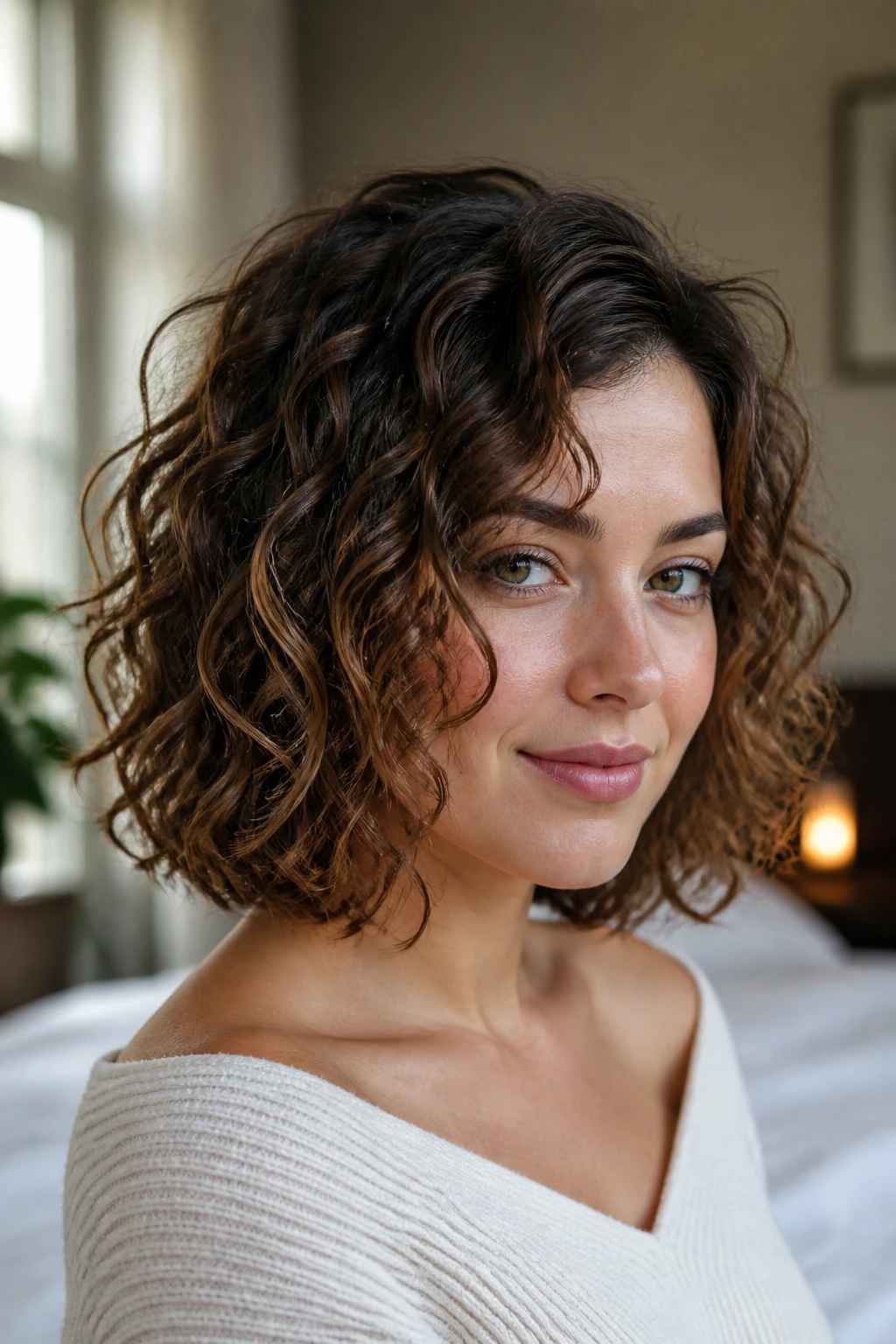
Fine curls need a lob that respects volume instead of stealing it. That means a perimeter with some weight and not too many short internal layers. Every extra layer can make the hair look airy in a bad way — thinner, not lighter. There’s a difference.
This is where a blunt or lightly layered lob shines. It gives the ends enough mass to show up, especially if your curl pattern is loose and your strands are delicate. I’d keep the front long enough to avoid that wispy, see-through edge that fine hair can get when it’s overcut.
Best Approach
- Ask for a clean perimeter with only minimal interior shaping.
- Use mousse at the roots and a light gel through the mids.
- Skip heavy creams that flatten the curl clump.
- Diffuse upside down only if your roots can handle it; some fine hair collapses faster that way.
Fine curls do not need more “texture.” They need enough structure to hold onto.
13. Curly Lob for Thick Hair
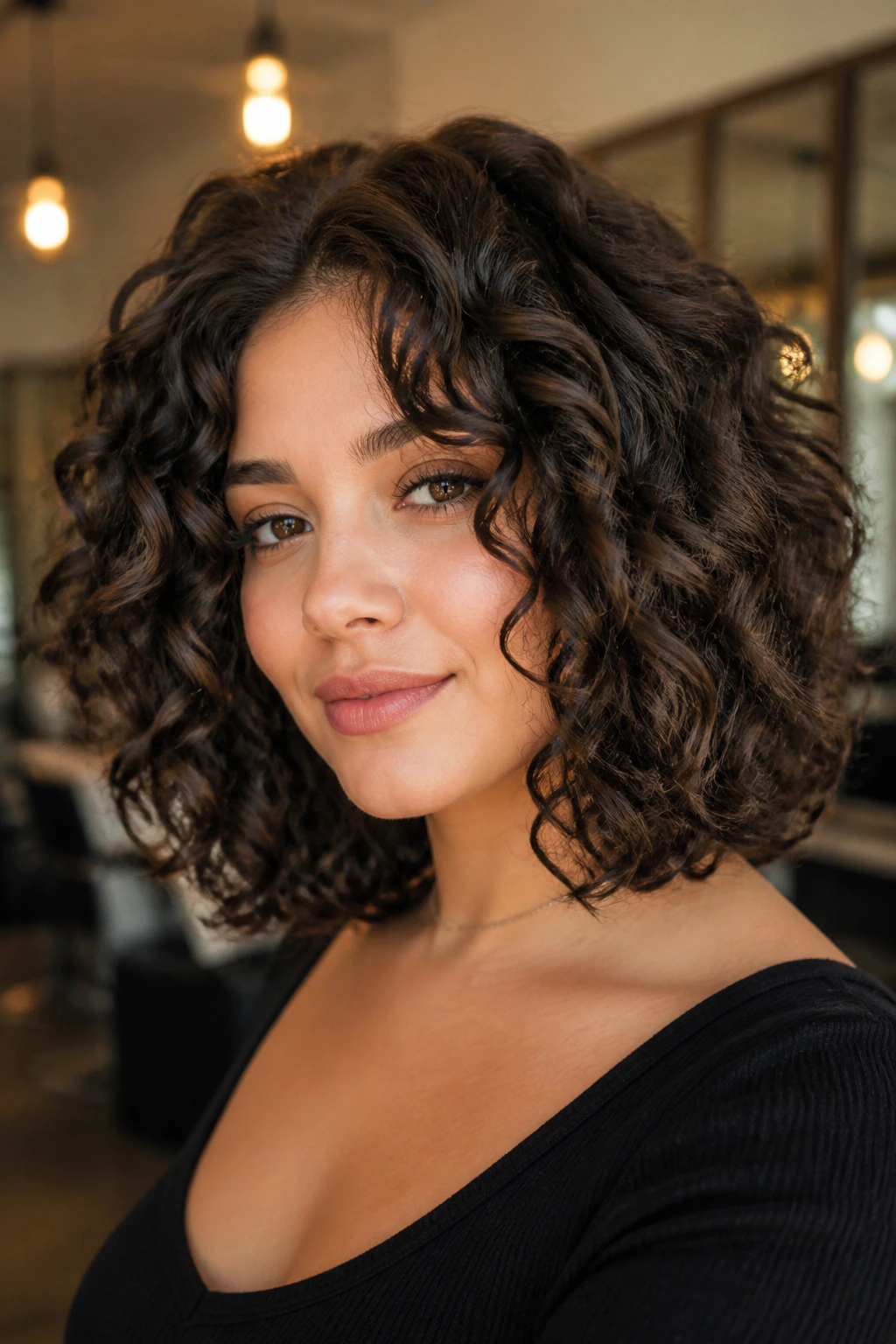
Thick curls ask for a different kind of discipline. They can look gorgeous in a lob, but only if the cut removes bulk in the right places. If not, the bottom edge swells outward and the whole shape starts to feel wide instead of polished. Nobody needs that.
A strong thick-hair lob often keeps a firmer perimeter and uses internal weight removal under the surface. Not too much. Just enough to let the curls fold over each other instead of standing in rows. Ask for shaping that happens underneath, not just feathering at the top. That’s the difference between movement and frizz.
The best result is still big, just controlled. The kind of controlled that lets you skip a round brush and still look finished after diffusing.
14. Curly Lob for 3A Ringlets
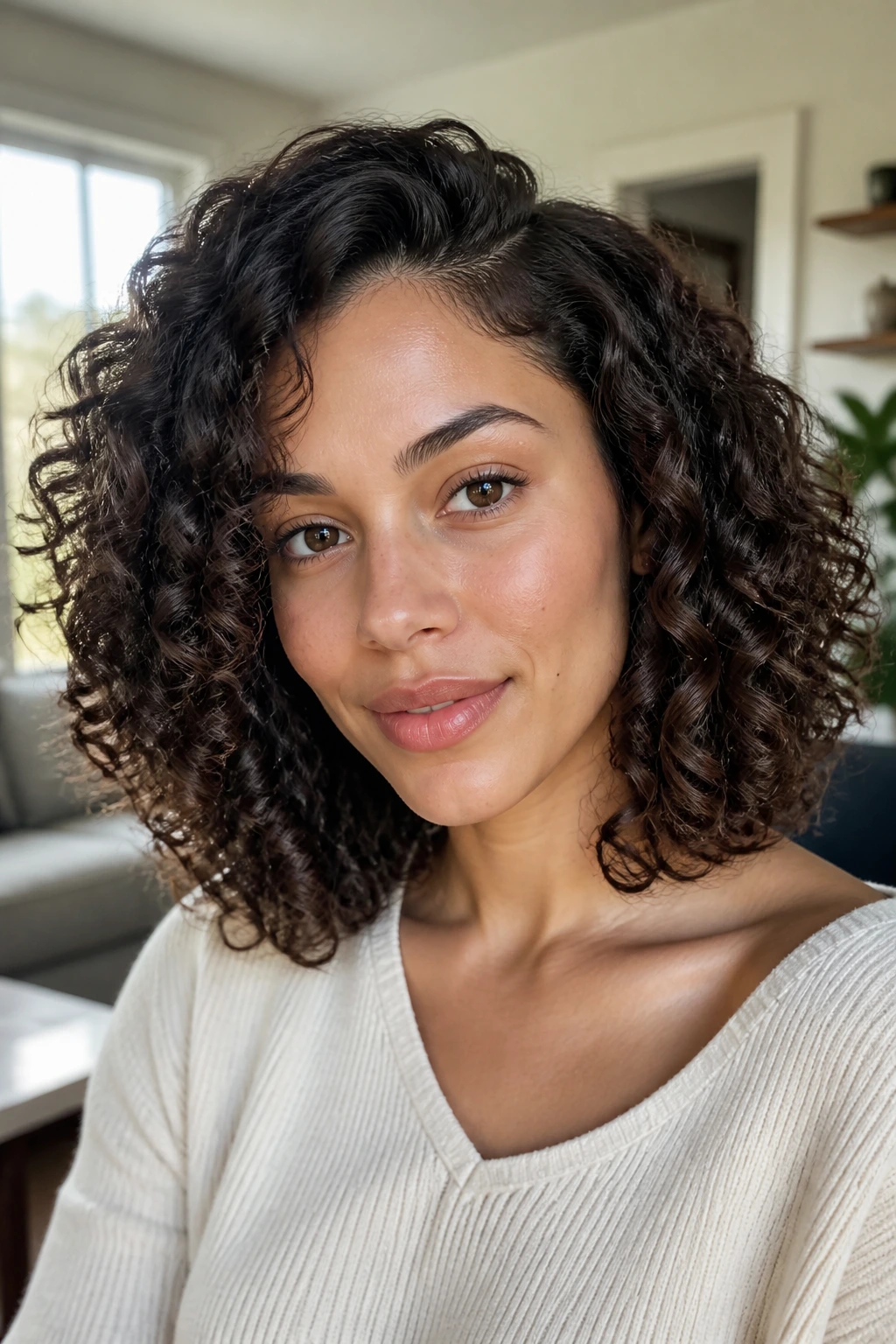
3A ringlets tend to give a lob a springy, almost polished bounce. The curls are loose enough to show the cut line clearly, but defined enough to make even a simple perimeter look intentional. If you have this pattern, the main risk is not shape collapse. It’s over-layering.
A 3A lob usually behaves best when the base sits at the collarbone or just above it, with soft shaping around the face. That gives the ringlets room to gather into clean spirals instead of splitting into half-deflated pieces. A side part can look lovely here, though a center part works if your crown is cooperative.
This pattern also tends to shine with a little product restraint. Too much cream and the ringlets lose their snap. A small amount of gel on soaking hair often does the job better.
15. Curly Lob for 3B Waves and Spirals

3B curls sit in the middle of the volume spectrum, which makes them ideal for a lob with a clean silhouette and a bit of movement. The texture is strong enough to hold shape, but not so tight that the cut needs to fight for definition. That’s a sweet setup.
This type of curl likes length that falls somewhere between jaw and collarbone once dry. Shorter than that, and the curls can puff up around the face. Longer than that, and the shape may lose the crispness that makes a lob feel like a lob. I’d keep the front slightly longer if you wear glasses or if the curls near your temples are looser than the rest.
A 3B lob also takes to diffusing well. A few minutes at the roots can change the whole silhouette.
16. Curly Lob for 3C Coils
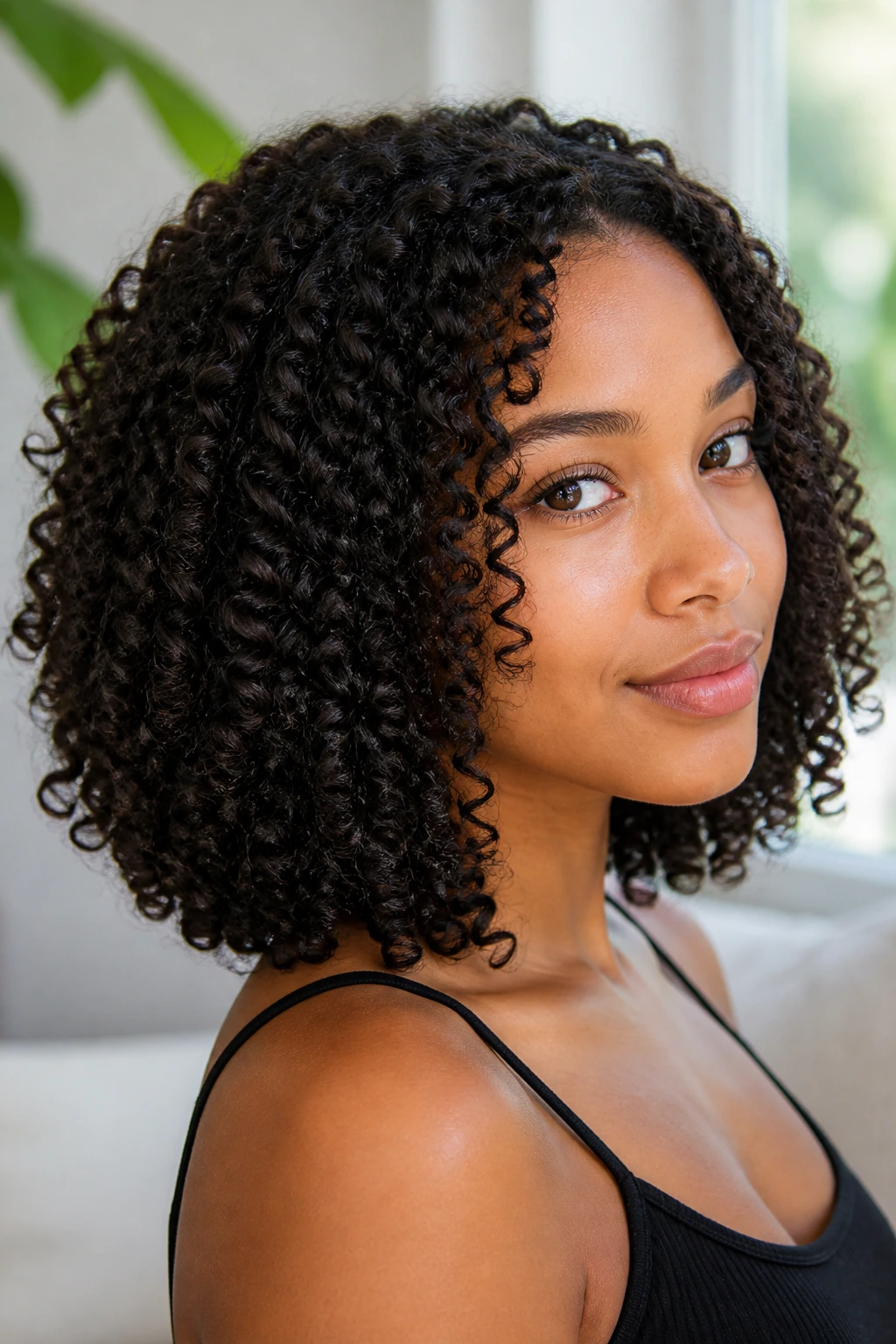
3C curls are denser, tighter, and more likely to shrink, which means the length plan has to be smarter. A short lob on this texture often looks best when the dry target lands around the lower jaw to upper collarbone, not because the hair is long there when wet, but because that is where it often sits once it tightens up.
The important thing is shape control. 3C coils can take a lot of volume, so the cut should remove bulk in measured amounts rather than slicing it away all at once. A soft rounded outline or a slight A-line usually works better than a hard angle. The curls already bring drama. The haircut should organize it.
Keep the ends hydrated too. Coils show dryness fast at the perimeter, and a parched edge can make the whole lob look scruffy.
17. Curly Lob for Round Faces
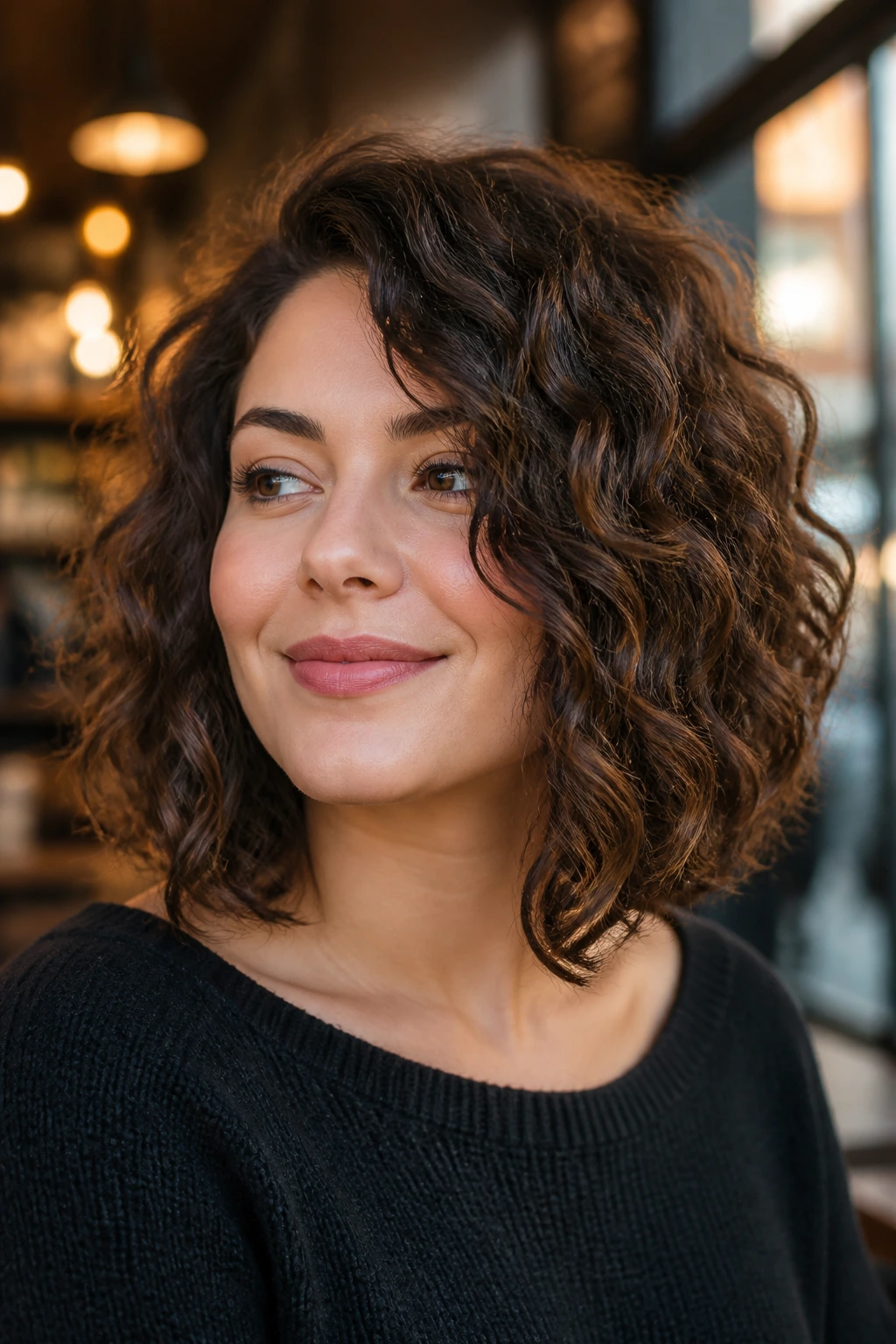
A round face and a curly lob can work beautifully together if the front is handled with a bit of intention. The goal is to draw the eye down and slightly outward, not to stack volume right at the cheeks. Longer front pieces, a side part, and a perimeter that falls below the chin all help.
This is one of those cuts where the wrong length can make the face feel wider than it is. The fix is not to go super long. It’s to let the front pieces skim lower than the cheekbones and avoid short layers that stop right at the fullest part of the face. A little angle goes a long way.
If your curls are loose, keep the front pieces soft and mobile. If they’re tighter, ask for a shape that opens at the jaw without creating a puff around the temples.
18. Curly Lob for Square Faces
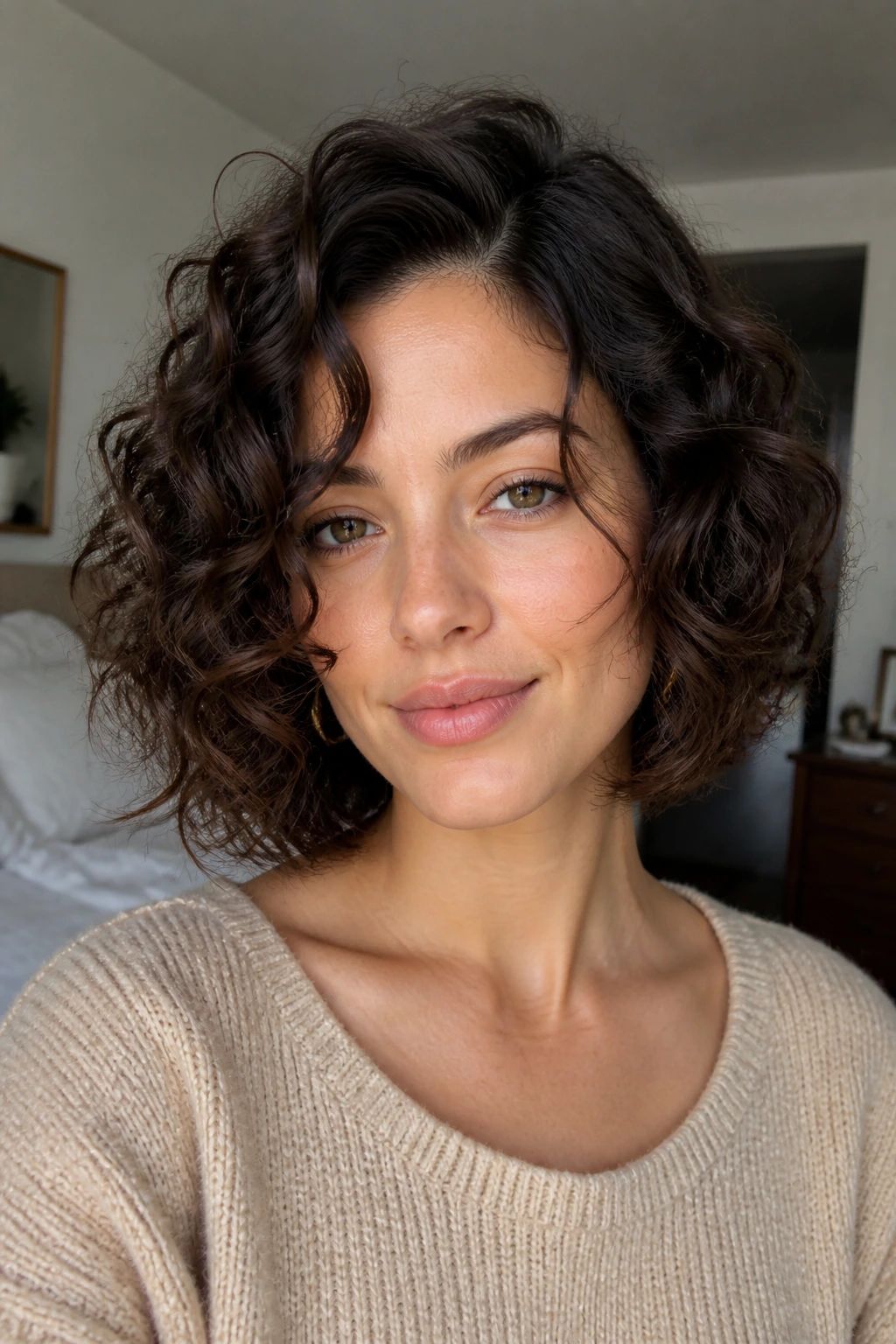
Square faces usually look good in curls when the haircut softens the corners instead of echoing them. A lob with curved layers or a rounded base helps here because it interrupts the straight lines around the jaw. That can be a relief, visually speaking.
I would avoid a dead-straight edge that lands exactly at the jaw if the curls are thick and dense. It can make the lower face look boxier. A little movement in the front, especially around the cheekbones, creates a much easier transition. Side parts help too. So do pieces that bend toward the face instead of away from it.
The trick is not hiding the jaw. It’s giving it something softer to sit against.
19. Curly Lob for Oval Faces
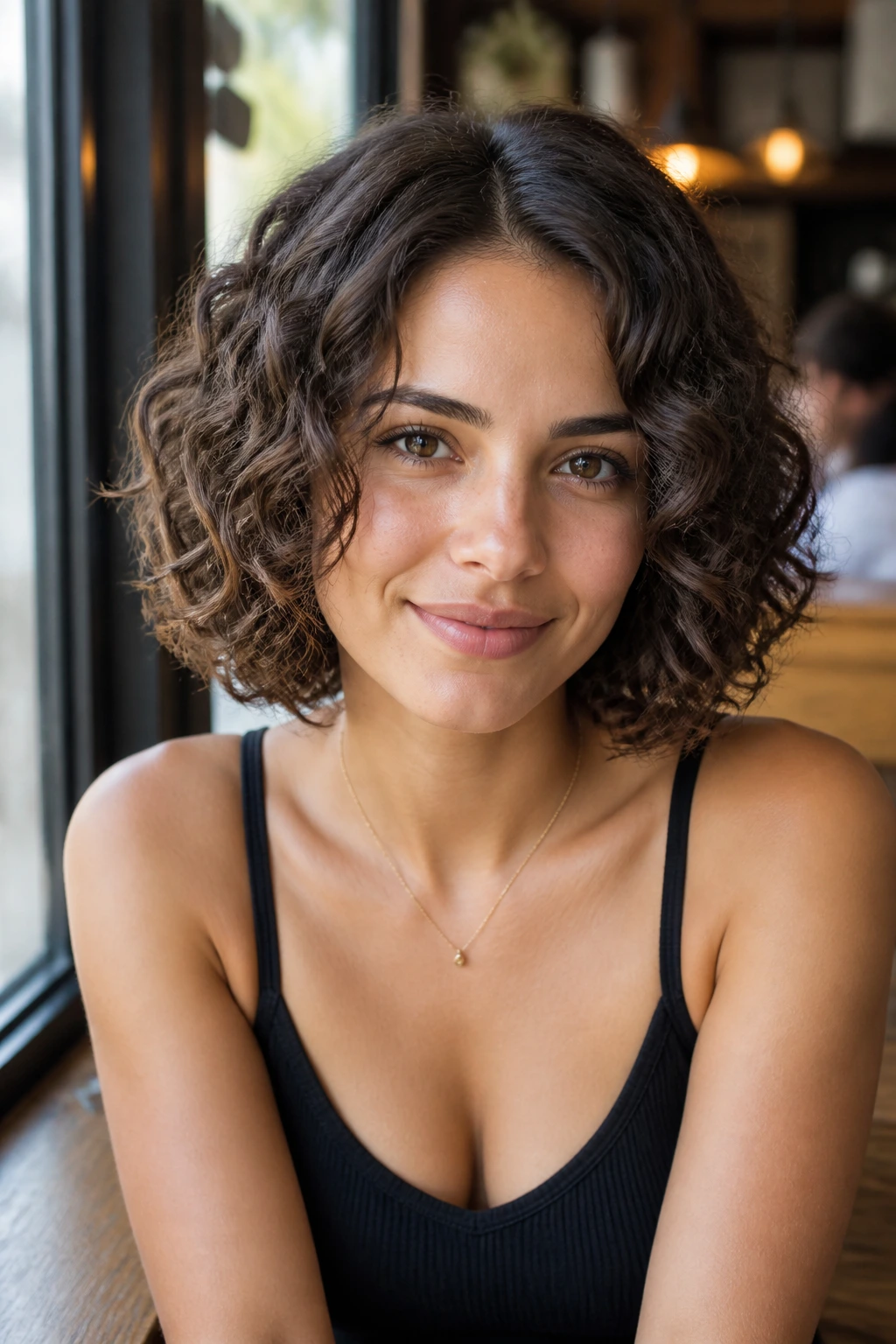
Oval faces can get away with almost any lob shape, which is both helpful and mildly annoying because the real decision comes down to texture and lifestyle. If your curls are loose, a blunt line can look crisp. If your curls are dense, layers may keep the cut from swallowing your neck. Lucky people. This is your section.
A center part on an oval face gives a clean, balanced frame. A side part changes the energy fast and can make the curls feel more romantic or more casual, depending on how you set them. Since the face shape is already balanced, you can lean into silhouette, bang shape, or density control instead of spending all your energy on correction.
Pick the version you’ll style, not the one that only looks good in a mirror for five seconds.
20. Low-Maintenance Wash-and-Go Lob
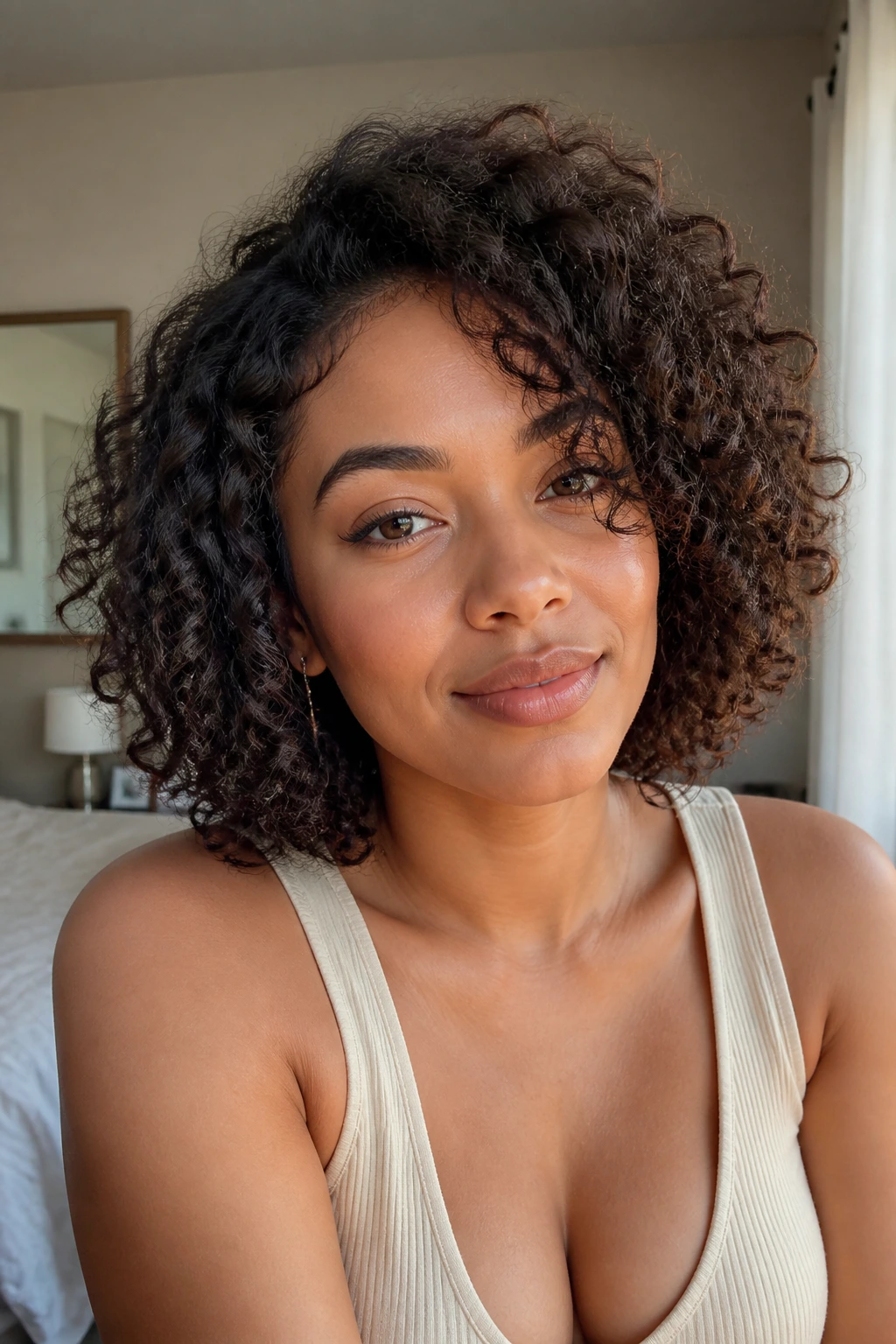
A wash-and-go lob should still look like it was cut with a plan. That’s the point. The length stays short enough to dry in a reasonable amount of time, and the shape is clean enough that you don’t need to fight every curl into place. Good wash-and-go hair looks finished because the haircut is doing half the work.
The best version keeps the layers simple. Too many pieces make the drying process unpredictable, especially if your hair has mixed curl patterns. You want enough shaping to stop bulk, but not so much that every wash becomes a different haircut. For low-maintenance curls, the perimeter should be the star.
This is the lob I’d hand to someone who wants one styling product, one diffuser, and no drama. Not boring. Just efficient.
21. Diffused Volume Lob
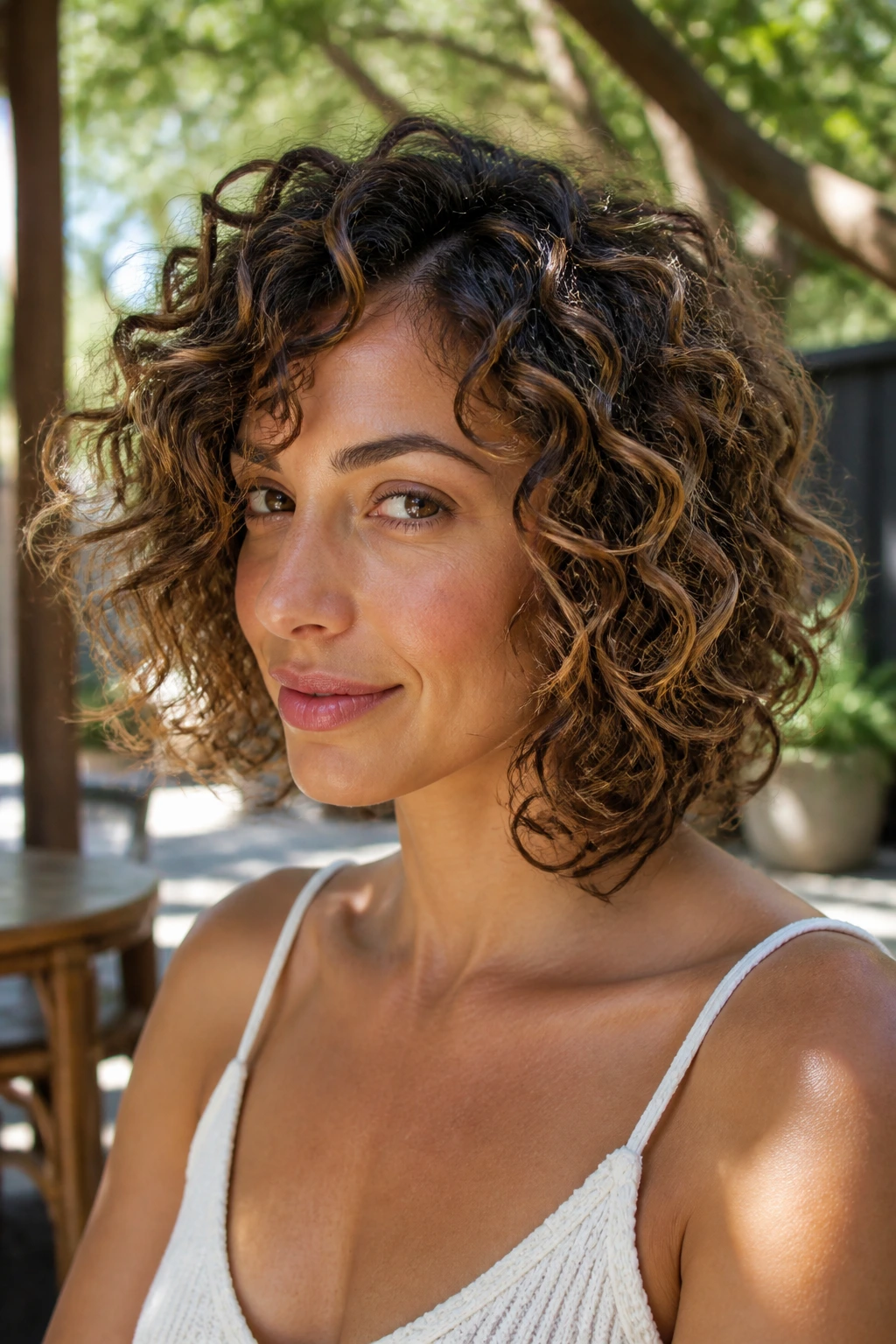
A diffused volume lob is all about lift at the roots and expansion through the mids, not fluffy chaos. The cut usually benefits from medium layers and a perimeter that still has some weight. That combination gives the diffuser something to work with. The roots rise. The curls separate. The ends don’t vanish.
The important thing is heat control. Low to medium heat works better than blasting the hair hot and fast. Start by hovering at the roots, then cup the curls from underneath once they’ve set a little. If you flip your head over and diffuse aggressively right away, the crown can puff in ways that are hard to fix later.
This look is good when you want the lob to read fuller in photos and in motion. It has presence. It also needs a touch more product control than the air-dried version, or the volume can get too loose.
22. Curly Lob With an Undercut Nape
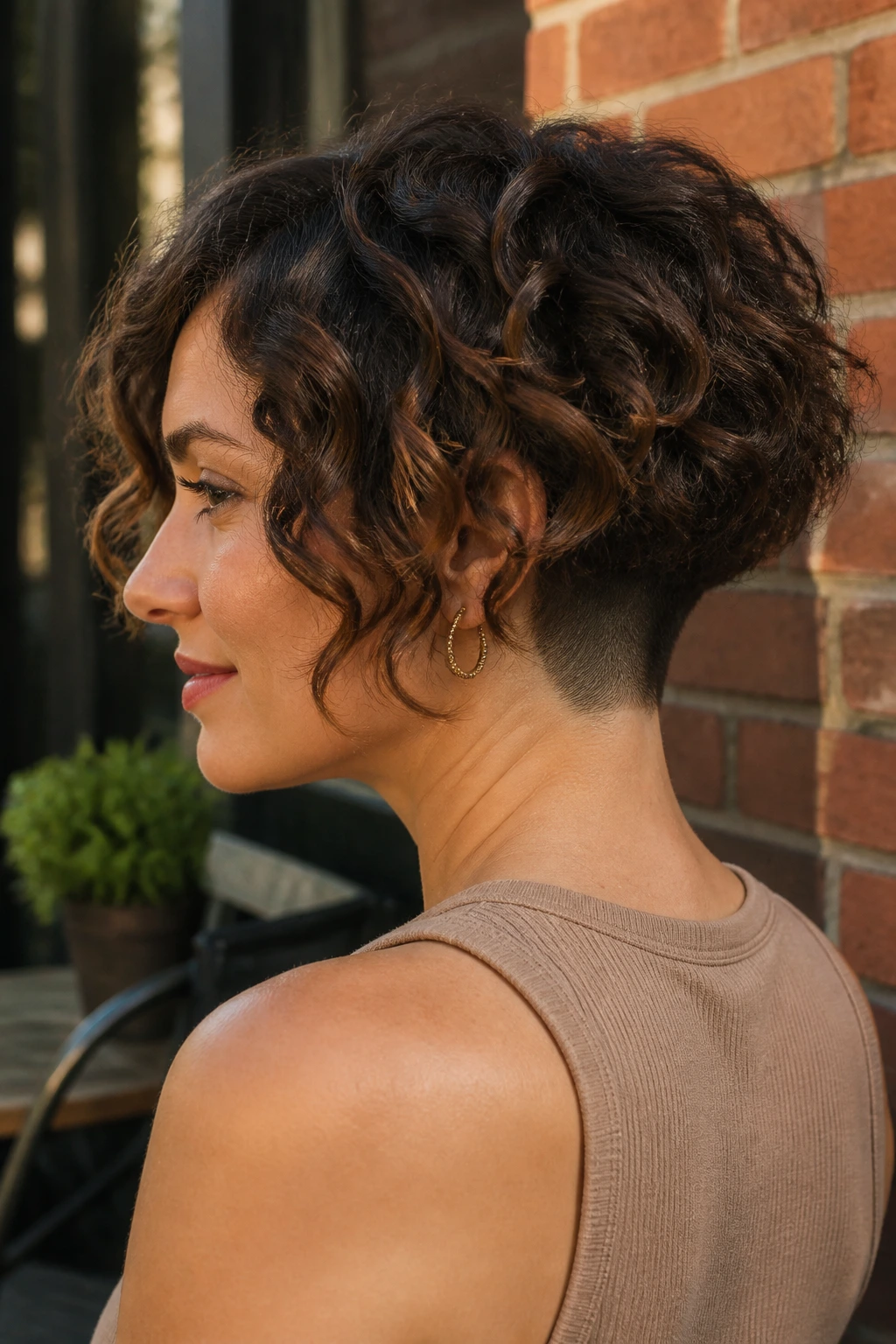
An undercut nape takes weight out where curly hair tends to bulk up the fastest. That means the neckline stays cleaner, the shape sits flatter against the back of the head, and the rest of the curls can sit more freely on top. It’s a smart move for dense hair, especially if you get hot easily.
This cut is not as dramatic as it sounds if the undercut is hidden under the top layer. You can keep it subtle and still enjoy the payoff. The lob keeps its softness from the front, while the nape stays much easier to dry and detangle.
The downside? You do need upkeep. The undercut grows out faster than the rest of the haircut, so you’ll want regular cleanups if you like the shape to stay tidy. If you hate maintenance, skip it. If you hate neck bulk, it’s worth a serious look.
23. Curly Lob With Razor-Soft Ends
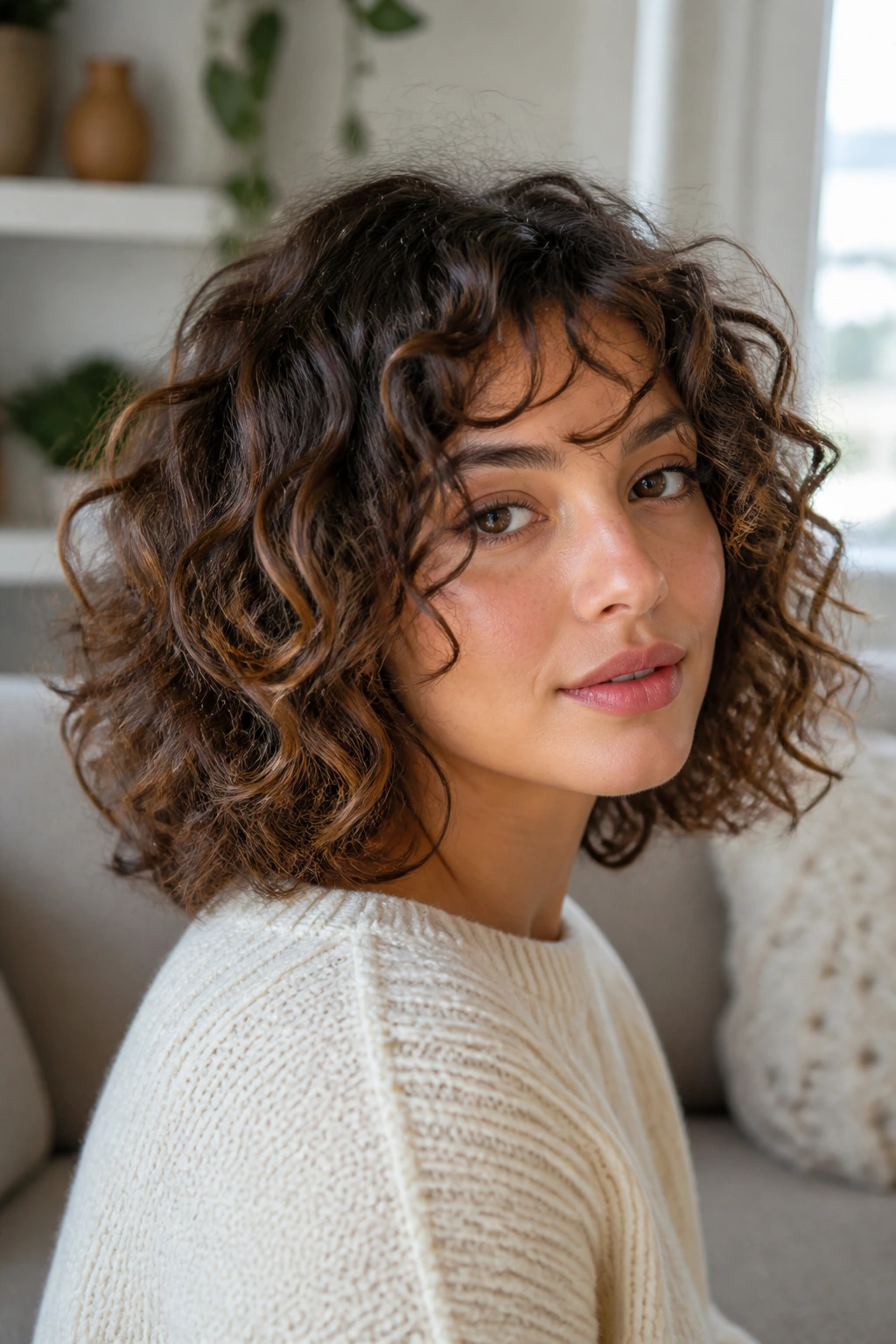
A razor-soft lob can make looser curls and wave-heavy textures feel airy at the bottom. The ends are slightly feathered, which reduces that blunt shelf effect some curly cuts get. It can look elegant, but only in the right hands. A heavy razor on tight curls can wreck the pattern fast.
The cut works best when the stylist uses the razor lightly, mostly on the ends and not through the body of the curl. That keeps the silhouette softer without chewing up the curl clumps. I’d choose this version for 2C to loose 3A textures that want movement more than density.
If your hair frizzes easily, keep this one mild. Too much razoring and the shape starts to blur by day two.
24. Highlighted Curly Lob
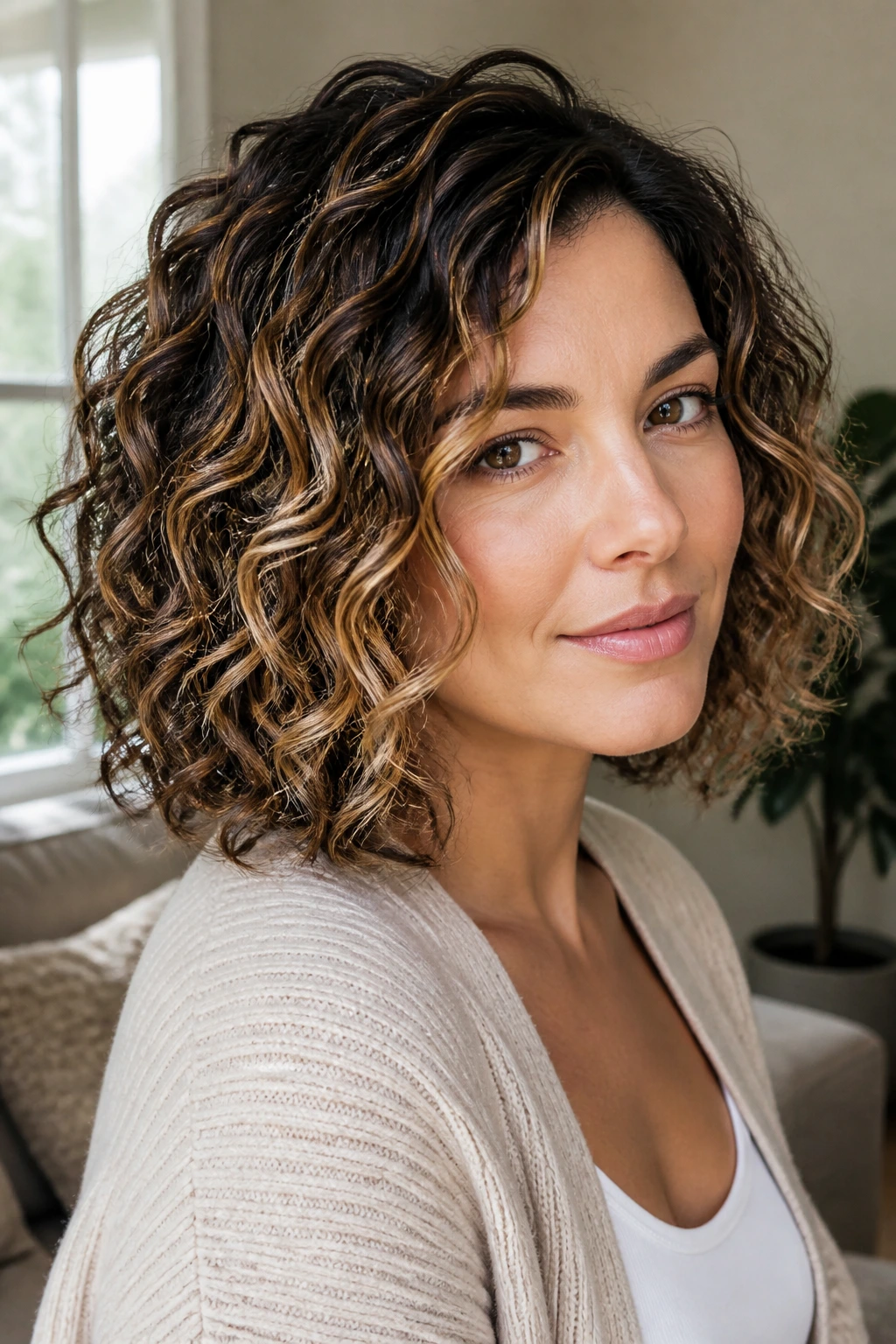
Highlights change the way a curly lob reads because they show off the curl pattern piece by piece. A few lighter ribbons around the face and mids can make spirals pop, especially on darker bases where the shape can sometimes disappear in low light. The cut itself doesn’t need to be wild. The color does some of the visual work.
The best placement follows the curls, not a straight foil pattern. That means lighter pieces where the hair bends and turns, not just in fixed stripes. It’s a small difference, but in curls it matters. A highlight that lands at the bend of a curl shows up more naturally than one that slices through the shape.
This style asks for a little more moisture care. Lightened curls need masks and gentler heat, or the ends can dry out fast. Worth it if you like dimension. Not worth it if you want to keep your routine bare-bones.
25. Curly Lob With Soft, Long Layers
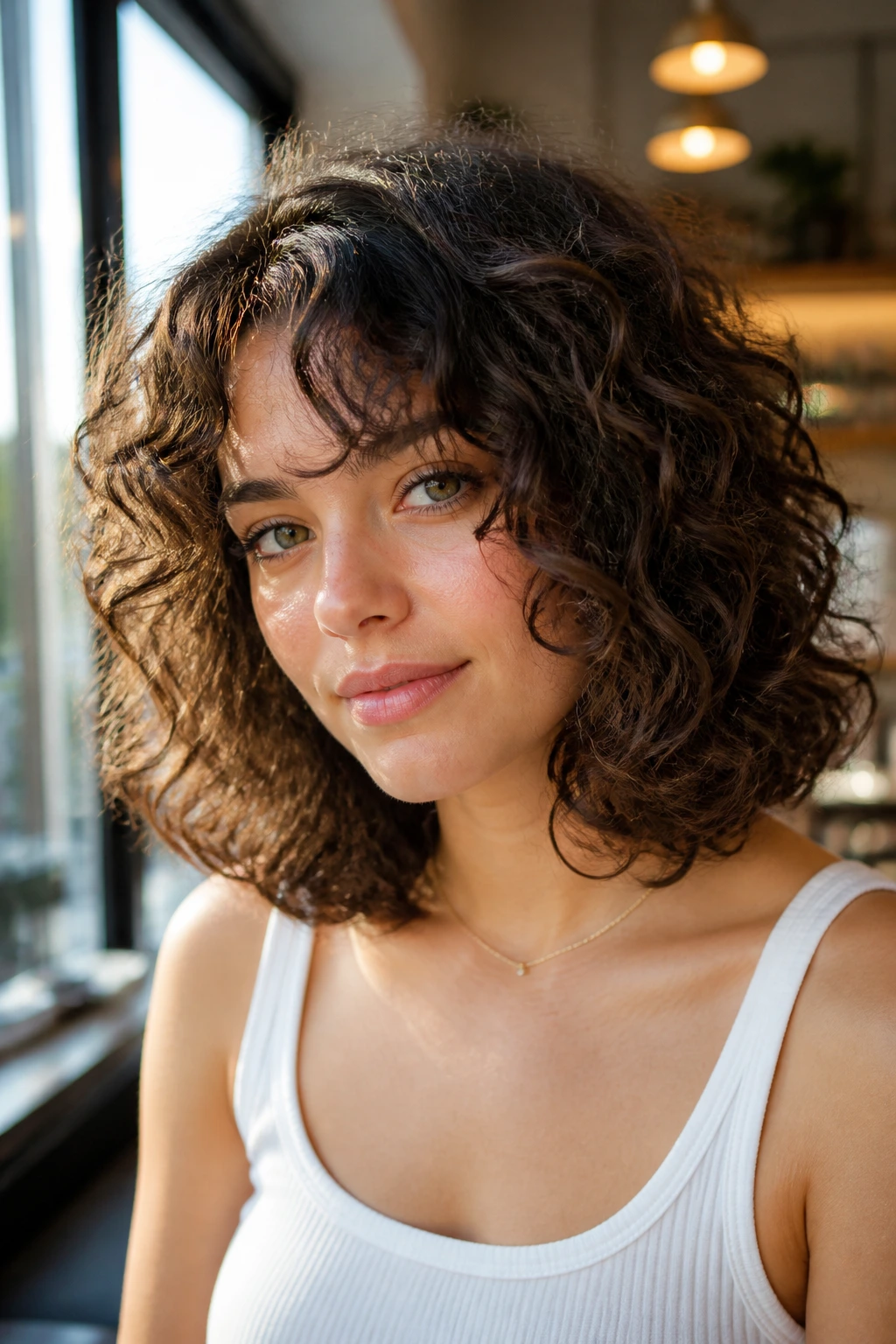
A soft layered lob is the quiet workhorse of curly haircuts. It gives the bottom shape enough structure to avoid heaviness, but it does not chop the curls into little pieces. The result feels full, movable, and easier to wear than a cut that leans too hard into shape.
This is the version I’d choose for mixed textures or curls that behave differently from one section to the next. The longer layers help each curl family sit where it wants to sit. They also make the grow-out easier, because the cut keeps its outline even after a few weeks.
If you want one lob that can handle air-drying, diffusing, clips, and the occasional bad humidity day, this is the safest bet. Not the flashiest. The most forgiving.
Why a Short Lob Gives Curly Hair More Shape Than Length
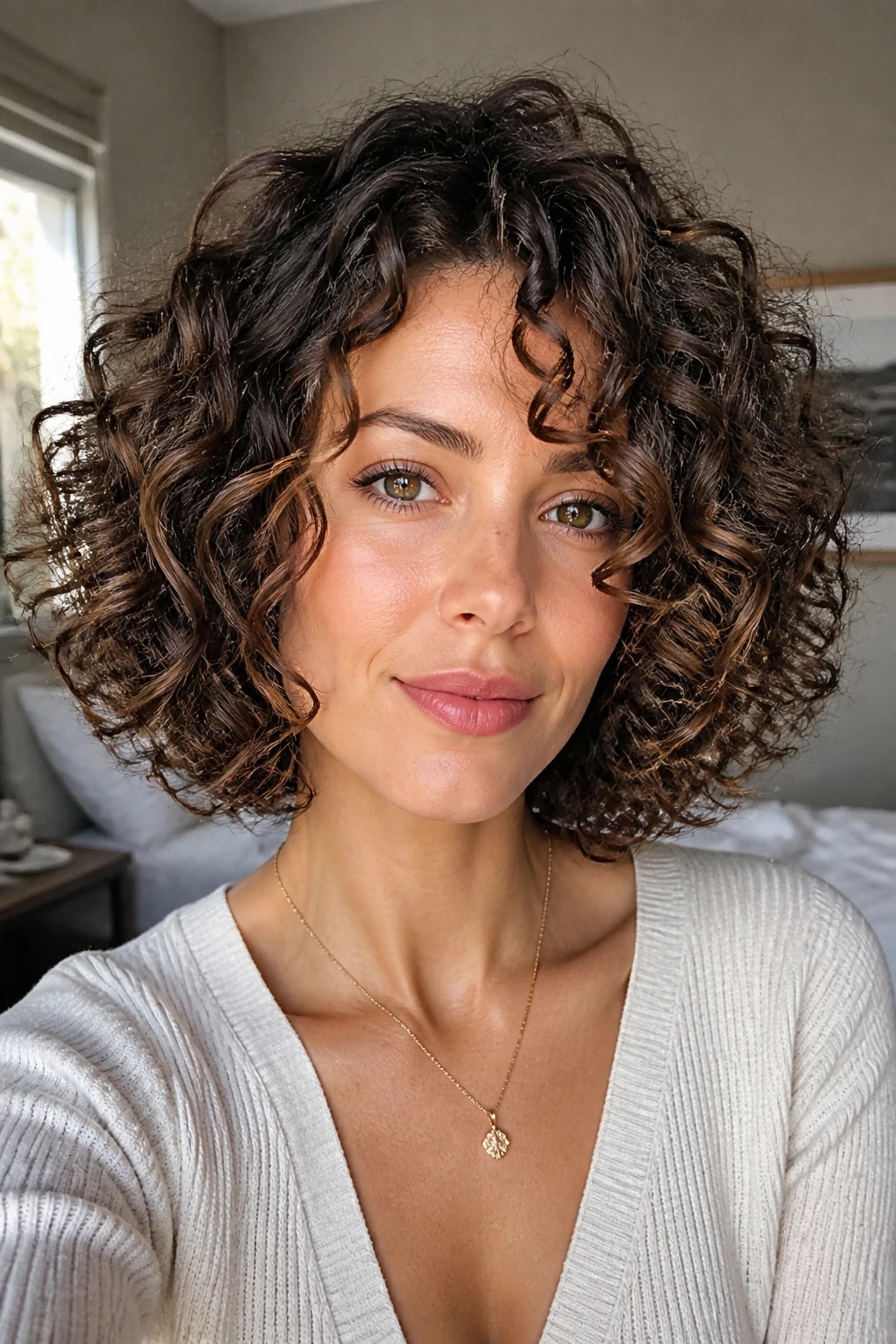
Curly hair loves a strong perimeter. That’s the whole game. Once the length gets too long, the curls start to pull against gravity in uneven ways: the crown may stay lifted, the mids may expand, and the ends may droop or frizz depending on porosity and density. A shorter lob keeps all of that closer together, which makes the silhouette read cleaner.
There’s also the matter of shrinkage. A curl that looks tame when wet can bounce up hard once it dries, and that bounce can turn a medium-length cut into something much shorter at the cheek or jaw. A lob gives you enough room to plan around that without cutting so much that you lose versatility.
For a lot of women with curls, the lob is the first length that actually feels styled instead of simply long. It has enough edge to frame the face and enough weight to keep the shape grounded. That combination is harder to get than people think.
Essential Tools for Styling Curly Lobs
-
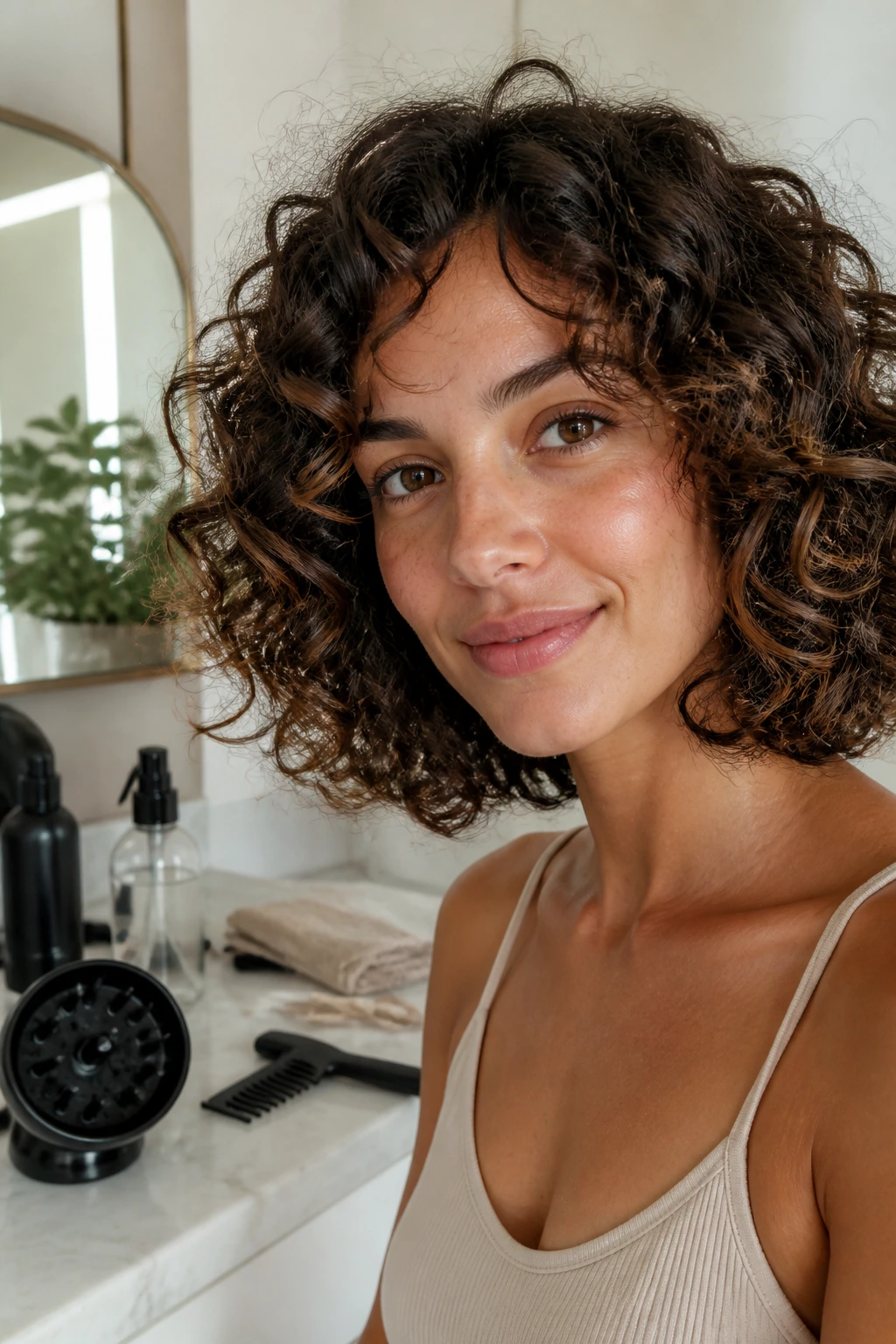
Wide-tooth comb: Good for detangling with conditioner in the shower without tearing apart curl clumps.
-
Microfiber towel or cotton T-shirt: Cuts friction fast; a rough bath towel roughs up the cuticle and leaves the ends fuzzy.
-
Sectioning clips: Useful when you’re diffusing or applying product in 3- to 5-section blocks so the crown doesn’t get ignored.
-
Diffuser attachment: Optional for air-dried people, but worth having if your roots need lift or your curls dry flat against the scalp.
-
Spray bottle: Handy for reshaping day-two curls without soaking the whole head.
-
Curl cream and gel: A light cream softens the mids; gel sets the outside so the lob keeps its edge.
-
Duckbill or root clips: Small clips can hold the crown up for 10 to 15 minutes while drying and create a better lift line.
-
Silk or satin pillowcase: Reduces pillow friction and helps the lob keep its curl pattern overnight.
What to Ask for at the Salon and Which Products Matter

A curl-friendly salon conversation starts with one number: your dry length target. Wet curls lie. They stretch, then spring back, sometimes by 1 to 3 inches or more. If you want a collarbone lob, say where you want it to sit when the hair is dry, not where the ends land while dripping.
Bring photos, but bring the right ones. Same curl density. Same curl pattern. Same part if possible. A loose wave sitting on fine hair will not behave like dense 3B curls, no matter how good the picture looks. A stylist can work with your reference faster if the example actually shares your texture.
On the product side, keep the formulas matched to your curl behavior. Fine curls usually do better with mousse or a light foam plus a light gel. Denser curls often need a richer cream under the gel so the mids don’t feel dry. If your hair gets coated fast or goes limp under butter-heavy products, choose water-based stylers and skip the greasy finish. The American Academy of Dermatology Association has long advised gentler detangling and less rough handling for textured hair, and that advice matters even more when the cut sits short and every shape shows.
If your scalp gets oily, ask for a cut that won’t require piles of leave-in near the roots. If your ends fray, mention porosity. The word sounds technical, but it just means how fast your hair drinks water and loses it. That one detail changes product choice more than most people realize.
How to Wear These Lobs Day to Day
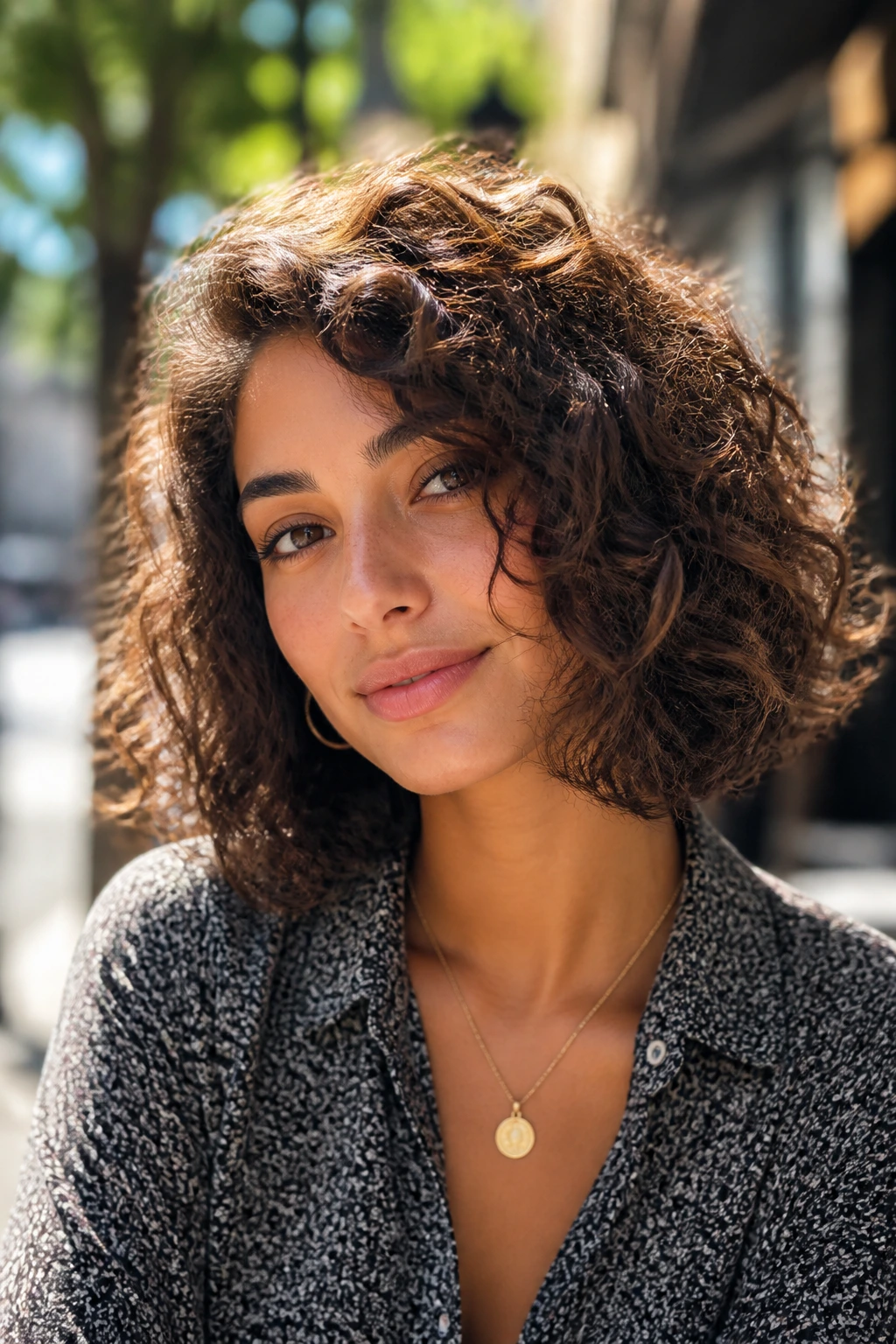
Shape: Let the lob sit where it wants to breathe. Tuck one side behind the ear if you want the face more open, or leave both sides forward when you want the curls to read fuller around the jaw.
Parting: A center part makes the cut look calmer and more symmetrical. A side part adds root lift and shifts the visual weight, which is handy when one side of your curl pattern is looser than the other.
Finish: Use a soft cream for a touchable look, gel for a more defined cast, or a mix of both if your curls need structure at the ends. The way you break the cast later changes the whole mood of the lob.
Accessories: Small claw clips, slim barrettes, and silk scrunchies all work as long as they do not flatten the root area. Big heavy clips tend to crush the curl pattern. Tiny ones are safer.
Best matches: These cuts sit well with open necklines, hoop earrings, and collars that don’t fight the shape around the jaw. The lob already frames the face, so anything that crowds the neckline can make it feel busier than it needs to be.
Extra Tips for More Bounce, Definition, and Control
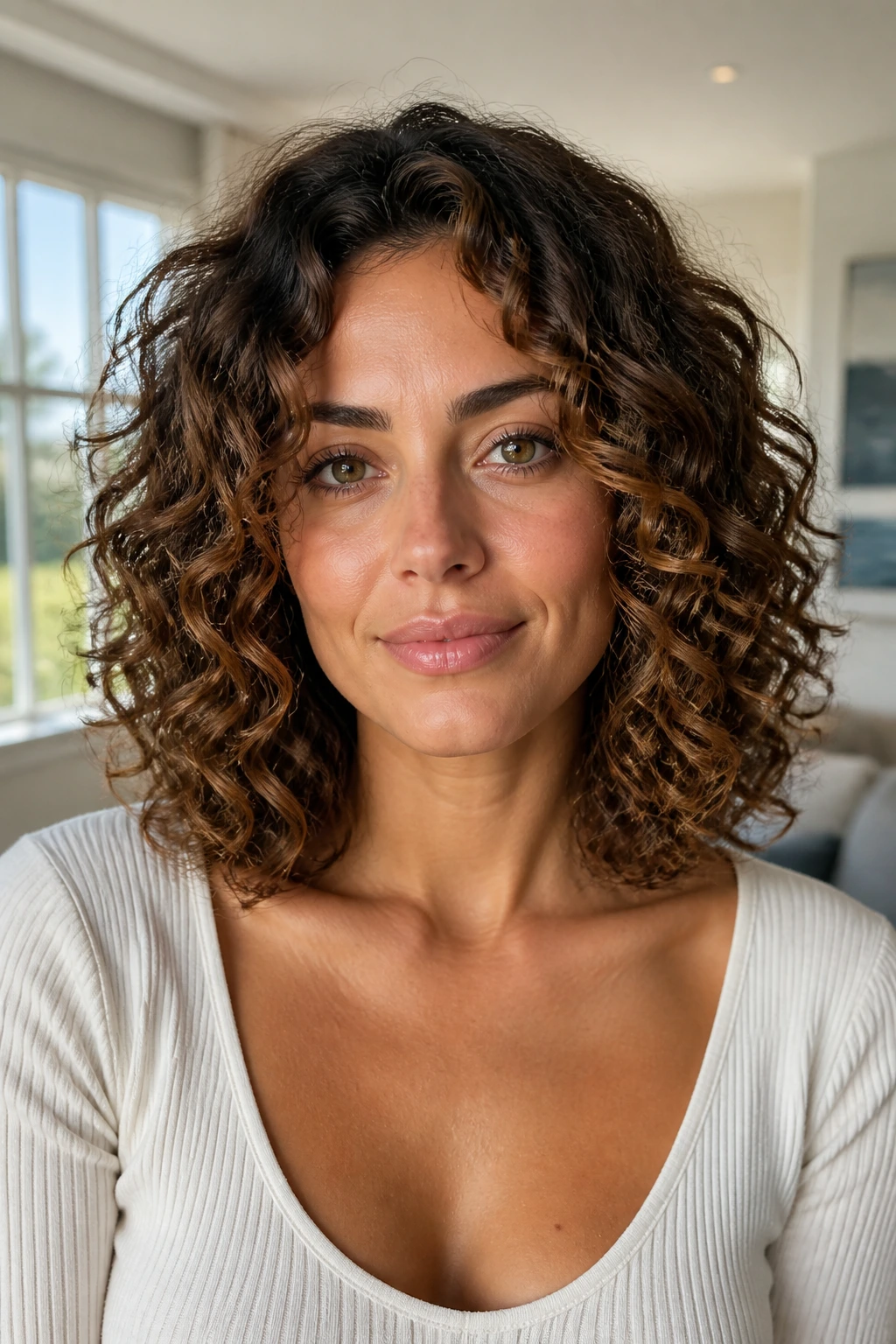
Volume Boost: Clip the roots up for the first 10 to 15 minutes after diffusing or air-drying. That little lift at the scalp can keep the lob from sitting too flat at the crown by midday.
Definition: Apply gel to soaking-wet curls, then scrunch once and leave them alone. Touching curls early is the fastest way to break the clumps before they set.
Softness: If you want the ends to feel less crunchy, warm 1 to 2 drops of lightweight oil in your palms and press them over the dry cast. Do not smear it through the whole head. The mids can go limp fast.
Make-It-Yours: Ask for longer front pieces if you wear glasses, or a slightly shorter back if your nape swells in humidity. Small shape changes matter more than dramatic ones on short lobs.
And one more thing: do not treat every curl the same. Some sections around the crown need more product. Some at the back need less. The cut looks better when you work with that unevenness instead of pretending it doesn’t exist.
Keeping the Cut Fresh Between Washes
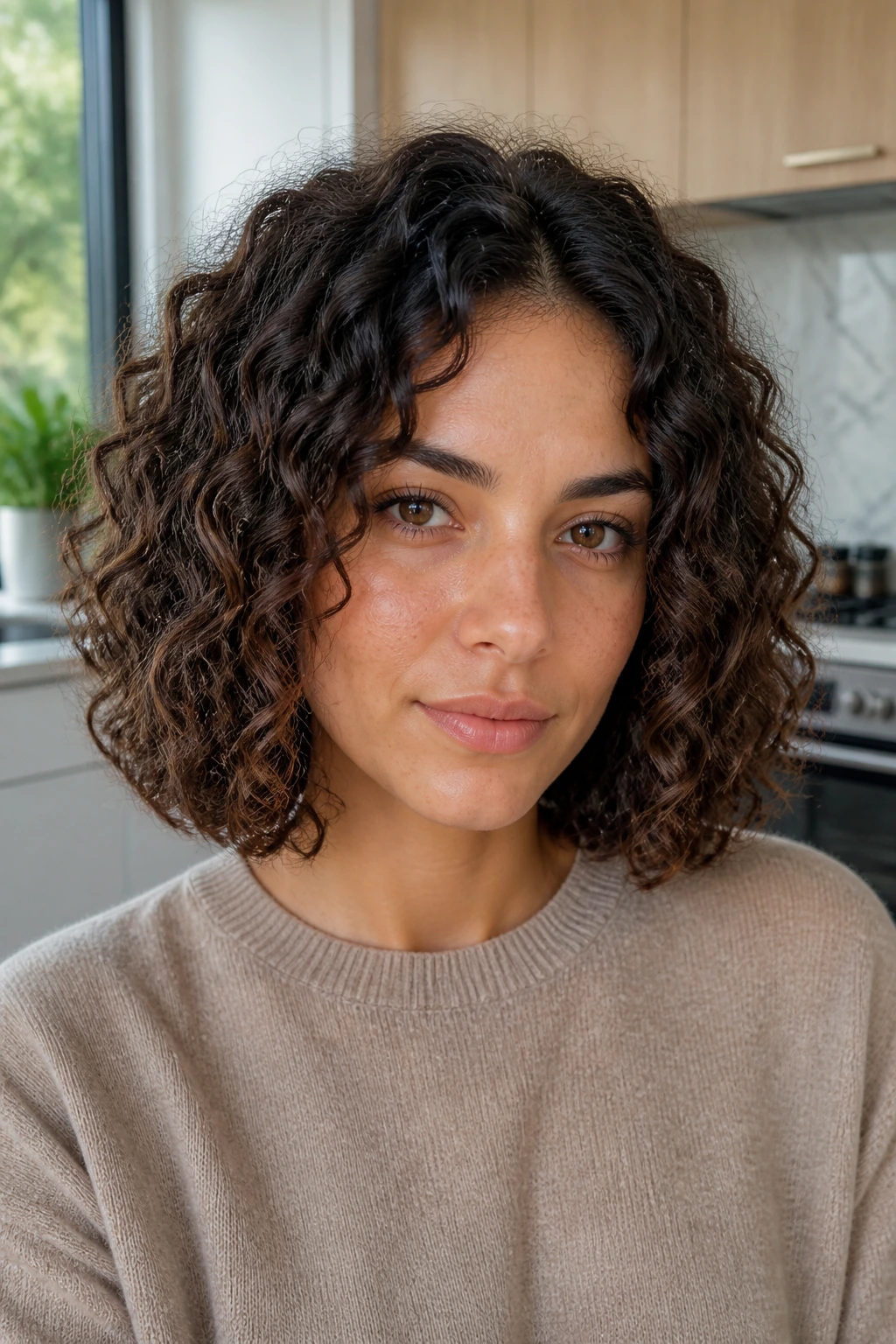
A short lob on curly hair usually looks best when it is refreshed, not re-styled from scratch every single day. On day two, mist the curls lightly with water, then smooth a pea-sized bit of leave-in or cream over the frizzy sections. The goal is to wake up the curl clump, not soak the hair until it starts over.
Sleep matters more than people want to admit. A loose pineapple with a silk scrunchie keeps the top from being flattened, and a satin or silk pillowcase cuts down on friction at the sides. If your lob is short enough that it won’t pineapple cleanly, use a soft scarf or sleep with the curls spread carefully above the pillow instead of under your head.
For trims, a blunt or softly rounded lob usually needs a cleanup every 8 to 10 weeks to keep the edge honest. More layered versions can stretch to 10 to 12 weeks if the shape still holds. If you use a lot of mousse, gel, or curl cream, a clarifying shampoo every 2 to 4 weeks helps keep the curls from going limp under buildup.
Deep-condition when the ends start feeling rough, not just when you remember. That little habit keeps the perimeter from fraying first, which is where lobs often lose their shape.
Variations and Adaptations to Try

The Air-Dry Lob: This version leans on a soft perimeter and minimal layers so the hair can dry with almost no hand work. It fits looser curl patterns and anyone who wants the least amount of morning fuss.
The High-Definition Lob: Ask for a shape that supports gel-set curls, then define a few front sections with fingers or a brush before drying. The result is sharper and a little more polished, especially when the curls have a clear pattern.
The Low-Bulk Lob: Best for dense hair that swells at the sides. The stylist keeps the outline clean and removes weight underneath so the silhouette sits closer to the head without losing fullness.
The Curly Fringe Lob: This one adds bangs with enough length to move around the forehead instead of sitting like a wall. It suits people who want a new frame around the face without changing the overall length much.
The Edgy Nape Lob: A hidden undercut or tighter nape shape takes out heat and bulk. It is the right move when your hair feels too heavy at the neck and too slow to dry back there.
The Soft Grow-Out Lob: This variation uses longer layers and a gentle shape that still looks neat as it grows. It is the one I’d pick for anyone who hates strict trim schedules.
Common Mistakes to Avoid
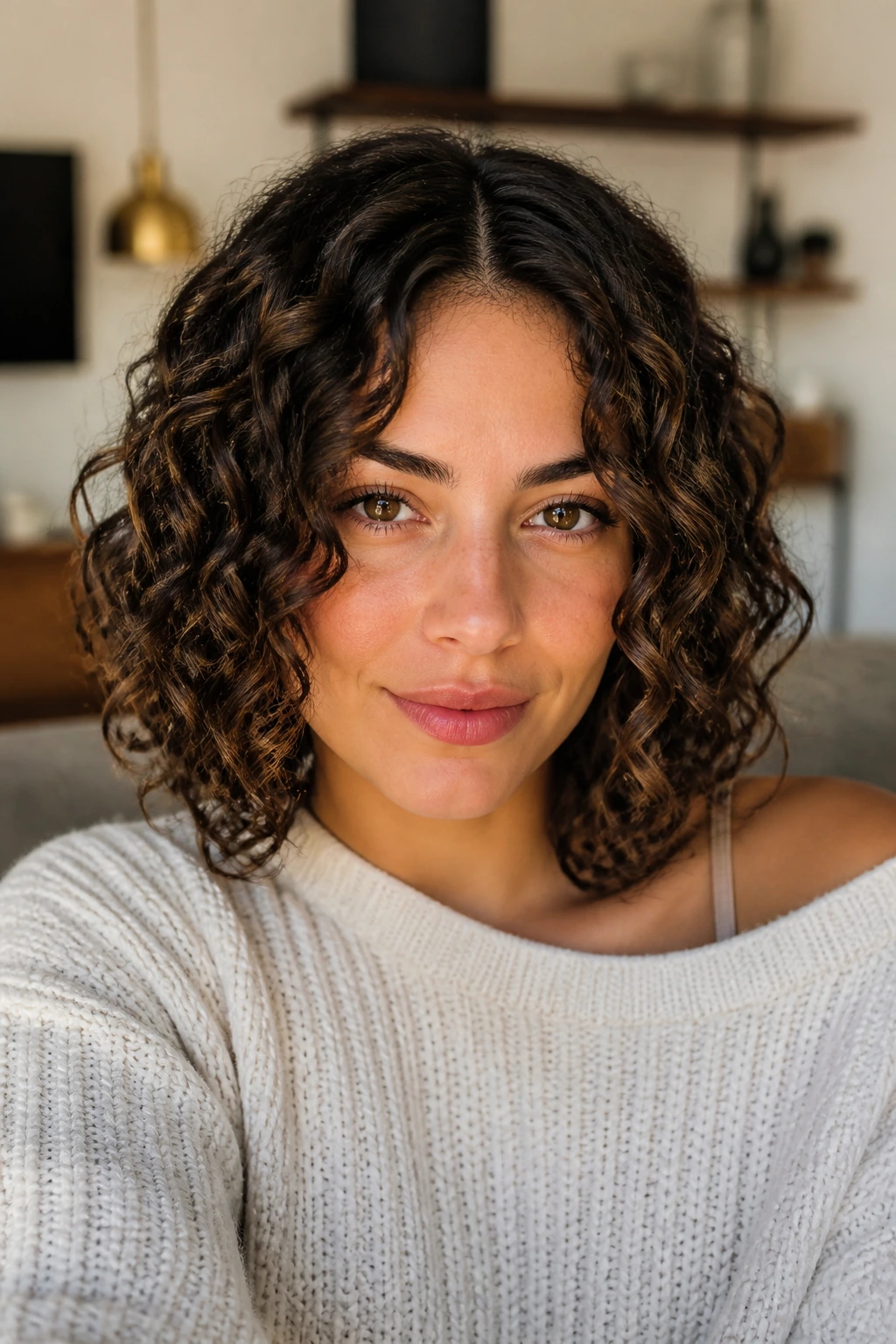
The biggest mistake is cutting a curly lob to the wet length instead of the dry length. Wet curls can drop a little or a lot depending on the pattern, and that one error can leave you with a chin-grazing cut when you wanted collarbone. The fix is to talk in dry lengths, and if the stylist works wet, ask where the curls will land once they spring back.
Another common problem is over-layering the crown. The top gets too short, the sides get too wide, and the whole cut starts to resemble a triangle that flares out around the face. If that happens, the answer is not more product. It’s better perimeter control and less aggressive layering near the top.
People also forget that bangs shrink harder than the rest of the cut. A fringe that looks safe while wet can bounce two inches higher than planned, which is how you end up with a bang that lives above the eyebrows. Ask for the fringe longer than you think you need, then adjust after the first wash if necessary.
Skipping trim maintenance hurts too. Curly lobs grow out in stages, and once the ends start fraying, the silhouette stops reading as a lob and starts reading as “hair that needs a plan.” Keep the outline tidy and the cut will hold its shape much longer.
Finally, too much heavy cream can flatten a short lob fast. Curls need slip, yes, but not enough grease to collapse the root. If the hair feels coated by noon, switch to a lighter stylers-first routine.
Frequently Asked Questions
How short is a short lob on curly hair?
Usually anywhere from just below the chin to the collarbone when dry. Because curls shrink, the wet length can sit much lower and still dry into a proper lob.
Should a curly lob be cut dry or wet?
Dry cutting often gives the clearest shape because the stylist can see the actual curl pattern and shrinkage. Some stylists cut wet first and refine dry, which can work well if they know curls.
What curl types work best with a lob?
2C through 3C patterns wear the shape especially well, but 4A and 4B textures can look strong in a lob too when the cut respects density and shrinkage. The key is not the number. It’s how the curl behaves once dry.
Will a lob make my fine curls look thinner?
It can if the cut has too many layers. Keep the perimeter cleaner and avoid over-thinning the ends so the shape holds enough weight to look full.
How do I stop the triangle shape?
Keep the top from getting too short and remove bulk underneath instead of chiseling the top layer to pieces. A rounded or softly layered outline usually helps the most.
Can I wear bangs with a curly lob?
Yes, but keep them longer than you would on straight hair because curls bounce up. Bottleneck bangs and soft curly fringe both work well when the shrinkage is built into the plan.
How often should I trim it?
Most curly lobs stay sharp with trims every 8 to 12 weeks, depending on the amount of layering and how fast your hair grows. Blunter shapes usually need more regular cleanups.
What if my curls dry unevenly from side to side?
Cut and style the stronger side to match the looser side, not the other way around. A slightly asymmetrical finish often looks better than trying to force both sides into identical curls.
Do I need a diffuser for a curly lob?
No, but it helps if your roots collapse or your hair takes forever to dry. Air-drying works fine for many curl patterns, especially when the cut is clean and the product balance is right.
The Length That Lets Curls Behave

A good curly lob does something that long hair often won’t: it puts the curl pattern on display without making you manage a lot of dead weight. That’s why the length keeps coming back. It leaves room for bounce, but it still gives the eye a clean line to follow.
The best version is the one that matches your shrinkage, density, and styling patience. That can mean a blunt chin-grazer, a soft collarbone cut, or a layered shape with bangs that dry into the perfect little frame. The right lob doesn’t fight your texture. It organizes it.
And that’s the part people remember after the appointment fades. The haircut still works on a messy Tuesday. Still works after a bad sleep. Still works when the humidity shows up with an attitude. That’s the kind of short lob worth keeping around.