



A bob can do strange things to a round face when curls are involved. Cut it too short in the wrong place, and the shape balloons at the cheeks. Leave it too heavy, and the whole style drops into a triangle. But get the line right, and a curly bob starts doing that rare haircut trick where it looks tidy and relaxed at the same time. That’s the sweet spot behind these 25 modern bobs for round faces and curly hair: movement, lift, and enough structure to keep the face from reading wider than it is.
The part people miss is that curly hair is not just “short hair with volume.” It has memory. It shrinks, bends, and stacks itself in ways a straight bob never has to think about. A good curly bob haircut works with that behavior instead of fighting it. The best versions usually keep a little length below the cheekbone, use layers with a purpose, and leave room for the curls to spring without eating the whole silhouette.
Round faces need the same kind of care. Not harsh angles. Not a stiff helmet. Just smarter lines. A side part can stretch the face. A diagonal front can slim the cheeks. A soft fringe can break up width without chopping the forehead into a block. Once you see those pieces, the whole category starts making sense—and the bad cuts become easy to spot.
Why These Bobs Work on Round Faces and Curly Hair
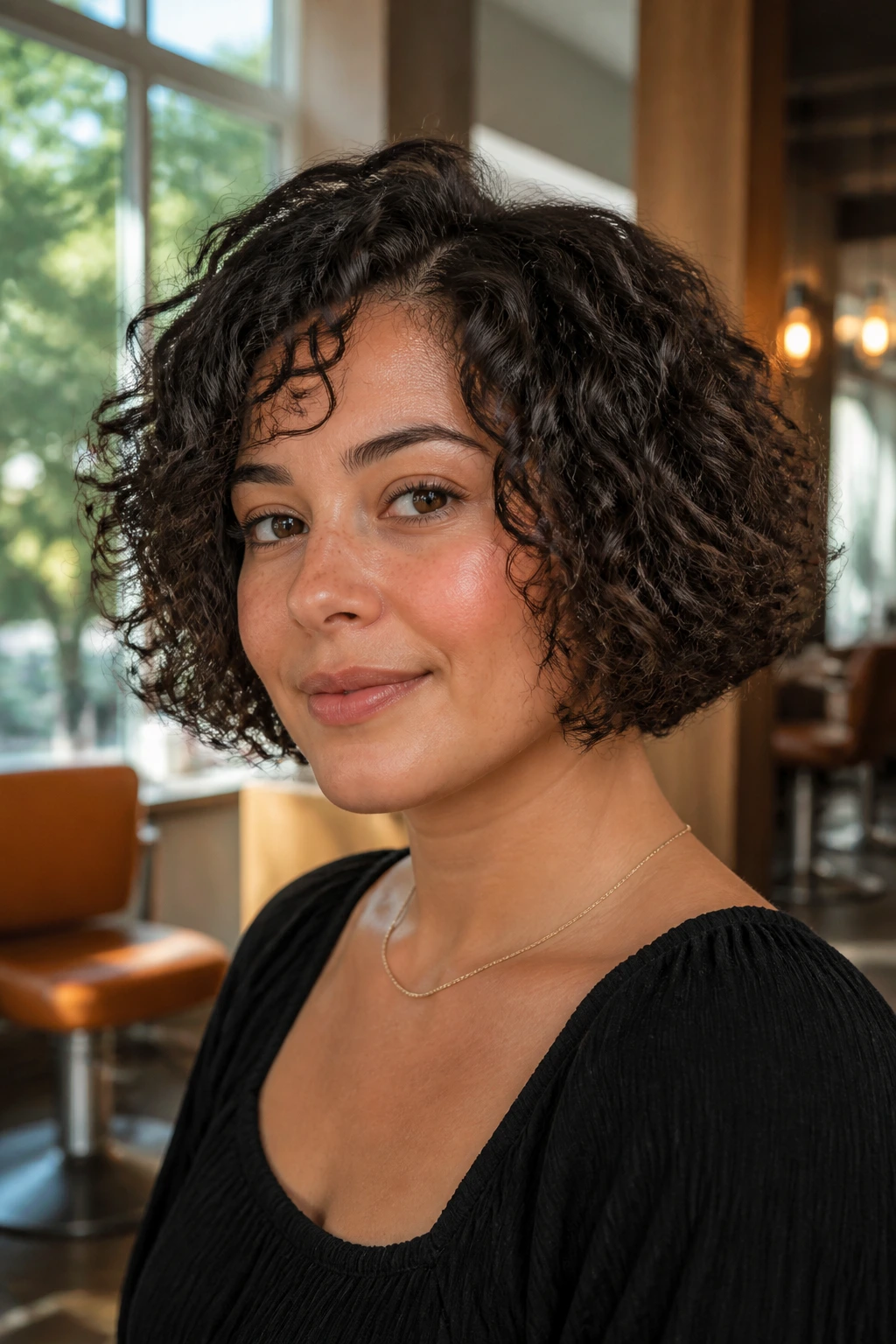
Length placement matters more than blunt inches. A bob that ends exactly at the widest part of the cheeks can make a round face look fuller, while one that drops an inch or two below the jaw usually gives the eye a vertical path to follow.
Curly texture changes the whole equation. Loose waves, springy ringlets, and tight coils all shrink differently, so a bob has to be cut with that bounce in mind. A dry cut or curl-by-curl shaping often gives a more honest result than a wet chop.
Layers are there to steer the shape, not shred it. The right layers move bulk away from the sides and keep the crown from collapsing. Too many layers, though, and the bob can puff out like a mushroom. Not cute. Not useful.
Parting changes the mood fast. A center part can work when the front pieces fall below the cheekbone. A deep side part usually adds length and breaks up the roundness even more.
1. Shoulder-Grazing Center-Part Bob
This is the bob I reach for when someone wants a safer first step. The length lands right around the collarbone or just above it, which gives curly hair room to spring without hugging the cheeks. On a round face, that extra drop is doing real work; it pulls the eye downward instead of letting the shape stop at the jaw.
The center part keeps the style clean, but only if the front pieces are cut long enough to graze the mouth or chin when dry. Ask for soft internal layers, not a lot of thinning. You want movement, not fuzz.
- Best for: Loose curls and medium-density textures
- Shape trick: Keep the front slightly longer than the back
- Styling note: A light mousse at the roots helps the crown stay up
If you want one bob that can survive a bad hair day and still look intentional, this is the one. It’s steady. It behaves.
2. French Bob with Curly Fringe
Can a short bob work on a round face? Yes, if the fringe is handled with some restraint. The French bob lives near the cheekbone or just under it, but on curly hair the fringe should stay airy, piecey, and a little irregular. A full, heavy bang will usually squash the face shape. A soft curly fringe opens it up.
I like this cut when the curls have definition and the wearer likes a bit of attitude. It feels sharper than a classic bob, but not harsh. The key is keeping the side pieces long enough to graze the jaw while the fringe stays light enough to show skin through it.
Ask for a dry detail around the front. That way the bangs don’t spring up two inches shorter than expected. They will spring up. That’s not a maybe.
3. Chin-Length Rounded Bob with Layers
This is the classic shape, but cleaned up. The perimeter curves gently around the jaw instead of sitting flat and boxy, and the layers are tucked inside the shape so the curls can move without exploding outward. For round faces, that soft curve is useful because it frames the lower face without stopping dead at the cheeks.
It works especially well if your hair is dense or has a lot of spring. The trick is to keep the outline smooth while removing weight from the middle and underneath. You should still see a bob line when the curls dry.
What to ask for
- A rounded perimeter that sits just below the jaw
- Invisible internal layers for movement
- No heavy thinning shears at the sides
This one looks polished on day one and still holds together on day three. That matters more than people admit.
4. Collarbone Lob with Face-Framing Pieces

If you’re nervous about going short, start here. The collarbone lob gives you all the face-lengthening benefits of a bob without the commitment of a chin-length cut. On curly hair, that extra length helps manage shrinkage, which means you have a little more control over where the finished shape lands.
The face-framing pieces should begin below the cheekbone, not right at it. That tiny difference changes the whole read of the haircut. One version widens the face. The other slips past it.
This is also a good cut if you wear glasses or turtlenecks often. The length stays out of the way, and the curls still look deliberate instead of puffed up and crowded.
5. Asymmetrical Curly Bob
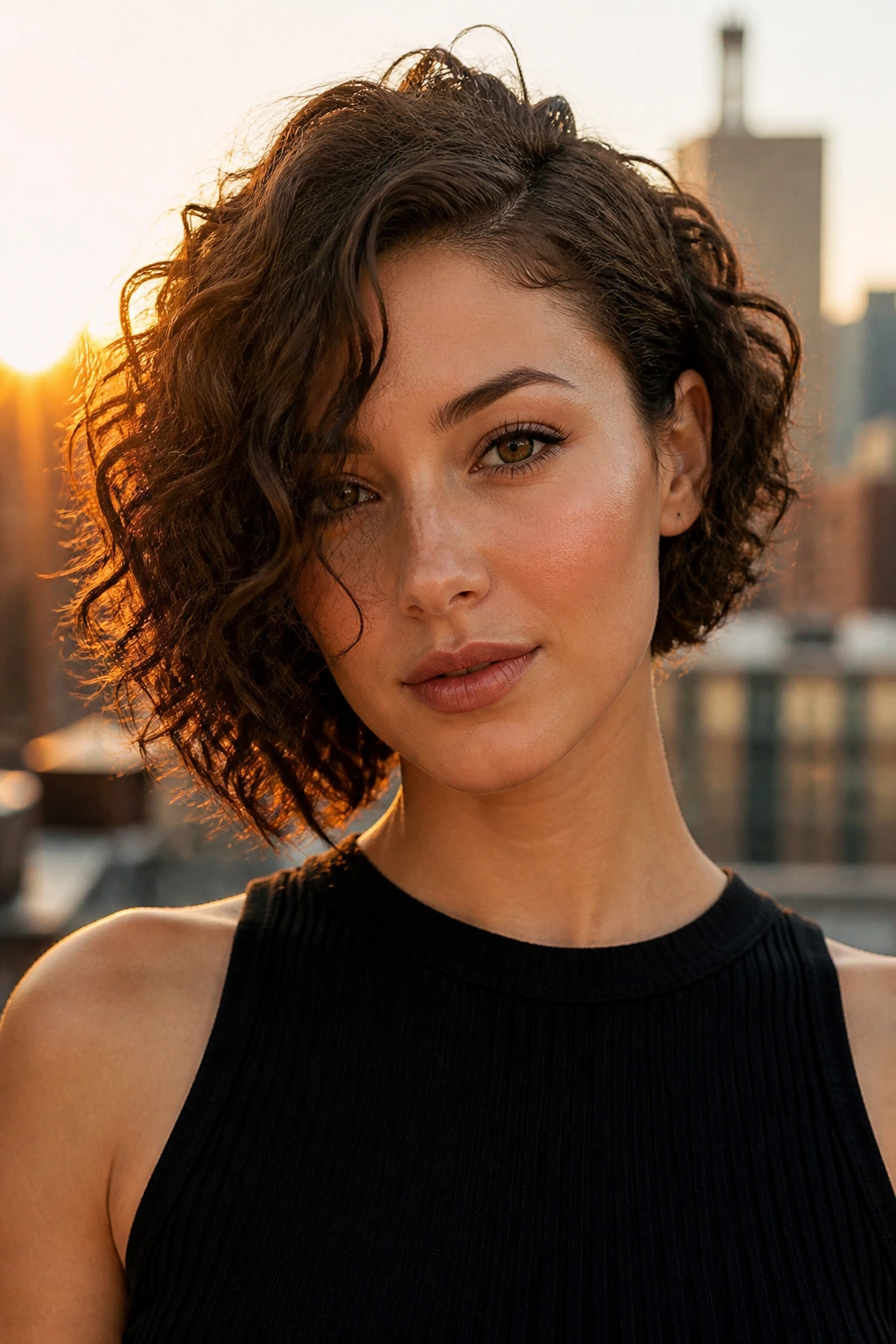
A small asymmetry goes a long way on a round face. One side longer than the other creates a diagonal line, and diagonals are your friend when you want the face to look a little narrower. The key word is small. A dramatic angle can veer into costume territory fast.
This bob looks best when the difference is only about an inch or two from one side to the other. Enough to notice. Not enough to make people squint. On curly hair, the asymmetry reads even softer because the curls blur the line just enough.
If you want shape without a lot of styling time, this one earns its keep. One side tucked behind the ear, the other left loose, and the whole cut suddenly has a point of view.
6. Stacked Bob with Soft Crown Lift
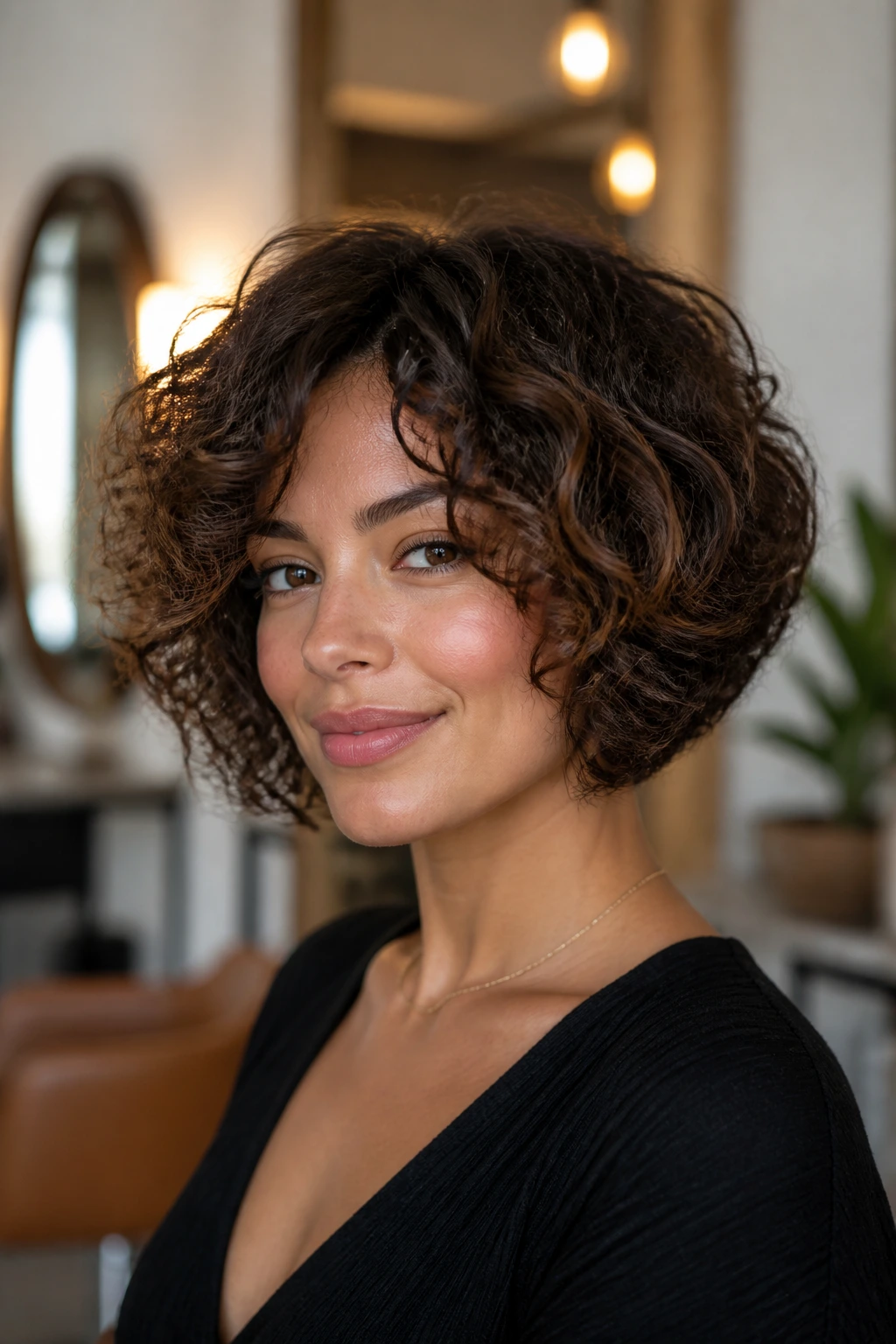
A stacked bob can be a miracle on heavy curls if it’s done with a light hand. The back is graduated so it sits shorter at the nape and a little fuller at the crown, which creates lift where round faces need it most: up top, not at the cheeks.
The danger is the mushroom effect. Nobody wants that. To avoid it, keep the side layers longer and soften the stack so the head shape still looks round in a flattering way, not in a helmet way. There’s a difference. You can see it from across the room.
This cut suits thick curls that like to collapse at the crown. A little stack gives the silhouette energy before the curls even finish drying.
7. Curly Shag Bob
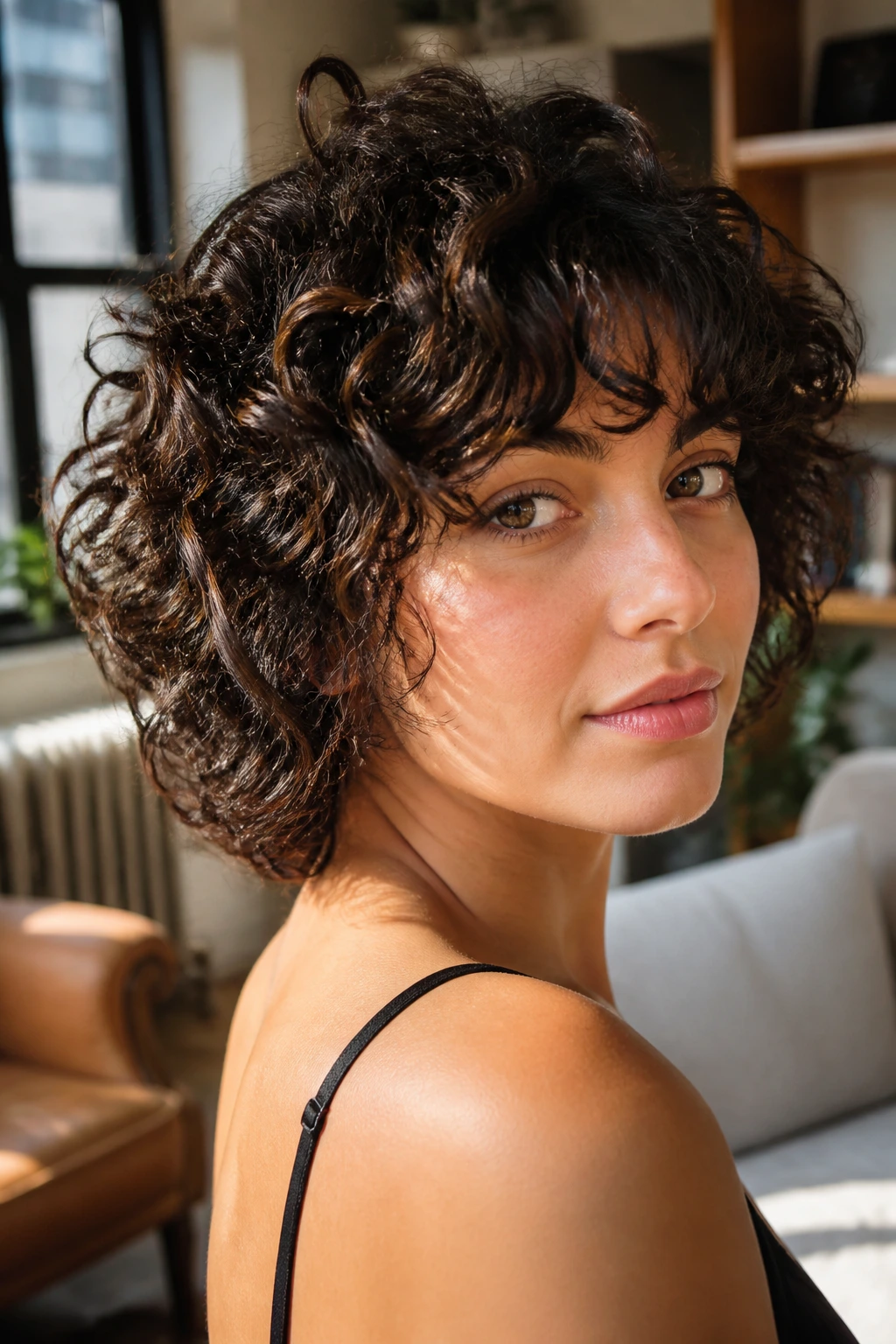
The shag and the bob make a good couple when the curls want movement. A curly shag bob keeps length around the perimeter but cuts in enough layers to break up bulk and create that airy, slightly wild shape people keep trying to fake with a curling wand. Here, the texture is the point.
For round faces, I prefer the shortest layers to sit below the cheekbone. That keeps the volume from gathering right where the face is widest. Add a curtain fringe or a side-swept front, and the shape gets even better.
This is a strong pick for 3B and 3C curls that need room to do their thing. It’s a little messy, a little cool, and never too precious.
8. Side-Parted Tapered Bob
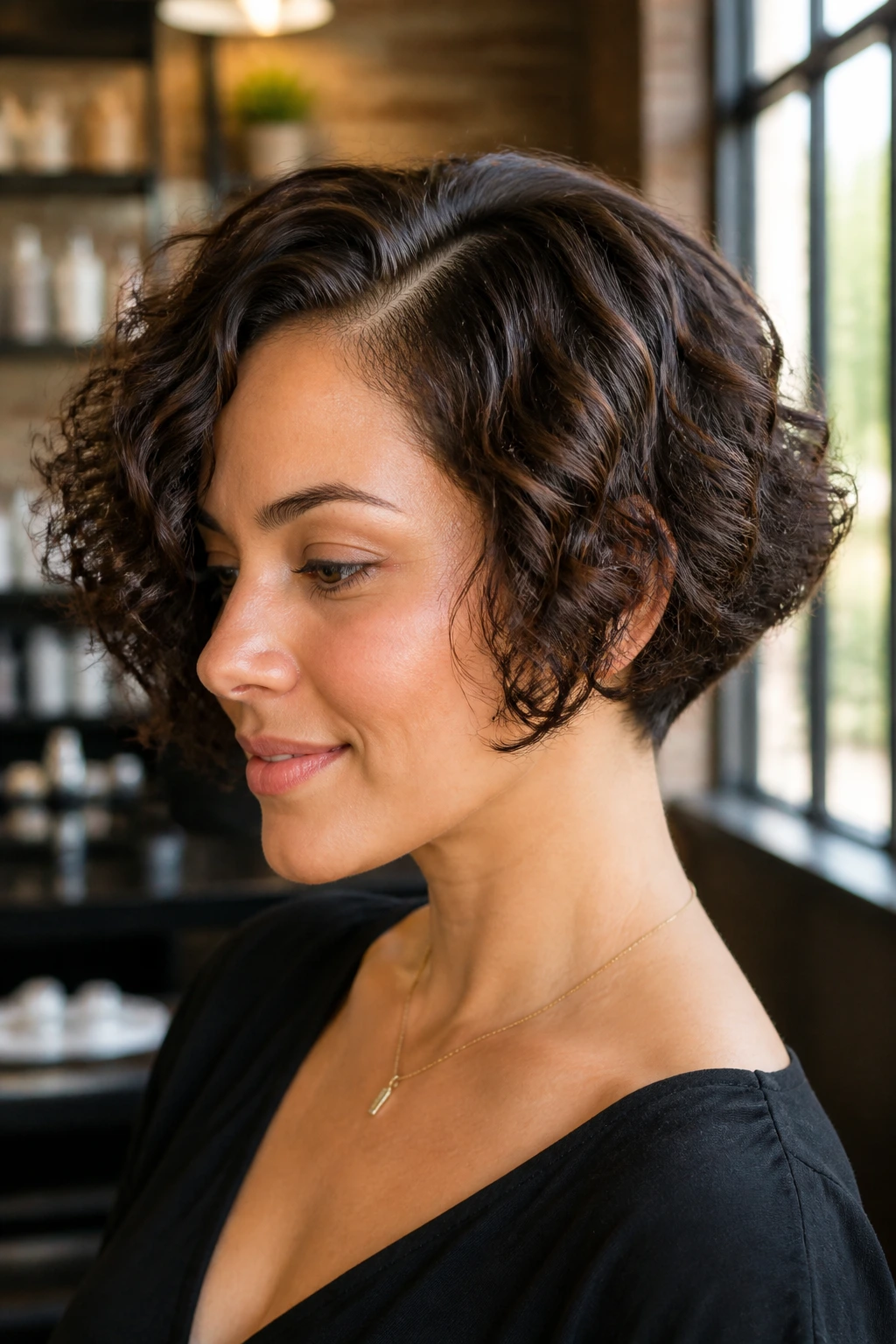
A deep side part does a lot of quiet work. It breaks the symmetry of a round face, gives the top more lift, and lets one side fall in a long, flattering sweep. Add a tapered nape, and the whole haircut starts feeling more tailored.
This bob is especially good if your curls are medium to fine and need shape more than bulk reduction. The taper keeps the neck clean, while the side part pulls the eye across the face instead of straight at it.
I like this on people who want a neat outline without losing softness. It’s clean. Not stiff.
9. Feathered Cloud Bob
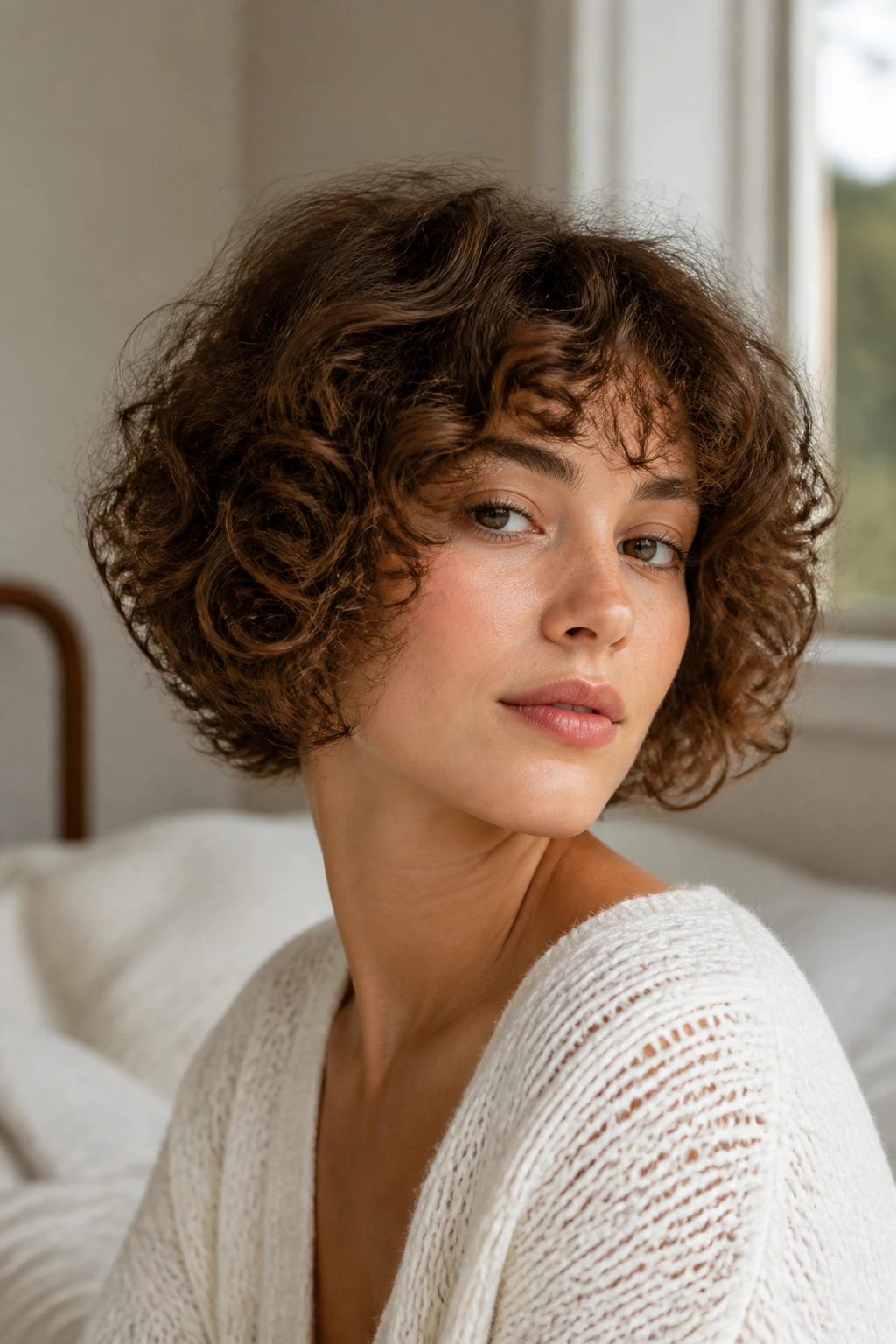
This is the bob for curls that are fine, soft, or a little flat at the roots. The feathering is gentle, almost floaty, with layers that lift the curl pattern instead of carving it apart. The result looks airy, like the hair has room to breathe.
On a round face, the softness keeps the cut from looking boxy, but the length still needs to land below the widest part of the cheeks. If the top is too flat, the face gets wider. If the crown lifts and the ends stay light, the whole silhouette looks taller.
Use a light cream or foam here. Heavy oils can drag it down fast.
10. A-Line Swing Bob

The A-line bob gives you structure without the blunt heaviness people often fear. It’s shorter in the back and longer in the front, so the eye follows that forward swing instead of getting stuck at the sides. On a round face, that diagonal is doing exactly what you want it to do.
The best version for curly hair keeps the back neat but not shaved close. The front should fall somewhere around the chin or just below it when dry. Too short in the front and the face can widen. Too long and the shape stops reading as a bob at all.
This one has a bit of polish to it. It’s the haircut you wear when you want the curls to look intentional without looking overworked.
11. Soft-Blunt Bob

A blunt bob on curly hair can be gorgeous, but only if the edge stays soft. A one-length cut gives definition to the perimeter, which is useful on round faces because it creates a visible line. The trick is not over-layering it. Keep the interior tidy and let the curls sit on a clean shape.
This cut works best when the curl pattern has enough spring to create body on its own. If the hair is very dense, the line can feel too heavy. If it’s fine, the blunt edge can make the bob look fuller without a lot of styling.
Ask for the edge to be shaped while dry. Curly blunt cuts can change a lot once they shrink.
12. Flipped-Under Bob
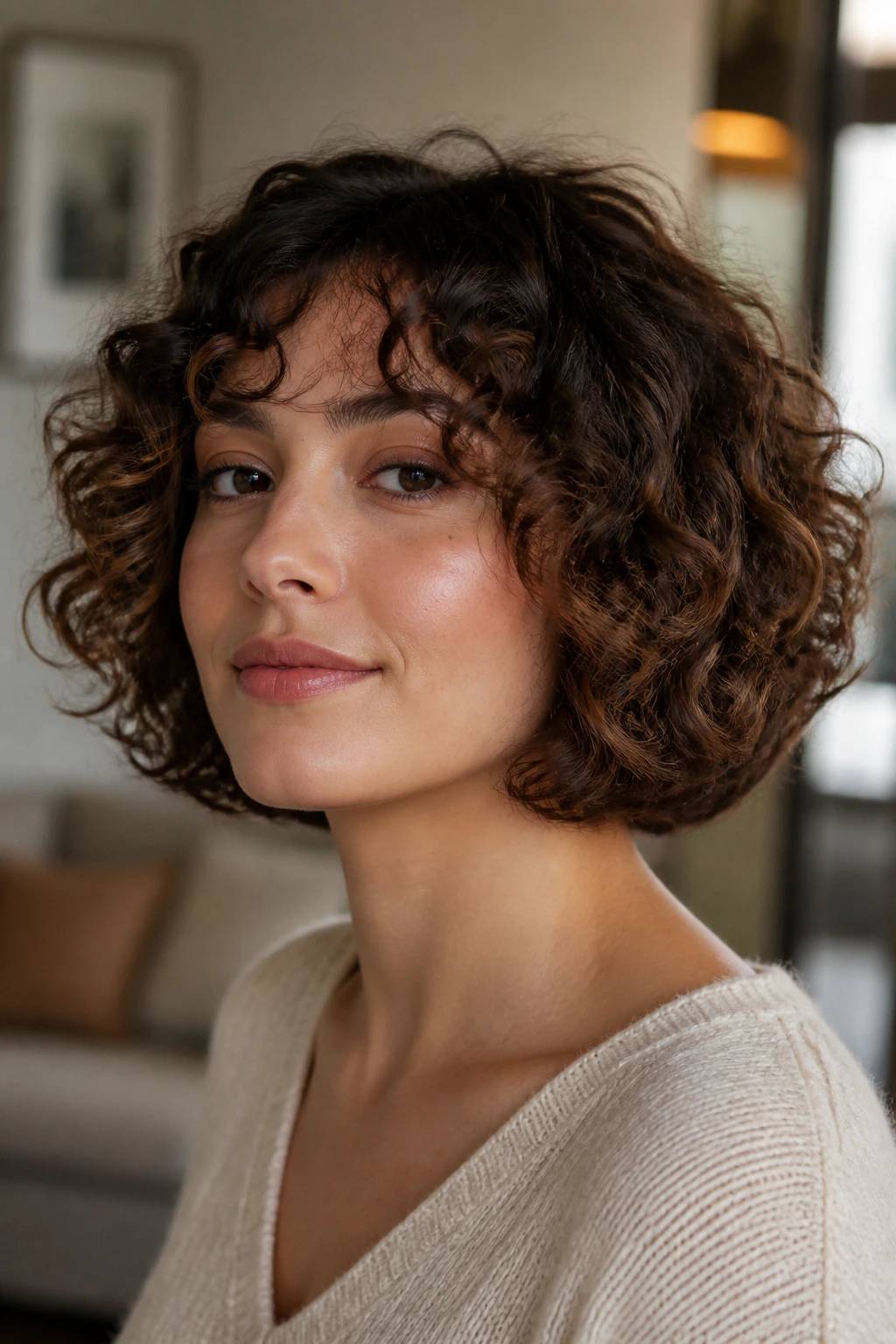
This one has a bit of old-school polish, but the modern version is softer and more relaxed. The ends curve inward toward the neck and jaw, which pulls the eye in instead of out. On a round face, that inward turn can make the whole shape look neater and more refined.
It’s a good fit for curls that like to hold a bend. Medium-density hair tends to behave well here. You can air-dry it with a little cream, then coax the ends under with a diffuser and a few scrunches.
The cut should not be too short at the chin. Leave enough length for the curl to turn under without ballooning up.
13. Bixie-Bob Blend
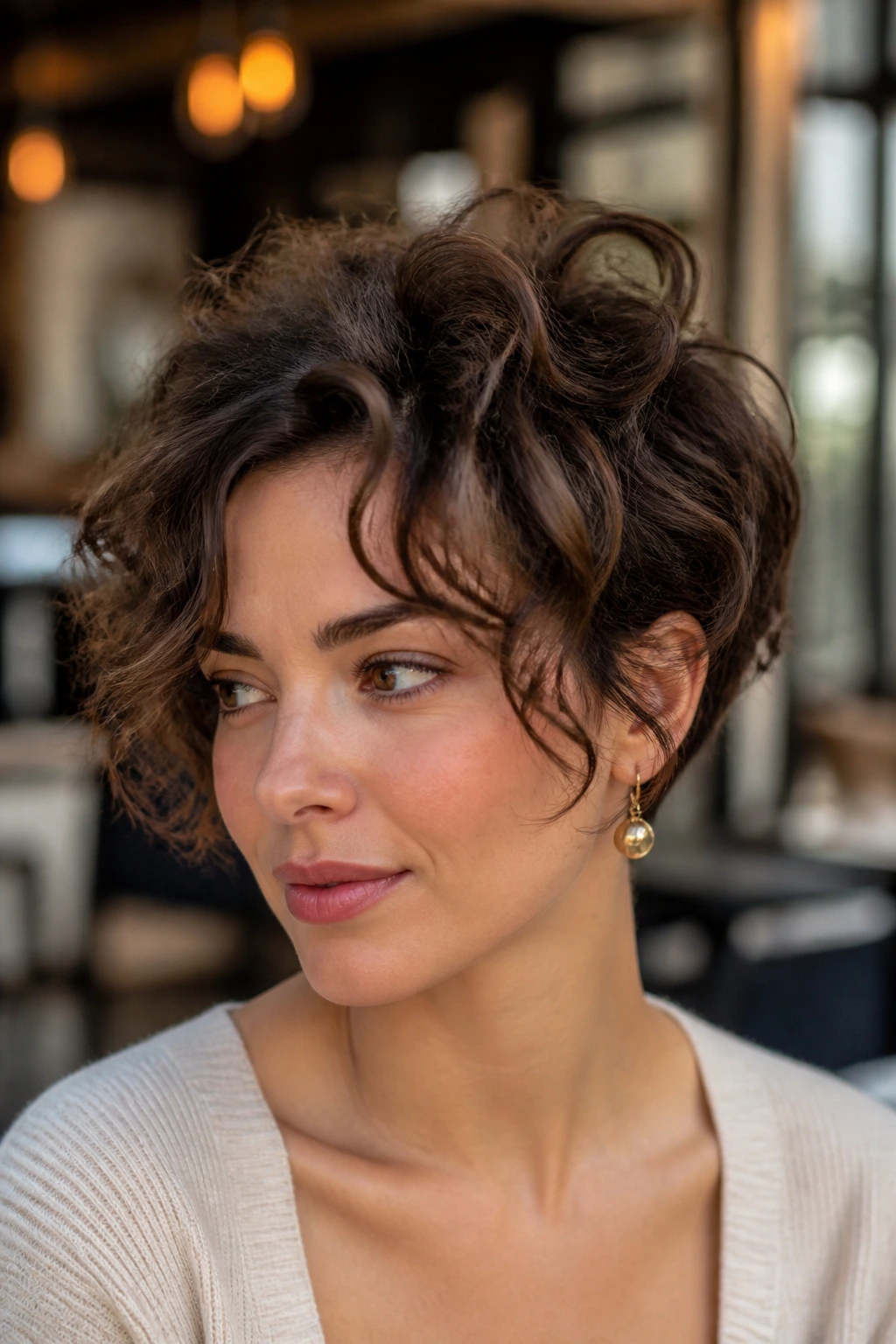
Shorter than a classic bob, longer than a pixie, this hybrid is for people who want edge and don’t mind showing the neck. On round faces, the lift at the crown and the longer top pieces can add vertical lines quickly, which is why the shape works at all.
The best curly version keeps the sides soft and the top visibly longer. You want energy at the crown, not a tight cap. A tiny bit of length at the front helps frame the face and stops the cut from looking too cropped.
Quick shape notes
- Keep the nape clean but not razor-close
- Leave the top pieces long enough to fall forward
- Use styling paste only on the ends, not the roots
This cut has personality. It also has opinions.
14. Side-Bang Balance Bob
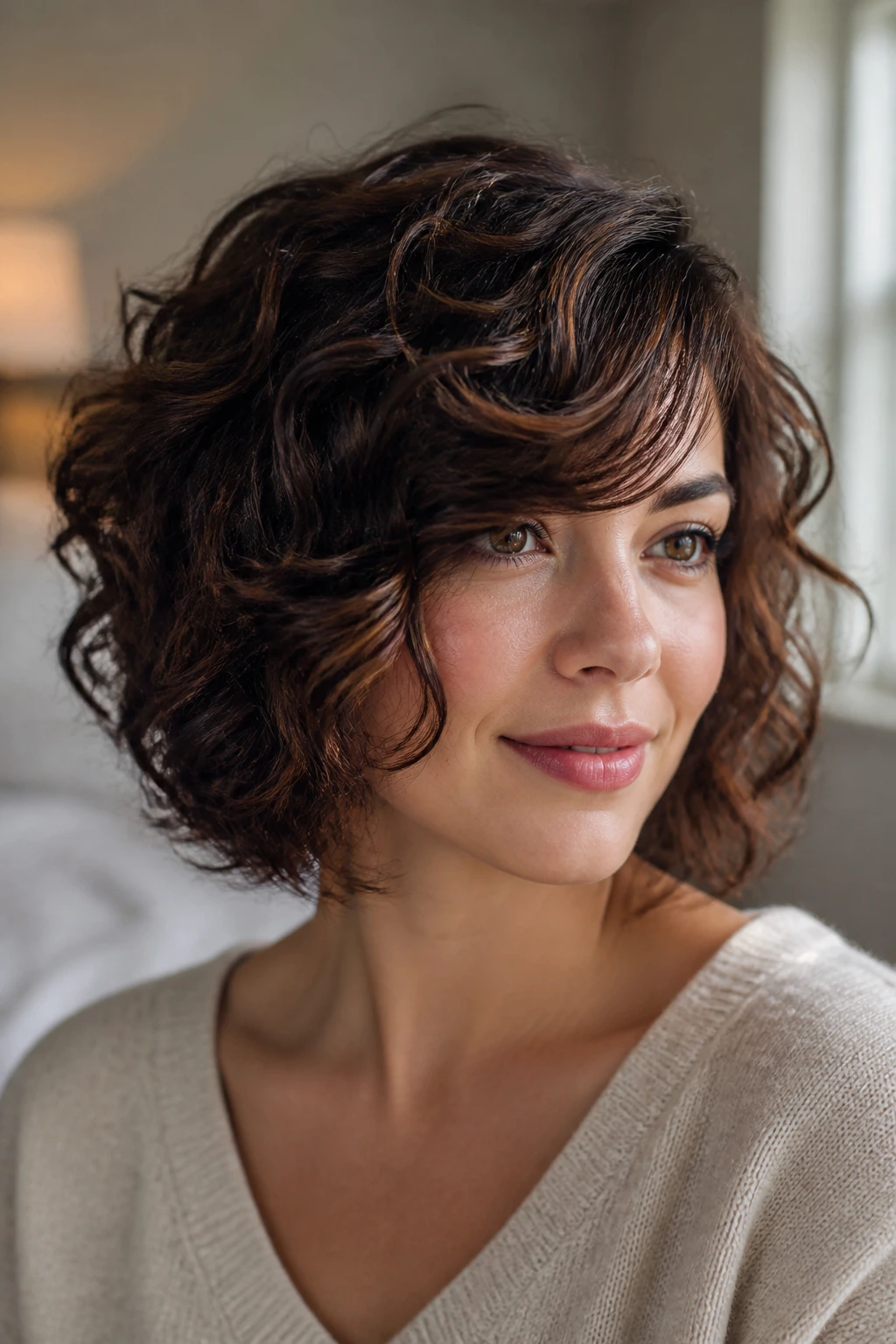
A side bang can be a small fix with a big payoff. On a round face, it breaks up the width across the forehead and leads the eye diagonally. On curly hair, it softens the whole front of the cut without hiding the curls’ natural bounce.
The bang should graze the cheekbone or sit just below it, depending on the curl pattern. Too short, and it puffs. Too long, and it behaves like a side piece instead of a fringe. The rest of the bob can stay fairly simple, even close to one length.
I like this shape for anyone who wants face framing without a lot of visible layers around the rest of the head. It’s one of the easiest ways to make a bob feel more tailored.
15. Sleek Wet-Set Bob
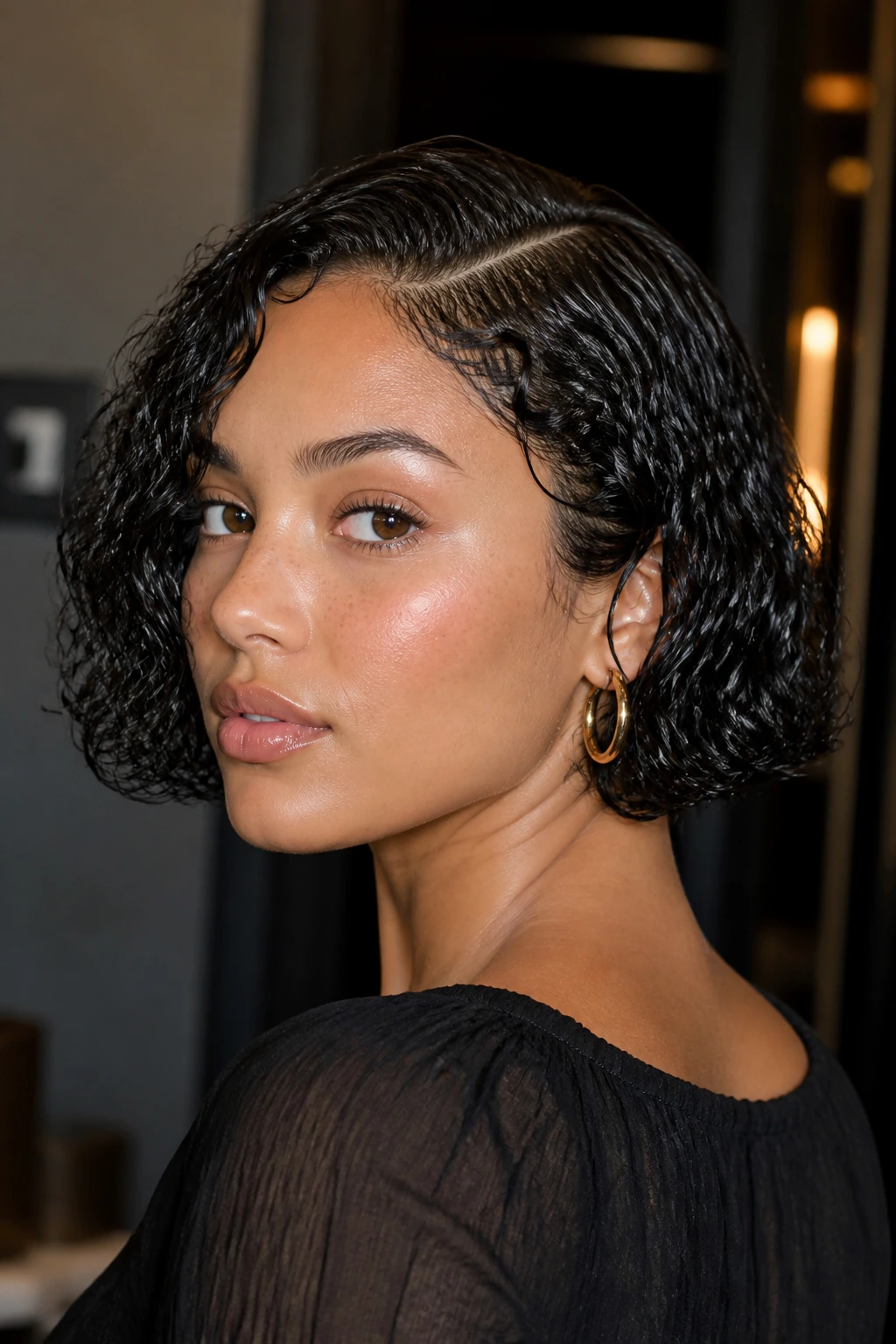
Not every curly bob has to be fluffy. A gel-defined wet-set bob gives you shine, clean edges, and a strong outline that reads beautifully on a round face. The curls or waves stay sculpted, and the perimeter becomes the star.
This cut shines when you already have strong curl definition and you like styling products that hold. It’s especially nice for nights out or days when you want the hair to look controlled rather than airy. The key is to keep the ends long enough that the shape doesn’t puff out after the gel breaks.
A little side part can make this cut look less severe. That small move helps the shape feel modern instead of stiff.
16. Curl-by-Curl Bob
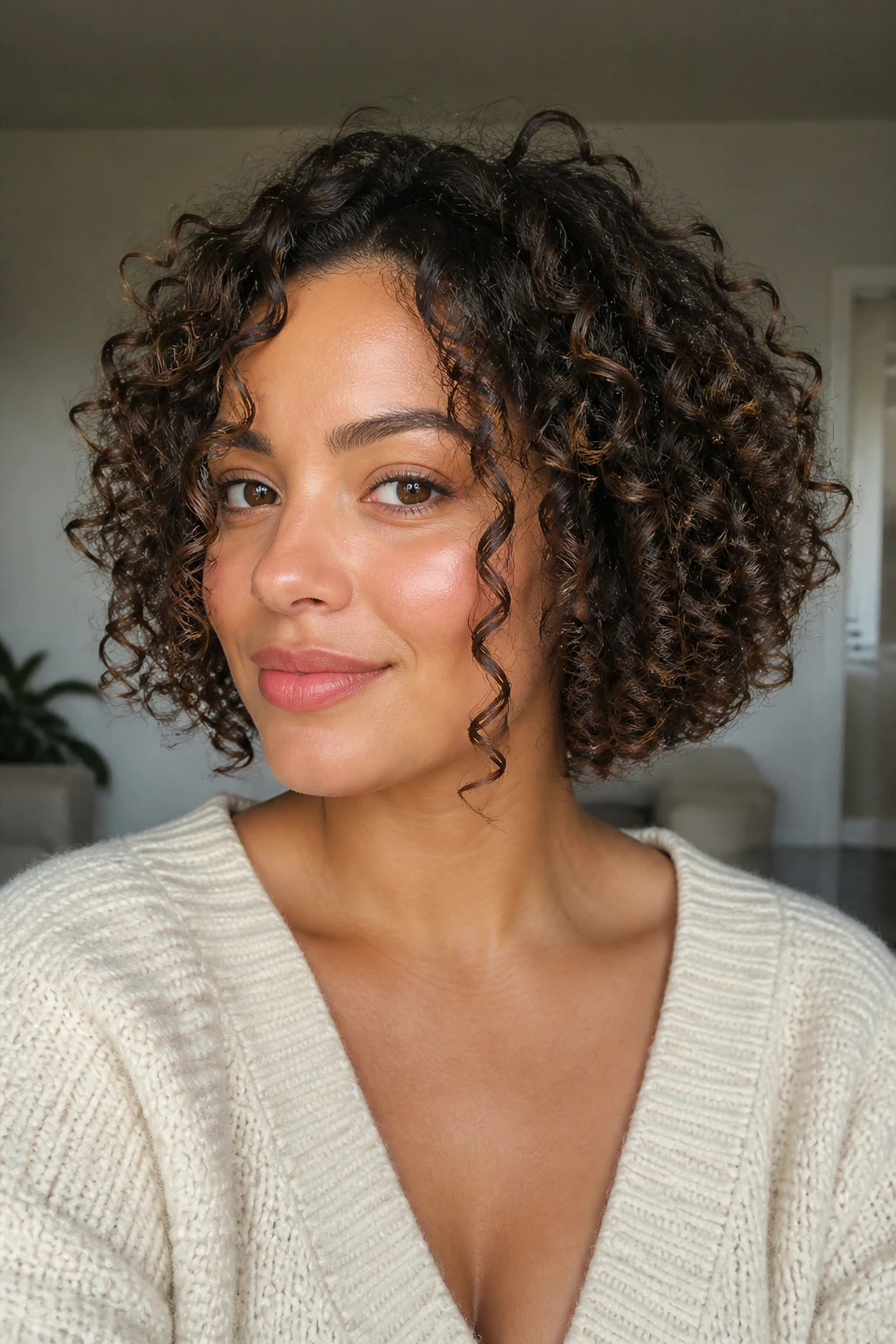
This is the cut for people with mixed curl patterns, cowlicks, or one side that insists on misbehaving. Each curl gets shaped on its own terms, which sounds fussy because it is fussy. But the result can be worth it. The bob lands where your actual curls live, not where a straight-haired diagram says they should.
Round faces benefit because the stylist can place length exactly where it helps most. A curl-by-curl approach lets the front pieces fall below the cheekbone while the crown stays lifted and the sides don’t puff out too wide.
If your hair never seems to behave the same way twice, this is the bob worth considering. It’s less about symmetry and more about smart balance.
17. Nape-Undercut Bob
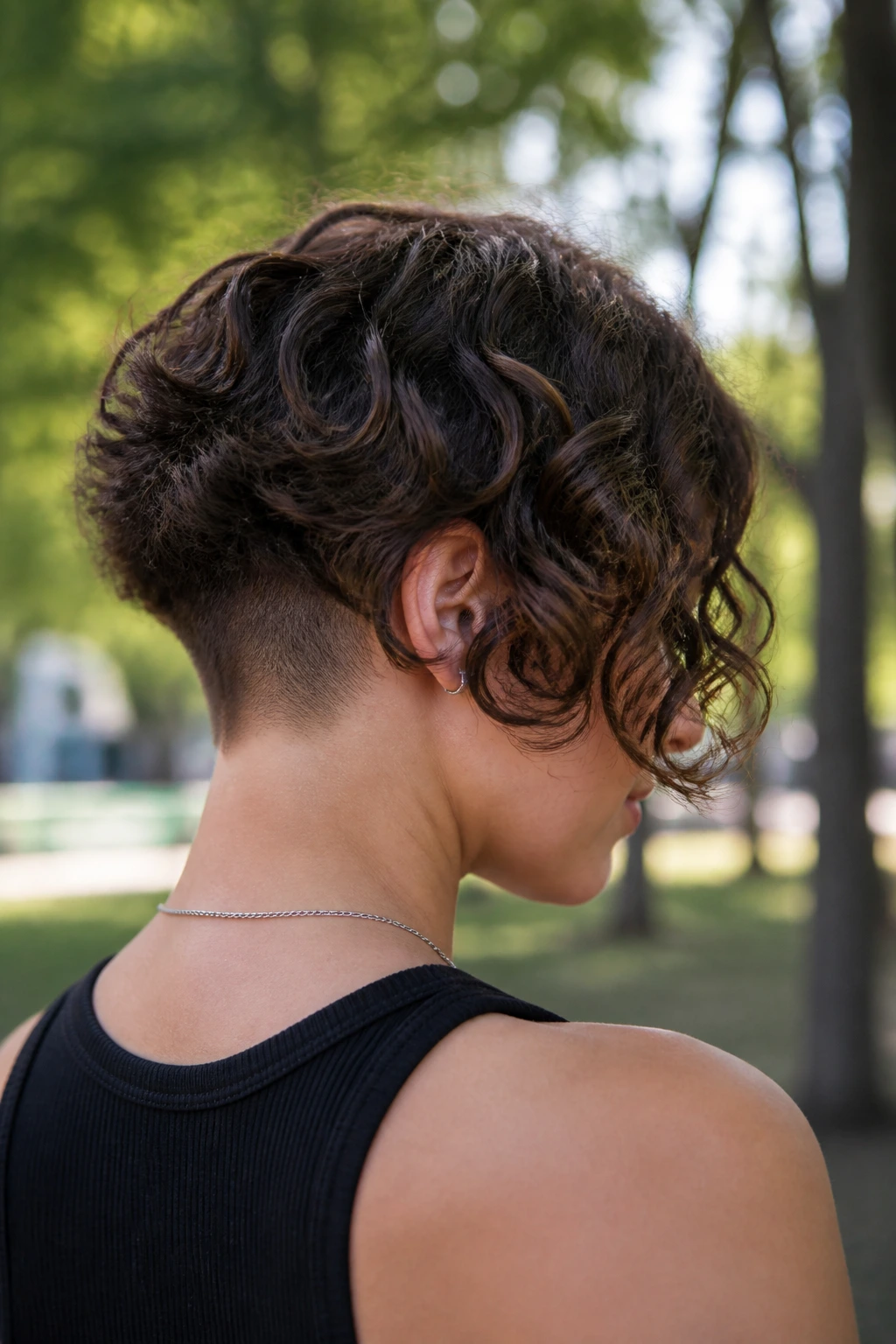
A hidden undercut at the nape can save a thick curly bob from turning into a block. By removing bulk underneath, the top layers sit better and the shape gets lighter without losing the bob outline. Most people never see the undercut, which is part of the appeal.
For round faces, this works best when the outer shape stays softly curved and the front is left long enough to drape past the cheeks. The undercut is a support act. It should never be the whole show.
This cut is practical in humid weather and on dense hair that hates lying flat. You’ll feel the difference the first time you dry it. Less weight. Less puff. More shape.
18. Curtain-Fringe Bob
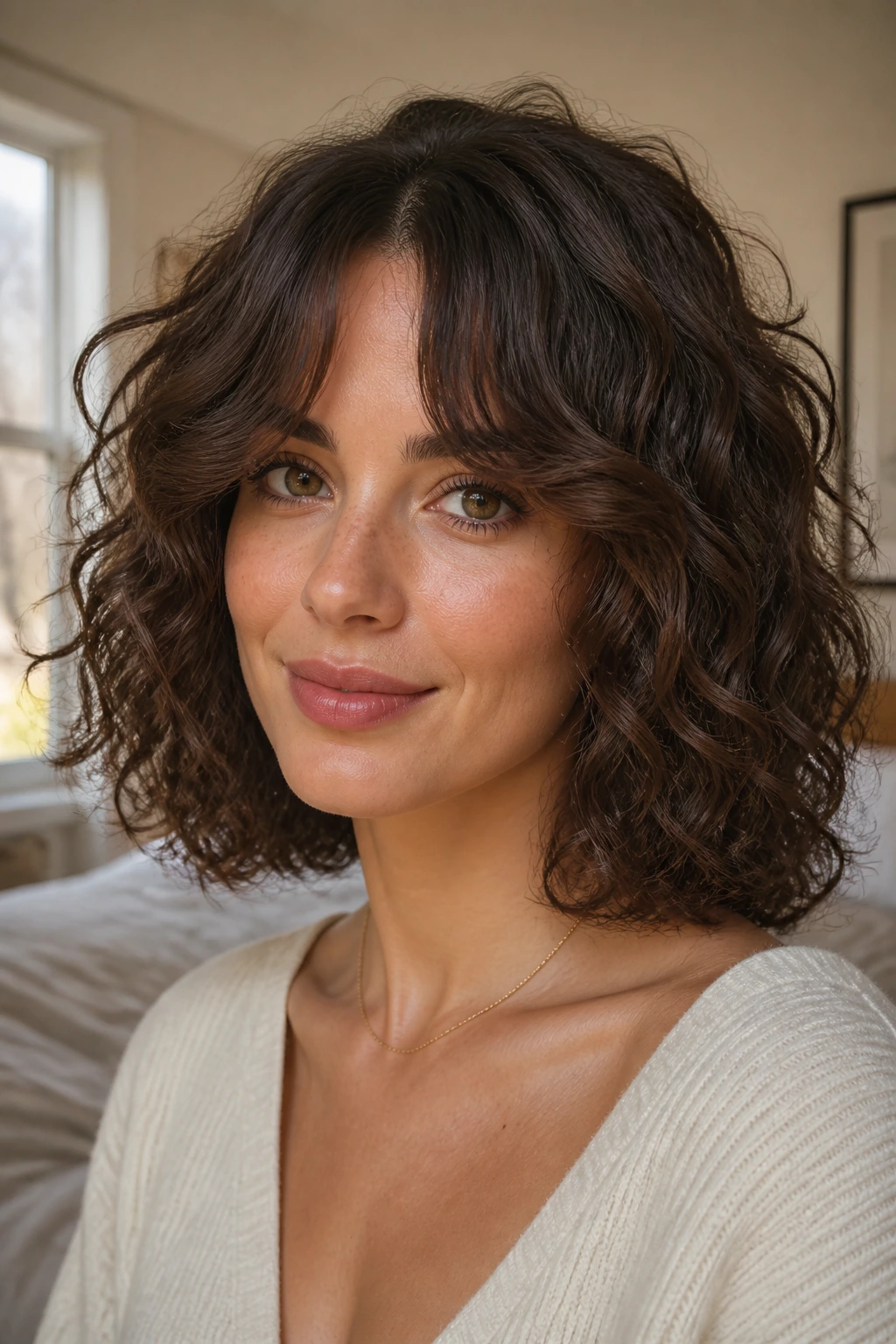
Curtain bangs and curly bobs get along because they open the face without boxing it in. The split fringe creates a soft middle line that visually lengthens a round face, while the side pieces fall around the temples and cheekbones. It’s flattering in a way that feels almost sneaky.
The fringe should be long enough to move. Short curly curtain bangs can bounce up in a way that changes the whole haircut. Leave some room. Let them skim.
This works especially well with shoulder-grazing or chin-to-collarbone lengths. The fringe adds interest; the rest of the cut keeps the shape grounded.
19. C-Shape Bob
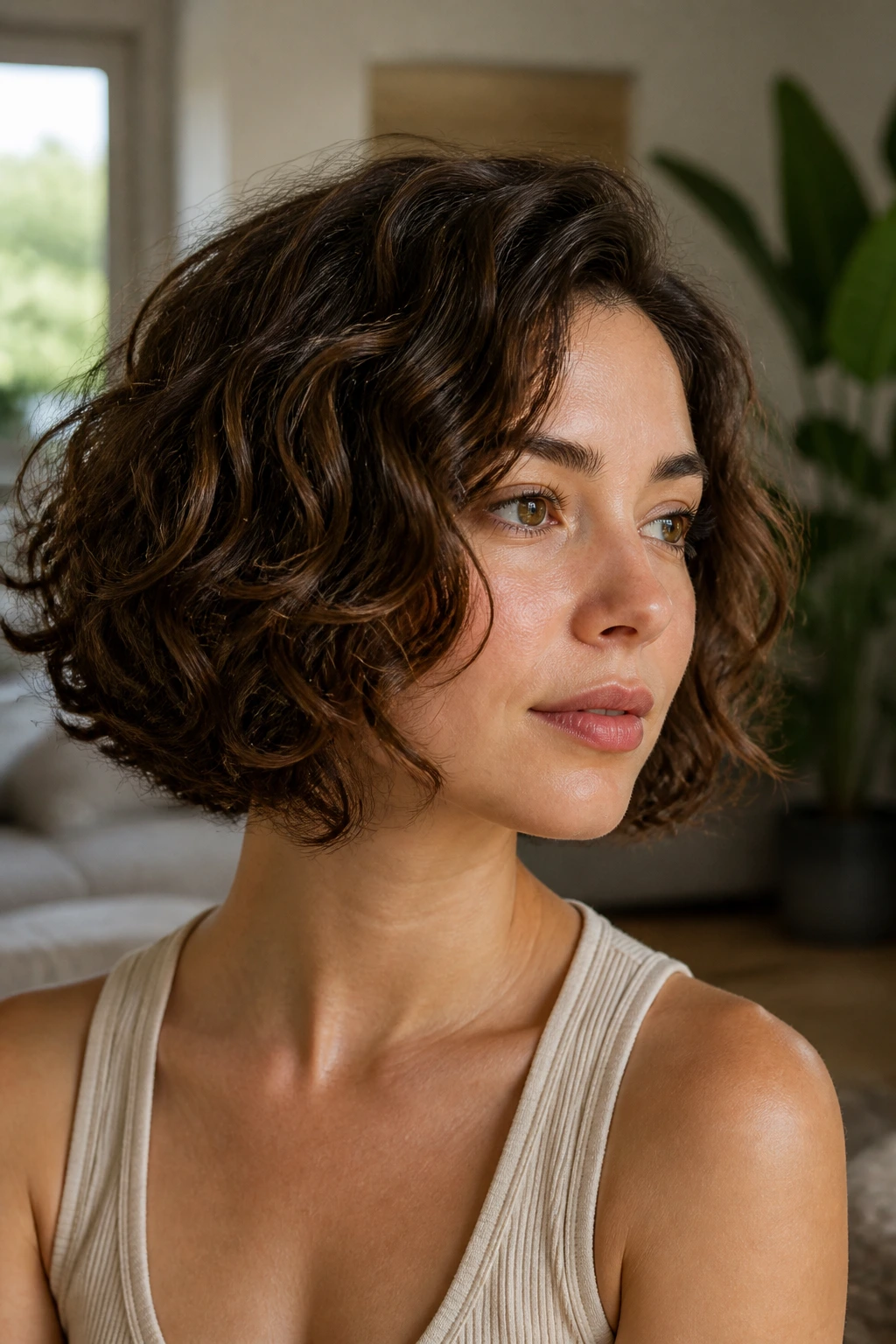
A C-shape bob curves inward at the ends and outward near the crown, which gives the cut a rounded but controlled outline. On a round face, that sounds risky, but the shape actually works because it keeps the eye moving instead of letting the curls spread sideways.
The front should be a touch longer than the sides, and the layering should be subtle. Too much internal chopping, and the C shape turns messy. Keep the edges clear. Let the curls soften the line.
It’s a good option if you want a bob that feels polished without looking severe. The shape has enough structure for work and enough softness for weekends. That balance matters more than people think.
20. Soft Box Bob

A box bob sounds severe, but the soft version is much more forgiving. The outline is a little straighter and more defined, yet the corners are rounded so the cut doesn’t widen the face. Curly hair gives it life that straight hair often lacks.
This version suits women who like shape and order. It can look especially good when the front pieces are a little longer than the back, and the curls are allowed to sit naturally instead of being stretched into a flat line.
If you wear structured clothes, this bob pairs well with them. It has clean edges. Not rigid ones.
21. Long One-Length Lob
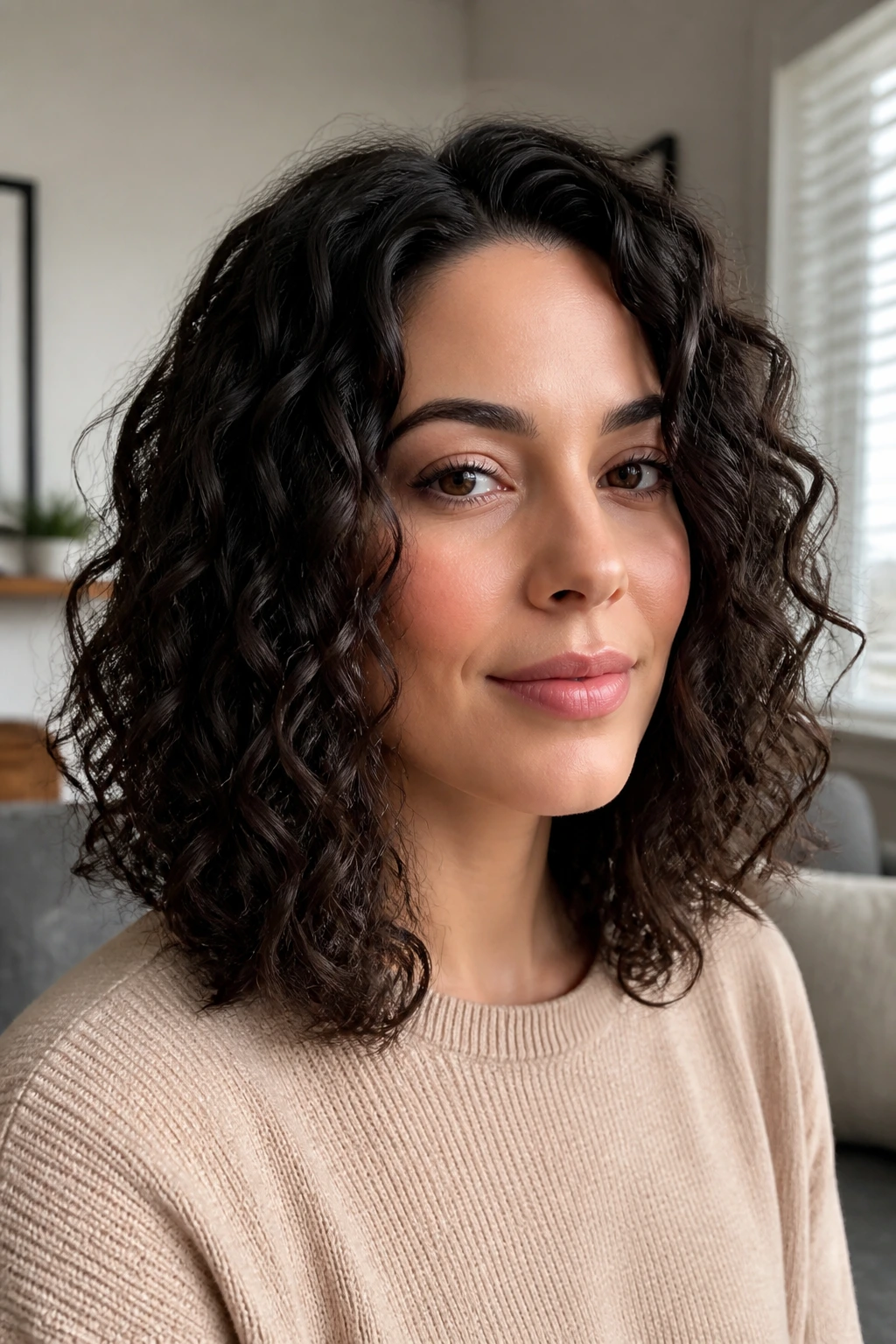
Sometimes the smartest bob is the one that barely leaves the shoulders. A long, mostly one-length lob gives curly hair room to settle, which is useful if your hair shrinks dramatically or needs time to show its full shape. For round faces, the longer line keeps the focus away from the cheeks.
This is the low-drama option. Fewer layers, fewer surprises, fewer bad grow-out moments. You can still add a tiny bit of face framing if needed, but the main point is the length itself.
If you want a cut that still looks good after a rushed morning, this is a strong candidate. It behaves well on day one and doesn’t fall apart by day three.
22. Razor-Textured Thick-Hair Bob
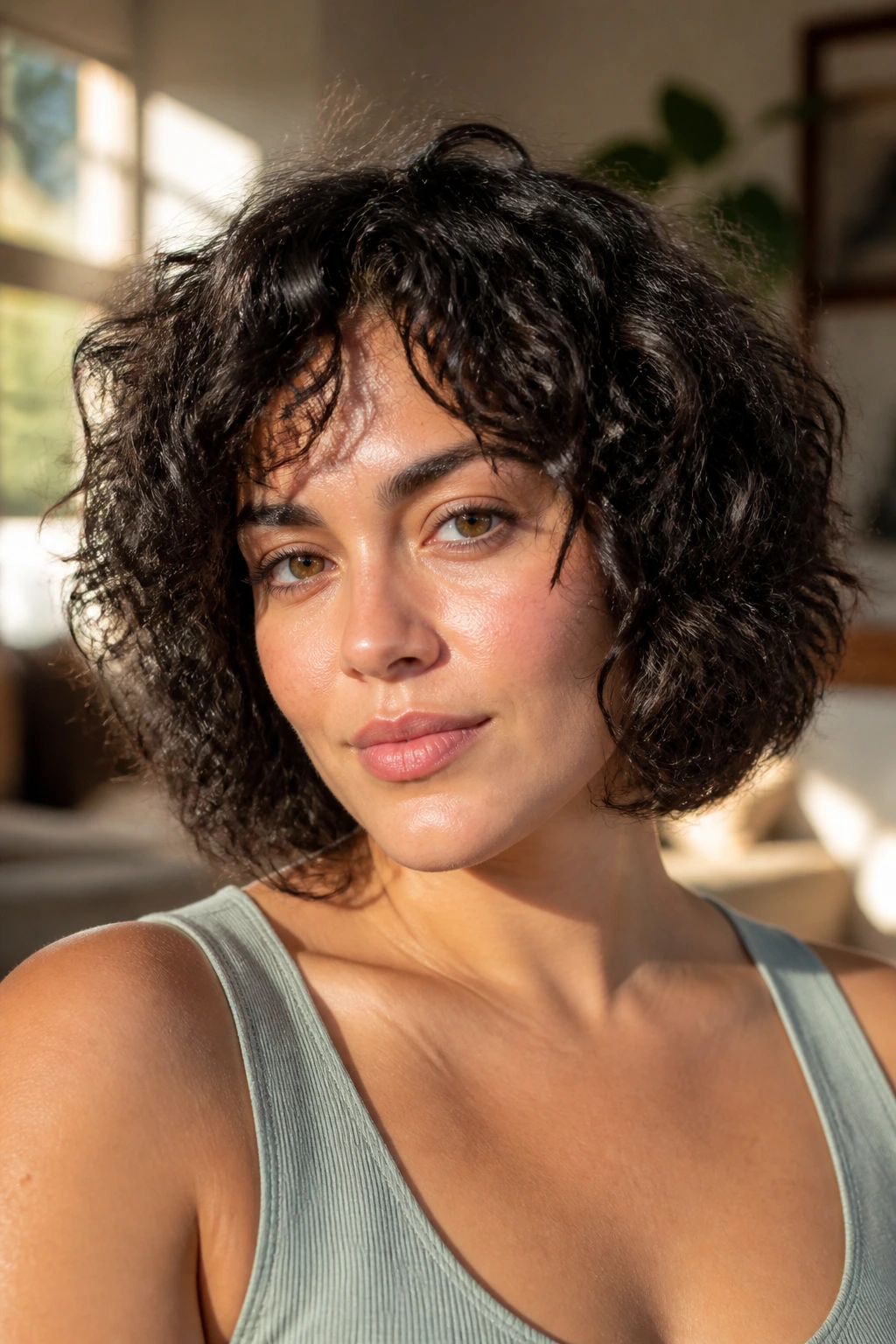
Thick curly hair can get heavy fast, and a razor-textured bob can remove some of that weight without taking away the shape. The cut is meant to loosen the interior so the curls don’t sit like a single solid mass around the face.
There’s a catch. The razor has to be used by someone who understands curly texture, or the ends can frizz and catch the light in all the wrong ways. When it works, though, it produces a bob that feels lighter and moves more easily.
This is best for coarse curls and dense hair that likes to stack up at the sides. The texture should look deliberate, not shredded.
23. Diffused Halo Bob
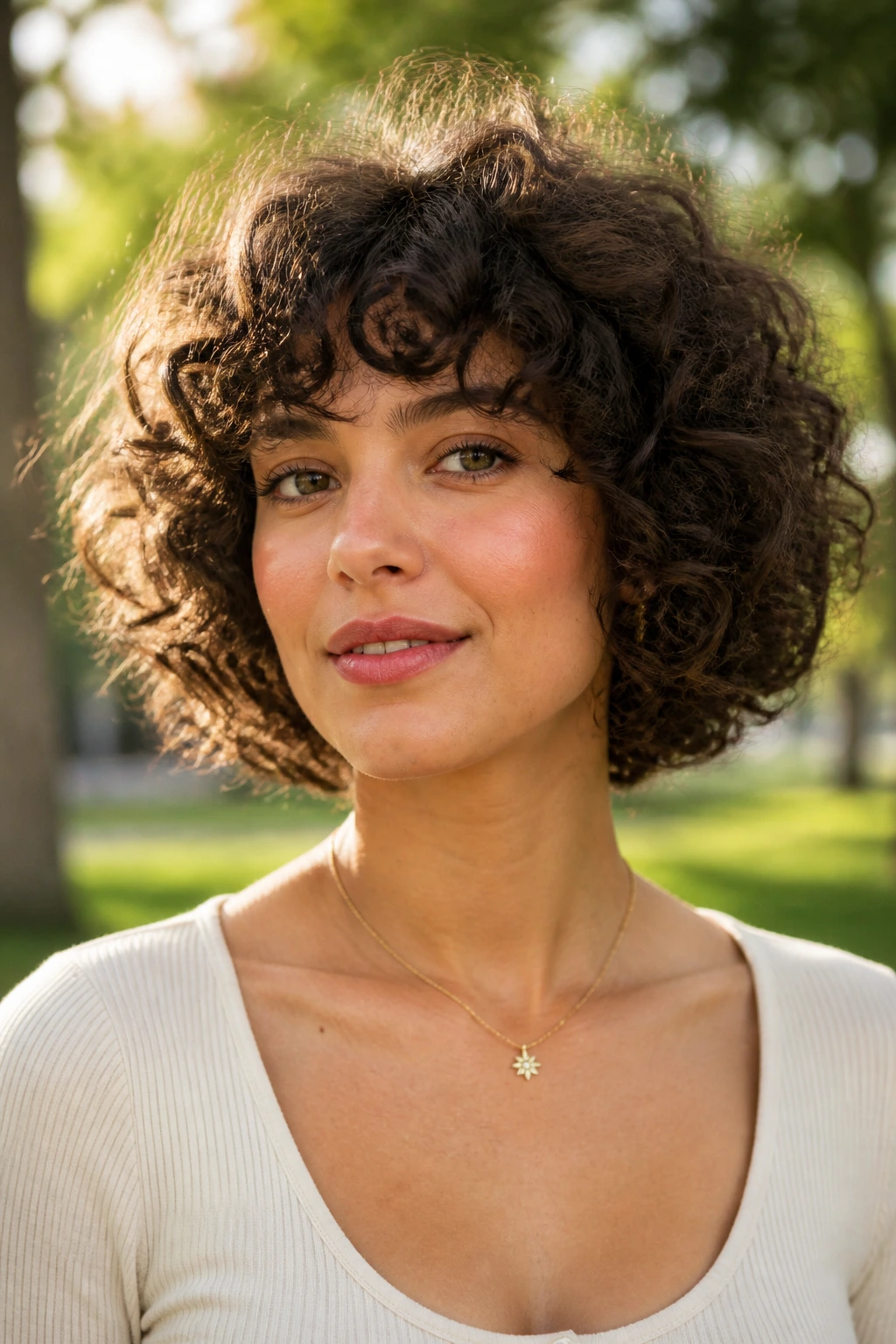
This one is built for volume, and I mean that in a good way. The halo bob lets the curls bloom all around the head while keeping enough length to avoid a puffball shape. On a round face, the trick is to get height at the crown and keep the side volume controlled.
A diffuser is almost non-negotiable here. It helps the roots set upward before the curls dry into their natural pattern. I like this cut for looser curls that need a little encouragement to look full instead of flat.
It’s a lively shape. If you want your hair to look like it has motion even when you’re standing still, this is the one.
24. Rounded Oval Bob
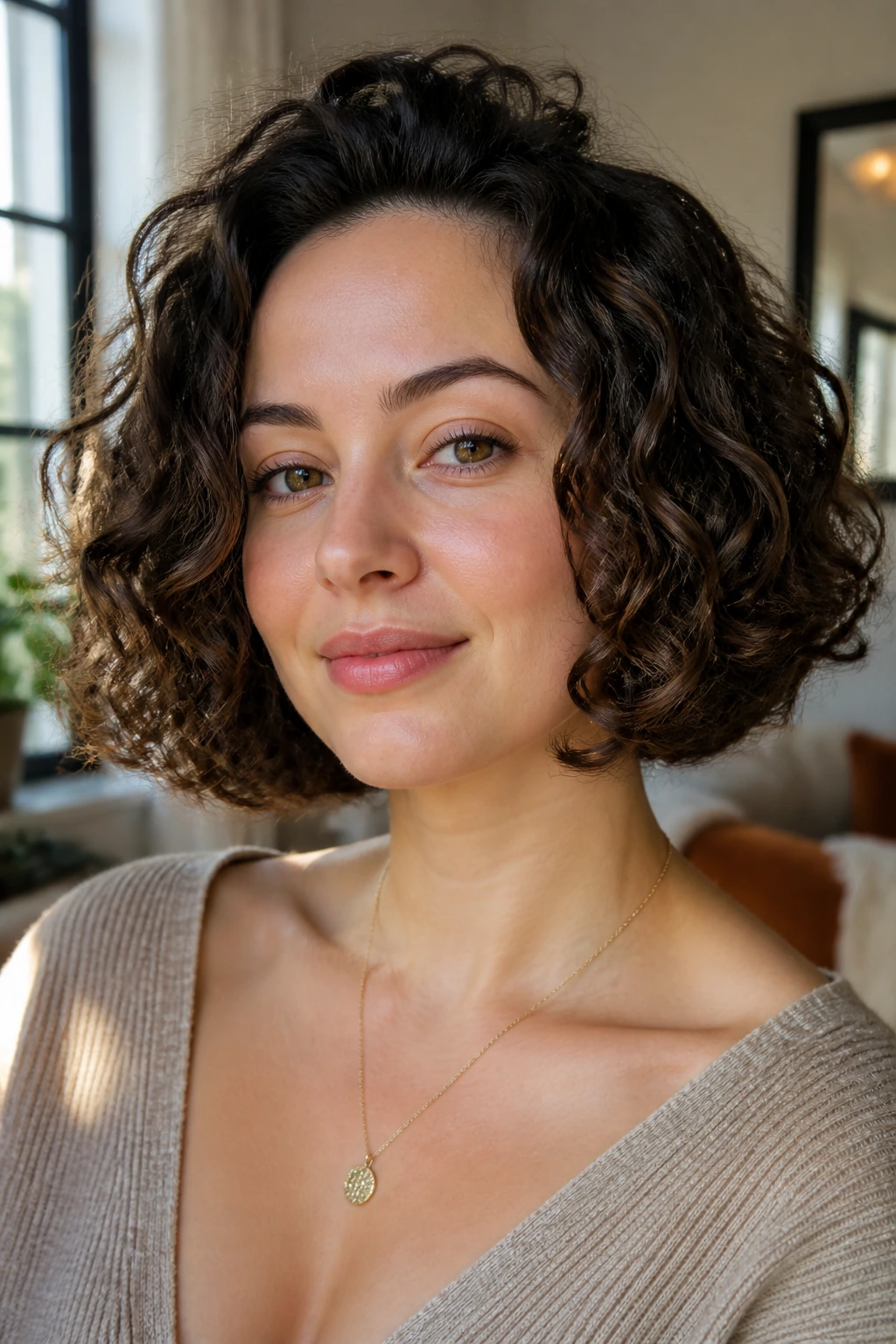
The rounded oval bob takes the softness of a circle and stretches it just enough to flatter a round face. The front pieces stay slightly longer, the crown gets gentle lift, and the overall outline lands somewhere between oval and curved square.
This cut is useful for people who want softness without extra width. It keeps the hair from fanning out at the cheeks, and it works well with glasses because the shape doesn’t fight the frames. The curls sit inside the form instead of swarming around it.
It’s quiet, but not boring. A good oval bob has a lot of control under the hood.
25. Easy Grow-Out Bob
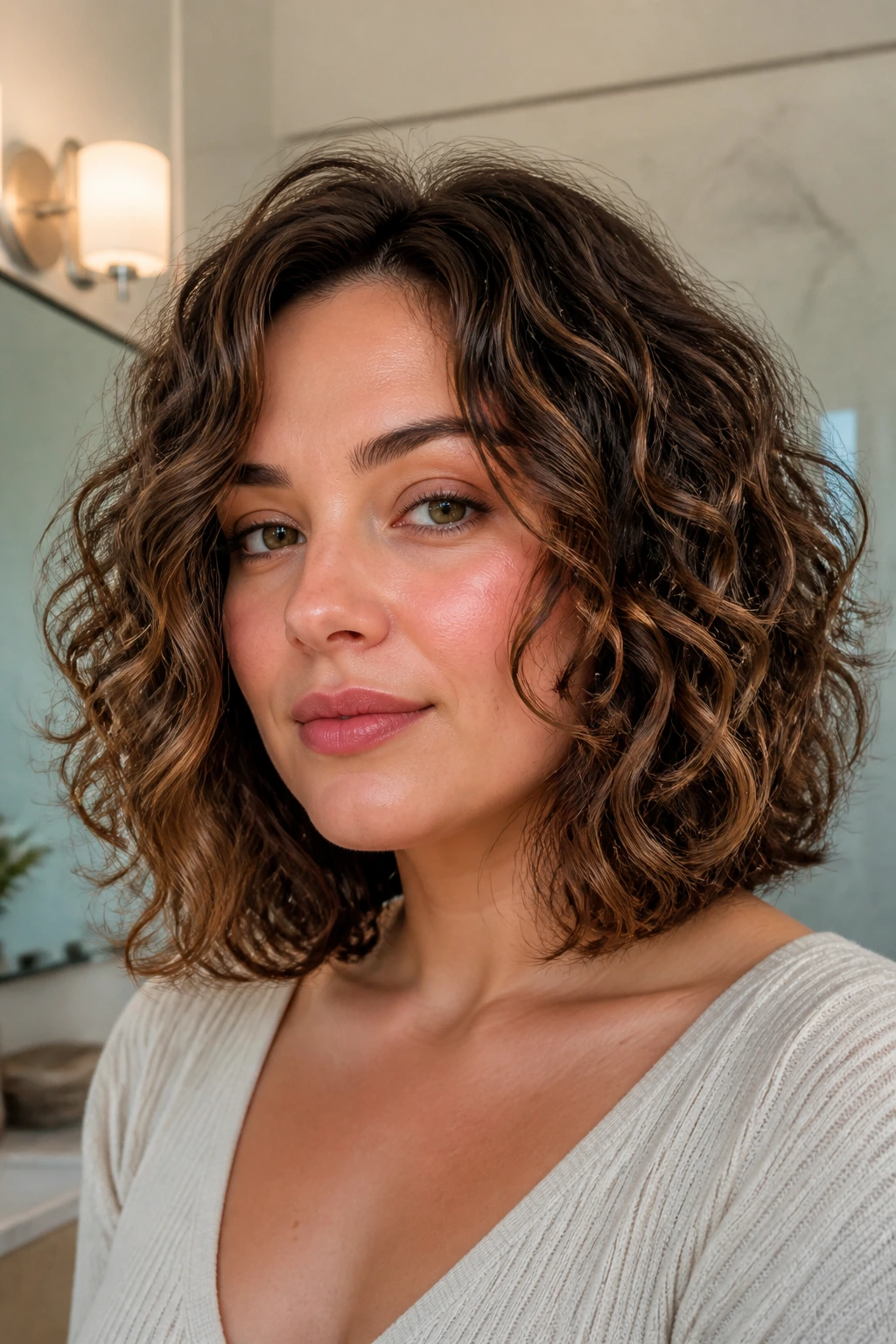
Some bobs look fantastic on day one and awkward on day thirty. This is not one of those. The easy grow-out bob is cut with enough length and interior movement that it keeps its shape as it grows, which matters if you don’t want a strict trim schedule.
Ask for a soft perimeter, light face framing, and layers that won’t disappear into a blob after a few weeks. On a round face, that means the shape keeps its lengthening effect even when the curl pattern starts doing its own thing.
It’s the most forgiving option in the bunch. If you’re busy, forget salon appointments, or just hate the feeling of a cut going stale too fast, start here.
Why Bob Shape Matters More Than the Number on the Tape
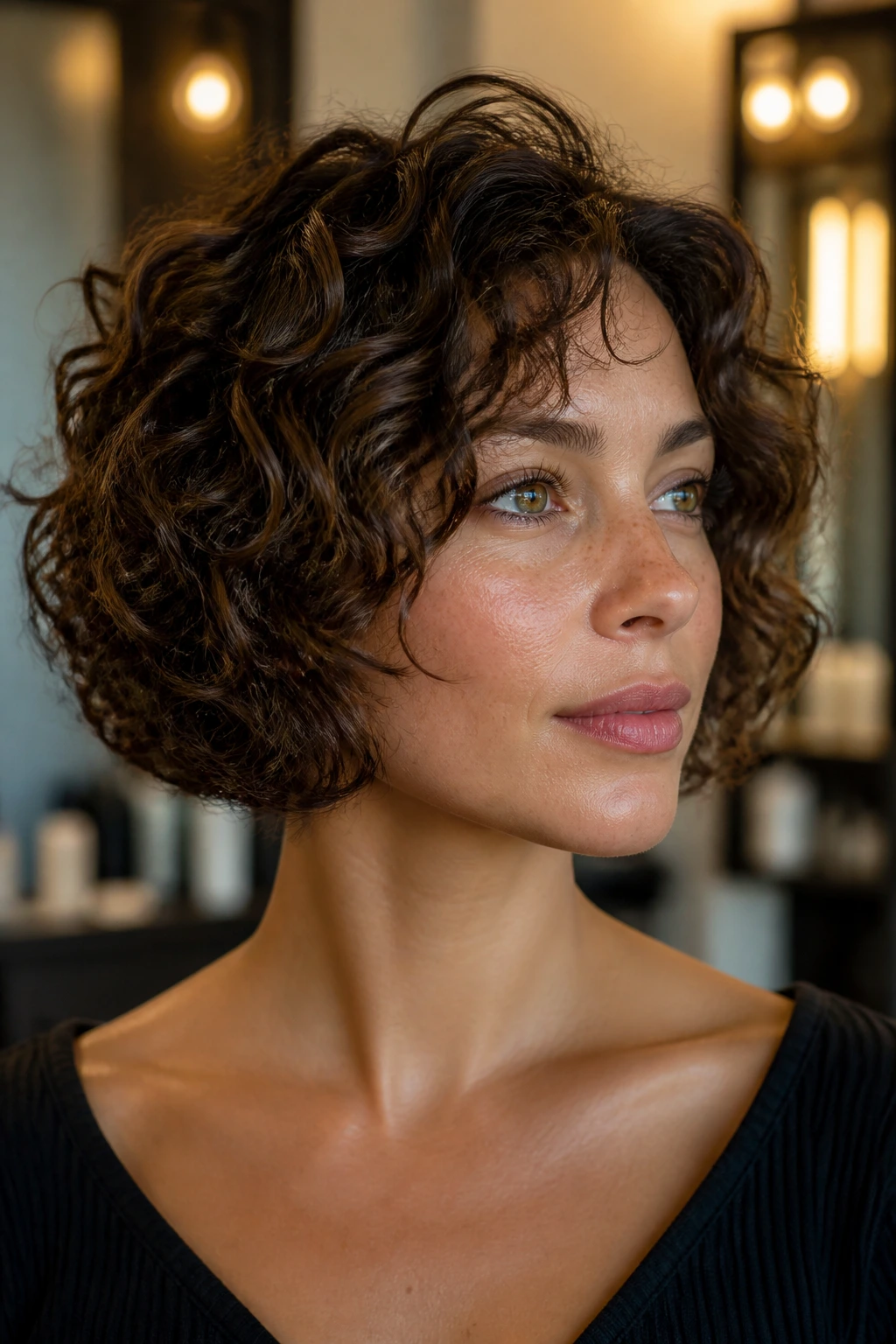
The same six-inch cut can look like three different haircuts once curls dry. That’s why the shape matters more than the exact length. A bob that lands below the cheekbone creates vertical movement. A bob with a slight diagonal in front narrows the face. A bob that keeps its lift at the crown stops the cheeks from feeling like the widest point in the picture.
Round faces usually look best when the haircut creates a little more height or length than width. Curly hair helps with the height part, but only if the cut gives it room. Too much bulk at the sides, and the face gets boxed in. Too much layering, and the shape falls apart. The sweet spot is somewhere in the middle, and it’s not mysterious once you see it a few times.
Choosing the Right Curly Bob for Your Curl Pattern
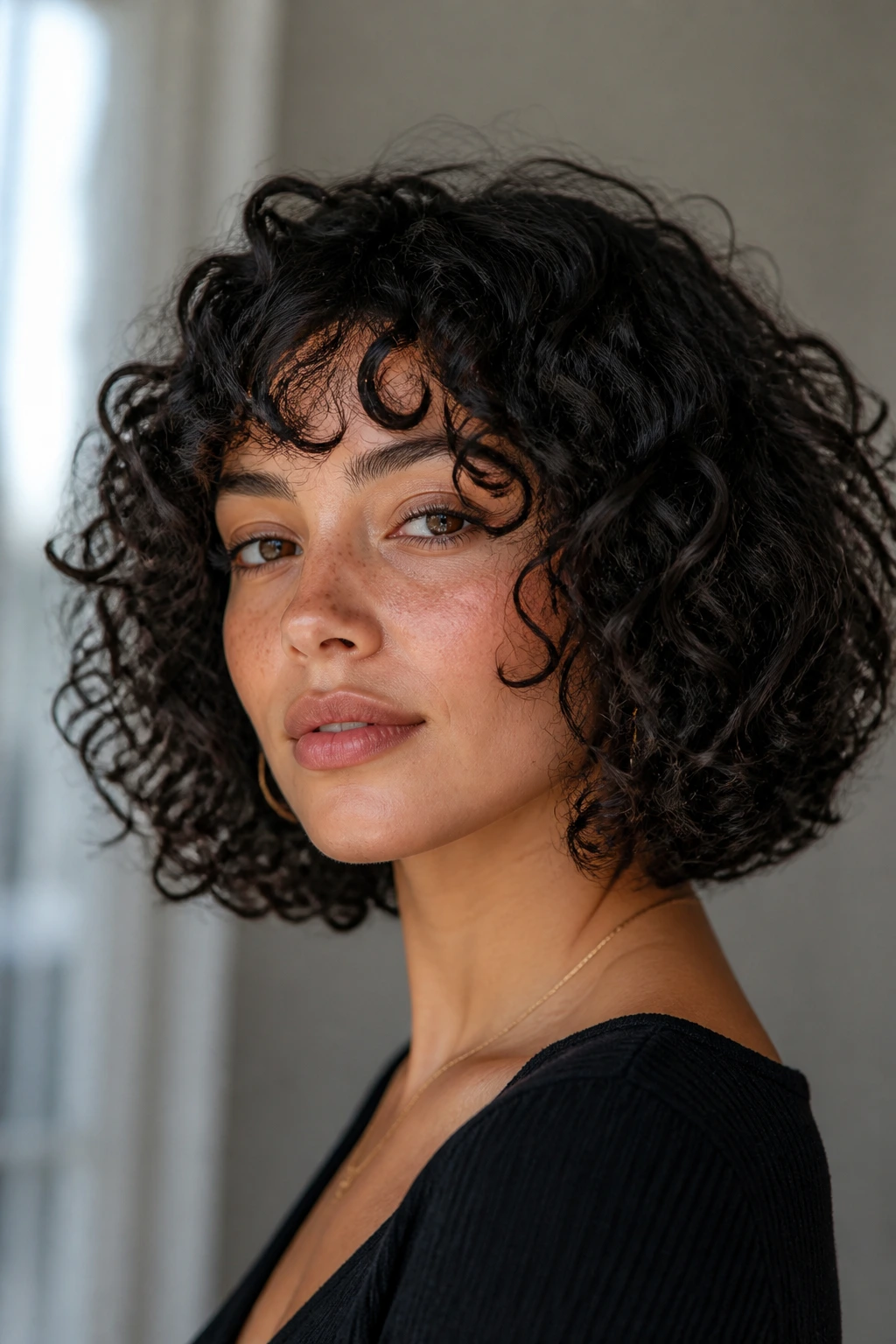
Loose waves, 2C to 3A: keep the edge a little cleaner and the layers softer. These patterns can collapse if they’re over-cut, so a collarbone lob or soft blunt bob usually behaves well.
Springy curls, 3B to 3C: use shape with intent. A shag bob, curl-by-curl bob, or A-line bob can keep the outline clear while letting the curls stack naturally.
Dense, coarse curls: remove bulk where it counts. A stacked bob, nape-undercut bob, or razor-textured bob can stop the sides from puffing into a triangle.
High-shrinkage coils: leave more length than you think you need. A long lob or grow-out-friendly bob gives the style room to settle after the curls dry.
What to Ask Your Stylist at the Chair
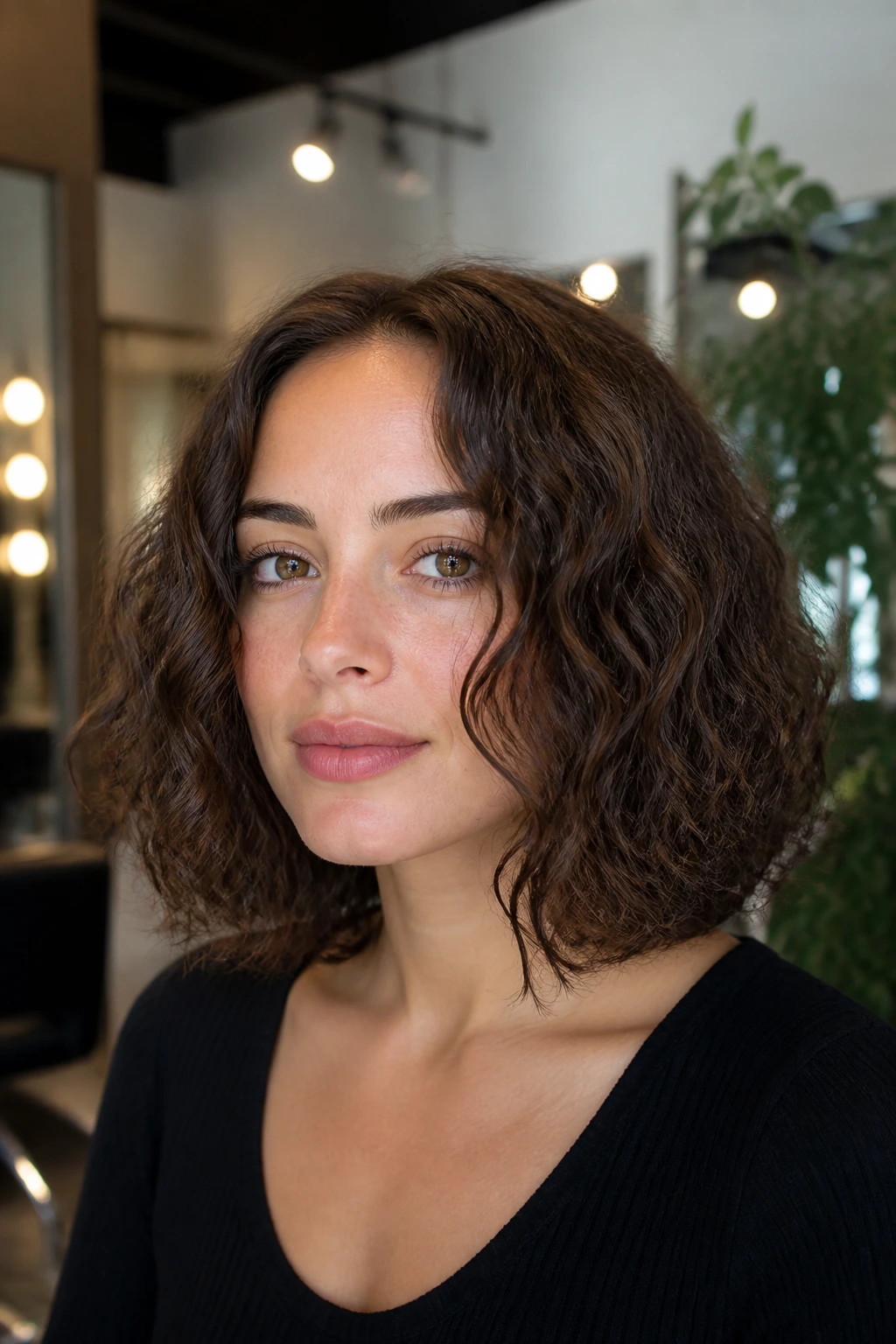
Bring photos, yes, but bring the right ones. A curly bob on a model with a different density or shrink pattern can send you home with a haircut that behaves like a stranger. Look for examples that match your curl size, face shape, and strand thickness.
Ask where the shortest layer will fall when dry. Ask how much length they plan to remove at the chin, the jaw, and the collarbone. If you want a round face to look longer, say that plainly. Good stylists hear that and adjust the front line, the part, and the crown without turning it into a lecture.
One more thing: if your hair is thick, ask for internal debulking rather than aggressive thinning shears. Not every head needs the same kind of weight removal.
Tools That Keep Curly Bobs in Shape
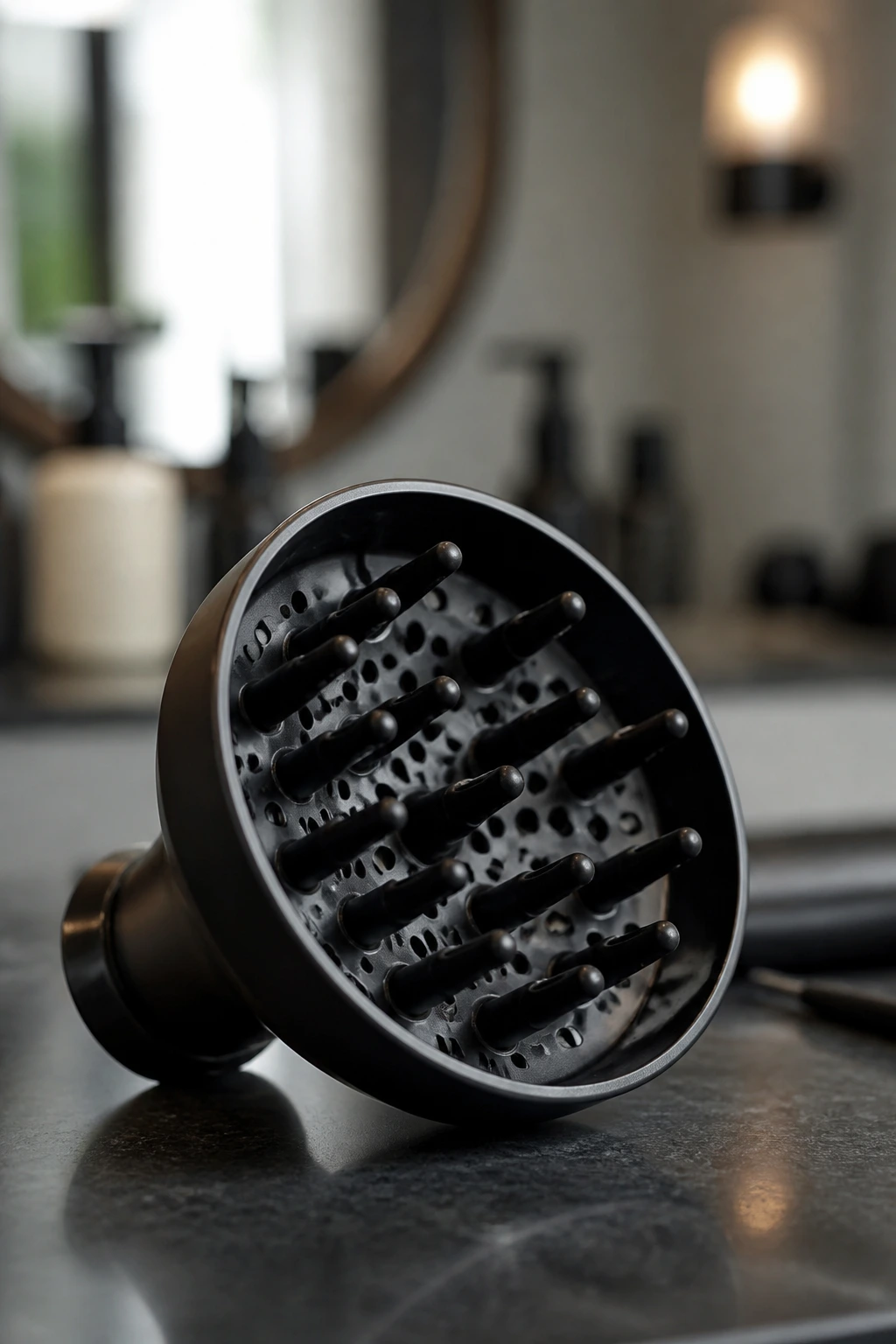
- Diffuser attachment: Dry curls without blasting the pattern into frizz.
- Microfiber towel or cotton T-shirt: Blot water out without roughing up the cuticle.
- Wide-tooth comb: Good for product distribution when the hair is wet.
- Curl cream: Adds slip and helps the bob keep a soft shape.
- Mousse or foam: Lifts the roots without making the ends heavy.
- Medium-hold gel: Useful for definition on fringe, perimeter, or high-humidity days.
- Duckbill clips: Helpful for root clipping while the hair sets.
- Satin pillowcase: Keeps the shape from getting crushed overnight.
- Handheld mirror: Worth having if you want to check the nape and the back line.
How to Style and Wear These Bobs Day to Day
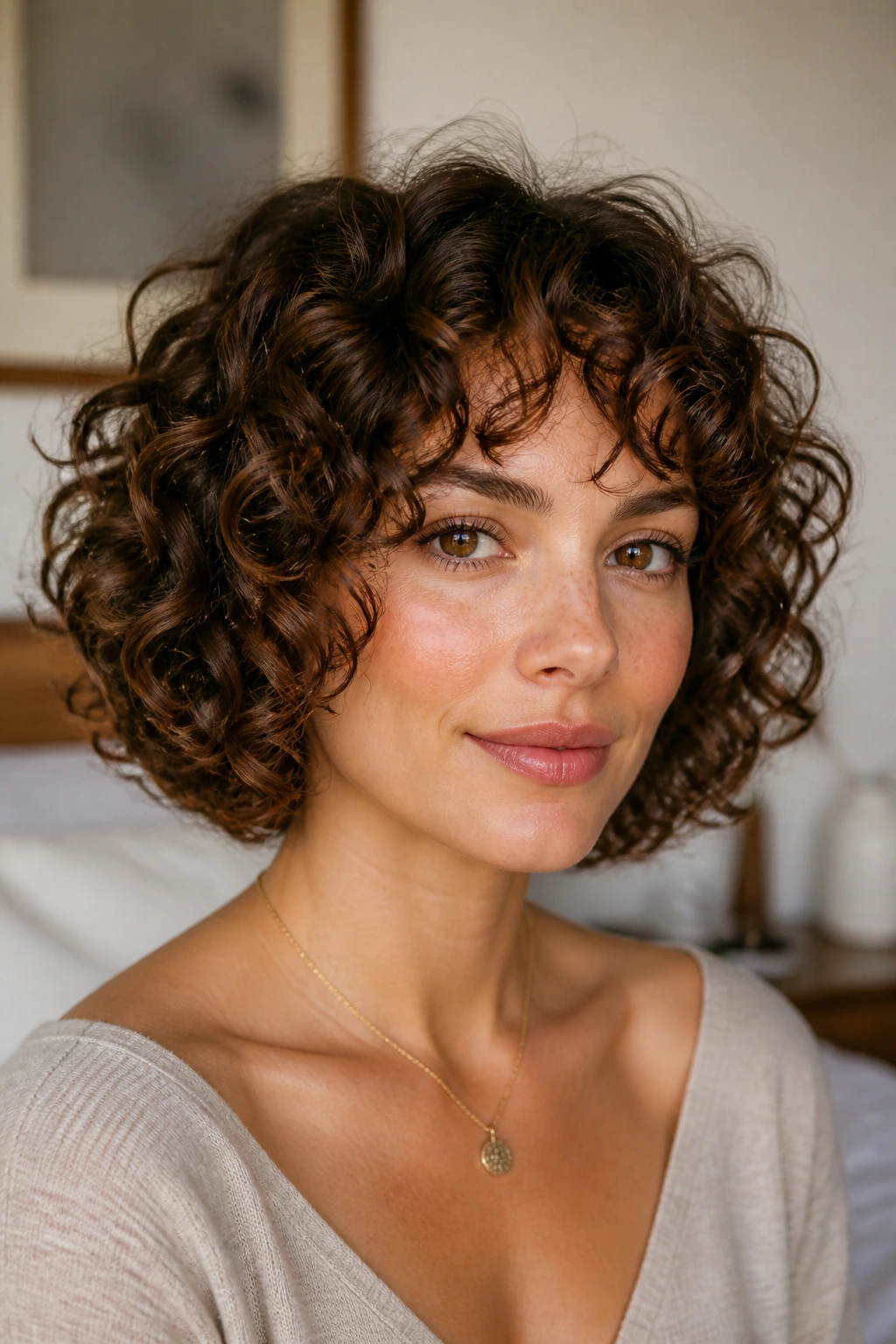
Presentation: Air-dried bobs look softer and more relaxed, while diffused bobs carry more lift at the crown. If your face reads fuller around the cheeks, aim the volume upward and keep the side curls lightly separated.
Accessories: Small hoops, glasses with a slightly angular frame, and narrow headbands all play well with a curly bob. Big, round accessories can repeat the face shape a little too neatly.
Outfit balance: Open necklines and collars that sit cleanly at the base of the throat tend to flatter the shorter lengths. A bob with a fringe can also look sharp with a plain crewneck because the haircut does the talking.
Best mood: Use a polished finish when you want the shape to read crisp. Leave it a little airier when you want the cut to feel softer and more lived-in.
Small Styling Tweaks That Change the Whole Bob

Shape boost: Clip the roots at the crown while the hair dries. Even two or three clips can keep a curly bob from collapsing flat on top.
Customization: If the front feels too wide, move the part a half-inch off center and let one side fall longer. If the face feels too open, add a curved fringe or a couple of face-framing pieces that start lower on the cheek.
Serving suggestions: A touch of shine serum on the ends can make a dry curly bob look finished, but keep it away from the roots. A little goes a long way. Too much and you lose the movement.
Make-it-yours: Fine curls usually do better with mousse and a cleaner edge. Thick curls often need a bit more internal weight removal and a stronger gel cast. High-shrinkage hair needs length insurance. That part never gets old.
Keeping the Shape Between Trims
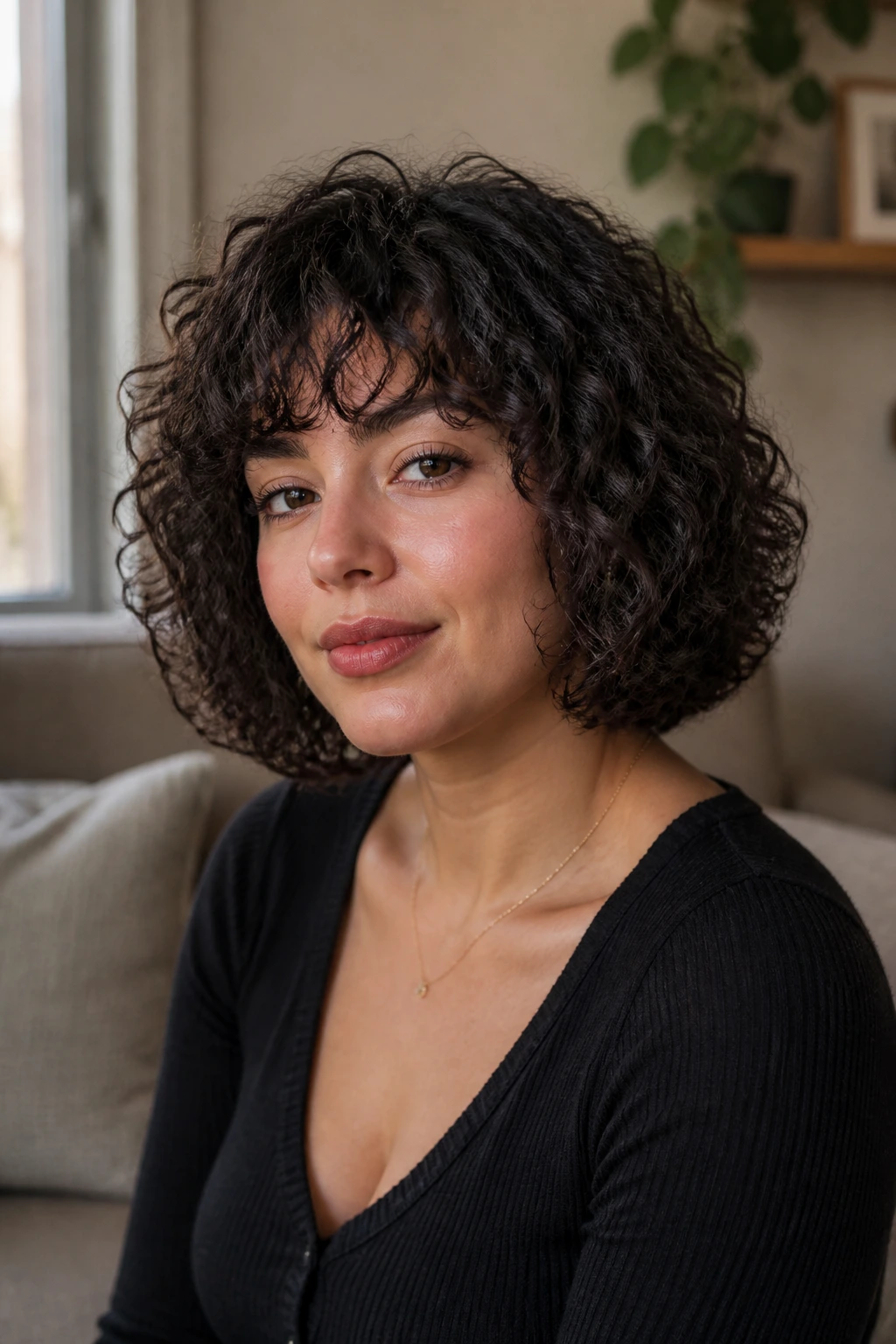
A curly bob lives or dies by maintenance. Shorter cuts usually need a trim every 6 to 8 weeks if you want the line to stay crisp. Lobs can stretch a little longer, often 8 to 12 weeks, depending on how fast your hair grows and how much shrinkage you have.
At home, refresh with a spray bottle and a pea-sized amount of curl cream or foam. Work the product through the mids and ends, then scrunch lightly. If the roots go flat, lift them with your fingers and a diffuser for a few minutes. That’s usually enough to wake the shape back up.
Sleep on a satin pillowcase or wrap the hair loosely so the curls don’t get smashed against the back of the neck. If the bob starts flipping out in places you didn’t ask for, that’s your cue to book the trim before the shape gets away from you.
Common Mistakes That Make a Curly Bob Look Wider

Cutting it too short at the cheeks: This is the fastest way to make a round face look wider. The fix is simple: keep the shortest visible pieces below the cheekbone, or add a diagonal front.
Over-thinning the sides: The hair loses its shape and turns fuzzy at the perimeter. A better move is controlled internal layering, not a dozen snips with thinning shears.
Ignoring shrinkage: Curly hair almost always bounces up more than people expect. If the cut looks perfect when wet but lands above the jaw when dry, the proportions are off.
Keeping the crown flat: A bob with no lift on top settles into the cheeks. Root clipping, a diffuser, or a slightly shorter back can solve that.
Using heavy cream at the root: It drags the shape down and makes the face look wider. Keep rich products lower on the hair shaft.
Ways to Adapt These Bobs to Different Curl Needs
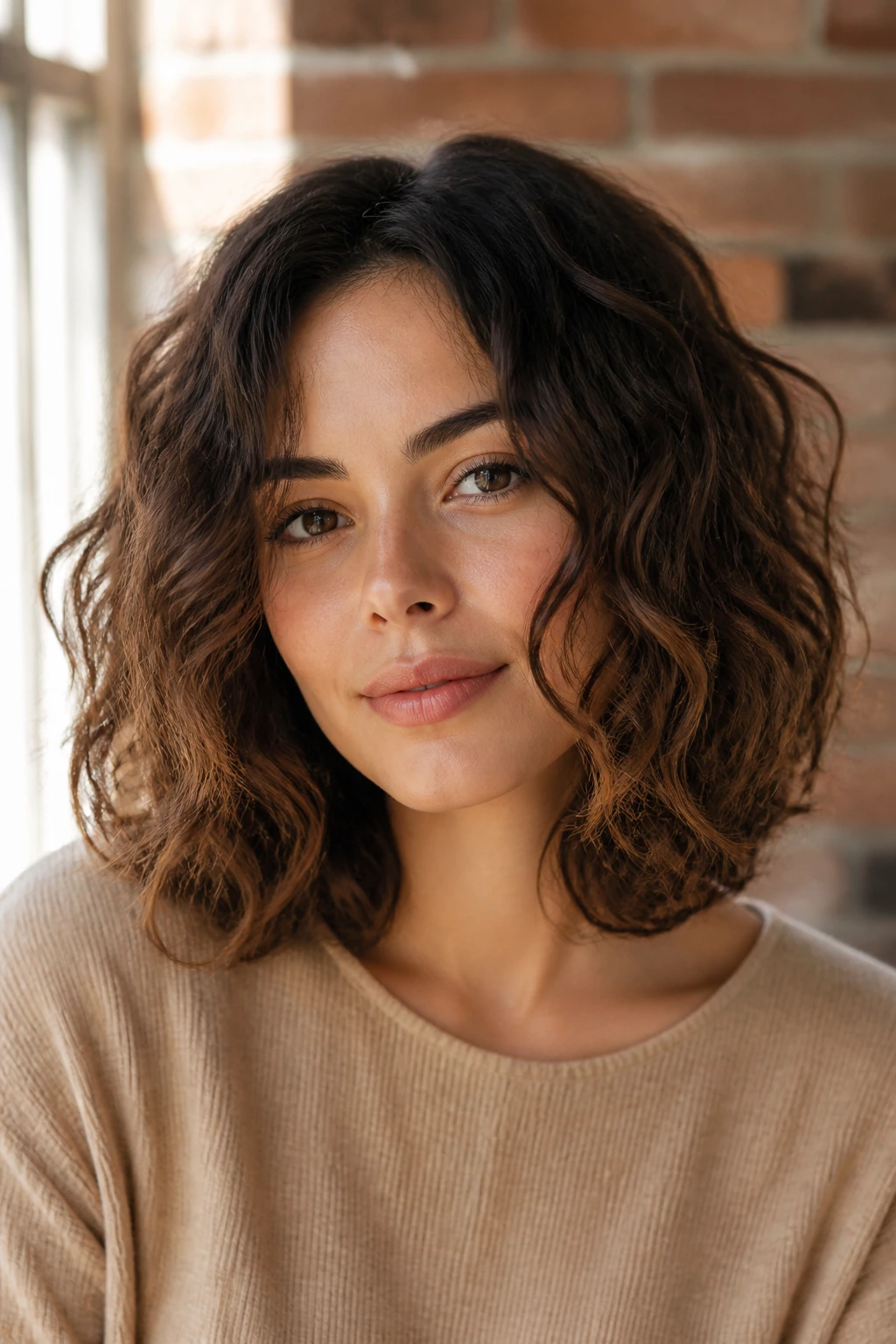
The Low-Maintenance Lob: If you hate frequent trims, keep the length near the collarbone and ask for soft layers that won’t grow out bluntly. This stays neat even when life gets busy.
The Bold Short Crop: If you want more edge, shorten the back and keep the top taller. The round face still gets length from the vertical shape, but the haircut feels sharper.
The Thick-Hair Reset: If your curls are heavy, use a nape undercut or internal debulking. It takes weight out where you can’t see it and makes styling less of a wrestling match.
The Fine-Curl Lift: If your hair is softer, choose feathered layers, a side part, and lighter products. Heavy cuts and heavy creams will flatten the whole look.
The Fringe Version: If you want more face framing, add curtain bangs or a side fringe instead of a blunt full bang. That keeps the front open and avoids extra width.
Frequently Asked Questions

Can a bob really flatter a round face with curly hair?
Yes, when the cut uses length, angle, or crown lift to steer the eye. The trick is avoiding a hard stop at the cheekline and giving the curls enough room to form a vertical shape.
Is a center part bad for round faces?
Not automatically. A center part works when the front pieces are long enough to fall below the cheekbone and the crown has some lift. If the part makes the face feel wider, move it slightly off center.
Should curly bobs be cut wet or dry?
Dry or mostly dry cuts usually give a more accurate shape because curls shrink in different ways. Some stylists work wet for the base and then refine dry, which can be a smart middle path.
What if my curls are very thick?
Look at stacked bobs, nape undercuts, or subtle internal debulking. Those choices remove weight without turning the haircut into a puffed triangle.
What if my hair is fine and curls fall flat?
Choose a softer layered bob, keep the edge clean, and use mousse or foam at the roots. A diffuser helps, but the cut itself needs to support the lift.
Can I wear bangs with a round face and curly bob?
Yes, but keep them soft. Curtain bangs, side bangs, or a curly fringe usually work better than a dense straight-across bang.
How do I stop my bob from looking triangle-shaped?
Remove bulk at the right places, keep lift at the crown, and avoid overloading the sides with product. A diagonal front or longer face-framing pieces also help.
How often should I trim it?
Short curly bobs usually need attention every 6 to 8 weeks. Longer lobs can go a bit longer, but once the shape starts landing at the cheek or neck in a weird place, it’s time.
The Bob That Keeps Its Shape
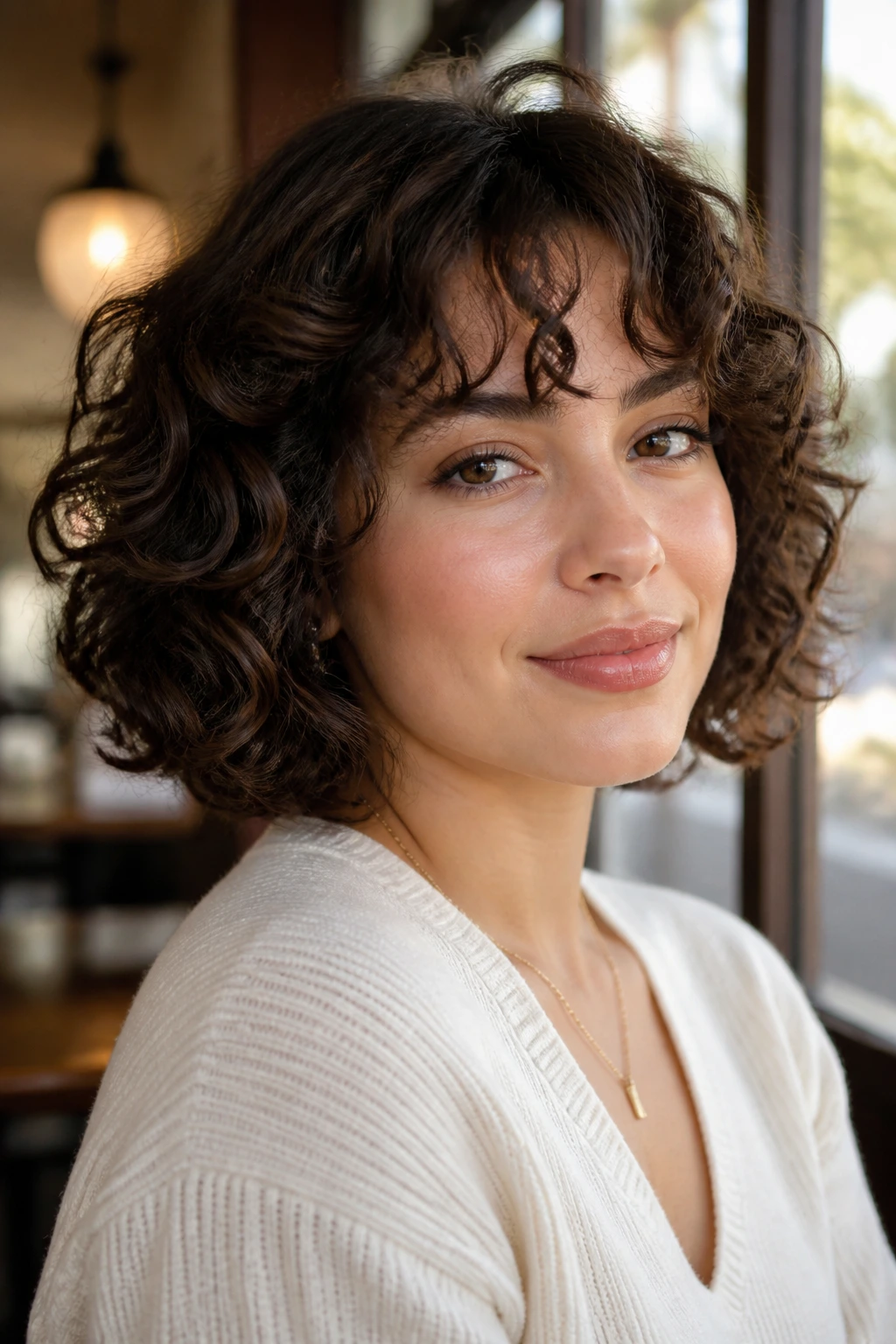
The best curly bob for a round face is not the one with the fanciest name. It’s the one that lands in the right place, respects the curl pattern, and keeps the cheeks from becoming the center of the conversation. That can mean a collarbone lob, a French fringe, a stacked back, or a soft blunt edge. Different cuts. Same goal.
If you’re choosing between two versions, pick the one that gives you a little more length or a little more lift. Curly hair nearly always shrinks harder than you think, and round faces usually look happier with a line that moves up or down, not straight out to the sides.
Start with the shape that matches your texture, then let the rest of the haircut follow. That’s where the good ones live.