



A bob that falls a little longer on one side does something a blunt cut often refuses to do: it moves. The eye follows the diagonal, the cheekbone gets a frame, and the neck gets a cleaner line. Asymmetrical short bobs for older women work especially well when hair has softened at the crown, when the jaw wants a little lift, or when you’re tired of a cut that sits there like a cap.
The best versions are not loud. Most of the time, the difference is only an inch or two from side to side, sometimes three if the style is meant to feel sharper. That small shift changes the whole read of the haircut. On silver hair, it looks crisp and bright. On fine hair, it can fake density. On wavy hair, it stops the shape from turning puffy and gives the movement somewhere to go.
And that’s the part people miss. The point is not “edgy” for its own sake. The point is balance with a little tilt—enough asymmetry to keep the cut lively, not so much that it starts fighting your face, your glasses, or the way your hair actually grows.
- Face-framing without extra length: The front pieces can skim the cheek or chin while the back stays neat, which gives shape without committing to long hair.
- Easy to tune for texture: A stacked crown, a razor finish, or a blunt edge changes the whole mood, so the same basic cut can work on fine, thick, straight, or wavy hair.
- Kind to silver and gray strands: Clean lines show off dimension in white, silver, salt-and-pepper, and highlighted hair instead of letting the cut blur into a single shape.
- Works with glasses and jewelry: The right asymmetrical bob leaves room for frames, earrings, and collars instead of tangling everything together near the cheeks.
- Grows out with less drama: A soft angle can stay flattering for weeks because it doesn’t depend on a perfect perimeter every morning.
1. Chin-Length Angle With a Longer Front Side
This is the cleanest place to start if you want asymmetry without drama. One side grazes the chin, the other sits a touch shorter, and the line draws the face forward instead of widening it out. On mature hair, that tiny forward angle is a gift. It gives movement without chewing up fullness.
The trick is to keep the front piece polished. If it flips out or bends into a weird notch, the whole shape loses its edge. A round brush and a quick bend at the ends are usually enough. Ask for the longer side to land near the chin, not down at the collarbone, or the cut starts feeling like a grown-out lob instead of a short bob.
2. Crown-Lifted Stacked Bob in Silver Hair
Silver strands love this shape because the stacked back catches light and shows off the layers instead of flattening into one block. The back sits tighter, the crown gets a little lift, and the front side stays longer so the cut keeps that diagonal pull. It’s one of the best choices when the top has gone a bit soft and needs structure.
I like this cut on women who want the nape to look tidy without going severe. It has enough shape to feel intentional, but not so much layering that it turns fuzzy. A little root spray at the crown and a round-brush blow-dry go a long way here. If your hair is very fine, ask for internal stacking, not heavy thinning.
3. Deep Side-Part Bob With a Sweeping Fringe
Want the gentlest way to wear asymmetry? Start with the part. A deep side part sends the fringe across the forehead, softens the upper face, and gives the bob a lean without making the cut look chopped. It’s especially good when the temples have become lighter or when a straight middle part feels too exposed.
Why It Works
The fringe covers just enough without hiding your face. That matters. You still see cheekbone, eye, and brow shape, but the line runs diagonally instead of straight down.
- Best for: rounder faces, thinning at the temples, glasses.
- Styling note: blow the fringe away from the face first, then let it fall back.
- Watch for: a heavy, blunt bang line that swallows the eyes.
A touch of lightweight cream at the fringe keeps it from splitting into pieces by lunchtime.
4. Piecey Razor Bob for Fine Hair
A razor cut can be a beautiful thing on fine hair, but only when it’s used with restraint. Too much slicing and the ends go wispy in the wrong way. The right version gives you soft separation, a little swing, and a front edge that doesn’t look helmet-stiff.
This is the cut I reach for when someone says, “I want short hair, but I still want it to move.” That’s the whole point. The asymmetry comes through in the broken ends and the longer side panel, not in a heavy stack. A pea-sized bit of texturizing paste rubbed through the ends is usually enough. If your hair is very soft, skip the razor-heavy version and ask for point cutting instead.
5. Curved A-Line Bob With a Soft Front Corner
A straight A-line bob can feel stern. A curved one feels easier to live with. The back stays a touch shorter, the front angles forward, and the overall shape follows the jaw instead of cutting across it. That curve is why this cut works so well for women who want polish without looking overdone.
It’s also one of the best choices for a neckline that deserves a cleaner outline. The curve opens space under the ear and keeps the bob from ballooning at the sides. A blow-dryer with a nozzle attachment helps the hair lie in the right direction while you shape the ends with a brush. Ask your stylist to keep the front corner soft, not pointy.
6. Wavy Asymmetrical Bob With Broken Ends

Second-day waves and an asymmetrical bob get along nicely. The uneven front pieces keep the texture from turning into a puffball, and the shorter back helps the style sit closer to the head. On hair that has a little natural bend, this cut can look better with air-drying than with a perfect blowout.
The secret is not to fight the wave pattern. Use a little curl cream or light mousse, scrunch once, and let the hair dry almost all the way before you touch it again. That’s where the movement lives. If one side bends harder than the other, lean into it—forced symmetry is what kills this cut.
7. Curly Asymmetrical Bob That Keeps Its Shape
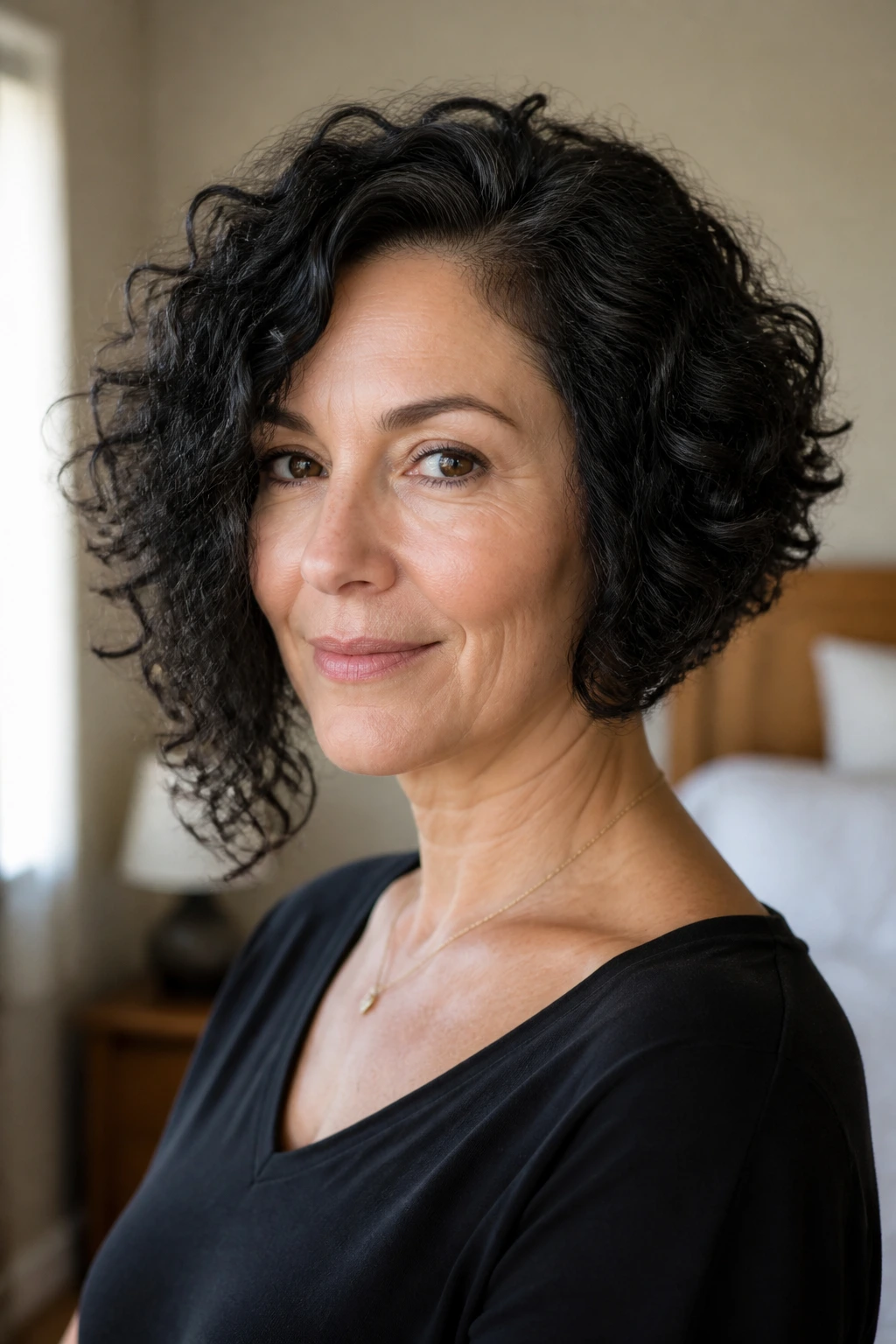
Curly hair can wear asymmetry beautifully, but the cut has to respect shrinkage. A curl that looks chin-length wet may spring up two inches when dry. That is why this version usually leaves the longer side a bit lower than you think you need. The diagonal still reads, even after the curls tighten.
Cut It Dry If You Can
A dry cut lets the stylist see where the curls land instead of guessing. That matters with a bob, because one bad layer can turn the whole shape triangular.
- Good curl partners: light leave-in, gel with a soft cast, diffuser.
- Better length choice: longer front pieces if your curls spring a lot.
- Avoid: thinning shears around the perimeter unless the hair is very dense.
A curl bob like this should look touched, not overworked.
8. Nape-Tapered Bob With a Clean Neckline
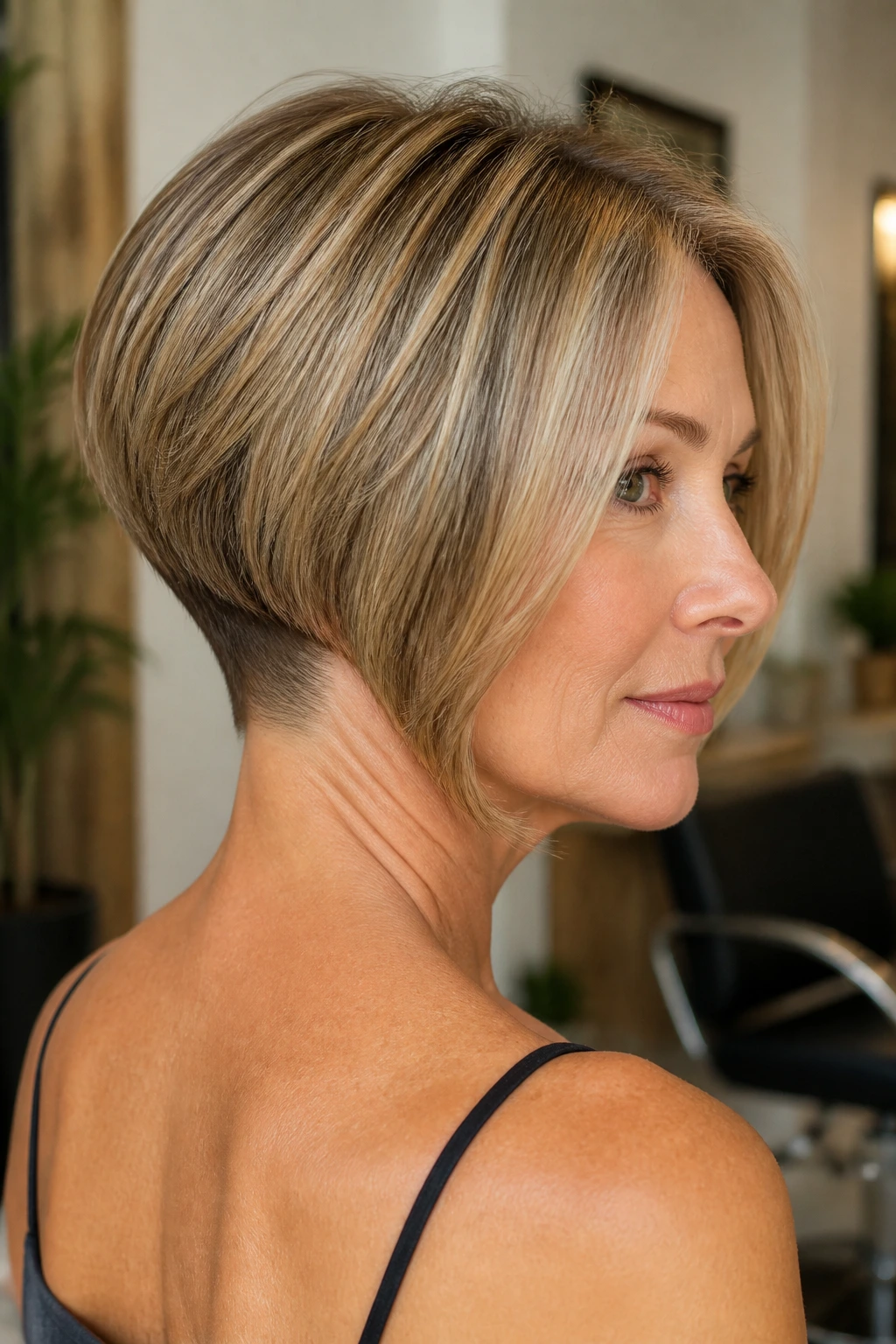
Some women want the neck to stay visible. This cut understands the assignment. The nape is tapered tight, the line hugs the head, and the front side drops a little longer for movement. It looks neat under a collared shirt, a scarf, or a sweater that sits high on the neck.
This shape is also sneaky-good for hot weather because it removes the bulk where it annoys you most. The back doesn’t puff out, and the sides stay controlled. If you like a crisp silhouette, this one delivers without turning hard. A tiny bit of shine cream at the nape keeps the outline from frizzing up.
9. Blunt Off-Center Bob for Thick Hair
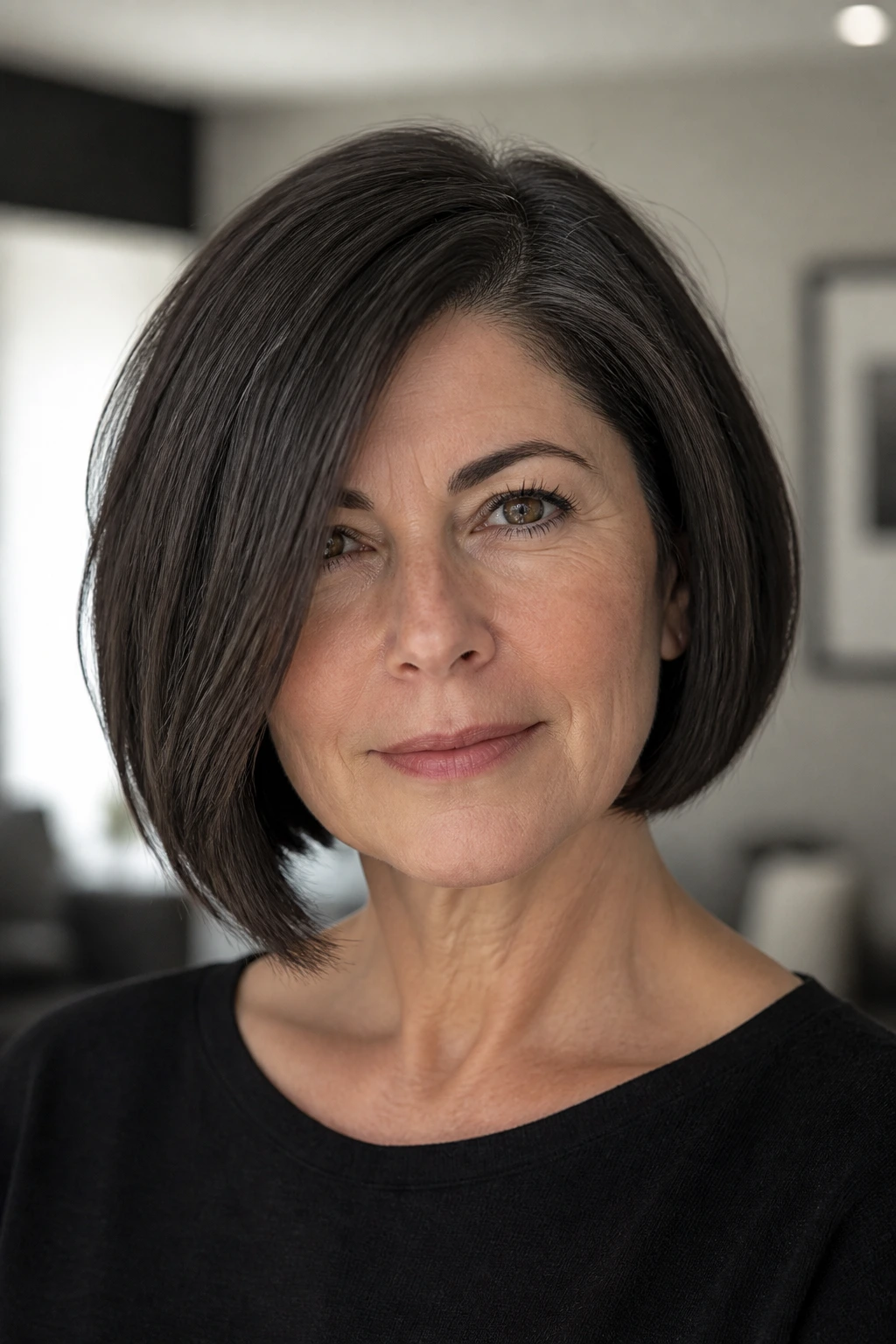
Thick hair needs rules. A blunt off-center bob gives them. The perimeter stays solid, which keeps the ends from looking ragged, and the side part keeps the cut from feeling too square. On dense hair, that off-center placement is often enough to create asymmetry without adding a bunch of layers.
The best part is how tidy it looks from the side. Thick hair can turn into a triangle fast if the lower half gets too fluffy. This cut avoids that by keeping the line strong and the shape compact. If you like a flat iron finish, use one bend at the front and leave the rest alone. Too much layering on thick hair will only create bigger hair, not better hair.
10. Layered Bob With Side-Swept Bangs
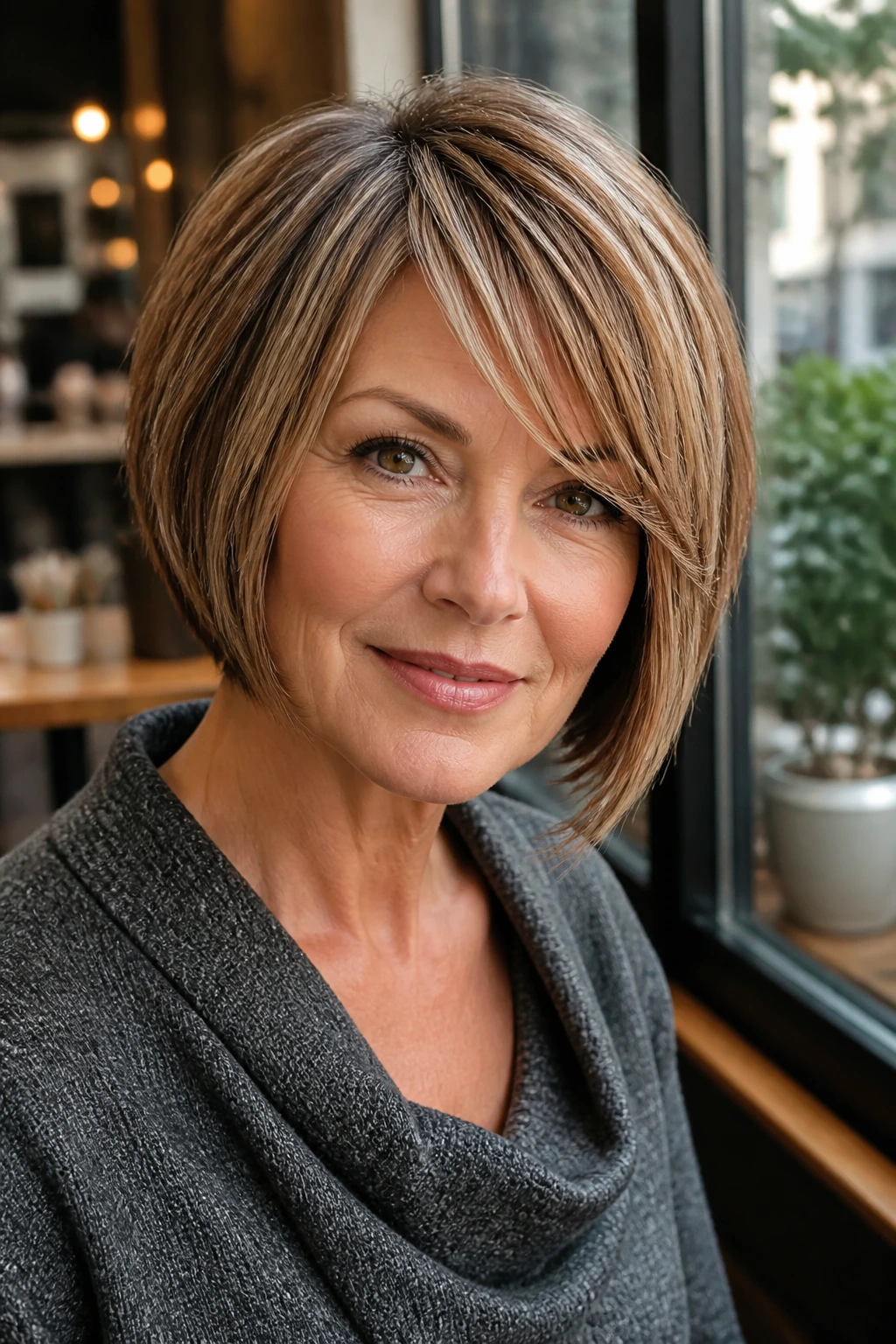
This is the softer sister to the blunt off-center bob. Layers around the face break up the heaviness, and side-swept bangs give the eye a place to land right away. It’s especially flattering when you want to keep the forehead area light but not fully exposed.
A cut like this works because the bangs and the front angle talk to each other. One leans across, the other leans forward, and the whole style feels intentional from every view. Use a round brush to keep the fringe from splitting apart. If the bangs are too thick, the cut loses its air; if they’re too sparse, the asymmetry disappears.
11. Shaggy Bob With Tousled Ends

Not every asymmetrical bob has to be polished. A shaggy version has a looser mouth, a little grit in the ends, and enough irregularity to keep the shape from reading too severe. It’s a smart choice if you like your hair to look touched by the day rather than staged for a photo.
The trick is balance. Too much shag and it stops being a bob; too little and it just looks unkempt. The best version keeps the front longer, the back lighter, and the edges softly broken. A salt spray can help, but use a light hand. The goal is movement, not crunch.
12. Jaw-Length Bob With an Undercurve

This one skims the jaw and curves inward just a touch at the ends. That undercurve matters more than people think. It pulls the line close to the face and keeps the haircut from flaring out at the widest point of the jaw. On women who want a little refinement without severe angles, it’s a very useful shape.
The asymmetry shows up in the front length and side part, not in a wild difference from side to side. That makes the cut easier to wear with makeup, glasses, and simple earrings. A quick round-brush pass under the ends brings the curve back if sleep has flattened it. If your jaw is already strong, keep the undercurve subtle.
13. Tucked-Behind-Ear Bob for Earrings and Glasses

This is one of those cuts that looks plain on the hanger and smarter on the head. The shorter side tucks neatly behind the ear, which opens the face and puts the longer side front and center. It works especially well if you wear glasses, because the frame, the ear, and the hair all stop fighting for the same space.
The styling move is simple, but it changes everything. Tuck the shorter side, mist the longer side with a bit of flexible spray, and let the line fall forward naturally. Suddenly the bob has purpose. Big earrings and this cut are a very good pairing; small studs can disappear.
14. Blowout Bob With Root Lift
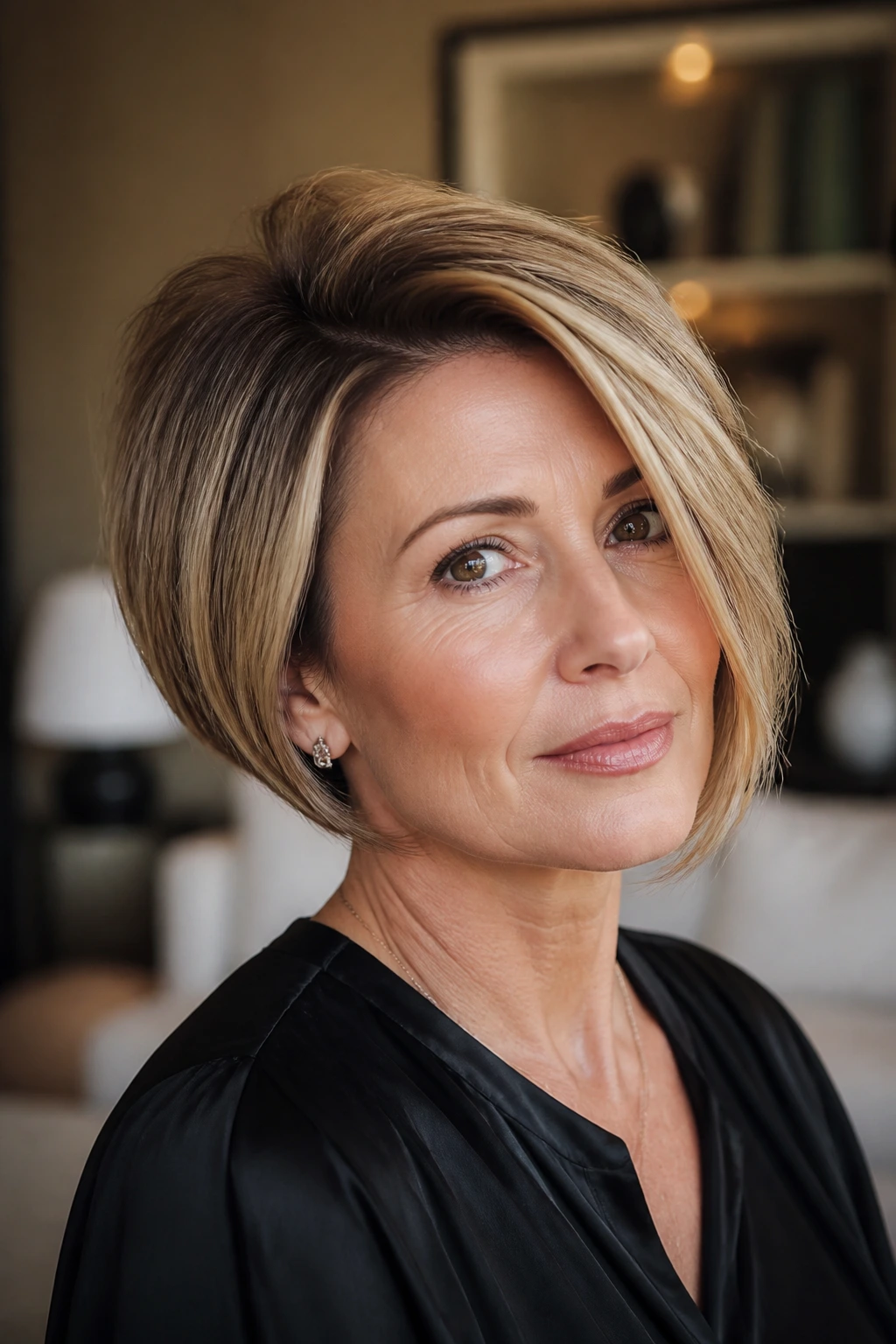
If you like your hair to look airy instead of flat, this is your cut. The asymmetry is there, but the real story is the root lift and the rounded brush work. The crown gets volume, the front side swings, and the whole shape has a lifted, salon-dry feeling without needing a curling iron every morning.
I’d keep this one for hair that can hold a bend. Very slippery strands tend to fall straight again too fast. A root-boosting mousse, a nozzle dryer, and a medium round brush are the whole game here. Do the roots first, not the ends; if you chase the ends before the crown is dry, the shape collapses.
15. Chin-Length Undercut Bob
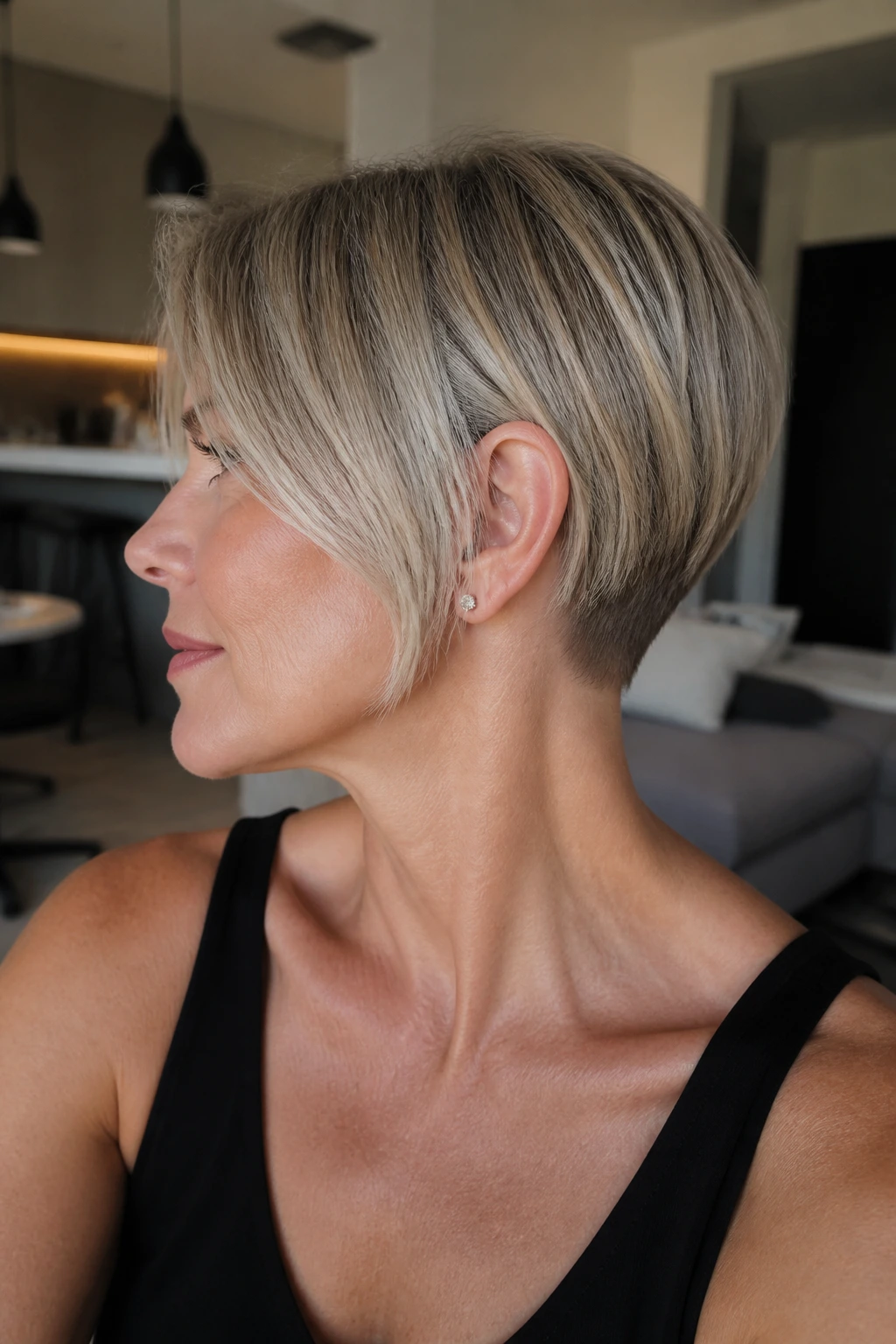
A hidden undercut can be a lifesaver on thick or coarse hair. The top layer keeps the bob shape, while the underlayer removes bulk where it would otherwise explode at the nape. The asymmetry then shows up cleanly because the cut isn’t weighed down by too much hair.
This is not a timid cut. It has edge, but it’s the practical kind. You can wear it smooth, flip the longer side slightly forward, or rough it up with texture paste when you want the shape to feel less formal. Ask the stylist to keep the undercut hidden unless you want the neckline to show.
16. French Bob With One Longer Side

A French bob usually means short, chic, and a little cheeky. Add one longer side and the cut picks up a diagonal line that keeps it from feeling too neat. It can sit at lip level on one side and cheek level on the other, which gives it a wink without turning theatrical.
This version looks especially good with a short fringe or a wispy brow skimmer. The whole cut becomes about facial structure—eyes, cheekbones, mouth—not about length. A touch of pomade at the ends helps keep the shape crisp. If your hairline is strong, this cut can feel almost architectural.
17. Salt-and-Pepper Bob With Razor Movement
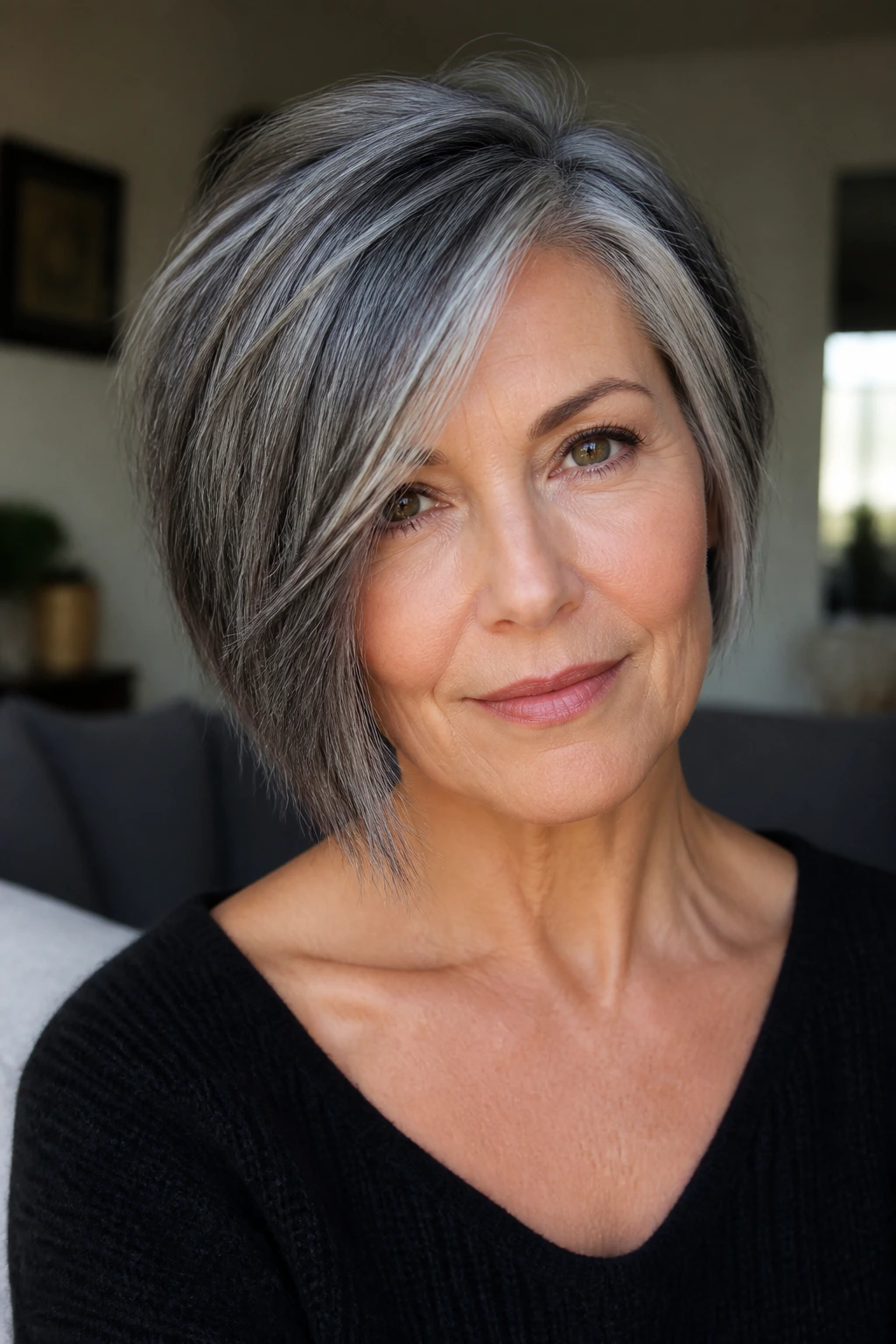
Salt-and-pepper hair has texture built in, and this cut knows how to show it off. A little razor movement through the ends keeps the black, gray, and silver strands from merging into one heavy block. The asymmetry gives the eye something to follow, which makes the color feel even more dimensional.
I like this one when the hair has natural thickness but not a ton of bounce. The movement keeps it from looking square, and the uneven front makes the color look alive around the face. Use a glossing serum sparingly; too much shine can flatten the texture. The best salt-and-pepper cuts leave a little roughness at the ends on purpose.
18. Rounded Bob With Longer Front Corners
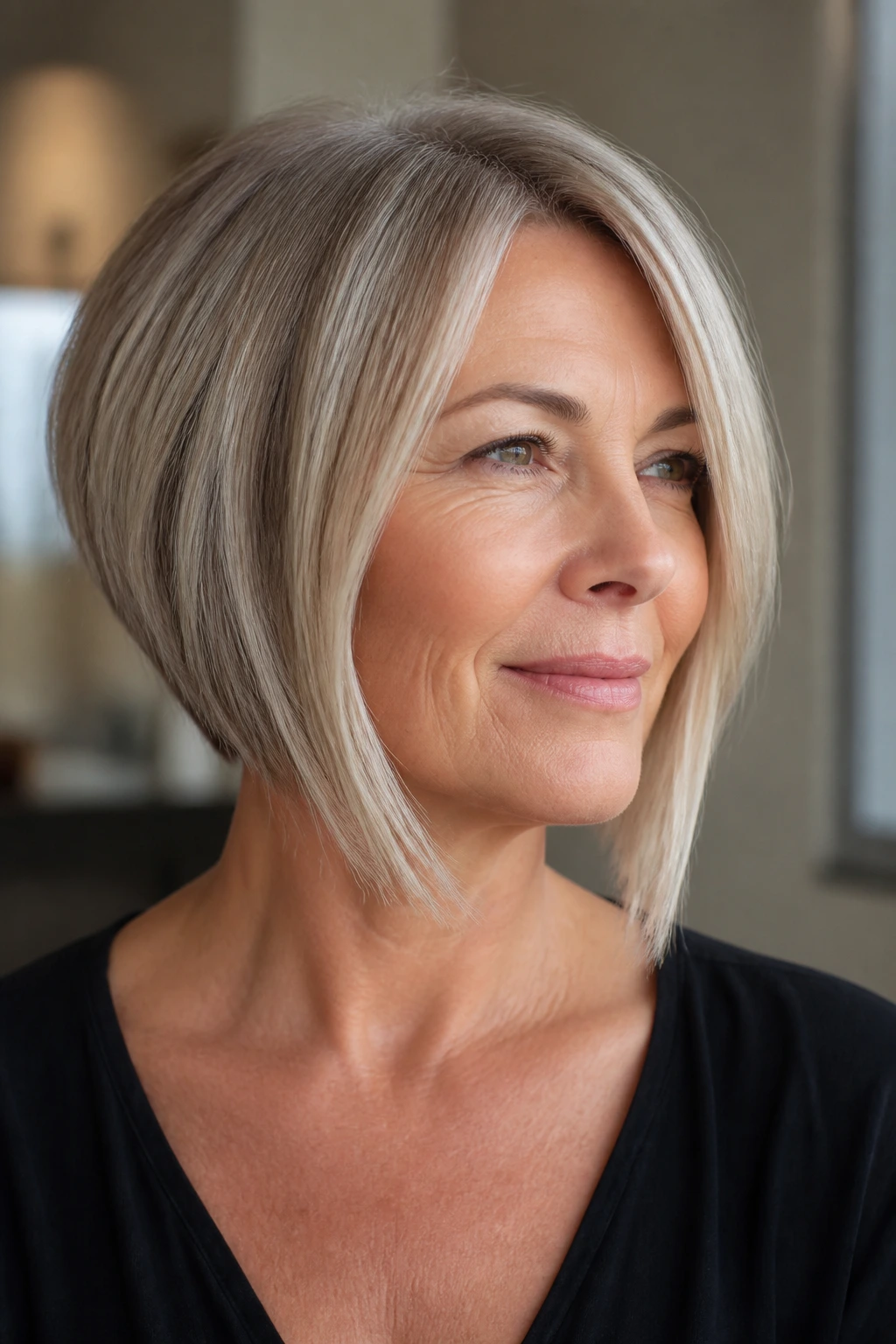
A rounded bob sounds soft, and it is, but the longer front corners keep it from becoming too sweet. The silhouette curves around the head, then stretches forward just enough to keep the eyes moving. That little extension at the front does a lot of work, especially if you want lift around the jaw and cheek.
This style can be brushed under for polish or left with a little bend for ease. It’s one of the most forgiving asymmetrical bobs because the shape stays pretty even when the styling isn’t perfect. If your hair grows outward at the sides, the rounded perimeter helps keep it in line.
19. Sleek Side-Part Bob With a Glossy Finish
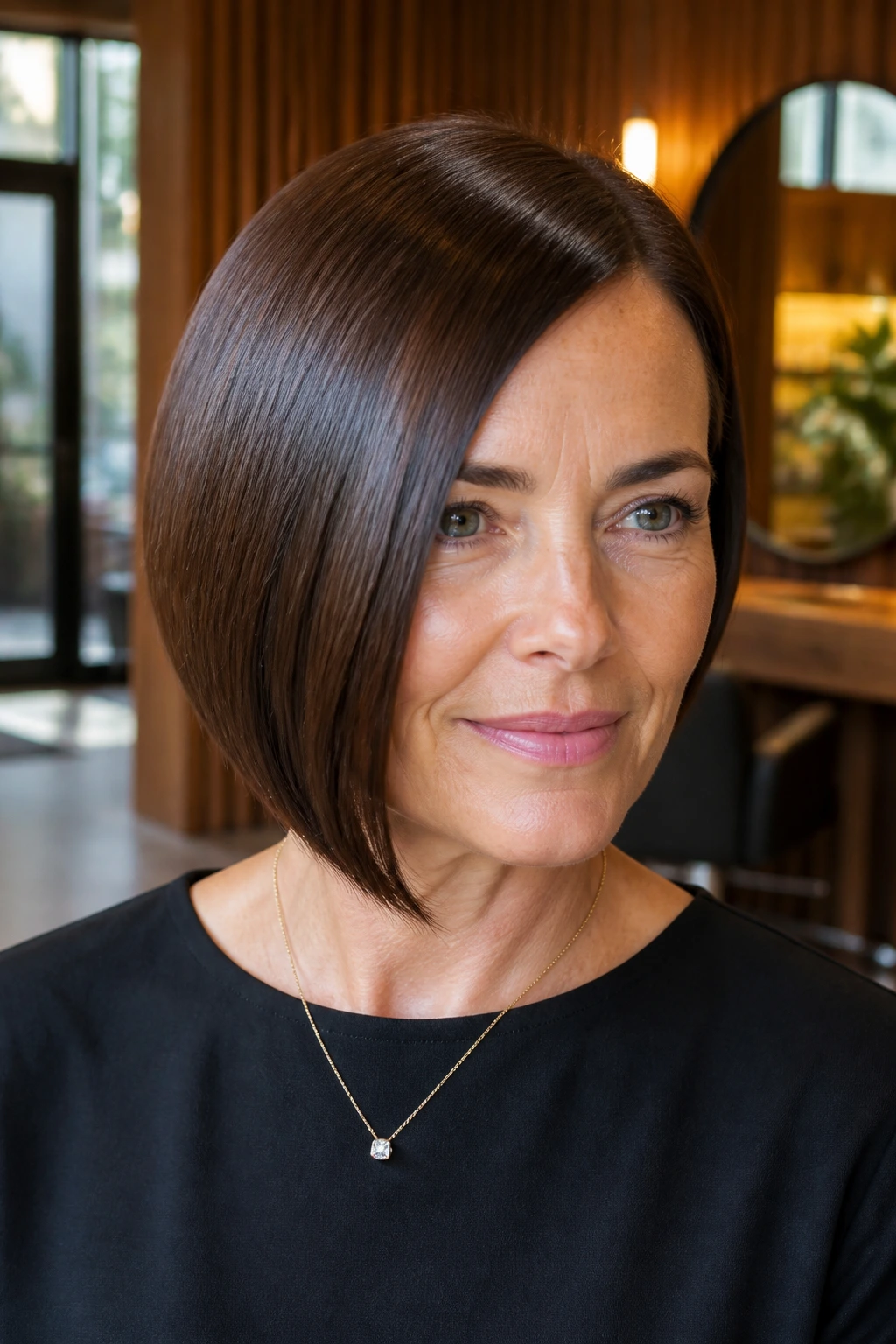
Some hair looks best when it’s clean, sharp, and deliberately smooth. This is that cut. The side part creates the asymmetry, the perimeter stays tidy, and the glossy finish makes the whole thing look expensive without needing a lot of product. It is a good pick for straight hair that tends to frizz if you overhandle it.
Keep the movement controlled. One pass with a flat iron, a little heat protectant, and a small amount of serum at the ends is enough. Anything more starts making the bob look greasy instead of sleek. This cut works best when the shine sits on the surface, not when the hair is coated.
20. Feathered Bob With Airy Layers

Feathering around the cheeks and jaw keeps this bob from sitting too heavily on the face. The layers are soft, the ends are light, and the asymmetry shows up in the way the hair moves rather than in a hard geometric line. That makes it useful for women who want shorter hair that still feels gentle.
The feathered finish also helps if your hair has gone a little flat at the temples. A small amount of mousse at the roots and a blow-dry with a brush can bring it back to life. The result should feel airy, not sparse. Feathering is useful when it removes bulk without removing shape.
21. Asymmetrical Bob With Curtain Bangs

Curtain bangs and asymmetry are a good match because both work diagonally. The fringe opens at the center, falls to each side, and lets the longer bob piece do its own thing. It softens the forehead, gives the cheekbones more room, and keeps the haircut from feeling too blunt around the face.
The key is to keep the bangs light enough that they don’t swallow the front length. A soft bend at the ends, a middle part, and a little root lift keep the whole cut relaxed. If the bangs get heavy, the asymmetry underneath gets lost.
22. Thick-Hair Bob With Hidden Weight Removal
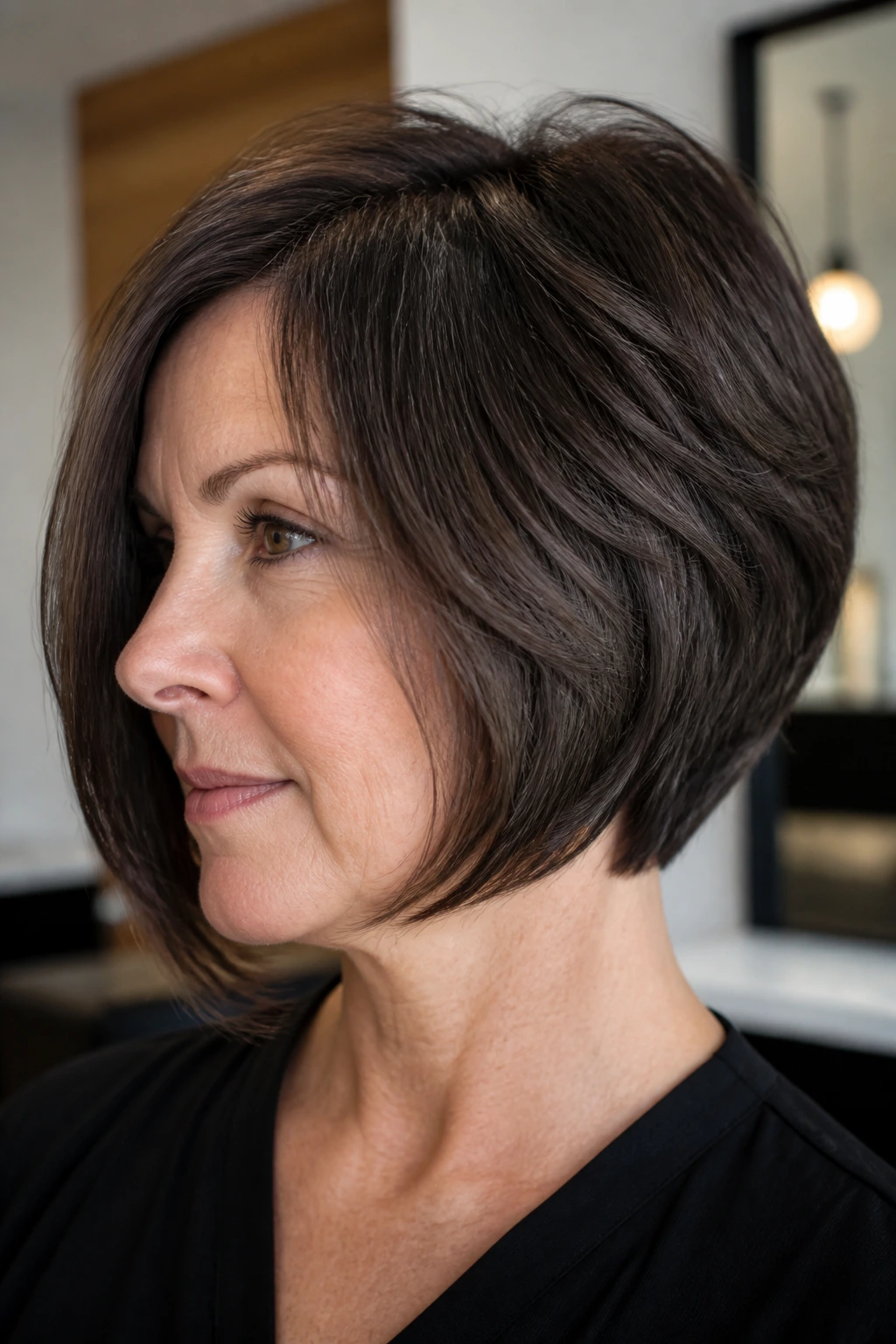
Thick hair doesn’t need to be punished. It needs to be thinned in the right places. This cut removes weight from the inside, not from the perimeter, so the line stays clean while the bulk stops ballooning out around the ears and neck. The asymmetry then becomes visible instead of buried.
That hidden debulking is the difference between a bob that feels controlled and one that feels like a mushroom cap. If your hair is coarse, ask for internal shaping and keep the ends blunt enough to hold together. Never let a stylist thin the perimeter to bits; the outline is what makes the cut work.
23. Fine-Hair Bob With a Soft Stack
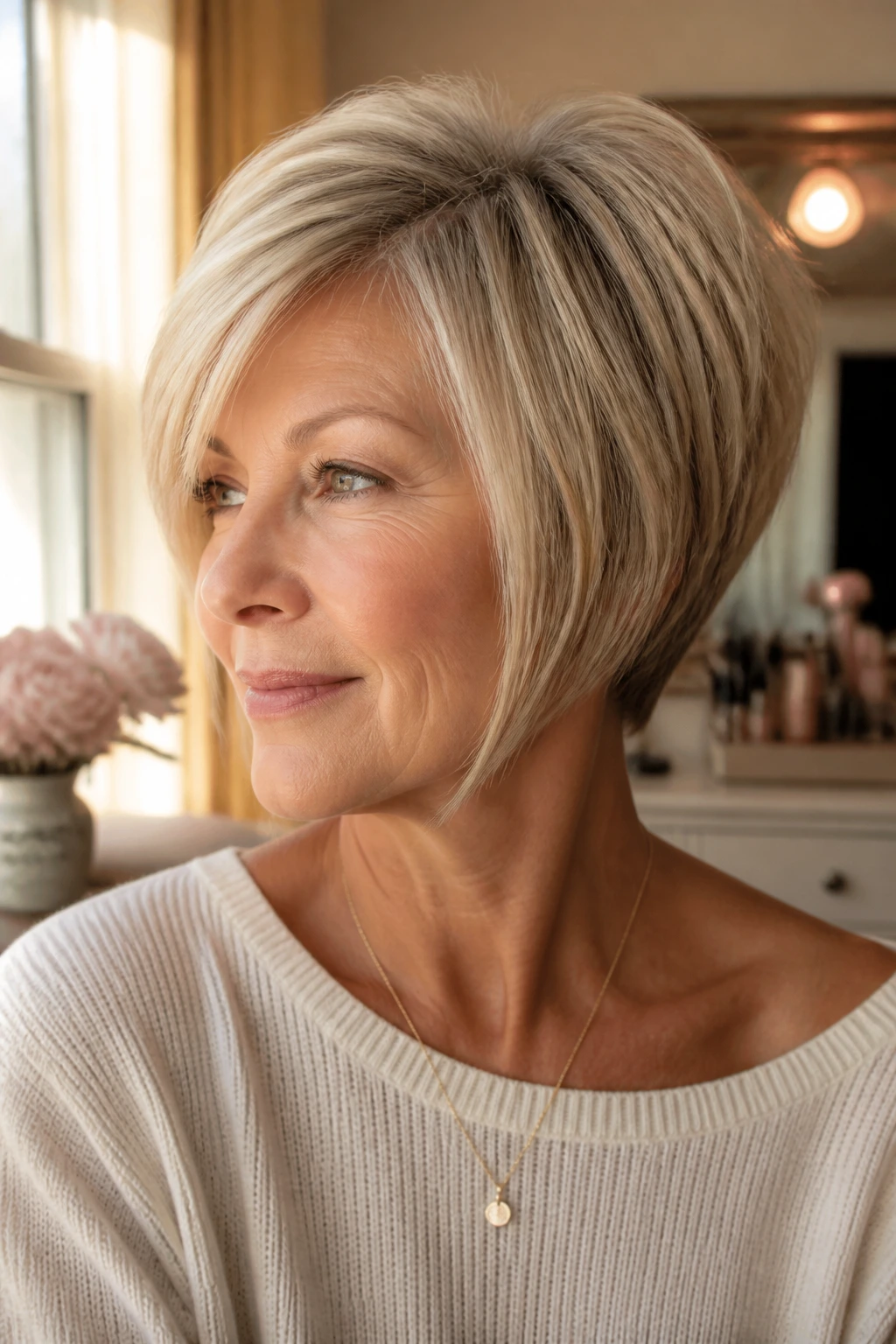
Fine hair often looks best with a little help at the back. A soft stack gives the crown lift, the nape some structure, and the front enough length to read as asymmetrical without needing a lot of density. The cut is built to make the hair look fuller where the eye lands first.
This is one of those styles where less is more. Too many layers and the hair starts to look see-through; too little stacking and it falls flat against the head. A root spray and a quick round-brush lift are usually enough. If your hair is very fine, keep the front edges thicker, not wispy.
24. Oval-Face Bob With a Long Diagonal Line
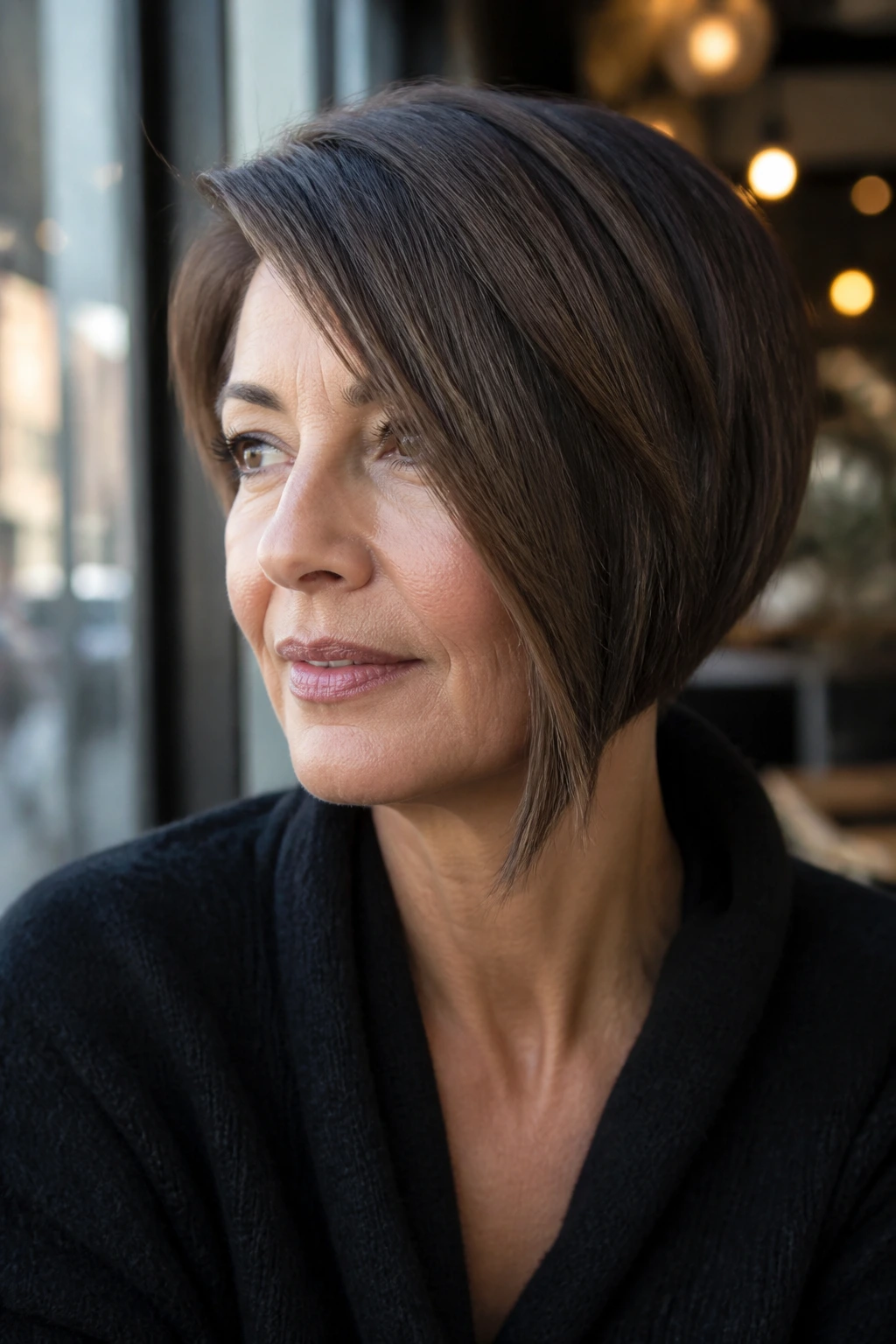
Oval faces can wear almost any bob, which is nice and also a little dangerous. Too many options. This one uses a long diagonal line to keep the cut lively, especially if you want the face to look a little sharper around the cheek area without losing softness elsewhere.
You can push this version farther than most. A more dramatic angle, a stronger side part, even a deeper tuck behind one ear will all still work. That said, keep the back clean so the whole shape doesn’t drift into too much length. Oval faces can handle drama; they do not need clutter.
25. Round-Face Bob With a Forward Angle
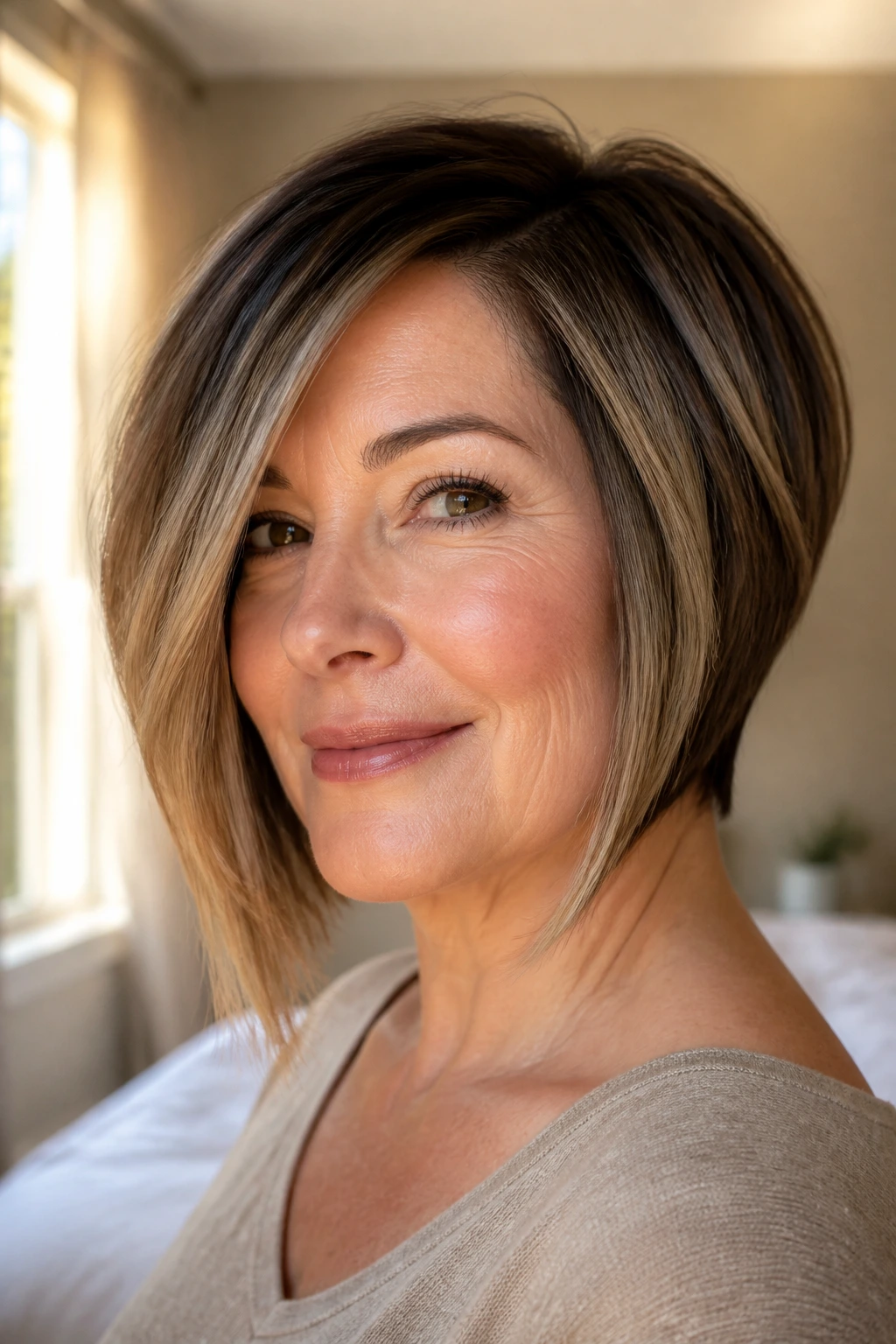
A forward angle is your friend when you want to pull attention inward and upward. The longer front pieces narrow the face visually, and the shorter back keeps the bob from widening at the cheeks. It’s a very practical shape if your hair tends to sit full around the sides.
Keep volume at the crown, not the cheeks. That’s the difference. A little lift on top stretches the silhouette, while width at the jaw makes the roundness louder. If you want this cut to slim the face, the front must fall past the widest part of the cheek.
26. Square-Face Bob With a Soft Fringe
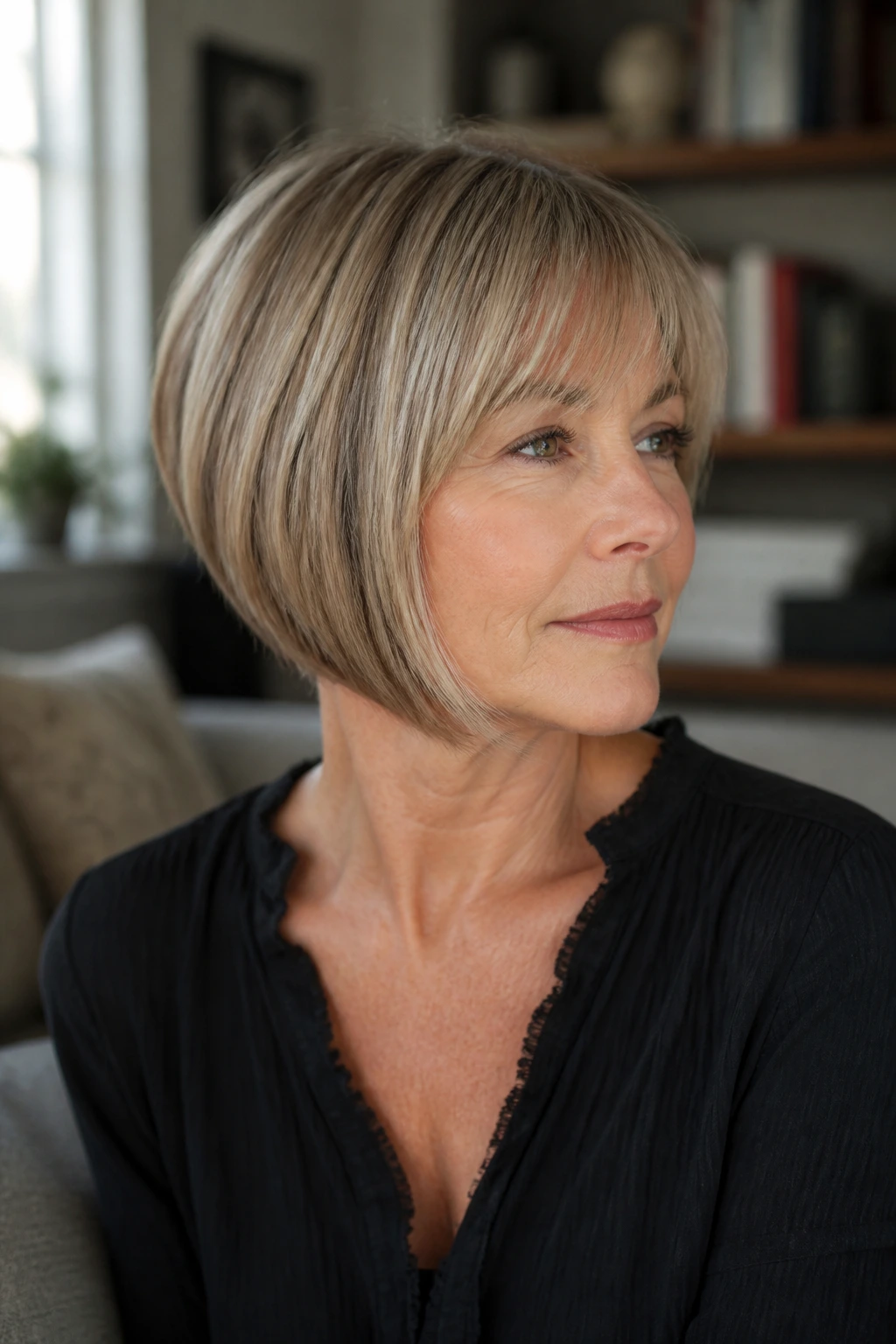
Square faces often look striking in short hair, but the wrong line can make the jaw feel even more rigid. A soft fringe and a gently asymmetrical front solve that problem by breaking up the angles. The bob still has shape, just less edge for edge’s sake.
A wispy fringe helps here more than a blunt one. So does a slightly curved perimeter. The goal is to soften the corners, not hide them. If the ends are cut too straight, the haircut will echo the jaw instead of balancing it.
27. Glasses-Friendly Bob With a Narrow Nape
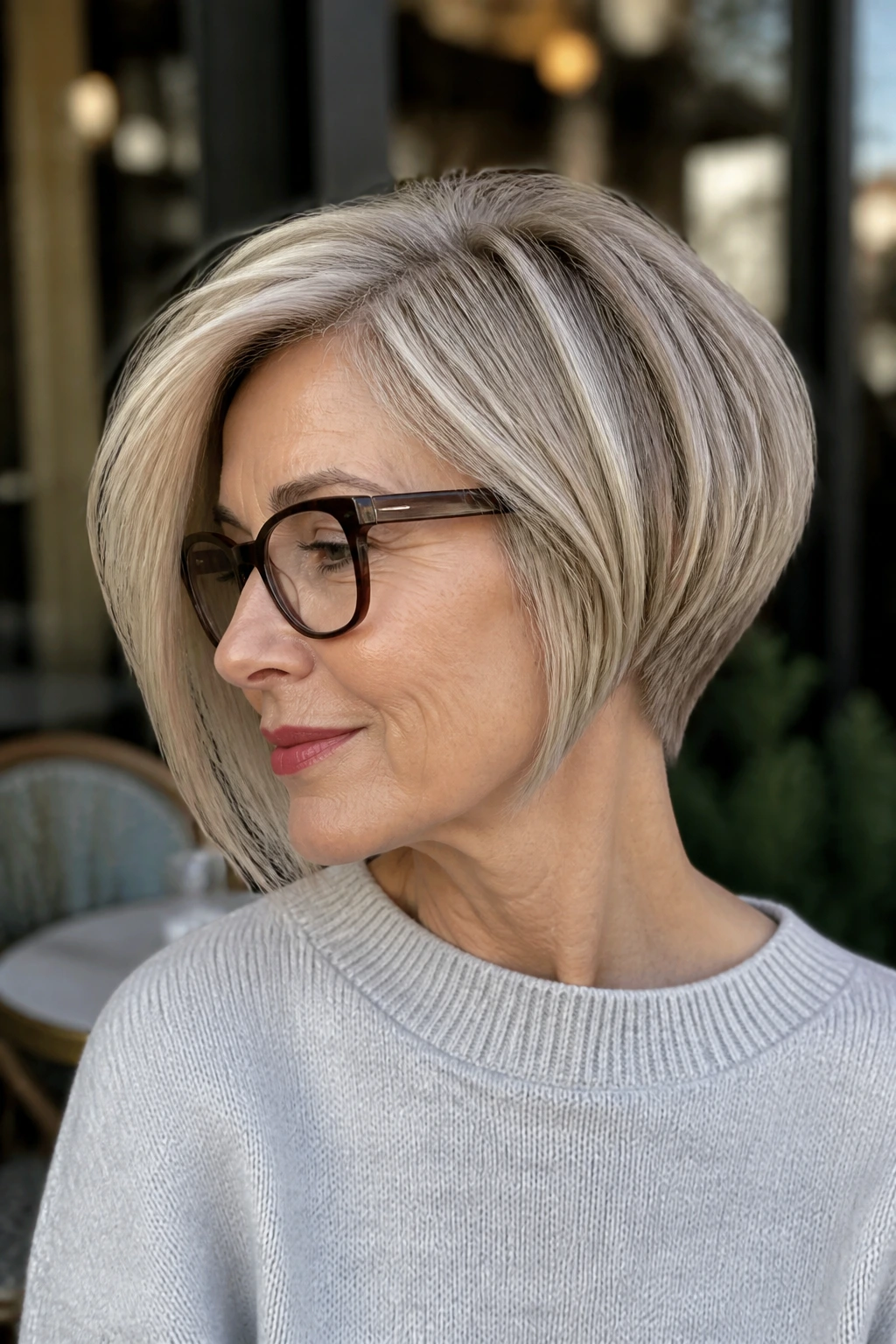
If you wear glasses every day, the area around the temples and ears matters more than most stylists admit. A glasses-friendly bob keeps the nape narrow, leaves room for the arms of the frames, and lets the longer side sit forward without crowding the face. The haircut and the glasses stop competing.
This is a small design choice, but you feel it all day. Hair that hits the frame arms constantly gets annoying. Hair that sits just above or just below them behaves. Ask your stylist to check the cut with your glasses on, not after you get home.
28. Gray-Hair Bob With Piecey Ends

Gray hair can go blunt fast if the line is too heavy. Piecey ends fix that. They keep the cut light around the face, let the silver read as texture rather than mass, and stop the shape from looking boxy. The asymmetry adds movement without asking the hair to do too much.
A little paste or cream worked only through the ends gives the hair that separated look people keep asking for. The trick is restraint. Overproducting gray hair tends to darken the tone and flatten the brightness. Let the silver shine through; don’t bury it under shine spray.
29. Warm Brunette Bob With Caramel Ribbons
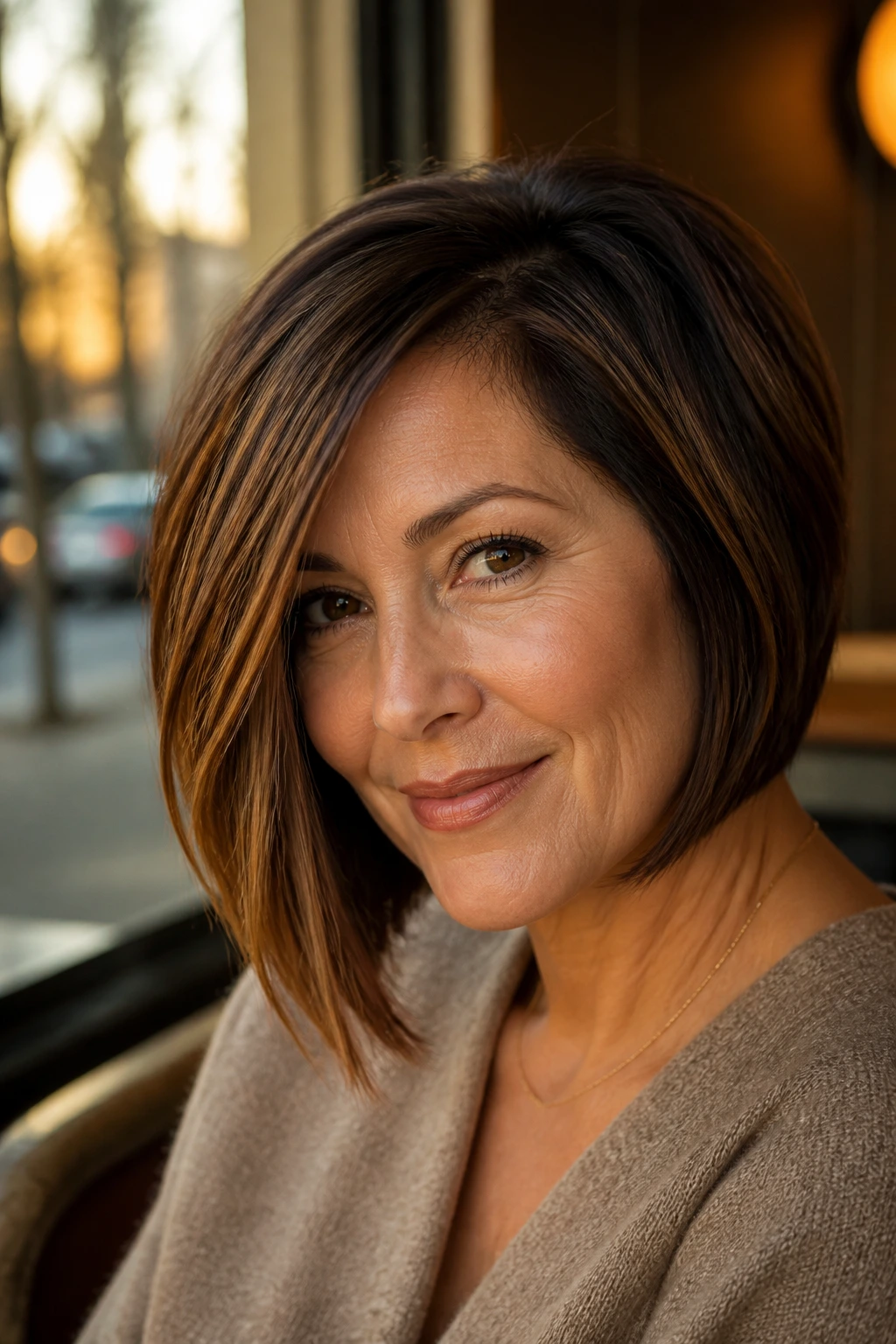
Color can do half the work of asymmetry. Caramel ribbons placed through the longer side of the bob make the angle visible even when the haircut itself is soft. That’s useful if you want movement without a severe cut line, especially on medium-brown hair that needs a little light around the face.
This is one of the prettier ways to keep a short bob from looking flat in dim light. The color creates a path for the eye, and the asymmetry gives it direction. Keep the highlights fine, not chunky. Wide color blocks fight the cut; thin ribbons make it sing.
30. Low-Maintenance Bob That Grows Out Gracefully

Not every asymmetrical bob needs to stay sharp forever. Some are built to age well for weeks, which matters if you do not want to live at the salon. This version keeps the difference between sides modest, softens the front line, and leaves enough movement that the cut still looks deliberate as it grows.
It’s the quietest option in the bunch, and I mean that as a compliment. You can air-dry it, tuck one side behind the ear, and let it keep its shape without a fight. If you want a haircut that won’t punish you for missing a trim, this is the one to bookmark. Ask for a soft angle rather than a dramatic one; the grow-out is much kinder.
Why the Angle Changes the Whole Face

A straight bob cuts the eye off at one level. An asymmetrical bob sends the eye on a diagonal, and that simple tilt changes how the whole face reads. The cheekbone looks a little higher. The neckline looks cleaner. The jaw gets a frame instead of a hard border.
That matters more on mature hair than people sometimes admit. Hair can become finer at the crown, coarser at the ends, or more likely to collapse on one side if there’s a cowlick near the part. A diagonal line gives the cut a direction, which means the style can work with those quirks instead of pretending they’re not there.
The other reason I like this shape is that it feels current without chasing a fad. A bob with one longer side has been around long enough to prove it works, and it keeps working because the mechanics are sound. The front can frame, the back can support, and the whole shape can be tuned up or down by an inch. That kind of control is rare, and it’s useful.
Essential Styling Tools for These Bobs
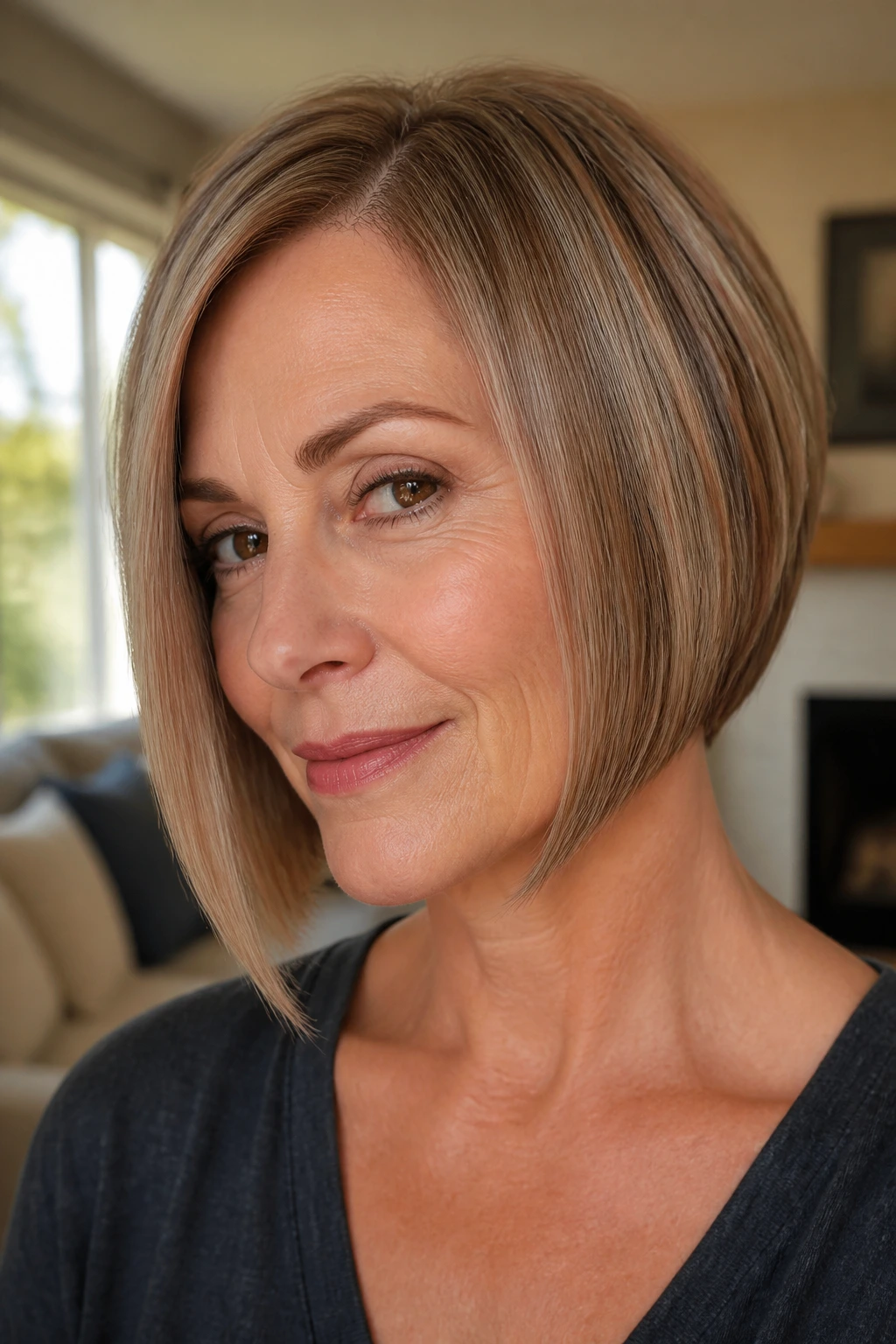
You do not need a drawer full of gadgets to wear this cut well. You need a small, sane lineup that helps the shape sit where it should.
- Blow dryer with a nozzle: Directs the hair along the part and stops the ends from blowing into chaos.
- 1- to 1.5-inch round brush: Gives the front pieces a bend and keeps the asymmetry polished.
- Flat iron with rounded plates: Useful for a sleek version or a soft tuck at the ends.
- Root-lift spray or mousse: Helps the crown stay up, especially on fine or flat hair.
- Lightweight heat protectant: Worth using every time you touch the hair with heat; short bobs show damage fast.
- Texturizing spray: Good for piecey ends and second-day movement, but use it sparingly.
- Tail comb: Helps make a clean side part, which matters more than people think.
- Small clips: Keep the longer front section out of the way while you dry the back.
- Flexible-hold hairspray: Holds the line without turning it stiff or crunchy.
One caveat. Heavy serums and thick creams can drag short hair down in a hurry. If the bottle feels rich, use half of what you think you need.
How to Explain the Cut at the Salon
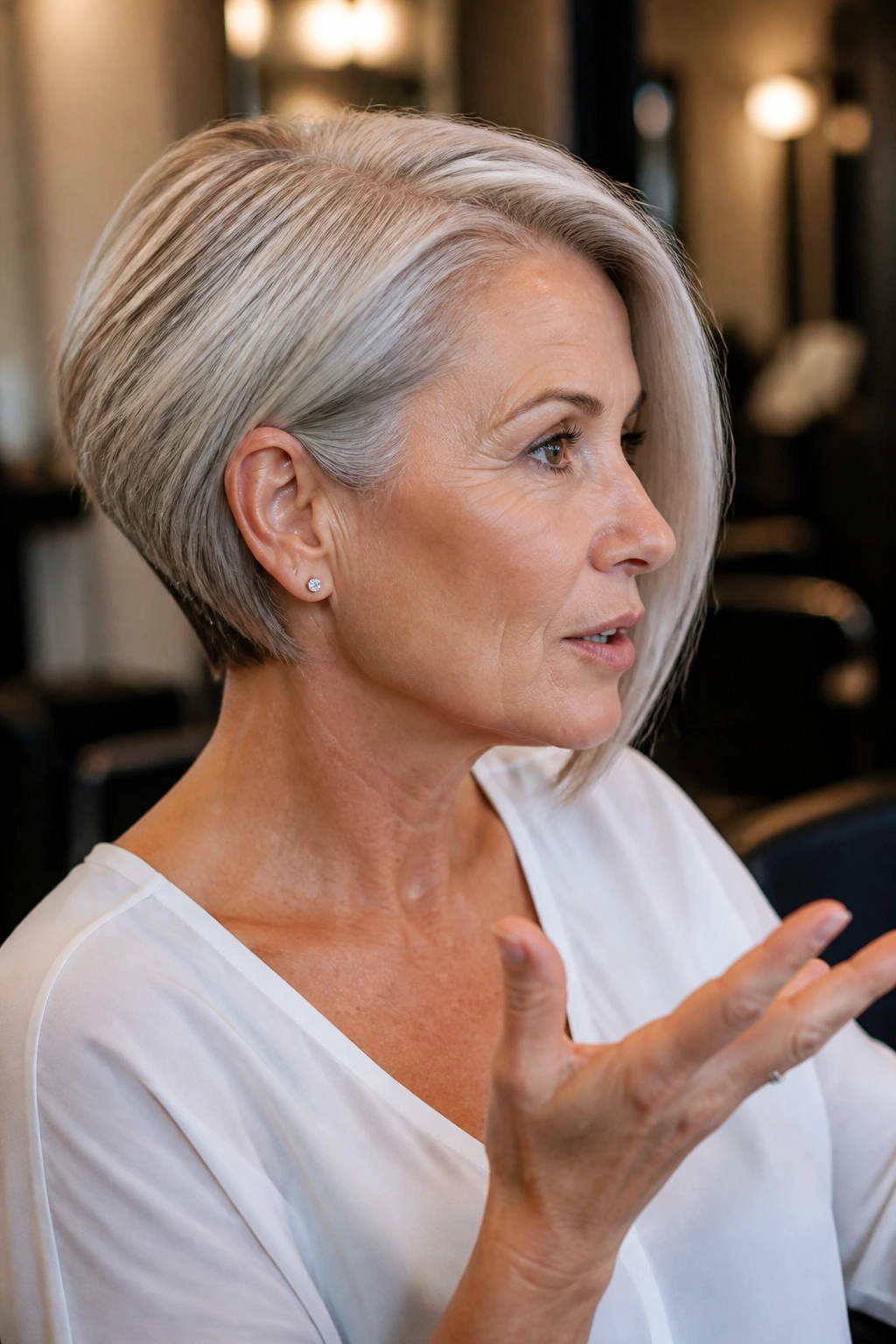
Bring photos, yes, but also say what you want the hair to do. That saves time. A stylist can copy a shape and still miss the reason you liked it. Maybe you want the longer side to skim the cheekbone. Maybe you want the back to sit tight at the nape. Maybe you want the cut to look good tucked behind one ear and messy on the other.
Be specific about the amount of asymmetry. One inch is subtle. Two inches reads as deliberate. Three inches starts to look like a statement. There is no rule that says dramatic is better, especially if you wear glasses or don’t want to style your hair every morning.
Also mention your texture honestly. Fine hair needs a different internal structure than thick hair. Curly hair needs its shape mapped out dry or close to dry. If you have a cowlick at the crown, say so before the scissors come out. The best cut for you is the one that respects how your hair actually behaves, not how it behaves in a photo.
How to Wear It With Glasses, Earrings, and Collars

Presentation: Keep the shorter side slightly tucked or brushed back so the face stays open. If the bob falls into your frames, it starts to look crowded instead of crisp.
Best Pairings: Hoop earrings, slim drop earrings, turtlenecks, crewnecks, and open collars all work nicely with an asymmetrical bob. The neckline matters because the cut already brings attention there, and a good shirt or sweater can either echo that line or compete with it.
Proportion: Shorter front lengths usually work better with smaller frames, while a stronger angle can handle bolder glasses. If your frames are wide and dark, keep the fringe lighter so the face does not close in.
Finish: Sleek hair reads polished. Piecey hair reads relaxed. A soft bend at the ends often sits in the middle, which is where a lot of women live day to day.
You do not need jewelry and hair to match perfectly. You just need enough breathing room around the face that nothing is blocking the other thing.
Additional Tips and Personal Tweaks
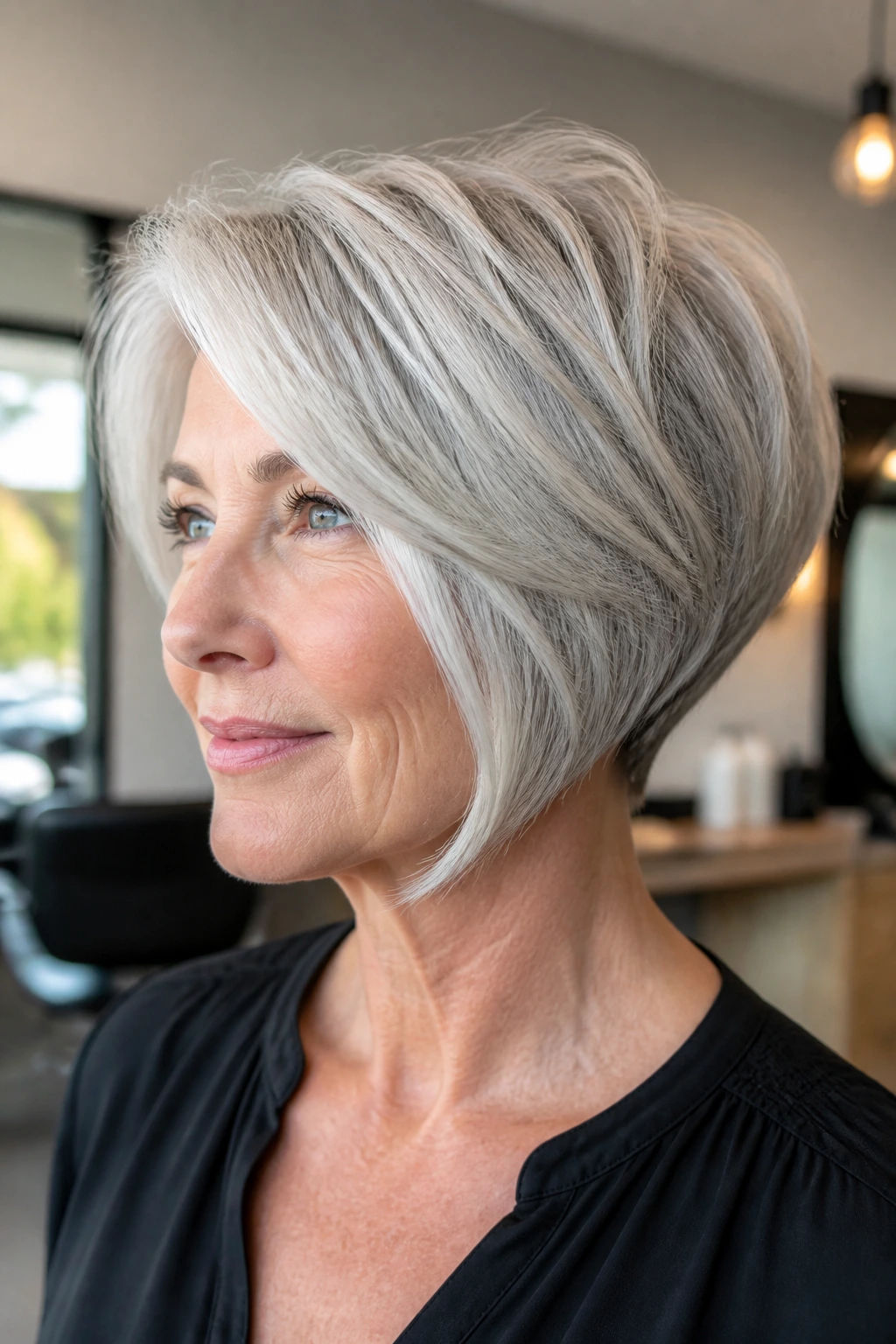
Shape Boost: If the bob feels too round, push the longer side forward a little more and add a touch of root lift at the crown. That tiny adjustment often does more than another layer ever would.
Texture Switch: Straight hair can take a flat iron bend at the ends, while wavy hair usually looks better with a dab of cream and a squeeze of the fingers. Do not fight the natural pattern if it already wants to move.
Polish Factor: For a sharper finish, dry the hair with tension and smooth only the outer layer. The inside can stay a little imperfect. Nobody sees it, and the cut still holds.
Make It Yours: A side-swept fringe makes the style softer, while a shorter nape makes it cleaner. If you like color, a few fine highlights on the longer side will exaggerate the angle without making the haircut louder.
I’m a fan of small changes here. They are easier to live with, and they make the haircut feel personal instead of stamped out of a salon pattern book.
Maintenance, Refreshing, and Salon Timing

A sharp asymmetrical bob needs a trim every 5 to 7 weeks if you want the angle to stay clean. If the shape is softer and the grow-out is part of the appeal, you can stretch that to 7 to 9 weeks, but the neckline usually tells the truth before the front does. When the back starts puffing out or the longer side stops landing where it used to, the cut is asking for a cleanup.
At night, a silk pillowcase helps, but I like a loose clip at the crown even more for bobs with a strong front line. It keeps the longer side from kinking in a weird spot. Morning refreshes should be quick: mist the roots with water, add a bit of mousse or spray at the crown, then blow-dry only the sections that collapsed. You do not need to redo the whole head if one side got weird in sleep.
For day two or three, dry shampoo at the roots and a quick bend with a flat iron on the front pieces usually restores the shape. If the ends flip outward, wrap them around the brush or iron in the opposite direction for a few seconds. A bob like this rarely needs more product; it usually needs smarter placement.
Common Mistakes That Make the Cut Look Off

- Making the angle too dramatic too soon: If one side is several inches longer than the other, the cut can start wearing you instead of the other way around. A smaller difference is often more flattering and easier to style.
- Over-thinning fine hair: The ends go see-through, the shape loses its body, and the bob starts looking stringy. Ask for controlled shaping, not a lot of texture removal.
- Ignoring the natural part or cowlick: The hair will fight back every morning, and the asymmetry will never sit the same way twice. Work with the growth pattern, not against it.
- Letting the neckline grow too long: The back gets bulky and the whole bob loses its neat edge. A quick cleanup at the nape often fixes what feels like a bigger problem.
- Styling every strand into place: A good asymmetrical bob should have a little movement. If every section is sprayed hard and pinned flat, the cut looks stiff and dated.
The fix for most of these mistakes is the same: keep the structure clean and the finish light. The haircut should look intentional, not frozen.
Variations and Adaptations to Try

The Soft Sweep: This is the easiest version to wear first. The asymmetry is subtle, the front pieces barely differ in length, and the whole cut grows out quietly. It suits women who want change without a hard edge.
The High-Lift Crown: Add more volume at the top and keep the sides slightly narrower. This version is good when the crown has flattened out and the face needs a bit of vertical lift.
The Textured Wave Bob: Built for wavy or slightly bent hair, this variation uses loose ends and a side part to keep the shape from looking too precise. It feels less formal and usually air-dries well.
The Sleek Silver Line: Best for gray or white hair that shines in a clean finish. A blunt perimeter, a deep side part, and a glossy product create a sharper read that still feels grown-up.
The Low-Bulk Thick-Hair Version: This one removes weight from the inside and keeps the outline strong. It’s the right move if thick hair tends to swell and you want a shape that sits close to the head.
The Soft Fringe Update: Add curtain bangs or side-swept bangs if you want the bob to feel gentler around the face. That little shift changes the mood fast without altering the whole haircut.
Frequently Asked Questions
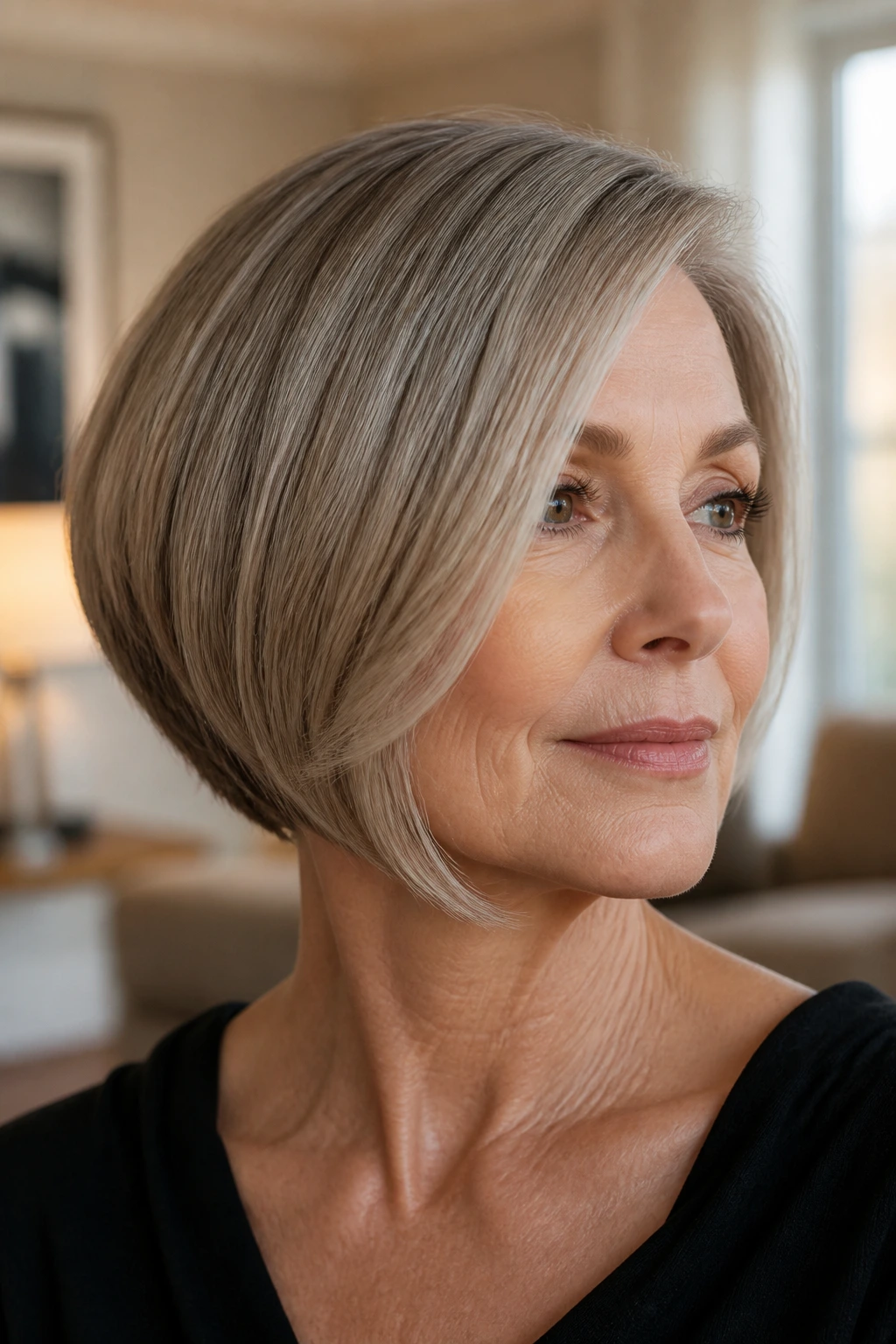
Will an asymmetrical bob make my face look slimmer?
Often, yes, because the diagonal line draws the eye down and forward instead of straight across. The effect is strongest when the front pieces pass the widest point of the cheeks and the crown has a little lift.
How much longer should one side be?
For a subtle look, ask for about 1 inch of difference. For a clearer angle, 2 inches is usually enough. Once the gap gets much bigger, the cut starts reading as dramatic rather than wearable.
Does this cut work on fine hair?
It can work very well if the stylist keeps the outline strong and avoids over-thinning. Fine hair usually needs a bit of crown lift, a clean perimeter, and maybe a soft stack in the back so the shape doesn’t collapse.
Can curly or wavy hair wear an asymmetrical bob?
Absolutely, but the cut needs to account for shrinkage and bounce. Curls often do better when the shape is cut dry or close to dry, and the longer side should be left a little longer than you think.
What if I wear glasses every day?
Then the area around the ears and temples matters a lot. Ask your stylist to check the cut with your frames on, and make sure the longer side doesn’t crowd the arms of the glasses.
How often do I need trims?
If you want a crisp angle, plan on 5 to 7 weeks. If you like a softer grow-out, you can go longer, but the nape and the longer front side should still be checked before they get fuzzy.
What if one side flips out every morning?
That usually means the hair is fighting the growth direction or the ends were cut too blunt for the texture. A quick bend with a flat iron, or a slightly softer point-cut finish at the salon, usually helps.
Is an asymmetrical bob better than a stacked bob?
Neither is better across the board. A stacked bob gives more lift in the back, while an asymmetrical bob puts more attention on the front and sides. If you want face framing, asymmetry usually wins; if you want crown fullness, stacking does more of the work.
A Cut That Keeps Its Shape

The nice thing about this haircut is that it does not rely on youth, volume, or a perfect blowout to make sense. It works because the line has direction. A little shorter here, a little longer there, and suddenly the face looks framed rather than covered.
That’s why these asymmetrical short bobs keep coming back for older women who want something sharp but not fussy. They can look sleek, soft, textured, silver, dark, or sunlit and still hold the same basic promise: a cleaner shape with a bit of movement built in.
If you’re going to take one thing from all thirty styles, take this. Ask for the angle that suits your neck, your glasses, and your morning routine—not the most dramatic version on the mood board. That’s the one you’ll keep wearing long after the salon cape comes off.