



Shoulder-length hair has a funny habit of looking expensive for exactly one day and then collapsing into either a triangle or a flat sheet. Asian curtain bobs with bangs for shoulder-length hair solve that by keeping the outline clean while letting the front fall softer, lighter, and a little more alive around the face.
What I like about this family of cuts is the balance. The ends still have enough length to skim the collarbone, tuck behind the ears, or flip under with a brush, but the curtain fringe breaks up the front so the whole look doesn’t harden into one blunt block. That tiny split down the center does a lot of work.
And it’s not one haircut wearing twenty hats. Some versions are glossy and sleek, some are airy and piecey, some are built to flatter dense straight hair that wants to sit heavy at the bottom. The fun is in the details: where the fringe starts, how much weight stays in the perimeter, and whether the ends bend in, out, or just sit cleanly with a little movement.
Why These 22 Cuts Earn a Save
-
They keep shoulder-length hair from looking boxy: The curtain fringe opens the front, so even a blunt edge feels softer and less helmet-like.
-
They play nicely with straight Asian hair textures: A center part plus controlled face-framing pieces gives straight hair shape without forcing curls or heavy layering.
-
They grow out better than a strict chin-length bob: The extra length at the collarbone buys you time between trims, and the fringe can blend into face layers instead of turning into a hard line.
-
They work with both blowouts and air-drying: Some of these cuts want a round brush; others only need mousse, a twist of the wrist, and a little patience.
-
They let you choose your level of polish: You can go glossy and sharp, or relaxed and feathery. Same length. Very different mood.
-
They’re easier to personalize than a one-length cut: Density, jaw shape, and forehead height all change how a curtain bob sits, which means small tweaks make a big difference.
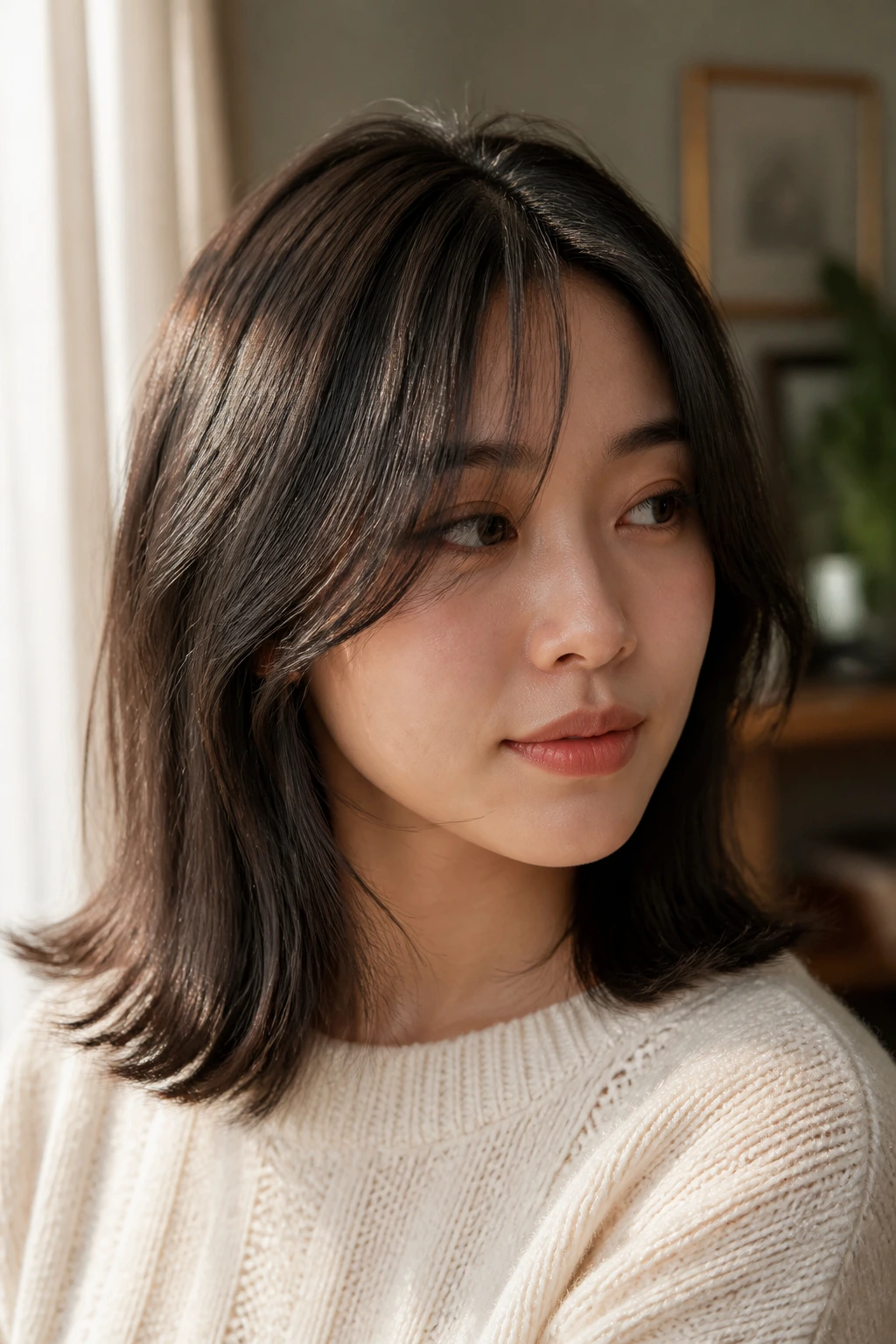
1. The Airy K-Drama Curtain Bob
This is the cut that made a lot of people fall in love with the shoulder-length bob in the first place. The ends sit right around the collarbone, the center part is soft rather than severe, and the curtain bangs split in a way that lets the cheekbones show through. It has that light, floaty finish that looks controlled without feeling stiff.
What makes it work is the tension between structure and movement. The perimeter stays clean, but the front pieces are cut long enough to swing when you turn your head. That keeps straight hair from looking like a solid curtain of one length.
Ask for long curtain bangs that start around the bridge of the nose and face-framing layers that begin near the cheekbone, not halfway down the jaw. That detail matters. If the layers start too high, the cut can turn fluffy around the temples.
2. The Glassy Center-Part Lob
If you like shine more than texture, this is the one. The line is sleek, the ends sit neatly against the shoulders, and the curtain bangs are long enough to blend into the front without making a big statement. It’s a clean haircut, and that’s the whole charm.
This version is especially good on hair that naturally falls straight or slightly bent. A smooth blow-dry or a flat iron pass gives the surface that polished, glassy finish that makes the line of the cut look deliberate. The bang area should still move, though; if the fringe is cut too sparse, the front can look disconnected from the rest of the bob.
What to ask for
- A collarbone-grazing length with minimal internal layers
- Curtain bangs that sit at or just below the cheekbone
- Soft point-cutting at the ends so they don’t look carved
The best part is that this style doesn’t need a lot of fluff or teasing. Keep the roots smooth, bend the front away from the face slightly, and let the shine do the talking.
3. The Rounded C-Curve Bob
This is the bob for people who want the ends to curve inward just enough to frame the neck. The shape is fuller than a lob but less severe than a blunt cut, and the C-curve gives the whole head a more rounded silhouette. It’s tidy. Almost old-school, but in a good way.
The curtain bangs matter here because they keep the front from feeling too heavy. Without them, the curve can make the cut feel closed off. With them, the face stays open, and the bob still has that polished shell of shape around the jaw and collarbone.
Best for
- Straight or slightly coarse hair
- Square or angular jaws
- Anyone who wants the ends to tuck inward without curling them hard
A medium round brush does most of the work. Dry the bangs first, side to side, so they don’t stick flat to the forehead, then finish the ends by rolling them under 1 to 2 inches. That little bend is the whole point.
4. The Soft Shag Bob
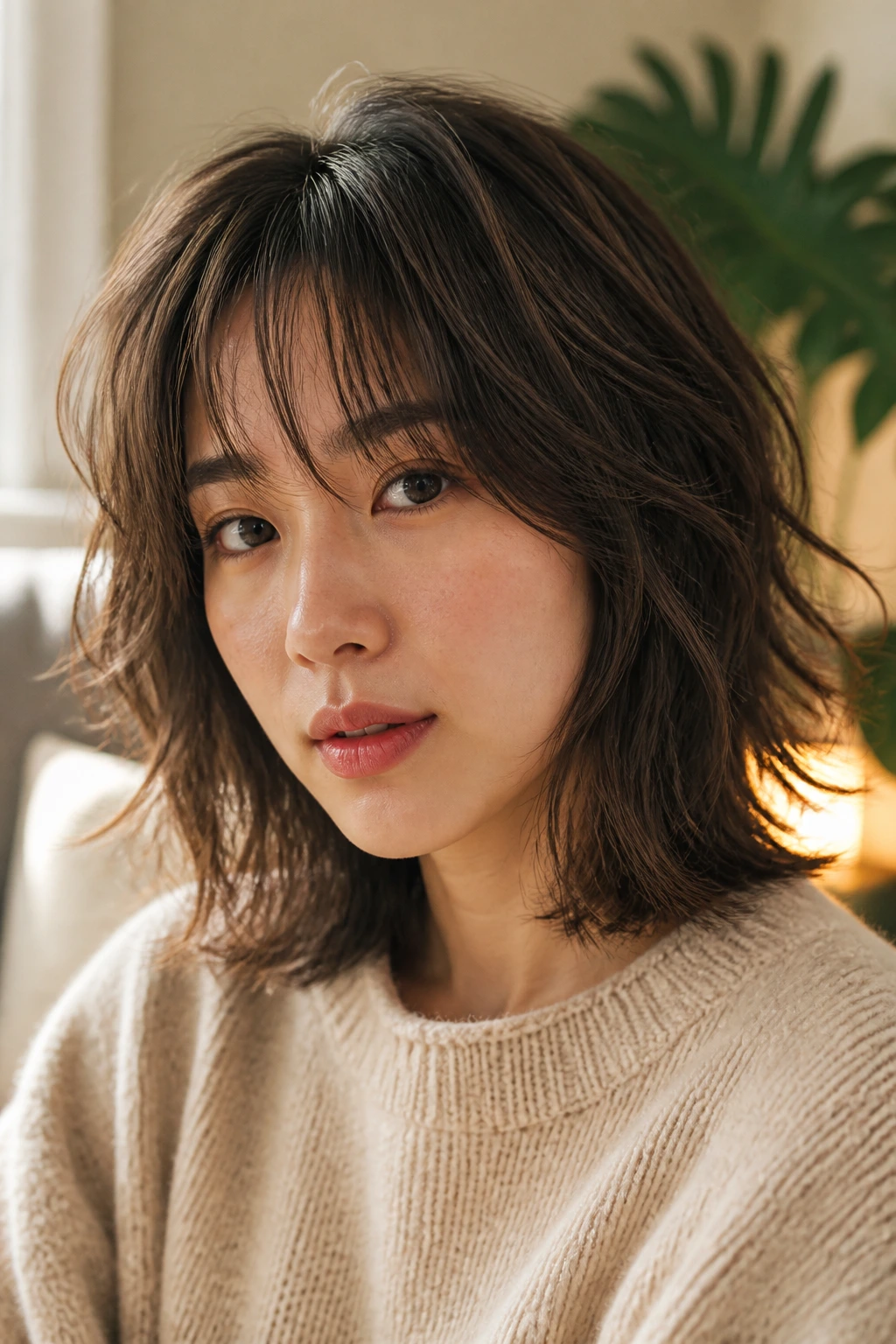
If you want a bob that looks lived-in instead of crisp, this is the easiest path. The layers are a touch more visible, the curtain bangs are feathered, and the silhouette has a little mess in it on purpose. It’s not wild. It’s just looser.
This version flatters wavy hair especially well because the wave gets to stay part of the cut instead of being ironed into submission. On thicker hair, the layers should be long and blended so the outline doesn’t fray into fuzz. A shag bob goes wrong when the texturizing is too aggressive; then it looks dry at the ends and heavy at the crown.
A dab of mousse, a quick scrunch, and a diffuse-dry can be enough. If the fringe splits too far apart, twist each side around your fingers while it’s still damp. That tiny move keeps the curtain shape instead of letting the front collapse into random pieces.
5. The Blunt Shoulder-Grazing Bob with See-Through Bangs
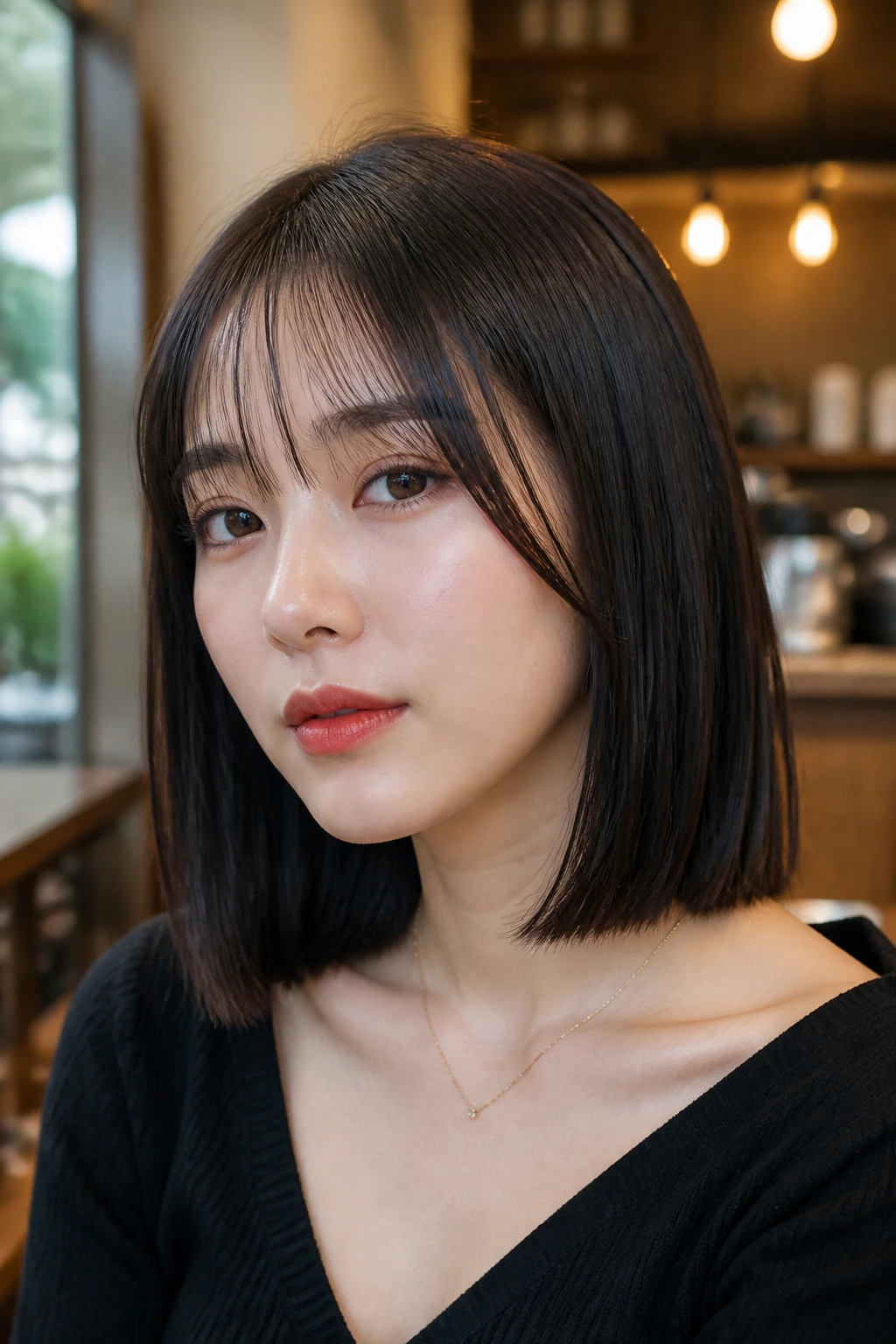
This one is for people who like a stronger line. The perimeter is blunt and dense, but the bangs are airy and light, so the face stays soft while the rest of the haircut keeps its weight. It has a crisp, expensive look when the ends are cut cleanly.
See-through bangs are the trick. They don’t need to be sparse in a flimsy way; they just need enough space between strands so the forehead doesn’t disappear. On thicker hair, that contrast is especially nice. A full fringe can feel heavy fast, while a see-through curtain keeps the front open.
Why it works
The blunt edge at shoulder length makes the hair look thicker than it is, and the thin curtain bang prevents the shape from feeling square. That balance is harder to get than it sounds. Too much layering destroys the blunt effect. Too little softening and the whole haircut starts to look severe.
Ask for a blunt baseline with very light face-framing pieces and minimal thinning at the ends. Then style the fringe with a round brush only at the root. You do not need to curl it into a wave.
6. The Wavy Perm Bob
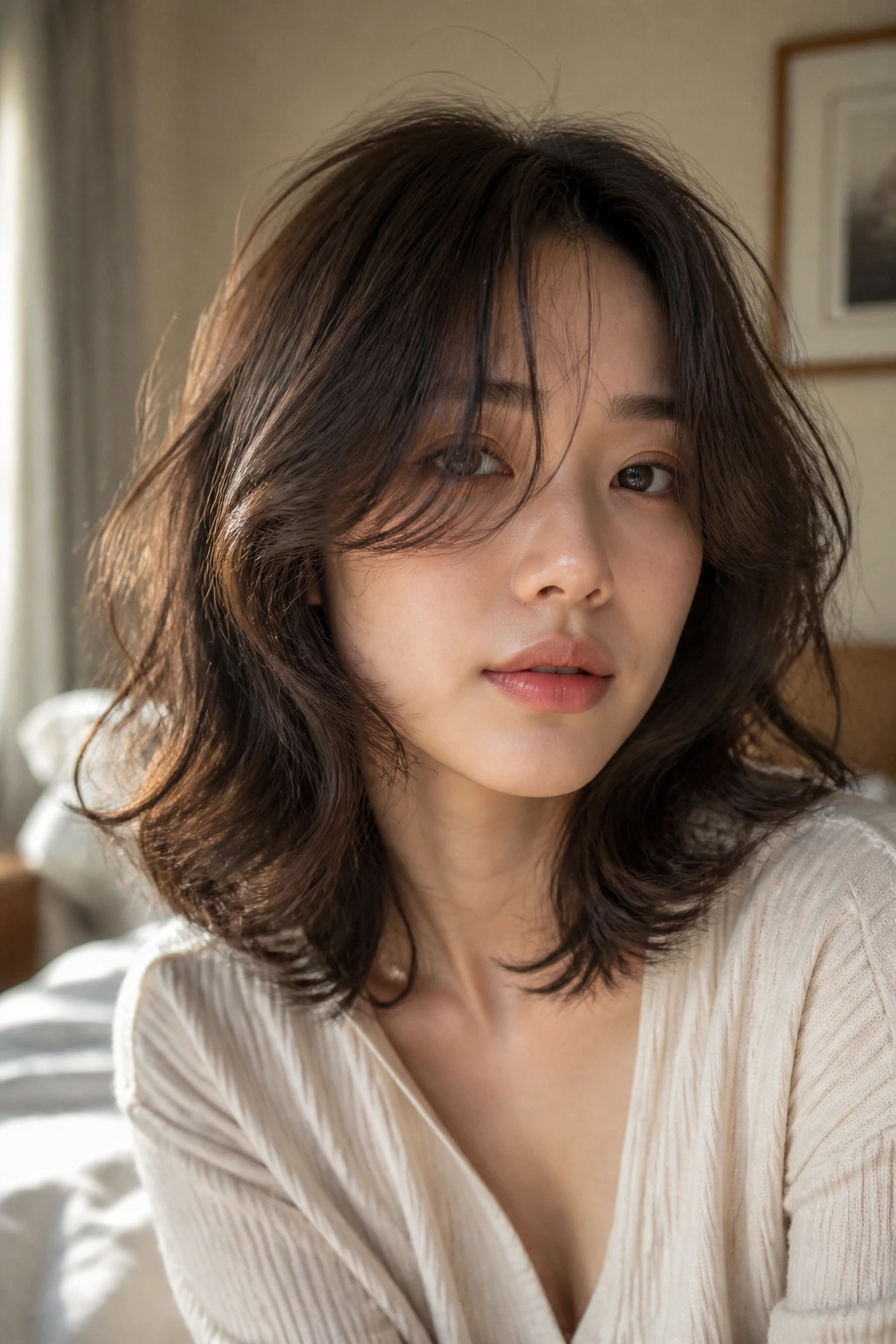
Some hair wants structure without daily heat, and this is the version for that. A soft digital perm or loose wave pattern gives the bob body from mid-length down, while the curtain bangs stay long enough to sweep away from the cheeks. It looks especially good when the bend is relaxed, not tight.
What’s nice here is the shape memory. The curl does the work for you, so the haircut wakes up with built-in movement. If the layers are cut right, the waves fall into pieces instead of puffing out like a mushroom. That’s the difference between a controlled perm bob and a dated one.
Keep the bangs longer than you think. Short fringe on a perm can jump too high after drying, and then the whole face-framing idea falls apart. A little length buys you room to shape them with your fingers or a diffuser.
7. The Collarbone Flip Bob
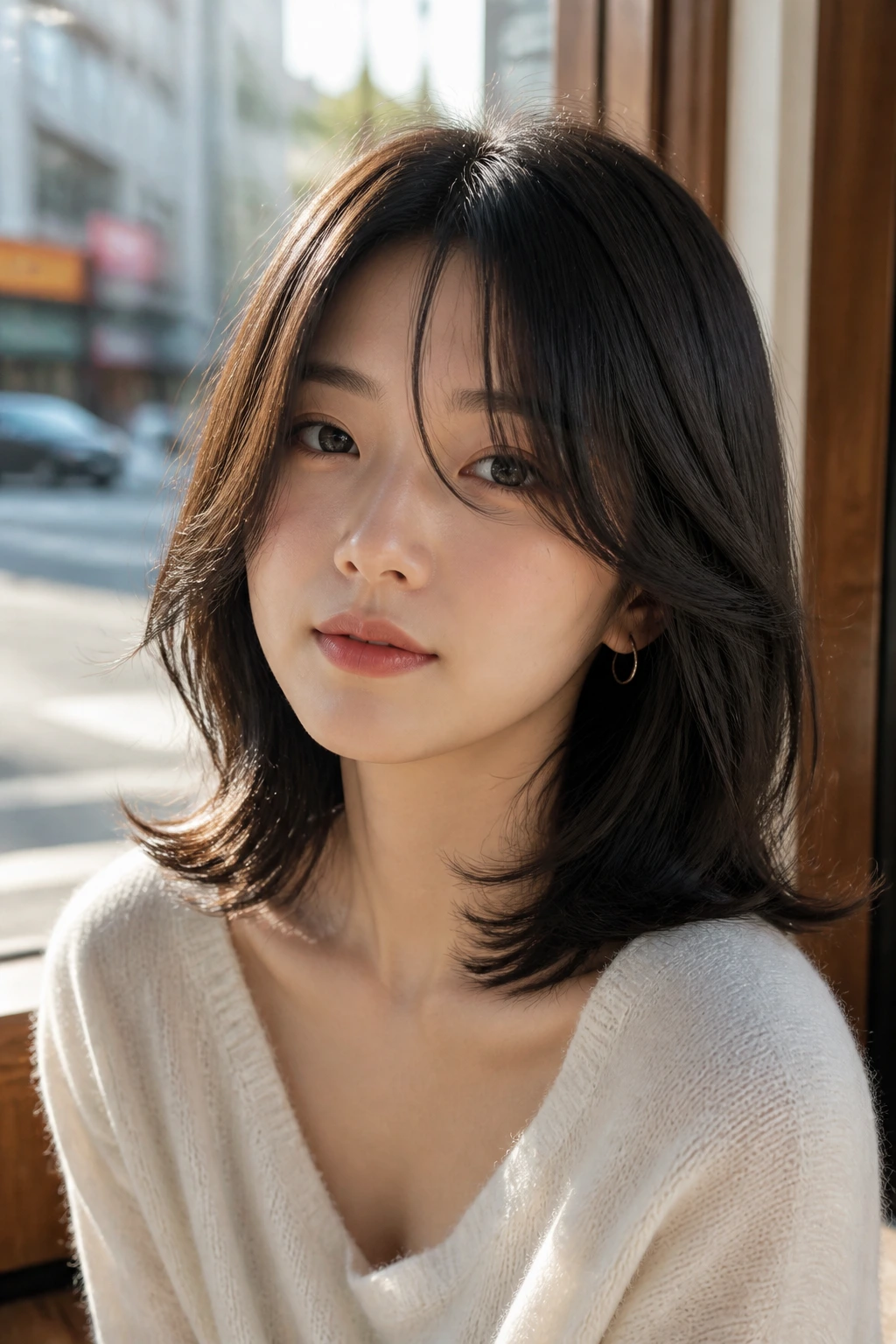
This is the playful one. The ends turn outward just a bit, almost like they caught a breeze, and the curtain bangs echo that movement by opening out from the center instead of hugging the face too tightly. It gives shoulder-length hair a little swing.
I like this cut on people who wear a simple blowout and want the finish to feel less strict. The outward flip keeps the bottom from tucking under too neatly, which can make the haircut feel old-fashioned in a hurry. With the flip, the shape stays modern and a little cheeky.
Use a 1-inch or 1.25-inch round brush and turn the ends away from the neck on purpose. Not much. Just enough to show the edge. A light texturizing spray on the mid-lengths helps the finish hold without getting crunchy.
8. The Side-Softened Curtain Bob
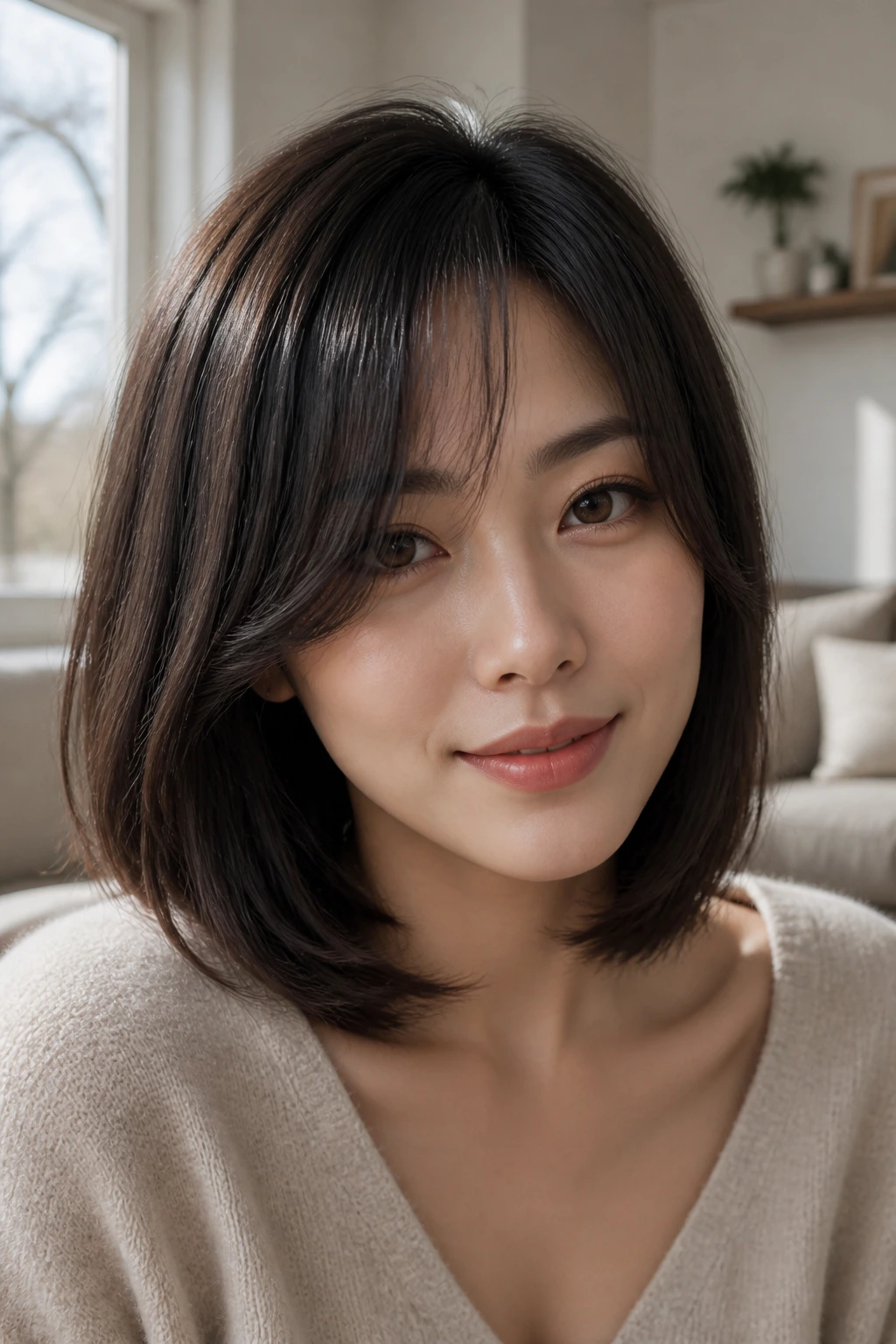
A center part does not have to mean perfect symmetry. In this version, the part stays near the middle, but one side of the curtain fringe falls a touch fuller, which softens the look and helps longer faces or wide foreheads feel more balanced. It’s subtle. That’s why it works.
This cut is good when your hair naturally prefers one side anyway. Fighting that habit is pointless. Better to let the root direction stay slightly off-center and use the fringe to soften the shift. The result looks less staged and more wearable, especially if your hair has a stubborn cowlick.
What to notice
- The part should sit near center, not dead-center if your hair resists it
- The longest front pieces should skim the cheekbone
- The heavier side should not bury the eye
The charm is in the looseness. If it looks too symmetrical, it can feel stiff. If one side looks a little fuller, it looks intentional.
9. The Razored Fine-Hair Bob
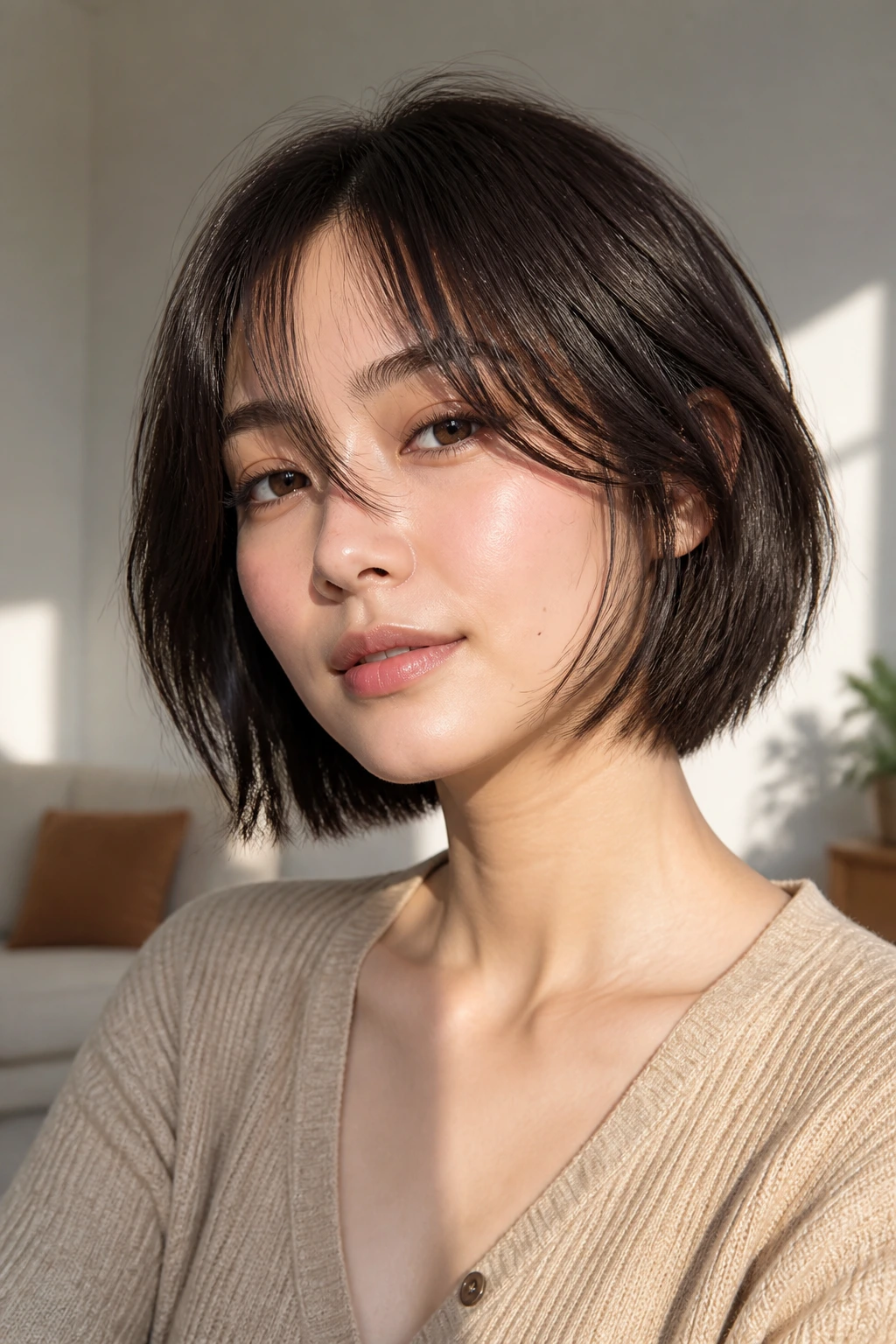
Fine hair can look limp fast, so this version uses a little razor work to create movement without stealing all the weight. The curtain bangs stay soft and the ends stay wispy enough to move, but the shape still reads as a bob, not a strand-y shrug.
The danger is overdoing it. Razor cutting is not a magic volume button. Use too much, and the ends look transparent, especially under bright light. The trick is to keep the line present while letting the internal sections breathe a little.
How it should feel
The hair should move easily between your fingers, not feel frayed. A small amount of volumizing mousse at the roots and a quick blast-dry upside down can help the crown lift. Then finish with a round brush only around the fringe and face frame.
If your hair is fine but dense enough to hold a shape, this can be a sweet spot. It gives lift without turning the cut into a fragile lacework of ends.
10. The Heavy-Hair Debulking Bob
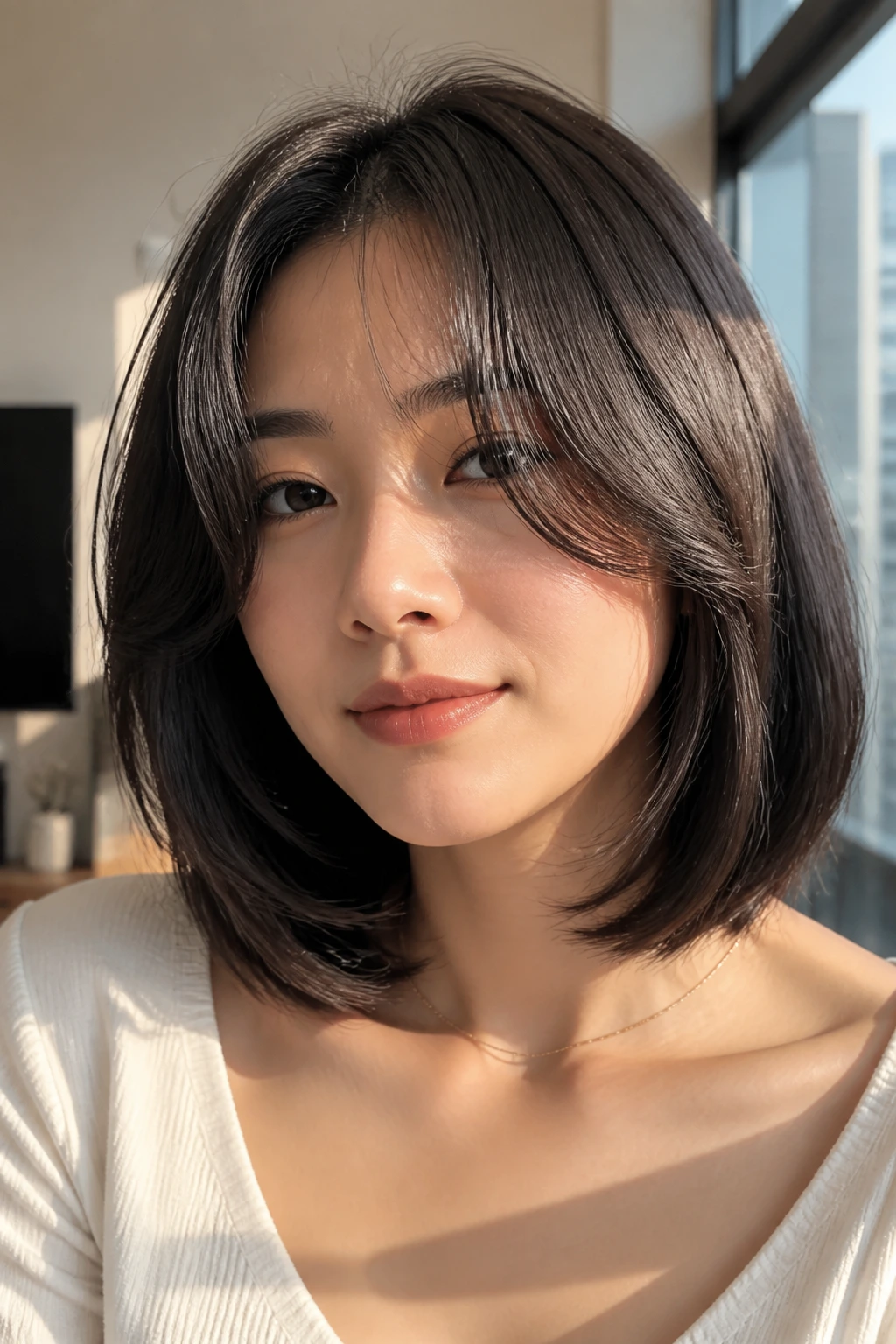
Thick hair needs respect. If you just cut a blunt line and hope for the best, the bottom can swing out like a shelf. This version keeps the shoulder-length line, but removes bulk from the inside so the whole head sits closer to the face and neck.
The curtain bangs should be longer and a little more substantial here. Tiny, wispy bangs can disappear inside dense hair. The face frame needs enough presence to compete with the rest of the cut. Ask for internal debulking, not aggressive thinning at the perimeter, because the outline still has to hold.
Best for
- Very dense straight hair
- Hair that puffs at the ends
- People who want movement without losing thickness
This is one of those cuts that looks better when it’s cut slightly longer than you first imagine. Thick hair shrinks visually once the weight comes out. Leave a bit of length to account for that, or the bob can jump up too high after the first shampoo.
11. The French-Asian Hybrid Bob
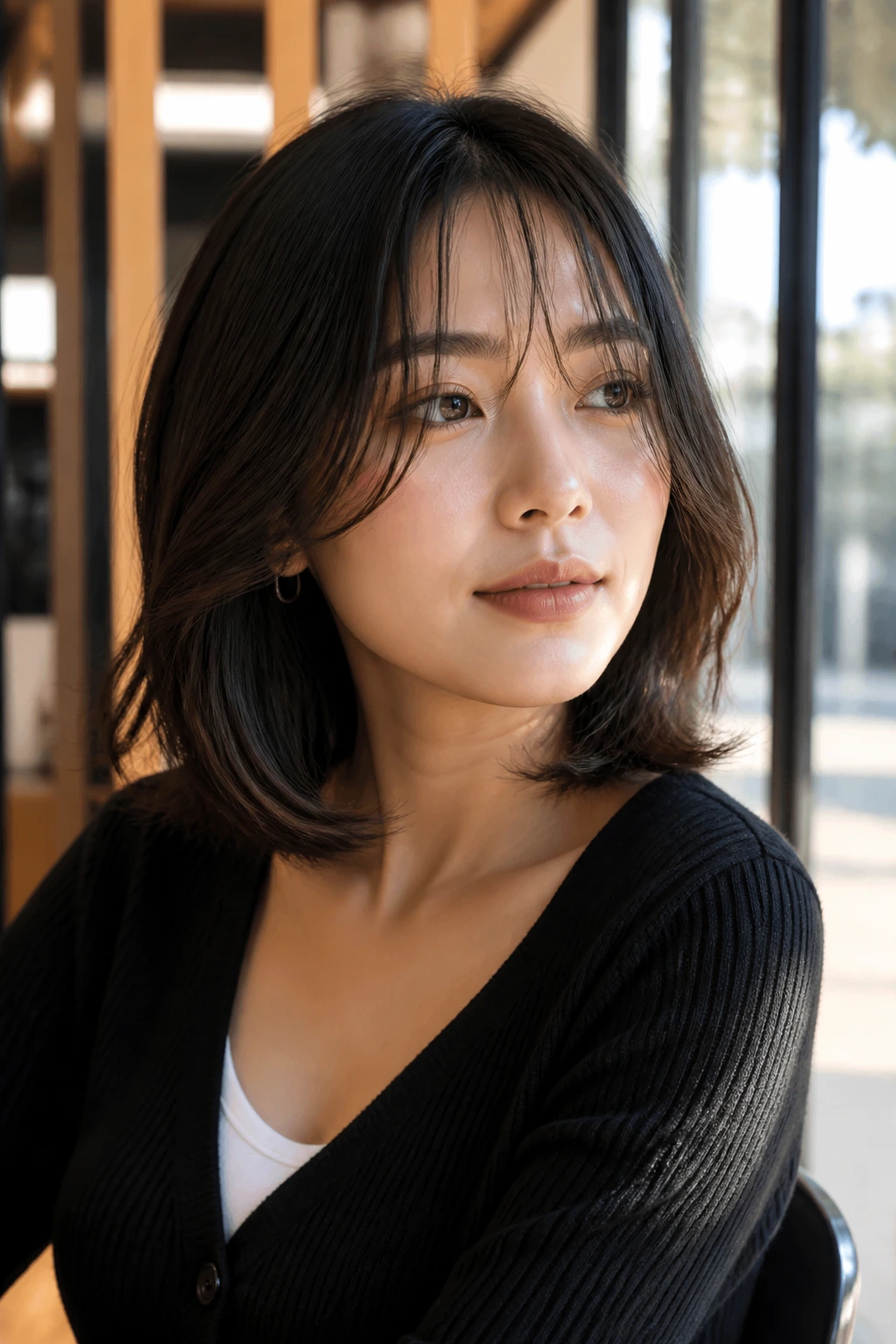
This one borrows the ease of a French bob and stretches it out to shoulder length, then adds the soft curtain fringe that keeps the front friendly. It’s the kind of cut that looks better when it’s a little imperfect—smooth at the top, relaxed at the ends, with just enough bend to avoid looking severe.
The appeal is in the contradiction. It feels structured, but not rigid. You can wear it with a crisp shirt or a plain tee and it still reads clean. The curtain bangs make the whole thing less “editorial photo shoot” and more “I know what my hair does and I’m working with it.”
A bit of cream on damp hair and a rough-dry with fingers gives it that softer finish. Don’t overbrush it into perfection. A little movement at the ends keeps the shape from turning precious.
12. The Hush-Cut Bob
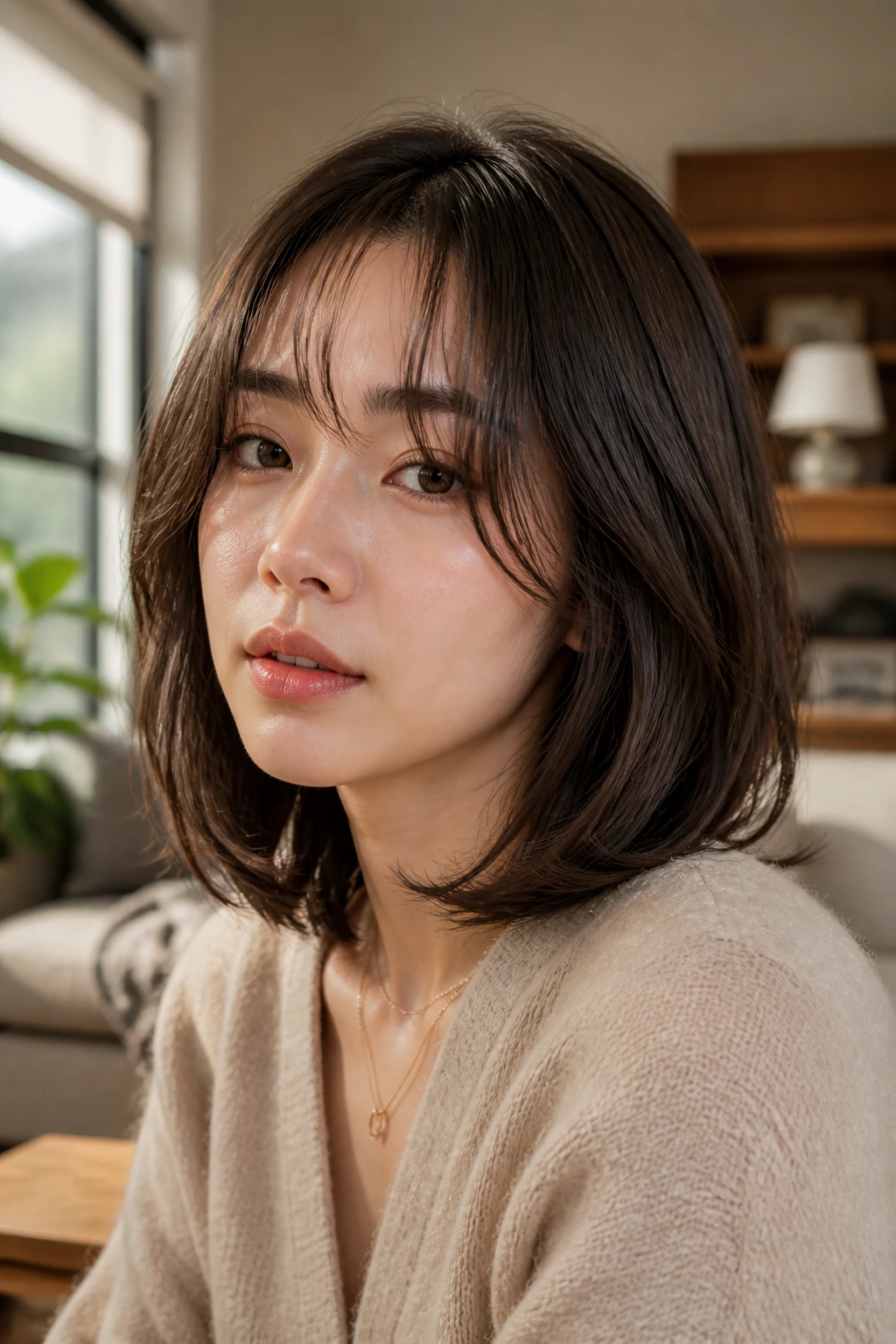
Hush cuts are all about soft layers that do their work quietly. On shoulder-length hair, that means a bob with enough movement to avoid heaviness, but not enough separation to look shaggy. The curtain bangs blend into the sides so the front feels airy, almost whispered.
I like this version on medium hair that sits somewhere between fine and thick. It doesn’t need a dramatic technique to look good. The cut itself creates the shape. That’s a relief if you’re not the kind of person who wants to wrestle with five styling tools before breakfast.
Why it feels different
The layers don’t shout. They just keep the hair from folding into one block. That makes the silhouette easy to wear tucked, clipped, or left alone. If you hate obvious layers but still want movement, this is one of the quieter answers.
13. The Ear-Tuck Bob with Soft Curtains
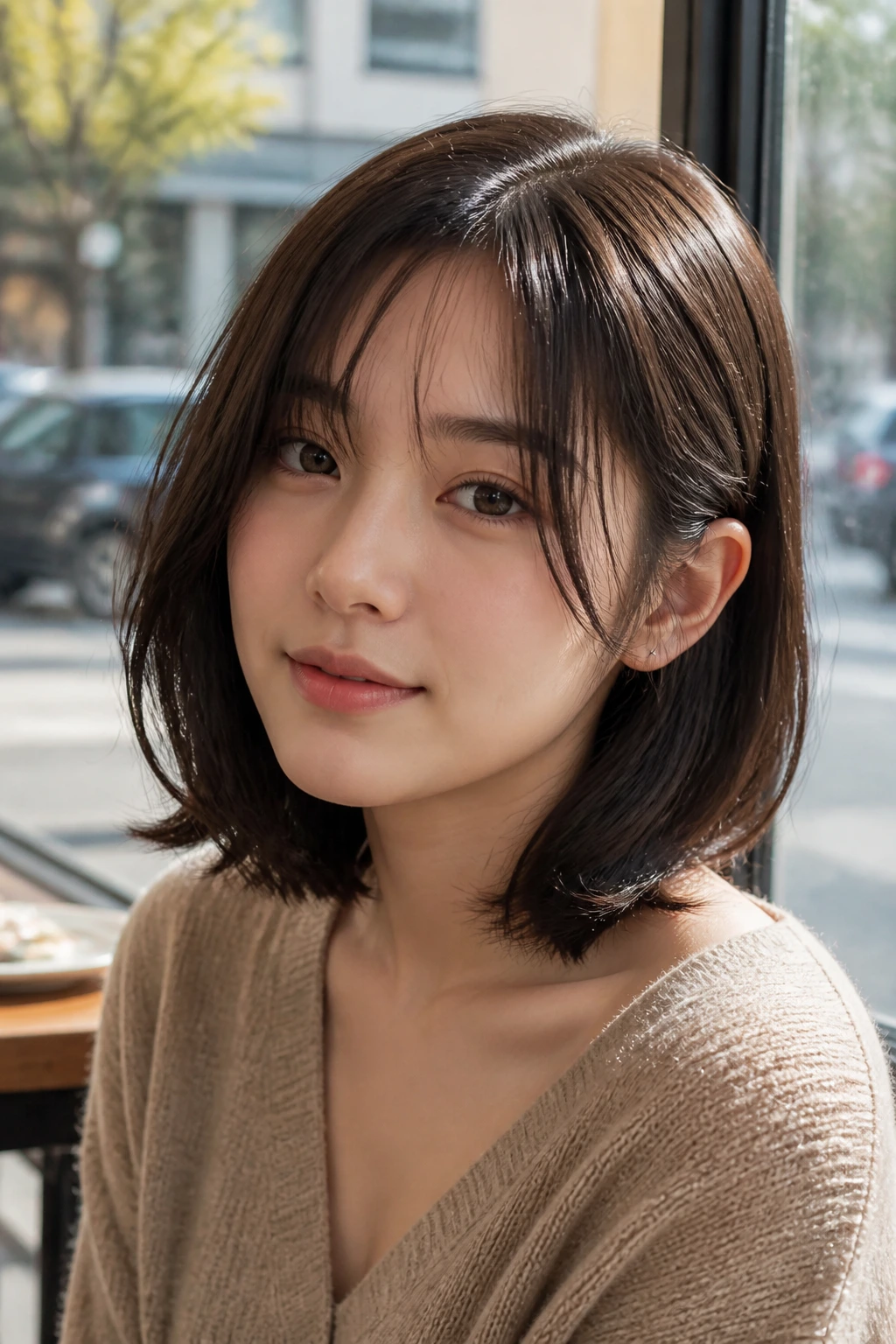
There’s something satisfying about a haircut that looks even better once you tuck one side behind your ear. This version is built for that. The shoulder-length line gives you enough reach to tuck, and the curtain bangs keep the face open so the haircut doesn’t disappear when you do it.
This is a smart choice if you wear earrings often or like switching between polished and casual in seconds. One side can sit a little fuller while the other gets tucked back, which creates a nice asymmetry without making the cut feel dramatic. The front should still frame the cheekbones when both sides are down.
A smooth blow-dry helps here because the tuck shows the shape more clearly than a messy finish would. If the ends are too blunt, the tuck can feel abrupt. Slight softness at the edge makes the whole thing easier to wear.
14. The Polished Office Bob

This is the bob that behaves itself. The line is neat, the curtain fringe sits cleanly away from the eyes, and the ends curve just enough to look finished when you’re in a blazer, a button-down, or anything that benefits from a tidy frame around the face.
It’s not boring. It’s controlled. That matters. A polished bob on shoulder-length hair can look sharp in a way that shorter cuts sometimes miss, because it still has swing when you move. The bangs keep the front from reading too formal or too helmet-like.
Styling notes
- Blow-dry with a boar-bristle brush for a smoother surface
- Keep the roots lifted, not flat to the scalp
- Use a small amount of smoothing cream only on the ends
If you want a cut that handles meetings, dinners, and next-day wear without a reset, this one has real staying power.
15. The Tousled Salt-Spray Bob
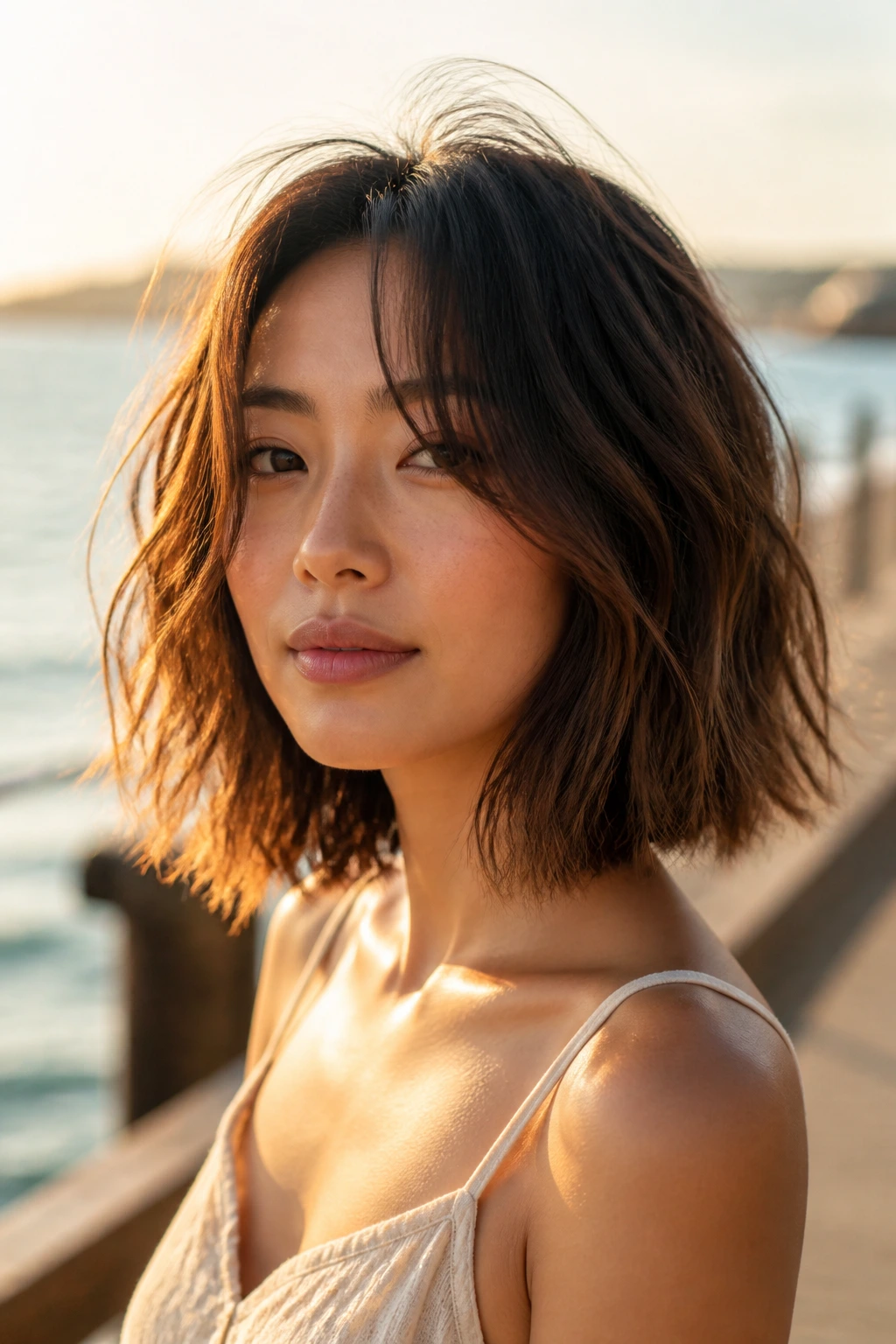
This is for the days when you want the haircut to look like it had a better morning than you did. The ends sit loose, the curtain bangs separate in soft ribbons, and the texture has that dry, piecey finish salt spray is known for. Done well, it looks casual without looking sloppy.
The hair shouldn’t feel crunchy. That’s where people go wrong. Salt spray gives grip, but you still need some softness underneath, usually from a light leave-in or a touch of cream on damp hair. Once dry, scrunch the ends with your hands and let the fringe fall where it wants, then nudge it into place.
A useful warning
If your hair is already dry or porous, go easy on the salt spray. Too much and the ends get chalky fast. A better move is to use a small amount, then add texture with your fingers after the hair is fully dry.
16. The Round-Face Balancing Bob
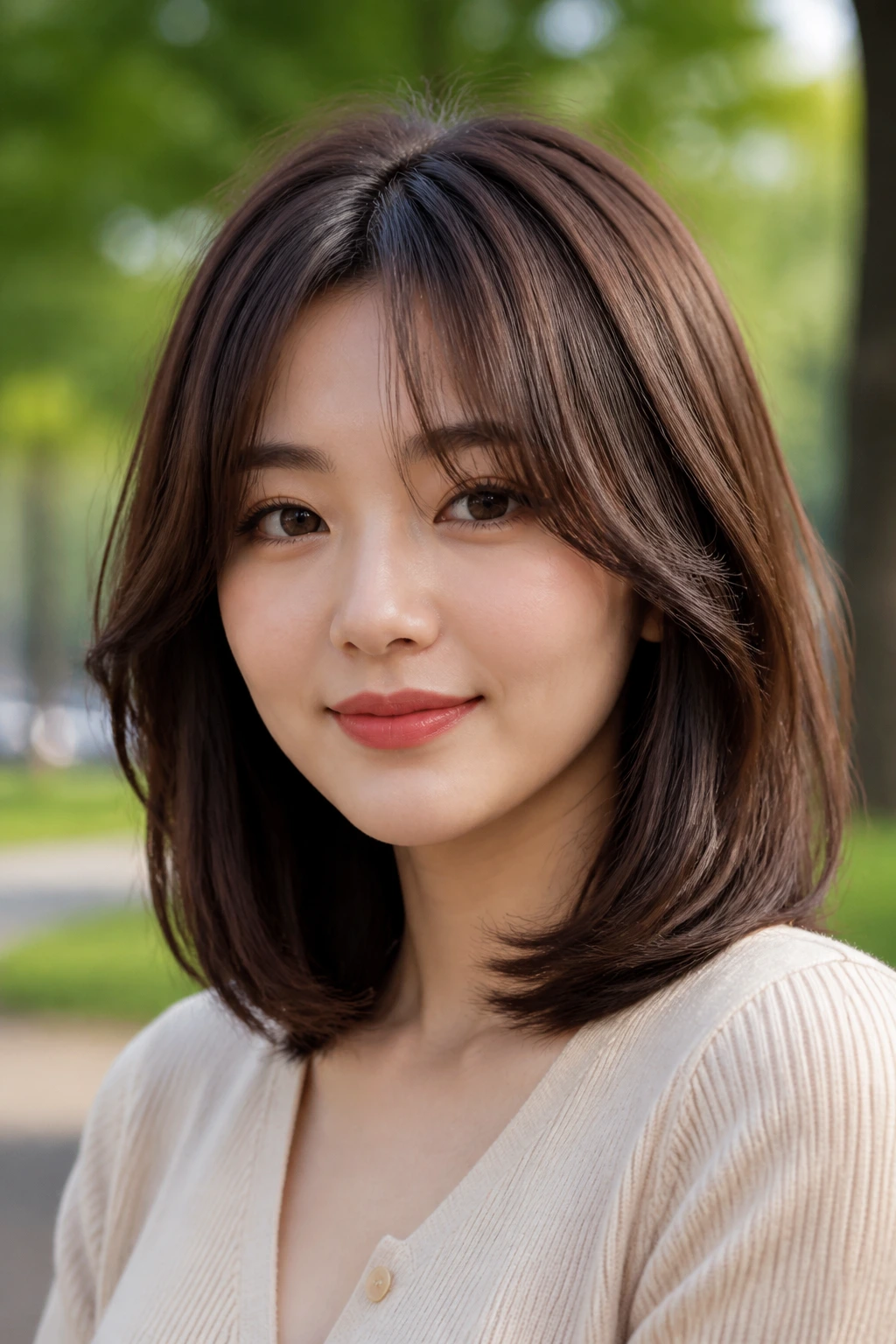
If your face is round, this version earns its keep by stretching the shape a little. The front pieces fall longer than the back, the curtain bangs split higher near the center, and the overall line avoids sitting wide at the cheeks. It’s a small adjustment that changes the whole read of the haircut.
The mistake many people make is asking for too much volume right at cheek level. That just adds width where you don’t want it. Better to keep the fullness below the chin and let the front pieces draw the eye downward. The bangs should open the forehead without forming a short horizontal band.
A soft bend through the lengths helps, but not fluffy root volume at the sides. Keep the top smooth, keep the sides slim, and let the collarbone length do the lengthening work for you.
17. The Square-Jaw Softener Bob
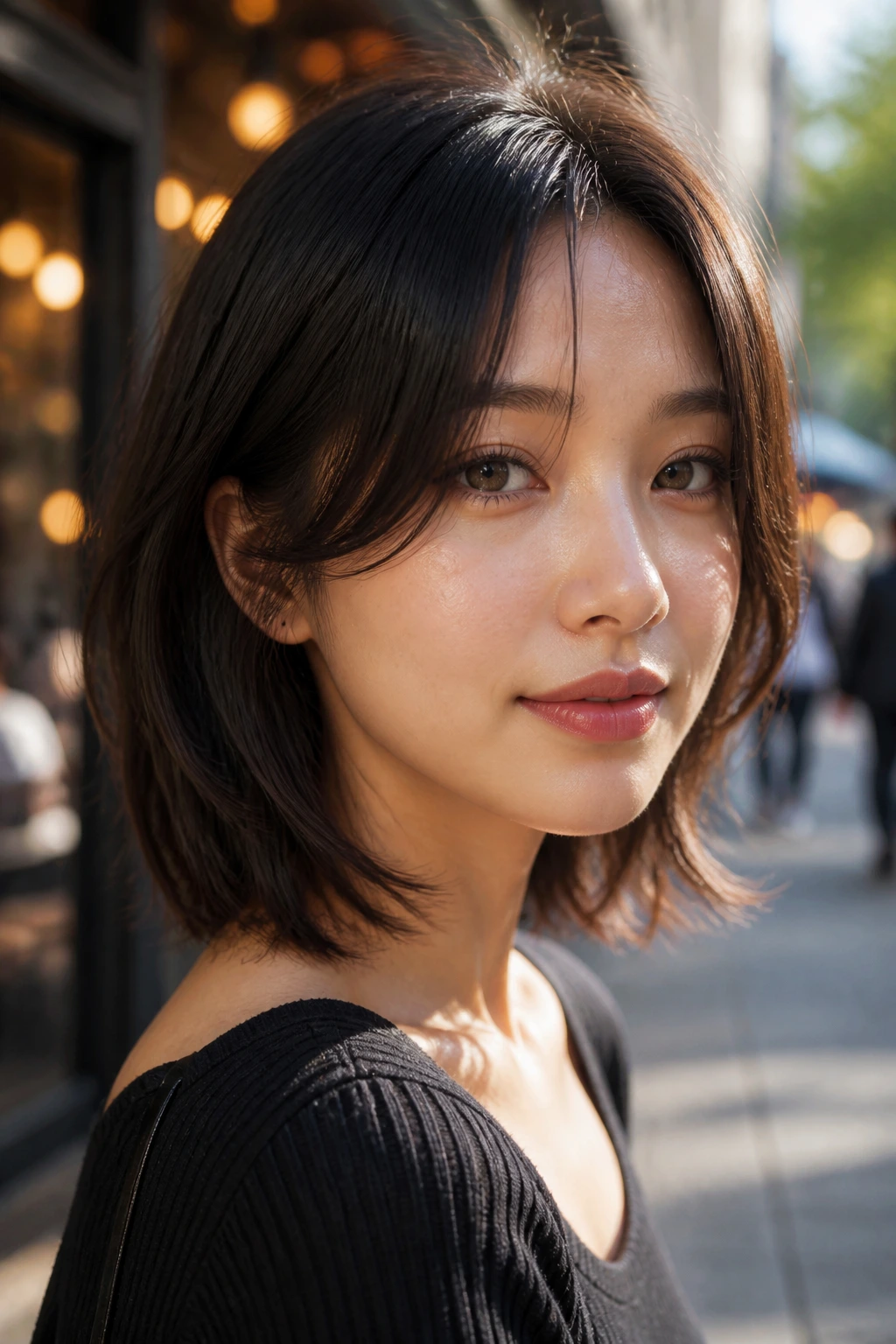
A strong jaw looks fantastic with the right bob, but it needs some give. This one uses longer curtain bangs and face-framing layers that curve gently past the jawline, so the haircut softens angles instead of echoing them. The result feels more fluid, less cut into blocks.
It helps to keep the ends slightly rounded or tucked under. A straight, hard edge at jaw level can make the face look boxier than it is. A soft curve changes that instantly. The fringe should not stop right at the jaw; it should fall past it and drift toward the neck.
This style also plays well with a slightly off-center part if dead-center symmetry feels too stark on you. The tiny shift takes pressure off the jawline and gives the haircut a friendlier shape.
18. The Thin-Hair Fullness Bob
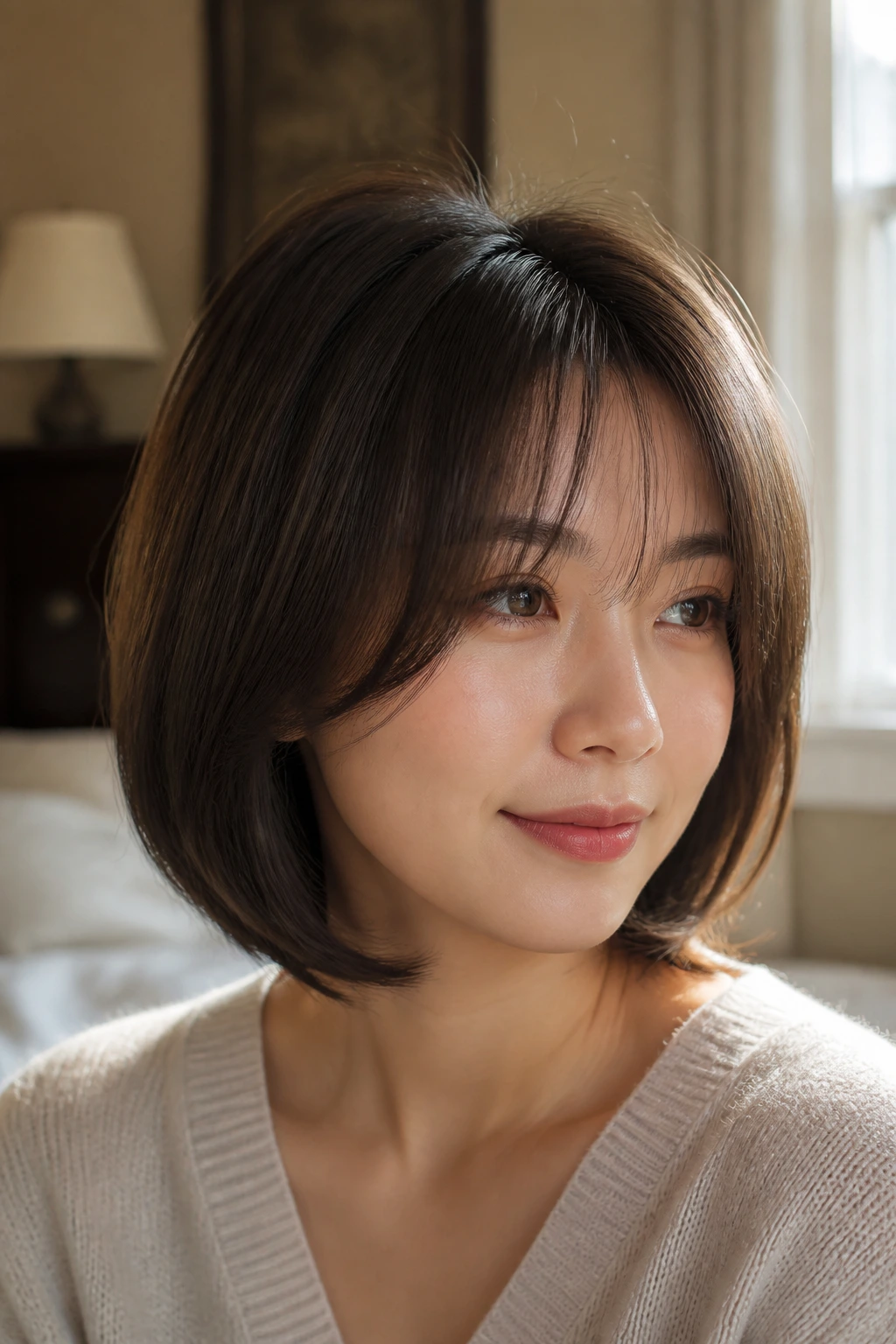
Thin hair needs shape, not drama. This cut keeps the layers modest, builds a bit of lift at the crown, and leaves enough weight in the perimeter to make the hair look denser. The curtain bangs are airy, but not so wispy that they disappear.
I prefer this version when someone wants their hair to read fuller from three feet away, not just in a close-up. The silhouette matters more than the individual strands. If the ends are chopped too aggressively, the bob can look sparse in a bad way.
What helps
- A root-lifting mousse at the roots before blow-drying
- A round brush to lift the top section only
- A light texturizing spray at the mid-lengths, not the ends
Keep the fringe long enough to blend. Short bangs on thin hair can turn see-through too fast, and then you lose the soft frame that makes the cut work.
19. The Thick-Wave Air-Dry Bob
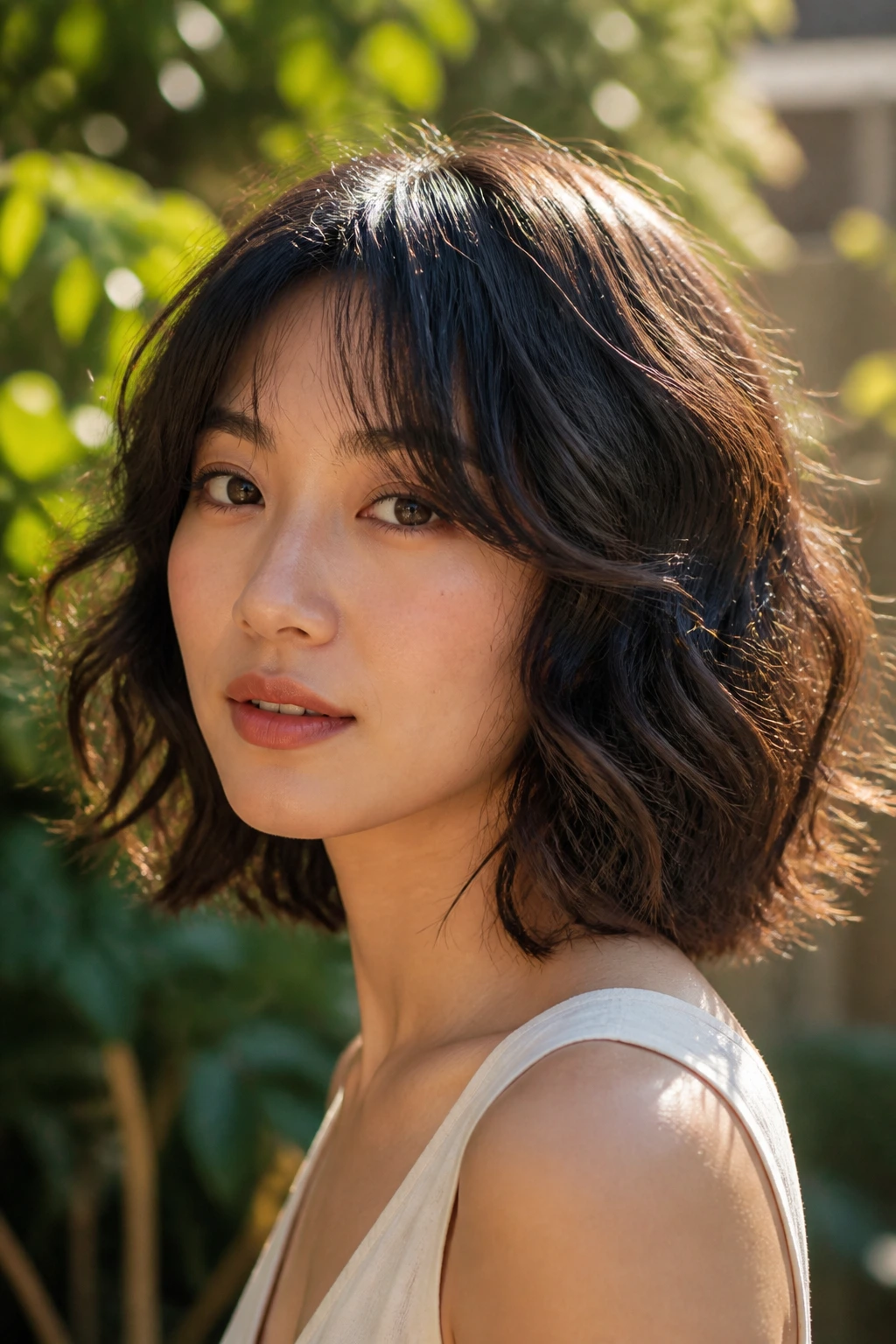
This is the low-effort one with a good haircut behind it. It’s cut to let wave pattern stay visible, with curtain bangs that are long enough to sit well after the hair dries naturally. The shape should still look intentional, which means the ends need a clean baseline even if the finish is loose.
If you air-dry thick waves without a plan, the ends can spread wide and the fringe can separate in odd places. A curl cream or leave-in on damp hair gives the strands enough slip to fall together instead of puffing. Then you can twist the bangs into two loose sections while they dry and let them settle into the center.
This cut looks best when it isn’t overhandled. Touching it too much while it dries makes the top frizz and the bottom lose its shape. Leave it alone once it’s arranged.
20. The Low-Maintenance Grow-Out Bob
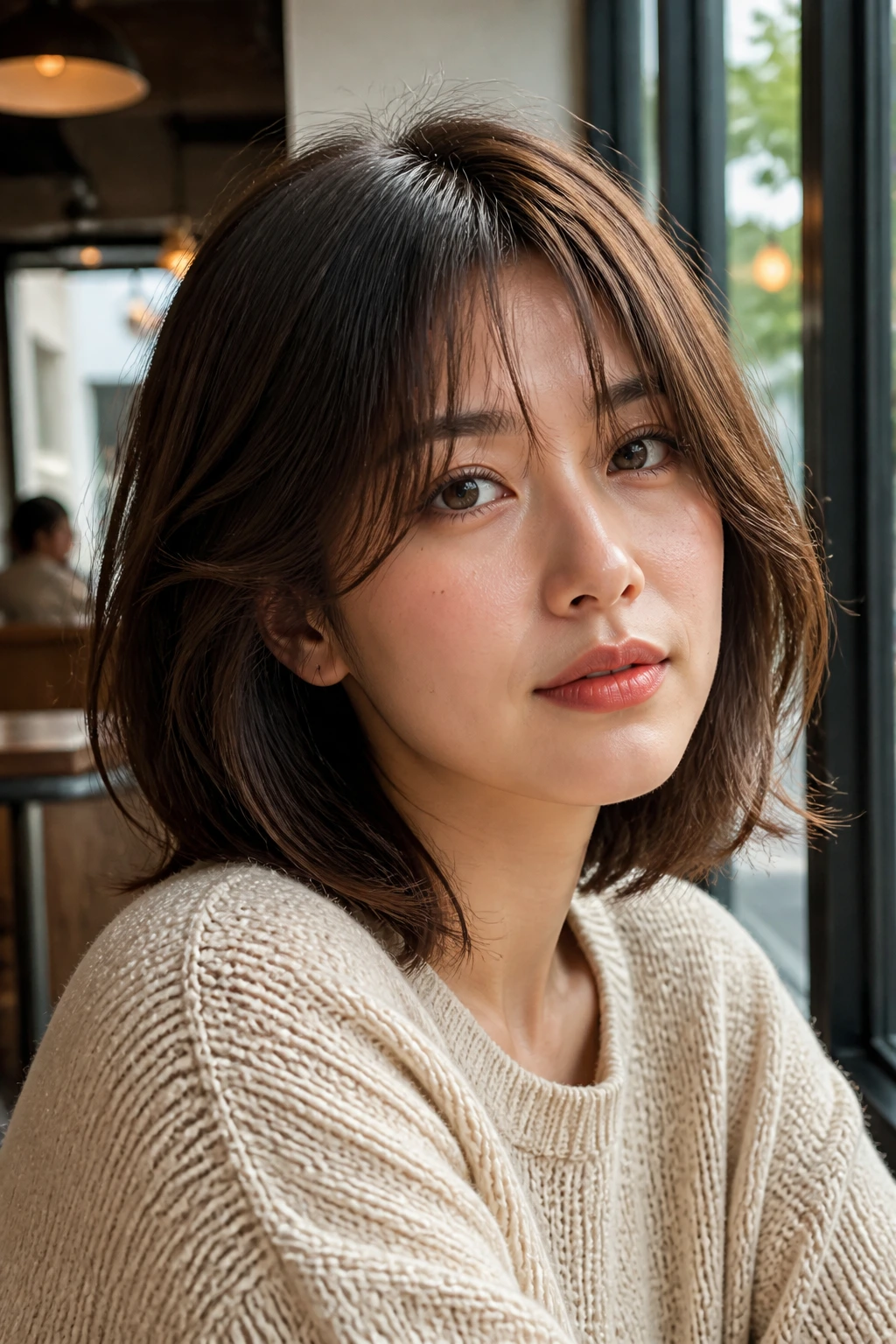
Some cuts are designed to survive real life. This is one of them. The length sits long enough to go several weeks without looking grown out, and the curtain bangs merge into the face frame instead of forcing a hard trim schedule. It’s the practical choice.
What makes it forgiving is the soft perimeter. There isn’t a sharp line that turns ragged the second it grows. The bangs also stay usable as they get longer, because they become face-framing layers instead of awkward in-between fringe. That’s a very good thing when you’re not in a salon every month.
Good for
- People who wear clips, half-up styles, or low ponytails
- Anyone who wants a bob without the maintenance of a chin-length cut
- Hair that grows fast and stubbornly
If you want a bob that bends with your schedule, this is the one to look at first.
21. The Glossy Straight Bob with Invisible Layers
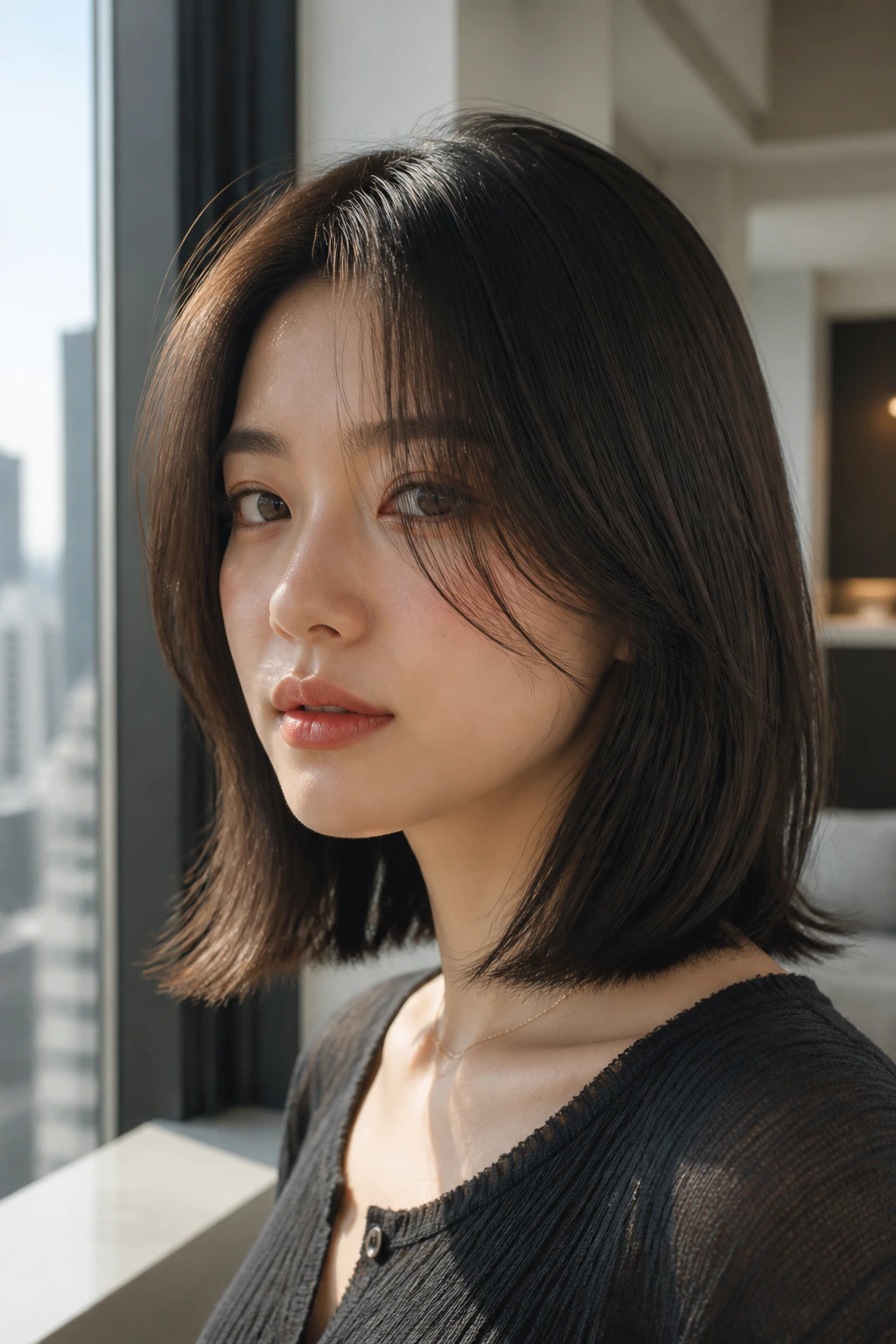
This cut looks blunt at a glance, but the layers are tucked inside where they add movement without making themselves obvious. The result is a smooth, sleek bob that still has enough shape around the face to keep it from looking like a square block of hair.
The curtain bangs are the giveaway. They soften the front and keep the center part from feeling too stark. On naturally straight hair, this is a smart way to get motion without giving up the clean line that makes straight hair look so sharp when it’s cut well.
You’ll want a smoothing serum and a blow-dry that follows the head shape. Don’t overthink the finish. The charm is the surface. If it shines and the ends sit neatly, the haircut already did its job.
22. The Soft-Edged Bubble Bob
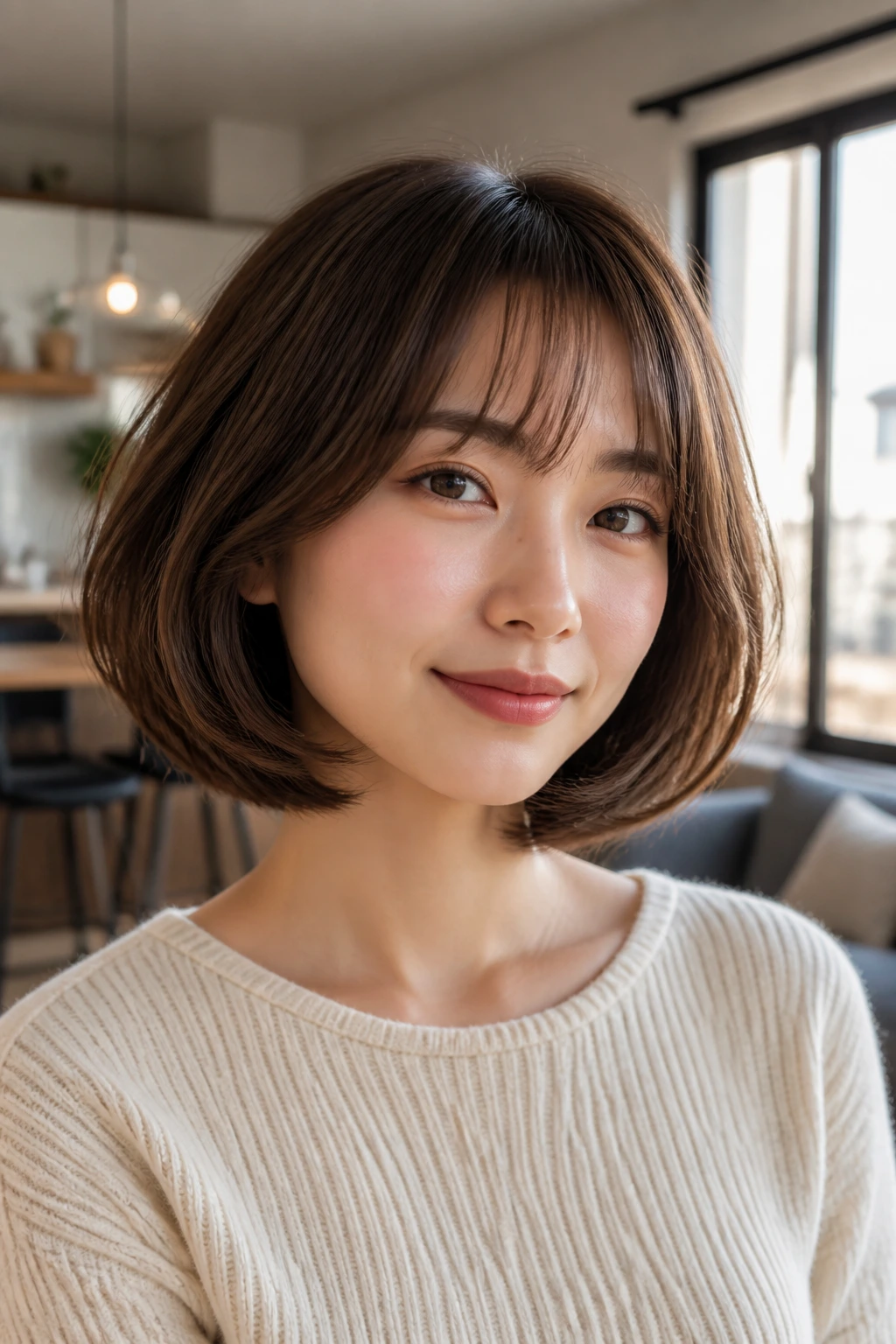
This one has a rounded silhouette that sits somewhere between bob and bowl, but much softer and more modern. The shoulder-length length keeps it from feeling severe, while the curtain bangs break open the front so the shape doesn’t close in on the face. It’s fuller, but not heavy.
The bubble shape works best when the perimeter keeps its curve and the internal layers stay controlled. Too much texturizing wrecks the roundness. Too little and it can puff outward in a way that looks accidental. The sweet spot is a smooth outline with just enough bend at the ends to keep the edge soft.
If you like hair that feels plush around the head and neck, this is a nice one to try. It has presence. It also photographs well in real life, which is more useful than people admit.
Why Shoulder-Length Curtain Bobs Keep the Shape So Well
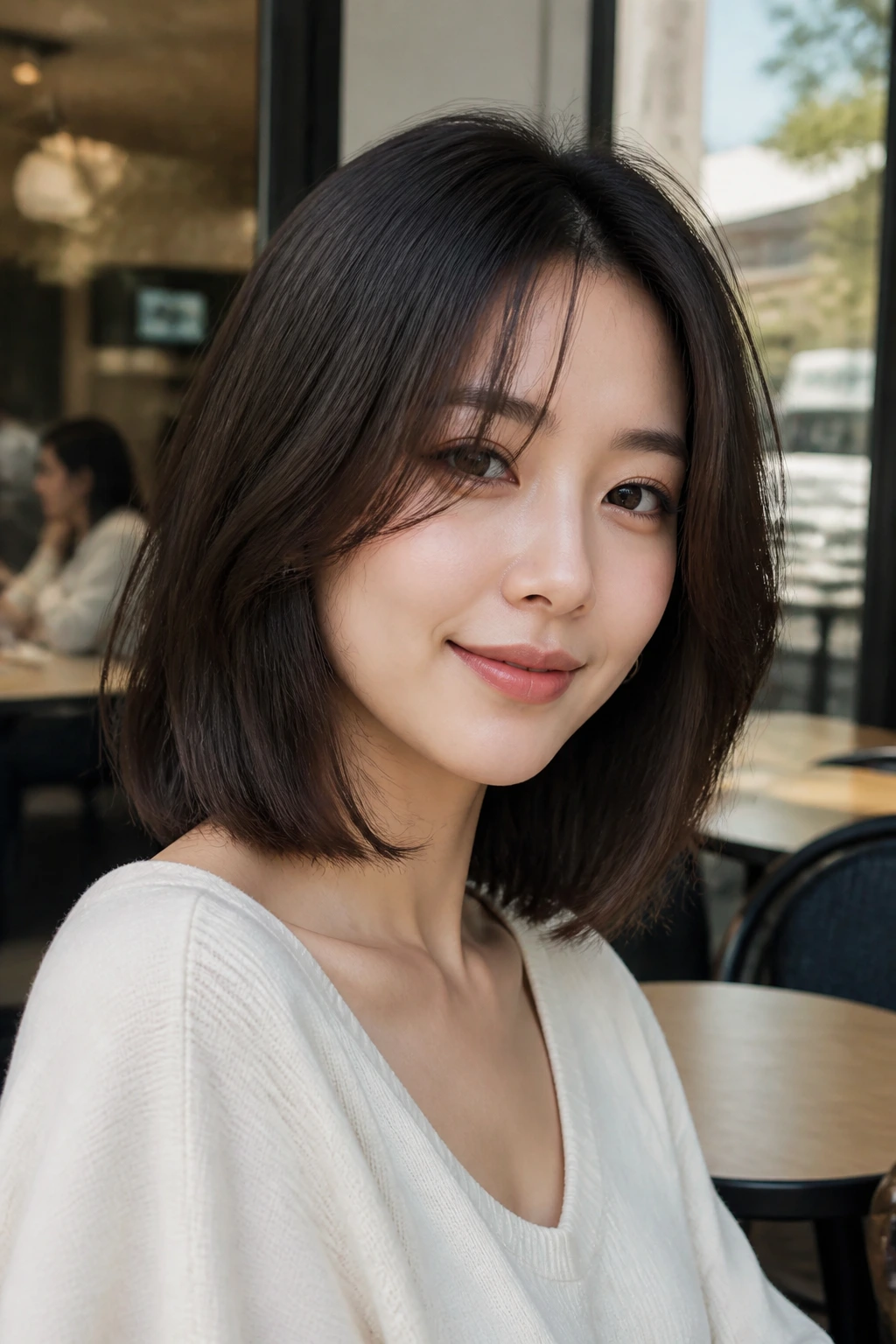
Shoulder length is the sweet spot because it gives the haircut enough weight to hold a line without dragging the face down. A chin-length bob can swing hard and need constant maintenance. A longer lob can get sleepy if the layers aren’t doing enough. This in-between zone gives the bangs room to frame the face and the ends room to bend.
The curtain fringe is doing more than decorative work. It breaks up the front width, especially on straight hair that naturally falls flat, and it gives the eye somewhere to travel. That matters if your hair tends to look like one piece from roots to ends. A soft split at the front is enough to make the shape feel intentional.
There’s also a practical side. Shoulder-length hair is easier to tuck, clip, half-up, or twist into a low bun than a shorter bob. So if you like the look of a bob but don’t want to feel locked into one styling mode, this length gives you breathing room. Not glamorous language. Just true.
The Tools, Brushes, and Products That Matter Most
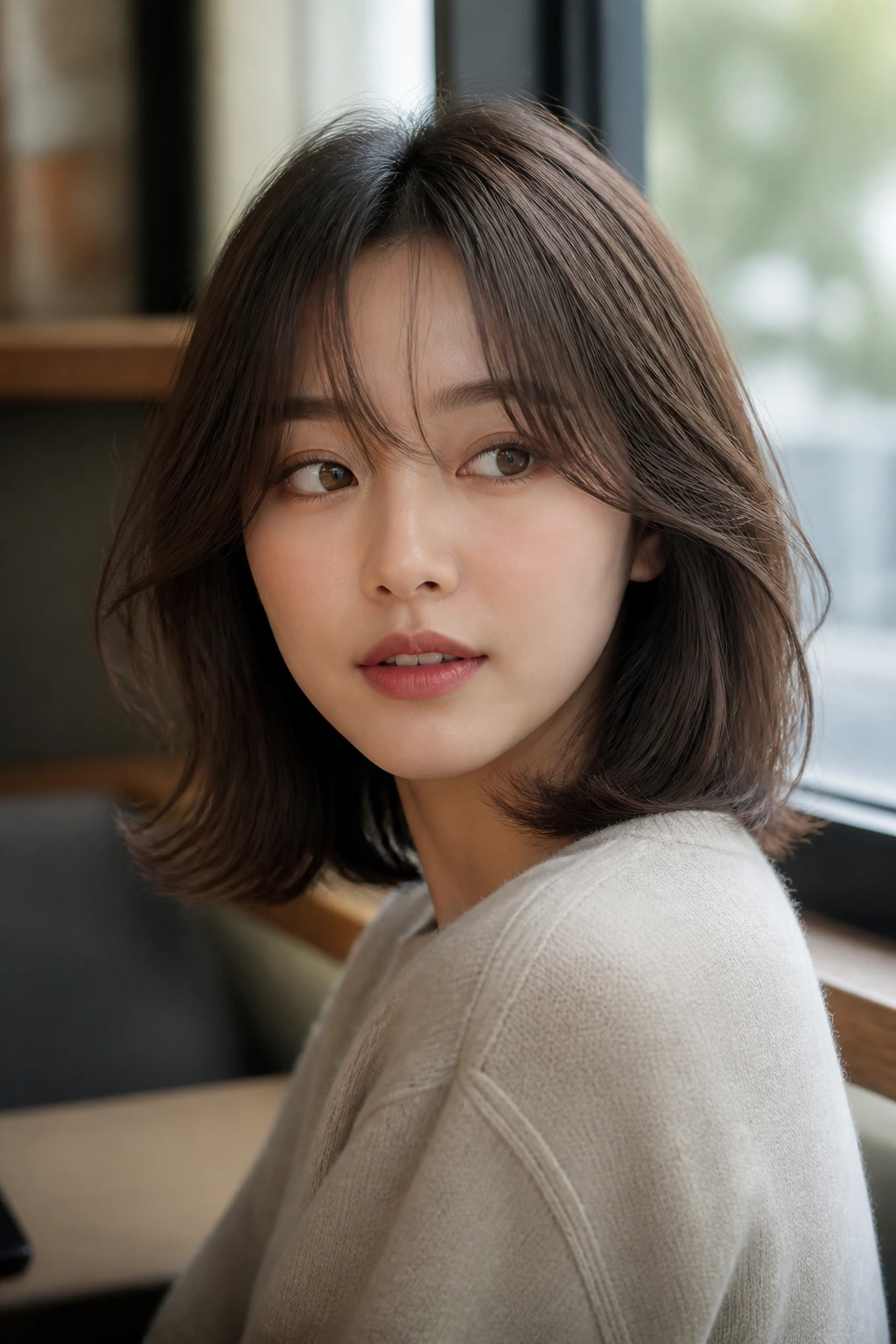
You do not need a drawer full of gadgets. A few smart tools do the job better than a pile of random ones.
- A 1.25-inch round brush: Best for bending the fringe and curving the ends inward without making them too tight.
- A blow dryer with a concentrator nozzle: Keeps the airflow aimed at the roots and helps the surface look smoother.
- Heat protectant spray: Use it before any blow-dry or flat iron pass so the ends don’t fry and split early.
- Lightweight mousse: Good for root lift on fine or straight hair; use it near the scalp, not through the lengths.
- Texturizing spray: Helps piece out curtain bangs and the mid-lengths on softer, wavier cuts.
- A flat iron with beveled edges: Useful if you want a gentle bend rather than a sharp crease.
- A wide-tooth comb and clips: Handy for sectioning the bangs and keeping the front from getting messy while you work.
- Light serum or cream: A pea-sized amount on the ends keeps the bob from looking dry and frayed.
If your hair is thick, a paddle brush can make the first rough-dry easier. If your hair is fine, skip heavy oils. They flatten the crown faster than you think.
How to Ask for an Asian Curtain Bob That Fits Your Hair
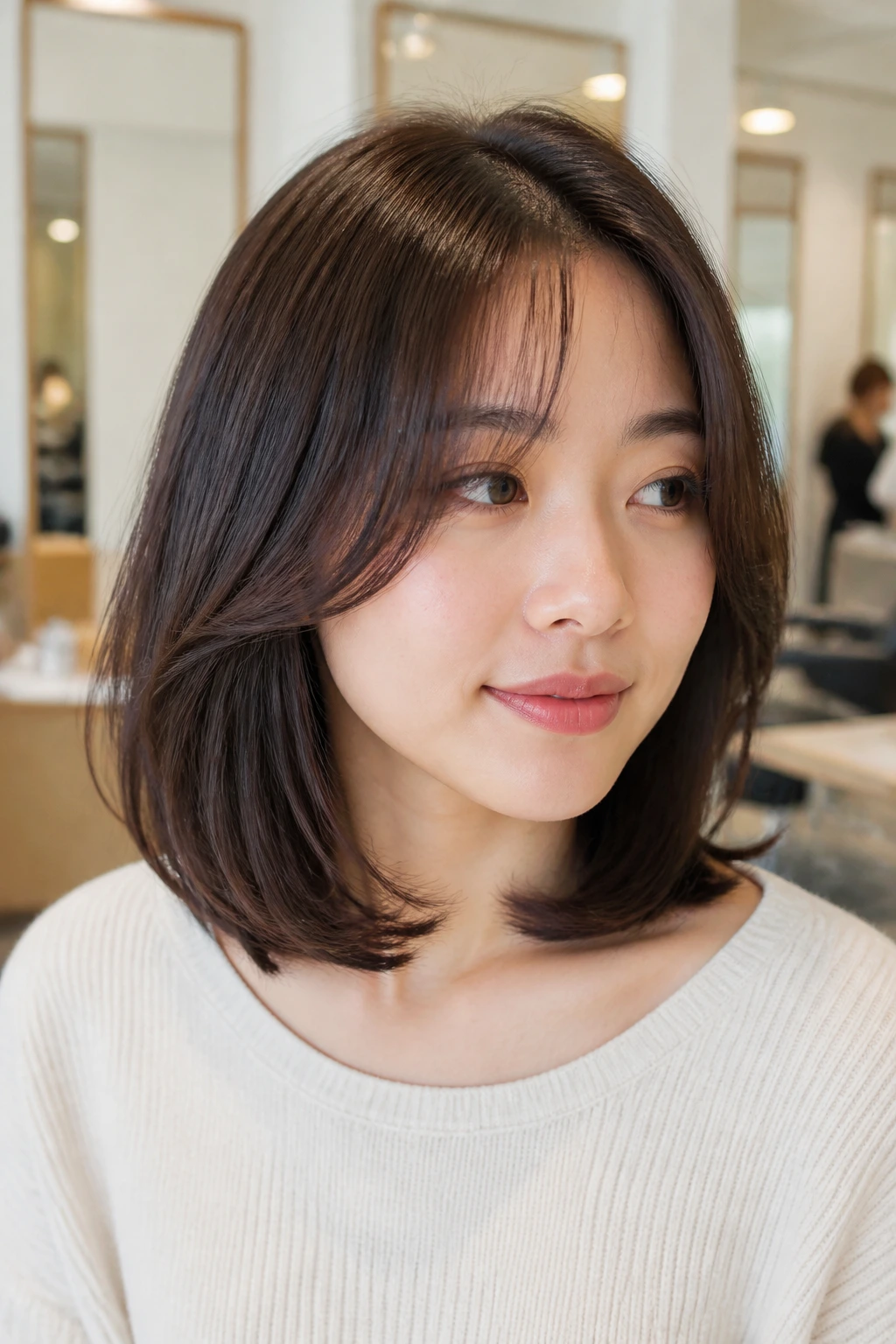
Bring photos, yes, but also be ready to talk about weight. That is the part people skip, and it changes everything. A stylist can copy the outline from a picture, but if your hair is denser or finer than the model’s, the finish will behave differently.
Say where you want the longest pieces to land. Collarbone, shoulder top, or just below the clavicle are very different lengths once hair dries and bends. Mention whether you want the ends to tuck under, flip out, or stay mostly straight. That one sentence helps more than a vague “soft bob” request.
Also tell them how much fringe you’ll actually style. If you want bangs that can sit center-parted on day one and still look good after air-drying, ask for longer curtain pieces. If you like a sharper, more polished front, ask for a cleaner face frame and a little more density in the fringe. Be specific. Haircuts love specifics.
How to Style It on Straight, Wavy, or Thick Hair
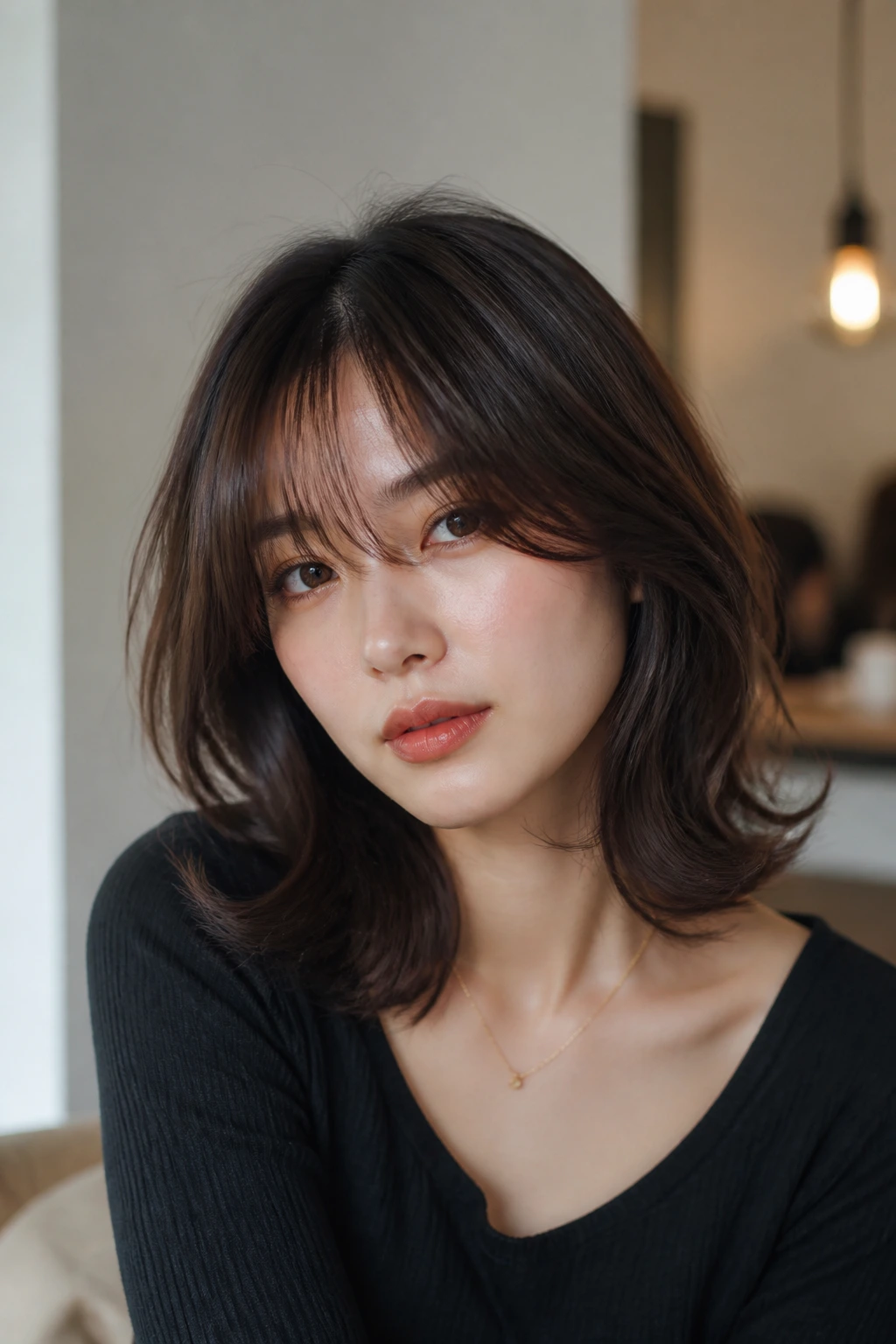
Straight hair: Start with root lift. If you skip that, the cut can fall flat against the scalp and lose the shape around the crown. Dry the bangs first, bending them side to side with the brush so they don’t split too tightly or sit like a curtain panel.
Wavy hair: Let the wave do most of the work. Use a small amount of cream or mousse on damp hair, then scrunch the lengths and gently shape the fringe with your fingers. A diffuser can help, but low air is the rule. Too much heat destroys the movement.
Thick hair: Remove the moisture with a rough-dry first, then go back and smooth the outline. Thick hair often looks best when the perimeter stays tidy and the interior carries the movement. If you want the bob to sit close to the neck, finish with a round brush just at the ends.
Fine hair: Keep the products light and the shape compact. Too much cream or too many layers make the cut collapse. A little mousse at the roots and a quick bend through the front is enough.
Common Mistakes That Flatten the Fringe or the Ends
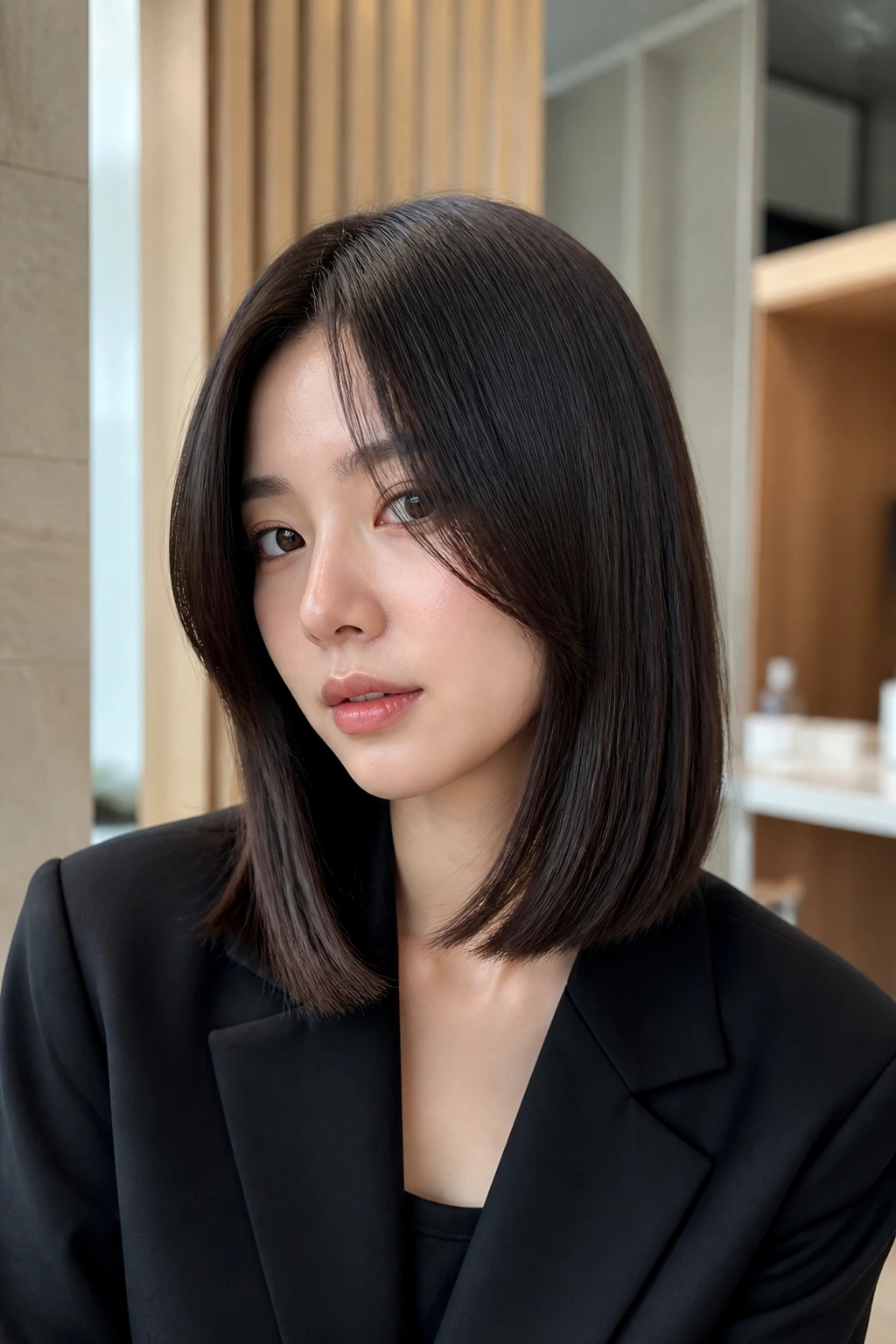
The most common mistake is cutting the bangs too short. Curtain bangs need length to split and move. If they stop too high on the forehead, they stop reading as curtain bangs and start looking like a rushed fringe. The fix is simple: leave more length than feels safe.
Another problem is thinning the ends too much. People hear “soft texture” and ask for aggressive thinning, then wonder why the bob looks frayed after one wash. The outline should still look like a bob. Keep the perimeter intact and soften with point-cutting instead of stripping out the base line.
Heavy product is the quiet killer here. A thick serum or too much oil can pin the crown flat and make the bangs separate in greasy chunks. Use just enough to tame flyaways, not enough to coat the hair.
Lastly, don’t let the face frame start too high on the cheeks if your hair is dense. That can create a poofy triangle at the front. Start lower, near the cheekbone or just below it, and let the shape fall.
Variations and Adaptations to Try
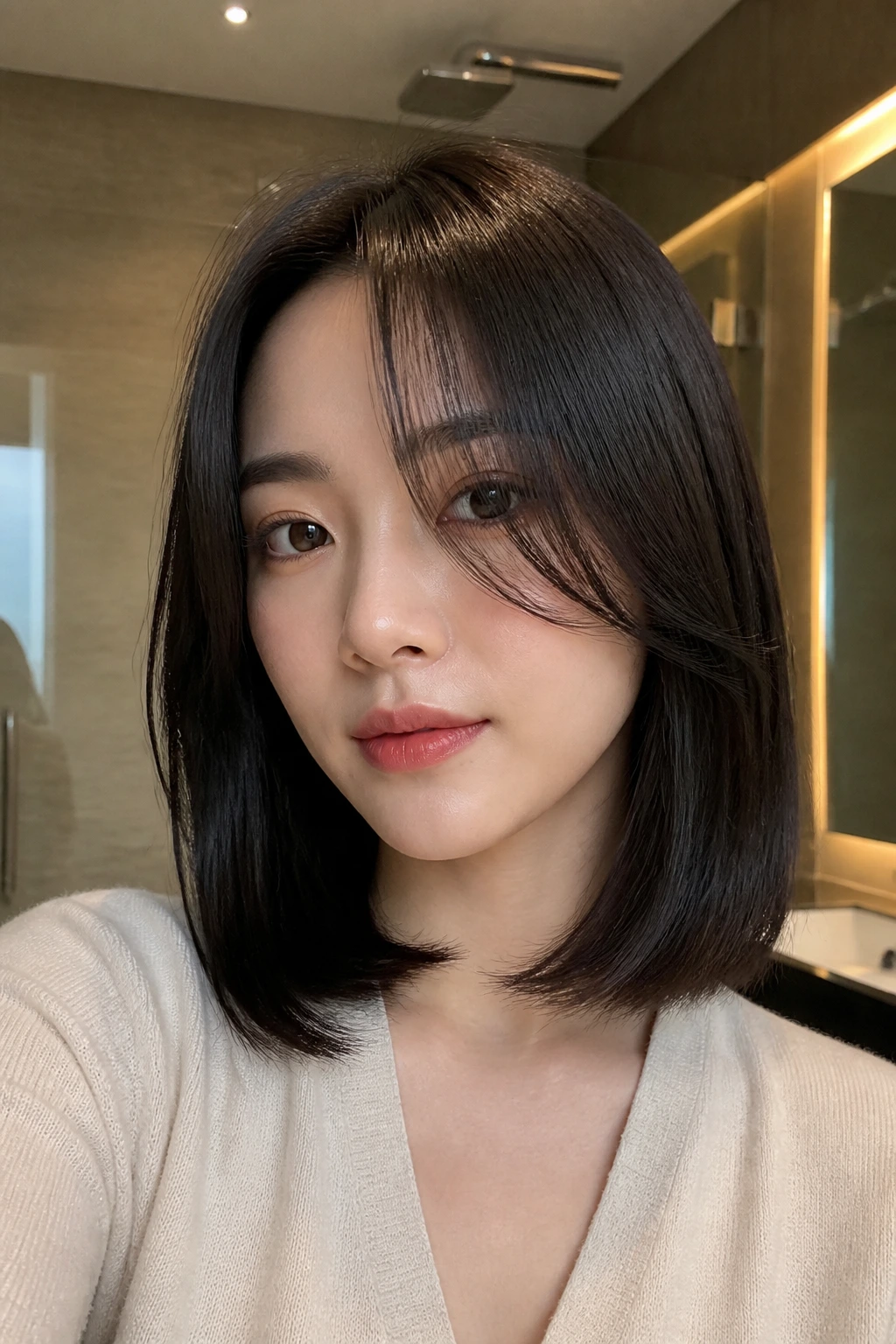
The Glass-First Version: Keep the bob sleek, lengthen the curtain bangs, and use smoothing cream plus a flat iron bend. Best when you like shine and crisp lines.
The Air-Dry Version: Let the haircut carry the shape with soft internal layers, a little curl cream, and longer bangs that separate naturally. Best for wavy hair and low-effort mornings.
The Face-Frame Lift: Ask for extra length around the cheekbone and slightly shorter front pieces at the inner corner. Good if you want more opening around the eyes without full bangs.
The Thick-Hair Control Edit: Keep the perimeter solid, remove bulk only inside, and leave the fringe denser. This one keeps heavy hair from ballooning out.
The Grow-Out-Friendly Edit: Make the fringe long enough to blend into layers and keep the bob just past the collarbone. It survives longer between trims and still looks deliberate.
Keeping an Asian Curtain Bob Sharp Between Salon Visits
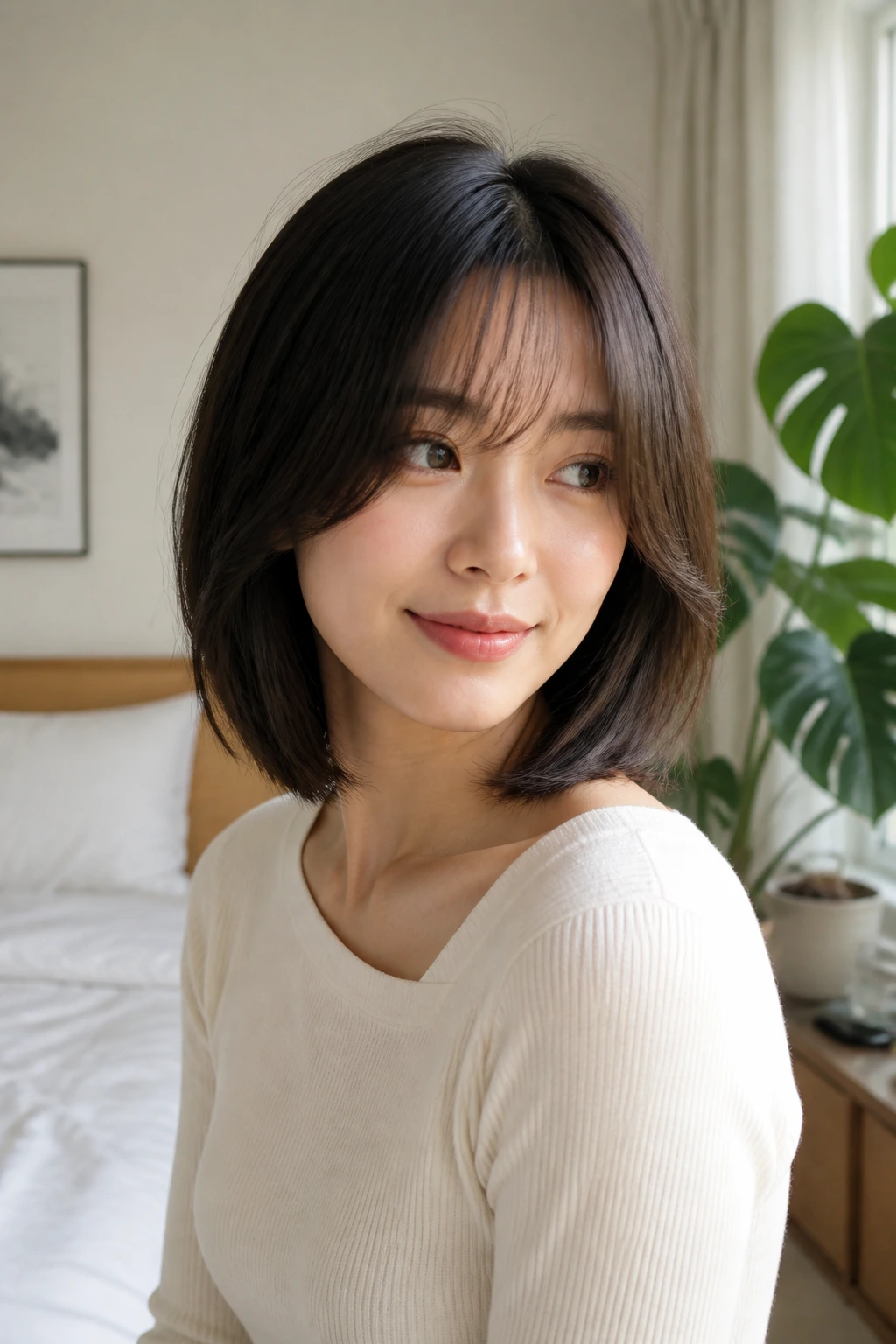
A shoulder-length bob stays sharp longer when the front is trimmed before the ends start to split into wisps. For most people, every 6 to 8 weeks is the sweet spot for the shape itself. Curtain bangs may want a small cleanup sooner, around 2 to 4 weeks, depending on how fast they creep into your eyes.
Sleep matters more than people think. A silk or satin pillowcase helps the fringe keep its bend instead of bending itself into an odd crease. If you wake up with the front smashed flat, mist it lightly with water, use your fingers to split the bangs, and blow-dry just the roots for 30 to 45 seconds.
Wash frequency depends on your scalp and product load, but the haircut usually looks best when the roots aren’t overloaded with dry shampoo. A little refresh is fine. A heavy dusting every day turns the bangs chalky and dull. If the ends feel dry, use a pea-sized amount of serum only on the last inch or two.
Frequently Asked Questions
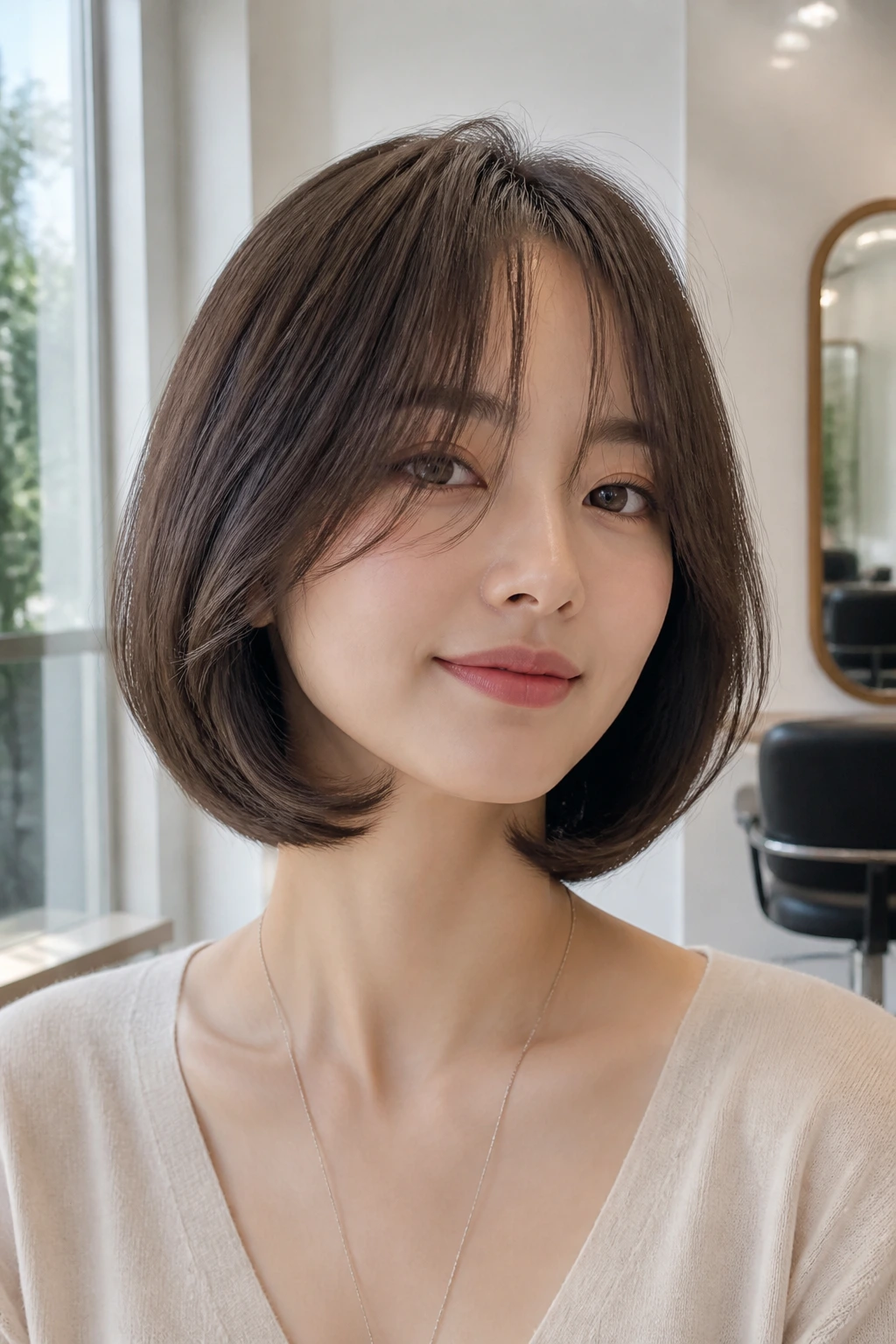
Can Asian curtain bobs work on very straight hair?
Yes, and straight hair often shows the shape best. The trick is building enough root lift and softening the bangs so the front doesn’t lie flat against the forehead.
Will curtain bangs make a round face look wider?
Not if they’re cut correctly. Keep the longest pieces below the cheekbone and avoid adding extra side volume right at the cheeks; that’s what widens the face, not the fringe itself.
What should I ask my stylist for?
Ask for shoulder-length or collarbone-length hair with long curtain bangs, a center or near-center part, and face-framing layers that start around the cheekbone. Then tell them whether you want the ends to bend under, flip out, or stay sleek.
Can I wear this cut with glasses?
Absolutely. Longer curtain bangs usually work better than short fringe because they sit above the frames or blend around them instead of fighting for space.
What if my hair is thick and puffy?
Keep the perimeter strong and ask for bulk removal inside the cut, not at the edge. That keeps the bob from exploding outward while still letting the fringe stay soft.
How often do I need trims?
Plan on a shape trim every 6 to 8 weeks if you want the line to stay clean. Bangs may need a quicker touch-up because they grow into the eyes first.
Can I air-dry this haircut?
Yes, if the cut has been shaped for it. Longer curtain bangs, light layering, and a bit of styling cream or mousse help the hair settle into a softer version of the style.
Is a center part required?
No, but it’s the most common starting point. You can shift it a little off-center if your growth pattern or face shape likes that better; the curtain effect still works.
A Bob That Knows When to Hold Back
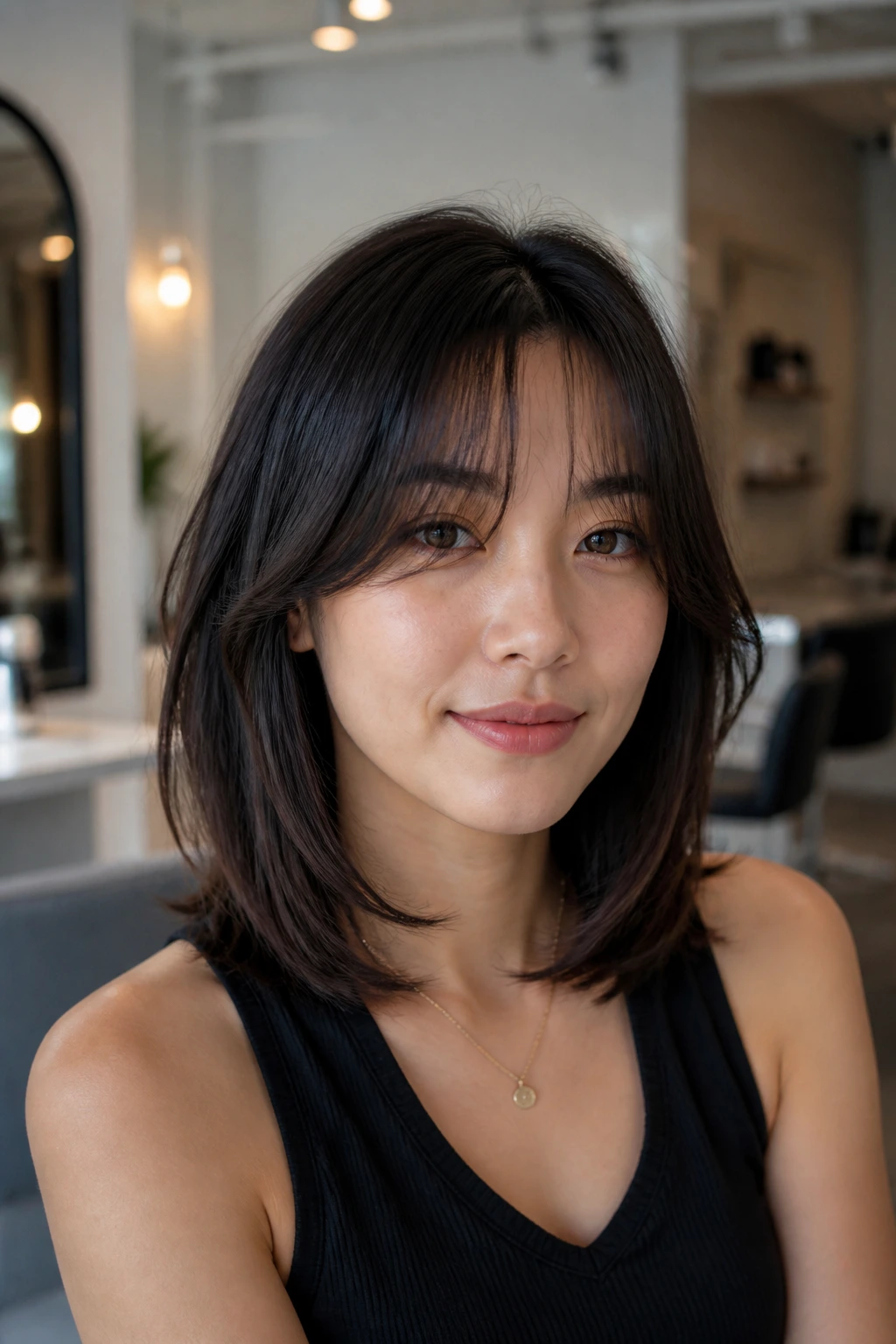
The best thing about these cuts is not that they scream for attention. It’s that they know when to stop. A good Asian curtain bob gives you shape at the shoulders, softness at the front, and enough flexibility to work with the hair you actually have instead of the hair you wish you had.
That’s why this length keeps coming back. It sits in a useful place. Easy to style, hard to ruin, and roomy enough to change mood without changing the whole haircut. If you’re saving inspiration, save the versions that match your texture first. The prettiest bob on someone else is useless if it fights your own hair every morning.