



A short inverted bob for wavy hair with caramel highlights has a very specific kind of charm: it gives the back a neat, lifted line, then lets the front fall into softer pieces that make the waves look deliberate instead of unruly. The cut has shape. The color has movement. Put those two together and you get a style that looks edited even when you’ve done almost nothing to it.
I like this haircut best when the stack at the nape is clean but not severe. Too much angle and the whole thing turns sharp in a way that fights wave pattern. Too little and you lose the whole point of the inverted shape. The sweet spot is a back that sits close enough to the head to show structure, with front pieces that still skim the cheekbones and collar line. Caramel works because it catches those bends without flattening them into stripes.
The detail that matters most is placement. Caramel highlights that live on the surface of the wave read as ribboned and expensive; caramel shoved everywhere at the same brightness can look loud and busy. A few deeper lowlights underneath help too. They keep the lighter pieces from floating on top like a wiggy cap, which is a problem nobody wants but plenty of people accidentally create.
Why This Collection Works on Wavy Hair
Built for shape: An inverted bob removes bulk from the back while keeping enough length in front for the wave to swing, which stops wavy hair from puffing into a triangle.
Caramel brings the bends to life: Warm highlights land right on the curves of the hair, so every bend catches light instead of looking like one flat sheet.
Easy to tailor: A stronger angle, softer stack, deeper side part, or longer face frame can change the whole mood without changing the basic cut.
Forgiving as it grows: Wavy hair hides small grow-out lines better than straight hair, and a rooted caramel blend keeps the color from looking harsh between appointments.
Works with air-drying and styling: Some versions only need mousse and a diffuser; others look best with a quick round-brush pass, but the base shape still holds.
Plays well with lowlights: A few darker strands under the top layer keep the highlight pattern from looking stripy and give the bob more depth indoors.
1. Classic Stacked Inverted Bob with Honey-Caramel Veils
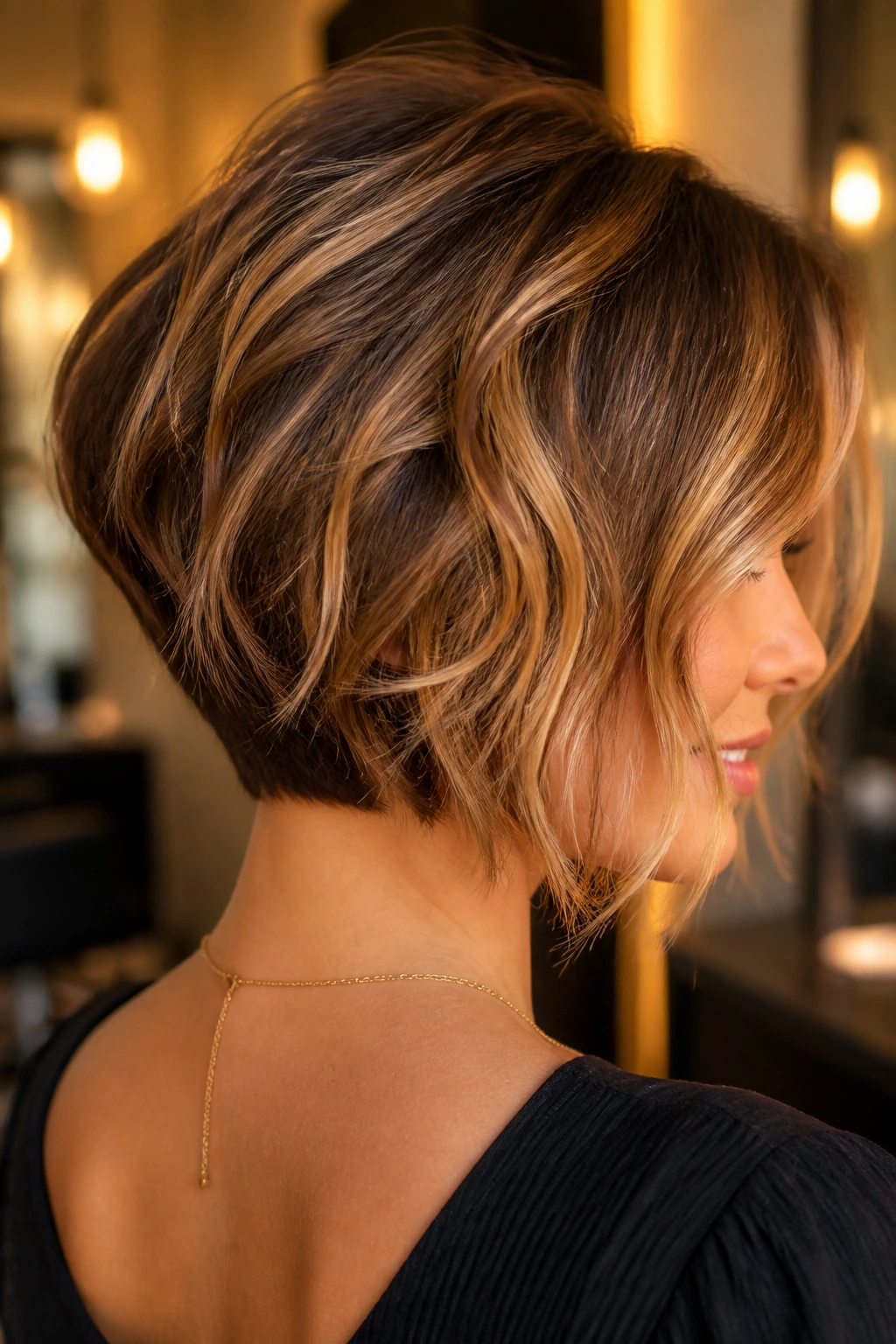
A classic stacked inverted bob is the version I’d hand to someone who wants the haircut to look crisp from every angle. The nape hugs the head, the sides angle forward, and the caramel is painted in thin veils so the wave pattern stays visible. On wavy hair, that stack gives the back enough lift to avoid heaviness without making the style feel stiff.
Where the shape matters most
The back should be slightly shorter and rounded under, not shaved to the bone. That little bit of bevel keeps the ends soft when the wave kicks out. Ask for caramel pieces that start below the root area and sit mostly on the outer layer; you want light catching movement, not a solid blonde band.
This cut looks best when the waves are medium and not overly separated. A pea-size amount of mousse at the roots and a diffuser will keep the stack from collapsing.
2. Deep Side-Part Inverted Bob with Face-Framing Caramel
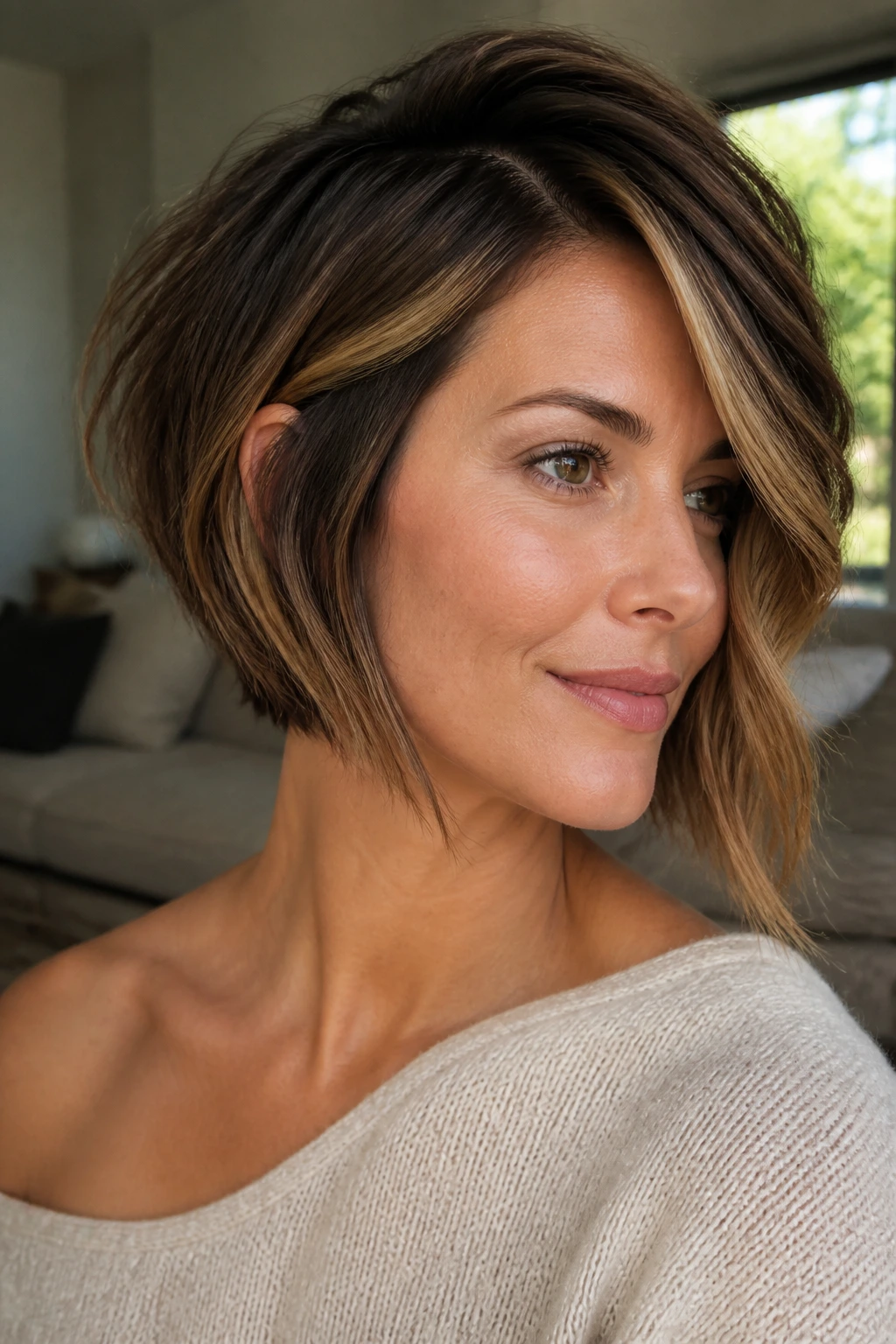
Why does a deep side part change the whole haircut? Because it breaks up the symmetry and gives the front pieces a cleaner sweep across the face. The caramel highlights belong right there: around the cheekbone, at the temple, and through the longest front strand. That placement makes the cut look softer without losing the angle.
Best when you want the front to do the talking
This version is especially good if your hair tends to fall flat on one side. The heavier part gives the bob a little drama, and the waves settle into a shape that feels less “done” than a center-part version. Keep the back stacked, but let the front length stay long enough to brush the jaw.
A small round brush at the crown can help if your roots lie too flat. The rest can air-dry. It does not need much more.
3. Chin-Length Inverted Bob with Soft Lowlights
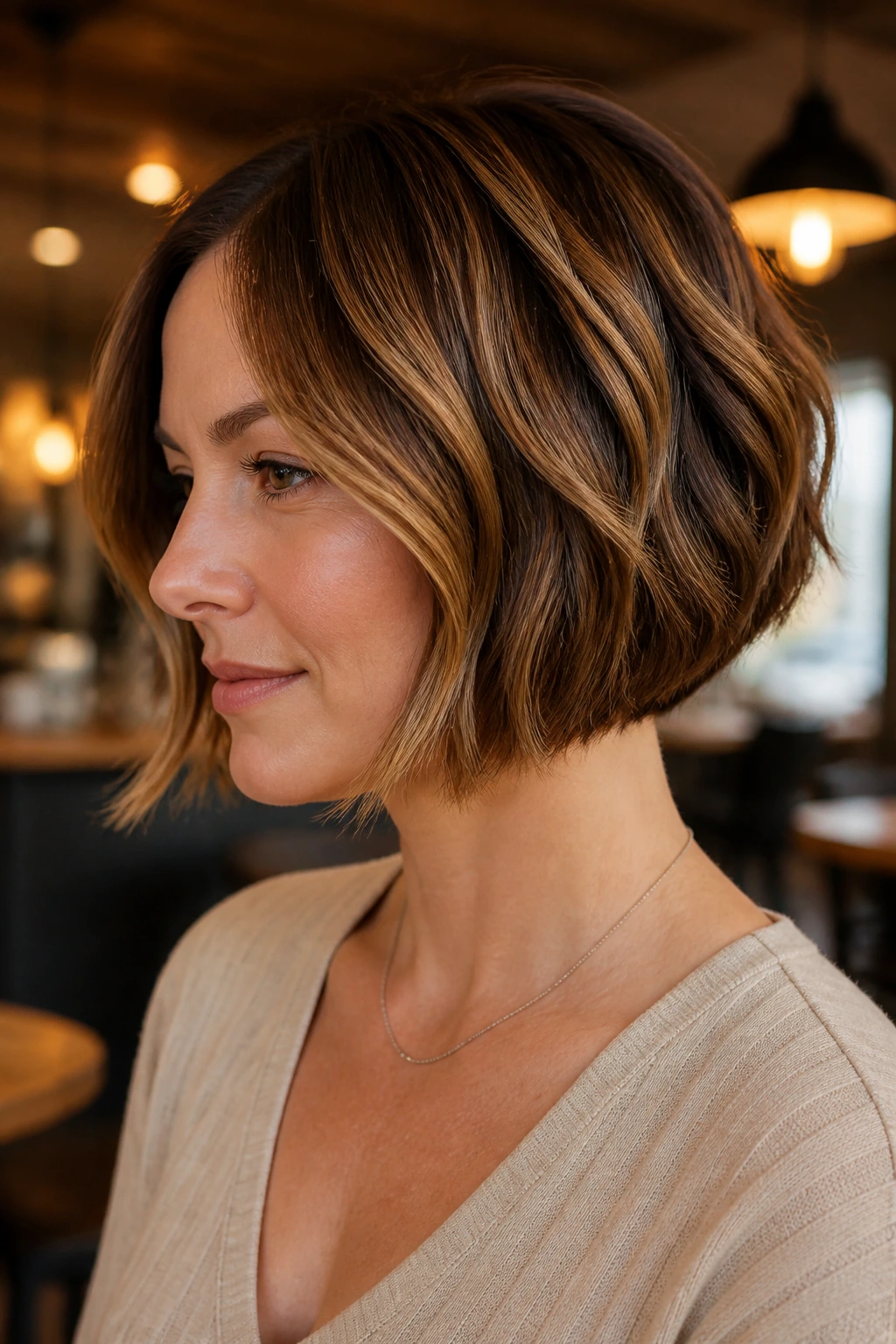
A chin-length inverted bob with lowlights is for the person who likes the idea of color but does not want a bright, streaky finish. The caramel stays warm, but the lowlights tucked underneath add shadow, which is what keeps the haircut from looking puffed up in strong light. Wavy hair loves that contrast.
What the deeper pieces do
Without the darker strands, a short bob can turn all light and no shape. The lowlights give the ends something to sit against, and the caramel looks richer because it has a darker base around it. That matters more than people think. It’s the difference between “highlighted” and “dimensional.”
This is a smart choice for medium to thick hair, especially if you want the wave to be visible without every strand shouting for attention. If you’re a fan of air-drying, this one behaves nicely.
4. Blunt-Edge Inverted Bob with Loose Waves
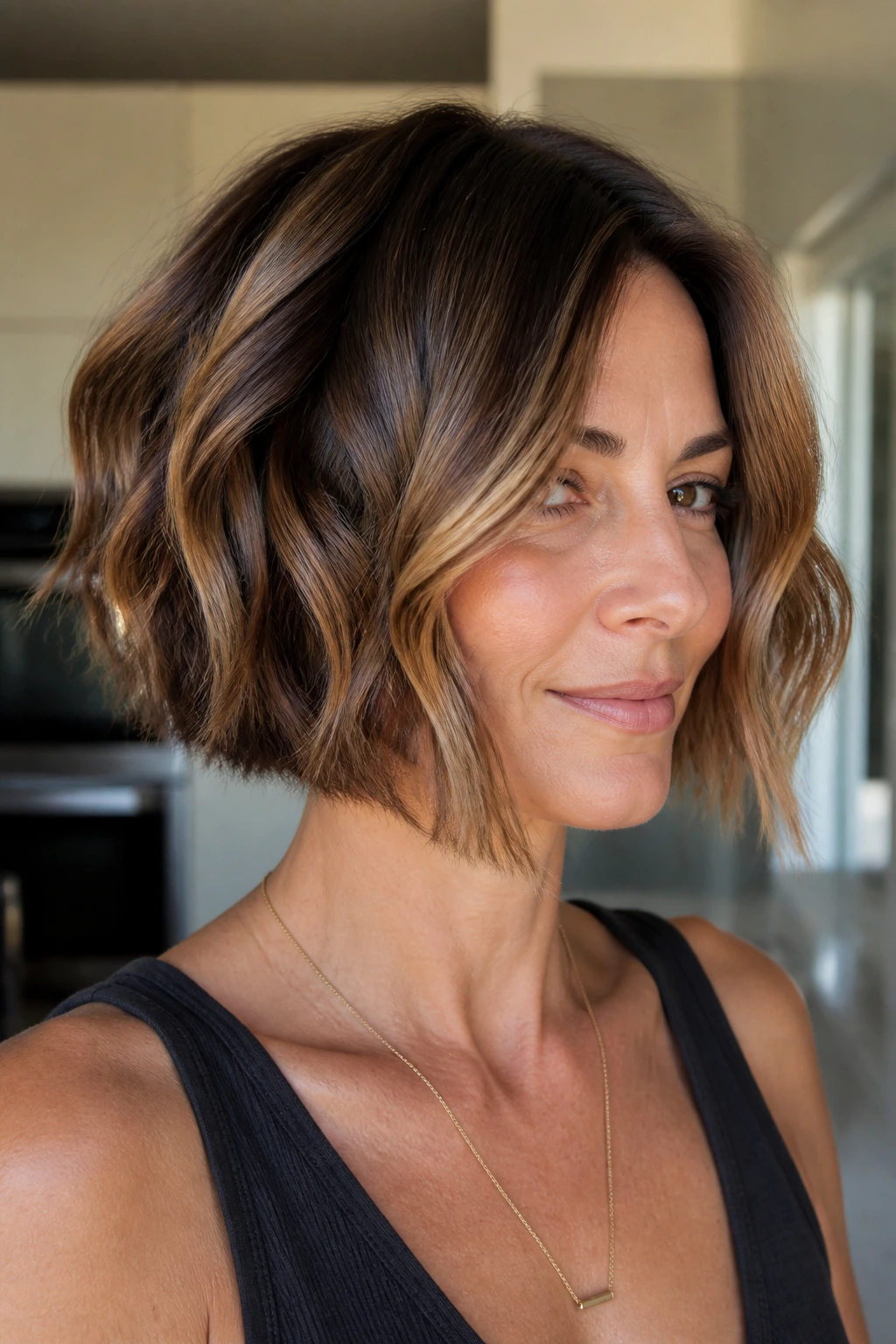
A blunt edge sounds severe, but on wavy hair it reads as clean rather than hard if the texture is kept soft. The ends are cut with very little feathering, then the caramel is placed in wide, gentle ribbons instead of tiny bits. That makes the waves show up as bends, not frizz.
A neat line with a soft finish
The trick is not to overlayer the perimeter. You want the edge to look deliberate, almost graphic from the side, while the top layer bends over it. Caramel highlights near the surface keep the line from looking heavy.
This cut suits people who like a polished finish more than a piecey one. Use a round brush just at the ends or a large-barrel iron to give the front a little curve. Keep the rest loose.
5. Tousled Bedhead Inverted Bob with Caramel Ribbons

Some cuts look better when they’re a little imperfect. This is one of them. The tousled version relies on uneven waves, a broken-up texture spray finish, and caramel ribbons that seem to fall in and out of the hair as you move. It has a lived-in feel that works especially well on naturally wavy hair with a bit of grit.
A little root lift goes a long way here. Scrunch in mousse, diffuse until the roots are dry, and then twist a few face pieces around your fingers while they’re still warm. Don’t chase perfect symmetry. That would ruin the whole point.
This one is good if your hair air-dries with a bend already in it. The cut simply sharpens the shape.
6. Money-Piece Inverted Bob with Bright Caramel Around the Face
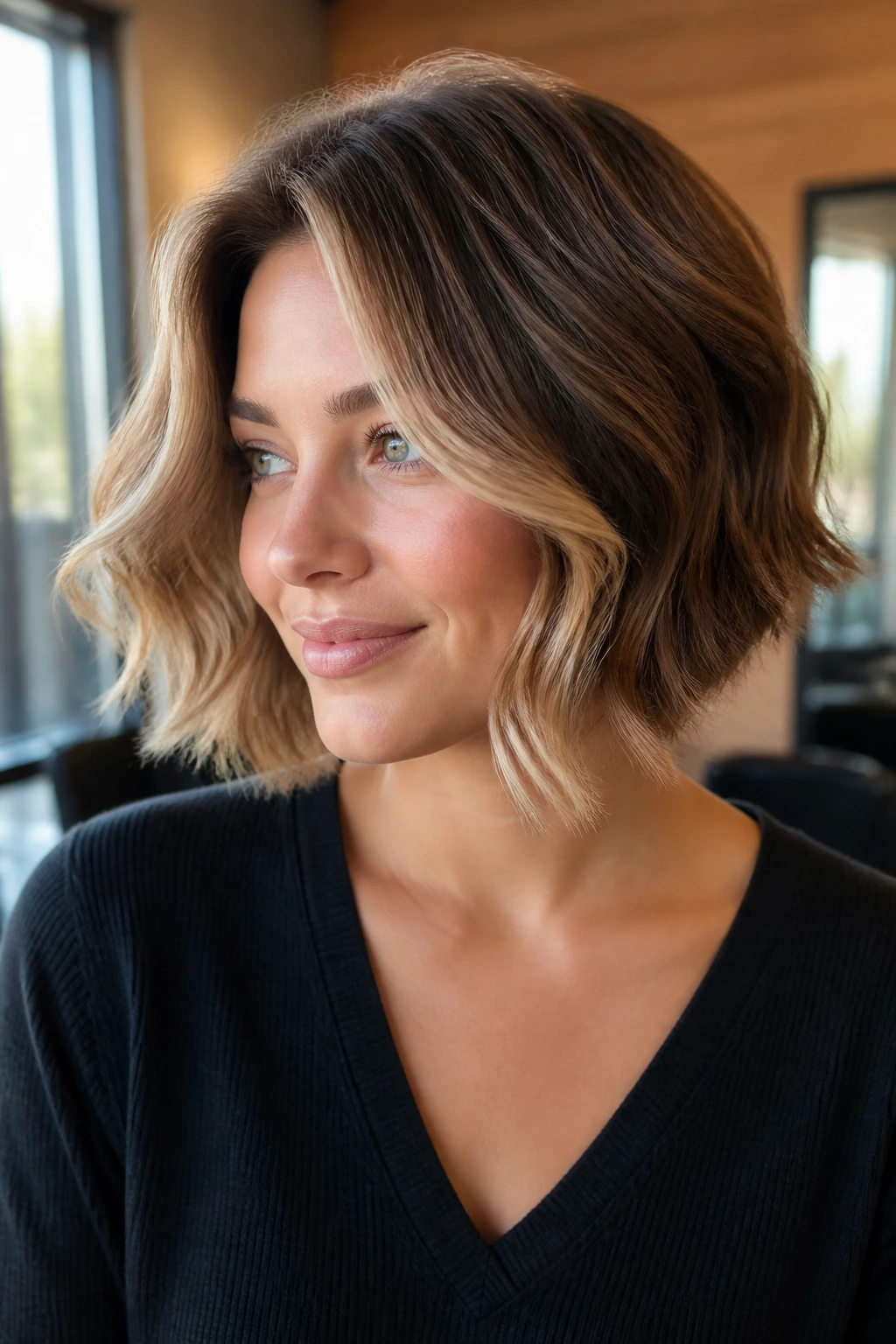
The money-piece bob is all about the front. The color is brightest right where the hair frames the face, usually just under the part and along the longest front pieces. The back stays more subdued so the whole look doesn’t tip into overcolored territory. Wavy hair gives those front pieces a little swing, which makes the brightness feel intentional.
Where to be bold
If your base color is medium brown or darker, this version can wake up the whole haircut. The highlight band should be bright enough to show even when the hair is tucked behind one ear. Too much brightness through the back, though, and the angle gets lost.
I prefer this style with a side part or a soft off-center part. It keeps the front from looking like two matching curtains.
7. Piecey Layered Inverted Bob with Separated Ends
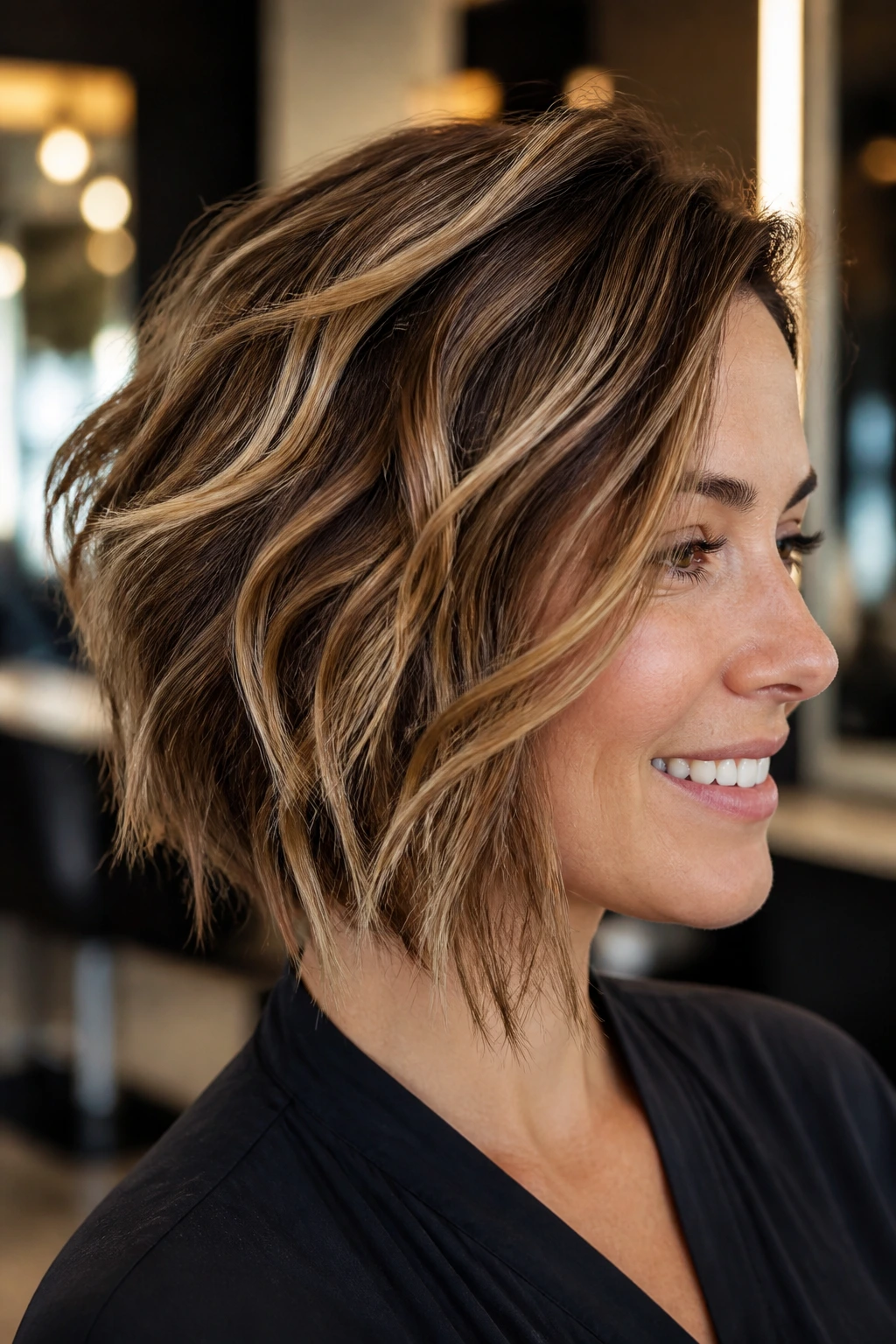
This one is for people who like seeing the cut in sections. The layers are carved to create little bends and separations at the ends, and the caramel highlights are painted to emphasize those broken pieces. On wavy hair, that can look almost airy if the haircut is not overthinned.
The pieces, not the puff
Ask for internal layering rather than heavy face-framing alone. You want enough removal to help the waves split into distinct pieces, but not so much that the bob loses its outline. The caramel should sit on the top layer and a few of the interior folds, not everywhere at once.
A little texture cream between the fingers helps define the ends. Too much product and the whole thing collapses into clumps. Go light.
8. Glossy Blowout Inverted Bob with Soft Caramel Shine
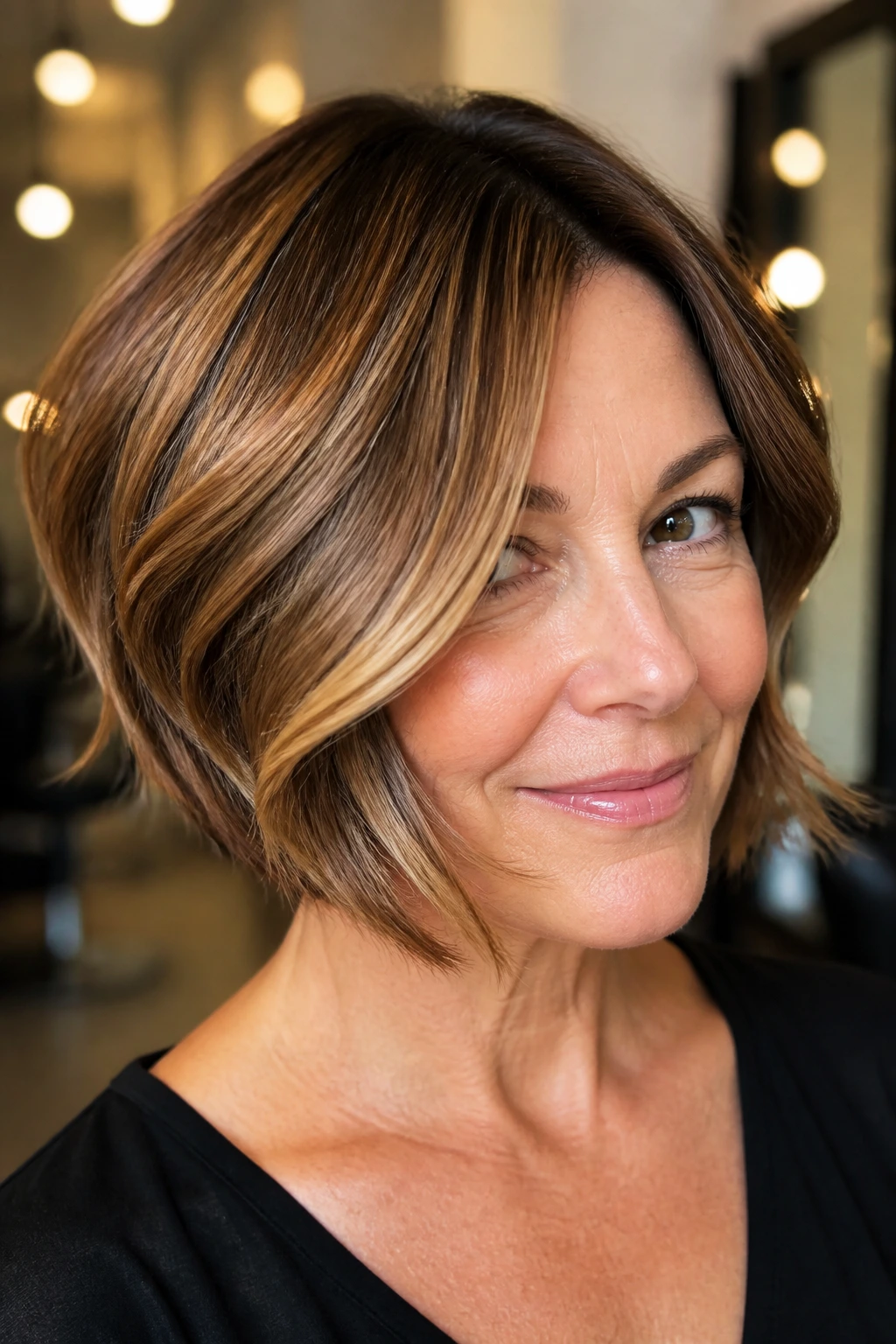
Here’s the polished version. The cut is still inverted, still short, still angled forward, but the finish is smoother and the caramel highlights are blended enough to shimmer rather than stripe. Wavy hair can take this direction well if you dry it with a round brush and tuck the ends slightly under.
The shine matters. A glossing spray or a small dab of serum on the mid-lengths will make the caramel look warmer and deeper, especially near the face. This style reads neat, but it does not need to feel rigid.
I’d choose this if you want the bob to work with structured clothes, sharper necklines, or a more dressed-up look. It’s the version that looks expensive when it’s brushed clean.
9. Dark-Root Melt Inverted Bob with Caramel Ends
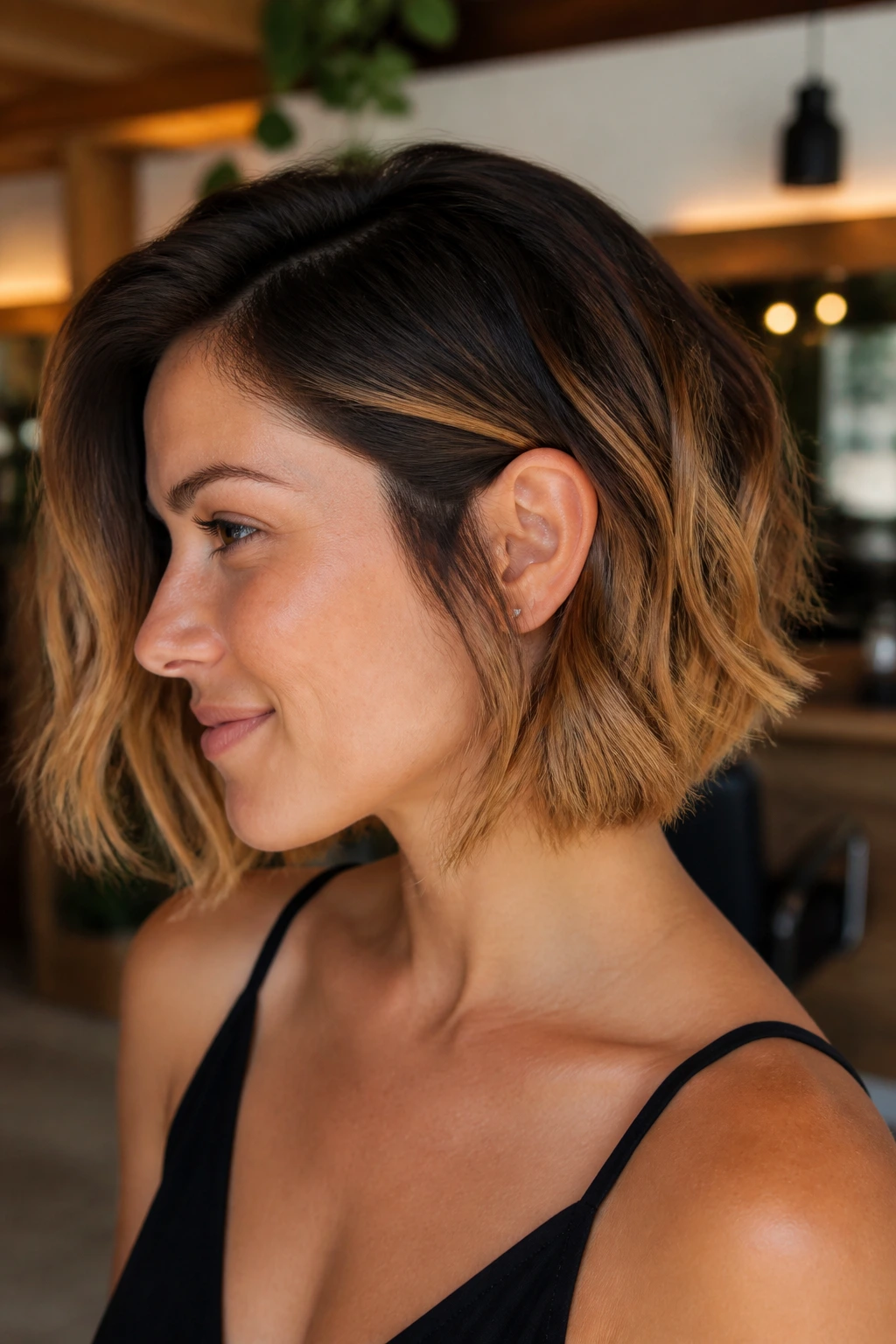
A dark-root melt is the easiest way to make a short caramel bob behave between color appointments. The root area stays a shade or two deeper, and the caramel gets brighter through the mid-lengths and ends. That softness matters on wavy hair because the wave pattern already creates natural shadow.
Why the root shadow helps
It keeps the back from looking painted on. It also makes grow-out less obvious, which is a relief if you do not want to be in the salon every few weeks. The best version has a gradual change, not a hard line.
This cut looks especially good when the front pieces are swept back behind the ear. The deeper root gives the lighter front strands a frame instead of a harsh contrast.
10. Sunlit Balayage Inverted Bob with Soft Caramel Slices
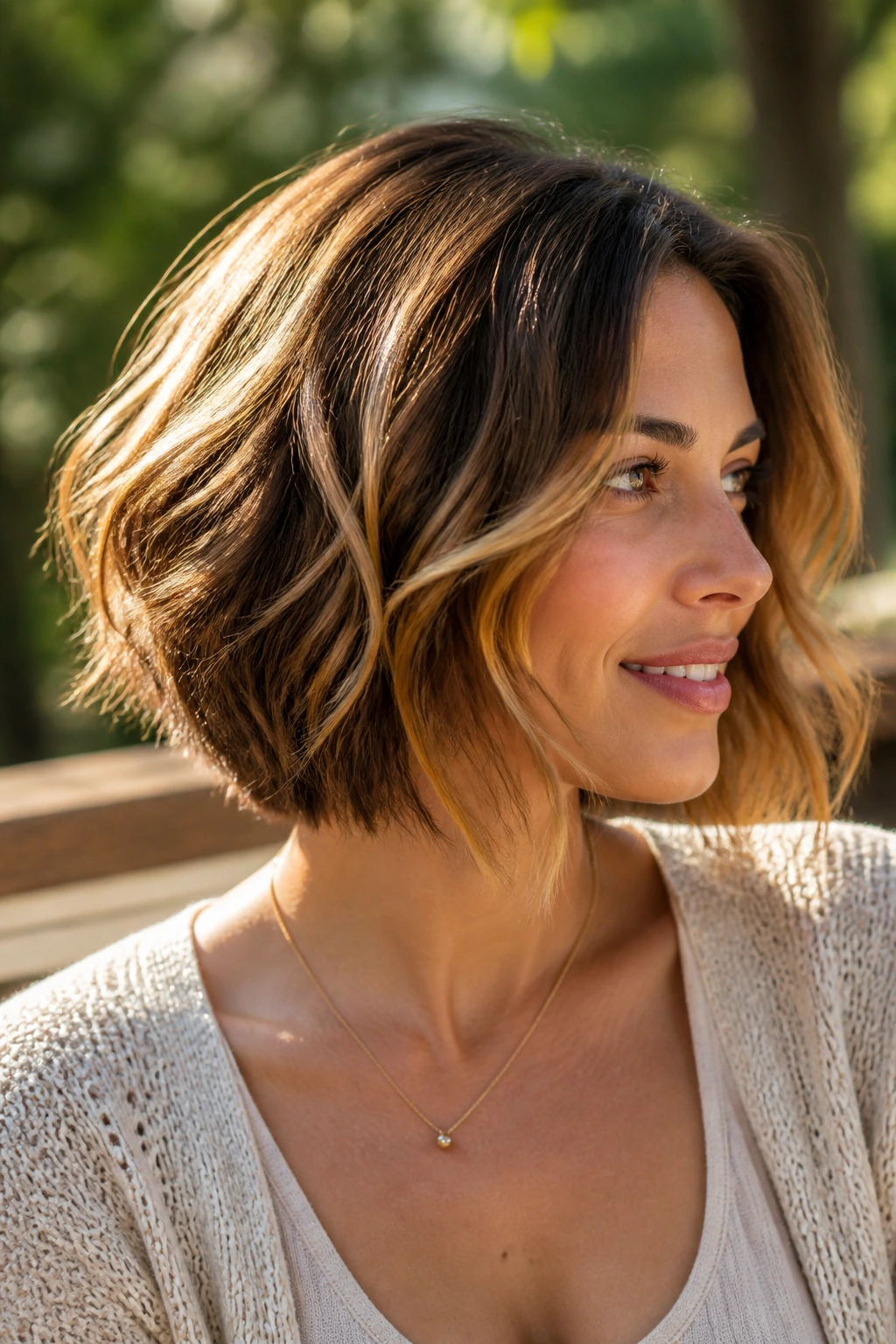
Balayage in a short inverted bob can go wrong if the colorist gets too heavy-handed, but when it’s done in soft slices, it’s lovely. The caramel is painted in broad, sunlit ribbons that sit through the top layer and a few hidden sections underneath. The result is a softer, more natural-looking pattern than foil lines.
More light, less stripe
Wavy hair is forgiving here. Each bend catches color at a slightly different angle, so the highlight placement can feel organic even in a short cut. The key is to keep enough depth around the crown and underneath the bob so the lighter pieces have somewhere to rest visually.
This is a good choice if you like hair that looks as though it spent time outdoors without trying to look “done.” It still needs shape at the nape, though. Balayage does not fix a bad cut.
11. Thick-Hair Inverted Bob with Caramel Underlayers
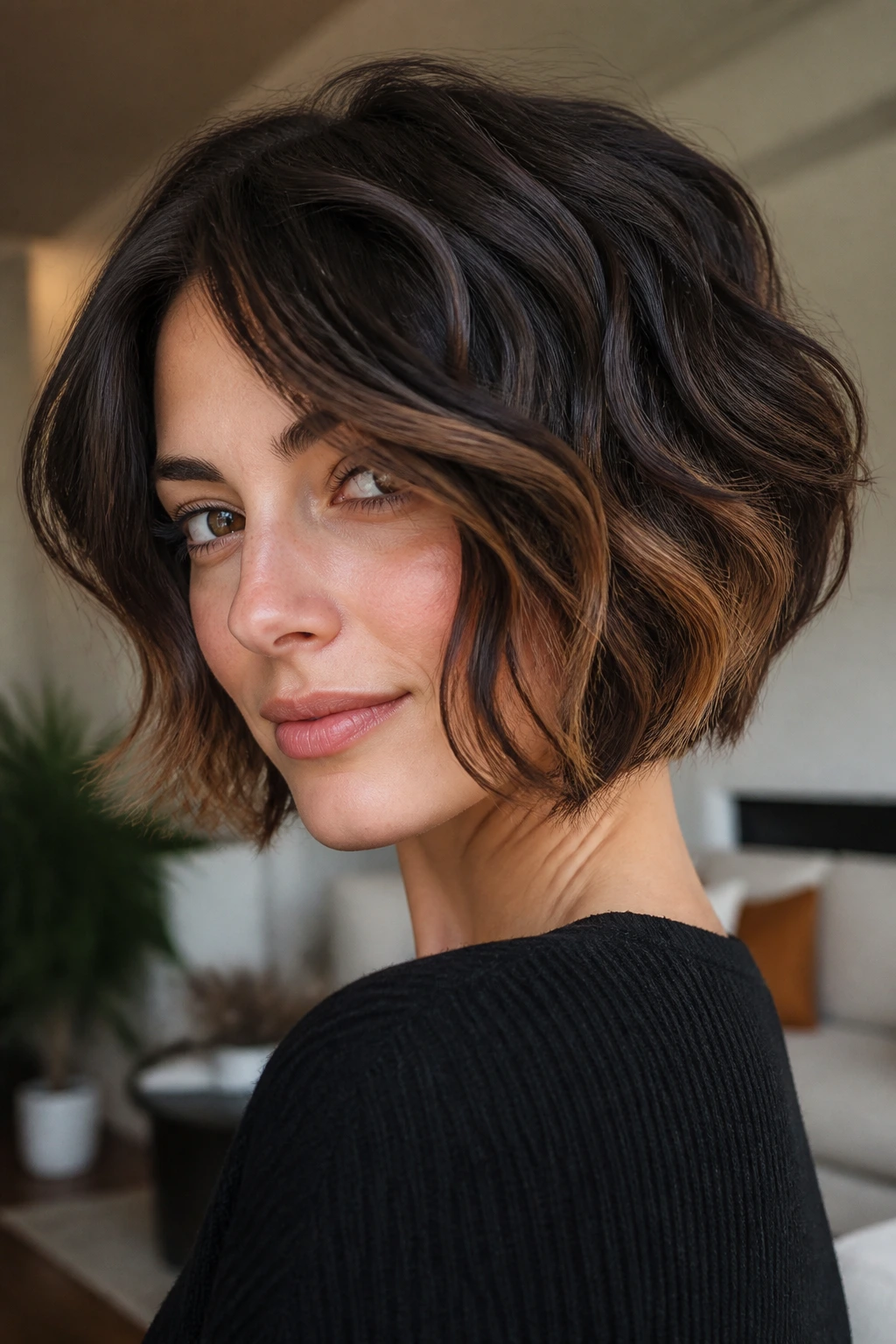
Thick wavy hair needs room to move, or it turns into a round block. This version uses stronger internal weight removal and places caramel mostly in the underlayers, where it flashes through as the hair shifts. That trick keeps the top from looking too busy while still giving you dimension.
The nape should be neatly stacked, but the interior should not be packed with too many short bits. Thick hair can handle a clean angle and still keep body. In fact, that’s usually what makes the shape work.
If your hair swells in humidity, this is a useful cut. The underlayer color keeps the structure visible even when the waves loosen up.
12. Fine-Hair Inverted Bob with Lifted Crown and Warm Caramel
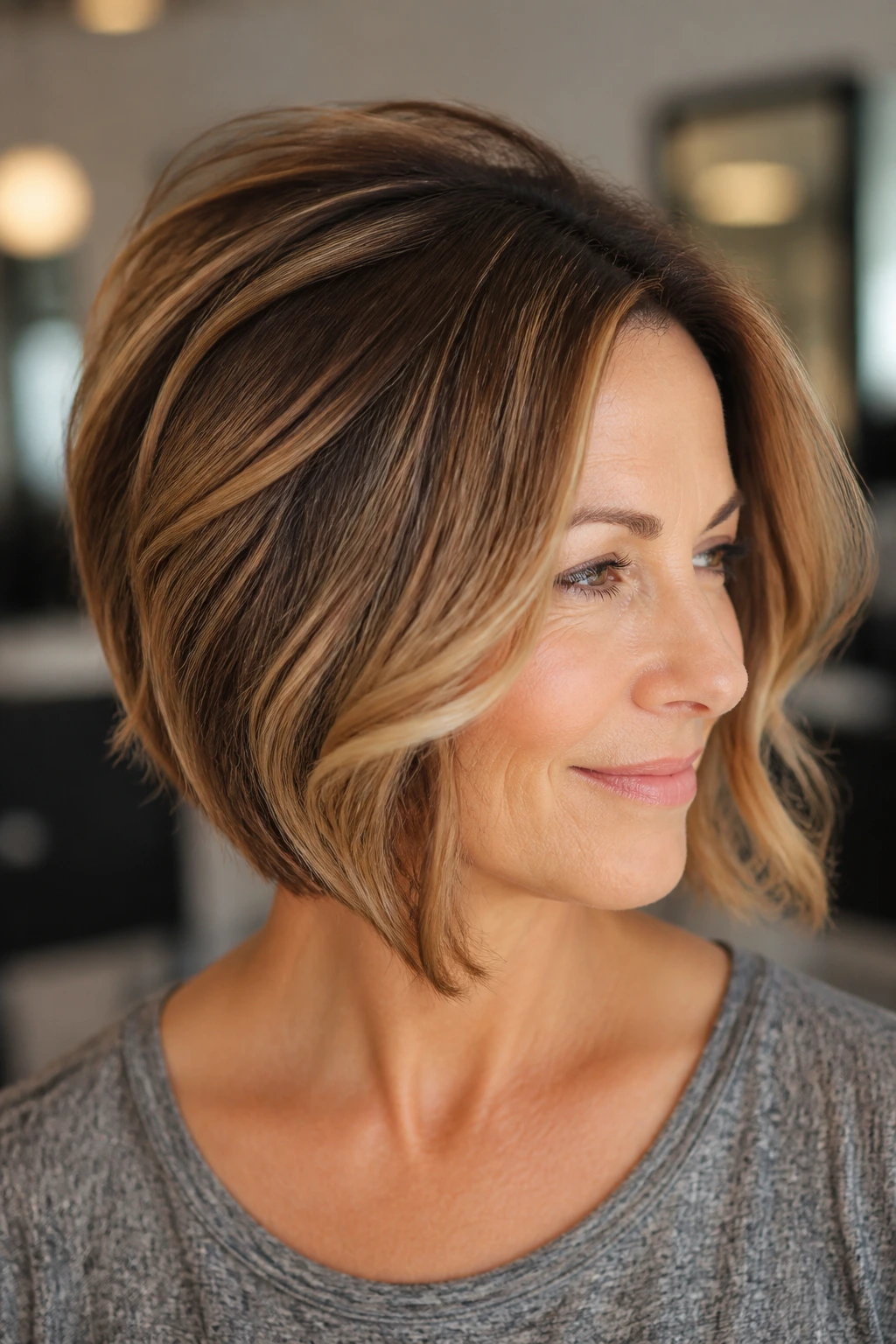
Fine hair needs a different approach. The back should be stacked enough to create the illusion of density, and the crown should have a little lift built in so the cut does not lie flat against the scalp. Caramel highlights, kept delicate and close together, help the hair appear fuller because they break up the see-through effect fine hair can have.
The lift has to stay soft
Too much texturizing makes fine wavy hair fray at the ends. Better to keep the perimeter clean and add volume with mousse at the roots, then a light bend through the front. The color should be warm, not chunky.
I like this version with a tiny off-center part. It gives the top a little movement without exposing the scalp line.
13. Asymmetrical Inverted Bob with One Longer Side
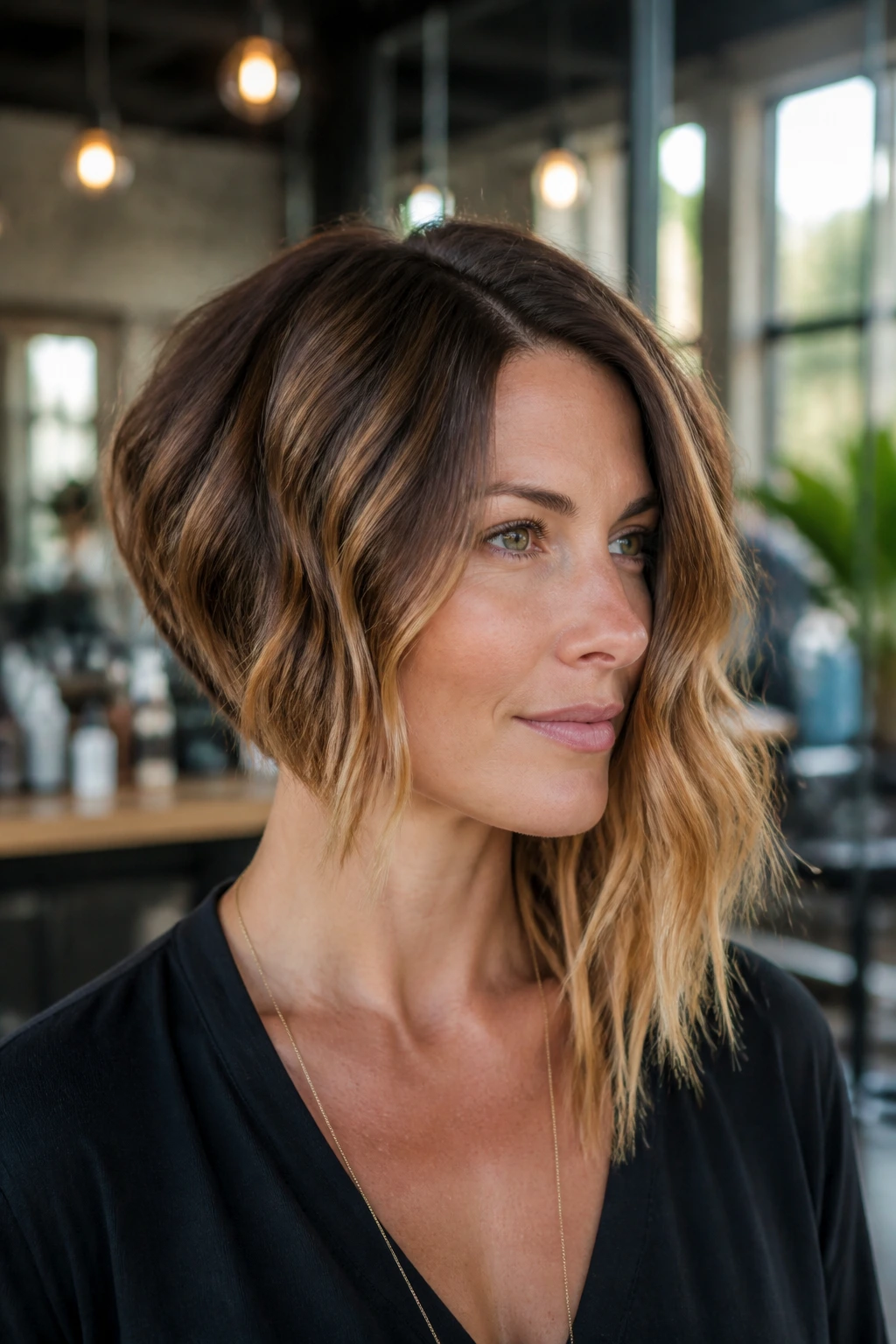
A real asymmetrical bob is not just “one side a little longer.” It needs intention. One side should fall noticeably farther forward, while the other stays closer to the jaw or cheekbone. Caramel highlights should follow that asymmetry, brightest on the longer side so the eye travels with the cut.
This works beautifully on wavy hair because the texture softens what could otherwise look too sharp. The wave keeps the angle from feeling severe. If you like a haircut with a little attitude, this one has it.
Keep the shorter side smooth and the longer side loose. The contrast is the point. Anything too fussy kills the line.
14. Curtain-Bang Inverted Bob with Caramel Sweep
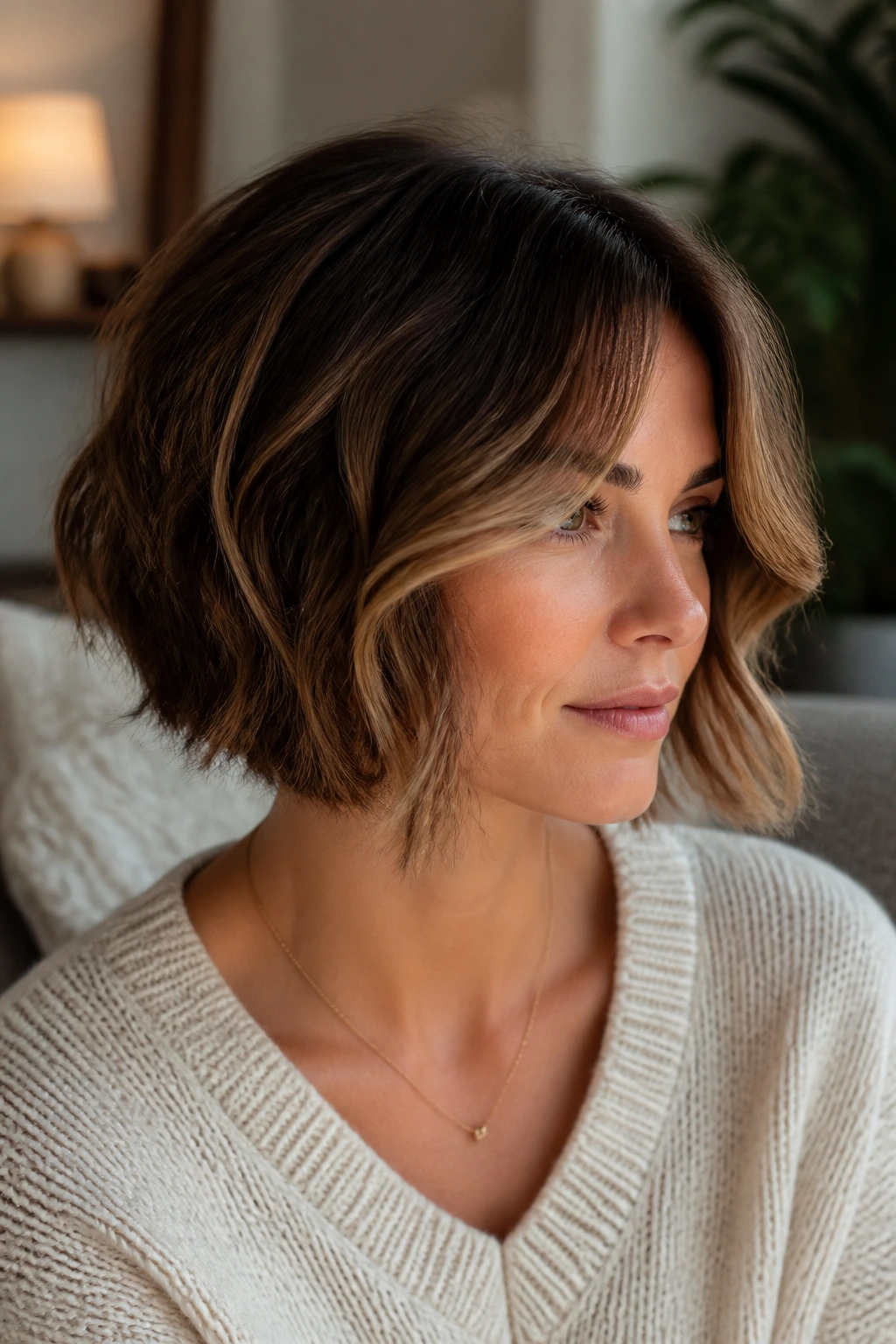
Curtain bangs can make an inverted bob feel less corporate and more relaxed. The bangs split softly at the center or just off-center, blending into the front angles of the cut. Caramel highlights around the fringe and temple help the bangs disappear into the rest of the style instead of sitting on top like a separate piece.
The fringe should fall, not flap
Wavy hair likes curtain bangs when they’re cut a touch longer than you think you need. They can shrink up once dry. The best version skims the cheekbone and blends into the longer front pieces.
This style is especially nice if you want to soften a long forehead or draw attention to the eyes. The bob still keeps its structure. The bangs just make it feel less severe.
15. Undercut Nape Inverted Bob with Hidden Caramel Panels
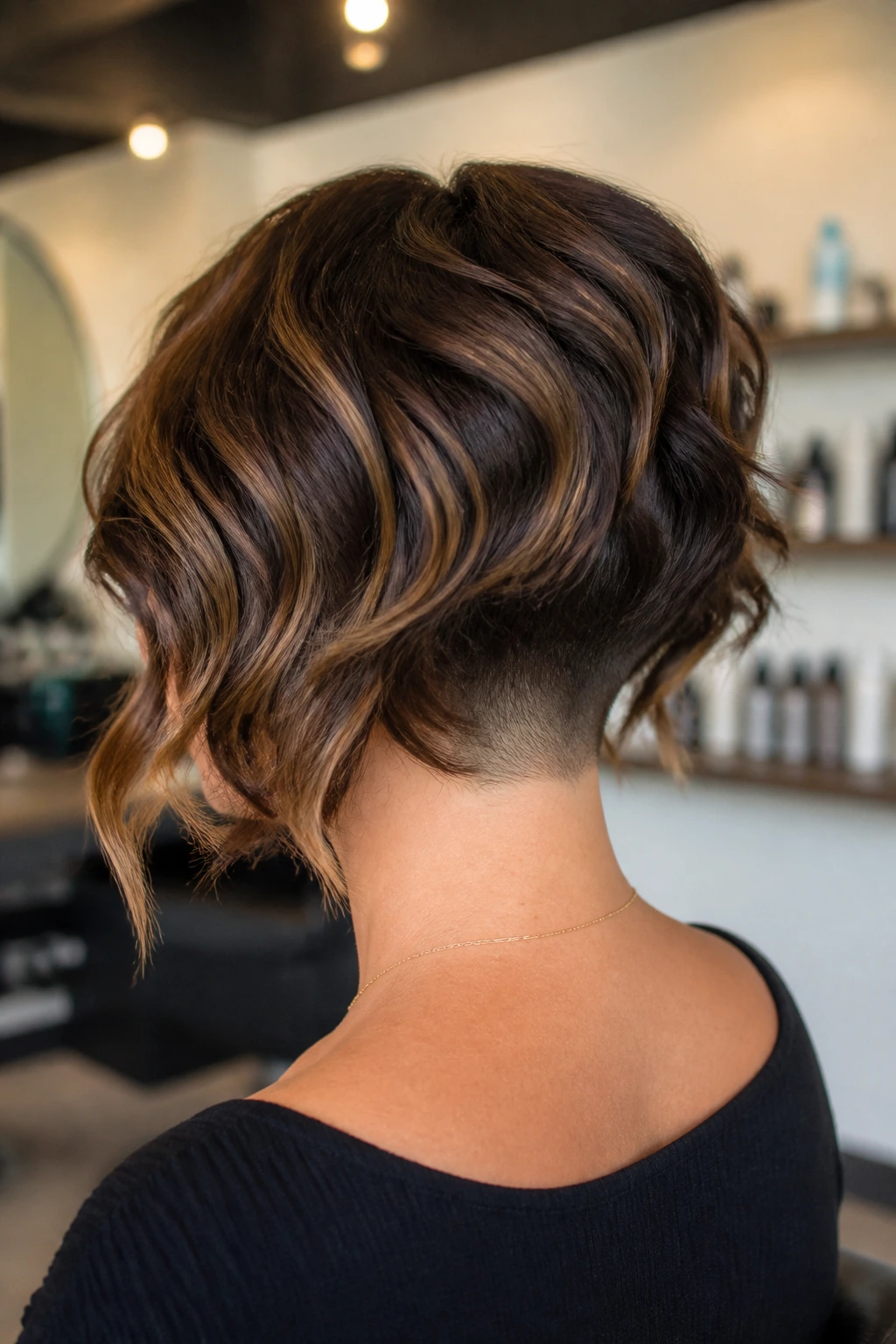
This is the version for people who get hot under all that hair at the neck. The undercut removes bulk from the nape, which helps the top layers sit flatter and cleaner. The caramel is then used in hidden panels that peek through the movement, so the color feels clever rather than obvious.
It sounds edgy, and it is. But when the top layer falls over the undercut, the haircut still reads as a bob from the outside. That makes it easier to wear than it first seems.
If your waves are dense or your hair grows out heavy at the back, this can be a relief. Clean shape. Less puff. Enough color to keep it interesting.
16. Rounded-Back Inverted Bob with Soft Caramel Depth
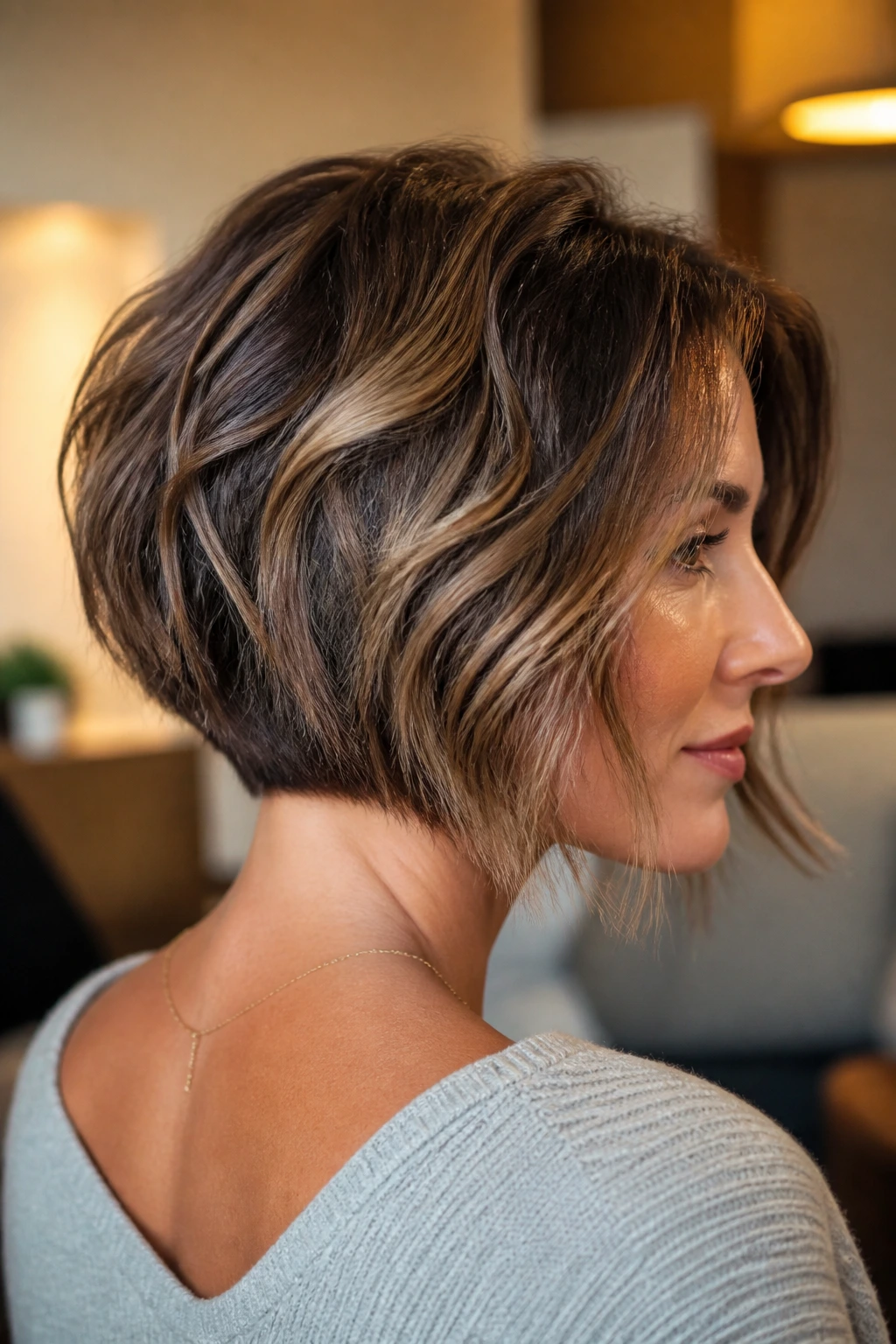
Not every inverted bob has to look sharp. The rounded-back version keeps the nape full and softly curved, which is a smart move if your waves already have a lot of bounce. The caramel is woven in with deeper lowlights so the roundness doesn’t turn into a balloon.
Softer than the classic stack
This cut feels more forgiving around the head shape. It still has an angled front, but the back is less architectural and more natural. That makes it easy to wear without constant styling.
I’d recommend it for anyone who likes movement but not a lot of visible layers. The depth from the color does some of the work for you.
17. Shag-Infused Inverted Bob with Caramel Texture
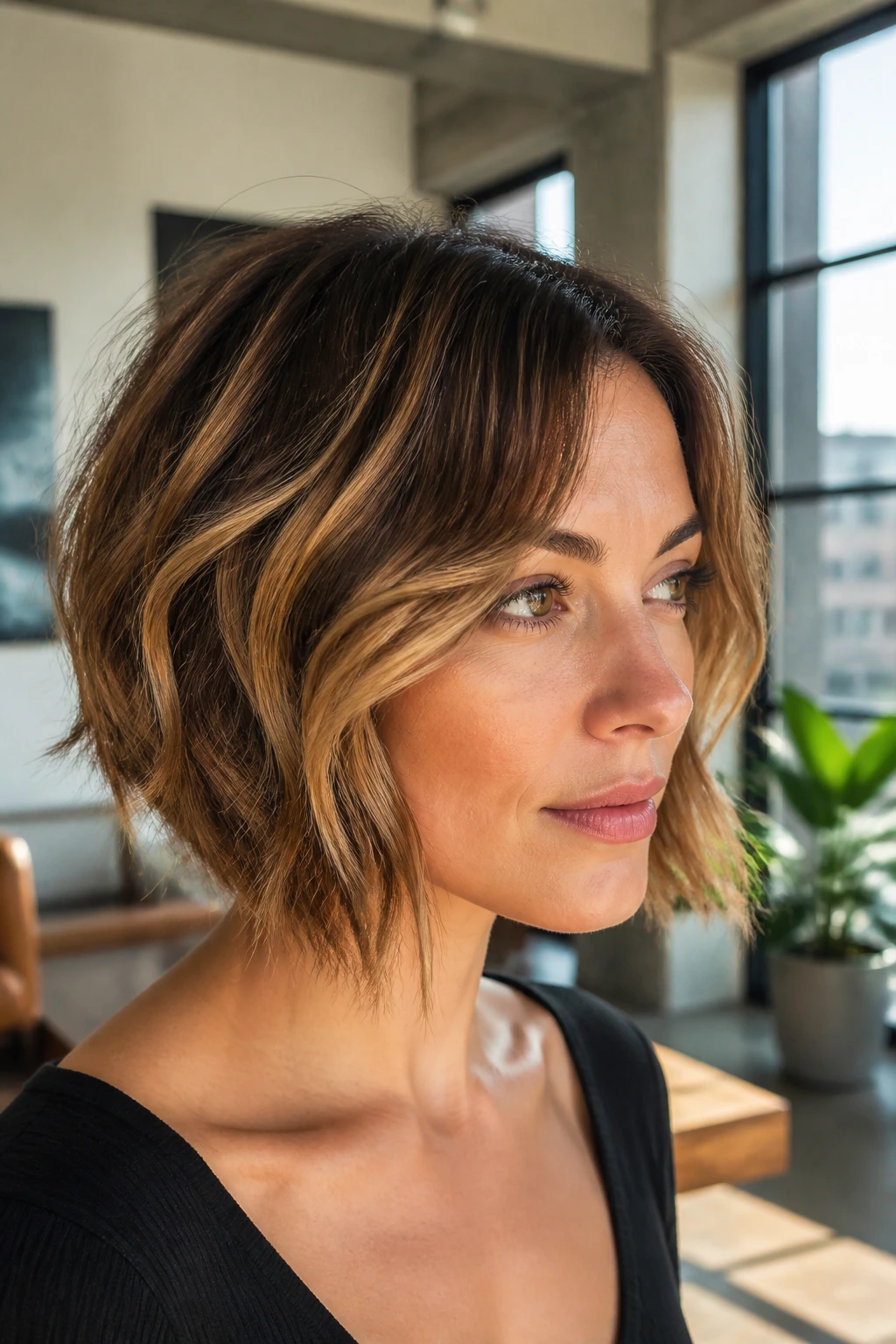
A shag-infused bob borrows a little looseness from the shag and gives it to the inverted shape. The layers are airier, the ends are more broken up, and the caramel highlights are scattered in a way that favors texture over polish. On wavy hair, this can look especially good because the cut encourages a slight bend and separation.
You do need to be careful not to over-layer the back. The inverted structure still has to be there, or the style just turns into a messy bob with no edge. The best version keeps the nape visible and the front pieces soft.
This is the one I’d pick if you like your hair to look like it has some history in it. Not pristine. Better than pristine, really.
18. Bronze-Caramel Inverted Bob with Rich Warmth
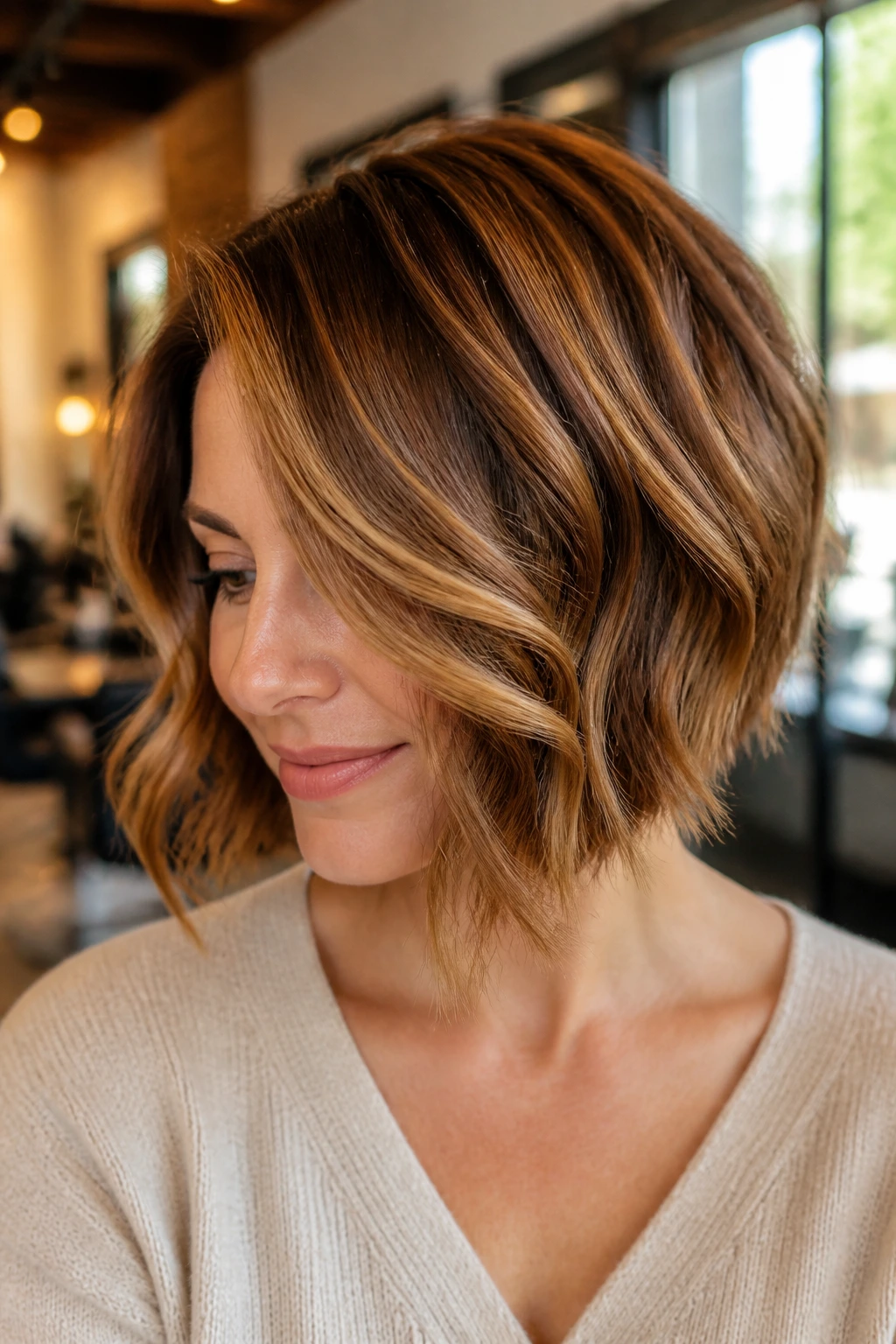
Bronze-caramel color gives the haircut a deeper, richer look than pale caramel alone. It’s warm, slightly earthy, and it works especially well on medium brown or chestnut bases. The wave pattern shows up in a more subtle way because the color contrast is gentler.
When you want warmth, not brightness
This is a strong choice if your skin tone likes golden makeup or warm jewelry. The highlights do not need to be loud to be effective. A few brighter threads around the face can keep the whole thing from going too dark.
The cut itself can be fairly standard inverted shape. The color does most of the mood-setting here, and that’s not a bad thing.
19. Long-Front Inverted Bob with Easy Grow-Out
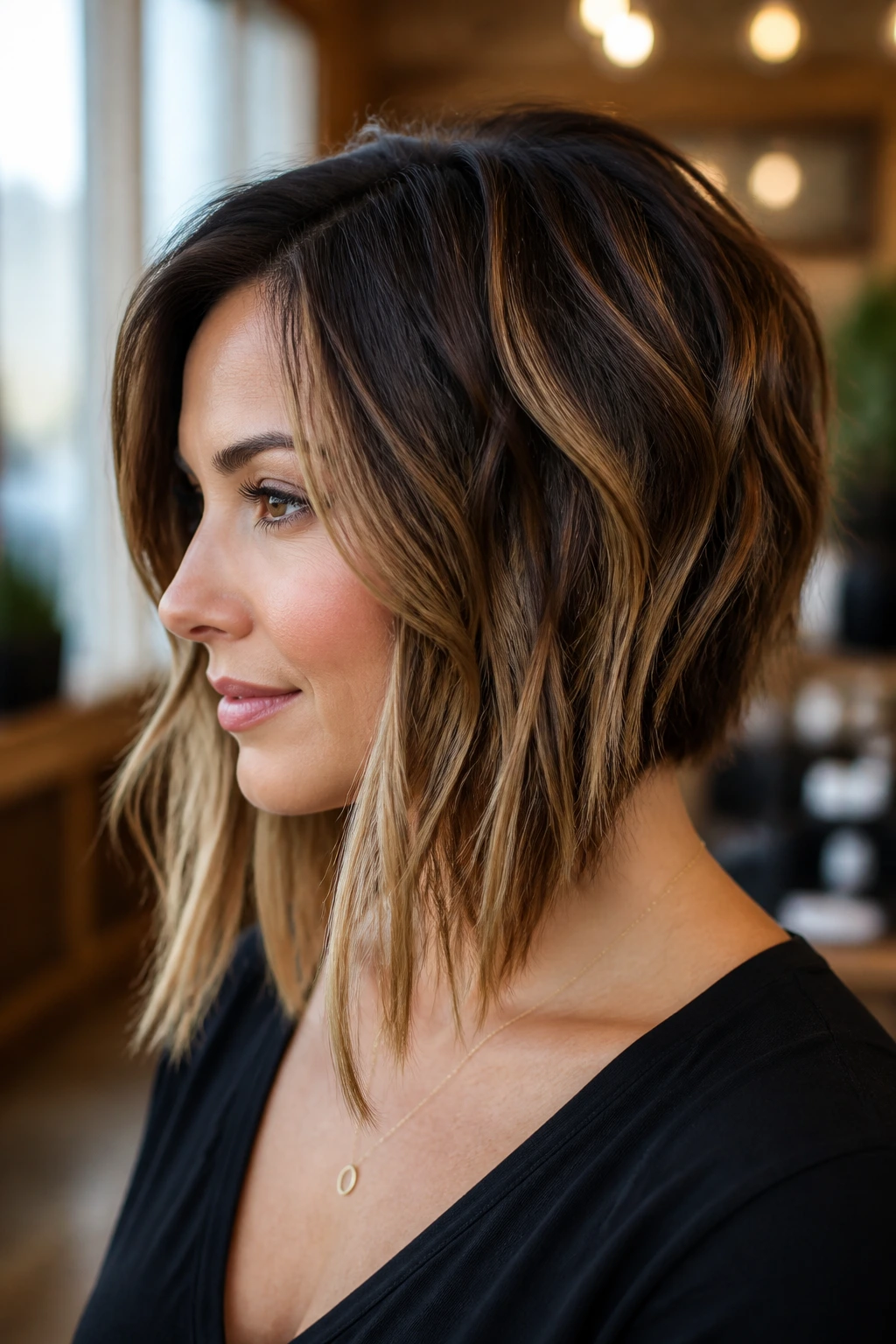
This is the friendly version of the style. The back is shorter and neat, but the front stays long enough to graze the collarbone when the waves stretch out. Caramel highlights are blended so the grow-out line is soft and the haircut still reads as intentional two months later.
It’s a practical choice for people who like to stretch salon visits. The longer front also makes it easier to tuck pieces behind the ears or pin one side back without losing shape.
If you’re nervous about going too short, start here. It keeps the inverted silhouette without making the whole cut feel abrupt.
20. Beachy Wavy Inverted Bob with Toasted Caramel

Beachy texture and caramel belong together when the cut has enough movement to support them. This bob uses loose bends, a slightly rough finish, and warmer toasted-caramel pieces that look sunlit rather than shiny. It should feel easy, not overworked.
A salt spray can help if your waves need grip. So can a quick pass with a 1-inch wand on a few random front sections. Don’t curl everything. That would make it look too symmetrical and take away the beachy feel.
This one works best when the wave pattern already has some bend. If your hair is pin-straight, you’ll spend too much time forcing it.
21. Glassy Side-Swept Inverted Bob with Caramel Shine
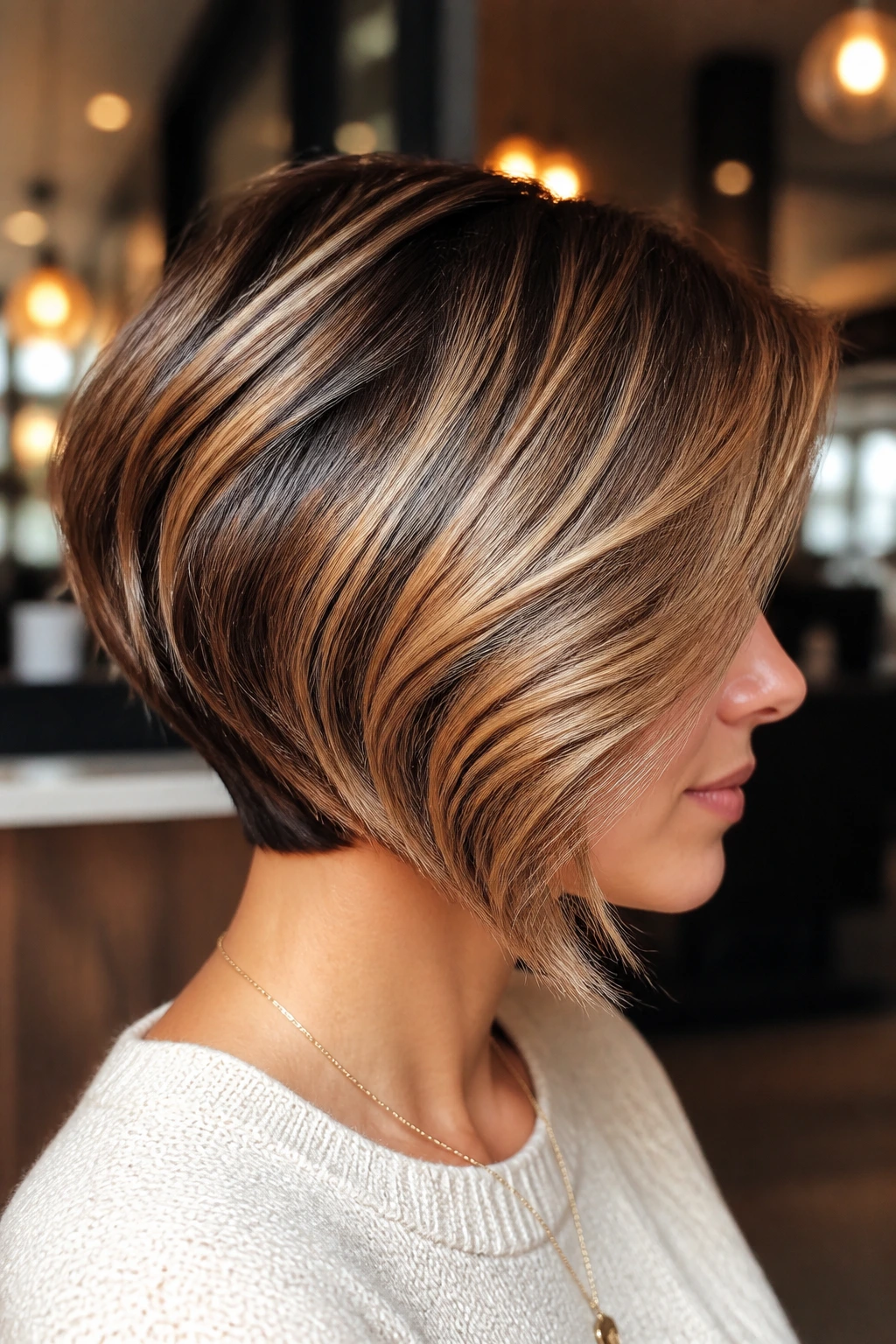
A side-swept finish gives the bob a smooth, almost glassy look without killing the wave completely. The caramel highlights are kept thin and polished, so the surface reflects light instead of scattering it. This is a good style if you want your bob to look neat from morning to night.
The side sweep also helps hide a cowlick near the front hairline, which can be a small miracle. Brush the top flat, then bend the ends under slightly. That’s enough.
I like this version for workdays, dinners, or anywhere a messy finish would feel off. It’s controlled, but not stiff.
22. Statement Inverted Bob with High-Contrast Caramel
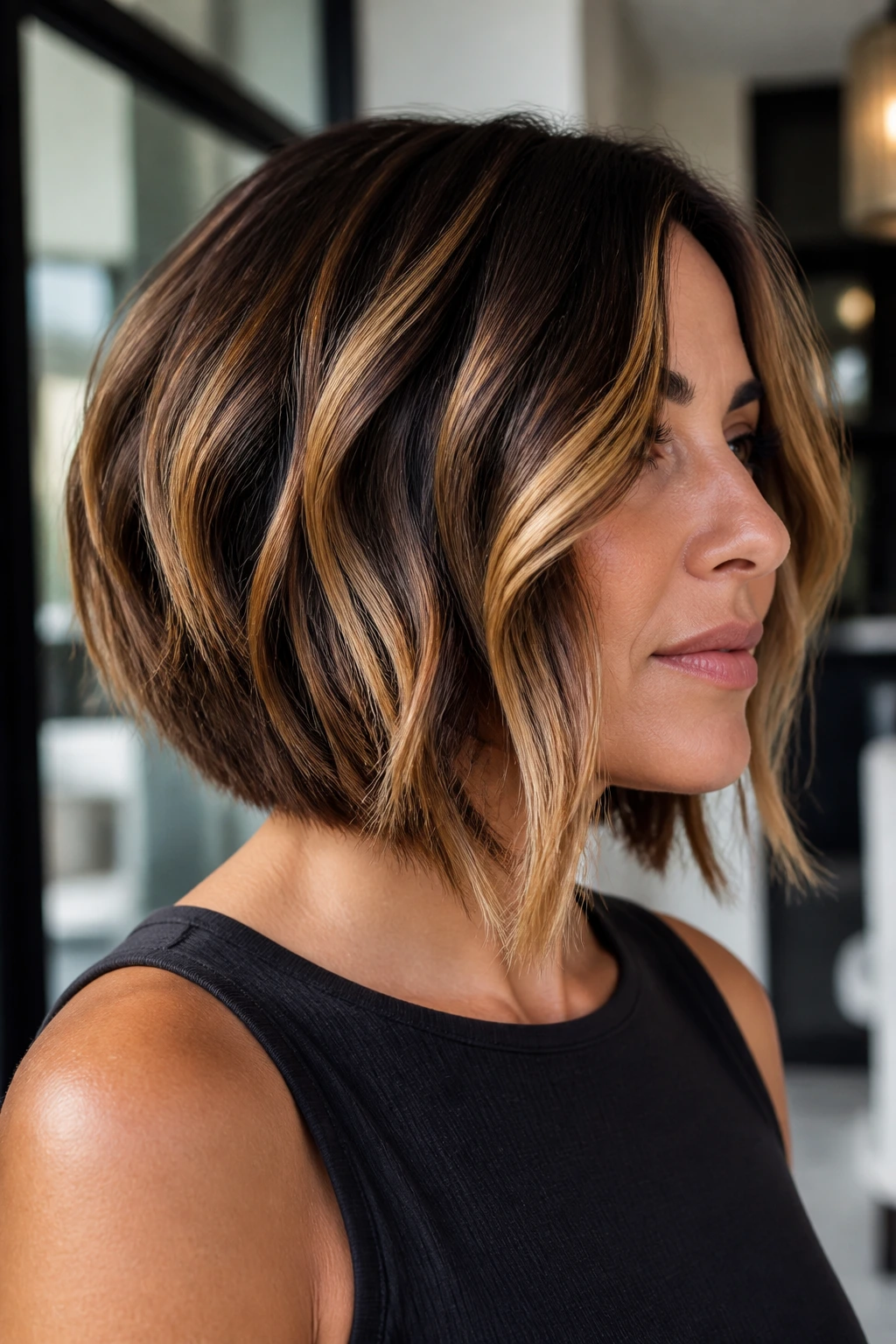
This is the bold one. The haircut itself is clean and angular, but the caramel is brighter and more noticeable, creating a stronger contrast against the base color. Wavy hair helps soften that contrast so it doesn’t feel blocky.
Make the angle visible
The most important part here is keeping the front corners long enough to show the shape. If the highlights are too evenly distributed, the cut loses its edge. You want clear movement from back to front, with color that traces that path.
This version suits people who like a haircut that reads from across the room. It is not shy, and that is the appeal.
23. Jawline-Hugging Inverted Bob with Soft Caramel Curves
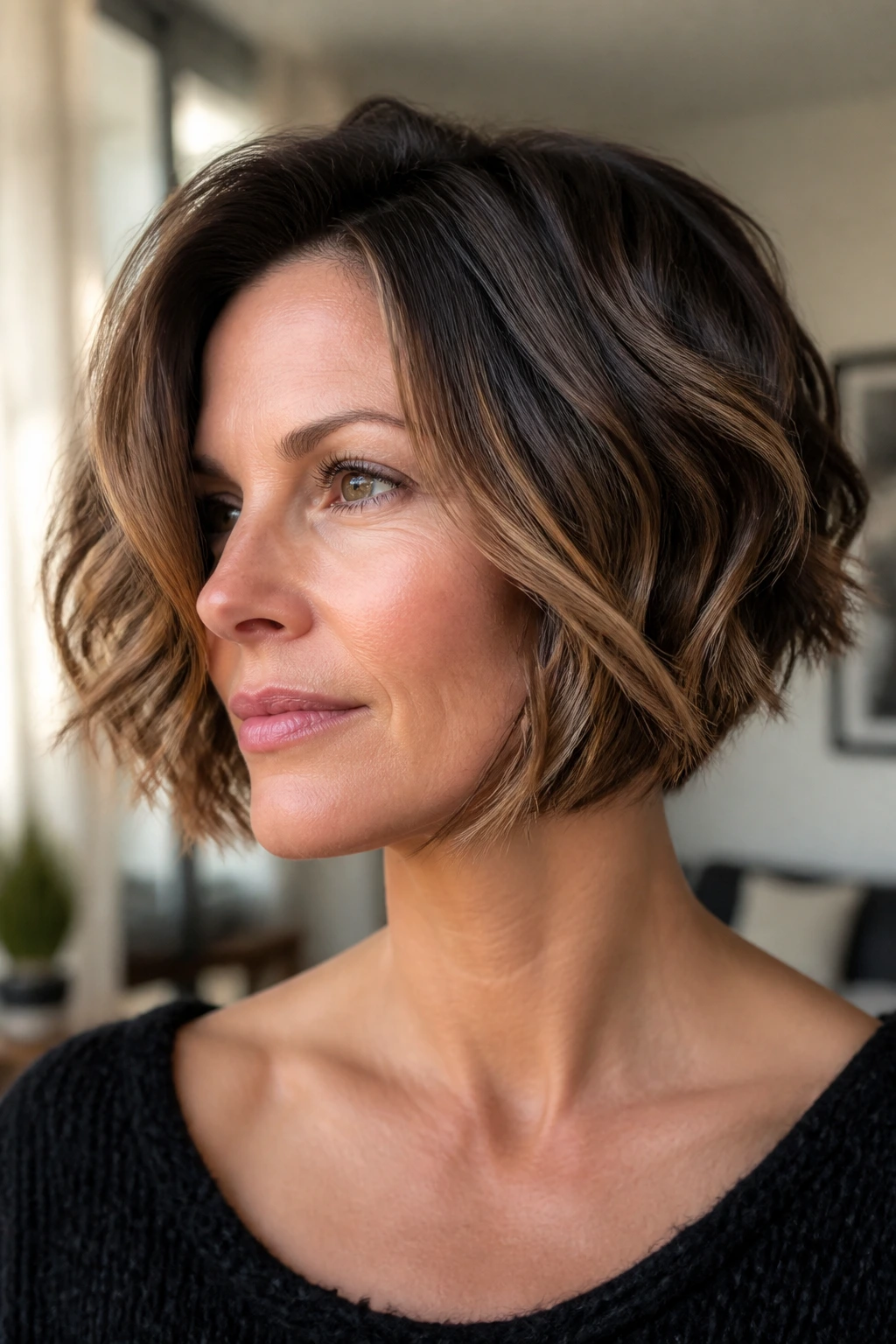
A jawline-hugging bob lands right where the face changes shape, which makes the placement a little tricky and a little flattering. The front pieces should skim, not sit hard against the jaw. Caramel highlights through the curve help the line feel softer and stop the cut from becoming boxy.
The face frame does the work
If you wear glasses or have a strong jaw, this cut can look especially sharp in a good way. The wave bends around the jawline and gives the style movement that straight hair sometimes misses. Keep the back stacked, but not too high.
This one benefits from a little styling cream on the ends. It keeps the curve neat without weighing the wave down.
24. Long-Front Graduated Bob with Caramel Sweep
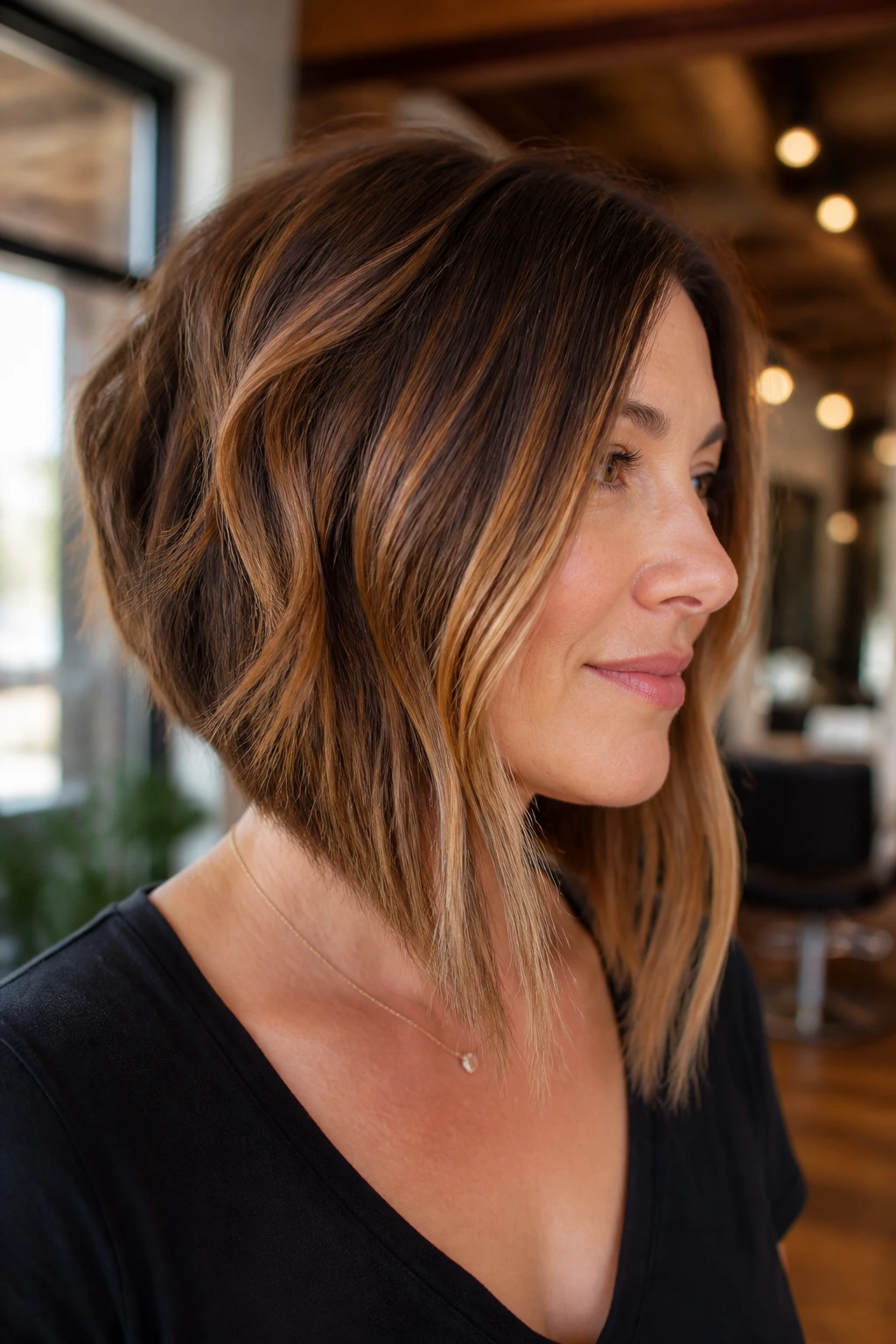
This is a more dramatic angle. The front pieces are visibly longer, the back is graduated upward, and the caramel is swept through the mid-lengths so the shape looks continuous rather than chopped into sections. It has a sleekness to it that wave pattern softens nicely.
The best part is how the cut moves when you turn your head. The longer front pieces swing, the back stays tidy, and the highlights catch in layers rather than all at once. It’s one of the cleaner-looking options in the group.
If you like structure but still want your hair to feel touchable, this is a strong pick.
25. Soft Retro Flip Inverted Bob with Golden-Caramel Ends
A retro flip at the ends changes the whole mood. Instead of tucking under, the front tips flick slightly outward, giving the bob a little swing and personality. Golden-caramel ends make that flip stand out without turning the style into a costume.
This one works best with a round brush or a brief pass of a flat iron at the ends. The wave should still be there underneath. You’re just coaxing the shape into a cleaner finish.
I’d choose it if you like a bob that feels playful but not fussy. It has a little charm to it. Enough, anyway.
Why the Inverted Shape Flatters Wavy Hair
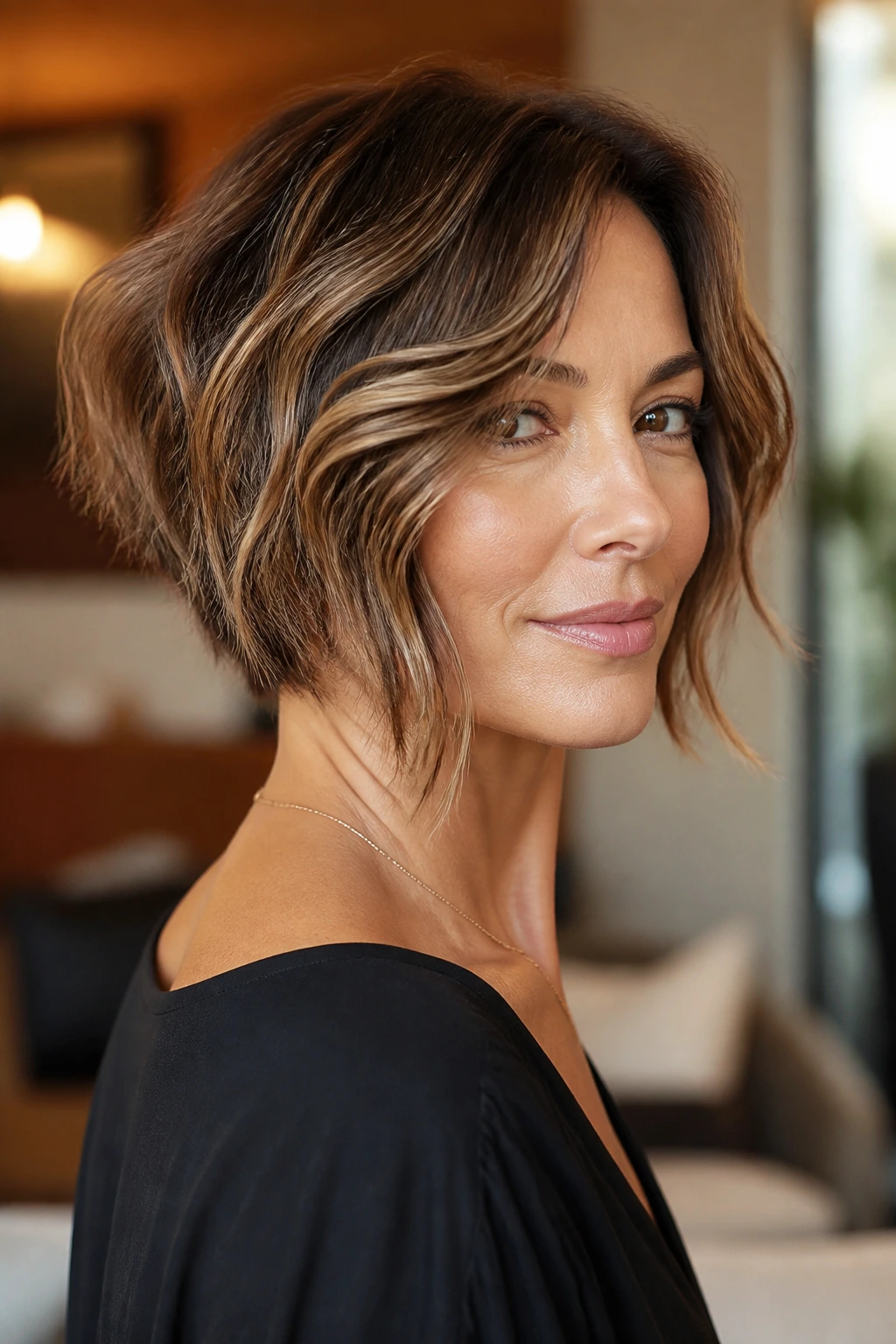
Wavy hair can be tricky because it rarely behaves the same way from root to end. The inverted bob solves that by giving the back a firm outline and the front enough length to show movement. The haircut does not fight the wave pattern. It gives it a lane to run in.
The caramel highlights matter just as much as the cut. A wave without dimension can flatten out under indoor light, especially if the color is one shade too solid. Warm ribbons, a few deeper lowlights, and a root area that is not overly bright keep the whole shape readable from morning through evening.
There’s also a practical side people forget. Shorter backs dry faster, feel lighter on the neck, and are easier to refresh with a diffuser or a few bends from a wand. That makes the style less precious than it looks in photos. A good inverted bob should survive a normal life.
Essential Tools for Styling These Looks
-
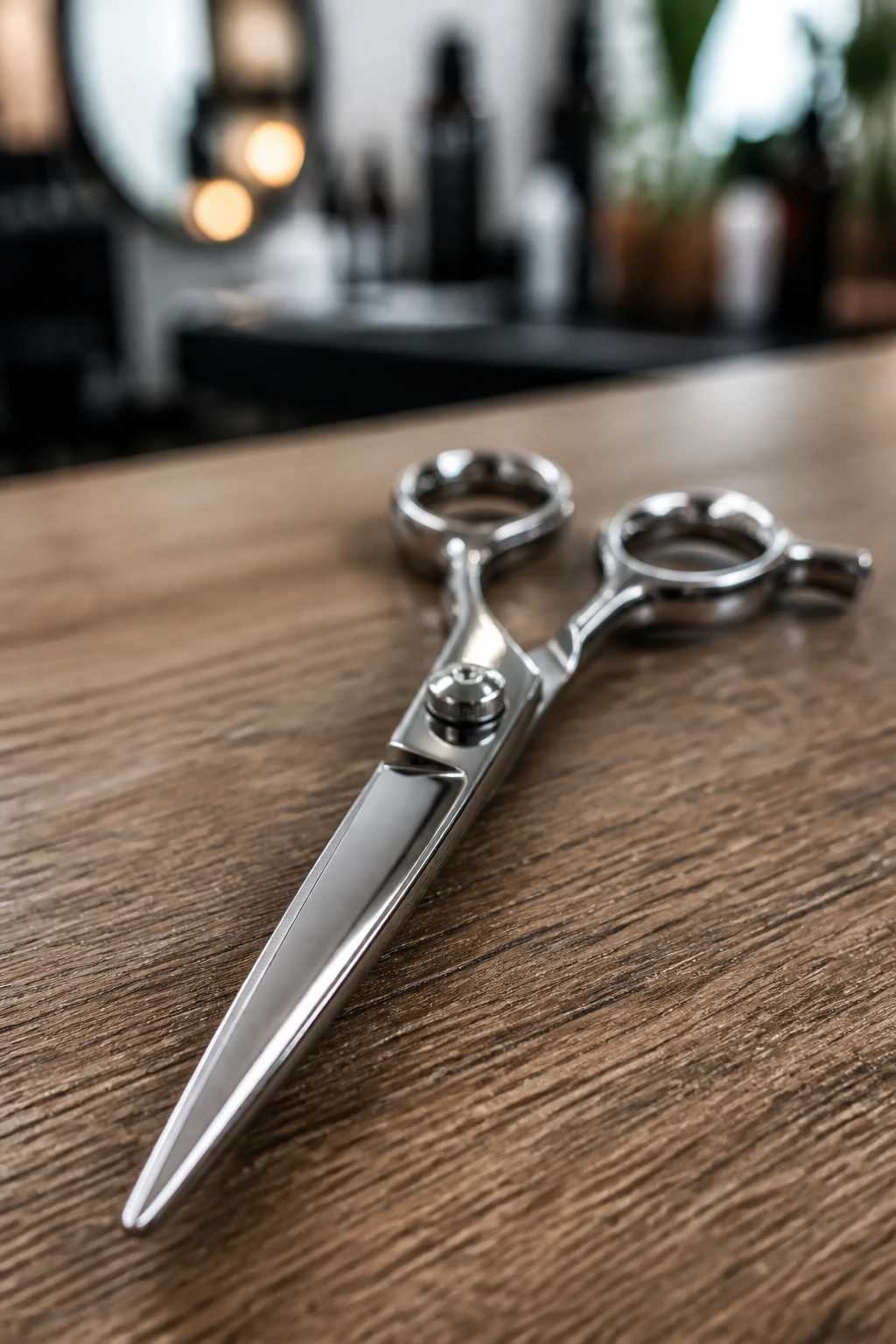
Professional haircutting shears: If you’re trimming bangs or ends at home, use real shears; kitchen scissors chew the hair and leave blunt, bent ends.
-
Tail comb: Useful for creating clean parts and lifting sections when you’re styling the crown or placing highlights.
-
1-inch curling wand or iron: Best for refreshing a few front pieces and sharpening the bend without making the whole bob look curled.
-
Diffuser attachment: Keeps the wave pattern intact while drying and helps the back keep its stacked shape.
-
Round brush, 1 to 1.5 inches: Good for smoothing the ends under or giving the front a soft curve.
-
Root-lift mousse or spray: Gives fine or flat waves a little height at the crown without sticky buildup.
-
Heat protectant: Non-negotiable if you’re using hot tools, even lightly.
-
Texture spray: Helpful for piecey styles and any bob that should look a little undone.
-
Color-safe shampoo and conditioner: Keeps caramel highlights from fading muddy or brassy.
-
Microfiber towel or soft T-shirt: Cuts frizz during drying and keeps the wave pattern from getting roughed up.
What to Ask Your Stylist for at the Salon
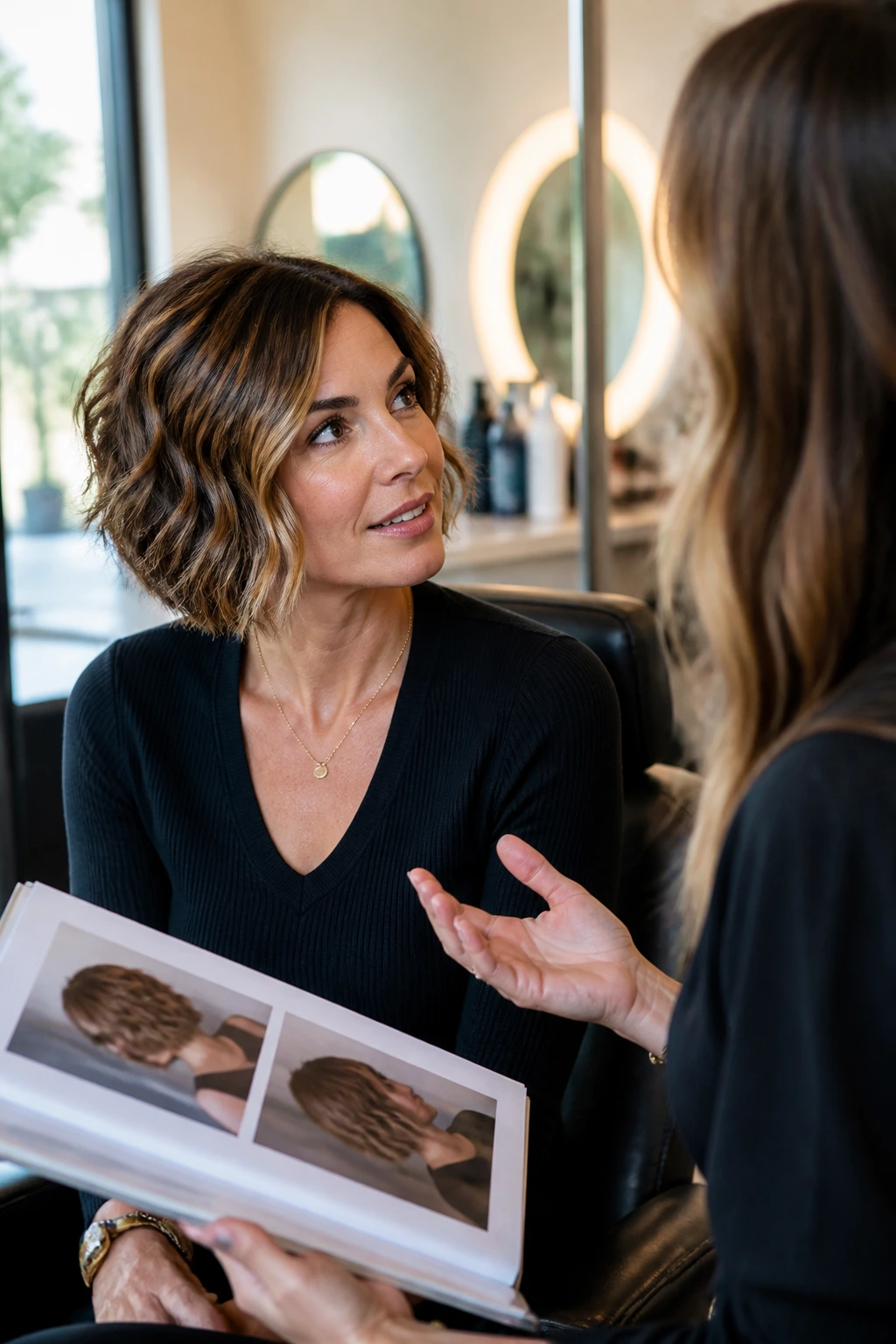
A good haircut starts with clear language. Ask for an inverted bob that is shorter in the back, longer in the front, and softly stacked at the nape, then describe how much weight you want removed from the interior. If your hair is dense, mention that you want bulk taken out without making the ends see-through. If your hair is fine, say you want lift at the crown without over-thinning.
For the color, be specific about the caramel. Tell the stylist whether you want thin veils, face-framing pieces, a money-piece effect, or wider balayage slices. Caramel should usually sit one to two levels lighter than your base if you want warmth without harsh contrast. Add a few lowlights if your hair tends to look flat or if the light pieces need shadow underneath.
Bring photos, but bring the right photos. Same wave pattern. Same density. Same length. That matters more than the cut alone. A bob on pin-straight hair behaves differently than the same cut on a coarse wave, and stylists can only adjust what they can see.
How to Wear and Style the Finish
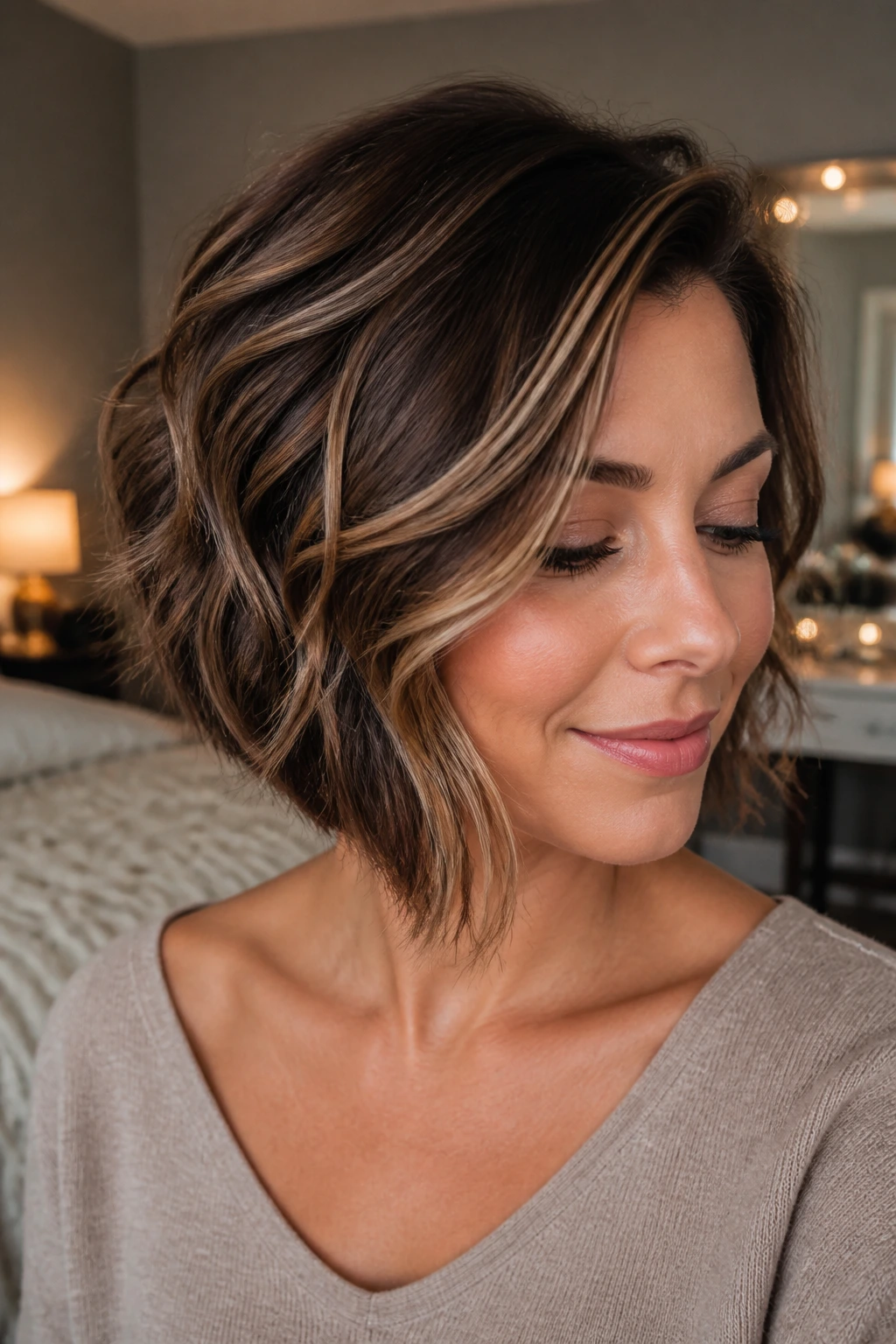
Presentation: Let the front pieces fall with purpose. A slightly off-center part usually shows the angle better than a straight middle part, especially when the back is stacked and the caramel is concentrated around the face.
Accompaniments: Small hoops, collarbones, and open necklines tend to suit this haircut better than busy collars that fight the nape line. If you wear glasses, a softer front angle keeps the frames from crowding the face.
Styling: For a cleaner finish, use a round brush under the ends and a light serum on the mid-lengths. For a softer one, scrunch in mousse, diffuse until 80 percent dry, and then separate a few front pieces with your fingers.
Finish: If the highlights look dull, a clear gloss or shine spray can wake them up without changing the color. If the waves look fuzzy, skip the extra product and use less movement at the end. That usually fixes more than people expect.
Extra Styling Tweaks and Color Boosters
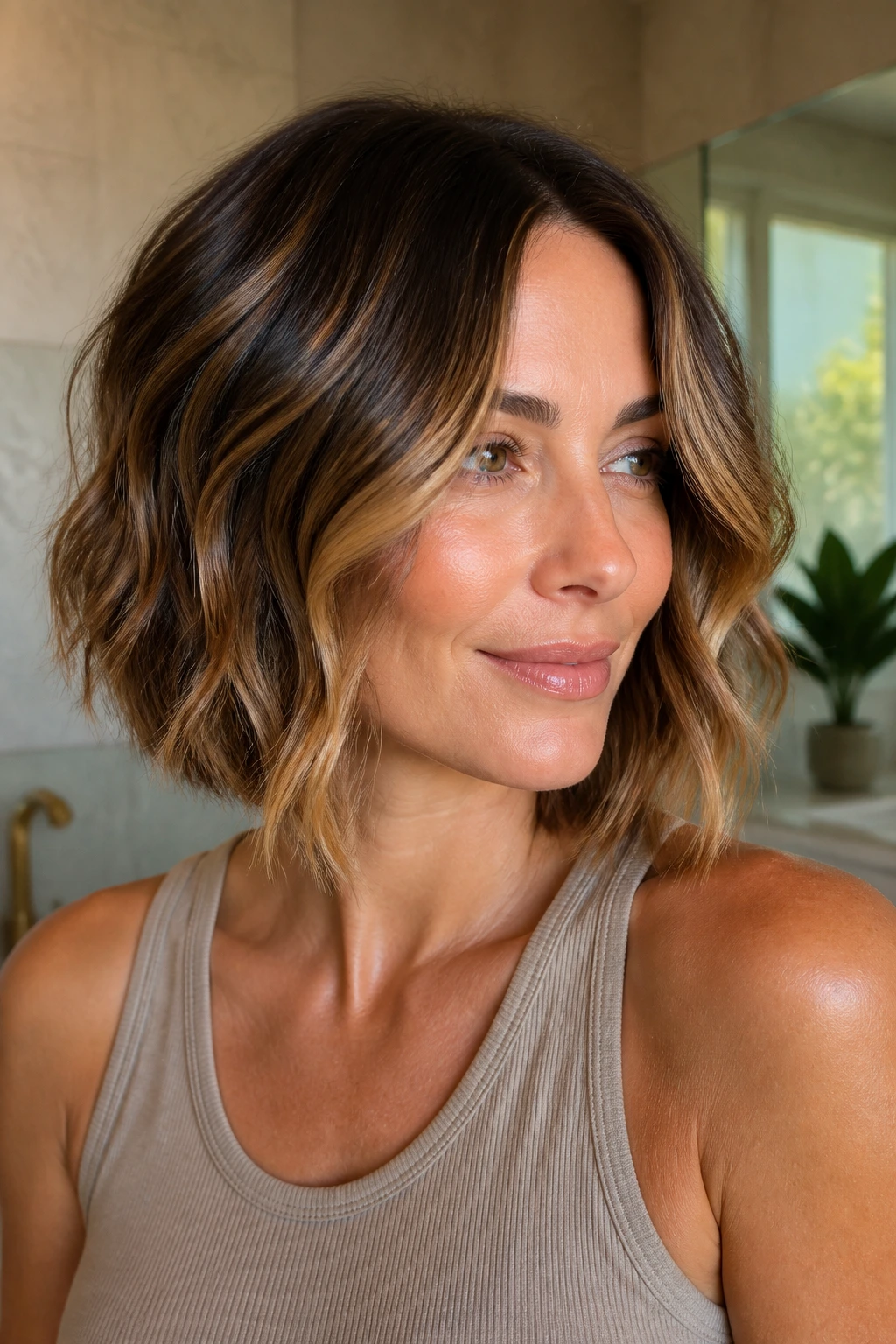
Color Enhancement: A clear gloss between color appointments can make caramel look warmer and fresher, especially if your hair tends to pull dull after a few washes. It’s a small move with a big payoff.
Texture Shift: If the bob feels too tidy, mist a little dry texture spray into the mid-lengths and pinch the ends. If it feels too broken up, smooth the outer layer with a brush and keep the texture underneath. Same cut. Different read.
Volume Boost: For fine waves, put root-lifting mousse only at the crown and side part, not through the whole head. That keeps the silhouette lifted without making the ends sticky.
Make-It-Yours: If you like a softer look, ask for longer face-framing pieces and fewer bright streaks. If you want more contrast, add lowlights under the crown and brighten just the front sweep. For a more polished feel, keep the highlights thin and the ends clean.
Maintenance, Trims, and Color Refresh Timing
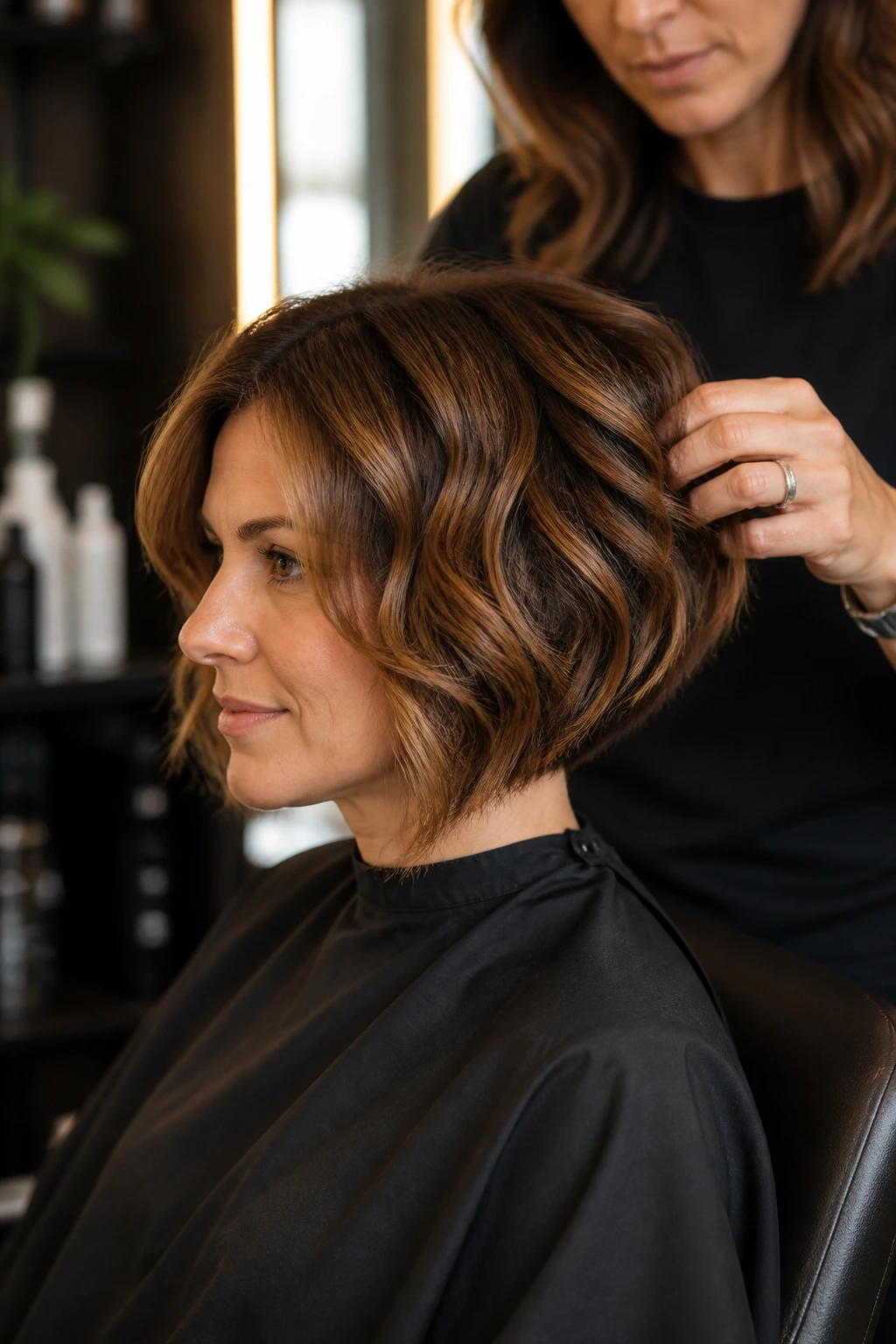
A short inverted bob stays sharp only if you keep the outline honest. For most wave patterns, a trim every 6 to 8 weeks keeps the back from puffing out and the front from losing the angle. If your hair grows fast or your nape gets bulky quickly, closer to 6 weeks is better.
Caramel highlights usually look their cleanest when they’re refreshed every 8 to 12 weeks, though a gloss in between can stretch that out. If your base is dark and the highlight contrast is strong, you may want a root blend or lowlight touch-up a little sooner so the grow-out doesn’t look stripey.
At home, use color-safe shampoo and conditioner most washes, and a clarifying shampoo only every couple of weeks if product buildup starts dulling the shine. Heat styling should stay moderate. Wavy hair does not need daily hot-tool work to look good here. In fact, it often looks better with a day off between wash days, because the bends settle into the cut instead of fighting it.
Variations and Adaptations to Try
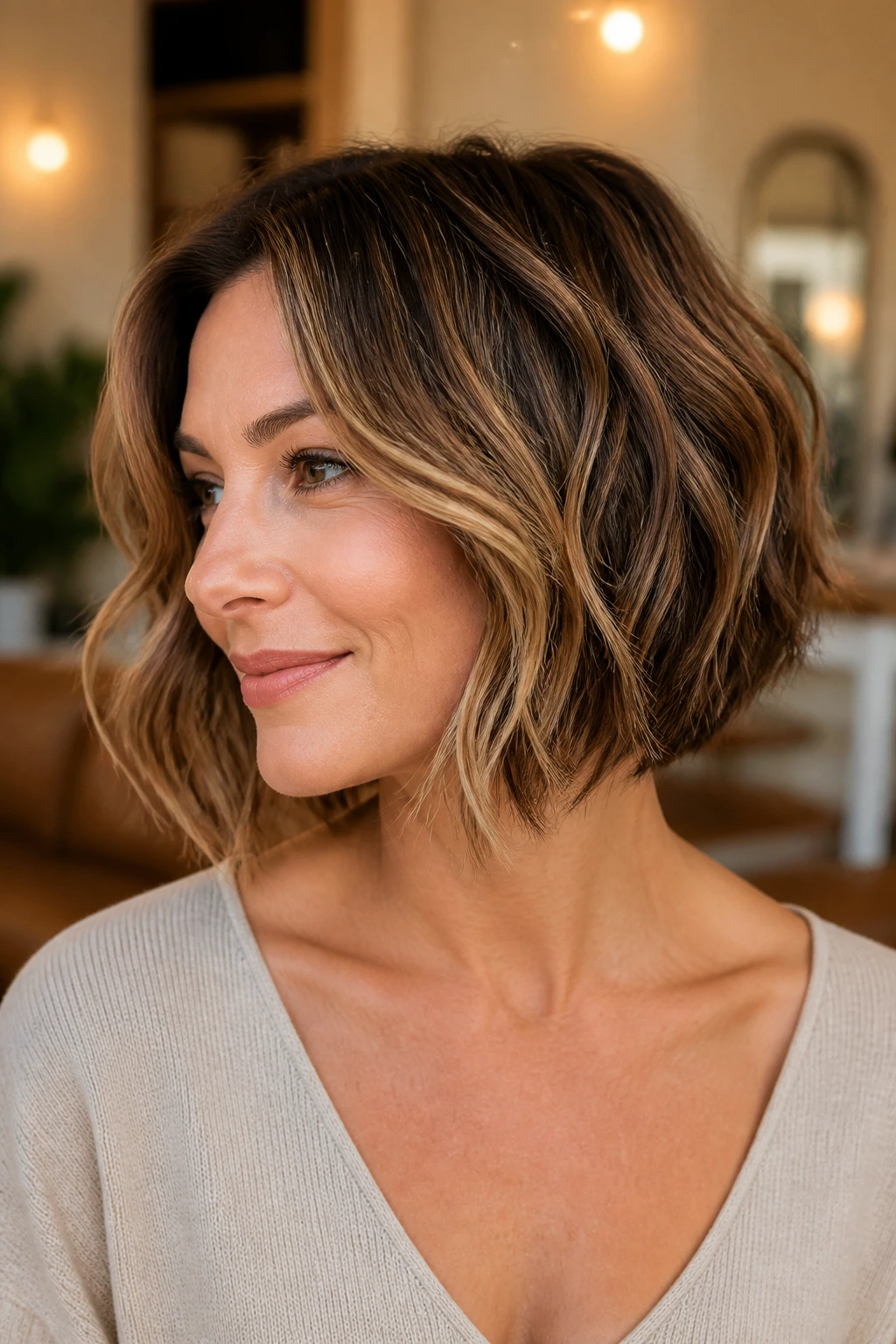
Soft Money-Piece Melt: Keep the base deeper and brighten only the front edge and cheekbone pieces. This gives the cut a face-framing glow without turning the whole style light.
Dimensional Brunette Blend: Swap bright caramel for toffee, chestnut, and soft amber pieces. The result is subtler and works well if you want dimension more than contrast.
Air-Dry Friendly Bob: Leave the interior layers longer, skip aggressive texturizing, and style with mousse plus a diffuser only at the roots. This version is better if you don’t want to heat-style every morning.
Polished Blowout Bob: Ask for a smoother perimeter and a cleaner bevel under the ends. The caramel should stay fine and ribbon-like so the style looks refined, not busy.
Shaggy Wave Upgrade: Add a few internal layers and keep the front slightly broken up. This version suits hair that naturally forms loose bends and likes a more casual finish.
Root-Shadow Grow-Out Version: Use a soft shadow root and blended caramel highlights so the haircut stays wearable longer between salon visits. It’s the one to choose if you hate obvious regrowth lines.
Common Mistakes That Flatten the Shape
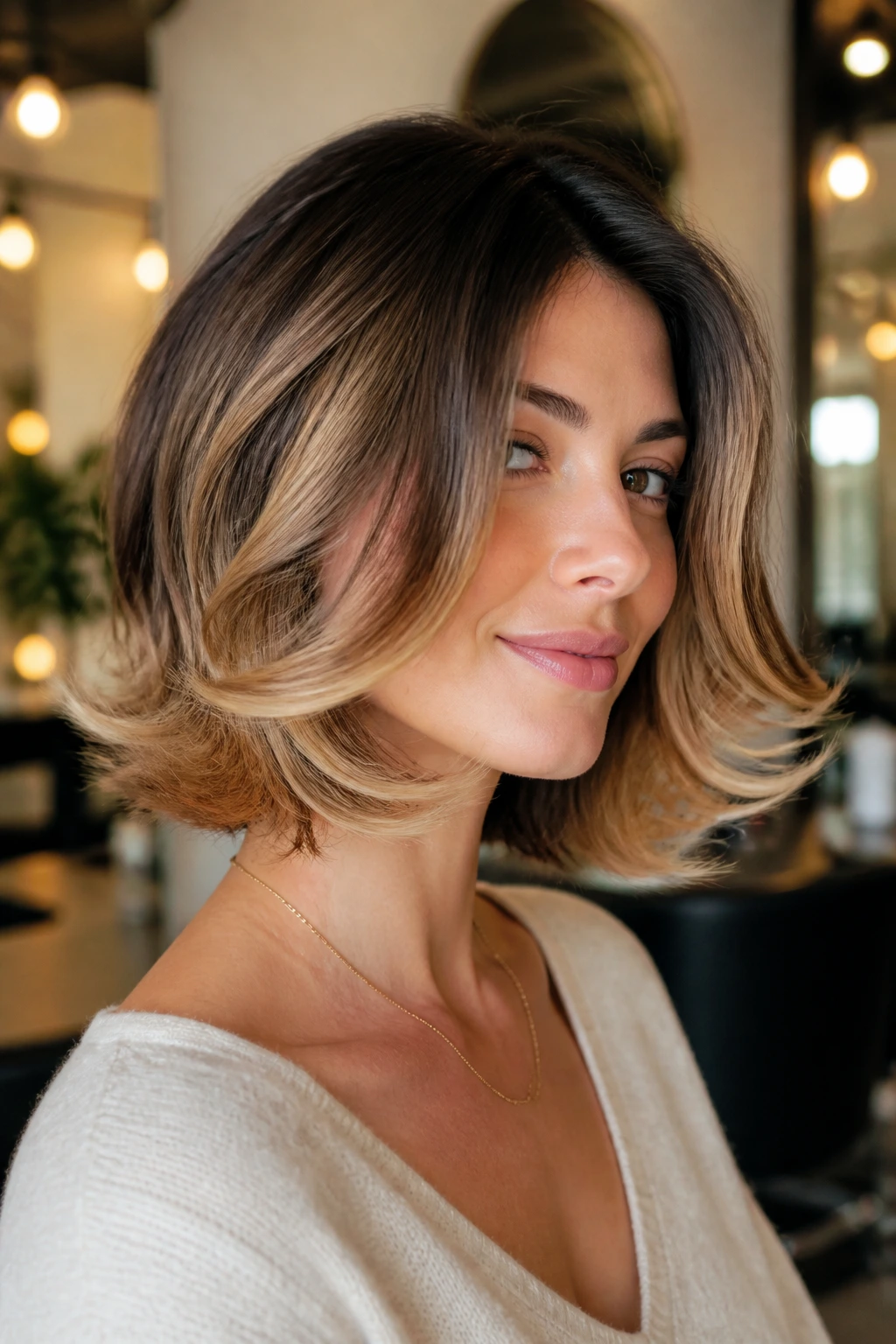
Making the back too short: If the nape is cut too high, the hair can mushroom out instead of stacking neatly. The fix is a softer graduation with enough length to curve under.
Highlighting every strand equally: That’s how caramel turns stripy. Leave some depth underneath and around the crown so the wave pattern has contrast.
Over-thinning fine hair: Fine wavy hair can look stringy fast if too much weight is removed. Keep the perimeter clean and ask for internal removal only where the bulk actually sits.
Ignoring the front angle: A short bob without longer front pieces loses the whole inverted effect. The front should feel visibly longer than the back, even when the wave is relaxed.
Using too much cream or oil: Heavy product makes the caramel look dull and the waves fall flat. Start with a pea-size amount, then add only if the ends truly need it.
Styling every section the same way: Wavy hair rarely needs uniform curls. A few pieces may need a wand touch-up, while the rest only need scrunching. Let the hair tell you where the work is.
Frequently Asked Questions

How short should an inverted bob be on wavy hair?
Usually, the shortest point at the back should land somewhere around the nape, while the front can skim the jaw or sit a little lower. If the back is cut too aggressively, wavy hair can puff outward and lose the nice angled line.
Will caramel highlights work on dark brown hair?
Yes, and they often look richest on dark brown hair because the contrast is clear without needing a pale blonde result. Ask for warm caramel, toffee, or bronze pieces, plus a few lowlights so the color doesn’t float on top.
Is this cut good for fine hair?
It can be, if the stack is handled carefully. Fine hair needs lift at the crown and a clean edge, but not so much texturizing that the ends turn wispy. A root spray and a slight side part help a lot.
Can I air-dry a short inverted bob?
Absolutely, if your wave pattern already has some bend. Scrunch in mousse, towel-blot gently, and let the back dry with a little lift at the roots. If the front needs more definition, touch up just those pieces with a wand.
How often do the highlights need refreshing?
A gloss or toning refresh every 8 to 12 weeks usually keeps caramel from looking dull. If your hair pulls warm fast or you want a stronger contrast, you might want to refresh sooner. The cut itself will usually outlast the color.
What if my waves flip out instead of bending under?
That usually means the perimeter was cut too bluntly for your wave pattern, or the ends were dried in the wrong direction. A quick pass with a round brush under the ends can tame it, and a small trim to soften the edge may be needed if the flip keeps happening.
Should I get lowlights with caramel highlights?
If you want depth, yes. Lowlights keep the lighter pieces from looking flat or striped, especially on short hair where every strand is visible. They’re especially useful on fine or very porous hair.
Can curly hair wear an inverted bob like this?
Yes, but the cut needs more room for shrinkage. Ask for the back and front to be left longer than you think at the sink, and have the stylist cut it in a way that respects how your curls spring once dry.
Why This Cut Keeps Coming Back
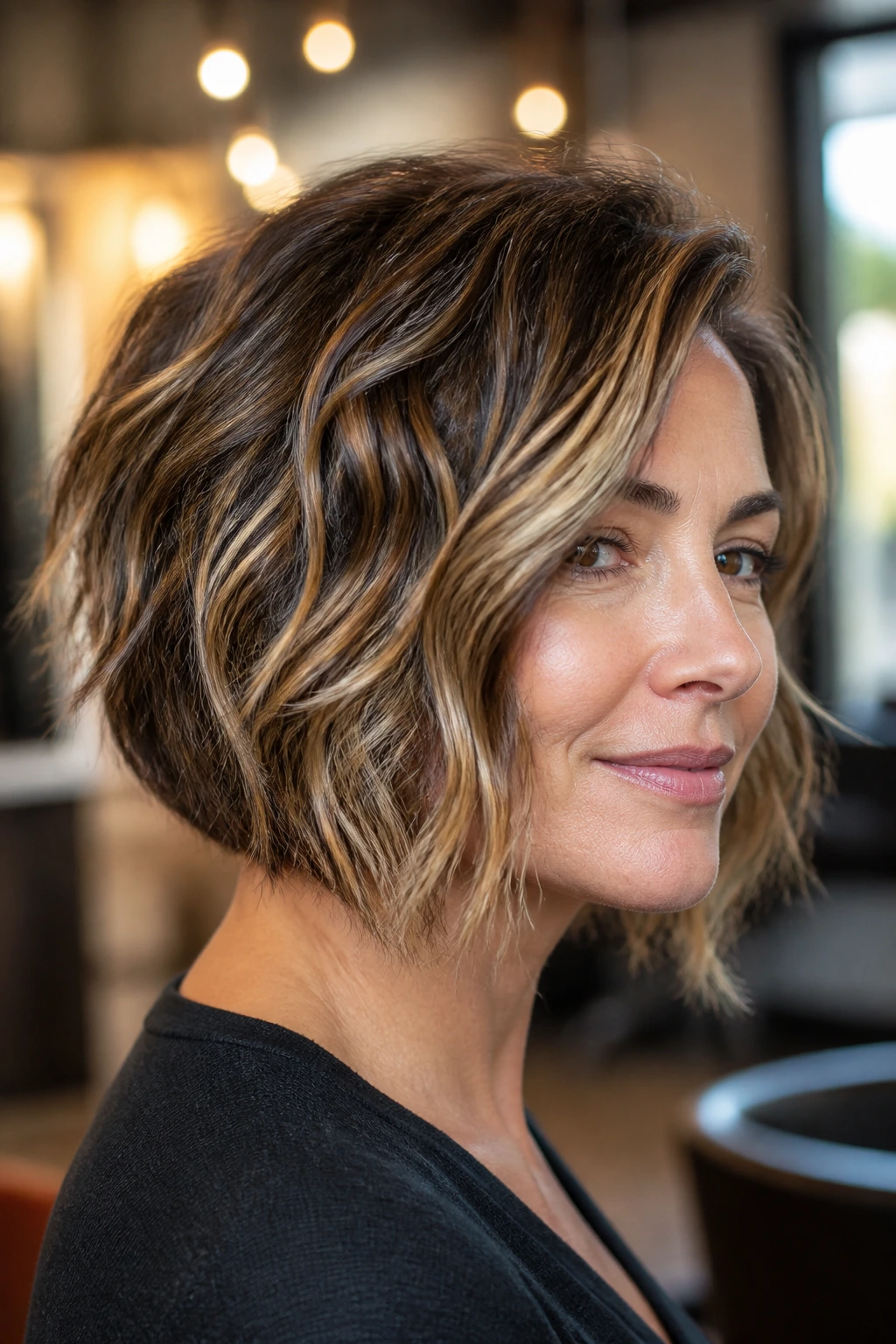
The reason this haircut stays relevant is simple: it gives wavy hair a shape without sanding off its personality. The inverted line keeps the back neat, the front keeps the movement, and caramel highlights add the kind of depth that makes the whole thing look more expensive than it is.
I keep coming back to the same advice because it matters: respect the wave pattern, respect the angle, and do not drown the whole cut in bright color. When those three things line up, a short inverted bob stops being just another bob and starts looking like the haircut that finally makes your hair behave.