



Thick hair gets loud the minute you cut it short. If the shape is too blunt, the sides push out, the crown sits heavy, and the color can flatten into one solid block. Caramel highlights fix a lot of that — not by making the hair lighter everywhere, but by breaking up the mass so the cut has seams, bends, and warmth.
That is why short hairstyles for thick hair with caramel highlights usually look better when the color placement is thought through as carefully as the cut. A blunt bob can turn plush instead of boxy. A pixie can keep its softness at the temples. Even a shaggy lob needs a few caramel ribbons tucked where the light hits, plus darker lowlights underneath so the whole thing doesn’t drift into stripe territory.
Some of these looks are polished. Some are a little unruly on purpose. All of them work because thick hair can hold structure; it just needs the right outline and the right shade map. Once those two pieces click, the haircut stops fighting your hair and starts showing off what it already does well.
Why This Collection Works on Thick Hair
-
Bulk Control: Shorter shapes remove weight where thick hair usually balloons, so the silhouette stays cleaner around the jaw and nape.
-
Caramel Warmth: Caramel sits between brown and blonde, which means it brightens without the harsh, stripy contrast that can happen with paler highlights.
-
Built-In Dimension: Thick hair can carry both highlights and lowlights without looking thin, so the color reads richer from every angle.
-
Face-Framing Payoff: Dense hair gives you enough surface area for money pieces, fringe lightness, and soft edge highlights to actually show up.
-
Less Flatness, More Movement: Short cuts can look heavy fast; caramel ribbons and darker lowlights keep the shape from turning into one block.
-
Easier Grow-Out: Softer caramel tones usually blur the line between salon visits better than very light blonde, especially on dark brunette bases.
1. Textured Pixie with Caramel Feathering
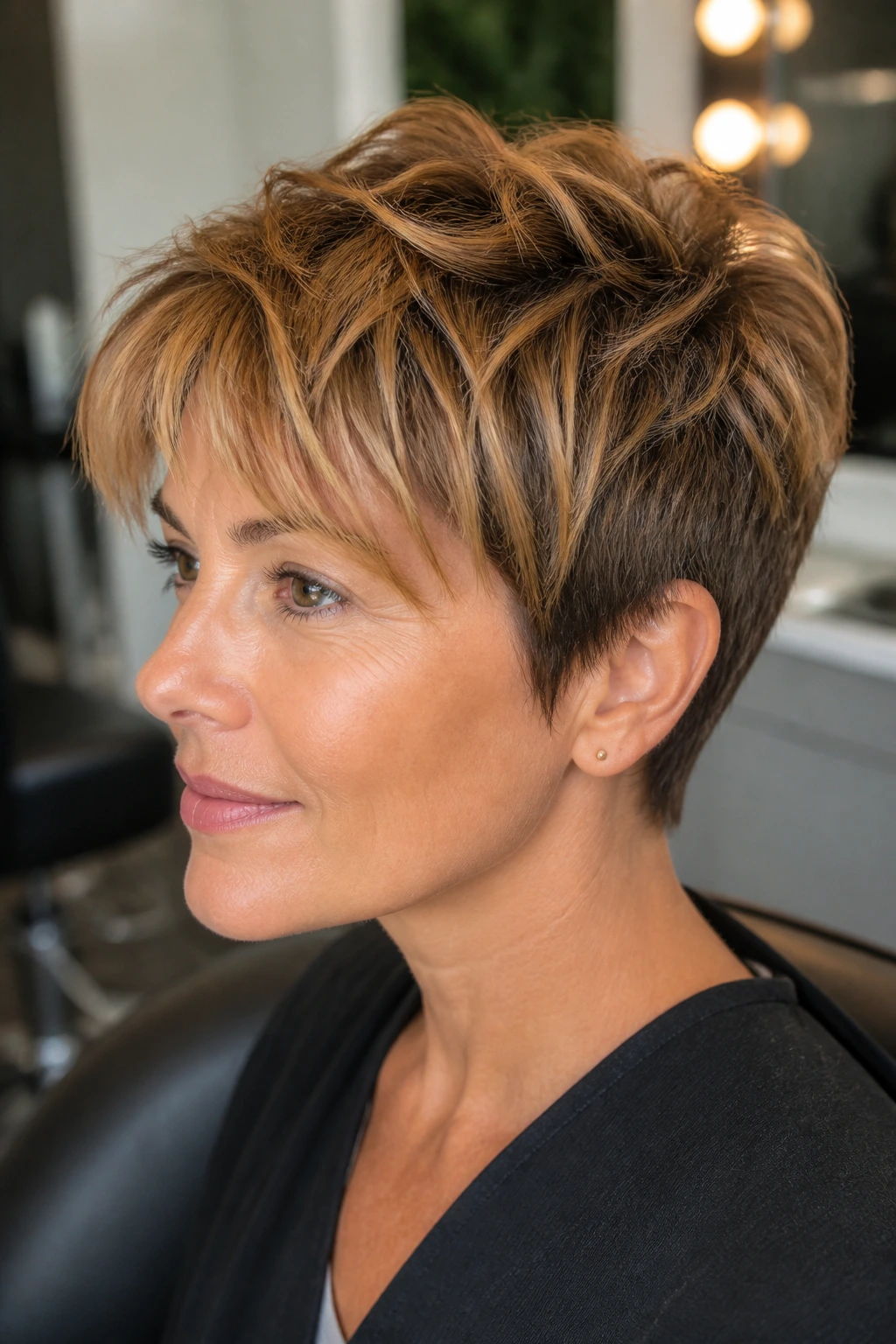
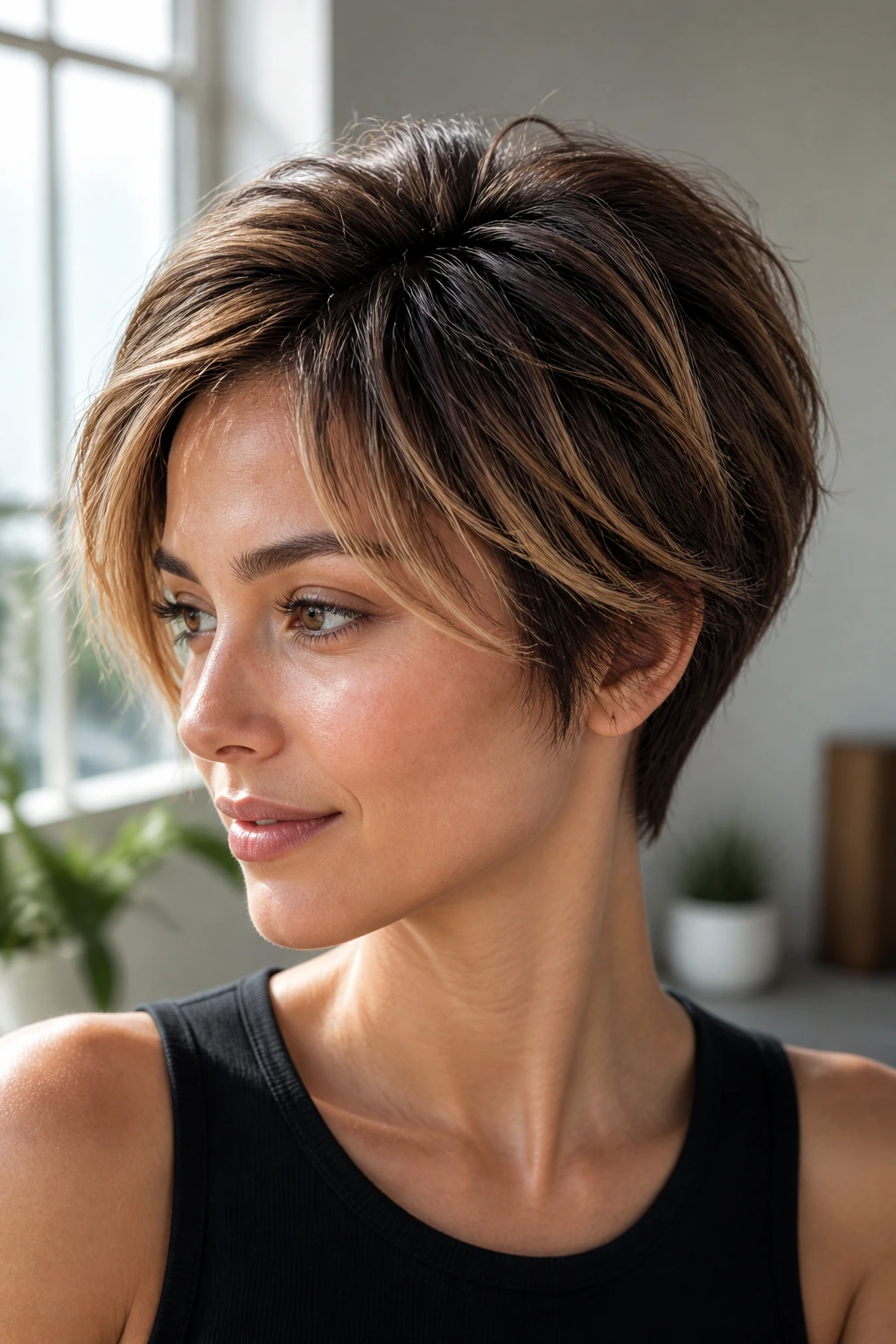
A textured pixie on thick hair should never look shaved down to the skull. The good version keeps a little plushness at the crown, then trims the sides close enough to stop the head from turning mushroom-shaped. Caramel feathering through the top layer gives the cut lift without making it look brittle.
The key is placement. Keep the brightest pieces around the fringe and top ridge, then leave the nape and lower sides deeper. That contrast gives the eye a place to land, which matters a lot when the hair has a lot of natural density. If your colorist also adds a few darker lowlights under the crown, the whole thing reads sharper and less puffy.
What to ask for
- Point-cut top layers so the pixie moves instead of sitting like a cap.
- Caramel pieces that skim the top and front, not every inch of the head.
- A soft, tapered nape so the back lies flat.
A pea-size dab of matte paste is usually enough. Work it into dry hair with your fingertips, then push the fringe forward and break up the ends.
2. Long Pixie with Side-Swept Fringe
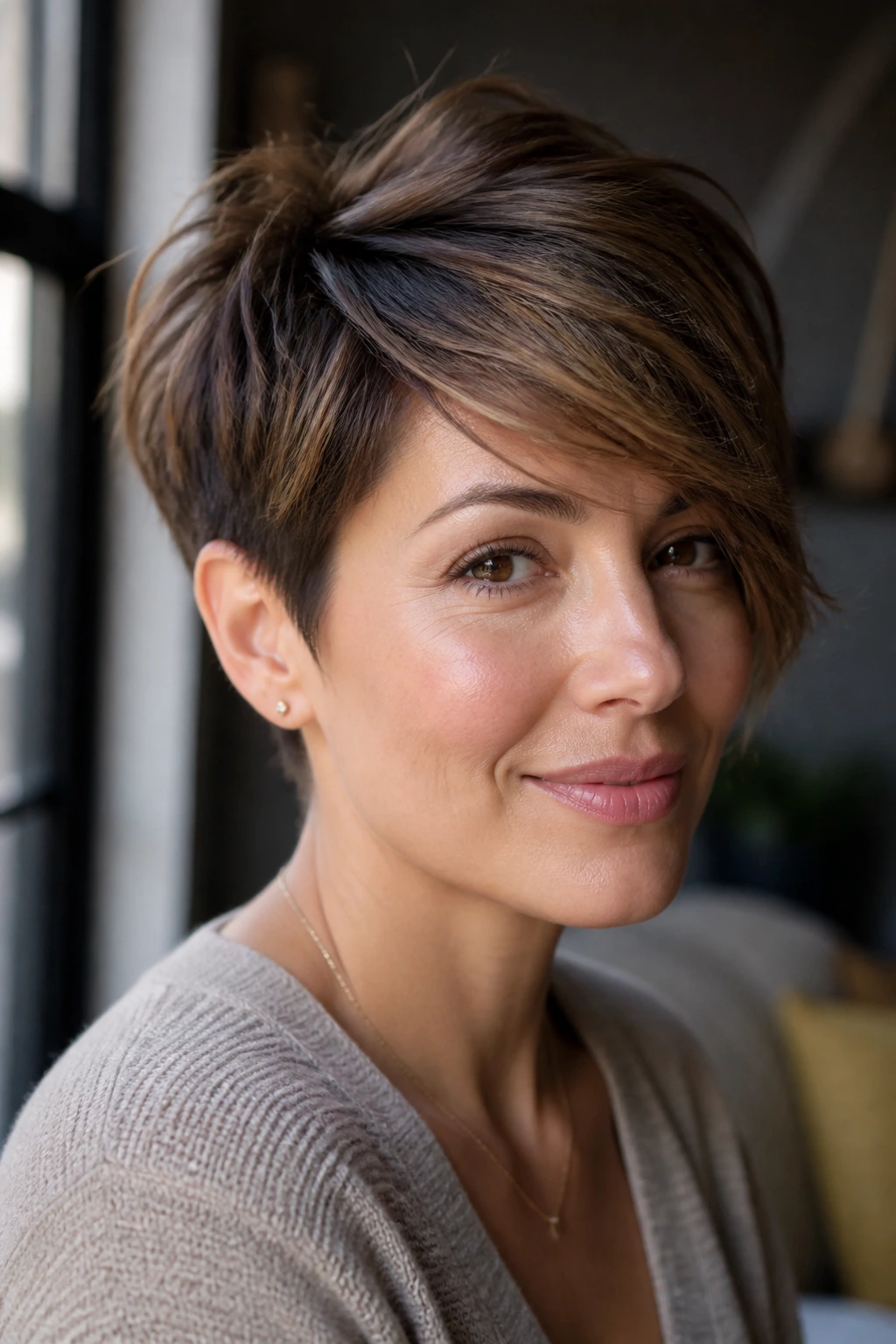
This is the pixie for someone who wants short hair without losing the sweep and softness around the face. On thick hair, the longer top gives you enough length to brush over the forehead, and the side-swept fringe becomes the perfect place for caramel to show up. The contrast is subtle, but it changes the whole mood of the cut.
The trick is to keep the fringe light enough to move. If it’s cut too heavy, the color disappears under the weight. If it’s thinned too much, it starts to fray at the ends and looks messy in a bad way. The sweet spot is a fringe that bends easily under a round brush and falls across the brow with a little curve.
I like this one for people who want a haircut that still behaves on day two. Dry shampoo at the roots, a quick re-bend with fingers or a small brush, and you’re done. No long ritual. No drama.
3. French Bob with Soft Waves
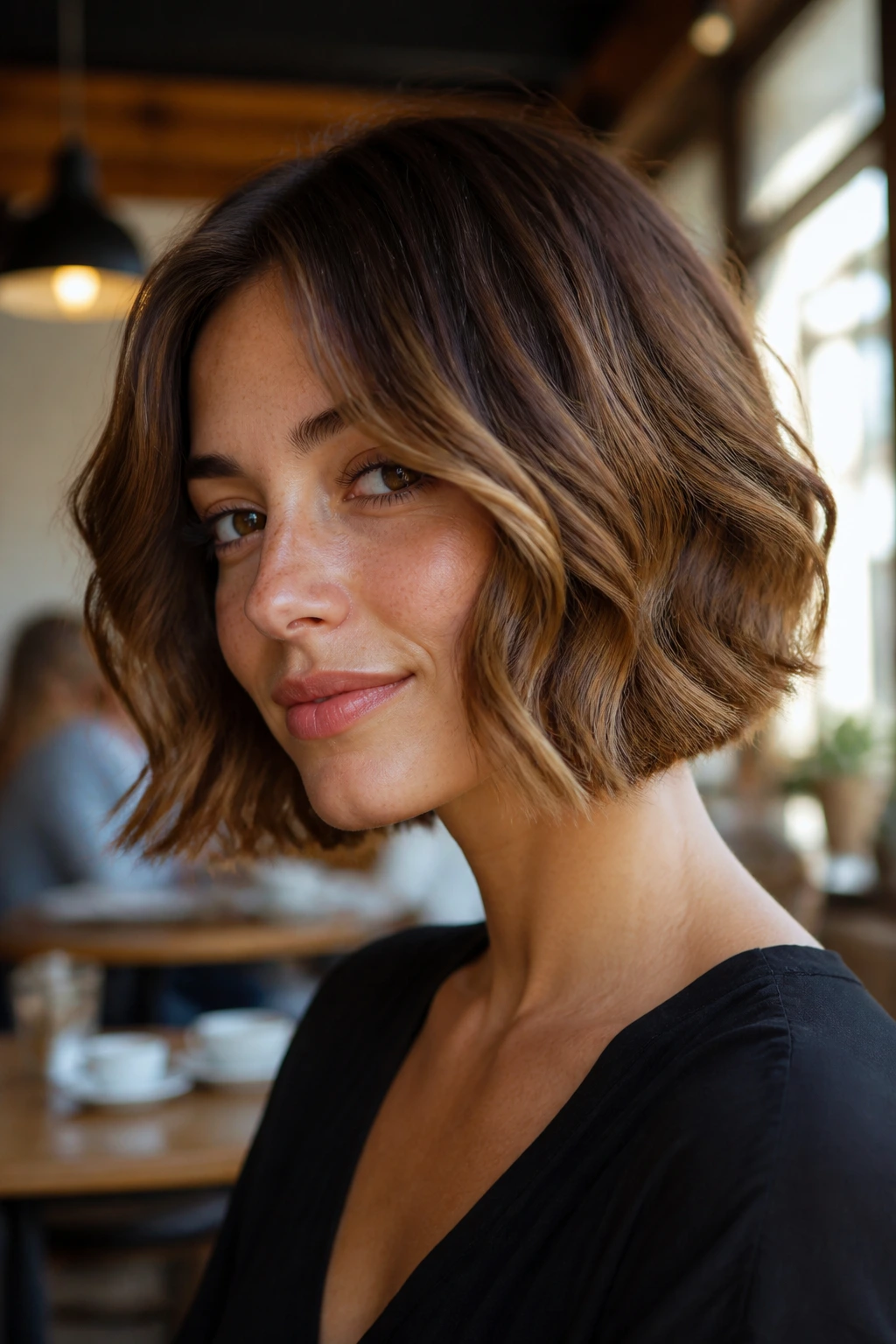
Why does a French bob work so well on thick hair? Because the blunt line at the jaw gives the hair a boundary, and the soft wave keeps it from looking like a helmet. Add caramel highlights that sit just under the top layer, and the whole cut starts to shimmer instead of sitting flat.
The color should not be sprayed evenly through the head. That’s the trap. Put more caramel around the cheekbones and the outer curve of the bob, then tuck a few lowlights inside the shape. When the hair moves, you get little flashes of warmth instead of one obvious stripe at the top.
This cut looks especially good when the ends are bent under just a bit, not curled hard. A 1-inch iron or a round brush will do it. The goal is a clean edge with a little air, not a glam wave that fights the shape.
4. Blunt Bob with Money-Piece Caramel Highlights
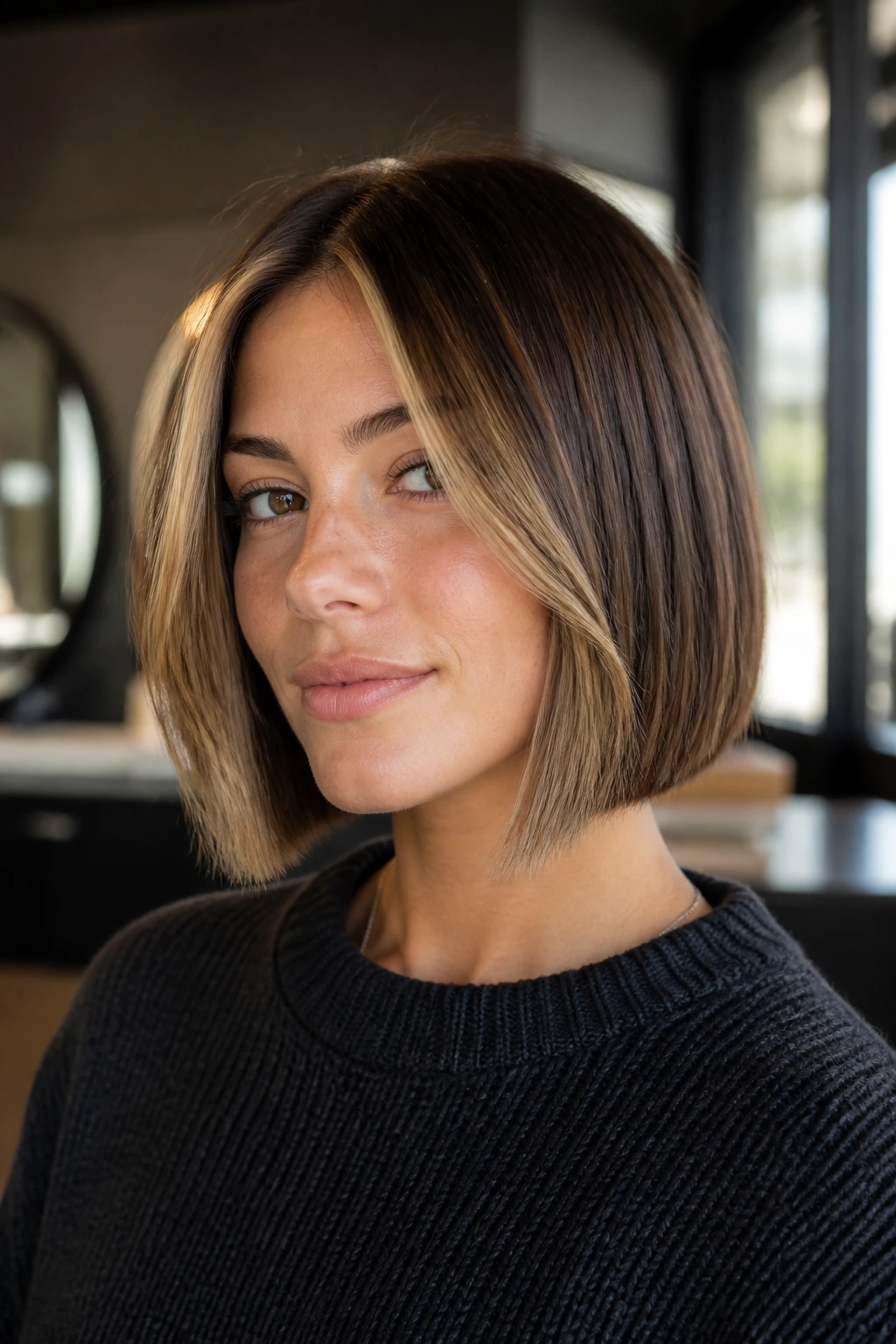
A blunt bob on thick hair can look expensive in the best sense of the word — dense, plush, and solid — as long as the internal bulk is removed first. The outline stays clean, but the inside should be lightly debulked so the ends don’t kick outward. Then the money piece does its job.
That face-framing section is where caramel earns its keep. Lighten the front pieces by one to three levels from the base, depending on how dark the starting color is, and keep the rest of the highlight pattern softer. You want the eye to go straight to the face, not bounce around the whole head.
This is one of the easiest short thick-hair looks to style. Blow-dry smooth, tuck the front behind one ear, and the highlights suddenly read as part of the cut. If you want more edge, curve the ends under with a flat iron just at the bottom inch. Tiny move. Big difference.
5. A-Line Bob with Hidden Lowlights
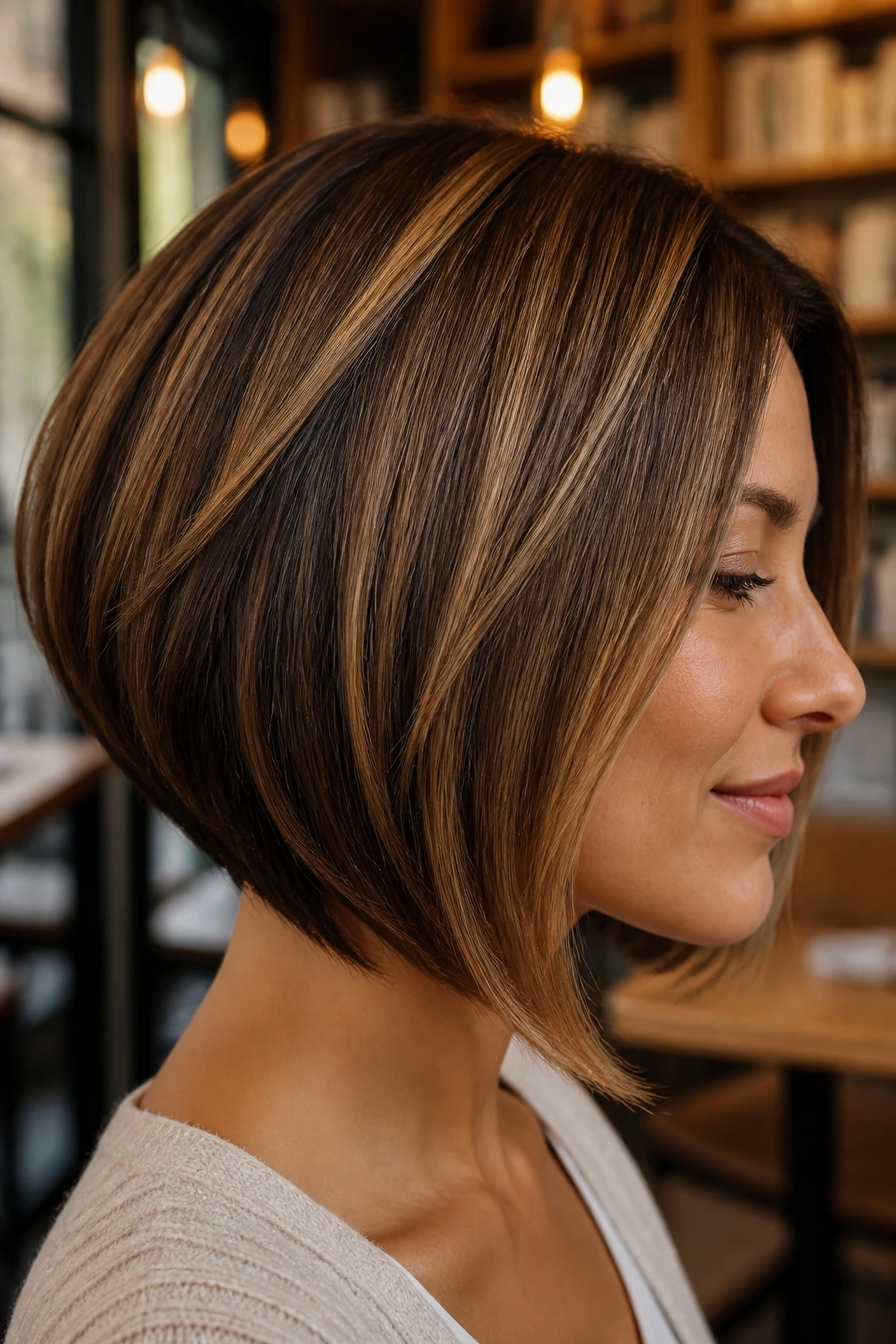
The A-line bob is a smart choice when thick hair has too much width through the sides. The front stays a little longer, the back lifts slightly higher, and the angle creates movement without chopping off all the weight. Caramel highlights on the top layer keep the front bright, while hidden lowlights underneath stop the silhouette from puffing out.
That lowlight detail matters more than people think. On very dense hair, a single all-over caramel weave can make the cut look busy. A deeper ribbon underneath the surface keeps the dimension grounded and gives the front pieces more contrast. It’s a small adjustment, but on thick hair you see it immediately.
Best way to wear it
Wear it smooth if you want the angle to show. Wear it with a slight bend if you want a softer finish. Either way, keep the front pieces polished — that’s where the eye goes first.
6. Layered Lob with Tousled Ends
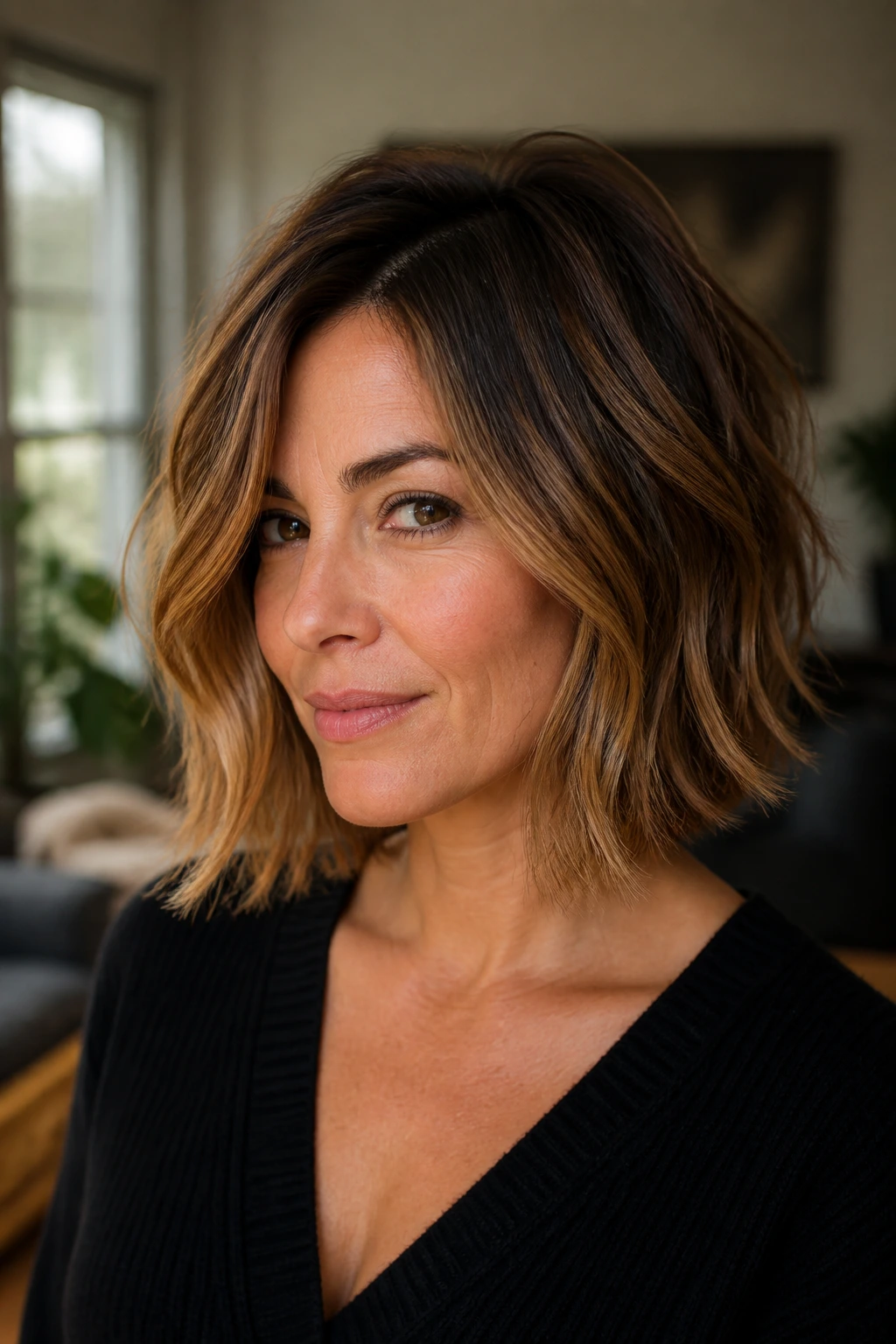
A layered lob is one of the easiest places to put caramel highlights, because the cut already has enough length to show off multiple tones. Thick hair likes this shape when the layers are built to remove bulk from the mid-lengths, not just the ends. Otherwise the hair gets heavy again by noon.
Caramel balayage through a lob reads especially well when the ends are tousled instead of curled into one neat wave. The movement exposes the lighter strands and the deeper lowlights underneath, which keeps the finish from looking painted on. This cut doesn’t need perfect symmetry. A little unevenness at the ends is part of the charm.
If your hair tends to swell in humidity, this is one of the safer choices. Keep a smoothing cream on the lower half of the hair, then add texture spray only at the last step. Too much product and the lob loses that easy swing.
7. Shaggy Lob with Curtain Bangs
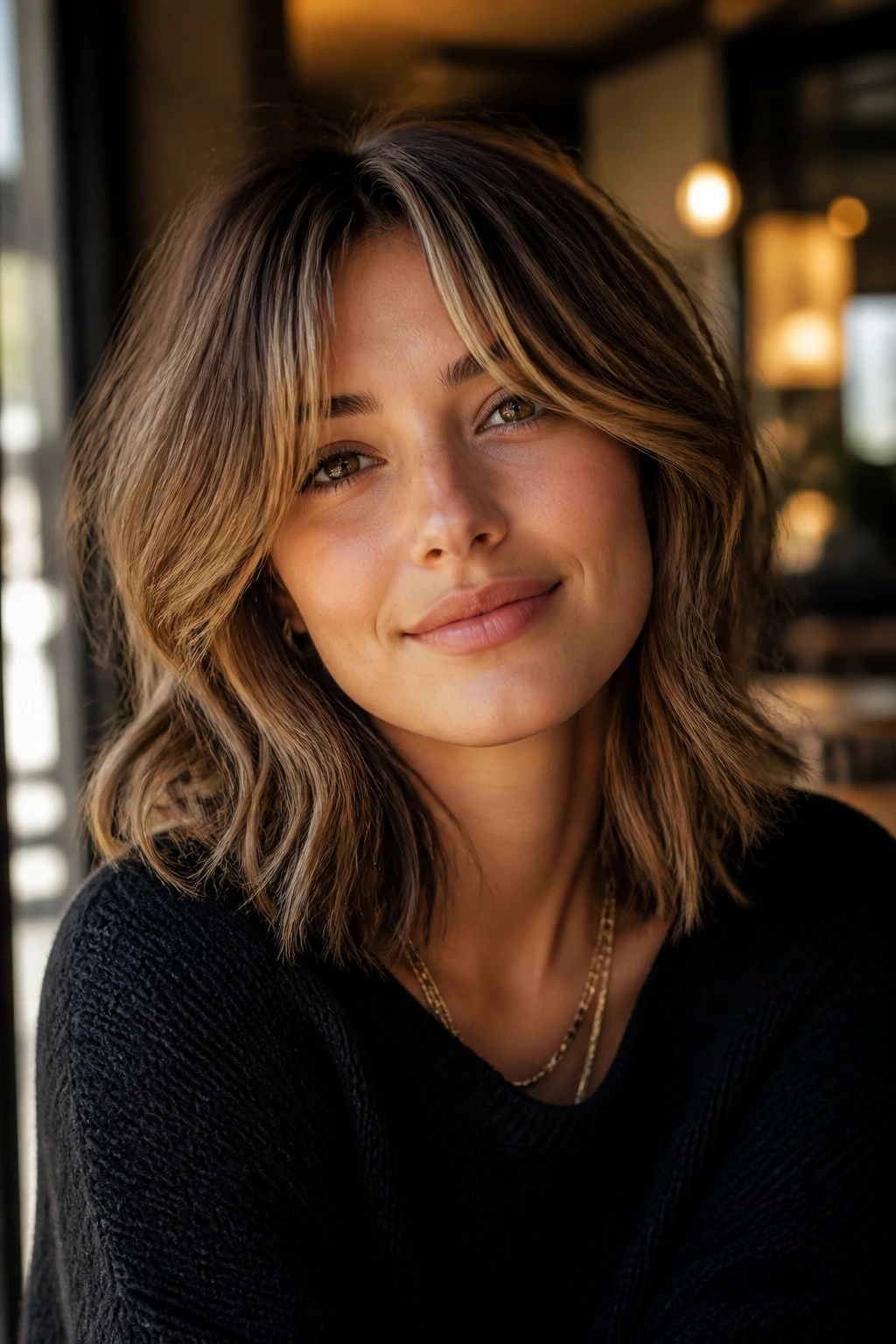
A shaggy lob with curtain bangs is a little messier, and that’s the point. Thick hair has enough body to carry the chopped layers without looking stringy, and the curtain fringe opens the face in a way that flatters almost every cheekbone shape. Caramel highlights around the fringe make the front of the haircut look intentional instead of accidental.
The best version keeps the bangs long enough to split cleanly in the center. Too short, and they sit on the forehead like a shelf. Too heavy, and they swallow the highlights. When the fringe lands around the cheekbones, caramel can frame the face without stealing the rest of the cut.
This is one of those styles that benefits from a slightly imperfect blowout. A round brush through the fringe, a rough dry through the rest, and a bit of bend through the layers is enough. Don’t overthink it. The cut wants movement, not control.
8. Chin-Length Curly Bob
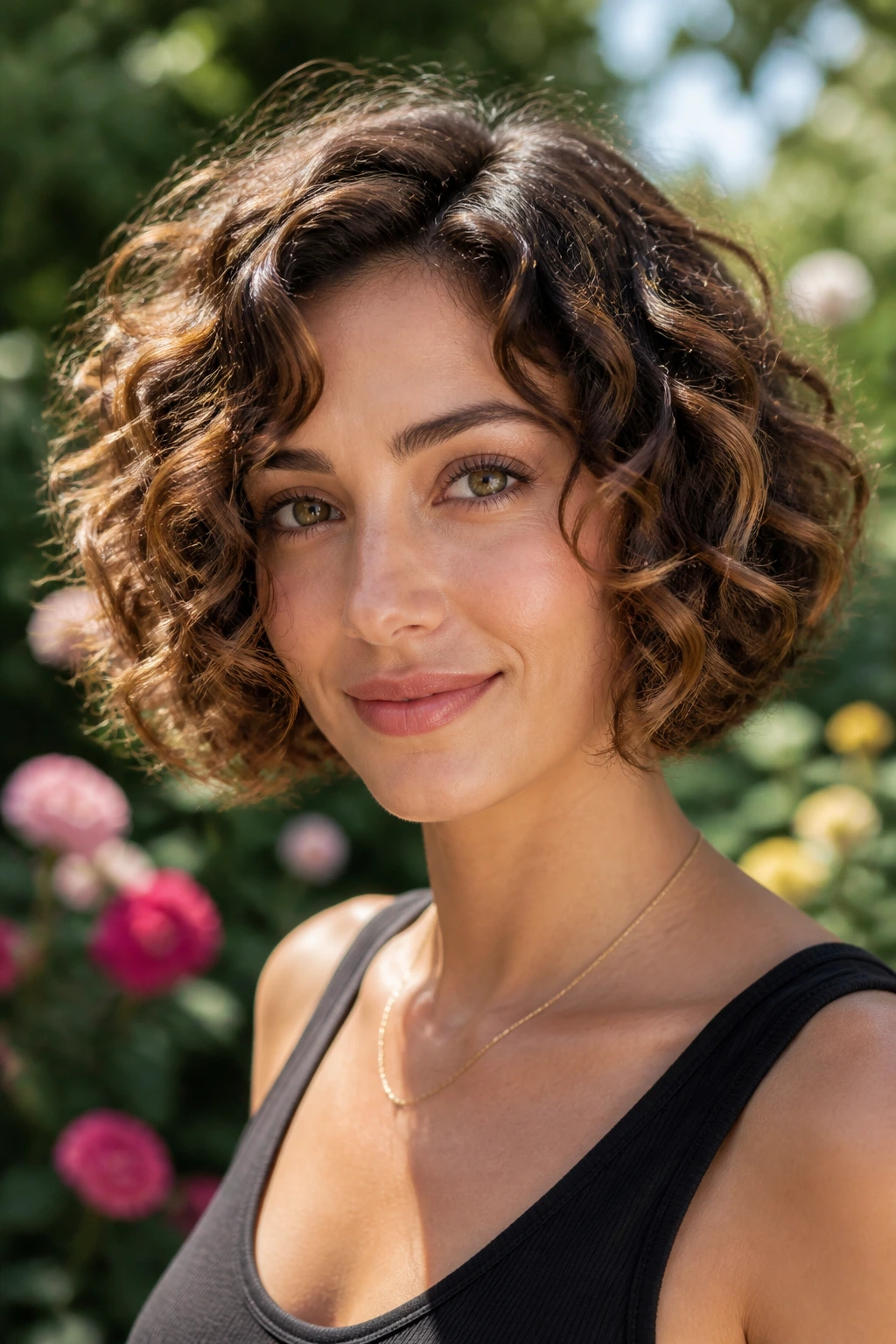
If your thick hair is also curly, a chin-length bob can be a gift. It removes enough length to lift the curls off the shoulders, but it keeps the shape short enough to avoid that triangle effect curly hair can get when it’s cut too long and left too full. Caramel highlights make the curl pattern easier to see, especially when the spirals bounce.
The highlight placement should follow the curl clusters, not fight them. Paint larger ribbons where the curls naturally wrap around the face and crown, and keep a few darker strands underneath for depth. The result is less stripe, more spiral. That matters with thick curls, because every inch of density shows.
This cut should be trimmed dry if possible. Curly hair shrinks, and a wet cut can look perfect at the chair and awkward at home. Nobody needs that surprise. Shape it where the curls actually live.
9. Asymmetrical Bob with Warm Balayage
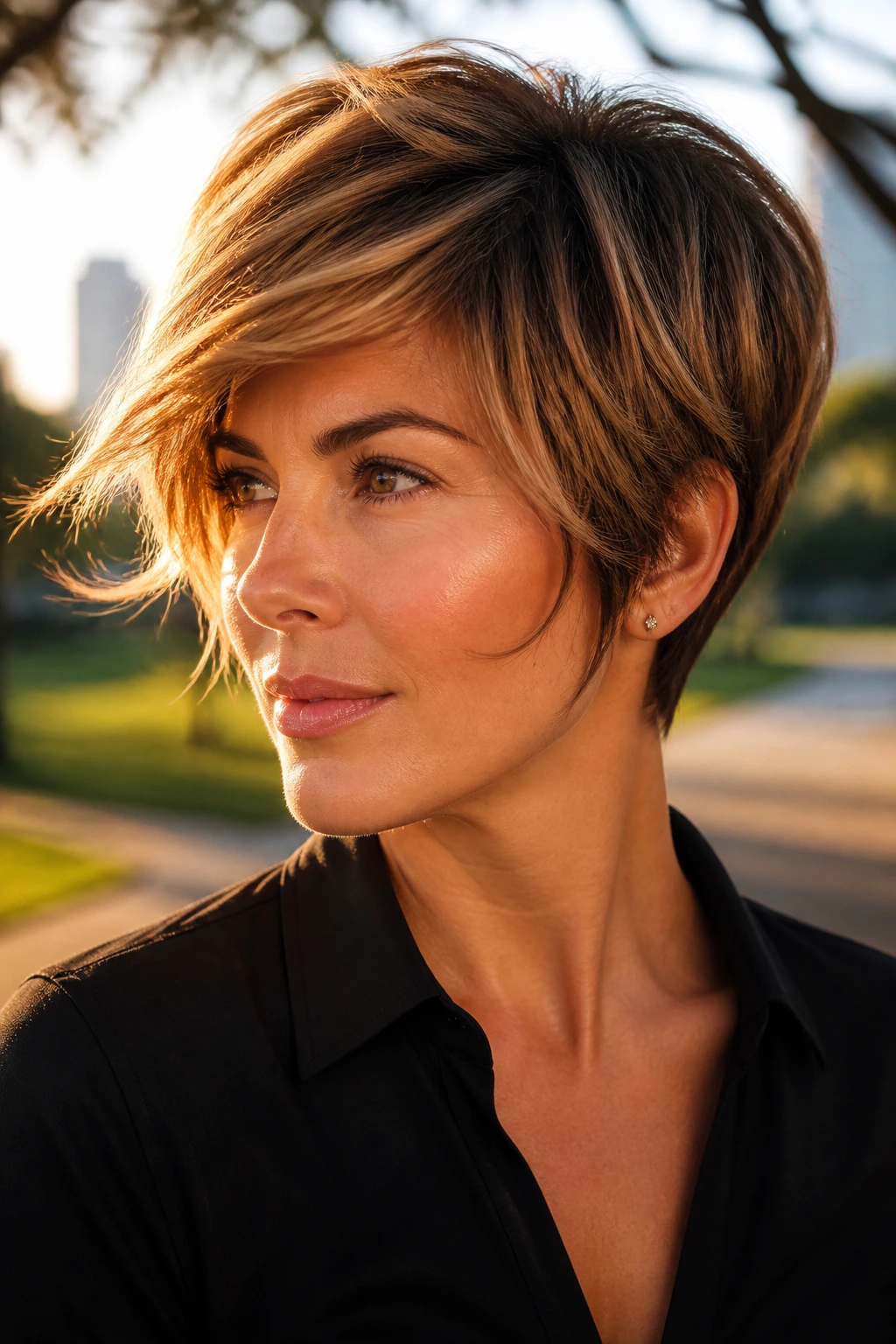
The asymmetrical bob gives thick hair a little attitude without needing a full dramatic chop. One side sits longer, the other side lifts higher, and the slant draws the eye along the jaw. Caramel balayage placed along that line makes the geometry easier to see, which is half the fun.
This cut works because thick hair already has enough weight to support the angle. You do not need to over-layer it. Keep the bulk removal internal, and let the outline stay clean. If the front is too soft, the whole shape loses the point. If it’s too blunt, the angle can feel stiff. There’s a narrow window, and it’s worth hitting.
Wear it tucked behind one ear on the shorter side. The asymmetry gets sharper, the caramel pieces catch the light, and the whole thing reads more deliberate.
10. Rounded Crop with Piecey Top Layers
A rounded crop is one of the few short cuts that can tame thick hair while still keeping it soft. The outline hugs the head, the sides stay controlled, and the piecey top layers keep the shape from feeling too helmet-like. Caramel highlights at the crown make the top look lifted, which is a useful trick when the hair naturally wants to sit dense.
The important part is restraint. If the top is over-thinned, the shape can go fuzzy. If the sides are left too full, the cut starts to puff outward at the ears. A good rounded crop is controlled at the perimeter and a little broken up through the top. That balance is what keeps it modern.
This is a strong choice if you like quick styling. Finger-dry the roots, add a small amount of paste, and pinch the top pieces apart. That’s enough. Seriously.
11. Bixie Cut with Airy Crown
A bixie sits between a bob and a pixie, and thick hair gives it more body than it usually gets on fine hair. The crown stays airy, the nape stays tight, and the top has enough length for caramel highlights to show through the movement. If you want a short cut that still feels soft, this one earns its place.
What makes the bixie work is the blend of shape and looseness. The hair is short enough to open the neck and jaw, but long enough on top to brush into a side sweep or flip forward. Caramel highlights around the crown and temples add that bit of lightness that keeps the cut from reading too severe.
A little root-lift spray goes a long way here. Blow-dry the crown up and back, then ruffle it with your fingers. The shape should have air in it, not stiffness.
12. Stacked Bob with Tapered Nape
The stacked bob is built for thick hair that refuses to lie flat. The back is cut in soft layers that climb toward the crown, which removes weight where the head needs it most. Caramel highlights across the stacked curve make the shape visible instead of hiding it under one dark sheet of color.
The nape should be tapered cleanly. Not buzzed. Tapered. That distinction matters because too much removal can make dense hair stick up where it should lie close. A good tapered nape gives you a neat finish and lets the stacked layers do the work above it.
This cut does need regular trims. Let it grow too long and the stack loses the shape that makes it worth wearing. If you’re the kind of person who likes a haircut to behave without constant fuss, this one is a strong bet.
13. Soft Mushroom Bob with Bright Caramel Ribboning
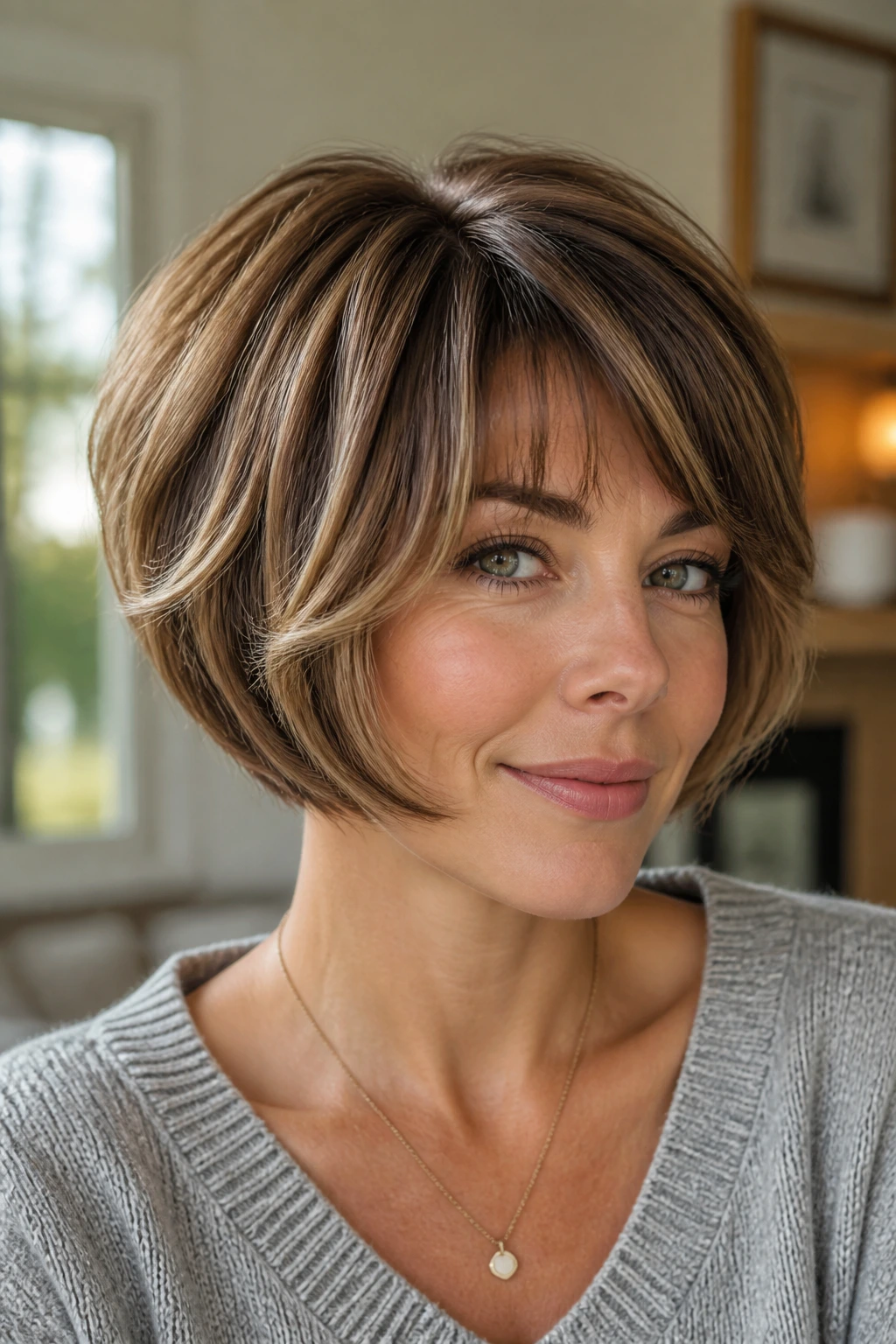
A mushroom bob can look dated fast if the shape is too stiff, but a soft version on thick hair has real charm. The outline is rounded, the perimeter sits just under the ears, and the top carries a little lift so the whole thing doesn’t collapse inward. Caramel ribboning through the outer layer keeps it from reading like one solid brown cap.
The brightness should live where the cut curves outward — around the temples, the cheekbones, and the side sweep. Inside the shape, keep things deeper. That contrast gives the bob its roundness without making it heavy.
This is a cut for someone who likes polish. It needs a brush and a quick dry. Not a long one. Just enough to smooth the surface and let the color move.
14. Wavy Jawline Bob with Deep Side Part
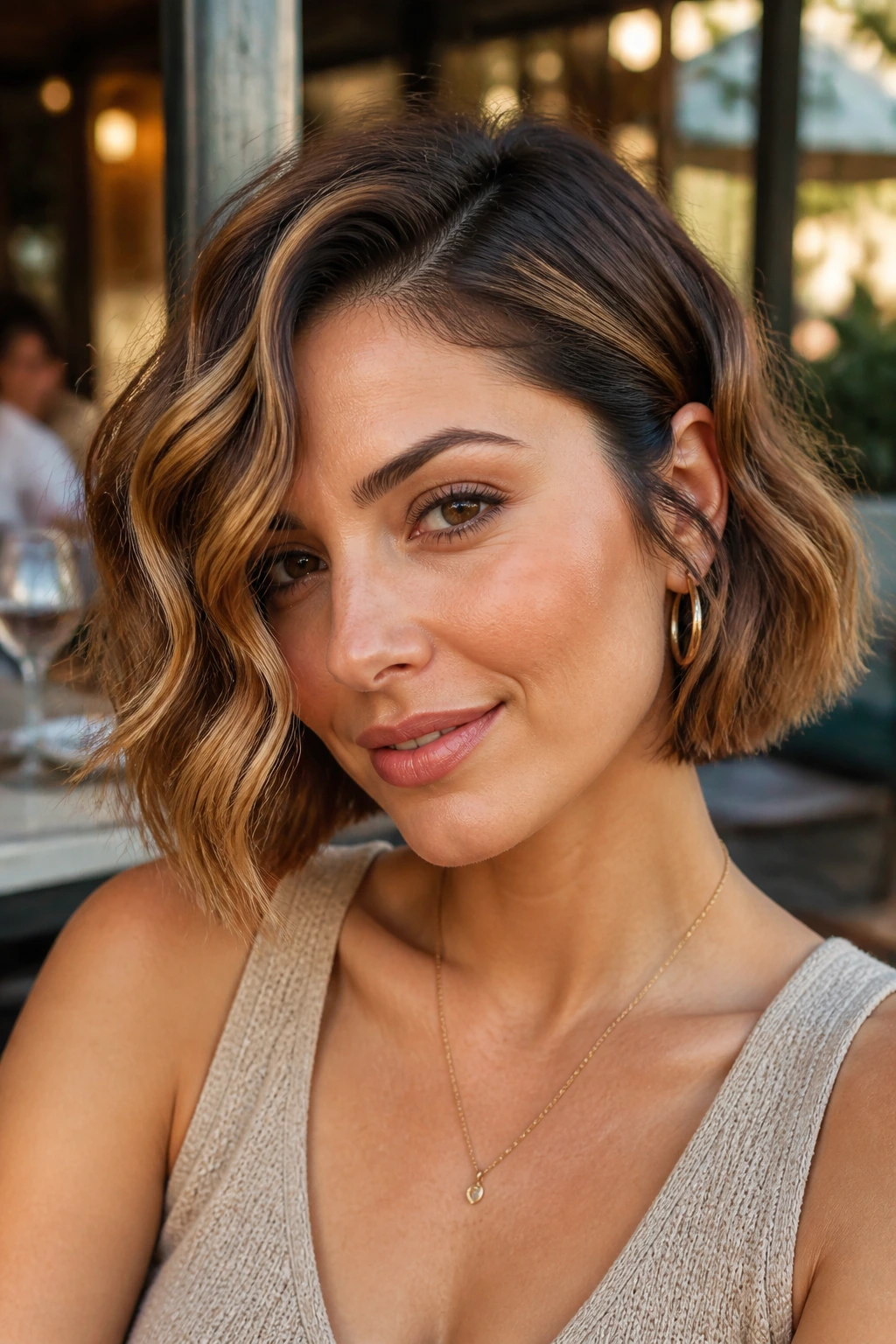
A deep side part changes everything on thick hair. The weight shifts, the root lift gets stronger, and the caramel highlights on the higher side suddenly look brighter because the hair is lifting away from the face. A jawline bob in this shape feels a little cooler and a little less predictable than a center-part version.
The wave should be loose and directional, not curly. Think bend, not coil. That keeps the jawline visible and lets the front pieces fall where they need to. When the caramel sits along the top ridge and the outer edge of the wave, it shows off the movement without looking busy.
If your hair grows forward at the crown, the side part will work with that pattern instead of against it. That’s the quiet advantage here. Less daily arguing with your own head.
15. Curly Pixie with Tapered Sides
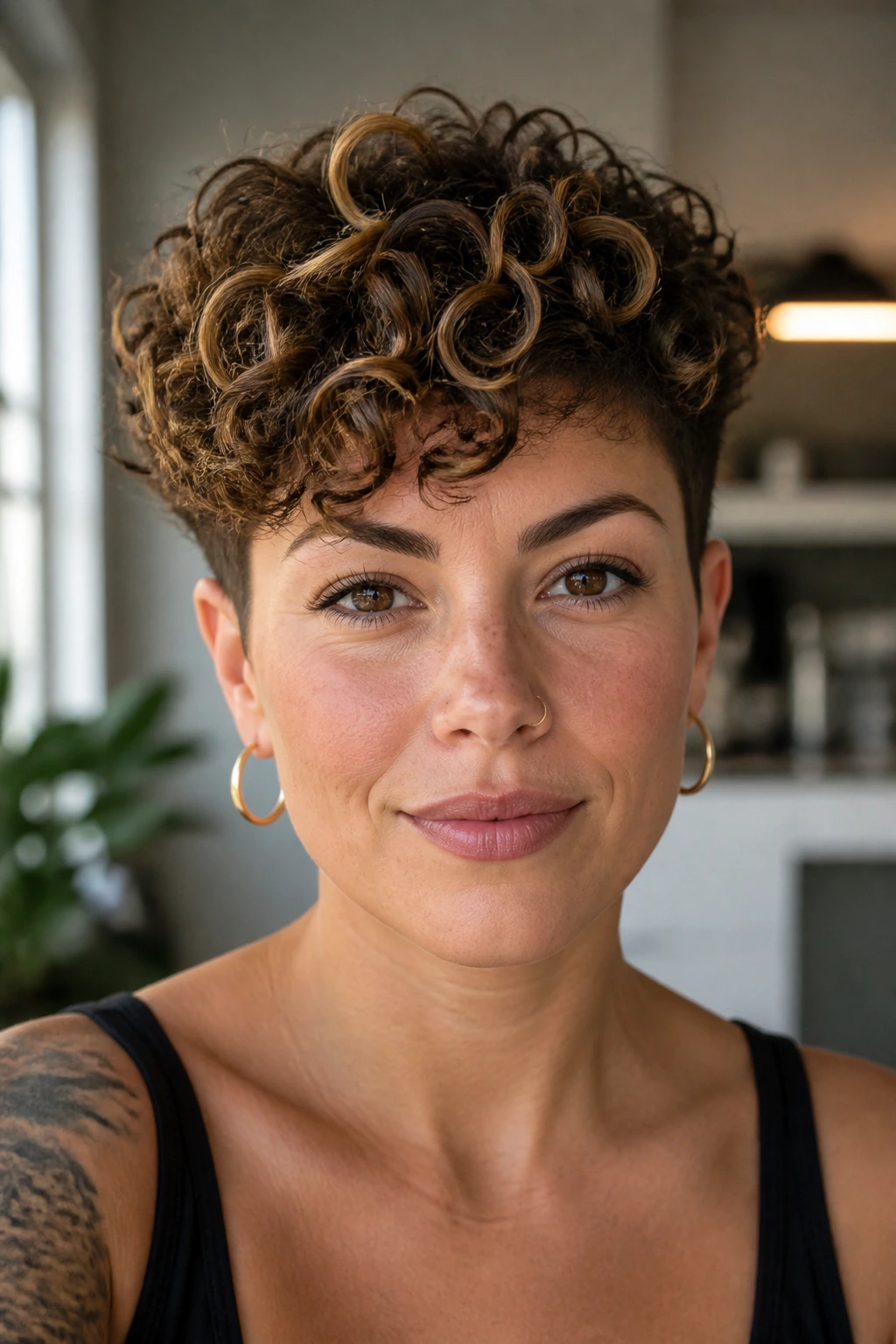
A curly pixie on thick hair can be one of the prettiest short cuts in the whole bunch, but only if the sides are tapered enough to control the width. Curly density tends to puff at the temples and around the ears. Taper those spots, keep the top a little longer, and the shape suddenly breathes.
Caramel highlights should follow the curl pattern, not sit on top of it like a decal. Tiny placements on the outer curve of the curls, a few brighter ends near the forehead, and some depth in the underlayer keep the cut from getting frosted. You want the curls to look like they grew that way.
Watch the edges
If the fringe gets too short, the curl springs up and the color disappears. Leave enough length for the curl to land, and the highlight placement will reward you.
16. Blunt Collarbone Bob with Face-Framing Highlights
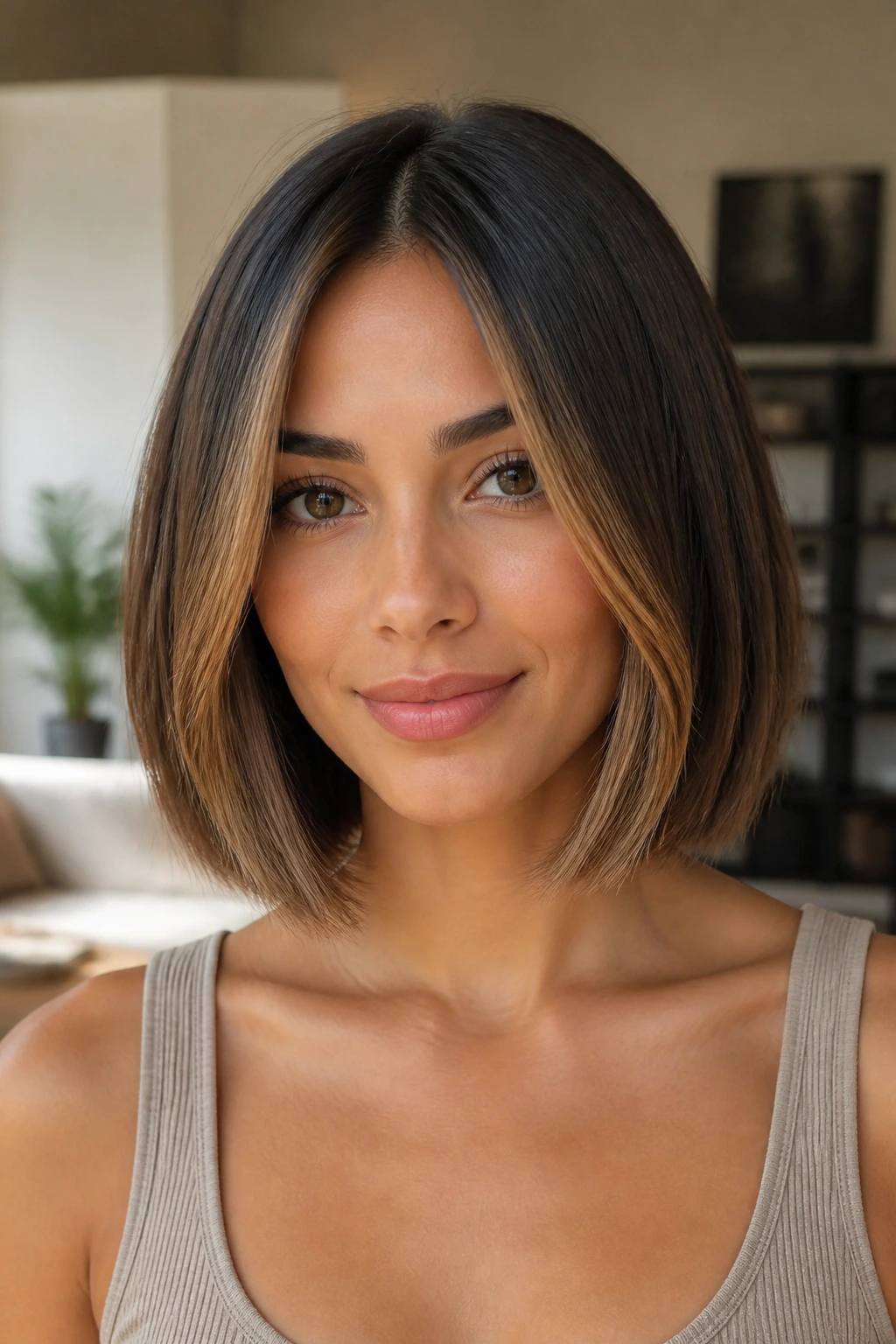
This one sits just long enough to feel substantial, but it still counts as a short style once you see how much it clears the neck. Thick hair loves a blunt collarbone bob because the edge looks full and healthy. Add face-framing caramel highlights, and the cut starts to do some of the contouring for you.
The face frame should start around the cheekbone or just below it, depending on your features. Too high and the color can feel abrupt. Too low and you lose the lift. The middle zone is where the hair picks up light in a way that softens the jaw and opens the face.
A smoothing cream through the ends keeps this cut from bulking out. Then you can either wear it straight or add a loose bend. Both work. Straight makes the line look sharp. Wavy shows off the color.
17. Tousled Crop with Micro Bangs
A tousled crop with micro bangs is not subtle. Good. Thick hair can pull off this look because the density keeps the short fringe from separating into little wisps. Caramel highlights scattered through the top and bangs break up the solid mass and keep the crop from looking like one dark shape all the way around.
The bangs are the risk point. If they’re cut too short, they spring up and leave the forehead exposed in a way you may not want. If they’re too heavy, they can sit flat and steal the lift from the top. The sweet spot is a fringe that lands a little above the brow and stays piecey.
This style likes matte texture. A soft paste or dry texture spray gives it that second-day finish from day one, which is half the appeal anyway.
18. Angled Lob with Seamless Balayage
An angled lob is one of the easiest cuts to love on thick hair because it gives the shape a built-in direction. The back sits a little shorter, the front stretches longer, and the line naturally narrows the width of the face and shoulders. Seamless caramel balayage makes that angle look even cleaner.
The best part is how forgiving this style is when the grow-out starts. Because the color is blended, the line between darker roots and lighter ends doesn’t hit you in one obvious strip. The haircut itself also tolerates a little softness, which means you can let the front pieces live without constant flat-ironing.
If you want one cut that can lean polished during the workweek and looser on weekends, this is high on the list. The shape does the heavy lifting. The color keeps it from looking heavy.
19. Shoulder-Skimming Wolf Cut
A wolf cut on thick hair is a commitment, but it can be a very good one if you like movement. The layers are heavier than a standard shag and more disconnected than a lob, which means the silhouette gets a bit wild on purpose. Caramel highlights make that movement visible instead of swallowing it.
The cut needs enough length around the shoulders to keep the top from looking too chopped. Then the shorter crown layers and longer perimeter work together to reduce bulk. If you pair that with darker lowlights underneath, the contrast gets richer and the texture reads stronger.
This is not the cleanest option on the list. That’s the point. It’s for hair that wants to feel a little rough around the edges.
20. Grown-Out Pixie with Cheekbone-Grazing Fringe
The grown-out pixie is the haircut for when you want the ease of short hair without looking like you just got out of the salon chair. Thick hair is actually helpful here because the extra density gives the shape enough body as it grows. Caramel highlights through the fringe and top make the transition look planned.
The fringe should hit around the cheekbones so it can be tucked, swept, or separated with fingers. That length is forgiving. Too short and you lose styling options. Too long and the pixie starts to feel like an awkward in-between stage. This version sits in the sweet spot.
A little texture cream through the ends is all it needs. If the roots get too flat, dry shampoo can bring the crown back to life fast.
21. Side-Part Bob with Glossy Caramel Glaze
A side-part bob with a caramel glaze is one of those cuts that looks smoother than the effort it takes to wear it. The side part gives the root lift, the bob gives the shape, and the glaze adds that warm shine that keeps thick hair from looking dull under indoor light. It’s a good choice when you want polish without a pile of steps.
This style benefits from a color that stays close to the base, just lighter around the upper layers and face frame. The glaze can be a little warmer than the highlights, which helps the whole head read richer instead of streakier. On thick hair, that subtle shift matters more than a very bright lift.
If you like a more classic look, this is one of the safest bets in the group. Not boring. Just controlled.
22. Layered Ringlet Bob with Honey-Caramel Accents
Ringlets have a different problem from waves: they can stack up too much bulk in the wrong places. A layered ringlet bob solves that by removing weight where the curls cluster, especially around the sides and lower back. Honey-caramel accents placed on the outer ringlets help the curl pattern pop without over-lightening the whole head.
The color should follow the spring of the curls. That means brighter ends, brighter outer spirals, and a few lowlights closer to the roots. The inside of the curl should not be flooded with light. If it is, the shape can look frizzy instead of dimensional.
This cut likes a diffuser and a curl cream with a light hand. Too much product and the curls collapse. Too little and the frizz takes over. The middle ground is where the shape stays bouncy.
23. Shag Bob with Razored Ends
A shag bob is for thick hair that wants edge and movement, not a tidy one-length outline. The razored ends keep the silhouette light, and the layers around the crown prevent the shape from sitting like a heavy block. Caramel highlights break the texture into pieces, which makes the cut look more alive.
The danger with a shag bob is overdoing the razoring. Too much, and the ends can look frayed instead of textured. The best version still has clean lines inside the mess. That sounds contradictory. It isn’t. Good shags have discipline under the loose surface.
This cut works especially well if your hair naturally has bend or a little wave. Straight thick hair can wear it too, but it takes more styling each morning. Worth knowing before you commit.
24. Sleek Bob with Peekaboo Highlights
A sleek bob with peekaboo caramel highlights is the quietest look here, and that’s exactly why some people love it. From the outside, the cut reads clean and polished. Move the hair, tuck one side, or bend at the ear, and the hidden caramel flashes through the interior layers.
This is a smart option if your workplace leans conservative or if you just don’t want obvious color everywhere. Thick hair gives the hidden highlights room to hide and reveal themselves in layers. Add a deeper lowlight at the base, and the cut gains dimension without shouting about it.
Blow-dry it smooth, finish with a light serum, and leave the rest alone. The elegance here comes from restraint, not drama.
25. Short Inverted Bob with Dimensional Caramel Lowlights
A short inverted bob is built to show shape. The back hugs the neck, the front extends forward, and the whole haircut creates a clean curve that thick hair can hold without sagging. Dimensional caramel lowlights underneath keep the underside from looking heavy, while lighter strands on top keep the finish from feeling flat.
This is one of the best choices if you want a sharper outline but still want warmth in the color. The lowlights do a lot of the visual work. They carve the bob’s shape from underneath, which matters more than people realize. Thick hair can swallow a cut if the color is too one-note.
The best styling move is a round brush at the ends, then a quick cool shot from the dryer to lock the bend. That one little step keeps the shape crisp longer than people expect.
Why Thick Hair Loves Caramel Dimension
Thick hair is a gift when you stop asking it to behave like fine hair. It holds shape better. It carries color more visibly. It can show a highlight and a lowlight at the same time without turning see-through at the ends.
That’s why caramel works so well here. The shade has enough warmth to glow against brunette bases, but it doesn’t punch the eye the way a very pale blonde stripe can. On dense hair, that matters. You want contrast, not a traffic signal.
Lowlights matter just as much. A short cut with only light pieces can go airy in the wrong way, especially when the hair is coarse or naturally dark. A few deeper ribbons underneath give the cut weight at the root and stop the finish from looking chalky. If you’ve ever had highlights that seemed to disappear once the blowout settled, this is the fix.
There’s also a practical reason these combinations hold up. Short hair grows fast enough that the shape changes before the color can feel stale, and caramel is soft enough to blur that transition. That makes the whole look easier to live with. Not effortless. Just less fussy.
Essential Tools for Styling and Color Care
-
Blow dryer with a nozzle attachment: Directs air at the roots and smooths thick hair without blowing the cut apart.
-
1-inch curling iron or wand: Best for adding a loose bend to bobs and lobs without making the color pattern look too uniform.
-
Round brush, 1.25 to 1.5 inches: Helps lift the crown on pixies, bixies, and stacked bobs while keeping the ends polished.
-
Root-lift mousse or spray: Useful at the crown and around the part, where thick hair likes to sink.
-
Texture spray: Good for shaggy lobs, crops, and tousled cuts when you want separation instead of volume collapse.
-
Lightweight leave-in conditioner: Keeps thick hair from frizzing up the highlight areas, especially on the ends.
-
Color-safe shampoo and conditioner: Helps caramel tones stay warm and keeps the base from going dull.
-
Wide-tooth comb or detangling brush: Saves fragile highlighted sections from tugging, especially after washing.
-
Duckbill clips or sectioning clips: Handy for styling the top layers separately when you want lift at the crown.
-
Heat protectant: Non-negotiable if you blow-dry or heat-style often; caramel can go brassy-looking fast when the ends are cooked.
How to Choose the Right Cut and Shade at the Salon
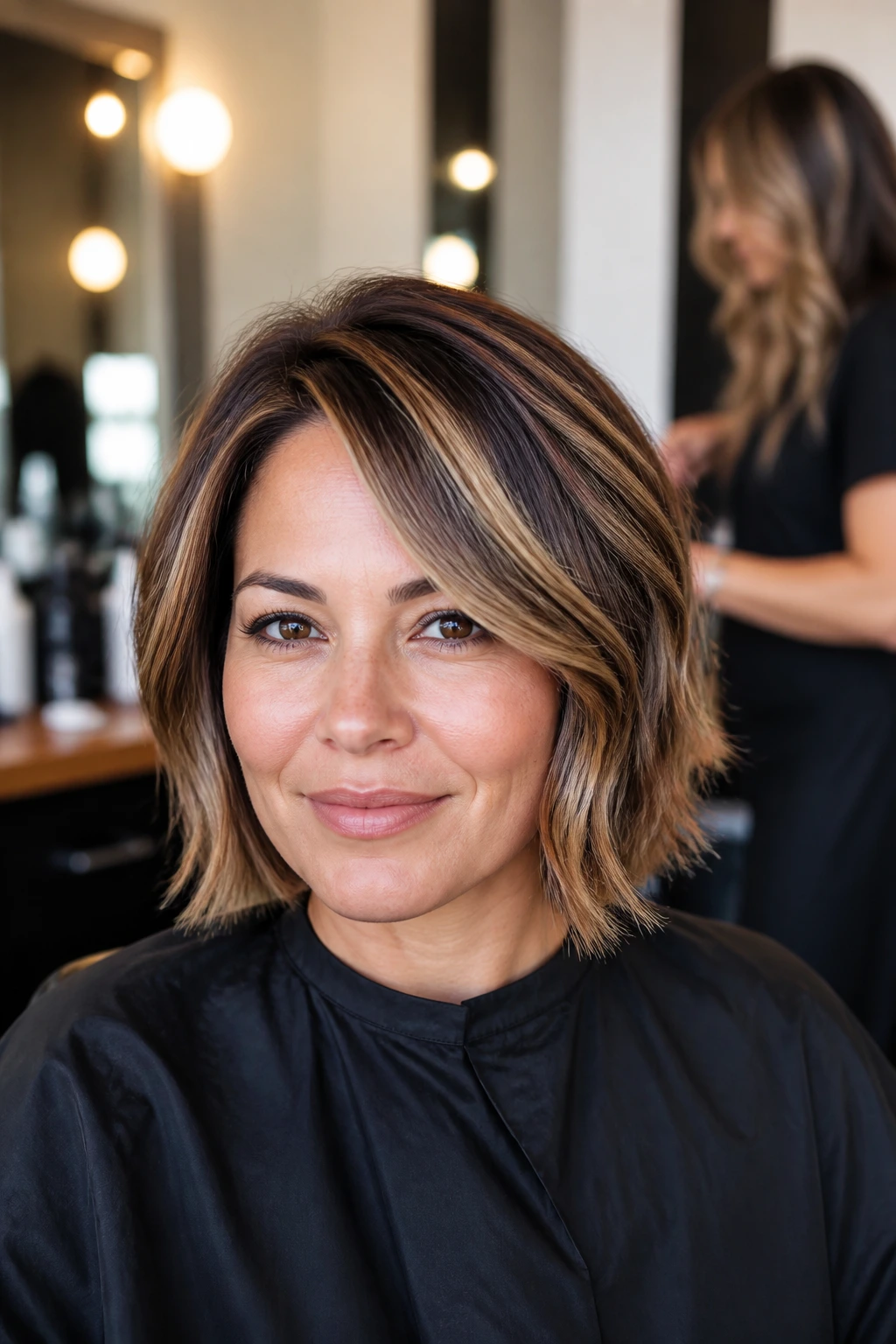
Start with your hair’s real behavior, not the haircut photo you wish would work. Thick hair that grows out sideways usually needs a shape with internal debulking. Thick hair that lies flat at the crown can handle more stacked layers or a bixie. Thick curls need a different conversation entirely, because shrinkage changes where the shape lands once the hair dries.
Caramel also changes depending on the base color. On deep brown hair, caramel can look like toasted honey, chestnut, or soft toffee. On medium brown hair, it can read brighter and more golden. On black hair, asking for a few pieces that are only two or three levels lighter often looks better than going too pale too fast. That’s where the hair starts to look striped, and nobody wants that.
Bring two photos if you can: one for the cut and one for the color. They do not need to match exactly. In fact, it helps if they don’t, because a good stylist can blend the shape you want with the placement you like. And say this part out loud: how much you style your hair matters. If you air-dry most days, the cut should still behave without a round brush rescue mission every morning.
Styling Moves That Keep Thick Short Hair Lively, Not Puffy
Root Lift: Put mousse or root spray at the crown and part only. Thick hair does not need product everywhere, and too much at the ends will flatten the cut before lunch.
Shape Memory: When you blow-dry, direct the hair in the opposite direction of its natural fall for the first few minutes, then switch back. That little trick gives short cuts more lift without cranking up the volume into a halo.
Bend, Don’t Curl: For bobs and lobs, use a curling iron to add a soft bend at the mid-lengths and ends. Hard curls can make caramel highlights look too patterned; loose bends keep the color broken up.
Day-Two Reset: Mist the roots lightly with water or dry shampoo, then rework the front pieces with your fingers. Thick hair often looks better on the second day because the shape settles.
Gloss Control: A pea-size amount of serum is enough for most short thick hair. If the ends start to look greasy, you used too much. The hair will tell on you.
Common Mistakes That Turn Thick Hair into a Triangle
Cutting away too much bulk at the ends: The hair looks lighter in the chair, then puffs out like a bell at the sides once it dries. The fix is internal debulking and cleaner perimeter lines, not aggressive thinning on the outside edge.
Placing caramel highlights too evenly: When every section gets the same lightness, thick hair can look striped instead of dimensional. Ask for brighter pieces where the movement happens — fringe, crown, cheekbone area — and deeper lowlights underneath.
Going too short in the wrong spot: Thick hair can spring up more than expected, especially around the crown and fringe. If you cut the top too short without checking how it dries, the shape can become boxy or wiry.
Using heavy oils everywhere: Thick hair often needs moisture, but a thick serum layered across the roots will flatten the volume and make the highlights look dim. Keep richer products on the mid-lengths and ends.
Skipping trims because the color still looks good: The color might hold, but the shape doesn’t. Short hair needs regular reshaping to keep the edge, especially cuts like pixies, stacks, and inverted bobs.
Ignoring the nape and sideburn area: Those little zones matter more than people think. If they grow out unevenly, the whole short cut starts to feel sloppy, even when the top still looks fresh.
Ways to Change the Mood of the Cut
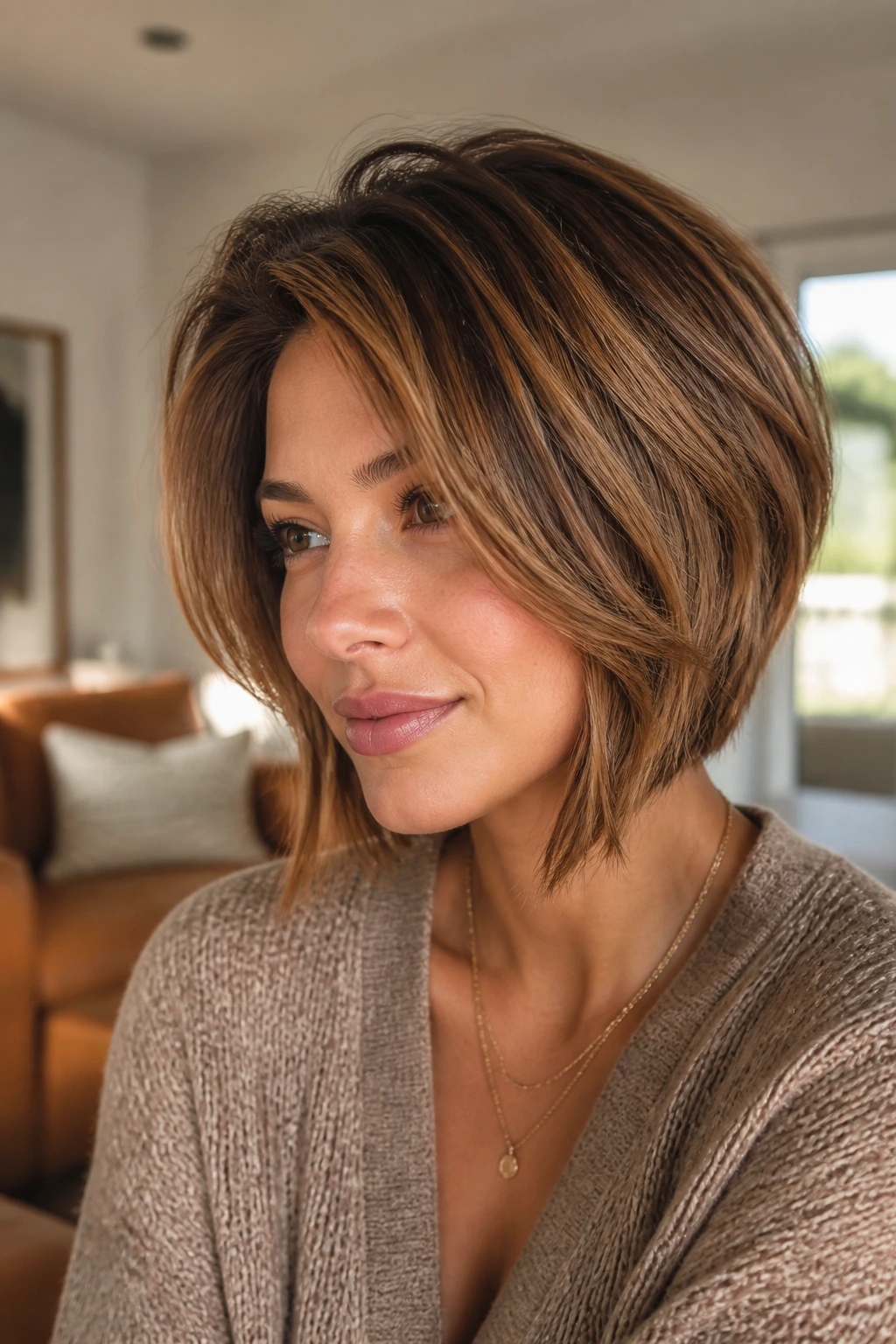
Soft-Toffee Version: Ask for caramel that leans deeper and warmer, with a softer root melt. This keeps the look low-contrast and rich, especially on dark brunette hair.
Brighter Face-Frame Version: Increase the lightness only around the front pieces and leave the rest more subdued. That gives thick hair a lift near the face without turning the whole head blonde.
Cool-Caramel Blend: Mix caramel with beige and muted honey tones if your skin reads better with less gold. This works well when you want warmth without too much shine.
Curly-First Version: Keep more length in the top layers and place the highlights where curls naturally clump. Thick curls need room to spring, and a little extra length can keep the silhouette from shrinking too far.
Quiet Office Version: Use peekaboo highlights, lowlights, and a gloss instead of obvious ribbons. The cut still has dimension, but the color hides a bit until the hair moves.
Color and Trim Maintenance That Keeps the Shape Sharp
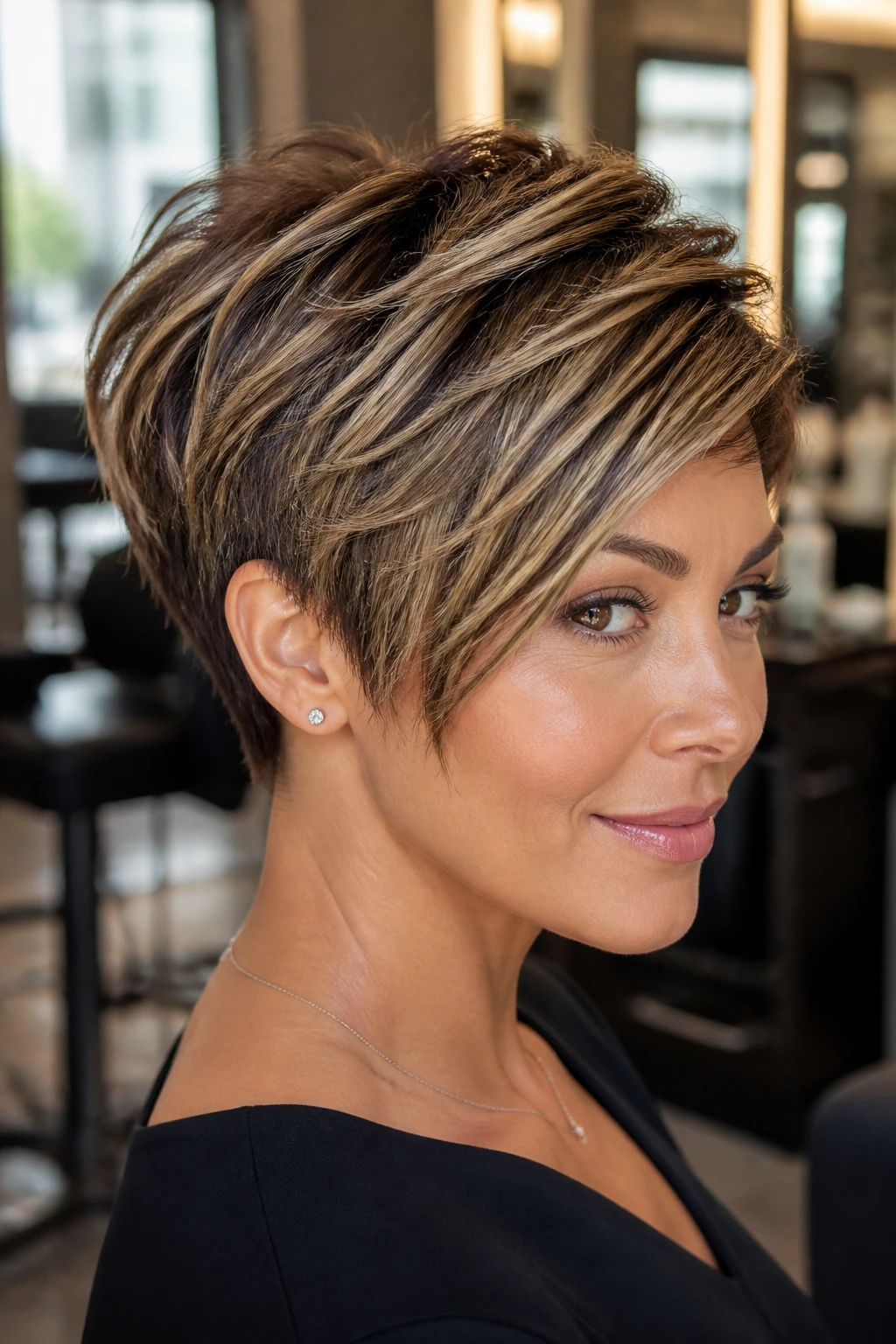
Short thick hair is one of those styles that looks best when it’s kept honest. For pixies and bixies, plan on trims every 4 to 6 weeks. Bobs and lobs usually stretch a little longer, around 6 to 8 weeks, before the line starts to droop. If you let it drift too far, the weight comes back fast.
Caramel highlights stay brightest when you don’t over-wash. Two to three washes a week is enough for many people, as long as the scalp stays comfortable and the products are color-safe. A gloss or toner refresh every 6 to 10 weeks can keep the warmth from turning brassy or muddy, especially if your hair pulls orange or gold.
Weekly conditioning matters too. Use a mask on the mid-lengths and ends, not the roots, and leave it on for 5 to 10 minutes. If your hair is coarse, finish with a lightweight leave-in instead of a rich cream all over the head. The ends get the moisture. The roots get to stay lifted. That balance keeps the shape from collapsing.
Questions People Ask Before Going Short
Will caramel highlights work on very dark thick hair?
Yes, but the tone matters. On very dark hair, caramel usually looks best when it’s placed as soft ribbons or face-framing pieces rather than broad blonde chunks. Ask for a warmer toffee or chestnut-caramel blend if you want the result to feel believable and rich.
Is thick hair harder to manage short than long?
Not always. Short hair gives thick hair less room to swell, which can make daily styling easier. The catch is maintenance: the shape needs trimming more often, and the color placement has to be smart or the cut can look bulky.
Should I choose balayage or foils for this look?
Balayage is great if you want softer grow-out and a blended finish. Foils are better when you want more visible contrast or a stronger money piece around the face. Thick hair can handle both, but the effect is different.
Can I air-dry these styles?
Some of them, yes. Wavy bobs, shags, and lobs usually behave better air-dried than a precise blunt bob or sleek inverted cut. If you air-dry a lot, ask for a shape that still looks intentional with a little natural bend.
What if my thick hair is curly or coily?
Then the cut should respect shrinkage. A chin-length bob, curly pixie, or layered ringlet shape can work well, but dry cutting is often the better approach. Caramel highlights should follow the curl pattern so the color appears in the right places when the hair springs up.
How do I keep the ends from flipping out?
The fix starts at the cut. Ask for clean internal shaping and enough weight left at the perimeter to keep the hair grounded. At home, smooth the last inch with a brush or flat iron and finish with a tiny bit of serum.
Do lowlights really matter that much?
On thick hair, yes. Lowlights stop caramel from floating on top of the haircut like decoration and help the shape look deeper and more expensive. They also make the grow-out softer.
What’s the most low-maintenance short style here?
Usually the blunt collarbone bob, side-part bob, or layered lob. They keep their shape longer than a pixie or stacked cut, and caramel placement can stay blended for weeks without looking harsh.
The Shape and the Shine
The best short hairstyles for thick hair with caramel highlights do two things at once: they take the weight where it needs to go, and they let the color work like architecture. That’s why these cuts feel different on dense hair than they do on fine hair. There’s more surface, more movement, more room for the warm pieces to do their job.
Pick the silhouette that fits your mornings, then ask for caramel placement that follows the haircut instead of sitting on top of it. That’s the part people skip. And it’s the part that changes everything.