



Thick hair has a way of making every haircut decision feel louder than it should. Leave it one-length, and the outline can read like a shelf. Thin it too much, and the ends turn wispy while the crown still carries all the weight. The sweet spot is a cut that removes bulk in the right places, then lets babylights slide across the surface so the shape looks lighter without losing the density that gives thick hair its body.
That’s why the best fall trends haircuts for thick hair with babylights lean into movement, not just length. The cut does the heavy lifting first — through layers, internal debulking, a cleaner perimeter, or a softer fringe — and the babylights come in second, almost like pencil marks across a sketch. Tiny woven strands around the hairline, crown, and part keep the color from turning stripey. On thick hair, that delicate placement matters more than people think.
Fall is a good time for this because the season tends to flatten hair in a very specific way. Sweaters rub against the ends. Dry air steals shine. Dark wardrobes make a flat brown block look even heavier. A well-cut shape with a few chestnut, beige, honey, or copper babylights handles that shift better than a blunt, all-over color ever will.
Why These 18 Shapes Work for Thick Hair
-
Bulk Comes Out in the Right Places: These cuts reduce weight through the interior or around the perimeter, so thick hair moves instead of sitting like one solid sheet.
-
Babylights Stay Soft, Not Stripy: Fine weaving around the part, temples, and crown keeps the color delicate enough to flatter dense hair without looking painted on.
-
The Grow-Out Is Kinder: Dimensional color and layered shapes blur the line between fresh salon work and several weeks of regrowth, which is a relief when life gets busy.
-
They Still Work With Real Styling: You do not need a 30-minute blowout for every one of these. A round brush, a curling iron, or even a decent air-dry routine gets most of them across the finish line.
-
Fall Tones Play Nicely With Texture: Chestnut, caramel, honey, mushroom brown, cinnamon, and muted copper all sit well against thick hair because they create depth without shouting.
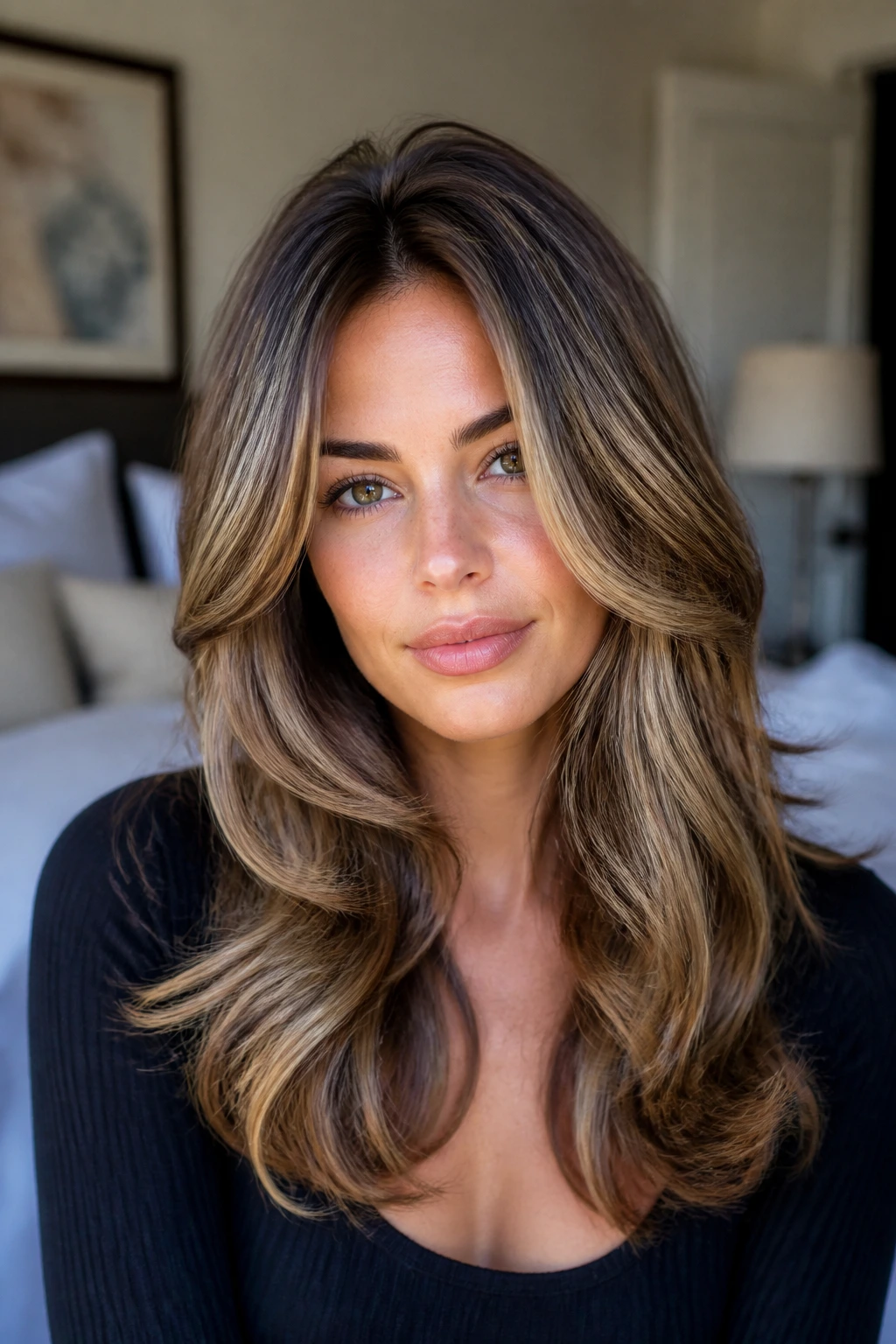
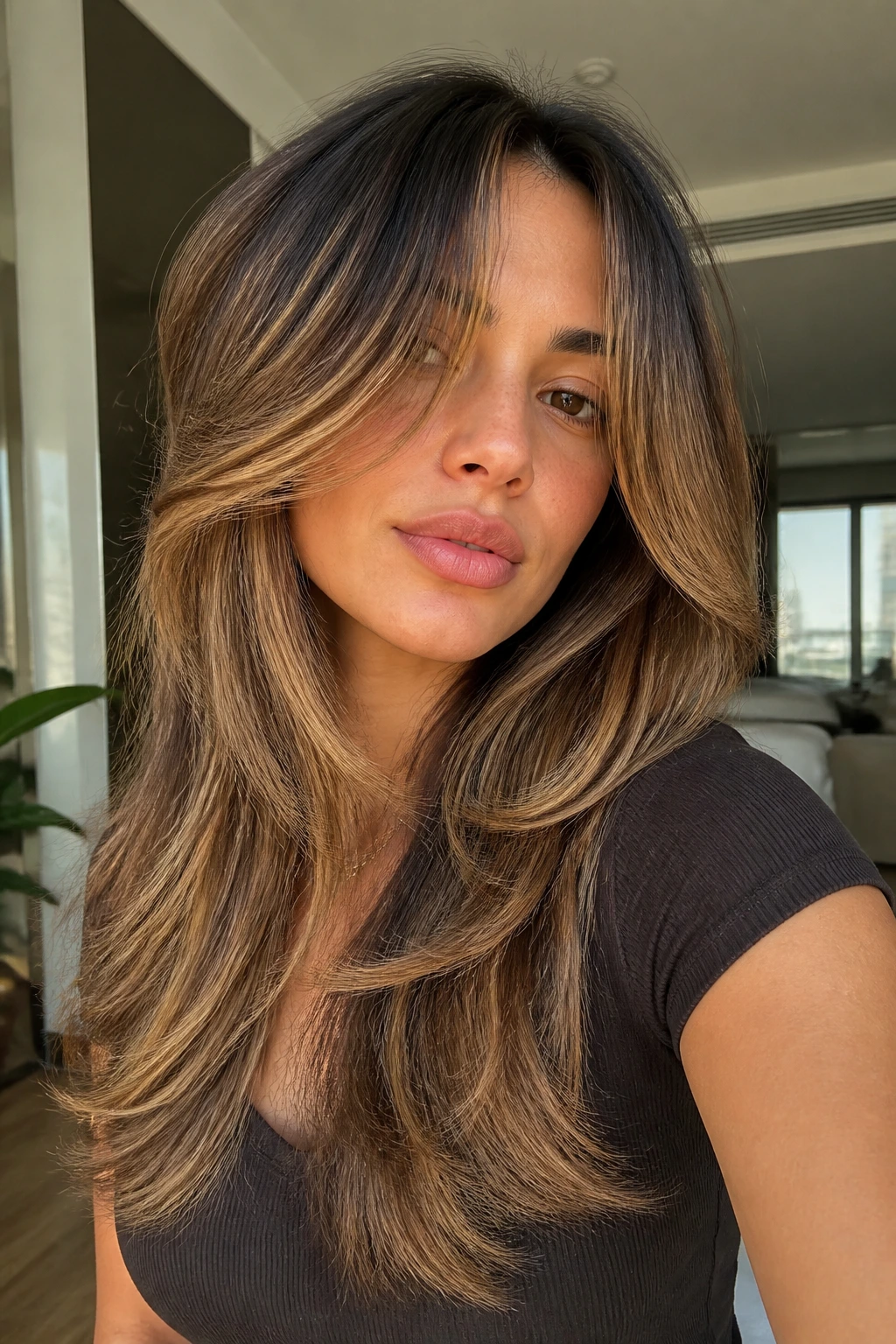
1. Chestnut Curtain Layers with Cinnamon Babylights
Long thick hair can feel heavy fast, and curtain layers are one of the few cuts that pull their weight without making the ends look skinny. The front opens around the cheekbones, the rest of the length stays plush, and cinnamon babylights skim the part and face frame so the whole style reads soft, not flat. If your hair tends to hang straight and stubborn at the sides, this shape gives it a little lift where people actually see it.
The key is restraint. I like curtain layers that start around the cheekbone or just below it on dense hair, because starting them too high can make the front look choppy. The babylights should be fine and warm, not chunky and copper-bright. They need to move through the top third of the hair, then disappear into the deeper chestnut base underneath.
Best for: medium to long thick hair that wants shape without losing length.
Ask for: a soft face frame, long internal layers, and babylights concentrated around the part and front panels.
Why it works: the weight stays in the length, but the eye lands on the open front and the lighter ribbons, which makes the whole style feel lighter than it is.
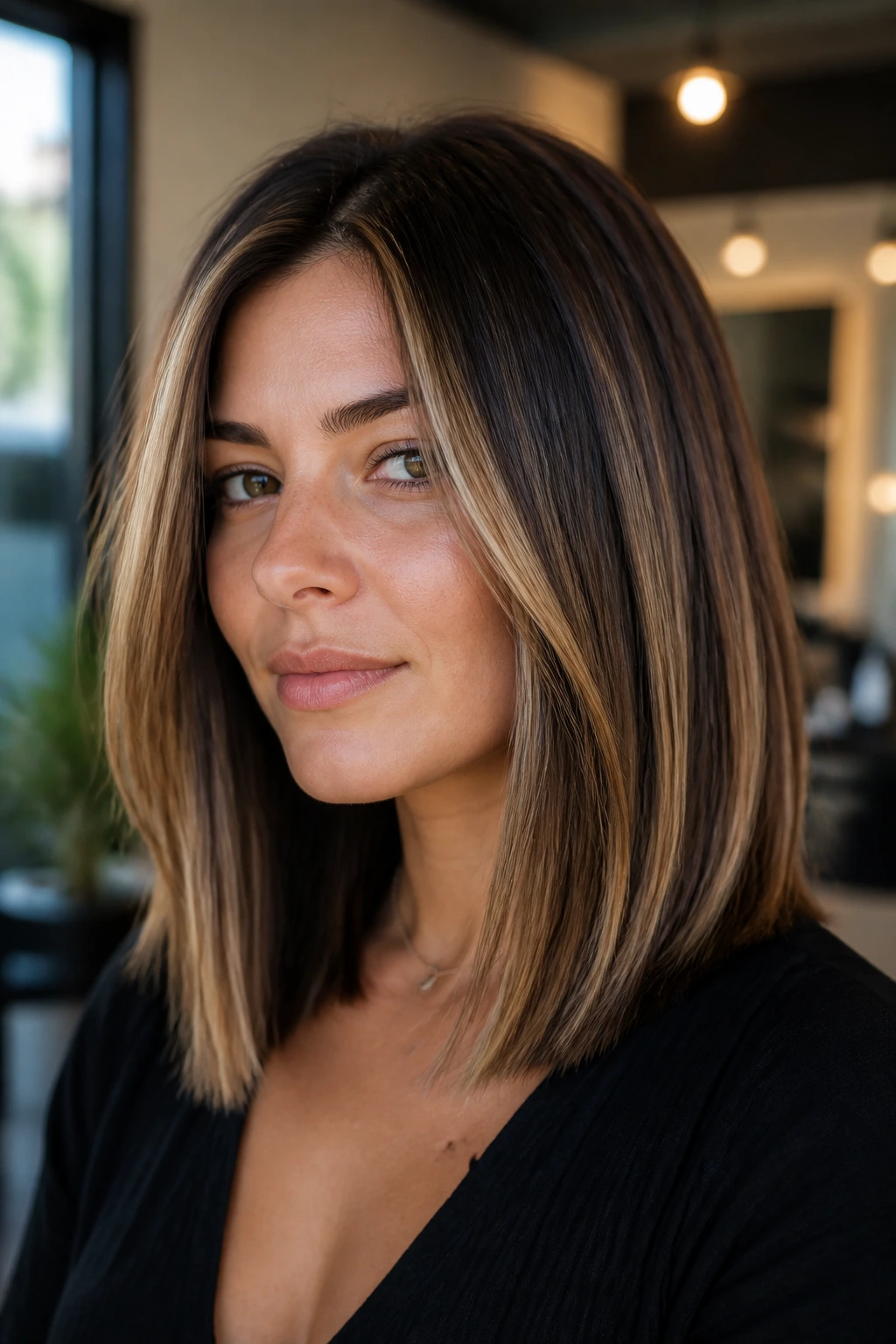
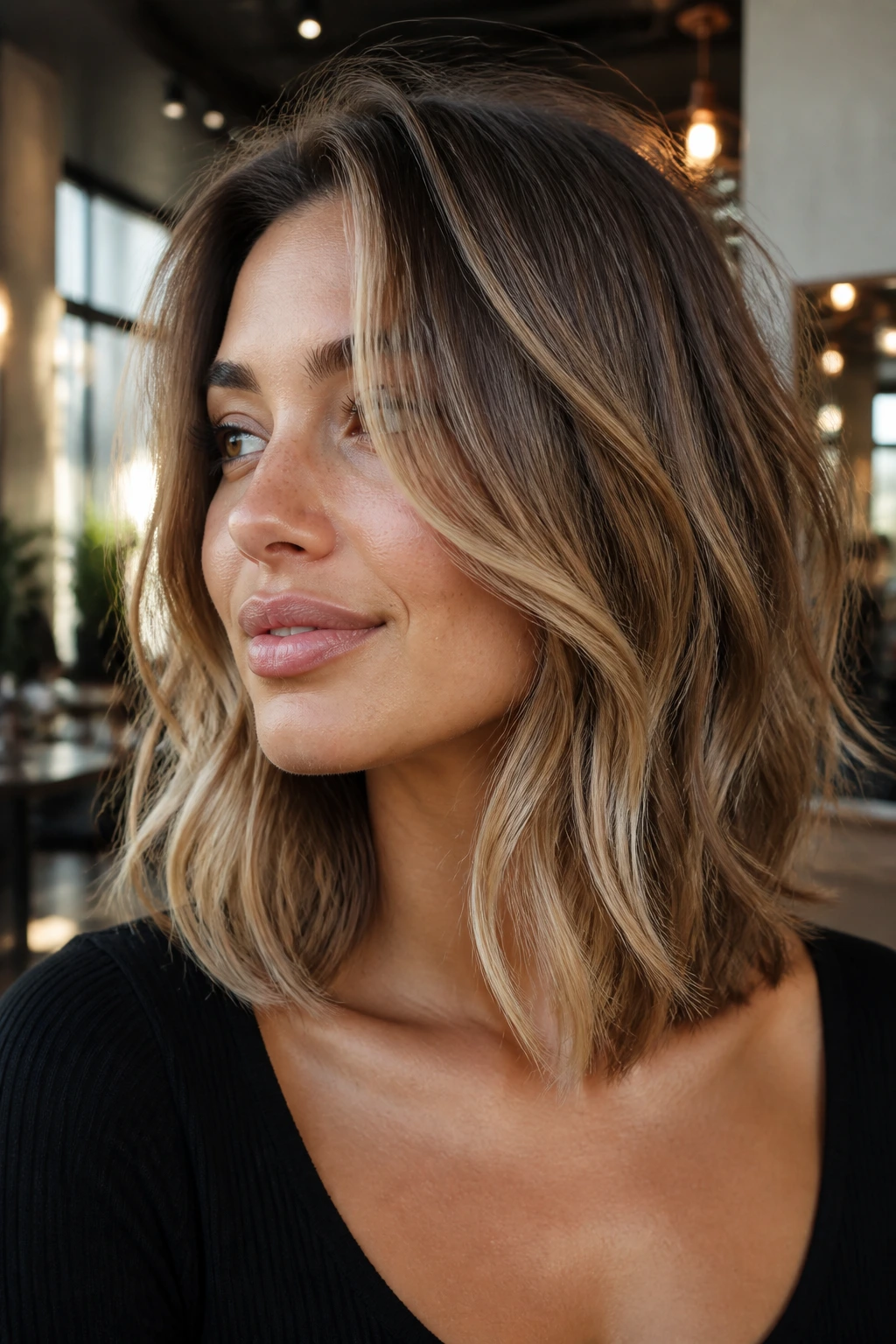
2. Collarbone Lob with Beige Babylights
Want the easiest shape to blow out on thick hair? A collarbone lob is hard to beat. It stops at a spot where the ends can still tuck under, kick out, or bend into a loose wave, and beige babylights keep the cut from looking like one big block of color. On dense hair, that clean collarbone line looks expensive when it’s cut well. When it’s cut badly, it looks boxy. There isn’t much middle ground.
What to Ask for
-
A slight front angle: Keep the front a touch longer than the back so the lob follows the jaw instead of sitting like a shelf.
-
Babylights around the top layer: Ask for delicate, woven pieces through the crown and hairline, not heavy stripes through the bottom.
-
Soft texturizing only at the ends: Too much thinning here can make thick hair puff out at the shoulders.
The beige tone matters because it sits quietly against brunette bases. It gives shine, not drama. If your hair is naturally dark, I’d pair this with a shadow root or lowlight underneath so the lighter pieces don’t look lonely on top.
3. Butterfly Cut with Honey Babylights
The butterfly cut is still one of the smartest answers for thick hair because it gives you two things at once: a shorter face frame that lifts the front, and a longer layer system that keeps the bottom from feeling like a weight belt. Honey babylights belong here because they make those upper layers show their shape. Without a little light, the cut can blur into a generic long layer situation.
You notice this haircut most when you turn your head. The shorter pieces float a little, the longer ones stay full, and the babylights catch on the bend. That’s the trick. Thick hair can swallow a haircut’s architecture if the light is too flat, and the butterfly shape depends on seeing those steps.
I’d choose this one if you like big hair but not big bulk. It wants a round brush or a large curling iron at the front, but the rest can air-dry with a smoothing cream and still look intentional.
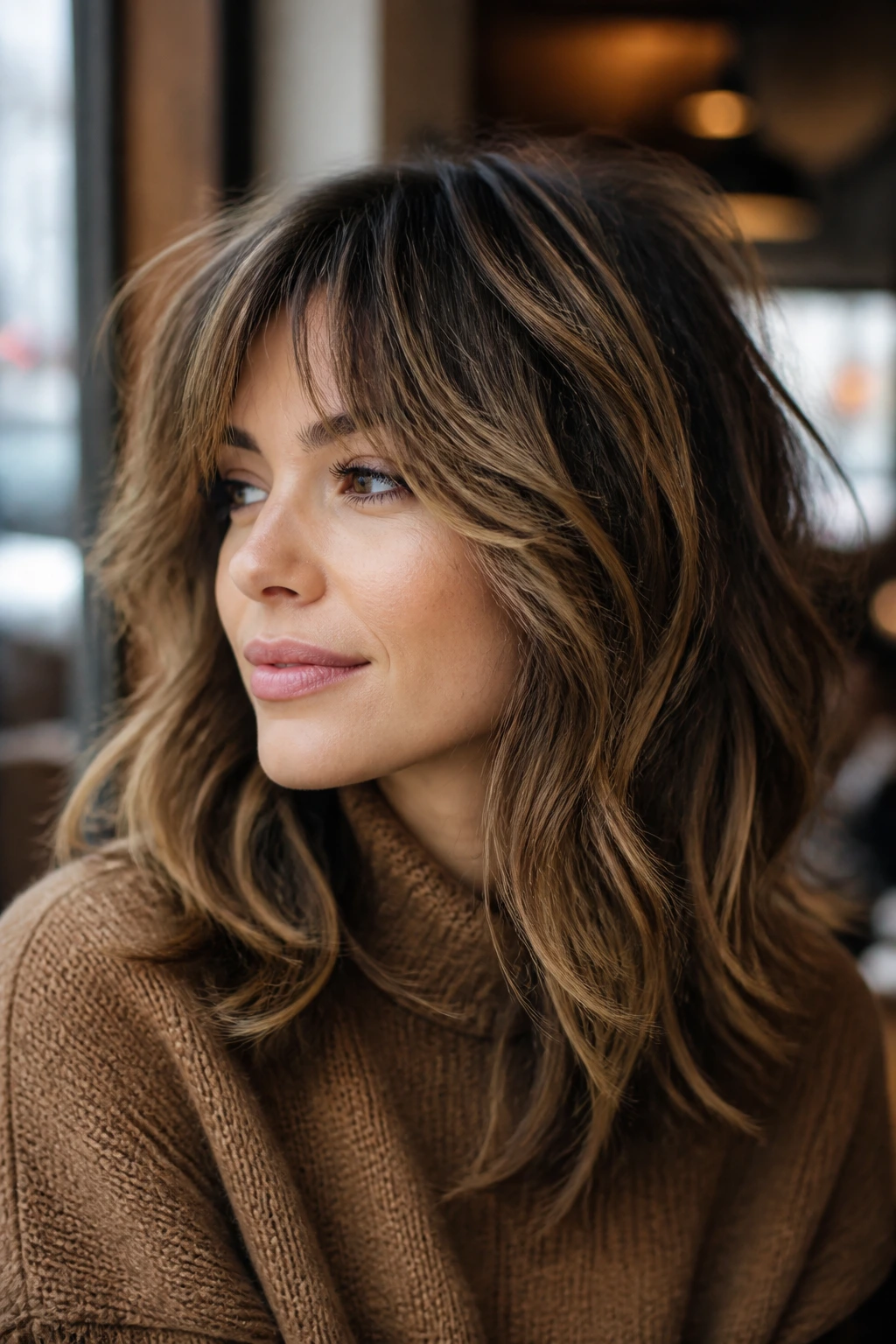
4. Modern Shag with Caramel Ribbons
A shag on thick hair can go wrong fast if the layers are too many or too razor-heavy. But the modern version — softer, chunkier, less punk — makes dense hair look alive instead of overbuilt. Caramel babylights, with a few deeper lowlights tucked underneath, keep the texture visible. On thick hair, that contrast is the difference between “shape” and “just a lot of hair.”
The best version of this cut has movement through the crown and a little bite around the ends. Not every strand needs to be chopped. Leave enough weight that the shag still lands, especially if your hair is straight or only slightly wavy. The babylights should hit the bends and flicks, because that’s where the cut earns its money.
If your hair already has a natural wave, this one is easy to wear. If it doesn’t, a quick bend with a 1.25-inch iron on the outer pieces will do more than a heavy curl ever could.
5. Blunt Midi with Hidden Internal Layers
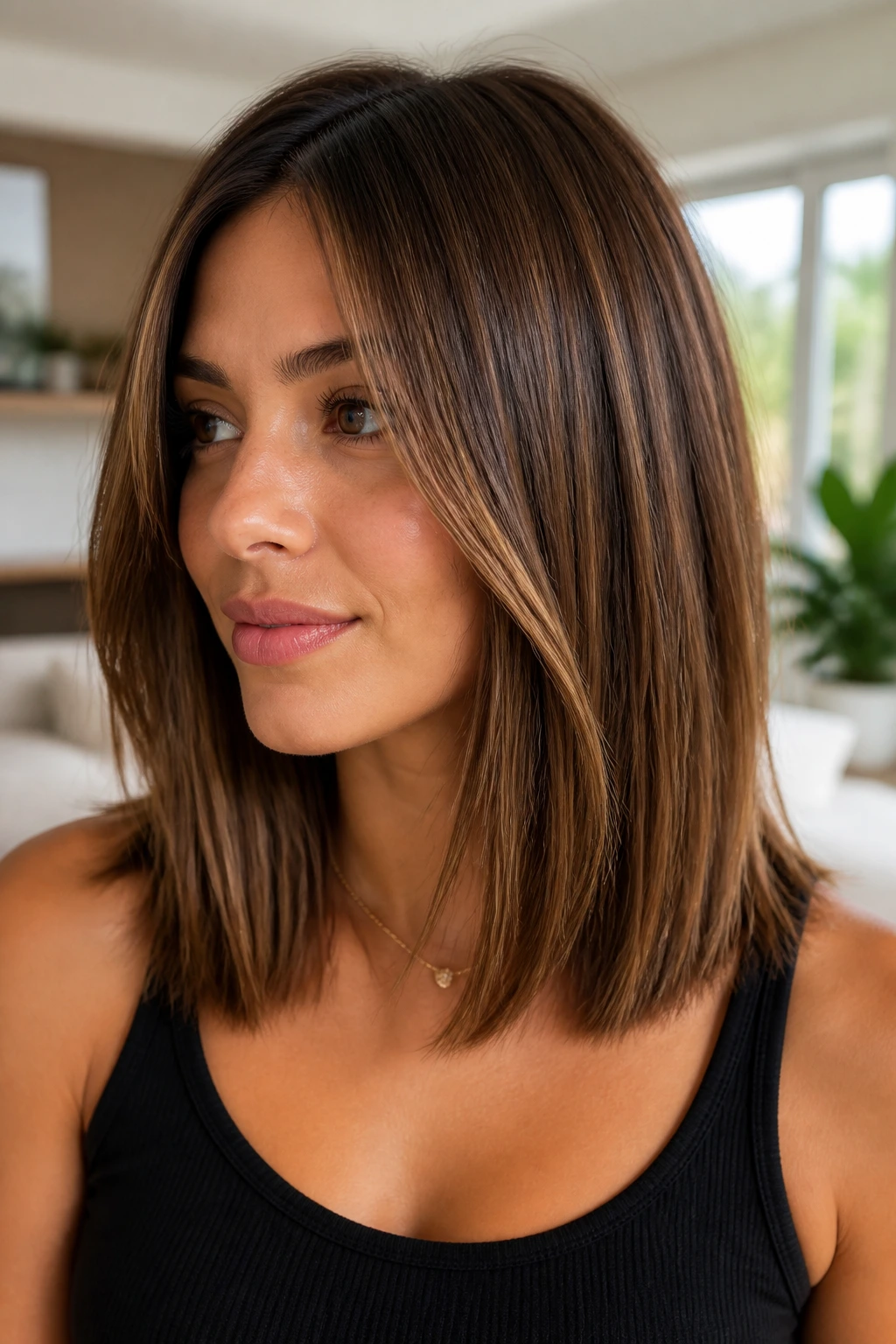
This is the haircut for people who like a strong outline but hate the feeling of too much bulk at the bottom. From the outside, it looks clean and polished. Underneath, hidden internal layers take out enough weight to keep thick hair from ballooning around the shoulders. Babylights belong mostly on the top layer and around the face, where they can skim the surface and keep the straight line from feeling severe.
I like this cut more than a fully razored style when the hair is coarse or slightly frizzy. A blunt midi gives the strands something to sit against, which can calm the whole shape down. The babylights should be soft beige or smoky honey, not high-contrast blonde. You want dimension, not stripes.
It’s also one of the best cuts if you wear your hair half-up a lot. The line still looks neat when it’s down, and the hidden layers keep the top from feeling too heavy when you tie it back.
6. Rounded U-Shaped Long Cut with Mushroom Babylights
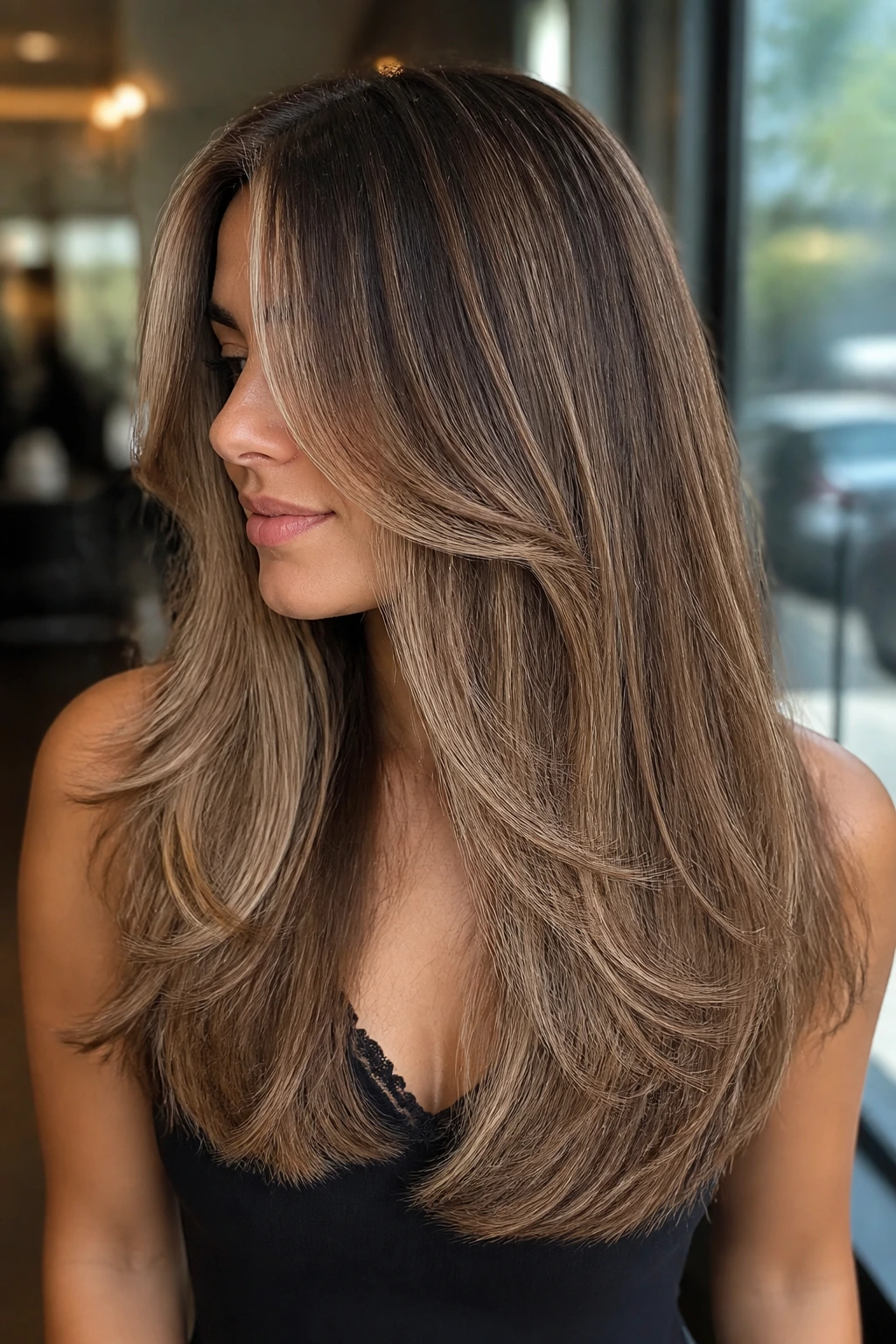
A straight-across hemline can make thick hair look wider than it is. A rounded U-shape fixes that without stealing too much length. The center stays a little longer, the sides curve gently, and the overall outline feels softer from behind. Mushroom babylights — those muted beige-brown ribbons that sit between cool and warm — are a good match because they add depth without making the ends look lighter than the roots.
This is a quietly good haircut. It doesn’t beg for attention, which is part of the appeal. Thick hair gets to stay thick, but the silhouette stops feeling like a curtain dropped straight from the ceiling. If you like ponytails, braids, or loose bends, the U-shape gives them a better base than a flat, blunt cut.
I’d ask for long layers only if your hair is extremely dense. Otherwise, the rounded perimeter does enough. Keep the babylights soft through the crown and around the cheekbones; heavy foiling underneath will only muddy the shape.
7. Italian Bob with Beige Babylights
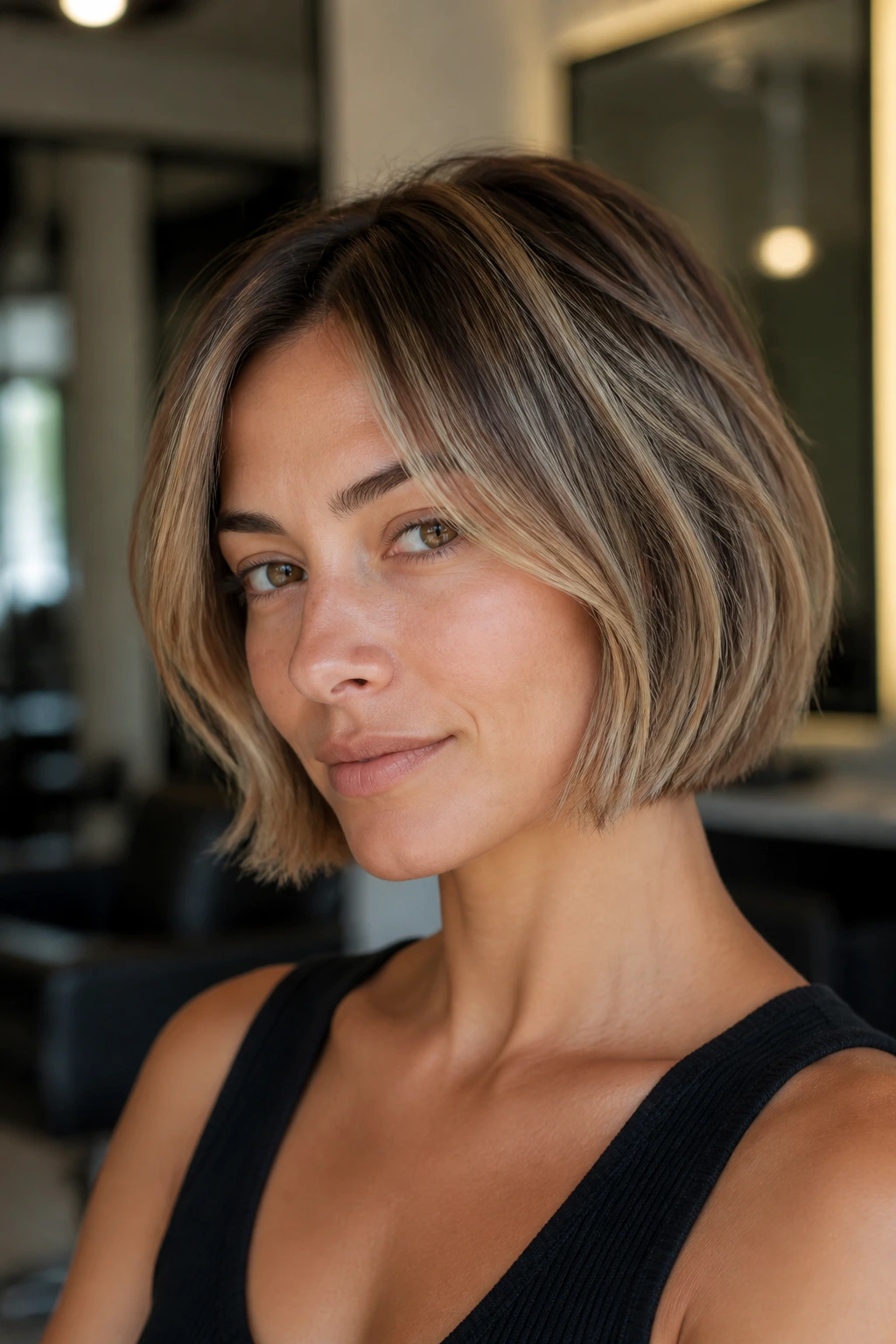
The Italian bob has a bit of backbone, and thick hair needs that. It usually sits at the jaw or just below it, with enough fullness to feel plush but not so much that it turns into a triangle by noon. Beige babylights placed through the top and around the face give the cut a lifted look, almost like sunlight moved in and took up residence there.
Why the babylights matter here
The bob’s shape is strong, so the color has to keep up. Tiny woven highlights around the crown and side part keep the helmet effect away. If you leave the interior too dark and the outer layer too blunt, the cut can read heavy even when the length is right.
What makes it work on thick hair
-
A little internal debulking: not enough to hollow it out, just enough to stop it from puffing at the jaw.
-
A crisp but not severe line: the edge should look controlled, not hard.
-
Babylights only where the light hits first: part line, temple, and a few pieces at the ends.
I like this one with a quick bend under the ends. Straight and sleek works too, but the curve gives it a richer look.
8. Bottleneck Bangs and Airy Length with Copper Babylights
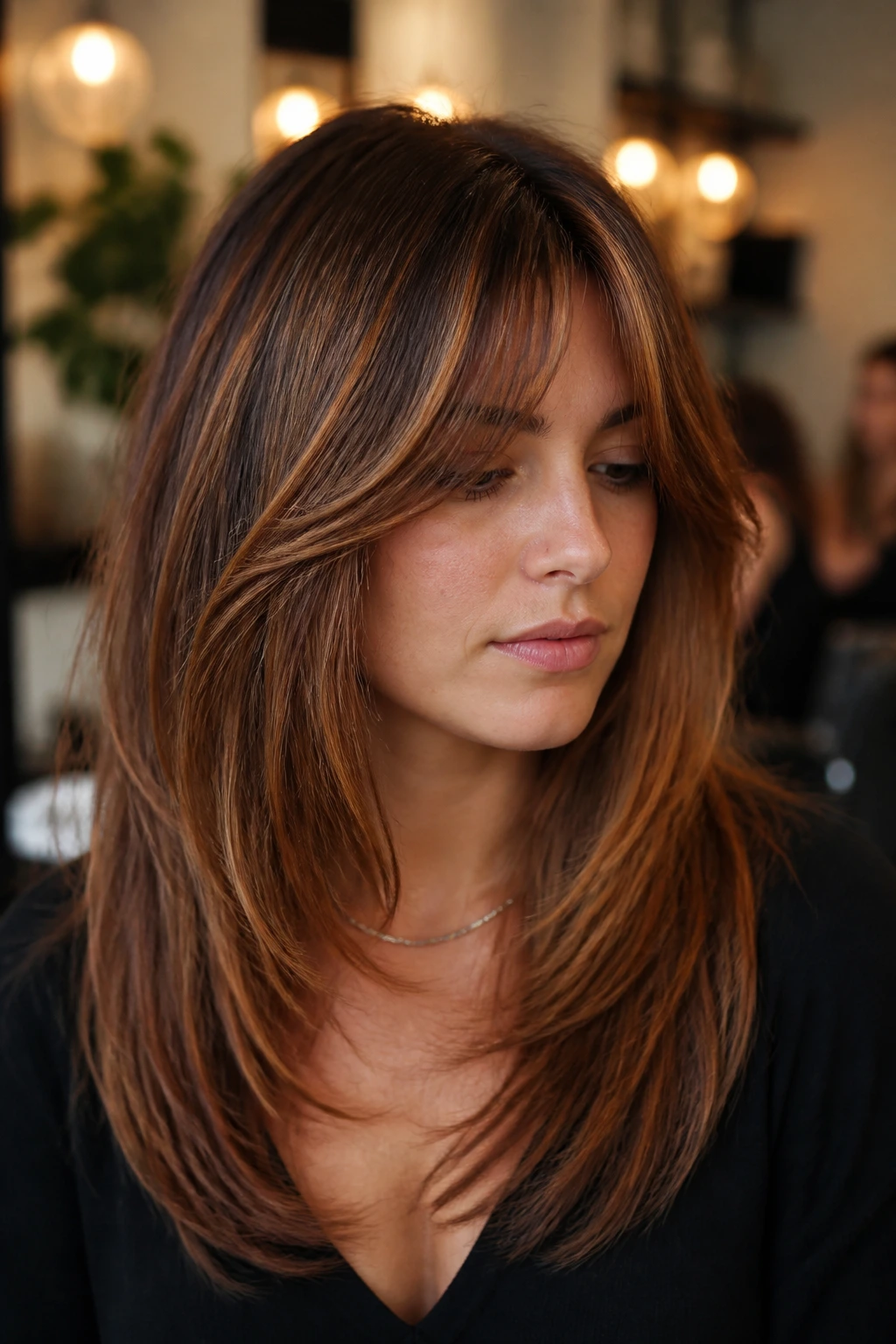
Bottleneck bangs are a smarter choice than heavy full bangs for thick hair because they open in the center and widen softly at the temples. That little shape shift matters. It keeps the fringe from eating the whole forehead while still giving the haircut a point of interest. Copper babylights woven through the bangs and front layers make the shape glow a bit, which is especially nice if your base color leans deep brown.
This cut is one of the easiest ways to change the mood of thick hair without sacrificing the length you already like. The bangs break up the density around the face, and the babylights keep the fringe from looking solid and heavy. If your hair is coarse, ask your stylist not to cut the bangs too blunt; they need a tiny bit of softness at the ends or they will sit like a wall.
It’s a good fit if you like tying your hair back but still want something to fall loose around your face. The bangs do the talking. The rest just has to behave.
9. Long V-Cut with Cinnamon Melt
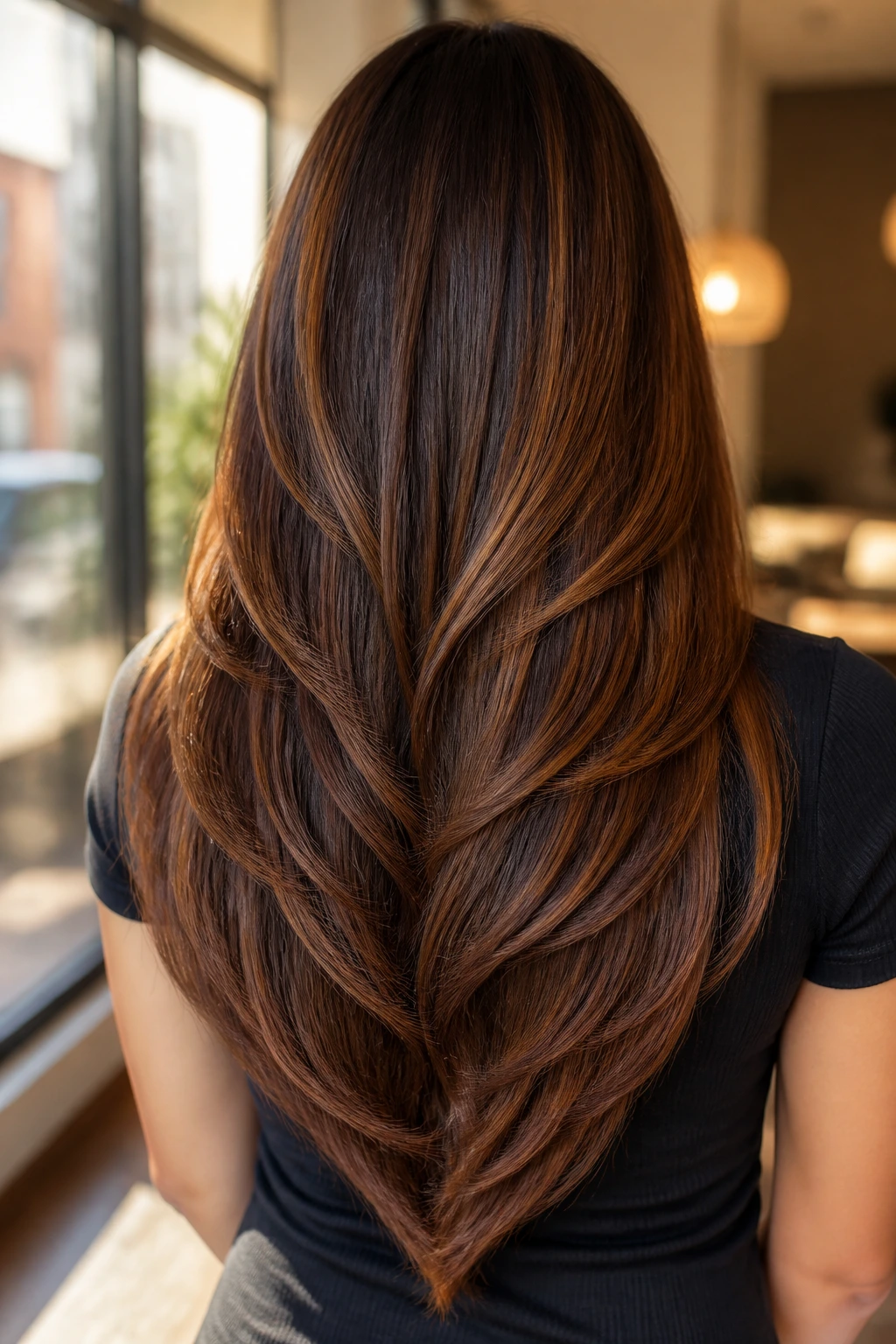
A long V-cut is not old-fashioned when it’s done on thick hair with a light hand. The point at the back helps the length taper instead of spreading wide across the hemline, which means your hair looks longer and more controlled. Cinnamon babylights that gradually melt into the deeper base make the point visible without turning it into a hard arrow.
This is the cut for someone who likes length and wants to keep it. A V-shape still leaves plenty of hair to pull into a braid or bun, but it takes the edge off the bulk that thick hair can create at the back. I’d ask for longer layers through the sides so the front doesn’t collapse into that heavy triangle shape. The babylights should be fine around the top and more diffused toward the ends.
It looks especially good when the hair is blown out with a soft bend. The point at the back shows better that way, and the cinnamon tones make the whole cut feel warmer against fall clothes.
10. Textured Pixie with Micro-Babylights
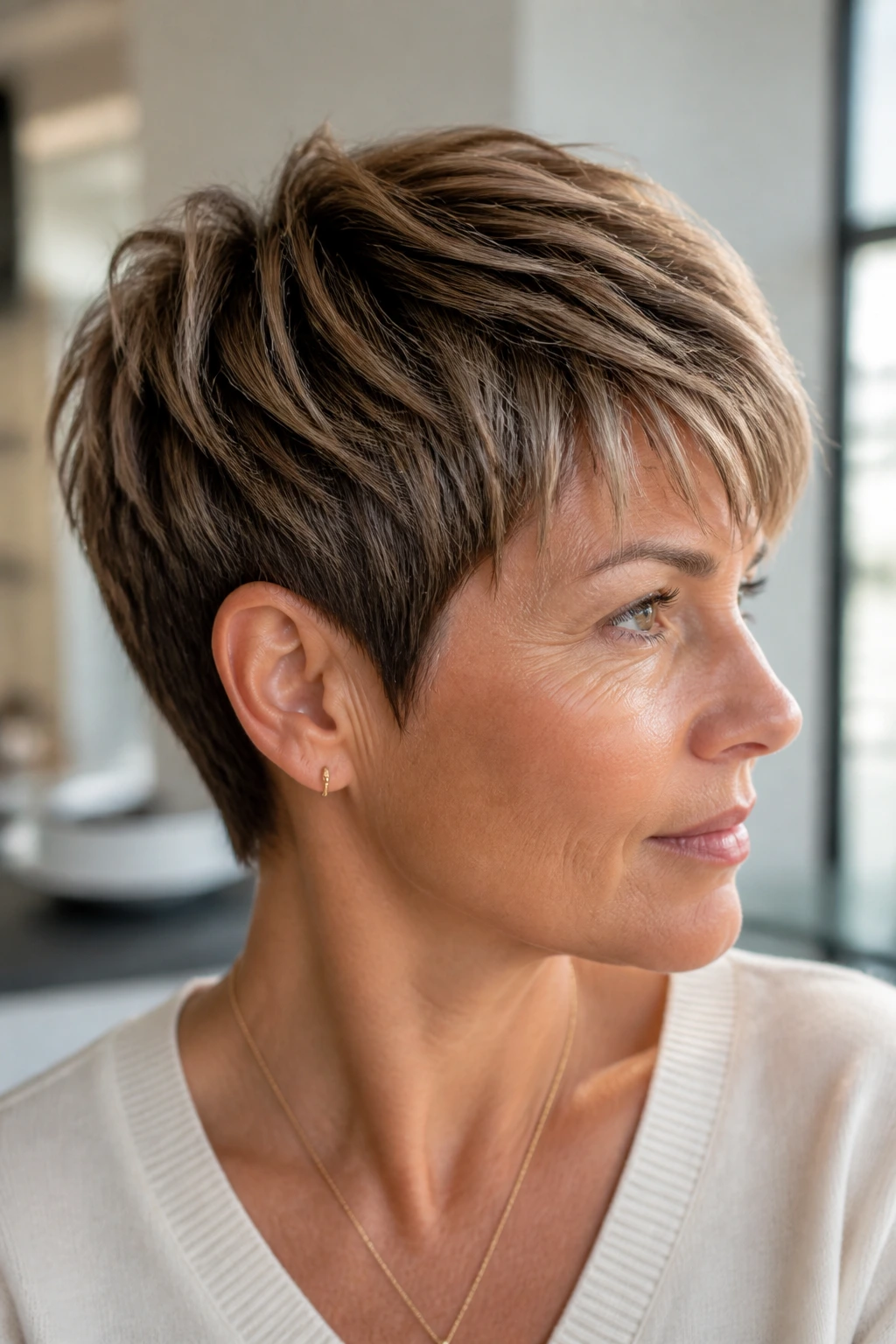
Short hair on thick textures can be either gorgeous or helmet-like. There’s not much in between. A textured pixie gets it right by taking weight out through the top and nape, then leaving just enough length on top to show movement. Micro-babylights — tiny, almost whisper-thin highlights through the crown and fringe — keep the short crop from reading flat.
If your thick hair grows straight out, this cut can be a relief. The sides stay close, the top can be pushed forward or up, and the light pieces catch every bit of texture. I prefer a softer pixie over a super-choppy one for thick hair because too much point cutting can make the shape look fuzzy instead of defined.
Best for: people who want a short cut that still has dimension.
Avoid: chunky highlights here. They’re too loud for the small surface area.
Style note: a pea-sized amount of matte paste is usually enough. More than that and the hair starts clumping.
11. Wavy Mid-Length with Face-Framing Ribbons
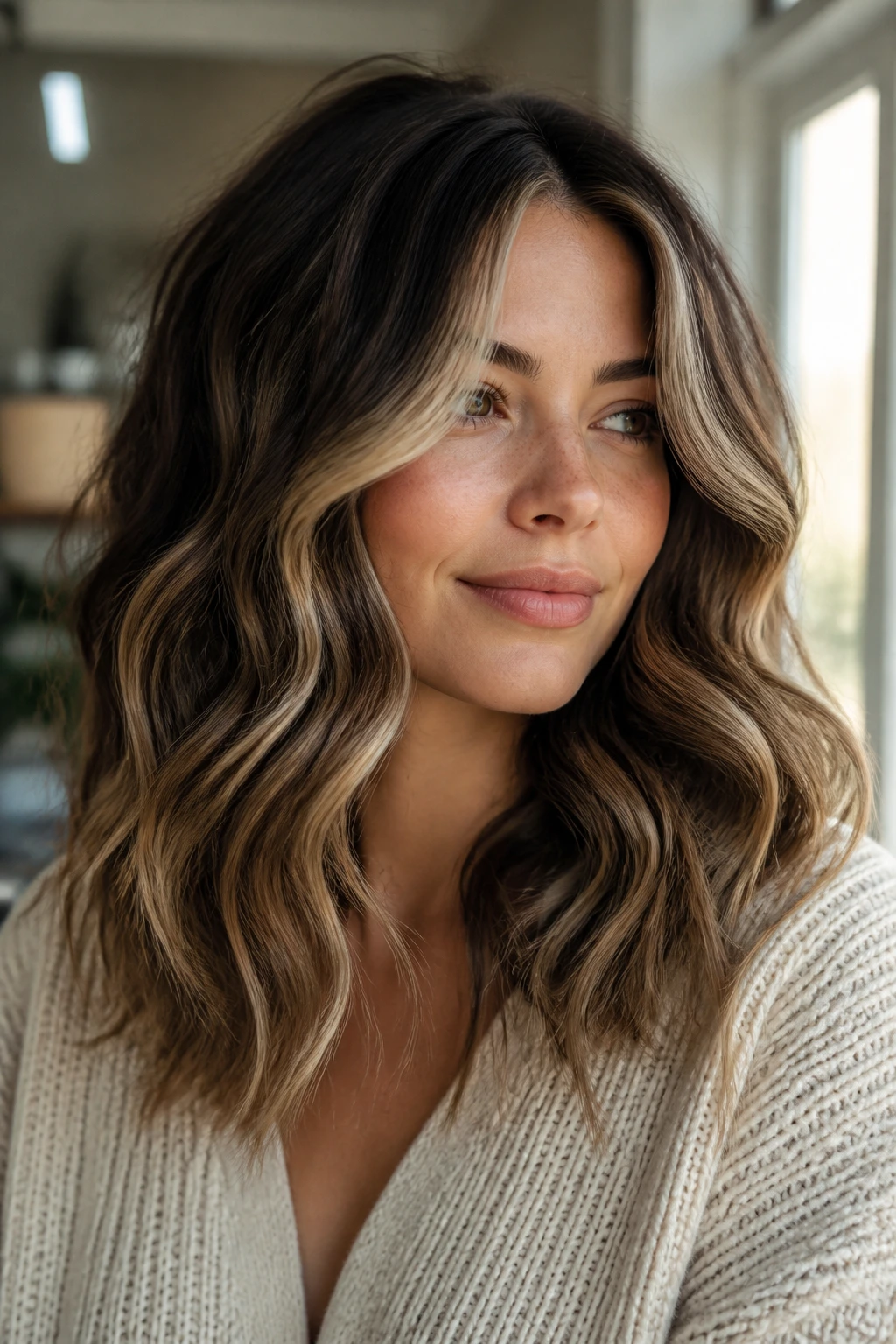
This is the haircut I reach for when someone wants something easy to wear but doesn’t want to lose their hair’s natural fullness. Mid-length thick hair can look heavy in a rush, so face-framing ribbons break up the front and make the whole shape feel lighter. Babylights placed along those ribbons and through the outer layer keep the wave pattern visible.
The sweet spot
The length usually lands between the collarbone and upper chest. That matters because thick hair needs enough length to settle, but not so much that it drags. The babylights should follow the bend of the hair, not fight it. Think cheekbone, mouth corner, and the outer edge of the shoulders. That’s where the eye lands first.
A cut like this is forgiving on lazy mornings. Air-dry it to about 80 percent, add a few bends around the front with a curling iron, and let the back do what it wants. The face-framing ribbons make that slight disorder look deliberate.
12. Razored Wolf Cut with Smoky Lowlights
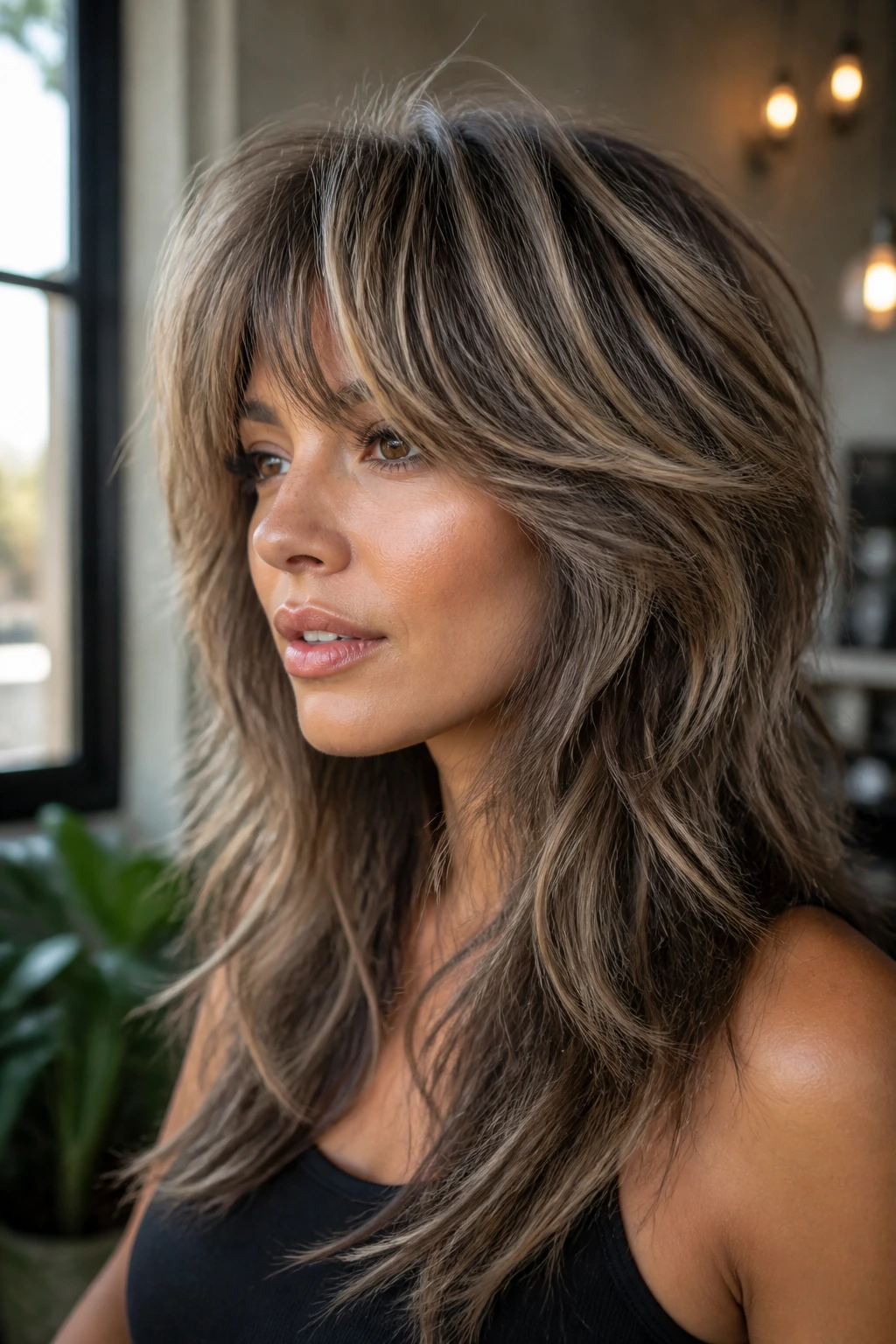
A wolf cut on thick hair can be brilliant or a mess, and the line between them is razor thin. The version that works keeps the crown light, the perimeter a little rough, and the layers long enough to avoid a puffy halo. Smoky lowlights under the babylights matter here because the cut depends on contrast. If everything is light, the texture disappears.
This one has attitude, plain and simple. It reads more lived-in than polished, which is why I’d choose it for someone who wears denim, boots, and a bit of mess in the finish. Thick hair gives the wolf cut the backbone it needs, but the stylist has to control the layering. Too much razor work and the ends go frayed. Too little and the whole shape turns bulky.
Ask for movement at the crown and cheekbones, then let the lengths stay long enough to bend. That’s the part a lot of cuts get wrong.
13. Curly Rounded Lob with Auburn Glow
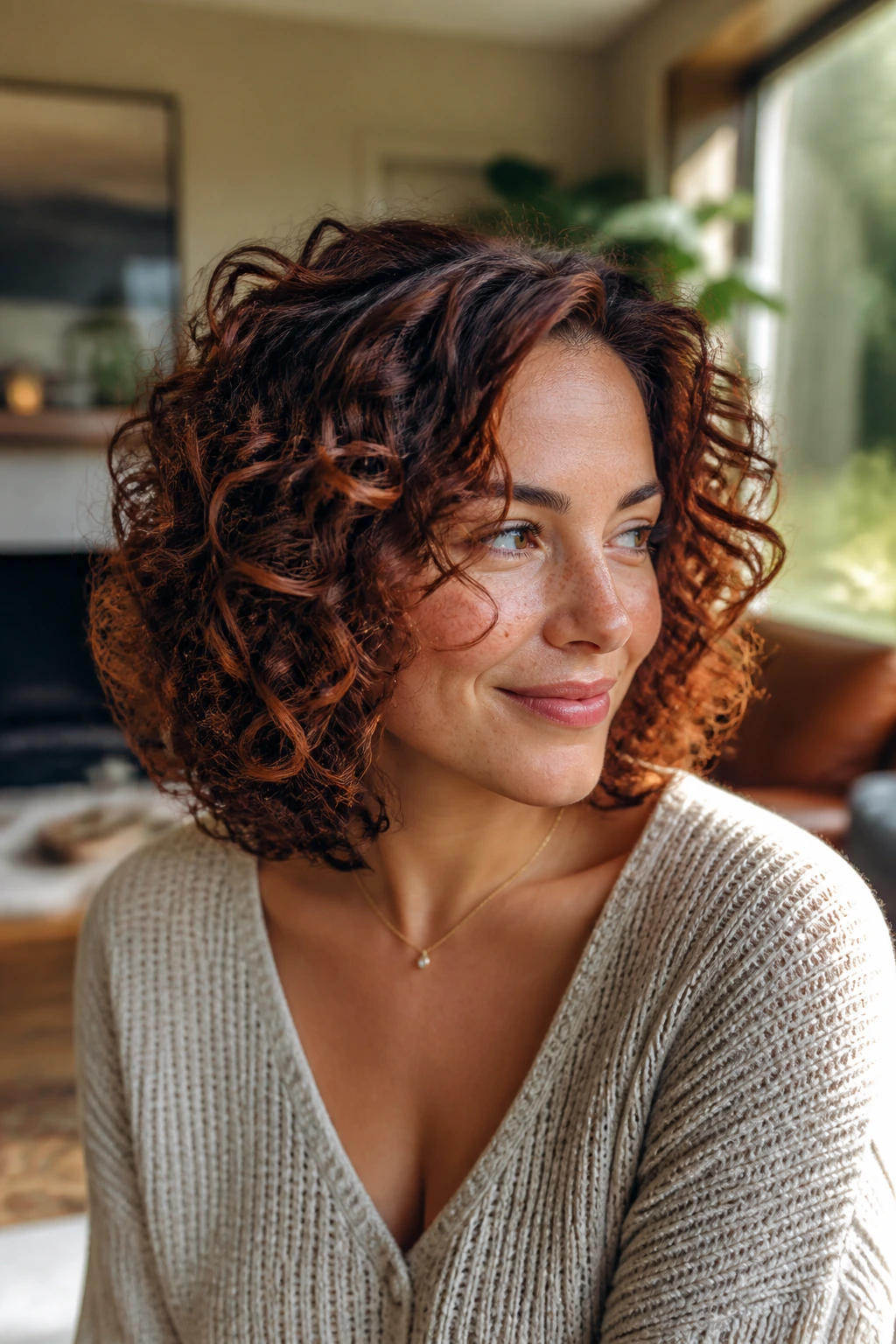
Curly thick hair doesn’t want the same cut as straight thick hair. It needs a shape that respects shrinkage and lets the curl group together. A rounded lob does that nicely. The outline follows the curl pattern, and auburn babylights can be placed in ribbon-like sections so the curls read as separate clumps instead of one dark mass.
If your curls are loose to medium-tight, this is a forgiving length. It’s long enough to gather into a clip, short enough to keep the weight from flattening the roots. I’d ask for the cut dry, or at least mostly dry, because curly hair lies to you when it’s wet. The babylights should sit where the curls naturally catch light — around the face, on the surface of the crown, and through the outer ends.
There’s a reason this shape keeps coming back. It gives thick curls room to breathe.
14. A-Line Lob with Rooted Dimension
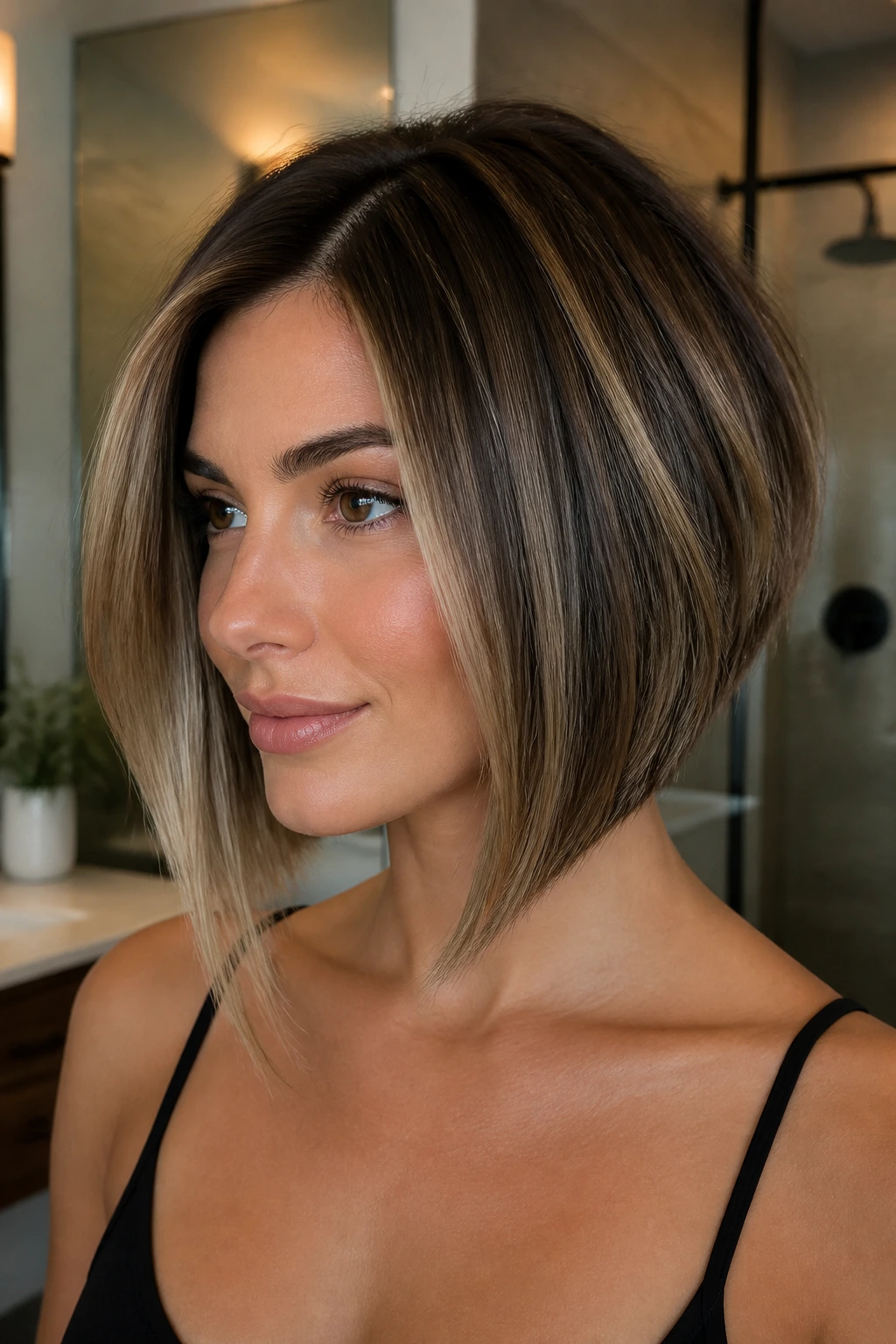
The A-line lob is all about angle. Shorter in back, longer in front, it lets thick hair keep movement at the jaw while staying sleek around the neck. That front length can be very flattering if your hair tends to puff at the sides, because it drapes downward instead of spreading out. Rooted dimension — a darker root with babylights that soften as they move down — keeps the shape from feeling too crisp.
I like this cut when someone wants a little structure without committing to a bob. It has enough edge to feel current, but not so much that it becomes fussy. The color should track the line of the cut: a few brighter ribbons near the front, softer light through the crown, and a deeper root for depth.
If you wear glasses, this one works especially well. The front pieces frame the face without crowding it.
15. Shoulder-Grazing Flip Cut with Soft Gold Babylights
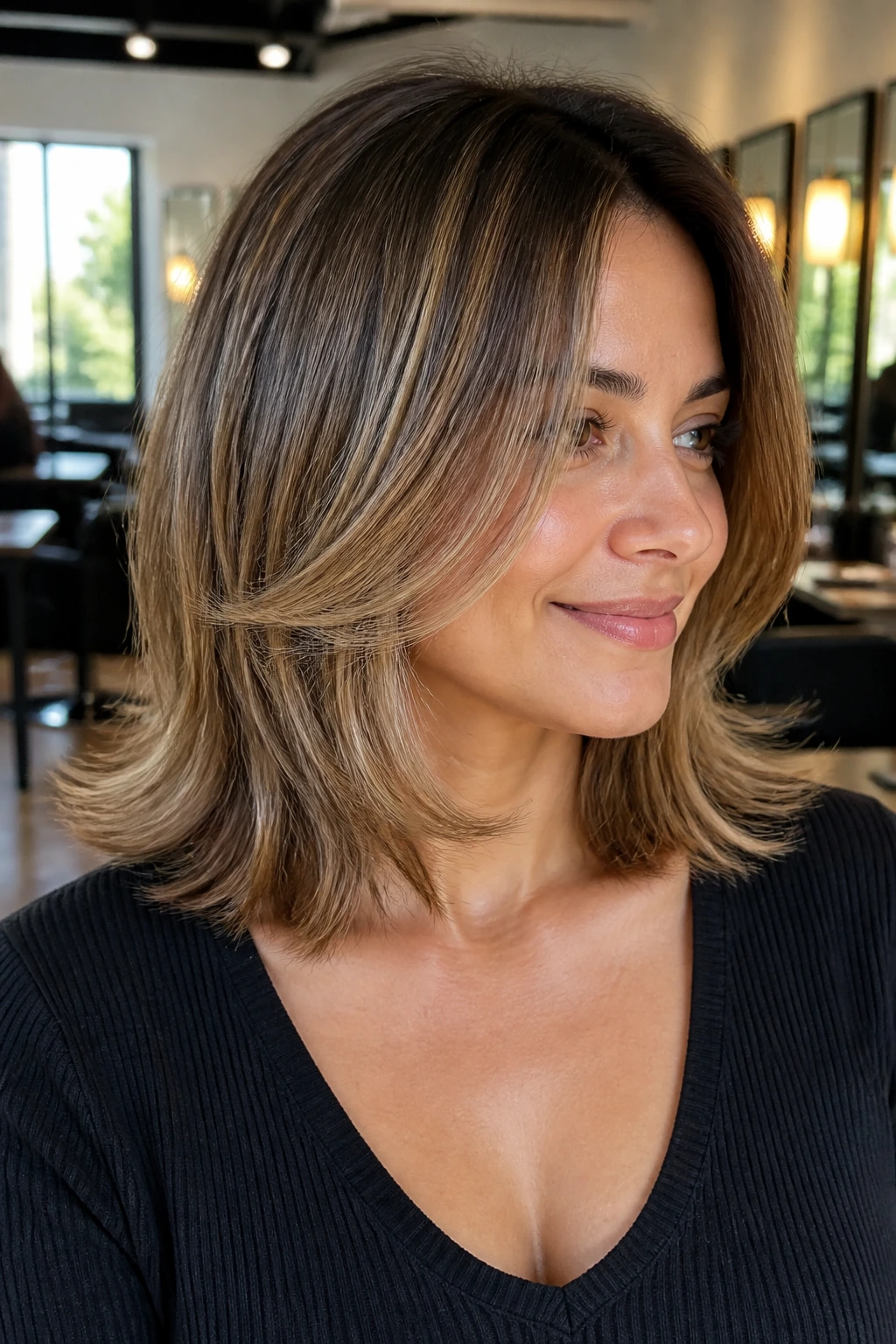
A shoulder-grazing flip cut is one of those styles that looks expensive when the layers are set properly and plain when they aren’t. The ends flick out a little, the weight sits just above the shoulders, and soft gold babylights keep the motion visible. On thick hair, that tiny outward bend stops the whole cut from drooping straight down.
This is a good middle ground if you’re tired of long hair but don’t want a bob. The shoulders are a tricky place for thick hair because that’s where friction starts. If the cut is too blunt, the ends catch on scarves and jackets. If it’s too thin, it looks patchy. The flip cut lands in the middle.
A round brush or a large Velcro roller at the ends gives it the shape it needs. Nothing fancy. Just enough bend to show the layers.
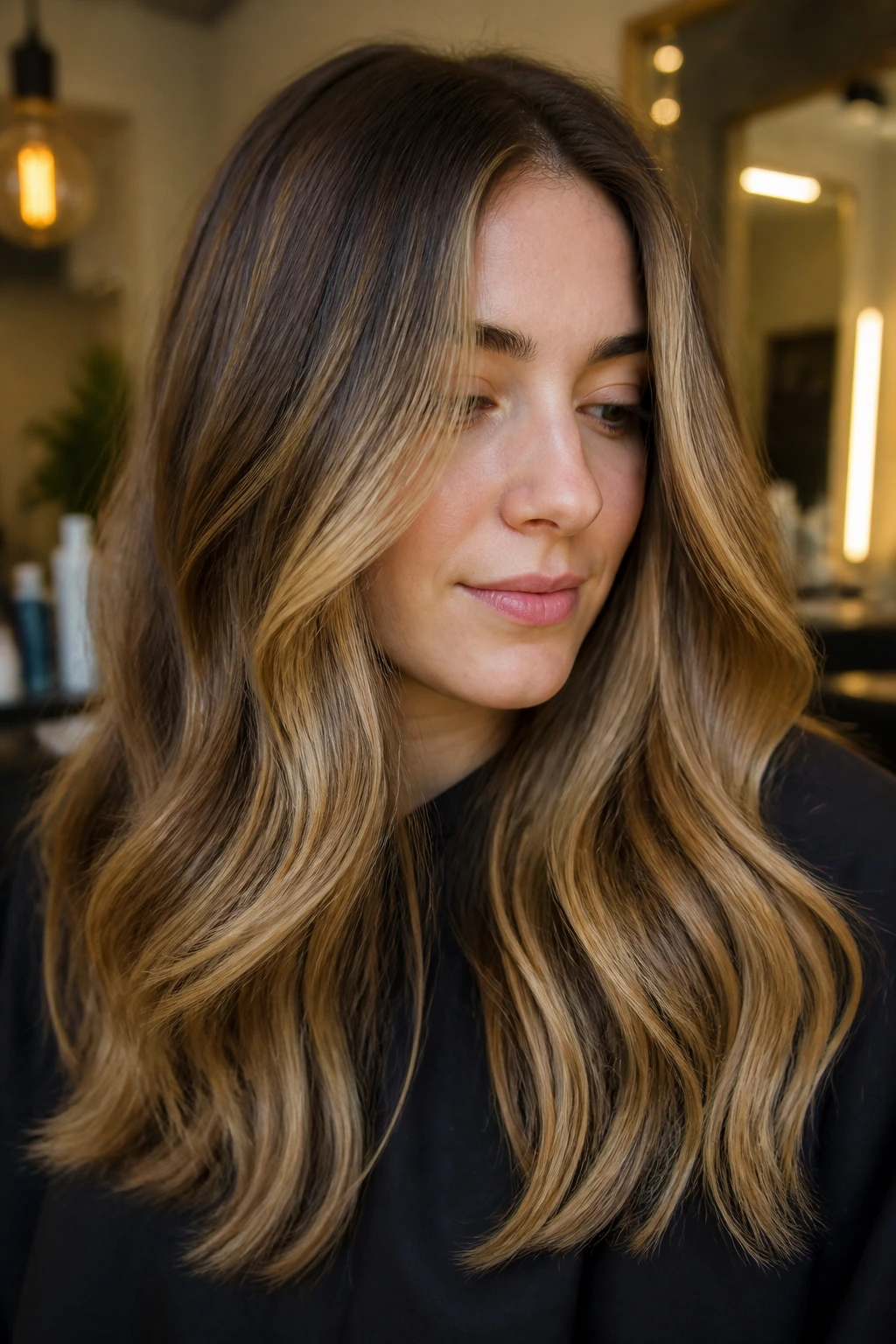
16. Long Layered Blowout Cut with Maple Babylights
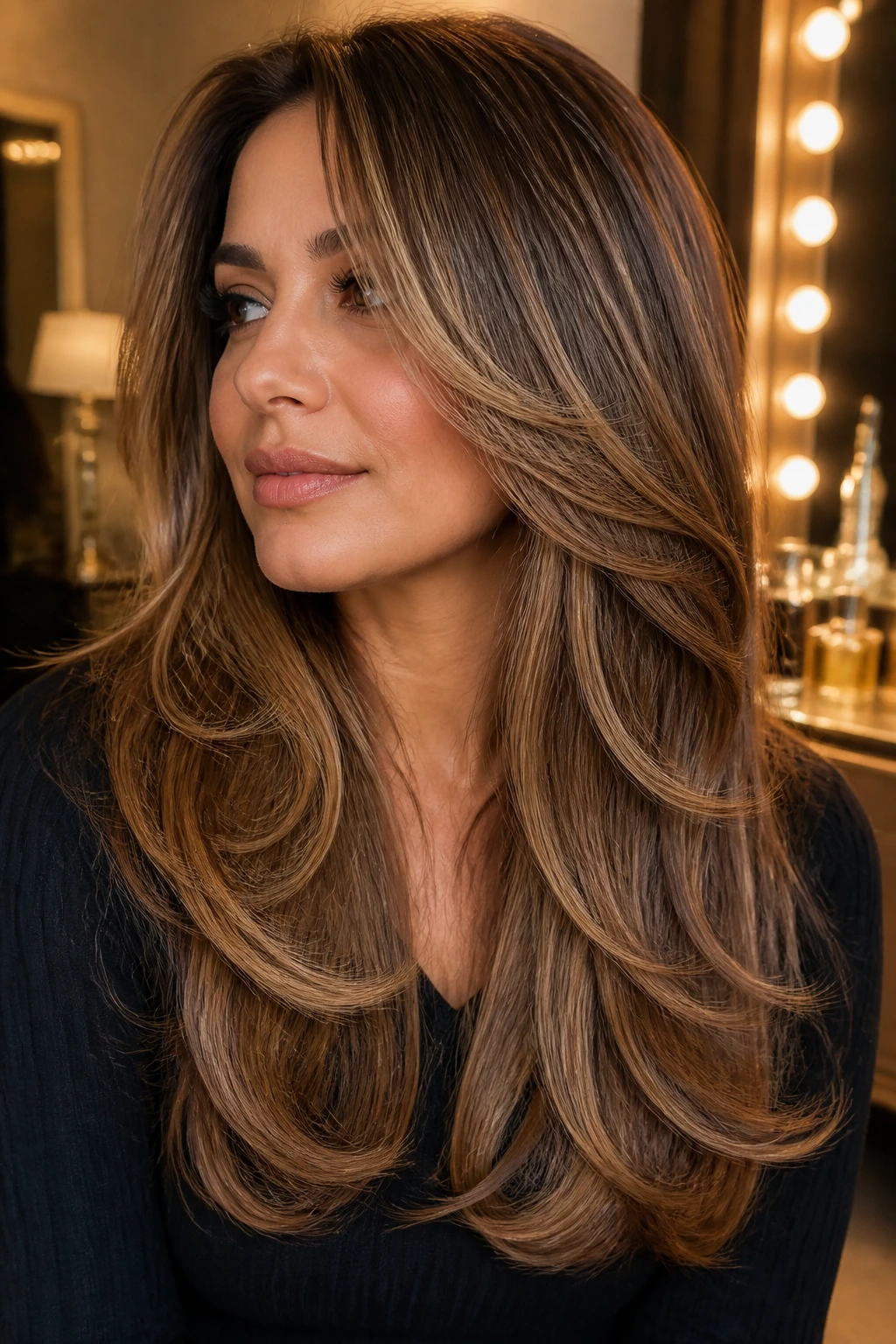
This is the glamorous answer for thick hair, and I mean that in the literal sense: it’s built to move with a blowout. Long layers remove weight without sacrificing the feeling of fullness, and maple babylights make the volume look richer instead of heavier. If you like hair that swishes, this is the one.
The trick is keeping the layers long enough to hold the style. Short layers can make thick hair spring up in the wrong places, especially around the crown. Long layers let the round brush do its work and give the whole cut that smooth, stretched-out shape people chase in salon chairs. Maple babylights are warm enough for fall without going orange, which is exactly where this cut feels right.
It looks best when the ends curve under or away just a touch. Too much curl and the layers compete with each other. Too little and the haircut loses its shine.
17. Razor-Soft Midi with Smoke-Tea Babylights
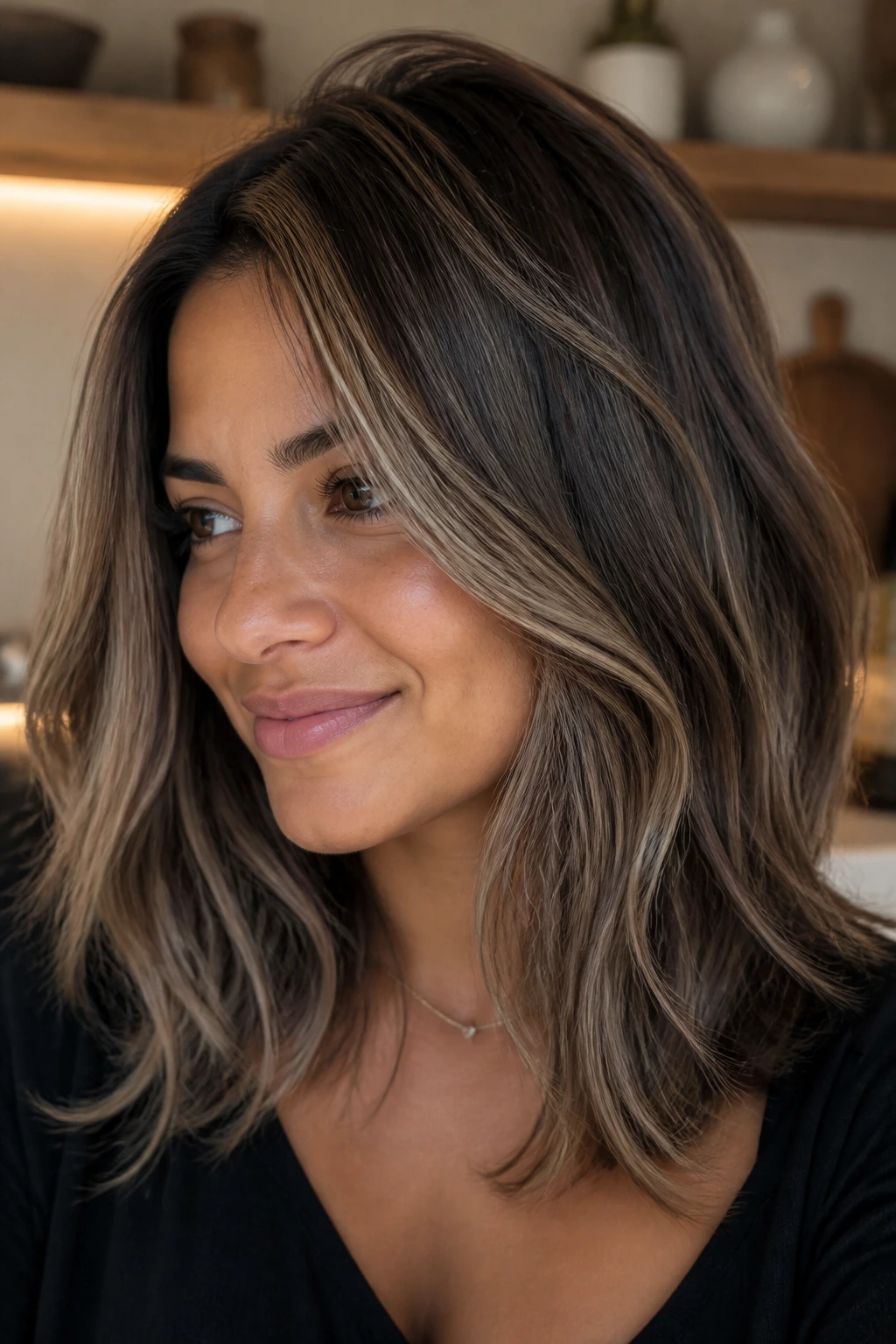
Why do some mid-length cuts feel airy while others just feel chopped? Usually it comes down to how the ends are treated. A razor-soft midi keeps the perimeter loose, not blunt, and smoke-tea babylights add a muted, cooler dimension that makes thick hair look more textured than bulky. I like this one for hair that holds shape but tends to build too much volume at the shoulders.
What to ask for in the chair
-
Soft point cutting, not aggressive thinning: You want movement, not a frayed edge.
-
Babylights on the top layer and side panels: That keeps the light where the haircut needs relief.
-
A slightly curved outline: Just enough to stop the sides from flaring.
The smoke-tea tone is nice if your wardrobe runs more black, navy, charcoal, or olive. It doesn’t fight those colors; it sits inside them. And on thick hair, that lower-contrast finish often looks more expensive than bright blonde ever does.
18. Sculpted Bixie with Golden Babylight Fringe
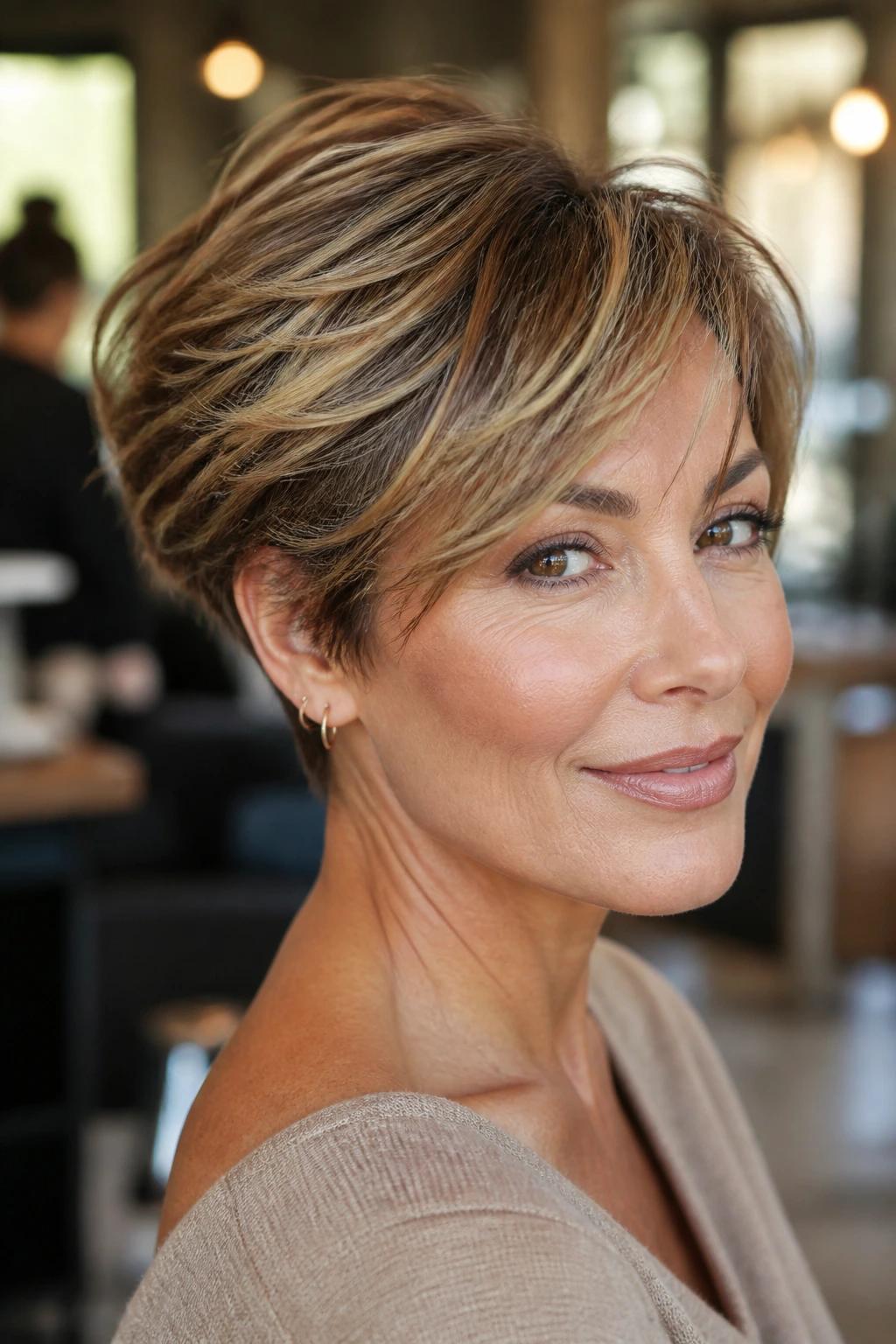
A bixie sits in that sweet spot between a pixie and a bob, and thick hair can wear it beautifully when the top is sculpted instead of stuffed with bulk. Golden babylights through the fringe and crown keep the short shape from feeling flat. The whole point is to keep enough length on top to play with, while the sides and nape stay clean.
I think this is the most underrated short option for thick hair. A straight pixie can sometimes feel too tight or too bulky at the same time, depending on growth pattern. The bixie softens that problem. You get more freedom in the front, a little ear-skimming length, and enough texture for the babylights to show. It works especially well if your hair is dense but fine in strand size, because the cut gives it lift without asking it to be something it isn’t.
A dab of styling cream and a finger-scrunch is often enough. Short hair should not take all morning.
Why Thick Hair and Babylights Click So Well in Fall
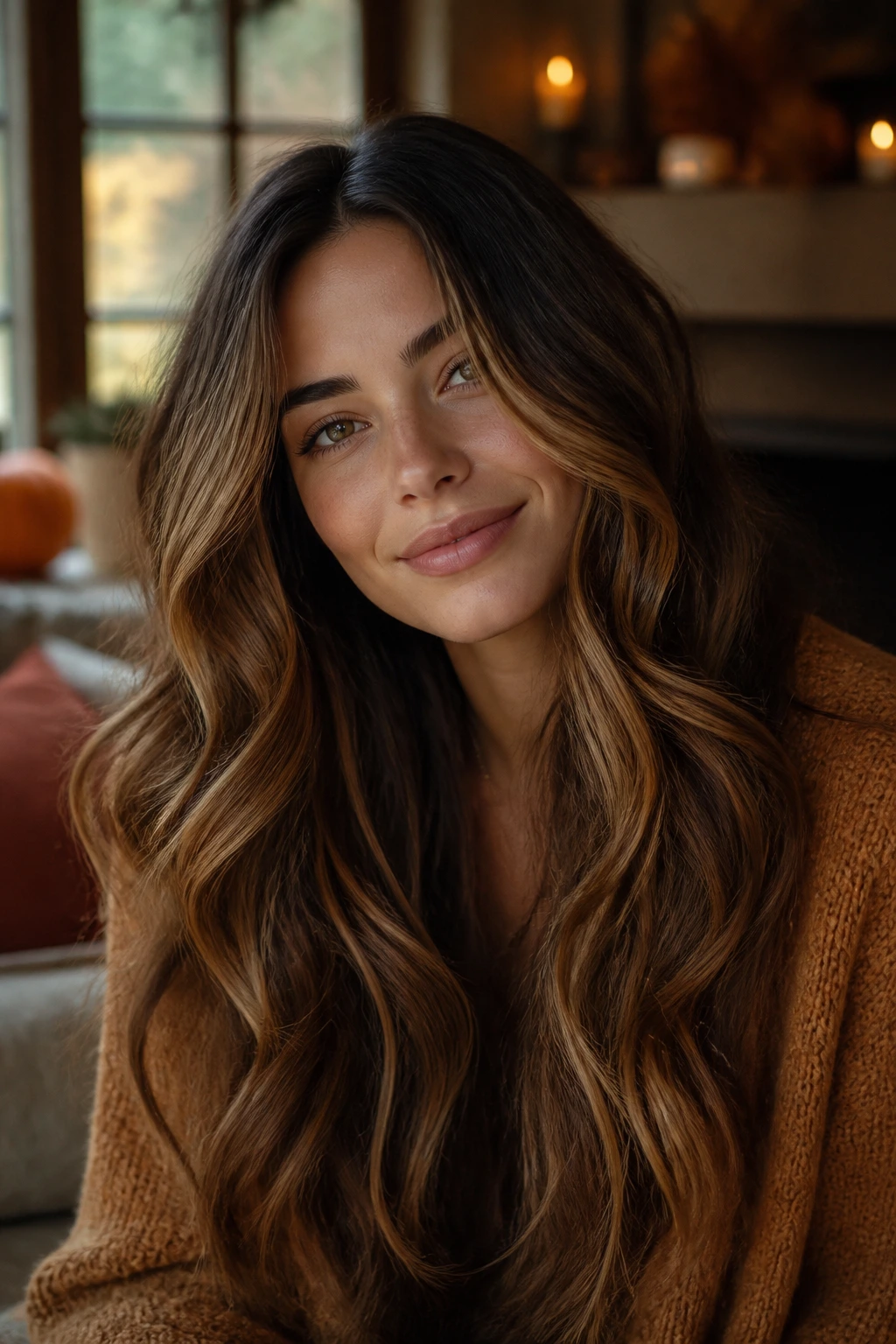
Thick hair has surface area. That sounds obvious, but it explains almost everything here. When you weave babylights through a dense head of hair, the lighter pieces have room to flick across the surface without taking over. On fine hair, babylights can disappear. On thick hair, they create tiny shifts in tone that make the cut read as layered even when the overall shape is simple.
Fall also favors that kind of dimension. Heavier clothes and darker colors can make plain hair look flatter than it does in summer light. A chestnut base with honey ribbons or a brunette base with beige babylights gives the eye something to follow. The hair stops looking like one flat plane and starts looking like a shape with depth.
There’s a practical side too. Thick hair grows out in a very visible way. A clean cut line and a soft set of babylights blur the regrowth, so you’re not fighting a harsh line every few weeks. That’s one reason stylists keep reaching for low-contrast dimension on dense hair. It buys you breathing room.
And frankly, it just looks better when the weather turns dry. Shine sits on thick hair in a way that can go from glossy to puffy in one afternoon. Babylights interrupt that mass visually. They don’t solve humidity. Nothing does. But they make the hair look lighter while you wait for the real world to cooperate.
How to Ask for the Shape You Actually Want
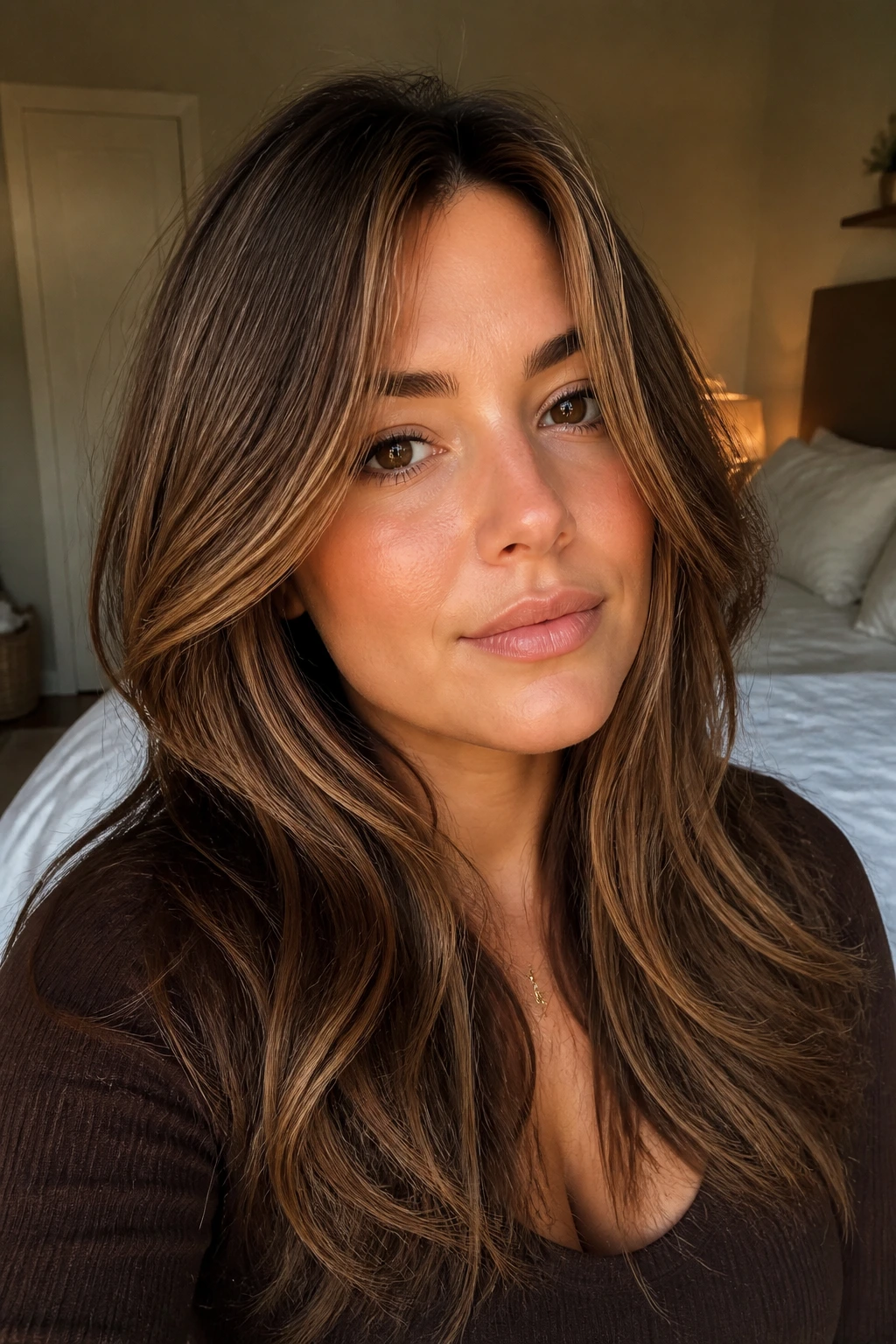
A good haircut starts with a clear sentence or two in the chair. Thick hair can get mangled when the stylist hears “layers” and reaches for the same old thinning plan they’d use on a totally different texture. Be specific. Say where you want the weight to stay, where you want movement, and how much time you spend styling.
Tell your stylist this: “I want bulk removed from the interior, not the perimeter.” That one line protects the outline from getting too wispy.
Say this too: “Keep the babylights fine around the part and hairline, with deeper pieces underneath.” It helps stop the color from looking stripey.
If you air-dry most days: mention that up front. Cuts that rely on a perfect blowout can look sloppy once they dry on their own.
Bring one photo of the cut shape and one photo of the color tone if you can. Thick hair is stubborn about translating inspiration pictures. A cut that looks soft on fine hair may need different layering to work on yours. That’s not a flaw. It’s just anatomy.
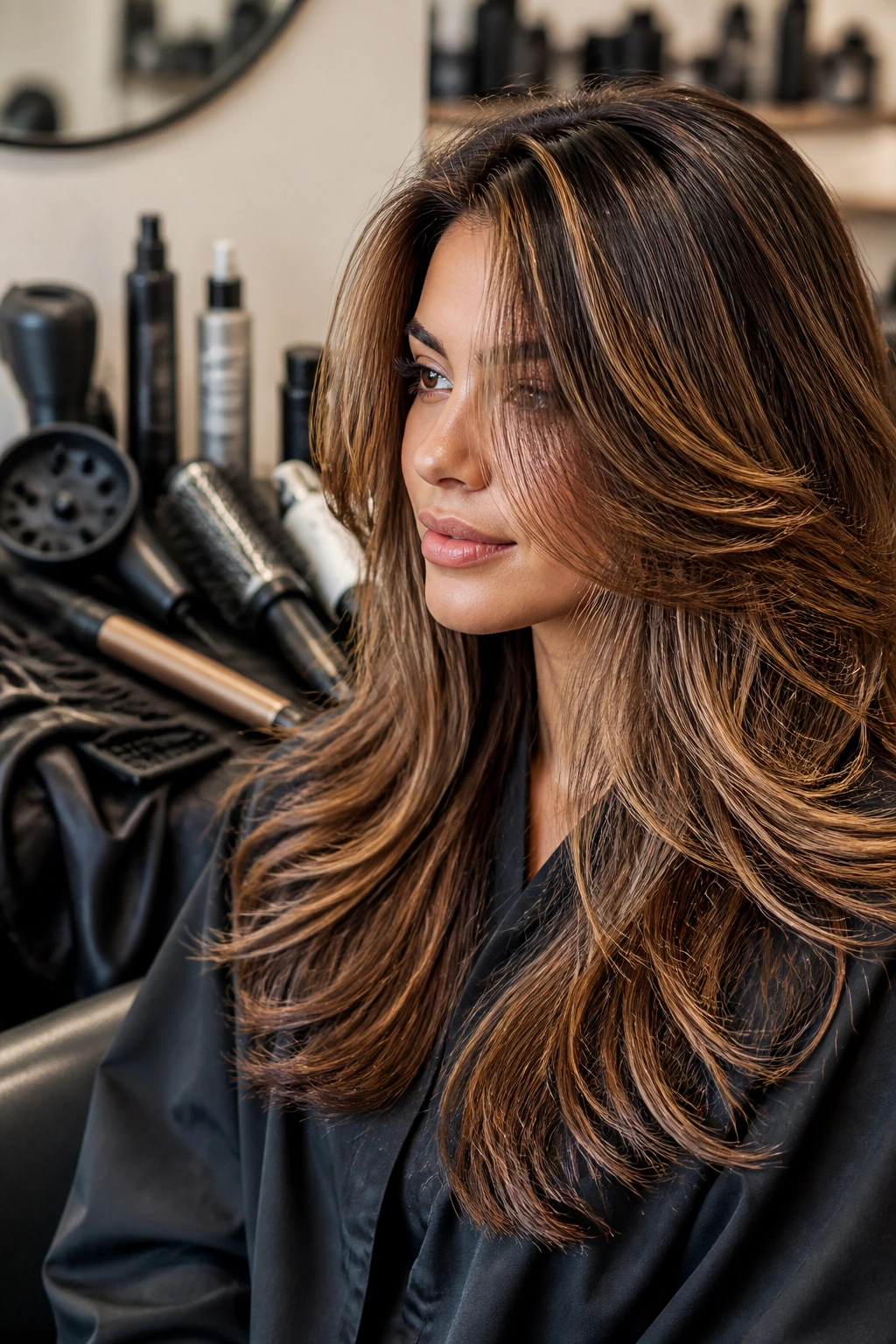
Styling Tools That Actually Help Thick Hair Show the Layers
-
A blow dryer with a nozzle attachment: The nozzle matters because it directs airflow and helps smooth the cuticle instead of blasting the hair in every direction.
-
A 1.25- to 1.5-inch curling iron or wand: This size bends thick hair without making the curls too tight, which is the quickest way to hide layers.
-
A large round brush: Best for lobs, blowout layers, and shoulder-grazing cuts when you want the ends to curve under or away.
-
Sectioning clips: Thick hair needs division. If you try to style it all at once, the bottom stays damp and the top gets overdone.
-
Heat protectant: Use it every time you heat-style, especially on babylighted hair. Lightened pieces dry out faster.
-
A lightweight smoothing cream or lotion: Enough to tame flyaways, not so much that it flattens the crown.
-
A diffuser: Especially good for curly or wavy thick hair that needs shape without a brushed-out finish.
-
A wide-tooth comb: Better than a fine comb for detangling wet thick hair without ripping at the ends.
-
Satin pillowcase or bonnet: Not glamorous, but it saves the babylight tone from looking frayed by morning.
Choosing Babylight Shades That Don’t Fight Your Base Color
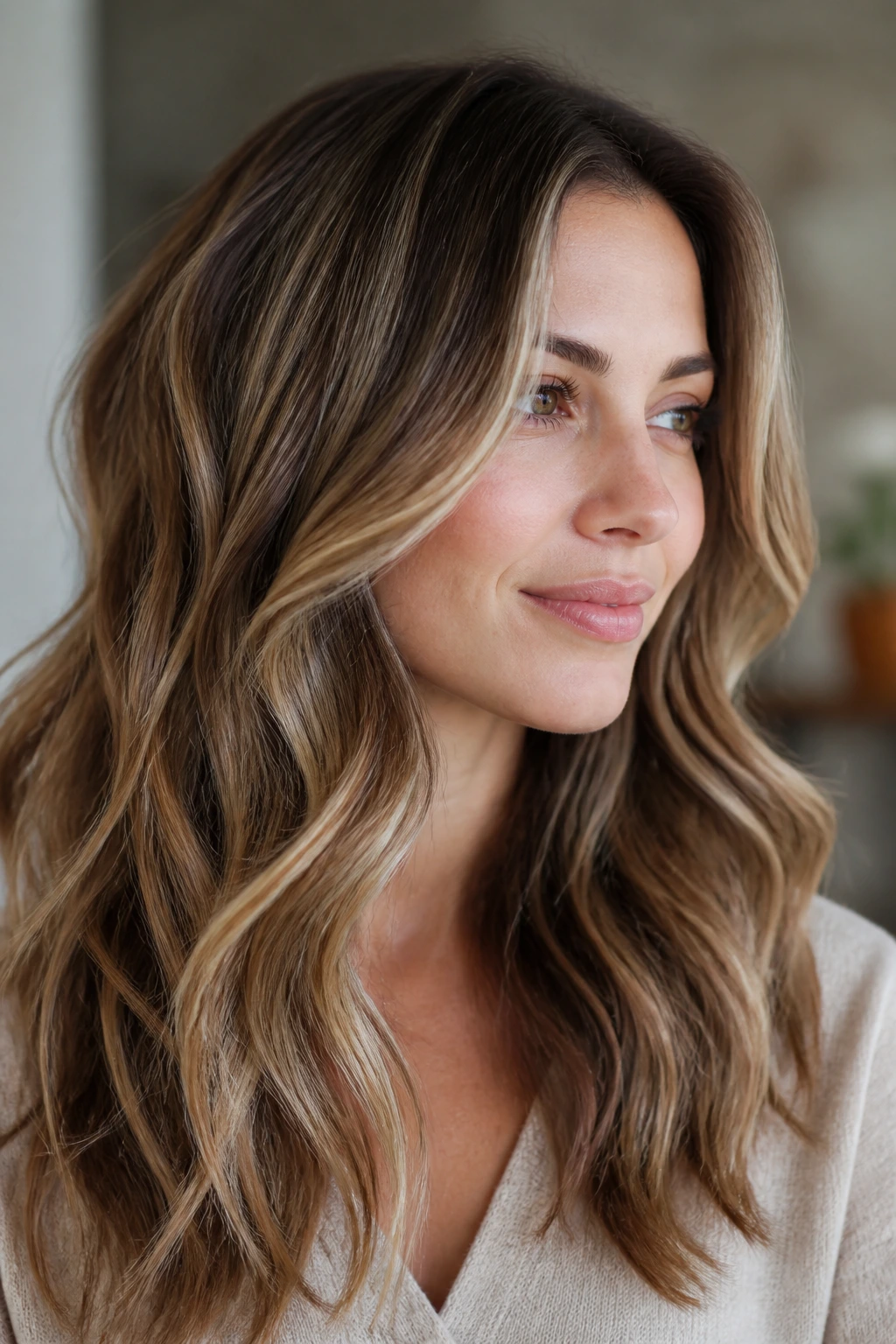
Babylights work best when they feel like the next step away from your natural color, not a hard jump across the room. On deep brown hair, chestnut, beige brown, mushroom, and soft caramel usually look richer than bright blonde. The lighter the contrast, the easier it is for the haircut to stay the star.
If your base leans warm, copper, cinnamon, maple, and honey are the easy wins. They pick up the warmth already in the hair and make it look glossy instead of orange. On cool brunette bases, smoke-tea, taupe beige, and muted mushroom tones keep the color from drifting too gold.
Red hair is its own thing. Fine auburn babylights or amber ribbons can give it depth without fighting the natural tone. Black hair usually needs a soft root shadow plus very fine espresso or cool brown babylights if you want visible dimension that still feels believable.
The biggest mistake is asking for lights that are too pale for the starting level. On thick hair, that can turn the surface busy in a hurry. Better to stay slightly deeper and let the shape, not just the color, do the work.
How to Wear These Cuts on Busy Mornings
Air-Dry Shortcut: Squeeze out water with a microfiber towel, smooth in a small amount of cream, and twist the front sections away from the face for 10 minutes. Thick hair rarely needs more than that to settle into a shape.
Root Lift: If the crown collapses, clip two or three sections at the roots while the hair cools. Ten to fifteen minutes is enough to create a little bend without teasing.
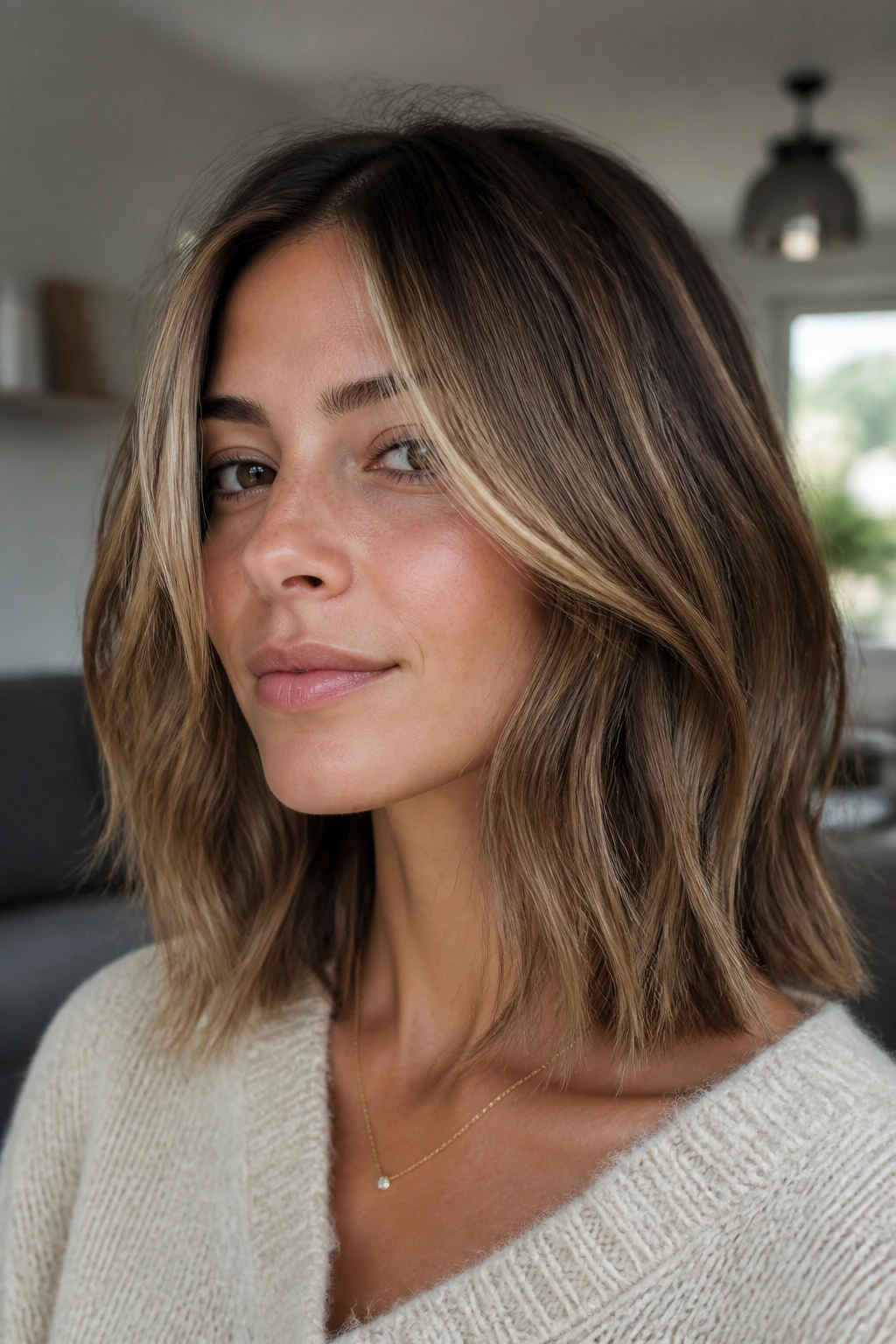
Curve, Don’t Curl: For lobs, bobs, and shoulder cuts, bend only the last 2 inches of hair. A slight inward turn looks cleaner on thick hair than a full curl pile.
Finish Smart: Use one drop of serum on the mids and ends, never on the roots. Too much product makes babylights dull and turns dense hair into a slick helmet.
Second-Day Fix: Mist the face frame with water, re-bend two front pieces, and shake the rest loose with your fingers. That takes less than 5 minutes and usually beats starting over.
The Mistakes That Make Thick Hair Look Heavy or Puffy
The first mistake is cutting the outline too blunt and leaving the interior untouched. Thick hair then stacks on itself, especially at the sides. The fix is simple: keep the perimeter clean, but remove weight inside the shape where it won’t show as frizz or holes.
Another common problem is over-thinning. If the stylist goes after the ends with shears or a razor like they’re mowing grass, thick hair can puff up at the cut line and look fuzzy by the second week. Ask for controlled debulking, not aggressive texturizing.
Babylights can go wrong too. Chunky foils or lights that start too low in the hair tend to look striped on thick strands. The cure is finer weaving and more placement around the surface layers, part line, and face frame.
Skipping toner is a sneaky issue. Thick hair can hold warmth, and warm blonde on a dense brunette base sometimes turns brassy fast. A beige or mushroom toner keeps the tone from drifting loud.
And yes, too much oil can ruin the finish. Thick hair needs moisture, but if you drown the mids and ends, the babylights lose their separation and the cut reads flat again. Small amount. Always.
Variations for Curly, Straight, Short, or Low-Maintenance Hair
The Minimal-Styling Version: Choose a blunt midi, rounded U-shape, or A-line lob with only face-framing babylights. These shapes hold up well when you mostly air-dry and want the haircut itself to do the talking.
The Curly-First Version: Ask for a dry cut or a curl-specific shaping session, then place babylights in ribbon-like slices that follow the curl clumps. This keeps the color from breaking the curl pattern into random bright spots.
The Brighter Fall Version: Keep the base dark and ask for honey, cinnamon, or maple babylights through the top layer, with a shadow root underneath. You’ll get more contrast, but the grow-out still looks soft.
The Cool, Smoky Version: Swap warm tones for beige, mushroom, smoke-tea, or soft taupe babylights. This is the version I’d choose if your wardrobe leans gray, black, olive, or navy.
The Short-Hair Version: Go with the pixie or bixie. Thick hair can handle the structure, and tiny babylights on the crown and fringe keep the short cut from looking heavy.
Maintenance, Trims, and Babylight Upkeep
Thick hair usually needs a trim every 8 to 12 weeks if you want the shape to stay clean. Short cuts like pixies and bixies often need attention closer to 4 to 6 weeks because the outline changes fast. Bobs, lobs, and long layers can stretch longer, but only if the ends stay healthy and the perimeter doesn’t split into a frizzy edge.
Babylights grow out softly, but toner fades sooner than the light itself. Plan on a tone refresh every 6 to 10 weeks if you want beige, mushroom, or smoky brunette pieces to stay muted. Warmer copper and honey shades can be stretched a little longer, though they still benefit from a gloss when the shine starts to dull.
At home, wash with a color-safe shampoo and use a deep conditioner once a week. If the hair feels rough or the babylight pieces start to snap when wet, add a protein treatment every 2 to 4 weeks. Not every wash. That’s how hair gets stiff. Just enough to keep the cut strong.
For blonde-leaning babylights, a purple shampoo once every 1 to 2 weeks is enough. On copper or auburn tones, skip the purple and use a color-depositing mask that matches the warmth instead.
Frequently Asked Questions
Do babylights work on very thick dark hair?
Yes, and they often work better than chunkier highlights because the fine weaving creates soft movement instead of obvious stripes. On very dark hair, ask for a rooted or glazed finish so the light pieces blend into the base instead of sitting on top of it.
Which haircut keeps thick hair from looking triangular?
Curved shapes such as the butterfly cut, rounded lob, U-shape, and long layers usually handle the triangle problem better than a straight blunt line. The triangle happens when the sides keep too much weight and the ends don’t taper enough.
Are babylights or balayage better for thick hair?
Babylights are usually better when you want softness, especially around the hairline and crown. Balayage can be lovely too, but on thick hair it can read patchy if the hand-painting is too wide or too high contrast.
How often should I trim thick layered hair?
Most thick layered cuts behave best with a trim every 8 to 10 weeks. If you’re growing it out, you can stretch a little longer, but once the ends start puffing or the shape stops sitting right, the cut has already lost its line.
Will a pixie or bixie make thick hair easier to manage?
Usually, yes — but only if the cut is shaped for your growth pattern. Thick hair in a short crop needs enough debulking at the crown and nape to avoid the mushroom effect.
What if my stylist wants to thin my hair a lot?
Push back if the thinning sounds aggressive. Ask for internal weight removal and point cutting instead, because over-thinning can leave thick hair frizzy at the ends and puffy at the surface.
Can I wear these cuts if I air-dry most days?
Absolutely, but choose shapes with a forgiving outline: lob, shag, butterfly, rounded lob, or long layers. Cuts that depend on precise bend or crisp bevels usually need more heat to look finished.
How do I keep babylights from turning brassy?
Use a color-safe shampoo, avoid over-washing, and ask for a gloss or toner refresh before the warm tone gets too loud. Hard water can speed up brassiness too, so a shower filter helps more than people expect.
The Shape That Keeps Moving
Thick hair does not need to be fought into submission. It needs a cut that knows where to keep the weight, where to release it, and where to let a few fine babylights catch the light so the whole shape has a pulse. That’s the real trick here. Not more color. Better placement.
If you’re choosing between two ideas, pick the one that suits your daily routine first and your mood second. A good collarbone lob with beige babylights will beat a trendy shape you resent styling every morning. And if your hair is already dense enough to fill a room, the right cut will make it look intentional instead of overwhelming.
Bring that thought to the chair, and the rest gets easier.