



A crochet bob can do a lot of face-shaping work with very little length, and that matters when your hair is long and your face leans round. The wrong version lands like a full circle around the cheeks. The right one sends the eye downward with a side part, a taper, or a front piece that slips past the jaw instead of stopping right on it.
Long hair underneath changes the game. Thick cornrows, a bulky crown, or a nape that sits too high will make even a short bob puff out in places you do not want. That’s why the braid base matters as much as the curl pattern, and sometimes more. A flattering crochet bob is not only about the hair you see; it’s about the shape hiding underneath.
The best styles below use that to their advantage. Some are sleek, some are fluffy, some are deliberately uneven, and a few are a little bold. All of them know the same trick: keep the face looking longer, not wider.
Why These Crochet Bobs Are Worth Your Time
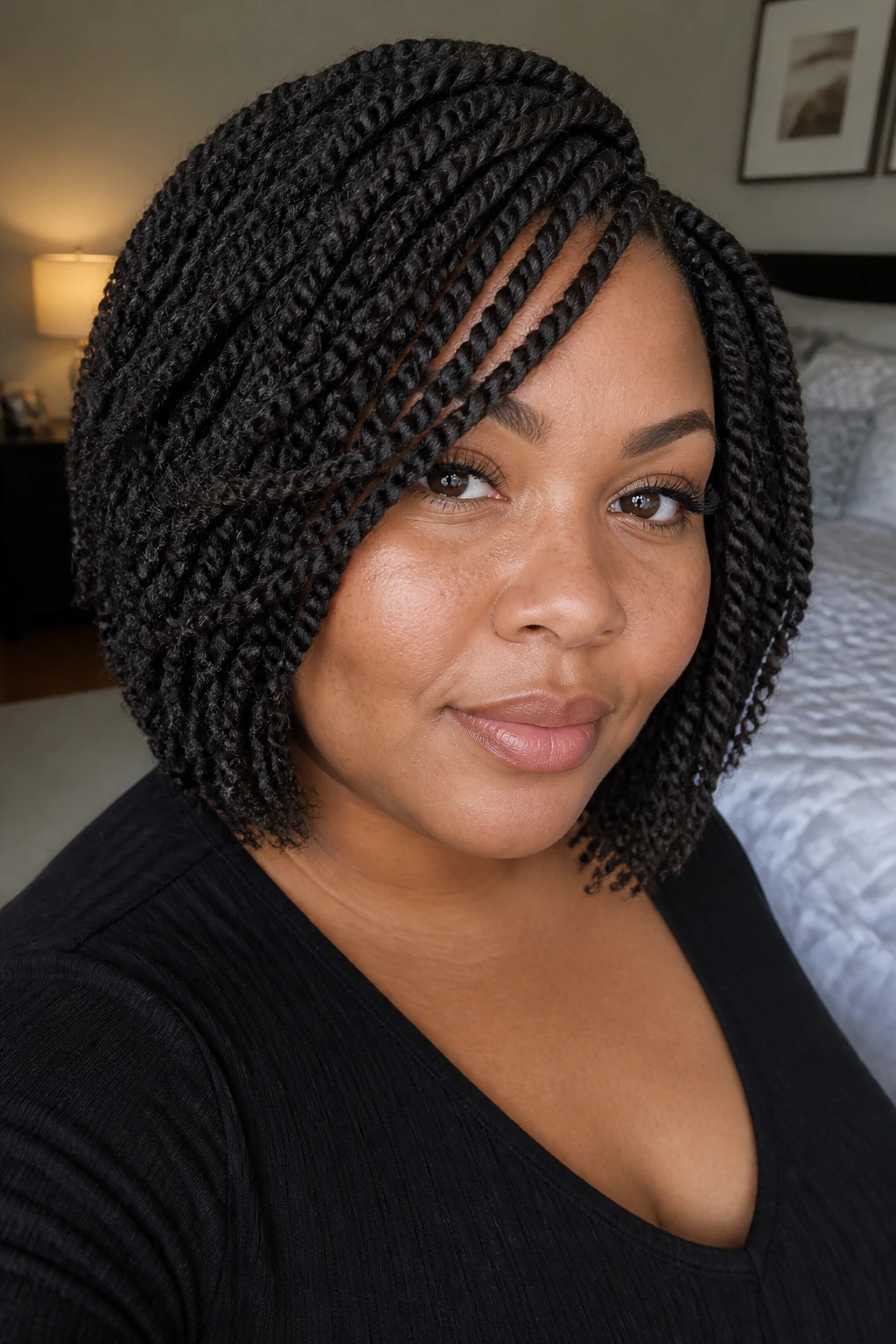
-
Face-Lengthening Proportions: Most of these crochet bobs keep the visual weight below the cheekbone, where a round face usually needs the most help.
-
Long-Hair Friendly Bases: The styles account for thicker braid foundations, so you do not end up with a lumpy crown or a nape that sticks out like a shelf.
-
Texture Choices That Matter: Straight, yaki, water wave, and curl patterns all land at different heights, and that changes where the bob sits against your jaw.
-
Room for Angles and Parts: Side parts, A-lines, and asymmetric cuts interrupt the circle effect fast.
-
Protective-Style Payoff: You get the shorter look without giving up the low-manipulation comfort that makes crochet braids such a smart protective style.
-
Easy to Personalize: Color, fringe, density, and front length can be tweaked without rebuilding the whole install.
The Braid Pattern Behind a Smooth Crochet Bob
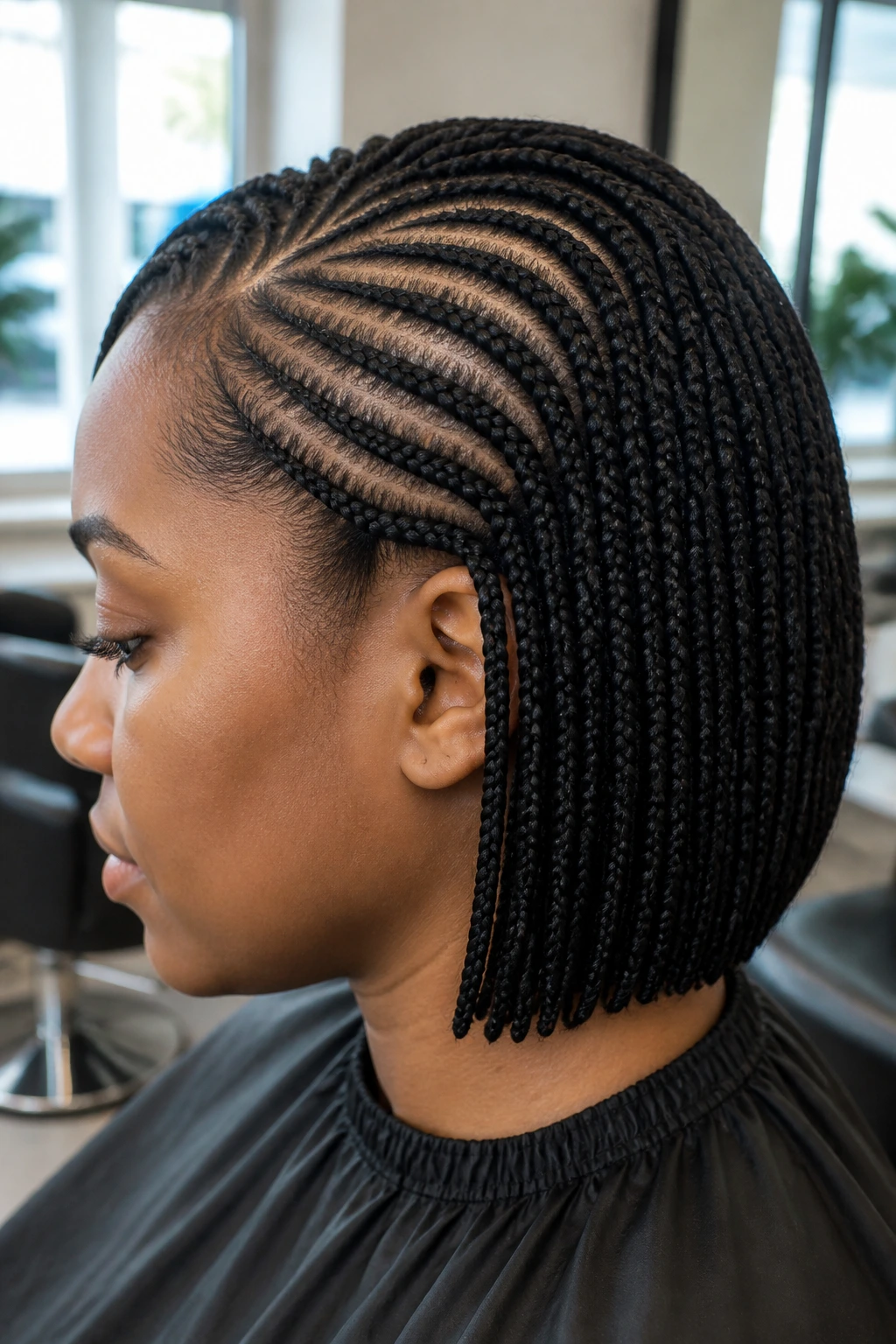
Long hair can make a crochet bob look bulkier than it should if the base is built like a helmet. That is the first thing to respect. Stretching your natural hair first, then braiding it in flatter, smaller rows, keeps the profile close to the scalp so the bob can hang cleanly instead of sitting on top of a mound.
The shape of the base matters more than most people think. If the crown is too thick, the bob starts to flare at the sides. If the nape is bulky, the back kicks out and the whole style reads wider. A good install keeps the top smooth, the sides contained, and the transition from your own hair to the crochet fiber invisible unless someone is standing nose-to-scalp close.
And the curl pattern changes the silhouette, too. Water wave shrinks. French curl bounces. Kinky straight hangs lower. That is why two bobs with the same package length can land at completely different spots on the face. A 12-inch curl is not the same thing as a 12-inch straight piece, and anyone who has worn both knows that immediately.
1. Side-Part Layered Crochet Bob
A side-part layered crochet bob is one of the safest bets for a round face because the diagonal line does half the slimming work before the hair even moves. The layers keep the style from reading like one solid block, which matters a lot when your own hair is long and the base wants to puff.
Why It Flatters So Easily
A deep or medium side part draws the eye across the face instead of straight down the middle. That sideways sweep takes attention off the widest part of the cheeks and gives the front pieces room to fall lower than the jaw.
Ask your braider for a part that starts a little farther back than feels natural, then let the front pieces sit about 1 to 2 inches longer than the back. That tiny difference is enough to make the bob look deliberate. It also helps if the crown stays medium-flat; too much fullness up top steals the length you are trying to create.
Ask for:
- a 2:8 or 3:7 side part
- front pieces cut slightly longer than the nape
- medium-density crochet hair
- soft layers around the cheekbone, not right on it
2. A-Line Crochet Bob
An A-line crochet bob has one job: angle forward just enough to make the face look longer. Shorter in the back, longer in front. Clean, simple, and far more forgiving than a blunt cut that ends in a hard line across the cheeks.
The front angle is what makes this style work on round faces. It gives the eye a path to follow, and that path does not stop at the widest part of the face. It keeps going. If your own hair is long, this shape is especially useful because the shorter back removes bulk where your braid base is thickest.
I like this one with a smoother texture than a big fluffy curl. Yaki, silky straight, or a controlled wave keeps the angle clear. If the fiber gets too poofy, the whole point of the A-line gets lost under volume.
3. Deep Side-Swoop Crochet Bob
A deep side-swoop crochet bob has a little drama built in, and I mean that in the good sense. One side falls across the forehead and cheek, the other stays quieter, and that imbalance is what makes the face look less circular.
This style is especially useful if you wear glasses or big hoops, because the hair and accessories do not fight for the same space. The swoop gives the face a diagonal line, then the rest of the bob stays compact enough not to crowd the jaw.
Best When You Want Movement
The best version is not stiff. It has a soft front that moves when you turn your head, and that movement matters more than a perfect curl pattern. Use a light mousse on the outer layer and avoid loading the front with too much product, or the swoop will sit flat and look tired by midday.
4. Chin-Skimming Curly Crochet Bob
Chin-skimming curls can be tricky on a round face, but only if the texture is too tight and the density is too high. When the curl pattern is soft and the front lands a little below the jaw, the shape looks balanced instead of boxy.
The thing to watch is shrinkage. Curly crochet hair almost always sits shorter than the package length suggests. A 12-inch curl can behave like a much shorter style once it is fluffed out, so I would only choose this look if the front pieces are cut with some extra length.
Keep the sides light. Seriously. If the curls balloon out at the cheeks, the face loses definition fast. This one needs space around the jaw, not a full halo sitting right on top of it.
5. Blunt Bob with Hidden Layers
A blunt bob on a round face can look sharp and polished, but only if the base is controlled and the interior has some hidden movement. If every strand ends in the same place, you get a hard wall effect. That is where the face starts feeling wider.
Hidden layers solve that problem without ruining the blunt edge. The outside still reads as neat, but the inside has enough variation to keep the style from turning boxy. This is a good choice if you like a cleaner, more structured look and do not want a lot of flyaway texture around the cheeks.
It also works better when the front falls just below the jawline. A blunt hemline at cheek level is the thing I would avoid. Below the jaw, fine. Right on it? Not for me.
6. Boho Crochet Bob with Loose Curls
This is the style I reach for when someone wants softness without losing shape. The loose curls give the bob movement, but the boho pieces and face-framing tendrils break up the outline so it does not sit like a single round mass.
A round face needs interruption. Not chaos. Just enough interruption to keep the silhouette from looking too neat and too full all the way around. The loose pieces at the temples and the softer ends around the chin do that work without shouting about it.
If you wear this one, do not separate the curls too aggressively on day one. A little separation is fine. Too much, and the bob starts to widen before you have even left the house.
7. Invisible Part Crochet Bob
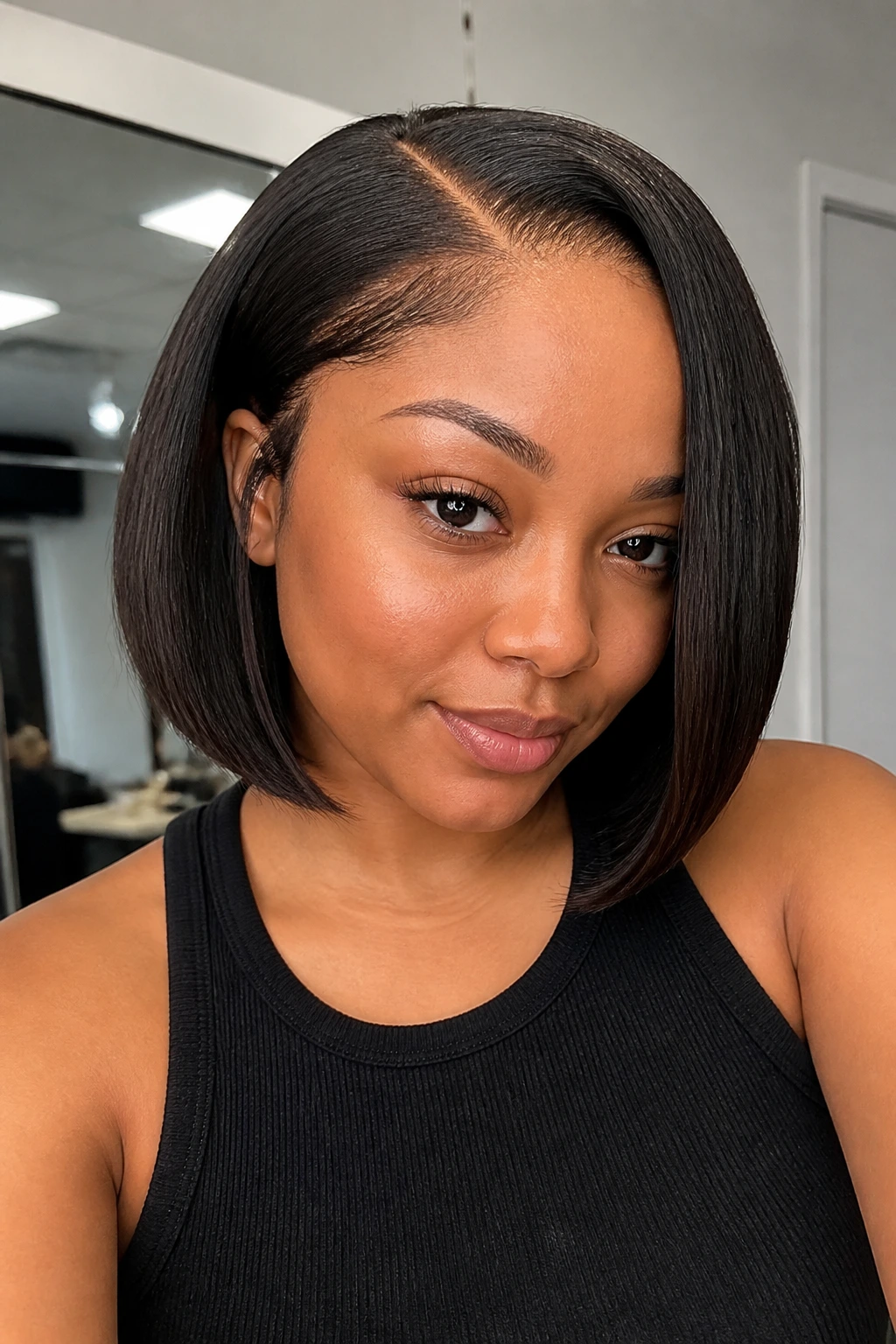
An invisible part crochet bob gives you the neatest scalp illusion of the bunch, which is useful if you want the style to look more like a precision cut than a protective install. The clean part helps the face read longer because the eye has a clear starting point and no bulky cornrow ridge competing with it.
This is especially good for long natural hair because the base underneath can get hidden so well. If your cornrows are flat and the part is neat, people see the bob first and the install second, which is exactly what you want here.
I would keep the front a little longer and avoid overly dense hair at the temples. A clean part and a heavy side still need space around the face. If the front is packed, the invisible part loses its sleek edge.
8. Tapered Nape Crochet Bob
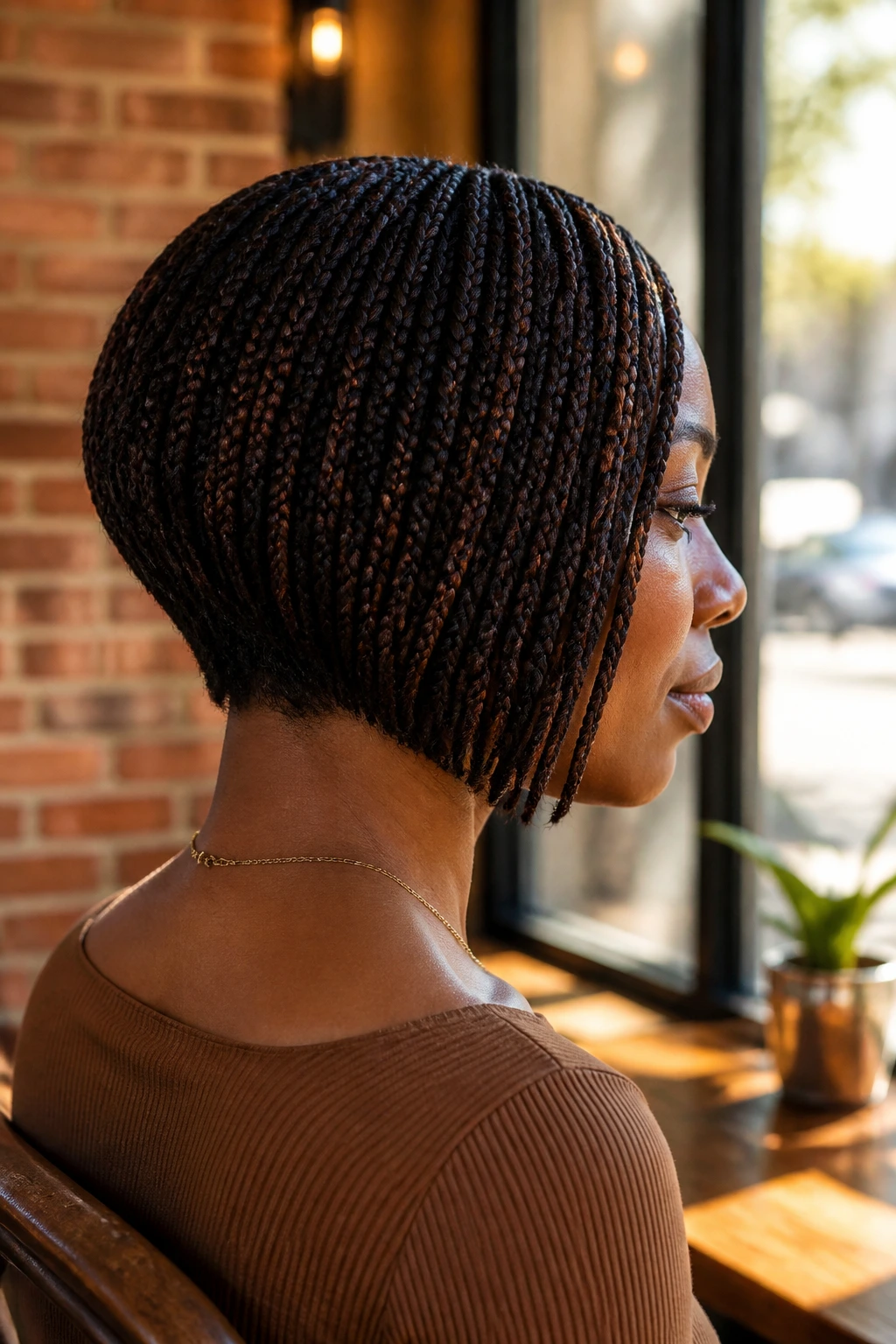
A tapered nape crochet bob is a smart move when your own hair is long and thick because the back of the style is where bulk tends to show up first. Shorter at the nape, fuller toward the front. That shape keeps the neck visible and stops the bob from kicking outward behind the ears.
The taper also helps a round face because it pulls visual weight away from the widest horizontal point. The eye drops to the neck and then back up along the longer front pieces. That little motion changes the whole read of the face.
Ask for This
Tell your braider to keep the nape as flat as possible and let the front sit just a touch longer. If the back is full, the taper disappears and you lose the clean line that makes this version so useful.
9. Water Wave Crochet Bob
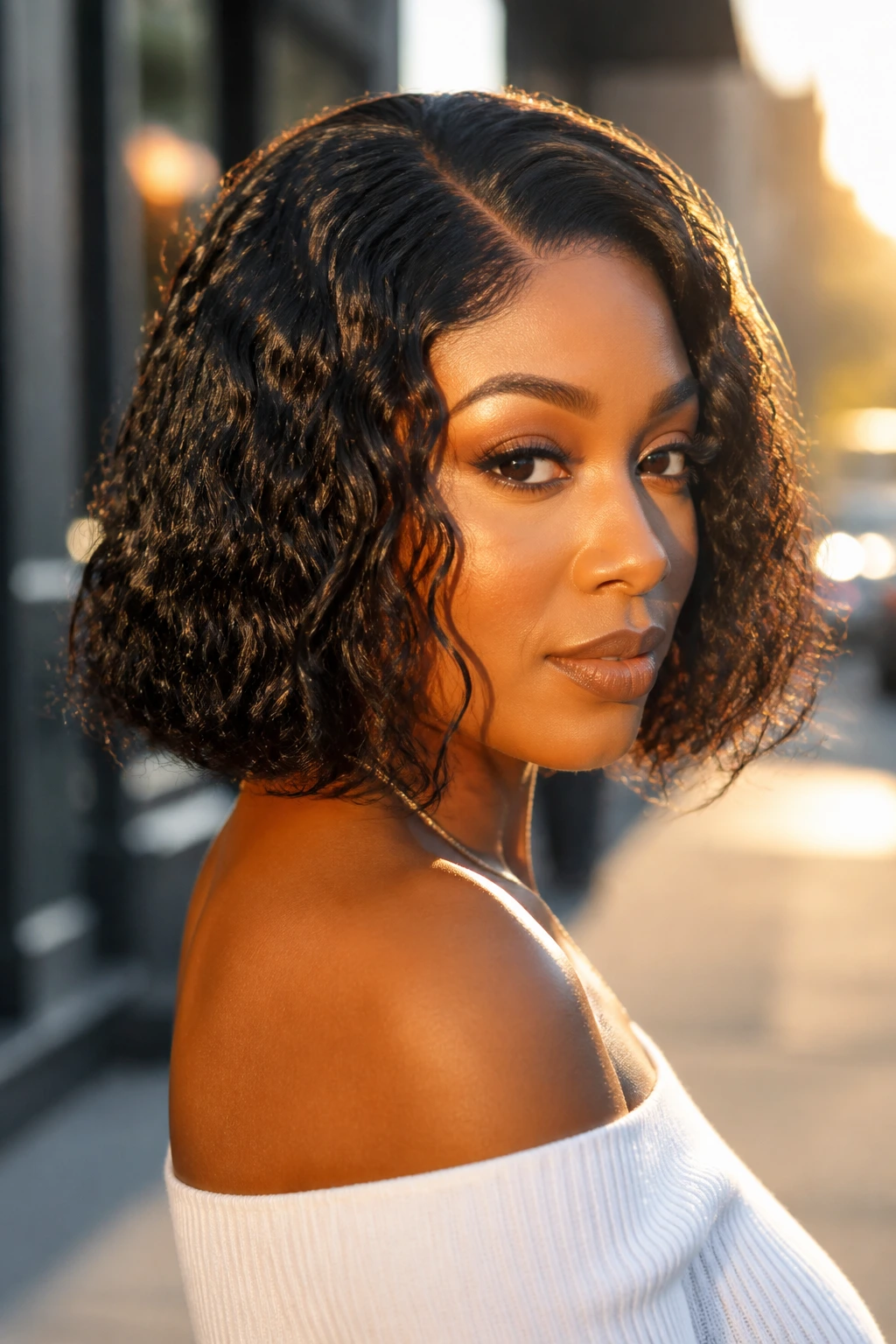
Water wave hair has a soft, S-shaped bend that gives a bob movement without making it fluffy in a loud way. That matters on a round face because the curve of the wave adds texture, but the silhouette can stay narrow if the sides are controlled.
The best part is the visual length. Water wave tends to fall lower than kinkier textures of the same package size, so it can skim the jaw or land just below it without a lot of extra length. That is a nice spot for long hair underneath, because the base disappears and the front still feels light.
Keep the wave pattern loose near the face. If you separate every strand, the bob gets bigger fast. Leave some of the wave clumped together and it reads cleaner.
10. Faux Loc Bob
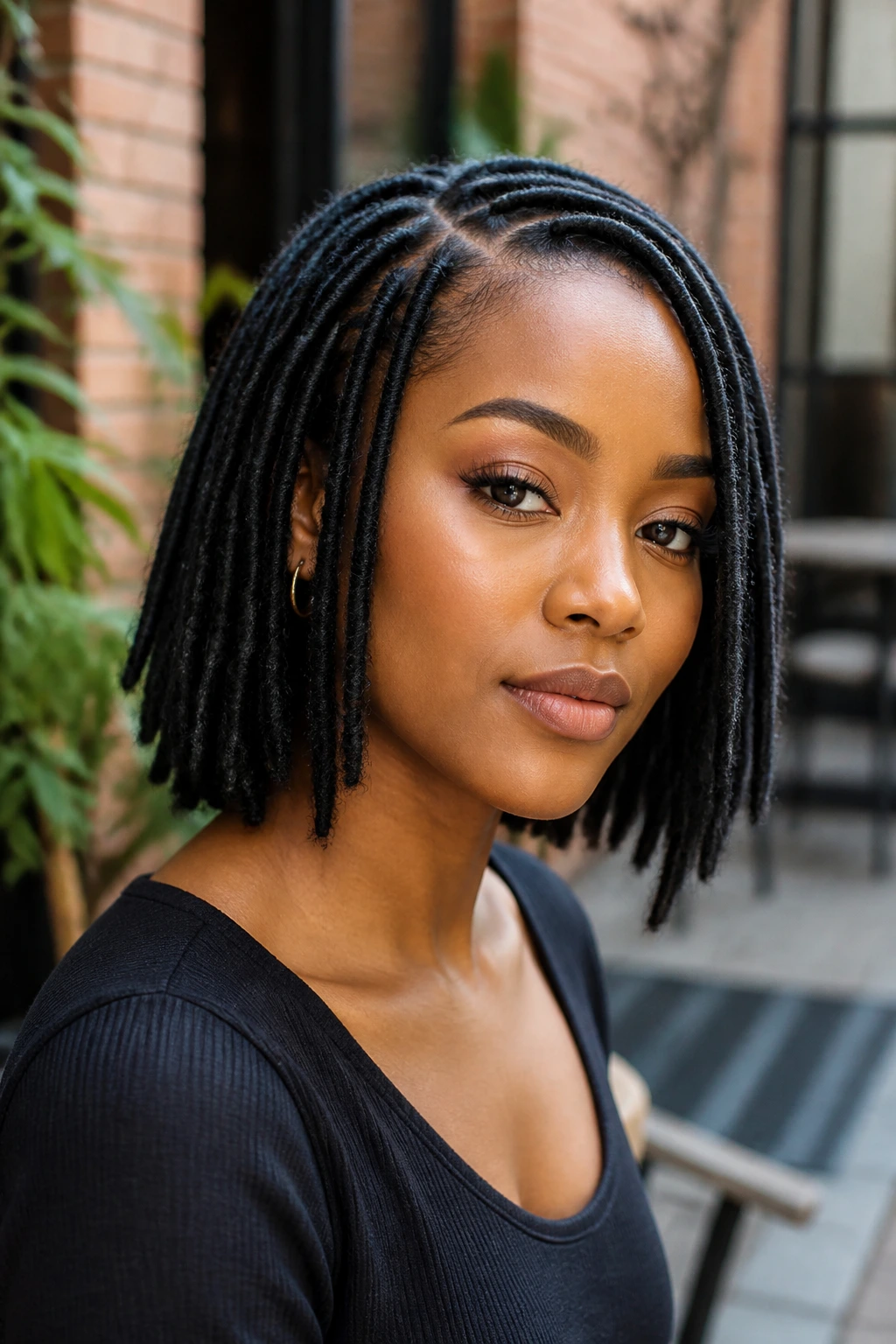
A faux loc bob is one of the easiest ways to get a face-lengthening shape without relying on curls at all. The vertical lines of the locs do what straight edges do not: they pull the eye downward. On a round face, that downward line is worth a lot.
I like faux loc bobs because they behave well over long natural hair. The locs hide a more complex braid base easily, and the style stays neat longer than fluffier textures if you sleep on satin and keep the roots tidy.
The catch is weight. Too many locs or locs that are too thick can make the bob swing outward at the sides. Keep the size moderate and the overall density controlled, and the style stays clean instead of bulky.
11. Kinky Straight Crochet Bob
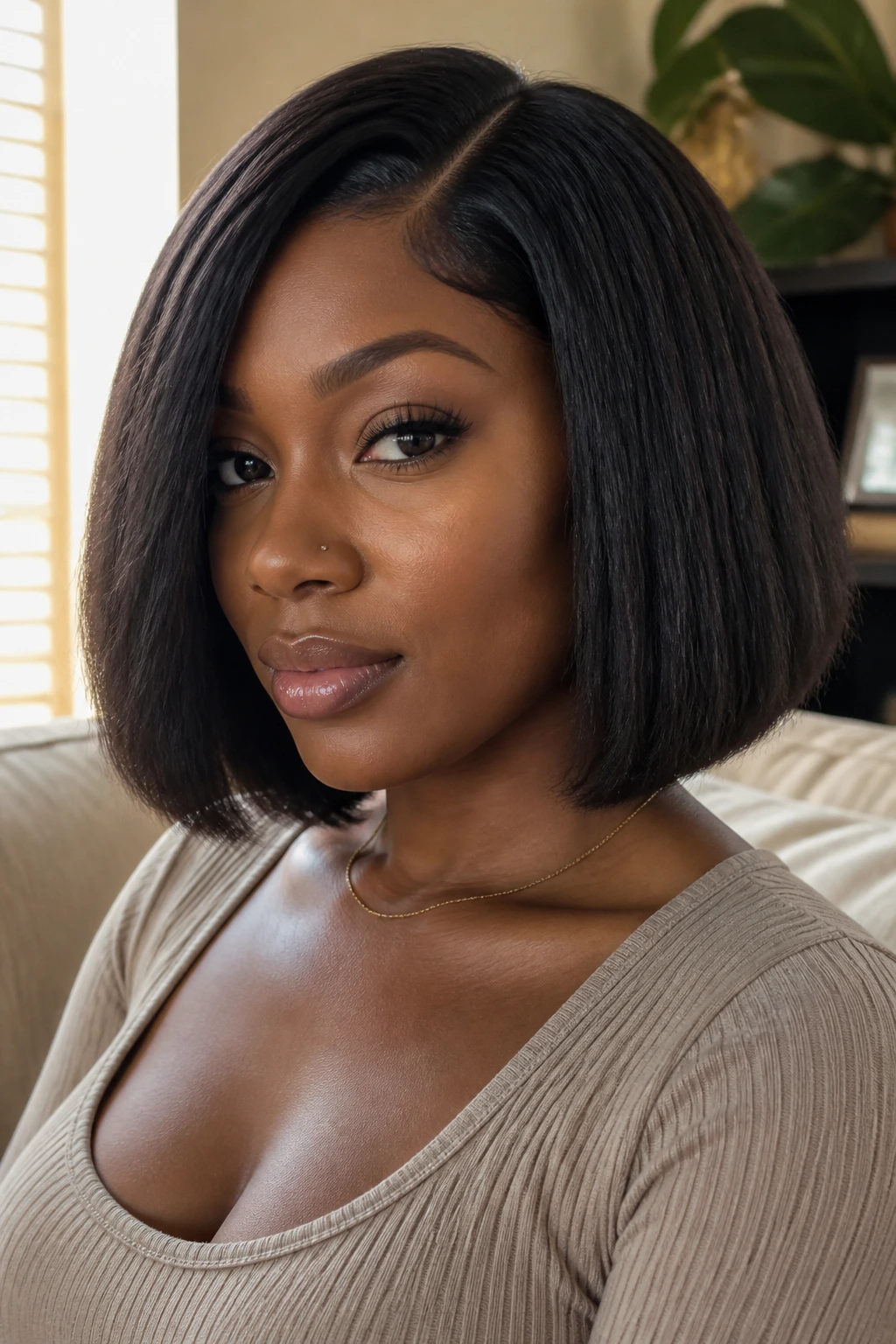
Kinky straight crochet hair sits in a sweet spot between polished and soft. It has enough texture to look natural, but it hangs lower than a curly fiber, which helps a round face because the hemline lands lower and cleaner.
This is a good choice if you want motion without a lot of pouf. The texture can be finger-combed a bit at the ends, but the body stays fairly narrow through the cheek area. That gives the face room to show.
What to watch for:
- keep the roots flat so the texture does not start too high
- choose a length that falls below the jaw once installed
- use light mousse only; too much product makes the fiber clump and look dull
12. Curled-End Crochet Bob
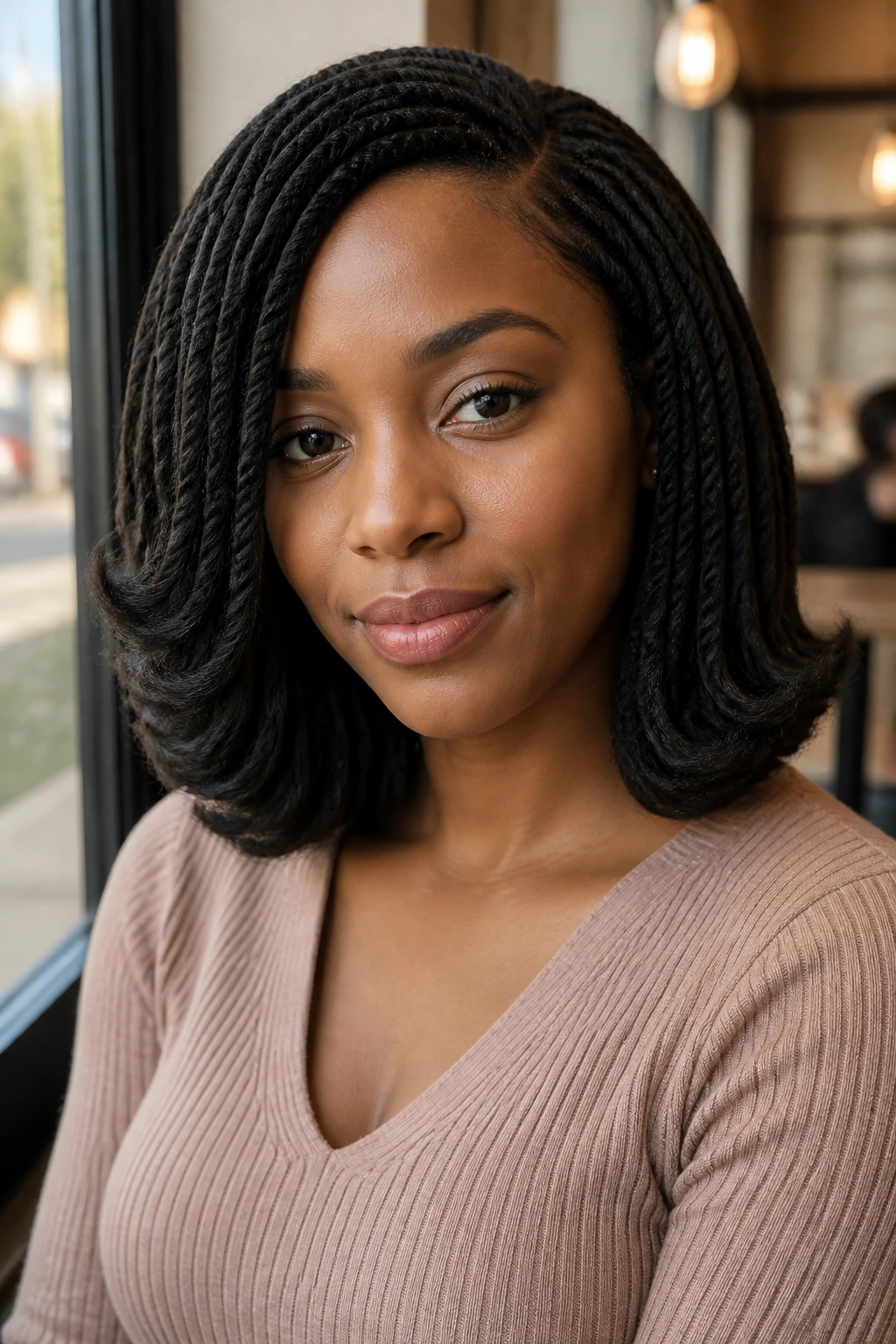
A curled-end bob has a little swing at the bottom, and that small detail changes the entire feel of the style. The roots stay calm, the middle stays controlled, and then the ends kick out or tuck under just enough to keep the shape alive.
For round faces, the trick is to keep the curl at the ends, not all the way up the side of the face. When the curl starts too high, it widens the cheeks. When it lives low near the hemline, it adds shape without stealing length.
This is one of those styles that looks good when it moves. A stiff curled-end bob is boring. A bob with ends that bend naturally when you turn your head has far more life.
13. Half-Up Crochet Bob with Crown Lift
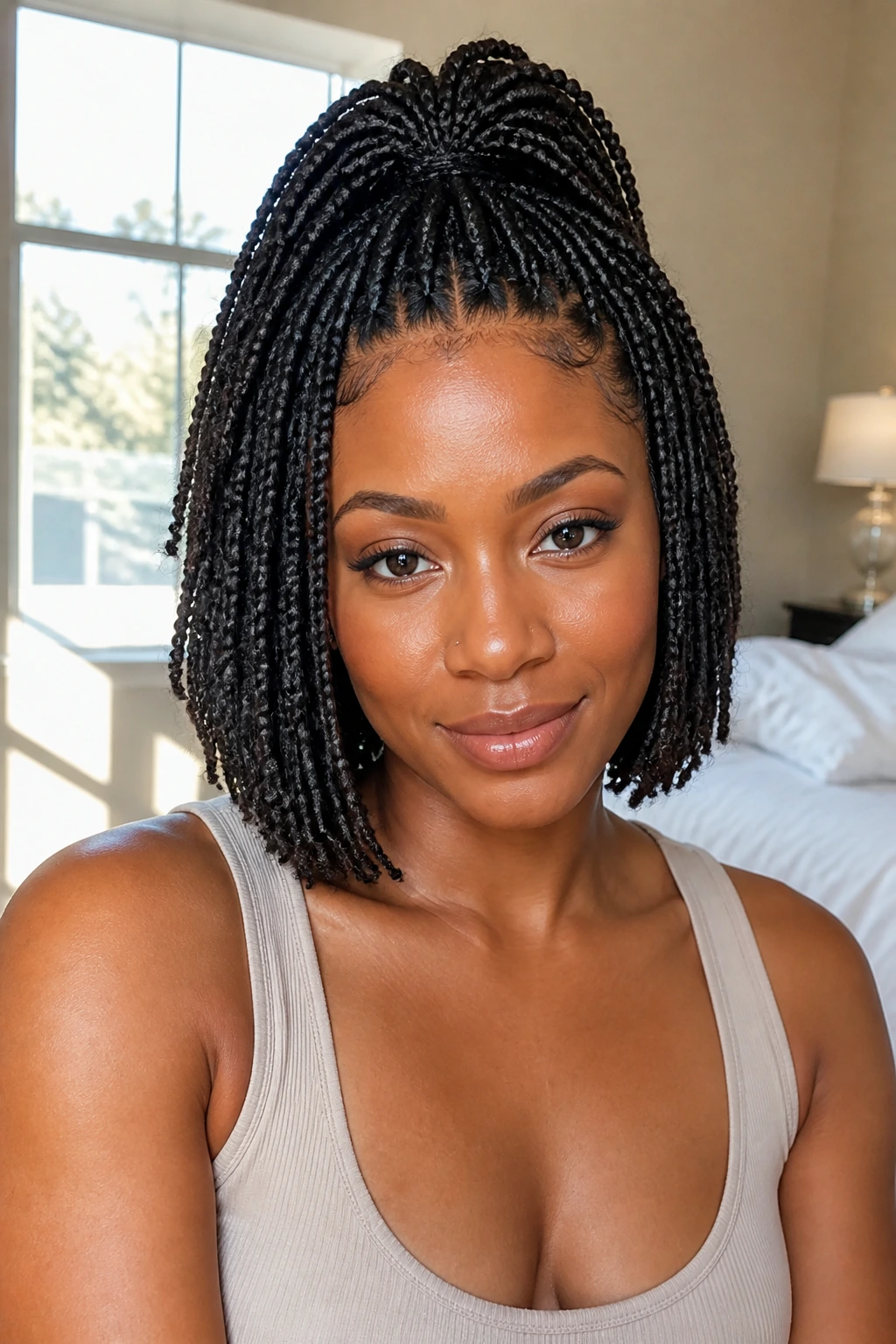
A half-up crochet bob gives a round face a little extra height, and height is your friend here. The top section lifts the eye upward, while the lower bob keeps the neck open and the jaw visible.
Why It Works
The crown lift makes the whole style read taller than wider. That is the entire point. If your long hair underneath tends to add bulk, this version helps contain it because the top section gets gathered and controlled instead of left to puff.
Keep the half-up section modest. A giant puff or oversized top knot can make the head look broader. A small lift at the crown, on the other hand, is enough to sharpen the shape.
14. French Curl Crochet Bob
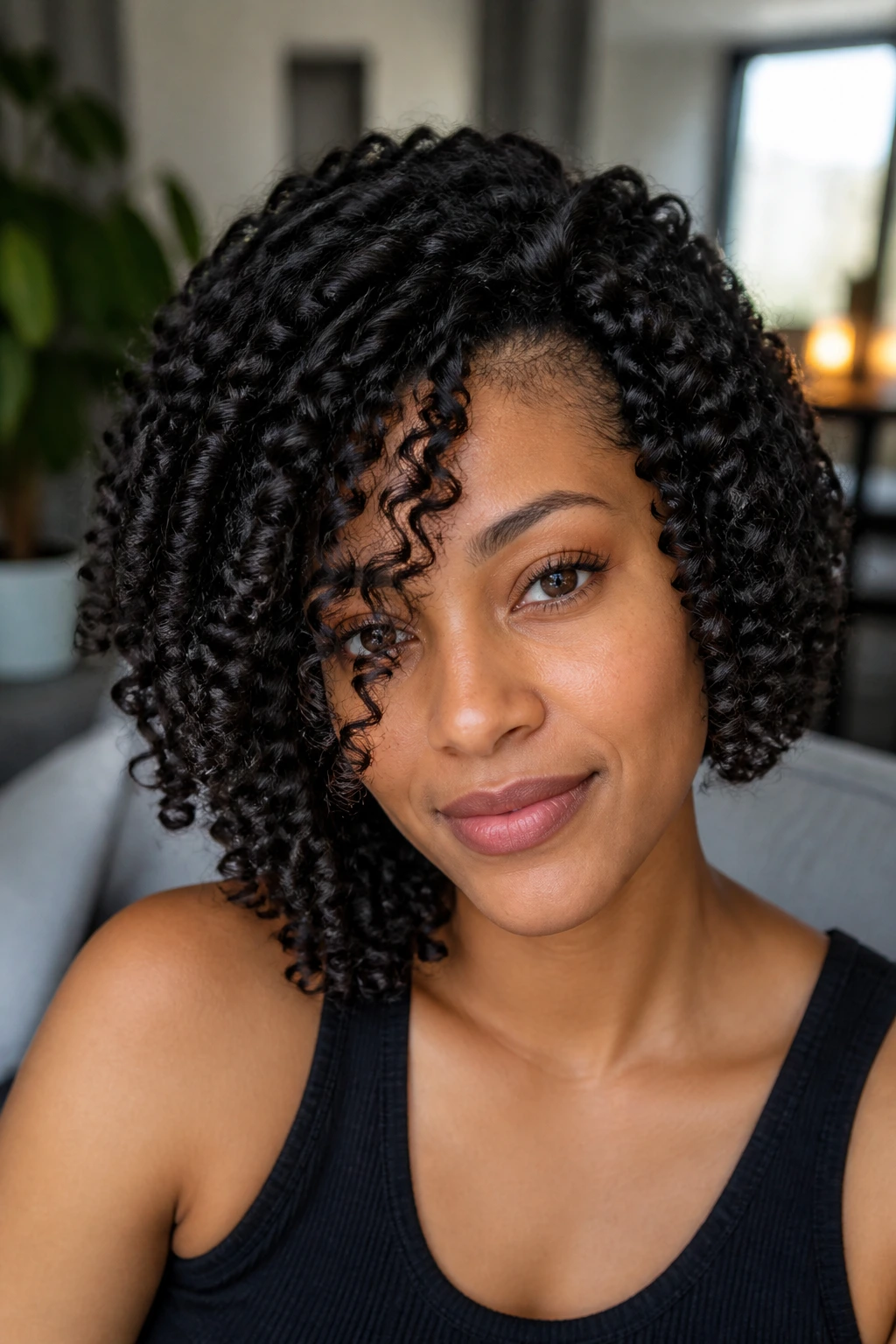
French curl hair has a springy, elegant bend that sits somewhere between a defined curl and a loose wave. It gives a bob softness without turning the sides into a cloud, which is why it flatters round faces more often than very full curly textures do.
This style works best when the curls are allowed to fall in uneven pieces around the front. That unevenness breaks up the width at the cheeks. If every curl is separated and fluffed to the same size, the face loses that narrowing effect.
I would keep the part off center and let a few pieces fall forward. A French curl bob looks expensive when it moves. It looks puffy when it is overdone. Subtle is better here.
15. Layered Box-Braid Bob
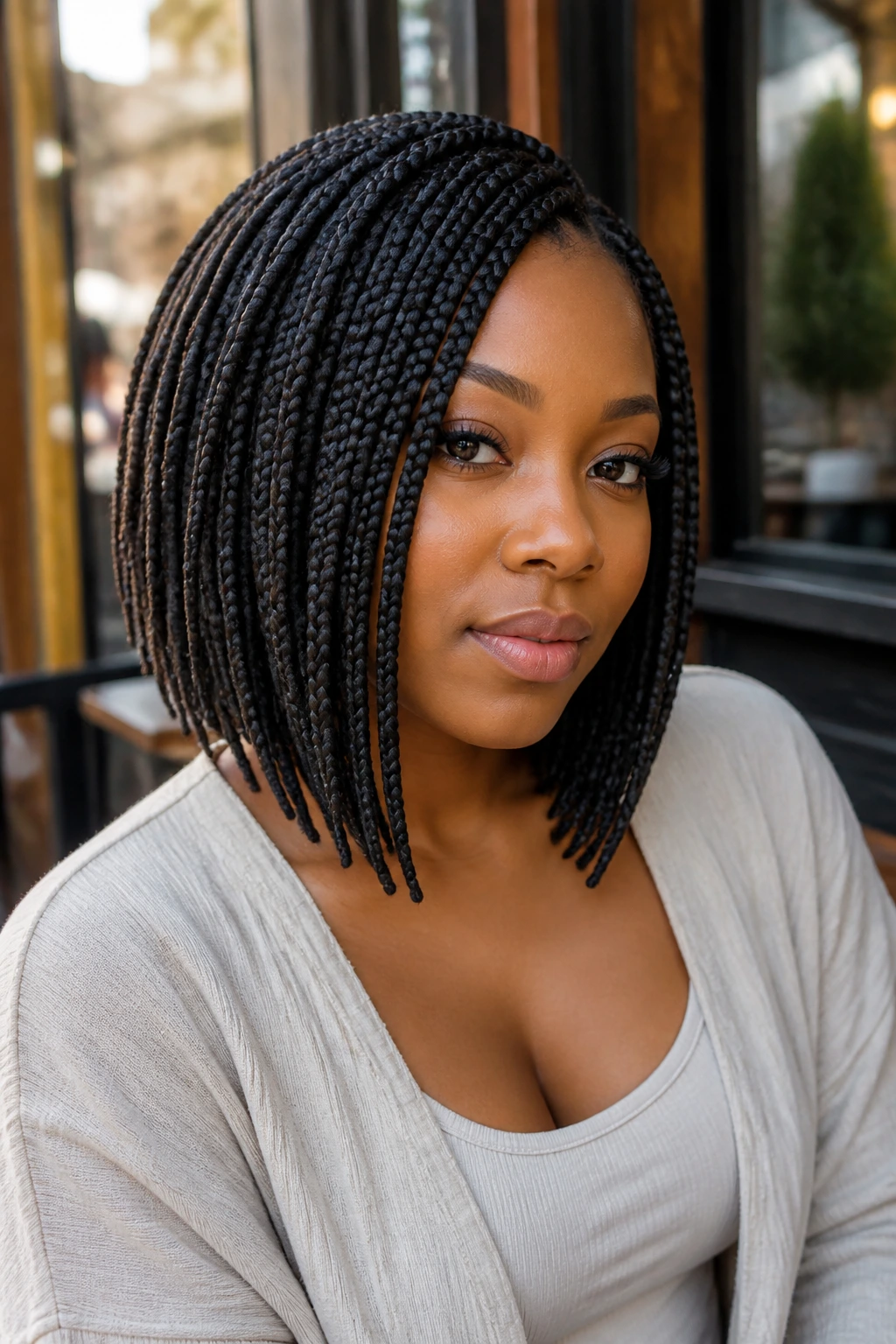
A layered box-braid bob brings structure to a face that already has a lot of softness. The braid lines create vertical movement, and the layers keep the shape from feeling like one heavy square block at the chin.
The thing I like about this one is how direct it is. There is no pretending. The braid ends and the shape are visible, so the geometry has to be right. For a round face, that means avoiding a perfectly even bottom line and keeping a little more length in the front or at one side.
Good details to request:
- medium-size braids, not oversized ones
- slightly longer front rows
- a flat crown with controlled density
- ends that are trimmed in a soft angle instead of a hard shelf
16. Feathered Bob with Bangs
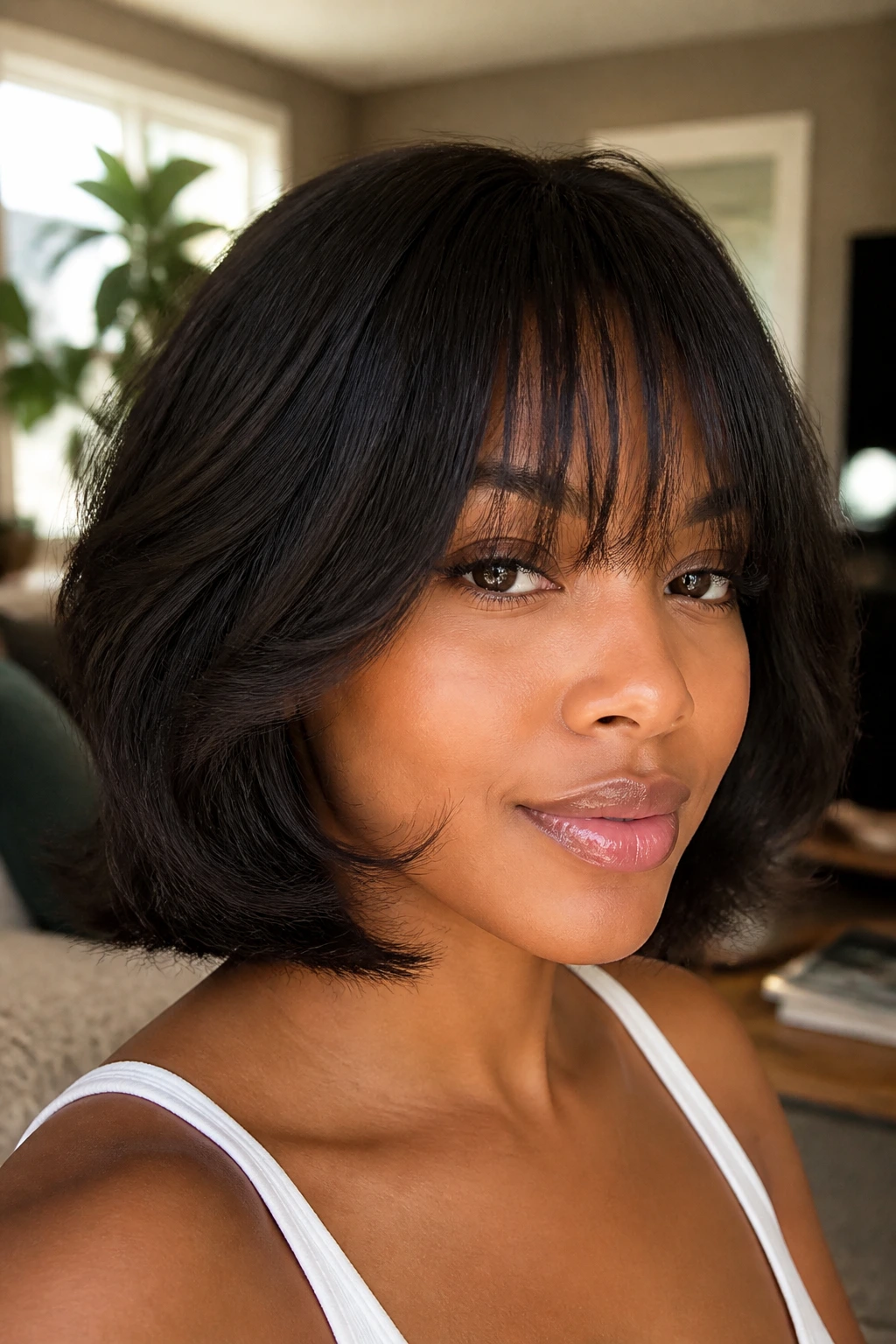
A feathered bob with bangs can work on a round face, but only if the bangs are soft and the ends are light. Thick, blunt bangs plus a wide bob is a lot of horizontal weight all at once. Feathered bangs, though, break that line and can make the forehead-to-chin space look longer.
The feathering matters more than the bangs themselves. It gives the front a little air so the style does not sit heavily on the cheeks. I would keep the fringe wispy, not dense, and let the rest of the bob taper away from the face.
If you wear this one, ask for length that drops past the jaw. The bangs can shorten the face visually, so the bob needs to answer back with a lower hemline.
17. Sleek Middle-Part Crochet Bob
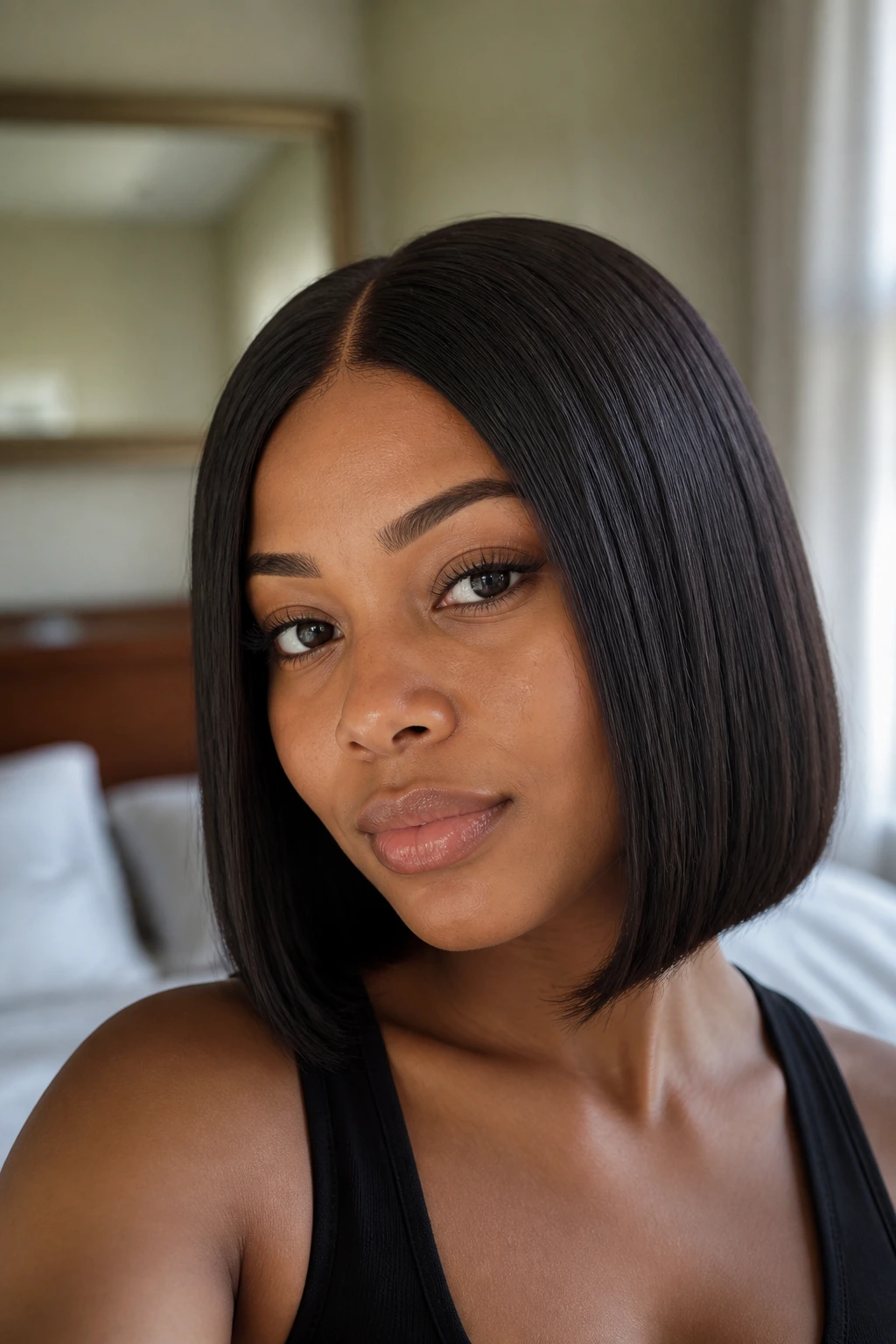
A middle part on a round face is not the enemy. A bad middle part is. There is a difference. The sleek version works when the bob has enough length to fall below the jaw and enough flatness at the sides to keep the face from looking boxed in.
The middle part gives you symmetry, and symmetry can be sharp when the edges are controlled. Keep the front pieces narrow and the part clean, and the style stops feeling childlike or overly full. A yaki or straight texture tends to handle this best because it lies closer to the face.
I would not choose this if the hair is too fluffy or the hemline ends right at the cheeks. With the right length, though, it reads modern and clean.
18. Goddess Crochet Bob with Tendrils
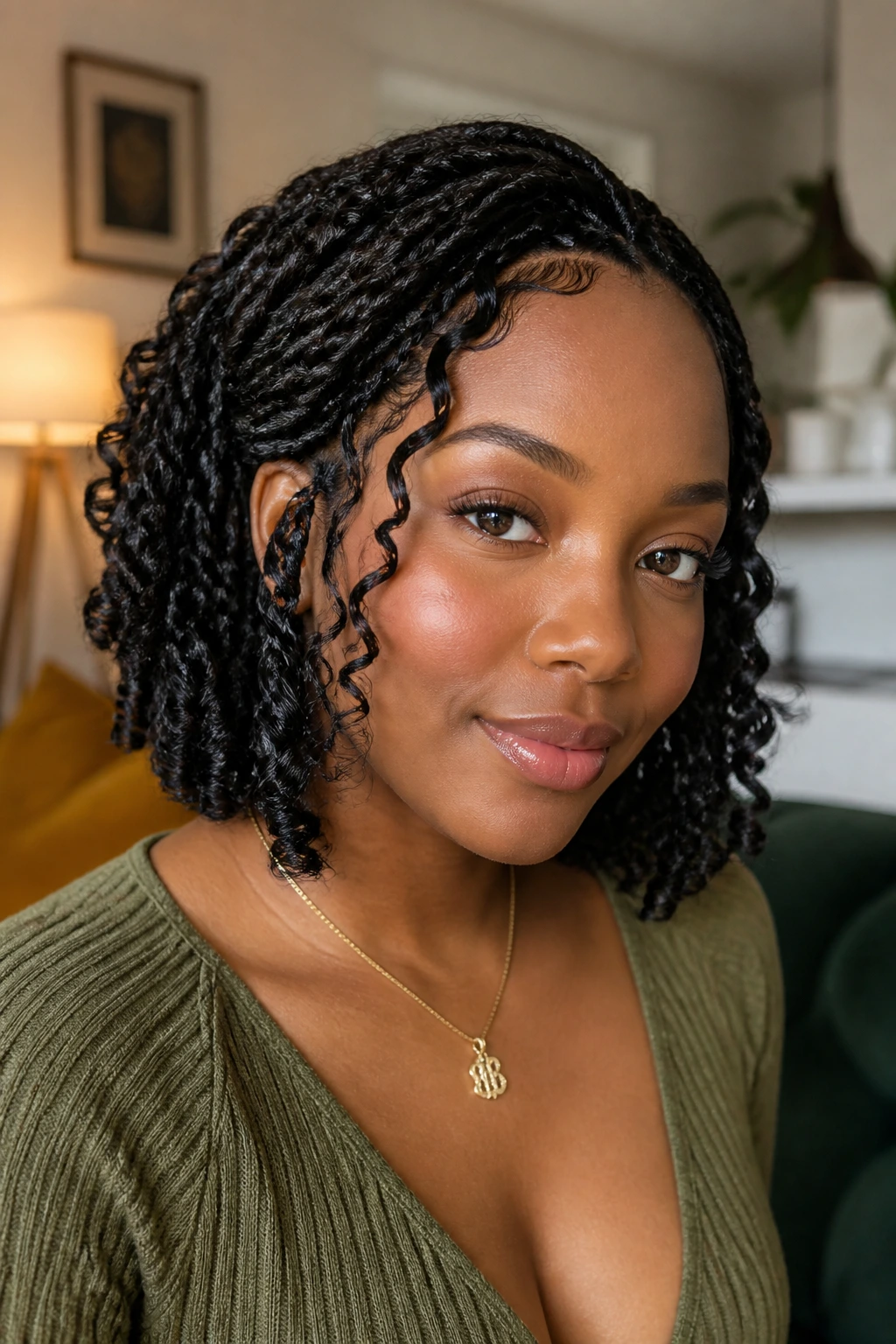
A goddess crochet bob is soft in a way that round faces can use carefully. The loose tendrils around the temples and cheeks break up the outline, while the main body of the bob stays just structured enough not to look messy.
This style gives you a little romance without adding a whole lot of width. The trick is restraint. You want a few deliberate pieces in front, not a curtain of fluff on both sides of the face. That difference is huge.
The nicest version lands below the jaw and keeps the crown controlled. If the top gets too full, the tendrils start working against you. Keep the crown calm, let the front pieces move, and the shape stays balanced.
19. Asymmetric Crochet Bob
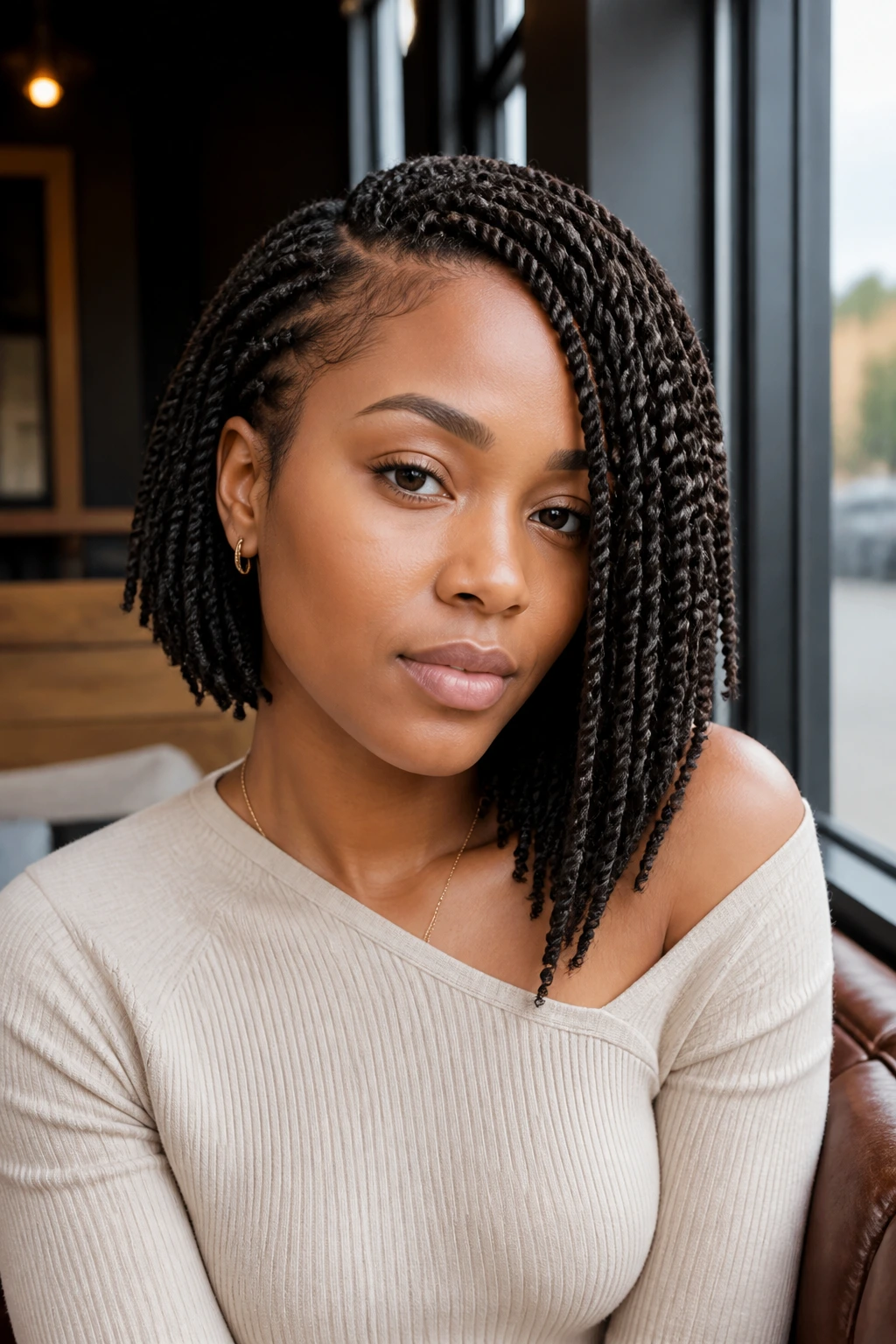
An asymmetric crochet bob is one of the easiest ways to make a round face look longer because the uneven hemline refuses to sit in a perfect circle. One side longer, one side shorter. Done. The eye has to travel, and that travel creates length.
This style also helps if your natural hair is long and the braid base has a bit of thickness you want to disguise. The off-balance cut pulls attention away from the bulk and toward the line of the hair itself. That line is doing the heavy lifting.
What to Request
Ask for a clear difference between the two sides, not a tiny half-inch shift that disappears once the hair settles. A full inch or two of contrast usually reads better. Keep the shorter side from stopping at the exact width of the cheek, though—that is where the face can start to feel wider instead of slimmer.
20. Color-Block Crochet Bob
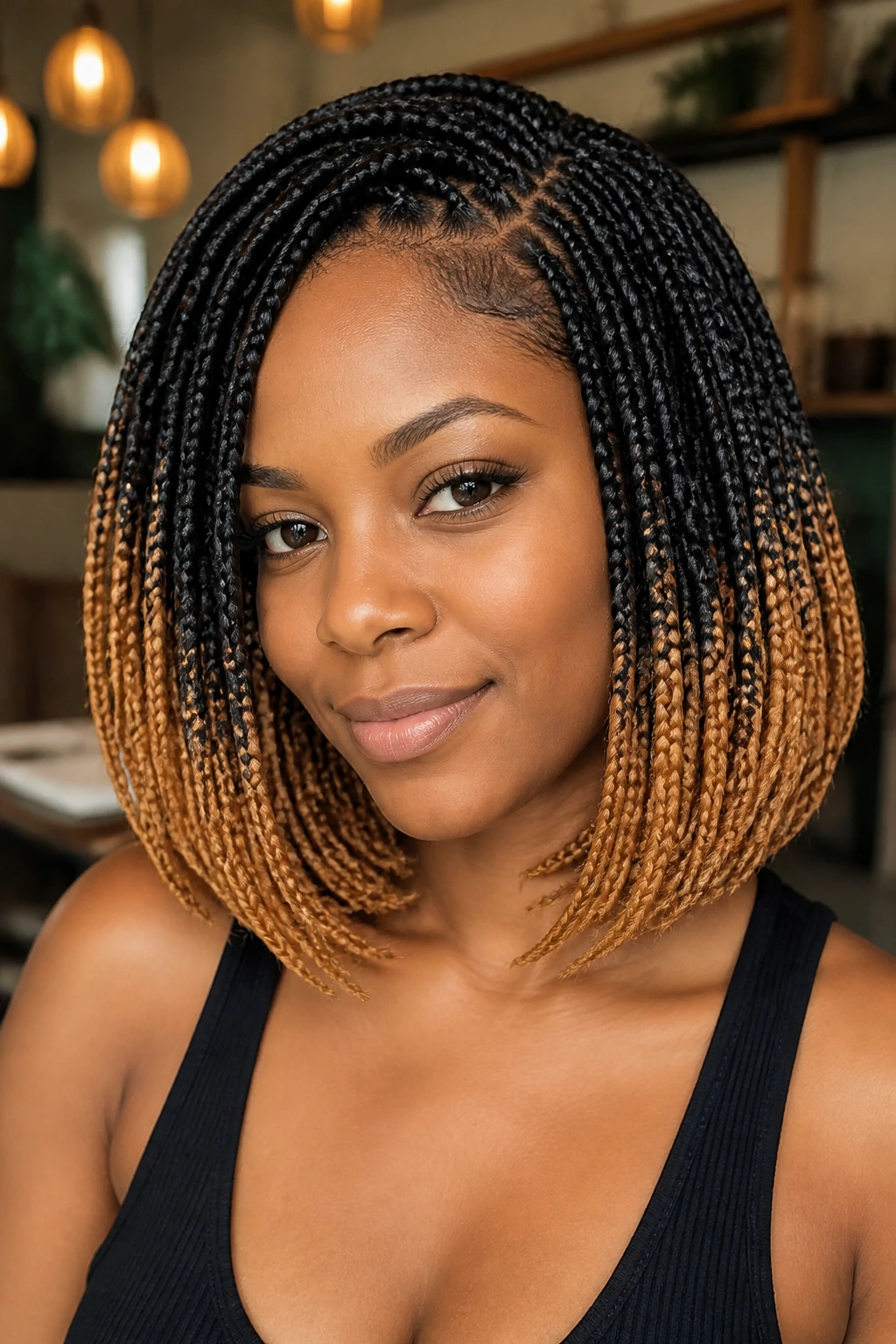
A color-block crochet bob gives you shape through contrast. A darker root, lighter ends, or a strategic panel of color below the cheekbone can all make the bob look longer than it is. That is useful on a round face because the eye follows the contrast downward.
I like this best when the brighter pieces live lower, not right beside the cheeks. Put the shine where the bob needs length, and not where the face is widest. A caramel face frame can be lovely, but if it sits too high and too wide, it does the opposite of what you want.
This is not a subtle look, and that is fine. It just needs placement with a little thought. Color can shape a bob almost as much as cutting can.
21. Scrunched Afro-Curl Crochet Bob
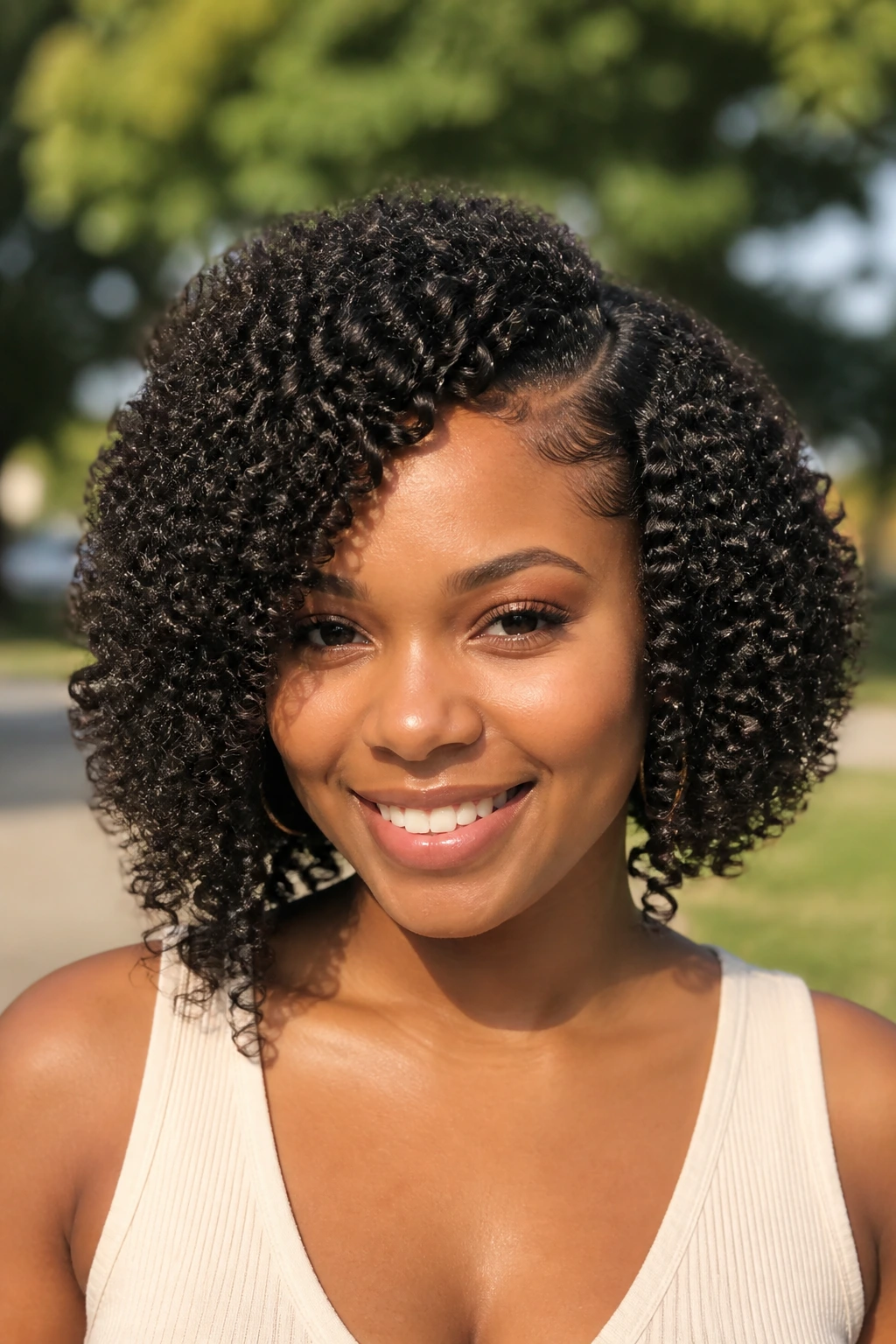
Scrunched afro curls can look fantastic on a round face when the shape is controlled, because the texture brings life and the bob keeps it short enough to feel modern. The problem comes when the curls spread out too evenly on both sides of the face.
That is why this style works best with a little extra length in front and a flatter crown. The top should stay calm while the curls do their thing lower down. If you let the volume sit right at cheek level, the face widens fast.
Best with:
- a side part or slight off-center part
- controlled density at the temples
- a bob that lands below the jaw, not at it
- a light finger-separation only on the ends
22. Rounded Bob with Side Fringe
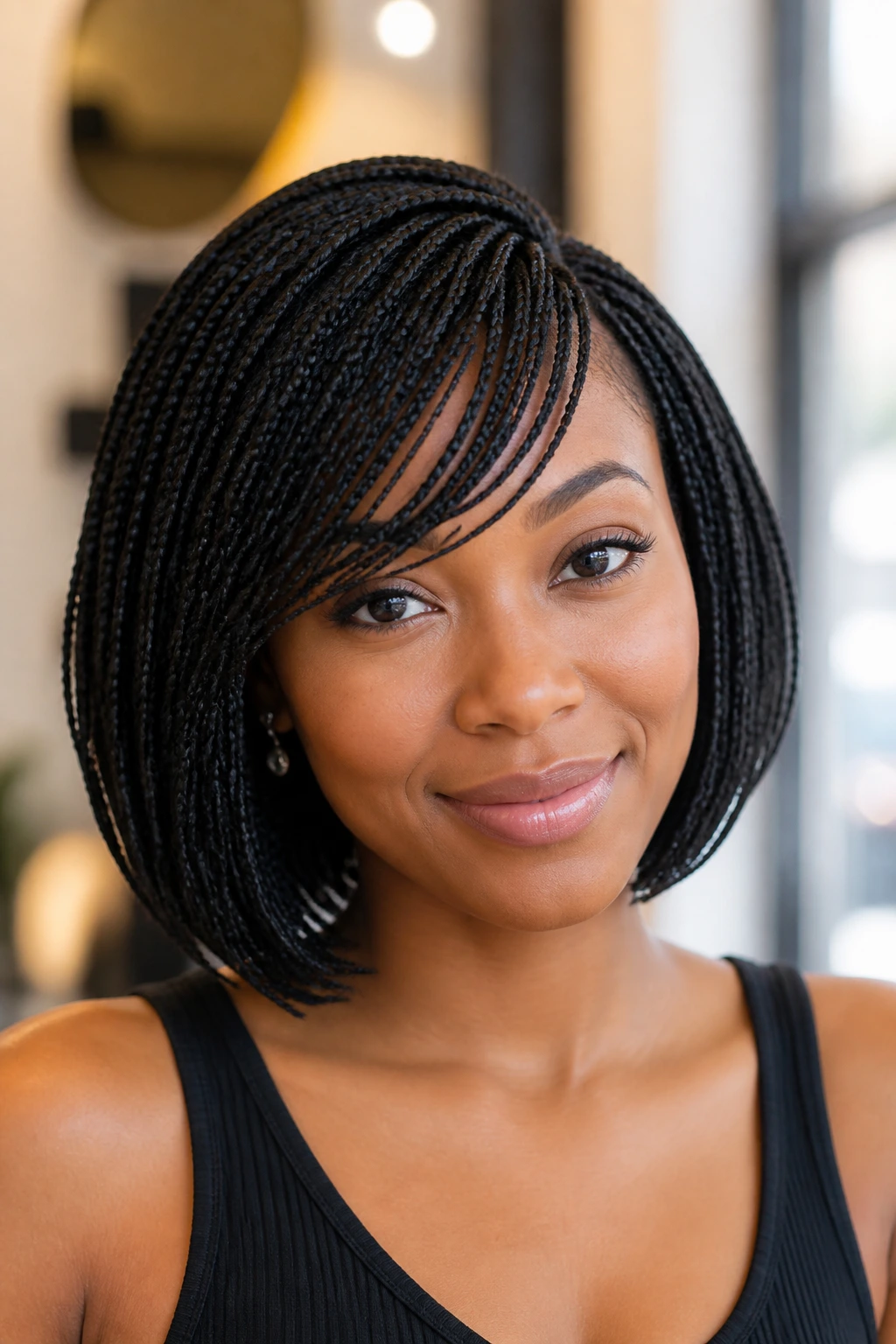
A rounded bob can work on a round face, but only when the side fringe breaks the circle. That fringe is the whole reason the style has any business on this list. Without it, a round bob can feel too matched to the face shape and make everything look wider.
The side fringe gives the hair a diagonal line and creates a little cover across one temple. That small shift softens the width without hiding the face. It’s a neat trick, and it works better than people expect.
Keep the fringe light. Heavy, dense side bangs can squash the face instead of slimming it. A soft sweep is enough.
23. Jumbo Twist Bob
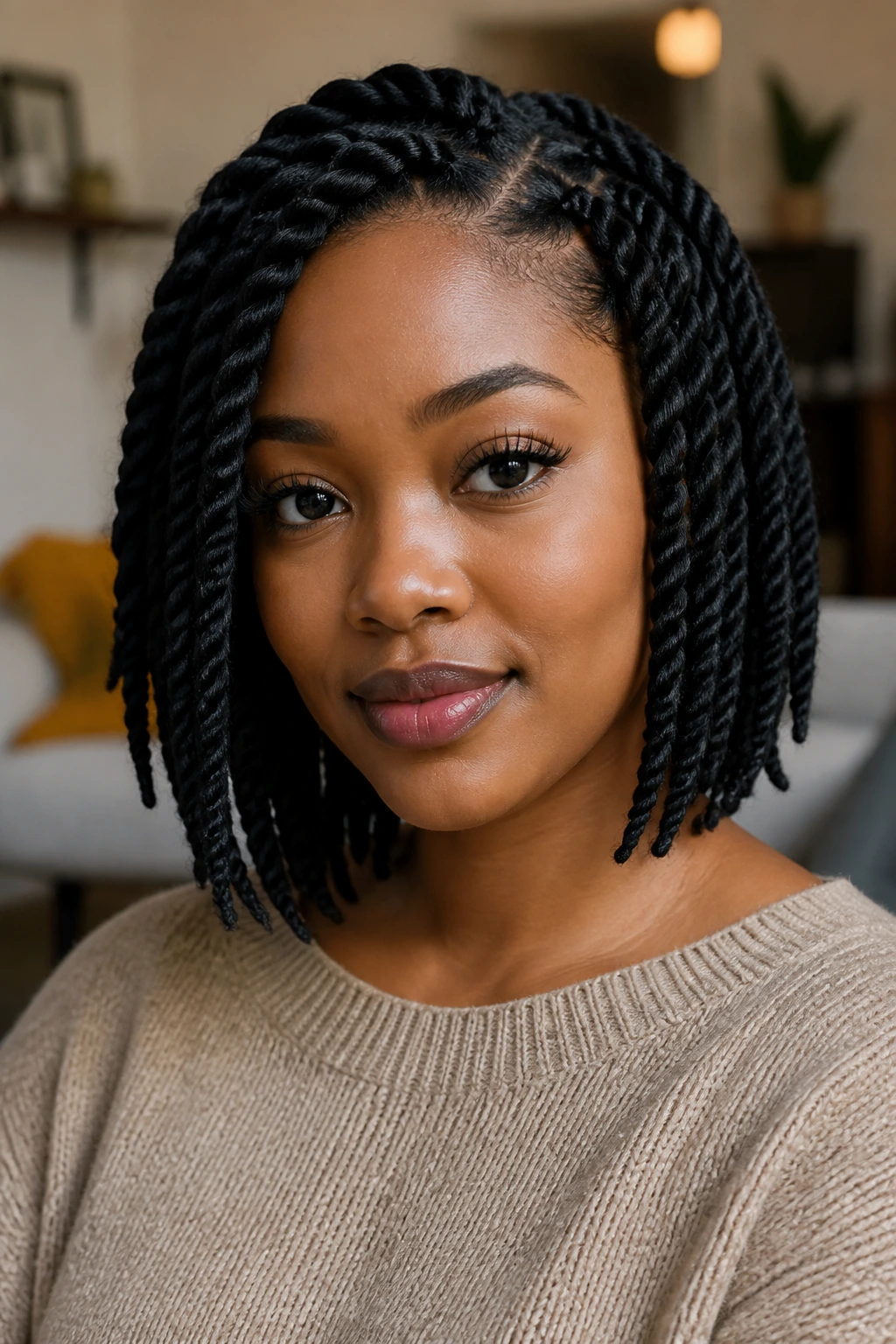
Jumbo twists are strong-looking, and I mean that literally. They have a lot of visual mass. On a round face, that can be a problem if the twists are too thick and the bob ends at the cheek line.
Still, this style can work when the twists are medium-jumbo instead of oversized and the bob lands a little lower than the jaw. The twist pattern gives a vertical rhythm that helps lengthen the face, while the controlled size keeps the sides from blowing out.
I would keep the base as flat as possible and avoid crowding the temples. A few well-placed twists look intentional. Too many chunky ones can start to feel like the style is wearing you.
24. Yaki Texture Crochet Bob
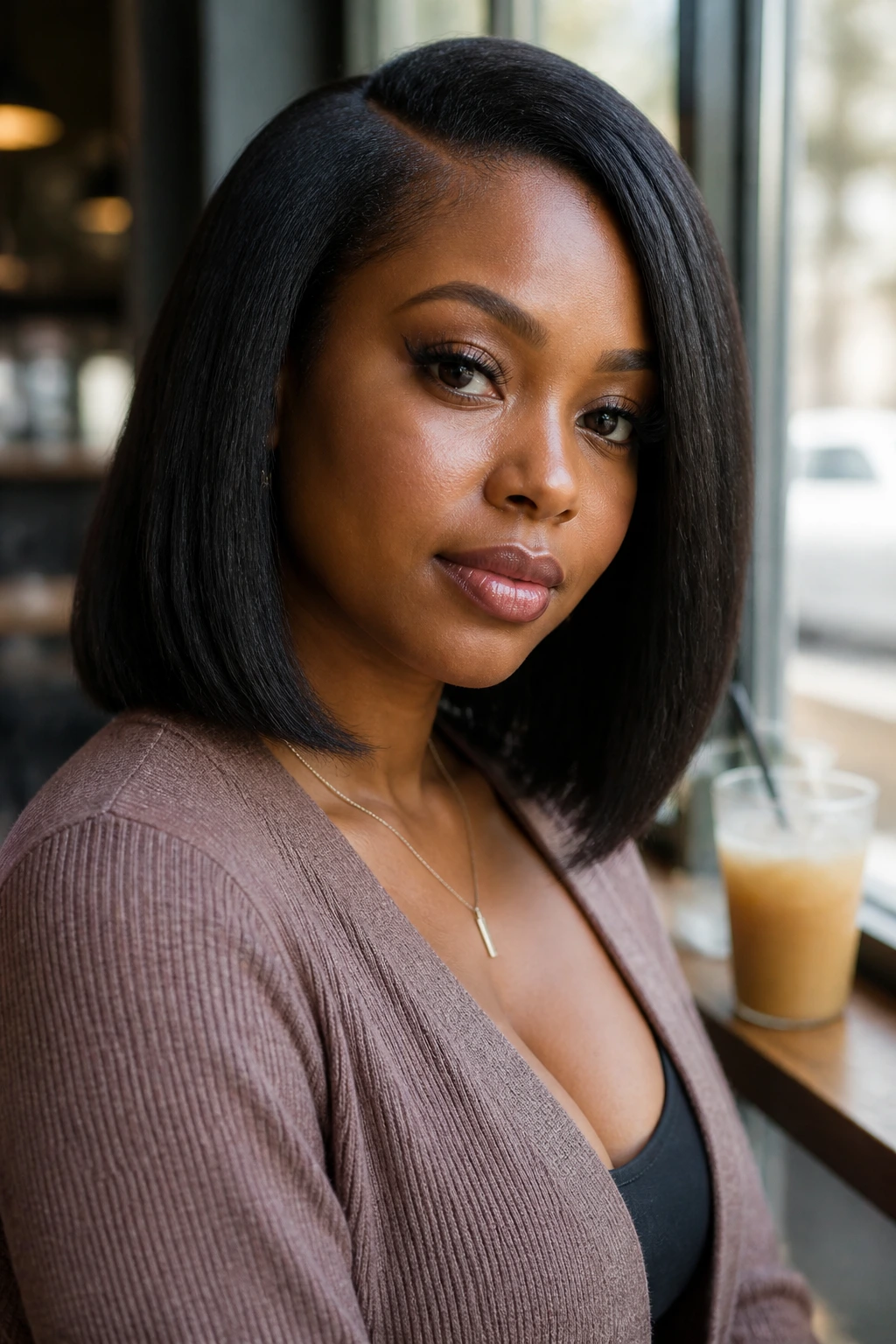
Yaki texture gives you a smooth, blown-out look without the mirror shine of bone-straight fiber. That middle ground is useful on round faces because the hair falls cleanly and keeps its line, but it still has enough texture to avoid looking stiff.
This is one of my favorite choices for long hair underneath because the texture sits close to the head and hides the braid base well. It also lets the front pieces fall lower, which means you can make the bob feel longer without adding much extra weight.
Why it helps:
- it reduces puff at the cheeks
- it hangs lower than curly fibers of the same package length
- it reads neat even when the style gets a little older
- it works with side parts, middle parts, and soft angles
25. Chin-and-Jaw Skimming Crochet Bob
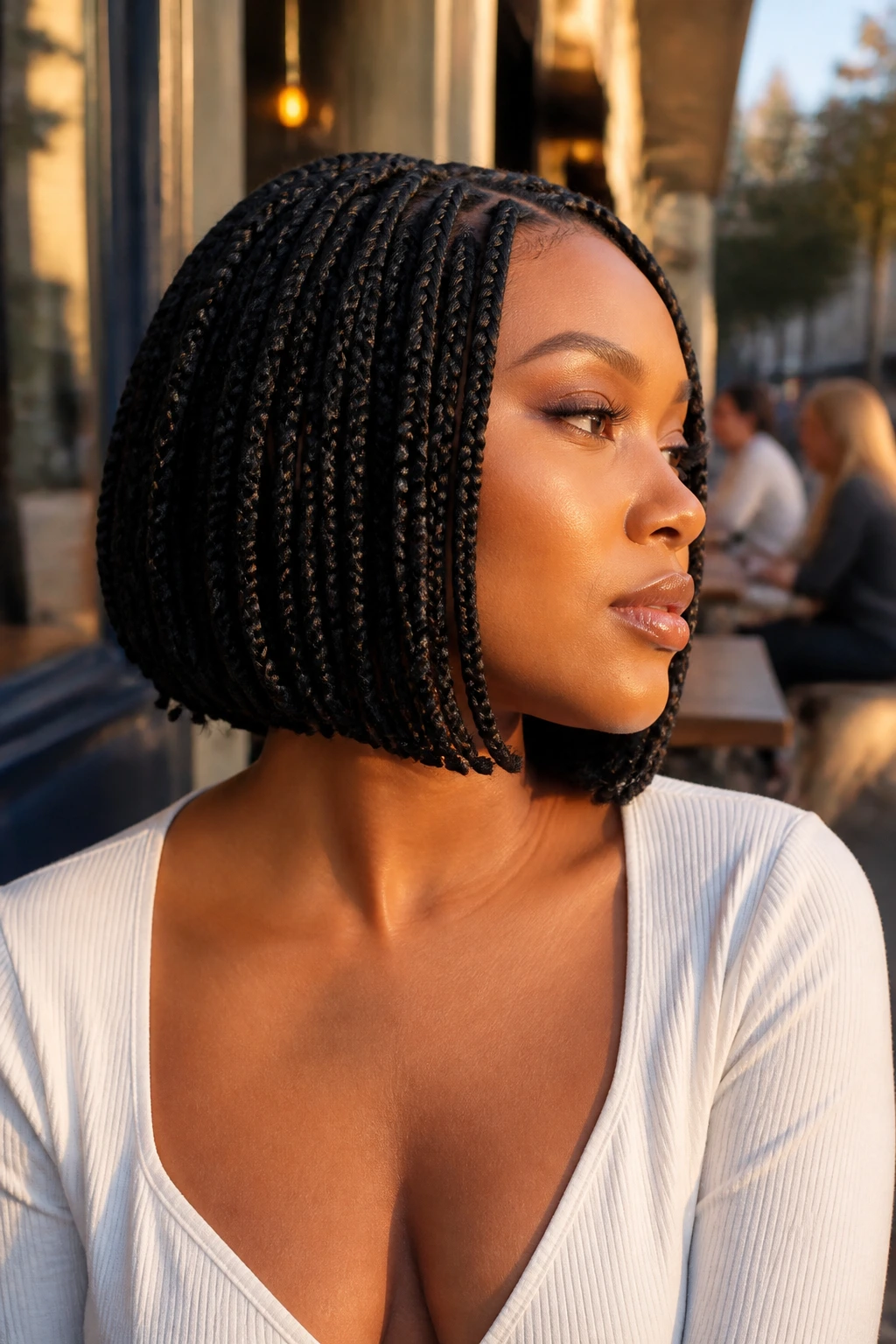
If you want one safe starting point, this is it: a crochet bob that skims the chin and brushes the jaw, but does not stop right on the widest part of the face. That tiny difference changes everything. It is the line between flattering and boxy.
The shape works because it keeps the face open while still giving you a short protective style. It also gives long hair underneath enough room to stay hidden without forcing the bob to balloon outward. Flat base. Controlled sides. Slight forward length. That is the formula.
I would choose this version if you want the least risky option from the list. It is not the loudest style here, but it is the one that can quietly do the most work.
Why the Shape Matters More Than the Curl Pattern
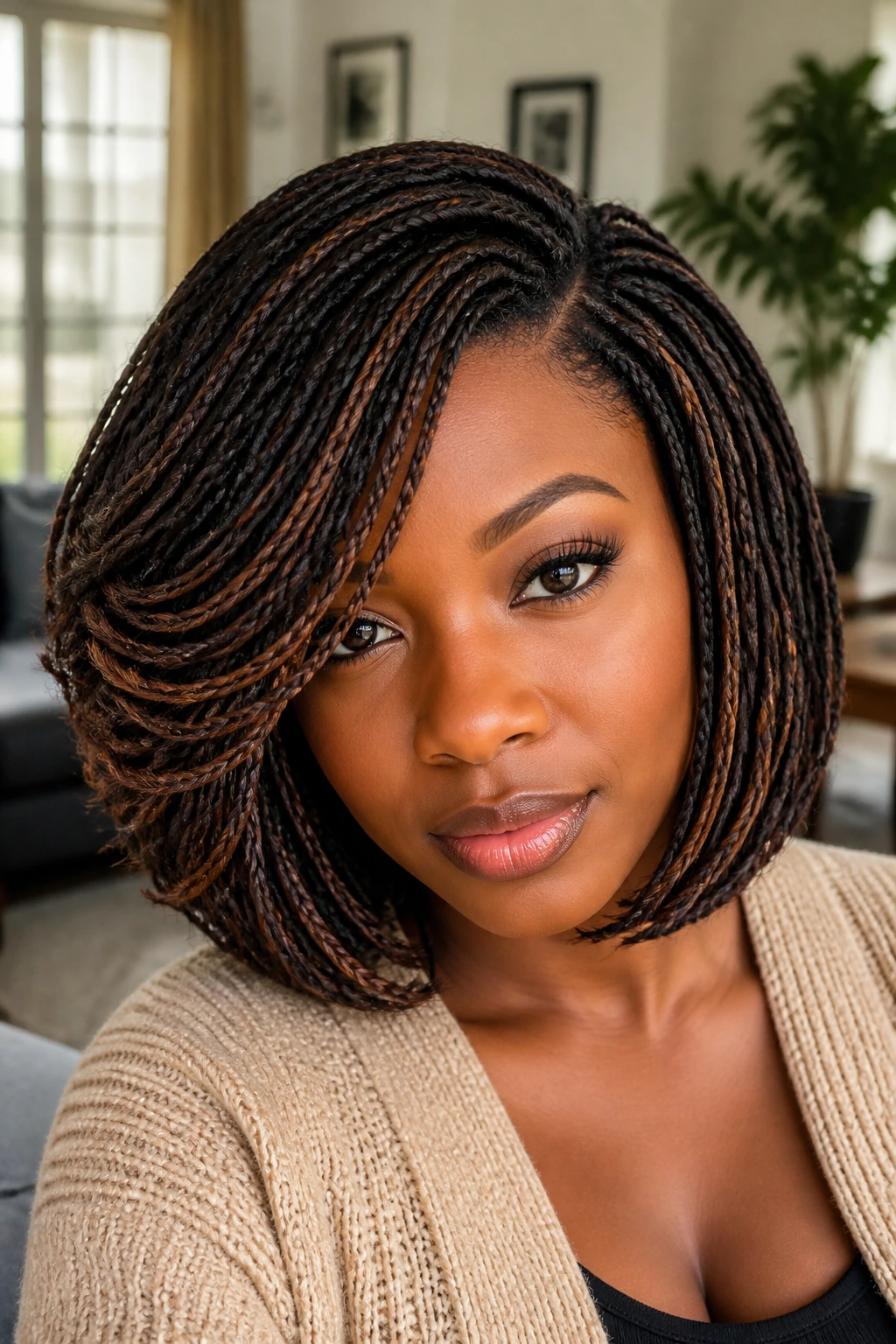
A round face does not need less hair. It needs smarter hair. That is the part people miss when they start shopping for crochet bobs. They think texture is the first choice, and sometimes it is, but shape comes first. A soft wave in the wrong place can widen the face faster than a blunt line in the right place can.
The safest cheat code is pretty simple: keep the crown flatter than you think, keep the front a little longer than you think, and keep the sides from puffing out at cheek level. That combination works whether you pick water wave, faux locs, yaki, or a curly bob with face-framing pieces. The texture changes the mood. The silhouette does the real work.
Long hair underneath makes the silhouette even more important because there is more braid base to hide. If the install is too bulky, the bob loses its clean line. If the install is too flat, the style can look tired. Find the middle. That is the whole trick.
Essential Tools for a Clean Crochet Bob
-
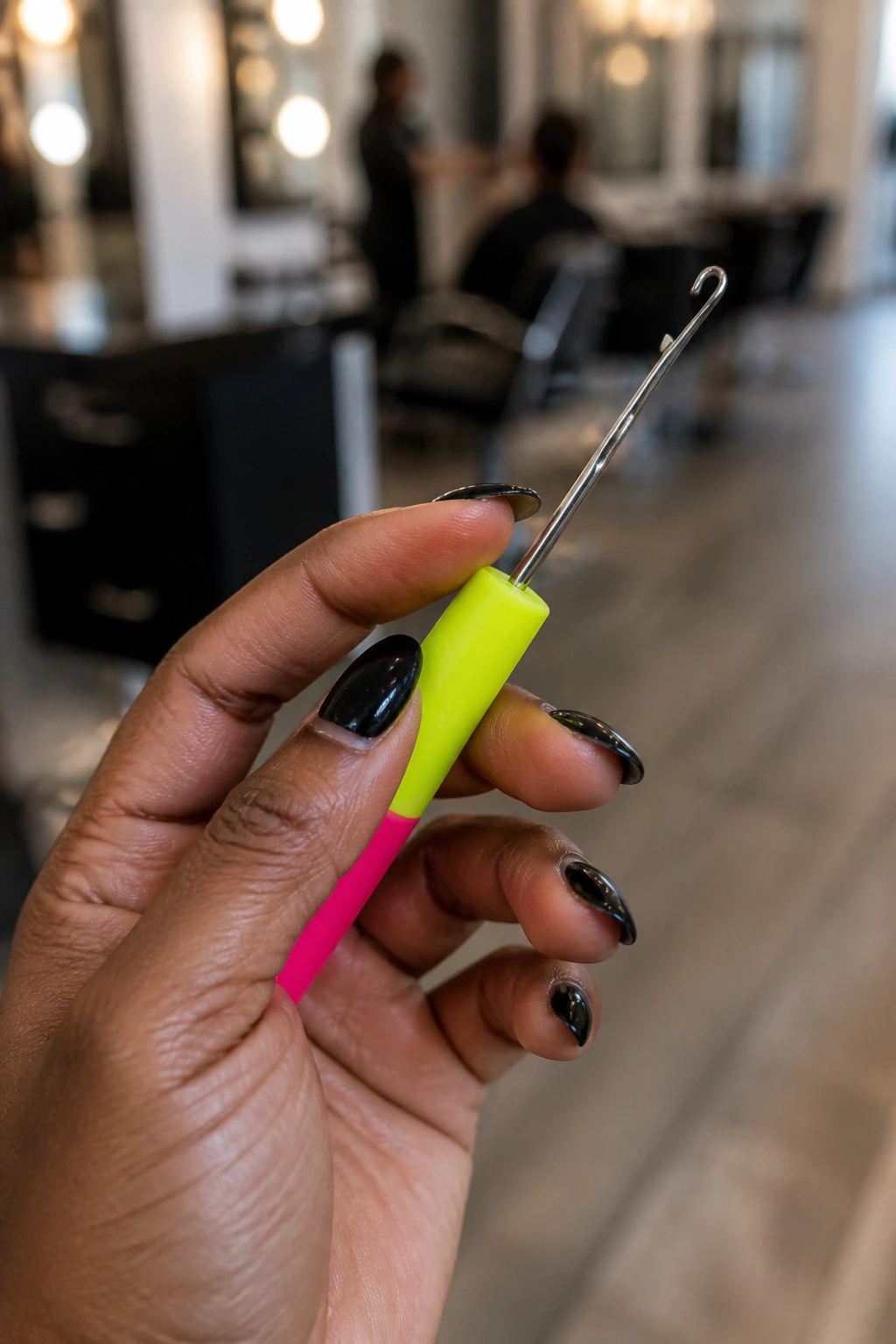
Crochet needle or latch hook: The tool that pulls the hair through the braid base; a slim one is easier for tighter rows.
-
Rat-tail comb: Good for clean parts and for sectioning the hair before braiding or installing.
-
Small hair clips: Keep loose sections out of the way while you work around the crown and nape.
-
Braiding hair: Use it to build a flat, controlled base; stretched hair is easier to braid smoothly.
-
Synthetic crochet hair or human-hair blend: Pick the fiber based on how much movement and upkeep you want.
-
Mousse or foam wrap lotion: Helps settle flyaways and keeps the outer layer from looking fuzzy.
-
Edge brush and light edge control: Useful if you want a neater hairline, but do not cake it on.
-
Satin bonnet or scarf: Keeps the bob from rubbing up overnight and flattening in weird spots.
-
Hand mirror or 3-way mirror: Vital for checking the back, because the nape is where crochet bobs often betray the install.
Smart Shopping for Fiber, Length, and Density
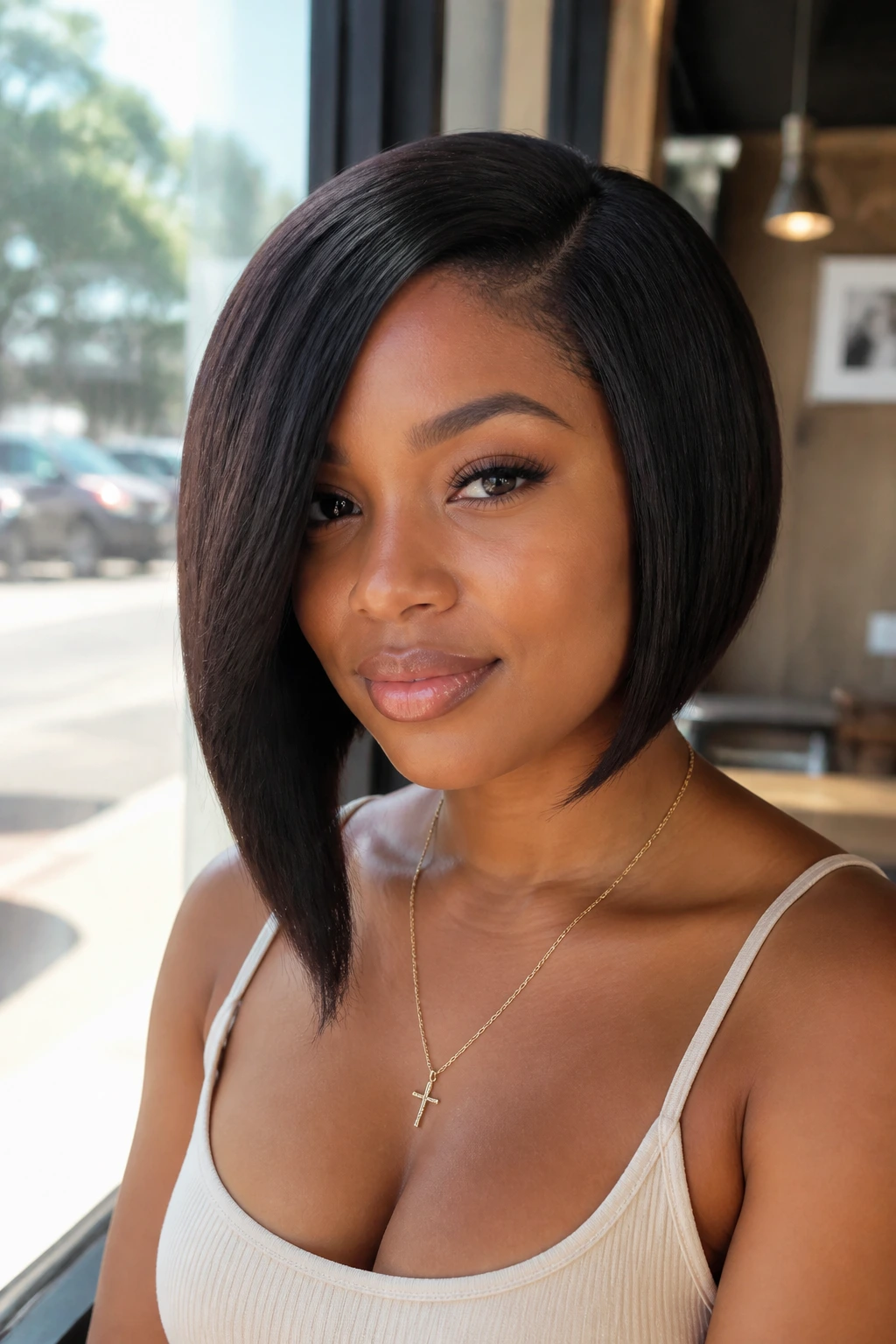
Length is where most people guess wrong. Curly and wavy crochet hair shrinks once it is worn and separated, so the package length is only a starting point. If you want a bob that lands at the jaw, you may need to buy longer than you think for water wave, French curl, or afro-curl textures. Straight and yaki fibers hang lower, so the package length reads closer to the final length.
Density matters just as much. A full bob sounds nice until it starts to puff at the cheeks. For round faces, I prefer medium density with a little extra fullness at the crown rather than the sides. That keeps the silhouette tall instead of wide. If your natural hair is thick and long, use smaller braid sections under the crochet hair so the base stays flat and the finished bob does not sit too far off the head.
Fiber choice changes the whole mood. Synthetic hair is cheaper and holds shape well. Human-hair blends or higher-end fibers move more softly, but they also ask for more care. If you want a clean office look, go smoother. If you want a looser weekend look, pick a fiber with bend and separation.
Color deserves a little thought, too. Darker roots with lighter ends can lengthen the bob visually. Bright tones around the cheeks can widen the face if the placement is too blunt. Put the brighter pieces lower, and the style starts to do face-shaping work without looking like it is trying too hard.
How to Wear These Crochet Bobs With the Right Balance
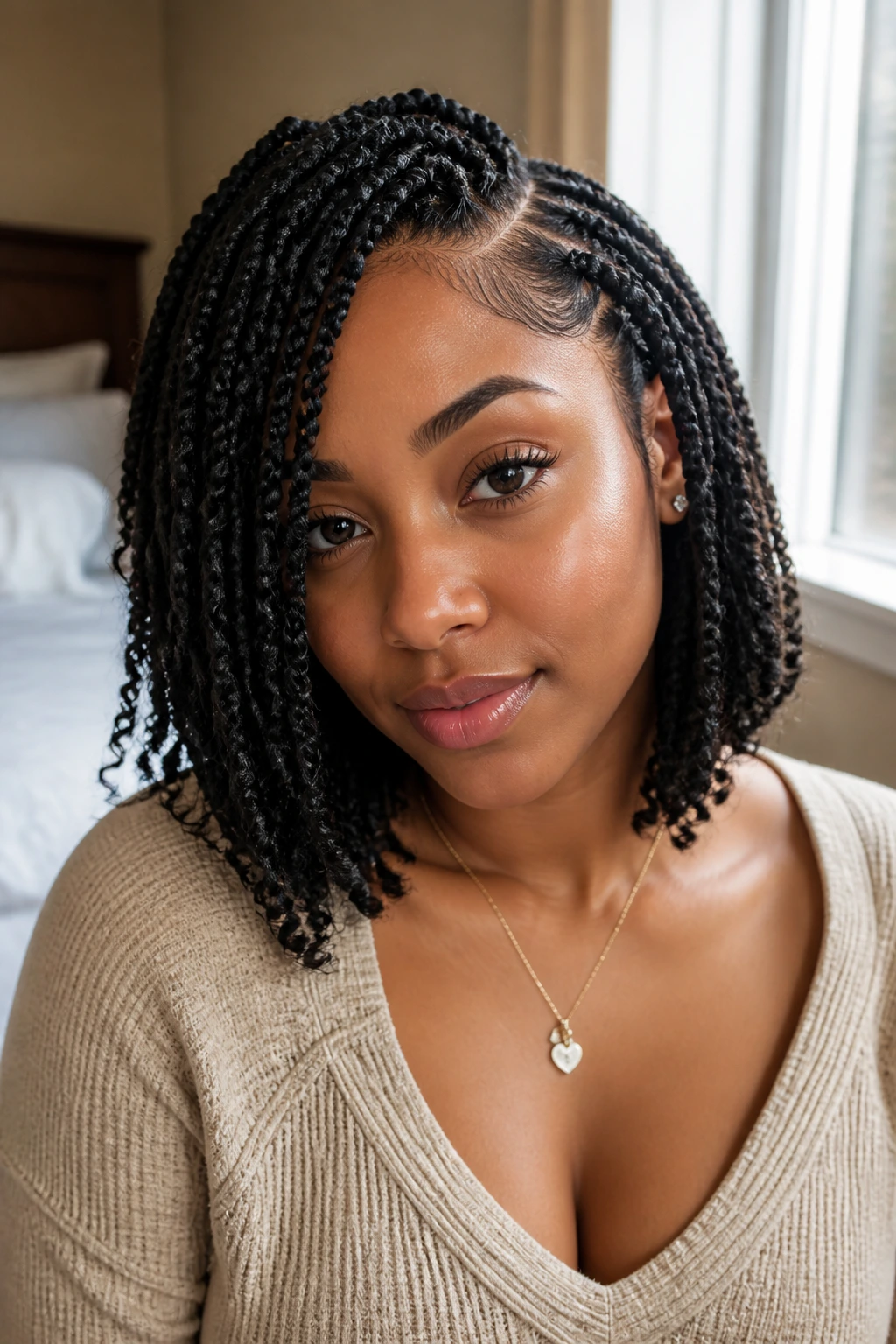
Presentation: Let the part sit slightly off center when you can. A tiny shift to one side breaks the symmetry that makes round faces feel broader, and the front pieces should fall with a little diagonal movement instead of hanging in a straight curtain.
Accessories: Medium hoops, narrow frames, and earrings that move a bit all help pull the eye downward. Very chunky earrings can crowd the jaw when the bob already sits near the face.
Balance: If the bob ends at the chin, keep the sides calm and the crown flatter. If the bob is longer and softer, you can afford a little more texture. The shape should feel deliberate, not crowded.
Necklines: Open collars, V-necks, and jackets with a clean lapel give the bob room. High turtlenecks and thick collars can make a short crochet style feel heavy around the face, especially if the hair is already full.
Additional Tips and Shape Boosters
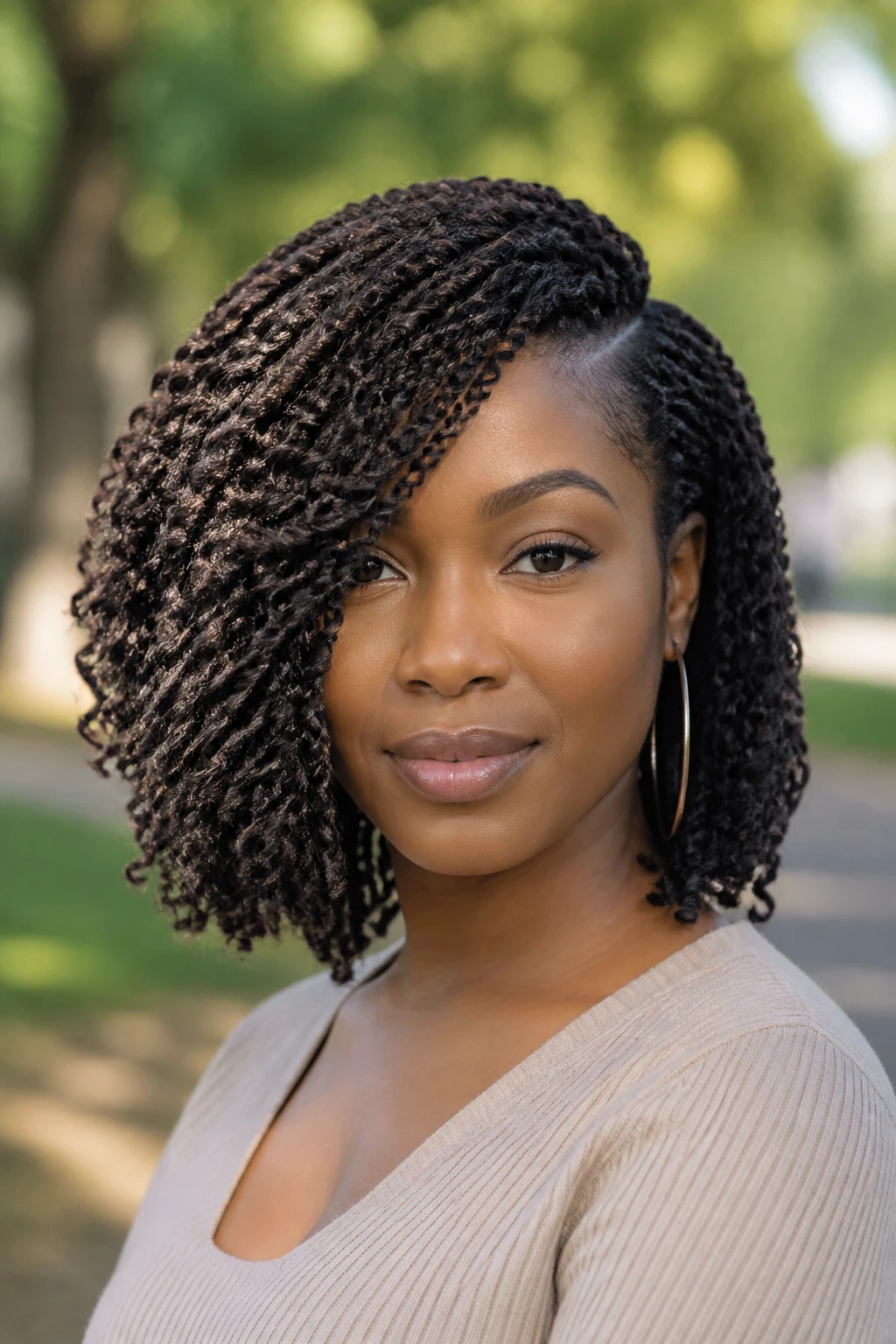
Crown Lift: Ask for the crown to stay slightly flatter than the sides, then set the finished style with mousse and a satin scarf for 10 to 15 minutes. That small press keeps the top tidy and stops the bob from ballooning.
Part Placement: Move the part half an inch farther over than your instinct says. That tiny shift gives the front pieces a diagonal line, and diagonal lines are friends to round faces.
Texture Control: Separate curls only at the bottom third unless you want extra width. The closer the curl expansion stays to the hemline, the better the face-shaping effect.
Color Placement: If you add highlights, put them lower or at the ends. Bright pieces near the eyes can widen the face faster than people expect.
Make-It-Yours: If you want softer shape, choose water wave or French curl. If you want a cleaner outline, go yaki or faux loc. Same bob, different attitude.
Common Mistakes That Make a Crochet Bob Puff Out
-
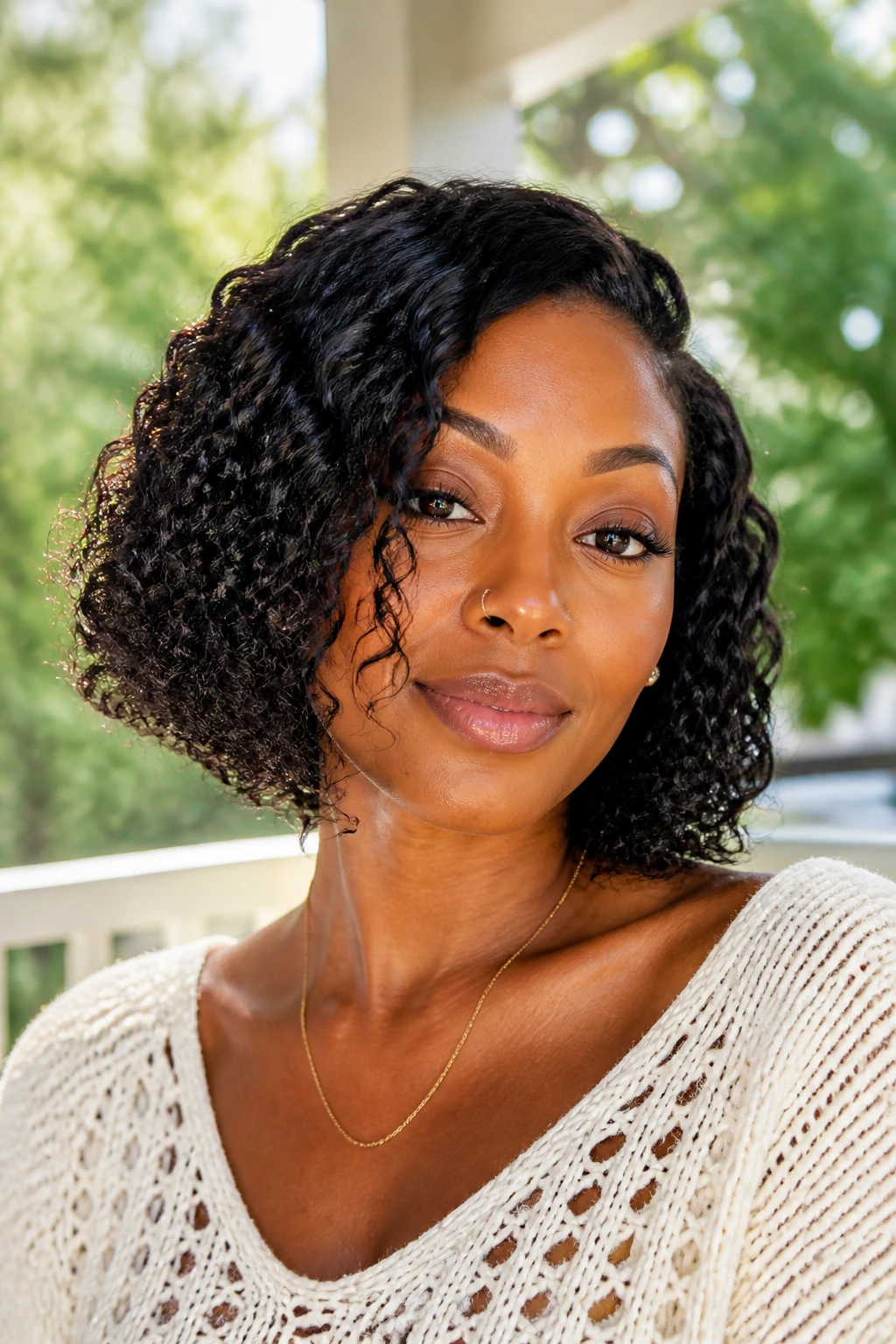
Ending the bob at cheek level: A hemline that stops right on the widest part of the face makes the whole style read broader. Move the length below the jaw or add an angle in the front.
-
Using too much hair at the sides: Heavy temple sections widen the silhouette fast. Keep the sides controlled and put any extra fullness at the crown or lower front instead.
-
Ignoring curl shrinkage: A curly package that looks long in the bag can land short on your head. Buy with shrinkage in mind, especially for water wave, French curl, and afro-curl textures.
-
Leaving the base bulky: Long natural hair needs a flatter braid foundation. If the cornrows are too thick, the bob sits away from the scalp and the whole install puffs out.
-
Going too hard on shine spray or heavy oil: Synthetic fibers can look dusty and weighed down when overloaded. Use a light mist or foam, not a greasy finish.
Variations and Adaptations to Try
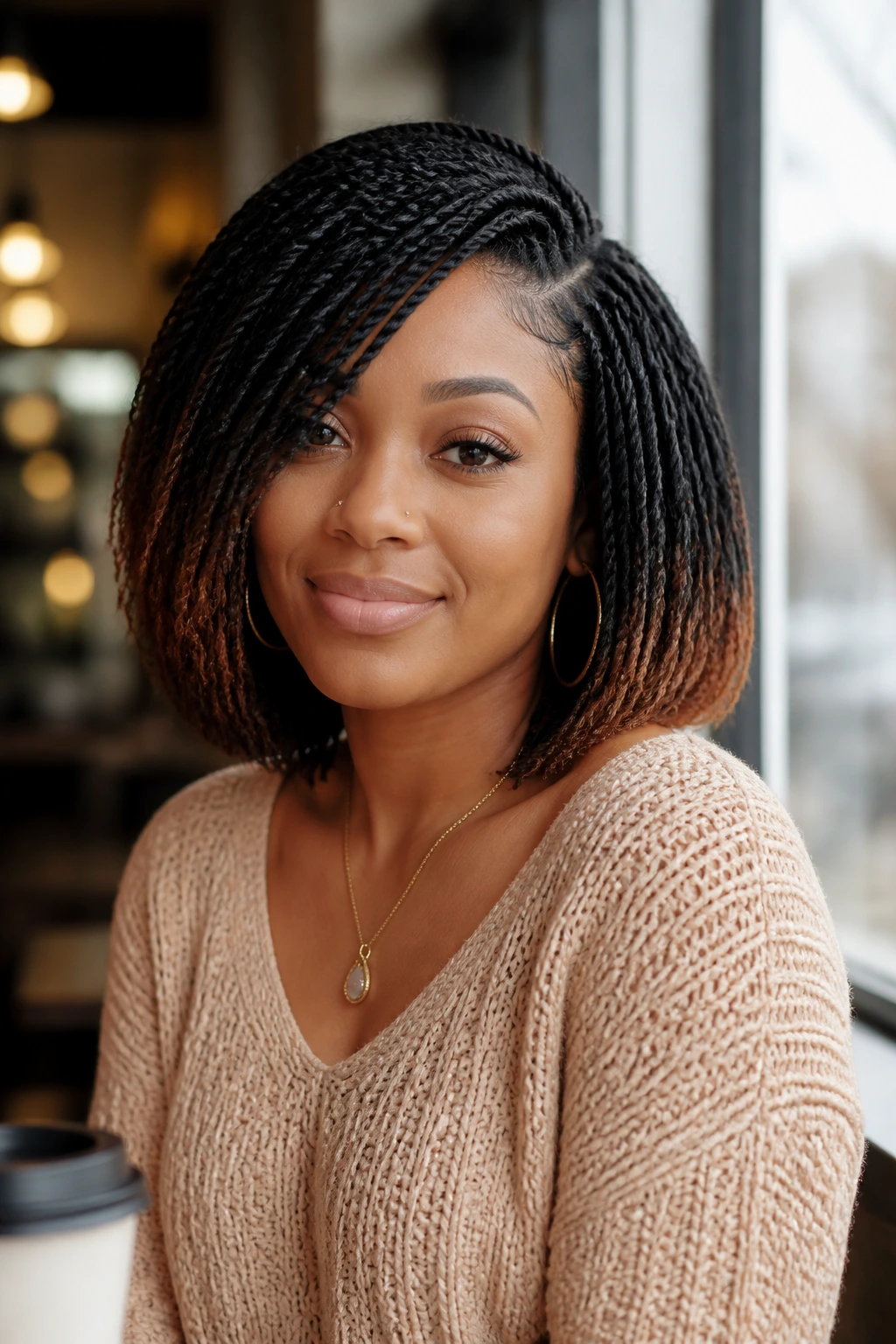
Soft Side-Part Everyday Version: Keep the length just below the jaw, use a medium side part, and choose a yaki or water-wave texture. It reads polished without looking stiff, and it works well if you want the style to blend into office wear.
Low-Tension Protective Base: If your hair is very long or thick, ask for smaller, flatter cornrows and keep the crochet density moderate. The style will feel lighter on the scalp and sit closer to the head, which helps the bob hold its shape longer.
Boho Fringe Version: Add a few loose tendrils around the temples and use a curlier fiber at the ends. This softens the edges of the face and gives the bob a more relaxed look, but keep the tendrils sparse so the cheeks do not disappear under hair.
Color Sweep Version: Put lighter tones at the lower half of the bob or only on the front layers. The contrast pulls the eye downward and gives the style more movement without requiring a dramatic cut.
Sleek Photo-Ready Version: Choose an invisible part, a smooth texture, and a cleaner hemline just below the chin. It is the best option if you want the face to look longer and the install to read neat from every angle.
Keeping the Style Fresh Week After Week
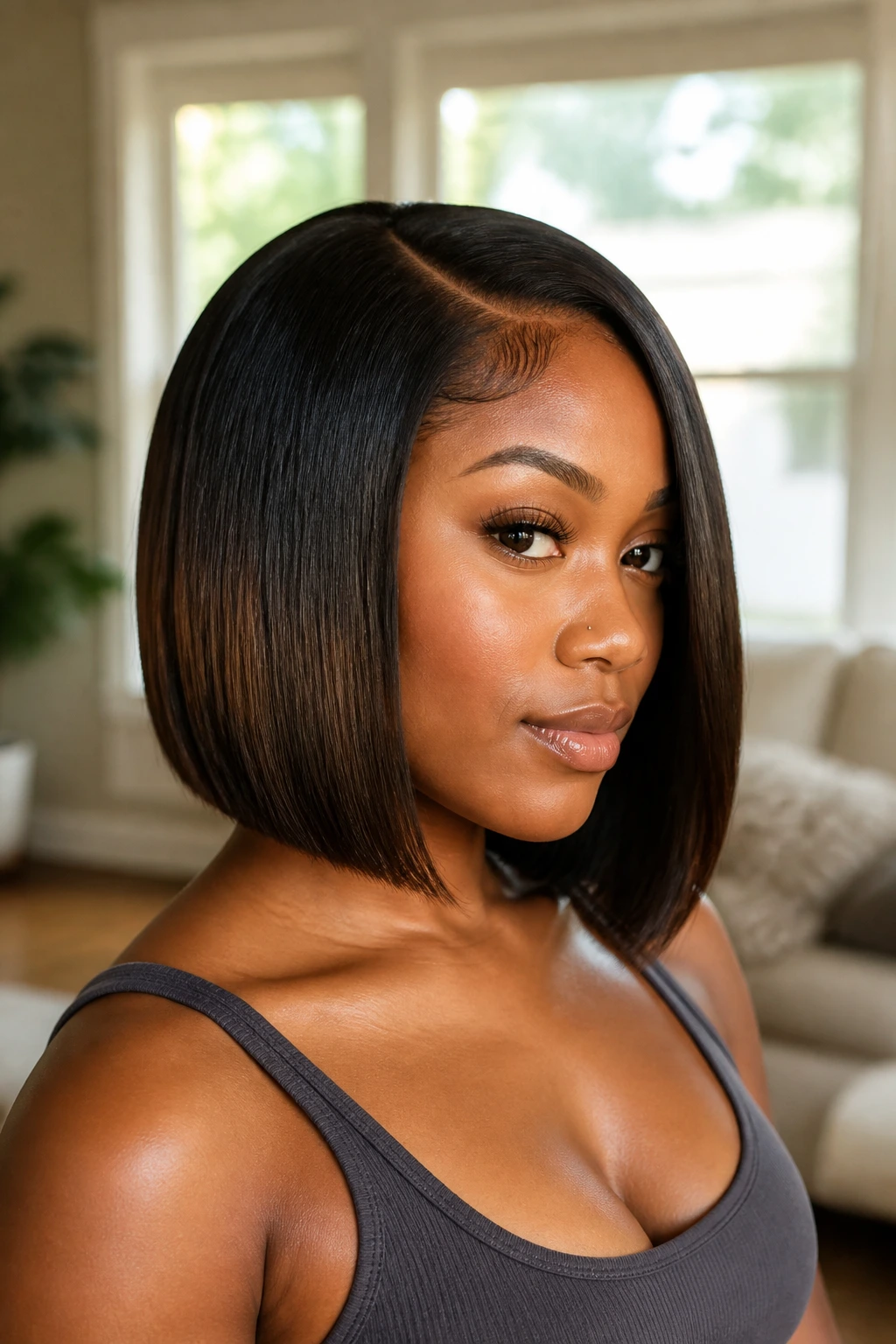
Night care matters more than people want to admit. Wrap the bob in a satin scarf or bonnet before bed so the ends do not rub against cotton and puff out. If the front pieces keep flipping awkwardly, smooth them down with your hands, then tie the scarf for 10 minutes. That small reset makes a bigger difference than another layer of product.
Synthetic crochet hair usually does not want heavy washing. If you have synthetic fibers, use a little foam or mousse on the outer layer and a light cleanser only on the scalp if it needs it. Human-hair blends can handle more water, but even then you do not want to soak the install every few days. The sweet spot is a scalp refresh every 7 to 10 days, depending on buildup and workout habits.
Most crochet bobs look their best for about 4 to 6 weeks. After that, the nape starts to fuzz, the part loosens, and the shape loses its crispness. If you are gentle, some installs can stretch a little longer, but I would not push a style this short and face-framing too far past the point where the base starts showing.
When you take it down, work slowly. Cut only the added hair, never your own braids, and keep a small mirror nearby. If you are storing leftover hair, put it back in the original bag or a dry zip bag so it does not tangle in a closet with steam or humidity.
Questions People Ask Before Installing One
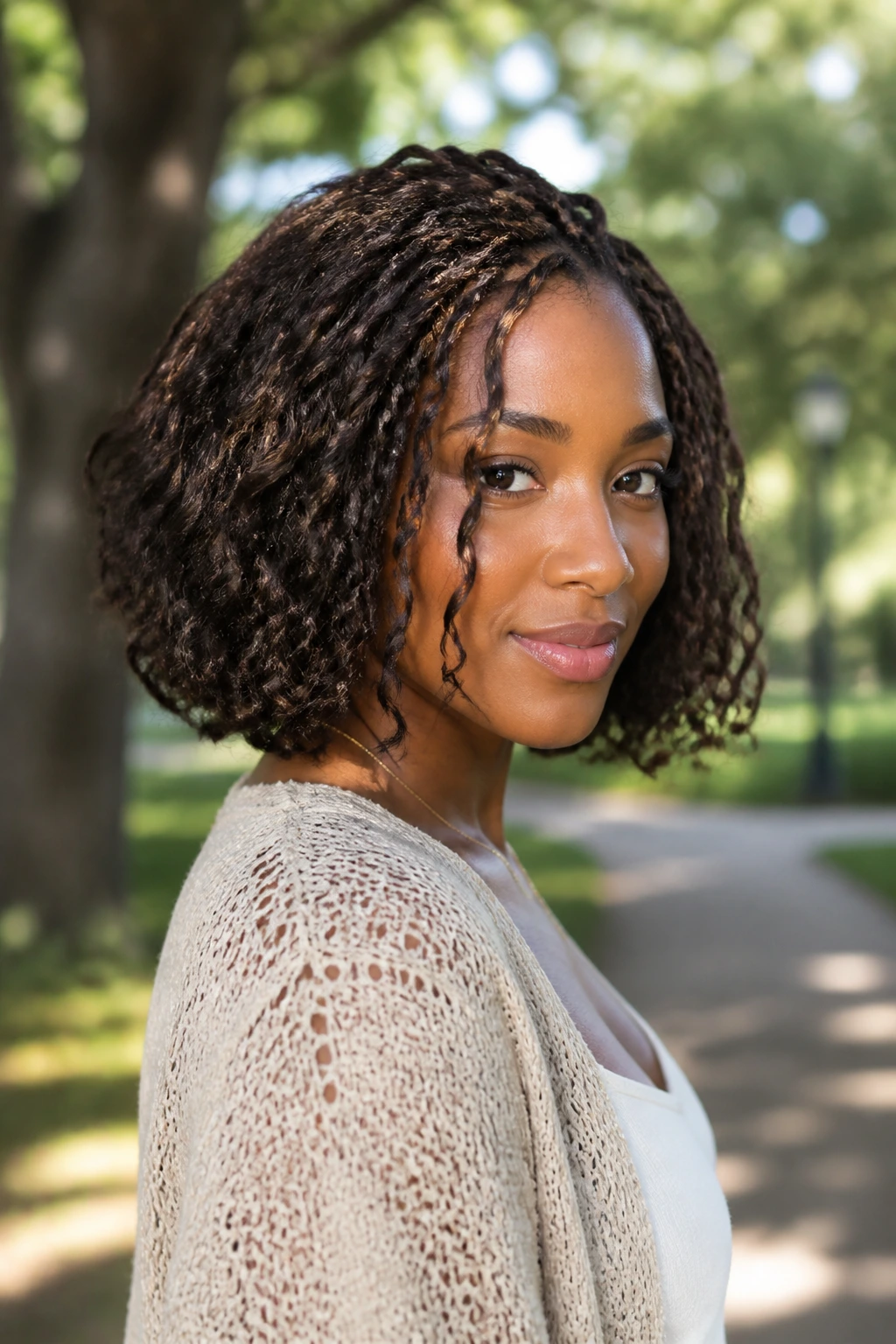
What length is safest for a round face?
Usually, a bob that falls just below the jaw is the safest starting point. Chin-level can work, but only if the front has some angle or the texture is narrow enough not to widen the cheeks.
Can long hair go under a crochet bob without showing bumps?
Yes, but the braid base has to be flatter than usual. Stretch the hair first, keep the cornrows small, and avoid a bulky crown or nape; those are the spots that show through first.
Does a middle part work on a round face?
It can, as long as the bob has enough length and the sides stay controlled. A sleek middle part with a hemline below the jaw is a different animal from a fluffy, chin-high middle-part bob.
How many packs of hair do I need?
For most bob installs, 4 to 6 packs is a common starting point, but the texture matters. Curly and fluffy fibers usually need more than smooth yaki or straight pieces because they expand once separated.
Can I wash a crochet bob?
Sometimes, yes, but the method depends on the fiber. Synthetic hair usually prefers a light scalp cleanse and foam refresh rather than a full soak, while human-hair blends can handle more water with gentler drying.
What if the bob starts looking wider than I wanted?
Flatten the crown, reduce side separation, and pin or tuck one side behind the ear for a day. Often the problem is not the cut itself; it is too much volume sitting at cheek level.
Can I wear bangs with a crochet bob?
Yes, but keep them light. Wispy bangs or a side fringe work better than a thick straight fringe because they break the line without shortening the face too much.
How long should I keep the style in?
Four to six weeks is the window I trust most. Beyond that, the nape starts to fray and the clean bob shape tends to sag or puff out in places that are hard to fix.
The Shape That Does the Most
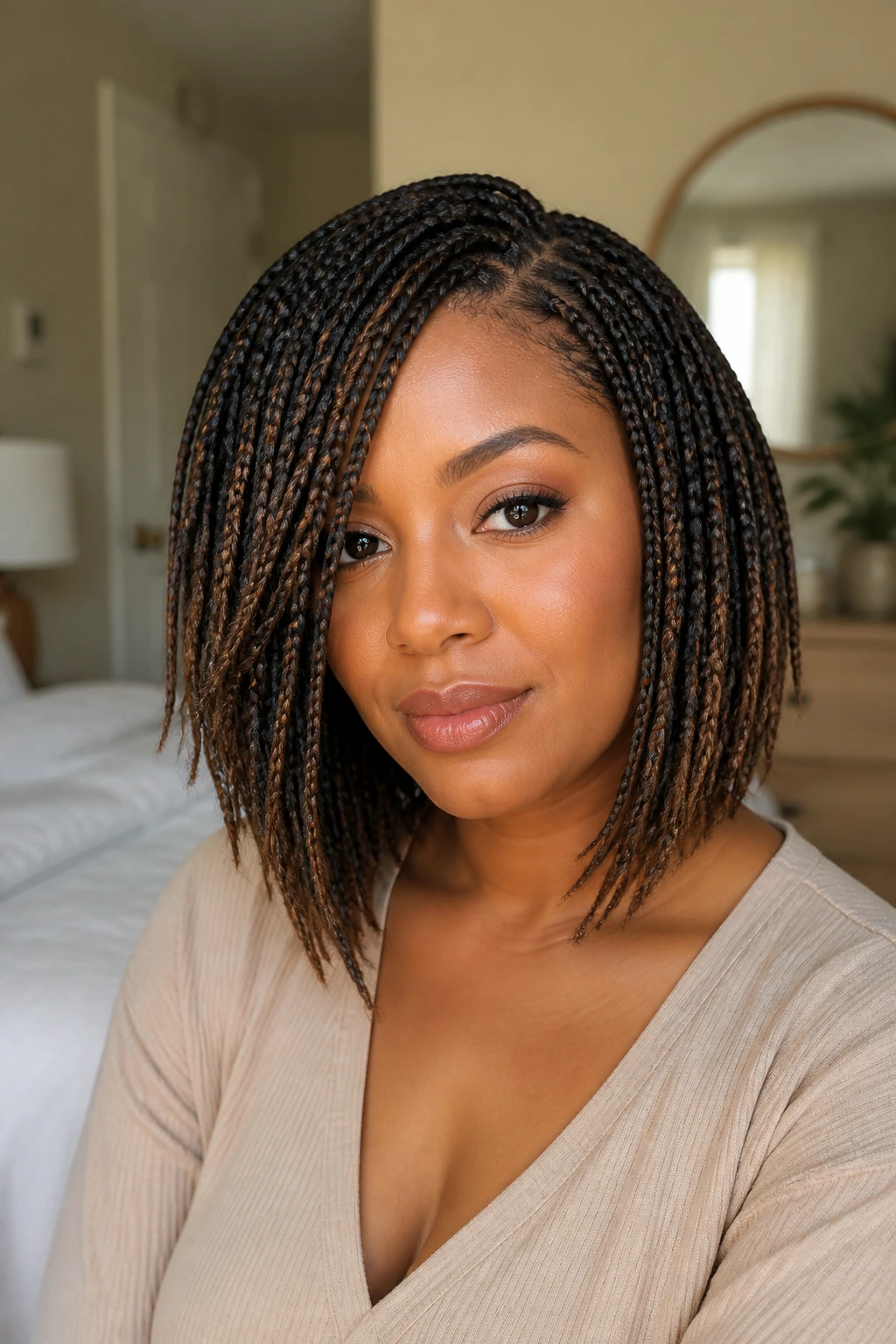
The best crochet bob does not fight the face. It edits it. A little length in front, a flatter base in back, and texture that knows where to stop can make long hair under a short style look deliberate instead of stuffed.
Pick the silhouette first, the texture second, and the color third. Do that, and the install holds its shape longer, reads cleaner, and feels easier to live with every day. The smartest style is usually the one that lets your cheeks stay visible without making them the center of the whole picture.