



Short haircuts for oval faces and curly hair can go wrong in a very boring way: too much height, too much width, or a puffed-out triangle that looks like it fought the mirror and lost. The best cuts do something smarter. They let the curl pattern build the shape while the haircut keeps the silhouette clean.
Oval faces are easy to flatter and hard to spoil, which sounds like a compliment until you sit in the chair and realize that “easy” can turn into generic fast. Curly hair changes the whole equation. A chin-length bob on 3B curls behaves nothing like the same cut on 2C waves, and a pixie with springy texture needs a different balance than a soft coil shape that shrinks two inches after drying.
The good versions have intention in the perimeter, not just layers scattered around because someone felt like thinning. A cut that lands at the jaw can sharpen a rounded curl pattern. A soft fringe can keep the eye from drifting too far down the face. A tapered nape can make thick curls sit closer to the head instead of flaring out like a bell. That’s the stuff that matters.
Why These 25 Cuts Work on Oval Faces With Curls
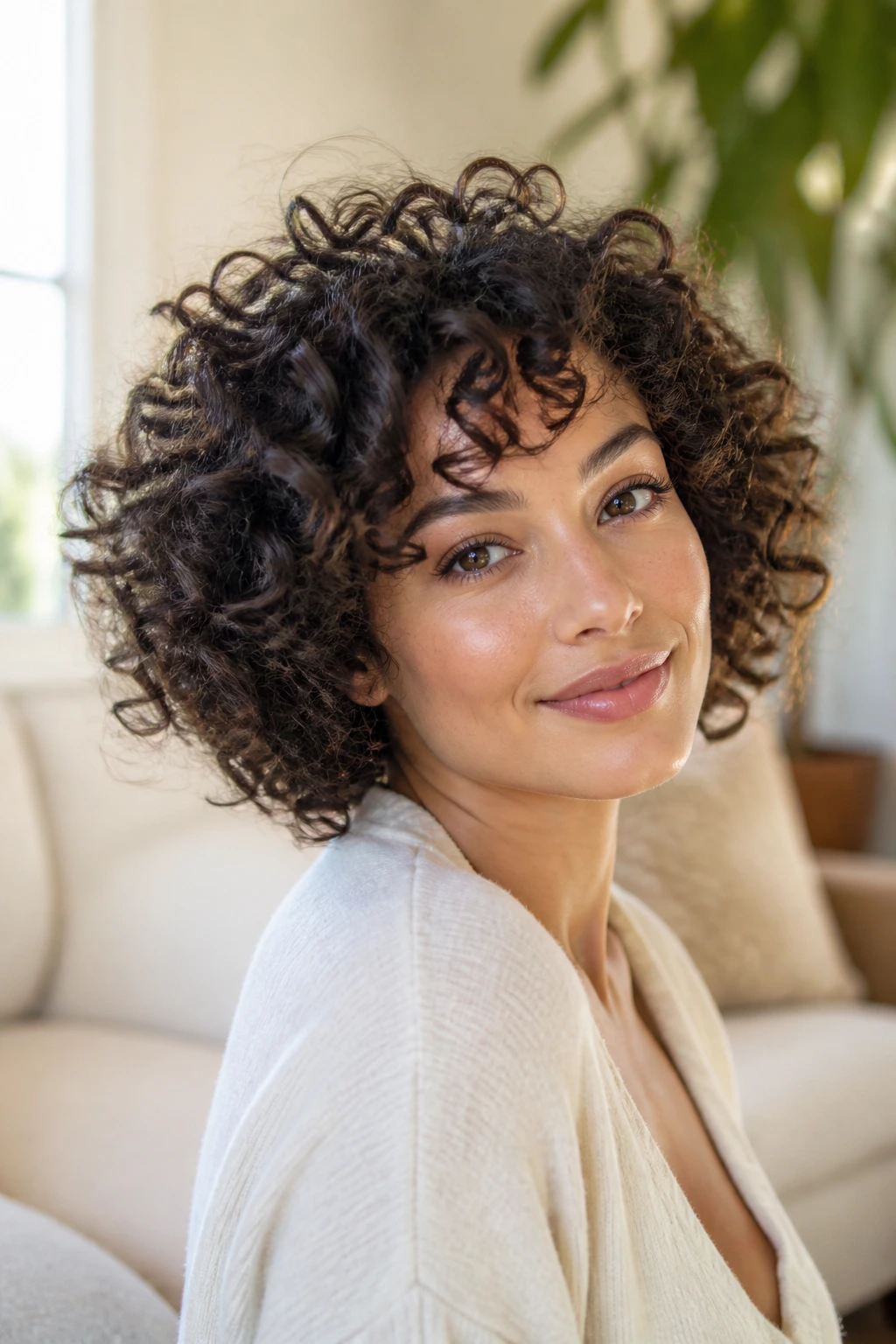
-
Balance First: Oval faces already have a balanced structure, so these cuts focus on where the curl volume lands instead of trying to “fix” the face shape.
-
Curl Pattern Friendly: The styles here work with shrinkage, spring, and frizz instead of fighting them, which makes the cut look better on day one and day three.
-
Shape Without Bulk: A good short curly cut removes weight in the right spots — the nape, the interior, or the sides — so the hair feels lighter without turning stringy.
-
Face-Framing Control: Some cuts put the emphasis at the cheekbones, some at the jaw, and some at the eyes. That small shift changes everything.
-
Easy to Personalize: A fringe, a side part, a taper, or a little extra crown height can move the same cut from soft to sharp without a full redesign.
-
Works Across Texture: Loose waves, corkscrew curls, and tighter coils each need a different approach, and these cuts cover that range instead of pretending one length solves all of it.
1. Curly French Bob
The curly French bob sits right in that sweet spot between polished and slightly undone. It usually lands around the cheekbones or just at the jaw, with a soft curve that lets curls push outward without swallowing the face. On an oval face, that compact shape keeps the features centered and gives the eyes something to land on fast.
I like this cut best on curls that have enough spring to hold a shape but not so much shrinkage that the length jumps way above the chin. Think 2C to 3A, maybe a soft 3B if the stylist leaves a little extra length. A center part makes it feel airy; a slight off-center part gives it a cleaner line.
The real trick is the perimeter. Too blunt and it turns boxy. Too layered and it loses the French-bob snap. Ask for soft, dry-shaped edges and a little face framing that starts near the cheekbone, not at the ear.
2. Rounded Pixie With Soft Sideburns
A rounded pixie can be a tiny miracle on curly hair when the shape is done with restraint. The top stays a little longer, the sides stay close enough to keep the profile neat, and the sideburns are left soft instead of carved into a harsh line. That softness matters on an oval face because it keeps the whole cut from looking severe.
This version works especially well when the hair is fine to medium and the curl pattern wants to lift instead of collapse. If the crown is flat, a little extra length there keeps the top from going limp. If the curls are dense, the stylist should remove weight inside the shape rather than hacking the ends into wisps.
Wear it with a bit of mousse and finger-dried definition. It should look like the curls made the decision themselves.
3. Jaw-Length Curly Crop
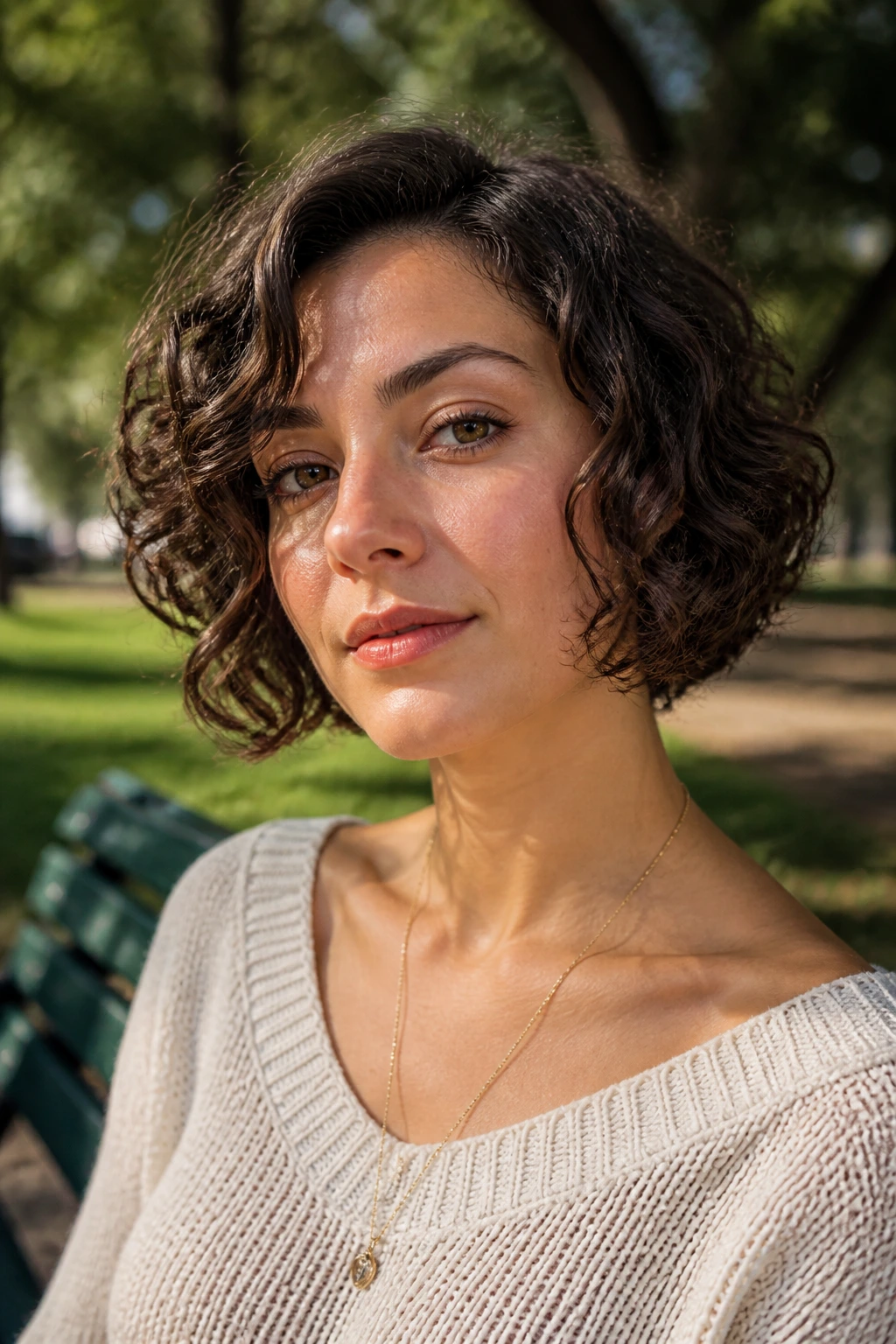
The jaw-length curly crop does one job very well: it puts the visual line right where the face narrows. On an oval face, that gives the whole haircut a clear anchor. The curls can bounce, but they still read as contained, which is a nice place to be if you hate hair that swallows your collar.
This cut works beautifully with medium-density curls because the jawline length gives the hair enough room to shape itself without bunching at the cheeks. If your curls shrink hard, ask for the front to be left a little longer in the chair. Dry cutting helps a lot here. Wet curls lie.
A side part can make this crop feel more tailored, while a center part keeps it softer. Either way, the ends should look deliberate, not chopped.
4. Layered Chin-Length Bob
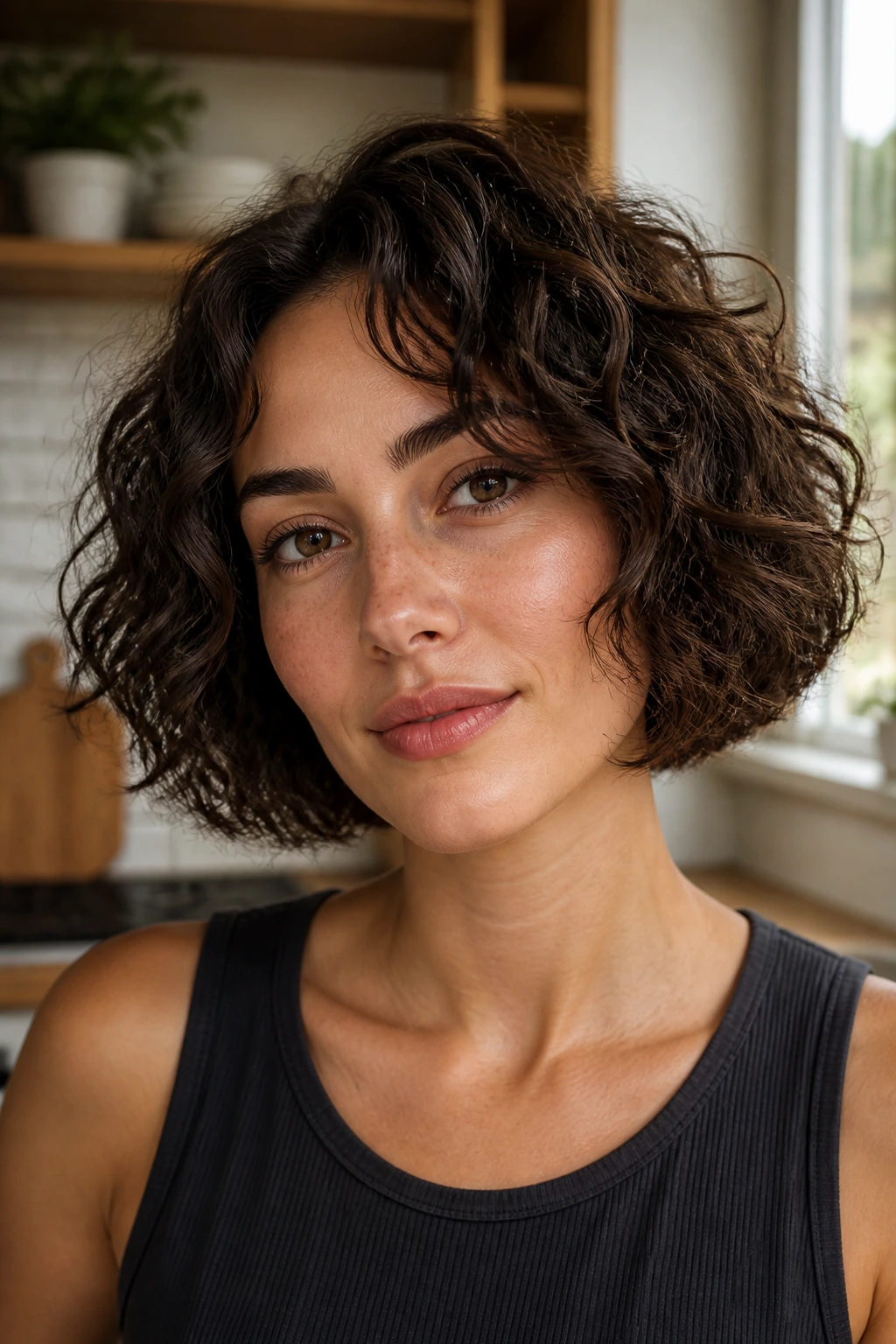
A chin-length bob with layers can go from plain to useful in about five snips, which is why so many stylists come back to it for curly hair. The chin length keeps the shape close to the face, and the layers stop the ends from building one heavy shelf. On an oval face, that means the cut frames rather than dominates.
The best version doesn’t over-layer the crown. That’s a common mistake. You want the inside of the cut to move, not the surface to frizz apart. If you have dense curls, ask for internal shaping and a little weight left at the bottom edge.
This is one of those cuts that looks best when it’s dried without too much touching. Let the curls find their own bend. Then resist the urge to keep fluffing them up.
5. Curly Shag With Micro Fringe
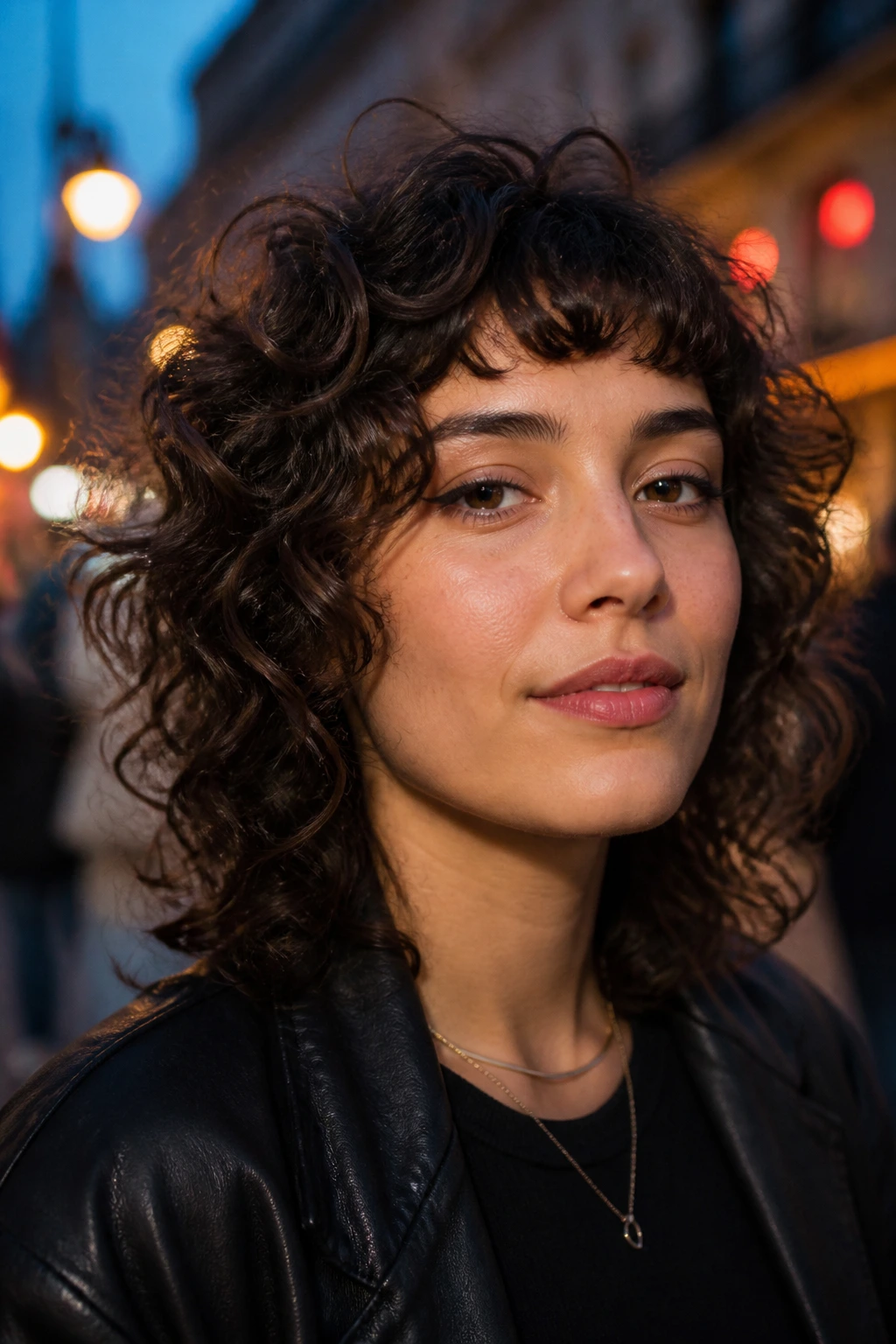
A curly shag can look messy in the wrong hands and electric in the right ones. The difference usually comes down to balance. The layers should create movement around the cheekbones and the fringe should sit short enough to matter, but not so short that it sticks up like a bad accident.
For oval faces, this cut is useful because it breaks up length without hiding the face. The micro fringe draws the eye upward, and the layered sides keep the curls from ballooning out at one level. It’s especially good on 3A to 3C curls that can hold separated texture without turning fuzzy.
This one needs a stylist who understands curl-by-curl shaping. If the layers are blunt and too high, the shag loses its rhythm fast.
6. Side-Parted Tapered Bob
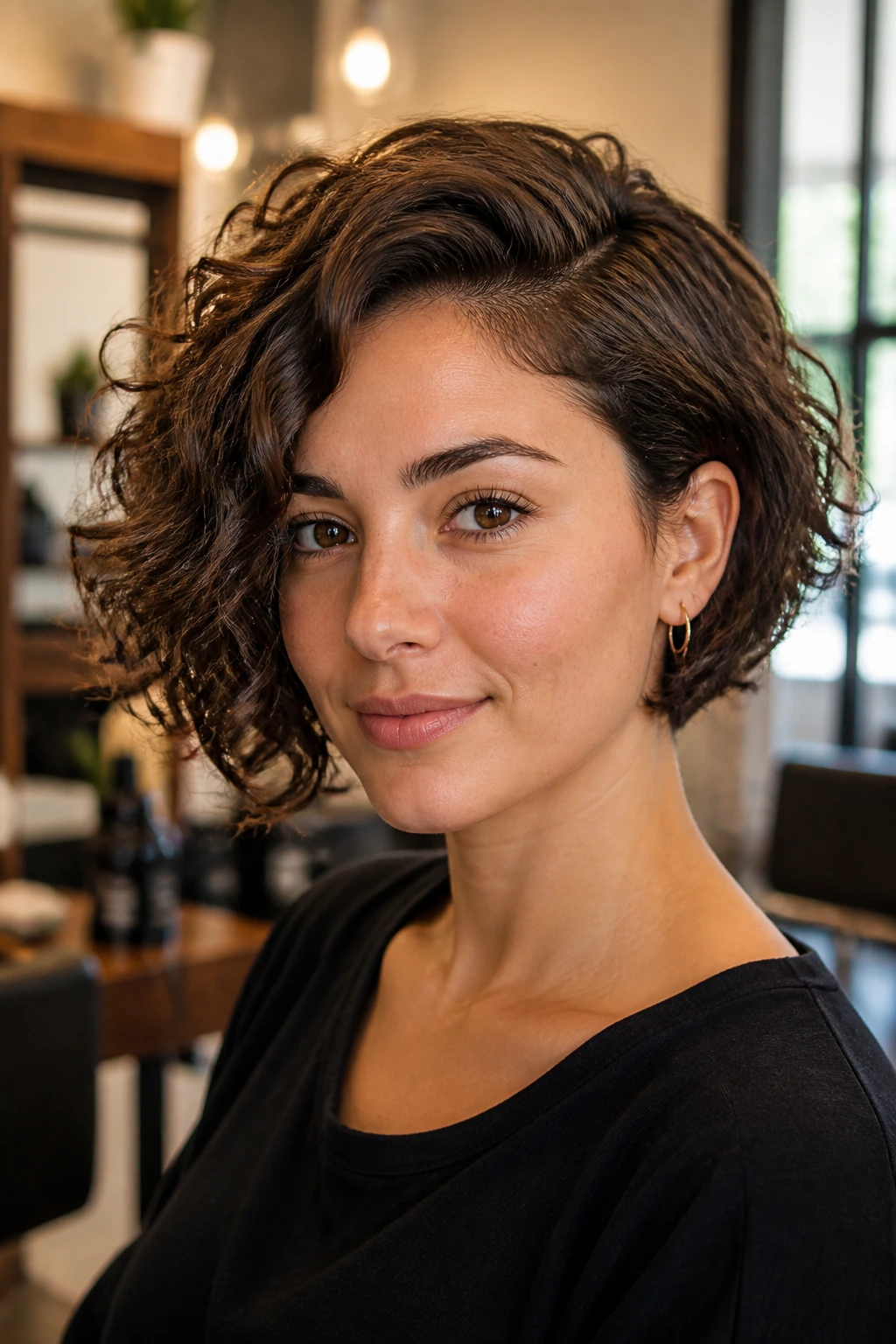
The side-parted tapered bob has a little more structure than the French bob and a little less softness than a rounded crop. The side part creates a diagonal line across the face, which is handy when you want the cut to feel lifted instead of symmetrical. On oval faces, that diagonal keeps the silhouette from looking too predictable.
The taper at the nape is the part that really earns its keep. It lets the back sit close to the head while the curls at the front keep some body. That contrast makes thick curly hair easier to wear short because it removes the puff at the neckline.
If your hair tends to mushroom at the sides, this is a smart option. Keep the side lengths skimming the jaw and let the back be cleaner than the front. Simple. Effective.
7. Asymmetrical Curly Bob
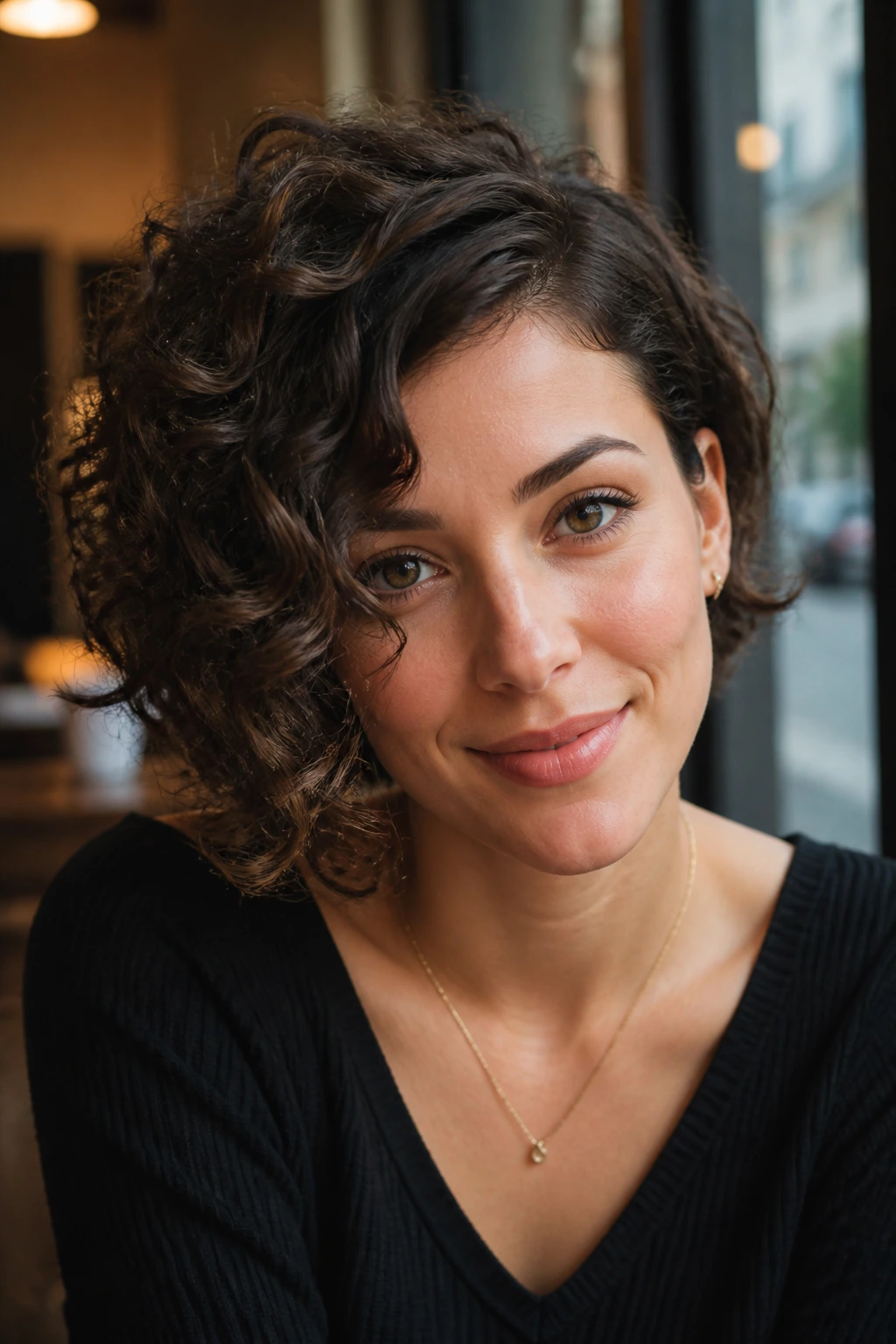
An asymmetrical curly bob sounds dramatic, but the good versions are more subtle than that. One side usually lands a little longer, often by half an inch to an inch, and that small shift gives the cut shape without needing extra layers everywhere. On an oval face, it adds movement without fighting the natural balance of the features.
I like this style when someone wants a short cut that feels a little sharper than a classic bob. The uneven line can make curls look more deliberate, especially if the curl pattern is loose enough to show the length difference. The trick is to keep the shorter side heavy enough that it doesn’t vanish once the curls dry.
This cut loves side parts and hates over-thinning. Leave some weight in the ends. That’s the whole point.
8. Ear-Length Tapered Pixie
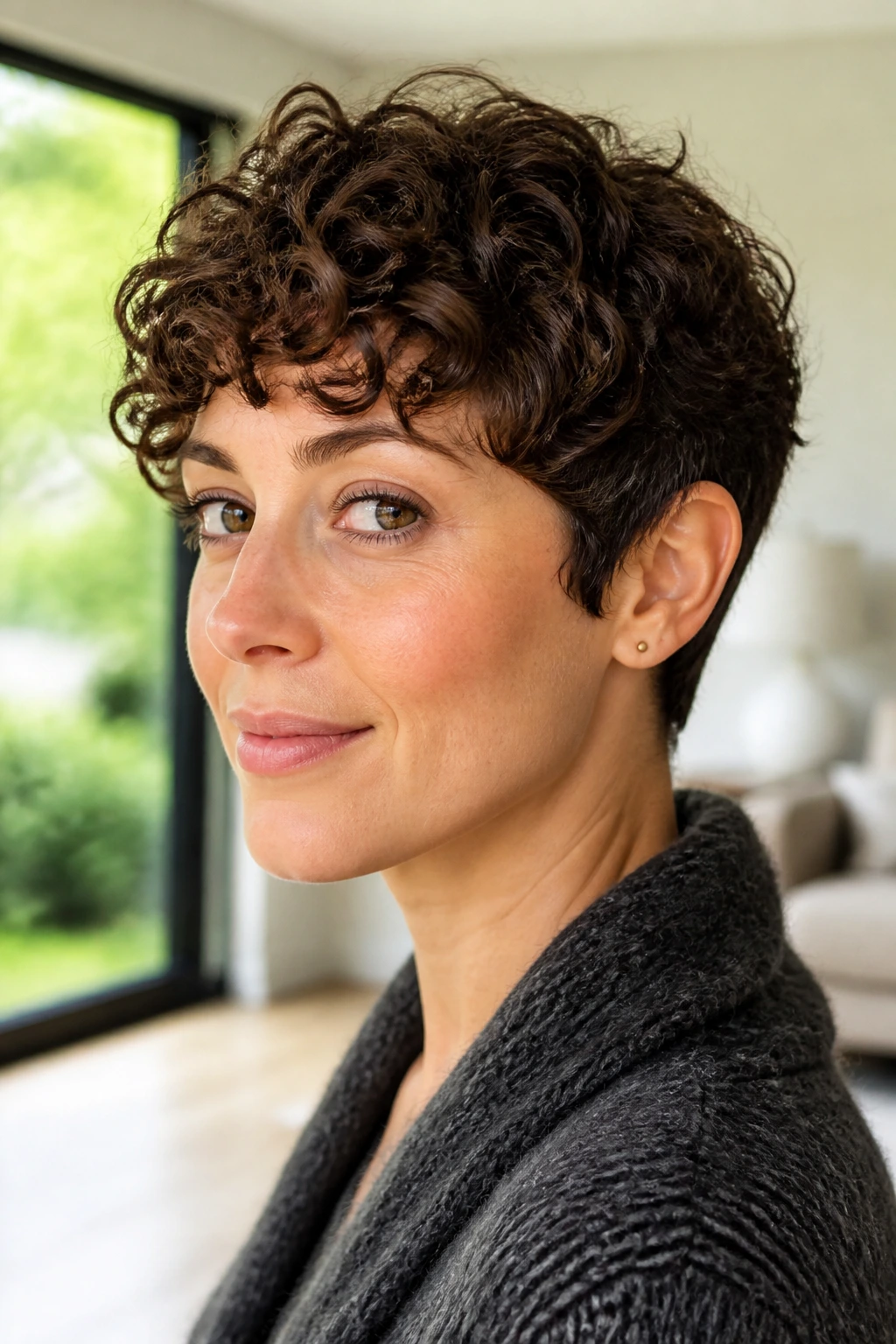
An ear-length tapered pixie is for people who want their curls short and out of the way, but still visible as curls. The ears stay mostly exposed, the top has enough length for texture, and the nape is cut close so the whole thing looks sharp rather than fluffy. Oval faces handle this shape well because the proportions stay clean.
Fine curls can make this cut look airy and bright. Dense curls need more tapering around the sides so the shape doesn’t puff out behind the ears. If the stylist cuts it too evenly all over, it loses its line and turns into a round cloud.
A little styling cream and a light gel cast go a long way here. You do not need a lot of product. You need the right amount in the right place.
9. Soft Mullet With Face-Framing Pieces
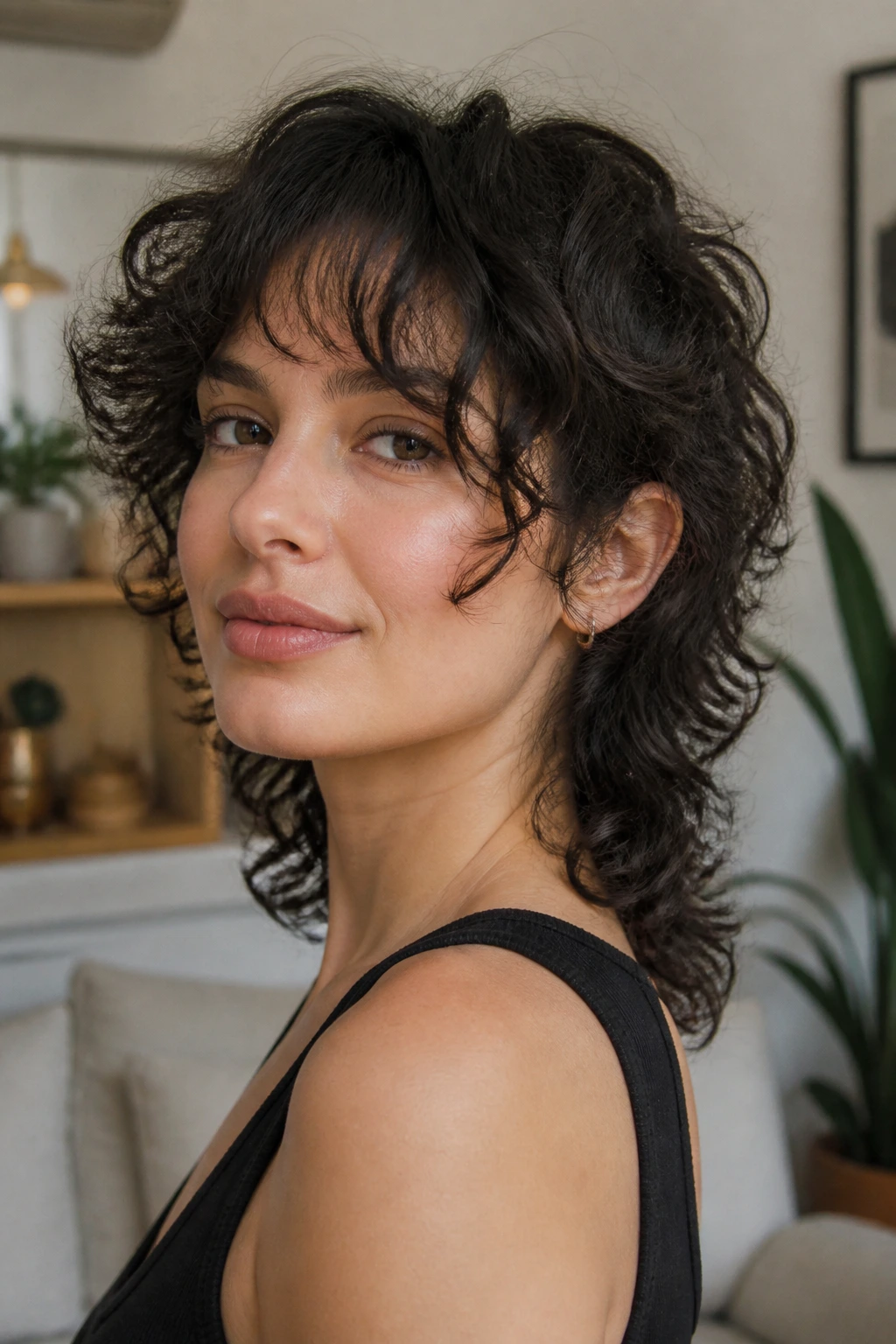
The modern soft mullet is not the punk mess people still imagine. On curly hair, it can look surprisingly elegant when the front is kept soft and the back is allowed to sit a little longer. The face-framing pieces are what make it work on an oval face; they stop the shape from feeling too vertical.
This cut suits curls that want movement more than precision. If your hair has a lively bend and a bit of personality, the soft mullet gives it a shape that doesn’t look over-managed. The nape stays a little longer, the crown gets lift, and the sides are textured enough to keep the silhouette from going flat.
It’s a good choice if you want short hair with a little edge but don’t want anything that reads harsh. The word here is soft. Keep repeating that to the stylist if needed.
10. Collarbone-Grazing Lob With Layers

Yes, a collarbone-grazing lob is on the longer side of “short,” but for curly hair it earns a place here because it gives you the shortest length that still feels easy to pin, tuck, and move around. On an oval face, the collarbone line keeps the face open while the layers prevent the length from hanging like a curtain.
This is one of the safest choices if you’re nervous about going too short. The curls have room to spring, but not enough length to drag the face down. It works on a wide range of patterns, from loose waves to tighter curls that need more room to clump.
Ask for layers that start below the cheekbone if you want the shape to stay calm. If they begin too high, the lob can puff out at the sides.
11. Tousled Box Bob
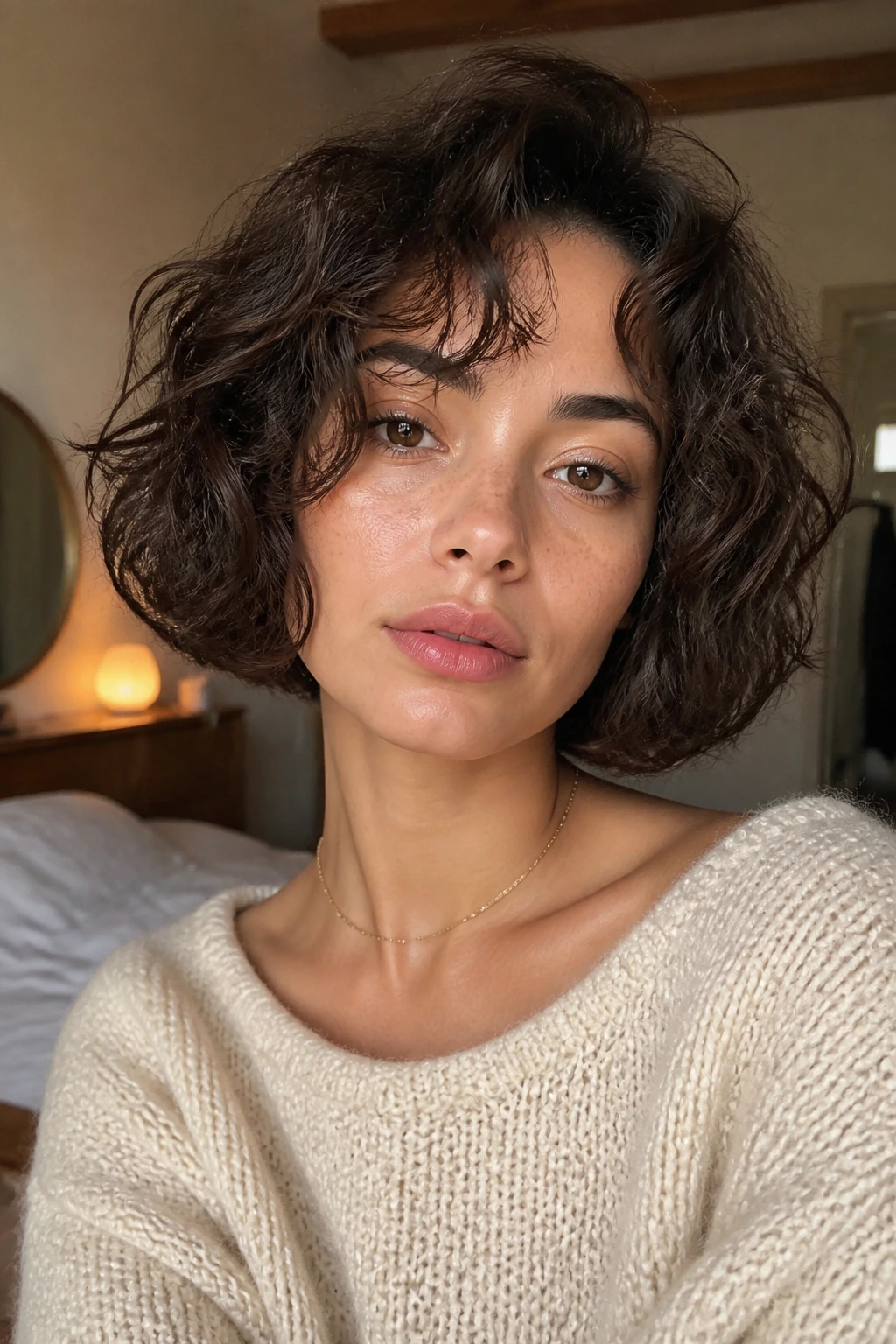
The box bob has a blunt, slightly squared outline, but on curly hair that outline gets softened in a way that feels modern rather than stiff. The shape sits around the cheek to jaw area, and the edges are kept tidy enough to show the cut line without making the hair look helmeted.
Oval faces do well with this because the horizontal line widens the face just enough to balance a longer-looking curl spring. That sounds technical, but you can see it instantly in the mirror. The face looks framed, not stretched.
This is a strong choice for curls with more density than height. It keeps the mass under control. If your hair tends to frizz at the ends, a tiny bit of internal weight removal helps the shape settle.
12. Curly Crop With Long Top
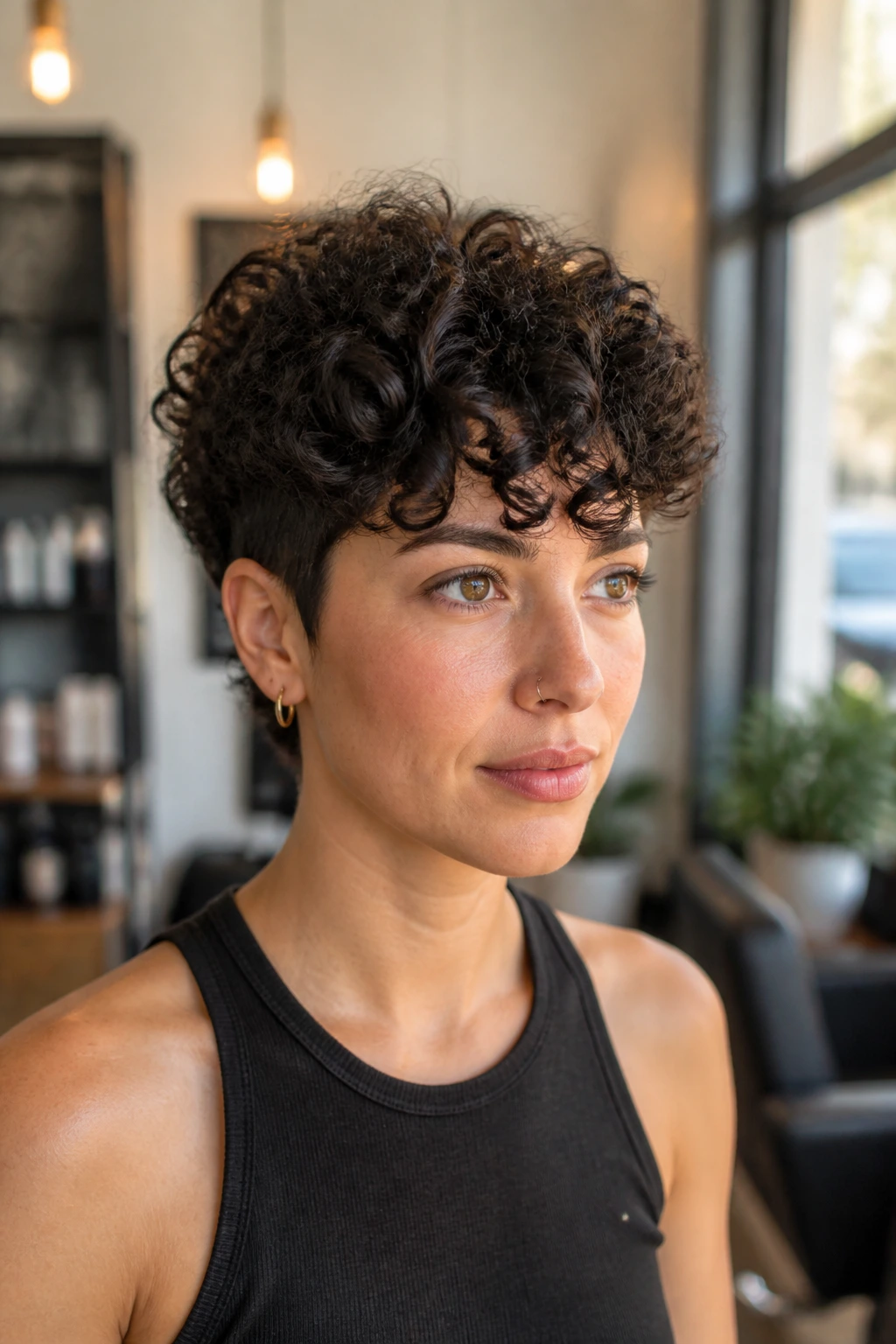
A curly crop with a long top gives you a short perimeter and a little room up top for the curls to move. The sides and back stay cleaner, which keeps the cut from expanding too much, while the top carries the texture. On an oval face, that separation works because it adds shape without creating extra roundness everywhere.
This cut is especially useful for thick or coarse curls that get puffy fast. The longer top gives the curl pattern a place to live, and the shorter sides stop the whole head from looking wide. If your curls are looser, the top can be a touch longer for a more casual look.
The caveat: don’t overstyle the crown. A lot of people make this cut look stiff by pushing the top straight up. A forward or diagonal lay is usually better.
13. Side-Swept Curly Pixie
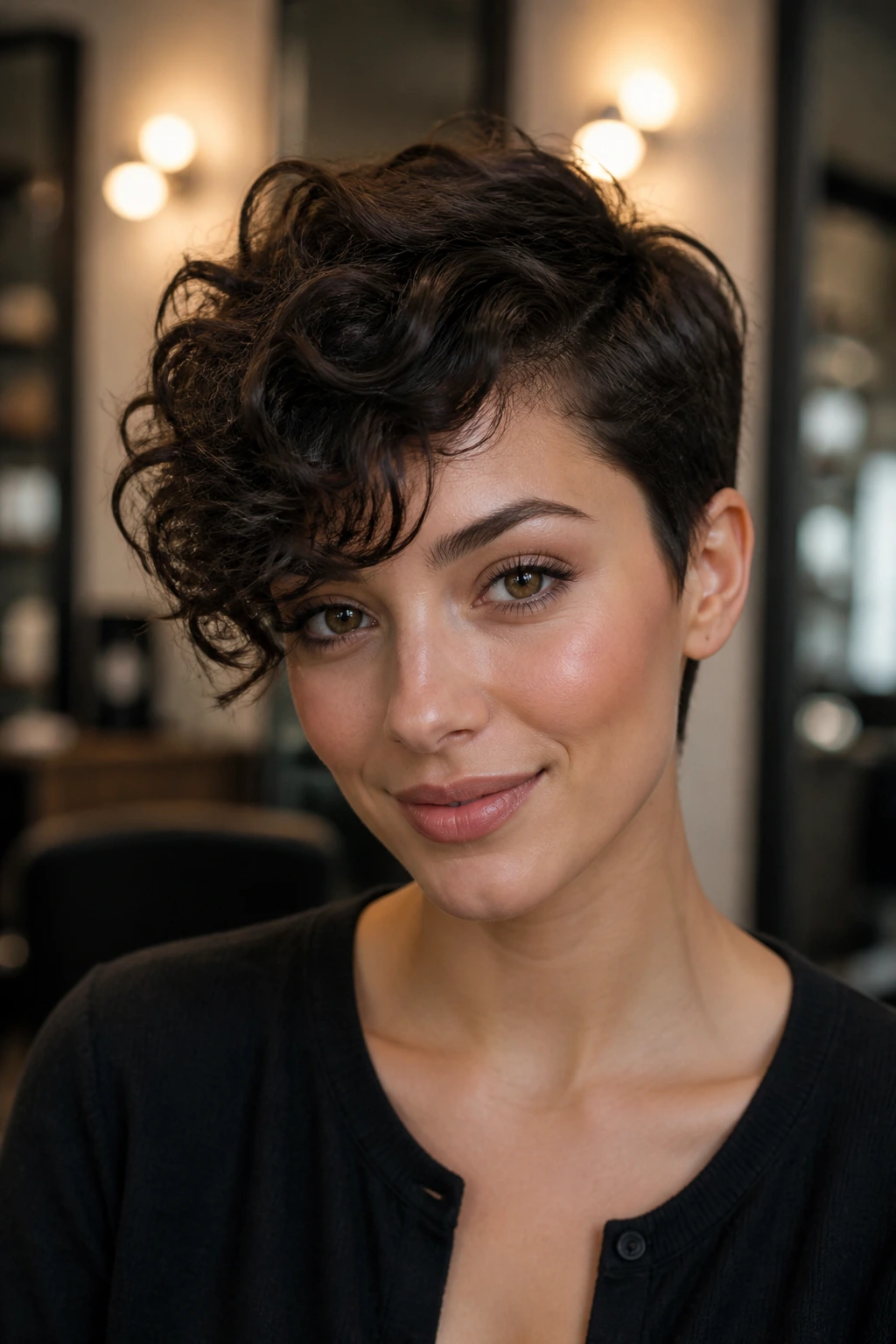
A side-swept curly pixie has one advantage that never gets old: it gives the forehead and cheekbones a nice diagonal line without demanding much length. For oval faces, that slight sweep can make the cut feel intentional instead of simply short. The fringe part softens the transition between the top and the sides.
This works well on curls that want to fall forward naturally. If your hair already bends toward one side, lean into it. Don’t fight the cowlicks unless you enjoy suffering before coffee. A good stylist will shape the fringe around the natural direction of growth.
It’s a smart pick if you want a pixie but worry about it looking too severe. The side-swept front keeps it friendly.
14. Stacked Curly Bob
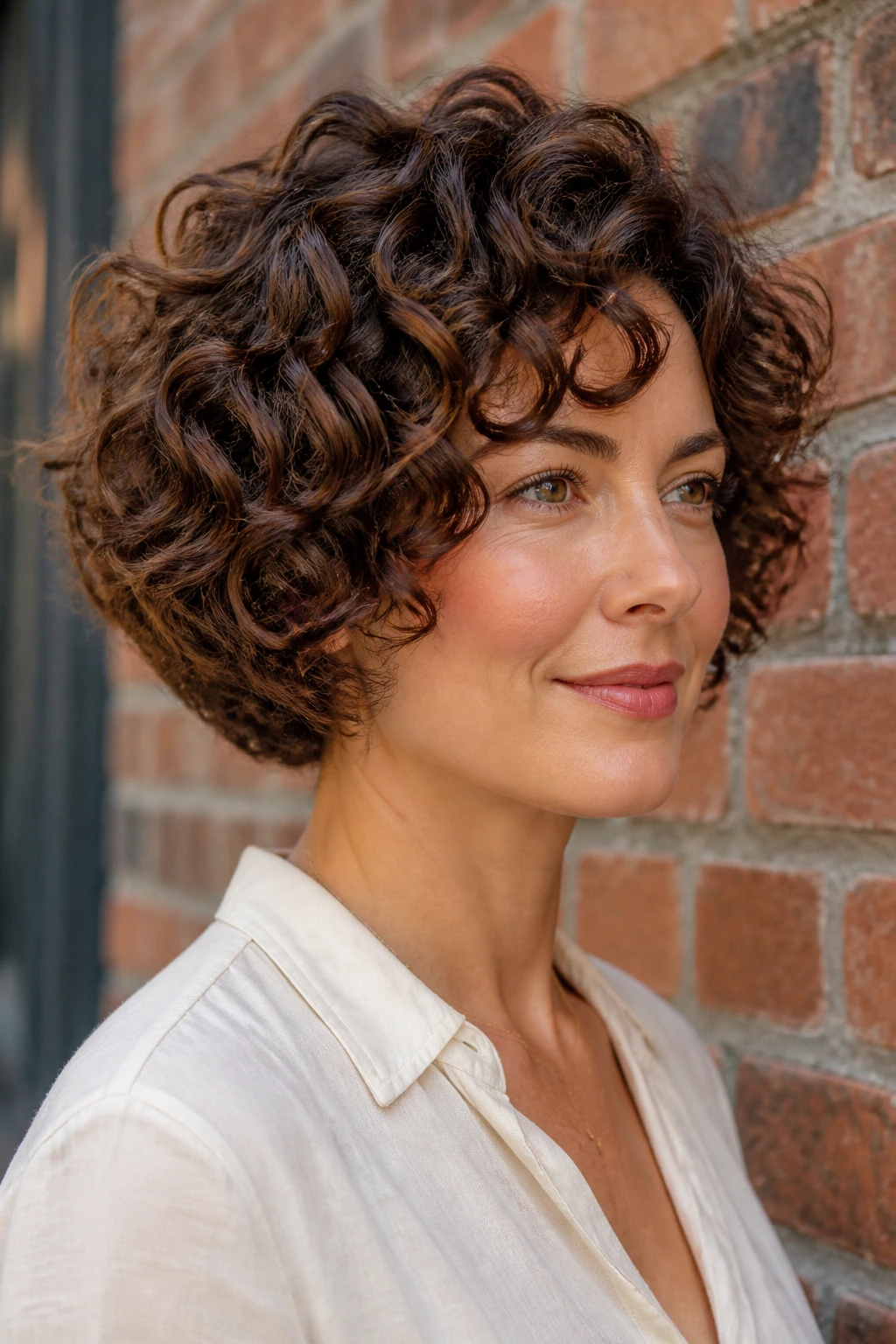
The stacked curly bob builds a little lift at the back through graduated layers, so the cut sits off the neckline instead of hanging straight down. That stacked shape can be a lifesaver for dense curls, because it removes bulk where it tends to collect and gives the profile a cleaner line.
On an oval face, the back lift helps keep the front from taking over. You still get curl volume, but the haircut has a shape that reads from the side as well as the front. That matters more than people think. A haircut should not only work in selfies.
Ask for a stack that’s visible but not extreme. If the back is too short, the shape turns into a wedge. If it’s too long, the stack disappears.
15. Bixie Cut With Crown Lift
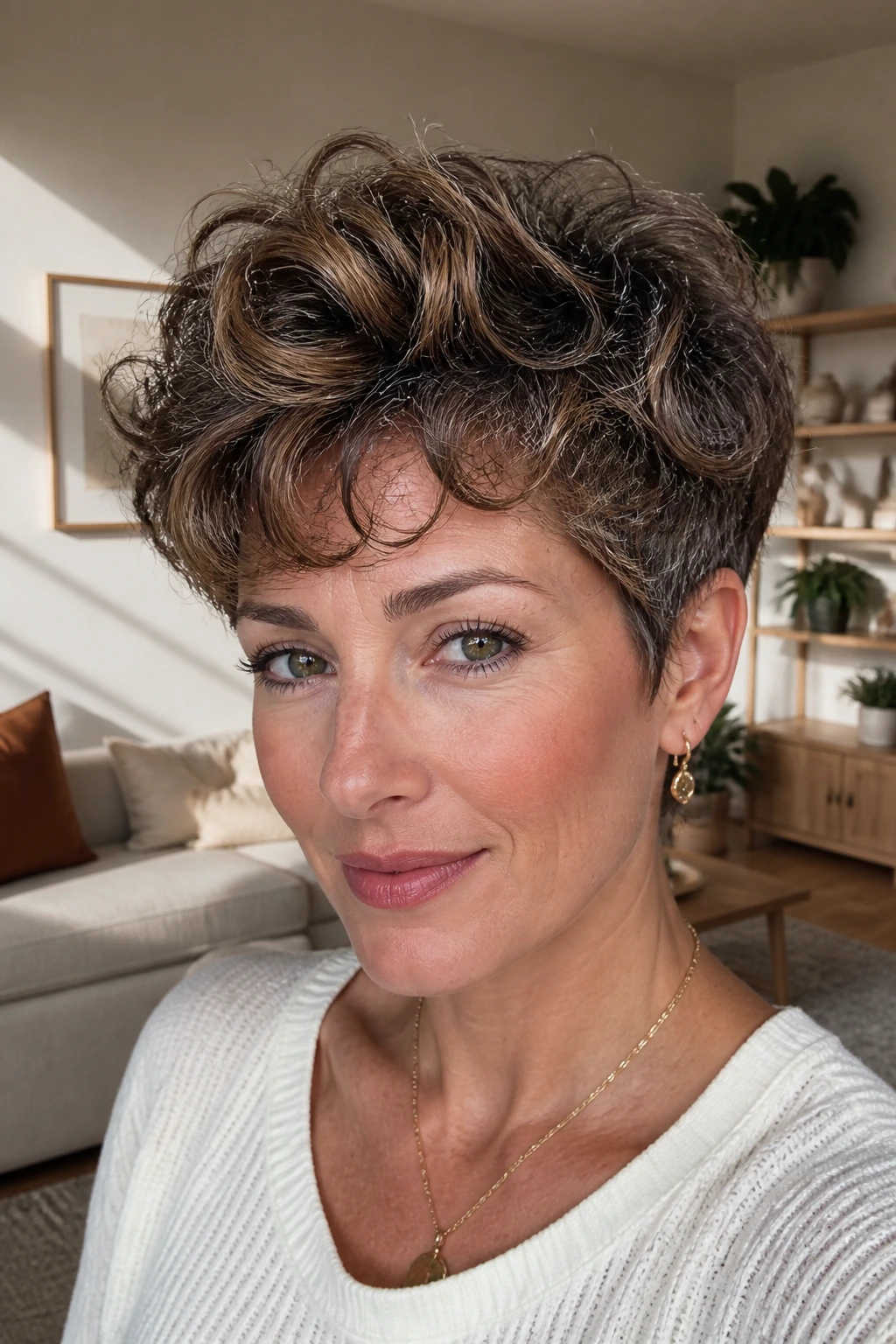
The bixie sits somewhere between a bob and a pixie, and that middle ground is why people keep circling back to it. With curly hair, the top can hold enough texture for movement while the sides and back stay short enough to keep the outline neat. Oval faces wear this shape well because it adds lift without hard edges.
Crown lift is the thing that changes the mood. A little extra length at the top makes the cut feel playful and slightly airy; too much and it starts to look top-heavy. The best bixies keep the neckline clean and the fringe soft.
If you want a short cut that can still tuck behind the ear or be pushed forward on a lazy day, this is a smart one. It’s not fussy. That’s part of the appeal.
16. Tapered Curly Bowl Cut
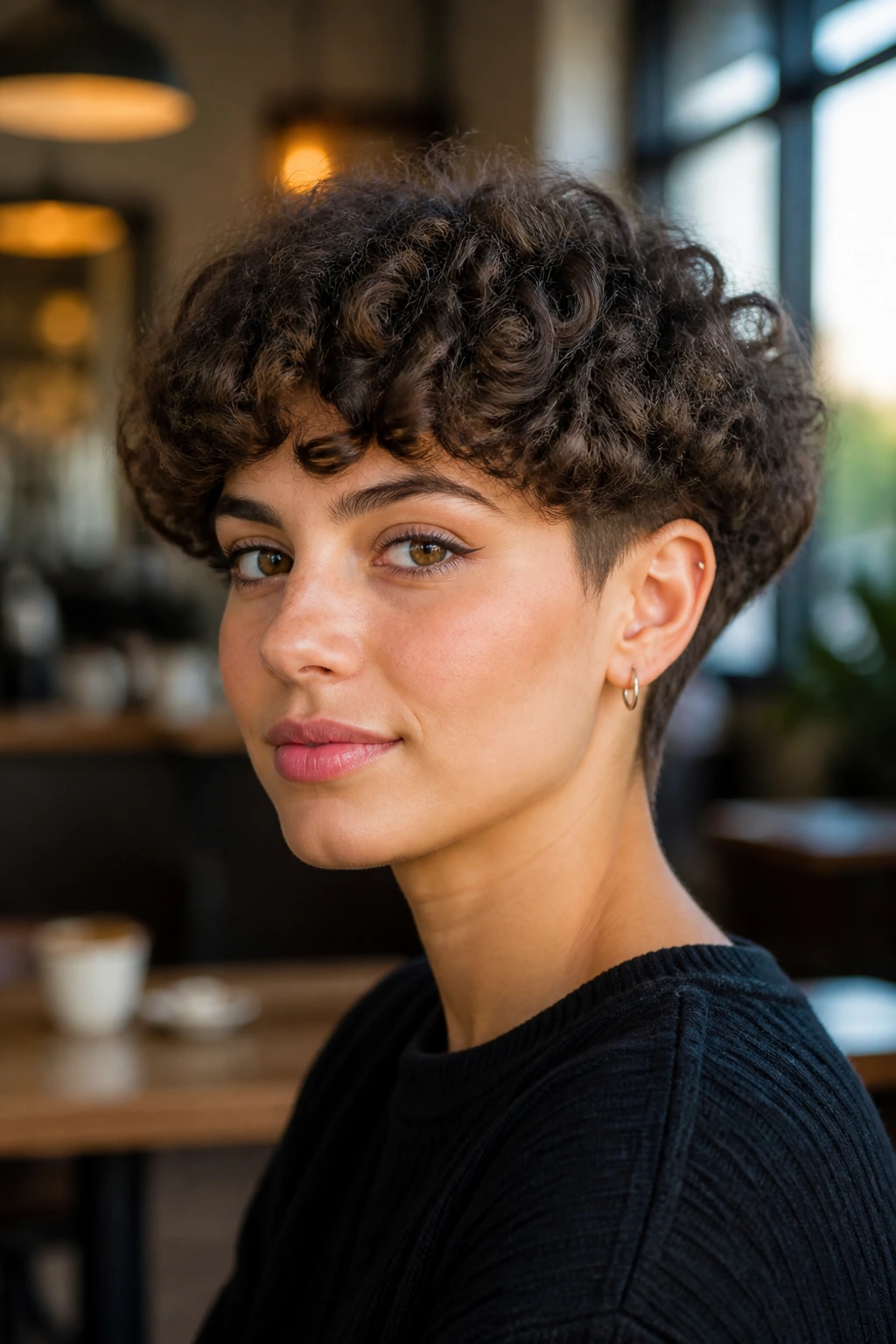
A modern tapered bowl cut is not the retro mushroom people are picturing. Done well, it follows the curve of the head, keeps the sides neat, and lets the curls make a soft halo around the face. On an oval face, that rounded frame can look striking because the features already have balance; the cut just gives them a clean border.
This shape works best on curls that are fairly uniform in pattern. Tight coils can make it sculptural. Looser curls can make it playful and a little artsy. The taper around the nape and ears keeps it from turning bulky.
It is a bolder choice, yes, but not a difficult one if the cut is precise. The key is even density and a smooth line through the sides.
17. Deva Cut Bob
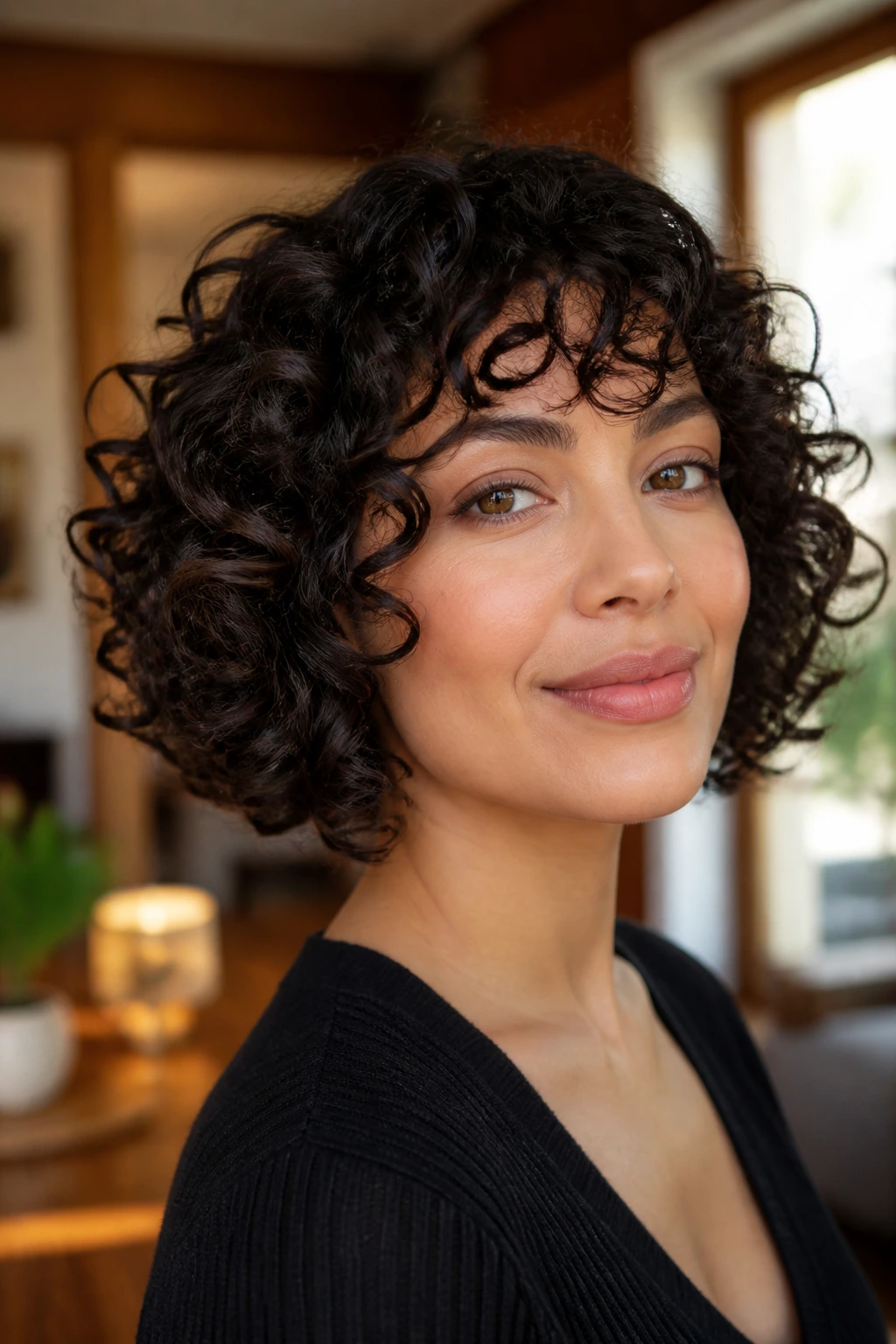
A Deva cut bob is less a shape than a method, and the method matters. The hair is cut curl by curl, usually dry or nearly dry, so the stylist can see how each piece falls instead of guessing. On oval faces, that precision keeps the bob from overfilling the sides or dropping too flat at the front.
This is one of the best options if your curls have different textures in different zones — tighter underneath, looser at the crown, maybe a few odd bends near the temples. The cut can be customized around those differences rather than pretending your whole head behaves the same way.
If you’ve been burned by wet-cut bobs that looked fine in the salon and wrong at home, this method is worth asking about. It takes longer. It usually looks better.
18. Rounded Afro Bob
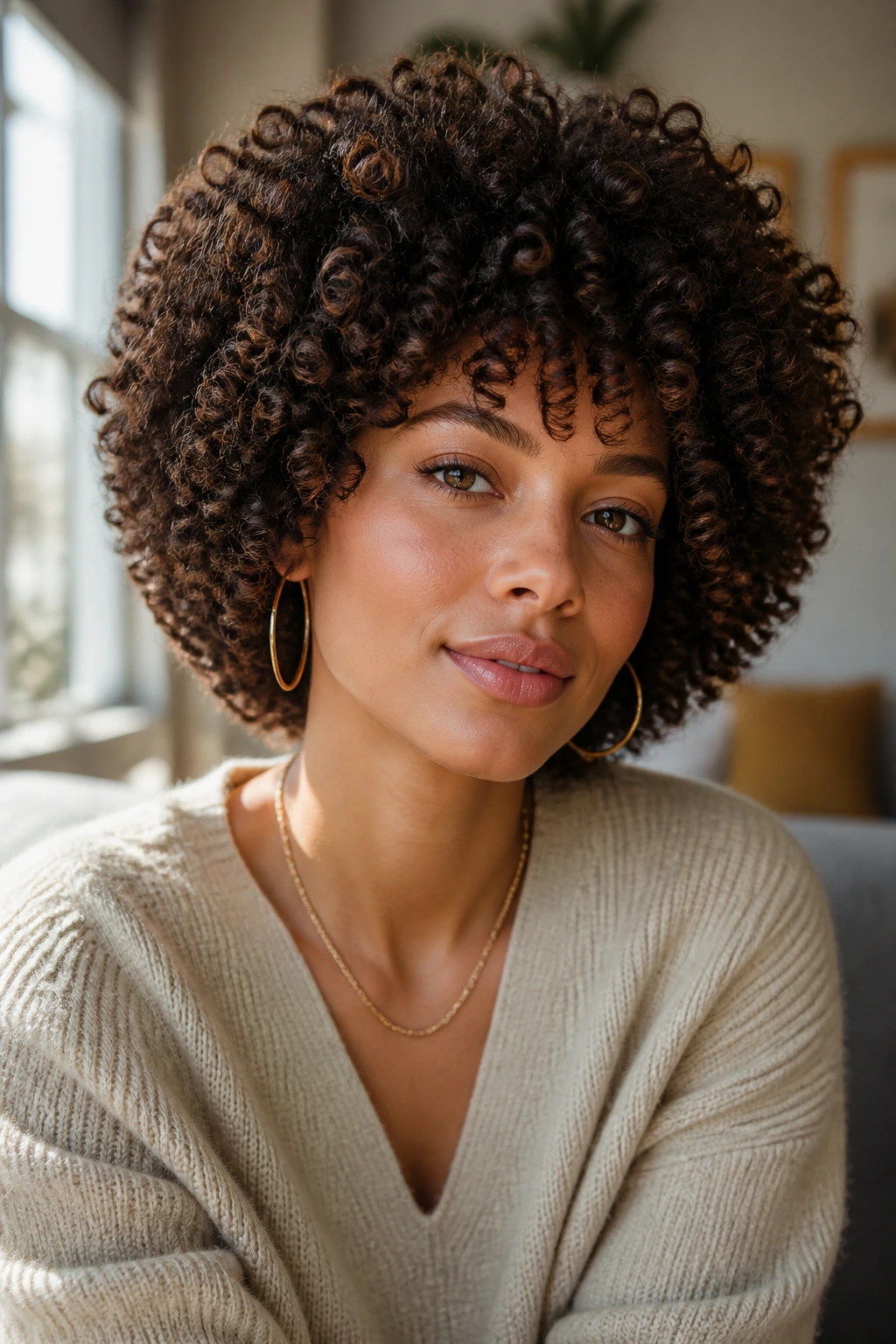
The rounded afro bob gives coils a defined silhouette without sacrificing fullness. Instead of flattening the hair or chopping it into a narrow shape, the cut creates a soft sphere around the head with controlled length at the sides and bottom. Oval faces suit this because the rounded outline keeps the proportions clean and centered.
The haircut needs careful shaping, not random trimming. You want the outline to follow the head and the face frame to sit where it supports the cheekbones. If the cut is too tall, the face can disappear into the shape; if it’s too wide, it can pull the eyes outward.
This is one of the strongest choices for type 4 hair when the goal is shape first, length second. And yes, the shape matters. A lot.
19. One-Length Curly Bob With Hidden Weight Removal
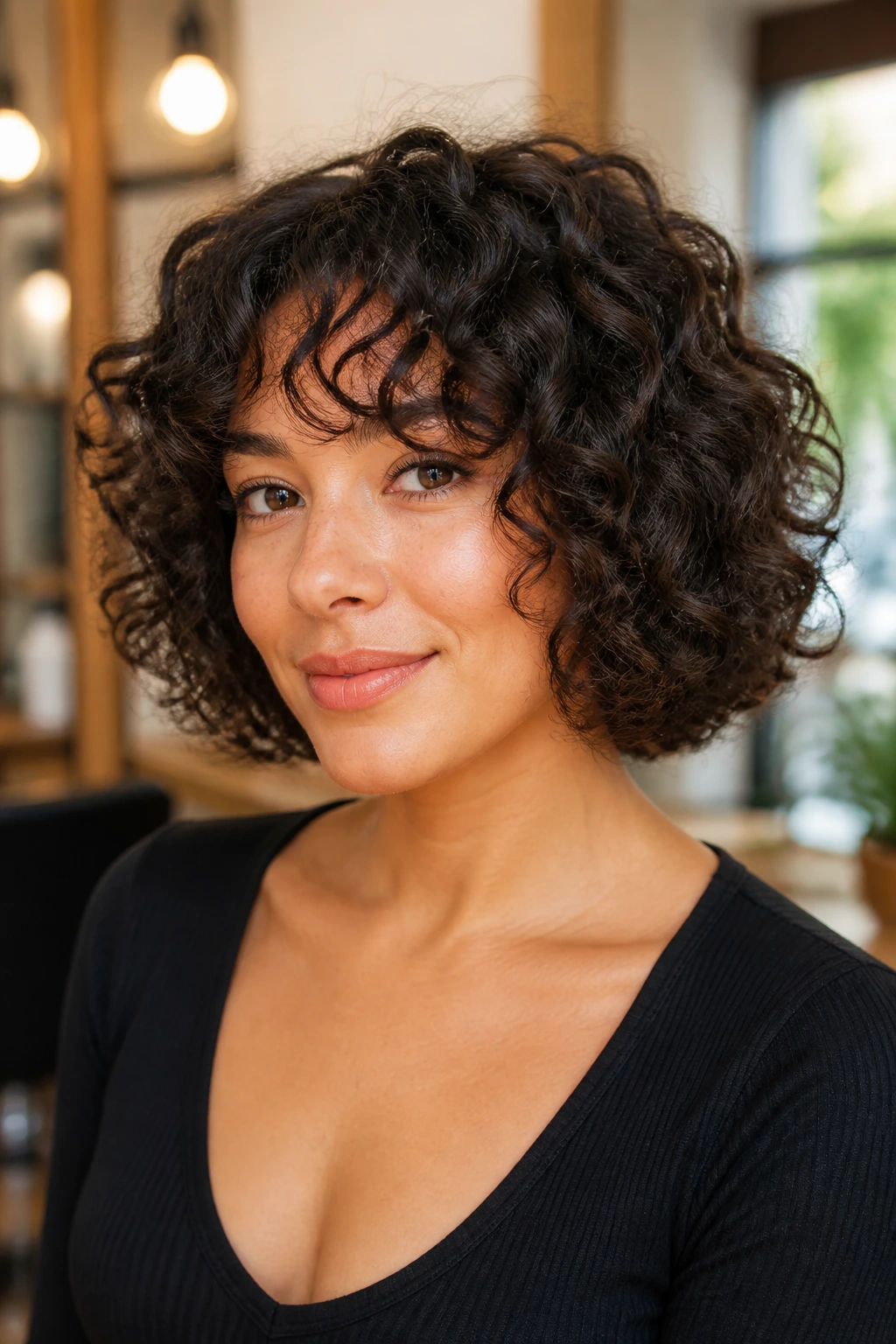
A one-length curly bob sounds simple, and that’s the appeal. The exterior line stays fairly even, which gives the haircut a clean finish, but the inside has enough weight removal to keep the curls from turning blocky. On an oval face, that balance keeps the eye moving without overcomplicating the silhouette.
This is a strong pick for people who hate choppy layers but still need some help with bulk. The shape looks polished on day one and grows out without a strange staircase effect. That’s more useful than it sounds.
The hidden weight removal has to stay subtle. Too much and the ends fray. Too little and the bob sits like a helmet. There’s a narrow lane here, but it’s a good lane.
20. Soft Undercut Pixie
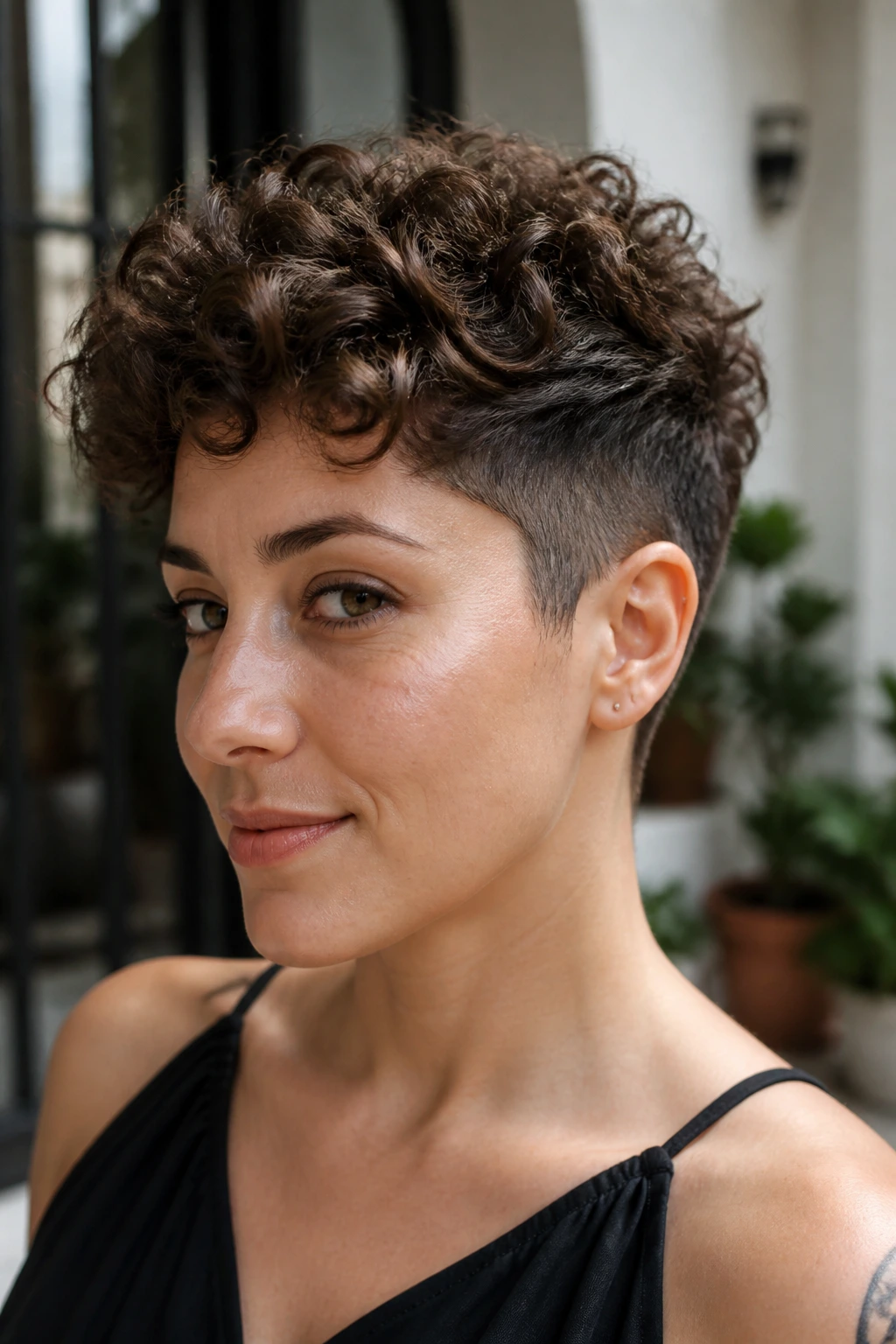
A soft undercut pixie keeps the top curly and the sides manageable by taking a little length away underneath. The undercut helps dense curls sit closer to the head, which matters if your hair likes to flare around the ears or neck. On an oval face, the clean base lets the texture on top do the talking.
This is one of those cuts that saves time on styling because the shape is built into the haircut. If you’ve got thick hair, the undercut can make a huge difference in how fast your curls dry and how heavy they feel by the end of the day.
Soft is the word again. You do not need a shaved side unless you want one. A subtle undercut is enough to change the whole wearability of the cut.
21. Curly Pageboy With a Modern Bend
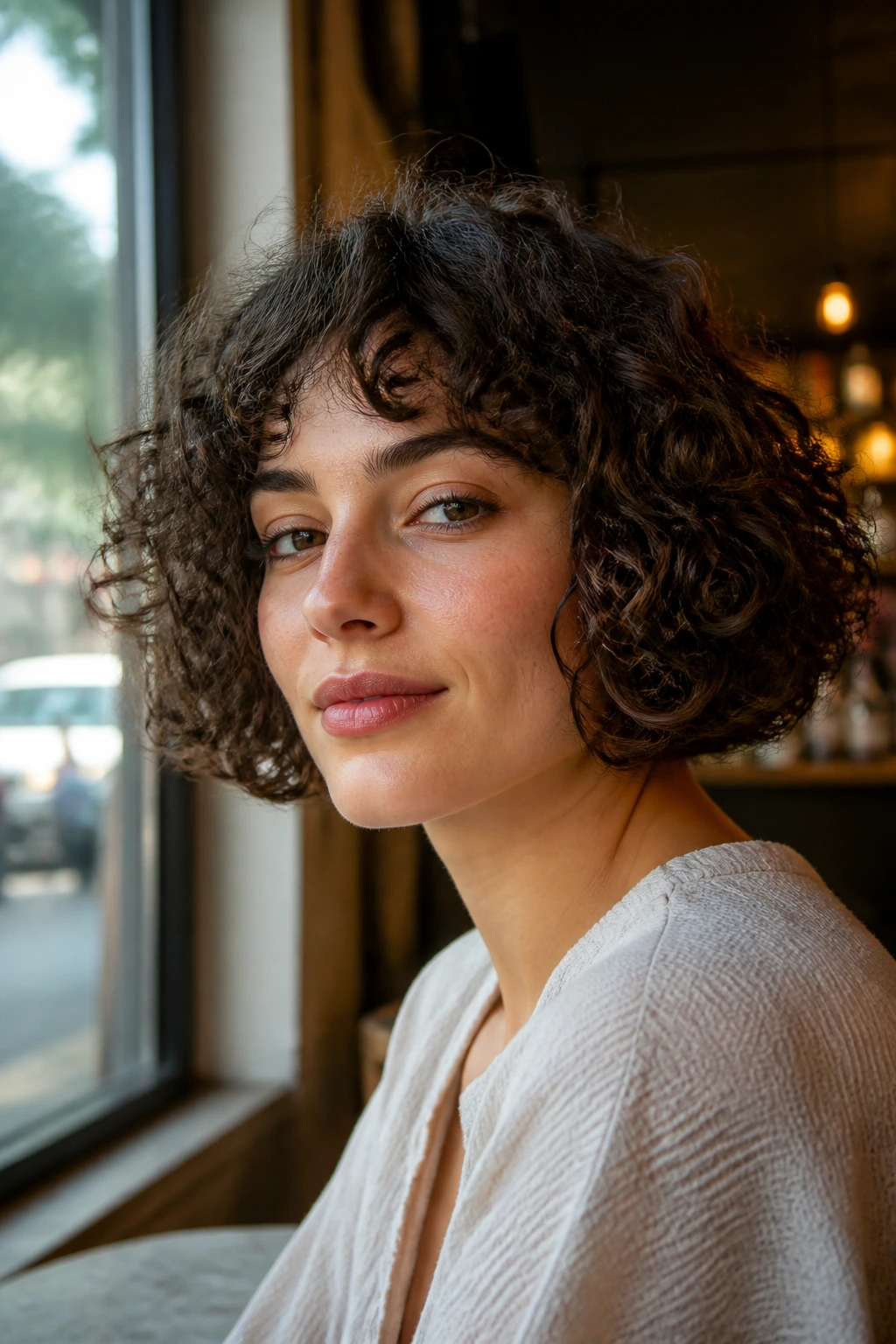
The pageboy gets a bad reputation because people remember it as stiff and dated. A modern version on curly hair is neither. It keeps a smooth, rounded outer line, usually around the chin or just below, and lets the curls bend inward or outward in a controlled way. On an oval face, that closed shape frames the jaw without crowding it.
This cut works best when the curls have enough shape to hold a curve. You want the front pieces to sweep rather than stick out. A side part can soften the whole look, while a center part makes it feel more graphic.
It’s a nice option if you want something neat but not severe. There’s a quiet confidence in a pageboy done well. Not loud. Just correct.
22. French Crop With Curly Fringe
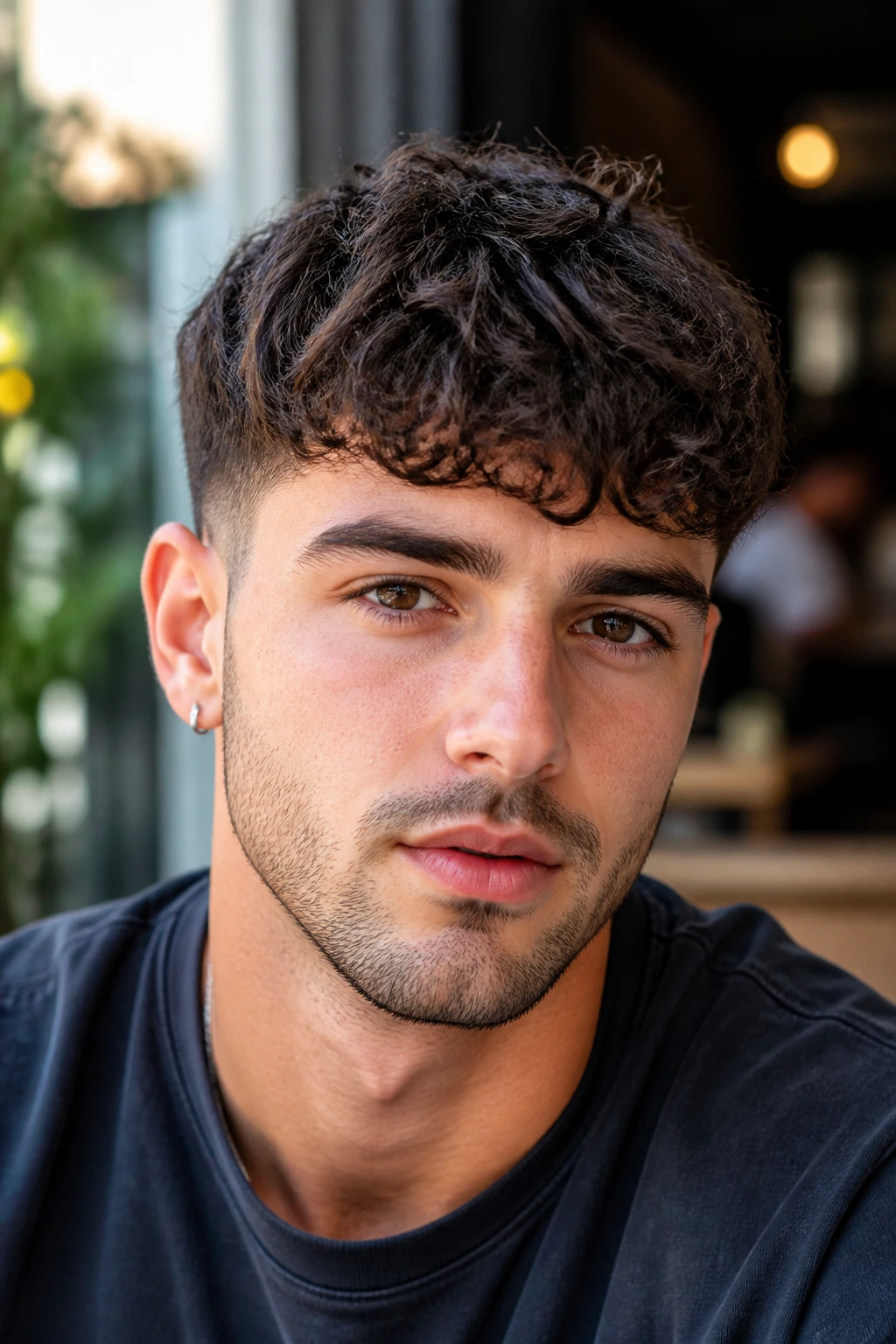
The French crop with a curly fringe keeps the sides and back short while leaving the front long enough to fall forward in soft pieces. On an oval face, that fringe adds a little interruption to the length of the face without needing dramatic layers. It brings attention to the eyes fast.
This cut is especially good if you like low-maintenance shapes but still want a bit of texture on top. Loose curls can sit forward in a casual way; tighter curls can make the fringe feel compact and graphic. Either way, the front has to be cut with shrinkage in mind.
The crop gets ugly when the fringe is cut too short and springs straight up. Leave more length than you think. Curly fringe always looks shorter dry.
23. Long Pixie With Nape Taper
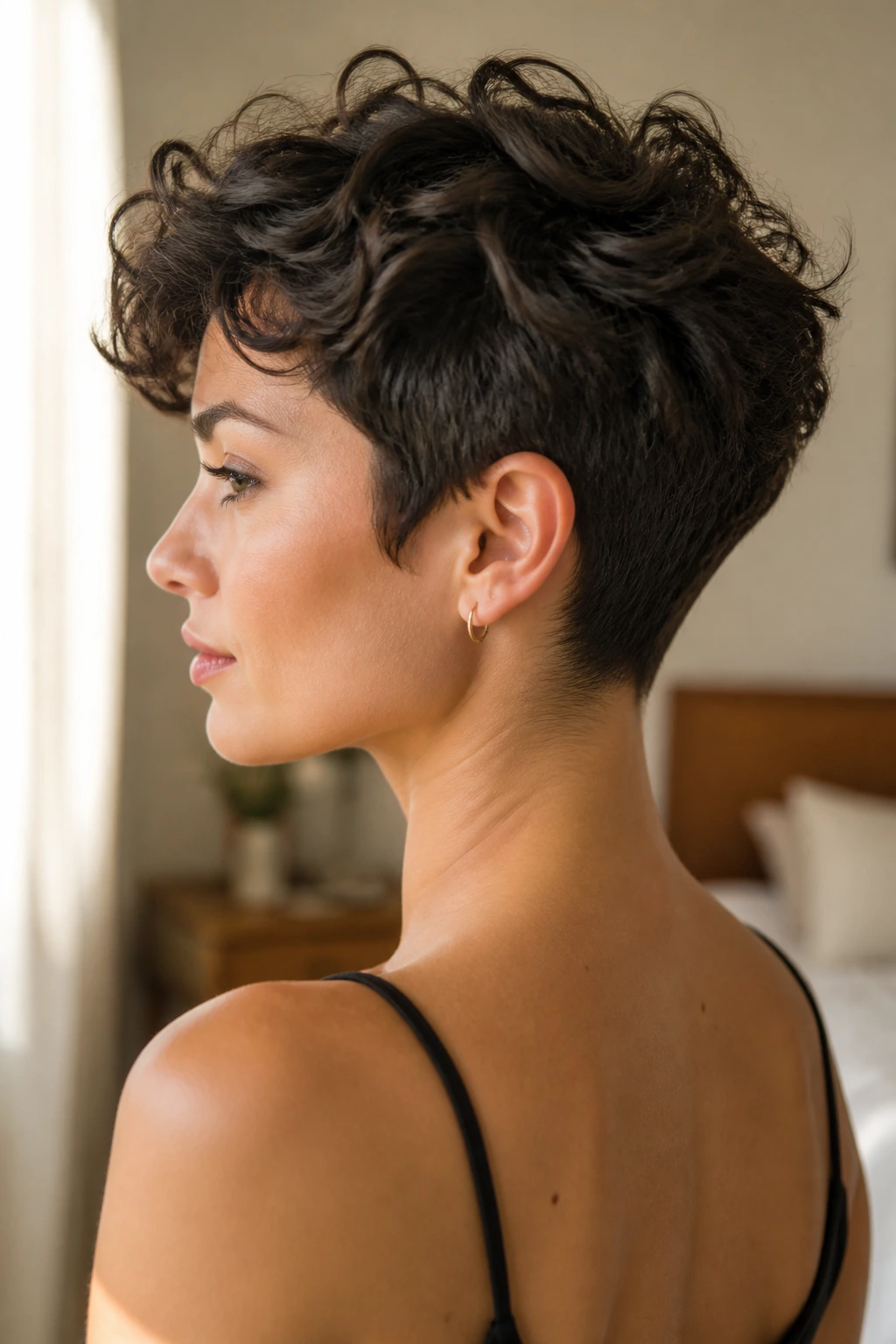
A long pixie with a nape taper is the polite cousin of the bolder pixie shapes. The front and top stay long enough to tuck, sweep, or finger-style, while the back is trimmed close so the neckline stays neat. On an oval face, that contrast keeps the cut from feeling too wide at the base.
It’s a smart option if you want a short haircut that still behaves like hair. You can soften it, slick it back, or let the curls fall naturally. The nape taper also makes grow-out less awkward, which is a real advantage if you change your mind every six months.
This is one of the easiest cuts to live with in daily life. Low drama. Good structure. Easy mornings.
24. Mid-Nape Curly Wolf Cut
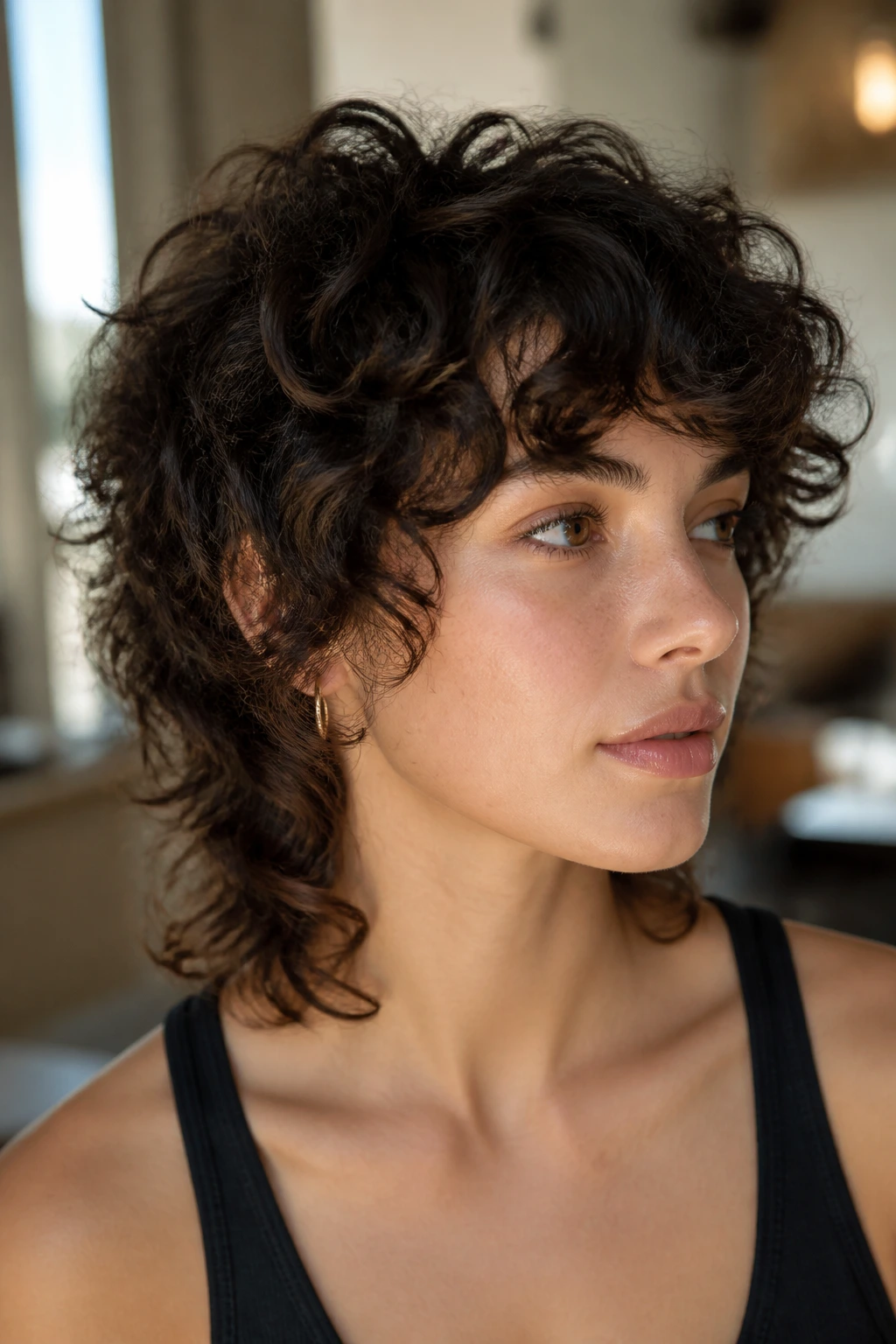
The curly wolf cut sits a little wilder than the stacked bob and a little less neat than the bixie. It keeps the layers moving through the crown and around the face, while the nape stays a touch longer. On oval faces, that shape works because it adds texture without making the face look narrower than it is.
The wolf cut suits curls that already have personality. If the pattern is lively, the layers make it feel intentional. If the pattern is flat, the shape can still work, but it needs a bit more product and a good diffuser session.
This isn’t the cut for someone who wants crisp lines. It’s for someone who wants motion. There’s a difference, and it’s a big one.
25. Curly Shullet for Oval Faces
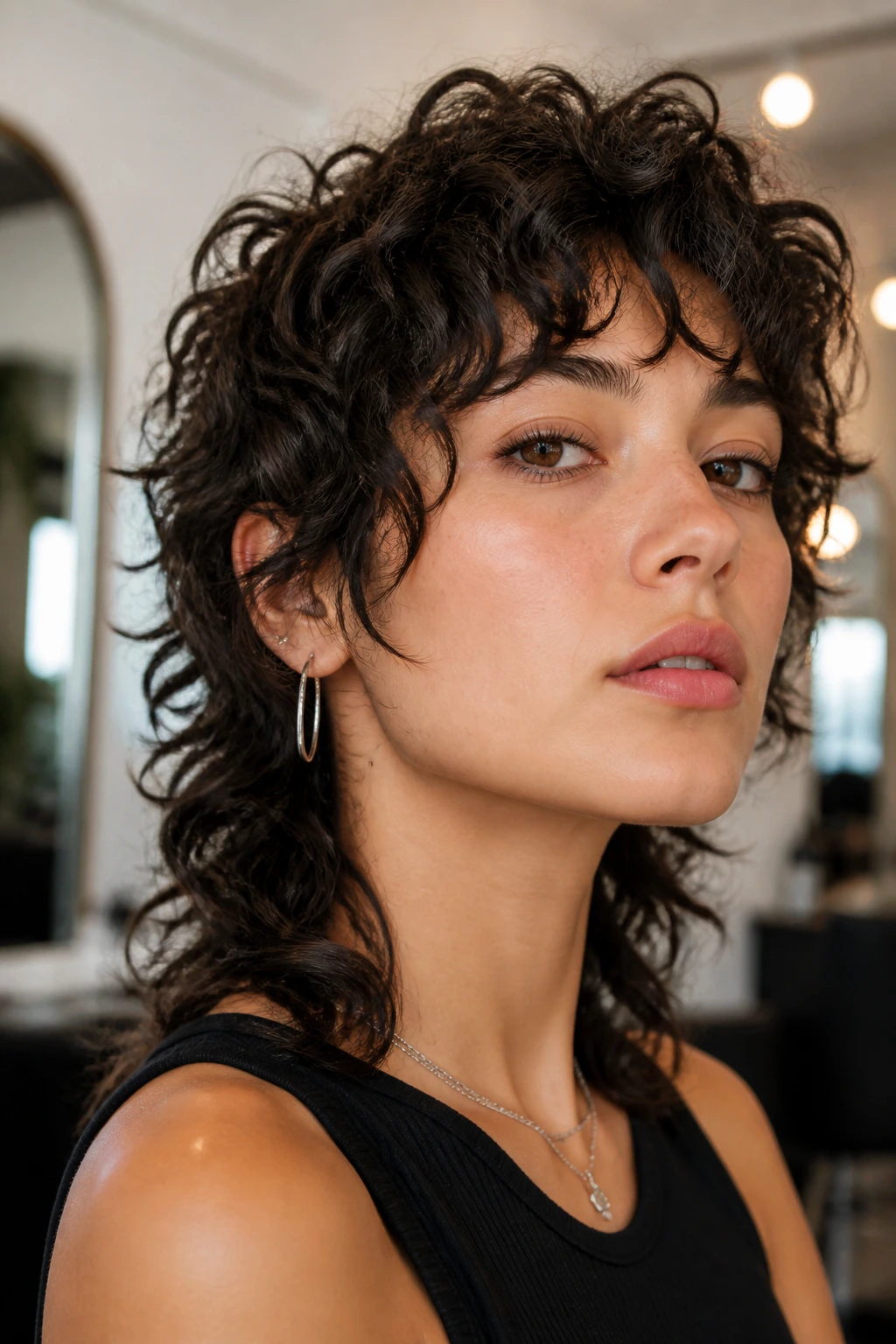
The curly shullet is the one for people who want a short cut that doesn’t pretend to be quiet. It keeps the top and front shorter, leaves the back a little longer, and relies on curl texture to soften the transition. On an oval face, the shullet can look surprisingly balanced because the face shape already handles odd proportions well.
It works best when the stylist keeps the front pieces useful rather than choppy for no reason. The curls around the eyes and jaw should frame, not fray. If the back gets too long, the cut loses its short-hair energy. If the top gets too short, it can feel top-heavy.
This is the style for someone who likes movement, a little edge, and a haircut that doesn’t look like everyone else’s in the room. Good. Hair should have opinions.
How to Choose the Right Short Shape for Your Curl Pattern
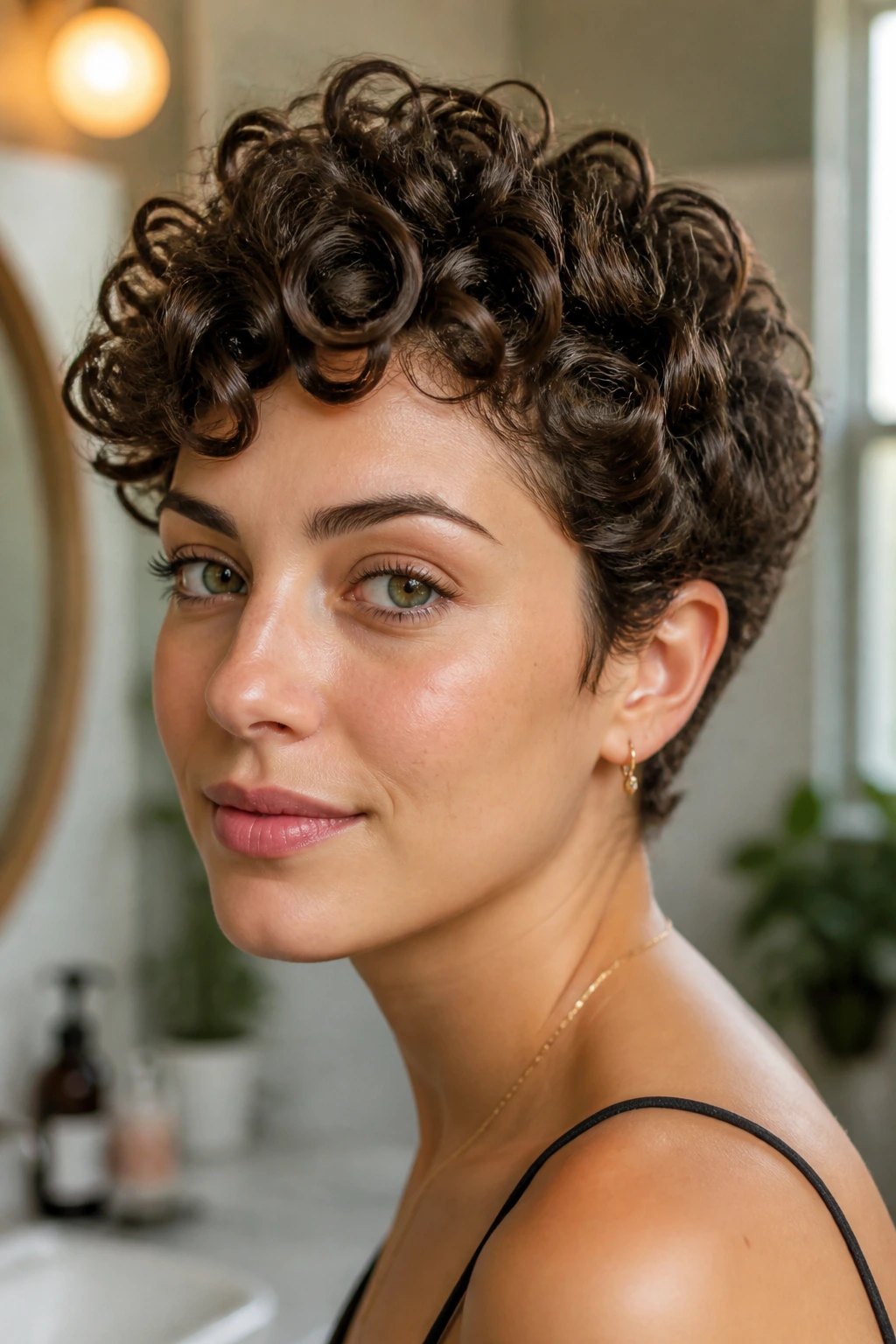
The cut on the inspiration photo is never the whole story. Curl pattern, density, and shrinkage decide whether a short haircut behaves or turns into a wrestling match. A chin-length bob on loose waves can look polished and easy; the same cut on tight coils may sit two inches higher and feel far fuller through the sides.
Loose waves and 2C curls usually do well with cleaner lines — French bobs, pageboys, and side-parted crops. The shape holds without needing a mountain of layering. If the hair is fine, keep some weight at the bottom so the ends do not fray into fluff.
Medium curls from 3A to 3B can take more movement. Shags, bixies, and layered bobs tend to shine here because the curl pattern can support the shape without collapsing. This is also the range where dry cutting matters most. Wet curls lie. Dry curls tell the truth.
Tighter curls and coils often need more structure through the perimeter and more careful weight removal inside the shape. Rounded bobs, tapered pixies, and sculpted afro shapes usually behave better than heavily layered looks that can explode outward. Ask where the hair will sit once it dries, not where it sits in the sink.
Smart Salon Notes to Bring Before You Cut
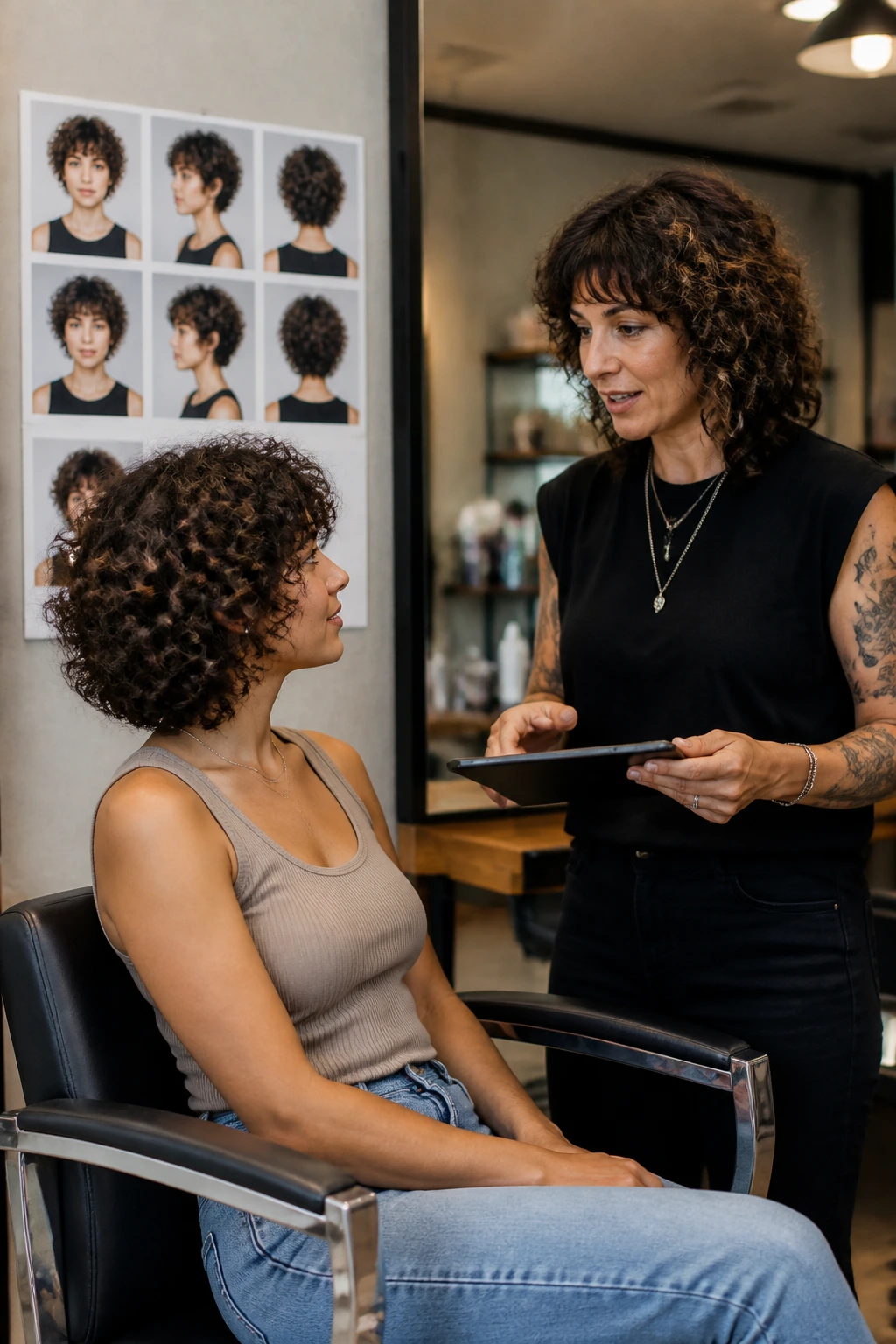
Bring photos, yes, but bring the right ones. One picture of the front, one of the side, and one that shows the back are worth more than ten saved screenshots of someone posing with perfect studio lighting. Curls change under fluorescent lights and in real weather. That matters.
Say three things clearly: where you want the length to hit when dry, how much time you want to spend styling, and whether your curls expand at the sides or the crown. Those details steer the cut more than vague words like “soft” or “edgy.” A stylist can work with “chin length when dry and a little longer in front” much faster than “something cute.”
If your hair has a strong cowlick, mention it. If one side curls tighter than the other, mention that too. Haircuts go wrong when the person in the chair pretends the hair is symmetrical. It isn’t.
Essential Tools for Short Curly Hair
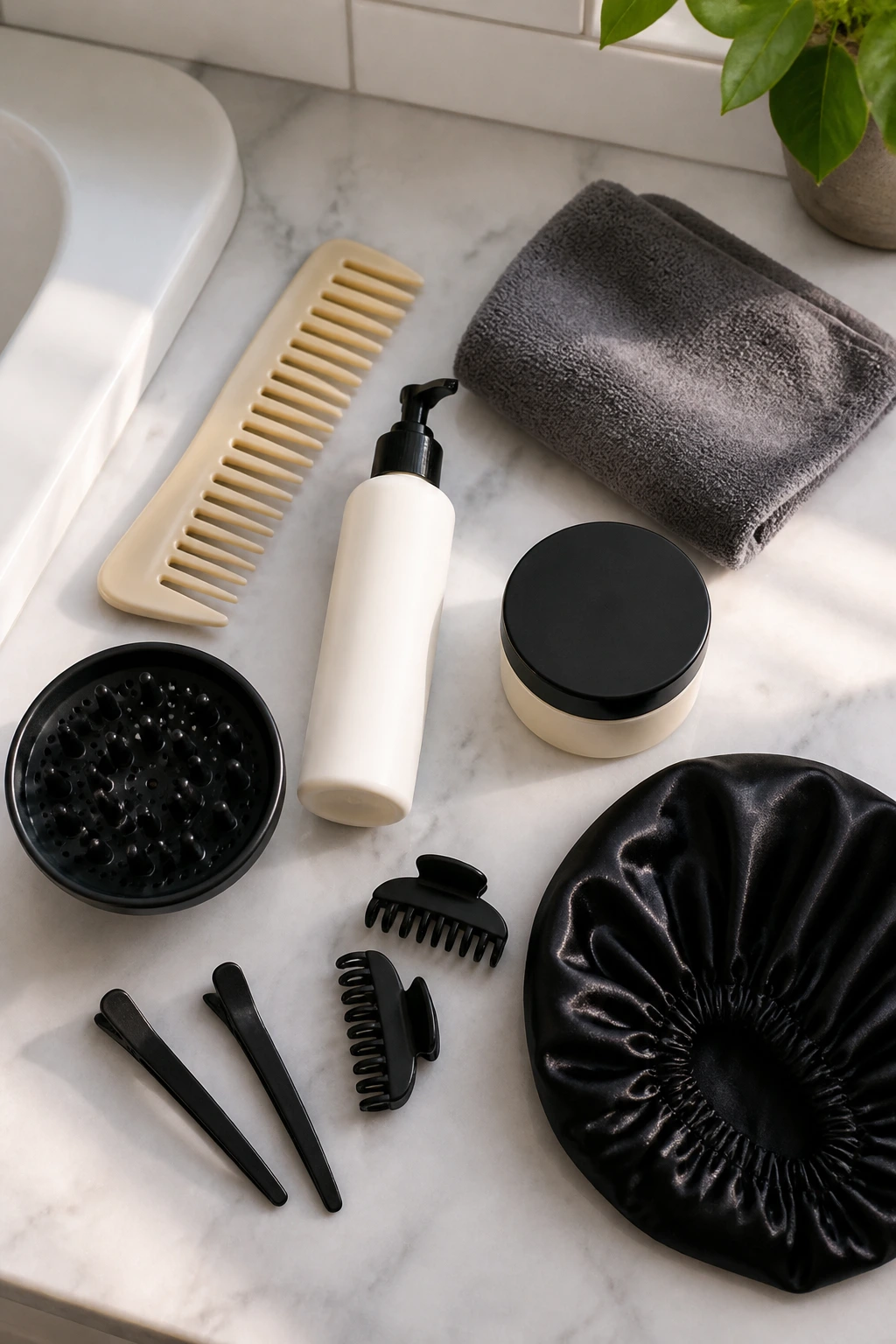
-
Wide-tooth comb: Good for detangling in the shower without ripping apart curl clumps.
-
Microfiber towel or T-shirt: Helps squeeze out water without roughing up the cuticle.
-
Leave-in conditioner: Gives short curls enough slip so the shape doesn’t turn dry at the ends.
-
Curl cream or lightweight gel: Pick one depending on whether you want softness or stronger hold.
-
Diffuser attachment: Useful for pixies, bobs, and shags when you want lift without blasting the curl pattern apart.
-
Duckbill clips or root clips: Handy at the crown if your roots dry flat and the rest of the hair puffs.
-
Hand mirror: Worth keeping around to check the nape and side profile, which matter more on short cuts than people realize.
-
Satin bonnet or pillowcase: Helps the shape last overnight instead of turning into a flattened mop by morning.
Styling Moves That Keep the Shape Clean
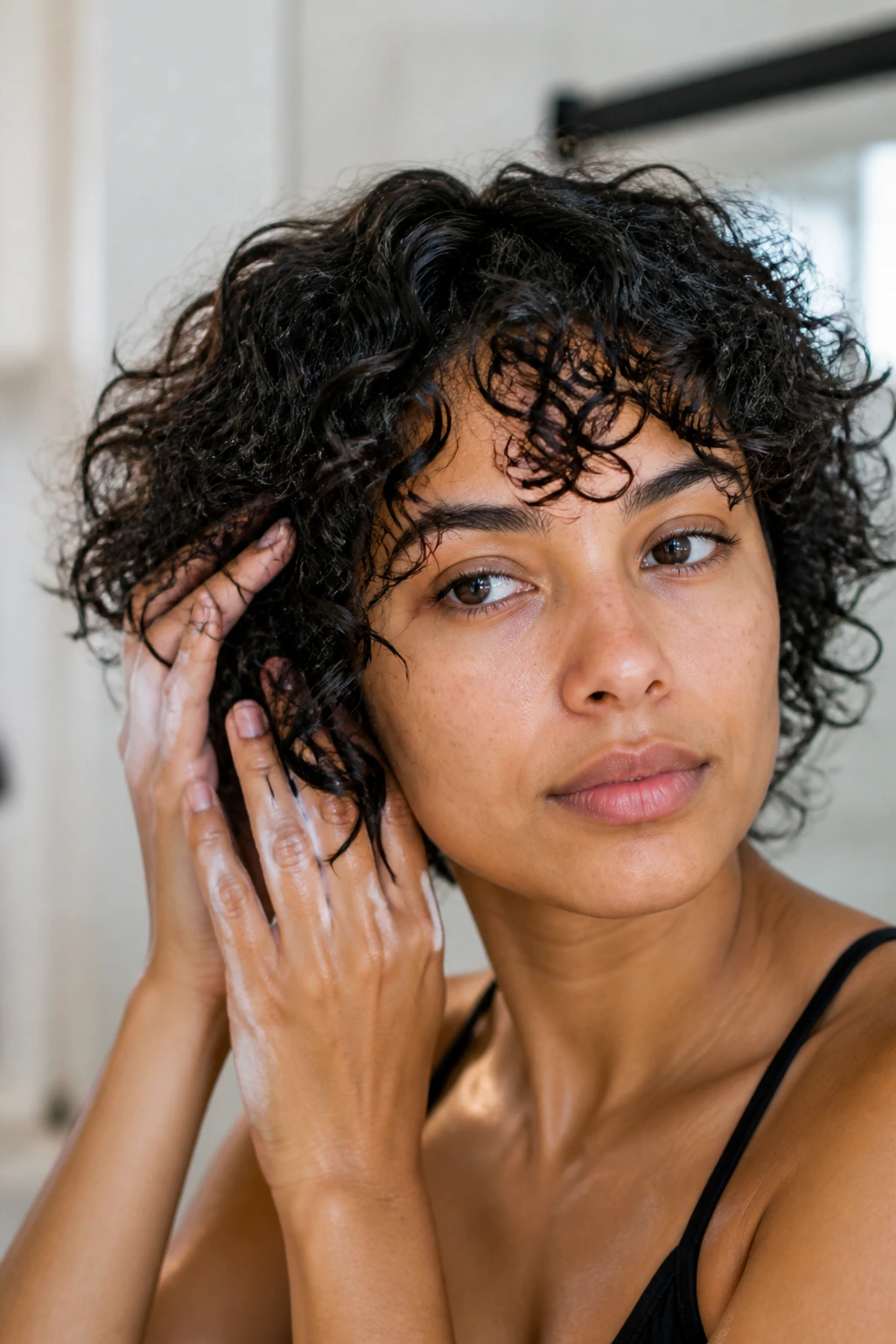
Short curly hair needs product placement, not product chaos. Start with soaking wet hair, rake in a leave-in or curl cream, then add gel only where you need hold. If you pile everything on at once, the cut can lose the very shape you paid for.
Air-dry days suit bobs, pageboys, and softer pixies. Keep your hands off the curls until they form a cast or set on their own. A few finger coils at the front can sharpen the face frame, but don’t overdo them. The goal is shape, not precision theater.
Diffused days are better when you need root lift or the hair is dense enough to sit heavy. Use low heat and medium airflow. Flip the head side to side, stop when the roots are mostly dry, and let the ends finish in the open air. That keeps the cut from getting frizzy at the rim.
Common Mistakes That Make Short Curls Look Off
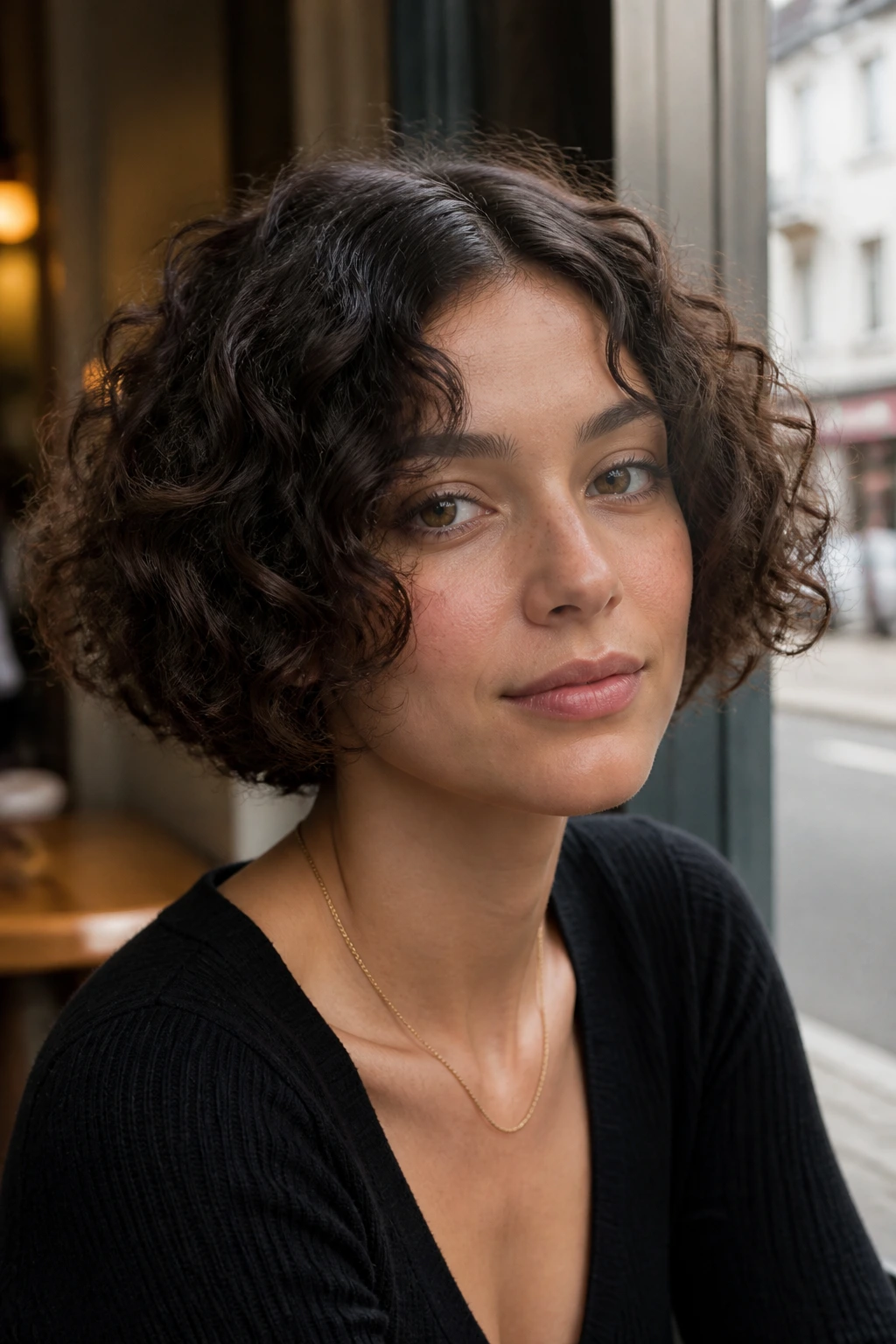
The first mistake is cutting curly hair as if it will dry to the same length and shape you saw when it was wet. It won’t. If the shrinkage isn’t factored in, a bob becomes a chin spike and a pixie can turn into a puffy cap. Dry cutting or at least checking the dry shape fixes that.
The second mistake is over-thinning dense curls. A lot of people think less bulk means more control, then end up with frizzed-out ends and a hollow middle. The better fix is targeted weight removal inside the shape, not slicing random gaps through the surface.
Third: too much crown height on an oval face. Oval faces already have balance, so stacking volume straight up can stretch the face visually. A little lift is fine. A tower is not.
Fourth: ignoring the neckline and sideburn area. Short cuts live or die by those details. If the nape is heavy or the sideburns are left awkwardly long, the whole style looks unfinished.
Best Variations and Easy Swaps
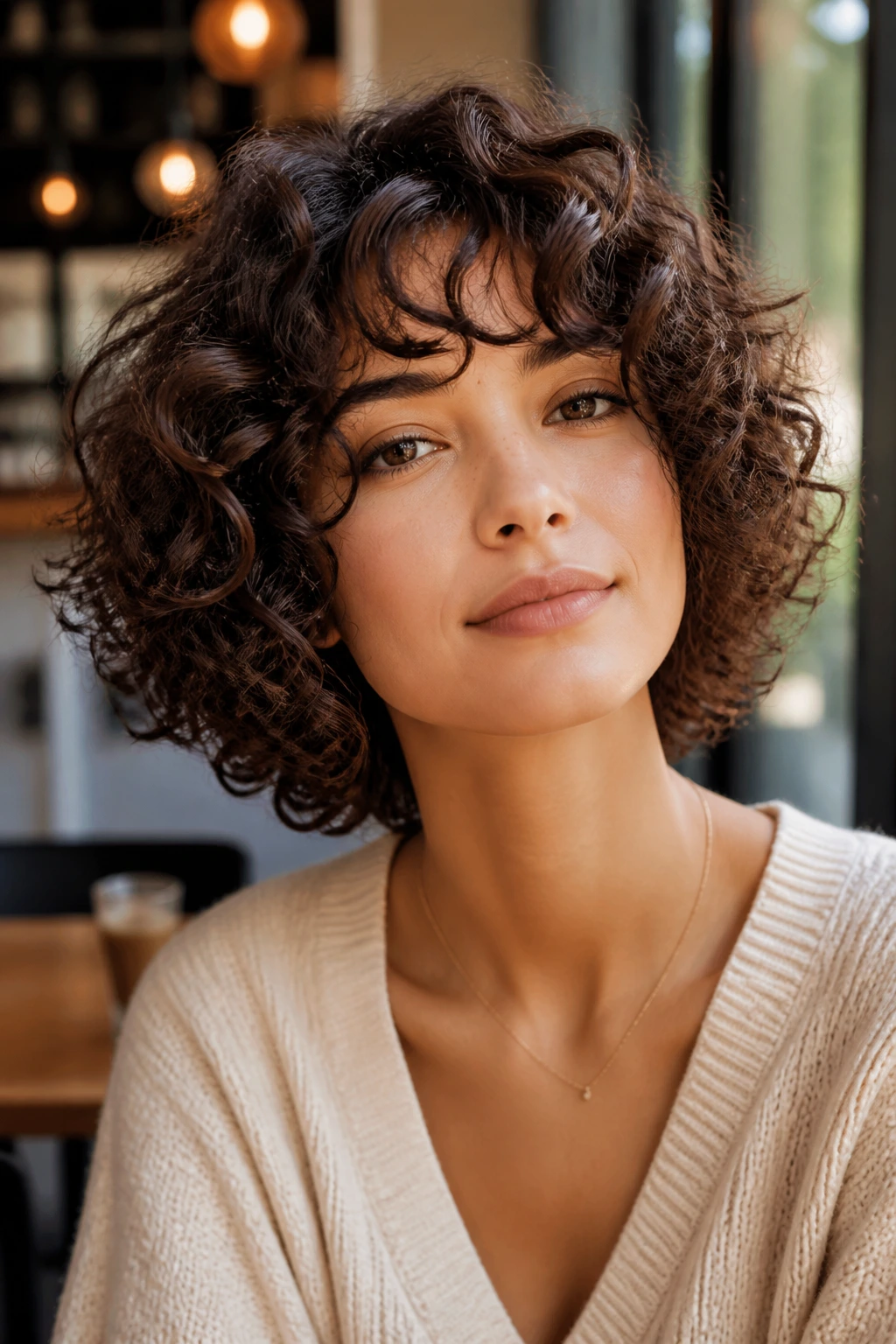
The Low-Maintenance Version: Keep the same cut but leave more weight at the perimeter and fewer face-framing layers. This works well if you want less daily shaping and a grow-out that does not need constant cleanup.
The Softer Feminine Version: Add a longer fringe that skims the brows or cheekbones and keep the ends rounded. This keeps the haircut airy and easy around the face, especially on looser curls.
The Edgier Version: Ask for a tighter nape taper, a side part, or a slightly asymmetrical front. Small changes do a lot here. You do not need a radical redesign.
The Fine-Hair Version: Keep the cut shorter, lean on soft layers, and avoid too much interior thinning. Fine curls need shape more than they need “movement,” which is one of those salon words people repeat without thinking.
The Coily Version: Choose rounded silhouettes, more structure at the perimeter, and a careful dry shape around the crown. Coils look strongest when the overall outline is intentional.
Maintenance, Trims, and Grow-Out
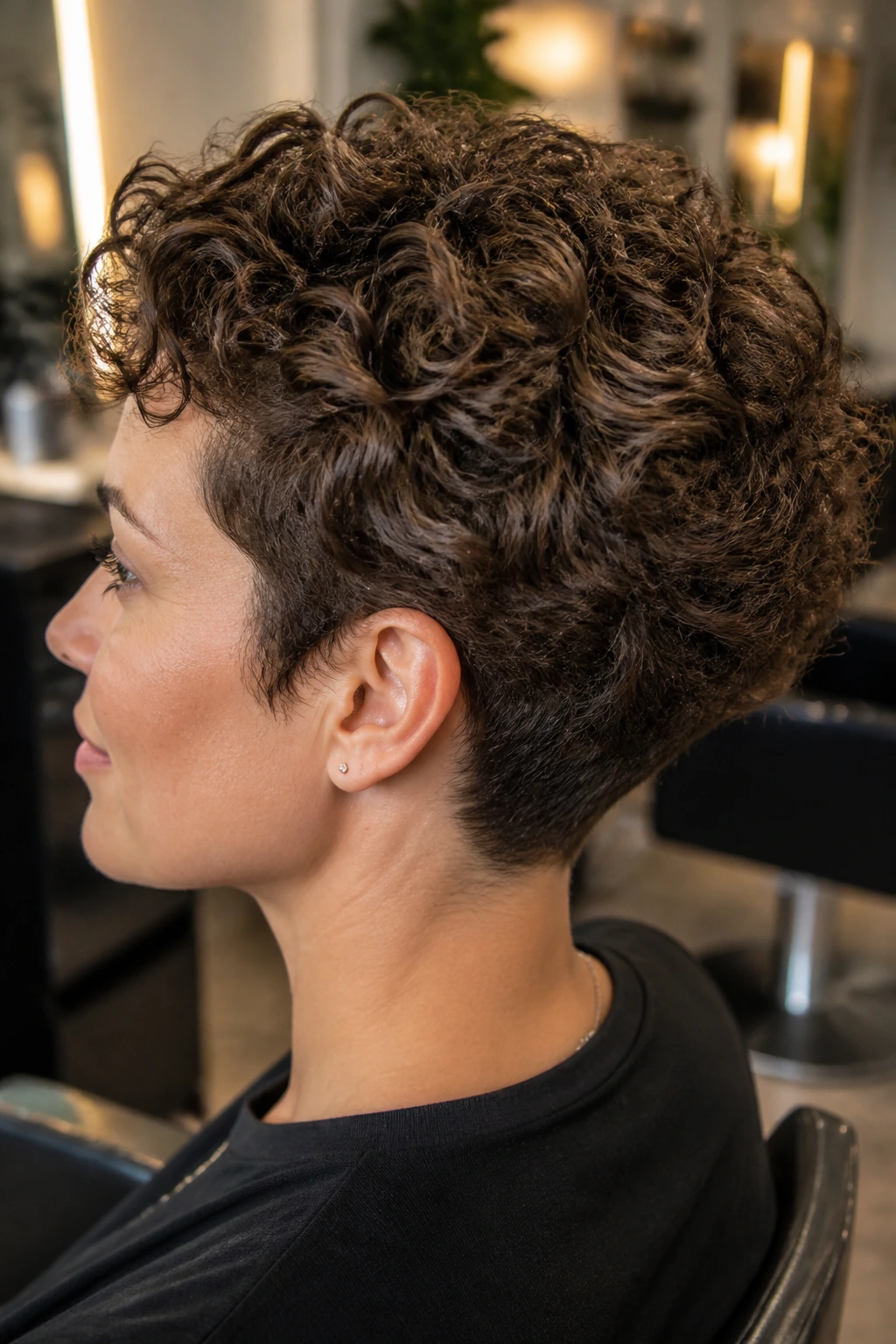
Short curly cuts need a regular trim schedule if you want the shape to stay readable. Pixies and bixies usually need a cleanup every 4 to 6 weeks because the nape and ears show growth fast. Bobs and shags can stretch to 6 to 8 weeks, sometimes a little longer if the perimeter still holds its line.
Night care matters more than most people admit. Satin or silk reduces friction, which means the ends frizz less and the shape survives the pillow. If you like to refresh in the morning, mist the hair lightly with water, scrunch in a pea-sized amount of gel, and leave the roots alone unless they’ve gone flat.
Grow-out is easier when the original cut was built with the future in mind. A long pixie with a tapered nape grows into a bob without much drama. A heavily layered shag can take more work to reshape, but it still grows better than a blunt cut that was over-thinned.
Frequently Asked Questions
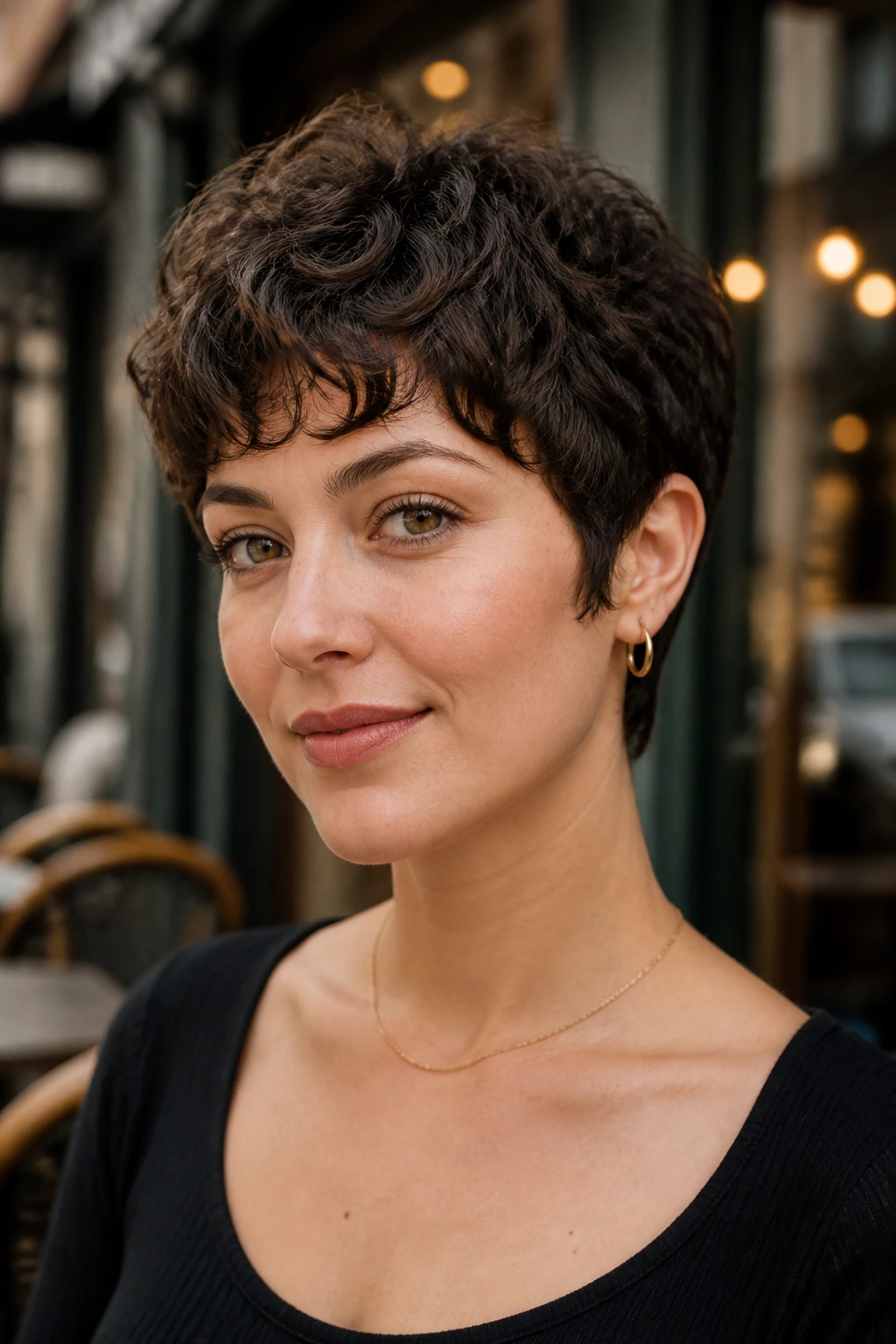
What short haircut is most flattering for oval faces with curly hair?
There isn’t one single winner, but the curly French bob, layered chin-length bob, and long pixie with a nape taper tend to be the easiest wins. They keep the face open without adding awkward width or height in the wrong places.
Should curly hair be cut wet or dry?
Dry cutting gives the most honest shape because curls shrink and shift once they dry. Some stylists use a hybrid approach, cutting the basic form wet and refining it dry. That works too, as long as shrinkage is part of the plan.
Are bangs good on oval faces with curls?
Yes, if they’re cut for the curl pattern. A curly fringe, micro fringe, or side-swept front can look sharp on an oval face. Straight-across bangs cut too short are where the trouble starts, because curl bounce makes them jump up fast.
What if my curls shrink a lot?
Tell the stylist exactly how much. If your hair loses an inch or two, ask for the finished length to be checked dry before anything is shortened further. This is the difference between a bob and a surprise pixie.
Can fine curly hair wear a pixie cut?
Absolutely, but keep the top soft and avoid too much thinning. Fine curls need enough weight to clump, so a rounded pixie with a little crown length usually works better than a chopped-up crop.
How often should I trim a short curly bob?
Every 6 to 8 weeks is a solid rhythm if you want the outline to stay clean. If the bob has bangs or a strong perimeter line, you may want a small dusting sooner.
What if the sides of my short cut puff out?
That usually means the haircut needs better weight removal around the sides or a cleaner taper near the ears. In daily styling, a little gel at the side curl clumps and a diffuser set on low heat can help keep the outline closer to the head.
Which short curly cut is easiest to grow out?
The long pixie with a nape taper and the collarbone-grazing lob are both forgiving. They move through awkward growth stages more gracefully than a heavily stacked bob or a tightly cropped pixie.
The Cut That Stays Friendly
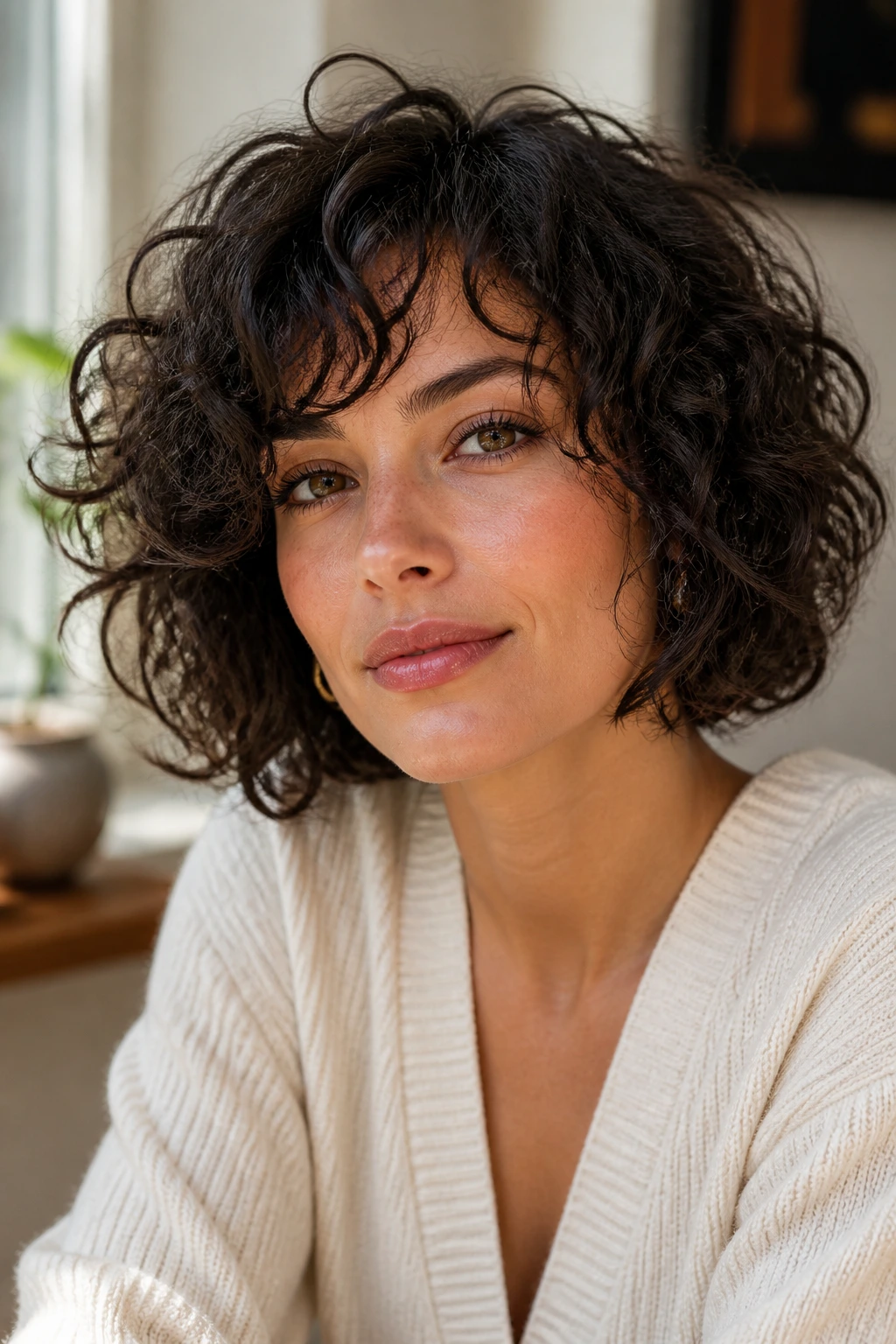
Short curly hair on an oval face works best when the haircut respects the curl’s own shape instead of trying to force it into a tidy, straight-hair idea of symmetry. A good cut gives the curl room to move, then places the weight where it helps the face most. That can mean a bob that ends at the jaw, a pixie with a soft fringe, or a shag that keeps the sides from puffing into a triangle.
The nicest part is that you do not need to pick the safest option to get a flattering result. Oval faces can handle a little edge. They can handle a blunt line, a side sweep, a rounded shape, even a soft mullet if the proportions are right. Bring a photo, talk about shrinkage, and be honest about how much styling you’ll actually do. The haircut should fit that life.