



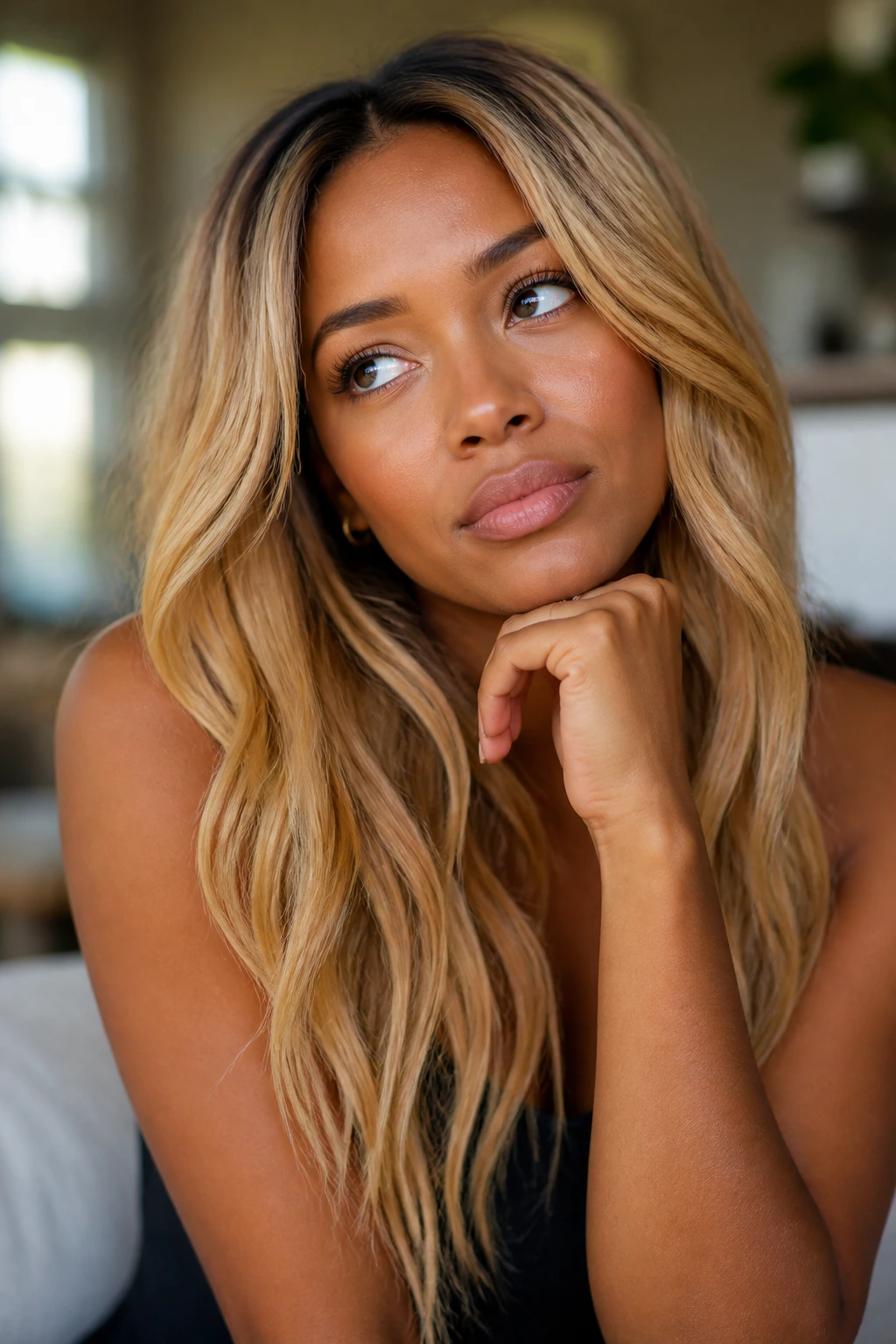
The best blonde hair color ideas for deep skin tones are not the pale, chalky shades that still show up on tired mood boards. On deep skin, blonde looks richest when it has warmth in the middle, shadow at the root, and enough dimension to move when the hair moves.
That’s why honey, caramel, toasted beige, and softly rooted platinum keep showing up in real salons. They don’t fight deep skin; they echo it. The question is not whether blonde can work on you. It’s which blonde gives your complexion room to breathe.
I’ve seen too many strong cuts, curls, and silk presses get flattened by one-note color. The better version keeps depth where it matters, puts brightness where the eye lands first, and leaves enough contrast that the hair still has shape in daylight and under a flash.
Why This Blonde Range Stands Out
- Warm tones do the heavy lifting: Honey, caramel, gold, and butterscotch keep deep skin looking rich instead of ashy or muted.
- Placement changes the whole mood: A face frame, ribbon highlights, or a root melt can make the same blonde look soft, bold, or polished.
- Dimension lasts longer: Keeping some depth in the base makes grow-out easier and keeps the color from turning into a blunt band at the scalp.
- Cool blondes are still on the table: Pearl, beige, and smoky shades can work when they’re supported by enough depth underneath.
- Texture matters as much as tone: On curls, coils, and waves, blonde catches light on bends and ends, so where the color lands matters almost as much as the color itself.
1. Honey Butter Blonde
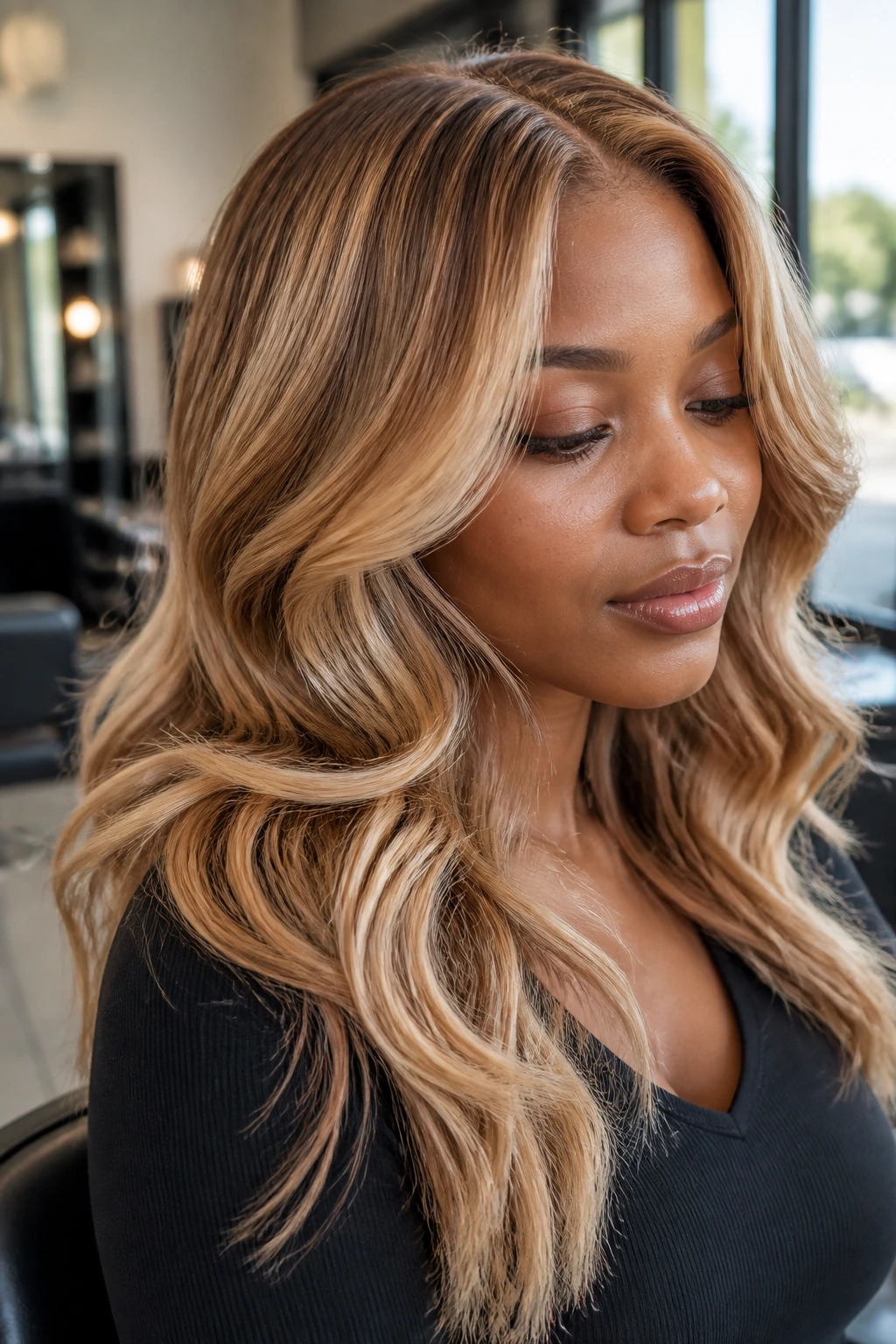
Honey butter blonde is the shade that makes deep skin look lit from within without tipping into brass. It has enough gold to feel warm, but the buttery softness keeps it from screaming yellow. On curls and blowouts alike, it reads as rich, not loud.
What to Ask For
Ask for a level 7 to 8 lift with a honey-toned gloss and a soft shadow root. If your hair is naturally dark, keep the ends a shade or two lighter than the midlengths so the color doesn’t look flat.
- Best base: medium to deep brown with warm or neutral undertones
- Salon ask: honey gloss, soft root melt, lighter ribbons around the face
- Maintenance: gloss every 6 to 8 weeks
- Watch for: orange lift if the undertone gets too copper-heavy
The color works best when the shine stays soft. Too much ash kills the warmth, and too much copper makes it look brassy. Keep it honey, not pumpkin.
2. Caramel Ribbon Balayage
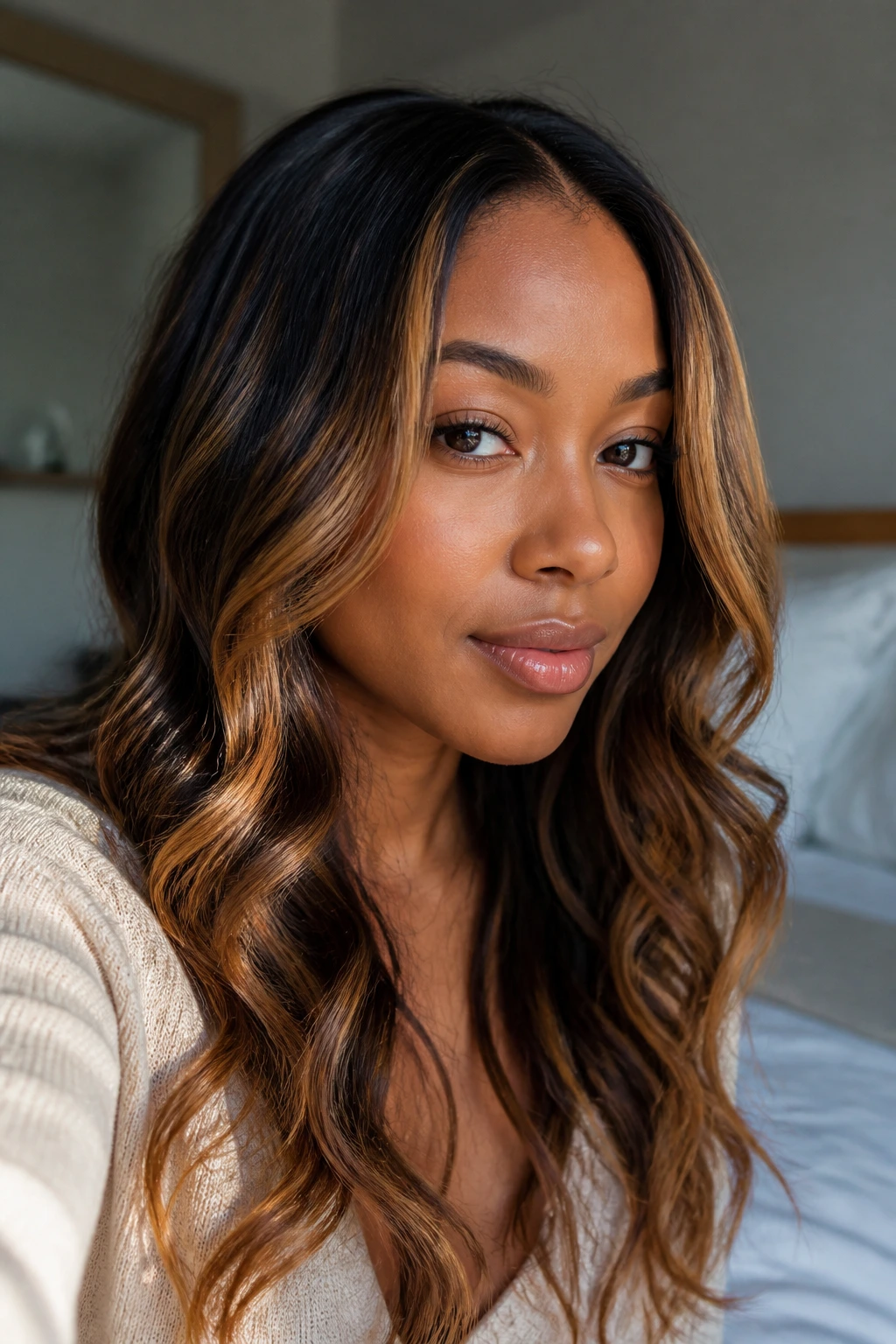
If you want blonde without looking blonde-blonde, caramel ribbon balayage is the safest place to start. The ribbons sit over a darker base, so the hair keeps its depth while still catching light every time you turn your head.
This is the shade I’d point to for someone who wears curls, twist-outs, or loose waves. The highlights don’t have to be everywhere; in fact, they look better when they’re not. Caramel is about movement, not saturation.
The best versions leave the roots alone and paint the brightness through the midlengths and ends. That keeps the grow-out soft and avoids the stripey look that happens when highlights are packed too tightly.
3. Golden Champagne Blonde
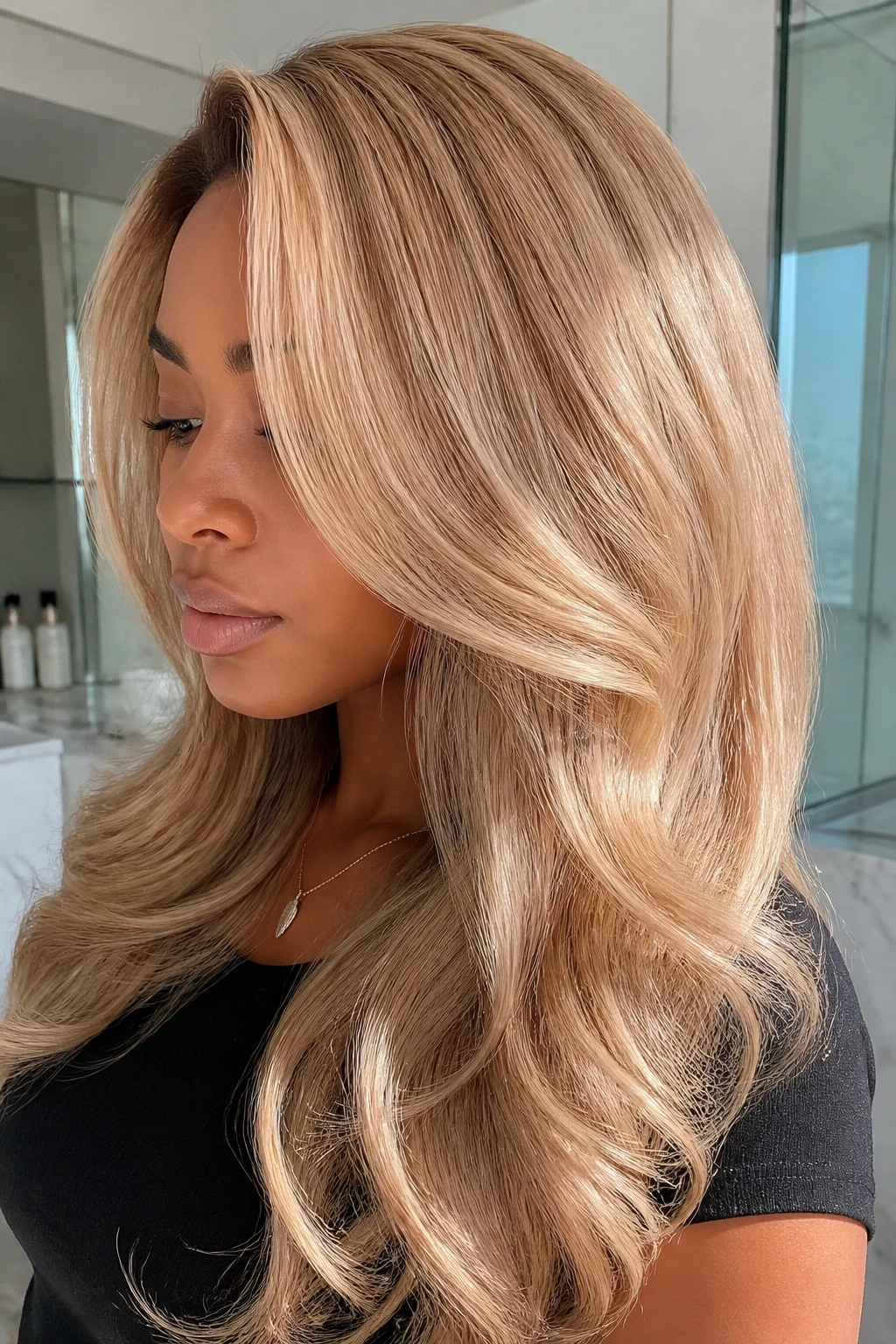
What happens when gold gets a little beige? You get a champagne blonde that sparkles instead of shouting. On deep skin, that mix gives lightness without the flat, paper-dry look that some icy blondes can create.
Best For
This one suits neutral and warm undertones especially well. If your skin already has golden or bronze notes, champagne blonde tends to echo them instead of competing with them.
Salon Note
Ask for a beige-gold toner, not a pale silver one. The goal is a finish that looks polished under daylight, not frosty under bathroom light.
- Lifts well on: pre-lightened brown hair
- Looks best on: layered cuts and long curls
- Needs: toning upkeep every 4 to 6 weeks
- Avoid: overusing purple shampoo, which can mute the champagne cast
It’s a clean, glossy shade. Not loud. Not flat. That middle ground is the point.
4. Buttery Beige Blonde
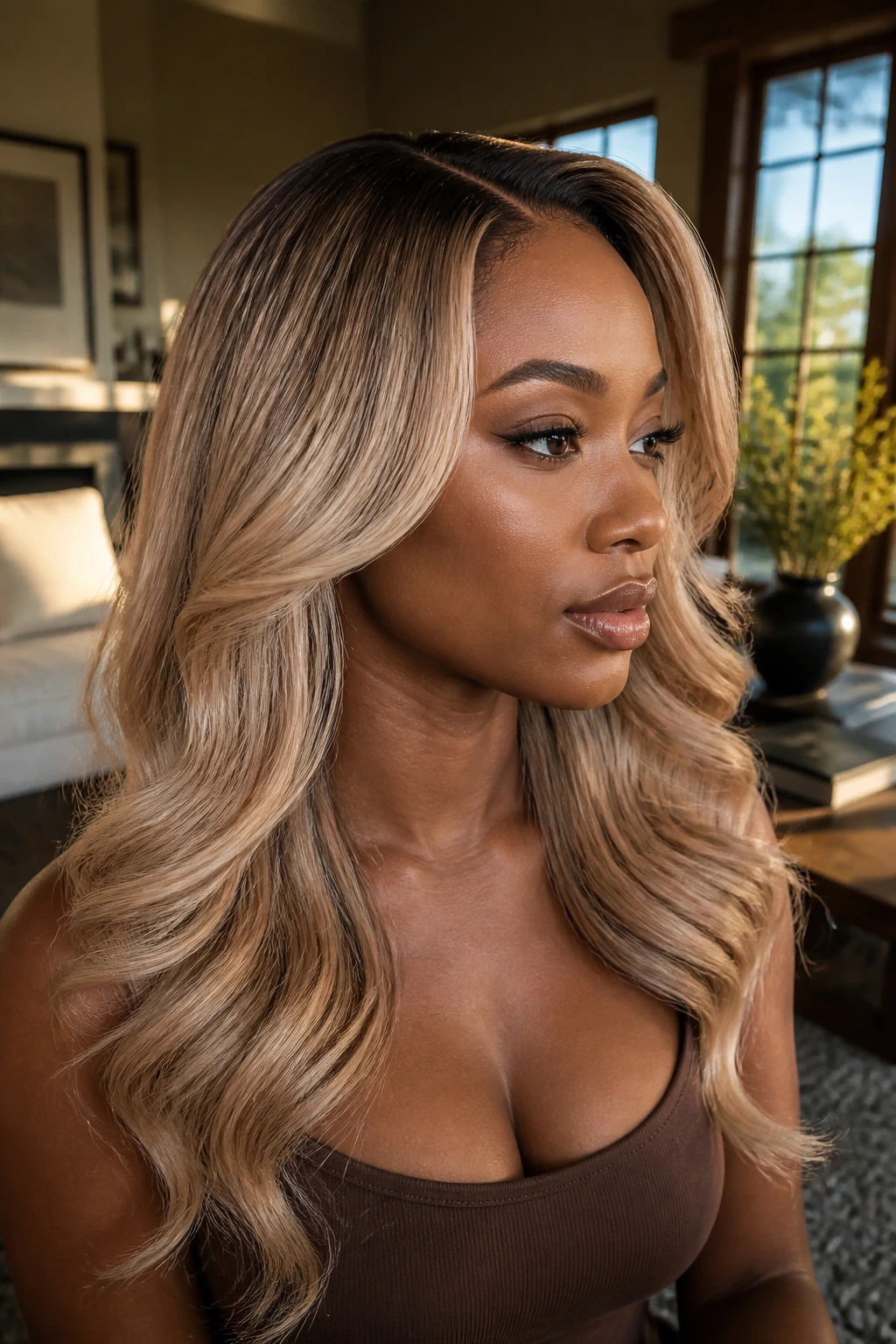
Buttery beige blonde sits between honey and ash, which is why it works so well on deep skin that wants softness instead of a high-contrast statement. It has warmth, but it doesn’t go orange. It has neutrality, but it doesn’t go gray.
The color looks especially good on silk presses and blown-out hair because the smooth finish lets the creamy tone show. On curls, it reads a little softer and more diffused, which can be nice if you want the blonde to feel less obvious.
Ask your colorist for a neutral beige gloss with a root that stays one or two levels deeper. That little bit of shadow keeps the cream tone from floating on top of the hair.
5. Toasted Almond Bronde
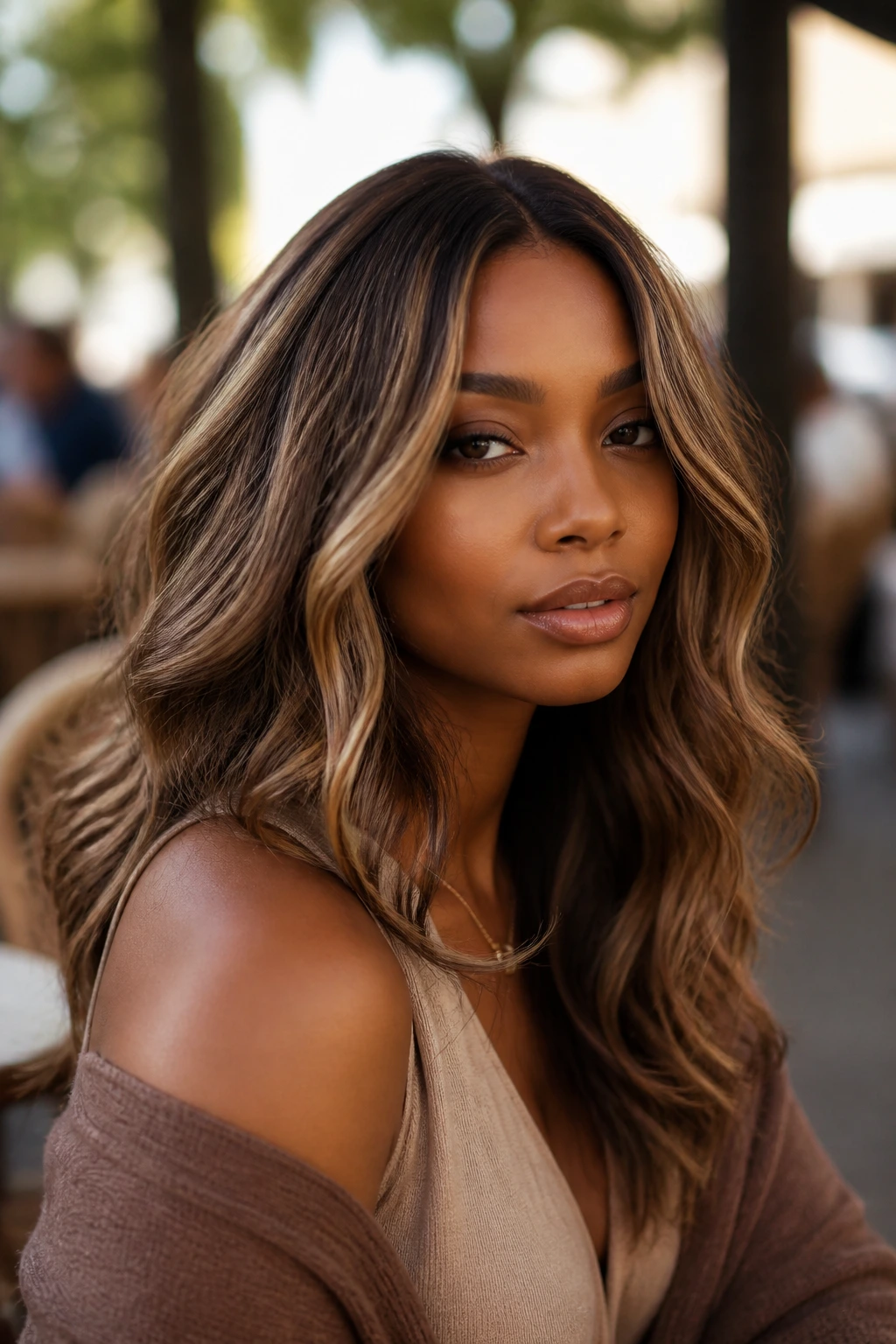
Toasted almond bronde is what happens when brown stays in charge and blonde comes in as a guest, not the host. That’s a smart move on deep skin, because the darker base keeps the face grounded while the almond tones catch light at the edges.
This shade works well if you like your color to look expensive without looking dramatic. It doesn’t need a full lift. A few carefully placed caramel-beige pieces can do the job, especially around long layers or face-framing sections.
I like this one on people who wear natural texture. The mix of brown and soft blonde breaks up the surface of the hair just enough to give coils and waves more movement.
6. Espresso Root Melt With Blonde Ends
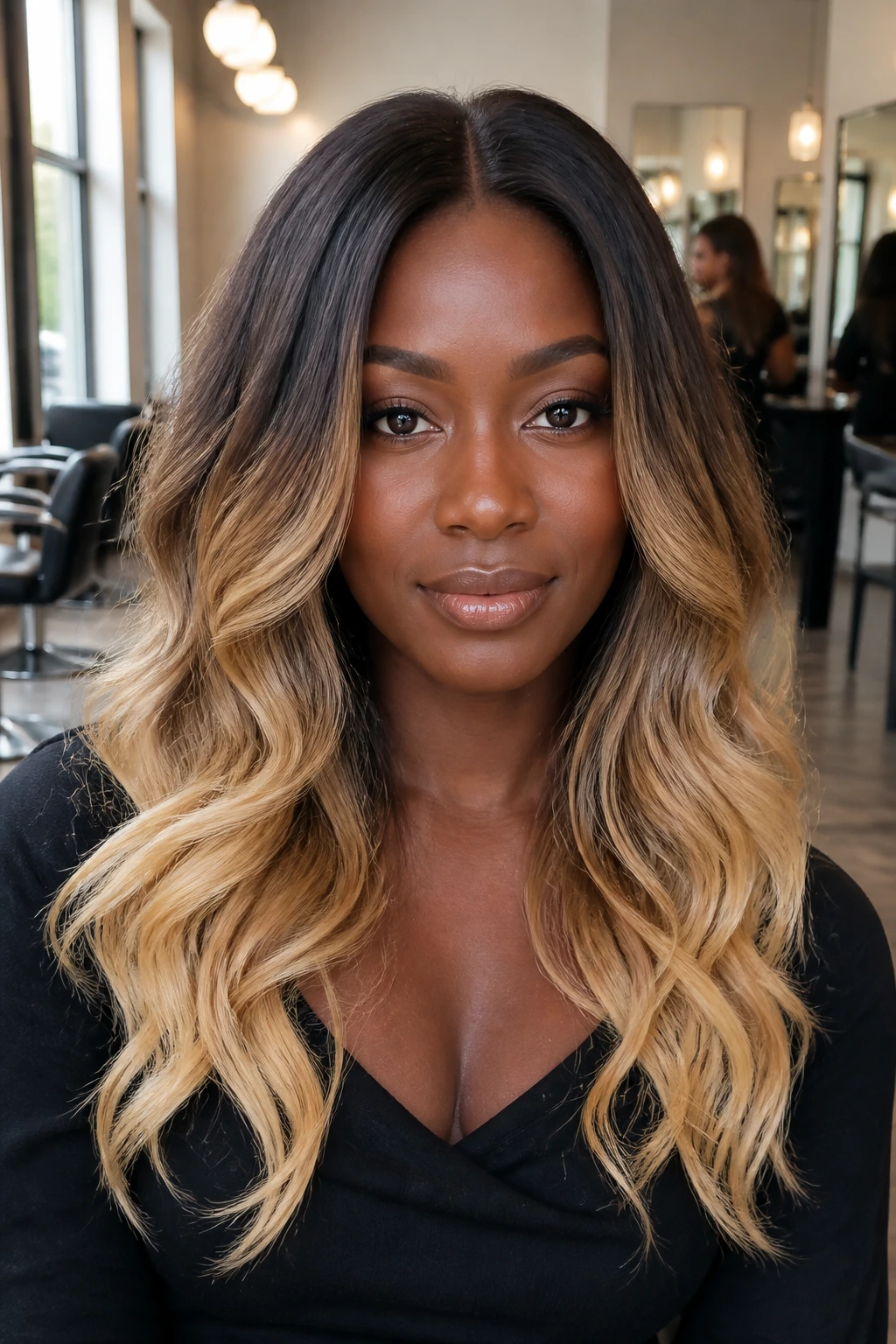
This is the high-contrast option that still knows how to behave. The espresso root melt keeps the scalp area dark and rich, then the blonde starts lower down and gets brighter toward the ends. On deep skin, that contrast can look sharp in the best way.
It’s especially good on longer hair because there’s room for the gradient to breathe. Short hair can do it too, but the transition needs to be tight or it can read abrupt.
A good root melt should look like it grew there. If you can see exactly where the dark stops and the blonde begins, the blend is too hard. The best versions feel fluid, like the color is sliding instead of switching.
7. Face-Framing Money Piece Blonde
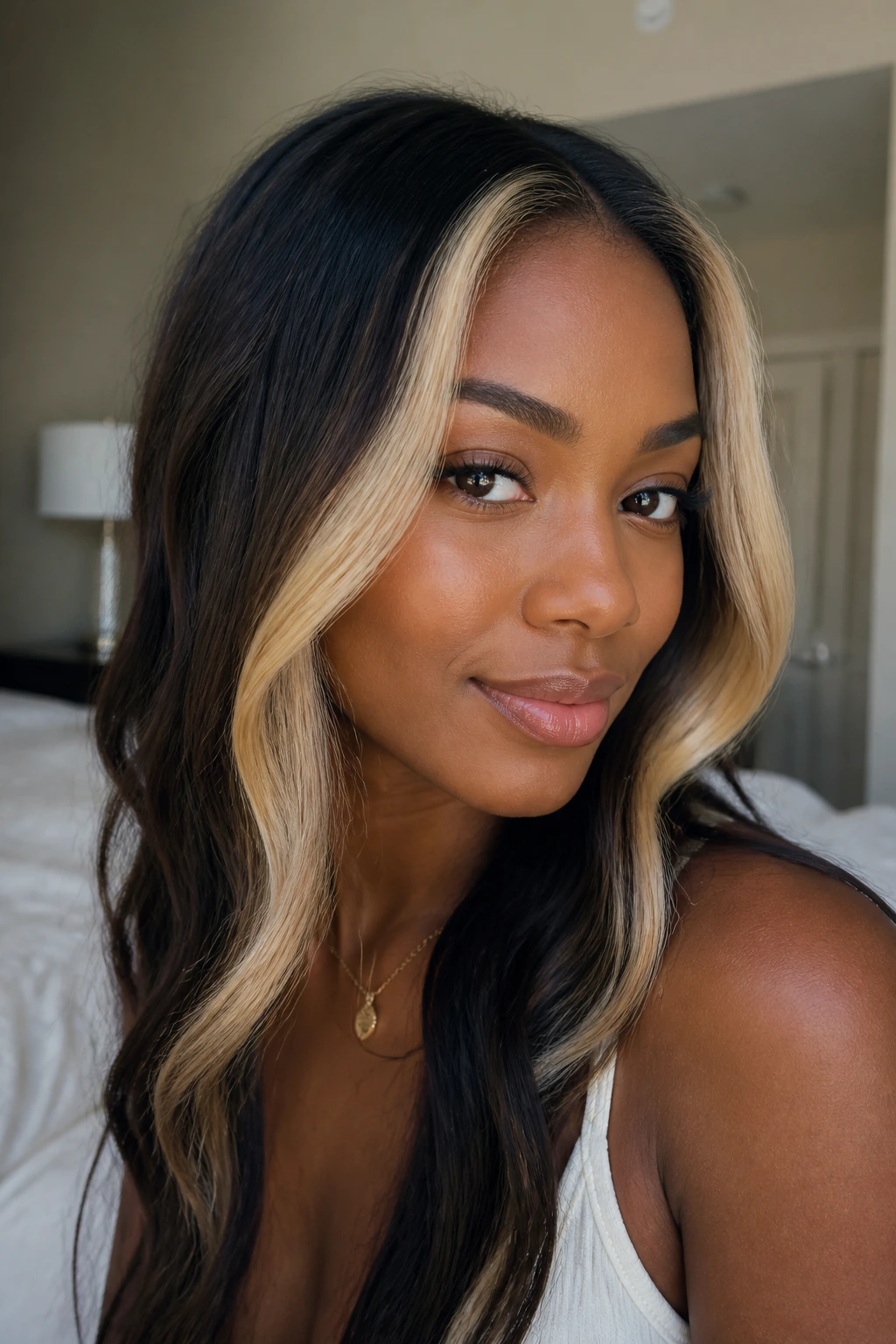
A bright money piece is the quickest way to test blonde on deep skin without going all in. Those front pieces pull light straight to the face, which means you get the color payoff right away even if the rest of the hair stays dark.
Why It Works
The contrast is placed exactly where people look first. That makes the whole style feel intentional even when only a small section is lifted. It also works across a lot of styles — buns, ponytails, braids, twist-outs, and loose waves all show it differently.
- Best for: first-time blondes
- Ask for: two brighter face-framing pieces and a soft blend into the crown
- Maintenance: touch up the front every 6 to 8 weeks
- Good move: keep the rest of the hair darker so the piece has contrast
This is the smart low-risk entry point. Bright, but not overwhelming.
8. Vanilla Cream Ends
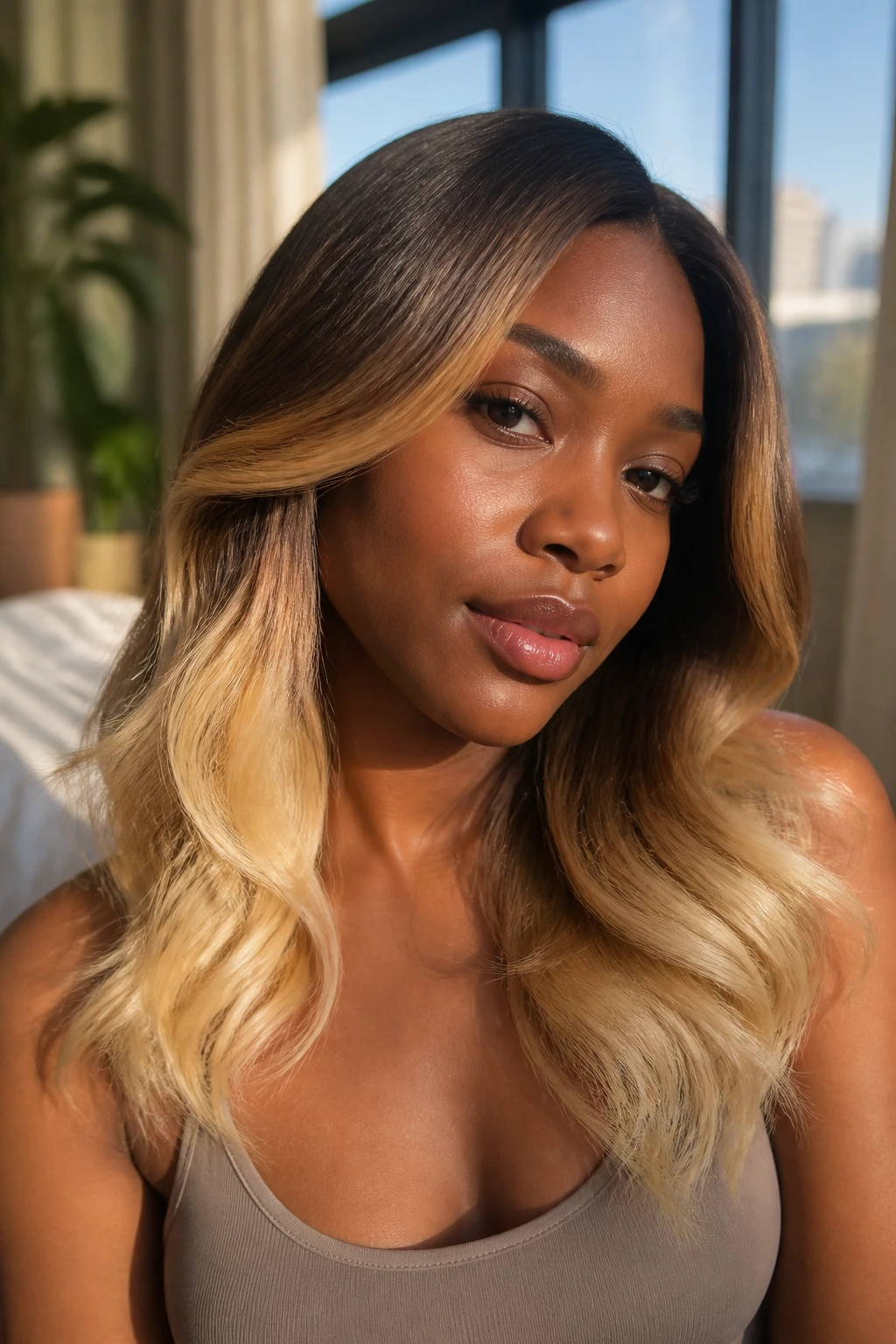
Vanilla cream ends are for anyone who wants a softer, more diffused blonde. The root and midlengths stay deeper, then the ends shift into a pale creamy tone that still feels warm enough to sit comfortably against deep skin.
The key is restraint. If the ends get pushed too far into icy territory, the color loses its softness and starts looking dry. Keep the cream side velvety, not white.
This style is especially good on layered cuts because the lighter ends show off movement. Every flip or bend picks up the tone, which gives the hair a little motion even when you’re wearing it straight.
9. Sandy Bronze Blonde
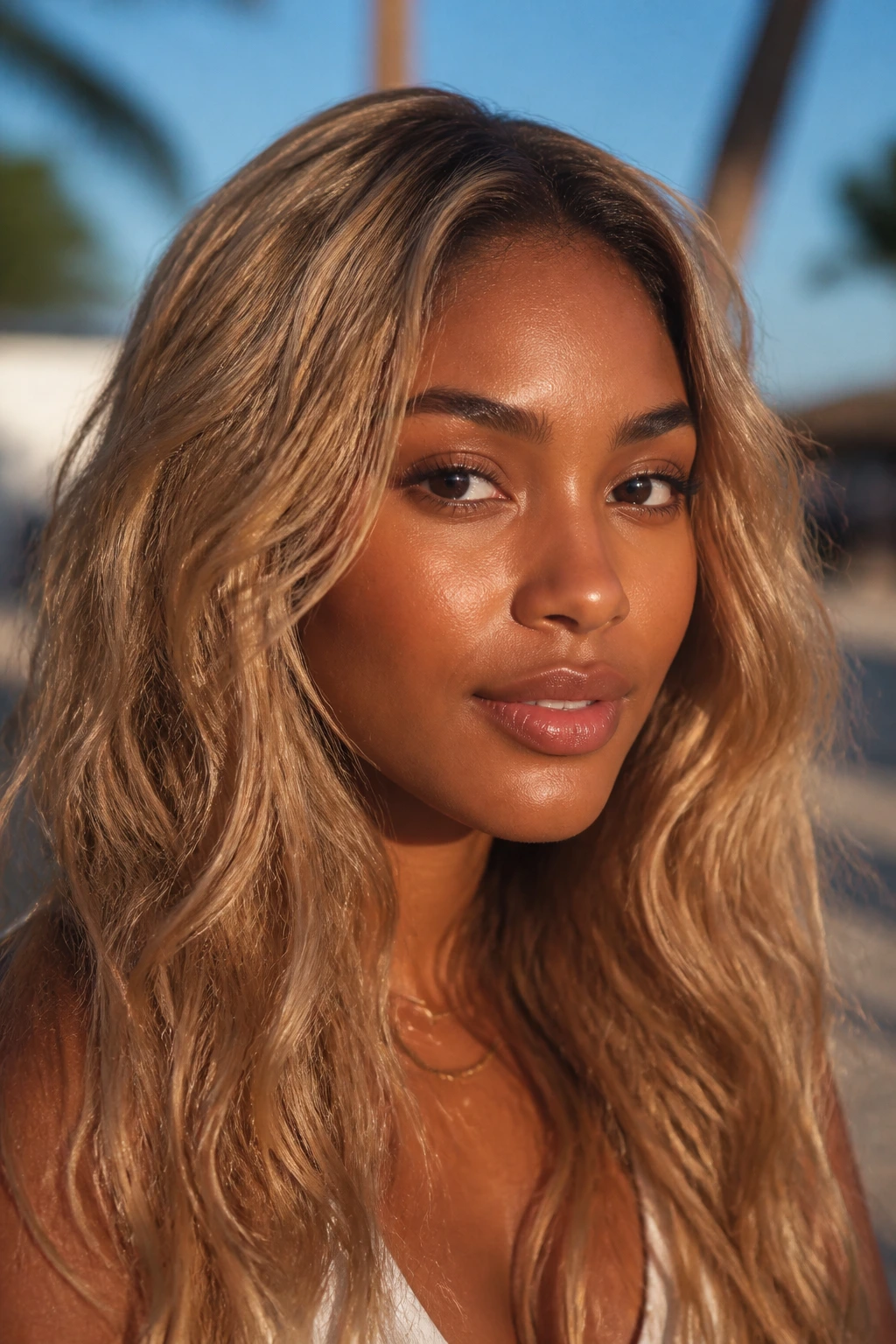
Sandy bronze blonde has a sun-baked feel without leaning orange. It mixes beige, bronze, and light brown, which gives deep skin a steady warmth that feels grounded. If honey blonde feels too golden and ash blonde feels too flat, this is a useful middle door.
It’s one of those shades that looks better in motion than in a still photo. The bronze notes appear and disappear depending on the light, which is exactly why it reads so well on textured hair.
This shade works best when the colorist keeps the lift uneven on purpose. Some lighter pieces, some deeper ones. That irregularity is what keeps it from looking painted on.
10. Smoky Mushroom Blonde
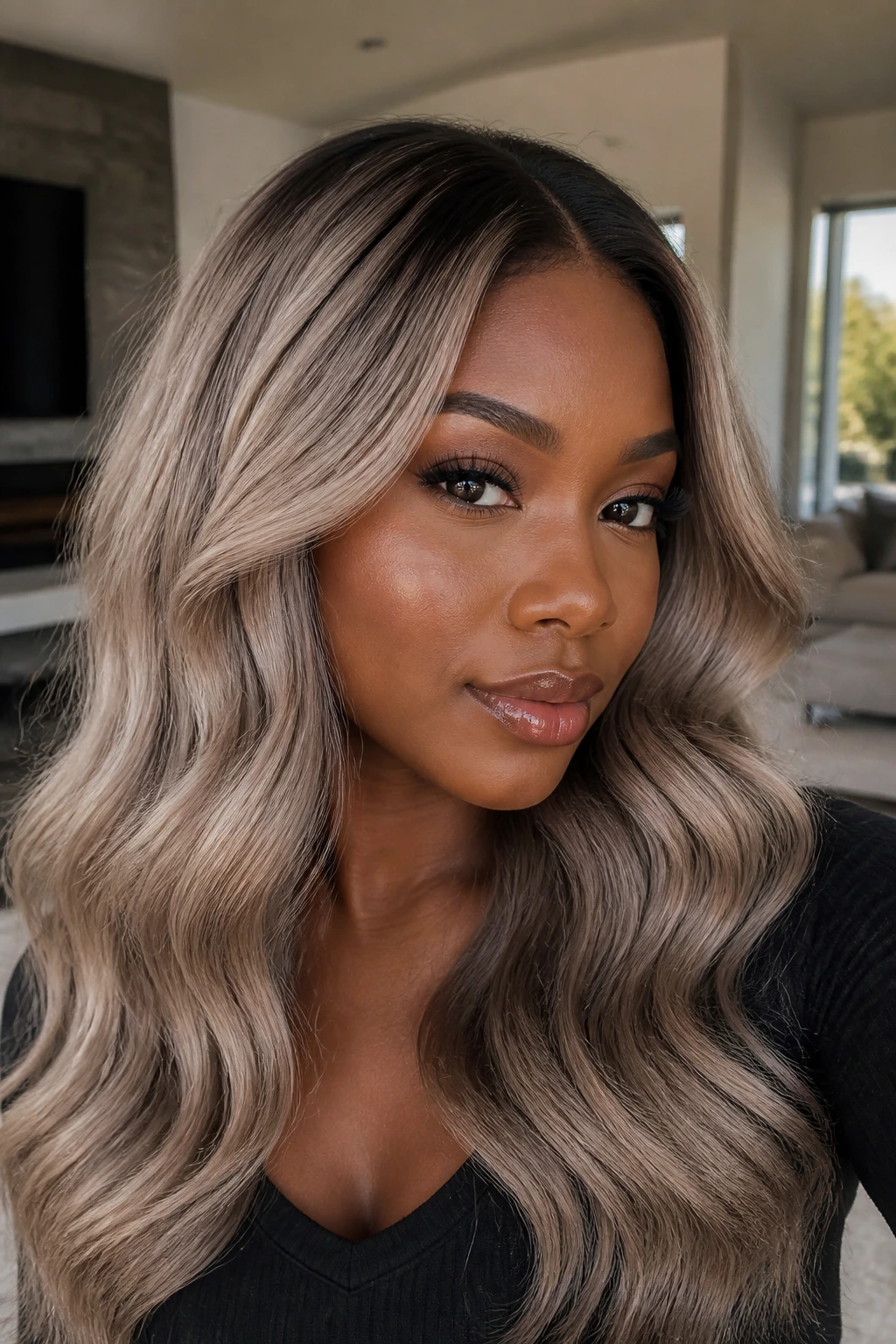
Smoky mushroom blonde is the cool girl of the bunch, but it only works when there’s enough depth underneath it. On deep skin, the smoky finish can look sleek and modern if the root stays dark and the tone leans beige-gray instead of flat ash.
What Makes It Different
Unlike warm blondes, mushroom blonde hides some of its brightness inside the shadow. That means the hair can look quiet in low light and silver-beige in bright light, which gives the shade movement without a lot of contrast.
Best Use
It suits blunt bobs, sharp layers, and straight styles especially well. On very curly hair, the cool tone can disappear unless the placement is bold enough to show.
Use this one if you like a more muted finish. Just don’t ask for it too pale. That’s where it starts to look tired.
11. Honeyed Foilyage
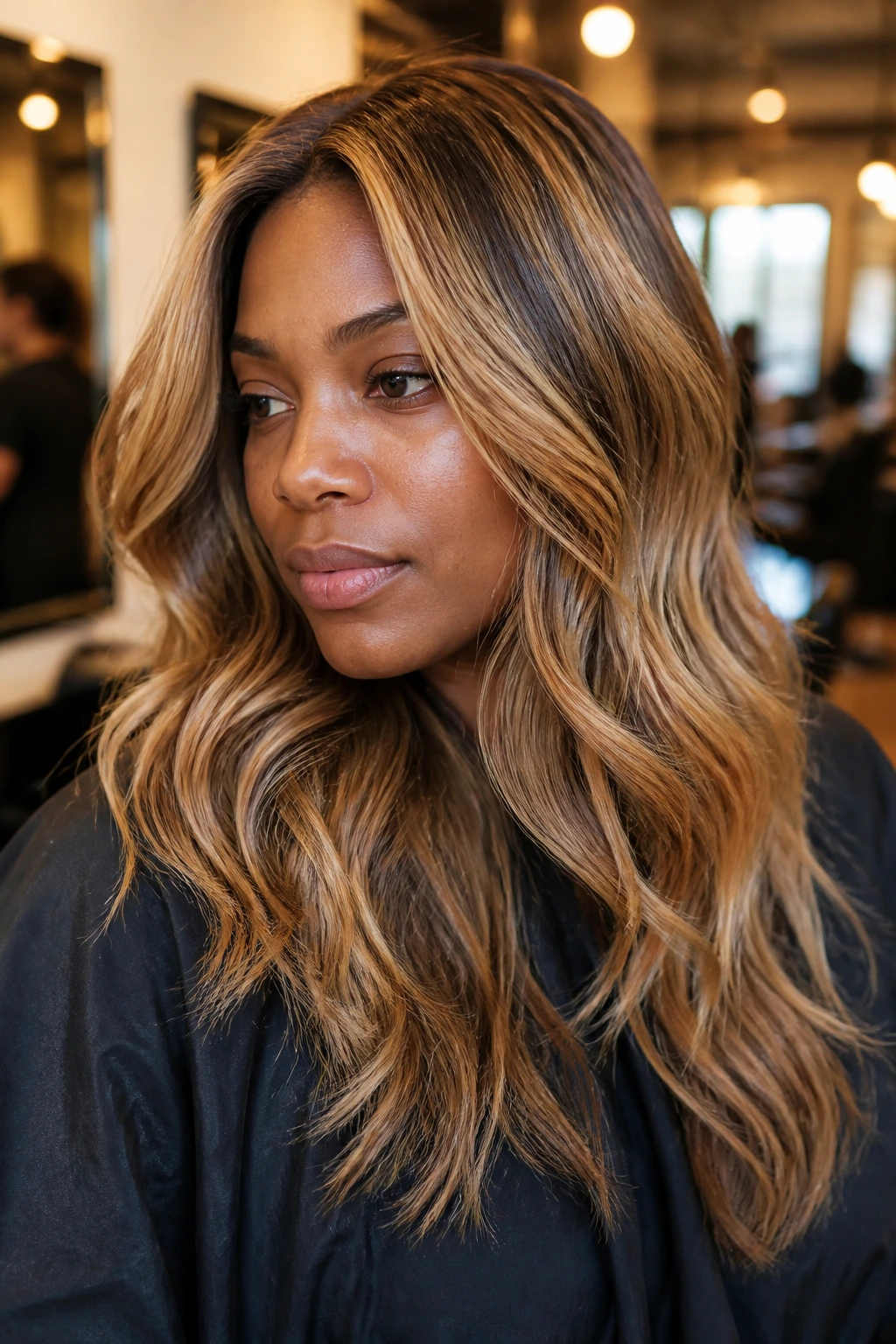
Honeyed foilyage is what I’d pick for someone who wants warmth and lift without losing softness. Foils give the blonde more brightness than a plain balayage, while the hand-painted placement keeps the result from looking stripy.
This technique shines on curls and coils because the light lands inside the shape of the hair, not just on the surface. You end up with bright spots where the hair bends and a deeper base where it needs structure.
Ask for honey tones at the top and slightly lighter gold toward the ends. That keeps the whole thing cohesive and avoids a harsh patchwork effect.
12. Apricot Blonde
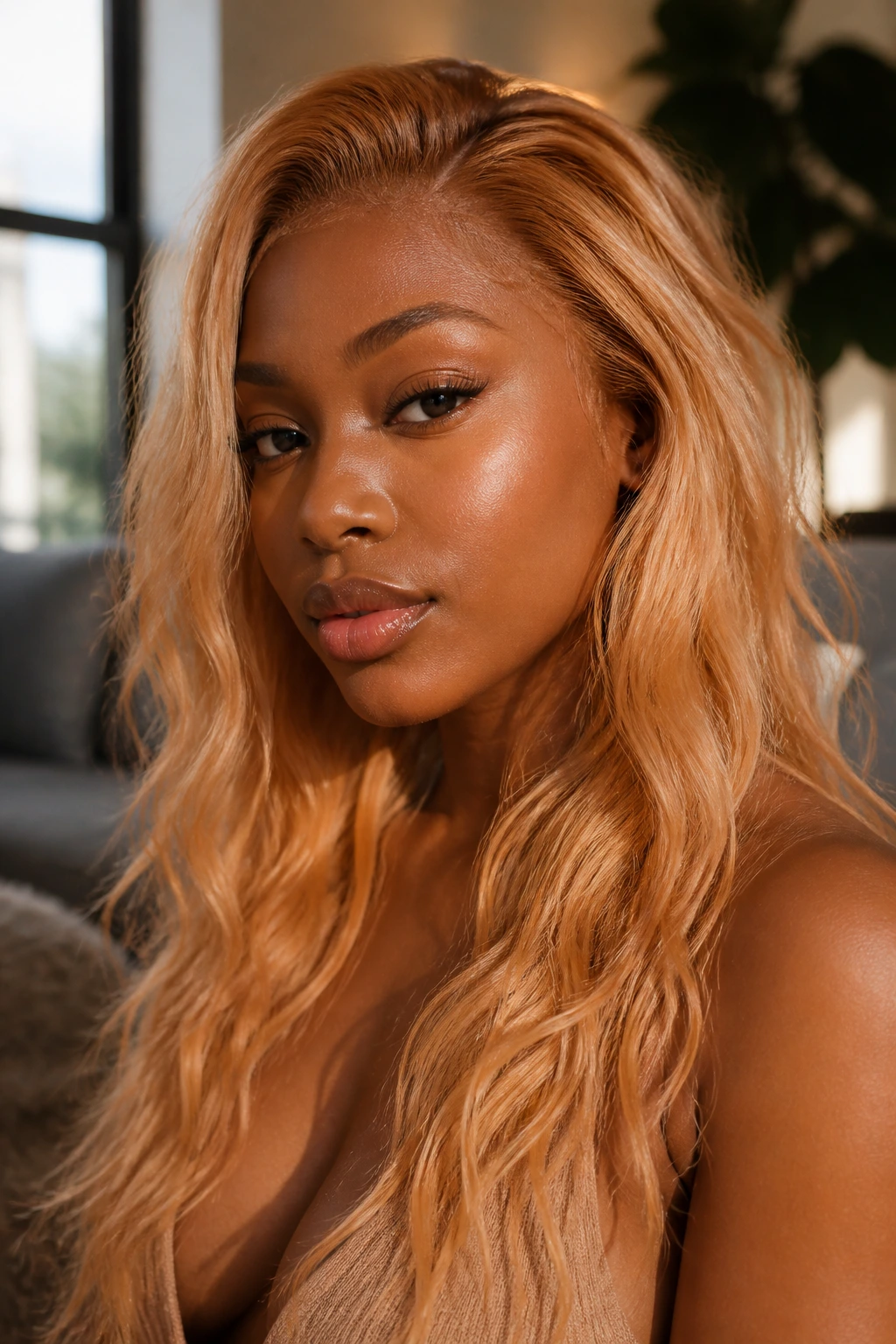
Apricot blonde is warmer and more playful than standard gold blonde, and on deep skin it can look lively rather than juvenile when it’s handled with a light hand. The peachy-gold tint gives the hair a soft glow that sits nicely against warm undertones.
This one works best as a tint over lifted hair, not a full neon peach job. Think apricot jam, not candy. The color should feel sun-touched and creamy, with brown still visible underneath.
It’s a good choice if you want a little personality without jumping into copper territory. The blonde does the talking; the apricot just gives it a warmer accent.
13. Pearl Blonde With Shadow Root
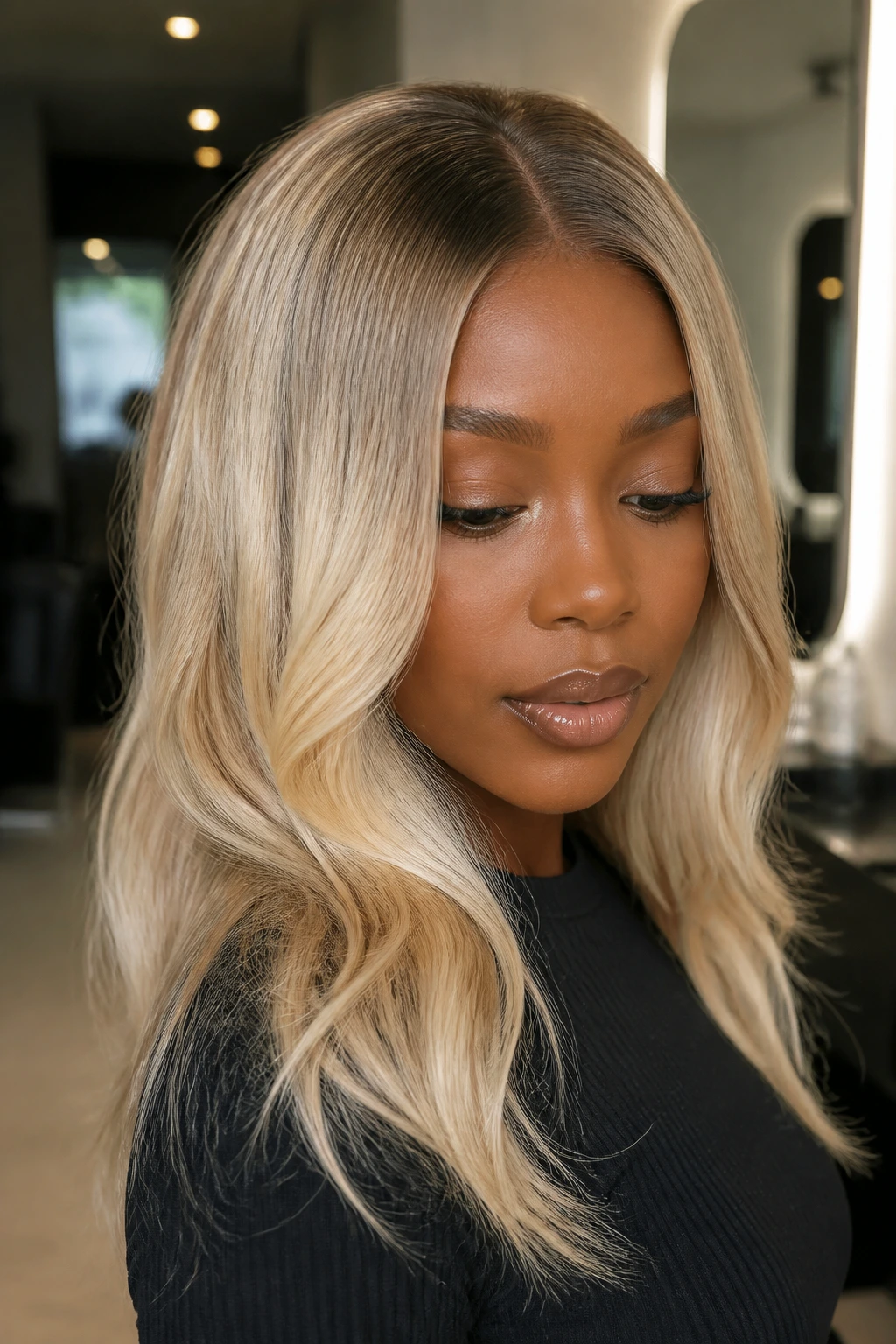
Can pearl blonde work on deep skin? Yes, but only when the root shadow is doing its job. Without that depth, pearl can look washed out. With it, the shade turns crisp, clean, and deliberate.
Salon Direction
Ask for a cool-beige pearl gloss over a lifted base, then keep the roots at least two levels deeper. That contrast frames the face and stops the color from floating away from the skin.
Pearl blonde is one of the most maintenance-heavy shades in this list. It needs regular toning, and it benefits from a little discipline at home. If you’re not willing to babysit yellow tones, pick a warmer option instead.
14. Dirty Blonde With Warm Lowlights
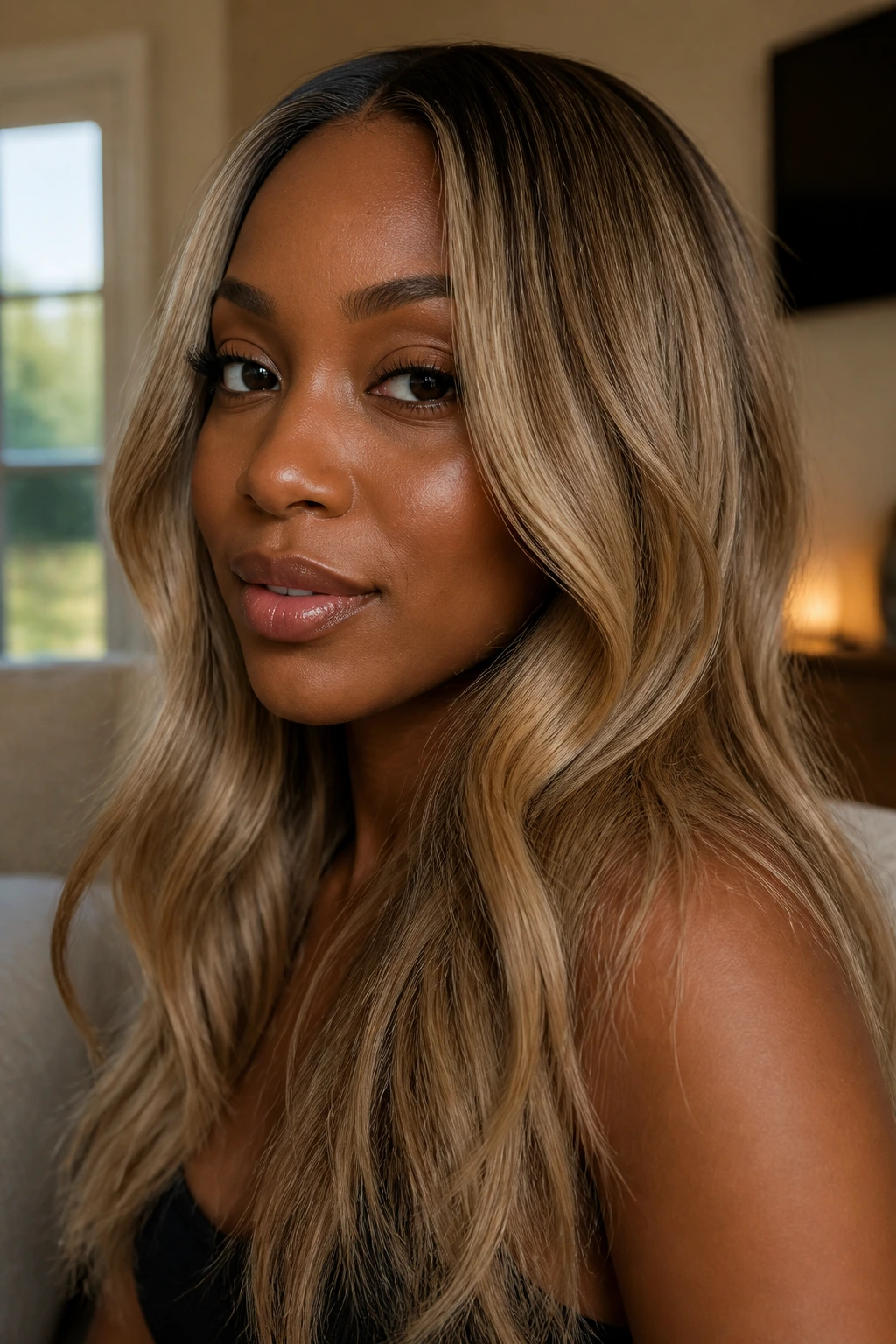
Dirty blonde sounds less glamorous than it looks. On deep skin, the mix of beige blonde, darker strands, and warm lowlights gives the hair a lived-in finish that feels easy to wear. Nothing looks too exposed or over-processed.
I like this one for people who want blonde without a hard commitment. The lowlights keep the depth, and the blonde pieces do the brightening. You get movement without having to maintain a bright all-over lift.
Why It Stays Soft
The darker pieces break up the blonde, so the hair still has dimension as it grows. That makes this a smart choice if you don’t want every salon visit to feel urgent.
15. Oatmilk Blonde
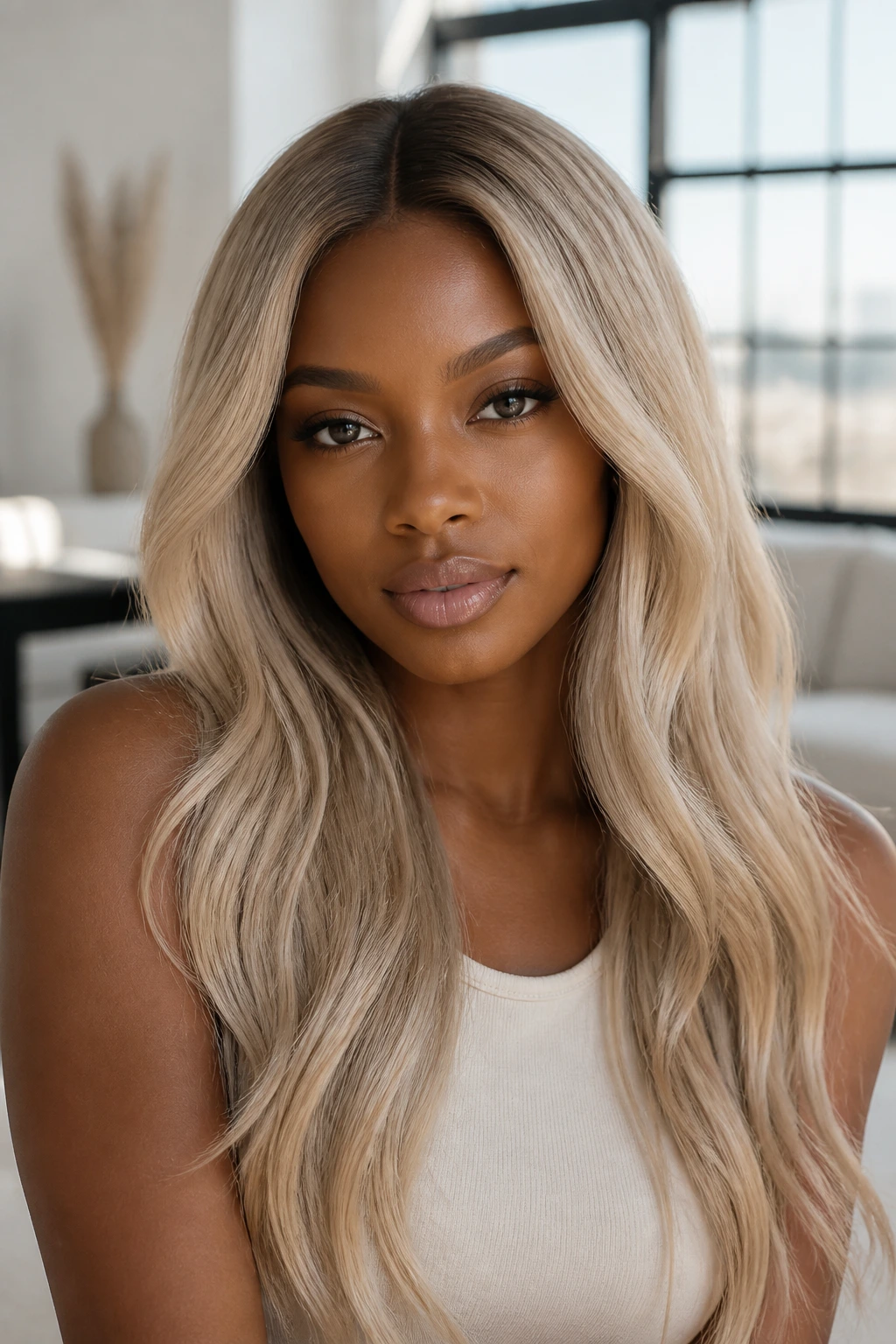
Oatmilk blonde is creamy, pale, and neutral enough to work on deep skin when the base is kept grounded. It has a soft milkiness that feels cleaner than yellow blonde and less severe than platinum.
The trick is balance. Too much lift and it turns brittle-looking. Too much yellow and it loses the oatmilk vibe entirely. The best versions sit somewhere between beige and soft cream, with a deeper root to hold the shape.
- Best for: neutral undertones
- Ask for: a creamy beige gloss and a root shadow
- Looks best on: sleek bobs, layered lobs, and polished waves
- Watch for: chalkiness if the toner gets too cool
This shade is quiet, but not dull. That matters.
16. Cinnamon Beige Blonde
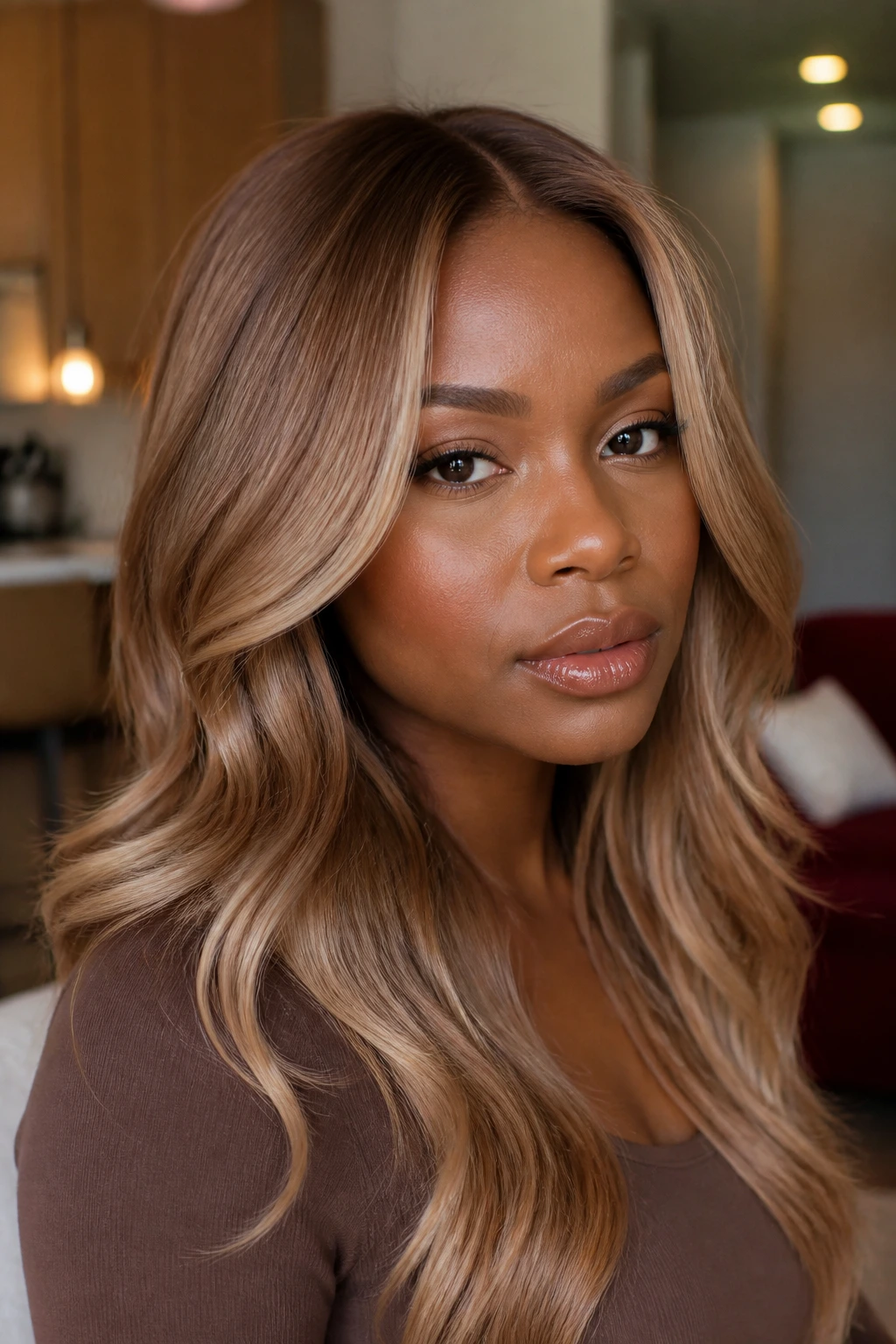
Cinnamon beige blonde gives you warmth with a little spice in it. The beige keeps the blonde soft, while the cinnamon note adds a faint reddish-brown warmth that flatters deep skin especially well.
This is a smart choice if you like warm makeup, bronzer, or gold jewelry. The tone feels connected to those choices instead of fighting them. It also works on both straight and curly hair because the warmth reads clearly in different textures.
Ask for a beige base with a warm cinnamon glaze, not full copper. There’s a difference. One looks polished; the other can drift into orange faster than you want.
17. Mahogany-Glaze Blonde
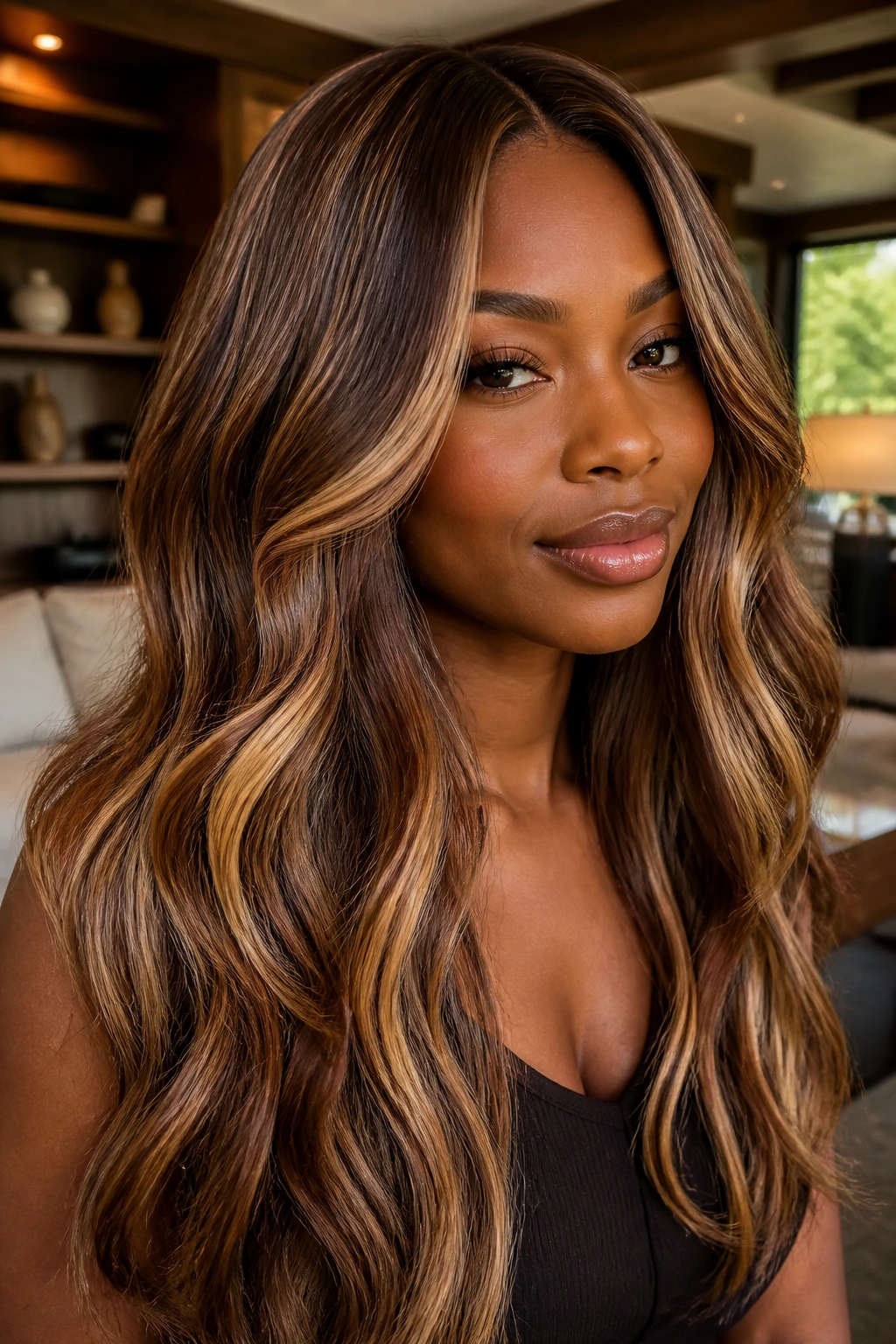
Mahogany-glaze blonde is not the first thing people think of when they hear blonde, which is exactly why it’s worth paying attention to. It keeps the deeper brown-red base and lets blonde live as a glaze or sparkle through the surface.
That makes it a strong pick for people who want blonde ideas without losing their darker identity. The mahogany keeps the color rich, while the lighter pieces catch light around the face and ends.
It’s especially useful if your hair resists heavy lifting. You can get a lot of visual payoff from a few brighter pieces over a deep mahogany base, and the grow-out is forgiving.
18. Island Blonde
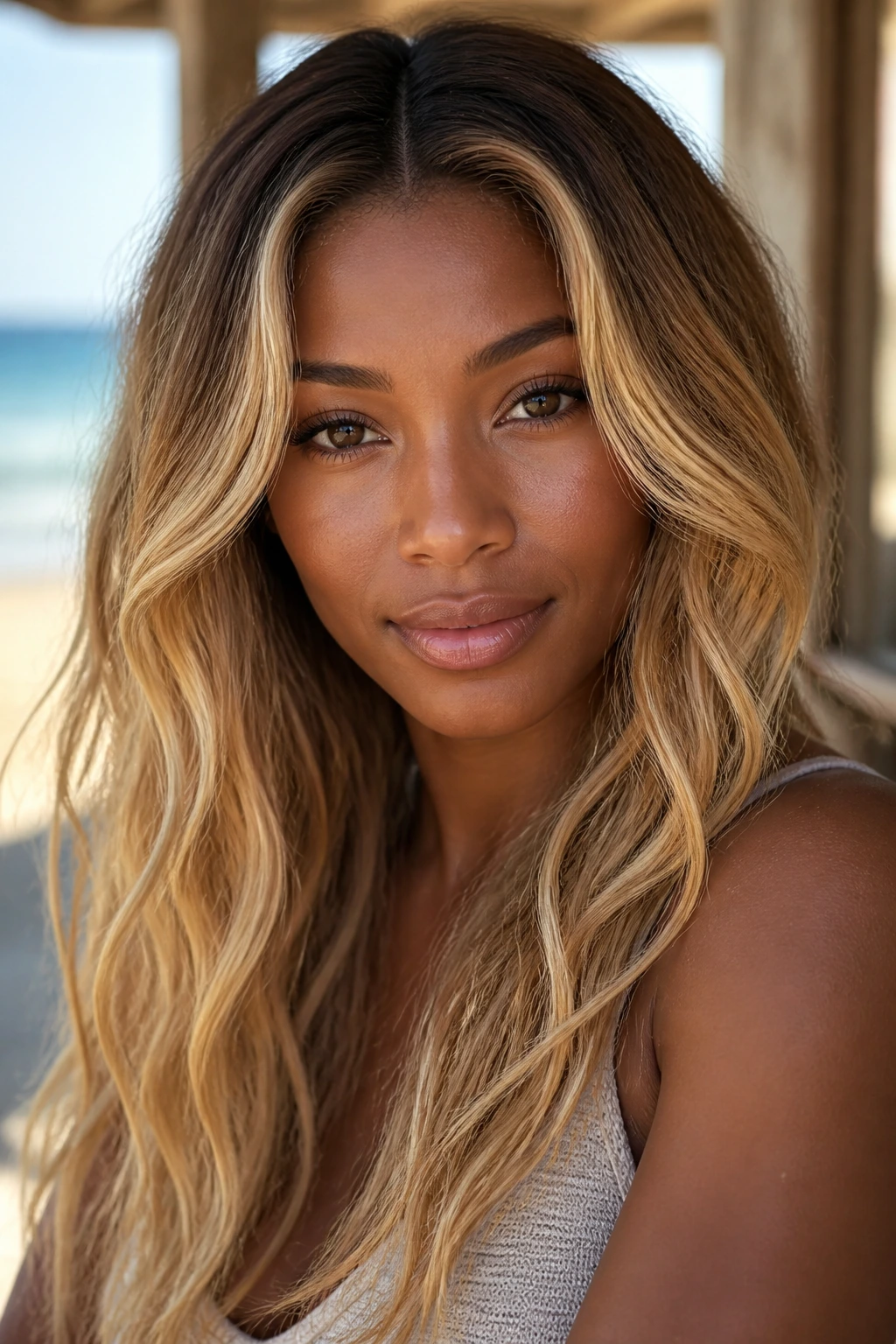
Island blonde is sun-kissed without being striped. Think soft gold through the surface, lighter ends, and just enough brightness around the face to make the whole style feel open. On deep skin, the warmth keeps it from looking faded.
Best When
This shade works well on long layers, beachy waves, and stretched curls. The color needs movement to show itself; otherwise it can look more brown than blonde.
What to Avoid
Don’t pack the highlights too evenly. The charm here is irregular brightness. A little randomness makes the color look like it happened in real life, not on a foil grid.
It’s a relaxed shade, but it still needs planning. Too much gold and it turns brassy; too little and the blonde disappears.
19. Toasted Coconut Blonde
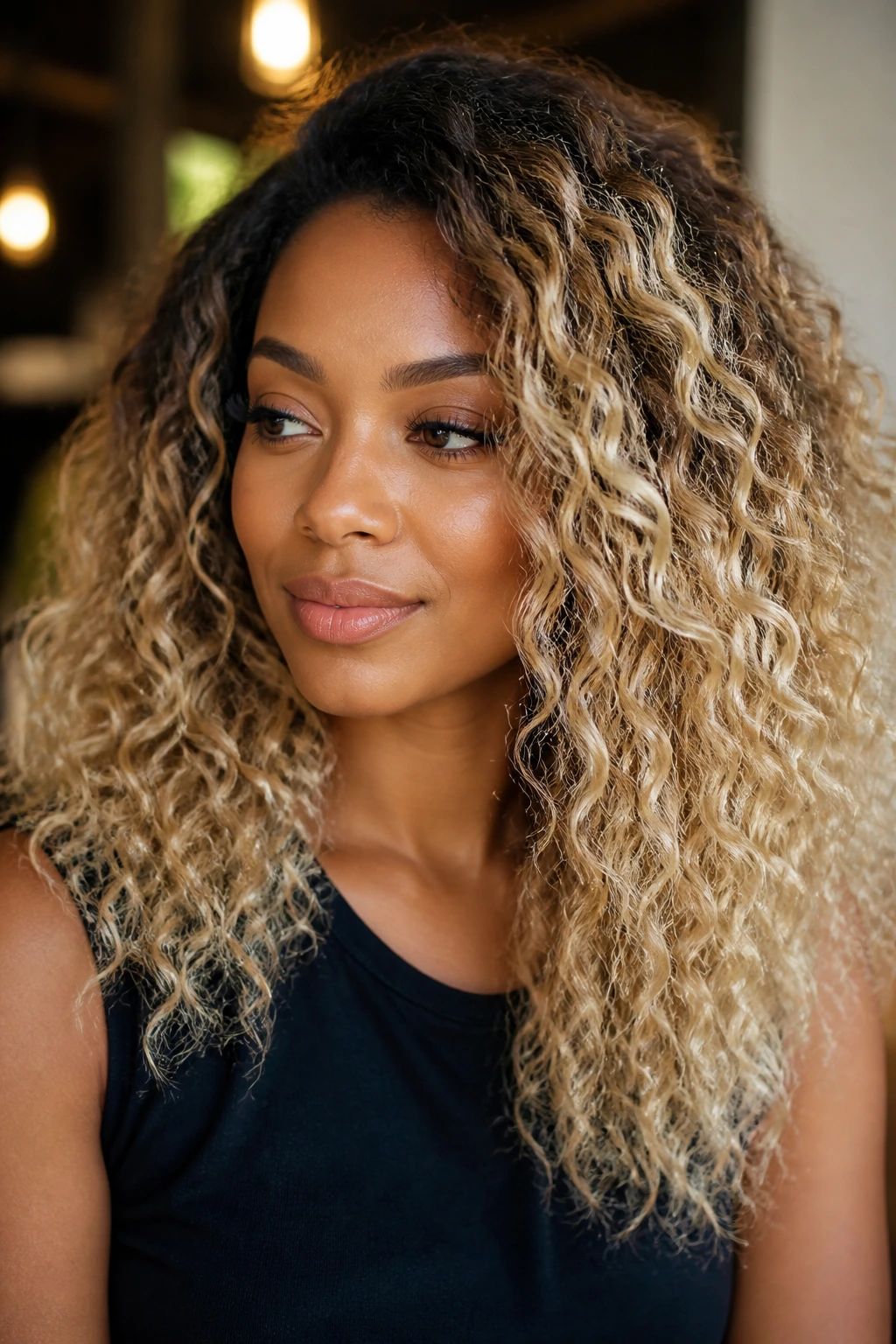
What makes toasted coconut blonde so useful on deep skin is the dark-to-light shift. The roots stay rich, the midlengths look creamy, and the ends get just enough blonde to feel bright. It’s easy to wear on curls because the tone changes as the hair moves.
How It Reads
The darker base keeps the look tied to the face, while the lighter parts catch the bends in the curl pattern. That keeps the blonde from sitting like a solid block on top of the hair.
- Best for: coily and curly textures
- Ask for: a dark root, cream midlengths, and brighter ends
- Maintenance: gloss every 5 to 7 weeks
- Watch for: too much yellow at the ends
This one has a clean, layered effect that stays flattering even as it grows.
20. Soft Gold Foilyage
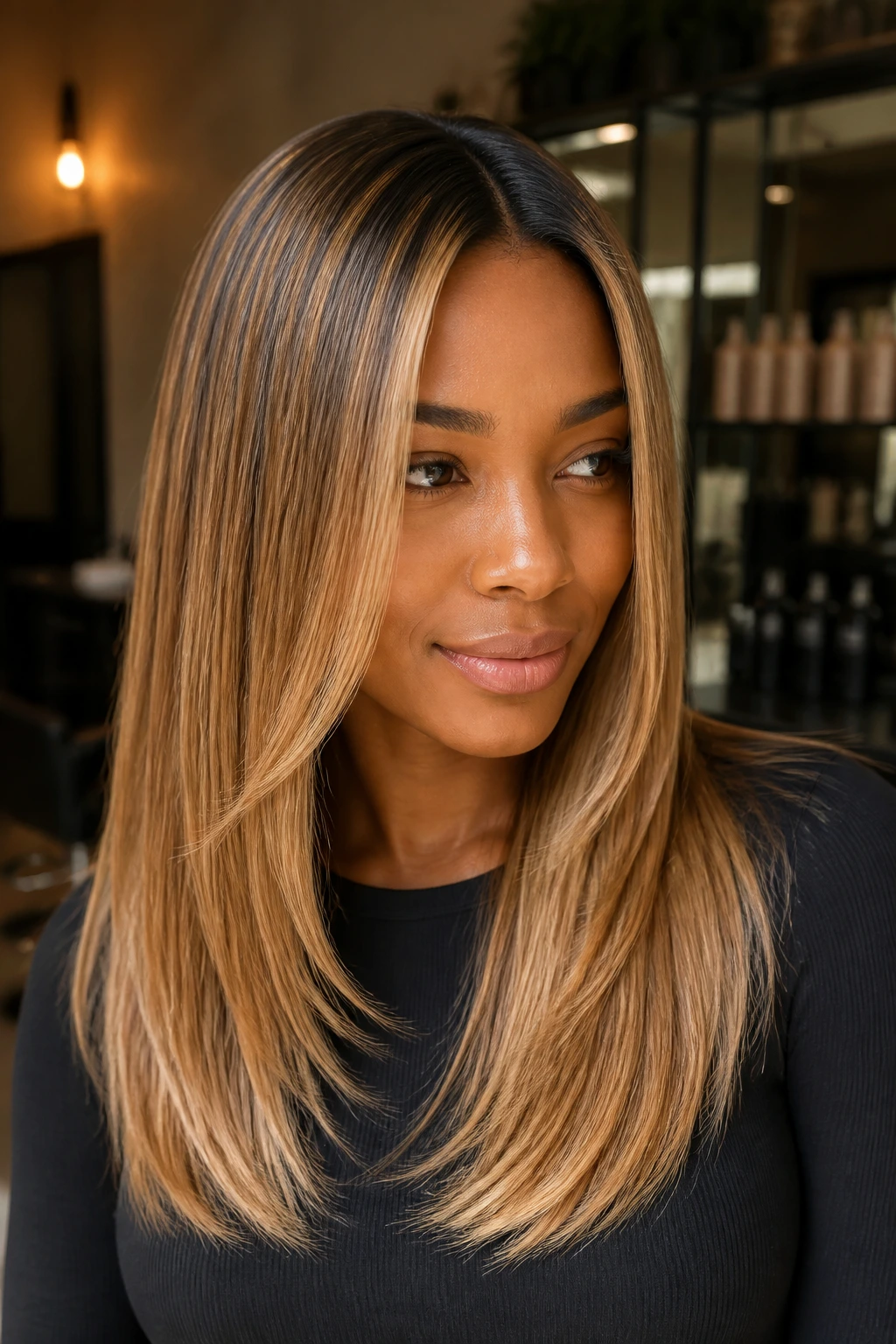
Soft gold foilyage is for people who want brightness with a crisp edge. Foils lift the hair more evenly than open-air painting, which gives you a cleaner gold that still feels wearable on deep skin.
It works especially well on straight styles and blowouts because the light pieces show clearly. On textured hair, you’ll want to place the gold in larger, strategic sections so it doesn’t get swallowed by the curl pattern.
This is not a shy look. It is still softer than platinum, but it has enough shine to read right away.
21. Platinum With Root Shadow
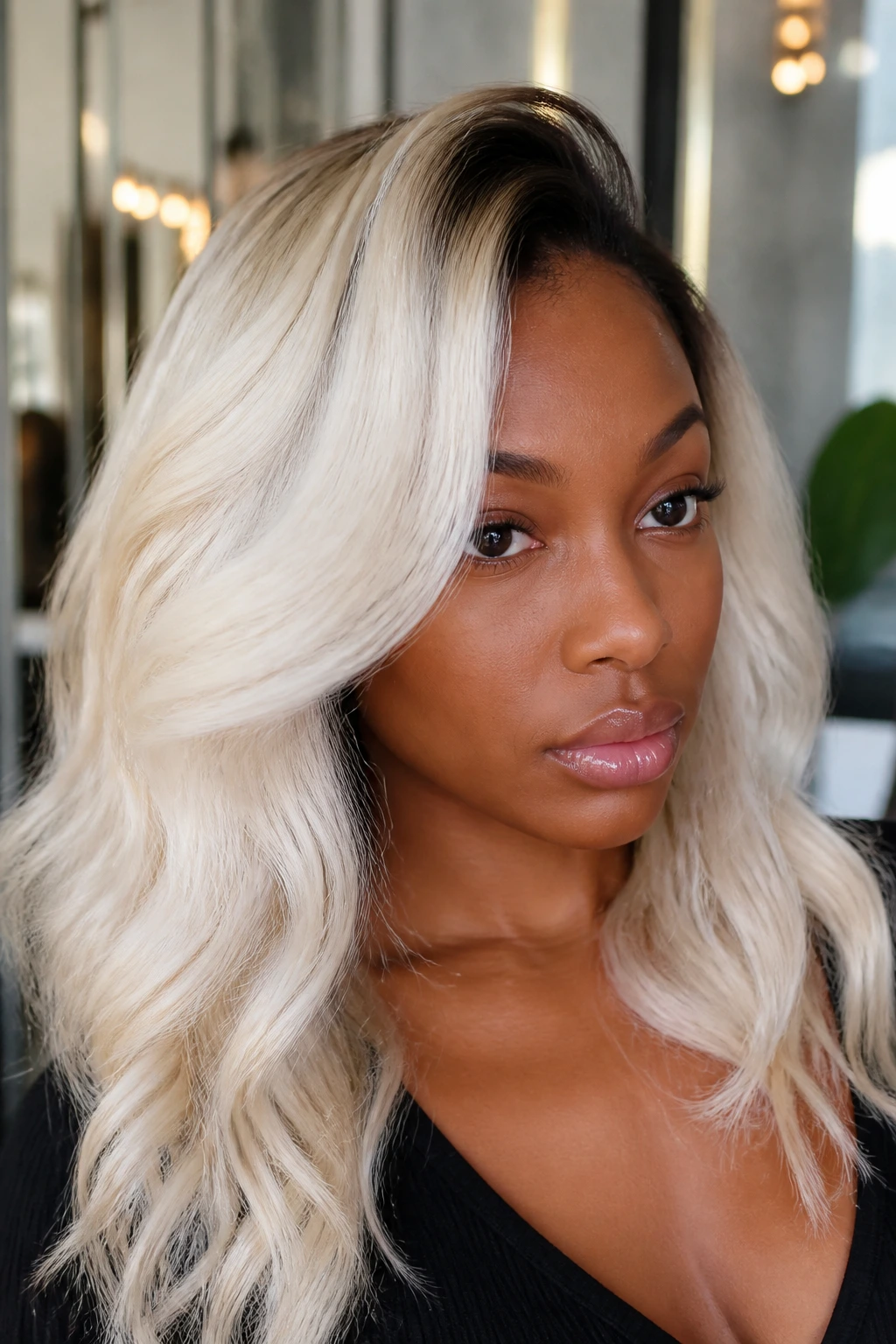
Platinum on deep skin can look striking, but only when the root shadow keeps it anchored. Without that base, platinum often looks like it’s sitting too far away from the face. With the shadow, it turns graphic and sharp.
This is the highest-maintenance option on the list, and I’m not going to pretend otherwise. Toner matters. Purple shampoo matters. A cool beige gloss matters. If you want the clean, bright finish, you have to protect it.
Still, when it’s done well, it’s worth the upkeep. The dark root gives your features a frame, and the platinum does the rest. There’s no mistaking it.
22. Butterscotch Bob Blonde
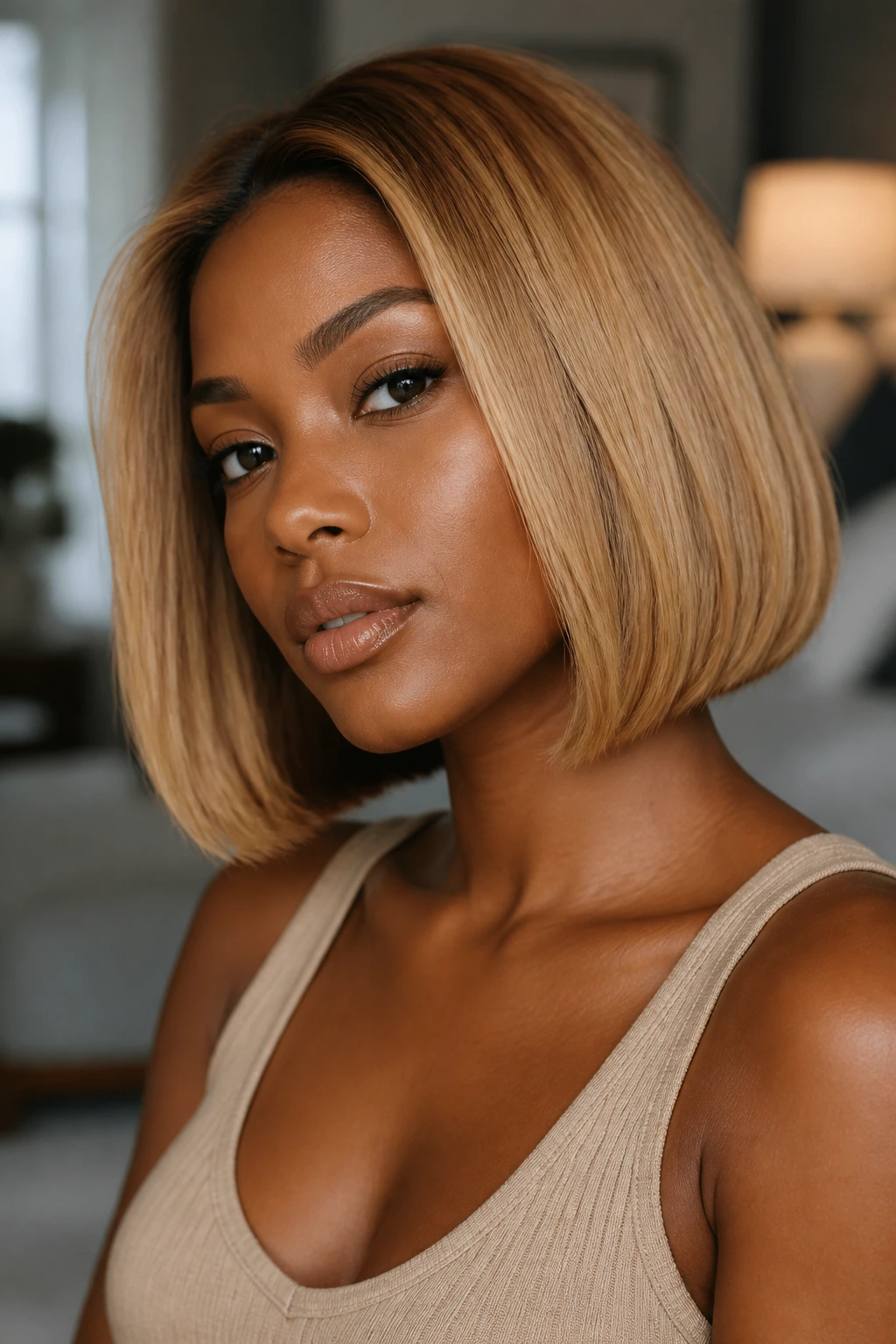
A bob gives butterscotch blonde a place to land. The shorter shape makes the warmth feel intentional, and the color takes on more punch because there’s less length for it to disappear into.
Why It Works
Short cuts need a tone that reads fast. Butterscotch does that better than muted beige because the warmth shows the shape of the haircut. On deep skin, the shade feels polished without going flat.
Keep the roots soft and the ends a little brighter if you want movement. On a blunt bob, that subtle shift keeps the cut from looking helmet-like.
This is a strong option if you want color that does not need a lot of styling to make sense. The cut and the tone do the work together.
23. Cream Soda Blonde
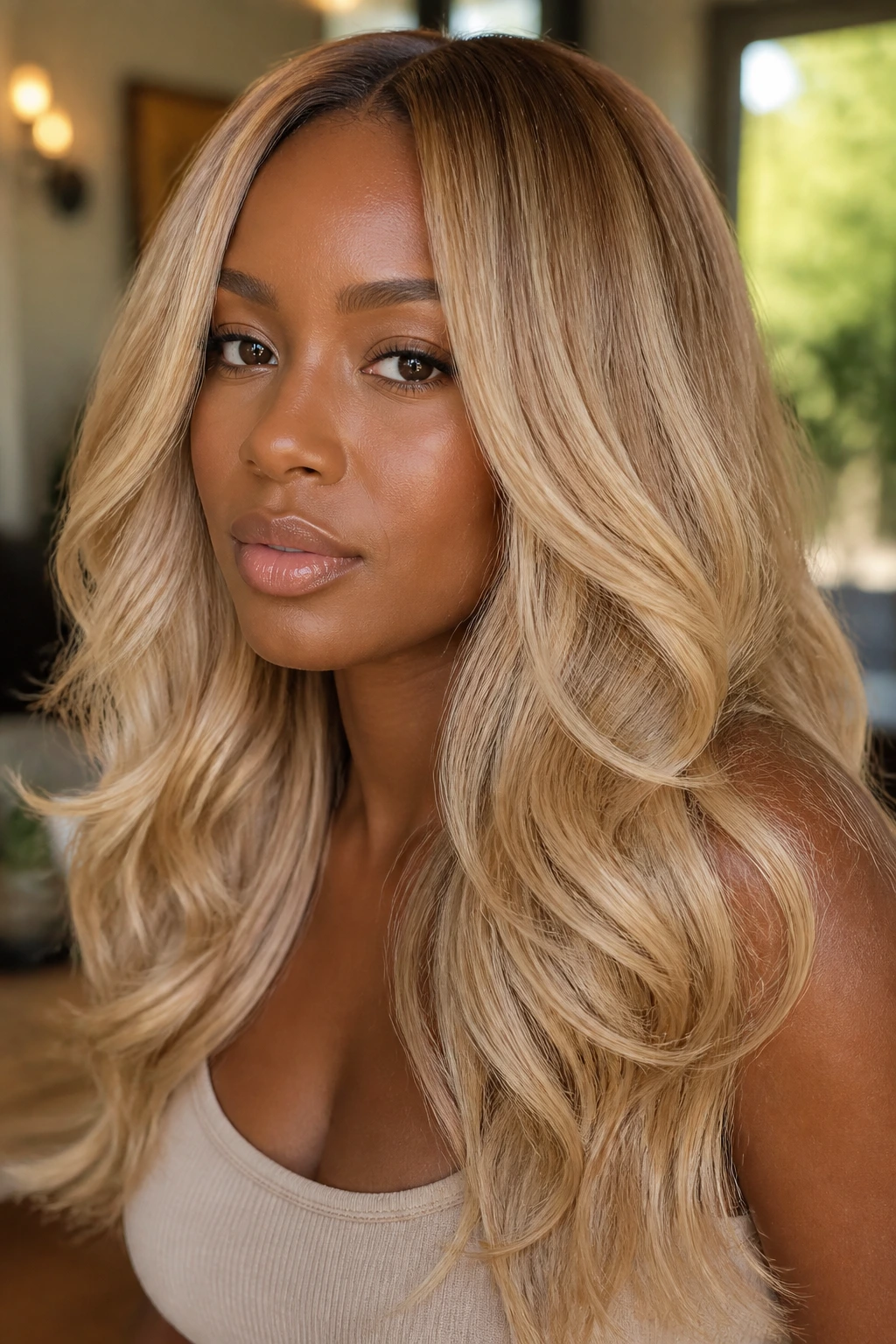
Cream soda blonde is light, airy, and a little fizzy in the way good color should be. It sits between beige and gold, which means it can look creamy on deep skin instead of chalky.
The best versions keep a soft root and a glossy finish. That’s what makes the color feel full instead of pale. On curls, it should catch the top layer and leave some depth underneath. On straight hair, the shine matters even more.
This shade is for people who want a lighter blonde but don’t want to lose warmth entirely. It reads best when the colorist resists the urge to push it too cool.
24. Sun-Kissed Bronde
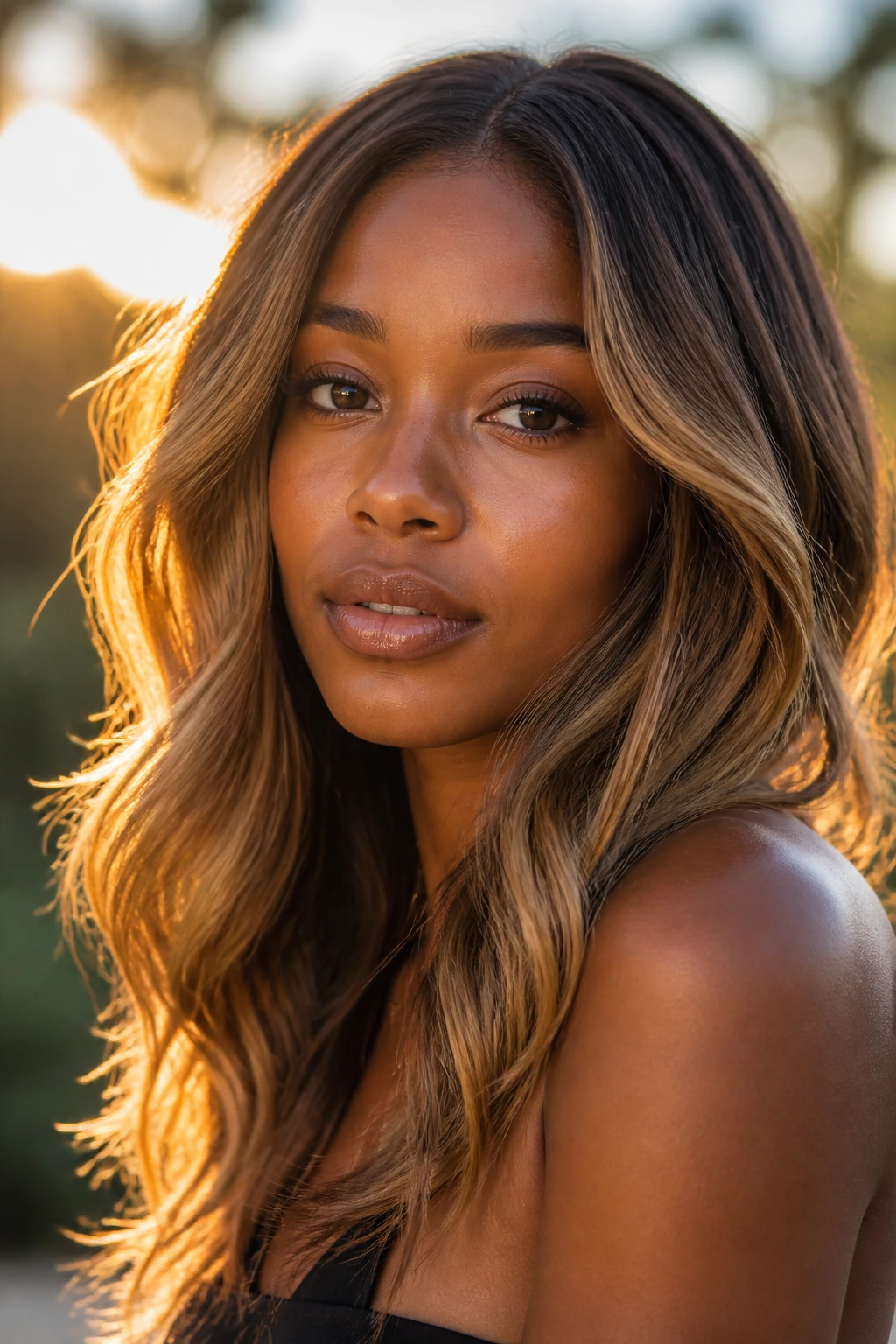
Sun-kissed bronde is the quiet option that still gives you movement. It stays brown at the base, then adds blonde where the eye naturally lands — around the face, ends, and outer layers.
That makes it especially useful on deep skin because the contrast never gets too hard. The blonde is there, but the dark base still does the framing. It’s also easy to grow out, which matters more than people admit.
If you want a color that says “I changed my hair” without shouting, this is one of the safest bets in the bunch.
25. Champagne Rose Blonde
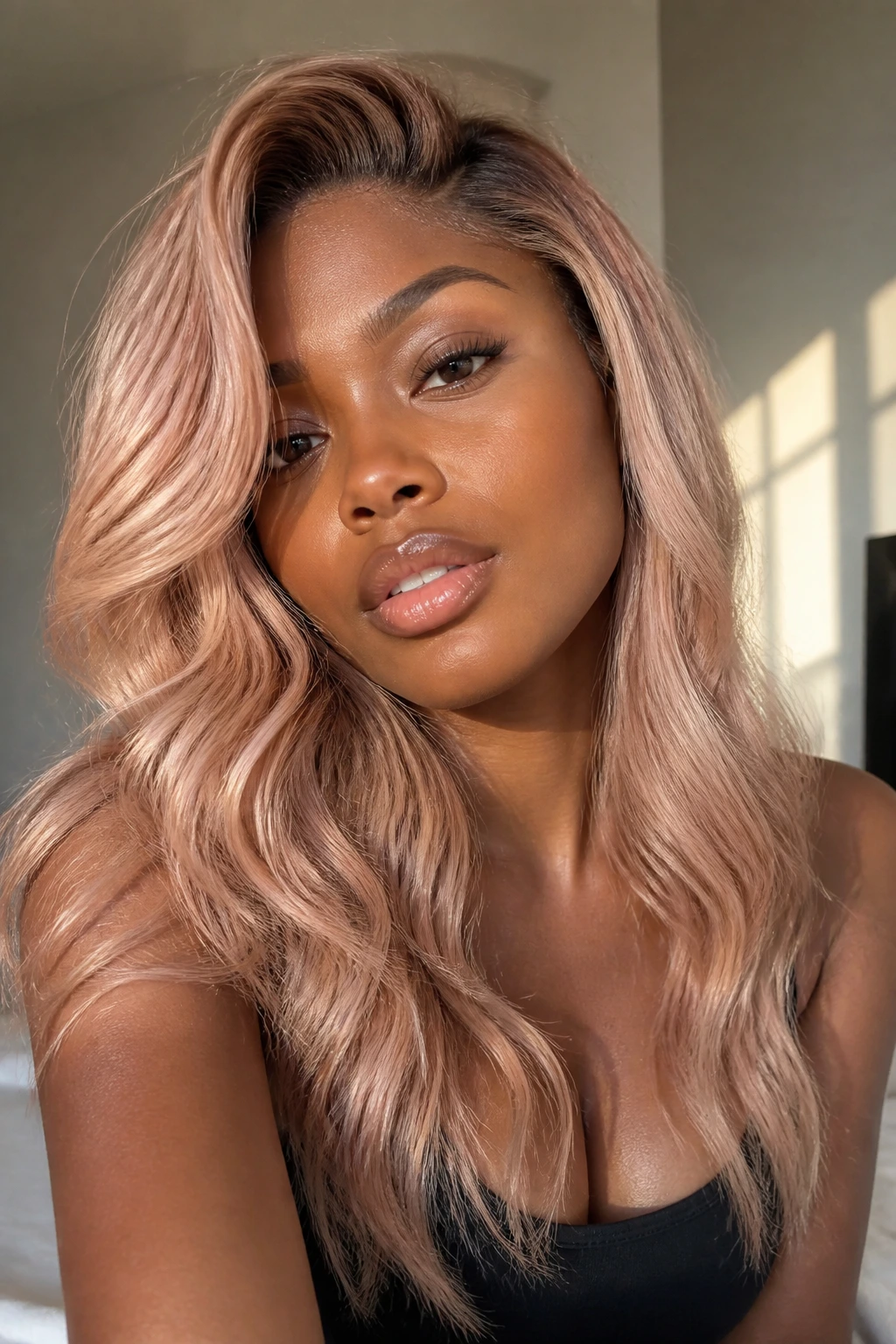
Champagne rose blonde adds a faint pink-gold tint to a blonde base, and on deep skin it can look fresh when the rose stays subtle. Too much pink and it becomes costume-y. Just enough and it gives the hair a polished warmth.
Best For
Warm-neutral undertones tend to carry this shade well. It also plays nicely with glossy waves and silk presses, where the shimmer can move across the surface without getting lost.
Ask For
Tell your colorist you want rose only in the glaze, not in the lift. That keeps the blonde readable and prevents the tone from turning salmon.
This is a tone for people who like a little softness with their shine. It’s not loud. It does not need to be.
26. Tiger-Eye Blonde
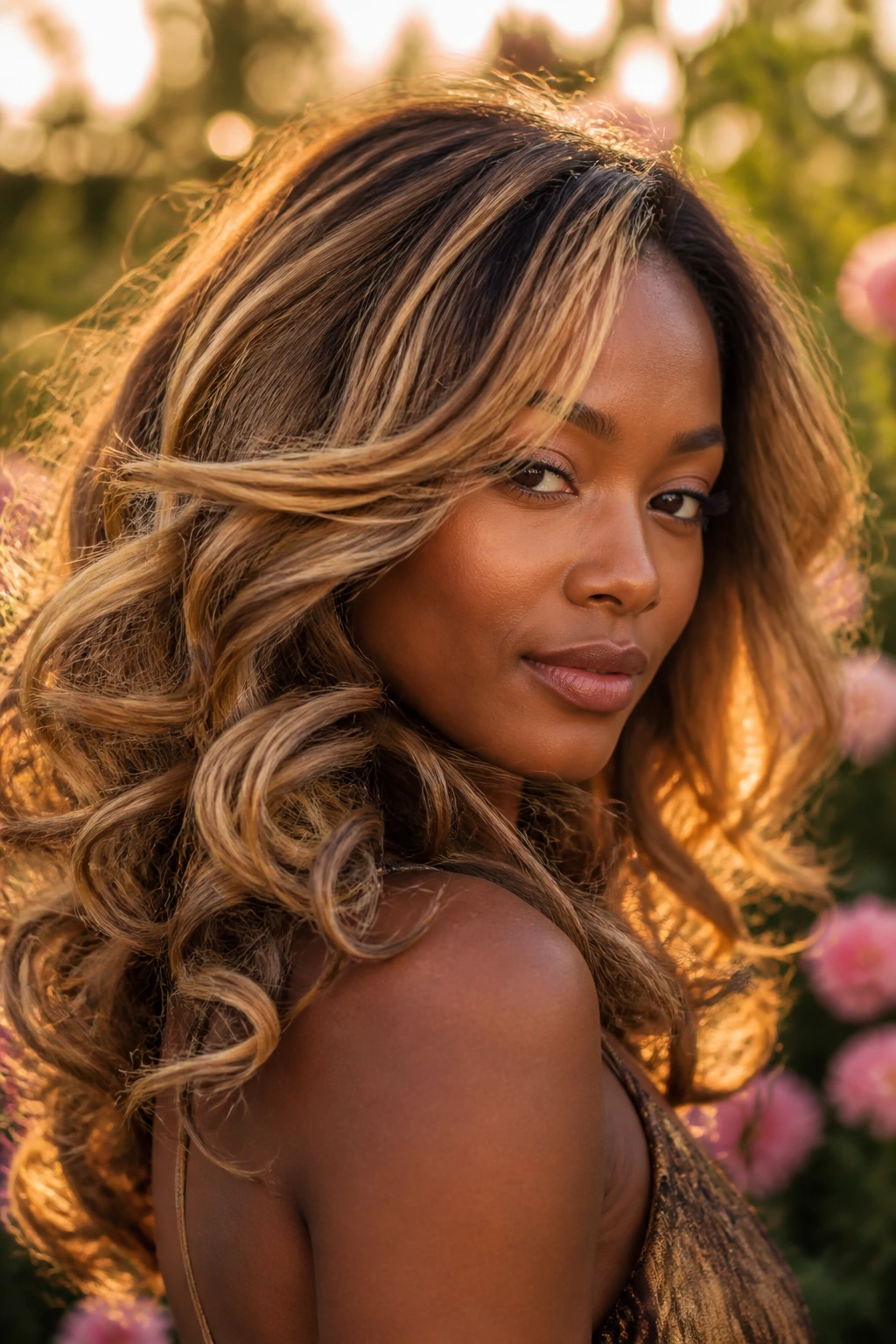
Tiger-eye blonde has the banded, glowing look of the stone it’s named after. Caramel, bronze, and gold sit in waves through the hair, and on deep skin that shifting mix looks alive instead of flat.
What Makes It Click
The color changes as you move. That’s the whole point. One section looks bronzy, the next looks golden, and the darker base keeps everything tied together.
- Best on: layered cuts and voluminous curls
- Ask for: caramel, bronze, and gold ribbons with a darker root
- Avoid: evenly spaced stripes
- Upkeep: a gloss every 6 weeks keeps the tones clean
It’s one of the more dimensional blondes here, and dimensional color usually wins on deep skin.
27. Hazelnut Blonde
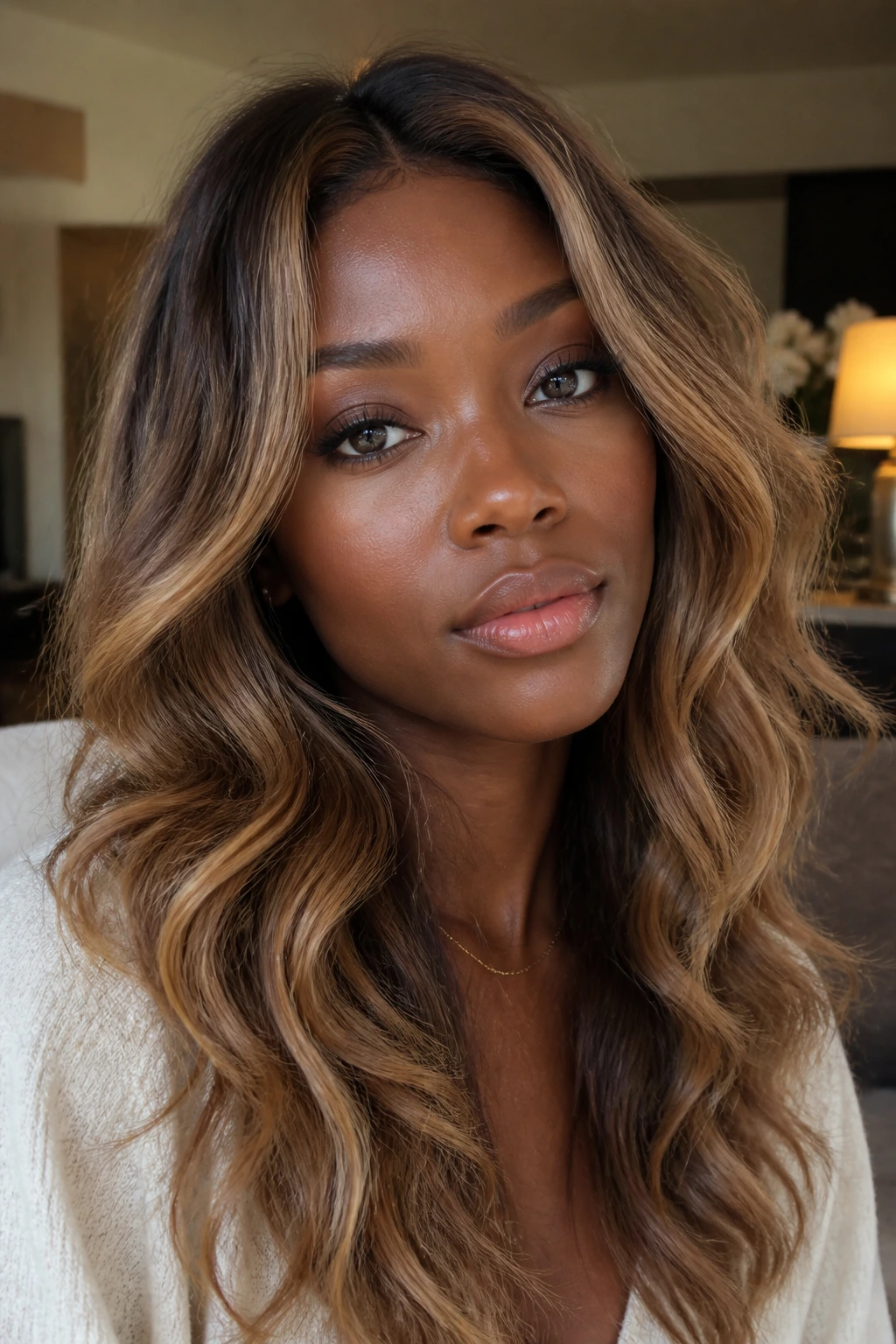
What if you want blonde that still looks like your hair? Hazelnut blonde is the answer I’d reach for first. It keeps the brown in control and lets honeyed blonde show up as a soft finish rather than a dramatic switch.
That makes it friendly for people who are nervous about lightening too much. The brown base keeps the color grounded, and the hazelnut tone gives you enough brightness to feel changed without looking unfamiliar.
It works on almost every texture, but it shines when the hair has a little movement. Waves, bends, and layered curls keep the hazelnut notes visible.
28. Sepia Blonde
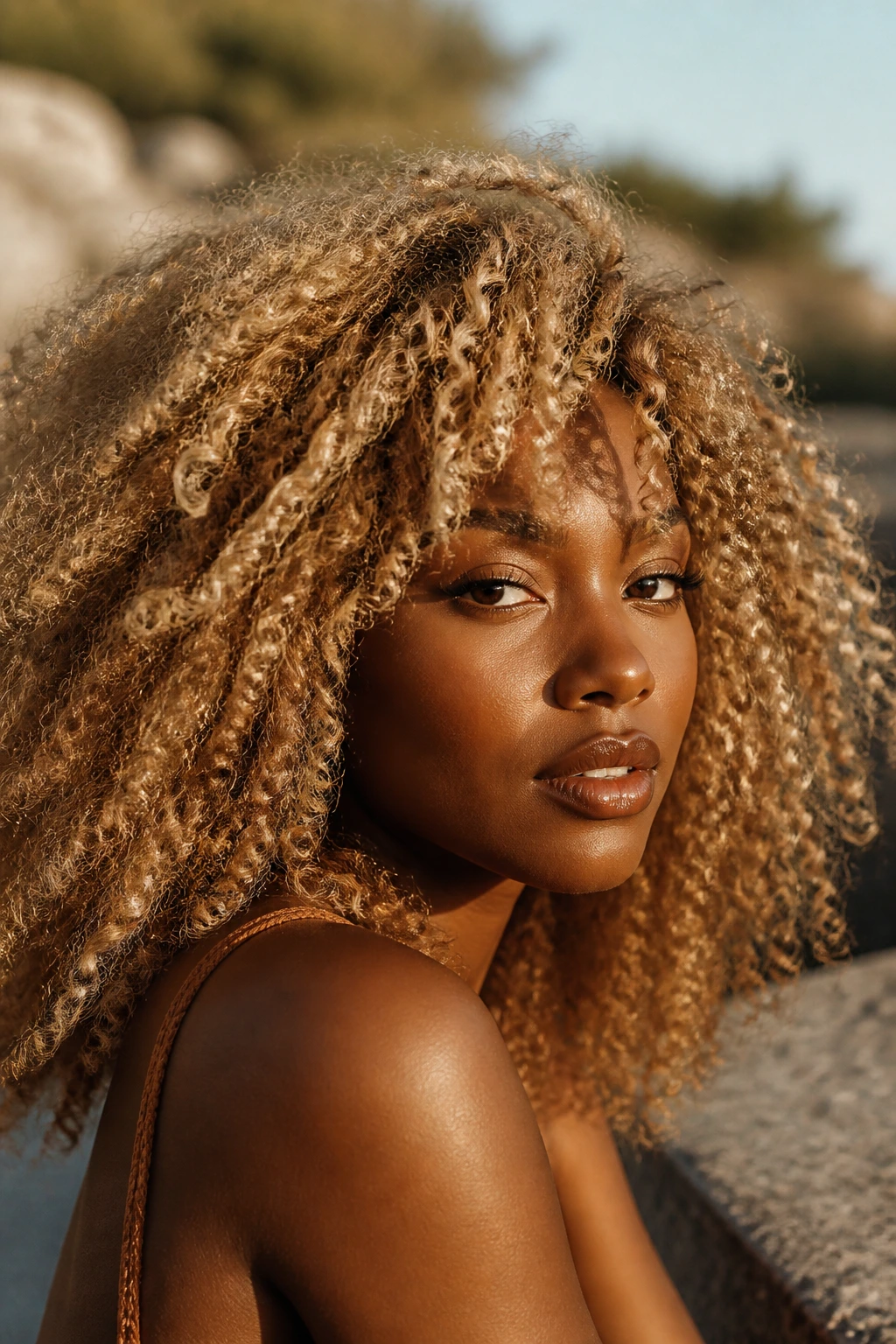
Sepia blonde has an earthy, old-photo softness that suits deep skin better than a lot of people expect. It isn’t icy, and it isn’t syrupy. It sits in that muted space where beige, tan, and soft brown all blur together.
That muted finish makes it a good choice if you hate brass and hate ash. The tone should feel dusty in the best way — soft around the edges, never dull. It’s especially good on textured hair because the natural movement keeps the shade from flattening out.
If you want a blonde that looks expensive without looking loud, sepia blonde has a strong case.
Why Warmth, Shadow, and Placement Matter
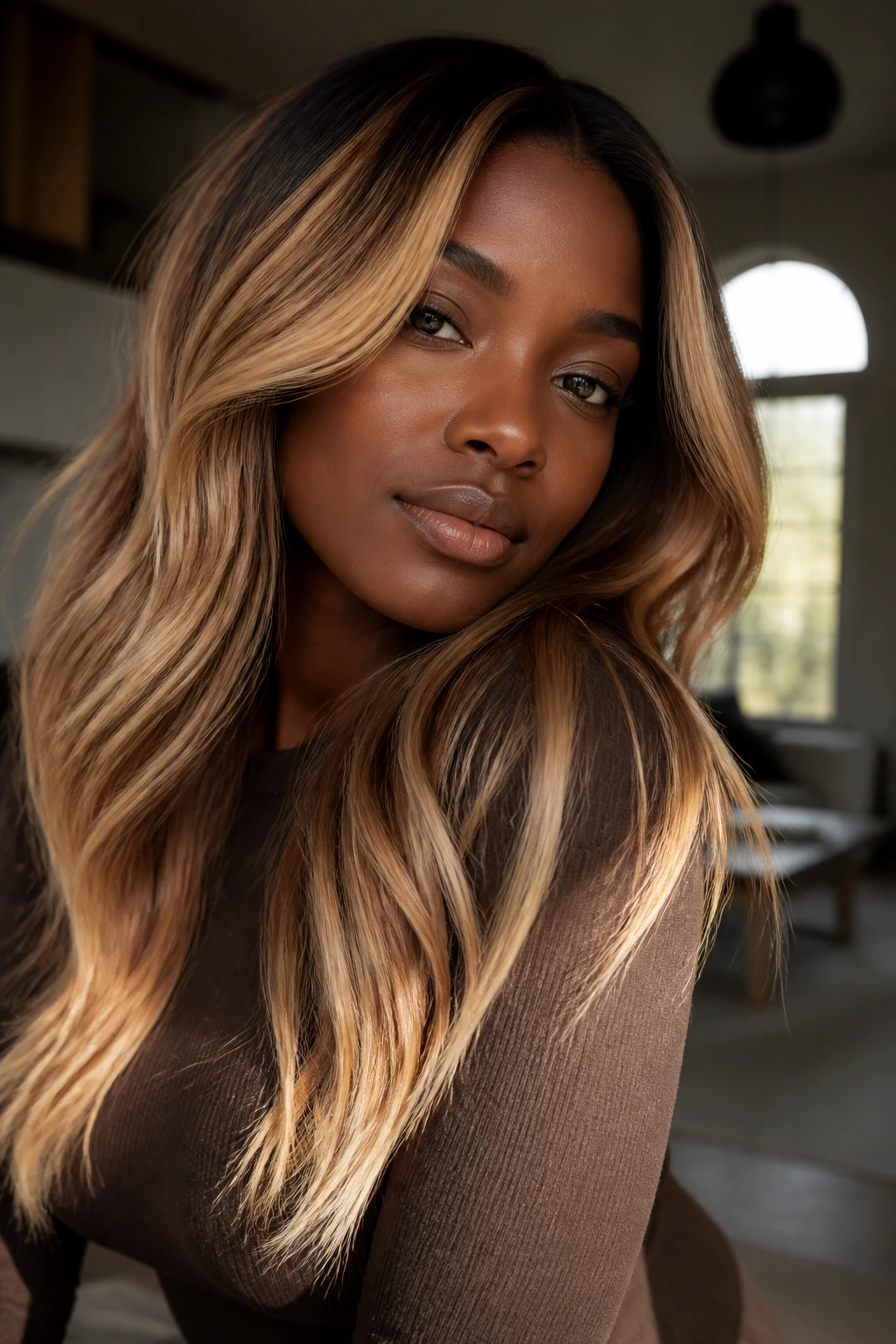
Deep skin can carry a lot of contrast, but that doesn’t mean every blonde should be high-lift and bright from scalp to ends. The more depth you keep in the base, the more the blonde has something to sit against. Flat color is what makes the hair look pasted on. Dimension is what lets it breathe.
Undertone Comes First
Warm blondes usually feel easier because they echo the golden, bronze, and red notes already present in many deep skin tones. That does not mean cool shades are off-limits. It means they need a stronger plan — more root shadow, a cleaner gloss, and a placement map that keeps the hair from turning chalky.
Placement Is Half the Work
On curls and coils, the brightest pieces should go where the hair bends, not just where the part sits. Around the face, at the crown, through the outer layers — those spots catch light first. The same shade can look soft, bold, or expensive depending on where the color lands.
Depth Keeps Blonde From Floating
A 1- to 3-level difference between the root and the lightest ends often reads better on deep skin than an all-over pale lift. That little gap gives the eye a place to rest. It also makes grow-out easier, which matters if you do not want to live in the salon chair.
Tools That Keep Color Day Clean
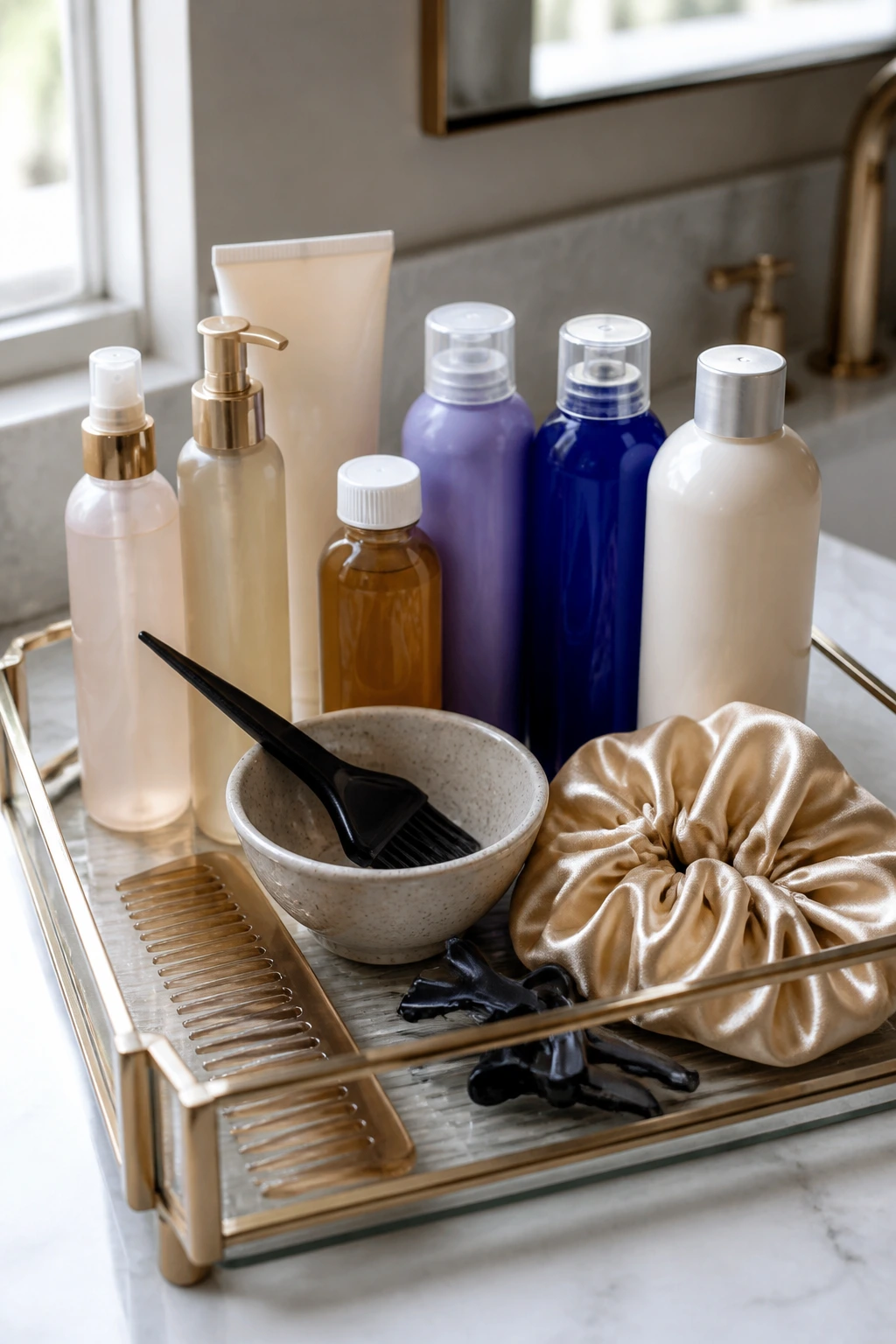
- Daylight mirror or bright window: Natural light shows the real tone better than warm bathroom bulbs, which can make every blonde look yellower than it is.
- Bond-building treatment: Bleach can make hair feel brittle fast, and a bond repair product helps keep the strands from snapping off at the ends.
- Color-safe sulfate-free shampoo: Harsh shampoo strips toner faster than people expect, especially on lighter ends.
- Purple shampoo: Useful for yellow brass on warmer blondes, but use it sparingly so the hair doesn’t go dull or gray.
- Blue shampoo: Better for orange or coppery brass in darker lifted hair.
- Deep conditioner: Blonde hair on deep skin usually looks best when it still has shine, and moisture is what keeps the finish from drying out.
- Leave-in with heat protectant: Necessary if you flat iron, blow dry, or diffuse often.
- Wide-tooth comb: Easier on lightened curls and less likely to snag on porous ends.
- Sectioning clips: Make face-framing pieces and foil placement much easier to handle.
- Tint brush and bowl: Handy if you gloss at home between salon visits.
- Satin bonnet or pillowcase: Keeps the lifted ends from rubbing dry overnight.
- UV spray: Helps if your hair sees a lot of sun, because lightened strands fade faster than dark ones.
How to Choose the Right Blonde Formula
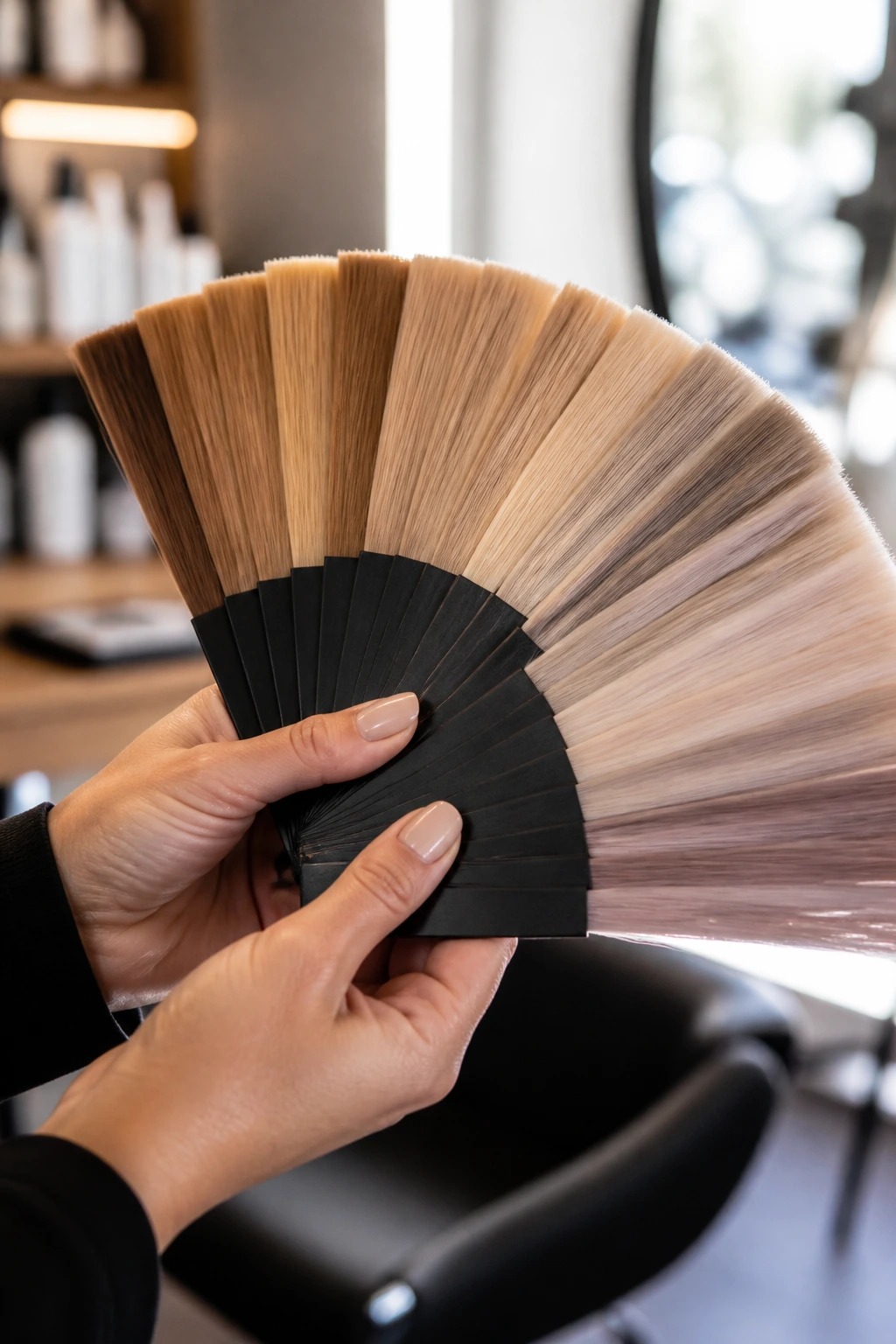
A good blonde consultation is less about the name of the shade and more about the level, tone, and placement. If you can walk into the chair and say “I want a level 8 honey blonde with a soft shadow root and beige gloss,” you’re already ahead of most people. Names are useful for inspiration. Numbers and tone words are useful for results.
Bring two photos if you can. One should show the color you want. The other should show the placement you want. Sometimes people love the tone in one picture and the highlight pattern in another, and that distinction saves a lot of confusion.
If your skin leans warm, ask your colorist to keep the blonde in the honey, gold, caramel, or cinnamon family. If you lean cool-neutral, beige, pearl, sepia, and smoky tones usually sit better. For highly textured hair, ask where the lightest pieces will land before you talk about how light they should be. Placement is what keeps the result from looking striped.
And if your hair is very dark, dense, or previously colored, expect more than one session for some of these looks. That’s not a setback. It’s how you keep the hair on your head.
How to Wear These Shades So They Read Rich
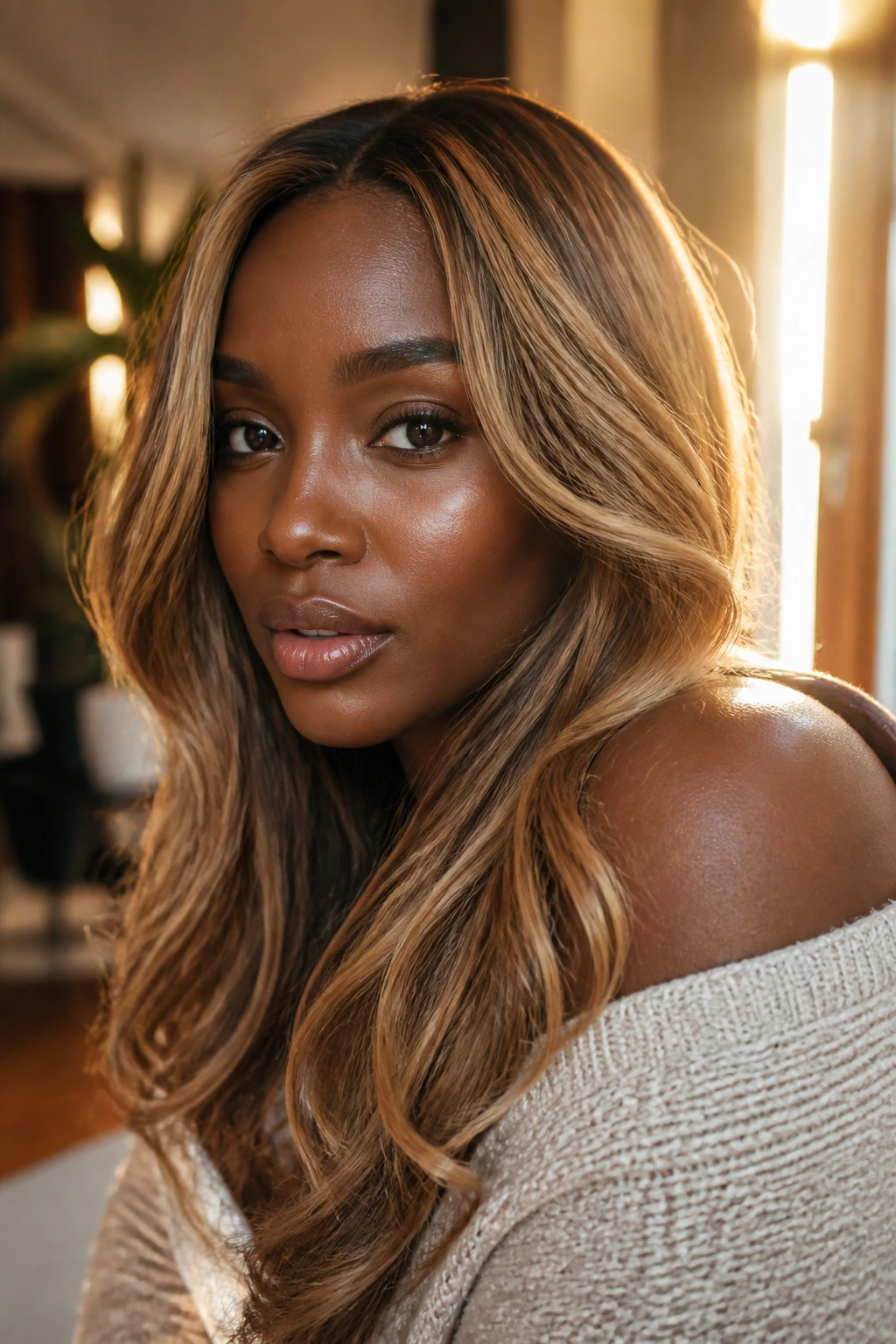
Placement: Put the brightest pieces where the eye goes first — hairline, part line, crown, and the top layer around the face. If the blonde lives only underneath, it can disappear unless you move your hair constantly.
Styling: Loose curls, stretched coils, blowouts, and soft bends all show different sides of blonde. Straight styles expose tone most clearly; textured styles show movement. Pick the finish that makes the tone make sense.
Coverage: If you want low commitment, keep blonde under about 30 percent of the hair and let the base stay dark. If you want a stronger change, increase the brightness on the outer layers and face frame first before going all over.
Pairings: Warm blondes look strong with gold jewelry, bronzy makeup, and earthy shades. Cooler blondes lean cleaner with black clothing, crisp liners, and more neutral makeup. The hair does not need a matching costume, but it does need a little support.
Small Upgrades That Make the Shade Hit Harder
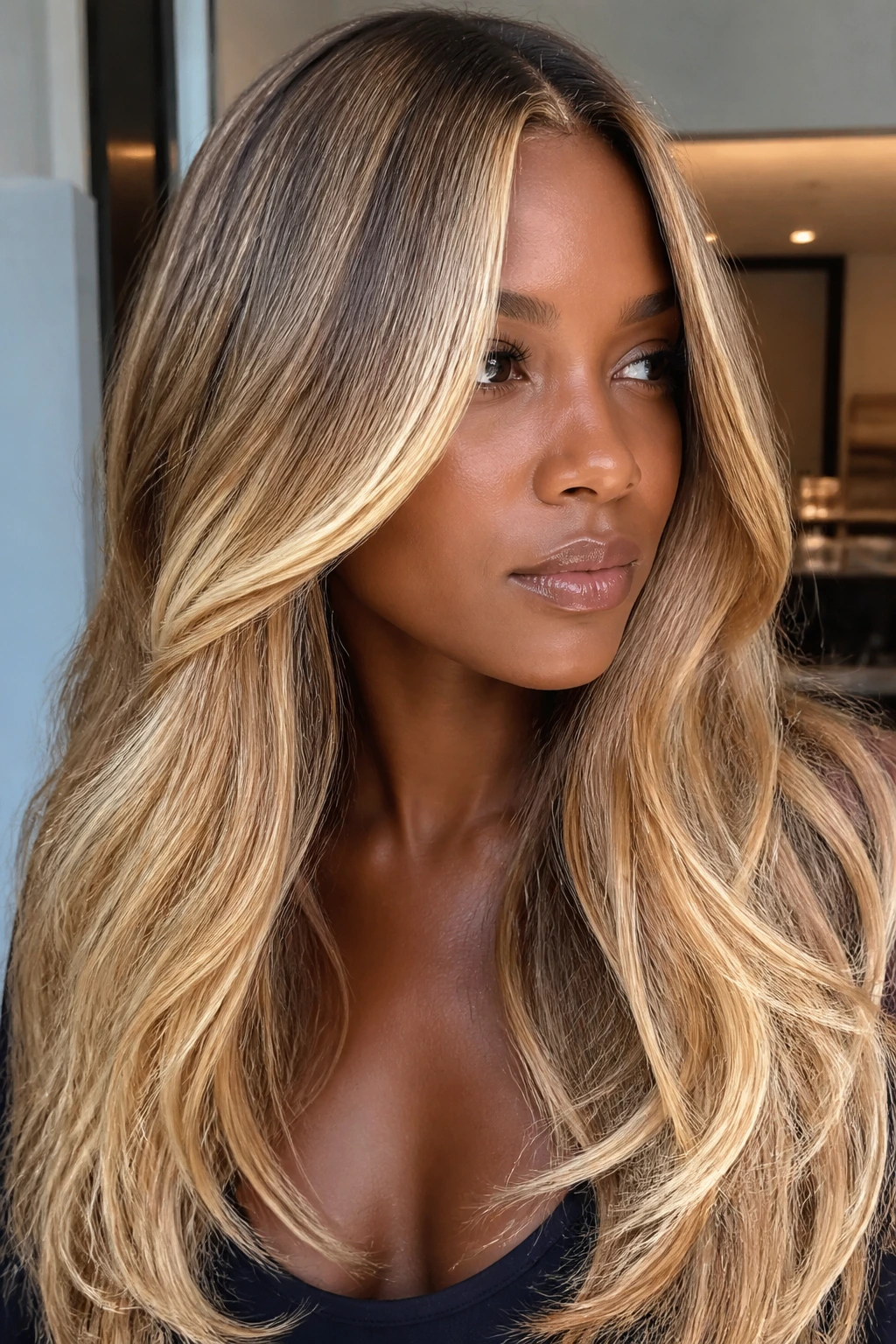
Gloss Boost: A clear or tinted gloss every 4 to 8 weeks keeps honey, beige, and champagne blondes from turning dusty. It also gives the hair that shiny, sealed finish people notice before they know why.
Depth Boost: Leave some darker hair underneath the top layer. Hidden depth makes the blonde on top look brighter, and it stops the whole style from turning flat when the light changes.
Face Frame Boost: Even if you want subtle color, a slightly brighter piece at the temples can change the entire read of the cut. You do not always need more blonde. Sometimes you need better blonde placement.
Texture Boost: On curls, place brightness on the outside curve of each curl family. On straight hair, use finer slices if you want softness and wider ribbons if you want a more obvious lift.
Make-It-Yours: Warm undertones can take honey, gold, apricot, and caramel with less friction. Neutral undertones usually handle beige, cream, and bronde well. Cool undertones need more root shadow and less yellow in the gloss, or the shade starts looking tired.
Common Blonde Mistakes on Deep Skin
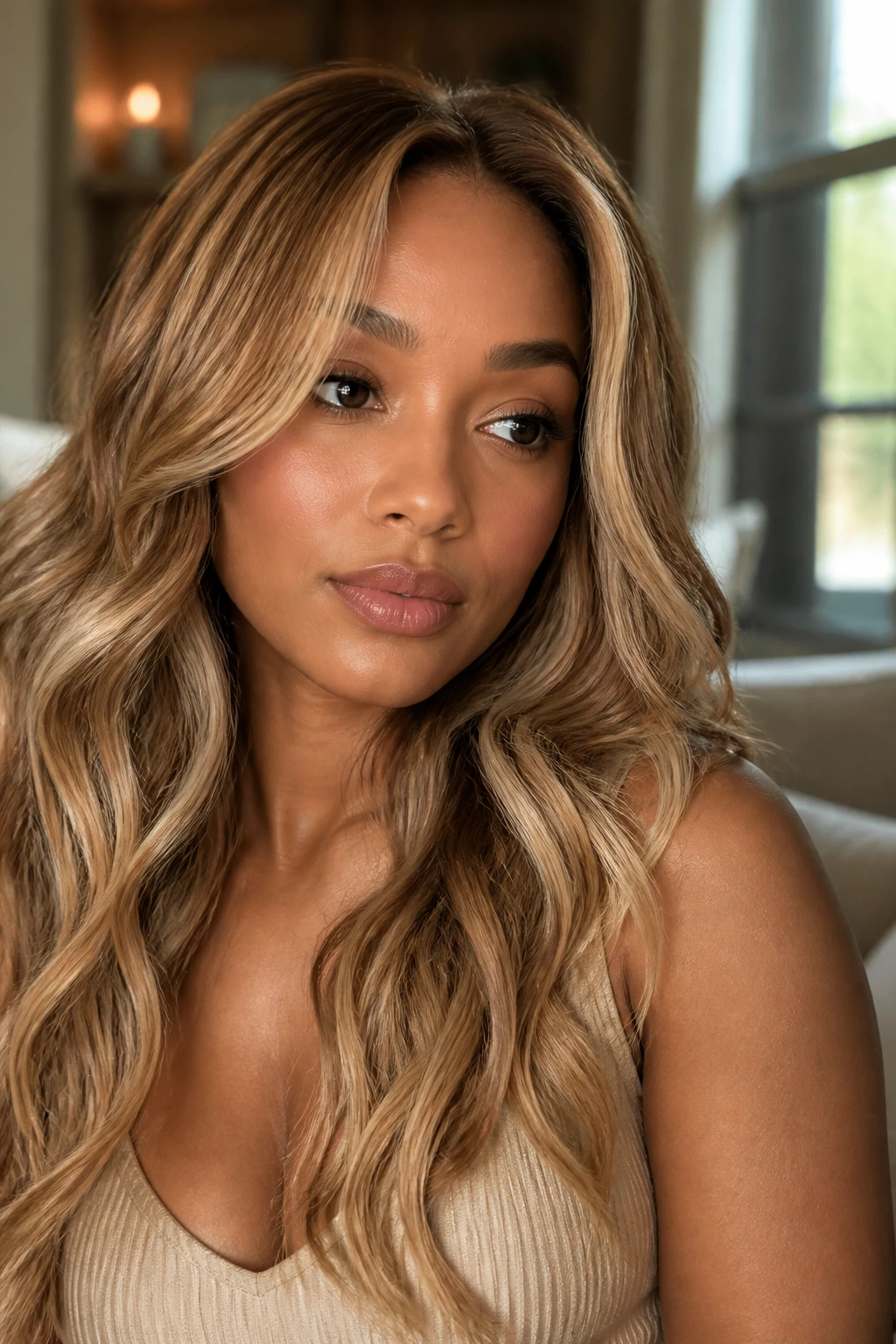
- Going too pale too fast: When the hair lifts straight to a near-white blonde, the color can look detached from the face. Start at honey, beige, or gold, then move lighter later if you still want more.
- Skipping the shadow root: A hard blonde-from-scalp result often looks less natural on deep skin because there is no transition. A root melt softens the grow-out and gives the style a frame.
- Choosing ash when you wanted beige: Ash can be useful, but it turns flat fast if the formula goes too cool. If the blonde looks gray in daylight, the toner needs warmth back in it.
- Over-highlighting curls and coils: Too many evenly placed highlights can make textured hair look stripey. Keep spacing irregular and let the color follow the curl pattern.
- Ignoring upkeep: Blonde fades. It yellows, it warms up, it loses shine. If you do nothing after the appointment, the tone will drift.
- Using box bleach on dark hair: Patchy lift, broken ends, and uneven brass are the usual result. A salon plan or at least a strand test saves more hair than wishful thinking does.
Variations Worth Asking For
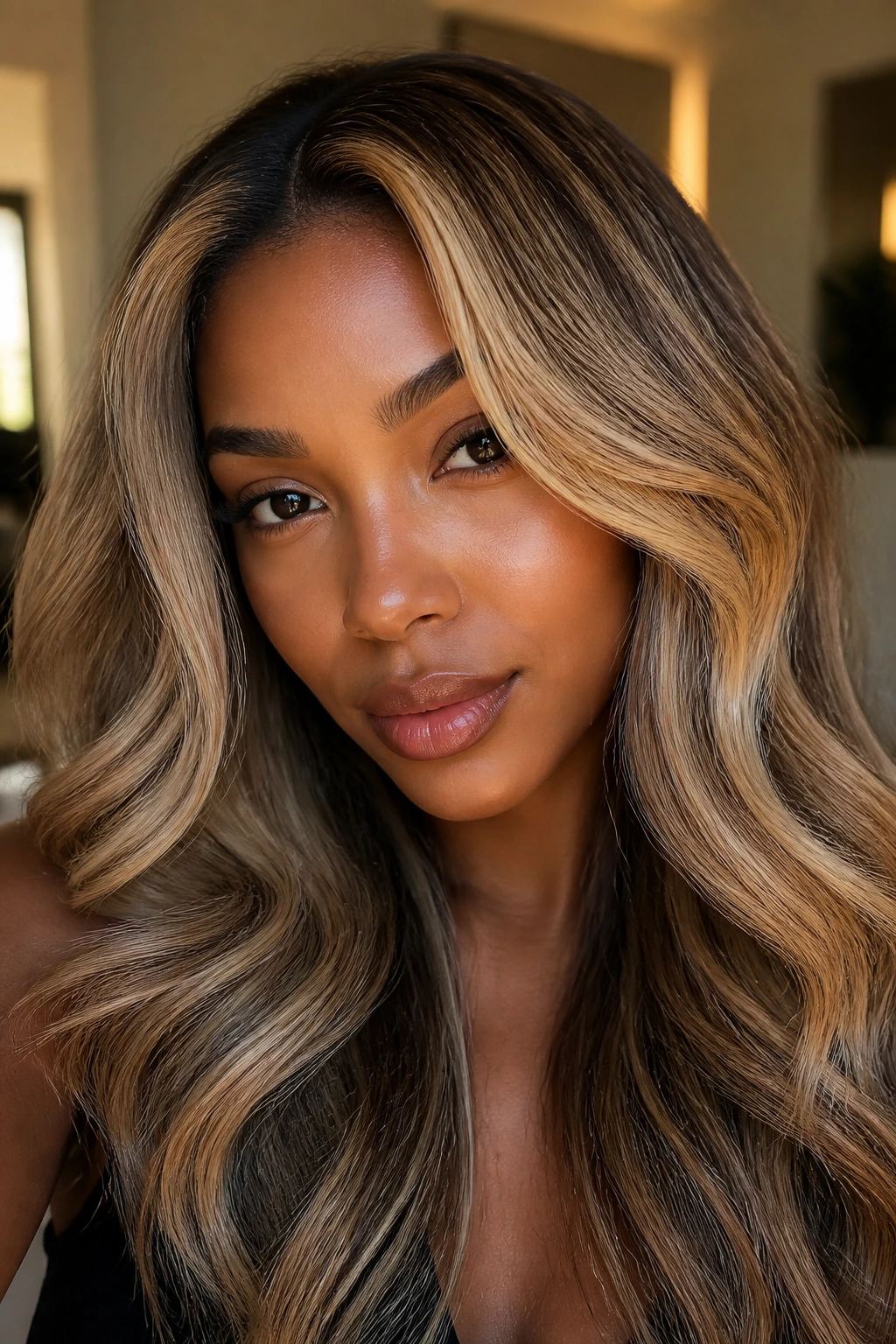
Soft Honey Melt: Keep most of the hair in the honey, caramel, and beige zone, then let the blonde appear only on the top layer and face frame. This suits people who want warmth without a hard color change.
High-Contrast Halo: Add a brighter money piece and a lighter crown section while keeping the rest of the hair deep. It gives a bolder read without bleaching the entire head.
Curl-Ribbon Blonde: Ask for blonde painted in ribbon-like sections that follow the bend of your curls. The light lands inside the texture, so the color looks fuller and less striped.
Low-Maintenance Rooted Blonde: Use a dark root, soft balayage mids, and lighter ends. This is the easiest version to live with because the grow-out stays blurred.
Cool Beige Edit: Swap honey and gold for beige, pearl, and sepia tones if your undertone runs neutral or cool. Keep the root deeper so the pale tone has a frame.
Keeping the Shade Fresh Between Appointments
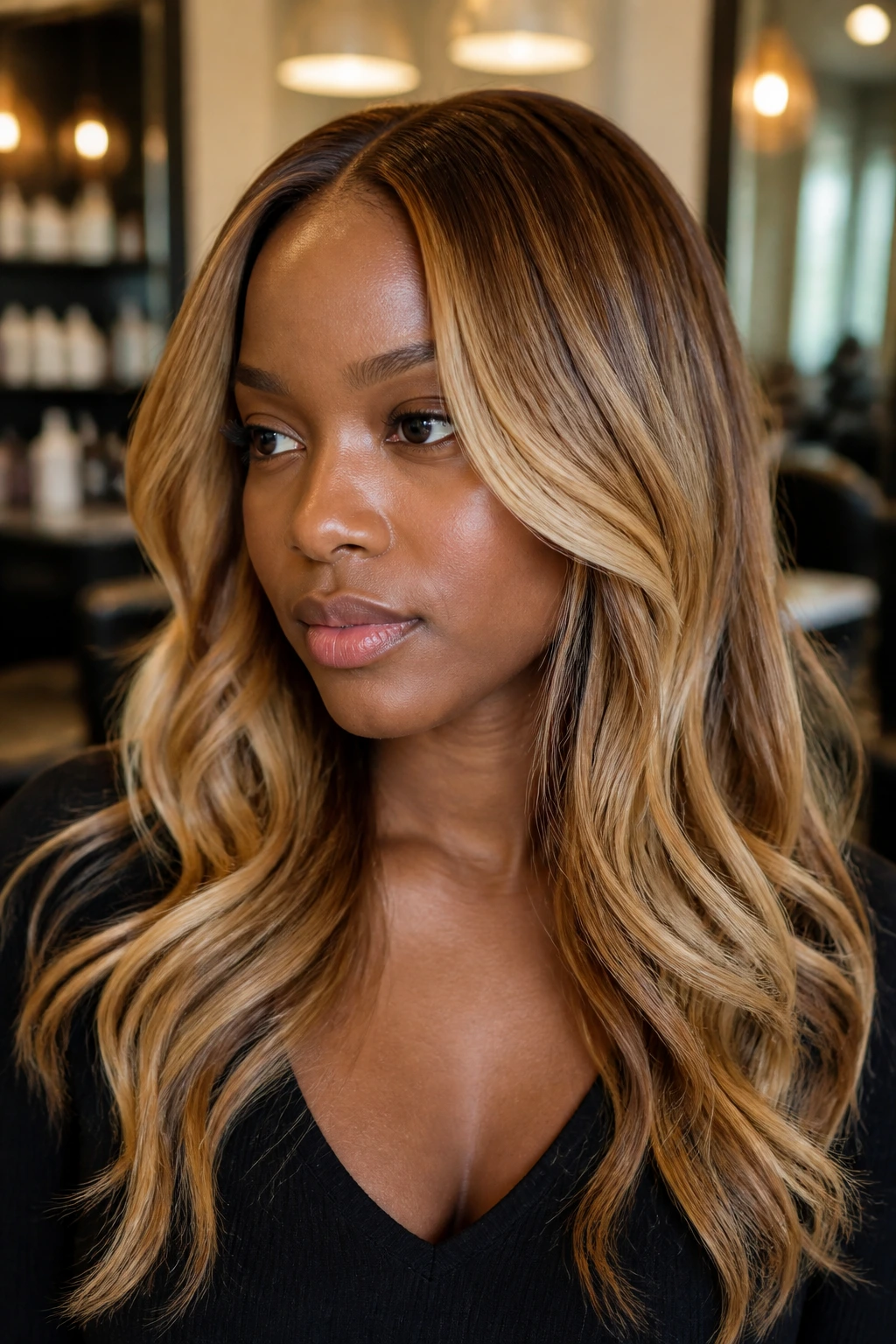
Blonde on deep skin stays sharp when the tone stays clean. Wash less often if you can — once or twice a week is plenty for most people, and less washing helps the toner hold. When you do wash, use cool or lukewarm water, not hot water that opens the cuticle and drains the color faster.
Glosses and toners usually need more attention than the cut itself. Warm blondes often need a refresh every 6 to 8 weeks. Cooler blondes, especially pearl or platinum shades, can need a tone-up closer to 4 weeks if brass starts peeking through.
Bleached hair also needs moisture in a way virgin hair usually doesn’t. A deep conditioner once a week is a good baseline, and a bond treatment every other week can help if the hair feels stretchy or dry at the ends. Heat protectant is non-negotiable if you use a blow dryer or flat iron.
Sleeping on satin and using a bonnet or scarf cuts down on friction, which matters more than people think. The ends of lightened hair rub the fastest. That’s where the roughness starts.
Blonde Questions People Ask All the Time
Can deep skin tones wear platinum blonde?
Yes, but it usually looks better with a root shadow or dark eyebrow frame so the contrast feels intentional. Platinum without depth can look disconnected; platinum with structure looks sharp.
What’s the easiest blonde to maintain?
Caramel balayage, sun-kissed bronde, and honey ribbon highlights are usually the easiest because they keep a darker base. The more all-over and pale the blonde gets, the more work it asks for.
Should I choose warm or cool blonde?
If your skin leans golden, bronze, or red, warm blondes often look more natural. If your undertone is neutral or slightly cool, beige, pearl, and smoky shades can work well as long as the root stays deep.
Will blonde show up the same on curls as it does on straight hair?
No. Curls and coils show the color in motion, not as a flat sheet. That’s why ribbon placement and face-framing brightness usually matter more than all-over saturation.
How often do I need toner?
It depends on how light the hair is and how cool you want it to stay. Warm blondes might need a gloss every 6 to 8 weeks, while beige, pearl, and platinum shades can need refreshes sooner if they start to yellow.
Is box dye a bad idea for deep brown hair?
For blonde goals, yes, usually. Box dye can lift unevenly and leave patchy warmth behind, which is hard to fix cleanly. A salon plan gives you much more control over the tone and the placement.
Can I start with highlights instead of full blonde?
Absolutely. Highlights, face-framing pieces, and foilyage are the smartest way to test how blonde sits against your skin. You can always go brighter later.
What if the blonde turns orange?
Orange usually means the hair did not lift enough or the toner faded out. A blue shampoo can help in the short term, but the real fix is usually a better lift level and a cleaner gloss.
The Shade That Belongs to You
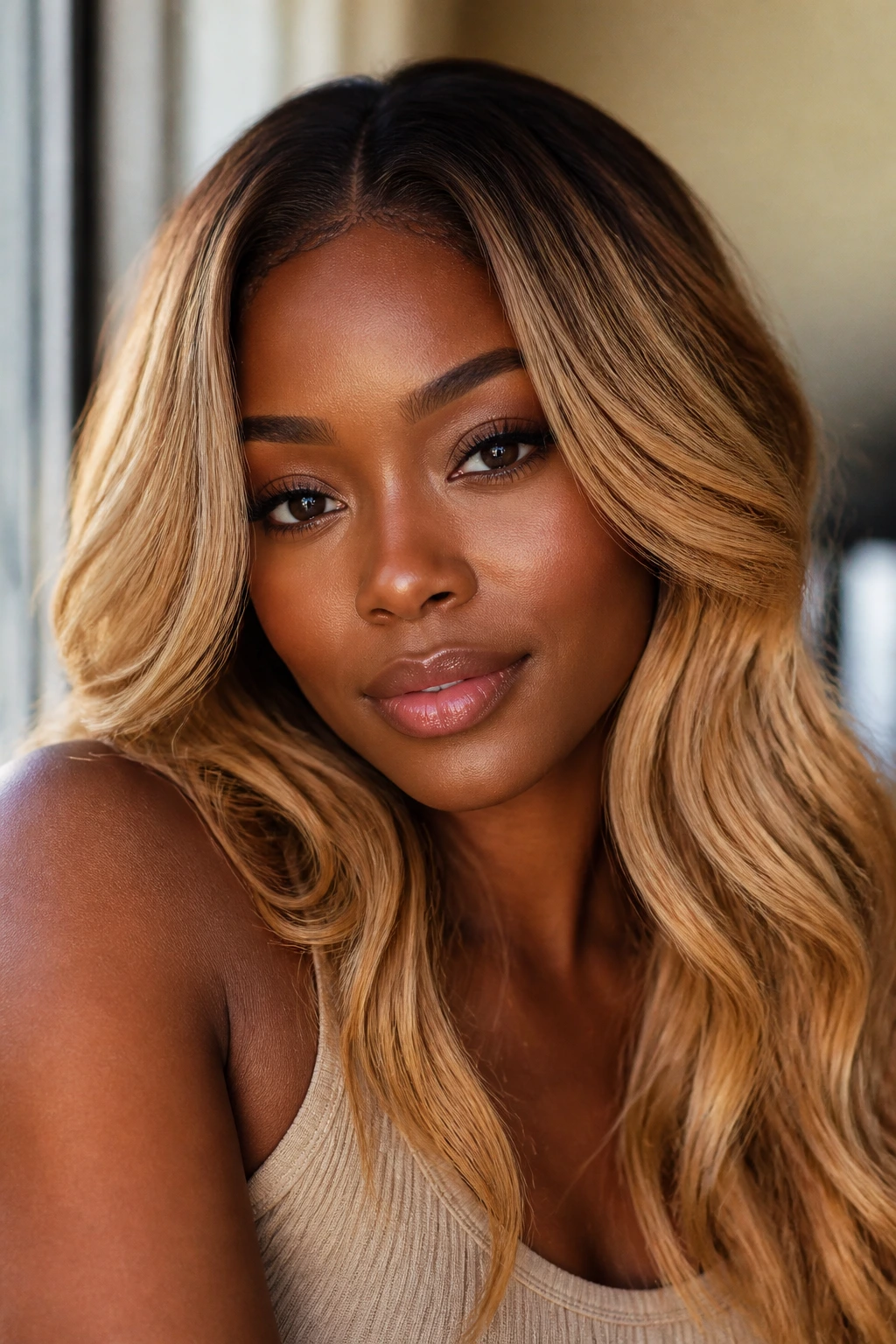
The strongest blonde for deep skin is the one that keeps depth in the hair instead of stripping it away. That depth is not a flaw. It’s the thing that gives honey its glow, caramel its movement, and platinum its edge when the root is handled right.
If you want a low-risk place to start, choose a rooted shade first. If you want a sharper change, pick one bright focal point — a money piece, a face frame, or a lighter end finish — and build from there. Blonde works best when it has somewhere to land.
Pick the shade that still looks like your hair in daylight, only brighter. That’s usually the one worth keeping.