



If your thick curls swell into a boxy outline by noon, you already know the problem: square faces can look harder-edged when the curl shape stops right at the jaw and spreads sideways. The fix is not to flatten everything into submission. It’s to build defined curls for thick hair and square faces with a shape that bends around the angles, keeps the ends readable, and lets the hair move instead of balloon.
The sweet spot is a cut or styling pattern that does three things at once. It softens the jawline, it removes bulk where thick hair tends to puff out, and it leaves enough weight in the right places so the curls still look rich rather than wispy. That’s a narrow lane, but it’s a good one. Thick curls can carry shape better than fine hair ever will, which means you’ve got more room to play with layers, side parts, crown lift, and face-framing pieces without the style collapsing.
The looks below are for the person who wants curl definition that reads clean from across the room and still looks good when one curl decides to misbehave. Some are short. Some are long. Some are more about the cut, some more about how you wear it on wash day. All of them are trying to do the same thing: make the curl pattern work with a square face, not against it.
Why These Curl Shapes Earn Their Place
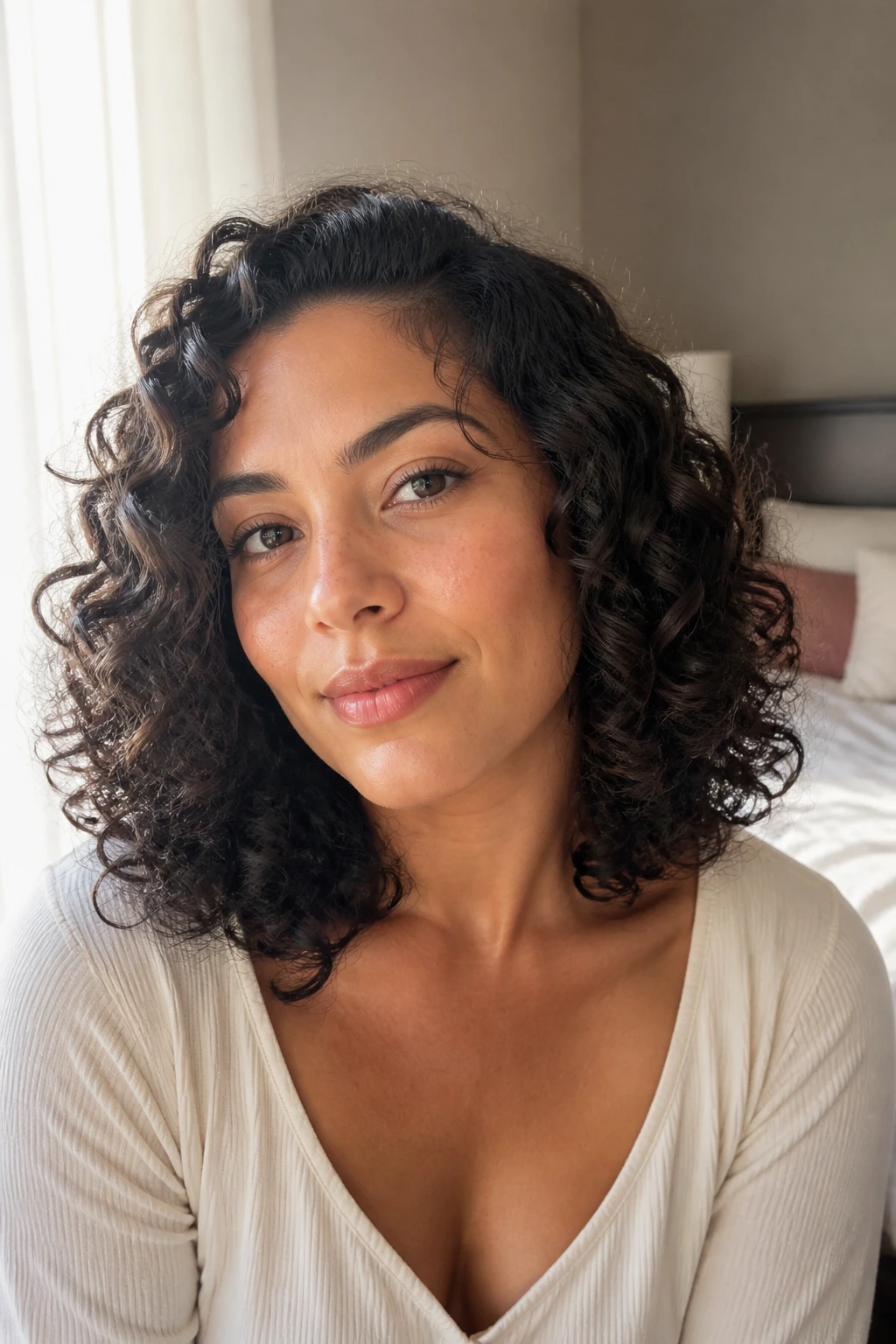
-
They soften the jaw: Curls that land below the cheekbone or skim the collarbone keep the widest part of a square face from feeling boxed in.
-
They control thick-hair bulk: Strategic layers and tapered ends remove the shelf effect that thick curls can get when everything sits at one length.
-
They keep definition visible: A good shape gives the curl room to clump, so you see spirals and ringlets instead of a puffed-out cloud.
-
They create lift in the right spots: Height at the crown or a side part pulls the eye upward, which takes attention off the jawline.
-
They work with shrinkage: Thick curls often spring up more than expected, so a shape that looks balanced dry is worth more than one that only looks good wet.
-
They give you room to choose your mood: You can go polished, shaggy, rounded, or edgy without losing the softness square faces usually need.
1. The Jaw-Softening Curly Lob
A collarbone-length lob is one of the safest bets when you want structure without harshness. The ends sit low enough to avoid stopping right at the jaw, and the front pieces can be nudged forward just a touch so the face doesn’t feel boxed in.
Why it works
On thick hair, the lob keeps enough weight to hold a defined curl pattern. That matters. If the cut gets too thin at the bottom, the curls can frizz apart and lose their shape by lunch. Ask for long layers that start below the cheekbone, not up near the ear.
Best for: people who want movement, not drama.
Styling note: scrunch in gel while the hair is soaking wet, then diffuse until the outer layer is set and the roots are dry enough to stay lifted.
2. The Rounded Shoulder-Length Halo
This shape takes the width that thick curls naturally want to create and turns it into a circle instead of a triangle. The curve matters. A rounded silhouette sits nicely against a square jaw because it keeps the eye moving instead of stopping at the corners of the face.
What makes it different
A blunt shoulder-length cut can look heavy on square faces if the curls flare outward at the sides. A rounded version solves that by keeping the crown slightly higher and the sides gently tucked in. It’s a cleaner look, and it wears well on dense curls that don’t like to lie flat.
Good detail: if your hair tends to swell after it dries, have the stylist leave the perimeter a hair longer than you think you need.
3. The Deep Side-Part Sweep
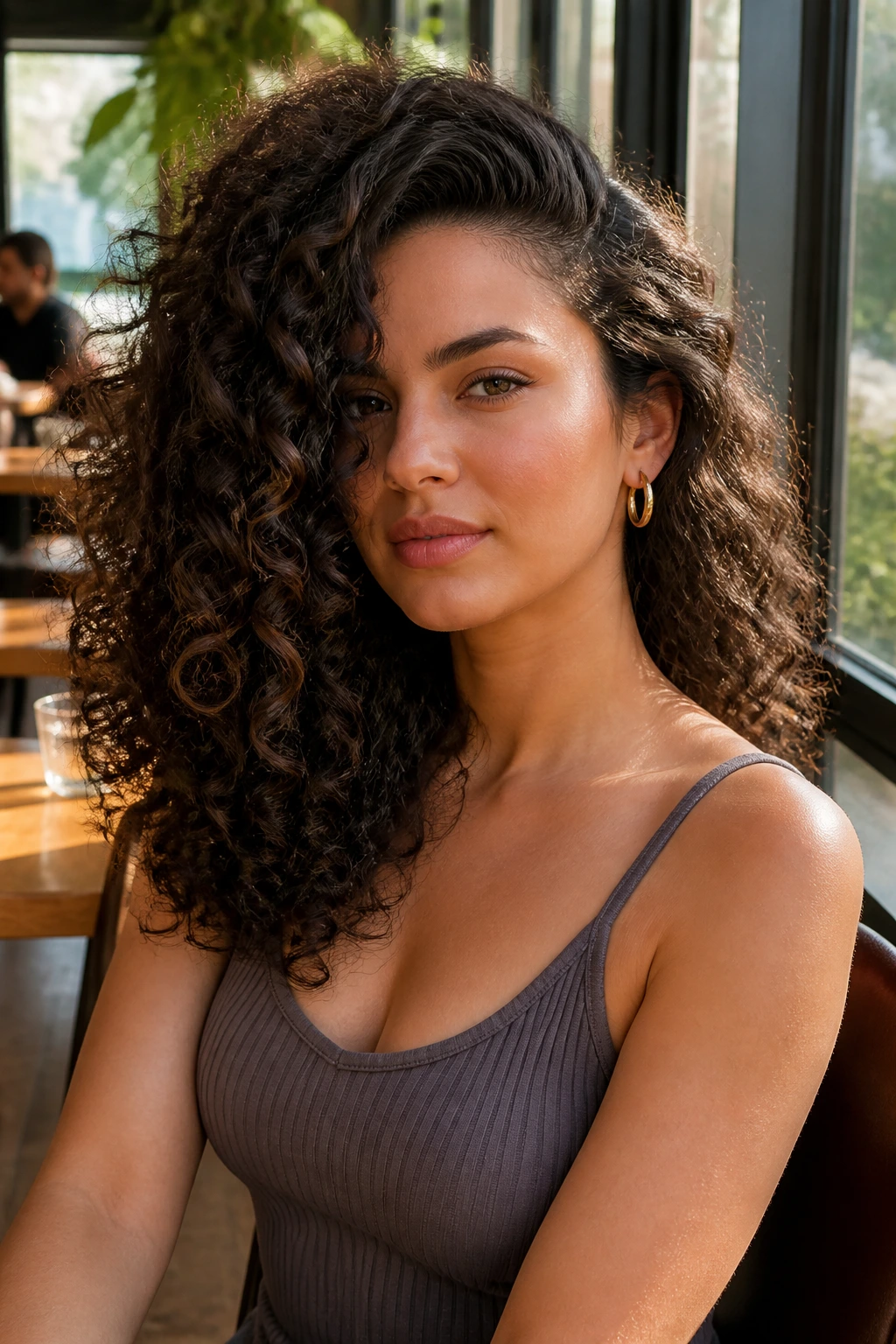
A deep side part changes the whole geometry of a square face. One side gets a little more curtain effect, the other side tucks back, and the result is less symmetrical in the best way. That slight imbalance keeps the face from looking too boxy.
The magic here is root direction. When you flip the hair off-center, the crown gets lift almost for free, and thick curls like that because they already have enough body to hold the shape. Use a clip at the root while the hair dries if it wants to fall back into a middle part.
I like this look most when the curls are medium-tight. Loose curls can get too wide on one side if the part is pushed too far; tighter curls usually hold the sweep better.
4. The High-Crown Curly Shag
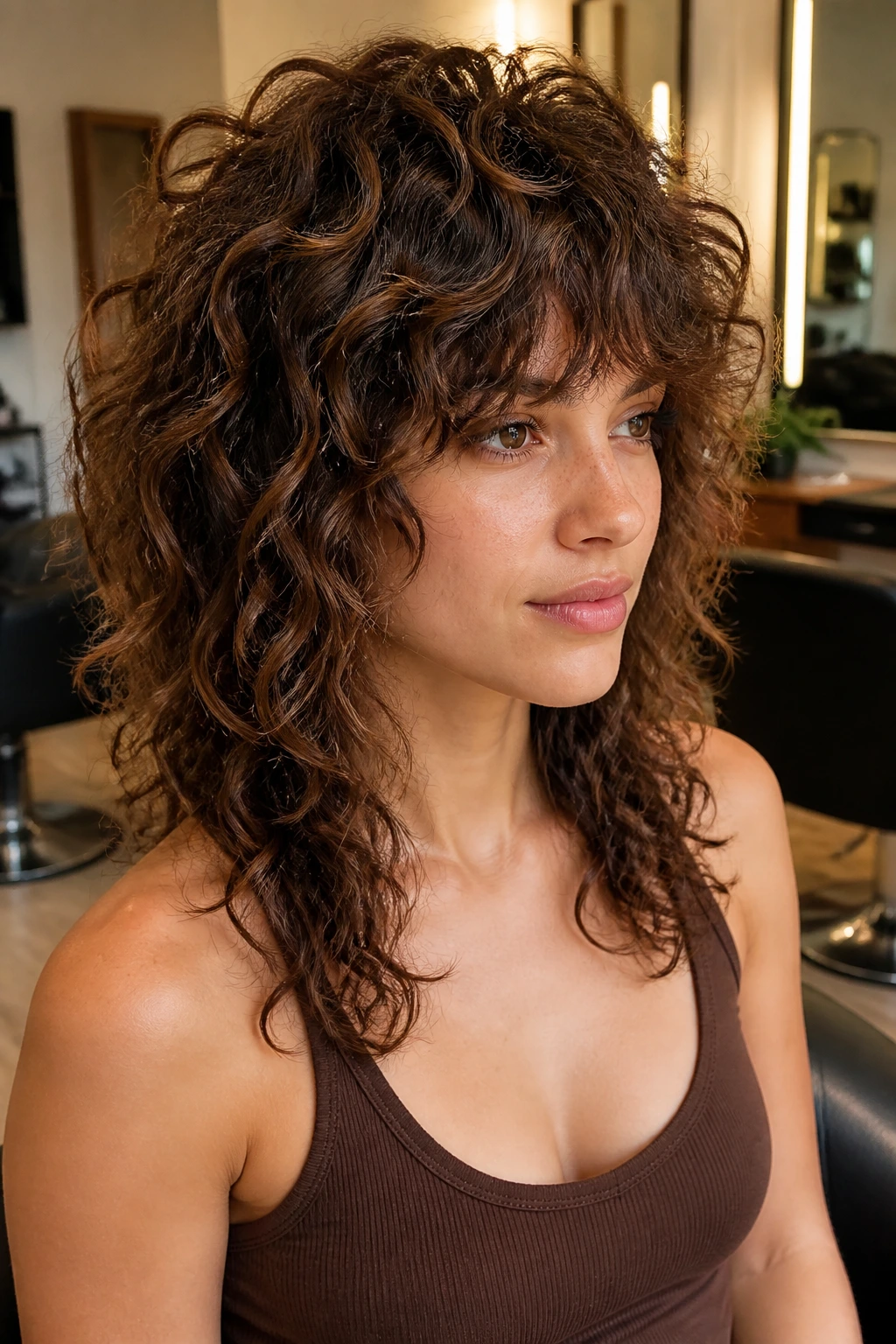
A shag can be brilliant on thick hair, but only if the layers are placed with some restraint. Too many short layers and you get a puffball. Too few and you lose the lift that makes the shape interesting.
Why it flatters square faces
The crown height pulls the focus upward, and the shorter top layers keep the face from feeling wide at the cheekbones. The longer bottom layers still give you weight, so the style doesn’t look airy in a flimsy way. It’s one of those cuts that looks a little wild in a good salon chair and very intentional once dry.
Best move: keep the fringe long enough to brush the brows, not sit in a tight, blunt line.
5. The Chin-Skimming Tapered Bob
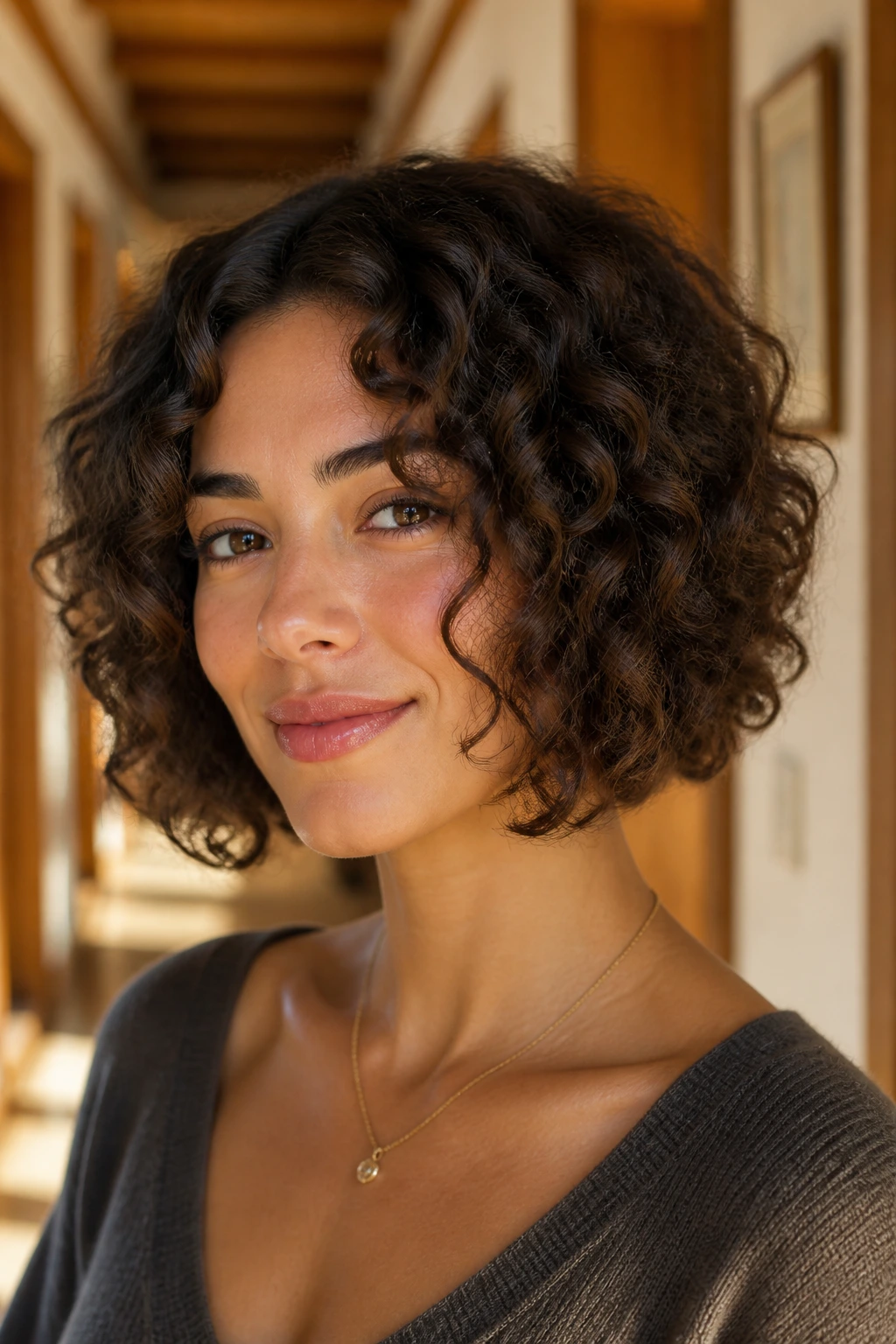
A chin-length bob sounds risky for a square face, and in the wrong hands it is. But with tapered ends and a slight inward curve, it can be sharp in a flattering way rather than severe.
The key is to keep the bob from landing exactly on the jaw corner. That’s the trap. If the curls stop right there, the whole face looks wider. A tapered bob that touches just below the chin or curves in toward the neck side-steps that problem and keeps the lines softer.
Useful trick: dry the front sections with a diffuser pointed downward so the curl pattern hugs the face instead of flaring out.
6. The Long Layered Curl Sheet
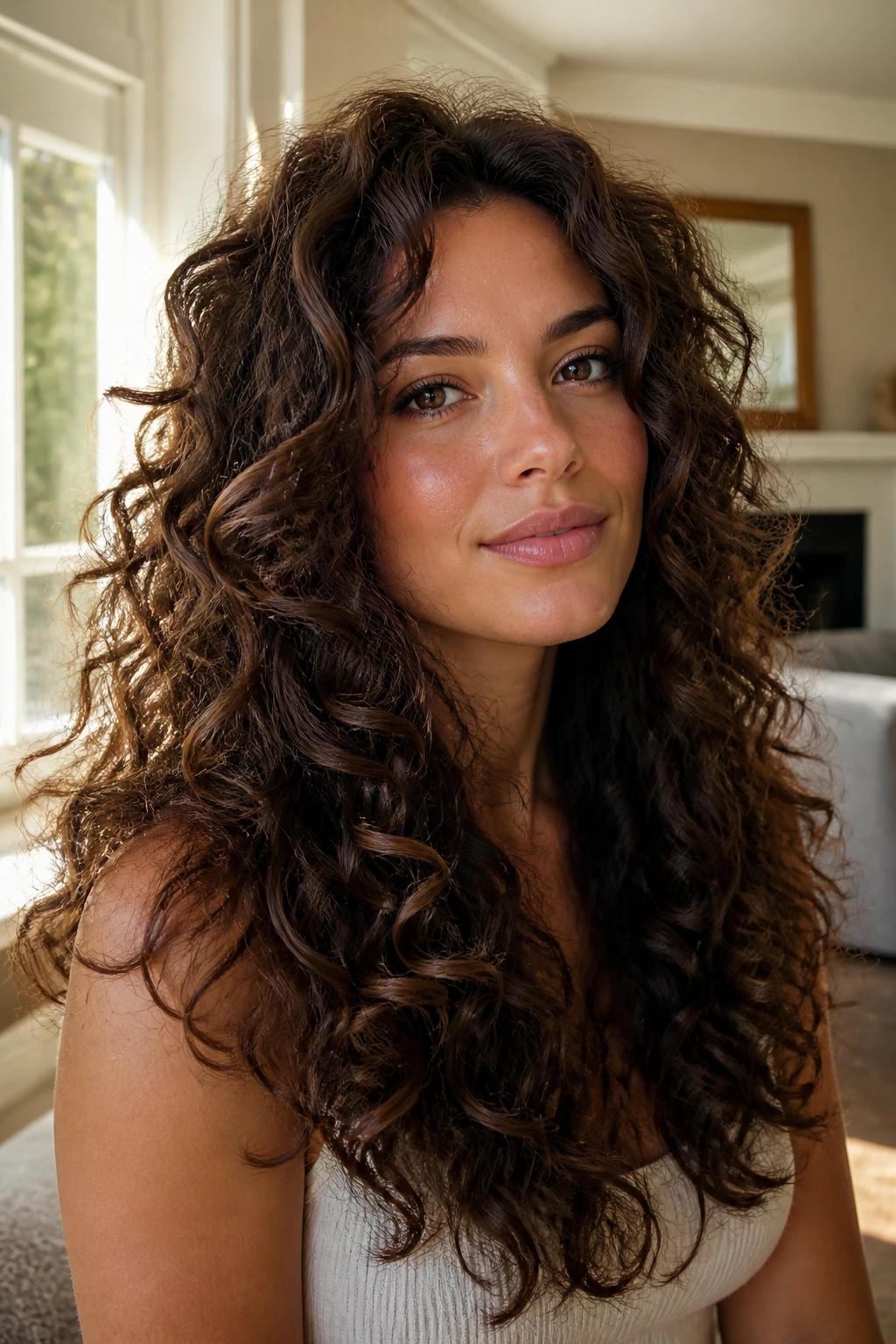
Long, thick curls need movement or they start looking like a curtain. A long layered shape keeps the length but breaks the bulk into pieces, which is exactly what square faces need when they want softness without giving up length.
The important part
The layers should be internal, not chopped into obvious steps. You want the bottom to feel full and the mids to move. When the layers are too aggressive, long curls can split into weak wisps. When they’re too timid, the whole head turns into one heavy block.
This is a good choice if you like your hair to feel dramatic when it’s down, but not heavy around the cheeks.
7. The Tapered Curly Pixie
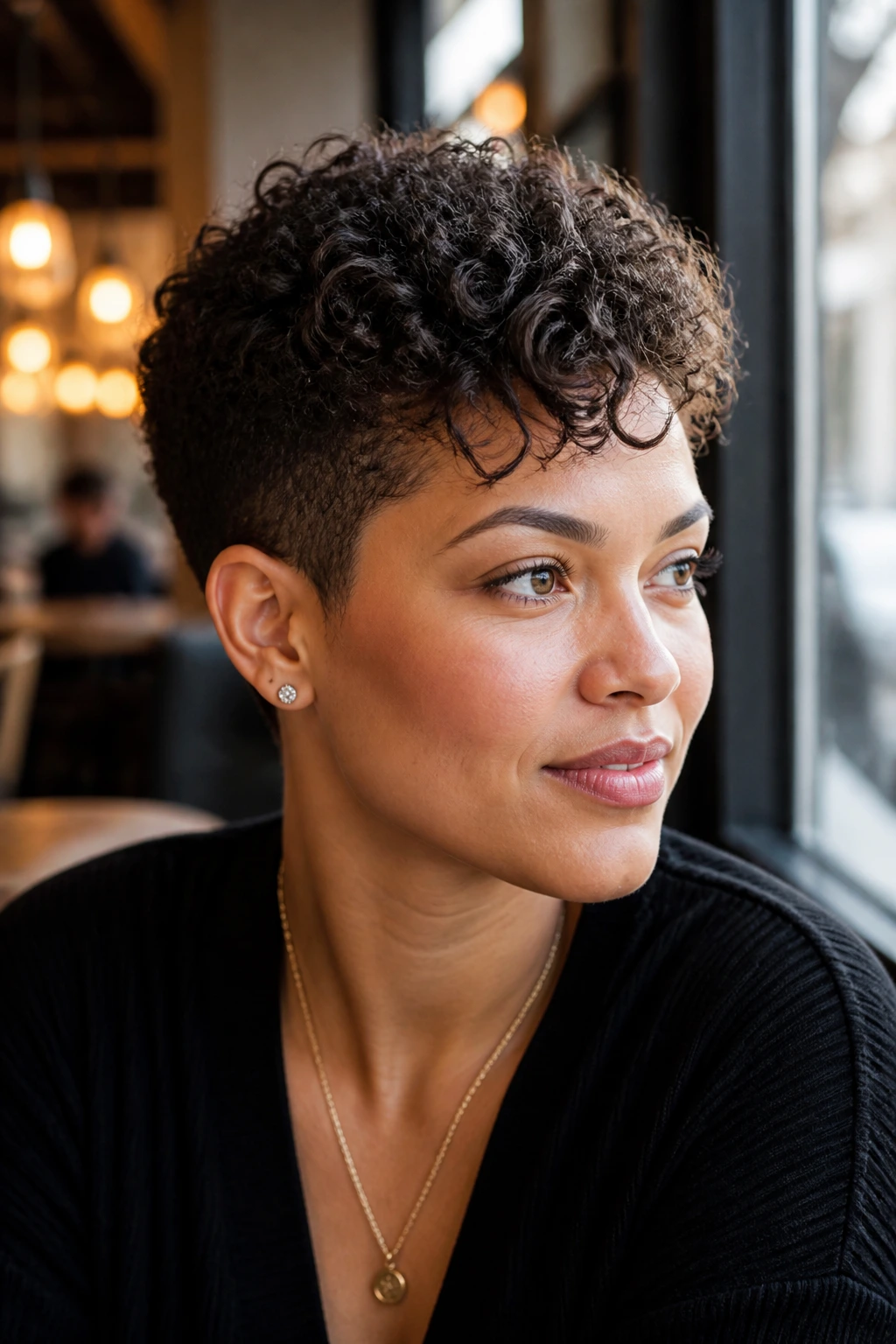
Yes, a pixie can work here. The trick is keeping the top longer and the sides tight enough that the outline doesn’t widen the face. On thick hair, a curly pixie has real personality because the curl pattern gives the crop texture that straight hair has to fake with product.
Why it earns a spot
A square face usually does well with some height at the top, and this cut gives it. The shorter sides draw less attention to the jaw, while the longer top can be pushed forward, up, or to the side depending on your mood. It’s low on length, high on shape.
Maintenance note: this is the cut that asks for trims before it starts looking shaggy.
8. The Curtain-Bang Midi
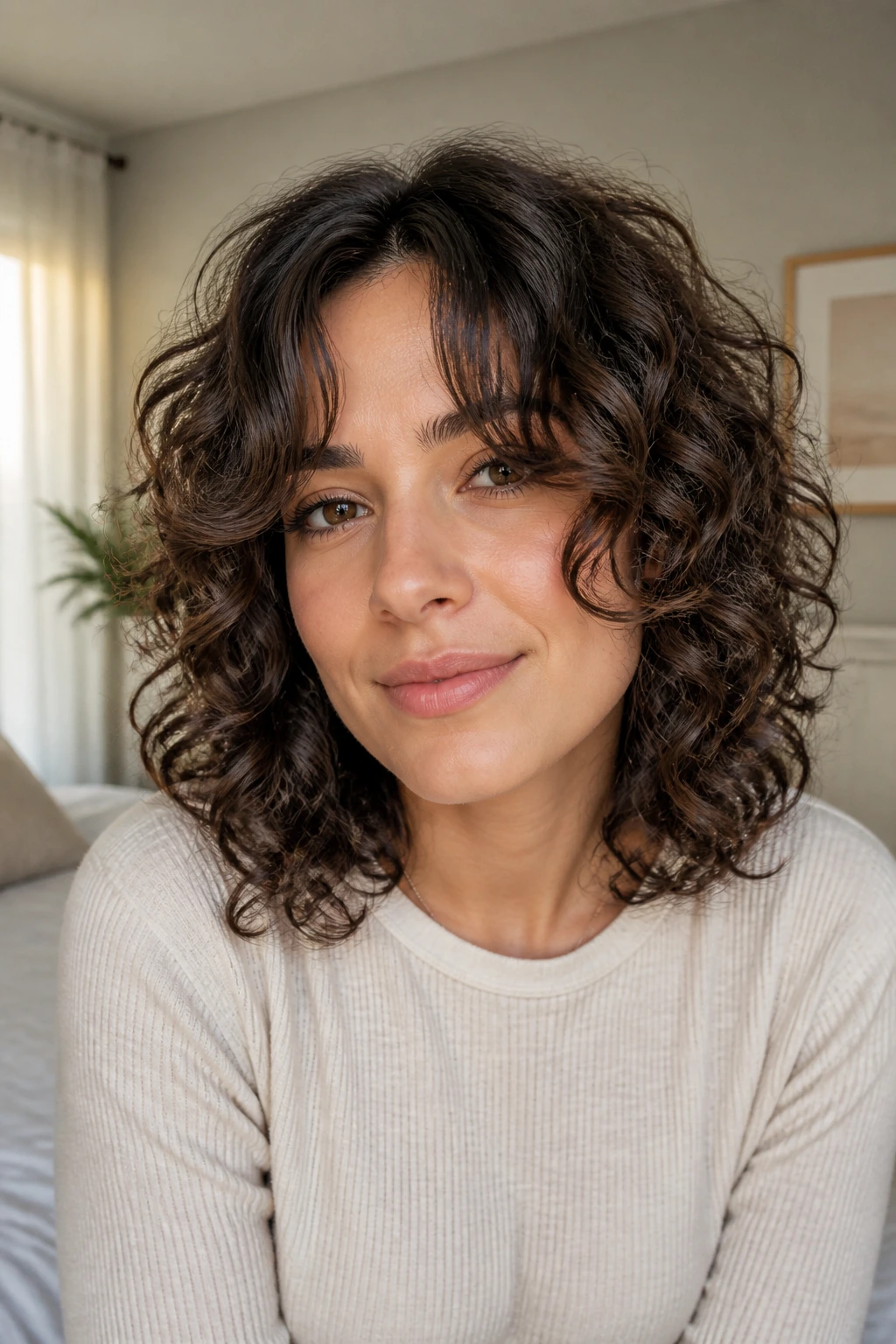
Curtain bangs on thick curls can be gorgeous when they’re cut long enough to split and soften. The point is not to create a tiny fringe sitting right above the brows. The point is to make a curved opening at the front that breaks up the square outline of the face.
The rest of the cut should hit somewhere around the shoulders or collarbone so the bangs have something to connect to. If the bangs are too short and the rest is too long, the shape gets disconnected. Keep the front pieces soft and let them blend.
Best for: anyone who wants face framing without fully committing to a full fringe.
9. The Side-Swept Fringe Cut
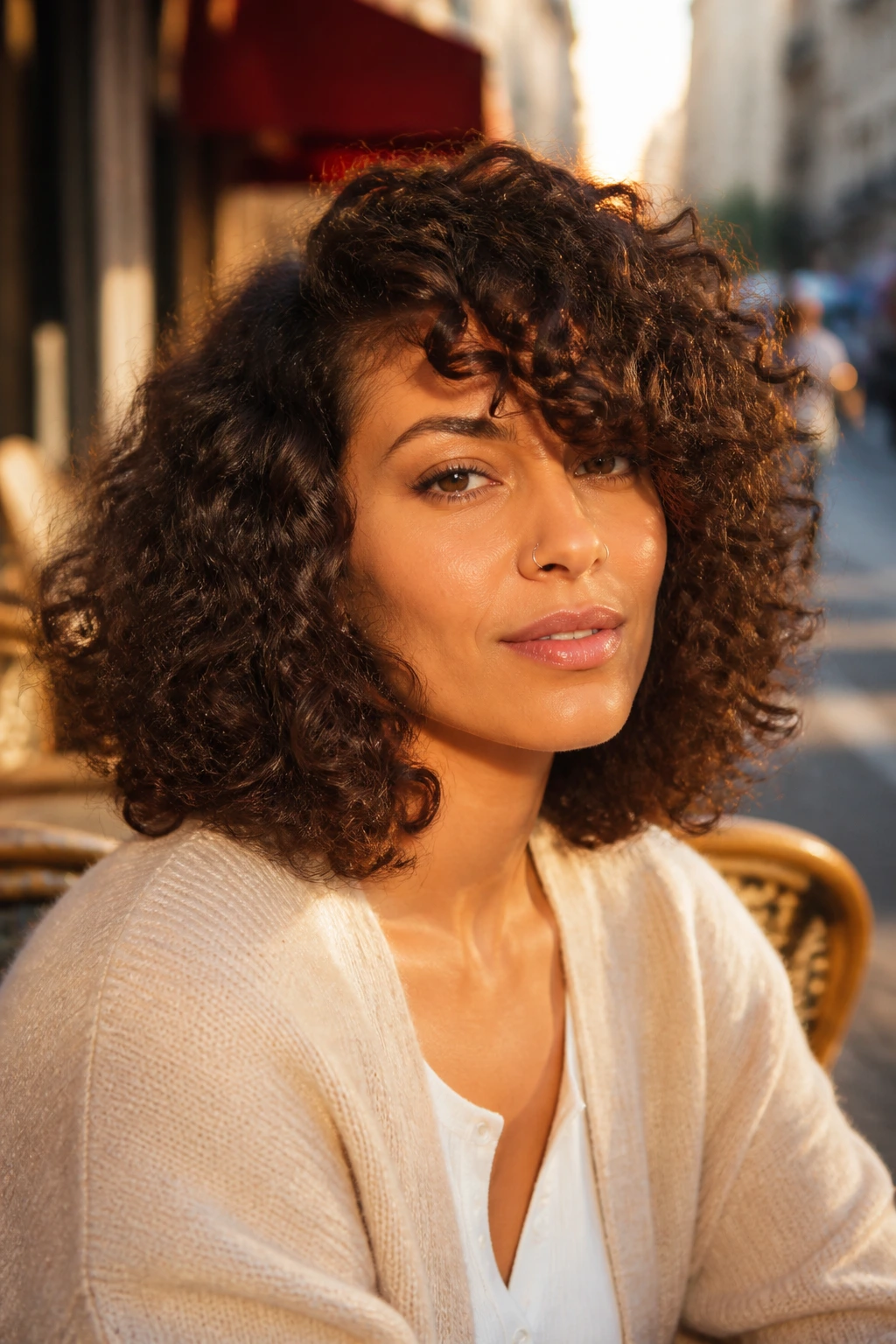
A side-swept fringe is one of the easiest ways to take the edge off a square face. It doesn’t need to be dramatic. Even a long diagonal piece falling from the temple toward the cheekbone can change the whole read of the face.
Thick curls are useful here because the fringe has enough density to look intentional rather than flimsy. Dry it with a little tension in the direction you want it to fall, then let the curl spring back. If it bounces too far, pin it while it cools.
A side-swept fringe also buys you options. Wear it soft and open on casual days, or let it sit heavier when you want more face coverage.
10. The U-Shaped Length Cut
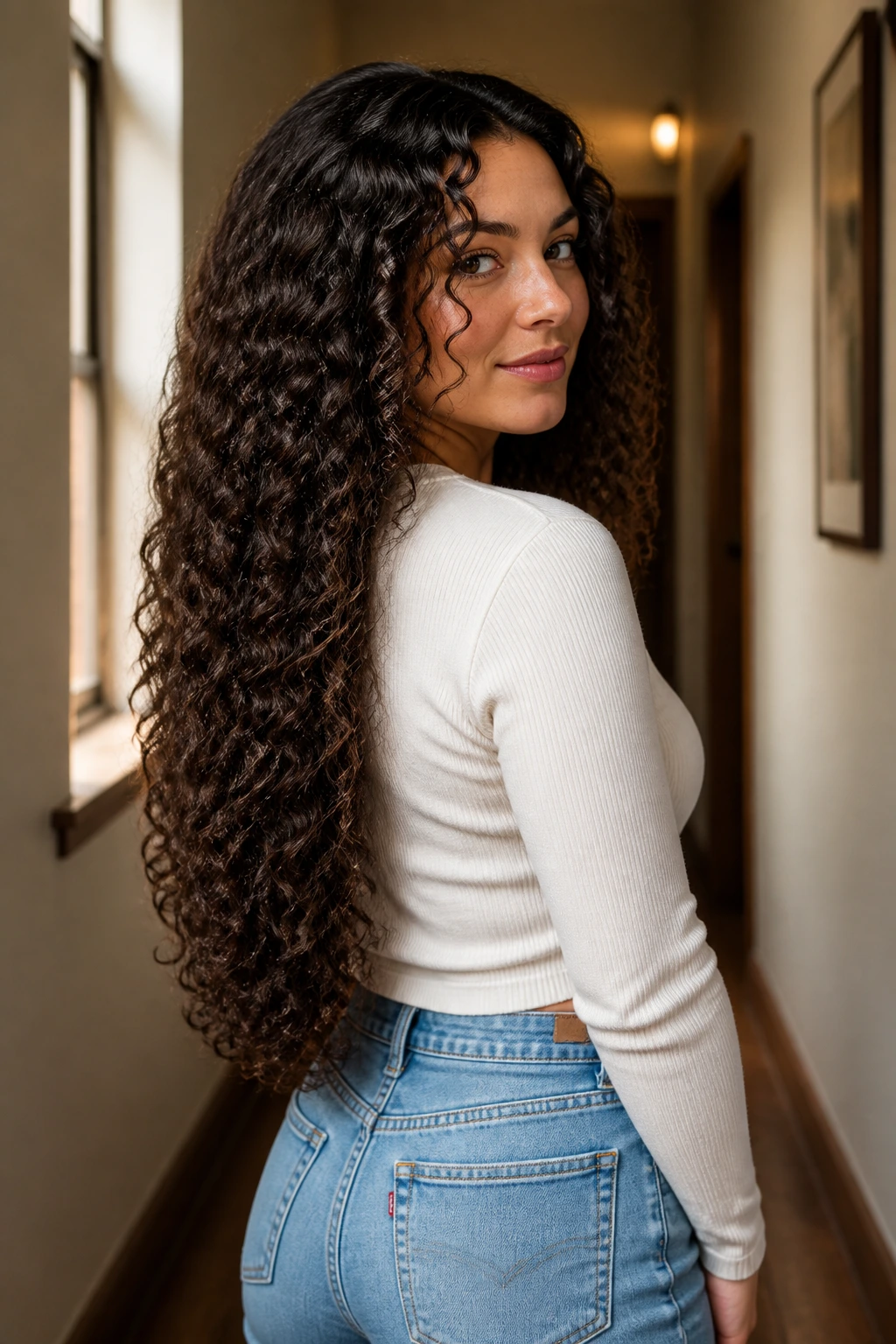
A U-shape keeps the back a bit longer than the front, which helps thick curls move without feeling blunt. For square faces, that gentle curve matters because it softens the bottom edge of the silhouette.
This is a better long-hair choice than a straight-across hem. Straight across can look blocky when thick curls dry out and expand. The U-shape gives the eye a slight downward glide instead of a hard stop.
Good for: people who like long hair but hate the “pyramid” feeling at the sides.
11. The Invisible-Layer Collarbone Cut
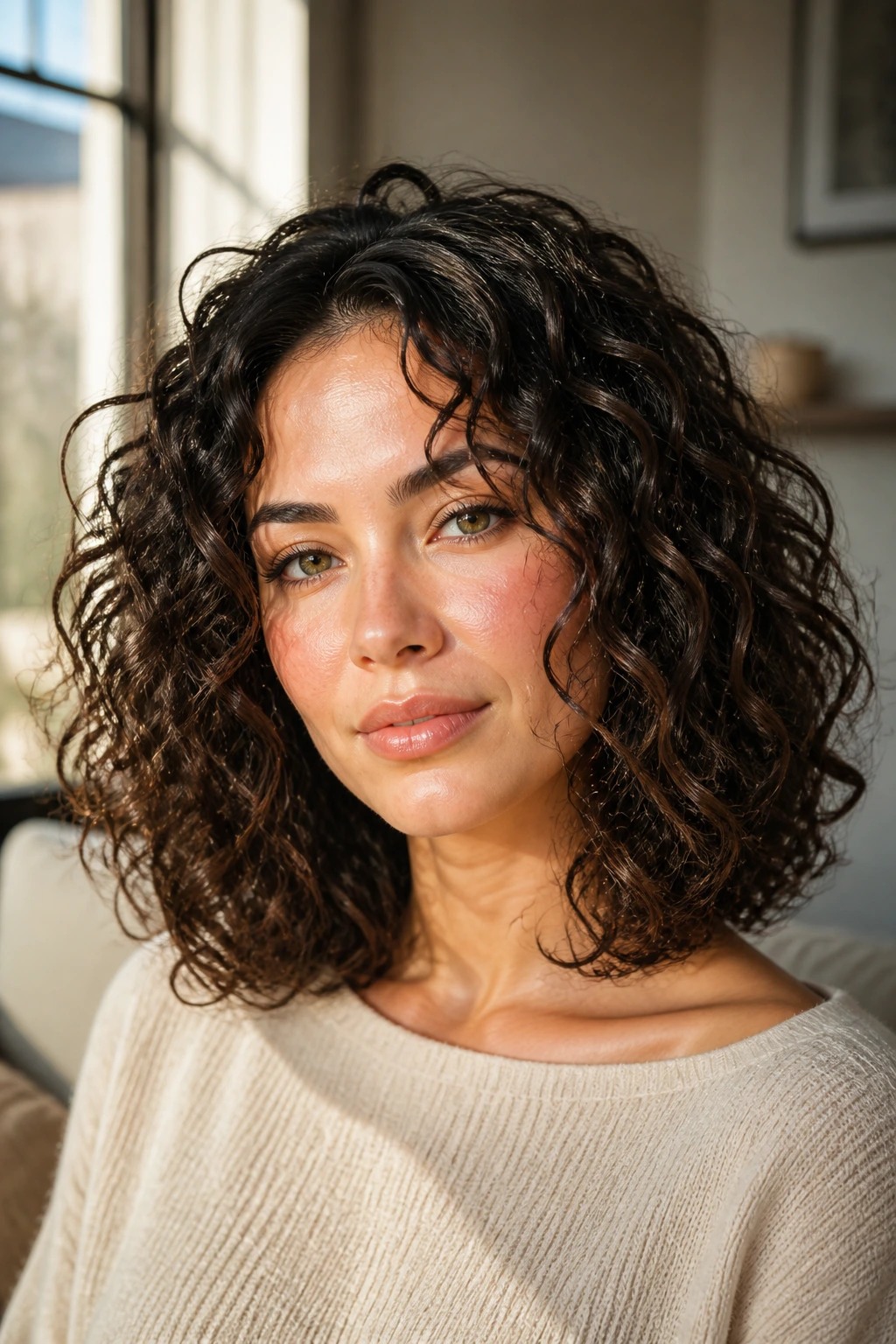
Invisible layers are the stealth move here. They remove enough weight to make the curls springier, but they don’t show up as obvious steps. That’s useful on thick hair, where visible layers can sometimes make the shape look chopped if the curl pattern is inconsistent.
On a square face, a collarbone cut already sits in a flattering zone. Add hidden internal layers and you get lift without losing the soft outline. It’s calm, not boring.
How it behaves
The front pieces can curve gently toward the cheekbones, while the back keeps enough mass to hold the curl pattern. It’s the kind of cut that looks polished even when you’ve done only the basics.
12. The Half-Up Crown Lift
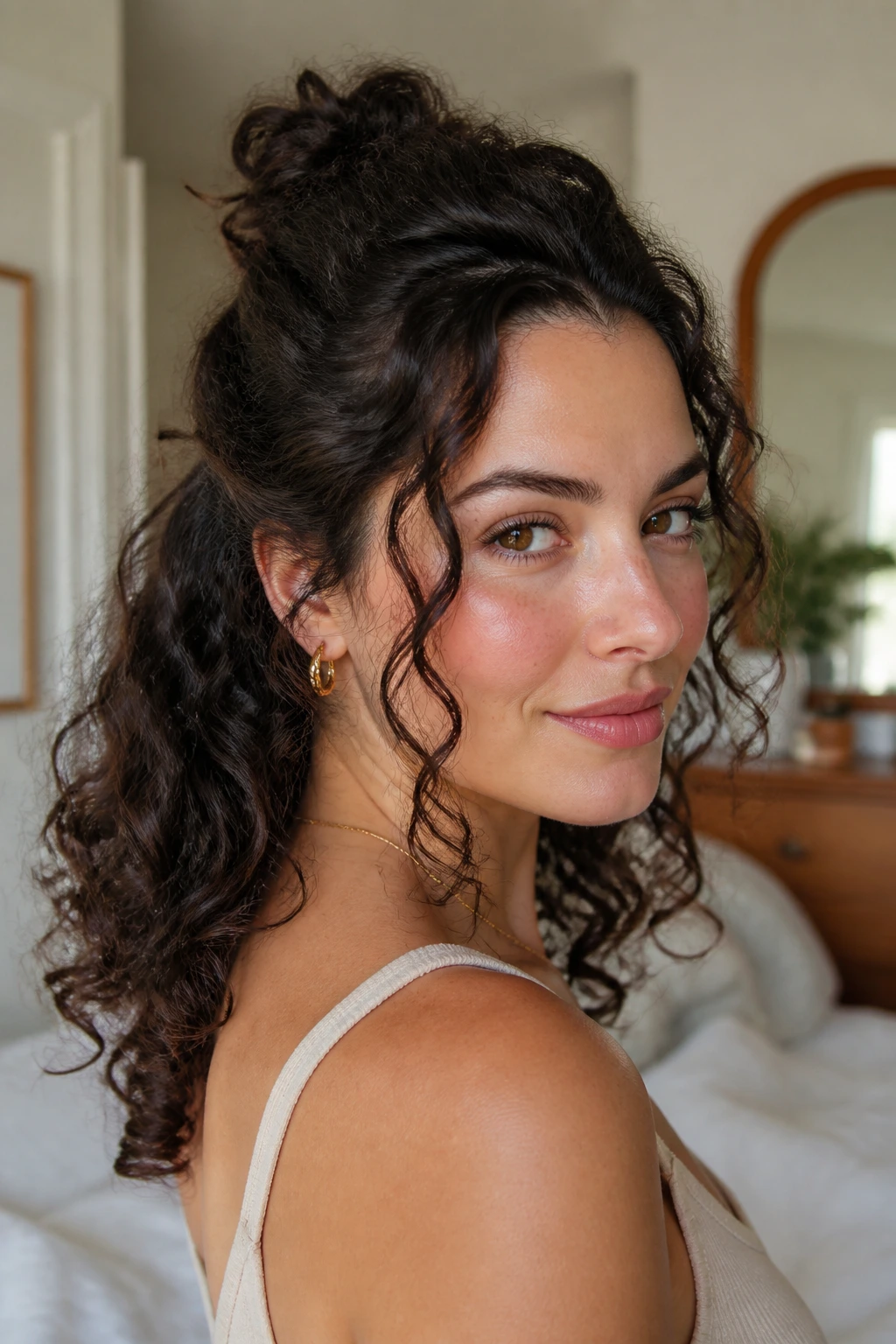
This one is more styling choice than cut, but it deserves a spot because thick curls can look incredible when the top is pulled back just enough to raise the crown. That lift opens the face and pulls some width away from the jaw.
Keep the half-up section loose. Tightening it too much stretches the sides flat and makes the style look fussy. Leave a few curls out near the temples and at the nape so the finish stays soft.
Practical bonus: the style also helps on second-day curls, when the roots are starting to droop but the mids and ends still look good.
13. The Cheekbone Curl Frame
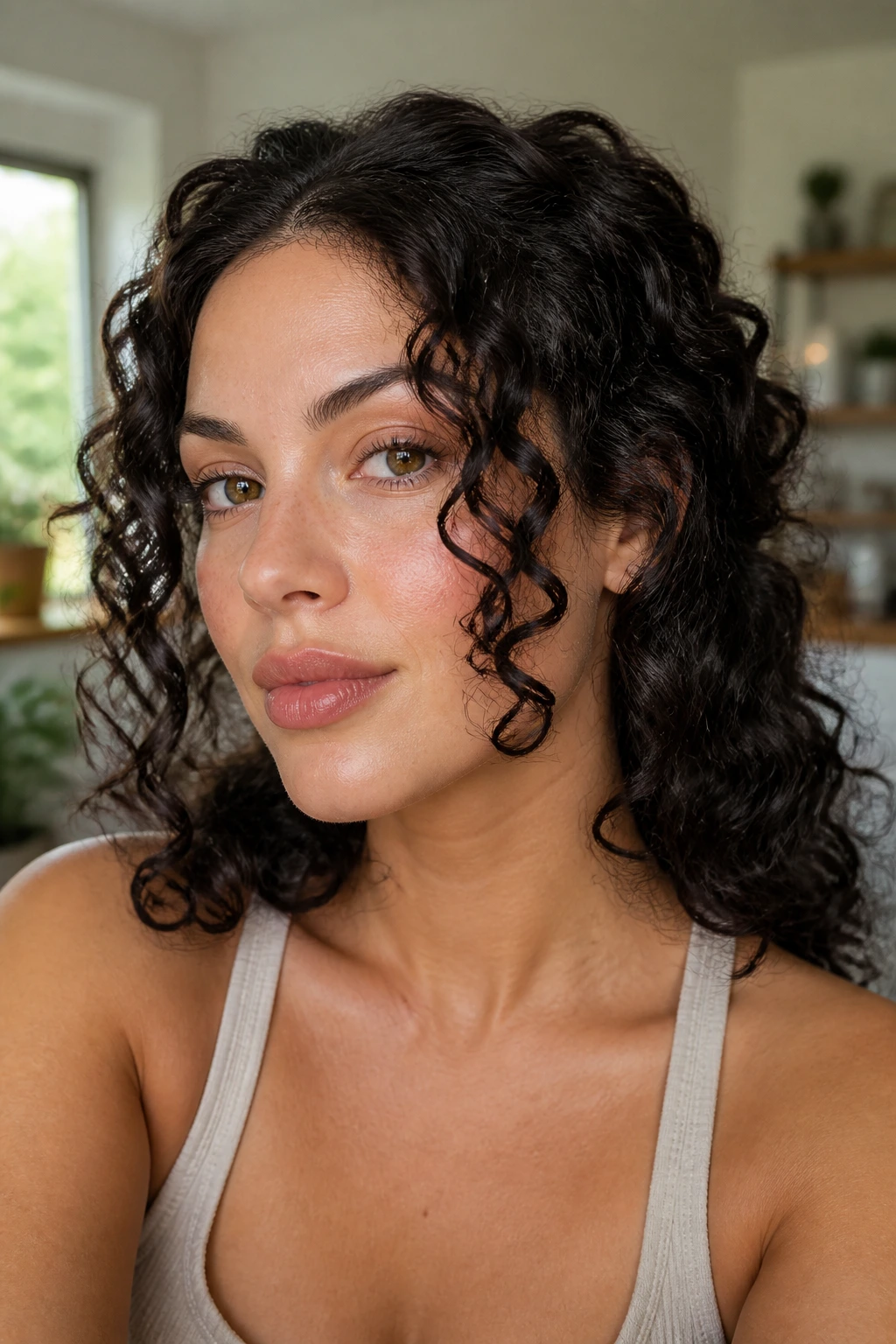
Think of this one as selective face framing. The goal is to place a few defined spirals right where the cheekbones start, then let the rest of the hair fall away from the face. That breaks up the square outline without hiding your features.
It works especially well with medium-length curls because the front pieces can be cut a little shorter than the rest without creating a shelf. You want visible curl separation here. If the front pieces merge into the body of the hair too much, the framing effect disappears.
This is a nice choice when you want the face to look slightly narrower at the sides.
14. The Tapered Coil Afro
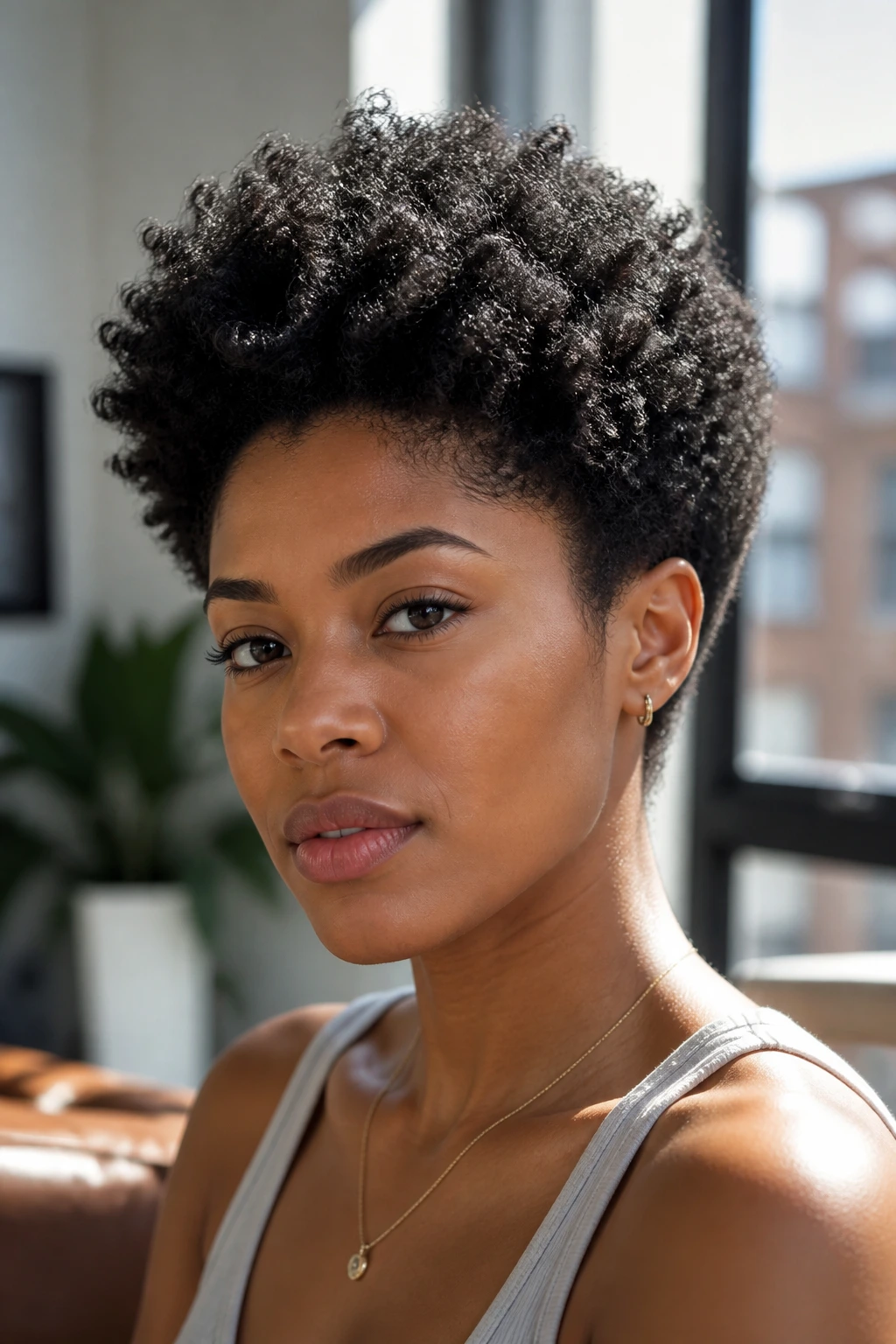
Tapered shapes are a gift for dense coils. They remove width at the sides and leave some lift on top, which is exactly what square faces often need when they want definition without blunt edges.
A tapered afro should not look cut down to the scalp. It needs shape. The sides stay neat, the top keeps height, and the curl ends remain visible enough to show pattern. That contrast is what makes the cut feel modern rather than severe.
Best detail
Ask for a shape that follows the head rather than fighting it. The right taper gives the curls room to breathe without letting them take over the whole silhouette.
15. The Airy Midi With Soft Ends
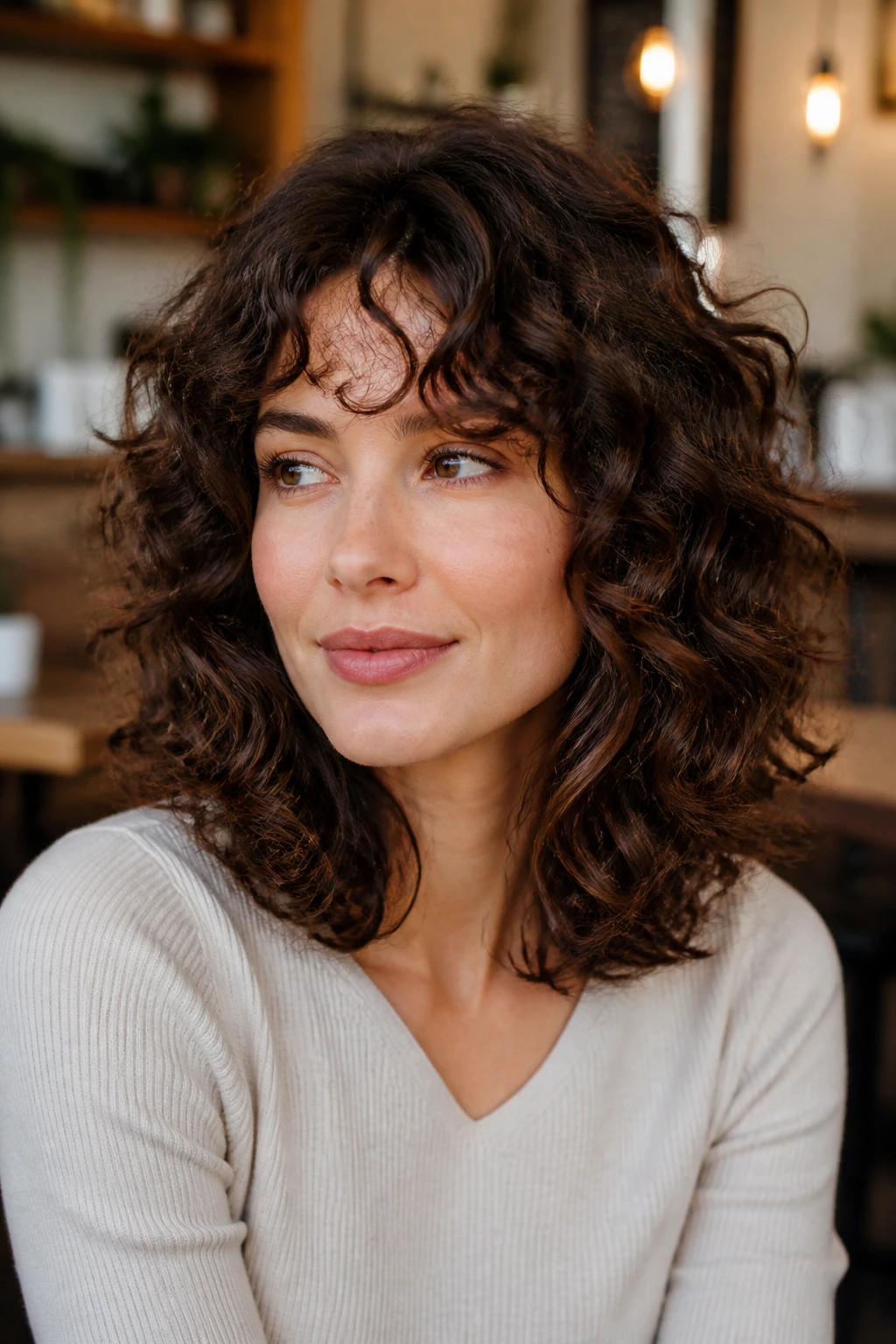
A mid-length cut that ends between the shoulders and collarbone gives thick curls enough room to define without hanging too heavy. Soft ends keep the shape from looking square at the bottom, which is a real risk on square faces.
This one is especially good if your curls clump beautifully but get bulky fast. The layers should be long and subtle. You’re not trying to thin the hair out. You’re trying to redirect the weight so the curl pattern reads cleanly.
I prefer this over a blunt midi when the hair is very dense, because blunt mids can turn into a shelf.
16. The Asymmetrical Curly Bob
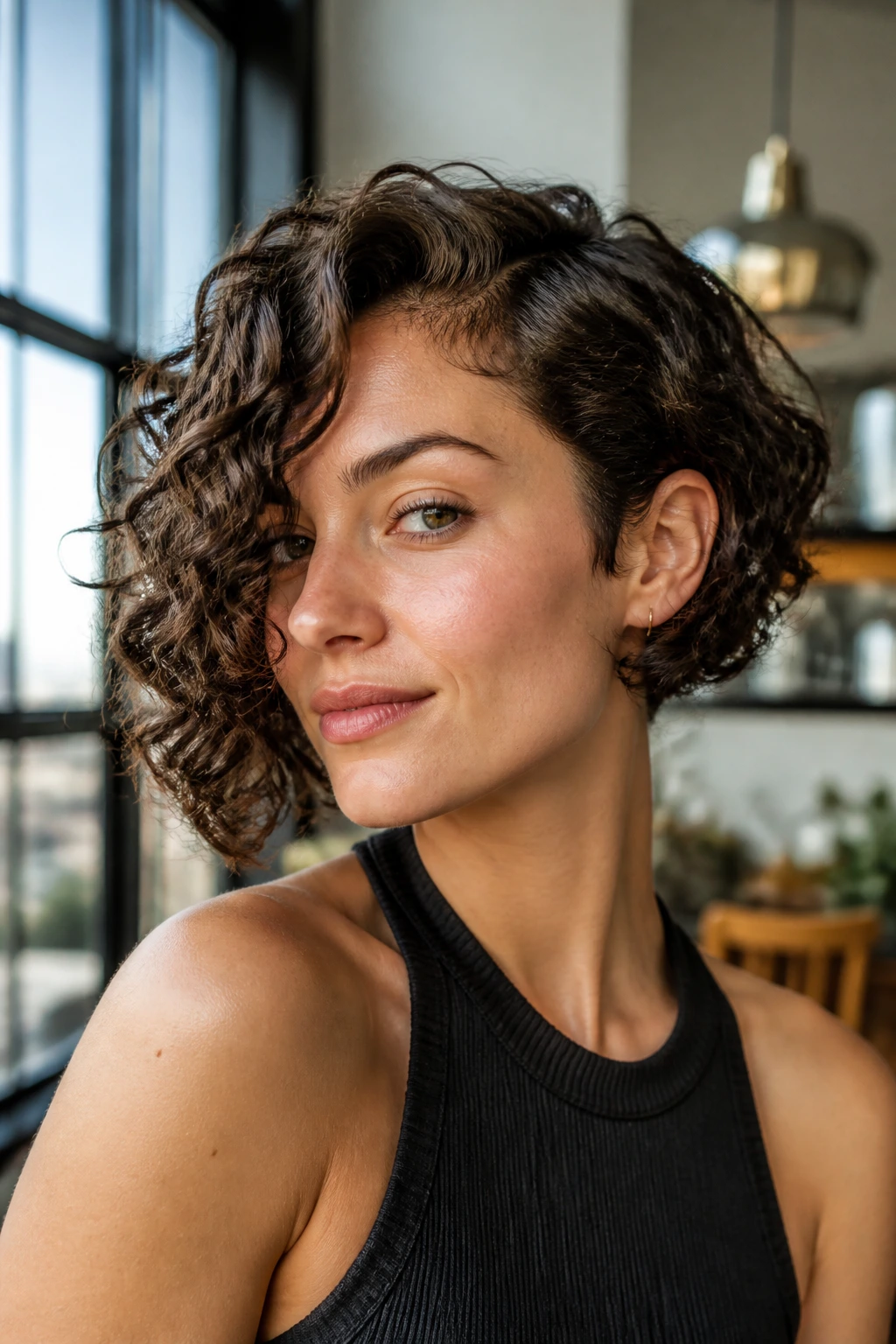
A little asymmetry goes a long way on a square face. One side slightly longer than the other creates movement and stops the cut from echoing the jawline too closely.
This style works best when the longer side falls somewhere around the chin or just below it, while the shorter side stays tucked closer to the cheek. Thick curls make the difference more visible, which is part of the appeal. The asymmetry doesn’t need to be dramatic to do the job.
If you like a haircut that feels intentional even when you’ve done almost nothing to it, this one earns its keep.
17. The Root-Lifted Wash-and-Go Shape
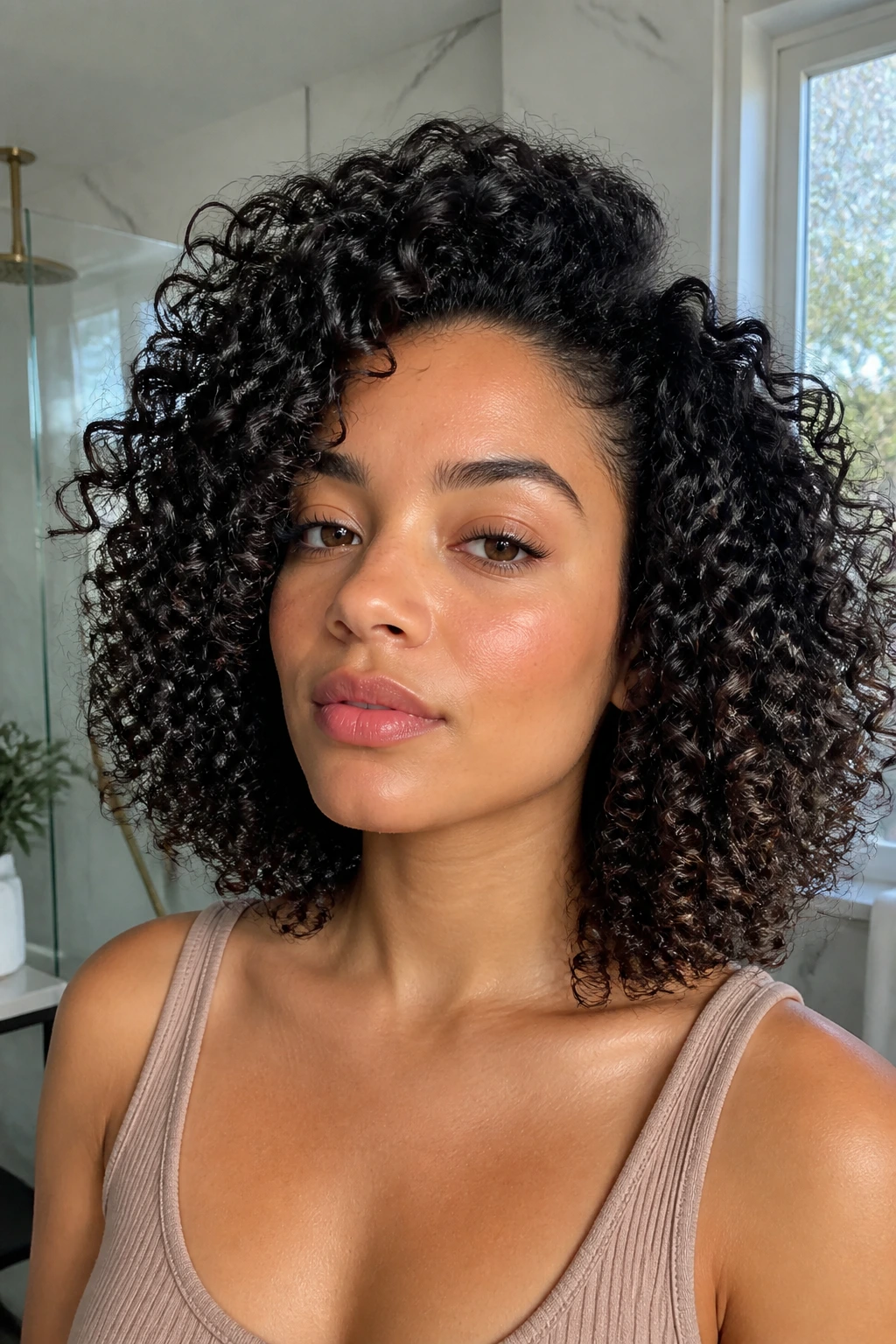
Sometimes the best look is not a cut at all, but the way you set the curls. A root-lifted wash-and-go gives thick hair height at the crown and a cleaner outline through the sides, which helps square faces look softer.
Use clips at the roots while the hair dries, especially around the part and temple area. That lifts the curl away from the scalp before it has a chance to collapse. The ends can stay defined with gel or mousse, while the top gets the airy, lifted shape.
This is the style for people who want their curls to look fresh without overworking them.
18. The Spiral Ringlet Base Cut
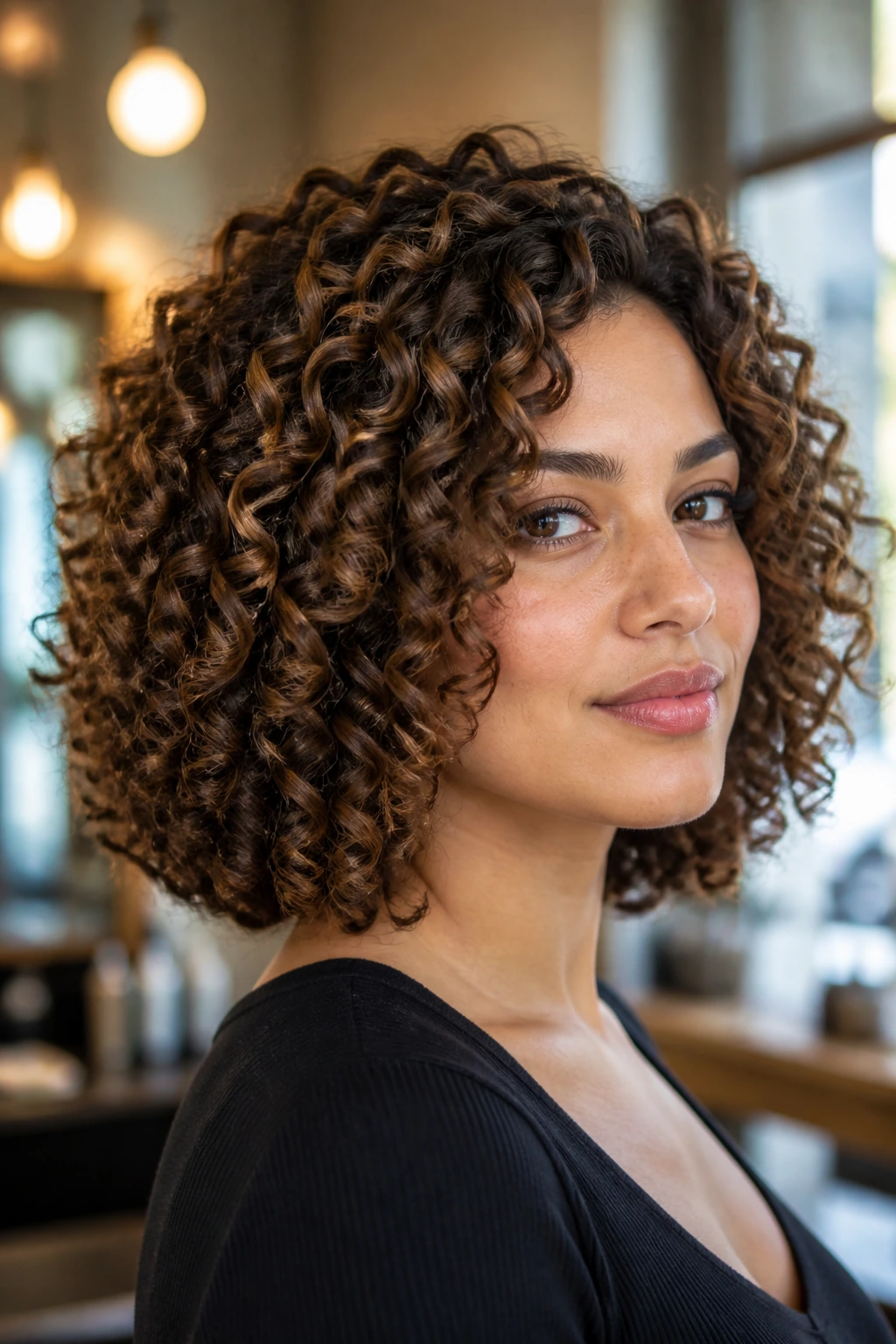
A blunt base can work if the curl pattern itself is strong enough to break up the line. What saves this look is the spiral definition. If the ringlets are clean and the ends are hydrated, the blunt cut looks crisp rather than heavy.
Square faces usually need some softness, so the front should be slightly longer than the back or gently rounded at the corners. That small change keeps the shape from landing like a shelf under the cheekbone.
Watch for this
If the curls shrink a lot after drying, ask for the hem a touch longer than your first instinct says. Thick curls always have opinions about length.
19. The Soft Wolf Cut

The wolf cut can be too much if it’s overdone, but a softer version works beautifully on thick curls. It keeps crown lift, face-framing pieces, and longer lengths in the back, which means the silhouette has movement without feeling neat in a stiff way.
For square faces, the shaggy top helps break up angularity while the longer lower layers keep the style from flaring out at the cheeks. You want the whole thing to feel a little wild, but controlled enough that the curl definition stays visible.
A soft wolf cut is not the place for aggressive thinning. That’s how you end up with frizz and weak ends.
20. The Mermaid Length With Inner Movement
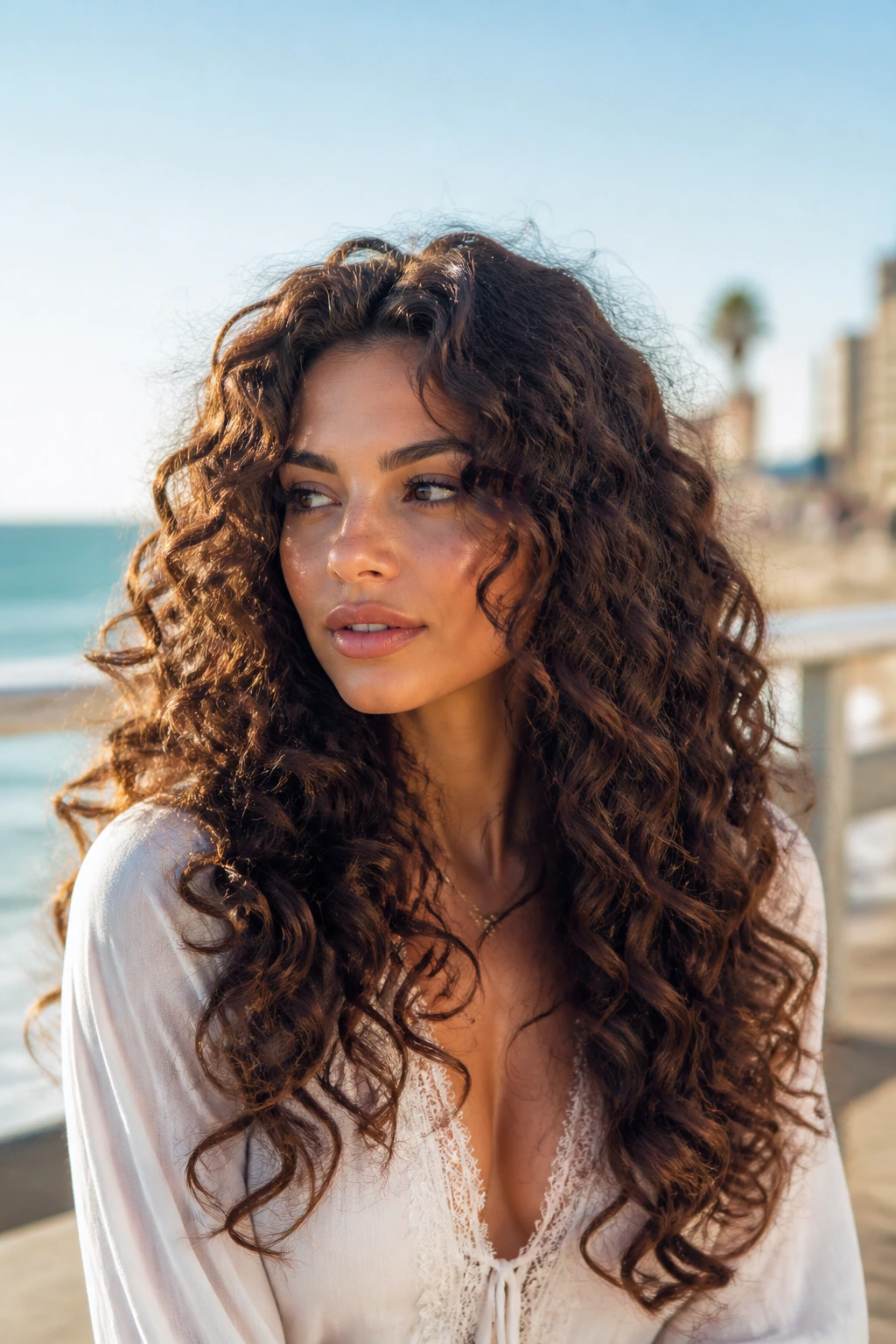
If you love long hair and don’t want to give it up, give the shape movement instead. Mermaid-length curls can work on square faces when the inside of the cut carries the action and the outside line stays soft.
Long layers under the surface help the curls stack without creating a heavy wall. The face frame should start lower than the cheekbone so the front doesn’t widen the face at its strongest angle. This look is a lot prettier when the curls are glossy and separated than when they’re brushed out.
It’s a patient cut. The reward is that dramatic length without the bluntness.
21. The Rounded Picked-Out Afro
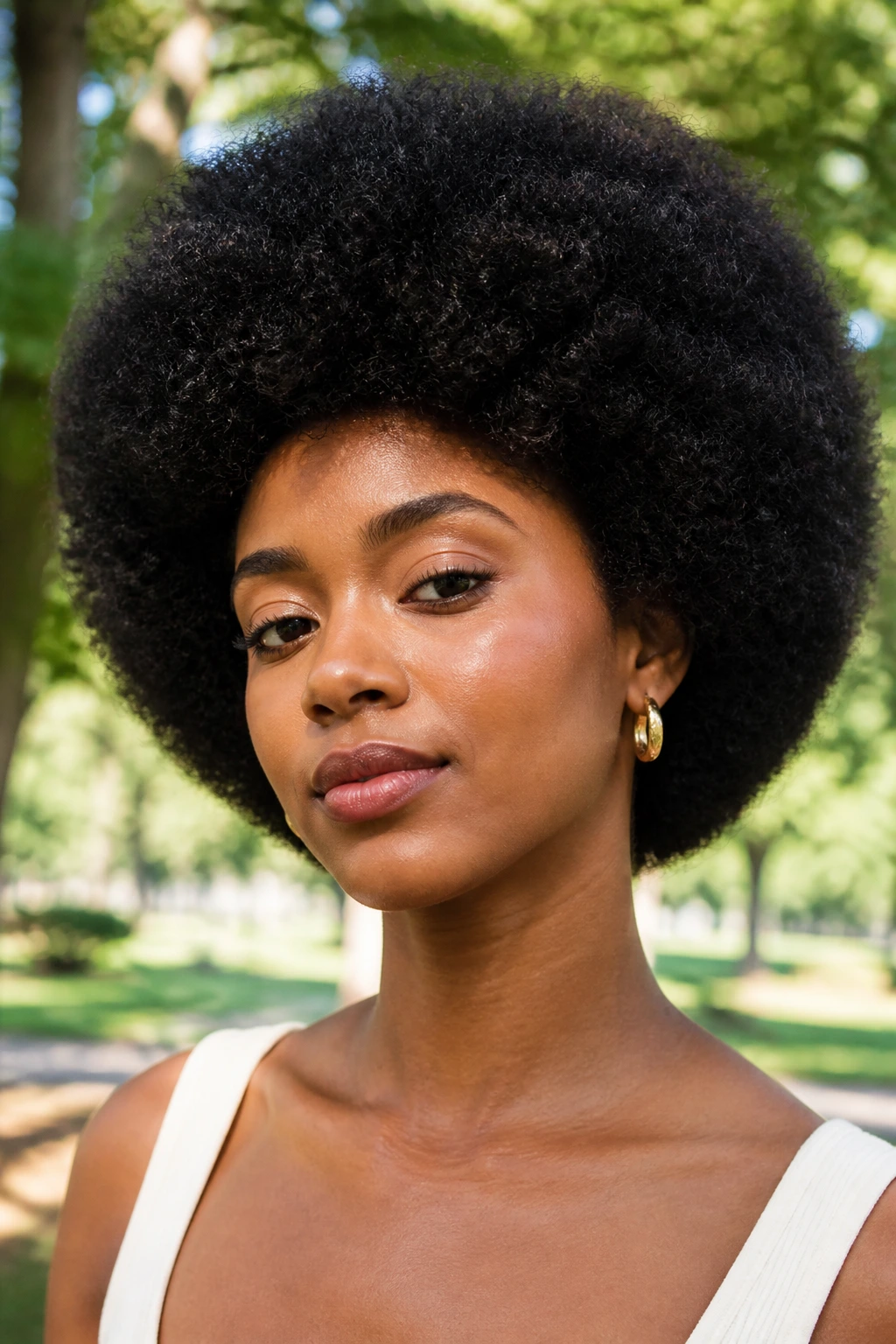
A rounded afro can be deeply flattering when the shape is intentional. The rounded outline softens square angles, while the height keeps the face from looking too broad at the sides.
Pick at the roots only. Don’t fluff the ends into a halo unless you want more width than you actually need. The trick is to build an even sphere or oval shape that reads balanced from every angle.
Best for coils and tight curls that hold shape once set. The more definition you keep at the perimeter, the less you need to fight frizz later.
22. The Temple-Layer Side Part
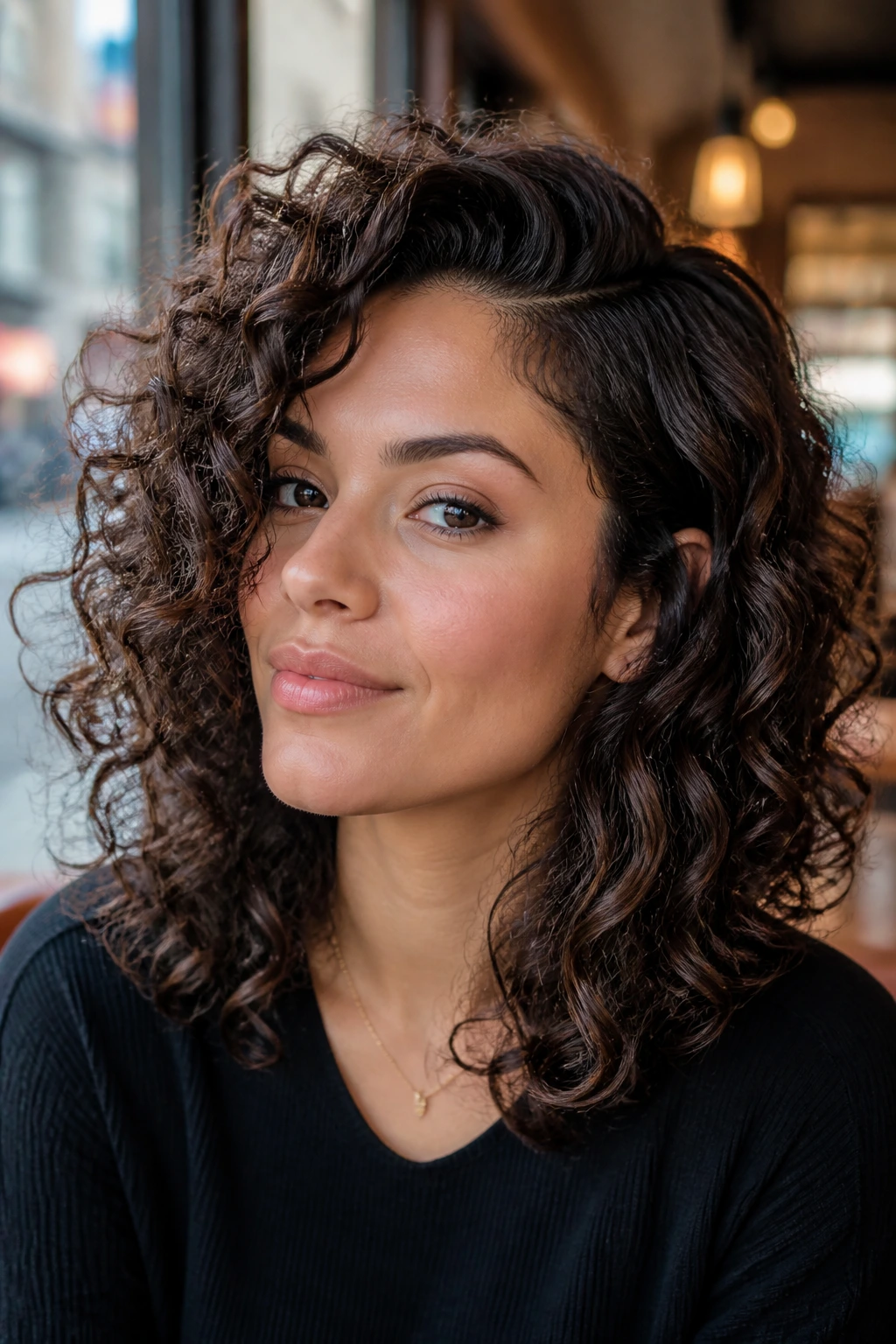
Temple layers are one of those small details that do a lot of work. They start around the outer brow or temple area and fall softly toward the cheek, which breaks the hard horizontal line that square faces can have through the middle.
Pair that with a side part and the face looks less rigid immediately. Thick hair helps here because the front pieces have enough body to stay visible instead of collapsing into the rest of the cut. The result is soft, slightly dramatic, and easy to wear.
This is the look I’d pick if you want the face-framing effect without full bangs.
23. The Event Curl Set
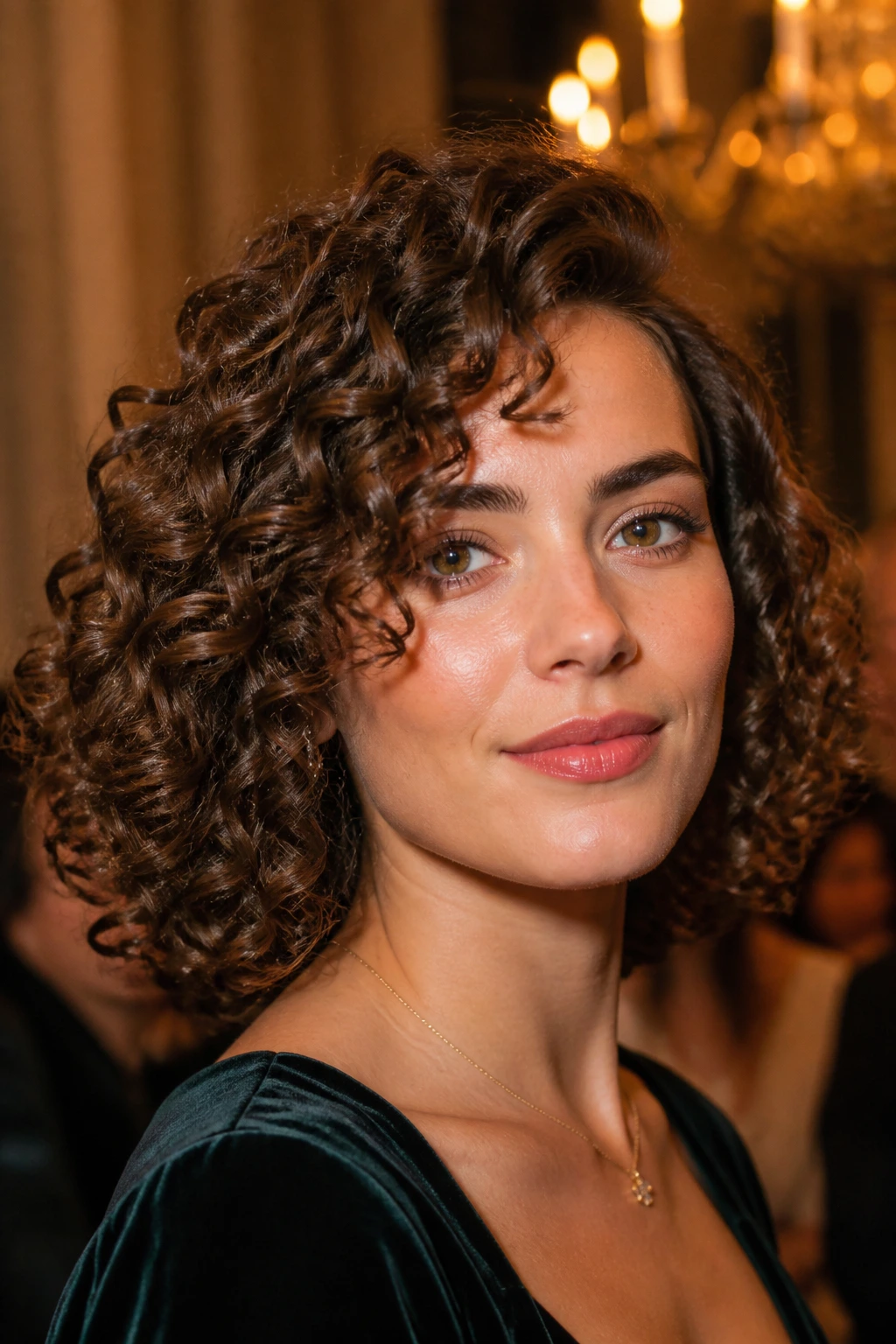
A polished set is not about hiding the texture. It’s about organizing it. On thick hair, that means sectioning, setting, and shaping the curls so the definition is clean from root to end.
What makes it work
The curls are encouraged to clump in consistent groups, then diffused or air-dried without too much touching. Square faces benefit because the finished shape can be directed slightly away from the jawline, especially if you use a side part or a soft side sweep.
This is the look for dressier days, photos, or any time you want the curl pattern to look deliberate rather than casual.
24. The Weight-Removed Shoulder Cut
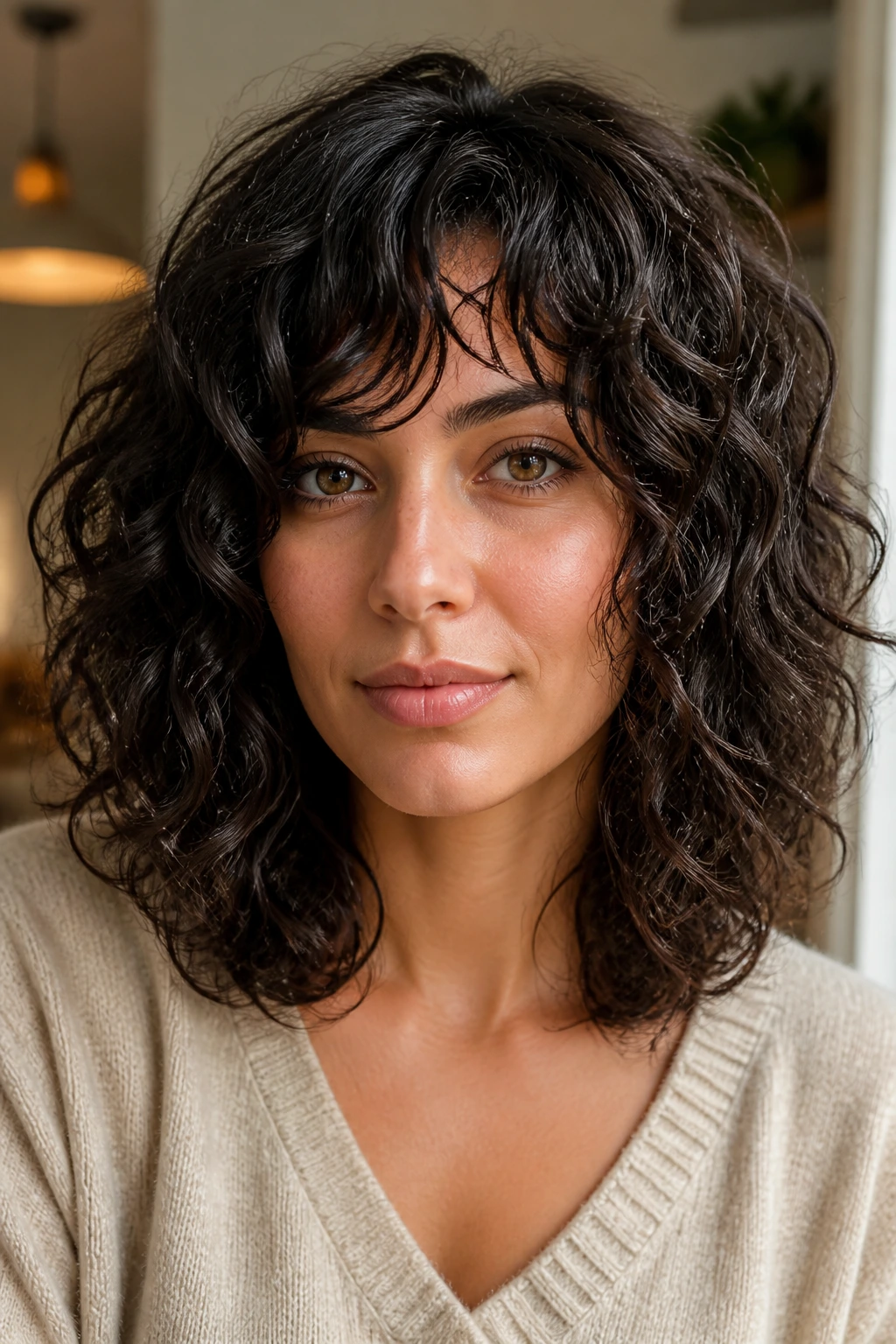
Shoulder-length curls can get bulky fast, and that’s exactly why this cut needs weight removal in the right places. The goal is to keep the outline clean so the shoulders don’t become a shelf the curls sit on.
Internal layers help the curl clump stay intact, while the outer shape stays smooth enough to read as polished. On square faces, shoulder length is a smart zone because it avoids the jaw and the widest part of the cheeks without forcing the hair into a severe long look.
If you’re stuck between mid-length and long, this is the compromise that usually behaves.
25. The Feathered Long Cascade
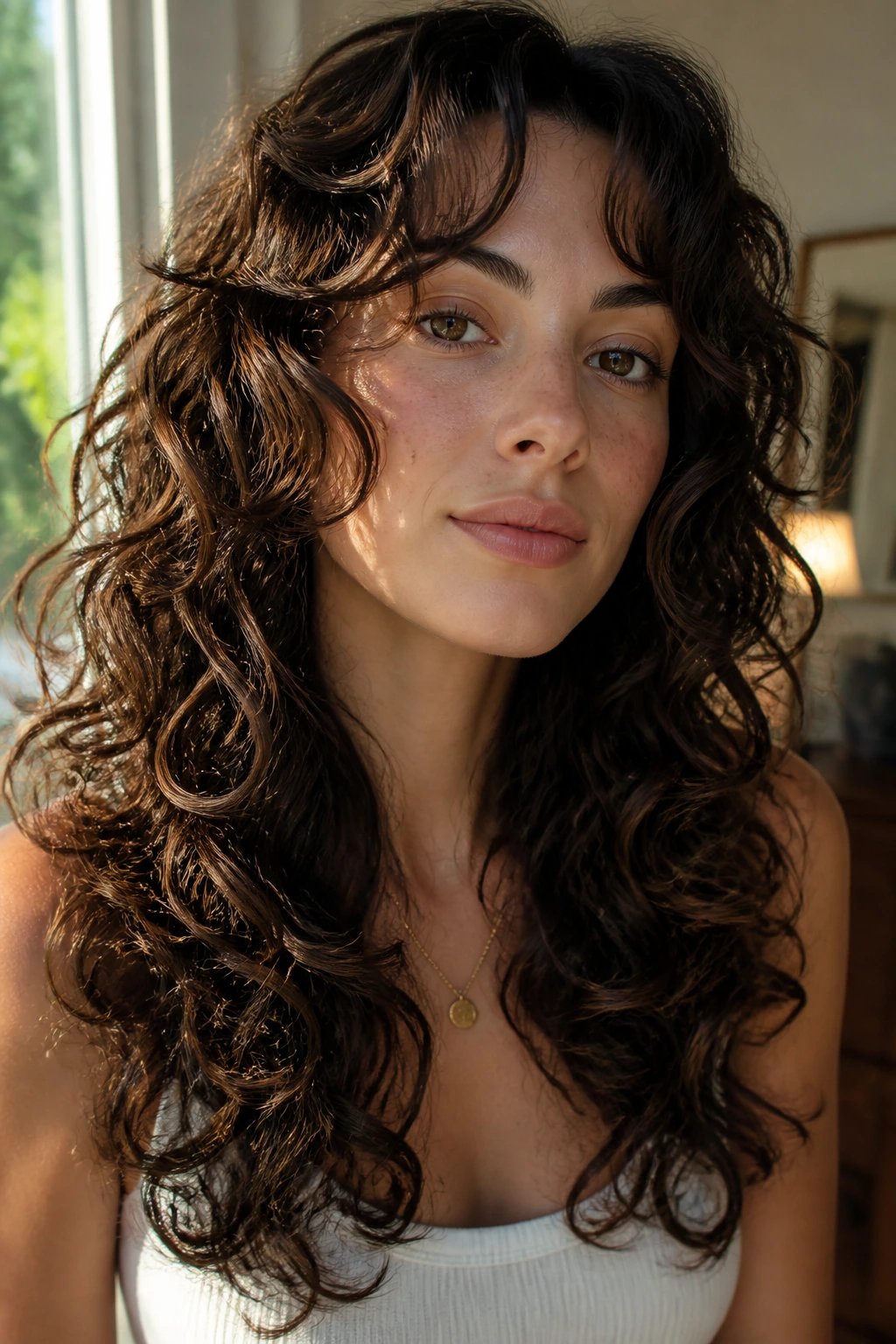
This is the long-hair answer for anyone who wants softness, movement, and a little bit of polish. Feathering at the ends keeps the length from feeling like a solid curtain, and the top stays light enough to avoid that dense, squared-off feeling at the sides.
The best version keeps the front pieces a touch shorter so they graze the cheek area instead of ending dead straight. That lets the curl shape hug the face instead of repeating its angles.
It’s a good final pick because it can be worn plain, dressed up, or reworked with a side part without losing the overall shape.
Why Shape Matters More Than Curl Pattern
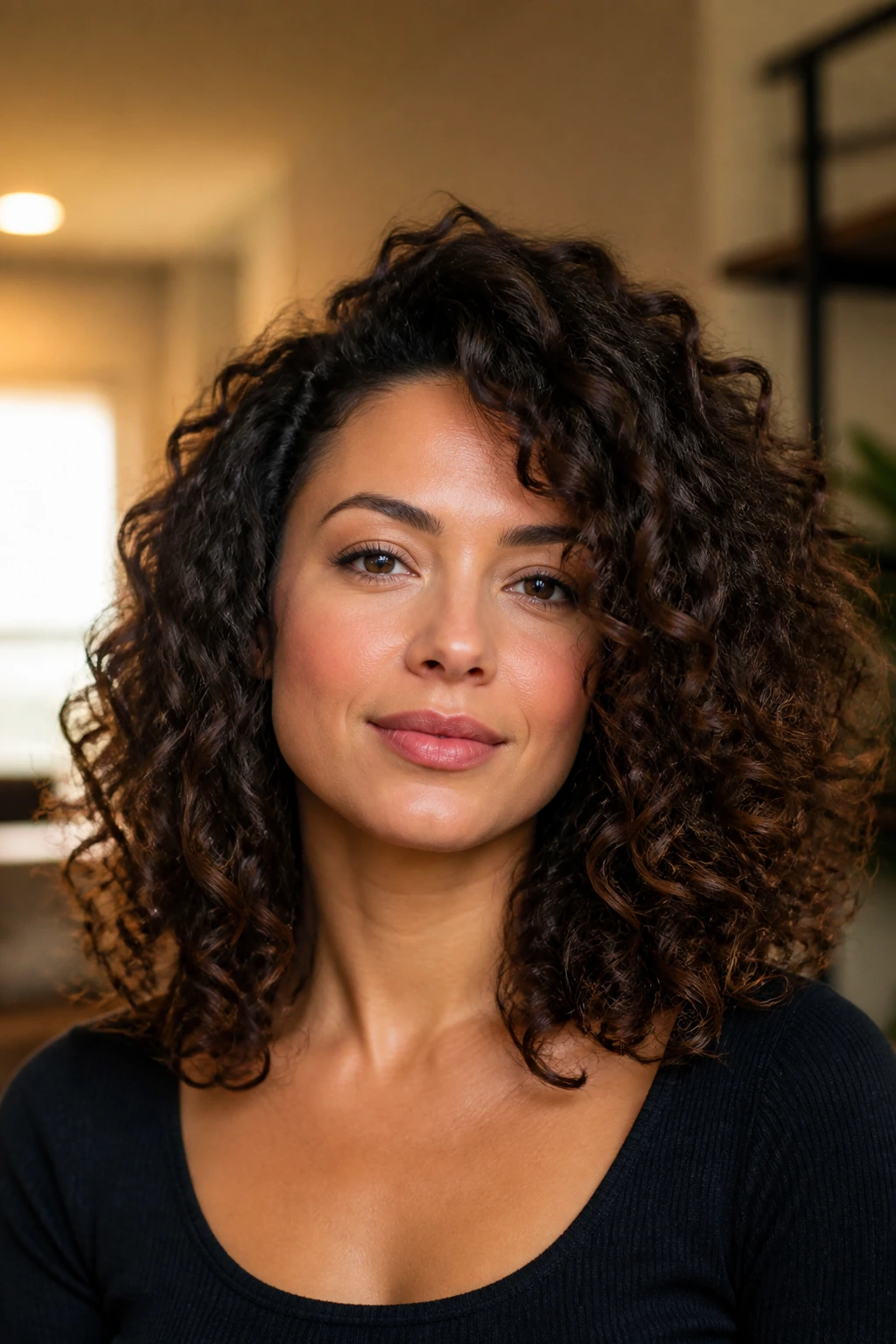
A square face does not need the same treatment every time. That’s the part people miss. The point isn’t to hide the jawline; it’s to stop the hair from echoing it too aggressively.
Thick curls already have volume, which is useful and a little tricky. If the cut is too blunt, the sides can widen the face. If the layers are too short, the top can get fluffy while the bottom goes stringy. The sweet spot is a shape that keeps some weight at the perimeter and removes bulk where the hair starts to push out horizontally.
The curl pattern matters, sure. But the silhouette matters more. A looser curl can still look soft and flattering if the part is off-center and the front pieces are long enough. A tighter coil can look sharp and elegant if the outline is rounded and the sides are tapered. The face reads the shape first, then the texture.
Tools That Make Thick Curls Behave
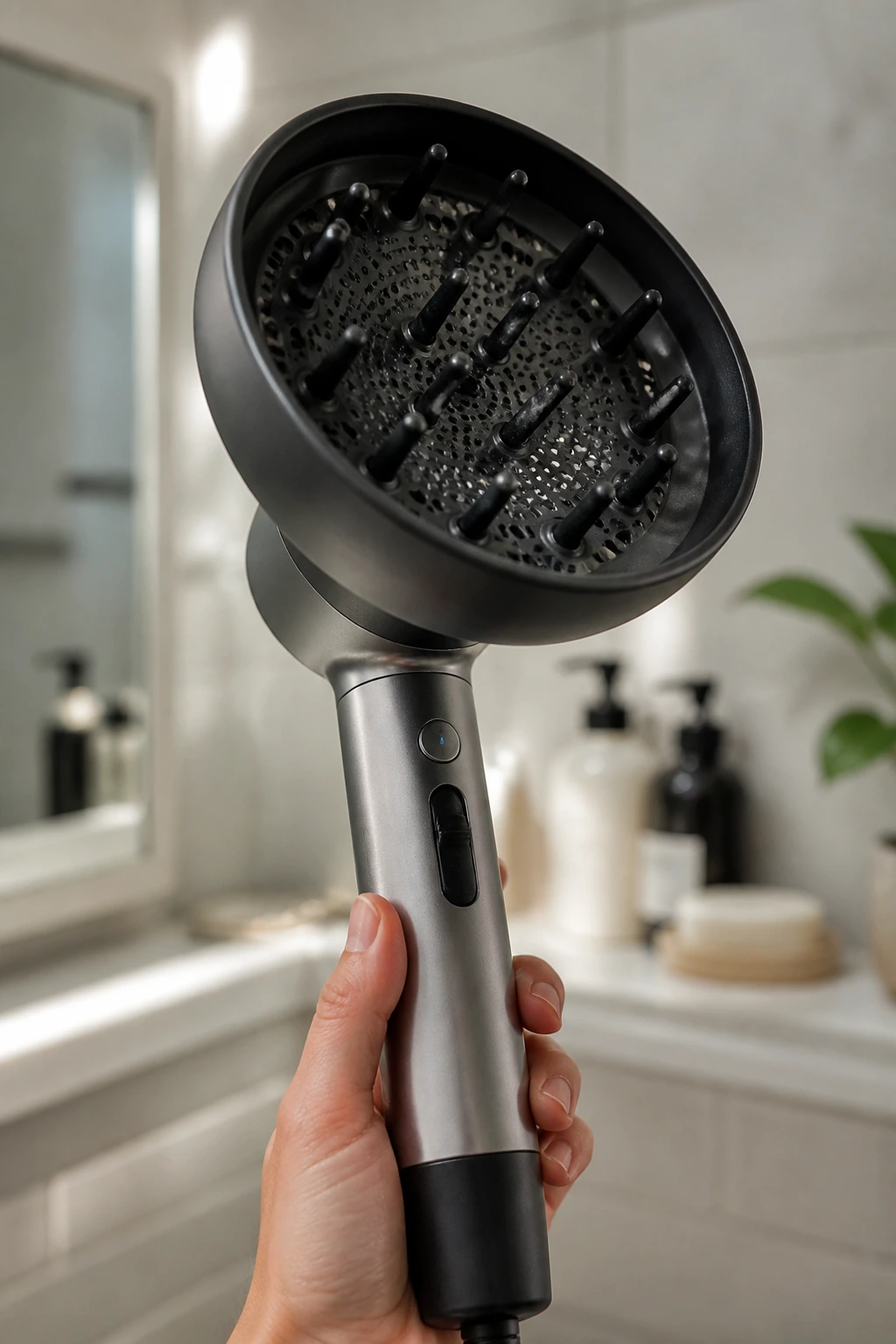
You do not need a drawer full of gadgets, but a few tools make a real difference when thick curls need definition.
-
Diffuser attachment: Drying curls in a diffuser keeps the clumps intact and gives you more root lift than air-drying alone.
-
Microfiber towel or cotton T-shirt: Regular terry cloth can rough up the cuticle and create frizz before the curls have set.
-
Wide-tooth comb: Good for distributing leave-in or cream through soaking-wet curls without breaking the clumps apart.
-
Sectioning clips: Useful for styling thick hair in layers so the top doesn’t get overloaded with product.
-
Satin pillowcase or bonnet: Keeps the curl pattern from getting crushed overnight and helps the shape last into day two.
-
Spray bottle: Handy for refreshes. A few mists wake up the outer layer without forcing a full wash.
-
Root clips: Small, ordinary clips that hold the crown up while it dries. Cheap. Effective. Hard to beat.
Product Choices That Hold Definition Without Crunch
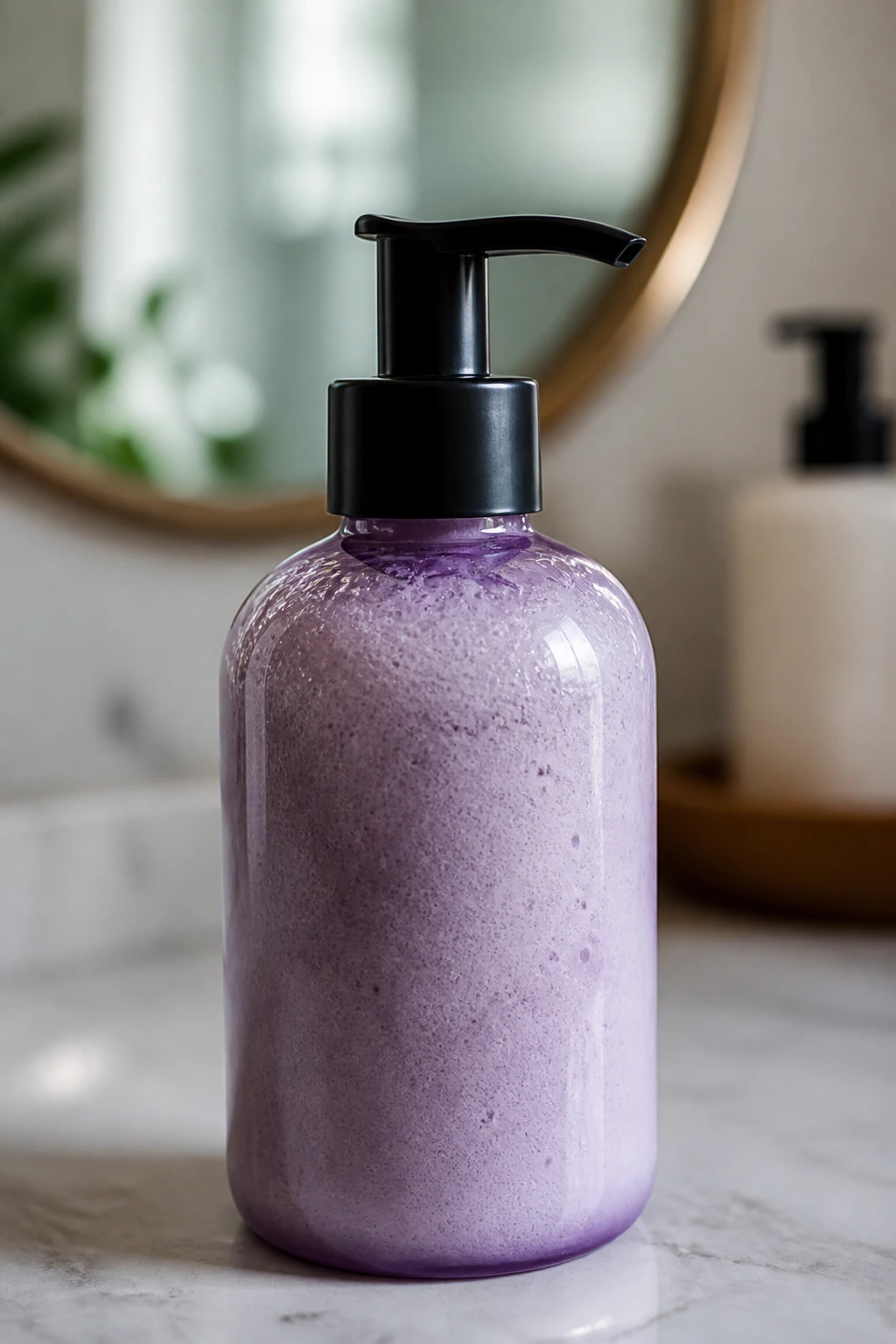
Thick curls usually need more than one texture product. A light leave-in softens the hair, then a curl cream or foam gives slip, and a gel locks the shape in place so the curls do not drift apart as they dry.
The mistake is using one giant blob of something heavy and hoping for the best. That usually leads to limp roots and sticky ends. Work in sections. Use a small amount at first, then add more only where the hair drinks it up. If your curls are dense and coarse, a stronger-hold gel can be your friend. If they’re thick but finer in texture, mousse plus a lighter gel often gives better bounce.
Also, don’t ignore how the product is applied. Raking is fine for distribution, but glazing the outer layer and then scrunching tends to preserve clumps better. That’s the whole game with defined curls: keep the curl families together long enough for them to set.
How to Style These Shapes So They Don’t Puff Out
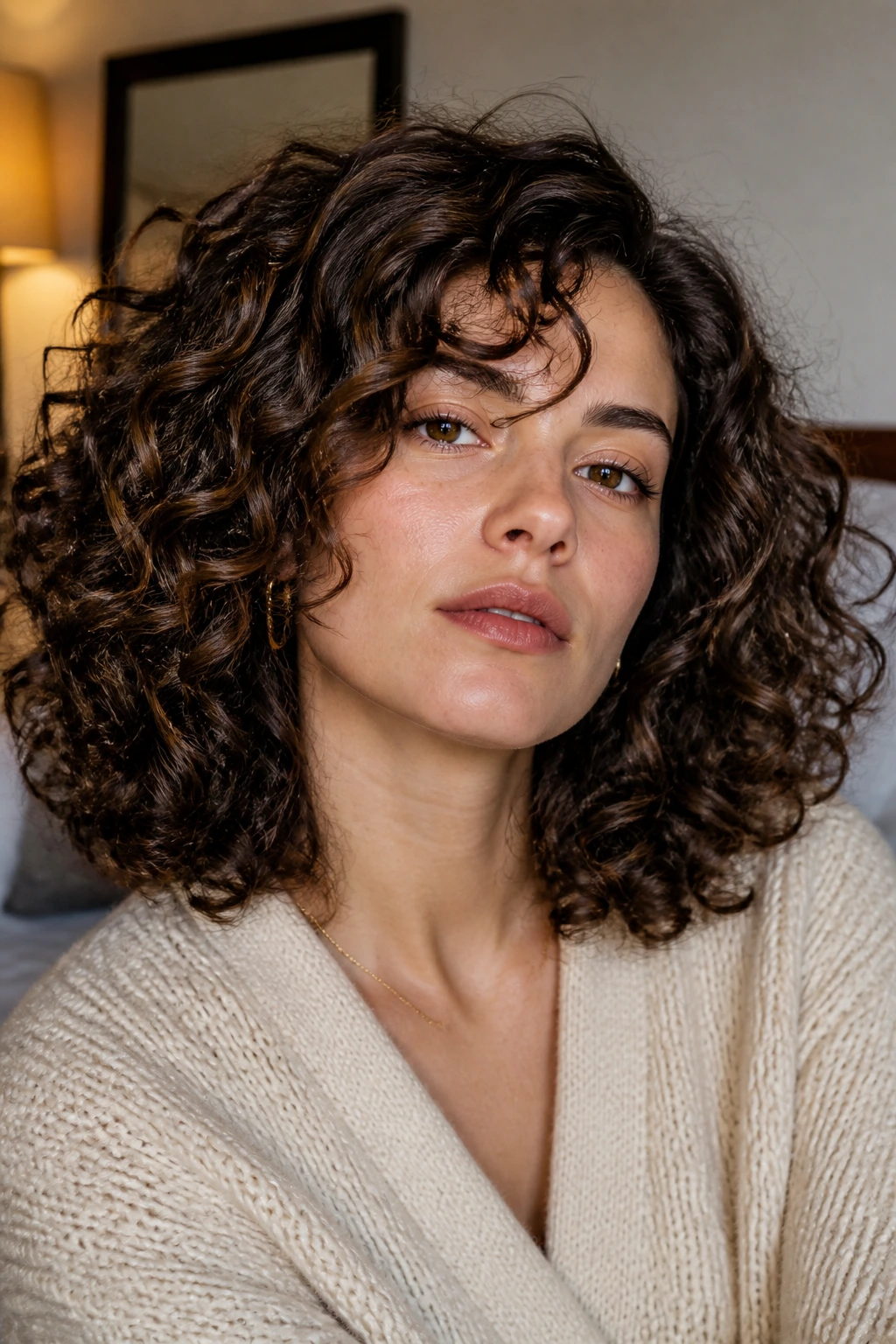
The best styling trick for thick curls is to start wetter than you think. Damp hair can take product, but soaking-wet hair lets curl groups form cleanly before frizz sets in. That matters even more on square faces, because a fuzzy outline makes the jaw look harsher.
Clip the roots at the crown if you want lift. Diffuse on low heat or low airflow. Cup the curls from underneath and hold the diffuser still for a few seconds before moving on. If you keep shaking the dryer around, the outer layer gets roughed up and the definition falls apart.
Pro move: finish with a tiny bit of serum or lightweight oil on just the outermost ends. Not the roots. Not the whole head. Just the tips and the frizz-prone perimeter.
Common Mistakes That Make Square Faces Look Sharper
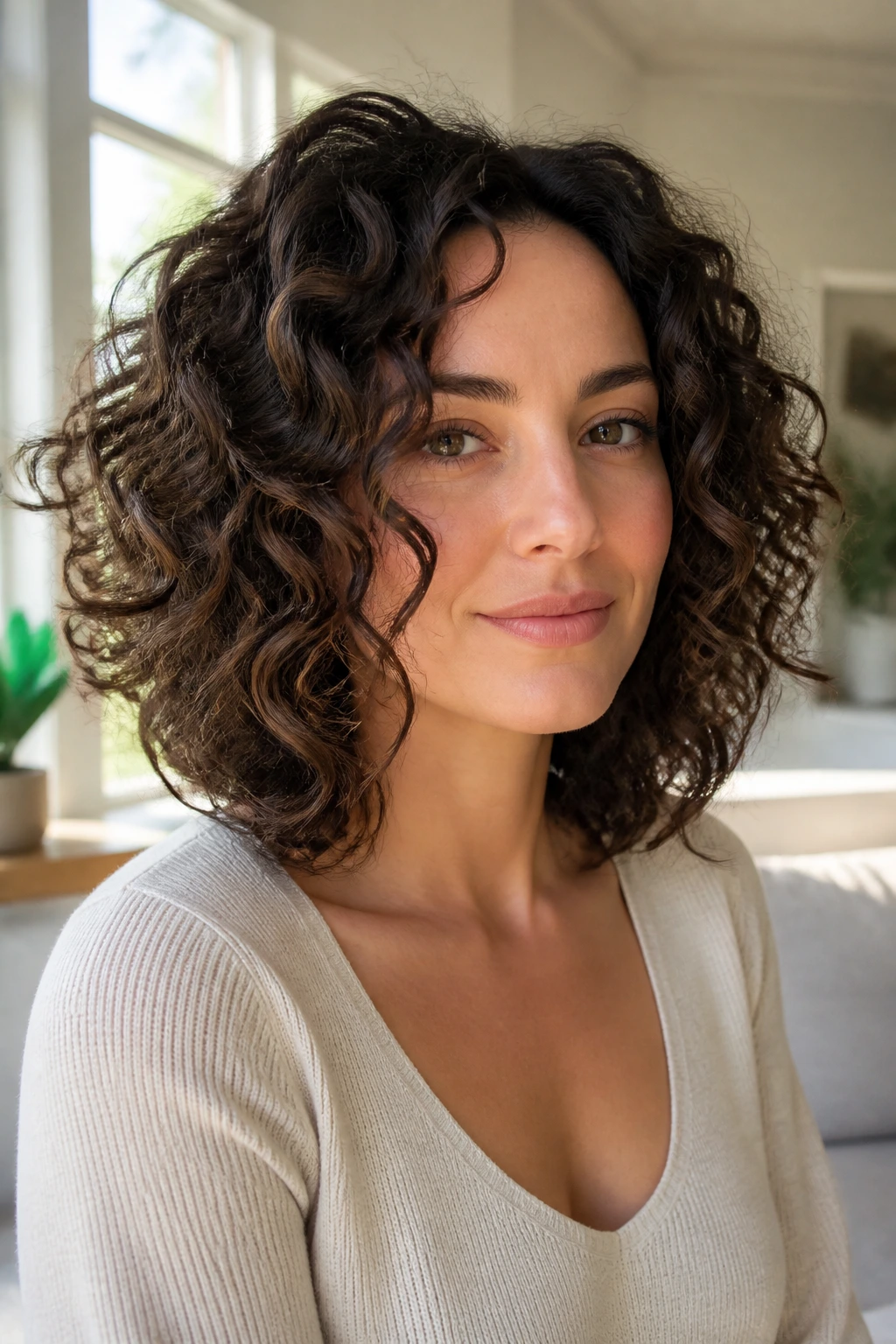
The first mistake is a blunt cut that ends right at the jaw. That line can turn a square face into a frame-within-a-frame, and not in a flattering way. If the haircut is short, make sure the edges are tapered or curved inward slightly.
Another one is over-thinning thick curls. People think removing more hair always means more movement. Sometimes it means weaker ends, random frizz, and less control. The better move is strategic layering, not aggressive texturizing.
Skipping crown lift is another easy way to get stuck. If all the volume sits at the cheeks and sides, the face looks wider. A little height on top changes the proportions fast. And yes, a middle part can work, but if it makes the face feel too symmetrical and straight, move it a little off-center. Small shift. Big difference.
Variations and Adaptations to Try
-
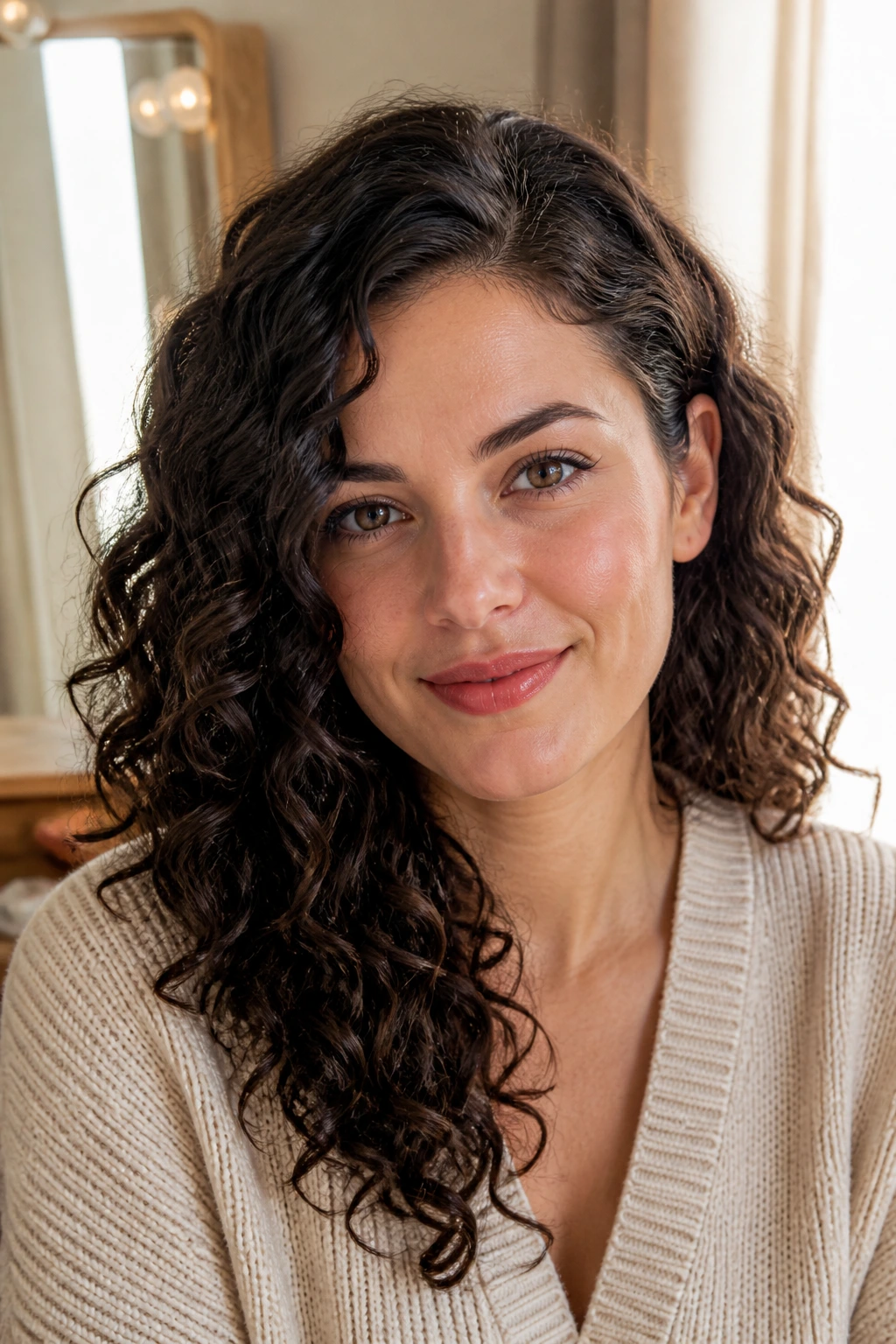
The Softer Side Part: Move the part one to two inches off center and dry the front toward the heavier side. It softens the square outline without changing the haircut at all, which makes it the easiest experiment in the bunch.
-
The Fringe Swap: If full bangs feel too blunt, switch to curtain bangs or temple pieces that start longer and feather out near the cheekbones. You get face framing without creating a hard horizontal line.
-
The Coil-Friendly Taper: For tighter curls and coils, keep the sides neat and allow more height at the crown. This keeps the silhouette from spreading outward and gives the face a cleaner frame.
-
The Low-Maintenance Length: If you want less salon upkeep, choose long layers or a collarbone cut with internal movement. These shapes grow out better because the outline stays soft instead of turning into a staircase.
-
The Glossy Definition Route: If your curls frizz before they collapse, lean into stronger hold. A gel cast, fully dried, then scrunched out, gives the hair a cleaner finish and keeps the shape readable longer.
Keeping Thick Curls Fresh Between Wash Days
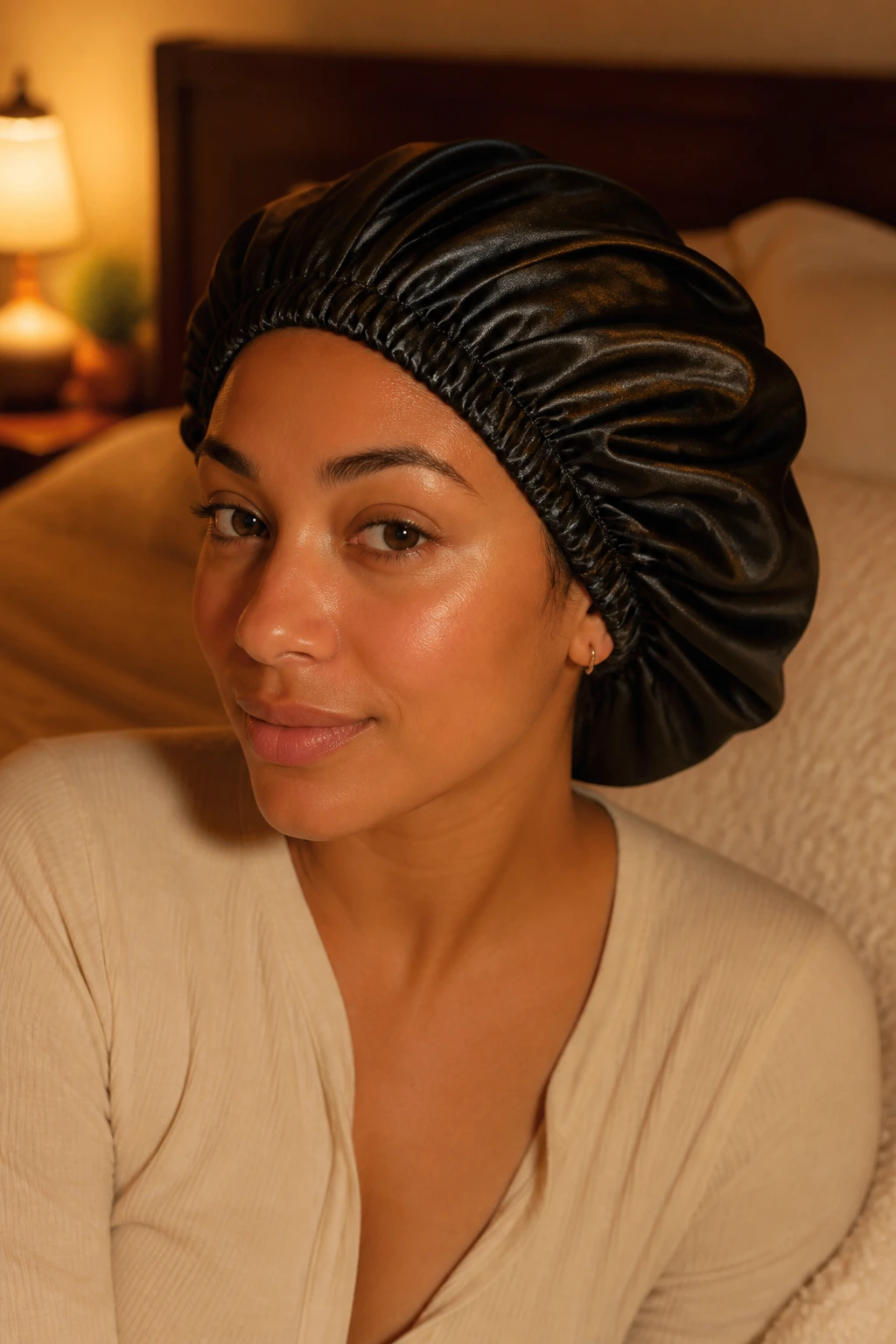
Thick curls usually do not need a full reset every time they lose a little shape. Most of the time, they need a good wake-up. That starts at night. Satin or silk protects the curl clumps, and a loose pineapple or bonnet keeps the top from being flattened into a sad little helmet.
On day two, mist the outer layer lightly, then add a tiny bit of leave-in to the frizzy sections and scrunch. Don’t soak the hair again unless you want to restart the whole process. A damp refresh is enough for most styles in this collection, especially the lob, the shag, and the layered mid-length cuts.
Trims matter too. Thick curls tend to hide split ends for a while, then suddenly show them when the shape starts to lose spring. For shorter cuts, trims every 8 to 10 weeks keep the outline sharp. For longer layers, 10 to 12 weeks is a more realistic rhythm. If the ends start feeling fuzzy and the curl clumps stop holding together, you waited too long.
Frequently Asked Questions About Thick Curls and Square Faces

Can square faces wear a middle part with thick curls?
Yes, but the part placement matters. A dead-center part can emphasize symmetry and width, while a slightly off-center part softens the face without making the style feel dated or stiff.
Are bangs a bad idea for square faces?
Not at all. The problem is blunt, short bangs that stop in a hard line across the forehead. Curtain bangs, side-swept fringe, and long temple pieces usually work better because they break up the angles.
Should thick curly hair be layered or one-length?
Usually layered, but not chopped to pieces. Thick curls need weight removed in the right spots so they don’t widen at the sides, yet they still need enough mass at the ends to keep definition.
What if my curls shrink a lot after drying?
Ask for the cut to be longer than your first instinct, especially around the chin and collarbone. Square faces often need length that lands below the jaw once dry, not when wet and stretched.
How do I keep volume without looking wide?
Lift the roots at the crown, keep the sides controlled, and let the front pieces fall forward a little. Volume on top reads as shape; volume at the cheeks reads as width.
Will a curly bob make my face look boxy?
It can, if it ends exactly at the jaw with no taper. A rounded or slightly asymmetrical bob, especially one that curves in at the ends, is much kinder to a square face.
Can I wear these styles if my curls are loose waves instead of tight ringlets?
Yes. You’ll want lighter layers and less hold product, but the same shape rules still apply. Keep the widest part of the hair away from the jaw and use an off-center part if the face feels too straight-on.
How often should I refresh thick curls?
Usually every 1 to 3 days, depending on humidity and how much movement the style has. The goal is not to make the hair look freshly washed every morning. It’s to keep the definition visible and the outline balanced.
The Shapes That Let the Curl Pattern Do the Work
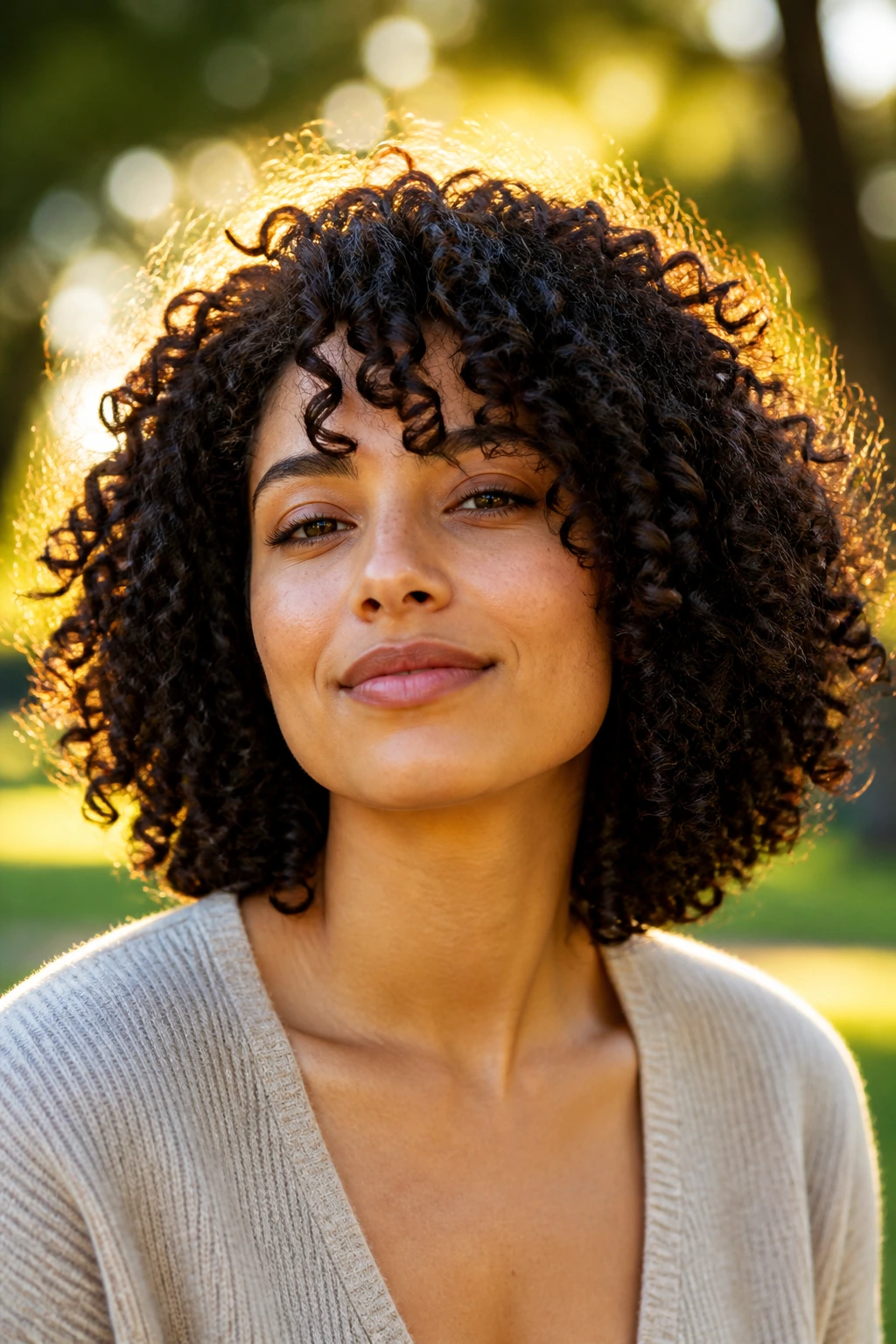
The nicest thing about thick curls is that they already bring body, texture, and presence. The haircut’s job is to guide that energy somewhere flattering instead of letting it spread wherever it wants. Square faces do best when the curl shape softens the jaw, lifts the crown, and keeps the outline from getting too boxy.
That’s why the best looks here are not all short, not all long, and not all polished. Some are soft. Some are a little wild. Some lean on side parts and face-framing pieces, while others use rounded silhouettes or careful layering. The common thread is shape control. Once you get that part right, thick curls stop fighting the face and start carrying it.