



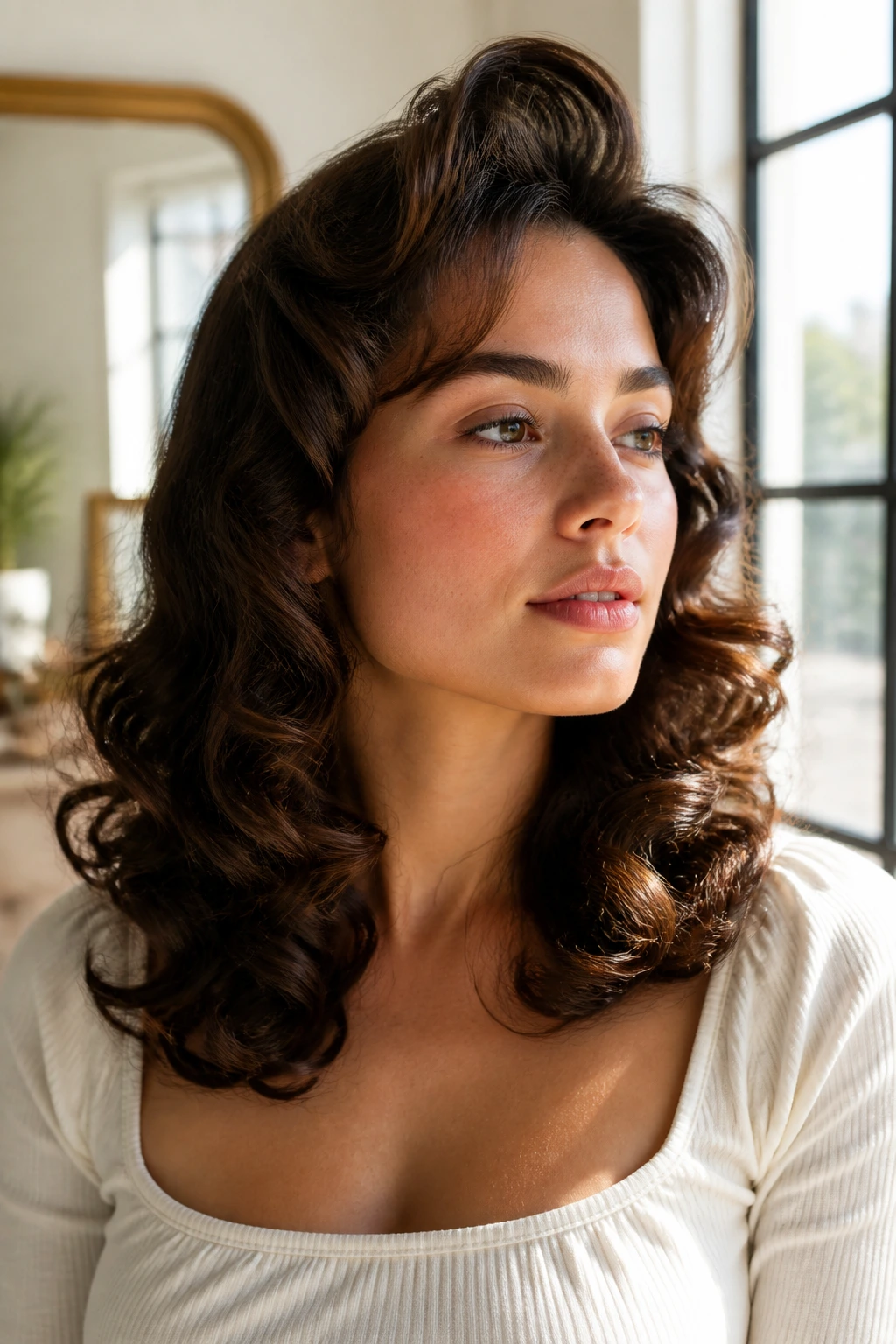
Frizzy hair can make vintage styling feel like a gamble, and a square face adds one more layer of geometry to solve. The wrong curl set puffs out at the jaw, the wrong part draws a hard line across the forehead, and the whole look can land a little boxy. The right retro curl, though, does the opposite: it bends the eye, softens the corners, and gives the face some movement without asking your hair to behave like glass.
That’s why retro curls for frizzy hair and square faces are such a smart pairing. The old-school shapes already know how to build height at the crown, sweep weight away from the jaw, and leave the ends loose enough to move. Frizz is less of a problem when the style has a shape with intention; a brushed-out wave, a soft pageboy flip, or a pinned crown set can make texture look rich instead of unruly.
I’ve always thought the sweet spot here is controlled softness. Not stiff. Not crunchy. Not those helmet curls that look frozen in place until the first humid breeze knocks them sideways. The best looks in this lineup let you keep a little air and bend in the hair, but they place that bend where it flatters the face instead of fighting it.
Why These Retro Looks Work So Well
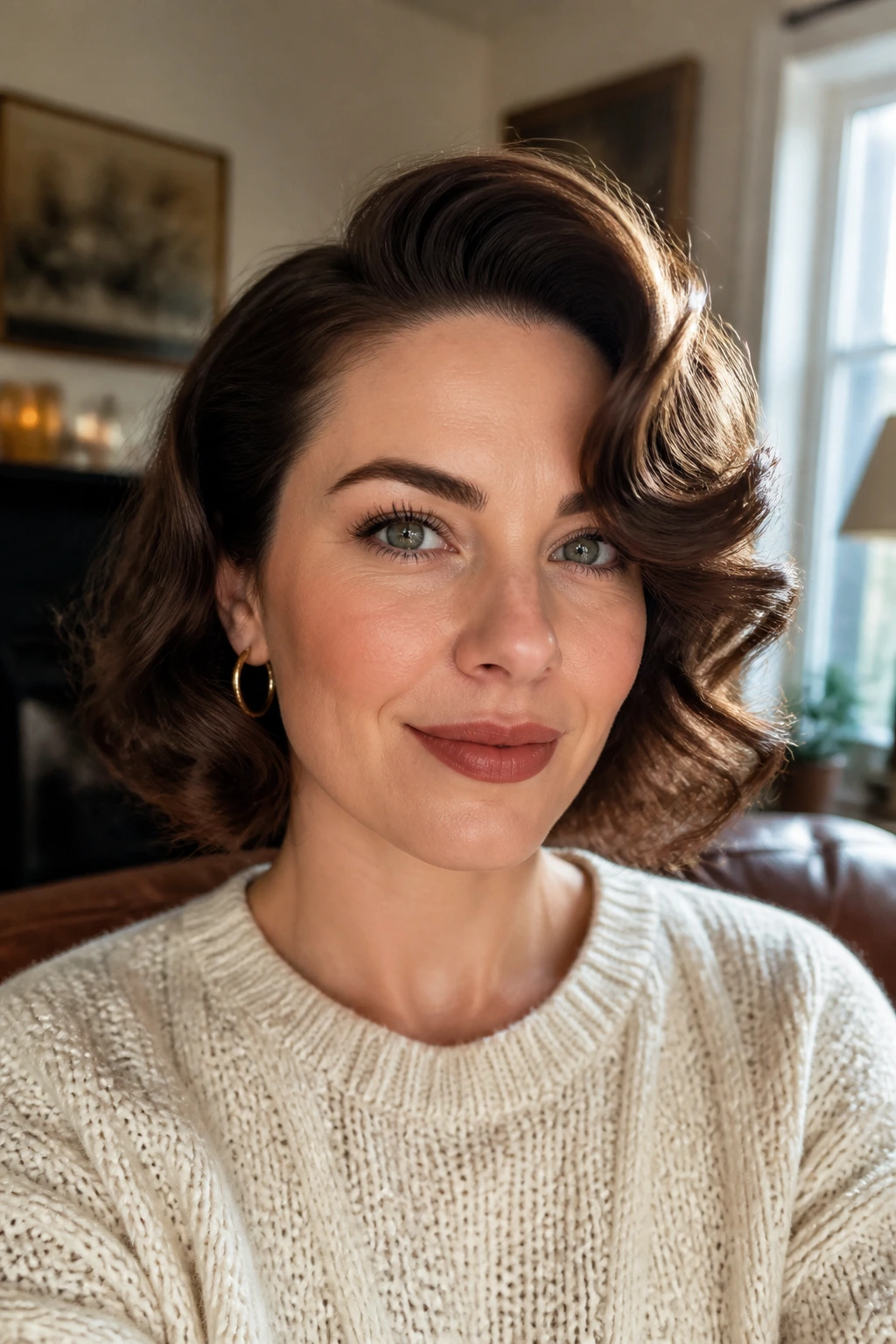
-
Side parts pull the eye diagonally: A deep or off-center part breaks the straightness that can make a square face look wider, and it gives frizz somewhere to fall without building a wall across the forehead.
-
Height at the crown changes the whole silhouette: Even one inch of lift on top makes the jawline look softer, because the face reads longer and less boxy.
-
Loose ends matter more than tight spirals: When the curl finishes below the cheekbone or flips under past the jaw, the shape feels softer; tight curls ending right at the jaw can make the angles louder.
-
Frizz works better when it’s controlled, not erased: A little halo can add body and make retro waves look fuller, but a light mousse or setting lotion keeps it from blowing up into fuzz.
-
Most of these styles are brush-out friendly: That matters because frizzy hair often looks best once the set has cooled and been loosened with a boar-bristle brush or wide-tooth comb.
-
These curls age well through the day: They usually look better after thirty minutes than they do the second you finish them, which is handy if your hair has a habit of expanding on its own.
1. Deep Side-Part S-Waves
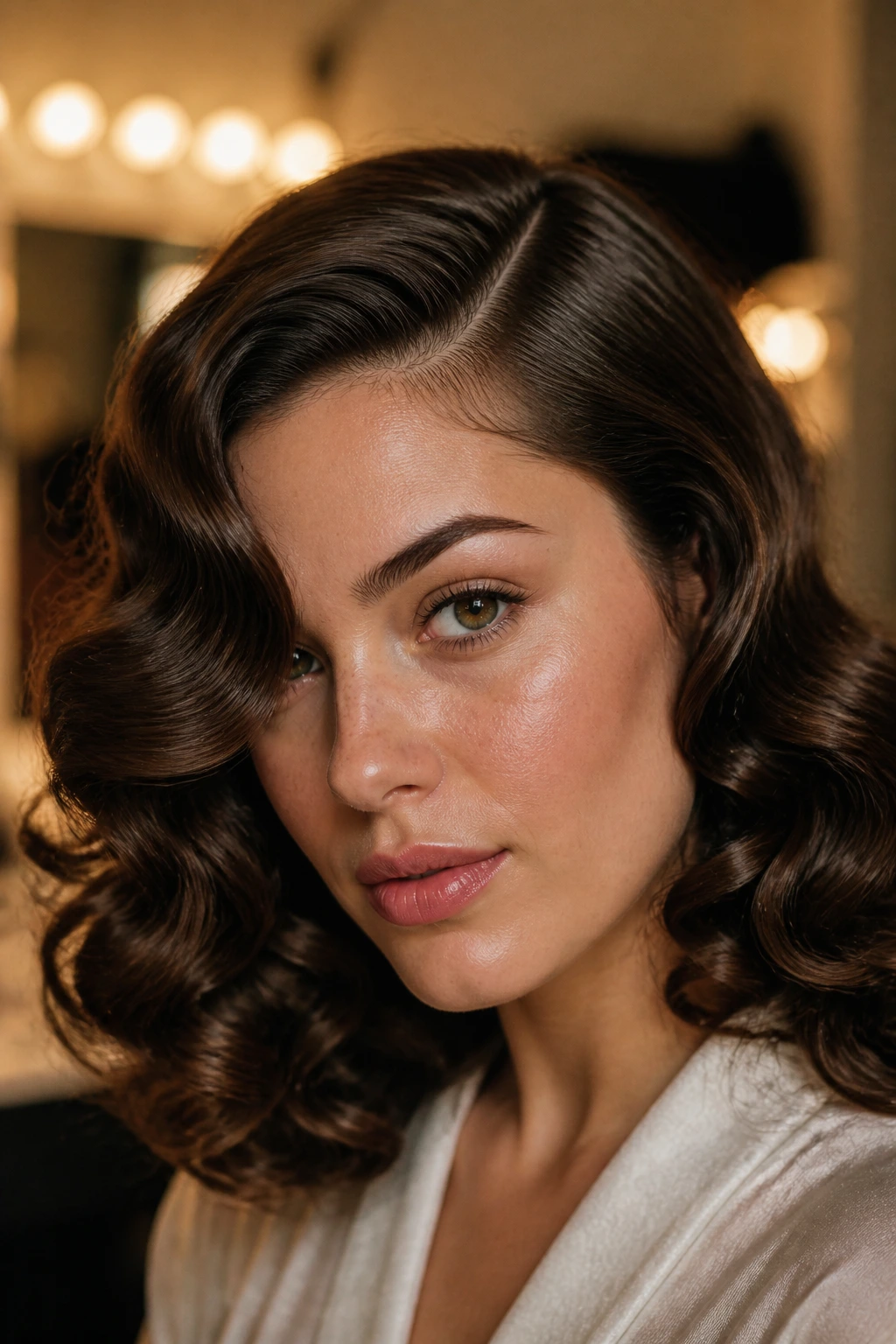
A deep side part is the easiest old-school trick in the book, and it still works because it changes the face before the curl even starts. On a square face, that long diagonal line pulls attention upward and away from the jaw, while the S-shape keeps frizz from turning into bulk. If your hair likes to puff at the roots, this is one of the few styles that turns that tendency into lift.
Why It Flattens the Corners
The wave sits close to the head near the part, then loosens as it drops toward the cheek. That’s the whole game. You want the heaviest bend to land below the cheekbone, not right at the jaw, so the face reads softer and a little longer.
- Use a 1¼-inch curling iron for shoulder-length hair.
- Set each section away from the face, then clip the curl while it cools.
- Brush the finished waves with a soft boar-bristle brush to merge them into S-shapes.
Best move: tuck the smaller side behind one ear and let the larger side drape. It looks deliberate, and it keeps the whole shape from spreading too wide.
2. Brushed-Out Hollywood Waves
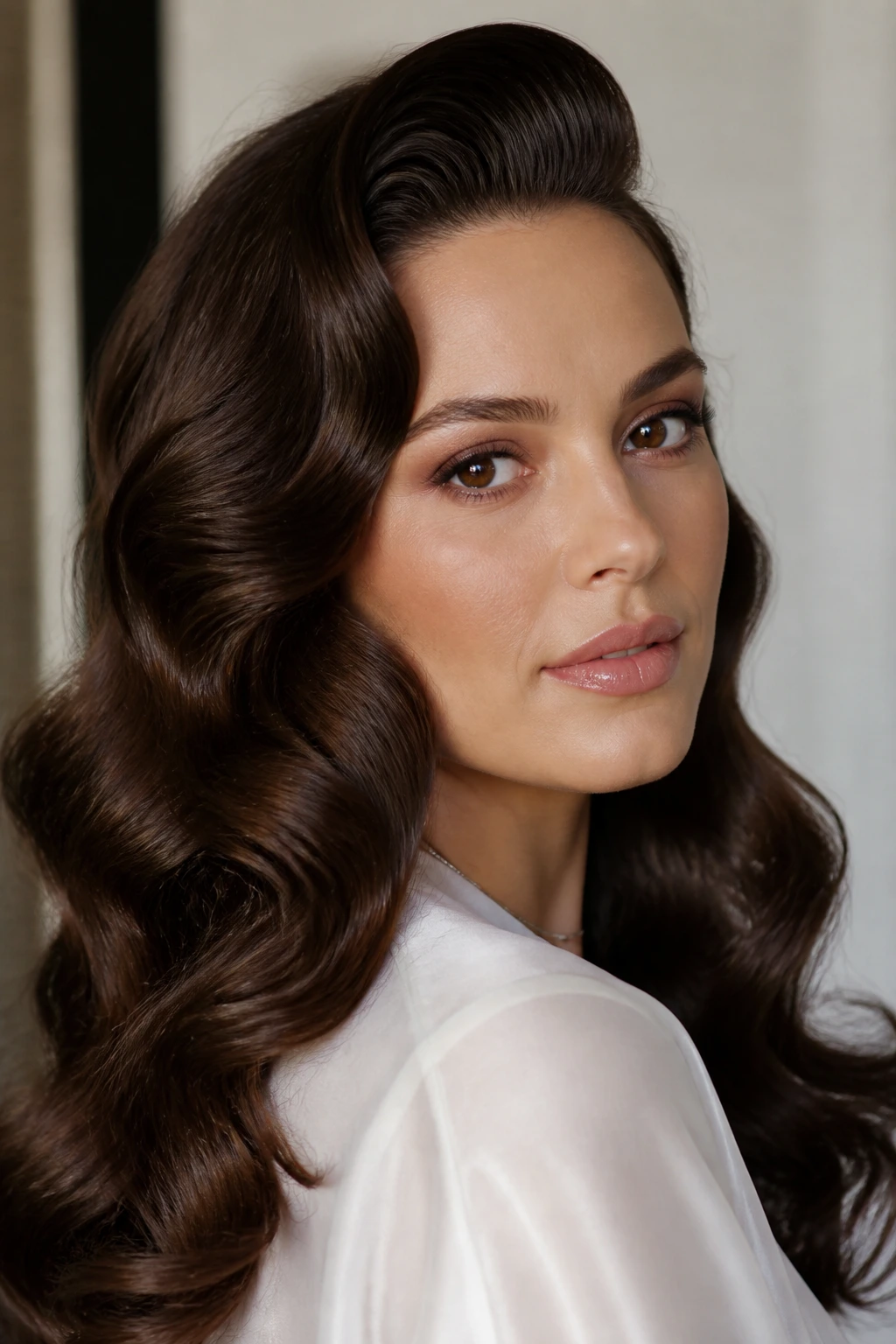
The brushed-out wave is the style I reach for when frizz wants to behave like a personality trait. The brush-out softens every curve, so instead of separate curls you get one glossy ripple that looks expensive without needing to be stiff. On a square face, the broad, smooth sweep is kind to the jawline because it avoids hard stops.
What Makes It Work in Real Life
You set the hair first, usually with a medium barrel iron or rollers, then let it cool completely before brushing. That cooling time matters. If you brush while the hair is still warm, the wave collapses into fuzz; if you brush too late with too much force, you can break the wave apart and lose the shape.
The trick is a slow brush from the ends upward, then a light mist of flexible spray. Not lacquer. Flexible. You want the wave to move when you turn your head, not crack like shellac.
How to Wear It
This one shines when the wave starts below the chin and the front section sweeps back instead of forward. If your hair is thick, keep the roots smooth with a drop of serum on the palms only. Too much product near the scalp and the whole thing goes limp by lunch.
3. Pin-Curled Shoulder Flip
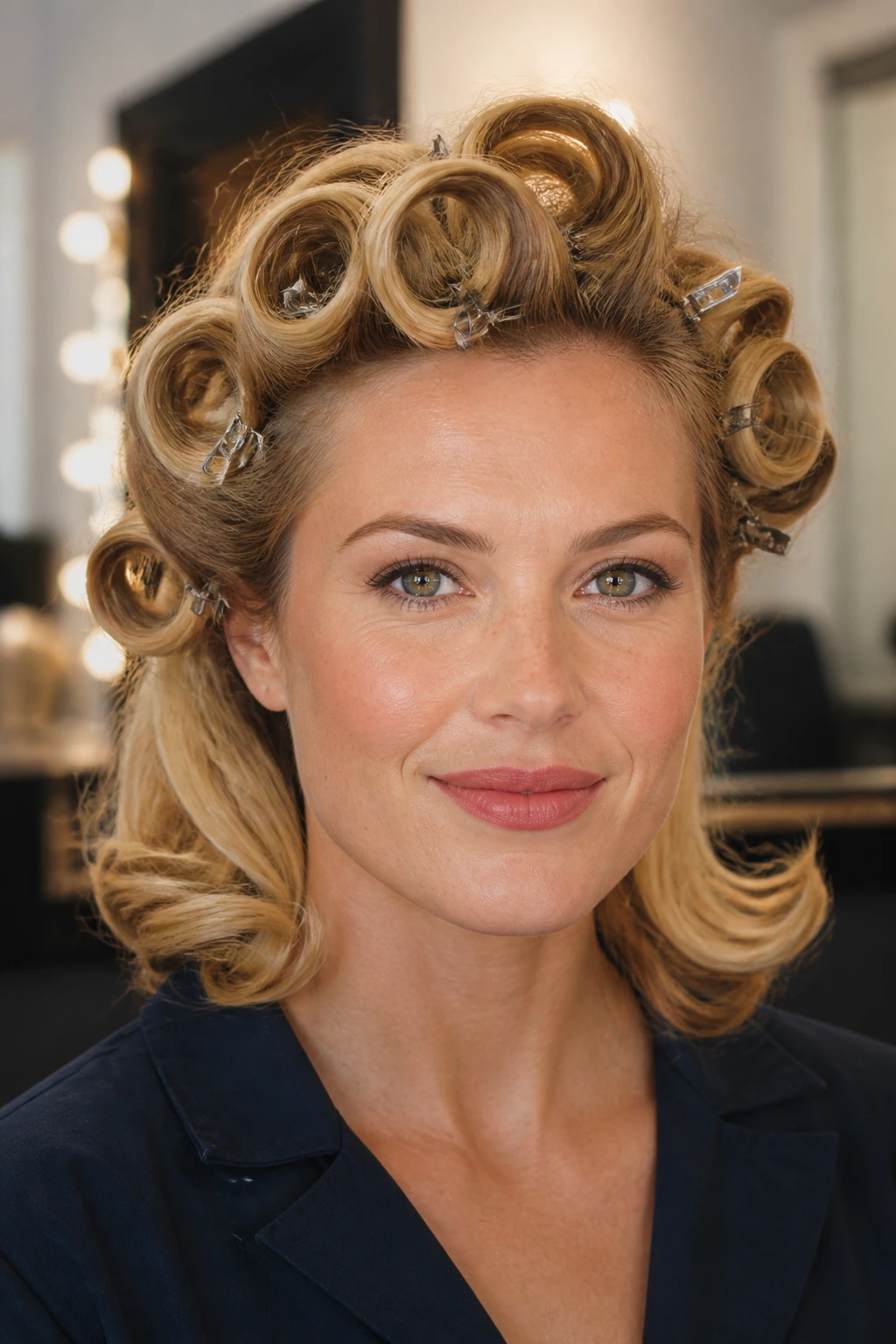
Pin curls are old-fashioned in the best way. They make frizzy hair obey a shape without flattening it, and the shoulder-length flip keeps the ends from sitting against the jaw like a shelf. That matters for square faces, because a blunt flip can look harsh if the ends sit right at chin level.
The Shape Trick
Set the curls in alternating directions, pin them flat, and let them cool until they’re fully dry or completely cold after heat styling. Then brush them out just enough to create a soft, rounded edge that turns under at the shoulder. The finish should look touched, not sculpted.
What to Watch For
If your hair is coarse, use smaller sections than you think you need. Big sections won’t form a crisp pin curl, and the frizz at the ends will stick out in little wisps. A dab of setting mousse before you roll helps the curl keep its memory. It also makes the brush-out less wild.
4. Marcel-Inspired Barrel Curls
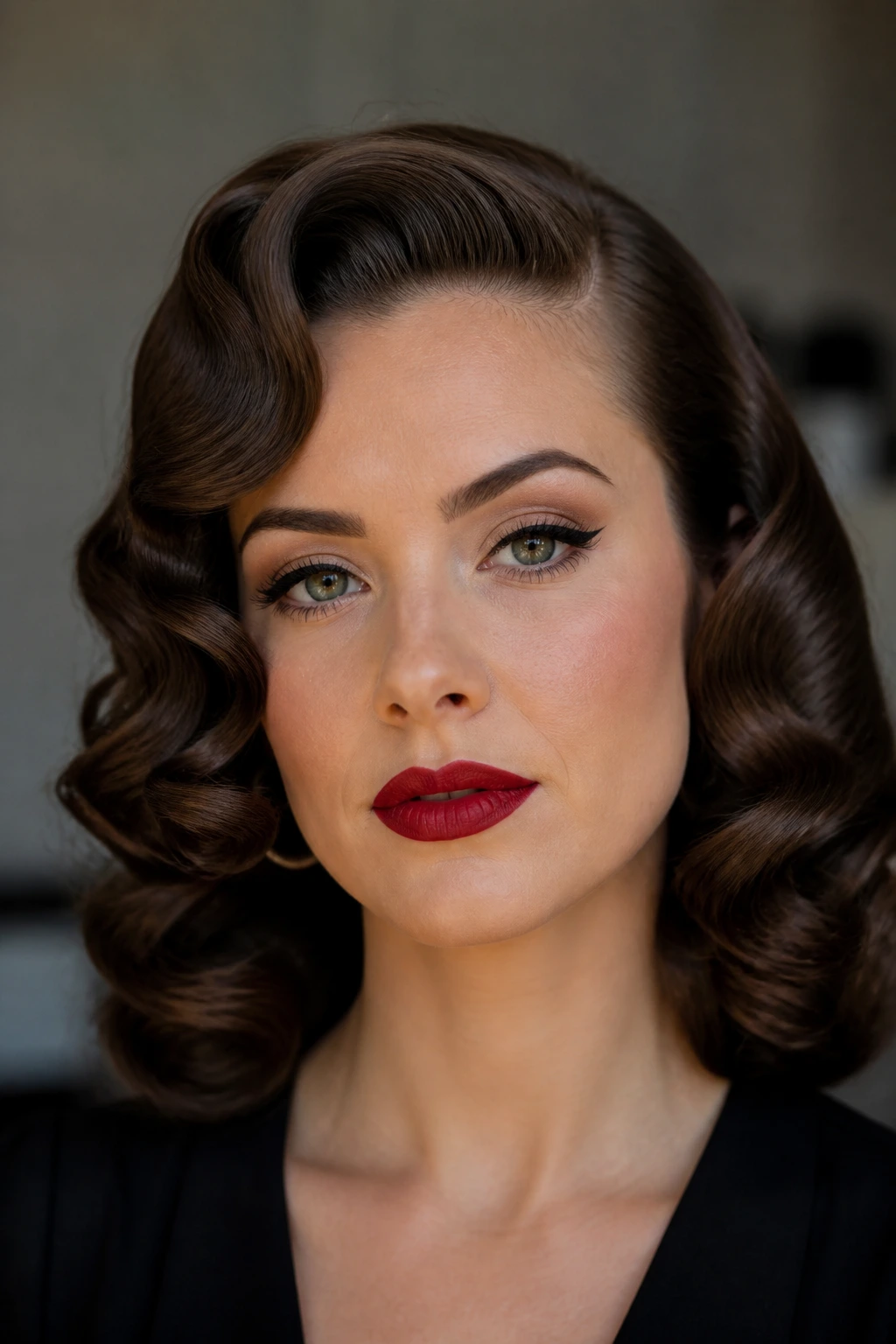
Marcel waves have a very specific mood: sleek, deliberate, and a little dramatic. They’re not the easiest look, which is part of their appeal. Frizzy hair often holds these bends better than silky hair does, because the texture grabs the shape and keeps it from slipping flat.
The key is uniform direction. Curl away from the face on both sides, then let the front pieces fall in a controlled curve around the cheeks. For a square face, that symmetry needs a soft break somewhere—usually a side part or one tucked side—so it doesn’t turn rigid.
The Best Way to Style Them
Use a curling iron with a clamp if your hair needs a sharper bend, or a wand if you want a more fluid wave. Mist each section with heat protectant, then let the curls cool in your hand before releasing them. That cooling step is not optional if you want the wave to last.
A tiny note from experience: barrel curls look fancy, but they’re unforgiving when overloaded with oil. If your ends get greasy fast, keep shine serum off the last inch and use it only on the mid-lengths.
5. Finger-Waved Fringe
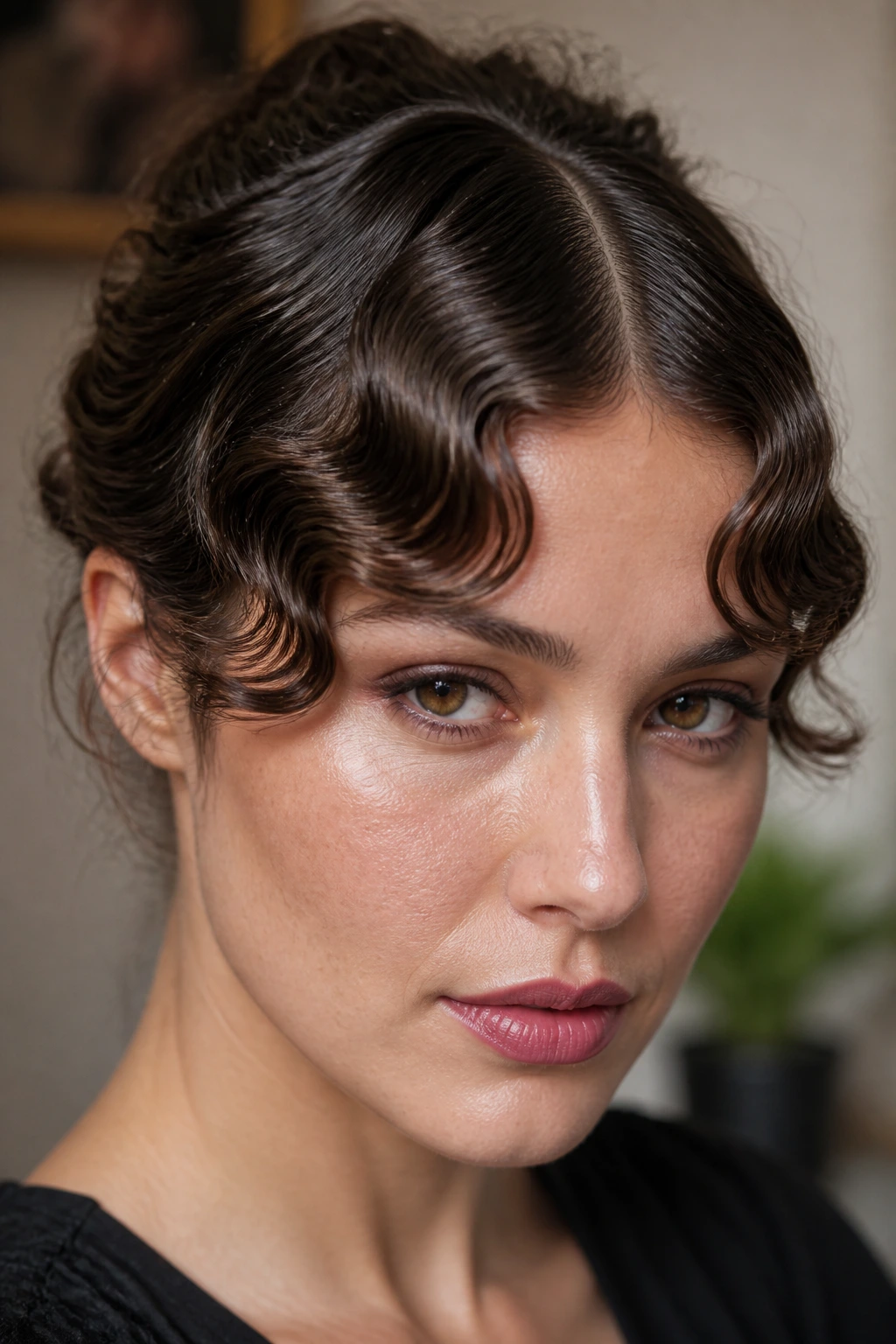
Can a fringe soften a square face without fighting frizz? Absolutely, if you finger-wave the front instead of forcing a blunt bang. A finger-waved fringe brings the eye in and then sends it sideways, which is exactly the kind of movement square faces appreciate.
The set is all about the front two inches of hair. Everything else can be simple, even loose and airy. That contrast is what keeps the look from becoming costume-y. You want the fringe to look detailed and the rest to feel relaxed.
How to Get the Shape
Work with damp hair, a comb, and a setting lotion or wave spray. Push the hair into S-curves against the scalp, clip the ridges, and let them dry completely before removing the clips. If your hair frizzes the second it sees air, finish with a tiny mist of anti-humidity spray, but keep it light.
This style works especially well when the rest of the hair is pinned back or brushed into a low, soft body wave. It keeps the forehead area interesting without adding width at the jaw.
6. Victory Rolls With Soft Ends
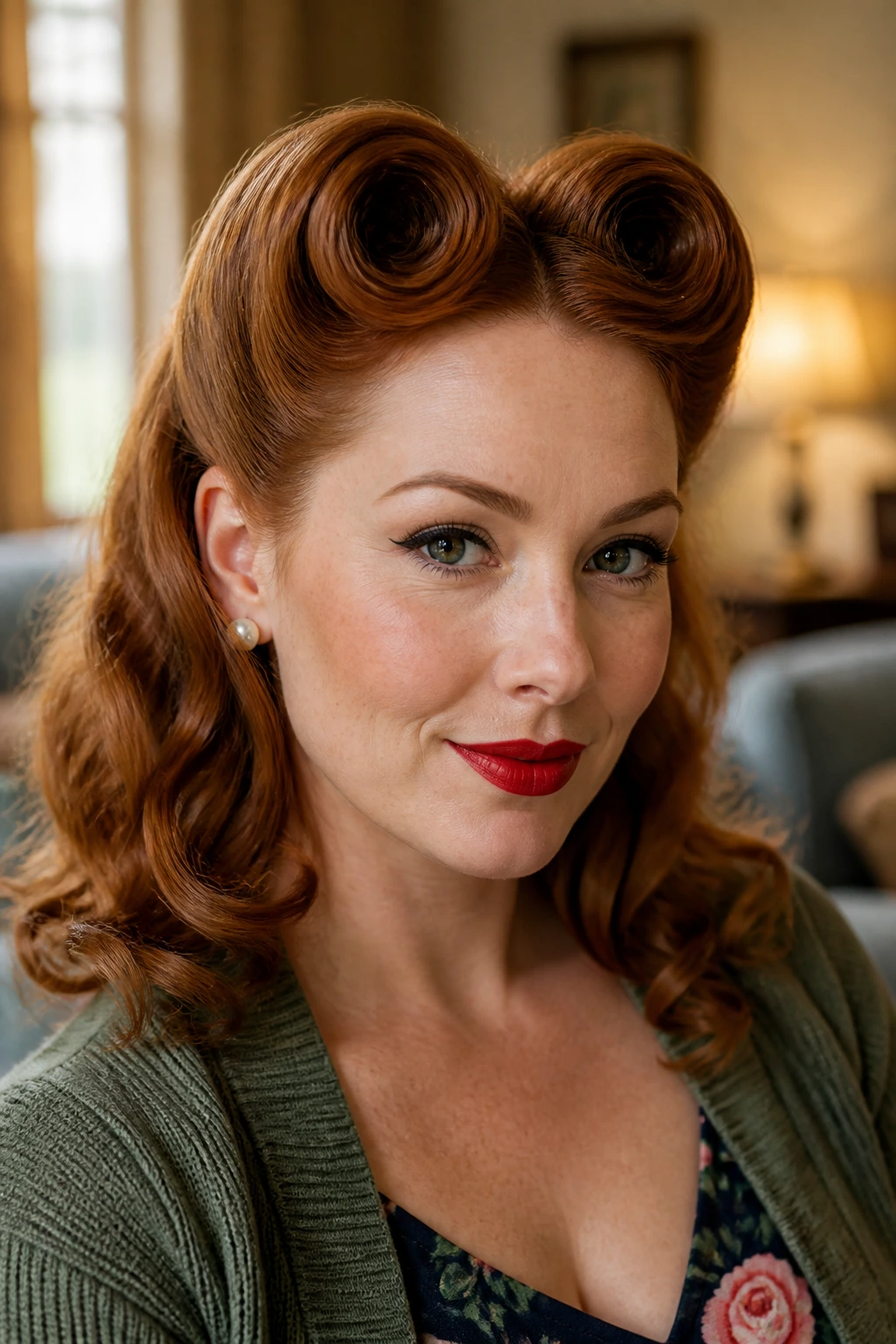
Victory rolls can go either way on a square face: too tight, and they look severe; soft enough, and they add beautiful height right where you need it. The good version keeps the rolls rounded at the crown and lets the ends fall in loose curls or bends below the ears.
Why They Suit Frizzy Hair
Frizzy hair has the body to hold a roll without needing a dozen pins. It also keeps the shape from collapsing too quickly. That said, you do want a smoothing cream at the roots and a couple of hidden bobby pins inside the roll so it doesn’t wander open halfway through the day.
I like this style when the rest of the hair stays low. It’s a good answer to square faces because the volume sits on top rather than beside the cheeks.
Pro tip: keep the rolls slightly asymmetrical. Two identical rolls can look stiff fast, while one larger roll and one smaller roll feel softer and easier to wear.
7. Chin-Length Pageboy Flip
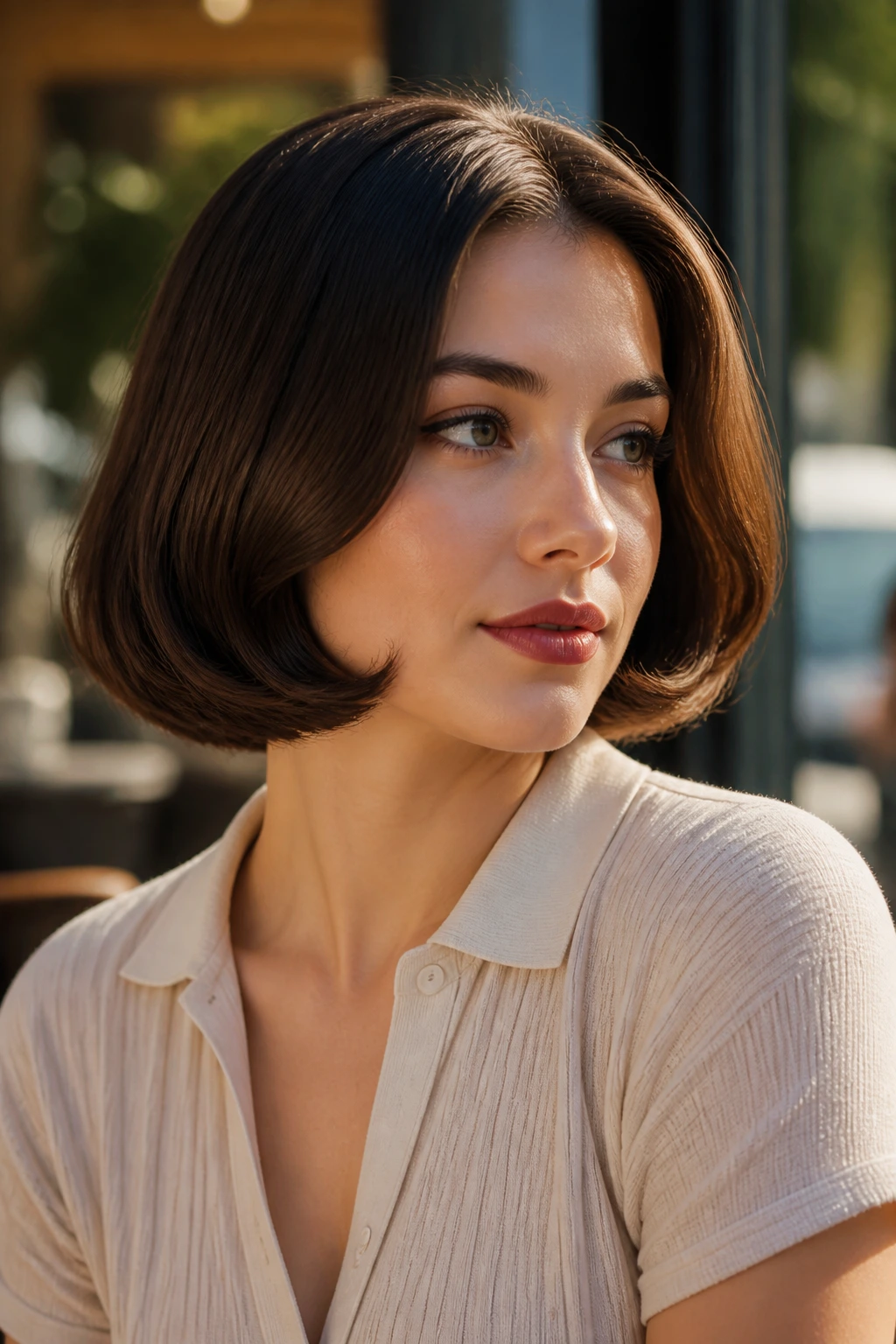
A pageboy flip can be tricky, and I’m not going to pretend otherwise. Done badly, it turns into a hard line at the chin. Done well, it gives square faces a clean retro frame with just enough curve to soften the corners.
The fix is simple: the ends need to roll under with movement, not clamp under like a helmet. If your hair is frizzy, use a round brush or large rollers to smooth the bend, then break it up a little with your fingers once it cools. The hair should curve under the jaw, not sit flush against it.
Best For
- Medium-density hair with a little natural bend
- Jawlines that need softening, not hiding
- People who want a short retro shape without full-on curls
Keep the top flatter and the sides sleeker. That balance keeps the shape elegant instead of boxy.
8. Half-Up Beehive Waves
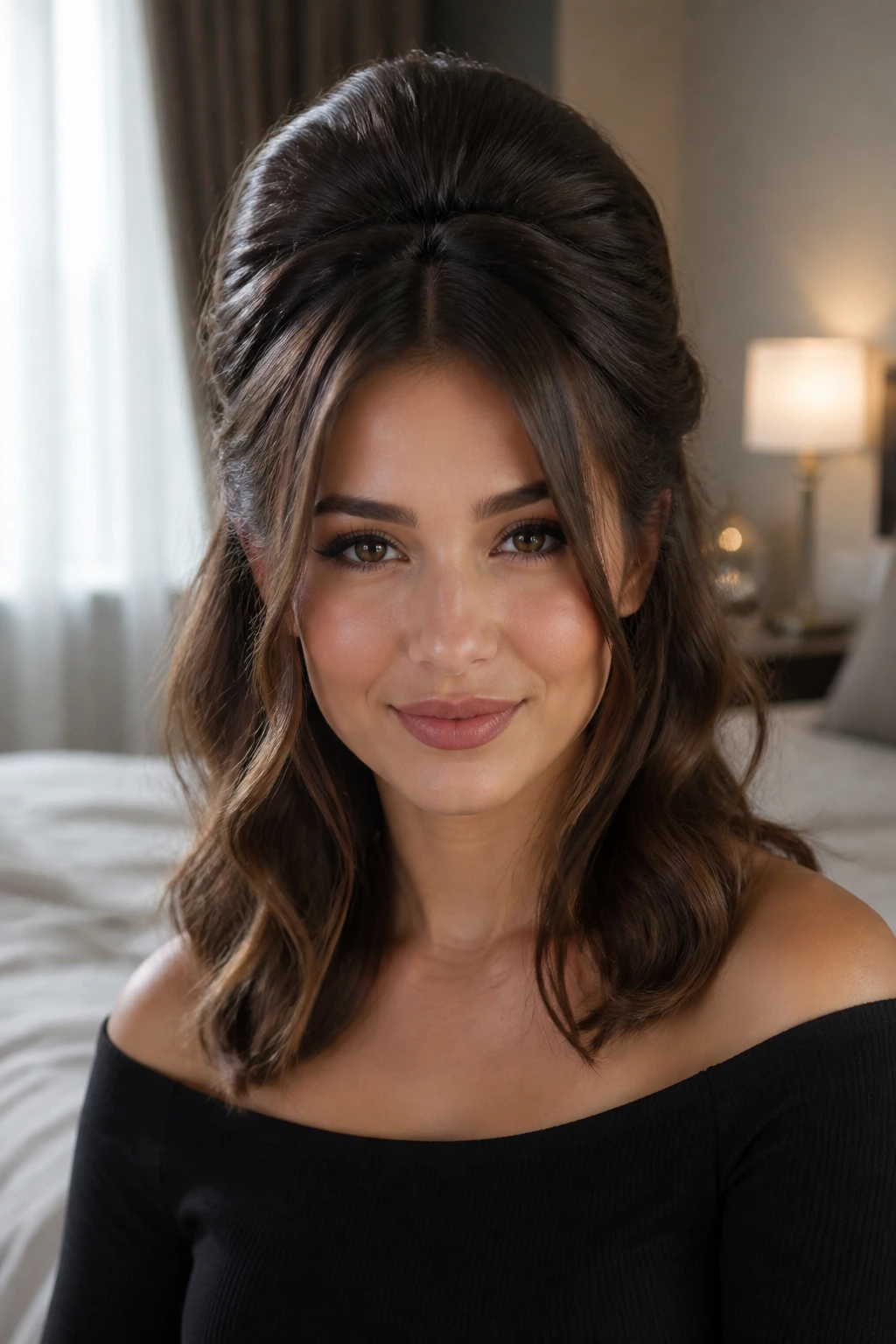
A half-up beehive gives you two things at once: crown height and loose length. That combo is gold for square faces because the lift draws the eye up, while the remaining waves fall below the jaw and keep the face from reading too wide.
The half-up section should be teased gently, not packed into a hard mound. Frizzy hair can support height on its own, so you only need a little backcombing near the crown and a smoothing pass over the top layer. The length below can stay soft and brushed through.
If you want the style to feel less formal, leave two slim face-framing pieces out in front. They should curve from the cheekbone down, never straight across. That small detail changes the whole mood.
9. Far-Swept Glam Curls
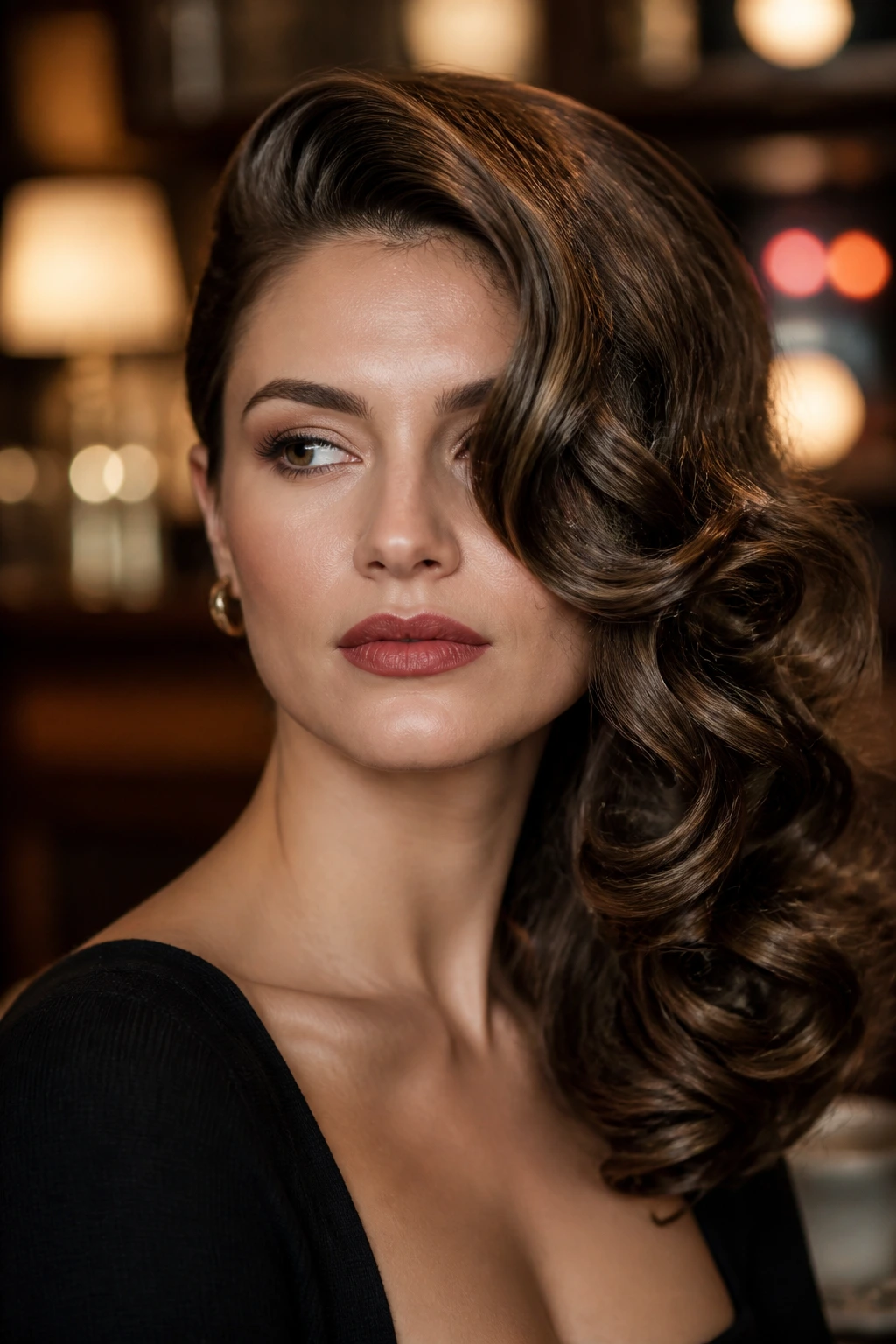
A far-swept style is one of the cleanest ways to soften a square face. Push the part far over, build the wave on the heavier side, and let the larger section drape across one side of the face. It creates a diagonal that breaks up all the straight lines.
This is a good style for frizzy hair because the sweep helps hide uneven texture at the roots. Instead of fighting every flyaway, you’re guiding them into one direction. That’s a more forgiving approach, and frankly, it usually looks better.
What to Aim For
The volume belongs at the crown and outer edge of the wave, not at the cheekbone itself. Keep the cheek area smooth enough to frame, not widen, and let the ends curve away from the face. The overall shape should feel like it’s moving, not sitting there waiting for a spotlight.
10. Ribbon Curls With Airy Ends
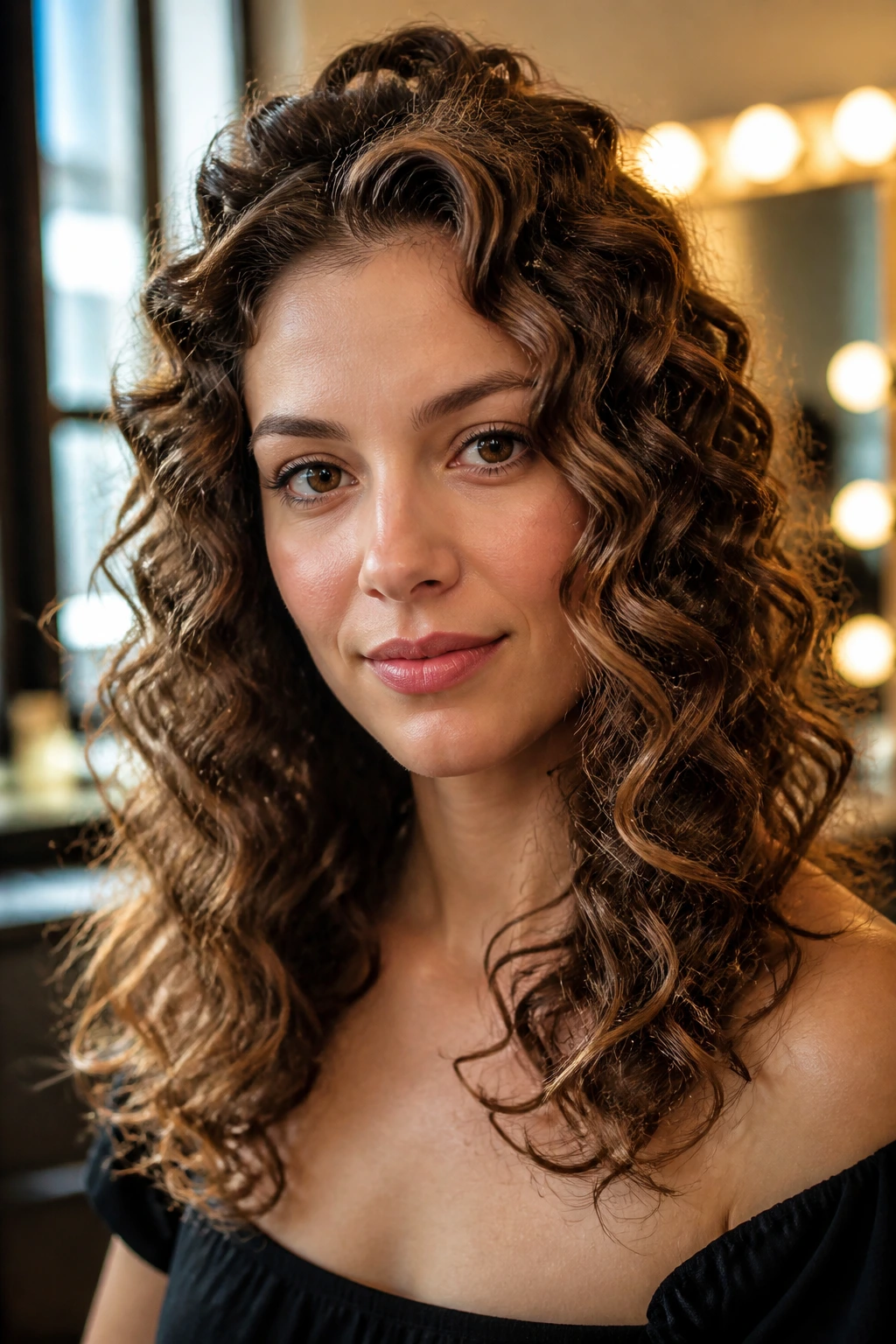
Ribbon curls have a tighter, more controlled feel at the top and a looser finish at the bottom. That makes them useful for frizzy hair, because you can define the shape near the root and still leave the ends soft enough to avoid a heavy block of texture.
The style looks best when the curls are brushed just enough to separate, not enough to explode. Square faces get a nice benefit from the vertical lines here. The eye travels down the ribbon, past the jaw, instead of stopping at the width of the face.
A Small but Important Detail
Use smaller sections near the front hairline and slightly larger ones in the back. That keeps the front from ballooning out where you need softness most. Finish with a lightweight cream rubbed between the palms and smoothed only over the outer layer. Too much product, and the ribbon shape goes flat. Too little, and the frizz wins.
11. Retro Lob With Underturned Tips
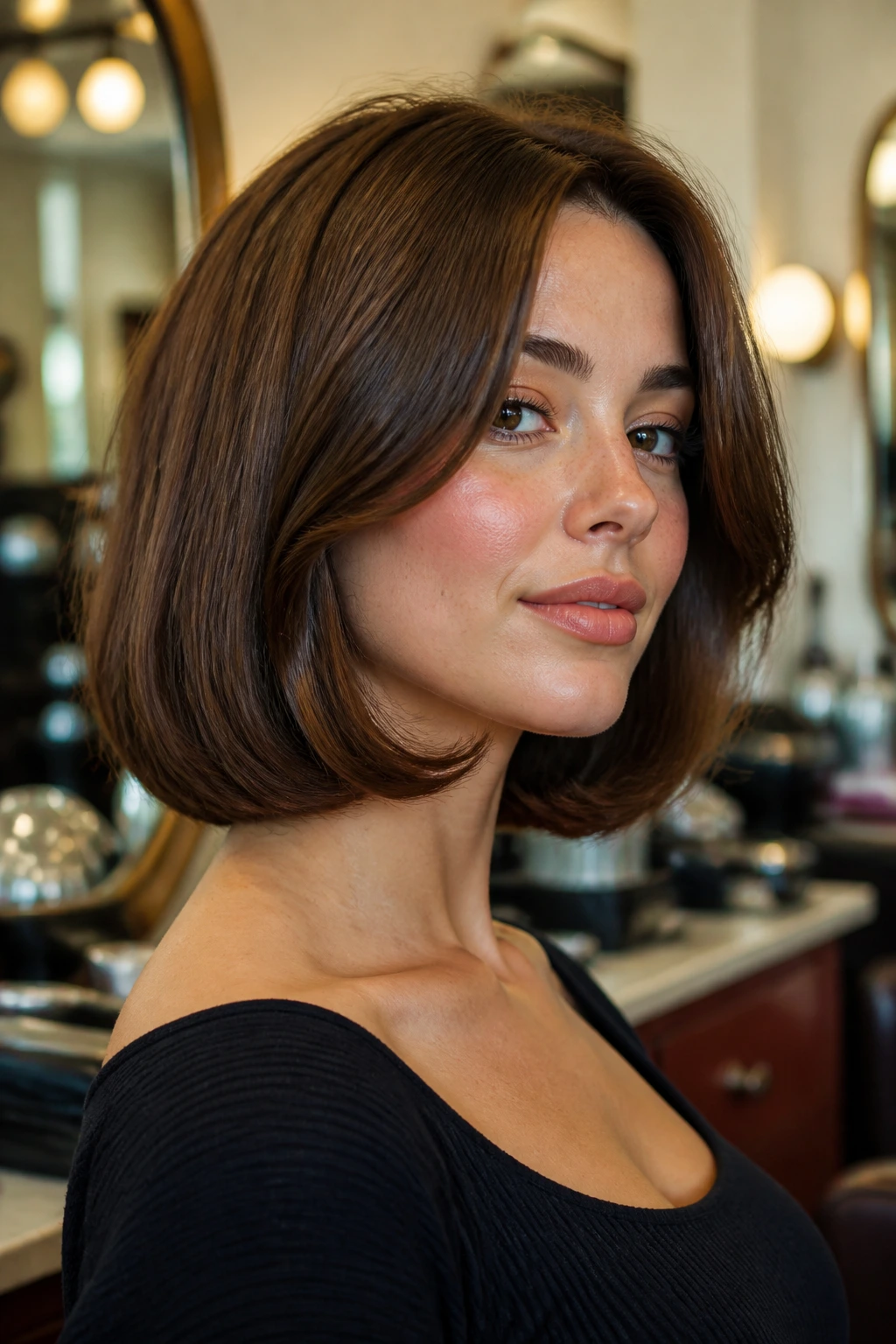
The lob is one of the easiest cuts to dress up in a retro way, and the underturned tip gives it a neat outline without making it severe. For square faces, that inward bend helps the hair skim the jaw instead of boxing it in.
This style works best when the wave starts around the cheekbone and the end turns under just below the chin or collarbone. That little bend changes the silhouette more than people expect. It softens the lower edge of the face and keeps the look from feeling square-on-square.
A blow-dry brush or large round brush is your friend here. If you want extra frizz control, rough-dry the roots first, then shape only the top layer with the brush. That keeps the finish smooth without killing the body underneath.
12. Side-Swept Curtain Curl Set
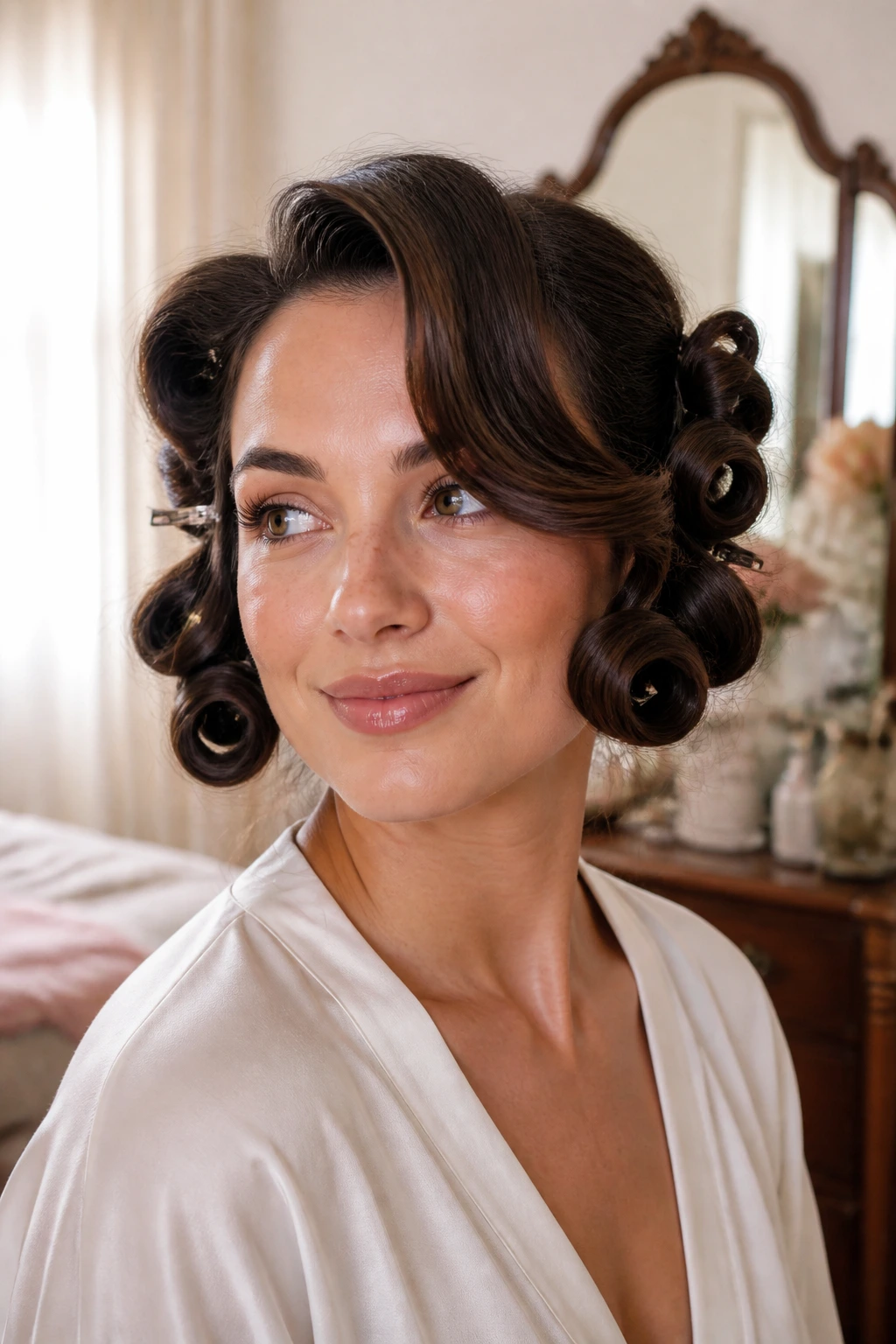
Curtain pieces are flattering because they don’t cut the face off at one point. They fall away from the center, then curve back toward the cheeks. On a square face, that means the eye gets a softer path to follow.
The rest of the hair can stay in loose retro bends, but the front section needs a little extra attention. Set those pieces away from the face, then guide them into the curtain shape while they cool. If the front is frizzy, a smaller iron or even a couple of velcro rollers can give you a cleaner curve than a big wand.
Why I Like It
It gives structure without the stiffness. And if your hair tends to puff at the temples, curtain curls disguise that by turning the width into movement instead of volume.
13. Glossy Barrel Curls
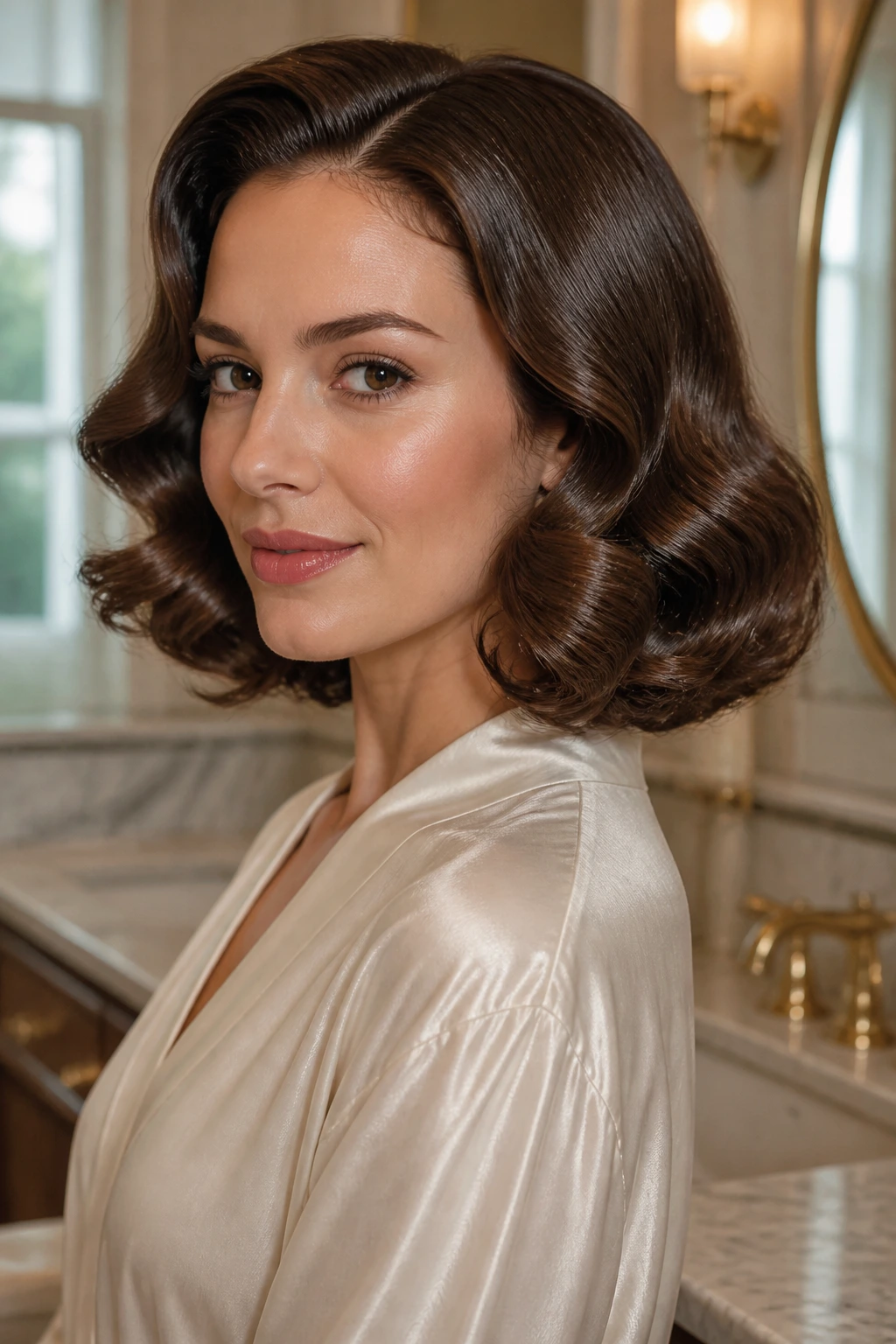
Barrel curls are big, round, and unapologetically vintage. On frizzy hair, they work because the texture helps the curl hold its rounded body, especially if you set it with rollers or a mid-size iron and let it cool fully before touching it.
For square faces, the goal is to keep the barrel shape lower and softer near the jaw. If you let the curl start too high and stay too tight, the face can look broader. If it starts at the cheekbone and loosens at the end, the whole look feels more balanced.
A shine spray can help here, but use it like seasoning. One or two passes only. Too much and the curls separate into strings; too little and the texture can go cloudy instead of glossy.
14. Short Bixie Curls
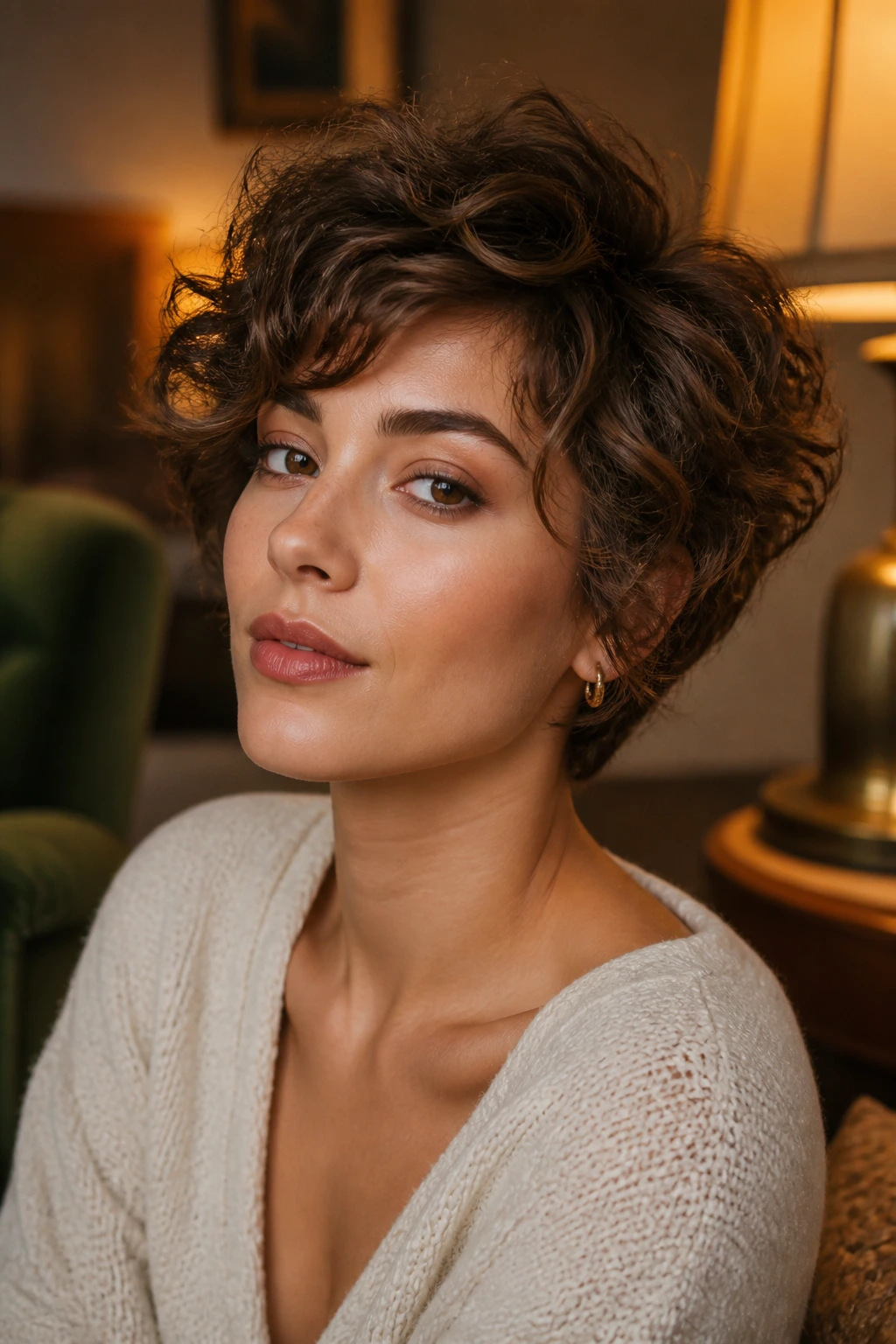
A bixie is short enough to feel cheeky and old-school, but soft enough to keep frizz from taking over. The cut itself gives you the retro shape; the curl pattern gives you the face-softening movement. For square faces, the longer top and softer side length are what keep the style from feeling too blunt.
What Makes It Work
You want a mix of bend and separation. Tight, uniform curls on a bixie can look too puffy, so leave the ends a little imperfect and let the sides skim the face. The crown can have more lift, which helps stretch the face visually.
This is one of those styles that looks best on hair with a little natural grit. If your hair is very smooth, it can slide out of the shape. Frizz, oddly enough, gives it grip.
15. Faux Bob With Soft Bends
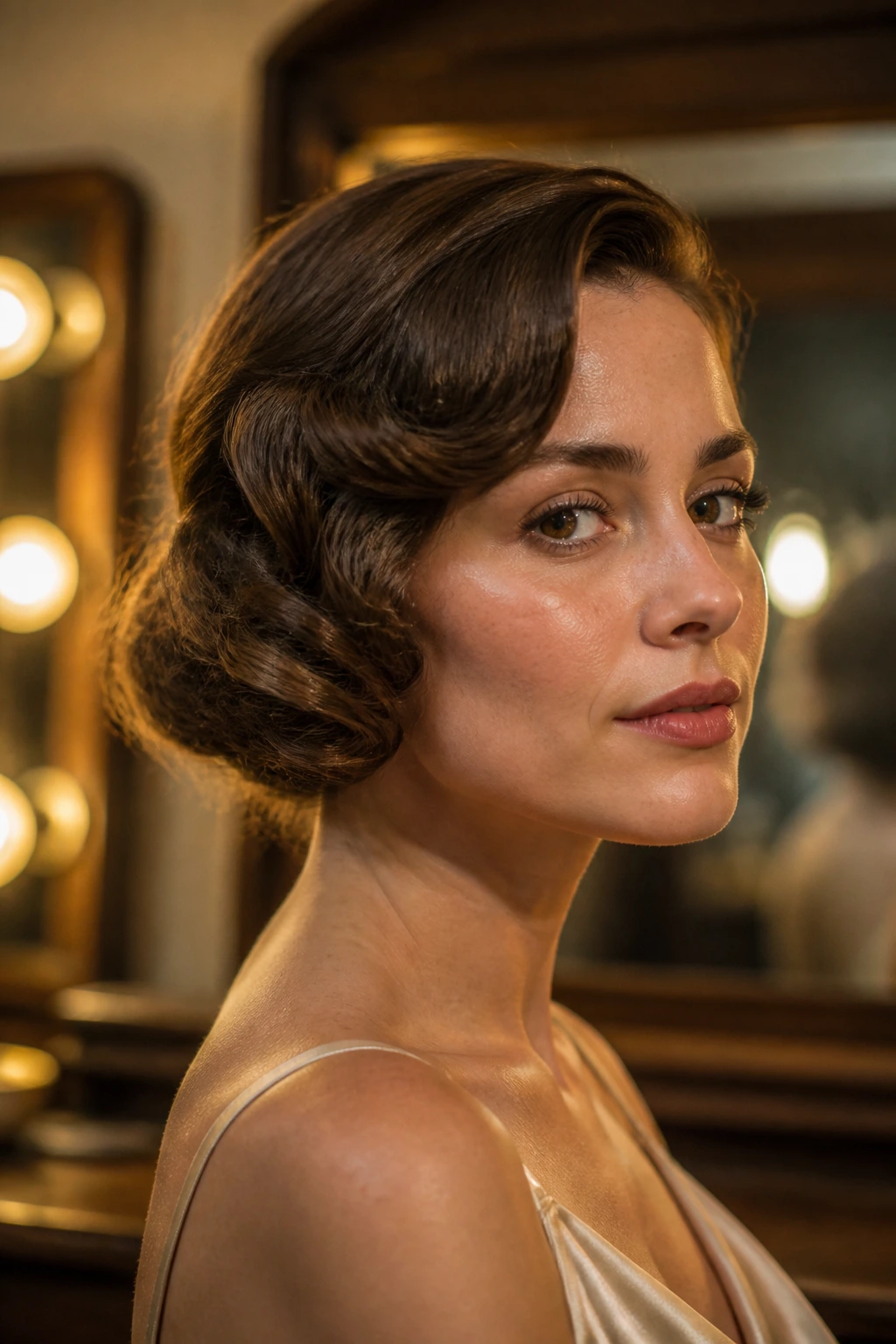
A faux bob is a smart trick if you want short-retro drama without committing to a chop. The hair gets pinned under at the nape, then the visible length is waved and curved so it reads like a polished bob. Square faces benefit because the soft bend around the jaw creates movement instead of a hard edge.
The hidden pins matter. If they’re too loose, the bob collapses; if they’re too tight, the shape puckers. Secure the ends under the fold and leave a little give so the hair can breathe. That helps the style look natural rather than taped-on.
A faux bob is one of the best places to use a slightly heavier setting spray, because the hidden structure needs help. Just don’t spray the surface to the point of crunch. The outer layer should still swing.
16. Polished Retro Ponytail
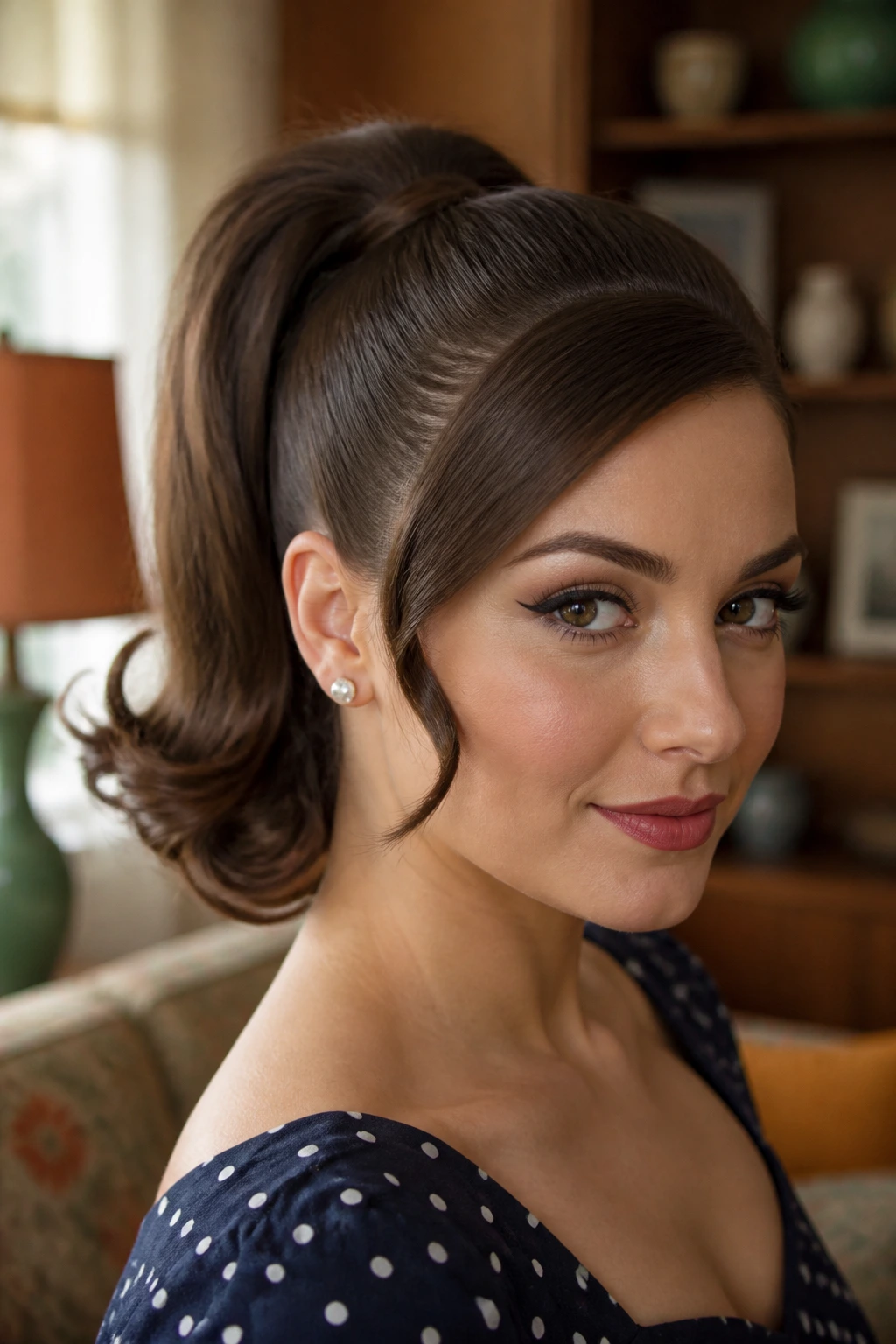
A ponytail doesn’t sound like a curl style until you give it old-school shape. A high or mid-height pony with curled ends can do a lot for square faces, especially if the front is smoothed into a side part and the pony sits a little higher than the jawline.
The important part is the finish around the face. Leave one curved strand at the temples or a soft wave across the front, and keep the pony tail itself loose enough to show texture. If your hair frizzes around the elastic, wrap a small section of hair around it and pin it underneath.
It’s a practical style too. You get the polish of a vintage look, but the actual wear is easy. That matters on humid days when loose curls need more management than you’ve got patience for.
17. Feathered Seventies Curls

Feathering works beautifully on square faces because the movement points away from the face instead of piling beside it. The shape feels airy, and frizzy hair often holds the feathered edge better than straight hair does. That means the style gets body without looking stuck.
How the Layers Should Fall
Ask for or style the hair so the lighter pieces flip away from the cheeks and jaw. The top can stay fuller; the bottom should stay mobile. If you have natural wave, a round brush and a light mousse are usually enough. If you’re working with tighter texture, a larger barrel iron can fake the feather and keep the ends from puffing.
I prefer this look when the hair is medium length. Too short, and the feather can vanish. Too long, and it loses that crisp retro swing.
18. Face-Framing Spiral Set
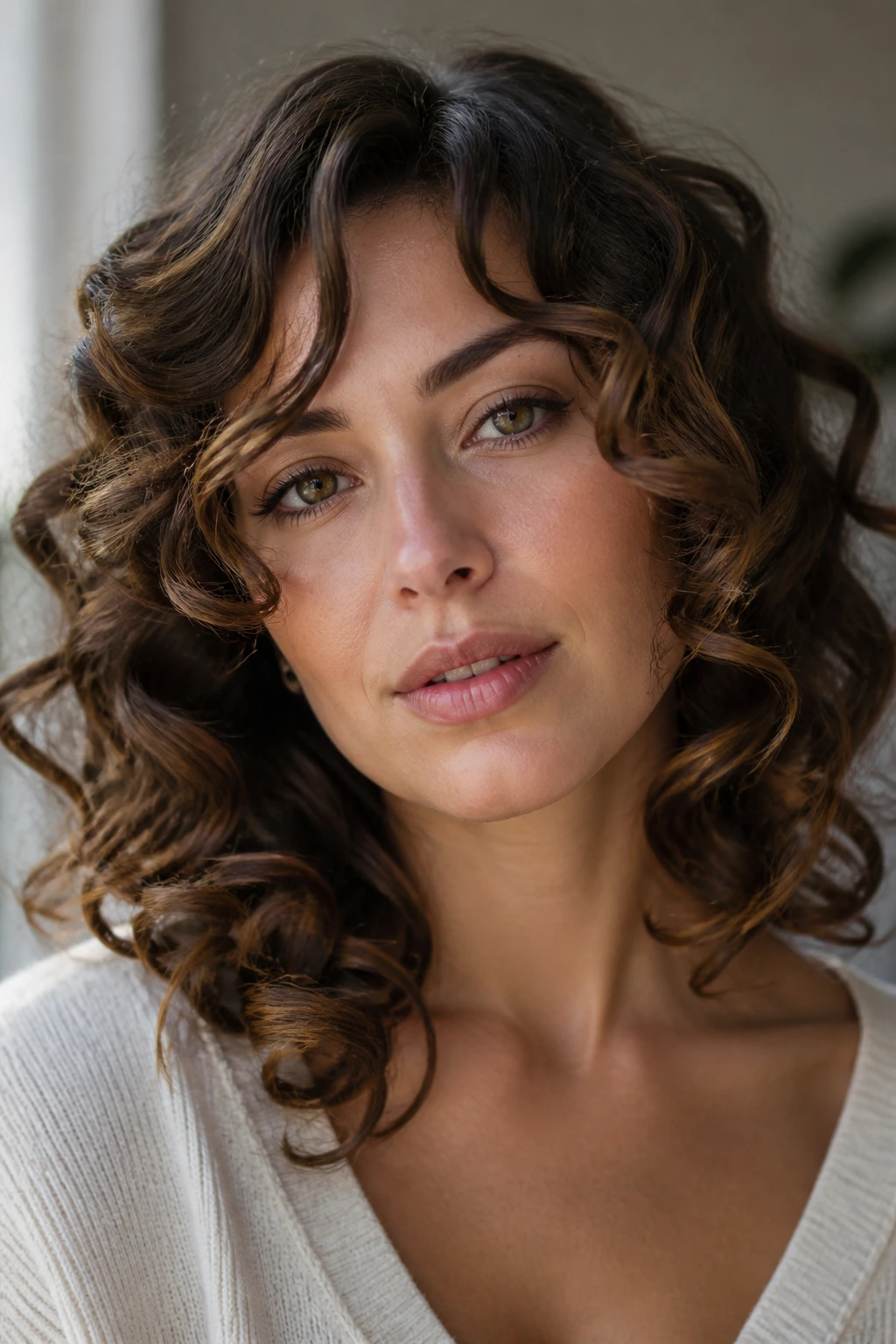
Spiral curls can be gorgeous on frizzy hair if they’re placed with restraint. The mistake is piling spirals everywhere, which can widen a square face fast. The fix is to concentrate the curl where you need softness: around the cheeks, below the jaw, and at the ends.
Use the front pieces to soften the face first. Those curls should spiral forward, then drift back. The rest of the hair can be looser and less uniform. That contrast makes the face framing do the work.
A Small Opinion
I like a spiral set more when it isn’t perfectly uniform. A couple of slightly wider curls at the ends keep the style from feeling like a pageant wig. Small imperfections are doing a lot of heavy lifting here.
19. Bombshell Flip
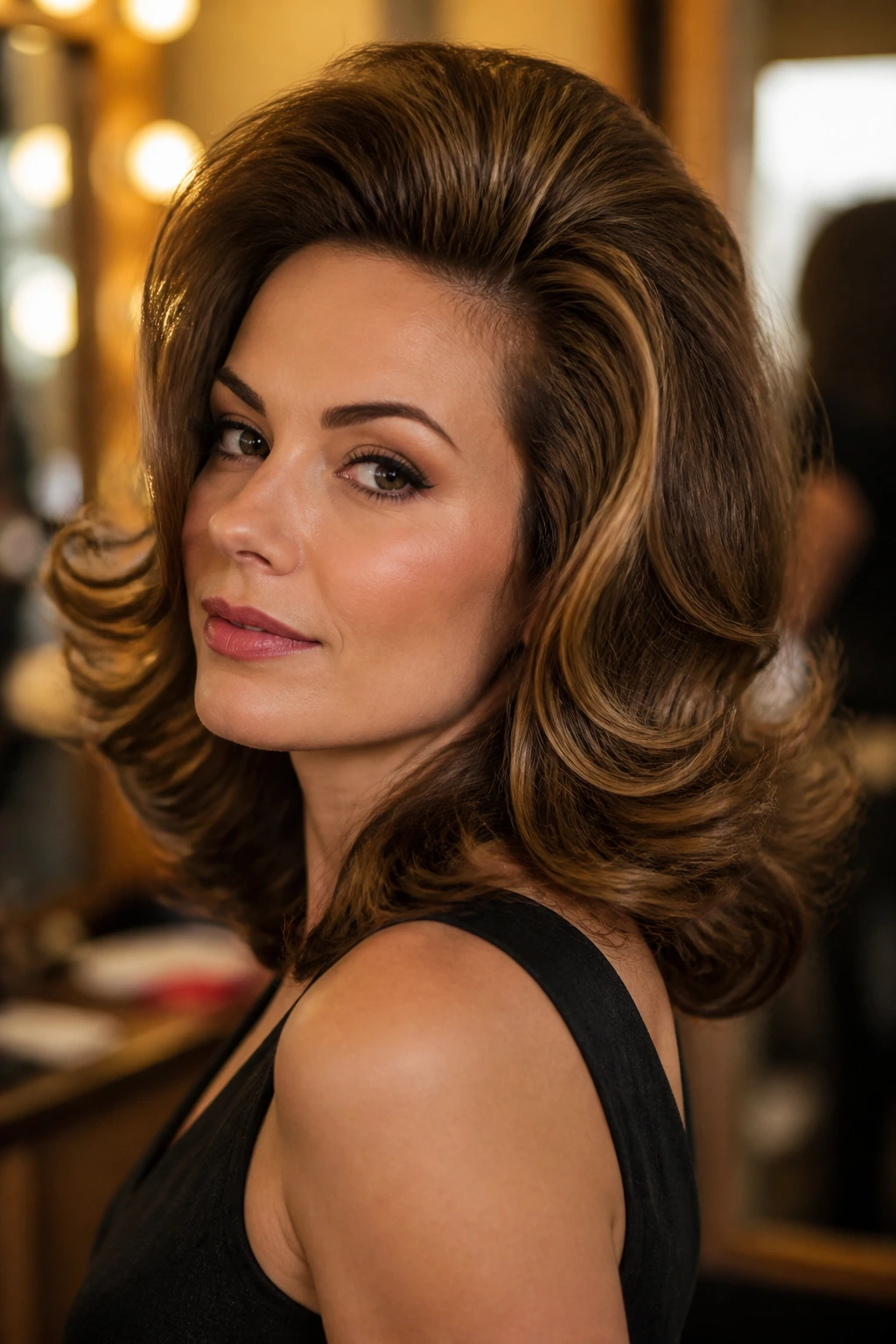
The bombshell flip is all about volume on top and a curve at the ends. It has a theatrical edge, but the shape is friendly to square faces because the lift moves attention upward while the flipped ends soften the lower half.
If your hair is frizzy, use that to your advantage. Backcomb only the crown, smooth the top layer, and let the ends do a gentle turn rather than a hard curl. The shape should read lush, not stiff.
This is one of the styles that looks better from a slight angle than straight on. That’s a good sign. A square face benefits when the hair doesn’t sit as a flat frame around it.
20. Crown-Volume Brushout
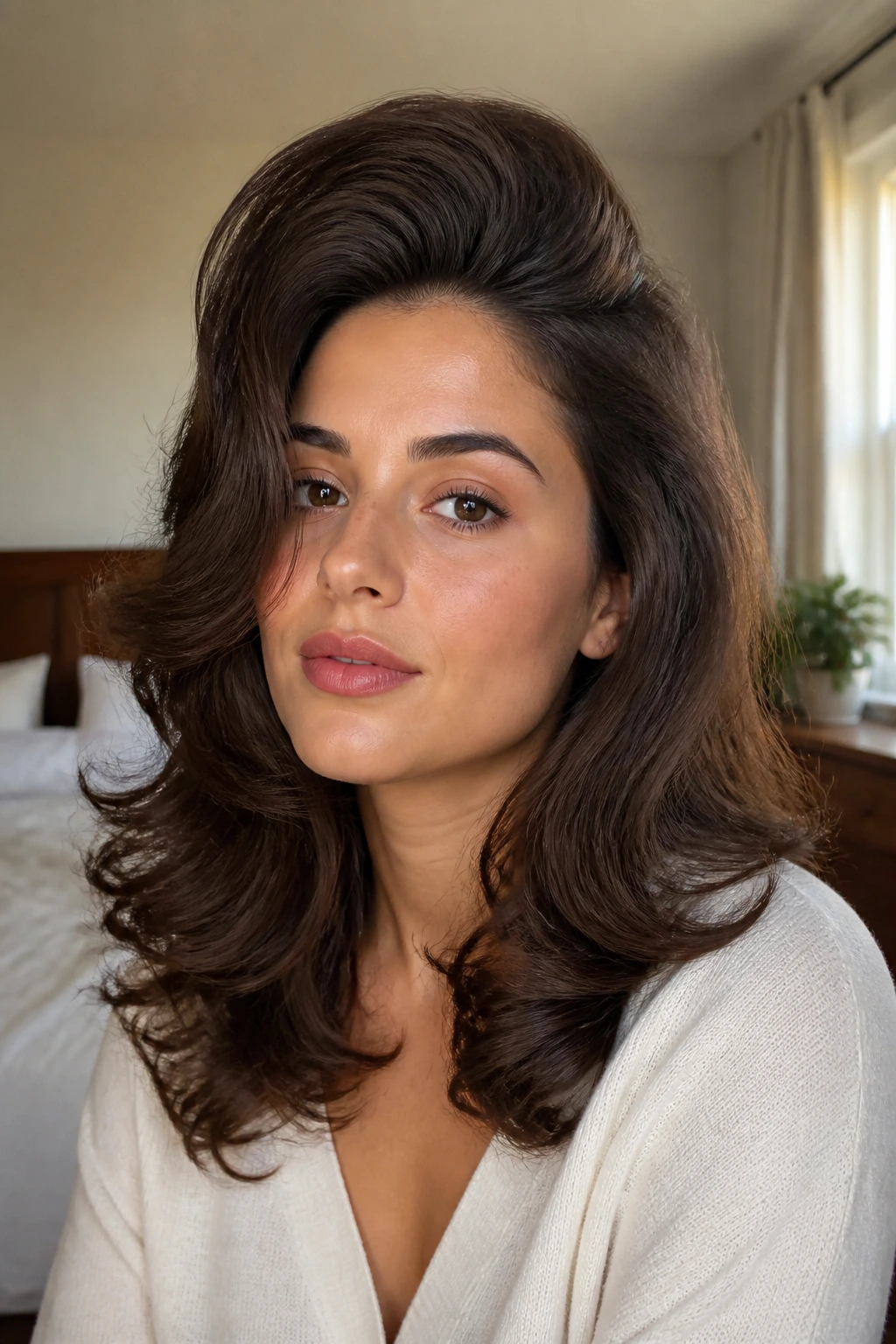
A crown-volume brushout looks simple, but it’s one of the best ways to turn texture into shape. Set the hair on rollers or curl it in sections, then brush the mid-lengths until the crown lifts and the ends loosen. The result is a soft, full outline that doesn’t hang straight down the sides of a square face.
The brush matters. A boar-bristle brush gives you a smoother wave; a wide paddle brush gives you more separation. I usually start with the boar-bristle, then switch to fingers if the hair feels too compact.
This is the style for people who want retro body without obvious curl rings. It reads polished in a way that still feels relaxed.
21. Tucked-Behind-Ear Wave Set
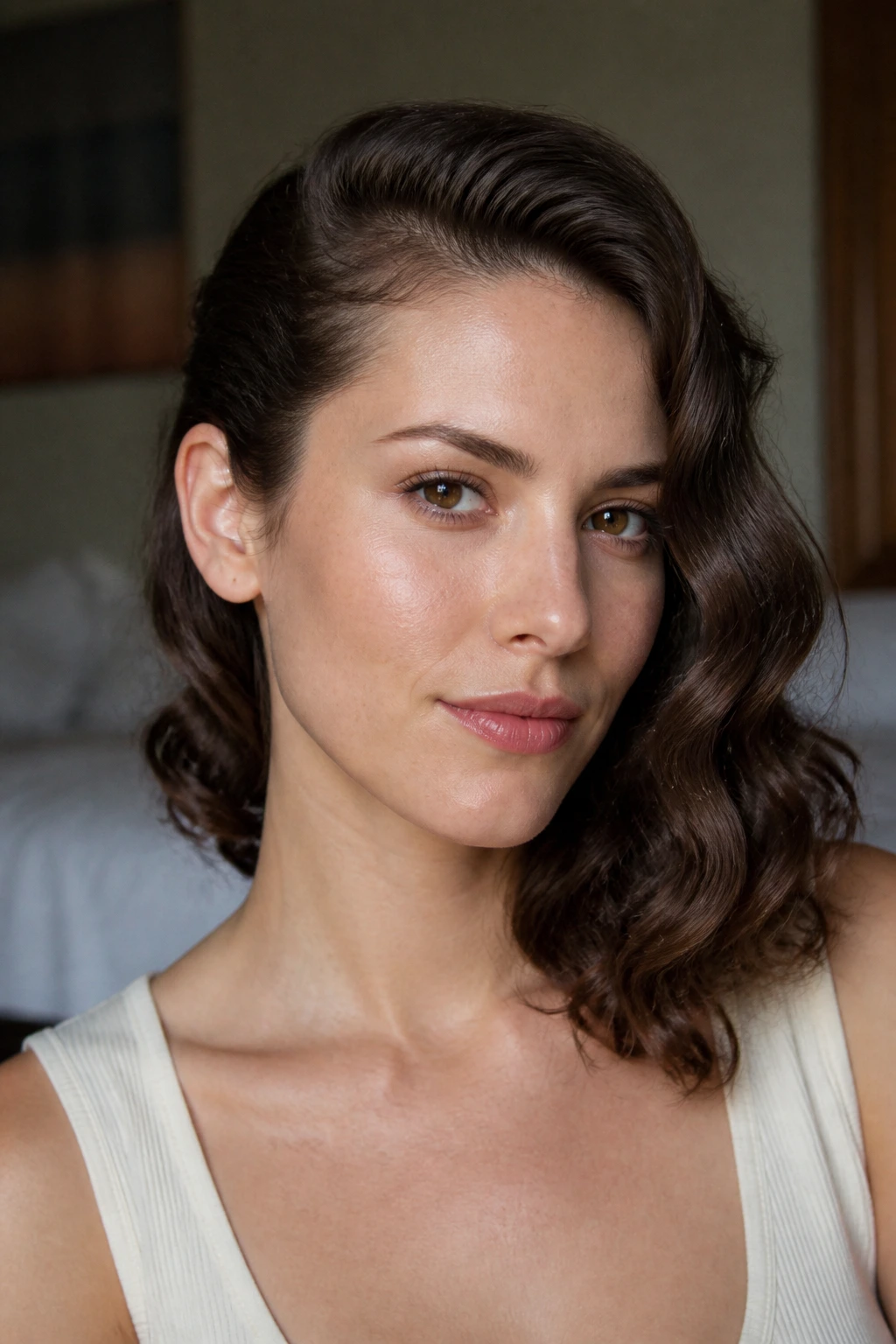
Tucking one side behind the ear changes the face shape in a quiet but important way. The exposed side opens up, the tucked side narrows the width, and the waves fall in a way that looks intentional rather than symmetrical. For square faces, that asymmetry is a gift.
A side part works best here, along with a loose wave that starts below the temple. If the wave is too tight at the ear, the tuck can look bulky. Keep the section behind the ear smooth, then let the rest of the length expand softly.
This style also keeps frizz from stealing the show around the cheeks. The tucked side holds its place; the loose side gives the movement.
22. Pin-Up Rolls With Soft Texture
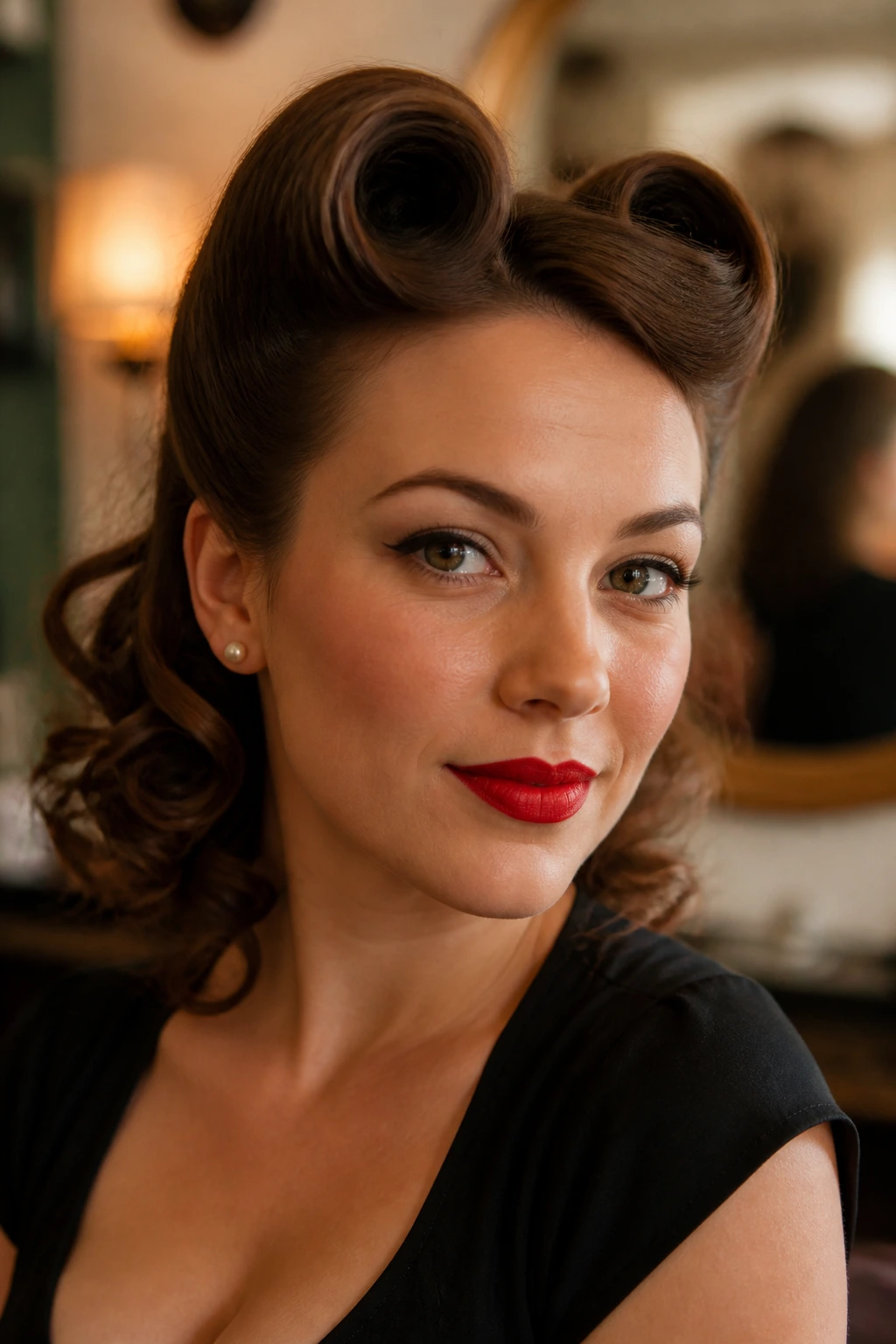
Pin-up rolls can feel sharp, but they don’t have to. If you leave the texture a little softer and the rolls a little wider, they create height without turning the face harsh. That’s the version square faces tend to wear best.
The front roll should sit above the eyebrow line and sweep back smoothly. The back can stay in loose curls or brushed waves. Keep the edges of the roll a little imperfect. Perfect rolls can feel too hard; a few soft flyaways make the look less costume-like and more wearable.
A medium-hold spray is enough here. You need structure, yes, but you do not need a shell.
23. Wet-Set Brushout Waves
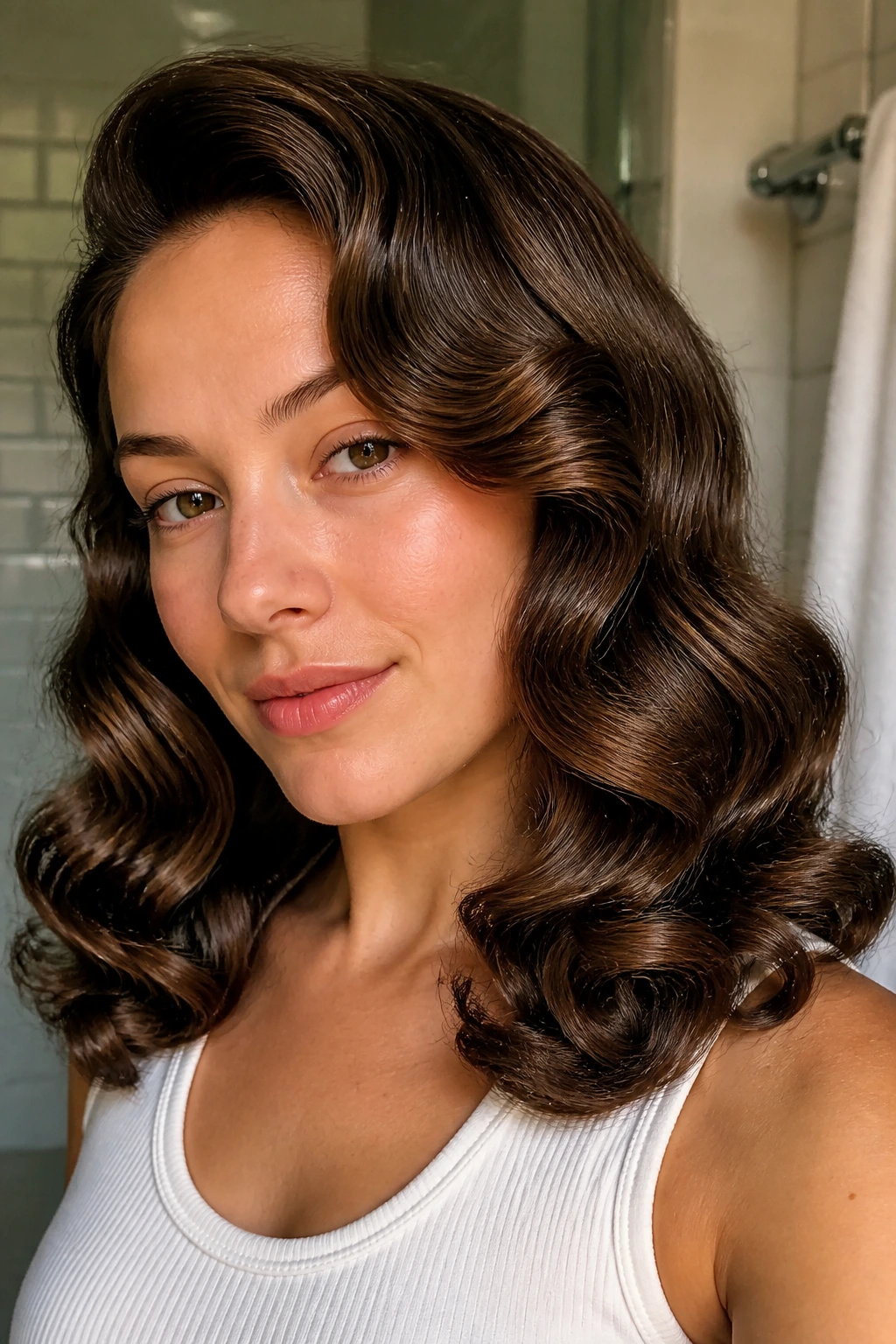
Wet sets are one of the best answers to frizzy hair, because the hair is shaped while damp and left to dry into the pattern. That means less surprise puff later. On square faces, the brushout wave created from a wet set can be controlled enough to soften the jaw without flattening the whole head.
Set with rollers, pins, or rag curls, depending on the length. The only rule is patience: the hair must dry all the way through before you take it down. If the inside is even a little damp, the frizz rebounds the minute it sees air.
Why It’s Worth the Wait
The finish is cleaner than most hot-tool sets, especially on coarse or porous hair. And if your hair hates humidity, a wet set gives you a stronger starting point for the rest of the day.
24. Hot Roller Crown Lift
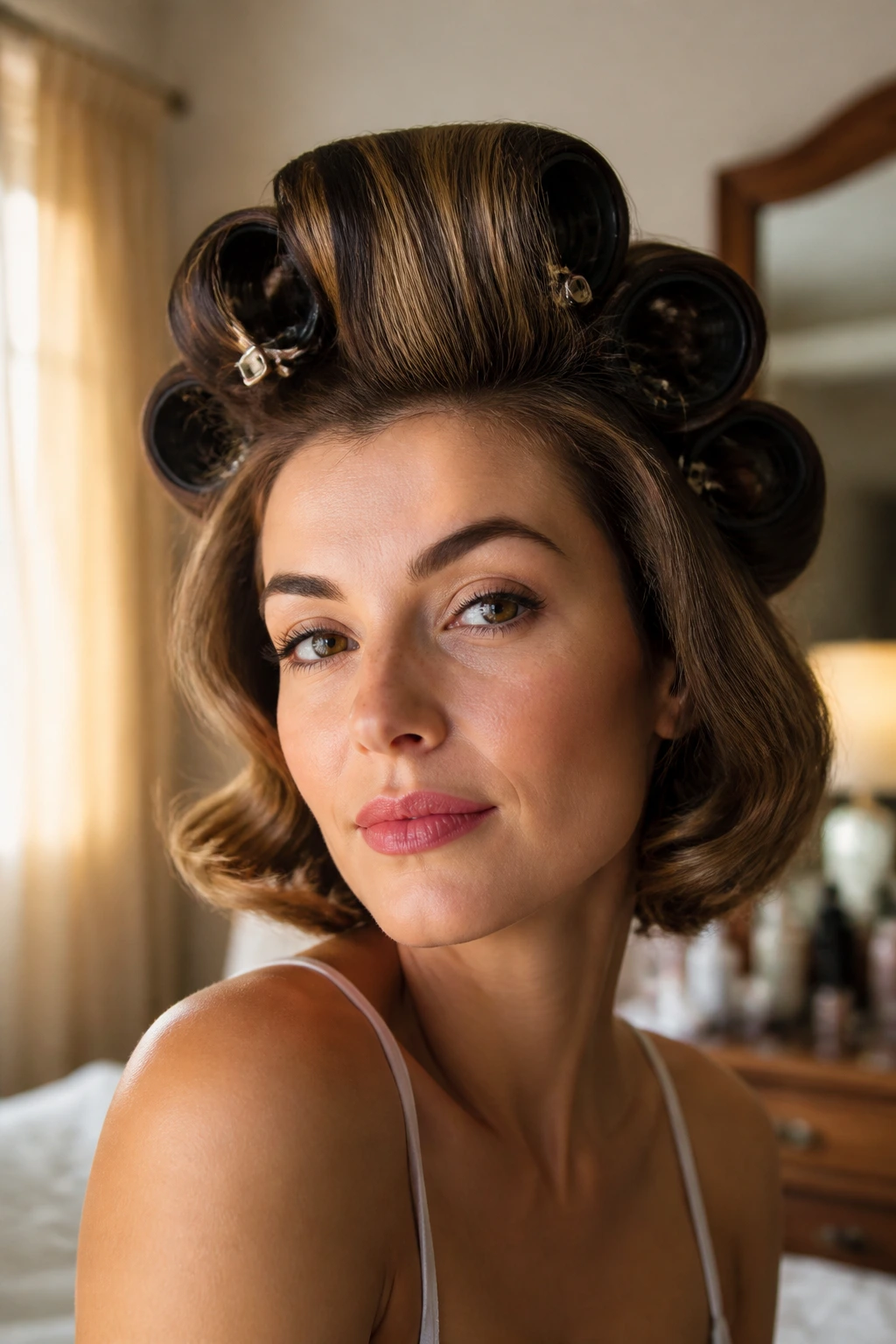
Hot rollers are a practical kind of glamour. They give you quick lift at the crown, which square faces usually need more than extra width at the sides. The curls also come out smooth enough to brush into a soft retro shape without a lot of fuss.
Place the largest rollers at the crown and top sides, then use medium rollers lower down. That size shift keeps the top lifted and the lengths soft. If you use one uniform roller size, the whole head can turn round in the wrong way.
A light setting spray before the rollers go in helps the curl hold longer. After they cool, don’t rush the brush-out. Let gravity do half the job first.
25. Scarf-Tied Retro Coil-Out
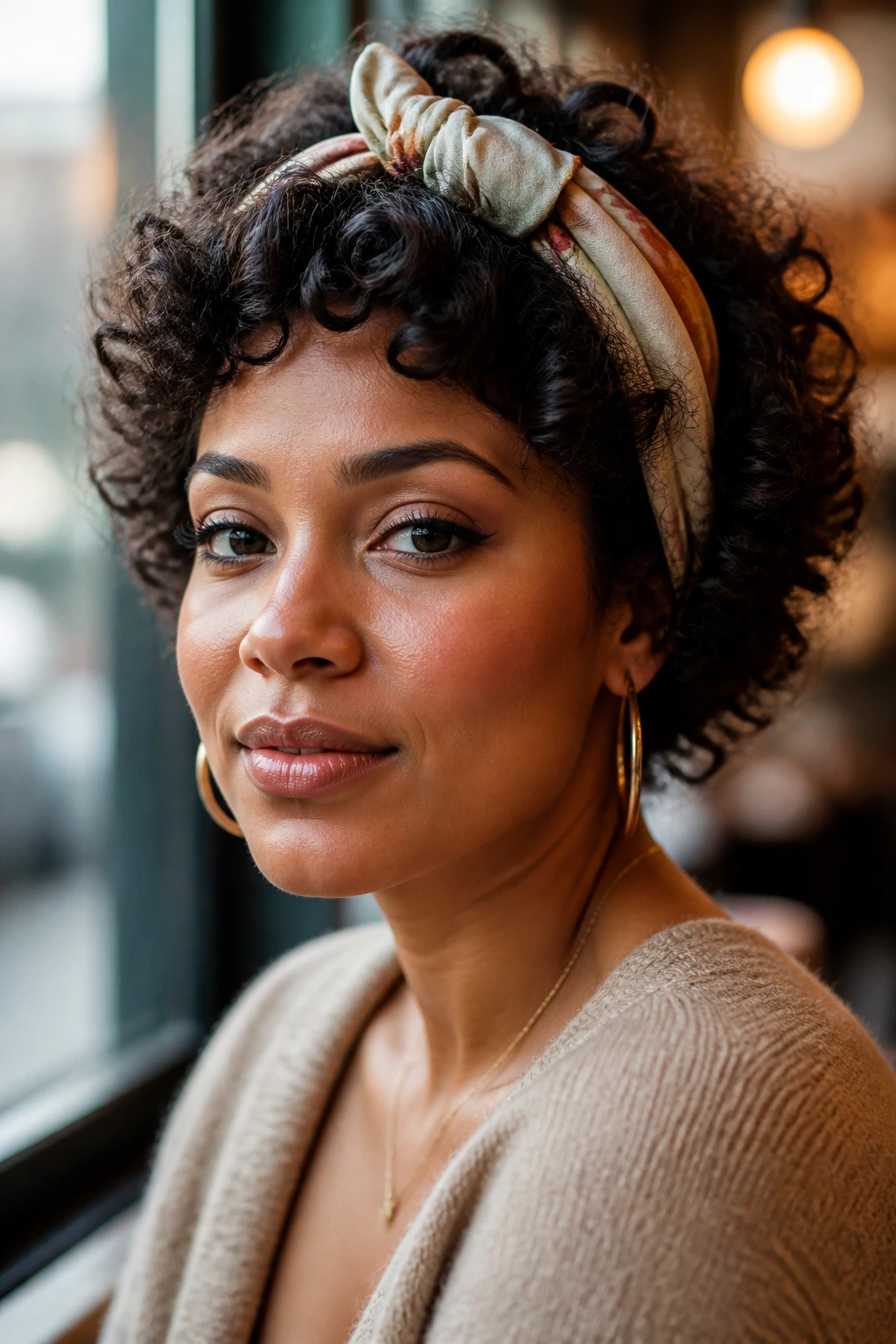
A scarf can do more than decorate the look; it can help define it. A scarf-tied coil-out keeps the crown sleek, hides some frizz, and gives the curls a little vintage attitude without making the face feel boxed in. For square faces, the scarf also acts like a frame, pulling the eye upward and toward the center.
The curls underneath should stay soft and separate. You’re not trying to crush them flat. You’re guiding them. Tie the scarf loosely at the crown or around a set of loose coils, then let a few face-framing pieces fall free so the jaw doesn’t feel boxed by fabric and hair at once.
I like this one for days when the hair has its own ideas. The scarf gives the style structure, and the frizz stops fighting so hard.
Why These Shapes Beat the Boxy Stuff
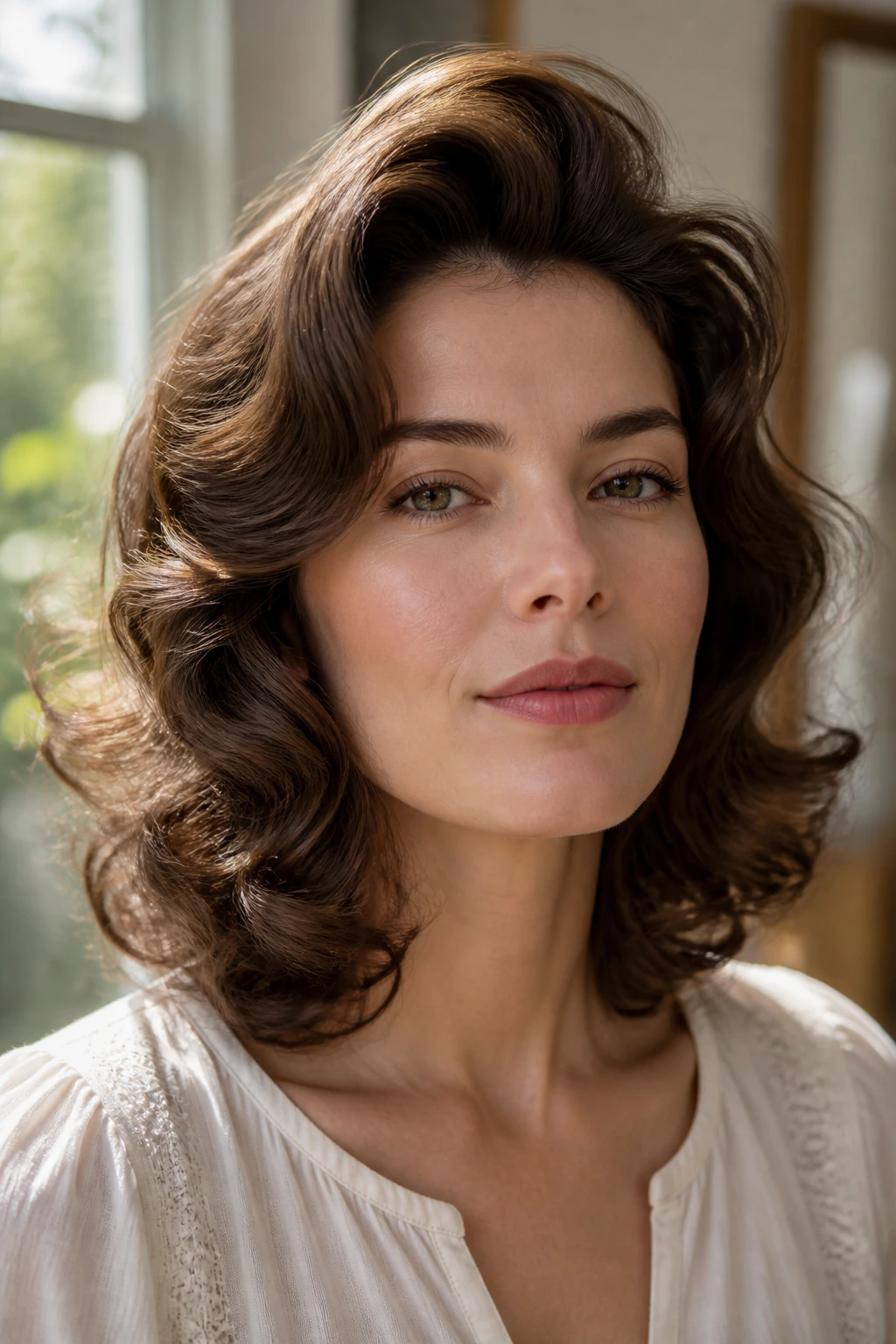
A square face does not need more square. That’s the blunt truth. It needs curves in the right places, height where the eye can use it, and enough softness around the jaw to keep the outline from feeling hard-edged. Retro curls are good at that because they were designed in an era that loved silhouette. Shape mattered. Balance mattered. Even the frizz-friendly versions in this list still respect that.
The styles that work best tend to do one of two things: they either lift the crown and keep the sides lighter, or they tuck the widest part of the curl below the jaw so the face stays open. The ones that fail usually build too much bulk exactly where the jaw is strongest. That’s the line to watch.
Tools That Keep Frizz Behaving
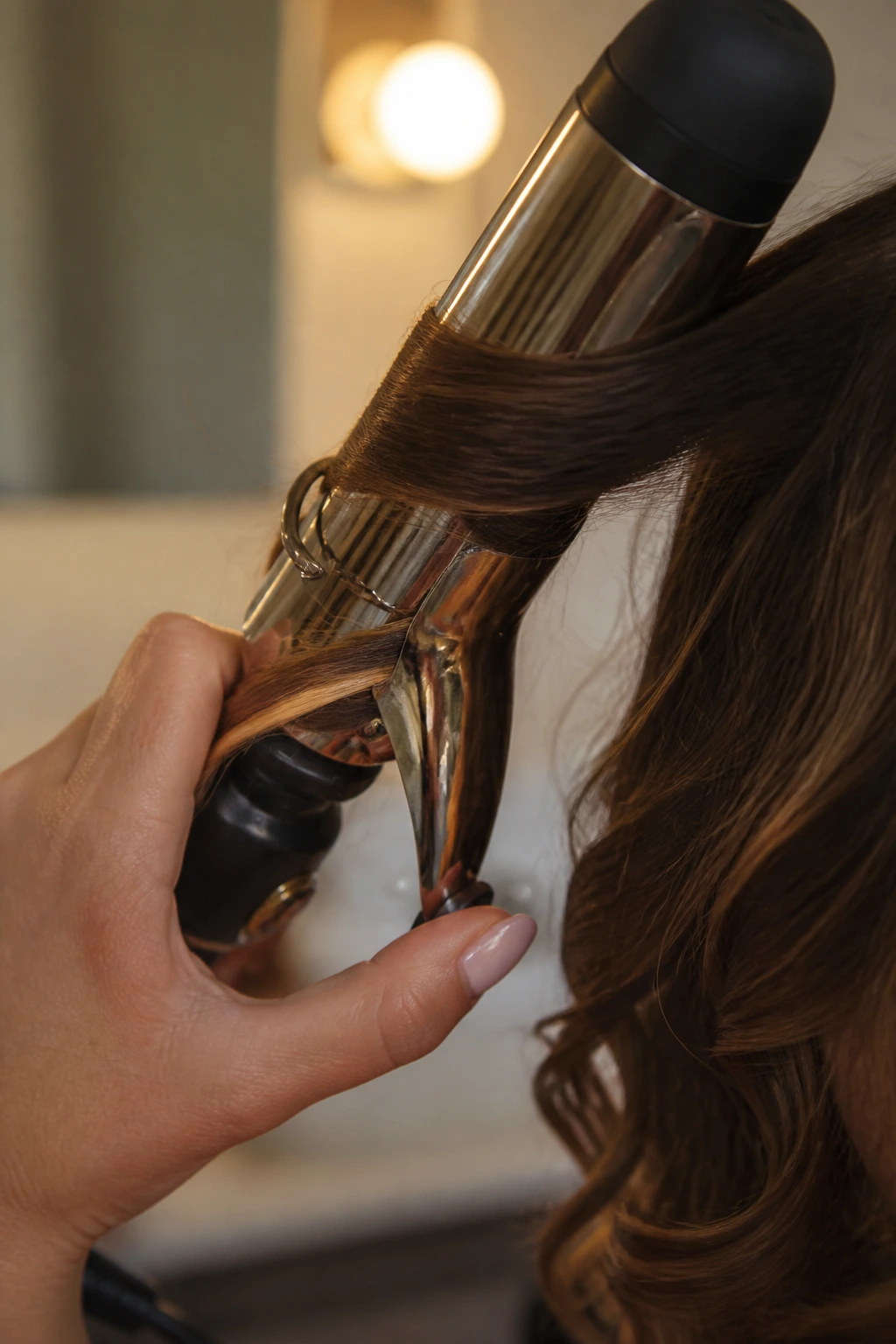
You do not need a salon cart full of gadgets, but a few specific tools make a real difference.
- 1¼-inch curling iron: Best for shoulder-length and longer hair when you want broad retro waves rather than tight curls.
- ¾-inch to 1-inch iron: Useful for short styles, finger-wave fronts, and tighter setting work.
- Velcro rollers: Great for crown lift and soft brush-out volume without crushing the ends.
- Duckbill clips: They hold wave ridges flat while they cool, which is half the battle.
- Boar-bristle brush: The best tool for turning curls into smooth vintage waves without making the frizz explode.
- Wide-tooth comb: Good for separating a set gently if your hair hates brushes.
- Heat protectant spray: Non-negotiable if you’re using any hot tool at all.
- Flexible-hold hairspray: Gives shape without freezing every strand.
- Silk or satin scarf: Useful for overnight protection and for styles that need a little tuck or wrap.
- Bobby pins and U-pins: More useful than they look, especially for victory rolls, faux bobs, and pin sets.
What to Buy Before You Start Styling
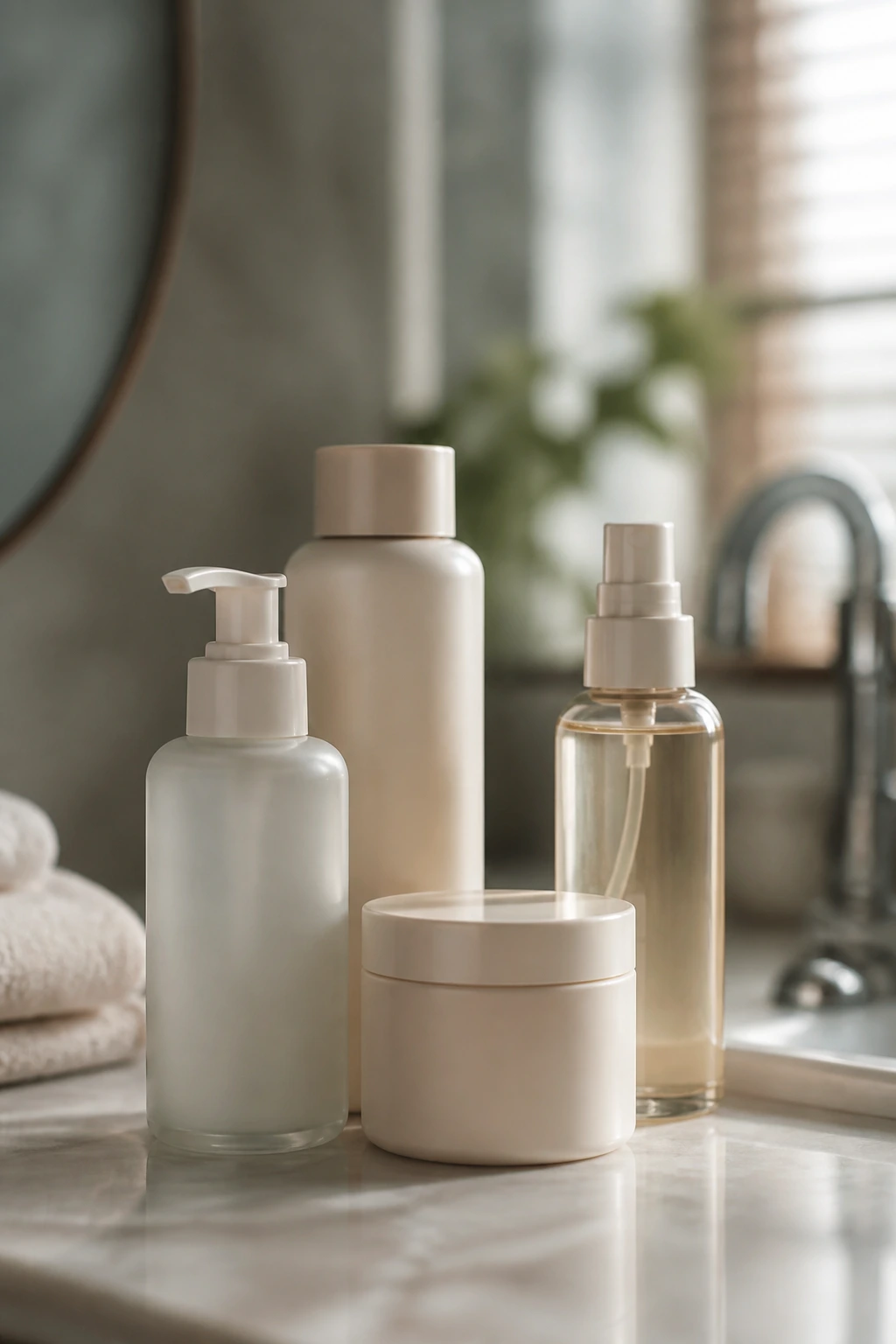
If I were stocking a shelf for these looks, I’d keep the product lineup lean. Too many creams and sprays make frizzy hair heavy in a hurry, and vintage curls need movement.
Start with a light mousse or setting lotion for damp styling. That gives the hair some memory before the curl ever forms. Add a heat protectant with a little slip for hot-tool looks, and keep a serum or cream for the ends only, not the roots. The best finishing product is usually a flexible humidity shield rather than a hard spray, especially if your hair tends to puff the minute the air feels damp.
If your hair is coarse, look for products that say smooth, define, or control rather than ultra-volume. Funny thing: frizzy hair already has volume. What it usually needs is direction.
How to Wear These Looks Without Widening the Jaw
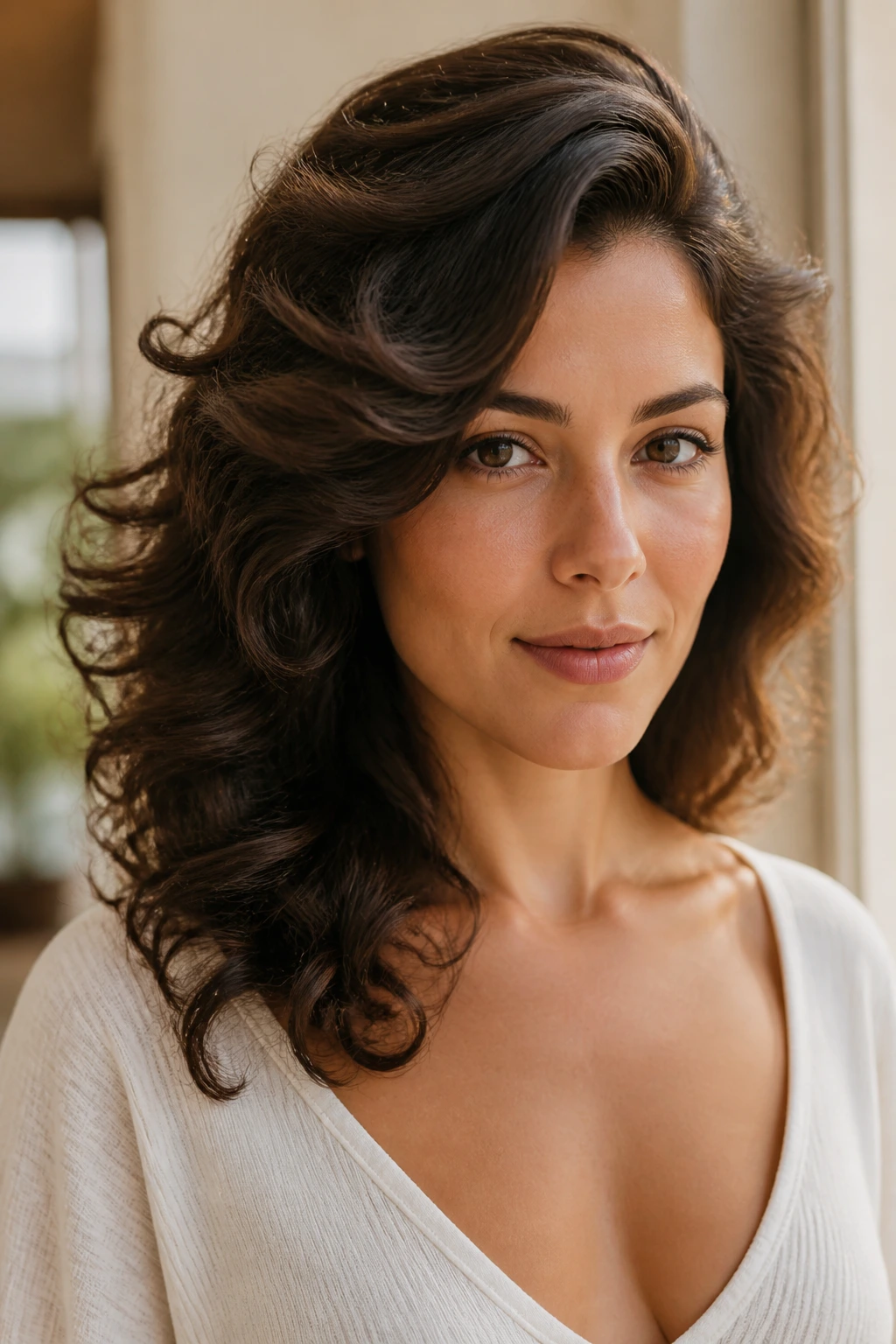
Square faces tend to look best when the widest part of the hairstyle sits above the jaw or below it, not right on it. That means crown lift, side sweeps, and curved ends are your friends.
Face-Framing: Let the front pieces travel diagonally, not straight across. A curl that starts near the temple and ends below the cheekbone softens the whole lower face.
Outfit Pairings: Open necklines, collared shirts worn loose, or earrings that move a little can help the hair feel balanced. Heavy, boxy collars can fight with the geometry of the face and make the curl shape feel denser than it is.
Length/Scale: Short hair needs a smaller curl pattern and a little more top lift. Long hair can carry bigger waves, but the ends still need to turn or bend away from the jaw.
Best Moments: Brush-out glam works well when you want polish. Wet-set waves or scarf styles are better when you want the hair to look intentional even after a long stretch of wear.
Practical Tips for Better Hold and Less Puff
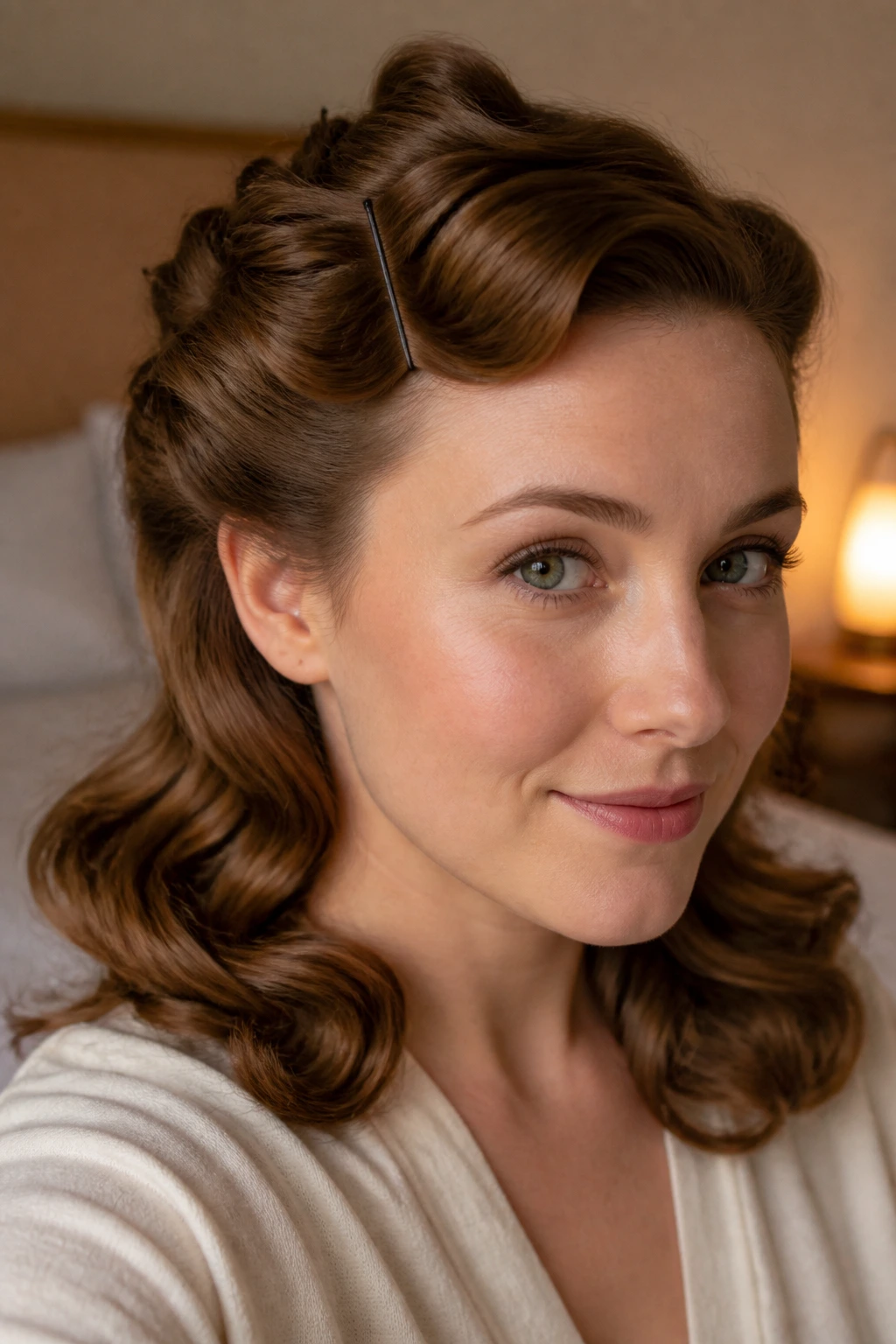
Set the curl hotter than you style it. That sounds odd, but it’s true: the shape should be formed while the iron or rollers do the work, then cooled completely before you brush or separate anything. Warm hair is vulnerable hair.
Use smaller sections near the front. Frizz tends to show up fastest around the hairline, so those pieces need more control than the back does. If the front is set cleanly, the whole style looks finished.
Don’t overload the roots. A lot of people drown the crown in product trying to fight frizz, and then the shape goes flat by noon. Smooth the roots lightly, then leave the rest alone until the end.
Keep a finishing brush, not a styling brush. Once the curls are set, a soft brush or your fingers should do the last bit of work. Keep working them after that, and the frizz comes right back out.
Humidity needs a plan. If the air is damp, choose a style with pins, rollers, or a tucked section rather than loose spirals that have to hold shape on their own.
Common Mistakes That Make Retro Curls Look Boxy
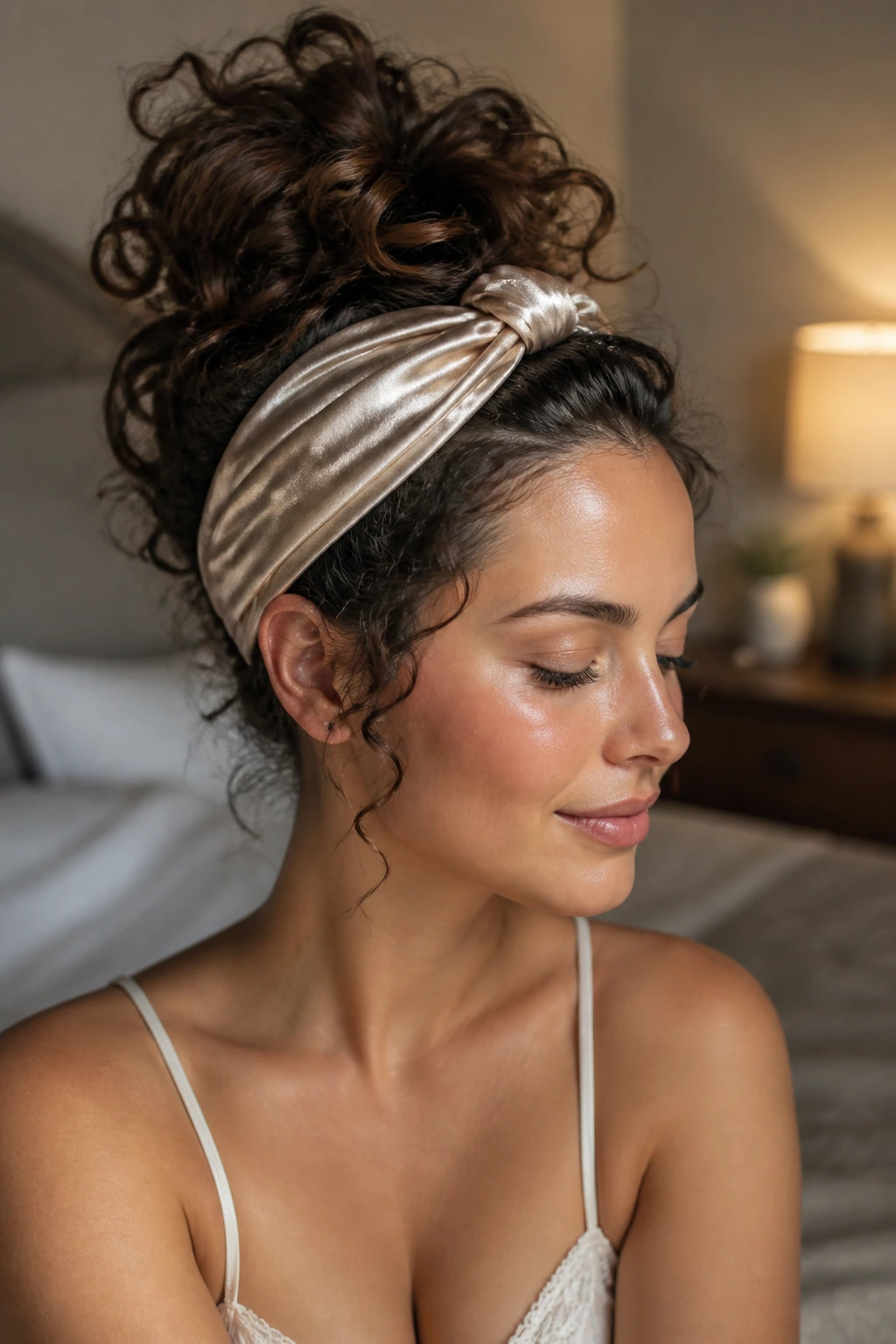
The first mistake is putting the biggest volume at the jawline. That’s the fastest route to a square, heavy look. If the sides balloon out at chin level, the face looks wider. Shift that lift to the crown or let the curl fall below the jaw instead.
Another one is curling every section in the same direction and stopping there. The hair can look too uniform, which turns vintage into rigid. Break up the direction on one side or leave one front piece looser so the eye gets a softer path.
A third mistake is brushing too soon. Fresh hot curls are fragile. If you pull them apart before they cool, the curl loses shape and frizz takes over the set. Wait until the hair is fully cool, even if that means being patient for a few extra minutes.
People also reach for too much heavy oil. On frizzy hair, a lot of oil can make the ends stringy while the rest of the hair still puffs. Use a pea-sized amount at most, and keep it off the roots.
Finally, tight, straight-across bangs can sharpen a square face instead of softening it. If you want fringe, make it side-swept, waved, or broken up with a curve.
Variations and Alternatives to Try
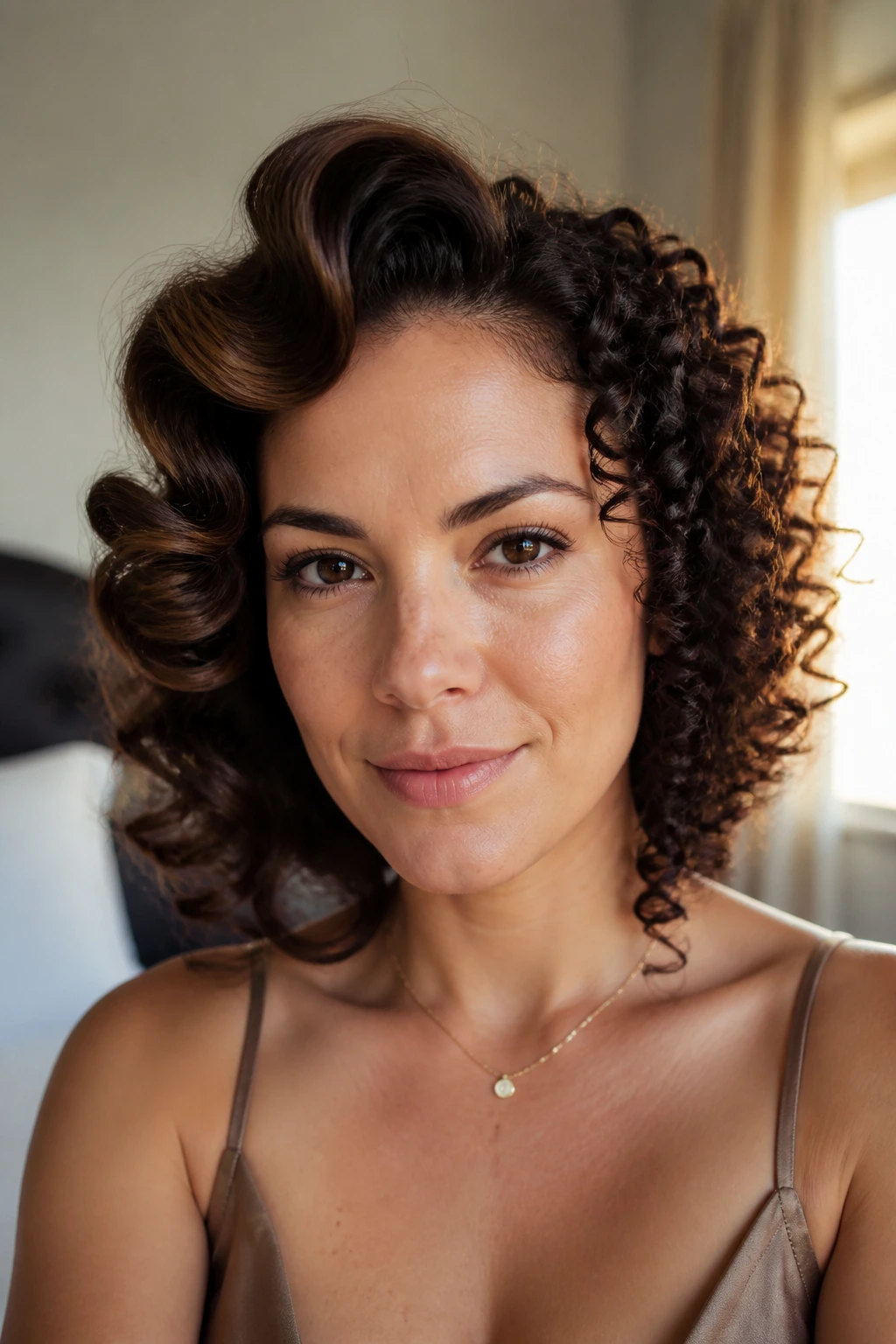
Heatless Evening Set: Use rag curls, foam rollers, or flexi rods on damp hair, then sleep in a silk bonnet. This is the best choice if your hair hates heat or you want a softer, less polished finish.
Short-Hair Adaptation: For pixies, bixies, and chin-length cuts, use smaller rollers and focus on crown lift plus curved ends. Big waves on short hair can swallow the cut.
Humidity Shield Version: Swap a regular finishing spray for a humidity-blocking spray and keep the curl pattern looser. Tight curls can swell in damp air; soft waves handle that better.
Fine-Hair Version: Use mousse, not cream, and lean on rollers for body. Fine hair can go limp fast, so a lighter product stack works better than a rich one.
Thick-Coarse Version: Choose styles with pinning, sectioning, or a brush-out. Thick hair often needs structure first and softness second.
Soft Glam Version: Keep the part deep, the crown lifted, and the ends brushed into one wide wave. That version reads formal without looking stiff.
Overnight Care and Day-Two Refreshing
Retro curls last longer when you protect the shape before sleep. The easiest move is a loose pineapple at the crown for longer styles, or a silk scarf wrapping the front for shorter ones. If you’ve pinned in rolls or a faux bob, leave the pins in place unless they’re poking you; redoing them in the morning often creates more frizz than leaving them alone.
A satin pillowcase helps, but it does not do all the work. The hair still rubs. If you want day-two shape, sleep with the curl pattern tucked away from the face and avoid flattening the crown under your head.
In the morning, mist lightly with water or a wave refresher, then smooth the outer layer with damp hands. Do not soak the hair. That usually wakes the frizz back up. If the ends have gone flat, one or two quick passes with a curling iron are enough. You’re refreshing the shape, not rebuilding the whole thing.
Frequently Asked Questions
Which retro curl style is best for a square face with frizzy hair?
Deep side-part waves, brushed-out Hollywood waves, and any style with crown lift tend to be the safest bets. They soften the jaw and keep the width from sitting right beside the cheeks.
Can I wear tight curls if my face is square?
You can, but place them carefully. Tight curls work better when the root area is smooth, the part is off-center, and the curl ends below the jaw instead of right at it.
What’s the best way to keep frizz from ruining the set?
Start with a setting lotion or mousse, let the curls cool fully, then use a flexible spray instead of a stiff one. Also, avoid brushing the hair while it’s still warm; that’s when frizz sneaks in fastest.
Do I need hot tools for these looks?
No. Wet sets, flexi rods, pin curls, and roller sets all work well, especially if your hair is coarse or already wavy. Heat just gives you a faster path to the same shape.
How do I keep the style from looking too wide?
Keep volume at the crown, not at the jaw. A side part, one tucked side, or front pieces that fall diagonally can all help narrow the visual width.
What if my hair falls flat by midday?
That usually means the set was too heavy or not fully cooled before brushing. Next time, use smaller sections, more cooling time, and less product at the roots.
Are rollers better than a curling iron for frizzy hair?
Rollers often give a softer, more controlled finish, especially on coarse or thick hair. A curling iron gives more shape control around the face. I’d pick based on whether you want smooth body or more defined bends.
Can short hair still pull off retro curls for square faces?
Yes, and sometimes short hair does it better because the shape stays close to the head. The trick is to keep the top lifted and the sides softly curved rather than puffed out.
The Shape Worth Repeating
The best retro curls do more than look vintage. They change the outline of the face. That’s why they work so well on square faces and on hair that likes to frizz when it’s left to its own devices. The shape gives the texture somewhere to go, and the texture gives the shape a little life.
If you keep one rule in your head, make it this: lift where you want length, curve where you want softness. That’s the whole play. Everything else—rollers, pins, side parts, brush-outs, scarf wraps—is just a different way of getting there.