



Loose curls can be a bit sneaky. They look airy when they’re fresh out of the shower, then an hour later they settle, separate, and start showing every gap in the cut. That’s why short choppy haircuts for thin hair with loose curls work so well when the shape is right: they keep the curl pattern moving, stop the ends from looking wispy, and give the crown something to do besides lie there.
The wrong cut on this texture is a special kind of annoying. Too blunt, and the lower half hangs like a curtain. Too many long layers, and the ends start to look see-through. Too much thinning, and the hair can lose the little bit of heft it had in the first place. The sweet spot is a cut with broken-up edges, smart internal texture, and enough length left in the right places to let the curl bend instead of collapse.
What makes this hair type tricky is also what makes it interesting. Loose curls don’t need to be forced into perfect ringlets. They need room, direction, and a little bit of air between sections. A good choppy cut creates that shape on purpose, and when it’s done well, the hair looks fuller without pretending to be thicker than it is.
Why These Cuts Give Thin Loose Curls More Lift
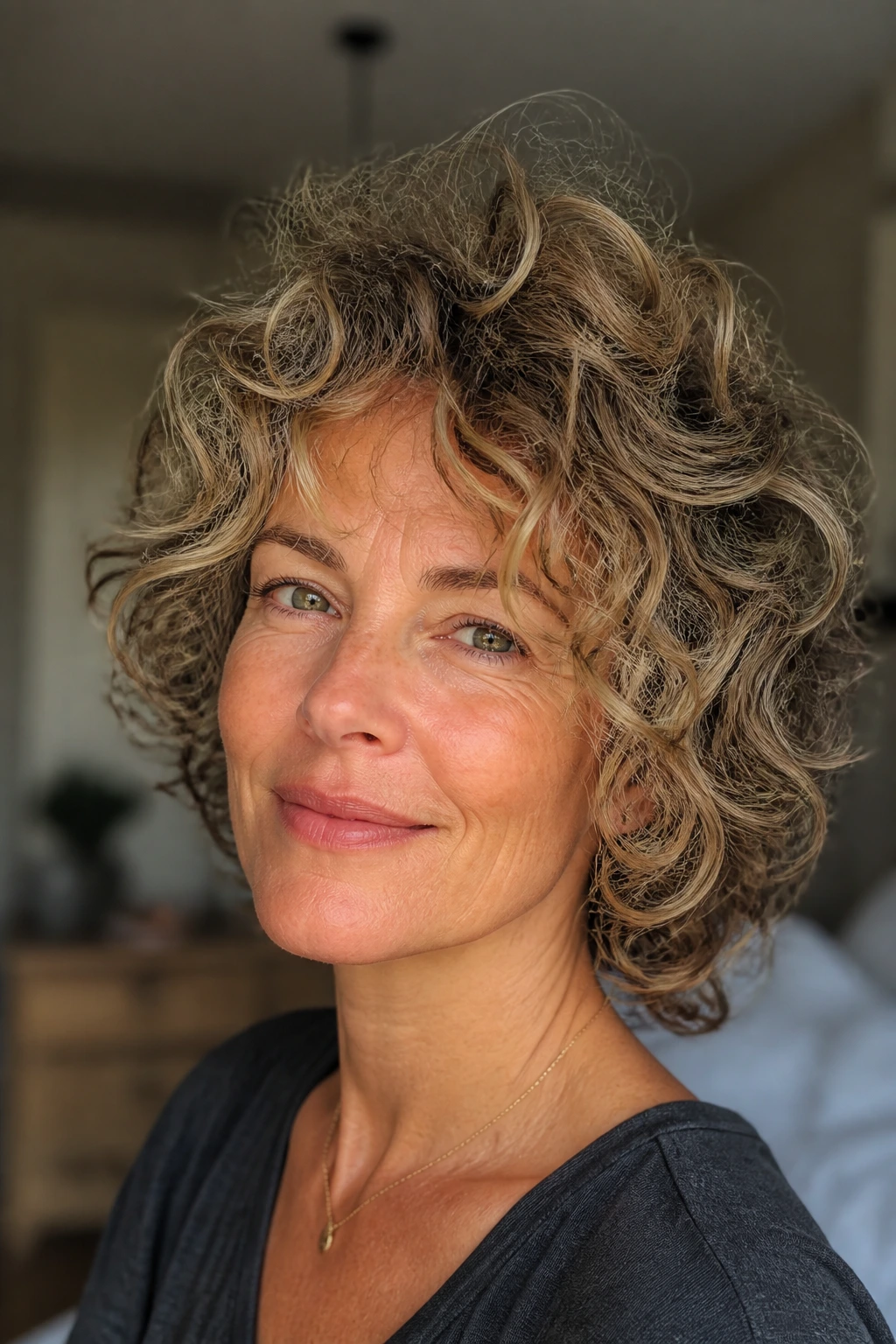
- Broken ends make the line look denser: A blunt edge on thin curls can separate into skinny points; choppy ends create a softer, fuller-looking edge.
- Shorter shapes stop the weight drag: Once loose curls get past the jaw, gravity starts stretching them out, and the hair loses that springy bend at the root.
- Texture at the top matters more than length at the bottom: A little crown lift and some internal layering do more for body than adding extra inches ever will.
- The cut grows out more politely: Choppy shapes blur as they grow, so you don’t get that hard shelf line that some short cuts leave behind.
- Loose curls behave better when they can move: The curl doesn’t need to sit in one rigid clump; it needs small, uneven pieces to bounce against each other.
What to Ask for at the Salon Chair
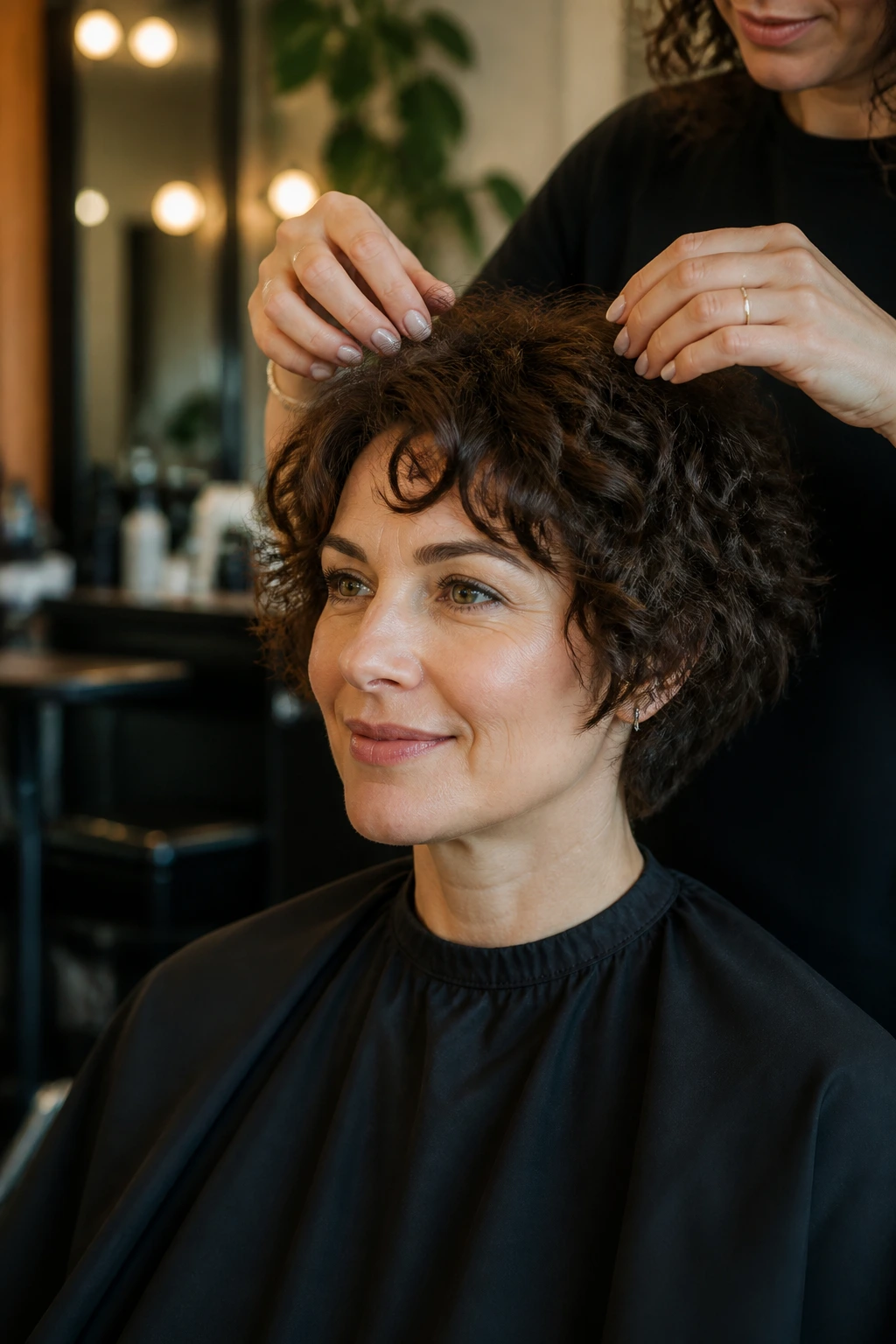
Say it plainly. Stylists hear a lot of vague words, and thin curly hair hates vagueness. Ask for a dry cut or mostly dry cut if your curl pattern changes a lot when it dries, and ask them to keep the perimeter soft rather than razor-straight.
If you want the cut to stay full, say point cutting, not heavy thinning. Point cutting means the stylist snips into the ends at an angle, which breaks up the line without chewing the body out of the hair. That one detail matters more than people think.
You can also be specific about your part and your problem spots. If the crown goes flat, say so. If the sides puff out but the ends go stringy, say so. If one temple lies flat and the other lifts, say that too. The good part about thin loose curls is that a small adjustment — half an inch here, a shorter fringe there, a tighter taper at the nape — can change the whole shape.
Bring photos, but talk through why you like them. A photo of a haircut on thick hair is not the same thing as a haircut on fine curls, and the useful part is usually the outline, not the density.
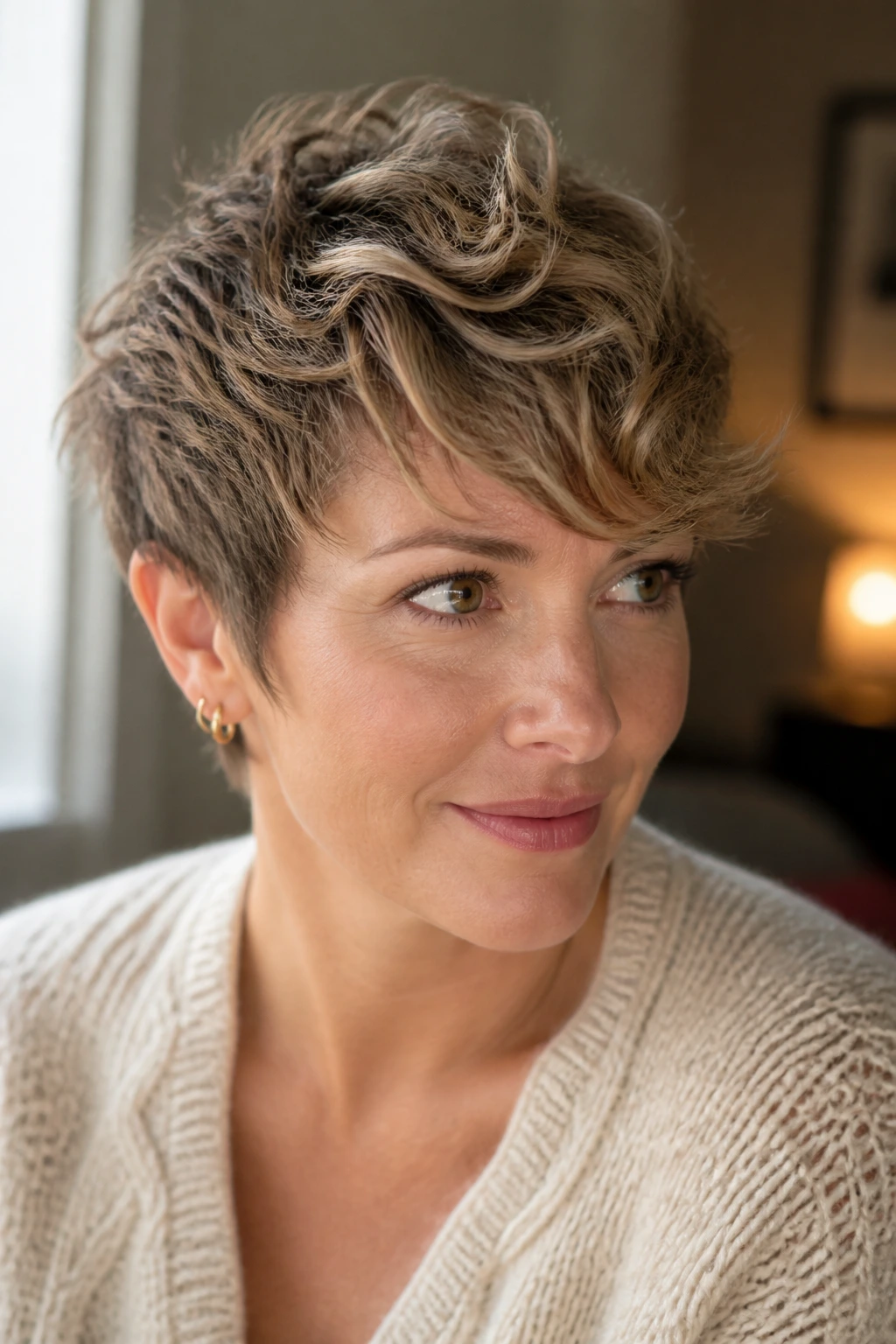
1. Soft Choppy Pixie with Side-Swept Fringe
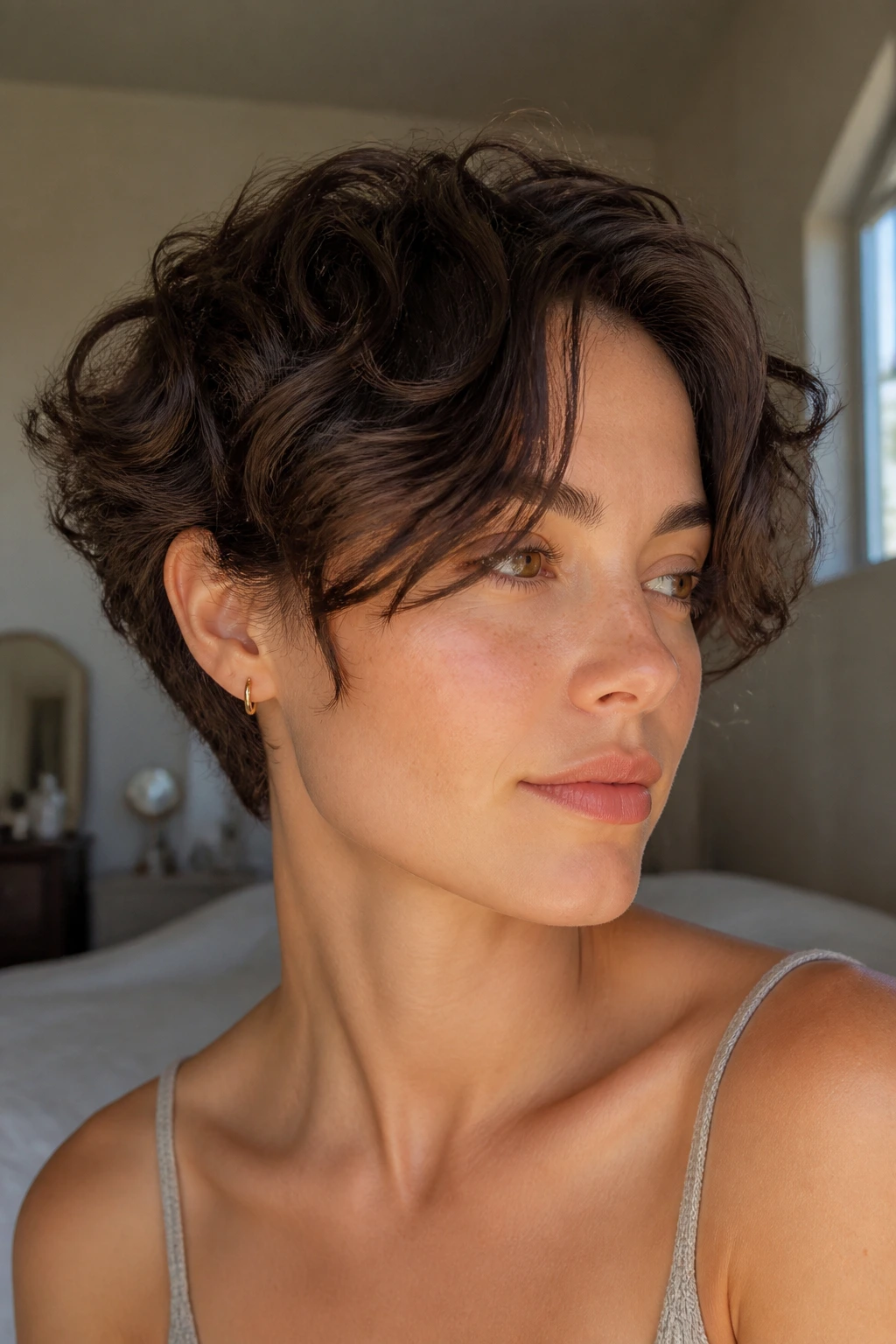
This is the cut for anyone who wants the hair off the neck but still wants a little curl drama up top. The sides stay close, the fringe falls diagonally, and the top keeps enough length for loose curls to bend instead of puff out. It looks clean without feeling severe. That matters.
What makes it work on thin hair is the contrast: tighter shape around the ears, more movement through the crown, and a fringe that interrupts a long forehead line. If your curls collapse by midday, this cut gives them a shorter path to travel, which usually means they hold their bend longer.
Ask for soft texture, not a shredded finish. A little mousse at the root and a quick diffuse on low heat are enough to keep it from lying flat against the scalp.
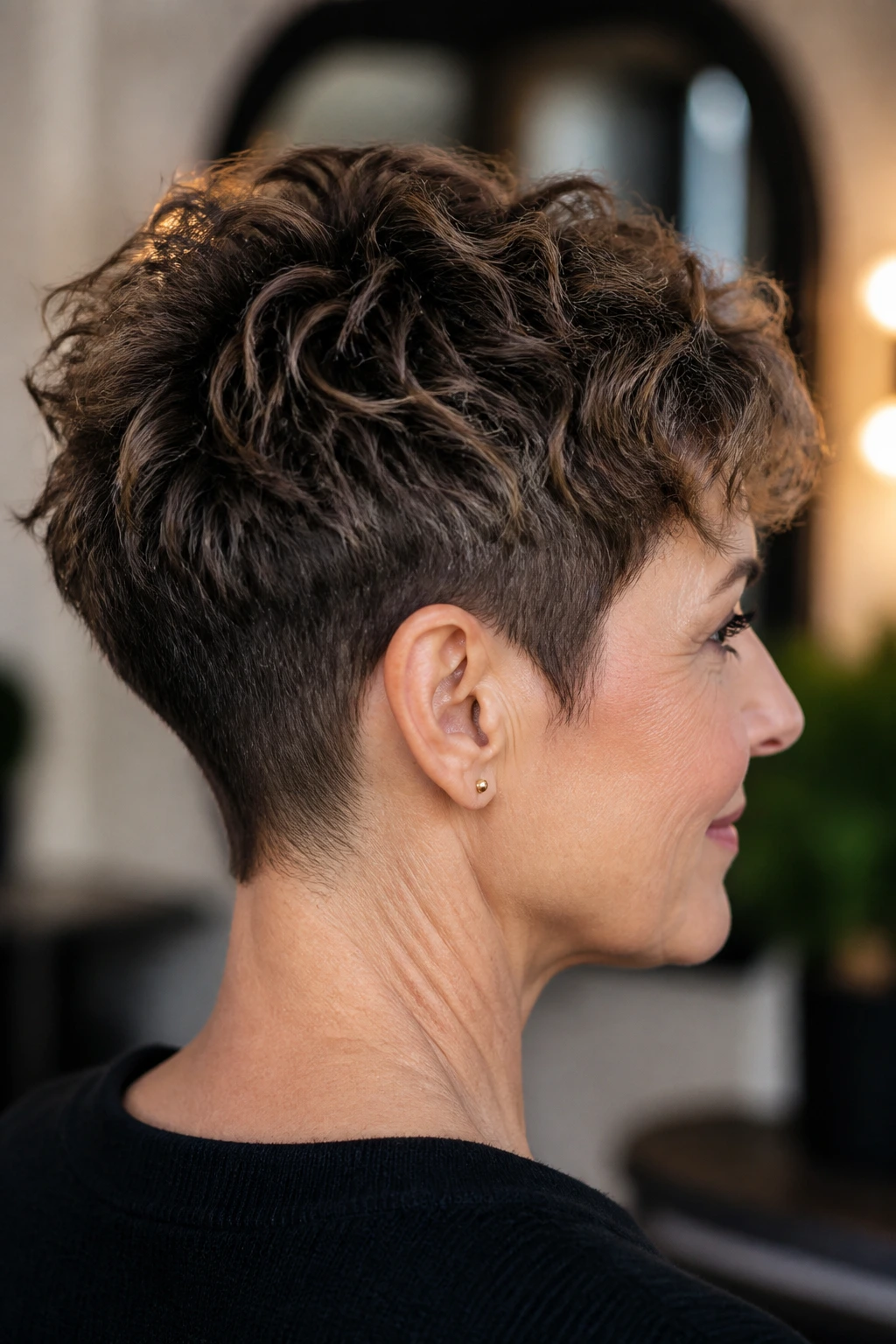
2. Tapered Crop with a Shattered Crown
A tapered crop is one of those cuts that looks simple until you see it from the side. The nape is neat, the back hugs the head, and the crown is broken up just enough to keep the top from turning into a helmet. On loose curls, that shattered crown gives lift where thin hair usually goes limp first.
This is a good choice if the back of your head needs shape but you don’t want bulk. The shorter taper removes weight, while the top stays long enough to show curl movement. It’s a very “wake up and go” cut, but only if you’re fine with a slightly sporty outline.
Best if you want:
- a cleaner neckline
- more height at the crown
- less hair touching the collar
- a cut that still looks decent after a few weeks of grow-out
Ask for the crown to be textured in small sections, not thinned all over. That keeps the top airy without turning the ends into little frayed sticks.
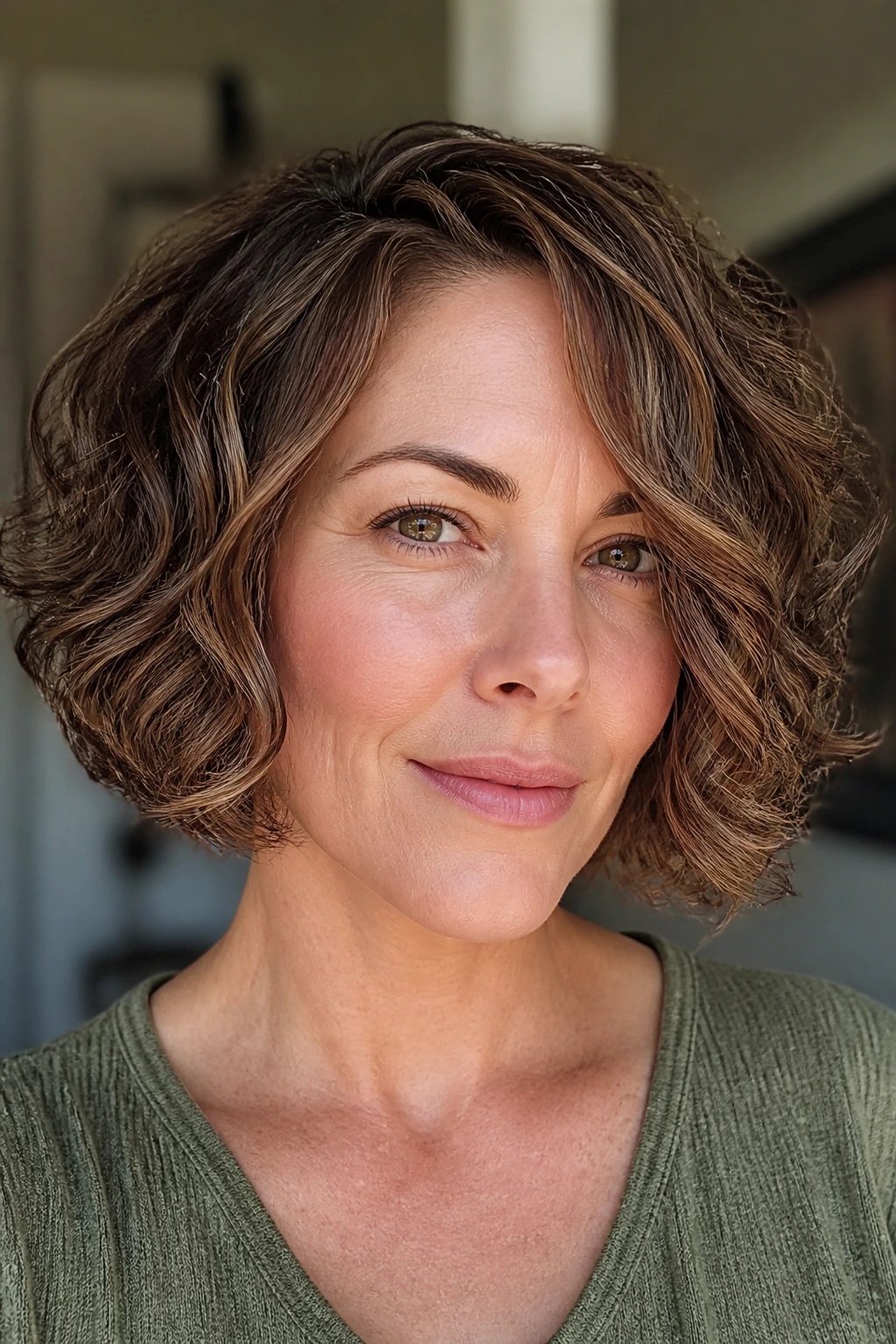
3. Jaw-Grazing Curly Bob with Sliced Ends
This is the safe bet that doesn’t look safe. The length stops near the jaw, which gives loose curls enough room to spring without dragging the whole shape down. Sliced ends keep the bob from looking blocky, so the finish feels light instead of boxy.
On thin hair, jaw-length is a useful line because it puts the visual weight right where the face starts. That makes the hair feel fuller even when the actual density is modest. If your curls stretch out when they dry, this length keeps the ends from going stringy too fast.
I like this cut with a soft side part. Middle parts can work, but on fine curls they sometimes show too much scalp at the center line unless the crown has a lot of lift.
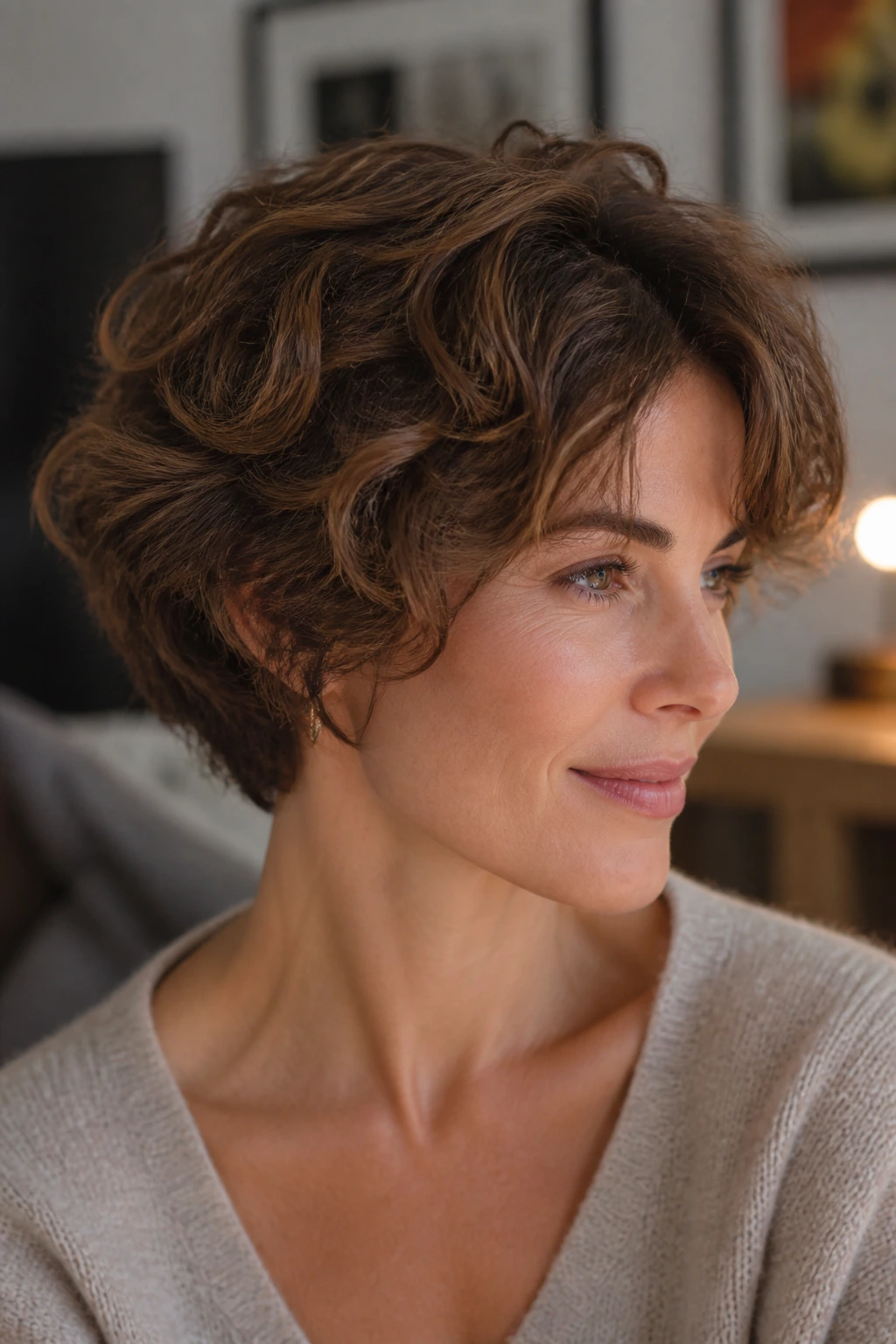
4. Rounded Bixie with Floating Layers
A bixie sits between a bob and a pixie, which is exactly why it behaves so well on thin loose curls. You get the neatness of a shorter cut with enough top length to let the curl shape float around the head instead of sticking to it.
The rounded outline is the key. It softens the sides, keeps the silhouette from feeling angular, and gives the illusion of more hair because the shape reads as continuous. Floating layers around the top and temples stop the cut from looking flat in profile.
This one suits anyone who wants movement but hates a fussy routine. Scrunch in a light foam, diffuse for a few minutes, and leave the ends alone. Too much touching ruins the shape faster than humidity does.
5. Ear-Length Crop with Long Curtain Fringe
If your forehead feels like the one place your hair never cooperates, this is the cut to look at. The ears stay exposed, the fringe splits softly down the middle, and the rest of the cut stays cropped enough to keep loose curls from dragging themselves straight.
The long curtain fringe matters because it gives the eye something to follow. Thin hair sometimes looks sparse simply because there’s no focal point. A parted fringe fixes that without adding weight, and the short sides keep the shape neat.
This cut looks best when the fringe is cut dry. Wet curls lie to everybody, especially around the face. If the stylist trims the front while your curl pattern is fully visible, the curtain effect usually lands better.
6. Curly Shag Bob with Soft Bangs

This is the version for people who want a little mess on purpose. The shag-bob shape uses short, uneven layers around the top and cheek area, then keeps enough length at the bottom to avoid a puffed-out triangle. Soft bangs tie it together and give the front some life.
Loose curls love this cut because it doesn’t fight them. The hair can clump a little, separate a little, swing a little. That’s the whole point. Thin hair often looks better when it’s allowed to move in pieces rather than all at once.
A shag bob does need a decent styling product. A dab of mousse at the roots and a light gel through the outer layer keep the frizz from eating the shape. Skip the heavy cream. It can make the whole thing slump.
7. French Bob with a Tucked-In Neckline
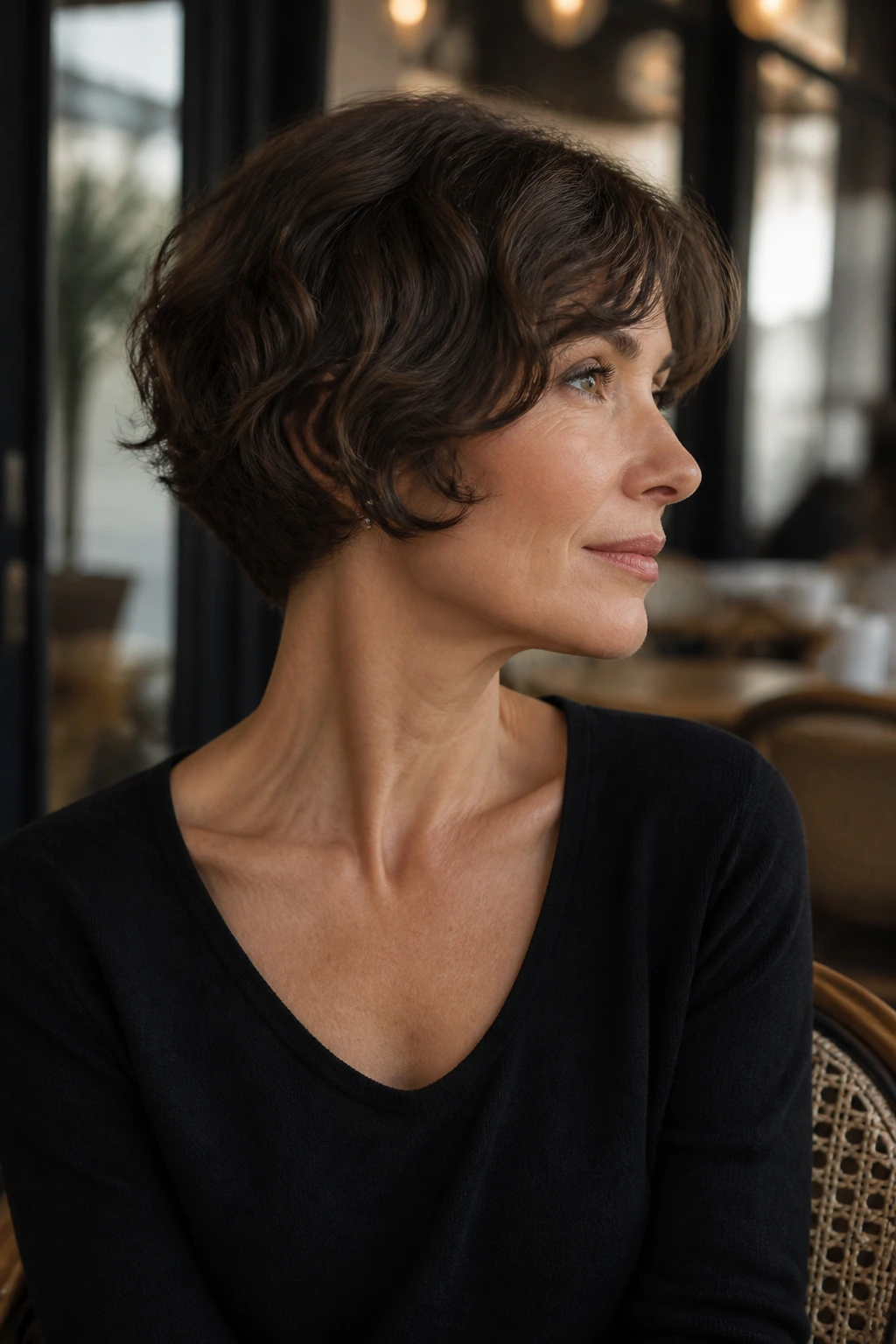
A French bob has a specific attitude: short, rounded, and a little cool without trying too hard. On loose curls, that tucked-in neckline keeps the ends from flaring out in odd directions, while the short length builds the sense of density.
This cut works best when the curl pattern is soft rather than springy. If your hair bends into gentle S-waves, the shape looks elegant and compact. If the curls are looser on top and tighter underneath, the bob can still work — it just needs a careful dry cut so the bottom doesn’t swing out too hard.
I’d avoid over-texturizing this one. French bobs look best when the shape is clean and the texture is natural, not chewed up by too many thinning strokes.
8. Wedge-Inspired Cut with Crown Lift
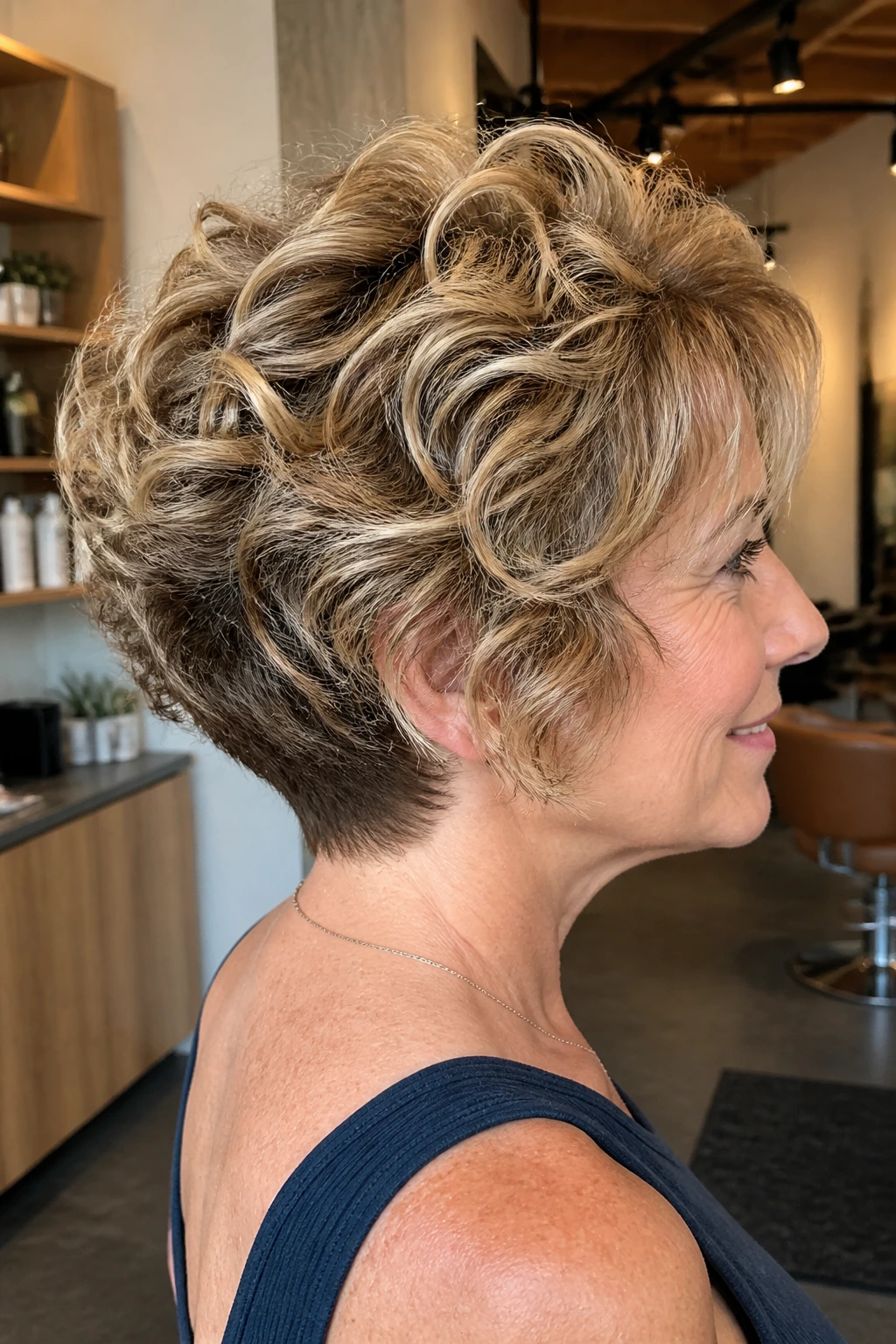
A wedge-inspired cut gives you a little back volume without making the whole head look stacked. The crown stays lifted, the back angles in, and the front can sit slightly longer to keep the face soft. Thin hair usually benefits from that built-in architecture.
With loose curls, the wedge shape gives the top a place to sit instead of flattening against the skull. It’s especially handy if your hair is fine but not fragile, because the angle creates the look of density without needing a ton of product.
What makes it different
- the back is shaped, not bulky
- the crown has a little height
- the front stays soft enough to frame the cheekbone
- the cut feels tailored rather than overly layered
Use a diffuser only until the roots are about 80% dry. Leave the last bit to air-dry so the crown doesn’t get too puffy and lose that neat wedge line.
9. Asymmetrical Bob with a Deep Side Part
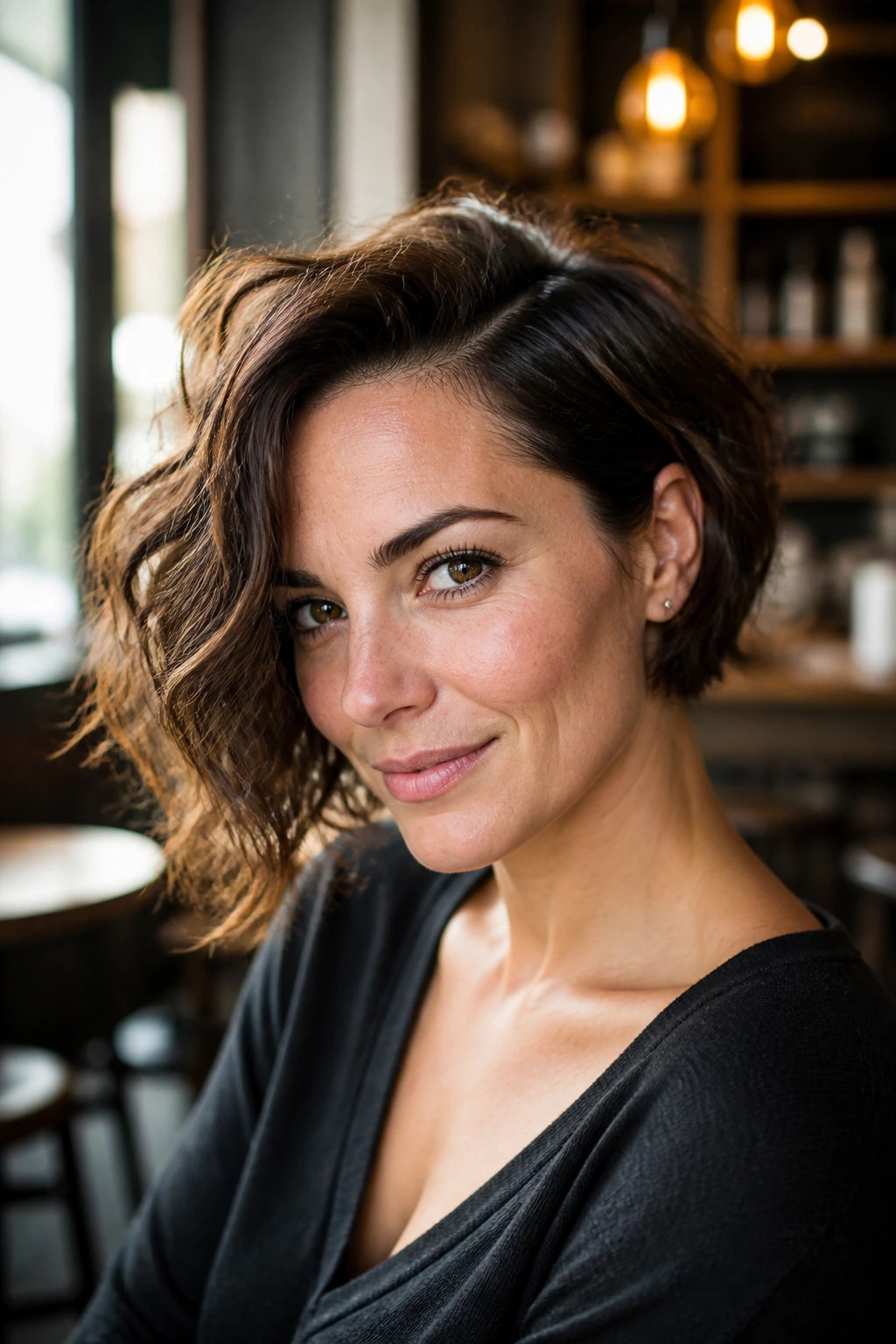
A deep side part can do a ridiculous amount of work on thin hair. It gives one side more lift, sends the curl pattern in a different direction, and makes the whole cut feel fuller because the eye doesn’t land on a flat center line.
The asymmetry is what keeps this bob from feeling ordinary. One side can skim the jaw, the other can drop a touch lower, and that slight difference makes the shape look denser. It’s a smart choice if one side of your hair naturally cooperates more than the other.
This cut plays nicely with loose curls that have a little personality but not much volume. The side with more curl can sit over the temple, while the longer side softens the jaw. Clean, but not boring.
10. Chin-Length Crop with Piecey Ends
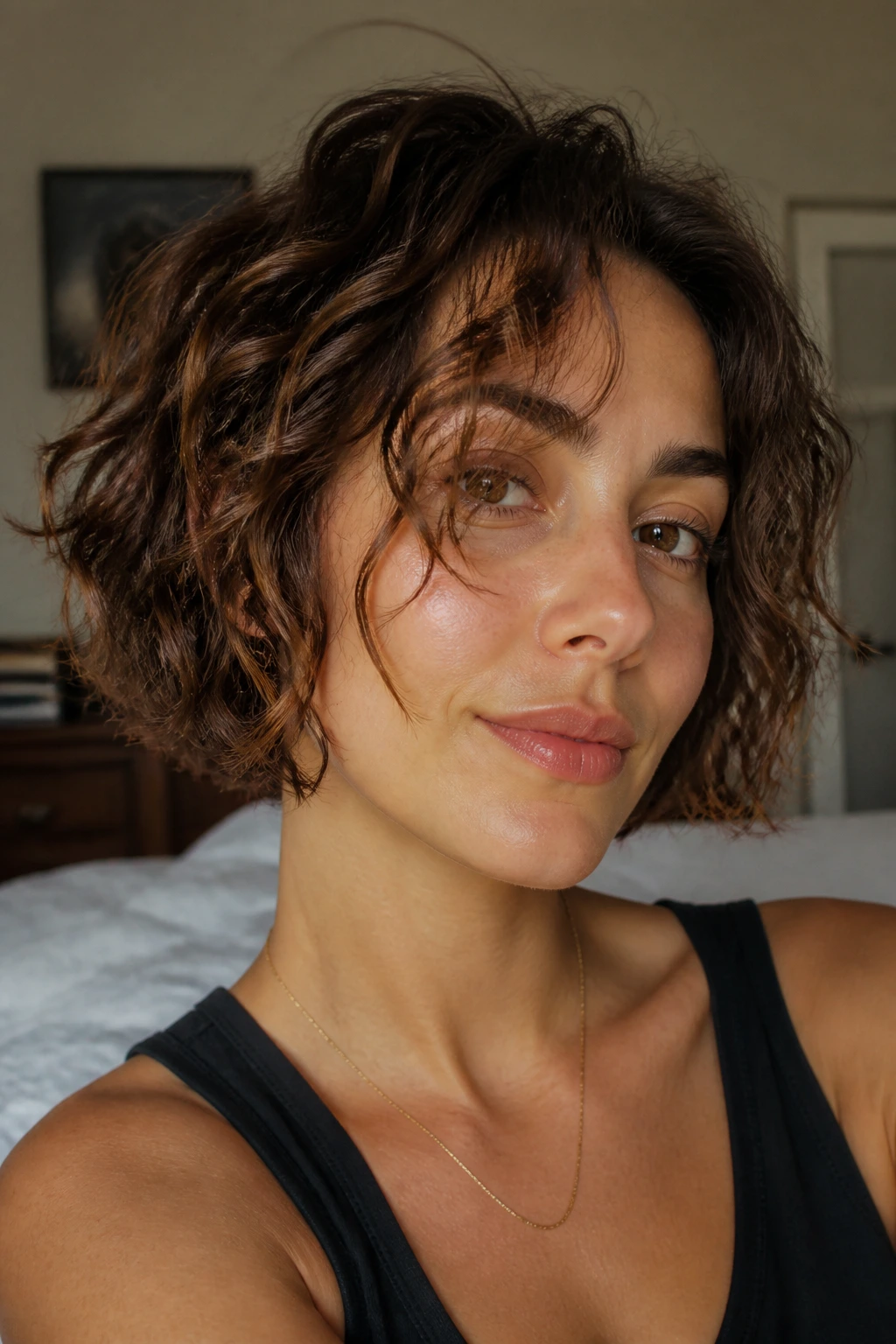
Chin length is a sweet spot for loose curls because it gives the hair enough room to bend without letting the ends go limp. Piecey ends keep the line from feeling solid in a bad way. You still get shape, but it doesn’t read as a helmet.
This cut is especially good if your curls are finer at the bottom and fuller near the roots. The shorter length lifts the weight off the lower half, and the choppier finish makes the silhouette look feathered rather than sparse.
A side note: this cut looks better with a little unevenness. Not a mess. Just a few small pieces around the face and jaw that keep the outline from looking too neat. Too neat can be the enemy here.
11. Soft Curly Mullet with Short Crown
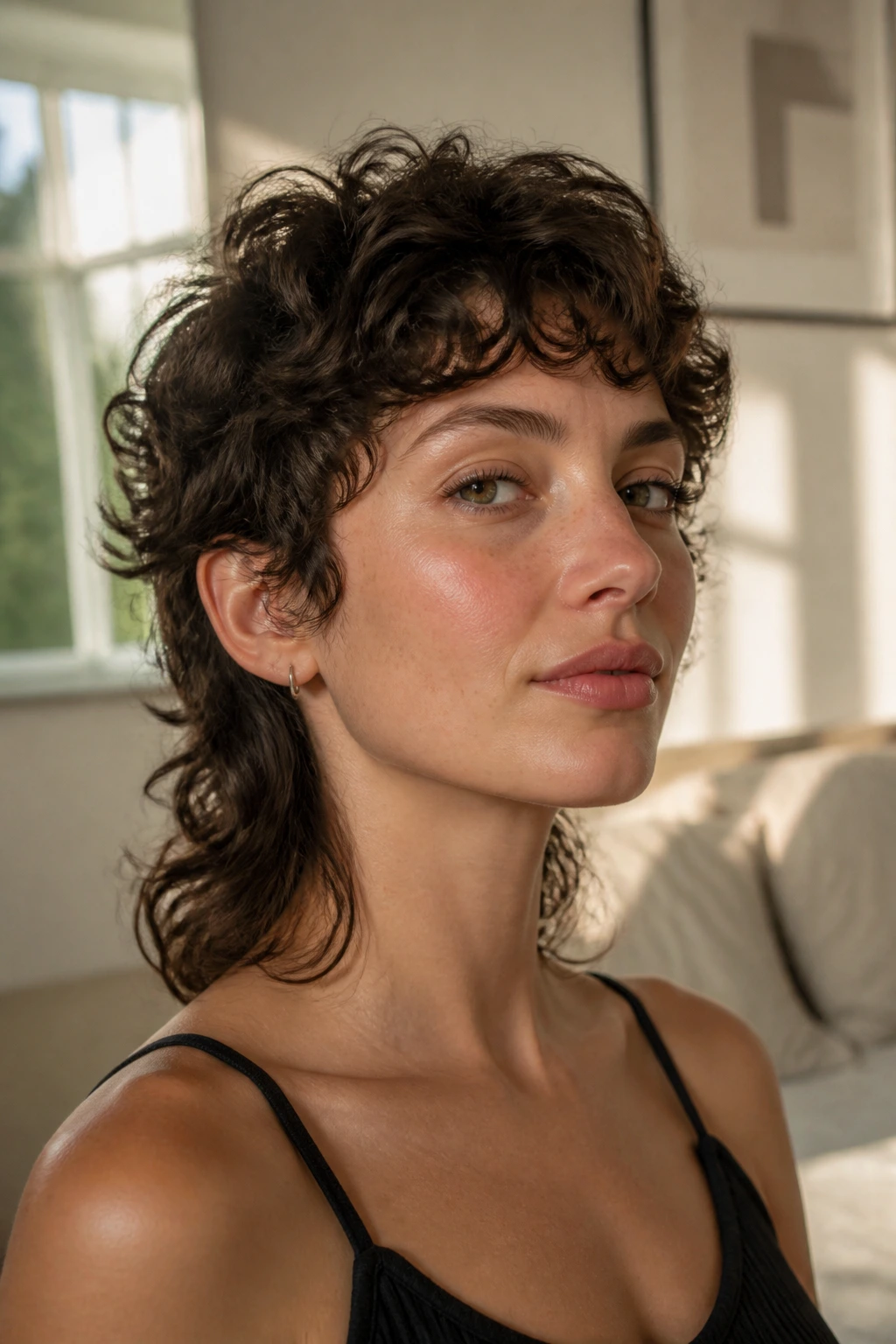
People either love a soft mullet or they don’t. I’m in the first camp when the hair is thin and curly, because the shape keeps the sides light while leaving enough length in the back to preserve movement. The short crown helps lift the top; the longer nape gives the cut some swing.
On loose curls, a mullet stops the back from looking puffed out and the front from looking too flat. The whole thing ends up a little edgy, a little undone, and surprisingly flattering on finer textures that need shape more than weight.
Keep the transition soft. If the short-to-long shift is too abrupt, the cut can look dated fast. The best version is subtle, with the difference between lengths visible but not harsh.
12. Collarbone Lob with Choppy Face-Framing Layers
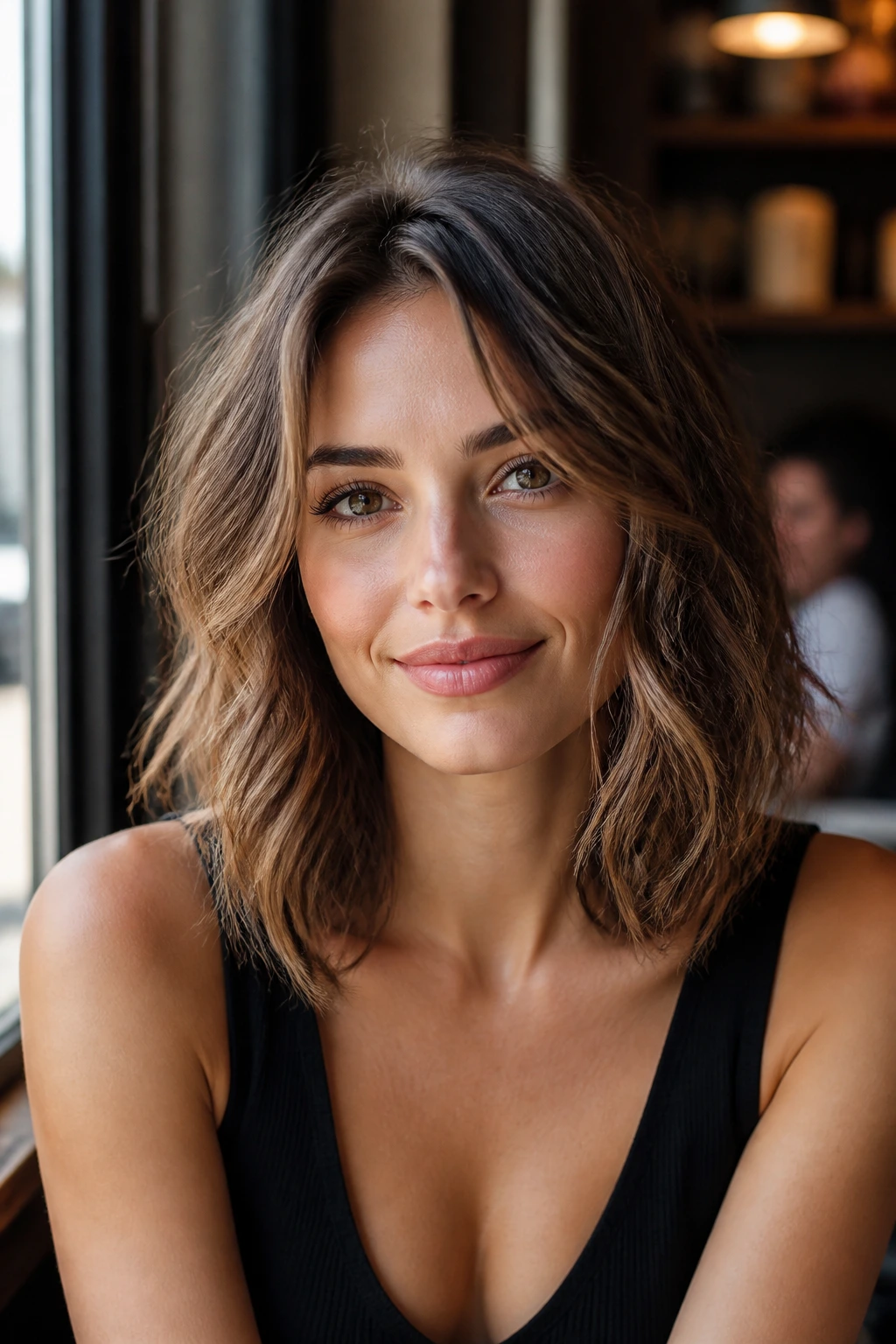
This is the longest cut on the list, but it still belongs here because the collarbone length gives thin curls a break from looking dragged down. The face-framing pieces keep the front lively, and the choppy layers stop the lob from sitting like one long sheet.
It’s a good halfway point if you’re not ready to go short-short. The collarbone gives you ponytail options, the layers give you movement, and the curl pattern still has enough room to show off. The trick is keeping the face frame light enough to lift the eyes without hollowing out the cheeks.
If you wear glasses, this one is especially useful. The layers can sit around the frames instead of fighting them. Small thing. Big payoff.
13. Undercut Pixie with Long Top Curls
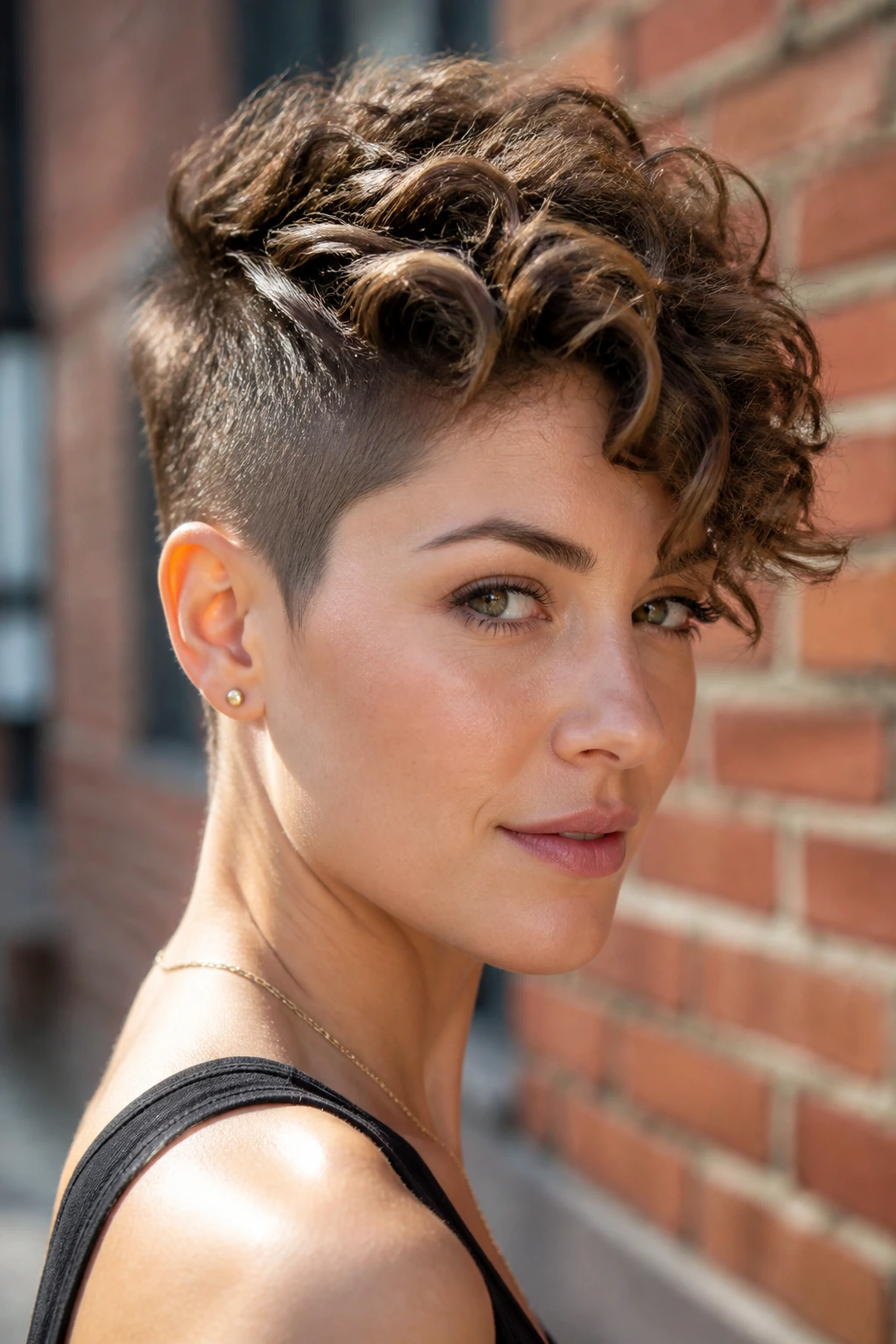
This cut has a built-in fix for heavy sides. The undercut removes bulk underneath, which lets the top curls sit higher and look denser. On thin hair, that can be the difference between “flat” and “intentional.”
The long top keeps the curl pattern visible, so you don’t lose the soft movement that makes loose curls interesting. It’s a good match for anyone who likes a little contrast and doesn’t mind a cut that shows the shape of the head more clearly.
Be honest with yourself before choosing this one. If you hate frequent trims, an undercut can become annoying because the short sections grow out fast and lose the crisp shape. If you like clean edges, though, it’s hard to beat.
14. Blunt Bob with Invisible Internal Layers
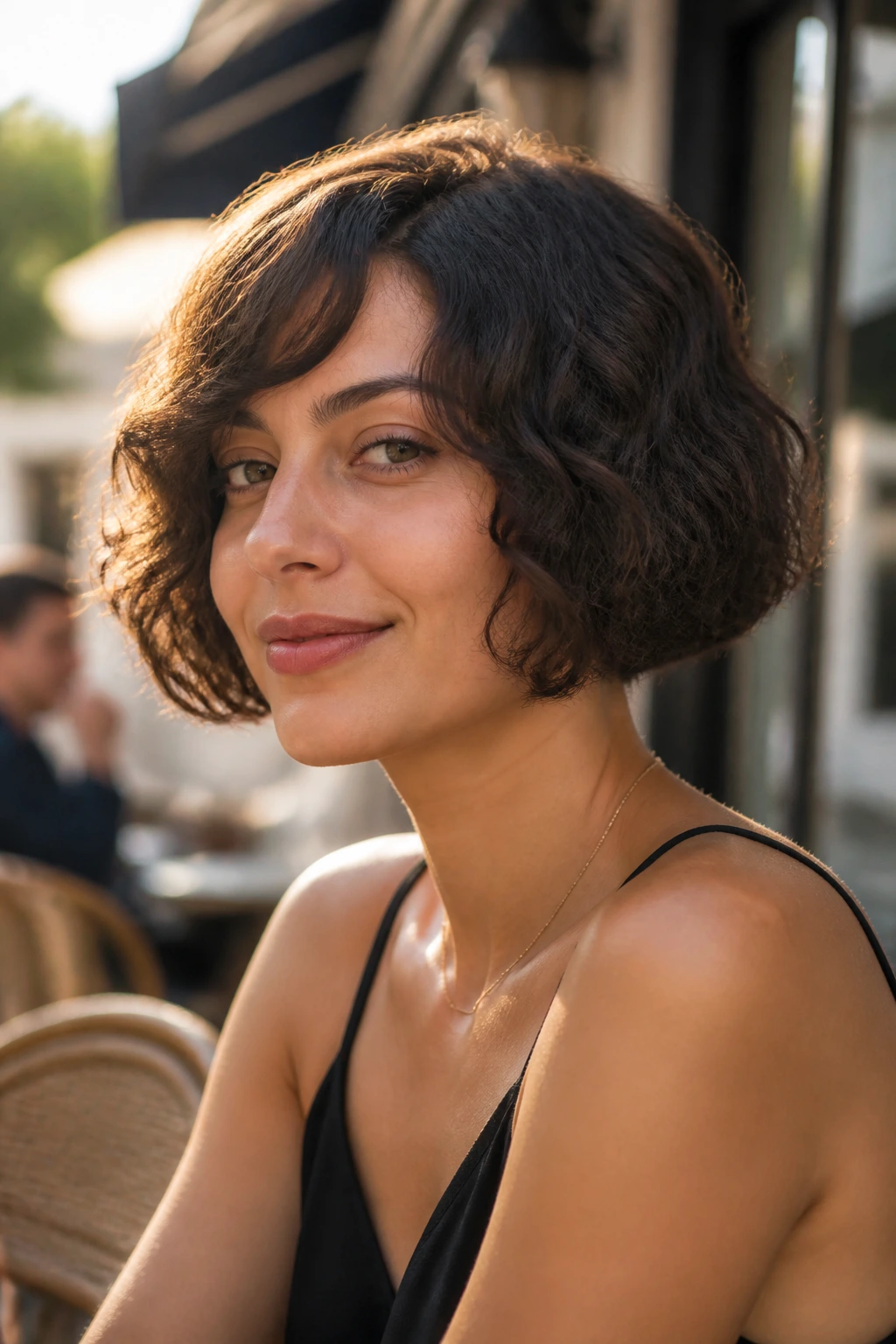
Here’s the contradiction: a blunt bob can work on thin curly hair, but only if the inside of the cut is carefully reduced. The outside line stays strong, which makes the hair look thicker, while the hidden layers stop the curl mass from turning triangular.
This is one of my favorite options for people who are nervous about choppy cuts. It keeps the finish polished, but there’s still movement inside the shape. The hair doesn’t look overworked. It just looks like it knows where it’s going.
The catch is that the cut has to be precise. Too much internal layering and the perimeter starts to look hollow. Too little and the bob goes blocky. A good stylist can walk that line. A rushed one can’t.
15. Wavy Crop with Wispy Bangs
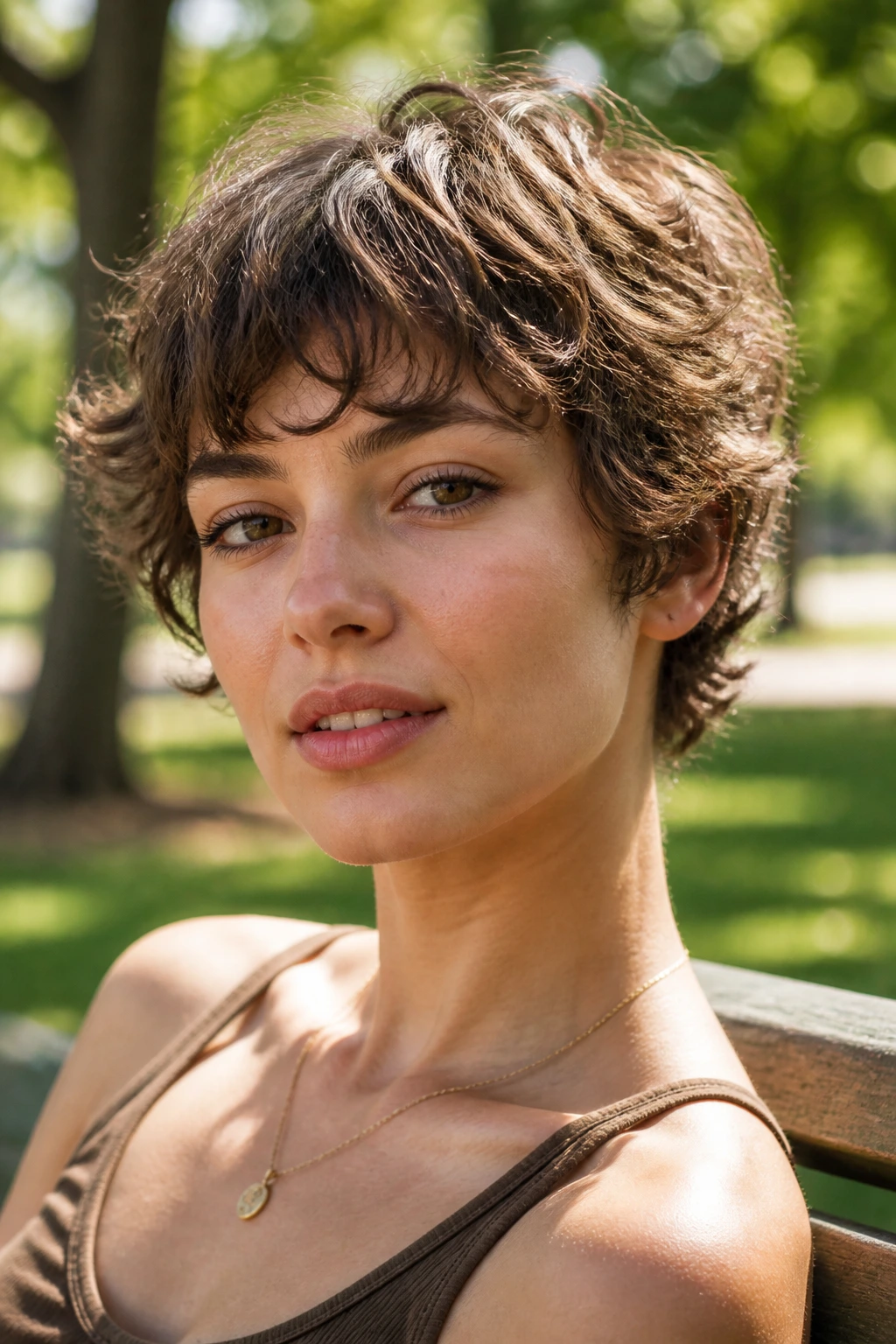
Loose curls that lean wavy often do well in a crop with bangs that don’t try to be too perfect. Wispy bangs break up the forehead area and keep the top from looking stretched, which helps fine hair feel a bit fuller through the front.
This shape works because it leaves room for the hair to settle naturally. There’s no heavy fringe sitting on the face and no long bottom pulling down the silhouette. It’s a light, airy cut that can still look deliberate, which is a rare and useful thing.
If your hair is finer around the temples, keep the bangs longer there. A tiny bit of length at the outer corners prevents that awkward see-through look around the face.
16. Nape-Tapered Curly Crop
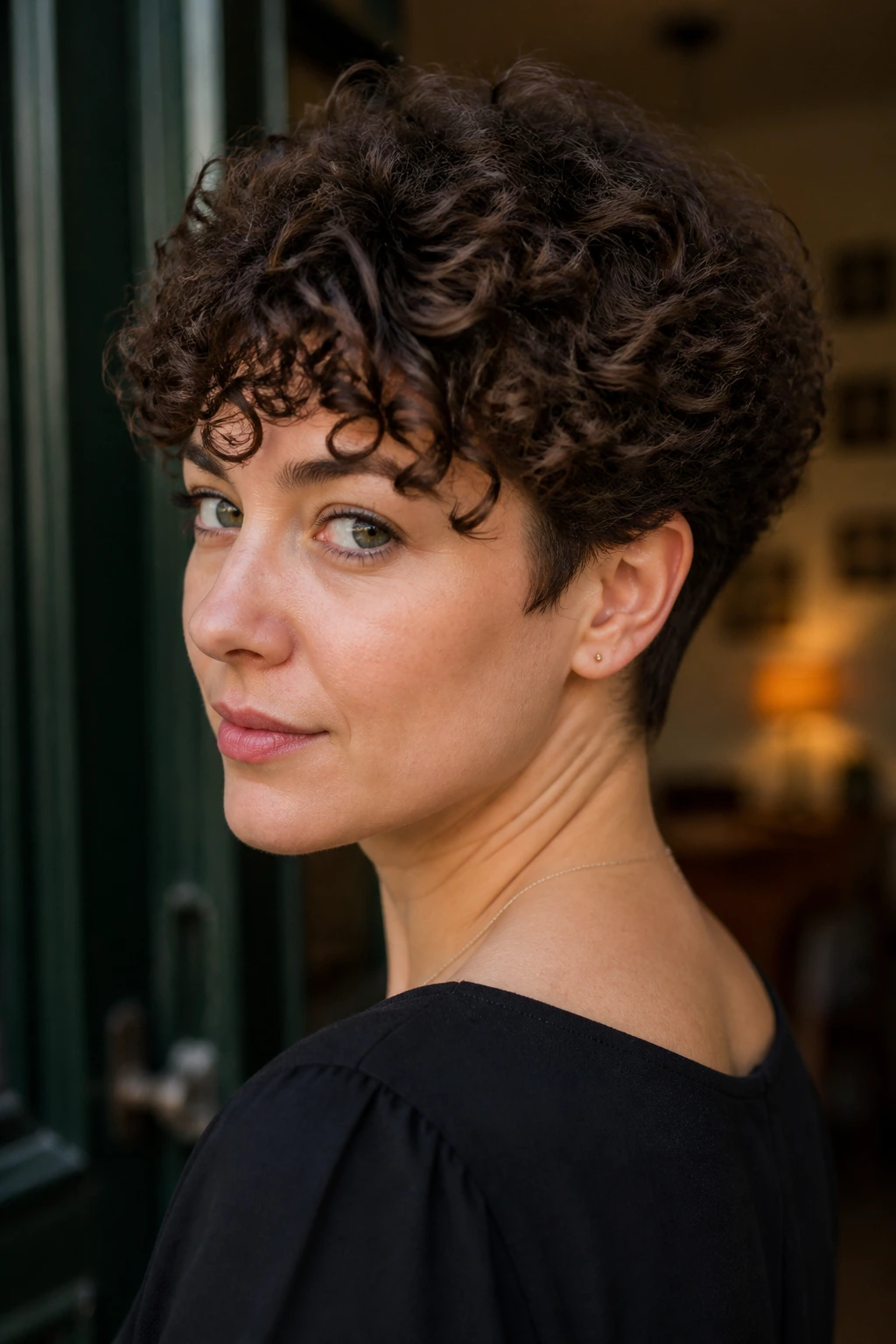
The nape taper is doing more than looking tidy. It removes weight where the hair tends to flatten and gives the back of the cut a cleaner rise. On loose curls, that can make the whole shape feel sharper without getting severe.
This is a strong choice if you wear collars, jackets, or scarves a lot. The hair sits off the neck and doesn’t get crushed as easily. The top remains soft, the back stays neat, and the sides can be adjusted to suit your face.
A nape-tapered crop also grows out well. That matters more than people admit. A lot of short cuts look fine on day one and awkward six weeks later. This one usually keeps its outline longer.
17. Flipped-Out Bob with Razor Ends
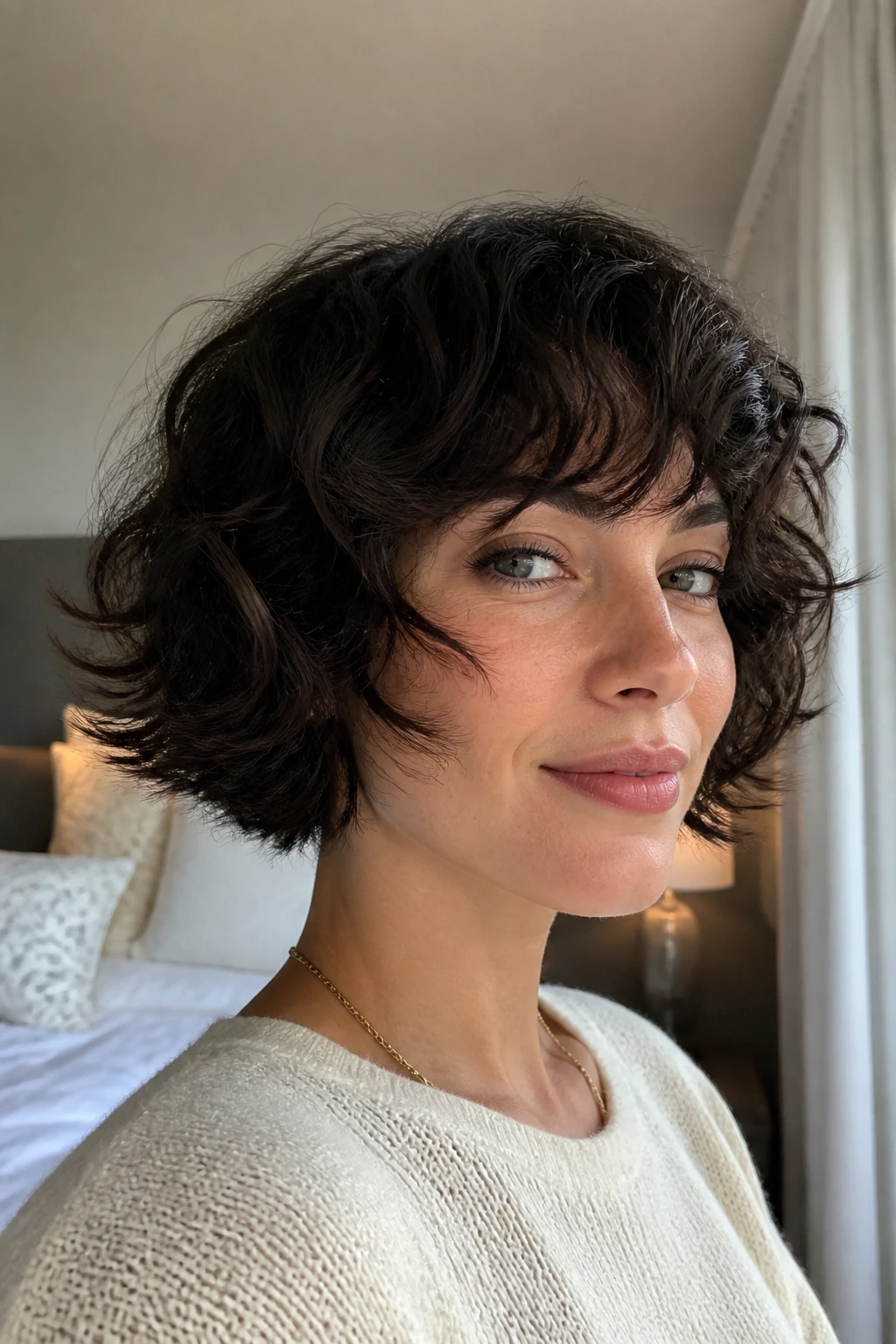
A flipped-out bob brings a little motion to hair that might otherwise sit close to the head. Razor ends help the tips lift outward instead of falling into a blunt curtain, and that gives loose curls a playful edge.
I like this shape when the curls are soft and the hair is fine but not flimsy. The ends need enough body to hold a bend, or the flip looks accidental. If the texture is there, though, this cut has personality without needing a lot of styling.
Use a round brush only at the ends if you’re blow-drying. Don’t flatten the whole bob with heat. That defeats the point and makes the cut look older than it is.
18. Boyish Crop with a Long Fringe
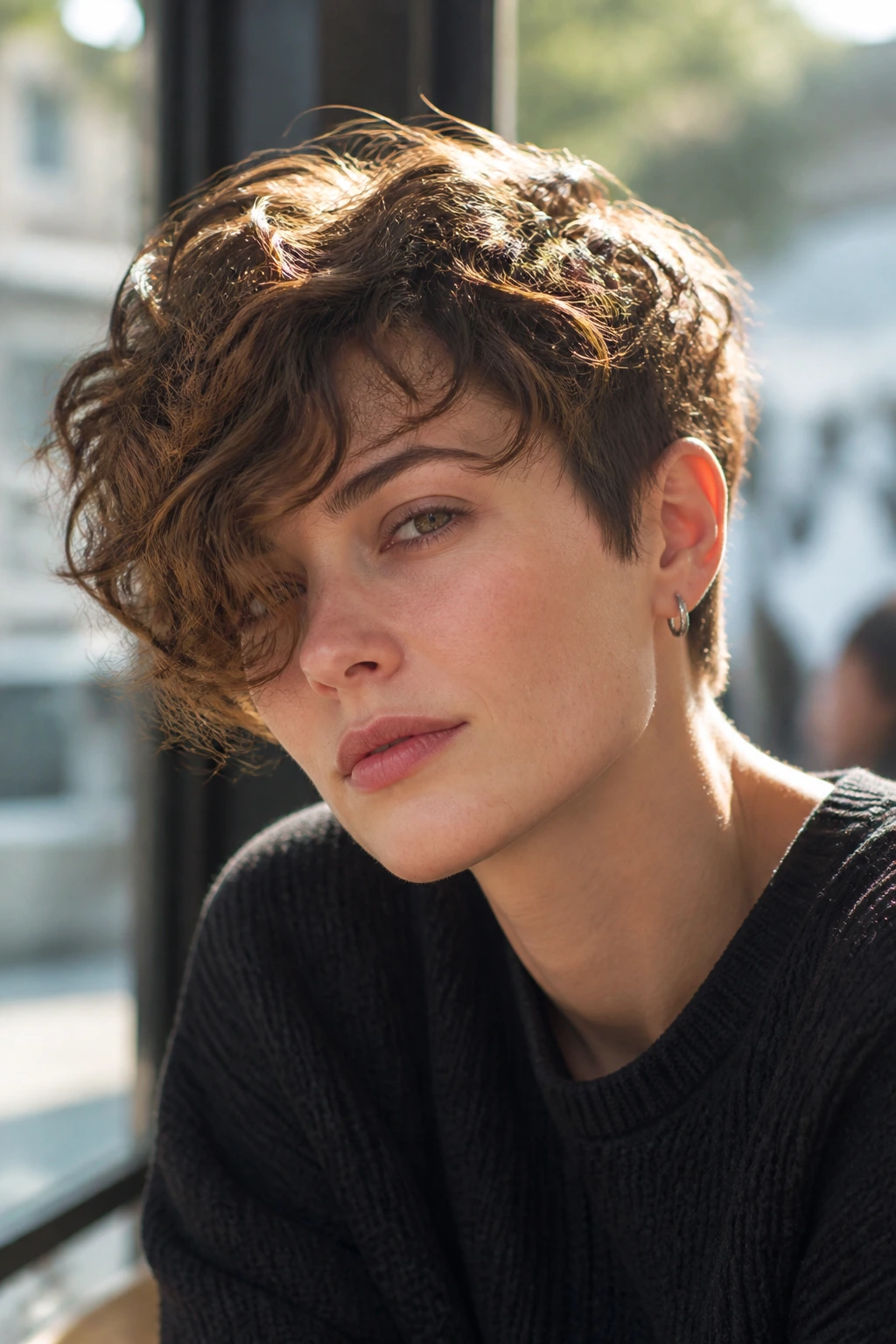
A boyish crop sounds plain until you see how the fringe changes the whole thing. The short sides keep the shape tight, while the longer front gives the curls a place to land. On thin hair, that contrast keeps the cut from feeling flat.
This is a smart option if you want something low-fuss but not masculine in a hard way. The fringe softens the face, the short back keeps the neckline neat, and the loose curls add enough softness to stop the cut from reading too severe.
The styling rule here is simple: don’t overload the fringe with product. A heavy cream can make it stick to the forehead. A light foam or flexible gel works better.
19. Mini Shag with Airy Temples
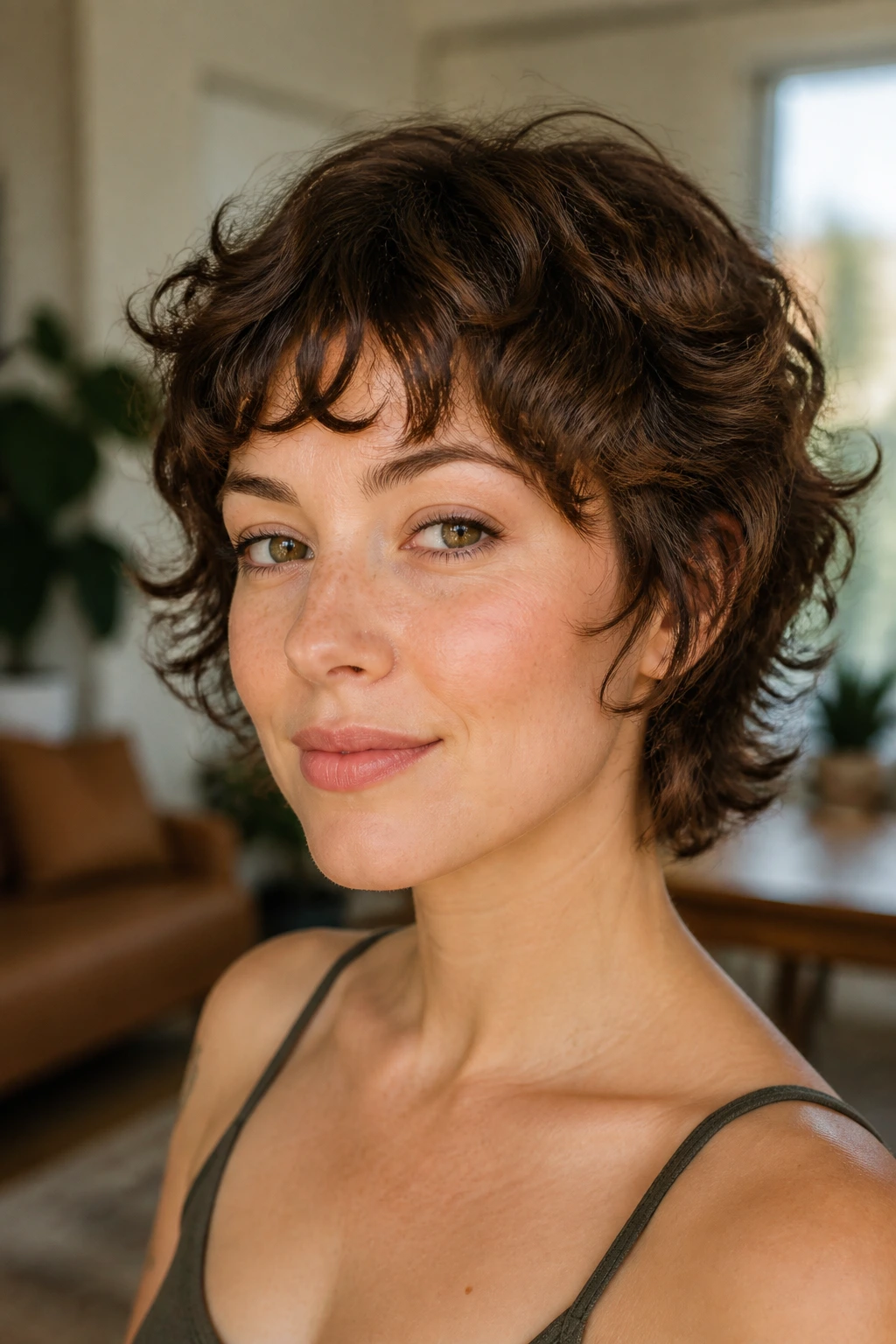
The mini shag is one of the easiest ways to make fine curls look more alive. Short layers around the temples open up the face, while the rest of the cut stays compact enough to keep body where you need it.
What I like about this one is that it doesn’t rely on one big trick. It uses several small ones: broken-up ends, a little crown lift, and lightness at the sides. Together, those details make the hair look fuller without making it look overdone.
If your temples are the first place hair starts to go sparse, this cut can be kinder than a blunt bob. It doesn’t leave a hard line right where the hair is thinnest.
20. Side-Swept Curly Crop
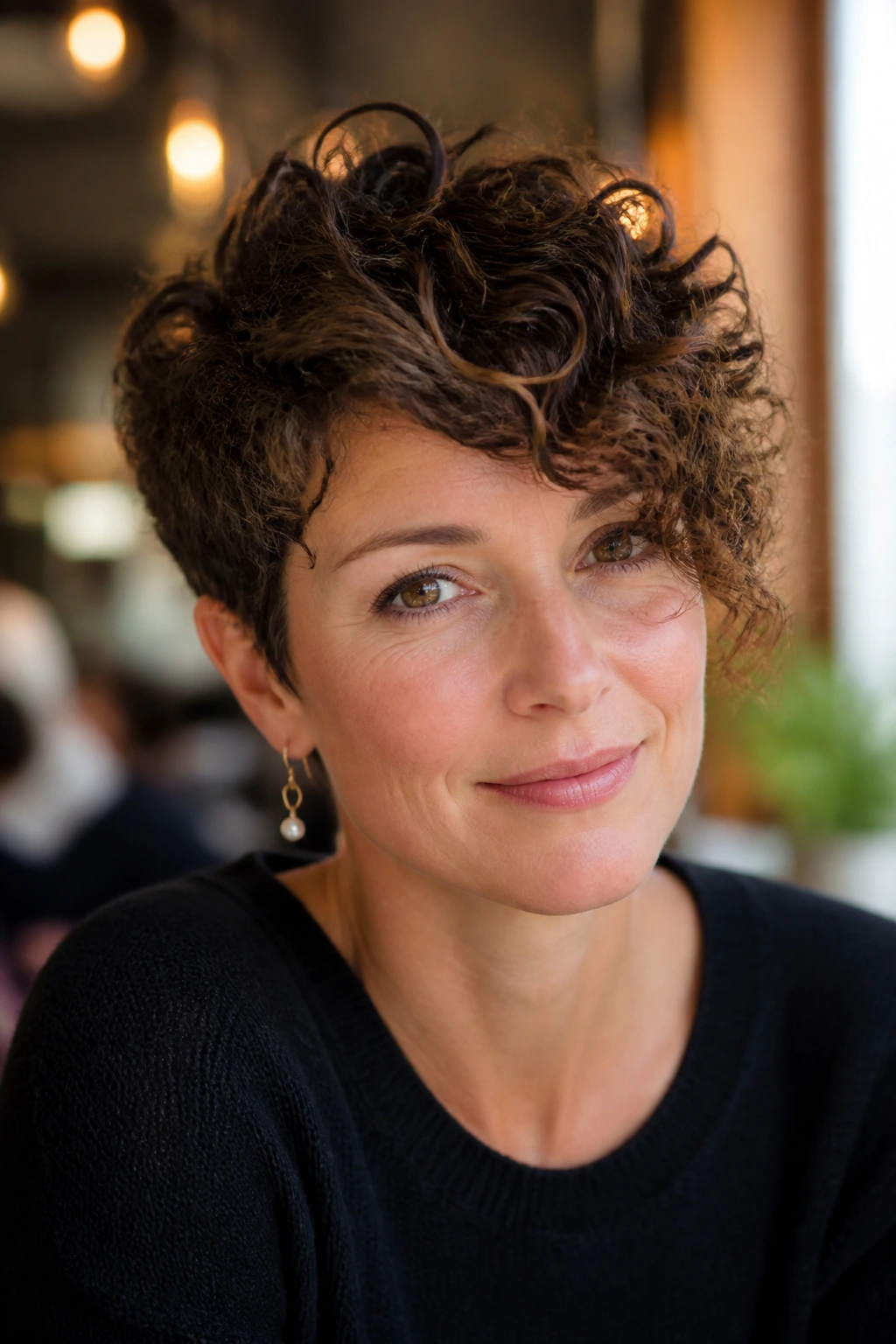
A side-swept crop gives you movement without needing much length. The hair is kept short enough to stay lifted, and the longer sweep across the forehead breaks up the shape in a way that flatters loose curls.
This is a useful cut if your hair naturally leans one way. Instead of fighting the direction, it uses it. That can make the styling process much calmer, which is saying something because short curly hair can get weird fast if you push it against its grain.
I’d ask for a soft diagonal fringe rather than a heavy side bang. Heavy bangs on thin curls can sit like a wet towel. A lighter sweep bends better and dries faster.
21. Neck-Length Cut with Broken Ends
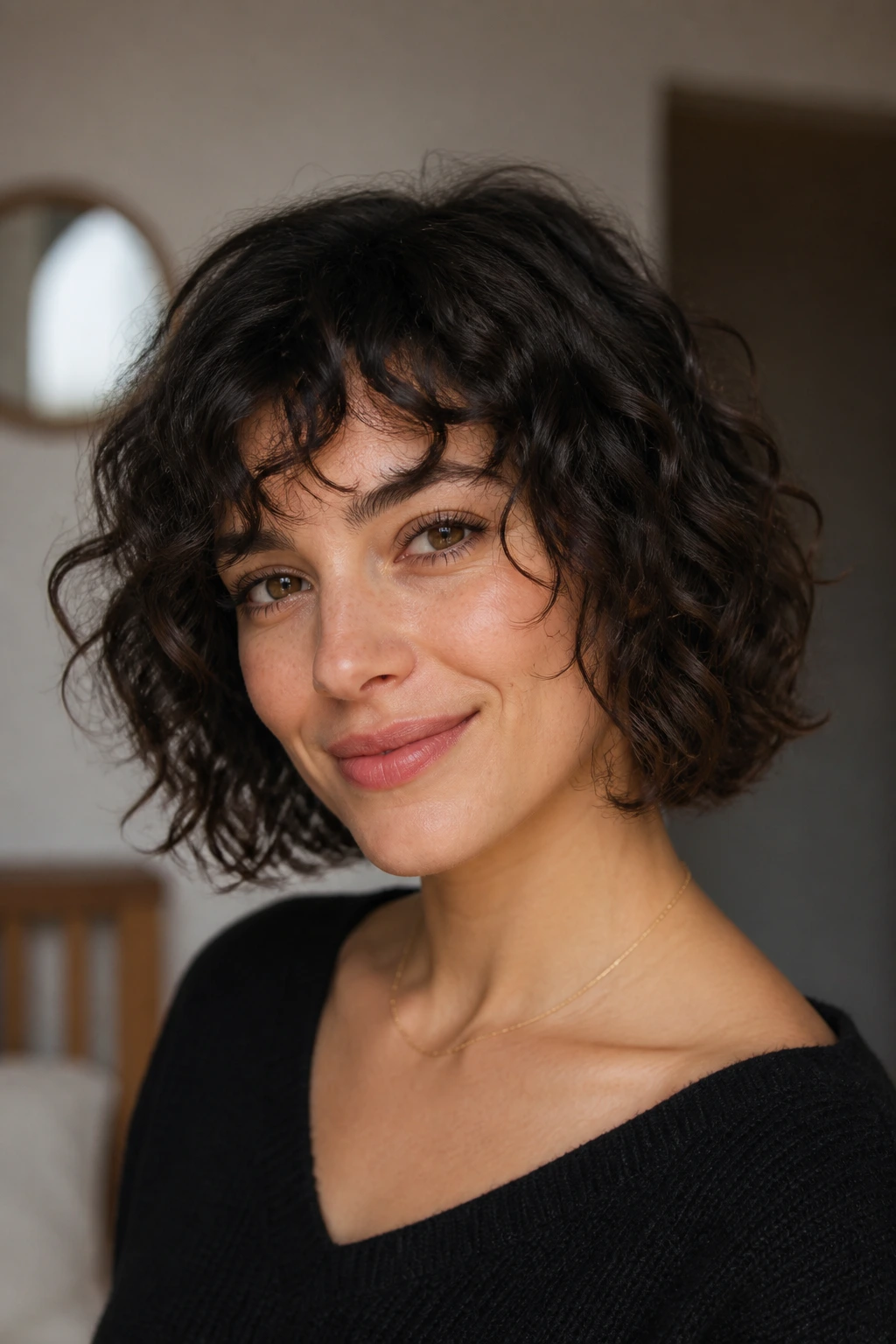
Neck-length sounds tame until you see it on curly hair with choppy ends. The length keeps enough weight for the curls to settle, but the broken-up edge keeps the bottom from looking dense in the wrong way. It’s a nice middle ground.
This cut works well if your loose curls stretch a lot when dry. Going too short can make them spring up more than expected, while neck length gives you a bit of insurance. The silhouette still feels short, just not severe.
A center part can work here, but a slight off-center part is often more flattering. It creates a little asymmetry and helps the hair feel thicker around the crown.
22. Curly Mushroom Cut with Light Crown Layers
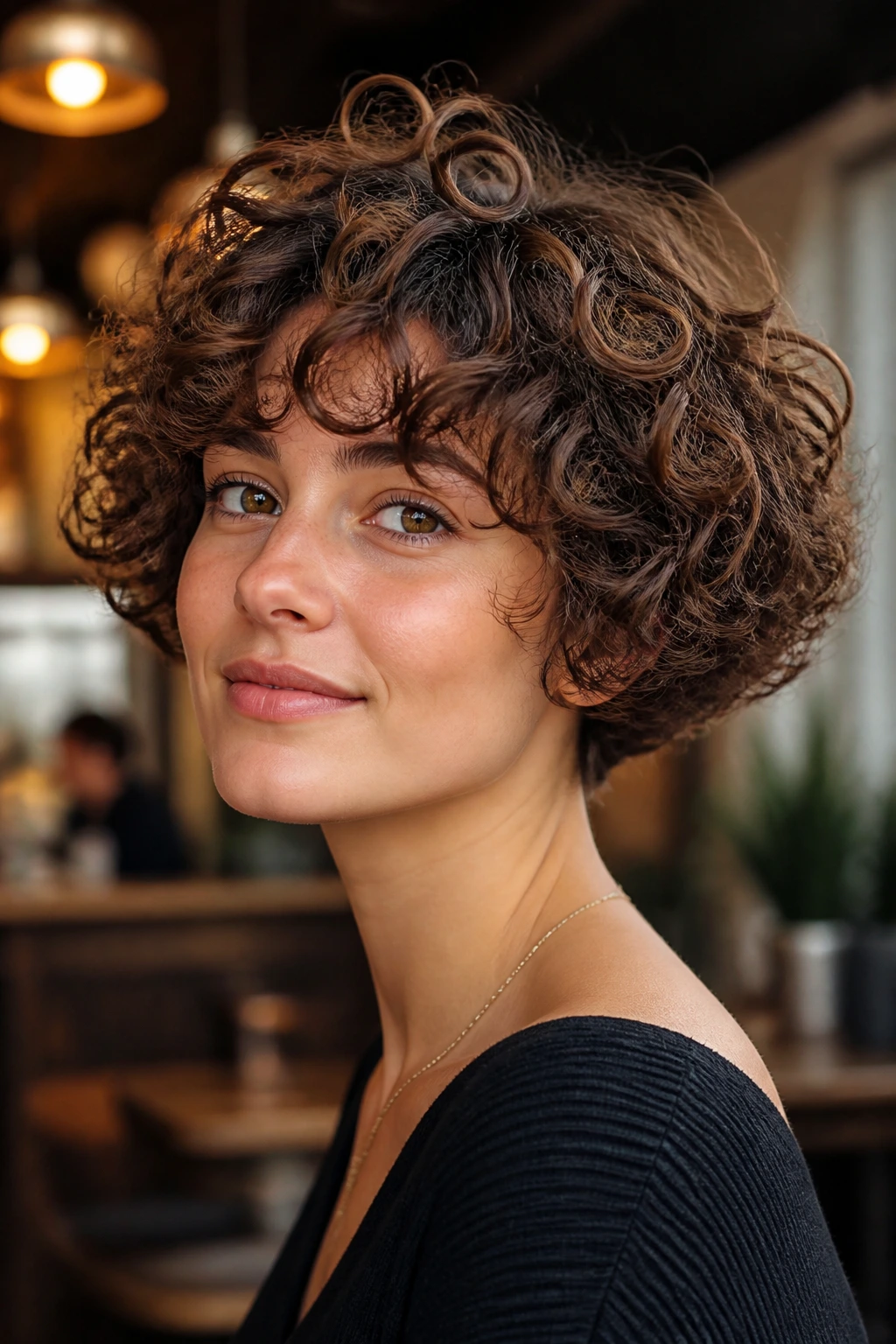
The mushroom cut got a bad reputation from a few unfortunate versions, but the modern curly version has a lot more shape. Light crown layers stop the top from ballooning too hard, while the rounded sides keep the outline soft and full.
This cut is strongest on hair that naturally bends into loose, rounded curls. If your curls stack nicely and you want a distinctive shape, it can look smart and fresh. The fullness comes from the silhouette, not from stuffing the hair with product.
You do need a stylist who understands balance. Too much layering at the top and the whole shape loses its rounded edge. Too little and it sits like a cap. Neither is the goal.
23. Point-Cut Crop with Soft Edges
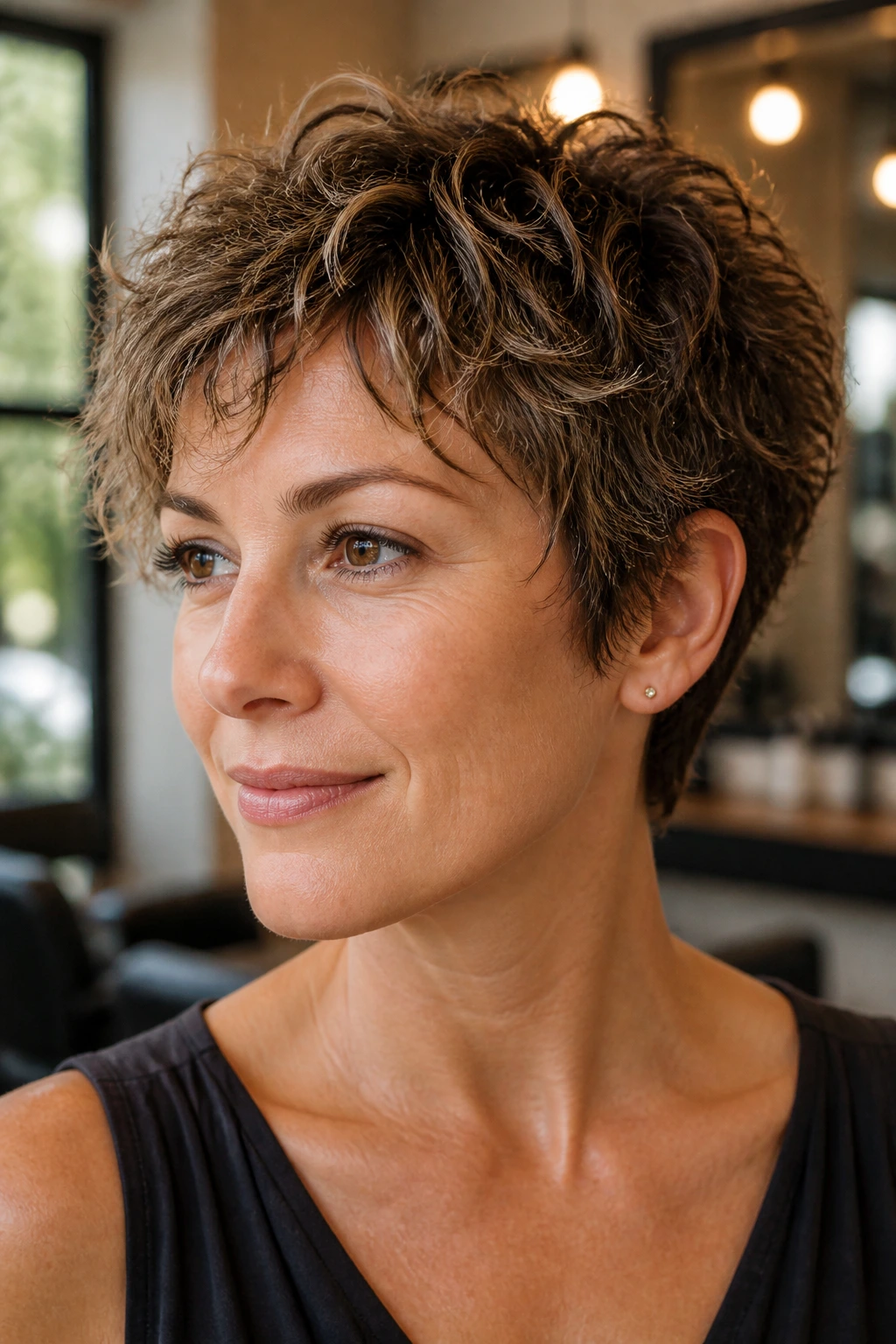
Point cutting is one of those techniques that doesn’t sound dramatic but changes everything. The stylist cuts into the ends at an angle, creating soft, uneven tips that help thin curls look less sparse. On a short crop, that keeps the shape airy without making the perimeter ragged.
This is a great option if you want a clean shape with a little edge. The cut looks neat from a distance and textured up close, which is a useful combination. Loose curls tend to behave better when there’s a little irregularity in the finish.
If your hair frizzes easily, pair this cut with a light gel cast. Once it dries, scrunch out the crunch and leave the edges soft. That keeps the point-cut texture visible without letting frizz take over.
24. Brushed-Forward Chin Bob
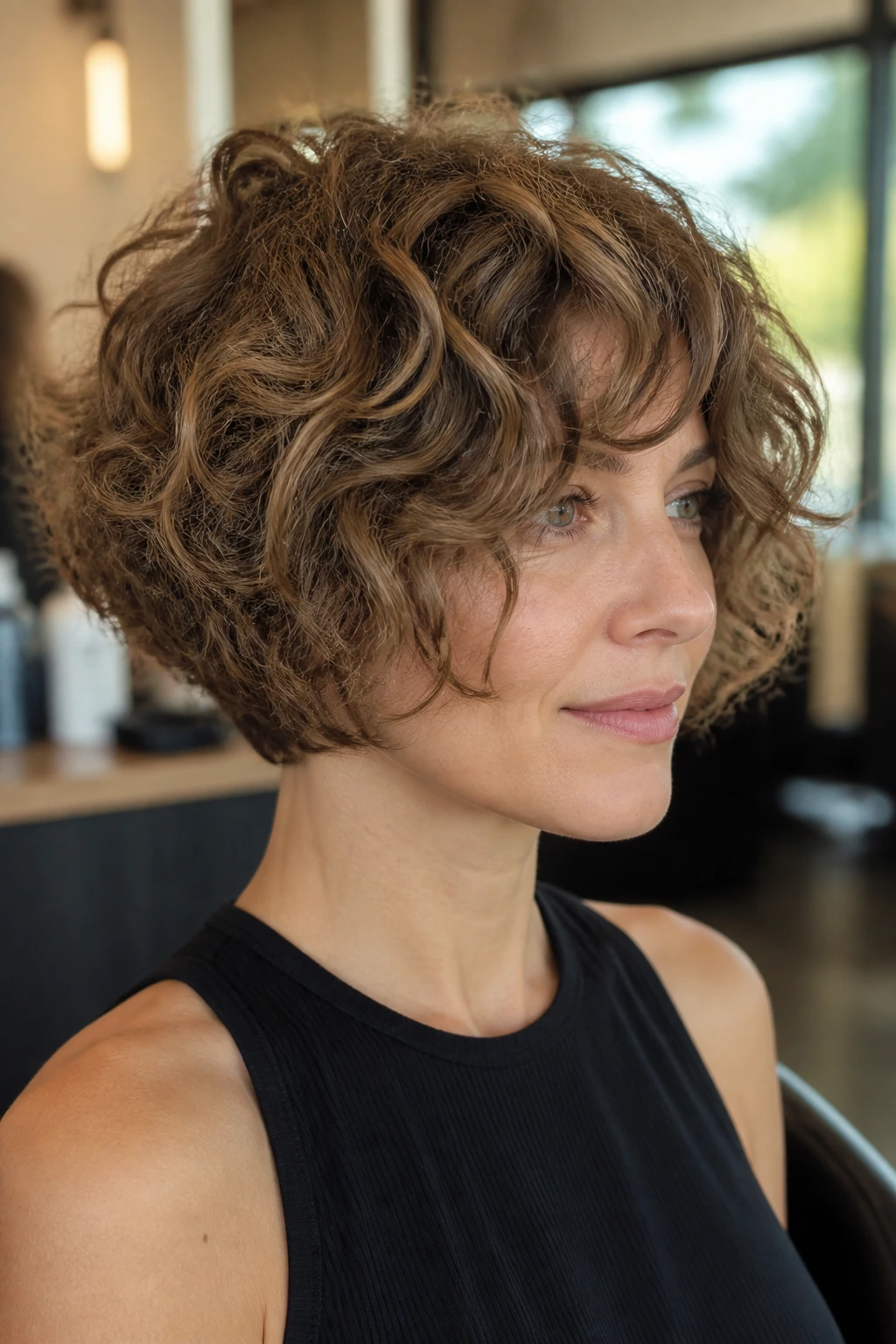
Brushing the hair forward changes the whole feeling of a chin bob. Instead of sitting back and exposing the scalp at the center part, the curls move toward the face and stack around the jaw. That little shift can make thin hair look denser fast.
The forward direction also helps loose curls clump into larger, more visible pieces. Small curls on fine hair can separate too much; pushing the shape forward helps them gather. It’s a subtle trick, but it matters.
This cut is especially good if your face is narrower and you want a little more visual width around the lower half. The chin-length line keeps it short, and the forward styling keeps it from going limp.
25. Short Curly Lob with Beveled Ends
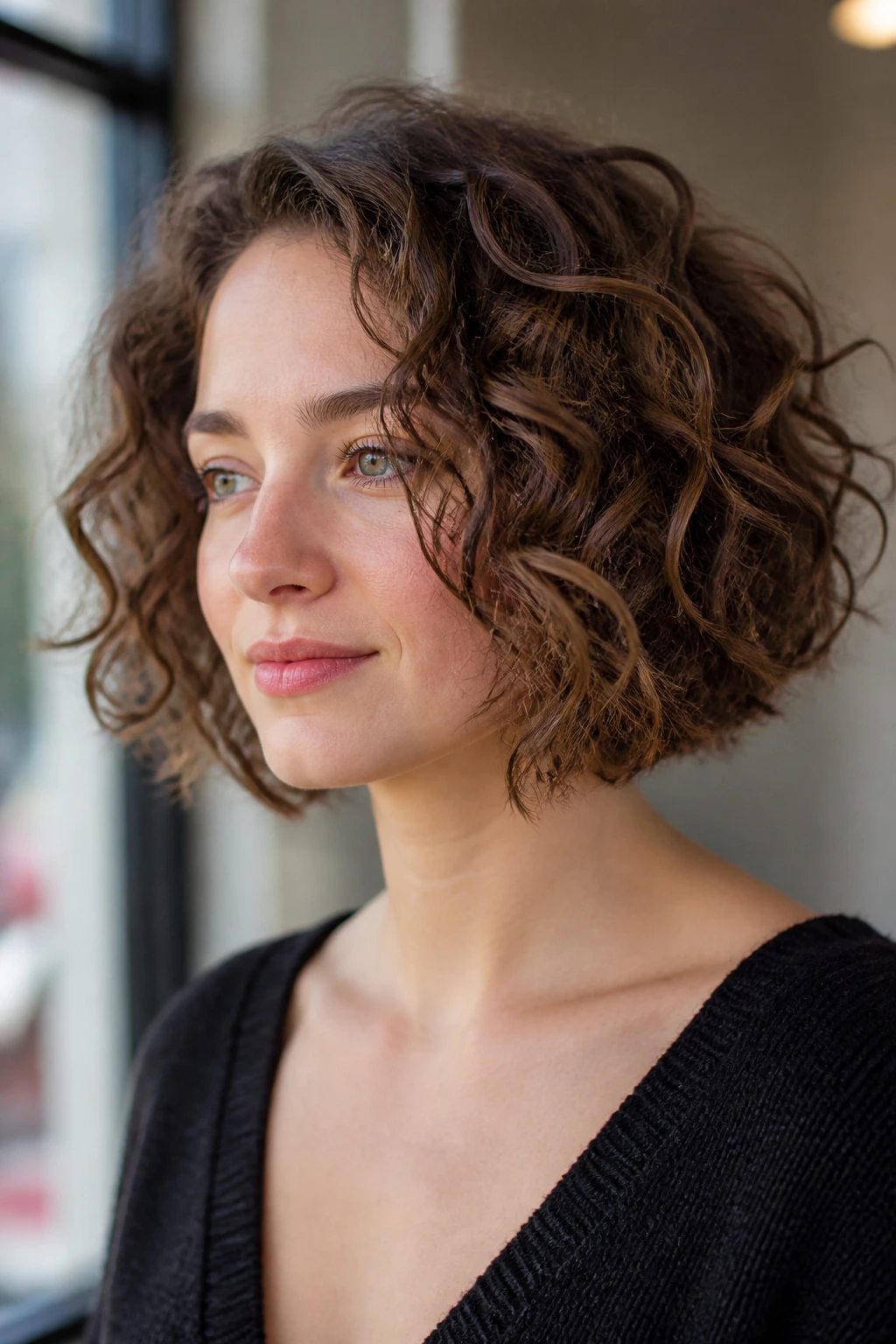
A short curly lob is for the person who wants to stay near the short end of things without losing the option to tuck hair behind the ear. Beveled ends soften the line so the hair doesn’t feel heavy at the bottom, and the length gives loose curls enough room to show movement.
This cut is easy to live with, which is not the same thing as boring. It grows out gracefully, works with a middle or side part, and gives you enough length to vary the styling without letting the curl pattern get dragged down.
If you’ve been cutting your hair shorter and shorter because the ends go wispy, this is a smart place to pause. It gives you some breathing room while keeping the shape fresh.
Why Short Choppy Layers Help Thin Loose Curls Look Fuller
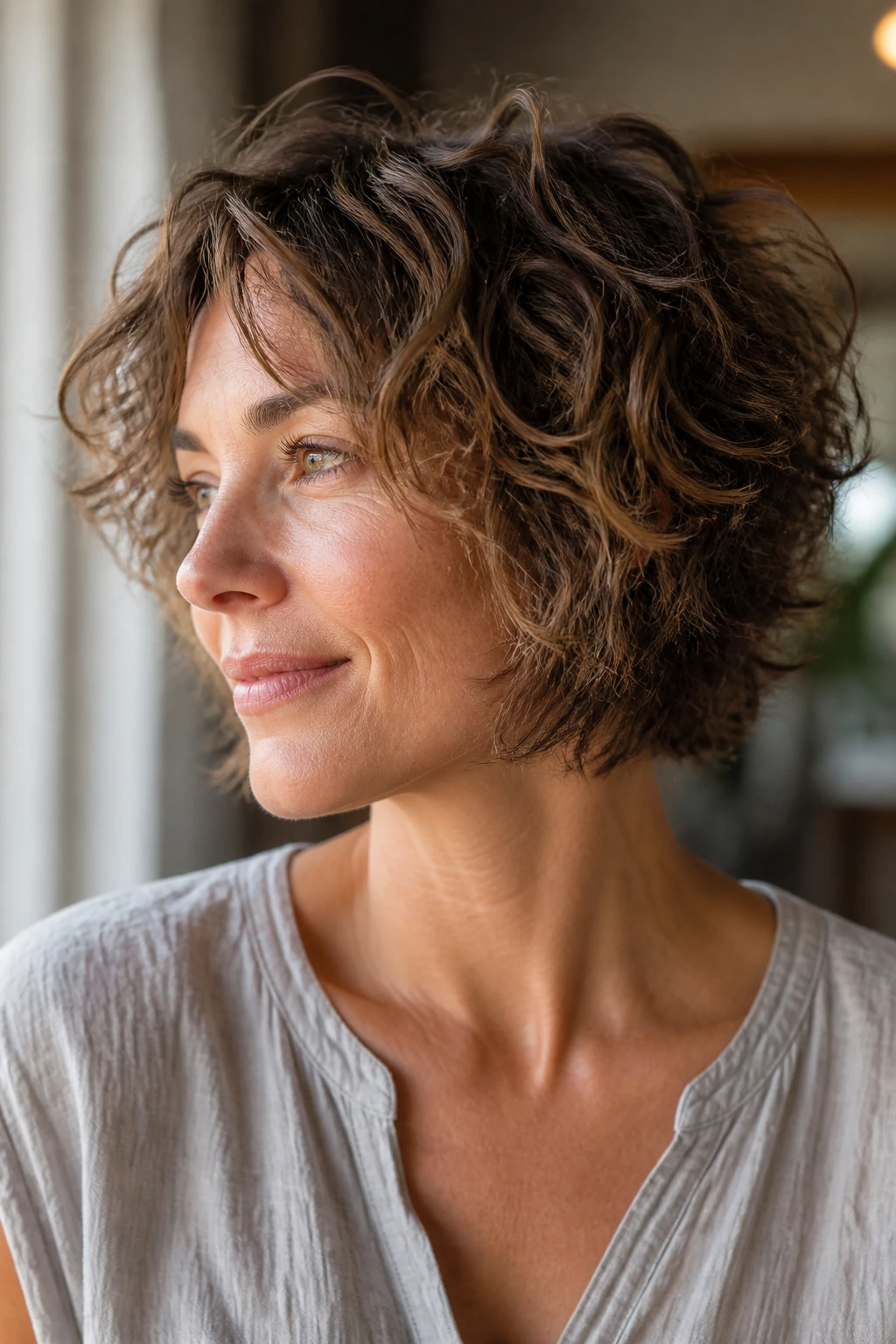
The whole trick is geometry, not magic. Thin loose curls need a cut that creates shape where the hair naturally wants to fall flat. Short choppy cuts do that by removing weight in controlled places and leaving density in the outline.
A blunt cut on this texture can look polished for about five minutes, then the ends start to separate and the whole thing looks thinner than it is. Choppy cuts break that line up. They let the curls sit in small, uneven clusters, which reads as body.
There’s also a practical reason shorter shapes help. Loose curls lose definition when they get too long because the weight stretches them down. That’s why a shoulder-skimming cut can look flatter than a chin-length one even if the hair is the same density. The shorter version simply gives the curl a better chance to hold its shape.
How to Ask for the Shape Without Losing Density
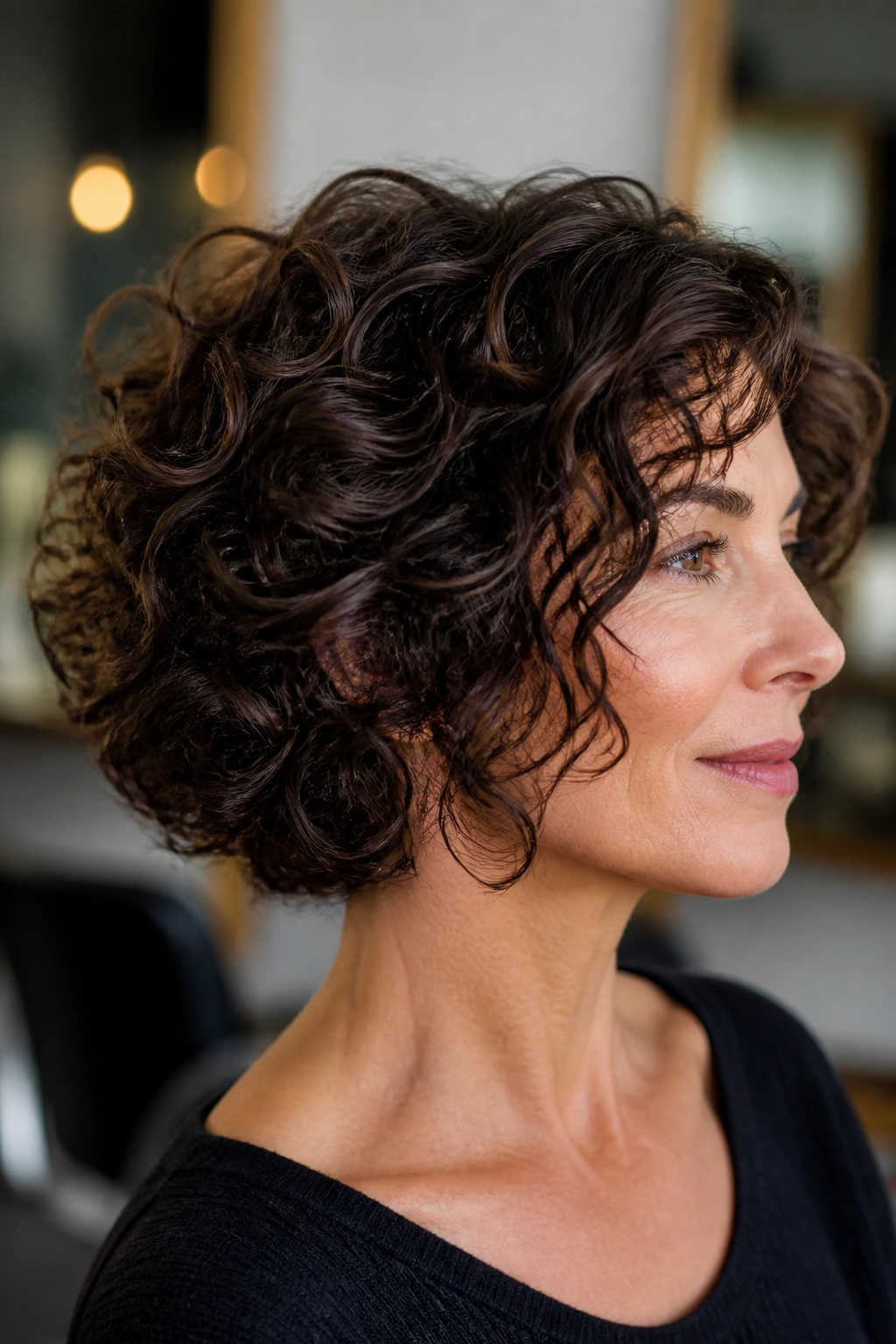
Bring the conversation back to density every time. That word matters. Tell the stylist you want movement without too much removal, because thin hair can handle texture only up to a point.
A good script is simple:
- Keep the perimeter full enough to look solid.
- Add texture through point cutting, not aggressive thinning.
- Use dry curls as the guide.
- Leave enough length for the front pieces to curve.
- Check the shape from the side, not just the front.
If you’ve ever had a stylist take too much from the lower half, you already know the problem: the cut looks airy in the chair and sparse at home. Airy is good. Sparse is not. The difference is usually a half-inch and a much gentler hand.
Essential Tools and Products for These Cuts
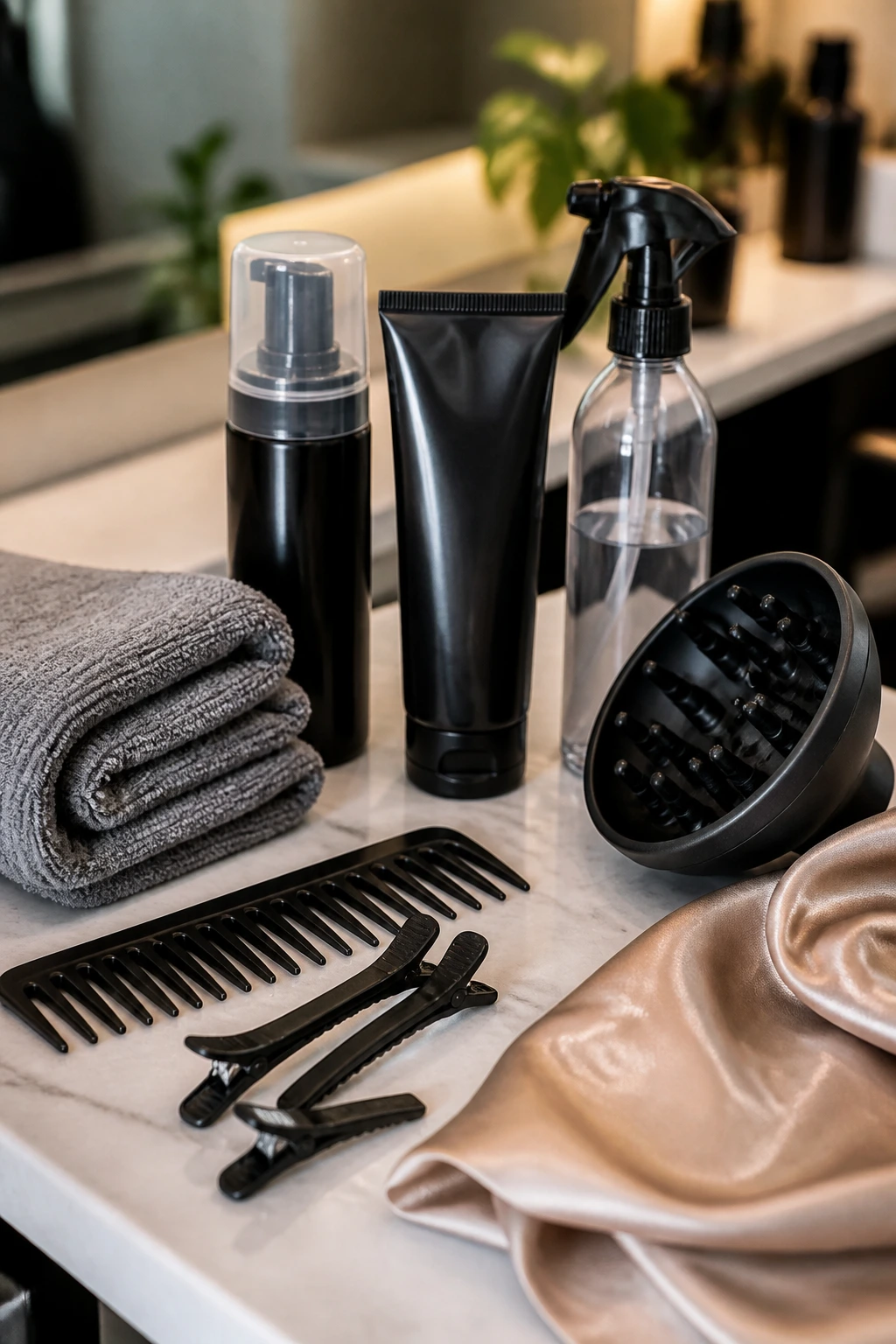
- Microfiber towel or cotton T-shirt: Cuts down on rough frizz while the curls are still fragile.
- Wide-tooth comb: Good for distributing conditioner without pulling fine strands apart.
- Duckbill clips: Handy for clipping roots while they dry, especially at the crown.
- Lightweight mousse: Gives loose curls lift without the slick, heavy feel of cream.
- Flexible-hold gel: Helps the ends stay piecey instead of puffing out.
- Diffuser attachment: Useful if you need the roots to stand up a little.
- Spray bottle with water: Lets you refresh front pieces without rewashing the whole head.
- Satin pillowcase or bonnet: Keeps the cut from getting crushed overnight.
Styling Tricks That Keep the Shape Alive
The biggest win is to stop touching the hair so much. Fine curls get stringy when they’re handled into submission. Put product in while the hair is damp, scrunch once or twice, and let the diffuser do the heavy lifting.
Root clips are underrated. Clip a few sections at the crown while the hair dries, and you’ll get lift where it matters most. Remove the clips when the roots are about halfway set. Leaving them in too long can make the hair look bent in a bad way.
Also, choose where the product goes. Mousse and root spray belong near the scalp. Cream belongs only on the ends if you use it at all. The more you load the lower half, the more the hair loses that choppy, airy finish.
Smart Product Choices for Thin Curly Hair
Heavy oils are a trap here. They can make the hair look shiny for an hour and limp by lunch. Light foam, gel, and a small amount of leave-in are usually the better route because they support shape without weighing the curls down.
If your hair tangles easily, use conditioner sparingly and rinse well. Fine curls don’t need a thick film sitting on them. They need slip while you detangle, then a clean finish so the cut can do its job.
One more thing. If your hair gets flat fast, watch the first ingredient in your styling product. When water is high on the list and the formula feels light in your palm, that’s usually a better sign than a rich cream with a buttery texture.
How to Keep the Cut Looking Good Between Trims
Short choppy haircuts live or die by the trim schedule. Plan on 6 to 8 weeks if the shape is tight, and a little longer if you’ve got a softer bob or lob. Once the perimeter starts losing its line, thin loose curls can go from airy to scraggly fast.
At home, refresh only the parts that need help. Damp your fringe, reactivate the top with water, and leave the lengths alone if they still have shape. Overwetting the whole head usually flattens the good work you did in the first place.
Sleeping matters, too. A satin pillowcase keeps the cut from fraying overnight, and a loose pineapple or small clip at the crown can save the top from getting crushed. If the hair is very short, a bonnet may be more useful than a scrunchie.
Common Mistakes That Make Thin Loose Curls Look Smaller
The first mistake is over-layering the ends. It sounds helpful until the hair dries and the bottom looks stringy. The fix is simple: keep the bottom line fuller and ask for texture higher up instead.
Another one is cutting curls too short without checking shrinkage. Loose curls often spring higher than expected, and that can turn a sensible bob into a sudden pixie. Cut dry, or at least check the dry shape before committing to the final length.
The third trap is using too much cream or oil. Fine curls don’t need that much help. When they’re overloaded, the pieces clump in a flat way and the choppy texture disappears.
Last, don’t let the crown get ignored. A short curly cut with no root lift just looks compressed. Clip the roots, diffuse at the base, or ask for shorter internal layers near the top if the scalp area always lies flat.
Variations and Alternatives to Try

The Softer Grow-Out Bob
If you want something easier to maintain, keep the length at the jaw and soften the layers. It grows out more quietly and won’t need constant reshaping.
The Edgier Pixie Shag
This version leans into texture, with shorter sides and a messier top. It works best if you like a cut that looks better after scrunching than after brushing.
The Polished Side-Part Crop
Keep the shape neat and rely on a deep side part for lift. It’s a cleaner look for people who want short hair without too much fringe around the face.
The Longer Face-Frame Lob
If you’re nervous about going short, keep the back a little longer and let the front pieces hit just below the chin. You still get the choppy effect, just with more length to work with.
The Bold Nape Taper
Take the back shorter and cleaner while leaving the top soft. It’s a sharp silhouette that stays light on the neck and gives thin curls a more deliberate outline.
Frequently Asked Questions
Will choppy layers make my thin curls look even thinner?
Not if they’re placed with care. The problem is usually too much layering at the ends, not layering itself. The best versions remove weight where the hair is dense and keep the perimeter full enough to read as solid.
Should this cut be done wet or dry?
Dry is usually better for loose curls, or at least mostly dry. Curls contract as they dry, and a wet cut can hide how much shrinkage and separation you’ll actually get.
How short is too short for thin loose curls?
Short is only too short when the curl pattern starts to puff away from the head and show scalp in the wrong spots. For many people, that happens somewhere above the jaw unless the crown has enough texture and the sides are shaped carefully.
Do bangs work with this hair type?
Yes, but keep them light. Heavy bangs on thin curls can sit flat and separate in the middle. Soft fringe, curtain pieces, or a side sweep usually behave better.
What if one side of my hair curls more than the other?
Ask for a cut that respects the stronger side instead of fighting it. A deep part, asymmetry, or a slightly longer front piece on the weaker side can balance the whole shape.
How often should I refresh the cut?
Every 6 to 8 weeks is a good rhythm for most short choppy shapes. If the outline starts losing its edge sooner, especially around the nape or fringe, trim a little earlier.
Can I air-dry these cuts, or do I need a diffuser?
You can air-dry, but a diffuser helps the roots keep their lift. If you air-dry, clip the crown and leave the hair alone while it sets. Fiddling with it halfway through usually flattens the top.
What should I avoid if my hair frizzes easily?
Skip heavy creams, rough towel drying, and brushing after the hair is dry. Those three habits can make a choppy cut look fuzzy fast. A light gel and a microfiber towel usually do a better job.
The Shape That Makes Fine Curls Work Harder
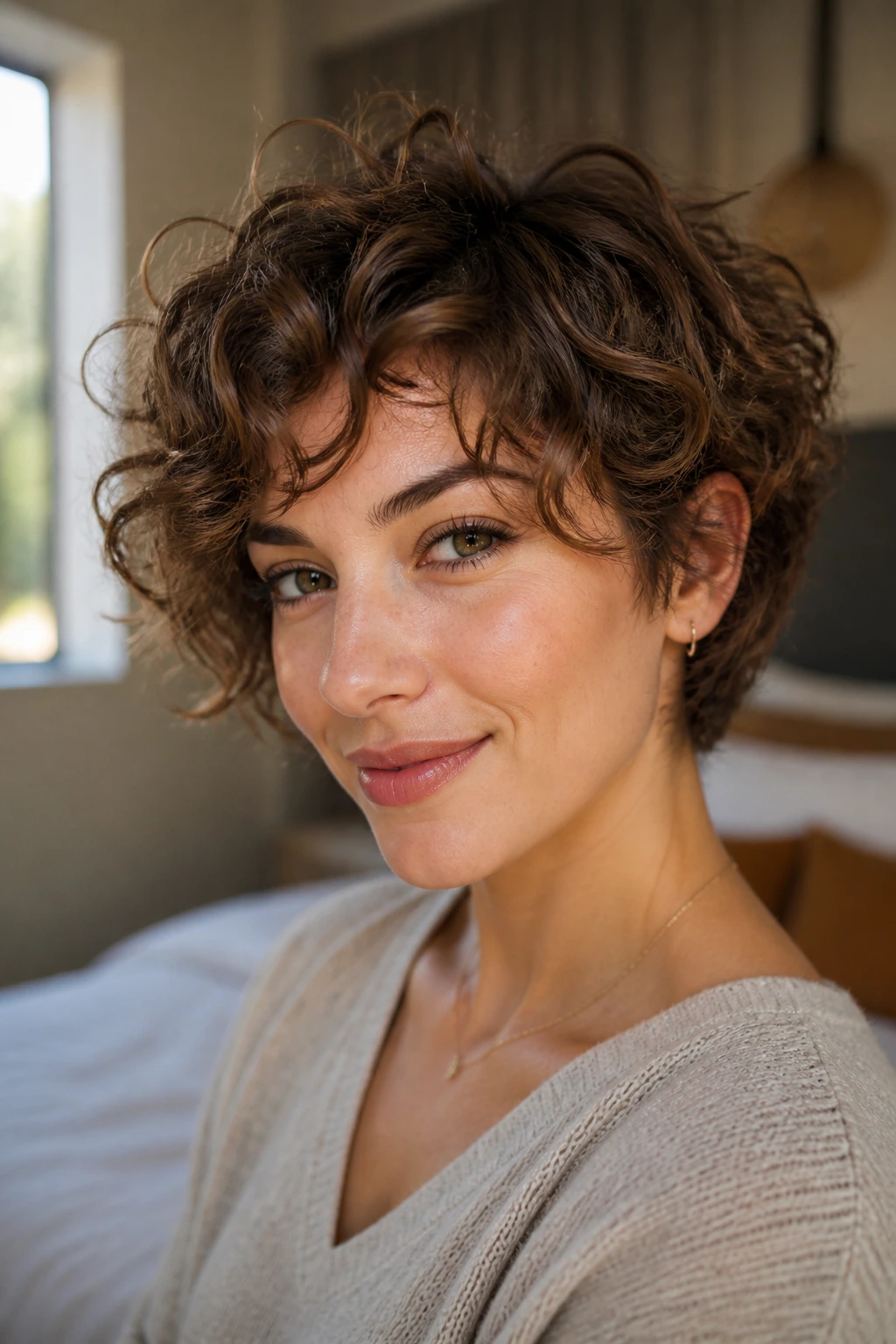
Short choppy haircuts have a rare advantage on thin loose curls: they do more with less. A smart cut can turn soft, slightly uncertain curl pattern into shape, lift, and a little movement around the face that doesn’t disappear by lunch.
The real win is not any single haircut on this list. It’s the idea behind all of them. Keep the outline purposeful, keep the ends from turning wispy, and let the curls move in pieces instead of forcing them into one flat shape. That’s the part people notice, even if they can’t name it.
If your hair has been hanging around in that awkward middle ground — too fine for heavy layers, too curly for a blunt line — one of these cuts is probably closer than you think.