



The best short queer haircuts for long hair with curtain bangs do one thing well: they make length look intentional instead of accidental. That sounds like a small distinction until you’ve sat in a chair with a cape around your neck, staring at a mirror, trying to explain that you want something softer, sharper, a little masc, a little femme, and not remotely boring. Curtain bangs are the bridge. They give the front of the haircut somewhere to land, which means the rest of the hair can stay long, cropped, shaggy, tucked, or spiky without the whole thing feeling unfinished.
I like this category because it refuses the fake rule that long hair has to look traditionally feminine and short hair has to look traditionally masculine. No. Not here. A good queer haircut often lives in the in-between spaces: a cheekbone-grazing fringe, a nape that’s cleaned up just enough to feel sharp, layers that move when you turn your head, and a silhouette that changes depending on whether you blow-dry it, scrunch it, or leave it half-damp and let the day do the rest. The trick is never just “cut it short.” The trick is shape.
Curtain bangs matter more than people think. If they’re cut too blunt, too short, or too heavy, they sit there like a curtain rod with bad posture. If they’re long enough to split around the cheekbones or lips, they soften the face and pull the eye inward, which makes the rest of the cut read cleaner and smaller. That’s why these styles work on so many textures and presentations. They can move in a sharp, cropped direction or a more romantic one without forcing you to give up length.
Why These Cuts Keep Showing Up in My Notes

-
The front does the talking: Curtain bangs change the whole read of a haircut before the length even comes into focus, which is why a shoulder-length cut can suddenly feel much shorter and more structured.
-
Length stays where you want it: A lot of these styles keep the back or lower layers long, so you get the thrill of a shorter shape without losing the ponytail, knot, or braid options.
-
They flex across gender expression: The same cut can look more masc with a tighter nape and matte texture, or more femme with round brushing and shine.
-
Texture matters, but it doesn’t boss you around: Wavy, curly, straight, thick, and fine hair can all wear these shapes if the layering is adjusted with some care.
-
They grow out with less drama: A soft fringe and layered perimeter tend to age better than a blunt chop, which means fewer “my haircut betrayed me” mornings.
-
Salon language gets easier once you know the shape: You don’t need to memorize ten haircut names if you can point to the crown, the nape, the cheekbone length, and the weight you want removed.
1. Curtain-Bang Wolf Cut
A wolf cut with curtain bangs is the obvious place to start, and honestly, there’s a reason it keeps hanging on. The top is choppy and lifted, the ends stay ragged and lived-in, and the curtain bangs fall into the rest of the cut instead of sitting on top like a separate accessory. It reads short because the crown has been cut away from the bulk, even when the back still brushes the shoulders.
Why It Reads Short Without Losing Length
The wolf cut works when the layers start high enough to remove bulk around the crown and cheekbones. That shift pulls the eye upward, which makes the hair feel lighter and more cropped, even if the actual length stays past the collarbone. Ask for cheekbone-length curtain bangs and internal layers that start around the chin.
- Best on wavy or thick hair that likes movement.
- Needs mousse or texture spray if you want the shaggy separation to stay visible.
- Keep the ends a little blunt if your hair is fine; too much razor work can make it look wispy fast.
Pro tip: Let the bangs cool in the split position after blow-drying. If you touch them while they’re hot, they collapse into a weird middle clump.
2. Soft Shullet
The shullet is the mullet’s quieter cousin, and the soft version is the one I reach for when someone wants edge without a full punk stomp into the room. The front stays short and frame-y, the crown gets some lift, and the back keeps a little swing. With curtain bangs, it stops looking harsh and starts looking deliberate.
What makes this cut work is the balance. The nape is trimmed close enough to sharpen the neckline, but the rest of the hair doesn’t get chewed up into oblivion. That means you can tuck it, scrunch it, or wear it brushed out and still keep a shape.
This one is especially good if you want your hair to read a little masc on some days and a little androgynous on others. Same haircut. Different mood.
3. Long Mullet With Tapered Nape
If the wolf cut is messy-cool, the long mullet with a tapered nape is its more assertive sibling. The sides stay a touch shorter, the nape is cleaned up, and the curtain bangs sweep into the front layers so the whole cut feels pulled together. It’s short in silhouette, not in length.
Ask your stylist to keep weight off the back of the neck. That taper matters. Without it, the cut can just hang there and lose the sharp line that makes it look queer in the first place. With it, you get a shape that sits close to the head and then drops into length where you want it.
This is a good cut for thick hair, because the taper keeps the back from ballooning out under coats and collars. It’s less charming when it’s too fluffy. Be a little ruthless with the nape.
4. Bixie With Tail-Length Ends
A bixie sits between a bob and a pixie, but the version I like for long hair keeps the bottom edge a little longer so you don’t lose that trailing line. The curtain bangs soften the face, while the cropped top gives the whole cut a neat, quick silhouette. It’s short hair energy with a safety net.
This one is a smart move if you want a haircut that feels fresh but not shocking. The front can sit at the cheekbones, the sides can tuck in behind the ears, and the back can stay just long enough to brush the neck. That little tail of length changes everything. It stops the cut from feeling too severe.
Who It Flatters Best
- Fine hair that needs structure.
- Anyone growing out a pixie.
- People who want a cleaner jawline without going full bob.
5. Hush Cut With Long Fringe
The hush cut is the quiet one in the room, but quiet doesn’t mean dull. The layers are feathered and soft, the shape is airy, and the curtain bangs melt into the rest of the hair instead of making a hard line across the forehead. If you want a queer haircut that whispers instead of shouts, this is it.
I like the hush cut because it never fights the hair’s natural fall. It lets the front pieces bend around the face, which is exactly what curtain bangs are supposed to do. On straight hair, it looks polished. On wavy hair, it gets a little dreamy and undone. On curly hair, the whole thing needs more length left in the fringe, but the shape still works.
This is the one I’d recommend if you hate heavy styling. It still looks best with a quick round-brush pass, but it doesn’t fall apart the minute you skip a wash day.
6. Classic Shag With Heavy Curtain Bangs
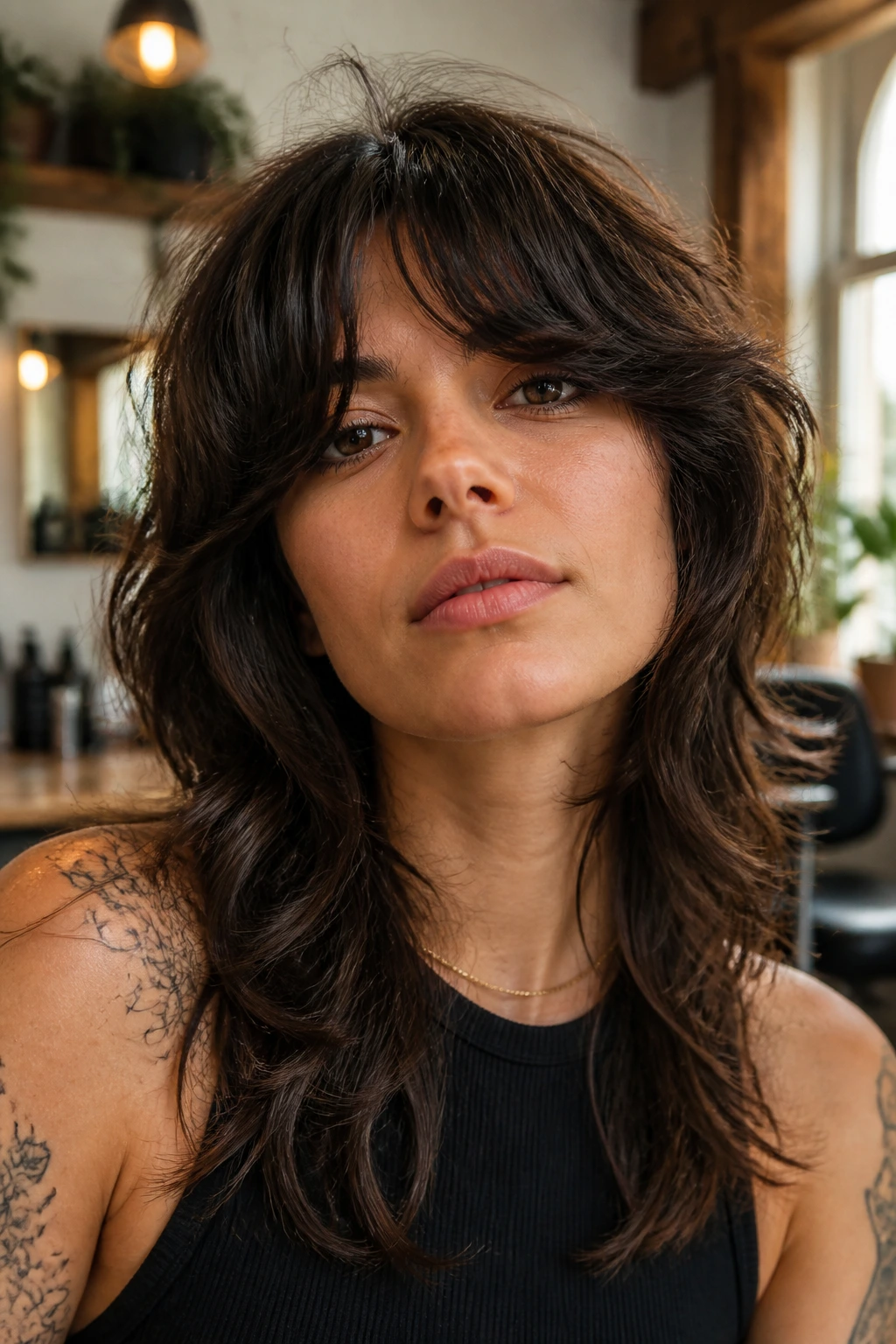
A real shag has teeth. The layers start higher, the crown is looser, and the bangs don’t sit politely at brow level—they split from the center and fall down toward the cheekbones with a little attitude. This is the cut for people who want their hair to look like it has somewhere to be.
The reason it feels so queer is the movement. A shag doesn’t care about perfect symmetry. It lets the hair swing, separate, and misbehave a little, which is often where the personality is. If you want a version that still reads long, keep the perimeter at or below the shoulders and ask for shorter face layers rather than removing length everywhere.
You’ll want a texturizing spray or a light mousse here. Heavy cream kills the lift, and the whole thing goes flat in a way that feels sad rather than cool.
7. Butterfly Cut With Short Face Layers
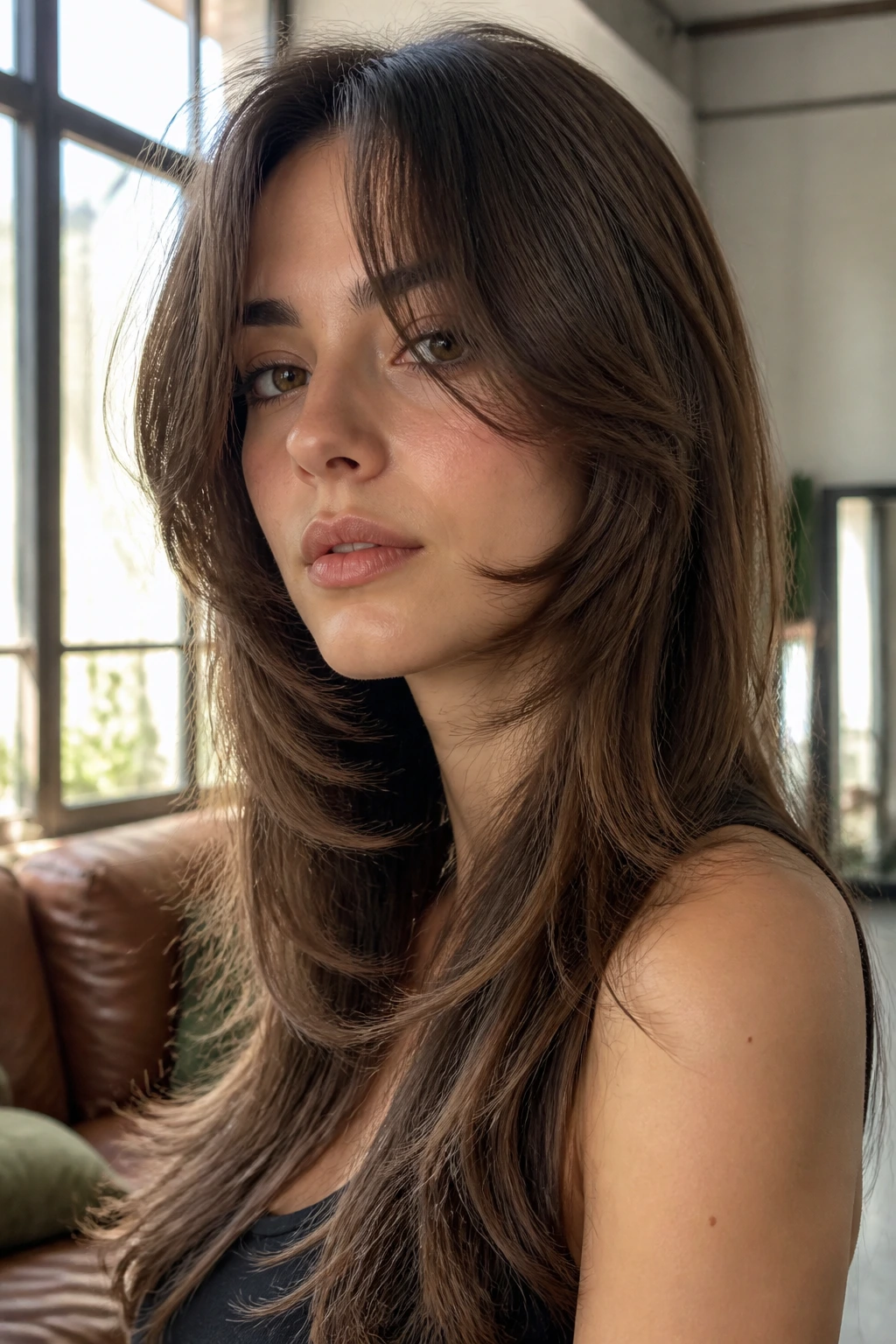
This cut sounds soft, and it is, but don’t mistake soft for plain. The butterfly cut uses shorter face-framing layers that start high—often near the cheekbone or even the chin—then flows into longer lengths underneath. That makes the top half feel cropped while the lower half keeps the drama.
With curtain bangs, the front pieces blend instead of separating into two distinct haircuts. That’s the magic. Your bangs can open at the center, then fall into those butterfly layers without a hard stop. The effect is lifted and airy, especially if you round brush the front and leave the rest loose.
It’s a good choice if you want movement without the roughness of a shag. Less edge, more swing. Still queer. Just with better manners.
8. Octopus Cut
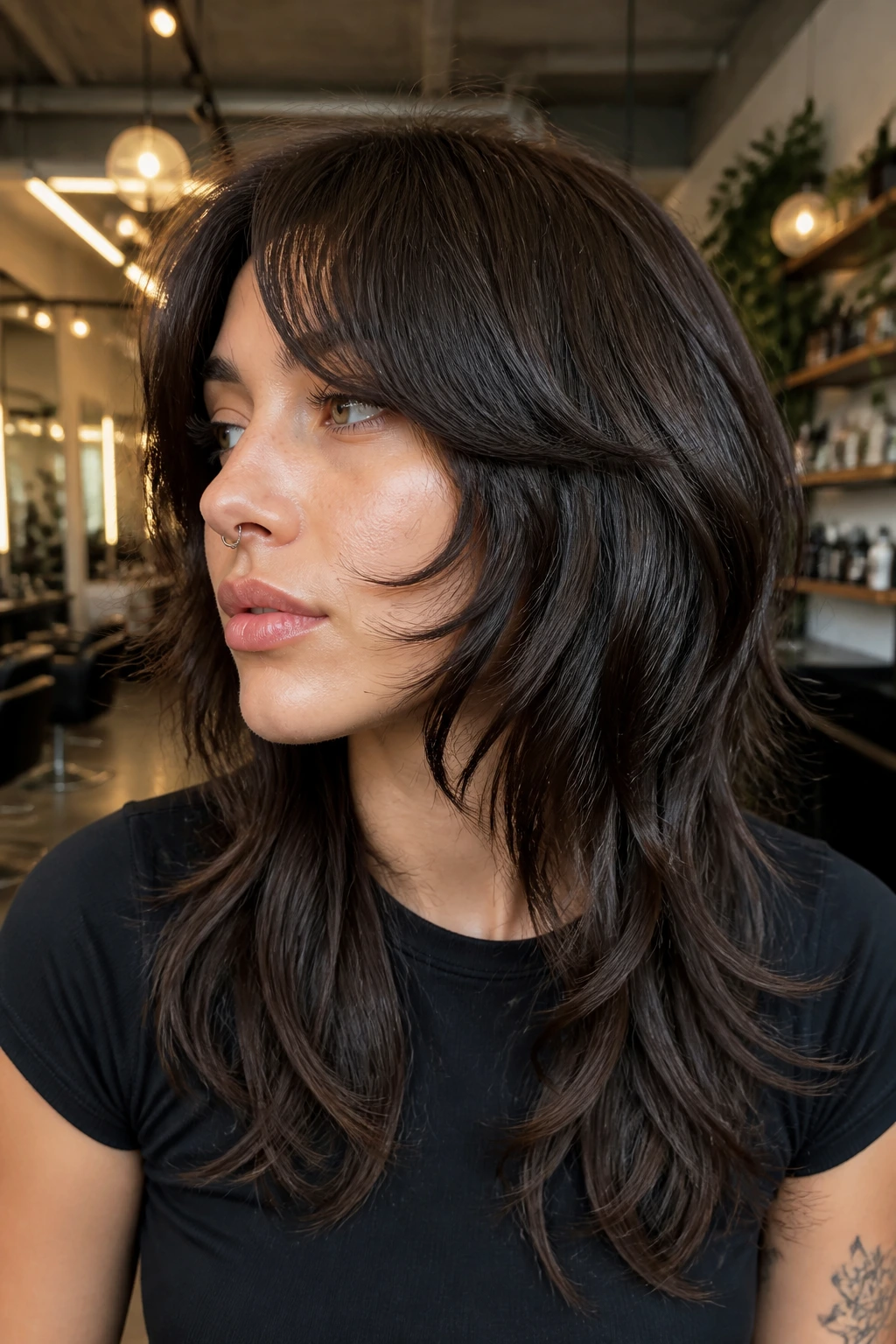
The octopus cut has a weird little genius to it. The crown is rounded and airy, the ends stay wispy, and the silhouette narrows and flares in a way that feels a bit alien—in a good way. With curtain bangs, it becomes even more shape-shifting because the front pieces continue the same soft, tentacle-like movement.
This cut loves thick hair. The top can be lifted with a diffuser, while the ends are left light enough to move instead of sitting in one heavy sheet. If your hair is straight and fine, you can still wear it, but the shape needs to be less aggressive. Ask for controlled layers, not a full shredding.
What Makes It Different
It’s not trying to look pretty in the traditional sense. It’s trying to look interesting. That distinction matters.
9. Undercut Lob
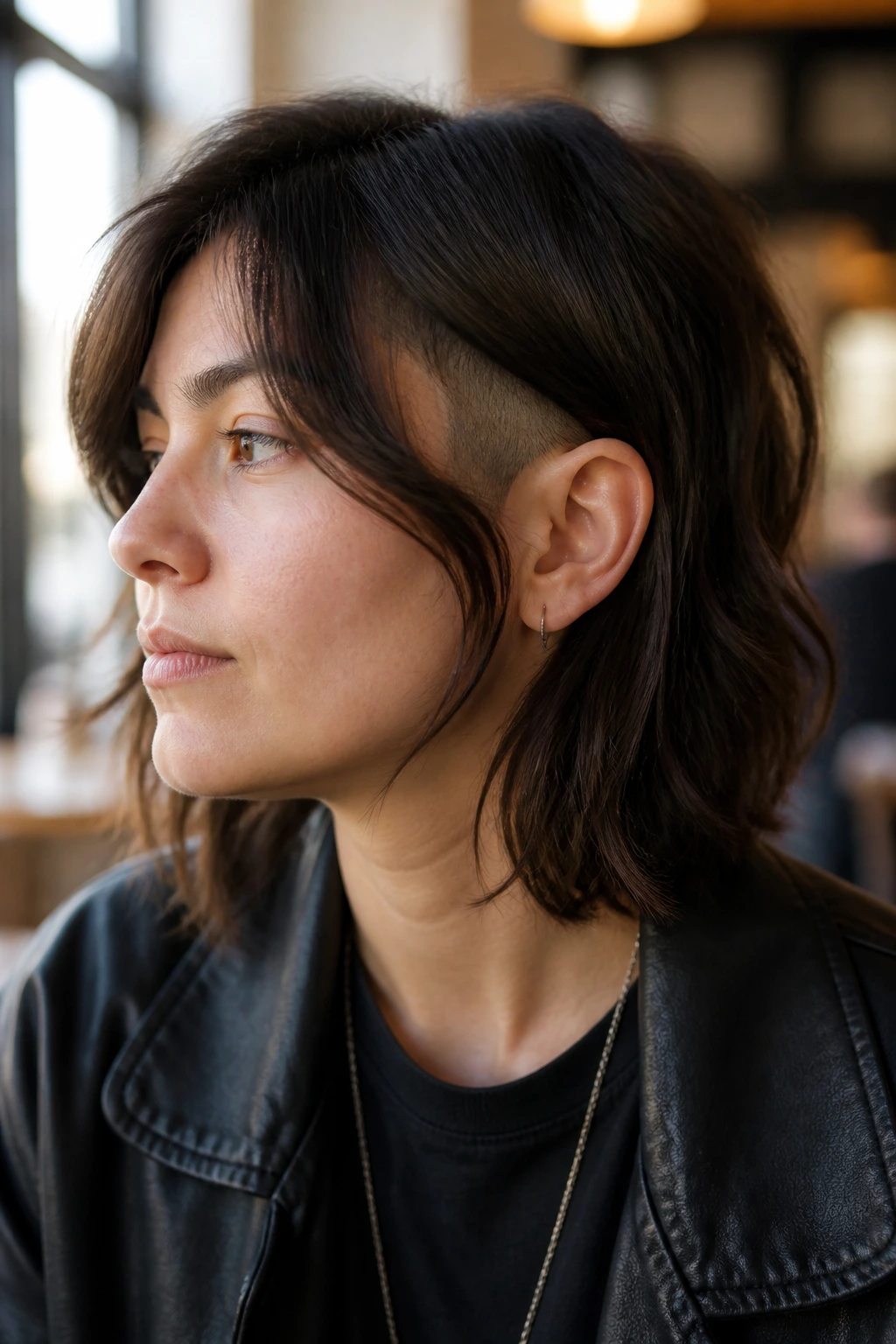
A lob with a hidden undercut is one of my favorite tricks for people who want hair that feels shorter when it’s down but still has plenty of length when they tie it back. The top layer falls like a normal lob. Underneath, though, there’s a section shaved or clipped short enough to remove bulk and change the way the whole shape sits.
Curtain bangs help this cut read softer at the front. Without them, the undercut can look too practical, almost severe. The bangs give you that split-front softness while the undercut does the cleanup work behind the scenes.
This is a strong option for thick hair that gets hot at the neck or balloons under humidity. It also works well if you want the haircut to look sleek with one quick blowout and a little more undone after a rough air-dry. Two very different moods. Same haircut.
10. Curly Shag
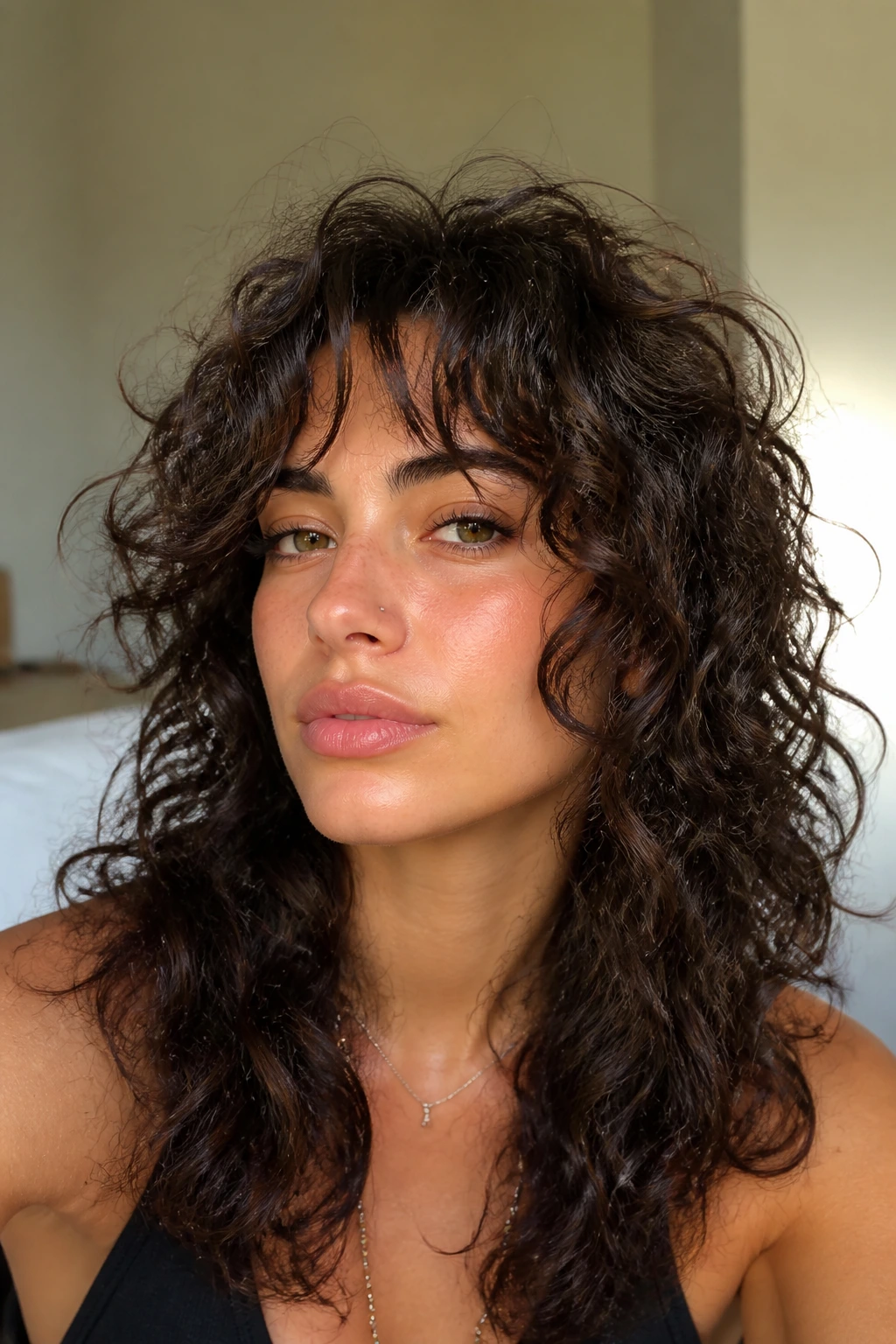
Curly hair and curtain bangs can be beautiful together, but only if the cut respects shrinkage. The shortest front pieces need to land longer than you think—often at the cheekbone or below the mouth—because curls spring up after drying. A curly shag lets the hair keep its shape while cutting away the triangle effect that makes some curl cuts look too boxy.
The trick is to cut it dry or nearly dry, then shape the bangs so they split naturally around the face. Too much pulling and guessing at the sink will leave you with bangs that bounce into your eyes or float awkwardly above the brow.
A diffuser helps here, but so does patience. The shape appears as the curls set. Don’t chase them around with the brush.
11. Feathered Mod Cut

The mod cut has a little vintage swing to it, but feathering keeps it from feeling costume-y. The curtain bangs fan outward, the sides stay smooth, and the ends flip just enough to frame the jaw. It’s neat without being stiff, which is a harder line to hit than people think.
What I like most is the way it handles glasses. The bangs slide around the frames instead of fighting them. If you wear specs, that matters more than any salon trend ever will. You want hair that plays with your face, not one that keeps smashing itself into the lenses.
A round brush and a light hairspray are enough. Skip the heavy oil. It kills the feathered movement and makes the front collapse.
12. Razored Midlength Crop
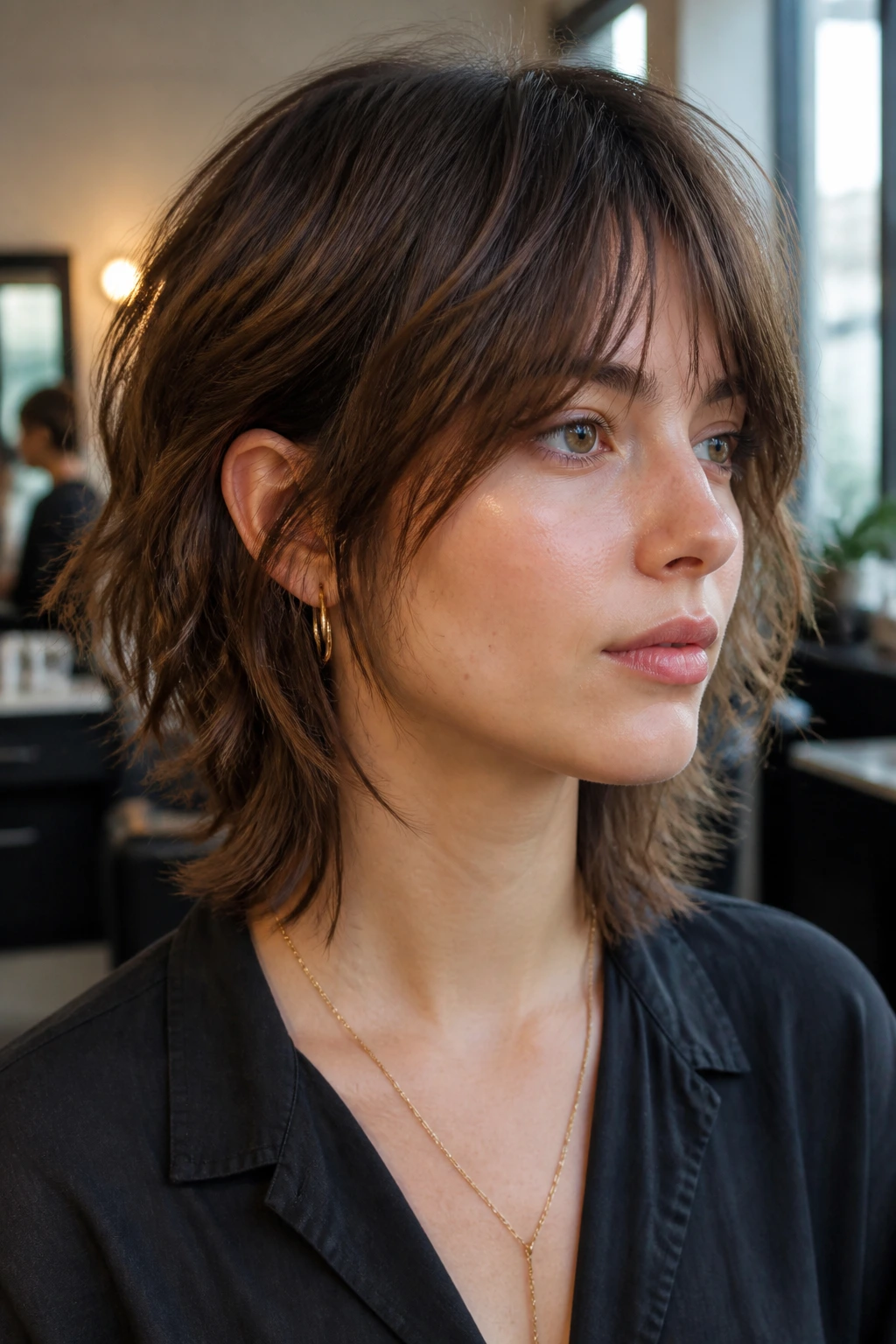
A razored midlength crop sounds aggressive, and it can be, but the better version is controlled. The razor removes weight from the ends, the shape sits somewhere between the jaw and the shoulders, and the curtain bangs give the front a softer entry point. It feels short because the line is broken up, not because the length is gone.
This cut is a lifesaver for thick, straight hair that hangs like a blanket. Razor work slices through that density and lets the hair bend instead of puffing. If your hair is fine, though, go easy. Too much razor can leave the ends transparent.
Best move: ask for “soft slicing,” not aggressive thinning. Those are not the same thing, and the difference shows up when the hair dries.
13. Sidecut Sweep
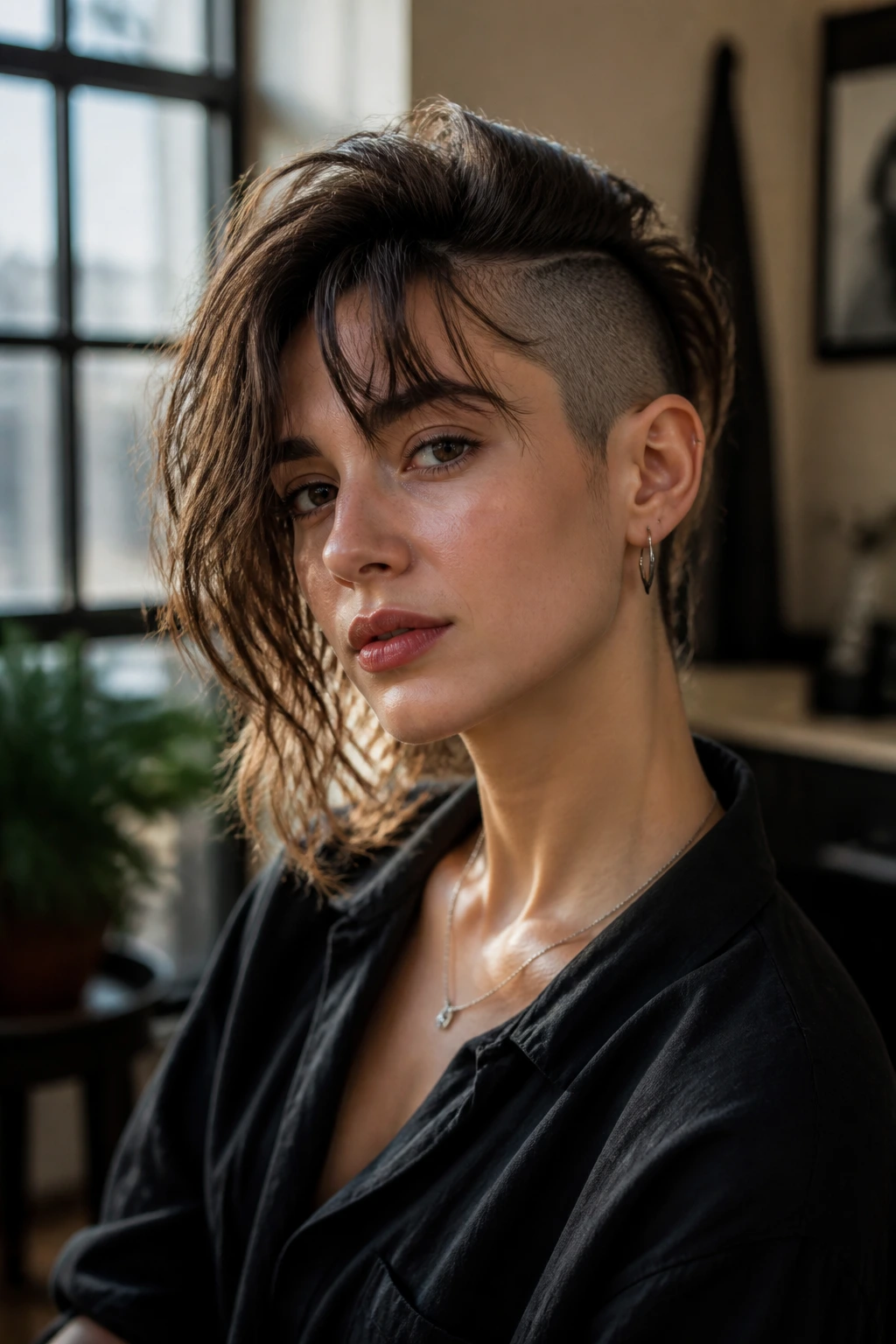
A sidecut changes the whole conversation. Suddenly the haircut has a strong side and a soft side, which is exactly the kind of asymmetry that makes a queer haircut feel personal instead of preset. The curtain bangs sweep into the longer side and create a clean line across the forehead, while the clipped side keeps the silhouette crisp.
This one is not subtle, and that’s part of the fun. You can hide the shorter side under longer hair or show it off with a tuck and a little product. Either way, the haircut shifts depending on how you part it.
If you want a style that reads more masc, keep the temples tighter and the texture matte. If you want more softness, leave a little length around the ear and brush the fringe loose. Same bones. Different story.
14. Long Pixie Mullet
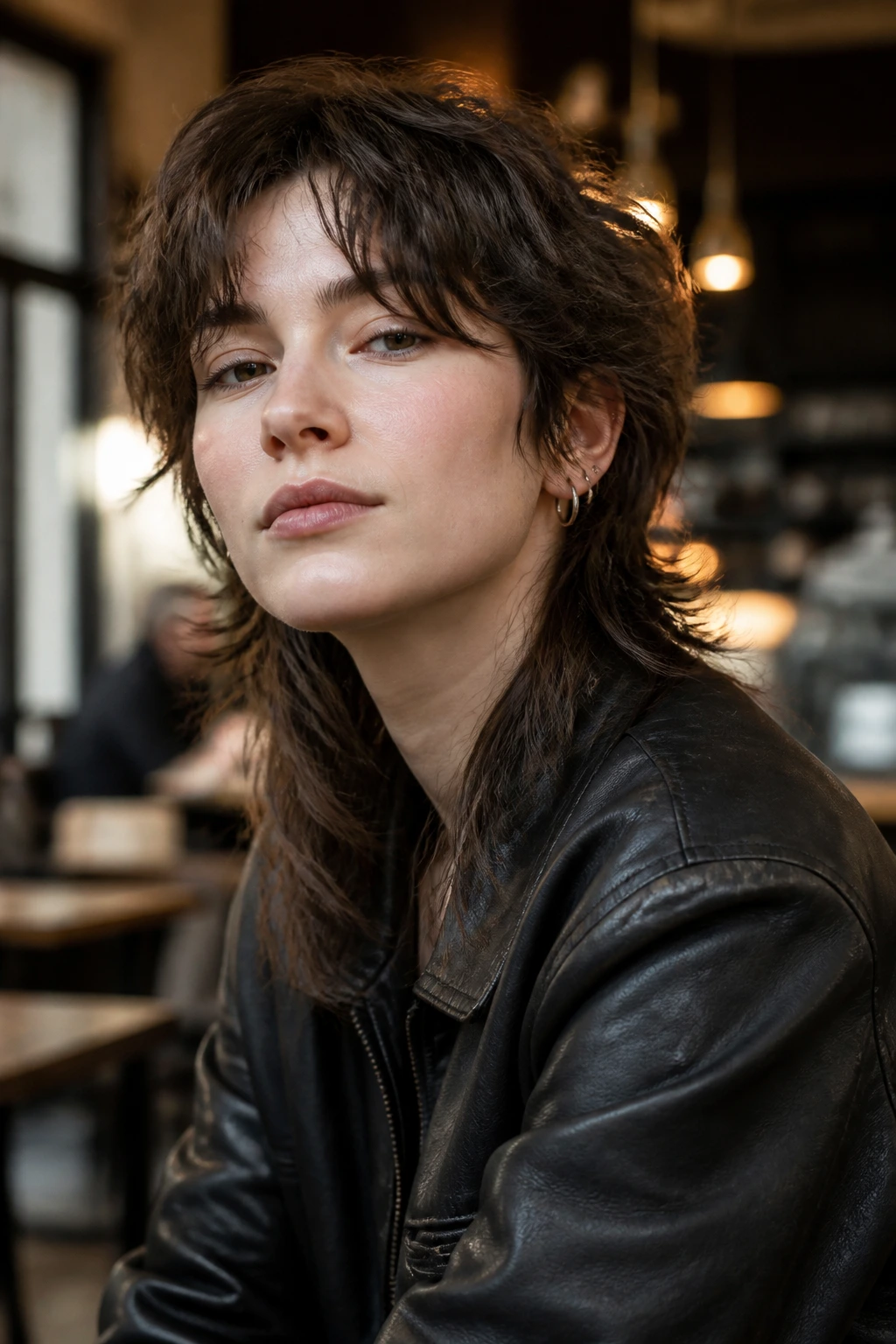
A long pixie mullet takes the tiny-crop energy of a pixie and stretches it toward the back. It’s short around the ears and crown, but the nape keeps enough length to make the outline feel playful instead of severe. Curtain bangs save it from looking too clipped at the front.
This is a brave cut, but not a reckless one. It works because the bangs and back length create a visual bridge. You don’t get that sudden jump from short to long; you get a slope. That slope is what makes the style wearable.
Use a little pomade or paste at the ends if you want definition. Leave it soft if you don’t. The cut can handle both.
15. Collarbone Bob With Underlayers
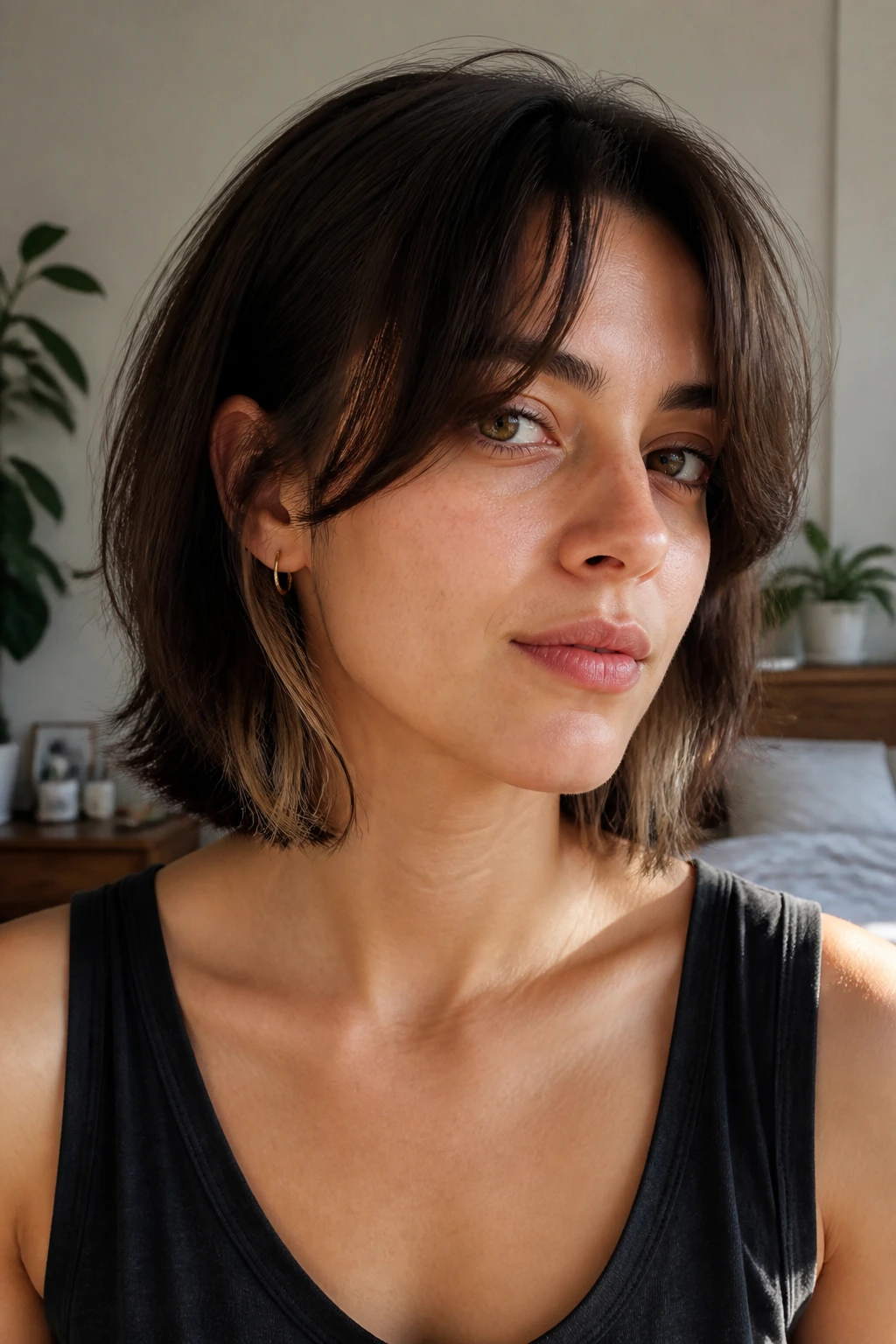
A collarbone bob sounds ordinary until you put underlayers in it. Then it changes. The top remains bob-like and neat, but the hidden layers underneath let the hair swing and keep the silhouette from getting too boxy. Curtain bangs make the front feel softer and more fluid, which helps the whole thing read less “salon safe” and more personal.
This is a solid choice if you want shorter-looking hair without committing to a dramatic crop. It’s especially nice on hair that gets flat at the crown, because the internal layers give the cut a little lift without making the ends look shredded.
Best for people who want:
- a neat outline,
- enough length for a half-up knot,
- and a shape that still looks intentional after two days of wear.
16. Nape-Tapered Crop
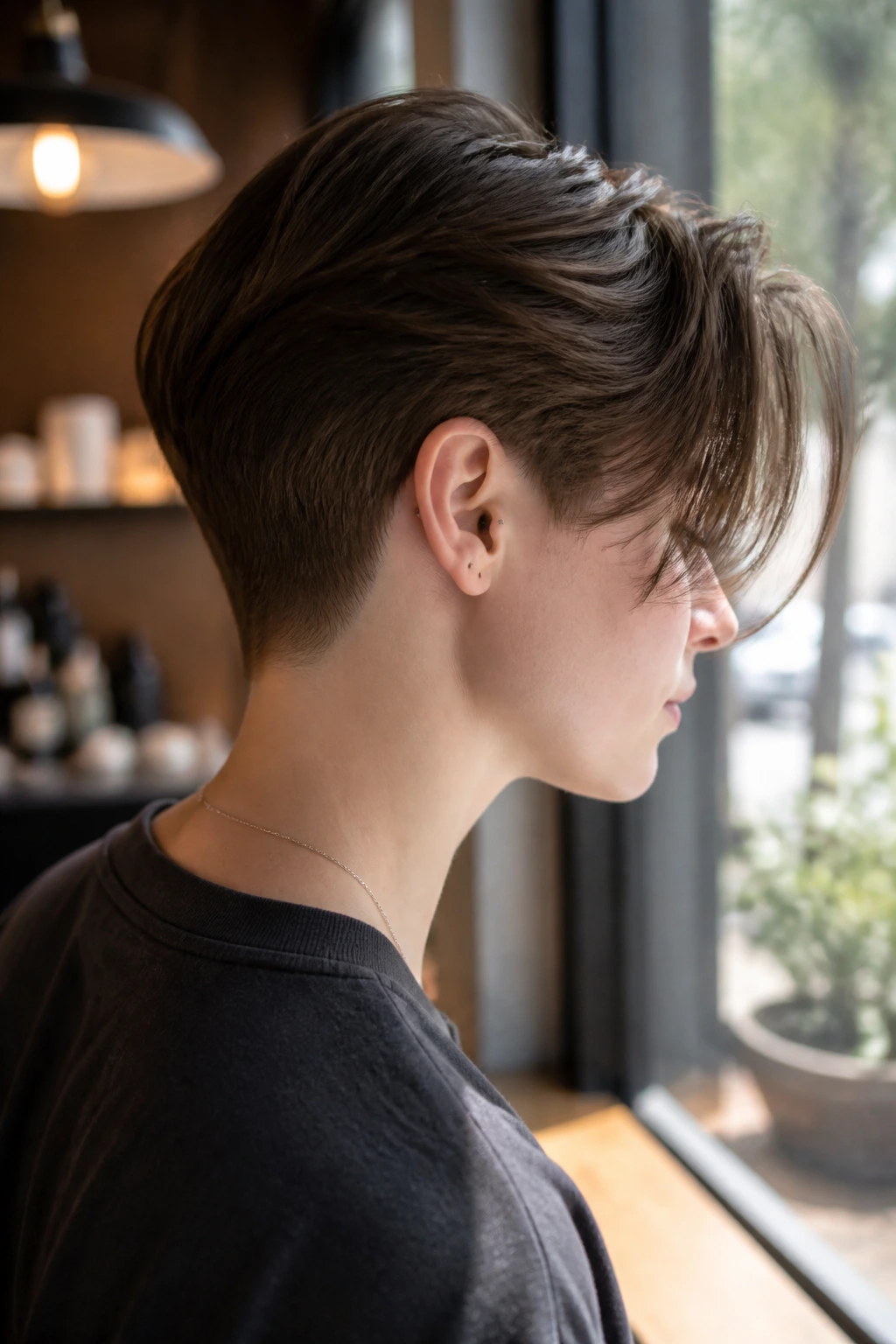
The nape-tapered crop is one of those cuts that looks even shorter from behind than it does from the front. The back is neatly tapered, sometimes with clippers, while the front keeps longer curtain bangs and a bit of length around the jaw. That contrast is the entire point.
This shape is sharp. It’s also practical. The shortened nape keeps the haircut cool and clean under collars, which matters more than people admit when they’re considering a crop. If the back of your neck gets itchy with heavy hair, this solves that.
I’d especially recommend it for thick hair or for anyone who wants the haircut to carry a strong masc read. The front pieces can still be softened or tucked behind the ears when you want something gentler.
17. Sliced Layer Cut
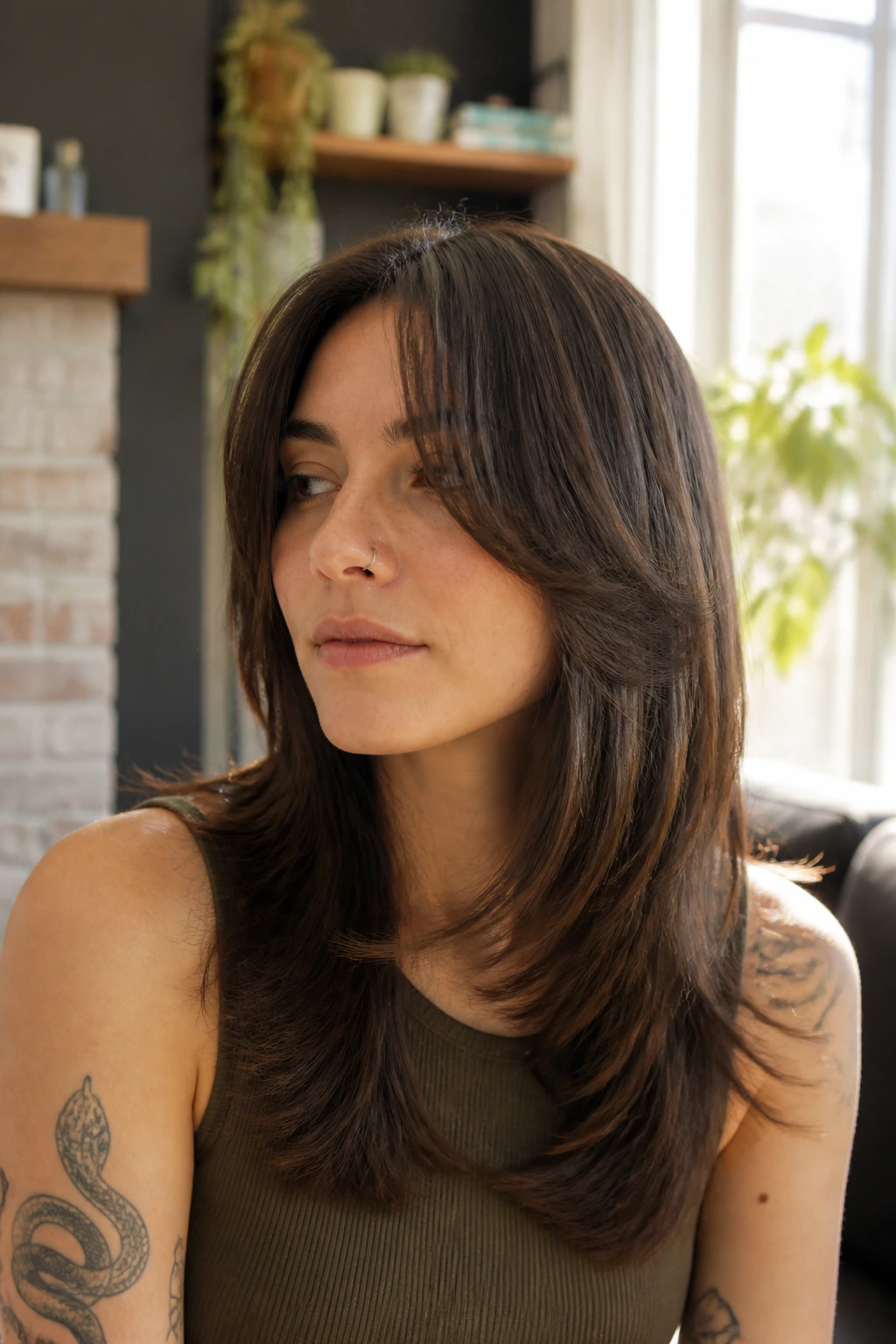
A sliced layer cut is less dramatic than a shag and more deliberate than a blunt cut. The layers are inserted in clean slices, which keeps the length intact while removing just enough weight for movement. Curtain bangs fit here because they echo the same idea: a soft break in an otherwise continuous line.
This cut is sneaky. From a distance, it can look simple. Up close, the movement shows up in the way the ends separate and the front swings away from the face. It works well on straight and fine hair when you want motion without that over-thinned, feathery look that can make hair feel flimsy.
If you hate pieces poking everywhere, this is your better option. It’s textured, not shredded.
18. Face-Frame Shag
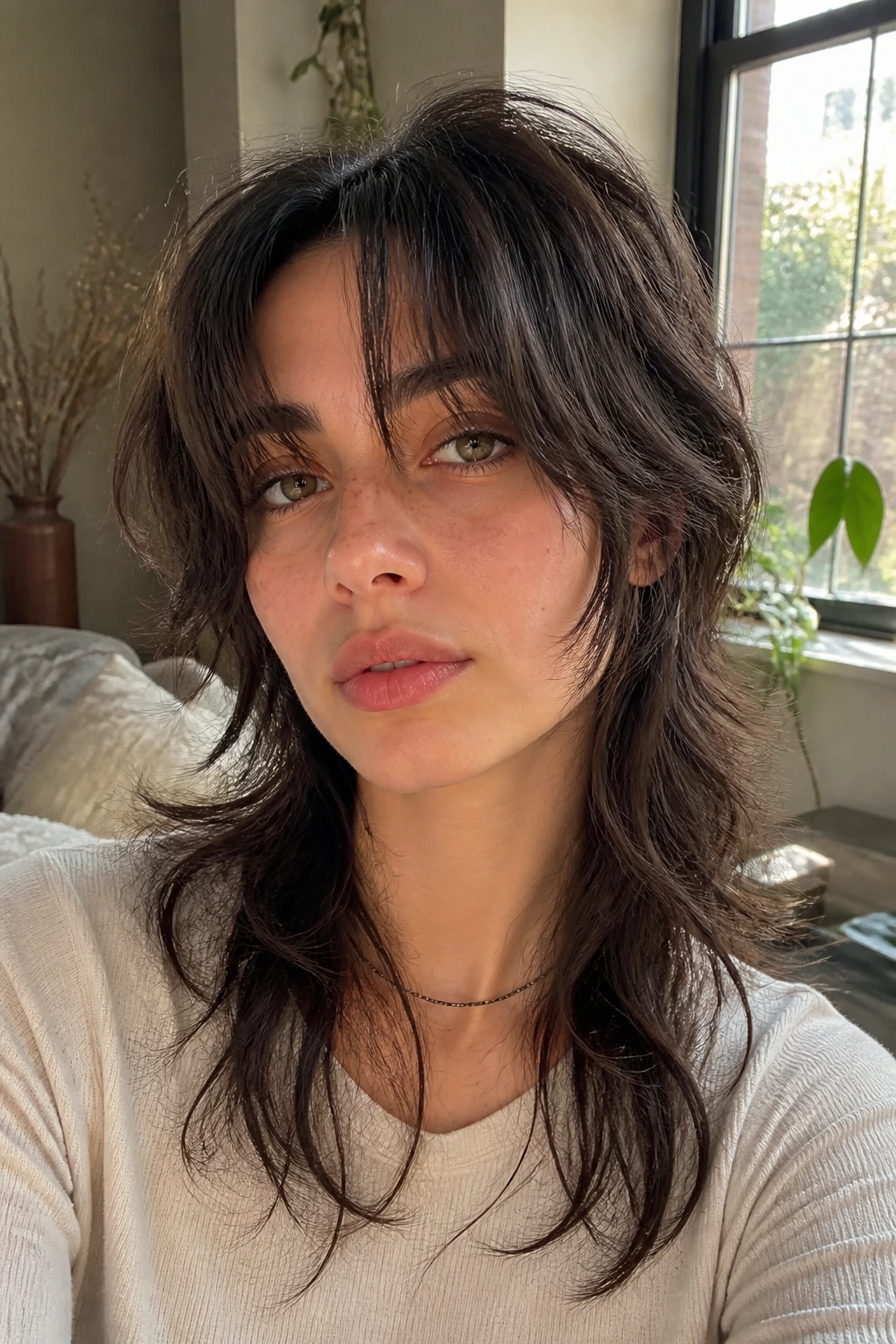
The face-frame shag keeps the attention near the front. The layers around the cheekbones, jaw, and collarbone do most of the work, while the back stays longer and calmer. That makes the haircut ideal if you want a shape that looks short from the front but still lets you keep the back length.
Curtain bangs are the anchor here. They connect the face-frame layers so the cut doesn’t split into disconnected pieces. You can wear it air-dried and a bit fuzzy, or blow it out for a smoother line. Either way, the front does the talking.
I like this one for people who wear their hair up often. Even a messy clip leaves enough around the face to make the haircut look planned.
19. Soft Bowl-Shag
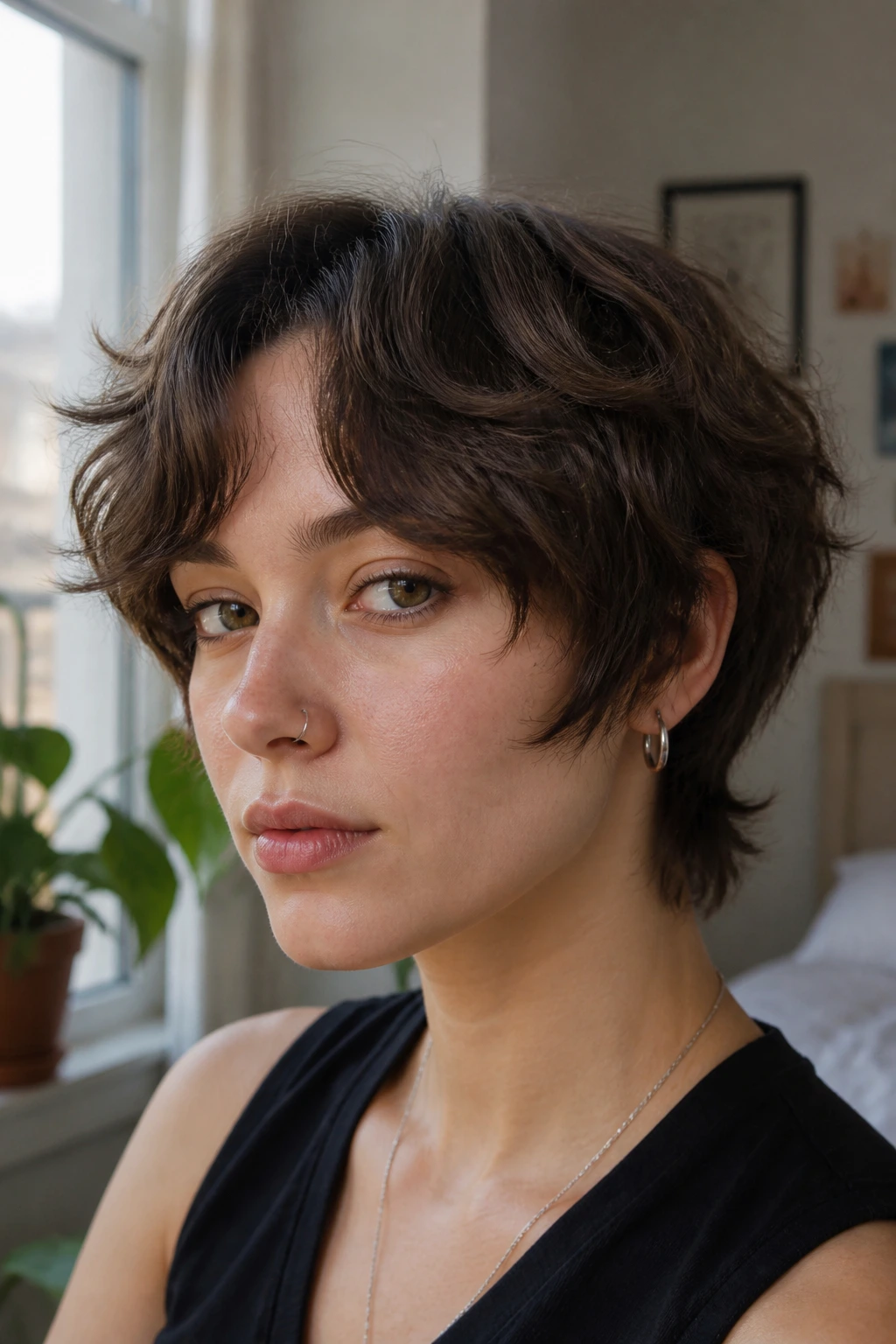
A bowl cut sounds like a dare until you soften it with shag layers and curtain bangs. Then it becomes a shape. The perimeter rounds around the head, but the texture breaks up the bluntness so it feels modern and a little eccentric instead of severe.
This is one of the queerest-looking cuts on the list, and I mean that in the best way. It doesn’t try to hide the head shape. It highlights it. The bangs split at the center, the sides brush the cheeks, and the whole thing sits close enough to the scalp to feel cropped even when the length is still there.
Keep in mind
The shape works best when the stylist balances the line carefully. Too much thinning and it turns stringy. Too little and it turns helmet-shaped. That middle ground matters.
20. Tucked-Back Pageboy
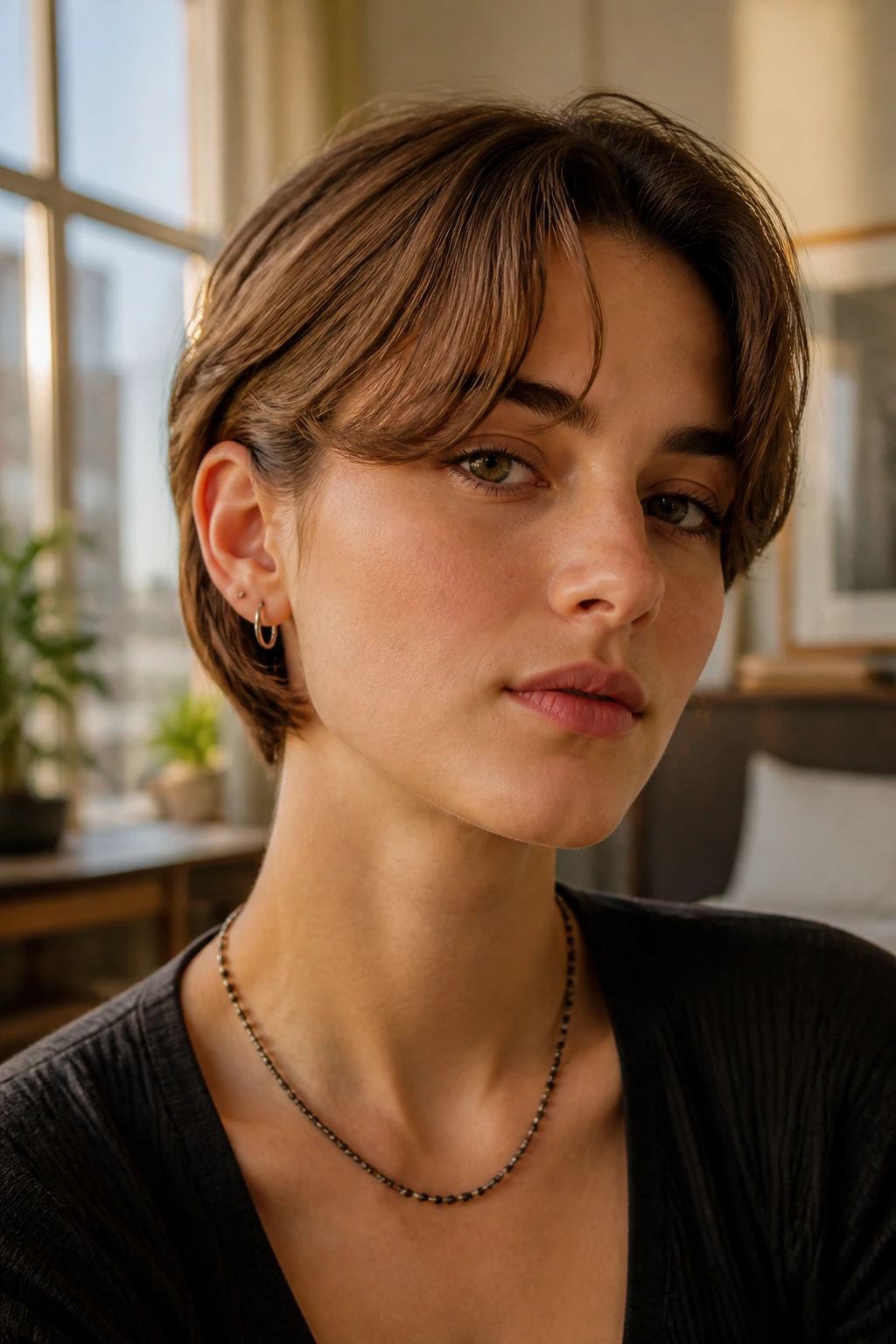
The pageboy has been around forever, but the tucked-back version feels sharper because it leans on the ears and neckline instead of the old-school helmet silhouette. Curtain bangs modernize it fast. They break the roundness at the front and let the rest of the hair stay a little longer and more fluid.
This is a nice choice if you like clean edges and a shape that looks deliberate even when you don’t style it much. Tuck it behind the ears, add a little bend to the bangs, and the haircut suddenly shifts from retro to gender-fluid in a way that’s hard to fake.
I’d pick this for straight or slightly wavy hair. If your hair is very curly, the pageboy idea still works, but the shape needs to be cut with the curl pattern in mind so it doesn’t puff out at the sides.
21. Wavy Bro Flow
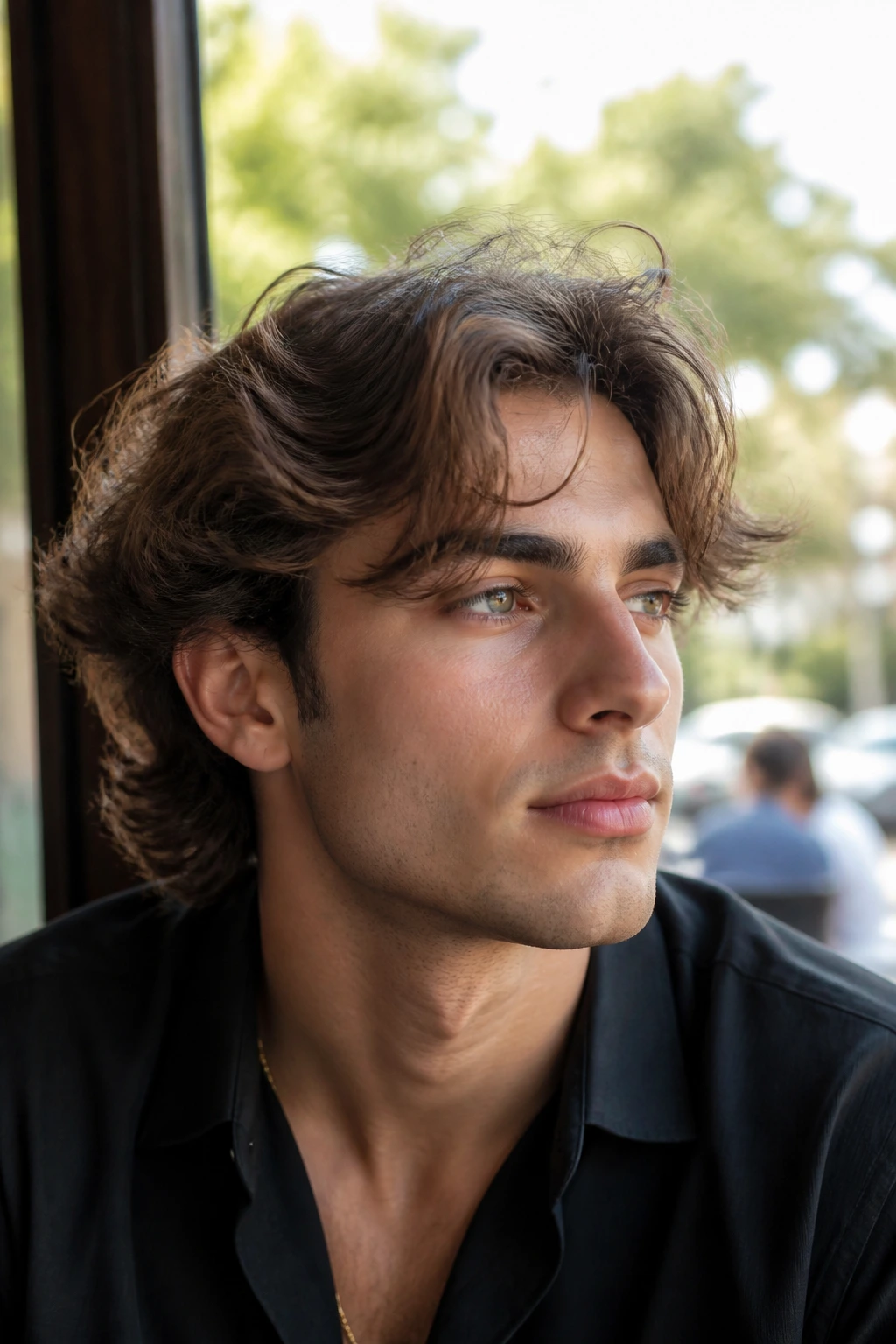
“Bro flow” can sound a little too locker-room, but the wavy version earns its place when it’s cleaned up with curtain bangs. The hair brushes back from the face, the length stays loose, and the bangs keep the front from looking like you forgot to finish the haircut. It’s soft masculinity with a little movement.
The reason this one works for queer style is the tension between polish and looseness. A pure bro flow can lean generic. Add a centered fringe, a cleaner nape, and a little shape around the cheekbones, and it becomes much more interesting.
Use sea salt spray sparingly. Too much and the hair turns crunchy. A little wave cream and fingers is often enough.
22. Split-Length Shag
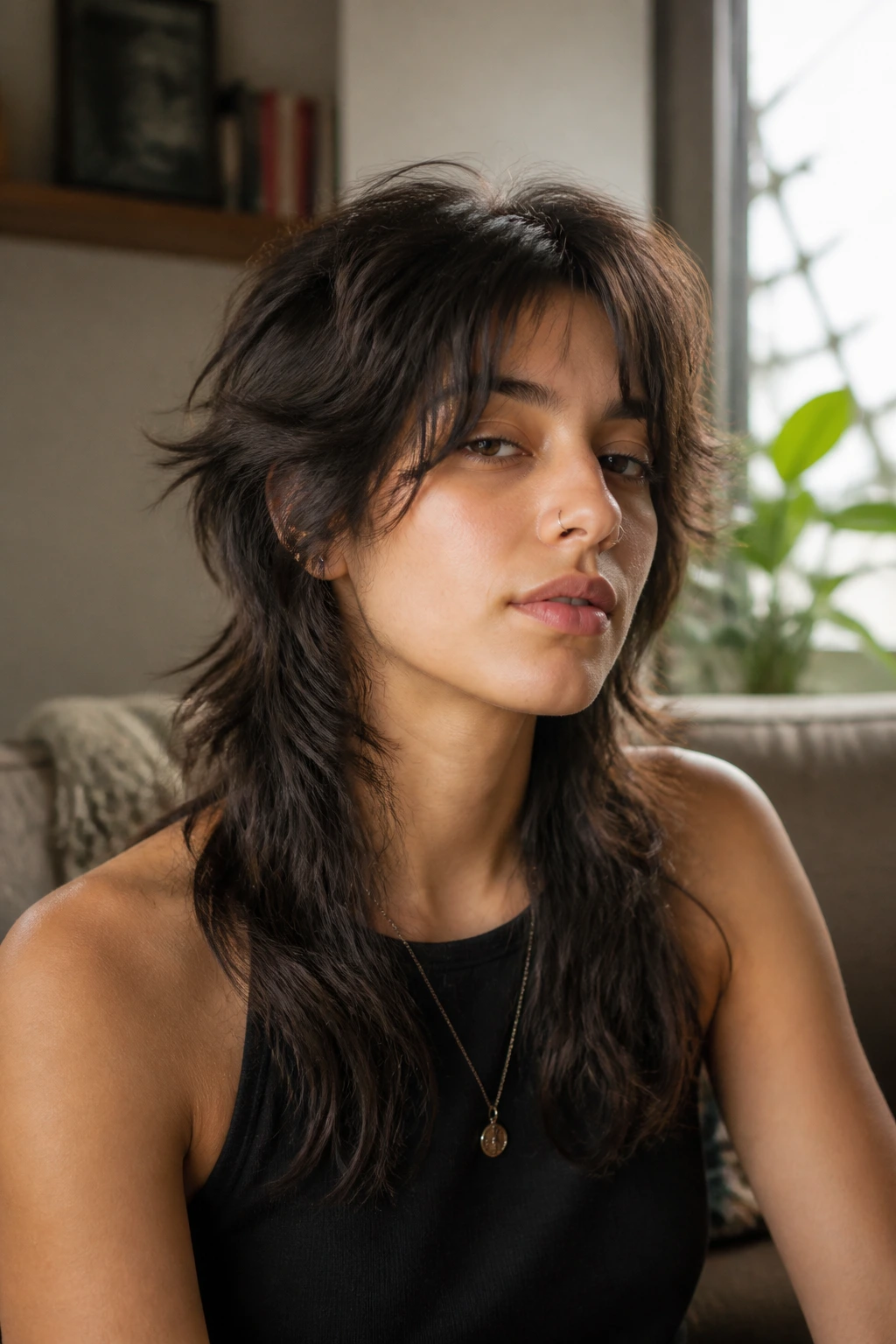
A split-length shag plays with levels. The top layers are shorter and more active, the lower lengths stay longer and calmer, and the curtain bangs act like the hinge between the two. The result is a haircut that changes depending on how you wear it. Half-up? It looks sharper. Down? It softens out.
This is one of the most gender-fluid shapes here because it doesn’t force a single read. The haircut can lean masc, femme, or somewhere in between just by changing the part or the finish. That flexibility is the whole point.
If you like a haircut that gives you options without a full restyle, this is a strong pick. It behaves well on wavy hair and can be made more structured with a round brush.
23. Pixie-Bob Hybrid
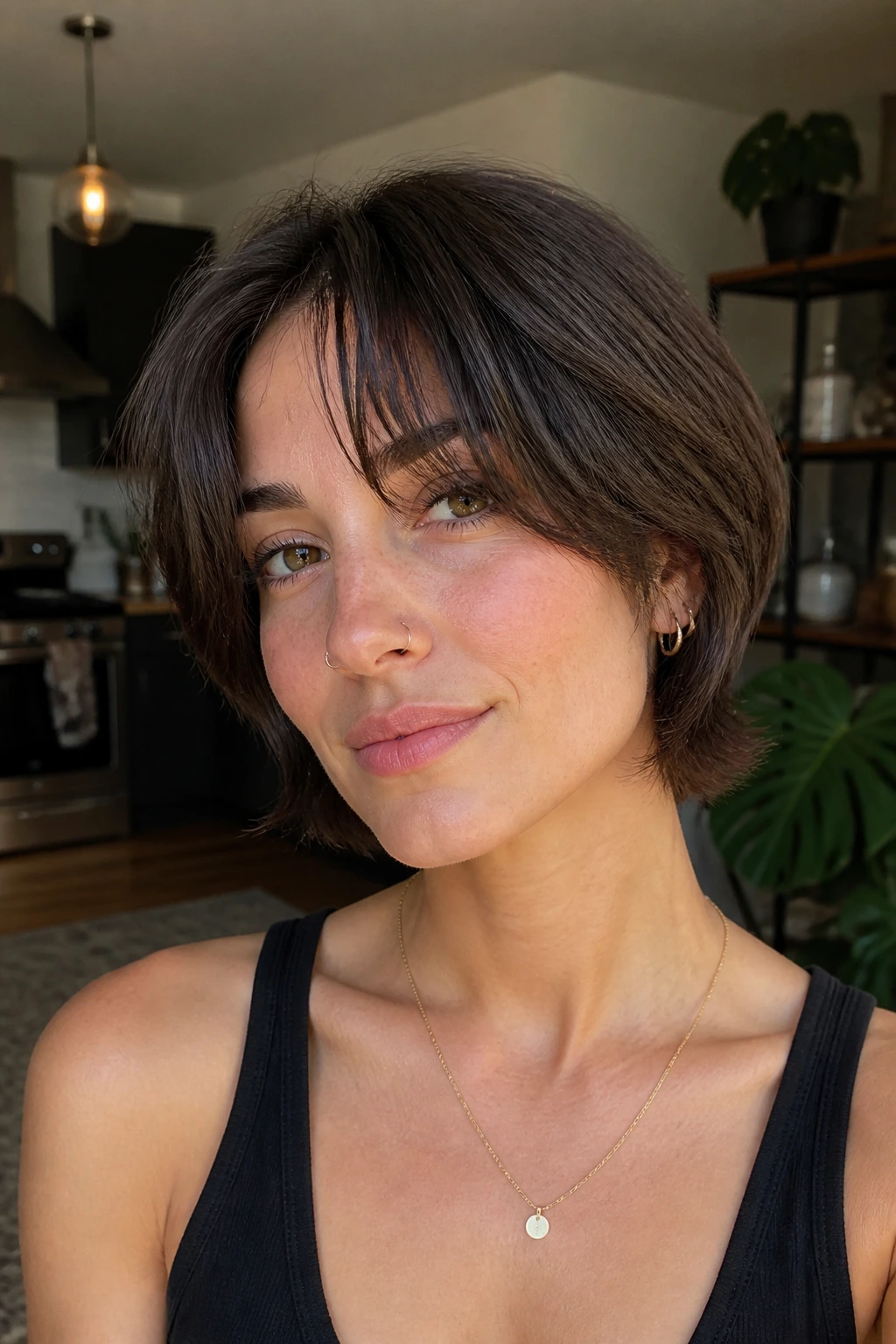
The pixie-bob hybrid is the haircut equivalent of “I want it short, but not that short.” It usually sits between the cheekbone and the jaw, with enough length in back to keep some swing. Curtain bangs soften the front and keep the whole shape from going too choppy.
This cut is especially good if you’re growing out a pixie and don’t want the awkward in-between stage to drag on forever. It gives structure to the grow-out. It also works on fine hair because the shape is compact without needing a ton of texture work.
A flat iron can help the bangs curve away from the face, but don’t overdo it. The charm is in the bend, not the bend’s perfection.
24. Long Top Crop
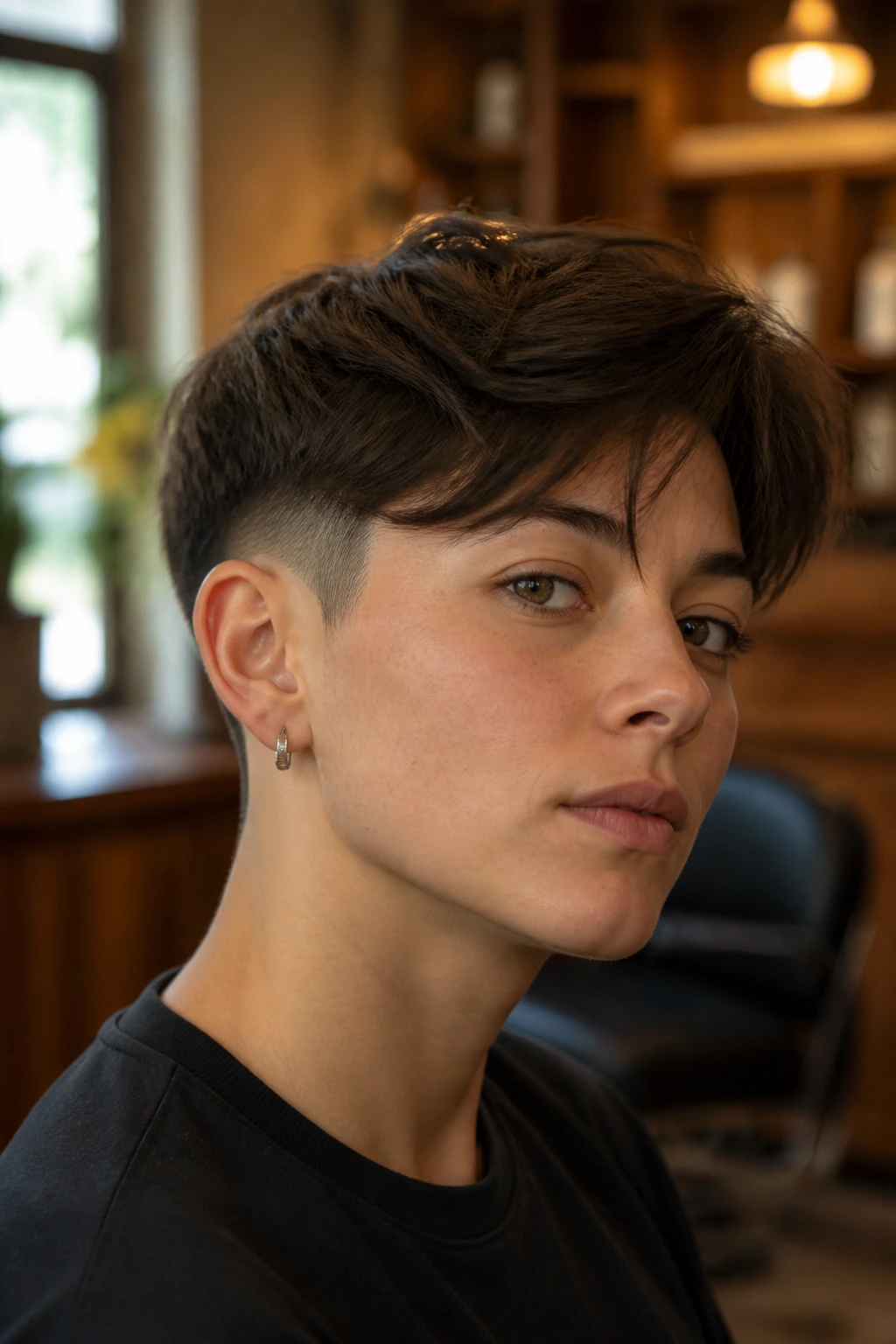
A long top crop keeps the top layers long enough to part, flip, and tuck, while the sides and nape are tightened up. That contrast gives the haircut a cropped read from the sides and back, even if the top still has plenty of motion. Curtain bangs soften the front line and keep it from looking too military.
This is a strong shape if you like barbershop energy but want a little softness around the eyes. It’s also the cut I’d point to if someone says they want a masculine haircut with room for a more fluid fringe. The structure is doing the short-work. The bangs are doing the gentler work.
You need a stylist who’s comfortable with clippers or clean tapering here. Not every salon is equally good at this shape.
25. Curtain-Bang Lob With Internal Layers
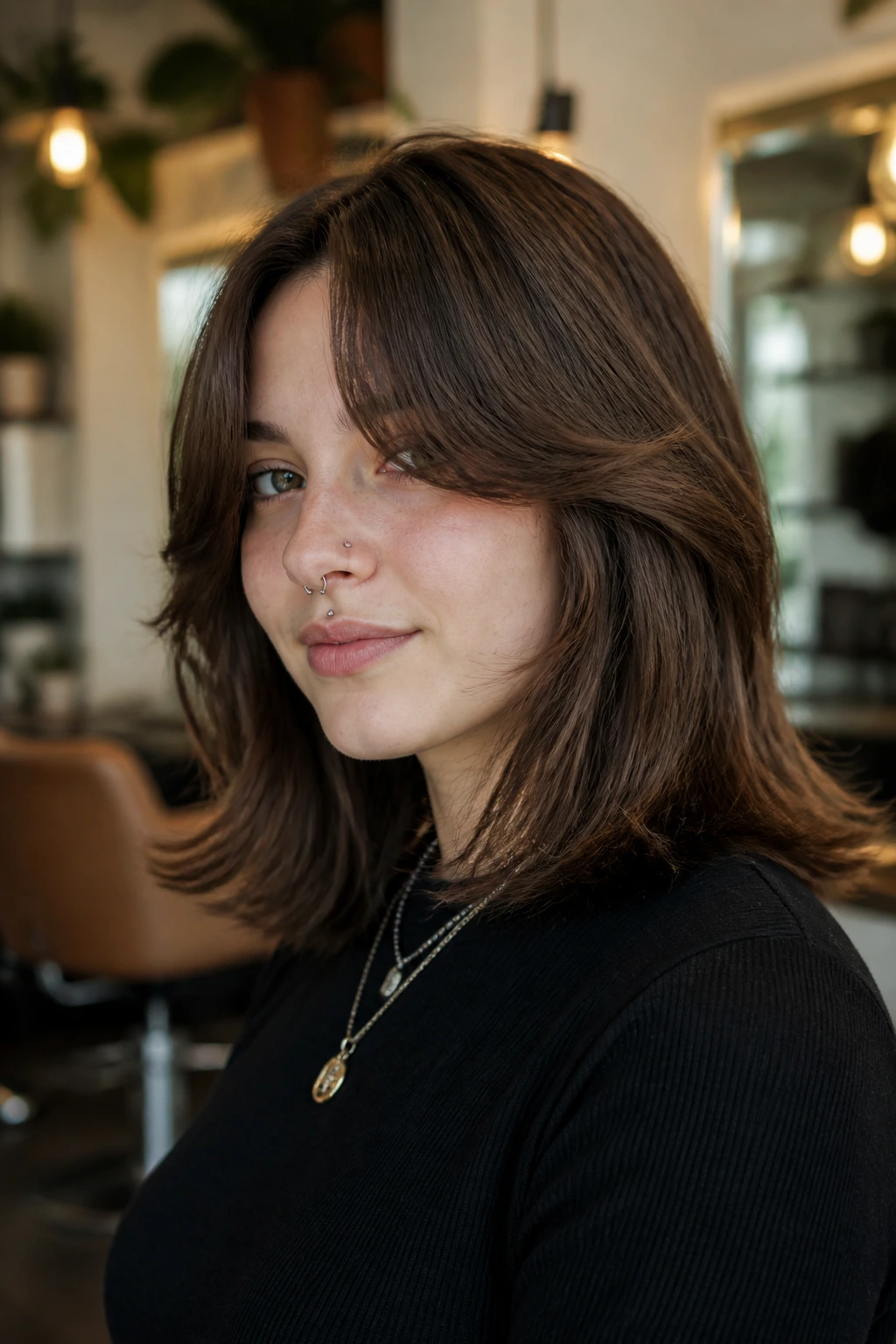
A lob with internal layers and curtain bangs is the safest place to land if you want the queerest amount of change without handing over all your length. The outside reads polished and wearable. The inside does the real work: removing enough weight for movement, making the hair fall in softer panels, and letting the front split around the face instead of clinging to it.
This cut is underrated because it’s not trying to be wild. It just keeps the shape honest. You can wear it sleek for a sharper read, then rough it up with texture spray and suddenly it tilts a little more masc, a little more indie, a little more undone. I trust that flexibility.
Why it stays useful
- It grows out cleanly.
- It handles thick or fine hair with the right layering.
- It gives you room to change your style without recutting the whole head.
Why Curtain Bangs Make Long Hair Read Short
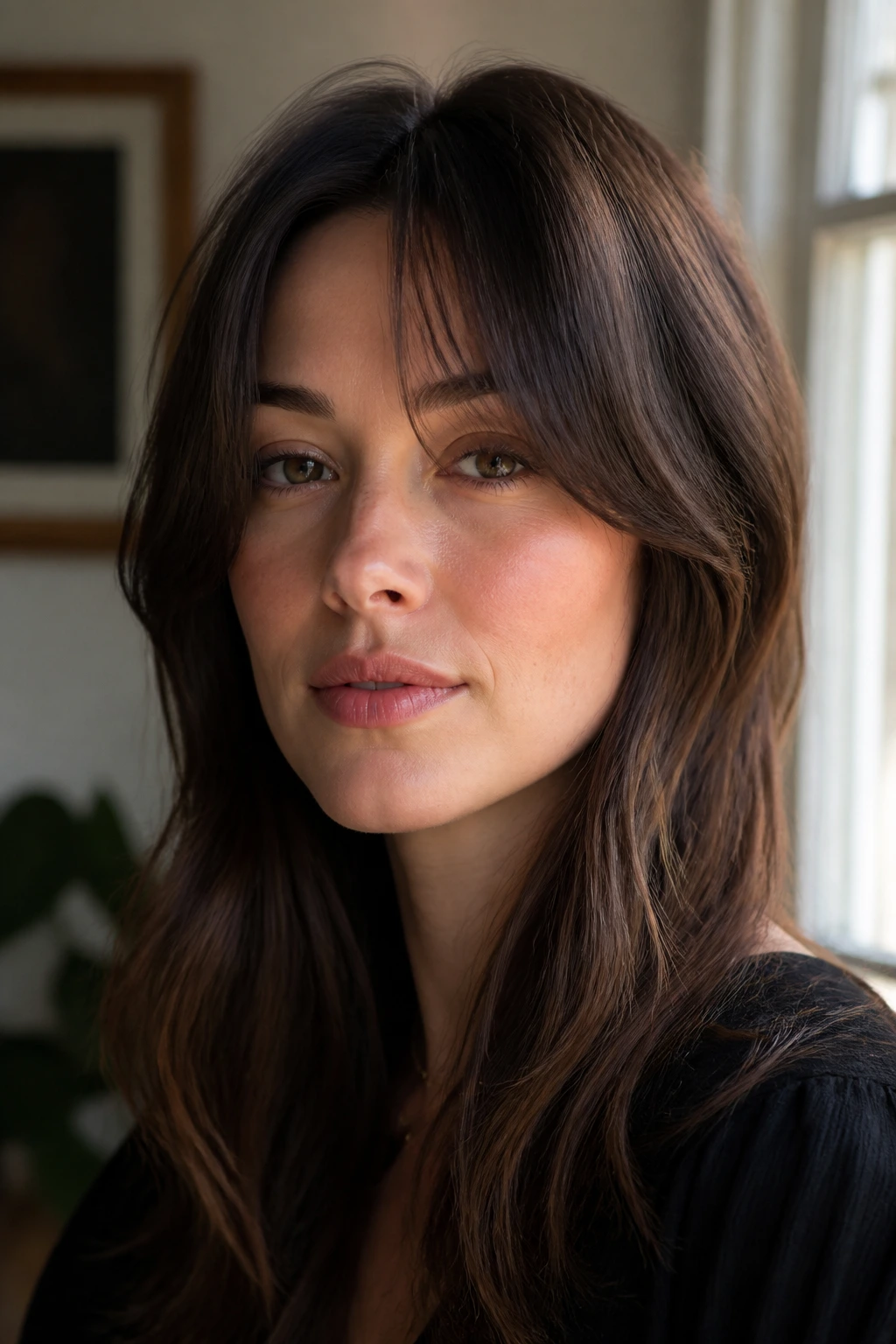
Curtain bangs are not decoration. They change the geometry of the haircut. When the hair splits at the center and falls from the cheekbones or lips, the forehead opens up and the eye moves sideways instead of straight down. That tiny shift makes the whole haircut feel lighter and shorter, even if the hair reaches the shoulders or beyond.
The nape matters too. A lot. If the back is too bulky, long hair looks like long hair. If the nape is tapered, the sides are cleaned up, or the interior is layered away from the scalp, the shape gets a cropped read. That’s why these cuts often combine front softness with back sharpness. The contrast is what sells it.
The best bang lengths live here
- Cheekbone length: sharpest read, easiest to tuck behind the ears.
- Lip length: softer, easier to grow out.
- Chin length: dramatic, especially on curls or thick hair.
Why the middle part isn’t sacred
A centered split is the classic curtain-bang move, but a slight off-center part can change the mood fast. A quarter-inch shift can make the same haircut feel more masc, more femme, or just less fussy. Hair is funny that way. Small moves make big visual differences.
What to Tell Your Stylist Before the First Snip
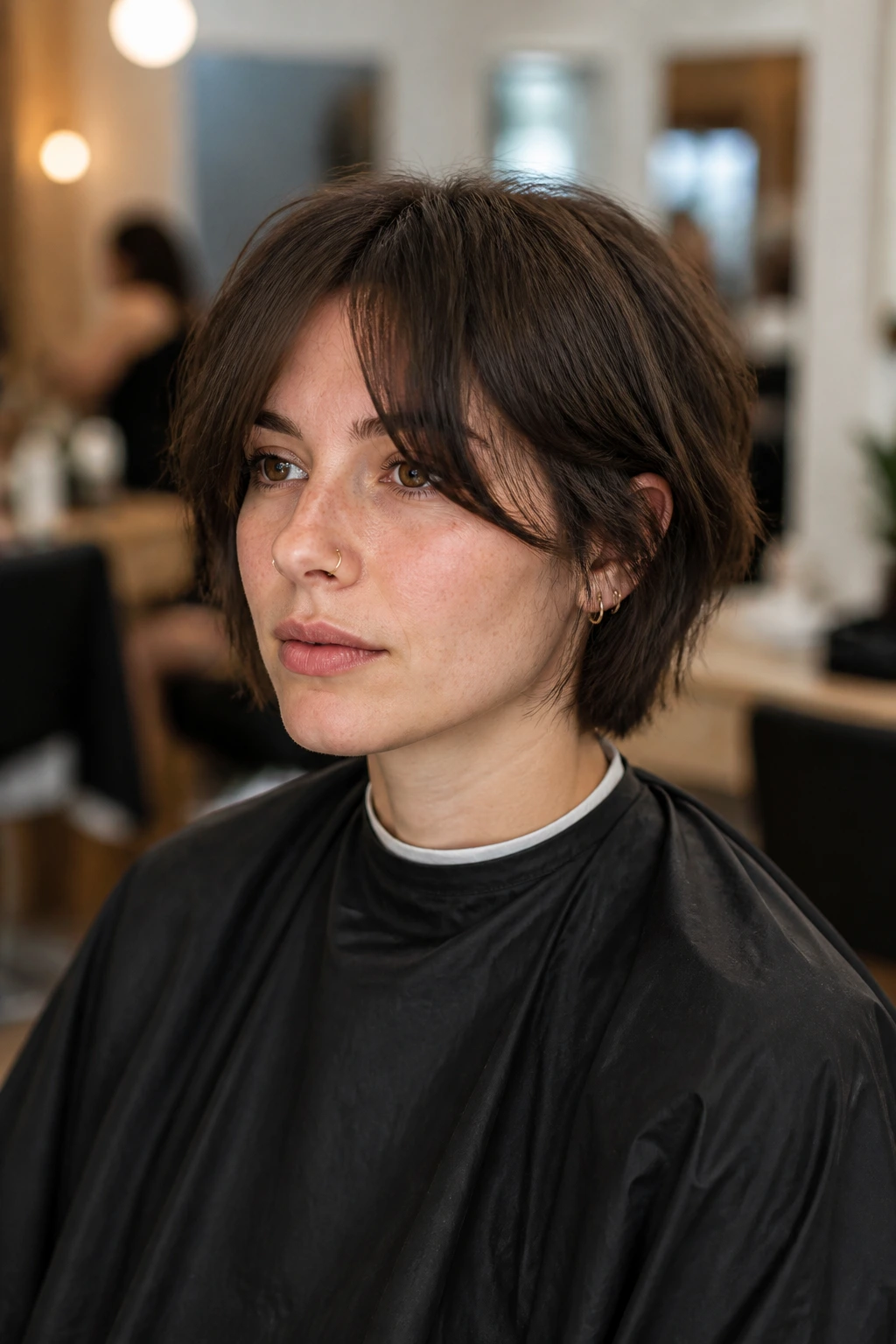
Bring photos, but bring the right photos. One picture should show the silhouette you want, and another should show the bang length or texture you like. Don’t expect one image to cover everything. That’s how people walk out with the wrong bang weight and a back they never asked for.
Say the words that matter: where you want the bangs to start, how much weight to remove at the crown, and whether you want the nape cleaned up. Those three details do more than vague requests like “make it edgy.” If you wear glasses, say so. If your hair cowlicks hard at the forehead, say that too. Those little facts change the cut.
Useful salon language
- Curtain bangs at cheekbone or lip length
- Internal layers, not just surface layers
- Tapered nape
- Soft disconnect
- Keep enough length to tuck behind the ear
And if your hair is thick, ask how the stylist plans to remove bulk. If the answer is only “thinning shears,” I’d keep asking questions. That tool has a place, but it is not the only answer.
Tools That Keep These Cuts Behaving
-
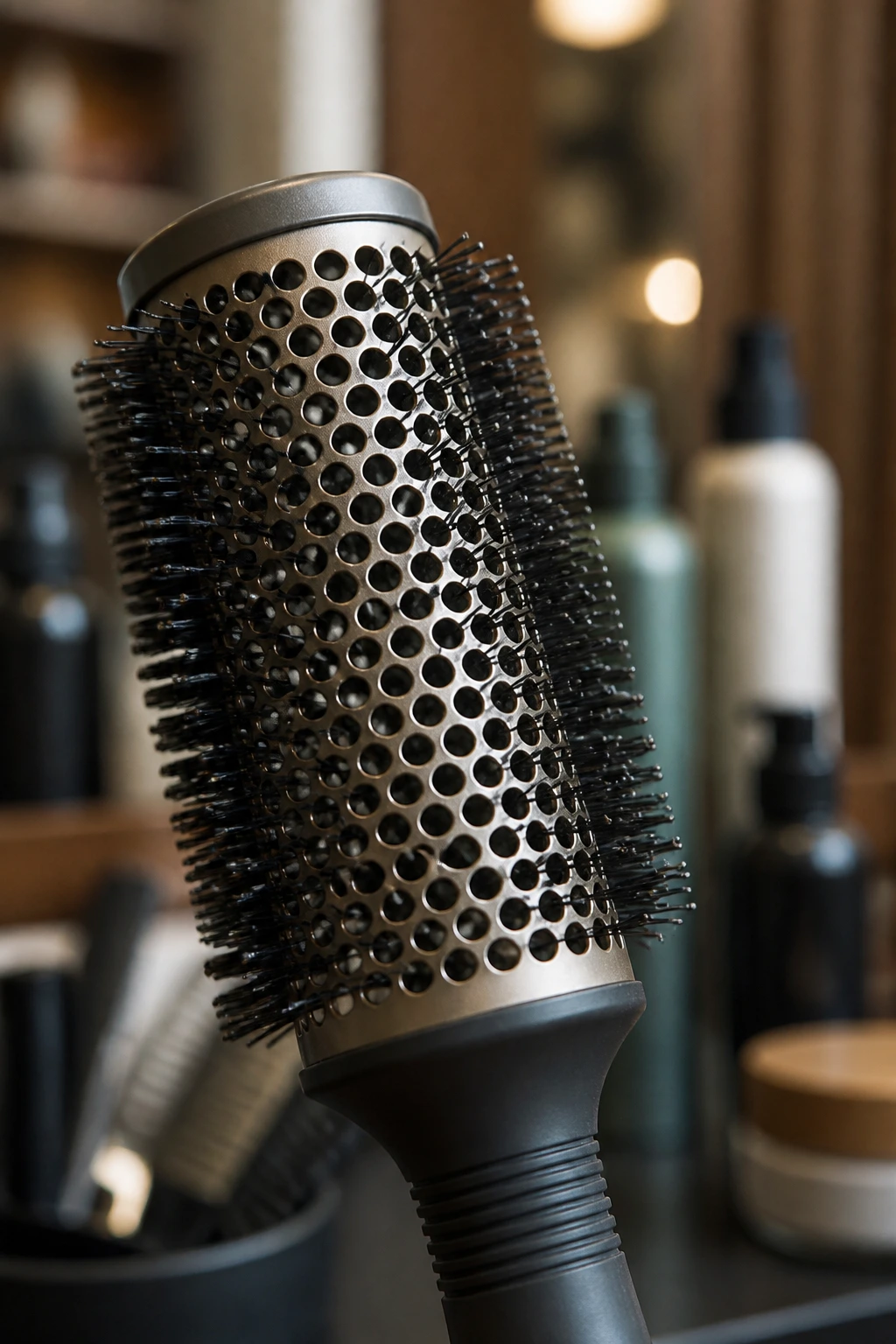
1.25- to 2-inch round brush: Big enough to bend curtain bangs away from the face without making them look like drill curls.
-
Blow dryer with a concentrator nozzle: Directs the air so the fringe doesn’t fly everywhere while it’s drying.
-
Sectioning clips: These keep the bangs separate from the rest of the hair, which matters more than people think on busy mornings.
-
Heat protectant spray: Use it on the front pieces every time you blow-dry or flat iron; the bang area gets the most touch and heat.
-
Texturizing spray: Best on wolf cuts, shags, shullets, and octopus cuts when you want separation instead of puff.
-
Light mousse or curl cream: Good for wavy and curly textures that need shape without weight.
-
Small flat iron: Handy for shaping the front pieces only, not for flattening the whole head.
-
Wide-tooth comb: Better than yanking through damp layers and breaking up the pattern you just paid for.
How to Style the Shape So It Still Looks Like the Cut

Presentation: Start the bangs with a quick blow-dry away from the face, then let them cool in place for a minute before touching them. That cooling step matters. Warm hair still remembers the shape you forced into it, and curtain bangs need to set or they’ll split in some random direction by noon.
Texture: Use product based on density, not vibes. Fine hair usually wants mousse at the roots and almost nothing on the ends. Thick hair likes a lighter cream or texture spray so it doesn’t balloon. Curly hair needs enough hold to keep the front pieces from shrinking into the forehead.
Parting: A straight middle part is the classic move, but a slightly off-center part can make the haircut look less precious. If the bangs keep falling too flat, dry them from side to side, then switch the part once they’ve cooled.
Finish: Choose shine or grit on purpose. Glossy serum makes the haircut read softer and more femme. Matte paste at the ends makes it feel sharper, more masc, and a little rougher around the edges.
Smart Product and Shopping Tips
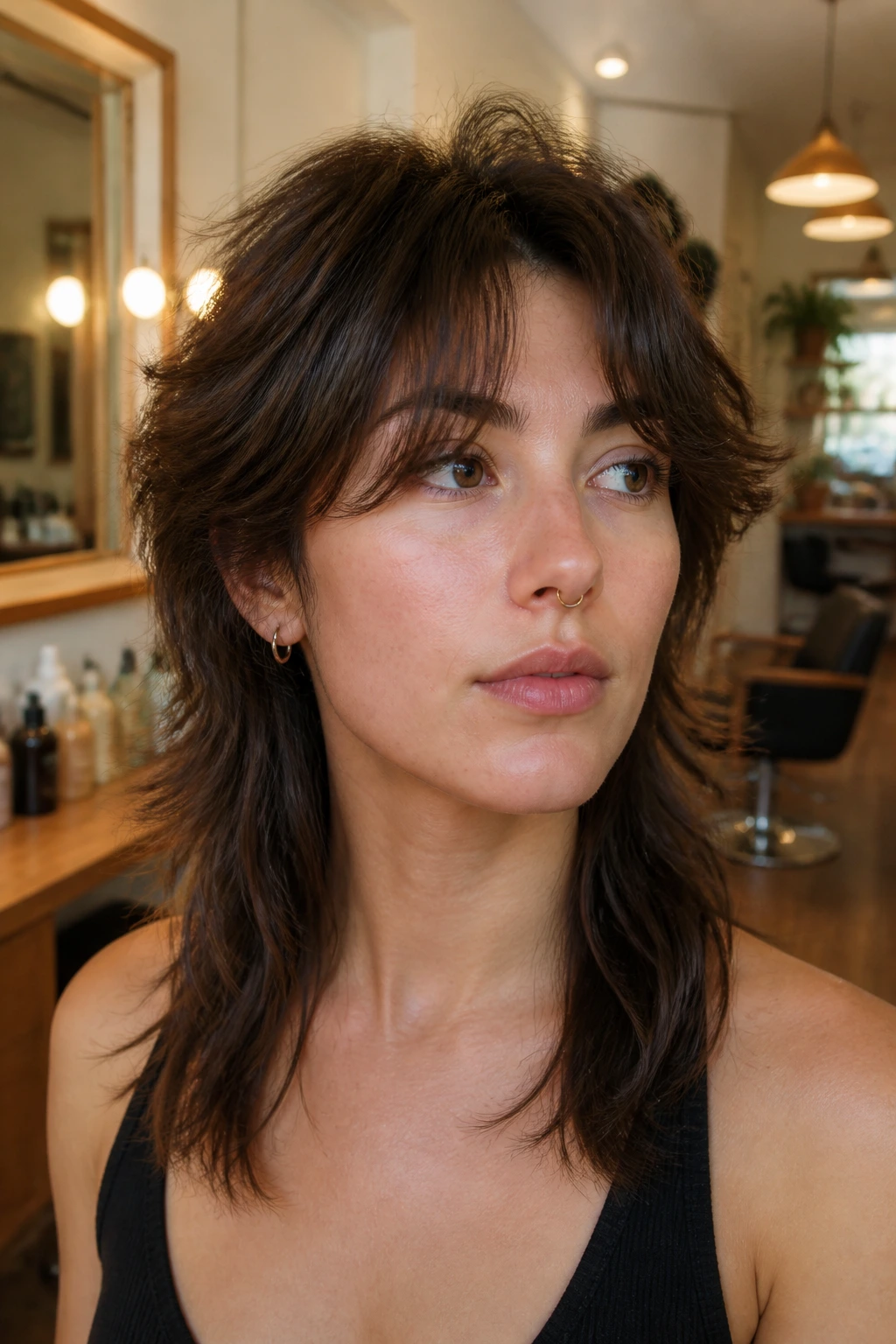
Buy products for the shape you want, not the fantasy version of the haircut. If you want a curtain-bang wolf cut to look airy, you need lift at the roots and light separation at the ends. If you want a long pixie mullet to look crisp, you need hold without grease. Those are different jobs, and one product rarely does both well.
For fine hair, keep the product stack light: mousse at the roots, heat protectant on the bangs, and maybe a small mist of texture spray. Heavy creams and oils can make the front pieces stick to the cheeks and flatten the crown. For thick hair, you’ll usually want a smoothing cream plus a blow dryer that can actually move water out of the hair quickly. For curly hair, grab a curl cream or gel that keeps the curtain bang split from drifting apart as the curls dry.
A quick salon shopping note: if you’re considering an undercut, ask whether the maintenance is something you’ll actually tolerate. Hidden shaves are easy to love and easy to forget. They grow out fast, and they show at the neck sooner than most people expect. That’s not a flaw. It’s just how short hair behaves when the rest stays long.
Additional Tips and Edge Boosters
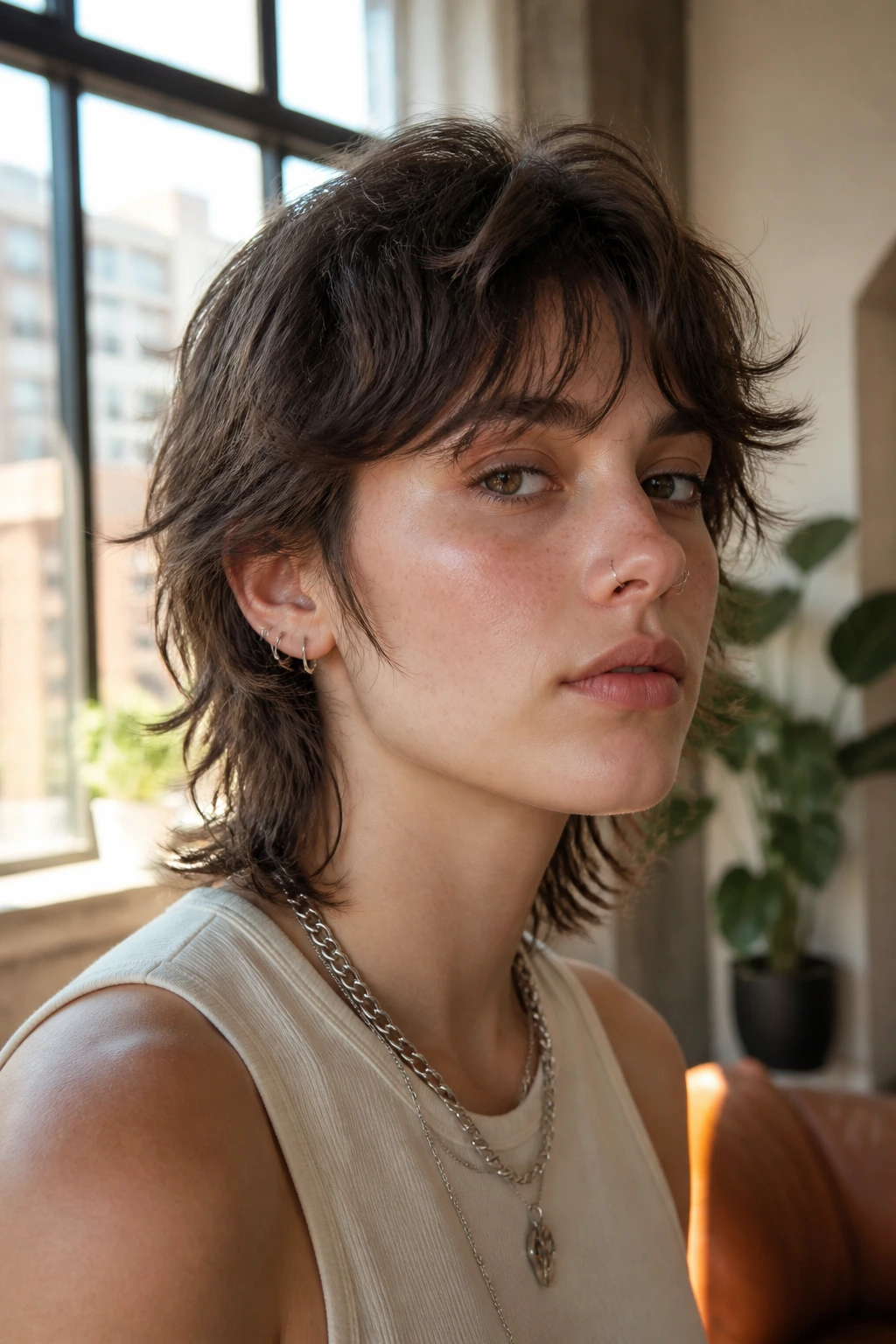
Texture Boost: A pea-sized amount of paste worked only into the ends can make a shag or shullet look sharper. Don’t rake it into the roots; that just makes the hair sticky and weird.
Color Placement: A few lighter pieces around the curtain bangs can make the split more visible. The front suddenly pops, even if the haircut itself hasn’t changed much. It’s a small trick, but it changes how the shape reads in daylight.
Accessory Move: A metal clip, a bandana, or even one tucked side behind the ear can tilt the haircut toward masc or femme depending on the rest of the styling. Hair accessories are not decoration here. They’re part of the silhouette.
Make-It-Yours: If you want softer, ask for rounded bang edges and less taper at the nape. If you want sharper, tighten the back and keep the bangs straighter through the ends. Those choices tell the haircut what to say.
Growing Out, Maintenance, and Reset Days
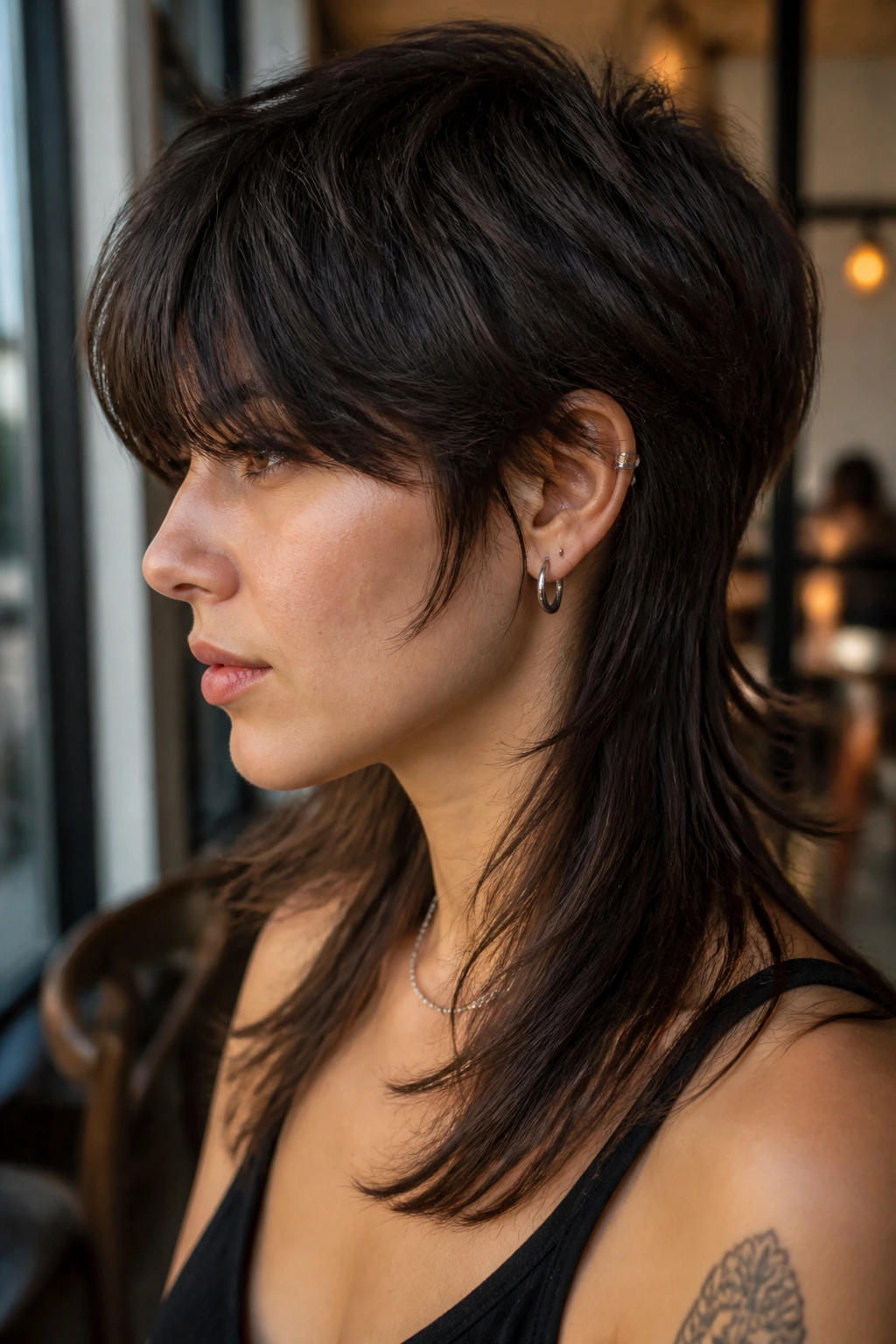
Curtain bangs need more attention than the rest of the cut. Plan on a trim every 4 to 6 weeks if you want the split to stay clean and centered. If you prefer them softer and a little longer, you can stretch that to 6 to 8 weeks, but they will start brushing the eyes and nose more often. That isn’t failure. It’s growth.
The haircut itself usually needs a shape refresh every 8 to 12 weeks, depending on how much layering or tapering it has. Shags and mullets drift faster because the shape depends on specific weight lines. Lobs and collarbone cuts can usually go a little longer. Hidden undercuts and nape tapers are the fastest to show growth, so those may need a cleanup every 3 to 5 weeks if you want them neat.
A few low-drama upkeep habits
- Sleep on a satin pillowcase if your bangs frizz easily.
- Dry the front pieces first on wash day so they don’t set bent in strange directions.
- If the bangs split badly, tuck them behind the ears for a day and let them reset with the next wash.
- Keep a small round brush or comb near your sink. Curtain bangs are rude in the morning, and a good brush fixes half of that.
Common Mistakes That Flatten the Shape
-
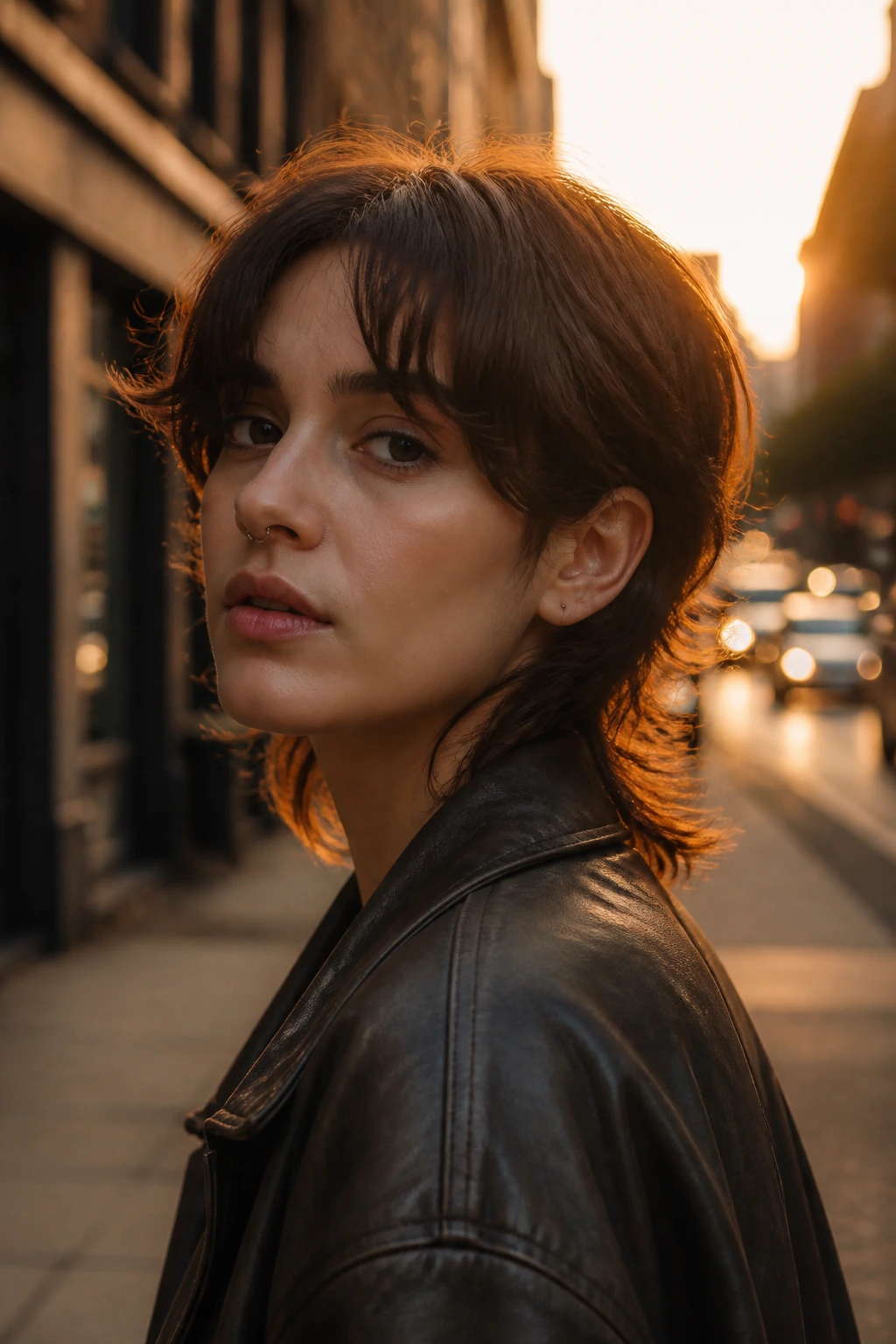
Cutting the curtain bangs too short: The fringe pops up, separates awkwardly, and loses the soft bend that makes the style work. Ask for a longer first pass, usually around cheekbone or lip length, then refine from there.
-
Thinning out fine hair too much: The ends start looking see-through and the haircut loses its body. If your hair is fine, keep the layering controlled and ask for movement without aggressive removal.
-
Blowing the bangs straight down: That creates a flat curtain in the middle and a bent edge at the sides. Dry them side-to-side with a round brush, then let them cool in the split position.
-
Ignoring the nape: A nice front with a bulky back makes the cut feel unfinished. If you want a short queer read, the neckline needs some cleanup.
-
Using heavy oils on the front pieces: The bangs clump together, separate at the wrong place, and stick to the cheeks. Save oil for the ends or the hair underneath, not the face-framing bits.
Variations and Adaptations to Try
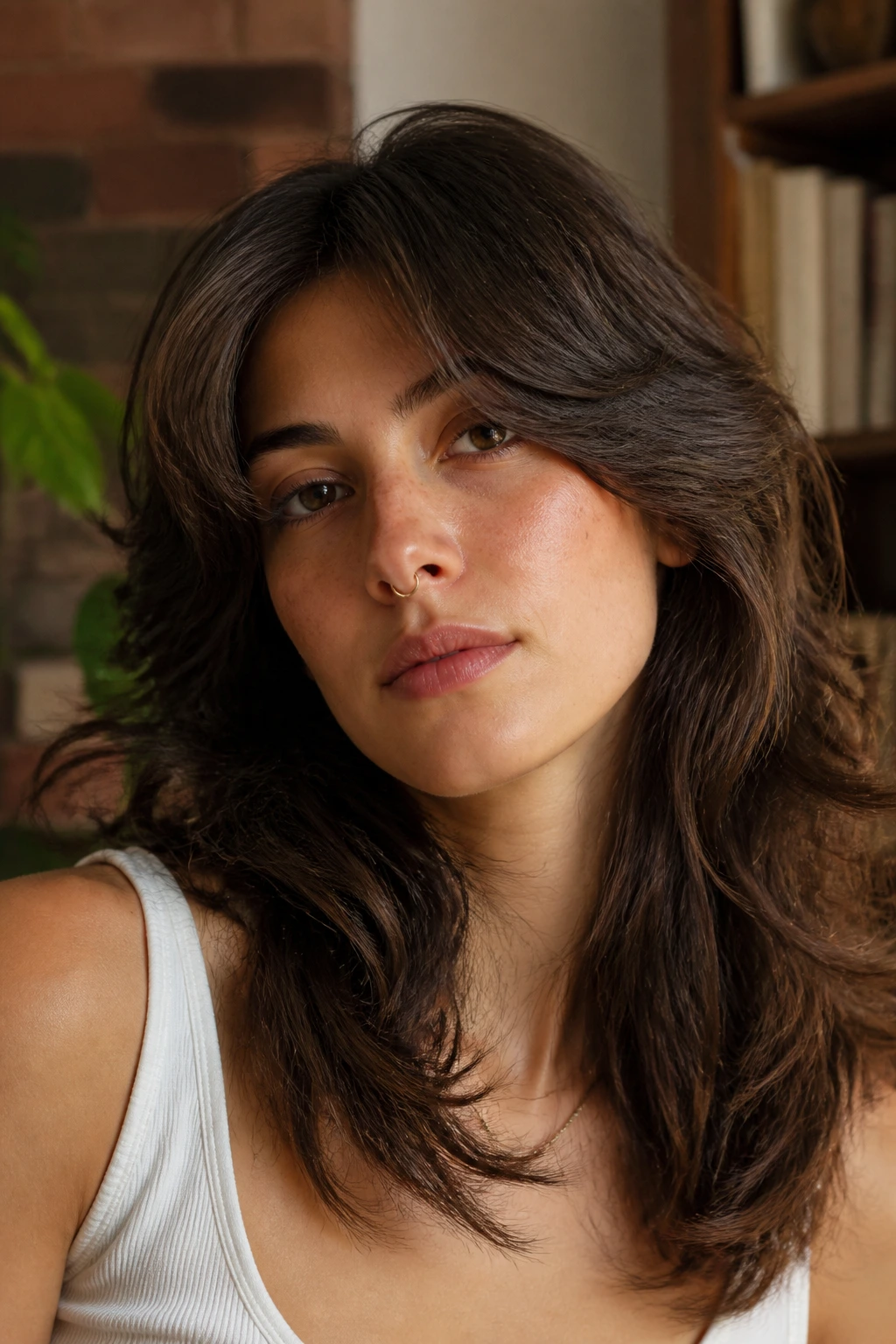
Soft Femme Sweep: Keep the curtain bangs longer and round-brushed, then leave the edges feathered instead of blunt. This version leans gentler and works well if you want the cut to feel more flowing than sharp.
Masc Nape Clean-Up: Tighten the neckline, keep the sides closer to the head, and style the bangs straighter through the ends. The shape reads firmer without needing a dramatic chop.
Curly Halo Version: Let the curtain bangs sit longer than you think and cut the shape dry so the curls can show you where they land. The result is softer, rounder, and far less likely to spring into your forehead.
Fine-Hair Float Cut: Keep the perimeter blunt enough to hold weight, then add only a few internal layers near the crown. This keeps the haircut from turning stringy while still giving you movement.
Thick-Hair Razor Reset: Use slide-cutting or controlled razor work to remove bulk, but keep the bang line soft. This version helps dense hair stop puffing around the jaw and neck.
Frequently Asked Questions
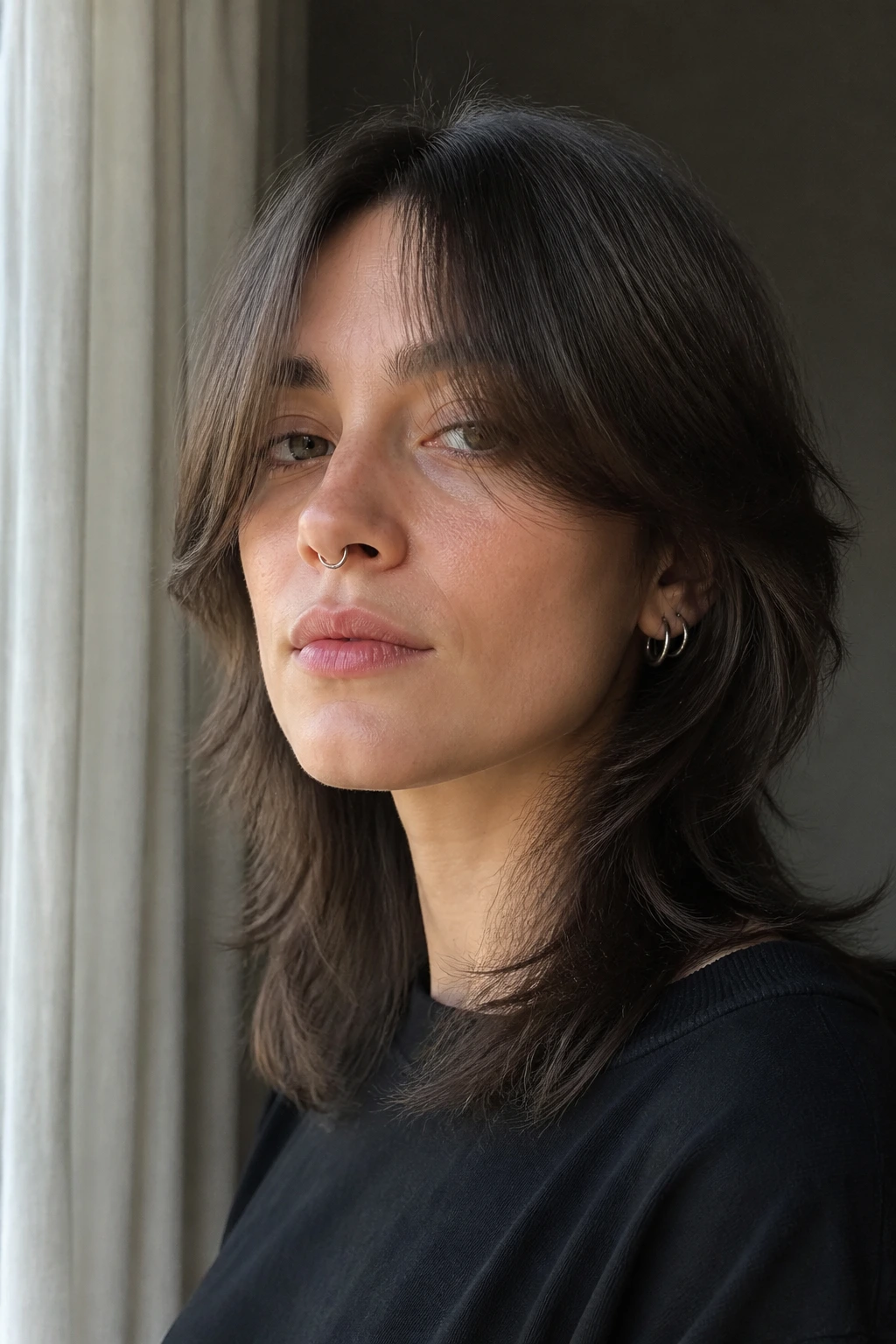
How short should curtain bangs be on long hair?
Most people look best when the shortest point lands around the cheekbone, lip, or chin, depending on forehead height and hair texture. If the bangs are too short, they can sit awkwardly above the face instead of folding into the haircut.
Do these cuts work on curly hair?
Yes, but the bang length has to be longer than it would be on straight hair. Curly curtain bangs should usually be cut dry or nearly dry so the shape matches the way the curls actually fall.
What if I want the haircut to read more masc?
Ask for a cleaner nape, tighter sides, and less roundness through the crown. Matte texture and a straighter curtain bang help too.
What if I want it to read more femme?
Keep the front pieces softer and longer, use a round brush, and choose a little shine at the ends. A softer perimeter and more visible movement will push the read in that direction.
How often will I need bang trims?
Usually every 4 to 6 weeks if you want the split to stay crisp. If you’re fine with a softer, longer fringe, you can stretch that a bit farther.
Can I keep my length and still get a queer haircut shape?
Absolutely. That’s the whole point of several styles here. The silhouette comes from the crown, face frame, and nape, not only from how much hair you remove.
What should I ask for if I don’t want a lot of layers?
Ask for internal movement, a shaped curtain bang, and a tidy nape or side detail. That gives you softness without turning the ends into feathers.
What if my bangs refuse to split in the middle?
Try drying them from side to side with a round brush, then pinning them loosely while they cool. A stubborn cowlick may need a slightly off-center part, and that can look better anyway.
Growing Into It
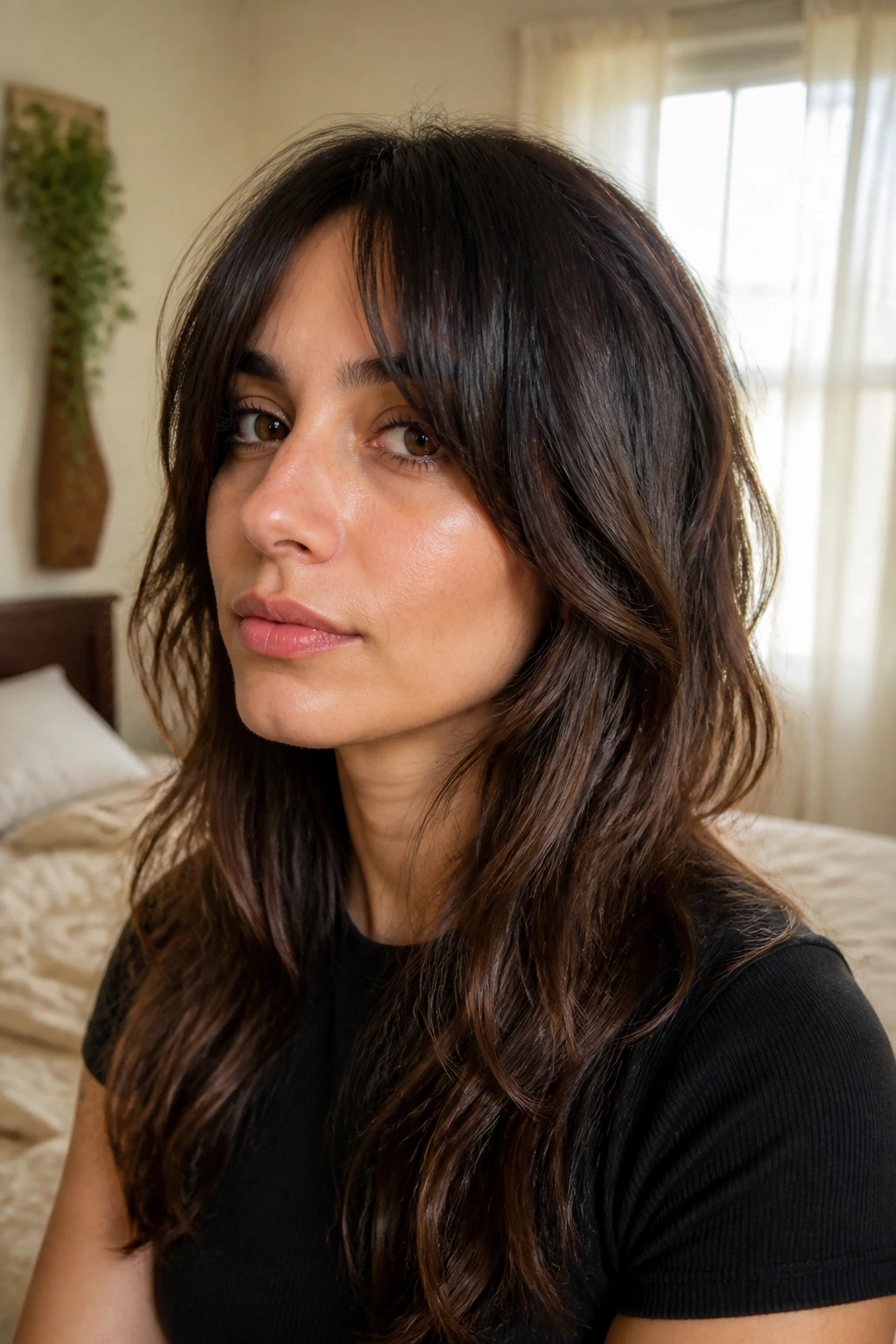
A good queer haircut doesn’t freeze you into one look. It gives you room. That’s what curtain bangs do best here: they keep the front alive while the rest of the cut can drift between masc, femme, sharp, soft, messy, and polished without falling apart.
If you’re sitting between lengths or between identities or just between moods, that’s not a problem to solve. It’s part of the style. Start with the front pieces, keep the weight honest at the nape, and let the haircut change a little as you do.