



Long hair gives you room to work, but a round face asks for a little strategy. The braids for long hair and round faces that look best usually do the same three things: they start a little higher, they keep the bulk away from the cheeks, and they pull the eye up or down in a clean line. That sounds technical. In practice, it’s simpler than people make it.
A braid can soften a face shape or sharpen it. Same person, same hair, different placement, different result. A thick braid that flares out beside the jaw can make a face read wider. A braid that drapes from the crown, or drops into a long vertical tail, does the opposite. It stretches the silhouette. It gives the face room to breathe.
And long hair is the fun part. You’ve got length to play with, which means you can go sleek, loose, woven, tucked, or dramatic without running out of braid. The trick is picking styles that use that length instead of sitting on it like a heavy helmet. That’s where the good stuff starts.
Why These Braids Change the Shape of the Face
Height Wins: A braid that starts at the crown, temple, or top of the head pulls attention upward, which helps a round face look longer without needing anything harsh or overdrawn.
Diagonal Lines Do a Lot of Work: Side braids, swept braids, and curved sections break up softness around the cheeks. They make the face feel more angular in a natural way.
Long Ends Help More Than You’d Think: On long hair, the braid itself can stay narrow while the loose length hangs down and keeps the whole look vertical. That vertical line is doing half the styling for you.
Texture Changes the Mood: A sleek braid reads polished and elongating. A looser, pancaked braid reads softer, but it still works if the bulk stays under control near the face.
You Don’t Need to Hide Your Face Shape: That’s the part people get wrong. The goal isn’t to disguise a round face. It’s to give it clean framing, a little lift, and fewer wide points at cheek level.
1. High Crown French Braid
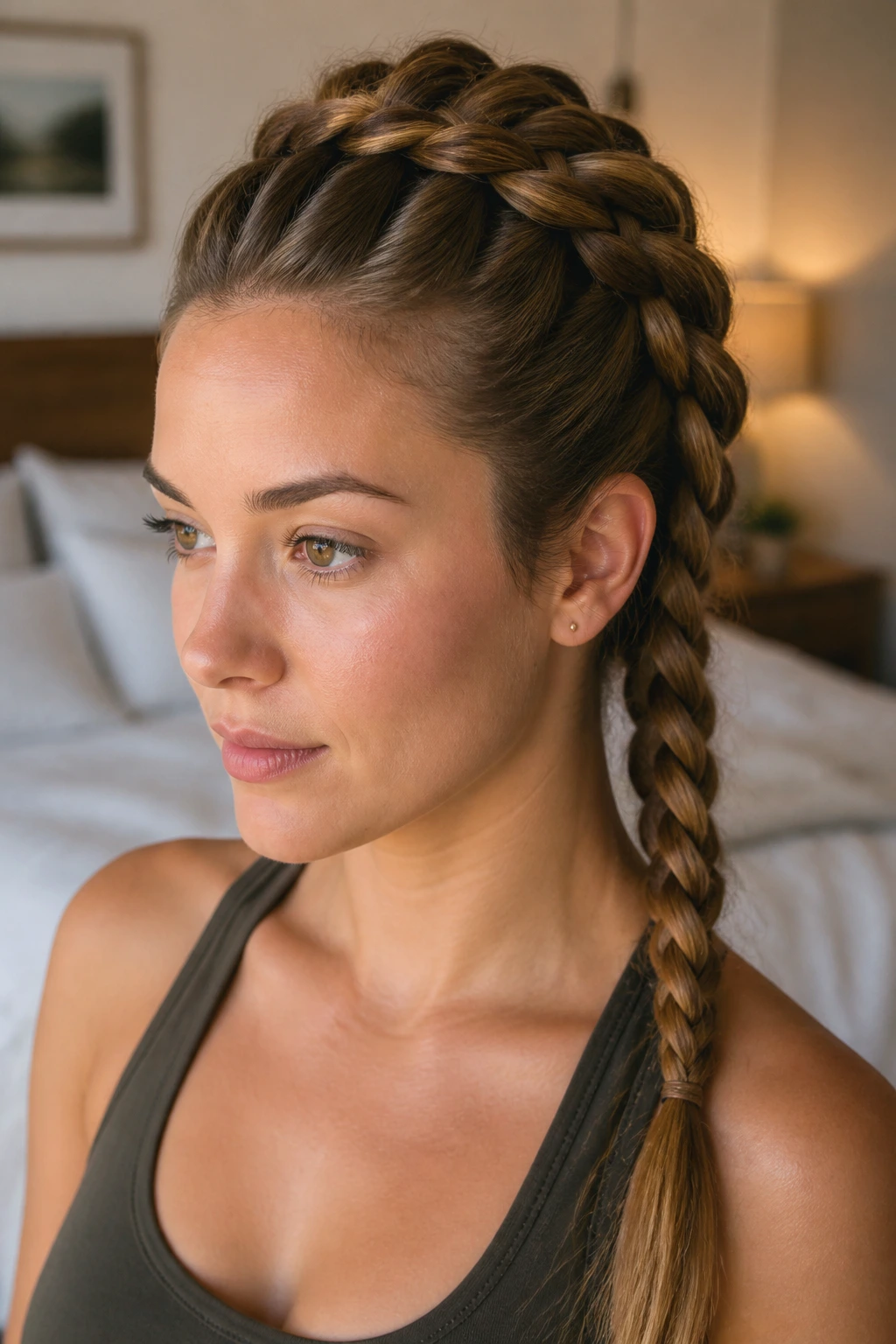
A high crown French braid is one of those styles that looks more complicated than it is. The braid starts near the top of the head, right where you’d want the eye to go first, then travels back and down so the face keeps that stretched, lifted look. On long hair, the length at the back gives it a nice finish instead of ending too soon.
Why It Flatters a Round Face
The height at the crown matters. A braid that begins too low can sit right at the widest part of the face and fight the shape you’re trying to slim. Start higher, keep the sections neat, and let the braid narrow as it moves down the head.
If you want this to feel softer, leave a slim piece near each temple. Not chunky pieces. Slim. A strand about the width of a pencil does more for the face than a big curtain of hair that lands at the cheekbones.
A light mist of texturizing spray before you braid makes the grip cleaner, especially if your hair is silky or freshly washed. Clean hair can be slippery. That’s not a moral failing. It’s just hair.
2. Deep Side Dutch Braid
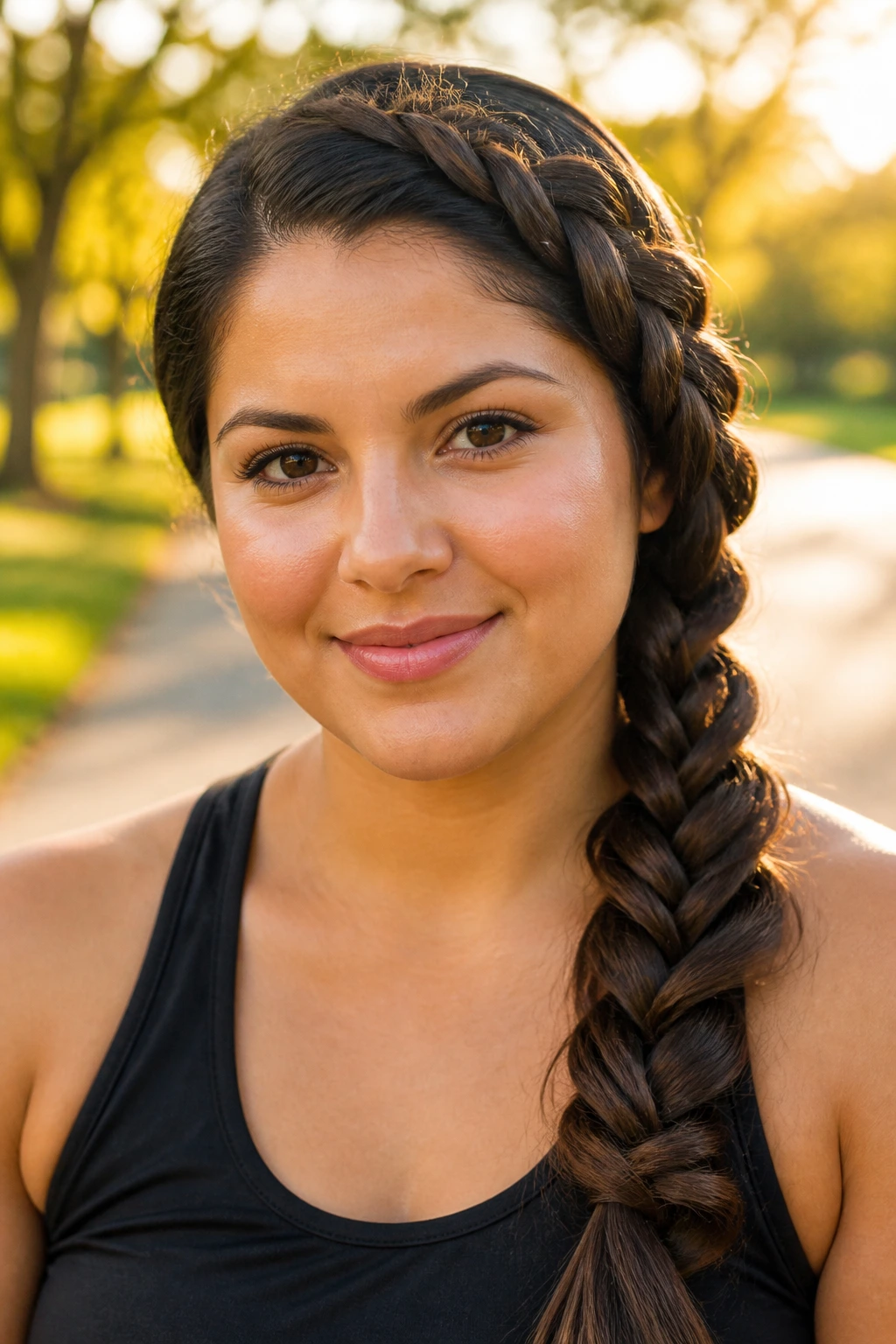
A deep side Dutch braid has a little more attitude than a French braid because the plait sits on top of the hair instead of tucking inward. That raised texture gives the braid a clear outline, and the deep side part gives the face a diagonal line that breaks up roundness fast.
If your hair is long and thick, this is one of the safest styles for keeping things balanced. The braid can start just above the temple and sweep down over one shoulder. The effect is easy to like because it doesn’t crowd the jaw.
What Makes It Work
The side part does the face-shaping. The Dutch braid does the styling. Together, they create a line that feels longer than it is.
Keep the braid snug through the top section, then loosen the tail a little once you’re past the ear. That keeps the top polished while letting the end fall softly over the collarbone. If the braid balloons out near the face, it loses the whole point.
3. Center-Part Twin Dutch Braids
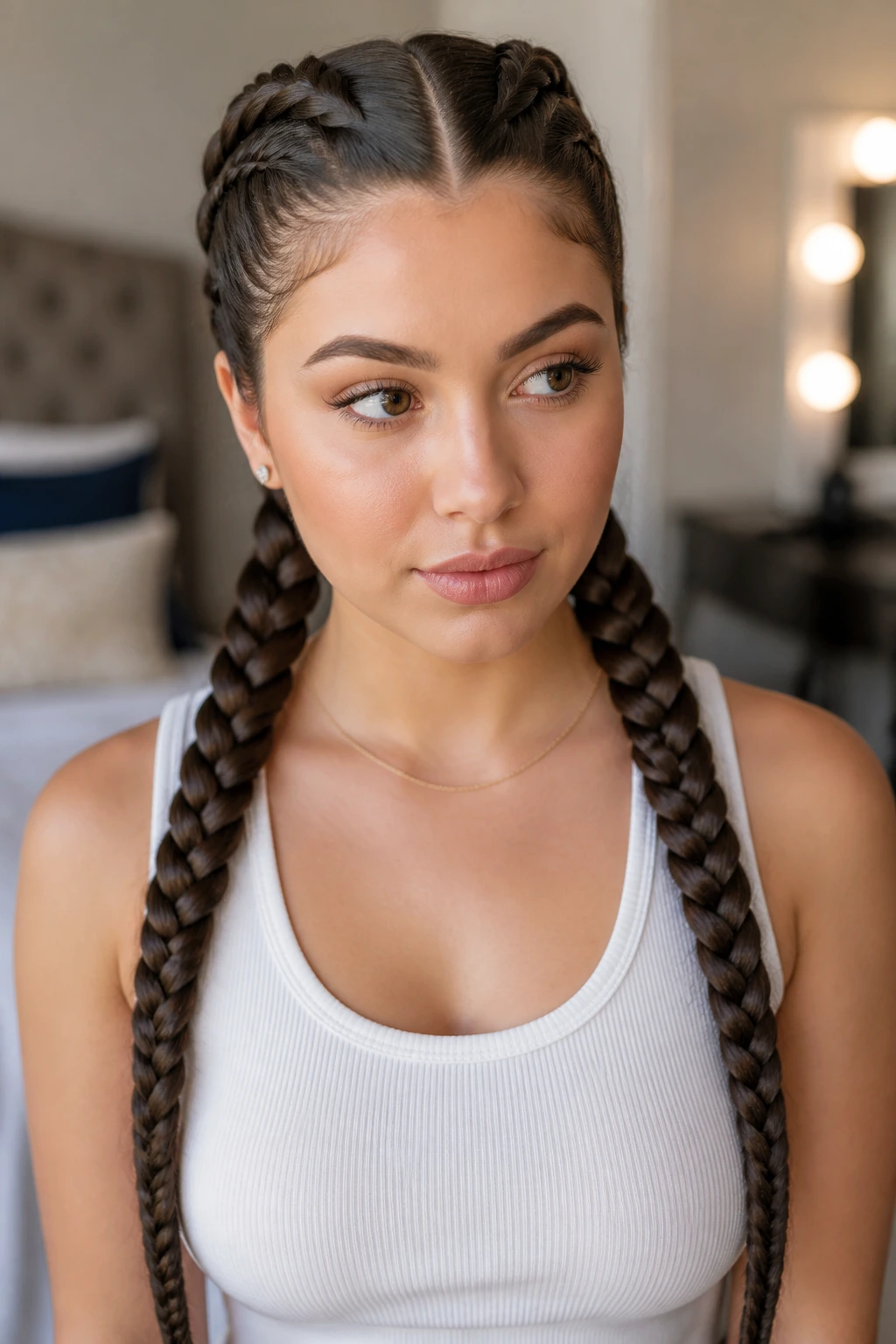
Twin braids can work on a round face, but only when they’re placed with some care. The center part creates symmetry, and the upward start near the hairline keeps the look from spreading too wide across the cheeks. Long hair helps here because the braids can hang low and elongate the body of the style.
The mistake people make is braiding too much volume out at the sides. That turns into width. Keep the braid lines tight to the scalp for the first few inches, then let them fall straight down instead of curving outward.
A pair of slim, even braids looks cleaner than two chunky ropes that puff out beside the face. Cleaner. Sharper. Less fussy.
4. Halo Braid with Loose Length
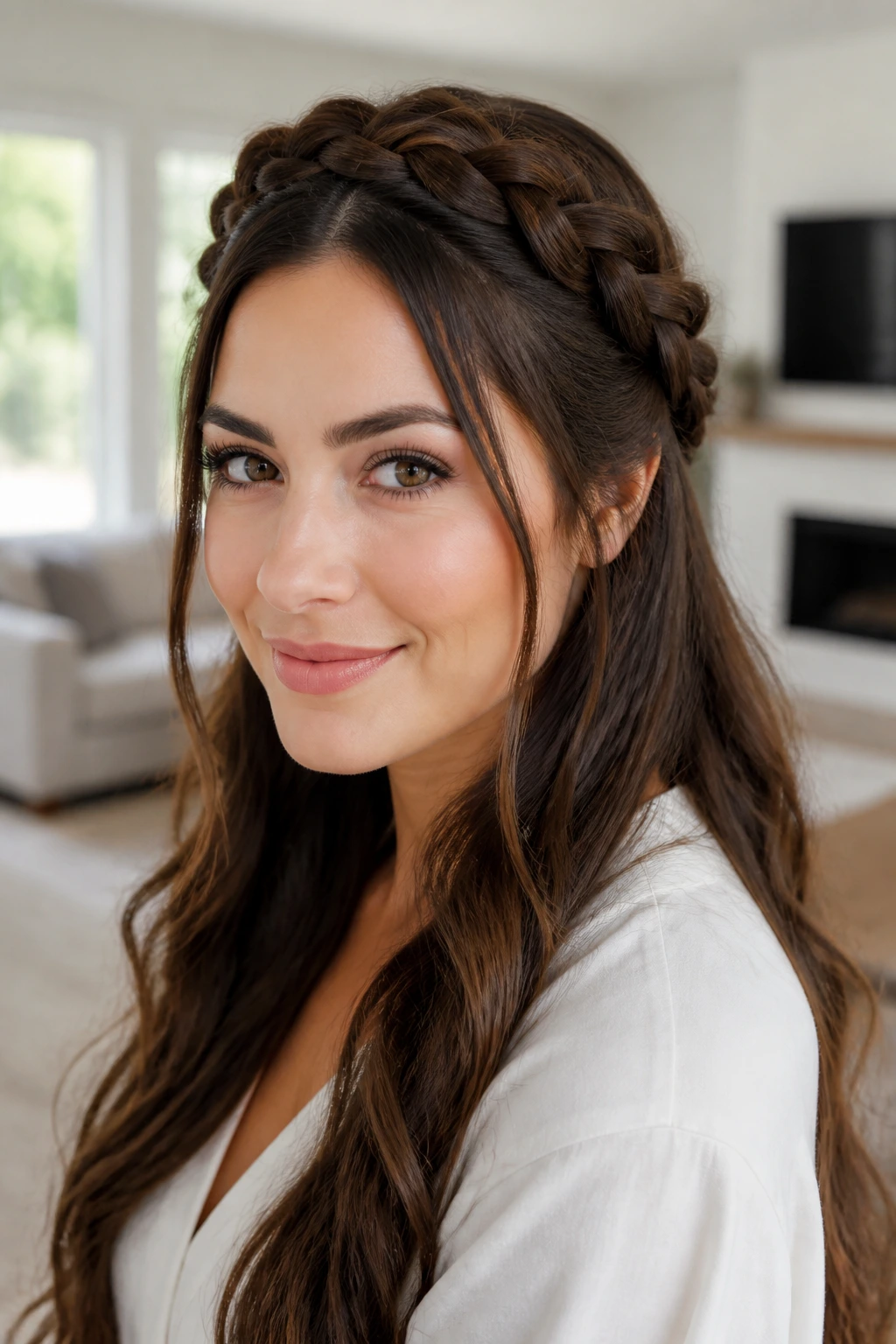
A halo braid can go either way on a round face. Put it too low, and it can widen the head shape. Put it higher, and it becomes one of the prettiest options in the whole group because it frames the face like a narrow crown instead of a full circle.
The version I like leaves the lower lengths loose instead of tucking everything into the braid. That extra length gives the look more vertical flow. It also keeps the style from reading too dense around the temples, which is where round faces need breathing room.
Why It’s Different
A full halo braid can feel heavy if the braid is thick all the way around. A partial halo, or a halo that stops before it fully closes, looks lighter and tends to be kinder to softer face shapes.
A little height at the crown changes everything. If you have flat roots, tease the top section gently before you braid. Just enough to lift it. No birds nest. No drama.
5. Fishtail Braid Over One Shoulder
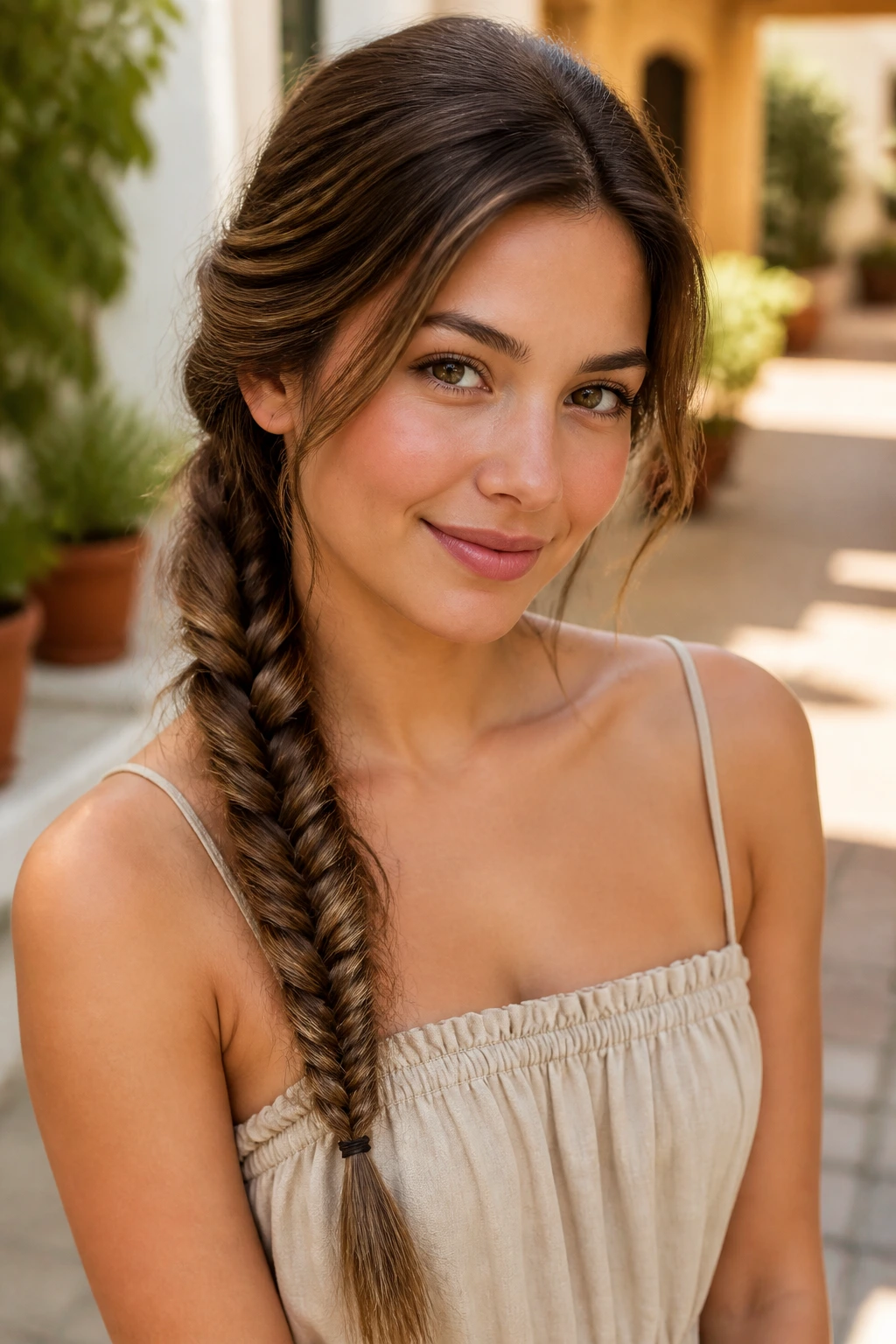
A fishtail braid gives a round face a long, narrow line from the collarbone down. That’s the magic. It’s also a braid that looks especially good on long hair because the woven texture keeps the tail interesting all the way to the ends.
One shoulder placement is the key. Put the braid straight down the back and it can disappear. Sweep it to one side and it starts doing face-shaping work immediately. The diagonal line breaks up softness, and the narrow weave keeps the silhouette clean.
The Best Part
Fishtails can be made loose and soft or tight and glossy. For a round face, I prefer the version that starts smooth at the scalp and loosens only after the braid is underway. That keeps the top streamlined while the tail has movement.
If your fingers hate fishtailing, use a tiny elastic at the base first. It makes the split sections easier to control. Sometimes the simplest little cheat saves twenty minutes of muttering at a mirror.
6. Wrapped Braided Ponytail
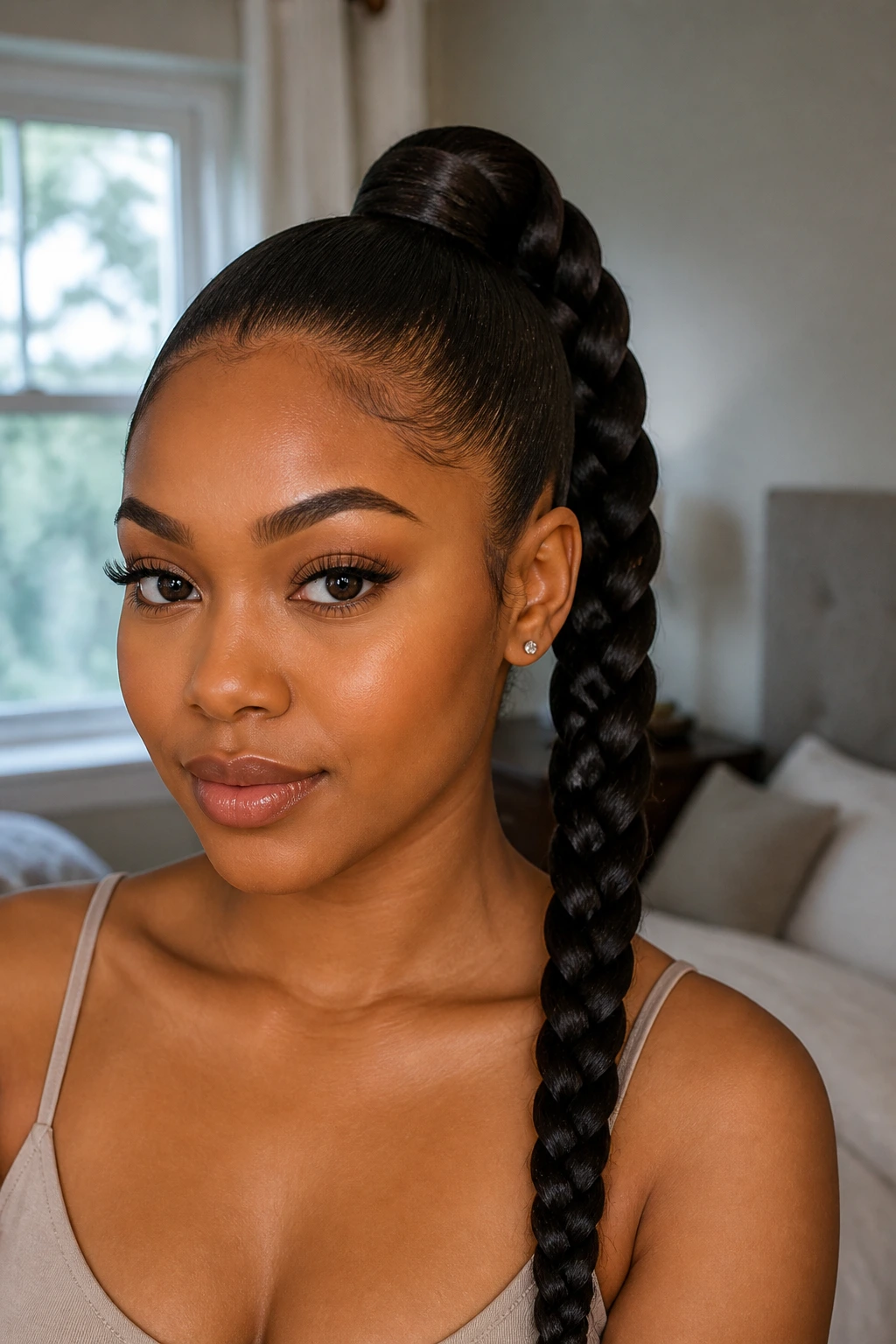
A braided ponytail with a wrapped base is one of the easiest ways to get height without going full updo. The hair is pulled back, which keeps the sides clear, then the braid drops straight down in a way that feels long and clean. Round faces tend to like that kind of simplicity.
The wrapped base matters because it hides the elastic and gives the style a finished look. I’d keep the ponytail anchored at mid-high rather than low. Too low can drag the face downward in a heavy way. A mid-high placement lifts the whole shape just enough.
If you have layers, this style is forgiving. The shorter pieces can be smoothed into the base with a little gel or cream, while the braid keeps the length intact. Easy. Clean. No need to fight every flyaway into submission.
7. Waterfall Braid into Waves
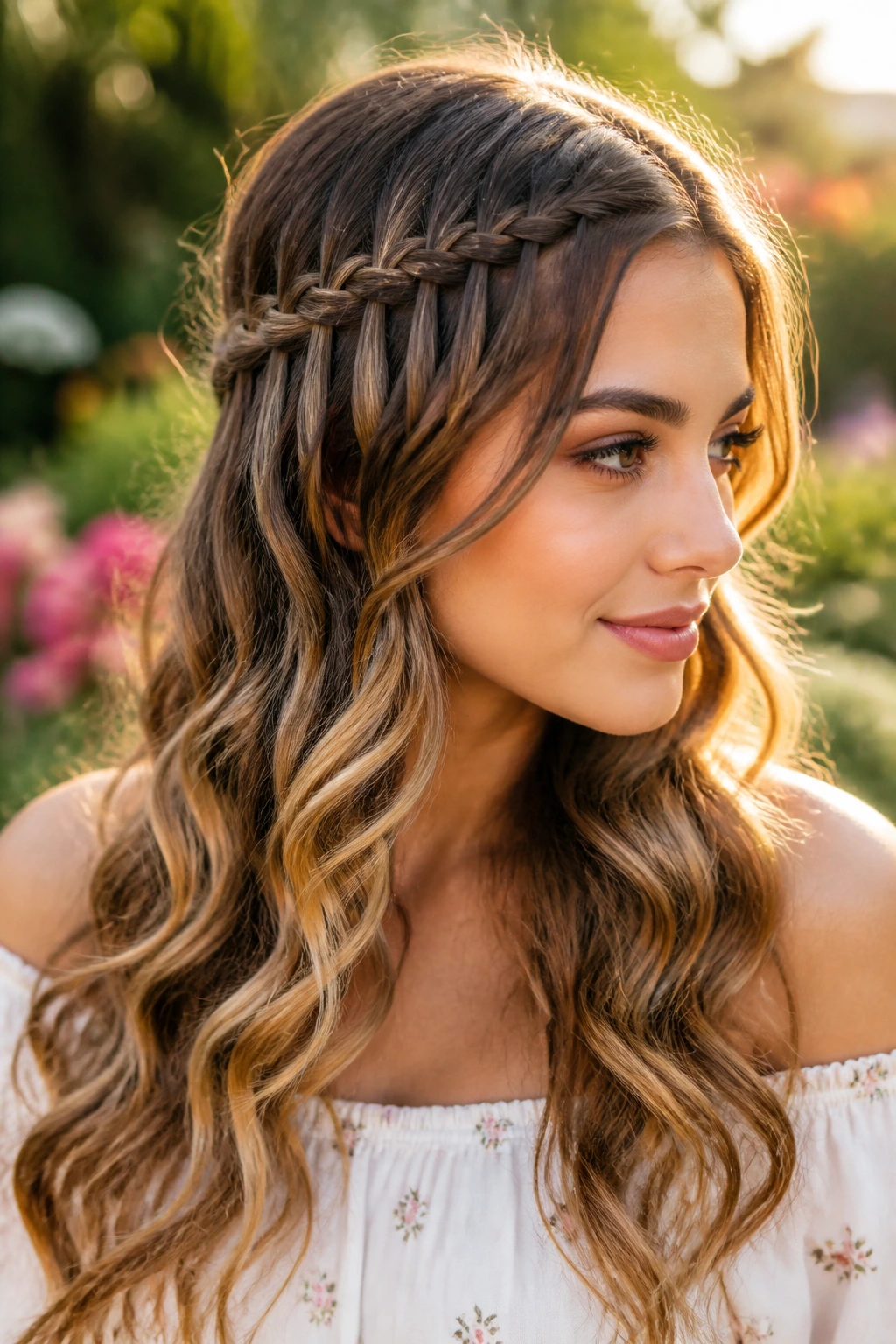
A waterfall braid can be a smart choice when you want softness around the face without the width that comes from loose hair hanging at the cheeks. The braid creates a neat line across the head, while the released strands keep the style airy.
On a round face, the best version is usually one that sits a bit higher than the ears and curves gently back. That leaves the cheek area open. The cascade of loose hair should fall below the jawline, not right beside it.
Why I Like It on Long Hair
Long hair gives the waterfall braid room to actually look like a waterfall. Shorter hair can turn it into a small decorative detail. Long hair makes it feel deliberate.
Use a curling iron or flexi rods on the released pieces if you want a soft wave through the lengths. Straight pieces are fine too, but a little bend keeps the braid from looking flat against the head.
8. Pull-Through Braid
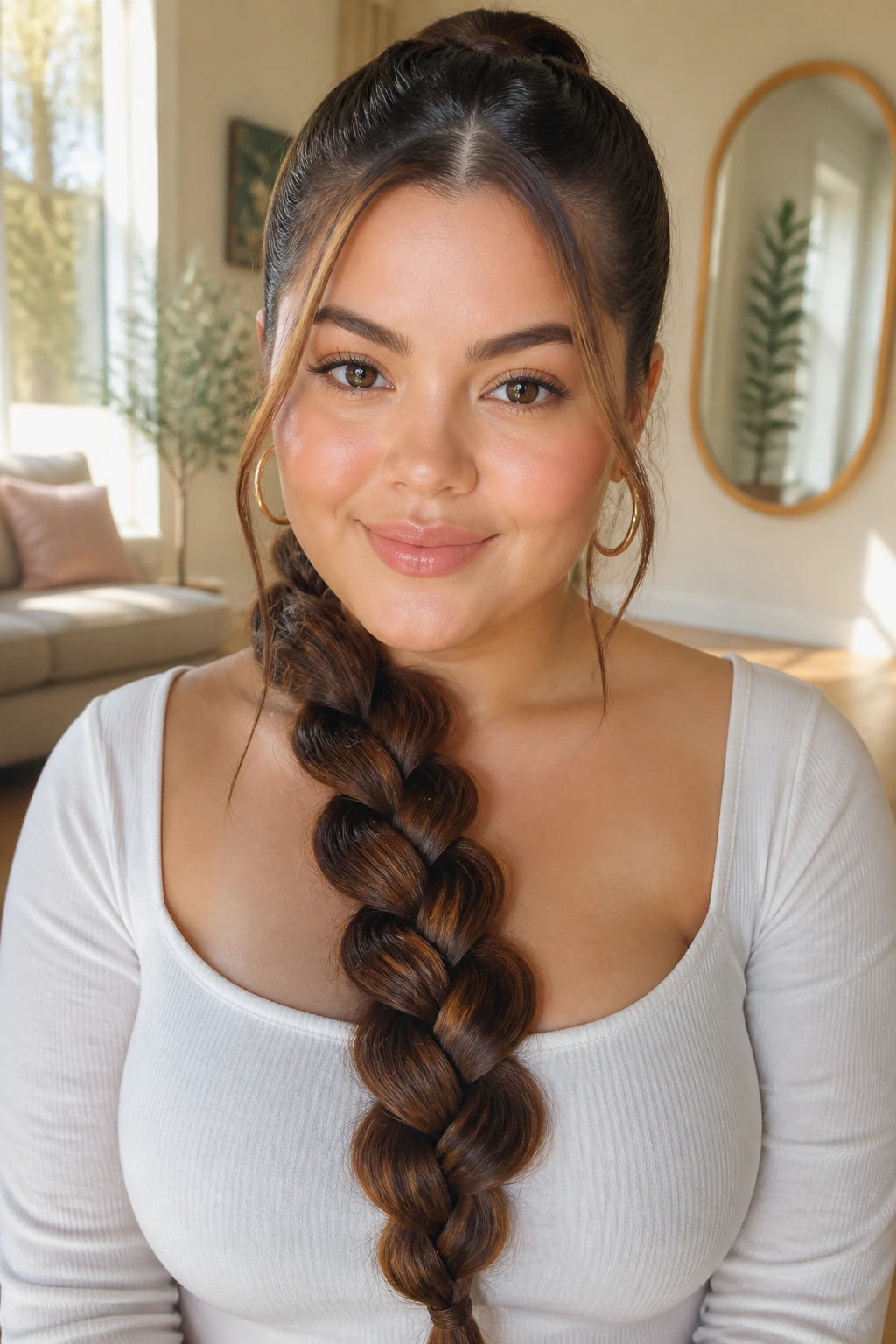
The pull-through braid is one of the best tricks for long hair because it creates a thick, dramatic braid without actually doing a three-strand braid all the way down. That makes it look full and tall, which is useful on a round face as long as the bulk stays centered instead of spreading wide.
This style does best when the top sections are sleek and the ponytail links stack straight down. If you pull the loops outward too much, the braid gains width instead of length. Keep the shape narrow and long. That’s the win.
A little texture spray helps the elastics grip. If the hair slips, the whole braid starts sagging by noon. Not a cute look. A couple of clear elastics and a firm hand are enough to keep it in place.
9. Rope Braids with a Sleek Finish
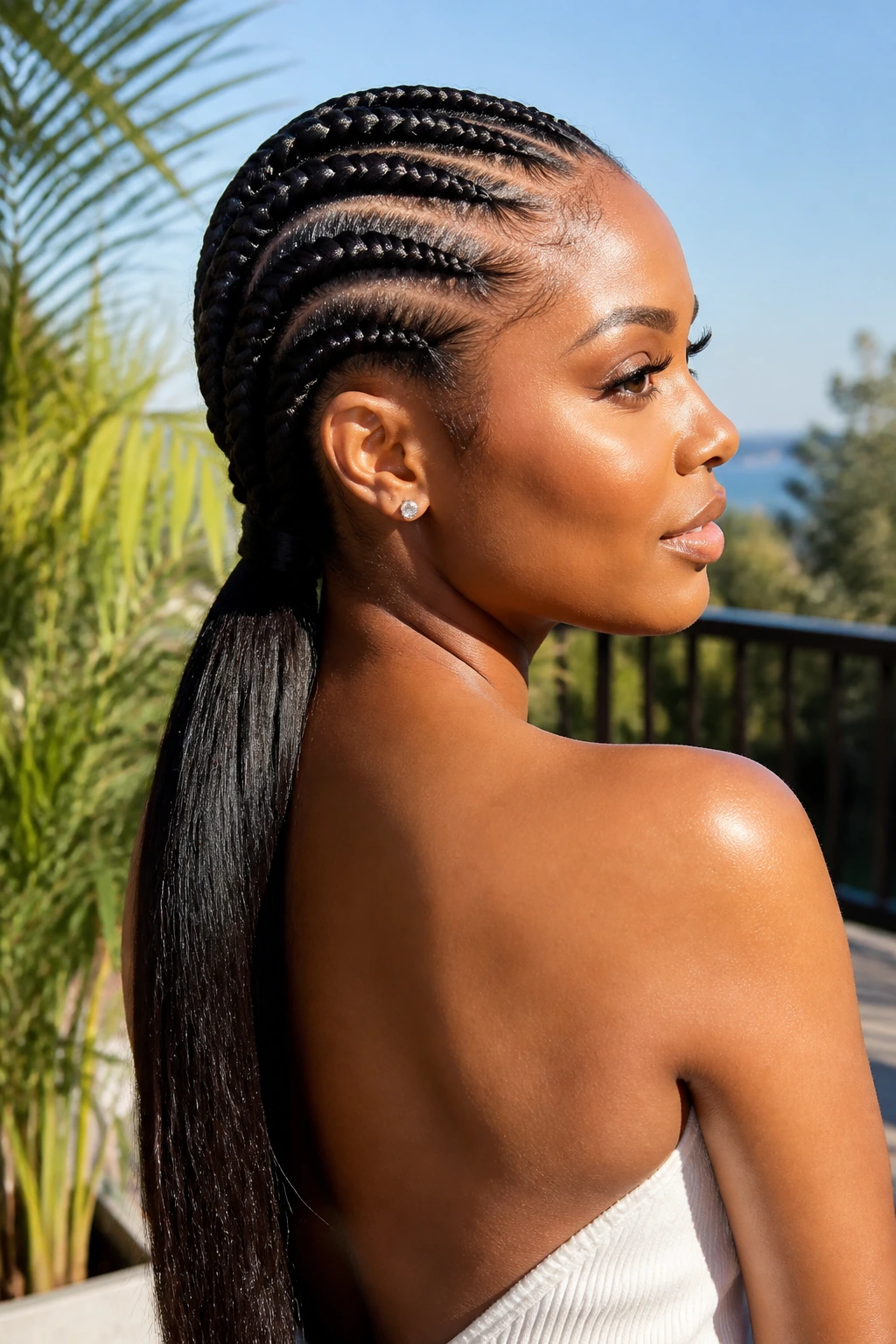
Rope braids are underrated. They give a polished, twisted line that feels thinner and smoother than many traditional braids, which is exactly why they work so well on round faces. They don’t puff out at the sides. They just drop.
For long hair, rope braids can be done as a single side braid, twin braids, or a low ponytail finish. My favorite version is sleek at the scalp and slightly looser at the ends. That keeps the face open while the length does the visual stretching.
Small Detail, Big Difference
Part the hair cleanly. Rope braids look best when the sections are precise, because messy parting makes the twist look accidental instead of styled.
A touch of serum on the finished braid gives it a smoother surface and helps the twist read clearly. Too much product, though, and it collapses. One pea-sized amount often does the job.
10. Bubble Braid with Tiny Accent Plaits
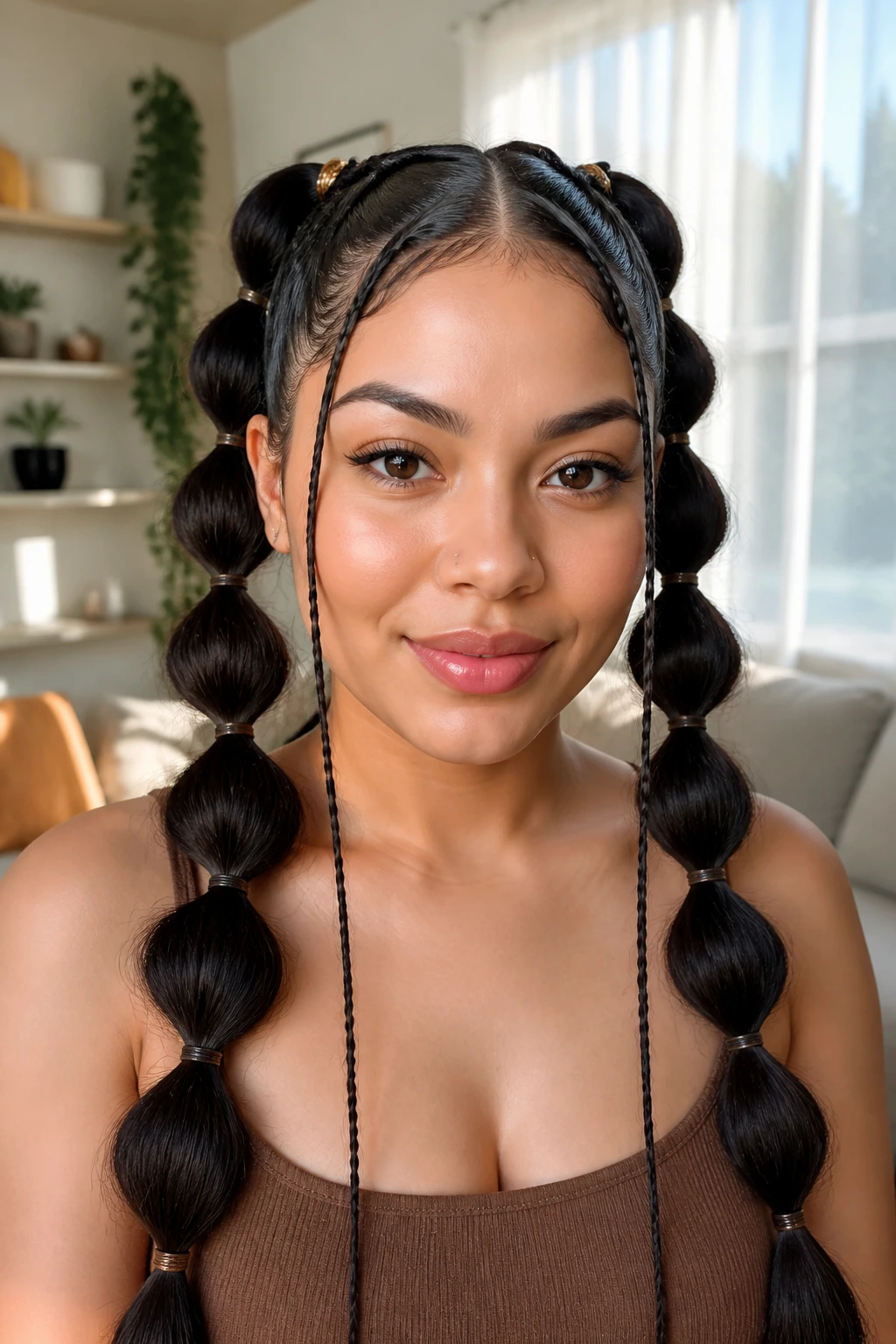
Bubble braids are playful, but they can also be strategic. On a round face, the trick is to stack the bubbles vertically and keep the side volume under control. The shape reads long instead of wide, which is exactly what you want.
Tiny accent plaits near the temples add detail without bulk. They frame the face lightly, then the rest of the braid drops straight down in rounded sections. It’s a good style when you want something a little more fun than a plain ponytail but not as heavy as a full woven braid.
Use clear elastics spaced evenly. The bubbles should be about 2 to 3 inches apart on long hair, depending on thickness. Too much space and the braid looks limp. Too little and the bubbles blur together.
11. Feed-In Cornrows to a Low Bun
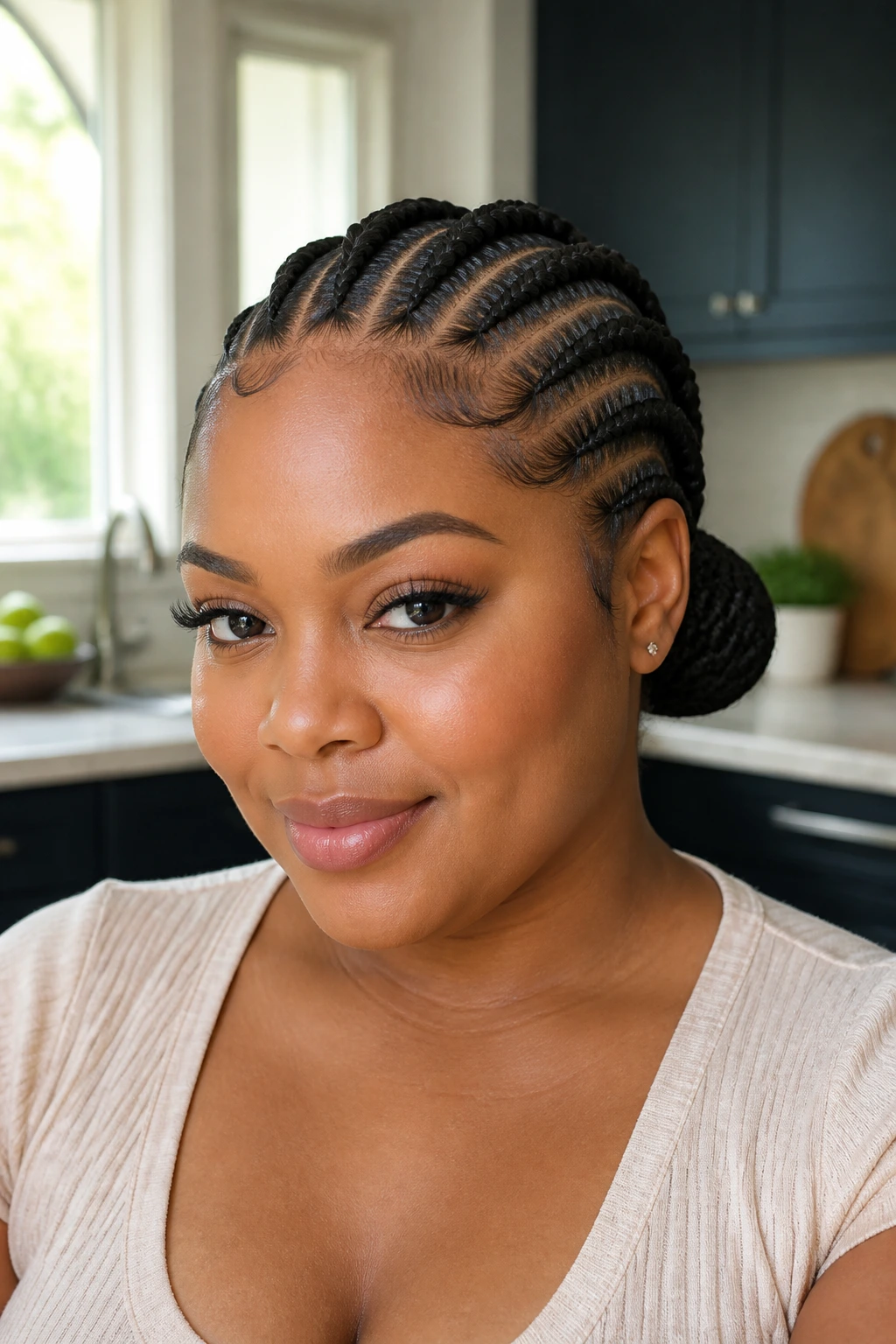
Feed-in cornrows are excellent for round faces because they keep the hair close to the scalp and let you guide the lines exactly where you want them. The braid pattern itself can create length, especially if the cornrows curve back instead of stopping at the sides.
When those braids feed into a low bun, the whole style stays neat around the face and avoids extra width near the cheeks. It’s a protective style, too, which gives it a practical edge for long hair that needs a break.
A polished finish works best here. If the parting is sloppy, the style loses shape fast. If the sections are clean, this can look sharp for days.
12. Chunky Side Braid with Face-Framing Pieces
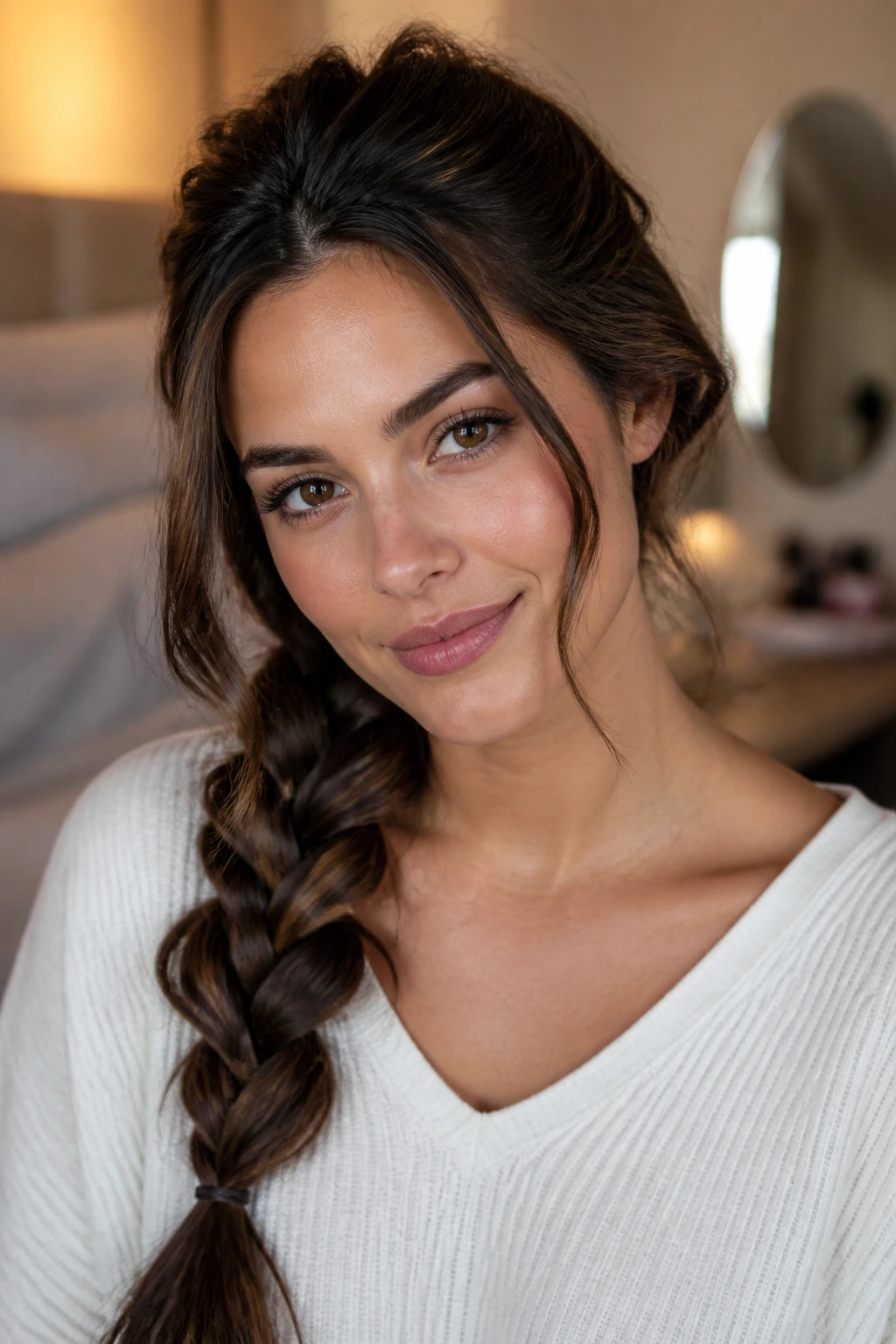
A chunky side braid can be gorgeous on long hair if you keep the face-framing pieces narrow and deliberate. That’s the line people often miss. The braid itself can be thick and full, but the pieces around the face should stay slim so the cheeks don’t get swallowed by extra hair.
I like this style for days when you want softness and a little romance without losing the slimming effect that a side braid gives. The braid should start below the crown and sweep diagonally, then sit over one shoulder with a bit of loosened texture through the ends.
A Quick Rule
If the braid looks widest at the cheekbones, adjust it.
Pull the braid outward more through the tail and less near the scalp. That keeps the volume low and prevents the top from puffing out in the wrong place. One of those small shape changes can alter the whole look.
13. Half-Up Braid Crown
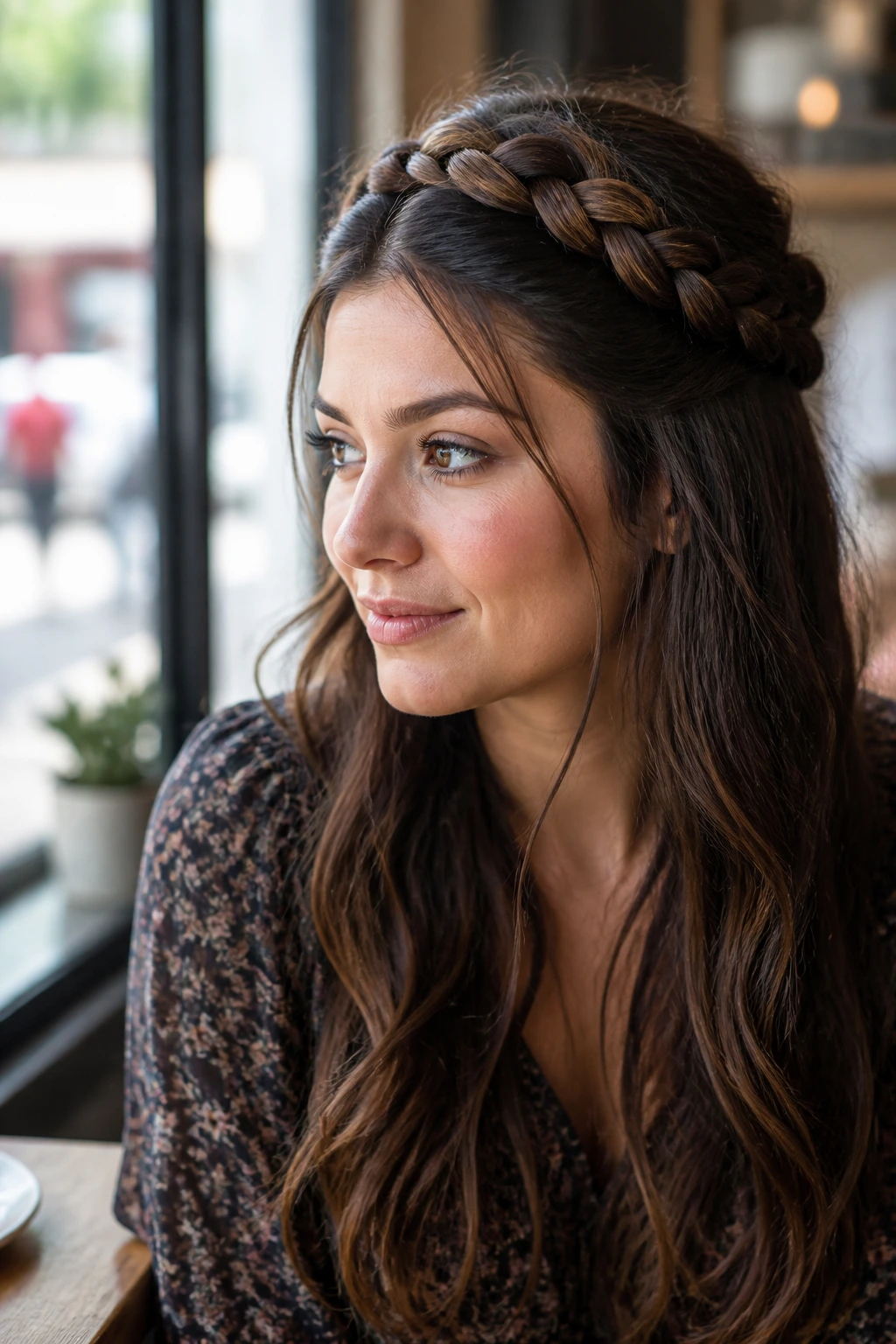
Half-up braid crowns are useful because they lift hair away from the face while still leaving the length down. On long hair, that means you get vertical movement from both directions: up at the crown, down through the loose lengths. Round faces tend to benefit from that double lengthening effect.
The crown braid should sit high enough to create lift, but not so high that it turns into a little hat of braid. That’s the wrong shape. Keep it narrow, secure it gently, and let the loose lengths fall straight or softly waved.
A few strands left loose near the temples can soften the line without making the face look wider. Keep those strands slim. I’m repeating that on purpose because it matters more than people think.
14. Sleek Low Braid with a Center Part
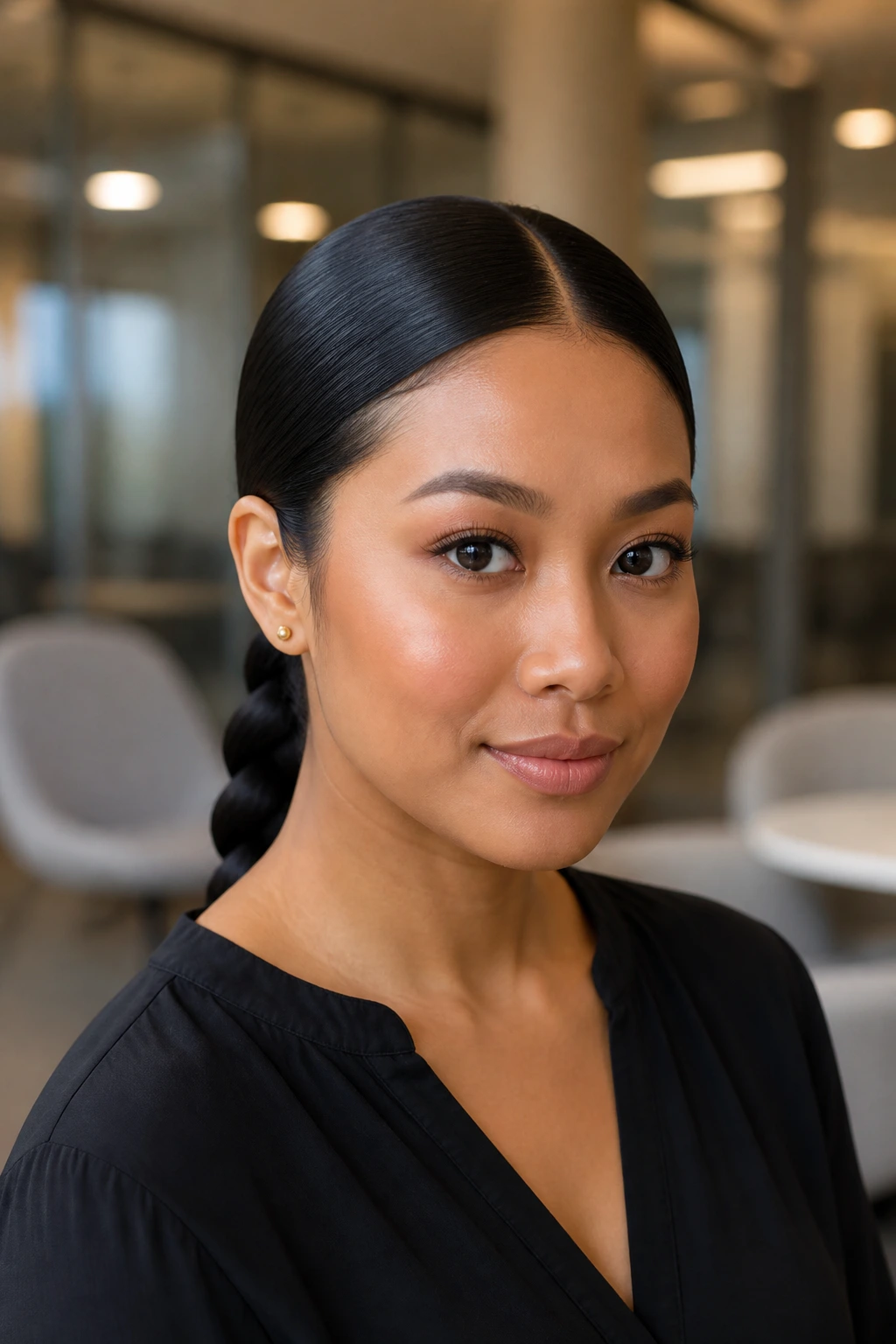
A low braid sounds simple, and that simplicity is why it works. With a round face, the center part creates a clean vertical line, while the braid itself stays low and long. It’s calm. It’s neat. It doesn’t fight the face.
The key is to keep the braid smooth at the scalp and free of bulk near the sides. A low braid that puffs out beside the ears can widen the face more than you’d expect. A smooth one, pulled into a single tail down the back, does the opposite.
This is a good choice for days when you want something office-friendly or understated. The braid should look deliberate, not accidental. If you want extra polish, wrap a small strand around the elastic. It’s a tiny move, but it makes the whole style feel finished.
15. Ladder Braid with Loose Length
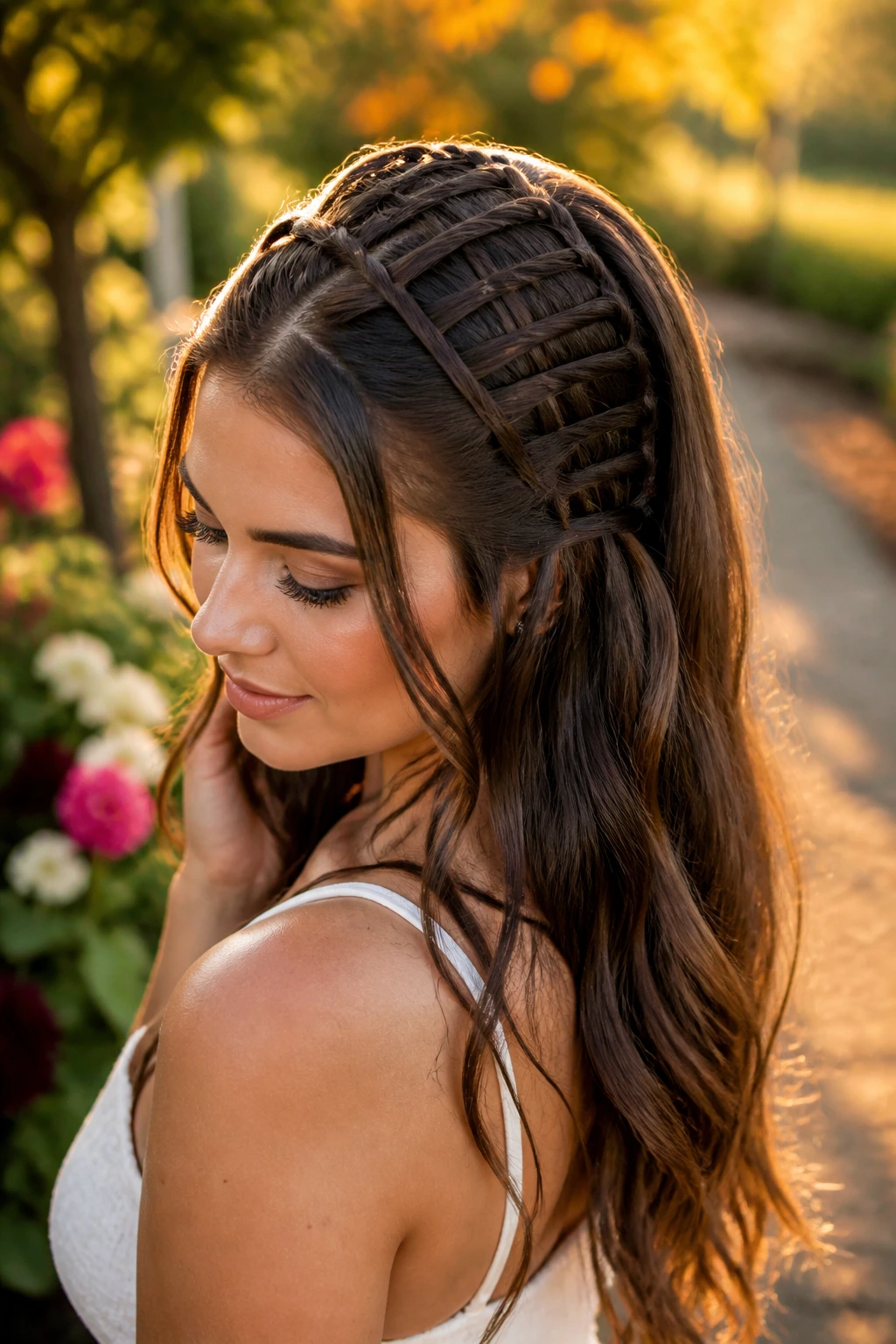
The ladder braid gives long hair a nice architectural feel. It lays across the head in neat sections, and the open spaces between the rungs keep it from looking bulky around the face. On round faces, that matters. Heavy width up top is the enemy. Thin lines are your friend.
I like this style best when the braid begins above the ear and travels back, leaving the hair below free. That keeps the visual weight low and long. If you braid too much hair into the ladder, it can start to look dense. Beautiful, yes. But dense.
What to Watch For
The tension should stay even. Uneven ladder sections make the pattern sag. Use your fingers to pinch each rung into place before moving on, and don’t rush the spacing.
16. Four-Strand Side Braid
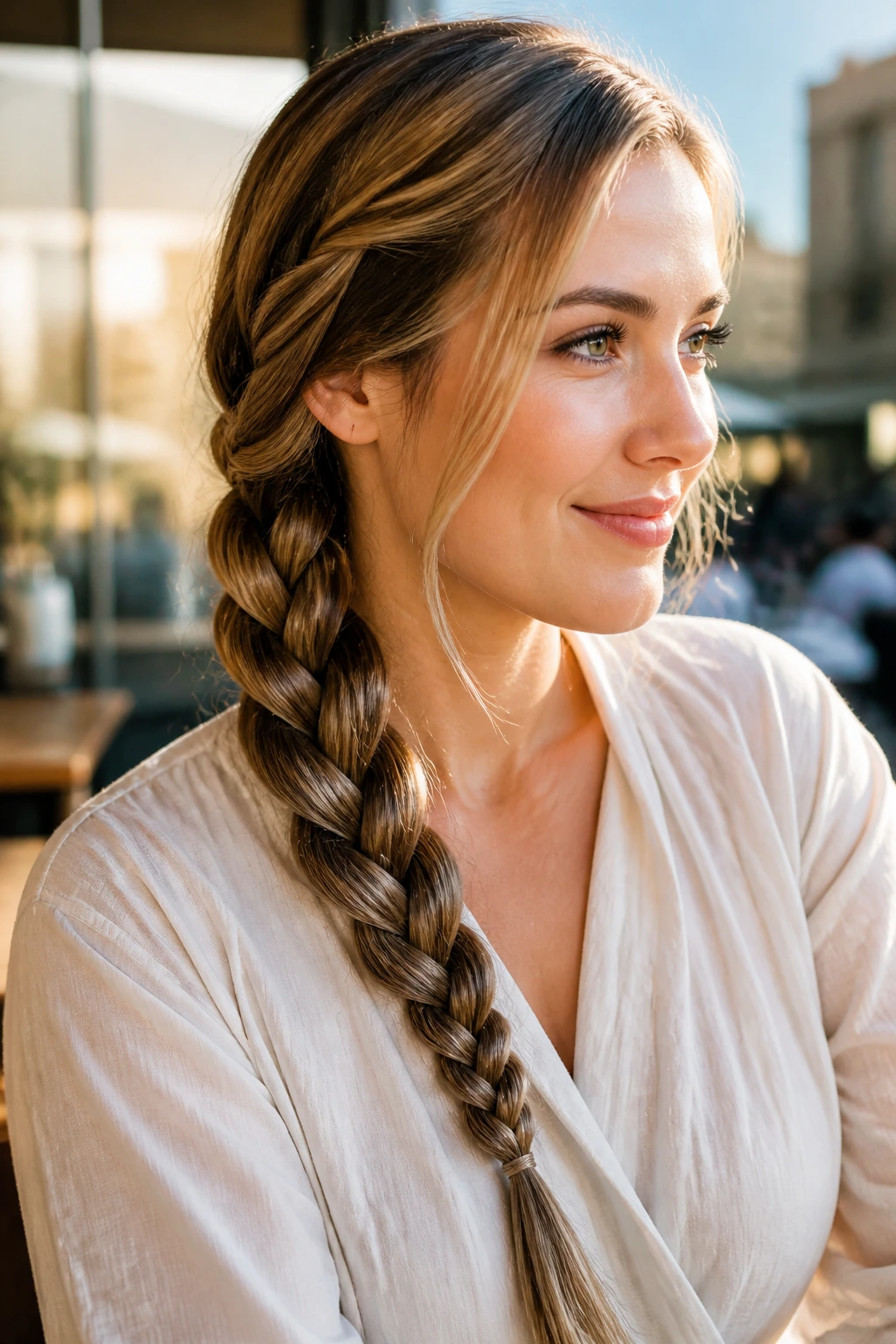
A four-strand braid looks richer than a basic three-strand braid because the weave has more movement and a little more shine to it. On long hair, that extra detail feels worth the effort. On a round face, the side placement helps the braid act like a long diagonal line instead of a blob of texture.
The braid should start near the ear or just behind it, then drop down over one shoulder. That line gives the face shape a subtle edge. It’s not harsh. Just cleaner.
A four-strand braid is best when the sections are smooth and the grip is even from top to bottom. If you tug one section harder than the others, the braid twists sideways. Once that happens, the whole style looks tired.
17. Accent Braids into Loose Curls
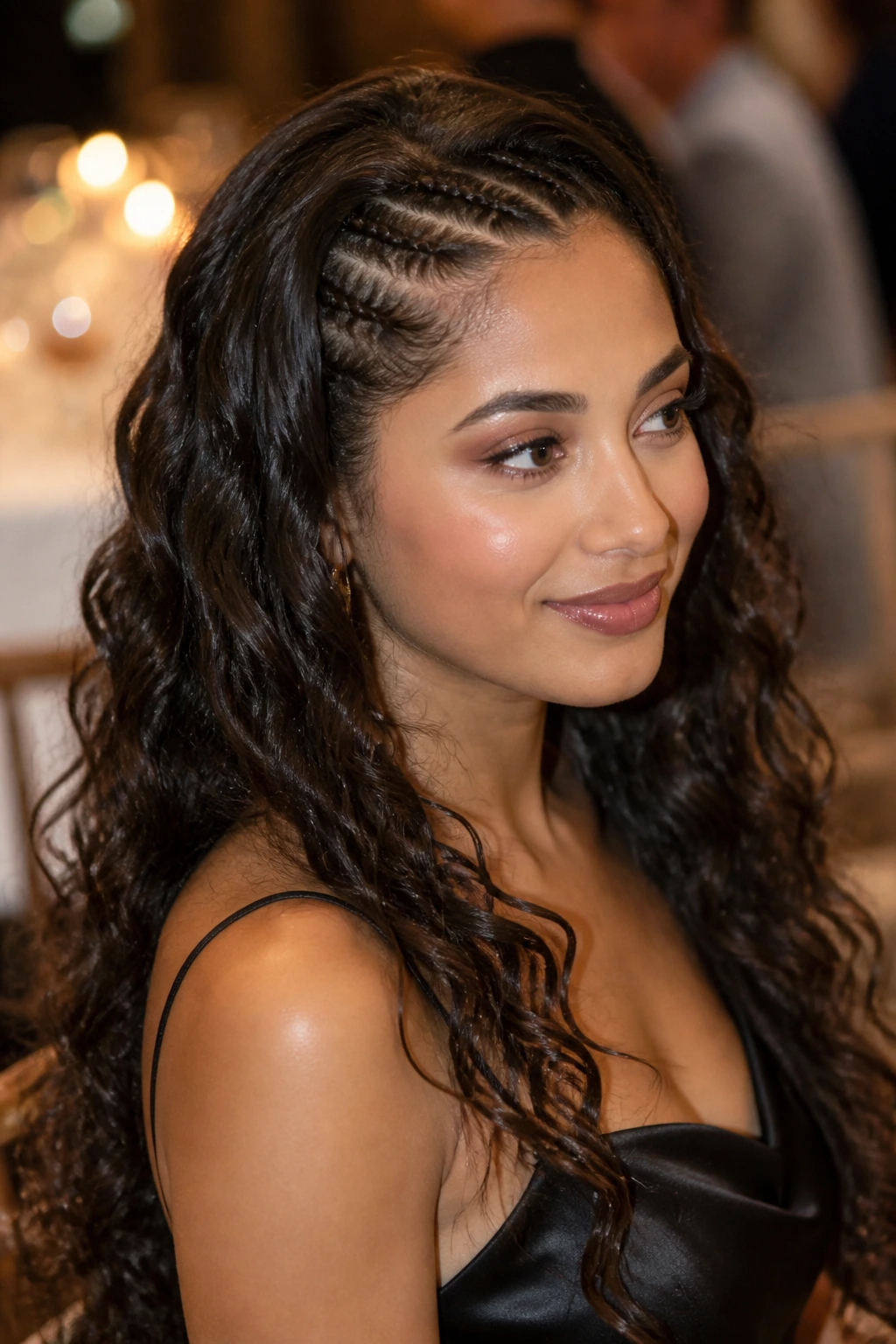
Accent braids are the easiest way to get braid detail without committing to a full braided style. Two or three slim braids at the hairline or temples can direct attention upward, then the rest of the long hair falls in curls or waves. That contrast is what flatters a round face: tight near the top, soft through the length.
The accent braids should be narrow and placed high enough to keep the eyes moving up. If they sit too low or too thick, they read like side decoration and add width. Slim braids, tucked into loose curls, feel lighter.
This is one of my favorite options for events because it keeps the face open while still looking done. The braids are small, but they change the whole line of the hairstyle.
18. Knotless Braids with a Middle Part
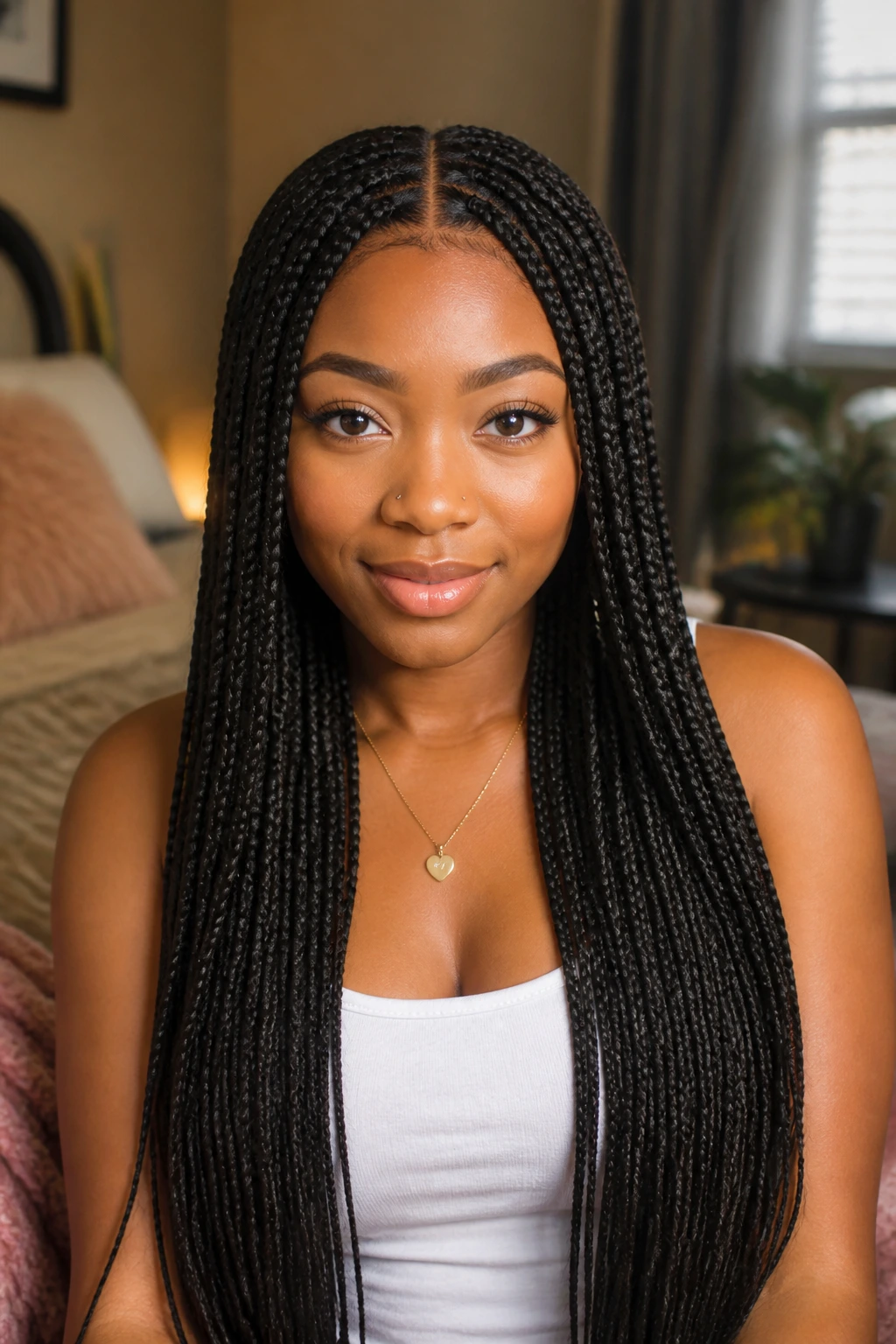
Knotless braids are a smart protective style for long hair, and they’re especially useful on round faces when the parting is clean and the braids drop straight down. The middle part adds symmetry, but the braids themselves should stay narrow enough to avoid a boxy shape around the cheeks.
Because knotless braids start with your own hair and feed in gradually, they tend to sit flatter at the scalp. That helps a lot. Less bulk near the roots means more length through the body of the style.
If you want the face to look longer, keep the braids slightly longer than collarbone length. Shoulder length can work, but longer tails usually give a better vertical line. And if the ends are curled, keep the curl modest. A giant curl at the bottom can pull the eye outward.
19. Braided Top Knot with Length Left Out
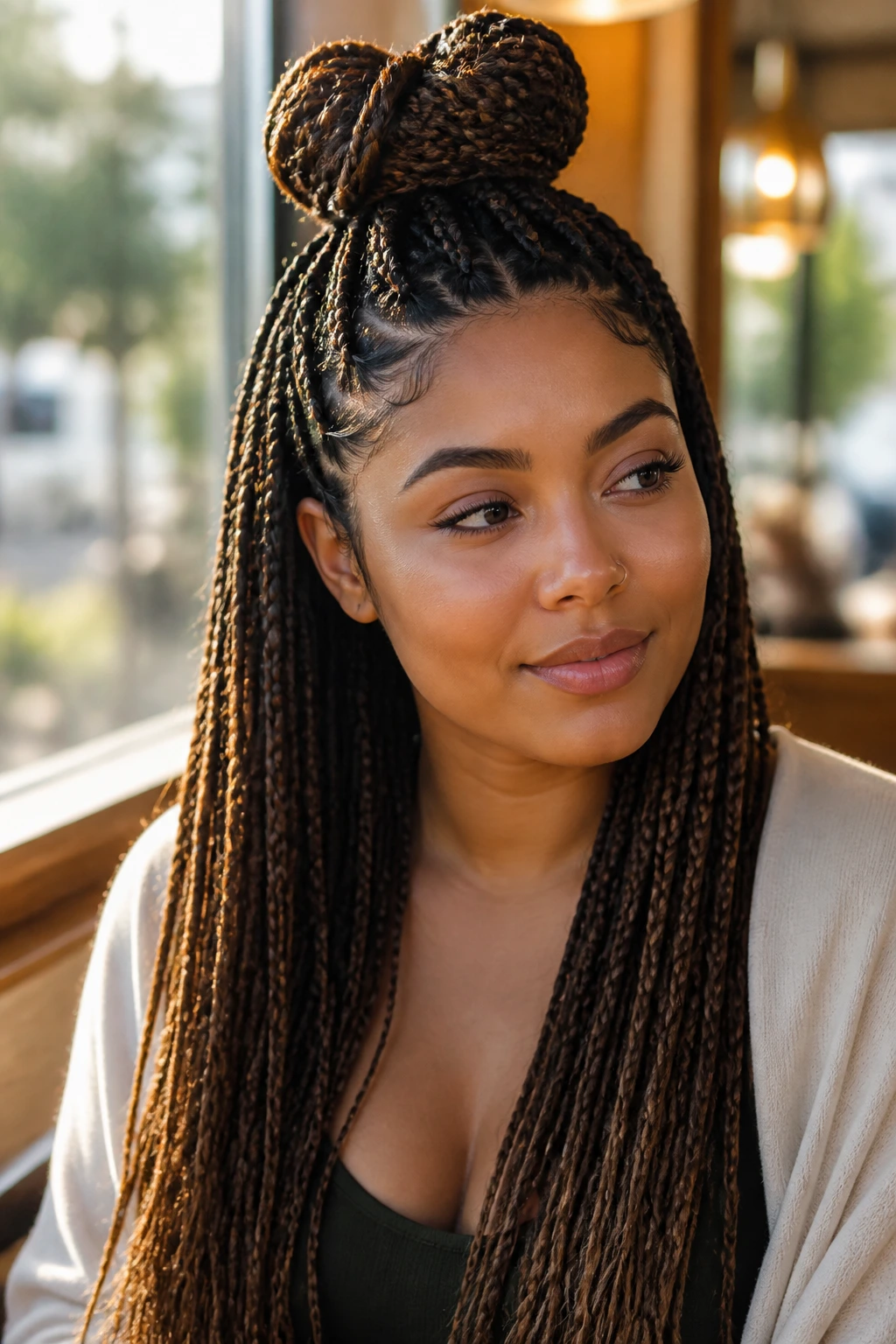
A braided top knot with long lengths left out can look sharper than a standard bun because the braid creates a vertical anchor before the hair is wrapped up. That anchor is useful on round faces. It adds height, and height is your friend.
The loose lengths should hang cleanly from the knot, not puff out beside it. That’s the part that keeps the shape elongated instead of rounder. If your hair is very thick, secure the bun with pins crossed under the knot so it doesn’t droop by lunchtime.
This style works well when you want your hair off your face but don’t want a severe finish. It has structure without looking stiff. A little tension at the crown, a little softness through the ends. Good balance.
20. Milkmaid Braids with Extra Height
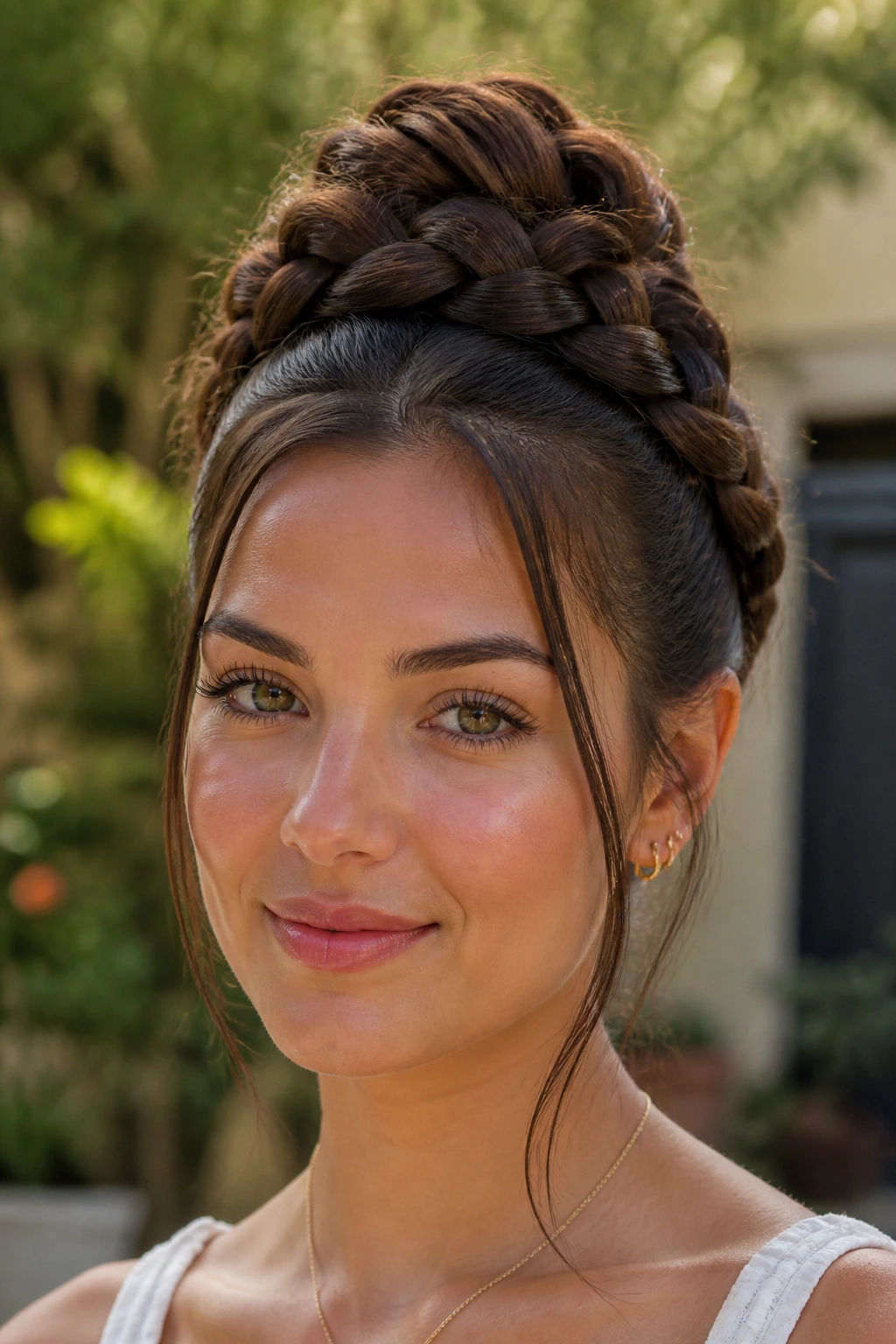
Milkmaid braids can absolutely work on a round face, but only if you build enough height at the crown and keep the braids relatively slim. Put them low and thick, and they can widen the head shape fast. Put them high, and they become elegant and lifting.
Long hair helps because the braids have enough length to wrap across the top without feeling strained. That leaves the center line of the face open. The style reads like a frame, not a ring.
The Trick
Loosen the crown a touch before pinning the braids in place. Just a little. That bit of lift keeps the style from flattening the top of the head, which is a common problem with milkmaid styles on round faces.
A few stray pieces near the ears can soften the finish, but don’t let them spread wide. You want softness at the edges, not a fluffy halo.
21. Zigzag Part Braids
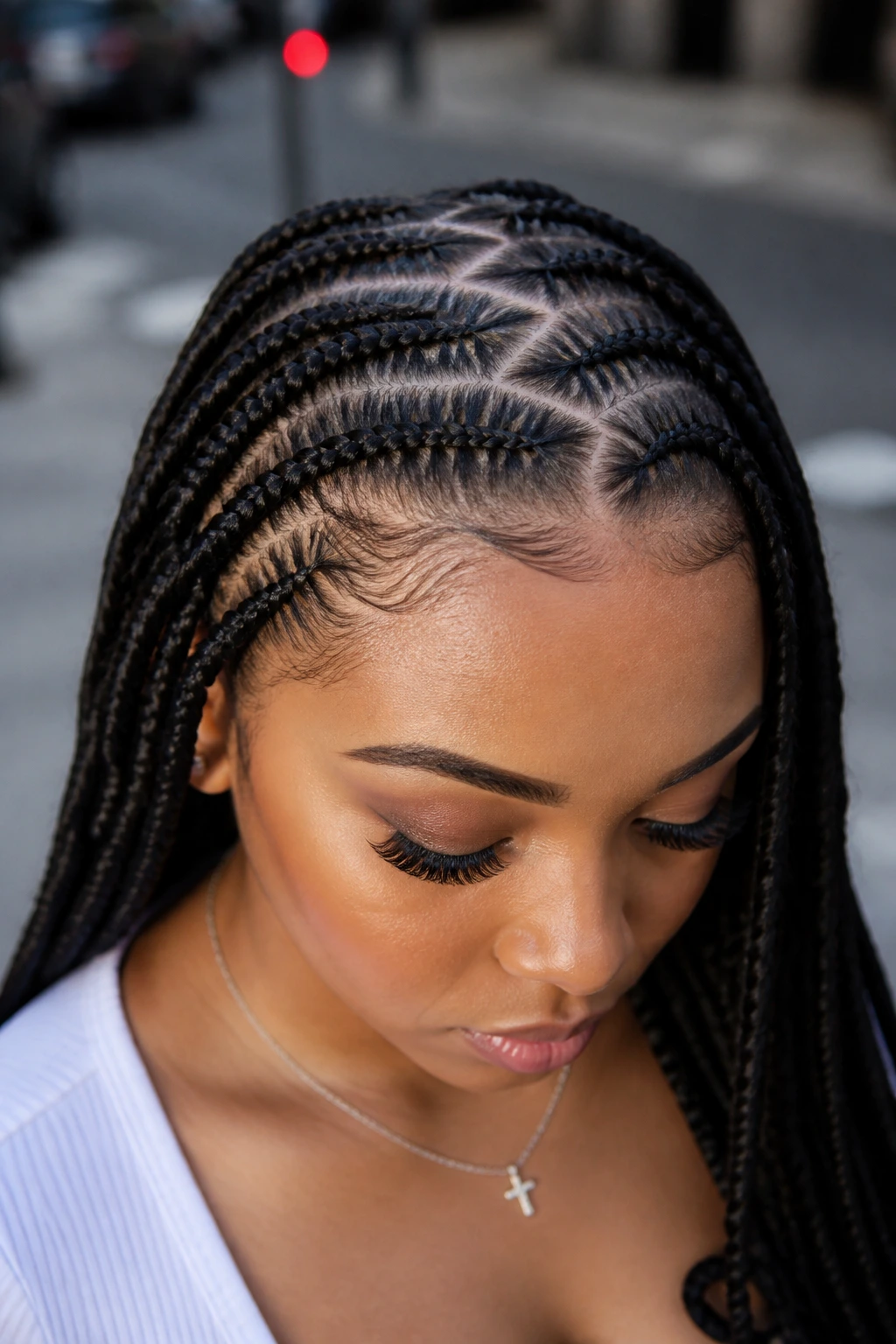
A zigzag part is small detail, big payoff. It breaks up a round face shape by creating motion before the braid even starts. The eye follows the angles in the part, then drops into the braid itself. That movement keeps the overall look from feeling too circular.
This works especially well with twin braids, cornrows, or a half-up braid pattern on long hair. The zigzag parting adds interest at the scalp without adding side volume. That’s a rare win. A lot of decorative parts look cute and also widen the head. This one usually doesn’t.
Keep the points in the zigzag neat and intentional. Sloppy zigzags look accidental, and accidental parts rarely flatter anyone.
22. Rope-Braid Pigtails with Long Ends
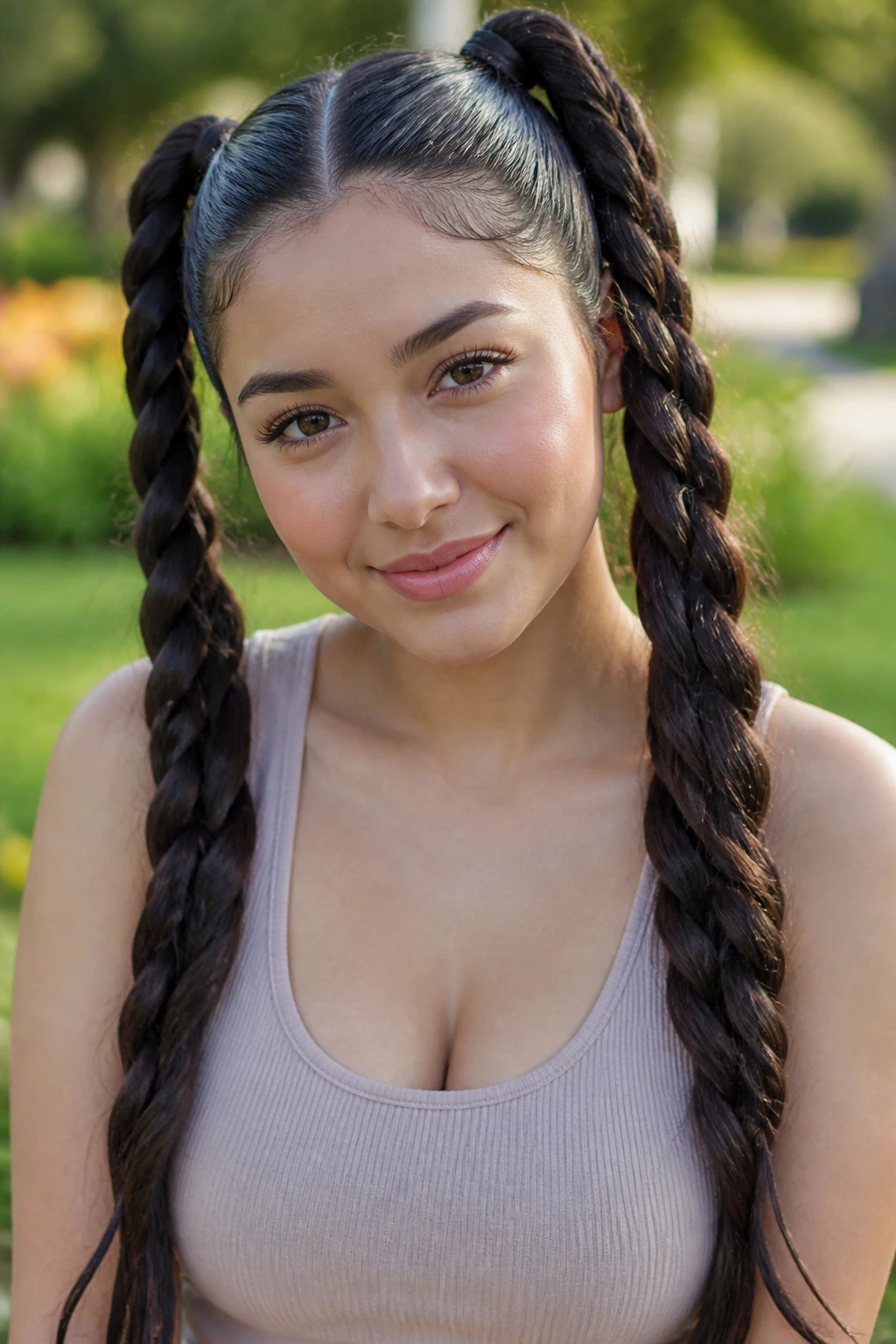
Pigtails can be tricky on a round face because they can widen the sides if they sit too low or too puffy. Rope-braid pigtails fix part of that by keeping the texture narrow and smooth. The long ends help too, because the eye travels down instead of out.
Place them a little higher than you might think, near the upper back of the head. That keeps the face lifted. Then let the lengths fall well below the shoulders if your hair allows it. The long tails keep the look playful without making the face look shorter.
If you want the style to feel more grown-up, smooth the crown with a soft brush and keep the part clean. If you want it softer, pull a few face-framing strands free near the temples.
23. Side Cornrows Into a Long Braid
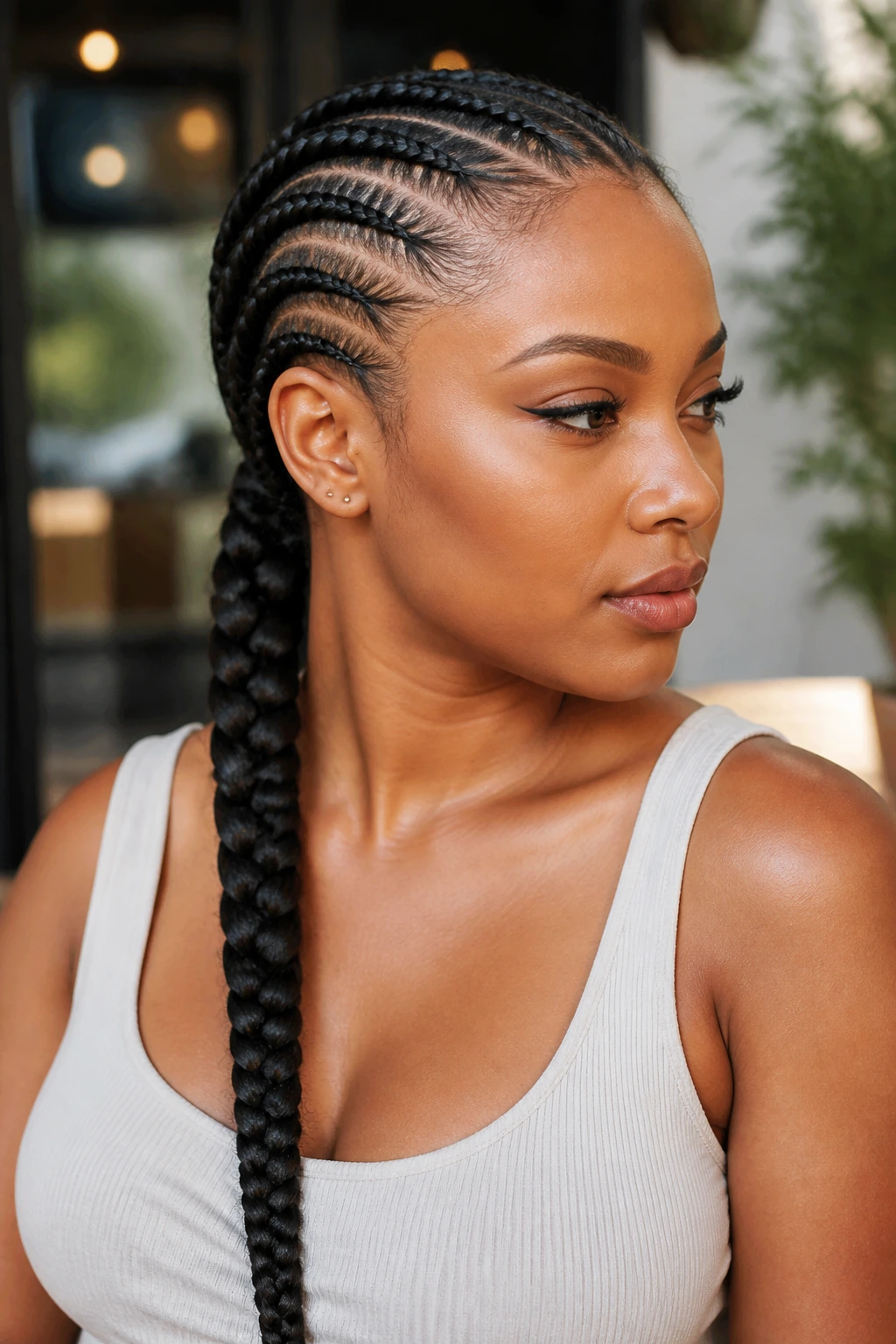
Side cornrows feeding into one long braid create a strong diagonal line that works beautifully on round faces. The cornrows keep the scalp close and neat, while the long braid drops down in a single line that stretches the silhouette.
This is one of the best styles if you like protective braids but don’t want all-over fullness near the face. The side sweep keeps the detail concentrated on one side, which breaks symmetry in a flattering way.
If you have thick hair, keep the feed-in sections even so the braid doesn’t bunch up near the base. If it’s uneven at the start, the whole style can look heavy. A clean start makes the rest easy.
24. Braided Mohawk with Soft Ends
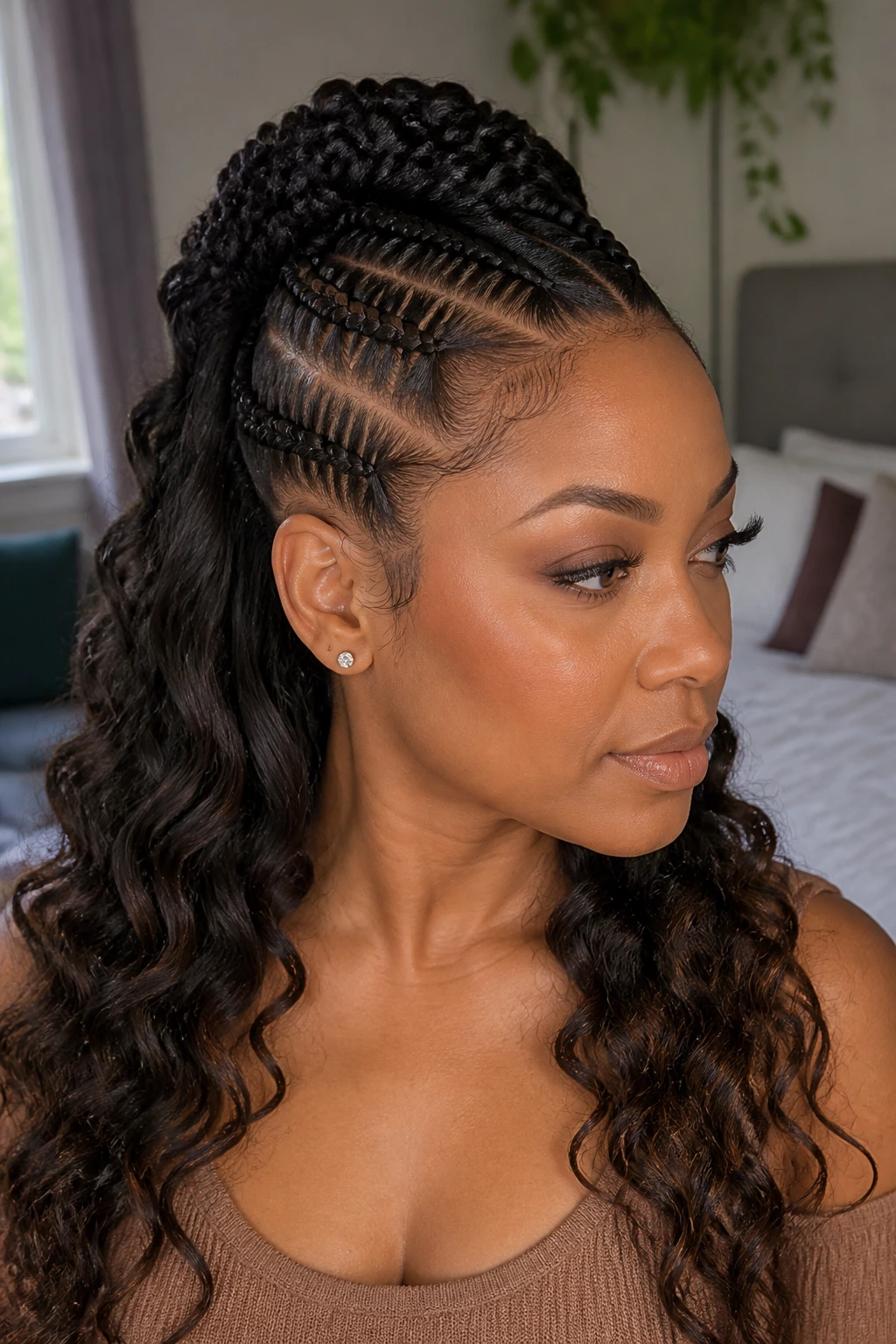
A braided mohawk sounds bold, and it is, but it’s also one of the most face-lengthening braid styles in the bunch. The braid runs down the center of the head, which creates a strong vertical line. The sides stay close or pinned, so the face doesn’t get boxed in.
Long hair gives this style a better finish because the braid can continue into a long tail or soft curls at the bottom. That keeps the look from feeling too severe. A round face usually does well with this kind of center emphasis, especially when the edges stay neat.
You can soften the sides with a little pull-out at the temples, but don’t overdo it. The whole point is to keep the width under control while the center line does the lifting.
25. Curved Goddess Braids
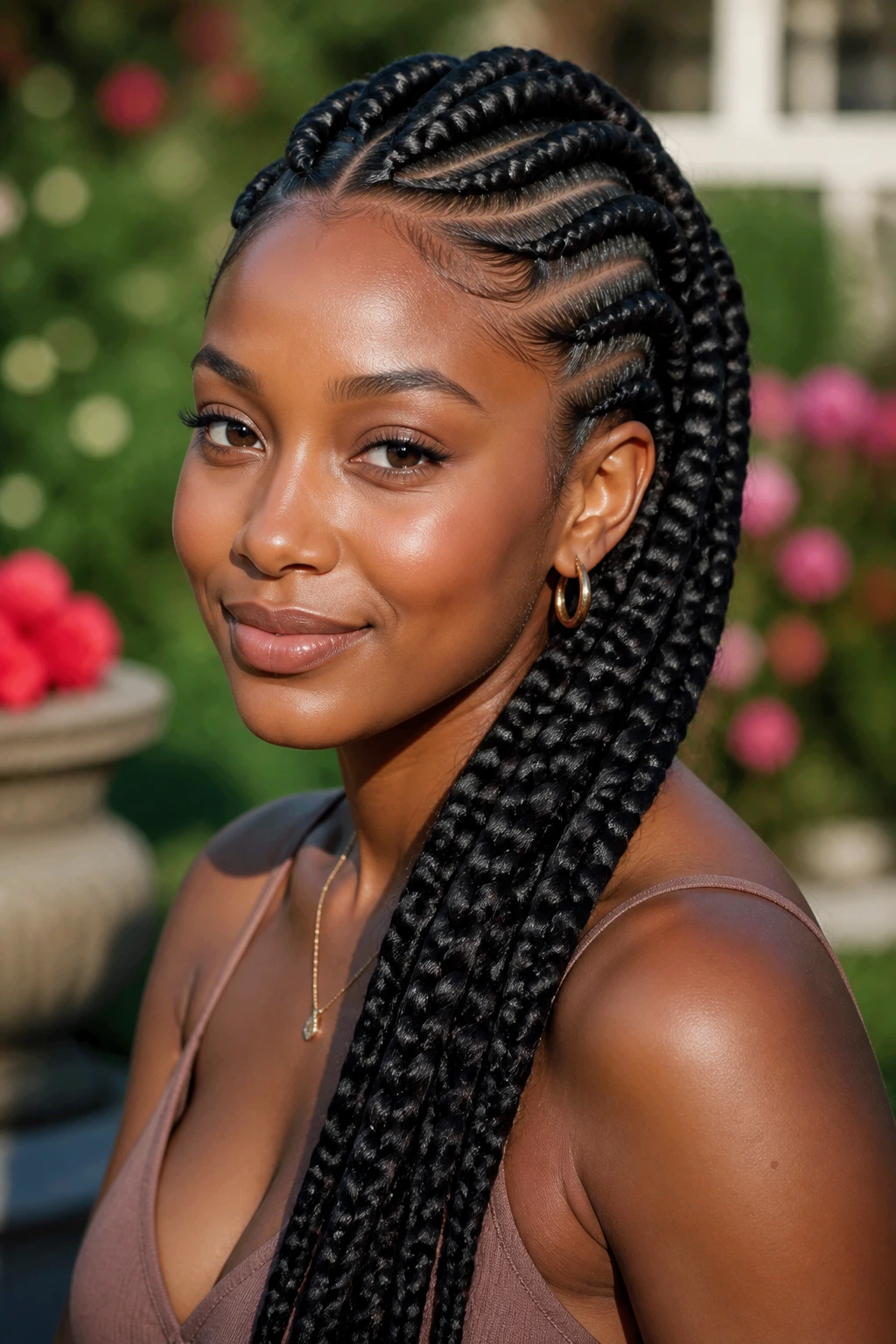
Curved goddess braids are a lovely choice when you want a braid with shape, not just structure. The curve can guide the eye upward and inward, which gives the face a longer read. Add long hair or long extensions, and the style becomes even more graceful.
The key is to keep the curves deliberate. A loose, wandering braid can make the style feel wide. A clean curve that travels from the front toward the back keeps it elegant and face-friendly.
Why They Stand Out
Goddess braids have enough thickness to look special, but they don’t need to be oversized. On a round face, I’d keep the braid width moderate and let the length do the talking.
A polished edge at the hairline helps the whole style read cleanly. A few soft baby hairs are fine. A heavy, overly styled edge can start to compete with the braid itself.
Which Braid Shapes Flatter a Round Face Best
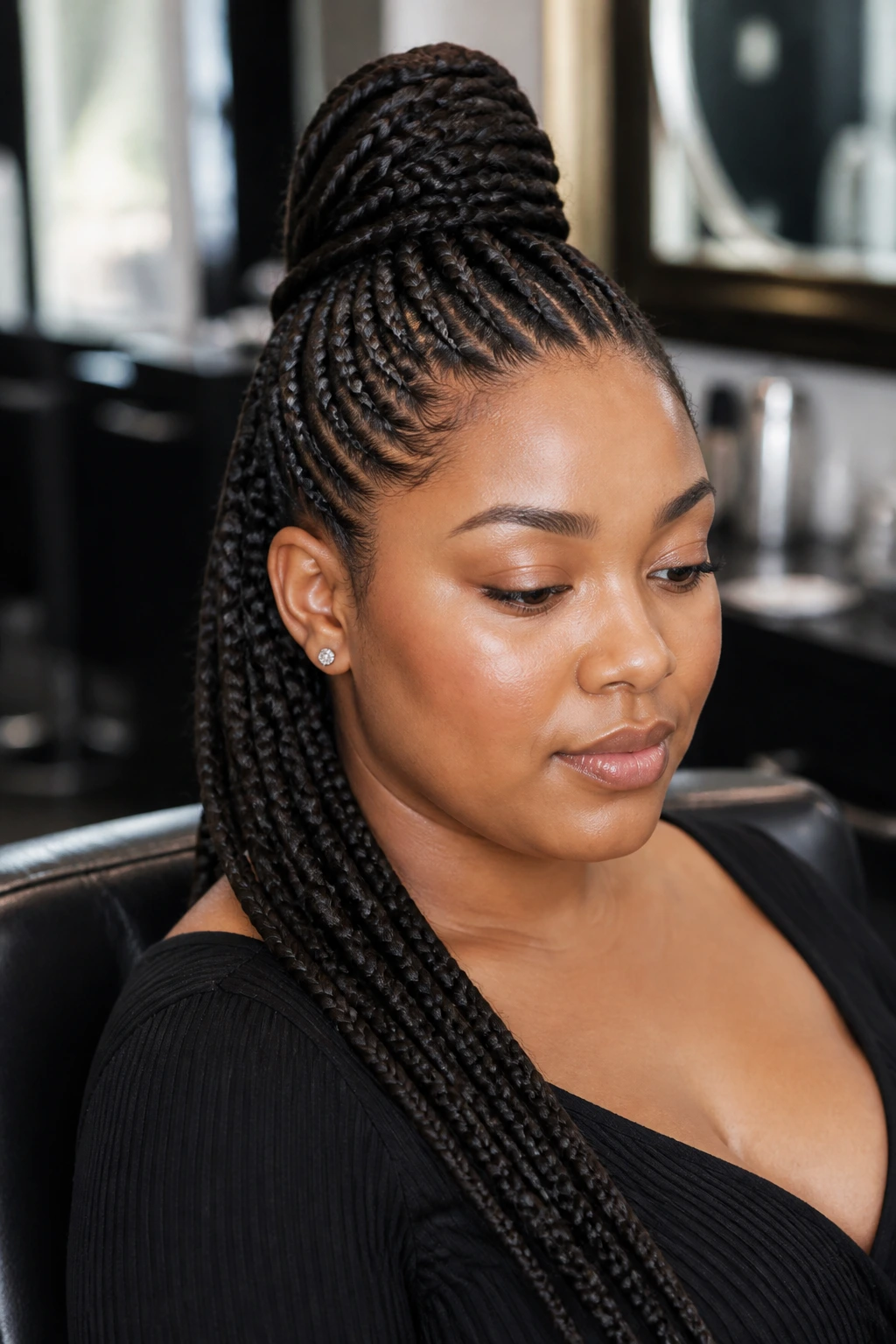
Not every braid needs to be dramatic to work. Some of the best options are the quiet ones: a side braid, a high crown braid, a sleek low braid, a long fishtail. They all use line and placement to guide the eye instead of letting volume spread out at the cheeks.
If I had to narrow it down, I’d start with these three things. Height at the crown. A diagonal or vertical line. Tight control near the sides of the face. That combination tends to make the face look longer without making the style look stiff.
When to Choose Softness Over Structure
Soft braids are better if you want the style to feel romantic or loose. Structured braids win if your hair is very thick or if you want the face-slimming effect to be more obvious. You do not need one or the other forever. Swap based on the day.
Essential Tools for Neat, Long-Lasting Braids
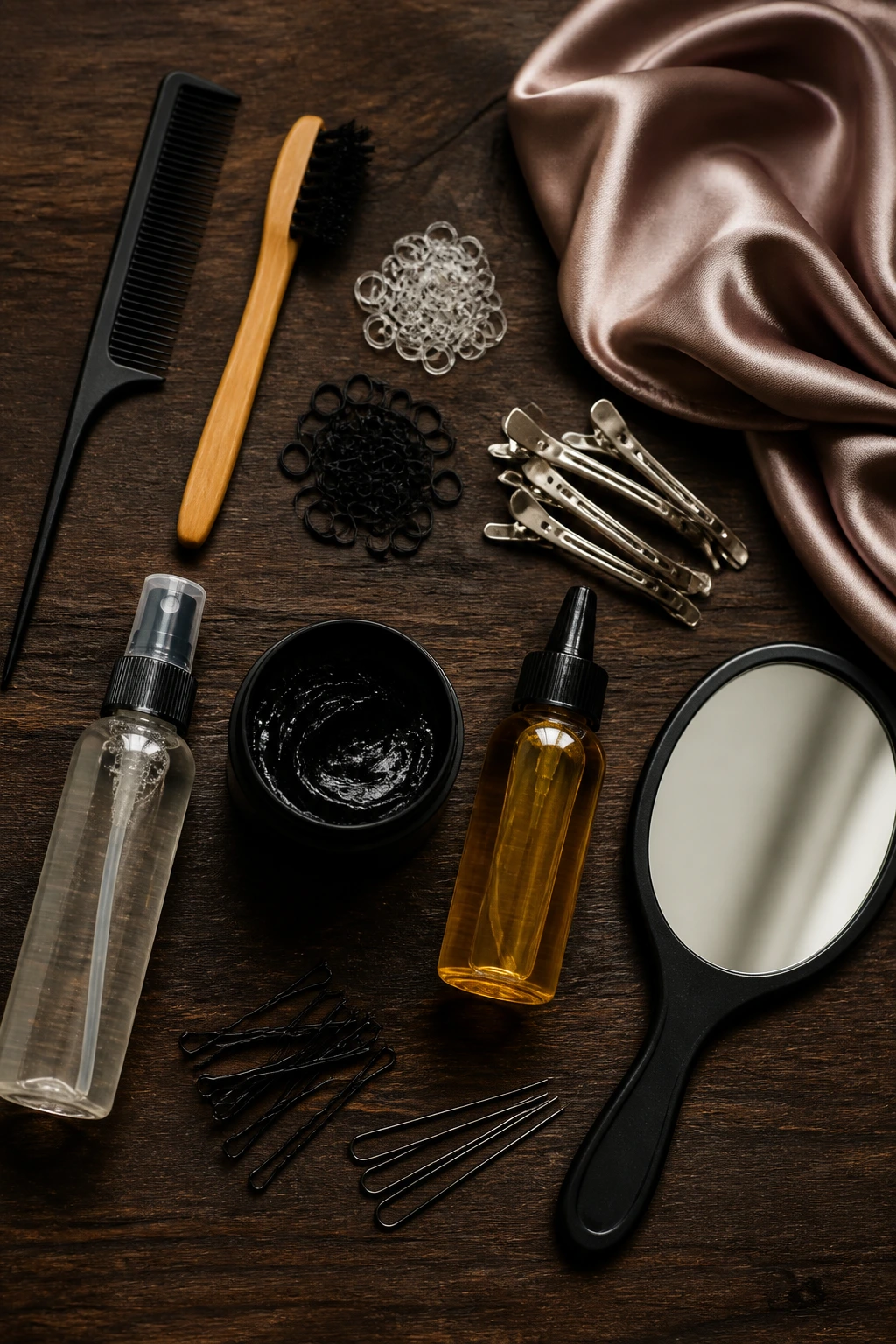
- Rat-tail comb: Clean parting matters more than people admit, especially on round faces where the scalp lines are part of the design.
- Edge brush or soft boar-bristle brush: Smooths the top without flattening all the lift.
- Clear elastics and small snag-free bands: Handy for bubble braids, pull-through braids, and securing ends without bulky knots.
- Hair clips or duckbill clips: Keep sections out of the way while you work one side at a time.
- Texturizing spray or braid spray: Gives grip to freshly washed hair and helps fine hair hold shape.
- Light gel, styling cream, or mousse: Use a small amount to tame flyaways and keep the scalp close.
- Hair oil or serum: A few drops on the finished style can calm frizz and give the braid a smoother look.
- Bobby pins in two sizes: Straight pins hold hidden sections; U-pins help anchor buns and crowns.
- Hand mirror: Essential for checking the back and making sure the braid sits high enough and straight enough.
- Satin scarf or bonnet: Keeps the style from getting crushed overnight.
Smart Prep, Product Picks, and Parting Tricks
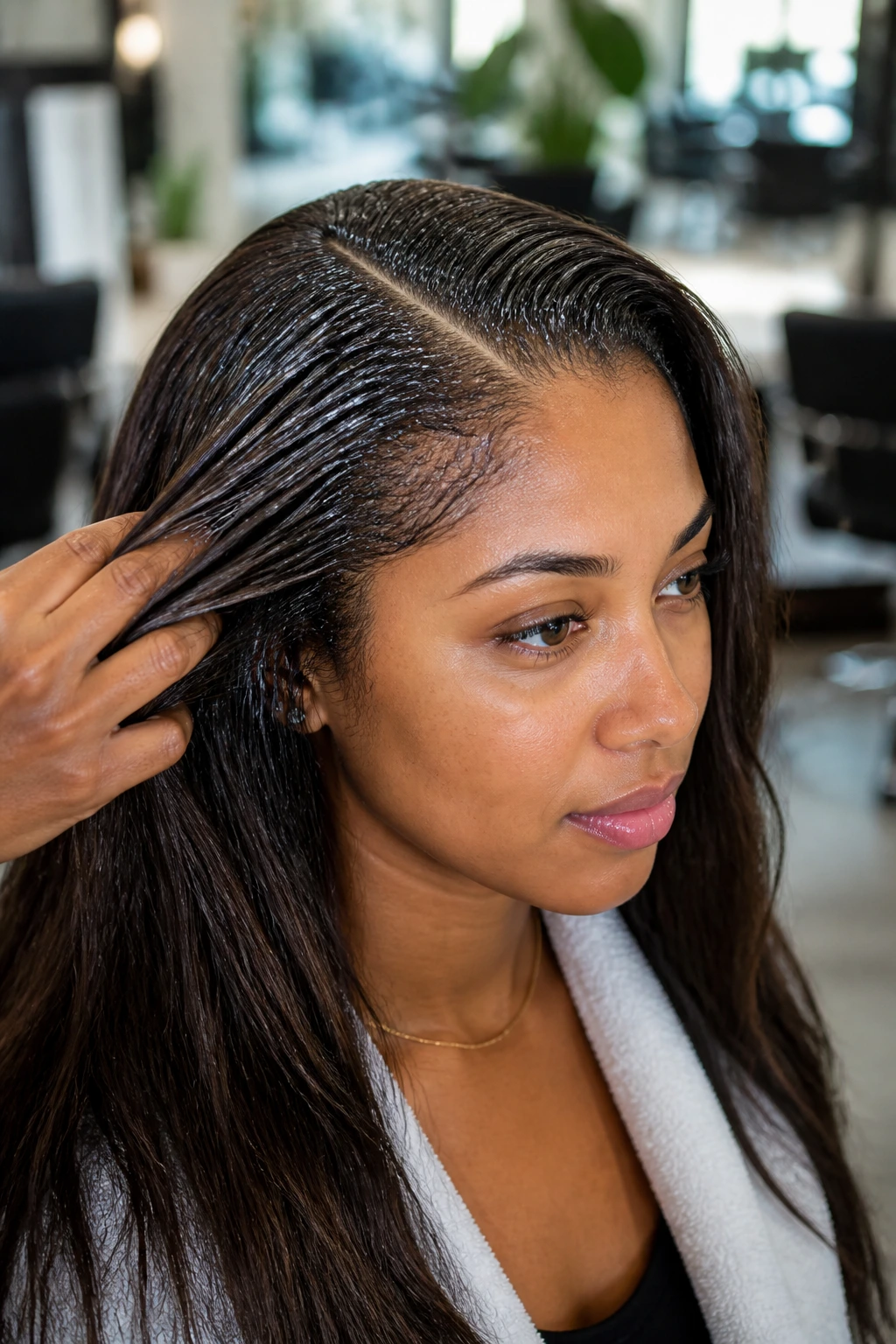
Start with a grip-friendly base. Freshly washed hair can work, but it usually needs a little help. A touch of mousse, a light spray of texture mist, or even a small amount of styling cream gives the strands something to hold onto. Silky hair slides. That’s the real issue.
Parting is the part that changes the face most. A deep side part can soften the width of a round face in seconds. A center part can work too, but it needs lift at the crown and a braid that stays narrow. If you’re using a middle part and the braid flares out at the cheeks, the whole style can read broader than intended.
Don’t drown the hair in product. A thin layer is enough. Too much cream near the roots makes braids slick and heavy, and then you spend the rest of the day picking at sections that won’t stay put.
How to Wear These Braids So the Face Reads Longer
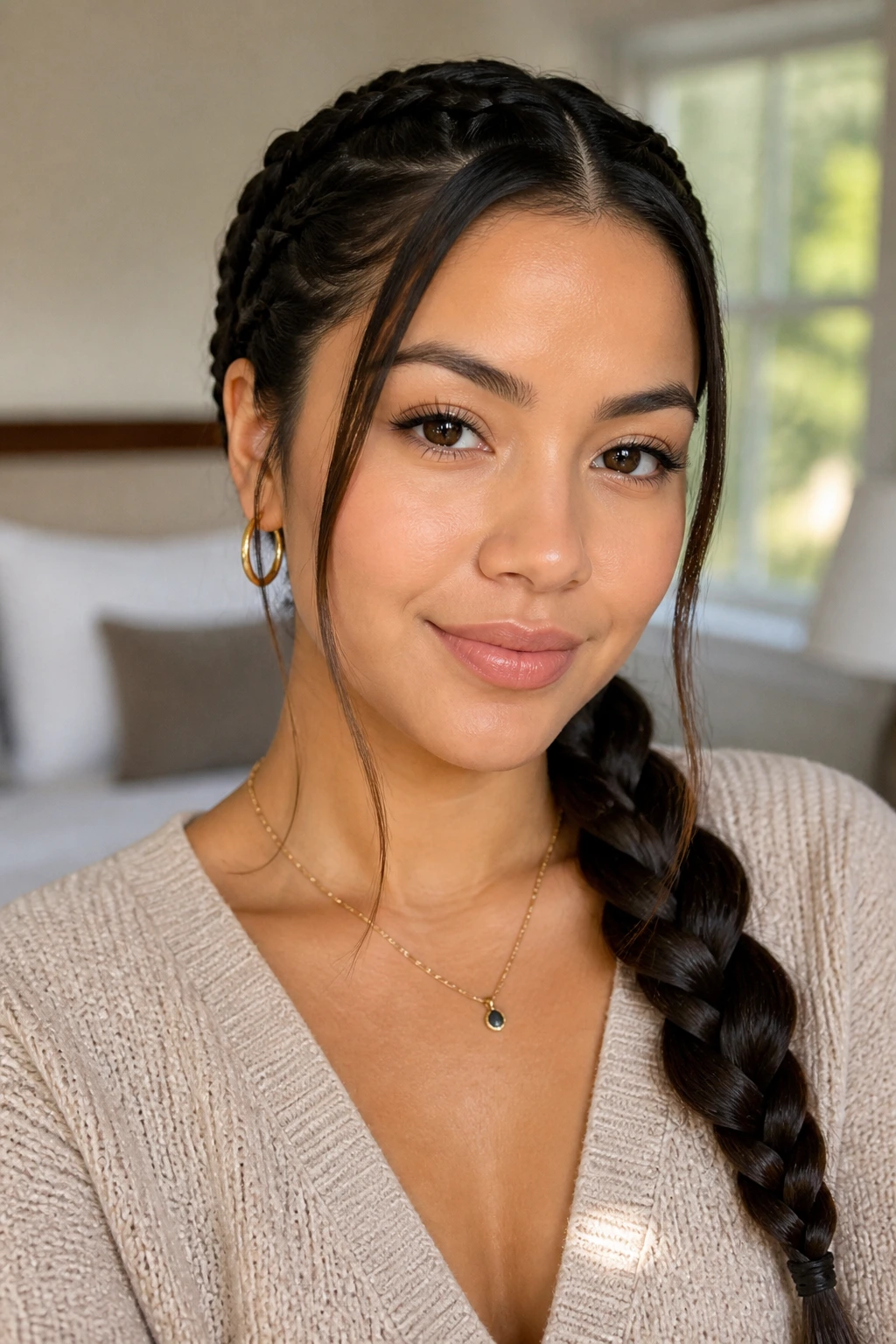
Everyday Wear: Pick a low braid, side braid, or rope braid when you want speed and staying power. These sit close to the head and don’t need constant mirror checks.
Work or School: A sleek low braid, a wrapped ponytail braid, or a center-part twin braid tends to look tidy without trying too hard. The face stays open and the hair stays controlled.
Events: High crown braids, halo braids with lift, or a waterfall braid with waves bring more shape and movement. They photograph nicely, but more to the point, they hold their structure from across a room.
Best Face-Framing Pieces: Keep the strands near the temples slim, smooth, and intentionally placed. Thick front pieces add width. Thin ones guide the eye.
Extra Tricks That Make the Style Read Better
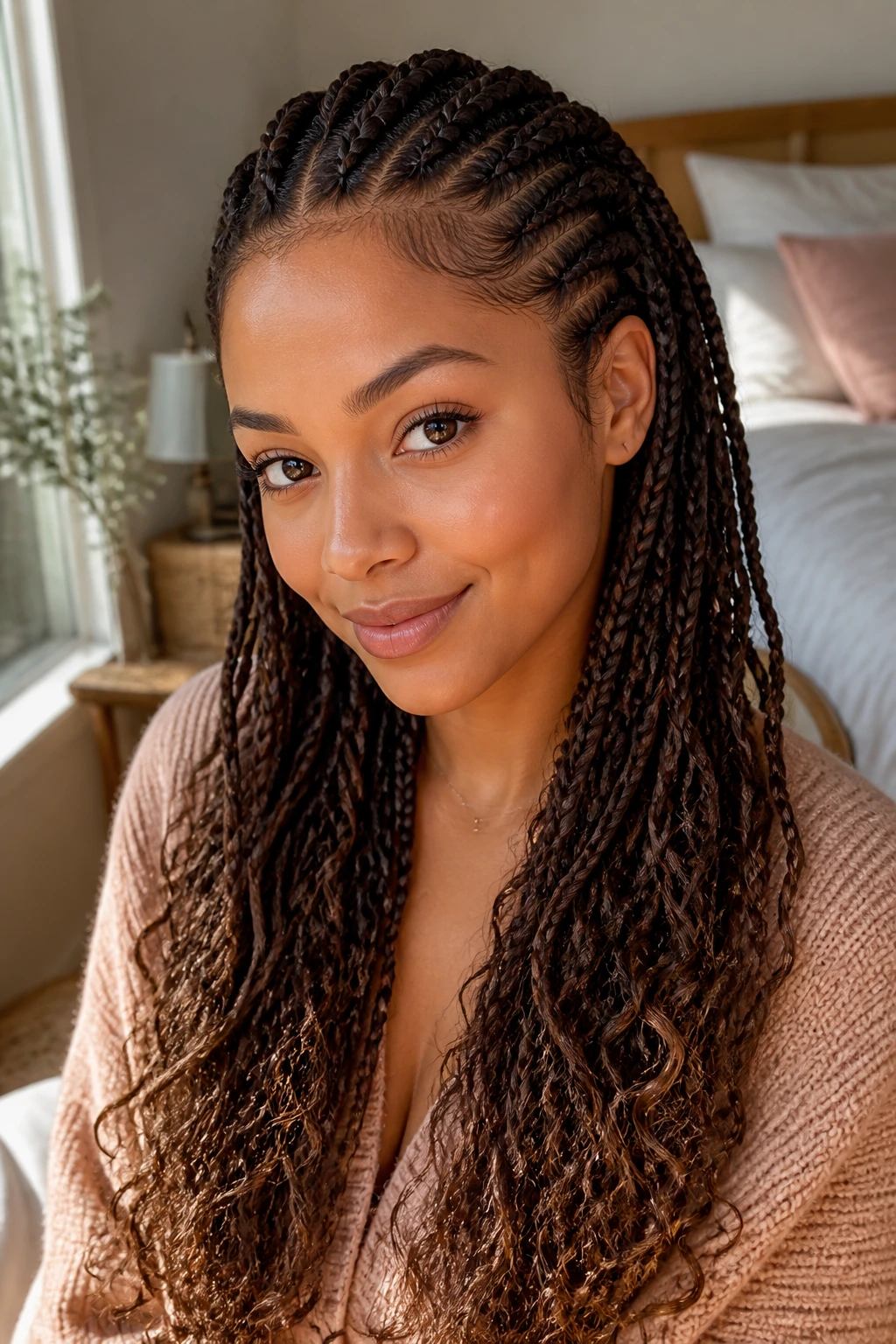
Face-Lengthening Finish: Pull the braid slightly tighter through the top section and let the length loosen a little lower down. That keeps the cheek area from ballooning.
Customization: Add a ribbon through a fishtail braid or weave a thin metallic thread into a crown braid for a more dressed-up look. One accent is enough.
Serving Suggestions: A small drop of serum on the ends, a soft bend in the loose lengths, or a few deliberately smoothed baby hairs can make the style look finished without making it stiff.
Make-It-Yours: If your hair is fine, use texture spray and smaller sections. If it’s thick, work with bigger sections and stronger elastics. If it’s coily, stretch the hair first or braid on a slightly elongated base so the style doesn’t shrink up on you.
Common Mistakes That Flatten the Look
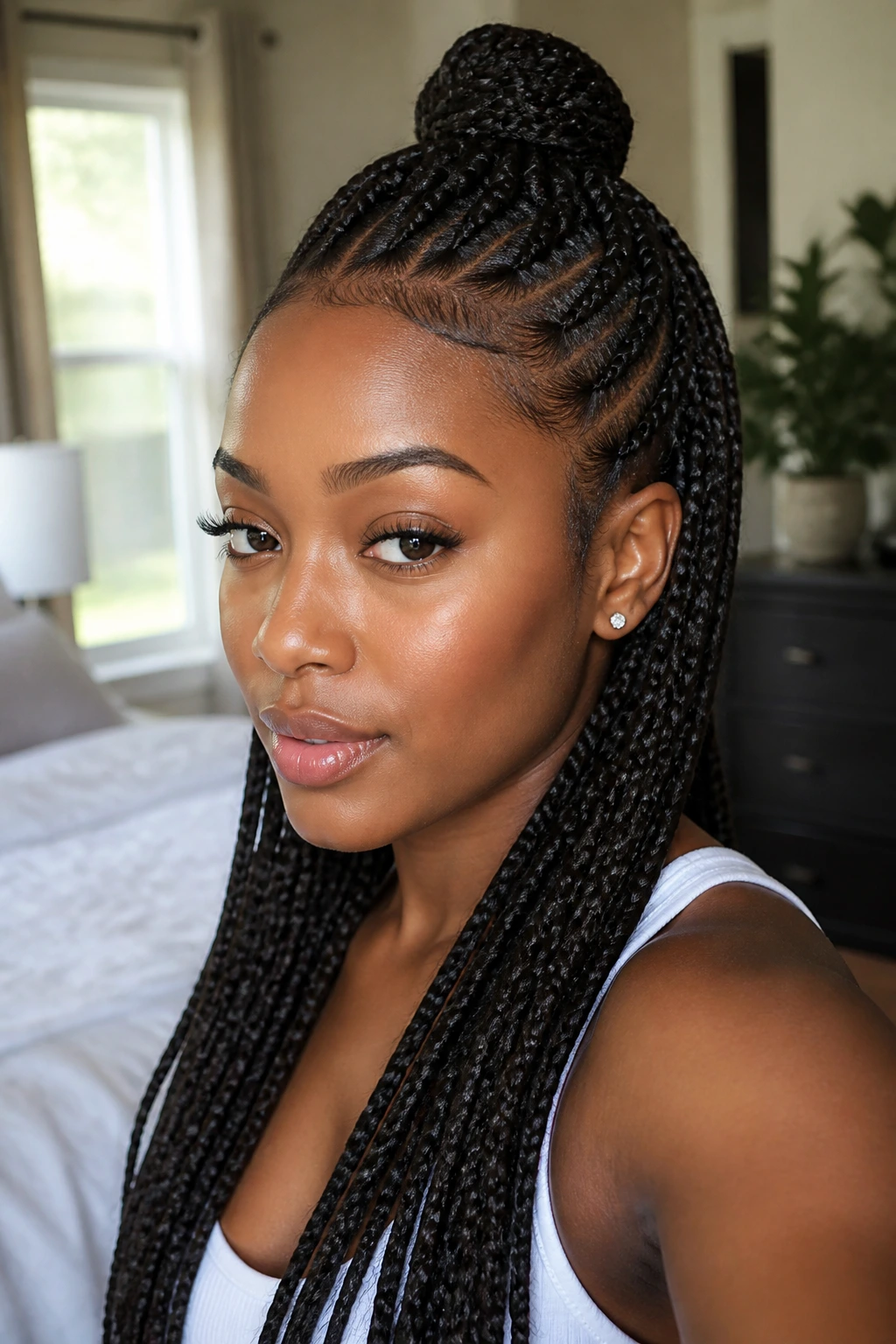
The biggest mistake is letting the braid get wide at the cheekbones. That’s where a round face already has softness, so extra bulk there can work against you. Keep the volume higher or lower, not parked in the middle.
Another problem is a flat crown. If the top of the head lies too close to the scalp, the braid can make the face look wider by comparison. A little lift at the roots goes a long way. A little. Not a teased cloud.
Tightness causes trouble too. Braids that pull too hard at the temples can leave the style looking severe and can stress the hairline. If your head hurts, the braid is too tight. Full stop.
And watch the ends. A huge curled tail or an overblown finish can make a braid look bottom-heavy. Long hair needs movement, yes, but the movement should be controlled.
Ways to Adapt These Braids for Different Hair Types
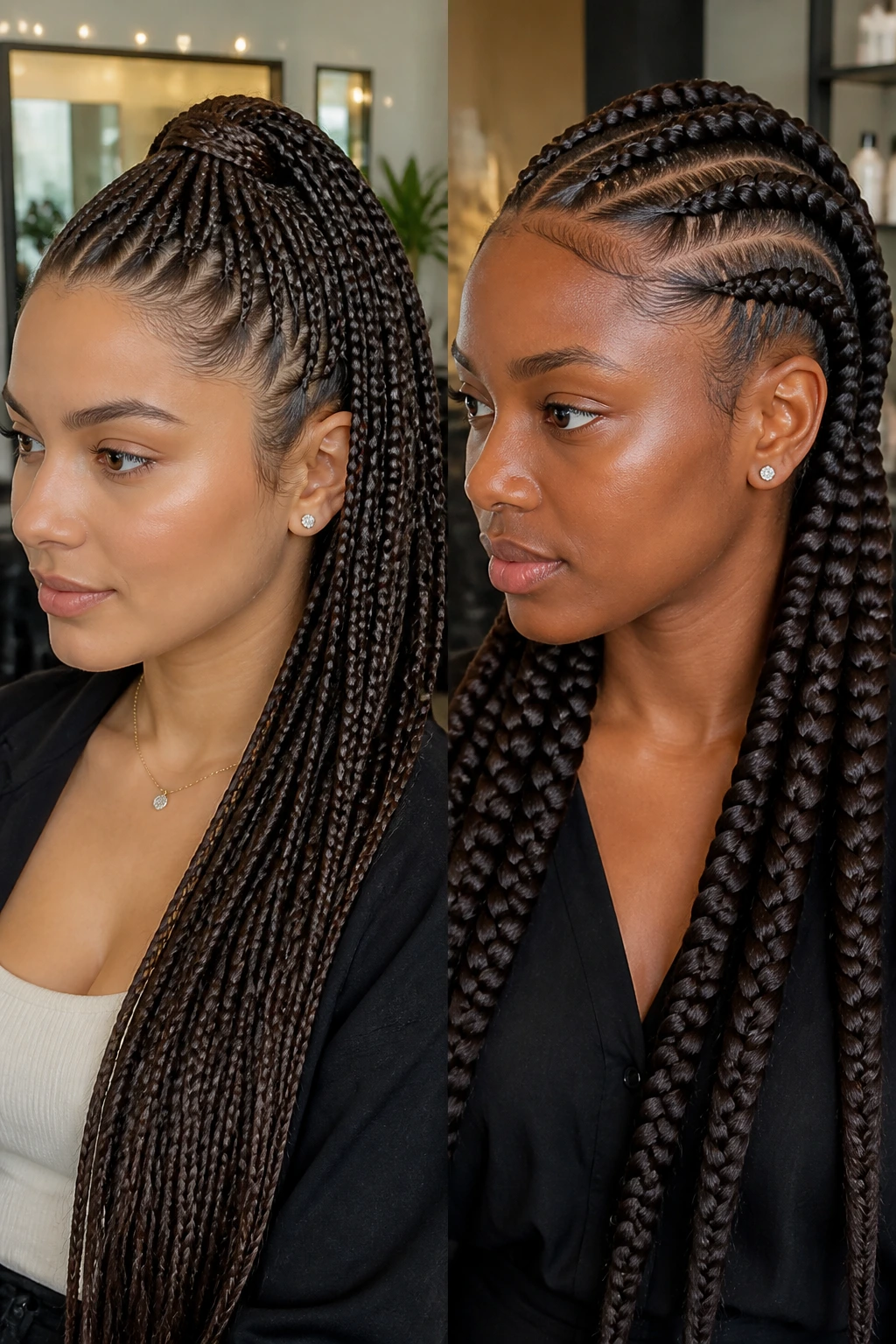
Fine Hair, Big Shape: Use texture spray, smaller sections, and tighter starting sections so the braid doesn’t collapse by noon.
Thick Hair, Less Bulk: Break the braid into slightly larger sections and keep the scalp smooth. Too many tiny sections can make the braid puff out.
Curly or Coily Hair: Stretch the hair first if you want a long, elongated braid pattern. Leave more room at the crown so the style doesn’t shrink into a short shape.
Layered Hair: Tuck shorter front pieces into the braid with a bit of gel or cream. That keeps the style neat without fighting every stray layer.
Protective Style Approach: If you want the look to last, choose feed-in cornrows, knotless braids, or braided buns. These hold shape longer and reduce daily manipulation.
Keeping Braids Fresh: Night Care, Wash Days, and Refreshing
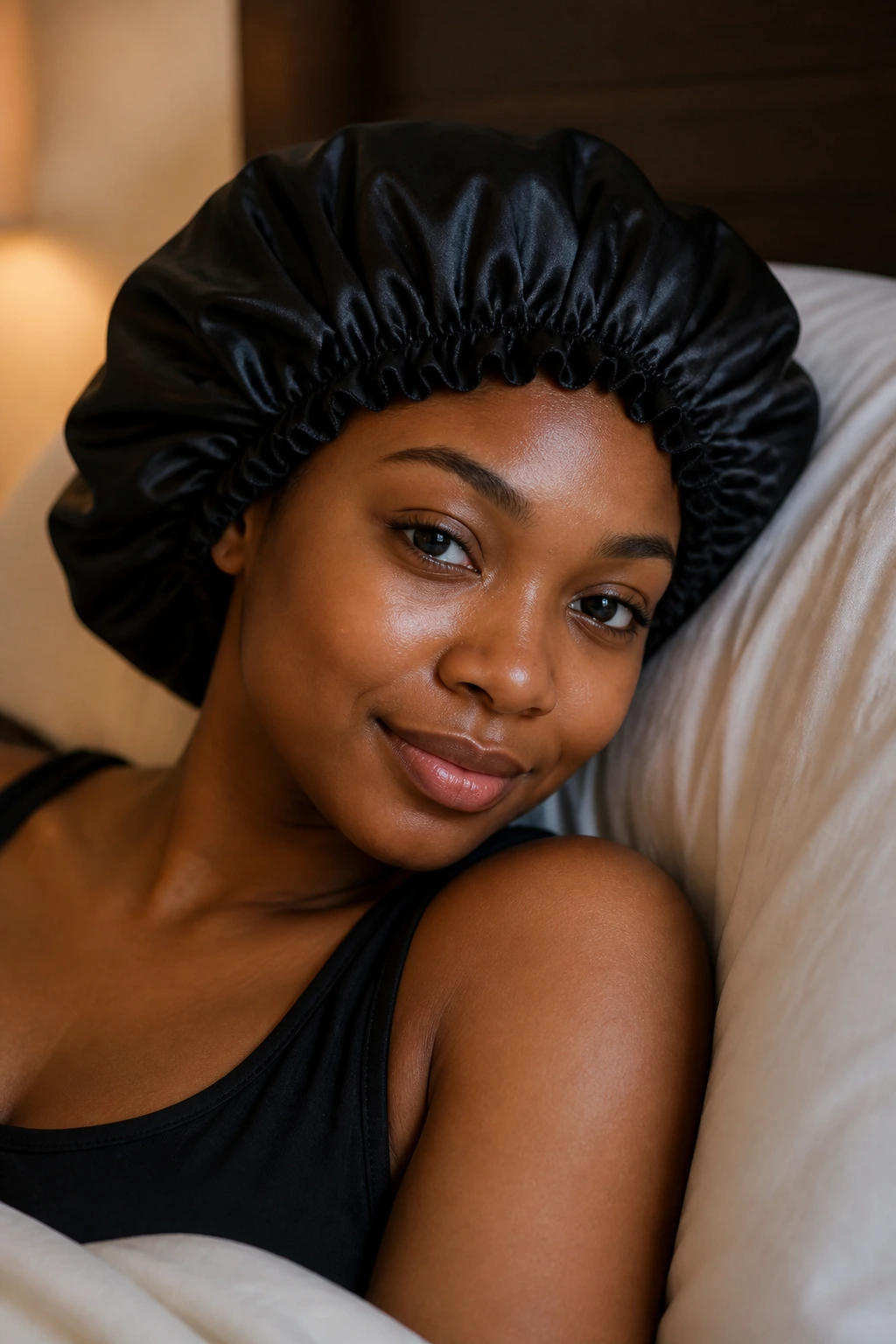
Braids need a little maintenance if you want them to keep their shape. Sleep with a satin bonnet or scarf every night, or at least use a satin pillowcase. Cotton roughs up the surface and leaves the braid fuzzy by morning.
For styles that you plan to wear for a day or two, a light mist of water and leave-in conditioner can revive the ends without soaking the whole style. Use your hands to smooth the top, then let it dry fully before you go out. Damp braids sit heavy.
Protective braids can last longer, but the scalp still needs care. A light oil or scalp spray every few days is enough for many styles. Don’t drench the roots. That only creates buildup and limp sections.
Frequently Asked Questions
Which braid is most flattering for a round face?
High crown braids, side braids, and long vertical styles tend to work best because they add height and keep width away from the cheeks. If you want the safest starting point, try a deep side braid or a high braided ponytail.
Do center parts make a round face look wider?
Not automatically. A center part can look very clean on a round face if the braid itself stays narrow and there’s lift at the crown. The trouble starts when the hair lies flat and puffs out around the cheeks.
Can thick braids work on a round face?
Yes, but placement matters. Thick braids are better when they sit high, sweep to one side, or drop straight down the back. Thick braids that sit at cheek level can make the face read broader.
How do I keep my braids from puffing up by midday?
Use a grip product before braiding, keep the sections even, and anchor the braid tightly at the start. If the braid is slipping, a few small elastics along the length can help control the shape.
Are protective braids good for long hair?
They can be, especially knotless braids, feed-in cornrows, and braided buns. The main thing is not to keep them in so long that buildup, tangling, or tension turns into a mess. Clean scalp care matters.
What if my hair layers keep falling out of the braid?
Smooth the shorter pieces with a little gel or styling cream before you start. If they’re still too short, try an accent-braid style or a half-up braid instead of forcing a full plait.
Can I wear loose strands around my face without making it wider?
Yes, if the strands are slim and intentional. Two thin pieces near the temples can frame the face nicely. Large curtain pieces at cheek level tend to do the opposite.
Which braid should I choose for an event?
A halo braid with height, a waterfall braid into waves, or a braided crown usually feels dressier. If you want something sharper, a sleek side braid or a braided ponytail with a wrapped base looks polished without looking stiff.
The Braid That Fits the Face, Not the Other Way Around
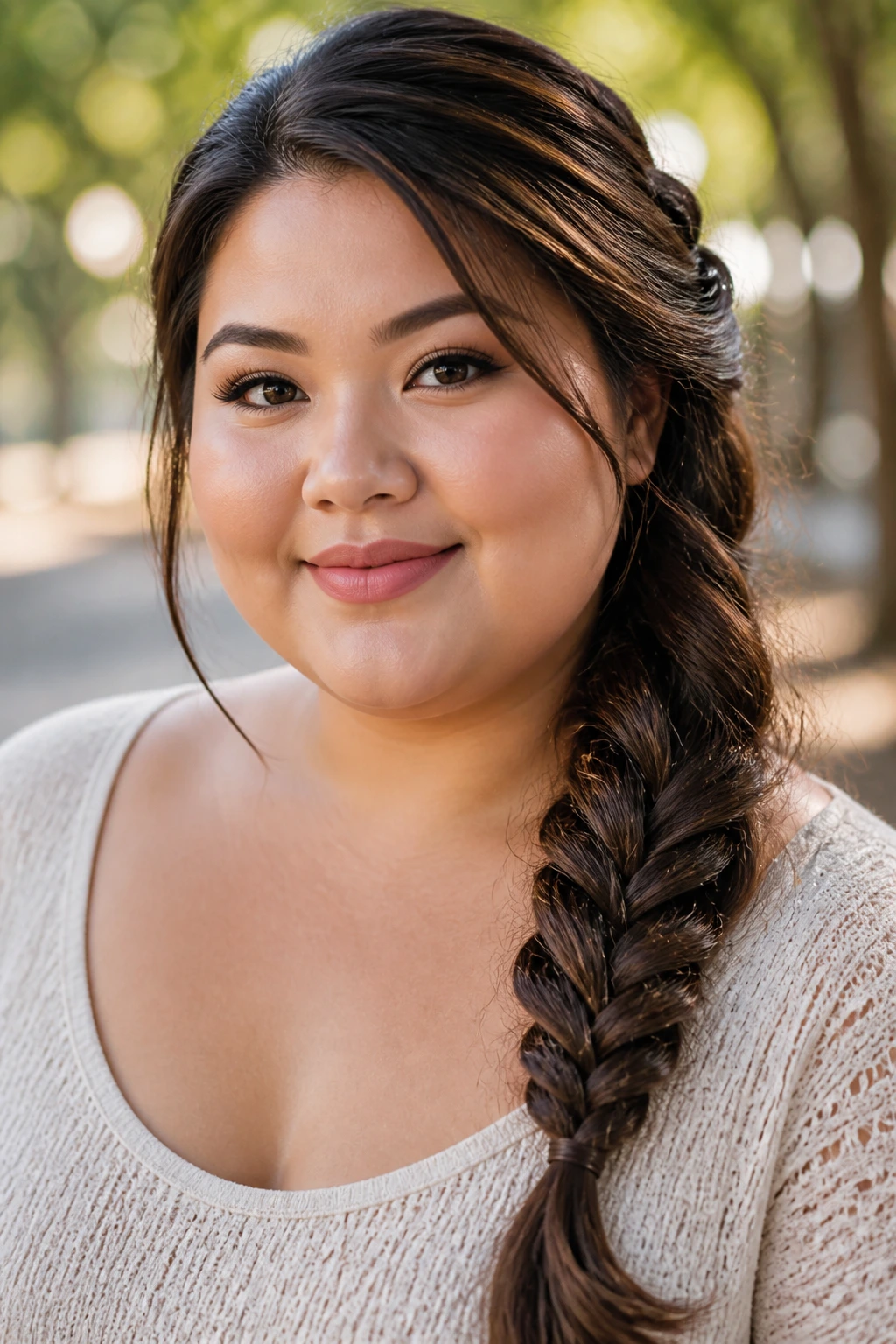
The best braids for long hair and round faces don’t fight softness. They guide it. A little height here, a diagonal line there, a long tail that keeps the eye moving down instead of out — that’s the whole game.
You don’t need a brand-new face shape. You need a braid that understands your features and works with them. Once you start seeing how placement changes everything, it gets easier to choose styles that feel flattering before you even finish the first section.