



Short hair gets prickly fast when the color is too flat. A blunt bob or cropped pixie can look sharp in the mirror, then a little severe outside, because there’s nowhere for the light to move.
That’s where short hair with babylights earns its keep. The finest ribbons of color soften the edge near the temples, lift the area around the eyes, and keep the face from looking boxed in by one solid shade. The trick is restraint. On short cuts, babylights should look like they arrived by accident after a week near a window, not like a stripey dye job from three chairs over.
The looks below lean into that quieter brightness. Think mushroom brunettes with a clean beige sheen, champagne bobs that wake up tired skin, caramel pieces tucked into shaggy crops, and a few cooler edits for people who want the finish to feel sleek rather than sun-kissed. Some are polished, some are messy in the right way, and a few are for the person who wants movement without spending twenty minutes fighting a round brush. The point is the same in every one: short hair can look softer, fresher, and more expensive when the babylights are placed with a little discipline.
Why These Short-Hair Babylight Looks Feel Easier to Wear
-
Face Brightening Without Harsh Contrast: Tiny ribbons near the hairline pull light toward the face, which is usually kinder than one heavy block of blonde sitting on top of short hair.
-
Better Grow-Out: Babylights blur into the base color instead of drawing a hard line, so a few weeks of root growth look intentional, not neglected.
-
Movement Shows Up Faster: On short hair, a small bend from a flat iron or a rough blow-dry lets the lighter strands flash through the layers instead of disappearing into a flat sheet.
-
Skin Reads Fresher: Beige, honey, mushroom, pearl, and soft copper tones can calm redness or dullness around the face without the washed-out effect that a too-light blonde sometimes creates.
-
Easier to Personalize: The same cut can lean cool, warm, edgy, or soft just by changing where the babylights sit and how bright they lift.
-
Works With Real Life: Most of these styles hold shape with a little mousse, a root-lift spray, or a pea-size bit of paste. No one needs a full glamour toolkit.
1. Creamy Mushroom Pixie With Temple Babylights
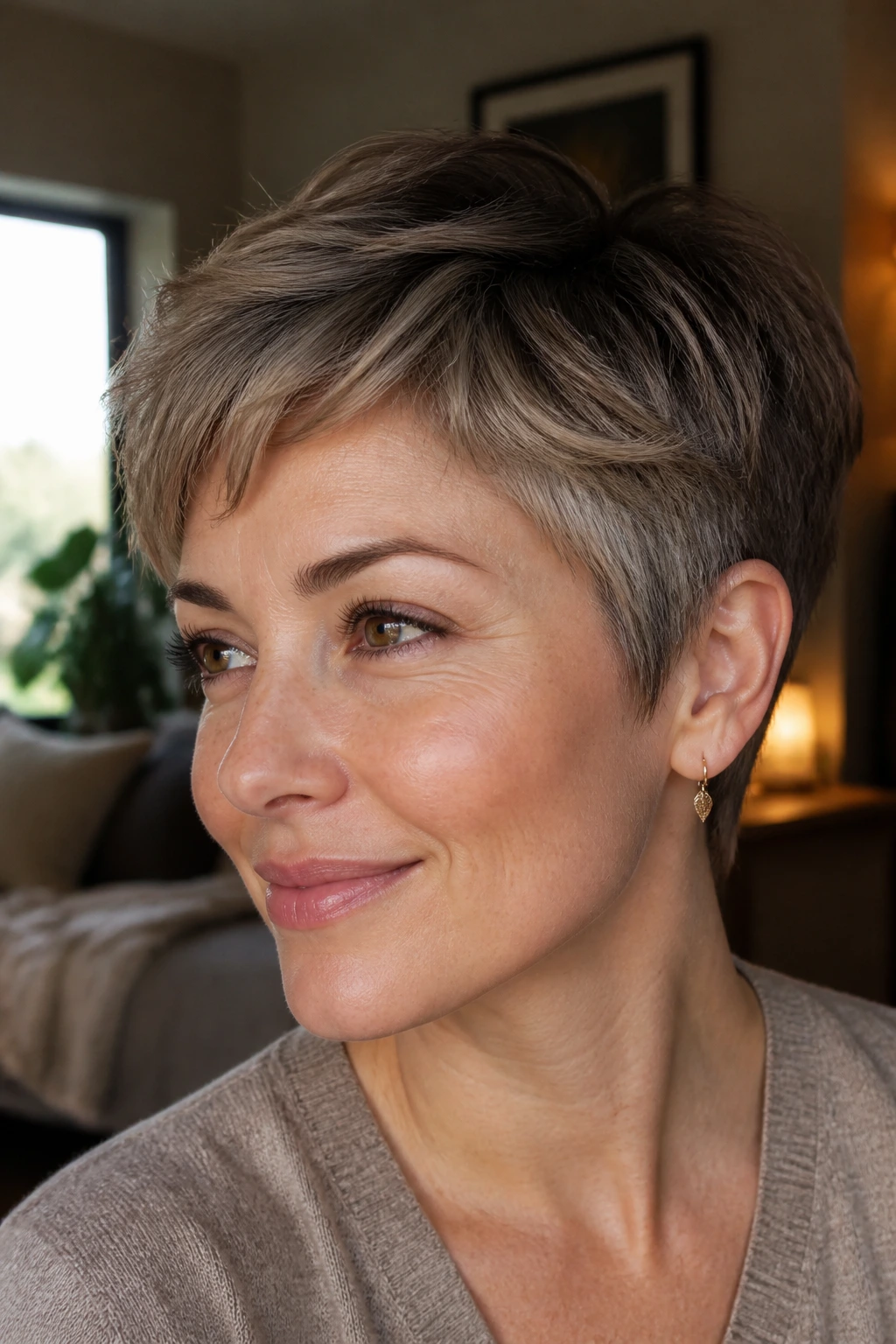
A pixie can go harsh in a hurry. This one doesn’t. The creamy mushroom tone keeps the base grounded, while the babylights at the temples and crown soften the edges that usually make very short hair feel stern.
Why It Works
Babylights on a pixie need to be tiny enough to blur when the hair moves. If the sections are too wide, the whole cut starts looking streaky, and there’s no length to hide the mistake. Here, the lighter pieces sit where the face actually needs them: just in front of the ear, around the fringe, and across the crown.
A cool beige or mushroom gloss makes this especially good for skin that flushes easily. It takes the edge off pinkness without turning the whole head ash gray. Ask for micro-weaves and a soft root shadow so the color grows out like a shadow, not a line.
- Best for: fine to medium hair that can go fluffy at the root
- Tone to ask for: beige mushroom, not icy silver
- Styling move: finger-dry with a dab of paste and lift the crown with the tip of your comb
- Watch for: highlights that start too low on the sides and make the cut look disconnected
Pro tip: Keep the brightest pieces at the temple, not buried under the crown. That’s where short hair gives the face a little glow.
2. Champagne French Bob With A Soft Bend
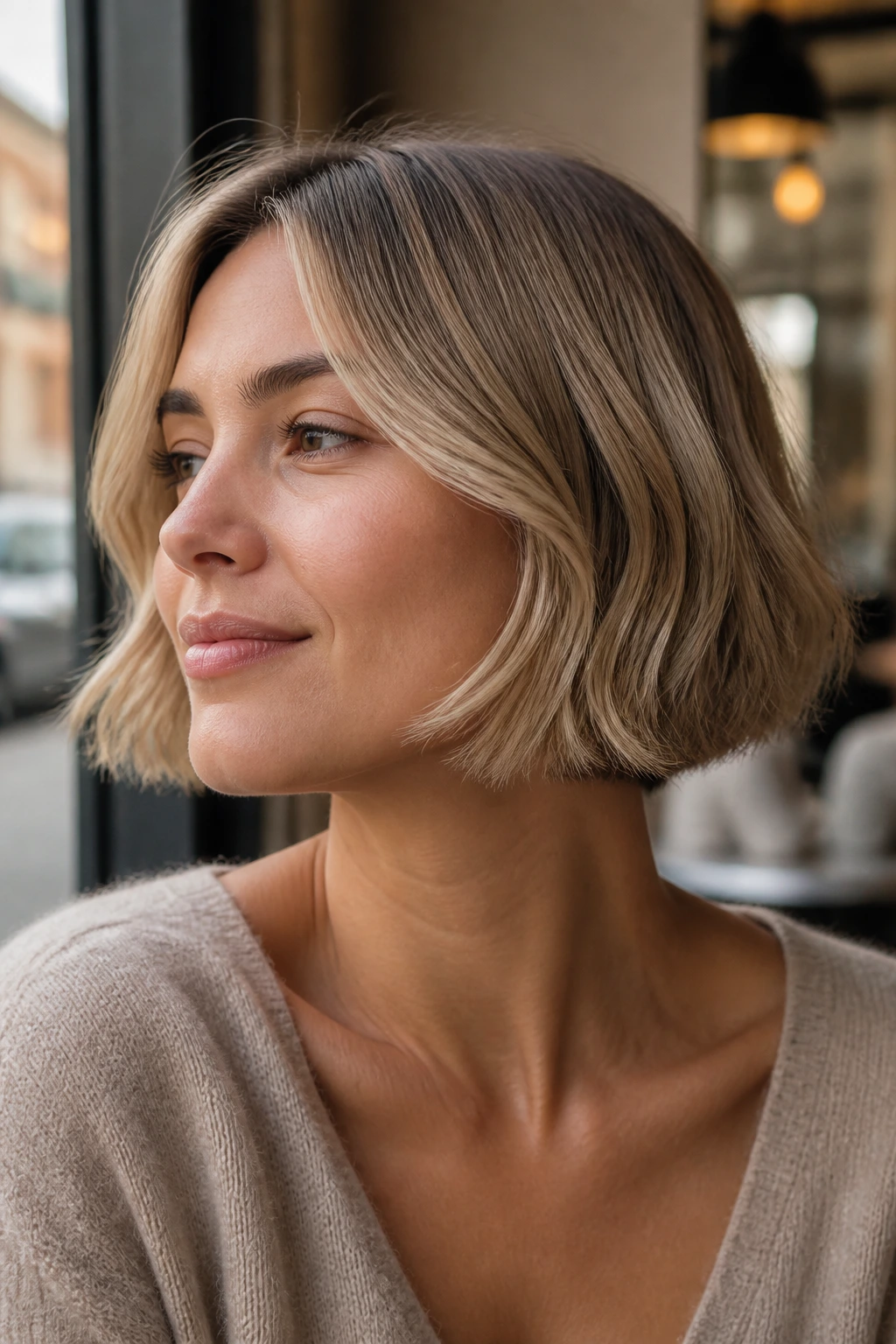
The French bob loves a babylight, but only if the color stays whisper-thin. A champagne tone with a bend at the ends gives you that easy, slightly undone look that makes skin look awake even when the rest of the morning hasn’t cooperated.
You want the lightest ribbons around the cheekbone and just off the part line. That’s the part people actually see first. On a chin-skimming bob, one tiny wave and a few face-framing ribbons are enough; too much curling and the shape turns fussy fast.
This cut works because the hairline stays clean while the color adds movement. It’s a neat little contradiction. The base is polished, the finish is soft, and the babylights keep the whole thing from reading like a helmet.
3. Rooty Beige Bixie With Feathered Ends
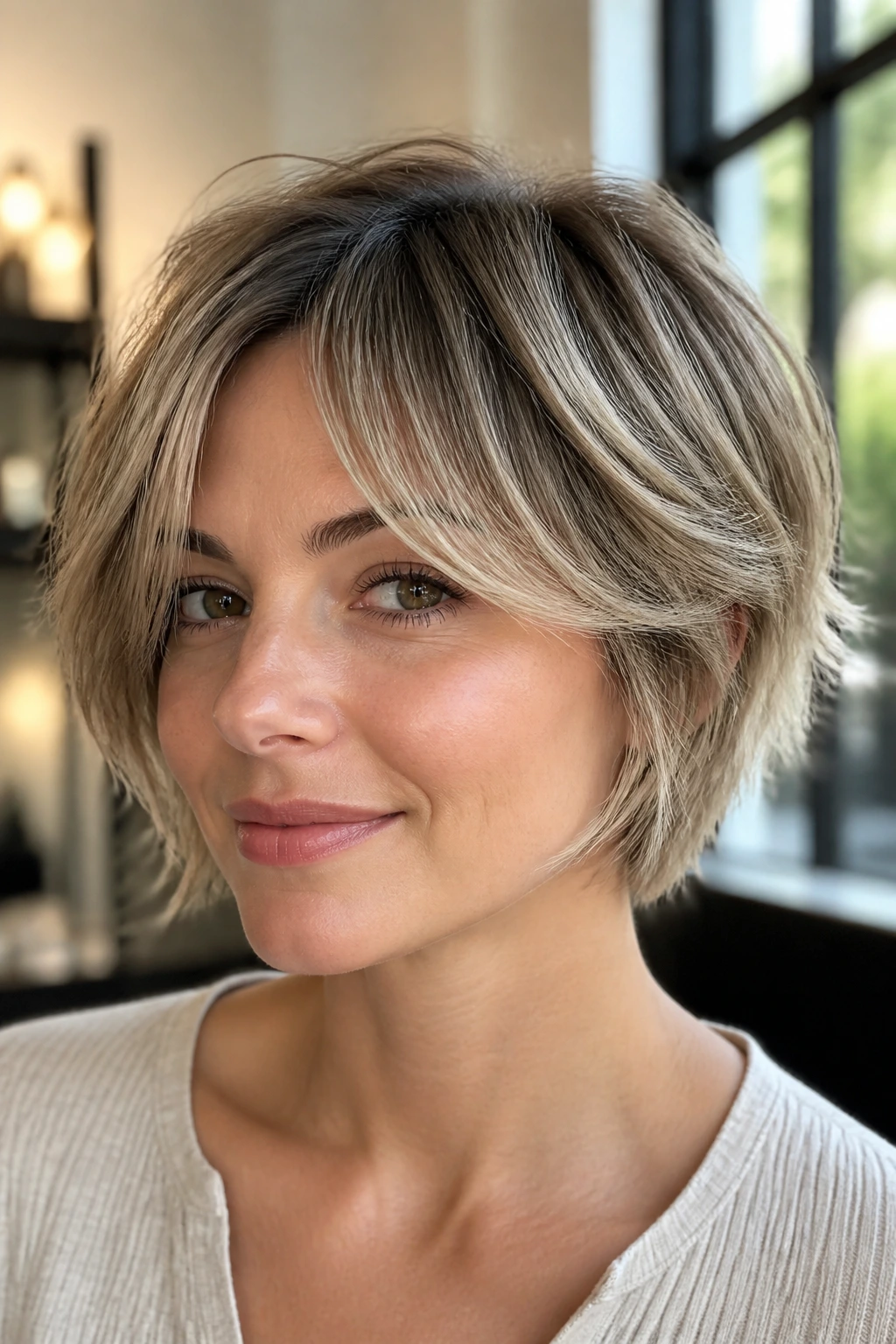
What happens when a bob grows out into something a little messier, a little cooler, and much easier to live with? You get a bixie.
The rooty beige version is one of my favorite short-hair babylight setups because it doesn’t pretend your hair is naturally a single shade. The darker root shadow makes the lighter threads look intentional, and the feathered ends keep the shape from sitting like a block on the jaw.
How to Ask for It
Tell your colorist you want micro babylights on top, a softened root shadow, and lighter pieces that stop before the ends disappear into the nape. That last part matters. If the light runs all the way down on a bixie, the shape can look thin and overprocessed.
This cut is a nice fit if you want brightness without constant upkeep. A one-inch grow-out still looks deliberate because the darker root is part of the design, not a mistake. And yes, it’s one of the better options for people who want their skin to look a little more even without piling on makeup.
4. Blunt Chin Bob With A Pale Halo
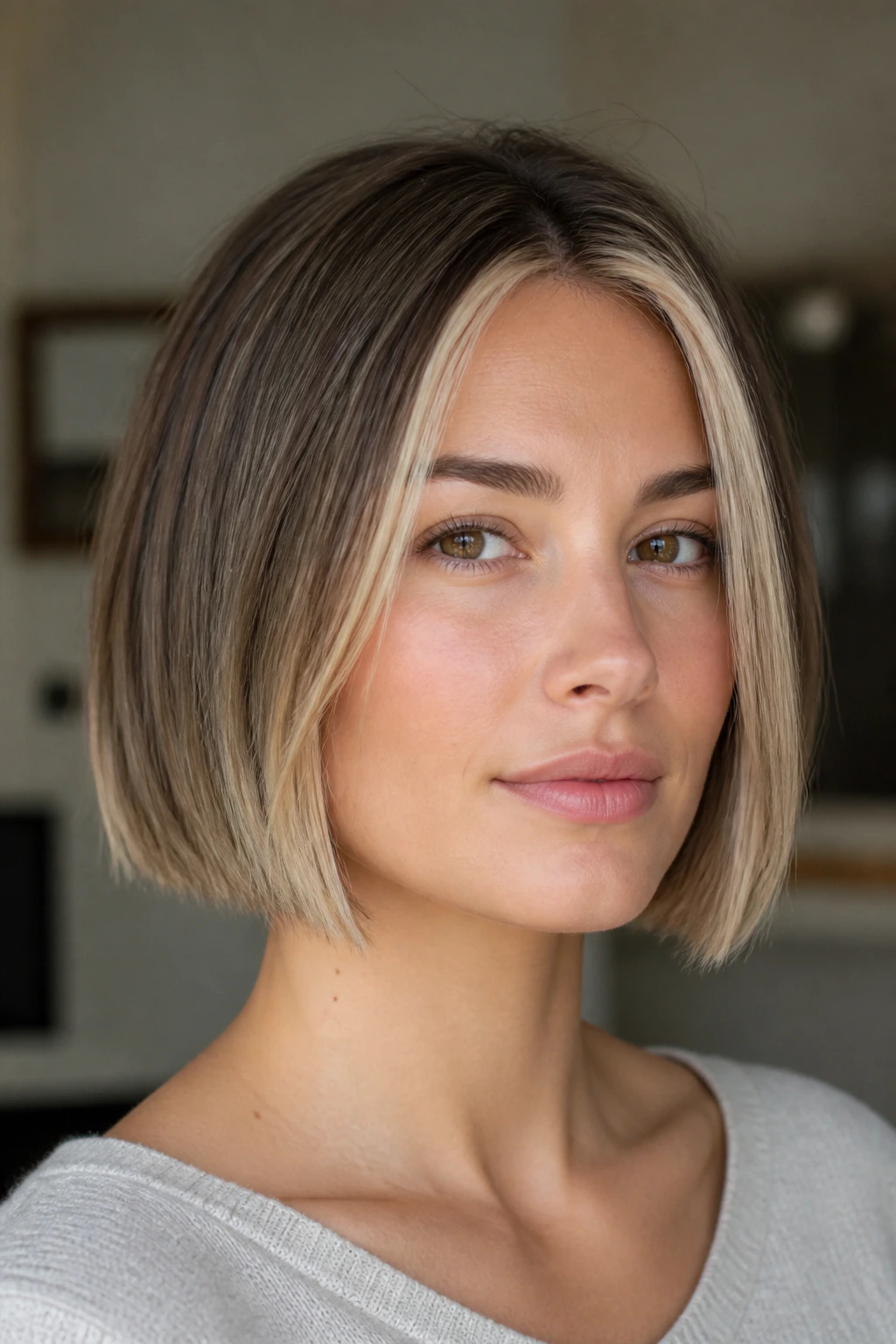
A blunt bob can be brilliant. It can also look severe as a courthouse bench if the color sits too flat. The pale halo around the face changes that fast.
The trick is to keep the babylights very fine at the front hairline and slightly denser near the part, so the brightness seems to float rather than stripe. On this cut, the hair itself does the architecture. The color just softens the border.
- Best for: oval, square, or heart-shaped faces
- Tone to ask for: pale beige or soft pearl, not white blonde
- Styling move: flat iron the ends inward by half an inch, not a full curl
- Why it flatters skin: the light sits close to the cheek and jaw, so the face looks less shadowed
The halo effect is especially nice if your complexion goes a little tired under overhead lighting. That tiny lift around the face makes a blunt cut feel gentler without losing its sharp line.
5. Shaggy Crop With Hidden Babylights
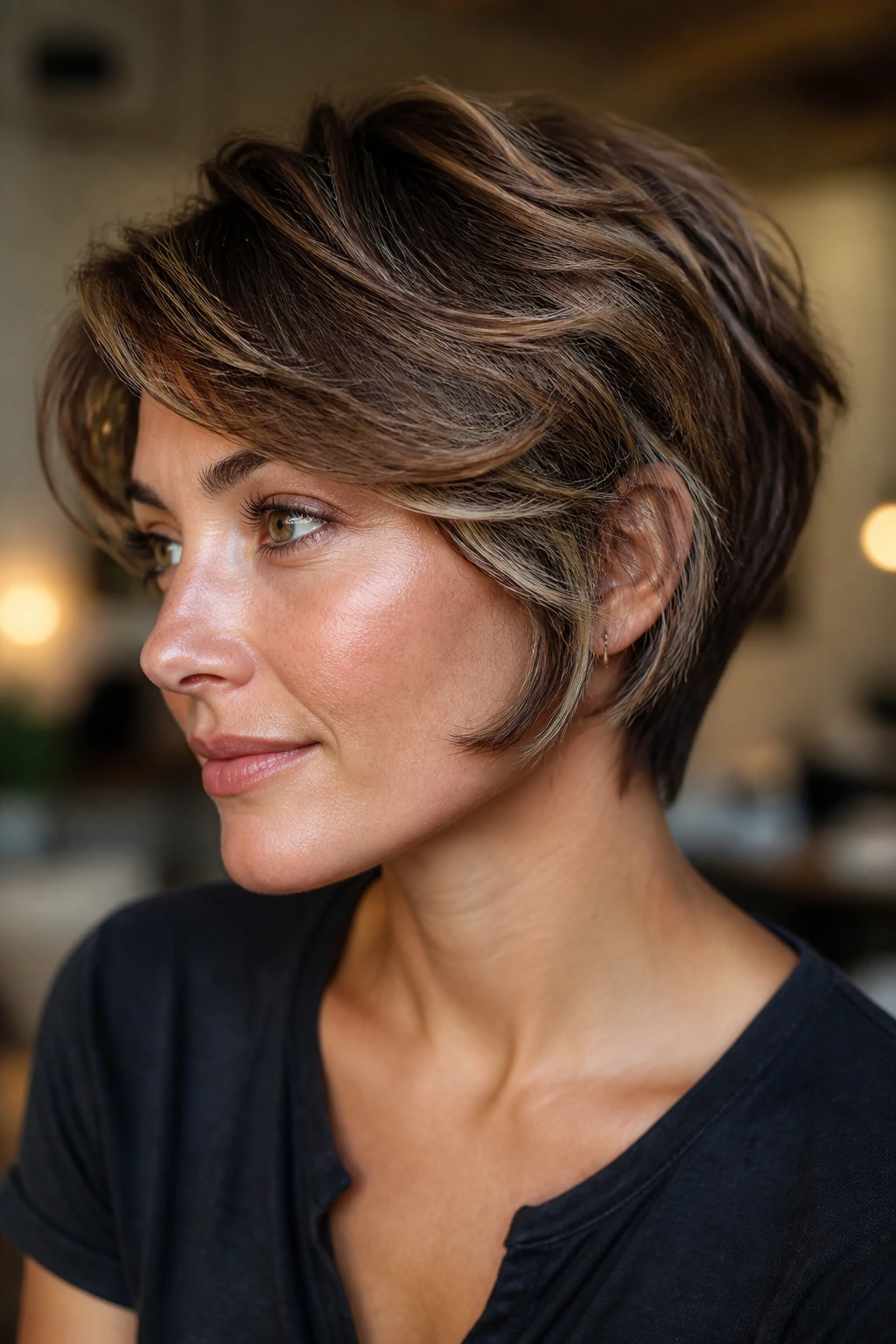
This is the version for people who like their hair a little bit wild, but not sloppy. The babylights live under the top layer, so they show when the crop breaks open with movement instead of screaming from every angle.
That hidden placement matters. On shaggy short hair, surface color can get busy fast. Interior light keeps the cut dimensional while the outer layer stays a bit darker and cooler. The result is more depth near the roots, which usually makes skin look smoother by contrast.
If you have a lot of texture, this cut is especially useful. Scrunch in mousse, rough-dry, and let the lighter pieces peek out from the bends. You get brightness without the maintenance of a full, high-contrast highlight pattern.
6. Side-Parted Sleek Bob With Pearl Ribbons
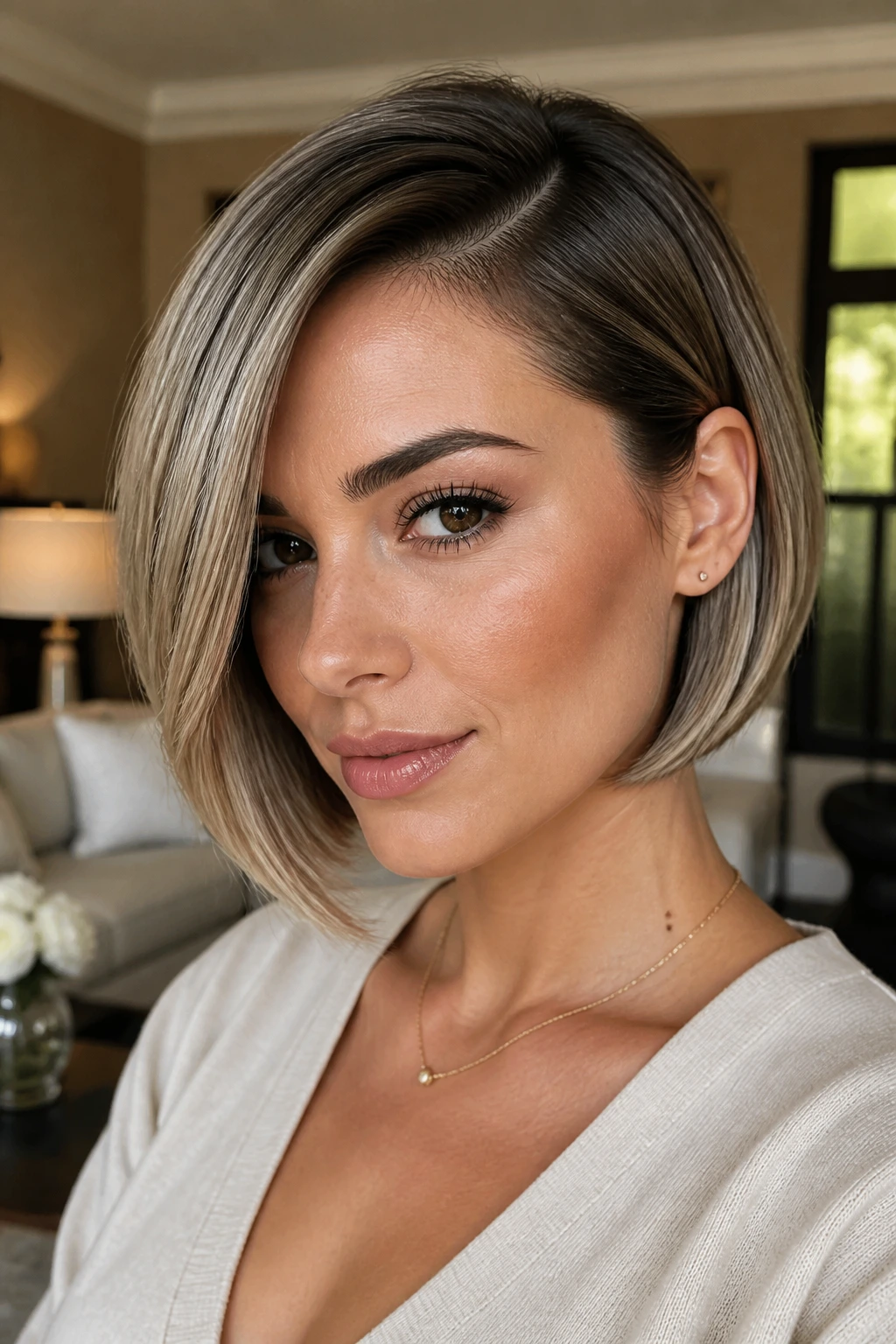
A deep side part changes everything. It gives a short bob a little drama, and pearl-toned babylights along the heavier side create a soft sweep that sits beautifully near the cheekbone.
This is the bob I’d hand to someone who wants clean lines and a quieter kind of luxury. Not shiny in a greasy way. Just controlled enough that the color looks intentional and the finish still moves when you turn your head. A light serum on the ends helps, but use too much and the babylights disappear into glare.
Pearl ribbons are best when the base is level 6 or 7 and the lift is only one to two shades lighter. On short hair, that small difference often looks richer than going full blonde. The face reads softer, and the cut keeps its edge.
7. Curly Bob With Sunlit Ends
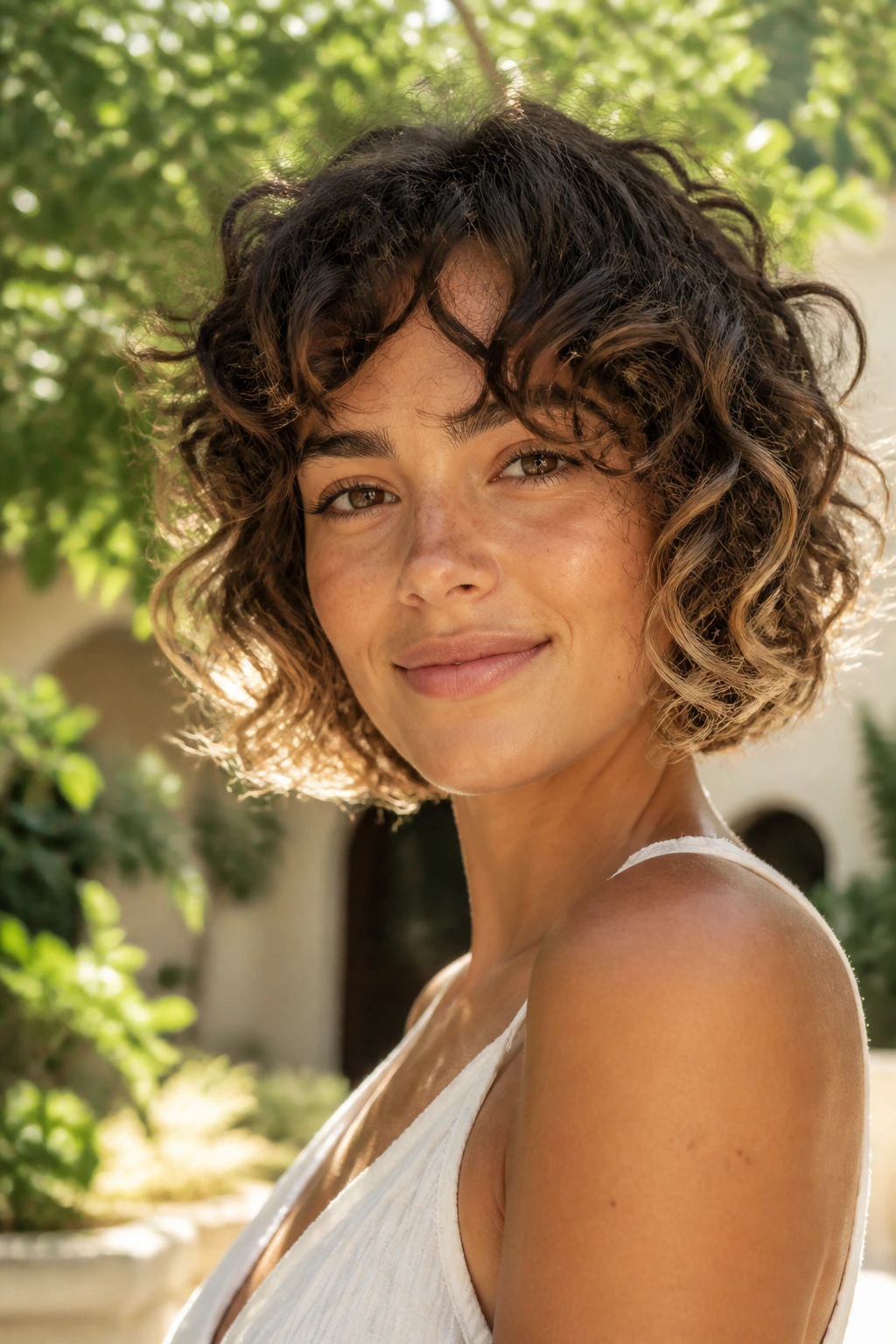
Curly short hair and babylights can be gorgeous, but only if the color respects the curl pattern. Lightening the ends, not the whole curl, keeps the texture springy and avoids that cottony look that can happen when the bleach goes too high.
The sunlit ends give the bob a little motion even when the curls are compact. You see flashes of honey, beige, and soft gold as the curls separate. That is the whole game here. The hair should look like it has depth, not frosting.
Best Curl Pattern
Loose ringlets and springy waves show this best, but even tighter curls can hold the effect if the babylights are placed in tiny, strategic ribbons. Ask for painted ends and selective face-framing pieces, not broad pieces all over the head.
If your skin gets dull next to dark curls, this is one of the easiest fixes. A touch of warmth near the face can make the whole expression look less tired. And it doesn’t have to be dramatic to work.
8. Mini Lob With Caramel Veils
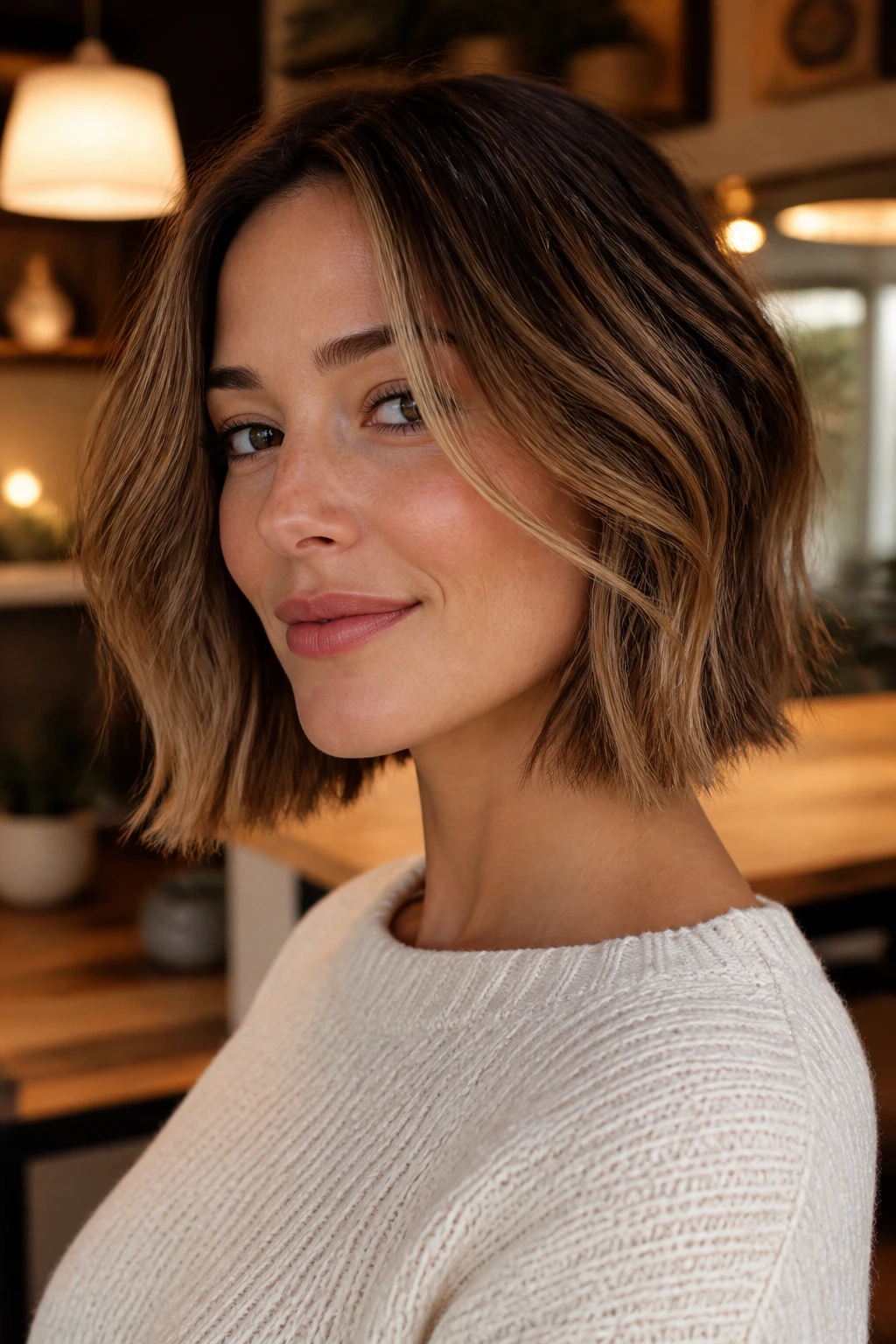
A mini lob is the sweet spot for people who want short hair without going full crop. It still sits above the shoulders, so babylights have room to breathe, and caramel veils bring warmth without making the color shout.
The beauty of this cut is in the drape. A little length around the collarbone lets the babylights catch when the hair moves, then settle back into a darker base underneath. That contrast keeps the face from looking washed out, which is the whole reason caramel on short hair can be such a smart move.
- Good for: medium to thick hair
- Ask for: soft caramel ribbons through the top layers and a slightly deeper tone underneath
- Style with: a 1-inch wave or a bend from a flat iron, then rake it apart with fingers
- Avoid: bright all-over blonde that erases the cut’s shape
This one is especially kind to warmer skin tones. It gives cheeks a little glow without making everything else fight for attention.
9. Rounded Jawline Bob With Honey Babylights
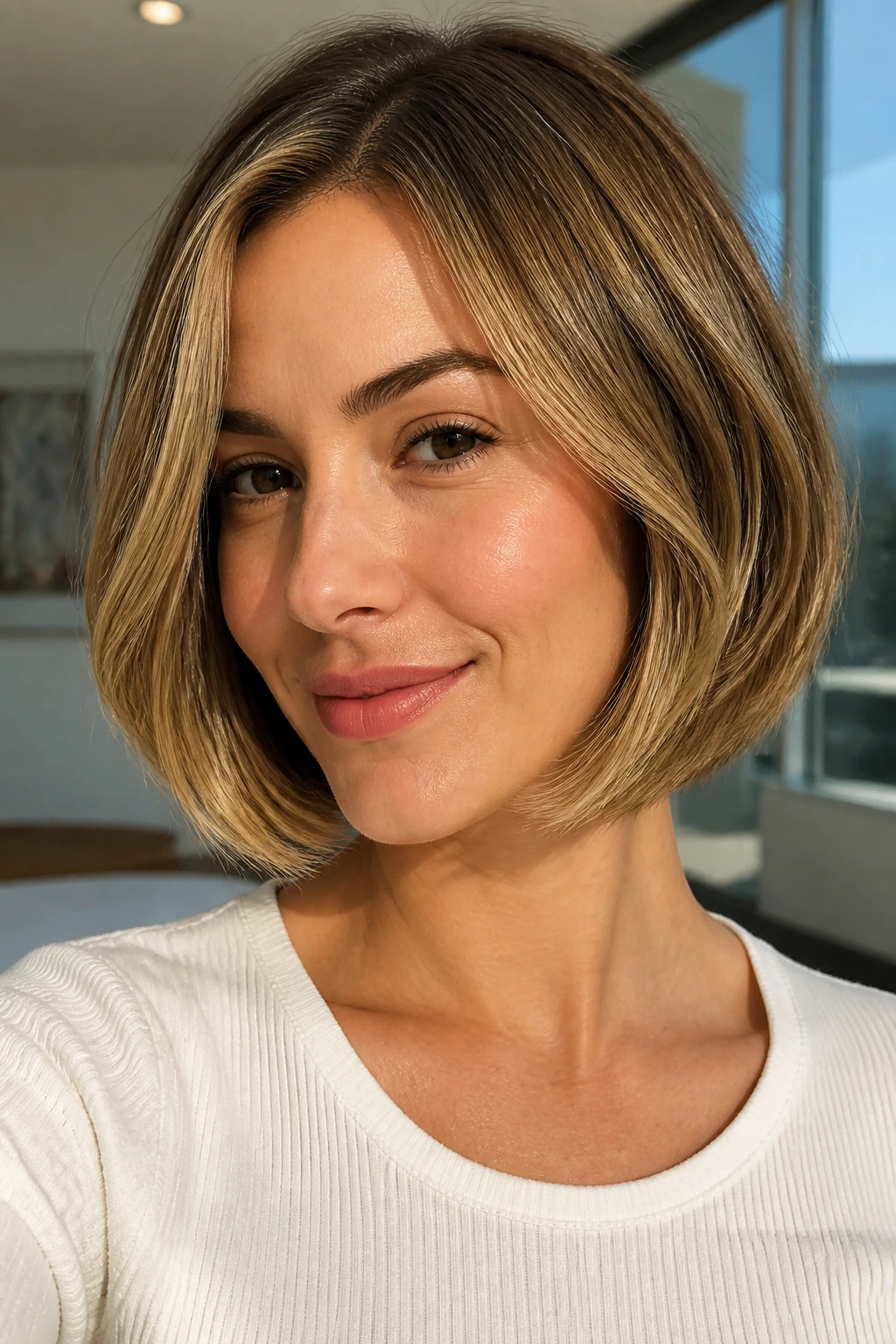
A rounded bob is all about curve, and honey babylights can make that curve feel even softer. The light pieces should be placed where the hair naturally hugs the jaw, not scattered randomly across the crown.
That’s the part people often miss. A round bob doesn’t need more color everywhere; it needs the right color in the right spots. Honey around the face, a touch of lowlight underneath, and suddenly the cut looks plush instead of heavy.
What to Tell Your Stylist
Ask for babylights that are slightly denser near the front and lighter through the back, especially if your hair is fine. That keeps the shape from collapsing into one tone. If your skin runs cool, shift the honey toward beige-gold rather than orange.
This style works well when you want a flattering outline more than a flashy color job. It’s quietly good. The kind of good you notice in motion.
10. Piecey Pixie With Frosted Crown
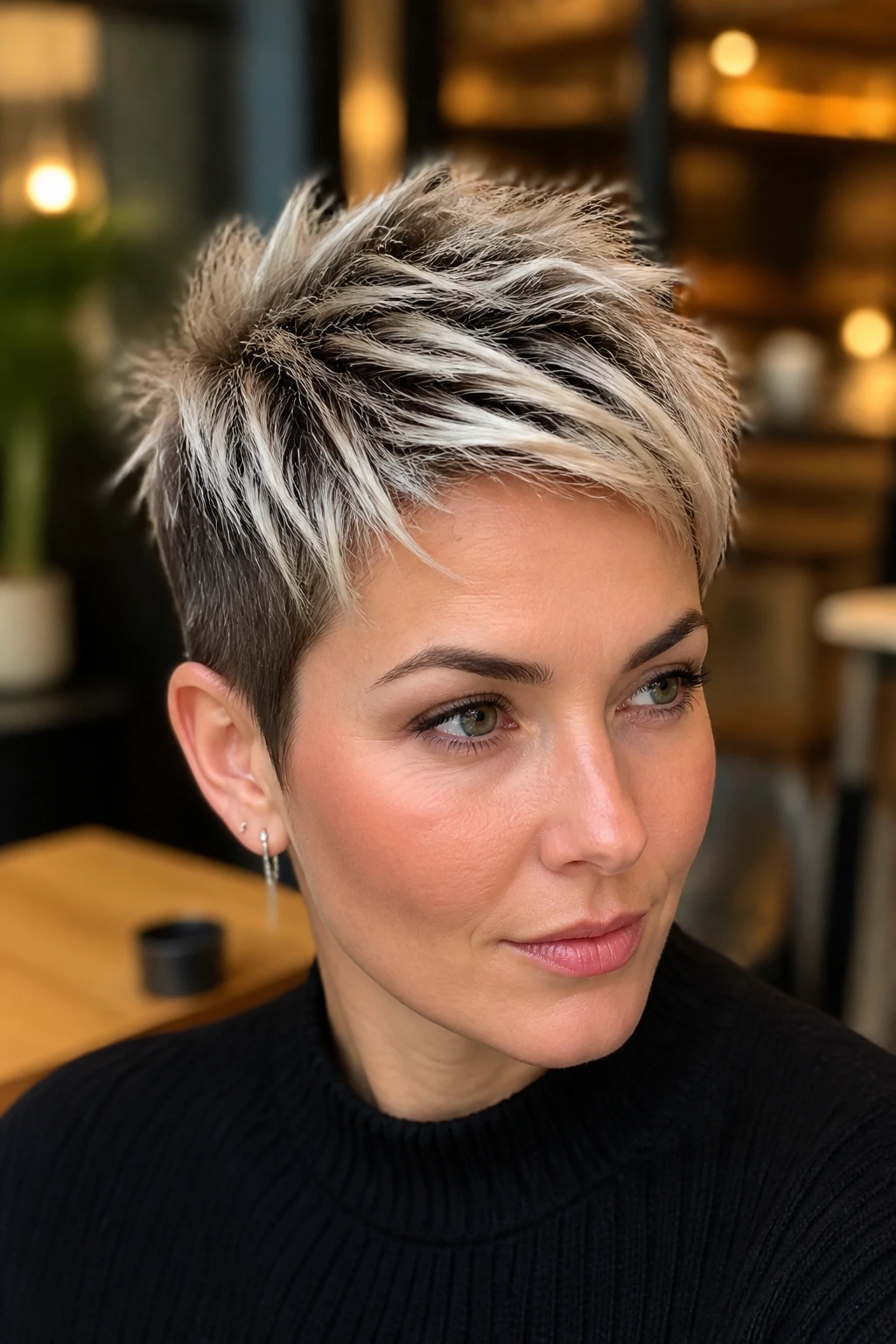
This is the one for people who like a little edge. The frosted crown gives the pixie lift, and the piecey finish keeps it from looking too neat.
Short hair with babylights gets interesting when the contrast is placed high. A frosted crown does exactly that, but the trick is to keep the sides softer so the head doesn’t start looking like it’s wearing a cap of brightness. A tiny bit of matte paste at the ends gives the pieces definition without killing the light.
It’s a strong look on angular faces, because the highlights create movement right where a hard bone structure can use a little softness. If the color is done well, the skin looks a little more awake, and the hair never feels stuck.
11. Short Lob With A Soft Babylight Veil
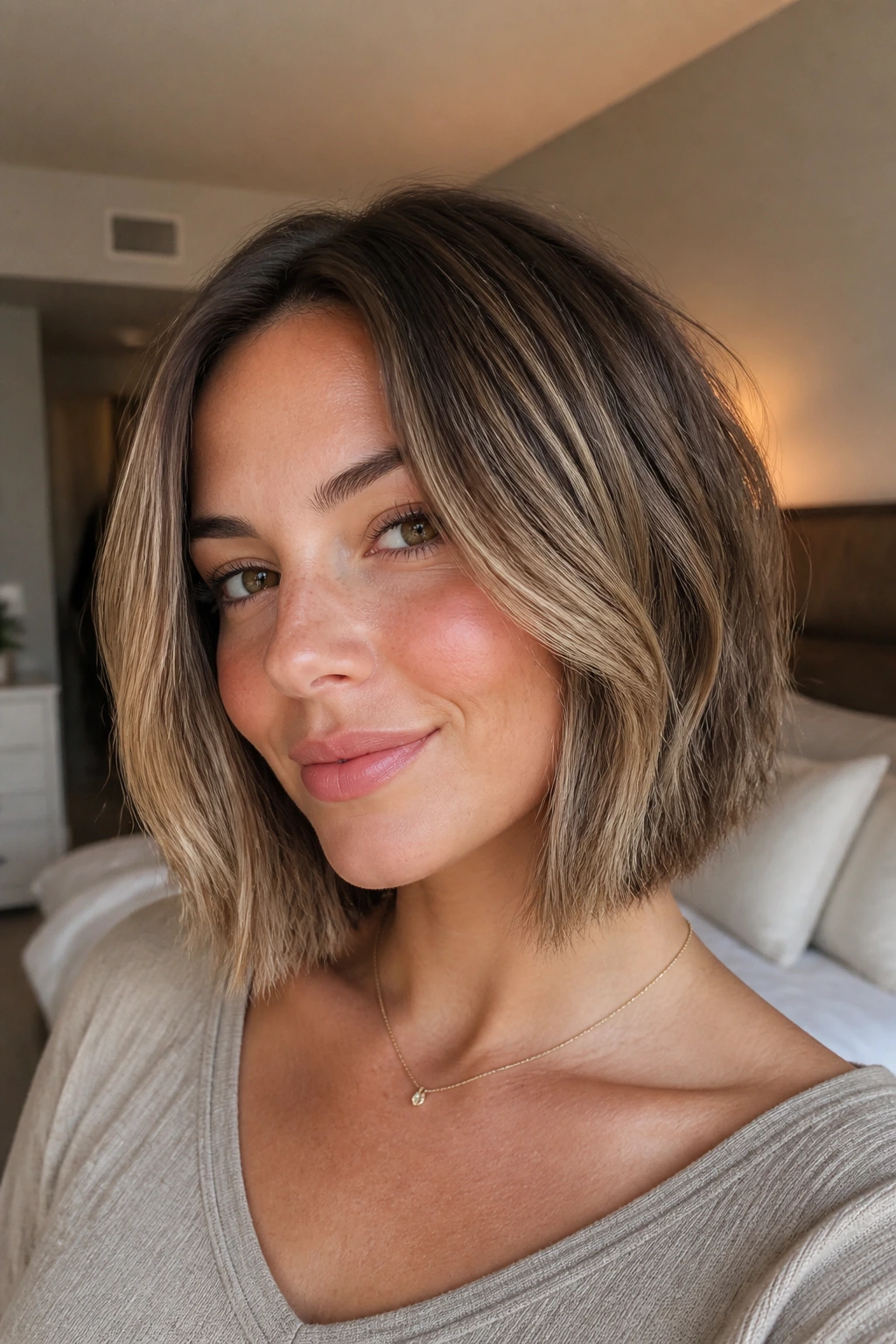
Here’s the cut for someone who wants to stay near short hair but keep a little swing. The soft veil of babylights gives the lob movement, yet the darker base underneath keeps it from turning flat and over-processed.
A short lob gives the color room to stretch, which means you can play with a softer, more blended highlight pattern. That’s useful if you want your hair to look healthy rather than obviously colored. The lighter strands should appear in the top layers, around the part, and just through the cheek line.
It’s a good compromise if you work in a place where obvious streaks feel too loud. The look is present but not noisy. And because the length still brushes the collarbone, you can tuck it, wave it, or pull one side back and still keep the dimension visible.
12. Feathered Crop With Apricot Tones
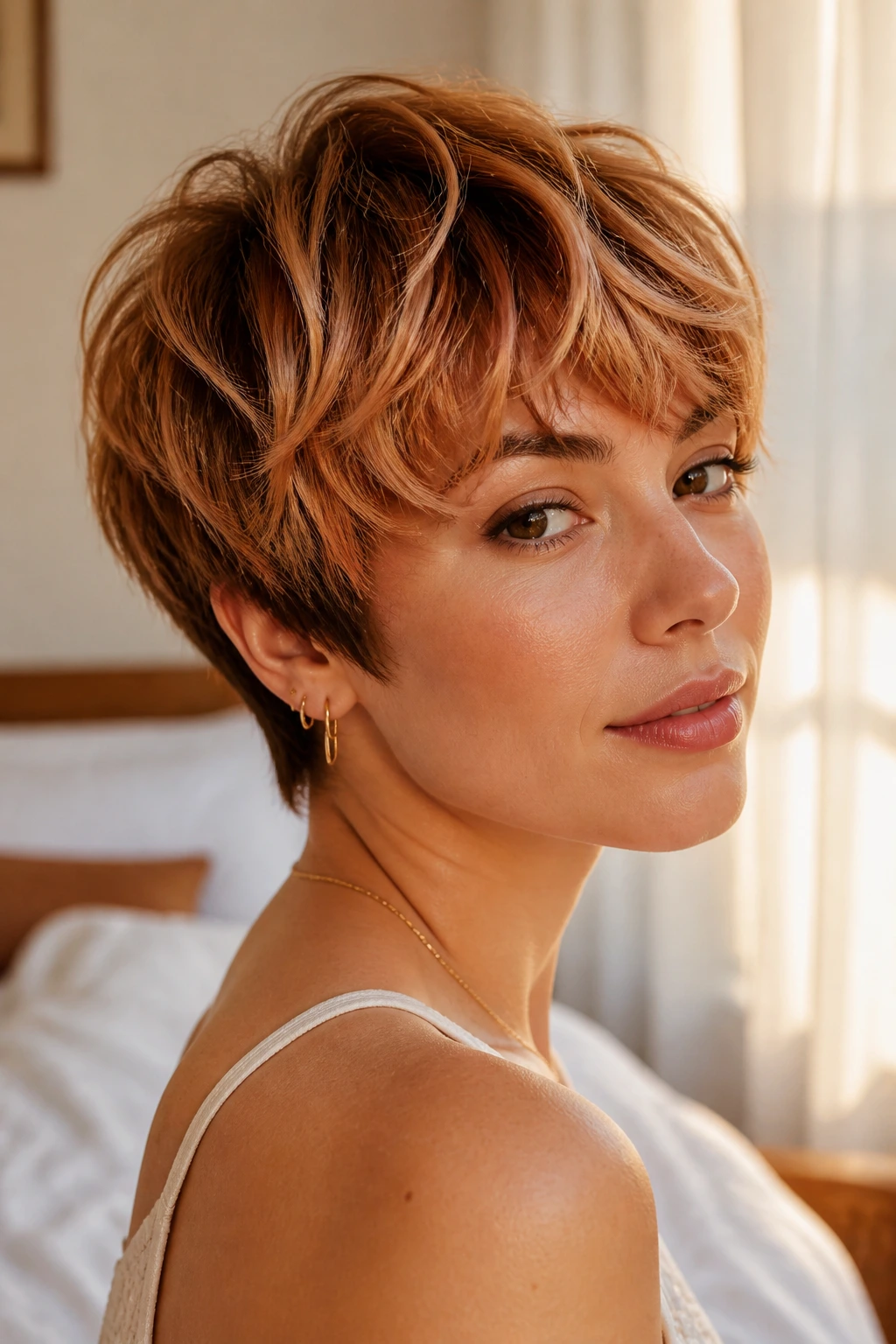
Apricot babylights are warmer than champagne, softer than copper, and far more flattering than people expect. On a feathered crop, they blur into the layers and give the whole cut a light, airy feel.
This is one of the better choices for skin that needs warmth. Not orange warmth. More like the color of a good sunset through a sheer curtain. The feathery layers keep the light pieces from sitting in one hard line, and that matters on short hair because every line shows.
Color Note
Ask for apricot only if your base can handle it. On a dark brunette, a muted peach-caramel version usually looks better than something bright. If your hair is already light, a gloss can keep the tone soft instead of loud.
A crop like this looks best when the ends are textured and the top has a little lift. Too smooth, and the color can flatten. A little air and grit make it work.
13. Tapered Pixie With Micro-Babylights
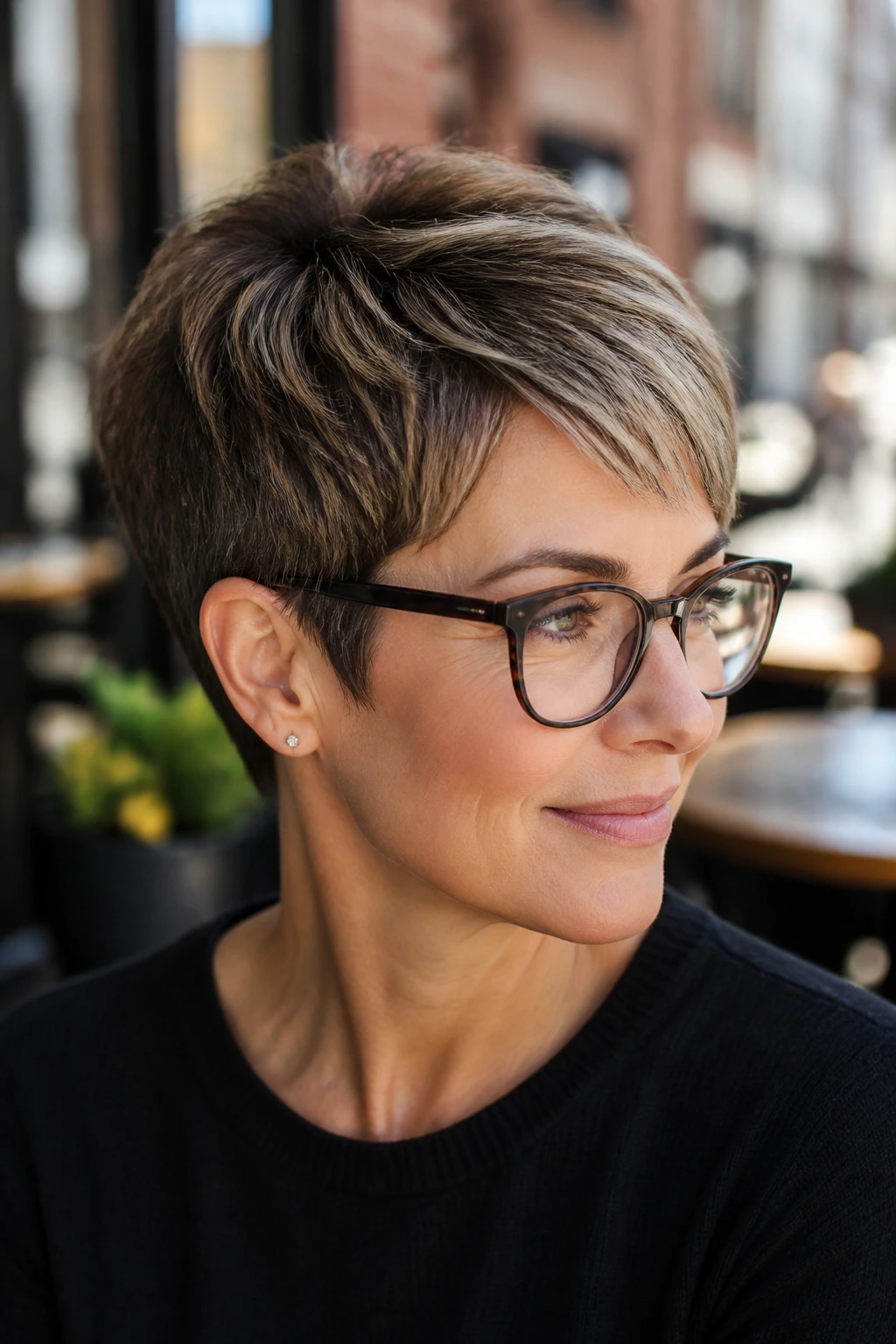
A tapered pixie leaves more length on top and less at the nape, which makes babylight placement a little more delicate. You want micro-weaves across the crown and a whisper of brightness near the front, not broad sections that fight the clean taper.
The result is small but strong. The shape stays sharp, and the color gives the top some movement so the cut doesn’t look like a close crop from every angle. On dense hair, this is especially useful because the lighter strands break up the bulk without making the style feel busy.
This cut also wears nicely with glasses. The light at the front stops the frame from taking over the whole face. A tiny detail, maybe, but a useful one.
14. Curved Bob With Toasted Almond Ribbons
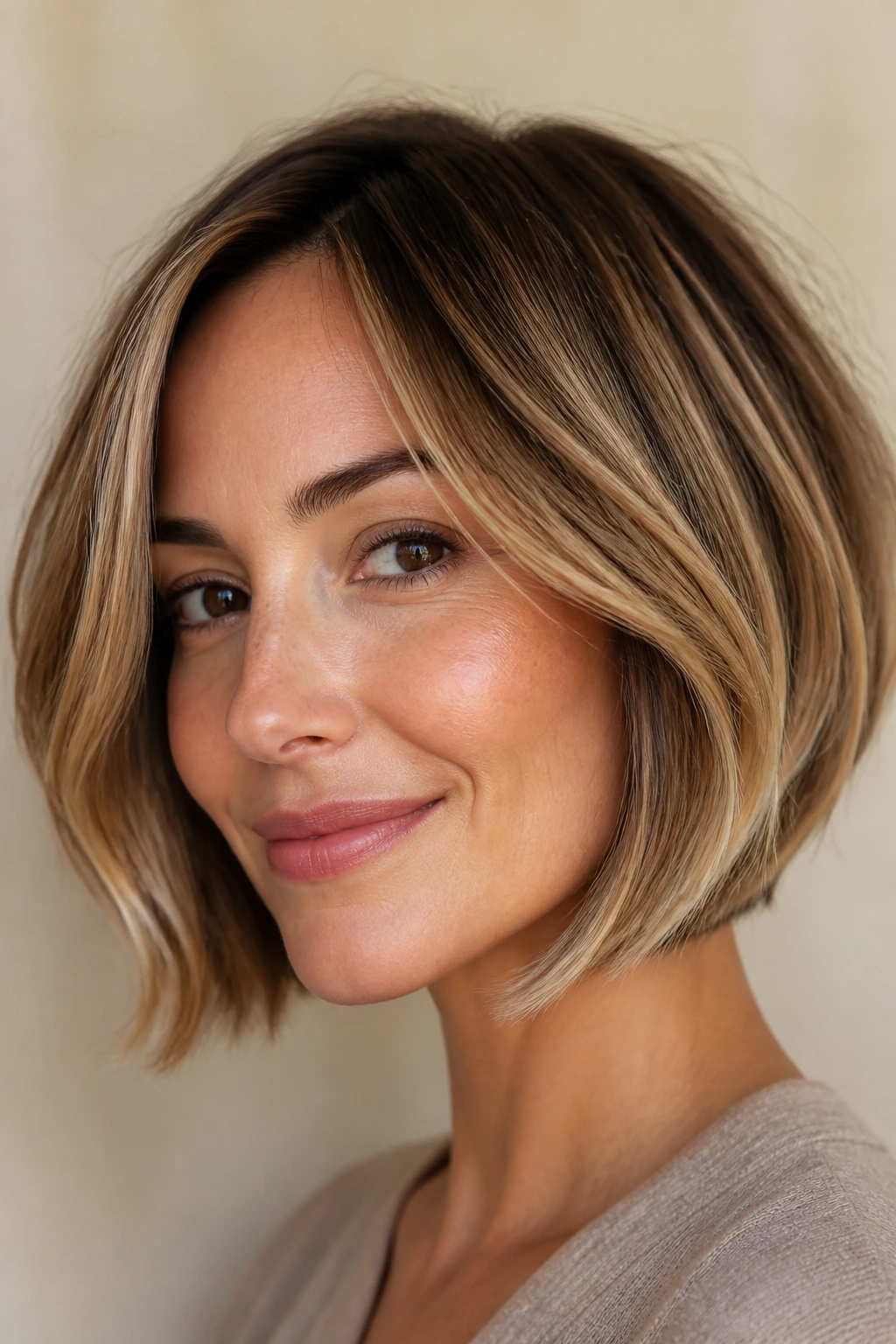
A curved bob wants polish. Toasted almond babylights give it just enough softness to keep the shape from feeling stiff.
The curve does half the work here. The color follows it, especially when the lighter ribbons sit just above the perimeter and near the front. That placement keeps the jawline looking clean while adding a little motion around the eyes and cheeks.
If you like a bob that can go from office to dinner without a full restyle, this one is a solid bet. Blow it smooth with a round brush, or bend the ends under with a flat iron if you’re in a hurry. The color still reads even when the styling is minimal.
15. Modern Pageboy With Beige Lift
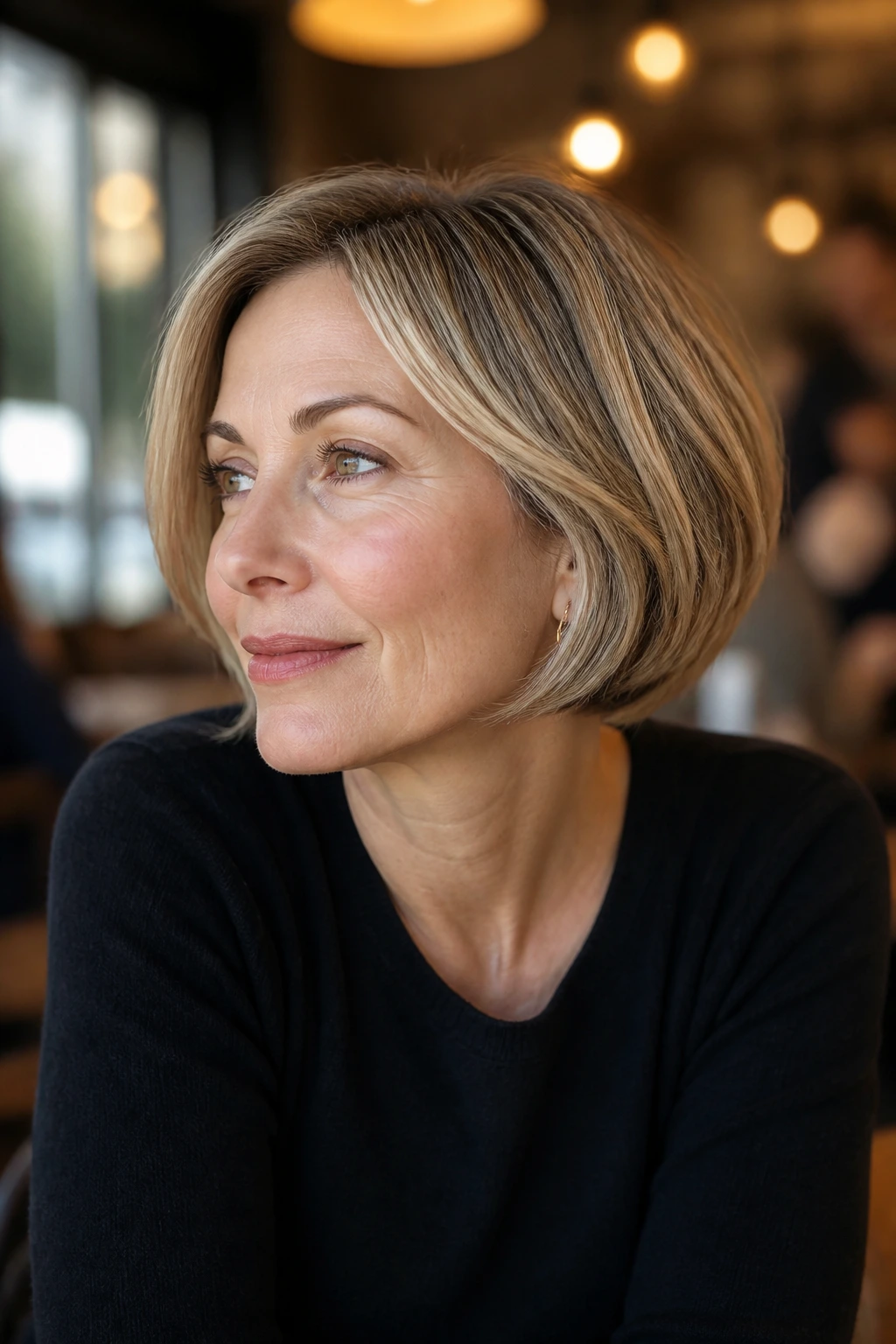
The pageboy has a reputation for being severe, which is unfair. A modern version with beige babylights and a softened fringe feels much more wearable.
The lift should be subtle and concentrated around the upper face, not thrown through the whole cap of hair. That keeps the shape clean, which is the whole point of a pageboy in the first place. I like a muted beige here because it holds the line of the cut without turning it brassy.
- Best for: straight or slightly wavy hair
- Color move: one shade lighter than the base, then a gloss to cool it down
- Styling move: tuck the ends inward just enough to show the outline
- Why it helps skin: the fringe and top layers give the face a soft frame instead of a hard curtain
This one is quietly chic without being precious. It looks expensive when the line is crisp and the babylights are barely there.
16. Wavy Shullet With Dimensional Babylights
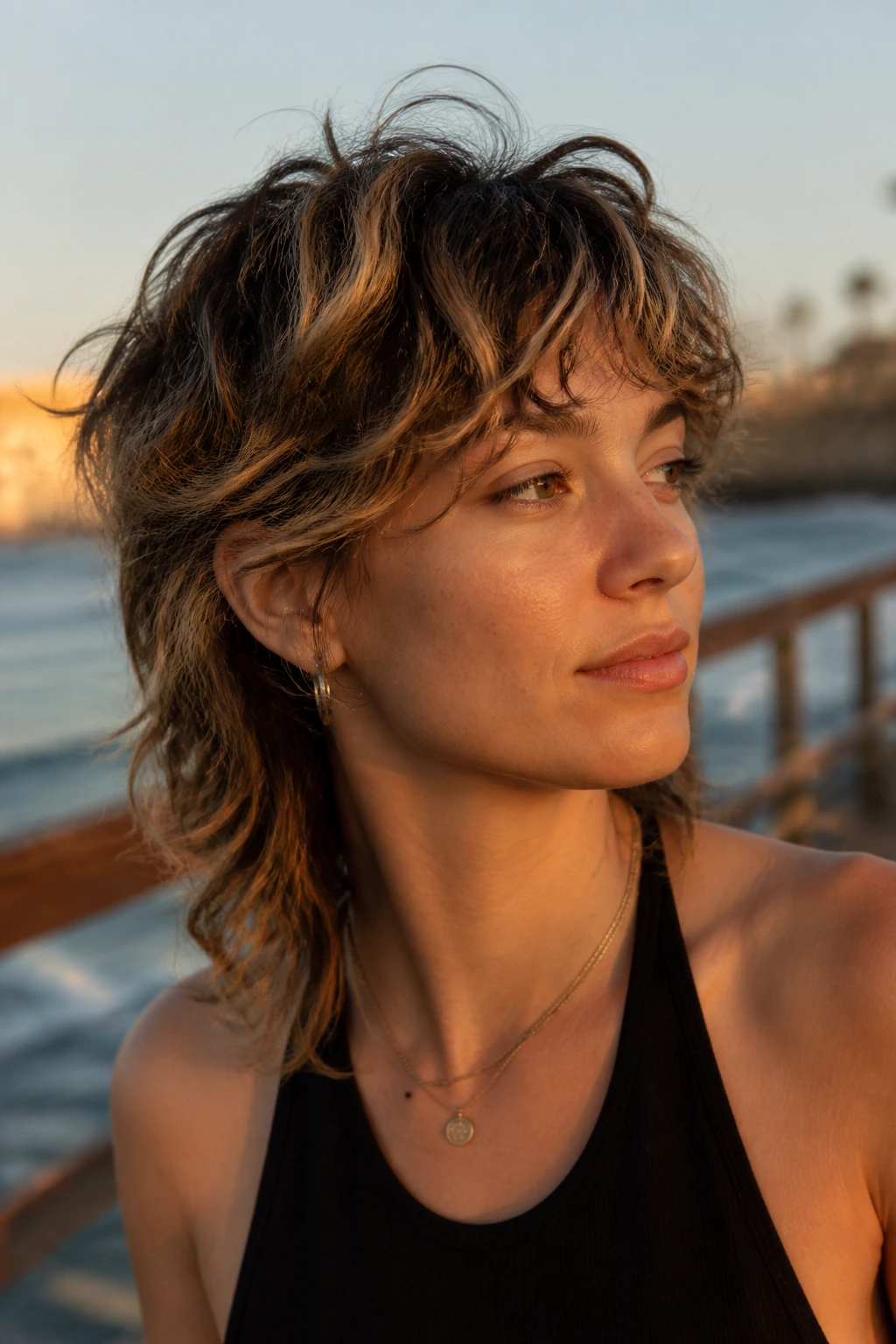
A shullet can be weird in the best way. Add dimension, and it becomes the kind of weird that looks edited on purpose.
The babylights in this cut work best when they’re scattered through the top layers and the longer nape pieces, with a few lowlights left underneath so the waves don’t turn into one pale mass. That mix keeps the style from flattening under its own texture. It also gives the face some brightness without erasing the edge.
This is one of the few short cuts where a little mess helps. Air-dry it halfway, twist a few sections, then finish with a diffuser or a rough blow-dry. The lighter pieces pop more when the wave pattern is imperfect.
17. Tucked-Behind-Ear Bob With Airy Brightness
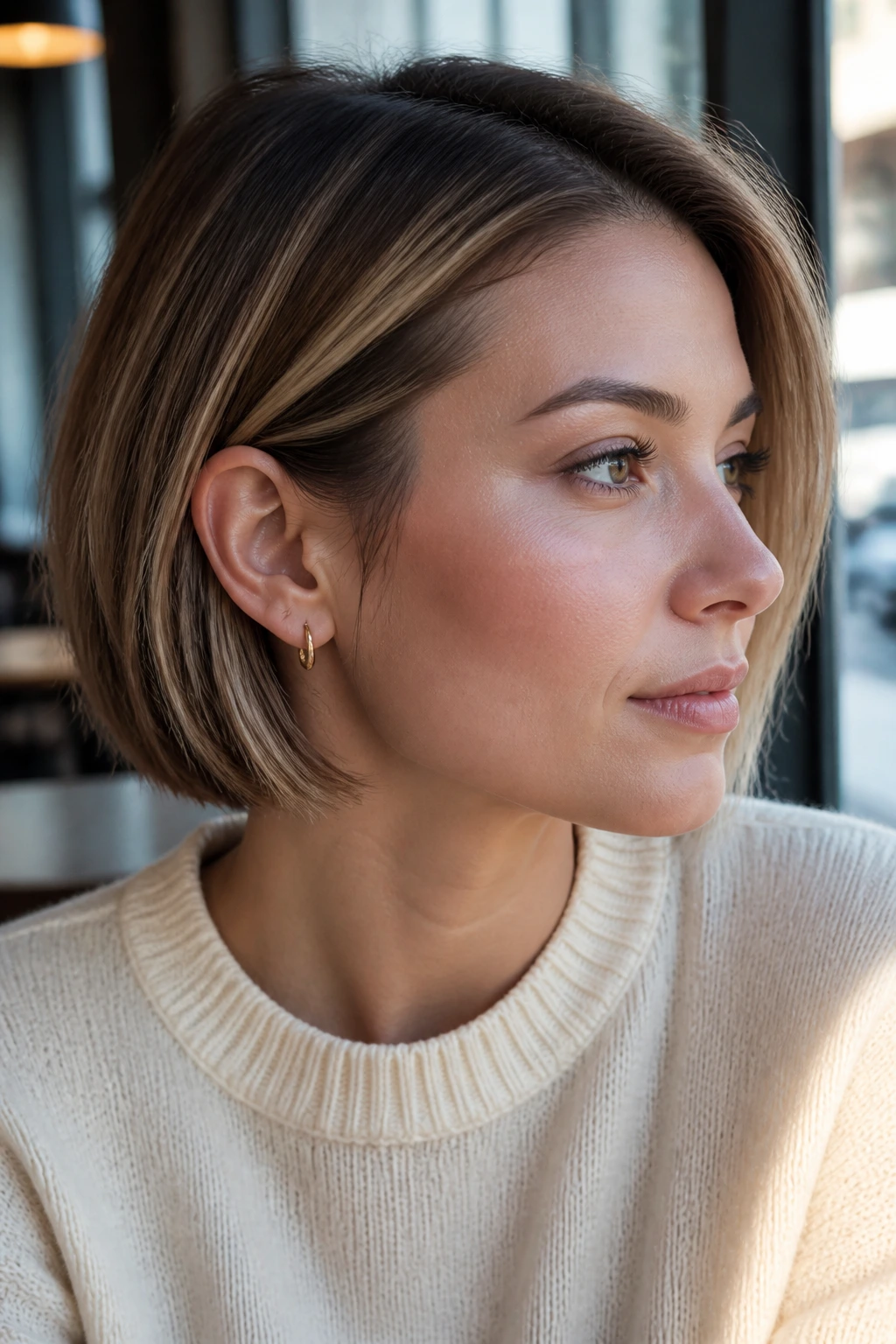
A bob that lives behind the ear needs color near the temple and cheek. Otherwise, all the eye sees is one dark block with a neat little tuck. The airy brightness fixes that.
The best version uses fine ribbons that sit exactly where the hair gets pushed back. That way, the babylights show when the ear is exposed and disappear when the hair falls forward. It’s a smart placement if you wear earrings, glasses, or anything that sits near the face and needs a little visual balance.
What to Ask For
Ask for micro-babylights around the temple, one brighter piece near the part, and a softer finish toward the nape. That gives the haircut motion without stealing the whole show.
This is a very good choice if you like to keep your hair tucked but don’t want the style to vanish. The bright bits catch the light right where the face needs them.
18. Choppy Bowl Cut With Sand Lights
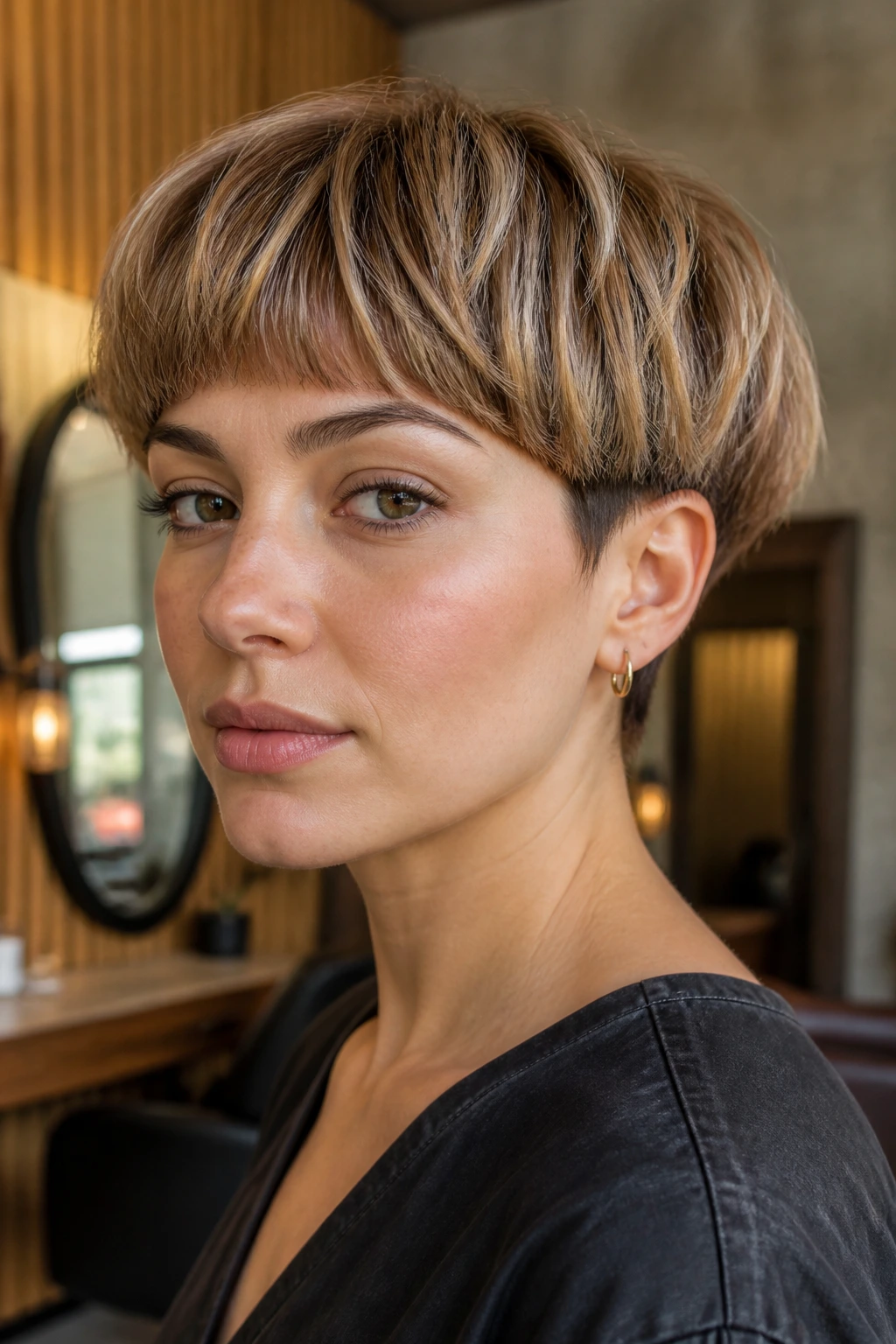
A bowl cut with babylights sounds risky, and honestly, it can be. Which is exactly why the placement matters so much.
Sand-colored highlights keep the look from going flat and helmet-like. The pieces should be tiny and irregular, never lined up like stripes. A few lowlights under the top layer help too, because a bowl shape needs depth or it becomes one blunt visual wall.
This cut is for someone who likes fashion to look a little confrontational. The color softens the shape just enough that it reads intentional instead of accidental. Done right, it brings the face forward in a way that feels surprisingly fresh.
19. Cropped Shag With Muted Copper Threads
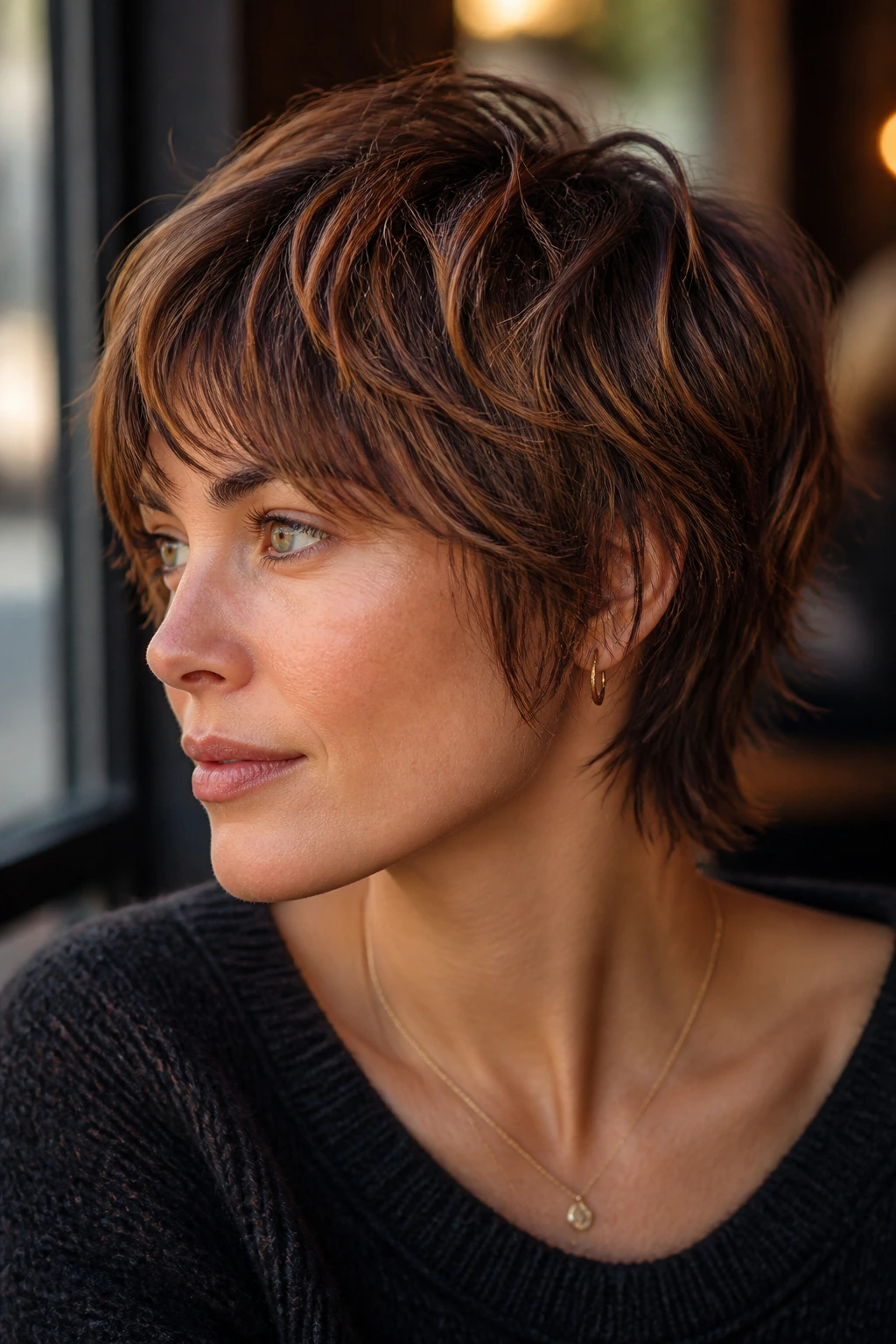
Copper can be loud. Muted copper is the smarter choice on a cropped shag, because it warms the skin without turning the whole head into a flare.
The shag needs that warmth in thin threads through the top and fringe area. Too much and the cut gets busy. Too little and the texture disappears. A muted copper babylight does both jobs at once: it wakes up dull lengths and gives the skin a little healthy color by contrast.
If you usually wear neutral makeup, this is a good bridge between plain brunette and full red. It’s more alive than brown, less dramatic than copper. And on a shag, that middle ground feels right.
20. Slicked-Back Short Cut With Shine-Boost Babylights
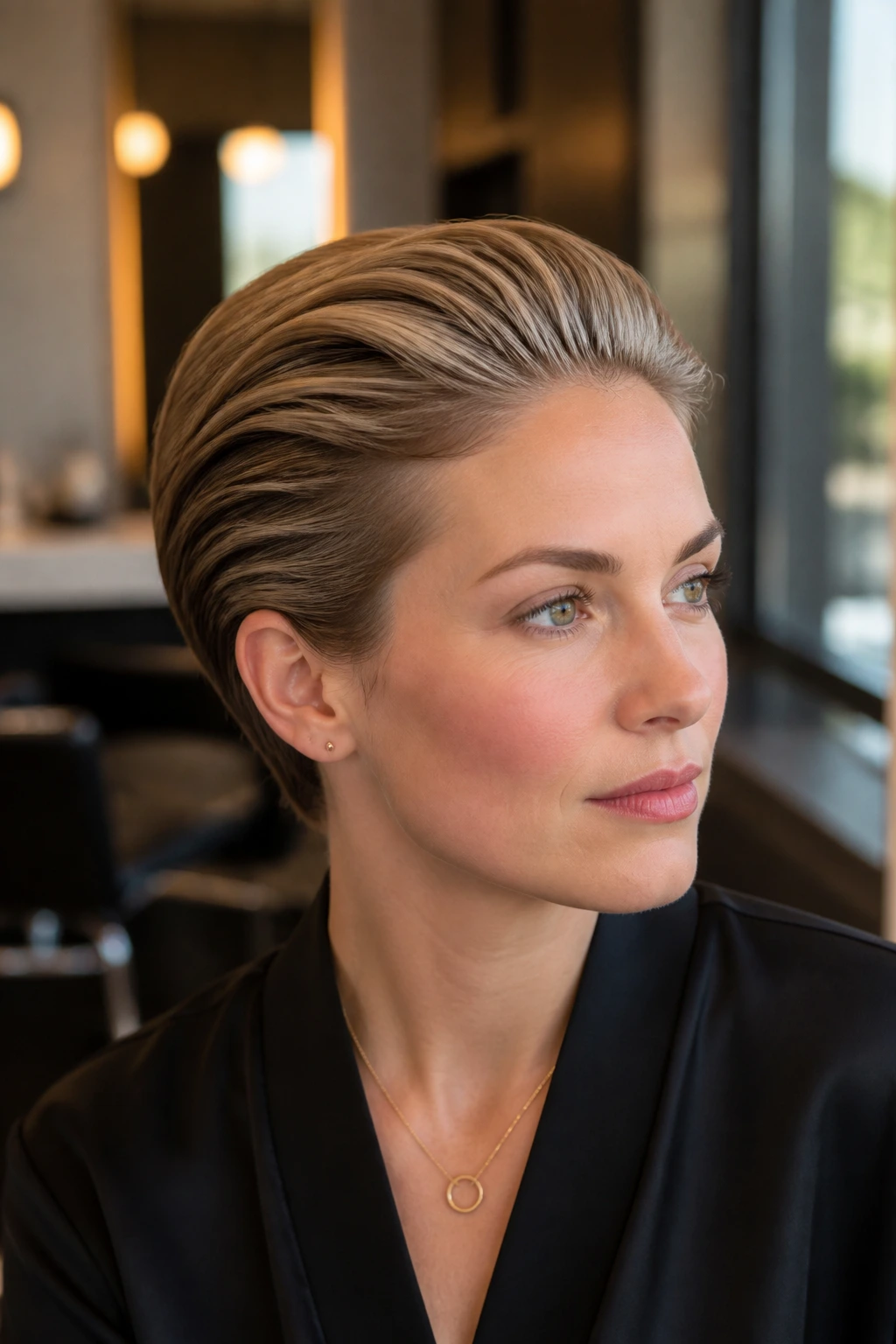
Slicked-back short hair lives or dies by the shine line. Babylights help more than people think, because the lighter threads catch the gloss and break up the shape in a way that reads deliberate instead of wet-from-the-gym.
The trick is to keep the lightest pieces near the front and crown, then let the sides stay slightly deeper. That contrast gives the style structure even when everything is brushed back. Use a light gel or cream, not a heavy wax, or the light pieces will sink into the scalp and disappear.
- Best for: strong brows, statement earrings, and nights when you want the hair out of your face
- Tone choice: neutral beige or light caramel; avoid stark platinum
- Finish: glossy, not greasy
- Watch out for: too much product at the roots, which can make the highlights look muddy
This one has edge, but it still flatters. The babylights keep the face from going flat under all that slicked-back polish.
21. Curly Pixie With Warm Vanilla Highlights
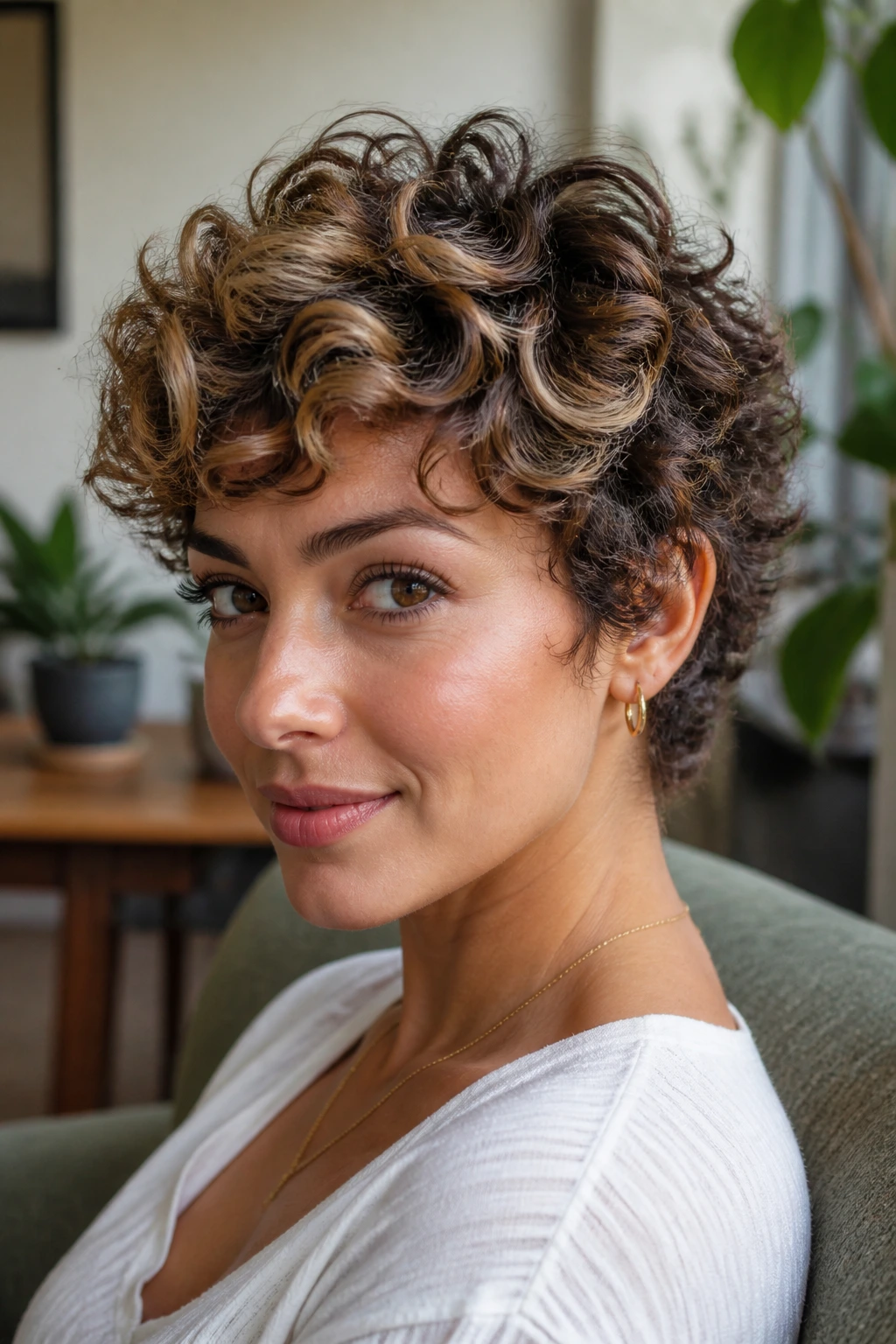
Curly pixies can be tiny works of engineering. Warm vanilla babylights help the curls separate visually, so the shape doesn’t become one dense little cloud.
The best placement is right at the bend of the curl and near the top where the light actually lands. That gives the texture a soft halo without bleaching out the whole curl pattern. Warm vanilla is especially nice if your skin likes a little brightness around the eyes and cheeks.
Styling Check
Use a curl cream with enough slip to define the curls, then diffuse on low heat until the hair is mostly dry. Stop before it gets crisp. The whole point is to keep the curl springy enough that the highlights move with it.
It’s a small style, but it does a lot. The vanilla pieces make the face look less shadowed, and the pixie keeps the whole thing neat.
22. Sleek Asymmetrical Bob With Light-Catching Ends
An asymmetrical bob already has built-in attitude. One side longer than the other gives the cut direction; babylights at the ends keep that line from feeling heavy.
The most flattering version keeps the color slightly brighter on the longer side and a touch deeper near the shorter side. That creates movement without looking striped. It also frames the face in a way that can make the cheekbones pop a little, which is never a bad thing when you’re working with short hair.
This is a strong last pick because it’s polished but not boring. If you wear mostly clean, simple clothes, the cut does the talking. If you like a bolder wardrobe, it won’t fight it.
Why Babylights Change Short Hair More Than People Expect
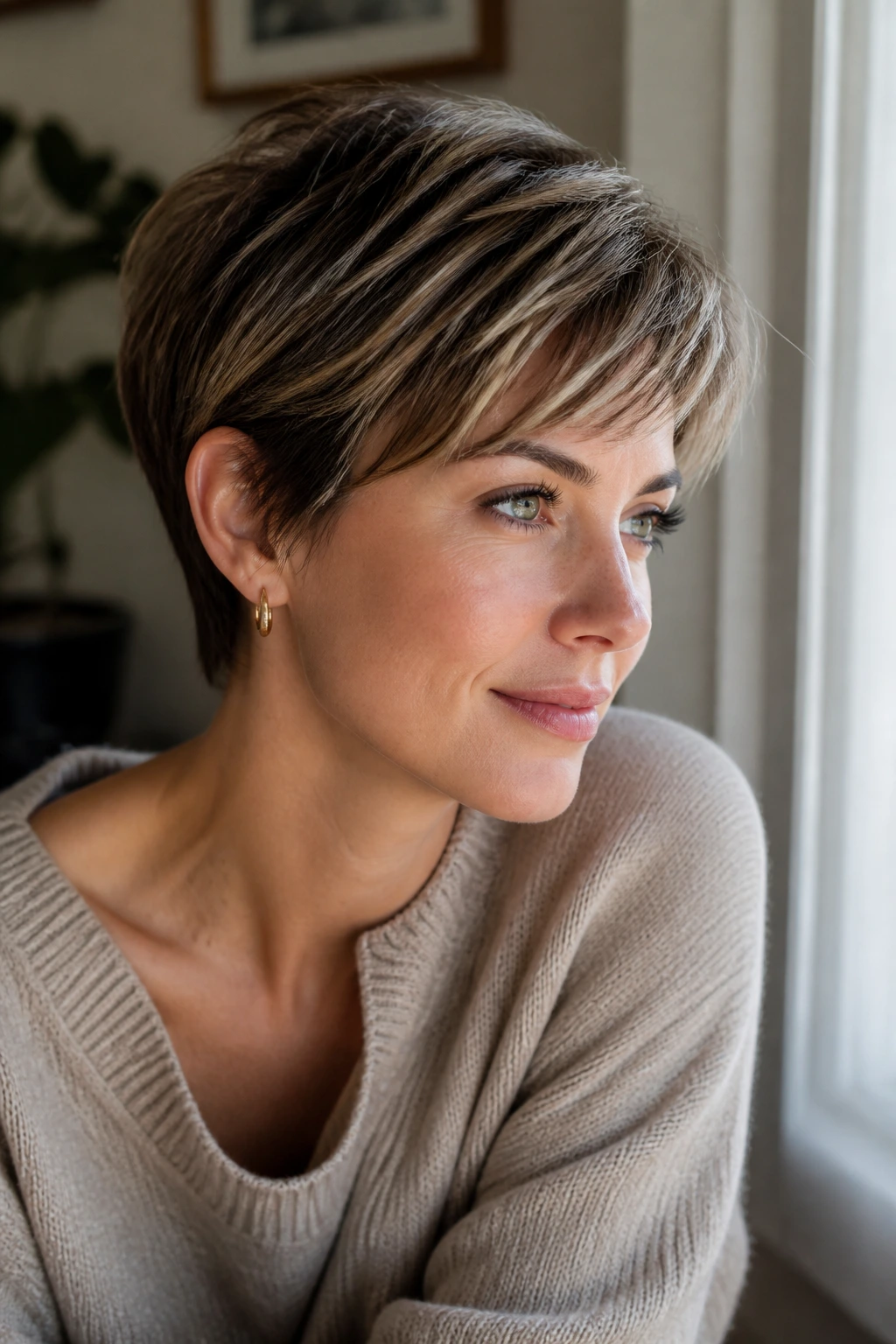
Short hair shows everything. The line of the cut, the placement of the part, the bend at the ends, the color around the temples. There isn’t much length to hide behind, which is why babylights can be such a useful tool. They let you create movement without turning the whole head into a block of brightness.
The best placement is usually a mix: a few micro-weaves at the part, some lighter strands near the face, and a little depth underneath so the cut still has shape. That last piece matters more than people think. Without a darker base or lowlight somewhere in the underlayer, short hair can get dusty and one-note fast, especially under indoor light.
And there’s the complexion piece, which gets ignored in a lot of hair advice. Short hair sits close to the face. A flat color can make skin look tired or red; a thoughtful babylight can do the opposite. It doesn’t need to scream. It just needs to give the face some bounce.
Tools and Products That Make These Looks Easier to Wear
-
Tail comb: Useful for parting, teasing a little lift into the crown, and separating babylights when you style.
-
Color-safe shampoo: A sulfate-free formula helps keep beige, caramel, and copper tones from washing out too fast.
-
Lightweight conditioner: Short hair does not need a heavy mask every wash; use enough slip to soften the ends, then rinse clean.
-
Heat protectant spray: Essential if you use a flat iron, curling wand, or blow-dryer on a regular basis.
-
Texturizing spray: Gives short cuts some grip so the babylights show through the movement instead of sitting under a slick surface.
-
Root-lift mousse or foam: Best for pixies, bixies, and fine bobs that need crown height without stiffness.
-
1-inch curling iron or flat iron: Good for a soft bend in bobs and lobs; smaller barrels usually make short hair look more natural.
-
Diffuser: A must for curls and shags if you want definition instead of frizz.
-
Gloss or toner: Keeps blonde, beige, or copper babylights from turning dull or brassy between appointments.
-
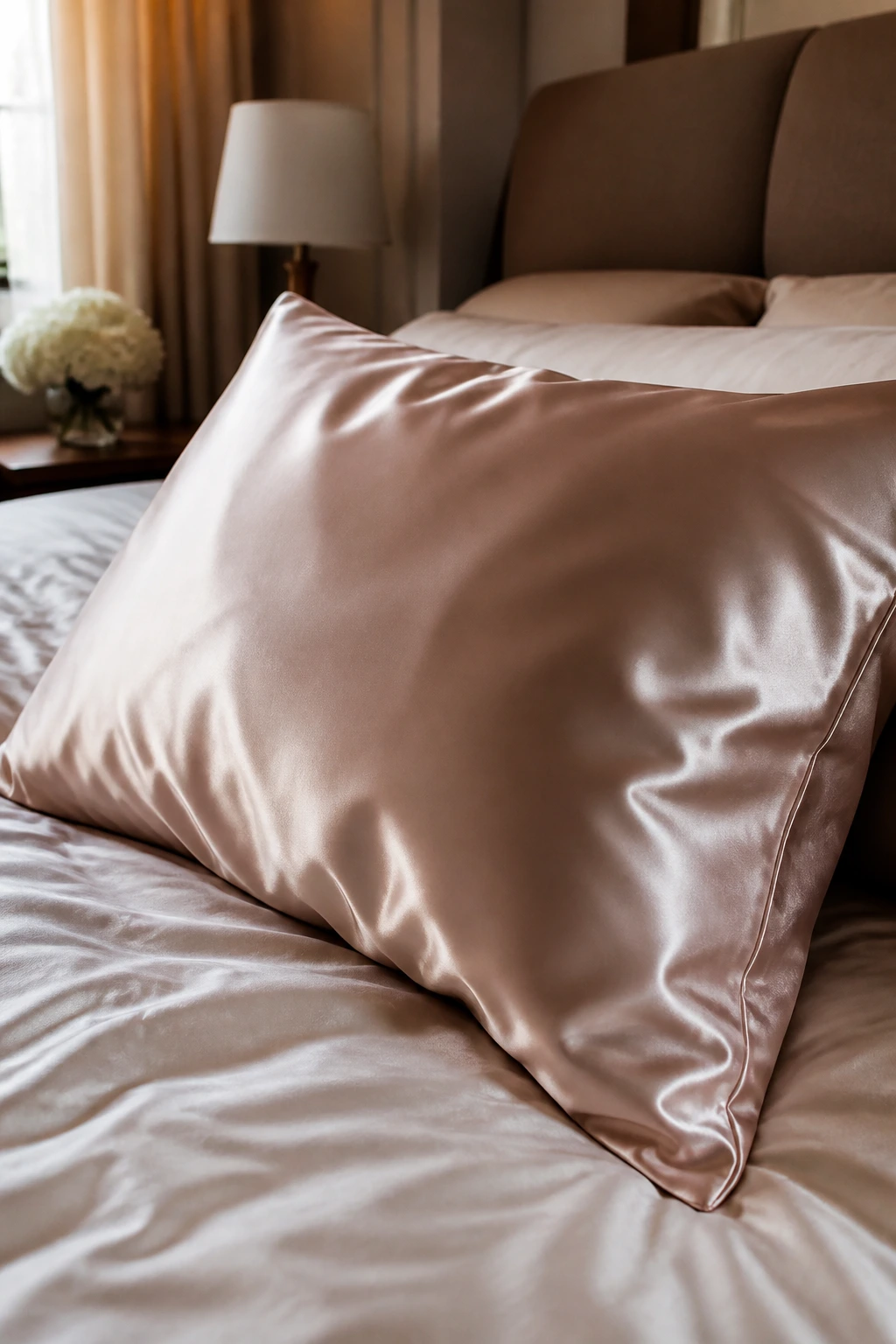
Satin pillowcase: Helps short hair stay smoother overnight, which matters more than it sounds when the cut is cropped close to the face.
How to Choose the Right Tone and Placement for Your Skin
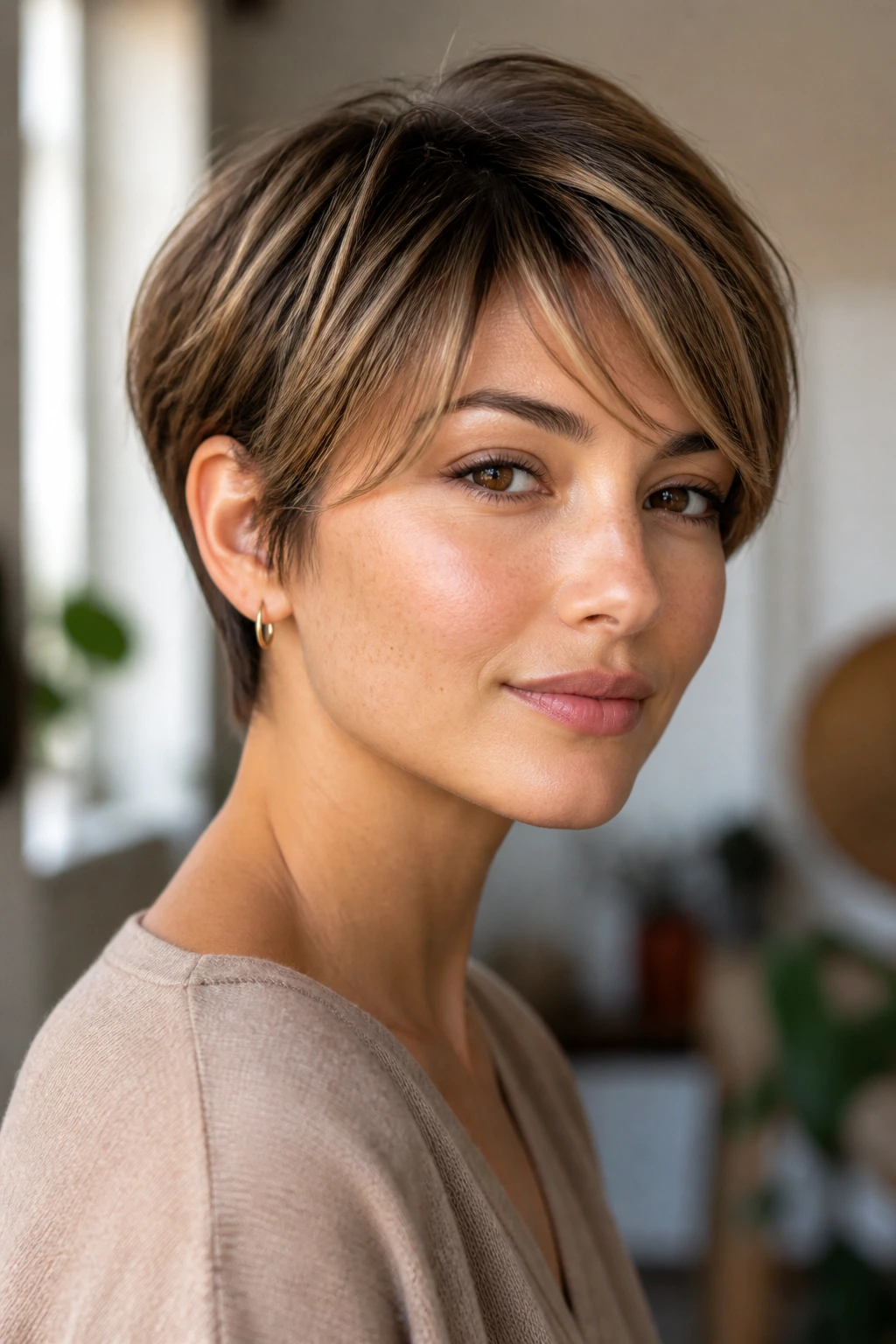
The color choice does more than most people think. A short cut sits right next to your face, so the babylights need to flatter your skin tone instead of sitting there like a separate object. If your skin has pink or rosy undertones, beige, pearl, and mushroom shades usually look calmer than icy blonde. If your skin runs golden or olive, caramel, honey, and toasted almond tend to blend more naturally. Deep skin often looks especially rich with caramel, cinnamon, or chestnut babylights that don’t climb too high toward white.
Placement matters just as much. The more angular the haircut, the more the lighter pieces should soften the hairline and temples. The more rounded the haircut, the more you can keep the brightness concentrated near the crown and front. On very short cuts, ask for micro-weaves or baby slices no wider than a few millimeters; on bobs and lobs, the pieces can be a little more open because there’s more length to blur them.
Bring photos, but bring the right ones. A long-hair balayage photo is not the same thing as a pixie or bob reference. You want pictures with the same length, similar texture, and roughly the same parting. That saves everybody time and keeps the color from landing in the wrong place.
How to Style These Looks for Work, Weekends, and Dressier Days
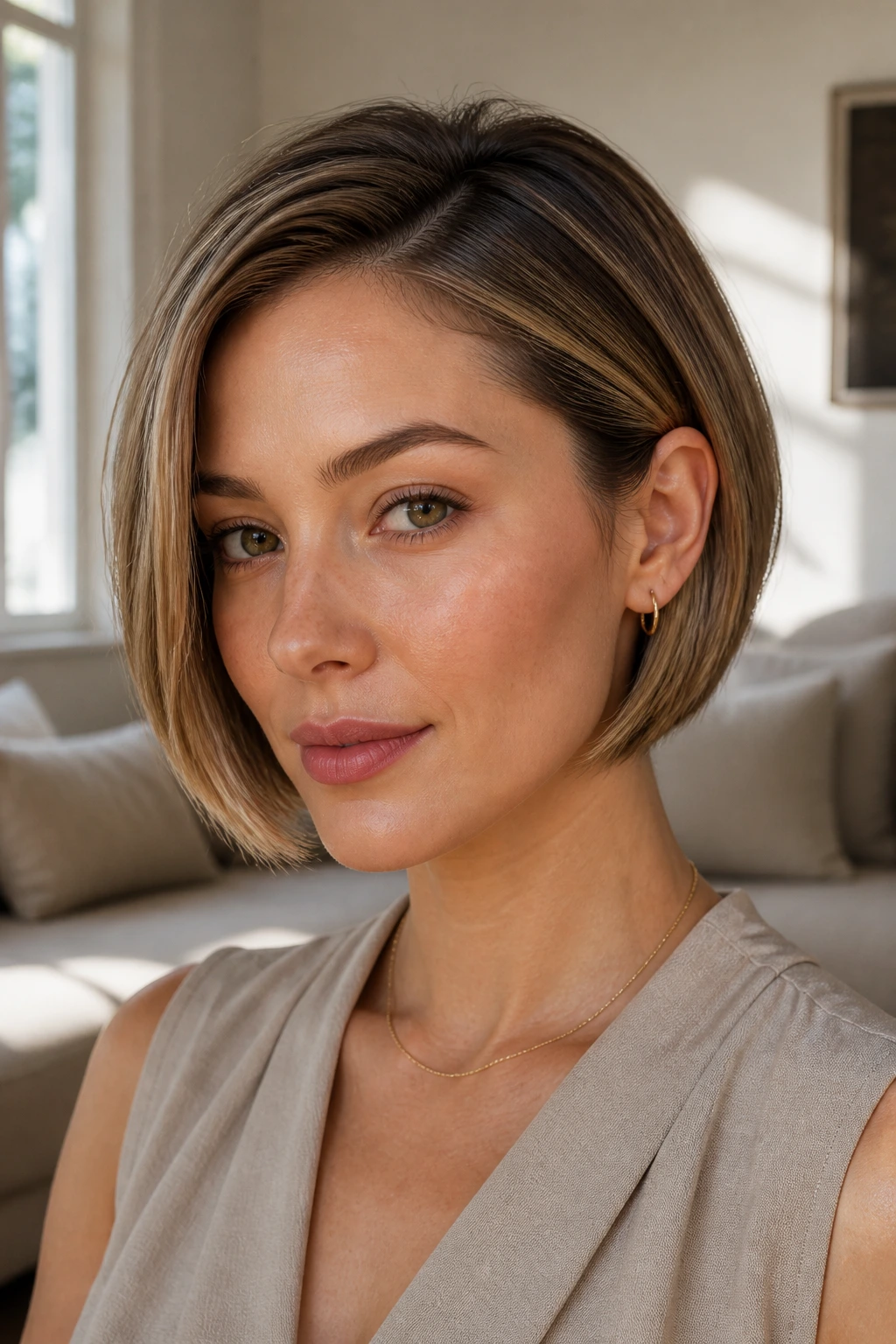
Presentation: Keep the line clean and the color visible. On the smooth bobs, tuck one side behind the ear; on the pixies, push the fringe slightly off-center so the babylights catch near the eye and temple.
Accompaniments: Small hoops, thin metal frames, and neckline-revealing tops tend to make short hair and babylights look finished without trying too hard. If the cut is edgy, pair it with sharper clothing. If the cut is soft, a crewneck or cardigan keeps the whole thing from feeling overstyled.
Balance: Let the cut do the heavy lifting for your face shape. Round faces usually benefit from a touch of height at the crown; longer faces often look better when the sides are a little fuller and the light sits more around the cheeks. Square jaws soften nicely with lighter ribbons near the front.
Finish: Use matte paste when the style needs texture, light cream when the hair should move softly, and a satin serum only on the ends when you want polish. Too much shine near the roots can flatten babylights fast. A small amount is enough. Really.
Small Styling Moves That Make the Color Read Better
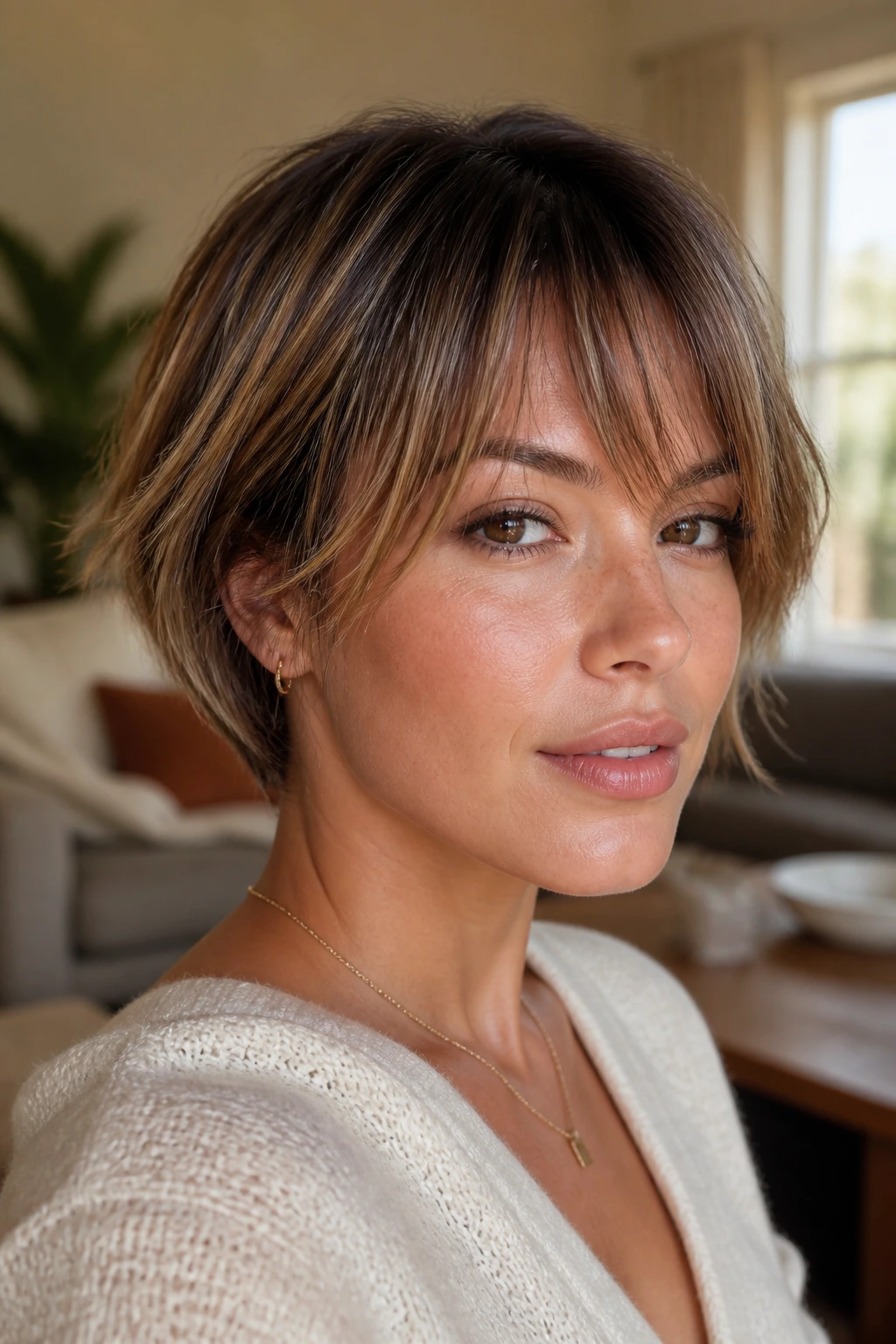
Gloss Boost: A clear or lightly tinted gloss every 4 to 8 weeks keeps babylights from going chalky, especially on beige and pearl tones. If the color starts looking dull before then, the gloss is usually the fix, not another round of lightening.
Texture Trick: Babylights show more clearly when the hair has bend. A quick bend with a flat iron, a rough blow-dry, or a finger wave through the fringe gives the lighter pieces something to catch onto.
Root Depth: Don’t flatten the base color out of fear. A little shadow at the root makes the lighter pieces look more expensive and keeps short hair from floating away from the face.
Make-It-Yours: If your hair is fine, use foam and a light spray. If it’s thick, use a cream with hold. If it’s curly, work with the shape instead of fighting it. The babylights will sit differently on each texture, and that’s the point.
Common Mistakes That Flatten Short Hair or Age the Color
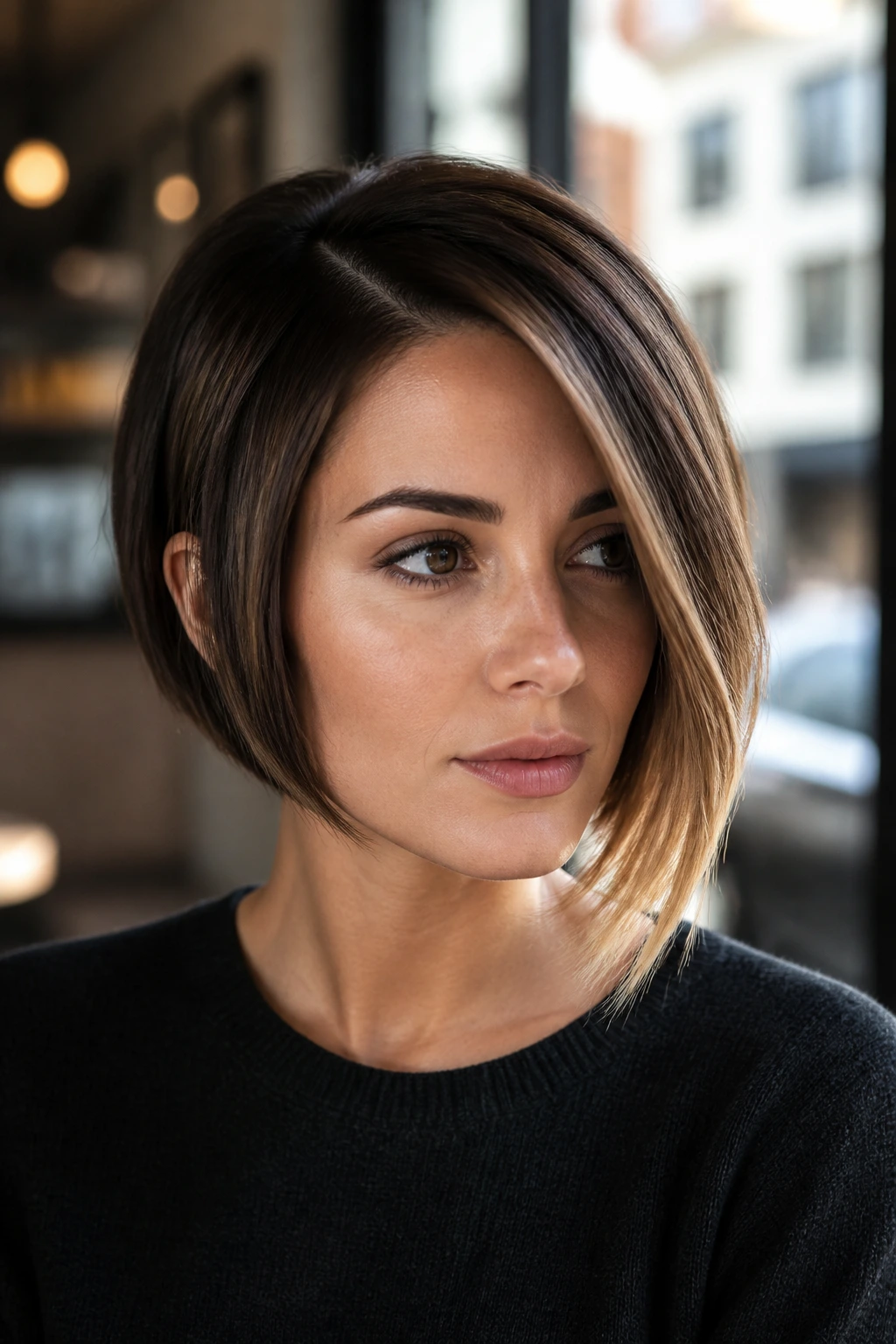
Going too chunky: Large highlight pieces on short hair can look stripy almost immediately. The fix is micro-weaves and soft placement near the hairline.
Lifting too light: Platinum babylights on a short crop can be harsh and dry-looking, especially if the base is dark. A level or two lighter often looks richer and more believable.
Skipping lowlights: Without some depth underneath, short hair can turn into one flat sheet of brightness. A little lowlight gives the cut shape and keeps it from looking overdone.
Ignoring the haircut shape: Color can’t rescue a cut that sits wrong. If the bob is too boxy or the pixie lacks texture, the babylights will just underline the problem.
Overusing purple shampoo: On blonde or beige short hair, too much purple can make the color dull, smoky, or faintly violet. Use it sparingly and follow with a good conditioner.
Letting the line grow too long: Short styles lose their shape faster than long hair. If the cut is past its trim window, the babylights can start to look misplaced instead of soft.
Variations and Adaptations to Try
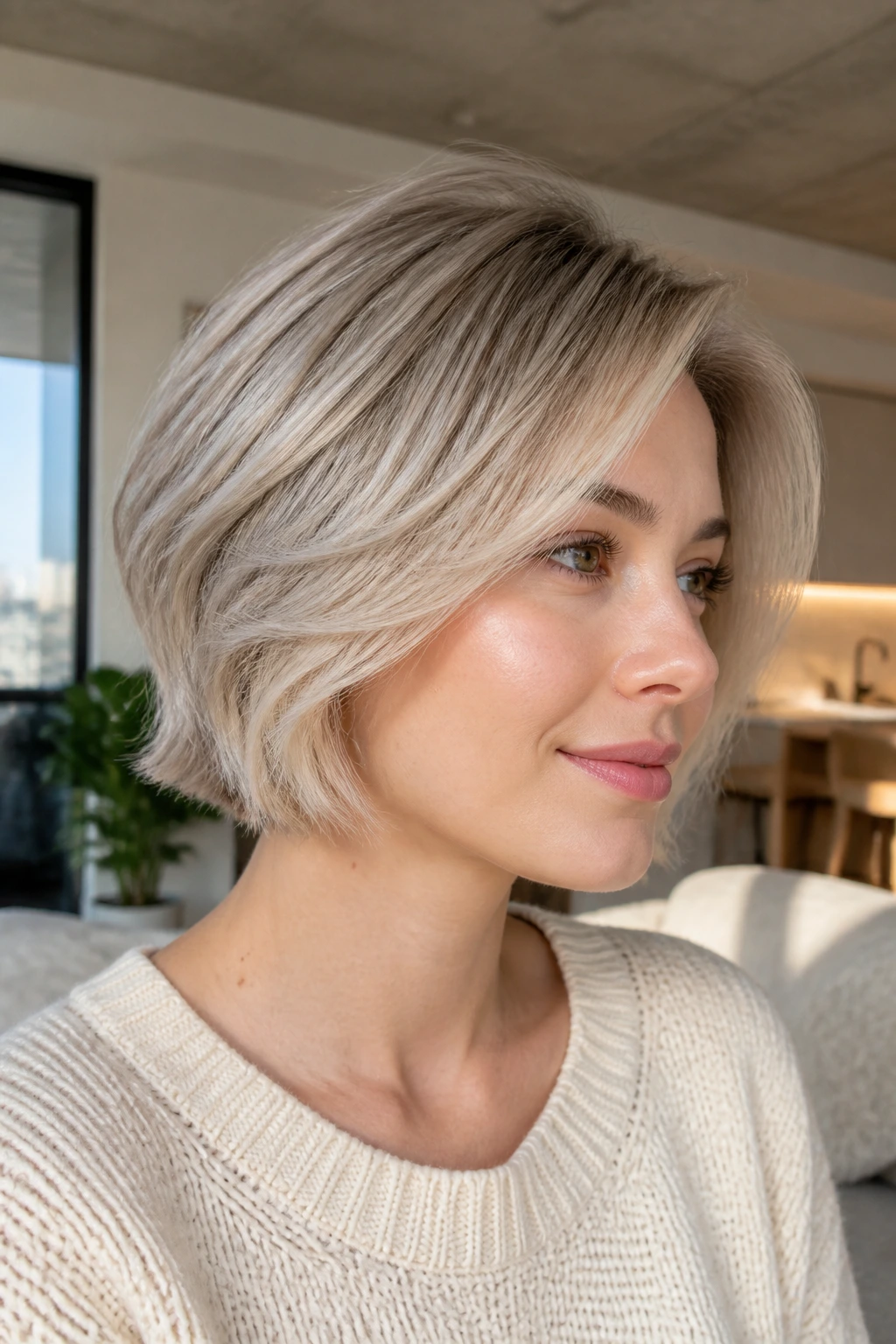
Cool Pearl Edit: Keep the base neutral and the babylights pearl-beige, then finish with a soft, reflective gloss. This works best when you want a clean, polished look that doesn’t lean yellow.
Honey Toast Edit: Shift the light pieces warmer and slightly deeper, especially around the fringe and cheeks. It’s a good move for medium skin tones or anyone who wants the color to warm the face rather than brighten it.
Copper Thread Edit: Replace blonde ribbons with muted copper and apricot strands. The effect is gentler than full red and gives short hair a little energy without pushing it into loud territory.
Curly Halo Edit: Focus the babylights at the curl bend and crown, then leave the underlayer darker. This keeps the texture springy and gives the face a soft glow.
Low-Maintenance Root-Shadow Edit: Leave the base a little deeper and ask for babylights only where the eye naturally lands: temples, part, and top layers. This is the version to choose if you want fewer salon visits and a softer grow-out.
Keeping Babylights Fresh Without Overworking Short Hair
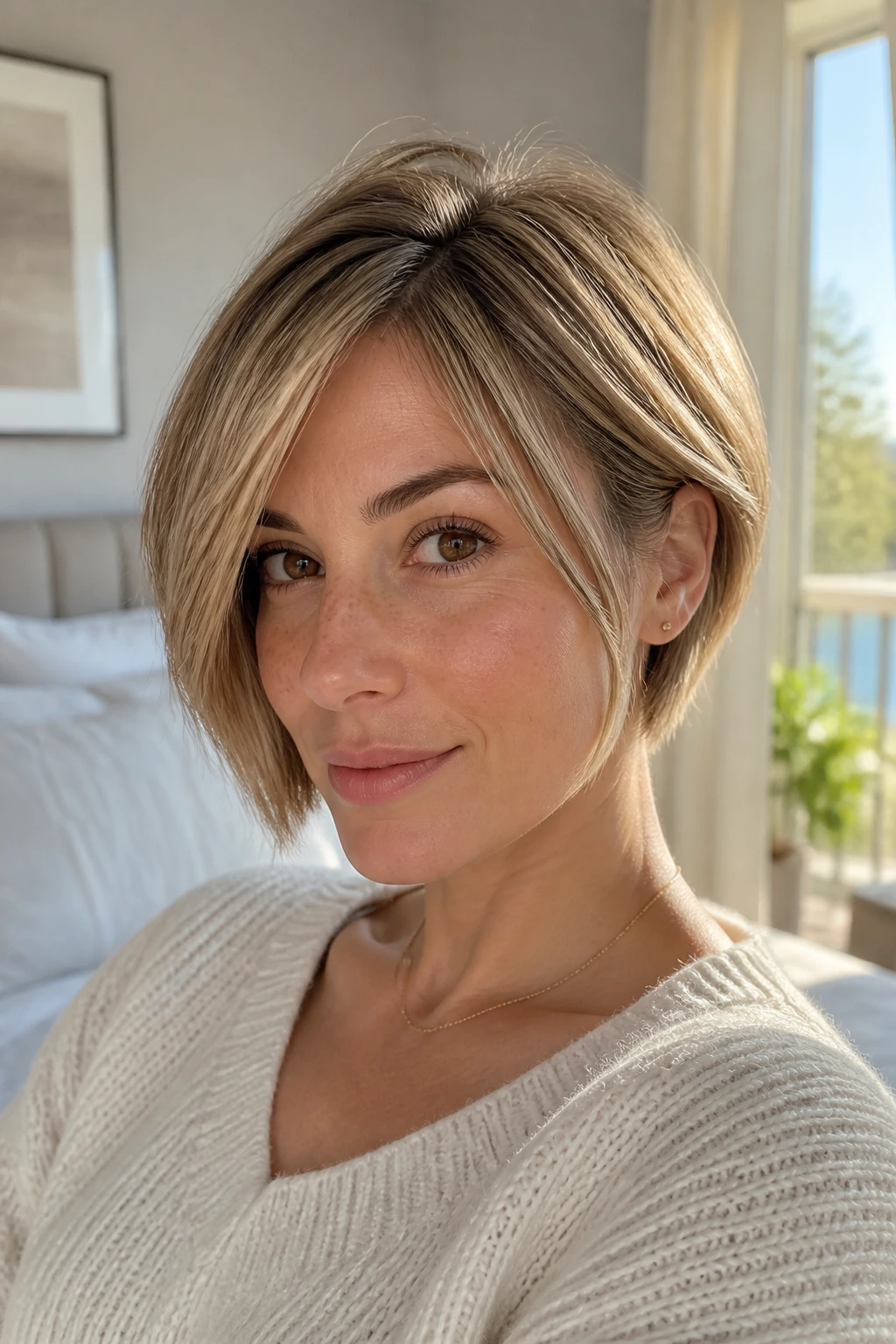
Short hair needs less product, but it does need more regular shape checks. A pixie usually wants a trim every 4 to 6 weeks. Bobs and shags can go a little longer, around 6 to 8 weeks, before the outline starts to lose its clean line. If your color is very light, plan on a toner or gloss refresh every 4 to 8 weeks depending on how fast it shifts warmth.
Wash 2 to 3 times a week if you can, and keep the shampoo gentle. Overwashing fades babylights faster than most people expect, especially on porous ends. If you have curls, a co-wash or a very soft cleanser can help maintain slip. If your hair is fine and gets oily at the root, dry shampoo at the part works better than loading the whole head with powder.
At night, a satin pillowcase or sleep bonnet helps the color look smoother in the morning. Short hair bends badly against cotton. That’s not a moral failing. It’s fabric friction. If the style is particularly sleek, wrap the front section loosely or pin one side back so the shape survives the night.
Frequently Asked Questions
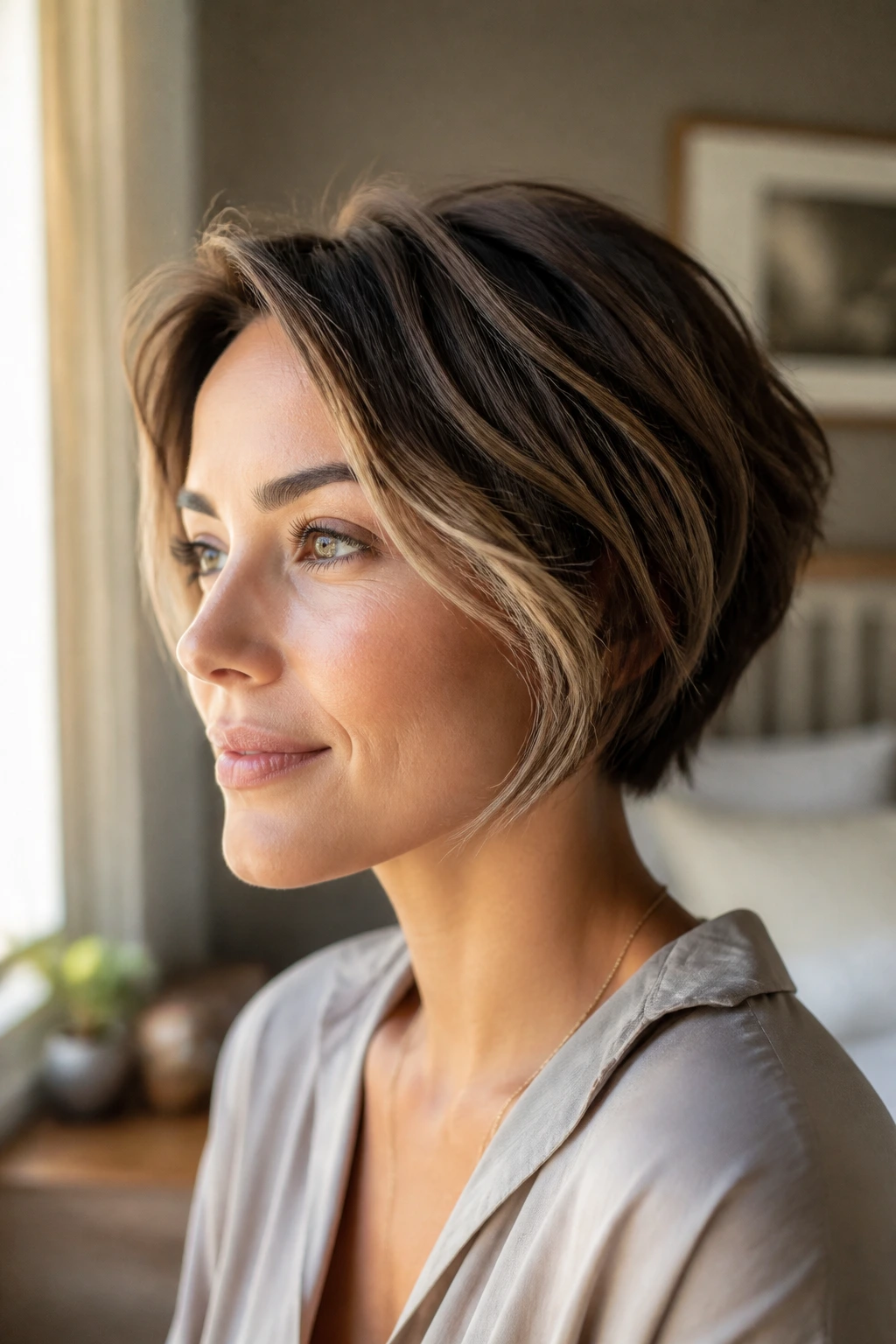
Do babylights work better on short hair than regular highlights?
Often, yes. Short hair has less length to hide chunky color lines, so finer babylights look softer and more natural. Regular highlights can work too, but they need careful placement or they start reading loud very fast.
What short haircut shows babylights best?
Bobs, bixies, and cropped shags usually show them best because they have enough movement for the lighter pieces to flash through. Pixies can look beautiful too, but the color has to be placed with more precision since there’s less room to blend.
Can babylights cover gray on short hair?
They can soften gray, blend it, and make it look intentional. They won’t fully erase a strong gray pattern unless the stylist weaves them with enough density, so if gray coverage is the goal, you may need babylights plus a root color or lowlight.
How do I keep babylights from turning brassy?
Use a color-safe shampoo, tone the hair on schedule, and avoid overexposing it to hot styling without protectant. If the color is blonde or beige, a small amount of purple shampoo once a week can help, but too much will dull the finish.
Will babylights damage short hair more than other color?
Not automatically. The smaller sections can actually be gentler than a full-head bleach job, but short hair often gets trimmed less for damage control because there’s less to cut off. If the hair is dry or porous, ask for a lower lift and a bond-building service.
Can I get babylights if my hair is very dark?
Yes, but the best result is usually a controlled lift to caramel, toasted almond, or soft beige rather than a huge jump to pale blonde. On dark hair, a little brightness around the face usually looks richer than trying to force an icy result.
What if my short hair is curly or coily?
Babylights can be gorgeous on curls, but the placement has to respect shrinkage. Ask for highlights that are painted where the curl opens and sits, not just where it looks visible when wet.
Can I do babylights at home on short hair?
You can try, but short hair gives you very little margin for error. If the sections are uneven, the pattern shows immediately. A salon usually gives a cleaner blend, especially around the hairline and nape where mistakes are easiest to spot.
How often should I trim short hair with babylights?
Pixies usually need trims every 4 to 6 weeks, bobs around 6 to 8 weeks, and longer short styles can often go 8 to 10 weeks. If the shape starts collapsing, the color will look less flattering even if it still looks fresh.
The Softest Way to Wear Short Hair
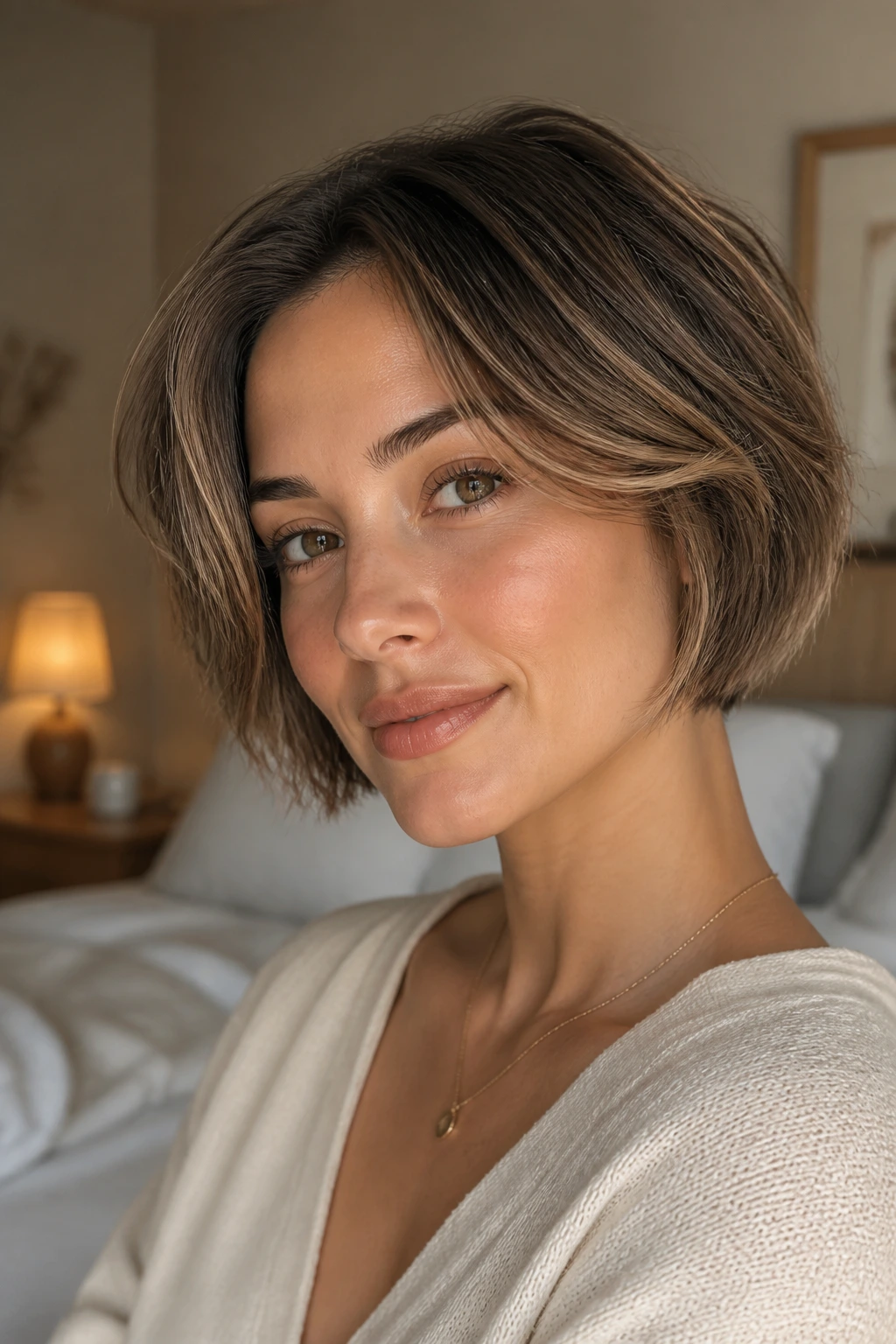
Short hair does not need to be loud to be memorable. In fact, the best versions are often the quiet ones: a little light at the temple, a softer edge near the cheek, a root shadow that keeps everything grounded. Babylights do that job better than chunky streaks because they work with the cut instead of fighting it.
If you want a real shortcut, start with the shape first and the color second. Pick the bob, pixie, bixie, or crop that suits your face and texture, then use babylights to brighten the right spots. That order matters. It keeps the look from sliding into costume territory.
And if you remember only one detail, make it this: on short hair, the smallest ribbons often carry the most weight. Get the placement right, keep the tone soft, and the whole style starts doing that flattering little thing where your skin looks fresher before anyone can say why.