



Short blonde hairstyles for curly hair with lowlights live or die on shadow. A pale, one-note blonde can make curls puff into one soft blur, especially once the cut gets past the ears and starts shrinking on its own terms. Add a little depth in the right places and the whole shape changes — the curls separate, the outline reads cleaner, and the blonde stops looking washed out by noon.
That depth matters even more when the hair is short. The nape shows. The temples show. The crown shows every bend and every frizz halo, which is why lowlights are not a side note here; they’re part of the architecture. A caramel ribbon under the top layer, a smoky strand near the part, or a beige shadow tucked into the interior can do more for a cut than another round of bright blonde ever will.
There’s also the practical side, which people skip too fast. Short curly hair asks for shape, not just length. Blonde asks for tone maintenance. Lowlights help both problems at once, because they give the eye a place to rest and make the grow-out look deliberate instead of accidental. That’s the quiet trick. Not flashy. Just smart.
Why the Right Shadow Makes Short Blonde Curls Look Intentional
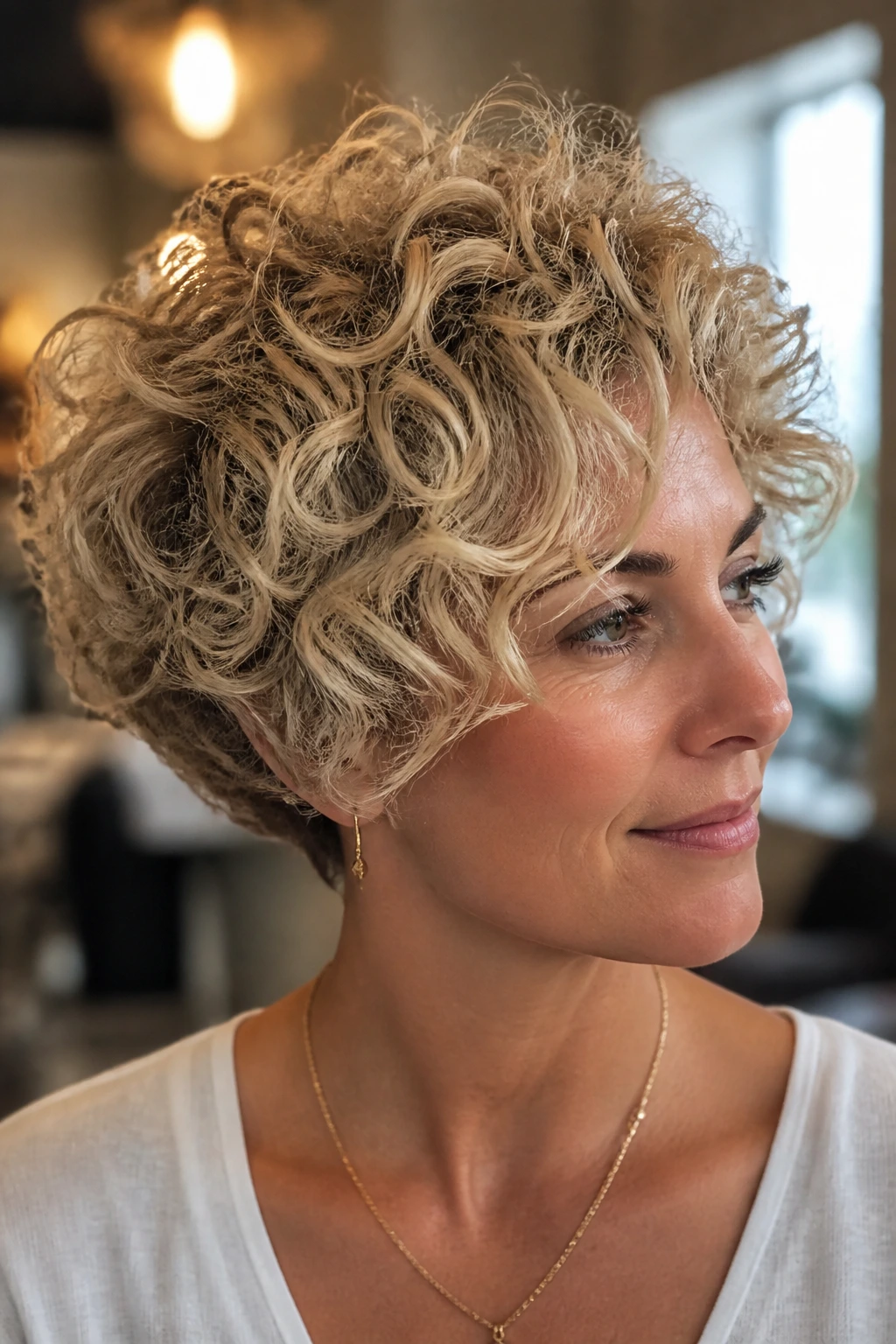
Depth keeps the curl pattern readable. When every strand is the same pale blonde, curls can collapse into a single fluffy mass. A few darker ribbons underneath separate the coils and make the cut look carved instead of puffy.
Short hair shows bad color placement fast. On a bob or pixie, the nape, part line, and temple pieces are all visible. If the lowlights sit too high, the style can look striped; if they’re tucked into the interior, the blonde stays bright and the silhouette stays clean.
Grow-out looks calmer with lowlights. A darker root shadow and interior lowlight pieces soften the line between fresh color and regrowth. That matters a lot on short cuts, where an inch of new growth can change the whole mood.
Curl shrinkage makes placement more important than people expect. Curls jump up after drying, which means the color you see when hair is wet is not the color you’ll see in real life. Interior shadow, not surface stripes, usually gives the best result.
The right lowlight shade does more than darken. A caramel or beige-brown lowlight can warm up platinum pieces, while ash or mushroom tones can cool down brass. Tiny shift, big difference.
1. Chin-Length Curly Bob with Caramel Lowlights
This is the cut that makes a lot of curly-haired people relax for the first time in the chair. Chin length gives the curls enough room to spring, but not so much that they drag the face downward, and the caramel lowlights keep the blonde from reading flat around the sides. The shape lands right where the jaw wants structure, which is why this bob works on curls that tend to puff out near the ears.
Ask for the lowlights to sit mostly underneath the top canopy and around the back half of the head. That way the outer curls stay bright, while the hidden depth stops the whole bob from turning into one pale cloud.
Best for: 2C to 3A curls, especially if the hair gets bulky at the sides.
Styling note: Diffuse with the head tipped forward for lift at the crown, then flip back and finish with your fingers, not a brush.
2. Tapered Curly Pixie with Smoky Shadow Ribbons
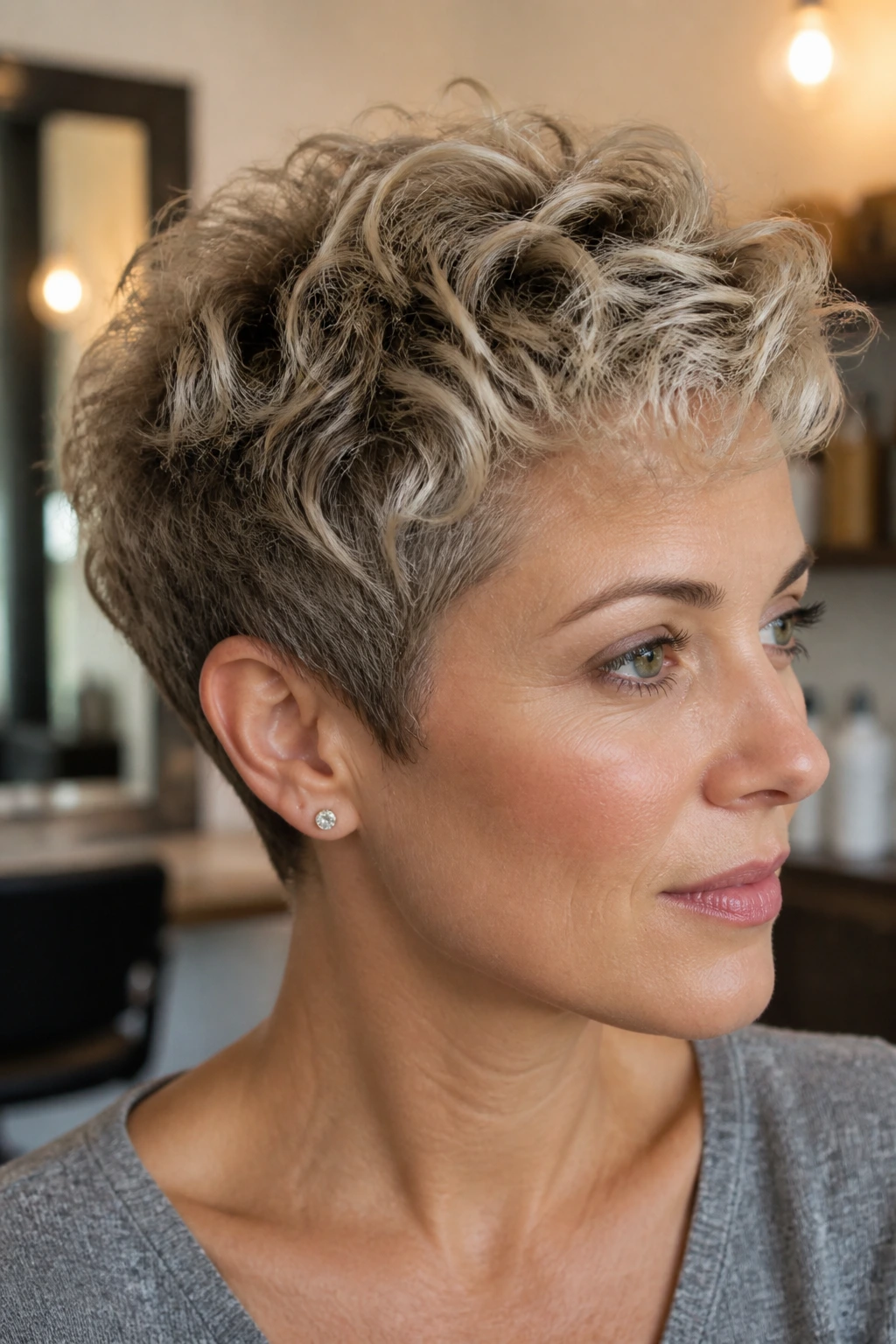
Can a pixie work on curls without looking fuzzy? Yes, but only if the shape is cut with intent. A tapered curly pixie keeps the sides and nape close while leaving enough length on top for a real curl pattern, and smoky lowlight ribbons stop the blonde from turning into a soft halo with no edge.
Why this one holds up
The taper gives the haircut a clean frame around the ears and neckline, which is where short curls often go bulky first. Smoky lowlights through the crown and temple area make the top look deeper, not darker, and that small bit of contrast keeps the cut from feeling too airy.
This one is especially good if you wear glasses or like earrings that need a little breathing room. The face stays visible. The curls stay lively. It’s a small cut, but it doesn’t disappear.
- Best for tighter curls: 3A to 3C patterns that want less length and more shape.
- Ask for: a dry finish on the outline so the nape does not creep up too high.
- Avoid: very chunky blonde panels on top; they can puff out fast.
3. Rounded French Bob with Beige Blonde Ends
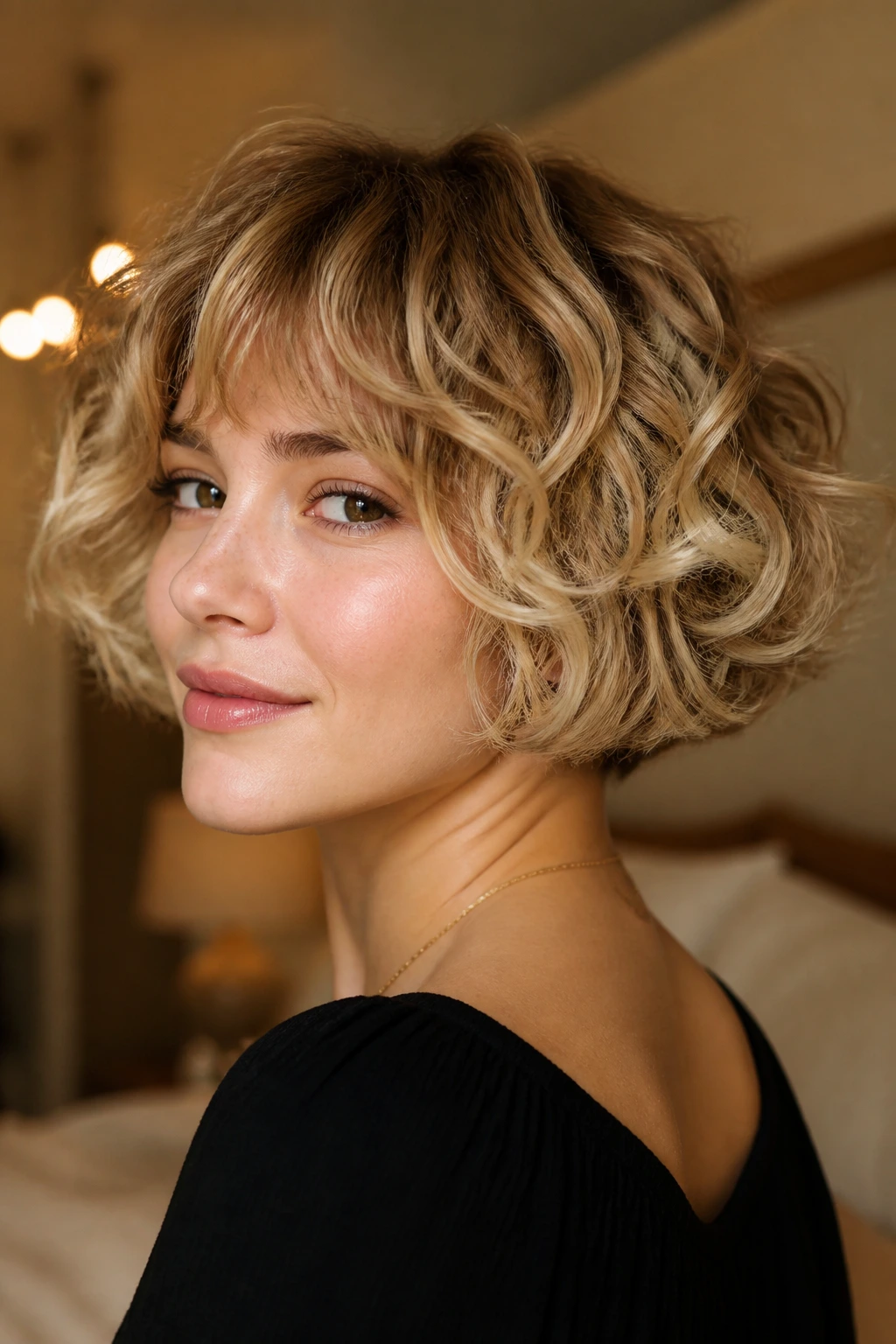
A rounded French bob on curls has a little old-world charm, but the version that works best keeps the line soft, not stiff. Beige blonde ends and interior lowlights give the cut a plush, almost velvet look, while the rounded perimeter keeps the width controlled at the cheeks.
The trick is in the silhouette. You want a curve that follows the head rather than flaring away from it. Beige lowlights beneath the top layer help the cut keep that shape, especially when the curls dry with extra spring at the sides.
This is the sort of bob that looks better on day two than people expect, as long as the ends are not razor-thin. Too much texturing and the French bob loses its clean outline. Keep the bottom edge full.
4. Shaggy Crop with Curtain Bangs and Buttery Lowlights
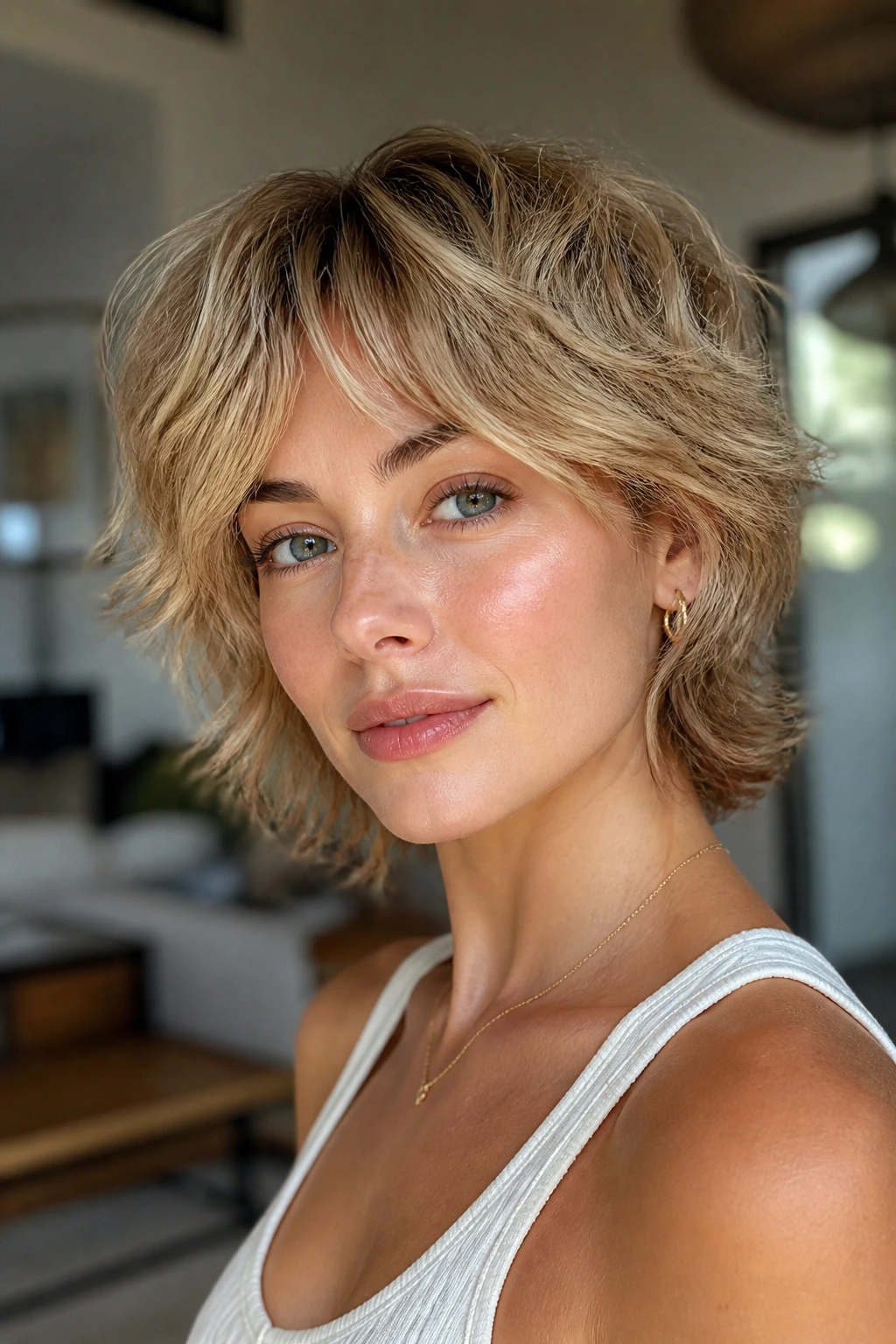
This is the easygoing one. A shaggy crop with curtain bangs lets curls fall where they want, and the buttery lowlights keep the whole cut from becoming a bright puff around the forehead. The bangs matter here; they break up the width of the face and give the blonde something to do besides shine.
The lowlights should live in the underneath layers and through the lower half of the bangs, not in heavy bands across the front. That keeps the fringe soft and stops it from reading dirty or stripey when it separates.
If your curls are looser at the front than in the back, this cut is a good fix. It lets the front pieces behave like face-framing fringe while the back stays lighter and more broken up. No helmet. No triangle. Just movement.
5. Asymmetrical Curly Bob with a Deep Side Part
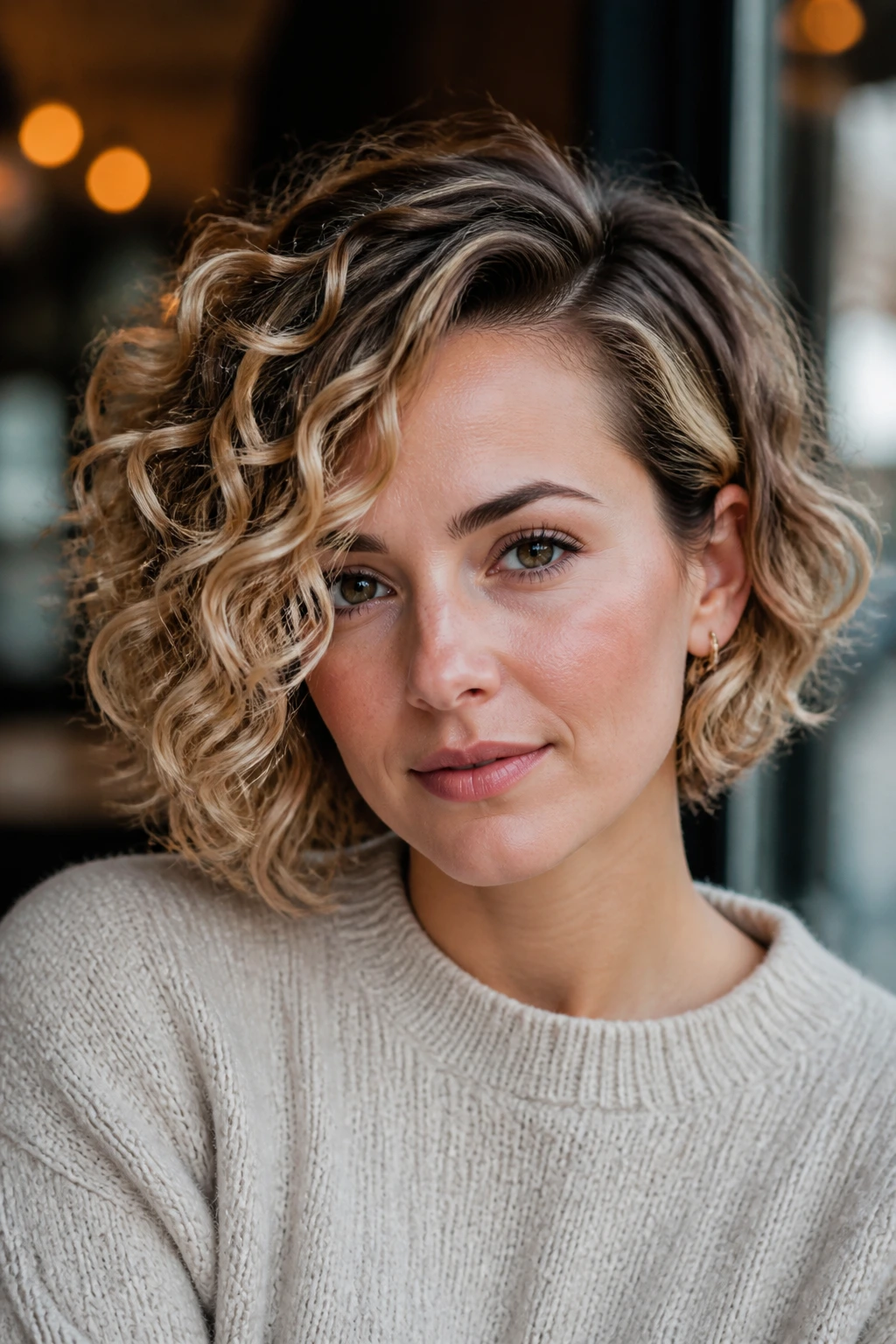
A slight asymmetry can rescue curls that feel too symmetrical and too round. One side sits a little longer, the deep side part adds lift at the root, and the lowlights can be concentrated near the part line to make the blonde look richer instead of overexposed.
This cut is especially good if one side of your hair falls flatter than the other. The longer side gives weight where you need it, while the shorter side opens the face. A few darker pieces tucked on the heavier side make the shape feel deliberate.
Don’t make the asymmetry too dramatic unless you want to commit to styling every day. A small difference — half an inch to an inch — is enough to make curls move.
6. Bixie Cut with Honey Blonde Halo
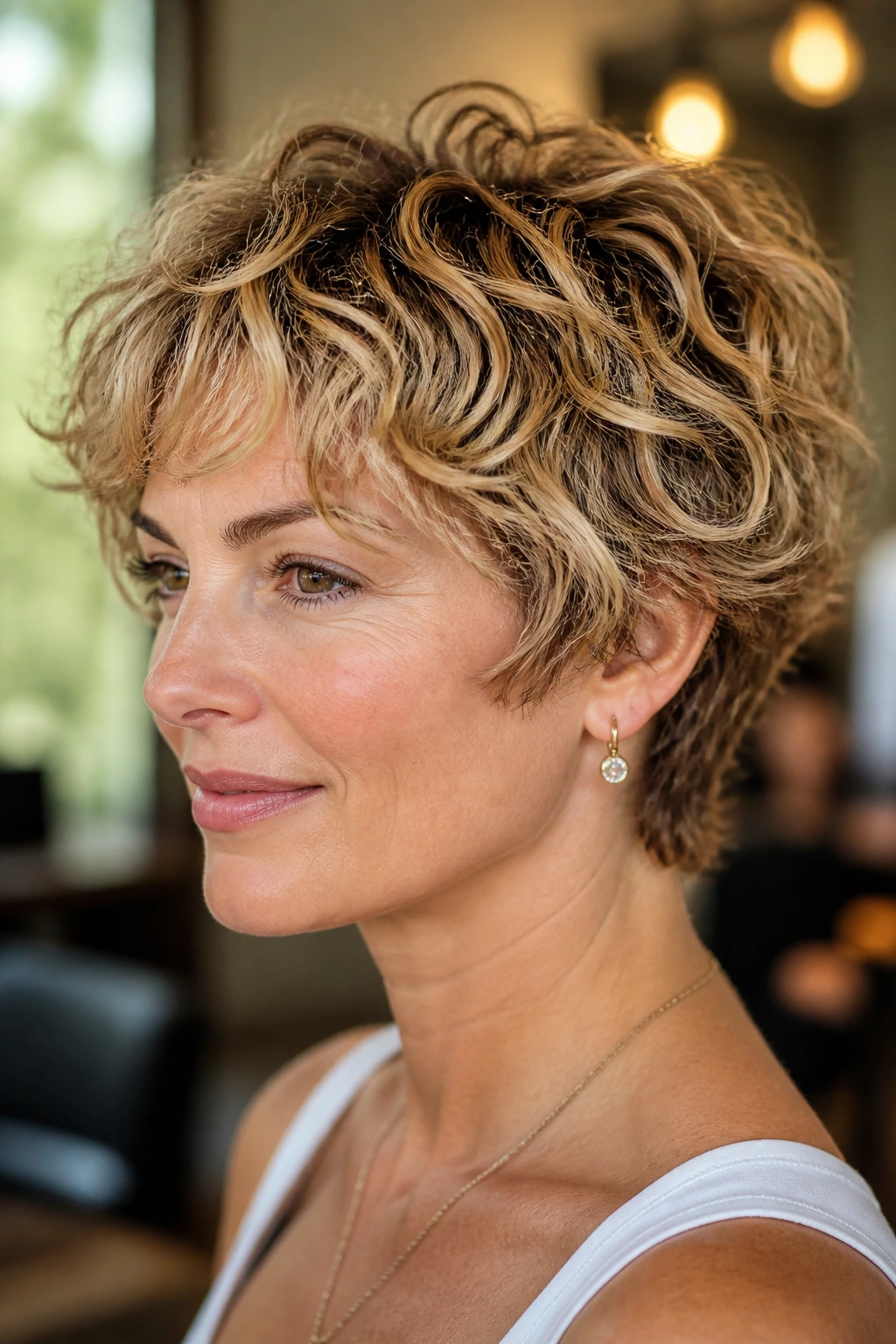
A bixie sits between a bob and a pixie, and that in-between space is exactly why it works so well on curly blonde hair. The crown keeps enough length for bounce, the back stays compact, and a honey blonde halo on the outer layer keeps the top bright while the interior lowlights prevent bulk.
The halo effect matters. If the blonde is everywhere, the shape can read puffy from a distance. If the honey blonde stays on the outside and the lowlights stay hidden, the cut looks layered even when the curls are dry and expanded.
This is a good pick for people who want short hair but not a full crop. It feels light without being severe. That’s a useful balance.
7. Stacked Curly Bob with Nape Tapering
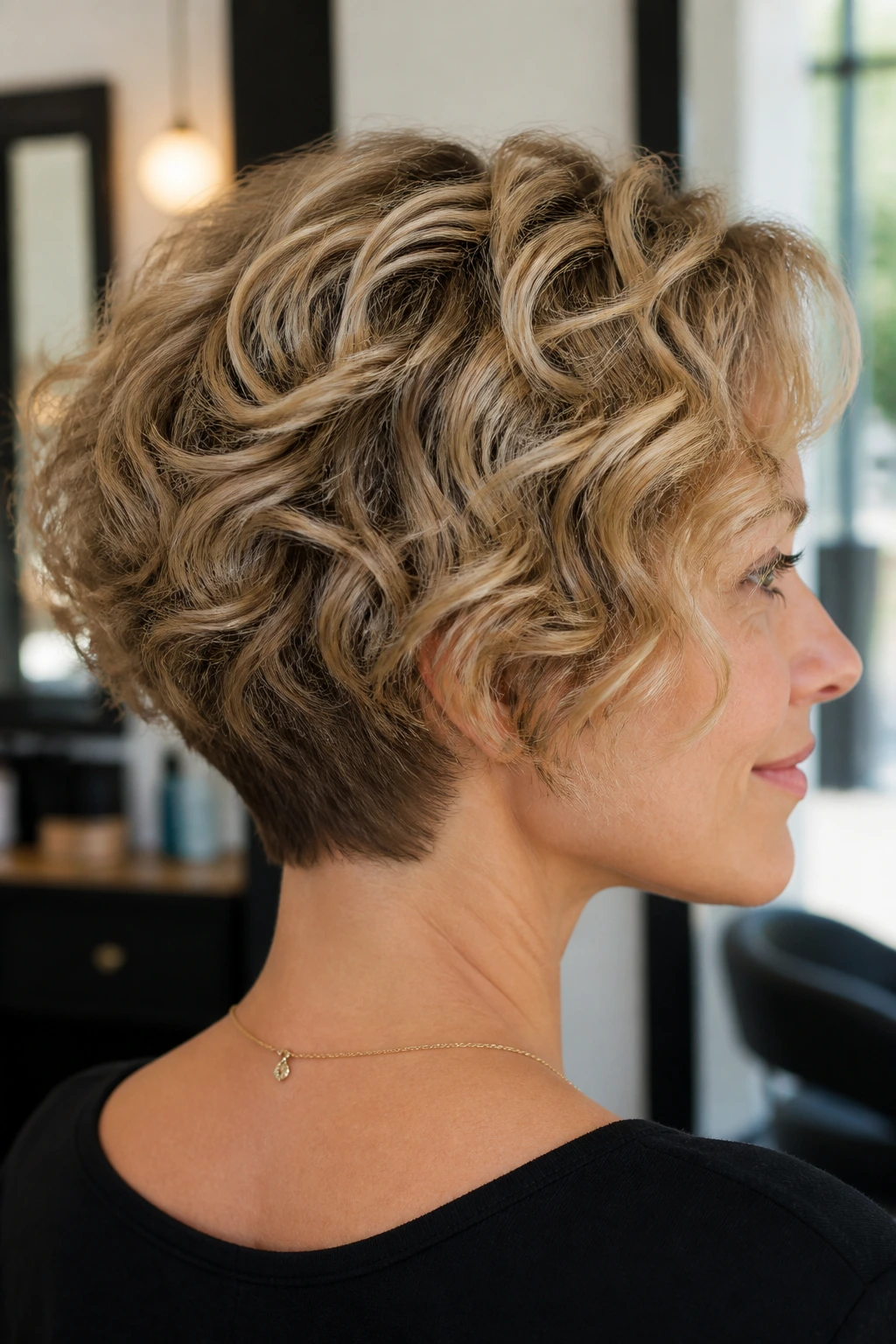
Stacked bobs are often too neat for curls, which is why the curly version has to be a little softer at the crown and cleaner at the neck. The stacking creates lift in the back, while nape tapering removes the heavy shelf that curly hair can build if it’s cut all one length.
Lowlights belong under the upper layers and around the base of the head. That hidden depth keeps the back from looking like one pale wall, especially when the hair is cut close to the neckline.
A stacked bob is not subtle. It’s a shape haircut. That’s the appeal. If you like seeing the back of your head look as intentional as the front, this is the one.
8. Soft Curly Mullet with Ash Blonde Top Layers
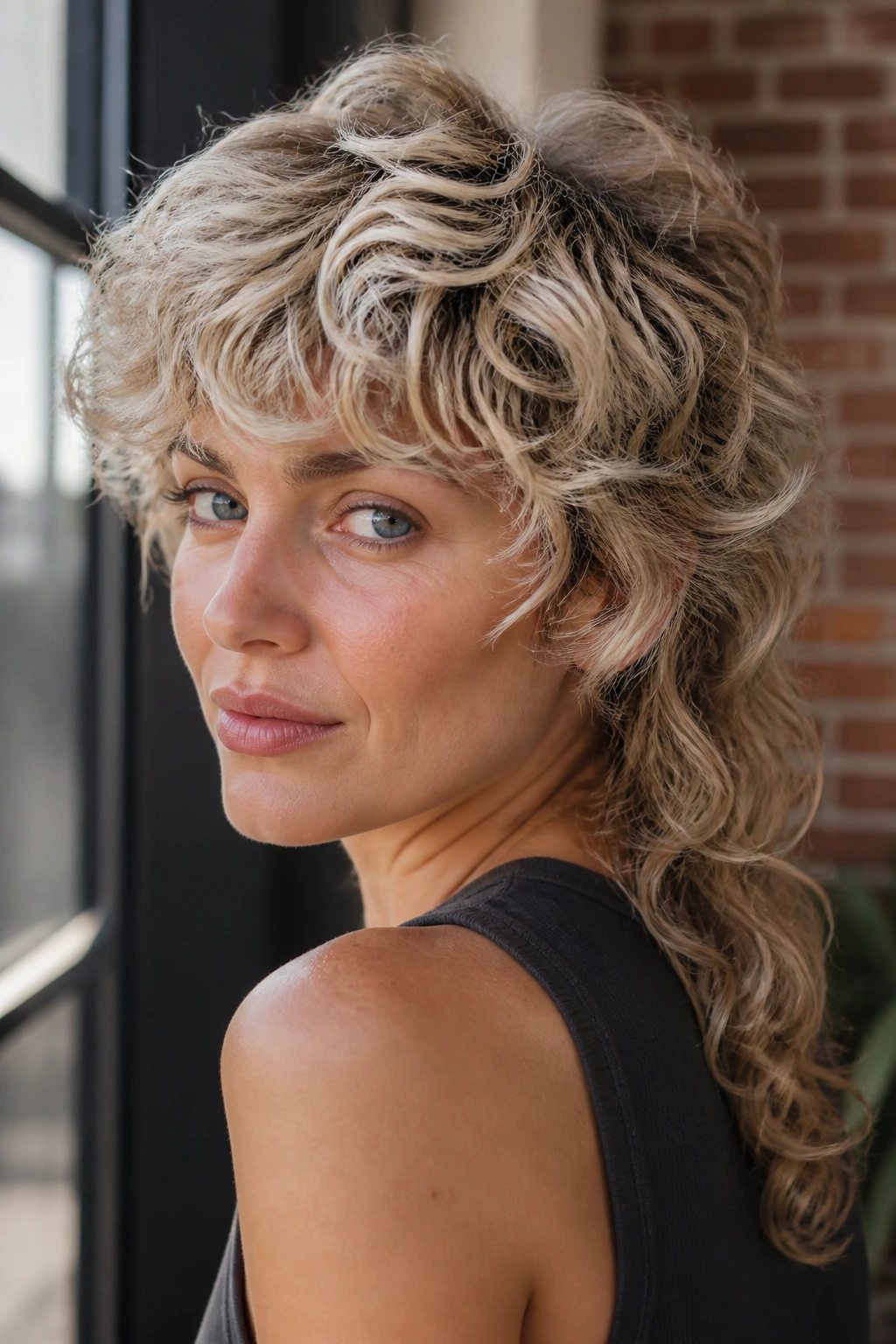
A soft curly mullet sounds braver than it actually is. The crown stays shorter, the nape stays longer, and the whole thing gets shape from the difference between those two lengths. Ash blonde top layers help cool down any brass, while darker lowlights below keep the contrast from getting too frosty.
What makes this work on curls is the movement through the back. A little length there lets the hair flick instead of puffing outward, and the shorter top gives the crown enough lift to keep the cut from drooping.
This is a good choice if you like a little edge but don’t want a hard line. It’s playful. It’s also surprisingly forgiving on second-day hair.
9. Jaw-Skimming Bob with Face-Framing Lowlights
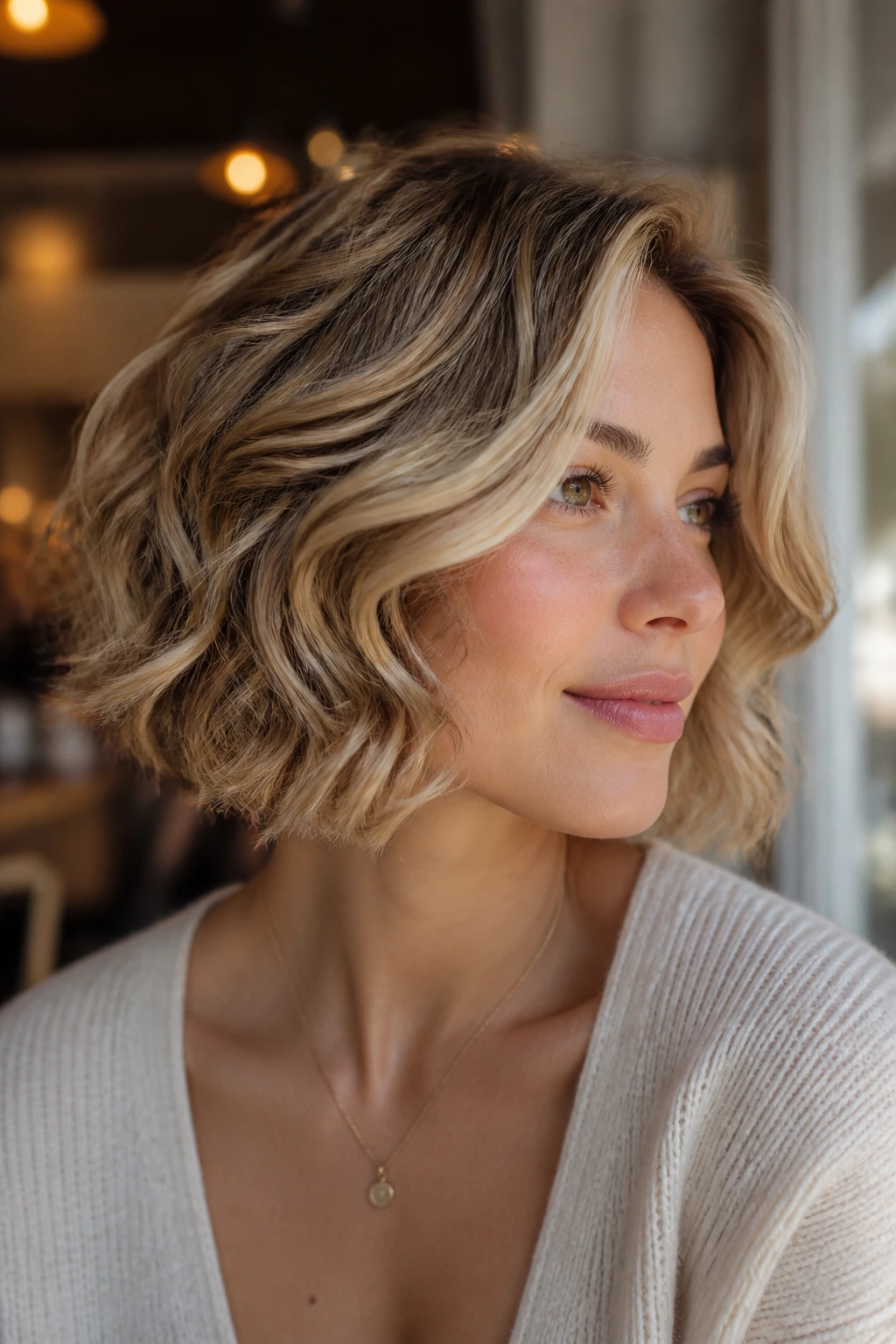
If you want a short blonde cut that feels tailored, start here. A bob that skims the jaw makes the bone structure do half the work, and the face-framing lowlights soften the brightness right where the eye lands first. That contrast can slim a wider face or just make the cut look more expensive, which is probably the less dramatic way to say it.
The lowlights should not be random. They need to sit near the cheekbone pieces, under the front curl group, and just around the lower half of the face frame. Too much darkness near the chin can drag the whole look down.
This cut is especially good when you wear side parts or deep bends in the front. It gives the face a line without making the hair look rigid.
10. Rounded Mushroom Cut with Cream Blonde Lengths
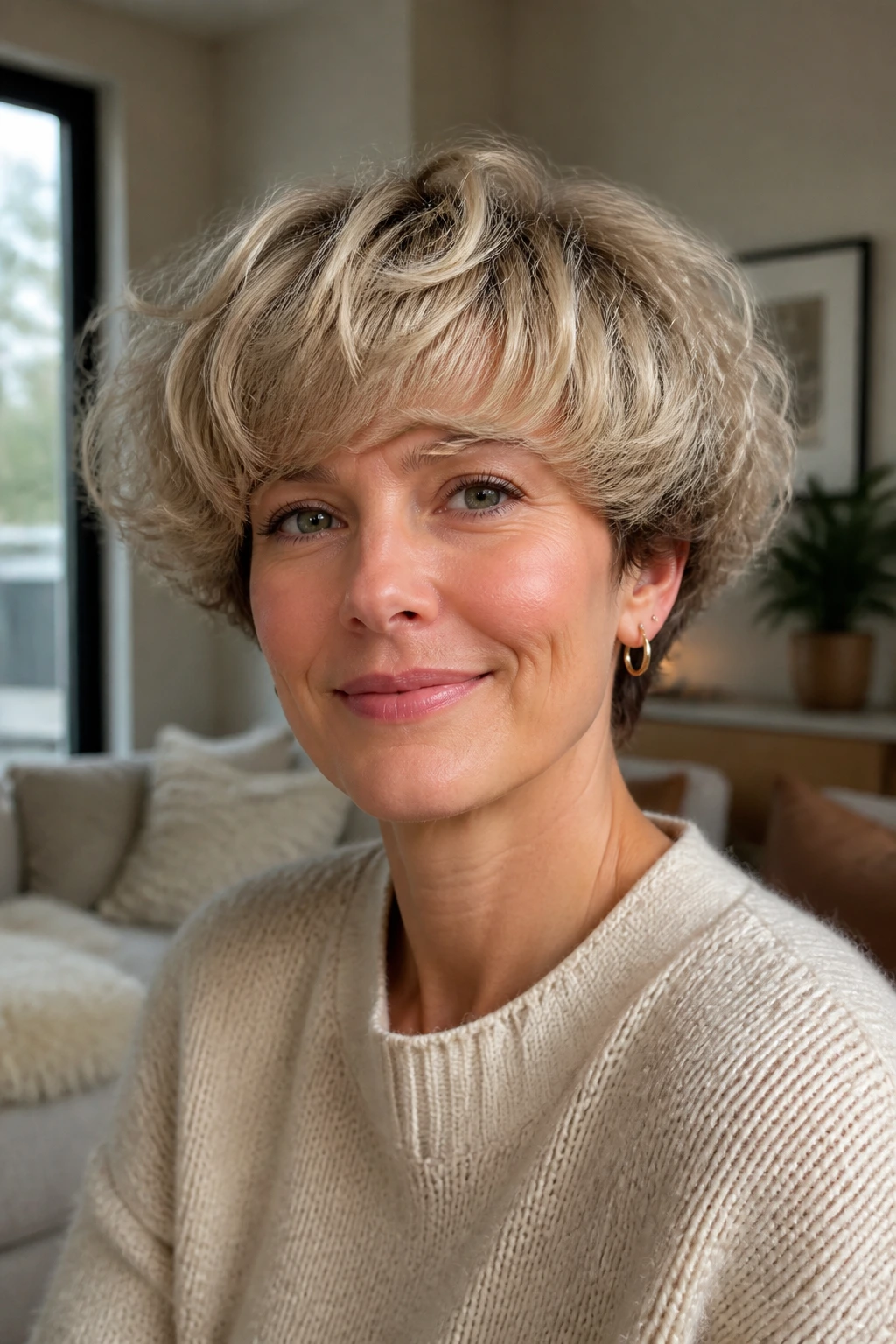
A rounded mushroom cut on curly hair can go wrong fast if the layers are too blunt or the blonde is too flat. Cream blonde lengths and hidden interior lowlights keep it from looking like a bowl and make the silhouette feel modern instead of retro-for-the-sake-of-retro.
The shape should sit close to the head at the sides and round out gently over the crown. That rounded top is what gives the cut its charm. The lowlights underneath make the curve visible by creating shadow where the head turns.
It’s a strong choice for dense curls that need containment. If your hair explodes at the sides, this cut gives it a place to go.
11. Layered Pixie Bob with Tousled Crown Volume
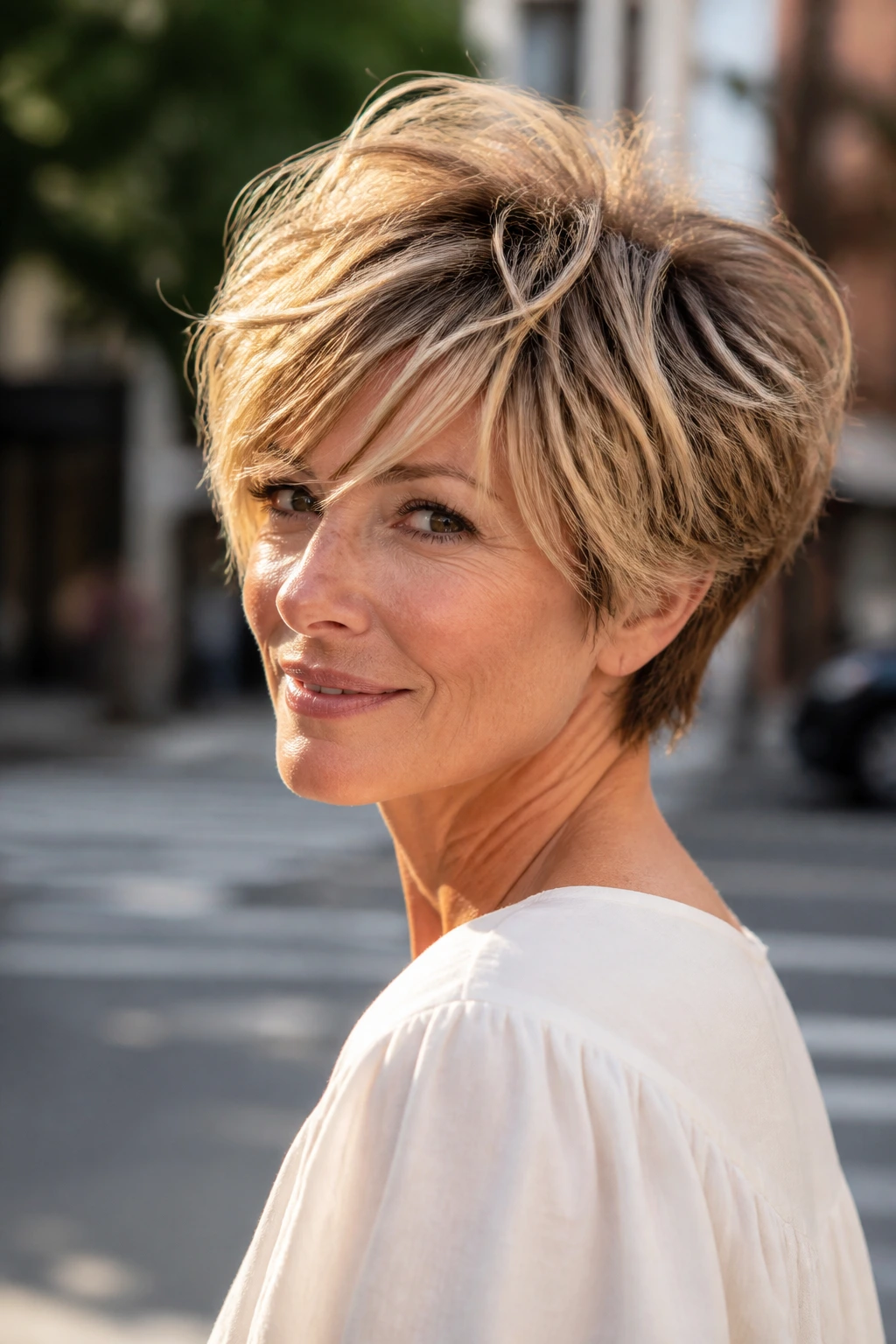
This one sits right in the sweet spot for people who want lift without losing all their length. The layered pixie bob keeps the crown buoyant, the sides soft, and the back short enough to stay off the neck. Tousled volume on top means the blonde catches the light, while lowlights underneath stop the whole shape from blurring together.
The important part
The crown should not be shredded. It needs short layers, yes, but not so much thinning that the hair frizzes the second it dries. Think lifted, not feathered to death.
This cut looks especially good with a side push at the front. One little bend in the part line gives the crown more shape than another full hour of styling ever would.
12. Curly Crop with Micro Fringe and Sand Lowlights
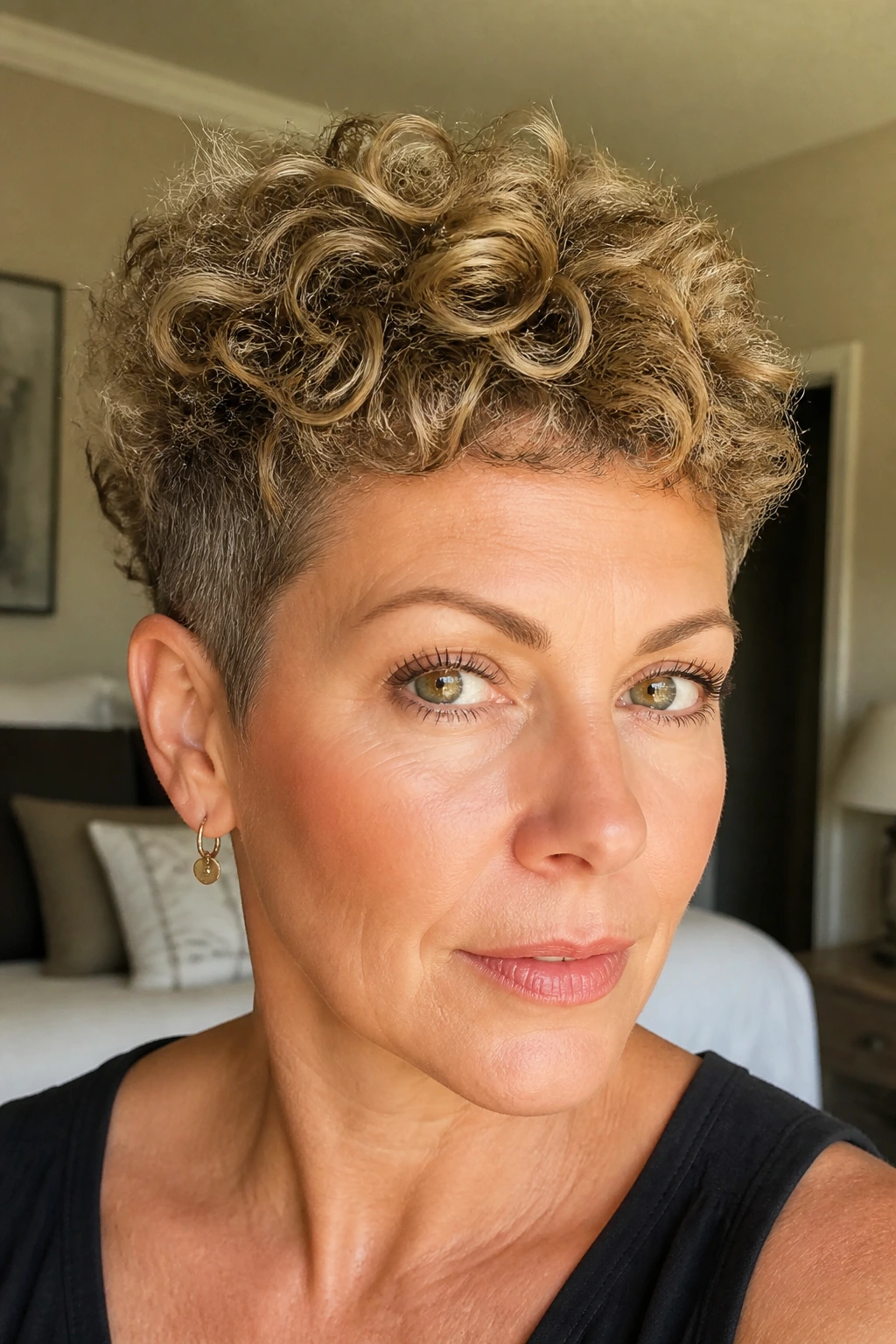
A micro fringe on curly hair is bold, so the rest of the cut has to carry the look. The crop keeps the sides close, the fringe sits high enough to show the brow, and sand-colored lowlights in the interior keep the top from becoming one bright, noisy surface.
This style works best when the curl pattern is fairly predictable. Loose spirals or defined waves usually behave better than very springy coils at the fringe. The lowlights help by taking some of the glare out of the front section.
If you like a little artistic edge, this is one of the more interesting options in the whole group. It has personality in a straight line, which is rare.
13. Graduated Bob with a Clean Nape Line
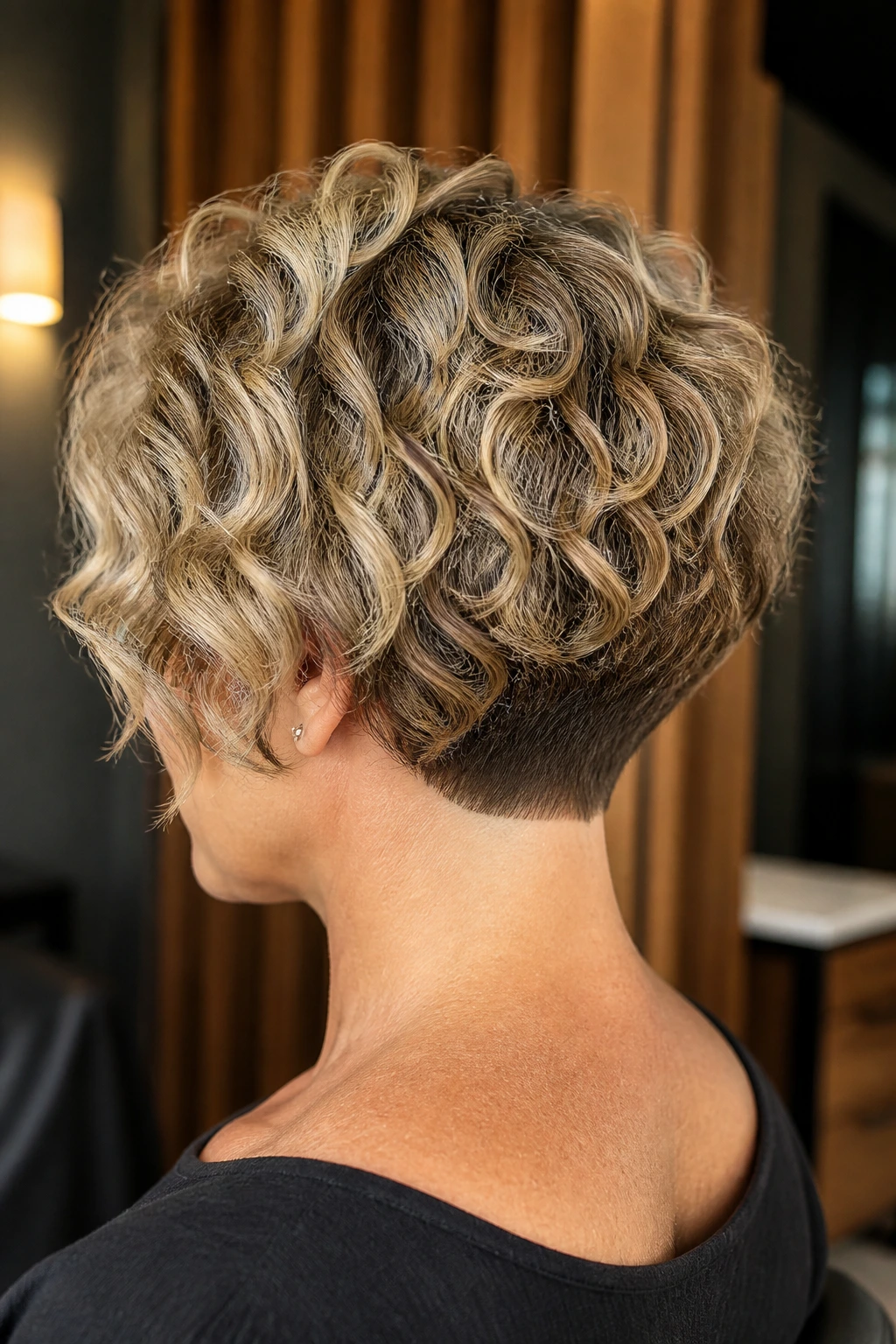
A graduated bob lives and dies by its back view. The layers step up toward the crown, the nape line stays clean, and the curls stack in a way that looks almost architectural. On blonde curls, lowlights at the back and underneath the graduation keep the style from turning into a block of brightness.
This is one of the more polished looks here. Not stiff. Polished. There’s a difference. You can still scrunch it and diffuse it, but the haircut gives you a shape that doesn’t need rescue.
If your neckline is the first thing you notice in a haircut, this one is worth a close look.
14. Short Wolf Cut with Spun-Out Ends
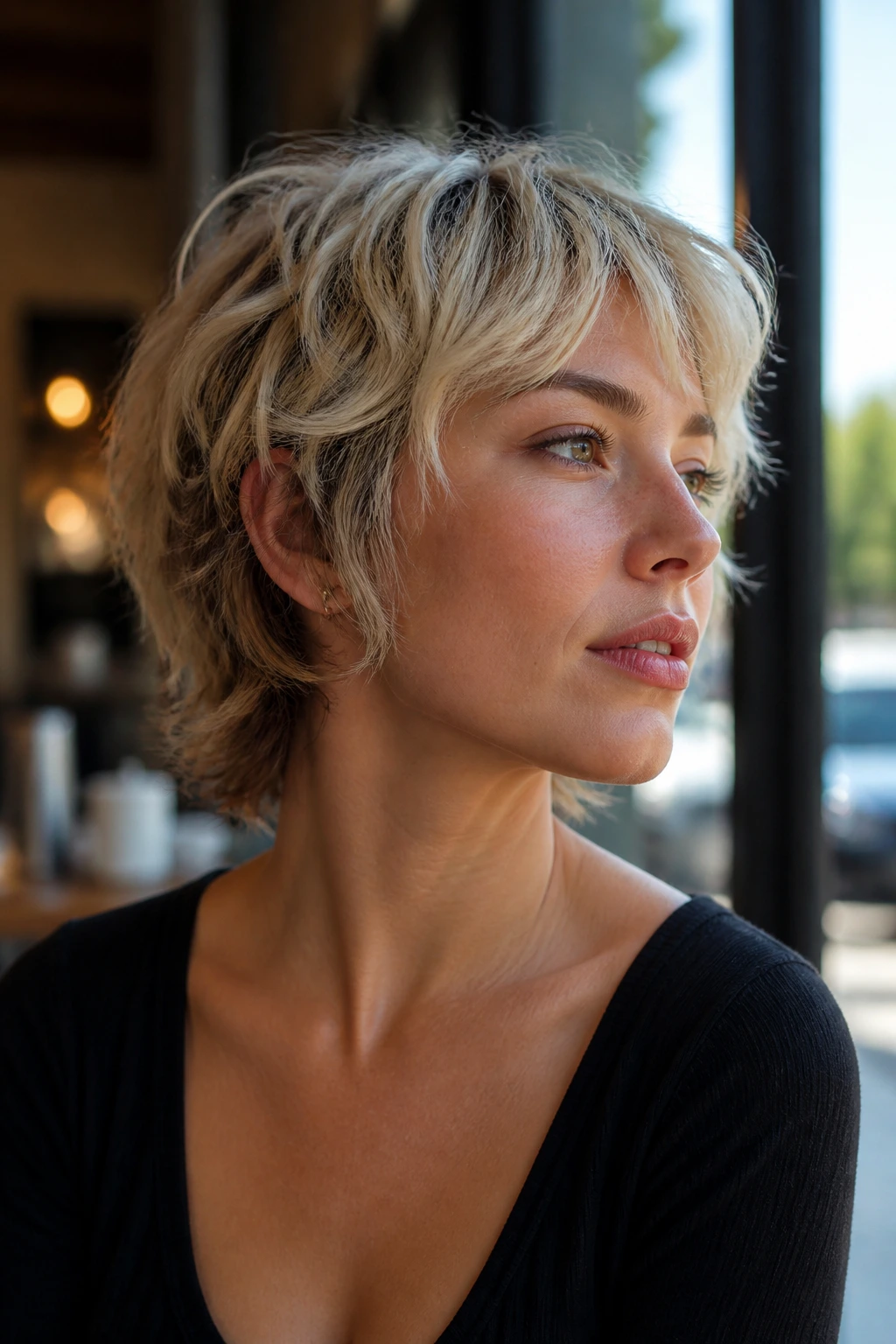
The wolf cut has a reputation for being wild, but the short version is more wearable than the internet makes it sound. It uses short crown layers and softer, spun-out ends to build shape without boxing the curls in. Blonde on the top layers keeps it bright; lowlights through the underlayers keep the texture from reading frayed.
This is a good cut if you like hair that feels a little lived-in on purpose. The ends should not all land on the same line. That unevenness is the point.
It does, however, ask for a decent stylist. If the layers are chopped too aggressively, the cut loses its softness and starts looking hacked. Not the same thing at all.
15. Side-Swept Curly Bob with Honey Veils
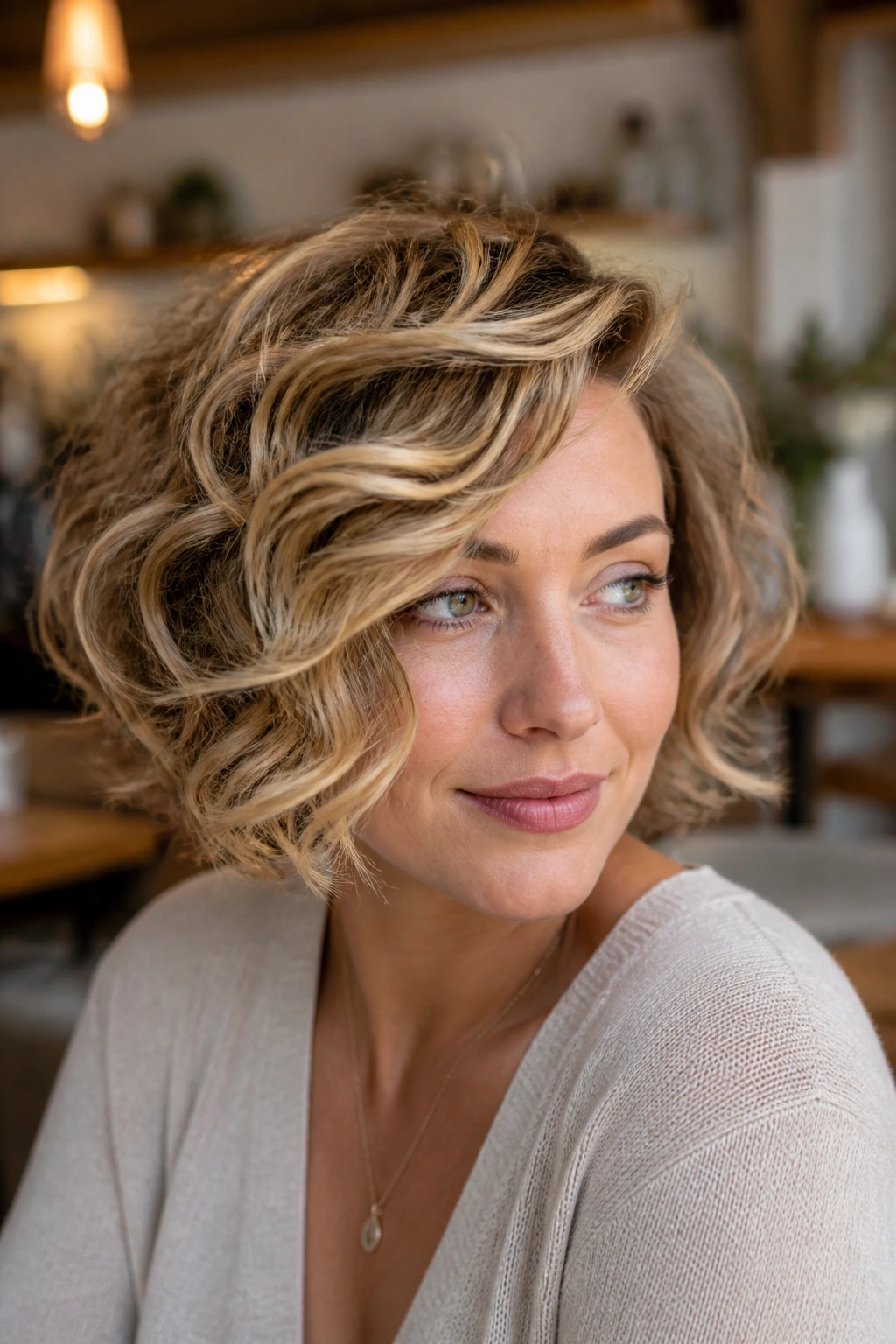
A side-swept bob gives curly hair a diagonal line to follow, which makes the whole head look narrower and more lifted. Honey veils near the front and under the sweep keep the blonde warm, while the lower lowlights add enough depth that the side part doesn’t flatten out.
- Best if you want: face framing without full bangs.
- Ask for: a longer front section that can tuck behind one ear without fighting the curl pattern.
- Watch out for: too much dark color at the part; it can make the sweep look heavy.
This cut has a nice built-in softness. It doesn’t scream for attention. It just does the face a favor.
16. Tapered Natural Curl Cut with Golden Ribbons
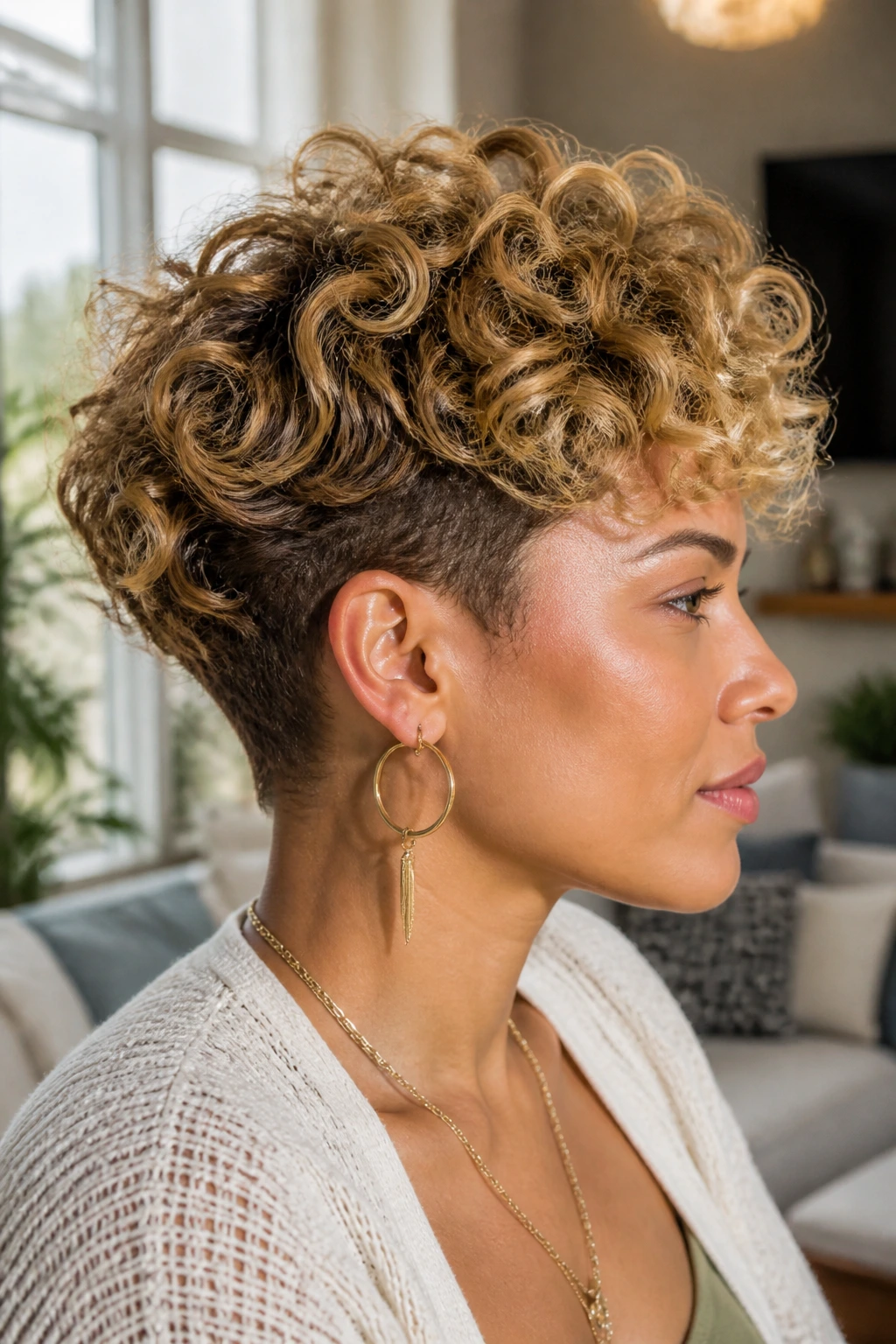
Tapered natural curls look best when the shape follows the curl pattern instead of forcing it into a round helmet. Golden ribbons on the outer surface give brightness, while the interior lowlights keep the taper visible. That’s the part people miss: tapering only works when there’s enough shadow to see the change in length.
This style is especially strong on denser curl types. The sides can stay closer, the top can keep some lift, and the whole cut remains light enough to move.
If you like your curls to look structured but not overworked, this is one of the smartest choices in the collection. It has real shape. No fluff pretending to be shape.
17. Shag Bob with Airy Layers and Root Shadow
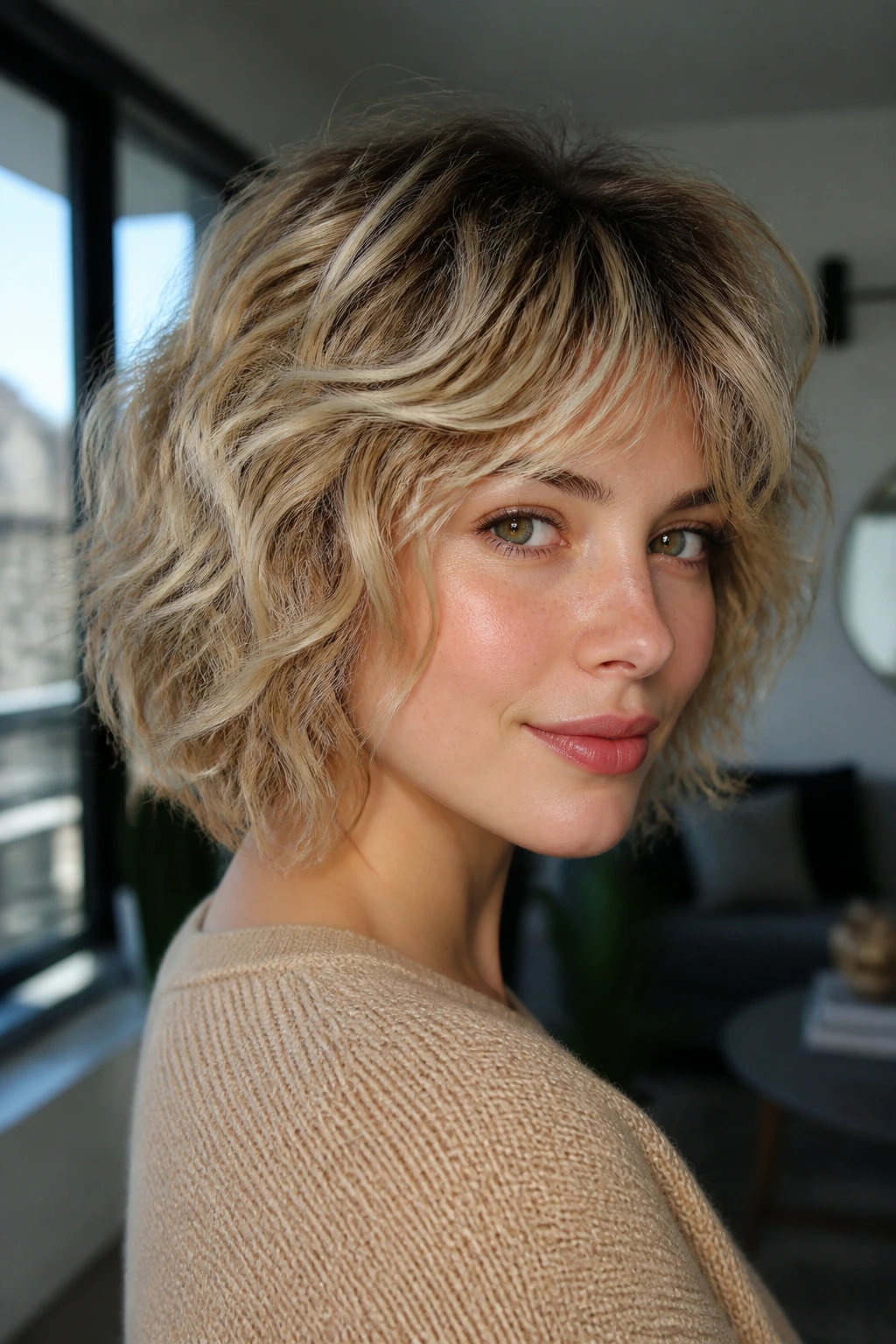
The shag bob is one of those cuts that looks simple until you try to describe why it works. Airy layers keep the curls separated, and a root shadow stops the blonde from starting right at the scalp like a solid sheet of light. That little bit of darkness at the root gives the style a lived-in finish that grows out well.
This is a very good option if you don’t want to color your roots every few weeks. Root shadow softens the line between natural regrowth and the blonde lengths, which makes the cut easier to maintain.
It also helps the curl pattern look less busy. Bright curls, a little depth, and movement through the ends — that’s the formula.
18. Undercut Curly Bob with Platinum Top Curls
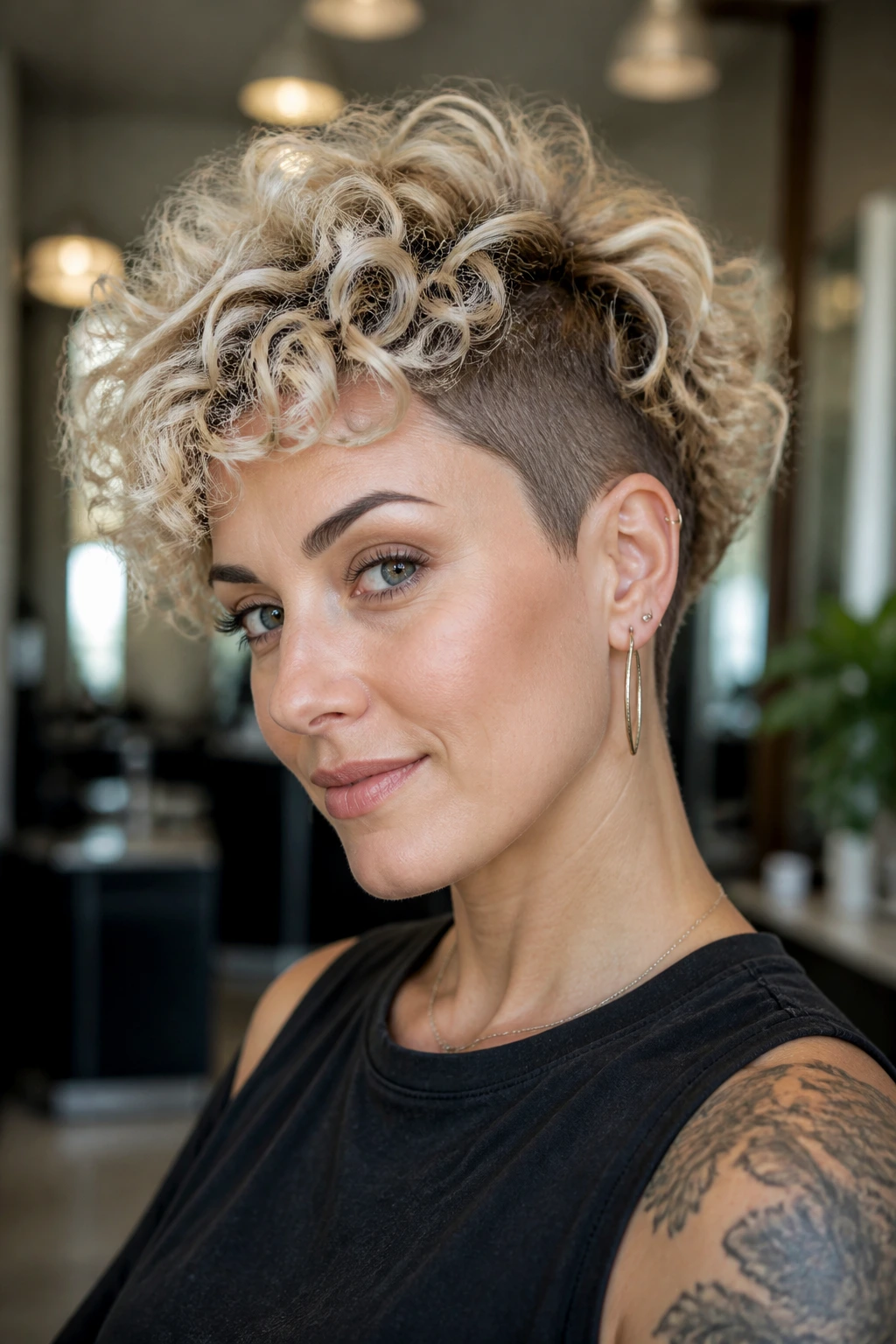
An undercut curly bob solves one problem fast: bulk. If the lower half of your hair is dense and the top is bright platinum, the hidden undercut removes weight where you don’t want it, while the top curls stay visible and crisp. The lowlights below the platinum pieces make the brightness look earned, not flat.
This cut is not for anyone who wants a soft, romantic outline. It has a cleaner edge. But if you get hot easily, or your curls balloon at the nape, it can be a relief.
Platinum needs contrast more than almost any blonde shade. Without shadow, it can turn ghostly. With shadow, it reads sharp.
19. Rounded Afro Textured Crop with Warm Lowlights
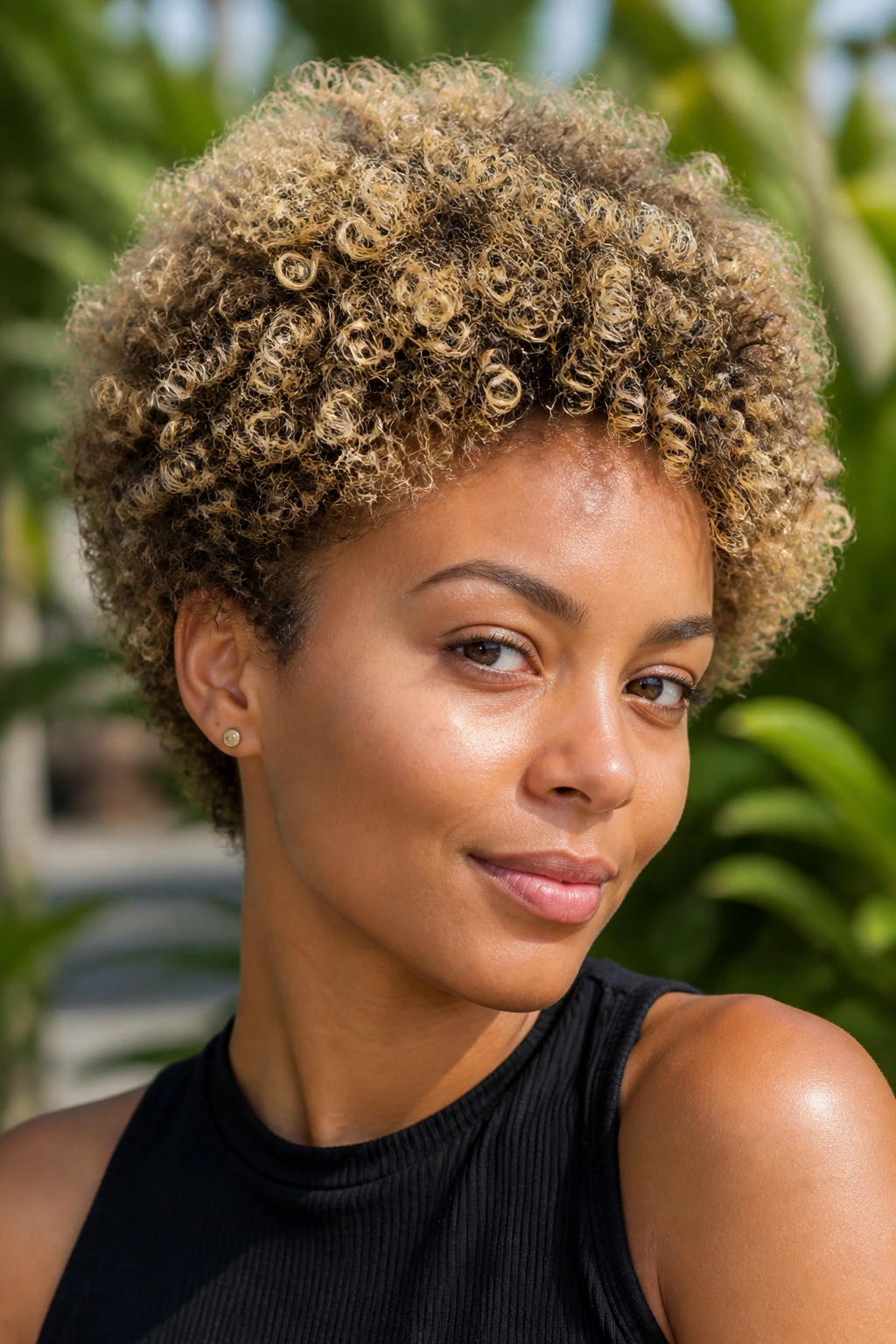
A rounded textured crop on coily hair gives you that beautiful halo shape, but the warmth of the blonde matters as much as the cut. Warm lowlights woven through the interior keep the curl mass from looking bleached-out, while the rounded outline lets the hair sit in a controlled cloud around the head.
The lowlights should not compete with the surface brightness. They belong inside the shape, where the coils fold over each other and naturally create shadow.
This is one of the most flattering ways to wear short blonde hair on tighter textures. It respects the curl pattern instead of trying to flatten it. Good sign.
20. Collarbone-Kissing Mini Lob with Soft Bend
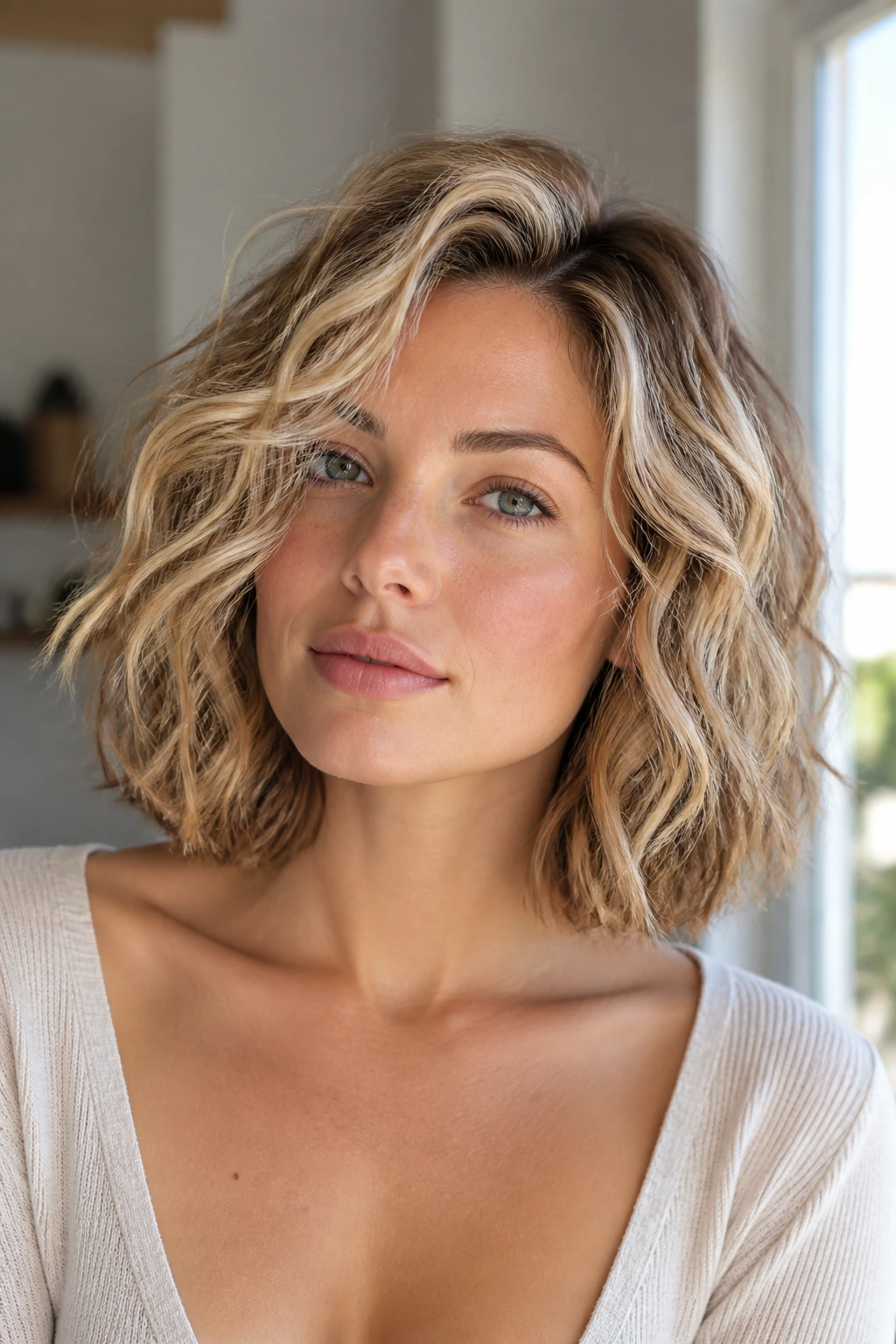
A mini lob is the longest cut in this group, but it still belongs here because the shape stays compact. The hair lands around the collarbone with a soft bend through the ends, which gives curly hair a little length to settle into while still feeling short enough to swing. Lowlights under the bend and near the lower interior make the blonde look fuller.
This is a nice compromise if you’re nervous about going very short. You get the freshness of a cropped blonde shape without giving up too much weight.
The best version avoids bluntness at the ends. A tiny bit of layering helps the curls fall in a cleaner curve.
21. Wedge Cut with Curl-Defined Back Shape
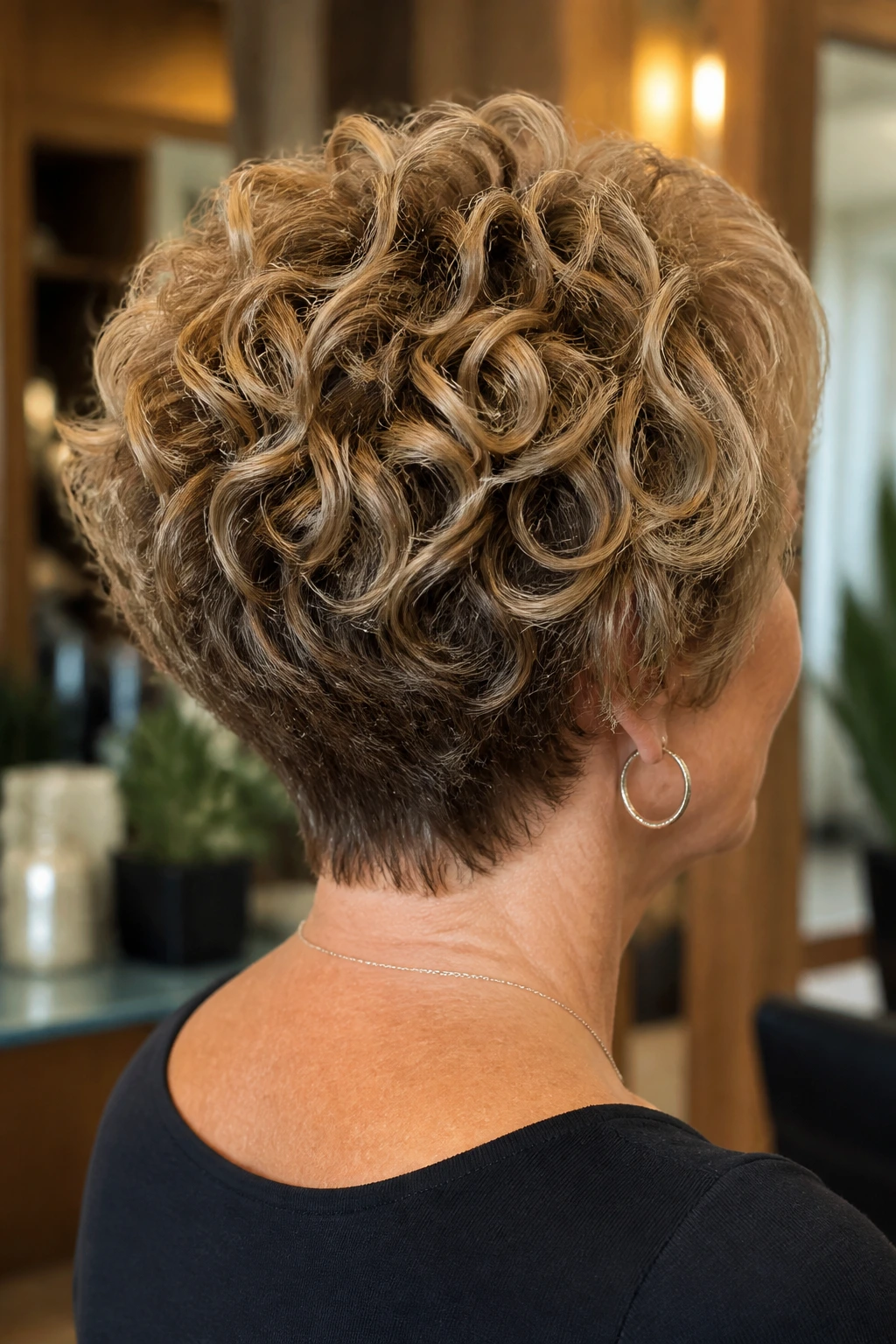
The wedge cut has a retro backbone, but on curls it becomes something more interesting. The back rises into a defined curve, the sides stay tighter, and the lowlights at the back create visual depth where the haircut lifts the most. It’s one of the few short styles that can make the back of the head look intentionally sculpted.
What makes it different
Unlike a standard bob, the wedge gives the crown a built-in slope. That slope looks best when the color also shifts slightly darker underneath, because the eye then reads the curve instead of just seeing a bright blob.
It’s a little more structured than a shag, less severe than a bowl. In other words, it has personality without needing a lot of styling drama.
22. Side-Part Pixie Bob with Longer Temple Pieces
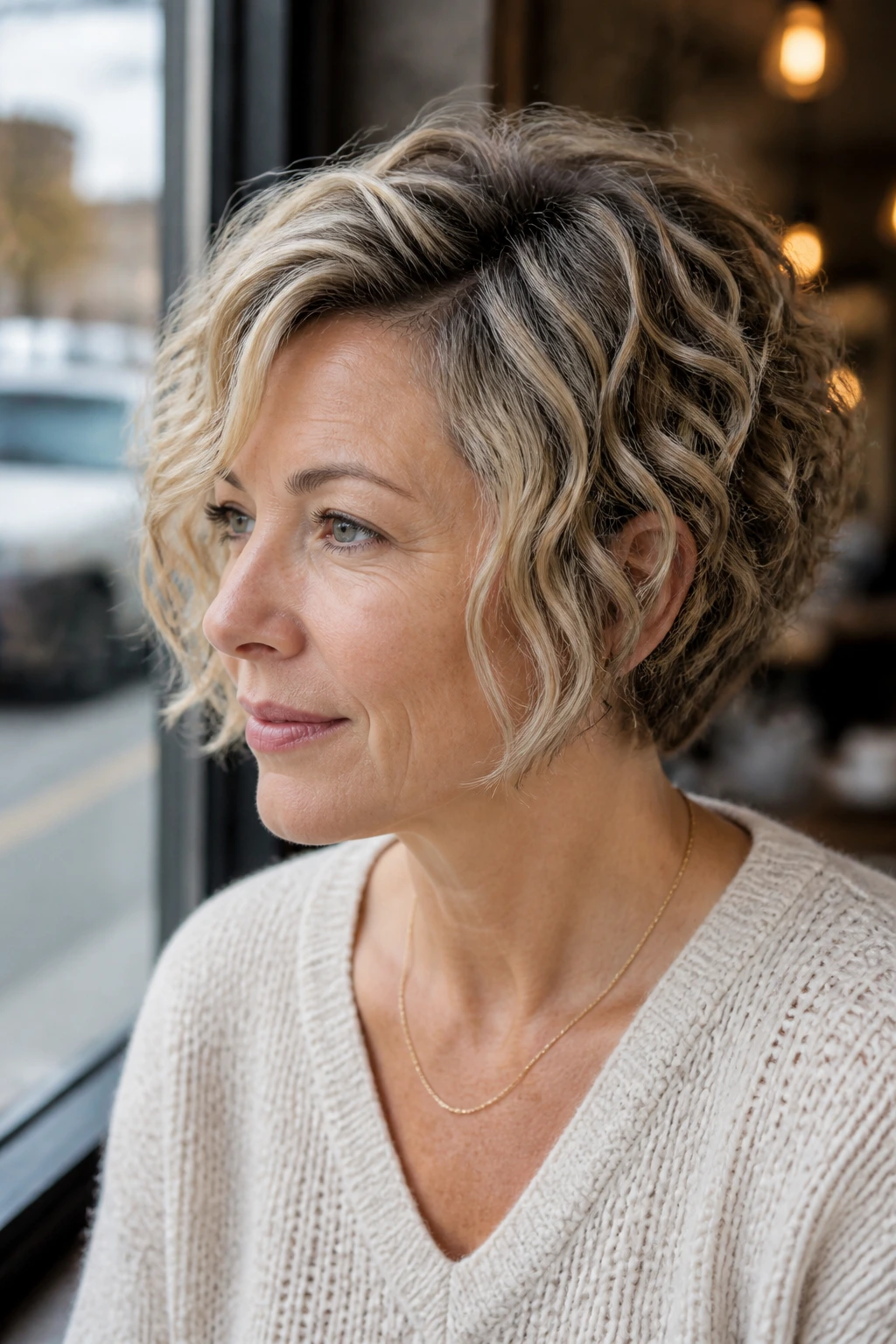
This cut is a small correction to a lot of short curly hair problems. The side part creates lift, the longer temple pieces soften the cheek, and the pixie-bob length keeps the outline short without losing the curl definition. Lowlights tucked near the part and under the temple pieces keep the blonde from overpowering the face.
It’s a good choice if your curls collapse in the front. The longer pieces can be coached into a bend, then left alone.
The style reads polished without being precious. That’s a useful sweet spot.
23. Fluffed-Out Curly Bob with Pearl Blonde Ends
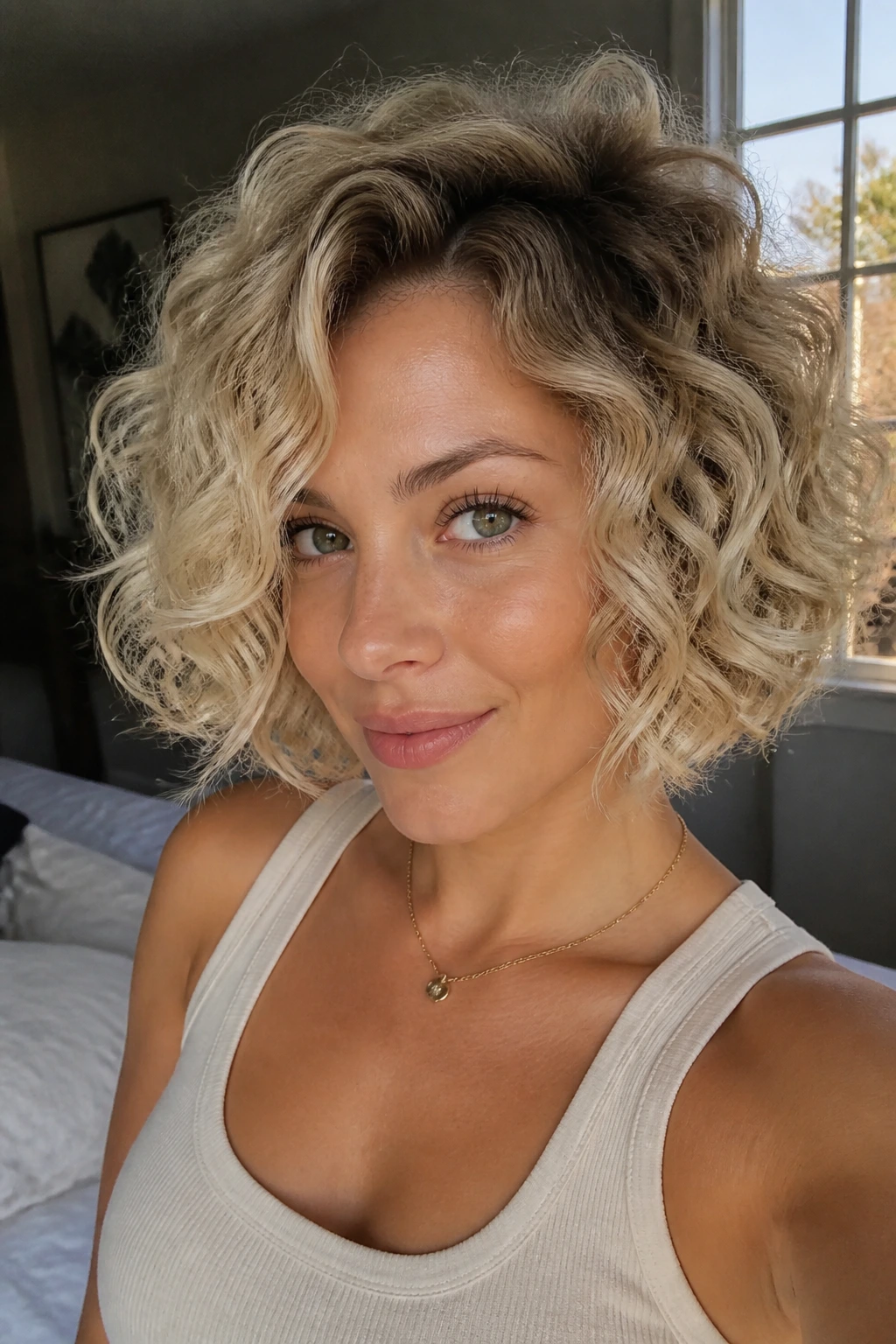
A fluffed-out curly bob can look airy instead of fuzzy if the ends are handled well. Pearl blonde ends keep the finish bright, while hidden lowlights at the base and inside the curve stop the cut from turning into a cotton ball. The key is to let the fluff be shape, not frizz.
This is a strong option for loose curls that like to expand. You get movement, but the lowlights keep the eye from losing the outline.
If your hair tends to get bigger in humidity, a cut like this helps the volume feel intentional rather than accidental.
24. Curly Crop with Cascading Crown Layers
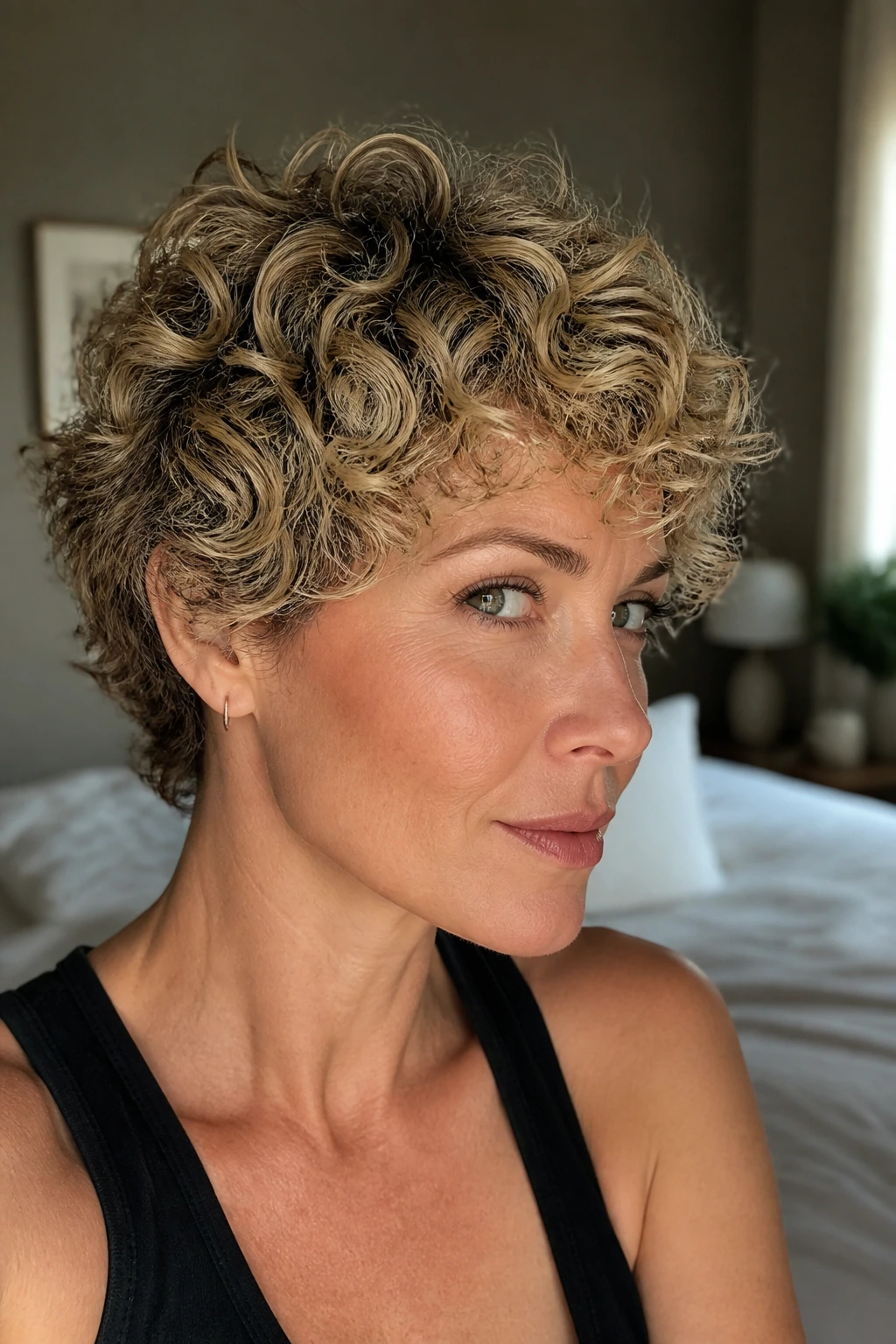
A crop with cascading crown layers gives the top enough lift to feel styled even on a quick morning. The layers fall from the crown toward the sides, and lowlights inside that crown section keep the bright blonde from overexposing the shape. It’s a smart cut for people who want short hair with a little height.
- Good for: curls that flatten at the top but puff on the sides.
- Ask for: layers that start high enough to build lift, but not so high that the ends go wispy.
- Best finish: a light mousse at the roots and a small amount of cream on the ends.
This one is especially useful when you want the crown to stay visible from the front. That changes the whole balance of the cut.
25. Sleek-Rooted Curly Bob with Ribbon Lowlights
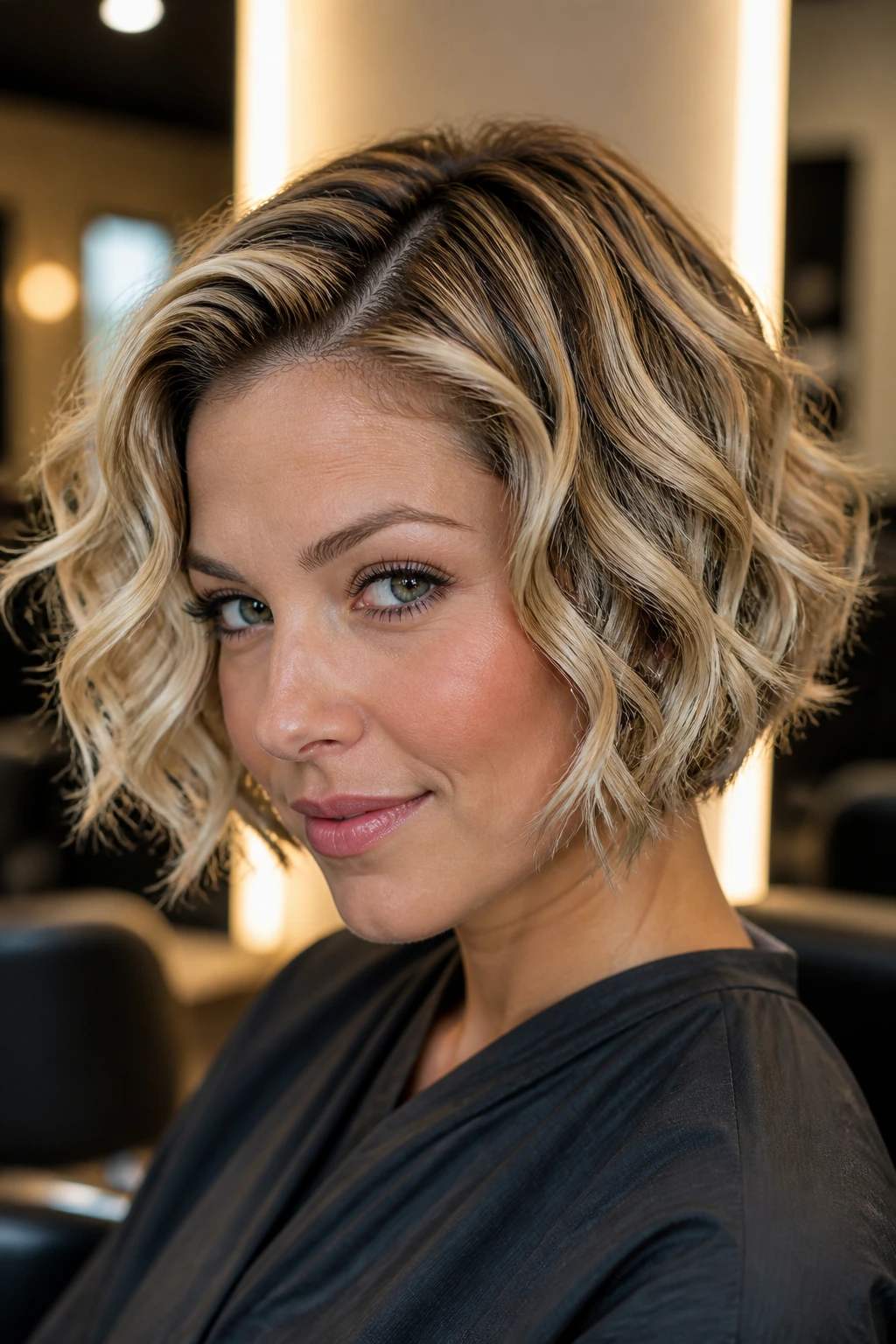
This is the polished ending to the collection. A sleek-rooted curly bob keeps the roots controlled, then lets the curls expand through the midlengths and ends. Ribbon lowlights threaded through the middle sections give the blonde depth without stealing brightness from the surface, which makes the whole cut look calm and expensive without trying too hard.
It’s a strong choice if you like structure more than mess. The root area stays tidy, the curls still move, and the color has enough contrast to stop the bob from going flat after day one.
If I had to pick one style here for someone who wants short, blonde, curly, and easy to live with, this would be near the top.
How Short Curly Cuts and Lowlights Work Together
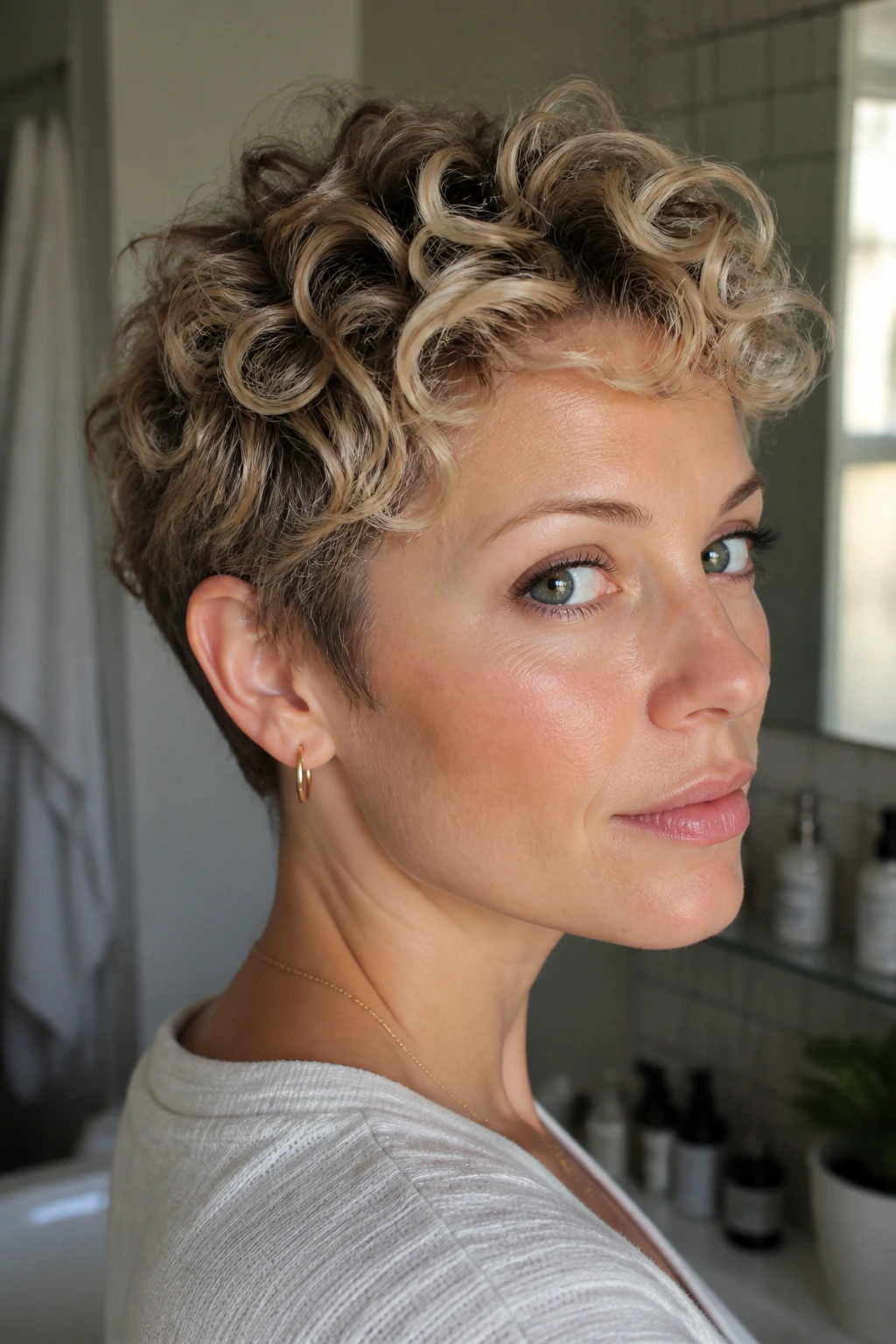
A short curly cut changes the way color sits on the head. That sounds obvious, but people still book blonde highlights as if the hair were straight, then wonder why the whole thing looks louder than expected. Curls bend light, swell as they dry, and reveal the interior layers of a cut faster than almost any other texture.
That’s why dry cutting matters so much for a lot of curl types. A stylist can see the real shape, not the wet version that lies to everyone for twenty minutes. Wet cutting has a place, but when the goal is a clean bob, pixie, or crop, the final outline needs to respect shrinkage.
Where the shadow should go
The best lowlights usually sit where the eye does not land first: under the crown, through the underside of the sides, around the nape, or just behind the face frame. Those darker pieces make the blonde surface pop harder without making it look striped.
What to ask for in the chair
Ask for interior depth, not chunky stripes. Ask for a dry check on the outline. And if your curls are dense, ask how the nape will be tapered so the cut does not balloon the second it’s diffused. Those details matter more than a vague request for “dimension.”
The Tools That Keep These Styles from Puffing Out
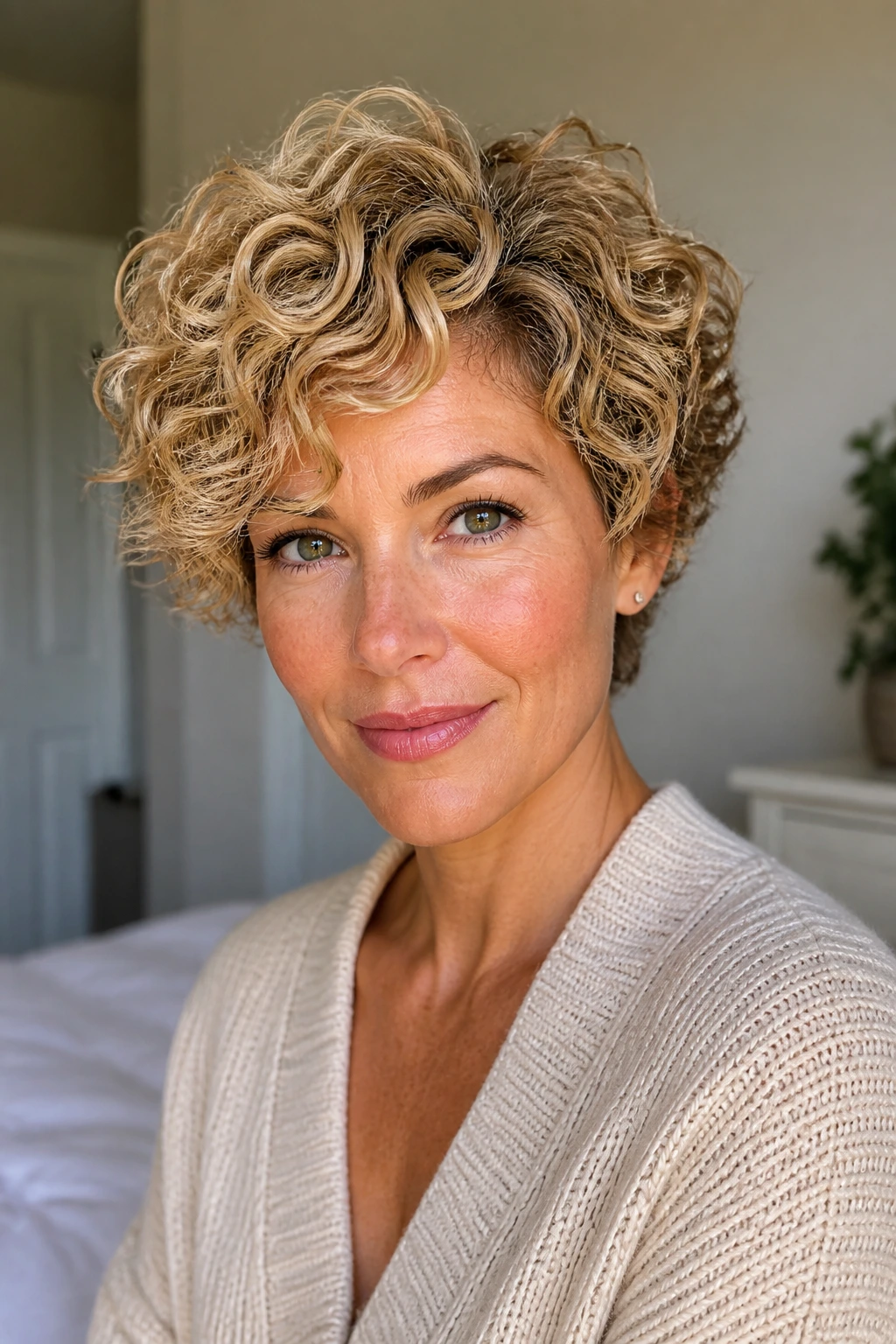
- Diffuser attachment: This is the easiest way to set curl shape without blasting it apart. Use medium heat and keep it moving.
- Microfiber towel or soft cotton T-shirt: Rough towels fray blonde ends and make the curl surface fuzzy. Blot, don’t rub.
- Wide-tooth comb: Good for distributing conditioner in the shower and stopping breakage on wet curls.
- Sectioning clips: Helpful when you want to place product evenly at the crown, sides, and nape.
- Color-safe shampoo: Blonde hair fades and dries fast. A sulfate-free formula helps keep the tone from getting brassy too fast.
- Purple or blue shampoo: Use it sparingly, and only where the blonde needs correction. Too much can leave short curls dull.
- Light curl cream or mousse: Short curls need support, but not so much product that the ends collapse.
- Silk bonnet or pillowcase: Keeps the short shape from getting crushed overnight, which matters more than people think on cropped cuts.
Choosing the Right Blonde, Shadow, and Placement
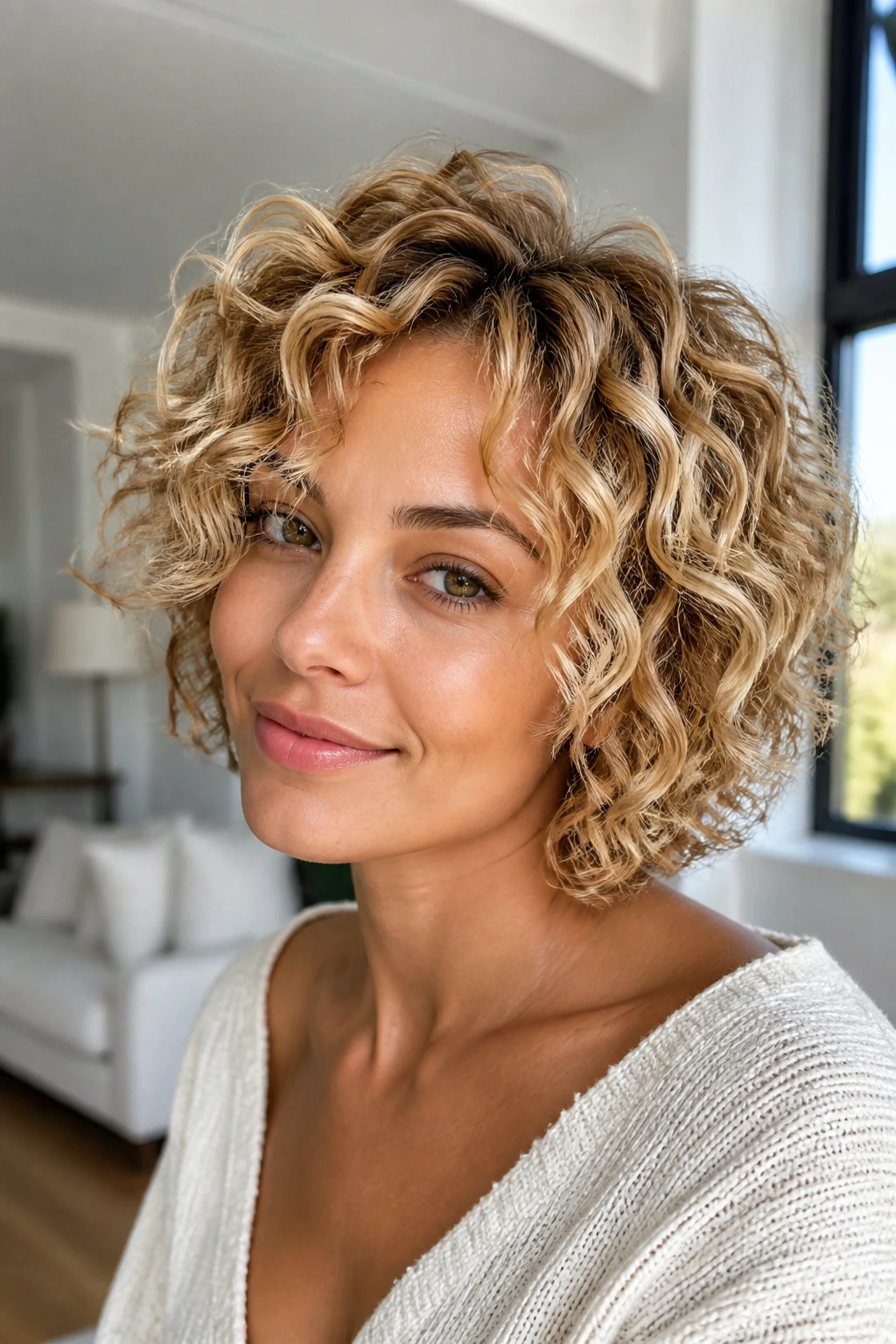
A great short curly blonde usually starts with the tone, not the cut. Honey blonde reads warmer and softer. Beige blonde sits in the middle and is often the easiest shade to wear on curls because it doesn’t fight your skin tone. Ash and mushroom tones are better when brass shows up fast or when you want the lowlights to feel cooler and more smoky.
Placement is the part people underthink. If the blonde is brightest on top and around the face, the eye goes there first and the cut feels lively. If the lowlights are scattered across the surface, the style can look dirty or streaky. Hidden shadow in the interior gives you the same depth without turning the whole head into a checkerboard.
A good salon conversation usually includes three things: where the hair bulks up, how much grow-out you can tolerate, and whether you want the blonde to feel warm or cool. That’s a more useful plan than simply asking for “more dimension.” Dimension can mean almost anything.
How to Wear These Cuts Day to Day
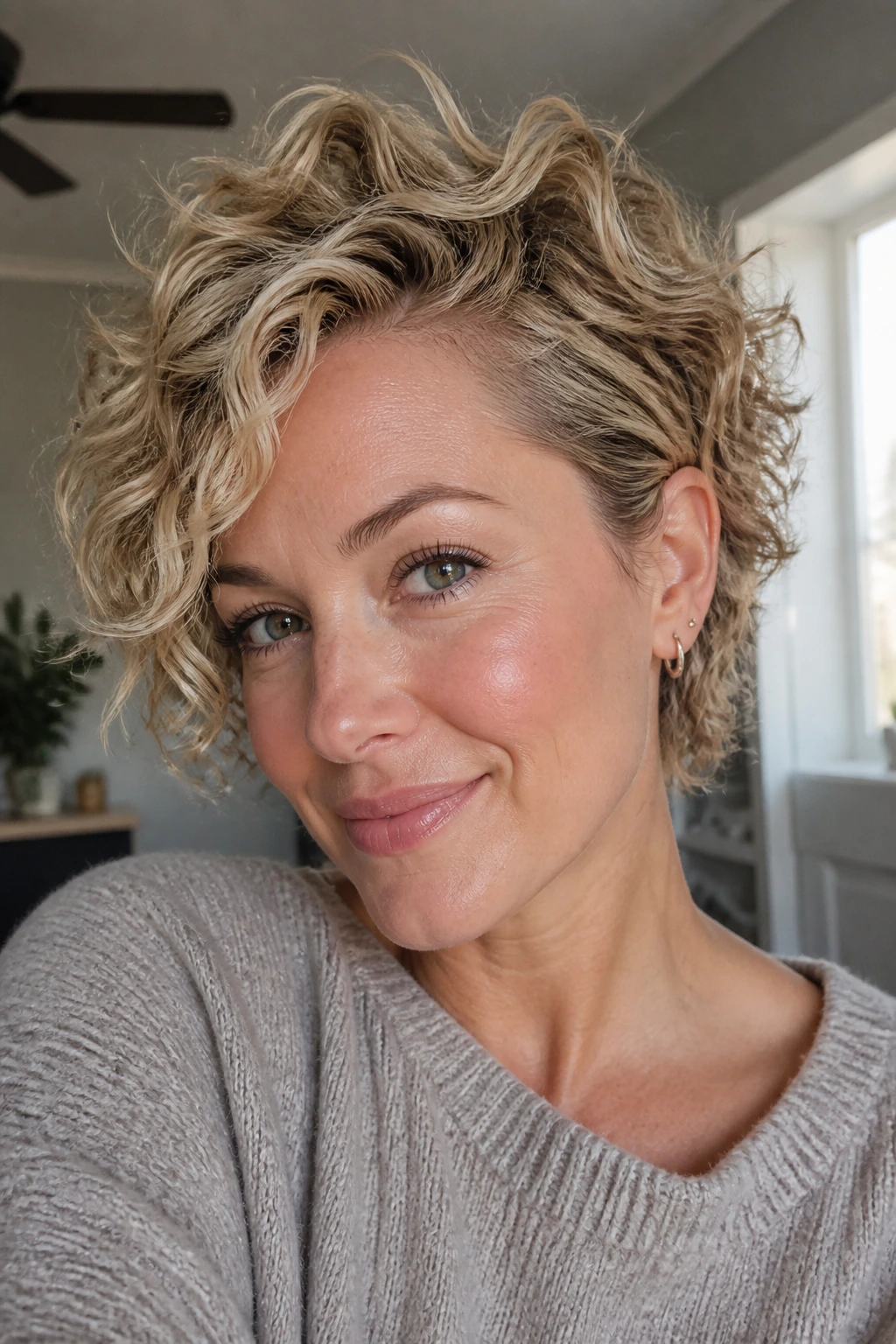
Shape: Keep the outline visible. Tuck one side behind the ear on bobs and bixies, or let the crown fluff up a little on pixies and crops. If the back feels too wide, ask for a cleaner nape taper next time.
Accessories: Use clips, pins, and earrings that don’t crush the curl pattern. Heavy headbands can flatten the crown and erase the work the haircut is doing. Small hoops, studs, or a single pin above the temple are enough.
Outfit Pairings: Short curly blonde cuts look sharp with necklines that show the jaw and collarbone — crew necks, square necks, open collars, and scoop necks all work. High collars can be fine, but they tend to compete with a strong bob or pixie.
Best Fit: If your face is round, lean into side parts and jaw-skimming shapes. If it’s long, add width with rounded bobs or shaggy layers. If your curls are dense, choose tapering and stacking before you choose more length.
Practical Styling Moves That Pay Off
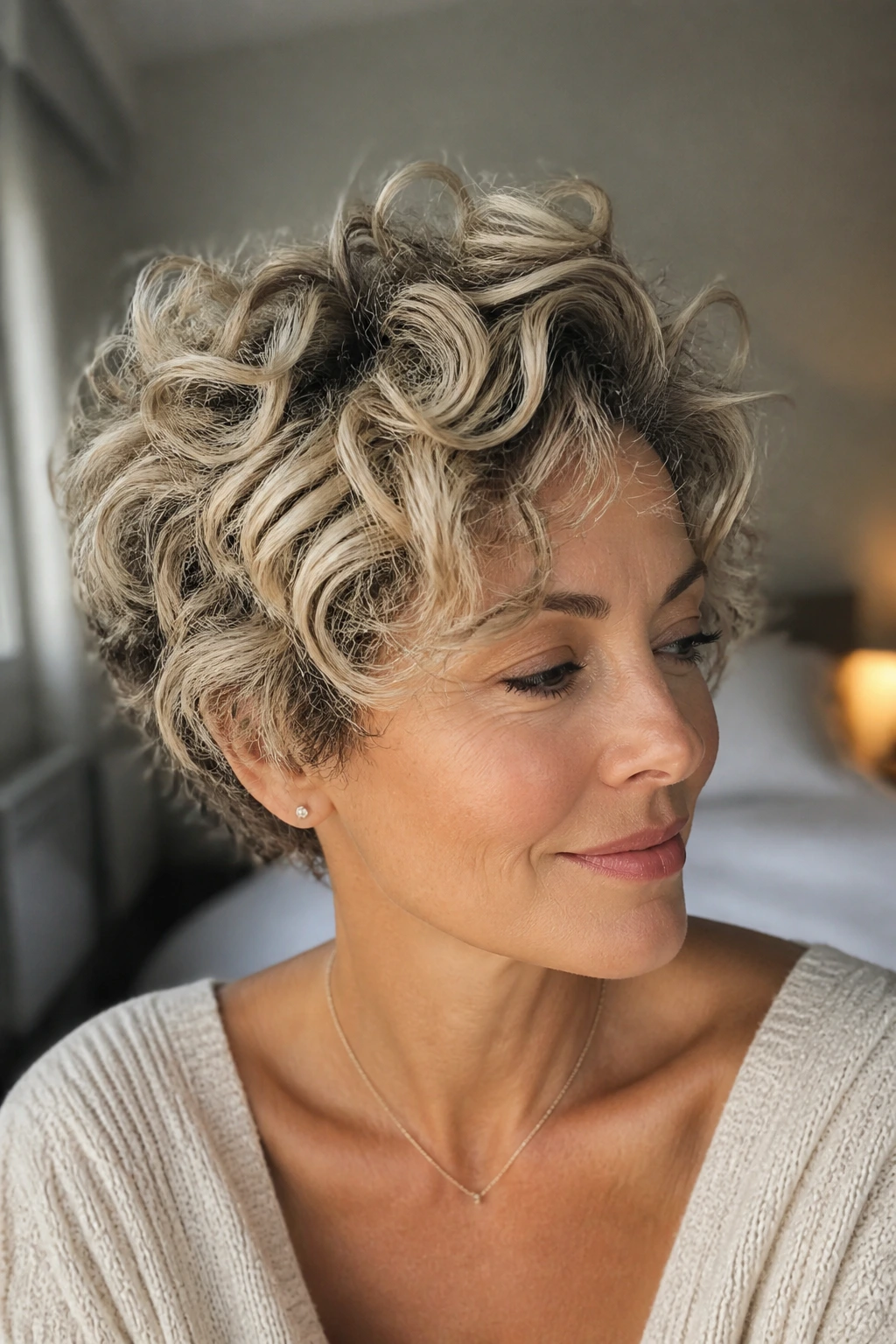
Root lift matters more than chasing volume everywhere. Clip the crown at the roots while the hair dries, or direct the diffuser upward for the first few minutes. That keeps the shape from collapsing at the top, which is the part people notice first.
Use less product than you think. Short curls can get weighed down fast, especially if the ends are fine. Start with a pea-sized amount of cream or mousse, then add only if the hair still feels too dry after scrunching.
Refresh the shape, not the whole head. On day two, mist the top layer lightly, smooth the frizz at the sides with damp hands, and re-diffuse for a few minutes. You do not need to soak the whole cut to bring it back.
Keep the lowlights visible. If every styling step pushes the top curls forward, the shadow disappears. Lift the crown, let some interior pieces stay tucked, and the color will read richer.
Common Mistakes That Flatten Curly Blonde Short Hair
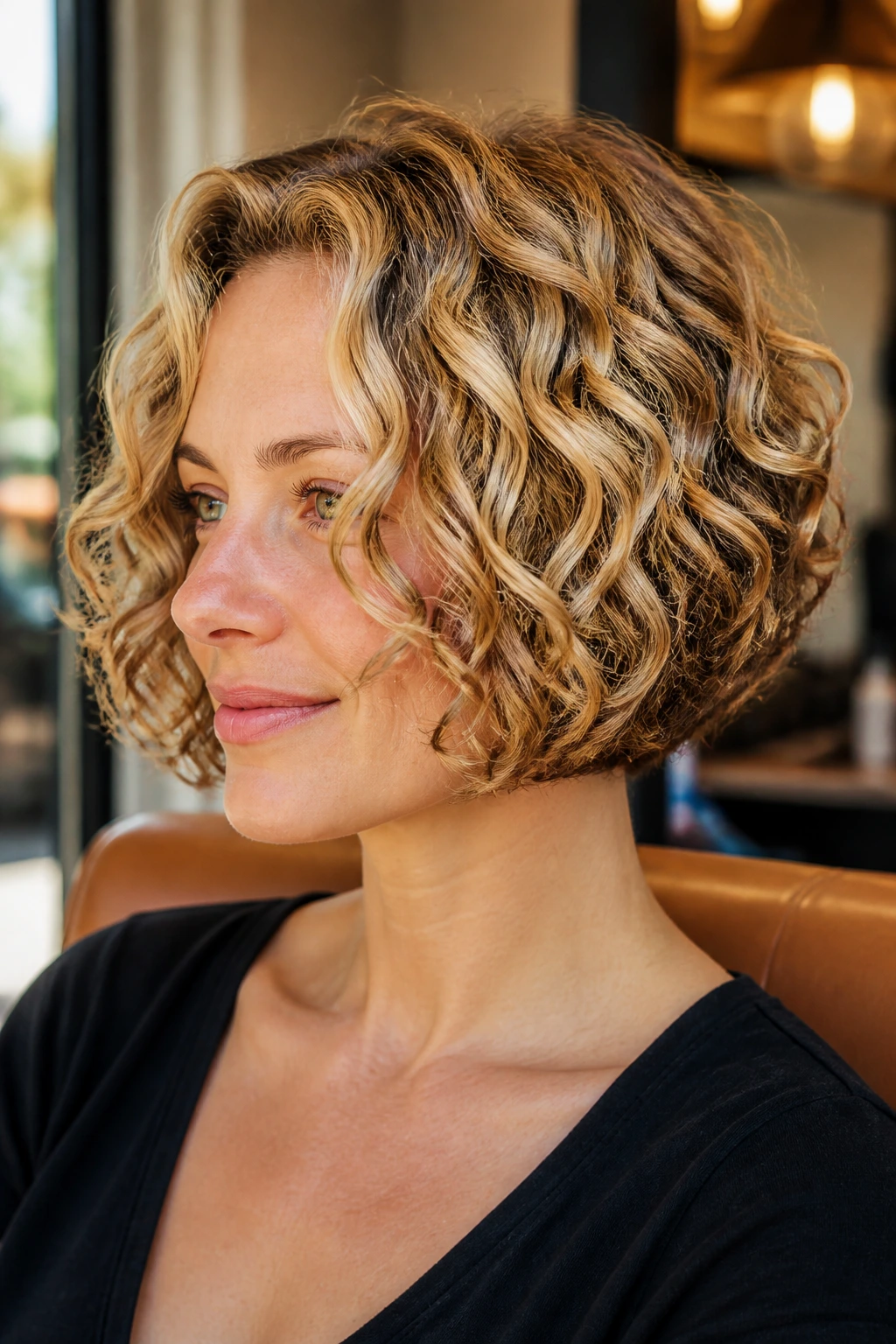
Choosing one blonde tone for the entire head. The symptom is a flat, bright mass with no visible curl separation. The fix is lowlights in the interior and a lighter surface on the outside, so the cut has depth when the curls expand.
Cutting the hair wet and trusting the length. Curls shrink. A lot. If the cut looks perfect when wet, it may end up too short once dry. Ask for a dry check or at least a curl-by-curl finish around the outline.
Over-thinning the ends. This makes blonde curls look wispy and dry, especially on bobs and pixies. A better move is controlled point cutting and strategic layering, not razor-heavy texturizing.
Placing lowlights too high on the surface. When the dark pieces sit on top instead of inside, the style reads striped. Keep the shadow beneath the brighter canopy or around the nape and temples.
Using purple shampoo too often. Short blonde curls can turn dull fast if they’re over-toned. Use it only when brass shows up, then follow with a moisture mask so the hair does not feel stripped.
Best Variations by Curl Pattern and Face Shape
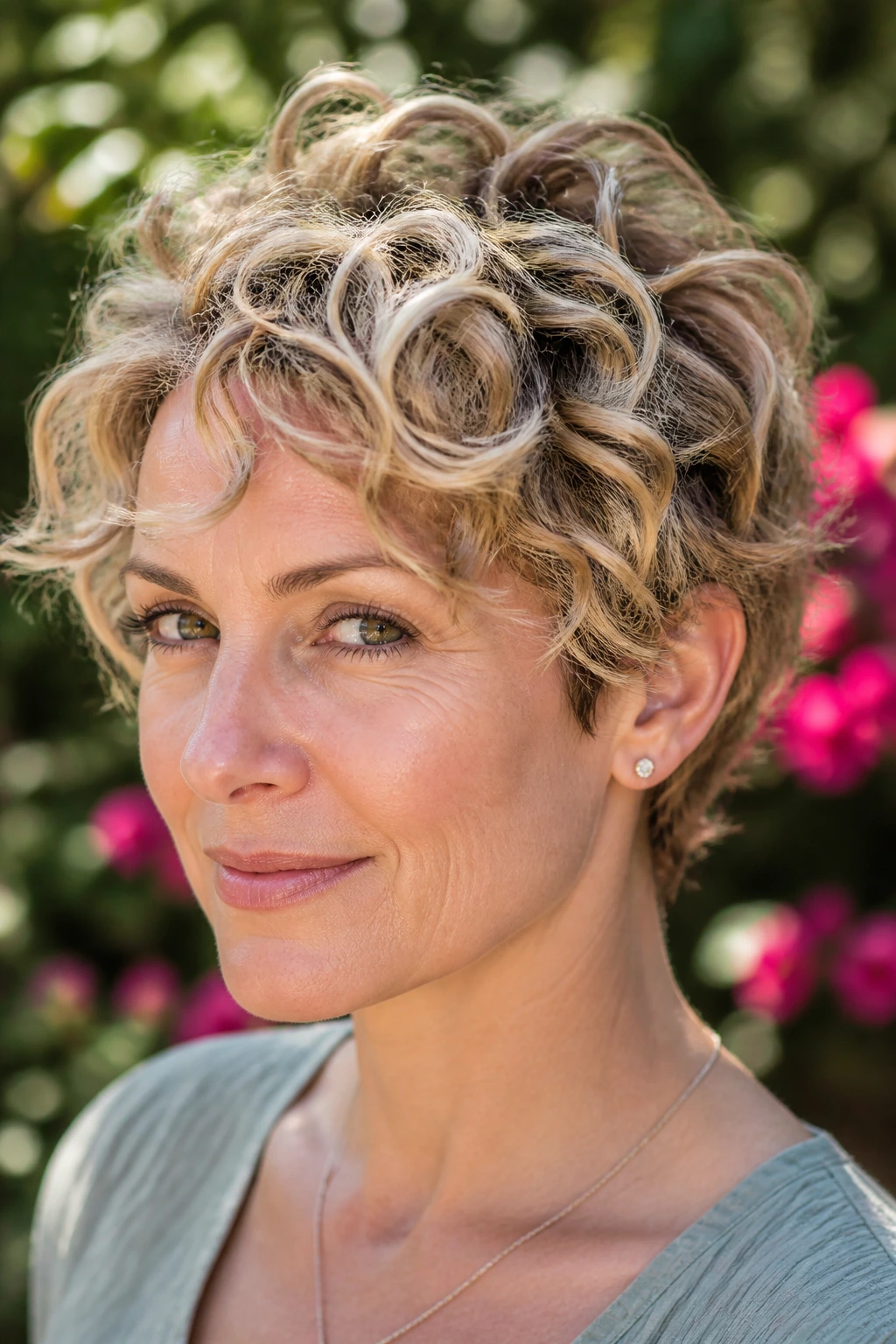
Fine-Curl Float: This version uses a bixie or pixie bob with fewer layers and softer lowlights. Fine curls need the illusion of thickness, so keep the blonde bright on top and the shadow hidden underneath.
Thick-Hair Taper: Best for dense 3B to 4A textures, this variation leans on tapered sides and a rounded crown. The lowlights should be woven through the interior where they reduce visual bulk without darkening the whole shape.
Round-Face Side Sweep: A deep side part, longer front pieces, and face-framing lowlights stretch the face a little. Keep the shortest point off the widest part of the cheek, or the cut can make the face look wider than it is.
Platinum With Shadow: If you love icy blonde, this version keeps platinum on the crown and brighter face frame, then uses smoky lowlights underneath to stop the color from going brittle. It’s crisp, not soft.
Low-Maintenance Grow-Out: Root shadow, beige blonde mids, and caramel lowlights make the grow-out line less rude. This works well if you want to wait longer between salon visits and still keep the cut looking intentional.
Keeping the Color and Curl Pattern in Shape
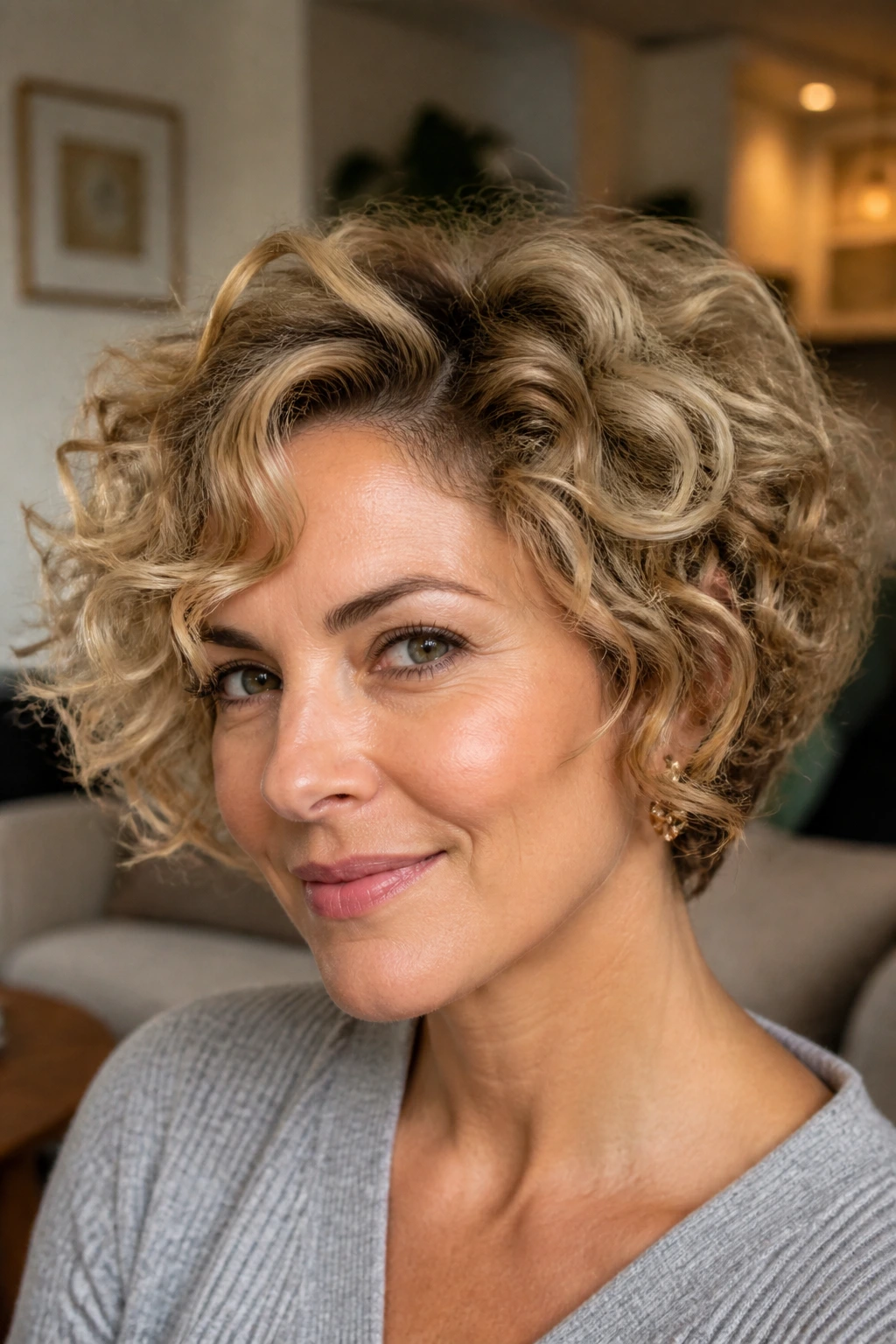
Short blonde curls need more regular shape checks than long hair, because one uneven layer can change the whole outline. A trim every 6 to 10 weeks is a sensible range for most of these cuts, with shorter pixies usually needing a closer schedule and bobs able to stretch a little longer if the perimeter stays tidy.
Tone maintenance depends on how fast your blonde pulls warm. Some people need a purple shampoo every other week; others barely need it at all. If the blonde starts to look beige in a good way, leave it alone. If it starts turning yellow at the ends, step in lightly, not aggressively.
Night care matters more than it gets credit for. Pineapple the curls loosely, sleep on silk, and avoid flattening the crown under a tight tie. Short hair can still get crushed. It just happens faster and with less drama, which is somehow more annoying.
Questions People Ask Before They Book
Will lowlights make my blonde curls look darker overall?
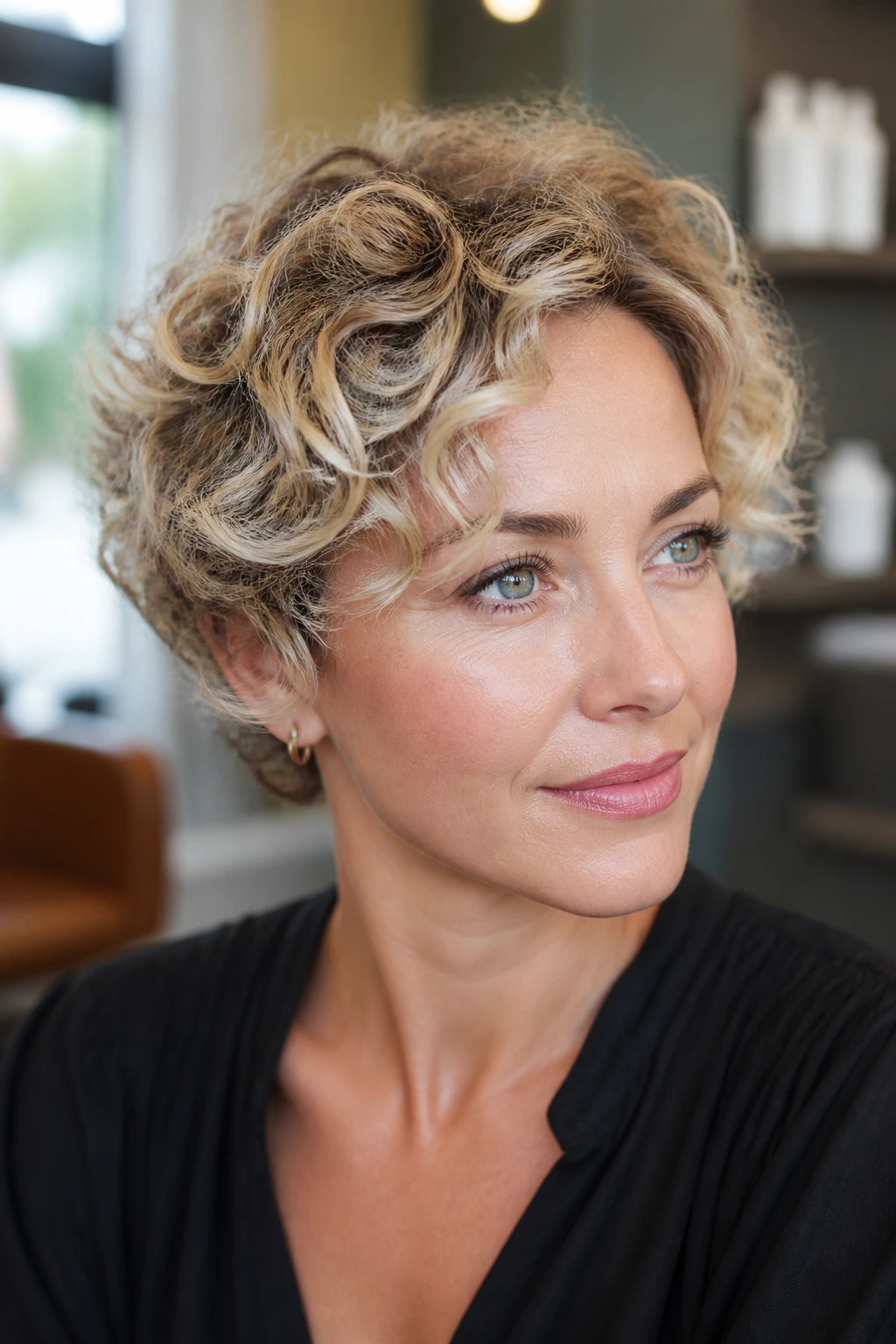
Not if they’re placed well. Interior lowlights add depth without stealing the brightness from the surface, so the hair reads richer rather than darker.
What lowlight color works best with short blonde curls?
Caramel, beige brown, mushroom, and soft ash are the safest bets. Pick warmth if your skin looks better with gold tones, and pick ash if your blonde turns brassy fast.
Should curly hair be cut dry for these styles?
Often, yes — especially for bobs, pixies, and crops. Dry cutting shows the real length and shrinkage, which matters a lot when the cut is short.
Can fine curls wear a pixie with lowlights?
Absolutely, but the layers need to stay soft. Too much texturizing can make fine curls look sparse, so ask for shape and lift rather than aggressive thinning.
How often should I get a trim?
Most short curly blonde cuts look best with trims every 6 to 10 weeks. Pixies usually need the tighter end of that range; bobs and mini lobs can stretch a little longer.
What if my curls shrink more than I expected after the cut?
That usually means the dry length was not checked carefully enough. The fix is to talk about shrinkage before the cut starts and ask the stylist to finish the perimeter with the curls fully dry.
Can I wear these styles with tighter coils?
Yes, and the rounded crop, tapered natural cut, and textured halo shapes are especially good for that. The color should stay in the interior and on the outer halo, not painted in big blocks.
Do I need purple shampoo every wash?
No. That’s a quick way to dry out the curls. Use it only when the blonde starts to look yellow, then follow with moisture.
The Shape Holds Best When the Color Has Depth
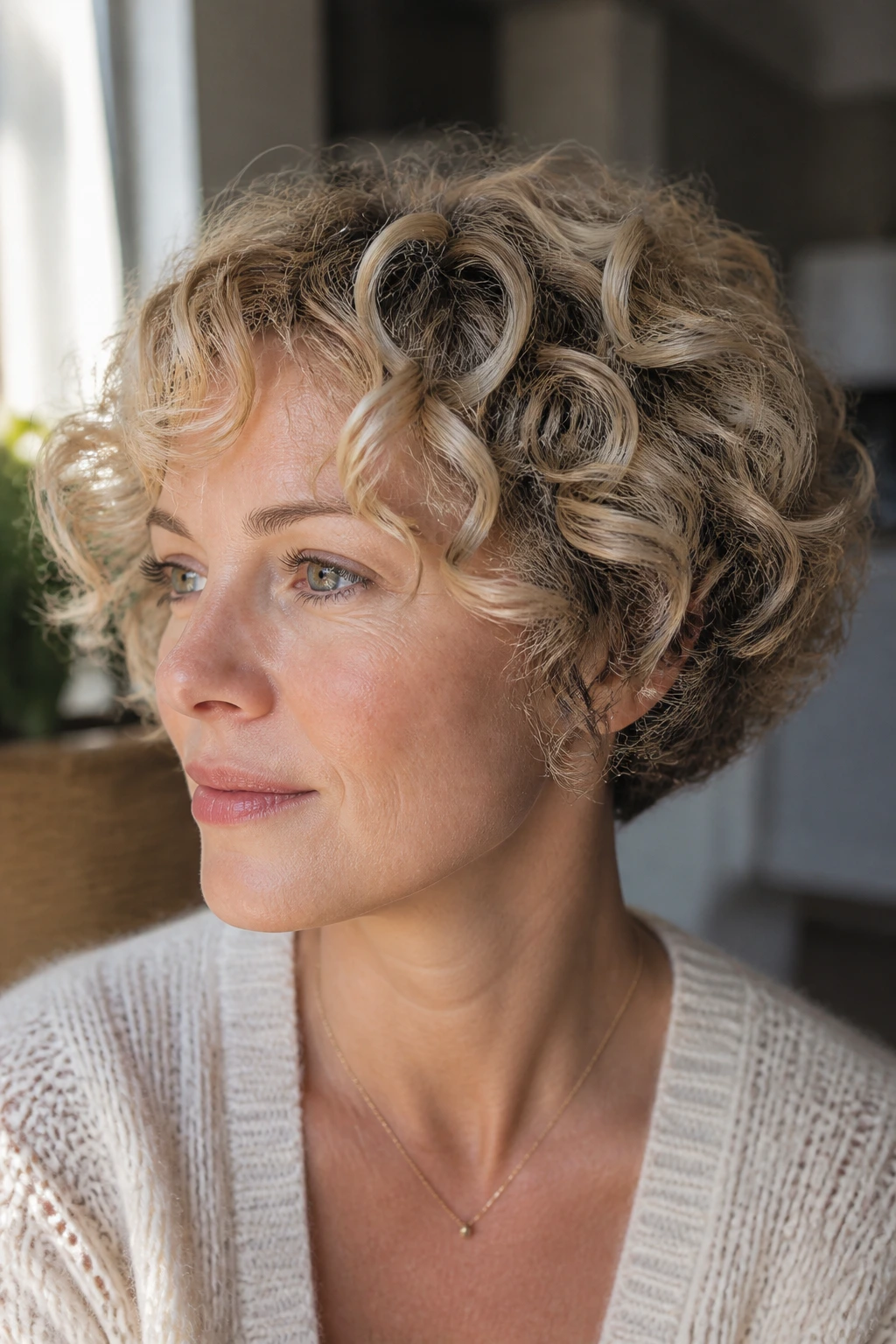
Short blonde curls do not need more brightness just because they’re short. They need edges, shadow, and a shape that still makes sense after the hair has dried, expanded, and done its usual curly-person thing. That’s why lowlights matter here more than in a lot of other color situations. They hold the outline together.
Pick the cut that matches your curl pattern, not the one that looks easiest on a straight-haired mood board. A good bob, pixie, shag, or crop can carry plenty of color, but only if the blonde has somewhere to rest. Give the curls a little depth underneath, and the whole style starts behaving better.