



Thick hair and a medium bob can be a beautiful match—or a triangle-shaped headache if the cut ignores where the weight really lives. The best med bobs for older women with thick hair don’t fight the density. They shape it. They take that generous fullness and tuck it into a line that hits the cheekbones, the jaw, or just below the chin in a way that looks deliberate instead of puffy.
That’s the difference between a bob that behaves and one that needs a round brush, five clips, and a small prayer every morning. With thick hair, length alone is not the problem. The problem is bulk in the wrong places: too much width at the sides, too much heaviness at the nape, or too little movement through the top. A good medium bob fixes that by using clean edges, internal weight removal, and just enough layering to let the hair move without exploding outward.
The cuts below are not all doing the same job. Some slim the profile. Some soften a strong jaw. Some keep volume where thick hair naturally wants to collapse. Some are polished enough for a dinner out, others are better left a little undone. That range matters, because thick hair has a stubborn streak, and older women know exactly how fast a flattering cut can turn fussy if it is too short, too blunt, or too aggressively thinned.
Why These Medium Bobs Stand Out
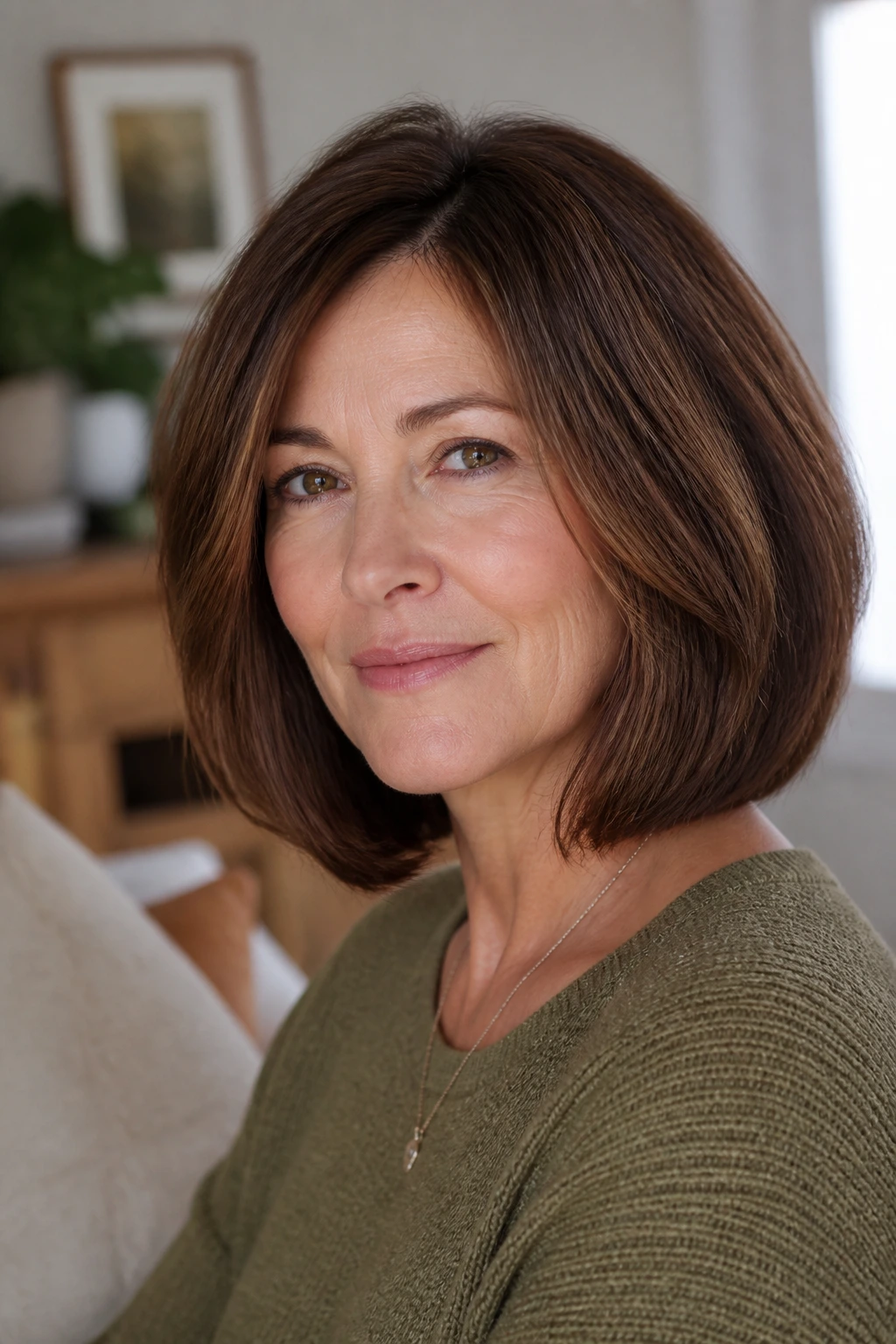
-
They control bulk without killing body: Thick hair needs shape, not punishment. The right medium bob removes weight from inside the cut, then leaves enough perimeter to keep the outline clean.
-
They sit in the flattering zone: A length that lands between the jaw and collarbone can soften the neck, balance the cheekbones, and keep the silhouette from feeling helmet-like.
-
They work with silver, gray, and dyed hair: Dense hair often holds a strong outline even when the color changes, which is why a crisp bob can look sharper on salt-and-pepper strands than on freshly colored hair.
-
They style fast when the cut is right: A good medium bob usually needs only a blow-dry, a bend at the ends, or a few minutes with a hot brush. No elaborate rescue mission required.
-
They grow out better than a short crop: When thick hair grows, it gains weight fast. A medium bob gives you a little room before the shape starts to collapse.
-
They can be tailored, not just shortened: The real trick is in the interior cutting. Some bobs need stacking, some need long layers, and some need only a hint of removal under the surface.
1. The Soft Stacked Bob With a Gentle Nape Lift
This is the cut I reach for when thick hair keeps kicking outward at the back. The nape sits a touch shorter, the crown gets a soft lift, and the front stays long enough to avoid that choppy, overdone wedge look. It feels tidy without looking stiff.
Why it works: The small stack in the back takes pressure off the neckline, which is where thick hair often starts to balloon. You get shape where the bulk lives most stubbornly, and that matters more than chasing trendy layers that look cute for a week and then go wide. On straight or slightly wavy hair, this bob stays neat with a quick blow-dry and a dab of smoothing cream on the ends.
If you wear glasses, this shape plays well because it leaves the sides clean. It also works nicely on silver hair, which tends to show every line of the cut. That can be a blessing. A sharp nape and a clean outline make gray hair look intentional, not accidental.
2. The Collarbone Lob With Long, Quiet Layers
A collarbone lob is the most forgiving option in the whole group, and I mean that in the best way. It gives thick hair somewhere to hang out without sitting so long that the weight drags everything flat. The layers are long, low-key, and mostly there to keep the ends from forming a shelf.
What makes it different: Unlike shorter bobs, this one keeps the perimeter below the chin, which is helpful if your hair swells when the weather turns damp or your texture has a mind of its own. The shape is especially kind to women who like to tuck one side behind the ear. The front pieces still move, but the cut won’t look lopsided when you do it.
If you want a style that can air-dry with a little bend or be blown smooth for a neater finish, this is the one. It’s not flashy. It doesn’t need to be. The power here is in how little effort it asks for once the cut has been done well.
3. The Blunt Lob With Hidden Internal Removal
A blunt outline on thick hair sounds risky until you see it done right. The secret is to keep the outside line clean while taking out weight underneath, where no one can see it. That leaves the ends looking full and dense, but not like a brick.
Best for: women who want a polished, tidy shape and do not want wispy ends. This cut is especially good if your hair is straight, coarse, or naturally shiny, because the blunt edge catches the light and gives the whole style a more precise look.
The mistake people make with this cut is asking for it to be “thinned out” all over. Don’t. That usually leaves random holes and frizzy ends that puff in humidity. Internal debulking, done properly, is a different thing. The perimeter stays strong. The bulk disappears from inside the shape. That’s the point.
4. The Feathered Bob With Soft Curved Ends
Feathering gets abused a lot. Done badly, it looks like a salon relic. Done well, it softens thick hair just enough so the ends don’t sit like a shelf under the chin. The shape moves in a more relaxed way, with curved ends that brush the jaw instead of boxing it in.
Why this one flatters: The soft curve around the face gives the eyes a place to land, which is useful if you want to draw attention upward. It also plays nicely with finer lines around the mouth and neck, since the edge of the cut doesn’t cut across the face in a harsh block.
This bob is especially nice on hair that has a little natural wave. Blow-dry it with a medium round brush, bend the ends slightly under, and stop before it gets too perfect. A little air in the shape keeps it from feeling dated. Too much polish ruins the whole thing.
5. The Side-Swept Bob With a Deep Part
A deep side part can do more than a full set of layers sometimes. It lifts one side, narrows the top, and gives thick hair a directional shape instead of a wide one. That tilt matters. It takes the roundness out of the silhouette without making the cut severe.
Why it works: Thick hair often wants to split evenly down the middle and mushroom on both sides. A side part interrupts that pattern. It also lets the front pieces swoop across the forehead, which is forgiving if you want softer framing around the eyes.
If you have a cowlick near the part, ask your stylist to work with it instead of fighting it. A bob like this can be tailored to the direction your hair already likes. Fighting a stubborn growth pattern usually ends in a fight. Working with it tends to look better and take less time.
6. The Rounded Bob That Curves Under the Jaw
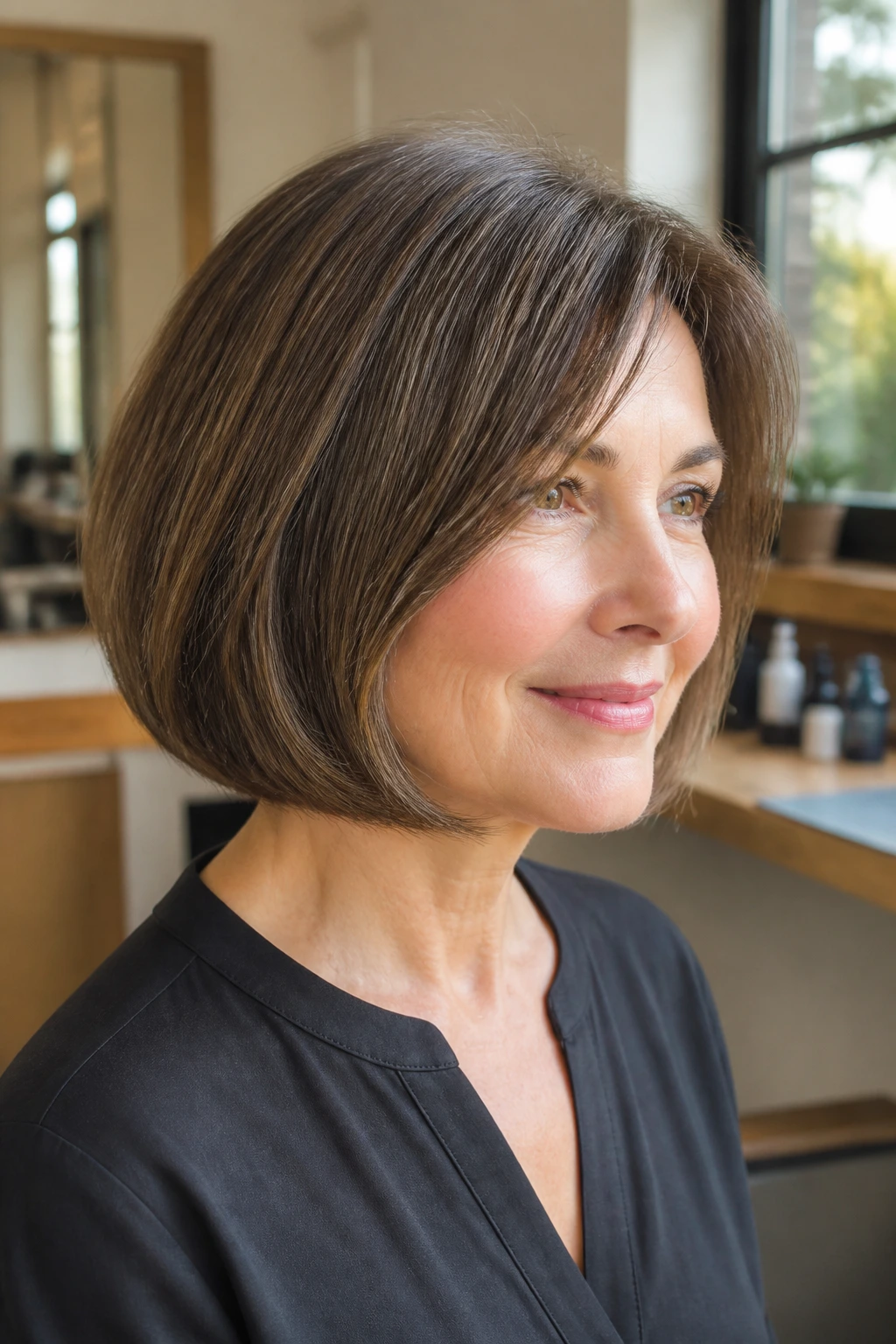
This one has old-school bones, but the right version looks clean and current. The length sits around the jawline or just below it, and the ends curve under in one smooth line. Thick hair loves a rounded bob when it is cut with enough control, because the shape keeps the width contained.
The appeal is in the profile. From the side, the hair curves in toward the neck instead of flaring out. That can make the face look a little longer and the neck a little finer, which is often what people want from a medium bob without saying it out loud.
You’ll need some styling help with this cut. A round brush or a hot brush gives it that tucked-under finish. If you let it air-dry completely straight, the silhouette can turn boxy. That’s the tradeoff. The upside is that when it’s styled well, it looks polished in a way that never gets old.
7. The Inverted Bob With a Clean Shape in Back
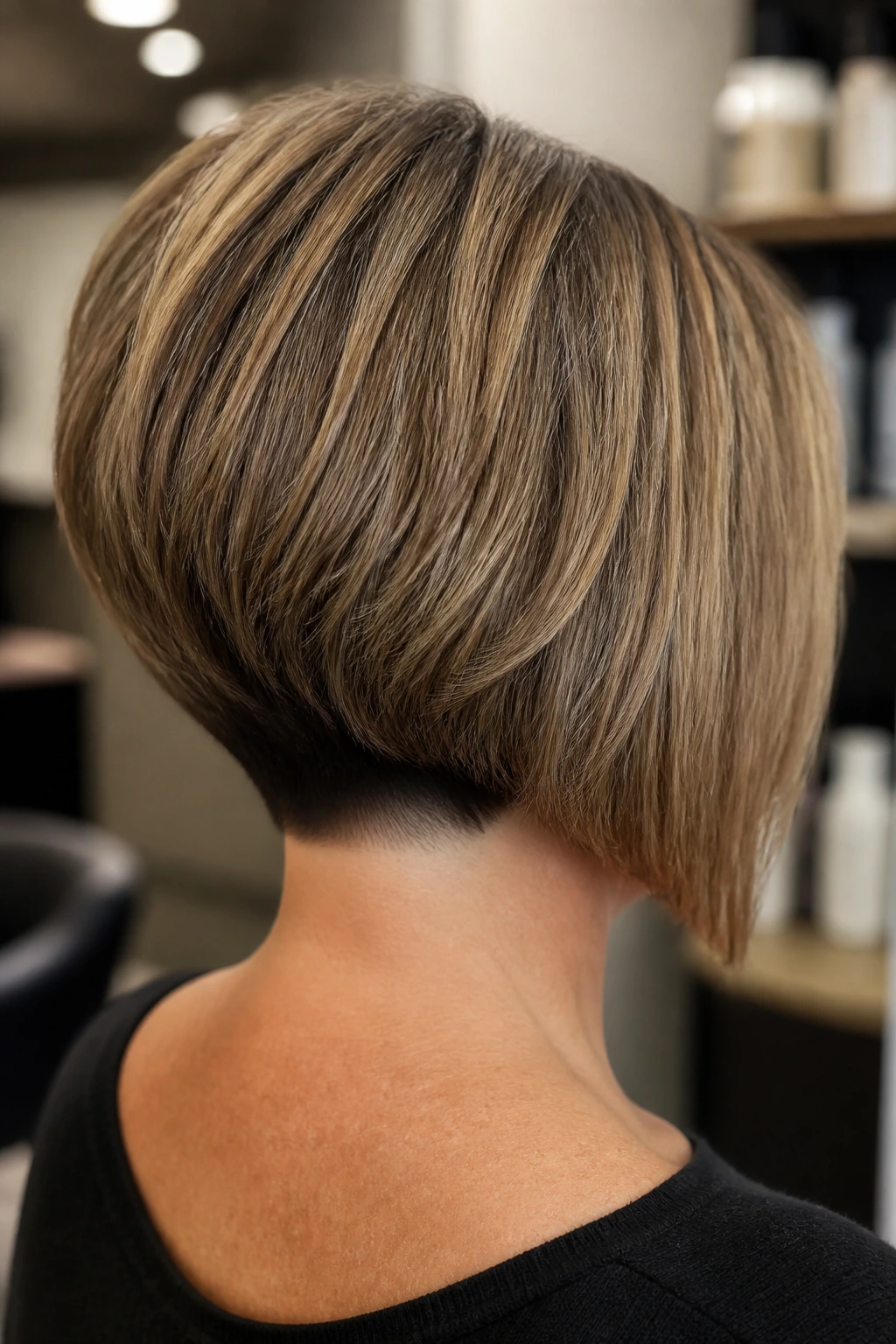
Shorter in the back, longer in the front—that angle can be magic on thick hair if it is not overdone. The inverted bob builds lift at the nape and leaves the front pieces long enough to soften the face. It is one of the best options if you want a little drama without going into sharp-edged territory.
The back stays off the neck, which can make thick hair feel lighter the minute it is cut. Meanwhile, the front still brushes the cheeks and jaw, so the style doesn’t feel severe. That contrast is what gives this bob its energy.
It’s a good choice if your hair tends to collapse at the crown and puff at the sides. The shape corrects both problems at once. Keep the layers smooth, not choppy, or the whole thing can start looking too architectural.
8. The Choppy Bob With Piecey Ends
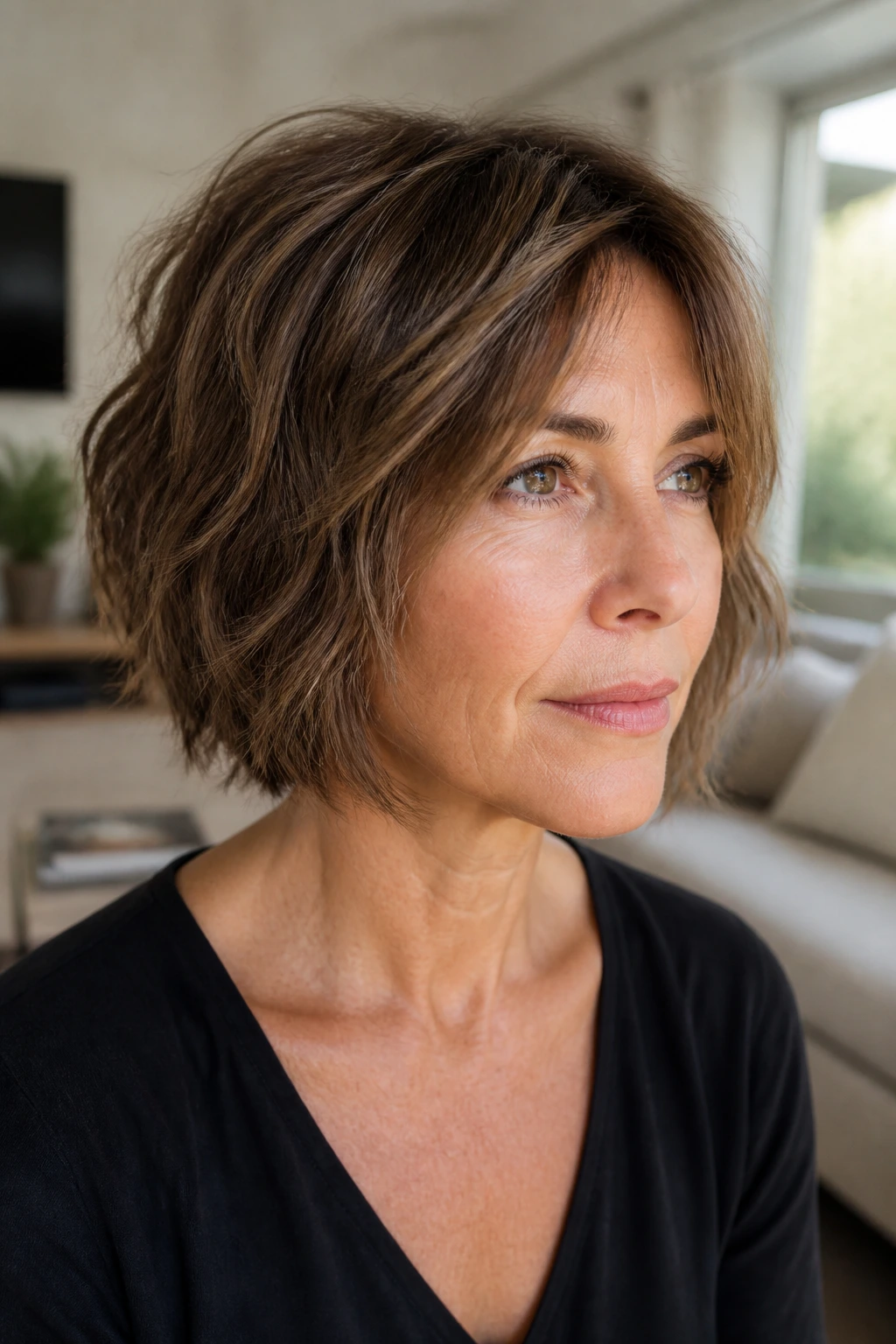
If your thick hair has wave, bend, or a little natural grit, a choppy bob may be the most forgiving cut on this list. The ends are broken up just enough to keep the shape from feeling heavy, and the overall finish is intentionally a little piecey. Not messy. Piecey.
What to ask for: internal texture, not random thinning. The difference matters. Texture should create movement; it should not create frizz. A good choppy bob still has a shape you can point to. It just doesn’t sit there like a helmet.
This is also a smart cut if you don’t want to spend ages polishing every strand into place. A bit of mousse, a rough dry, maybe a small iron bend on the front pieces, and you’re done. It’s a friendlier style than the sleek bobs, which can be fussy on humid days.
9. The Wavy Lob That Stays Friendly on Day Two
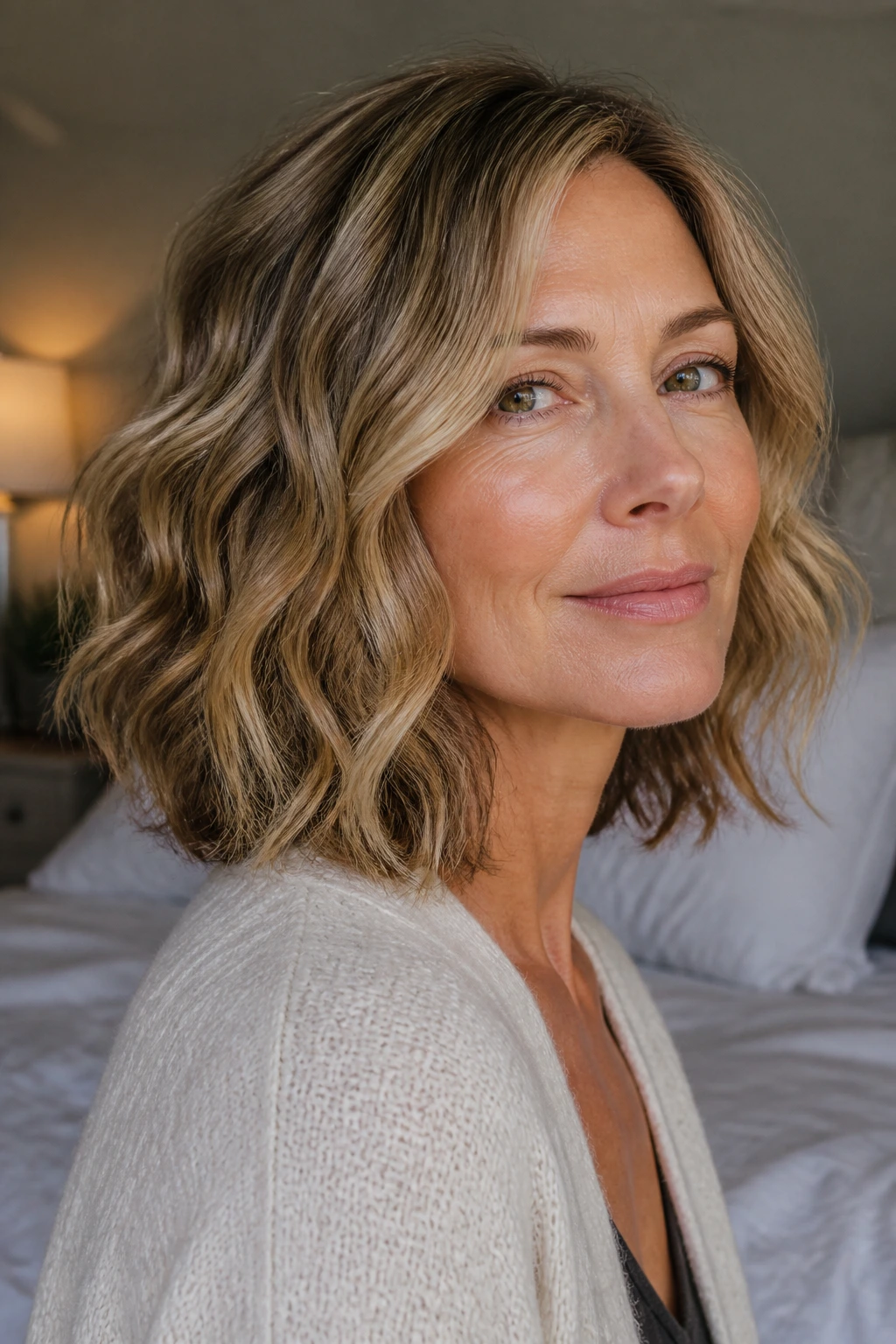
Some cuts look good only when they’ve just been styled. This one gets better when it loosens up. The wavy lob works with natural bend and a little movement, so it doesn’t fall apart the minute you sleep on it. For thick hair, that matters.
The length usually hits somewhere near the collarbone, which gives the waves room to drop without expanding into a puffball. Long layers keep the ends from building too much weight. The result is relaxed but not sloppy.
If your hair has a wave pattern that likes to flip out at the ends, this lob can actually use that. A small amount of cream or spray on damp hair is usually enough. Don’t overwork it. The charm is in the easy bend, not in forcing every wave into formation.
10. The Bob With Curtain Bangs
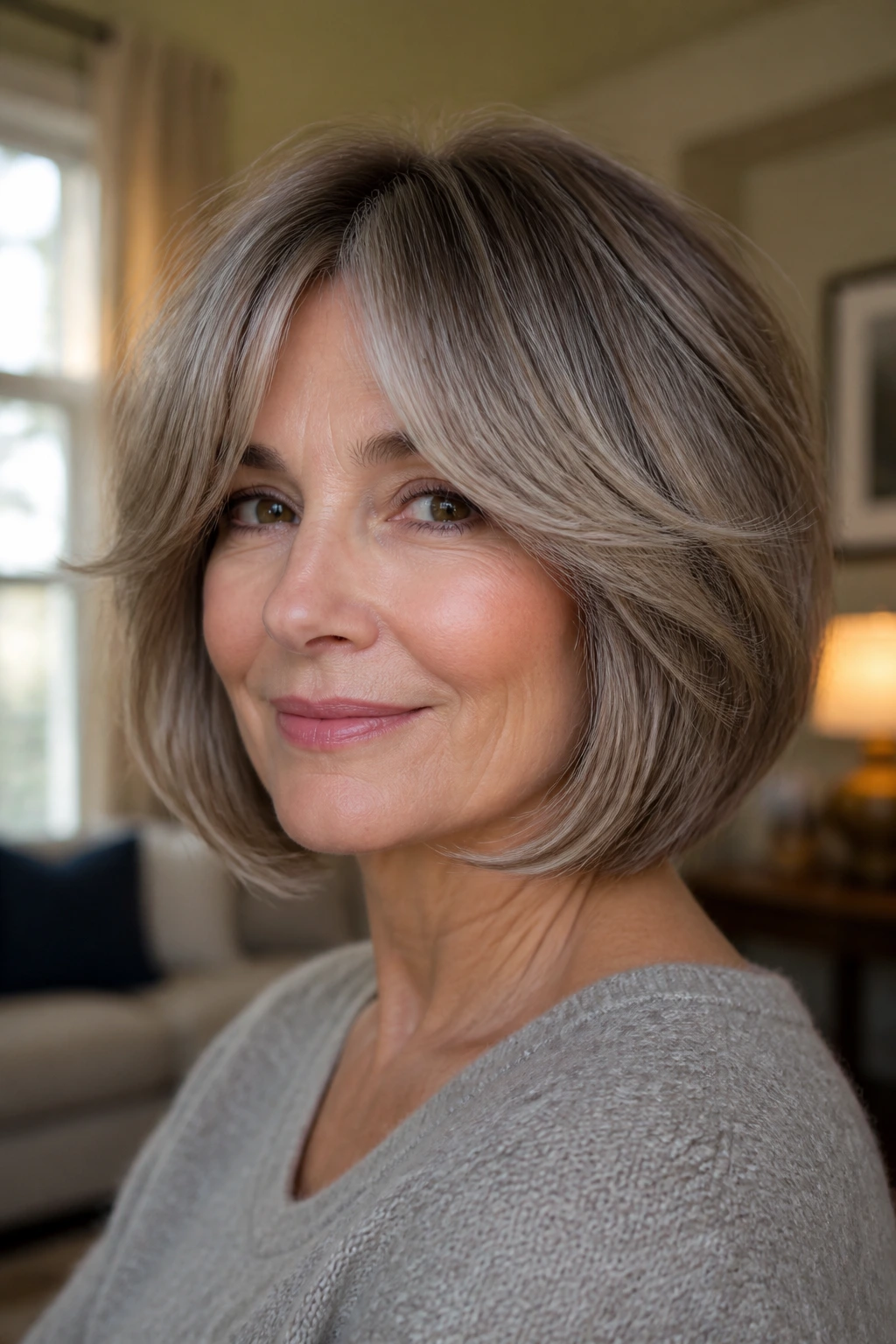
Curtain bangs can make thick hair feel lighter around the face without chopping the whole front into a heavy fringe. They split softly down the middle, skim the cheekbones, and give the bob a softer edge. On older faces, they can be especially kind around the forehead and temples.
Why they work here: Thick hair has enough body to support bangs without them disappearing into the rest of the cut. Curtain bangs also grow out more gracefully than a blunt fringe, which is a practical bonus nobody talks about enough. You can keep them longer, brush them to the side, or wear them centered when you want a little softness.
This pairing works best when the bob underneath is not too bulky. The bangs should feel like part of the shape, not a curtain thrown over a heavy cut. If the ends are too thick, the whole thing gets crowded fast.
11. The Sleek Glass Bob With a Narrow Silhouette
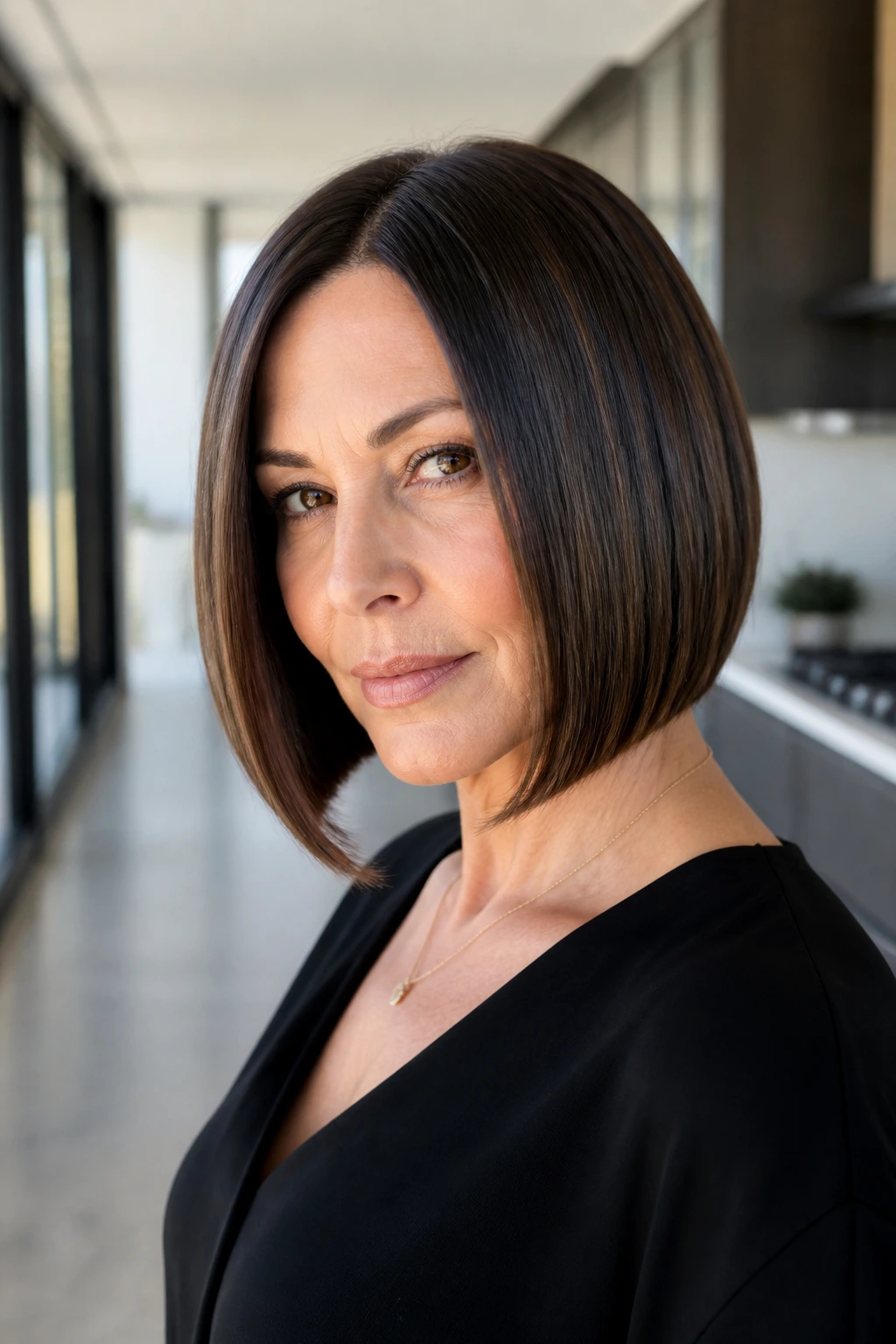
This is the polished one. The one with shine. The one that looks expensive when the cut is accurate and the blow-dry is smooth. Thick hair can pull off a glassy bob beautifully, but only if the interior weight has been handled with restraint.
The goal is not to flatten the hair into submission. The goal is to narrow the silhouette so the sides don’t balloon out at ear level. Ask for subtle internal removal, a clean perimeter, and no unnecessary choppiness around the ends. The shine does the rest.
This style is strongest on straight hair or hair that can be straightened without fight. It also looks striking on silver strands because shine and clean geometry make gray hair read crisp, not dull. You do have to maintain it. Sleek bobs look fabulous right after styling and a little less forgiving when slept on badly.
12. The Soft Asymmetrical Bob
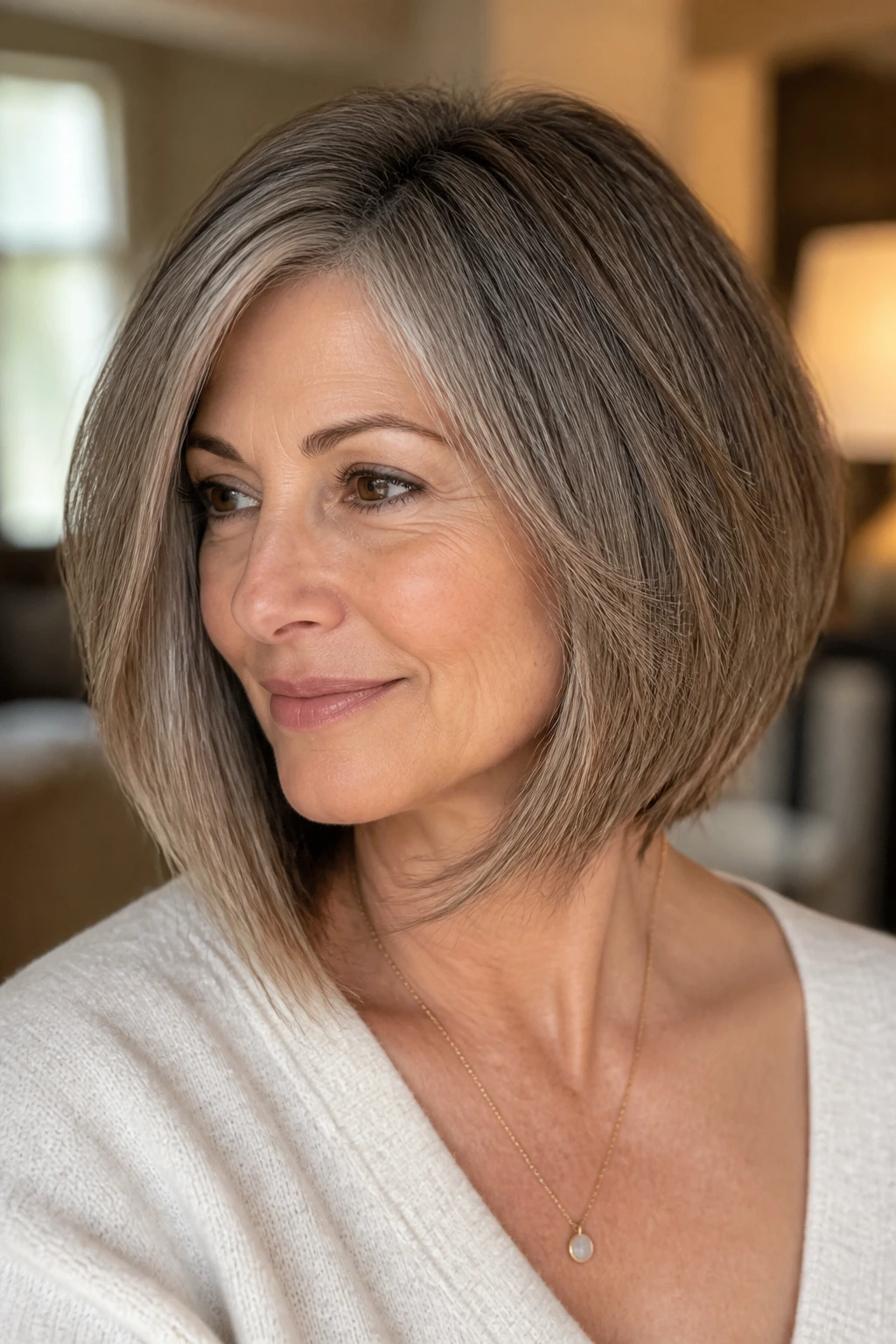
Asymmetry gives thick hair direction. One side hangs a little longer, and that small difference changes the whole feel of the cut. It can lengthen the face, soften a strong jaw, and keep the style from feeling too symmetrical or blocky.
You don’t need a dramatic angle for this to work. A modest difference of an inch or so is enough to create movement. That’s the beauty of it. The shape feels modern without shouting.
This bob is especially useful if one side of your hair naturally behaves better than the other, which happens more often than people admit. Instead of fighting that difference, the asymmetry absorbs it. A good stylist will place the longer side where your part and growth pattern already want to go.
13. The Shaggy Bob With a Light Crown

A shaggy bob can go wrong fast if the layers are too aggressive. But when it’s done with a light hand, the shape can be a gift for thick hair. You get lift at the crown, movement through the sides, and enough roughness around the ends that the whole cut feels lived-in rather than stiff.
The trick is keeping the crown layers light. You want air, not a mullet. Too much layering at the top can make the cut look dated or overly textured. A few well-placed layers are enough to stop the bulk from sitting like a cap.
This is a good choice for women who don’t want a highly polished style every day. A touch of texturizing spray, a scrunch with the hands, and maybe a quick bend around the face is often enough. Easy. Slightly undone. Not lazy.
14. The Neck-Grazing Graduated Bob
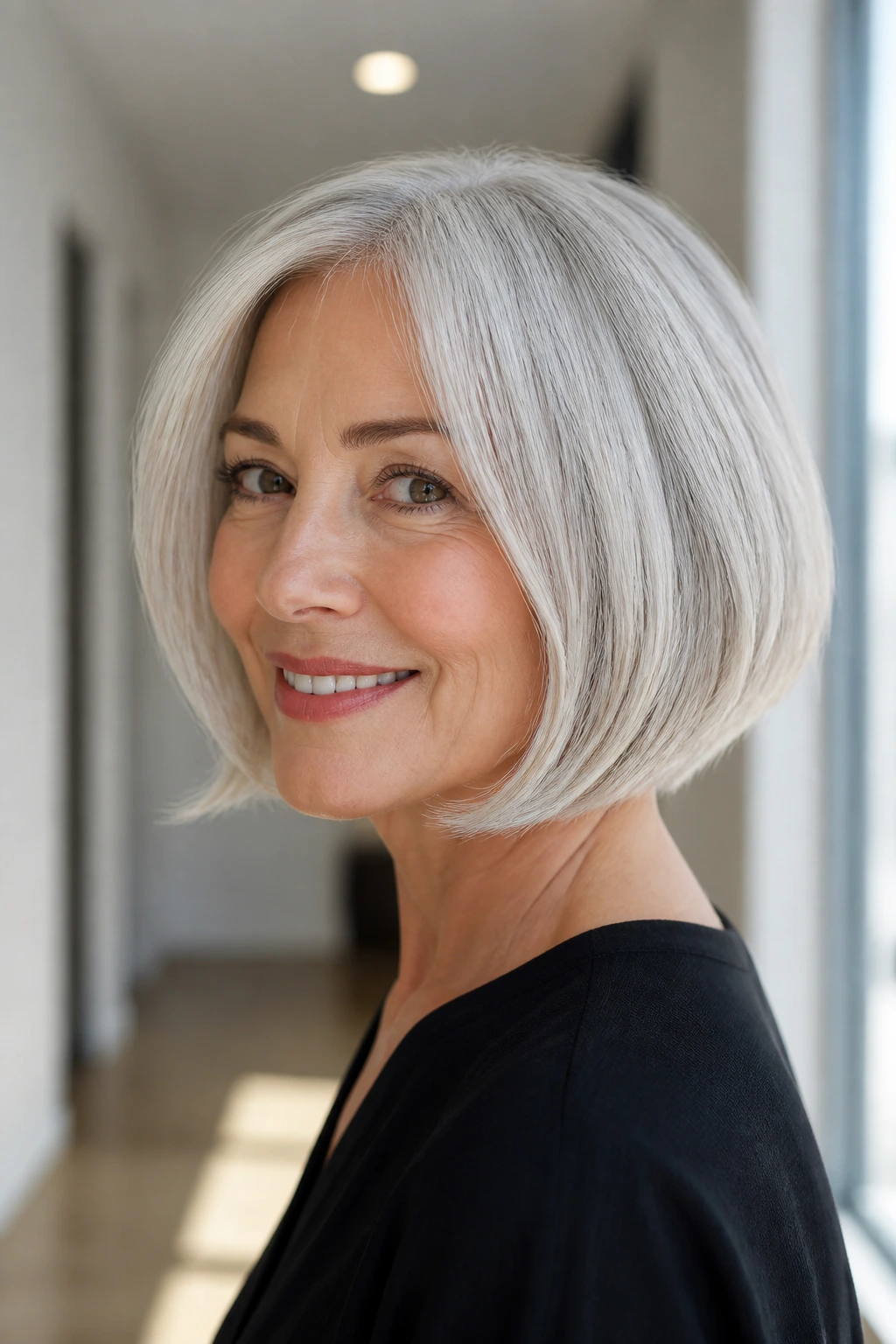
If you want shape but not much length, this is one of the smartest cuts in the group. The bob grazes the neck, which keeps thick hair from feeling heavy on the shoulders, and the graduation in the back keeps the outline close to the head. It looks tidy even when you’re not trying hard.
This cut is especially good for silver or white hair because the shape reads clearly. There’s no confusion about where the line is. The hair falls where it is told to fall. That kind of clarity is underrated.
It can also be a nice answer for anyone whose hair expands in humid weather. The shorter back keeps the bulk contained. The front can still be softened with a side sweep or a little curve around the jaw. Clean, not severe. That’s the sweet spot.
15. The Long Layered Lob With Face-Framing Pieces
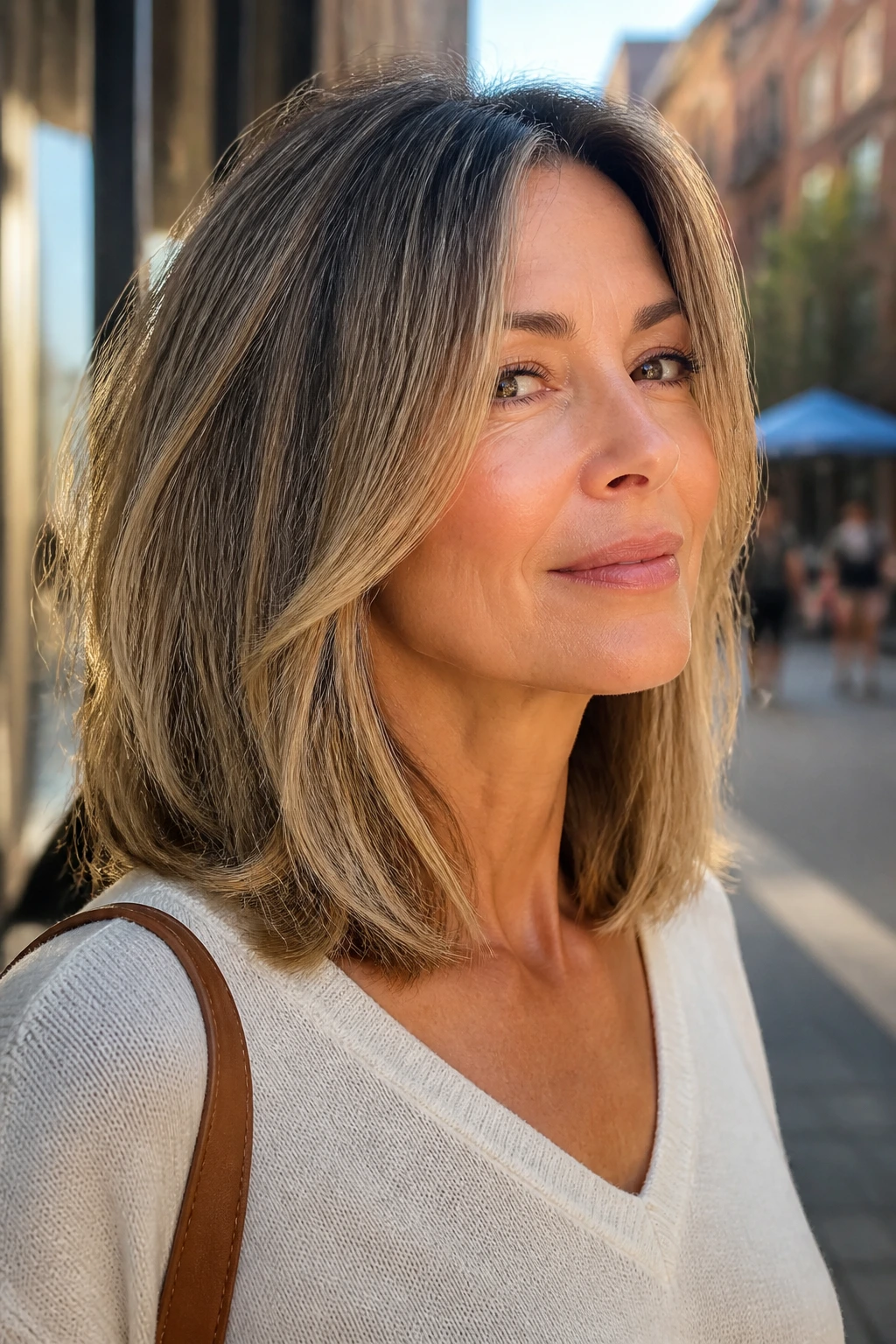
This is the classic “I want hair, not a project” cut. The lob stays long enough to feel feminine and flexible, while the face-framing pieces carve out shape around the cheekbones and jaw. On thick hair, that little bit of framing keeps the style from becoming one heavy curtain.
It’s especially flattering if you wear your hair down most days and want to tuck it behind the ears sometimes. The layers stop the front from dragging the whole look flat. If you like a side part, even better. The shape picks up a little lift without needing a ton of teasing or styling.
This is one of the safest bets if you’re changing from a longer style and want something in the medium bob family without feeling abruptly cropped. It gives you a landing place.
16. The Curly Bob Cut to the Curl Pattern
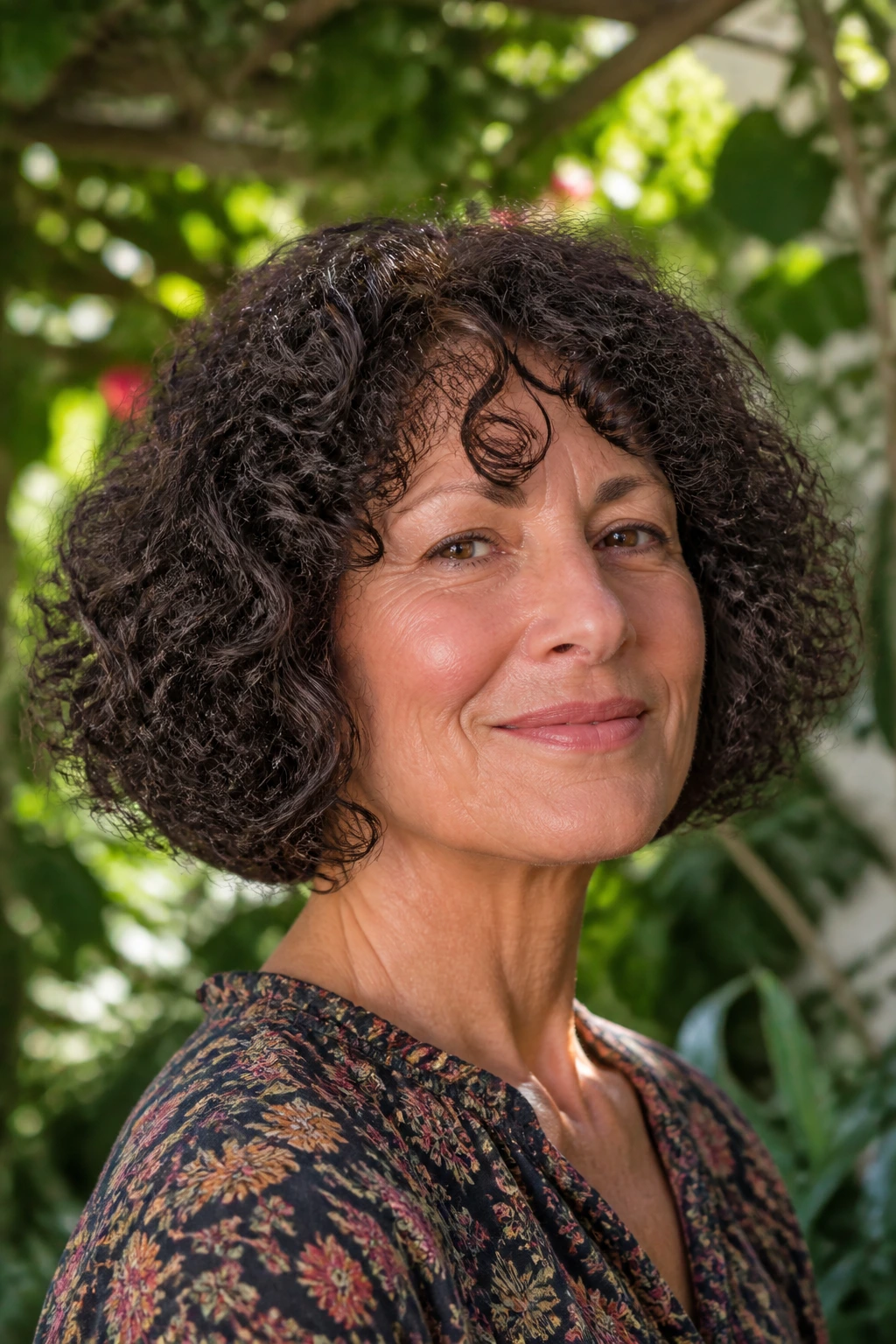
Curly thick hair needs a different plan entirely. A good bob for curls is not cut like straight hair and then hoped into submission later. It should be shaped around the curl pattern, with length chosen after the curls spring up, not before.
That means a dry cut or a curl-by-curl approach can be worth the time. If the hair is cut wet and left too long, the shrinkage can turn the shape boxy or weirdly short in the wrong places. And if it is thinned too much, you end up with frizz and a halo. Nobody wants that.
A curl-friendly bob can be one of the most flattering medium cuts for older women with thick hair because it embraces body instead of trying to erase it. The silhouette feels alive, and the curls soften the face naturally. Keep the layering controlled, and let the texture do the work.
17. The Tucked-Under Classic Bob
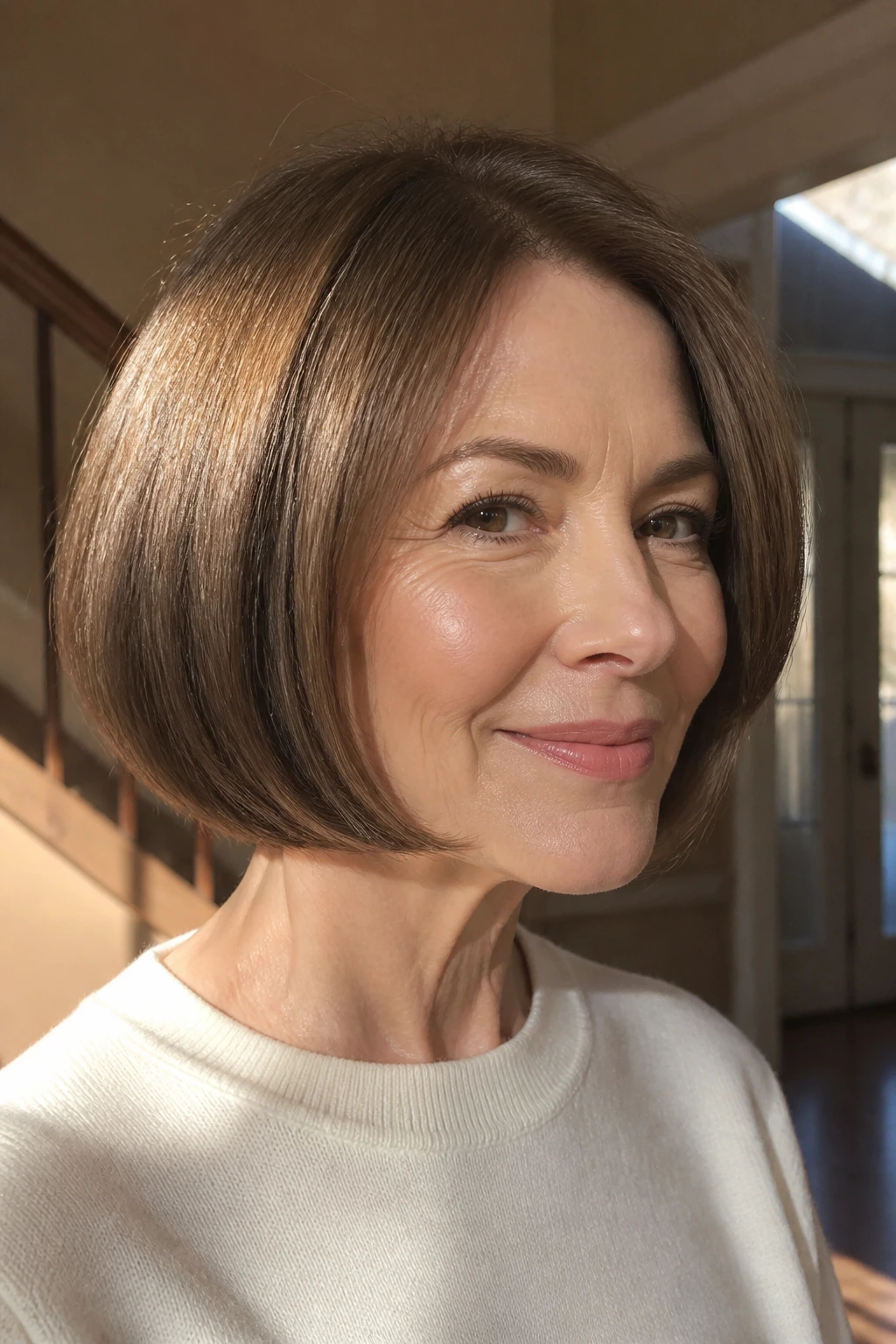
There’s a reason this shape keeps coming back. Thick hair looks neat when the ends tuck under cleanly, and the classic bob gives you that tidy curve without a lot of fuss. It’s a little more structured than the feathered versions and a little less severe than a blunt lob.
The best part is how it sharpens the outline around the jaw without feeling hard. The hair curves inward, which can make the neck look longer and the face more open. That’s a small shift, but it changes everything in a mirror.
This cut is strongest when the perimeter is precise. If the ends start fraying or splitting, the whole illusion falls apart. Keep the line healthy, and this style does what so many women want from a bob: it behaves.
18. The Razor-Soft Bob With Airy Ends
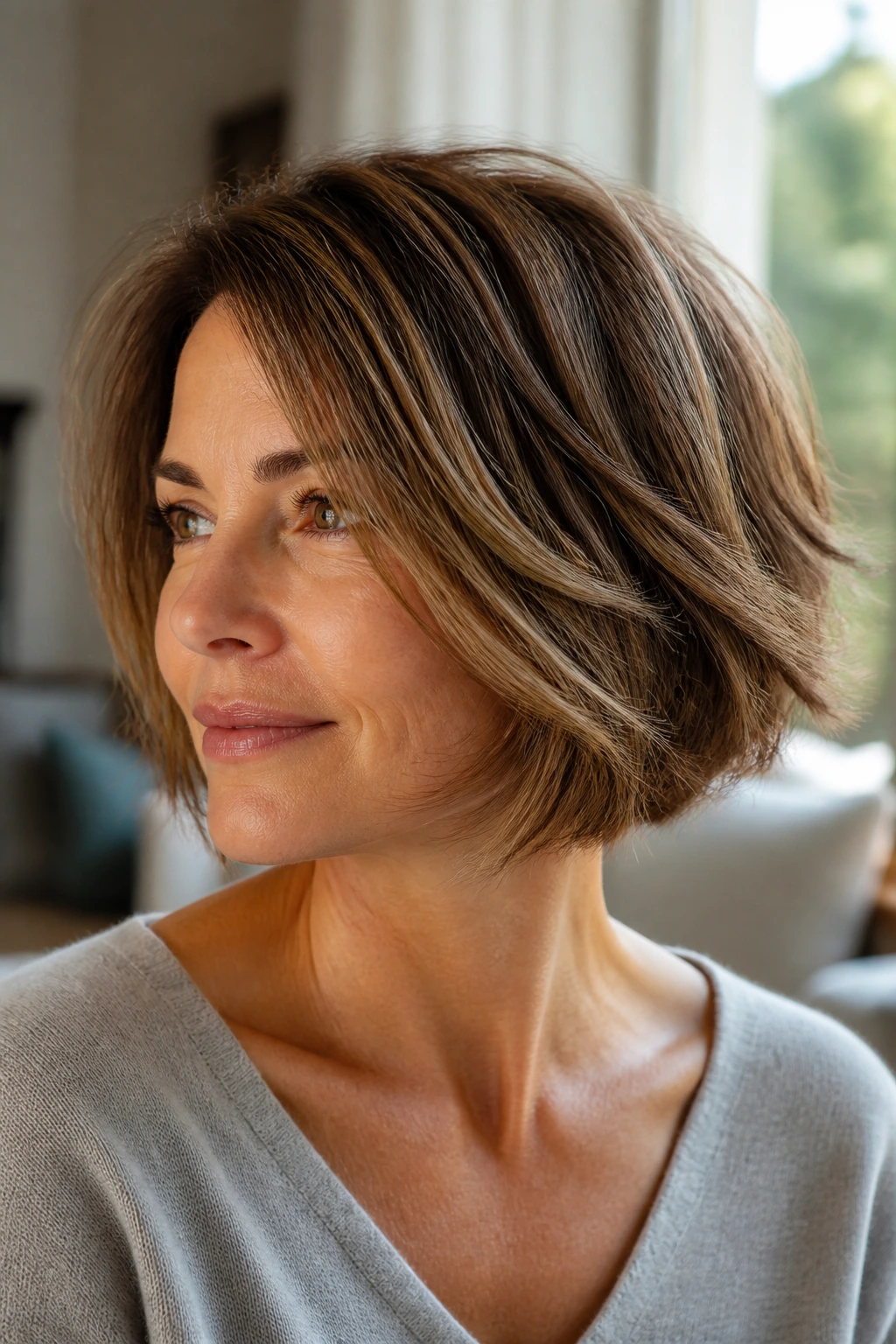
A razor-soft bob can be lovely on thick hair if the stylist has a light hand and knows when to stop. The ends look airy and movable, not blunt and blocky. That softness helps the cut sit closer to the head, especially if your hair tends to feel heavy around the chin.
But here’s the catch: razoring too much can make thick hair fuzzy. Especially coarse hair. So this is a “less is more” situation. You want gentle softening, not shredded ends.
When it’s done well, the result is a bob that has motion without looking over-layered. It can be a smart choice for women who want a breezy finish and don’t need the shape to look ultra-polished every single day.
19. The Deep Side-Part Lob With Lift at the Root

A deep side part is one of the cheapest tricks in hair, and I say that affectionately. It changes the entire line of a thick lob without changing much else. The root on the heavier side gets a lift, the front sweeps away from the face, and the whole cut feels more open.
This version works especially well if your hair tends to flatten at the crown. The lifted side creates height where you need it, and the longer length keeps the style from going too short around the jaw. It’s a good compromise cut.
The only real caution is part placement. Put the part where your hair naturally wants to lie, then nudge it a little farther over rather than forcing a dramatic flip that won’t last. Hair remembers. Sometimes annoyingly well.
20. The Blowout Bob With Swung Ends
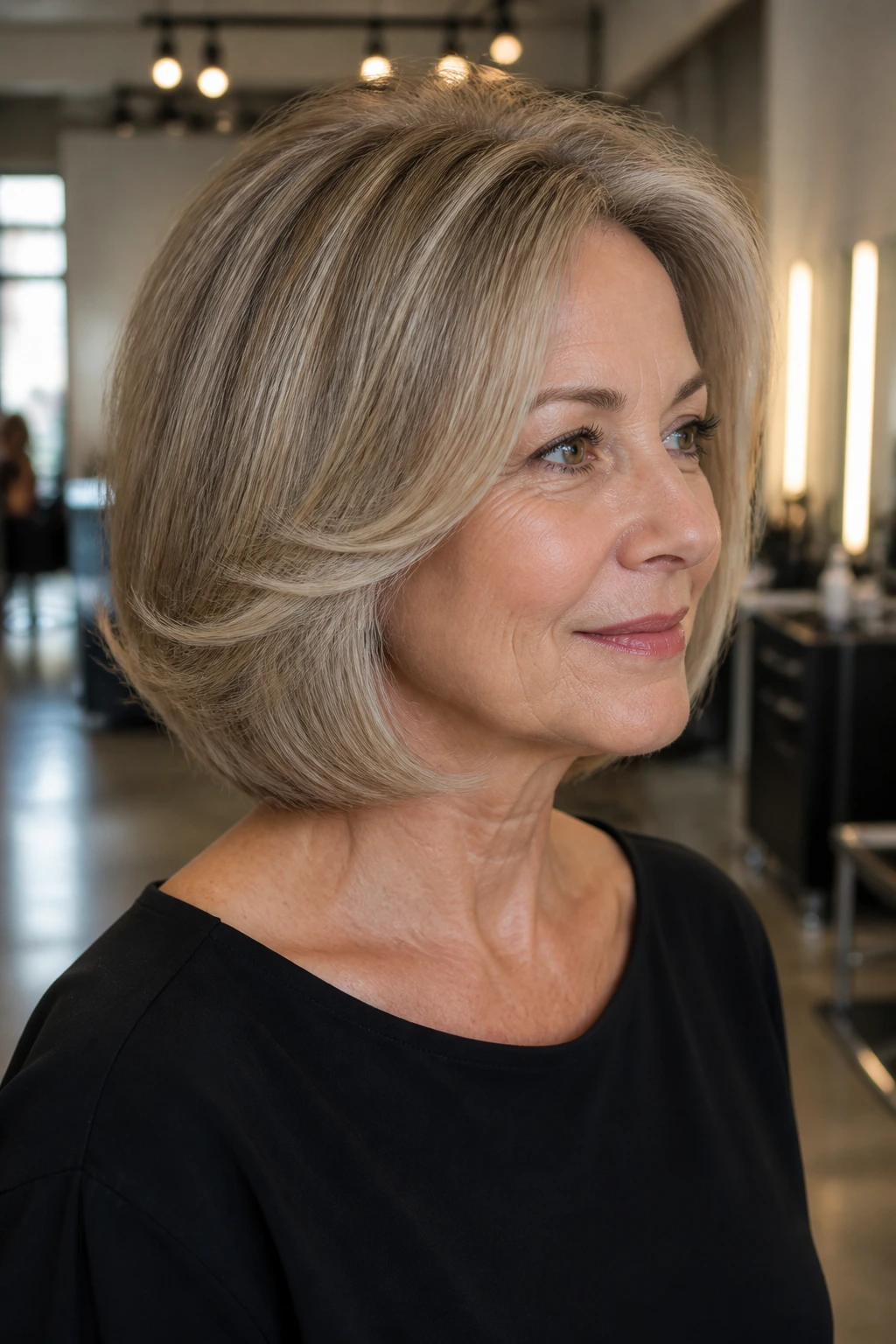
This is the salon-finish bob that makes thick hair look glamorous instead of heavy. The shape relies on a smooth blowout, lifted roots, and ends that swing under or away from the face in a controlled curve. It feels full, but not bulky.
The beauty of this cut is that thick hair already has the body to hold the shape. You don’t need to build volume from nothing. You’re refining what’s there. A round brush, a nozzle on the dryer, and a small amount of smoothing cream are usually enough.
It’s a great choice for women who like a more put-together look and don’t mind giving their hair some attention after washing. If you enjoy the feel of a freshly styled bob, this is one of the most rewarding medium cuts around.
21. The Bob With Long Perimeter and Short Internal Layers
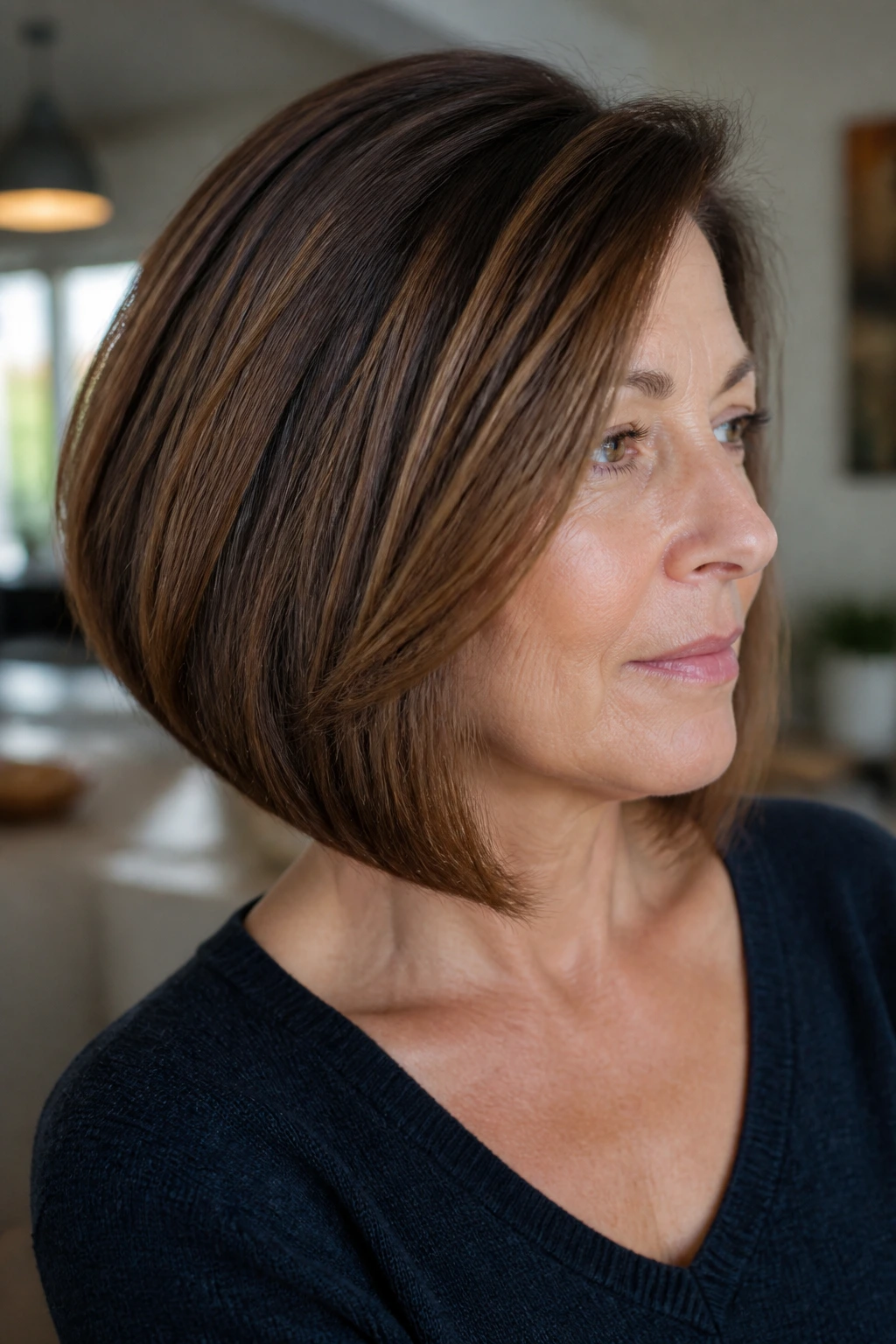
This is the stealth move. From the outside, the bob looks fairly simple and full, but inside the shape, shorter layers take the weight out of the densest spots. That lets the outside line stay smooth while the body underneath stops pushing outward.
It’s one of the smartest options for thick hair that gets puffy when it’s cut too bluntly. The perimeter stays long enough to preserve elegance, but the interior does the hard work. You get movement without the haircut looking obviously layered.
Ask your stylist to avoid over-texturizing the ends. The whole point is invisible support, not a shredded finish. When this cut works, it looks almost effortless. Almost. The structure underneath is doing a lot of quiet labor.
22. The Chin-to-Shoulder Angle Bob
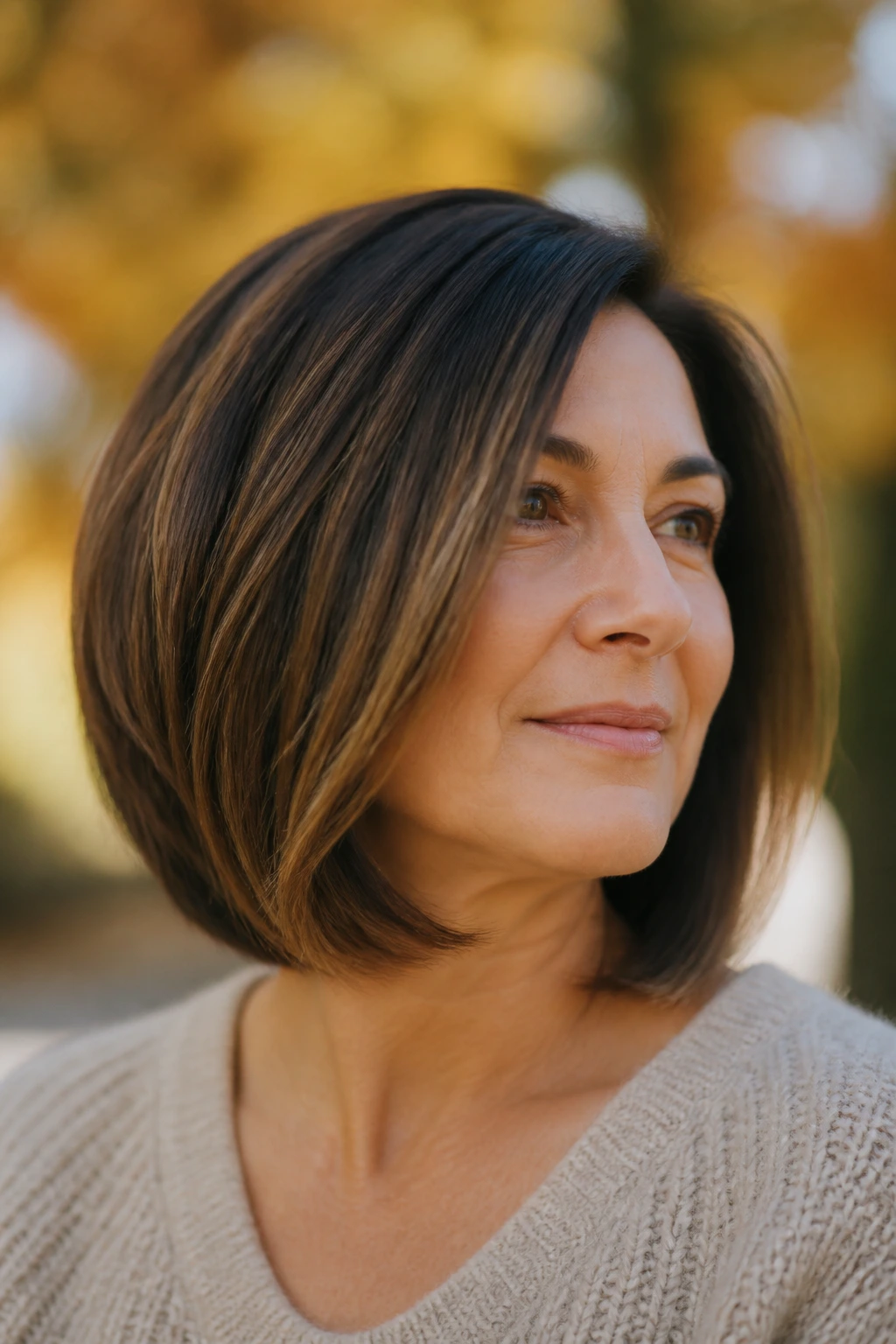
This one starts near the chin and slides toward the shoulder, which gives thick hair a long diagonal line to follow. That angle helps elongate the face and keeps the sides from reading too wide. It’s softer than an inverted bob and less formal than a blunt lob.
The front pieces can be tailored around the cheekbones, which is useful if you want a little lift around the eyes. The back stays manageable, and the overall shape has enough length to tuck, bend, or curl depending on your mood.
I like this cut for women who want movement more than precision. It has direction, but not rigidity. The angle does the flattering work, and the ends can be worn smooth or a little undone.
23. The French-Inspired Bob With a Lived-In Fringe

Not every bob needs to look freshly pressed. This one is a little softer, a little freer, and a little less concerned with perfect symmetry. The fringe is lived-in rather than blunt, and the overall length usually sits around the jaw or a touch below it.
Thick hair gives this style some backbone, which keeps it from collapsing into a limp little shape. The lived-in fringe can skim the eyebrows or split slightly in the center, which makes the whole cut feel relaxed. It’s chic in a way that doesn’t need loud styling to announce itself.
If you want something with personality but not a lot of maintenance, this is a strong choice. It suits women who like a touch of softness around the forehead and don’t mind a cut that looks better when it’s not trying too hard.
24. The Modern Wedge Bob With Softer Edges
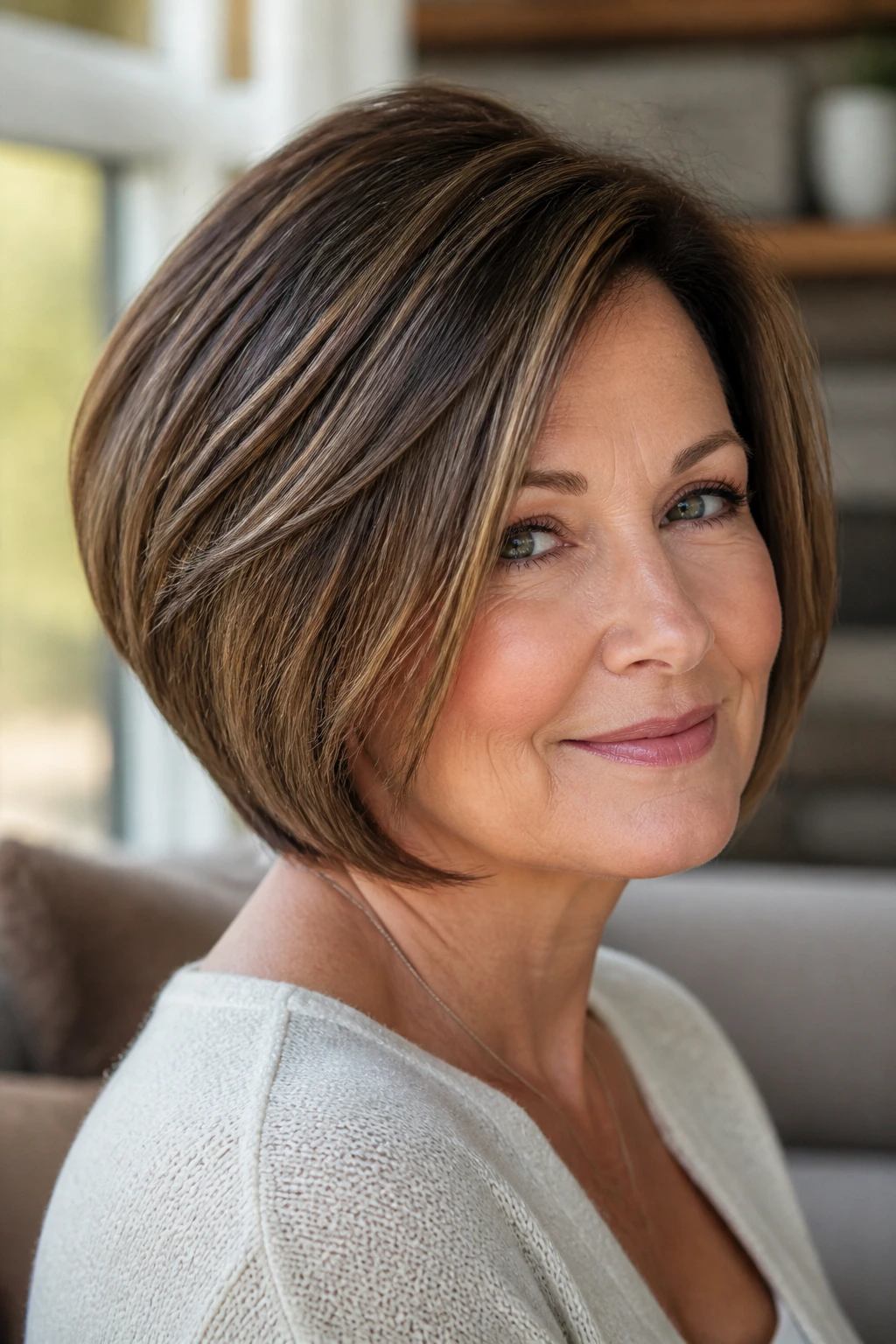
The wedge bob gets a bad reputation because old versions were stiff and a little severe. The modern take is softer. It keeps the lifted back and tapered sides, but the edges are less sharp and the overall line feels smoother. On thick hair, that structure can be a relief.
The back sits snug, which helps remove bulk where it tends to flare most. The front length keeps the face from feeling boxed in. It’s a strong shape for women who want definition and don’t mind a cut with some backbone.
This one works best when the transition from back to front is gradual rather than dramatic. Too much angle, and it starts looking costume-y. A gentle wedge is enough. That little lift at the back can make thick hair look lighter immediately.
25. The Low-Maintenance Air-Dry Bob
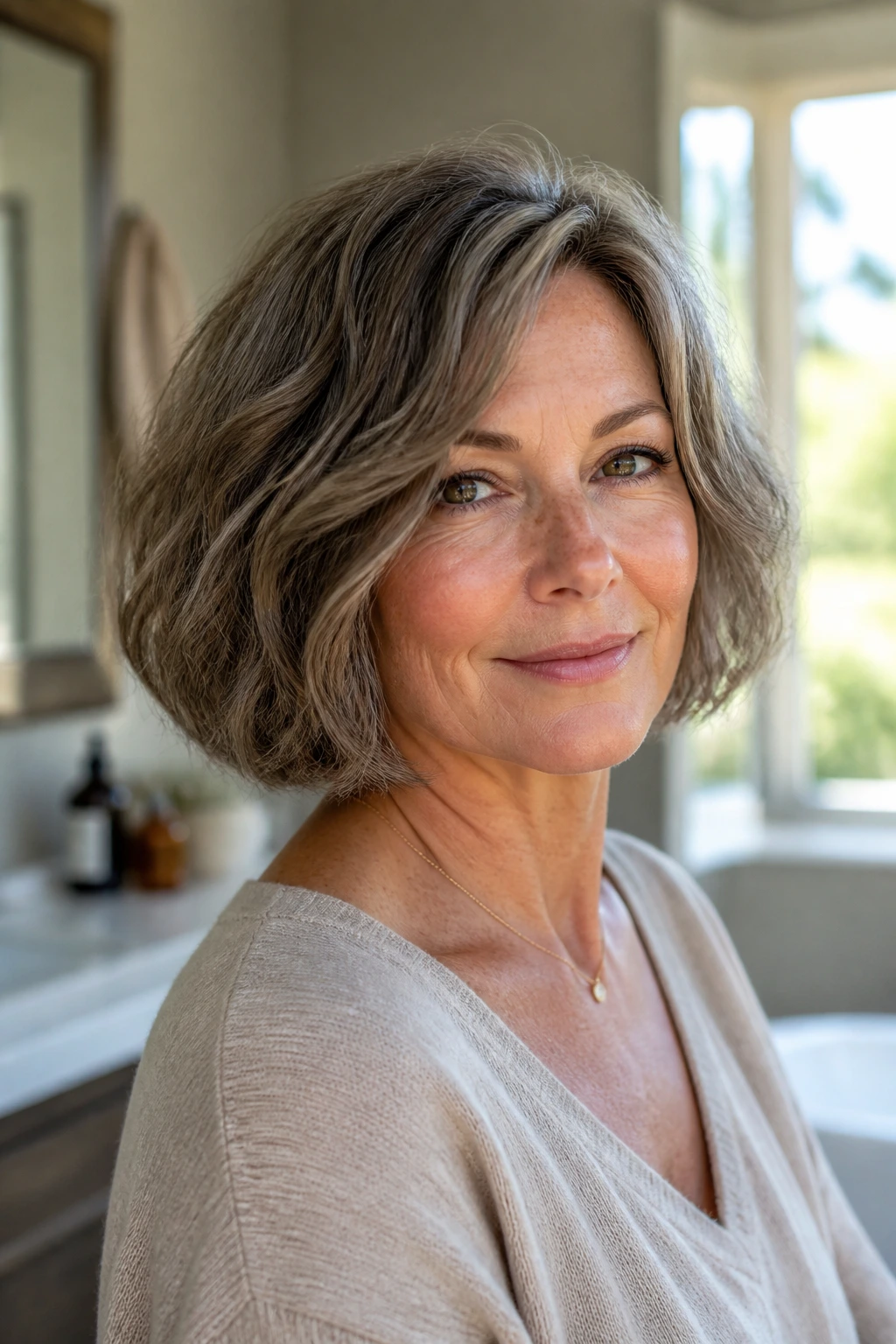
Some women want a bob they can live with, not manage. This is that cut. The shape works with natural movement, lets the hair dry without a fight, and uses the bob length to keep thick strands from taking over the whole head. It’s not fancy, and that’s precisely why it works.
The key is the interior cut. You want enough removal to stop the sides from puffing, but not so much that the ends fray. A little cream through the mid-lengths, a scrunch or a twist with the fingers, and you’re done.
If your hair has a wave or bend that only shows up when you stop messing with it, this is probably the bob that will make you happiest. It respects the hair you already have. That counts for a lot.
Why a Medium Bob Handles Thick Hair Better Than a Longer Shape
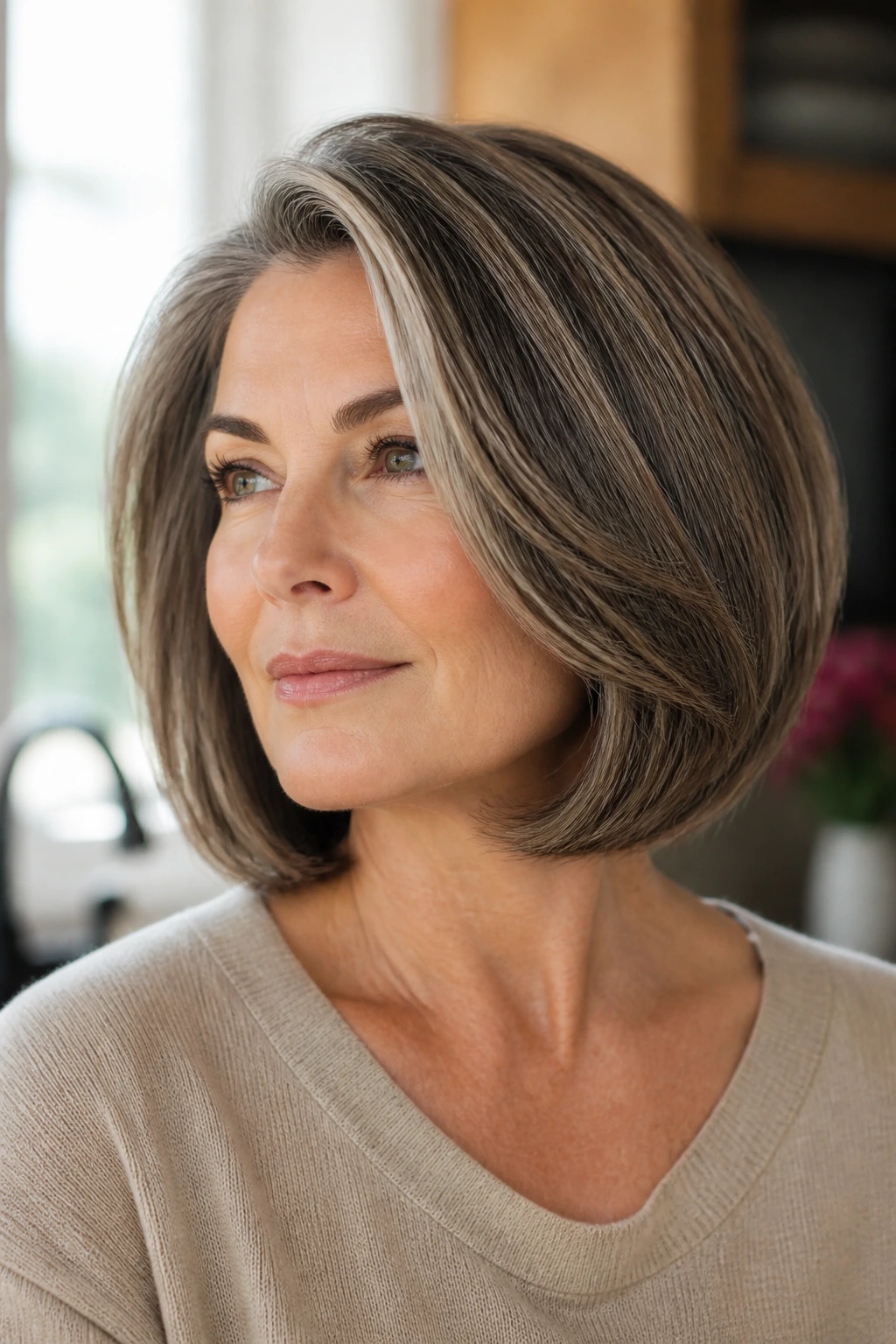
Thick hair gets heavy fast. At longer lengths, that weight can drag the crown flat while the sides still spread out, which gives the whole style a wide, tired look. A medium bob changes the math. The hair is short enough to keep the silhouette compact, but long enough to avoid the hard, blunt puff you can get from a chin-length chop that was cut with no thought.
The sweet spot is where the weight sits in the cut, not just how short it is. A good bob uses the perimeter like a frame and the interior like a hidden support system. That’s why one medium cut can look crisp and another can feel like a triangle with ambitions. Same hair. Different plan.
Thick hair also behaves better when it isn’t forced to drag across the shoulders all day. The friction from clothing can rough up the ends, especially if the hair is coarse or has a bit of wave. A medium bob avoids some of that daily wear, which helps the cut stay neat longer between appointments.
Essential Tools for Styling These Cuts at Home
-
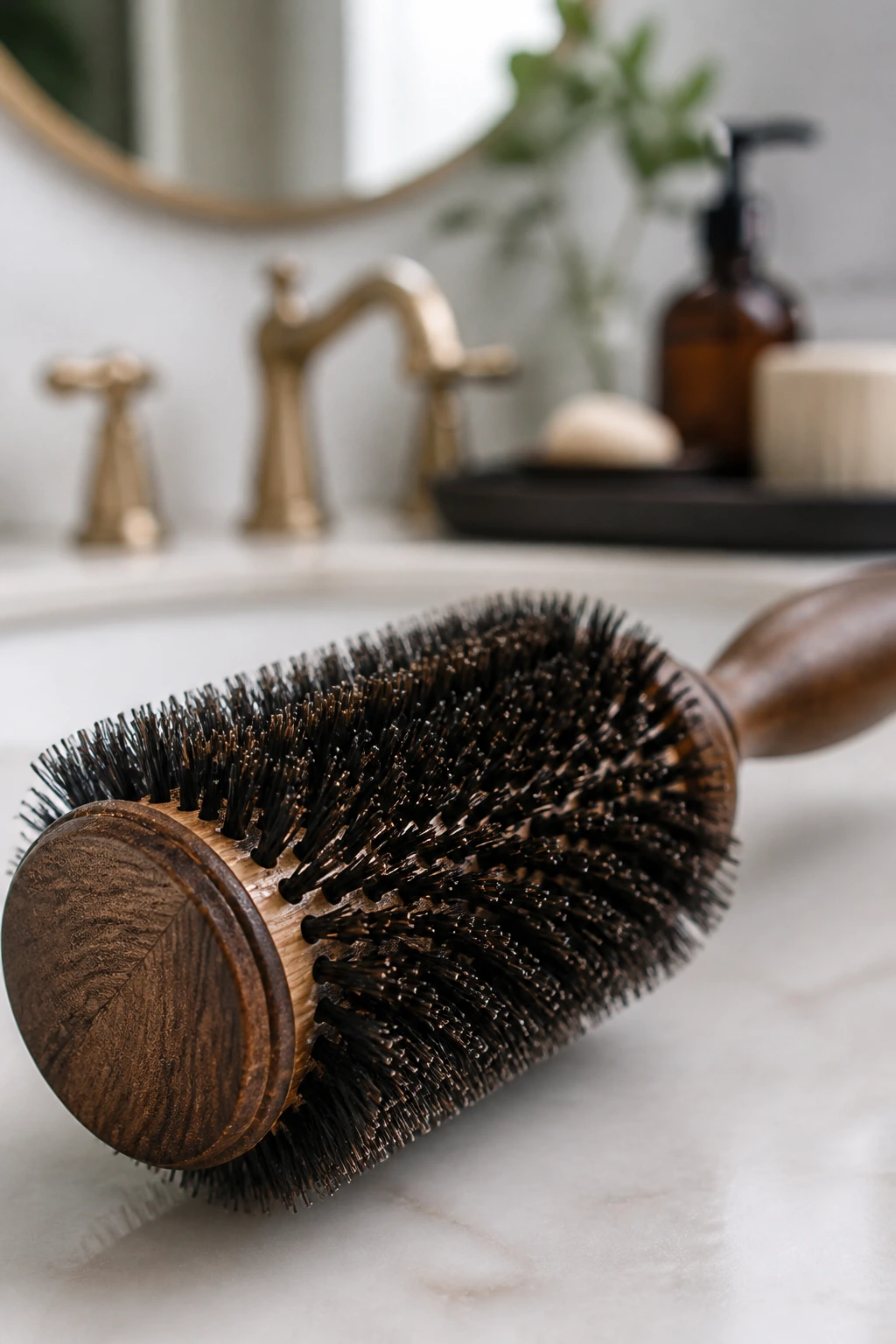
Round brush, 1.25 to 1.5 inches: Small enough to bend the ends under, large enough to keep a bob from looking curled into a tube.
-
Blow dryer with a nozzle attachment: The nozzle concentrates air and helps the cut lie smoother, especially around the crown and sides.
-
Heat protectant spray or cream: Thick hair can take heat, but it still needs protection so the surface stays smooth instead of dry and puffy.
-
Flat brush or vent brush: Useful for a faster, cleaner dry when you want volume without a full round-brush session.
-
Lightweight mousse: A small amount at the roots gives support without leaving the hair stiff.
-
Smoothing cream or serum: Best on the mid-lengths and ends, where thick hair can swell or frizz.
-
Texture spray: Handy for lob cuts, shaggy bobs, and air-dry styles that need a little grip.
-
Duckbill clips: These make sectioning easier, which is half the battle when the hair is dense.
-
Satin pillowcase: Helps reduce bend marks and roughness overnight. Plain cotton can be a bit rough on freshly styled bobs.
-
Microfiber towel or soft T-shirt: Better than rough terry cloth for blotting wet hair. Thick hair already has enough drama without being scrubbed into a halo.
What to Tell Your Stylist Before the Cape Comes On
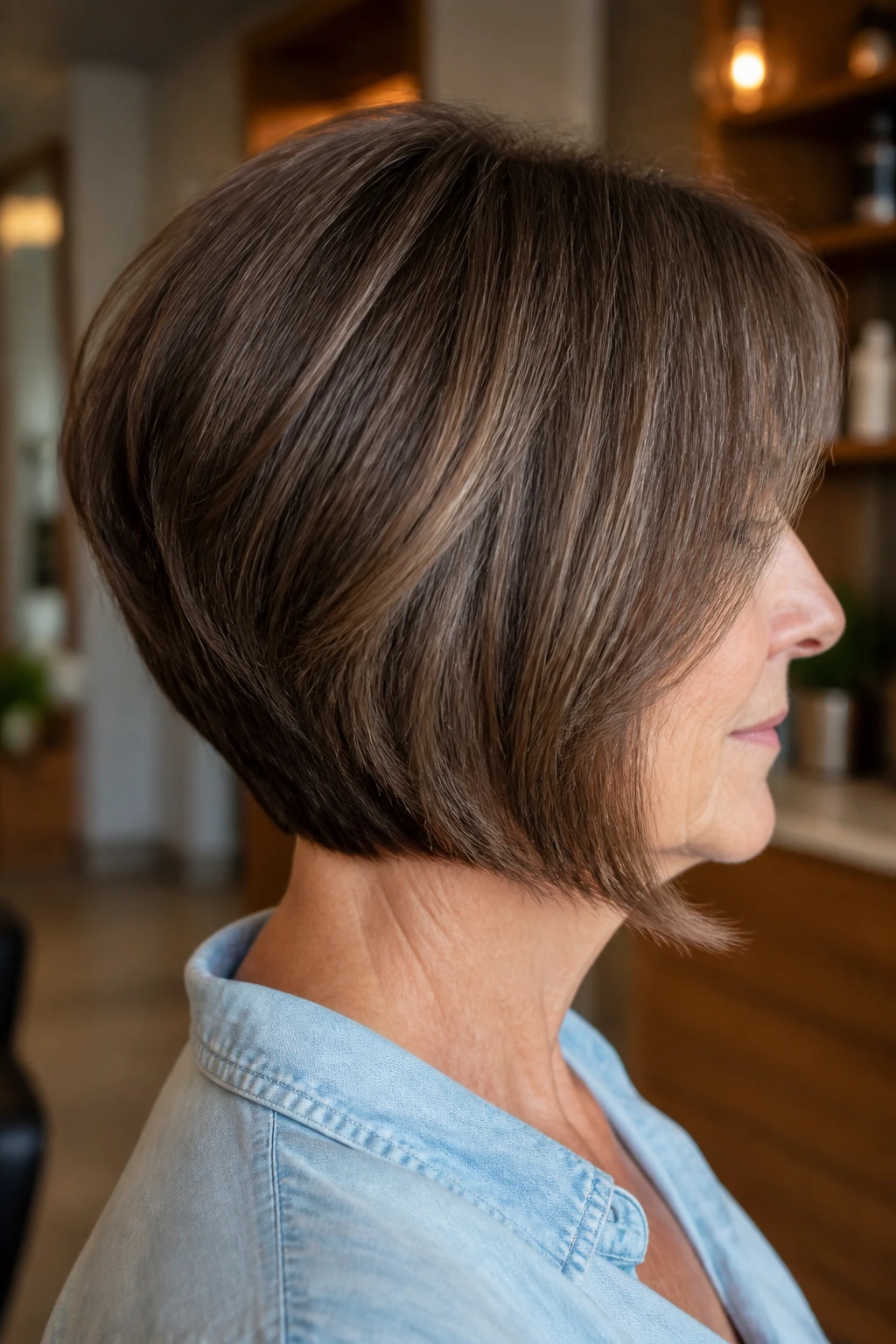
Bring photos, yes, but bring the right kind. Show at least two or three images of medium bobs on hair that looks like yours in texture and density. A glossy straight bob on fine hair can be gorgeous and still useless as a reference if your own hair is thick, wavy, and stubborn. Match the haircut to the hair, not just to the mood.
Say where you want the length to land. “At the jaw,” “just below the chin,” or “at the collarbone” is much more useful than “medium.” Those inches matter. On thick hair, one extra inch can change the whole shape from tidy to bulky.
Ask how the weight will be removed. You want to hear words like internal layering, subtle graduation, or controlled debulking. You do not want random thinning through the sides. That usually leaves the ends too wispy and the body too puffy in the wrong places.
If you wear glasses, mention that. If one side of your hair grows faster or flatter than the other, mention that too. If you want to air-dry most days, say it plainly. Stylists are not mind readers, and thick hair punishes vague requests.
How to Wear a Medium Bob from Wash Day to Day Three
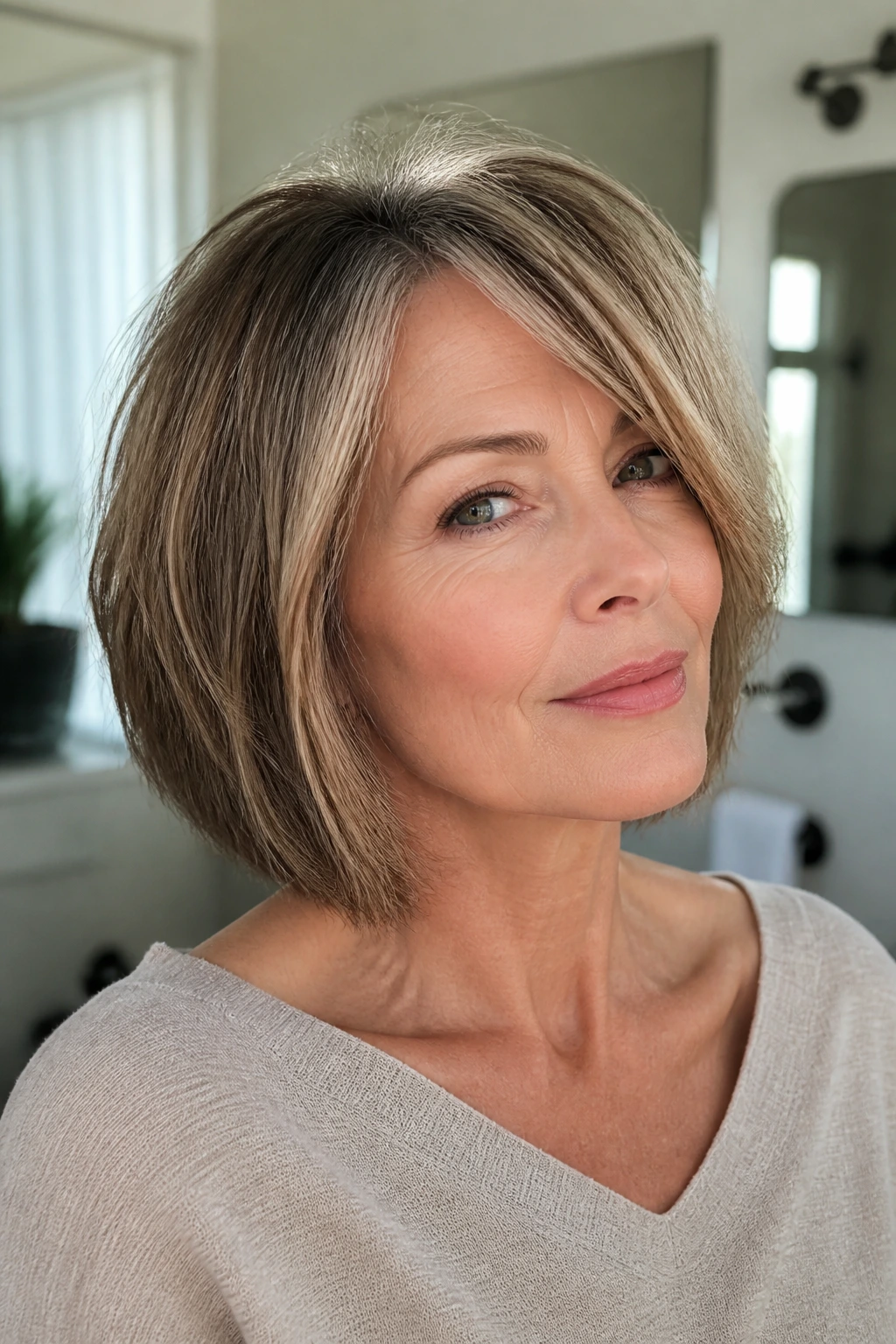
Fresh blowout: Use mousse at the roots, a heat protectant through the lengths, and a round brush to set the ends under or away from the face. The cut should look smooth, not shellacked.
Air-dry texture: Work a small amount of cream into damp hair, scrunch the ends, and leave the crown alone unless it needs a quick lift with your fingers. Thick hair often looks better when it is not overhandled.
Second-day repair: Mist the front and top lightly with water, then smooth with a brush or hot brush for two minutes. Do not soak the whole head. That tends to wake up every wave and cowlick you were trying to keep quiet.
Evening polish: A deep side part and one pass with a flat iron on the outer layer can make a bob look dressed up fast. Finish with a tiny bit of shine serum on the ends, not the roots.
Extra Styling Moves That Make the Cut Look Intentional
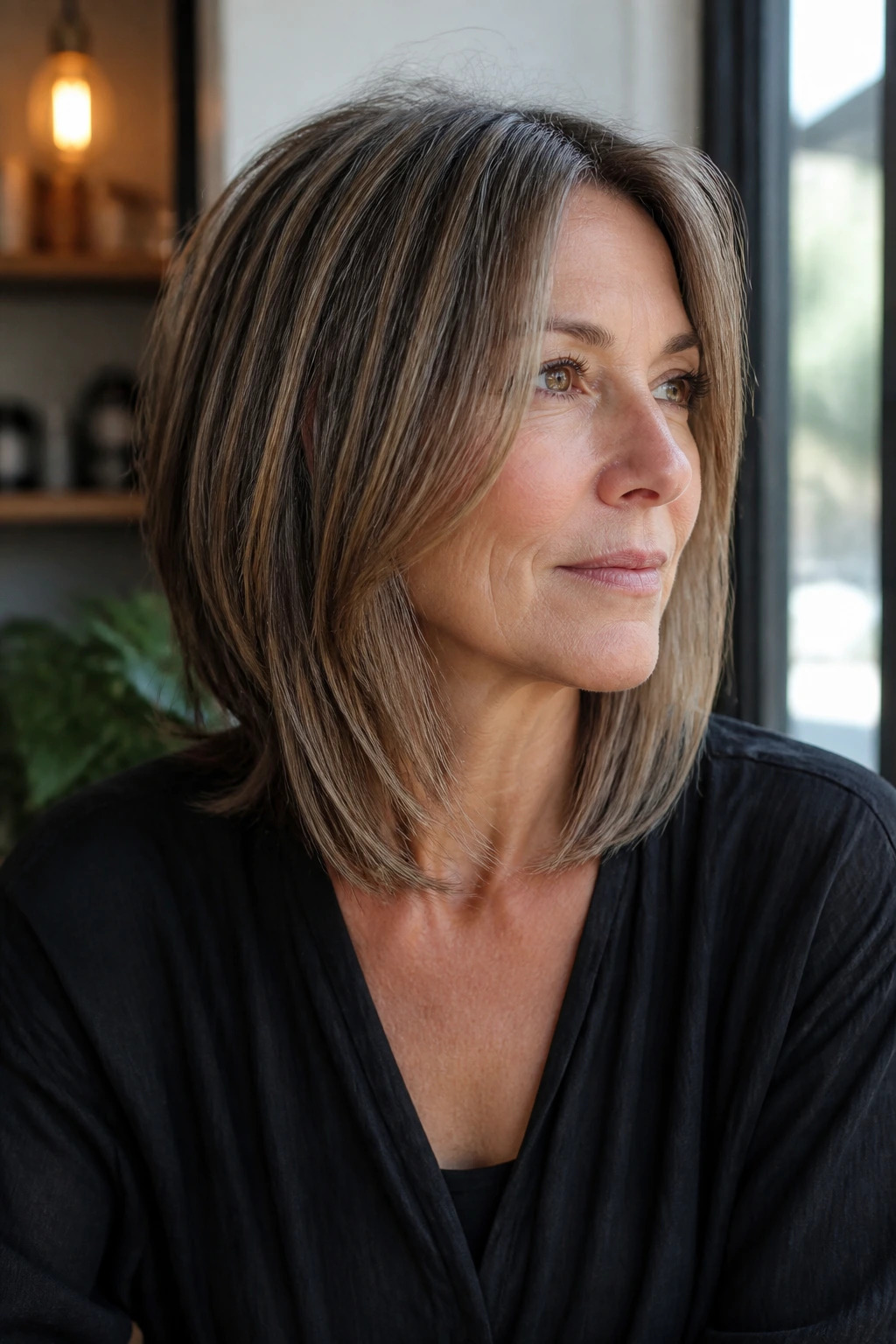
Volume Boost: Lift the top section with mousse before drying, then clip the crown for 5 to 10 minutes while the hair cools. That small pause can help a medium bob keep height without teasing.
Softness at the Face: Bend only the first inch or two around the cheekbones and jaw. You don’t need full curls. A slight curve is usually enough to keep thick hair from feeling boxy.
Shine Without Grease: Use a pea-sized amount of serum on the ends and stay away from the roots. Thick hair often needs less product than people think, especially if it already has natural shine.
Gray-Hair Boost: Silver and white hair can look especially crisp with a clear gloss or a light shine spray. It helps the cut read clean instead of dry, which is a real difference on camera and in daylight.
Heat-Free Day: Swap the round brush for a twist-and-clip method while the hair dries. The shape will be softer, but the bob still keeps enough structure to look finished.
Keeping the Shape Between Salon Visits
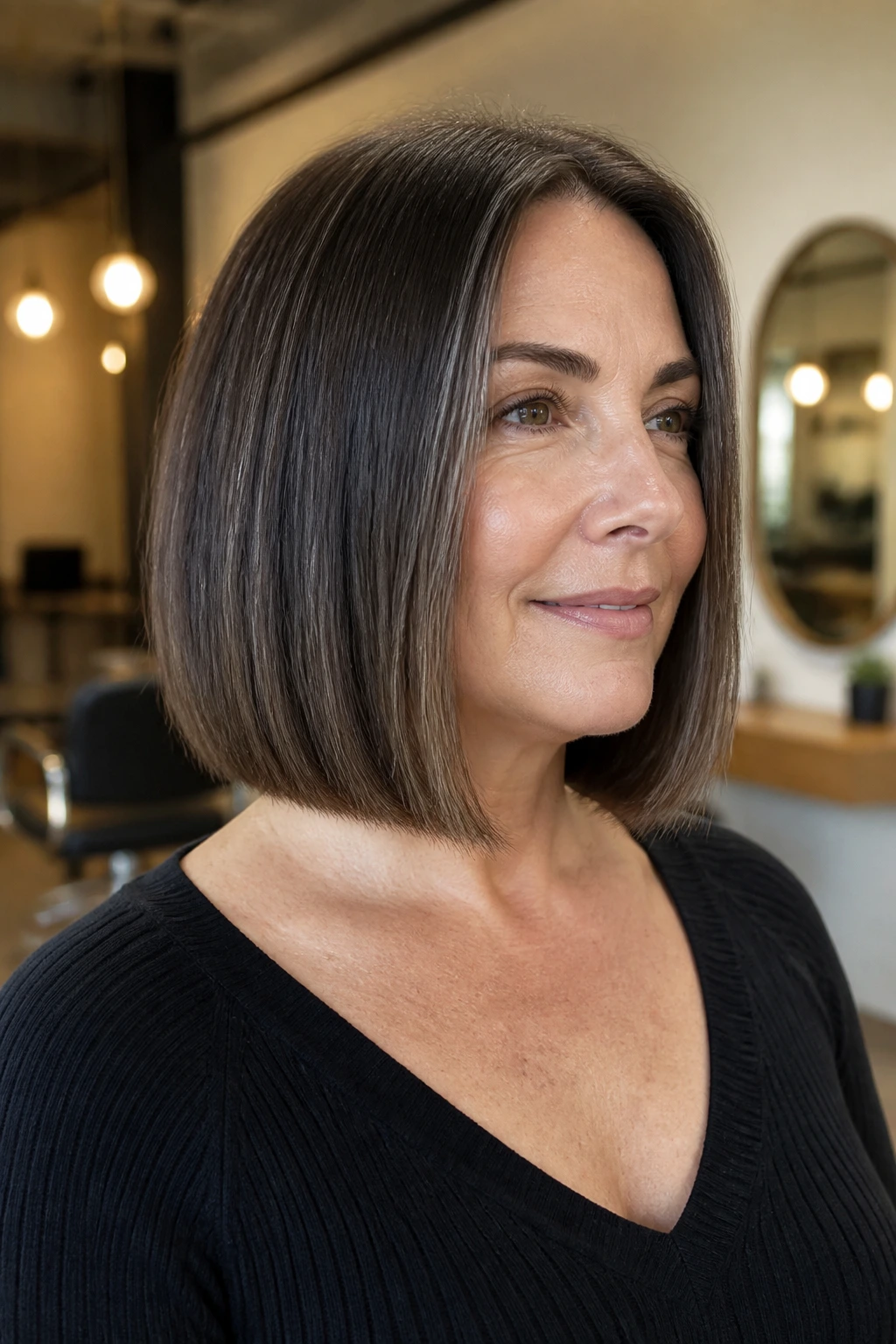
Most medium bobs on thick hair need a trim every 6 to 8 weeks if the shape is stacked, angled, or very clean around the nape. Longer lobs can stretch closer to 8 to 10 weeks before they start to feel heavy. Thick hair grows with attitude, so waiting too long usually shows up first at the sides and back.
A quick refresh at home helps. The crown often needs the least work, while the ends and nape need the most. If the back begins to flip out, that’s your sign the cut has crossed from “softly grown out” into “needs a chair.” A few minutes with a round brush can help, but it cannot solve a shape that has lost its line.
Night care matters more than people think. A satin pillowcase keeps the surface smoother, and if the bob bends badly while you sleep, a loose clip at the crown can help preserve some lift. Don’t tie thick bob-length hair into a tight ponytail. That usually gives you a crease and a dent where you do not want one.
Variations and Adaptations to Try
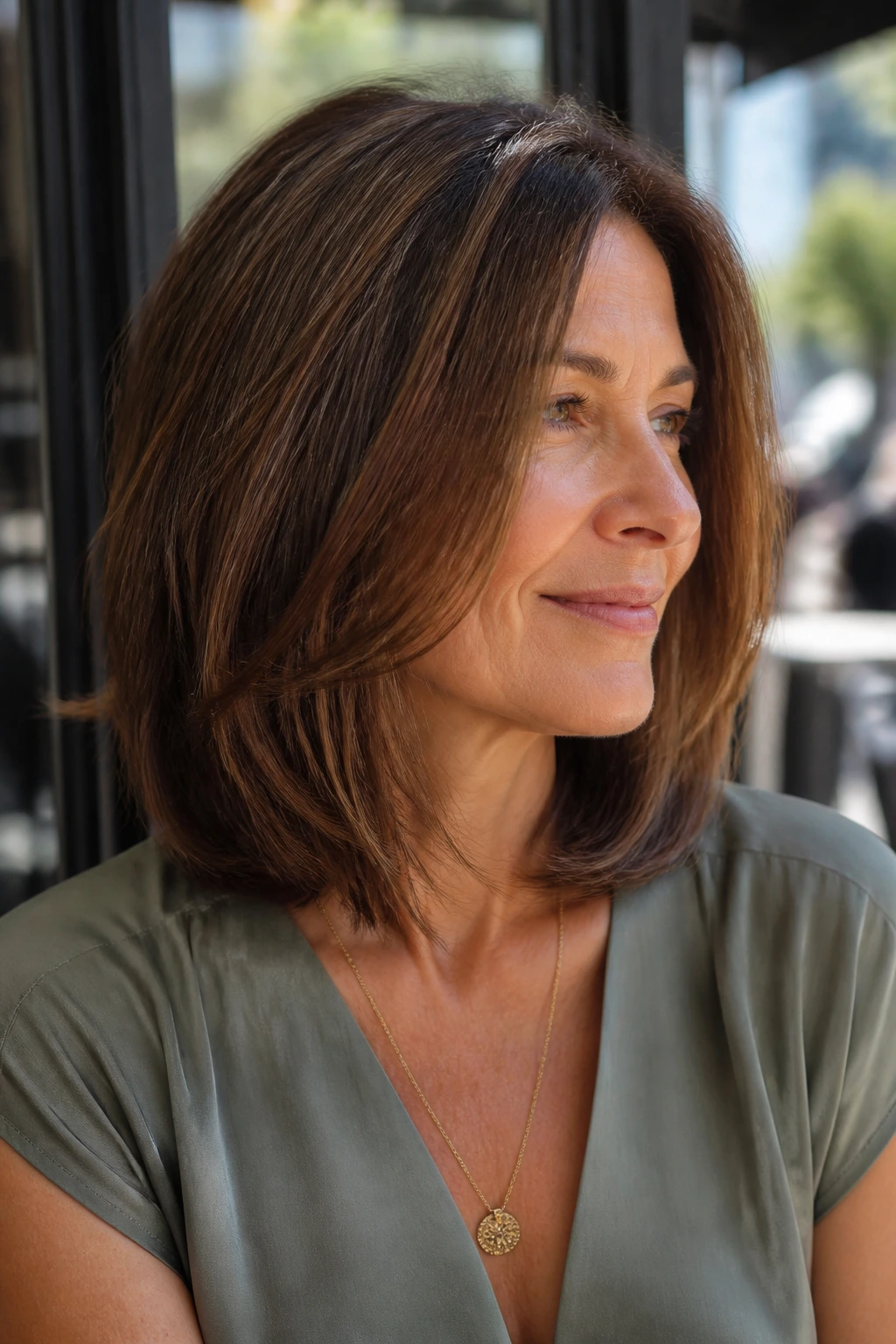
The Silver-Glow Version: Keep the cut clean and use a light gloss to make gray or silver strands look bright instead of dull. The crisp perimeter helps the color look intentional, and a touch of shine cream on the ends keeps the hair from reading dry.
The Round-Face Lift Edit: Ask for longer front pieces that skim below the cheekbone and a side part that gives height at the crown. This stretches the face a little and keeps thick sides from widening the silhouette.
The Air-Dry Lob: Choose a longer lob with internal layering and a touch of texture at the ends. It’s a smart pick if you want to wash, scrunch, and go without a full blowout every time.
The Polished Straight Version: Keep the perimeter blunt or slightly rounded and smooth the cut with a flat brush or iron. This works well if your hair is naturally straight and you want the shape to feel crisp rather than fluffy.
The Soft Wave Version: Leave the length a bit longer and ask for long layers that encourage bend rather than separation. A 1-inch iron can add a loose wave through the front without making the whole cut feel curly.
The Low-Heat Lifestyle Version: Keep the lob around the collarbone, avoid heavy layering at the crown, and let the hair fall where it naturally wants to. This is the easiest way to live with thick hair when you do not want to build a morning routine around it.
Common Mistakes to Avoid
-
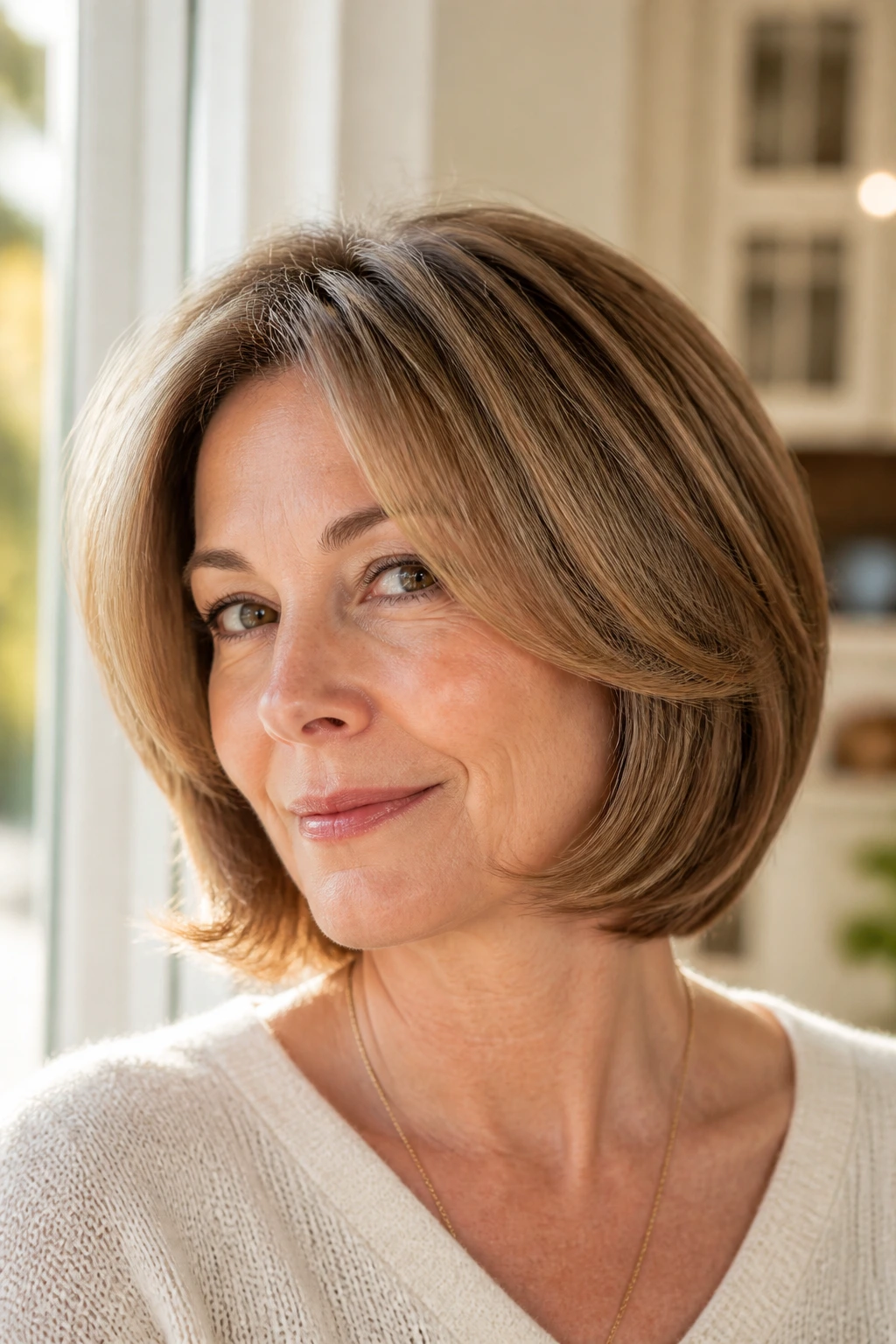
Cutting too short at the jaw: Thick hair cut right at the jaw can flare outward and make the face look wider. If your hair grows broad at the sides, ask for a little more length or some internal shaping instead.
-
Thinning the whole head with shears: That can leave the surface frizzy and the ends stringy. Weight removal should happen inside the cut, not all over it like someone was trying to make it disappear.
-
Too many short layers on top: A high layer stack can make thick hair puff at the crown and look choppy around the ears. Keep the top controlled unless you want a shaggy finish on purpose.
-
Ignoring the natural part: Forcing a part the hair hates will make the bob fight you every morning. A slight shift is usually better than a dramatic part that won’t stay put.
-
Skipping the neckline cleanup: Thick hair shows growth fast at the nape. If the back starts looking fuzzy or square, the whole shape loses polish even when the front still looks fine.
Frequently Asked Questions About Medium Bobs for Older Women with Thick Hair
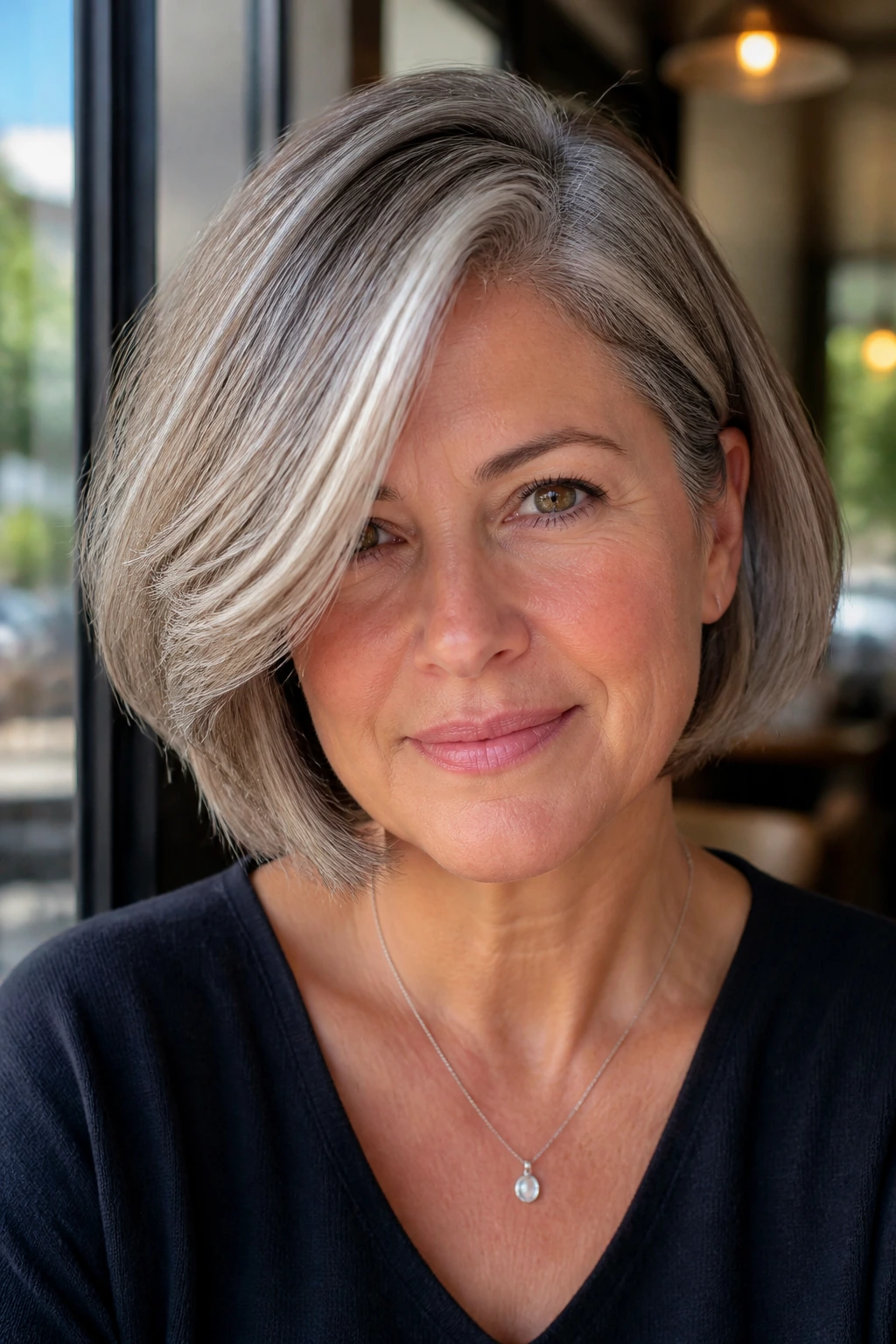
Will a medium bob make thick hair look too wide?
Not if the cut is shaped with internal removal and a clean perimeter. The width problem usually comes from a blunt, heavy line cut with no control inside the shape.
What length is safest for thick hair if I want a flattering bob?
Most people do well somewhere between the jaw and the collarbone. That range keeps enough length to soften the face while avoiding the bulk that can build up in a very short cut.
Can thick hair handle blunt ends, or should I always ask for layers?
Blunt ends can look excellent on thick hair, especially if the interior weight is removed carefully. Layers are useful, but they should be chosen for purpose, not added just because the word “layered” sounds easier.
Are bangs a bad idea with thick hair and a medium bob?
No, but they need to be chosen with care. Curtain bangs or a soft side fringe usually work better than a heavy, straight fringe that eats up forehead space and takes too long to dry.
How do I keep my bob from puffing out at the sides?
Dry the roots in the direction you want them to lie, and use a brush to smooth the mid-lengths while the hair is still warm. A bob that puffs at the sides often needs a better interior cut, not more product.
Is this style good if my hair is naturally wavy or curly?
Yes, but the cut should respect shrinkage and movement. A dry cut or a curl-aware shaping session usually gives a cleaner result than cutting curly thick hair the same way you’d cut straight hair.
How often should I trim a medium bob?
Most medium bobs look best with trims every 6 to 8 weeks. If the cut is longer and less structured, you can usually stretch a little farther, but thick hair makes its own schedule obvious when the shape starts to spread.
What if my bob flips out at the ends?
That usually means the cut is too heavy, too short in one section, or growing out past its sweet spot. A quick bend under with a round brush can help, but if the flipping keeps happening, the shape probably needs a small correction.
A Bob That Holds Its Shape
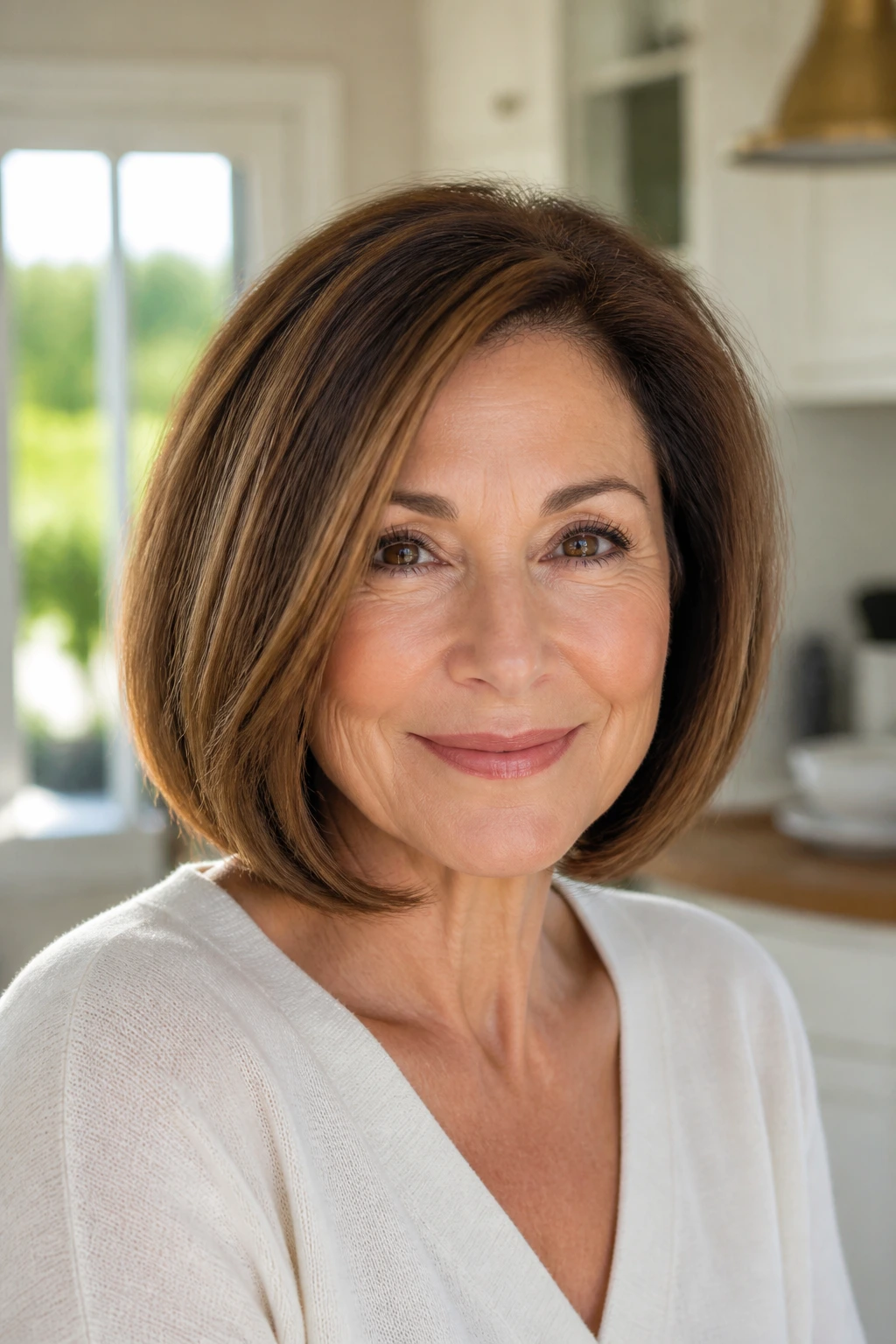
A good medium bob on thick hair should feel like relief, not homework. The back sits where it should. The sides stay in line. The face gets a little softness, a little lift, maybe a little edge if you want it. And the whole thing still looks like hair, not a construction project.
That’s why these cuts keep working for older women with thick hair. They respect the density instead of pretending it isn’t there. Bring a few clear photos, speak in inches, and ask how the weight will be controlled inside the cut. That one conversation can save you a lot of flat-ironing later.