



Curly bobs can go sideways fast. Too much height at the crown, and the face starts to look taller than it is. Too much width at the cheeks, and the whole shape turns square. On a heart-shaped face, the sweet spot is lower: enough body around the jawline to balance a broader forehead, but not so much bulk that the cut turns into a triangle by lunchtime.
That is why layered bobs for curly hair and heart-shaped faces deserve more attention than a quick scroll and a screenshot. The right layers change where the eye lands. They let curls stack in a softer way, keep the front from feeling too top-heavy, and make the jaw look like part of the haircut instead of an afterthought.
The best versions don’t fight the curl pattern. They give it a shape with a job to do. Some bring the weight down to the chin, some float it around the cheekbones, and some use a fringe to take pressure off a wide forehead. The common thread is balance, and balance is what makes this haircut feel intentional instead of accidental.
Why These Layered Bobs Work on Real Curls

- Jawline Balance: The strongest shapes put some visual weight near the chin or just below it, which gives a heart-shaped face a steadier lower half.
- Curl Movement: Layers stop curls from stacking into a single heavy wall, so you get shape without the helmet effect.
- Shrinkage Room: Good layering leaves space for curls to spring up after drying, which matters more than most people expect.
- Style Range: These cuts can look polished with a diffuser or relaxed with an air-dry; the same shape does both jobs.
- Grow-Out Grace: A layered bob keeps its outline longer than a blunt cut when the roots start to grow and the curl pattern shifts.
- Face Softening: Pieces around the temples, cheekbones, or chin break up the stronger upper half of a heart-shaped face without hiding it.
1. Chin-Length Curly Bob with Soft Jawline Layers
A chin-length bob is the blunt answer, and that is exactly why it works. The edge lands where a heart-shaped face starts to narrow, so the cut gives the jawline something to do instead of leaving it visually empty. With curls, that length reads as full, not stiff, especially when the interior is lightly layered.
Why It Sits Well on a Heart-Shaped Face
Ask for the front to skim the chin, not float above it. That little difference matters. If your curl springs hard, the cut should be left a touch longer than the final target, because a chin-length bob can pop up two inches after drying.
The best version has soft internal layers and a perimeter that still feels clean. You want the curl to move, not vanish into a fuzz of uneven ends. This is the bob I’d hand to someone who wants a clear shape without a lot of daily fuss.
Best for: 2C to 3B curls, especially medium density.
2. Side-Parted French Curly Bob
A side part changes the whole conversation. Instead of putting the widest part of the face right under a center line, it lets one side fall gently across the forehead and gives the bob a little swing. On a heart-shaped face, that shift softens the upper half without making the haircut feel hidden.
What Makes It Different
This cut works best when the side part is deep enough to matter, but not so deep that it starts looking dramatic in a costume-y way. The front pieces should brush the cheekbones, then curve down toward the jaw. That curve is the thing. It keeps the eye moving, and moving eyes are forgiving eyes.
I like this shape when curls are looser and can be encouraged with a diffuser rather than forced. It has a bit of French-girl nonchalance, but the real reason it earns its keep is simple: it trims the forehead visually and broadens the lower face without extra length.
3. Collarbone Lob with Invisible Layers

If you’re not ready to lose much length, the collarbone lob is the safest place to land. It gives curly hair room to spring while keeping enough weight to avoid a puffed-out triangle. Invisible layers inside the shape prevent bulk, but the outside line still looks smooth and deliberate.
How to Ask for It
Tell your stylist you want the length to hit the collarbone when dry, not when wet. That one phrase saves a lot of disappointment. Wet curls lie, and they lie with confidence.
The hidden layering here matters most for dense hair. The surface stays clean, while the inside has room to breathe. On a heart-shaped face, that longer front length nudges attention toward the lower half without dragging the whole haircut down.
4. Tapered Curly Bob with a Fuller Bottom Line

This is the bob for anyone whose curls tend to bulge at the crown and collapse near the ends. The taper removes just enough weight up top to keep the head from looking broad, then leaves a fuller line around the bottom so the jaw has something to balance against.
The Shape in Practice
Think of it as a haircut that narrows up high and holds on lower down. That lower fullness can be the difference between “cute cut” and “why does my hair look triangular?” The perimeter should not be feathered to death; it needs enough substance to make the jawline feel intentional.
If your hair is thick, this shape can be a relief. If your hair is fine, ask for a softer taper so the ends do not disappear. The trick is controlled lightness, not emptiness.
5. Curly Bob with Curtain Bangs
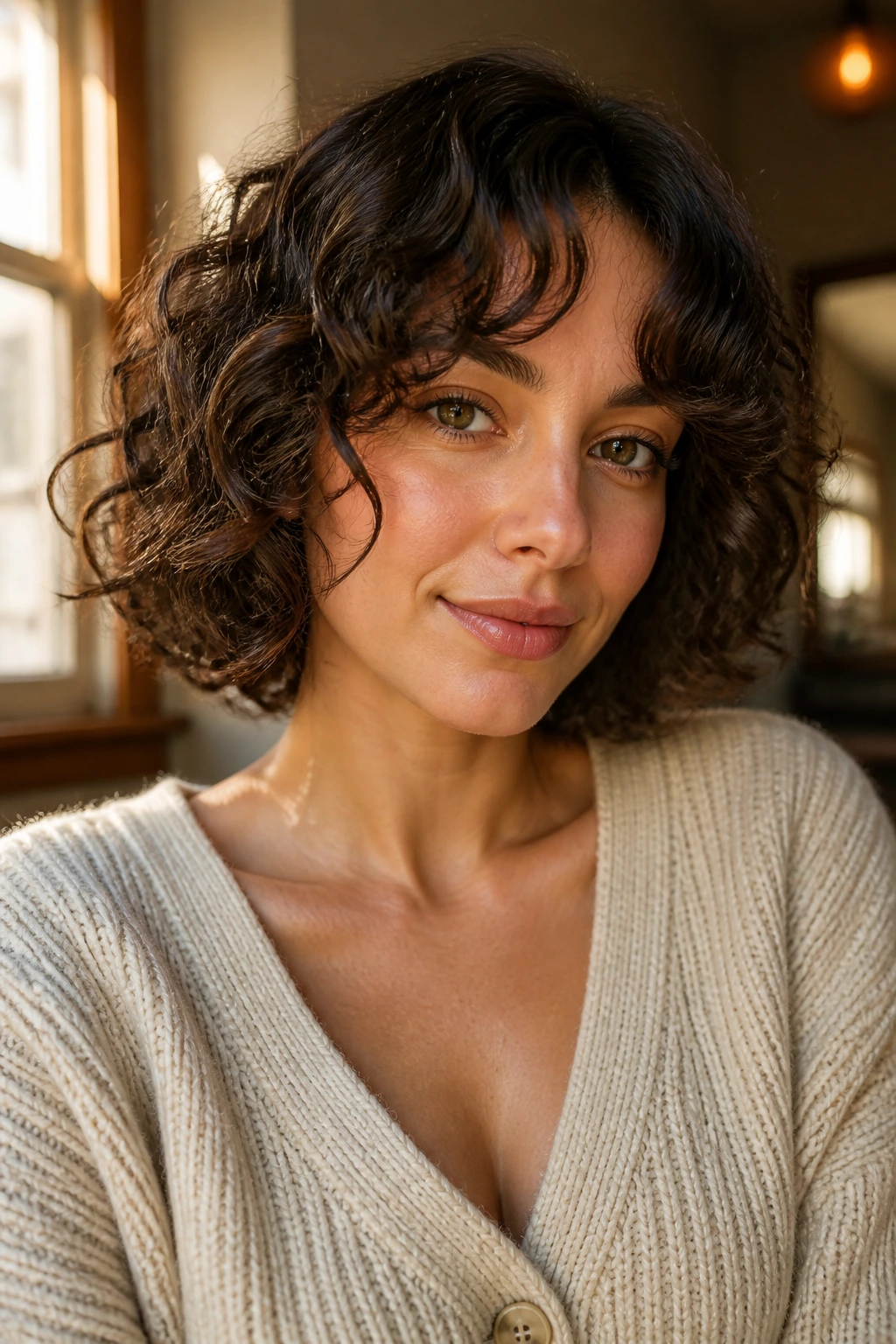
Curtain bangs are one of the easiest ways to soften a heart-shaped face because they break up forehead width without drawing a hard line straight across it. On curly hair, they work best when they start a little longer than you think and open naturally at the center.
Why It Flatters
The fringe should hit around the cheekbone or just below it when dry. That gives the curls a chance to fall in a gentle frame instead of bouncing up into a mini shelf. If the bangs are too short, the whole cut starts looking top-heavy. Too long, and they disappear into the rest of the bob.
This is a good option if you like your hair to look a little styled even on a lazy day. The bangs do some of the work for you. And if your forehead is wider than the chin area, they quietly even things out.
6. Stacked Crown Bob for Dense Curls
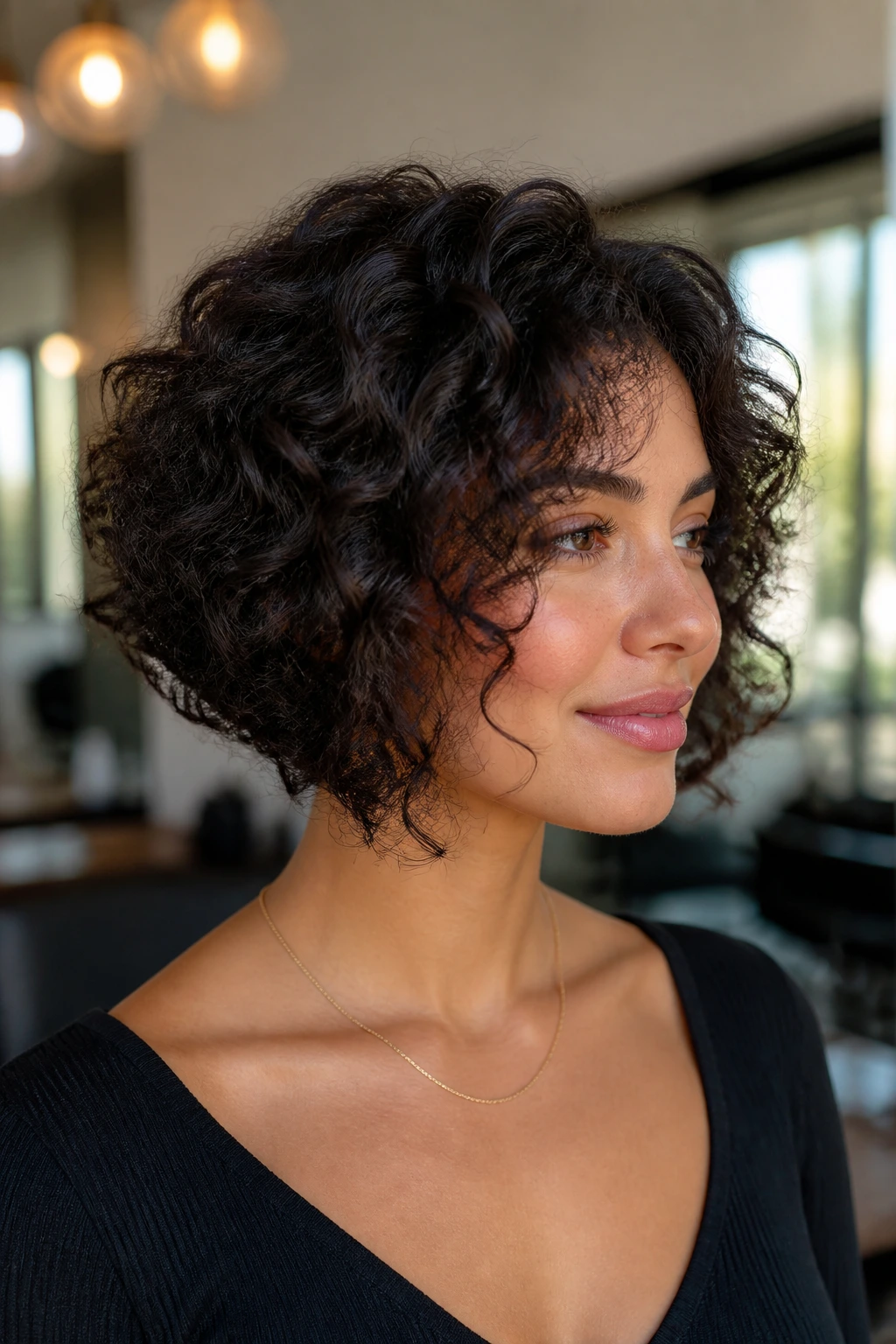
Dense curls need somewhere to go. Without stacking, they often bloom outward in a way that adds width where a heart-shaped face does not need it. A stacked crown bob removes weight at the back of the head, then lets the front stay a little longer and softer.
What to Watch For
The stack should be subtle. If it climbs too high, the silhouette gets old-school fast and the crown can look puffed out. The goal is a controlled curve through the back, not a hard wedge.
This shape is especially useful when your hair has a heavy, springy curl that resists lying flat. It gives the nape some lift and keeps the sides from ballooning. The result is cleaner than a heavy all-one-length cut and less fussy than a shag.
7. Blunt-Perimeter Bob with Interior Carving
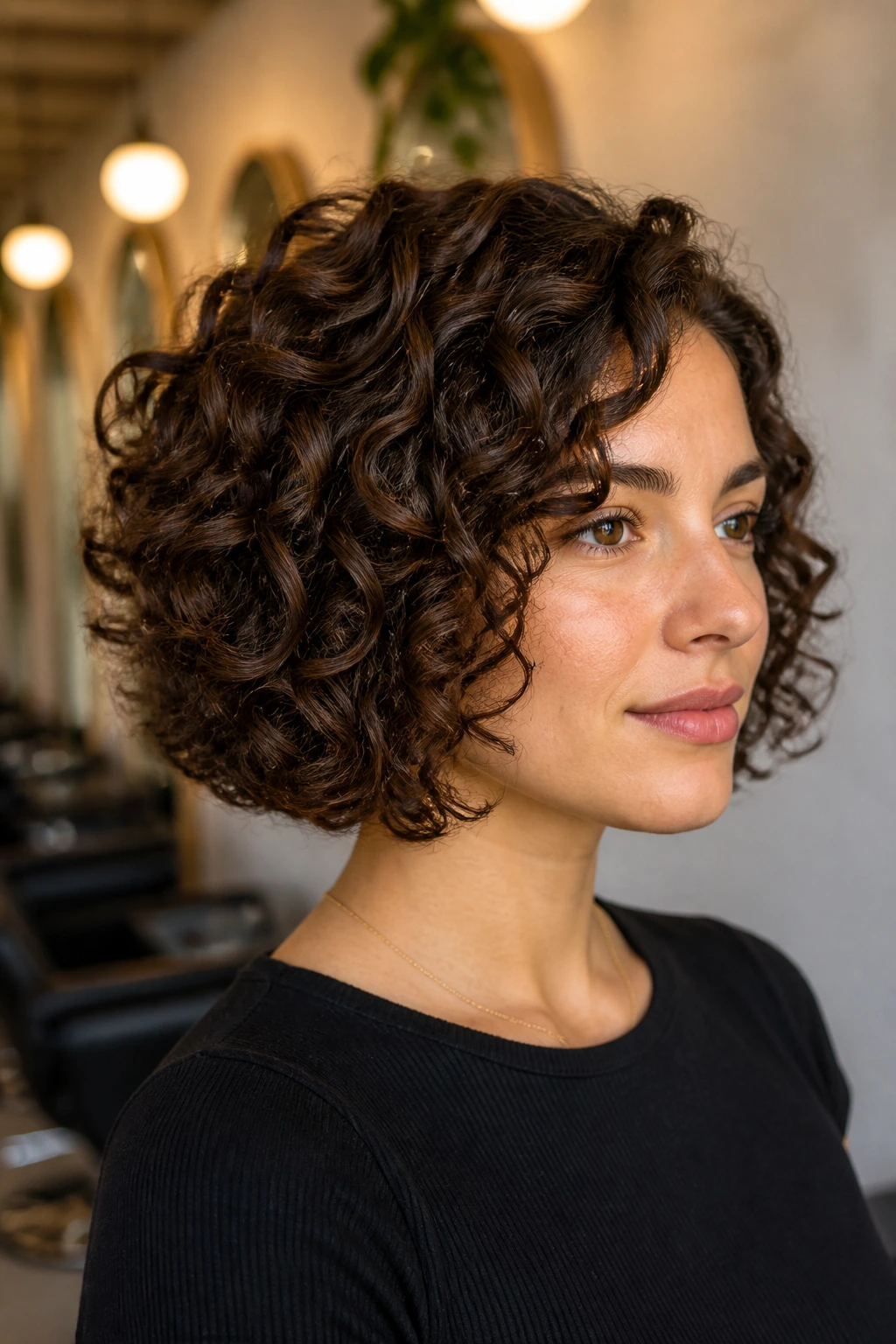
A blunt edge sounds severe on paper. On curly hair, it usually reads as strong rather than harsh, especially when the inside has been carved out to remove weight. That combination is useful for heart-shaped faces because the line at the bottom gives the jaw a firmer visual anchor.
The Balance Here
The outside edge should look crisp when the curls clump together, but the interior should not feel stuffed. Ask for internal layers, not aggressive thinning. Aggressive thinning is how you end up with frizz and odd gaps, and nobody wants that.
This cut is a favorite when the curl pattern is uneven and needs a firm outline to settle into. It can look polished with very little shaping. That matters on mornings when you want the hair to behave before you do.
8. Shaggy Curly Bob with Piecey Fringe

A shaggy bob works when you want movement more than symmetry. The piecey fringe takes pressure off the forehead, and the uneven layers keep the haircut from sitting in one heavy block. Heart-shaped faces usually benefit from that looseness because the upper half gets softened without losing character.
Why It Works Better Than It Sounds
A good shag is not random. The shortest layers should still support the face, especially around the temples and cheekbones. You want a little lift, a little swing, and a few pieces that refuse to stay perfectly matched. That messiness is the point.
This is the one I’d choose for curls that naturally separate into clumps. The cut should encourage that behavior, not fight it. If your hair gets fluffy fast, keep the fringe longer and let it land in the cheekbone zone instead of the eyebrows.
9. Asymmetrical Curly Bob

A slight asymmetry can be a gift on a heart-shaped face. One side sitting a little longer changes the line enough to make the face feel less front-heavy. It also keeps curly hair from looking too symmetrical, which can make the top half of the face seem wider than it is.
The Quiet Advantage
The length difference does not need to be dramatic. Even half an inch to an inch is enough when curls have movement. The longer side can brush the chin, while the shorter side stays just above it, creating a soft diagonal instead of a straight wall.
This cut is underrated for people who like a little edge but do not want a hard-edged haircut. It photographs well in motion, but more importantly, it keeps its shape as the curls shift during the day. That’s the part most people care about after the second cup of coffee.
10. Rounded Bubble Bob
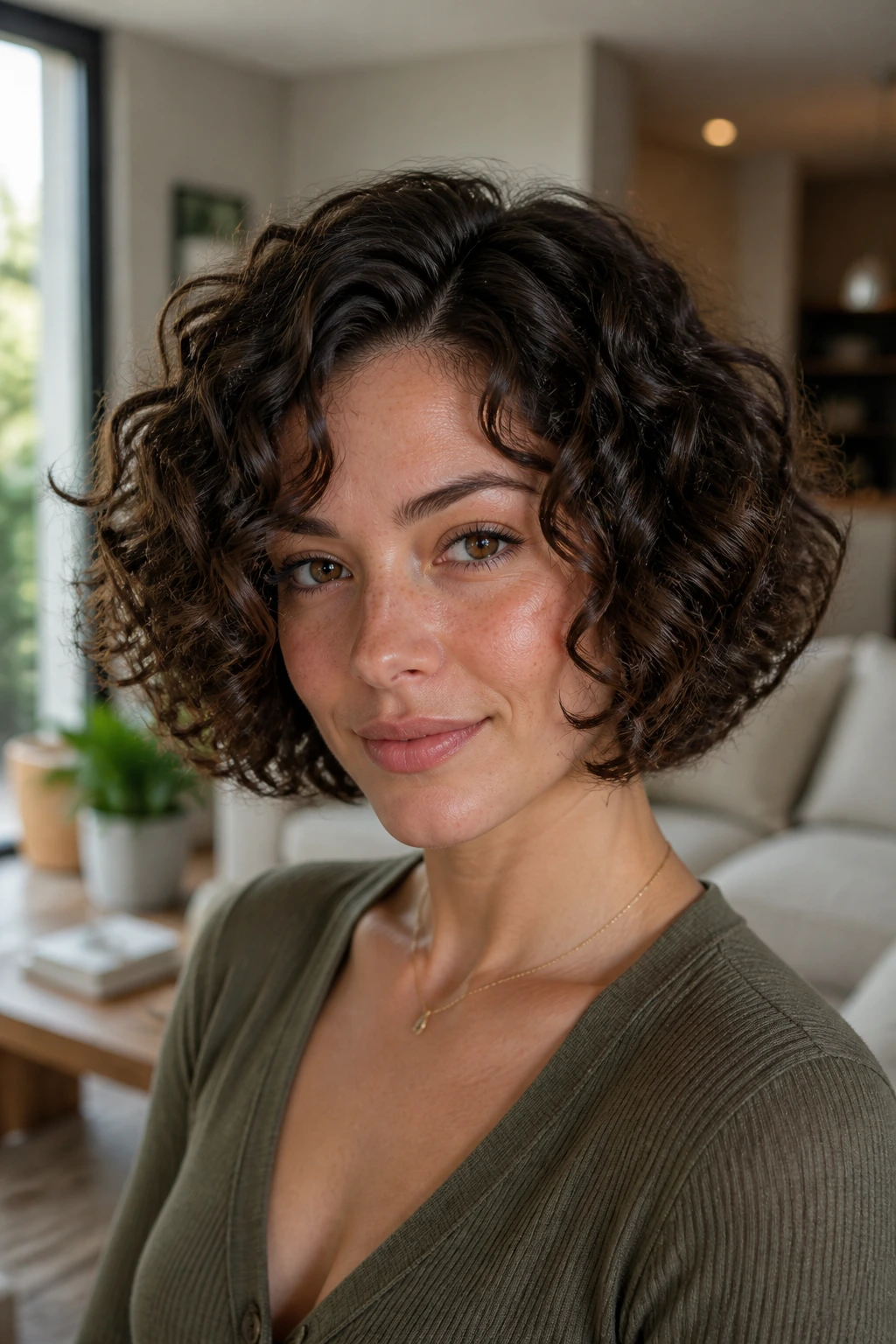
The rounded bubble bob is all about curve. It hugs the head, then opens again at the bottom, which gives a heart-shaped face a softer lower silhouette. On curly hair, the roundness comes naturally if the layers are placed well and the ends are not stripped too thin.
The Curved Line Matters
The perimeter should feel like a gentle dome, not a mushroom. There’s a difference. The first looks polished and full; the second looks accidental. You want width around the lower cheeks and jaw, then a neat edge that keeps the shape from drifting outward.
I like this best for curls that already want to form a round halo. The haircut just organizes them. If your crown is flat, root clipping while drying can help preserve the curve without making the top too big.
11. Deep Side-Part Curly Bob
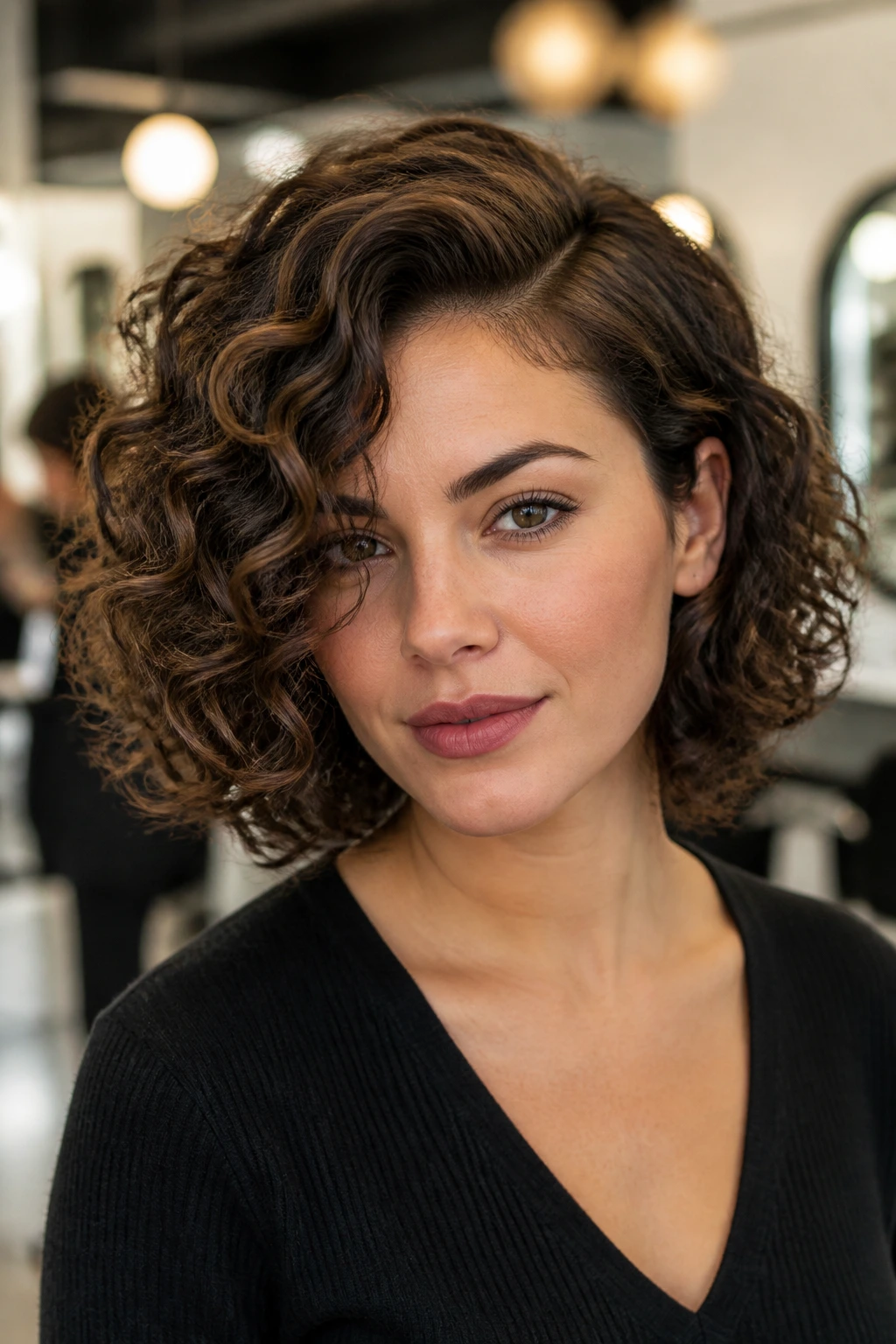
A deep side part is one of the simplest shape tricks in the book, and it still works because it changes where the volume falls. On a heart-shaped face, it moves emphasis away from the forehead and lets curls build on one side in a way that feels softer and more lived-in.
A Small Shift With a Big Payoff
The part should be low enough to matter, high enough to keep the hair wearable. Too deep, and the whole style starts collapsing over one eye. The right version looks like the hair decided to lean, not like it was forced.
This shape especially helps when your curls are medium density and you want some drama without cutting bangs. The face gets a diagonal line, the jaw gets a little more presence, and the overall bob feels less square. It is subtle. That’s the charm.
12. Inverted A-Line Curly Bob
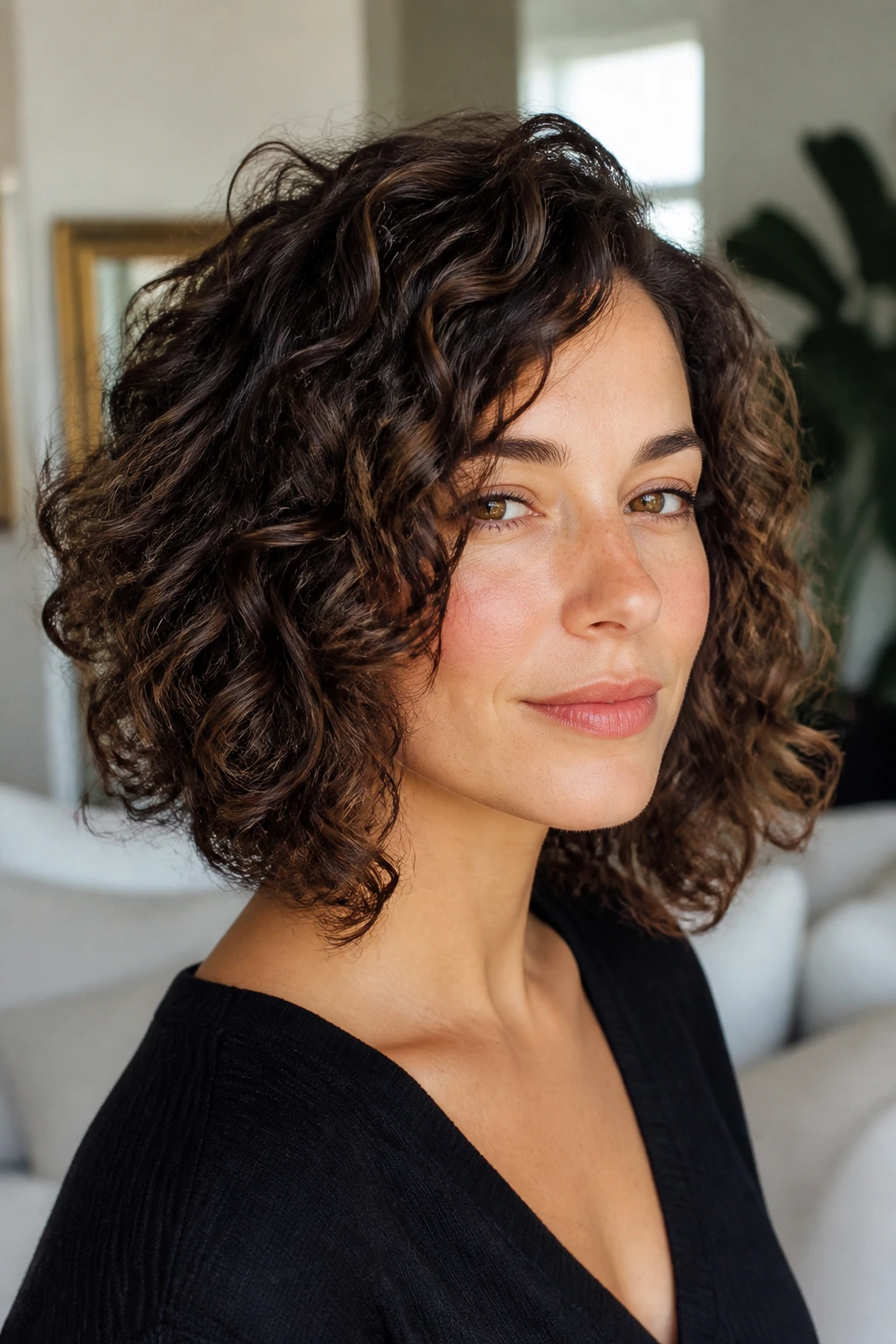
An inverted bob gives you a shorter back and longer front, which is useful when the jawline needs more visual support. The front pieces can sit just below the cheekbone, pulling the eye downward and outward at the same time. On a heart-shaped face, that is a good trade.
Why It Keeps Its Shape
Curly hair can make an A-line look too triangular if the back is overcut, so the slope should stay gentle. Think soft angle, not pointed wedge. The front needs enough length to frame the face after shrinkage, and the back needs enough interior weight to avoid puffing out.
This cut is a little more structured than some of the softer bobs on this list. If you like a clean profile from the side, it’s worth a look. It also grows out in a fairly graceful way, which is rare enough to deserve a mention.
13. Shoulder-Skimming Grown-Out Bob
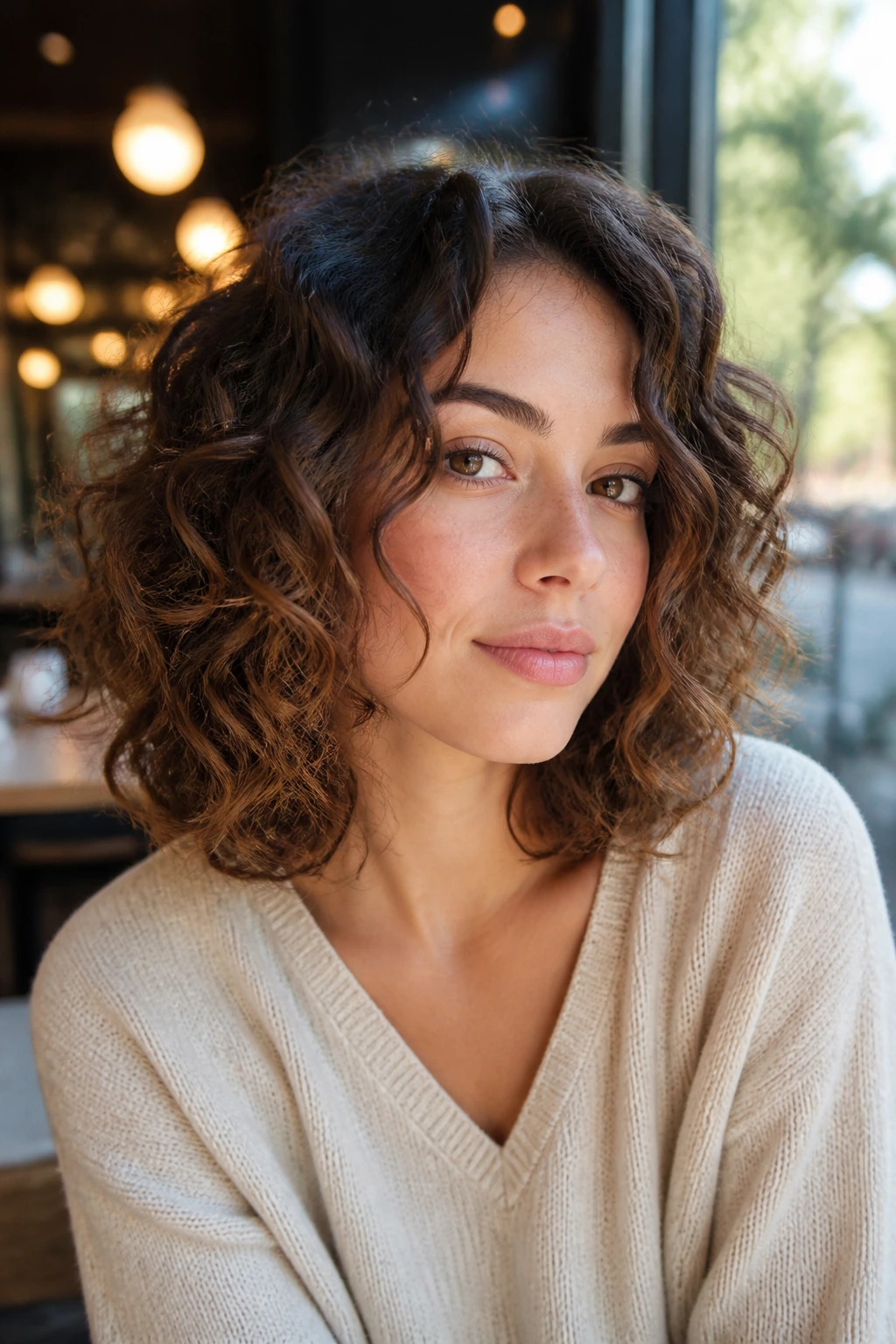
Sometimes the best bob is the one that sits right on the border between bob and lob. Shoulder-skimming length gives curly hair more swing and keeps heart-shaped faces from feeling crowded around the forehead. It is especially kind to people who hate constant salon visits.
The Practical Version
The key is where the ends land. If they hit the top of the shoulders, they can kick out oddly. If they skim just below, the curls fall more cleanly and the face keeps its balance. A few long layers through the front can stop the shape from going flat.
This cut works when you want something that reads relaxed rather than styled. The curls have room. The face has room. Nobody has to wrestle with a perfect line every morning, and that is a relief.
14. Cheekbone-Grazing Bob with Side Bangs

Cheekbone length is one of the smartest places for fringe on a heart-shaped face. It puts softness exactly where the face benefits from it and avoids crowding the forehead. Side bangs, especially on curly hair, can blur the transition between fringe and bob in a way that feels easy instead of fussy.
Where the Cut Earns Its Keep
The front pieces should not stop abruptly at the cheekbones. They need a little curve. A side bang that sweeps into the bob gives the haircut motion, which keeps the face from looking too top-heavy.
This is a good choice if you want some forehead coverage but do not want full bangs. The side sweep can be tucked, pinned, or left loose. It gives you options on days when your curls decide to do something dramatic without asking.
15. Soft Wolf-Bob Hybrid

A wolf-bob hybrid brings a little edge, but the soft version keeps it wearable. Think short layers around the crown, longer pieces through the ends, and enough bob length to keep the shape grounded. On curly hair, that contrast can be useful because it reduces bulk without making the cut look chopped up.
Who This Suits
This shape works best for people who like texture that looks a little wild on purpose. It takes the widest part of a heart-shaped face and refuses to add more width there. Instead, it lets the lower layers hang with a bit of grit and movement.
Keep the crown layers soft. Too much at the top and the face starts to feel taller, not better balanced. A restrained wolf-bob has attitude. A heavy one has problems.
16. Rounded Deva-Cut Bob
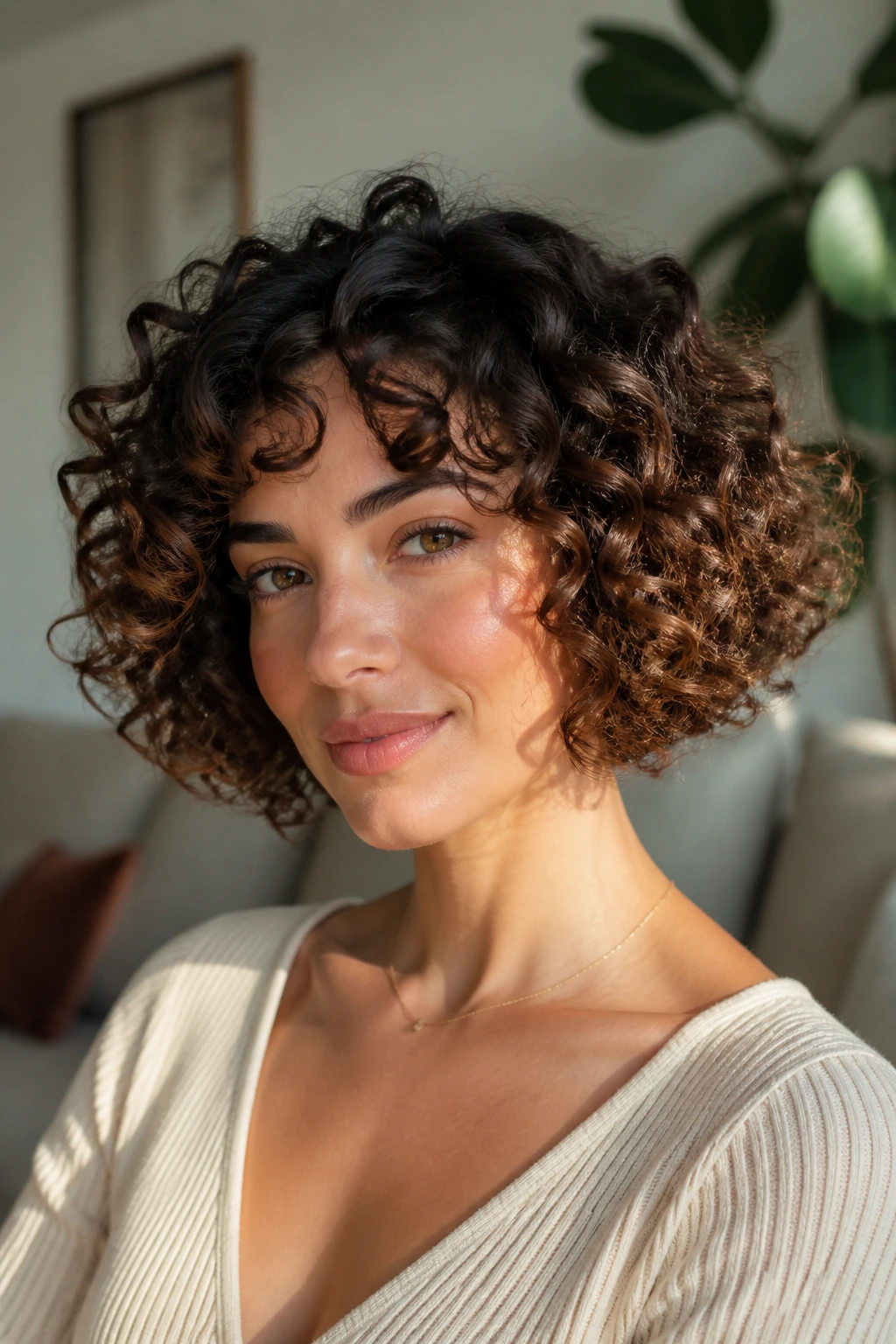
A curl-by-curl rounded cut is one of the best routes for anyone whose curls behave differently from strand to strand. A Deva-style bob, or anything cut with the curls in their natural shape, tends to respect shrinkage better than a wet geometric cut. On a heart-shaped face, the rounded outline keeps attention lower and softer.
The Big Advantage
The haircut is designed around the actual curl cluster, not a straightened idea of one. That means the bob can hold its roundness without needing a ton of product. If your curls vary in tightness from front to back, this method helps the shorter pieces blend instead of sticking out.
I like this approach when the face needs softness and the hair needs honesty. Not every curl pattern wants a perfect line. Some want shape, then freedom.
17. Tucked Bob with Face-Framing Pieces
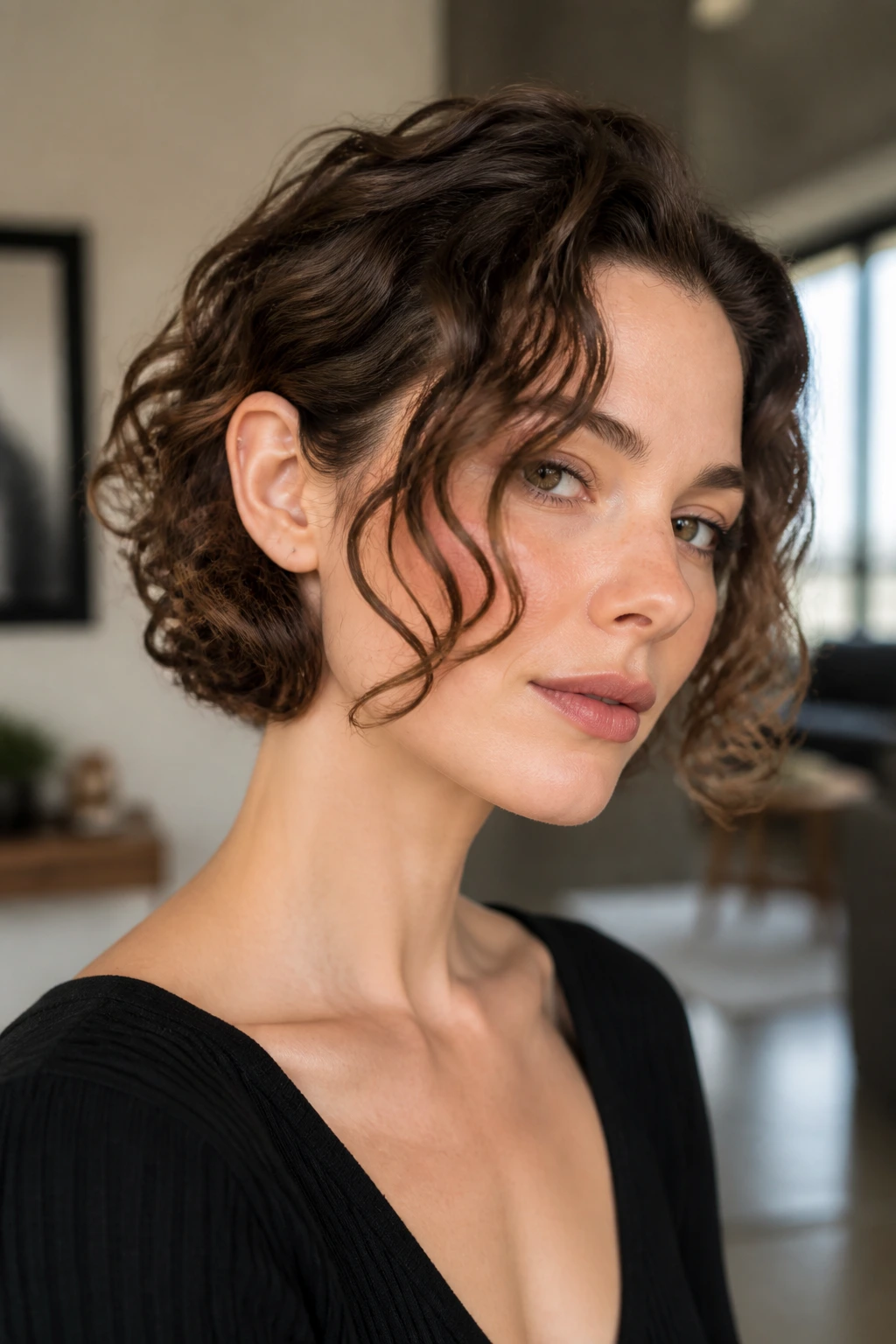
A tucked bob sounds simple because it is. The cut leaves enough length in front to tuck one side behind the ear, which opens the face and shows off the jawline. On a heart-shaped face, that slight reveal keeps the upper half from feeling too dominant.
Small Detail, Real Payoff
The face-framing pieces should sit somewhere between cheekbone and chin. Shorter than that, and they start kicking away from the face. Longer than that, and the tuck loses its point.
This is one of those bobs that looks especially good in motion. One ear hidden, one ear exposed, a few curls falling forward. It is not complicated, and that is exactly why it works. The haircut changes when you change the part or the tuck.
18. Thick-Curl Dry-Weight Bob

Heavy curls need weight control, not aggressive thinning. A dry-weight bob keeps enough length and interior structure to stop dense curls from exploding outward. For heart-shaped faces, the lower fullness is what matters most here.
How It Behaves
The layers should be longer and more measured than in a looser curl pattern. Thick curls expand on their own, so if the cut is too short in the crown or too aggressively carved, the top can mushroom fast. Leave room for shrinkage. Always.
This is a strong choice if your hair takes forever to dry and tends to sit heavy around the head. The right cut can make it feel lighter without making it look sparse. That is a hard balance, and this shape does it well when it’s cut with care.
19. Fine-Curl Feathered Bob
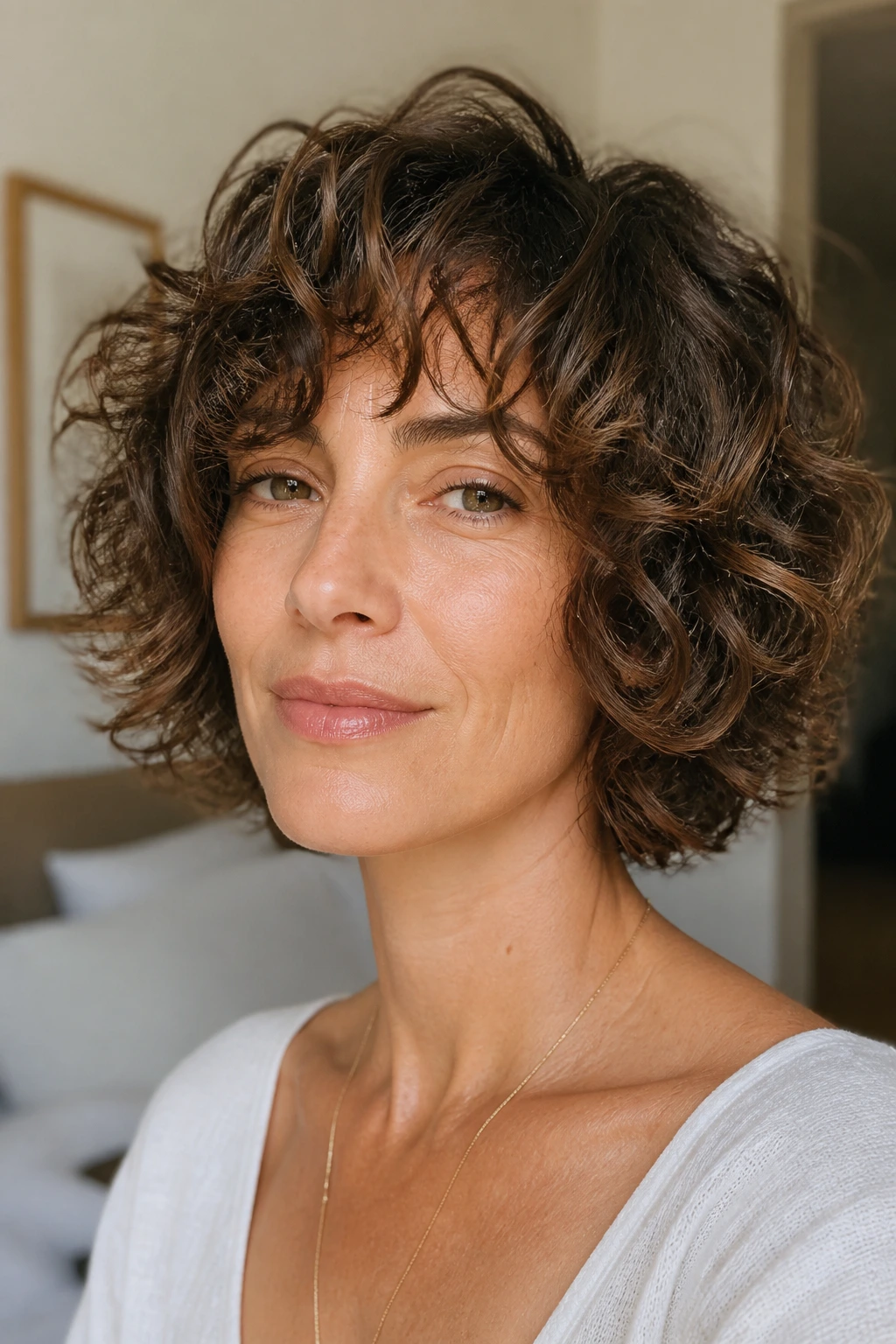
Fine curls are tricky because they can look flat when the cut removes too much weight. A feathered bob gives movement without stripping away the body that fine hair needs to look alive. On a heart-shaped face, that movement can soften the chin and keep the forehead from taking over.
The Fine-Hair Warning
Do not let anyone over-thin this cut. Fine curls need support, not a lot of empty space. The layers should be light and strategic, with the front pieces doing most of the shaping work.
This one is best when the goal is softness rather than volume. A little mousse, a gentle diffuse, and a clean part are usually enough. If the cut is done right, it won’t disappear the second the humidity shows up.
20. Highlighted Money-Piece Bob
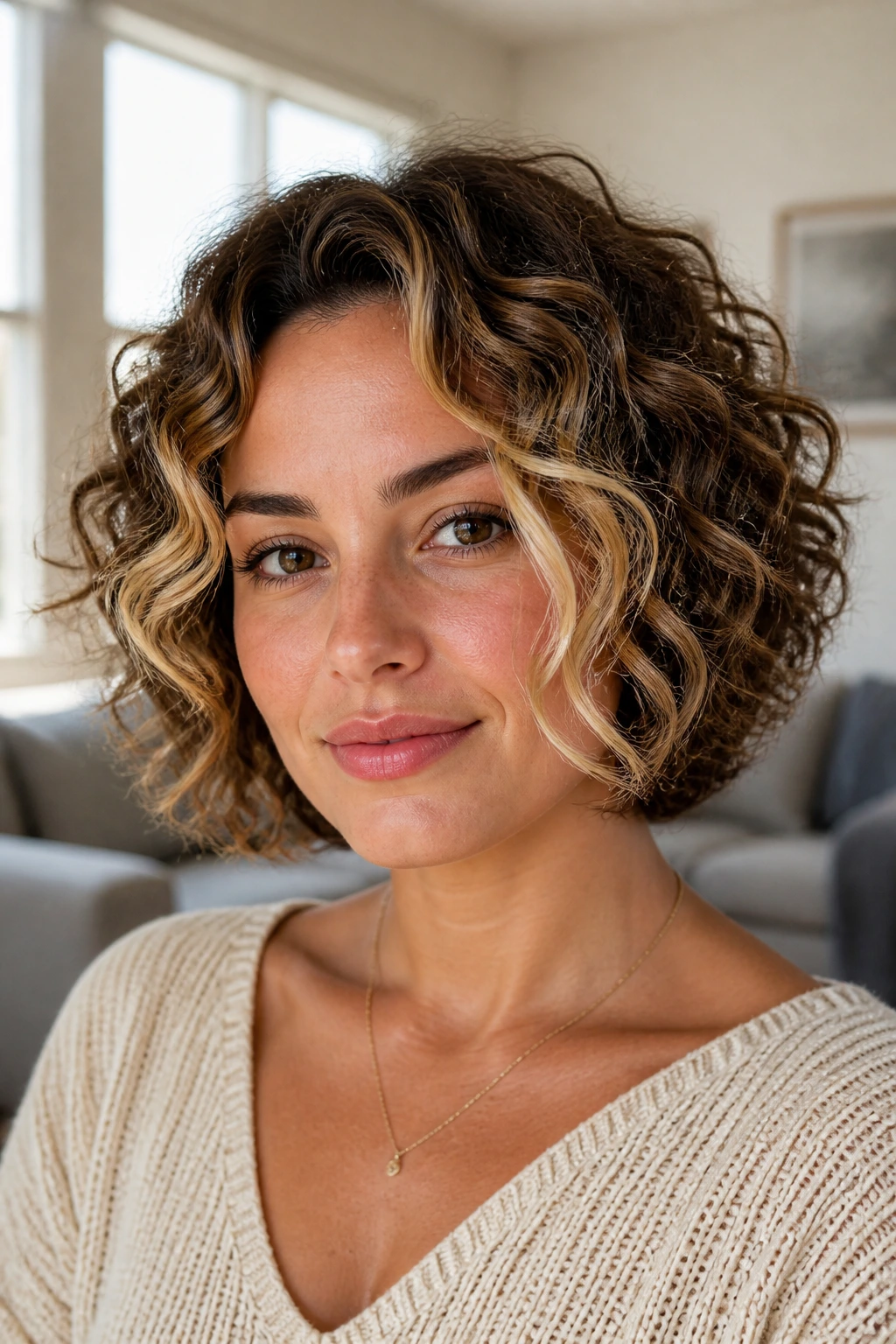
Color can shape a face almost as much as the cut can. A bright money piece around the front curls adds light near the cheekbones and pulls attention away from the forehead. On a heart-shaped face, that front brightness can make the lower half feel more balanced without changing the haircut itself.
Why Color Matters Here
The cut still needs good layers, but the color does a piece of the visual work. Lighter pieces around the face create movement where the curls land, which is useful if your bob tends to blend into one solid mass. The trick is to keep the highlights soft enough that they do not look stripey.
This is a smart option if you want a little drama without changing length. A few lighter front curls, especially when they bend toward the jaw, can make the whole bob feel more deliberate. Not louder. Just clearer.
21. Soft Micro-Bob with Long Fringe

A micro-bob sounds severe, but on curly hair it can be surprisingly soft if the fringe stays long. The short length keeps the neck open and the face visible, while the longer fringe tones down a broad forehead. For heart-shaped faces, that combination can feel neat without looking severe.
Why It Doesn’t Feel Harsh
The fringe should be long enough to blend into the sides. If it stops too high, it makes the forehead feel bigger. The bob itself should sit just below the ears or at the top of the jaw, depending on how much shrinkage your curls have.
This shape is for someone who likes a sharper outline and does not mind maintenance. It looks clean, especially when the curls are defined. If you want a bob that reads crisp without being stiff, this is the lane.
22. Glossy Defined Curly Bob
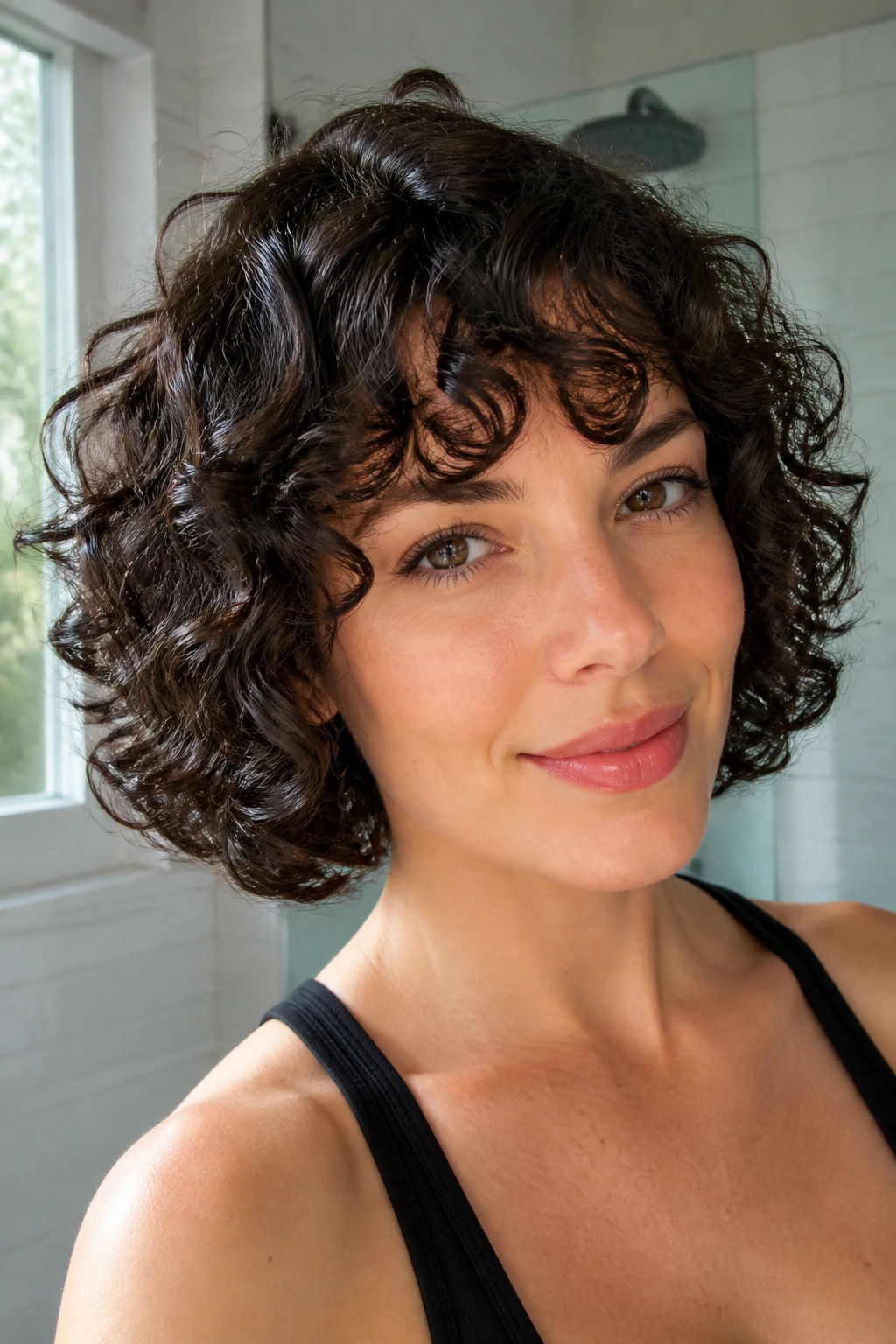
A glossy bob depends as much on styling as on cutting, and sometimes that is the point. Defined curls add weight and shine around the face, which can make a heart-shaped face look more grounded. The layers should support the curl clump, not break it apart.
The Finish Changes Everything
This cut lives or dies by definition. A curl cream plus a gel cast can make the silhouette look smoother and denser, especially around the chin. If your curls frizz quickly, this is a cut that rewards a more structured styling routine.
I like this shape for people who enjoy a polished result and do not mind spending a few extra minutes with a diffuser. The shine helps the layers read cleanly. The face gets framed instead of crowded.
23. Low-Maintenance Air-Dry Bob

Not everyone wants to diffuse every wash day. A low-maintenance air-dry bob keeps the layers soft enough that curls settle on their own with a decent shape. On a heart-shaped face, the trick is to keep the longest pieces near the jaw so the hair still balances the forehead.
What Makes It Work
The cut should not rely on a lot of root lift. Air-dry shapes usually look better when they have a gentle outline and a few face-framing pieces that know where to fall. Too many short layers can dry in odd directions and turn the style fuzzy.
This is the bob for people who want to wash, scrunch, and leave. It is not lazy; it is strategic. The cut does the heavy lifting so your hands don’t have to.
24. Polished Office Lob with Underlayers

A lob with underlayers is one of the safest bets if you need your hair to look tidy without feeling flat. The outer shape stays smooth, while the hidden layers give curls enough movement to avoid a blocky look. On a heart-shaped face, that length keeps the lower half present, which softens the forehead’s visual dominance.
Why It Looks Neat
The ends should stay blunt enough to look controlled. The underlayers should only remove enough bulk to keep the hair from spreading sideways. That makes the shape easy to tuck behind the ears, clip back, or diffuse into a cleaner finish.
This is the kind of cut that behaves in a meeting and still looks decent after lunch. No drama. No weird bulk. Just a shape that stays where it should.
25. Jawline-Widening Curly Bob with Feathery Ends
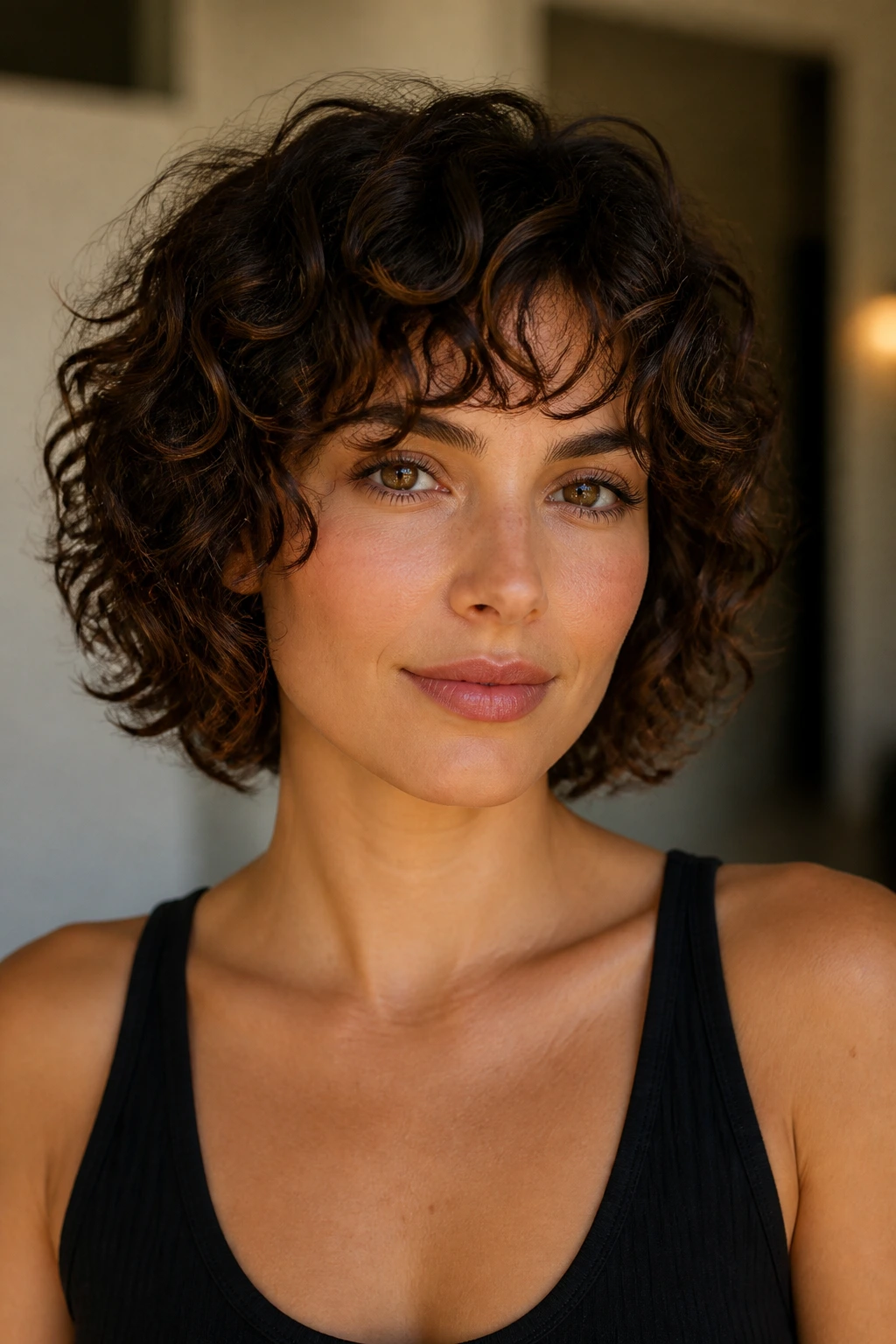
If I had to hand someone one final option, it would be this: a bob that deliberately builds a little width at the jawline and keeps the ends soft enough to move. That is the geometry a heart-shaped face usually likes. It fills the bottom without hardening the whole face.
The Final Shape Note
The feathering should happen lightly, mostly at the outer edges, so the curls do not break apart. You want the bottom line to look airy, not wispy. Ask for the front to sit around the jaw and for the side pieces to curve inward just enough to make the face feel steadier.
This cut is adaptable. It can be neat, messy, diffused, air-dried, or pinned back. That’s why it earns the last spot: it doesn’t depend on one styling mood to work.
Why Layering Changes the Whole Silhouette

A curly bob is not just about length. It is about where the hair lands when it stops growing straight down and starts springing outward. On a heart-shaped face, that difference matters even more, because the face already carries more visual weight through the forehead and temples. If the haircut adds more volume there, the balance goes wrong fast.
The smartest layers move the eye lower. They let curls bloom around the chin, cheekbones, or jaw instead of all at the crown. That lower placement changes the silhouette from top-heavy to grounded. It also makes a curly bob feel lighter without actually making it thin.
Crown, Cheekbone, Jaw
A lot of bad curly bobs fail in the same place: too much crown volume, not enough structure below. The fix is not removing every layer. It is placing the layers so the top can collapse a bit while the lower half keeps shape.
Cheekbone pieces help the face feel framed. Jaw-length pieces help the face feel wider where it matters. Crown layers should be used sparingly unless the hair is very dense, because a heart-shaped face rarely needs extra lift in that zone.
Why Curl Shrinkage Changes the Cut
Wet curls lie. Dry curls tell the truth. That is why a curl-friendly bob should be cut with shrinkage in mind, not around it. A curl that looks chin-length in the salon can bounce up to the cheekbones once it dries, and that can make all the difference between balanced and abrupt.
A dry cut or at least a curl-aware finish is worth asking for. If your stylist cuts wet, the safer move is to leave more length than feels comfortable in the chair. You can always trim more. You cannot glue it back.
The Tools That Make Styling Easier
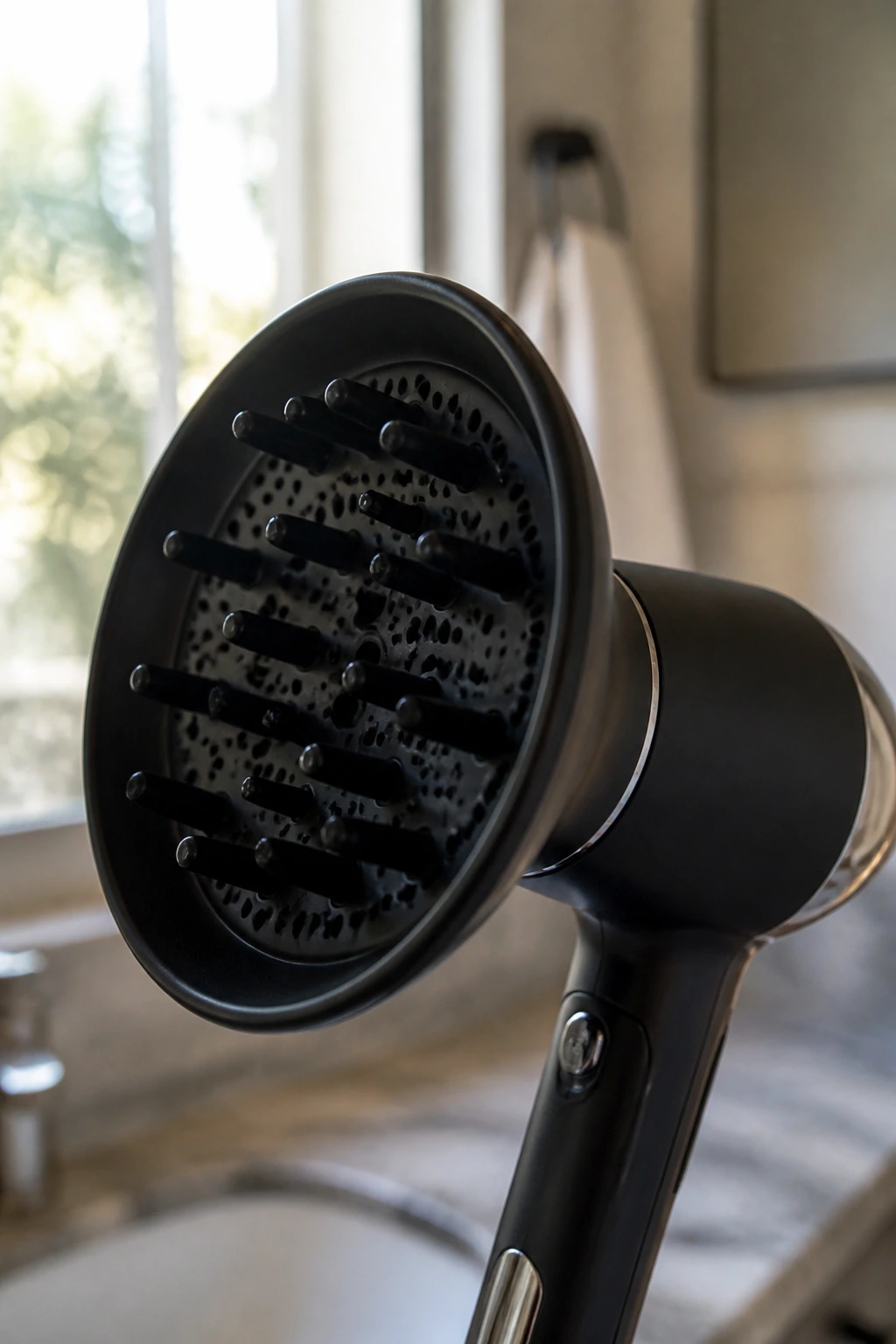
- A diffuser attachment: Use it to dry curls without blasting them into frizz; the bowl should fit the curl clumps, not rip them apart.
- A microfiber towel or soft T-shirt: This cuts rough drying down and helps curl definition stay intact.
- Wide-tooth comb: Good for detangling in the shower when conditioner has already softened the hair.
- Duckbill clips or root clips: Useful if your crown goes flat and needs a little lift while drying.
- Curl cream: Choose a lightweight cream for looser curls or a richer one for denser patterns.
- Gel or foam: Gel gives hold; foam gives airy shape. Many curly bobs need one of these, not both at full strength.
- Leave-in conditioner: Helps the ends stay soft, especially on chin-length cuts that can get dry fast.
- Sharp hair scissors, if you trim at home: Only for bangs or tiny dustings, not for reshaping the bob itself.
How to Brief Your Stylist Without Guesswork

Bring photos, but bring the right photos. A curly bob on someone with loose waves will not behave like the same cut on tight coils, and a heart-shaped face changes the whole read of the shape. What matters is not whether the photo is pretty. What matters is whether the curl pattern, density, and face shape are close enough to be useful.
Say where you want the length to land when the hair is dry. Be specific about the chin, cheekbone, jaw, or collarbone. If you love a side part, say that before the scissors come out. If you wear a center part only because it is easy, say that too. Those details change the whole cut.
Mention Shrinkage Up Front
Shrinkage can wreck an otherwise good plan. If your curls spring up hard, tell the stylist how much length you usually lose. A good stylist will adjust the cut line and leave the front slightly longer than the final target. That is not guesswork. It is respect for the hair.
Talk About Density, Not Just Texture
Density changes the bob more than people think. Fine curls need support and softer layering. Dense curls need weight removed from the inside, or the cut will puff out sideways. If the stylist knows whether the hair is packed or airy, they can place the layers where they matter.
Fringe Decisions Should Happen Early
Do not treat bangs as an afterthought. Curtain bangs, side bangs, and long face-framing pieces all change how a heart-shaped face reads. If you want forehead softness, say so before the shape is cut. It is far easier to build a fringe into the bob than to bolt one on later.
How to Wear the Shape on Busy Mornings
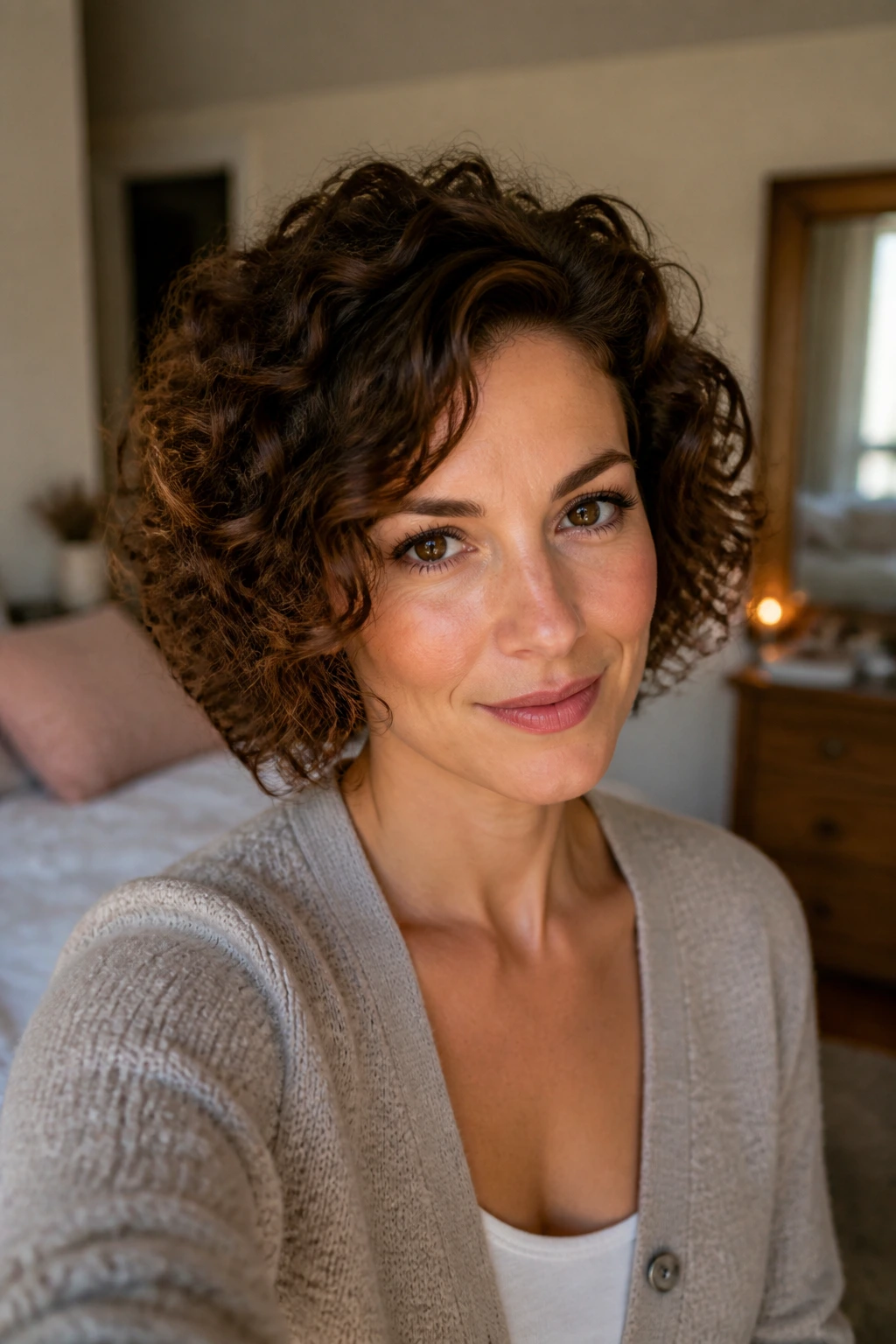
Parting: Start with the part you actually wear, not the one that looks neat in a salon chair. A slight side part usually softens a heart-shaped face faster than a dead-center line, especially when the curls are loose around the forehead.
Volume: Put lift where the head needs it, which is usually around the crown for flat roots and around the jaw for narrow lower faces. If the crown is already big, skip heavy root spray and spend the effort on definition through the ends.
Finish: Pick the finish by mood, not by habit. A light gel cast gives the bob a crisp outline. A cream-only finish gives it a softer edge. If the cut has strong layers, the more defined finish often shows the shape better.
Accessories: Small clips, side pins, and narrow headbands can help, but heavy bands that sit high on the forehead tend to fight the balance. Tuck one side behind the ear and leave the other loose if you want the face to open up without losing curl shape.
Best Use: These bobs work for school runs, office days, and dinners where you do not want hair falling in your mouth every five minutes. That sounds basic. It matters.
Additional Tips and Shape Boosters
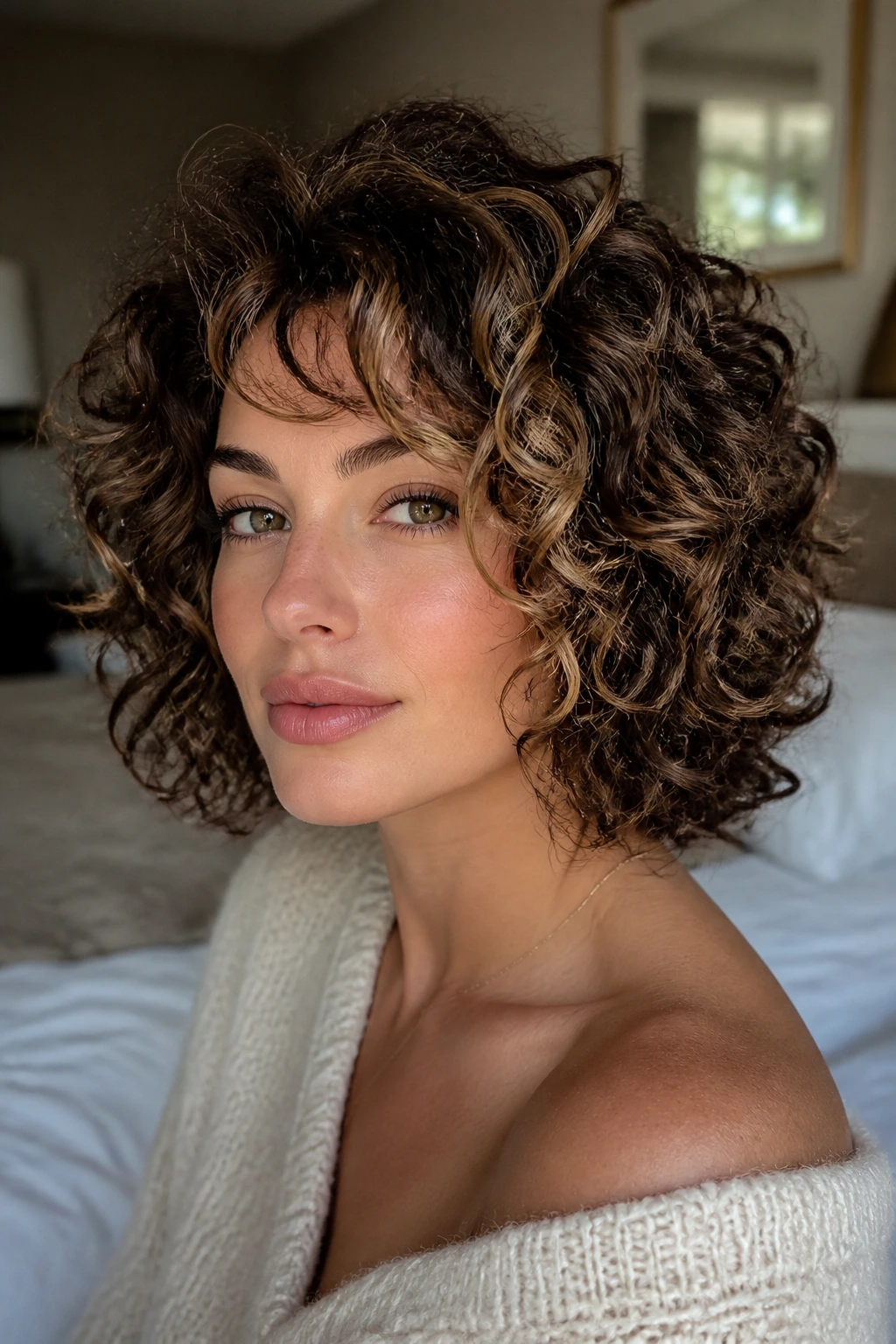
Color Placement: A lighter ribbon around the front curls can widen the cheek area visually and bring attention down from the forehead. It does not need to be dramatic; a few face-framing pieces are enough.
Fringe Tweak: If your forehead feels wide, keep the shortest fringe pieces around the cheekbone rather than the brow. Curly bangs shrink more than straight bangs, and that extra length saves you from accidental baby fringe.
Root Lift: If the crown flattens, clip the roots while the hair is drying. Two or three clips placed just off the part can create lift without turning the top into a puff.
Density Control: Thick curls often need internal shaping more than visible layering. Fine curls need the opposite. That one distinction decides whether the bob looks full or see-through.
Common Mistakes That Flatten the Cut
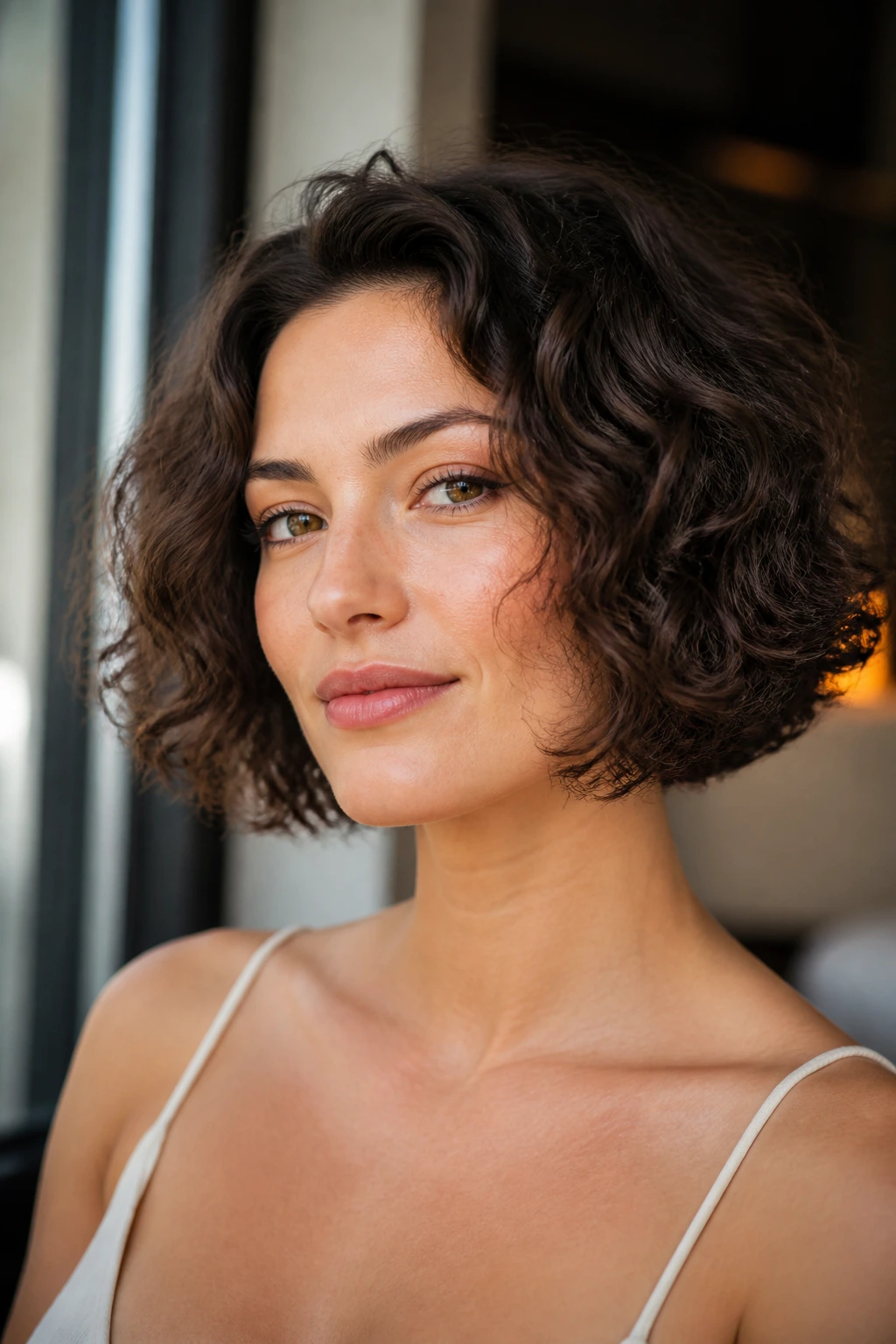
- Cutting the layers too high at the crown: The symptom is a wide, bulbous top with skinny ends. The fix is to keep most of the movement lower, near the cheekbone and jaw.
- Going too short in front: If the front pieces jump above the cheekbone, the forehead starts looking wider. Leave enough length for shrinkage and face framing.
- Over-thinning dense curls: The hair looks frizzy, puffy, or patchy instead of shaped. Ask for internal weight removal, not aggressive slicing.
- Ignoring your part: A center part can be great, but on some heart-shaped faces it makes the forehead feel louder. Shift the part slightly and see what happens.
- Styling while the hair is half-dry and being touched constantly: That usually breaks curl clumps and adds halo frizz. Put the product on, form the curl, and leave it alone.
Variations and Adaptations to Try

The Fine-Curl Feather Cut: Keep the perimeter just above or at the jaw, then use very light internal layering so the hair keeps its body. This version suits hair that goes flat if too much weight is removed. It reads soft, not sparse.
The Dense-Curl Balance Bob: Leave the front longer and carve weight out from inside the back and sides. This keeps heavy curls from ballooning while still giving the lower face enough width. It is a strong choice when the hair has a lot of spring.
The Fringe-First Version: Build the whole cut around curtain bangs or a long side fringe. The fringe does most of the work on the forehead, so the bob itself can stay a little cleaner and simpler. That helps if you like a face-framing look without too much fuss.
The Air-Dry Cut: Ask for softer layers and a perimeter that stays even when the hair dries on its own. This version leans on curl clumping rather than diffuser shaping. It is the one to choose if you want the cut to hold up on low-energy mornings.
The Sharp-Low Volume Lob: Keep the length near the collarbone, the layers subtle, and the outline tidy. This works when you want the face to feel balanced but do not want the style to scream for attention. Quiet shapes age well.
Keeping the Shape Between Trims
Curly bobs do not need daily repair, but they do need a schedule. A true bob usually wants a trim every 8 to 10 weeks; a lob can stretch to 10 to 12 if the shape stays clean. Bangs or curtain pieces often need a light trim every 3 to 5 weeks, especially if they shrink hard and start poking into the eyes.
Refresh curls with a little water and leave-in conditioner before adding more product. Do not soak the whole head unless you have time to dry it again. A palmful of water misted through the top and front often brings the shape back without turning the ends mushy.
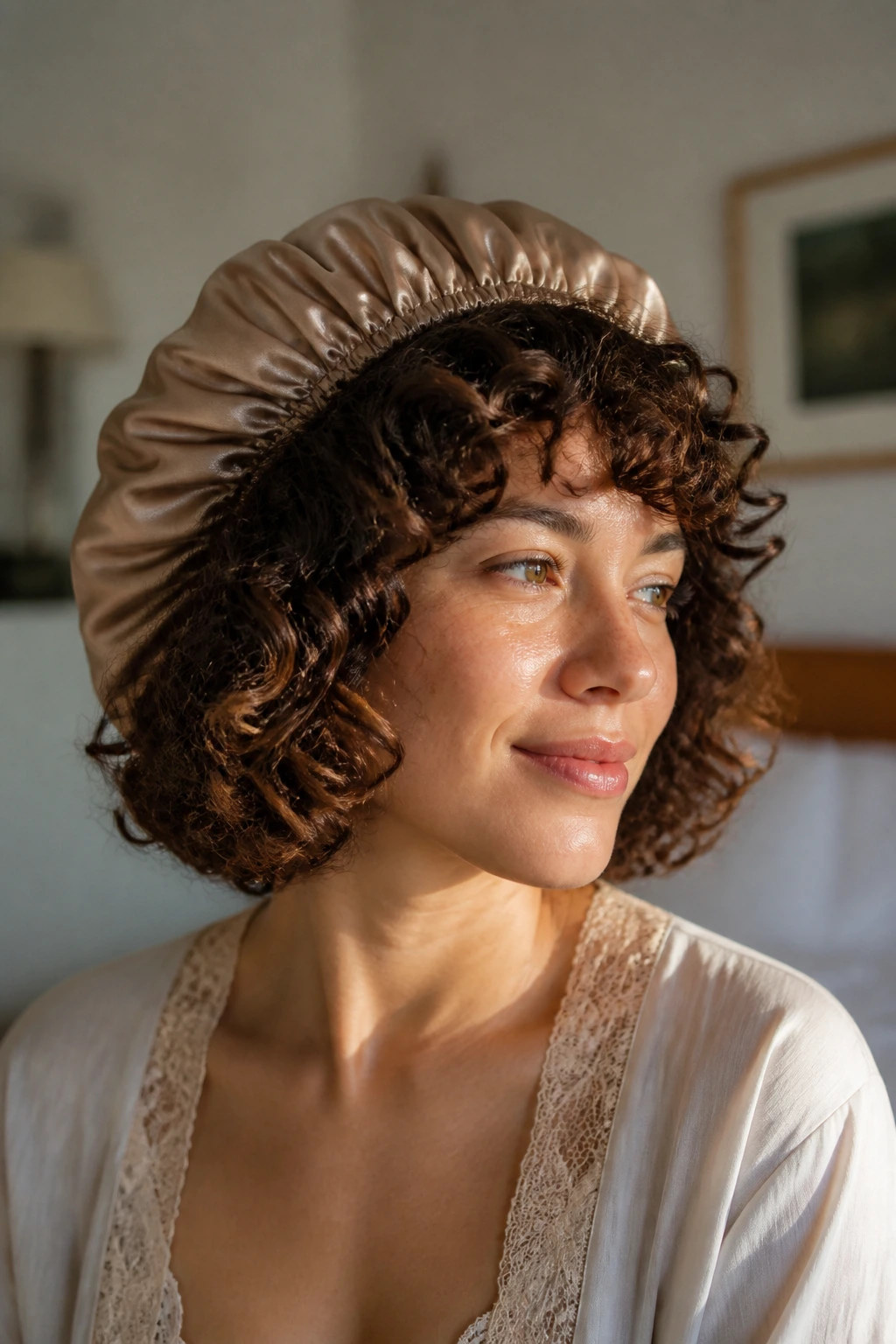
Sleep matters, too. A satin bonnet, satin pillowcase, or loose pineapple can keep the layers from getting flattened at the crown. If the hair is short enough that a pineapple feels silly, use the pillowcase and call it done.
If product buildup starts making the bob feel waxy or dull, clarify every 3 to 4 washes. That’s especially useful when you use mousse, gel, or a heavy cream on dense curls. The haircut looks better when the curl clumps are clean enough to move.
Frequently Asked Questions

Can a layered bob work if my curls are very tight?
Yes, but the layers need to be longer and more carefully placed. Tight curls shrink a lot, so the cut should keep enough length in the front and enough weight in the lower half to avoid a round puff at the top.
What length is most flattering on a heart-shaped face?
Chin to collarbone is the safest range. Chin length gives the jaw more presence, while collarbone length keeps the face from feeling top-heavy and allows the curls to fall in a softer line.
Should I ask for a center part or a side part?
Start with the part you wear most often. A slight side part usually softens a wider forehead, but some heart-shaped faces look better with a center part plus curtain bangs. The right answer is the one that matches your daily habit.
Do curtain bangs work with curly bobs?
They do, as long as they are cut with shrinkage in mind. Keep them longer than a straight-hair fringe and ask for soft opening pieces near the cheekbones so they blend into the bob instead of sitting like a separate shape.
Will layers make my curly hair frizzier?
Bad layers will. Good ones usually do the opposite by helping curls clump and sit where they should. The problem is over-thinning or cutting layers too high, not layering itself.
How often should I trim a curly bob?
Most bob shapes need a trim every 8 to 10 weeks to hold the outline. Lobs can stretch a bit longer. If the shape starts to turn triangular or the fringe loses its line, it is time.
Can I wear this cut if my hair is fine?
Absolutely, but the layering should be light. Fine curls need enough weight to hold their shape, so avoid cuts that strip the ends too much. A soft perimeter with a few face-framing pieces usually works best.
What if my curls shrink more on one side than the other?
That is common. Ask for a dry finish or a curl-by-curl refinement so the stylist can correct the difference where it actually shows. At home, parting the hair the same way each wash day helps the curls settle more evenly.
The Shape That Does the Balancing
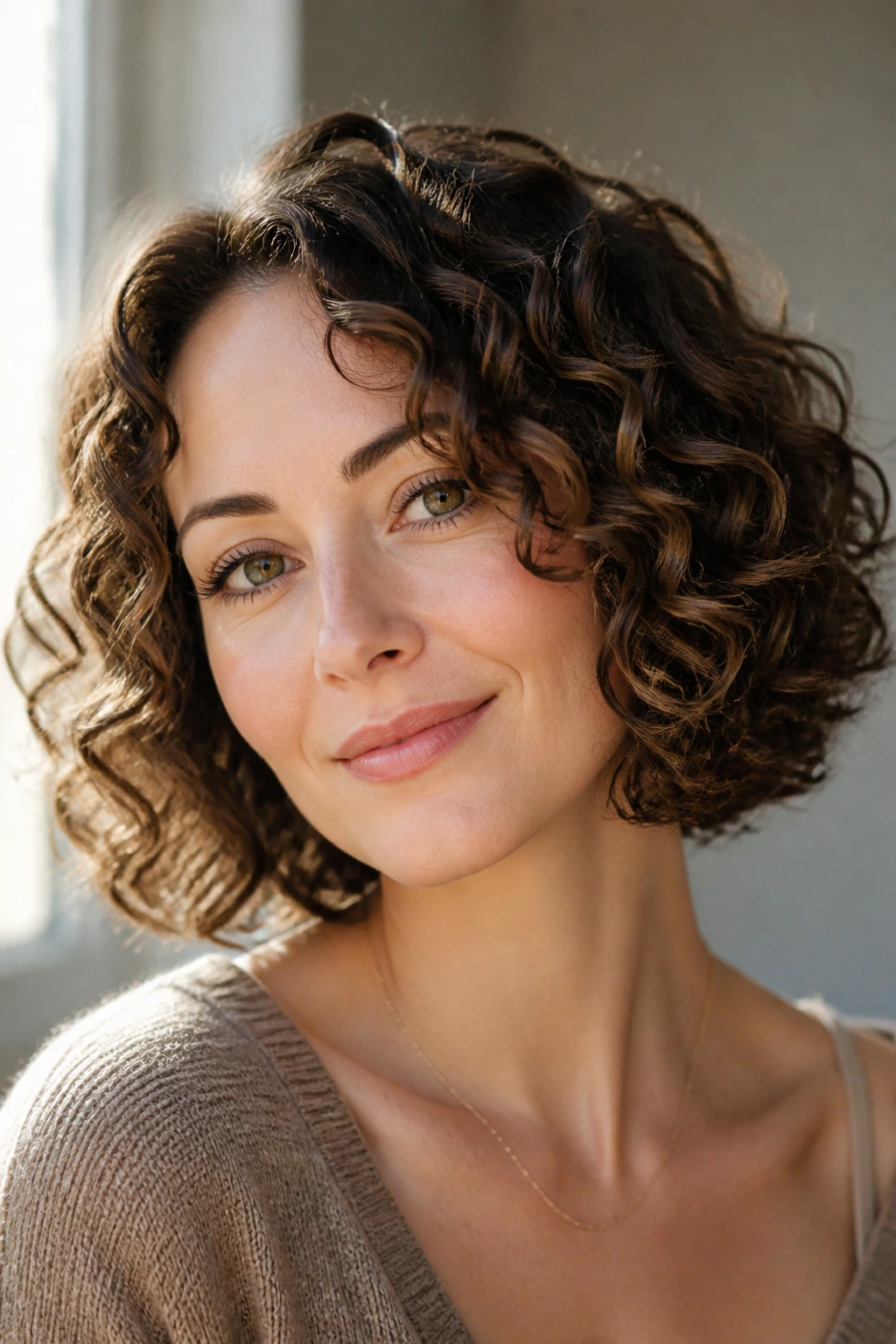
The best curly bob for a heart-shaped face does one thing well: it balances the upper half of the face with enough movement near the jaw. That sounds simple. It is not, because curls change the shape after every wash, every trim, and every pass of the diffuser.
Still, the logic stays the same. Keep the top from getting too big, leave enough length in front to soften the forehead, and place the weight where the jaw needs it. If you get those three things right, the haircut stops fighting your features and starts working with them.
That is the whole appeal of layered bobs for curly hair and heart-shaped faces. The cut does not need to shout. It just needs to land in the right places.