



Short bobs for round faces and thick hair work best when the cut respects two things at once: where the face is widest, and where the hair wants to bulge. Get that wrong, and the bob turns into a puffed-up helmet that sits at the cheeks like it’s making a point. Get it right, and the whole face looks cleaner, the jaw looks more defined, and the hair suddenly behaves like it paid attention in styling school.
The trick is not “go shorter.” That advice gets people into trouble all the time. Thick hair has weight, then lift, then a little stubbornness at the ends, and a round face needs some kind of vertical or diagonal line to keep the shape from spreading outward. So the best short bob is rarely the most dramatic one on the salon wall. It’s the one with the right hemline, the right part, and just enough internal control to keep the silhouette from ballooning.
I like bobs that feel deliberate. A blunt line that lands half an inch below the chin. A side part that steals a little width from the face. A nape that’s clean but not shaved to the skin. Those details matter more than the name of the cut. The 25 ideas below lean into that exact balance.
Why You’ll Love This Collection
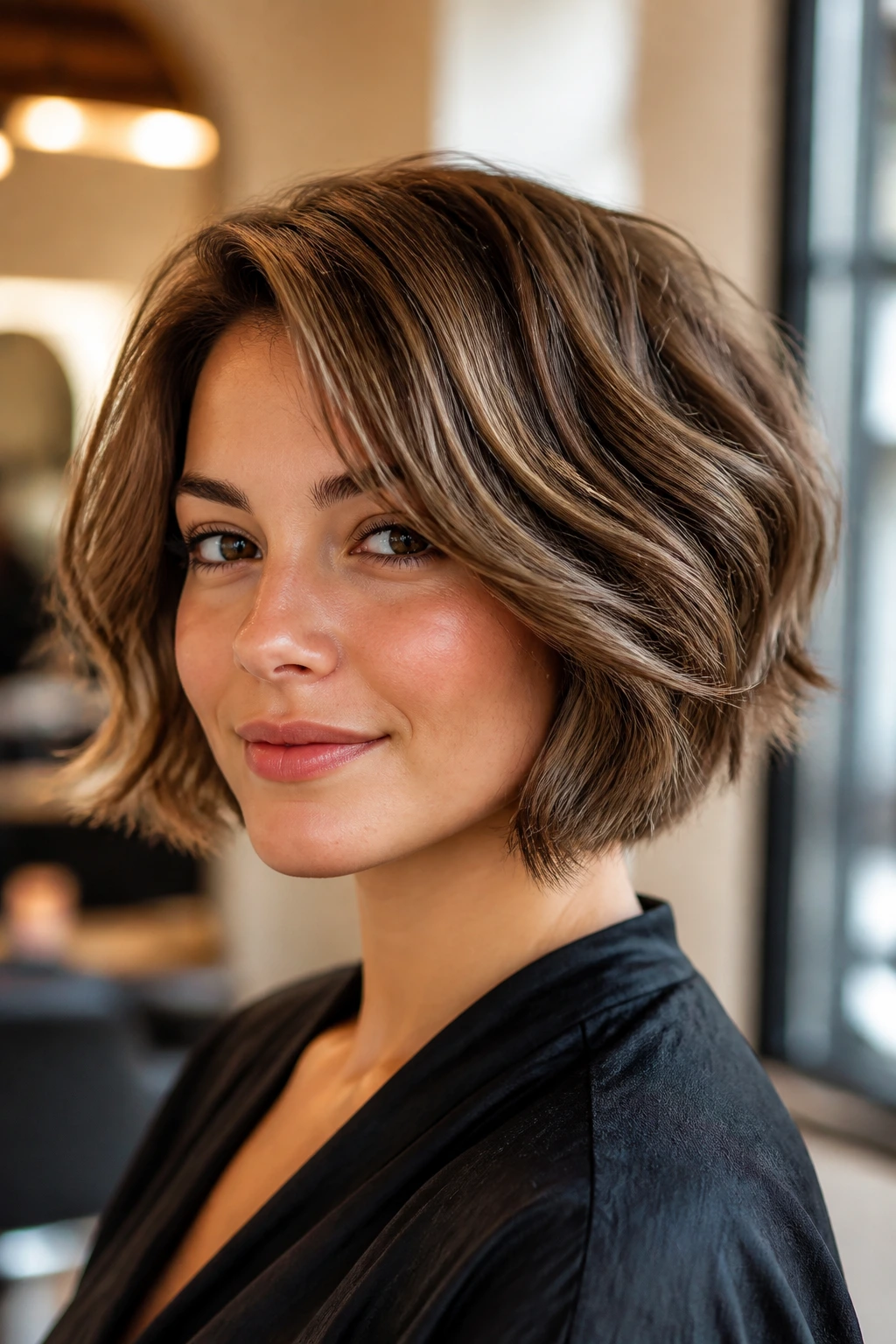
-
Round-face balance: Each cut creates length, diagonal movement, or cheekbone focus so the face reads a little longer and less wide.
-
Thick-hair control: These bobs use weight, stacking, or internal debulking so the hair sits in shape instead of springing out at the sides.
-
Styling flexibility: Some of these look polished with a round brush, while others are better when you rough-dry them and leave a few ends imperfect.
-
Low-drama grow-out: The better bobs in this mix don’t collapse into a triangle after three weeks. They keep a readable shape as they grow.
-
Salon-friendly wording: I’ll point out the actual terms to use at the chair, which is where most bob regrets begin.
-
Texture-aware: Straight, wavy, and curly hair all get options here, because one bob shape does not suit every thick head of hair.
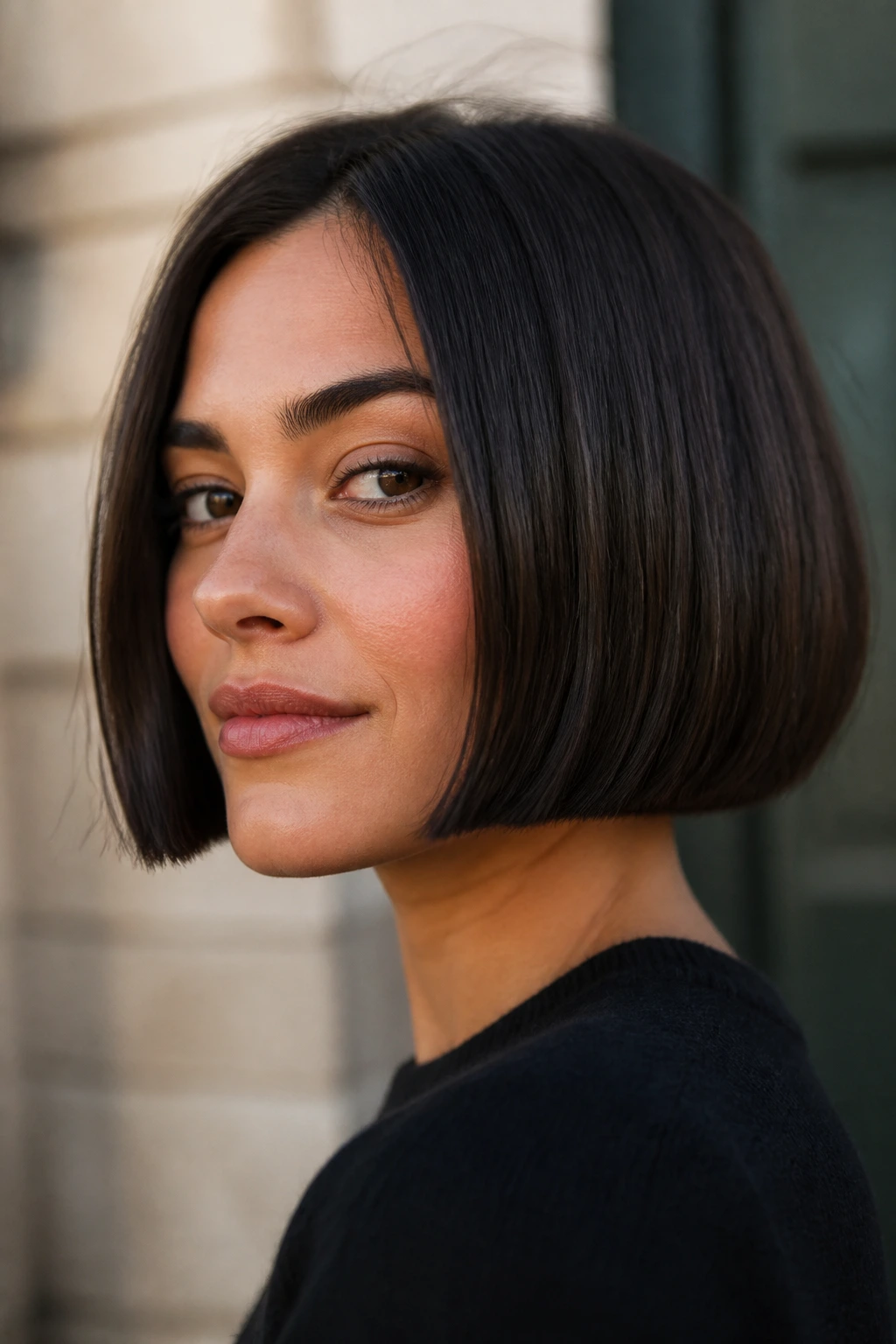
1. Blunt Chin-Length Bob with a Soft Center Part
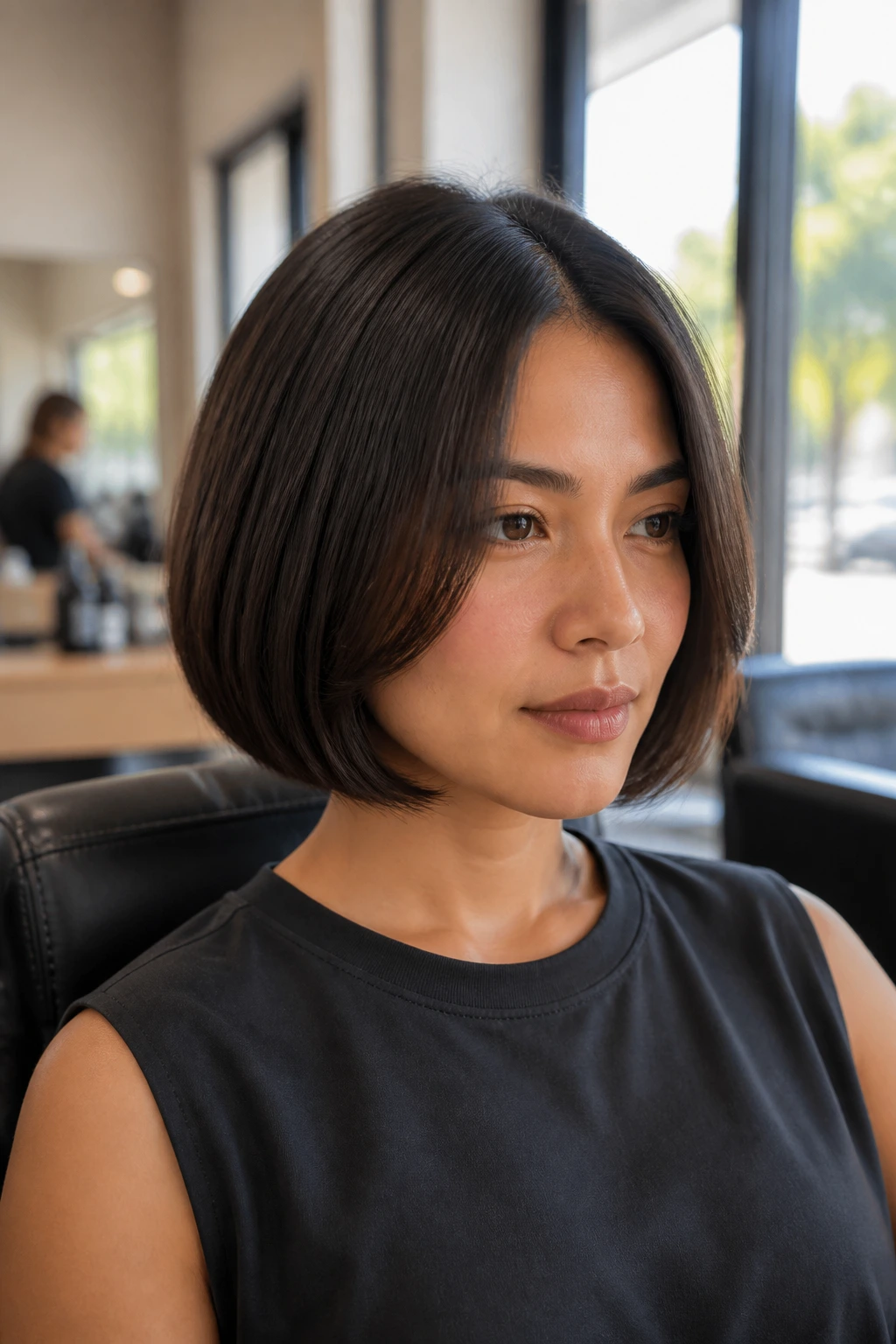
A blunt chin-length bob can look expensive on thick hair when the line is clean and the ends are controlled. The key is placement. Let it skim just below the chin, not right at the widest part of the cheek, so the cut pulls the eye downward instead of stopping it in the middle of the face.
Why it works
Thick hair gives this shape the density it needs. Fine hair can go wispy with a blunt cut, but full hair gives the perimeter enough weight to sit still. A soft center part keeps the look modern, though I’d still ask for the front to be a touch longer if your cheeks are full. Half an inch matters here.
Keep the finish smooth. A blunt bob on dense hair looks best when the ends are tucked under with a 1.25-inch round brush or a flat iron bend, not flipped outward. That little inward curve helps the line read as intentional instead of boxy.
2. A-Line Bob with Longer Front Corners
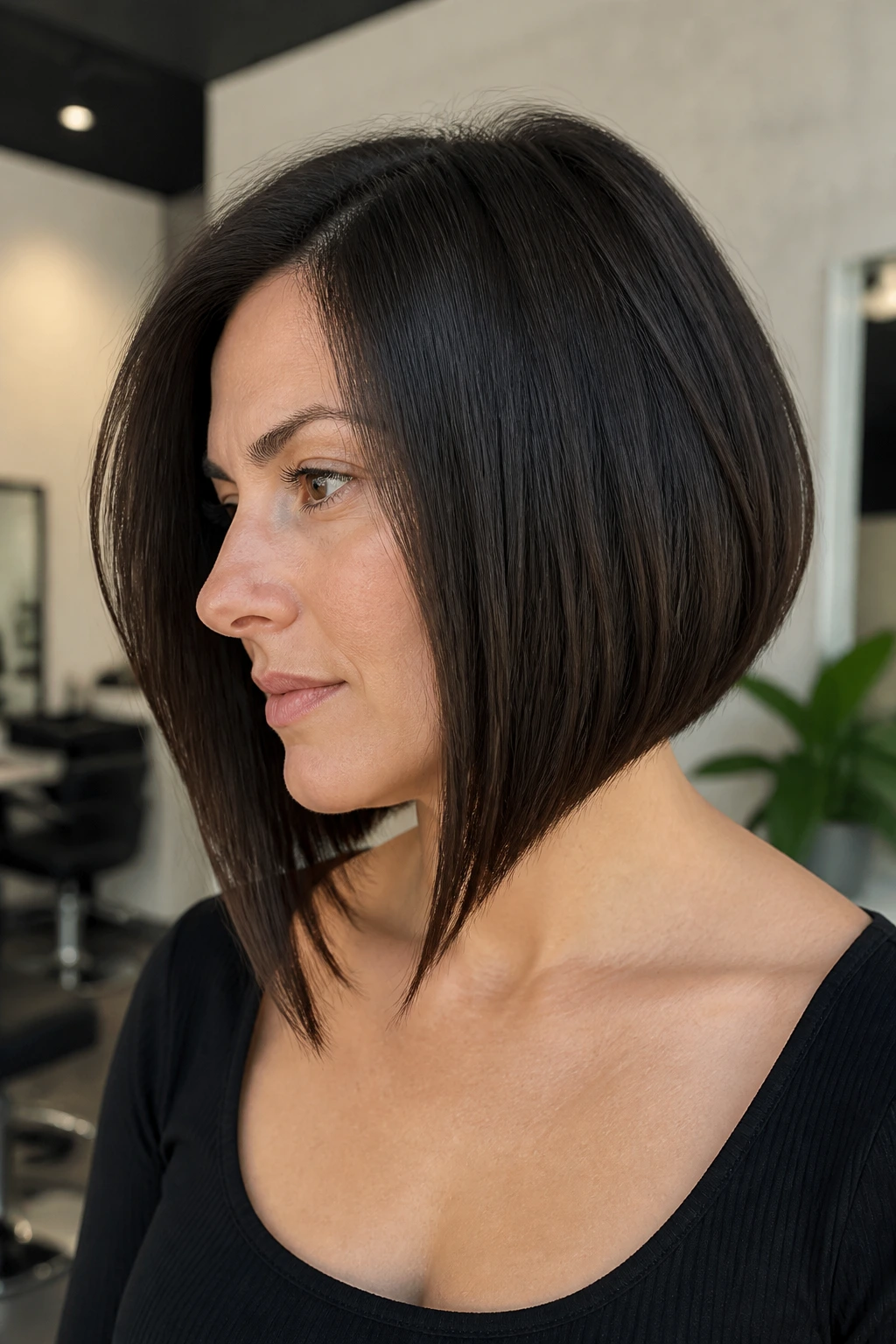
This is one of the easiest shapes to like on a round face because the diagonal is doing so much of the work. The back sits a little shorter, the front corners fall a little longer, and the whole cut sends the eye from the jaw toward the collarbone.
What to ask for
- Front pieces 1 to 1.5 inches longer than the back
- A nape that sits neat and close
- A perimeter that stays blunt enough to hold shape
That front angle matters more than people think. Thick hair loves to spread at the sides, and the longer front corners keep the outline from looking like a square puff. If your hair has a strong natural bend, this cut can look great with almost no heat styling. A quick blow-dry at the roots and a soft curve at the ends is often enough.
3. French Bob with Wispy Brow-Grazing Fringe

Can a short fringe work on a round face? Yes, if it stays broken, soft, and slightly longer at the temples. The French bob gets the credit here, but the fringe is the part that decides whether the cut looks artsy or childish.
The length should hover around the cheekbone-to-mouth zone in the front, with the bangs grazing the brows rather than sitting in one hard line. On thick hair, this style needs a stylist who knows how to remove weight from the fringe without shredding it. Too much thinning and the bangs get frizzy. Too little, and they sit like a curtain.
A good French bob doesn’t cover the whole forehead. It leaves a little air around the face, which helps a round face look less compact. It’s a small difference. Huge payoff.
4. Stacked Bob with a Light Nape Taper
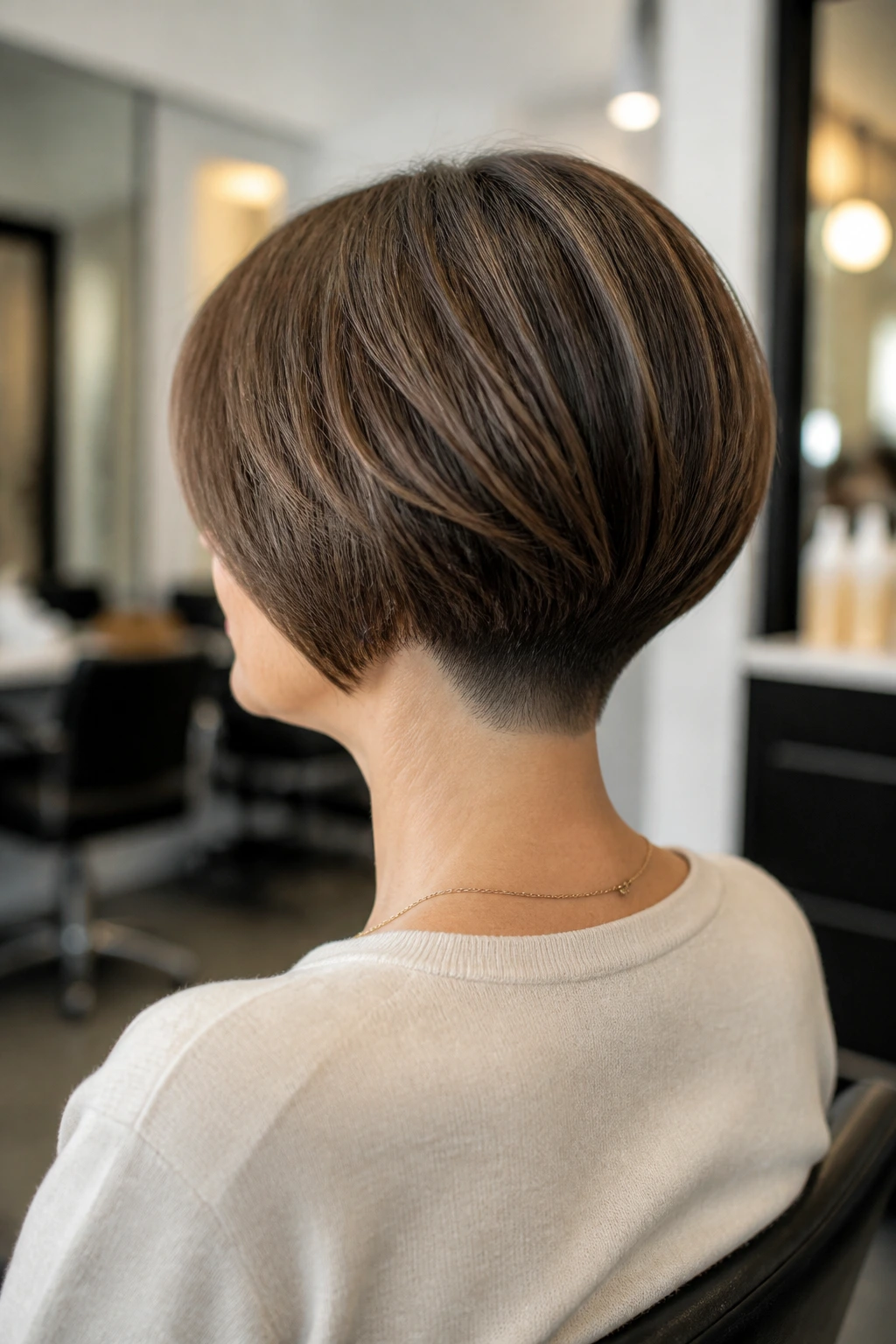
If your hair lives like a mushroom the second it gets short, a stacked bob can fix the silhouette fast. The back is graduated so the nape sits lighter and closer to the head, while the front keeps enough length to avoid puffing at the cheeks.
The trick is restraint. Heavy stacking can push volume too high and make the crown look wider, which nobody needs. Ask for a light taper at the nape, not a dramatic wedge. You want lift at the back, not a helmet effect.
This one works best when the hair is dense through the lower half and you want a cut that dries into shape with minimal fuss. Blow-dry the roots up and back for a few minutes, then let the ends fall where they want. That’s usually enough.
5. Shattered Bob with Broken Ends
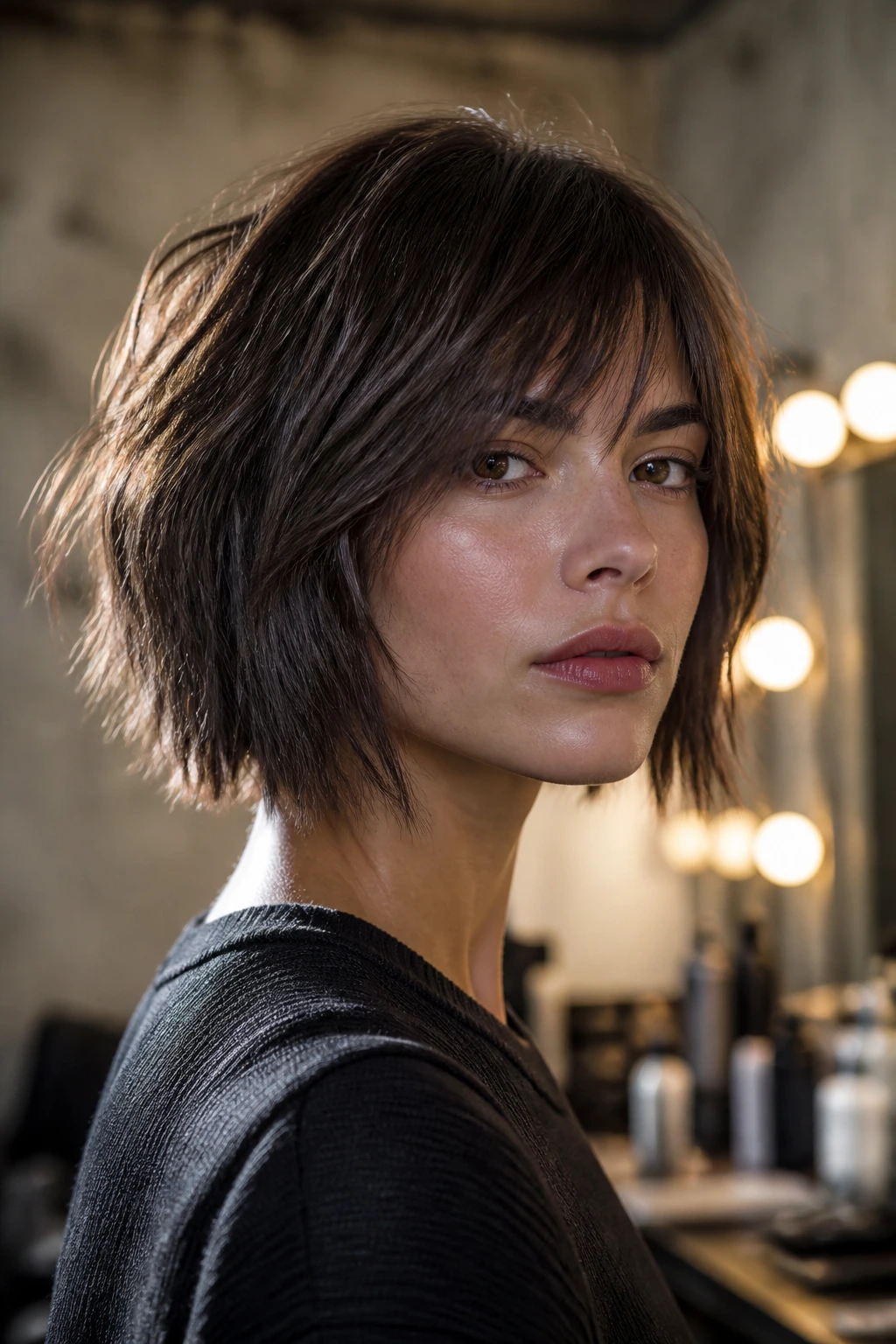
This is the bob I’d pick for hair that looks too solid in a blunt cut. A shattered bob breaks up the heaviness with point-cut ends and a few deliberately uneven pieces, so the shape feels lighter without looking messy.
The face shape benefit is subtle but real. Broken ends create more vertical movement than a straight wall of hair does. On a round face, that means the silhouette stops reading as one broad circle and starts reading as a softer oval.
Ask for texture, not thinning. That distinction matters. You want the stylist to cut into the line with scissors, not carve the hair into a frayed mess with a razor all over the head. Thick hair can take a little roughness at the ends. It cannot always take overworked layers.
6. Deep Side-Part Bob with Face-Skimming Sweep
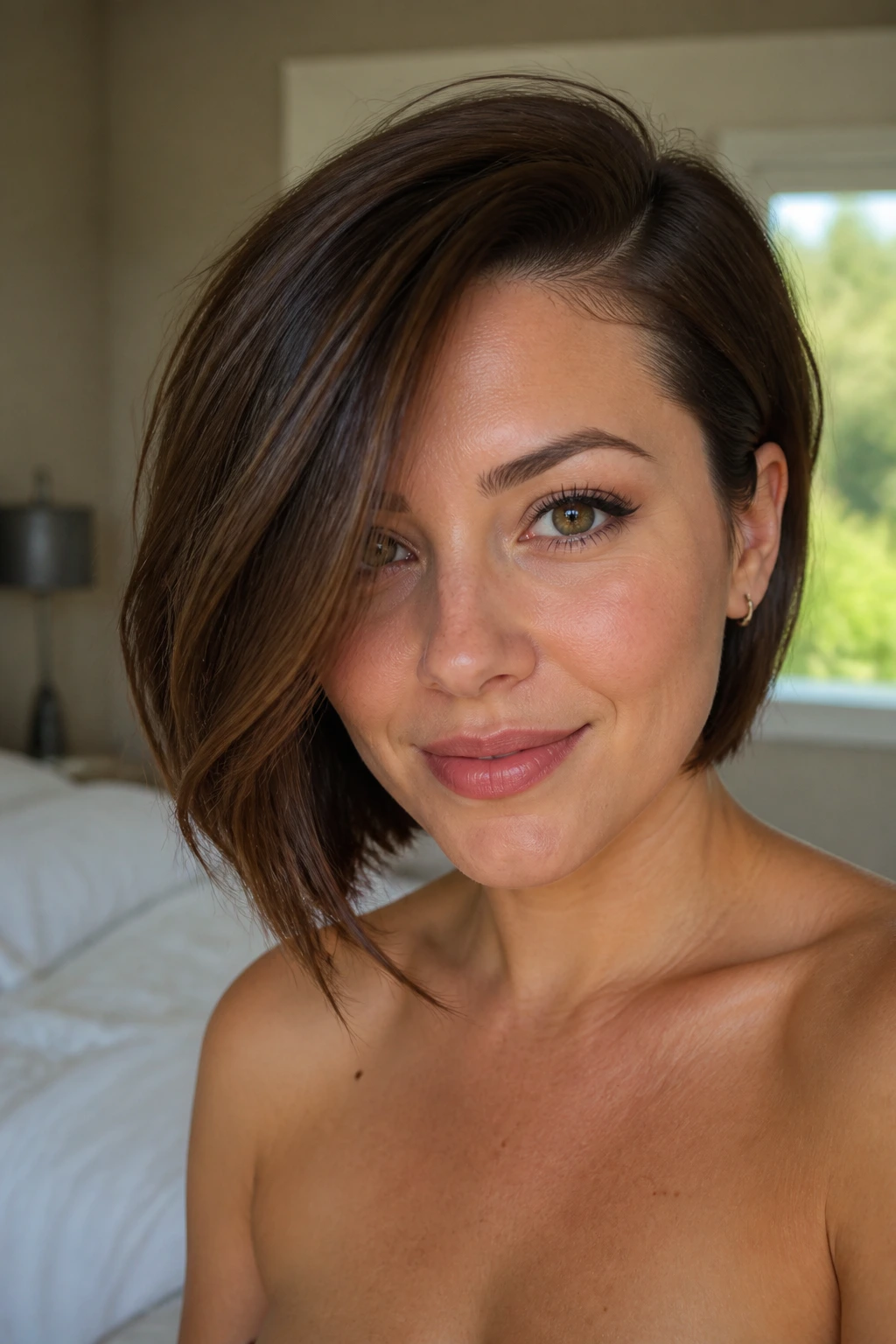
A deep side part is one of the fastest ways to stretch a round face without changing the length at all. One side gets a long sweep across the forehead and cheek, and that diagonal line cuts the width visually. Simple. Effective. Hard to mess up.
On thick hair, the side part also helps because it redistributes weight. Instead of sitting evenly on both sides and puffing out equally, the hair falls with a little more asymmetry. The result feels less circular and a lot more deliberate.
This is the bob I like for days when you want movement but not a lot of visible layering. Blow-dry the front away from the face, then let one side tuck behind the ear. That one gesture changes the whole cut.
7. Rounded Bob with Interior Layers
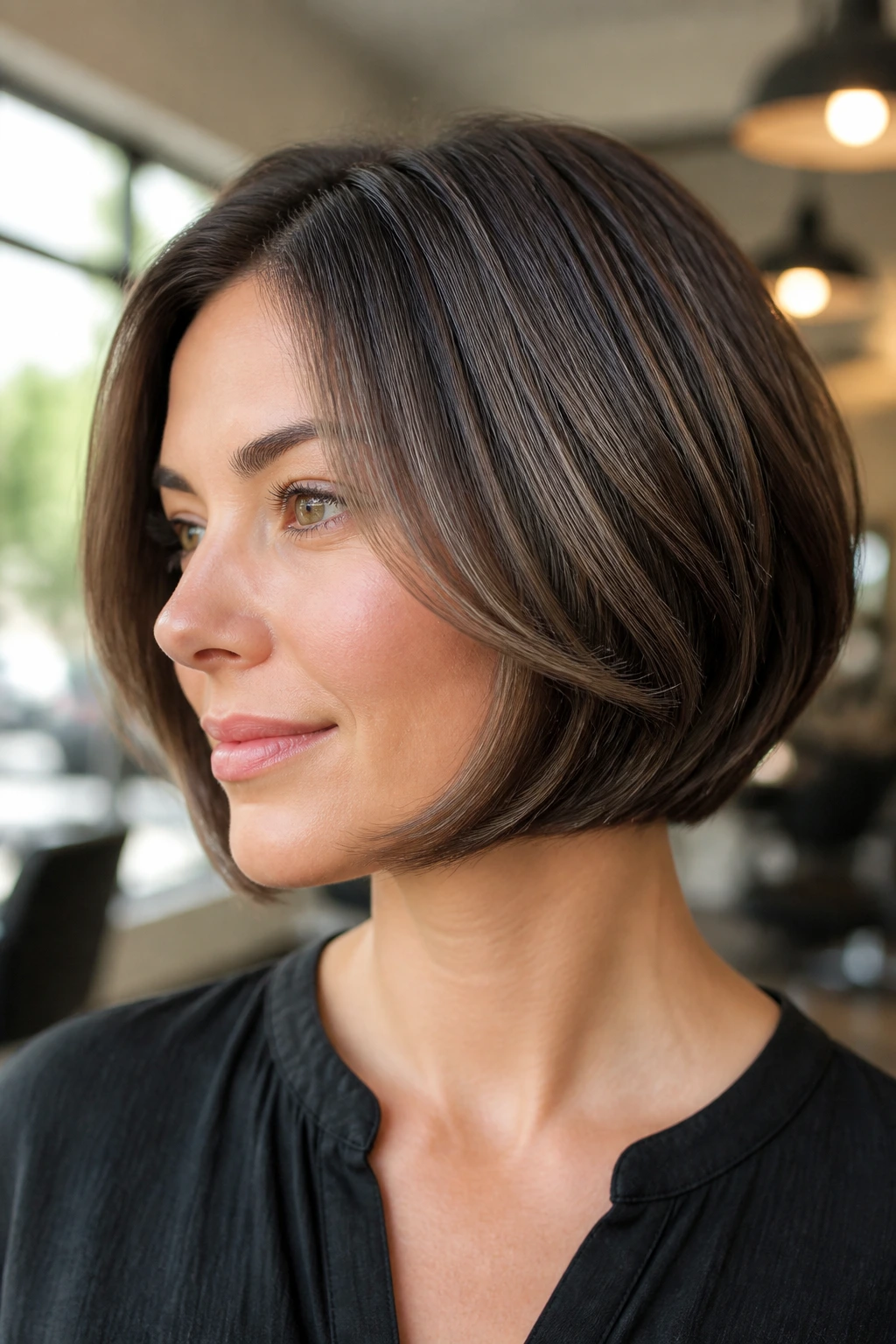
A rounded bob can sound risky for a round face, and if it’s cut badly, it is risky. But when the curve is kept under the jaw and the layers live inside the shape, it creates a neat, sculpted line that hugs the head instead of flaring out.
The part that matters
The visible outline should stay fairly clean. The hidden layers should remove bulk from the middle and lower back sections, where thick hair tends to swell. That way the curve stays controlled, not poofy.
This is one of those cuts that rewards a good blow-dry. A medium round brush, low tension, and a cool-shot finish will keep the curve smooth. If you air-dry it and leave it alone, the shape can tip into a little mushroom territory. Not a disaster, just not the point.
8. Inverted Bob with a Sleek Back
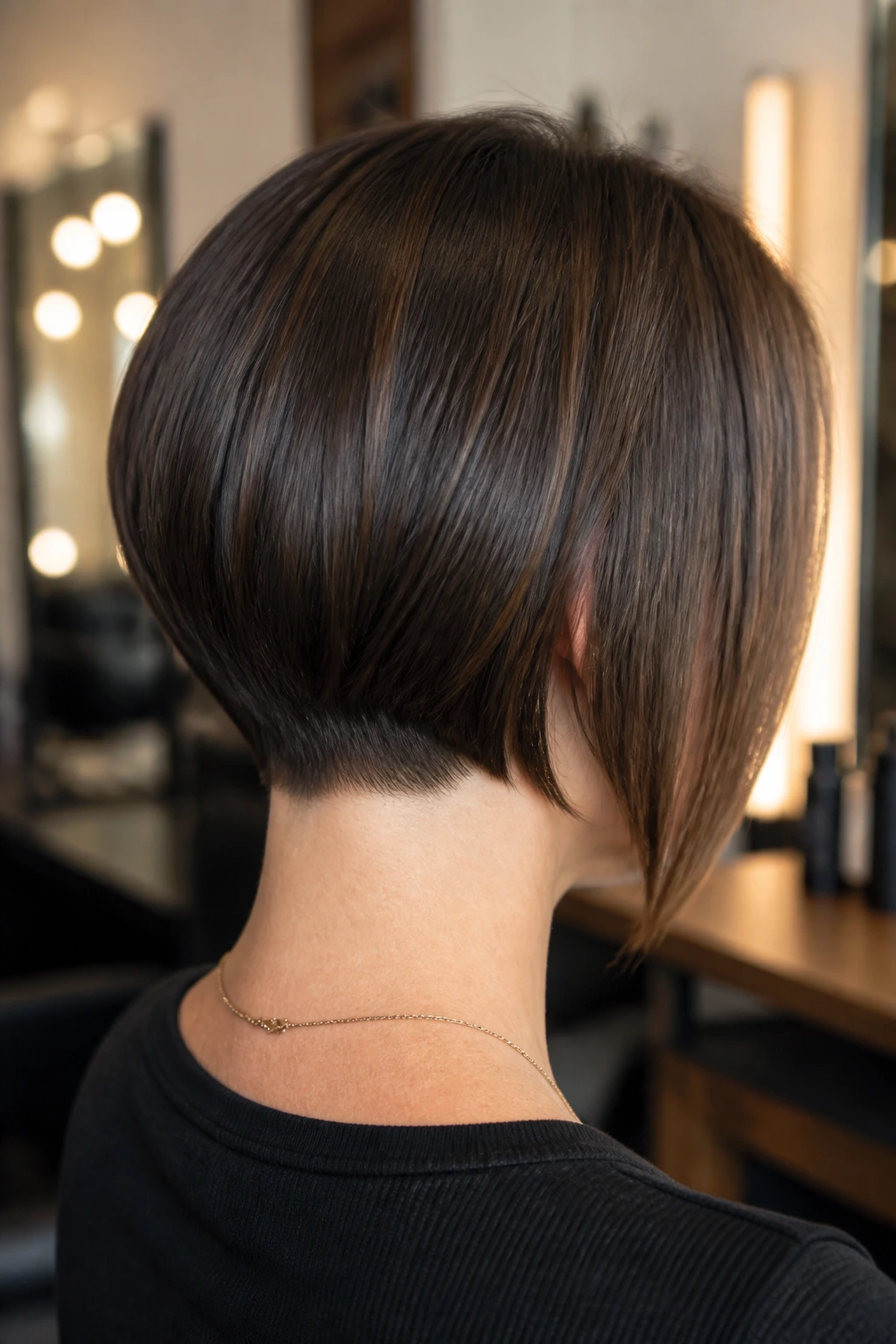
People act like a short bob needs softness to work on a round face. Not always. A sleek inverted bob can sharpen the whole look because the shorter back and longer front create a strong diagonal line that narrows the face visually.
The back should hug the nape, and the front should land just below the jaw. That contrast is what gives the cut its edge. On thick hair, the sleek finish matters because density can make the inversion look bulky if the ends aren’t smoothed down.
I’d reserve this one for hair that can go straight or close to straight with heat. If your texture is coarse and wants to kick out at the ends, you’ll need a flat iron pass or a stronger smoothing blowout. Worth it, though. The line is clean.
9. Box Bob with Clean Edges
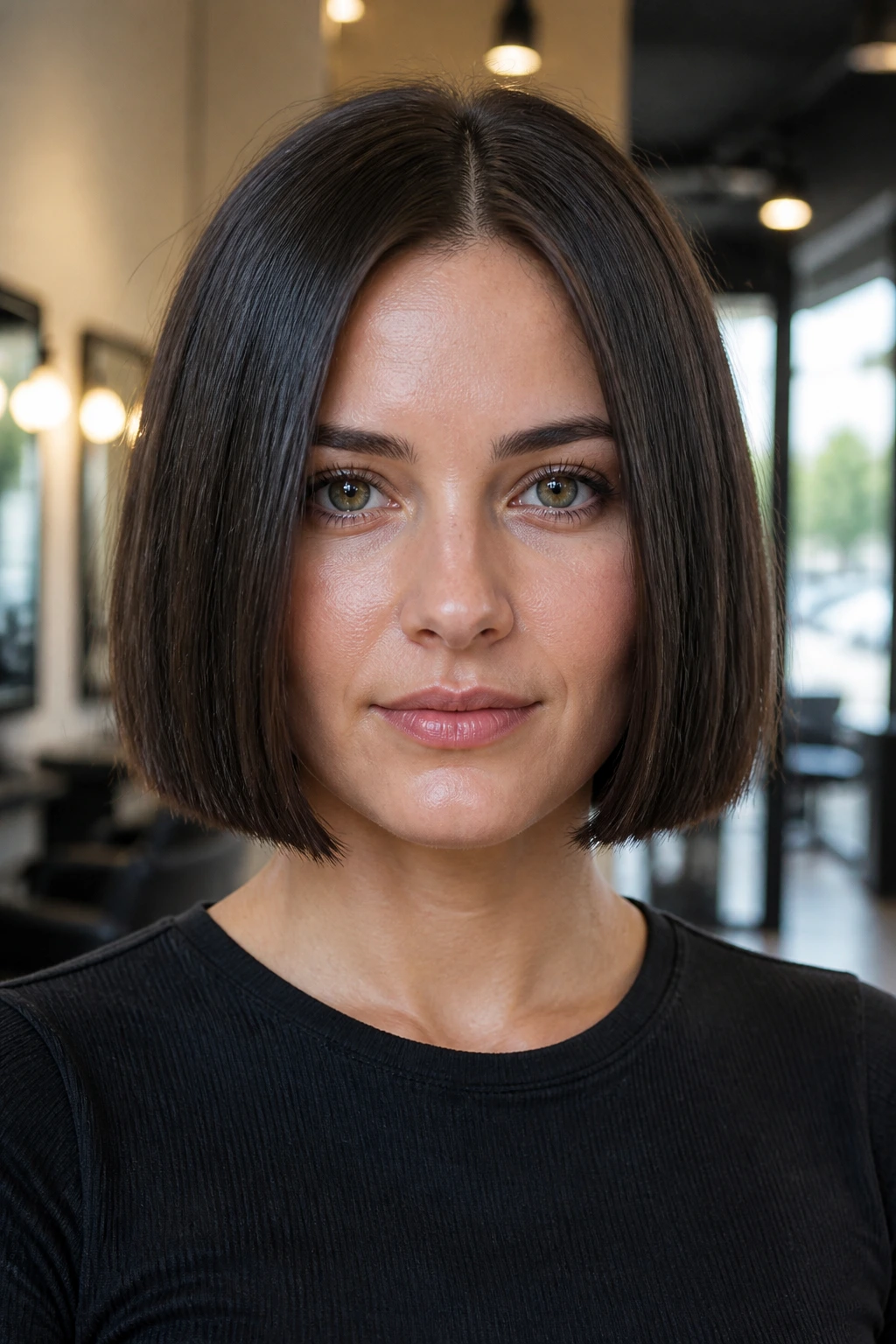
A box bob sounds severe until you see it on thick hair. Then it starts to make sense. The weight of the hair gives the shape authority, and the blunt edges stop the cut from puffing outward too much at the sides.
This one works because it’s controlled, not because it’s soft. The straight perimeter gives the jawline a frame, and the thickness keeps the bob from looking flimsy. On a round face, the trick is keeping the length a touch lower than chin level so the line doesn’t widen the cheeks.
If you like a crisp silhouette and hate fussy styling, this is a solid choice. A little serum on the ends. A clean center or slight side part. Done.
10. Razor-Cut Bob with Airy Ends
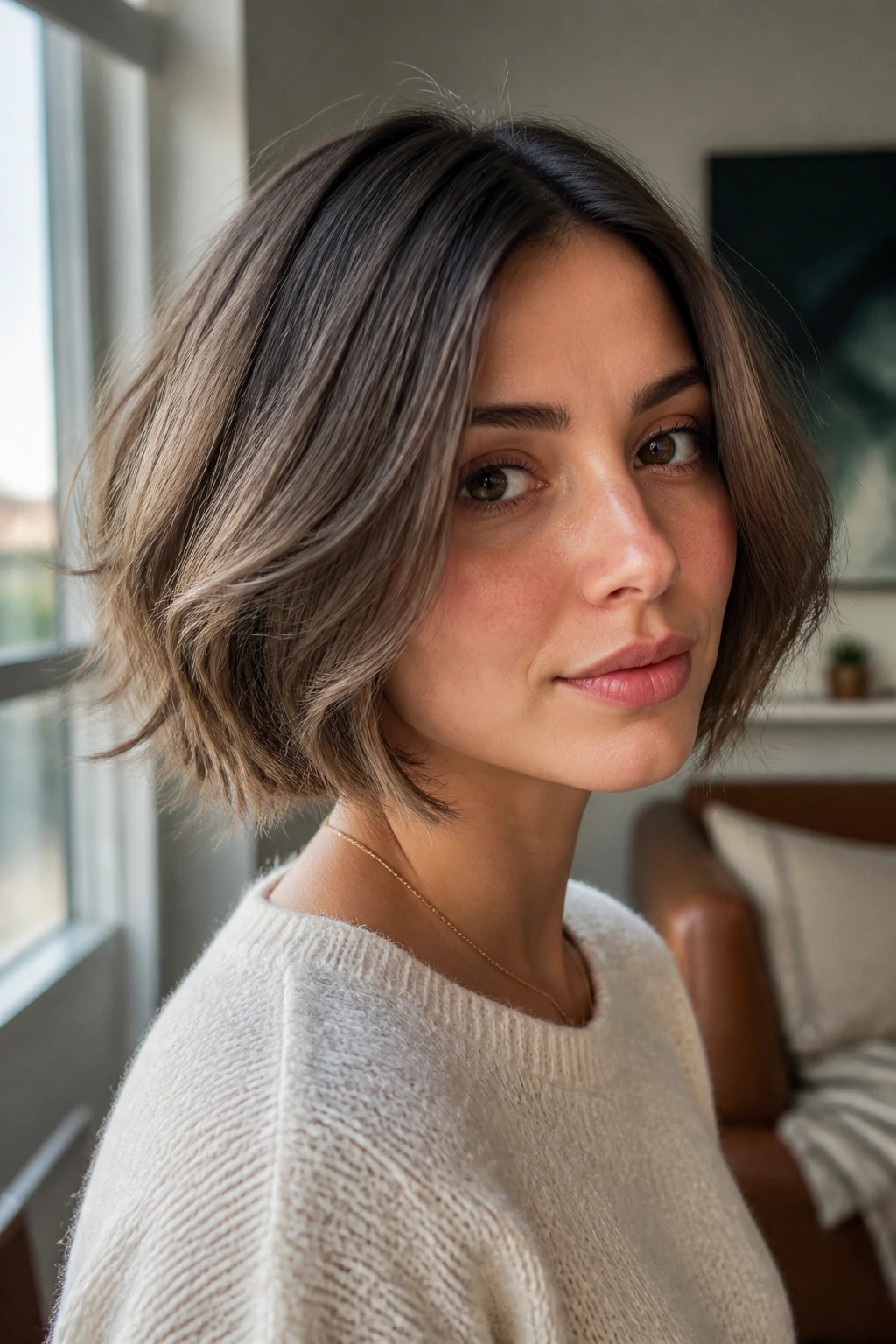
Razor cutting can be useful on thick hair when the hair is straight to slightly wavy and the stylist knows where to stop. The goal is to release some of the heaviness from the ends so the bob moves instead of sitting like a solid block.
Best for
- Dense hair that feels heavy at the hemline
- Straight or loose-wavy textures
- People who want a less polished finish
The danger is overdoing it. Too much razor work on coarse hair can make the ends frizzy and frayed, which looks especially rough around the face. So I’d use this cut only with a stylist who understands how to feather the ends without stripping the outline.
On round faces, the airy ends help because they interrupt the roundness. The bob feels lighter, and lighter hair tends to read as less wide.
11. Graduated Bob with Hidden Debulking
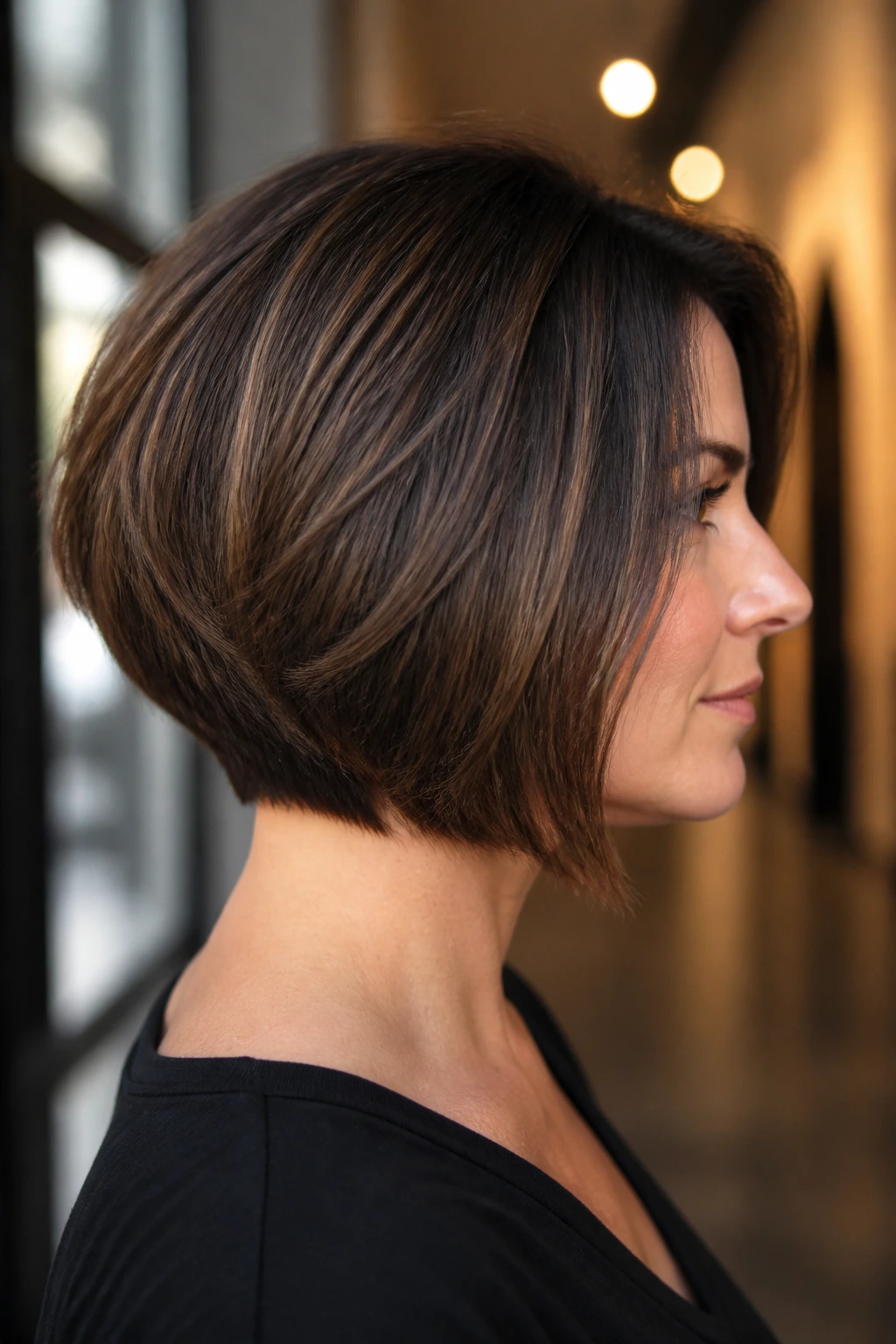
If your hair grows outward before it grows down, hidden graduation is your friend. The cut builds shape from the nape upward, removing weight underneath while keeping the surface line clean.
That’s the part people miss. Thick hair does not always need obvious layers. Sometimes it needs structure beneath the top layer so the surface can fall smoothly. Hidden debulking does that without making the bob look chopped up.
This cut is especially useful for round faces because it gives lift in the back without widening the sides. The face gets a little vertical line from the crown down through the front, and that keeps the shape from feeling too circular.
12. Chin-Length Bob with Curtain Bangs

Could bangs help a round face? Absolutely, if they open at the sides instead of closing it in. Curtain bangs give the forehead some shape while guiding the eye down toward the cheekbones.
The bob itself should stay close to the jaw, but not jammed into it. Thick hair needs enough length to let the bangs breathe, or the whole style starts to feel crowded. The best version has fringe that starts near the brow and bends away from the face at the temples.
If you want softness without losing structure, this is a strong option. Curtain bangs do the job that face-framing layers usually do, but they do it from the front of the cut instead of all over the head.
13. Wavy Bob with Long Front Pieces

A little wave can do more for a round face than a perfectly straight finish ever could. The bend breaks up the width, and the longer front pieces pull the eye downward in a way that feels easy rather than engineered.
This is one of the better bobs for thick hair that refuses to be poker-straight anyway. Instead of fighting the texture, work with it. Leave the front longer, let the ends move, and use a light mousse or cream so the wave has shape without swelling.
The danger here is a triangular silhouette. If the back is too blunt and the front pieces are too short, thick hair can balloon at the sides. Keep the front pieces long enough to skim past the jaw, and the shape stays much better balanced.
14. Undercut Bob for Very Dense Hair
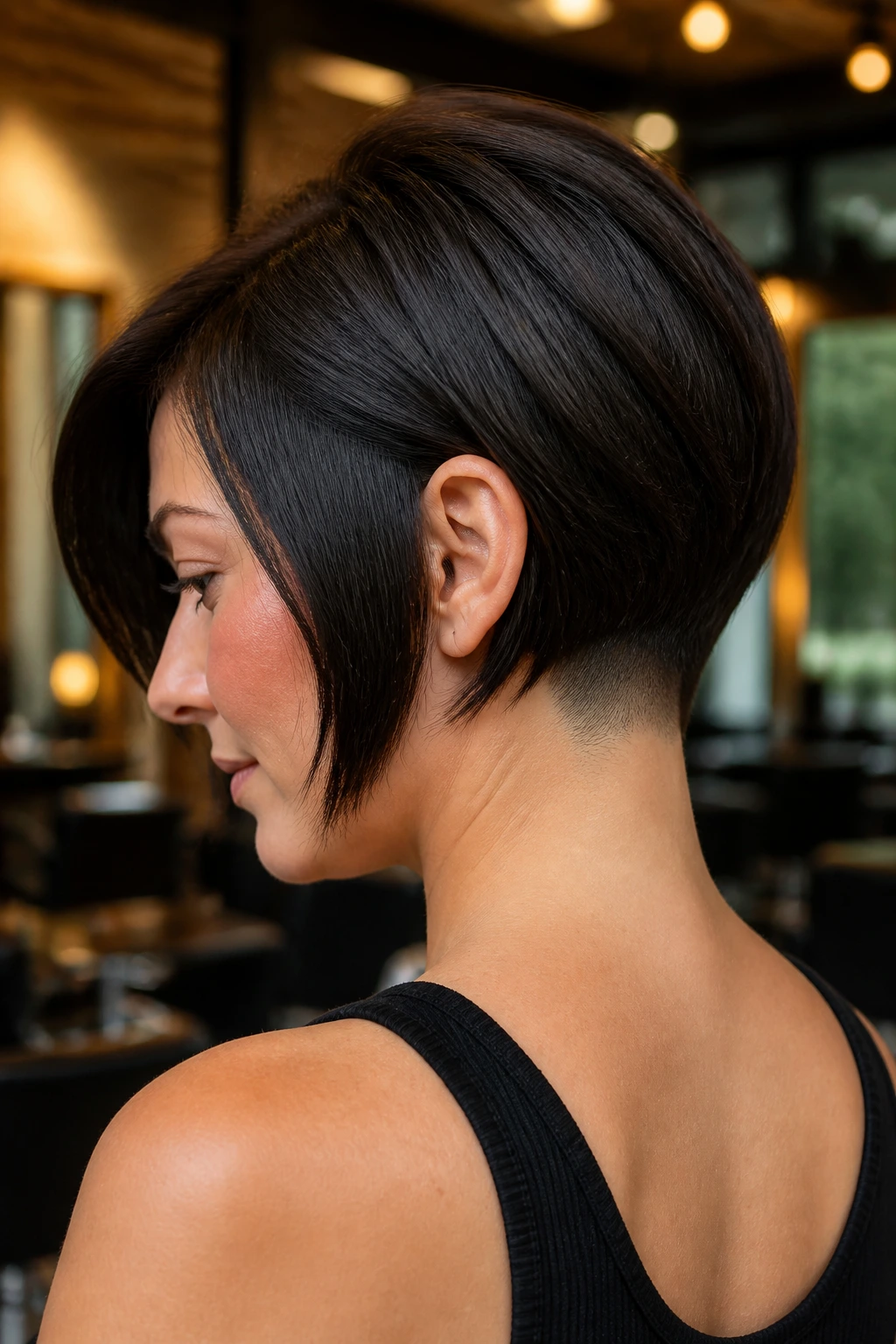
If your hair is so dense that every cut turns into a triangle, a hidden undercut at the nape can change the whole game. It removes bulk where the eye never needs to see it, which lets the outer layer fall flatter and cleaner.
Why it helps
An undercut doesn’t have to be dramatic. A small section at the nape can take out a surprising amount of weight. That means less puff at the bottom, less heat styling, and less of that thick-hair shelf that pushes the bob outward.
This is a smart move for round faces because the bob can stay close to the head at the back while keeping the front longer and sleeker. It’s not a cut for someone who wants to let the back grow wild. It is for someone who wants control.
15. Piecey Crop Bob with Micro Layers

This is the bob for people who want a little edge. The piecey crop keeps the overall length short, but the micro layers stop the hair from sitting as one dense block. It’s a light, broken shape that still keeps enough structure to flatter a round face.
A little bit of separation goes a long way here. Thick hair often looks best when the ends aren’t perfectly welded together. A pea-size amount of styling paste, warmed in the hands and tapped through the ends, can bring out those pieces without making the cut greasy.
I like this one with a side part or a soft fringe. The hair around the face stays mobile, which is what keeps the cut from feeling too boxy. Clean, but not stiff. That’s the sweet spot.
16. Neck-Length Bob That Skims the Jaw

A neck-length bob gives round faces a little extra breathing room because it lands below the cheeks instead of on top of them. It’s short enough to read as a bob, but long enough to create that helpful downward line.
Thick hair tends to look especially good at this length because the weight helps it settle. The ends don’t flip as aggressively, and the silhouette stays smoother through the jaw. If you’ve tried chin-length cuts and always felt boxed in, this one gives you a little more space.
The front can be slightly longer than the back, or it can stay one length if your hair is straight and dense. I’d still keep the line just below the chin. That small difference keeps the face from looking wider.
17. Curly Bob with a Controlled Halo

Can curls and short bobs play nicely with a round face? Yes, if the shape is cut for the curl pattern instead of against it. The goal is a controlled halo, not a puffball.
The curl should have room to spring, which means the bob usually needs to be cut a bit longer than a straight-haired version. Think below the chin, then let the curls bounce up. If you cut curly hair exactly at the chin, it may sit too high once dry.
I like this shape when the top is controlled and the sides aren’t too wide. A little length in the front helps, and a dry cut or curl-by-curl trim often gives the best outline. Thick curls can look glorious in a short bob. They just need respect.
18. Slightly Asymmetrical Bob
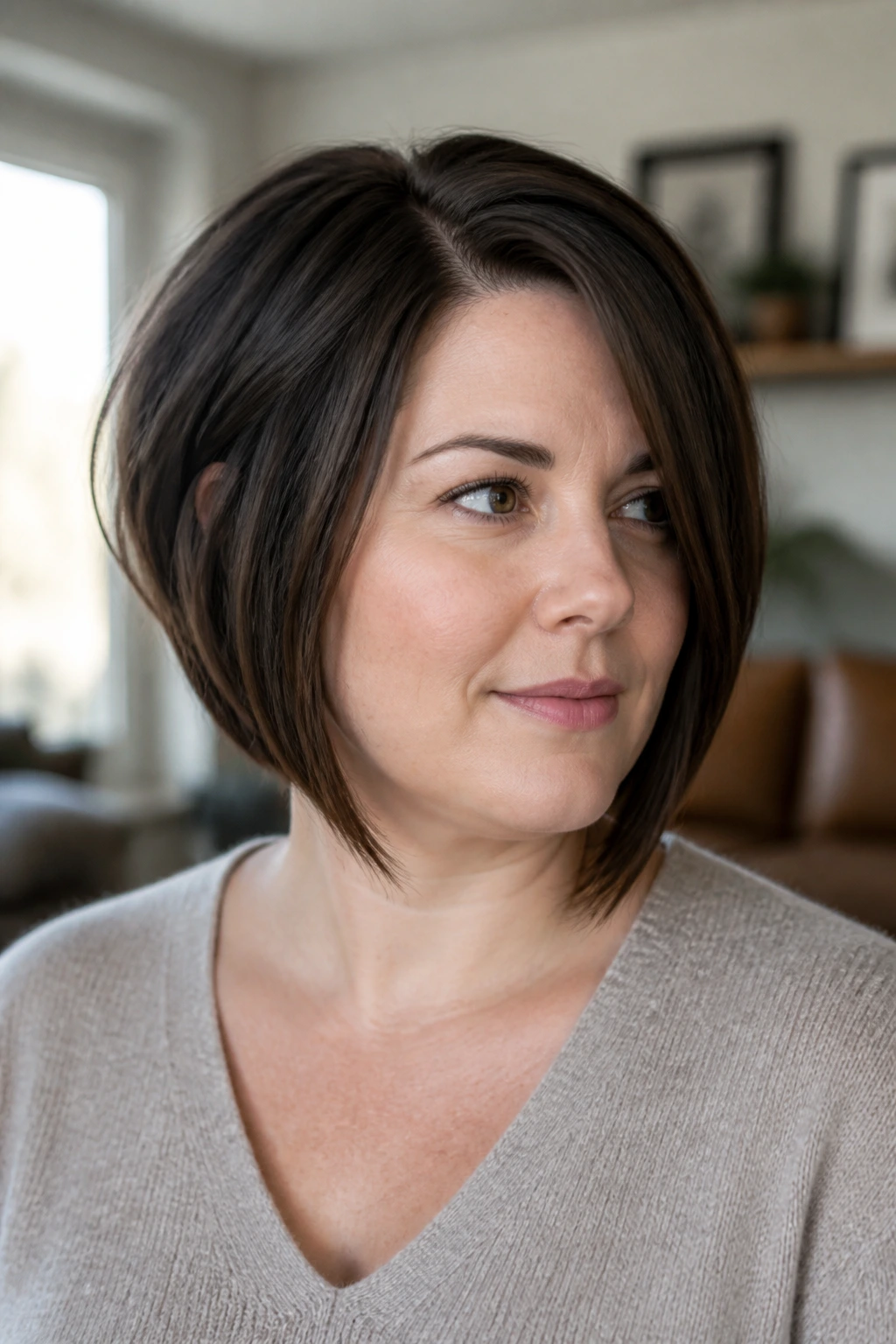
One side a little longer. That’s the whole idea, and it works because asymmetry interrupts roundness immediately. The face stops reading as one even circle and starts reading as more angular, more directional.
The difference does not need to be huge. Half an inch to an inch is enough for most people. Too much asymmetry and the cut turns into a statement for the sake of being a statement. Keep it subtle, and it looks modern without being fussy.
This shape is also useful for thick hair because the longer side helps control bulk around the cheeks. If one side tends to puff more than the other, the asymmetry can help balance the look instead of fighting your natural growth pattern.
19. Sliced Bob with Feather-Light Movement

A sliced bob is all about movement through the mid-lengths, not just the ends. The stylist uses slicing or slide-cutting to release some of the heaviness inside the shape, which keeps thick hair from sitting too solid.
That movement matters on a round face because a stiff bob can read wider than you want. A sliced cut breaks the outline into smaller, softer sections. The eye moves. The face seems less broad. That’s the whole trick.
I’d choose this if you like hair that swings a little when you walk. It’s not a polished, stiff-edged bob. It feels lighter, a bit less formal, and easier to wear when you don’t want to blow it out every time.
20. Tucked Bob with Longer Temple Pieces
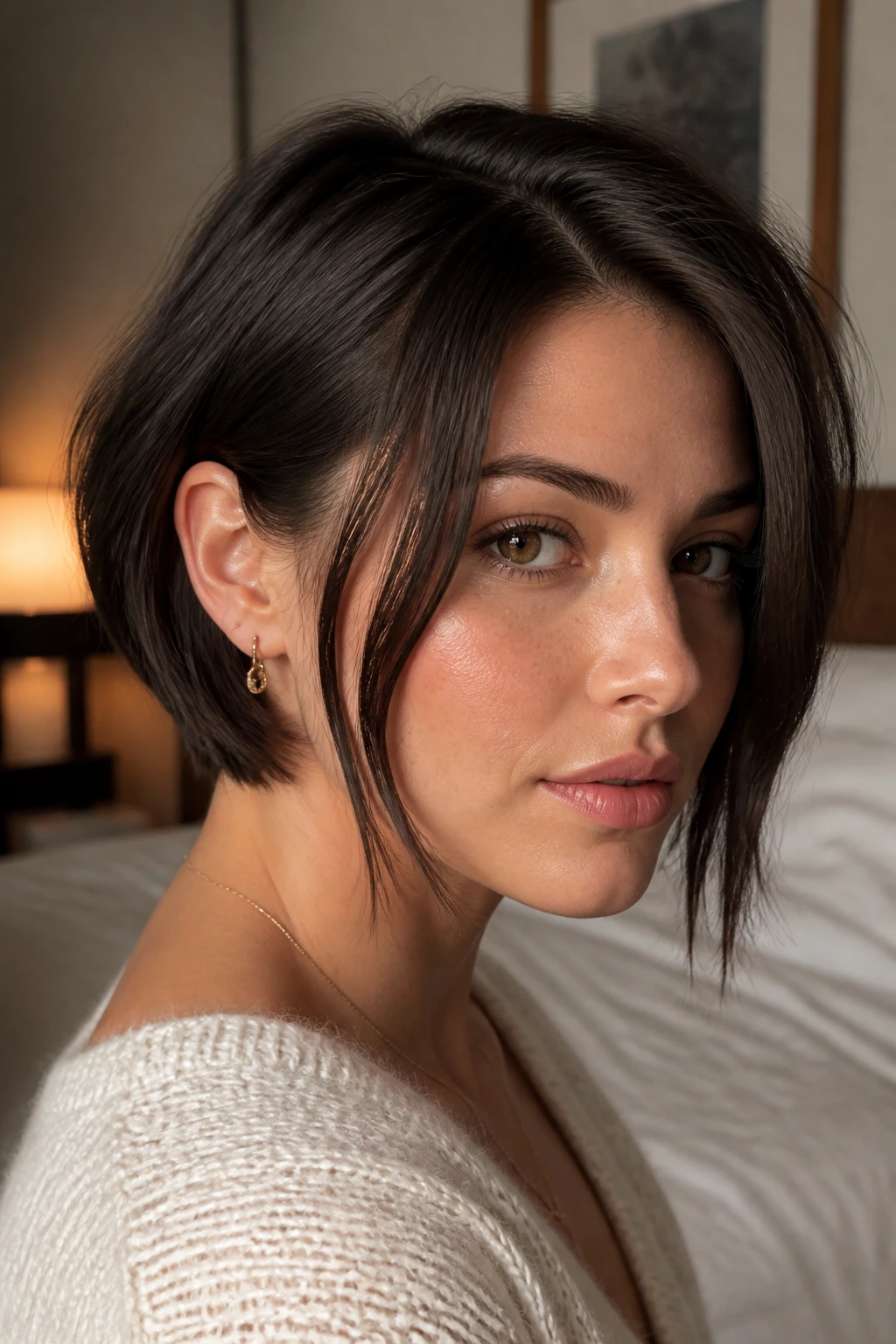
Some bobs flatter a round face because of what they do around the ears. The tucked bob leaves enough length at the temples for one side to be tucked behind the ear while the other side hangs loose and longer. That broken line is flattering in a way people underestimate.
The temple pieces are the important part. They keep the face framed, but they don’t let the width sit all at once around the cheeks. Thick hair benefits because the ear tuck removes visual bulk on one side without needing a full haircut adjustment.
This is a good choice if you like a casual, slightly undone finish. One tuck. One loose side. Maybe a few bends in the front. It sounds simple because it is.
21. Bubble Bob with a Softer Curve
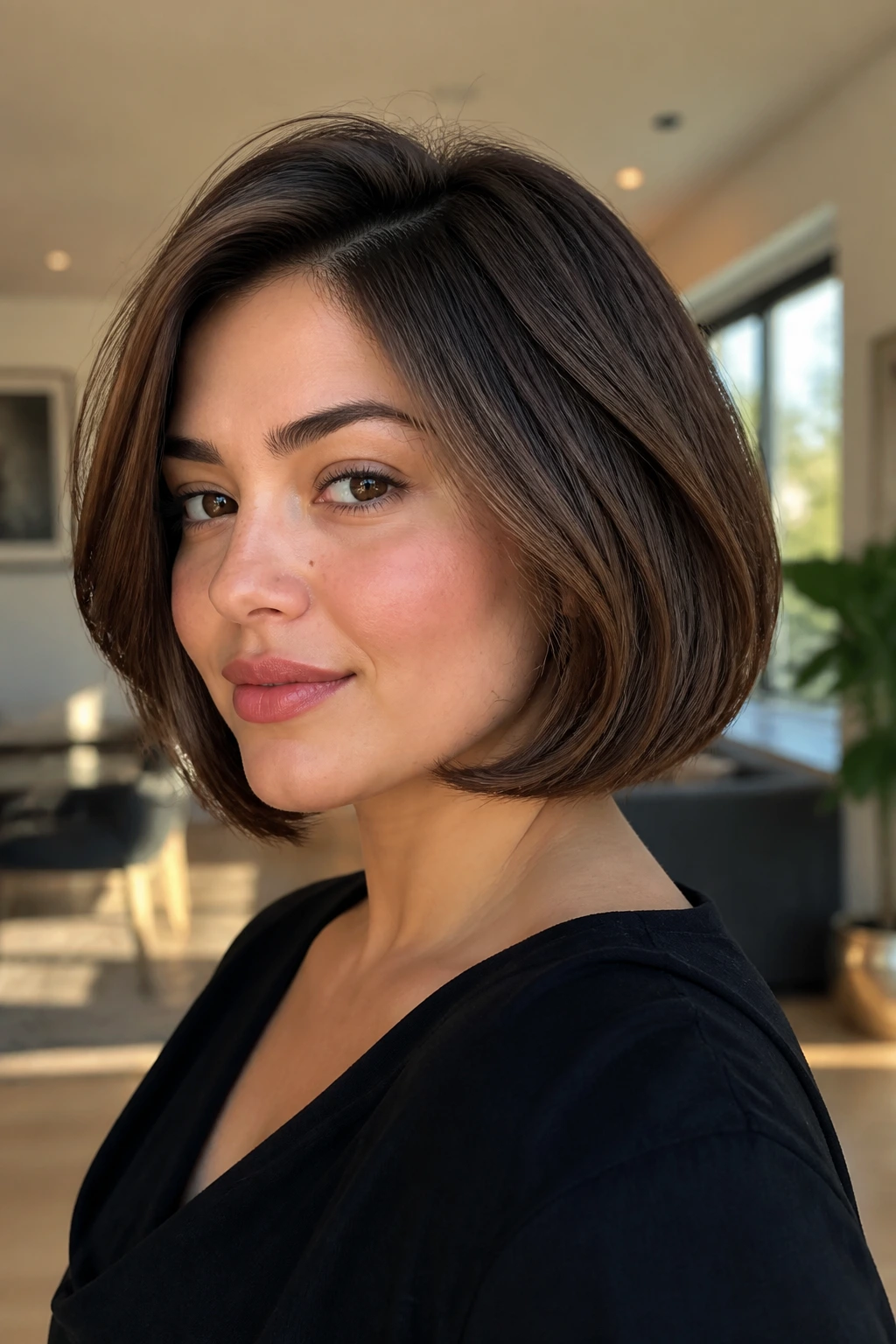
A bubble bob can sound too round for a round face, and sometimes it is. But when the curve is softened and the front pieces stay longer, the cut creates a neat outline that doesn’t spread outward at the jaw.
The important move is to keep the fullest part of the bob off the cheeks. The curve should sit under the jaw, with a little lift at the crown and a narrow taper near the ends. Thick hair helps here because the shape holds instead of collapsing.
This is a polished style. Not stiff. Polished. If you like a bob that looks tidy even on days when you only have ten minutes, this shape deserves a look.
22. Micro Bob with a Side-Swept Fringe
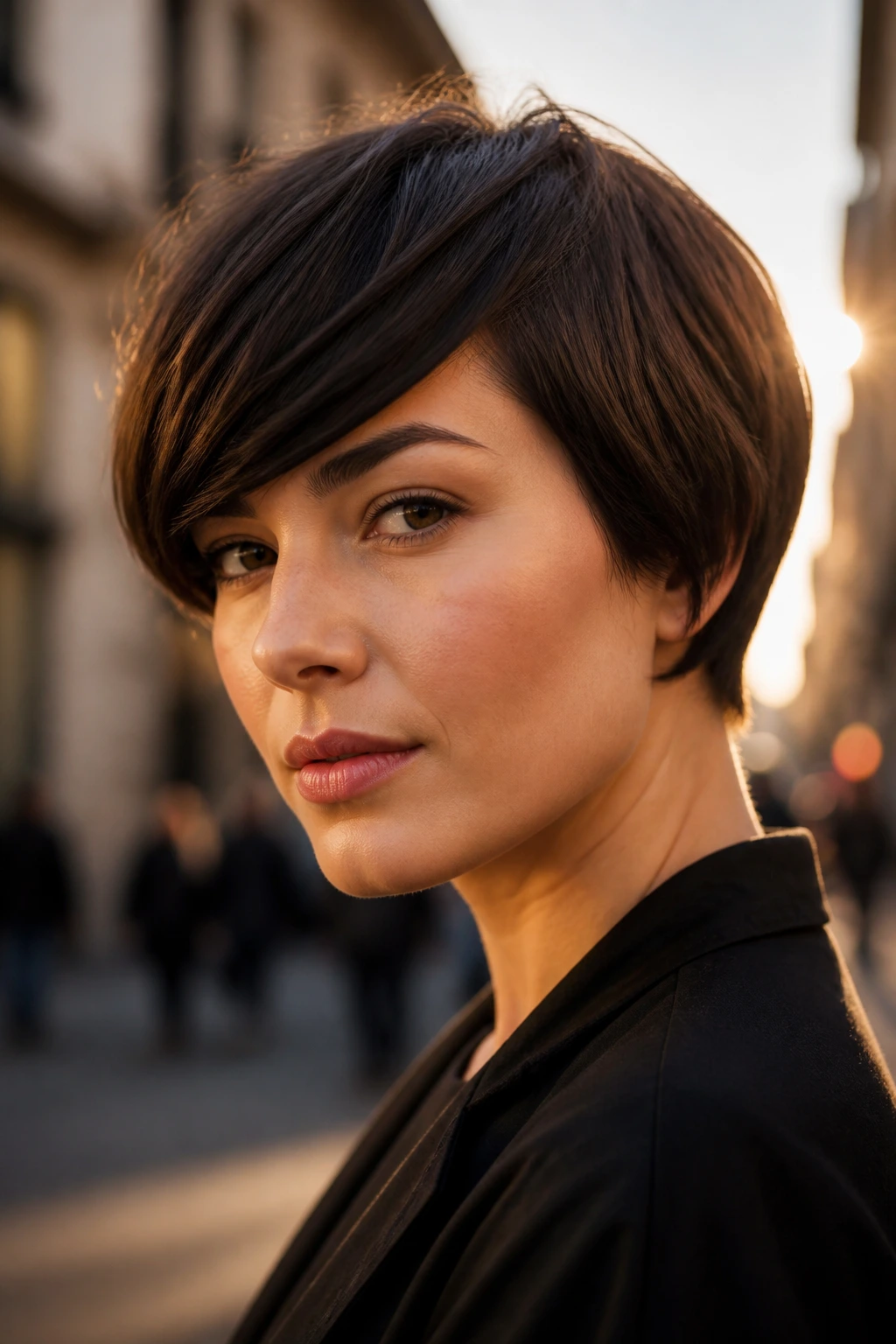
A micro bob is short enough to feel bold, but on thick hair it can be incredibly clean if the outline stays sharp and the fringe angles across the forehead. The side-swept piece keeps the face from looking too compressed.
I would not go this short if your hair puffs aggressively at the sides or if you hate regular trims. It grows out with opinions. But if you like structure and you want your cheekbones to do some of the talking, this cut has real presence.
The fringe should never be blunt and heavy here. Let it sweep, not stop. The diagonal line is what keeps the face from feeling wider.
23. Layered Bob with Invisible Texture
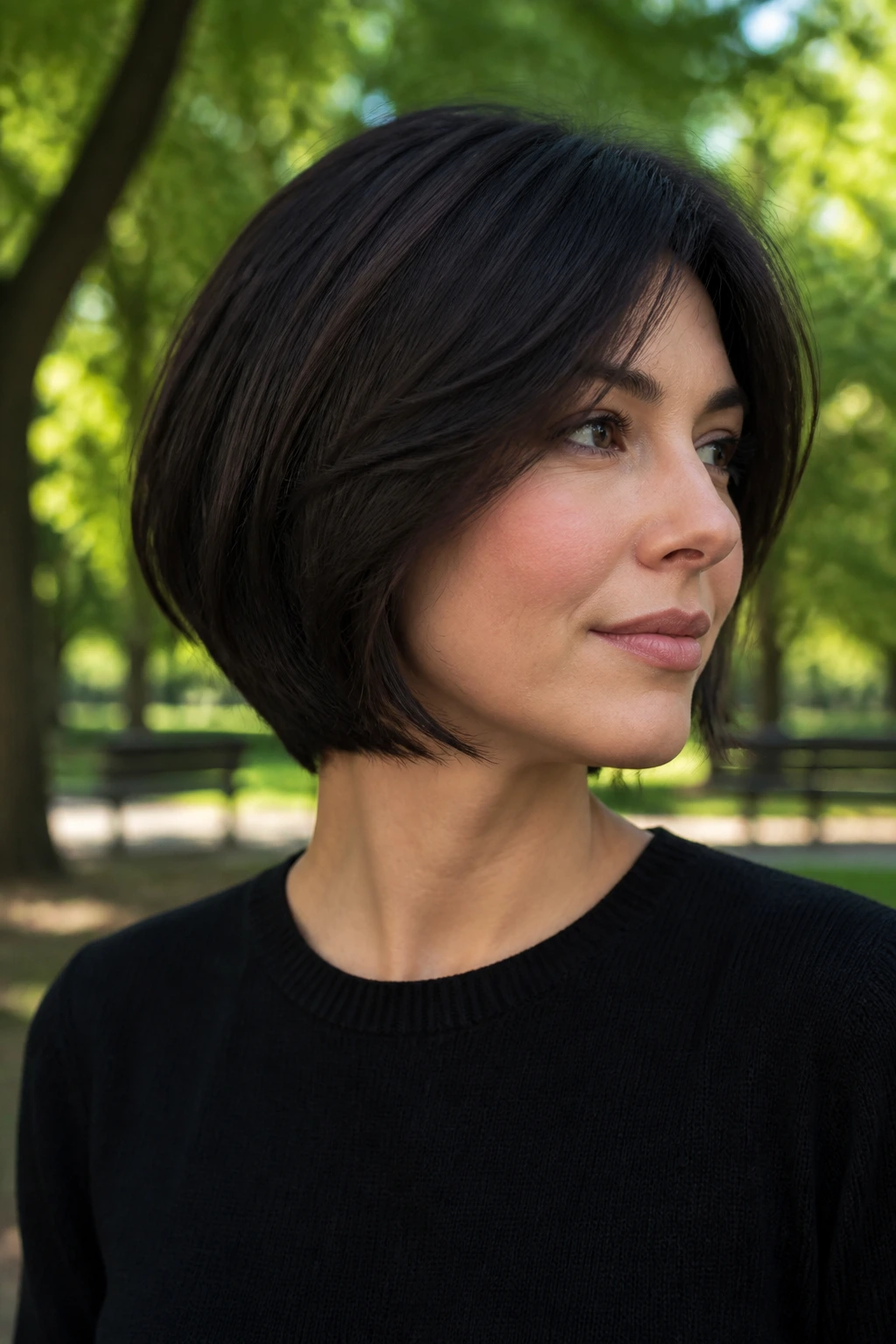
Invisible texture sounds fancy, but it’s just careful internal layering that does not scream “layered haircut” from across the room. The outer shape stays clean while the inside loses enough weight to let the hair fall better.
That’s a useful distinction for thick hair. Heavy layers visible on the surface can make a bob look choppy. Invisible texture keeps the outline smooth, which is often more flattering on round faces. You still get movement. You just don’t get that over-layered, over-lightened look that can make the sides explode.
This cut is one of my favorites for people who want softness without a lot of visible change. It behaves. That’s a good word for it.
24. Side-Part Bob with Cheekbone Lift

The part changes more than most people think. A side-part bob can lift the cheekbone area, create a diagonal line through the face, and keep thick hair from splitting the width evenly on both sides.
The length can be blunt, textured, or slightly layered. The part is the star. It breaks the symmetry that tends to make round faces read wider, and it gives the front a little sweep that feels flattering without trying too hard.
If you only want to change one thing about your bob, change the part first. Sometimes that alone fixes the whole silhouette. No haircut rework required.
25. Sleek Wet-Look Bob with a Sharp Finish
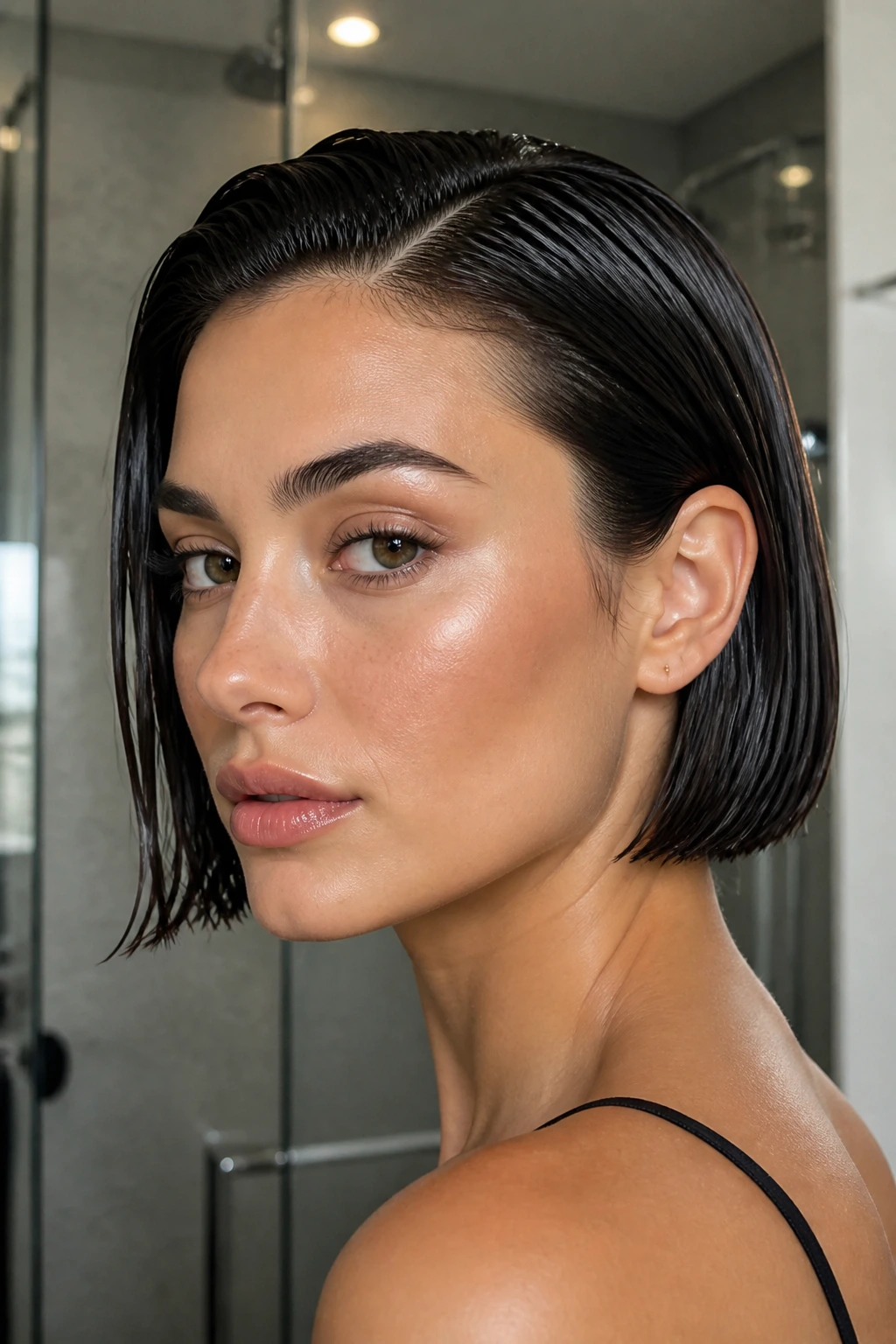
A sleek wet-look bob sounds dramatic, but on thick hair it can be one of the cleanest ways to wear a short cut. The product pushes the texture flat, the part stays precise, and the shape feels narrow through the sides instead of wide.
This works especially well if your hair naturally frizzes or poofs when air-dried. A little gel at the roots, a smooth comb-through, and a tidy tuck behind the ears can keep the outline sharp for hours. It’s not a lazy style. It’s a controlled one.
On a round face, the sleekness adds vertical polish. The eye sees the line of the bob first, not the width of the cheeks. That’s why it works.
Why Short Bobs and Thick Hair Play So Well Together
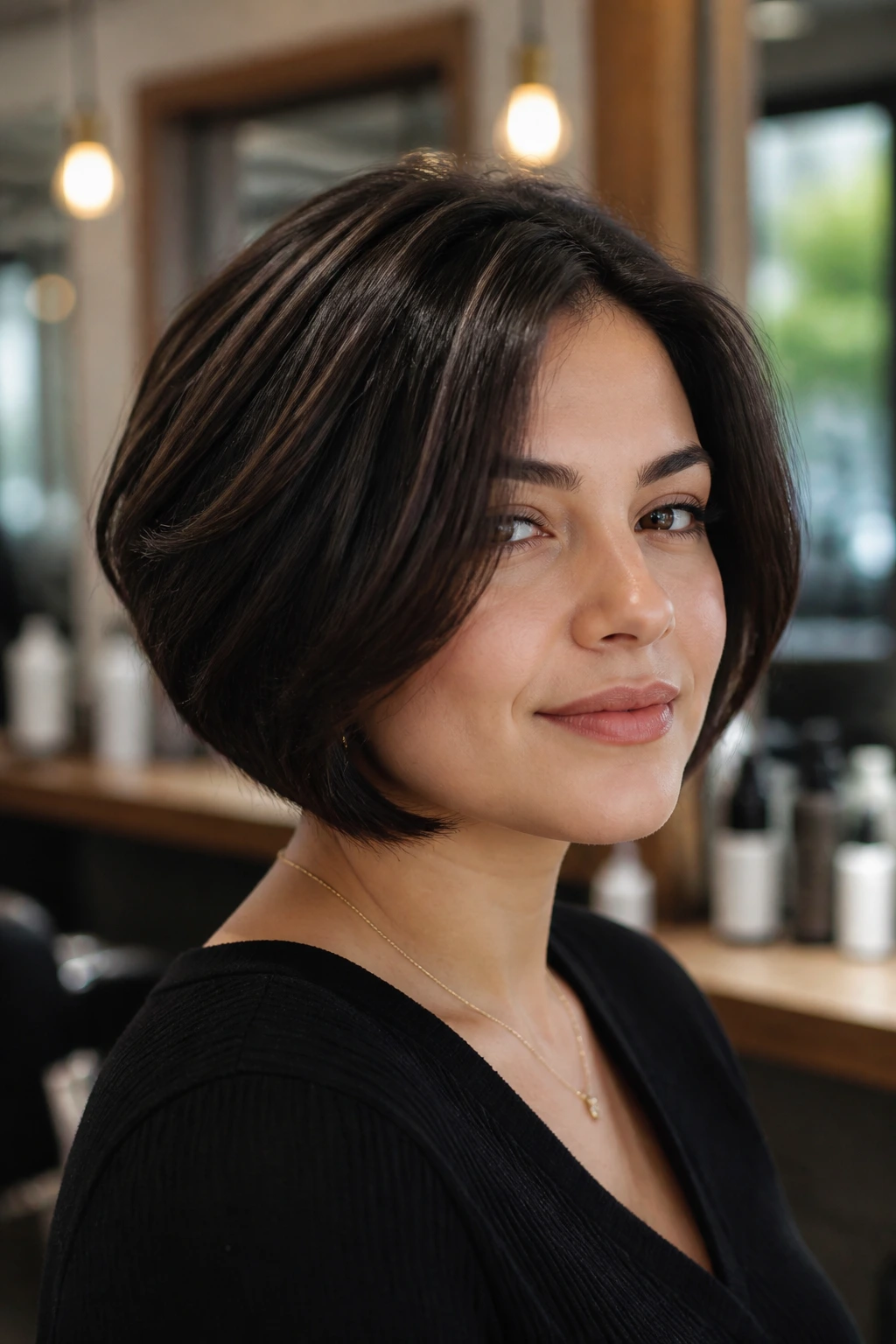
Thick hair has weight, and weight is useful when it’s placed on purpose. A short bob gives that weight a boundary. Instead of dragging down the length or exploding at the ends, the hair sits inside a frame. That frame can be blunt, angled, stacked, or curved, but it needs to be clear.
Round faces need a little help from geometry. Diagonal lines, off-center parts, longer front corners, and controlled napes all make the face read a bit longer. None of that means you have to hide the face. It means you’re guiding the eye where you want it to go.
The big mistake is thinking thick hair must be thinned to death. It usually doesn’t. It needs the right shape, not a pile of thinning shears taken to the whole head. Internal debulking, careful point cutting, and strategic graduation often do more than aggressive texturizing ever will.
And yes, length placement matters. A bob that lands exactly at the widest point of the cheek can make the face look broader. Move that line half an inch below the chin, or let the front corners grow an inch longer than the back, and the shape changes in a way you can see immediately.
Essential Tools and Styling Products for These Bobs
-
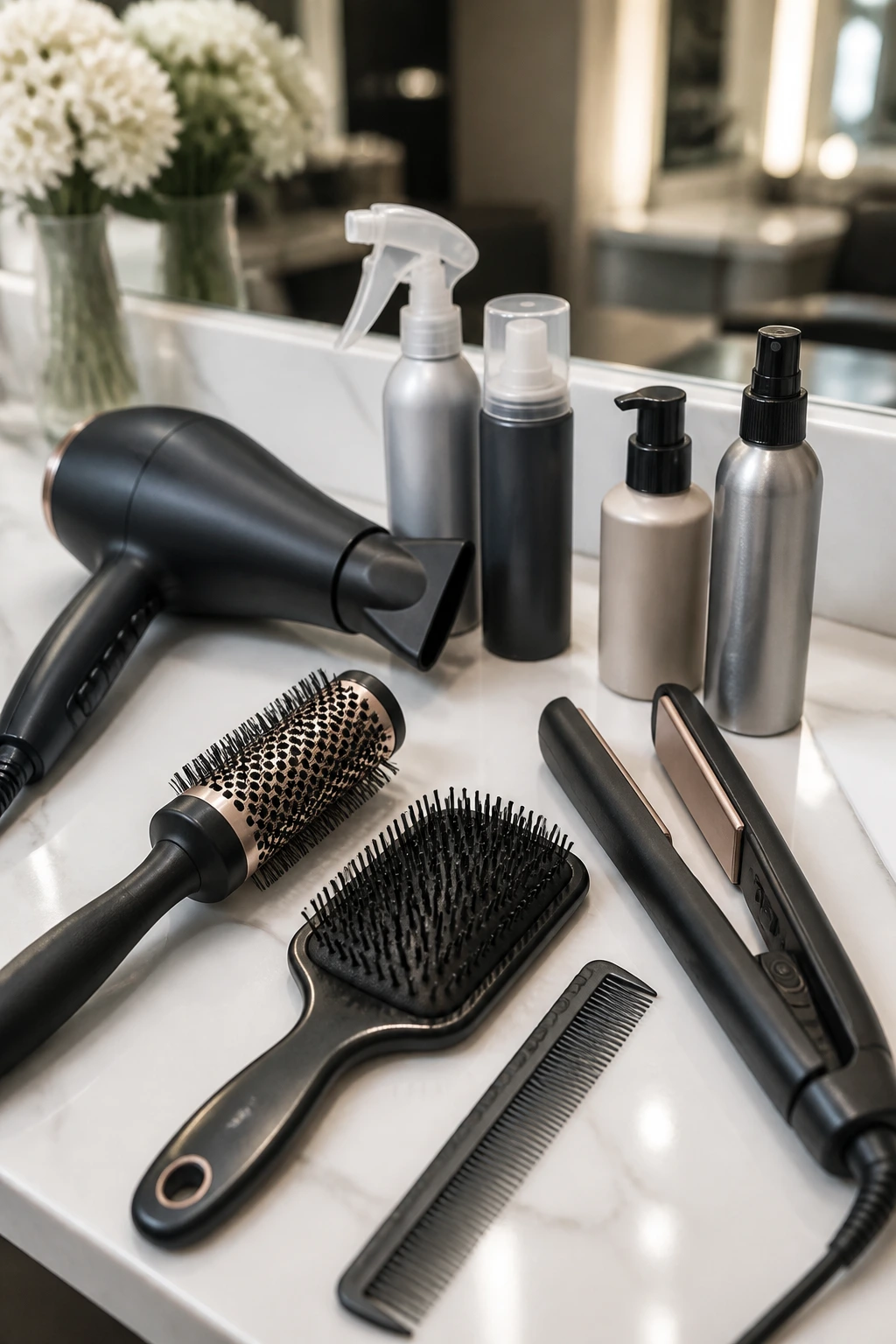
Blow dryer with nozzle attachment: The nozzle keeps airflow focused so thick hair dries smoother and doesn’t blow into a frizz cloud.
-
1.25-inch round brush: Good for shaping undercurves at the ends and giving the front pieces a clean bend.
-
Paddle brush: Best for sleeker bobs and for pulling dense hair straight while the dryer does the work.
-
Fine-tooth tail comb: Useful for clean parts, sectioning, and setting a precise side sweep.
-
Heat protectant spray: A must if you use a flat iron or round brush heat. Thick hair can still get dry at the ends.
-
Lightweight mousse or root-lift spray: Adds lift at the crown without making the sides sticky or heavy.
-
Smoothing cream or serum: Use a small amount on mids and ends to tame puffiness; too much near the roots will collapse the bob.
-
1-inch flat iron: Handy for polished bobs, tiny bends at the ends, and smoothing stubborn face-framing pieces.
-
Texturizing spray: Helps piecey and shattered bobs keep separation without getting crunchy.
-
Silk or satin pillowcase: Keeps the ends from roughing up overnight, which matters more than people expect with short cuts.
-
Diffuser attachment: Worth owning if your thick hair is wavy or curly and you want shape without straightening the texture out of it.
How to Ask for Short Bobs for Round Faces and Thick Hair at the Salon
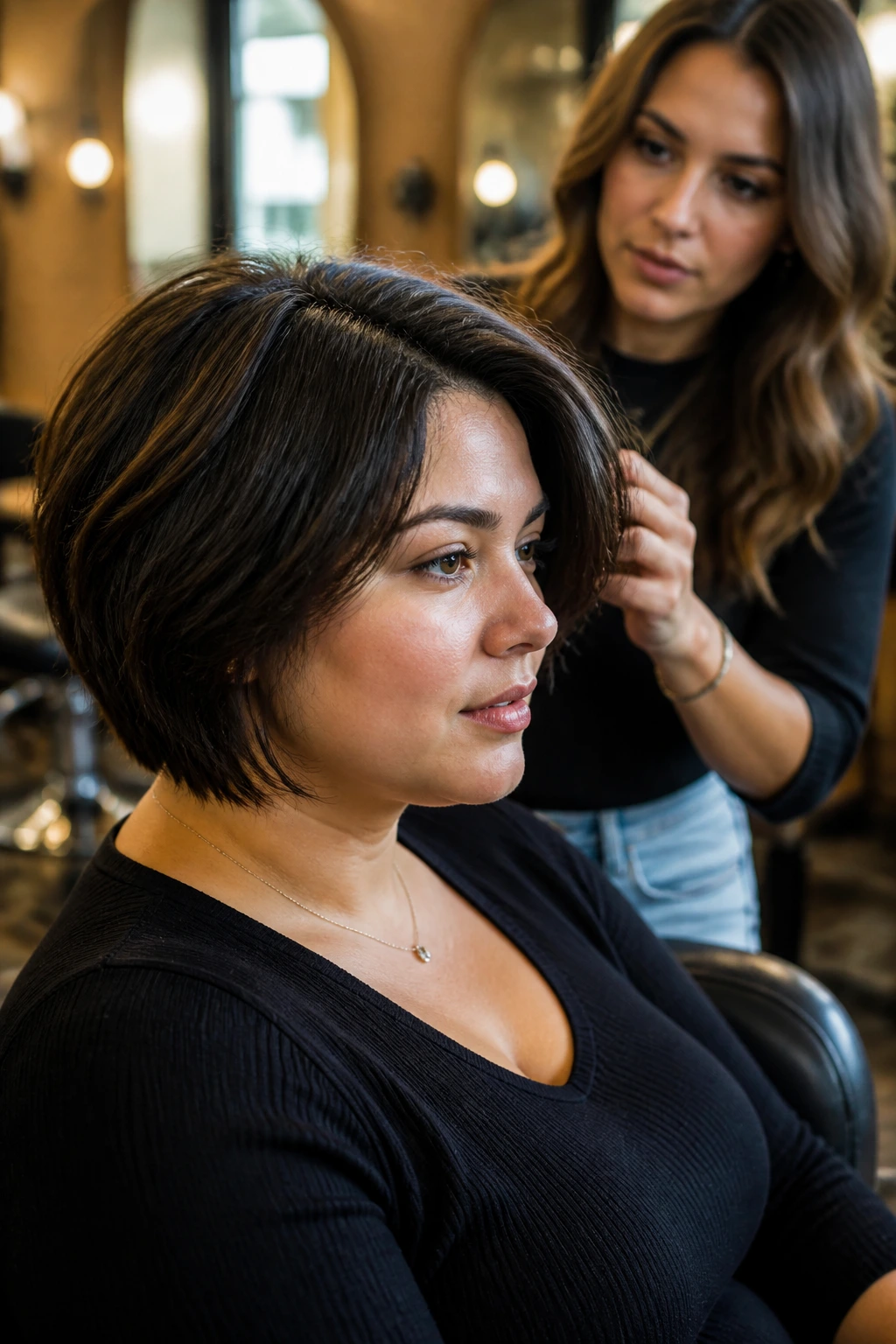
Be specific. Vague requests create vague bobs, and vague bobs on thick hair usually turn into puff. Start with length. Tell the stylist where you want the hemline to land in relation to the chin or jaw, not just “short.” Half an inch below the chin is a very different cut from right at chin level.
Then talk about weight. If your hair is dense, ask whether the stylist plans to remove bulk internally, at the nape, or with graduation. The phrase I like best is: “Keep the perimeter clean, and remove weight inside the shape.” That tells them you want control without a frayed outline.
Parting matters too. If you know a middle part makes your face look wider, say so. If you want the bob to grow out neatly, ask for longer front pieces or a subtle A-line. And if you’re considering bangs, be clear about softness at the temples. Thick blunt fringe is where a lot of round faces get trapped.
One more thing: ask how the cut behaves dry. Thick hair can look shorter when it dries, and curls can spring up half an inch or more. A good stylist will account for that. A careless one will cut wet and call it done. Those are not the same thing.
How to Style a Bob on Straight, Wavy, or Curly Days
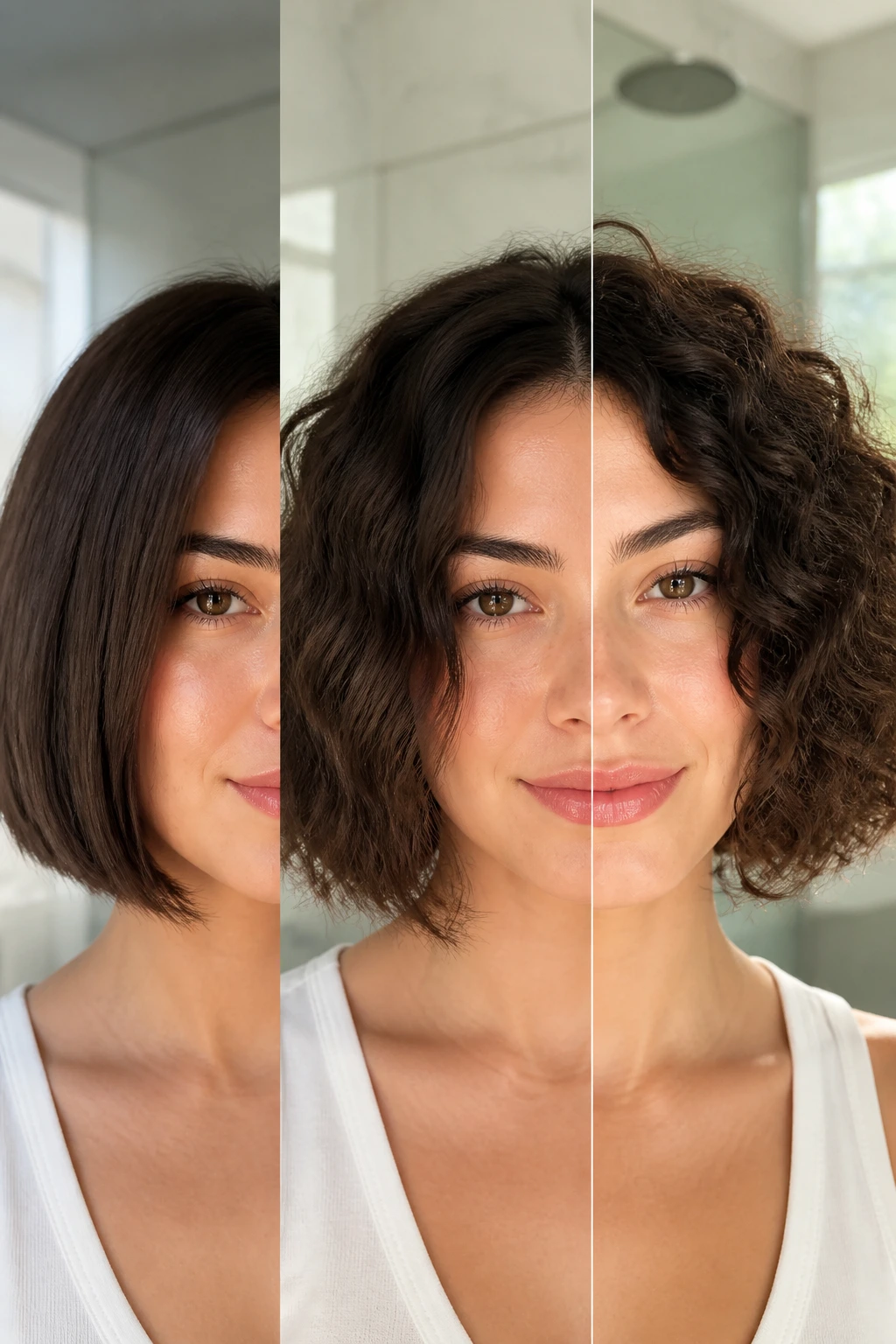
Straight bobs do best when the root is lifted first and the ends are controlled last. Dry the hair with a nozzle, brush the top away from the scalp for a few seconds, and then smooth the body down with a paddle brush. A tiny bend under the ends keeps the line clean.
Wavy bobs need a lighter touch. Work a little mousse through damp hair, then scrunch or rough-dry until the wave forms. If the front pieces are frizz-prone, wrap them around a round brush for ten seconds and let them cool before releasing. That cooling step matters more than people think.
Curly bobs should be styled on the hair’s own terms. Use a diffuser on low heat, keep the curl clumps intact, and do not rake through the shape too much while it’s drying. If the bob starts to widen at the cheeks, clip the crown for five to ten minutes while it cools. That little bit of lift changes the silhouette fast.
Second-day hair is where these cuts either shine or get annoying. Dry shampoo at the roots, a tiny mist of water on the front pieces, and a quick re-bend with a flat iron usually bring the shape back. If you put too much product on, the bob will sag. If you use too little, it will puff. The middle ground is usually the right one.
Small Tweaks That Change the Whole Silhouette
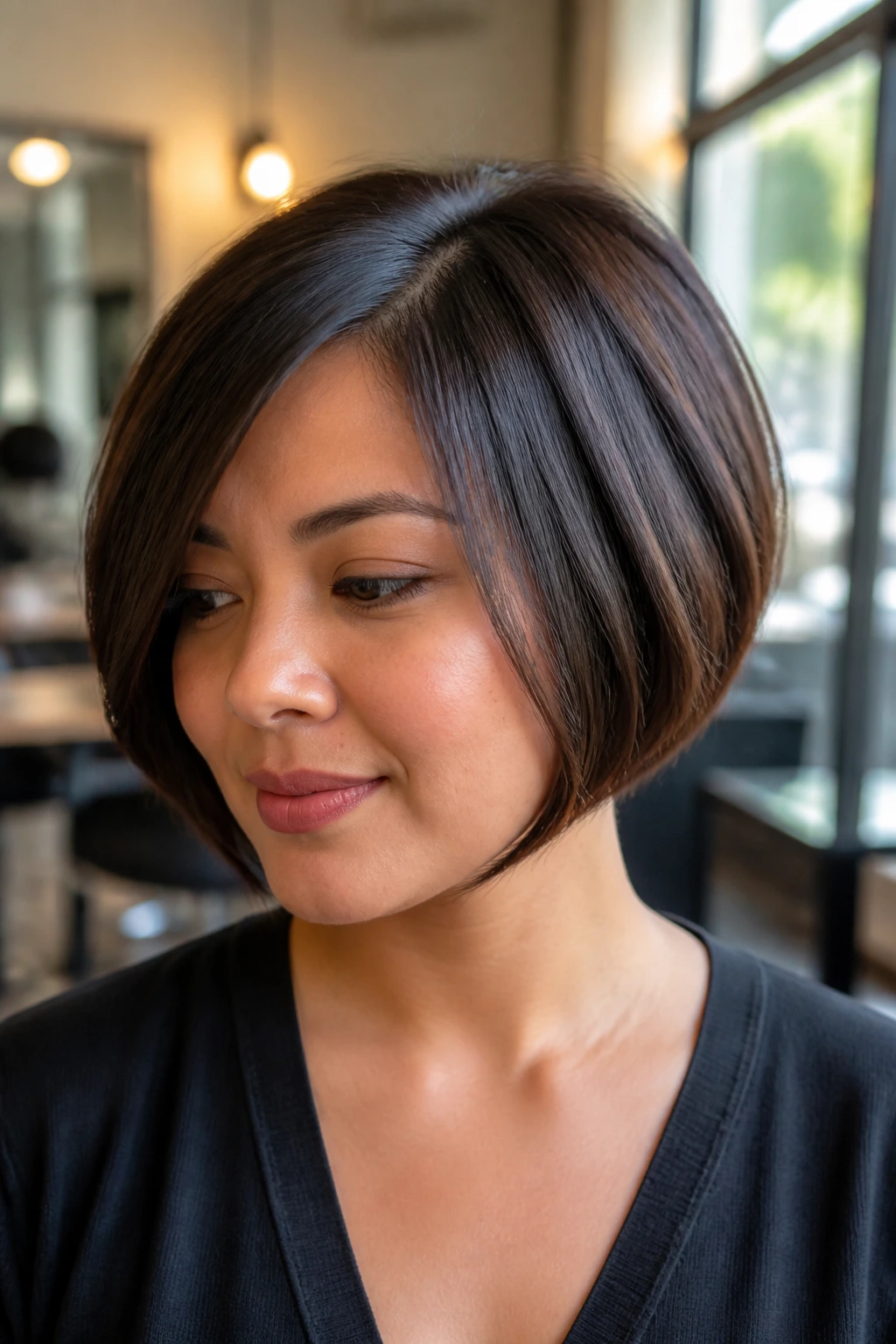
Parting Trick: Move the part half an inch off center. That tiny shift breaks symmetry and makes a round face look a touch longer.
Weight-Control Trick: Ask for internal debulking near the lower back of the bob instead of all-over thinning. The surface stays clean, and the shape stays fuller where it should.
Cheekbone Trick: Leave the front pieces a little longer than the rest. They don’t need to be dramatic. An inch is often enough to skim the cheekbones and keep the eye moving down.
Finish Trick: Use serum only on the last two or three inches. If you coat the whole head, thick hair can collapse and look greasy by lunch.
Accessorizing Trick: A single tucked side or a slim clip above the ear creates a diagonal line instantly. That can change the mood of the cut without changing the cut at all.
Common Mistakes That Make a Bob Puff Out
-
Cutting the bob exactly at the cheek widest point: The hair stops where the face is fullest, which makes both look wider. Move the line slightly below the chin or angle the front pieces longer.
-
Over-thinning thick hair with a razor everywhere: The ends get fuzzy, the shape loses structure, and the bob can look bigger instead of smaller. Ask for targeted debulking instead.
-
Using too much heavy cream or oil: The roots flatten, the ends clump, and the bob loses the clean outline that makes it flattering. Use a pea-size amount first, then add only if needed.
-
Choosing bangs that are too blunt or too short: Heavy fringe can crowd a round face and make the forehead look smaller in the wrong way. Softer, side-swept, or curtain styles usually behave better.
-
Ignoring the natural part or cowlicks: A bob that fights your growth pattern all day will separate, flip, or puff at the crown. Work with the natural fall unless you enjoy spending twenty minutes correcting it.
Variations and Adaptations to Try
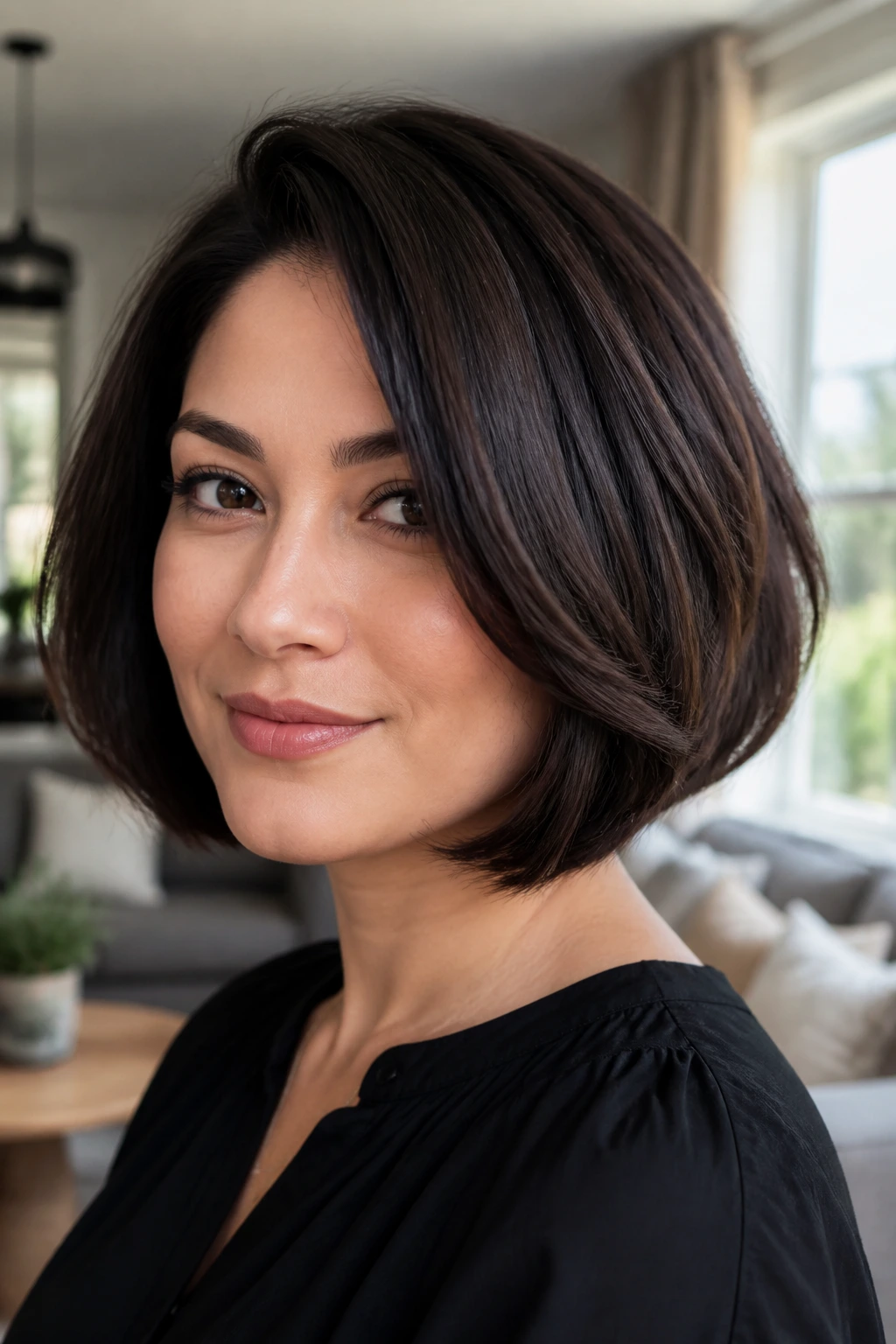
Fine-to-Coarse Texture Edit: If your thick hair is coarse, keep the perimeter blunt and skip aggressive razor work. If it’s softer and wavier, you can use more internal texture without losing shape.
Curly-Hair Version: Cut it a little longer than you think you need, ideally on dry or nearly dry hair. Curls rise, and a chin-length curl bob often becomes a much shorter bob once it dries.
Low-Maintenance Air-Dry Version: Choose a slightly longer front, internal layers, and a side part. This version looks best when it can dry with a little movement instead of being blown perfectly straight every time.
Office-Sleek Version: Go with a blunt or inverted line, smooth ends, and a precise center or deep side part. This is the one that looks crisp with a blazer and a little lip color.
Soft Grow-Out Version: Pick an A-line or neck-length bob. The front corners keep their shape longer as the cut grows, which buys you time between salon visits.
High-Drama Version: Try the micro bob, asymmetry, or a wet-look finish. These styles give thick hair a sharper mood and work best if you like strong outlines.
Trim Rhythm, Sleep Care, and Day-Two Refreshes
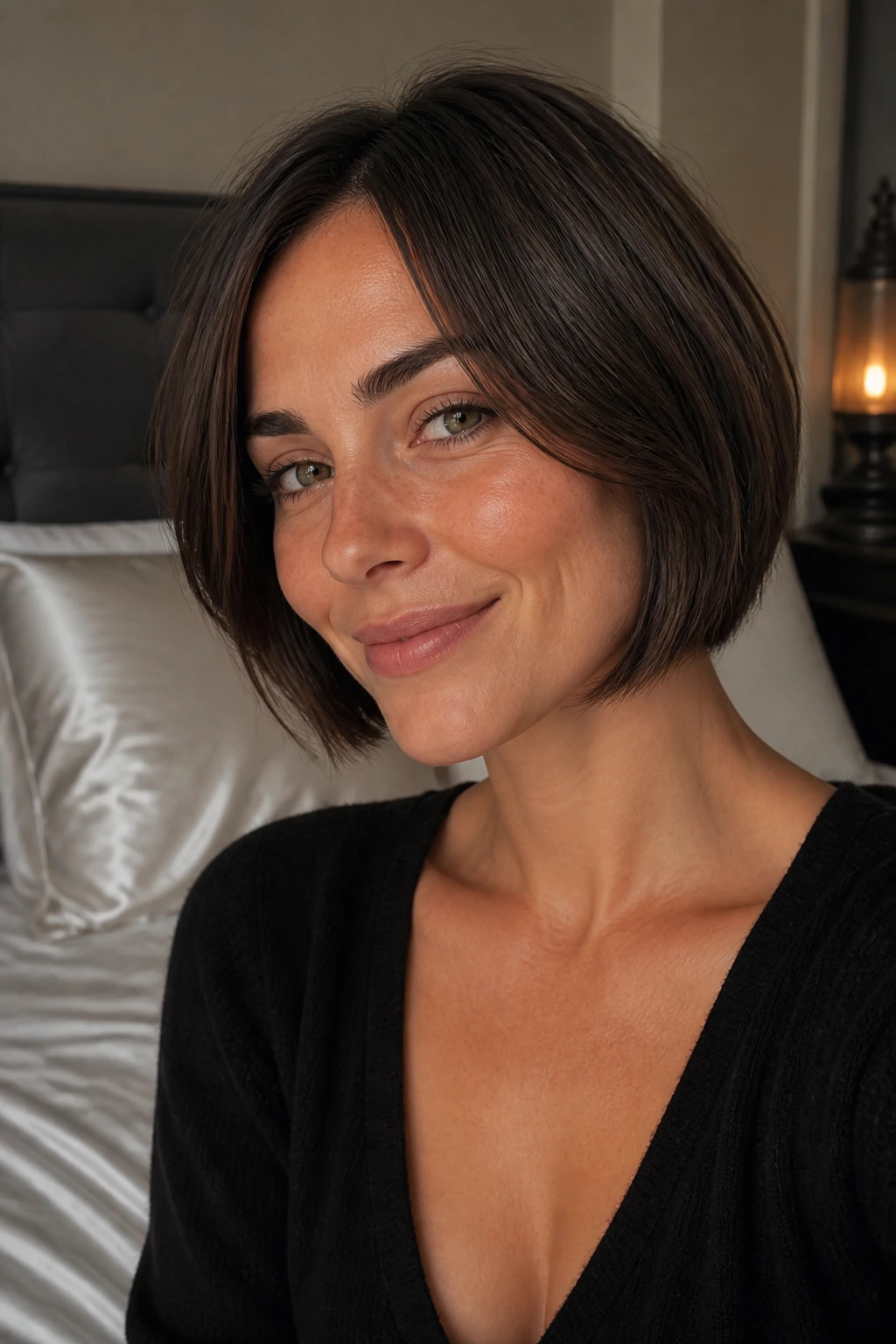
Short bobs need regular trims. That’s the tax you pay for a clean line. For blunt or boxy versions, plan on a trim every 6 to 8 weeks. For more textured or layered versions, 8 to 10 weeks can work, but once the shape starts to flare at the sides, it’s time.
Night care matters too. Thick hair rubbing on cotton will rough up the ends and create extra puff by morning. A satin pillowcase helps, and so does clipping the bob loosely at the crown so it doesn’t press flat on one side all night. Don’t sleep on soaking wet hair if you can avoid it; the bend will set in strange directions.
For day-two refreshes, skip the temptation to douse the whole head in more product. Start with dry shampoo at the roots, especially near the part and crown. Then mist the front pieces lightly with water or leave-in spray and re-shape only the bits that show. That saves time and keeps the bob from turning sticky.
If your bob leans curly or wavy, refresh with a little cream and your hands, not a brush. Brushing can turn defined texture into halo frizz fast. If it’s sleek, use a flat iron only on the outer layer and leave the hidden underneath alone. That keeps the shape polished without overworking it.
Frequently Asked Questions
What bob length is most flattering for a round face?
A length that lands just below the chin or skims the jaw usually works best, because it avoids stopping exactly at the cheeks. The extra half-inch or inch can make a bigger difference than people expect.
Can thick hair wear a blunt bob without puffing out?
Yes, if the perimeter is kept clean and the interior weight is handled well. The problem is usually too much bulk left at the sides or too much thinning that makes the ends fray.
Are bangs a bad idea on a round face?
Not at all, but blunt heavy bangs are a risky first choice. Curtain bangs, side-swept fringe, or wispy brow-grazing bangs tend to be kinder because they create movement instead of closing off the forehead.
Should thick hair be layered heavily in a bob?
Usually no. Heavy layering can make dense hair swell in odd places and lose its clean outline. Hidden debulking and controlled graduation are often better than obvious layers.
How often should I trim a short bob?
Most short bobs need shaping every 6 to 8 weeks to keep the line from widening or flipping out. If the cut is more textured, you may stretch it a little longer, but don’t wait until the silhouette disappears.
What if my bob flips out at the ends?
That usually means the hemline is either too blunt for your texture or the hair is drying with too little control. A round brush, a quick flat-iron bend, or a slightly longer front can calm the flip.
Can I air-dry a bob and still keep it flattering?
Yes, especially if the cut has internal structure and a decent part. Use a light mousse or cream, tuck the front pieces where you want them while damp, and don’t keep touching it while it dries.
What should I ask for if I want the cut to be low-maintenance?
Ask for a shape that grows out cleanly: a slightly longer front, a controlled nape, and weight removal inside the cut rather than all over. That gives you a better grow-out and fewer styling battles.
Is a deep side part better than a middle part for every round face?
Not always, but it often adds the kind of diagonal line that round faces benefit from. If a middle part makes your face look wider, shifting the part even a little can soften that effect.
The Cut That Does the Heavy Lifting
The best short bob for a round face and thick hair is never the shortest one in the room. It’s the one that uses line, weight, and direction to make the hair fall where you want it to fall. That may mean a blunt chin-length shape, a neat A-line, or a textured cut with a bit of broken edge around the face.
Thick hair can absolutely carry a short bob. In a lot of cases, it carries it better than finer hair does. The trick is choosing a shape that respects the density instead of fighting it, then keeping the perimeter clean enough that the cut still looks sharp a month later.
Pick the version that matches how you actually wear your hair, not the one that photographs best in a studio. The right bob should make your morning easier, not more theatrical, and the best one will still look good when you catch it in the mirror on day three.