



Fine hair can be a little ruthless. Cut it too short and it puffs out at the wrong spots; keep it too long and the ends go soft in a way that looks more sparse than stylish. That’s why long lobs for oval faces and fine hair with loose curls keep showing up in real salons: the length gives the hair somewhere to live, and the curl pattern adds width without chewing up the outline.
Oval faces get a useful advantage here. The shape already gives you room to play with the part, the fringe, and the angle of the front pieces, so the haircut does not have to fight your features to work. What matters more is the balance: a clean perimeter, enough weight at the ends, and curls that start low enough to build body instead of frizz.
The sweet spot sits around the collarbone, maybe a touch below. That’s the zone where fine hair still looks dense at the bottom, loose curls can swing, and the whole cut keeps moving instead of collapsing into a flat sheet by noon.
Why This Collection Feels Different on Fine Hair
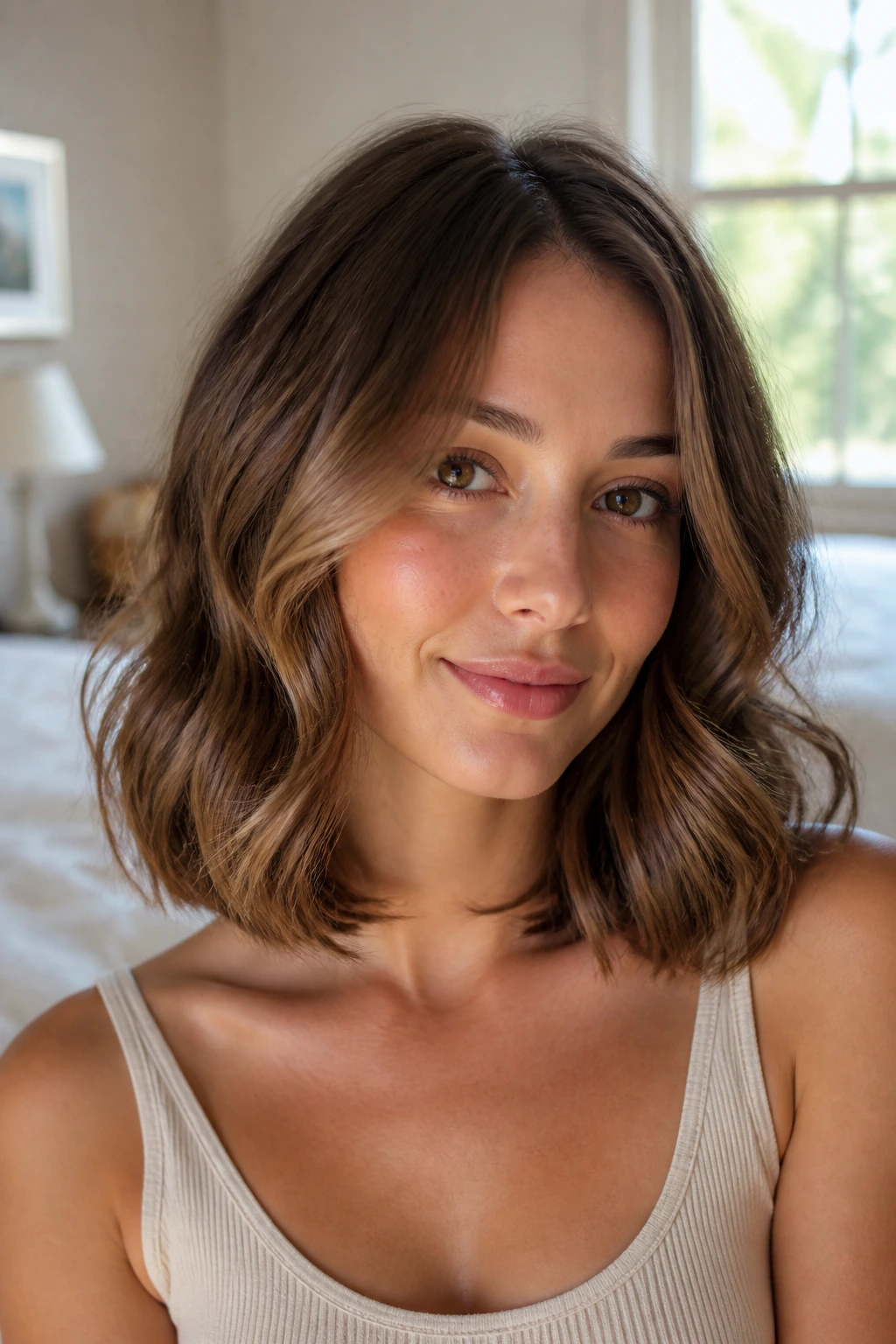
- The length does the heavy lifting: A collarbone lob keeps enough weight in the outline that fine hair doesn’t look see-through at the ends.
- Oval faces can wear the angle any way they like: Center part, side part, off-center part — the face shape can handle all three, so the haircut can be shaped around density instead of rules.
- Loose curls make the hair look fuller without turning it puffy: A 1-inch to 1.25-inch barrel gives bend and lift, not ringlets that shrink the length away.
- The styles grow out well: A good lob can go six to eight weeks between trims and still look intentional, not shaggy.
- These cuts work with lazy mornings: Some versions need a full blowout; others ask for a quick bend and a little root lift. That range matters.
1. Center-Part Blunt Lob with Soft Bends
A blunt lob with a center part is the cleanest answer when fine hair needs more shape than drama. The ends sit in one solid line, which makes the hair look thicker than it actually is, and the soft bends stop the cut from feeling severe or boxy. On an oval face, that straight part reads balanced, not fussy.
I like this version when the hair is fine but not fragile. If the strands are soft and slippery, ask for the perimeter to stay blunt at the collarbone, with almost no internal layering. Then bend just the middle of each section with a 1.25-inch iron, leaving the last inch or so straight. That little bit of straightness at the tips keeps the lob from shrinking into a triangle.
This one has a quiet confidence to it. Nothing is shouting, but the shape is doing a lot of work.
2. Side-Part Lob with Curtain Fringe
A side part gives fine hair lift where it usually needs it most: the crown. That extra push at the root makes the whole lob feel fuller before you even touch a curling iron, and the curtain fringe brings the eye back to the center of the face so the style still feels open on an oval shape.
The fringe matters here. Keep the shortest pieces around the cheekbone or just below, not up at the temples, or the front can get too sparse. Loose curls through the rest of the cut should fall away from the face on the heavier side and toward the face on the lighter side. That little asymmetry makes the cut look deliberate, not accidental.
If your hair part slides flat on its own, this is the one I’d try first. It gives the style a backbone.
3. Invisible-Layer Collarbone Lob
This is the lob for people who say they want layers but do not want to see them. The shape keeps the outside line blunt, while the interior gets soft, hidden movement that helps loose curls sit in place instead of hanging like strings. Fine hair likes that kind of restraint.
What to Ask For
- Keep the perimeter blunt at collarbone length.
- Add long internal layers below the cheekbone.
- Leave the face frame long enough to tuck behind the ear.
- Thin only the very ends if they feel bulky.
That last point matters. Over-thinning a fine lob is a mess; the hair loses the little bit of density it has, and the curls show every uneven spot. A skilled cut should create air inside the shape without exposing the ends.
This one is the definition of “looks easy, was not random.”
4. A-Line Lob with Cheekbone Curls
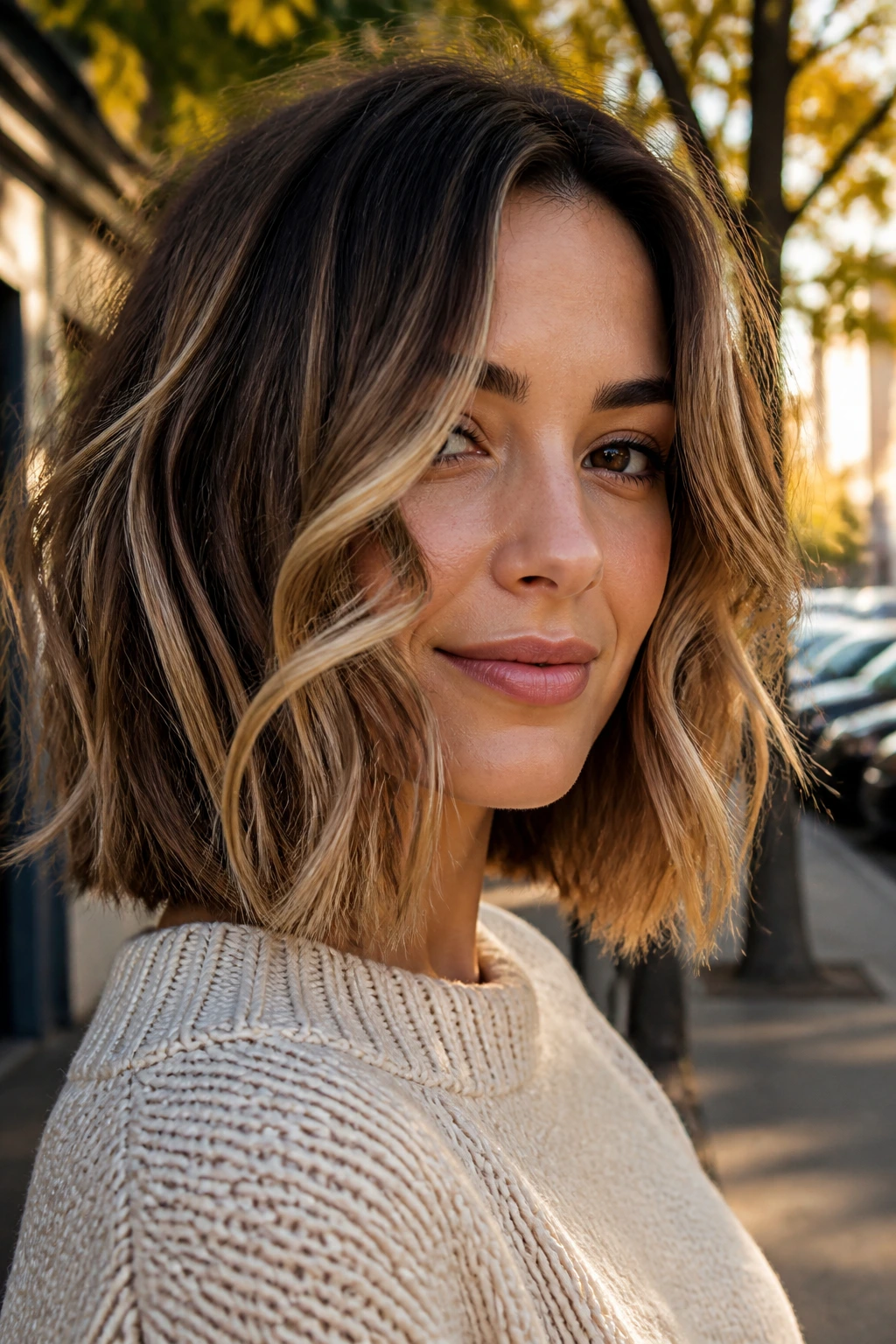
A slight A-line shape — a touch shorter in back, a touch longer in front — gives fine hair a little lift where it wants it most. The front pieces skim the cheekbones and jaw, which is useful on an oval face because it creates a frame without closing the face in.
The curl pattern should stay loose and directional. Wrap the front pieces away from the face, then let the rest of the curl pattern alternate just enough to keep the style from looking too symmetrical. If you overdo the angle and the curl together, the cut can start to look over-styled. Keep it soft.
I like this version for anyone who wants the front to feel slightly sharper without moving into an obvious angled bob. It has shape, but it doesn’t fuss.
5. Tucked-Behind-Ear Lob with One Deep Bend
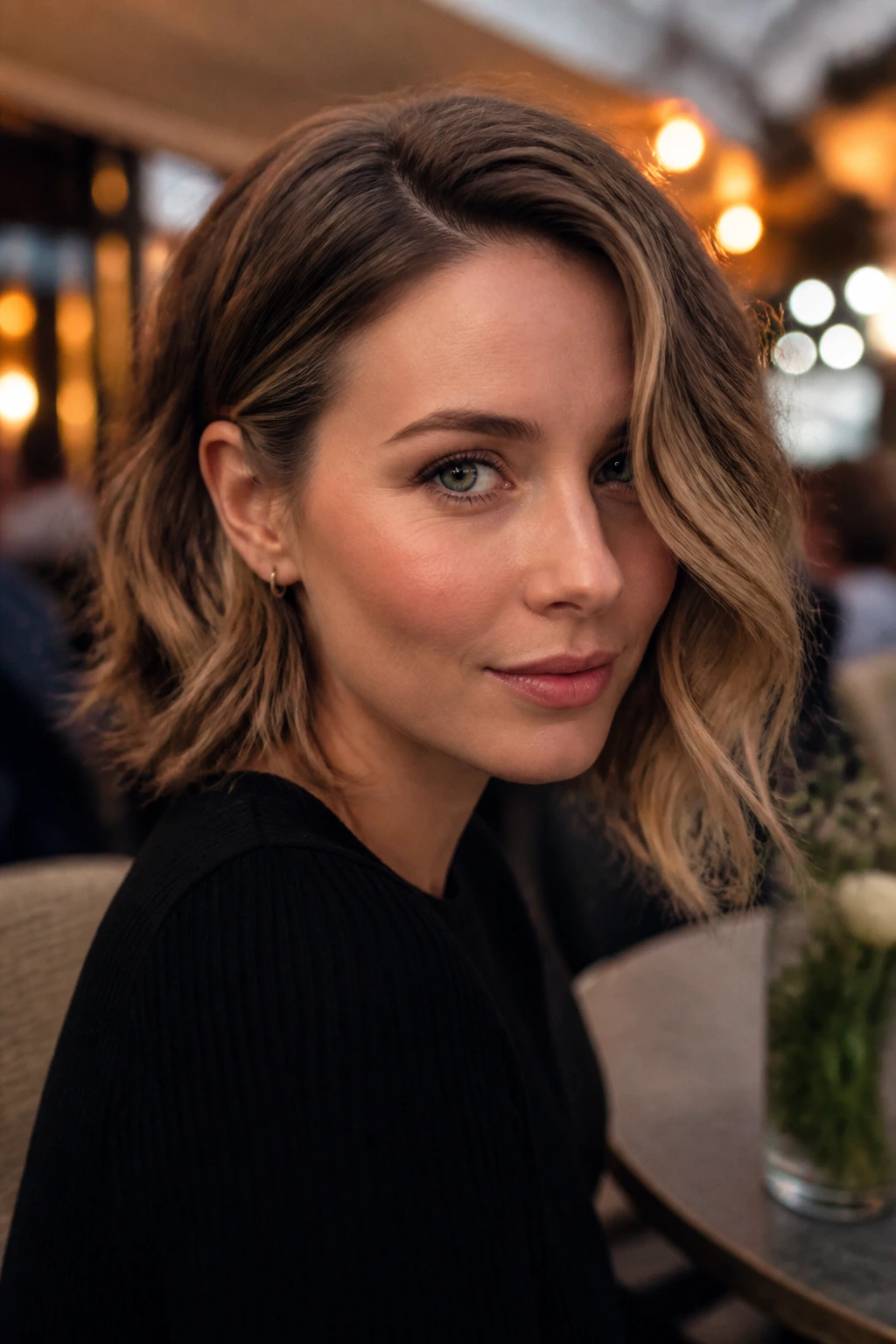
Some haircuts are about motion. This one is about one good bend and one clean tuck. The length sits just below the chin or at the top of the collarbone, and one side gets tucked behind the ear so the face opens up. The other side carries the curl and makes the whole thing feel intentional.
For fine hair, this is a smart cheat. The tucked side reduces visual bulk near the jaw, while the loose side keeps the perimeter looking full. Add one deep bend through the mid-lengths rather than a lot of small curls. Too many little curls can make fine hair frizz up and look busy in a bad way.
It’s one of those styles that feels almost underdone, which is exactly why it works.
6. Feathered Lob with Airy Ends
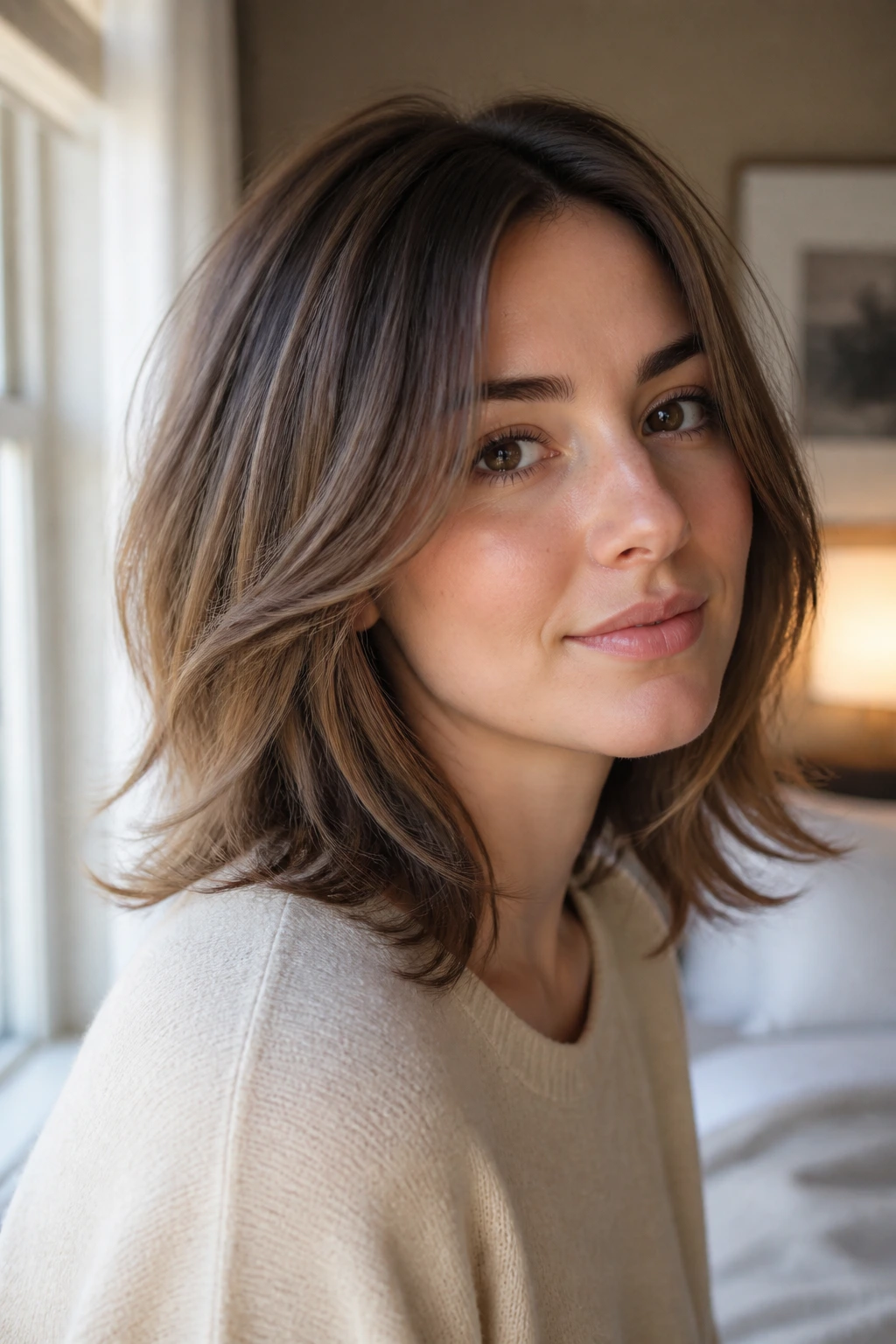
Feathering can be tricky on fine hair. Too much of it and the ends go wispy fast. Done lightly, though, it gives the lob a bit of movement that helps loose curls slide into place instead of sitting as one heavy block.
The key is to keep the feathering in the mid-lengths and protect the perimeter. Ask for soft, blended removal of weight, not a razored cleanup at the very bottom. Then use a large barrel to add a loose wave that breaks up the outline just enough to keep it from feeling flat.
Best For
- Hair that feels dense at the roots but soft at the ends
- Oval faces that need a little lift around the cheekbones
- People who like movement more than polish
Skip If
- Your ends already look thin or frayed
- You want the bluntest possible visual thickness
There’s a fine line here. Cross it once, and you’ll spend the next month trying to fake density.
7. Grown-Out Shag Lob
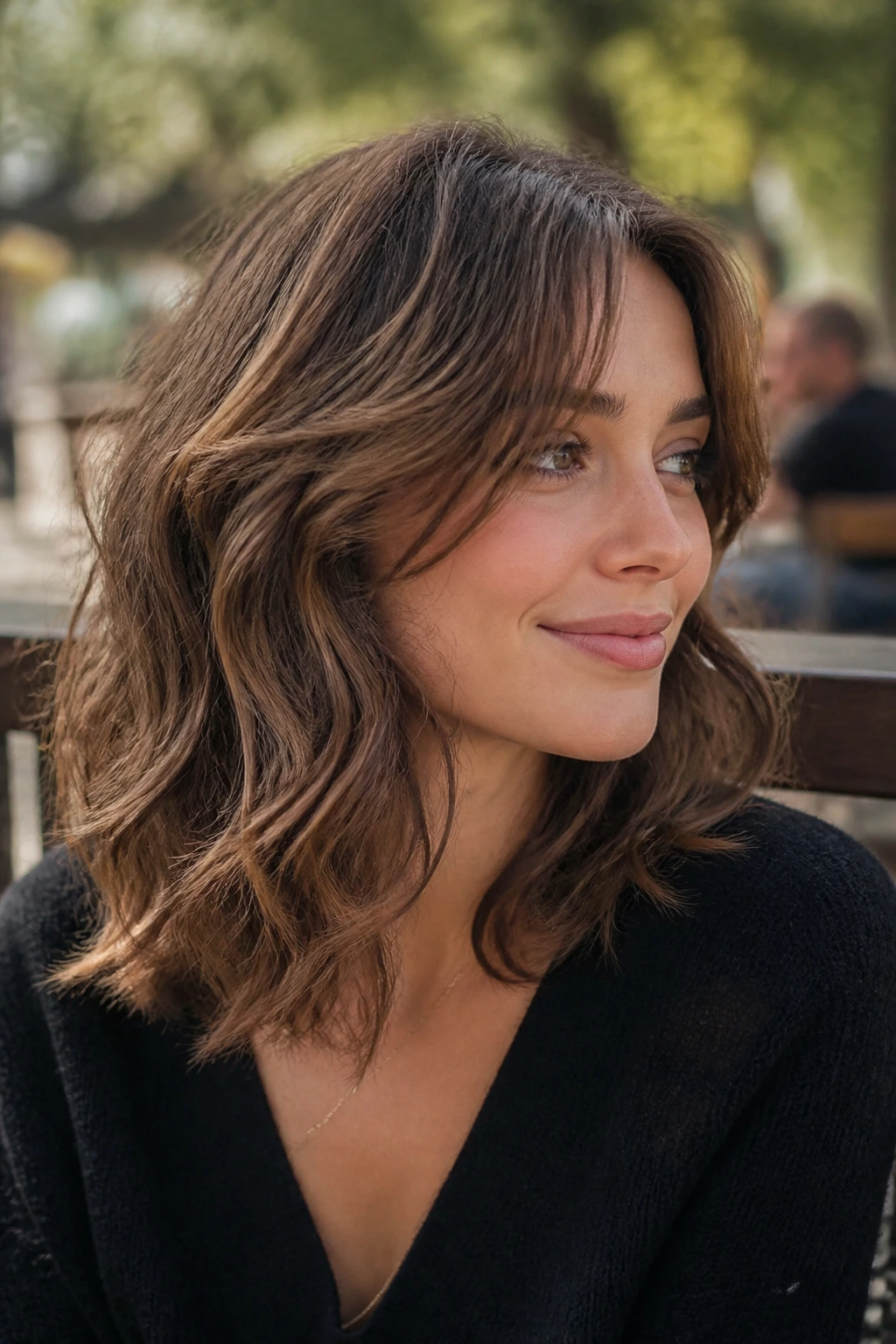
A shag lob can be excellent on fine hair, but only if the layers stay long and the cut keeps a real perimeter. The point is not to carve the hair into wisps. The point is to let the curls break up the surface so the style looks fuller and a little lived-in.
On oval faces, this cut works because it doesn’t need a lot of fringe to balance the features. A soft curtain piece or a cheekbone-length face frame is enough. The rest comes from the loose curl pattern and the texture at the mid-lengths, which creates the illusion of density without a heavy blow-dry.
I would not make this the first choice for ultra-delicate hair. If the strands snap easily or the ends already feel sparse, keep the layers longer and cleaner. Shag is a mood, not a requirement.
8. Sleek Root, Loose Mid-Length Wave Lob
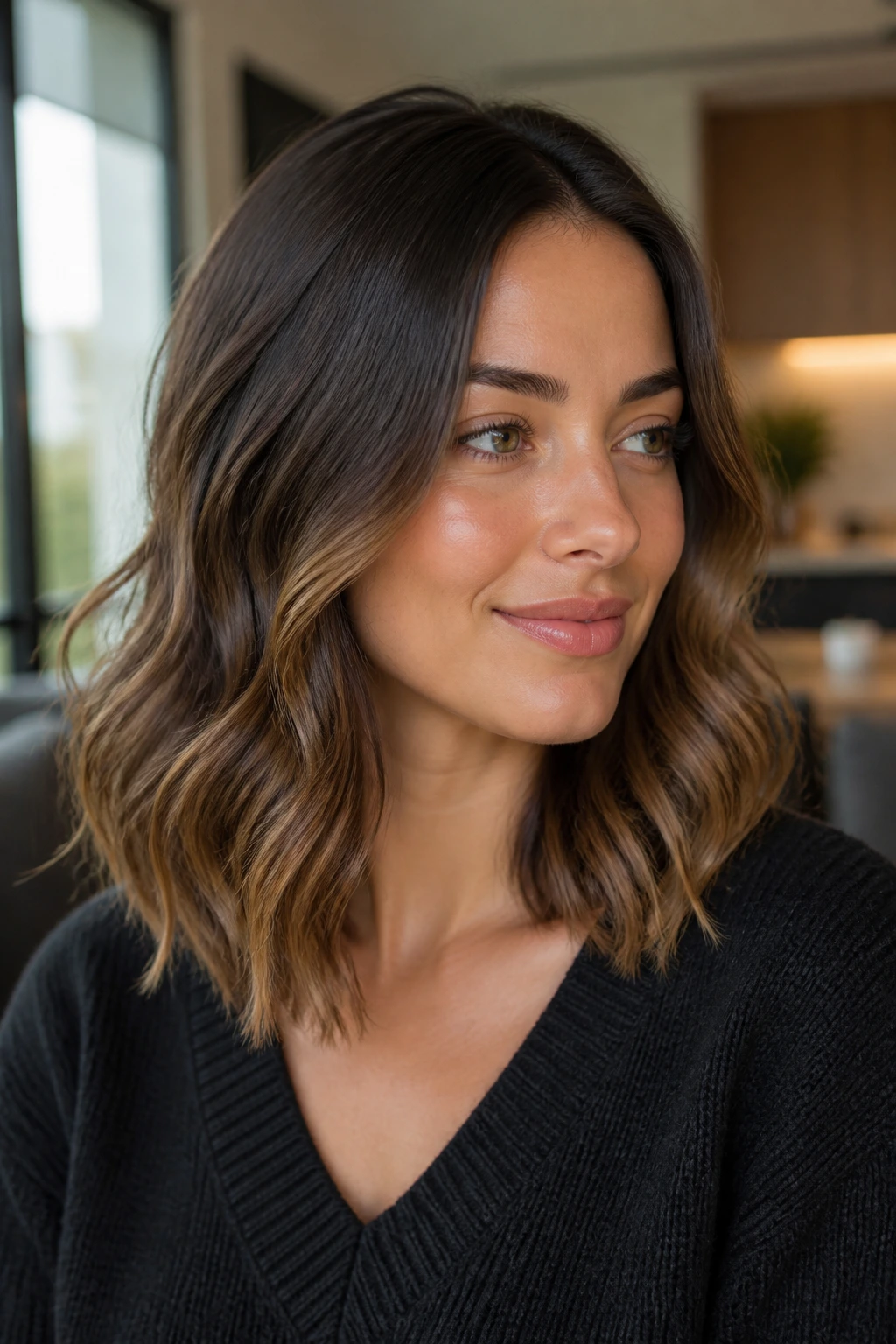
This is one of my favorite quiet tricks for fine hair. Keep the roots smooth and slightly lifted, then start the wave around the ear or cheekbone area. That contrast makes the hair look denser because the top stays controlled while the bottom carries the movement.
A lot of people curl too high. Don’t. When the barrel starts right at the scalp, fine hair often puffs up at the crown and goes flat at the ends. Start lower, let the wave build through the middle, and leave the last inch soft. The result is cleaner and thicker-looking.
Why It Works
The smooth root line gives the eye a clean shape, and the waves add breadth exactly where the lob needs it. It’s a tidy illusion, but a useful one.
9. Rounded Lob with Face-Framing Pieces
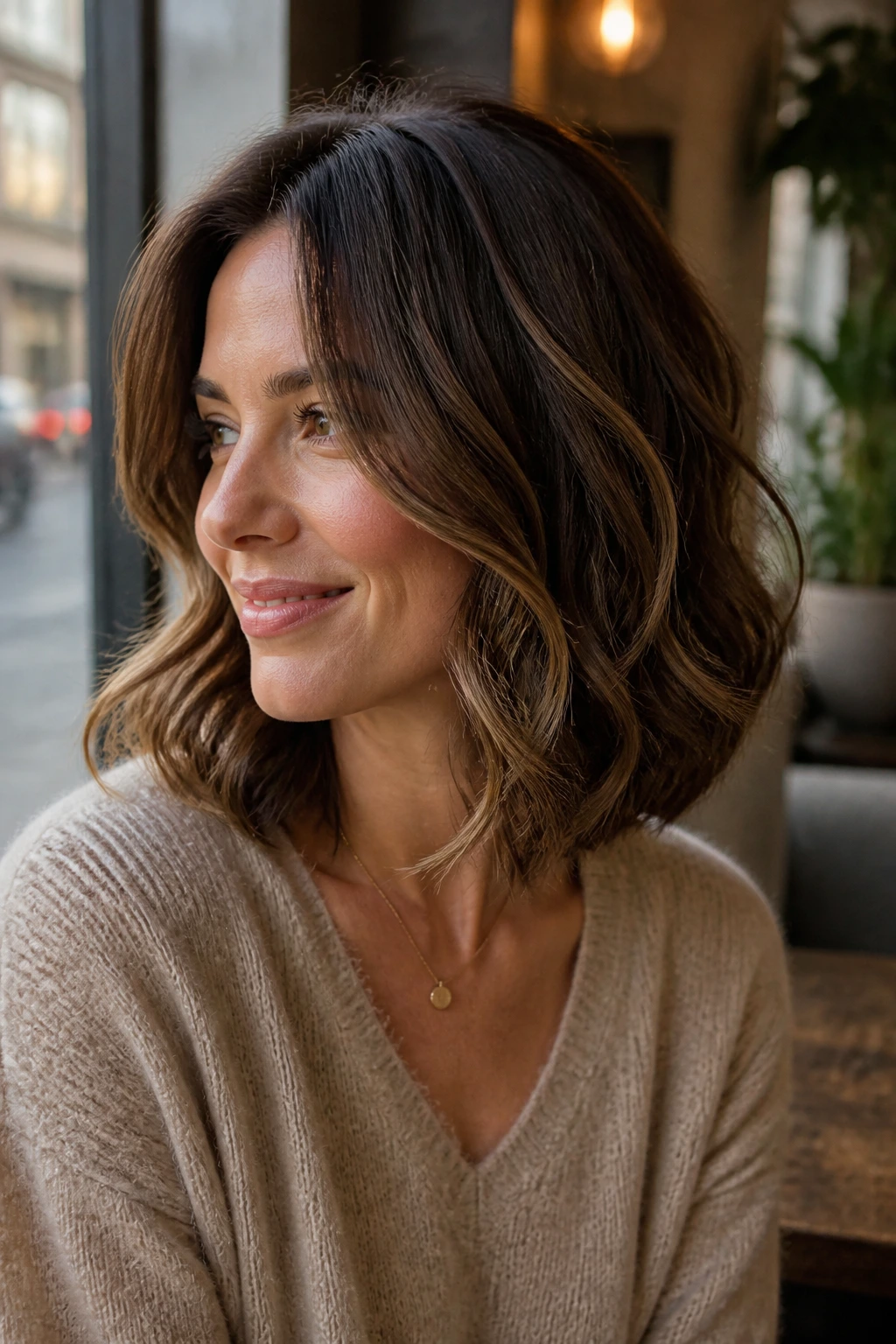
A rounded lob bends inward just enough to hug the neck and jaw. On an oval face, that soft curve feels natural because it follows the shape without stretching it out. The face-framing pieces should start around the cheekbone or jaw, not much higher, or the style can lose weight too fast.
This cut is good when the hair needs a little polish but not stiffness. The loose curls should be brushed into a gentle C-shape rather than separated into obvious sections. Think of it as movement with edges smoothed off.
It’s a strong option for people who want their lob to look finished even when they skip the full styling routine.
10. Glassy Lob with Wide Barrel Curls
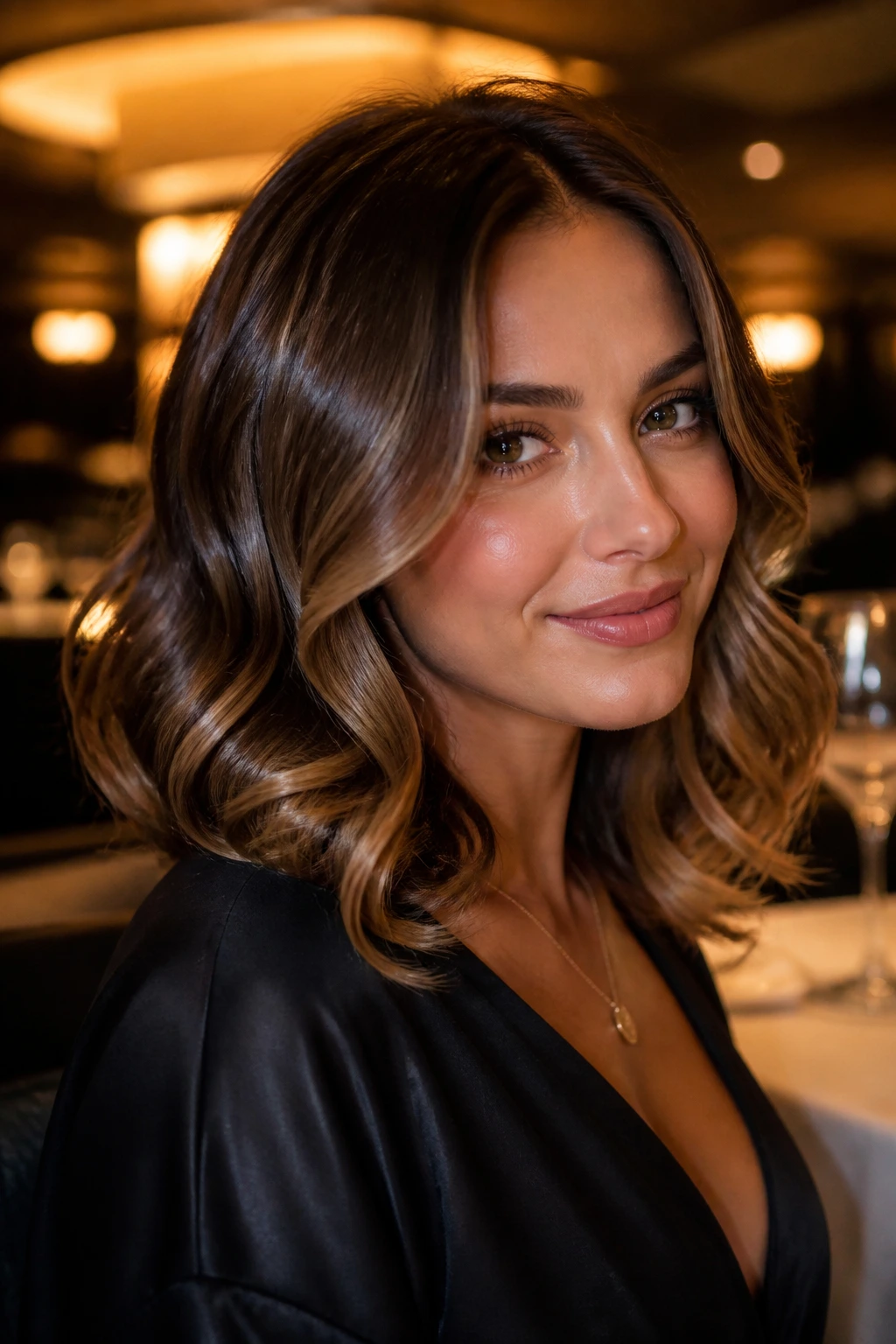
Shine changes everything on fine hair. A glossy lob with wide barrel curls looks fuller because the light bounces off the curve, not the frizz. This version relies on clean sections, a good heat protectant, and a smooth finish at the end.
Use a 1.25-inch iron, curl away from the face, and let each curl cool before touching it. Then brush it out lightly with a soft brush or wide-tooth comb. The waves should fall together in broad ribbons, not separate into tiny coils. That’s what gives the style its density.
This is the lob I’d save for a dinner, a meeting, or any day you want the hair to look expensive without looking overworked. Clean. Soft. Controlled.
11. Brushed-Out Lob with Soft Volume
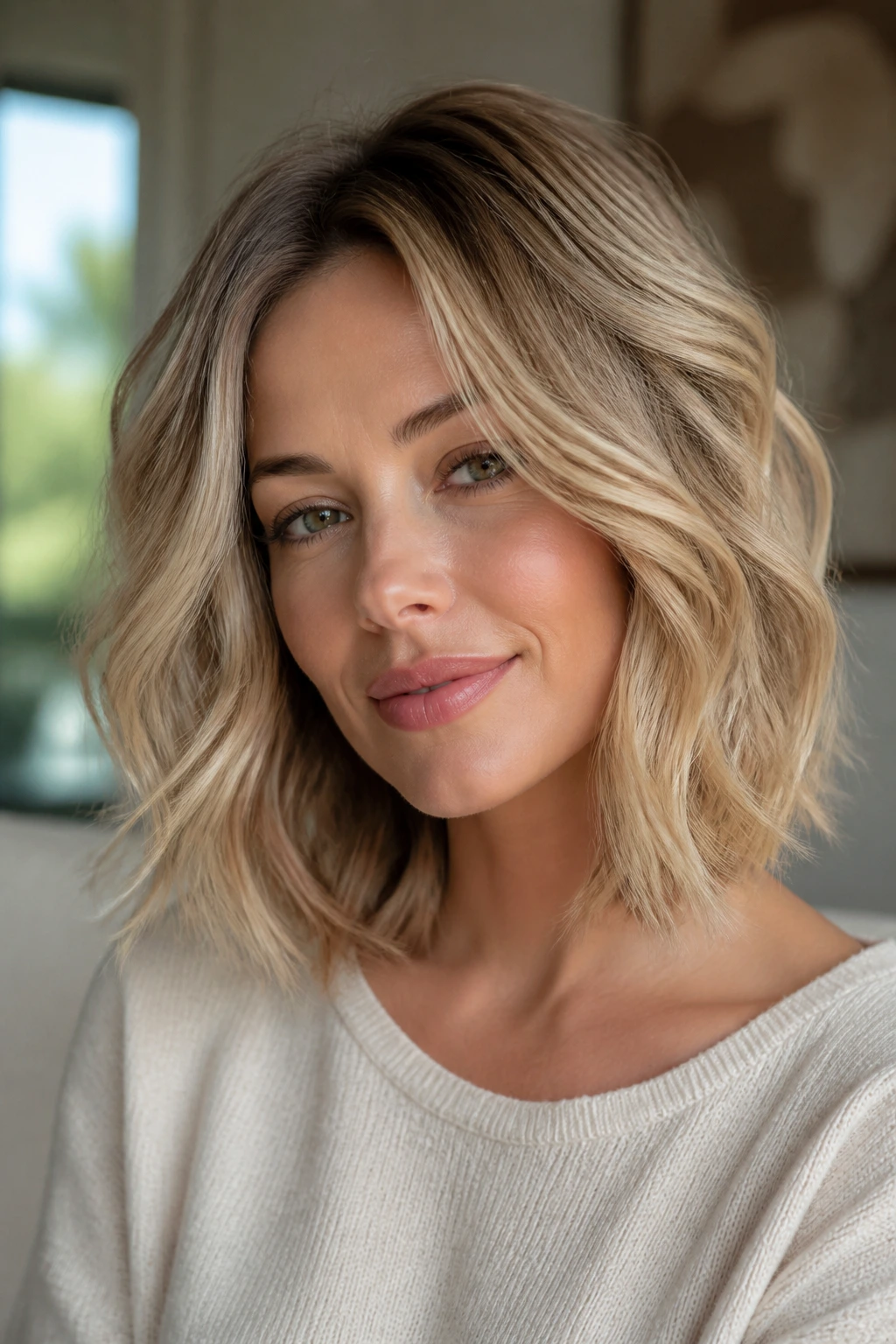
Brushed-out curls are a gift to fine hair, if you do them right. The shape starts as a loose curl set, then cools fully, then gets brushed until the waves merge into one smooth, airy volume. The final look has body without the crunchy edge that sometimes happens with texture spray.
The trick is patience. If you brush too soon, the curls collapse before they’ve set. If you brush too hard, the ends fluff out and the style loses its line. Wait until the hair is cool to the touch, then break up the curls with your fingers before going in with a brush.
This one flatters oval faces because it adds width at the sides without crowding the forehead or jaw. It feels old-school in the best way.
12. Collarbone Lob with Long Curtain Bangs
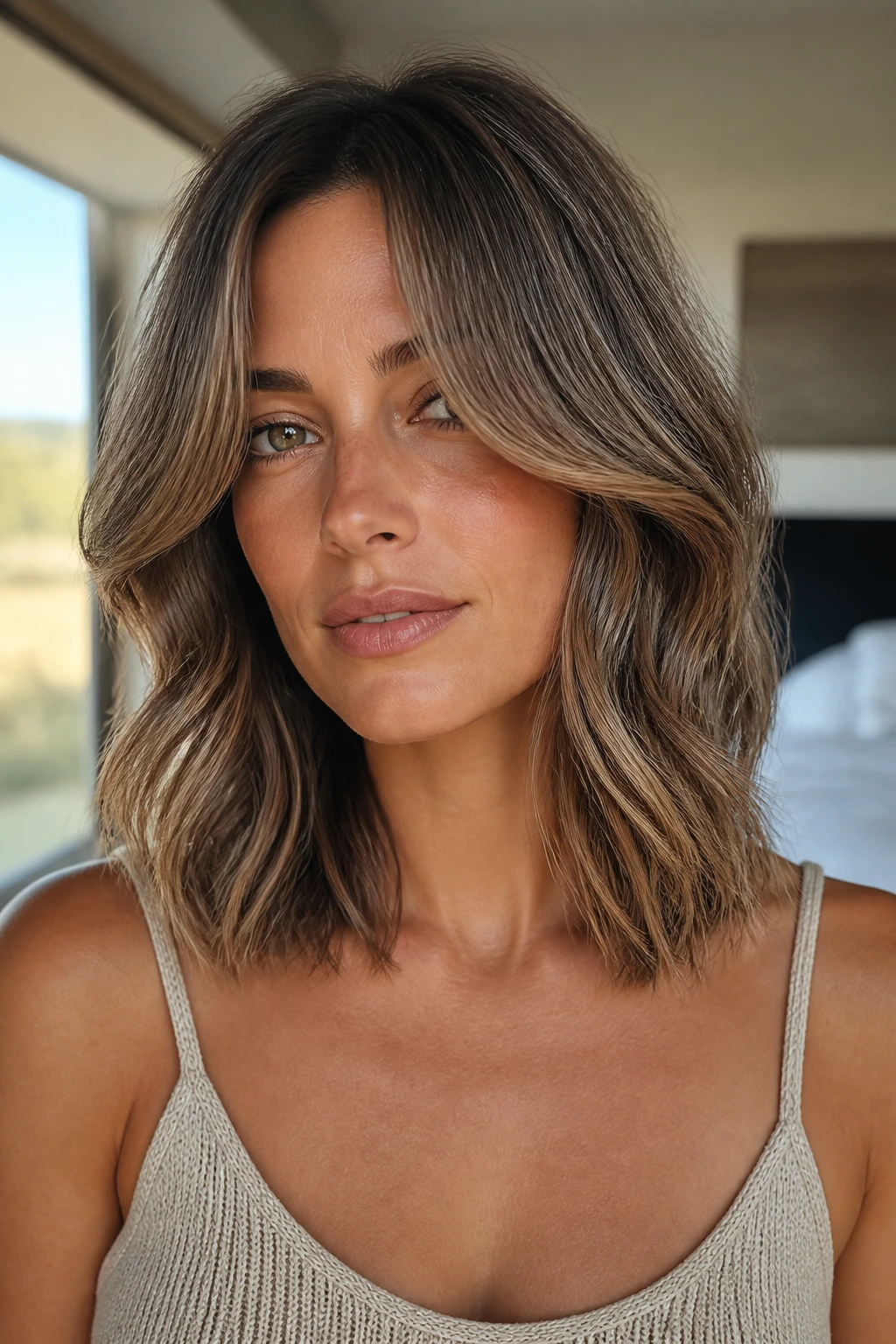
Long curtain bangs can be a smart move on a lob, especially for fine hair that needs softness around the face. The trick is keeping them long enough to blend into the cut instead of sitting as a separate layer. Around the cheekbone and jaw is the sweet spot.
The rest of the hair should stay fairly clean through the ends. If the fringe is busy and the lob is shredded, the hair can start to look scattered. A loose curl pattern through the body of the cut helps the bangs fall into the same language as the rest of the style.
Styling Note
Blow-dry the bangs first, wrapping them away from the face with a round brush or large roller. If you wait until the rest of the hair is done, they usually set in the wrong direction and fight you all day.
13. Off-Center Lob with Soft S-Waves

A slight off-center part is one of the easiest ways to make fine hair look less predictable. It also gives the face a little asymmetry, which keeps an oval shape from looking too evenly framed. Pair that with soft S-waves and the lob gets movement without losing structure.
This version is useful when a center part feels too flat or too formal. The hair falls with a little more swing on one side, and the wave pattern helps the ends appear thicker than they are. If your hair tends to separate at the crown, the off-center part usually helps hide that.
It’s a good everyday option. Not flashy. Not plain. That middle ground is harder to find than people think.
14. Chin-Skimming Front, Longer Back Lob
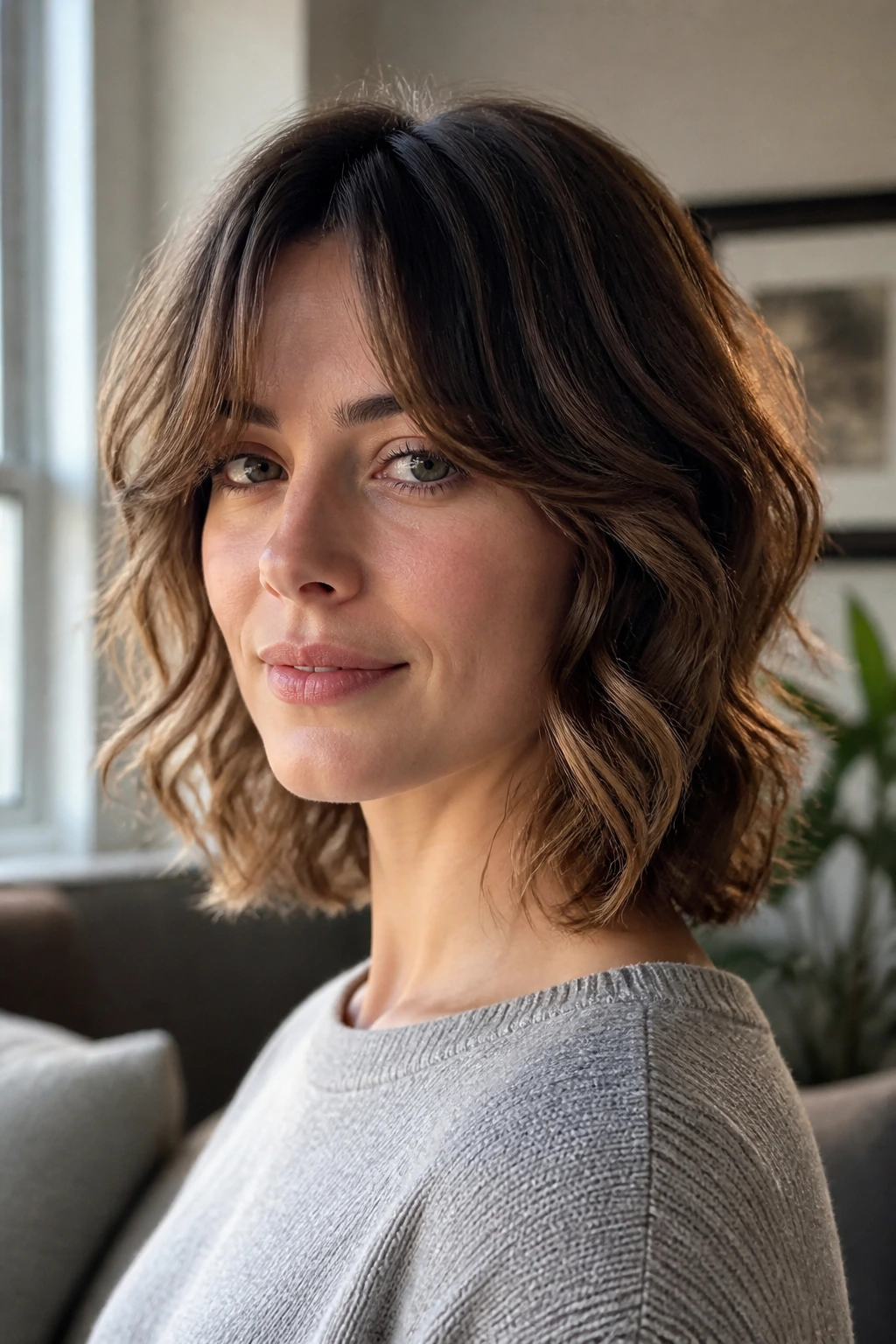
This shape leans slightly forward, which gives the front of the haircut more presence. On an oval face, that can be a nice way to sharpen the jawline without cutting the length too high. The back stays a little longer, so the hair keeps its weight.
Loose curls in this cut should concentrate around the front and mid-lengths. The back only needs a bend or two. If the back gets too curly, the angled line disappears, and the whole point of the cut goes missing.
I like this when the face needs a bit more structure near the chin. The effect is subtle in photos and stronger in person, which is usually the mark of a good cut.
15. Tousled Lob with Barely-There Layers
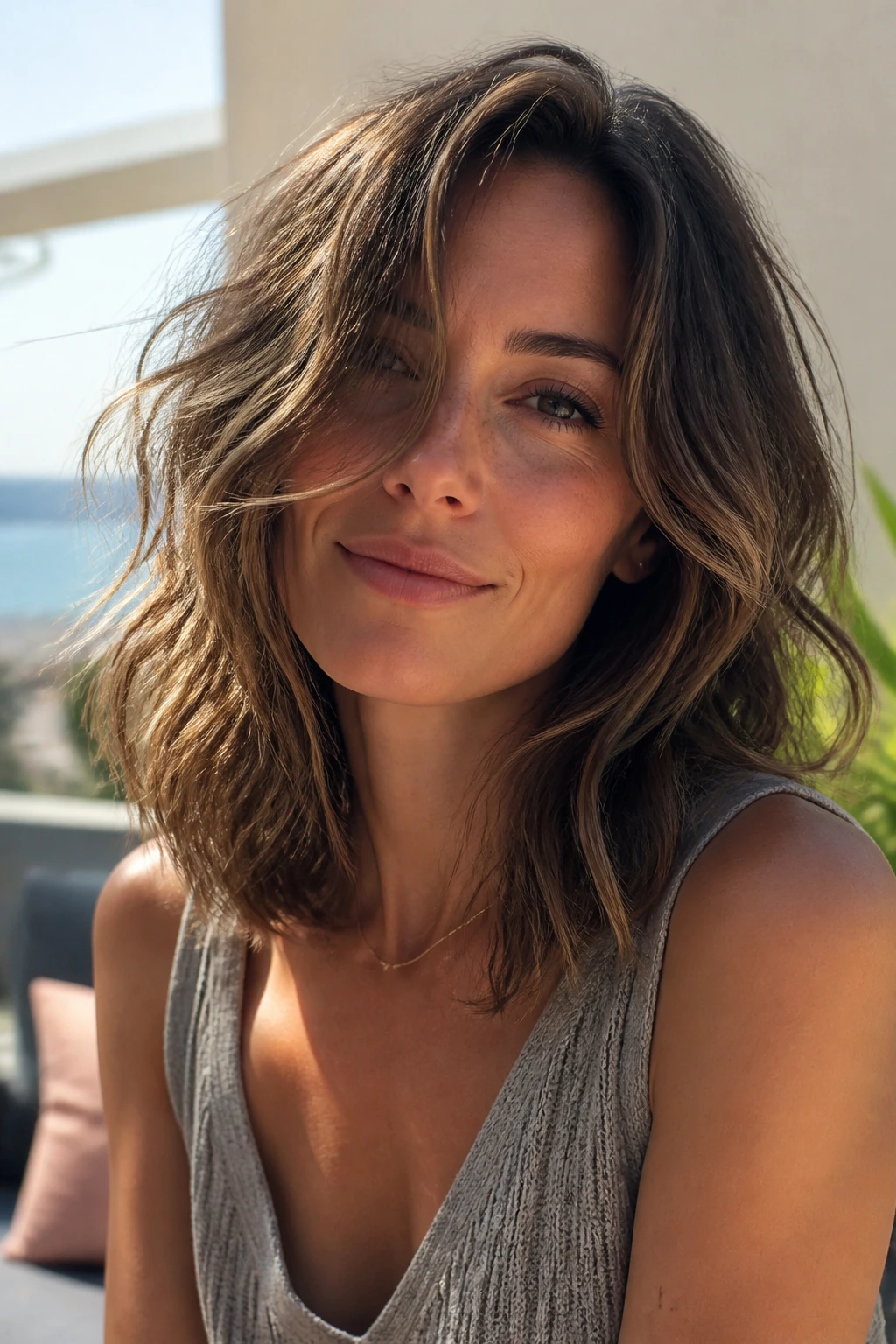
A tousled lob can work beautifully on fine hair when the layers stay long and invisible. The goal is not rough texture. The goal is a soft, broken-up finish that moves when you turn your head. Loose curls help here because they create air between the sections.
Keep the layer line low and let the ends keep some solidity. Then use a light texturizing mist or salt-free spray from the middle down. Fine hair can turn sticky fast, so less is more. If the product feels like it’s coating the hair, you used too much.
This style is a little cooler, a little less polished. Good hair should not look scared of being touched.
16. Glam Lob with Polished Ends
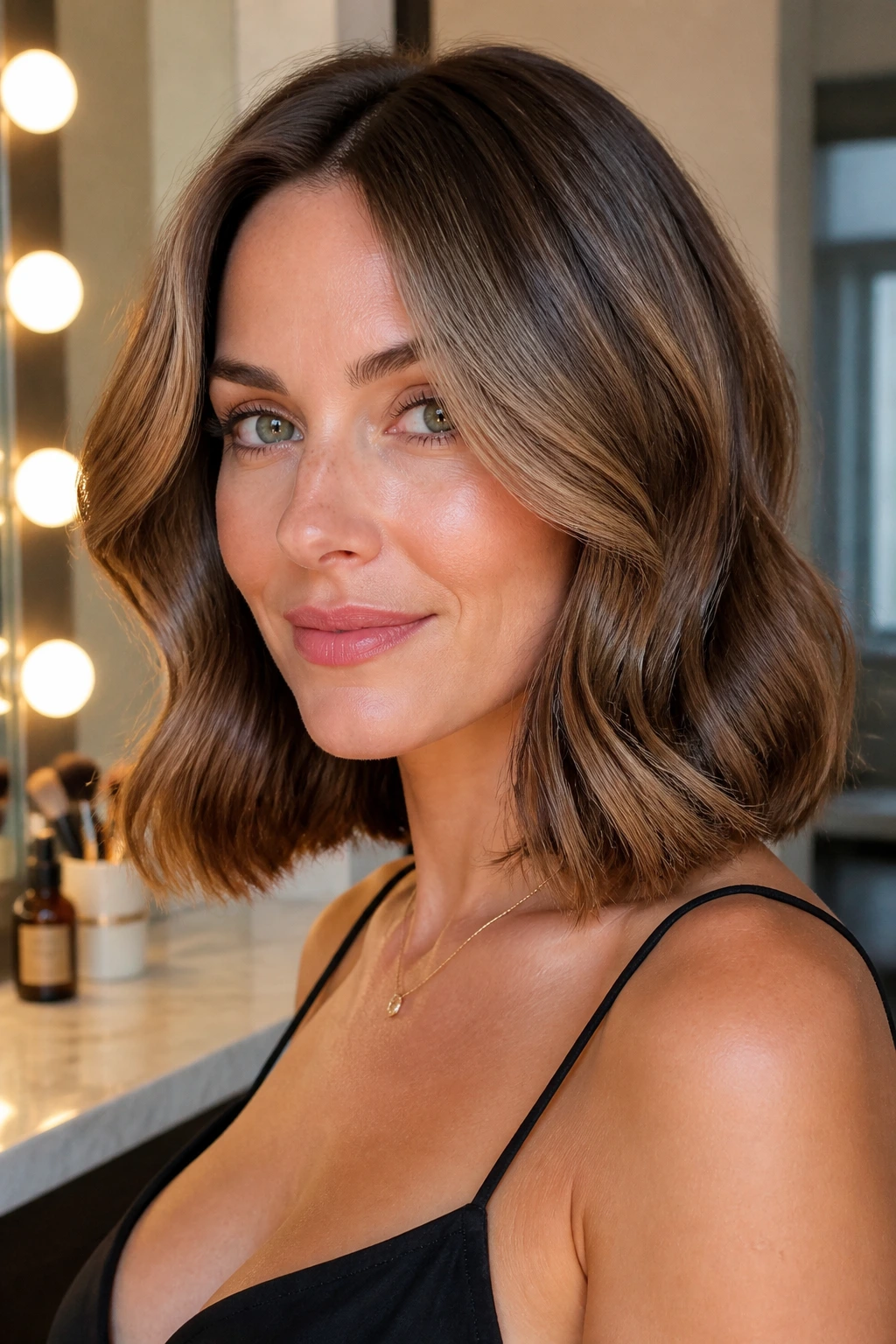
There’s a difference between polished and stiff. This lob lives in the polished zone, with smooth ends, soft waves, and a little bend that makes the shape feel dressed up. It’s the kind of style that pairs well with clean makeup and a sharp neckline because the hair itself already reads finished.
For fine hair, the trick is the ends. Keep them blunt enough to show density, then bend the mid-lengths into wide, smooth waves. Don’t curl the whole strand all the way to the bottom. That’s how the shape gets too tight and loses its length.
This is one of the better “event hair” options for a lob because it still looks like hair, not a helmet. A small difference. A big one.
17. Air-Dry Lob for Natural Wave Patterns
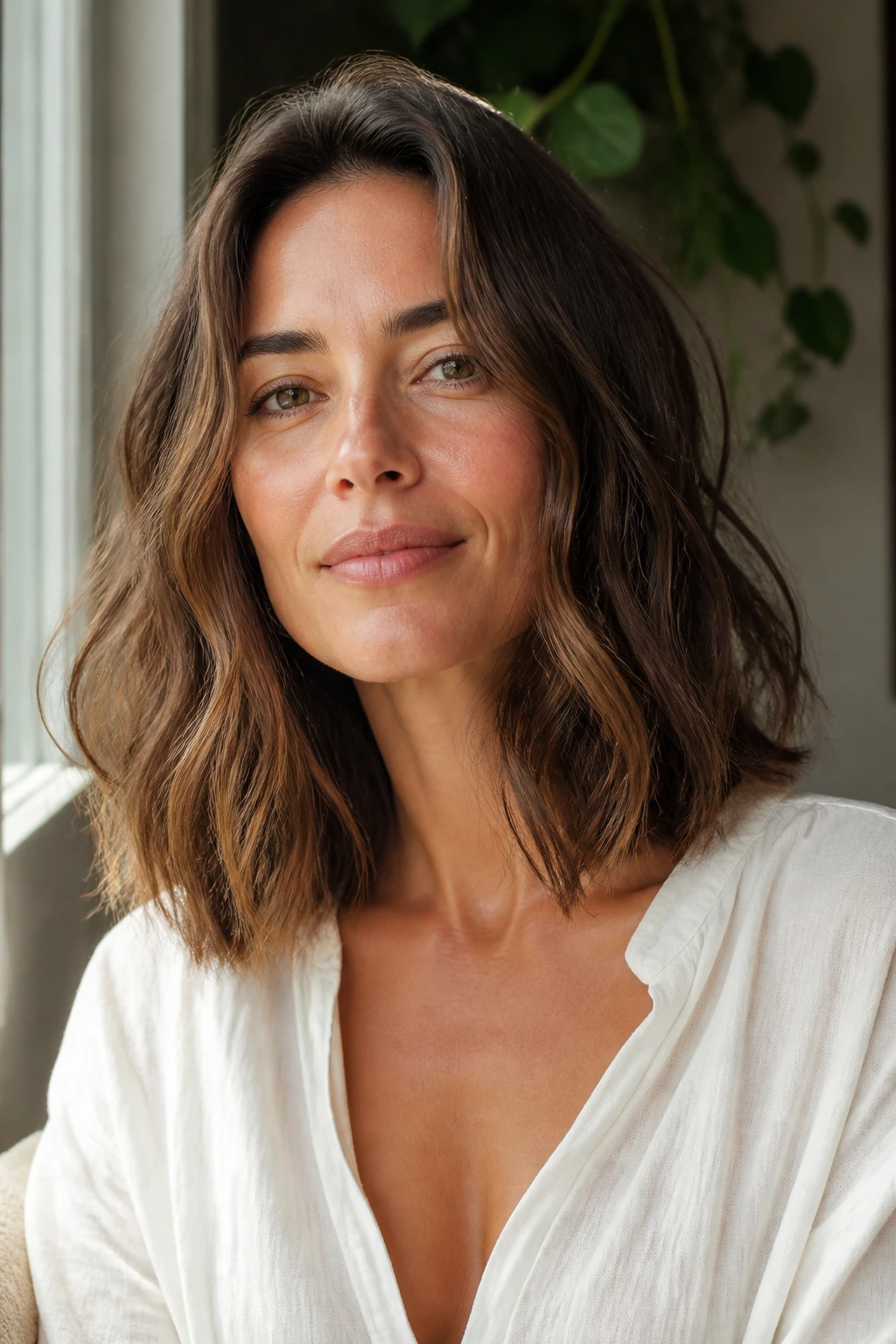
If your fine hair has even a little natural wave, an air-dry lob can be a blessing. The cut should be tailored to where the wave wants to sit, which usually means keeping the length at or below the collarbone and avoiding too much internal thinning. Let the hair do the work it already knows how to do.
Use a light curl cream or mousse, scrunch once or twice, then leave it alone. Pulling at wet hair ruins the pattern before it sets. Fine hair likes less handling than most people think. It needs encouragement, not choreography.
How It Looks Best
- Let the part fall where the hair naturally separates
- Tuck one side behind the ear after drying
- Keep the ends blunt so the wave has a solid base
This is the version for low-maintenance mornings and humid weather.
18. Minimal-Product Lob with Undone Curls
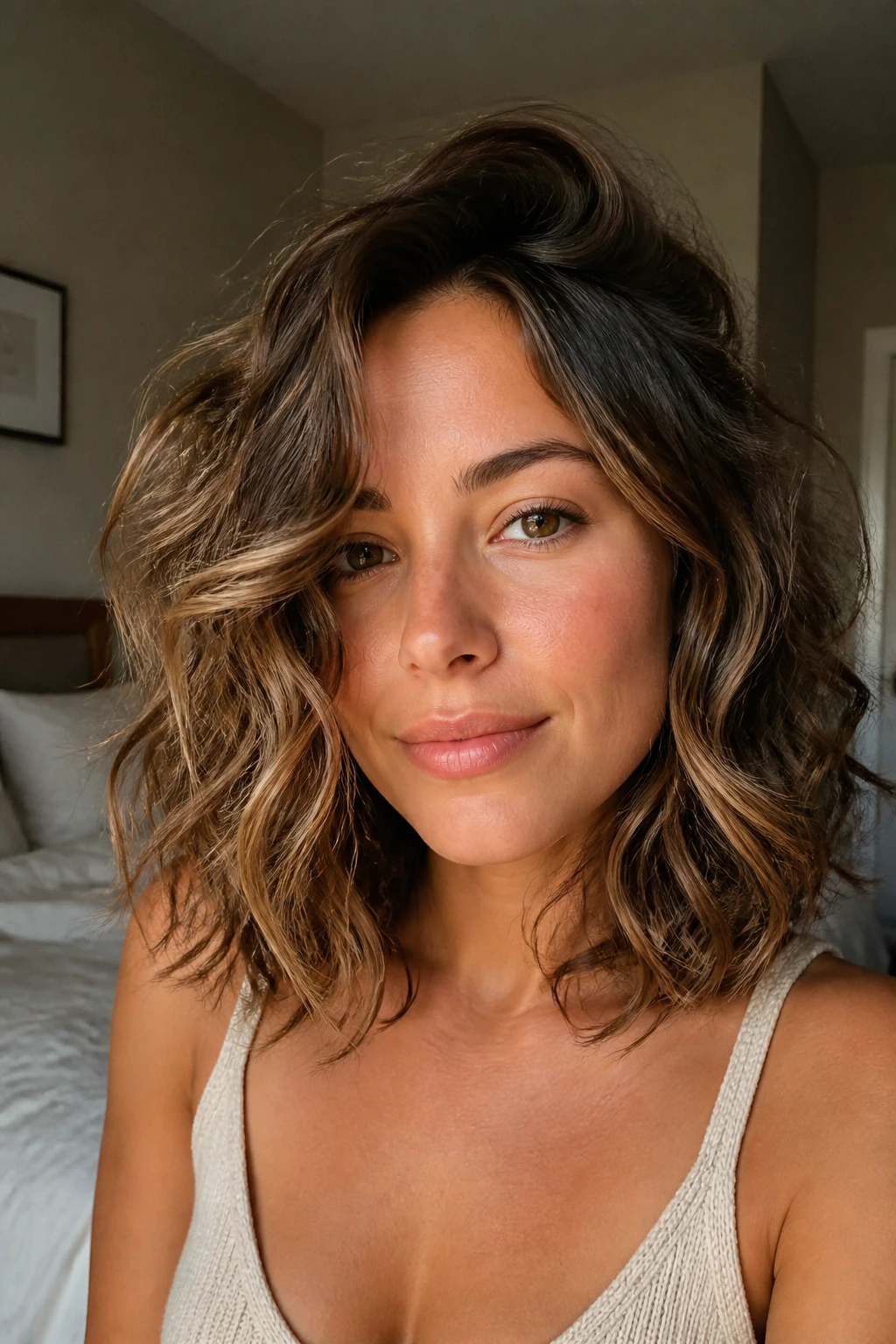
Some hair wants a full routine. This one doesn’t. A minimal-product lob keeps the structure simple: a clean cut, a loose curl pattern, and just enough hold to stop the waves from disappearing by lunch. Fine hair often looks better with one mousse, one heat protectant, and maybe a tiny mist of flexible hairspray at the end.
The curls should be large and slightly imperfect. If every bend is the same size, the hair starts looking stamped. Better to alternate direction, leave a few ends straight, and let the texture feel a little broken up. On an oval face, that softness keeps the look relaxed rather than over-shaped.
This is the style I’d pick for someone who hates fuss but still wants the hair to look done. Not overdone. Done.
The Styling Rules That Keep Fine Hair From Going Sparse at the Ends
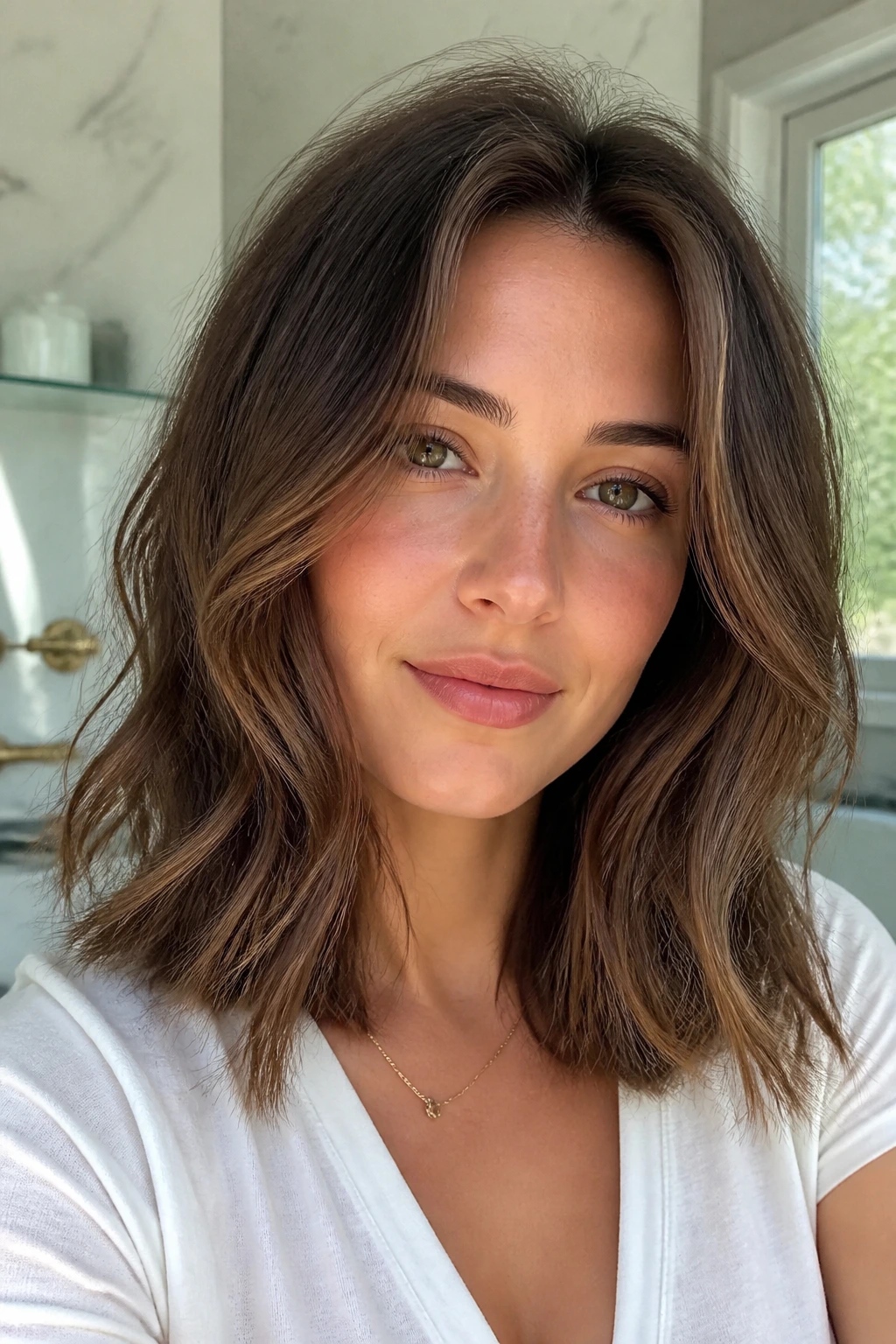
Fine hair needs a clean perimeter more than it needs aggressive layers. That sentence sounds simple, but people ignore it all the time and then wonder why the lob looks thinner after the first wash. Keep the base blunt, keep the longest pieces honest, and use loose curls to fake fullness where the hair naturally collapses.
Root lift matters more than extra curl. If the crown falls flat, the whole haircut reads smaller. A light mousse at the roots, a quick blow-dry with a round brush, or even a couple of root clips while the hair cools can change the shape more than another pass with the iron.
Heat size matters, too. A 1.25-inch barrel usually gives a nicer bend than a tight wand on fine hair. Smaller tools can shrink the length and make the ends look skinny. Leave the last inch out, let the curls cool, then brush or finger-comb only when the shape has set.
Product should stay light. Heavy creams and oils belong on the ends only, if at all. At the scalp, they flatten everything.
The Mistakes That Flatten a Lob Fast

Too many short layers: This is the fastest way to make fine hair look thinner. The cut may feel airy for ten minutes, but the ends lose their line and the curls start exposing gaps. Ask for long layers or hidden interior layers instead.
Curling too high at the root: Fine hair often swells at the crown when the iron starts near the scalp. That creates a bulky top and wispy ends. Start the curl lower and leave the root area smooth or lightly lifted.
Overloading with dry shampoo or texture spray: Both are useful, and both can go wrong fast. If the hair starts feeling chalky or sticky, the product has taken over the style. Use small doses and build slowly.
Skipping a cool-down: Loose curls need time to set. If you shake them out the second they come off the iron, they fall flatter and frizz faster.
Using a part that fights the growth pattern: Oval faces can wear most parts, but the hair itself still has a habit. If the part keeps splitting and collapsing, stop forcing it. Try a softer off-center line.
Four Ways to Shift the Look Without Losing the Cut
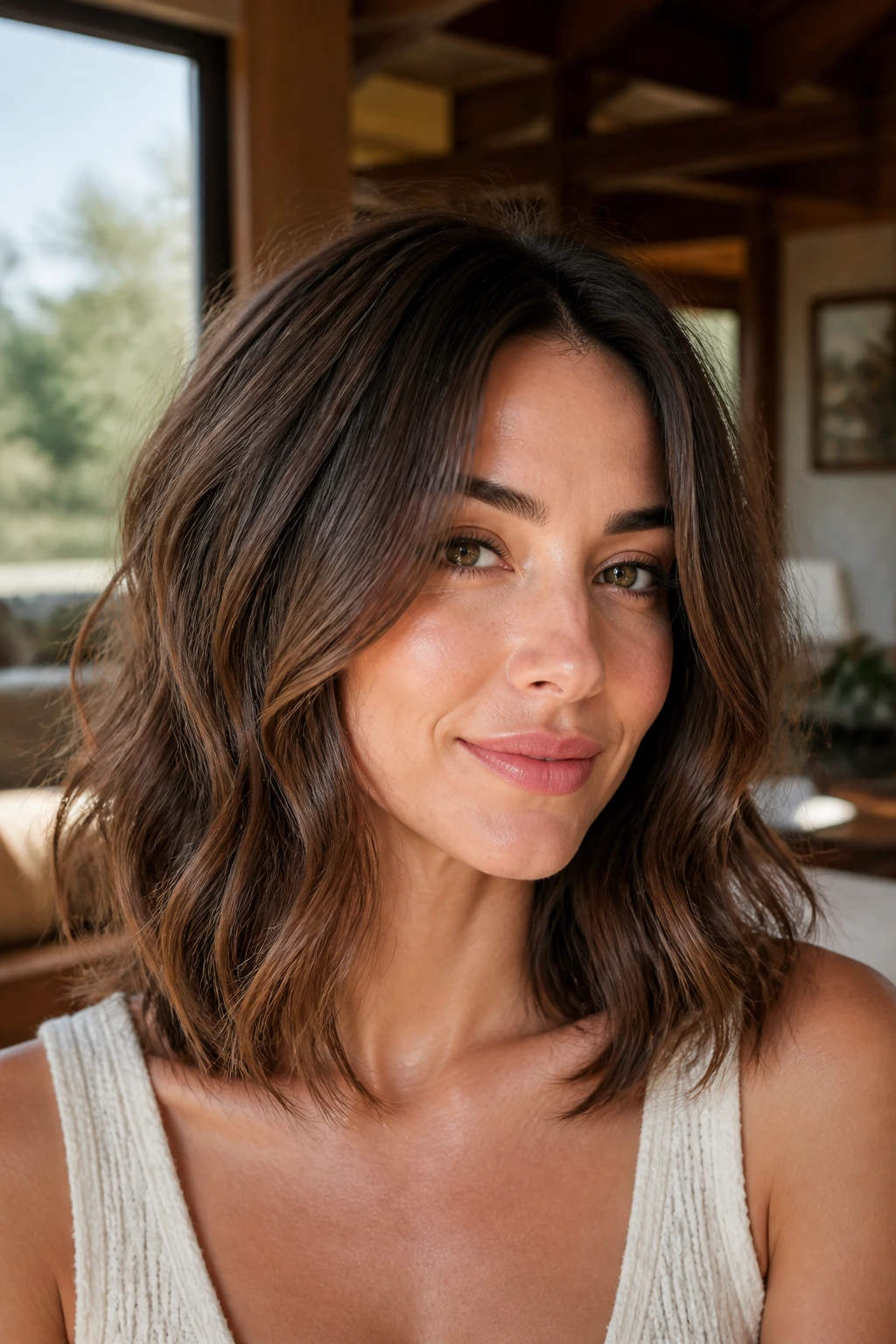
The More-Polished Version: Swap the tousled finish for a smoother blow-dry and wide, brushed-out waves. This keeps the same lob shape but makes it look sharper and more dressed up.
The Softer Face-Frame Version: Add long curtain pieces that start at the cheekbone and taper into the collarbone length. This is the best move if you want more movement around the face without losing density at the ends.
The Air-Dry Version: Use a light mousse, scrunch once, and let the hair settle naturally. This works best when the cut already has a strong perimeter and the hair has some natural bend.
The Volume-First Version: Set the crown with clips or a round brush before curling the mid-lengths. If the top is flat, this variation gives the style a fuller shape without changing the cut itself.
The Brushes, Clips, and Products That Matter Here
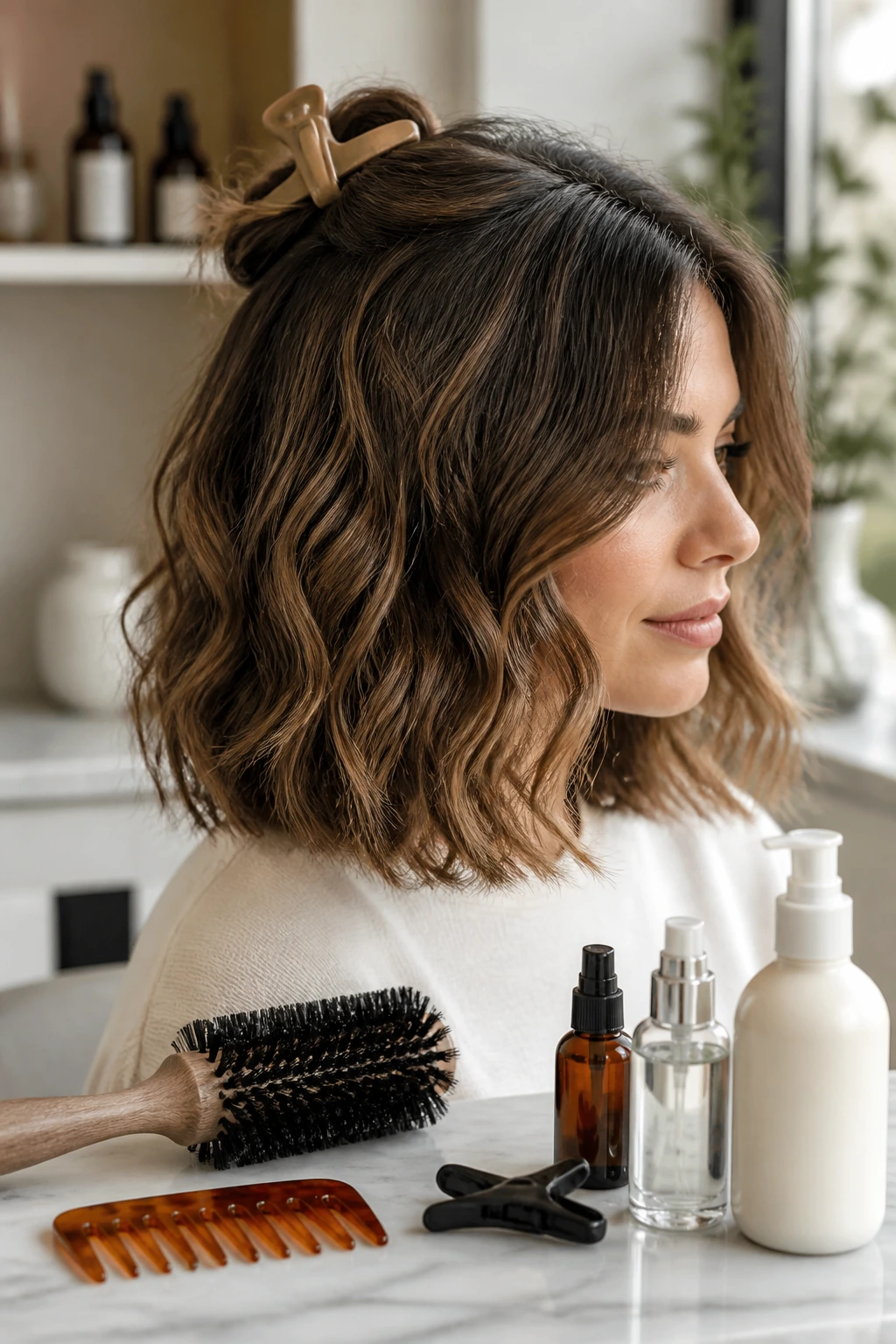
- 1.25-inch curling iron or wand: The best size for loose bends on fine hair; smaller tools can shrink the length too much.
- Heat protectant spray: Keeps the cuticle from getting rough and dull after repeated styling.
- Volumizing mousse: Use a golf-ball-sized amount at the roots before blow-drying for lift that lasts.
- Round brush, medium barrel: Helps shape the crown and the front pieces without making the ends look overworked.
- Duckbill clips or sectioning clips: Make it easier to let curls cool in shape instead of falling flat right away.
- Light texturizing spray: Good for adding grip through the mid-lengths, but use sparingly.
- Soft bristle brush or wide-tooth comb: Best for brushing out set curls without making them frizzy.
- Silk or satin pillowcase: Helps the lob keep its bend and keeps the ends from tangling overnight.
Keeping the Lob Fresh Between Appointments
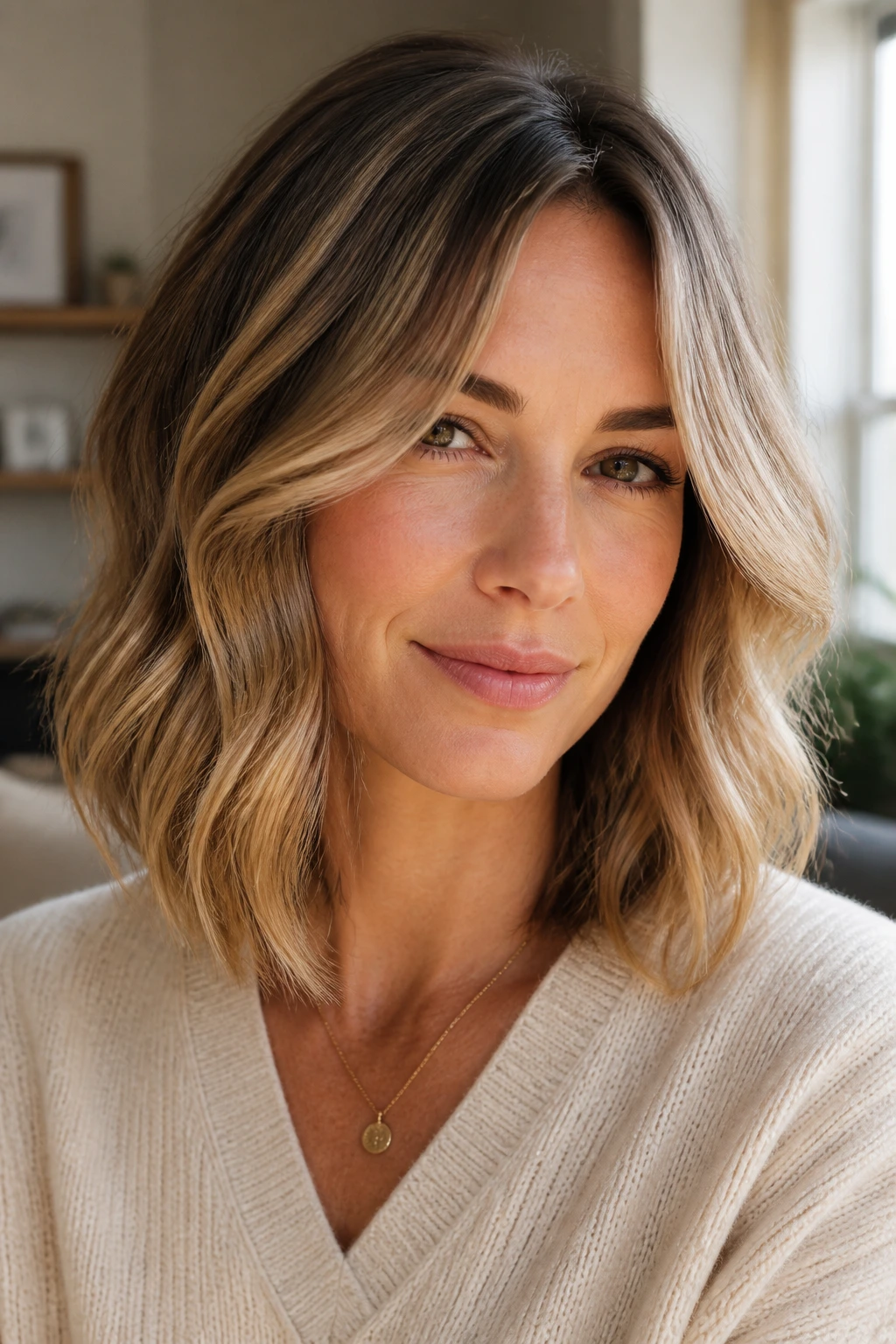
Fine hair grows out fast in a visual sense, even when the actual length change is small. That is why this kind of lob usually looks best with a trim every 6 to 8 weeks. Wait much longer and the perimeter starts looking soft at the bottom, which is the exact spot you’re trying to protect.
Night care matters more than people admit. A loose twist, a soft clip, or a silk pillowcase keeps the waves from getting crushed under your head. If the hair bends oddly on one side, dampen that section lightly in the morning, twist it around your finger, and let it dry for five or ten minutes before touching it again.
Dry shampoo can stretch a style by a day or two, but it should be used at the roots only. Spray from 8 to 10 inches away, wait 30 seconds, then massage it in. If you spray the mids, the hair loses movement and starts to look dusty.
For heat styling, give the hair a break when you can. An air-dry day here and there keeps fine hair from getting brittle at the ends.
Questions People Ask Before Cutting the Length
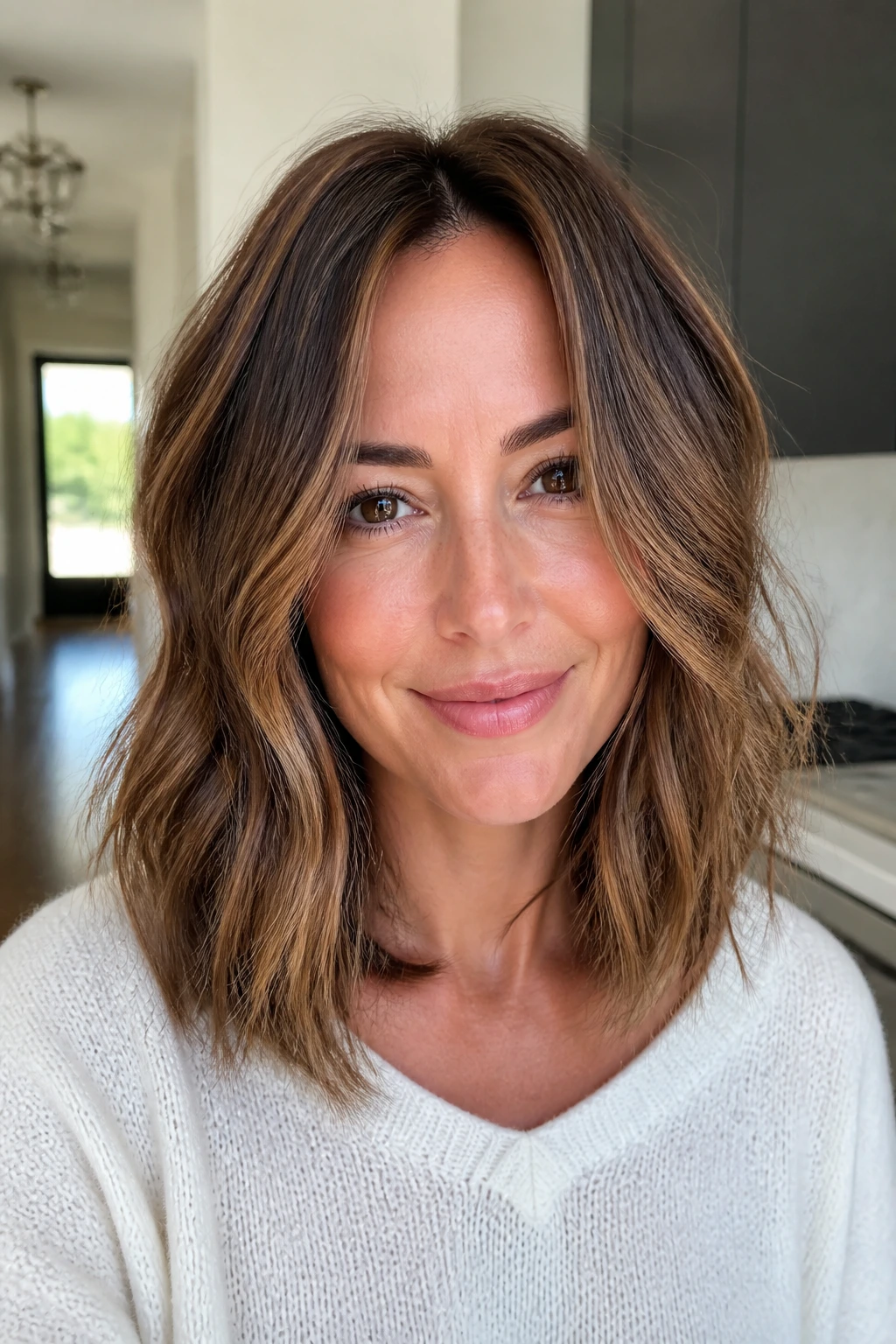
How short can a lob be on fine hair without looking thin?
Usually somewhere between the collarbone and just above the top of the chest. Shorter can still work, but once you go too high, the ends lose weight and the shape starts looking airy in a bad way.
Should fine hair in a lob have layers?
Yes, but keep them long and subtle. Hidden interior layers are safer than short, choppy ones because they create movement without stripping the perimeter.
Do loose curls make fine hair look thicker?
They can, if the curls are wide and brushed out lightly. Tight curls often shrink the length and expose the ends, which is not the look you want here.
Is a center part or side part better for an oval face?
Both work. A center part feels balanced and clean, while a side part adds lift at the crown and can make fine hair look fuller.
What barrel size is best for this haircut?
A 1 to 1.25-inch barrel usually gives the best bend. Smaller tools create too much curl and can make the lob look shorter than it is.
Can I wear this cut without heat styling?
Yes, especially if your hair has a small natural wave. A light mousse and a careful air-dry can still give shape, though the finish will be softer and less defined.
How often should I trim it?
Every 6 to 8 weeks keeps the ends blunt and the outline tidy. Stretch it much longer and fine hair starts losing that dense edge.
What if my curls fall flat by midday?
The issue is usually either too much product or too little root support. Use less cream, more lift at the crown, and let the curls cool fully before you touch them.
Why This Length Keeps Its Shape
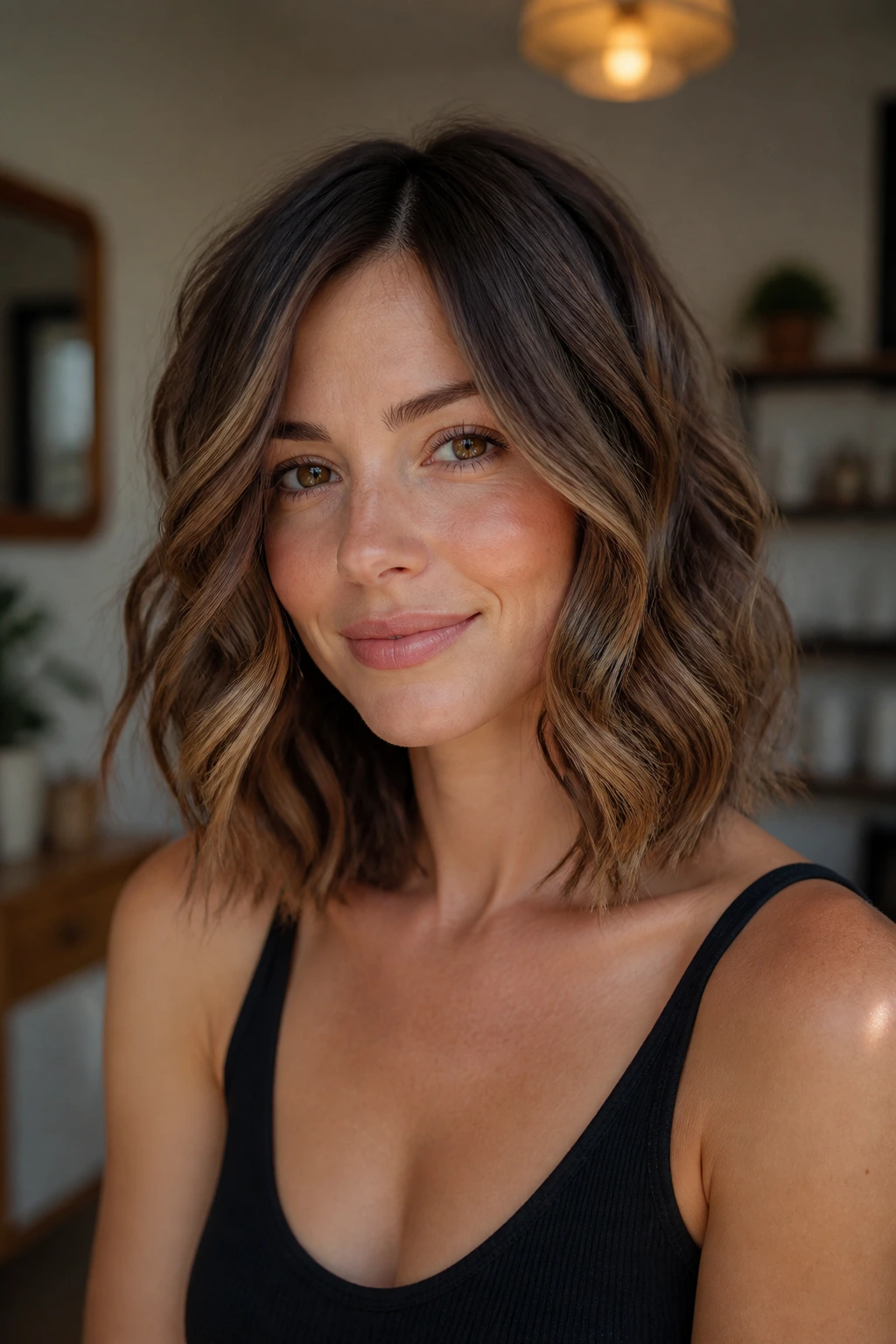
A good lob on fine hair is not about pretending the hair is thick. It’s about giving the strands a line they can actually hold. The collarbone length, the blunt edge, and the loose curl pattern work together, which is why these cuts keep coming back in salons. They do not rely on one trick.
Oval faces make the whole thing easier. You can change the part, move the fringe, or shift the angle of the front without upsetting the balance. That kind of flexibility is rare. Use it.
Get the base right once, and the rest becomes small decisions — a slightly deeper bend, a softer part, a cleaner trim, a little less product at the root. That’s the part worth keeping.